COTY

Gallery 1
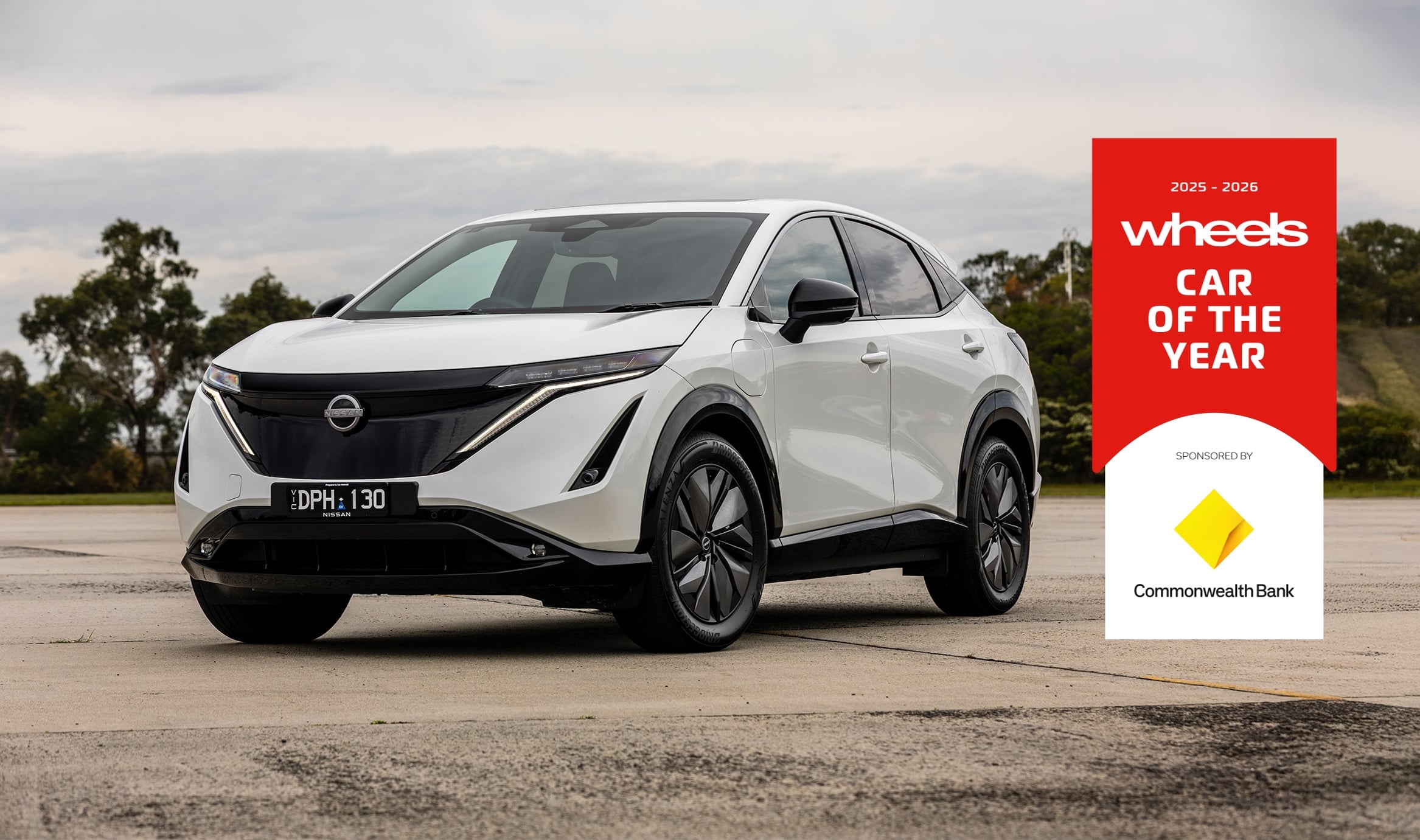
On paper, the Nissan Ariya was looking good.
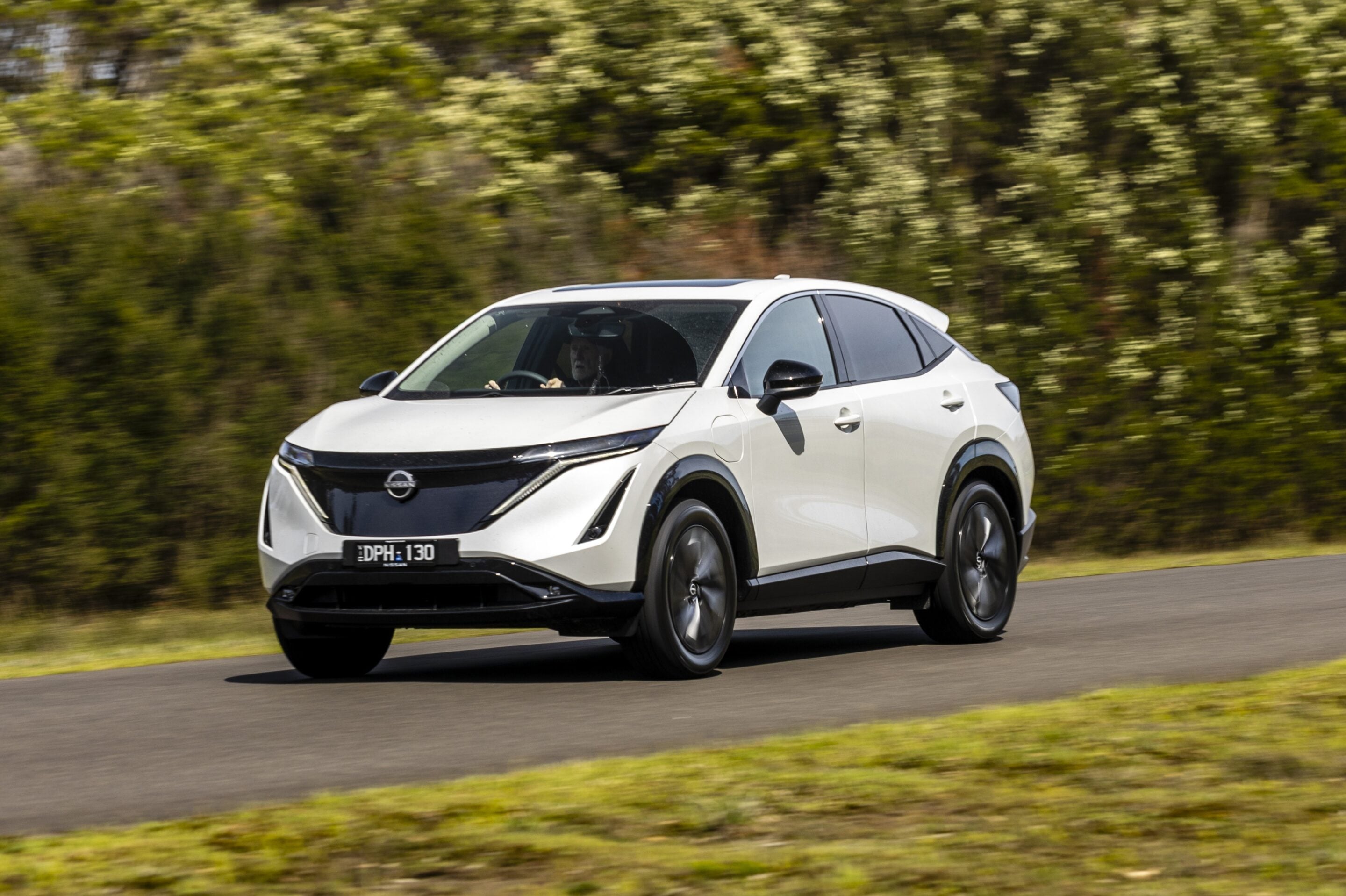
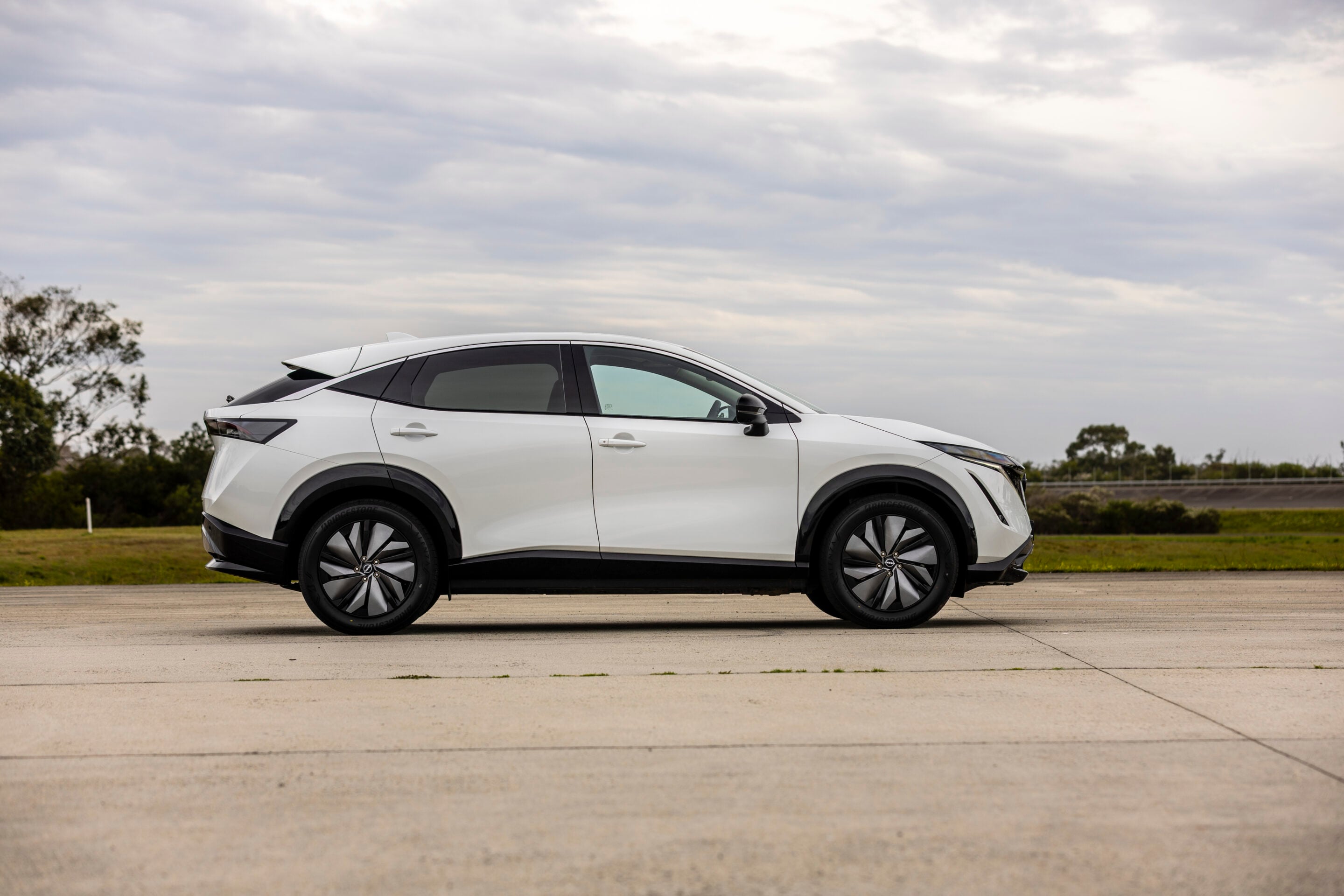
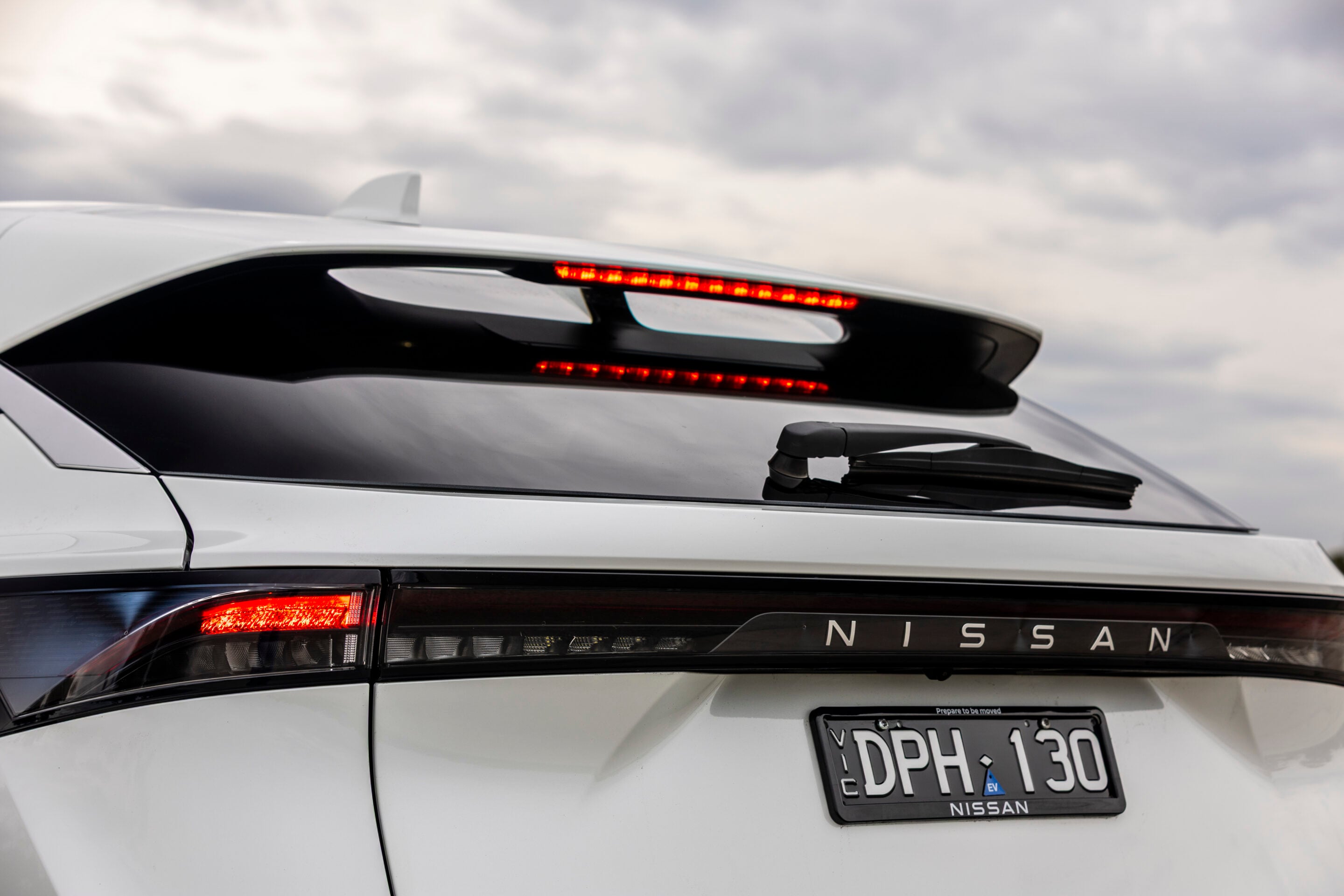
It ticked the first, most important box for any new EV, with a claimed range just over 500 kilometres. The starting price of $55,840 was not high and not low, but not out of step with rivals arriving from outside China. Also, it’s not just another big-box SUV, as Nissan has injected some angles and originality in its exterior design. Inside, there was plenty of space and an airy look and feel.
Going back to basics, the Ariya – a name variously attributed as ‘noble’ and ‘celebration’ – is a mid-sized SUV when most Australian families are shopping for something in that space and a growing number are being converted by EV contenders from brands as diverse as MG and MINI, Kia and Hyundai, and – inevitably – Tesla.
1
Why, then, is it struggling so miserably for sales in Australia? Just 47 were registered in September, a total easily eclipsed by the vastly underwhelming Leapmotor C10 with 71. Digging into the background on the Ariya began to provide answers.
It is Nissan’s second fully battery-electric contender, after the Leaf, but it was unveiled as a concept car in Tokyo nearly six years before reaching Australia. That is literally a generational gap when Chinese brands are bounding ahead, handing a massive advantage to its rivals.
Nissan Australia claimed the delay was a conscious decision to set its timing to match the introduction of the Federal Government’s New Vehicle Efficiency Standard, with its requirement for more EVs to offset its diesel and petrol combustion contenders. But, really…
The Leaf has never done much in Australia, even in its second generation, so the package for the Ariya is a smarter move. There are single and dual-motor power packs, 63 or 87kWh batteries, with either front or all-wheel drive, and the COTY contender was the Advance+ model.
The Advance+ sits in the sweet spot and means $63,840, 178kW/300Nm, front-wheel drive and a 0-100 time of 8.1 seconds.
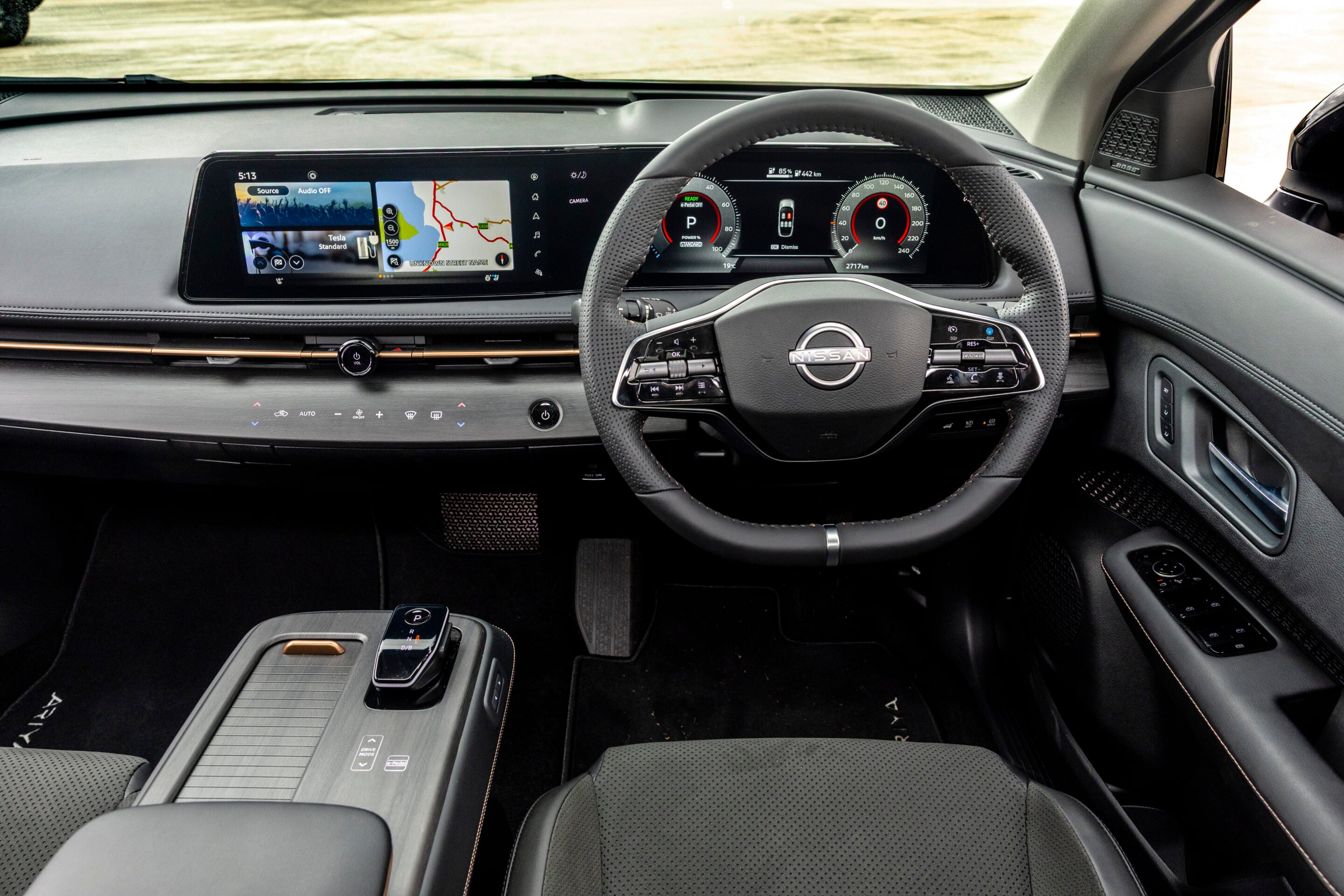
A walk-around on the Ariya showed its size and heft, good exterior finishing, and the vast leap forward from the Leaf. Inside, there was lots of space, but now there were questions. There is hard plastic, the design is overly frugal, the seats are roomy but not supportive, and the dashboard layout and display screens are just ‘me too’ in the class. There was a sliding centre console, with a gimmicky electric motor, but otherwise nothing special on the USB or storage front.
“It looks cheap,” opined Peter Robinson.
“Nothing much to see here,” said David Morley.
2
In the driving, the Nissan was underwhelming. For an EV, the acceleration was ordinary. Nissan touts its one-pedal driving mode, with strong regeneration to boost the battery and improve slowing without the brakes, but that’s not unique.
The steering was light and floppy, with response which is probably just fine on a California freeway but gave no real connection to the road.
At Lang Lang, it had to be eased into corners and squeezed under braking. It rocked and rolled. Bounced, too. The damping was soft and floppy, especially on the rolling waves set to highlight such flaws.
Road noise? More than other EVs in the COTY field. In the end, no-one came to save the Ariya when it was the first car dropped from COTY.
“Where was this car four years ago?” asked Robinson.
“Where was this car 10 years ago?” replied Morley.
1
Specs
| Price | $63,840 (MSRP) |
|---|---|
| Body | Five-door, five-seat SUV |
| Drive | Front-wheel drive |
| Drivetrain | Single electric motor, 87kWh lithium-ion battery |
| Power | 178kW |
| Torque | 300Nm |
| Transmission | Single-speed reduction gear |
| Consumption | 19.1kWh/100km, |
| 504km range | (WLTP) |
| Kerb weight | 2078kg |
| 0-100km/h | 8.1 sec |
| L/W/H/W-B | 4595/1850/1660/2775mm |
| Boot space | 446L/1350L |
| Warranty | 5yr/unlimited km (min), 10yr/300,000km (conditional) |
| Safety rating | 5 star ANCAP (2022) |
2
Follow WhichCar/Wheels on Google
Click the button below to make WhichCar by Wheels a preferred source for your news.

We recommend
-
 COTY
COTY2025-26 Wheels Car of the Year Contender: Hyundai Inster
Hyundai’s pint-sized Inster EV delivers charm, solid engineering and urban range, but faces fierce price competition from cheaper Chinese rivals in Australia’s fast-moving electric city-car market.
-
 COTY
COTY2025-26 Wheels Car of the Year Contender: Isuzu MU-X
Isuzu’s MU-X SUV delivers rugged, old-school diesel durability and true go-anywhere ability, but its agricultural manners and dated refinement make it feel trapped in another era.
-
 COTY
COTY2025-26 Wheels Car of the Year finalists, 2ND: MG HS Hybrid+ Essence
MG’s new HS Hybrid delivers unexpected polish, combining refined handling, smooth hybrid performance and impressive value to stand out in Australia’s crowded mid-size SUV field.