
Reviews

Gallery 1
7.2
/10
Score
Score breakdown
8.0
Safety, value and features
8.0
Comfort and space
7.0
Engine and gearbox
6.0
Ride and handling
7.0
Technology
Things we like
- Styling inside and out is excellent
- Loads of standard equipment
- Cabin space and comfort a highlight
Not so much
- Engine can sound thrashy under load
- Safety tech can grate
- Body control too soft at speed
You might not have heard of Geely before – don’t worry, you’re not alone, because plenty of Australian new car buyers haven’t either. In a deepening sea of new-to-the-market brands from China, it’s easy to assume Geely is just another one on the list.
But – and it’s a big but – Geely is different. It’s not a new player in China, where it’s been building cars for close to 40 years. And, it owns brands like Volvo, Polestar, Zeekr and Lotus to name just a few, so it’s fair to say Geely has deep investment and research might.
Interestingly, the Starray EM-i we’re testing here is the second Geely to be launched in Australia, which was the first export market for this PHEV crossover. This is, in a market of spiralling costs, an affordable PHEV, no matter which way you slice it. At the time of testing, you could park this midsize SUV in your garage from $39,990 drive away. With up to 83km (WLTP) pure electric range, and a combined 943km (WLTP) range with a full charge and full tank, Geely’s ‘Super Hybrid’ claim might be easier to justify than you might think.
3
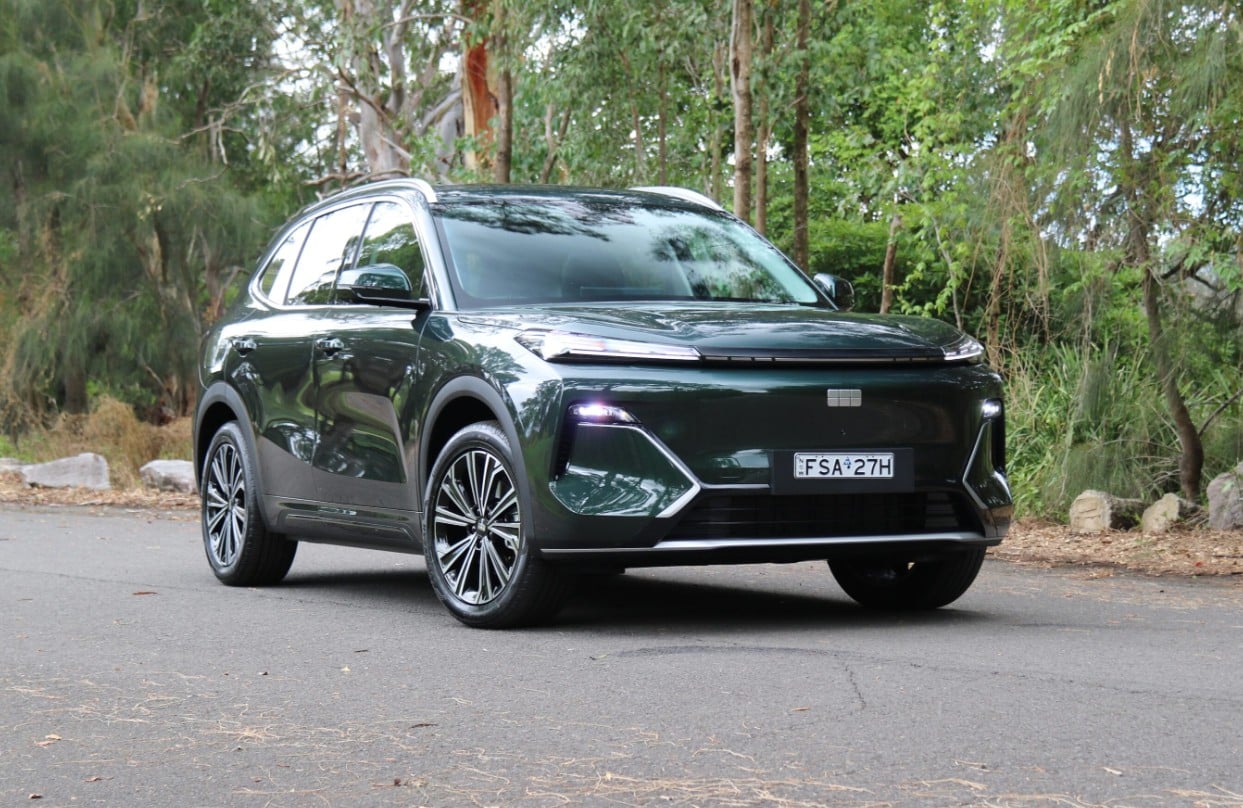
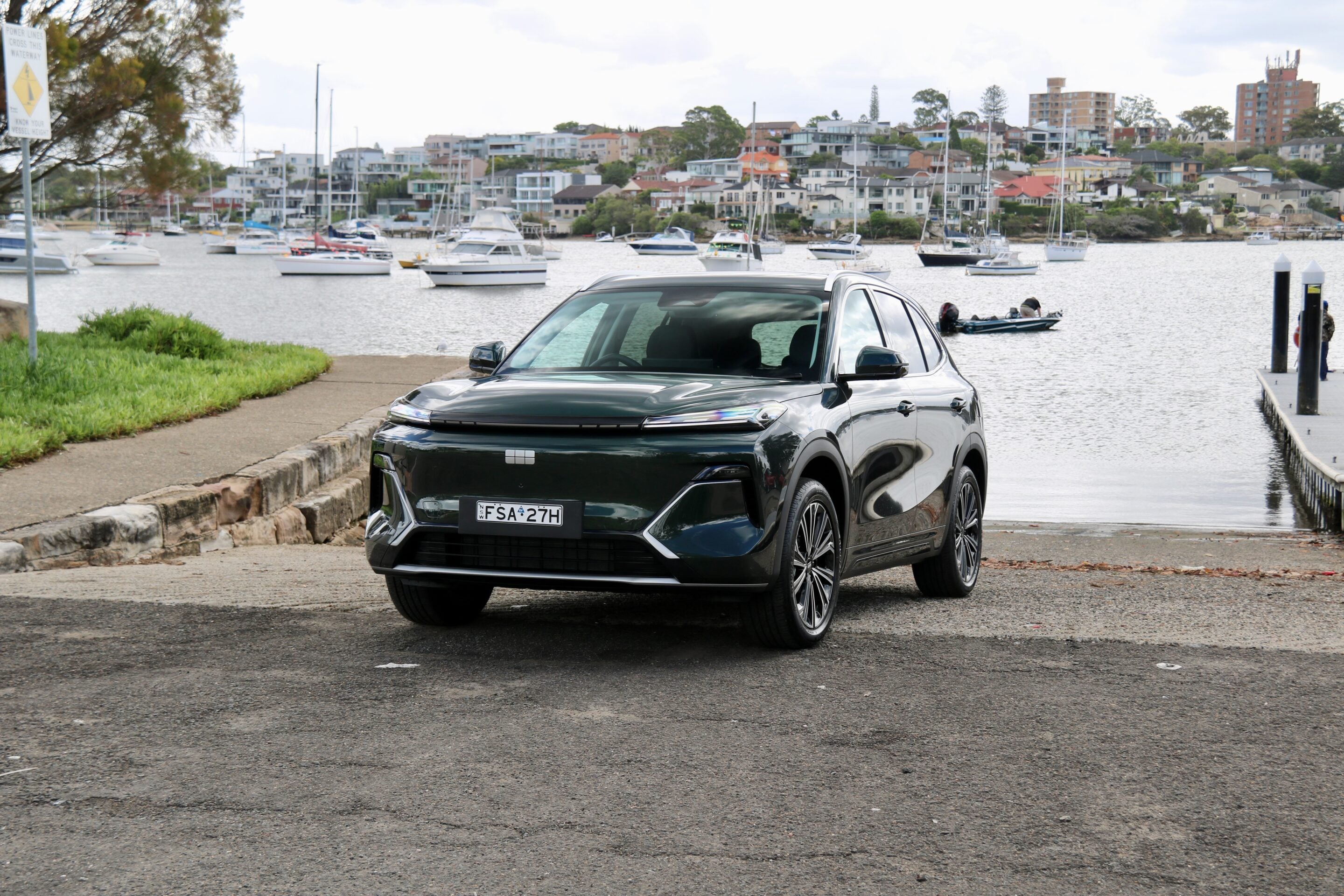
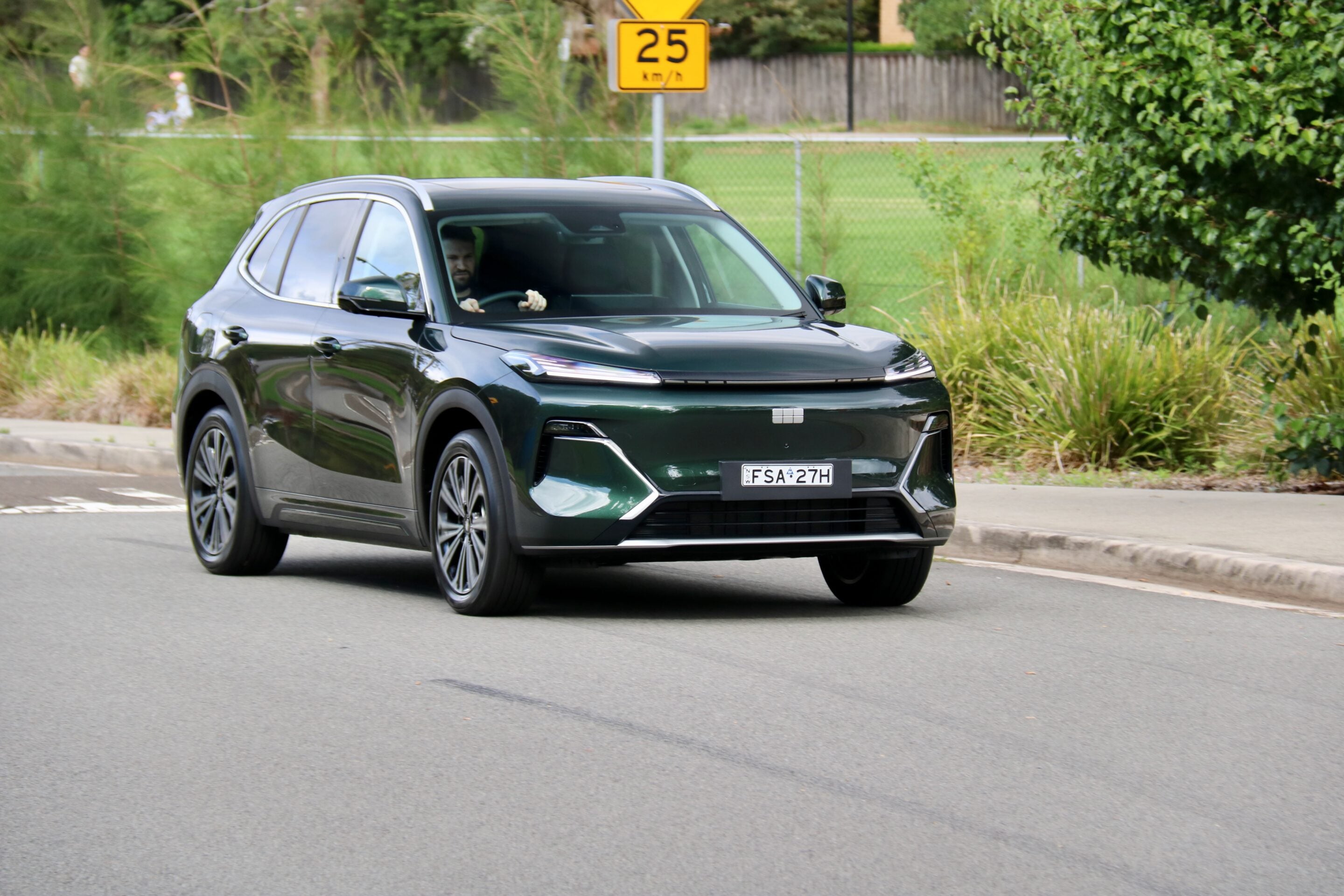
Our undoubtedly eye-catching and attractive test car, then, is the 2026 Geely Starray EM-i Inspire in beautiful Jungle Green paint, cutting a stylish figure when you’re mixing it up with the traffic on a bland daily commute. The standard feature list is long, countering the sharp pricing, which might see the word ‘cheapest’ or ‘cheaper’ used more than is fair in the description of the vehicle. Especially after you’ve spent some time with it.
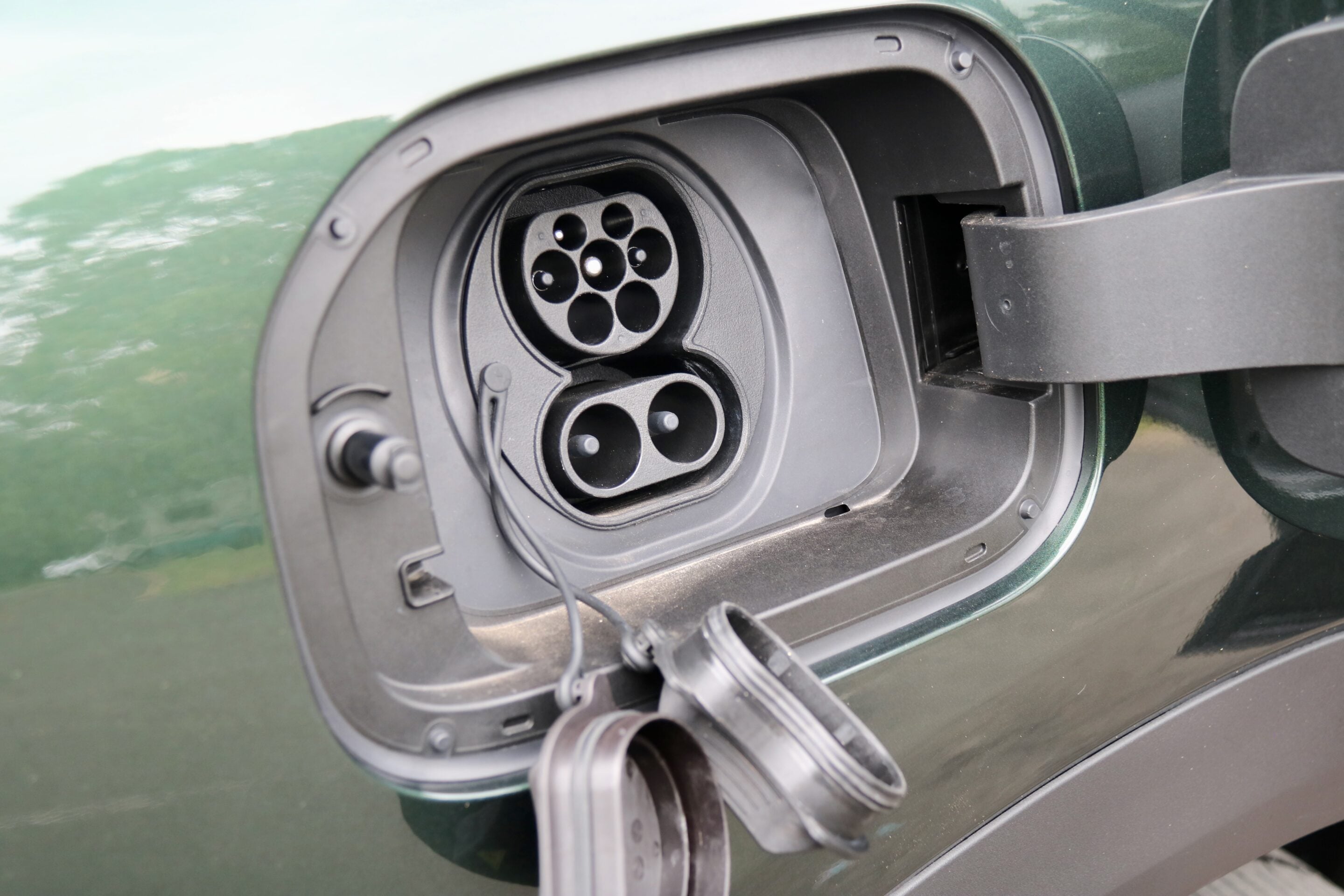
Standard mechanical equipment includes a 1.5-litre petrol engine, which works as a power generator for the front electric motor – its FWD only for the moment. The electric motor pushes 160KW and 262Nm to the front wheels, and there’s an 18.3kWh battery pack – 17kWh usable, of lithium iron phosphate construction. The petrol engine, as mentioned above, works to charge the battery pack, but you can also charge it with 6.6kW AC power or up to 30kW DC fast charging. Geely tells us that in power mode, the petrol engine can drive the front wheels – but that’s not a mode you’ll use often.
2
How’s its fuel efficiency?
On test, against the WLTP claim of 83km, WhichCar by Wheels managed to get 67km the first time and 66km the second time, with a full charge. Oddly, that’s because the battery wouldn’t let us access the last 20 percent of charge, but the claimed 83km would have been achievable given the average usage. If you need or want to head further afield, you can run it in hybrid mode and get somewhere near 815km, which is what our indicated consumption was suggesting.
We’ll get the Starray back into the WhichCar by Wheels garage for longer distance testing, but the initial indicators are impressive. Around town, we managed a best of 6.9L/100km with the petrol engine whirring away, and on the highway an even 6.0L/100km – both acceptable for this size vehicle in this segment – although slightly thirstier than a RAV4 Hybrid would be under the same testing.
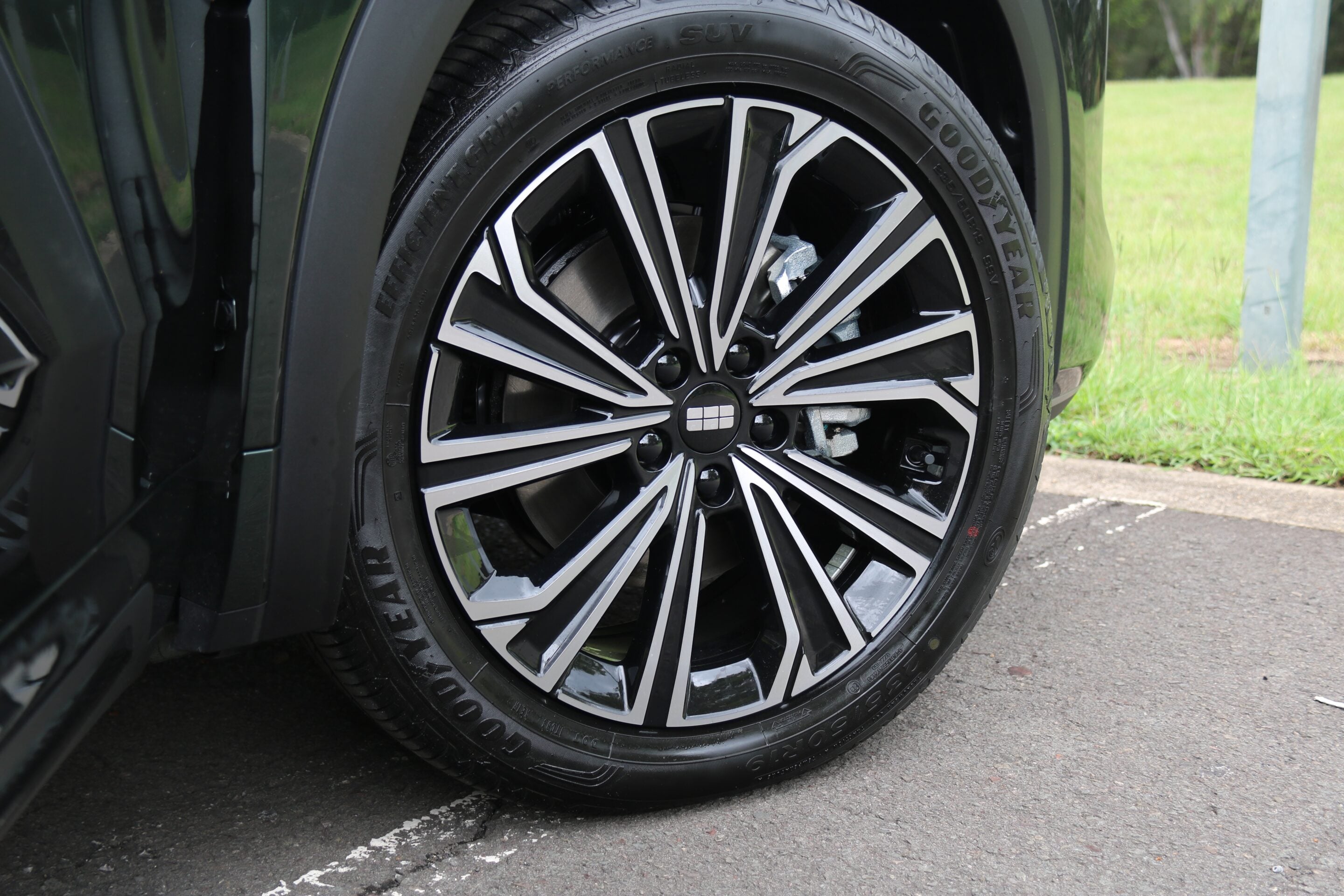
Our Inspire gets attractive 19-inch rims standard, a panoramic glass sunroof with retractable shade, electric tailgate, front parking sensors, wireless charging, head-up display, premium 16-speaker audio system, ambient interior lighting, cooled front seats and four-way electric (passenger) and six-way memory (driver) with memory for the driver’s front seat.
1
What’s the interior like?
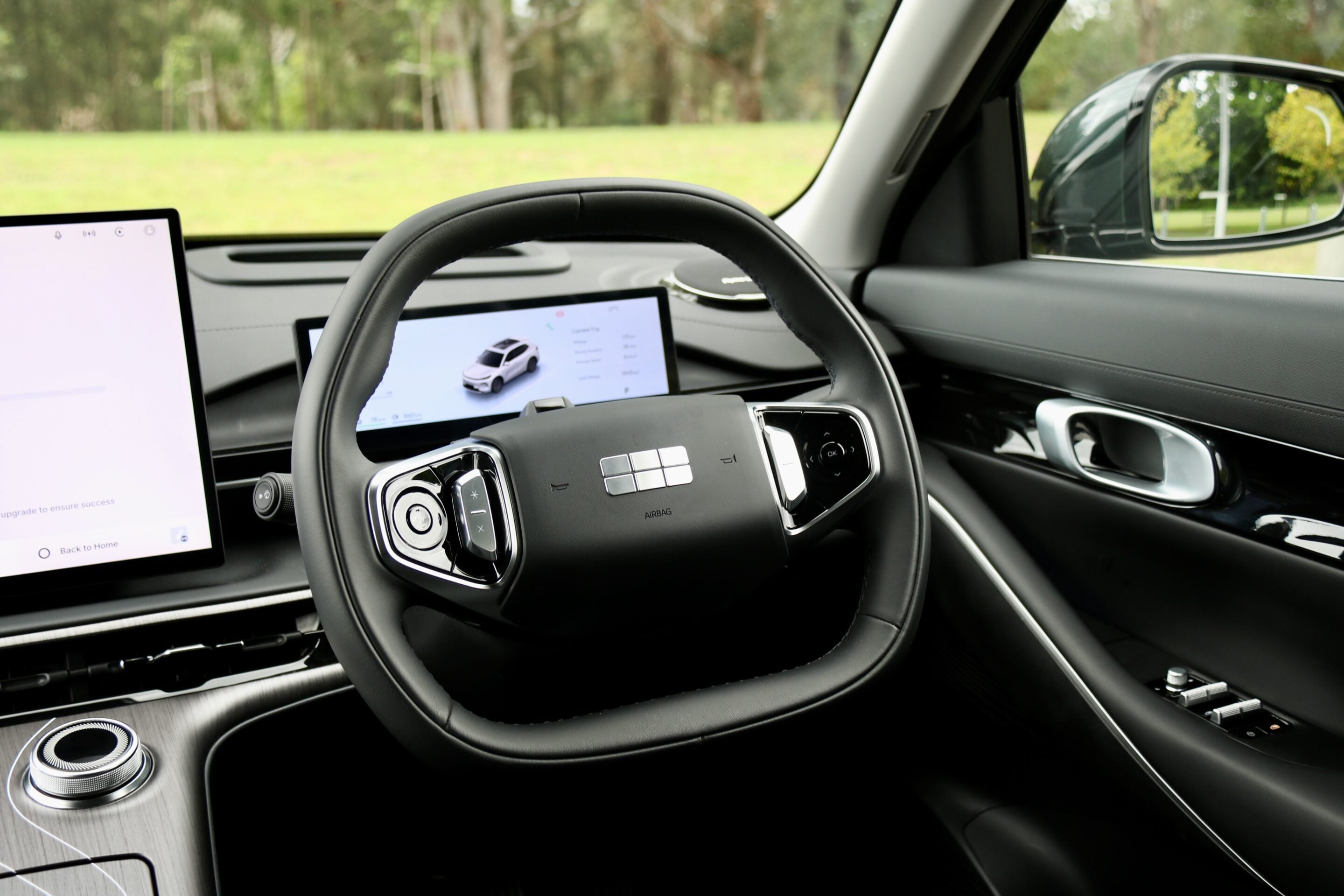
Aside from the exterior styling, the Starray impresses inside the cabin, too, with a huge 15.4-inch central screen, attractive trim, and slick design touches, that certainly don’t look – or feel – cheap. Regardless of the asking price, that’s an important point to note, because no one wants to feel like they are driving a cheap car, even if they are in monetary terms. In that regard, the Starray will make you feel pretty good about your budget-minded purchase. The big screen – oriented in landscape mode – looks neatly placed atop the centre of the dashboard.
On test, the cabled smartphone connection was reliable and clear, and the screen was responsive to command inputs. Call clarity was reported to be excellent from callers whether incoming or outgoing. The gear shift lever on the right side of the column takes a bit of getting used to if you’re new to the game, and there are enough physical controls to assuage the criticism we’d often direct at a complete lack of buttons.
9
The single most obvious factor inside the cabin though, is the sense of space. First row, or second, head, leg or knee room, and even into the luggage area, this is a well-proportioned medium SUV. With the second row in play, you get 528 litres of storage space, and a decent retractable luggage cover as well. Note that there’s no spare wheel. This isn’t the first time you will have heard us say that a spare of some sort should be standard on all cars in Australia.
What’s the driving experience like?
The driving is also solid without being dynamic. Ride quality and bump absorption is skewed distinctly in favour of comfort around town, which is ideal and bang on for the target buyer. That means body control isn’t as taut as it could be when you hook into a corner at speed, but the target buyer won’t be worrying too much about that kind of driving. Keep in mind, the Geely weighs a hefty 1739kg, meaning it’s not as svelte as a regular petrol vehicle of the same size. The quality of the ride around town is excellent, though, even over sharp speed humps, making it an excellent city commuter.
When you’re driving on electric power alone, without the requirement for the petrol generator, the experience is quiet, refined and quite punchy. When the 1.5-litre fires into life though, it can feel harsh and a little noisy as it whirs away, pushing charge to the battery pack. The pack retains a minimum 20 per cent to always feed the electric motor, offsetting the theoretical maximum electric range, which you can’t actually access. As is common with challenger brands, some of the electronic safety warnings err on the side of enthusiasm, but they aren’t as intrusive as some.
You can work through brake regeneration settings, to find the one you like as well, with moderate the one we favoured during our first drive, and the brakes felt pretty regular once you got used to the initial bite point. The steering is relatively light, even at low speed, and if Geely were to offer a sportier or more powerful version, firmer steering feedback would be the go.
1
There’s no doubt that for the money you spend, the Geely Starray is an excellent choice in top-spec Inspire guise. If you’re looking to dip a toe into the water of the PHEV lifestyle, this is a low risk way to do it. The caveats remain that retail is hard to predict, and we don’t have the data yet to accurately assess how these challenger brands stand up with 10 years and 150,000km under their belt, but on face value and after our first drive, the Geely is one to consider.
Specs
| Price | $39,990 drive away |
|---|---|
| Engine | 1.5-litre, four-cylinder petrol |
| Power | 160kW |
| Torque | 262Nm |
| Transmission | Hybrid transmission |
| Battery | 18.4kWh |
| 0-100km/h | 8.0 seconds |
| Weight | 1739kg |
| Fuel consumption | 2.4L/100km (combined) |
| Fuel Tank | 51 litres |
| L/W/H/WB | 4740mm/1905mm/1685mm/2755mm |
| Warranty | Seven-year/unlimited kilometre |
| Overall rating | 7.2/10 |
7.2
/10
Score
Score breakdown
8.0
Safety, value and features
8.0
Comfort and space
7.0
Engine and gearbox
6.0
Ride and handling
7.0
Technology
Things we like
- Styling inside and out is excellent
- Loads of standard equipment
- Cabin space and comfort a highlight
Not so much
- Engine can sound thrashy under load
- Safety tech can grate
- Body control too soft at speed
Follow WhichCar/Wheels on Google
Click the button below to make WhichCar by Wheels a preferred source for your news.

We recommend
-
 News
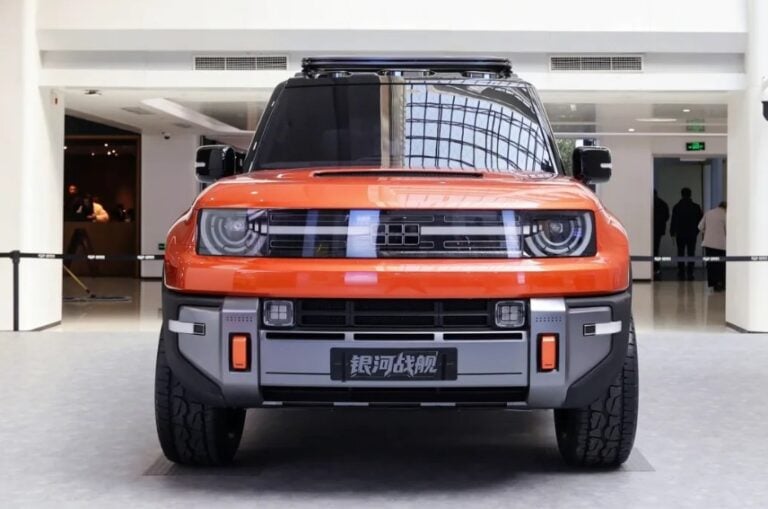
NewsGeely’s rugged Hybrid 4x4 will take on LandCruiser and Defender
Galaxy Cruiser-based SUV signals Chinese brand’s serious push into hardcore off-roading
-
 News
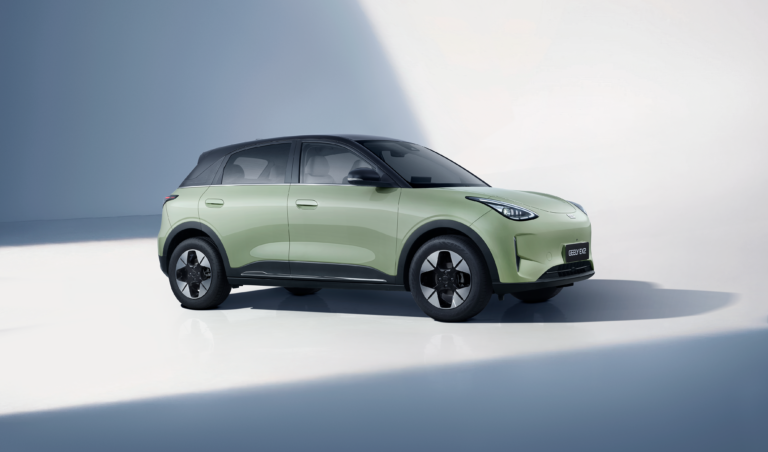
NewsGeely to launch EX2 electric city hatch in Australia from late 2026
Compact EV will serve as brand’s new entry model as it expands its local line-up.
