Comparisons


Gallery 1
It’s hard to imagine that just 12 short years ago, Australians could buy a brand-new car for $9990 drive-away.
Sure, the Chery J1 was a no-frills city-sized hatchback with little in the way of creature comforts by today’s standards. But for a tenner under $10k, buyers scored a CD player, air conditioning, power windows, alloy wheels and two airbags.
Fast forward to 2026 and the idea of what is an affordable car today has changed, and changed dramatically. Just one model sneaks in under the psychological $20k barrier – the Kia Picanto Sport, which in manual trim lists for $19,190. Add in on-road costs and that figure balloons to around $22,000, a price that redefines what it means to be ‘affordable’ in the new car market in 2026.
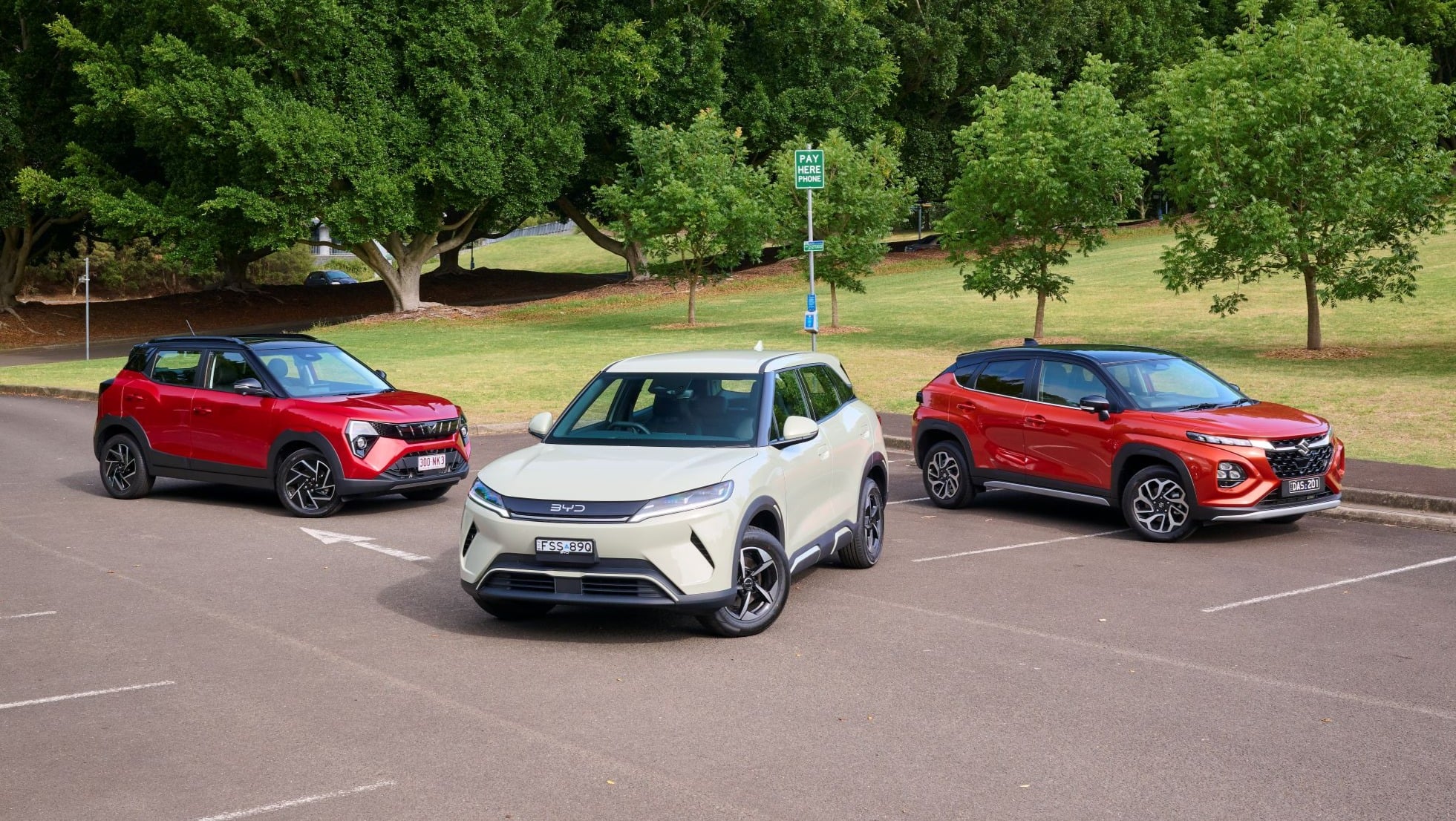
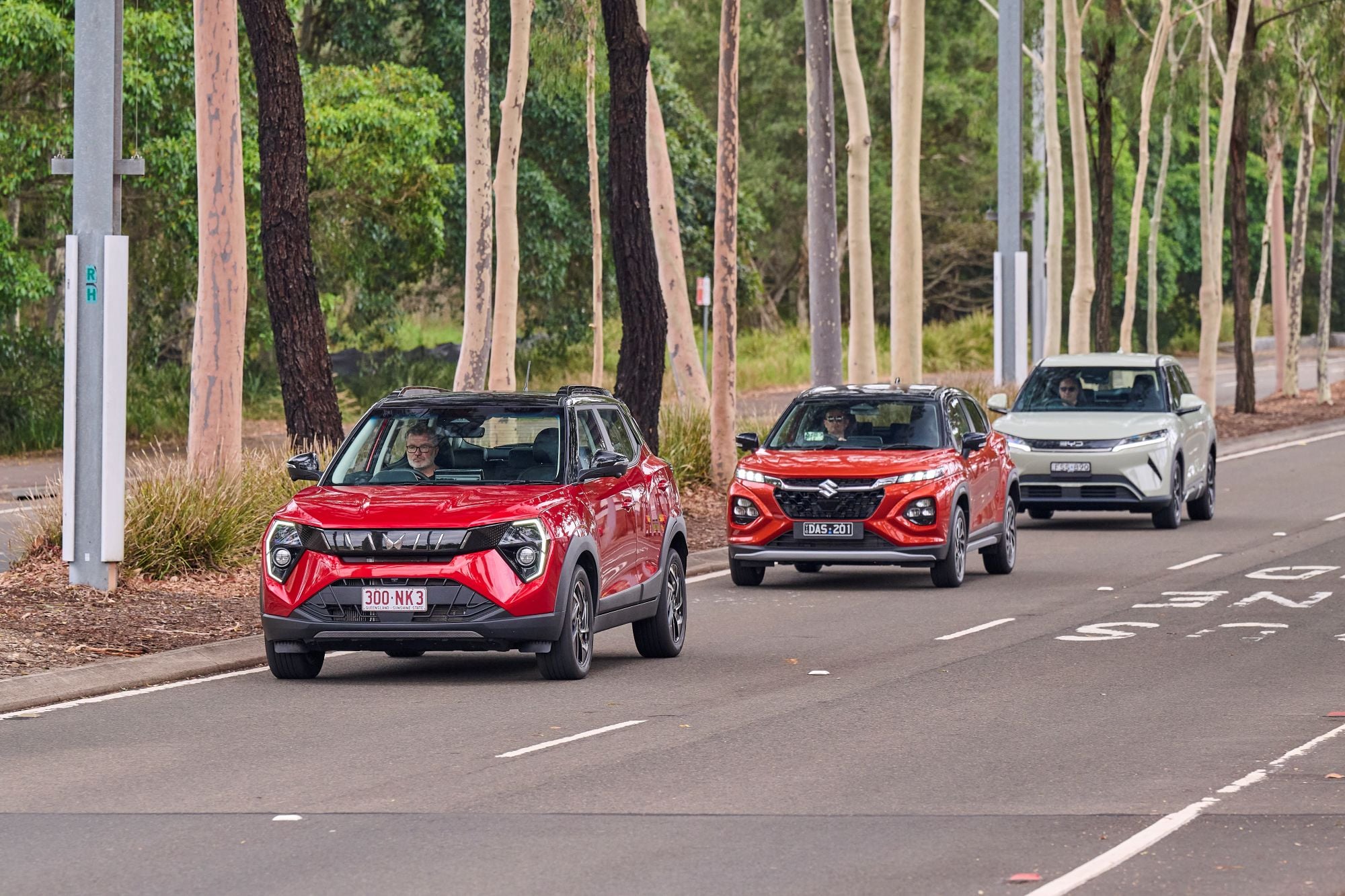
Buyers shopping with both eyes on value should budget for anywhere from $25-$35k. And the good news here is that there are plenty of decent options within that price range. The three we’ve chosen here are all new to the Australian market, and bring different philosophies to the table – one a three-cylinder petrol FWD, another that claims to be a hybrid but isn’t, and finally the most affordable, full battery-electric SUV in Australia today.
1
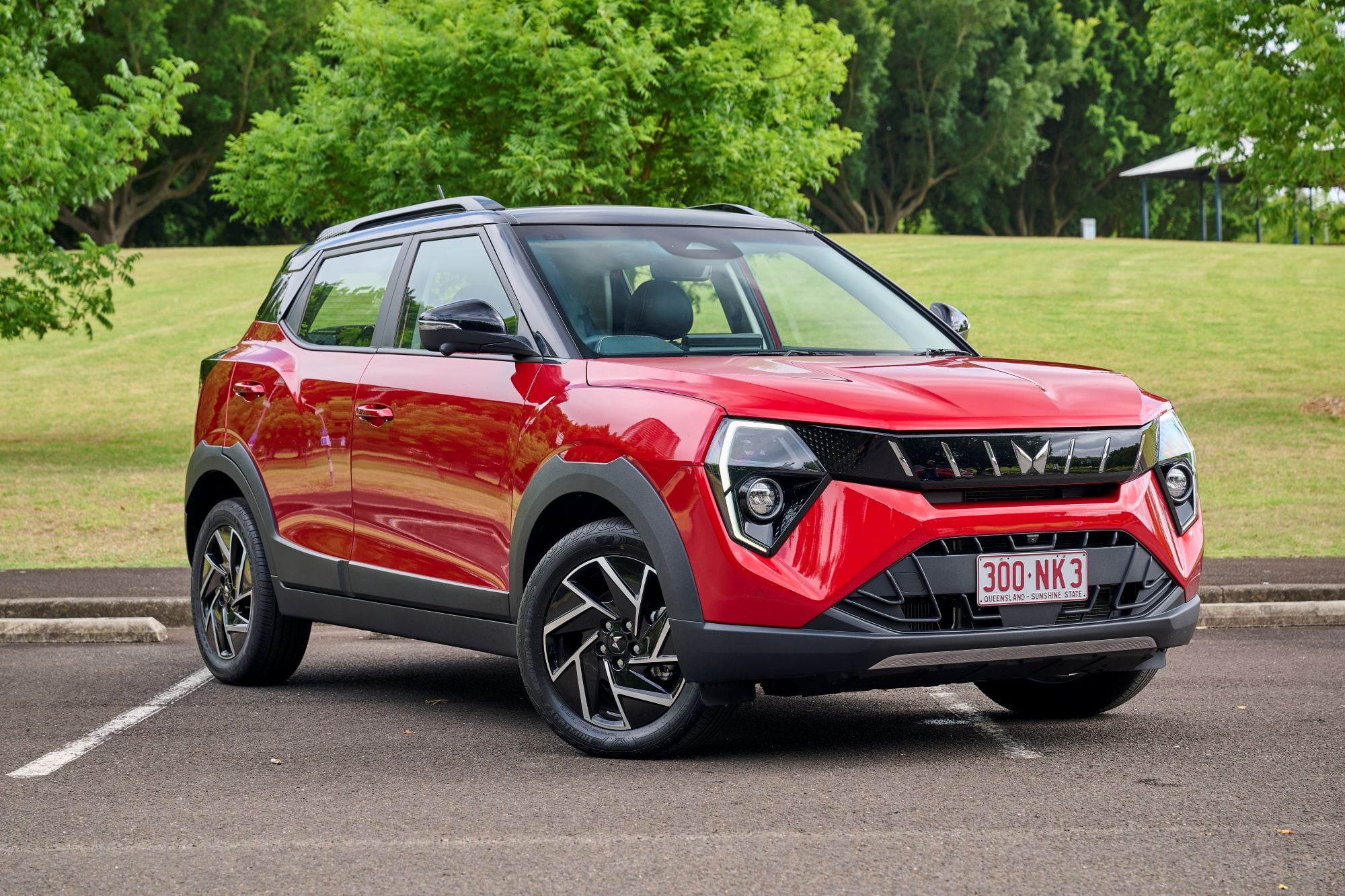
The cheapest of our pick is the Mahindra XUV 3XO, a sharply-priced compact SUV from the Indian manufacturer looking to make inroads into the lucrative Australian market. It’s priced from a very competitive $26,990 drive-away, the only of our trio to come in under $30k. That’s for the top-spec AX7L variant on test here. Buyers on an even tighter budget could be tempted by the $23,990 drive-away entry-level AX5L model.
On paper, the $28,990 Suzuki Fronx Hybrid also comes in under thirty grand but once on-road and dealer delivery costs are factored in, expect to pay around $31-$32k depending on where you live. And the newly-arrived BYD Atto 2 enters the fray with a compelling price point placing EV ownership within the grasp of more Australians than ever before. Priced from $31,990 plus on-road costs, the Atto 2 slides in at around $35,000 on the road.
So three different manufacturers with three distinct offerings – two compact, or light, SUVs, the other a slightly larger small SUV. But which one represents the best bang for your hard-earned dollar?
Mahindra might not be a familiar name, but the Indian giant has been around in Australia in one way or another since the early 1990s, first with the bare-bones Stockman off-roader and subsequently the frumpy and boxy Pik-Up ute.
2
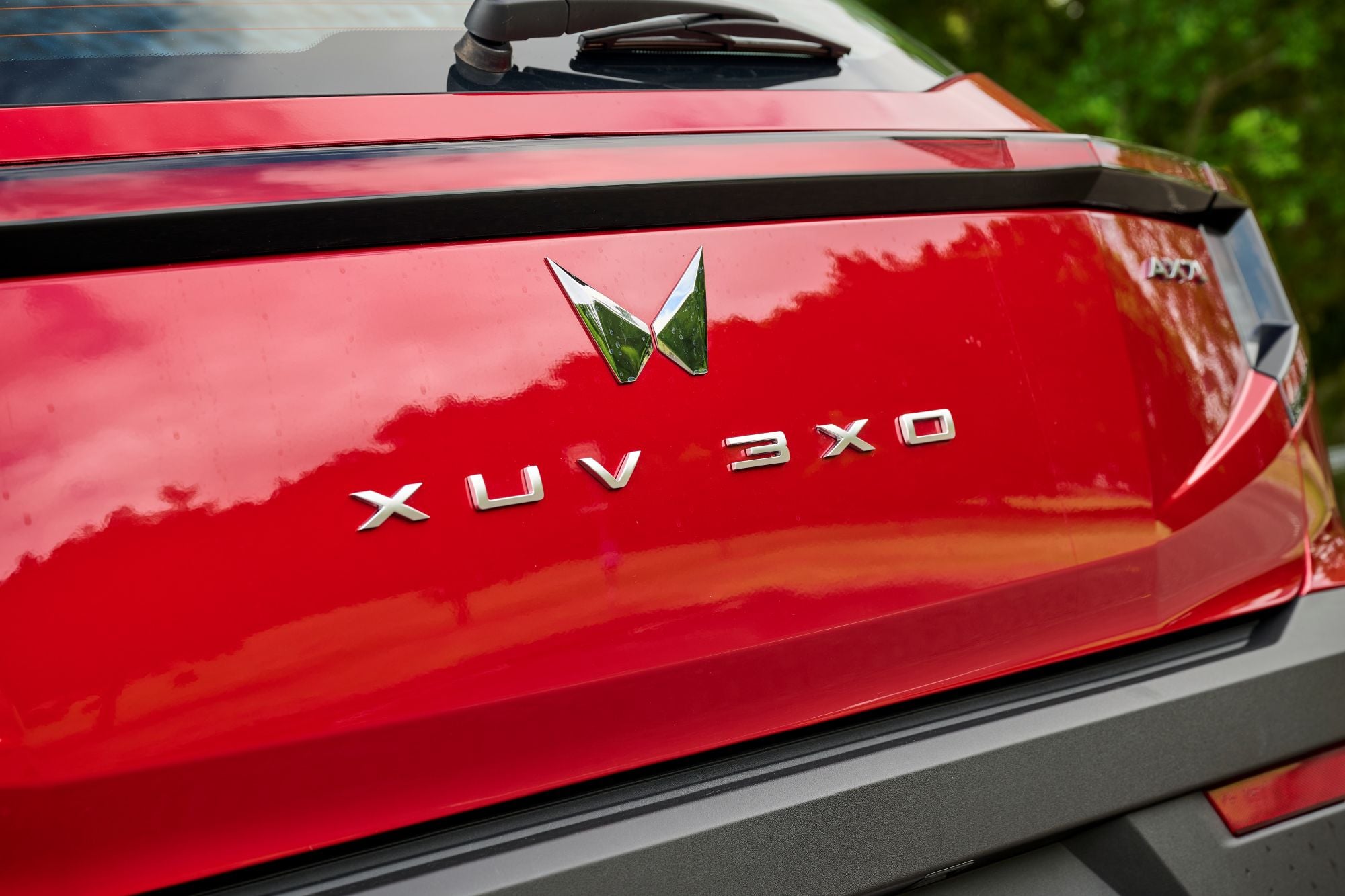
Now though, Mahindra has its sights set on cracking Australia’s lucrative SUV market, expanding its line-up with its most affordable model yet, the XUV 3XO compact crossover.
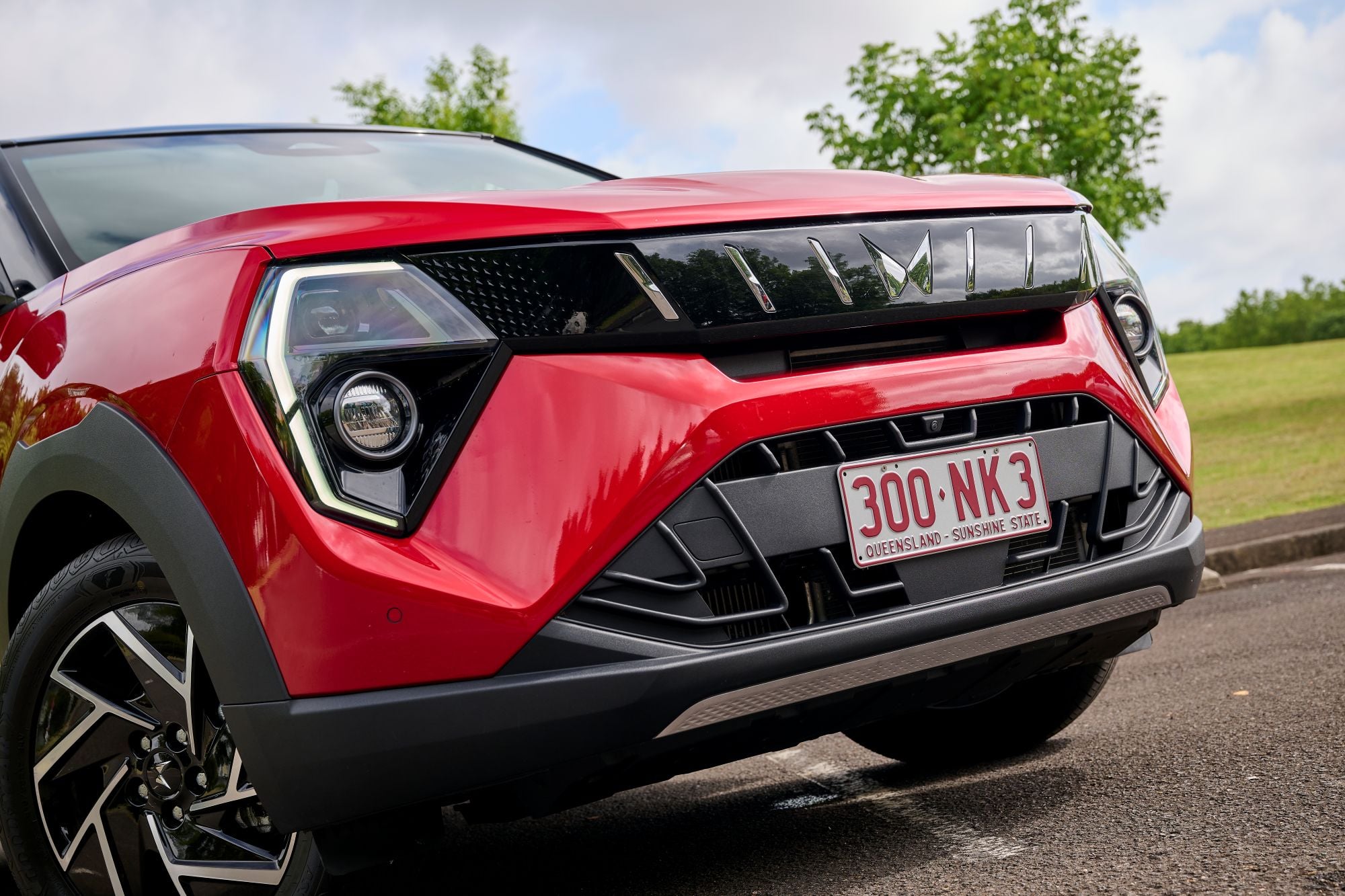
While ostensibly a new model, the XUV 3XO does borrow from the car maker’s past. It sits atop the SsangYong Tivoli platform, a throwback to Mahindra’s decade-long ownership of the Korean carmaker from 2010-20. The Tivoli was developed under Mahindra’s stewardship and you can see its DNA in the design of the XUV 3XO. Mahindra, for its part, claims its crossover is 80 per cent new.
One reason ‘affordable’ cars have become sparser can be laid at the feet of buyers, who expect more and more equipment for their spend, even at this budget end of the market. And by that measure, the three SUVs we’ve assembled here don’t disappoint, all with a healthy list of standard inclusions in line with those expectations.
3
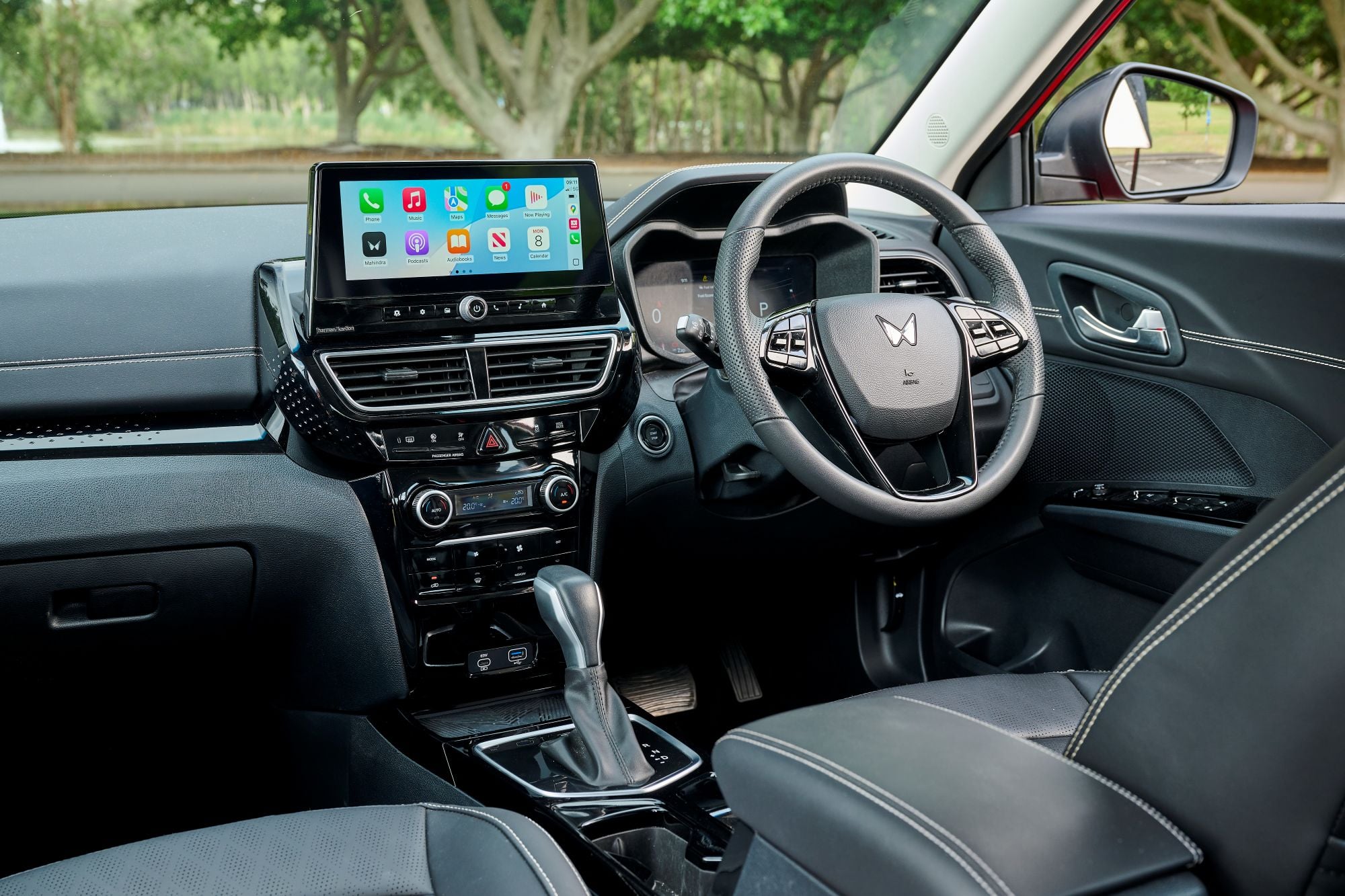
And it’s the Mahindra, despite being the most affordable of the three, that has arguably the healthiest list of standard kit. Notable inclusions run to 17-inch alloy wheels, synthetic leather seat trim, two-zone climate control, a 10.25-inch infotainment touchscreen with wireless Apple CarPlay and Android Auto, a 10.25-inch digital instrument display, sunroof, cooled glovebox and a Harman-Kardon audio system. Our test car was finished in Tango Red with a black roof, a $495 option and one of six hues commanding a premium. Don’t want to pay for paint? A white XUV 3XO with black roof is your only option.
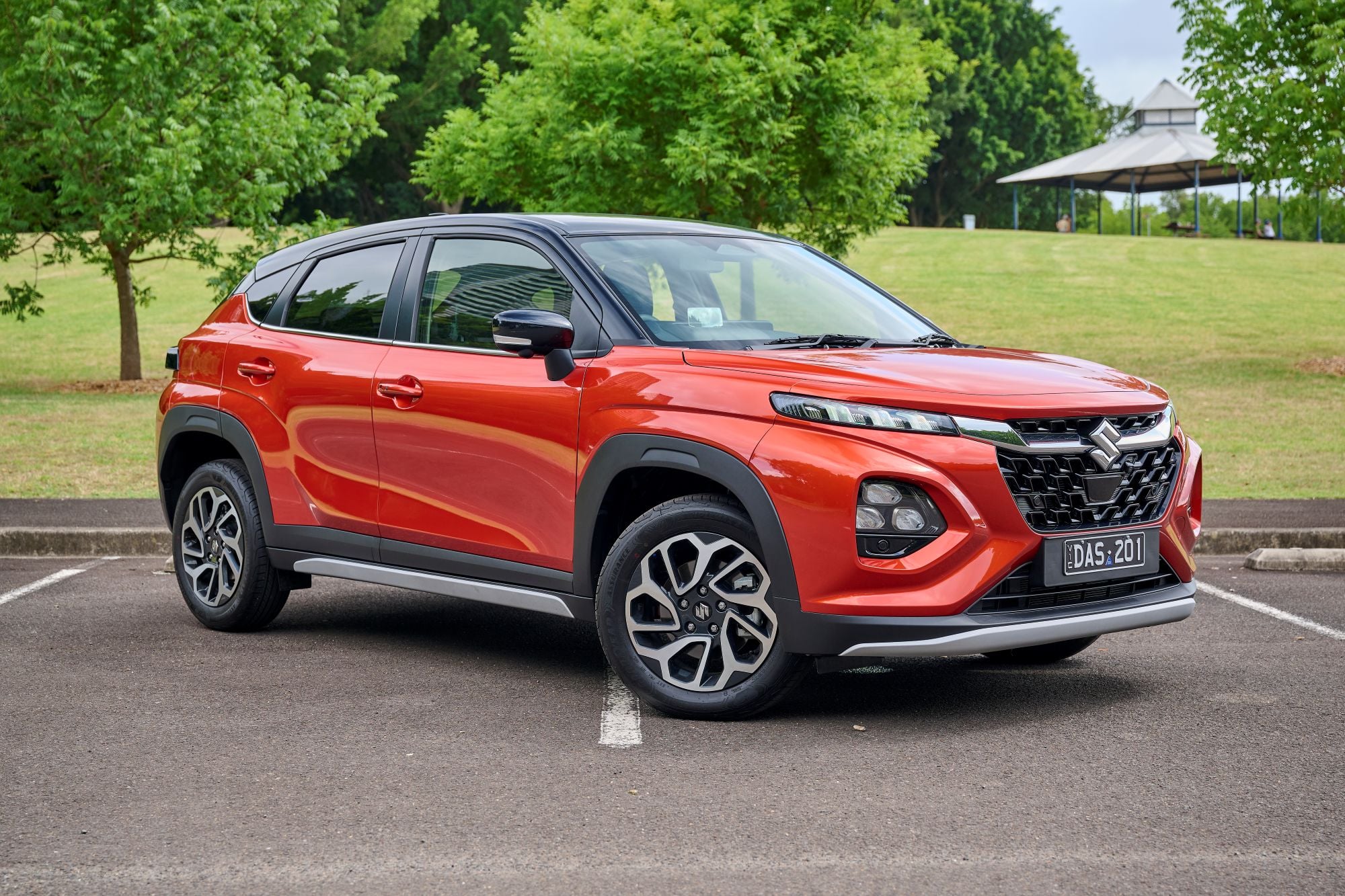
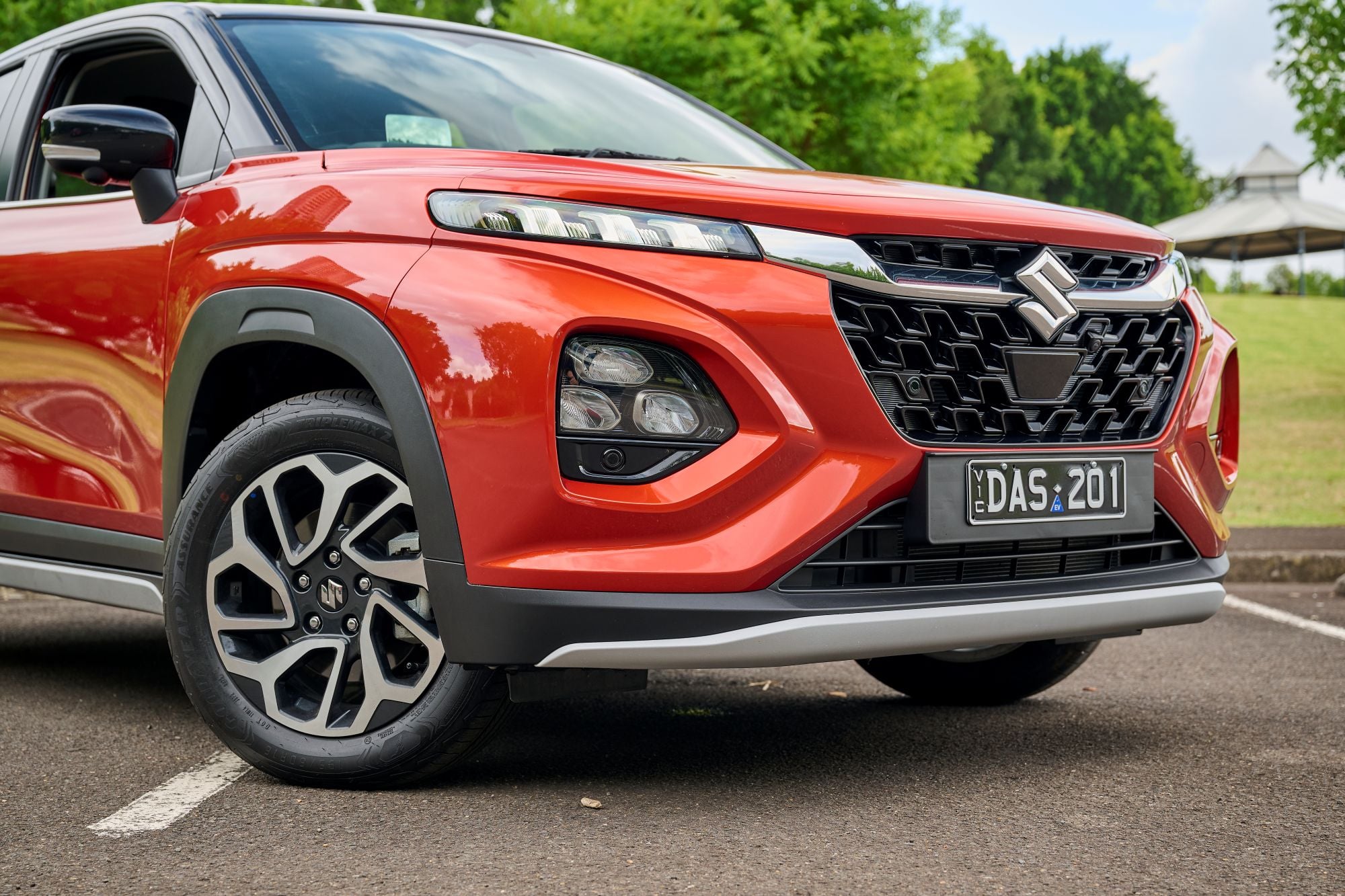
The Suzuki Fronx Hybrid might be a new model from the Japanese brand, but it shares much of its architecture with what was once one of the most affordable cars in Australia, the Suzuki Baleno city-sized hatchback, which hasn’t been sold here since 2023. And it’s not as Japanese as the badge on the grille suggests, developed and manufactured by Maruti Suzuki, India’s largest maker of passenger cars, and a subsidiary of Japan’s Suzuki Motor Corporation.
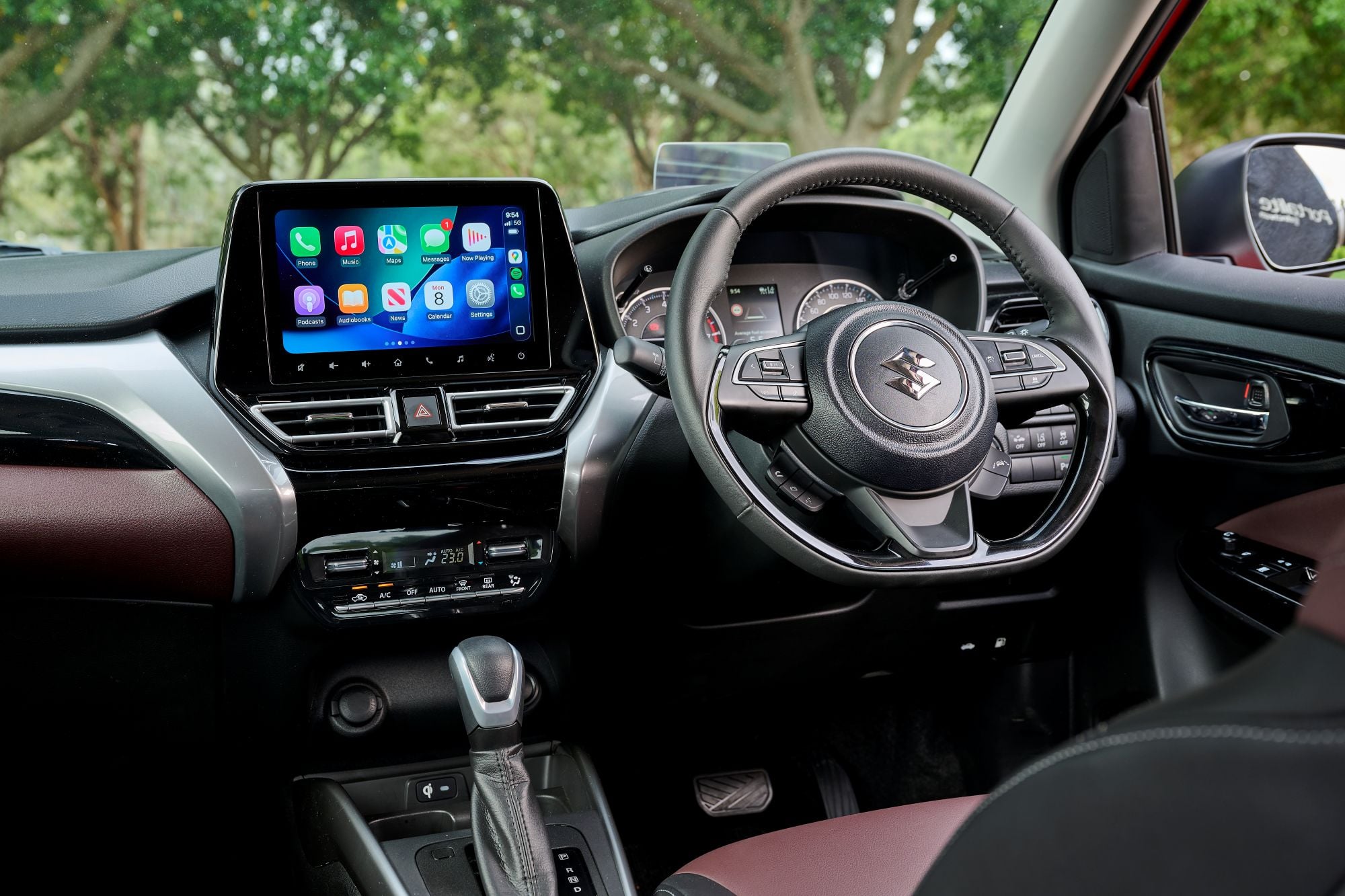
Like the Mahindra, the Fronx packs a lot of punch in the equipment stakes, with 16-inch alloy wheels, seats finished in cloth with leather trimmings, a 9.0-inch infotainment touchscreen with wireless Apple CarPlay and Android Auto, and a six-speaker audio system. It is alone in this trio of cheap-and-cheerfuls in adding wireless phone charging, heated front seats, and a head-up display but misses out on a sunroof, something only the Mahindra XUV 3XO musters.
3
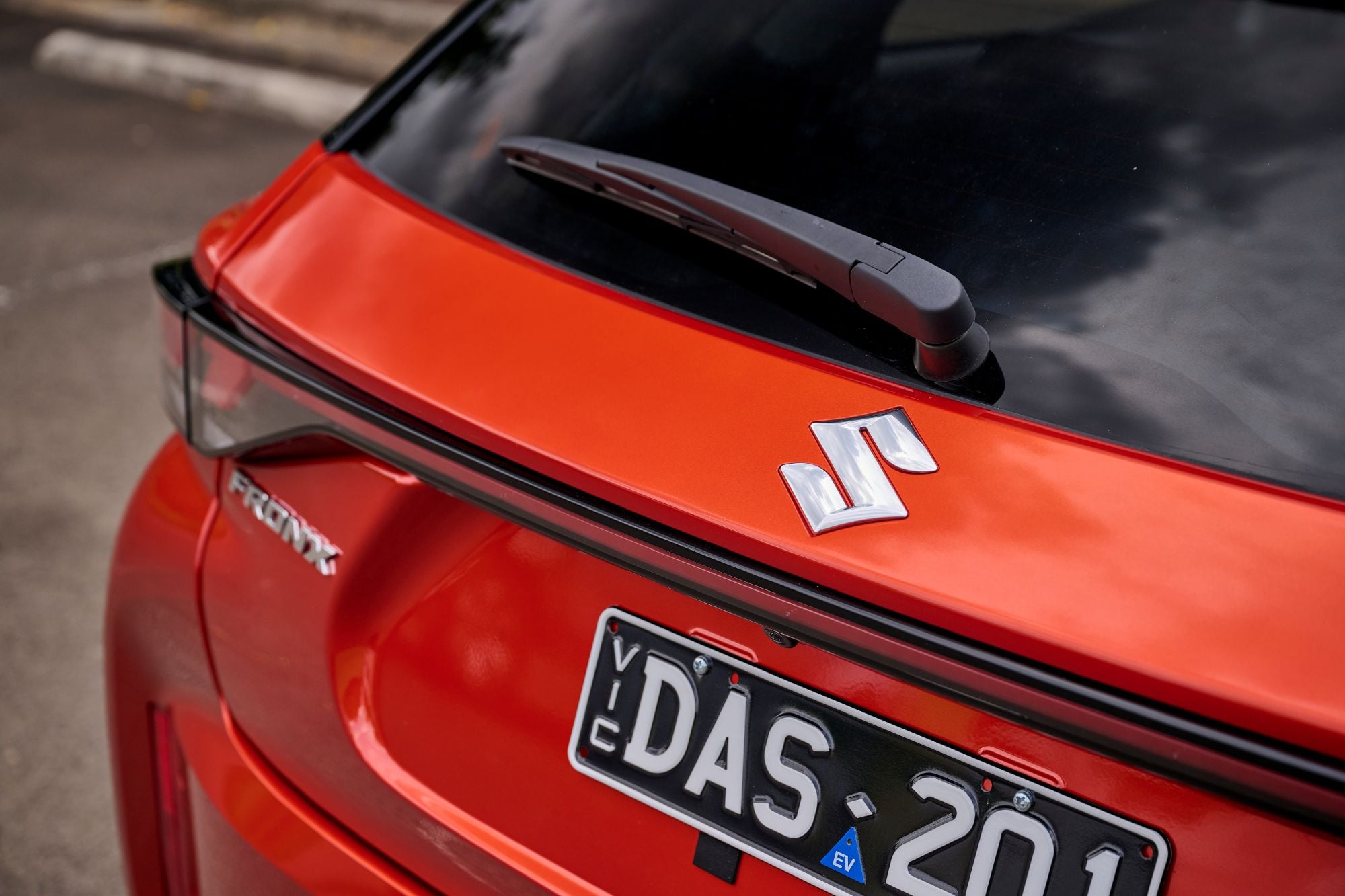
Adding a striking shade of Lucent Orange metallic paint, complete with what Suzuki calls Bluish Black on the roof, adds $1115 to the bottom line, boosting the drive-away price to in excess of $33k. There are six optional colours in the Fronx palette, priced at either $1115 with a blue-black roof or $745 without. Like the Mahindra, if you don’t want to spend for flash paint, you’ll be parking a white Fronx in your driveway.
So far, so conventional then – front-wheel drive, petrol, compact SUV. But what about budget-conscious buyers looking to transition into electric motoring? The field of affordable electric cars has been reasonably fallow until this year. But now, with the likes of Chery, Leapmotor and MG, the under
forty-thousand-dollar plain has grown fertile.
3
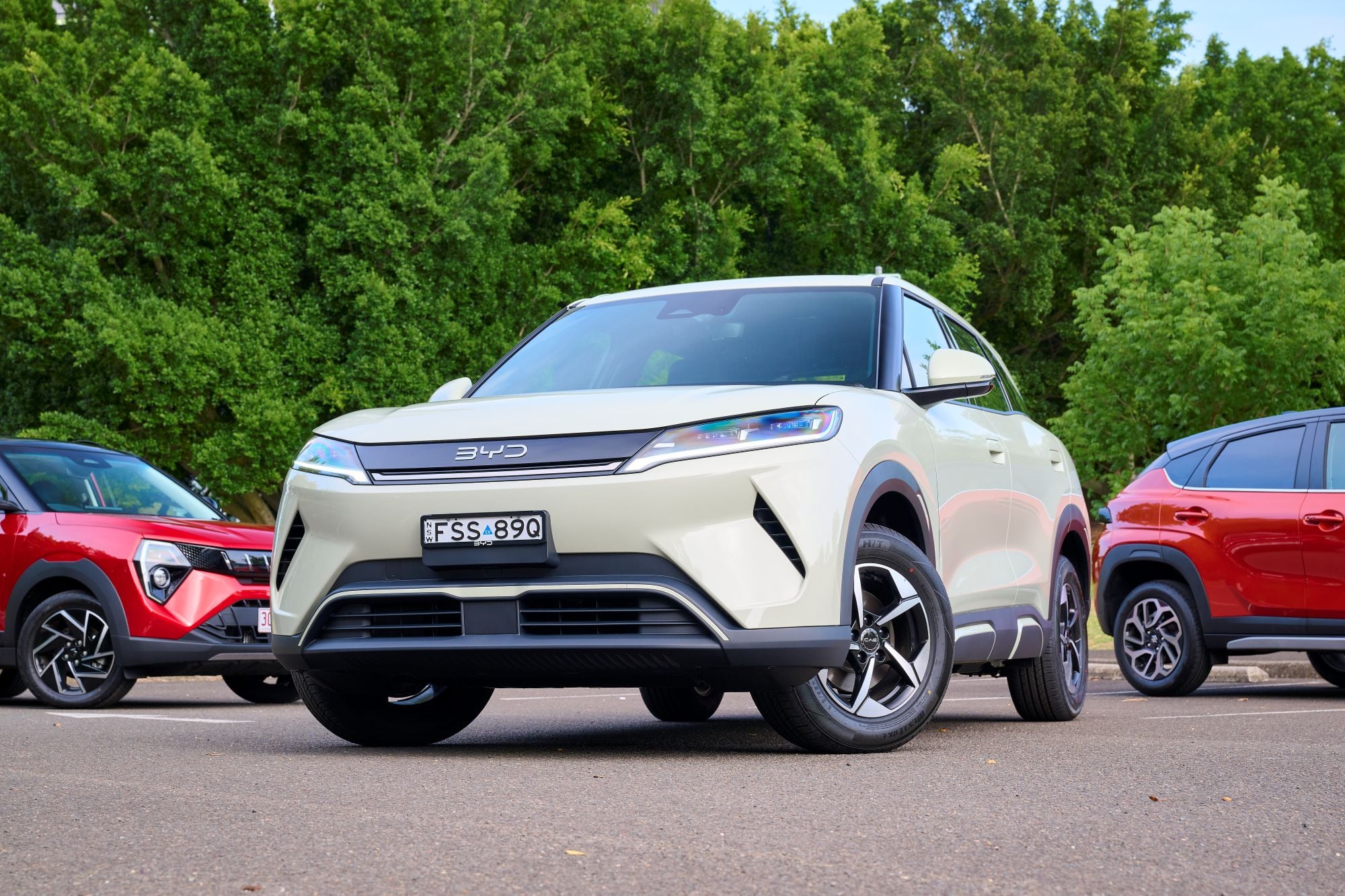
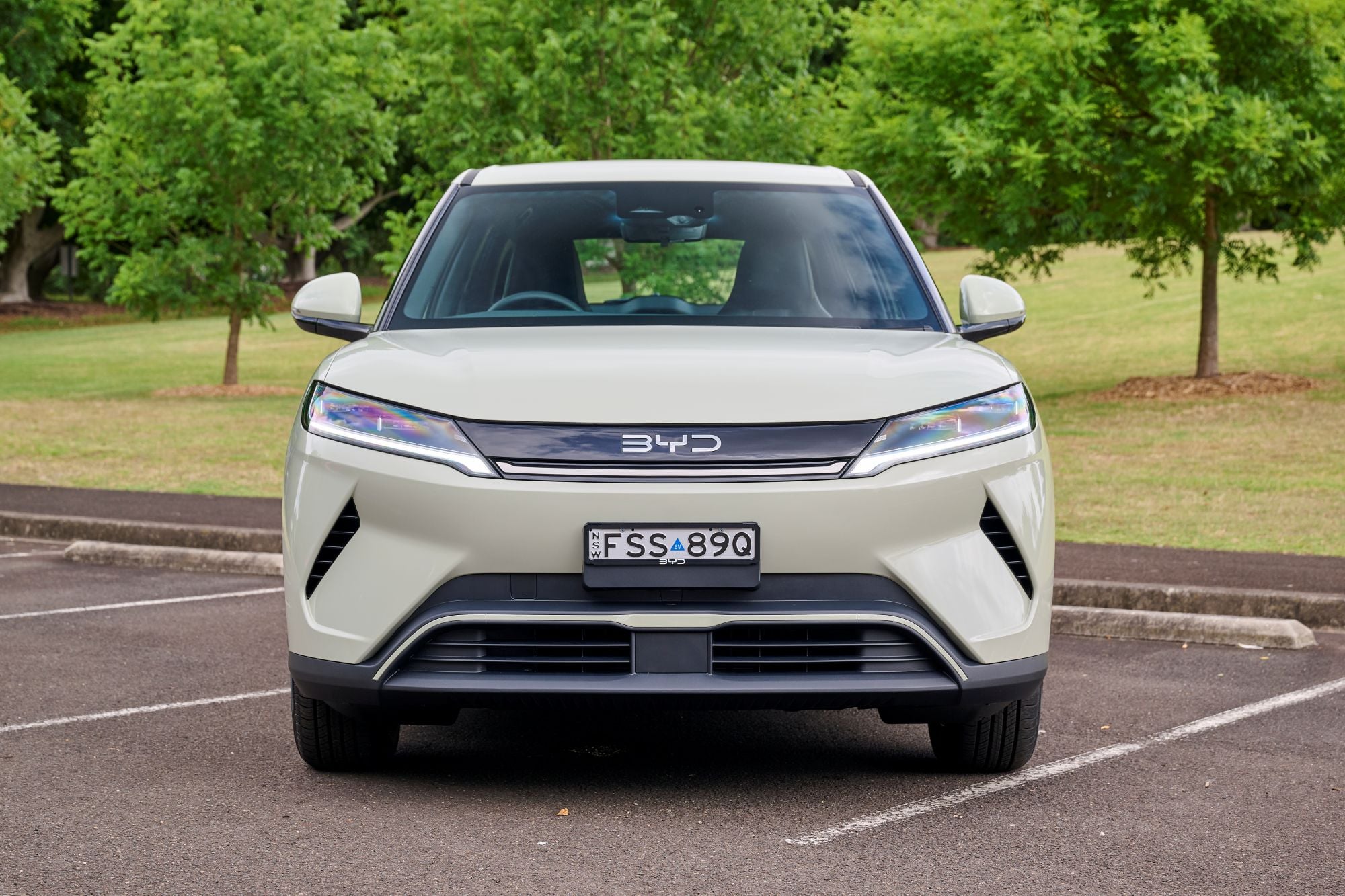
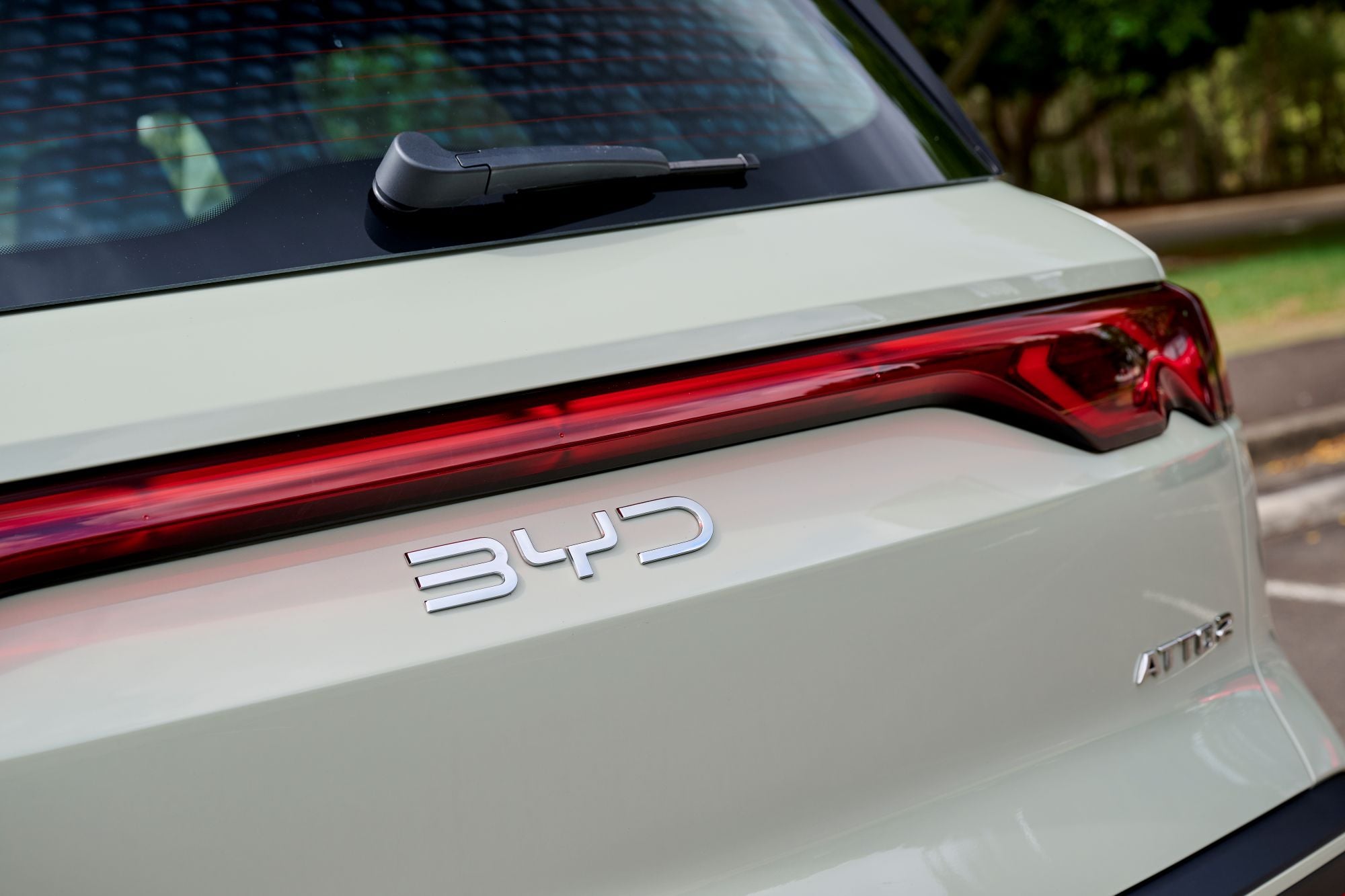
Enter the recently-arrived BYD Atto 2 which slots into place as the most affordable electric SUV yet in Australia. Its $31,990 list price translates to around $35,000 in your driveway, a pricepoint that seemed almost unthinkable just a few short years ago when buyers needed to budget – at a minimum – around $60k for the right to feel smug and smarmy with their automotive choices.
But the onslaught of affordable EVs from China has seen a seismic shift in the market and today, feature-laden EVs under forty grand are becoming ever more common. We tried to wrangle the even more affordable BYD Atto 1 for this test, a cutesy compact electric hatchback with a list price of just $23,990 before on-road costs, or around $26k drive-away, a clear indication of just how far the EV game has come. But with none available in time for our comparison, we opted for Australia’s most affordable electric SUV, in keeping with the theme of the majority of Aussie buyers.
3
Like its rivals here, the BYD Atto 2 brings its budget-friendly A-game when it comes to standard gear: 16-inch alloy wheels, synthetic leather seat trim, an 8.8-inch digital instrument display, 10.1-inch infotainment touchscreen with wireless Apple CarPlay and Android Auto, and a claimed driving range of 345km from its oddly-specific 51.13kWh battery.
It misses out on little compared against its rivals here, with a meagre four-speaker stereo and a simple rear-view camera as opposed to the 360-degree view cameras of the other two.
Our tester, finished in what BYD calls Mist Grey but is, in reality, a shade of very light yellow-green with just a hint of grey, adds $600 to the final price. It’s one of three $600 optional colours while the only no-cost shade of paint is, you guessed it, white.
As a small, rather than light, SUV, the Atto 2 is larger than its rivals. And that translates to a slightly more spacious cabin, although the contrast is not as stark as you might imagine, with all three bringing a level of space and comfort in the second row belying their compact dimensions, with the BYD just edging its competitors here.
None of our trio have rolled the arm over when it comes to cabin design, with all three featuring
interior flourishes that work hard to dispel the idea that budget means ‘cheap’.
3
It’s the Suzuki Fronx, though, that feels the cheapest, with plenty of hard, scratchy plastics on display and an overwrought design that feels like it’s trying a little too hard. The dashboard, as an example, comprises four different textures, colours and layers of materials that simply doesn’t gel.
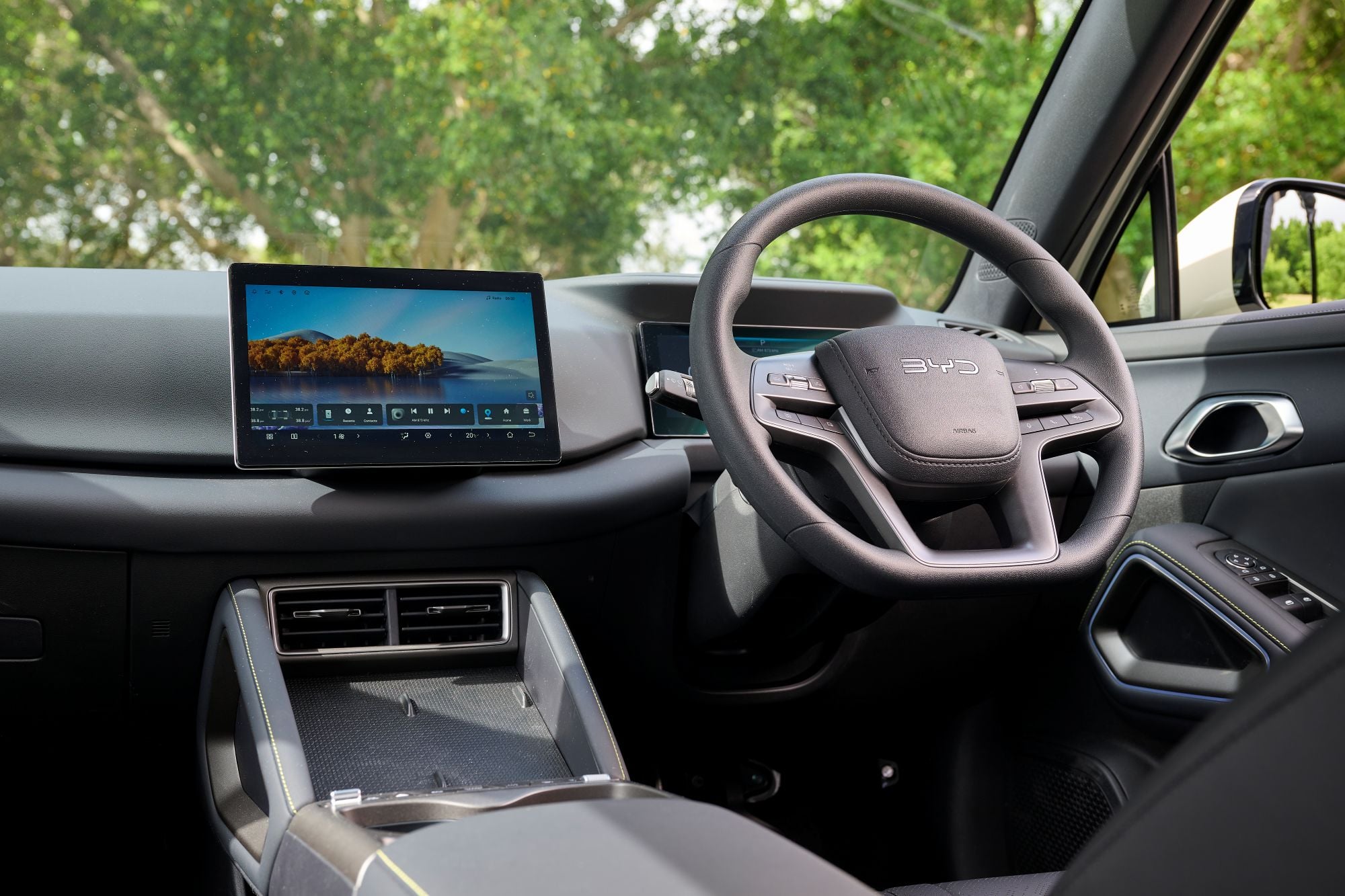
It’s in stark contrast to the BYD which adheres to the minimalist approach EVs are increasingly known for with softer materials and clean, uncluttered lines that bring a sense of calm to the cabin even if ergonomics take a backseat to the infotainment screen that houses most of the Atto 2’s primary functions, such as climate controls. Both the Fronx and Mahindra bring physical dials, and switches to the air-con party.
Sitting between the busy-ness of the Fronx and the sleekness of the BYD, the Mahindra, despite being the most affordable of our three, feels the most screwed together with a solidity not always found in budget buys. A pleasant mix of soft-touch materials, including across the top of the dash, are highlighted by contrast stitching that looks more premium than a $27k driveaway SUV should.
There’s arguably a little too much gloss back on show, attracting unsightly fingerprints and smudges at an alarming rate. But overall, the Mahindra wins for not trying too hard with its design while feeling the most solid of our three combatants.
The Mahindra also scores points for being the only one of the three with a spare wheel and tyre package, even if it is a space saver. The Suzuki and BYD are equipped with tyre repair kits which in our experience in the past are next to useless. The Fronx, especially, scores a kick for having the space under its boot floor for a spare wheel, a space filled in with a wheel-shaped polystyrene blank. The mind boggles.
In terms of boot space, it’s the BYD that comes up trumps with a claimed 380L/1320L, edging the XUV 3XO’s 364 litres at a minimum (Mahindra doesn’t quote a figure with the second row folded in 60:40 split fashion). Suzuki says the Fronx’s boot can take 305L/1009L, giving the edge in this metric to BYD.
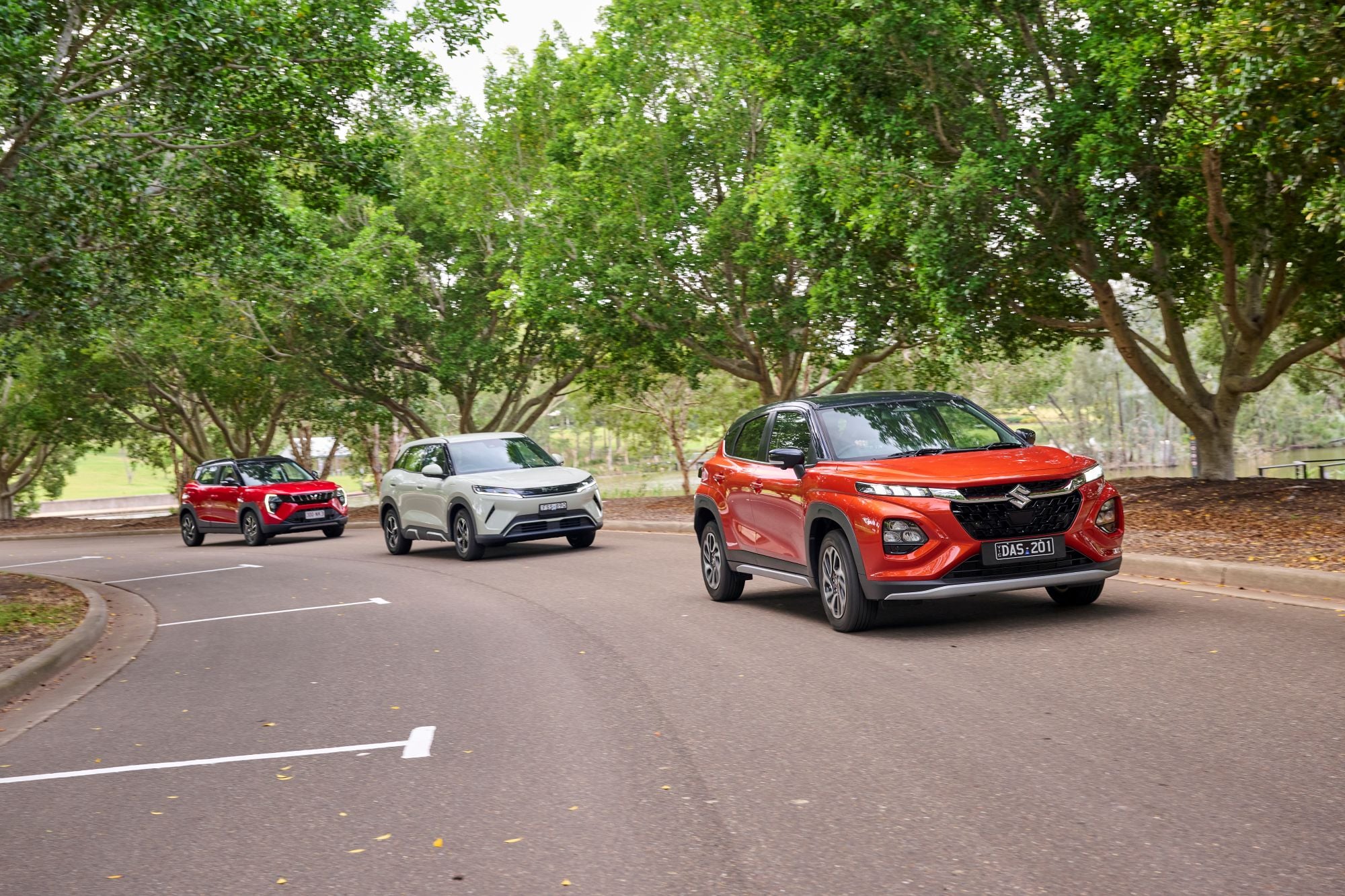
Under the bonnet is where this battle of the budget-busters will be won. And first up, the so-called ‘hybrid’ Suzuki Fronx. Power comes from a 1.5-litre naturally-aspirated four-cylinder making 76kW at a peak of 6000rpm and 137Nm peaking at 4400rpm. Neither of those numbers are particularly impressive with performance best described as adequate. There’s good initial response from standstill, certainly enough to lope along with the urban flow. But once speeds climb, the high rpm count needed for any meaningful power and torque urgency from the four-pot results in a thrashy and noisy experience behind the wheel, exacerbated by excessive tyre roar at motorway speeds.
1
That’s exacerbated even further by the six-speed automatic which is fine for the most part, but has a tendency to hunt lower gears when faced with even the mildest incline, resulting in more revs and more noise inside the cabin, not exactly pleasant.
Ride comfort is acceptable, gobbling up minor bumps and lumps commendably, although there is a tendency for the little crossover to wobble on its wheels when larger obstacles, such as speed bumps, get in the way.
The steering feels nice and light but can be a little busy at freeway speeds, the Fronx tending to wander in its lane, requiring constant micro-inputs to keep it on the straight and narrow.
Suzuki has bundled in a comprehensive suite of safety assist systems and they work nicely for the most part with little over-zealousness in its policing, the main bugbear being with the integration of lane-keeping assist which tended to tug at the wheel more than what felt comfortable. And I did find adaptive cruise control a little unsophisticated, with a tendency to surge in speed before slowing down to maintain some semblance of the set distance to the car ahead. Think taxi-driver foot.
1
Despite the presence of six airbags and a full suite of advanced driver assist and safety tech, the Fronx, like the rest of this trio, remains untested by Australia’s independent safety authority, ANCAP (at time of testing – see end of this article for the link to an update on the Fronx’s unfavourable ANCAP result, which in December caused Suzuki to temporarily withdraw the vehicle).
Suzuki claims a miserly fuel consumption figure of 4.3L/100km but our testing returned an indicated 7.8L/100km, far higher than Suzuki’s lofty claim. And that’s despite the Fronx being marketed as a ’hybrid’ which is a bit of a furphy as the 12-volt mild-hybrid system offers little in the way of efficiency benefits. A bit cheeky to plaster a ‘Hybrid’ badge on the tailgate.
The Fronx’s noisy manners are in stark contrast to the BYD Atto 2’s which, thanks to its battery-electric powertrain, remains remarkably quiet and composed. Power comes from a single 130kW/290Nm electric motor driving the front wheels. And immediately it feels more urgent, with that hallmark instant responsiveness from take-off and a nice dollop of rolling acceleration at higher speeds.
Ride comfort is decent too, with minor imperfections doing little to unsettle the small SUV while speed humps and the like are traversed with the assuredness of a mountain goat.
It’s a shame then that the BYD is shod in el-cheapo Westlake-branded rubber which more than once showed a propensity to break traction under harder acceleration, even in dry conditions. One can only imagine what it would be like in the wet. Both of its rivals wore far superior Goodyear Triplemax 2 hoops. The Westlakes were a blight on what was an otherwise pleasant time behind the wheel, with brisk performance and lovely road manners, all wrapped up in a serene and quiet cabin that doesn’t overly tax the senses, exactly what buyers would expect from an EV.
1
Like its rivals, the Atto 2 remains untested by ANCAP. It’s fitted with six airbags while a full complement of safety assist systems blurred the line between helpful and annoying, the latter punctuated by the now almost expected beeping and bonging that so infuriates.
The Atto 2 claims a driving range of 345km, based on WLTP laboratory testing, using energy at a rate of 14.8kWh/100km. Our real-world testing returned an indicated 14.8kWh/100km. BYD says the battery can be replenished from 10 to 80 per cent in 39 minutes at a maximum DC rate of 82kW. AC charging is capped at 7kW and will result in a recharge time of around 8h20m.
The surprise package here was the Mahindra XUV 3XO, not least of all because of that charmingly characterful 1.2-litre turbo three-cylinder under the bonnet. With outputs of 82kW at 5000rpm and a decent 200Nm from a very usable 1500-3500rpm, all channelled to the front wheels via a six-speed automatic transmission, the Mahindra has little trouble in moving away briskly from standstill, all with a distinctive thrum from that willing three-pot under the bonnet.
Rolling acceleration is good too, peak torque coming on song at just 1500rpm and remaining in play all the way up to 3500rpm. That results in a willing and eager burst of speed that feels more refined and less strained than its petrol-powered rival here.
The six-speed auto is smooth in its application too, shuffling through the ratios smoothly and effectively, and with the knack of finding the right cog for the situation. It’s a far smoother ’box than found in the Fronx, matched by a more willing engine that doesn’t run out of steam at freeway speeds. That’s underscored by its well-tuned suspension bringing composure and comfort in equal parts, with excellent ride comfort even over some of our scrappier surfaces.
Is it on a par with the Atto 2? Not quite, but it’s not too far removed, the little compact crossover navigating larger obstacles commendably. The steering is sharp and direct, remaining true on centre with none of the vagueness of the Fronx’s setup, and with a lightness that will be appreciated when parking the compact SUV in tight spots.
The Mahindra does miss out on a couple of key safety technologies – the only one of the three without blind-spot monitoring and rear cross-traffic alert. But the systems are nicely calibrated, and don’t intervene needlessly, while its symphony of chimes and audible warnings are not as strident as some. Like its competitors, it remains untested by ANCAP.
1
Mahindra claims the XUV 3XO will use 6.5L./100km of regular unleaded and while our test didn’t quite match that claim, an indicated return of 7.6L/100km, slightly biased towards urban driving, is acceptable. Expect that number to come down with more freeway driving.
So which one wins? Applying the ‘affordable’ blowtorch to our trio of compact and small SUVs can only end in one outcome. At $26,990 drive-away, the XUV 3XO trumps its rivals on price and
by some margin. And it does so without compromising on quality.
Yes, the Suzuki’s exterior design looks more resolved, but it’s let down by a cabin that tries too hard and a powertrain that lacks not only punch, but finesse. That it’s almost five-grand more than the Mahindra on the road is the knock-out blow.
The BYD Atto 2 brings EV motoring to the masses and does so with an easy-to-drive and approachable package that won’t threaten newcomers to the world of electric motoring. But a few too many brickbats among the bouquets counted against it in the reckoning, most tellingly the price disparity of around $8000. That’s a big jump at this end of the new car market, one that could well be out of reach for many buyers, leaving the Mahindra to take the spoils here.
From its well-built quality cabin – big on space despite its diminutive stature and filled with the tech and creature comfort modern buyers expect – to a willing powertrain and a well-sorted suspension tune that brings comfort and compliance to a segment not always known for it, the Mahindra XUV 3XO is the clear winner here.
Specs
1
| Model | Mahindra XUV 3XO |
|---|---|
| Price | $26,990 drive-away |
| Engine | 1.2-litre turbocharged three-cylinder petrol, FWD |
| Power | 82kW @ 5000rpm |
| Torque | 200Nm @ 1500-3500rpm |
| Transmission | 6-speed automatic |
| L/W/H/WB | 3990/1821/1647/2600mm |
| Kerb weight | 1410kg |
| Fuel consumption | 6.5L/100km (claimed) 7.6L/100km (tested) |
| Boot size | 364L |
| 0-100km/h | N/A |
| Warranty | 7 years/150,000 km |
| Servicing | 12 months/10,000km 1st year then 12 months/15,000km |
| Servicing costs | $1994 six years/85,000km |
| Overall rating | 7.5/10 |
1
| Model | BYD Atto 2 |
|---|---|
| Price | $31,990 plus on-road costs |
| Engine | Single electric motor, FWD |
| Power | 130kW |
| Torque | 290Nm |
| Transmission | Single-speed |
| L/W/H/WB | 4310/1830/1675/2620mm |
| Kerb weight | 1556kg |
| Battery size | 51.13kWh |
| Energy consumption | 14.8kWh/100km (claimed); 14.8kWh/100km (tested) |
| Driving range | 345km (WLTP) |
| Boot size | 380L/1320L |
| 0-100km/h | 7.9s |
| Warranty | 6 years/150,000 km |
| Servicing | 12 months/20,000km |
| Servicing costs | TBC |
| Overall rating | 7.4/10 |
1
| Model | Suzuki Fronx Hybrid |
|---|---|
| Price | $28,990 plus on-road costs |
| Engine | 1.5-litre naturally-aspirated four-cylinder petrol, FWD |
| Power | 76kW @ 6000rpm |
| Torque | 137Nm @ 4400rpm |
| Transmission | 6-speed automatic |
| L/W/H/WB | 3995/1765/1550/2520mm |
| Kerb weight | 1064kg |
| Fuel consumption | 4.3L/100km (claimed); 7.8L/100km (tested) |
| Boot size | 305L/1009L |
| 0-100km/h | N/A |
| Warranty | 5 years/unlimited km |
| Servicing | 12 months/15,000km |
| Servicing costs | $2005 five years/75,000km |
| Overall rating | 7.1/10 |
Note on the Suzuki Fronx: Suzuki issues safety recall for Fronx Hybrid following brutal ANCAP assessment
This article first appeared in the January 2026 issue of Wheels. Subscribe here and gain access to 12 issues for $109 plus online access to every Wheels issue since 1953.
Follow WhichCar/Wheels on Google
Click the button below to make WhichCar by Wheels a preferred source for your news.


We recommend
-
 Comparisons
Toyota Corolla vs Hyundai i30 spec battle: Which hybrid small sedan is best?
They're some of the cheapest cars to run but which hybrid small sedan is the best buy? Let's find out.
-
 Comparisons
Popular hatchbacks comparo: Hyundai i30, Mazda3 and Toyota Corolla face off
What’s the best hatchback you can buy on a $40k budget? It’s a simple question. The answer? That’s not quite so straightforward.