
Opinion

Gallery 1
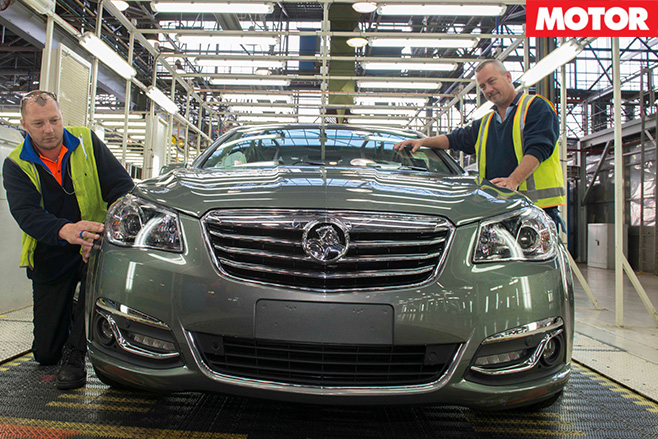
Attica in Melbourne is one of the southern city’s more exclusive eateries. Tables are booked for months in advance, the food is special, and it’s easy to rack up a bill of more than $300. Each.
Why, then, is my memory of Attica so toxic? These days I cannot remember the date of the dinner, only the revelation which poisoned the event for me.
It’s wrapped up in the death of the Australian car industry, something which is still painful today because
I was watching the train wreck happening in real time as a reporter on one of Australia’s daily newspapers. I knew all the key players, could see what was happening, and was powerless to do anything but write the ongoing horror stories.
And it was not new. Nissan failed in Australia as the result of a misguided decision to try and force-feed the baby Pulsar into local driveways to avoid Federal government penalties for not reaching a specific local production target. Mitsubishi was buried by a misguided belief that the mid-sized 380 sedan was so good that it could not fail and would out-sell the Falcon and Commodore.
1
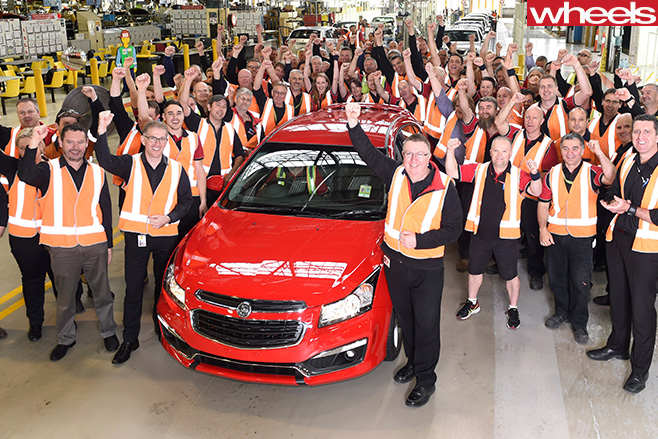
There were other failures, like the Ford plan to build the Laser in Australia for Asian exports and Holden’s promising efforts with a Pontiac-badged Commodore and a long-wheelbase Statesman for US police – which both tanked in the fallout from the Global Financial Crisis. Australia was looking more and more isolated and out-of-step with global developments.
There were some heroes among the FI-FO chief executives who landed in Australia, including Peter Hanenberger and Mark Reuss on the red team, but far too many just served time to get their next promotion.
Back to Attica, and a dinner date with Mike Devereux during his three-year stint as CEO of Holden from 2010. His arrival came as the product plan developed by Reuss, including sales of the Commodore as the Chevrolet SS in the US, ran dry. The cupboard was empty.
As the first food arrived, the answers to the pointed questions I was asking my host about the future of Holden in Australia were not filling me with confidence. By dessert, I was pretty sure Holden in this country was doomed.
Since Aussie car making was like a three-legged stool, I also knew once the GM leg snapped then Ford and Toyota would follow. In December 2013, before he headed to his next job in China, Devereux announced the end of Commodore production.
1
My personal view is that the actual death warrant for Australian car making was signed by Julia Gilliard, even if the execution came during the rule of Tony Abbott in Canberra. During a Labor party fracas it was Gilliard who moved Senator Kim Carr, the Industry Minister, to the backbench during crucial negotiations about a future car plan for Australia.
Could Ford have done another Territory, could Holden have developed an SUV from the Commodore platform, and could Toyota have switched from the Camry sedan to a locally-made SUV? We’ll never know, because the negotiations between Canberra, Detroit and Tokyo all stalled. They could not be revived when Carr returned to the Labor ministry in time to watch Rudd lose the Federal election to the Coalition’s Tony Abbott.
The story ends with a pivotal meeting in Canberra between Abbott and the then-bosses of the three local carmakers. According to two of those CEOs, from Toyota and Ford, their first meeting with Abbott as Prime Minister did not go well. Actually, it never got going at all as he was totally against providing support for the motor industry.
“You people have to stop coming here with your begging bowls,” one of Abbott’s senior advisors reportedly told the three wise men from the car world.
Bang-bang. Game over. It was now just a question of time.
And Mike Devereux? According to his latest personal posting on Linked-In, the one-time graduate of
the Harvard Business School is now “Taking a break … I think”.
This article first appeared in the February 2026 issue of Wheels. Subscribe here and gain access to 12 issues for $109 plus online access to every Wheels issue since 1953.
Follow WhichCar/Wheels on Google
Click the button below to make WhichCar by Wheels a preferred source for your news.

We recommend
-
 Features
1953-57: Evolution of an industry
In the second of our series, Holden grows from strength to strength as Australia’s appetite for new cars booms
-
 Features
1963-67: The push for Australian-made
Holden pegs a production record for its most Aussie car yet, while the government encourages others to build vehicles here
-
 Features
1988-92: Australian automotive manufacturing hits hard times
Australia’s car industry struggled in the wake of the Button Plan, with Nissan the first of the Big Five to fall
