Features

Gallery 1
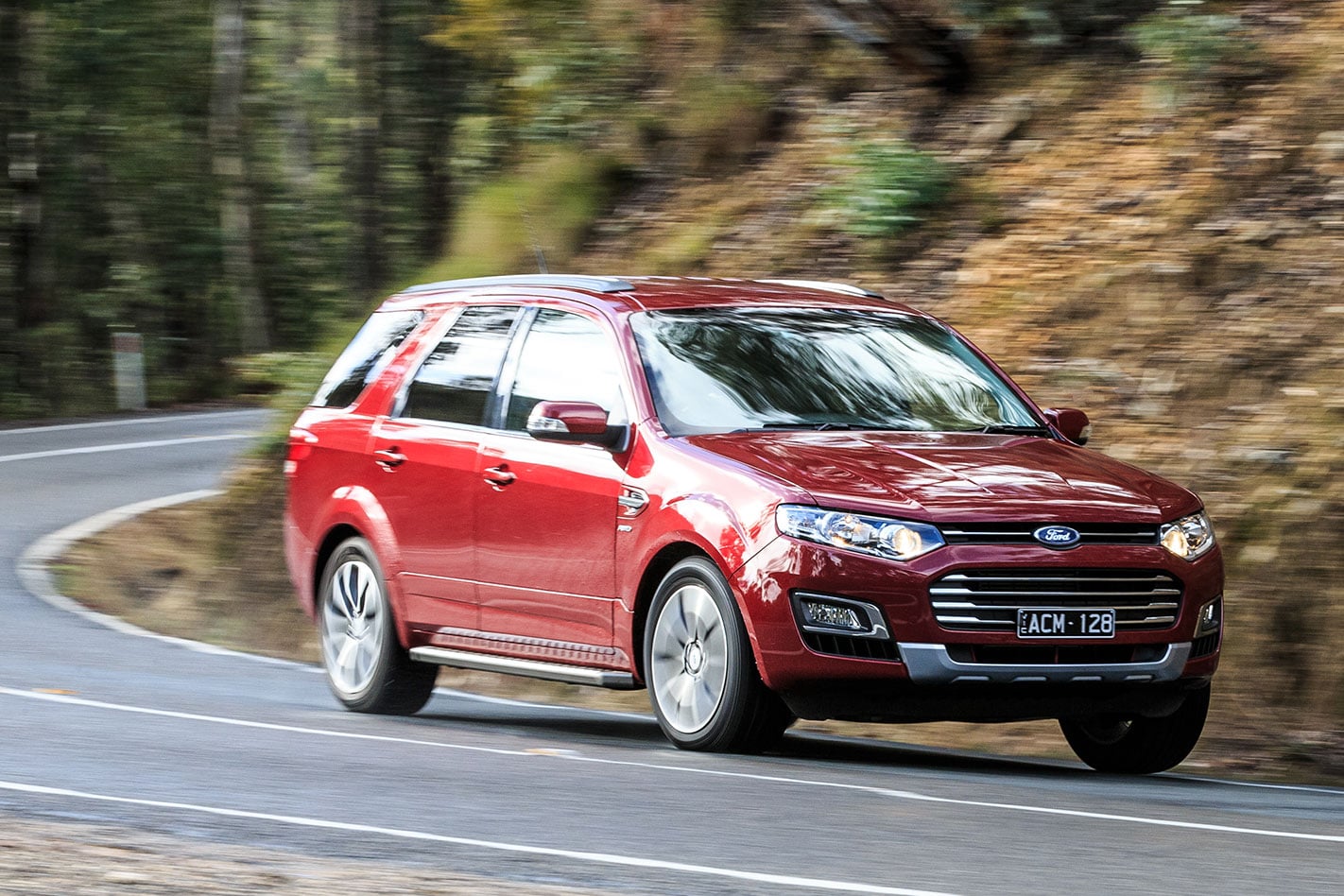
The Ford Territory was one of the brightest stars in Australian car manufacturing. When it went on sale in 2004, it was lauded for its BMW X5-like dynamics, spacious cabin, strong practicality and value for money. To get a similarly polished SUV at that time, you’d have to spend at least $30,000-$40,000 more, and it was something its Holden arch rival couldn’t match.
Almost 180,000 Territory models were made over its 12-year lifespan, which made it very popular, and many of them are still running around today. That got us thinking: What if Ford still made the Territory today? Thanks to AI, we can get a glimpse into a future that will never come to fruition.
Now, we should start off by saying that Ford does actually still make a Territory, but it’s not the Territory we know and love. It’s actually a small SUV that was co-developed with Ford’s Chinese partner JMC and is sold in many markets around the world like South America, South Africa and various Asian countries (including China).
4
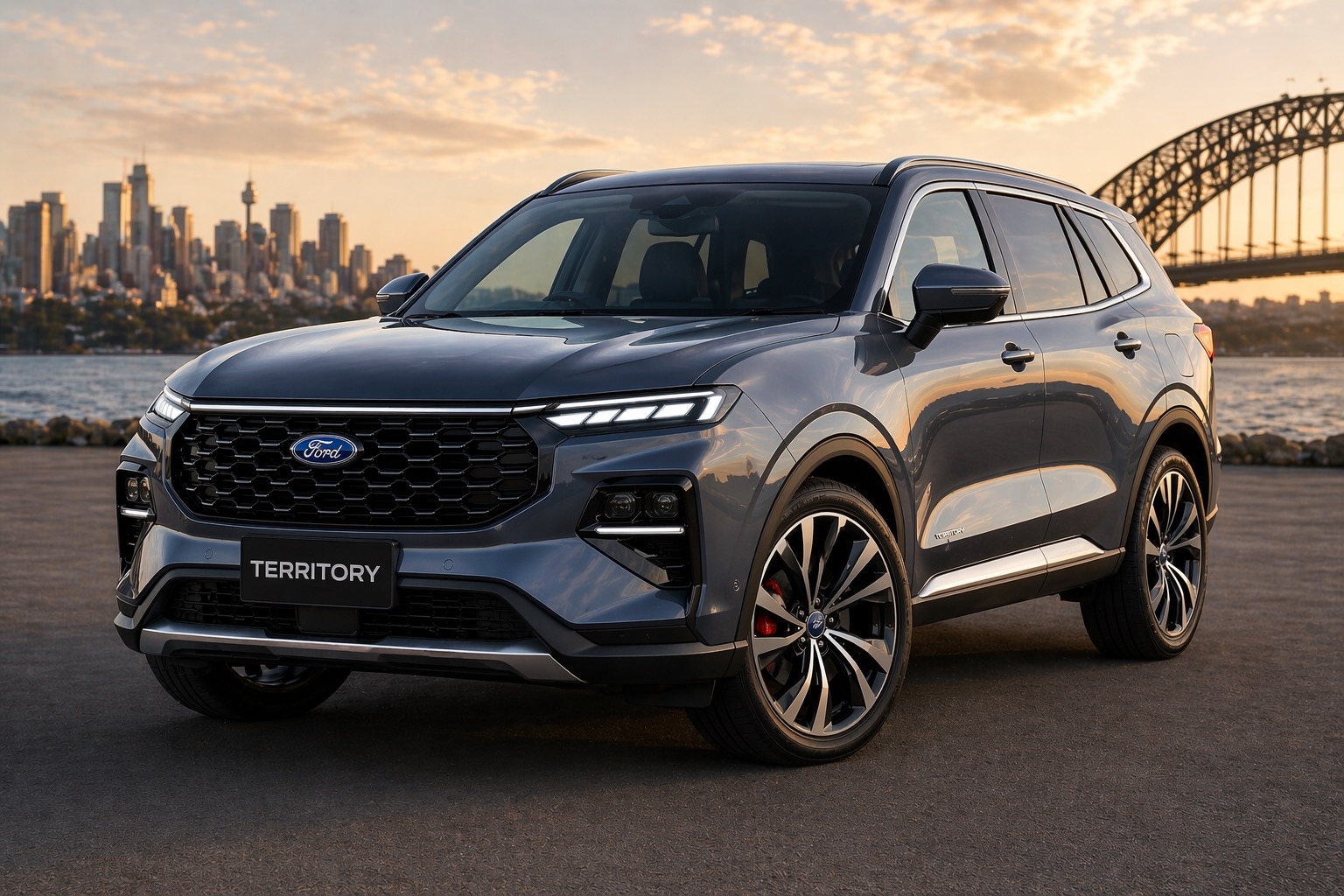
Unsurprisingly, given AI’s tendency to find similarly-named things to based ideas on, the new AI Australian Territory does have a resemblance to the Chinese Territory. But the Chinese Territory also uses Ford’s latest passenger car styling language which its current Chinese models like the Mondeo (yes, it’s still produced and sold there) also use.
Therefore, the new Australian Territory uses the same split headlight arrangement as the Mondeo and Chinese Territory, with a big grille and a wide stance to give it almost BMW-like proportions.
In its design brief, AI gave the following guide:
- Full-width LED light bar front + rear
- Strong shoulders (like original Territory)
- Slightly lower, more wagon-like roofline
- Big wheels (20–22-inches)
- Clean, muscular – not boxy like Everest
3
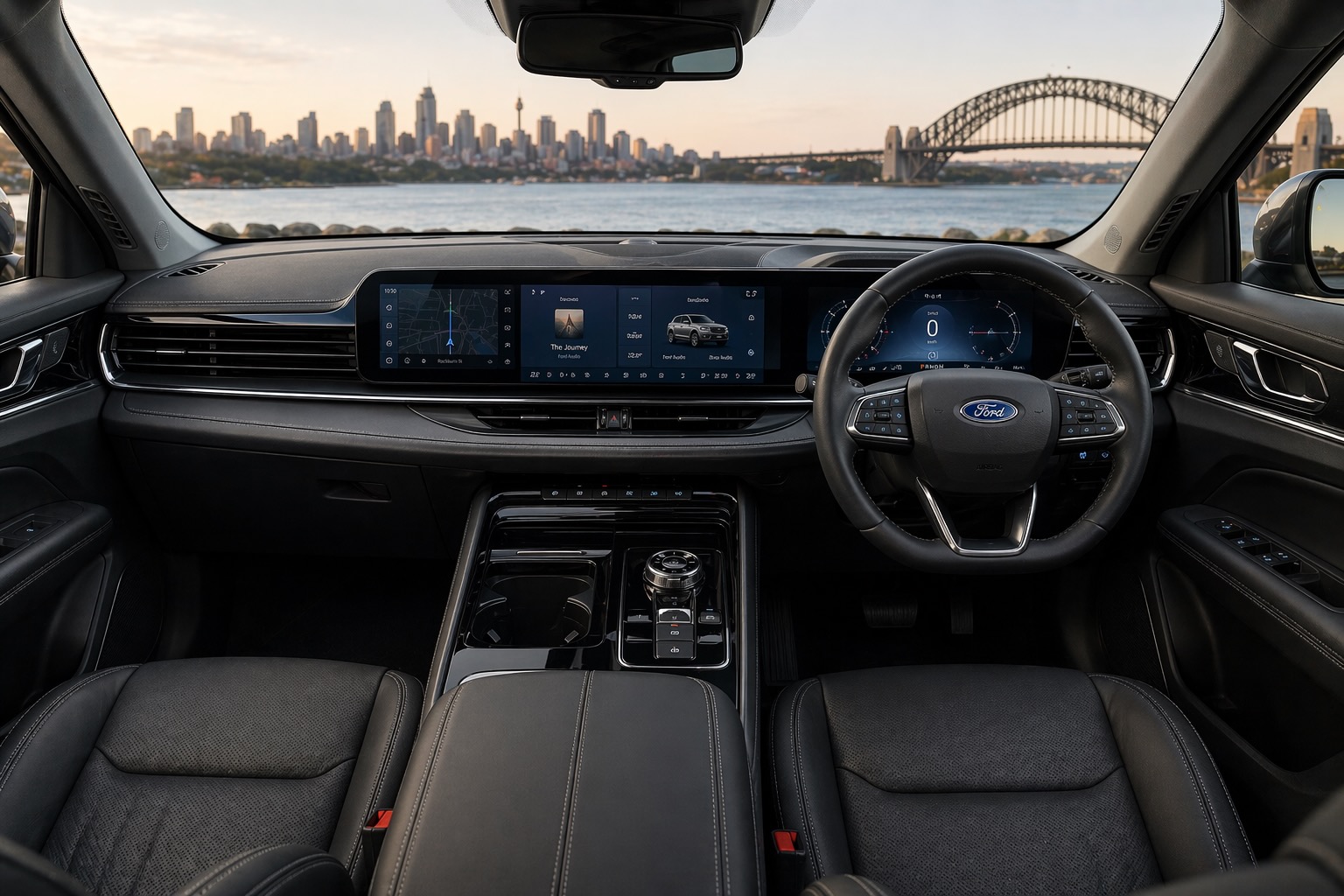
What it’s produced looks good, and like a modern day Ford product. More interesting is what AI suggested about the new Territory’s base:
- RWD/AWD architecture (think Ranger/Everest bones but lower and more road-focused)
- Independent rear suspension (no ute-style compromise)
- Long wheelbase for proper third row (not the “knees-in-your-chest” kind)
Using the Ranger/Everest’s platform is a surprise given that they are more off-road focused than the Territory ever was, but almost necessary given that the only other applicable platform in the current Ford empire – the ‘CD6’ that underpins the Explorer large SUV – is only produced in North America.
5
When asked what the model line-up for the new Australian Territory would look like and AI suggested the following:
- Entry-level Territory TX: 17-inch alloy wheels, LED headlights, Sync 4 with a 12-inch touchscreen, seven seats, 2.3-litre EcoBoost or optional V6 diesel.
- Mid-spec Territory TS: 19-inch wheels, dual-zone climate control, Sync 5 with a larger 13.2-inch touchscreen, power tailgate, 2.3-litre EcoBoost or optional V6 diesel.
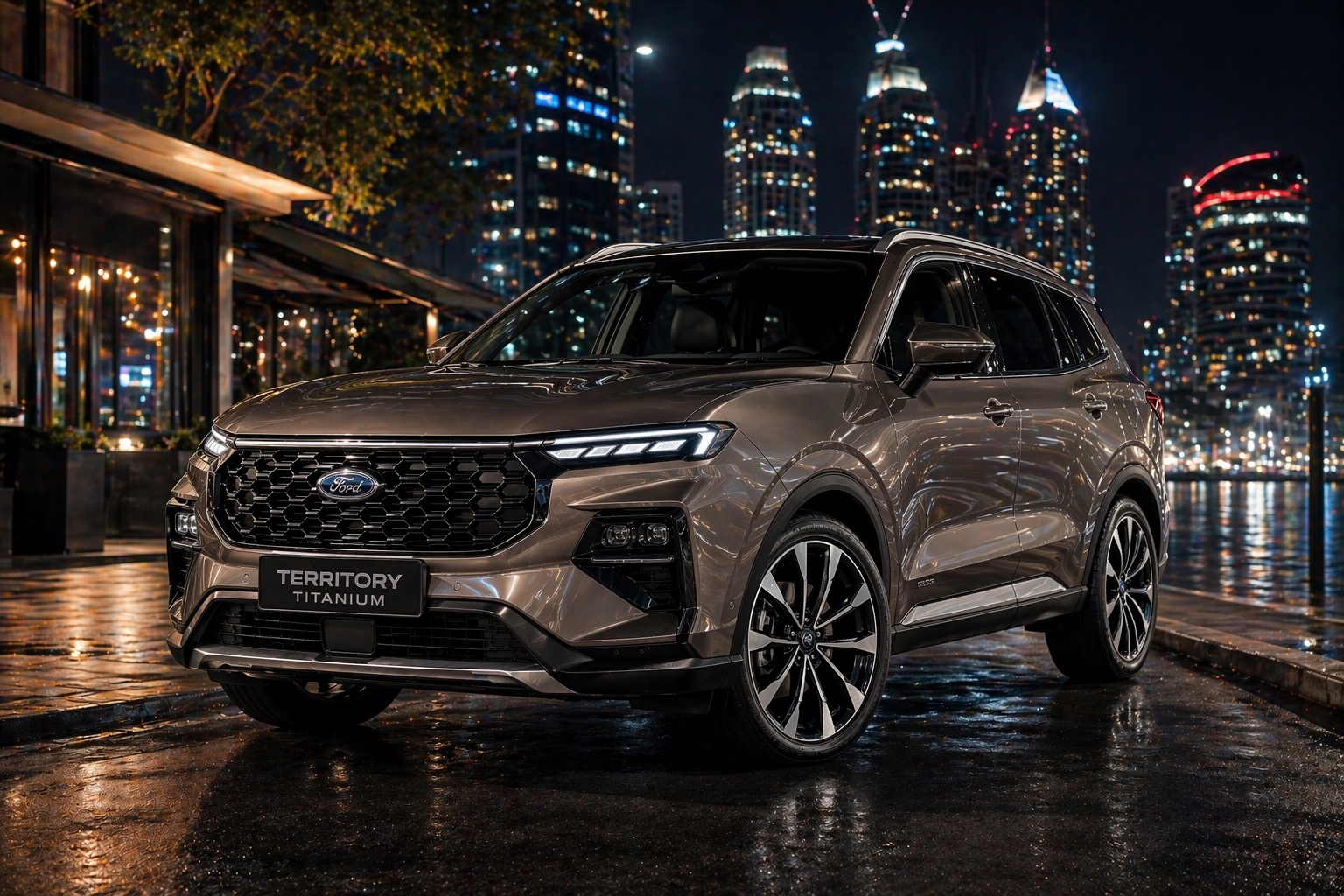
- Top-spec Territory Titanium: 20-inch wheels, B&O premium audio, heated leather seats, 360-degree camera, Matrix LED headlights, 2.3-litre EcoBoost or optional V6 diesel.
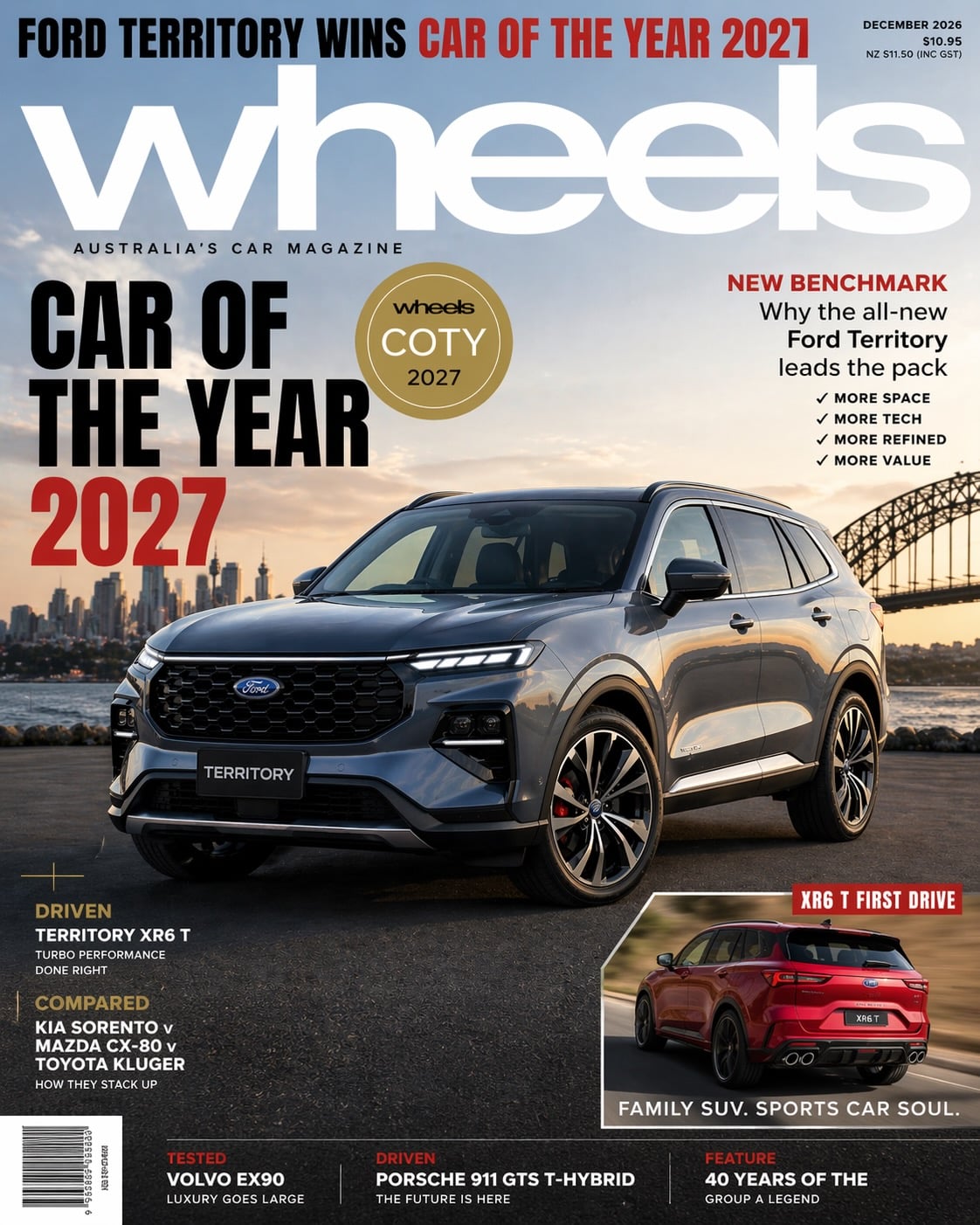
- Sporty Territory XR6 T: 22-inch wheels, bodykit, lowered suspension, quad tips, 3.0-litre EcoBoost V6 with mild-hybrid assistance.
As for drivetrains, the regular Territory range would use Ford’s 2.3-litre EcoBoost turbocharged four-cylinder petrol engine, which makes 222kW/450Nm in the Volkswagen Amarok (the Ranger’s twin), or an optional 184kW/600Nm 3.0-litre V6 turbo-diesel that the Ranger and Everest use.
In the Territory XR6 T, a new 3.0-litre inline six turbo-petrol (perhaps called Barra 2.0?) would be used, and while both rear- and all-wheel drive would be available in entry-level models, the XR6 T would no doubt feature the latter, likely with torque vectoring, as standard. Given its performance positioning, we’d expect the Barra 2.0 to produce around 300kW of power and 600Nm of torque, similar outputs to the turbo-V6 in the Ranger Raptor.
AI suggested that mild-hybrid assistance be standard across the range to help with efficiency and NVES compliance, and we have no doubt that the Ranger’s plug-in hybrid drivetrain would also be available.
3
AI also suggested an FPV variant of the new Territory, just like the former F6X, called the F6. The F6 naturally builds on to the Territory XR6 T with sportier styling, a bodykit, FPV badging, more power and larger wheels. Only 229 units of the old F6X were ever produced, and given the popularity of performance SUVs in 2026, we’d wager significantly more of the new one would be sold.
Alas, it’s very unlikely that a new generation of Australian Ford Territory will ever be built. But it’s fun – and slightly sad, we must admit – to use AI to imagine what it would look like if it ever were made again.
Given the excellent Everest’s similar positioning in the Ford line-up but with more off-road prowess, much of what made the Territory great is thankfully present in the Ford range. Sure, it’s not locally built and isn’t car-based, but the Everest is as close to the Territory as we’re ever likely to get again.
Follow WhichCar/Wheels on Google
Click the button below to make WhichCar by Wheels a preferred source for your news.

We recommend
-
 News
NewsFord Everest Wildtrak returns to line-up as limited edition for MY26.5
The Ford Everest Wildtrak will return to Australian shores, with 1000 units due to be produced from next month priced from $79,990 +ORC.
-
 News
News2026 Ford Everest upgraded with expanded V6 availability, new base model
Ford's large SUV has been updated ahead of mid-2026 deliveries with a new base model, new base engine and more standard equipment.
-
 Features
Driven to extinction: Rear-drivers become first victim of the NVES
The New Vehicle Efficiency Standard (NVES) introduced this year is causing some car-makers to discontinue certain models for Australia.