Reviews

Gallery 1
7.6
/10
Score
Score breakdown
9.0
Safety, value and features
7.0
Comfort and space
8.0
Engine and gearbox
7.0
Ride and handling
7.0
Technology
Things we like
- Bargain purchase price, low running costs
- Refined and punchy drivetrain
- Easily enough EV-only range for most
Not so much
- So-so ride and handling
- Slow touchscreen is cumbersome to use
- No spare wheel
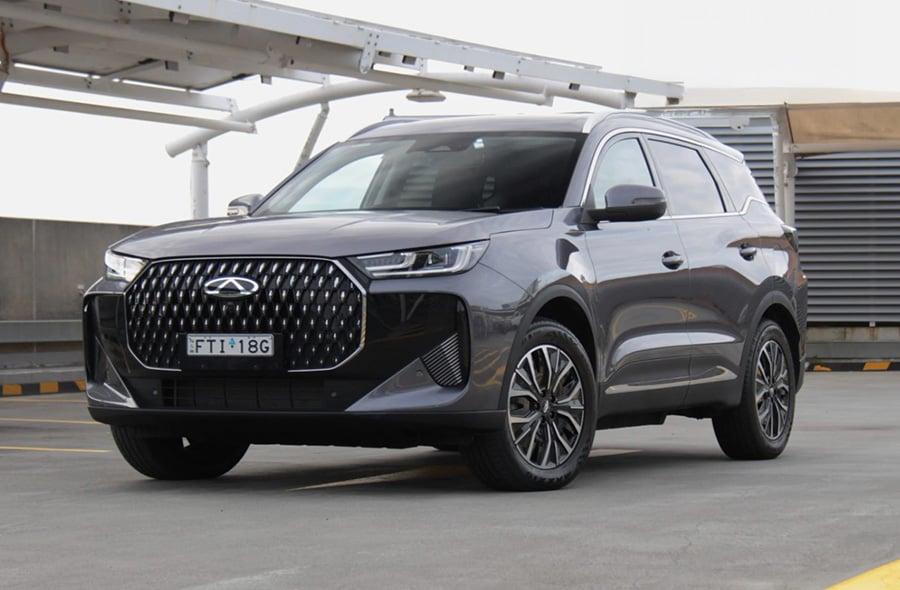
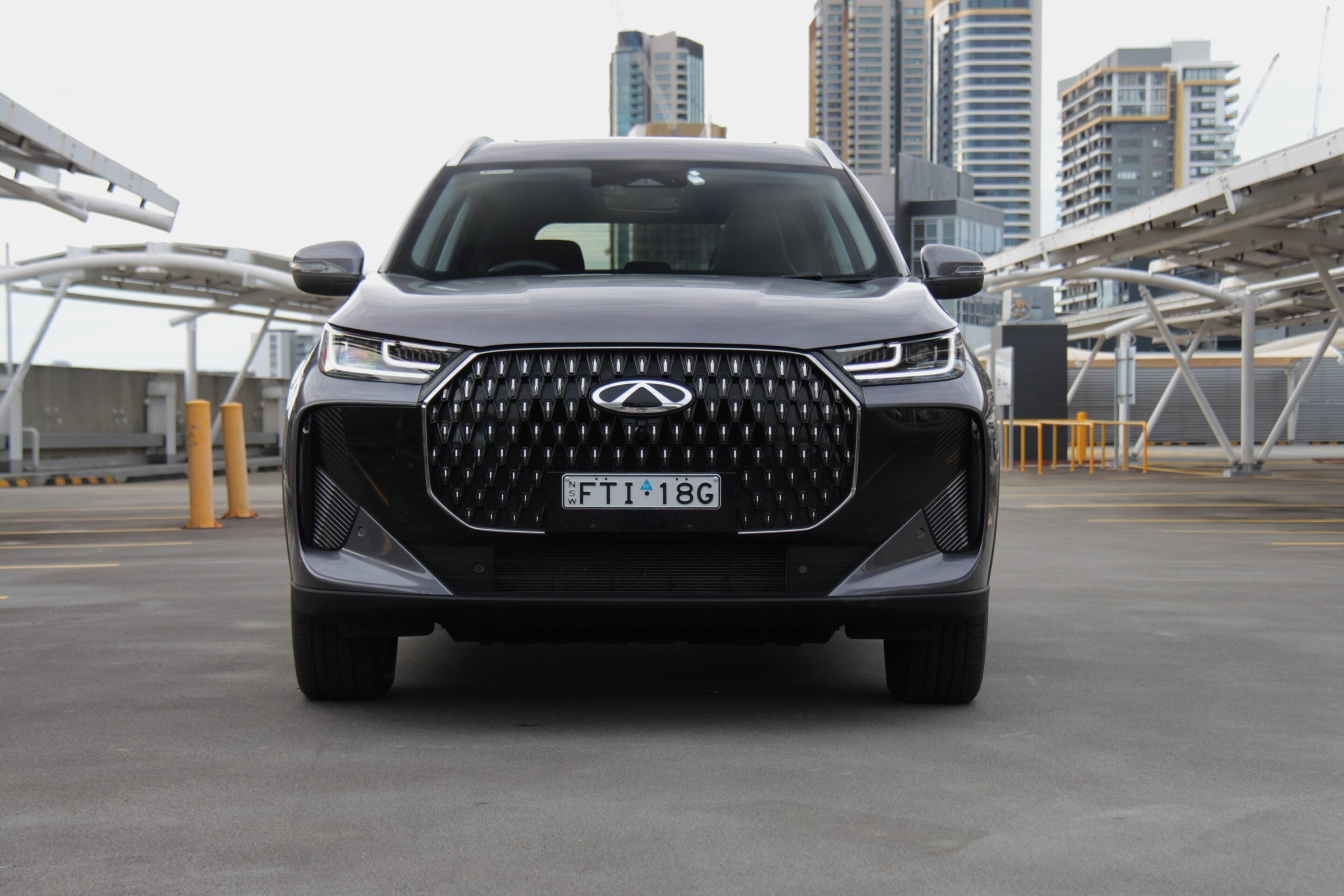
For years, plug-in hybrid vehicles promised the best of both worlds, but often came with a hefty price premium that put them out of reach for many buyers. But with the recent onslaught of Chinese ‘super hybrid’ models, plug-in hybrids are now far more accessible than they once were. One example of more recent PHEV affordability is the Chery Tiggo 7 Super Hybrid, which is actually the cheapest plug-in hybrid SUV on the Australian market.
But is its strong value equation alone enough to make it stand out in an increasingly competitive segment? Let’s find out.
How much does the Tiggo 7 Super Hybrid cost to buy?
The Tiggo 7 sells well in Australia because of its low pricing – the entry-level petrol Urban is priced from just $29,990 driveaway – and the plug-in hybrid ‘Super Hybrid’ is no exception. Pricing starts at $34,990 driveaway for the lower-spec Urban and $38,990 driveaway for the upper-spec Ultimate.
Pricing comfortably under $40,000 for a well equipped and practical plug-in hybrid medium SUV is a bargain and it’s no surprise to see Chery moving units in greater numbers in recent times.
4
2026 Chery Tiggo 7 pricing (driveaway):
| Urban | $29,990 |
|---|---|
| Ultimate | $33,990 |
| Super Hybrid Urban | $34,990 |
| Super Hybrid Ultimate | $38,990 (tested for this review) |
Having said that, there are also more rivals arriving to challenge the Tiggo 7. Since it launched in Super Hybrid form, new nameplates like the BYD Sealion 5 (priced from $33,990 plus on-road costs, so around $37,500 driveaway) and Geely Starray EM-i (priced from $37,490 plus on-road costs or around $41,000 driveaway) also launched onto the market.
Plus, there’s also the GWM Haval H6 in and MG HS available, both of which can be purchased in either Toyota-style regular hybrid or plug-in hybrid form. That decision comes down to personal preference as, for example, you can buy the new extended range version of the Starray with its claimed 136km WLTP EV driving range, but it will also cost you around $45,000 driveaway. Even though the Tiggo 7 Super Hybrid’s range isn’t as long as that, its pricing is also comfortably underneath.
How far can the Tiggo 7 Super Hybrid drive on a full charge?
The Tiggo 7 Super Hybrid features an 18.4kWh LFP battery, giving it an NEDC-rated electric-only range of 93km and a claimed total driving range of 1200km, both of which are healthy for a bargain medium SUV. In reality, we drove the Tiggo 7 Super Hybrid on a highway for our range testing and achieved 69km of pure electric range, and a trip to Yass and back to Sydney (around 600km) still returned half a tank of fuel afterwards, giving truth to Chery’s total range claim.
Chery claims a combined fuel consumption average of 1.4L/100km. Our trip to Yass, mostly at above 100km/h with some in-town driving as well, gave an average of 5.2L/100km (including the 69km of electric driving range). Considering that plug-in hybrids are theoretically at their worst in highway driving and that a regular hybrid medium SUV like a RAV4 will give similar if not worse consumption in similar conditions, it’s remarkable to see such low figures. Of course, add more charging and/or urban driving into the mix and consumption will fall even further.
4
Importantly for those who don’t have regular access to charging infrastructure, the Tiggo 7 Super Hybrid can be DC fast charged at up to 40kW, and Chery claims that a 10-80 per cent charge takes around 20 minutes at that speed. But it can also be AC charged at up to 7.4kW for a full battery charge in under three hours, which is perfect for those wanting to charge it overnight.
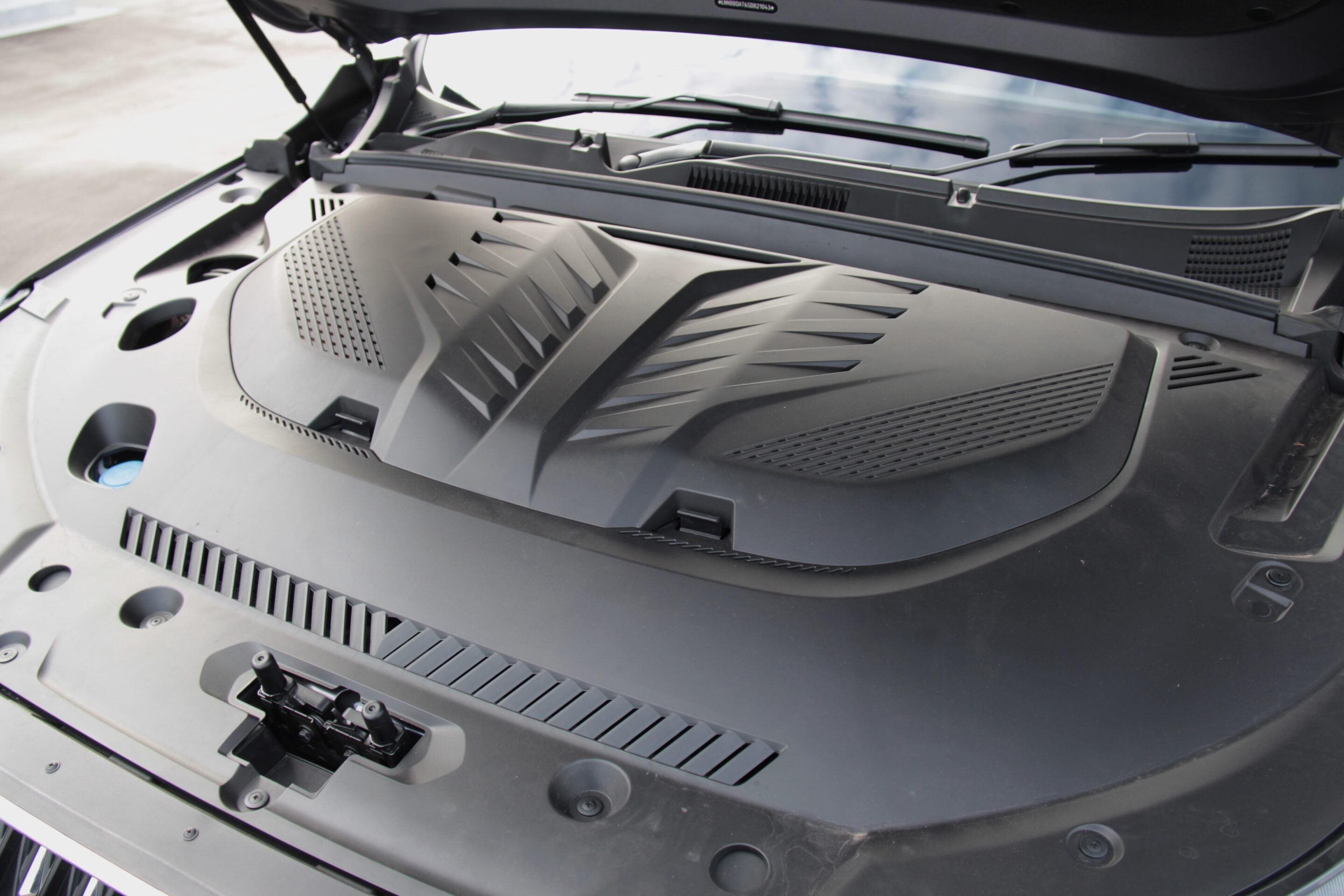
The Tiggo 7 Super Hybrid’s drivetrain combines a 105kW/215Nm turbocharged 1.5-litre four-cylinder petrol engine with a 150kW/310Nm front-mounted electric motor. Chery doesn’t quote combined figures, so if you think adding them together is the answer, well, no. The electric motor does most of the propulsion, giving the Tiggo 7 Super Hybrid a peppy and torquey feel most of the time – the petrol engine will kick in largely at highway speeds to charge the battery or provide extra grunt, and when it does, it’s quite refined. In fact, the Tiggo 7 is quite refined in general, with little in the way of road or engine noise.
Is the Tiggo 7 Super Hybrid good to drive?
As for dynamics, the Tiggo 7 Super Hybrid could still be improved. The steering is the biggest bugbear, offering not much in the way of feel… it’s just too artificial to give a proper sense of connection to the front wheels. The ride quality could also offer more consistency – around town, it’s a bit too firm so that even smaller bumps are felt more than they should be, but the body control is then a bit too soft so it takes a bit too long to settle after bumps. It’s better at highway speeds where it’s less bothered by even smaller bumps.
6
Thankfully, the Tiggo 7 Super Hybrid’s active safety features are more refined than when Chery first launched the model locally. In particular, the lane keeping assistance was too sensitive and always tried to fight you for control when it thought something was wrong, but it’s calmed down since then and was much less bothersome than previous iterations on our roadtrip to Yass.
How practical is the Tiggo 7 Super Hybrid?
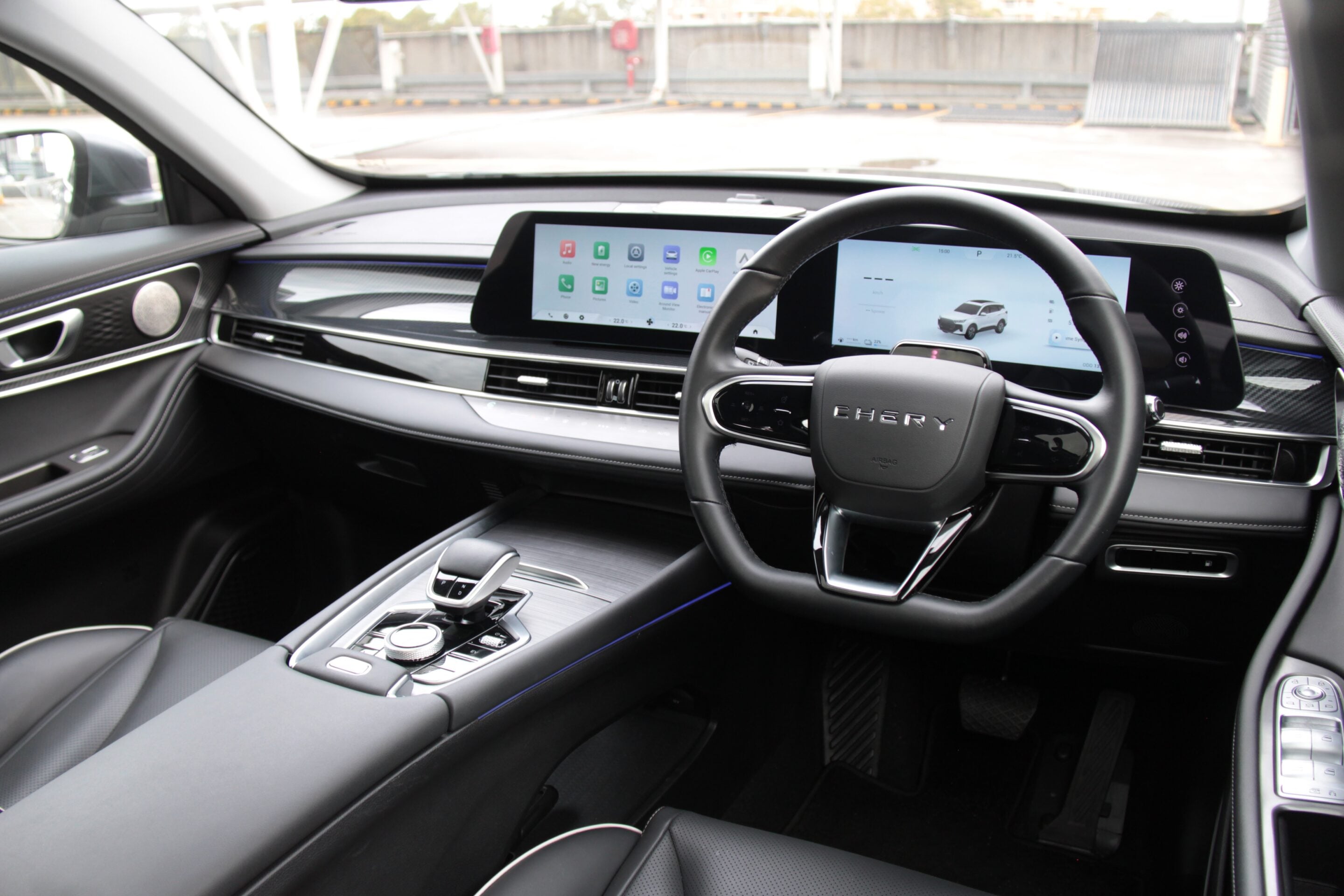
The Tiggo 7 Super Hybrid offers a practical and surprisingly high quality cabin given its bargain pricing. Almost every surface in the front cabin is covered by a soft-touch plastic or synthetic leather trim, while the switchgear is also good quality and feels nice to touch. It’s also a practical space with big door bins, a large box underneath the centre armrest, open trays on top of the centre console and an under-bridge tray that’s large (it’s also where the in-car hammer lies, to smash the windows in the event of submersion).
5
Dual 12.3-inch displays are standard and integrated into one curved screen that looks good. They’re easy to read and screen quality is good as well, though their layout is initially a bit confusing. There are haptic touch buttons underneath the screen for the climate control, as well as a few hard buttons on the centre console, but more actual buttons would be appreciated to help user-friendliness. There’s also no home button, which is frustrating because it takes a few extra button presses if using CarPlay to get back into the home screen.
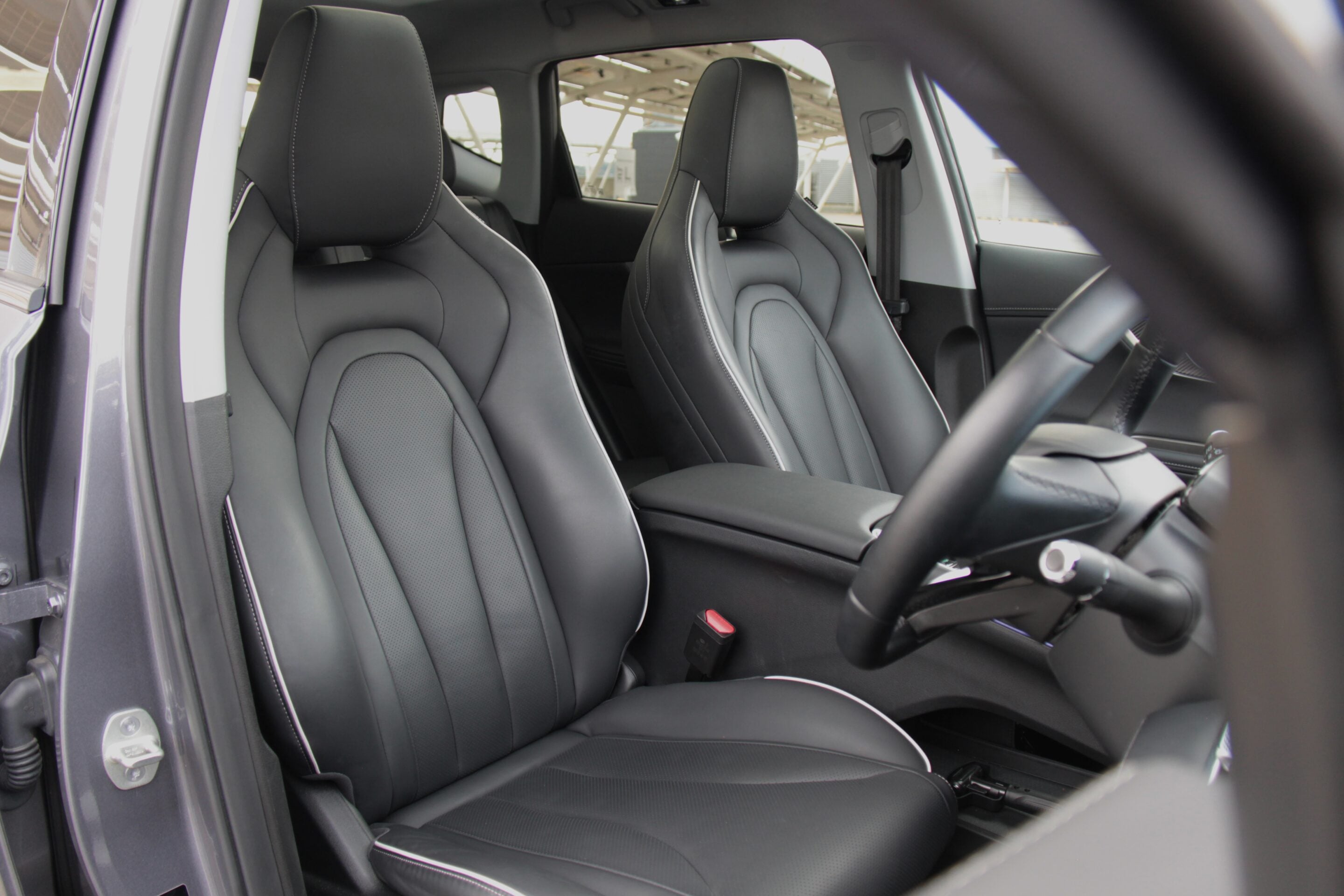
Front seat comfort is generally fine, even on longer trips like our 700km day, though under-thigh angle adjustment would be great, as would lumbar adjustment. While we’re on the seating, it takes at least three or four button presses to activate the seat heating and cooling, which is too many.
Rear seat space is not as plentiful as larger competitors like the H6, but two six-footers such as myself would be fine. Features include door and map pockets, a central armrest with cupholders, a single USB port and rear air vents, which is fine. The panoramic sunroof also lets a lot of light in, but features a proper cover so that summer sun won’t be too much of an issue.
5
The Tiggo 7 Super Hybrid’s boot measures 565 litres with the rear seats up and 1396 litres with the seats folded, which is a good size considering that it’s a bit smaller on the outside than most medium SUVs. The boot itself is long and flat, and features under-floor storage, though because of the battery, there’s no spare wheel, just a tyre repair kit. Annoying, but hardly unusual for 2026.
How much does the Tiggo 7 Super Hybrid cost to service?
Over the first five years, the Tiggo 7 Super Hybrid is quite frugal to service at just $1595 or $319 per year, and its annual service intervals are every 15,000km.
As for warranty, Chery covers the Tiggo 7 with a long seven-year/unlimited km warranty with an eight-year/unlimited km warranty for the hybrid battery. Twelve months of roadside assistance is also included, which is extended by a further 12 months with each dealer service up to seven years in total.
Should I buy a Chery Tiggo 7 Super Hybrid?
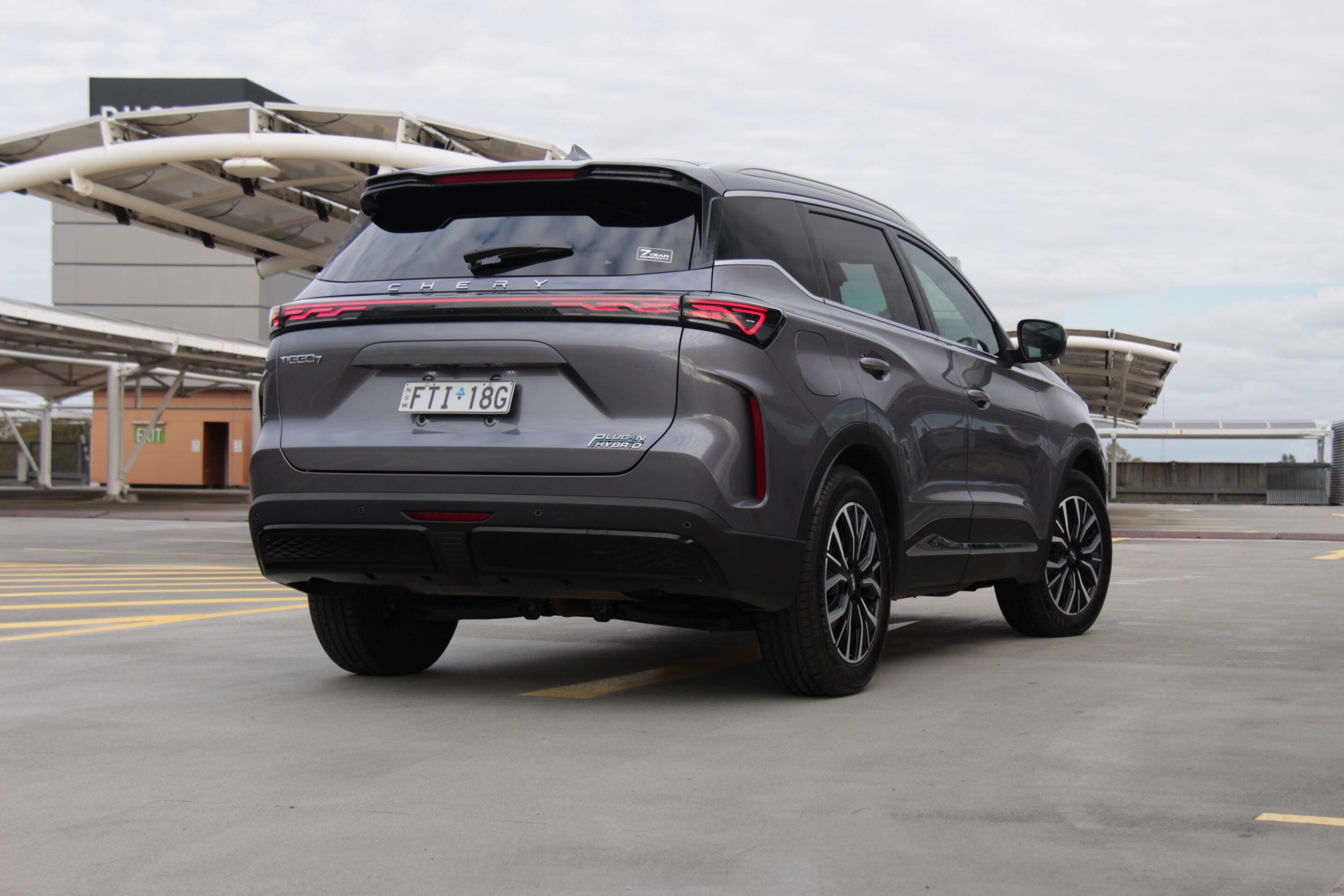
Including on-road costs, the Chery Tiggo 7 Super Hybrid is currently the cheapest plug-in hybrid that you can buy in Australia and that alone makes it stand out in a crowded market. Plus, it’s also quite practical, well equipped, offers an impressive electric-only range and fuel efficiency, it’s cheap to run and features an attractive and good quality cabin. These qualities will undoubtedly earn it friends.
1
On the flip side, its low-speed dynamics even on smooth road surfaces could be improved. The ride is too firm and even smaller bumps are felt too strongly in the cabin, and the steering is too assisted as well.
Overall, there’s clear appeal to the Chery Tiggo 7 Super Hybrid – not only can it cost very little to buy and run, but it’s also a good all-rounder for the typical urban family.
Tiggo 7 Super Hybrid Ultimate standard features:
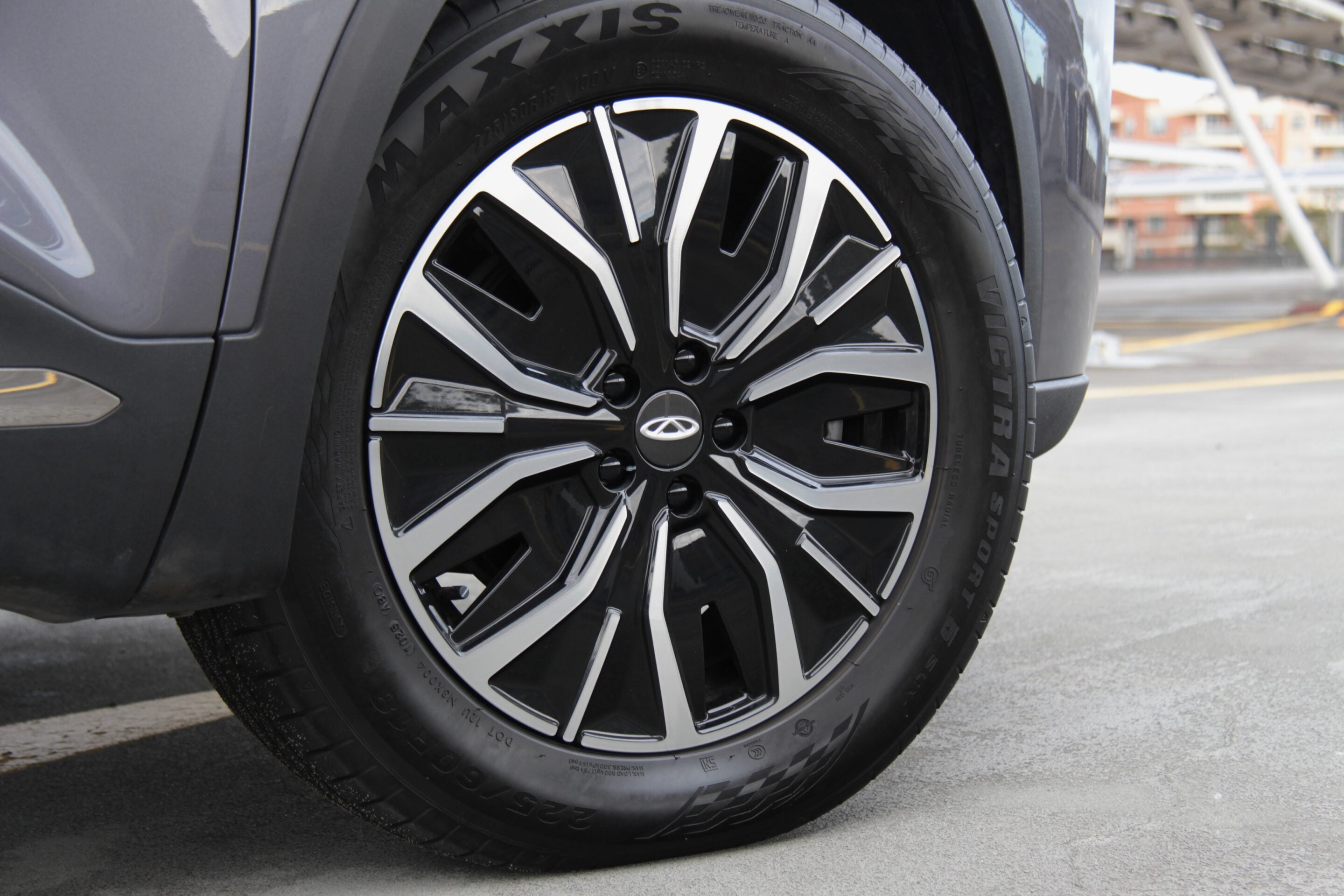
- 18-inch alloy wheels (with a tyre repair kit)
- Dusk-sensing automatic LED exterior lighting
- Rain-sensing automatic wipers
- Keyless entry and start with remote start
- Rear privacy glass
- Panoramic sunroof
- Roof rails
- Electric tailgate
- Heated and auto-folding mirrors
- Synthetic leather steering wheel
- Synthetic leather upholstery
- Heated and ventilated electric front seats with driver’s memory functionality
- Dual-zone automatic climate control with rear air vents
- 12.3-inch digital driver’s display
- 12.3-inch touchscreen
- Wireless Apple CarPlay and Android Auto
- AM/FM/DAB+ digital radio
- Eight-speaker Sony sound system
- Wireless phone charger
- 3x USB ports, 2x 12V sockets
- Colour-selectable LED ambient cabin lighting
- 8x airbags
- Autonomous emergency braking
- Adaptive cruise control with traffic jam assist
- Lane keeping assistance with adaptive lane guidance
- Blind-spot monitoring
- Rear cross-traffic alert
- Door open warning
- Rear collision warning
- Driver monitoring
- Traffic sign recognition
- Front and rear parking sensors
- 360-degree camera
- Tyre pressure monitoring
Tiggo 7 Super Hybrid Ultimate specifications:
| Price | $38,990 driveaway |
|---|---|
| Drivetrain | 1499cc turbocharged four-cylinder plug-in hybrid |
| Engine outputs | 105kW/215Nm |
| E-motor outputs | 150kW/310Nm |
| Battery | 18.4kWh LFP |
| Transmission | Single-speed, front-wheel drive |
| 0-100km/h | 7.0-7.5 seconds (approx.) |
| Claimed electric range | 93km (NEDC) |
| Peak charge speed | 7.4kW (AC), 40kW (DC) |
| Claimed 10-80% charge time | 20 minutes |
| Claimed combined fuel consumption | 1.4L/100km |
| Claimed CO2 emissions | 33g/km |
| Fuel type/tank size | 91 RON regular unleaded, 60 litres |
| Dimensions (L/W/H/WB) | 4535/1864/1702/2653mm |
| Boot capacity | 565 litres (rear seats up), 1396 litres (rear seats folded) |
| Kerb weight | 1825kg |
| Warranty | Seven-year/unlimited km (car), eight-year/unlimited km (battery) |
| Five-year service cost | $1595 ($319 per year) |
| On sale | Now |
7.6
/10
Score
Score breakdown
9.0
Safety, value and features
7.0
Comfort and space
8.0
Engine and gearbox
7.0
Ride and handling
7.0
Technology
Things we like
- Bargain purchase price, low running costs
- Refined and punchy drivetrain
- Easily enough EV-only range for most
Not so much
- So-so ride and handling
- Slow touchscreen is cumbersome to use
- No spare wheel
Follow WhichCar/Wheels on Google
Click the button below to make WhichCar by Wheels a preferred source for your news.

We recommend
-
 News
NewsForthing Taikon 5: Australian pricing announced ahead of late June deliveries
There's another new Chinese brand in town: Forthing, which will launch locally soon with the Taikon 5 medium SUV in either range-extender hybrid or EV forms.
-
 News
NewsCalls to expand proposed EV road user charge to all vehicles
NSW is looking to implement a road user charge for EVs, but the failure of a similar scheme in Victoria has led to calls for a broad overhaul of how roads are funded.
-
 News
NewsEOFY offers 2026: Deals from Kia, BYD, BMW, Toyota, Mazda, MG and more – updated
It's approaching the end of the 2026 financial year, which means that car manufacturers are sharpening their pencils. Here are the best EOFY offers.