Mazda’s showroom is awash with SUVs – there’s your ‘thanks for the tip, scoop’ moment for 2025-26 Wheels Car of the Year. Within the CX-60 range as tested for COTY, there are three drivetrains, petrol or diesel, and five trim grades available. And that’s one model in amongst many.
At the time of testing, the price spread started from $47,990 drive away, scaling up to $74,192 drive
away. The GT grade we included was priced at $67,990 drive away. Mazda is a brand that carries the heavy burden of multiple COTY successes, dating back to 1980 with the 323 – along with the expectations of a judging panel keen to assess whether any new Mazda delivers on the premium, sporty feel we expect (demand) from the Japanese manufacturer.
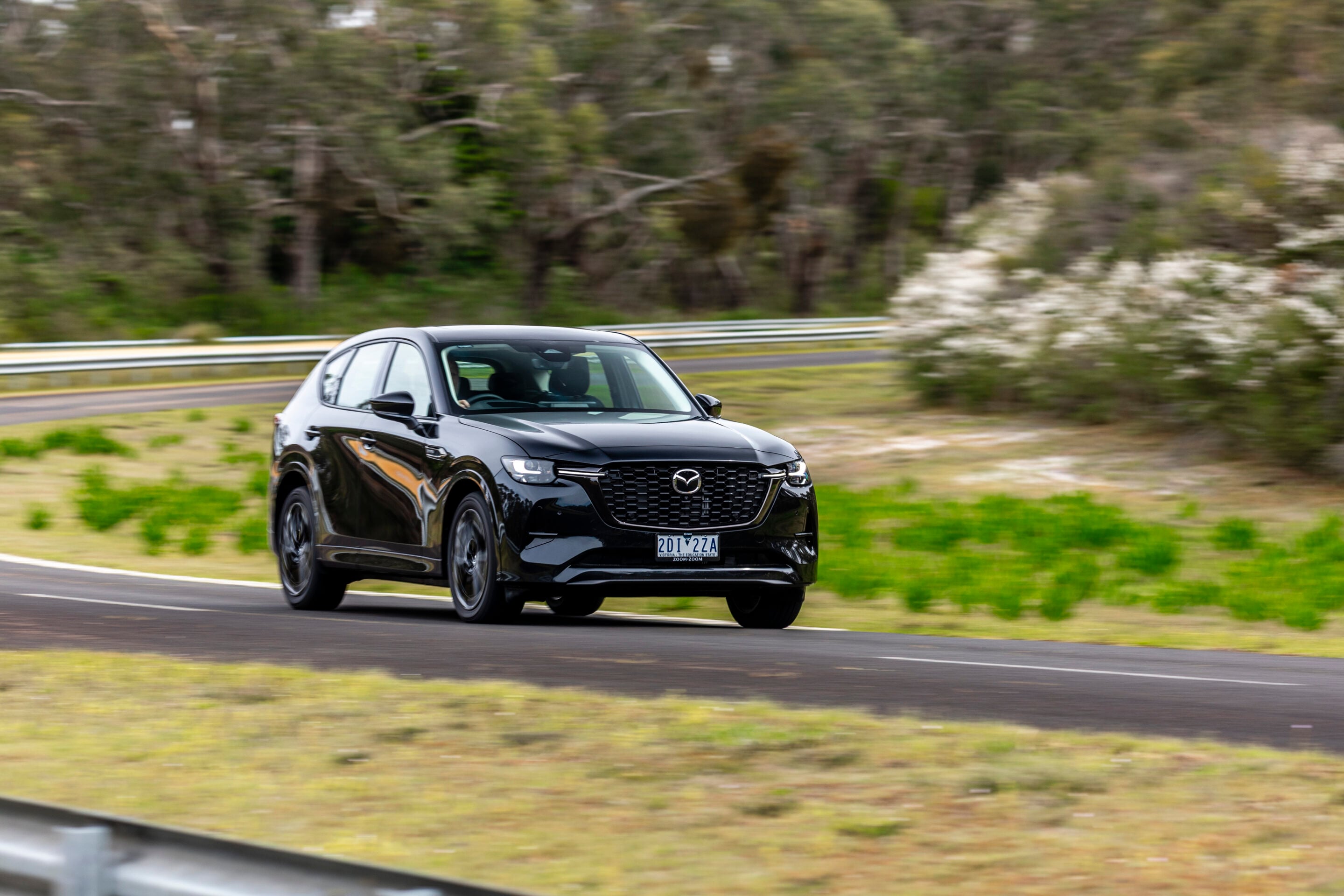
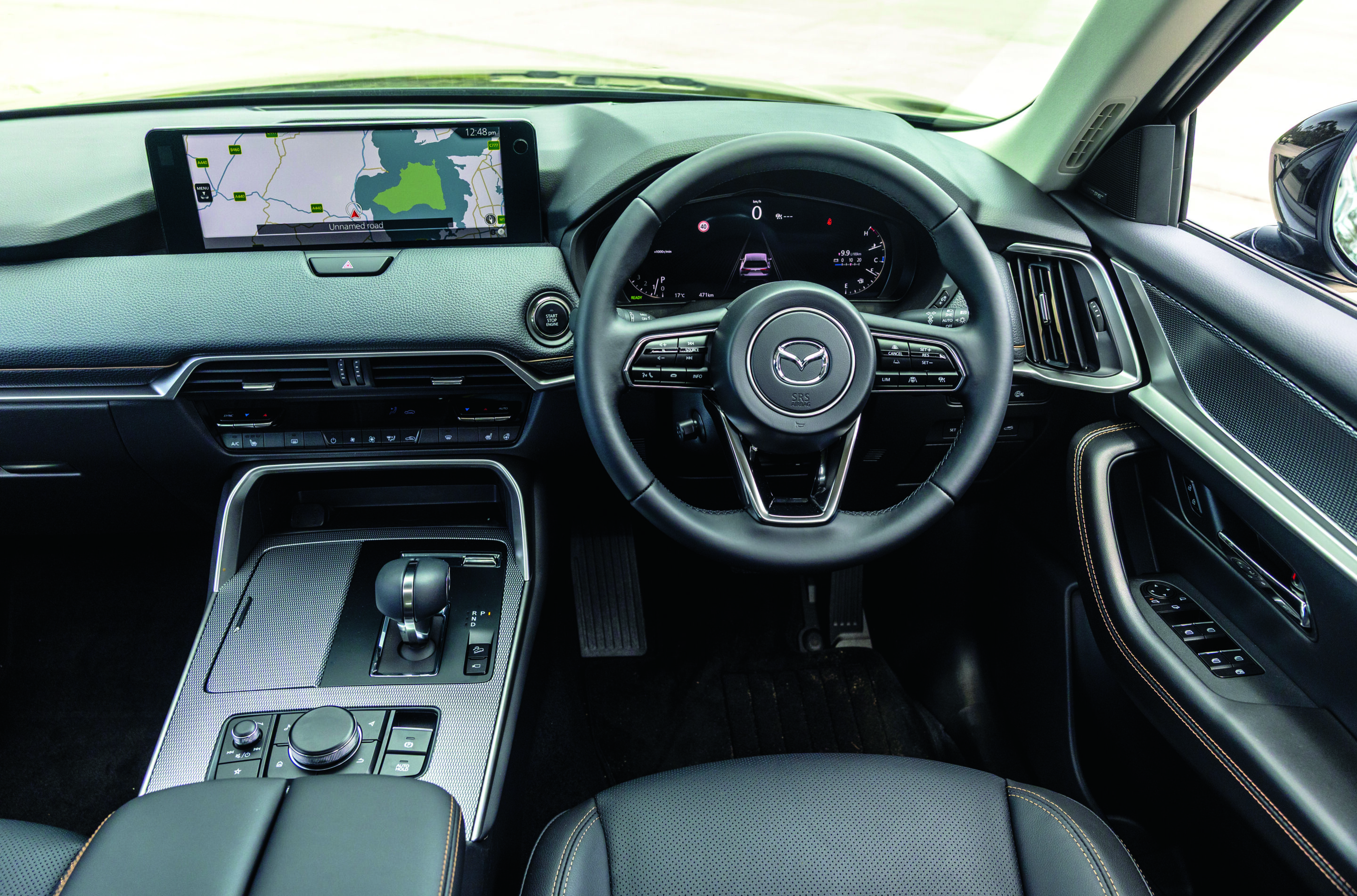
CX-60 GT enters the fray this year, then, more forcibly armed than it might have been. Both more affordable and more expensive variants are available, but the GT sits in the sweet spot near the middle of the range. Cabin design and execution remain a Mazda standout and while everyone’s definition of luxury differs, the Mazda cabin is a lovely place to be. Visibility, the sense of light and space, the quality of the controls, and how easy those controls are to locate and use are all highlights of the CX-60’s DNA.
The judges unanimously agreed that the eight-speed multi-clutch automatic lacked the last 10 per cent in refinement, and the mild-hybrid system wasn’t as smooth as it could be either. We also noted road noise intrusion into the cabin on coarse-chip surfaces at highway speed. However, there is no doubt Mazda has taken on feedback, and softened up the suspension system to deliver improved ride quality on rough surfaces, as well as making the price more attractive to buyers in a hugely competitive segment. The CX-60 – even with road noise noted – is also quieter than previous Mazdas, meaning Mazda has undertaken to engineer cabin insulation into the mix.
The judges loved the smooth response of the 3.3-litre inline six-cylinder engine, which generates 209kW and 450Nm, while using a claimed 7.4L/100km. “A timely reminder of how great an inline six can be,” uttered by more than one judge during the week.
The judges also noted that Mazda faces a tough task anytime it releases a new vehicle – traditionalists wanting it to ‘feel’ like a Mazda whether it’s hybrid or electric, and therefore heavier than it might otherwise be.
Ultimately, the Mazda CX-60 – competent as it is – doesn’t reset the bar in a segment that is hugely competitive across all price points and specification grades. The judges enjoyed driving the CX-60, and all plumped for the quality of the cabin, the useful space on offer, and the choice of materials. Progress to the pointy end of Car of the Year is no easy task though, and the Mazda CX-60 fell short this year.
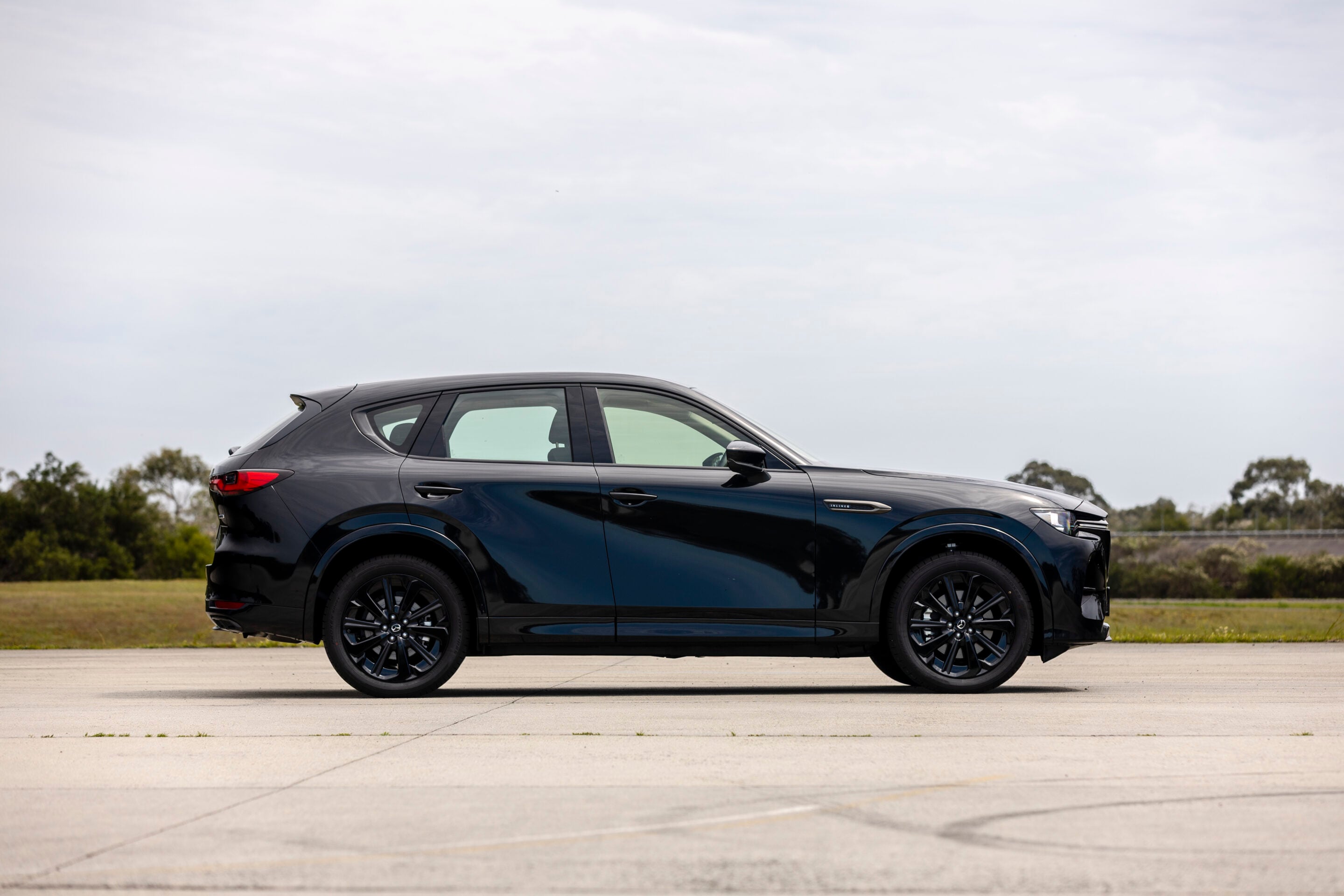
Specs
| Price | $64,240 (MSRP) |
|---|---|
| Body | Five-door, five-seat SUV |
| Drive | All-wheel drive (on demand) |
| Drivetrain | 3.3-litre inline six-cylinder turbo petrol, 48V mild-hybrid |
| Power | 209 @ 5000-6000rpm |
| Torque | 450Nm @ 2000-35000rpm |
| Transmission | 8-speed multi-clutch automatic |
| Consumption | 7.4L/100km |
| Kerb weight | 2033kg |
| 0-100km/h | 6.9 sec |
| L/W/H/W-B | 4740/1890/1675/2870mm |
| Boot space | 570L/1726L |
| Warranty | 5yr/unlimited km |
| Safety rating | 5 star ANCAP (2022) |
What we have here, ladies and gentlemen, is a bona fide time machine. Climb inside, press the start button. When the engine is stone cold, you’ll sense a small delay as the glow plugs warm the internals sufficiently to convince high-pressure diesel to explode under nothing more provocative than mechanical compression. And within seconds, you’ll be transported back to a time when NVH stood for Not Very Happy.
Pull the shifter into D, tip in some throttle and prepare for the aural and tactile onslaught of a truly
old-school diesel experience. There’s vibration and there’s noise. Haul on to the main road and feed it some more throttle. Now you notice that while there’s a distinct sense of relentlessness about the acceleration, relentless is not another word for enthusiastic. Try dogged, and even that word has a limit of about 3500rpm, at which point, the 2.2-litre four-banger is about done.
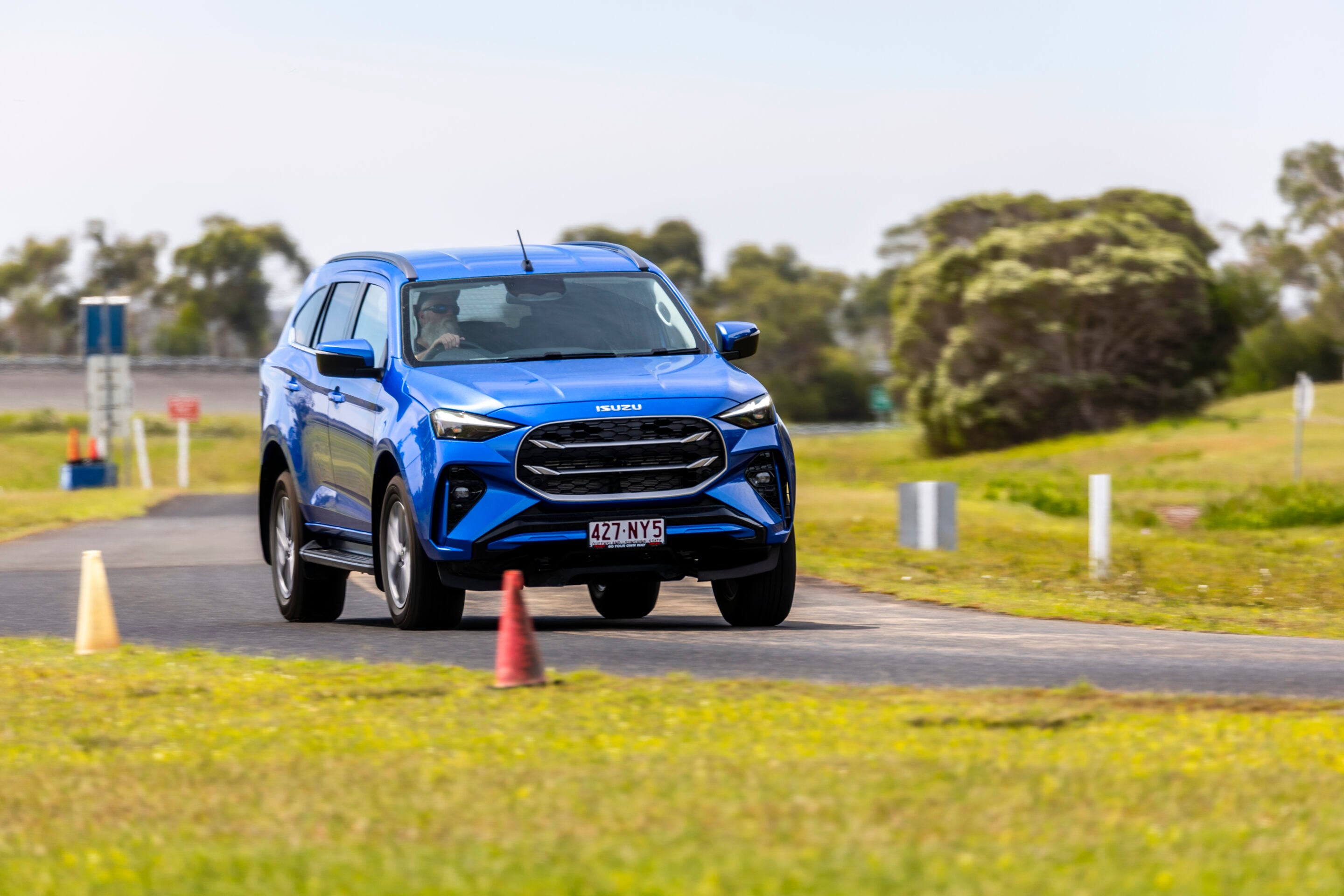
In the world of marine comparisons, if a Mazda MX-5 is a small ski-boat, an Audi RS6 wagon is a cabin-cruiser and a Yaris GR is a jet-ski, the Isuzu is an ice-breaker. And, possibly in this company, a deal-breaker.
The eight-speed automatic does its best to iron out the peaks and troughs of the turbo-motor’s delivery, but there’s no hiding the bronze-age DNA lineage (relatively speaking) of the 3.0-litre engine, considered to be one of the better modern common-rail diesel engines. Well, as they apply to dual-cab utes, anyway.
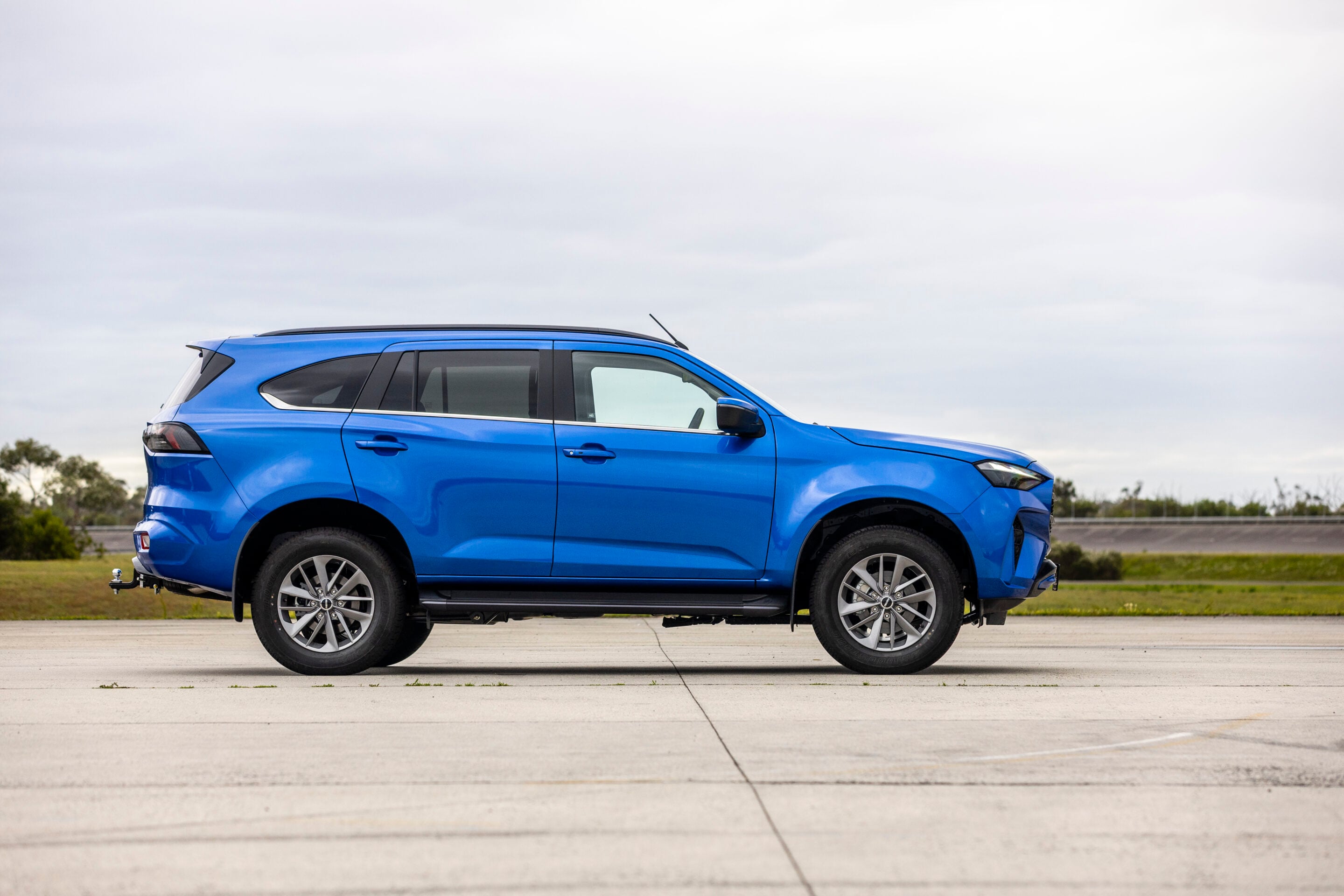
And that’s the key to understanding the MU-X. Not to mention its $62,990 plus on-roads sticker. Strip away the marketing and what you’re left with is an Isuzu D-Max dual-cab with a station-wagon rear section instead of the brickie’s or sparky’s canopy. True, Isuzu has gone to the trouble of re-engineering the box-of-hammers leaf-sprung, live rear axle to produce a coil-sprung independent set-up. But painting a shipping container bright red does not make it a Ferrari. Dig?
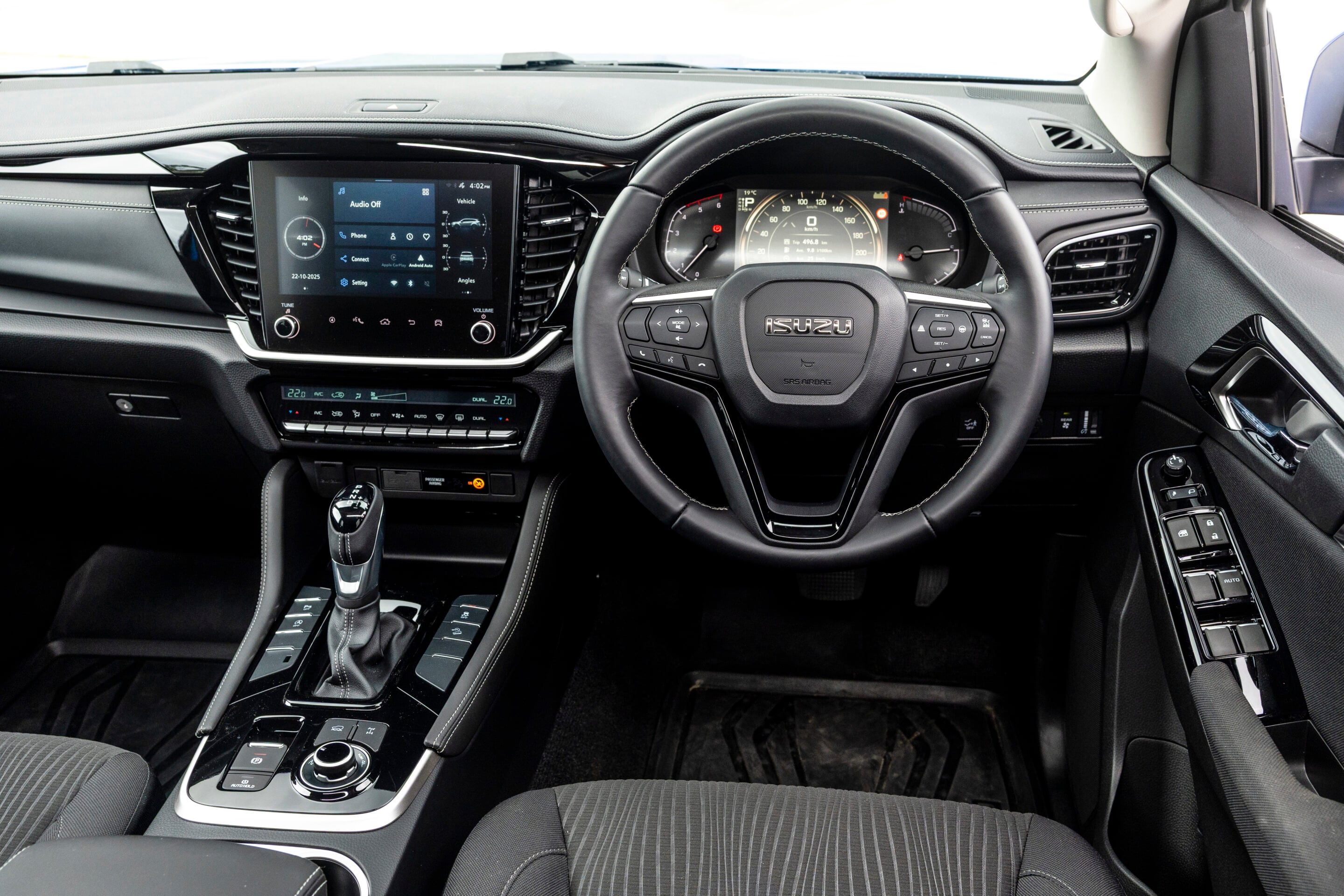
So, you’re driving a truck, okay? If you can live with the unsprung mass and tall ride height, and the spring rates that go with that, and you don’t mind slow steering, a big climb up inside, the noise and the lazy dynamics, then there is one thing the MU-X offers that nothing else in the COTY field can. And that is being the direct descendant of a 4WD with the unquestioned ability to tackle pretty much any off-road journey you can name. Simpson Desert? No problems. Cape York? Victorian potholes? No dramas whatsoever. The Isuzu will gobble it up and tip you out at the other end like nothing happened.
Which brings us to the reality of all this. If you do wish to strike out and see the bits of Australia that only a capable off-road four-wheel-drive can take you, then the Isuzu is a contender for your dollars. The question is whether Aussie buyers will adopt the 2.2L as hungrily as they did the 3.0L?
But, frankly, there are other makes and models that offer the same rock-hopping abilities without quite the same compromises.
Plenty others will likewise reveal this nation’s heartland but will do so with more refinement and sophistication. You don’t necessarily need a time machine to visit history.
Specs
| Price | $62.900 (MSRP) |
|---|---|
| Body | Five-door, seven-seat SUV |
| Drive | Dual-range 4×4 |
| Drivetrain | 2.2-litre four-cylinder turbo diesel |
| Power | 120kW @ 3600rpm |
| Torque | 400Nm @ 1600-2400rpm |
| Transmission | 8-speed automatic |
| Consumption | 6.7L/100km |
| Kerb weight | 2105kg |
| 0-100km/h | NA |
| L/W/H/W-B | 4860/1870/1825/2855mm |
| Boot space | 311L/1119L/2138L |
| Warranty | 6yr/150.000km |
| Safety rating | 5 star ANCAP (2022) |
It was early in 2024 when the bait came through the interweb. Hyundai wanted to know if I’d like to fly to Dubbo in central NSW to sample a top-secret prototype of what could become a volume selling model. In this game,that’s like asking a politician if they’d like to tour the factory where lies are planted as seedlings and grown into policies.
We all know that Hyundai uses local suspension engineers to get things right, but less well known is that the brand in general likes testing prototypes down under. Our time zone is closer to South Korea’s than Death Valley’s, for instance, and landing secret cars here in large boxes is both cheaper and easier. Plus we have plenty of temperature extremes and enough red dust to test any engineer’s skills at keeping the stuff out of interiors and mechanical bits.
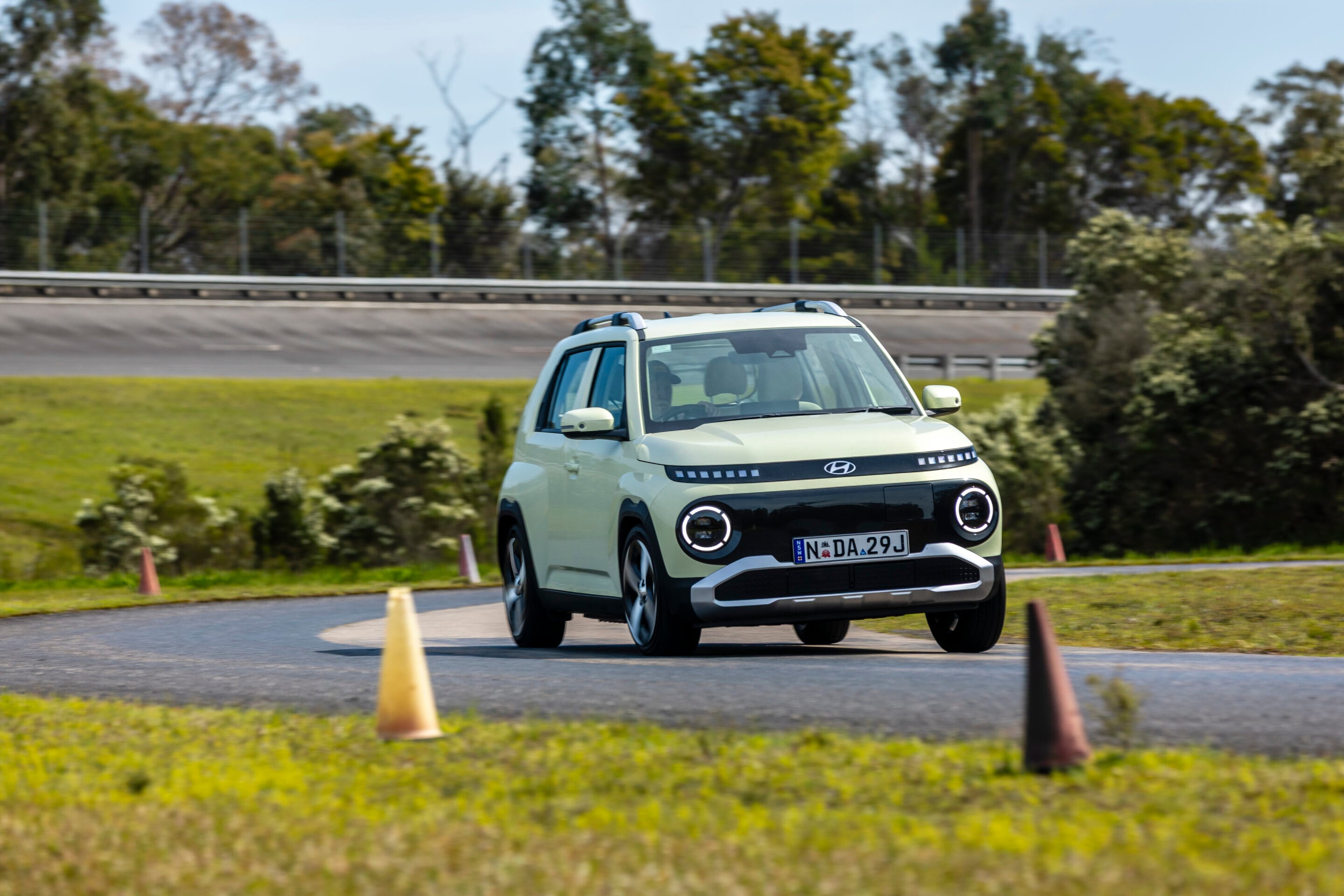
In any case, the prototype in question was a city-bound compact with an all-electric driveline. Sound
familiar? Yep, the Inster.
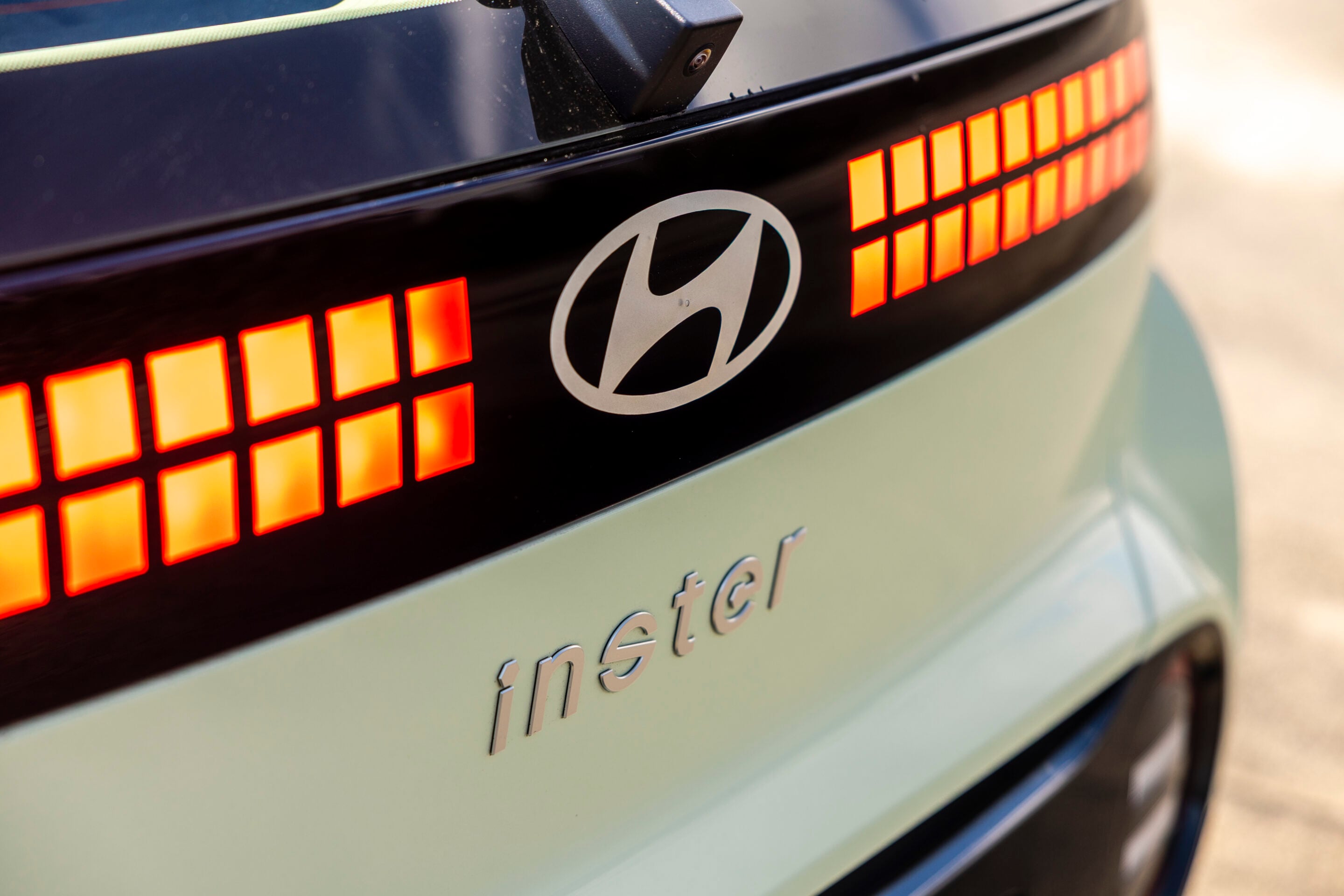
At the time, the secret-squirrel chat was that the Inster might hit the Aussie market at under $40,000. Which, of course, it did in entry-level form. Fast forward about 14 months and the Inster is on sale in Australia at $39,000 for the base-model and $42,500 (plus ORC) for the extended range model here. So, mission accomplished then? Well, sort of.
The catch is that GWM had been slicing $2000 chunks out of its Ora franchise, finally making the funky little EV $36,000 driveaway. Oh, and the MG ZS EV had also lobbed into the mix at $35,000 after similarly savage discounting. Then there’s the BYD Dolphin Essential at sub-$30K. Oh dear. Which is where we find ourselves right now, with the Inster retaining all the charm and technical verve it ever had, but a price-tag that is scaring the horses.
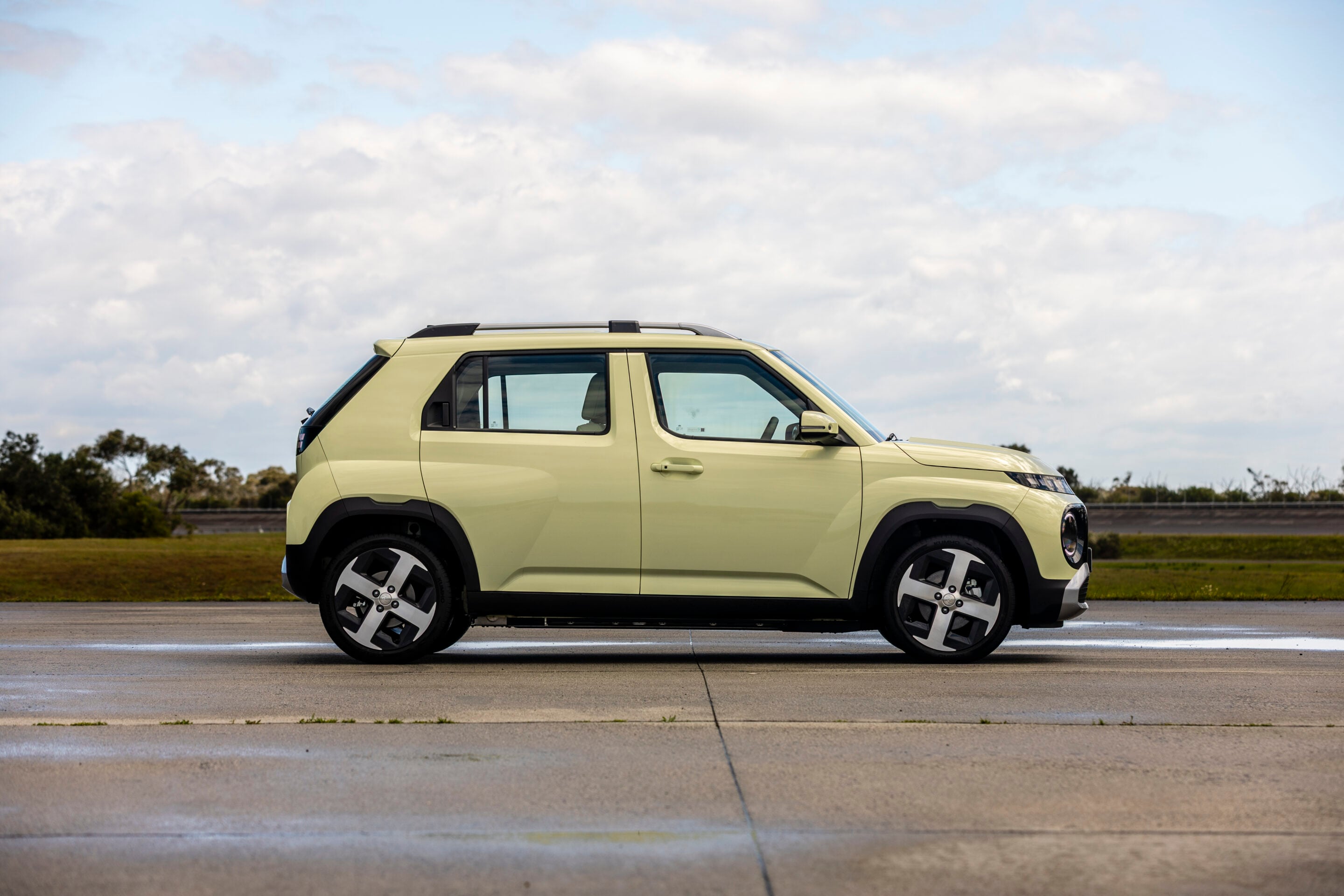
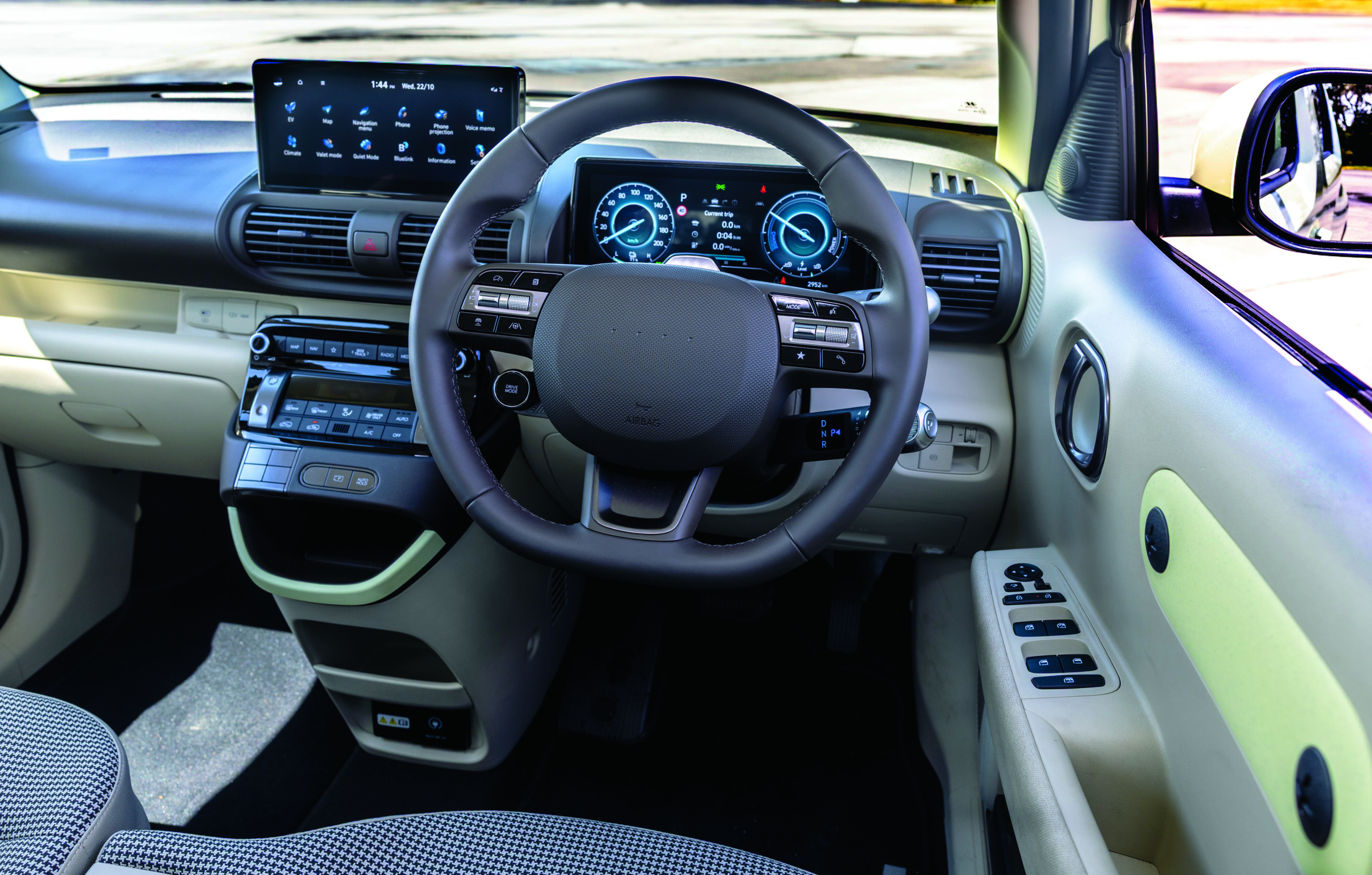
But you can’t deny the Inster is cute. It has a kind of Staffy-puppy enthusiasm even in the way it sits when parked. Okay, it might look a bit Fisher-Price to grown-ups, but the K-Pop generation couldn’t care less. Inside, the funkiness continues with the houndstooth and off-white interior looking great now, but who knows for how long.
A single electric motor drives the front wheels and power comes from a 49kWh lithium-ion battery under the floor. Driving through a single-speed transmission, the Inster makes do with 84.5kW of power and 147Nm of torque to hustle its 1400-odd kilograms. Understandably, then, performance is leisurely rather than frantic, and there’s always the feeling that a few more kiloWatts under your clog would be a nice thing to have.
But the Inster’s real charm is in the way it shreds. In fact, this is a properly competent platform which is also nicely damped and has an especially talkative front end, something that has characterised tiny Hyundais and Kias for a while now. Again, though, if it were just a tad speedier…
This variant of the Inster has the larger battery which extends range to a claimed 360km. Three-twenty will be closer to the truth. Charging is easily achieved overnight on a household wall-box (call it seven hours from 10 to 100 per cent charged) and the wee Hyundai can also cope with up to 120kW on a DC fast-charger. At which point you’re looking at going from 10 to 80 per cent charged in 20 minutes.
In the end, despite Peter Robinson’s description of it as “part suburban runabout and part small SUV… delivering a civilised drive at a price” the Inster did not offer enough to proceed beyond round one.
Specs
| Price | $42,500 (MSRP) |
|---|---|
| Body | Five-door, four-seat SUV |
| Drive | Front-wheel drive |
| Drivetrain | Single electric motor, 49kWh lithium-ion battery |
| Power | 84.5kW |
| Torque | 147Nm |
| Transmission | Single-speed reduction gear |
| Consumption | 15.1kWh/100km, 360km range WLTP |
| Kerb weight | 1335-1423kg |
| 0-100km/h | 10.6 secs |
| L/W/H/W-B | 3825/1610/1610/2580mm |
| Boot space | 280L/1059L |
| Warranty | 5yr/unlimited km |
| Safety rating | 4 star ANCAP (2025) |
Anonymity can be a good thing, provided it’s your choice. But when anonymity is thrust upon one, making up the numbers is not always where you want to be.
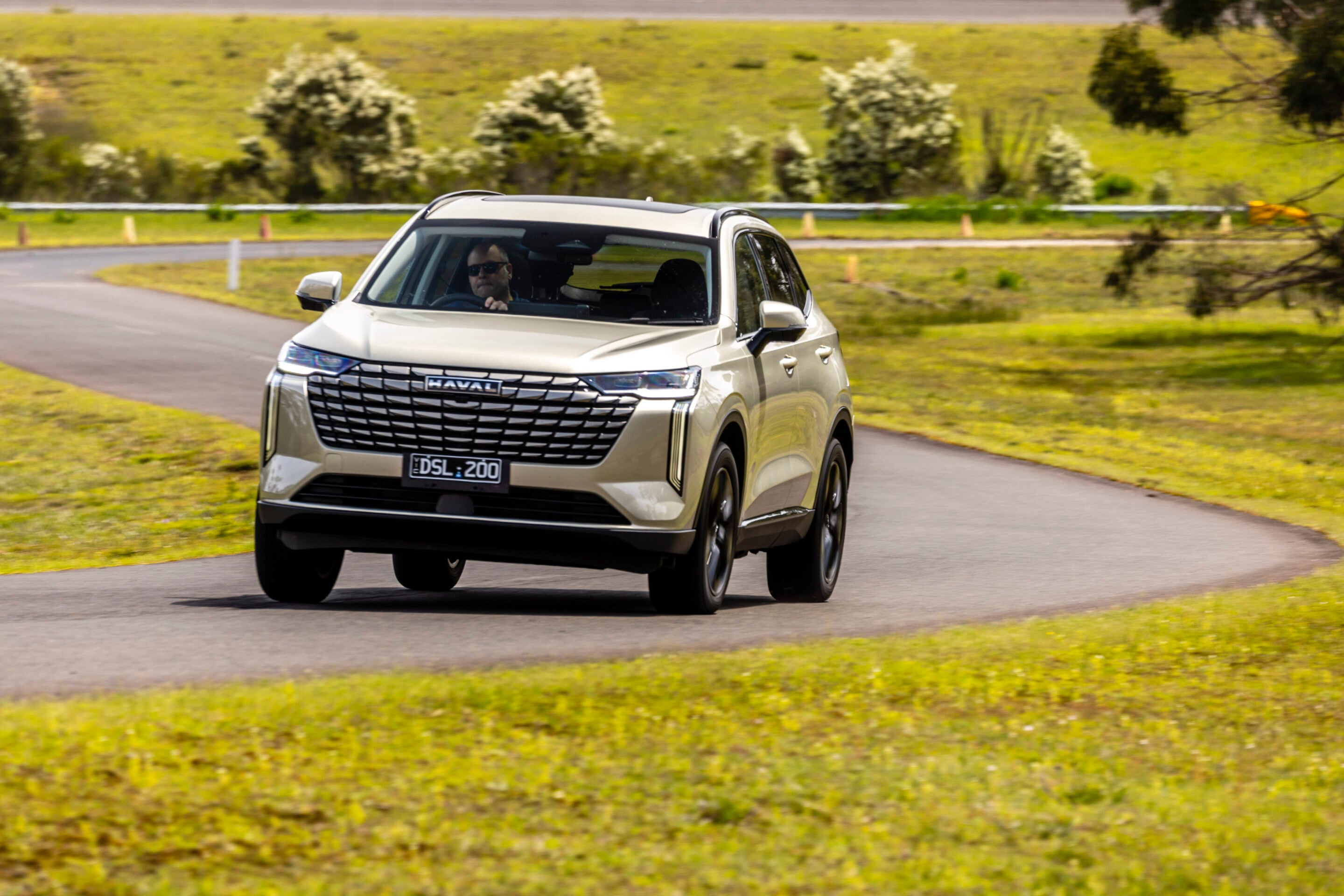
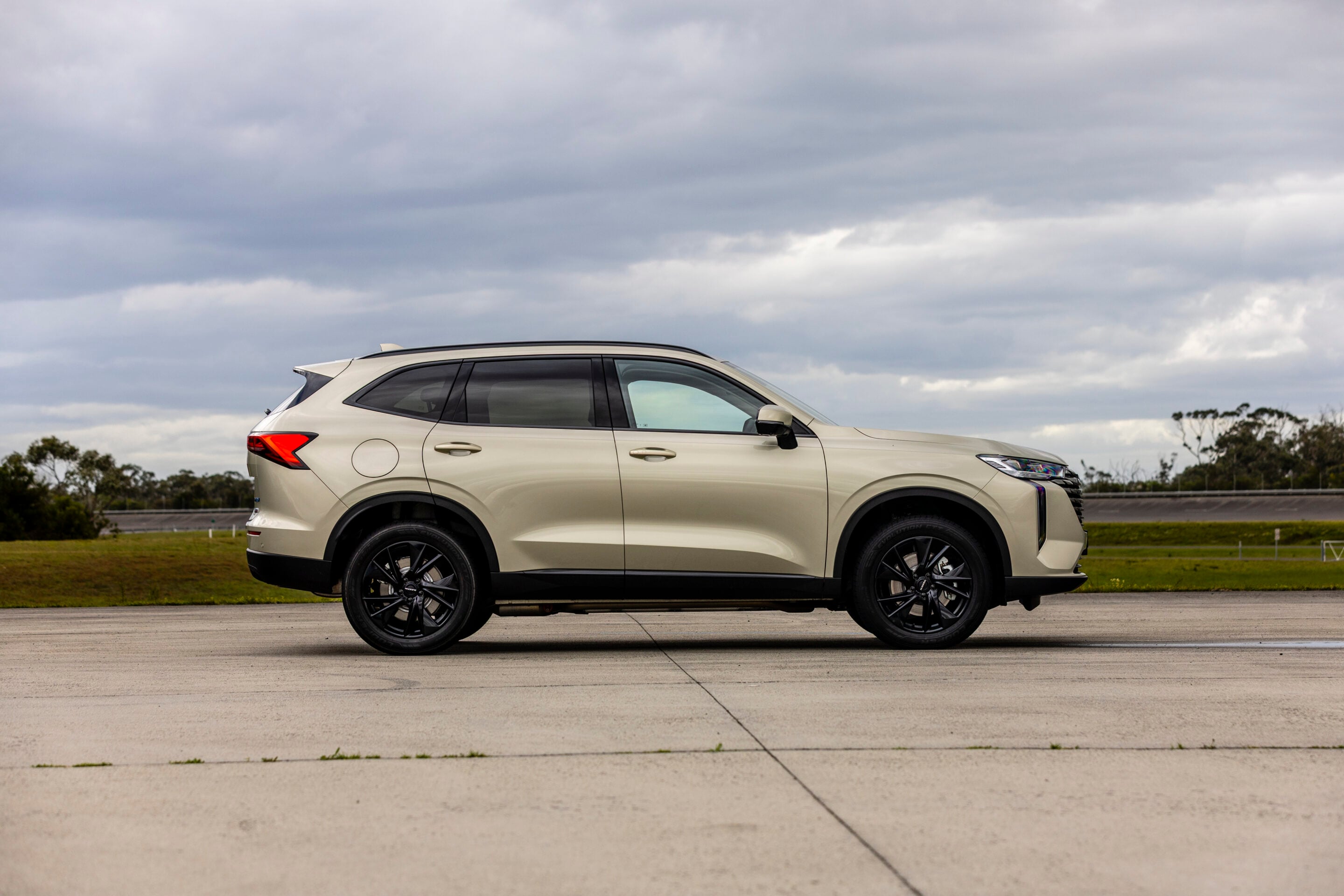
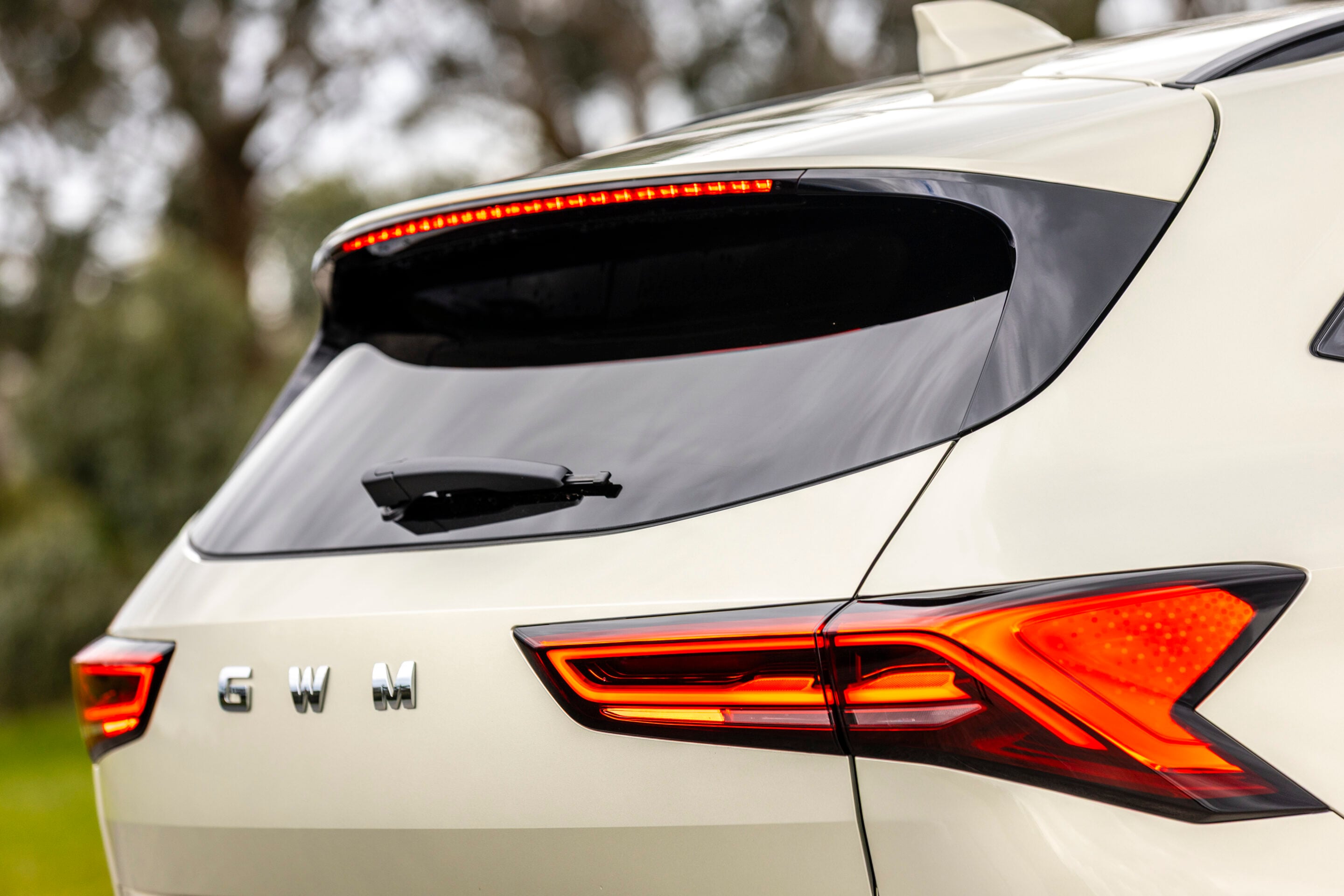
The art of the wallflower is hardly confined to the GWM Haval H6, but it remains that, as was obvious when all the SUVs were parked in one spot during our COTY test laps and a badge check was needed to ID it. For a bloke who, as a kid, could correctly identify pretty much any make or model from a kilometre away, this is an admission of personal failure. But also a realisation that pragmatic packaging will sometimes triumph over distinctive design.
And when it comes to pragmatism, the Haval H6 takes some beating. It taps into the conventional in terms of its layout and dimensions, and with an overall length of 4.7m, and an overall width of almost 1.9m, it plops contentedly into the family-SUV jelly mould.
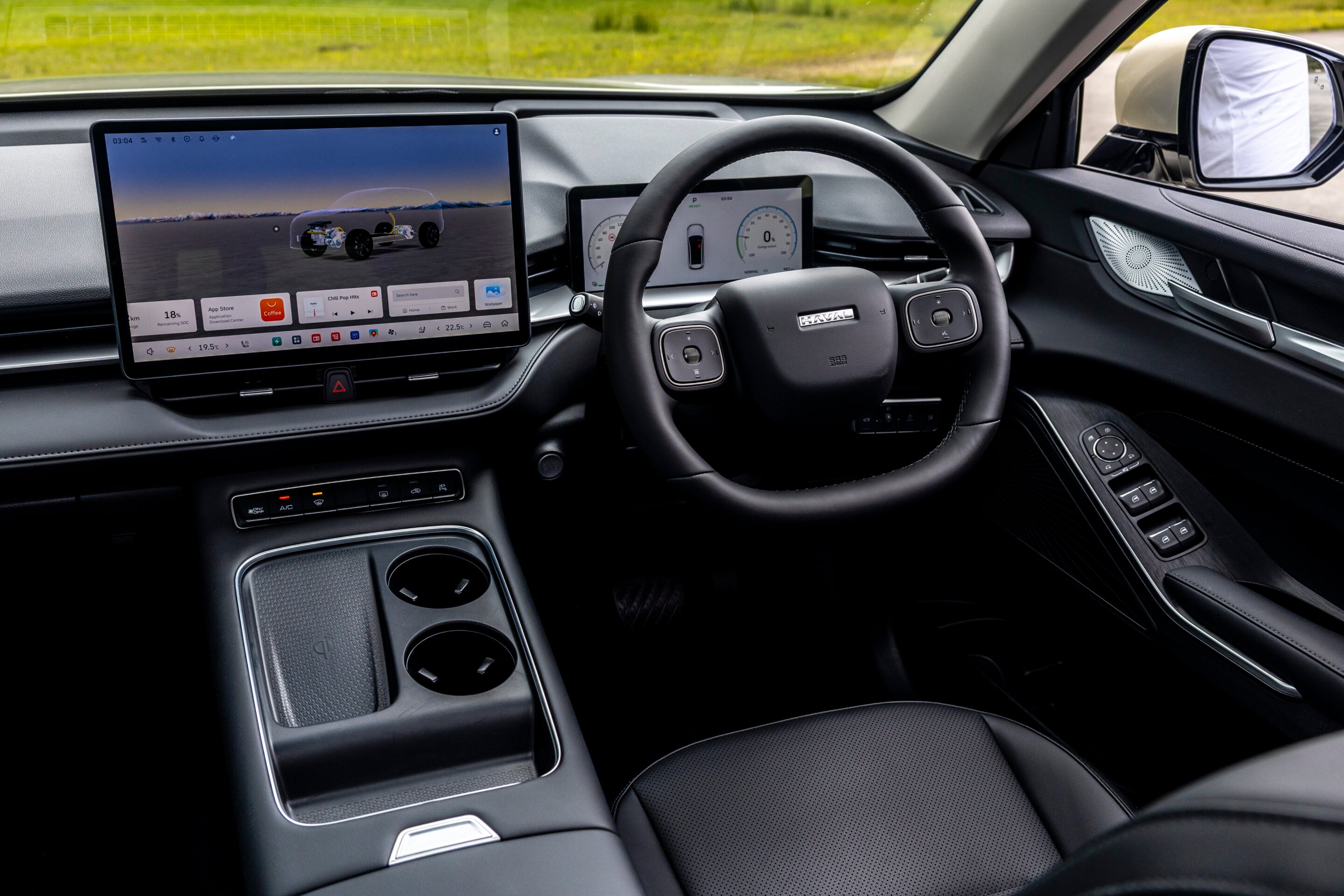
Inside, the Haval offers a classy – but not flashy – presentation that looks more expensive than it actually is. Okay, it might be a bit derivative (the speaker grilles look very Benz-ish to us) and it’s dominated by the twin info-screens, meaning the hard buttons are restricted to a single strip across the centre-stack and the spokes of the tiller.
The Haval finally starts to drag some daylight between itself and the rest of the pack when it comes to driveline heft. True, it uses what has apparently become the PHEV SUV industry standard in a 1.5-litre turbocharged petrol engine, but then throws in a pair of electric motors and a 19.1kWh battery-pack for a pure electric range of a claimed 100km.
Significantly, it also features a Tesla-busting output of 268kW of power and 760Nm of torque when fully tapped out. And yet it manages to record an official fuel consumption number of 1.1 litres per 100km. No, it will never achieve this on Planet Earth, but it suggests the H6 will be at least as frugal as its PHEV buddies. Figure on around 5 litres per 100km or maybe even less in real world running.
Of course, that’s predicated on the H6 being driven in a conventional way which, given the performance on tap, is no guarantee. Yep, this thing can really gallop, and it’s here where the H6 really, truly starts to distance itself from the pack and justify its $50,990 (drive-away) sticker.
Despite a decidedly portly weighbridge ticket of near enough to 1900kg (really?), Tubby can get to 100km/h from rest in a blink under five seconds. And because the computer controls when the electric motors and turbo-petrol chime in and by how much, the torque curve is extremely flat. In fact, the Newton-metres have been manipulated to such a degree that the H6 feels like it accelerates harder between 120 and 160km/h than it does from 80 to 120km/h. It’s one hell of a party trick for a family SUV.
Much has been made of the local input into the chassis and steering of the H6, and while it’s clearly better than a lot of its Chinese-made counterparts, there’s still no getting around physics. The sophisticated Hi4 all-wheel-drive system helps, though, delivering torque to either axle anywhere from 0 to 100 per cent front to rear and vice-versa.
But the tall ride height, kerb mass and heavy wheels and tyres equal firm suspension. Even though the local development team has done its best to tidy up the damping and steering feedback, the Haval can still feel a bit awkward at times.
The initial ride, for instance, still feels pretty firm to us and despite the all-wheel-drive grip, the system feels a bit reactive and it can sometimes be difficult to get the H6 to turn in.
Beyond the impressive stomp, the other selling point here is the standard equipment. The interior is tech-laden, with details like a ventilated wireless phone-charging pad and, in this specification, a huge panoramic sunroof, head-up display, heated and ventilated front seats with memory function and even a heated steering wheel.
Throw in GWM’s seven-year/unlimited km warranty and you’re dealing with a pretty complete package that offers something the vast majority doesn’t – that intense acceleration experience. It’s a solid bet, however, that the first time that is demonstrated without a warning will be the last time. Leaving, then, the peanut-brittle ride as the characteristic you’ll remember.
Specs
| Price | $50,990 (driveaway) |
|---|---|
| Body | Five-door, five-seat SUV |
| Drive | All-wheel drive (on demand) |
| Drivetrain | 1.5-litre four-cylinder turbo petrol PHEV, Dual electric motors, 19.1kWh lithium iron phosphate battery |
| Power | 268kW combined |
| Torque | 760Nm combined |
| Transmission | 4-speed multi-mode hybrid transmission |
| Consumption | 1.1L/100km, 100km EVrange NEDC |
| Kerb weight | 1948kg |
| 0-100km/h | 4.8 secs |
| L/W/H/W-B | 4703/1886/1730/2738mm |
| Boot space | 560L/1445L |
| Warranty | 7yr/unlimited km |
| Safety rating | 5 star ANCAP (2022) |
Remember those crazy t-shirts from Japan in the 1980s? The ones that featured Japanese-English translations so incongruous they were worth the admission for that alone. ‘Super-Bomp Explorage Crew’ was, I think, my favourite.
Don’t know about you, but I’m getting a similar vibe from the Chery Tiggo 7. Maybe I’m wrong; maybe the Chinese-made SUV really is a ‘Super Hybrid Urban’.
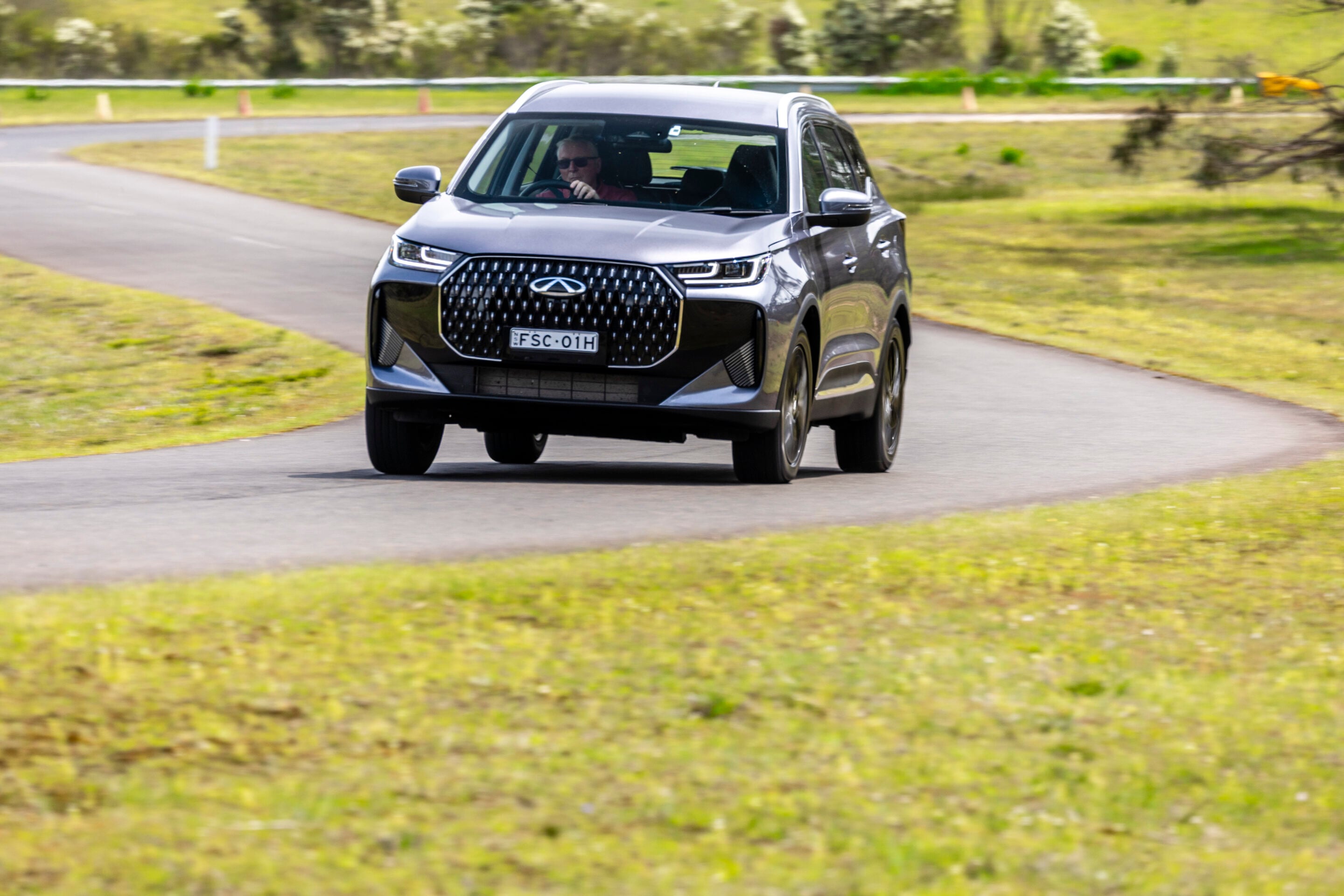
I’m only making (labouring) this point because there are several other reasons to consider the Tiggo 7 in this form. Those start with the slash-and-burn pricing of $39,990 drive-away. At that price-point, you might not be expecting a plug-in hybrid driveline, but the Tiggo 7 has one. Nor might you anticipate 18-inch alloys (which, to be honest look more like plastic hub-caps to these eyes), wireless Apple Carplay and Android Auto, keyless entry and start, dual 12.3-inch info screens, a powered driver’s seat and faux leather. Yet they’re all included within that sub-40-grand ask.
So is a thing called sit-to-start which does away with a starter button (and convention) and will start the car once you’re seated, with a foot on the brake, a gear selected and your seat-belt fastened. The minimum-wage stiffs who move cars around dealership lots are going to hate that one.
You can spend more on the Ultimate specification to include a panoramic sunroof, heated and ventilated front chairs, ambient lighting and a 360-degree camera, but that adds $4000, suddenly ratcheting the price into tougher, sharkier territory. And doesn’t sub-40-grand-family-plug-in-hybrid have such a nice ring to it, at a time when an avo-coffee and a smashed latte will probably empty your wallet?
Powering the Tiggo 7 is a petrol engine that is rapidly becoming the default hybrid solution; a 1.5-litre turbocharged petrol four-cylinder. It makes 105kW of power and is teamed with a 150kW electric motor. Strangely, nobody seems to know the actual combined power and torque outputs when both powerplants are humming along together, but it’s never as simple as 105 plus 150 equals 255kW (it’s almost always less).
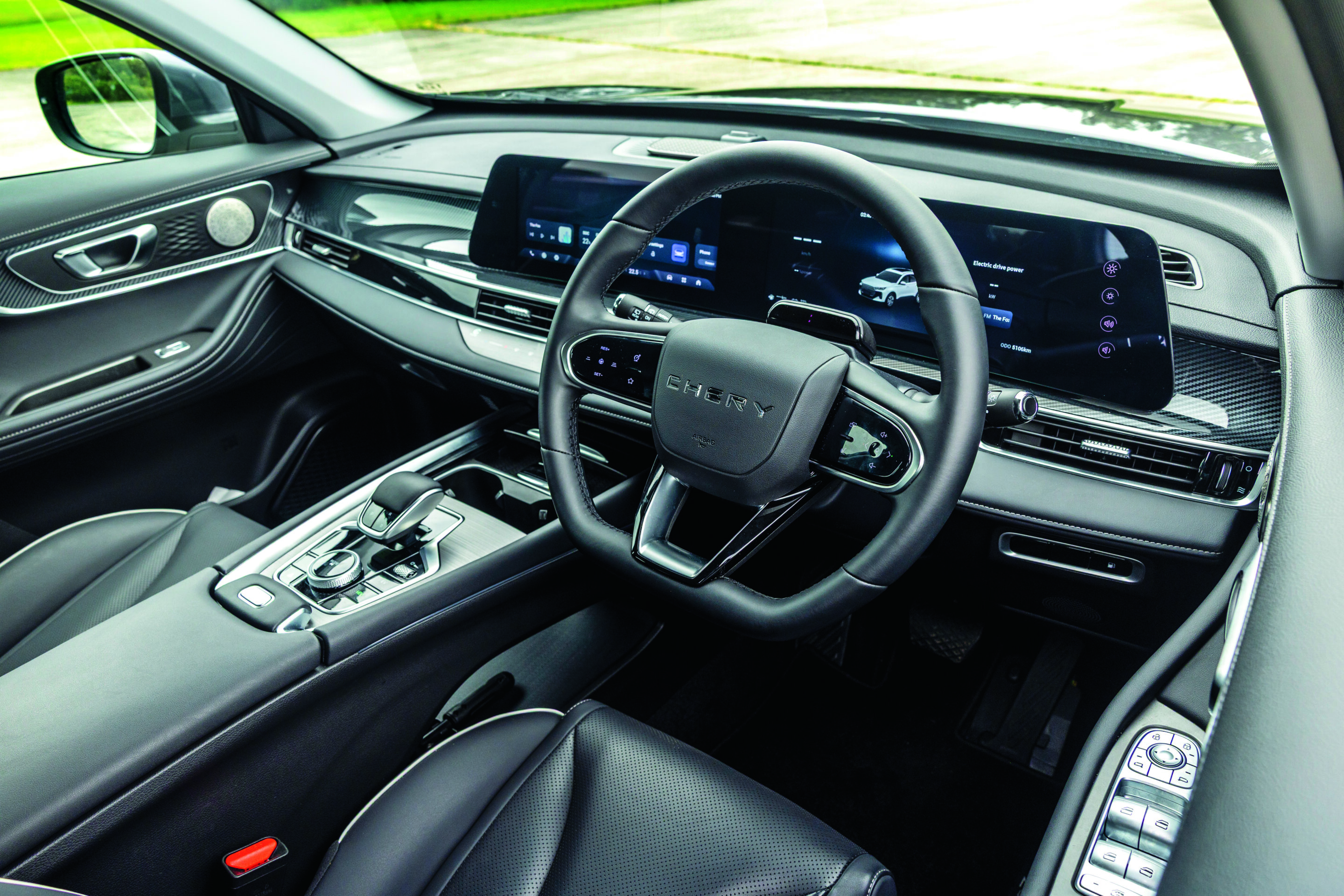
Regardless, performance is more than adequate for such a family-oriented piece of work, and the single-speed hybrid transmission keeps it simple. Smooth running is the name of the game even when the Tiggo is using its petrol engine, and the small capacity turbo-motor is as sweet as any of them in 2025. The driver can force the car into electric only mode, or simply select Auto mode and allow the car to decide for itself how it gets down the road. Stick to all-electric running, and the people at Chery claim a 90km range before the petrol engine will be called into play.
Charging the 18.4kW battery can be achieved at home on a household socket or a commercial fast DC charger. Well, the first 40kW of its capacity, anyway, at which point the battery will go from 30 per cent charged to 80 per cent in around 20 minutes.
In any case, recent research suggests that a lot of people with plug-in hybrids don’t charge them anyway. They simply rely on the efficiencies of normal hybrid running and leave it at that. The official test figure of 1.4L per 100km has Brothers Grimm written all over it, but real-world experience suggests that a mix of urban and highway running will still net an overall figure of less than 5L per 100km.
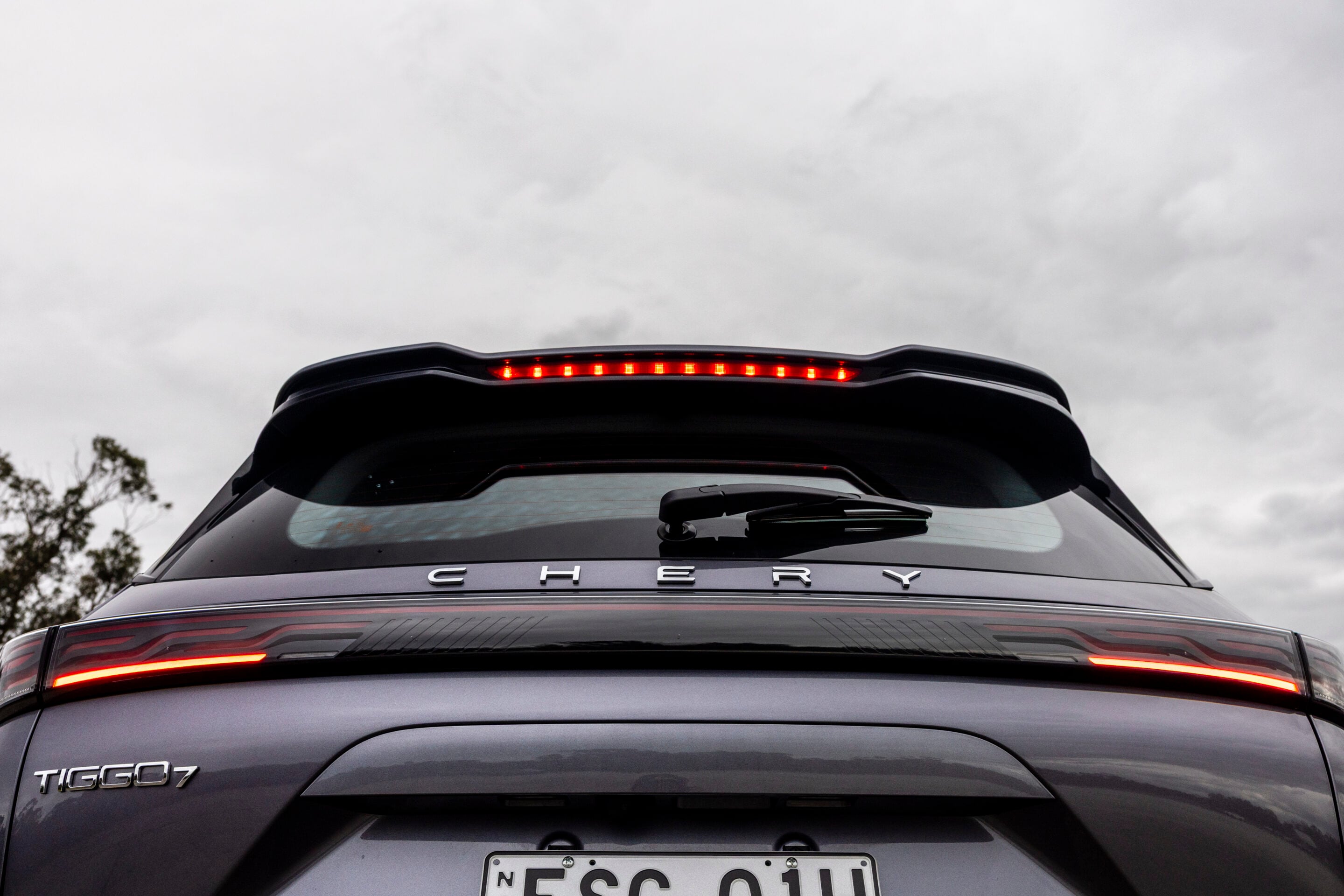
What’s not so hot is the Tiggo’s combination of ride, handling and steering. The latter can seem a little crumbly with a manufactured feel introducing a few little squirms and wriggles you’d swear shouldn’t be there. And that SUV combination of ride height and kerb mass (almost 1800kg) means the springs are firmer than you may have been expecting. For all that, however, there’s not the degree of body-roll control expected from a ride as firm as this one.
Anyway, long after you’ve tired of calculating the crazy-good fuel economy, that busy ride will remind that you spent 40-grand and not 60.
Specs
| Price | $39,990 (driveaway) |
|---|---|
| Body | Five-door, five-seat SUV |
| Drive | Front-wheel drive |
| Drivetrain | 1.5-litre four-cylinder turbo petrol PHEV, single electric motor, 18.4kWh lithium iron phosphate battery |
| Power | 105kW petrol/150kW electric |
| Torque | 215Nm petrol/310Nm electric |
| Transmission | 215Nm petrol/310Nm electric |
| Consumption | 1.4L/100km, 93km EV range NEDC |
| Kerb weight | 1825kg |
| 0-100km/h | 7.2 secs |
| L/W/H/W-B | 4535/1864/1702/2653mm |
| Boot space | NA |
| Warranty | 7yr/unlimited km |
| Safety rating | Hybrid: Unrated; non-hybrid: 5 star ANCAP (2023) |
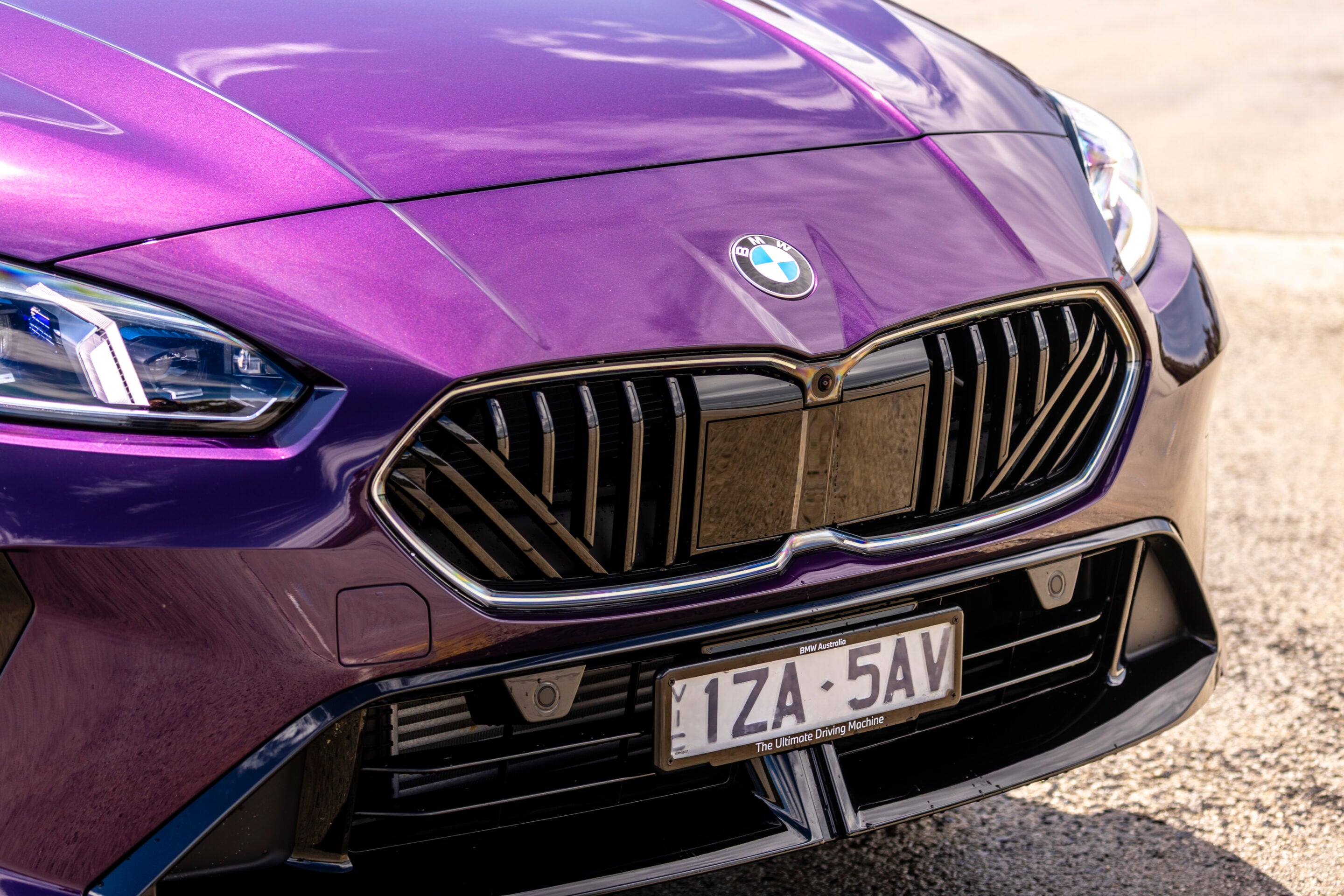
It was great to have the BMW 220i Gran Coupe in the COTY contest. It did everything expected of a new BMW and was a perfect ‘palate cleanser’ to provide relief from the seemingly endless line-up of SUV and EV contenders. Following lap-after-lap on the handling course in too many bland-mobiles, it was relaxing and enjoyable to drop behind the wheel of the little BMW and go cruising. Or sprinting.
It was the same story at the end of each day, when the BMW was a popular choice for the commuter trundle from Lang Lang back to the overnight COTY base. But does the Gran Coupe M Sport move the needle on the crucial measures of a serious COTY contender?
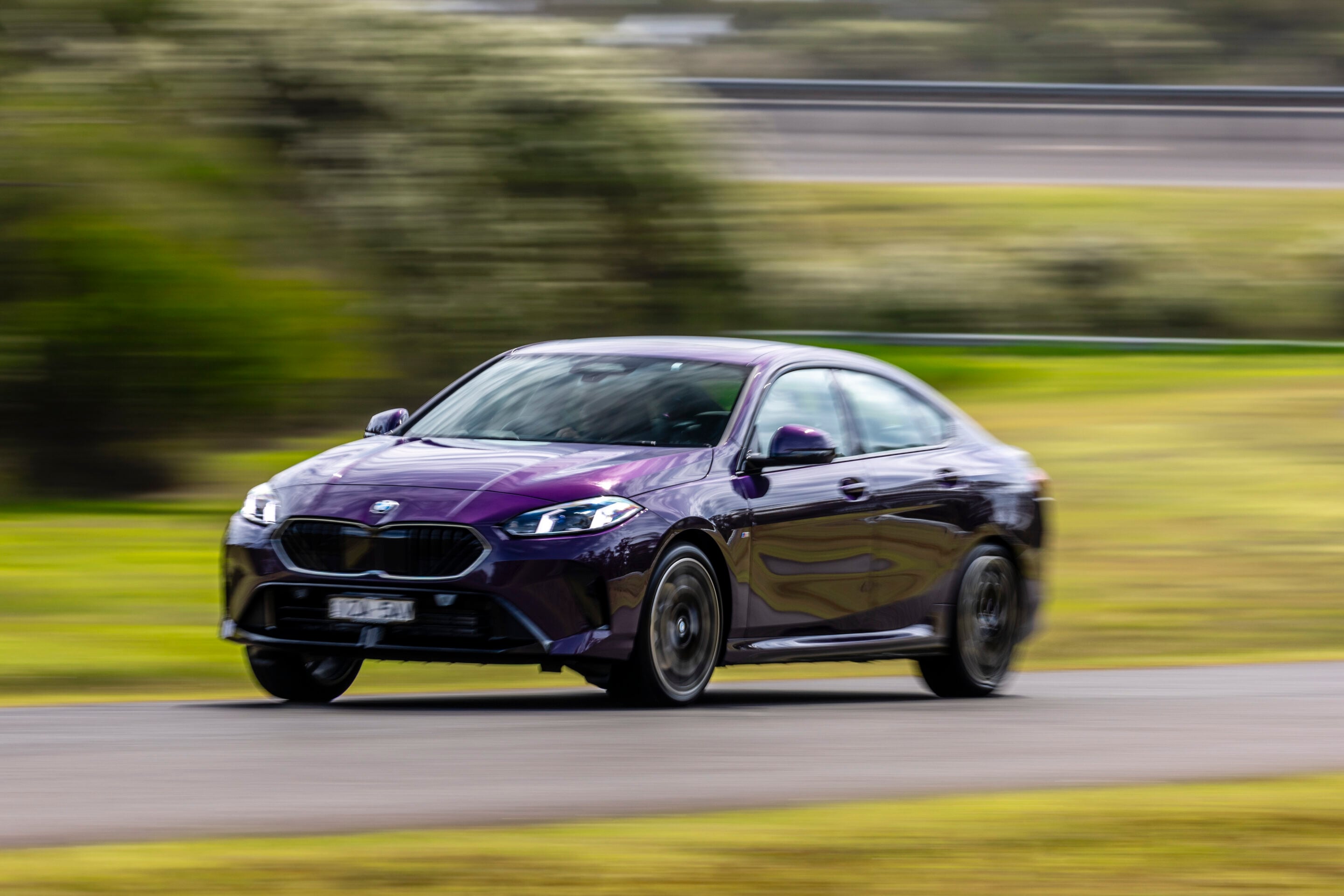
“Remind me again – it’s like the Civic, because it does what you want, but it’s not a landmark car,” said one judge.
It was certainly among the semi-final contenders because it’s a BMW, but it also failed to advance to the final rounds because it’s a BMW. We expect more from the German brand. Even more, we demand it.
The 220 was spawned from the decision by BMW Group to integrate its babies with MINI and BMW badges, which means the 1 and 2-series cars. So there is a lot of shared engineering and the Gran Coupe takes its power to the front, not the rear.
That’s much more MINI than the traditional compact BMWs of the past, starting from the 2002 and moving smoothly into the early 3-Series models. But COTY is not a history lesson, it’s about here and now. So, does the shared engineering make the 2 Series a bad car? Not at all. Does it make the Gran Coupe a great car? Not at all.
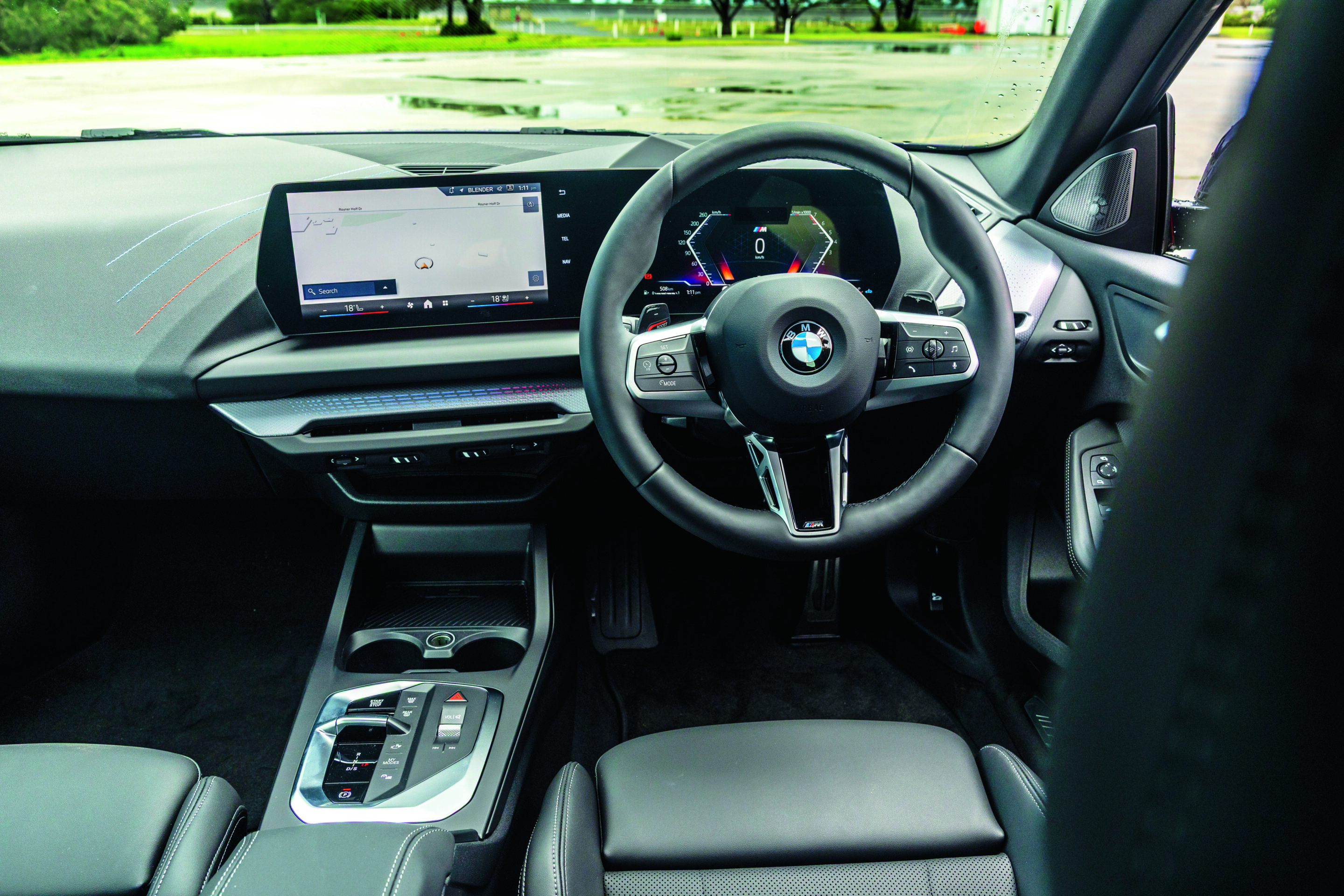
Despite the name, the Gran Coupe is effectively a four-door sedan with sloping roofline at the rear, not even a hatchback. So it’s lacking in innovation. For Robinson, the move to a big-screen cabin, despite the lovely materials and finishing, still come with one massive disappointment. “What happened to the instruments? BMW always had classic dials, simple and clear, and now this?” he snorted. And what of the giant-sausage rim on the steering wheel? Germans must have big hands.
The mechanical package on the 220 was fine and nice, with a 2-litre turbo petrol four-cylinder making 150kW/300Nm but no sign of significant hybrid work. With a 7-speed double-clutch automatic, it was good for a 0-100km/h run in 7.3 seconds and economy of 6.7 litres/100km.
And that’s the thing. It was a lovely car to drive, roomy in the cabin and comfortable, but not special. No-one would complain about a 2 Series Gran Coupe in the driveway, but will you to rush out to buy one?
Specs
| Price | $63,400 (MSRP); as tested $68,554 (MSRP) |
|---|---|
| Body | Four-door, five-seat sedan |
| Drive | Front-wheel drive |
| Drivetrain | 2.0-litre four-cylinder turbo petrol |
| Power | 150kW @ 5000-6500rpm |
| Torque | 300Nm @ 1450-4500rpm |
| Transmission | 7-speed dual-clutch automatic |
| Consumption | 6.7L/100km |
| Kerb weight | 1525kg |
| 0-100km/h | 7.3 sec |
| L/W/H/W-B | 4546/1800/1445/2670mm |
| Boot space | 430L |
| Warranty | 5yr/unlimited km |
| Safety rating | 5 star ANCAP (2019) |
Nothing brightens a Car of the Year contest quite like an Alfa Romeo. The Italian brand has always created cars to make people smile. An Alfa has never claimed a COTY crown, despite the enthusiasm of the Alfisti – the brand’s traditional fans – and the appeal of cars like the classic GTV.
Although this year’s COTY hopeful managed to tap into Alfa’s history for its name, the Junior of 2025 is unrecognisable from the 1960s sporty coupe of the same name.
This one is a compact SUV and its roots are as deeply embedded in the USA as they are in Italy. That’s
because, under the skin, the Alfa Junior is actually a Jeep Avenger. Yes, a Jeep. And the same mechanical package is also used for the latest Fiat 600, perhaps thankfully not sold in Australia.
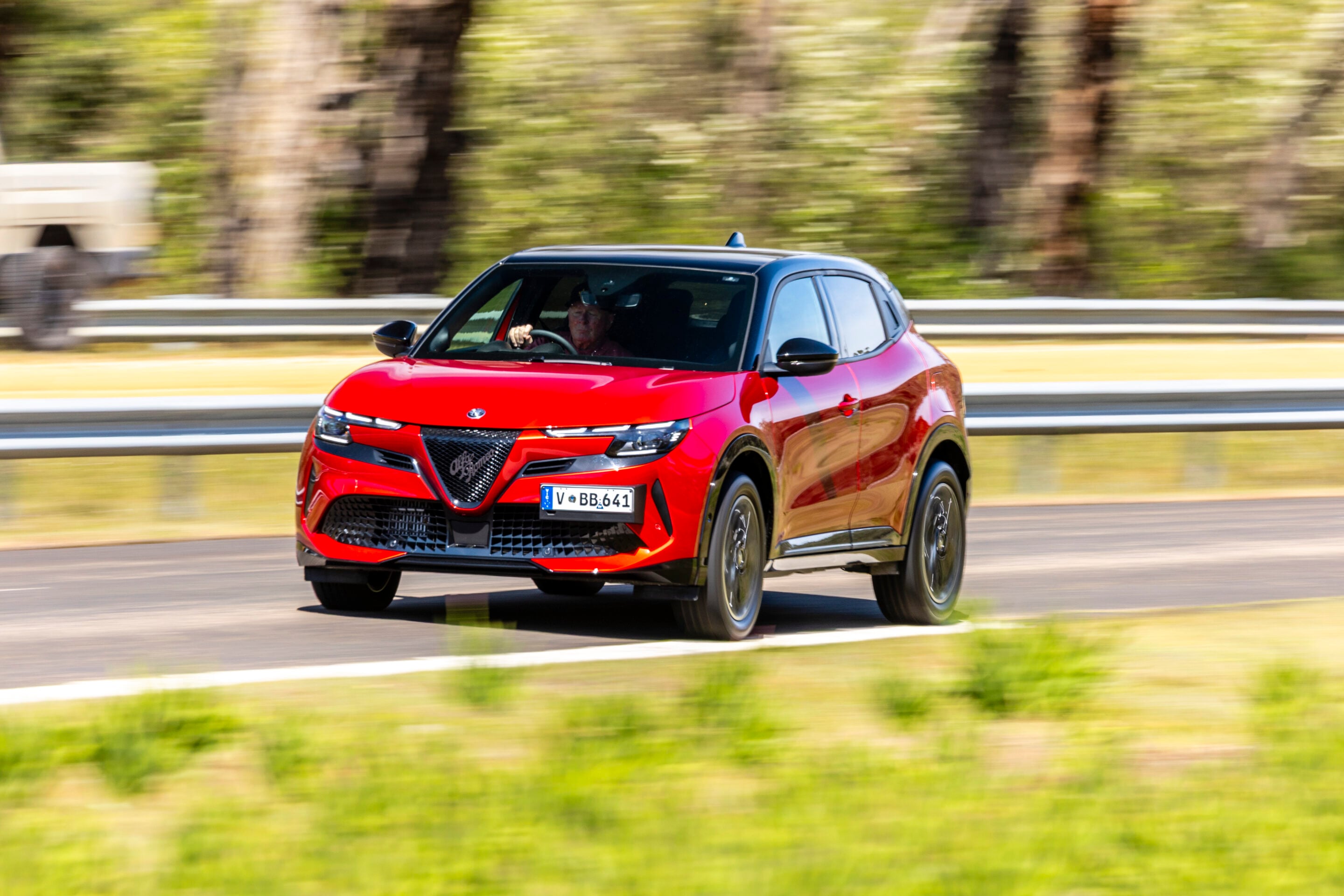
The Alfa Romeo Junior Ibrida – the model name translates as hybrid, or cross-breed – is the third and smallest of the Italian company’s SUV line-up. It joins the Stelvio and Tonale as the brand pivots well away from its go-faster roots towards 21st century families.
Priced from $45,900, the Junior Ibrida is a mild hybrid with a three-cylinder petrol engine and 48-volt starter assistance, claiming impressive economy of just 4.1 litres/100km. But it also has a relatively miserable 107kW of power, with just 230Nm of torque to feed to the front wheels through a six-speed double-clutch gearbox.
What that means is a ‘sprint’ time of 8.9 seconds to 100km/h. Hmmm…
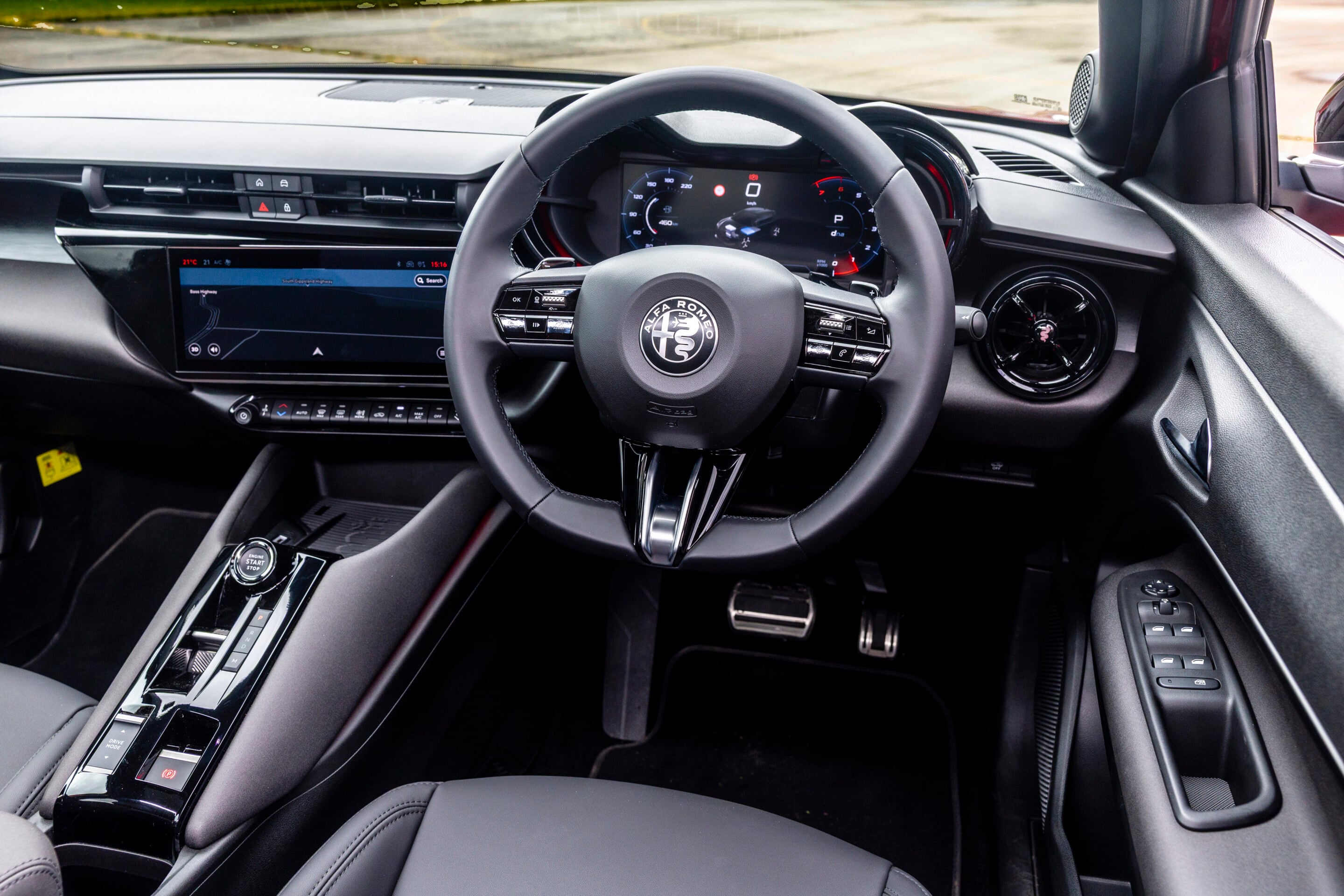
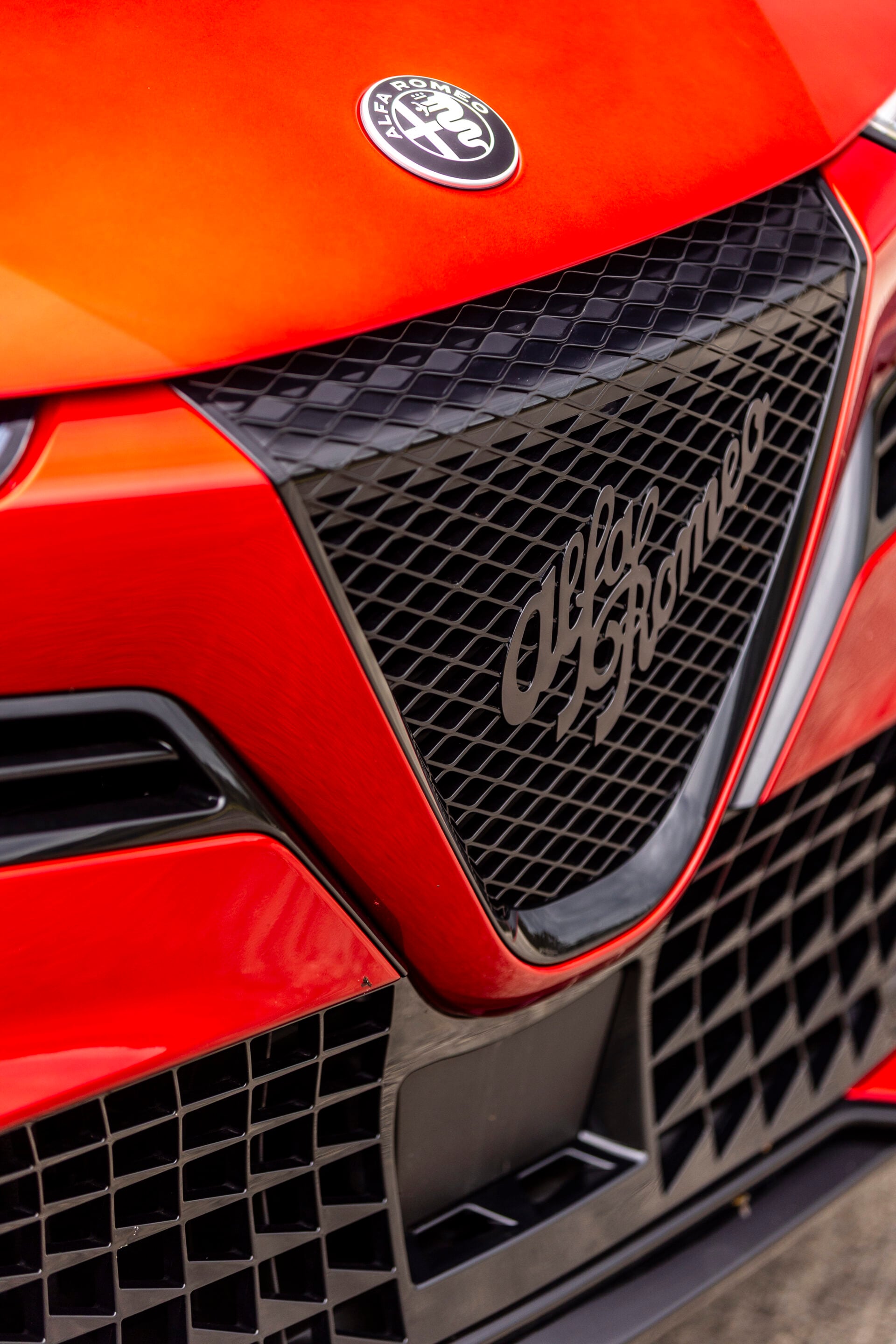
The Junior was a favourite with Peter Robinson from the get-go. It’s an Alfa, after all, and Robbo lived in Italy for close to 20 years. It definitely looked like an Alfa, with traditional design cues on the nose, a dashboard with all the right style despite too much hard plastic, and even racy red paint. The body was compact, with relatively cramped space for adults in the back and not much room in the boot.
If you want to know how far Alfa Romeo has fallen in the age of Stellantis – the global conglomerate trying to blend brands as diverse as Jeep and Peugeot, Vauxhall and RAM – then you only have to dig into the Junior.
It might look like an Alfa Romeo but that’s about it. It is underwhelming in almost every way once you’re underway, even if the price line might look enticing.
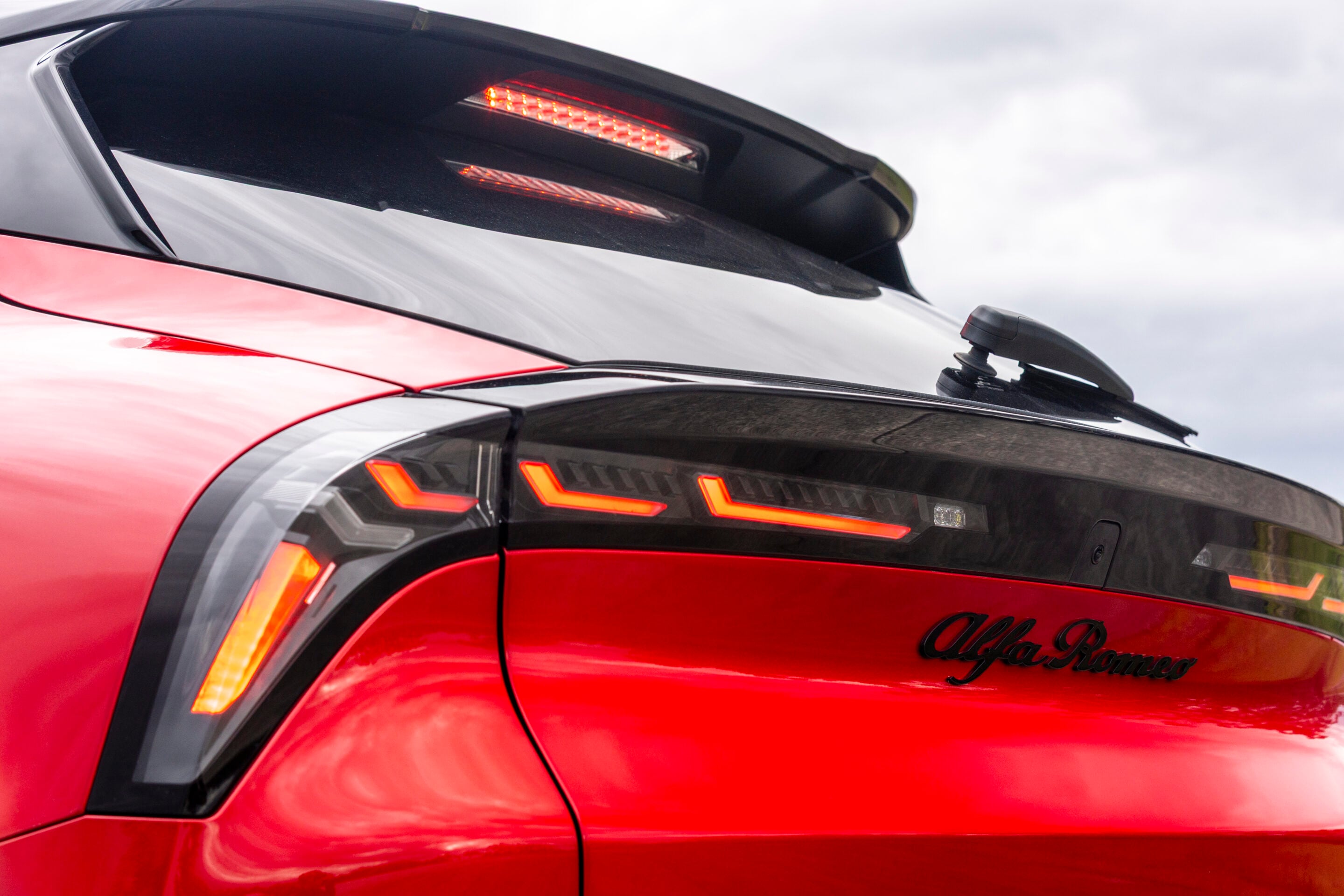
It doesn’t even have an Alfa snarl from the exhaust when it starts. Or the lovely induction roar under full throttle. It’s all about the quietness and efficiency of the hybrid package, and parking prominently outside a cafe for a latte. The same approach was obvious from the driving experience. No passion or enjoyment.
The suspension was under-done in every way, wobbly around corners and bouncy over the bumps. It also felt tippy in direction changes, not rooted to the ground in any way, with a wayward rear end which didn’t want to follow the nose.
Twice it was up for culling in the early rounds, and twice it was saved by Robbo. But then even he had to concede the Junior was a loser, after taking it on a personal exploration on some of the rugged local roads outside the Lang Lang proving ground. It did not do well.
“I’m crestfallen,” Robinson finally admitted.
Specs
| Price | $45,900 (MSRP) |
|---|---|
| Body | Five-door, five-seat SUV |
| Drive | Front-wheel drive |
| Drivetrain | 1.2-litre three-cylinder turbo petrol, 48V mild-hybrid |
| Power | 107kW combined |
| Torque | 230Nm combined |
| Transmission | 6-speed dual-clutch automatic |
| Consumption | 4.1L/100km |
| Kerb weight | 1280kg (tare) |
| 0-100 | 8.9 sec |
| L/W/H/W-B | 4173/1781/1539/2557mm |
| Boot space | 415L |
| Warranty | 5yr/unlimited km |
| Safety rating | Untested |
Only one car needed a new set of tyres after the COTY testing program.
It was also the car with the heaviest fuel use and the one that usually went missing when it was time for the lunch run. It was, of course, the Toyota GR Corolla. At some time, everyone wanted the key for a bit of PDA. That’s a personal display of affection, in this instance. It was usually on the ride-and-handling circuit, one-up without a passenger to critique the drive, and it was a reflection of the unique position of the GR Corolla in the COTY contest.
But there were also four-up laps to check the car’s ride quality and composure, and an in-depth check of the engineering work under the pumped-out guards and big wheels. Even the cabin, which is everything you expect of a Toyota with none of the theatrics of a go-faster Audi – or even some ordinary Chinese EVs – to tantalise the driver, was assessed against the basic requirements of a daily driver.
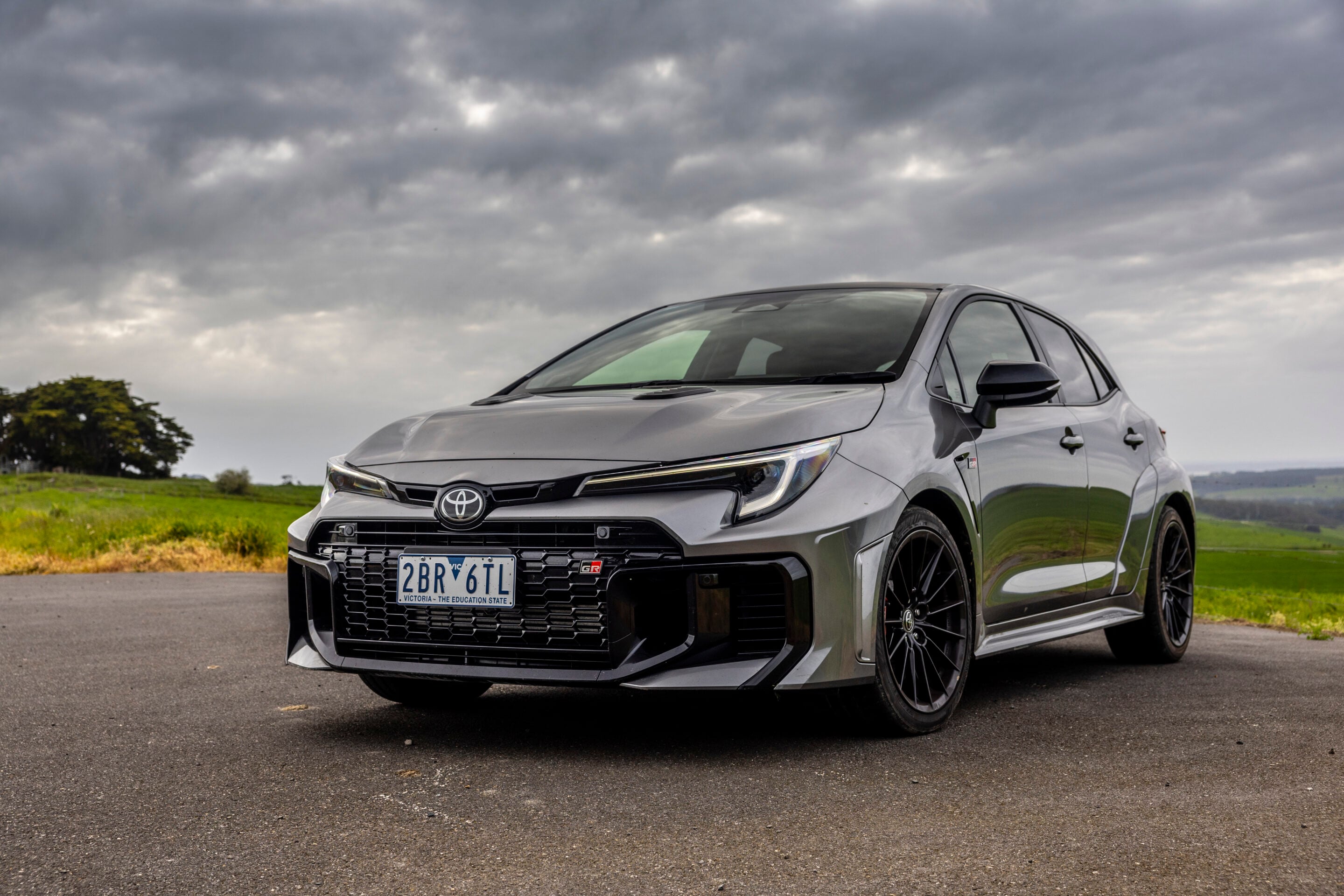
Then it was time for the foot-down fun runs around the Lang Lang torture tracks which exposed the shortcomings of every COTY contender. The GR Corolla?
“It puts a silly grin on your face,” said David Morley.
He was right about a car with a back story that tracks all the way up to the top at Toyota, and company chairman Akio Toyoda. It was Toyoda, who races as ‘Morizo’ and has a private company called Gazoo Racing, who decided that the bland-mobiles from brand T needed an injection of driving enjoyment to help them step above challengers from Korea and China.
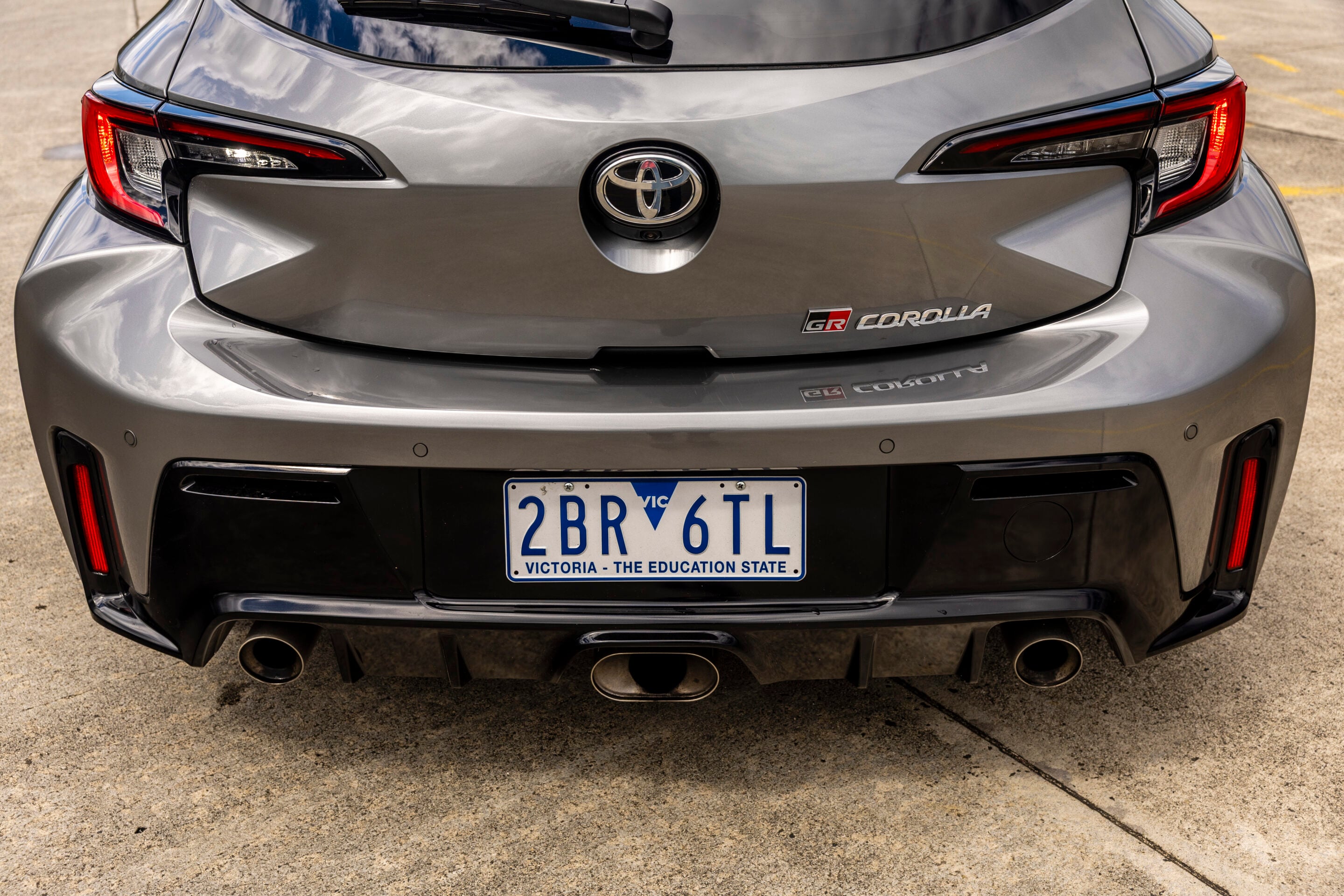
The result is the GR family of showroom hotrods and, indirectly, the GR Supra coupe that will compete in Supercars racing in Australia from the start of next season. So, as there were HSV and FPR, and still AMG and M, there is now GR. It’s shorthand for Gazoo Racing and reflects the special sauce applied to turn ordinary – and Toyota knows plenty about ordinary – into extraordinary.
The first real example was the GR Yaris and now the same basic mechanical package – a turbocharged three-cylinder engine, all-wheel drive, with sports suspension and brakes – has been upgraded onto the Corolla.
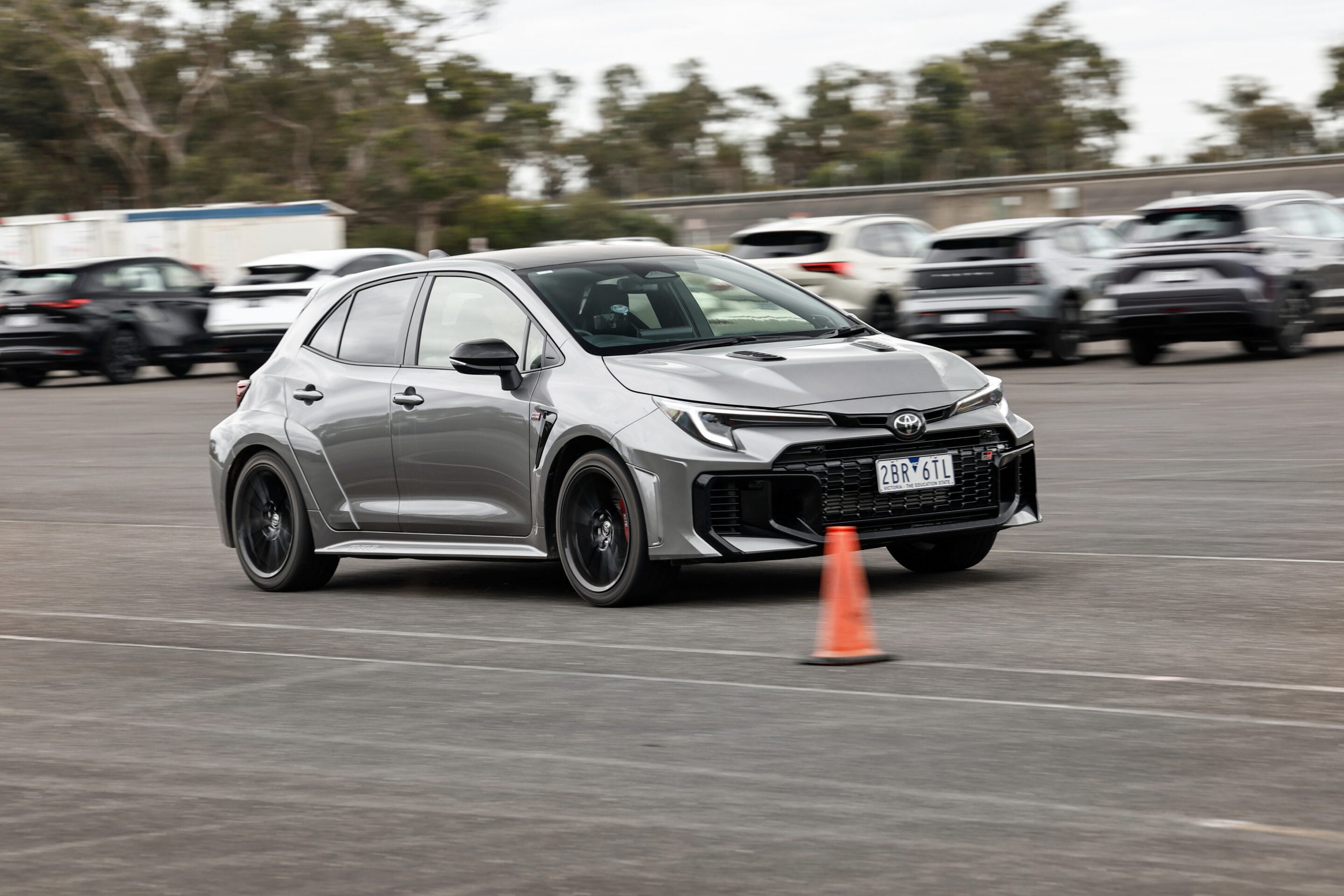
The GR Yaris was a touch unhinged, like the best special-vehicles cars, which helped it become a sell-out cult figure in the same way as the early Subaru Impreza WRX and Mitsubishi Lancer Evo. The GR Corolla is obviously bigger, but also more balanced and refined. It’s hardly grown up, but it is more grown up than the Yaris.
The driving position is better, the car is more balanced in heavy braking or through a slalom run, and 9.5 litres/100km – a figure not nearly matched at COTY – is reasonable economy. It costs silly money for a Corolla, at $70,490 for the eight-speed automatic on call for COTY, but some people see it as a bargain compared against the latest WRX or a Golf R.
For context, the GR costs more than twice as much as a basic Corolla Ascent and it adds nearly $10,000 to the price-tag of the WRX. But, what a car.
“It is a ridiculously easy car to drive fast,” said Trent Nikolic.
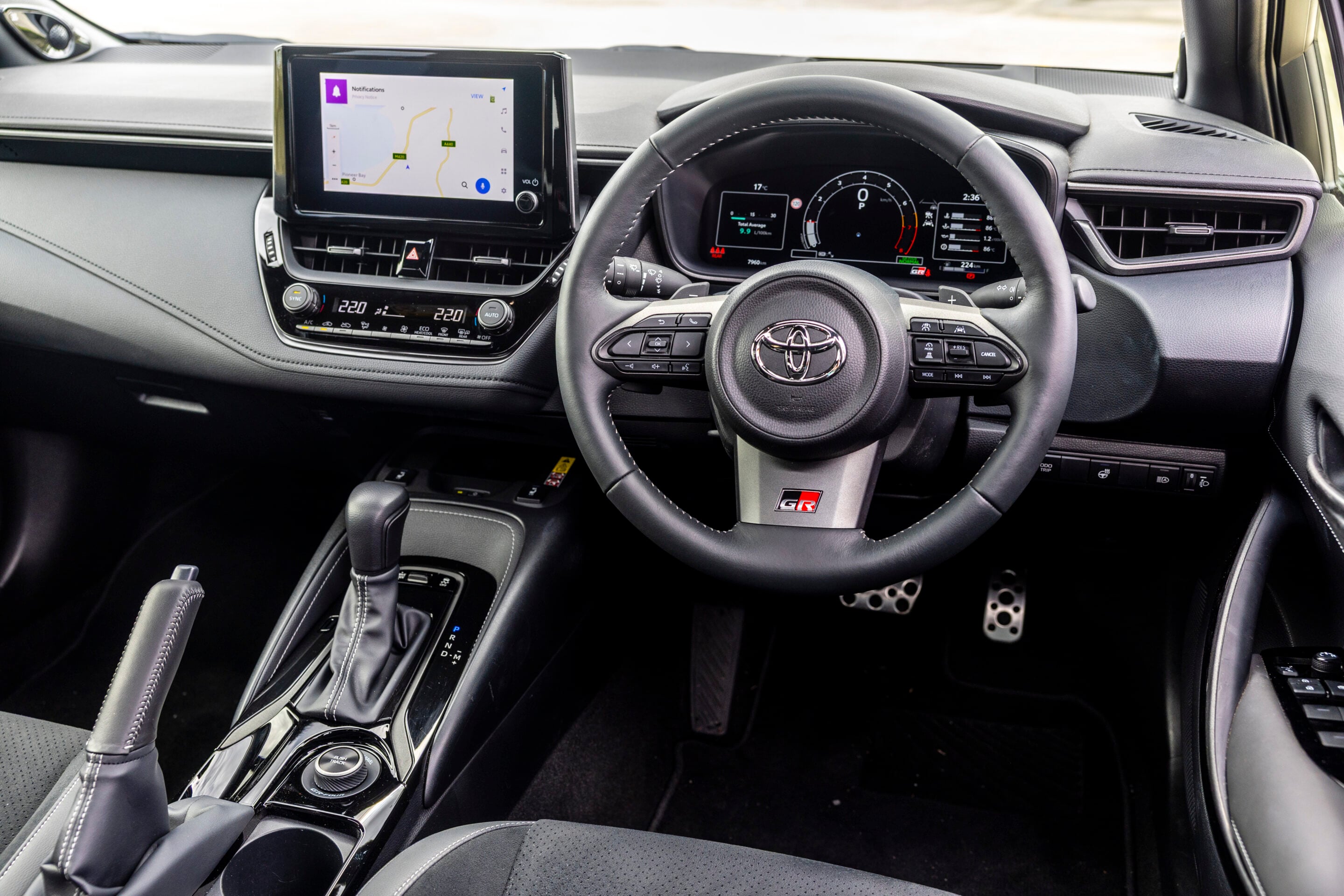
And that’s what the GR Corolla is all about. It is swift but secure. Solid while being slightly silly. You can fit two Aussie adults in the back seat – we know because we did it – and the quality is typically Toyota, but the boot is silly small and everyone who sees the GR-mobile knows it’s a touch anti-social.
“If I’m spending seventy grand on a Corolla, I want everyone to know,” said Morley.
The GR Corolla is brilliant at Lang Lang, and unique too even in a COTY field of achievers. It runs hard and fast in any conditions, and anyone can satisfy their ambitions without destroying their dreams.
It makes a rousing 221kW, but it’s the 400Nm of torque which gives such easy access to the performance. You can grunt out of any corner with serious thrust, all the way up to the silly speeds which must be contained inside the Proving Ground.
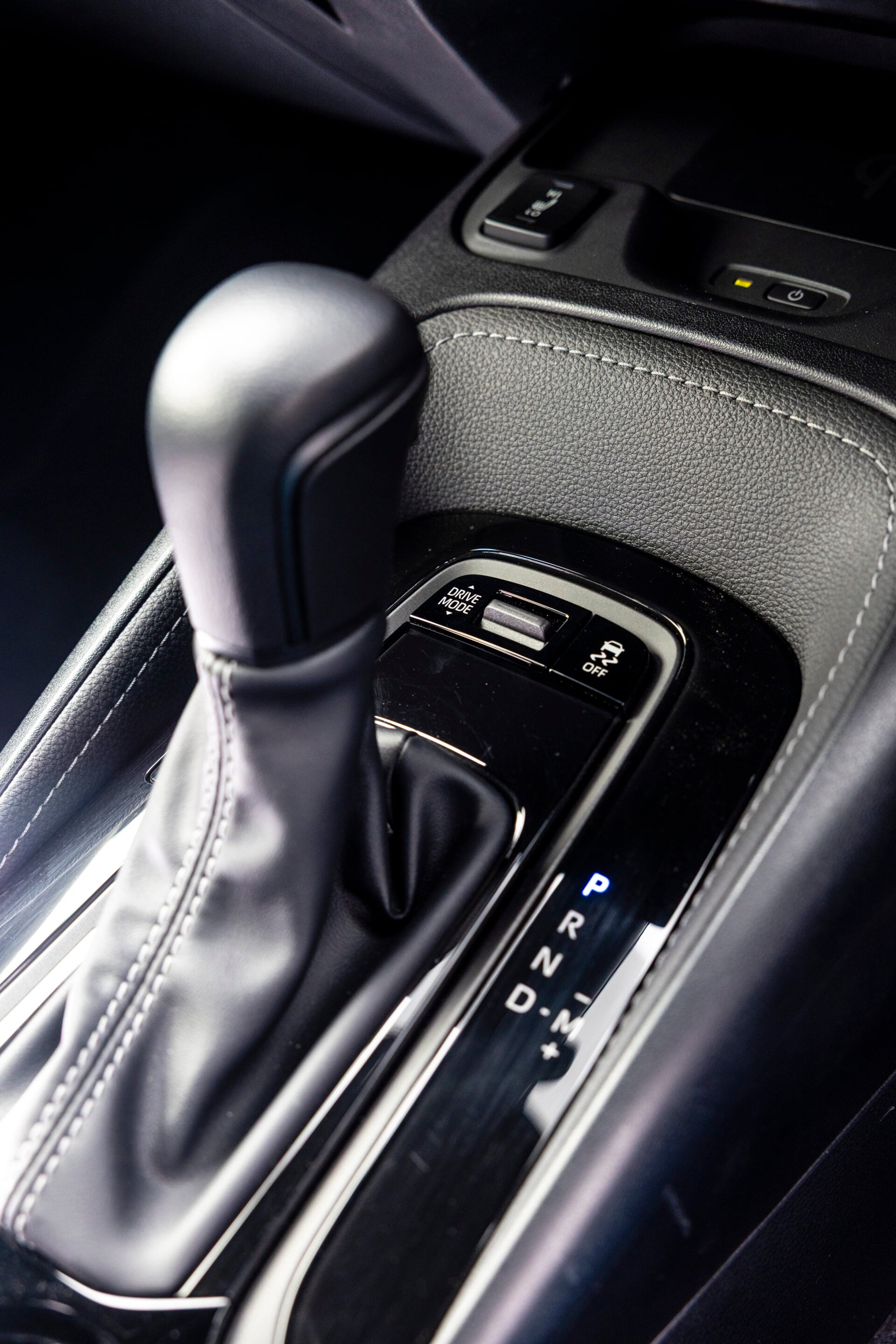
Toyota withholds a 0-100 thrust time, but 5.4 seconds was Karl Reindler’s quickest timing at COTY.
There are driving modes to vary the engine response and torque balance in the transmission, too, with flappy paddles for fun. But it’s just as easy – no, easier – to leave everything set on D for dunce and just go driving.
Push hard and the front end usually washes wide in corners, but in quicker corners the Corolla will move around in the rear just enough to make it feel like a rally car on the loose. It’s a car where the driver will usually give up first.
Although the GR Corolla can look like a one-trick pony, it’s still a Toyota and still a Corolla. The air-conditioning is good, the panel fit is good, and it promises to be reliable and (relatively) cheap to run.
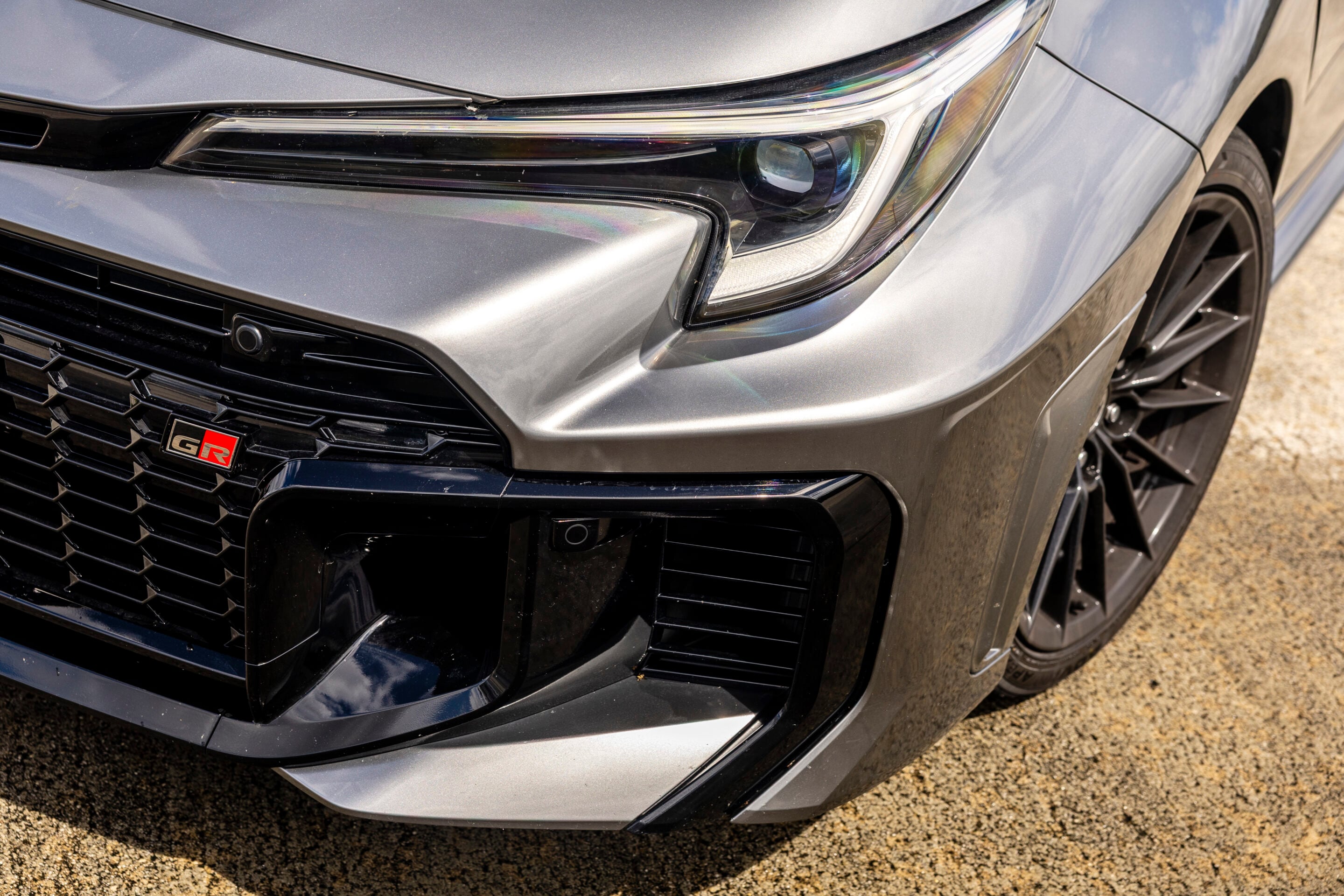
“It’s come right at the end of the life of the current Corolla. Which is a real tribute to Toyota,” said Robinson. “But the boot size is silly.”
“It is silly fun. But I don’t think I’d want to own one,”
I added to the conversation.
So, is too much just enough for a COTY champion?
“Yes, it’s a niche car. Yes, it’s expensive. Yes, it’s a bit of a hoon’s car,” said Nikolic, as he added the GR Corolla to the final COTY vote.
“But we can all rejoice that it’s a car that still exists in 2025.”
Specs
| Price | $70,490 (MSRP) |
|---|---|
| Body | Five-door, five-seat hatch |
| Drive | All-wheel drive (on demand, variable) |
| Drivetrain | 1.6-litre three-cylinder turbo petrol |
| Power | 221kW @ 6500rpm |
| Torque | 400Nm @ 3250-4600rpm |
| Transmission | 8-speed automatic |
| Consumption | 9.5L/100km |
| Kerb weight | 1510kg |
| 0-100 | NA |
| L/W/H/W-B | 4408/1851/1479/2640mm |
| Boot space | 213L/503L |
| Warranty | 5yr/unlimited km (min), 7yr/unlimited km (drivetrain, conditional) |
| Safety rating | Unrated (lasted tested 2018, 5 star) |
It’s possibly a kind of Pavlovian response thing (without the salivating) but when faced with yet another mid-sized SUV, the default mental programming in my head is to prepare for disappointment.
Not that these things are necessarily bad cars but, as a tribe, they don’t exactly offer too much in the dynamic thrills department. It’s all down, of course, to their devotion to the task of moving people safely, efficiently and at a price-tag that still allows for a driveway to park them in. And that’s often at the expense of any real sparkle. As in: If you’re not looking for much, they offer plenty (thank you, Harper Lee).
But just like Harper Lee’s back catalogue which, for literally decades consisted of the singular To Kill a Mockingbird (and even now stretches to just three titles), scarcity is no barrier to brilliance. Once you’ve found it.
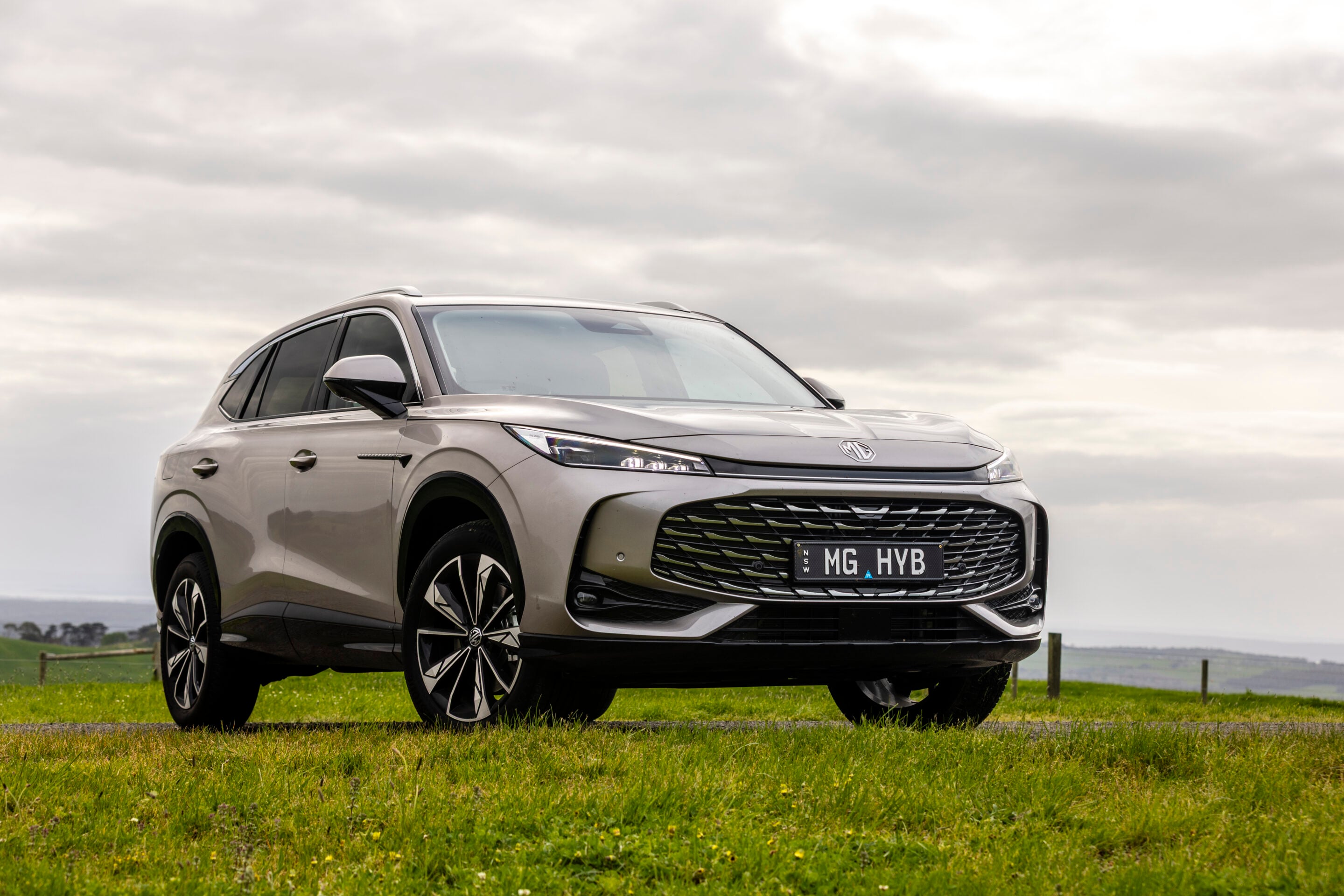
The true rarity of the MG (and largely why it’s a finalist) is that it has somehow managed to overcome the sensation of being at the mercy of that cost-versus-flair equation, and its jacked-up SUV layout. Where the majority of its competitors either roll around in corners or ride like billy-carts (or both), the MG emerges as the exception that gives us hope that maybe, one day, all SUVs will steer and handle properly.
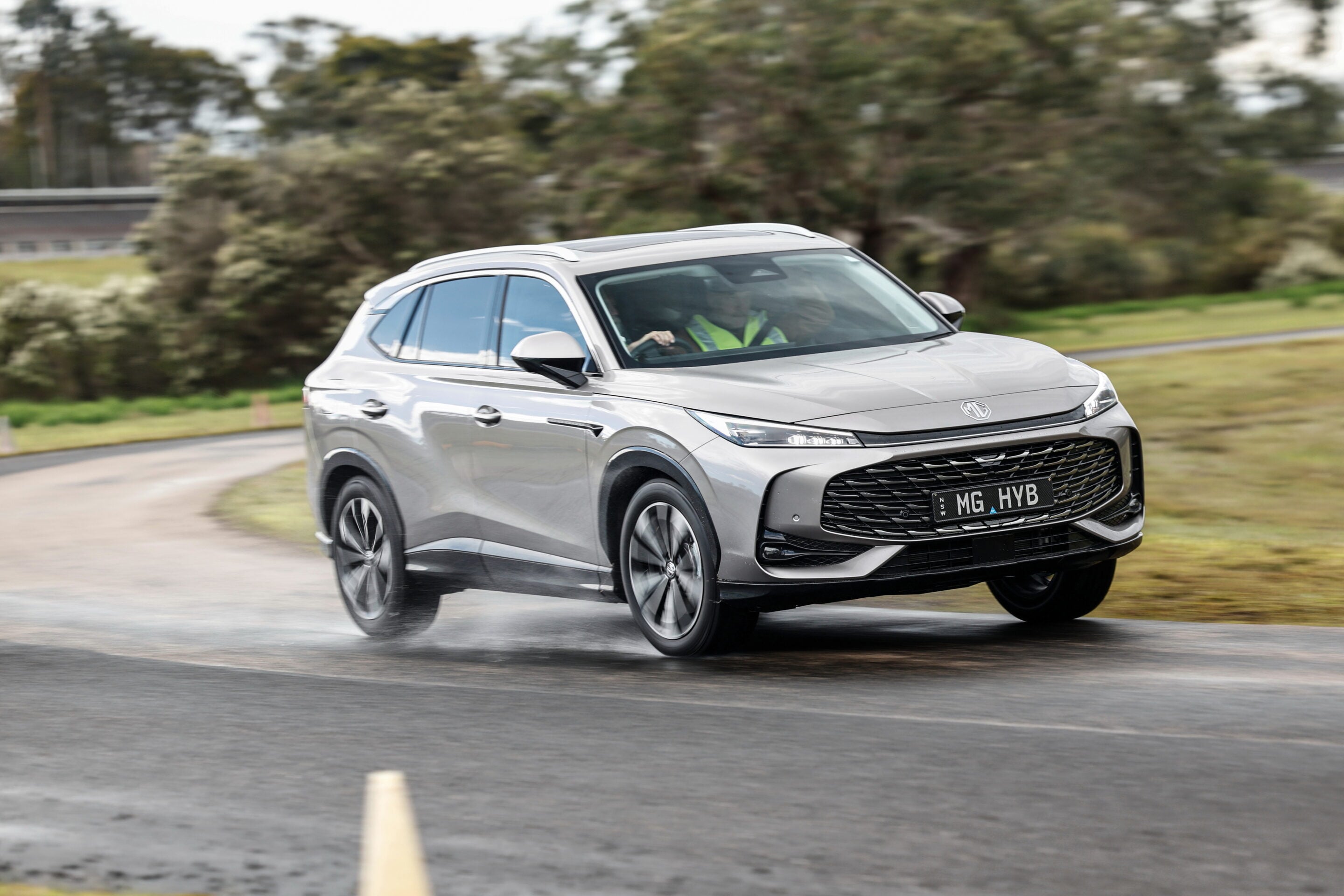
The rainbows start appearing pretty much as soon as you’re rolling, when your backside suddenly over-rides what your brain is expecting. Rather than the busy, jiggling ride you were expecting, the MG glides over bumps and ripples while letting you know what’s going on without shouting about it. In fact, it’s probably that small-amplitude, high-frequency ride quality that most definitively marks the HS out as more than a little bit special.
As speeds rise and cornering forces multiply, the HS begins to revert to type a fraction, but only a fraction. For the most part, the bump absorption is sufficient for that wide, broad bonnet to apparently hover above the road, unaffected too much by what’s going on directly under it. It’s an initial plush factor yet to be seen in anything else in this price-size category, we reckon.
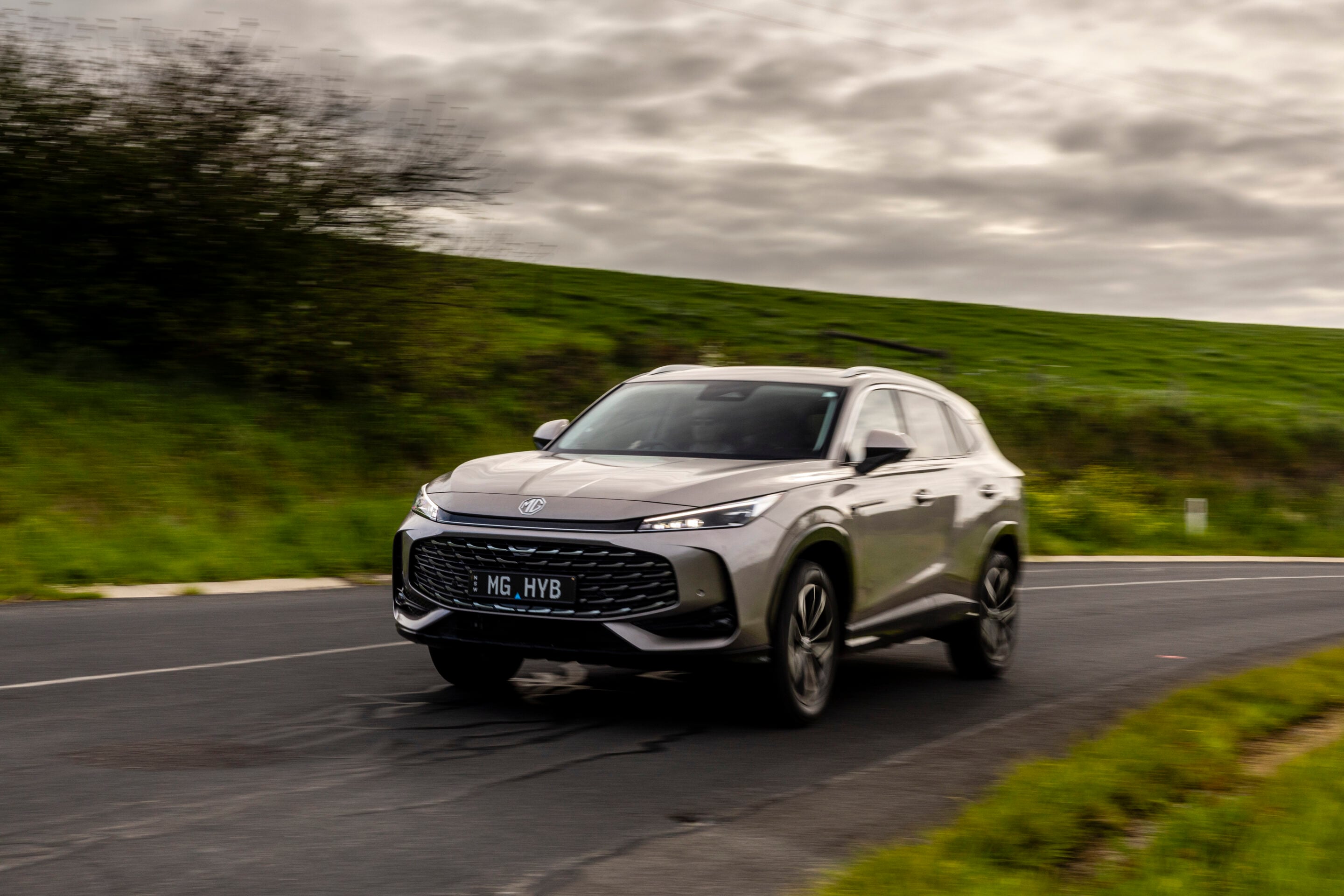
So how has this modern miracle been achieved? Seat of the pants suggests it’s the result of a successful decoupling of the forces produced by steering and suspension. While that sounds like a bad thing, it’s not, because the loads generated by the steering aren’t automatically passed through to the suspension and vice-versa.
So everything can keep doing what it’s supposed to do without a bump-steer pillow-fight going on below the wheel-arches. Maybe.
While MG also offers a similar package with a plug-in hybrid system (and a corresponding price-tag), the non-plug-in variant we have here seems to be the sweet spot (for now, at least). That’s especially so if recent research pans out and a high percentage of owners of plug-ins really do use them as normal hybrids anyway, continuing to put petrol in them just before they stop.
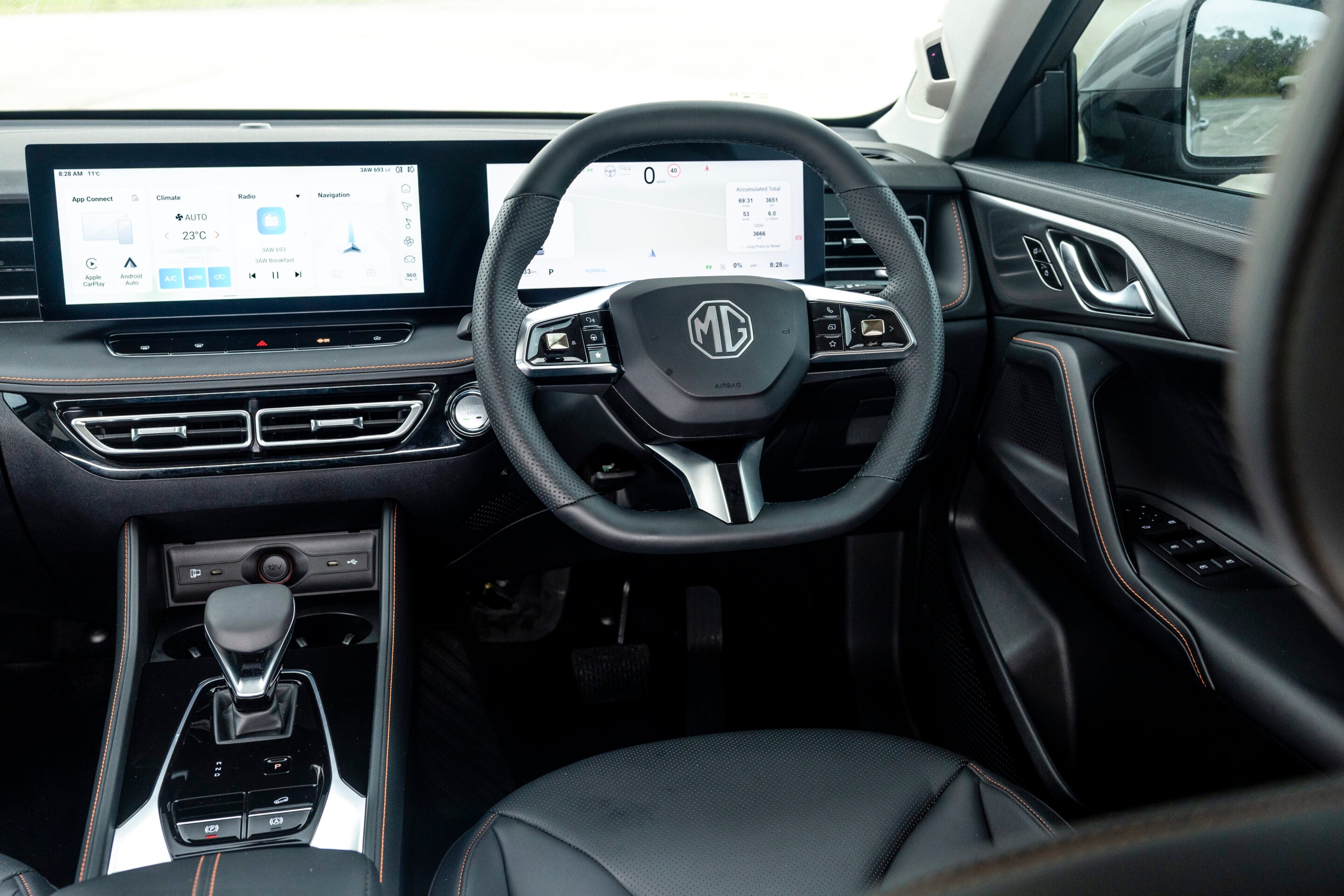
So what you have under the lid is that increasingly ubiquitous 1.5-litre turbocharged petrol engine coupled with a single electric motor. The difference here is that rather than a single-speed transmission, the MG gets a two-speed unit.
Combined, the two power units max out at 165kW and produce 340Nm of torque… which doesn’t sound amazing and, in fact, isn’t. But it doesn’t exactly leave the car wanting, either, and that’s because the MG is not as portly as it might have been. Okay, 1656kg is hardly ballerina stuff, but no plug-in battery and front-wheel-drive means it isn’t banging on for two tonnes like the GWM Haval H6 AWD plug-in, for instance.
Meantime, the power delivery is smooth and supple, in line with many of its competitors whose manufacturers have also recently rediscovered the packaging and refinement joy of a small-capacity four-cylinder petrol engine.
Given the importance of value for money in this segment, MG has gone for broke. Over and above the gear fitted to the entry-level HS Hybrid, the Essence adds a vast panoramic sunroof with a (thin) sun-shade, a hands-free powered tailgate, front fog lights, wireless phone charging, a driver’s seat with four-way lumbar adjustment, heated front seats and exterior mirrors, dual-zone climate and a slightly less faux aunt leather.
As a non-plug-in, of course, there’s no 100km of electric-only range, but the official combined fuel consumption figure of 5.2 litres per 100km suggests the MG won’t be a guzzler.
The HS Hybrid hasn’t been crash tested locally in this form, but it does cash in on the HS’s 2024 ANCAP rating of five stars. That’s down to inclusions of the latest driver-assistance packages including autonomous emergency braking, blind-spot monitoring and rear-cross-traffic alert.
There is also much to keep the family accounts department at peace, too. The $44,990 driveaway pricing is a good start, and there’s a seven-year/unlimited-kilometre warranty to help maintain sleep patterns. Oh, and if you elect to have the vehicle serviced exclusively at an MG dealership (of which there are now roughly 100 across the nation) that basic warranty unfolds to 10 years and 250,000km of cover.
It’s good, then, this new MG. And perhaps the best illustration of that was the wide-eyed look of amazement on the face of every COTY judge as they stepped from the HS after their first drive. And that level of surprise and delight always suggests you’re on to something.
Specs
| Price | $44,990 (driveaway) |
|---|---|
| Body | Five-door, five-seat SUV |
| Drive | Front-wheel drive |
| Drivetrain | 1.5L turbo petrol 4 cylinder, 1.83kWh NCM lithium iron water-cooled battery |
| Power | 165kW |
| Torque | 340Nm |
| Transmission | 2-speed hybrid |
| Consumption | 5.2L/100km, 1000km range (TNFC) |
| Kerb weight | 1656kg |
| 0-100km/h | NA |
| L/W/H/W-B | 4670/1890/1655/2765mm |
| Boot space | 507L/1484L |
| Warranty | 7yr/unlimited km (min), 10yr/250,000km (conditional) |
| Safety rating | Not Tested (5 star ANCAP 2024) |
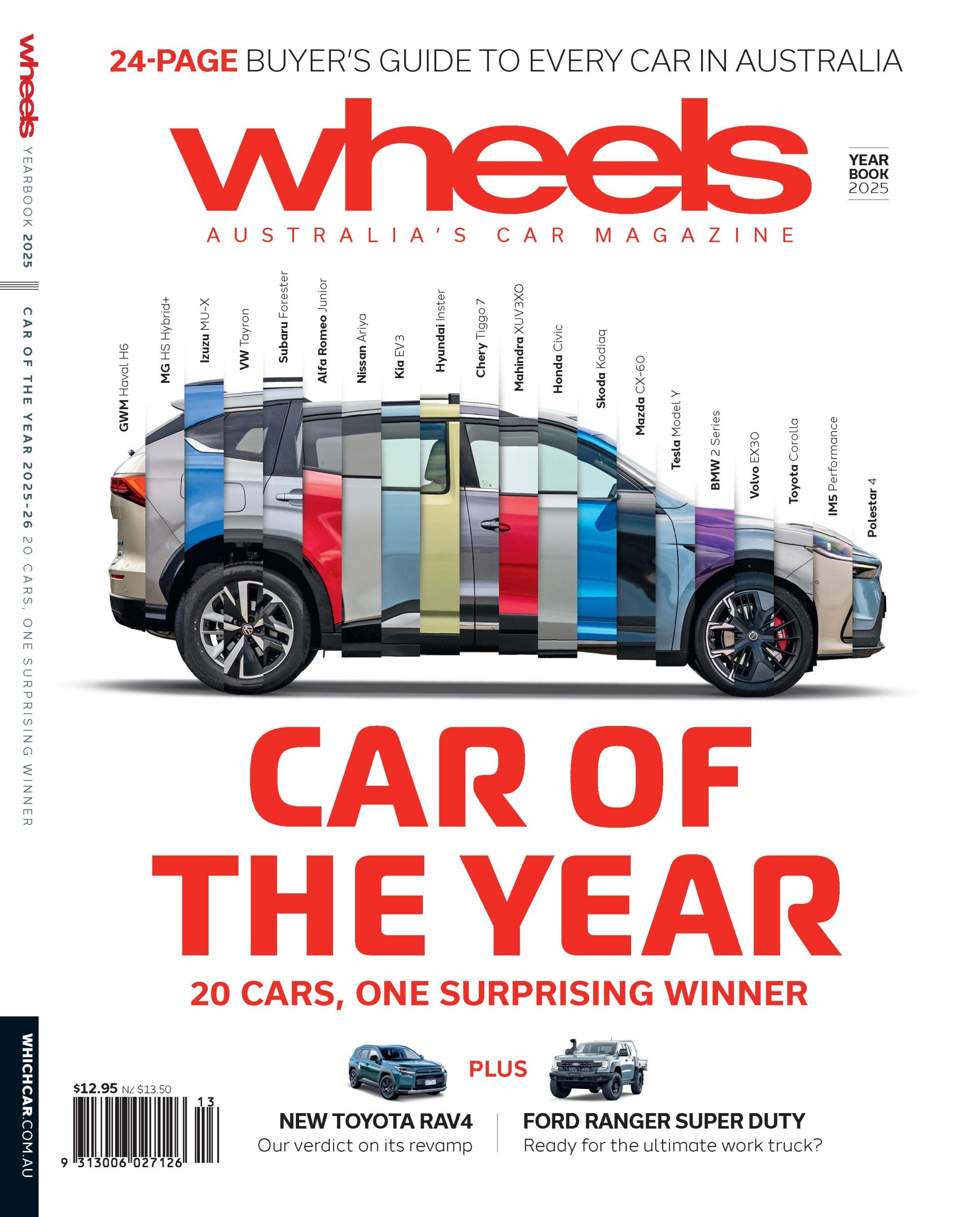
Wheels today announces its 2025–26 Car of the Year, the result of Australia’s most rigorous and longest-running annual car award. The winner – selected from a field of 20 of the most significant new vehicles on sale – is revealed in the 2025–26 Wheels Car of the Year Yearbook, on stands from Monday, December 15.
The Yearbook is the complete, behind-the-scenes chronicle of how this year’s Car of the Year was decided: the cars that made the cut, the judges who tested them, the venue that pushed every contender to its limits, and the process that distilled a wide and diverse field into a deserving champion. Across three rounds of intensive driving and debate, the Wheels judging panel assessed performance, efficiency, safety, value, innovation, usability and real-world appeal – searching for the car that best represents progress for Australian buyers right now.
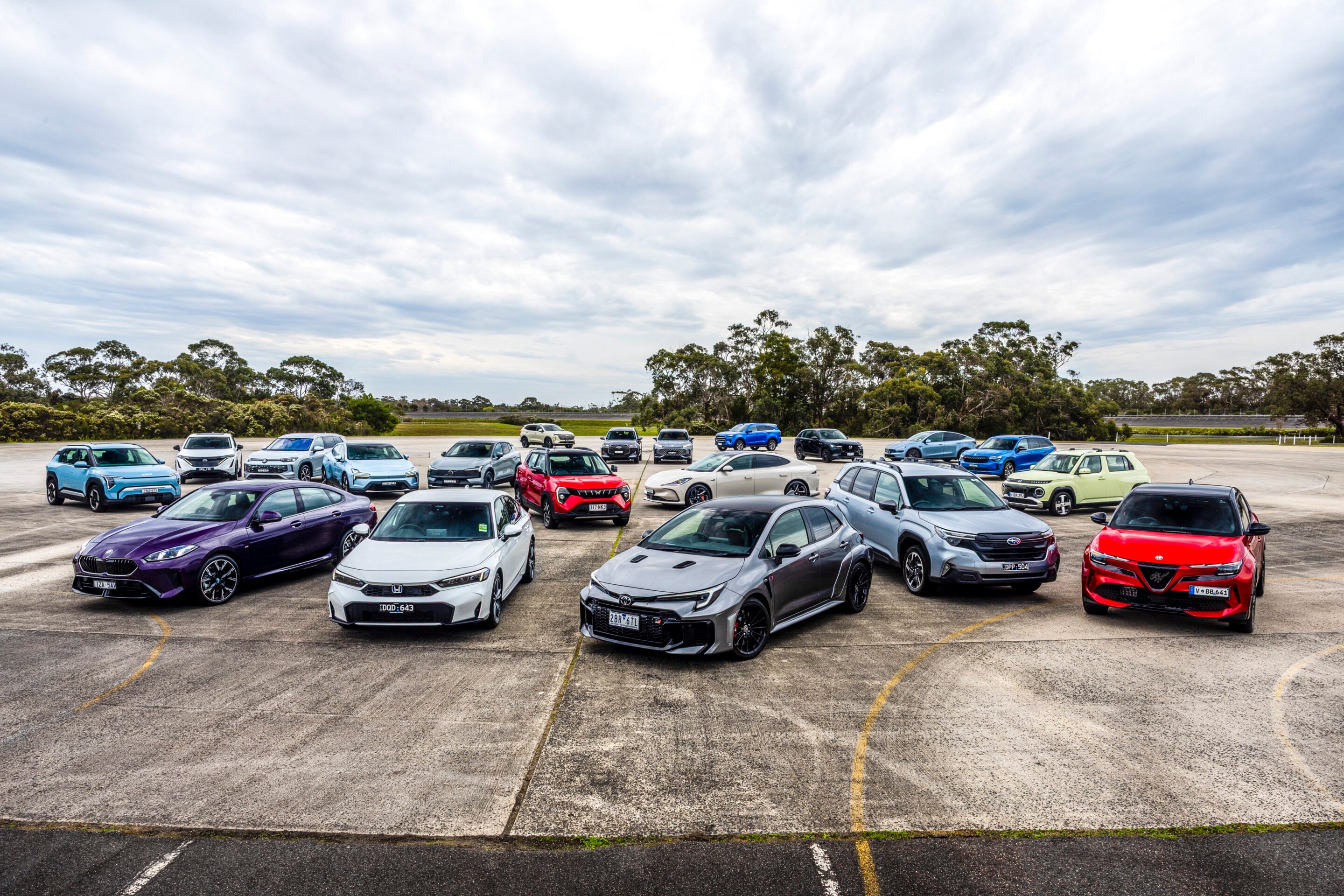
Round One begins with all 20 contenders eligible for the title. After several days of evaluation, the judges determined that a group of cars, while impressive in their own right, did not deliver the overall breadth of ability required to win Car of the Year, reducing the field to eight cars
The Final Round announces the top three, including the 2025–26 Wheels Car of the Year winner. Each finalist surprised the judges during the test days, forcing reassessments, lively debate, and, ultimately, a clear decision. Readers will find the full final-round drive impressions, score breakdowns and the critical moments that separated winner from runner-up.
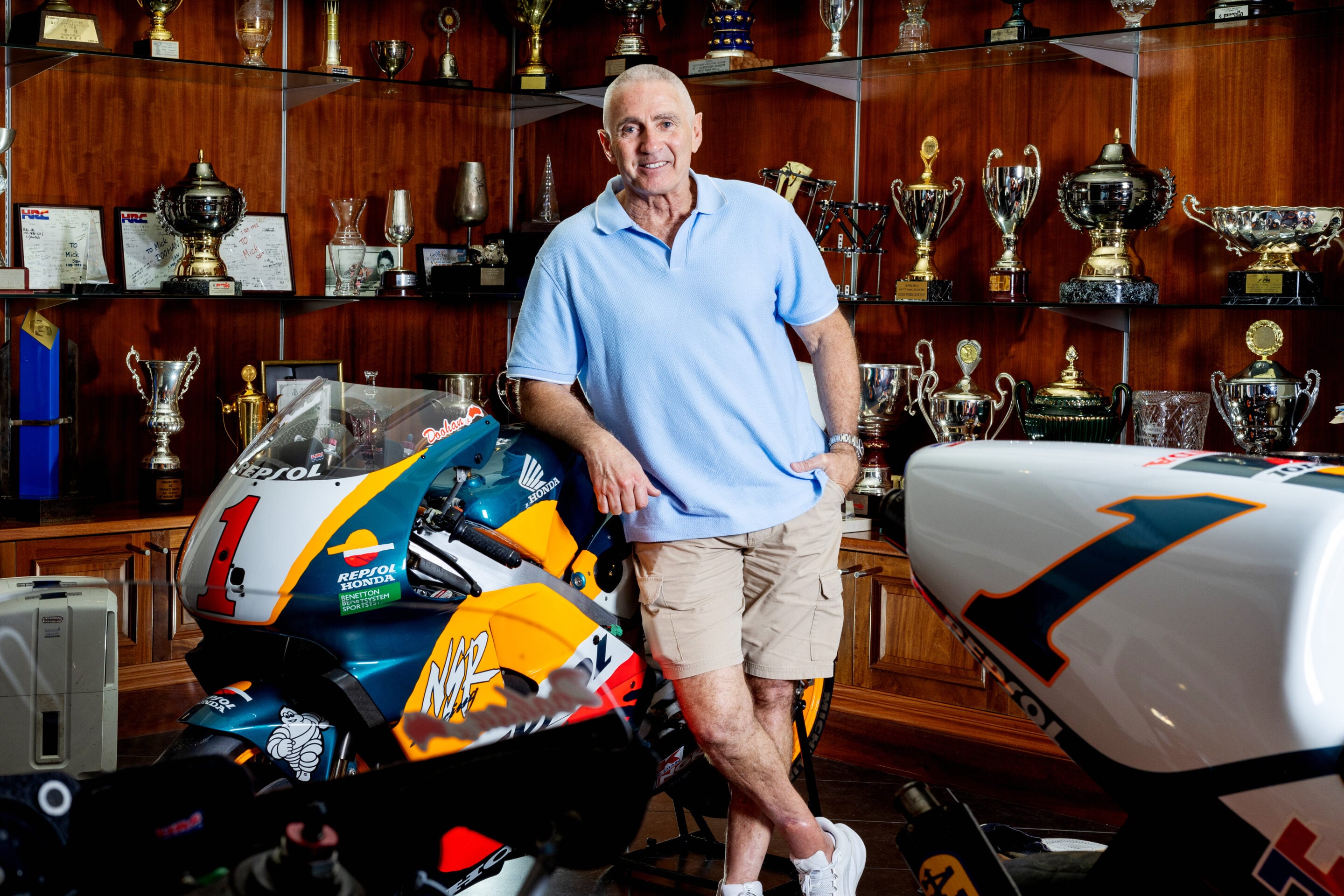
Elsewhere in this jam-packed Yearbook, Paul Gover chats with five-time MotoGP world champion Mick Doohan as he reflects on life after racing and his growing business success as he approaches 60 – as competitive as ever, and busier than most.
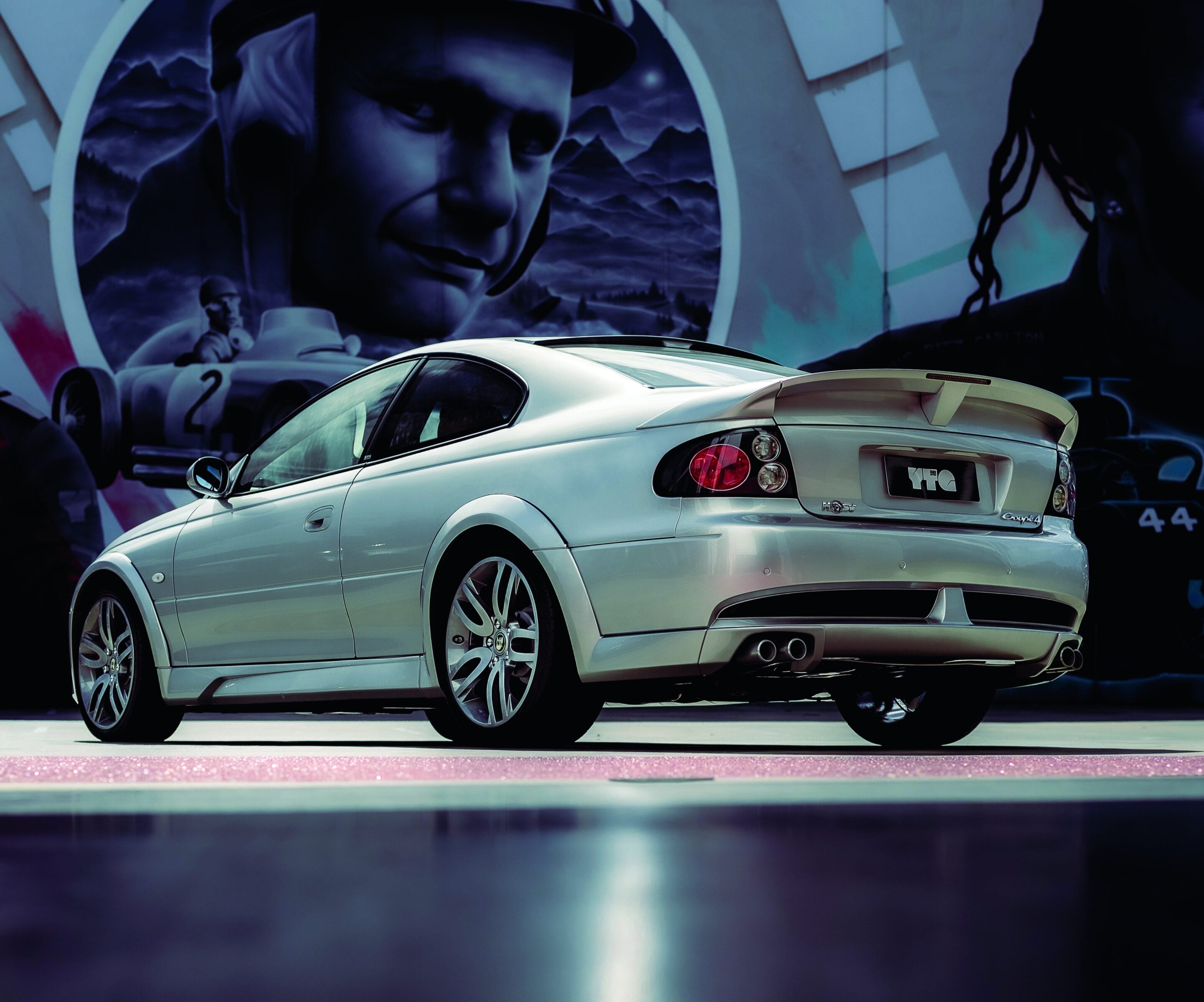
Our Modern Classic feature this issue sees Scott Newman revisit the HSV Coupe 4, a bold and ambitious Holden-era concept that remains one of the most fascinating “what-ifs” in Australian car-making history.
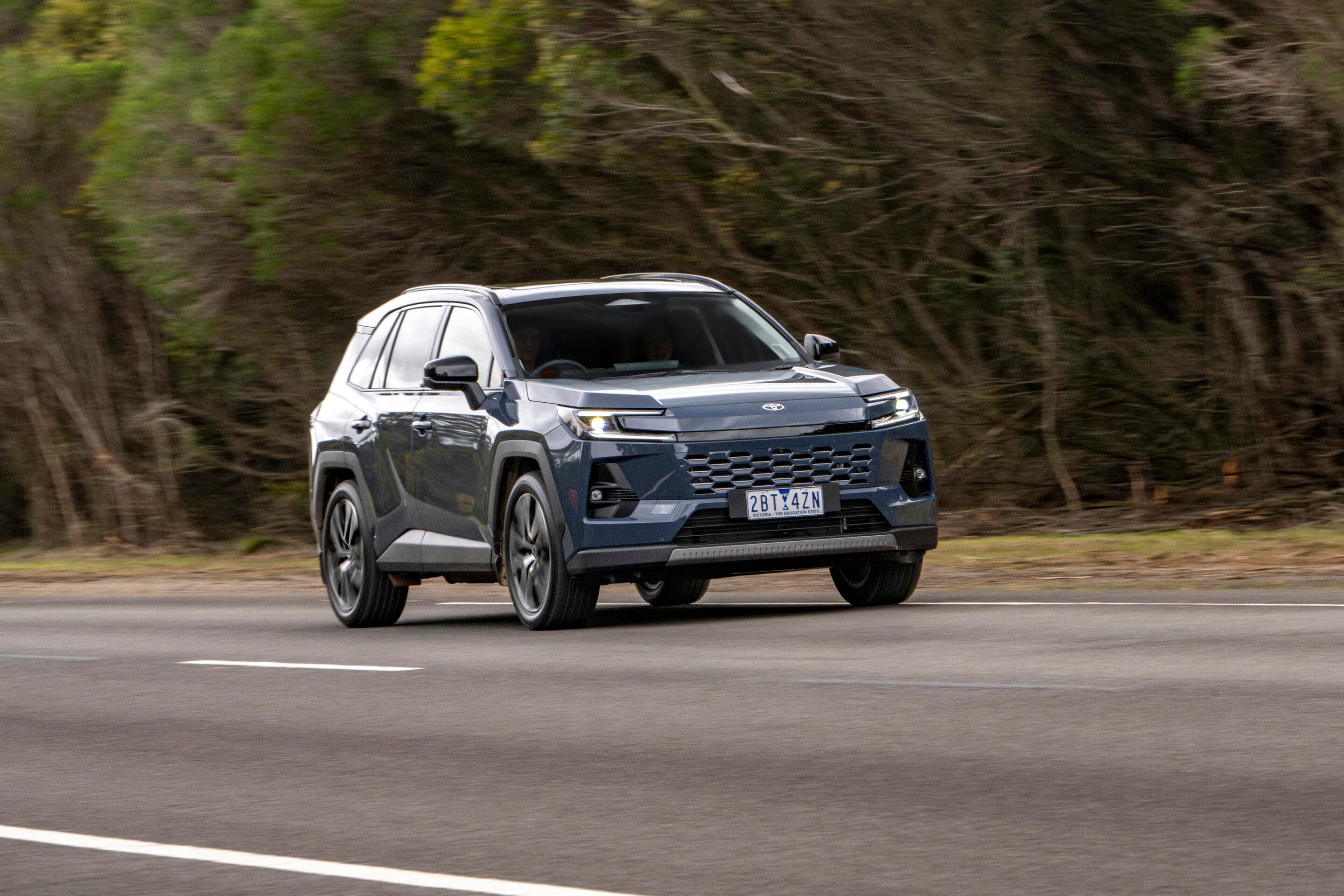
First Drives covers the latest arrivals, including the much-anticipated revamp of the Toyota RAV4 (below) with its redesigned cabin and expanded tech; the new, fully electric Mazda 6e; and Ford’s Ranger Super Duty, a ute engineered for owners who need more than urban comfort.
Marketplace brings the latest October 2025 VFACTs snapshot, alongside the Wheels Buyer’s Guide with more than 1900 vehicle prices, specs and reviews updated monthly. Driven to extinction tracks the end of an era, with Ford’s Focus following the Fiesta and Mondeo out of local line-ups.
The 2025–26 Wheels Car of the Year Yearbook is available Monday, December 15, wherever magazines are sold.