Things we like
- Awesome value for money
- Classy and comfortable cabin
- Comfortable driving experience
Not so much
- Silly name
- Thirsty with no hybrid option yet
- Indecisive dual-clutch auto
| Rating |
|---|
Price: from $44,990 drive away
Engine: 1998cc turbocharged four-cylinder petrol
Peak power: 180kW (@ 5500rpm)
Peak torque: 375Nm (@ 1750 to 4000rpm)
Transmission: 7-speed dual-clutch automatic, AWD
Combined fuel consumption (claim, as tested): 8.7L/100km, 11.3L/100km
CO2 emissions: 200g/km
Length/width/height/wheelbase: 4720/1860/1705/2710mm
Boot: 117L (3rd up to top of seatback)/479L (3rd folded to seatback)/(739L (3rd folded to roof)
Tare mass: 1731kg
Warranty: 7-year unlimited km, 12 months (up to seven years service activated)
Five-year service cost: $1495 ($299 per year)
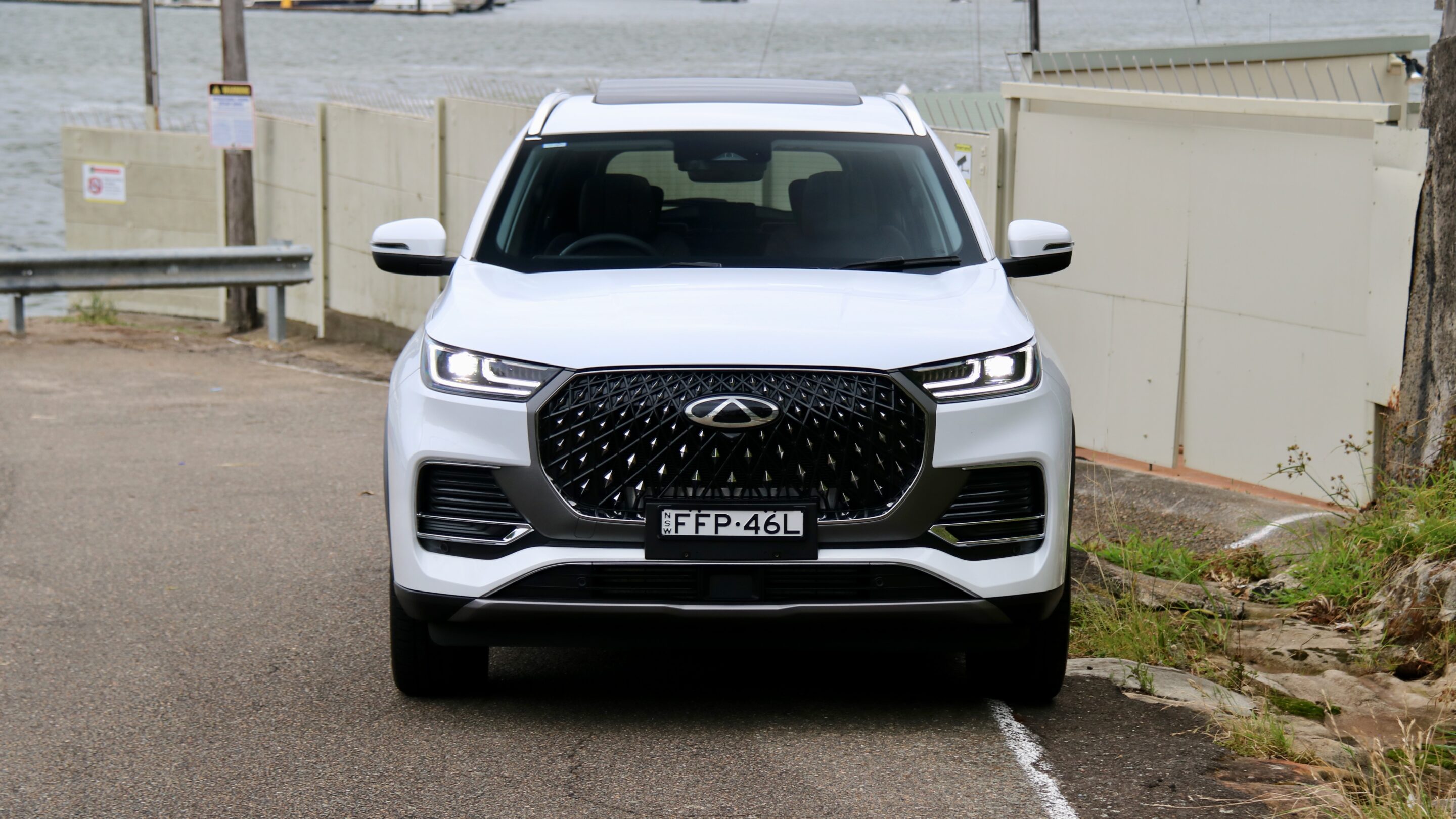
Chinese car maker Chery is going from sales strength to strength here in Australia after being one of the first – and therefore most recognisable – Chinese brands to go on sale locally.
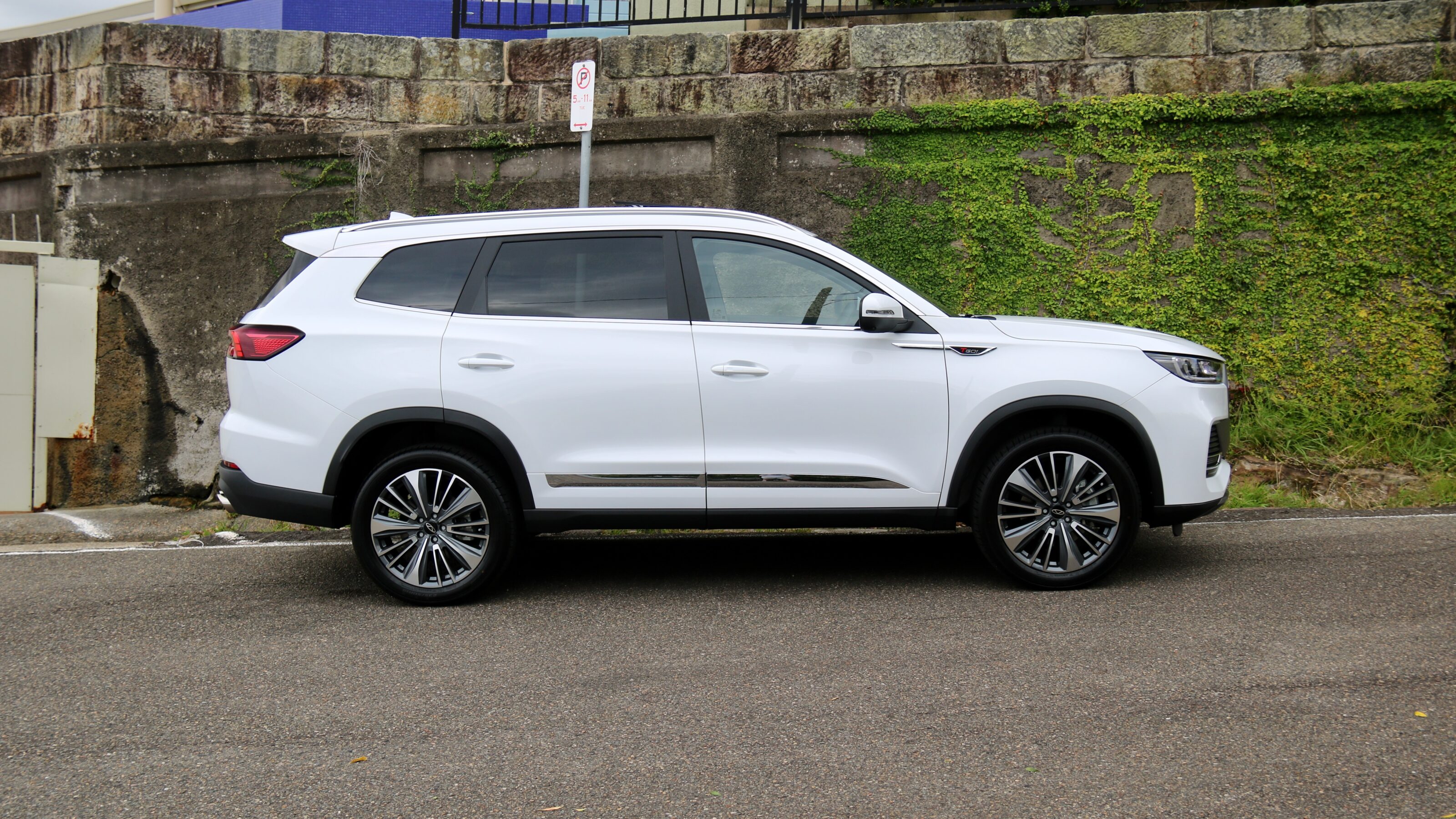
The largest vehicle in its range is the Tiggo 8 Pro Max, a seven-seat SUV that competes with cars such as the Mitsubishi Outlander and Hyundai Santa Fe.
As you’d expect from the brand, its asking prices are bargains – $38,990 drive away for a fully loaded, turbocharged seven-seat SUV – and it’s also covered by a long warranty and a cheap servicing regime. Is it the seven-seat SUV of your dreams? Let’s look closer.
Price and equipment
For now, the Chery Tiggo 8 Pro Max is offered in three models: Urban, Elite and Ultimate AWD, with all three using a turbocharged 2.0-litre petrol engine. Plug-in hybrid variants are due in July.
2025 Chery Tiggo 8 Pro Max pricing (drive away):
| Urban | $38,990 |
|---|---|
| Elite | $40,990 |
| Ultimate AWD | $44,990 |
Tiggo 8 Pro Max Urban standard equipment:
- 18-inch alloy wheels
- Roof rails
- Dusk-sensing automatic LED exterior lighting
- Rain-sensing automatic wipers
- Keyless entry with push button start and remote start
- Auto-folding mirrors that auto-drop in reverse
- Synthetic leather steering wheel
- Black synthetic leather upholstery
- 10-way electric driver’s seat with memory functionality
- Four-way electric front passenger seat
- Heated and ventilated front seats
- Dual-zone automatic climate control with rear air vents
- N95 air purification
- 12.3-inch digital driver’s display
- 12.3-inch touchscreen
- Satellite navigation
- AM/FM radio
- Wireless and wired Apple CarPlay and Android Auto
- Eight-speaker Sony sound system
- 50W wireless phone charger
- 4x USB ports
- Auto-dimming rear mirror
- Multi-colour cabin ambient lighting
Tiggo 8 Pro Max safety equipment:
- 10 airbags (including front centre, driver’s knee and rear side units)
- Autonomous emergency braking with pedestrian, cyclist and intersection assistance
- Lane keeping assistance with lane departure warning
- Adaptive cruise control with traffic jam assist
- Adaptive lane guidance
- Auto high beam
- Door open warning
- Traffic sign recognition
- Driver attention monitoring
- Blind-spot monitoring with rear cross-traffic alert (including braking)
- Front and rear parking sensors
- 360-degree camera
- Alarm
The Tiggo 8 Pro Max range earned a five-star ANCAP safety rating with scores of 88 per cent for adult occupant protection, 87 per cent for child occupant protection, 79 per cent for vulnerable road user protection and 86 per cent for safety assist.
Elite adds:
- Heated mirrors
- Illuminated door sills
- Third row air vents with fan speed control
- Power tailgate
- Remote windows
- Inbuilt dashcam
- Cargo blind
Ultimate adds:
- All-wheel drive system
- 19-inch alloy wheels
- 10-speaker Sony sound system
- Illuminated sun visor mirrors
- Panoramic sunroof
- Privacy glass
- Puddle lamps
- Inbuilt fragrance system (only with no-cost optional brown interior)
Interior, practicality and bootspace
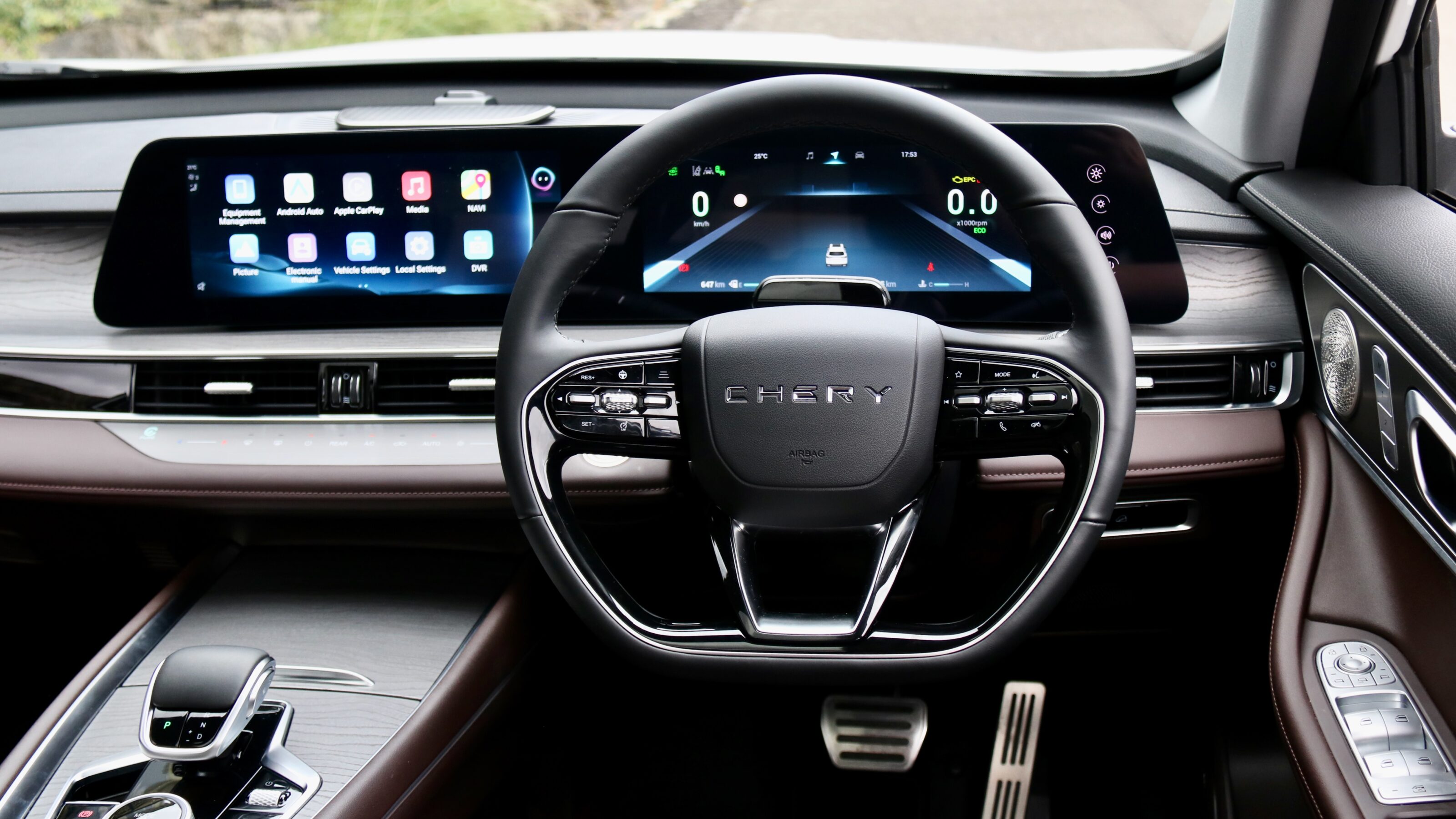
Jump into the Tiggo 8 Pro Max and you’d be forgiven for thinking that you’d entered a car that costs significantly more money. Yep, the screen resolution could be better and some of the details are a bit chintzy, but the build quality is impressive and the material choices are surprisingly plush for the asking price, with plenty of soft touch materials dotted around the cabin.
Centre of the cabin are two 12.3-inch screens that use identical software to other Chery models. While there’s no live functionality yet, it’s well featured with wireless smartphone mirroring and inbuilt sat-nav. It’s generally quite easy to use, though some functionality could be made easier by featuring a home button on the centre console. Otherwise, we quite like the physical climate buttons and shortcuts next to the gear lever.
The Tiggo 8 Pro Max’s cabin is practical as well, with big door bins, a large box underneath the centre armrest, a big tray underneath underneath the centre console and big cupholders. Front seat comfort is good, though the use of vinyl upholstery means that they’re a bit soft as well and could be more supportive.
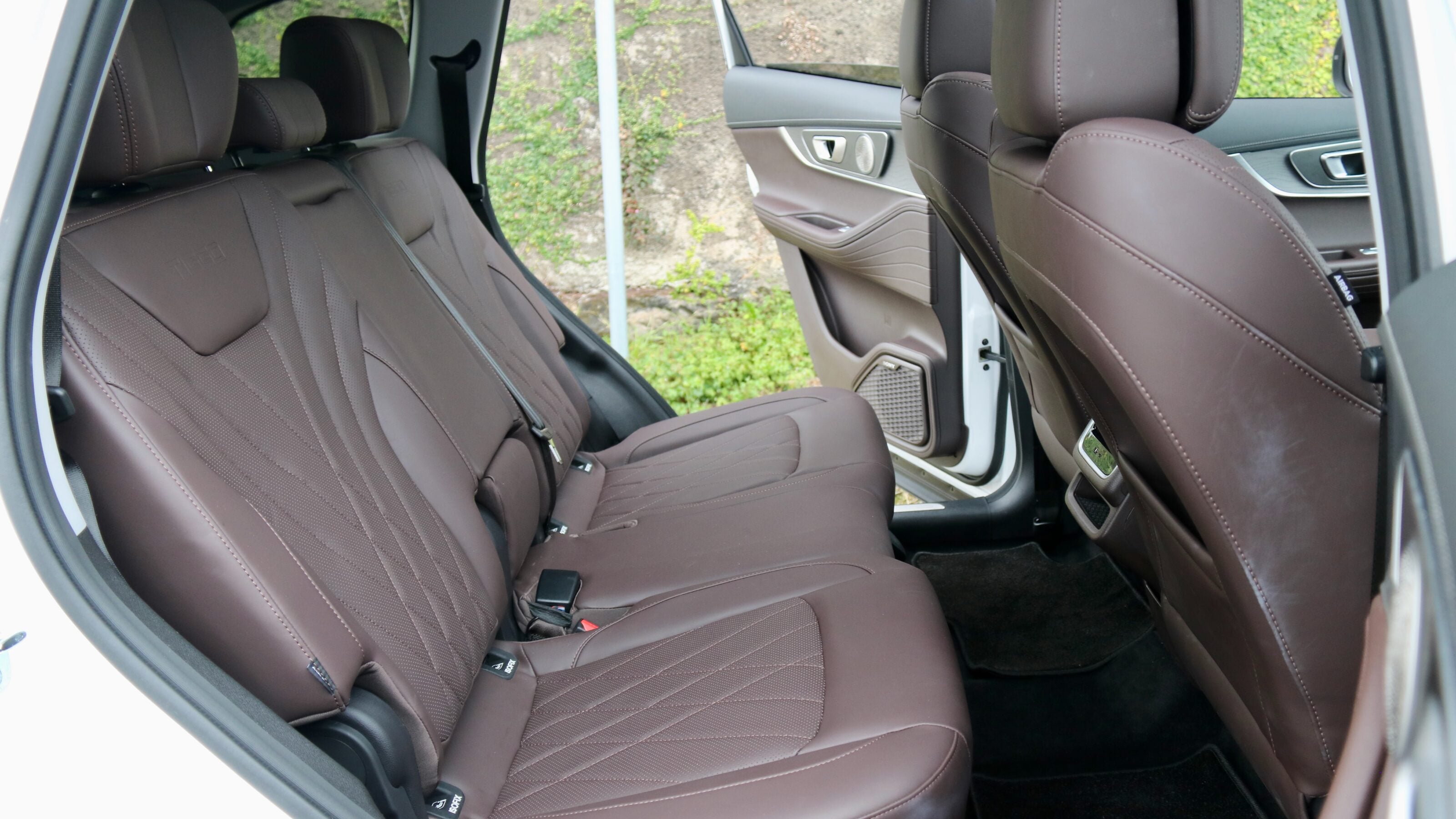
Space in the middle row is plentiful, with ample leg- and headroom, even for taller people. Three people could fit fine there as well. There are also some good amenities on offer, such as air vents, map and door pockets, a central armrest with cupholders and two USB ports. There are also two ISOFIX and three top tether points for child seats, though the action for moving the seats forward to grant access to the third row could be easier.
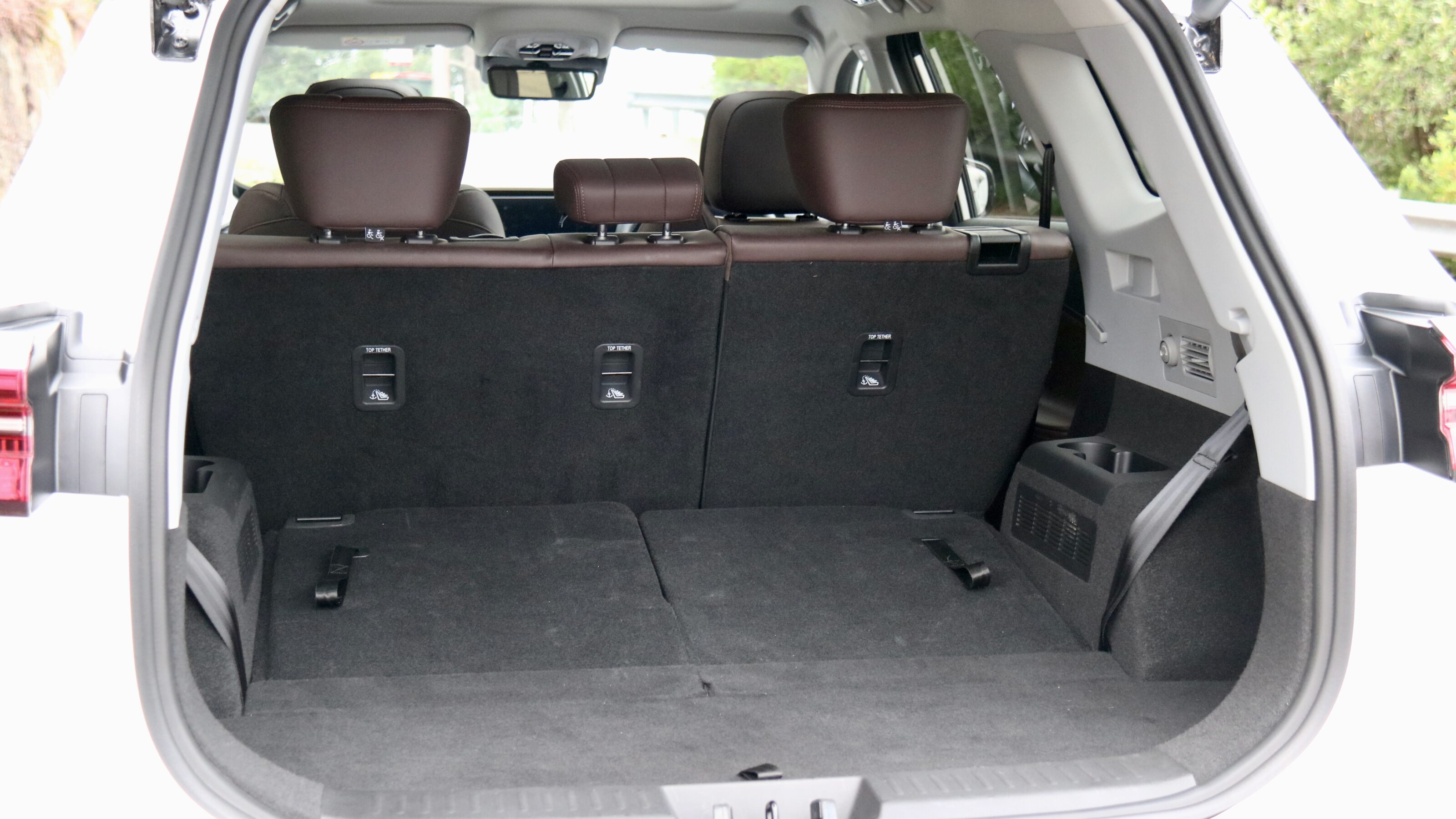
The third row of the Tiggo 8 Pro Max is definitely tighter than a Santa Fe or CX-80, but larger than the tiny third row of the Outlander. Two kids would be fine there, but adults would struggle. For third row occupants are a fan speed controller, air vents and cup holders, though no charging ports.
With all rows erected, there is 117 litres of bootspace on offer and a little bit of under-floor storage as well – folding the third row down unlocks 479 litres of space to the seatback (739L to the roof), but Chery doesn’t quote a figure for the second row folded as well. Regardless, it’s a practical space, which is impressive considering that it’s not a huge car on the outside.
Performance and economy
For now, all Tiggo 8 Pro Max models use a turbocharged 2.0-litre four-cylinder petrol engine making 180kW of power and 375Nm of torque. That’s mated to a seven-speed dual-clutch automatic transmission and power is sent to the front wheels in the base and mid-spec models, and all four in the top-spec Ultimate tested here.
Chery claims combined fuel consumption of 8.7L/100km for the Ultimate AWD, and we achieved 11.3L/100km in purely urban driving. The Tiggo 8 Pro Max features a 57-litre fuel tank and it must be filled with minimum 95RON premium unleaded.
On the road
On the road, the Tiggo 8 Pro Max impresses with its refined and comfortable driving experience. A lot of Chinese cars feature low road noise levels and the Tiggo 8 Pro Max is no different: it’s impressively well hushed, even at highway speeds. Its visibility is also good, though the rear three-quarter view can be a bit spoiled by the small rear windows.
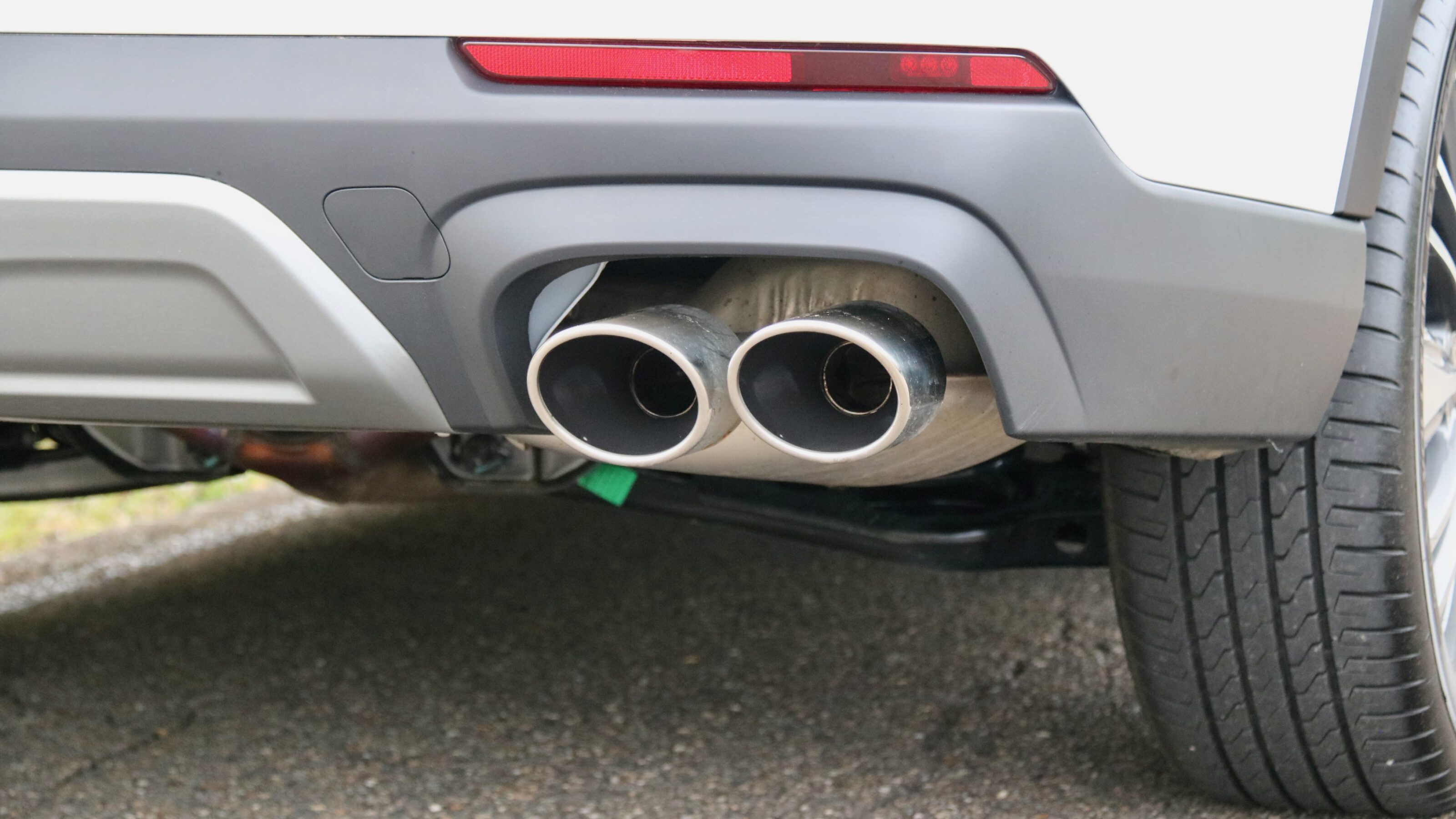
It should also be noted the Tiggo 8 Pro Max is not a sporty car, despite the quad tailpipes. Instead, it’s softly sprung and while that means its handling isn’t amazing, its ride quality soaks up the worst that some of our city roads can throw at it.
The Tiggo 8 Pro Max’s engine is strong, with enough punch for its target market. Peak torque hits at just 1750rpm and lasts until 4500rpm so that you’re almost always in the meaty part of the rev range in normal driving. The seven-speed dual-clutch transmission could be more refined however, and can feel confused at low speeds.
The active safety systems of the Tiggo 8 Pro Max are generally refined and work well, though a lot of the features, such as the active lane keeping assistance, are just too sensitive in everyday use and feel like they’re working against you. That’s nothing new in modern cars, but we still think they need some more tuning.
Service and warranty
The Tiggo 8 Pro Max is covered by a seven-year/unlimited km warranty with 12 months of roadside assistance that is service-extended by 12 months with each service up to seven years in total.
The five-year/75,000km service cost for the Tiggo 8 Pro Max is $1495 ($299 per year).
Verdict: Should I buy a Chery Tiggo 8 Pro Max?
If you’re after a bargain seven-seat SUV, there’s no denying that the Chery Tiggo 8 Pro Max is a strong contender. It’s absolutely loaded with equipment across the range – especially the top-spec Ultimate AWD tested – and features a cabin that’s well finished and practical. Its engine is gutsy and refined, while the driving experience is generally solid as well, plus, its warranty is long and its capped price servicing is cheap.
Counting against the Tiggo 8 Pro Max is its indecisive dual-clutch transmission, its restricted third row and that more powerful rivals such as the Mazda CX-80 are more efficient, though that issue will be rectified in July when the plug-in hybrid drivetrain arrives. Overall, we’d suggest looking at more expensive rivals to make sure what you buy is what you’re happy with, but the Chery Tiggo 8 Pro Max is one of the best value cars on the market today and it backs up the value equation with solid all-round capability.
Chery Tiggo 8 Pro Max rivals
Hyundai Santa Fe
Mazda CX-80
Skoda Kodiaq
Price: from $41,000 plus on-road costs
Engine: 1482cc DOHC turbocharged four-cylinder, 48V mild-hybrid
Peak power/torque: 117kW (@ 5500rpm)
Peak torque: 253Nm (1500-3500rpm)
Transmission: Seven-speed dual-clutch automatic
Claimed fuel consumption, CO2 emissions: 5.6L/100km, 126g/km
Tested fuel consumption: 7.4L/100km
Length/width/height/wheelbase: 4340/1795/1453/2650mm
Boot: 395-1301 litres
Kerb weight: 1439kg
Warranty: Five-year/unlimited km
Five-year service cost: $2176
| Rating |
|---|
Things we like
- Efficient and likeable engine
- Handsome styling updates
- Excellent handling balance
Not so much
- Urban ride is too firm
- Drivetrain can be laggy
- No spare wheel or cheaper model
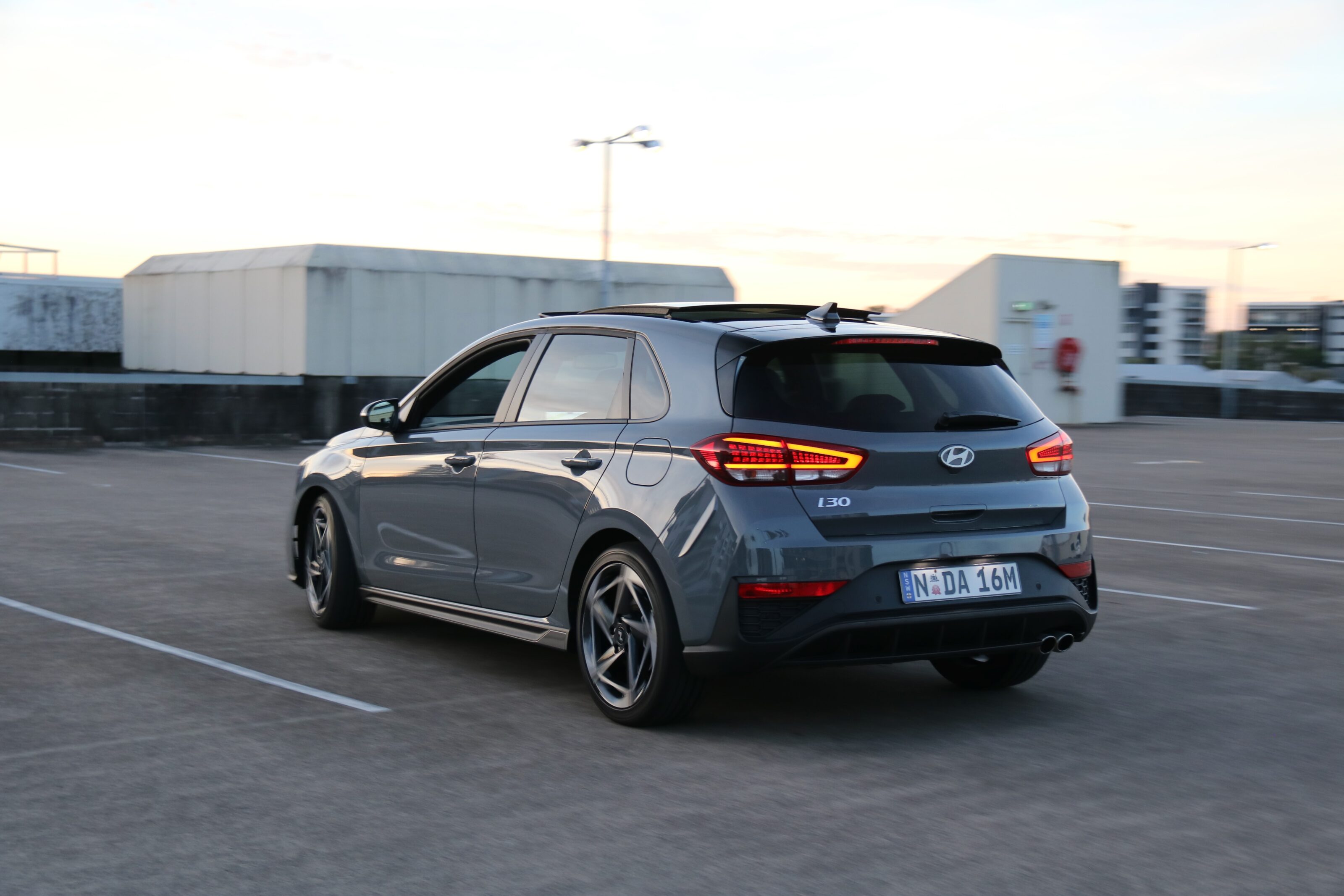
The original Hyundai i30, launched in Australia in 2006, was a watershed moment for the brand that changed its reputation forever. Not only did it live up to the brand’s value positioning, but it also gave competitors a run for their money in all-round ability – a feat continued with both the second and third generations of the nameplate.
Fast forward to 2025, however, and the global hatchback market is not what it once was – SUVs outsell them by a significant margin and many manufacturers are pulling their development. That means that while there’s a new Kona, the i30 is reportedly not getting a fourth generation and the third generation has been around for nine years, which is much longer than the usual Hyundai lifecycle.
It’s just received another update, so is the Hyundai i30 N Line still a great hatchback option to consider?
Price and equipment
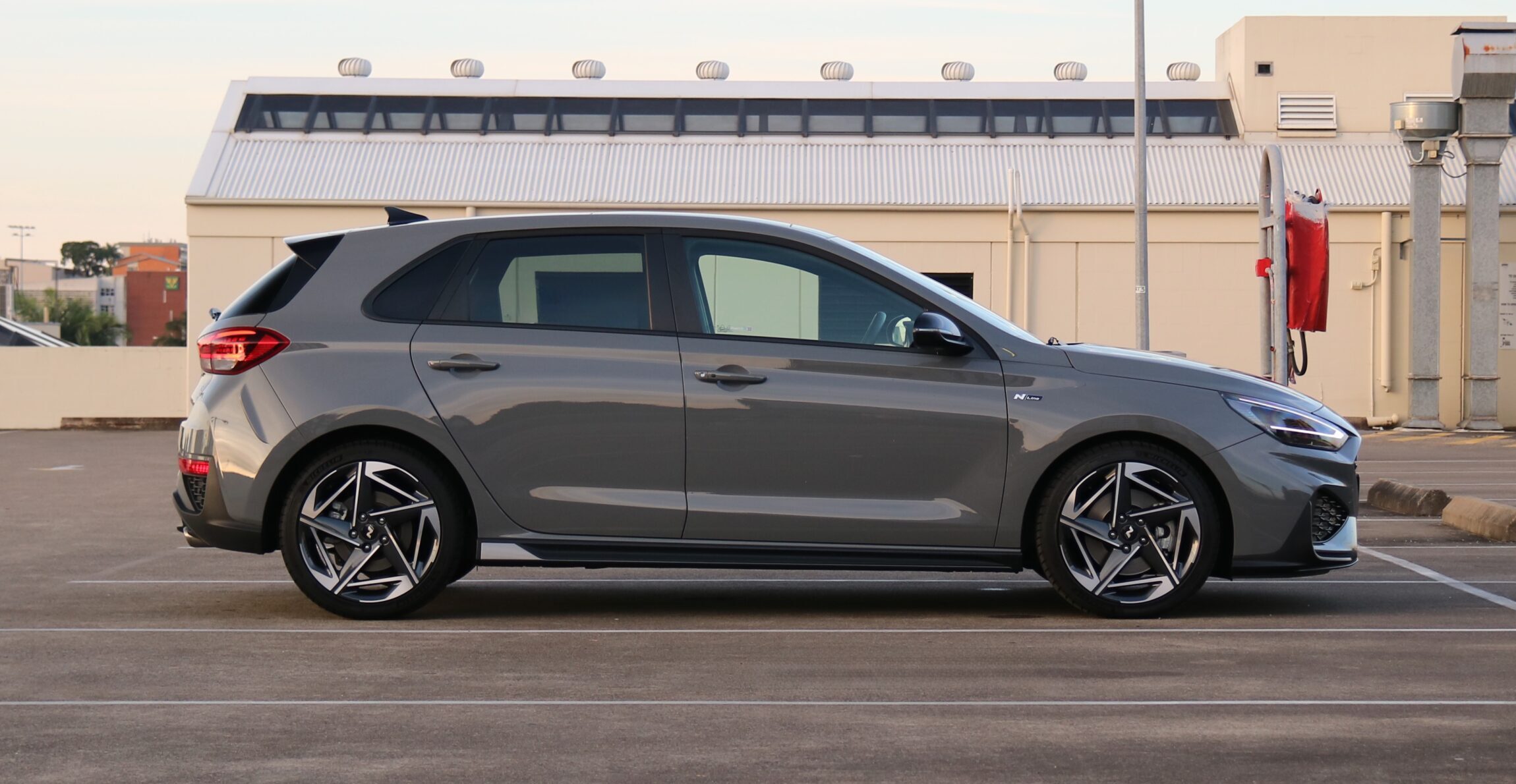
For now, there are only two non-N i30 hatchback models for sale in Australia: the N Line and N Line Premium, with lesser models sadly no longer available. The i30 hatchback is now globally sourced only from Hyundai’s Czech factory, meaning that the i30 is no longer available as part of a free-trade agreement. As a result, pricing has risen by up to $4000 compared with when it was produced in South Korea.
2025 Hyundai i30 N Line hatchback pricing (plus on-road costs):
| N Line | $36,000 |
|---|---|
| N Line Premium | $41,000 |
Hyundai i30 N Line Premium standard equipment:
- 18-inch alloy wheels with Michelin Pilot Sport 4 tyres and a tyre repair kit
- Dusk-sensing automatic LED headlights
- Rain-sensing automatic wipers
- Keyless entry with push button start
- Heated/auto-folding mirrors
- Panoramic sunroof
- Dual-zone automatic climate control with rear vents
- Leather and suede upholstery
- 12-way electric driver’s seat with memory and manual cushion extension
- Heated front seats
- Heated leather steering wheel
- 10.25-inch digital driver’s display
- 10.25-inch touchscreen with BlueLink live services and over-the-air updates
- Wired Apple CarPlay and Android Auto
- Satellite navigation with live traffic
- AM/FM/DAB+ digital radio
- Six-speaker sound system
- 4x USB ports
- 7x airbags
- Autonomous emergency braking with pedestrian, cyclist, motorcycle and junction assistance
- Adaptive cruise control with stop and go functionality
- Lane keeping assistance with highway driving assistance
- Auto high beam
- Blind-spot monitoring and rear cross-traffic alert (both with braking)
- Rear occupant alert
- Safe exit assist
- Front and rear parking sensors
- Reversing camera
- Tyre pressure monitoring
Interior, practicality and bootspace
Anybody who’s experienced a current shape i30 will find the updated model entirely familiar inside as its not changed much in its nine years on sale. While some may lament that fact when comparing it against newer models, the reality is that Hyundai nailed the basics when it went on sale and they still impress today: the soft touch plastics on the dashboard and all doors, excellent ergonomics and buttons for functions dotted around the cabin. It’s all easy to use and we love it for that.
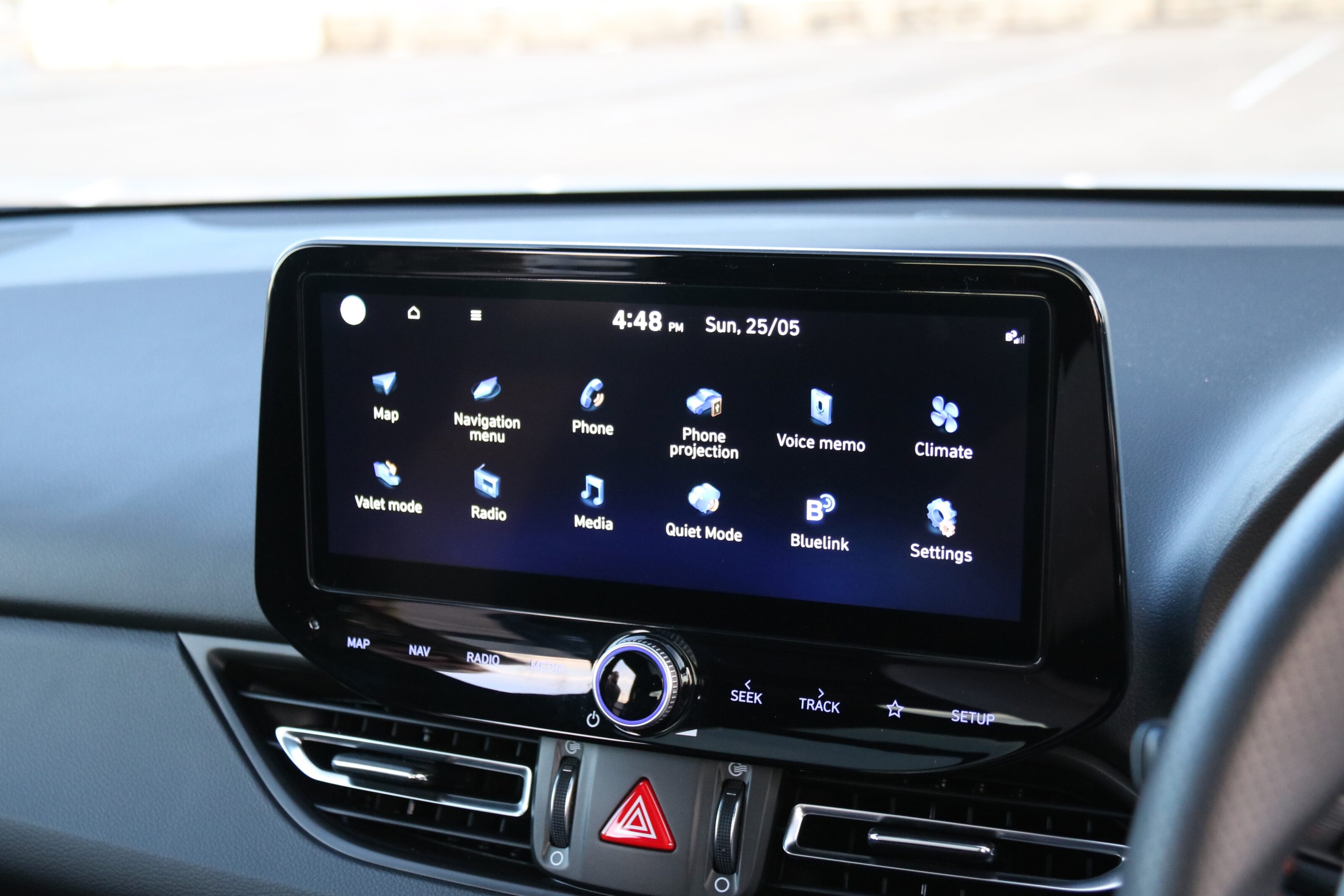
The i30 N Line Premium is equipped with a 10.25-inch touchscreen and a new 10.25-inch digital driver’s display, both of which look bright and expensive. The touchscreen now features the company’s BlueLink live services and live traffic for the sat-nav, though not wireless smartphone mirroring.
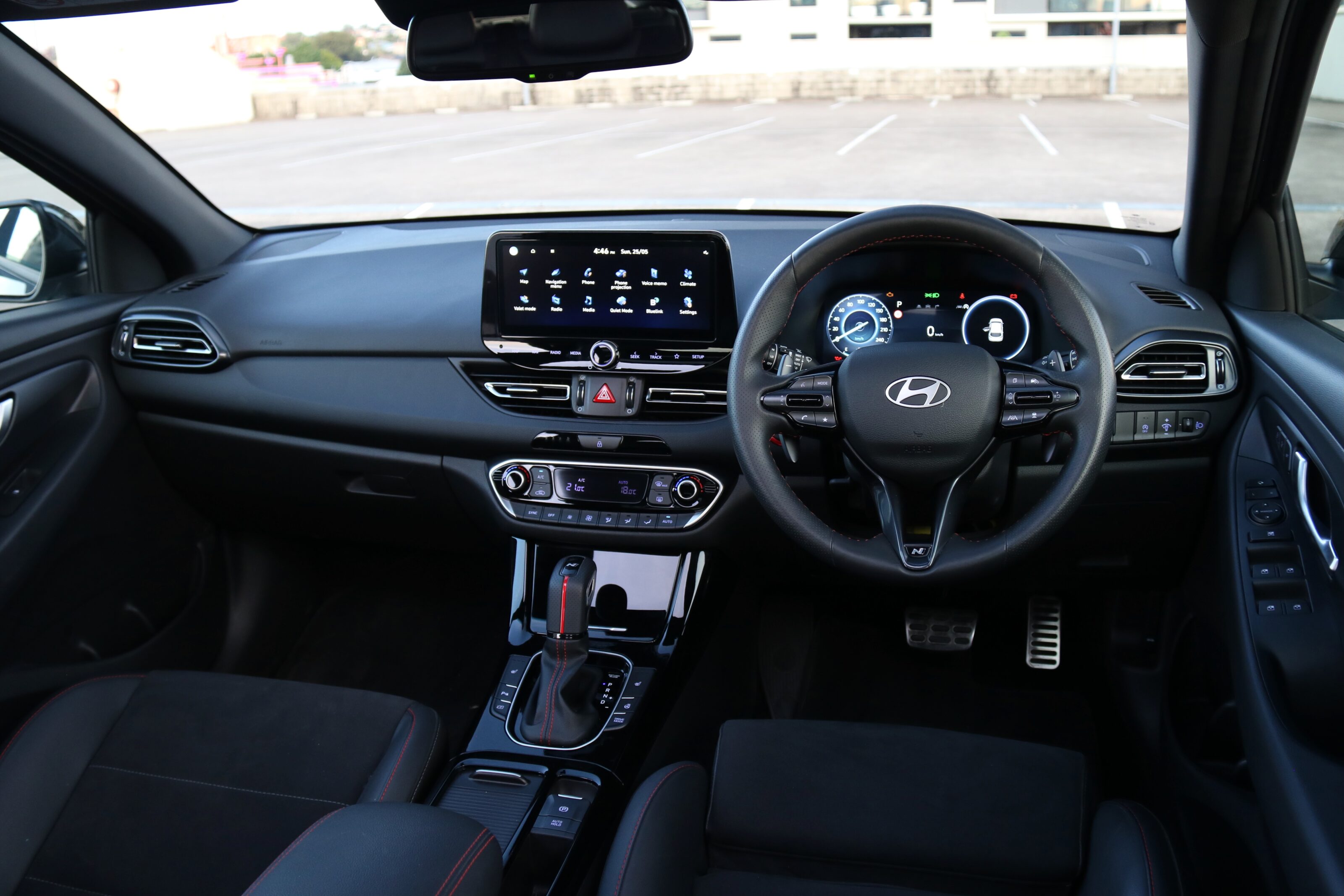
While it’s not as feature-packed as the newer Hyundai system – which would be quite expensive to employ in the i30 – it’s easier to use. While the former Infinity sound system has been shelved, the no-name six-speaker unit is surprisingly punchy. Thank you to European sourcing.
It’s also quite a practical cabin with large sectioned door bins and big cup holders in the centre console with a sliding cover. There’s also a wireless phone charger and a box underneath the sliding centre armrest lid.
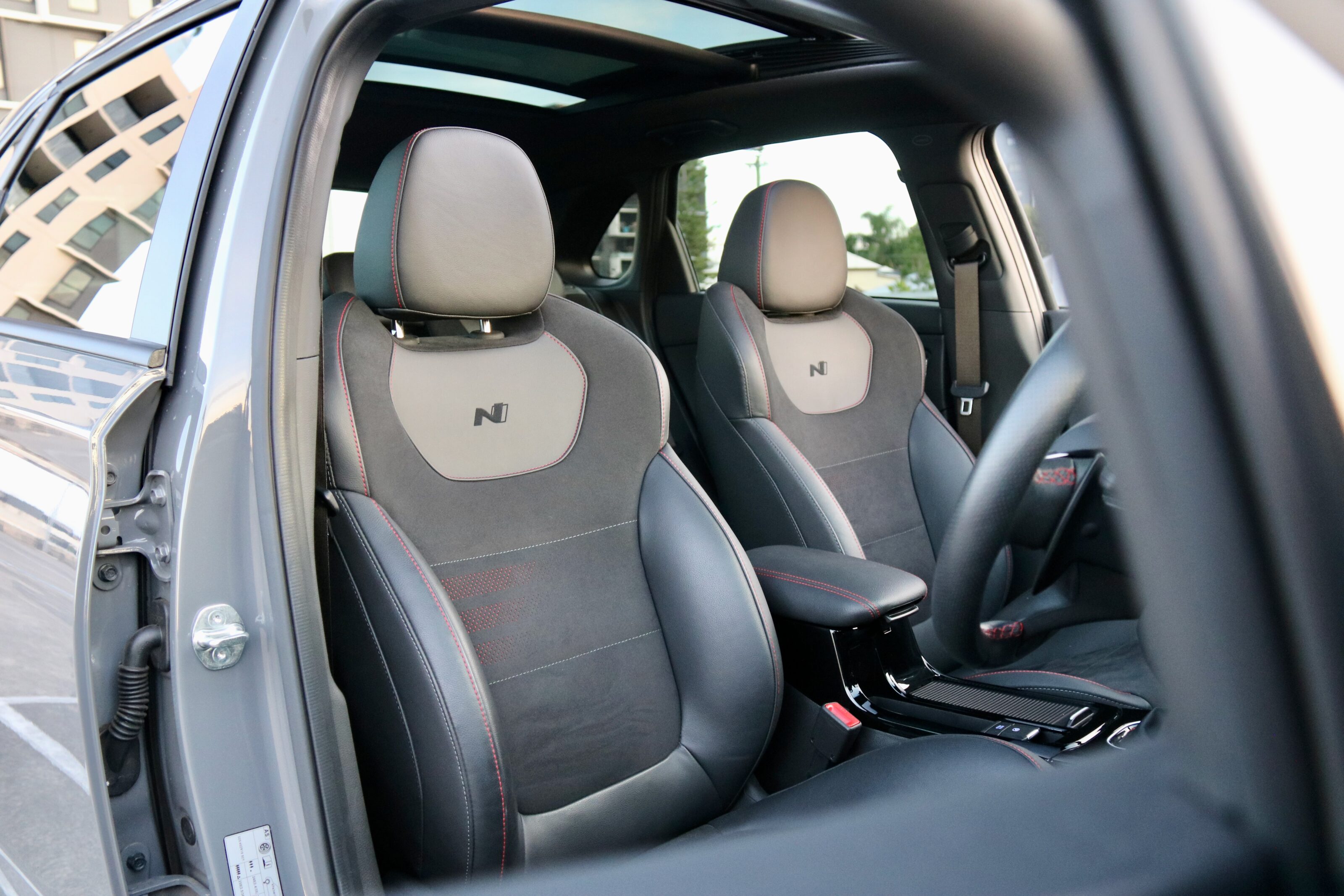
The front seats are comfortable and supportive, giving you a hug every time you get into it – we also love the adjustability for the driver’s seat, especially the very Euro seat cushion extension.
The rear seat is one of the best in the segment with comfortable seating, a good amount of room and features as well, with air vents, an armrest with cup holders, map pockets, two USB-C ports and sectioned door bins. Four adults will be quite comfortable in the i30 N Line hatchback, helped further by the expansive panoramic sunroof in the Premium letting in lots of light.
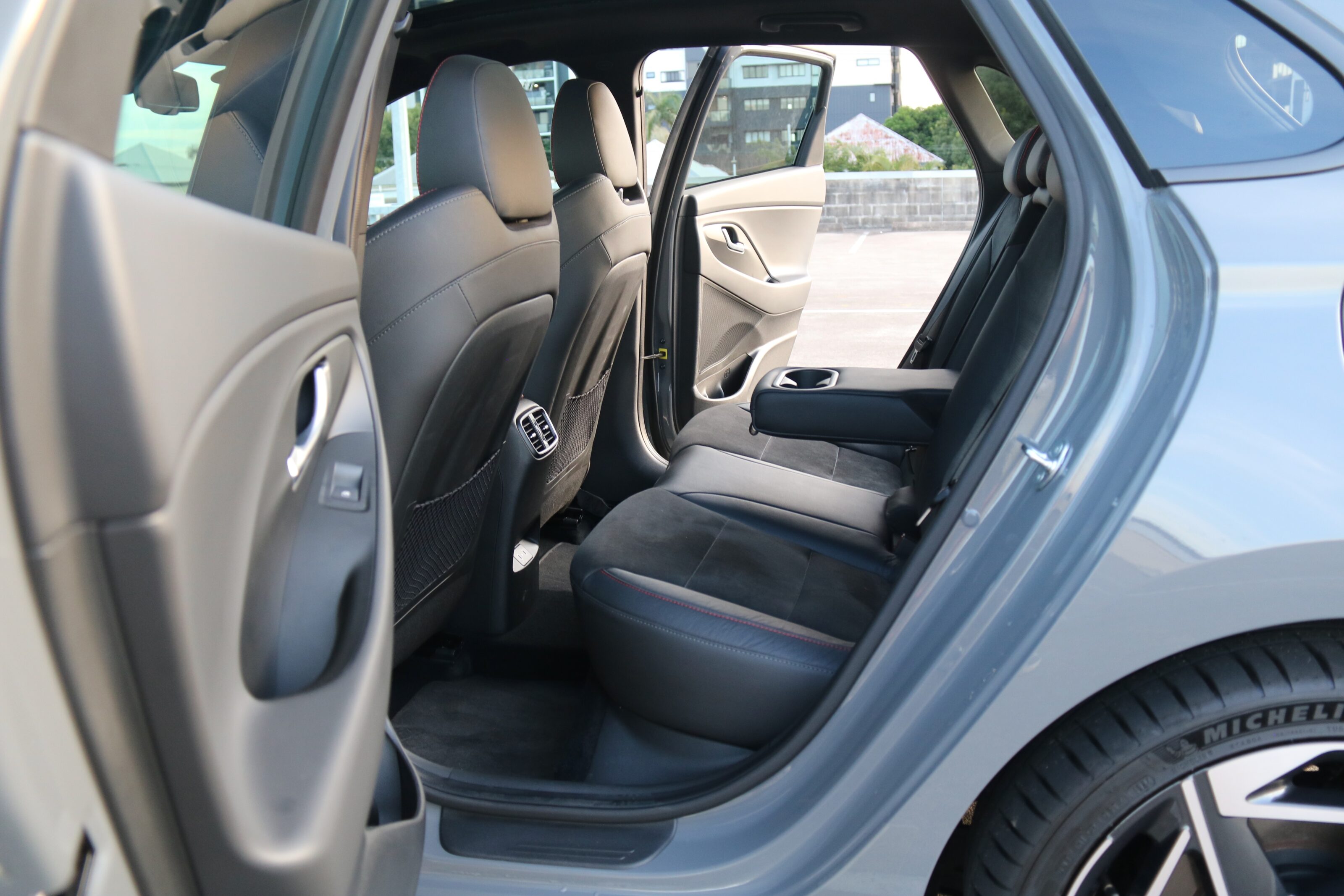
The boot of the i30 hatchback measures a healthy 395 litres with the seats up and 1301L with them folded. There’s also some under-floor and side storage, a few hooks to hang bags off and a 12V socket for something like a vacuum, but it lacks a spare wheel as the mild-hybrid system’s battery sits underneath the boot floor. It also lacks the pre-updated model’s dual-level floor for a flat surface when the seats are folded – there’s now an annoying lip.
Performance and economy
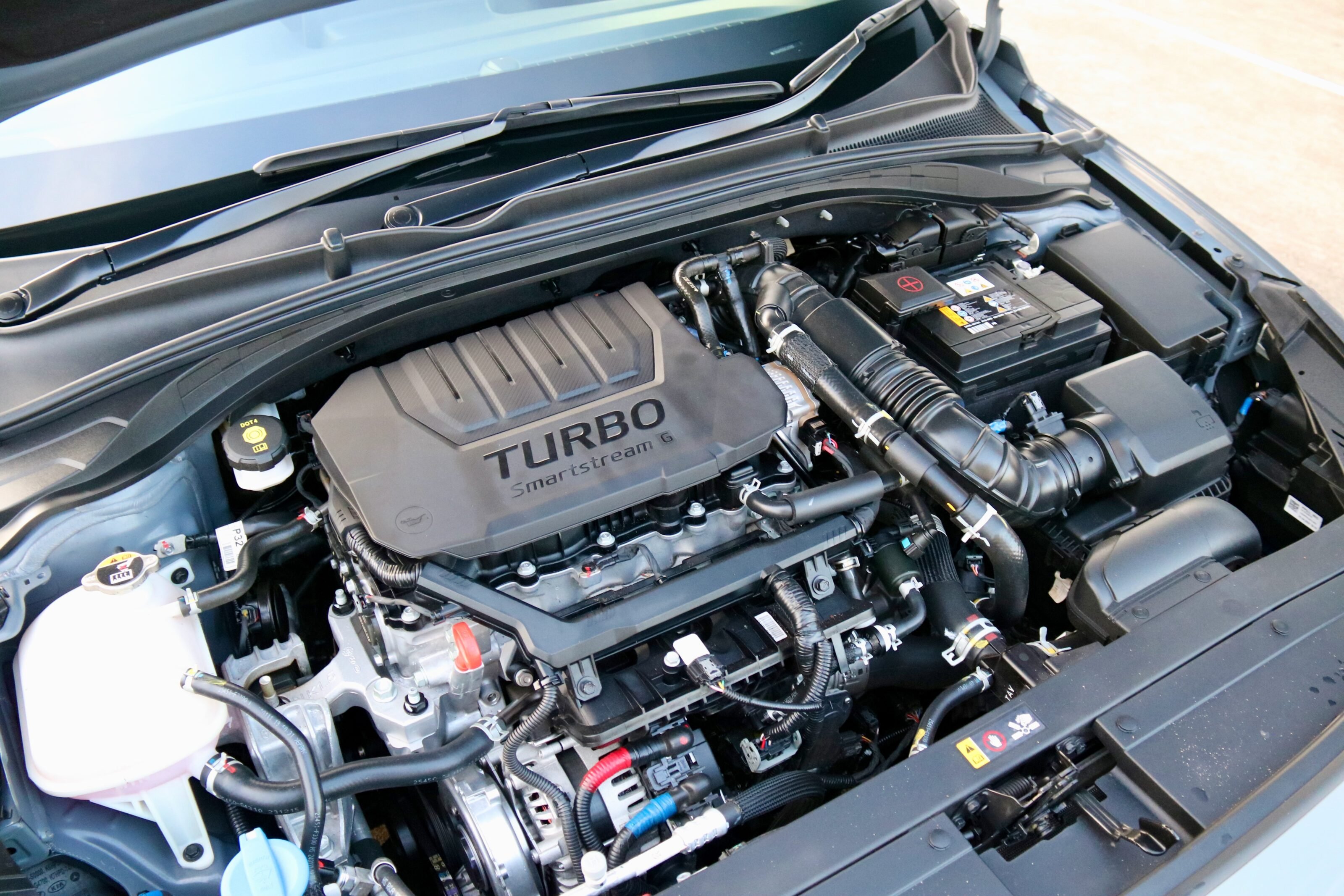
The updated i30 N Line hatchback uses a new 1.5-litre turbocharged four-cylinder petrol engine that’s paired to a 48V mild-hybrid system. It makes 117kW of power (at 5500rpm) and 253Nm of torque (between 1500 and 3500rpm) and is mated solely to a seven-speed dual-clutch transmission in Australia.
Hyundai claims combined fuel consumption of 5.6L/100km and CO2 emissions of 126g/km, and in our 95 per cent urban testing, achieved a result of 7.4L/100km – above the claim but still a big improvement on petrol i30 models of the past. The i30 N Line can also run on 91RON regular unleaded fuel, while it also features a 50-litre fuel tank.
On the road
The i30 N Line earned a long held reputation as a warm hatchback that sits below the full-fat N hot hatch but above the regular i30 models. It’s fun, quick and good value for money. To drive, the updated N Line is fabulous – its handling is sharp, body control is excellent and the steering is quick and communicative. Its ride quality is a bit too firm for rough roads, however, but get it onto a great bit of country road and it’s a riot.
Where it’s not quite as good as the pre-updated model is its drivetrain. While the new 1.5-litre turbo mild-hybrid set up is punchy enough in its own right, the i30 N Line used to have a 1.6-litre turbo engine that endowed it with more impressive performance – which, by the way, is still available in the i30 N Line sedan. Think of the 1.5T as a replacement for the old naturally aspirated 2.0-litre engine in base-to-mid i30 models and it makes more sense as not only is it punchier but significantly more efficient in the real world.
While the new engine’s 253Nm peak torque is only 12Nm short of the 1.6T, its 117kW power figure is much less than the 1.6T’s 150kW and while the new donk feels satisfyingly punchy in the mid-range, it’s definitely not as quick as the 1.6T. Its claimed 8.6-second 0-100km/h sprint is at least a second slower than, so why give it less performance? The 1.6T simply isn’t available from Czech production for the i30 hatchback and the 1.5T is now the most powerful non-N unit available globally.
However, thanks to its lesser outputs and mild-hybrid bits, the 1.5T is also a lot more efficient than the former 1.6T. In addition to the start-stop system, the mild-hybrid allows the engine to switch off when coasting and braking, for example, like a full hybrid. It delivers more efficiency but it can be caught out needing even mild acceleration and combined with the sometimes dopey dual-clutch transmission, you frustratingly can be waiting a few seconds for power. Changing the drive mode to normal or sport wakes it up, but it defaults to eco when the engine is switched on.
Service and warranty
As with every other new Hyundai product, the i30 N Line is covered by a five-year/unlimited km warranty with 12 months of roadside assistance that is extended a further 12 months with every dealer service.
Its service intervals are a short annual/10,000km (whichever comes first) and five years/50,000km of servicing costs $2176 ($435.20 per service).
Verdict: should I buy a Hyundai i30 N Line hatchback?
In a sign of the strange time that we live in, if you’re wanting a non-N Hyundai hatchback in Australia, the updated i30 N Line is your only choice. There’s no getting away from the fact it’s both more expensive and slower than the pre-updated model, and it’s lost a few pieces of equipment thanks to European sourcing such as full leather trim. However, it’s also gained features such as driver’s seat memory, the company’s BlueLink live services and more active safety kit.
The i30 N Line has a lot going for it: it’s refined, practical, quite fun to drive, punchy enough in most driving situations and well equipped as well. Counting against it is its firm ride quality, lack of spare wheel, dopey transmission at low speeds and that in some areas, it is feeling its age compared with newer Hyundai products. But it’s an honest and entirely likeable product that deserves a lot of love against the endless supply of small SUVs – Hyundai’s own Kona included.
Hyundai i30 N Line rivals
Toyota Corolla
Mazda3
Skoda Scala
Aston Martin Vantage
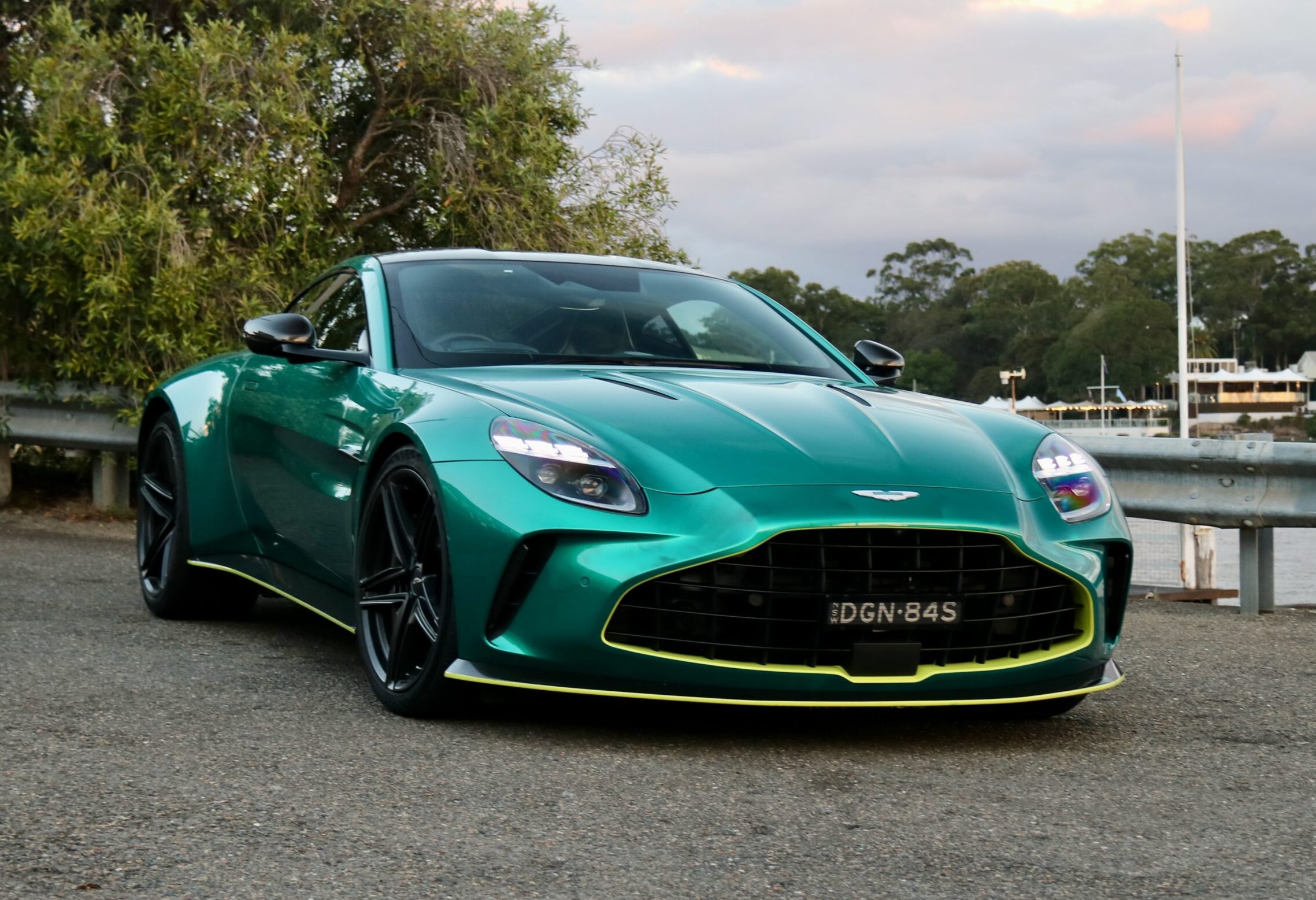
The updated Aston Martin Vantage arrived locally earlier this year. While it uses the same body and mechanicals as the previous shape car, it gained a massive 30 per cent more power, upped to 489kW and 800Nm which kicks in at just 2750rpm. Mated to an eight-speed automatic transmission, the new Vantage hits 100km/h in just 3.5 seconds with a top speed of 325km/h.
Priced from $410,000 plus on-road costs, the new Vantage has been styled to look like the best Astons of the past, including the mega cool One-77 hypercar. The new huge mouth and restyled headlights give it a more purposeful and aggressive look at the front to match its newly-uprated drivetrain. The interior is also new and aside from a big upgrade in in-car tech, its materials are excellent and it’s reasonably practical for a sports coupe.
On the road, the Vantage is surprisingly comfortable and supple for everyday use, though get it onto a track and exploring its different track settings reveals a harder-edged beast that’s very, very fast. It’s also communicative as you’d expect from a sports cars, and the multi-level traction control lets you have fun on a track without spinning. Overall, the new Aston Martin Vantage is a very good sports car and if you’re lucky enough to afford one, we say get your order in now.
Ford Mustang
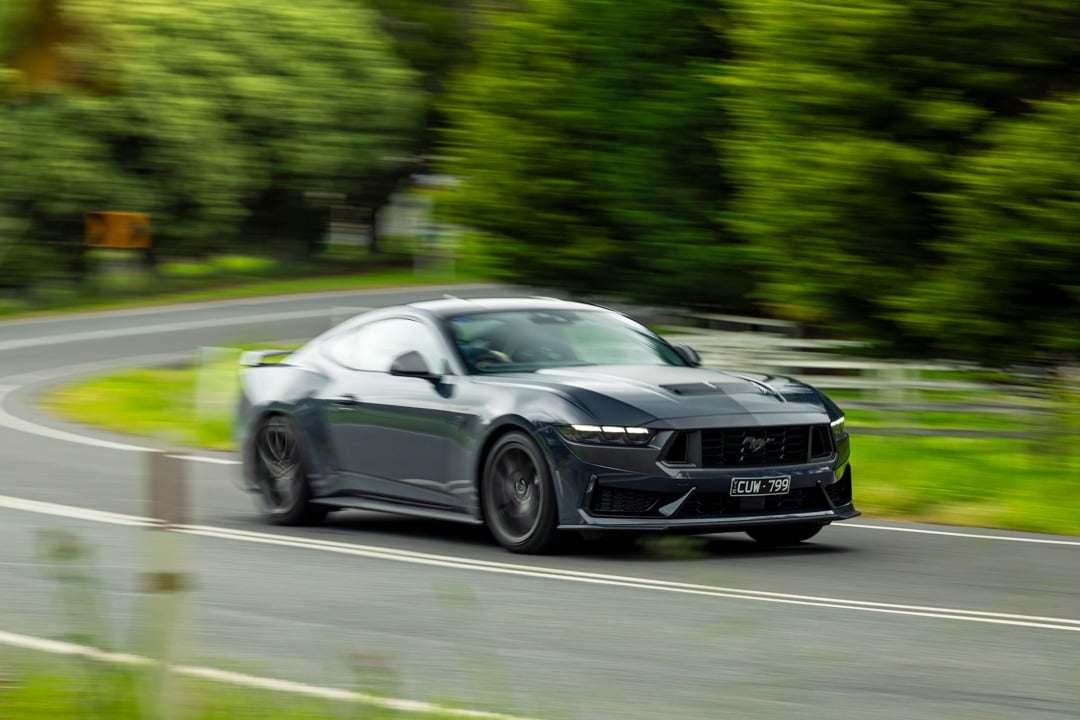
The S650 generation of the Mustang, the world’s most successful sports car, lobbed into Australia in late 2024. Like the S550 before it – with which it shares a lot of characteristics, like its drivetrains and body – both turbocharged 2.3-litre four-cylinder and naturally aspirated 5.0-litre V8 petrol engines are on offer. Both offer excellent performance, though the V8 is the obvious pick if you want thunderous noise.
On the road, the new Mustang runs rings around previous generations of the car and is quite capable in the handling department. While you can still feel its weight in corners, optioning the adaptive dampers makes it far less soggy than Mustangs of the past and its tight corner ability is surprising.
Priced from $71,990 plus on-road costs, the new Mustang is also more expensive than ever – but it can now hold a candle to much more expensive rivals in driving ability.
The S650’s interior is a big step forward on the S550 thanks to higher-quality materials throughout, as well as new screens with new infotainment software. There are even cute cues to the past, like the instrument cluster that can be configured to show dials from Mustangs from a long time ago.
The Ford Mustang remains characterful and fun but this time around, it’s also more
talented and a big improvement on Mustangs of the past.
Mini John Cooper Works range
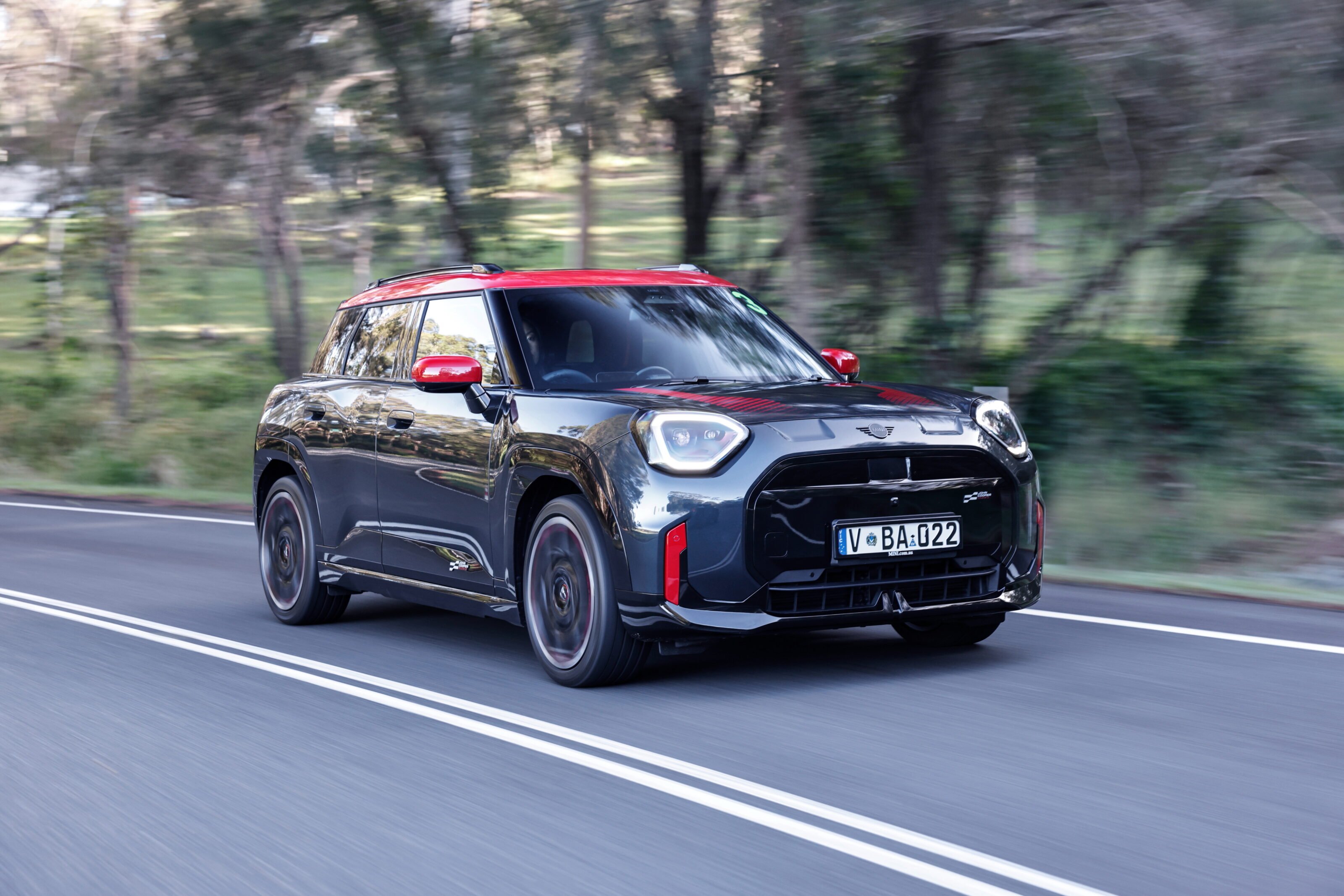
Mini, like many car brands, is undergoing a lot of change with its products, including more electrified product than ever before. For the first time, the new petrol John Cooper Works models have been joined by electric versions promising the legendary go-kart feeling for which the brand is known.
For the first time, five JCW models are on offer: the petrol Cooper hatchback, convertible and Countryman SUV, plus the electric Cooper and Aceman small SUV. Pricing starts at $57,990 for the petrol Cooper models and $63,990 for the electric ones and while the petrol Cooper makes 170kW/380Nm, the electric one makes 190kW/350Nm for a quicker sprint to 100km/h: just 5.9 seconds for the electric Cooper, versus 6.1 seconds for its petrol sibling.
As with all previous Mini models, the new JCW models are full of character, including cute-but-angry styling, as well as an interior with a huge circular central display and ambient lighting in the padded dashboard panels. Add in the typical Mini go-kart feeling, regardless of the propulsion, and the Mini JCW range remains one of the best sports cars you can buy in 2025.
Mercedes-AMG E 53
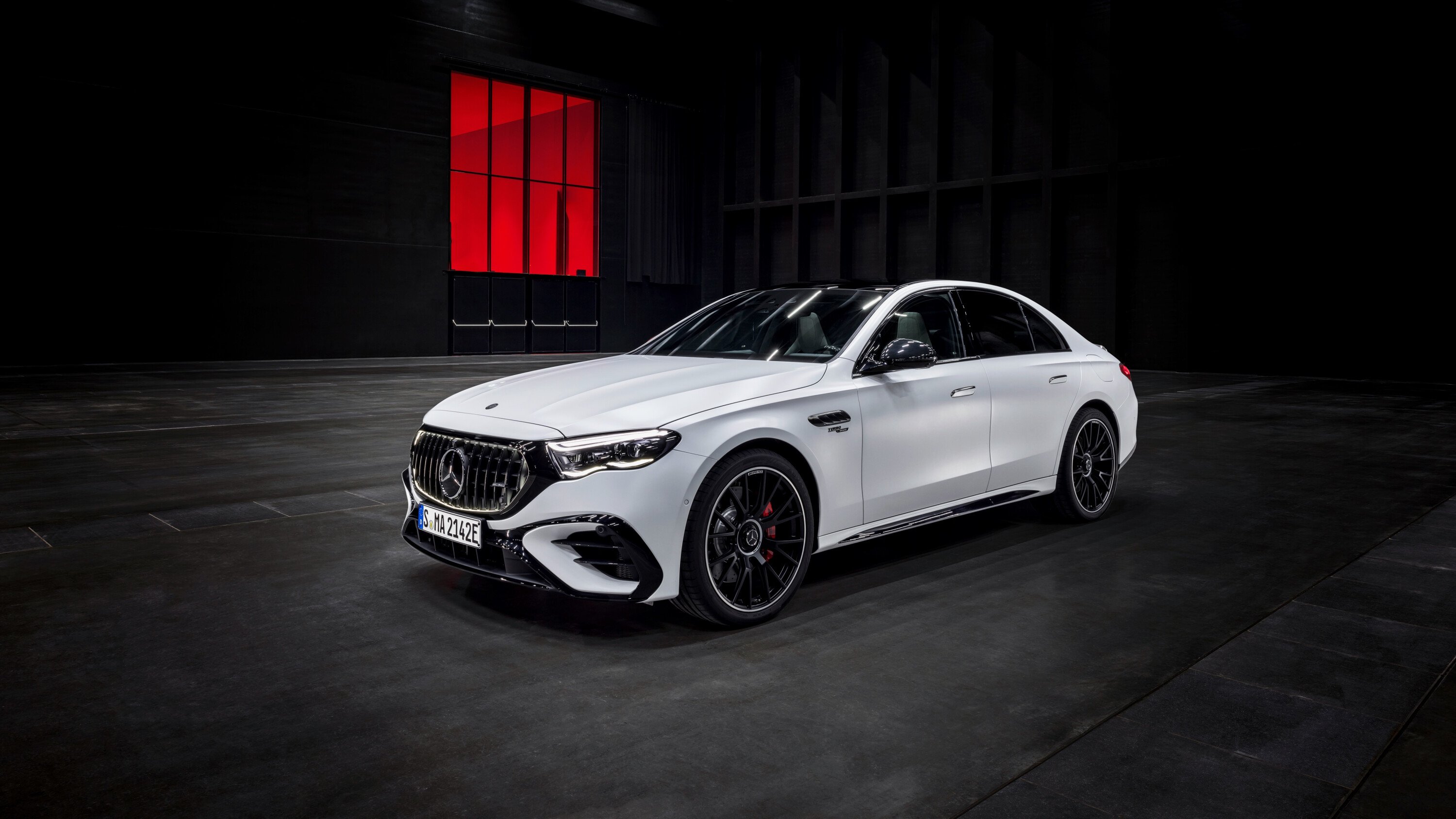
The new plug-in hybrid Mercedes-AMG E 53 sports sedan has just gone on sale in Australia and its outputs are impressive: a combined 450kW of power and 750Nm of torque, while it sprints to 100km/h in just 3.8 seconds. Yet it can also travel up to 100km on electric power alone thanks to its 28.6kWh battery and if you keep it charged, it will reportedly use just 1.7L/100km of fuel.
On the road, the E 53 is impressively well hushed and comfortable – as you’d expect from a Mercedes-Benz E-Class – but change the driving mode to Sport+ and it becomes a properly quick, nicely damped and great-sounding sports sedan. Despite its hybrid tech, it’s a serious performance car at heart.
Adding to that is the E-Class’ luxurious cabin filled with huge screens and many features like AMG sports seats, Nappa leather upholstery and an excellent 4D Burmeister sound system. Priced from $190,900 plus on-road costs, the E 53 is not cheap, but it offers a broad range of talent and seems like a bit of a bargain considering the engineering involved. The only thing that would make it even better would be the wagon variant offered overseas.
Porsche 911
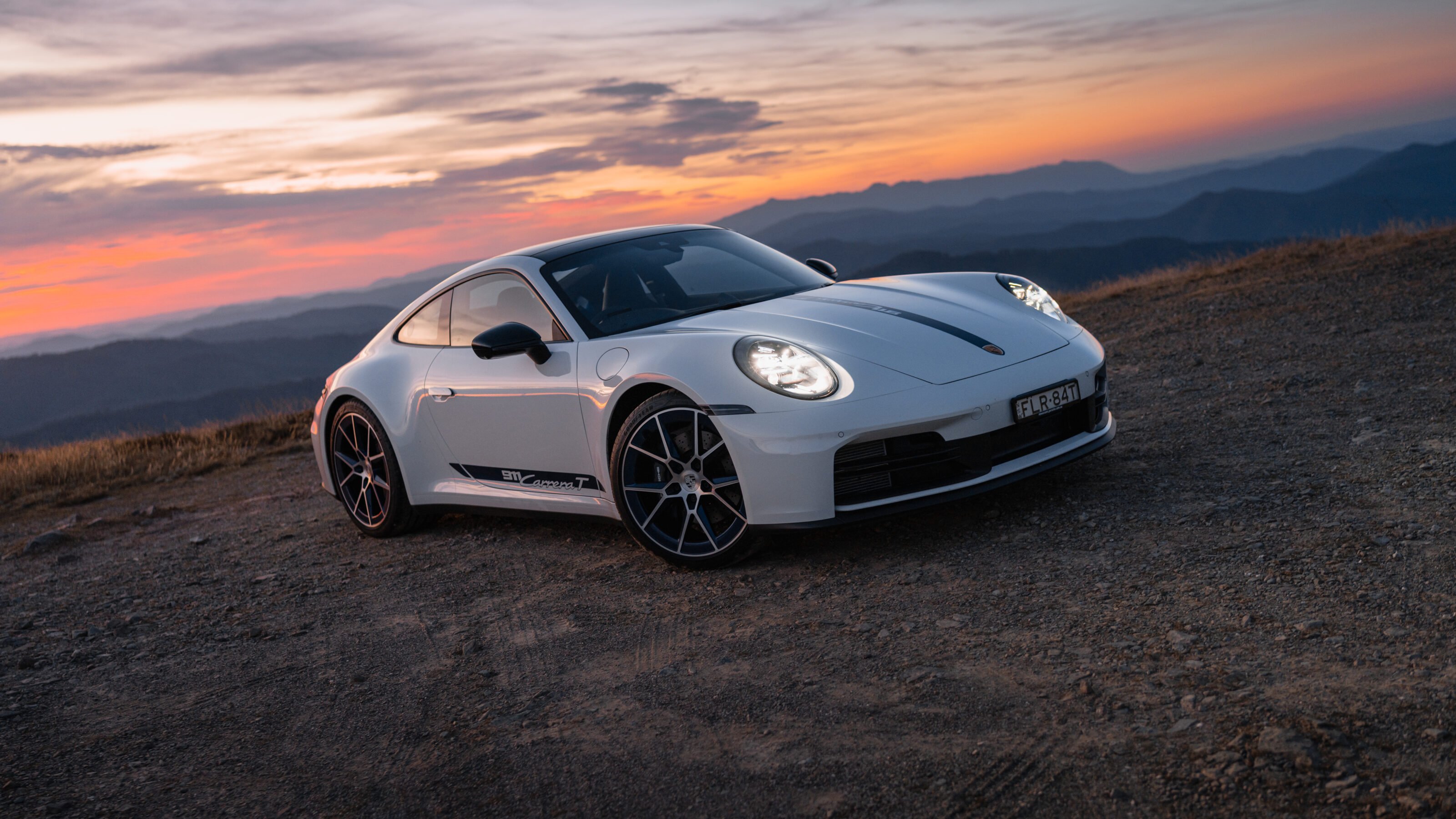
Porsche’s iconic 911 sports coupe has just been updated for 2025 and is now in its ‘992.2’ generation, an upgrade on the ‘991.1’ that arrived six years ago. The almost-full range of 911s has arrived locally, with the Carrera and Carrera S, as well as the manual Carrera T and even the hybrid Carrera GTS now on sale with Turbo and GT3 variants due later in the year.
The pick for keen drivers is, without a doubt, the manual-only Carrera T with its 290kW/450Nm turbocharged flat six engine. However, $27,400 less gets you into the base Carrera at $279,400 and that almost-$30k buys a lot of options. The new hybrid Carrera GTS makes a much stronger 398kW and hits 100km/h in just 3.0 seconds.
Regardless of model chosen, the 911 drives and rides well. It’s more than comfortable enough for the everyday commute, but taut enough for track days as well. Plus, the interior is practical and good quality, and the new infotainment screens are easy to use.
The Porsche 911 remains one of the world’s best sports cars, proudly continuing its 62-year legacy.
Toyota GR Yaris and GR Corolla
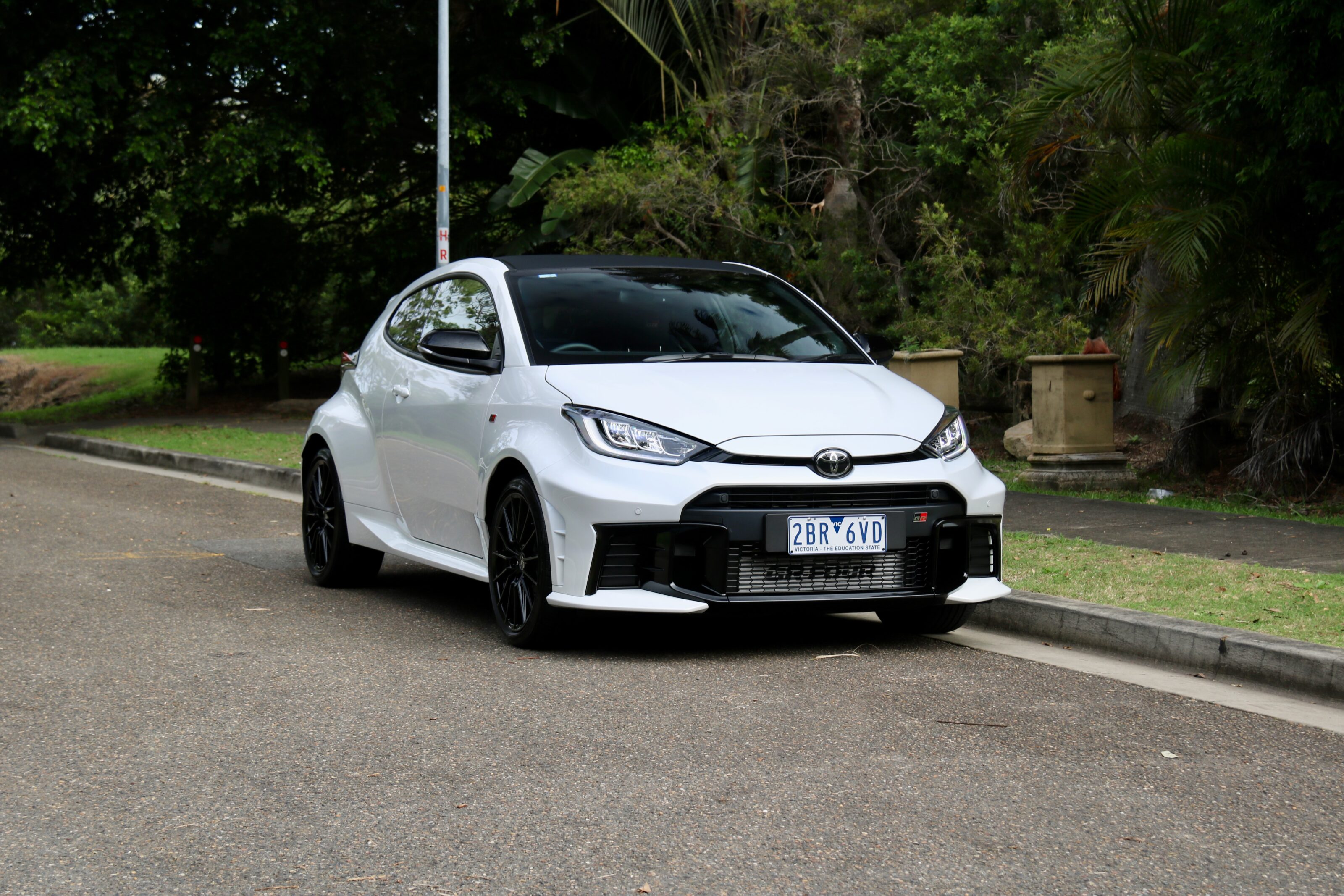
Before the release of the GR Yaris, it had been a long time since Toyota had made a turbocharged four-wheel drive sports car. But since its release in 2020, the brand has doubled down on its performance car efforts and there’s now a GR Corolla brother. Both have also just been updated with more performance and capability to make them even better, and a new optional eight-speed automatic transmission is now available as well for those who don’t want to row their own gears.
While they’re both not cheap – the GR Yaris starts at $55,490 +ORC and the GR Corolla $67,990 +ORC – they are both very fast, communicative and engaging to drive and relatively practical. For all-round goodness, regardless of price, not many cars better the GR twins.
Add in their long lists of standard equipment, including a fully-loaded active safety suite, and comfortable cabins, and it’s easy to see how the GR twins have sold well since their releases.
Better news, though is the cars represent Toyota finding its mojo again in making sporty and fun cars.
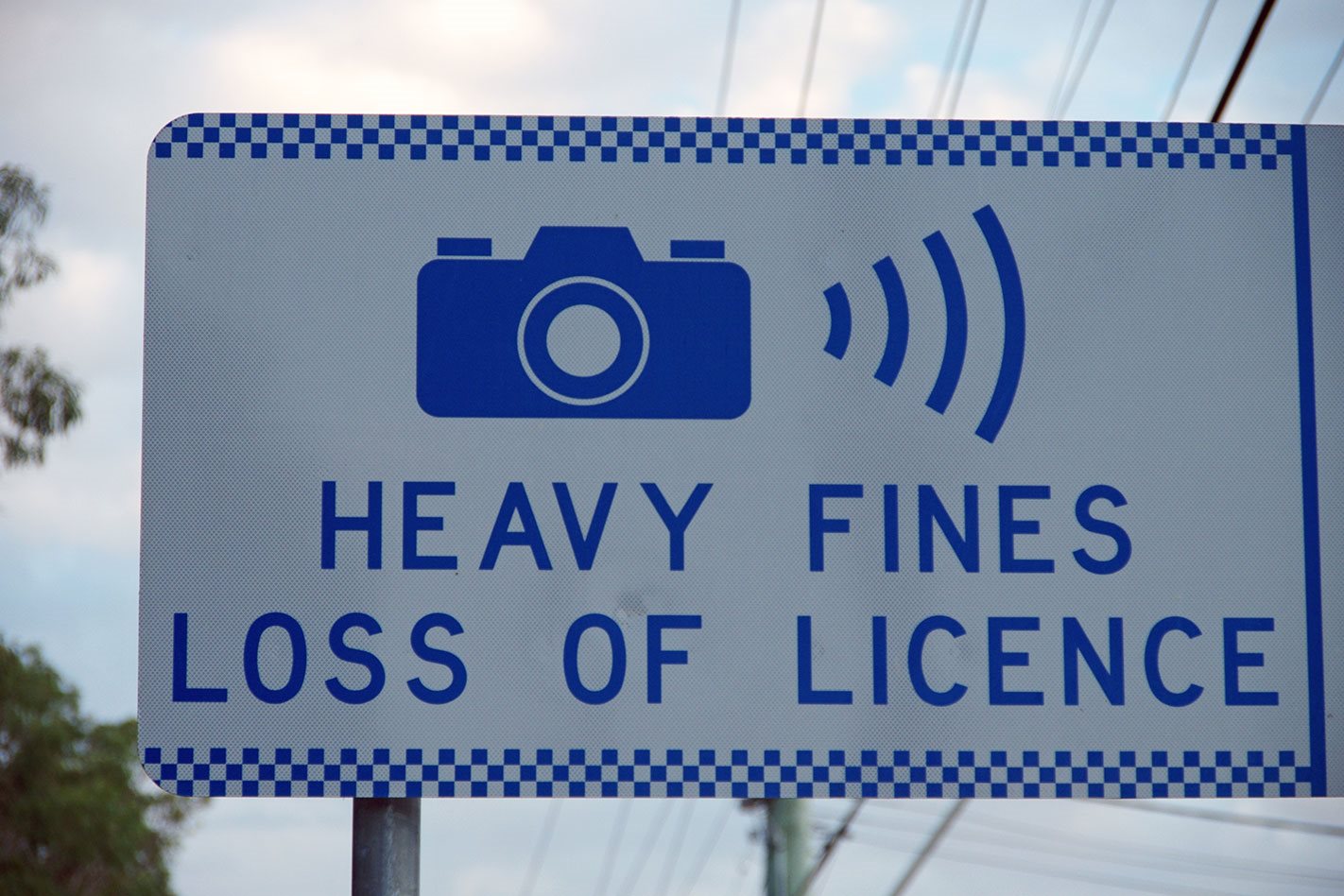
In a land with a lot of open road and a love of high-powered vehicles, speeding and the enforcement of speed limits will always be an issue for discussion.
But did you know that there’s a considerable difference in the amount you’ll pay in fines and how many points deduction you’ll cop on your licence depending on which state you’re caught speeding in? Read more below to find out much speeding will cost you in each Australian state:
ACT:
| Offence | Fine | Demerit points/suspension |
|---|---|---|
| Exceed speed by less than15km/h | $316 | 1 point |
| Exceed speed by less than 15km/h in a school zone | $342 | 1 point |
| Exceed speed between 15km/h and 30km/h | $468 | 3 points |
| Exceed speed between 15km/h and 30km.h in a school zone | $511 | 3 points |
| Exceed speed between 30km/h and 45km/h | $700 | 4 points |
| Exceed speed between 30km/h and 45km/h in a school zone | $799 | 4 points |
| Exceed speed by more than 45km/h | $1841 | 6 points |
| Exceed speed by more than 45km/h in a school zone | $2136 | 6 points |
New South Wales:
| Offence | Fine | Demerit points/suspension |
|---|---|---|
| Exceed speed by less than 10km/h | $128 | 1 point (4pts for L- and P-platers) |
| Exceed speed by less than 10km/h in a school zone | $211 | 2 points (5 pts for L- and P-platers) |
| Exceed speed by more than 10km/h | $295 | 3 points (4 pts for L- and P-platers) |
| Exceed speed by more than 10km/h in a school zone | $379 | 4 points (5 pts for L- and P-platers) |
| Exceed speed by more than 20km/h | $507 | 4 points |
| Exceed speed by more than 20km/h in a school zone | $632 | 5 points |
| Exceed speed by more than 30km/h | $970 | 5 points (plus 3mths suspension for L- and P-platers) |
| Exceed speed by more than 30km/h in a school zone | $1224 | 6 points (plus 3mths suspension for L- and P-platers) |
| Exceed speed by more than 45km/h | $2616 | 6 points + 6 months licence suspension |
| Exceed speed by more than 45 km/h in a school zone | $2778 | 7 months + 6 months licence suspension |
NT:
| Offence | Fine | Demerit points/suspension |
|---|---|---|
| Exceed speed by less than 15km/h | $150 | 1 point |
| Exceed speed by more than 15km/h but less than 30km/h | $300 | 3 points |
| Exceed speed by more than 30km/h but less than 45km/h | $600 | 4 points |
| Exceed speed by more than 45km/h | $1000 | 6 points |
Queensland:
| Offence | Fine | Demerit points/suspension |
|---|---|---|
| Exceed speed by less than 11km/h | $309 | 1 point |
| Exceed speed by more than 11km/h but less than 20km/h | $464 | 3 points |
| Exceed speed by more than 20km/h but less than 30km/h | $696 | 4 points |
| Exceed speed by more than 40km/h | $1780 | 8 points + 6 mths suspension |
South Australia:
| Offence | Fine | Demerit points/suspension |
|---|---|---|
| Exceed speed by less than 10km/h | $196 | 2 points |
| Exceed speed by more than 10km/h but less than 20km/h | $442 | 3 points |
| Exceed speed by more than 20km/h but less than 30km/h | $899 | 5 points |
| Exceed speed by more than 30km/h | $1635 | 7 points |
| Exceed speed by more than 45km/h | $1840 | 9 points + 6 months suspension |
Tasmania:
| Offence | Fine | Demerit points/suspension |
|---|---|---|
| Exceed speed by less than 10km/h | $98 | 2 points |
| Exceed speed by more than 10km/h but less than 14km/h | $146 | 2 points |
| Exceed speed by more than 15km/h but less than 22km/h | $195 | 3 points |
| Exceed speed by more than 23km/h but less than 29km/h | $341 | 3 points |
| Exceed speed by more than 30km/h and 37km/h | $585 | 5 points |
| Exceed speed by more than 38km/h and 44km/h | $829 | 6 points + 3 months suspension |
| Exceed speed by more than 45km/h | $1121 | 6 months + 4 months suspension |
Victoria:
| Offence | Fine | Demerit points/suspension |
|---|---|---|
| Exceed speed by less than 10km/h | $240 | 1 point |
| Exceed speed by more than 10km/h but less than 24km/h | $385 | 3 points |
| Exceed speed by more than 20km/h but less than 24km/h in a 110km/h zone | $385 | 3 months licence suspension |
| Exceed speed by more than 25km/h but less than 29km/h | $529 | 3 months licence suspension |
| Exceed speed by more than 30km/h and 34km/h | $625 | 3 months licence suspension |
| Exceed speed by more than 35km/h and 39km/h | $721 | 6 months suspension |
| Exceed speed by more than 40km/h and 44km/h | $817 | 6 months suspension |
| Exceed speed by more than 45km/h | $962 | 12 months suspension |
Western Australia:
| Offence | Fine | Demerit points/suspension |
|---|---|---|
| Exceed speed by less than 9km/h | $100 | 0 points |
| Exceed speed by more than 9km/h but less than 19km/h | $200 | 2 points |
| Exceed speed by more than 19km/h but less than 29km/h | $400 | 3 points |
| Exceed speed by more than 29km/h but less than 40km/h | $800 | 6 points |
| Exceed speed by more than 40km/h | $1200 | 7 points |
Everything tends to be shiny and new in the world of electric cars. Manufacturers fall over themselves to show off their newest platforms, their most progressive ideas and their latest battery systems. And then there’s the Hyundai Inster. It adopts a very different philosophy.
Its chassis can be traced back to the K1 platform that underpinned the 2018 Hyundai Santro, a city car for the Indian market. That was then recycled for the H2021 Hyundai Casper, a Korean-market urban scoot featuring a 1.0-litre internal combustion engine. From there, that chassis got an extra 180mm grafted into its wheelbase to create the K1 BEV platform that underpins the new electric Inster.
That’s why the Inster isn’t called the Ioniq 1, Hyundai reserving the Ioniq badge for is slick, dedicated E-GMP electric car platform. Instead the Inster is intended to fill a niche at the base of its range for people who want a fairly inexpensive urban EV, but who probably wouldn’t countenance walking into, say, an MG or a BYD dealer.
The word ‘fairly’ is doing some heavy lifting in that previous sentence. Prices for the four-seat Inster start at $39,000 for the Standard Range model, step up to $42,500 for the Extended Range with its bigger battery pack, and top out at $45,000 for the Inster Cross model, also featuring the large battery array. That’s about what you’d pay for something like a BYD Atto 3, which is almost Toyota RAV4 in size but, again, Hyundai points to a different buyer demographic.
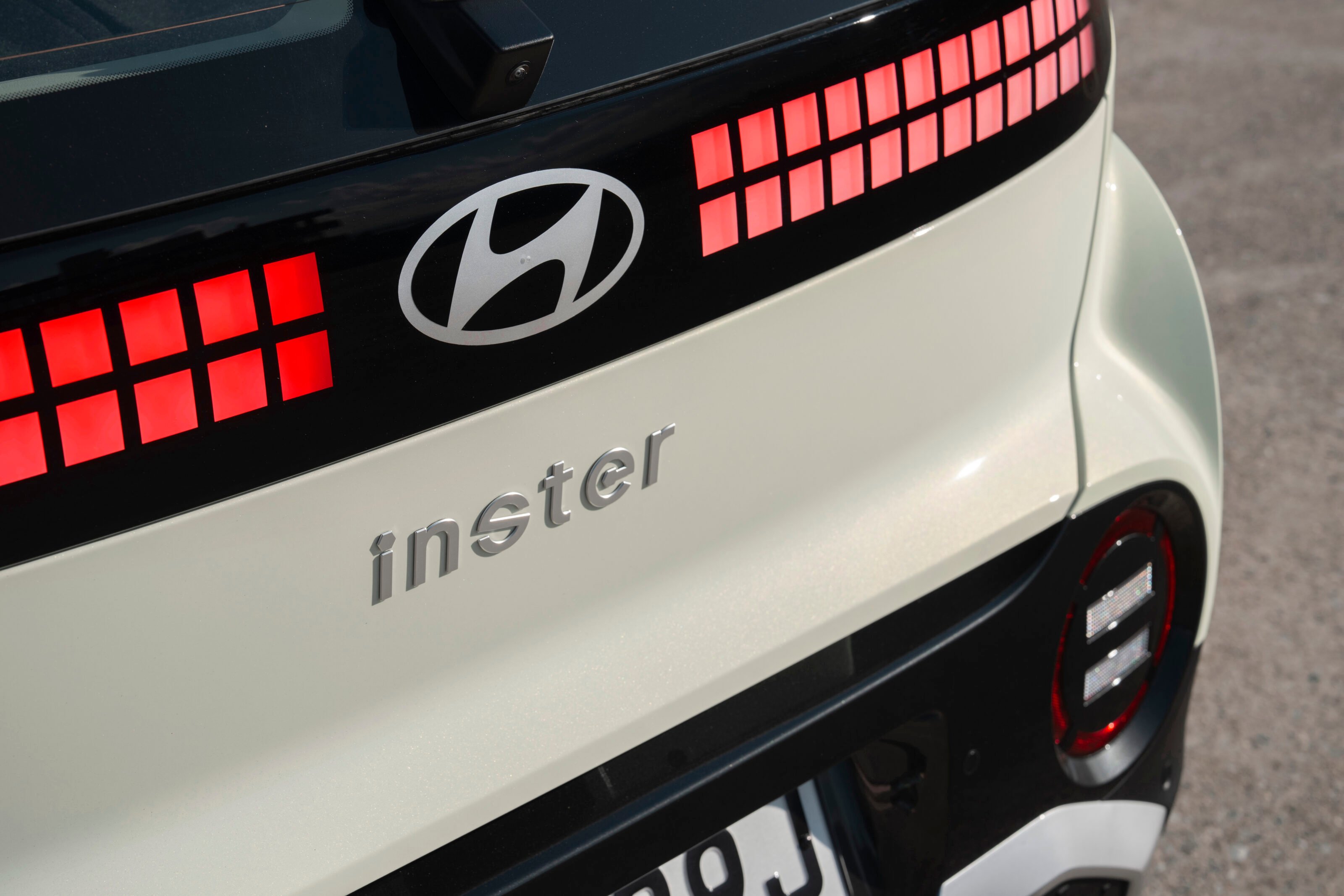
The Korean-built Inster, despite its stretched chassis, remains positively dinky in its dimensions. At 3825mm long, it’s a whole class shorter than something like a Kia EV3, which measures 4300mm min length, and at 1610mm in width, it’s notably narrower than its cousin, which is 1850mm wide. The exterior styling features liberal use of Hyundai’s EV-signature pixel lights and, from front to rear, there’s an awful lot of design going on. Its stance is faintly reminiscent of the outgoing Suzuki Ignis, and there’s an interesting colour palette that includes earthy greens and khakis, plus the odd Buttercream Yellow, which is the Inster launch colour.
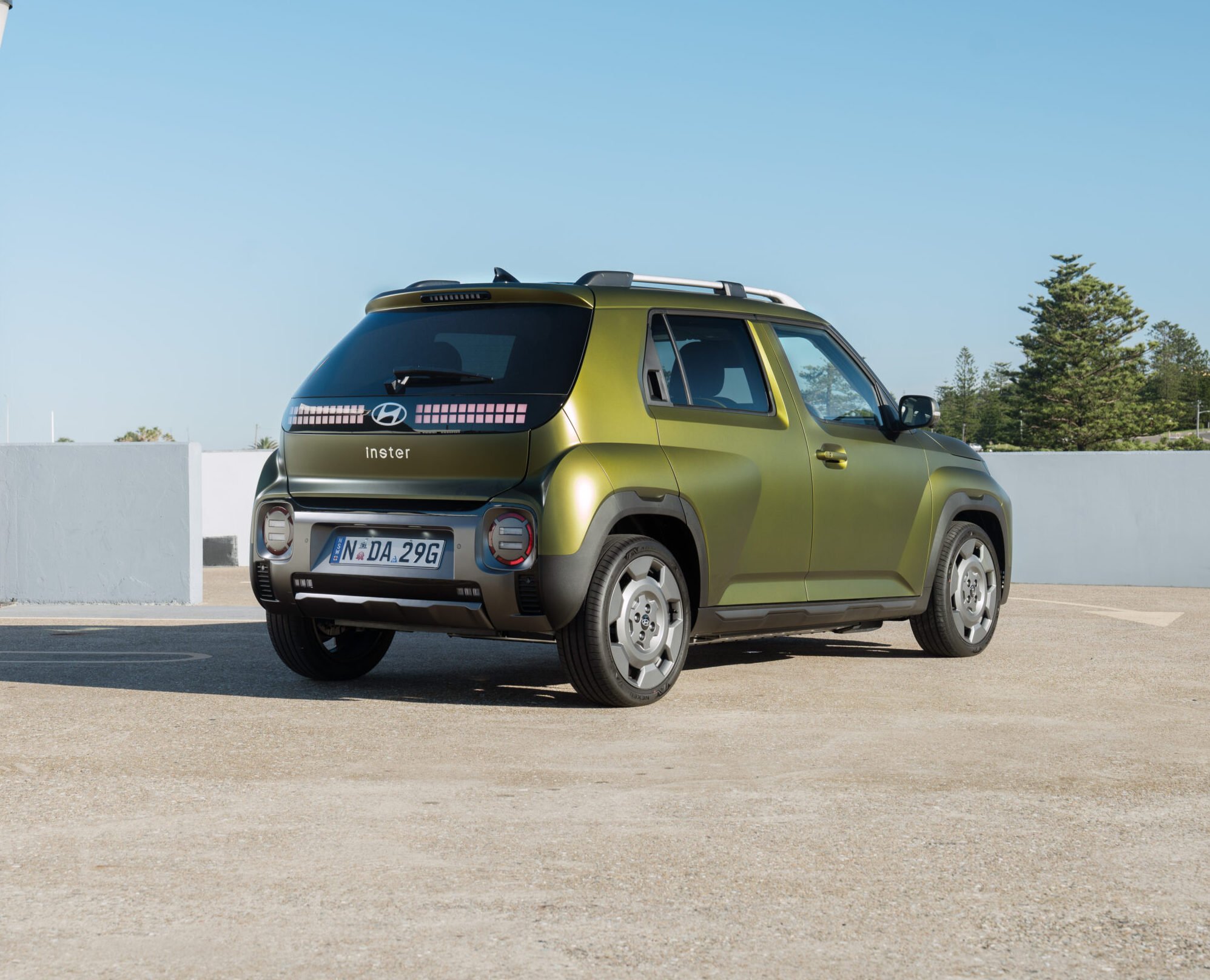
The Standard Range opens proceedings with a 42kWh battery, which translates into power and torque figures of 71.1KW and147Nm respectively. It’ll scoot to 100km/h in 11.7 seconds and on to a top speed of 140km/h but never feels underpowered or unable to keep up with cut and thrust traffic. Driving range is rated at 327km.
From there, buyers have the option to step up to the Extended Range model which, like all Insters, sends drive to the front wheels, in this case drawing its 84.5kW and 147Nm from a larger 49kWh battery. This gets to 100km/h in 10.6 seconds and on to 150km/h, and ups the driving range to 360km.
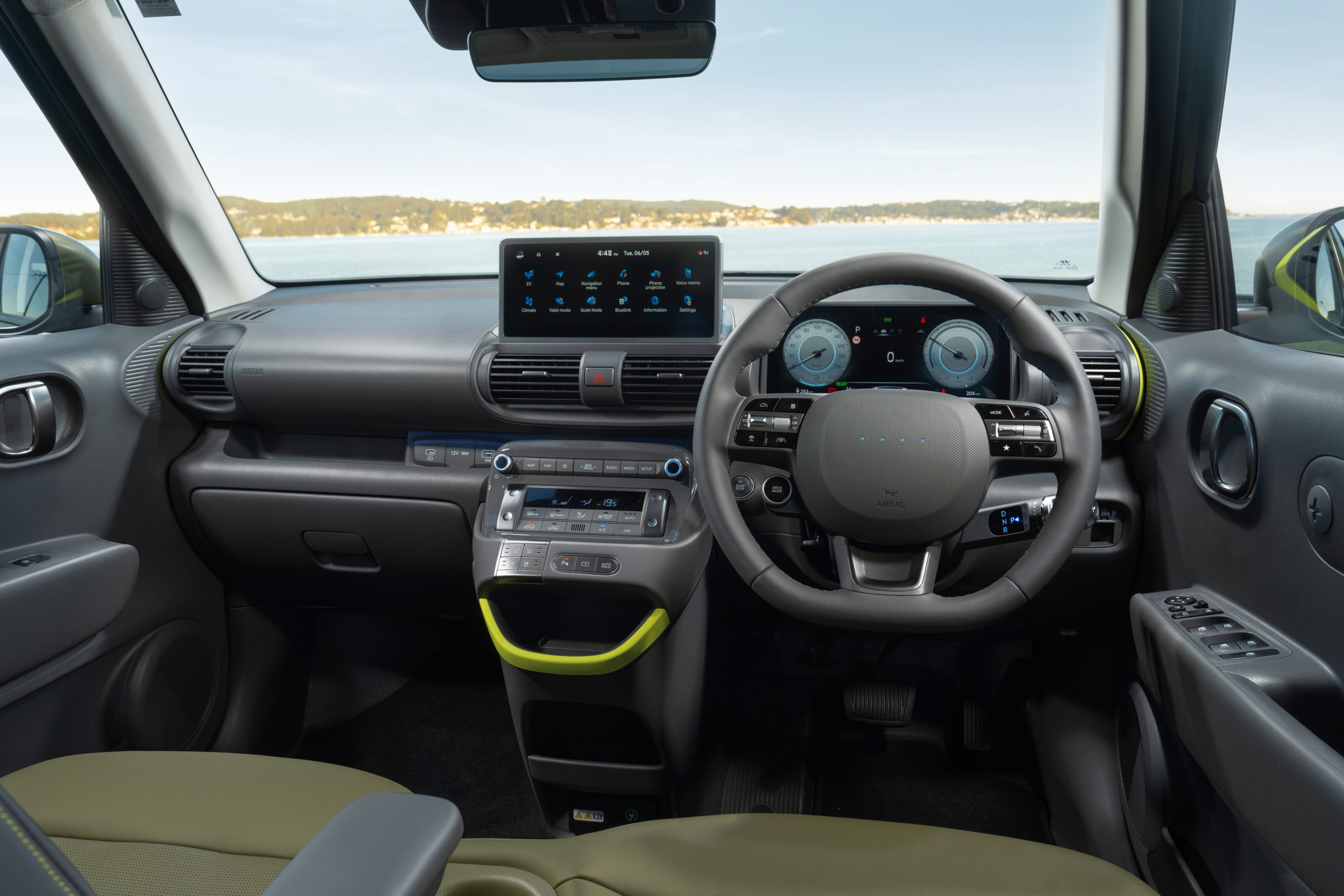
At the top of the range is the rugged-looking Inster Cross, which features no additional ride height over the other models (a standard 144mm across the board) so don’t go getting any Dakar fantasies about this one. It’s mechanically identical to the Extended Range model, but a few customers will swap its glass roof for the tough-looking roof basket which aerodynamically duds your effective range, knocking it back fully 18.6 percent, from 360km to 293km. Think carefully about making that particular style statement.
Jump inside and the Inster is well finished and sensibly configured. There’s a particular emphasis on recyclable materials, with the Standard and Extended Range models featuring recycled PET for the seating, and the Inster Cross featuring a bio-artificial leather upholstery. The dash is dominated by a pair of 10.25-inch screens, one for the central touchscreen and the other for the instrument display. It’s not a great cabin if you suffer from pareidolia, in which case the two main dials and the yawning mouth of the wireless phone charger will endlessly remind you of Jar-Jar Binks from Star Wars.
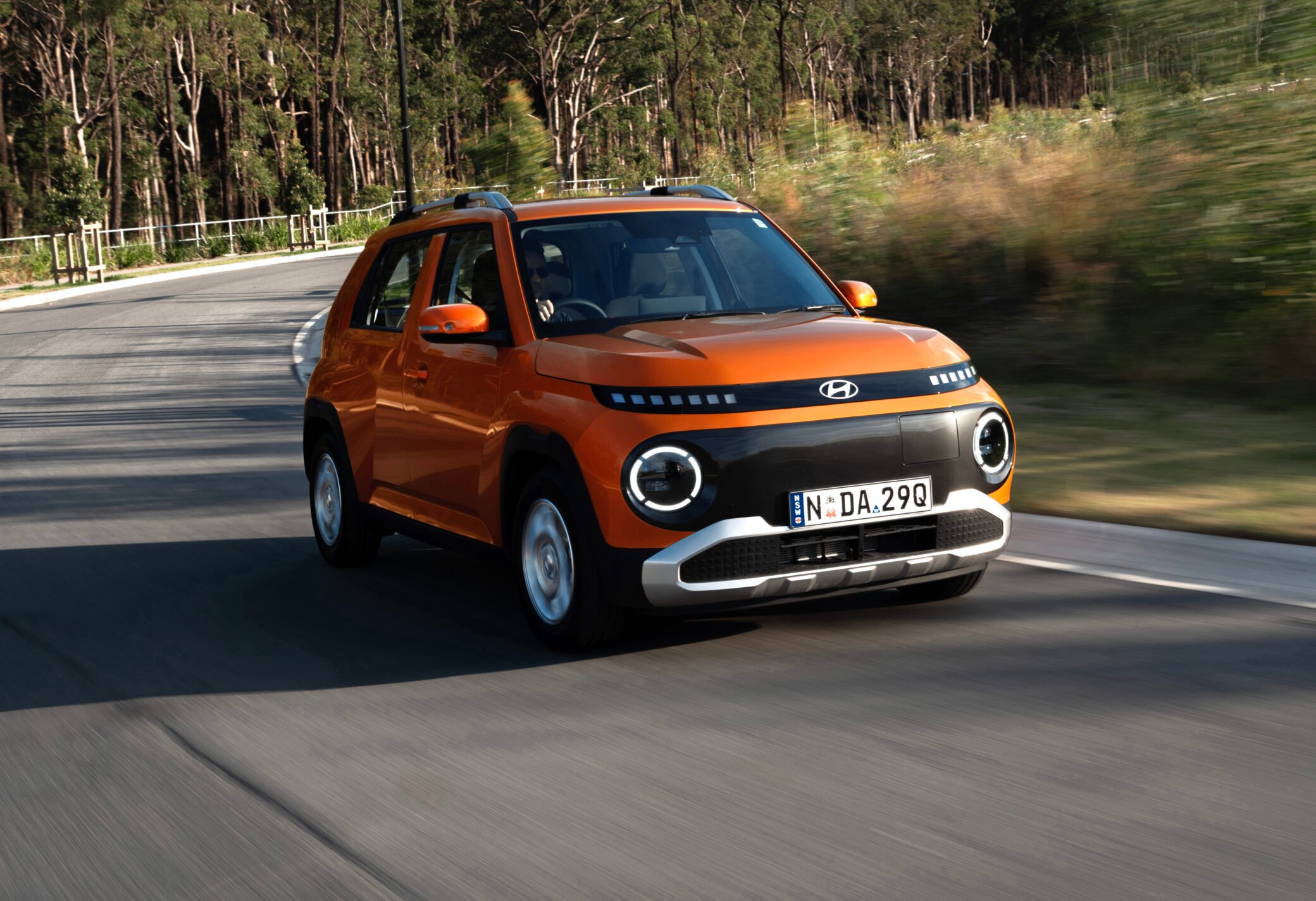
It feels narrow up front, an impression not helped by the jutting door handles, which impinge upon your leg. All-round visibility is great though, and the seats are reasonably supportive. Hyundai is adamant that there’s going to be no go-faster N version of the Inster, despite showing the wild Insteroid design study. It’s just not that sort of car.
We got to drive all three variants at the launch event, and they’re all inoffensive and pleasant to steer. That’s as tribute to Hyundai, as it’s incredibly easy to get small EVs like this very wrong when it comes to ride and handling. A limited program of local tuning has taken place, delivering a respectable measure of compliance in the Inster’s ride. Sensibly, Hyundai has resisted the urge to fit liquorice-strap tyres or program overly aggressive steering and throttle maps. Instead, it has concentrated on delivering a progressive feel to the controls and a feeling of security and surefootedness.
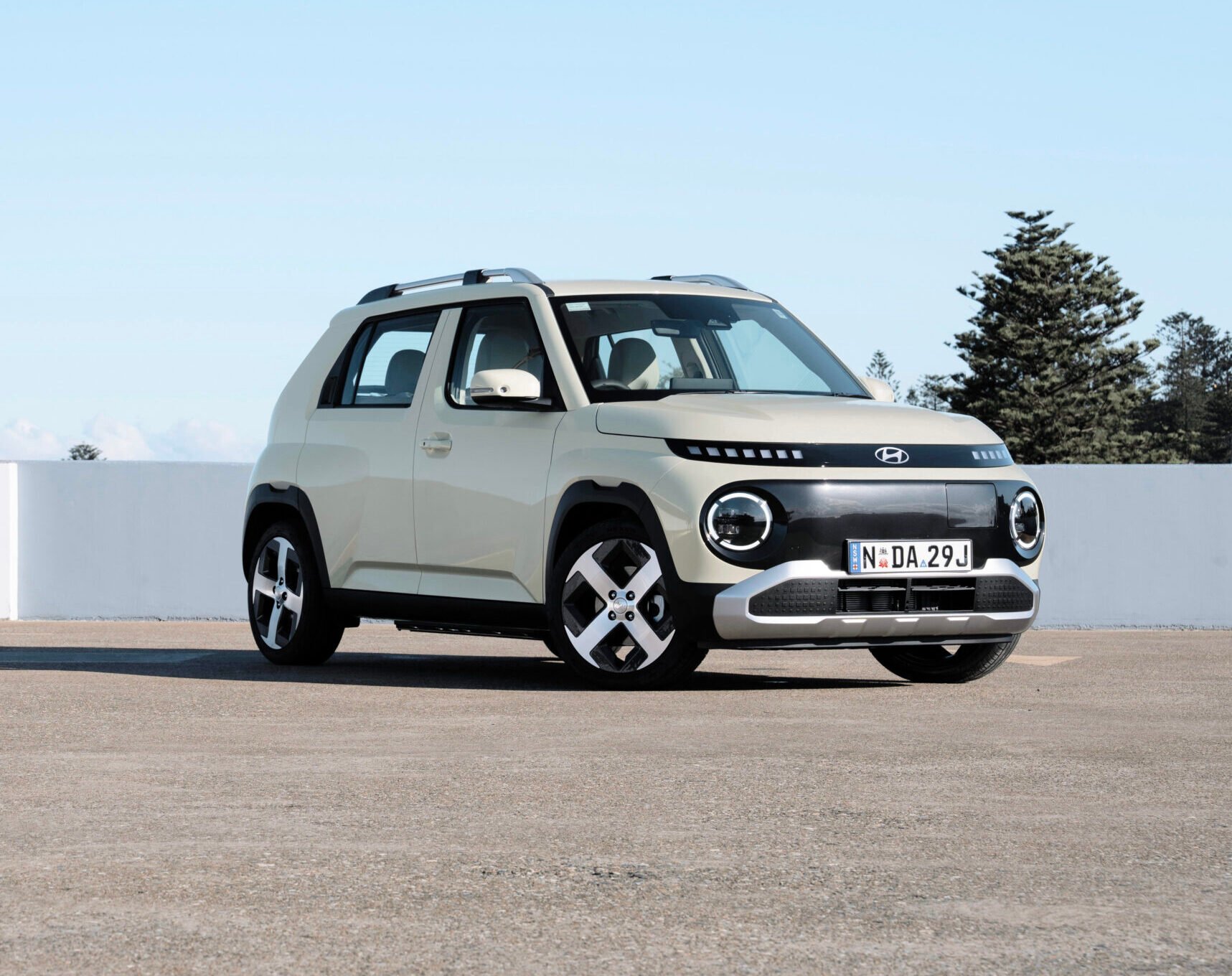
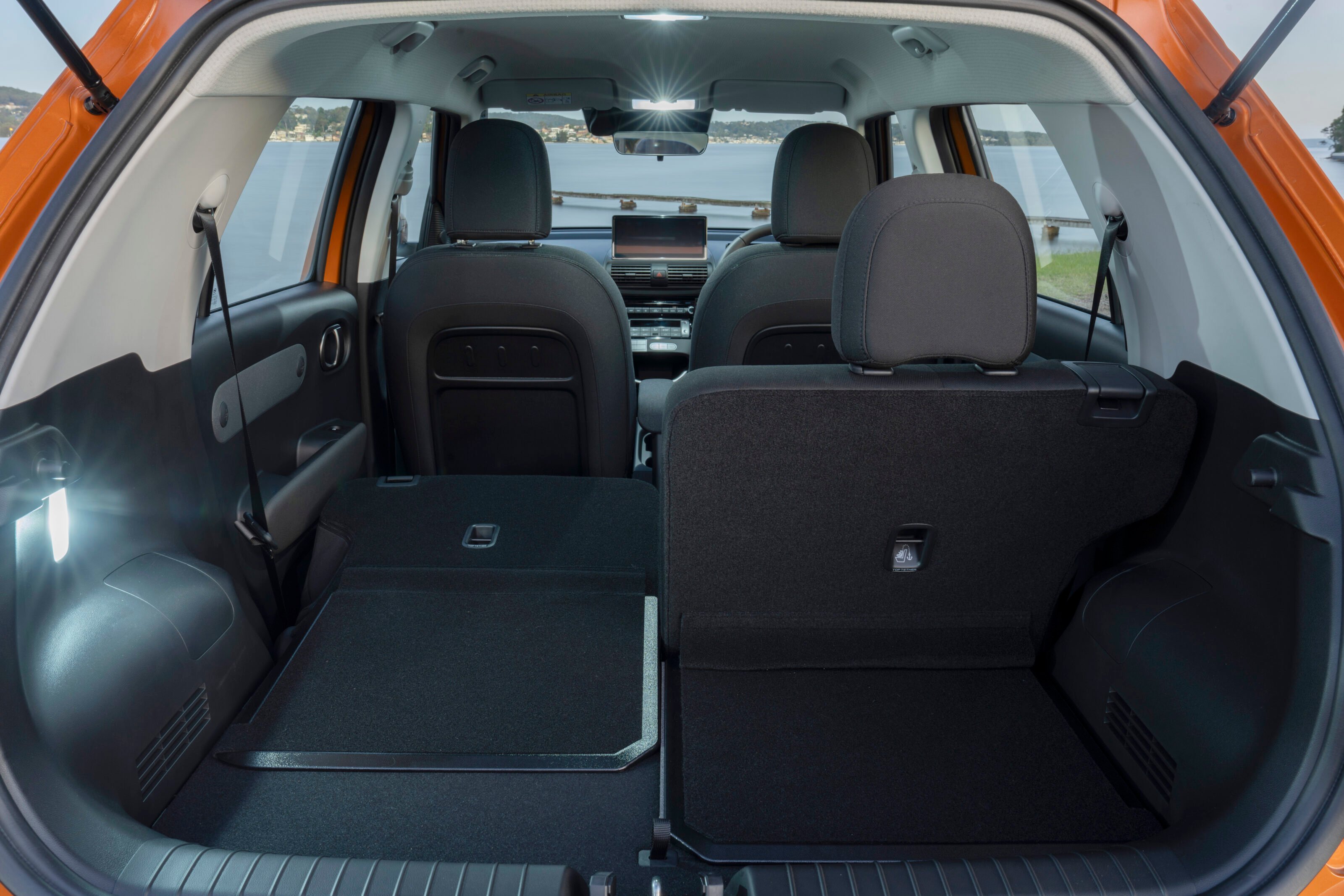
That’s not always easy in a narrow, tall vehicle, but the centre of gravity is helped by the battery pack sitting in the floor and the comparatively length wheelbase of the Inster. In fact, that wheelbase is not only 28mm longer than the next SUV in Hyundai’s hierarchy, the Venue, but also 13mm longer than the one above that, the Kona Electric. Include a sliding rear bench and that means that rear passengers in the Inster won’t be complaining about pinched legroom. Boot space is a different matter. With the rear seat slid back, there’s a measly 280 litres available, which grows to 351 litres when you slide the seats forward. Choose the Inster Cross and every one of the four seats can be folded forward to create a flat surface. Apparently the Korean arm even sells a custom mattress for turning your Inster Cross into an impromptu camper.
There’s plenty of charging options inside, including both USB-A and USB-C connections, and Vehicle To Load (V2L) functions are also fitted, allowing you to power devices such as laptops, scooters or camping equipment.
Refinement is a standout feature. While EVs are, by their nature, usually quiet in the powertrain department, this often has the effect of throwing your auditory focus onto other sources of noise, vibration and harshness. Hyundai has reinforced floor members, fitted hydro bushings for the electric motor mounts, optimised the steering damper, worked on aero around the headlight strip, fitted a full underbody cover, engineered a thicker reinforced luggage board and installed thicker door glass in a bid to create a genuinely refined cabin. It works too.
A pair of wheel-mounted paddles allows the driver to select the level of regenerative braking required which ranges from a cruisy coast to a somewhat lurch-prone amount of retardation that can feel a bit queasy without ever offering the full utility of a one-pedal solution. The ride quality on the Standard Range model, with its 15-inch wheels and 185/65 tyres is marginally better than that of the Extended Range and Inster Cross, both of which feature 17-inch alloys and 205/45 rubber.
Hyundai claims a consumption figure of 15.6kWh/100km for the Standard Range and 15.1kWh/100km for the two more powerful Inster variants, but we returned 12.5kWh/100km from the Inster Cross, which would eke range out beyond the published 360km figure.
On 10.5kW AC, the Inster Standard Range will charge from zero to 100 per cent in four hours, or 4hrs 35mins for the bigger batteries. On a public DC charger, it’ll accept up to 120kW speeds, and both will typically charge from 10 to 80% in around 30 minutes.
Buyers get a five-year warranty and a five-year connection via an included Optus SIM to Hyundai’s BlueLink connected car services. This offers not only the usual app with vehicle status, a find my car function, remote locking and unlocking and such like but also vehicle diagnostics, geofencing and valet functions, live weather info, auto collision notification and over-the-air updates to functionality like the native sat nav. If you prefer your phone to handle the nav duties, both wireless Apple CarPlay and Android Auto are standard.
Safety gear includes seven airbags and the the Hyundai SmartSense suite. This includes functionality such as forward collision avoidance assist, intelligent speed limit assist and highway driving assist. You’ll need to step up to the Inster Cross if you want a blind-spot view monitor, front parking distance warning and a surround view monitor. The top model also features gear like heated and cooled front seats, ambient mood lighting, a heated steering wheel and an electrochromatic rear view mirror.
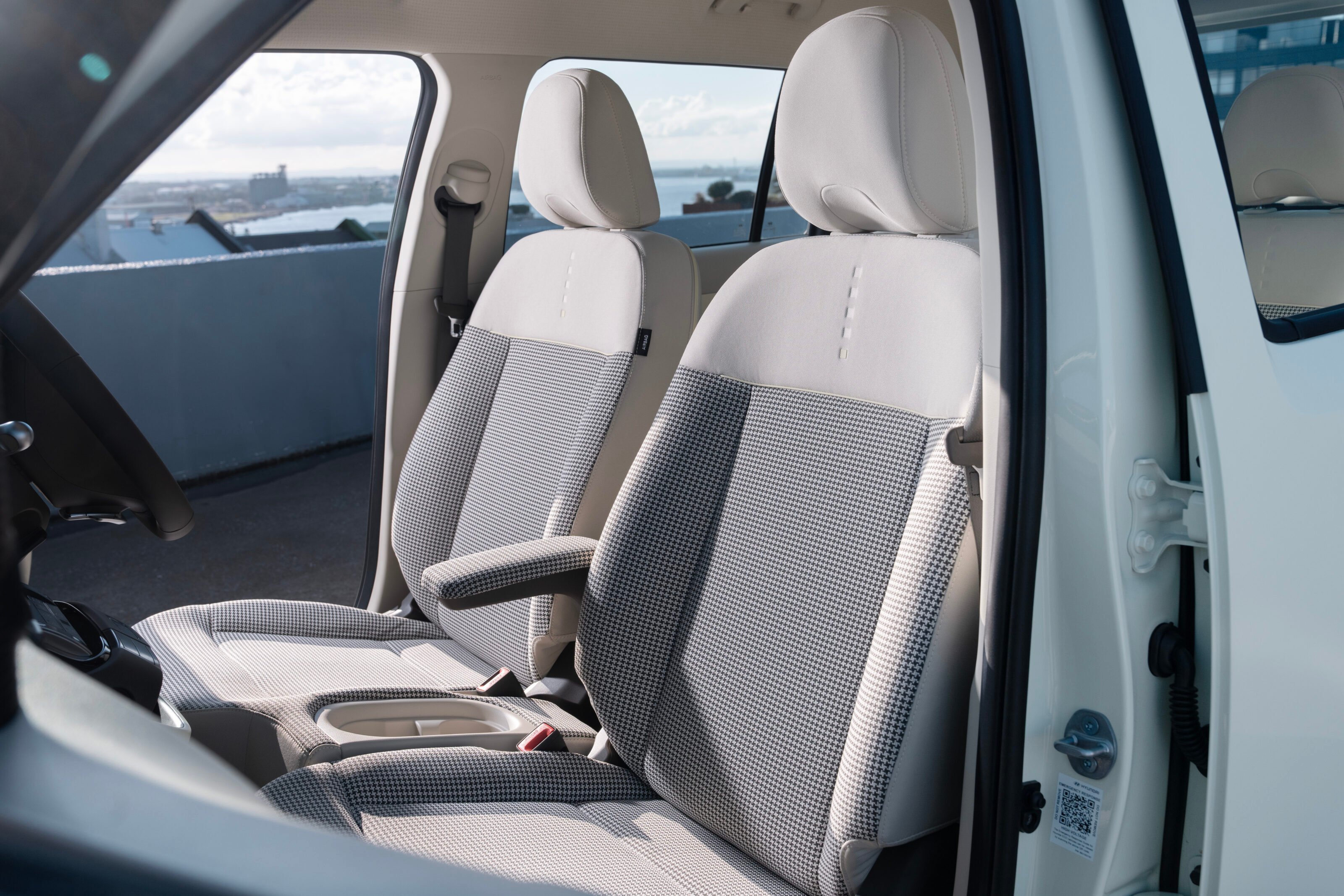
Even the standard model comes well equipped with refinements like LED headlights, navigation-based smart cruise control, rain-sensing wipers, a heat pump, V2L functionality, DAB radio and a battery heating system. Options you might consider include metallic or mica finish paint at $595 and matte premium paint at $1000. You’ll need to pony up for the Extended Range variant is you fancy the look of the stylish Khaki Brown and Newtro Beige houndstooth seating trim, the Standard Range netting you the more utilitarian Obsidian Black cloth trim.
Should you be particularly determined, it’s fairly easy to take potshots at the Inster’s asking price. Examine what you’re getting a little more carefully, and it’s clear that a lot of value has been built into what remains a small car. Traditionally, the Aussie public has been somewhat suspicious of well-appointed small cars, preferring instead a more expansive measure of metal for their money. Hyundai recognises this and knows the Inster will remain a bit of a niche taste, prioritising the promotion of Kona Electric instead.
Inster buyers will be getting a well engineered product, even if that engineering does have a longer and more involved genesis than many will ever care to appreciate. It’s been an odd route to get here, but the results are encouraging. The Inster delivers on so many fronts that it’s hard not to warm to it. We’re seeing a level of maturity in this section of the market that hasn’t been there before; a completeness and a depth of engineering that’s new to the sector. The Inster’s appeal may well be specialised, but that shouldn’t detract from the sum of its achievements.
Specifications
| Model | Hyundai Inster Cross |
| Motor | Front-mounted permanent magnet synchronous |
| Transmission | 1-speed reduction gear |
| Battery size | 49kWh |
| Max power | 84.5kW |
| Max torque | 147Nm |
| Kerb weight | 1423kg |
| L/W/H/WB | 3845/1610/1610/2580mm |
| 0-100km/h | 10.6sec |
| Range | 320km |
| Price | $45,000 |
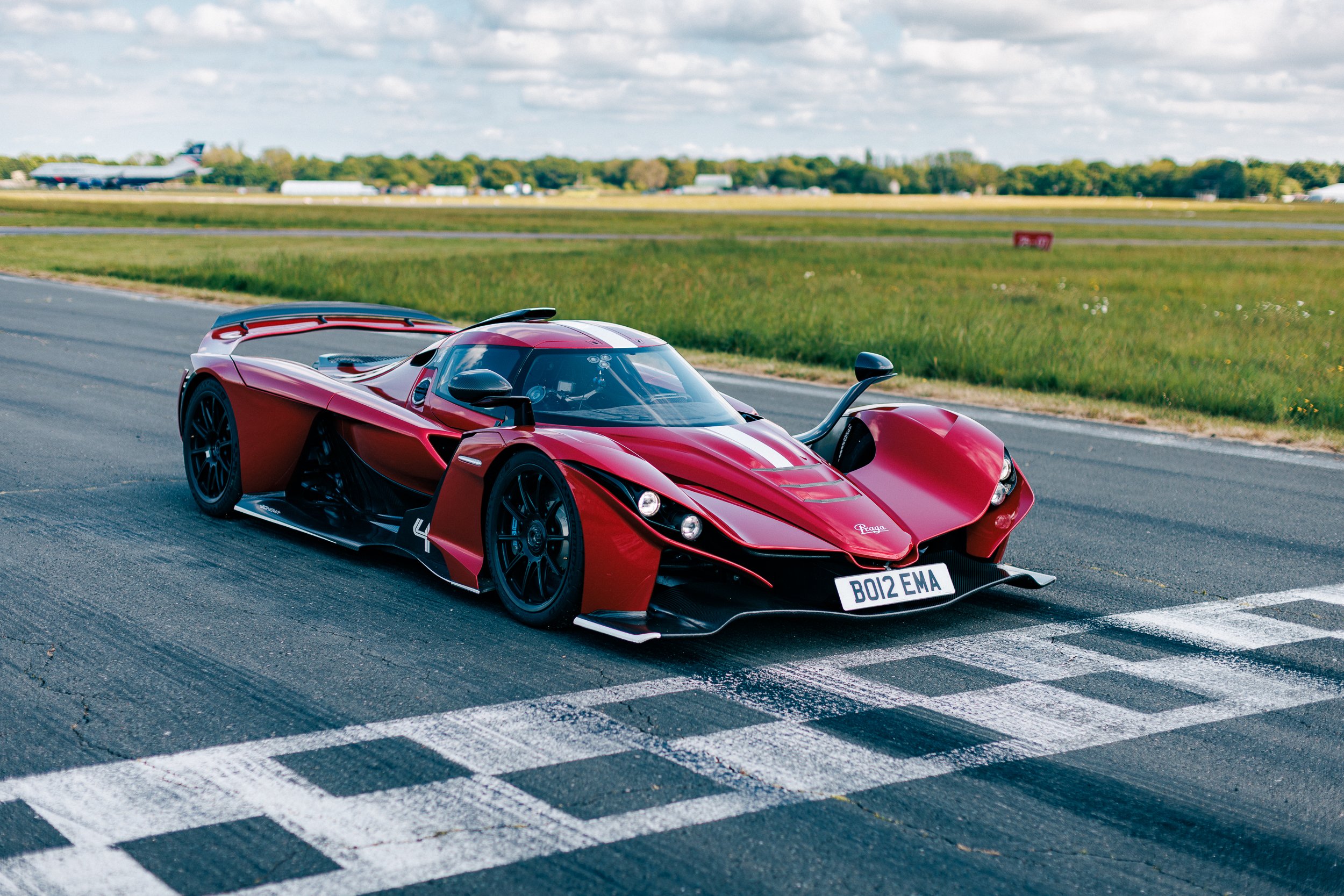
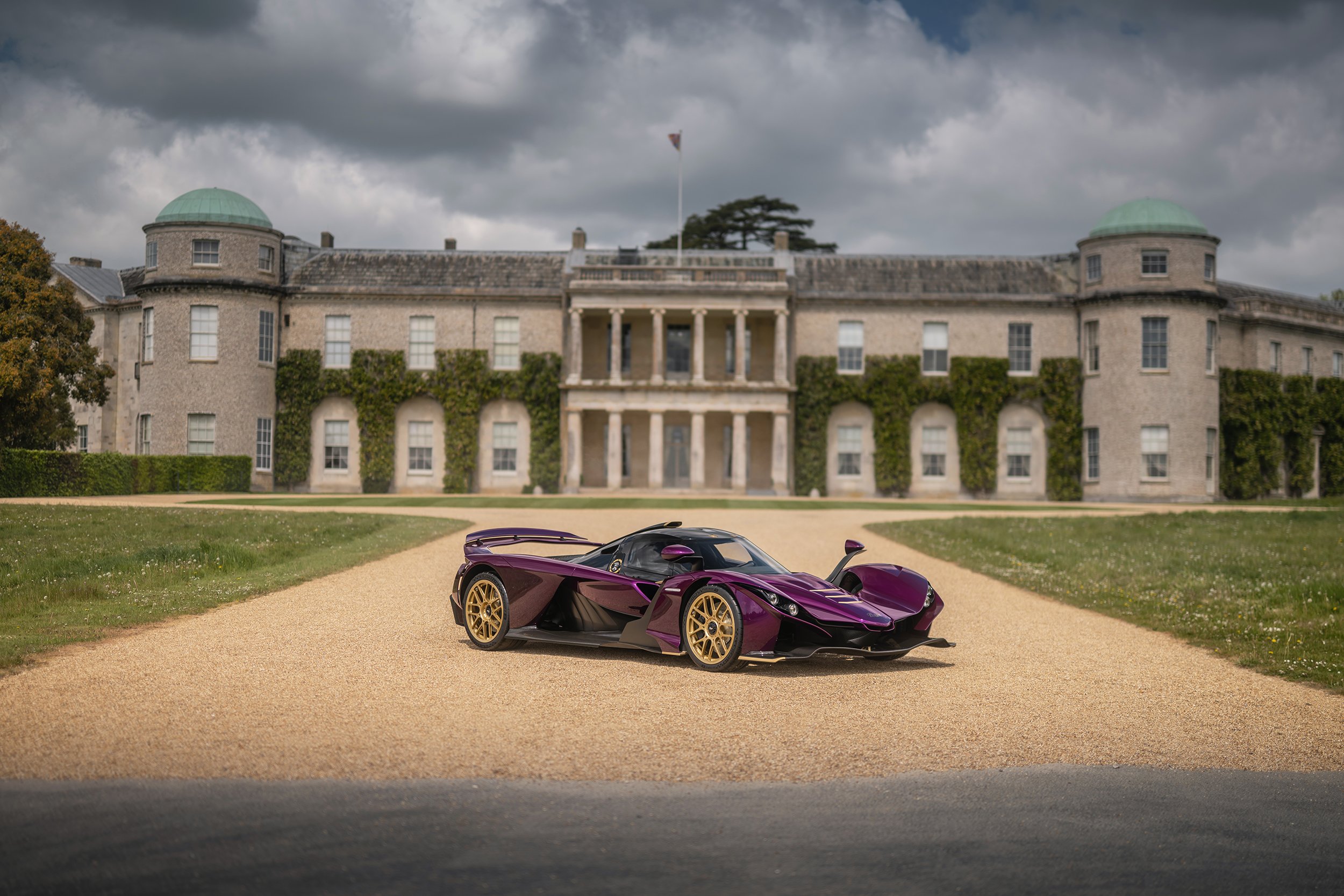
In a stunning demonstration of engineering prowess, the Praga Bohema has claimed the title of the fastest pure internal combustion production car to lap the former Top Gear Test Track in Surrey, UK – driven by ‘The Stig’.
Clocking a VBox-verified time of 1:09.8, the Czech-manufactured hypercar came within fractions of a second of the benchmark set by the hybrid-powered 850kW Aston Martin Valkyrie earlier this year.
Driven by Ben Collins – the mysterious ‘Stig’ on Top Gear – the Bohema showcased its track-focused design despite wearing standard road tyres. Remarkably, Collins drove the car to the circuit himself before unpacking his helmet and race suit from the car’s side storage pods and hitting the track. With just a handful of hot laps, Collins squeezed out sector times that hinted at even faster potential.
“Setting such a fast time on road tyres was such a thrill,” said Collins. “The Bohema might live for downforce, but its mix of light weight, aerodynamics, and raw combustion power held its own against the world’s elite hybrids.”
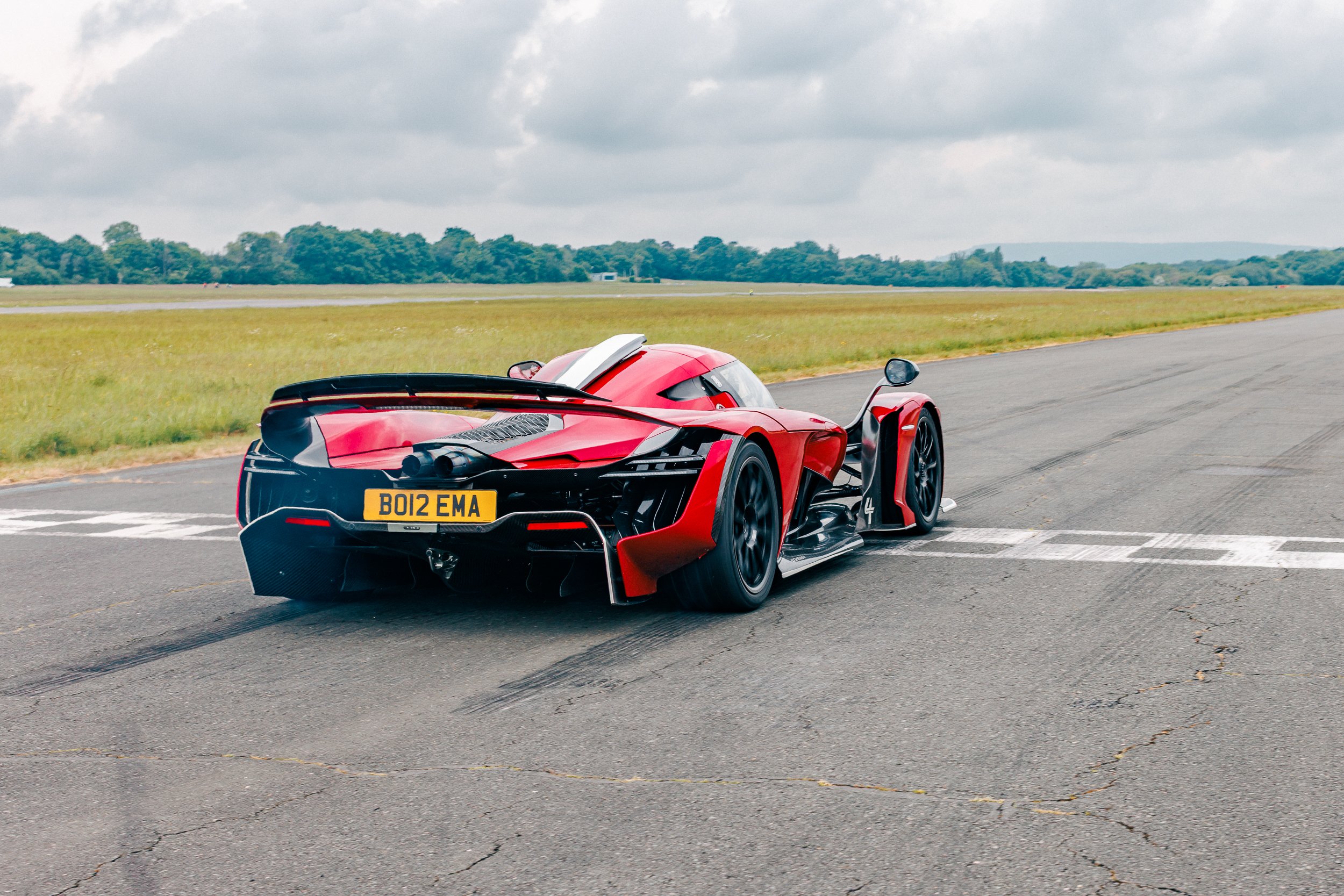
Powered by a 3.8-litre twin-turbocharged V6 engine delivering 522kW and 750Nm of torque, the Bohema weighs just 1,000kg. The carbon fibre body, GT3-spec suspension, and carbon ceramic brakes translate into race car-level handling for the road. The aerodynamic package –developed in a Formula 1 wind tunnel – delivers over 900kg of downforce at 250km/h.
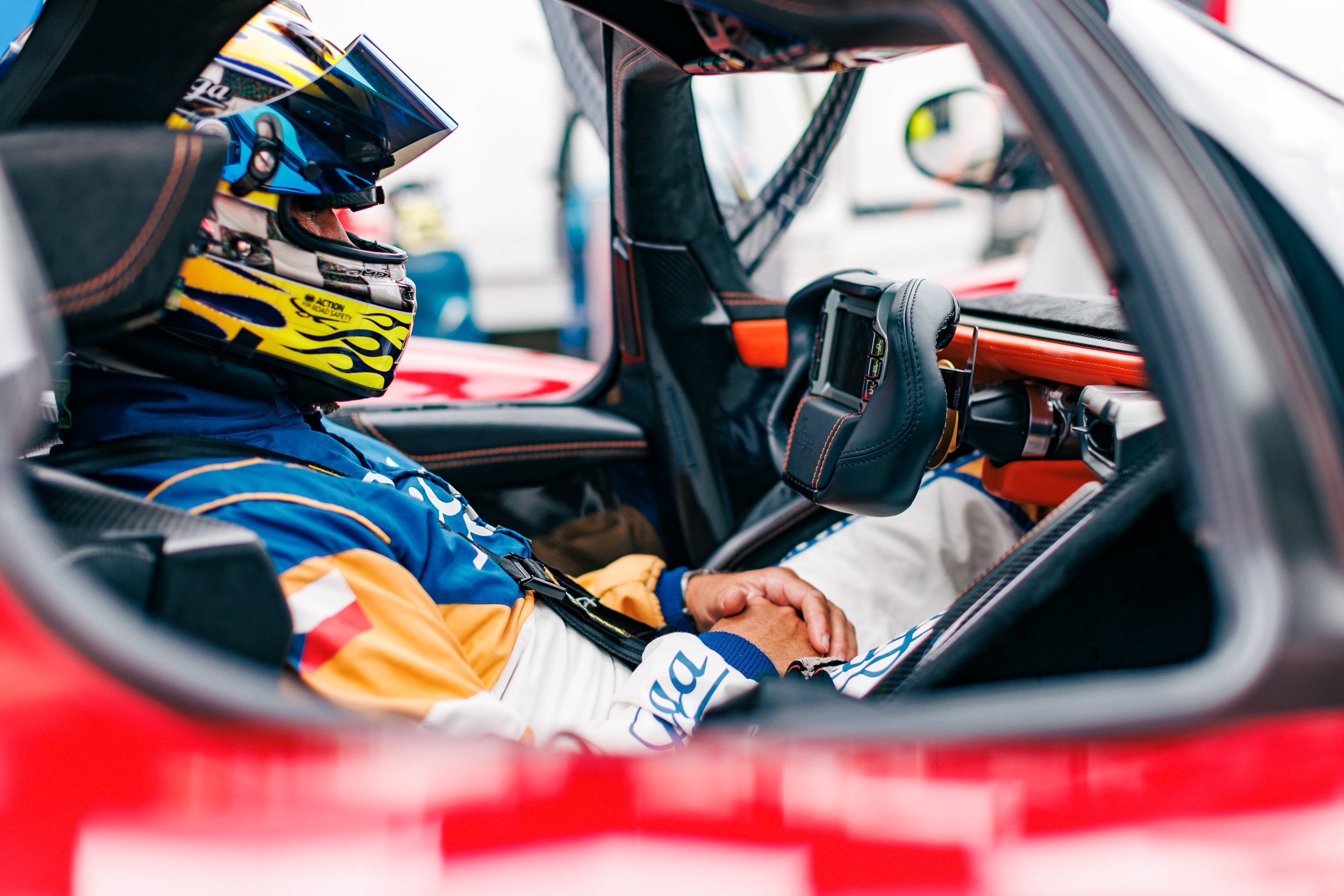
This latest achievement follows an intensive test program across circuits including Spa, Nürburgring, Zandvoort, and the Red Bull Ring. The record lap comes ahead of a major milestone for Praga: a triple customer handover at the 2025 Goodwood Festival of Speed in July. The event will mark the first US delivery and see new owners ascend the famous Hillclimb with Collins at the wheel.
Praga Cars owner Tomas Kasparek celebrated the milestone: “More than the lap time itself, this is a testament to the tireless efforts of our team – and Ben’s exceptional driving. Bohema proves that innovation and performance don’t have to rely on hybrid tech alone.”
With the supercar’s striking design captured by renowned photographer GF Williams and an enthusiastic reception anticipated at Goodwood, Praga’s Bohema is fast becoming a headline act in the world of high-performance motoring.
Mentsu wo tamotsu is the Japanese term for it. We’d call it ‘saving face’ and it’s key to understanding the changes behind the new Mazda CX-60. It’s always fascinating when cultures abrade against other and when those two cultures are that of the upfront Aussie and the Japanese keen to save honour, it’s downright intriguing.
The backstory first. When we first drove the Mazda CX-60 way back in 2022, it impressed with a number of attributes but its ride wasn’t one of them. It felt niggly and nervous, and at odds with the company’s upmarket aspirations for the vehicle. A subsequent long termer in the Wheels garage only confirmed our suspicions that this was a vehicle that could have used some local suspension tuning. Other issues raised their heads too. Driveline shunt, gearbox calibration and a number of other engineering glitches blotted the CX-60’s copybook. It had such potential, but was annoyingly flawed in too many areas.
None of these seemed major impediments in the greater scheme of things. They were all easily eminently solvable, but it’s been a process. Don’t forget that Mazda has already had one slightly half-hearted stab at it, by fitting different rear shock absorbers to CX-60s built after October 2023 – and then making these parts available to existing owners as a retrofitted item.
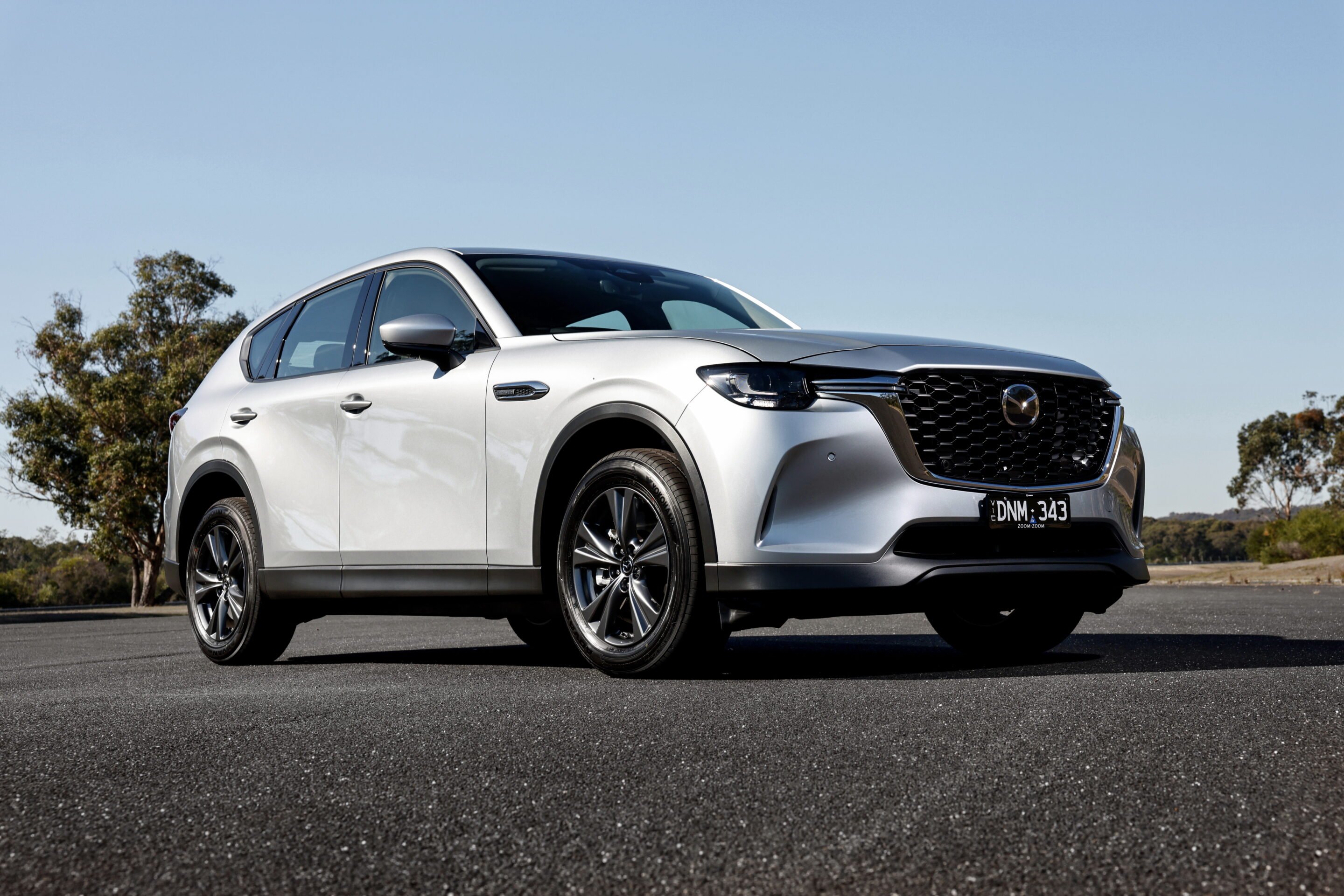
Mazda Australia were, as you might expect, pretty frank about the situation. While they pointed to the encouraging sales figures, they claimed that feedback from both customers and the reviews of journalists allowed them to push the Japanese mothership to effect remedial changes. In short, they acknowledged the shortcomings of the CX-60.
But speaking to Toshiaki Aoki, the chief engineer behind the product, a different story emerges. To Aoki, this was just the normal facelift and update process at work. While I’m not about to claim that he was being economical with the truth, there was clearly a different cultural viewpoint.
“Right after the launch of the original CX-60, and that’s when we started the development of this updated version. Actually, normally, when a new vehicle is introduced, then right after that, the next program starts,” he stated, suggesting that this was business as usual for Mazda.
It’s not. No car has this sort of major surgery wrought on its suspension if there wasn’t much wrong with it in the first place. To whit, Mazda have done away completely with the CX-60’s rear anti roll bar, and have effected remedial surgery on the springs, dampers and bushings in order to fix the ride quality issues.
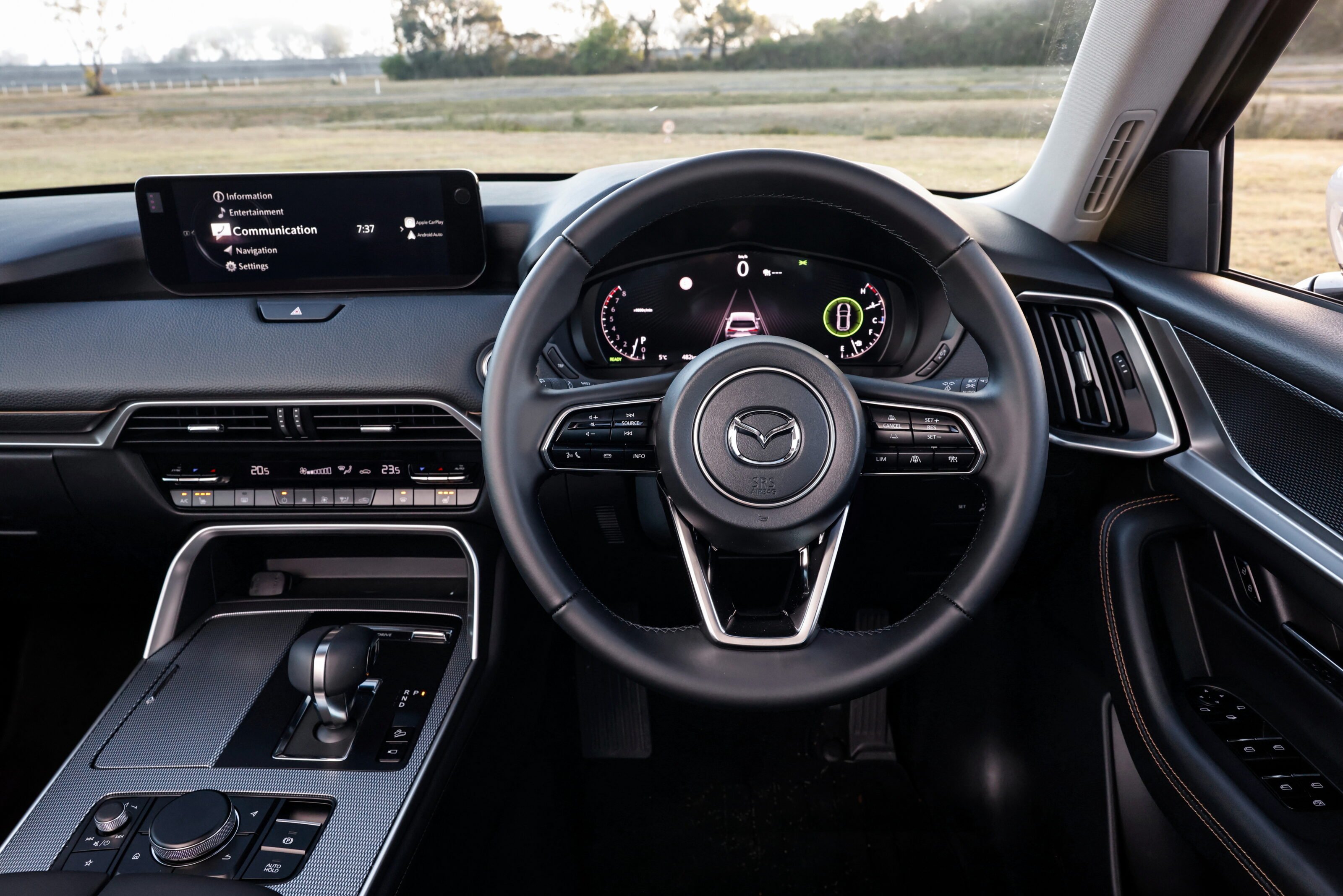
Push Aoki a bit harder on why such changes were required and he cedes a little. When asked if Mazda should have tested locally on Australia’s poor quality country roads, he notes that “I believe we should have understood the customers’ driving scenes better and more accurately… we are considering what needs to be done to better understand the market. We are trying to figure out the ways that we can adapt in terms of accurately assess and evaluate the local conditions.”
“I don’t think it was a good situation because the [old] vehicle moved too much before it could be balanced. The vehicle body moved not only up and down but also sideways. It moved a lot,” he explains.
As well as attempting to address the CX-60’s ride issues, the vehicle has come in for some modest equipment revisions, an update to the trim structure, a few engineering tweaks to the plug-in hybrid versions, a new entry-level engine is in the works and, best of all, it’s had a serious haircut on price – around $10k in some instances. Mazda claims that these revised asking prices reflect the sums that the vehicle was transacting at before, but it seems like a tactic to reignite interest in the CX-60. It could well work.
The entry-level version that will join the six cylinder 3.3-litre diesel and petrol variants and the 2.5-litre plug-in hybrid will be a normally-aspirated 2.5-litre Skyactiv-G powerplant, driving the front wheels exclusively. This is likely to be a stop-gap model that brings the CX-60’s entry price down in the interim before the all-new CX-5 arrives. We’ll have more details on that engine later. As it stands now, the opening point of the range is $50,240 before on-road costs for the new G40e Pure turbocharged inline-six petrol trim. That’s a 209kW CX-60 for much the same price as a 140kW CX-5 G25 GT SP. Seems like strong value to us.
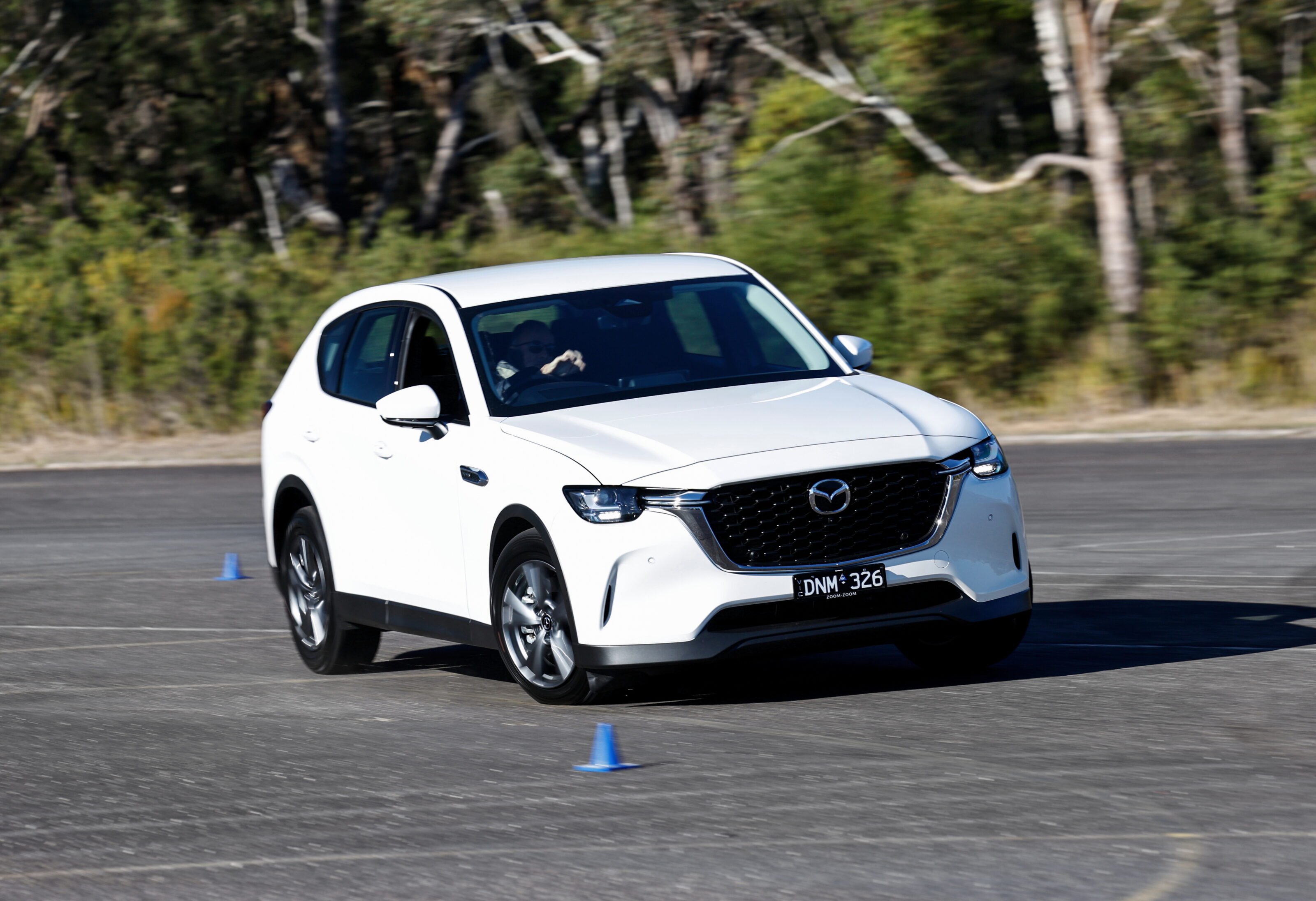
Rather helpfully, Mazda had examples of the old version of the CX-60 for us to batter over Lang Lang Proving Ground’s worst surfaces and then do a compare and contrast with the new model. The differences weren’t stark, but represented a more than worthwhile improvement in body control and passenger comfort. Where the old car would never seem to settle onto its springs and induce quite severe head toss on the savage diagonal runnels on the test route, the newer vehicle boasted far superior compliance. There’s now a more controlled feel as the dampers run towards the end of their travel, and the softer springs bring a little more polish to the secondary ride.
There’s less pitchiness in the vehicle than before, the steering has been revised to reduce vibration through the column, understeer has been reduced by lowering the mounting point of the front knuckles and a propensity for lift-off oversteer has been reduced by removing the rear-anti roll bar.
Put simply, it’s a more comfortable and composed car than before. The steering software and stability control system have also been appropriately tuned to account for these changes to vehicle dynamics. The net result is a more comfortable ride without sacrificing too much of the CX-60’s alertness. It’s still taut-ish, but it’s no longer wearingly unsettled. The compromises have been managed smartly.
These improvements apply across the board, but the 2.5-litre plug-in hybrid version has come in for some additional attention. The old car was afflicted by significant driveline shunt, especially in town at light throttle loadings, and new software has been installed to allow for a more cultured take-up of drive. The handover between the internal combustion engine and the electric motor has also been finessed. The improvement here is noticeable, but that transition is still not exactly butter-smooth. All three of the CX-60 powertrains drive through an eight-speed automatic gearbox that uses clutches rather than a torque converter, and the clutch actuation and slippage has been refined to deliver smoother shifting and part-throttle response.
It’s just a shame that the CX-60 was rushed to us post-COVID without these engineering issues addressed. Perhaps the company was so keen to leverage its reputation for sporty handling that it took its eye off the fact that most buyers who choose large(ish) SUVs prioritise comfort, stability and safety over an invigorating steer. Mazda’s decision to engineer a range of large-capacity internal combustion engines in an era of downsizing also looks a mis-step, especially in the face of the new NVES emissions regulations that are looming on the horizon.
None of which makes this revised CX-60 a bad car. Quite the contrary in fact. What we had already was a good looking, well built and intriguingly engineered SUV that was close to being a genuine contender. Now that the impediments to choosing it have belatedly been massaged away, it’s a fairly easy vehicle to recommend. Choosing the best buy in the line up isn’t the work of a minute though.
All three of the current powertrains have something to be said for them. To date, Aussie buyers have voted with their wallets in favour of the G40e 3.3-litre petrol engine, which comprises 45 percent of all CX-60 orders. Some 30 percent then choose the P50e 2.5-litre plug-in hybrid, leaving 25 percent keeping chimney sweeps in business with the D50e 3.3-litre turbodiesel.
The diesel is interesting. While you can feel the extra weight in the nose versus the petrol and (especially) the PHEV, the not insignificant matter of 550Nm of torque gives it an easy-driving feel and it has a character all of its own. Like the G40e petrol engine, it features mild hybrid tech, with re-gen braking, but it’s only rated for towing up to 2000kg (braked) where the other two can tow up to 2500kg. Apparently that’s down to a historic cooling issue and it would have been good to have seen that particular shortcoming addressed in this update, but that one obviously slipped down the priority list.
The CX-60 remains probably the best vehicle in its class in terms of interior finish, and the new trim structure adds an element of additional choice for buyers. At the base of the range is a new Pure grade, after which it ascends through Evolve, the new Touring variant, GT and the flagship Azami, which tops out at $81,490 for the PHEV. The Azami is also offered with the option of Takumi Package (with a white interior) or the SP Package (tan with suede effect finishes), which will set buyers back an additional $2000. At present, all trim levels are offered with all three engines, but that’s likely to change with the introduction of the 2.5-litre SkyActiv-G engine. This is available in the CX-60 in the Japanese market in a 138kW/250Nm state of tune at the moment, although those figures may change slightly for the Aussie homologated unit.
Other changes? A new Zircon Sand metallic colour has been added to the palette for 2025, there’s additional sound-absorbing insulation in all models and the Active Sound Enhancer, an engine sound symposer that pipes fake engine noise into the cabin, has been dialled back in volume.
Mazda has created a better CX-60 at a more aggressive price. Of course, there’s an argument that it should have done so straight off the bat three years ago, and that it’s a day late and a dollar short in its efforts to make good. Indeed, some buyers may have tried the CX-60 and decided that it wasn’t for them. It’ll take something to get them to give this otherwise impressive vehicle a second chance, and given the development costs of the car, that’s a mistake that Mazda can ill afford. Still, better late than never.
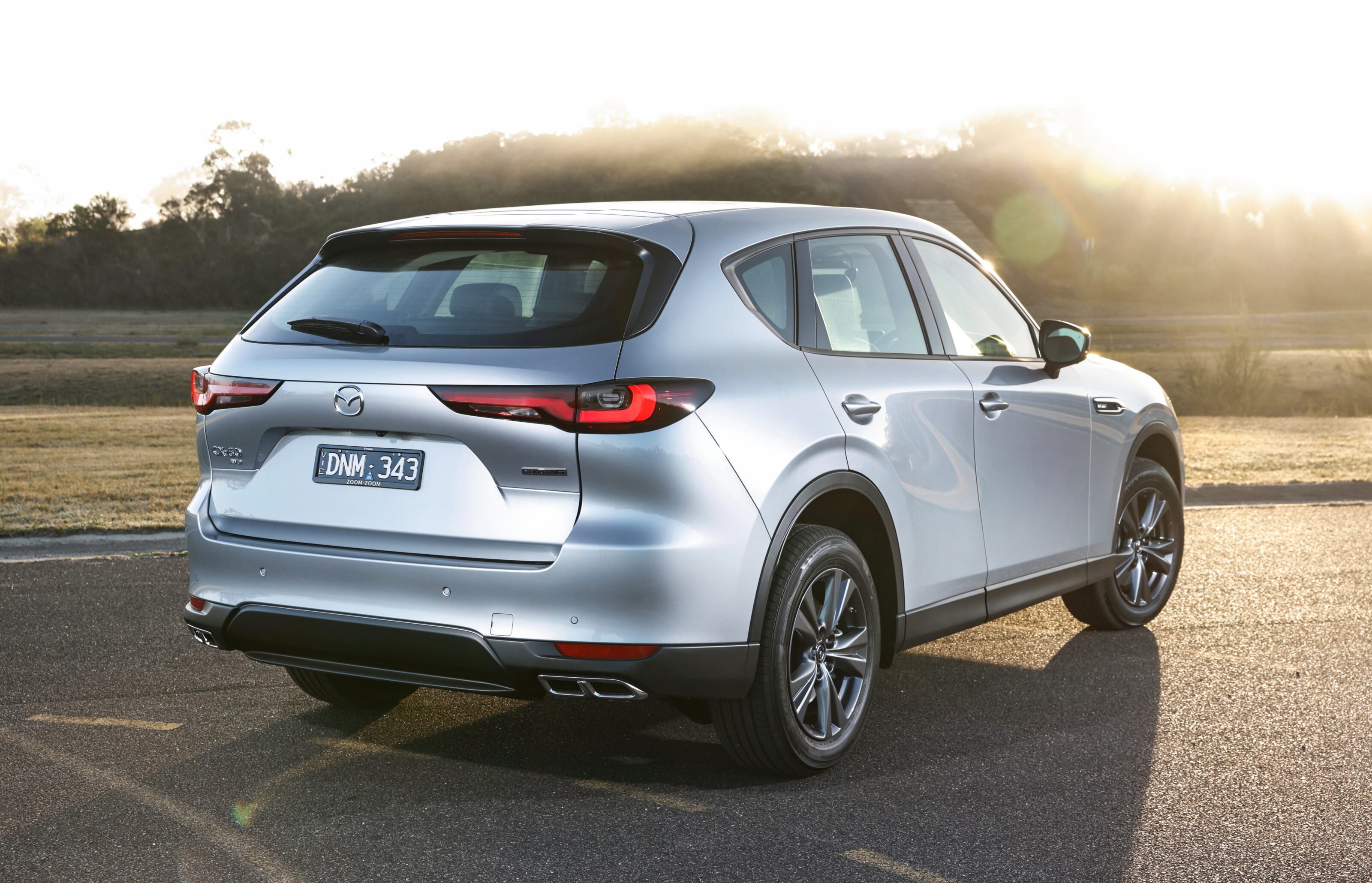
Specifications
| Model | CX-60 G40e Touring |
|---|---|
| Price | $58,240 |
| Engine | 3.3-litre inline-6 |
| Power | 209kW @ 5000-6000rpm |
| Torque | 450Nm @ 2000-3500rpm |
| Transmission | 8-speed auto |
| Claimed fuel consumption and CO2 | 7.4L/100km and 174g/km |
| 0-100km/h | 6.9sec |
Kia Australia has announced local details for the facelifted Sportage mid-size SUV, which is now entering local Kia showrooms priced from $37,990 plus on-road costs. The updated Sportage has dropped all manual transmission variants, though the hybrids are now available in all-wheel drive form.
The price of entry to the Sportage range has climbed by $4995 thanks to the shelving of the manual transmission though like-for-like, it’s still climbed by $2995.
2025 Kia Sportage pricing (plus on-road costs):
| S 2.0L FWD | $37,990 |
|---|---|
| S 2.0L diesel AWD | $43,390 |
| SX 2.0L FWD | $40,480 |
| SX 2.0L diesel AWD | $45,880 |
| SX 1.6T hybrid FWD | $46,450 |
| SX 1.6T hybrid AWD | $49,450 |
| SX+ 2.0L FWD | $45,080 |
| SX+ 1.6T AWD | $47,080 |
| SX+ 2.0L diesel | $50,480 |
| GT-Line 1.6T AWD | $53,990 |
| GT-Line 2.0L diesel AWD | $56,400 |
| GT-Line 1.6T hybrid FWD | $57,370 |
| GT-Line 1.6T hybrid AWD | $60,370 |
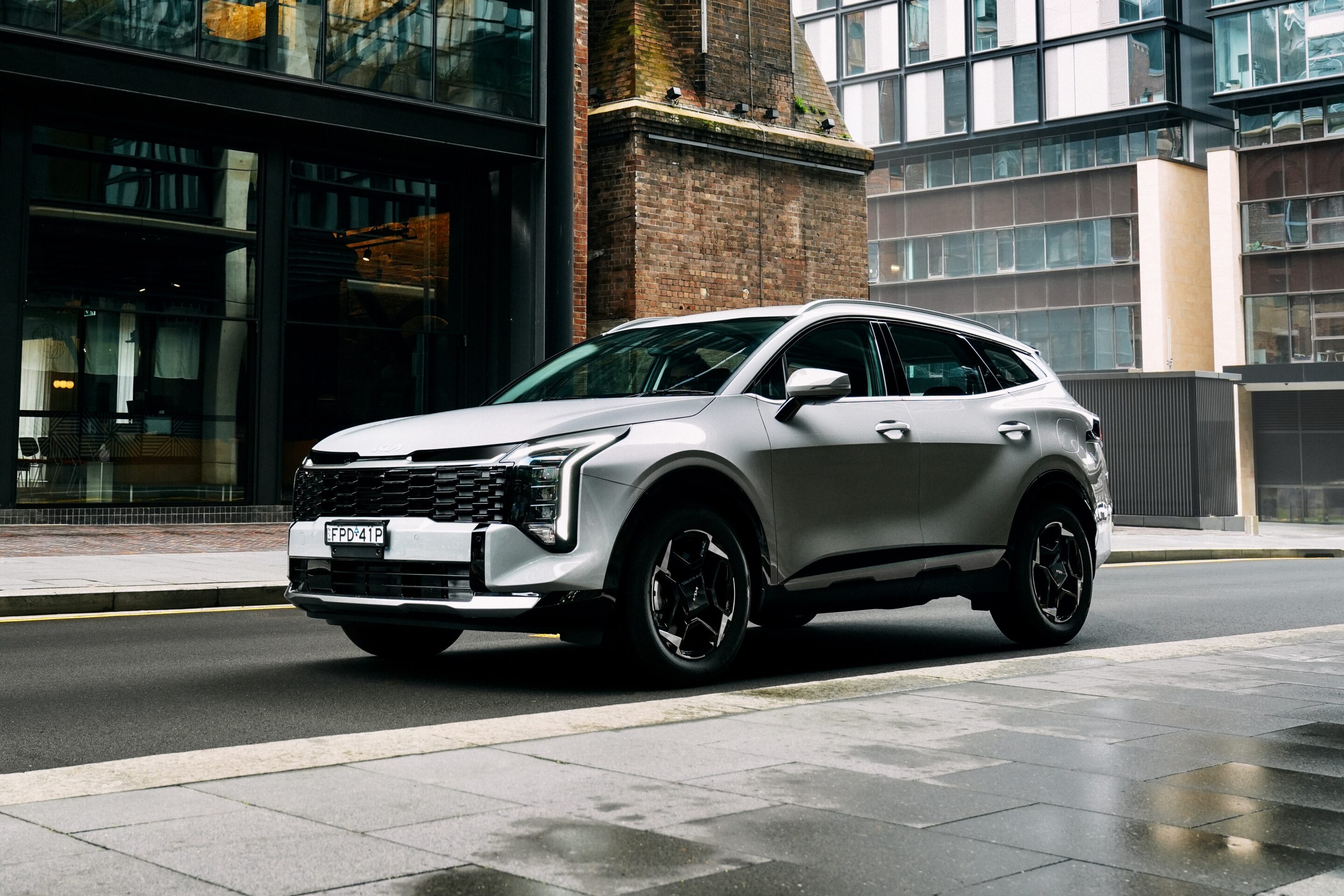
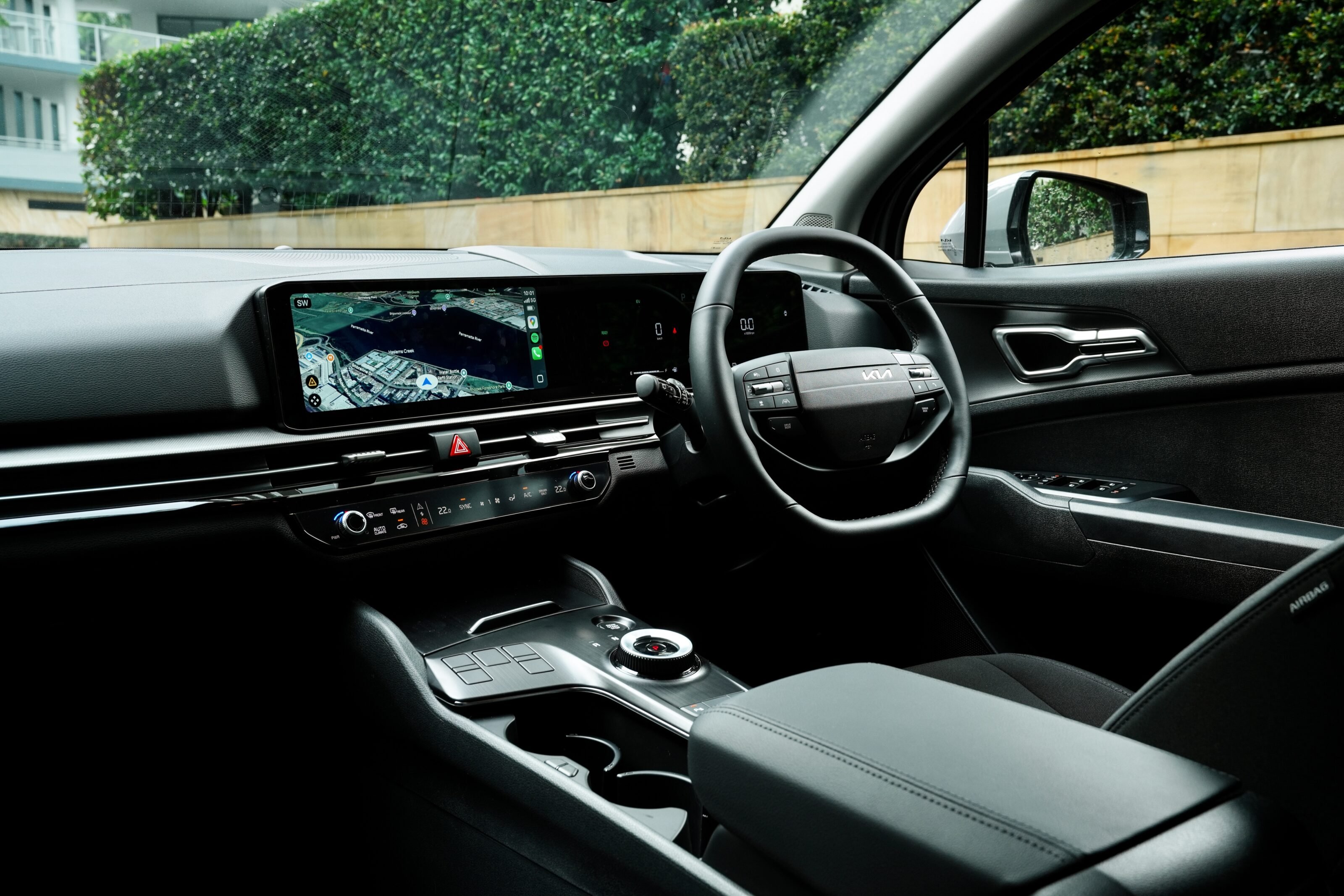
Helping to justify the added cost, every model in the facelifted Kia Sportage range has gained standard equipment, with the S now featuring keyless entry with push button start and a larger 12.3-inch touchscreen with over-the-air updates and the Kia Connect smartphone app, the SX+ gets a wireless phone charger, highway driving assistance and a heated steering wheel, and the top-spec GT-Line includes a head-up display and dynamic welcome lighting.
The exterior of the Kia Sportage has received a light nip and tuck, with new lighting units, bumper and wheel designs, while inside has gained a new two-spoke steering wheel and a larger 12.3-inch touchscreen across the range.
The new touchscreen has also brought the ‘Kia Connect’ suite of live services to the Sportage for the first time, with seven years of complimentary access.
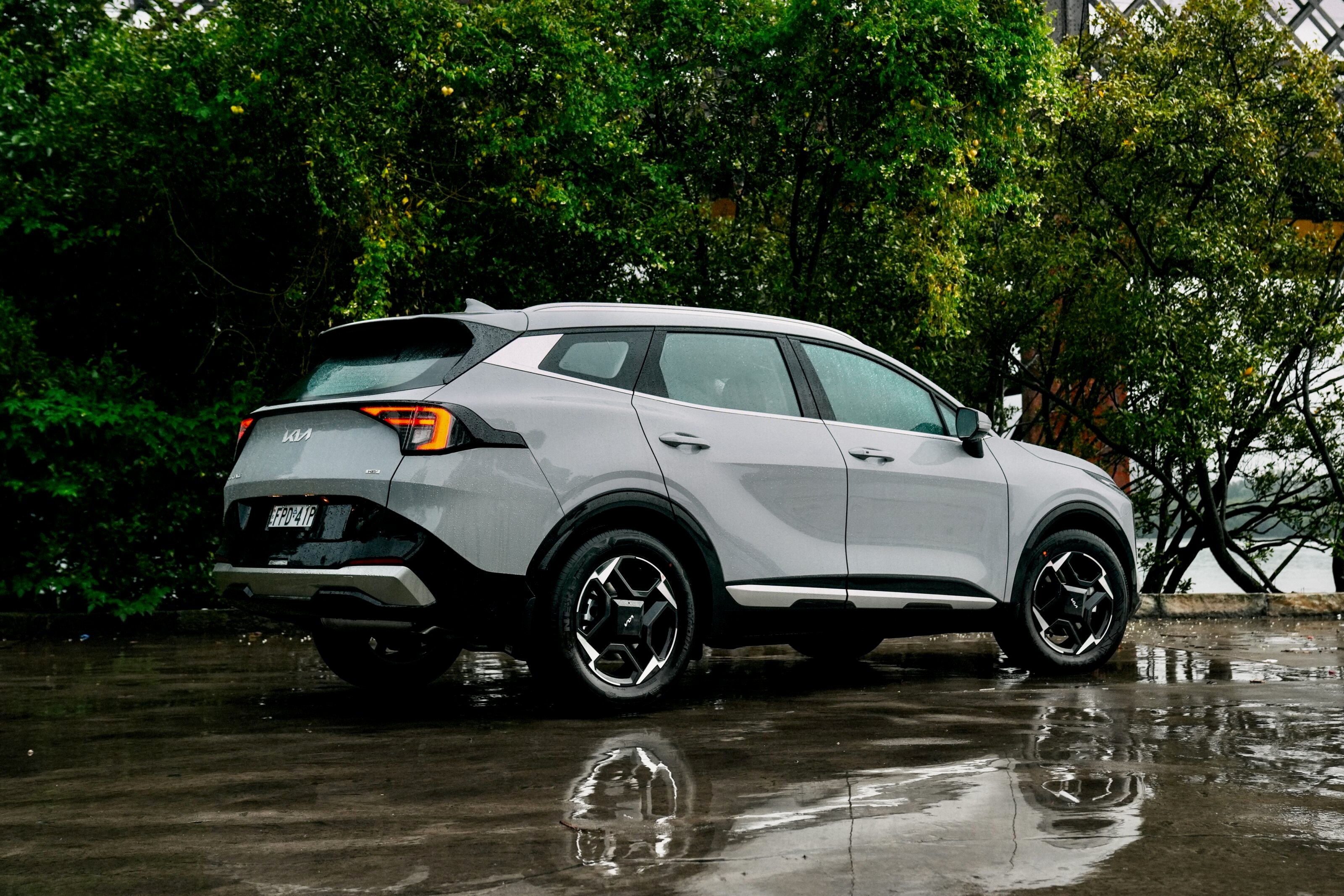
As before, there are four drivetrains in the Kia Sportage range: a 2.0-litre naturally aspirated and turbocharged 1.6-litre petrol engines, a 2.0-litre turbo-diesel and a turbocharged 1.6-litre four-cylinder hybrid.
Kia is yet to detail engine figures for the line-up, though the 1.6T is now equipped with an eight-speed torque converter automatic transmission – not the former seven-speed dual-clutch unit – and the hybrid is now available with all-wheel drive.
Sportage S standard equipment:
- 17-inch alloy wheels with a full-size spare wheel
- Dusk-sensing automatic LED headlights
- Keyless entry with push button start
- 12.3-inch touchscreen with Kia Connect and over the air updates
- Wireless Apple CarPlay and Android Auto
- Leather steering wheel
- Cloth upholstery
- Manual air-conditioning
- Autonomous emergency braking
- Lane keeping assist with lane follow assist
- Adaptive cruise control
- Blind-spot monitoring with rear cross traffic alert
- Reversing camera
- Front and rear parking sensors
- Tyre pressure monitoring
Sportage SX model adds:
- 18-inch alloy wheels (non-hybrid)
- Rain-sensing automatic wipers
- Driver’s seat lumbar adjustment
- Faux leather shift knob (petrol and diesel)/dial shifter (hybrid)
- Satellite navigation
- Remote-folding rear seats
- Dual-zone automatic climate control
Sportage SX+ model adds:
- Synthetic leather upholstery
- Wireless phone charger
- Heated steering wheel and front seats
- Electric driver’s seat
- 19-inch alloy wheels
- Harmon Kardon sound system
- Hands-free electric tailgate
- Rear privacy glass
- Highway drive assist
Sportage GT-Line model adds:
- Head-up display
- Dynamic front and rear welcome light
- 12.3-inch digital driver’s display
- Electric front passenger seat, driver’s seat memory
- Ambient mood lighting
- 360-degree camera
- Panoramic sunroof
- LED interior lights
- Alloy sports pedals
- Dial transmission selector (petrol and diesel)
- Ventilated front seats
The facelifted Kia Sportage is now entering local Kia showrooms, with the first deliveries due to
commence soon.
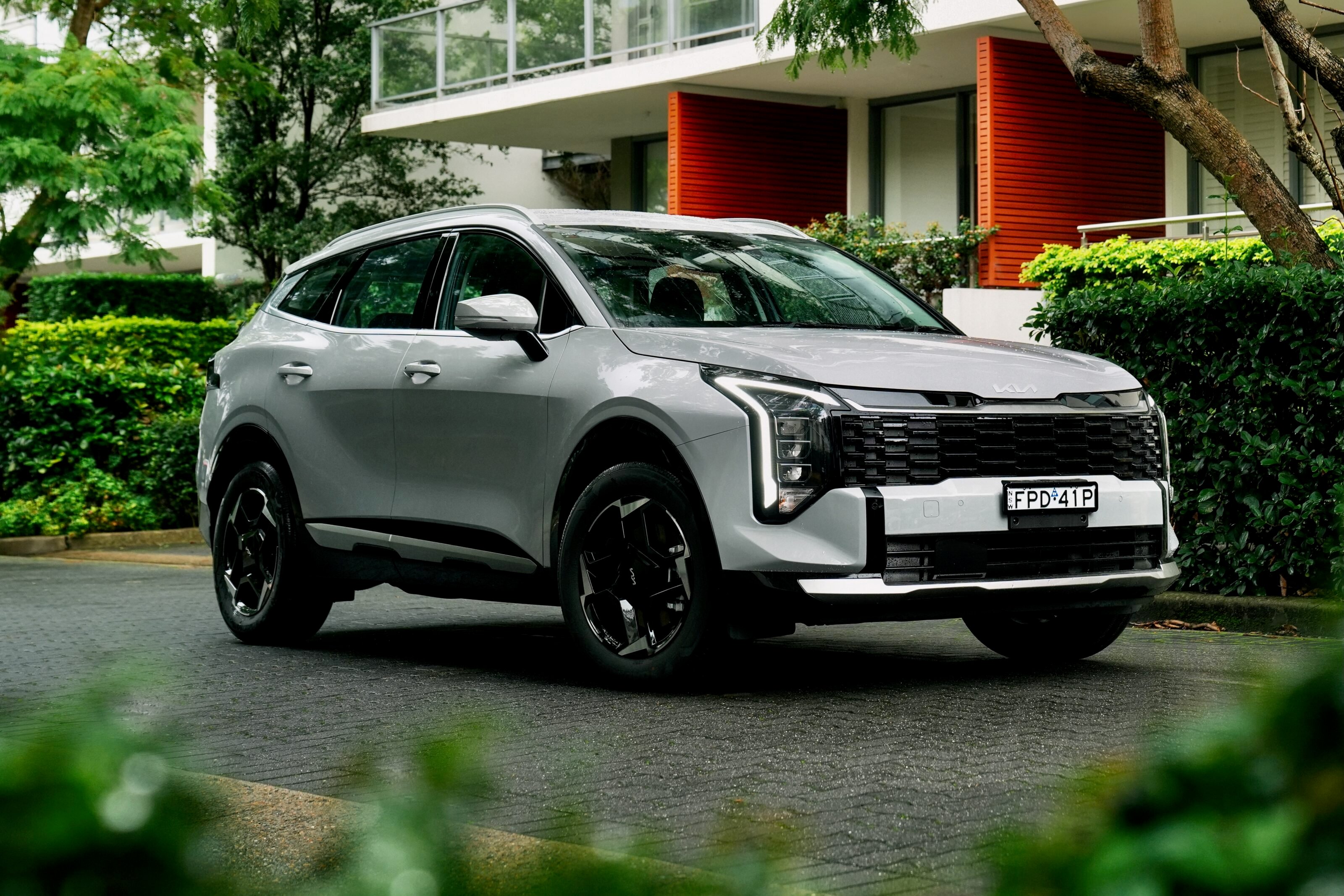
MG Motor Australia has announced local pricing and specifications for the new HS Super Hybrid, which is a plug-in hybrid variant of the HS mid-size SUV. Priced from $52,990 drive away, the Super Hybrid system is the first hybrid variant of the new HS range, with the non-plug-in Hybrid+ also due to join sometime in 2025.
Under the bonnet of the HS Super Hybrid is a 105kW/230Nm turbocharged 1.5-litre four-cylinder petrol engine that’s paired with a 154kW/340Nm electric motor for combined outputs of 220kW of power and 350Nm of torque. The electric motor draws power from a 24.7kWh battery for a WLTP-rated electric-only driving range of 120km.
The HS Super Hybrid is rated at 0.7L/100km for combined fuel consumption, with CO2 emissions of 17g/km when fully charged. But with the battery depleted and in regular hybrid mode, the company says that it will still use under 5.0L/100km and it’s reportedly capable of driving more than 1000km from a full tank of fuel and a fully charged battery.
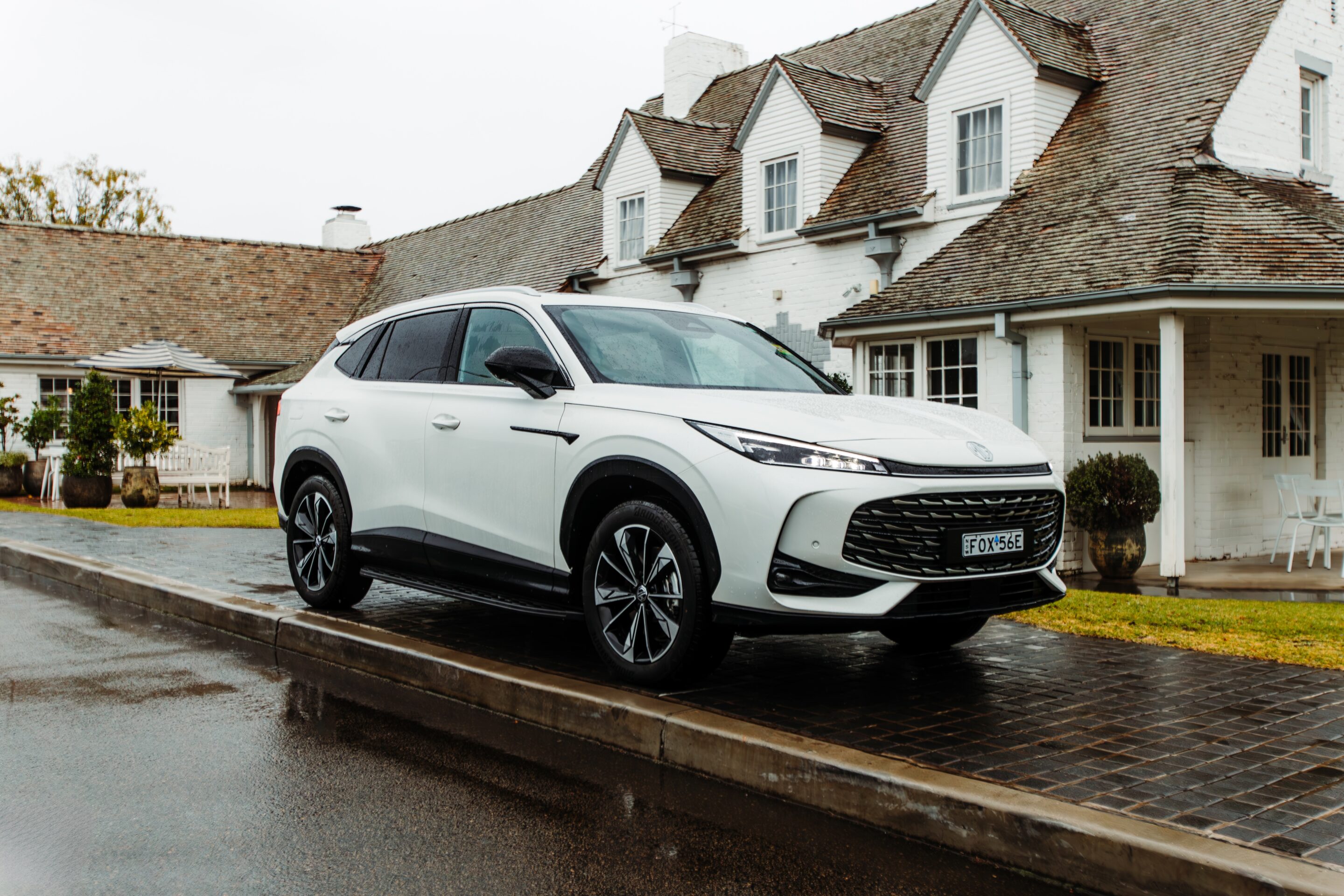
The HS Super Hybrid’s battery can be charged using a type two connection and a full charge using a 7kW charger occurs in four hours, or just over seven hours using a 10-amp charger.
Unlike the petrol HS, which offers a base model Vibe, the Super Hybrid range starts at the mid-level Excite and pricing starts at $52,990 drive away with the top-spec Essence priced at $55,990 drive away.
MG HS Super Hybrid pricing (drive away):
| Excite: | $52,990 |
|---|---|
| Essence | $55,990 |
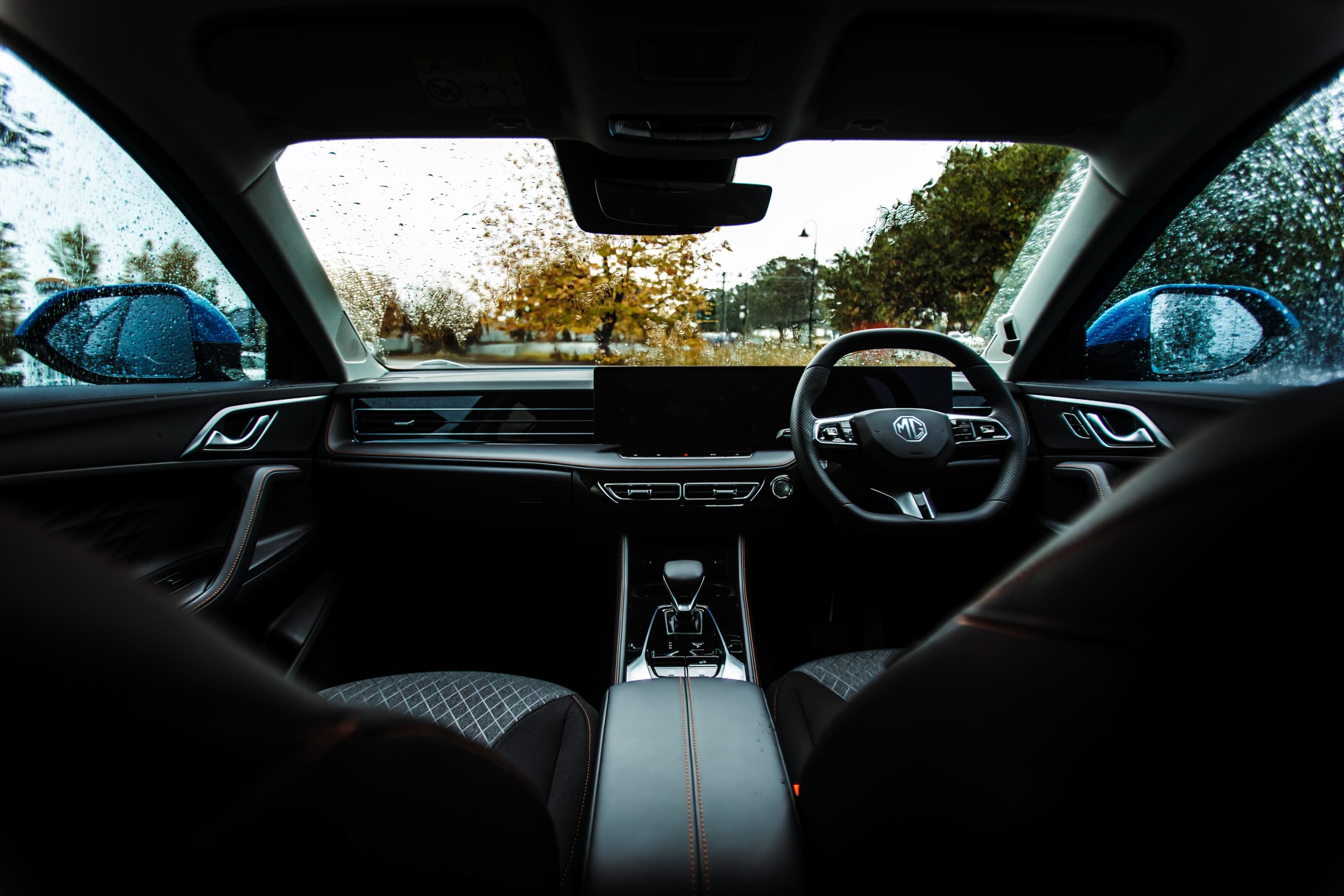
MG HS Super Hybrid Excite standard equipment:
- 19-inch alloy wheels with a tyre repair kit
- Dusk-sensing automatic LED exterior lighting
- LED front and rear daytime running lights
- Rain-sensing automatic wipers
- Roof rails
- Rear privacy glass
- Side steps
- Keyless entry with push button start
- Heated door mirrors
- Cloth seat upholstery
- Six-way electric driver’s seat
- Single-zone automatic climate control with rear air vents
- PM2.5 dust filter
- 12.3-inch digital driver’s display
- 12.3-inch touchscreen with live services
- 12 months of access to the MG iSmart app
- Wireless Apple CarPlay and Android Auto
- 4x USB ports
- Six-speaker sound system
- Satellite navigation
- AM/FM/DAB+ digital radio
- Driving modes
- 7x airbags
- Autonomous emergency braking
- Adaptive cruise control
- Lane keeping assistance with adaptive lane guidance
- Auto high beam
- Traffic sign recognition
- Driver attention monitoring
- Blind-spot monitoring
- Front and rear cross-traffic alert (with braking)
- Door open warning
- Tyre pressure monitoring
- Rear parking sensors
- Reversing camera
- Alarm
- Pedestrian warning sound
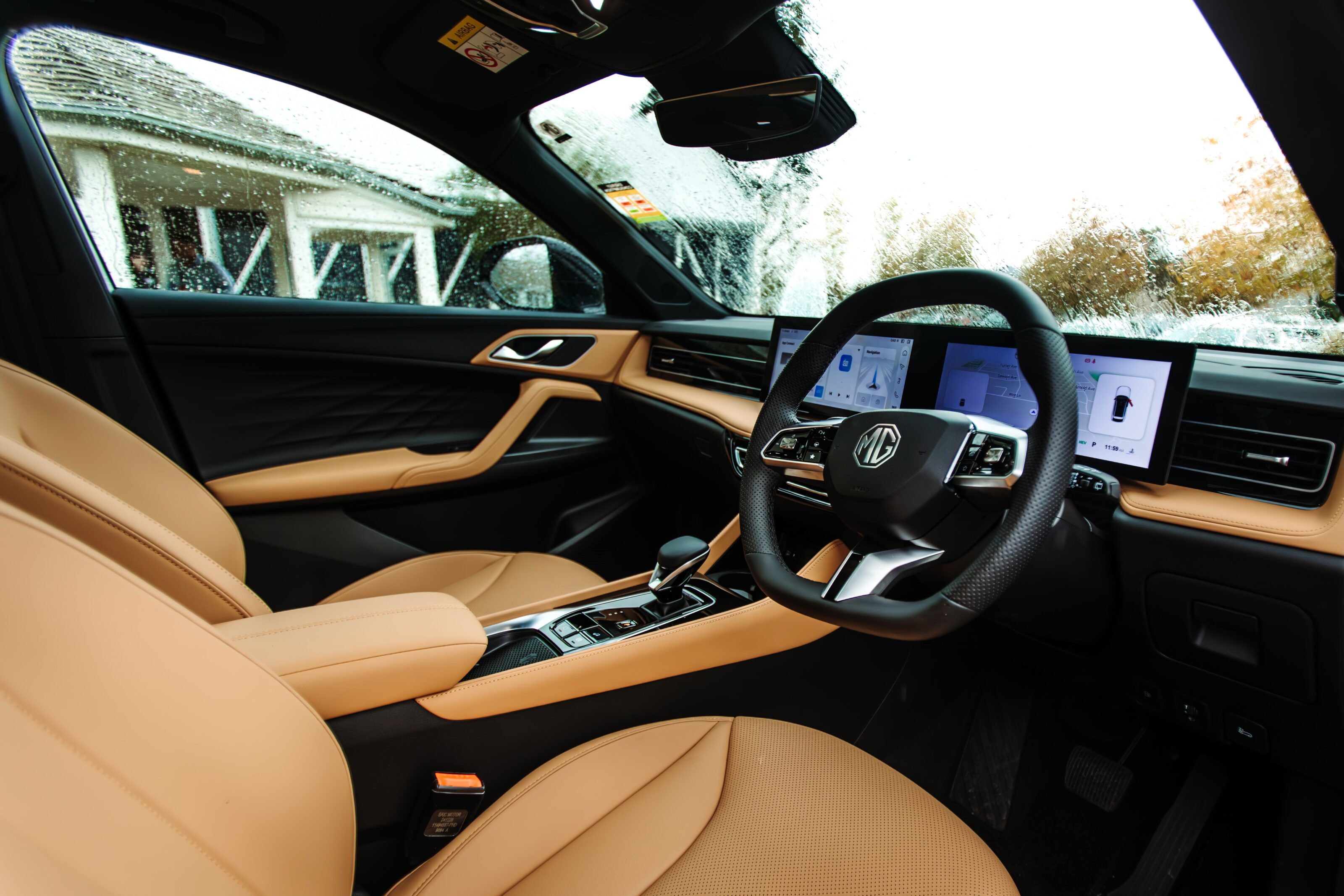
HS Super Hybrid Essence model adds:
- Panoramic sunroof
- Eight-speaker sound system
- Auto-folding mirrors
- Front parking sensors
- Dual-zone automatic climate control
- Synthetic leather upholstery
- 4-way driver’s seat lumbar
- Driver seat and mirror memory
- 4-way electric front passenger seat
- Heated front seats
- Power tailgate
- 360-degree camera
- Wireless phone charger
The first MG HS Super Hybrids will land in Australia in September.
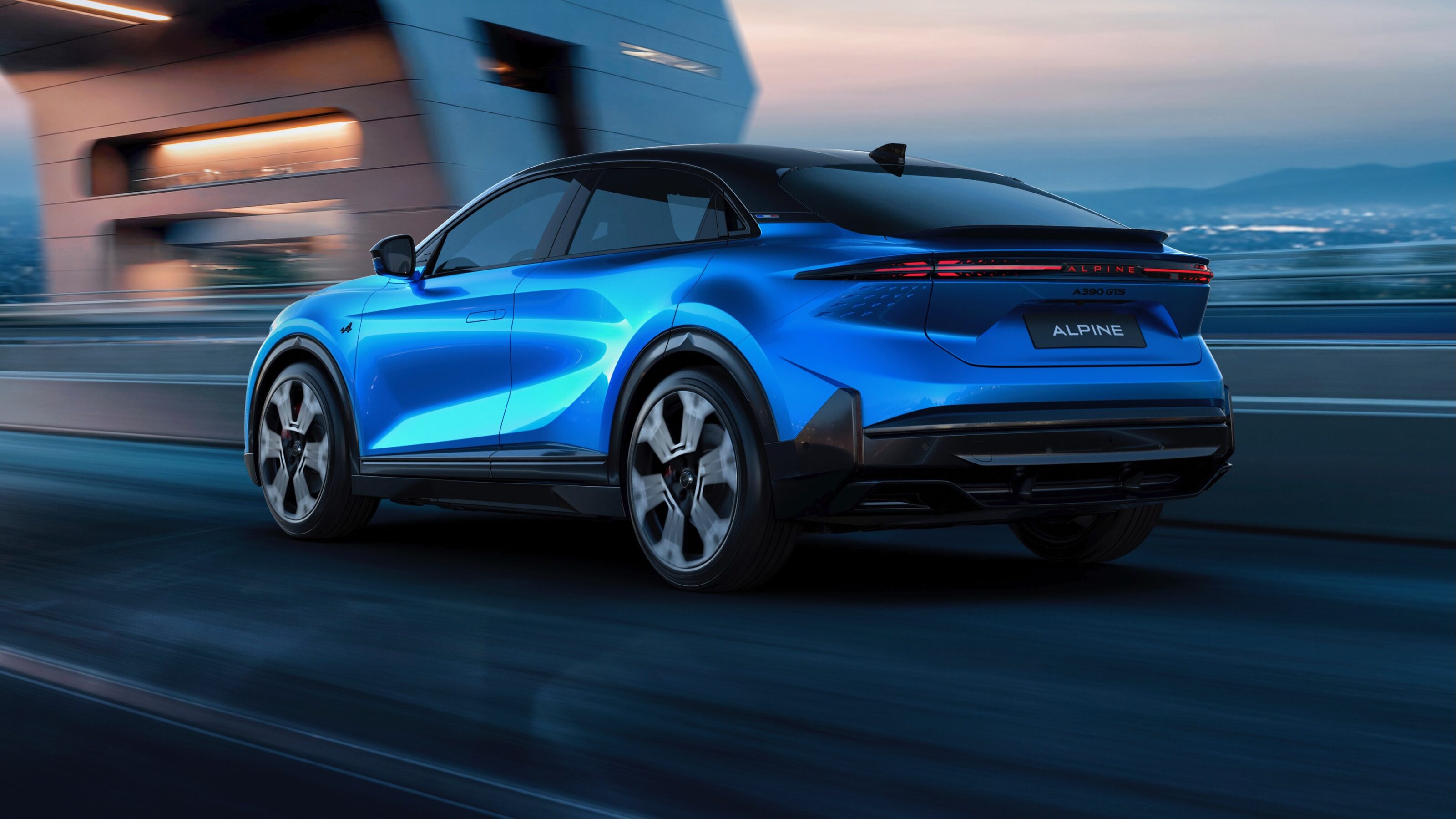
French sports car maker Alpine has unveiled the A390 electric sports SUV, which it will use to relaunch in Australia.
Last seen in 2022, Alpine’s then only product – the A110 coupe – had to be cut from Australia because of local side impact regulations and it’s not been seen since.
Now with the reveal of the A390, Renault’s local distributor Ateco Group has announced that the Alpine brand will be reintroduced to Australia, likely sometime in 2026.
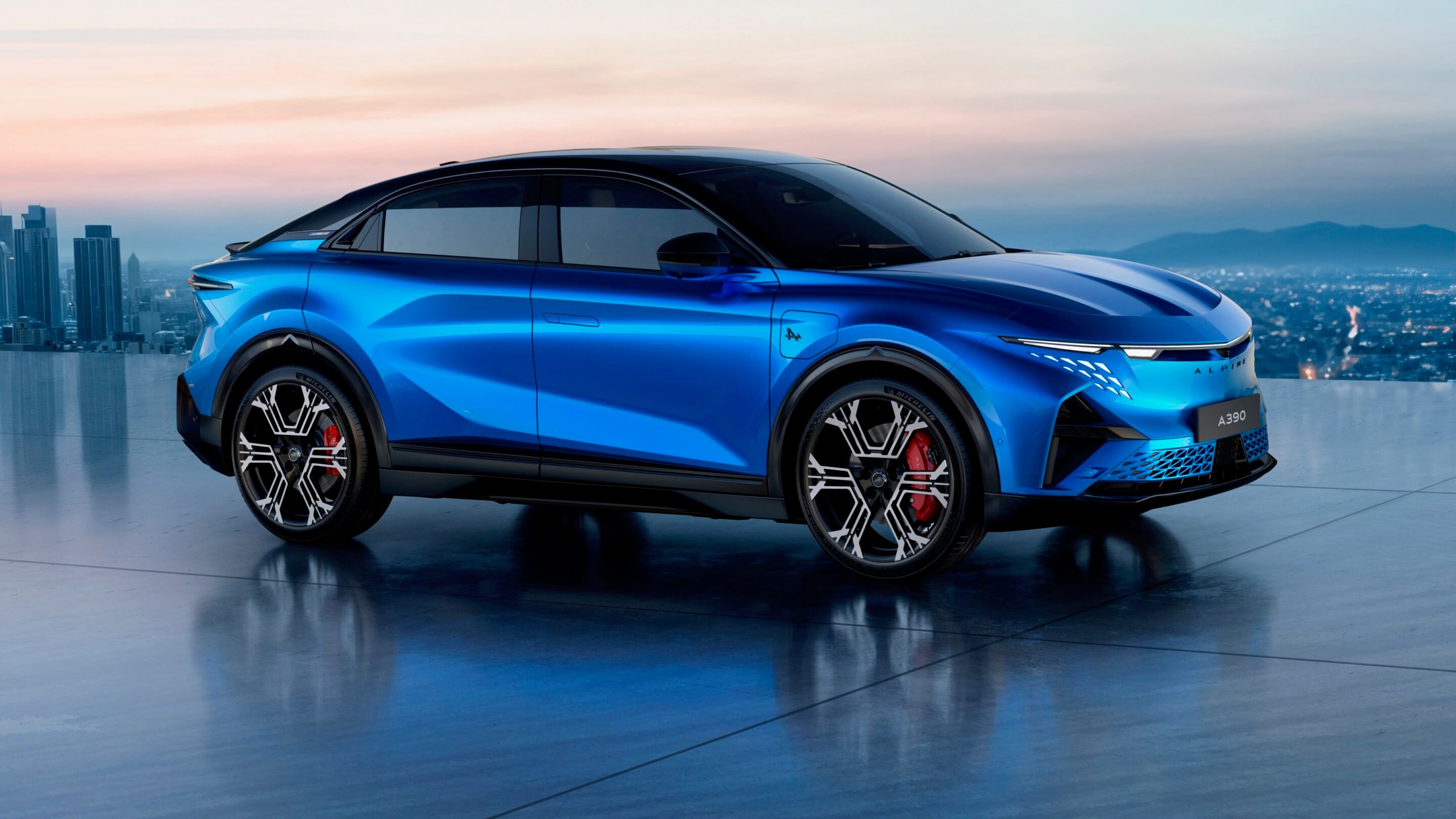
Revealed as a performance fastback SUV, the Alpine A390 uses the same ‘AmpR’ Medium platform as cars such as the Renault Megane E-Tech and measures 4615mm long, 1885mm wide, 1532mm tall and rides on a 2708mm long wheelbase. That makes it 15mm longer and 30mm wider, though 153mm lower than a Toyota RAV4, while its 532-litre boot is almost identical in size.
For now, just an 89kWh lithium-ion battery will be available in the A390, enabling an estimated range of up to 555km (WLTP). Using a 400V architecture, the A390 can be DC fast charged at up to 190kW, with 11kW (/optional 22kW) AC charging also available.
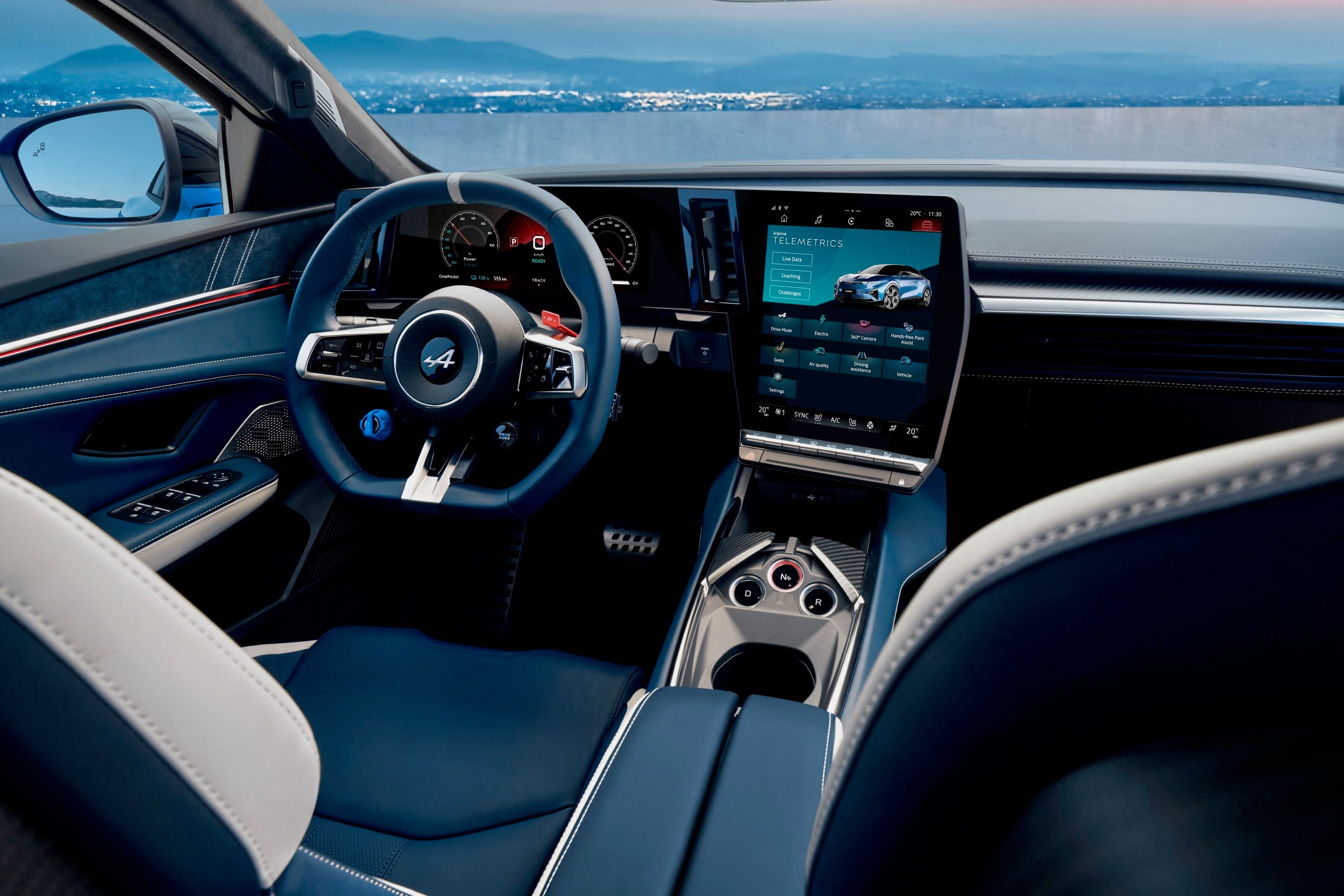
Two A390 models will be available – GT and GTS – and both use a tri-motor drivetrain with active torque vectoring. The GT makes 295kW/650Nm for a claimed 4.8 second 0-100km/h time and the higher-performance GTS boosts outputs to 345kW/808Nm, dropping the 0-100km/h time to just 3.9 seconds.
Standard features on the A390 GT include 20-inch alloy wheels with Michelin EV tyres, a Nappa leather steering wheel, a 12.3-inch digital driver’s display, a 12-inch portrait touchscreen with inbuilt Google software, an 850-watt 13-speaker Devialet sound system and electric front sports seats.
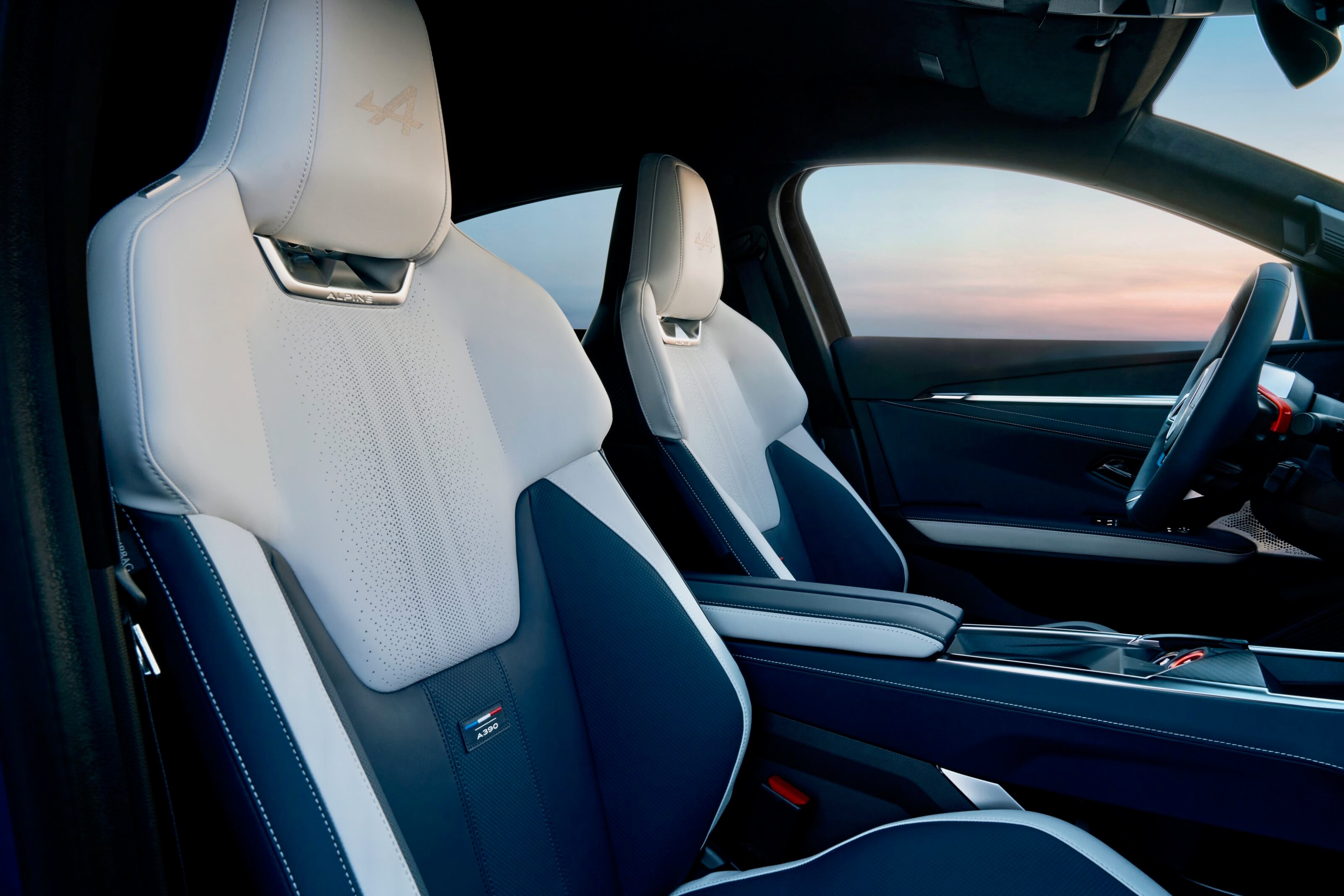
The GTS further adds larger 21-inch wheels with Michelin Pilot Sport 4S tyres, Nappa leather upholstery, Sabelt front sports seats with massaging, semi-autonomous driving functionality and an upgraded ‘XtremeSound’ audio system again from Devialet.
Australian details for the Alpine A390 are yet to be announced.