
Millions of drivers are being warned ahead of a road rule change being introduced on July 1, 2025 in Victoria, with motorists now required to slow to 40km/h when passing stationary assist vehicles by the roadside.
Previously already applied to stopped emergency response vehicles with sirens on such as police cars and ambulances, the new mandate will now be extended to tow trucks, mechanics and roadside assist vehicles as well.
A recent RACV (Royal Automobile Club of Victoria) survey found that 83 per cent of its roadside workers experience a near miss with another motorist at least once a week and the change in rule has come after a consistent campaign from the group.
RACV General Manager of Automotive Services Makarla Cole said the amendment addresses a safety issue in the Victorian road rules and aligns Victoria with other Australian states.
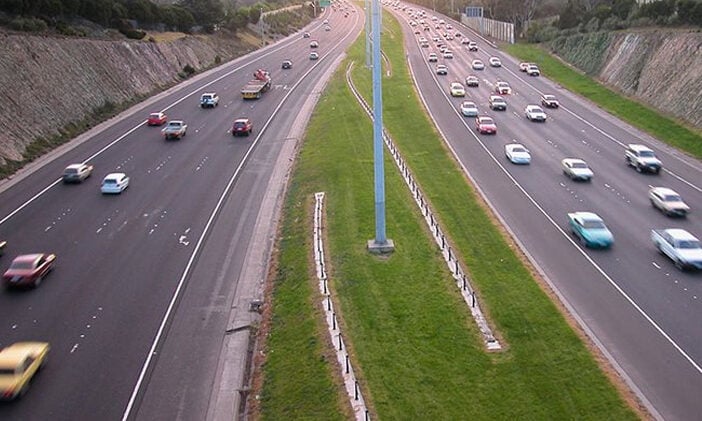
“Since 2017, drivers on Victorian roads have had to slow down to 40 kms per hour when passing emergency services vehicles at the side of the road,” said Ms Cole.
“Victoria’s emergency roadside workers and tow truck drivers are often the first and only responders to an incident or breakdown and are exposed to the same risks to other responders, such as police and paramedics. From July 1, 2025, Road Rule 79A will be extended to include accident towing, breakdown towing, roadside assistance, Peninsula Link Incident Response, Eastlink Incident Response and Transurban Incident Response vehicles.”
If drivers don’t comply with the rule, the standard penalty for non-compliance is $346 with a potential maximum of $961. However, there will be no demerit points attached to the offence.
That satisfying click as your car unlocks without fumbling for keys? It’s the kind of modern magic we’ve quickly come to love.
Keyless entry and start systems offer sleek convenience, but this very technology exposes a hidden vulnerability: sophisticated car theft. Welcome to the age of the ‘relay attack’.
It sounds like science fiction, but it’s a disturbing reality across Australia. Thieves, armed with inexpensive signal-boosting devices (sometimes costing as little as $20), can capture the radio frequency signal your key fob constantly emits. They amplify it, tricking your car into thinking the key is nearby, allowing them to unlock and even drive away your vehicle in seconds – all without the original key. Even top brands have proven susceptible.

Data reveals the alarming frequency of car theft in Australia, with a vehicle stolen approximately every 11 minutes. Vehicle theft soared by nearly 27 per cent across Australia in the 12 months leading up to March 2024, totalling almost 70,000 stolen vehicles.
So, how do you protect yourself from this invisible threat? The solution is surprisingly straightforward: Fight technology with technology. The Aus Security Products Key Fob Faraday Pouch acts as a personal shield for your key fob. Utilising proven Faraday cage principles, this pouch creates an impenetrable barrier, blocking 100 per cent of the RFID, Wi-Fi, NFC, and Bluetooth signals thieves try to exploit. Simply place your fob inside the specially lined main pocket, seal the reliable Velcro closure, and your car’s security system remains uncompromised.
Crafted from durable, water-resistant PU leather, the pouch is designed for daily life. Its compact size fits most fobs comfortably. Beyond vehicle security, a secondary front pocket offers RFID protection for bank cards, shielding them from remote skimming.
In a world where digital threats are ever-evolving, taking simple, effective precautions is key. Investing in a Faraday pouch offers significant peace of mind, ensuring your vehicle remains exactly where you left it.
- Price: $73,330 plus on-road costs
- Engine: 1,598cc 4-cyl turbo DOHC petrol
- Electric motor: front permanent magnet synchronous
- Battery: 1.49kWh lithium-ion
- Combined outputs: 169kW/350Nm
- Transmission: six-speed automatic, all-wheel drive
- Fuel consumption (claimed/on test): 5.9L/100km / 6.9L/100km
- L/W/H/WB: 4,815/1,900/1,700/2815mm
- Weight: 1,972kg
- Boot: 179/608/1,996L
- 0-100km/h: 9.0 seconds
| Rating |
Things we like:
- Handsome styling inside and out
- Efficient hybrid drivetrain the one to choose
- Great locally-tuned ride and handling balance
Things we don’t like:
- Third row not huge
- Hybrid only available at the top of the range
- Short 10,000km service intervals
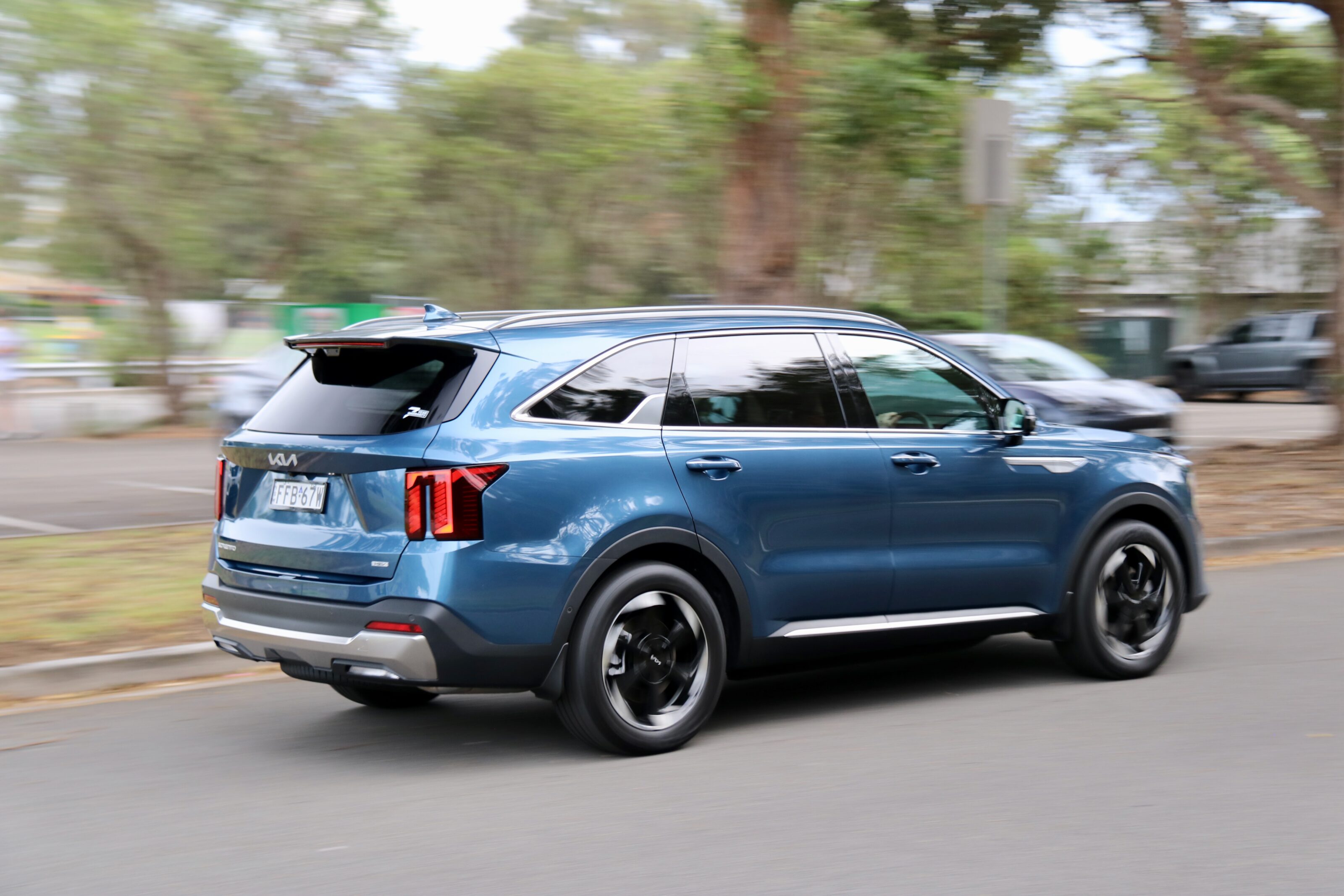
It’s no secret that vehicles comprising the seven-seat large SUV market are in high demand right now in Australia, with more options becoming available for a wide range of budgets.
At the cheaper end of the market are cars like the Chery Tiggo 8 Pro. Add considerable dollars to the equation gets you to the Mercedes-Benz GLS and BMW X7. In the middle are cars such as the Kia Sorento, which give buyers a wide range of models and powertrains to choose from. Is the Sorento, in top-spec GT-Line Hybrid form – one of the best seven-seat SUV options out there?
While the larger Telluride exists overseas, the Sorento is Kia’s flagship ICE SUV in Australia and has long been one its biggest sellers too. In its current fourth-generation form, the Sorento is available with petrol, diesel, hybrid and plug-in hybrid drivetrains to suit a wide range of buyers. Pricing starts at under $60,000 drive away, and hits over $90,000 for the plug-in hybrid.
Pricing
While there are multiple Sorento grades that have petrol and diesel engines, the hybrid drivetrain is only available in top-spec GT-Line form for now:
| Sorento GT-Line Hybrid FWD | $70,330 |
| Sorento GT-Line Hybrid AWD | $73,330 |
Standard equipment
The Sorento GT-Line Hybrid is equipped with:
- 19-inch alloy wheels
- Dusk-sensing automatic LED exterior lighting
- Rain-sensing automatic wipers
- Keyless entry and start with remote start and remote parking
- Heated/auto-folding/auto-dipping mirrors
- Roof rails
- Panoramic sunroof
- Rear privacy glass
- Electric tailgate with easy open functionality
- Dual-zone climate control with rear fan speed control
- Heated leather steering wheel with paddle shifters
- Quilted Nappa leather upholstery
- Electric front seats with driver’s memory functionality
- Heated and ventilated front seats, heated outboard middle seats
- 12.3-inch digital driver’s display and 12.3-inch touchscreen
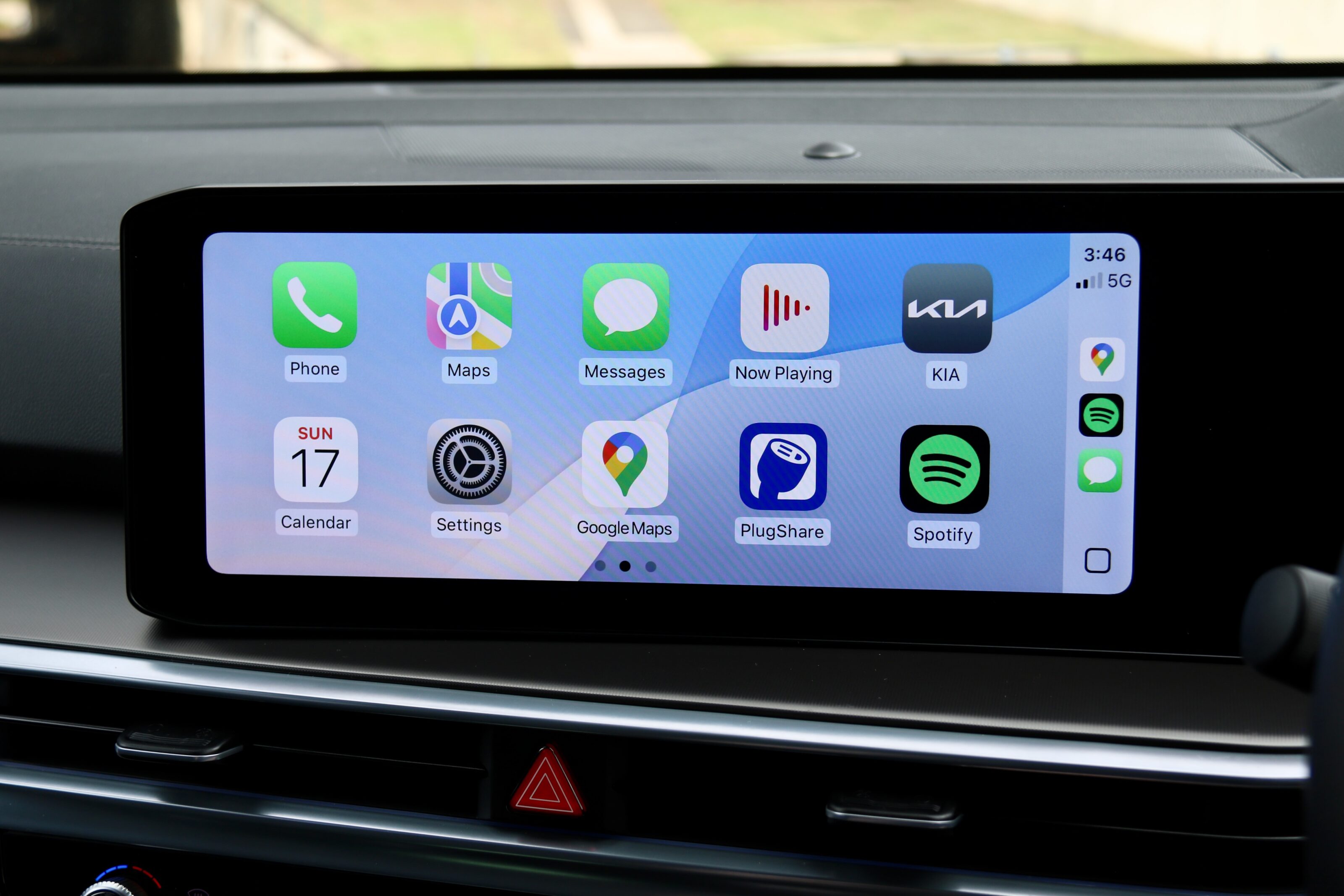
- Wireless and wired Apple CarPlay and Android Auto
- Satellite navigation
- AM/FM/DAB+ digital radio
- 12-speaker Bose sound system
- Wireless phone charger
- 6x USB-C ports
- Head-up display
- Ambient lighting
- Digital centre mirror
- Seven airbags
- Autonomous emergency braking (AEB) with pedestrian, cyclist and junction assistance
- Lane keeping assistance with adaptive lane guidance
- Adaptive cruise control with stop and go functionality
- Blind-spot monitoring with rear cross-traffic alert (with braking)
- Safe exit assist
- Driver attention monitoring
- Traffic sign recognition with speed limit assist
- Auto high beam
- 360-degree camera
- Front and rear parking sensors
- Tyre pressure monitoring
- Rear occupant alert
- Automatic rear braking
Performance and economy
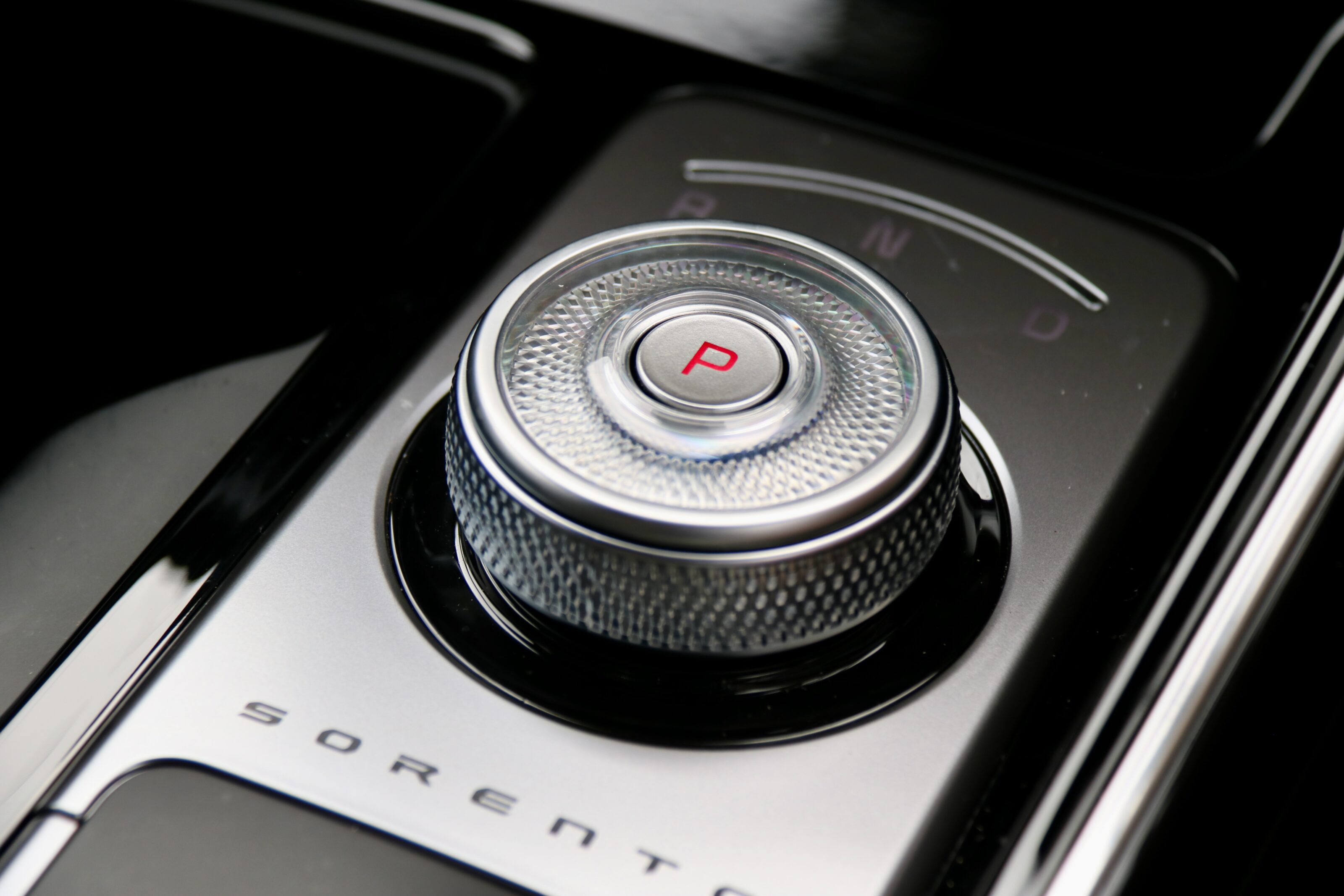
Under the bonnet of the Kia Sorento Hybrid is a turbocharged 1.6-litre four-cylinder petrol engine that’s combined with an electric motor. Either just the front or, optionally, all four wheels are sent power through a six-speed automatic transmission. The 44kW electric motor draws power from a 1.49kWh lithium ion battery, and combined outputs are 169kW of power and 350Nm of torque.
Kia claims combined fuel consumption of 5.7L/100km with claimed combined CO2 emissions of 129g/km – we achieved 6.9L/100km in our week of testing. The Sorento Hybrid can run on 91RON regular unleaded fuel, and has a 67-litre fuel tank.
Interior comfort, practicality and boot space
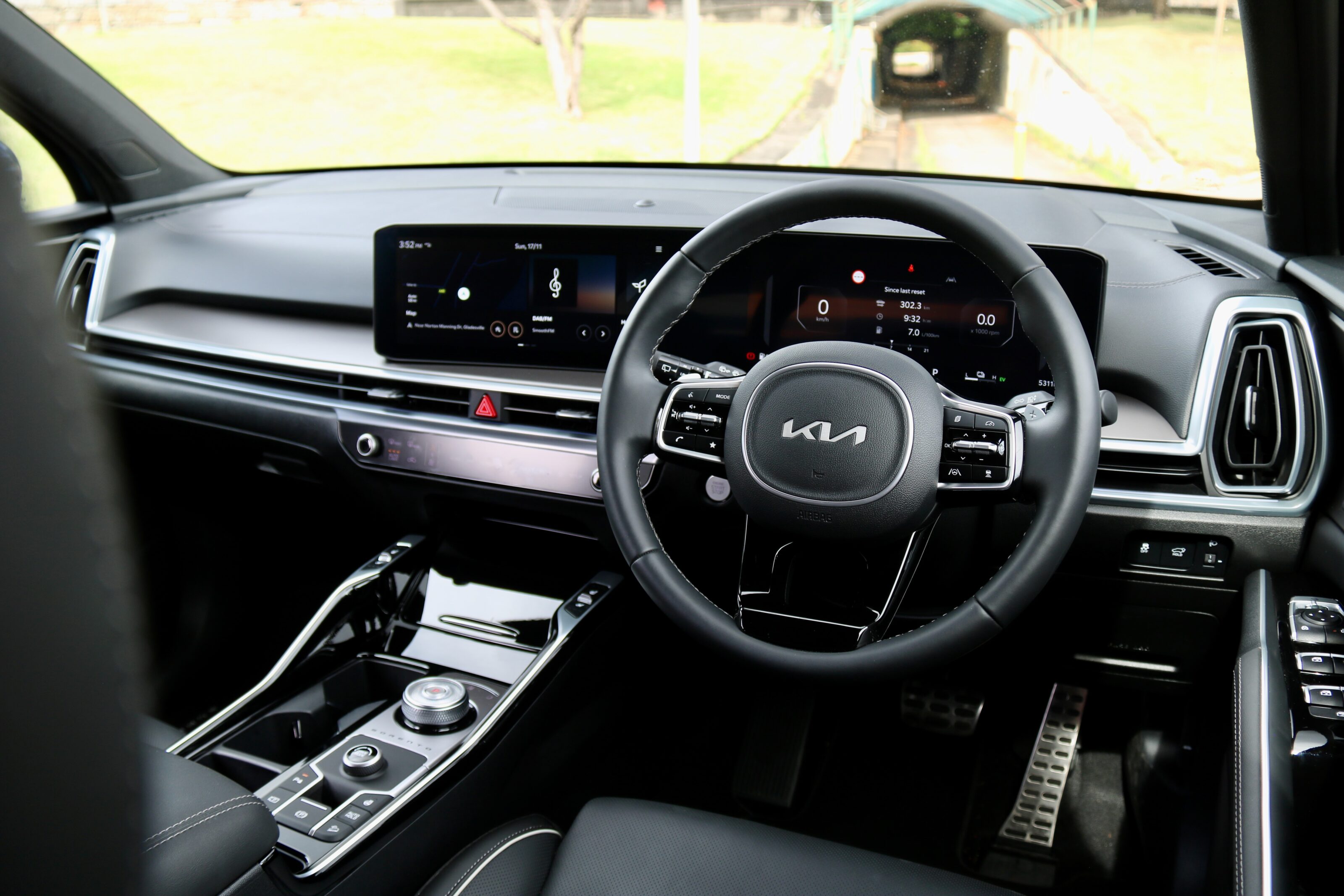
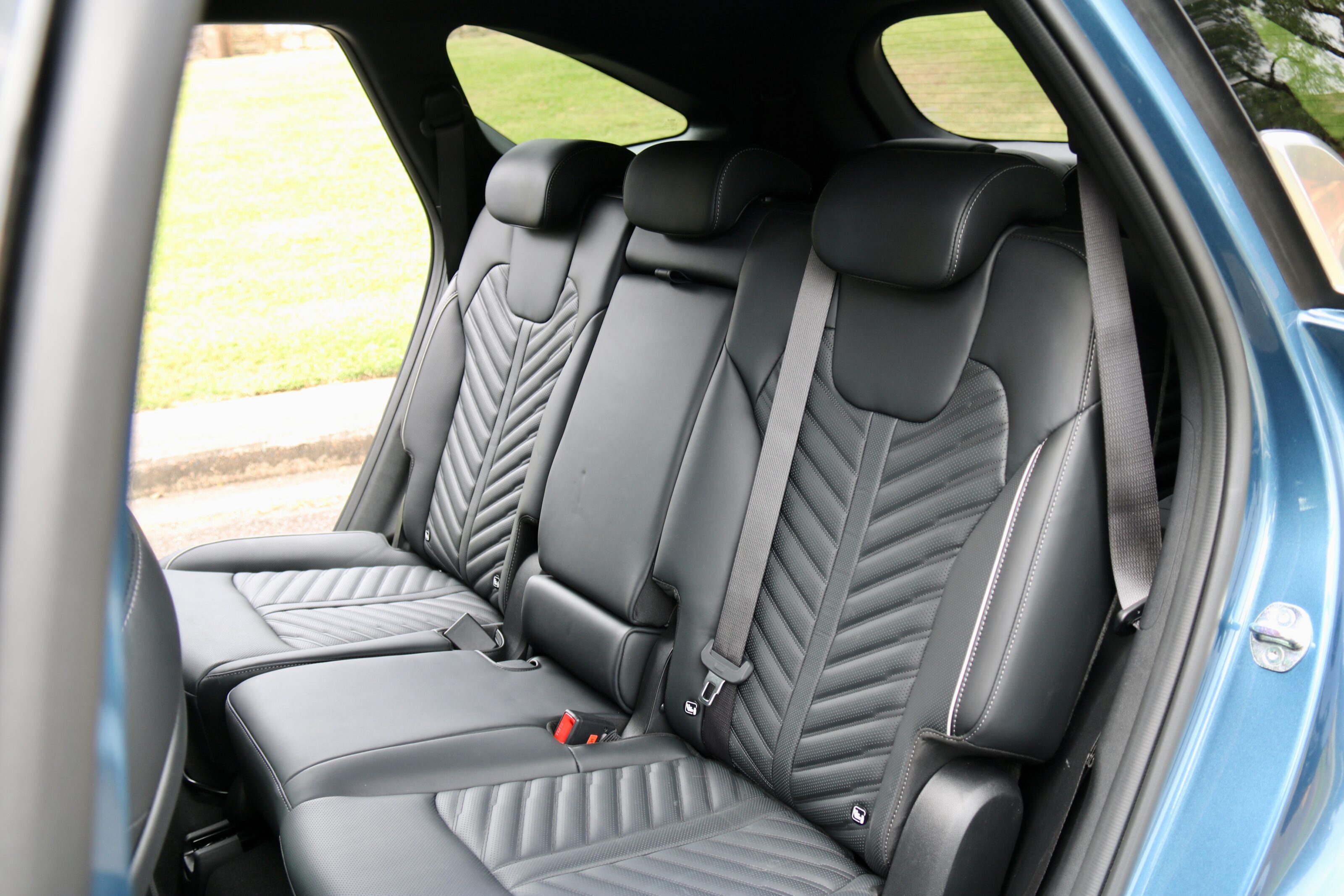
Kia gave the Sorento’s cabin a comprehensive revamp at its mid-life update with a new dashboard layout that’s more modern and simpler to use. Quality is excellent with plenty of soft touch materials – especially the lovely quilted Nappa leather trim – though only black colouring is available, making the cabin a bit dark. That is until you open the huge panoramic sunroof, which floods the interior with light.
Part of the cabin revamp was the introduction of a huge single screen across the dashboard incorporating dual 12.3-inch screens: one for the driver and a touchscreen for controlling the infotainment system. The touchscreen uses the brand’s new ‘ccNc’ software and it’s a breeze to use, while also being well featured with wireless and wired smartphone mirroring, satellite navigation and digital radio. The screen is a bit dark, but the quality is excellent.
There are plenty of places to store items in the front seat, and seat comfort is excellent – especially in the driver’s seat with its seemingly endless electric adjustment. Move to the middle row and it’s also positive with plenty of space for two tall adults and features such as charging ports, bottle holders in the doors, door pockets, heated outboard seats and air vents.
The rear seat is definitely designed for children, but six-footers should be okay on a short trip. Rear seat amenities include charging ports, cup holders and a fan speed controller. The middle row of seats slides and reclines for extra comfort or space, though access to the third row could be easier like the Hyundai Santa Fe.
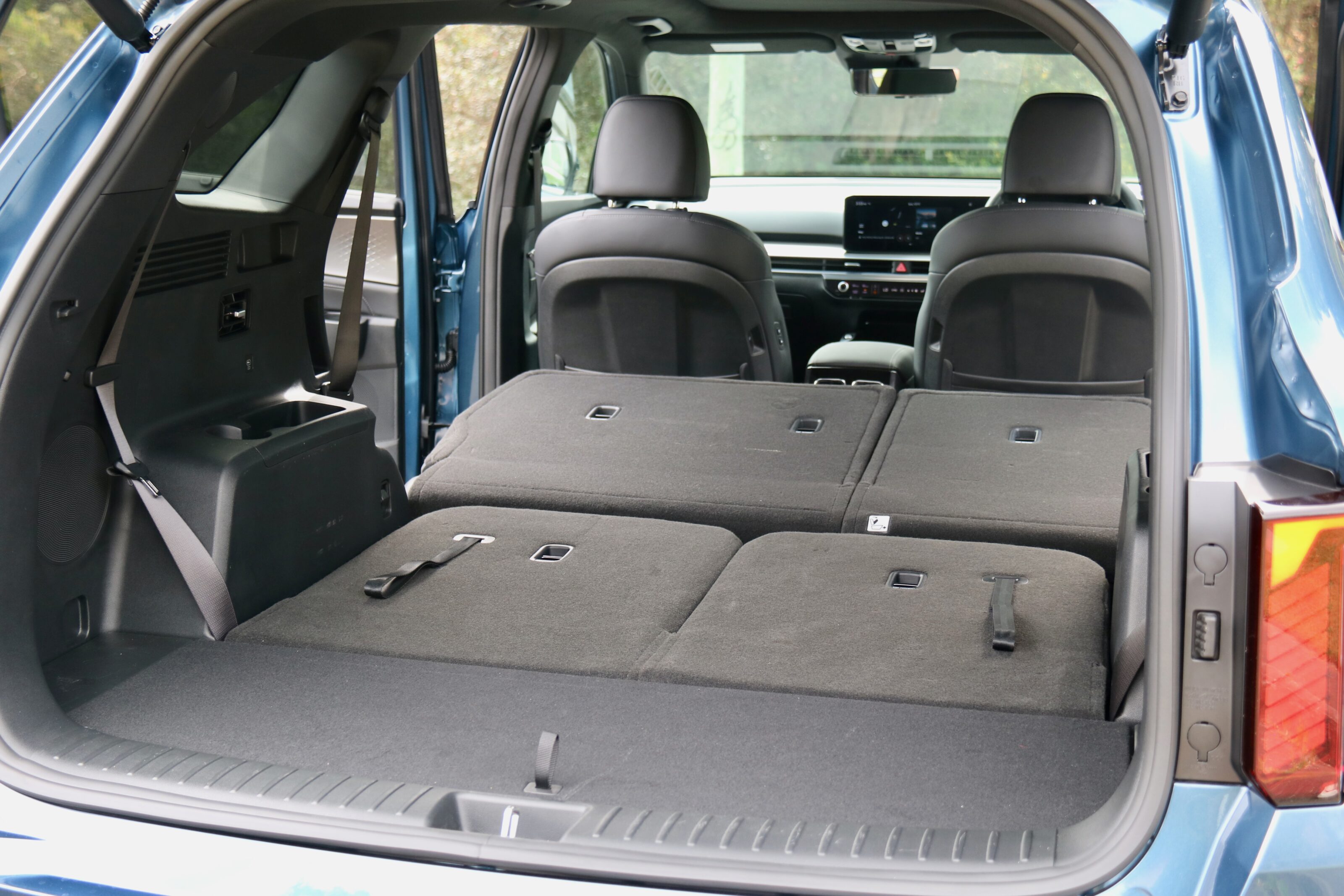
The boot of the Sorento measures 179 litres with the rear row up, 608L with the rear seats folded and 1996L with the second row folded as well. With the seats all folded, it’s a huge space and could easily take the worst an Ikea trip could throw at it. Impressively, the Sorento GT-Line Hybrid features a full-sized alloy spare wheel.
On the road
One of Kia’s biggest achievements for the Australian market has been its local tuning program, which ensures that every Kia model rides and handles well on our often rubbish roads and the Sorento is no different. Put simply, the Sorento is great to drive for such a large car: it can be a fun handler for such a large car, reasonably balanced in corners and the quick steering is satisfying to use.
The ride quality is excellent – it’s taut and body control is well controlled, and while it’s a bit firmer than its Santa Fe cousin, it is slightly more fun to drive. It’s definitely more comfortable than the too-firm Mazda CX-80. Road noise levels are well kept and the active safety features are well tuned, as you’d expect for a Kia product – though the annoying active speed limit warning must be turned off every time you drive the car.
Service and warranty
The entire Kia range is backed by a seven-year/unlimited km warranty with up to eight years of roadside assistance if serviced through a Kia dealership. The hybrid battery is covered for seven years or 150,000km, whichever comes first.
The Sorento Hybrid has short 10,000km service intervals and its five-year/50,000km service price is $2,973 ($594 per service on average).
Verdict: Should I buy a 2025 Kia Sorento GT-Line Hybrid?
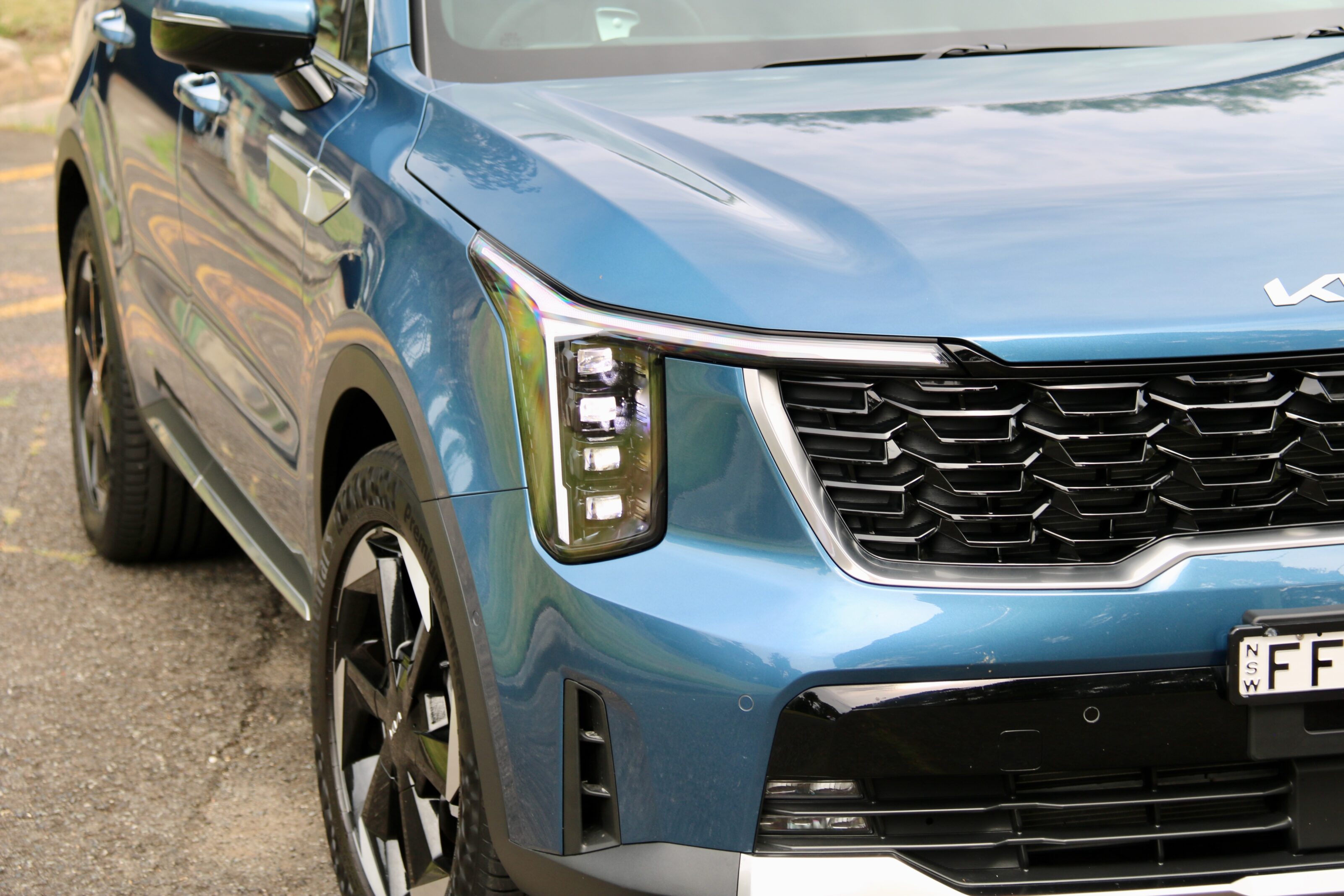
If you’re in the market for a seven-seat large hybrid SUV, there are now a surprising amount of contenders and we think that the Kia Sorento is one of the best. While it’s not the newest in the segment, Kia has kept it nicely updated with freshened exterior styling, a new dashboard and new features and because of that, it remains one of the best.
The hybrid drivetrain is efficient and performs well, while the driving experience is excellent thanks to Kia’s local tuning program. Its cabin is practical, comfortable and great quality, and the in-car tech is plentiful and easy to use. It could be cheaper, however, and we hope the brand adds cheaper hybrid models in the future. That aside, the Kia Sorento GT-Line Hybrid should definitely be on your shortlist in this segment.
Sorento Hybrid rivals
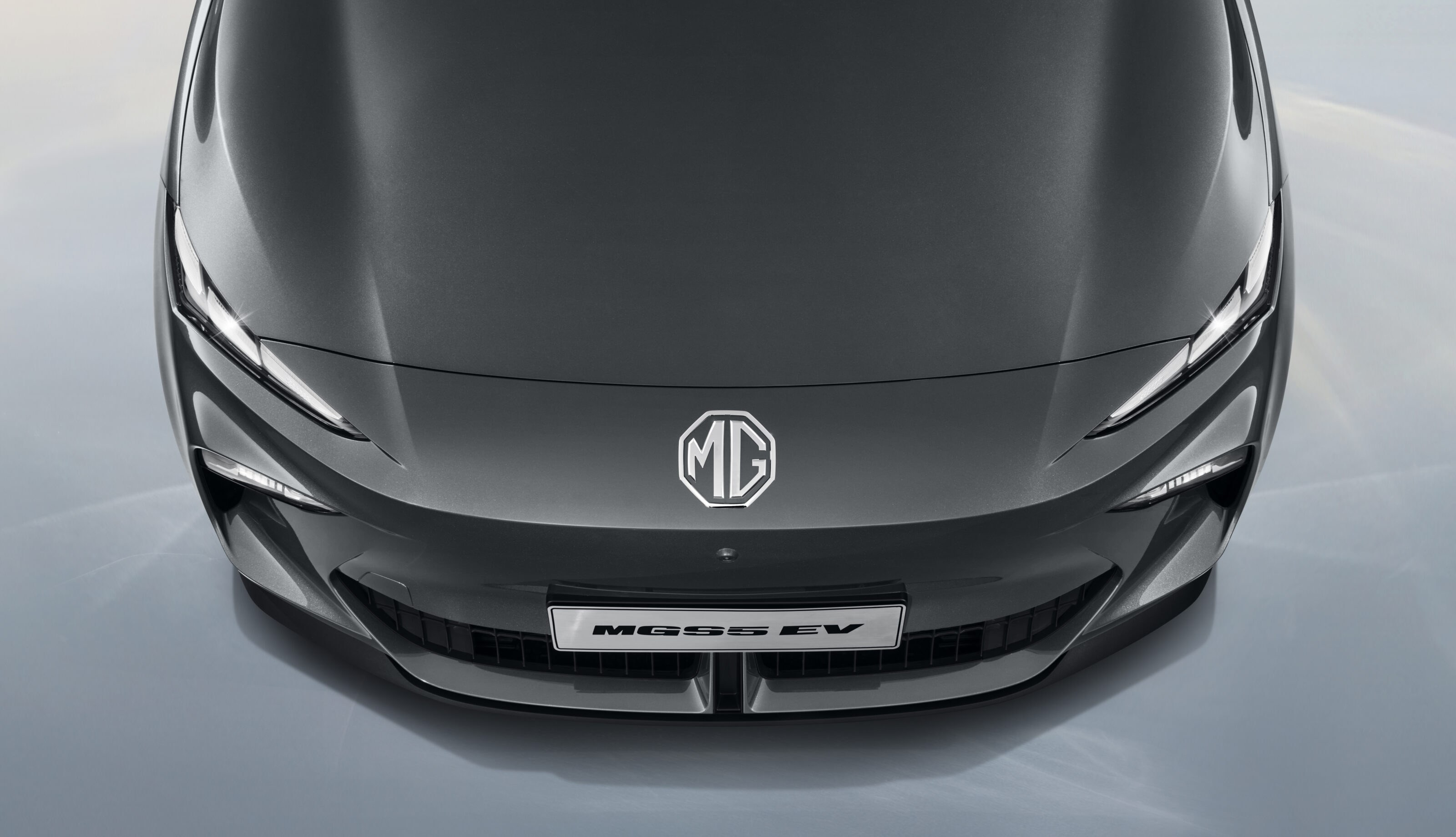
MG Motor Australia has revealed launch dates and pricing for its new, all-electric MGS5 EV – one of a number of upcoming launches for the brand.
The MGS5 EV Excite 49kWh will be priced from $40,490 drive away with prospective customers able to pre-order now before deliveries are expected as early as May.
Replacing the smaller and cheaper ZS EV in the range, the MGS5 will be offered in two specifications and two battery sizes with up to 430km of range (WLTP).
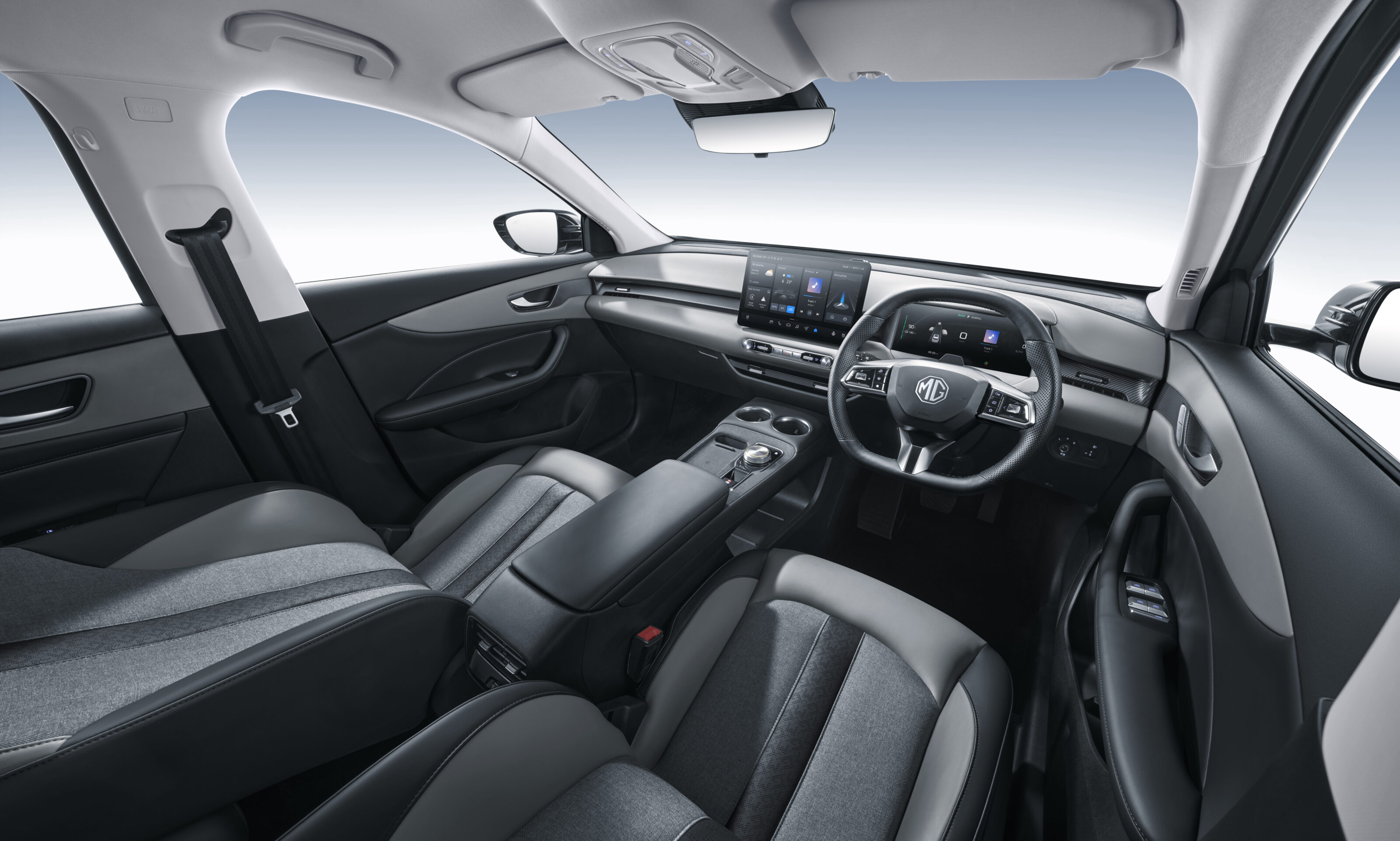
Debuting at the Melbourne Motor Show earlier this month alongside the U9 ute, the MGS5 uses the same platform as the popular MG4 hatchback and will be available with either 49kWh battery or 62kWh LFP battery sizes.
The claimed WLTP range for the 49kWh battery is between 335km and 340km, with the larger 62kWh unit giving a range of between 425km and 430km. The smaller battery can charge at up to 120kW and the larger one 150kW for a 30 to 80 per cent charge time in as little as 19 minutes.
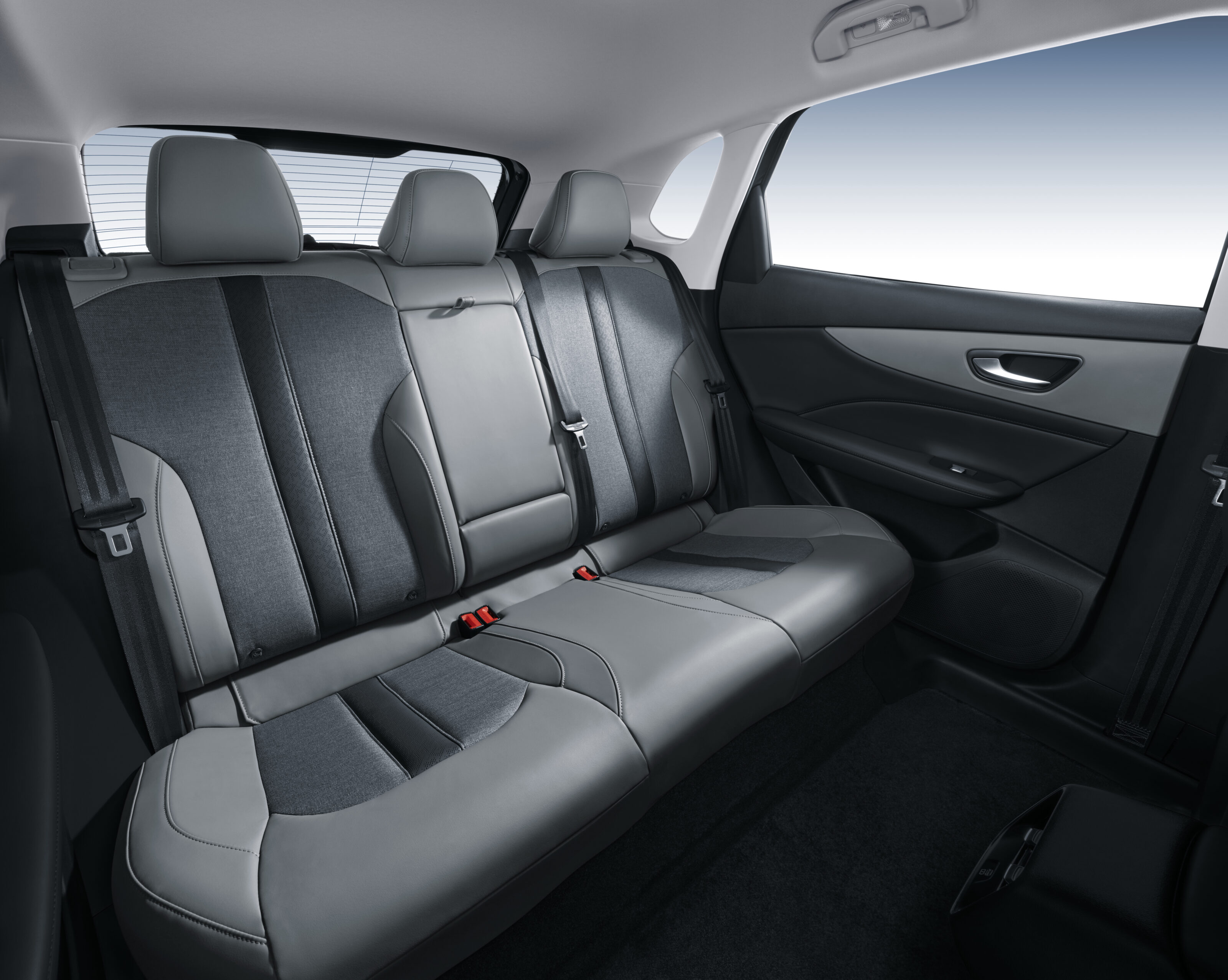
Both models use a 125kW/250Nm rear-mounted electric motor and sprint to 100km/h in as little as 8.0 seconds and hit a top speed of 170km/h.
Measuring 4476mm long, 1849mm wide, 1621mm tall and riding on a 2730mm long wheelbase, the MGS5’s boot measures 453 litres with the seats up and 1441L with them folded.

2025 MGS5 pricing (drive away):
| Excite 49kWh | $40,490 |
| Essence 49kWh | $42,990 |
| Excite 62kWh | $44,990 |
| Essence 62kWh | $47,990 |
2025 MGS5 Excite standard equipment:
- 17-inch alloy wheels with a tyre repair kit
- Keyless entry and start
- Dusk-sensing automatic LED headlights
- Roof rails
- Single-zone automatic climate control
- Cloth upholstery
- 10.25-inch digital driver’s display
- 12.8-inch touchscreen with live services
- Satellite navigation
- Wireless and wired Apple CarPlay and Android Auto
- 3x USB ports
- DAB+ digital radio
- Four-speaker sound system
- Seven airbags (including a front centre unit)
- Autonomous emergency braking (AEB)
- Adaptive cruise control
- Lane keeping assistance with lane departure warning
- Adaptive lane guidance
- Blind-spot monitoring with rear cross-traffic alert with braking
- Reversing camera
- Rear parking sensors
- Alarm
- Tyre pressure monitoring
- Driver attention alert
- Auto high beam
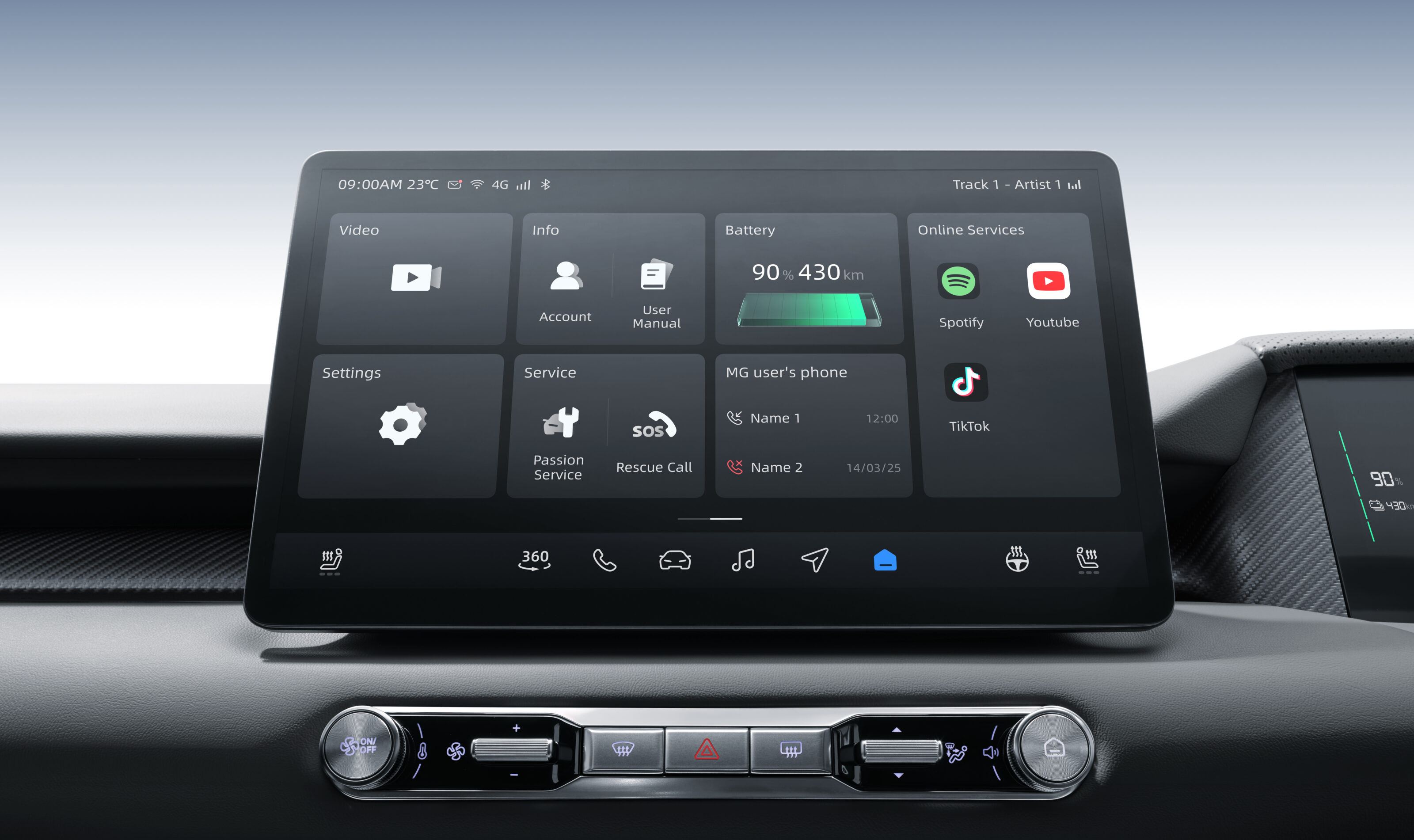
MGS5 Essence model adds:
- 18-inch alloy wheels
- Panoramic sunroof
- Rain-sensing automatic wipers
- Heated leather steering wheel
- Synthetic leather trim
- Electric driver’s seat
- Heated front seats
- Power tailgate with kick-to-open functionality
- Two extra speakers (six in total)
- Auto-folding mirrors
- Rear privacy glass
- 360-degree camera
- Wireless phone charger
- Online entertainment services
The MGS5 will launch into local MG dealerships next month and pre-orders are now open.
The family is growing… and growing up. The kids have sport, music and catch-ups with friends here, there and everywhere. It’s time for a second car to be able to meet all the demands yet buying one needs to make sense in terms of the family budget.
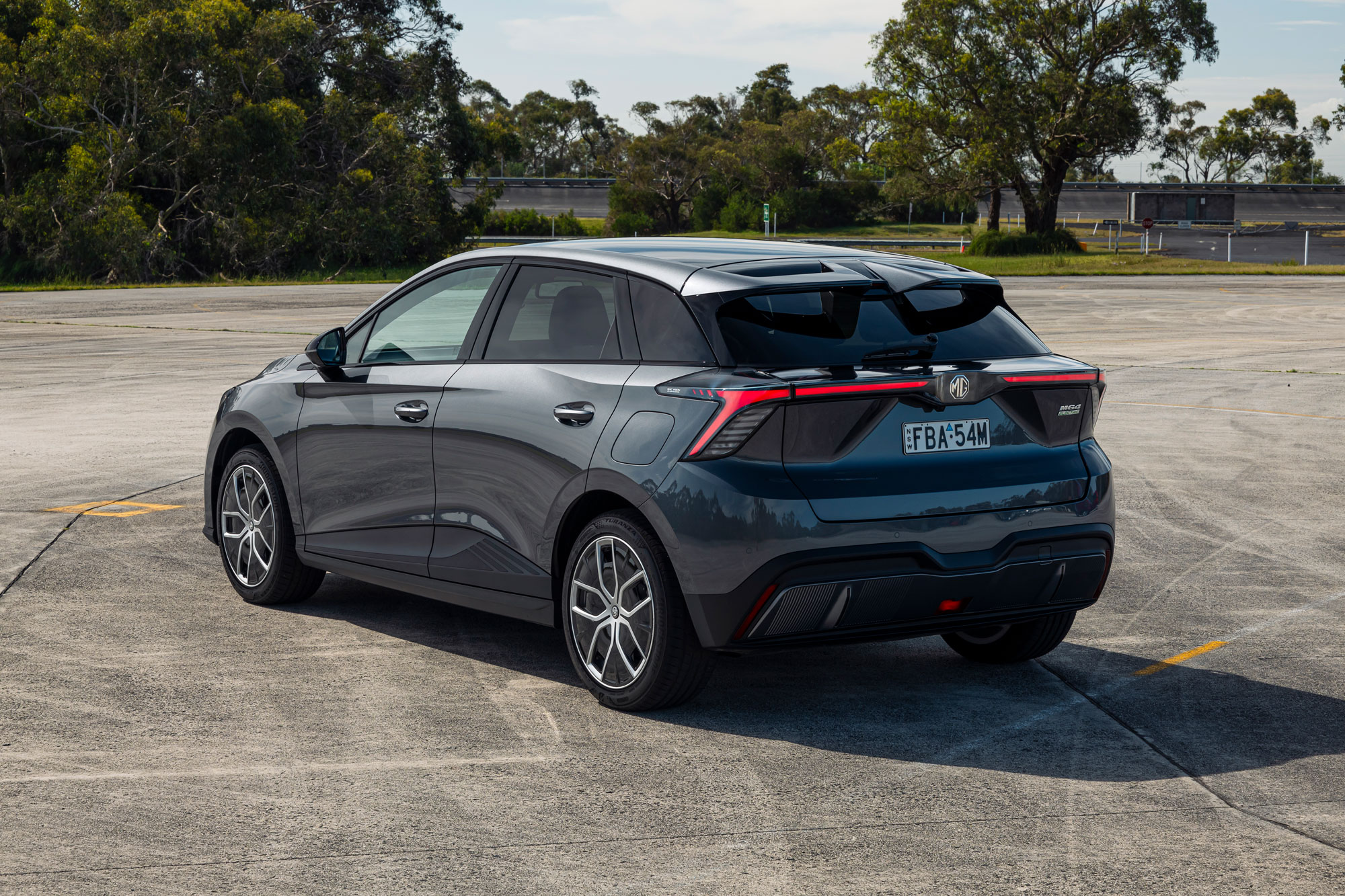
It’s time to consider the MG4, MG’s accessible electric five-door hatchback. Here are a few of the compelling reasons it makes the ideal second car for growing families.
Price and features
Starting at $36,990 (drive away) for the entry-level Excite 51 model, the MG4 tops out at $59,990 for the top-of-the-range XPOWER.
That price range encompasses five MG4 models available in Australia: the entry-level Excite 51 and Excite 64, top-spec Essence 64 and Long Range 77, and the performance 300kW XPOWER model.
But it’s the value for money proposition that stands out. Even on the base Excite 51 model, standard features include 17-inch alloy wheels, automatic LED headlights, a 10.25-inch touchscreen, Apple CarPlay and Android Auto, one-pedal driving, vehicle-to-load functionality and safety features such as AEB, adaptive cruise control, lane keep assistance and a reversing camera.
Opting for the Essence 64, for example, adds extra safety features such as blind-spot monitoring and rear cross-traffic alert, as well as synthetic leather and fabric upholstery, heated front seats, an electric driver’s seat, auto-folding mirrors and larger 18-inch wheels.
Electric efficiency and range
The big attraction of the MG4? How cheap it is to run. There are three different battery sizes across the range – 51kWh, 64kWh and 77kWh – so depending on the model you choose, the MG4 offers between 350km and 530km of electric-only driving range.
For the busy family using the MG4 for shorter local trips – perhaps only 50km a week all up – charging only once a week is probably enough. That’s undoubtedly a huge saving over fuel for a combustion engine hatchback.
Charge the MG4 off the power generated by a home solar set-up and you’re looking at next to nothing to keep your vehicle powered and on the road.
Plus there’s the convenience of charging the MG4. The Excite 51, for instance, can be fully recharged for 350km of range in 7.5 hours using just a home wall socket. On a DC public fast recharger, the MG4 Excite 64 can be charged from 10 to 80 per cent in as little as 28 minutes.
Comfort and space
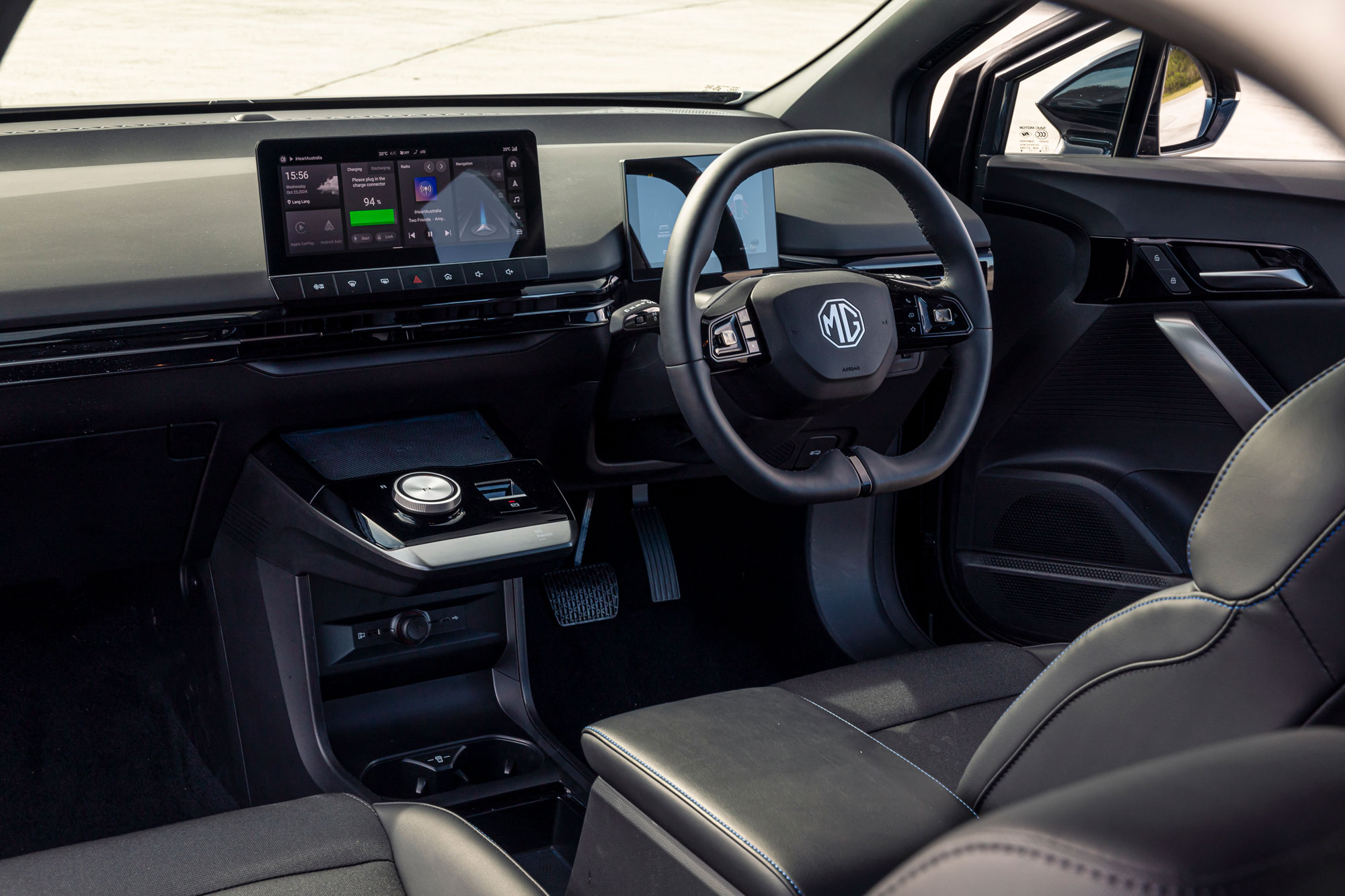
It’s a hatch, is there enough room for kids and all their stuff? Yep, the MG4’s cabin is modern, practical, comfortable and designed with good quality, durable materials. It’s also full of practical touches like a big centre console tray.
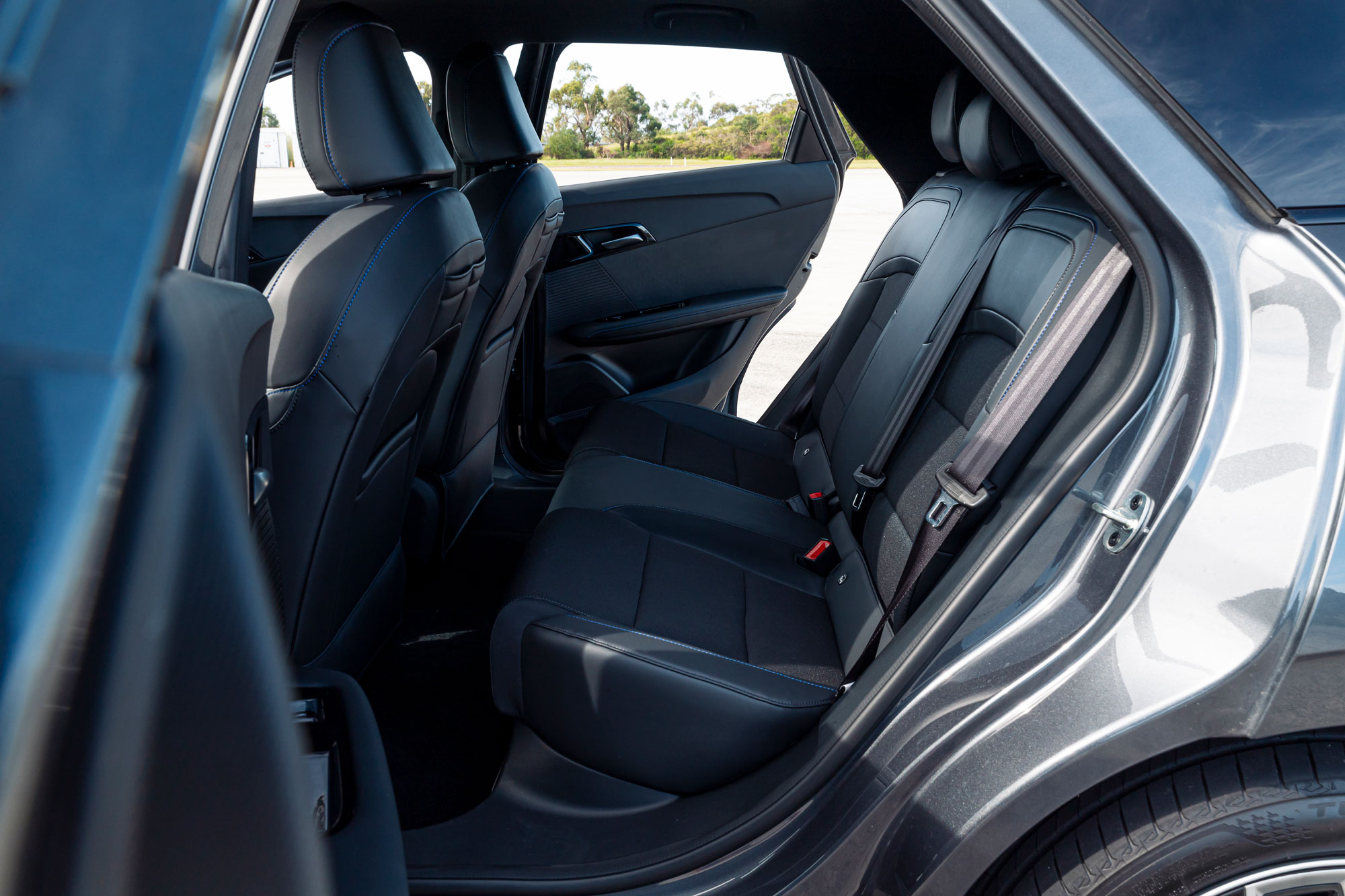
The rear seat of the MG4 is also roomy enough for two adults, with occupants able to store things in door and map pockets and keep devices charged via a USB-A port.
Importantly for families, three child seats could be fitted across the back seat, or two baby seats if the kids are younger, with a dual set of ISOFIX mounting points and three top tether anchorages that be reached through the boot.
Whether they’re babies, toddlers or teens, kids come with stuff. The MG4’s boot holds an impressive – for a hatch – 363 litres with seats up and between 1,165L and 1,177L with 60:40 folding seats down, along with side storage. Models from the Essence 64 and above also include a dual-level floor for a flat loading bay with the rear seats folded.
Easy driving
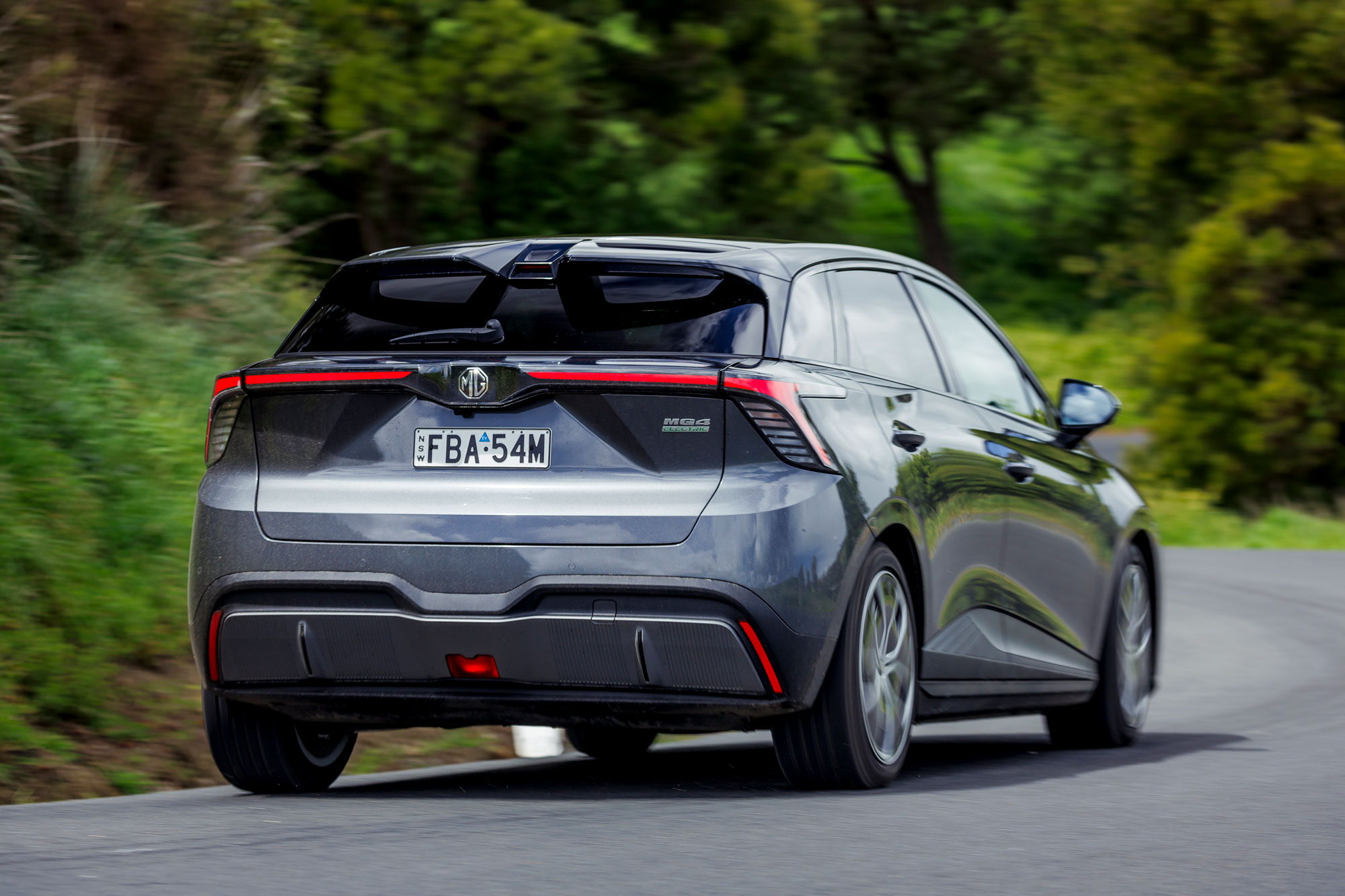
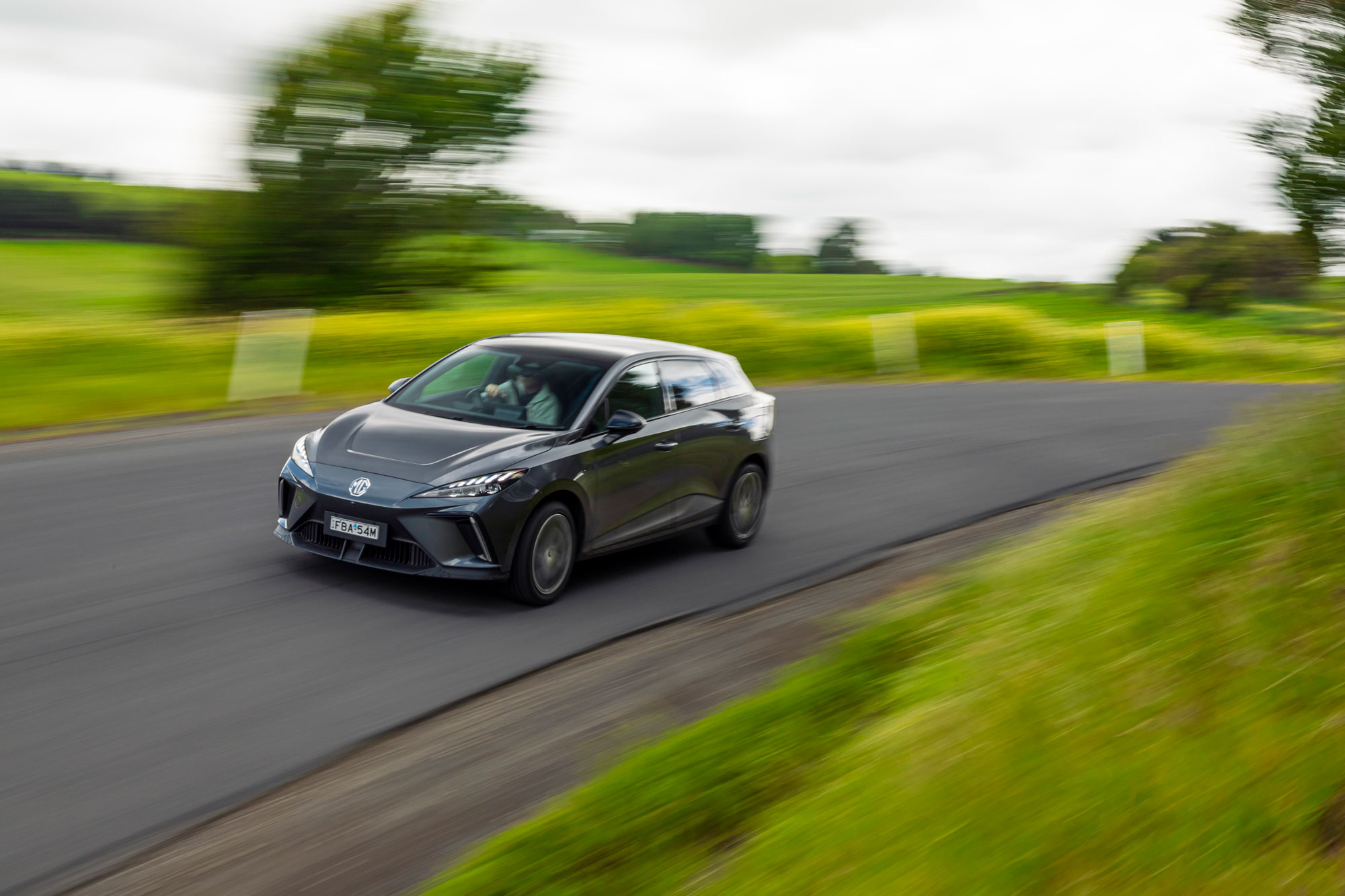
The MG4 sits on a new rear-drive platform which makes it a stable and enjoyable drive.
The 51kWh battery is equipped with a 125kW/250Nm electric motor for a claimed 0-100km/h time of 7.7-second – enough power to dart into the next line in busy city traffic. The 64kWh model ups the power to 150kW and the 77kWh model increases that to 180kW/350Nm. The top-of-the-range XPOWER adds a second motor on the front axle, delivering an impressive 320kW of power and 600Nm of torque for a 0-100km/h sprint time of 3.8 seconds, if that’s what you need.
The drive feels well balanced, light on its feet and with satisfyingly weighted steering.
Safety and reliability
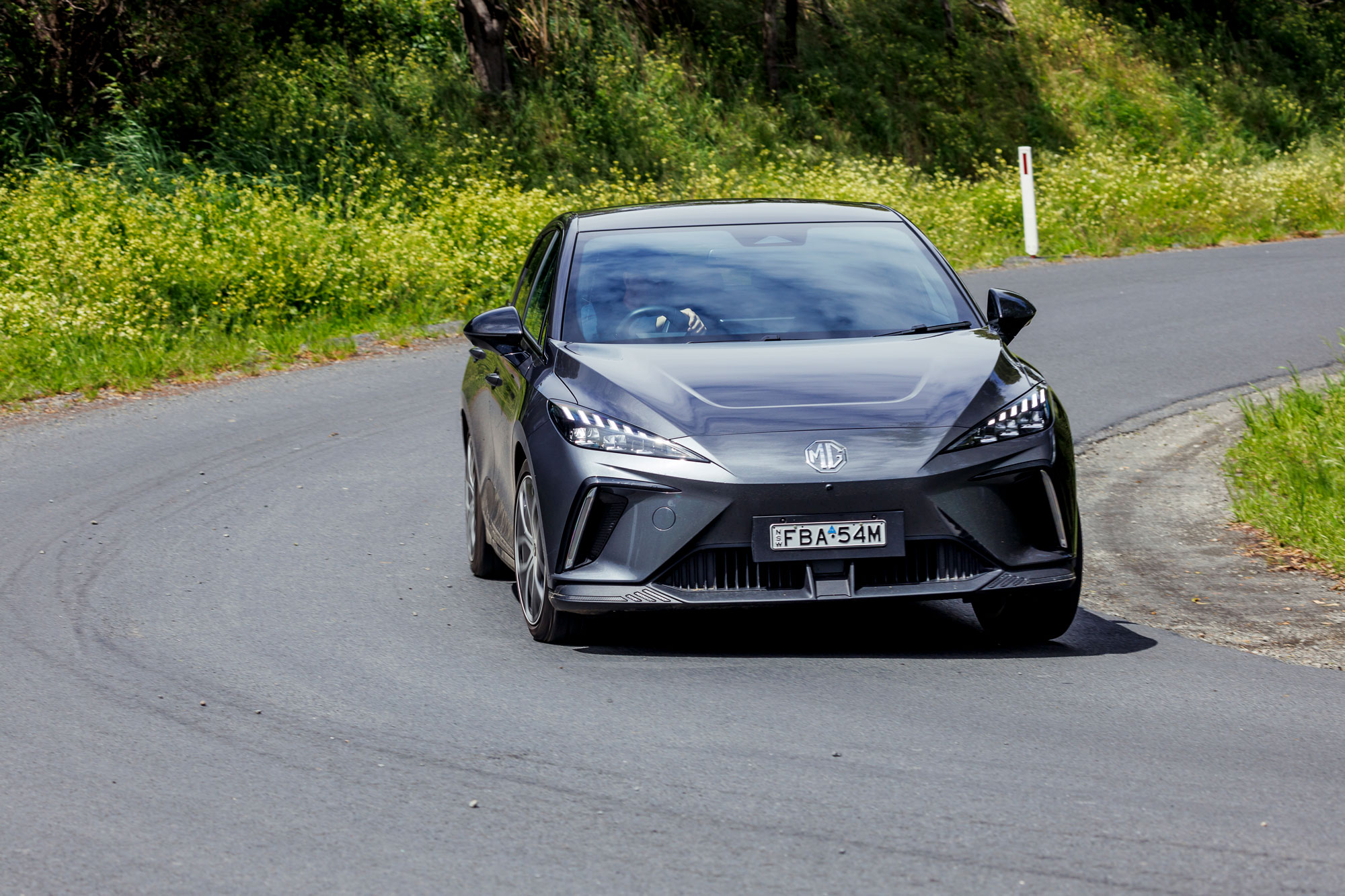
All rear-wheel drive models of the MG4 have been awarded the full five-star safety rating from independent crash-testing authority ANCAP. In addition, MG’s Pilot system delivers the latest in active driver safety technology, including lane-keep assist, forward collision warning, autonomous emergency braking and adaptive cruise control. Plus the family is protected by front-side and dual driver and passenger airbags, along with curtain airbags.
Peace of mind
When it comes to warranty and servicing, a busy family wants a set-and-forget type arrangement which MG offers through their extraordinary 10-year/250,000km warranty and six years/120,000km of servicing costs just $1,676.42 (working out at $279 per year).
Practical, cheap to run, roomy for this size of car and safe – the MG4 ticks all the boxes for that family second car. Discover more here.
BMW Australia has announced local pricing and specifications for the BMW X3 40d xDrive, which is the first diesel-powered variant of the new X3 mid-size SUV. Priced from $108,900 plus on-road costs, the X3 40d sits atop the local X3 range underneath the performance M50 variant and is due in local BMW showrooms in the third quarter of 2025.
The X3 40d is powered by a 3.0-litre turbocharged inline six-cylinder diesel engine, making 210kW of power and 670Nm of torque – 15kW/50Nm improvements over its predecessor. That engine is mated to a 48-volt mild-hybrid system and sends grunt to all four wheels through an eight-speed automatic transmission. Australian fuel consumption figures are yet to be confirmed, but in Europe, it’s rated at 6.7L/100km on the WLTP cycle.
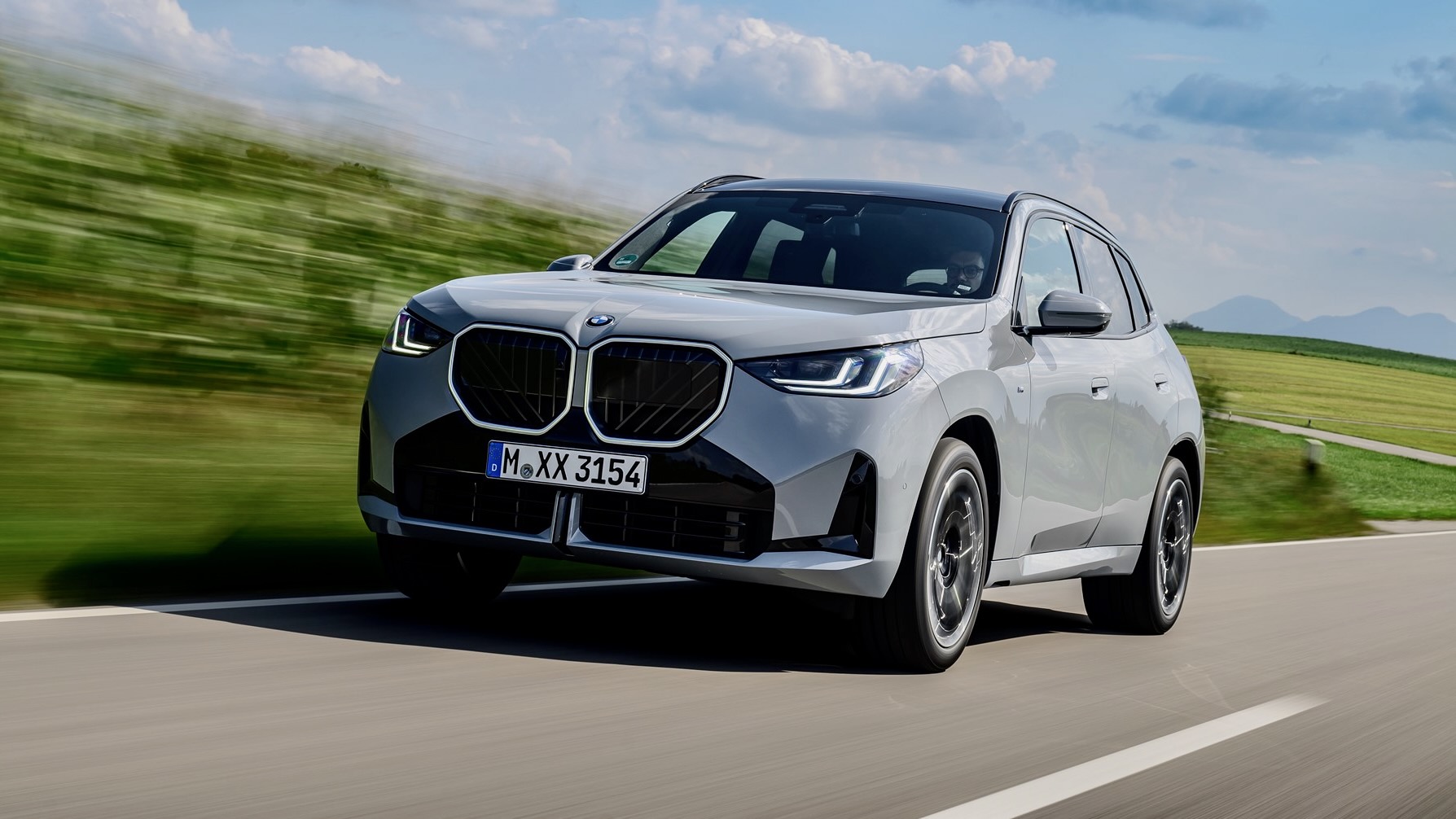
Standard equipment largely mirrors that of the X3 30e plug-in hybrid that sits below it, though the $4000 Comfort Package that’s optional on the PHEV is standard on the 40d. That includes features such as tinted windows, ventilated front seats, heated front and rear seats, rear window sunblinds, a heated steering wheel and a boot separating net.
The 40d also adds larger 20-inch alloy wheels, M Sport brakes with blue callipers and a fixed panoramic roof as standard over the 30e.
2025 BMW X3 pricing (plus on-road costs):
| 20 xDrive | $86,100 |
| 30e xDrive | $104,100 |
| 40d xDrive | $108,900 (new) |
| M50 xDrive | $128,900 |
BMW X3 40d xDrive standard equipment:
- 20-inch alloy wheels with adaptive suspension
- M Sport package with sportier styling
- Dusk- and rain-activated automatic LED exterior lighting
- Rain-sensing automatic wipers
- Keyless entry and start with phone key access
- Automatic tailgate
- Panoramic fixed glass roof
- Synthetic leather upholstery
- Electric front seats with heating and ventilation
- Heated rear seats and steering wheel
- Tri-zone automatic climate control
- 12.3-inch digital driver’s display
- 14.9-inch touchscreen with live services, including over-the-air updates
- Satellite navigation
- Wireless Apple CarPlay and Android Auto
- Wireless phone charger
- DAB+ digital radio
- Six-speaker sound system
- Autonomous emergency braking
- Adaptive cruise control with stop and go functionality
- Blind-spot monitoring with cross-traffic alert
- 360-degree camera
- Adaptive high beam
- Automatic parking, including reversing assistant and drive recorder
- Tyre pressure monitoring
Orders for the BMW X3 40d xDrive are open now ahead of the first local deliveries scheduled for the third quarter of 2025.
Isuzu has revealed the electric D-Max ute in production form in Europe overnight – ahead of a confirmed Australian launch likely in 2026.
Capable of towing 3500kg and carrying 1000kg – just like the regular D-Max – the electric variant has a WLTP-rated range of 263km.
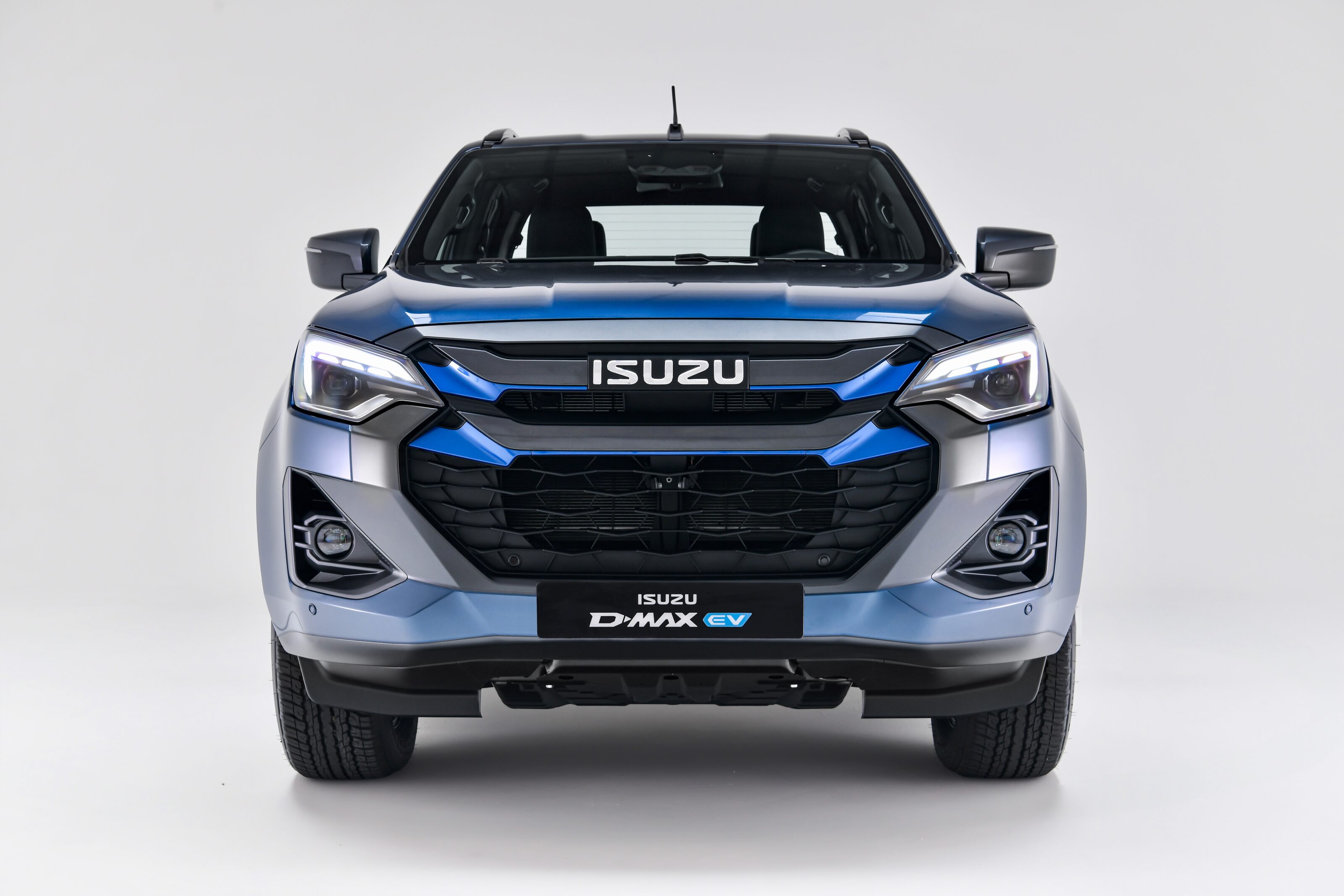
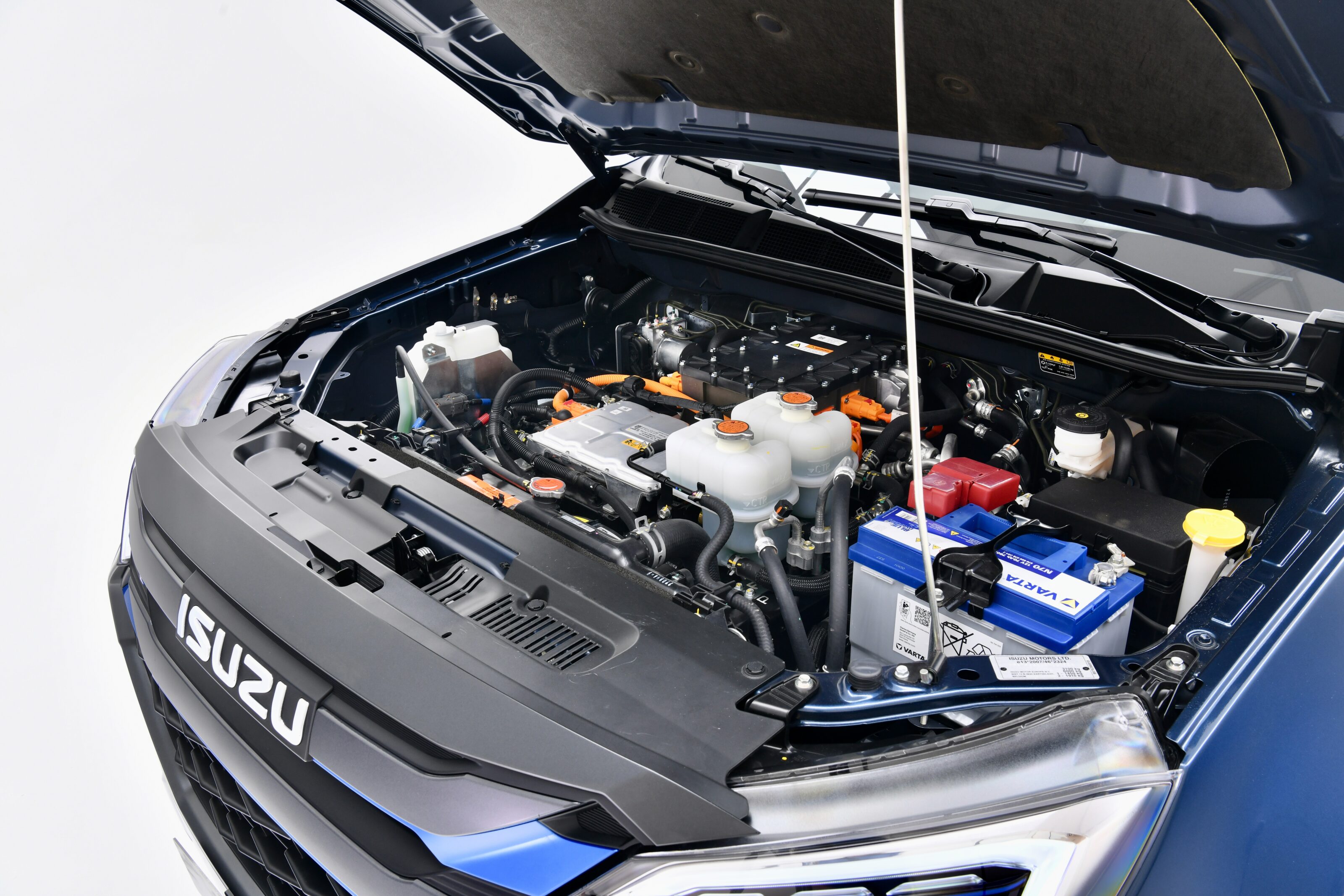
Originally revealed as a concept in 2024, the production D-Max EV uses a 66.9kWh lithium-ion battery that feeds a dual-motor electric drivetrain making 140kW of power and 325Nm – identical in power but 125Nm less than the current 3.0-litre D-Max.
The D-Max EV can be DC fast charged at up to 50kW for a 20 to 80 per cent charge in an hour, while the AC charging maximum is 11kW for a 10-hour full charge.
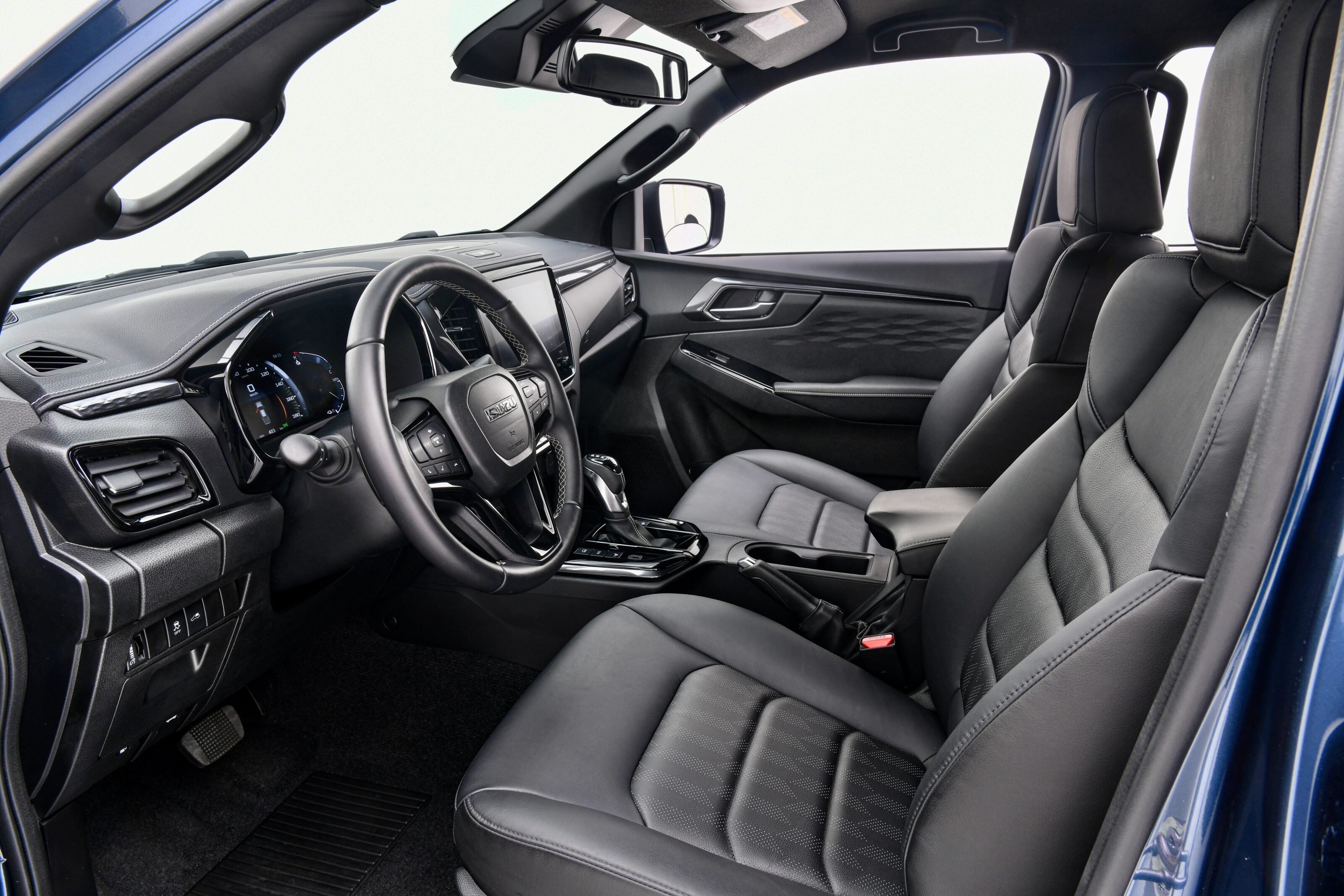
That makes for a 0-100km/h time of 10.1 seconds, or roughly equal to the 3.0-litre D-Max – but much quicker than the smaller 1.9-litre engined variant, which is the only one sold in Europe. The claimed top speed is “over” 130km/h.
The D-Max EV is fitted with a full-time four-wheel drive system, with a claimed ground clearance of 210mm and water wading depth of 610mm – 25mm and 190mm less respectively than the regular D-Max. Its 30.5 degree approach angle and 24.2 departure angle are differences of 1.3 degrees and 5.0 degrees respectively to the regular D-Max and its 2350kg kerb weight is at least 180kg more.
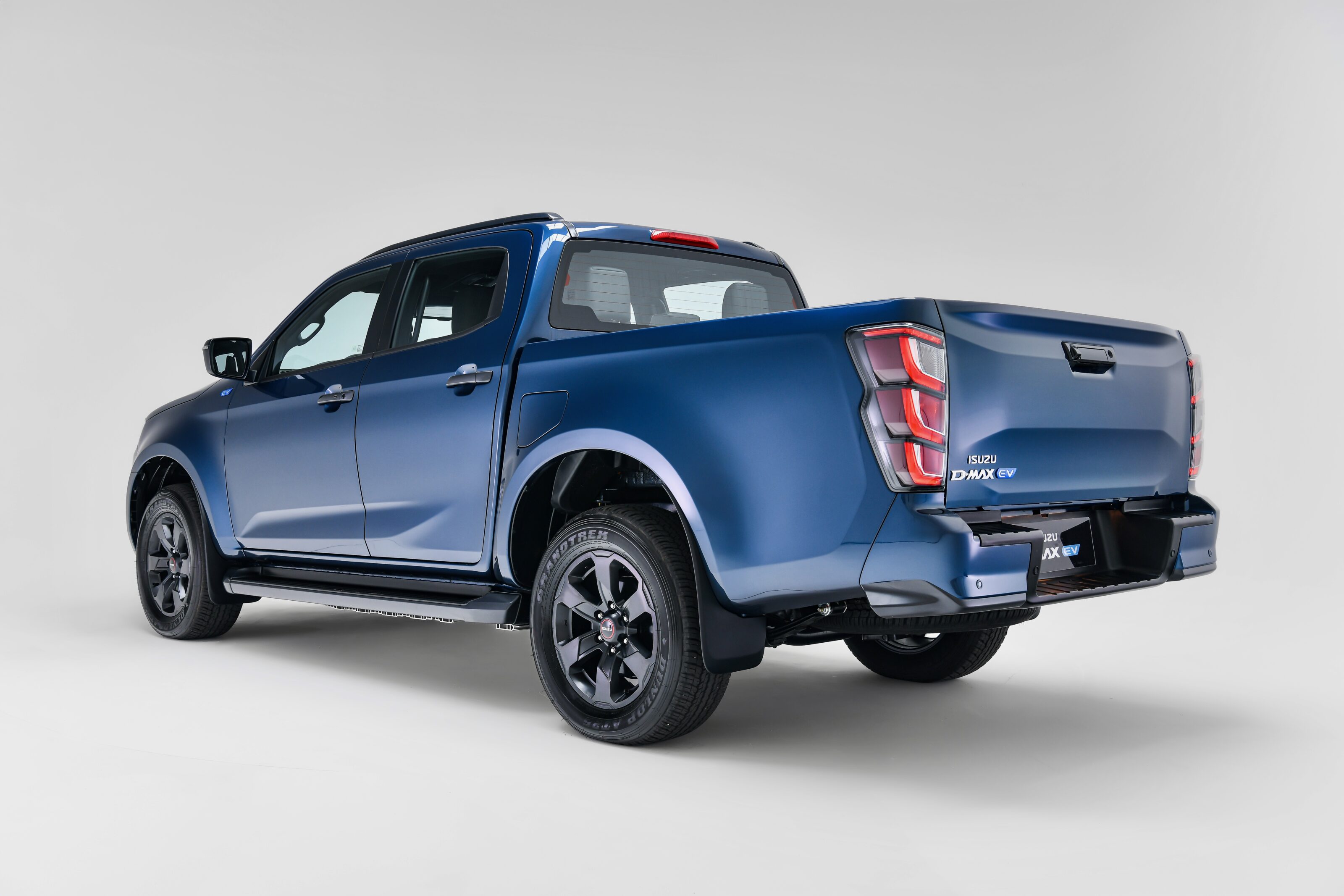
According to Isuzu, to improve refinement and handling, the D-Max EV features a new De-Ion rear suspension set up that replaces the usual leaf spring. The electric model is also apparently 10 per cent quieter under full acceleration than the 1.9-litre D-Max.
It also features four-level regenerative braking and an eco mode to improve consumption but is otherwise visually identical to the regular D-Max.
The electric Isuzu D-Max has been confirmed for Australia, though launch timing is yet to be revealed.
Aston Martin has revealed a new version of its DBX super SUV called the DBX S, which has raised power, reduced weight and made it even faster than the standard DBX. Now making a massive 535kW of power and 900Nm of torque, the crossover SUV is capable of a 3.3 second 0-100km/h sprint time and a top speed of 310km/h, making it one of the fastest SUVs in the world.
Centre of the DBX S is an upgraded 4.0-litre twin-turbocharged petrol V8 engine used in cars like the Vantage sports coupe making 535kW and 900Nm – 15kW more than the DBX 707 currently on sale thanks to a larger compressor wheel and internal improvements, according to Aston Martin – again mated to a nine-speed dual-clutch transmission sending power to all four wheels.
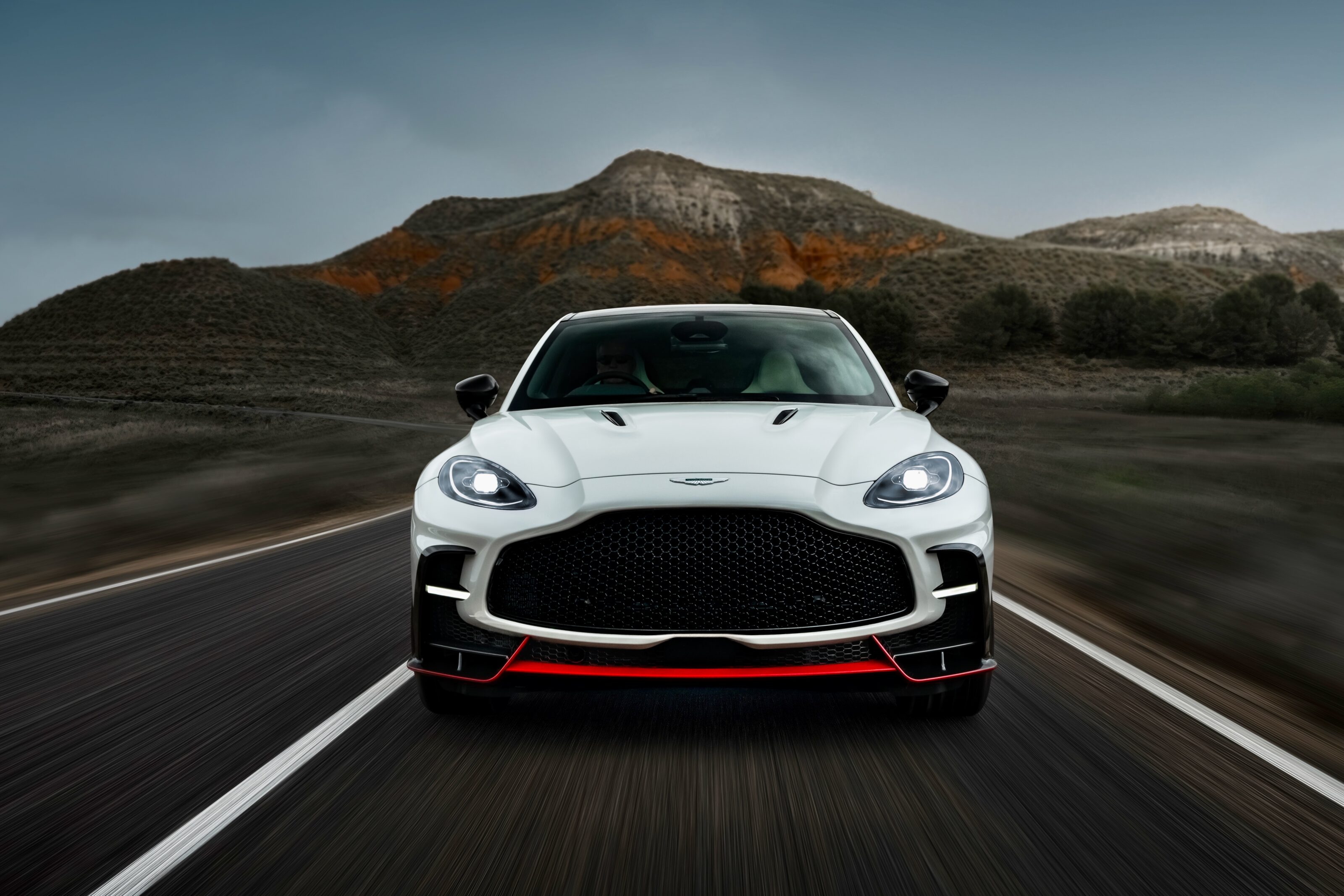
Aston Martin has upgraded the exhaust system of the DBX S for a louder noise, while its transmission has also seen adjustments with adjusted change up points to reflect its extended rev range, while downshifts in sport and sport+ modes are reportedly even more aggressive.
In addition to the added performance, the DBX S has also seen a weight reduction of up to 47kg over the DBX 707 to 2140kg thanks to a new carbon fibre roof that saves 18kg alone and reduces the centre of gravity to improve stability and agility. Magnesium wheels are now optionally available for the first time on any SUV in the world, saving a further 19kg of unsprung mass and delivering an improvement in ride and handling.
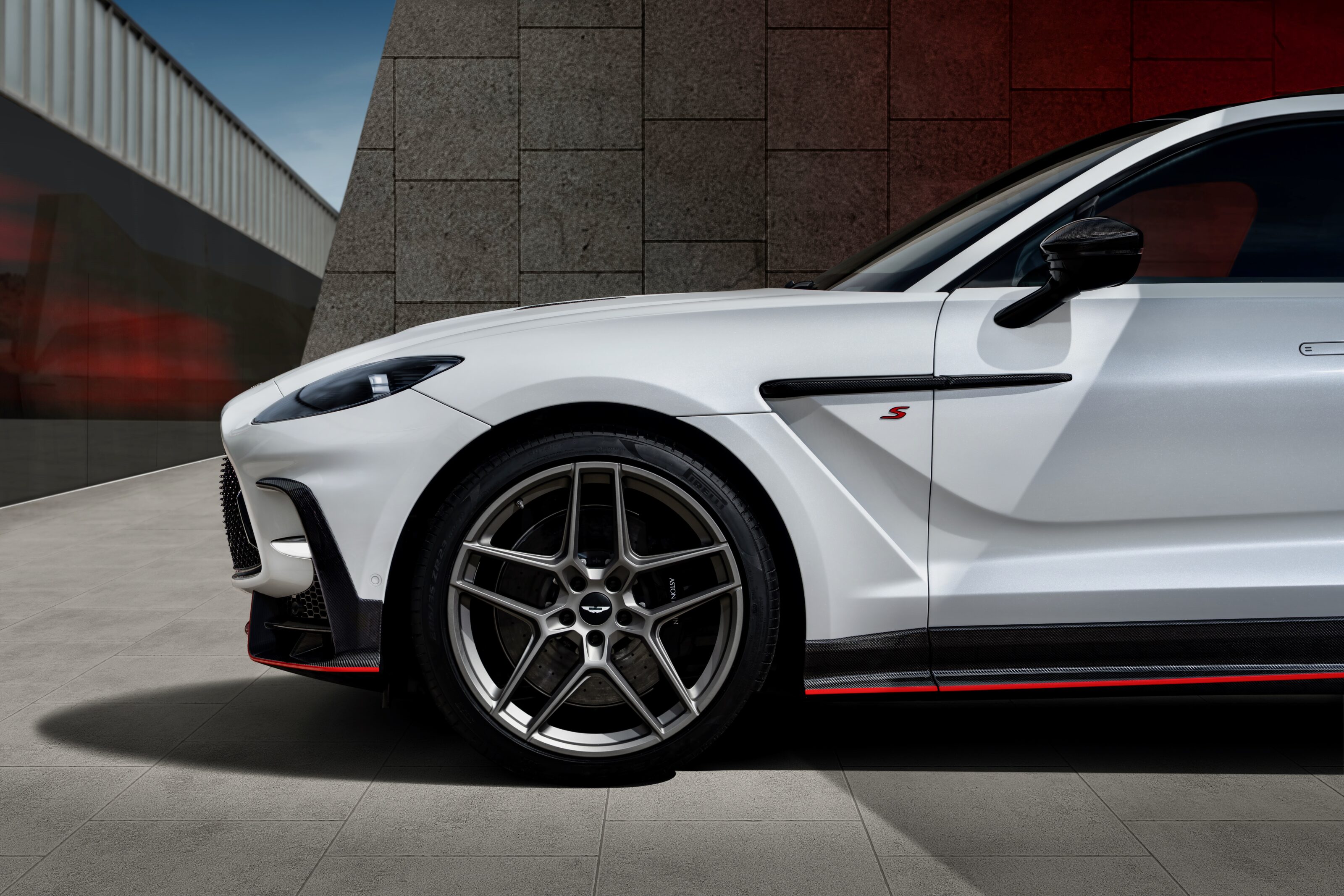
The steering ratio of the DBX S has been made faster by four per cent to improve the car’s agility and
reducing the turning circle to 12.0 metres, while the DBX S uses the same improved suite of suspension introduced to the DBX 707 in 2024 with the brand boosting that even at the limit, the electronic roll control means that it rolls no more than 1.5 degrees. Rear 420mm front/390mm carbon ceramic brakes give impressive braking performance, according to Aston Martin.
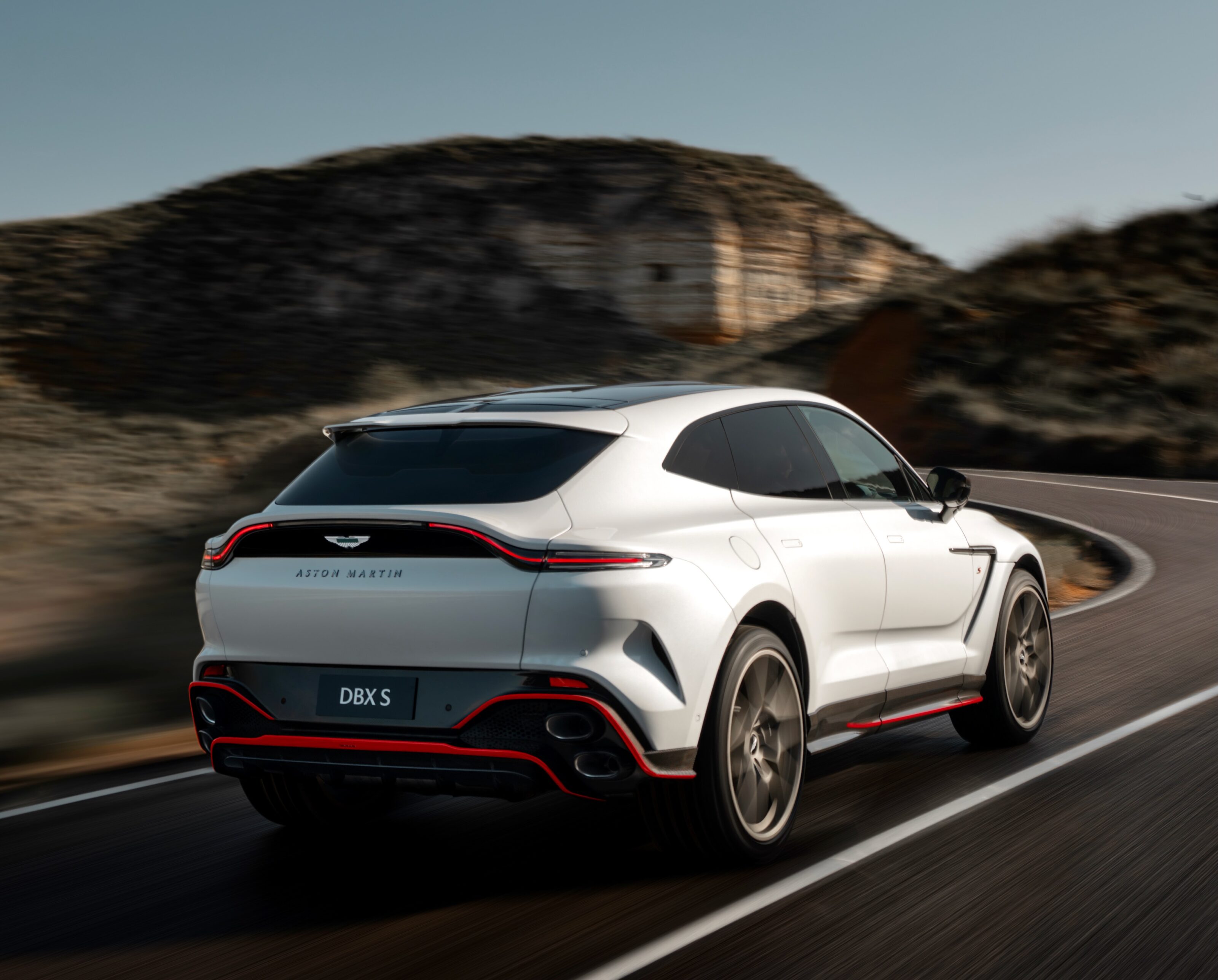
On the outside of the DBX S are a new black grille, splitter and diffuser, sills with up-turned air splitters at the side and new vertically stacked quad exhausts at the rear. The rear bumper and diffuser have been redesigned and, like the front grille and side mirror caps, can be specified in carbon fibre to save a further 7kg of weight.
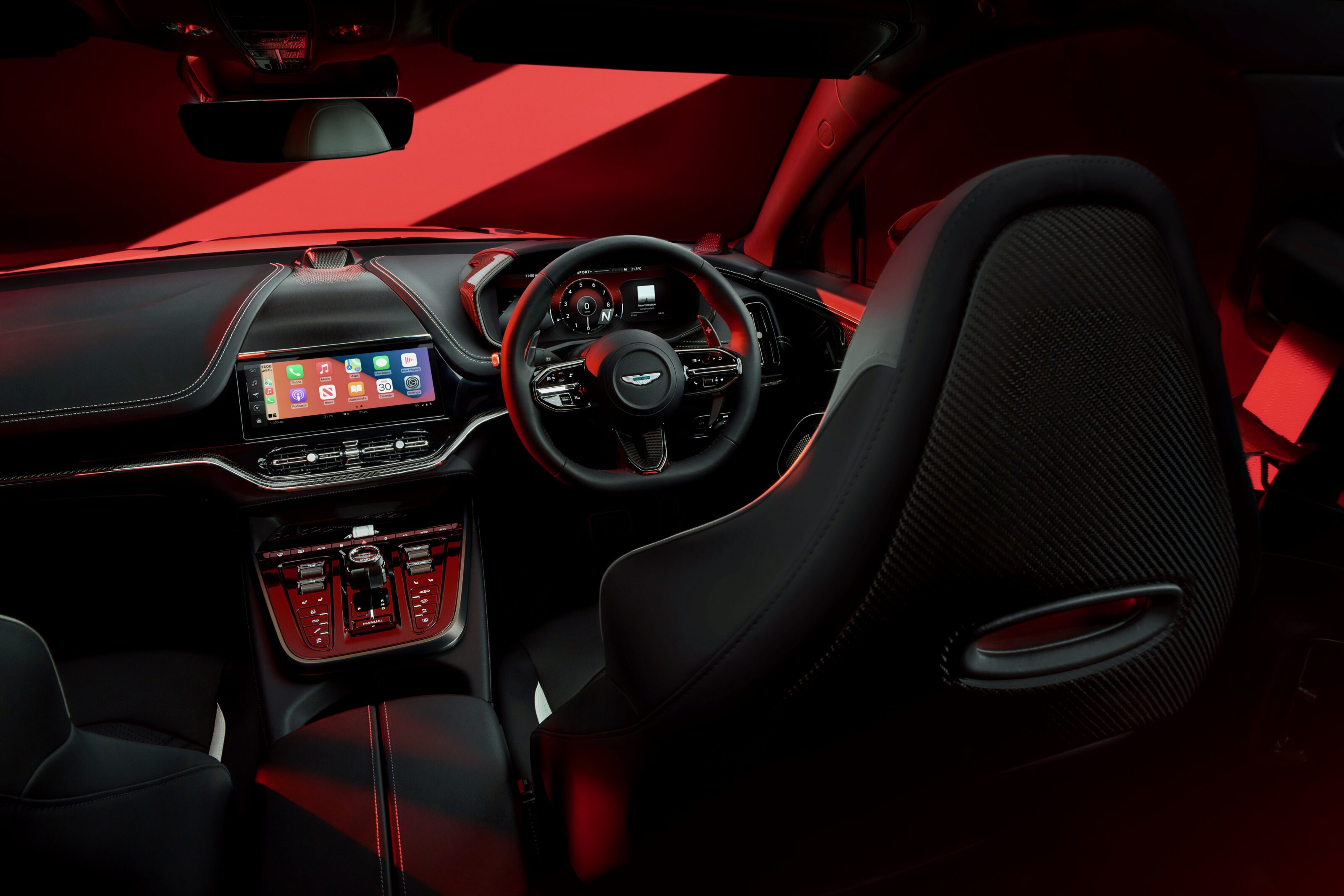
The interior of the DBX S displays a bespoke ’S’ theme with a new herringbone design on the seats, which is extended to the headliner if the carbon roof is chosen. The DBX S is trimmed with suede on the seats, centre console, lower instrument panels and upper trim to show off the sporting credentials, while semi-aniline leather is fitted to high wear such as the seat bolsters.
Aston Martin is yet to reveal when the DBX S will launch locally, but European deliveries commence in late 2025 so Australian deliveries are likely for the first half of 2026.
New research shows 23 per cent of Australians believe that insurers should offer additional discounts to EV drivers to boost uptake, according to finance experts Money.com.au.
But nearly a third (31 per cent) of those surveyed support extra discounts only if backed up by data showing that EVs are cheaper to repair or pose a lower accident risk.
However, almost half of Australians (46 per cent) oppose the same idea and argue that EVs are already subsidised enough through government incentives like the Fringe Benefit Tax exemption and state-based rebates.

According to Money.com.au, Australians are split between supporting discounts for green technology to accelerate EV adoption while wanting a level playing field when it comes to insurance pricing.
“We know from various studies that EVs are generally more expensive to insure, but many Aussies still don’t believe insurers should hand out discounts just for driving one, unless there’s clear data showing they pose a lower risk,” said Money’s Finance Expert, Sean Callery.
‘”While insurance costs for EVs are still higher today, they are generally offset by savings on running costs and the growing availability of cheaper finance options through green loans. As competition increases and EV prices continue to fall, the overall cost of owning an electric vehicle should become more accessible to more Australians.”
Based on current trends, Money.com.au reports that battery electric sales are projected to reach 126,279 units in 2025 – a 38.3 per cent increase year-on-year. If they continue to expand at a similar rate, that could double to 264,256 units by 2030.
Do you believe that EVs should be further discounted to accelerate adoption? Let us know your thoughts.
Australian pricing for the Mazda CX-90 has been lowered by up to $7800 to make it even better value for money, according to its maker. Pricing for the CX-90 now starts at $68,800 plus on-road costs – a cut of $6000 – but the top-spec Azami petrol is now $7800 less at $86,070 +ORC.
But unusually, the price cut hasn’t been accompanied by any equipment or mechanical changes, with the CX-90 range comprehensively equipped throughout.
The CX-90 is powered by two turbocharged 3.3-litre inline six engines tied to a 48-volt mild-hybrid system: a 254kW/500Nm petrol or a 187kW/550Nm diesel, with both using an eight-speed multi-clutch automatic transmission and a rear-biased all-wheel drive system.
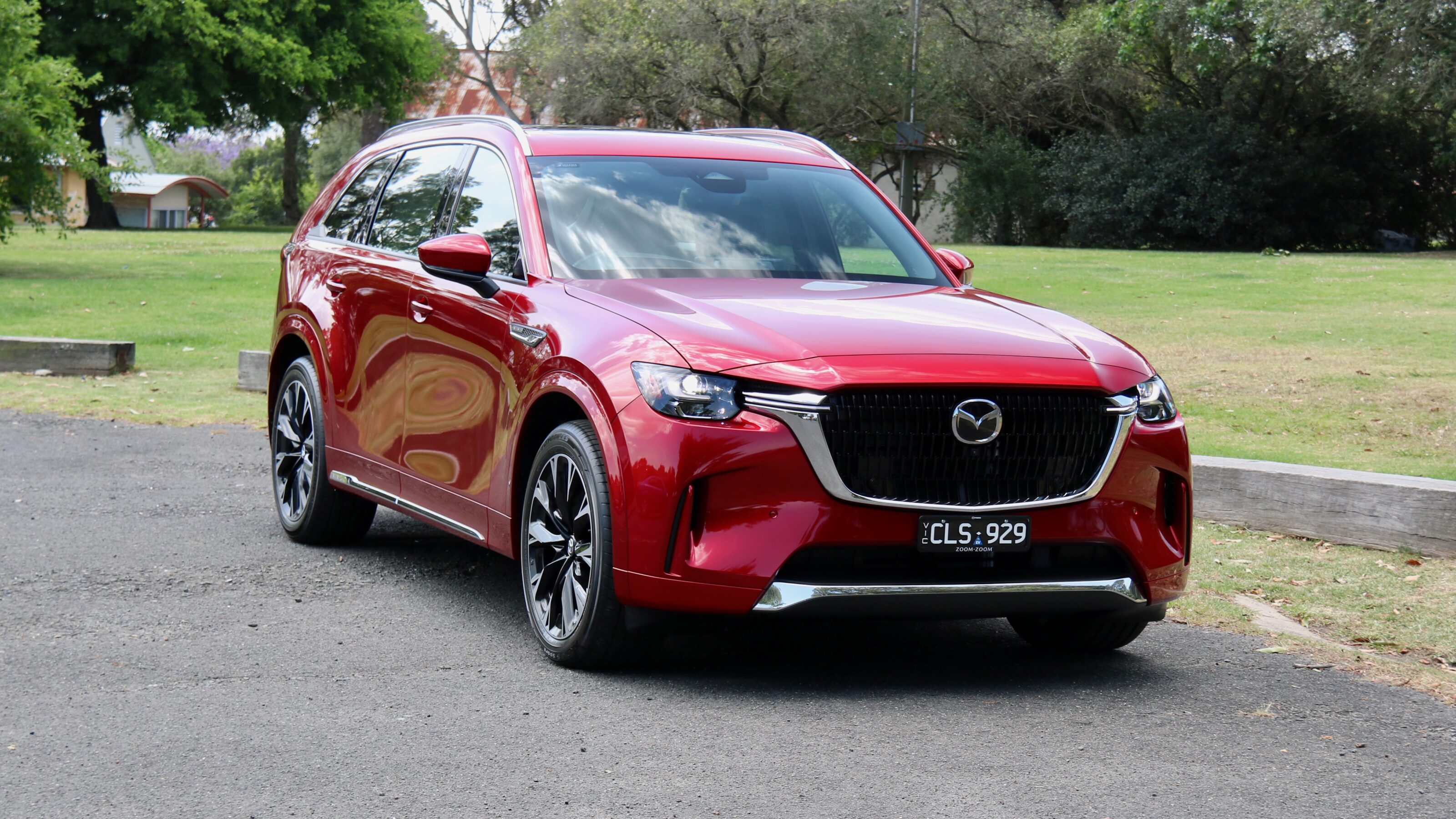
The price cut has more closely aligned the CX-90 with its cheaper CX-70 sibling – basically a five-seat CX-90. Previously, the two were up to $11,660 apart for the same specification but now they’re around $3100 apart.
According to VFACTS new car sales data, 190 CX-90s have been registered in the first three months of 2025, which is down 6.4 per cent on the same time in 2024. But the smaller seven-seat CX-80 has recorded 1283 sales for the same period, and the five-seat CX-60 and CX-70 1584 and 83 deliveries respectively too.
In total, Mazda’s quartet of ‘Large Platform’ cars sold 3140 units over the quarter.
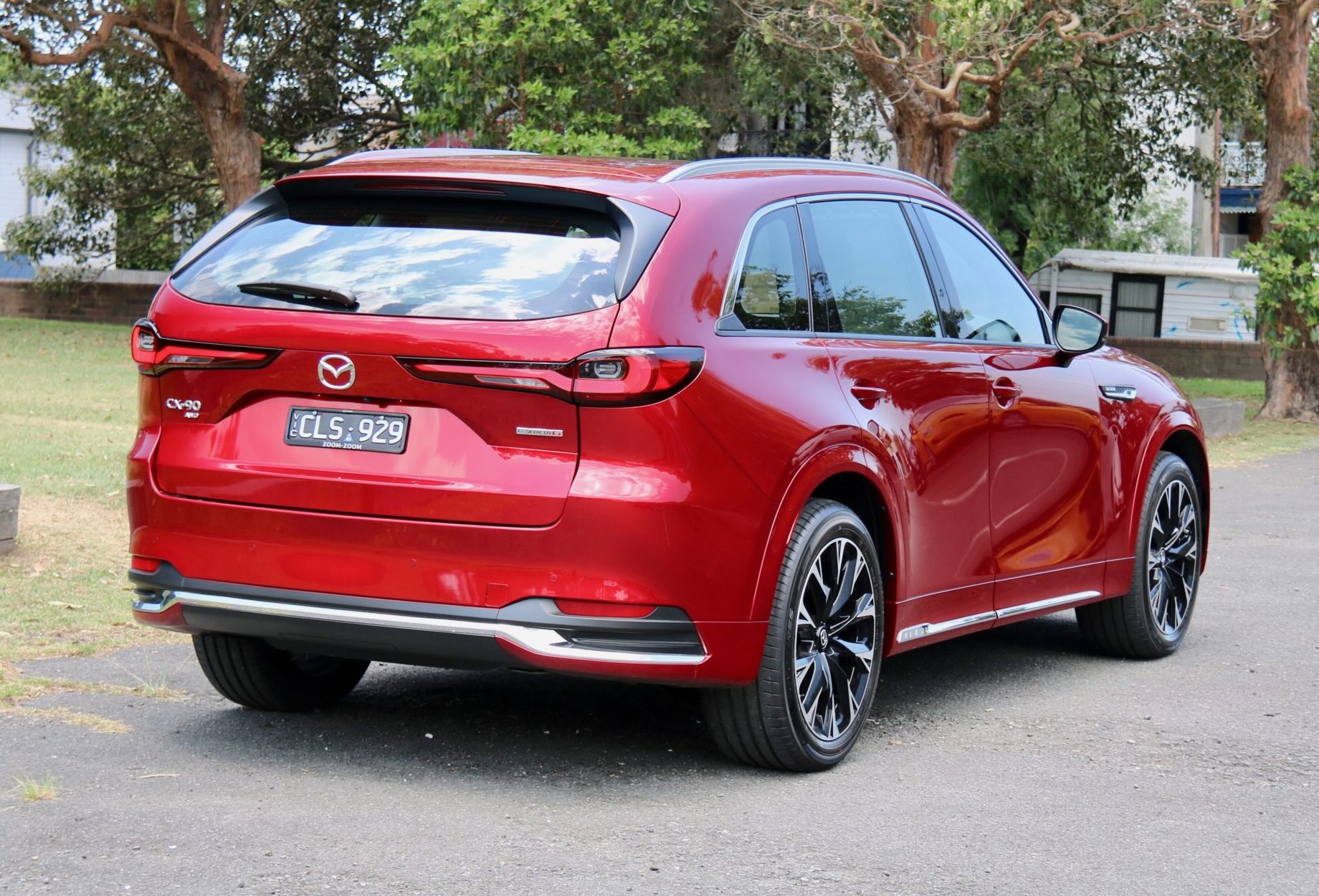
2025 Mazda CX-90 pricing (plus on-road costs):
| Touring petrol | $68,800 (-$6,000) |
|---|---|
| Touring diesel | $70,800 (-$6,000) |
| GT petrol | $77,800 (-$6,970) |
| GT diesel | $79,800 (-$6,000) |
| Azami petrol | $86,070 (-$7,800) |
| Azami diesel | $86,800 (-$6,424) |
Mazda CX-90 Touring standard equipment:
- 19-inch alloy wheels
- Dusk-sensing automatic LED exterior lighting
- Rain-sensing automatic wipers
- Keyless entry with push button start
- Hands-free power tailgate
- Auto-folding/heated/driver-side dimming mirrors
- Leather upholstery
- 10-way electric driver’s seat with memory
- 8-way electric front passenger seat
- 7.0-inch digital driver display
- 10.25-inch touchscreen
- Wireless and wired Apple CarPlay and Android Auto
- Sat-nav
- AM/FM/DAB+ digital radio
- Wireless phone charger
- Tri-zone automatic climate control
- Heated front seats
- Eight airbags
- Autonomous emergency braking (AEB) with pedestrian, cyclist and intersection support
- Lane keeping assistance
- Adaptive cruise control
- Blind-spot monitoring
- Front and rear cross-traffic alert
- Traffic sign recognition
- 360-degree camera
- Front and rear parking sensors
- Driver monitoring with attention alert
- Low-speed rear automatic braking
- Tyre pressure monitoring
- Auto high beam
CX-90 GT model adds:
- 12.3-inch touchscreen and driver screens
- 21-inch alloy wheels
- Matrix adaptive high beam
- Heated rear seats and steering wheel
- Panoramic sunroof
- 12-speaker Bose sound system
- Power steering wheel column adjustment
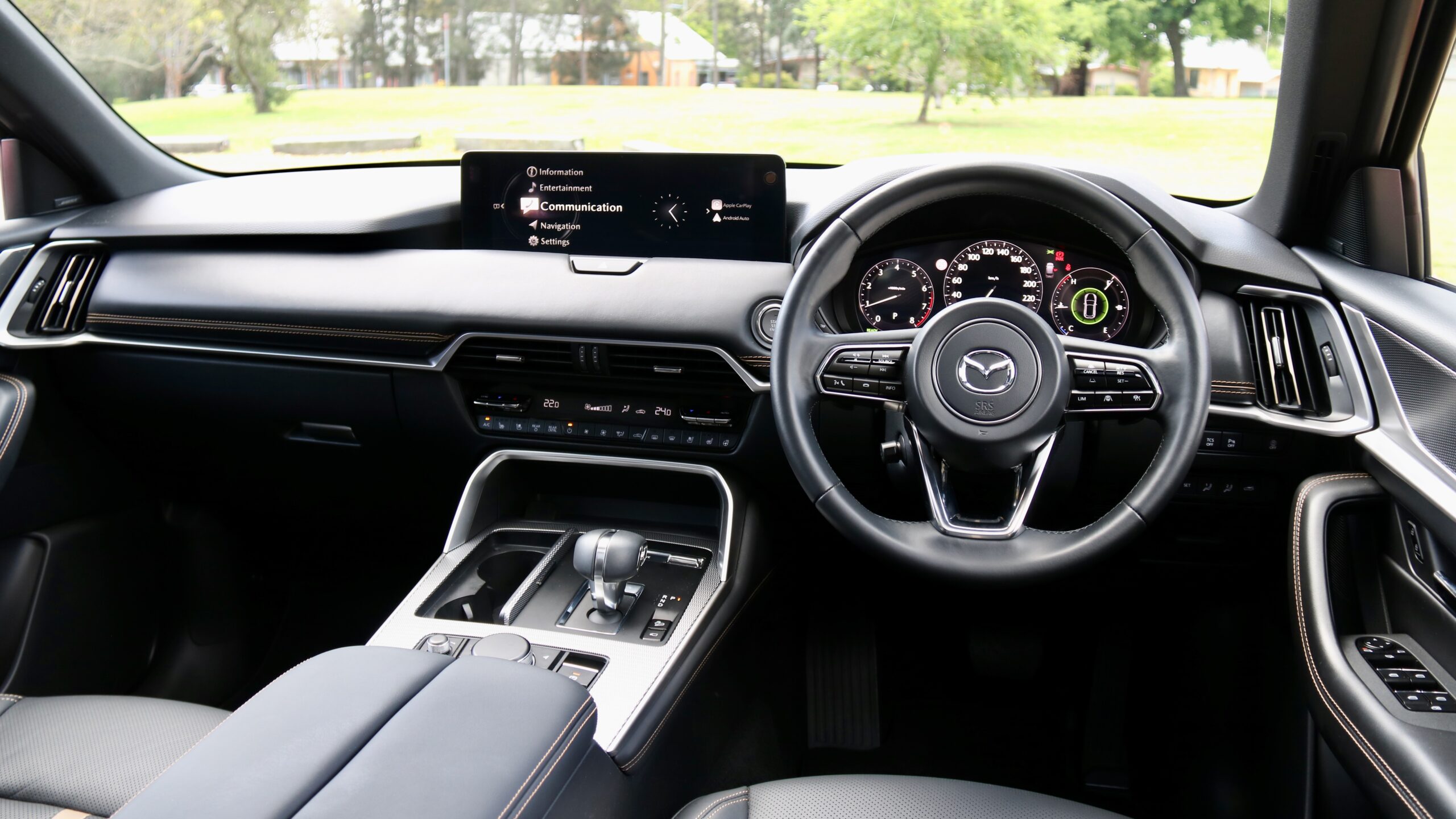
CX-90 Azami model adds:
- Nappa leather upholstery
- Two-tone wheels
- Body-coloured wheel arches and cladding
- Ventilated front seats
- Adaptive lane guidance with traffic jam assist
- Ambient interior lighting
- See-through view for the 360-degree camera
