What’s in the garage?
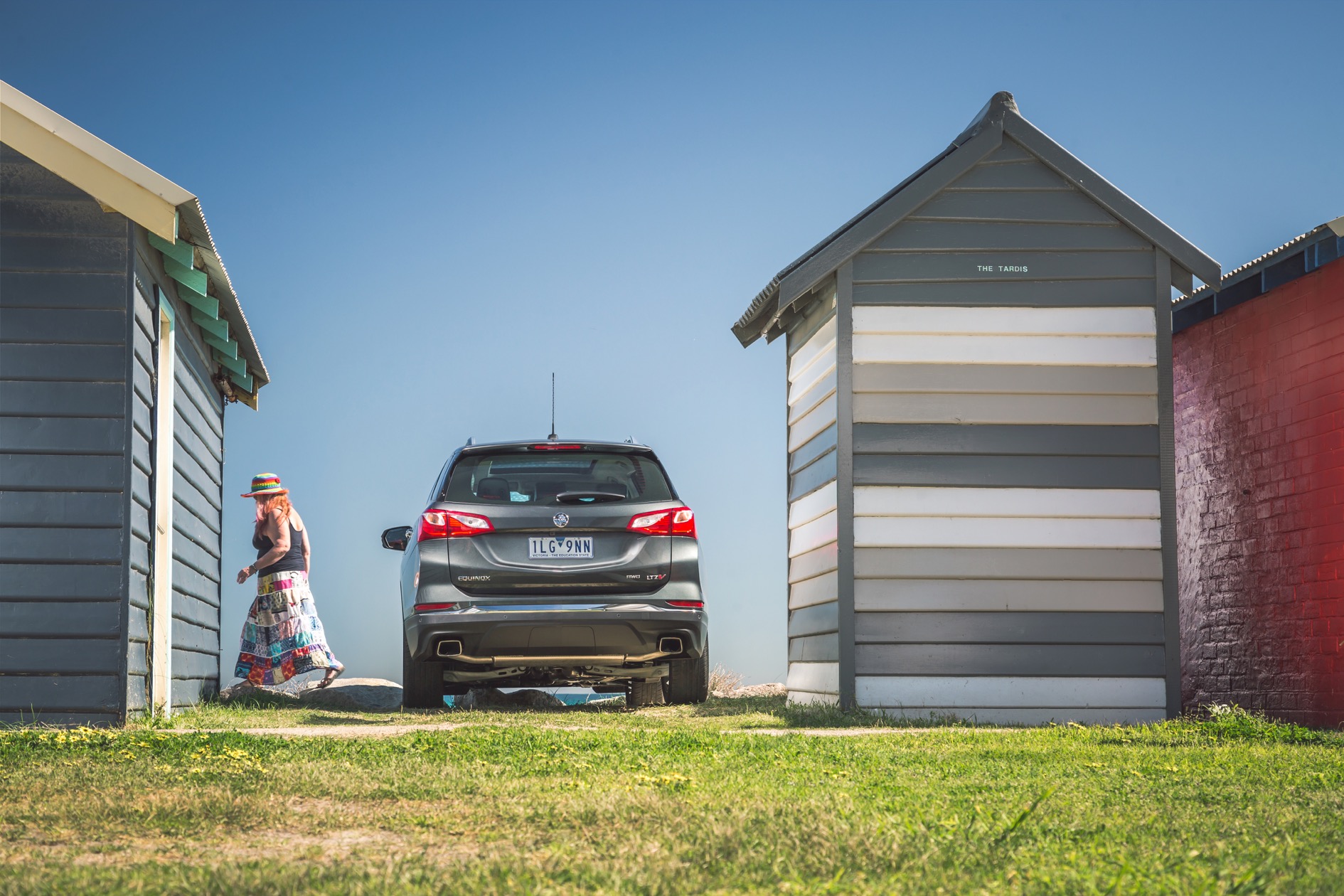
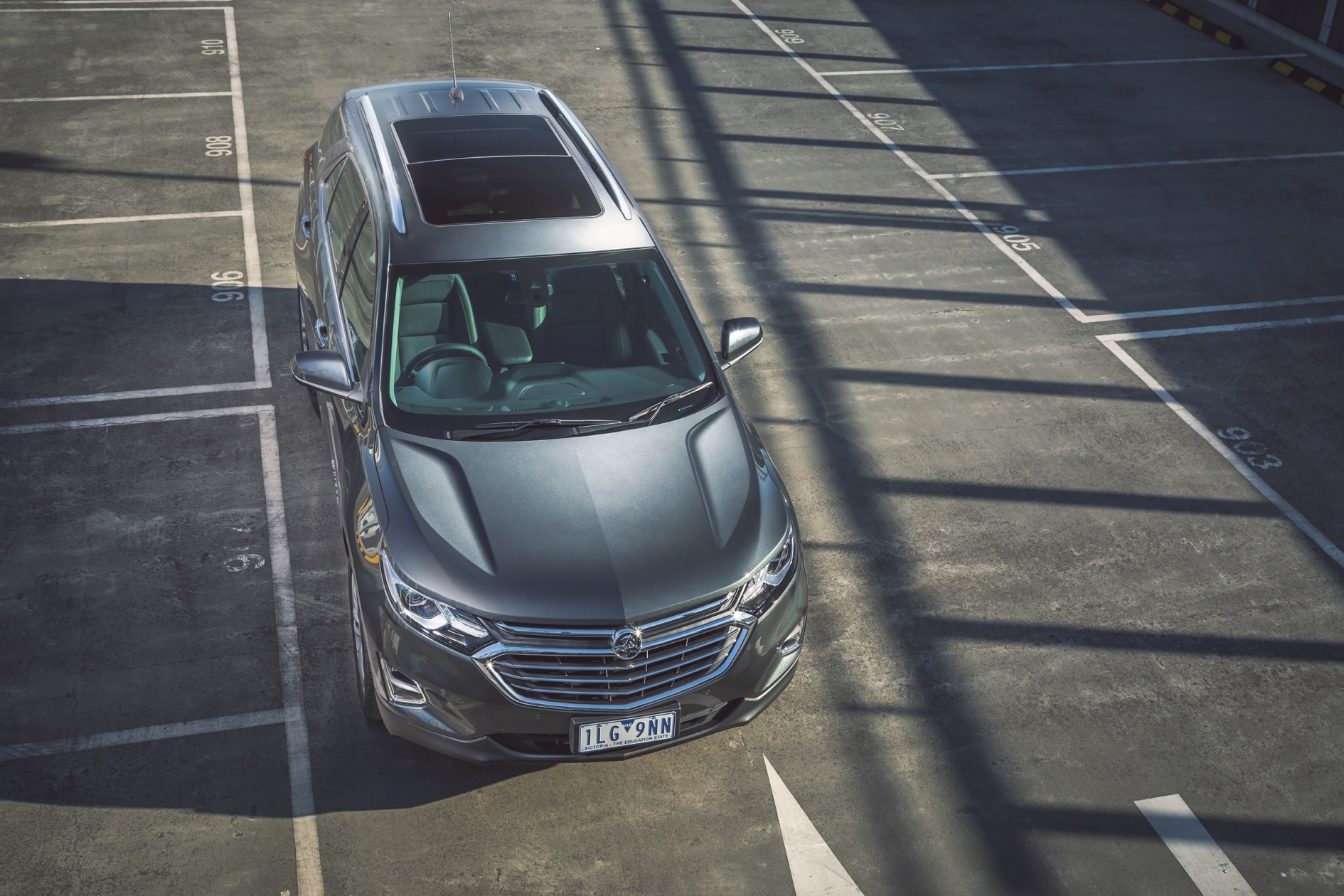
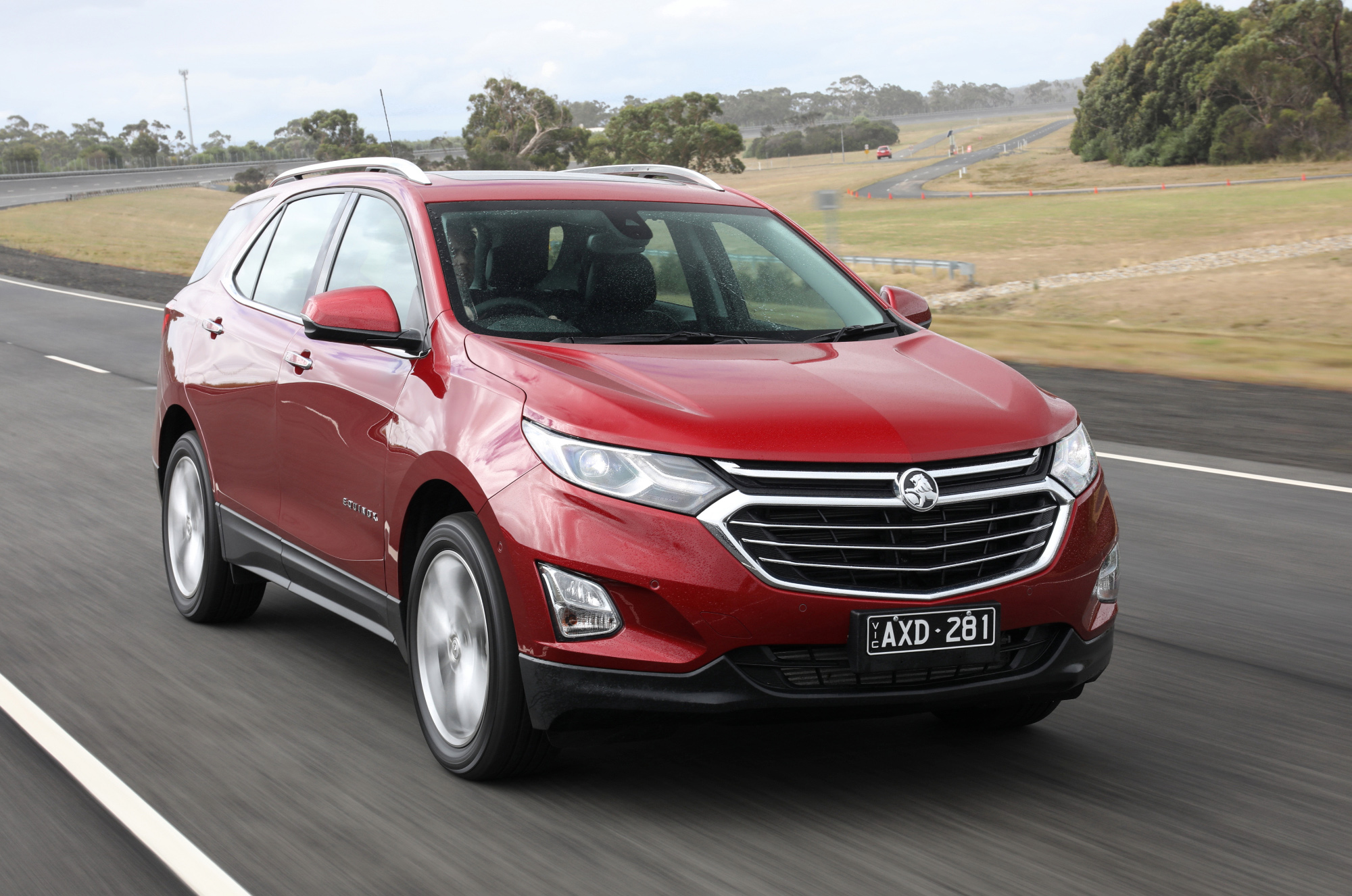
The term sleeper is usually reserved for high-performing cars with unsuspecting visuals, and the Holden Equinox LT is a pretty nice fit for that definition. With a 2.0-litre four-cylinder turbocharged engine producing 188kW and 353Nm, it is the most powerful mid-size SUV you can buy today. While it’s easy to go mad with power, the Equinox’s real purpose is to be a volume seller in one of Australia’s favourite new car segments. We take the pick of the range for a spin to find out if it is up to the task.
What we reckon

Cameron Kirby
Staff Journalist
| The turbo engine in the Equinox is super punchy, and the class-leading power is enough to sometimes overwhelm the front treads. But unfortunately, despite being relatively new to the Australian market, the rest of the Equinox feels a bit tired and old. There are worse options in the mid-size SUV segment, but there are definitely much better choices as well. |

Andy Enright
Deputy Editor
| I have a bit of a soft spot for the Holden Equinox, but it has to be the 2.0-litre turbo. Can you believe that this thing has 188kW and that you can subject the family to all that grunt for just $37 grand? That’s crazy. To put that into perspective, that’s the same sort of power you got when you bought a 2.9-litre Porsche Boxster from 2012. I reckon there’s a lot to be said for a vehicle that can do both sensible and slightly unhinged. |

Alex Rae
Online Editor
| This is the family-friendly SUV that the petrol head in the household gets something out of too. Kudos to Holden for selecting a thumping engine for its mid-size SUV, the turbo mill really is succulent. It rides and steers well too and Holden’s usual local tuning has done plenty to improve the Chevrolet-based product. Interior presentation is nothing special, but it’s functional and comfortable and at $37k, the bang for your bucks quotient is strong. |
Review
Power and performance
Nothing in the class can match the Equinox in terms of sheer power, though the Mazda CX-5 turbo has a few more newton metres. The class-leading 188kW is evident off the line and with an extensive local tuning process, the Equinox isn’t easily embarrassed on twisty roads either. But keep in mind the 2WD variant does have a propensity to serve up wheelspin in large doses if prodded too hard from a standstill – the same engine can be mated to an all-wheel driveline for better grip.
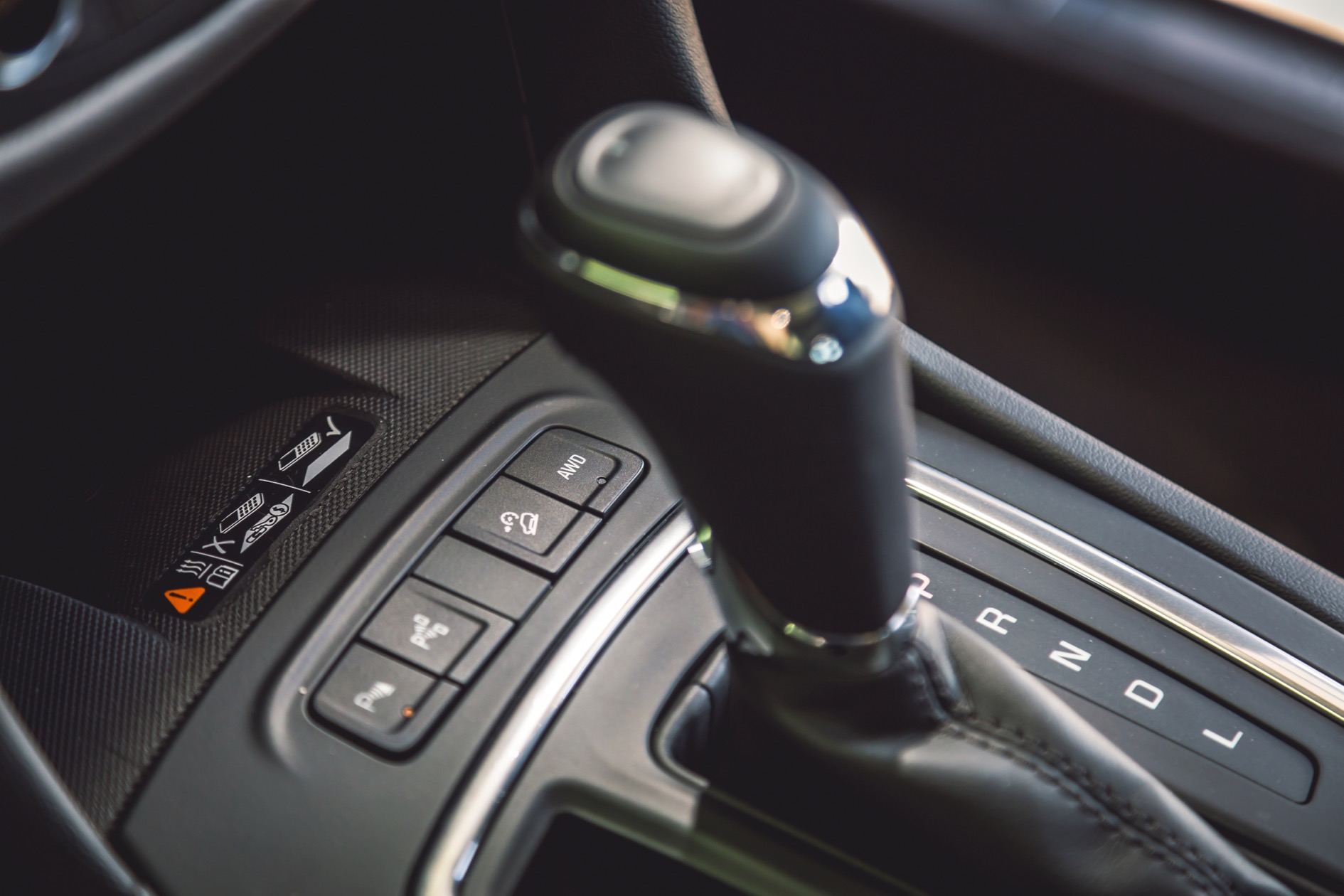
The 2.0-litre petrol feeds power through a nine-speed automatic transmission, with a 0-100km/h time of 7.3 seconds. Only the Mazda CX-5 turbo, which starts at $47,000 (a circa $10k premium), can offer similar performance in this segment with its 170kW/420Nm 2.5-litre petrol motor.
Ride and handling
Holden spent a large amount of time fine tuning the Equinox for Australian conditions, and it shows. The ride is excellent, and walks the line between too plush and too firm nicely. In both urban and rural environments the Equinox is a winner, with a dual personality that is as comfortable on a rat run as it is crushing the miles on the open road. Even on winding back roads, the Equinox can put a smile on your dial with communicative steering and delightful poise.
Interior and comfort
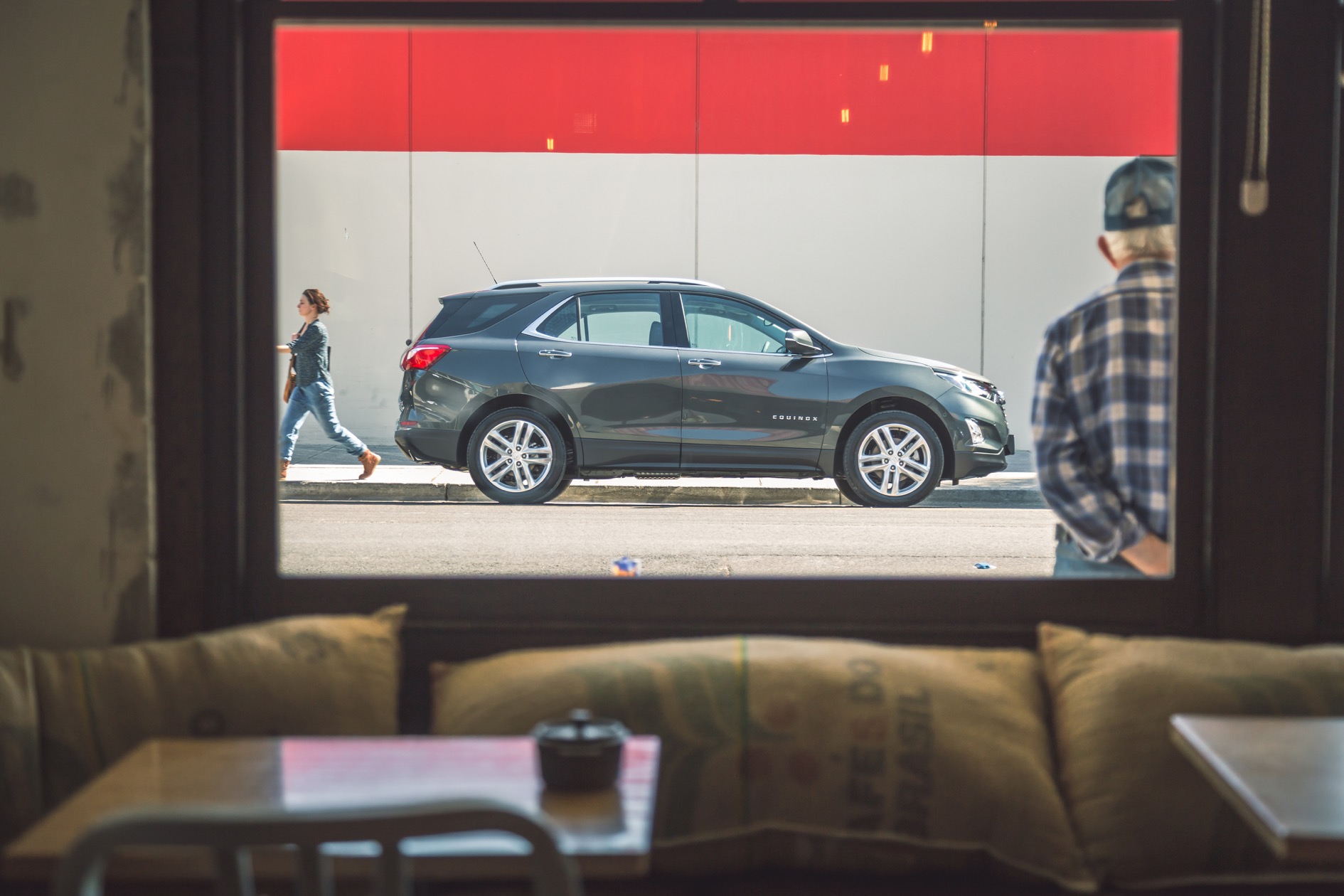
One of the Equinox’s strengths is its interior packaging, with the cabin being both spacious and comfortable.
Rear leg room is incredibly generous while the driver seat has haptic function, which uses vibrating bolsters instead of sounds to warn the driver of obstacles when reversing. It’s a little funky at first but you get used to it.
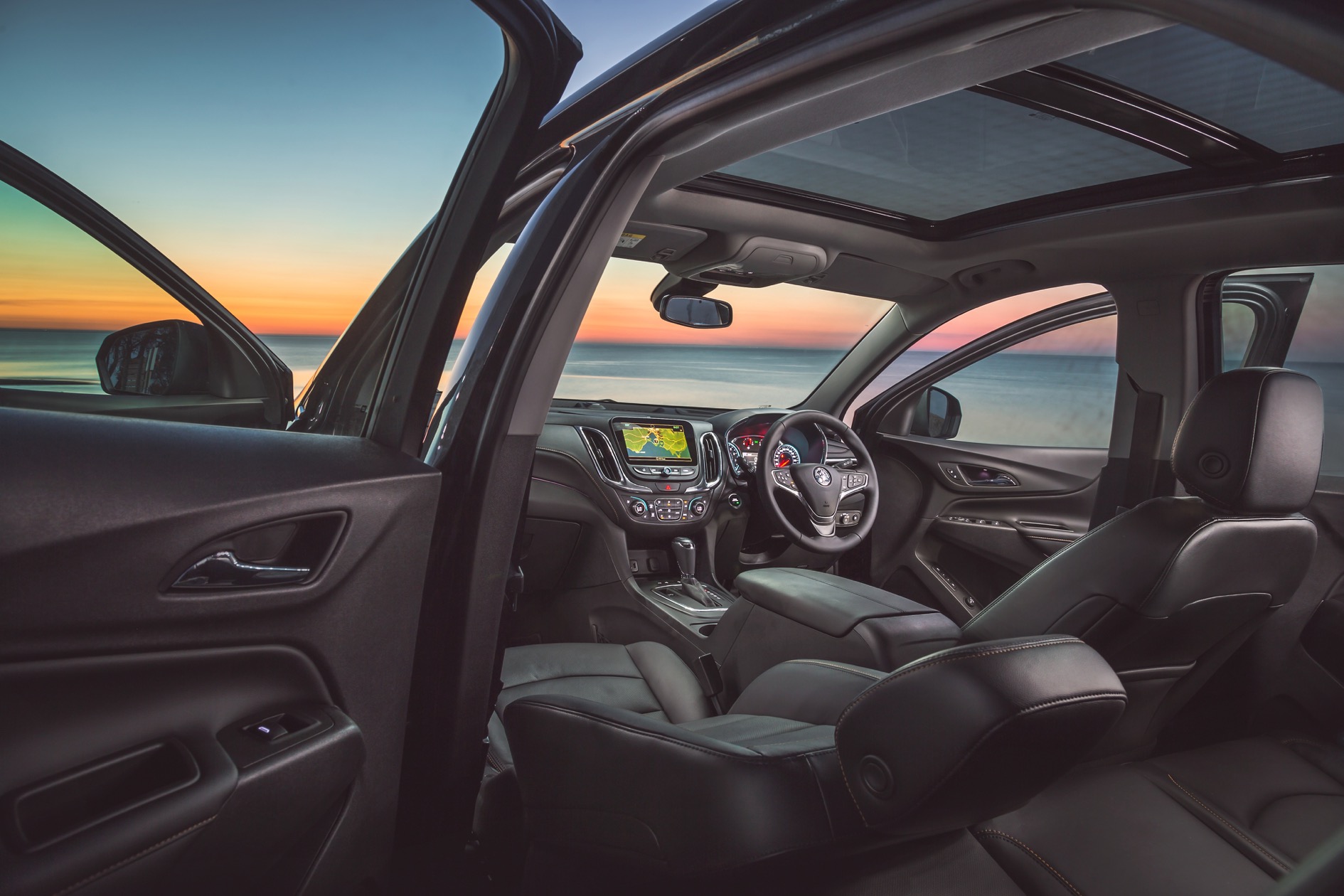
A neat trick used by some manufacturers now, Holden engineers reduced unwanted sounds by using noise cancelling technology found in headphones. It emits a sound wave through the audio speakers that cancels out tyre and wind roar and it seems to help hush noise in the cabin. It also helps clarity from the stereo system which incorporates Apple CarPlay and Android Auto and has some punch to it.
However, these positives are undone by the materials and design of the interior, which are disappointing. Hard and thin plastics dominate the dash, while the centre console sits too high, prompting you to use a claw-like posture to use the gear shifter.
Verdict
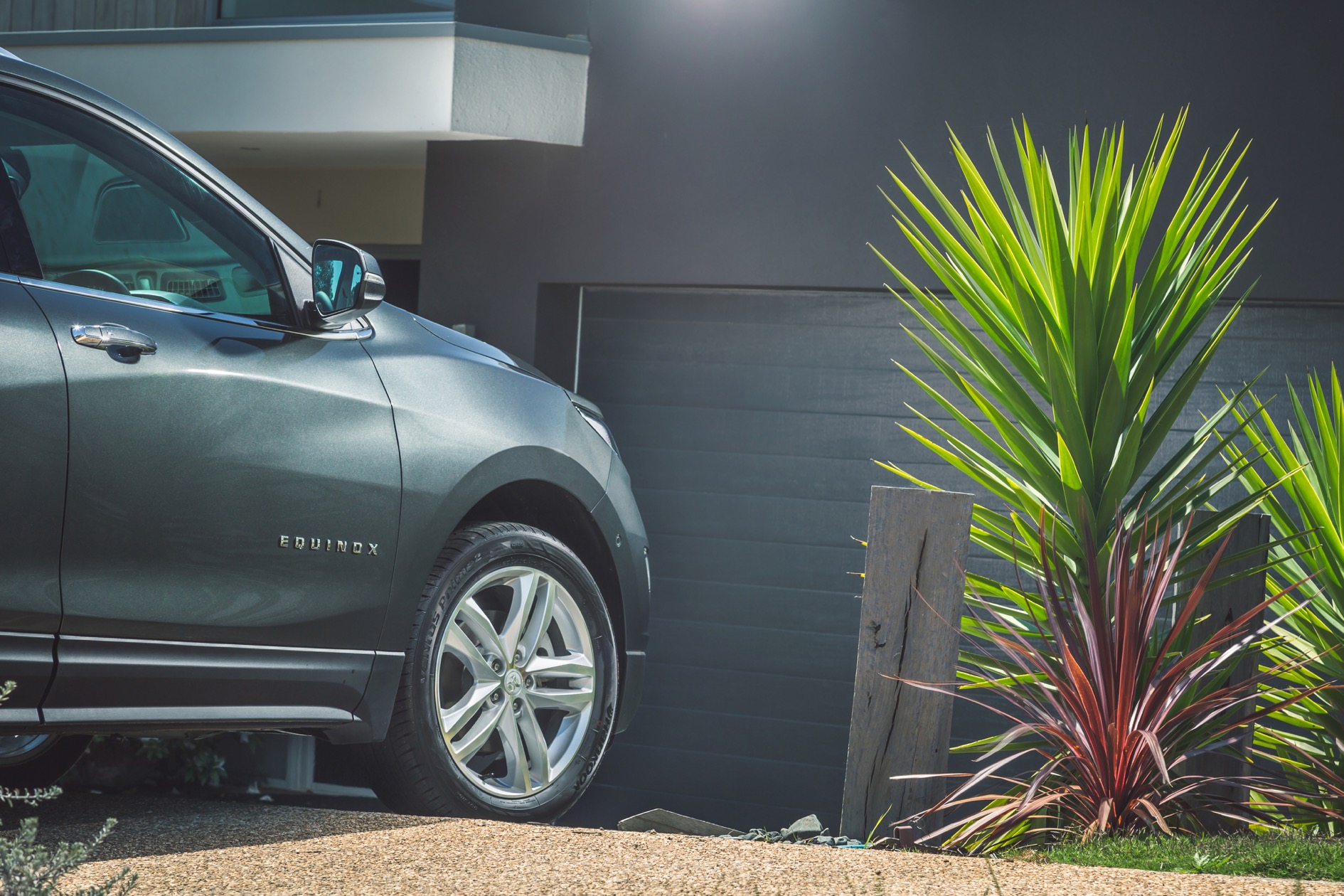
The LT 2WD is the pick of the Equinox range, but it still falls short of being a class leader due to the disappointing interior quality. If driving enjoyment is the top of your priority list, then the 2.0-litre Equinox is a must-drive. For those who favour practicality above looks, the Holden is also worth a test drive. But the unfortunate reality for Holden is that many buyers want a car that looks and feels premium as much as a nice driving experience, and it’s here where the Equinox struggles to win any favours.
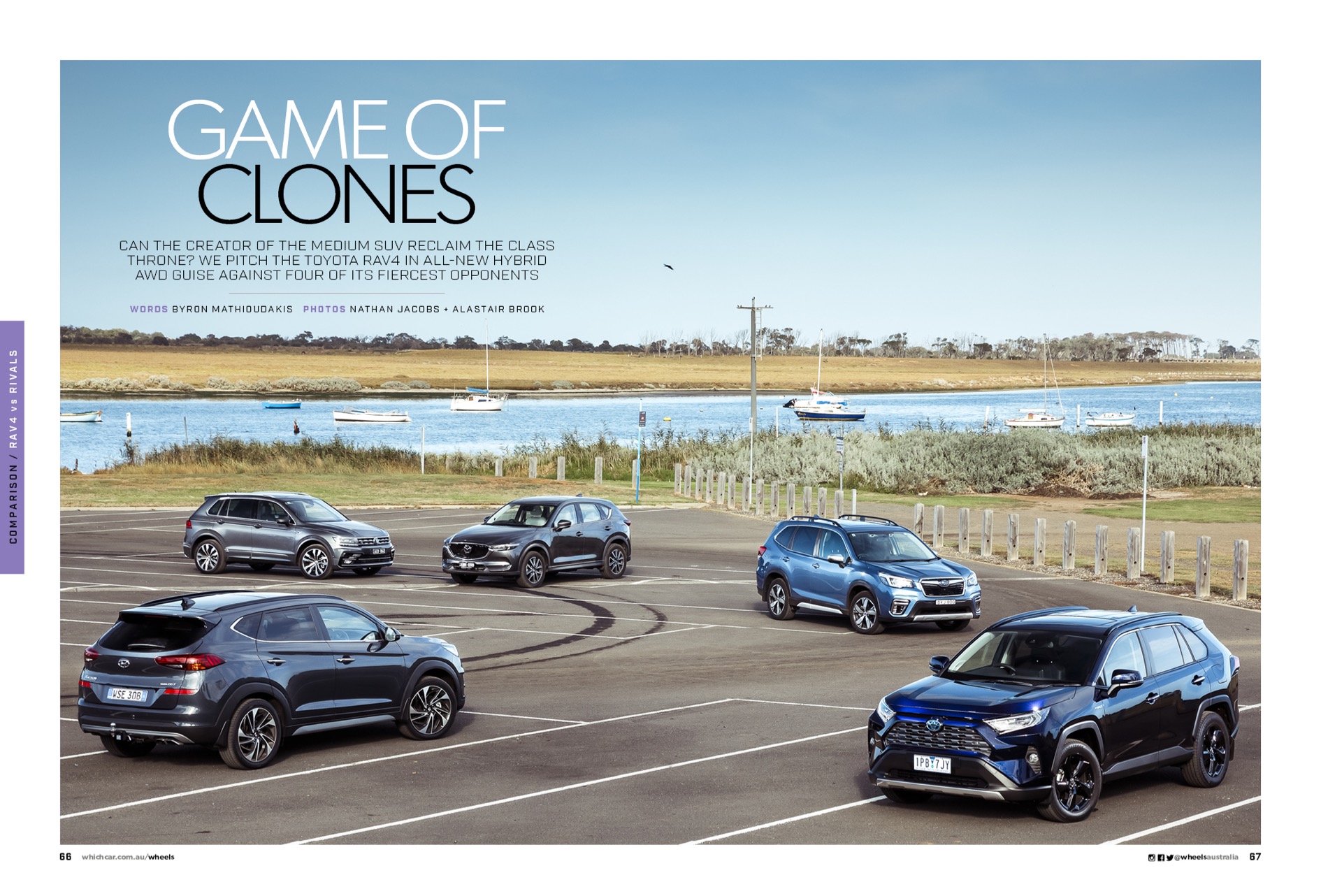
Mid-sized SUVs continue to be the super-heated segment in Australia, so our June issue is your essential reading to learn the pecking order between the all-new Toyota RAV4 Hybrid and its key rivals: the Mazda CX-5, Subaru Forester, Hyundai Tucson and VW Tiguan.
Spoiler alert: the ending is way more climactic than the final ep of Game of Thrones.
Meanwhile, editor Inwood rather fancies himself in a snug-fitting Nomex racesuit, so our hard-pedaling leader hops the ditch to New Zealand to wring the neck of the ultimate track-day weapon – the spectacular, F1-car-on-a-flexi-day Rodin FZed.

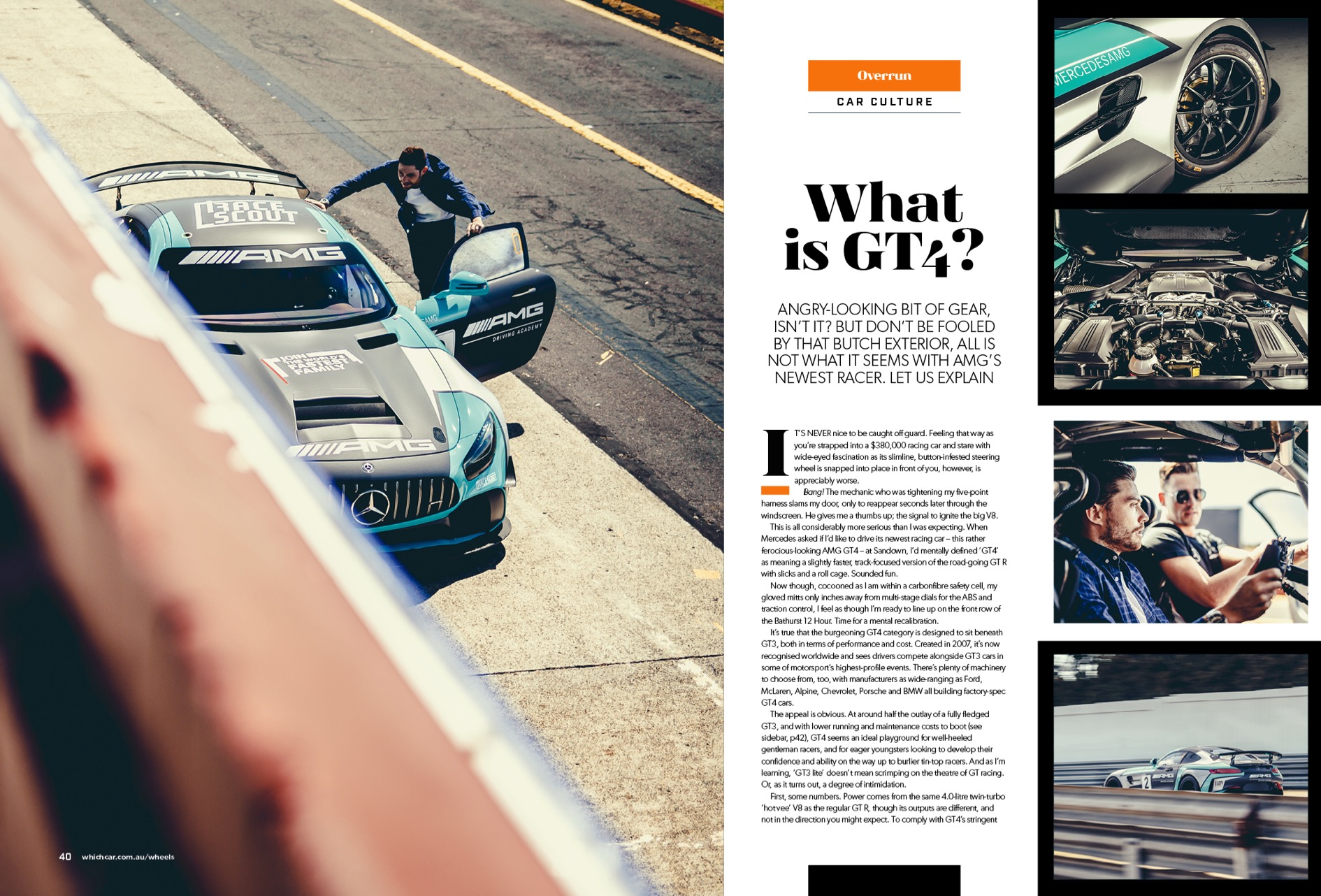
Then, reluctant to climb out of a suit that’s so slimming, Inwood jets home to drive the Mercedes-AMG GT4 race car, and gives us the need-to-know on this emerging category.
And how about BMW resuscitating the 8 Series badge? We take the M850i, a pulse-raising 2+2 super coupe, to visit the NSW racetracks which were killed off years ago.

As for EVs, we’ve got both ends of the spectrum covered this month. Ged Bulmer takes Hyundai’s battery-powered Kona EV SUV the full length of Queensland’s ‘EV Superhighway’ and finds recharging provides ample time for roadside kebab breaks, while Porsche’s first-ever pure EV sports car, the Taycan, shows its appetite for doughnuts in the Arctic Circle.

What about even more fresh metal? Glad you asked.
We jump into the Mercedes CLA250, a car that’s now bigger than a C-Class, yet shoehorns into a narrow niche. So is it fit for purpose?
Less questions hang over the Cabriolet version of Porsche’s new 992-generation 911. This really is the rag-top sports car you can buy, thrash, and not hate yourself in the morning.
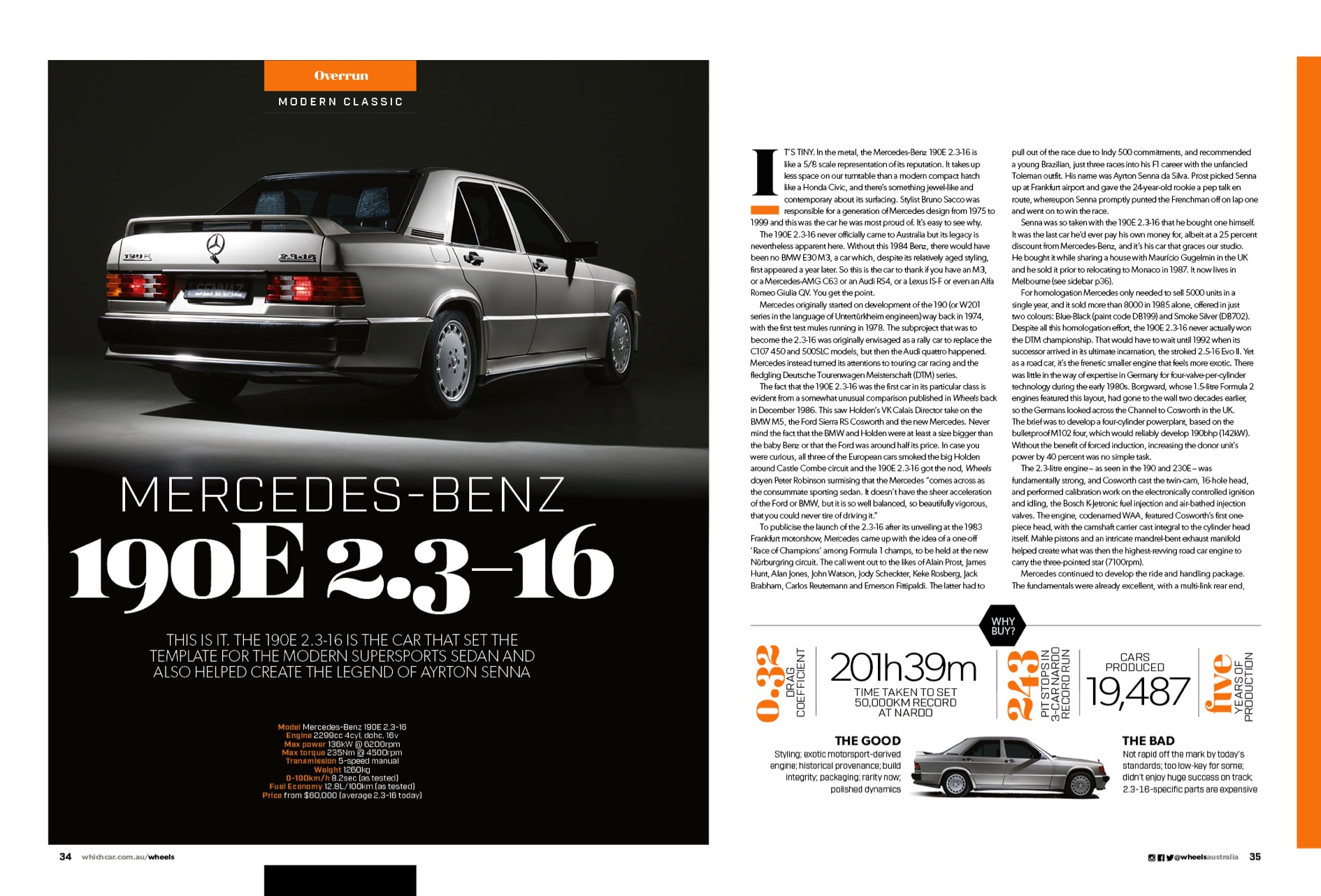
More? Of course there’s more! Some 25 years after his passing, Ayrton Senna’s own Mercedes 190E 2.3-16 graces our studio, as we dissect what made this spiritual forebear to the C63 such a game-changer for Benz.
Oh, and ex-F1 ace David Coulthard fesses up to the four life lessons he should have learned earlier, and we stick cash-rich EV builder Rivian under the microscope to see if it really can be the Tesla of 4×4 utes.
It’s all busting at the seams of the piping hot June issue of Wheels, on sale now or subscribe here.
Oh, the joy of online configurators. While they can be an effective way to demolish an afternoon’s productivity, they can also turn up some unexpected gems. Like the full pricing and features of the all-new 2019 Genesis G70.
Hyundai’s luxury car division has a lot riding on the G70, and it’s building from a low base point. In 2018, the brand shifted just 19 cars in Australia, but assured us that the G70 and G80 siblings would be worth the wait. Well it looks like that wait is nearly over. The G70 debuted in 2017 and it’s been long-awaited on these shores. Anticipation built for the Peter Schreyer design after it won the coveted 2019 North American Car of the Year crown. Now we can reveal Aussie pricing, which starts at $58,000 for the four-cylinder 2.0T.
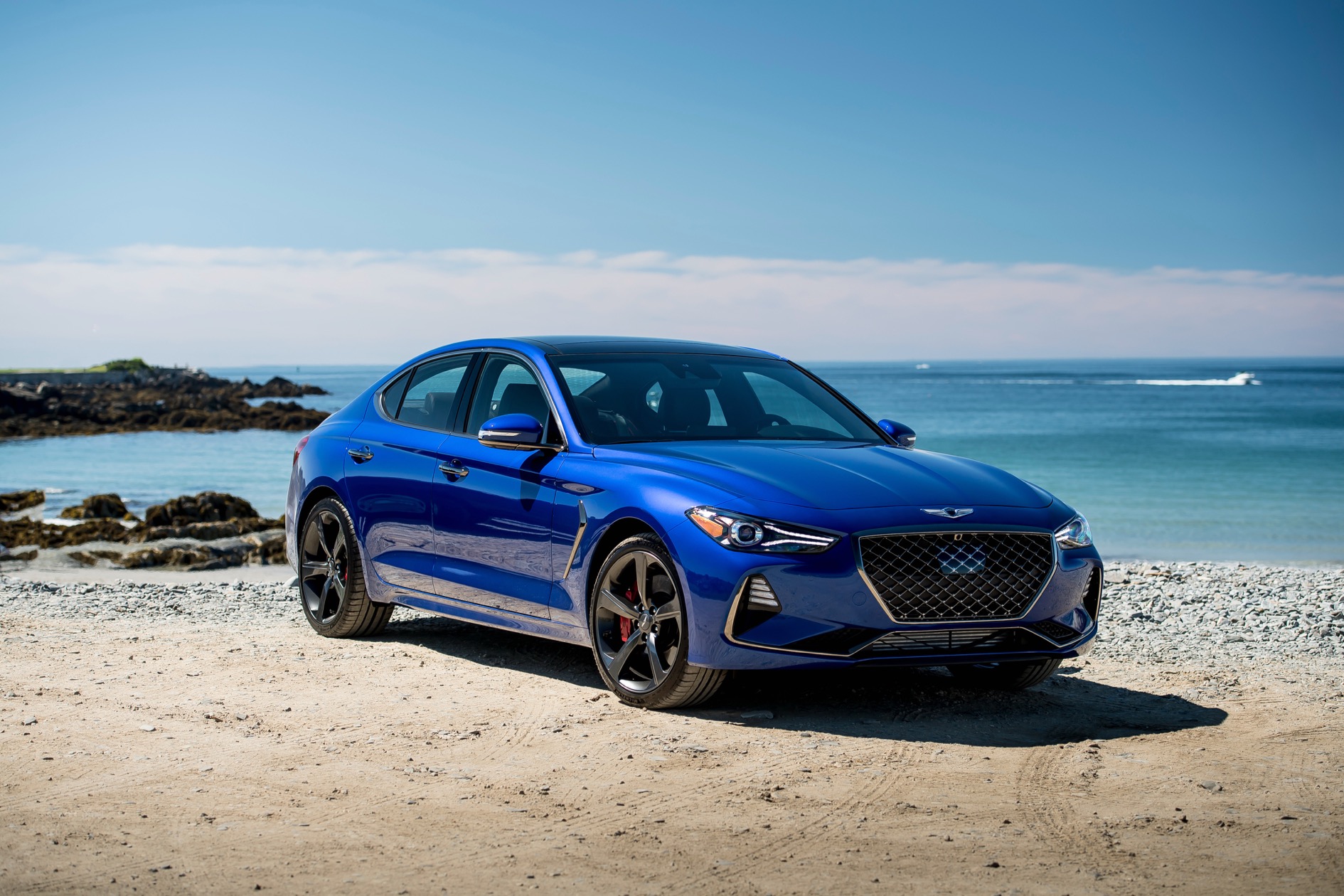
That nets you gear like 18-inch alloys shod with Continental rubber, quilted leather seats, aluminium trim fillets and convenience features like an 8.0-inch colour touchscreen, Apple CarPlay and Android Auto, a nine-speaker Genesis (a separate audio company to Hyundai’s luxe brand) stereo and a wireless phone charging pad.
Dig a bit deeper and you’ll net the G70 2.0T Sport, which is priced from $62,000 and upgrades to anthracite 19-inch alloy wheels and – importantly if our experience with the mechanically similar Kia Stinger is anything to go by – Michelin Pilot Sport4 tyres.
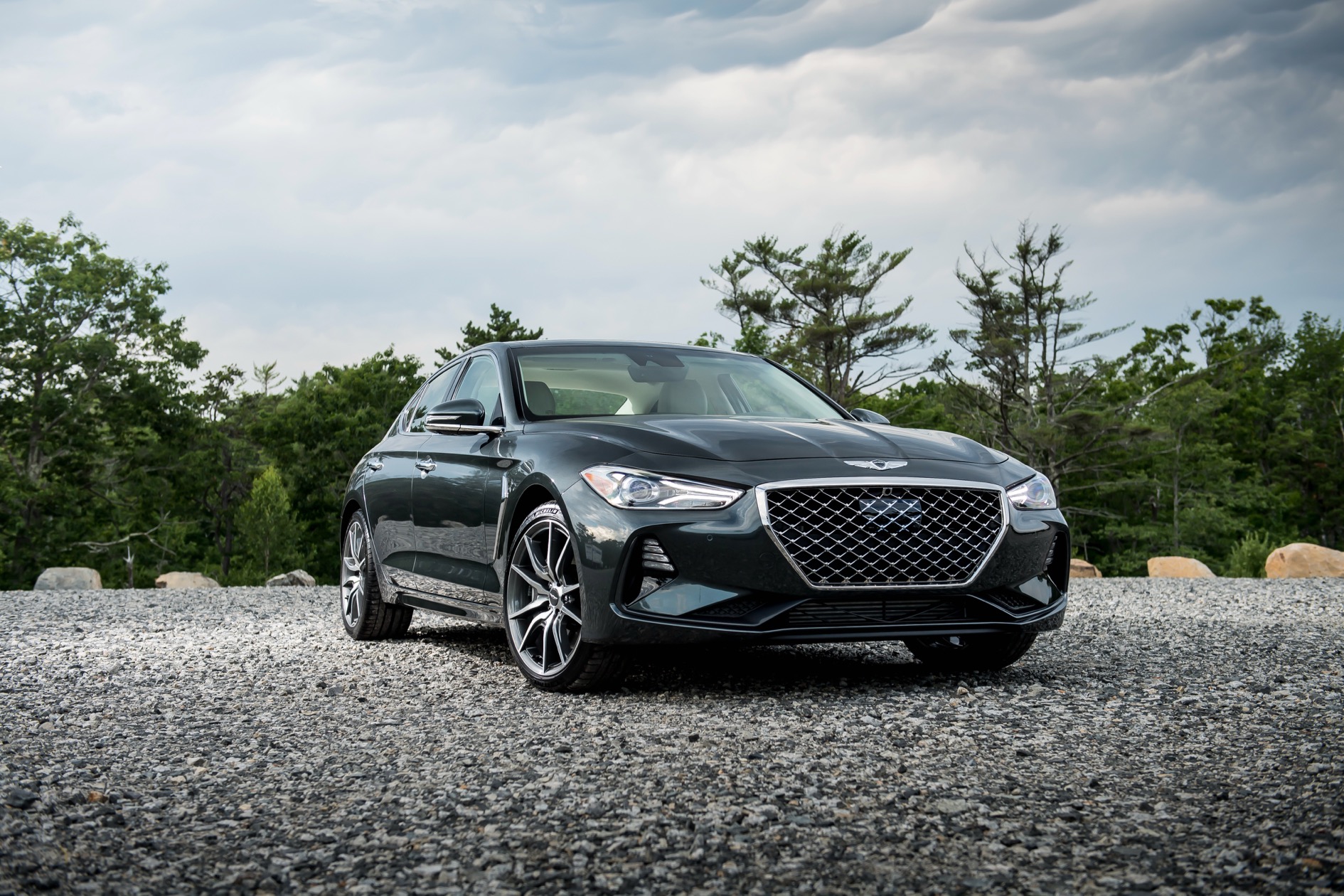
You’ll also spot Brembo brake calipers nestling behind those handsome wheels, and beneath the skin there’s a proper mechanical LSD and upgraded cooling. There are also dark chrome exterior trims, red and grey interior finishes and an extended colour palette for the paintwork.
A four-cylinder 179kW/353Nm engine, as good as it is, might leave you with a slight feeling of FOMO compared to the full-fat 3.3-litre twin-turbo Lambda V6. You probably know this engine fairly well from the Kia Stinger GT and it is an absolute monster of a powerplant. Fortunately, you don’t need a king’s ransom to get your hands on 272kW and 510Nm.
Pricing opens at $71,000 for the G70 3.3T Sport, the kit list of which is similar to its four-pot sibling. At this point, it won’t have escaped your attention that the Kia Stinger 330Si with its seven-year warranty retails for $56k, so Hyundai really have to deliver a convincing reason to separate you from that additional $15k.
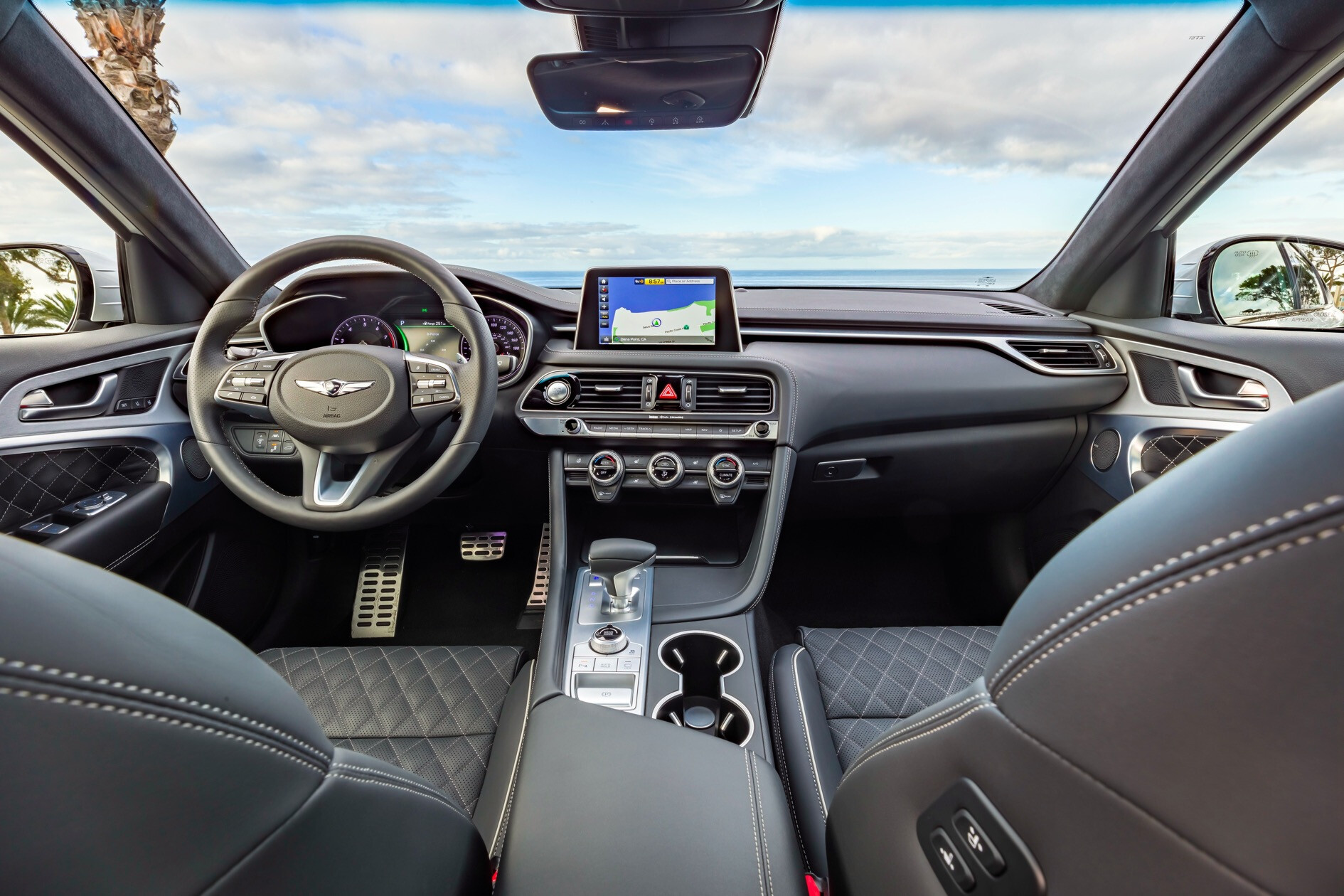
The next model in the V6 line up sounds a bit of a misnomer, the 3.3T Ultimate starting at $78,000-$81,000. There’s a lot of gear in this one, with adaptive headlights, 16-way electrically adjustable driver’s seat with dual memory function, soft Nappa quilted leather upholstery, heated and ventilated front seats, heated outboard rear seats , a surround-view camera system, a head-up display, and a 15-speaker Lexicon by Harman sound system. In case you were unfamiliar with that brand, it’s won a Technical Grammy award for audio excellence so it’s probably pretty punchy.
Alternatively, for the same price, you can specify the more focused 3.3T Ultimate Sport, which dresses the car with a sportier optic. Customers get much the same alloys, dark chrome and colour options as the 2.0T Sport trim.
The car’s due to be released to Australian customers in late June, so why not jump onto the configuratorand have a play. It looks a genuinely handsome piece of styling, so colour us more than interested.
Two of BMW’s SUVs have been given new hearts and M badges, to create the 2019 BMW X5 M50i and BMW X7 M50i.
With a new development of BMW’s 4.4-litre twin-turbo V8, the M50i variants of each make the same 390kW of peak power between 5500 and 6000rpm, while a maximum of 750Nm of torque is available from 1800rpm right up to 4600rpm.
Power is put to all four wheels in both models, via BMW’s xDrive AWD system, after being transmitted through an 8-speed Steptronic gearbox.
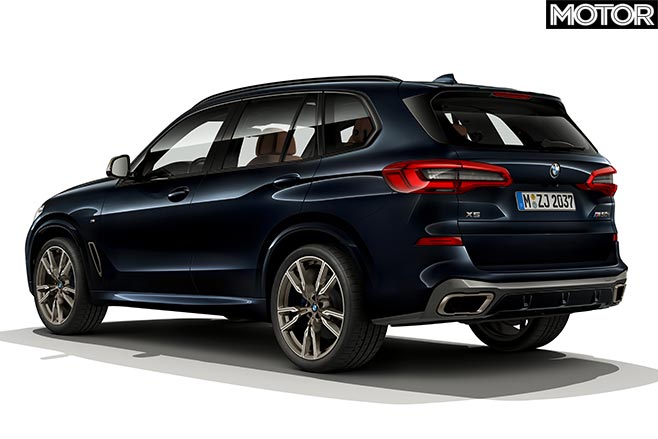
BMW says this allows for acceleration from 0-100km/h in 4.3 seconds for the X5 M50i, and in 4.7sec for the X7.
While still primarily the same 4.4-litre engine as seen in previous BMW models, the V8 has copped a few tweaks which have allowed the engine to “respond with great sensitivity” to driver’s right-foot-input.
BMW explains that “these include the crankcase, cylinder barrels, pistons, crankshaft and cylinder head, and above all the freshly updated BMW TwinPower turbo technology.

“The turbochargers positioned between the cylinder banks in the V compartment have been enlarged, while the direct petrol injection performs at a new maximum pressure level of 350 bar.”
The engine’s upgrades and impressive power outputs are necessary for pulling an estimated approximate 2300kg and 2500kg in the X5 and X7 respectively, though BMW hasn’t confirmed weights for either model.
Carrying this weight in the X5 M50i is an adaptive M suspension setup, with two settings in the form of Comfort and Sport. The X7 M50i, on the other hand, receives more sophisticated (as a higher class of SUV demands) ‘adaptive dual-axle air suspension’ which can be optioned to the X5 for extra cost.

This allows the X7 to lower its ride height by 20mm in Sport, or raise it by 40mm for traversing off-road environments. It can be paired with ‘integral active steering’, or all-wheel steering, for each model, which turns the rear wheels slightly against the fronts for sharper turns at low speed, or with the fronts for more stability at highway speeds.
Statistical proof that Aussies love performance cars
Each model is expected to arrive in SUV-hungry Australia later this year, with BMW Australia confirming it has expressed interest in both. Pricing has yet to be confirmed.
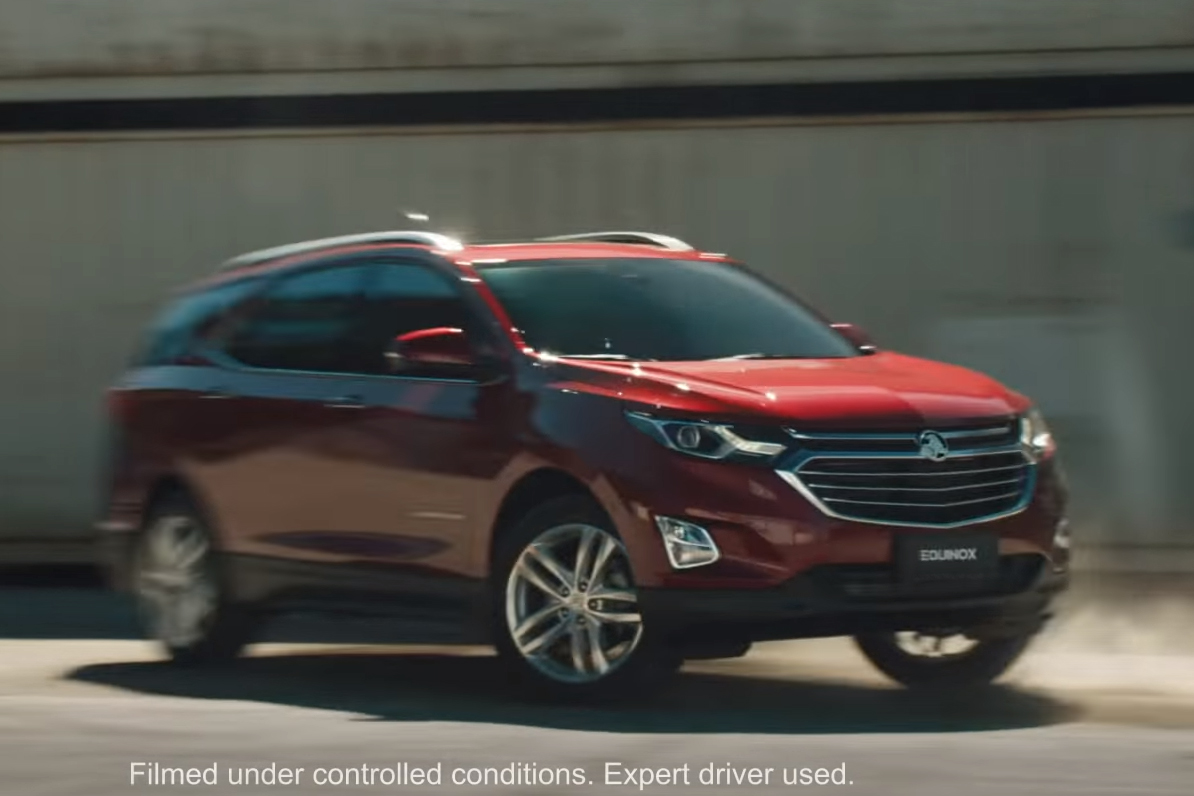
Holden’s spin on those usually dull SUV TV ads hit the air in February. It showed a highly stylised heist, a clumsy quintet of Gen X crooks, and a few Lion-badged crossovers to help them escape.
Sure, it’s a little cheesy, but at least it’s something different to the predictable (and often stereotypical) stage of a mum with SUV aspirations wrangling some feral kids onto a soccer pitch. The ad is even a little saucy, with a wonderfully executed J-turn at a shipping yard giving the crooks a breakthrough in the getaway.
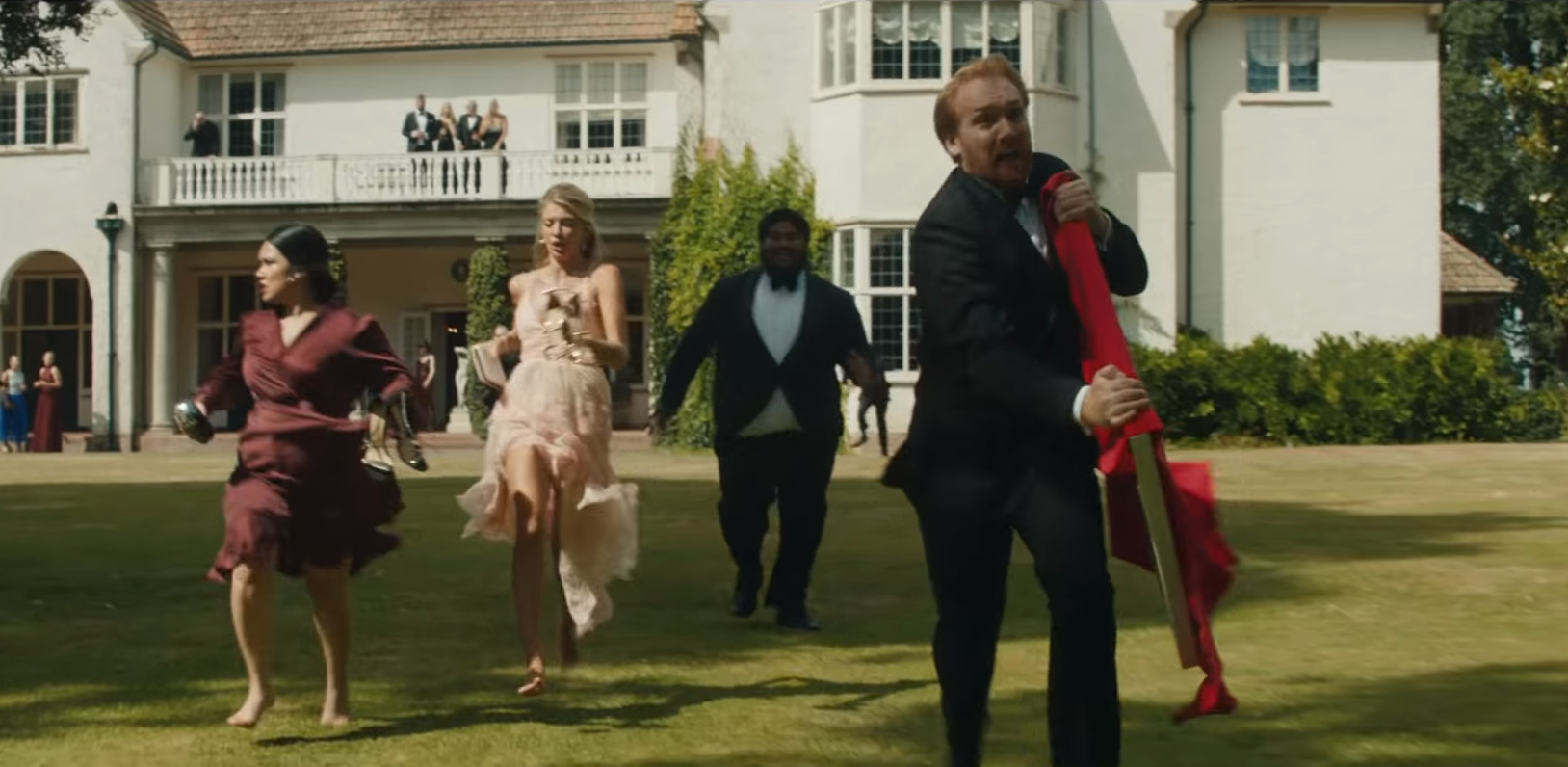
Though the scene when the Holden Equinox does a 180-degree turn is splashed with a clear disclaimer, “Filmed under controlled conditions. Expert driver used,” it was clearly too saucy for some. Well, at least one.
Ad Standards Australia, the advertising authority responsible for banning ads for the Volkswagen Amarok and Ford Ranger Raptor last year after complaints of reckless driving, has told Holden to pull its ad for the new SUV campaign after an objection to that scene.
You can watch the full ad with the undeleted scene in question here:
According to Mumbrella, the complaint stated, “In my opinion it [the J-turn] would qualify for a loss of licence under the current hoon laws and the vehicle impounded. Quite an inappropriate ad in today’s climate of road safety.”
Righto, should we ban the scenes of art being stolen too? In today’s climate of job instability and pressure on housing prices, SUV buyers – under the pressure of keeping up with Joneses – might be influenced to organise a heist. In fact, the fumbled exit of the TV ad crooks would suggest they were indeed first timers. Thus, the average SUV buyer might be enticed to perform an illegal activity.
This is all too easy to whinge about.
It is a wonder how we ever manage to have car ads beyond static and slow-rolling suburban shots (though that could be deemed illegal too) given what the Voluntary Code of Practice for Motor Vehicle Advertising guidelines stipulate.
Car advertisements:
“Should avoid explicitly or implicitly drawing attention to the acceleration or speed capabilities of a vehicle.
“Avoid references to the speed or acceleration capabilities of a motor vehicle.
“Factual references to the capabilities of the motor vehicle (for example, cylinder capacity, kilowatt power of the engine, or maximum torque generated) are acceptable, provided that they are presented in a manner that is consistent with the provisions of the Code.
“Use of disclaimers indicating that a particular scene or advertisement was produced under controlled conditions; using expert drivers; that viewers should not attempt to emulate the driving depicted; or expressed in other similar terms, should be avoided. Such disclaimers cannot in any way be used to justify the inclusion of material which otherwise does not comply with the provisions of the Code.”
Ad Standards ruled that the disclaimer used during Holden’s ‘hoon’ scene was “unsatisfactorily compliant,” and that the 180-degree turn would be illegal on a road. Doubtless, it is. But no, Equinox drivers are unlikely to pull the handbrake during a test drive.
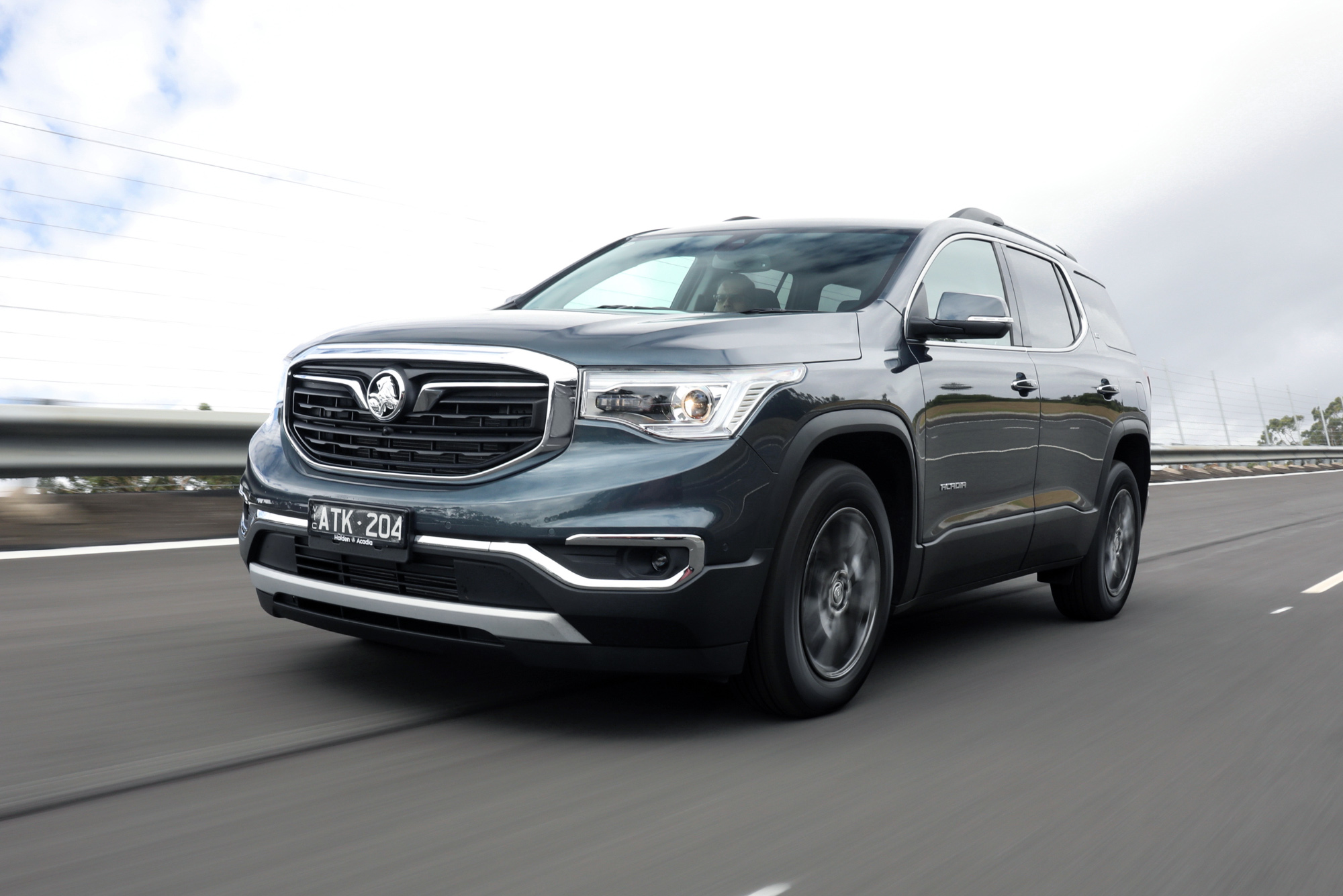
Holden, biting its tongue like a sapped diplomat, responded to the ruling:
“The driving scenes deliberately leverage cliché, Hollywood environments and actions to help our audience quickly understand that this Advertisement is designed to look like a movie trailer, rather than a depiction of real life events,” it said in a statement.
“The advertisement was at all times filmed under controlled conditions by trained and experienced professionals. There was no unaccounted-for traffic, or any other potential obstacle present at any point during filming.”
While car ads cannot depict, encourage or condone dangerous, illegal, aggressive or reckless driving, surely, in its statement, Holden was alluding to the fact that the Code of Practice also states that, “Advertisers may make legitimate use of fantasy, humour and self-evident exaggeration in creative ways in advertising for motor vehicles.”
But don’t let that get in the way of a good ol’ beat up.
Volkswagen Amarok ad banned:
Ford Ranger Raptor ad banned:
In the game of Silicon Valley thrones, it appears that space is not enough. And if you follow the whispers, the money and the manuscripts, Amazon CEO Jeff Bezos looks to be making a move towards preparing Amazon’s own line of electric vehicles that could shake the ground of rocketship tourism rival Tesla. Here’s how it’s unravelling.
In February, Amazon led a US$700 million investment round for Michigan-based electric vehicle company and Tesla rival, Rivian Automotive. At the time, Amazon said its investment was “inspired by Rivian’s vision for the future of electronic transportation.” Curious.
In addition to Rivian, Amazon has also vested interests in autonomous driving technology developer Aurora, said to be worth more than US$2 billion and founded by ex-Uber, Google/Waymo and Tesla staffers including Sterling Anderson, Tesla’s former Director of Autopilot programs and Chief Program Product Manager of Model X.
Amazon also has been a partner in Toyota’s e-Palette concept (a self-driving commercial vehicle project) and self-driving truck start-up Embark. And just this year, rolled out its own self-delivery robot, Scout.
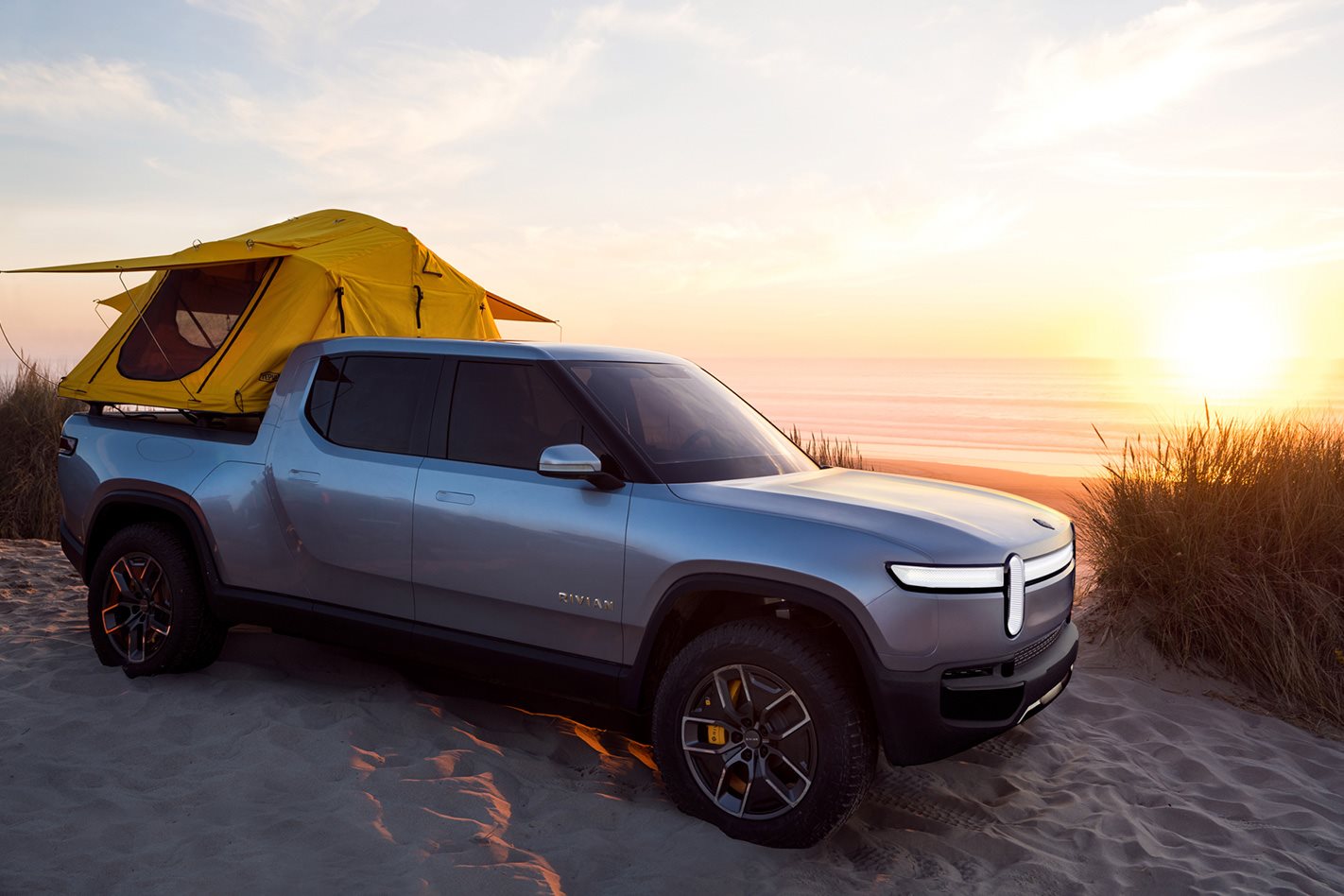
Rivian itself is experiencing quite a bit of buzz. Ford has just invested US$500 million ($650 million) into the 20-year-old company, and its R1T electric dual cab ute has been garnering stacks of attention online.
Founded by 36-year-old MIT alumni RJ Scaring – who likens his brand to a Patagonia for automotive (a Silicon Valley simile if there ever was one) – Rivian started out making electric sportscars, but soon switched to adventure utes and SUVs. After famously poaching some of McLaren’s top engineers, Scaring vowed to bring “world-class cars” back to Detroit, albeit electrified ones.
So what does Amazon want with Rivian? In a recording obtained by CNBC, Bezos reportedly explained the investment to his staff. “If you think about the auto industry right now, there are so many things going on with Uber-isation, electrification, the connected car — so it’s a fascinating industry,” he said. “It’s going to be something very interesting to watch and participate in, and I’m very excited about that whole industry,”
The billionaire founder of Amazon added that electric cars wouldn’t be the company’s next “pillar” anytime soon, however. That said, Bezos certainly has the ingredients to become the next leader in the lucrative electrified and self-driving commercial vehicle space (and beat Tesla to trucking industry domination).
Rivian’s flexible ‘skateboard’ platform – which is also a drawcard for Ford – is a central factor in the entire process. Ute production is slated in 2020, and Scaring has revealed the platform has been designed to easily accommodate different ‘top hats’ (body styles) with minimal re-engineering.
Amazon’s interest in electric vehicles and autonomy might simply be a way to outsource its global distribution strategy, reduce its annual $10 billion shipping costs and make sure it has all the parts in place to deliver those late-night purchases swiftly and cheaply… or is there more to it than that?
Toyota Australia has confirmed it will retire the long-serving Tarago people mover at the end of 2019, replacing it instead with a Hiace-based van dubbed the Granvia that will offer business-jet luxury for up to eight people.
Due to arrive in the fourth quarter of 2019, the Granvia will sell alongside the Tarago for a few months before the latter is discontinued at the end of 2019.
Available with a single diesel powertrain and sold in two grades, pricing has yet to be announced for Toyota’s new big-box luxo-bus. However, with the Tarago spanning from $45,490 to $65,261, we can expect the Granvia’s starting price to fall somewhere within that bracket.
Given the high-end posture that the top-spec model is expected to take, we’d anticipate the sticker price for that one to possibly reach up to the low $80K region, where high-spec Volkswagen Multivan variants and the Mercedes-Benz V-Class live.
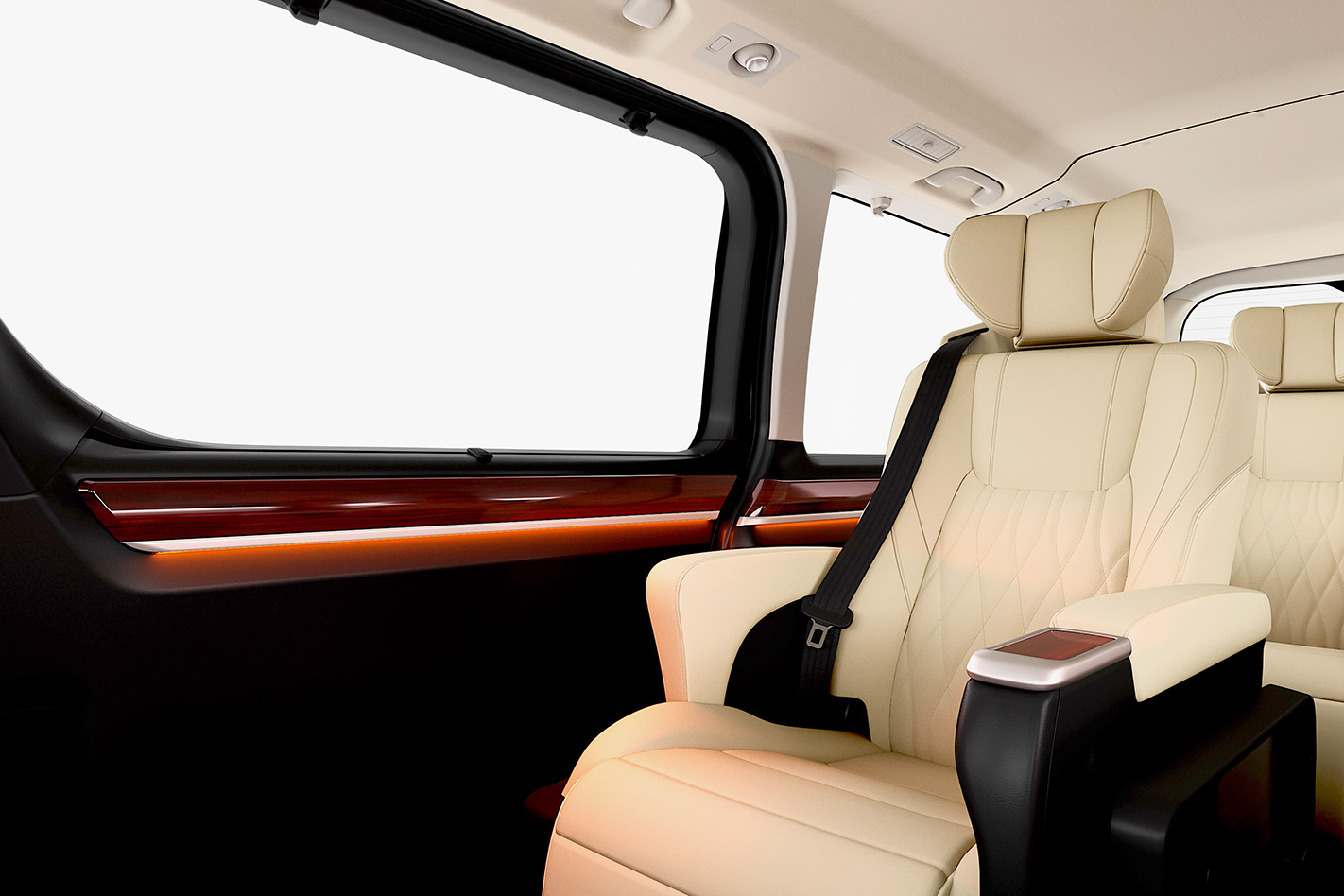
Just how much luxury are we talking about? These images of plush power-reclining captain’s chairs upholstered in quilted leather illustrate that the high-grade Granvia will be a few rungs above a humble Kia Carnival or Honda Odyssey, though obviously without flying too closely to Lexus territory.
Speaking of which, the Toyota Granvia owes little to the Lexus LM luxury van that made its debut last month at the Shanghai Auto Show. The Lexus shares its platform with the Japanese-market Alphard people mover, which is available with petrol or petrol/electric hybrid power and takes drive primarily to the front wheels.
The Granvia is built atop the Hiace commercial van platform, and sends power to the rear wheels and uses a four-link live axle rear suspension – albeit with coil springs rather than the Hiace’s leaf springs.
The Lexus LM, which can be had in an ultra-exclusive (or selfish?) four-seat configuration, is not slated for an Australian release.
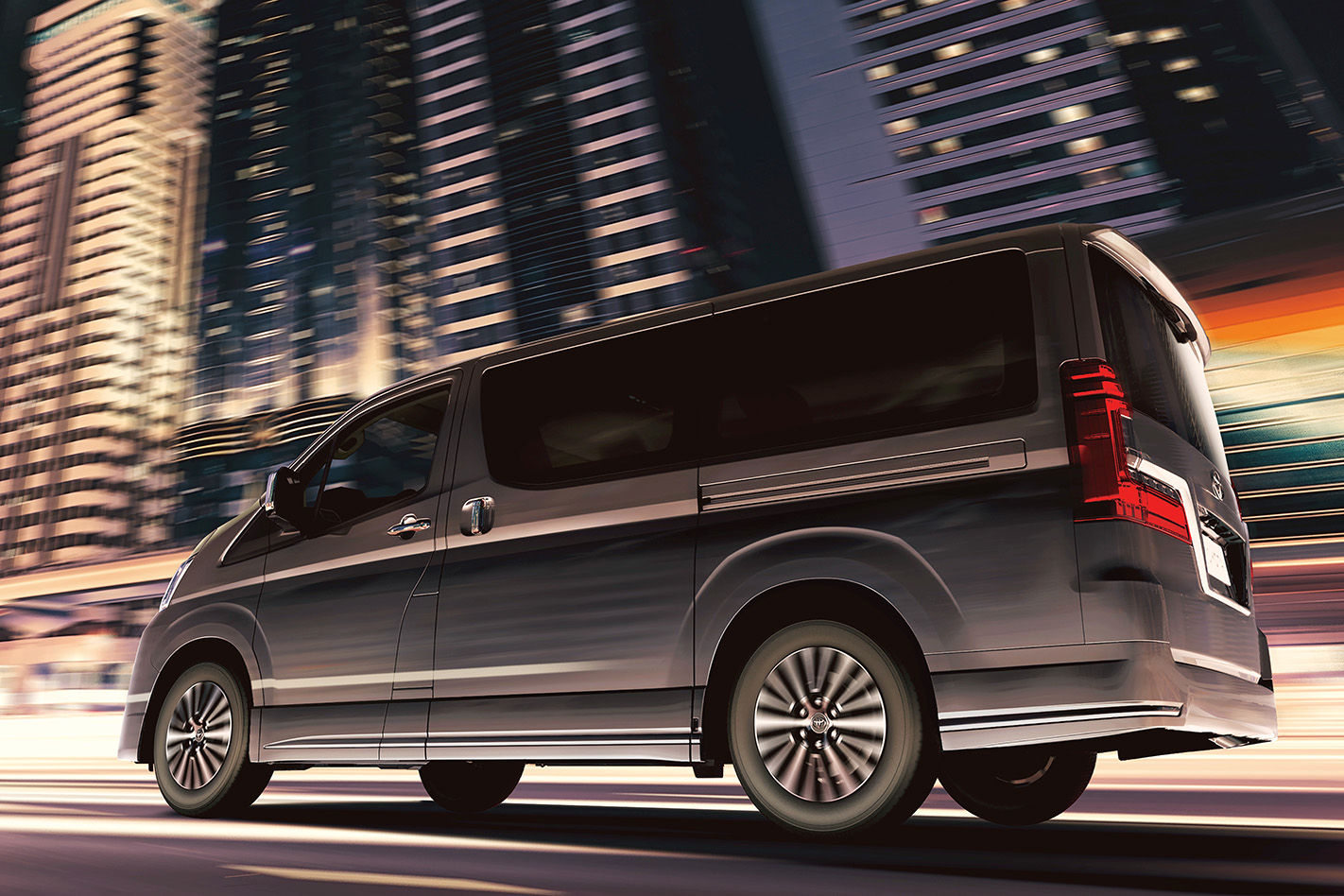
Equipment levels are yet to be fully detailed, but the safety equipment on locally-delivered Granvias will include nine airbags, active cruise control, collision detection and warning, and autonomous emergency braking.
Other available safety features which have yet to be confirmed for Australia include lane departure warning, blind spot monitoring, auto high-beam and rear cross-traffic alert. Given the increasingly safety-conscious Australian market, we’d expect all of those features to be standard on locally-delivered Granvias.
What has definitely been confirmed is that power sliding rear doors, power-adjustable seats for the driver and second-row captain’s chairs and leather upholstery will be available (though likely confined to the range-topper). Infotainment will be provided by Toyota’s latest touchscreen system, similar to that of the Corolla and Camry, with a total of four USB charge points and 12 speakers.
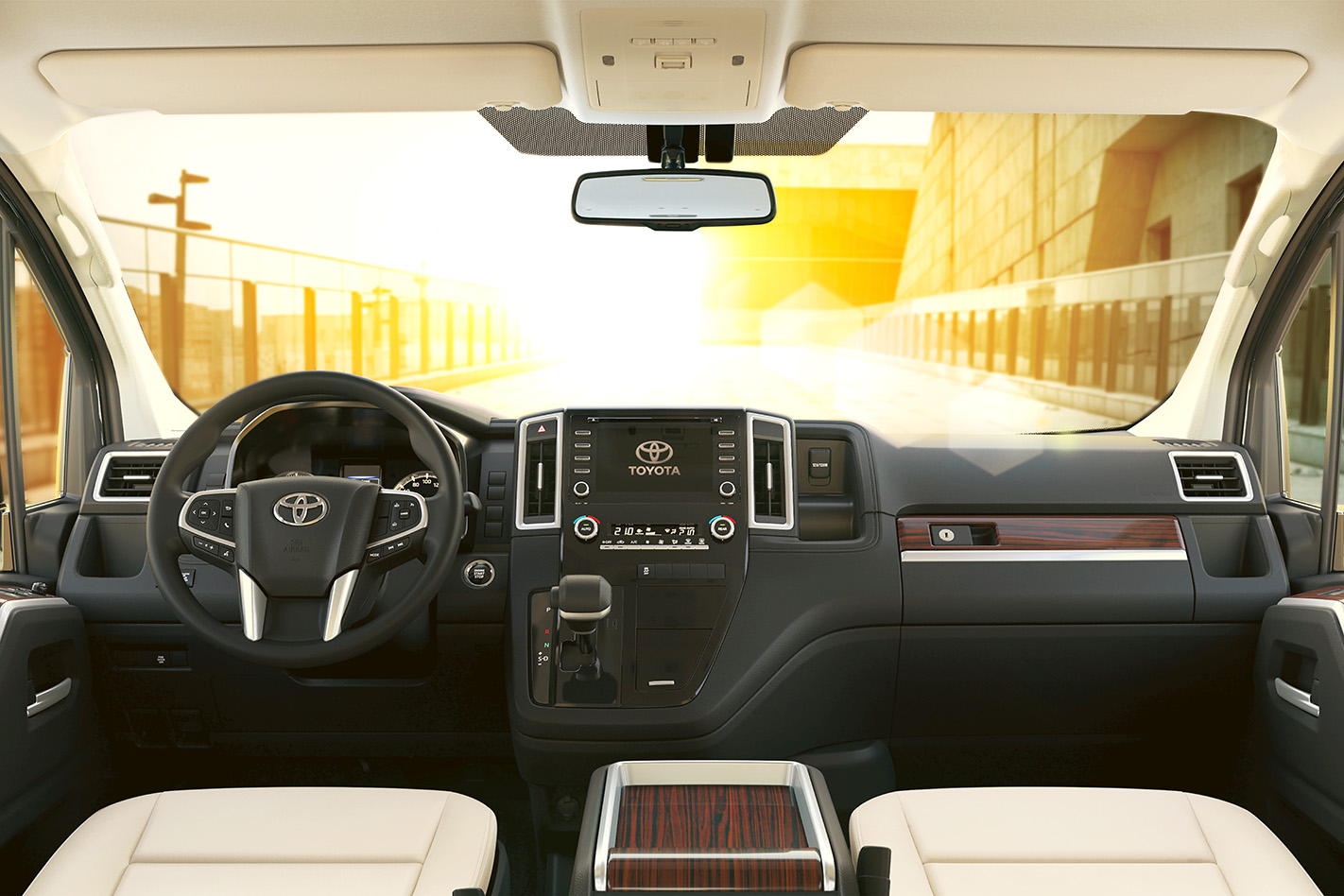
Though based on the Hiace and using the commercial van’s cabin plastics as its basis, the Granvia will feature higher-quality surfacing on the dashboard and doors to elevate the cabin ambience, not to mention ambient light piping throughout the cabin to cast a soft glow on all that supple leather.
Pitched largely at corporate/airport transfer operators as well as high-end hotels, Toyota expects the Granvia will also find favour among family buyers looking for something that’s practical, physically huge on the inside and luxurious – buyers who likely would have found the Tarago to be wanting in those regards.
One of the most frequently cited arguments by electric vehicle sceptics questions the relevance of battery-powered cars if their energy is produced by dirty coal-fired power stations. “What’s the point of a zero-emissions car if its tailpipe is in the Latrobe Valley?” they say.
I’m disappointed if you need me to explain why this is a naïve, soon-to-be-superfluous perspective. Sure, Australia’s energy production is among the most archaic, primitive and polluting in the modern world, but the fossil fuels that account for 85 percent of our electricity, including seams of filthy, inefficient brown coal will one day be gone. What then?
Renewable energy is not a question of if, it’s a question of when and, put simply, clean electric cars are ready and waiting for the imminent advent of clean power.
But this story is not about that undeniable inevitability. It is about the bloody-minded and perplexing resistance to clean, renewable power and widespread ignorance that still surrounds the subject – something that was recently and unexpectedly brought to my attention in spectacular clarity.
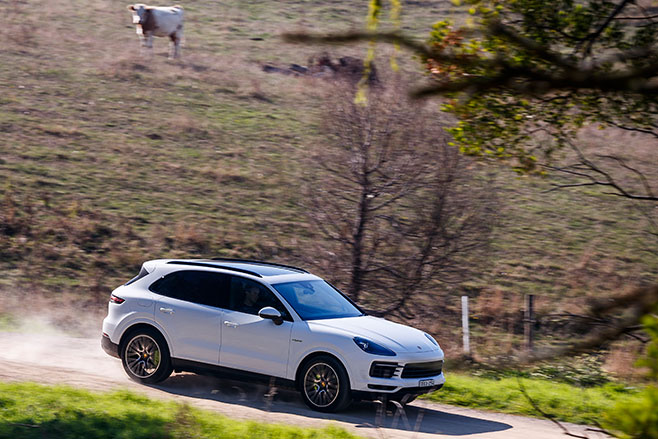
The day started like many other shoots. We had selected a location to film a short video highlighting one of the virtues of Porsche’s plug-in hybrid Cayenne and set about finding the ideal backdrop at the Mt. Mercer Wind Farm.
Ignoring a ‘no access’ sign between a public track and very similar-looking track was the difference between a good shot and an excellent shot unobscured by a fence and, since it was just a few metres through an open gateway, I assumed we wouldn’t cause any fuss.
It’s fair to say I was wrong on this occasion.
A ute arrived and before I had chance to apologetically explain our intentions, the driver had dispensed with more expletives and profanities than a Goodfellas monologue.
He was angry – really angry. I’m not talking reasonably angry and the kind of anger that is expected when someone parks a car on an innocuous patch of lifeless dirt that’s ten feet from an identical patch of useless dust the other side of a fence. I’m talking 28 Days Later anger, rabid possessed anger, looks-like-he’s-going-to-punch-me anger.
I might have argued that if he was really that passionate about deterring trespassers and preventing strangers from straying onto private land, he might consider not leaving gates wide open and perhaps using the lock that was currently doing nothing. But this was not a man who could be reasoned with and there was something more complex going on other than a little light unauthorised parking.
Fortunately, the site manager showed up before the irate Queenslander did something he might regret, and the only thing that was thrown was some light on the situation.
Since the farm became fully operational in 2014, the site has been hounded by a multitude of groups claiming the wind farm is a blight on the land for a variety of reasons. Sometimes the protesters show up in the day with big signs, other times they show up in the night with matches and petrol, and other times they turn up with cameras and tripods.
After a morning of answering insurance company questioning following a recent destructive bushfire, and months of interfering do-gooders, an uninvited film crew was the last straw.
On a scale of one to Gordon Ramsay, the fuming Queenslander’s diplomacy skills were ranked somewhere around Genghis Kahn, but I was able to explain our motives and that we were, in fact, on his side.
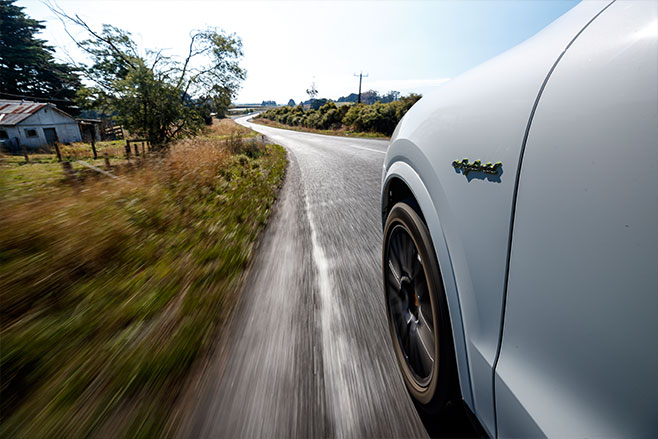
I popped open the charge port of the E-Hybrid and the situation was immediately clear, even to a man who was so amped he could have powered Ballarat by himself.
Here is a hard-working farmer enduring all the challenges and struggles that farmers are faced with all over Australia – drought, crippling supermarket powers, rising fuel costs – who had taken a risk and embarked on a venture that might just prevent him having to abandon his livelihood, whilst benefiting the environment.
And the thanks he gets on a weekly basis is a barrage of meddling weekend warriors trying to stop the turbines. Why?
For a start, animal welfare organisations claim animals living immediately under the turbines are unhappy and the blades that rotate at 15 rpm can pluck birds out of the sky.
Digest the various sources of information available at your will and make up your own mind but, for the record, the livestock that quietly went about their business under the turbines seemed among the most deliriously happy porcine examples I’ve encountered, and videographer JP and I were not dodging a constant hail of bludgeoned eagles.
Noise is another nuisance commonly cited but, in our time on the farm, distant vehicles produced a more intrusive din than the all but completely silent vanes. No trees had to be cleared for this particular wind farm and don’t even get me started on the other frankly absurd theories relating to human health.
Whatever the legitimacy of these arguments, I extend the respective proponents an invitation. Come with me to another of our favourite film shooting locations – the Haunted Hills overlooking the Latrobe Valley.
I challenge anyone to stand under the stinking yellow plume that rises from the Yallourn power station 24 hours a day, listen to its screaming turbines and behold the massive black scar left on this once beautiful part of Victoria by extensive open-cast mining, and tell me that is better than power generated by the wind.
Tell me the torrent of acid rain dumped on surrounding areas is better than the odd concussed chaffinch. Tell me the children with respiratory complications in Moe, Morwell and Traralgon are easier to ignore than a mildly disgruntled cow. And tell me, whether you would prefer your electricity to cost a handful of residents the odd sleepless night or more than 200 million tons of CO2 belched into our environment each year.
Back at trespassgate, rather than being covered with soil in a shallow hole as had looked highly likely at one point, JP and I were following the team back to the site office where we met representatives from renewable energy retailer Powershop.
They had arrived earlier in the day aboard their Tesla Model S, which was now plugged in and charging – the automotive equivalent of barbecuing a trout on the banks of the river you just caught it in.
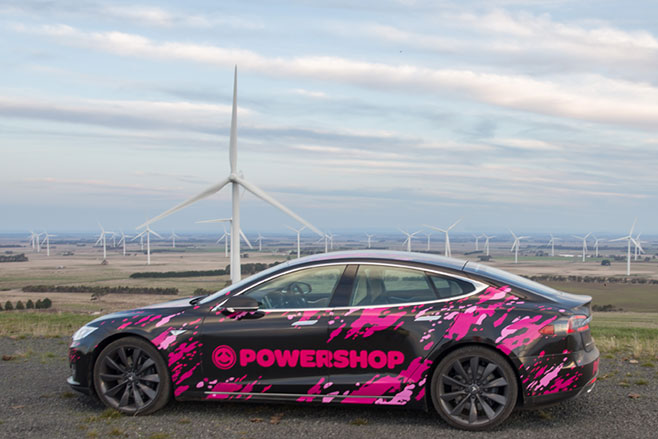
Zero food miles, zero carbon, 100 percent renewable and 100 percent feasible. Beneath the graceful sailing of wind turbine vanes, here was the exact formula of perfect emissions-free motoring at work and irrefutably proven.
But there is still much work to be done most notably in the area of public perception. While there are single-minded, splinter groups working tirelessly to derail the cause of wind power and all other non-renewable energy alternatives, it is the job of the government to raise awareness and provide the support that green power so badly needs and deserves.
Sadly, the recent election result is likely to be reverse gear for electric vehicles and their supporting infrastructure. Nonetheless, the day’s unexpected developments had been incredibly insightful providing a fascinating cross-section of the status quo.
Interestingly, some of the team at Mt. Mercer refer to the interfering do-gooder organisations including PETA and animal activist groups as ‘greenies’. In fact, earlier in the day one of the engineers had asked if we were ‘vegans’ given the previous unwelcome attention from animal rights lobbyists.
I was pleased to point out that the t-shirt I was wearing recreated the decoration of the 1971 Porsche 917/20 “pink pig” – a livery that represents a butcher’s various delicious cuts of pork.
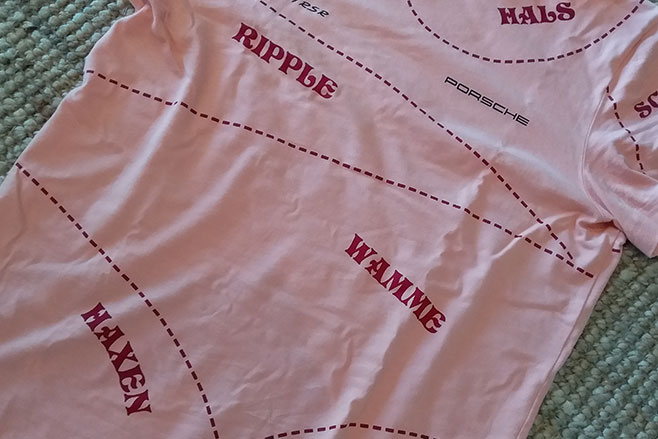
Perhaps my own naivety lead me to believe that all groups concerned with environmental action and progress were united under a ‘green’ blanket and in agreement that wind power is the future, but it seems the industry has many more enemies than I had realised with little hope of winning them over.
Given the tense political climate surrounding climate change and our government’s own agendas, the path from combustion power to alternative energy is going to be hard and fraught with contradiction and irony. Critically though, the stakeholders can decide if it’s a smooth unobscured path or potholed and uncomfortable.
Unlike my brush with death at the hands of a red-faced farmer however, the destination is inescapable.
After a massive build-up and weeks of incoming announcements, the inaugural TCR Australia season finally kicked off at Sydney Motorsport Park.
The seven round series began with three races around the Western Sydney motorsport mega centre and has been a popular addition to the packed Australian motorsport scene.
Here are four things learnt from the opening round of TCR Australia.
1. A veteran and a young gun share the spoils
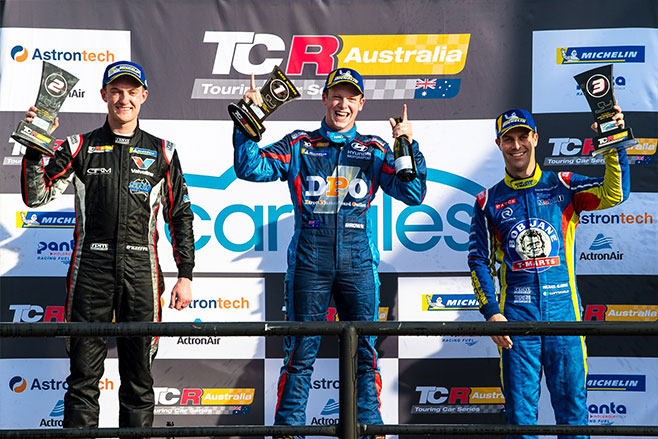
After qualifying, Jason Bright started the series on the front row of the grid for race one, and on the clean side of the grid, raced away into the lead in his Volkswagen Golf GTI. After 16 laps, he crossed the line for his first race victory since his triumph in the Supercars Championship at Pukekohe in 2014. That is more than five years ago, or a gap of 1848 days.
The next day, a promising talent in Australian motorsport rose to the top, with Will Brown ‘doing the double’ and winning both races on Sunday. He didn’t make it easy for himself, however, dropping back after those two starts, but made decisive moves to the front positions, and ultimately the lead, in his Hyundai i30 N TCR.
2. Close racing between all manufacturers
TCR leads the way in manufacturer participation for any major category in Australia. Seventeen cars featured on the grid at Sydney Motorsport Park which included eight manufacturers – Renault, Alfa Romeo, Holden, Hyundai, Volkswagen, Audi, Honda, and Subaru were all represented.
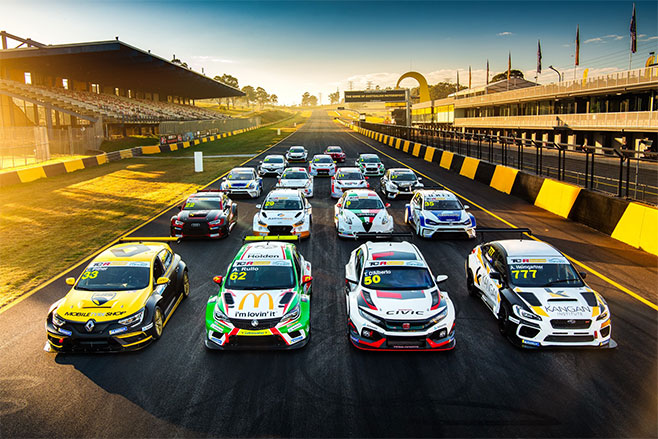
It is thrilling to see all these different machines racing together, especially when people at home with a road-going version of these very cars can relate to driving one of these cars. This is the very essence of touring car racing, to see cars on the road, and ones seen in the car park at Woolworths on the race track trading paint and winning races.
Using the Balance of Performance (BoP) regulations, all cars with their front wheel drive, hot hatch setup, have strengths and weaknesses in different areas. Because of this, all cars are mostly equal in terms of pace. After practice, all eight manufacturers were represented in the top 10 positions, and the top five were five different manufacturers after all the races.
3. Star drivers from all over the country and the world were racing
You would not be able to find many grids in Australia that featured drivers from as many racing backgrounds as you saw at this weekend’s round. Away from driving his Kelly Racing Nissan in the Supercars Championship, Andre Heimgartner has found himself in a Kelly Racing Subaru, who is also joined by Supercars enduro drivers James Moffat and Tony D’Alberto on the grid, plus 2018 Super2 Champion Chris Pither and current Super2 drivers Will Brown, Alex Rullo and Nathan Morcom.
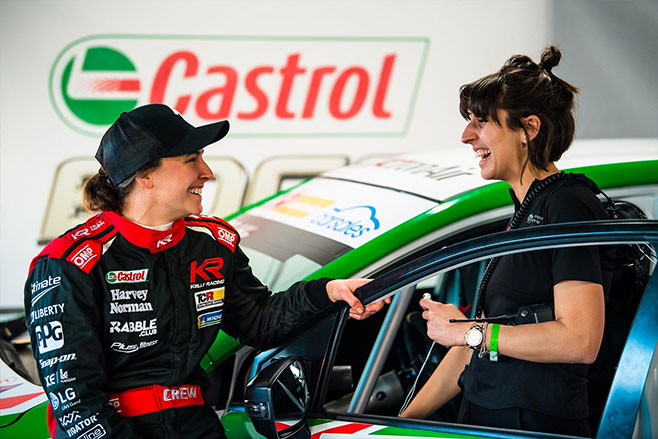
Then you have Porsche Carrera Cup aces Dylan O’Keefe and Michael Almond, plus an international driver in Nik Breukers, an Audi factory driver. Women are also well represented, with Alexandra Whitley and Chelsea Angelo, plus Molly Taylor (below, left) swapping dirt and gravel for tarmac as she ventures away from rally for the first time. This series truly does represent drivers from many different motorsport backgrounds from around Australia and the world.
4. TCR Australia is popular with the fans boosted by free-to-air coverage
For a first round of an inaugural racing championship to have such a fanbase already is such an achievement for the organisers of the series. There were plenty of people at Sydney Motorsport Park supporting and cheering, and away from the track, the traction gained on social media has been astonishing.
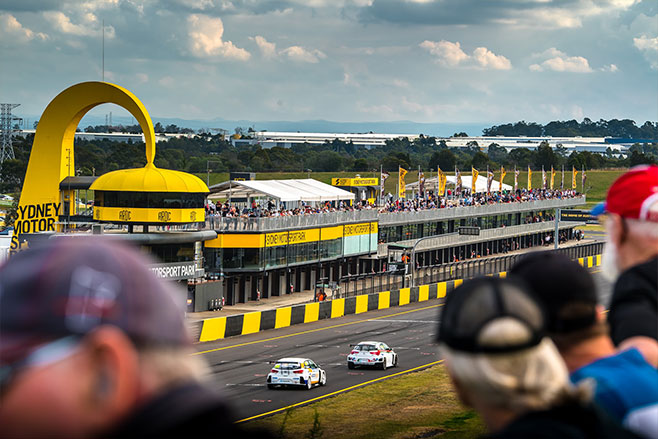
Many viewers are singing their praises of the series, saying how good the racing was, and how good it was to see so many different manufacturers racing together.
As a new racing series, gaining television media rights was crucial in its success, and to have SBS on board to show every race of the series on free-to-air television was a master stroke. It is available to the everyman, allowing the fanbase to grow, rather than restricting viewers to pay-only options. Getting quality commentators was also wonderful given the experience and knowledge of Greg Rust and Aaron Noonan.
Round 2 will be held at Philip Island on June 6-9 where Will Brown will attempt to extend his championship lead while being chased by a hungry pack of drivers.
From the moment two-time Formula One world champion Fernando Alonso signed with McLaren to race at the Indy 500, the project was doomed to failure.
The Spaniard has had one goal in his life since retiring from F1 in 2018, and that’s to complete a task only ever done by one other racer – win the Monaco Grand Prix, Le Mans and the Indy 500, otherwise known as the Triple Crown.
Alonso has ticked the first two boxes, claiming the Monaco race in 2006 and 2007 (as well as the F1 world title in 2005 and 2006), and winning Le Mans with Toyota in 2018. So it’s fair to say he’s no slouch.
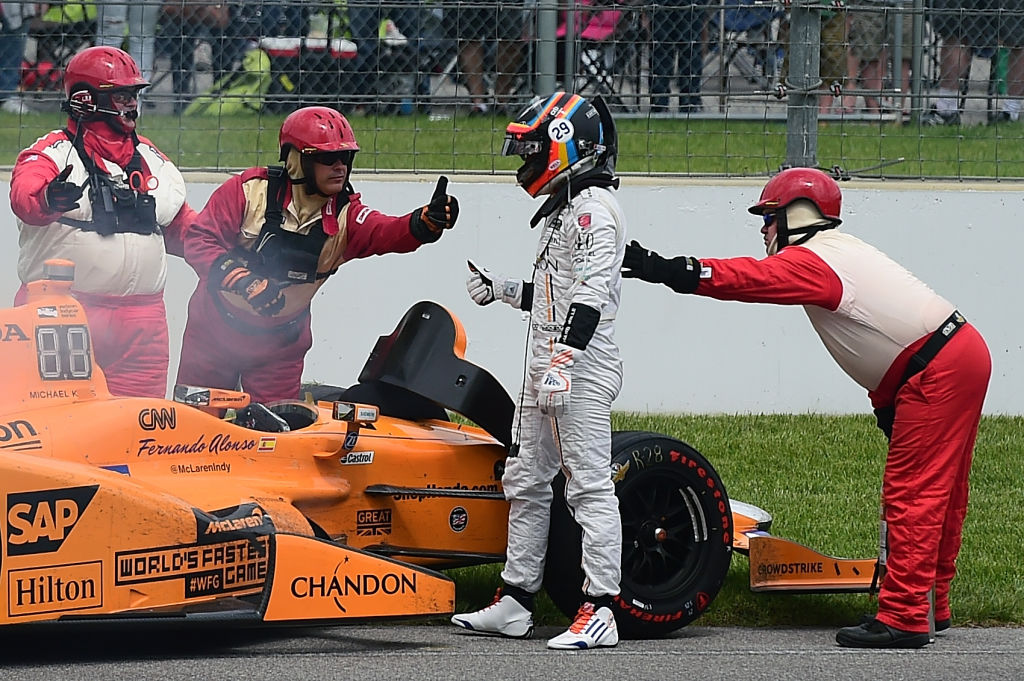
Alonso has also attempted the Indy 500 – widely regarded as one of the biggest, fastest and most dangerous sporting events on the planet, where racers hurtle around the Indianapolis Speedway at speeds in excess of 360km/h for 500 miles (804km) – where he was in contention for the win on debut in 2017 before an engine failure (below).
Alonso’s return to the Brickyard this year has been one of motorsport’s biggest stories. Could he achieve the feat only ever done by Briton Graham Hill (Indy 1966, Le Mans 1972, Monaco five times)?
The doubt set in almost immediately, though, when he agreed to return to the Indy 500 with McLaren, a team whose fortunes have floundered for the last five years, yet which believed itself capable of diverting sufficient attention and resources from its underperforming F1 program to running a full-scale IndyCar effort in the US.
It couldn’t.
Founded by New Zealander Bruce McLaren in 1963, the company used racing to forge its identity from its earliest days, and has thus far notched up eight F1 constructor and 12 driver’s world titles, three Indy 500 wins and a Le Mans win.
However, an ill-fated partnership with Honda earlier this decade for its F1 team, along with the rise of Mercedes and Red Bull and the resurgence of Ferrari, has seen the once-proud brand struggle for relevance. A change of management saw American Zak Brown take the helm in 2016, but its fortunes have scarcely improved since.
And the embarrassing inability to even place Alonso in the 33-car field for next weekend’s 103rd Indy 500 will go down as one of its most glaring failures.
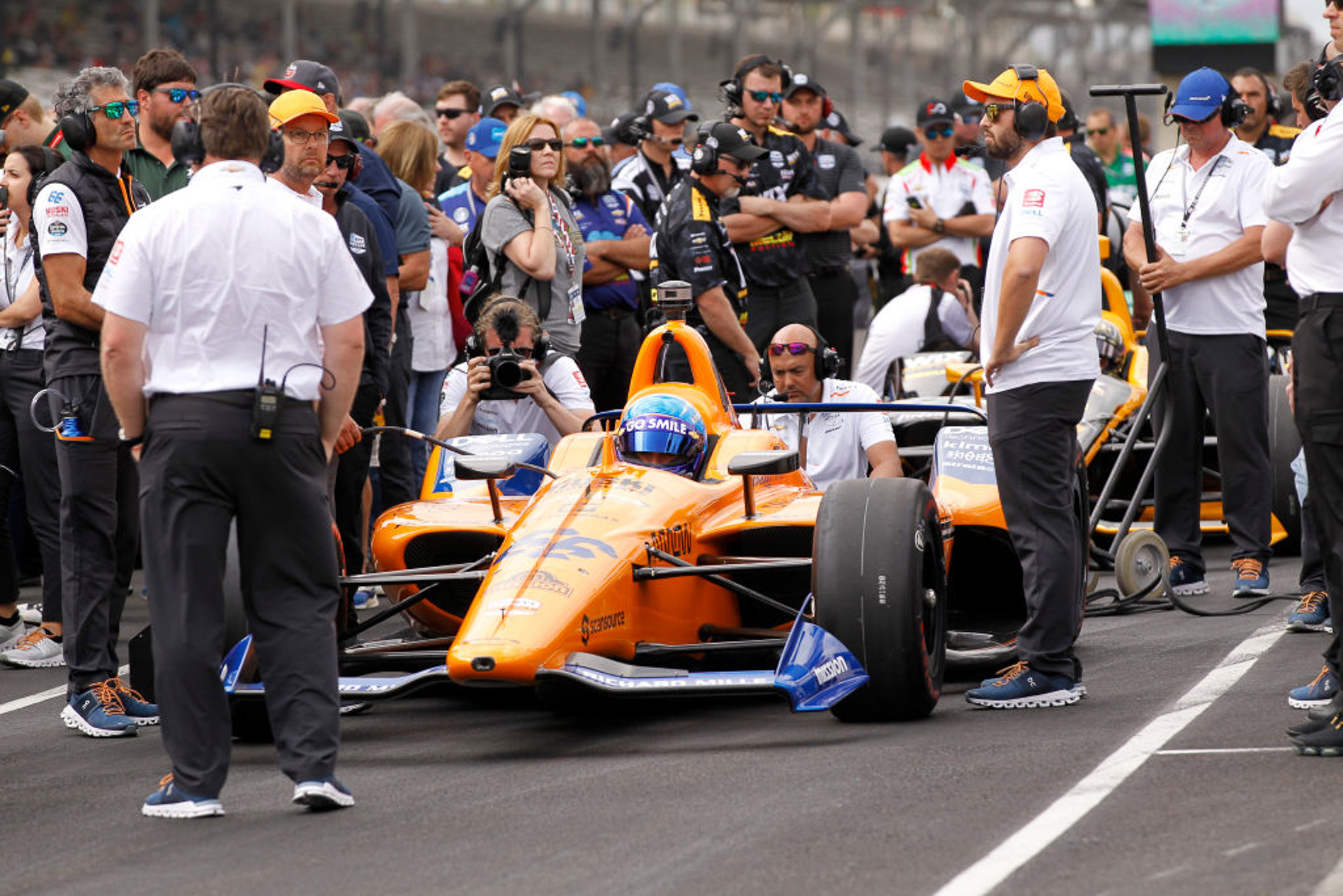
McLaren partnered with Carlin Racing from the UK to create a two-car team for the 2019 IndyCar championship, with the plan to add a third car to the team for the Indy 500. Alonso is an enormously popular driver in the US, ensuring that the car would actually make a commercial profit for the team, such was the volume of sponsorship that flowed in.
However, the first alarm bells rang for McLaren when, a week out from the first test for the Indy 500, the team discovered it hadn’t ordered the bespoke steering wheel needed for the third car.
Brown himself was forced to source a wheel from the UK and personally arrange for it to be shipped directly to Texas in time for the test. It didn’t arrive until mid-morning on the first day.
While the steering wheel was the part that was missing, it pointed to systemic planning and resourcing errors leading to the biggest event of the year.
“That’s where this whole thing fell down, in the project management,” Brown told AP. “Zak Brown should not be digging around for steering wheels.”
It thusly went from bad to worse. When the team got to the Indy track for practice, the cars were slow and tricky to drive. Alonso compounded the problems by viciously crashing out on the second day of the week-long test and qualifying period – but that crash revealed an even greater depth of unpreparedness.
Most teams have access to a spare chassis, and McLaren has earmarked a road-racing version of its Indycar to use in case of trouble. The only problem was that the chassis was still in a paint shop 30 minutes away from the track… because it had been painted the wrong shade of orange.
The team took a day and a half to rebuild the car. Other racers in similar situations had a spare on track within four hours.
On the back foot, Alonso was bumped out of the starting field of 30 by the slimmest of margins but had one more shot at scoring one of three extra slots the following morning. McLaren team members went cap-in-hand to its rivals for new parts, including shocks and tyre pressure sensors, to bolt to the car for the do-or-die bump session – but incredibly, McLaren engineers forgot to convert imperial measurements to metric in their rush to rebuild the car.
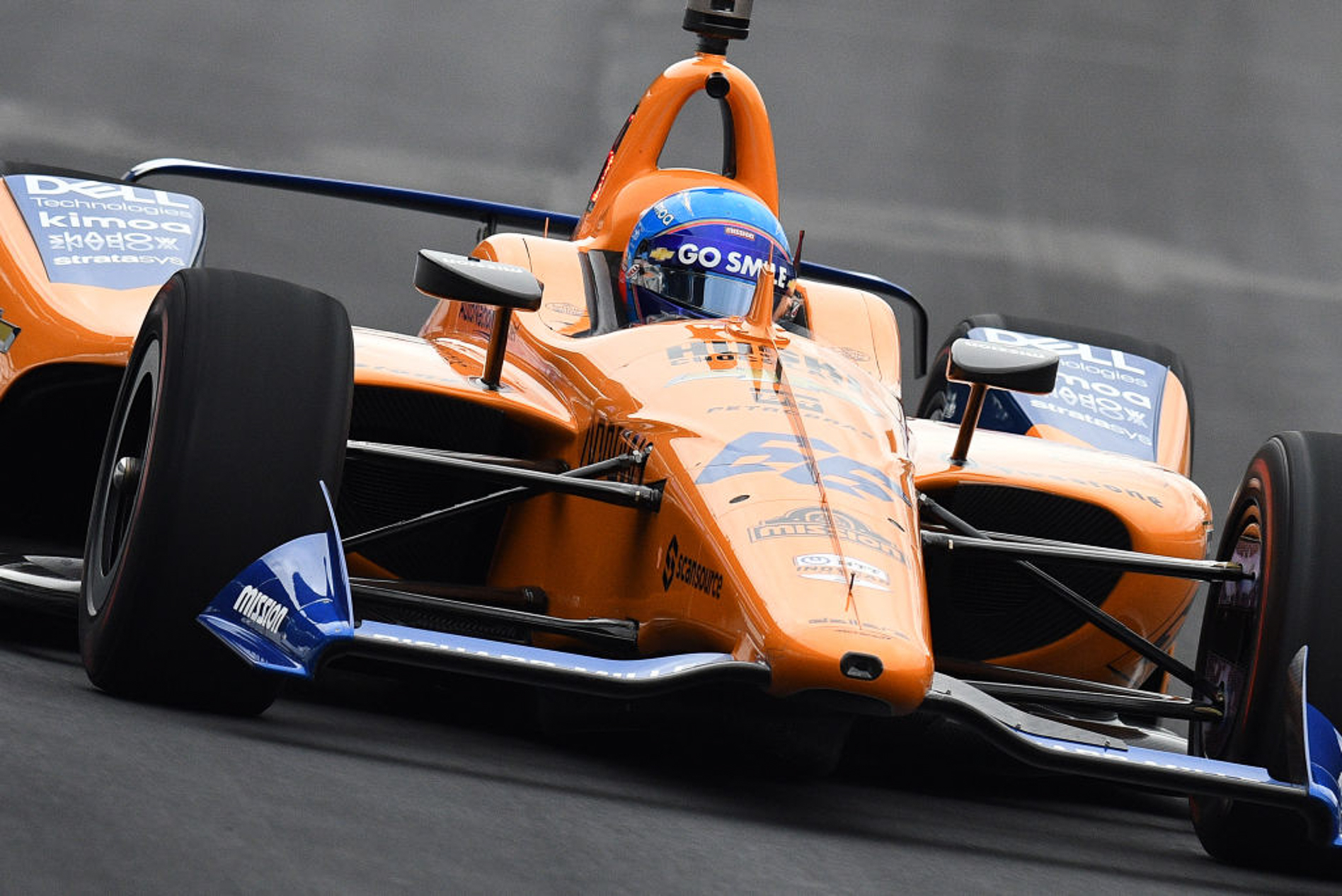
As a result, Alonso was forced to qualify at the world’s fastest race track without knowing if his car would stay under him at 360km/h. He failed to qualify by 0.03km/h (qualifying is determined by a four-lap run where the speed is averaged), qualifying 34th and missing the cut.
The team then discovered that the final gear ratio in Alonso’s McLaren was too short, restricting the top speed of the car by 3km/h. With the correct ratio on board, Alonso would have made the field.
All told, it was an unmitigated disaster. The team’s head of operations was dismissed soon after the conclusion of the Sunday session, but the blame does not rest solely with one person.
“I should have been closer to Indy but I could never compromise Formula One,” Brown told AP after the session. “At 9:01 in the morning when we weren’t on track at the first test, that’s when we failed to qualify for the Indianapolis 500. I am angry at myself because I was uncomfortable all the way up to the first test and I should have followed my instinct to get more involved.”
“I want to apologise to fans not only here in the US but globally,” team manager Gil de Ferran (below with Alonso in 2017), a former Indy 500 winner himself, told a packed media conference after qualifying. “I want to apologise to [Alonso] as well. We didn’t give you a car that was fast enough and you still drove like the champion you are.
“This is a very difficult sport. We certainly didn’t underestimate the challenge. We’re certainly aware of how difficult it is. In my 35 years of racing, this is the most painful experience I’ve ever had.”
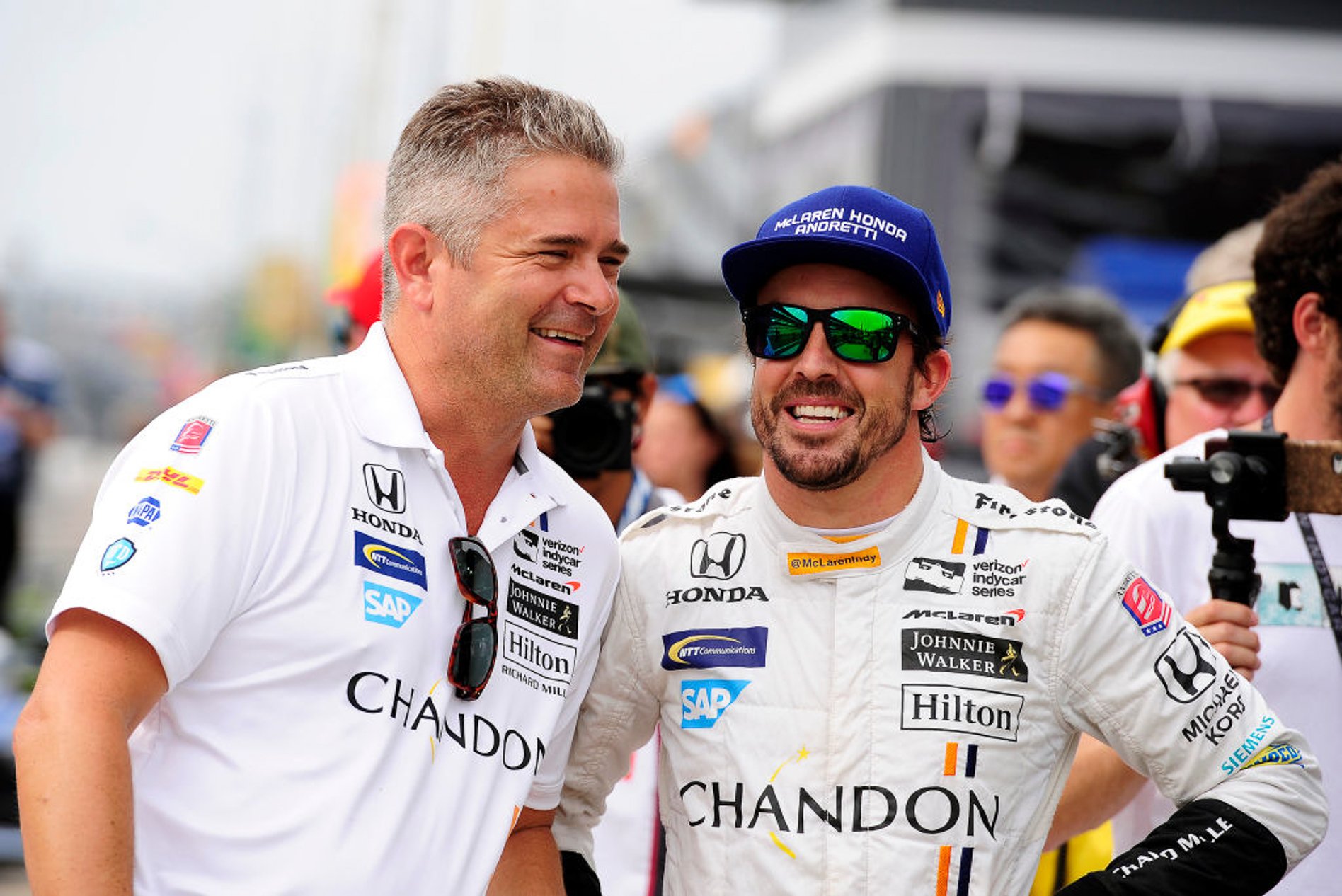
Alonso himself says he’d be happy enough to race at Indy again. “I don’t even know what I’m doing next year,” he said. “I finish my endurance racing program next month at Le Mans, so I’m not sure what I’m going to do.”
In the ultimate irony, McLaren will host 150 guests at its (pre-paid) hospitality chalet over the weekend, despite none of the team’s three cars making the field.
Will Fernando Alonso even return to attempt the Triple Crown in 2020? I’d like to think so, but the sour taste of his 2019 program will linger – and the very real risk of injury may see him decide to call time on his racing career.
It’s a sad and sorry debacle that has further damaged the once-great Mclaren racing legacy and has severely embarrassed one of the world’s fastest and most versatile racers whose relationship with the English company must now surely be beyond repair.