
If you’ve ever been told by your mechanic that your catalytic converter needs replacing, you’ve probably also had your eyes pop out of your skull when you were presented with the quote.
Catalytic converters, or ‘cats’ for short, are not cheap, but why are they so pricey when they’re just a relatively small component of your exhaust system, and one with no moving parts either? Why are they so important anyway? Allow us to explain the mysteries of the catalyst…
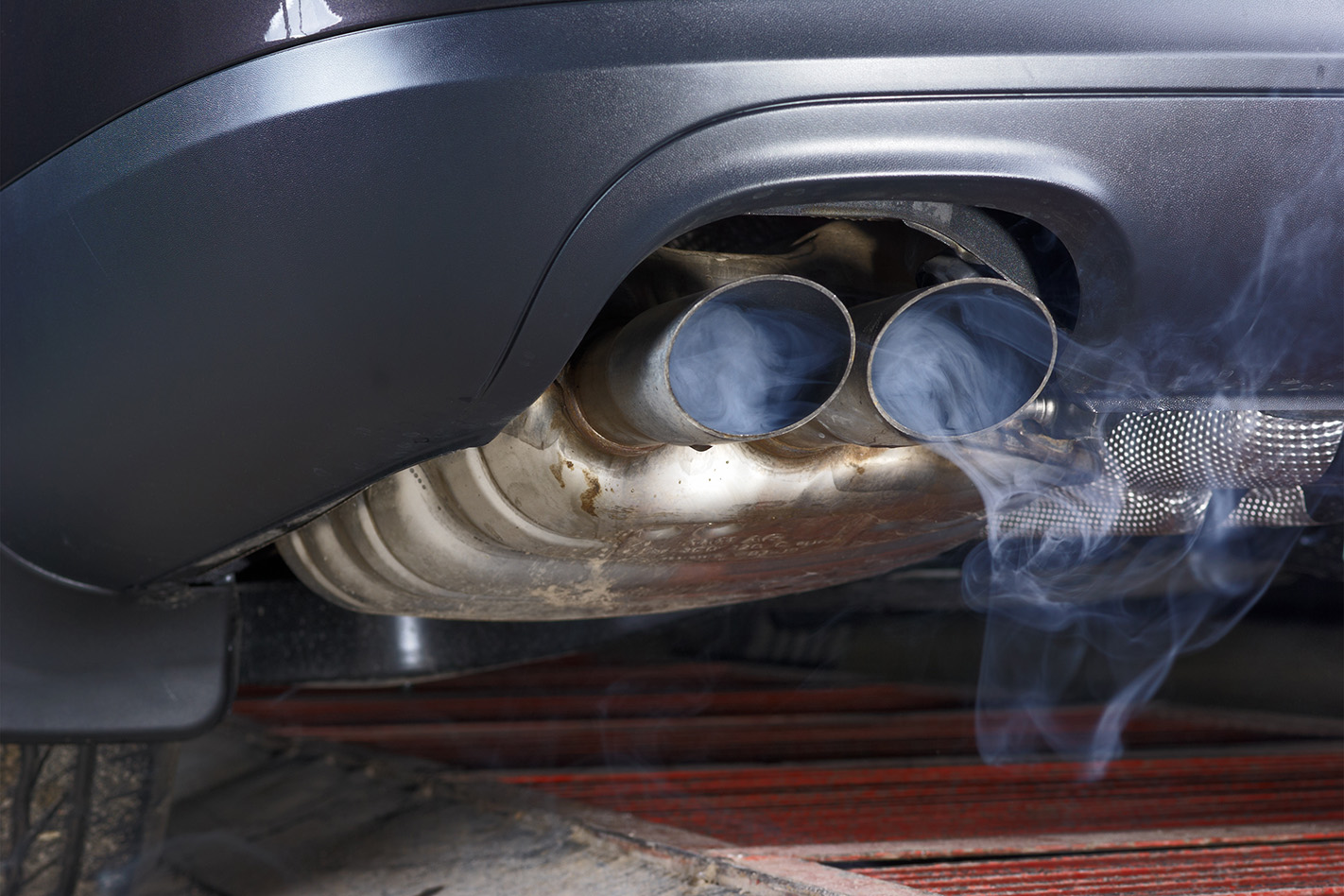
Catalytic converters started to become standard-issue in road cars around the mid-1970s, with Volvo being one of the first to adopt them, but they didn’t become commonplace until leaded petrol began to be phased out in the 1980s. The reason for that is simple: the gas that results from burning leaded petrol essentially destroy the catalyst’s ability to clean up exhaust emissions.
The main factor driving their adoption was the world’s slow realisation that vehicle emissions were literally choking the population and doing terrible things to air quality and the environment.

The picture above is of the Los Angeles skyline in the mid-1970s, and it’s hard to miss the thick brown haze enveloping the city and suburbs. That’s smog, back then it was mostly caused by vehicle exhaust. Acid rain was another unwelcome byproduct of emissions too, as smog interacted with the atmosphere and changed the chemical make-up of rain water.
Enter the catalytic converter. By passing the engine’s exhaust gas over a surface coated with certain ‘noble’ metals that react to harmful emissions (and subsequently catalyse, or change, them into less-harmful gasses), a catalytic converter is able to scrub a significant amount of a car’s harmful emissions.

In fact, up to 90 percent of a car’s most problematic exhaust emissions can be neutralised by a catalytic converter, with unburned fuel, carbon monoxide and nitrogen dioxide being converted into less harmful nitrogen, carbon dioxide and water vapour.
It’s not totally clean of course, and with carbon dioxide being a major greenhouse gas a ‘cat’ can’t make a car completely green, but it certainly makes city air a lot more breathable for humans and animals. Besides, with all new petrol-powered cars and a significant chunk of diesel cars now equipped with catalytic converters, the net reduction in pollution has resulted in most major cities in the developed world no longer permanently enveloped by a blanket of smog.
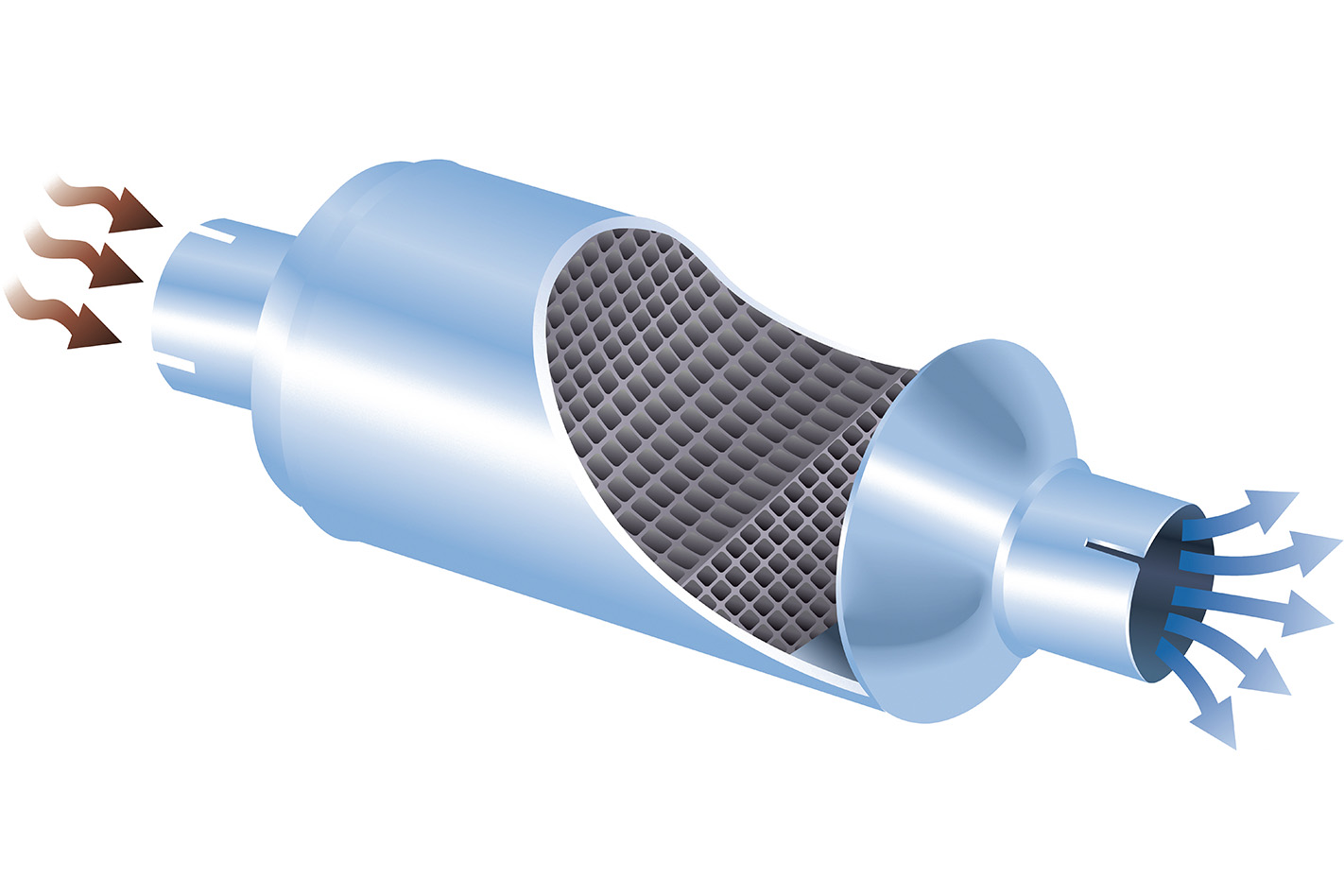
How do they work? There are no moving parts in a catalytic converter, with all of the cleaning action being accomplished by clever chemistry instead. Inside the converter is a thick substrate, often with a grid-like cross section (below), upon which a thin coating of precious metals like platinum, palladium and rhodium are deposited.
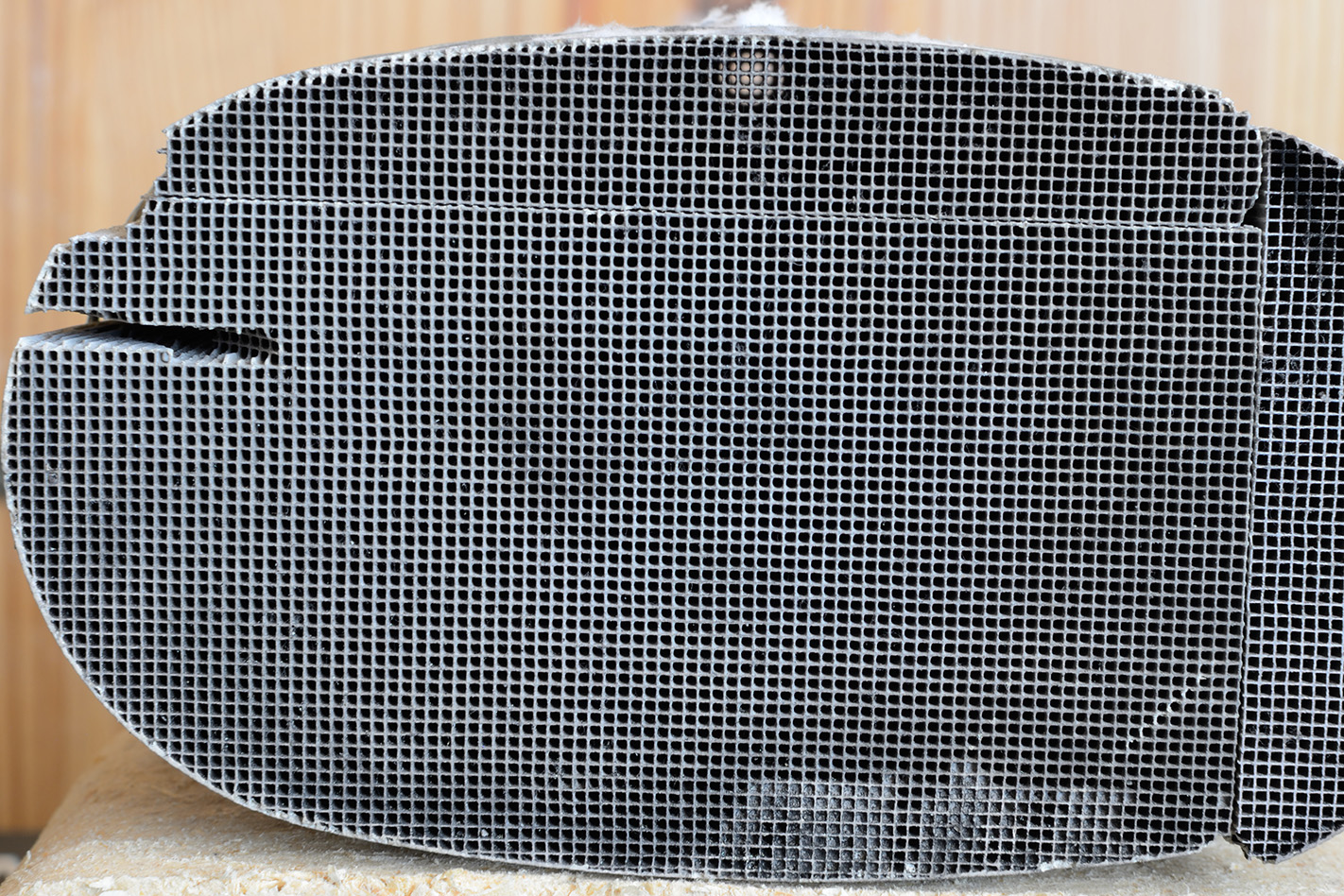
These metals are the actual catalysts, the part of the device that initiates the chemical transformation of the exhaust gas. Nitric oxide, carbon monoxide, nitrogen dioxide and unburned hydrocarbons – be they petrol, diesel or engine oil – all react with the metals inside a catalytic converter, and are quickly turned into other gases: principally nitrogen and carbon dioxide, but also water.
Some particulate emissions can be captured by a catalytic converter as well, though that’s not their primary function. Anyhow, separate diesel and petrol particulate filters have recently become commonplace and clean up fine particles that aren’t dealt with by the catalyst.
Downsides? They’re an expensive component, thanks to all of those precious metals used in their construction being, well, precious. They can be damaged by engines that are malfunctioning and perhaps burning more fuel or oil than they should, and there’s no method for their repair.
Also, the core is often made from fragile materials, which have a high temperature tolerance but are susceptible to impact damage from rocks or other objects passing under the vehicle. A damaged catalytic converter must be swapped, and replacements aren’t cheap.
The catalytic reaction requires a significant amount of heat to work. Most need an exhaust gas temperature of more than 400 degrees before the chemical reaction is working efficiently, which means that if you’re only using your car for very short trips – like ducking up to the shops for a few minutes – then a lot of your car’s harmful emissions are just going straight out the tailpipe as your exhaust hasn’t had time to heat up.

Also, with some of the gasses being converted into water, there’s a risk that excess moisture can accumulate within your exhaust and rust it out over time. Again, this is largely a by-product of very short trips. If your drives are at least ten minutes long from start-up to shut-down, then any moisture generated by the catalyst will just be evaporated off with exhaust heat.
Oh, one more thing: if you see a symbol like the one below appear on your instrument panel, it doesn’t mean that your jaffles are done – it relates to a catalytic converter fault, so go get it checked out.

If you avoid making lots of short trips and ensure the engine is kept in good mechanical health, there’s no reason your catalytic converter shouldn’t last the life of the vehicle. Mechanically simple yet chemically brilliant, the humble catalytic converter is the main reason why clear air still exists around major population centres.
The Wheels Verdict: Set aside your range anxiety and the inconvenience of charging for extended periods and there’s nothing about driving the Kona EV that’s inferior to an ICE-powered version. In some areas, such as NVH and rolling acceleration, it’s vastly superior. However, a $25K price premium over its ICE doppelganger will be the deal breaker for many people.
WHAT IS THE HYUNDAI KONA EV?
Hyundai’s second all-electric model follows hard on the heels of the Ioniq hatch. Like the Ioniq, the Hyundai Kona EV is a variant in a full model range, meaning you can also buy it with one of two petrol four-cylinder engines. It’s differentiated from its stablemate by its SUV body style and large, 64kWh lithium-ion polymer battery, which gives it an effective urban range of 450km, or 400km on the highway.
WHY WE’RE TESTING IT
The Kona’s positioning as a long-range EV in a small SUV body style is unique, as is its price point and powerful battery. It offers something a little different in the still shallow gene pool of dedicated-EV offerings.
HYUNDAI KONA EV HIGHLANDER REVIEW
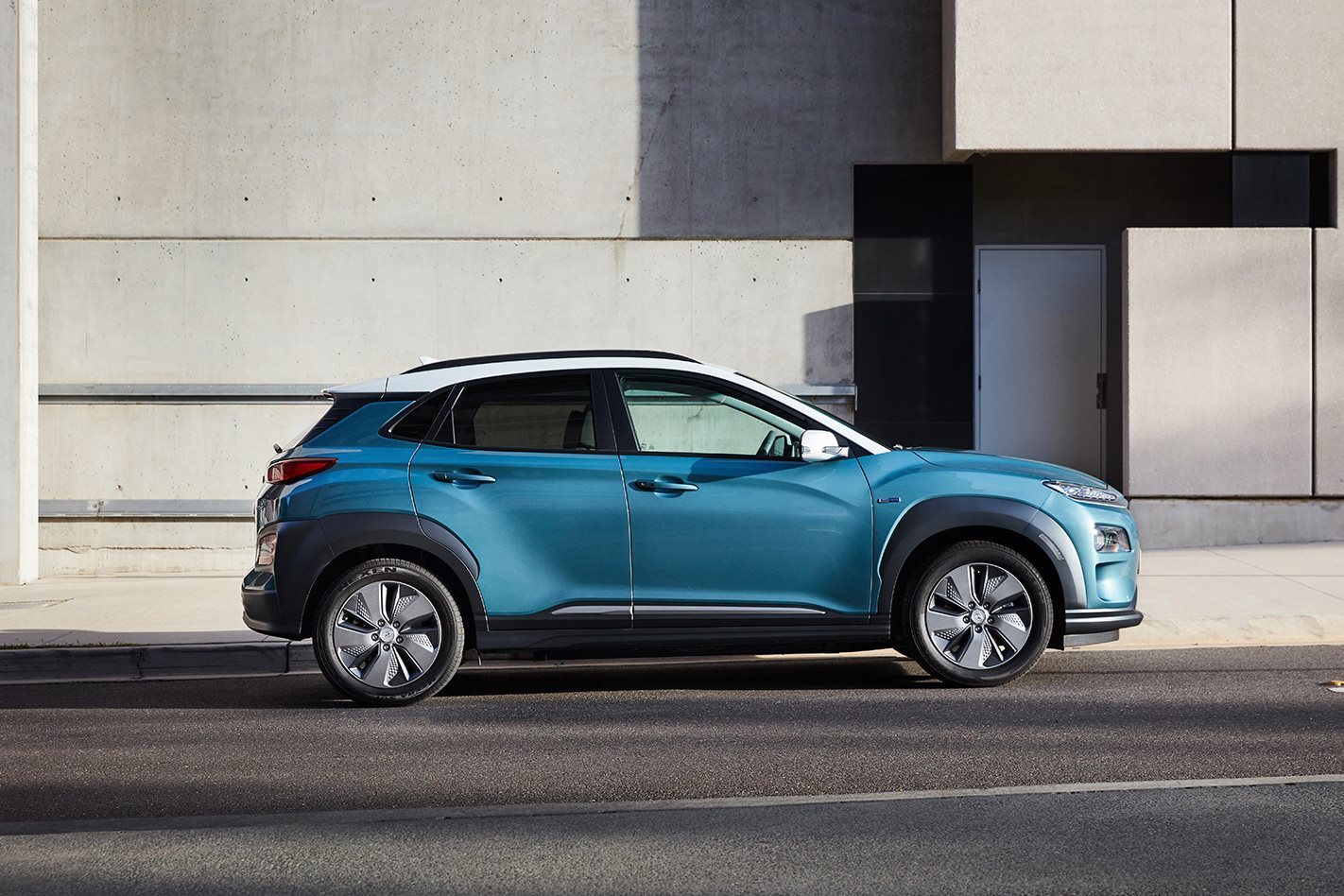
The Kona EV is an attractive but not overly radical-looking compact SUV. Unlike a Jaguar I-Pace, a Tesla or a Nissan Leaf, it’s an EV variant in a model range with multiple propulsion options: you can have it with a choice of two four-cylinder petrol engines, or in this electric guise.
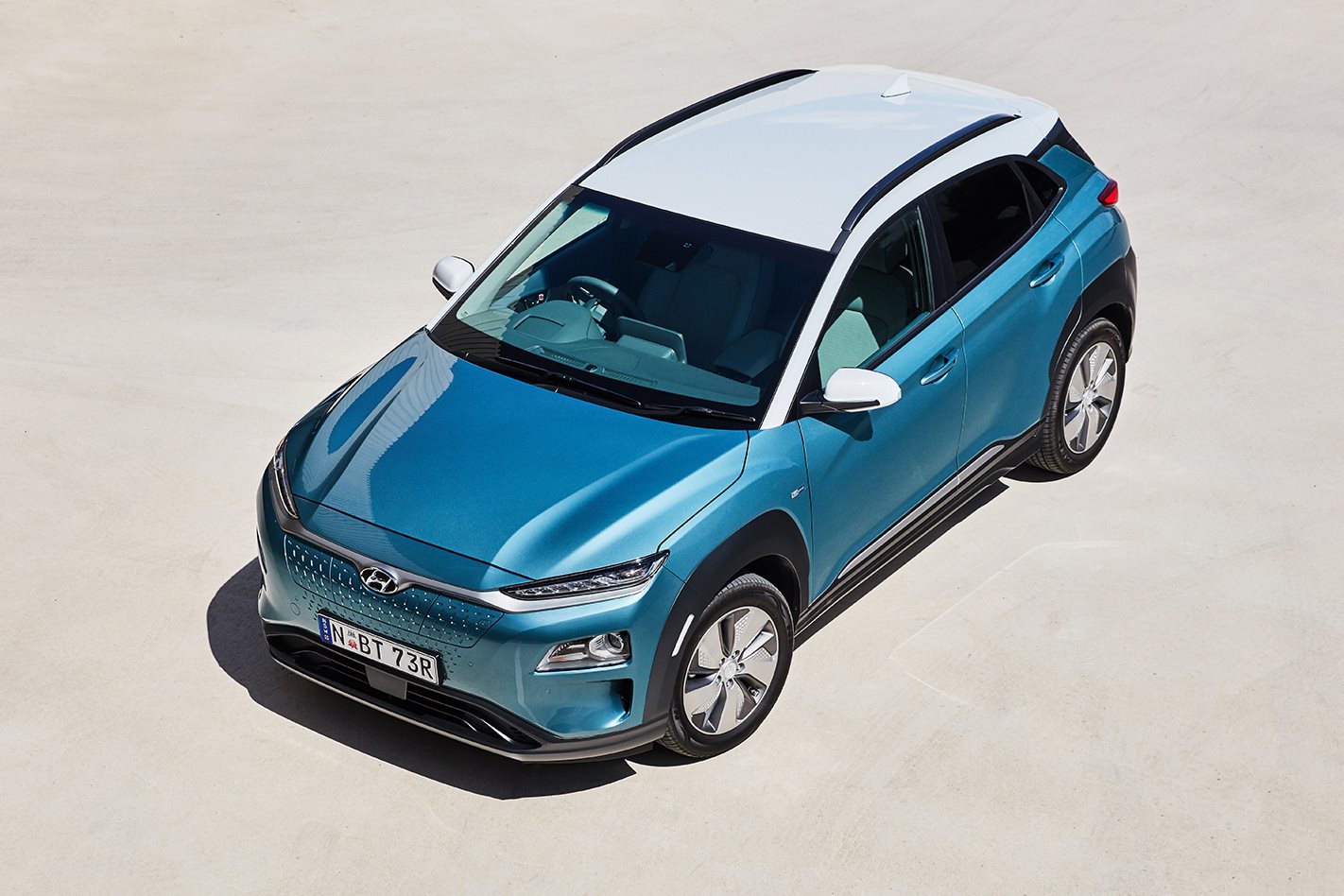
The Kona EV is modestly differentiated from its ICE siblings but shares many body panels and components. It is quite a bit heavier, though, weighing 1743kg in this top-spec Highlander version compared with 1383kg for the 2.0-litre MPi version.
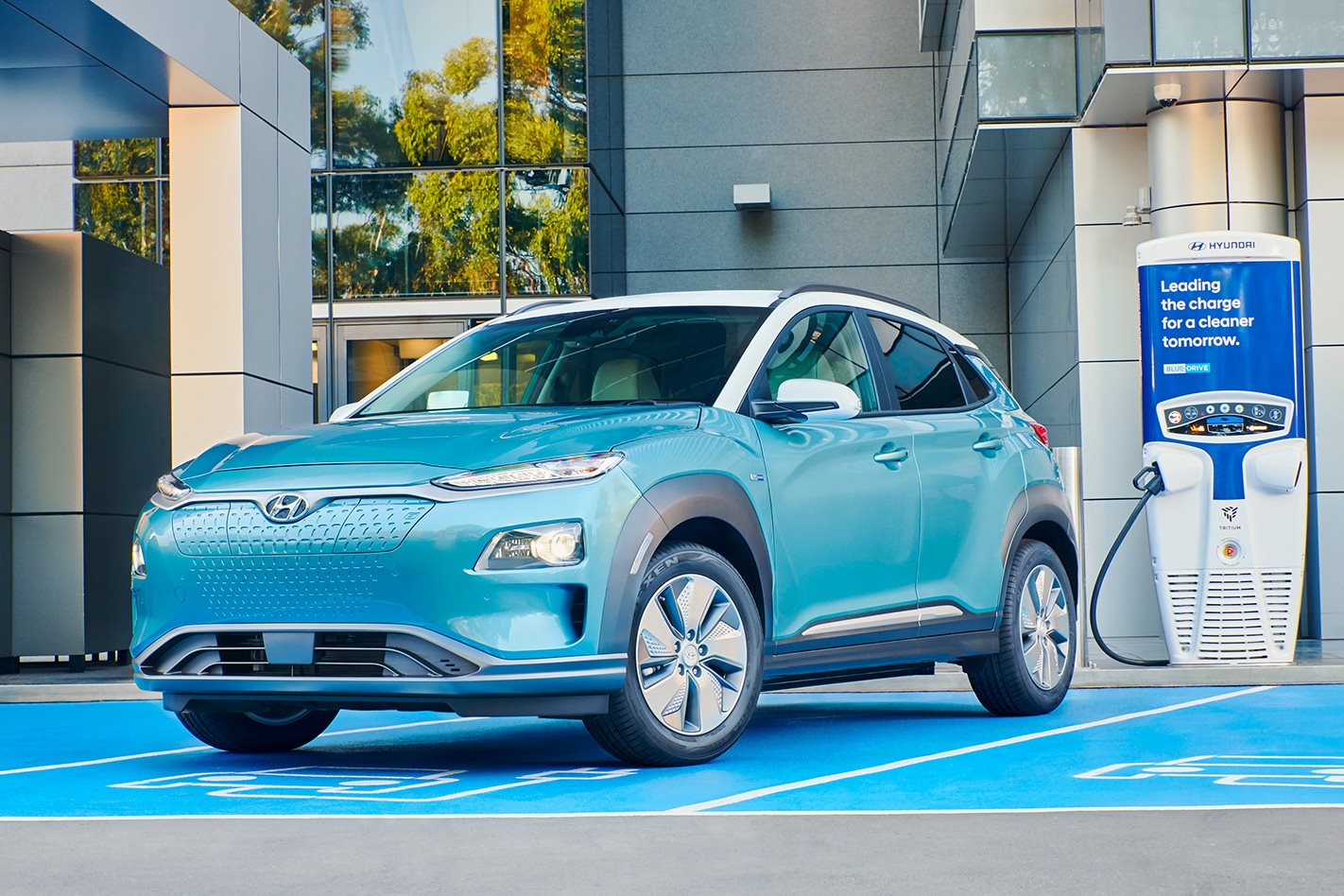
The Kona’s large battery is the culprit here, its underfloor location requiring subtle design differences and small dimensional changes. The low centre of mass helps ensure impressively flat handling, though, while localised suspension tuning has found the ride-handling sweet spot.
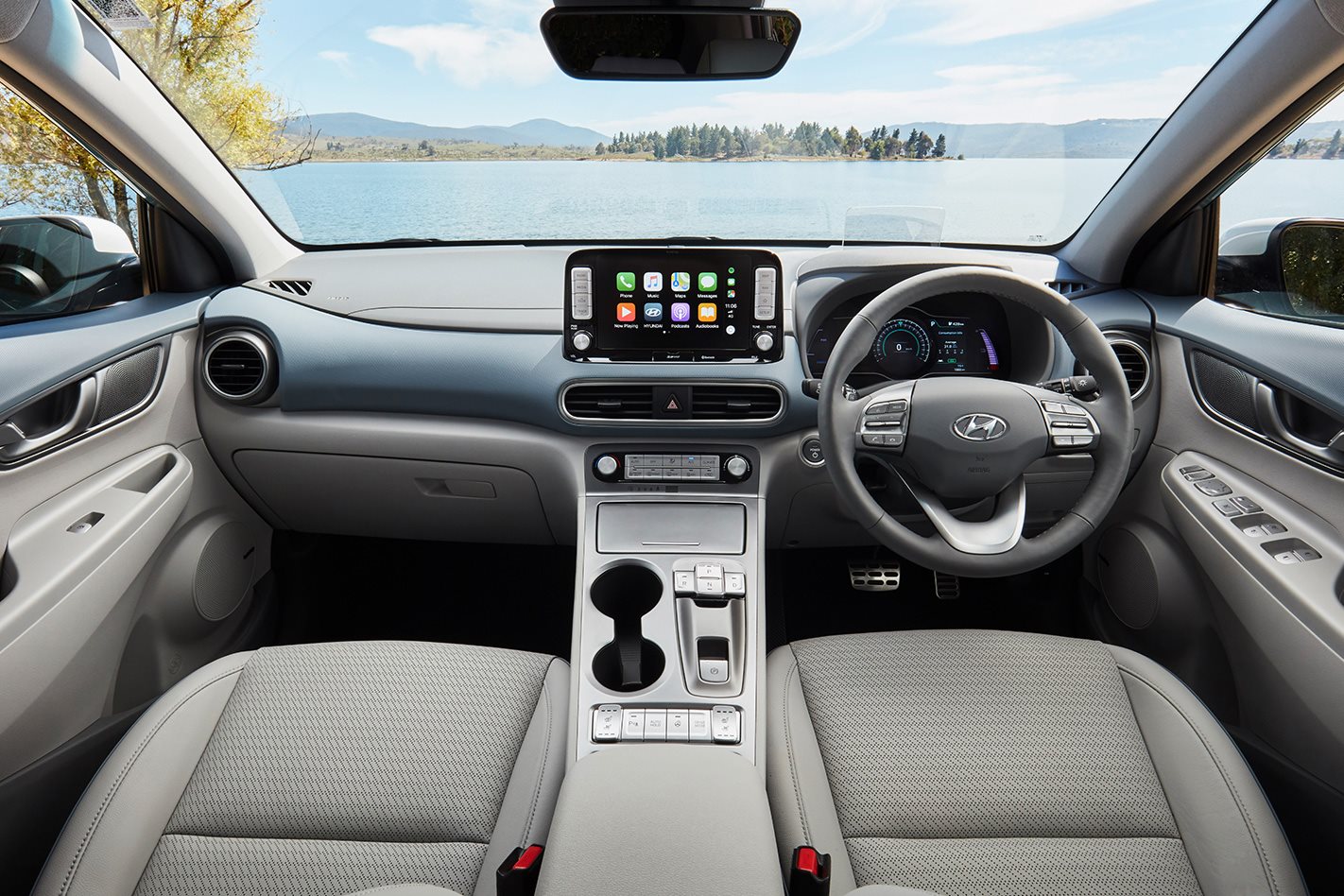
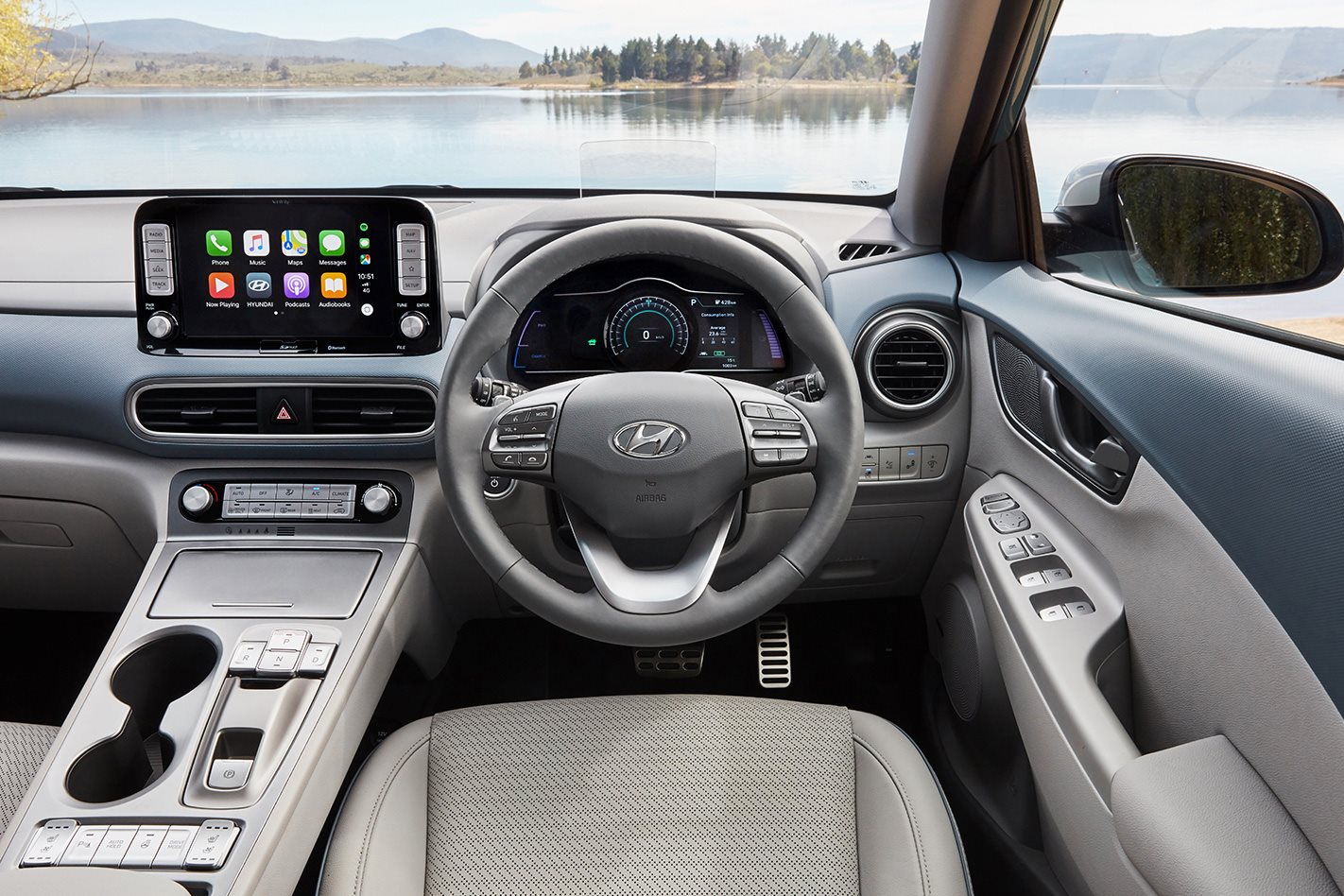
The Kona is well finished and nicely styled inside, with a floating centre console and light-coloured trim. Much of the layout and equipment is familiar Hyundai fare, but there are important differences, like the digital instrument cluster and centre screen, and the cross-shaped array of drive-by-wire buttons in lieu of a shifter.
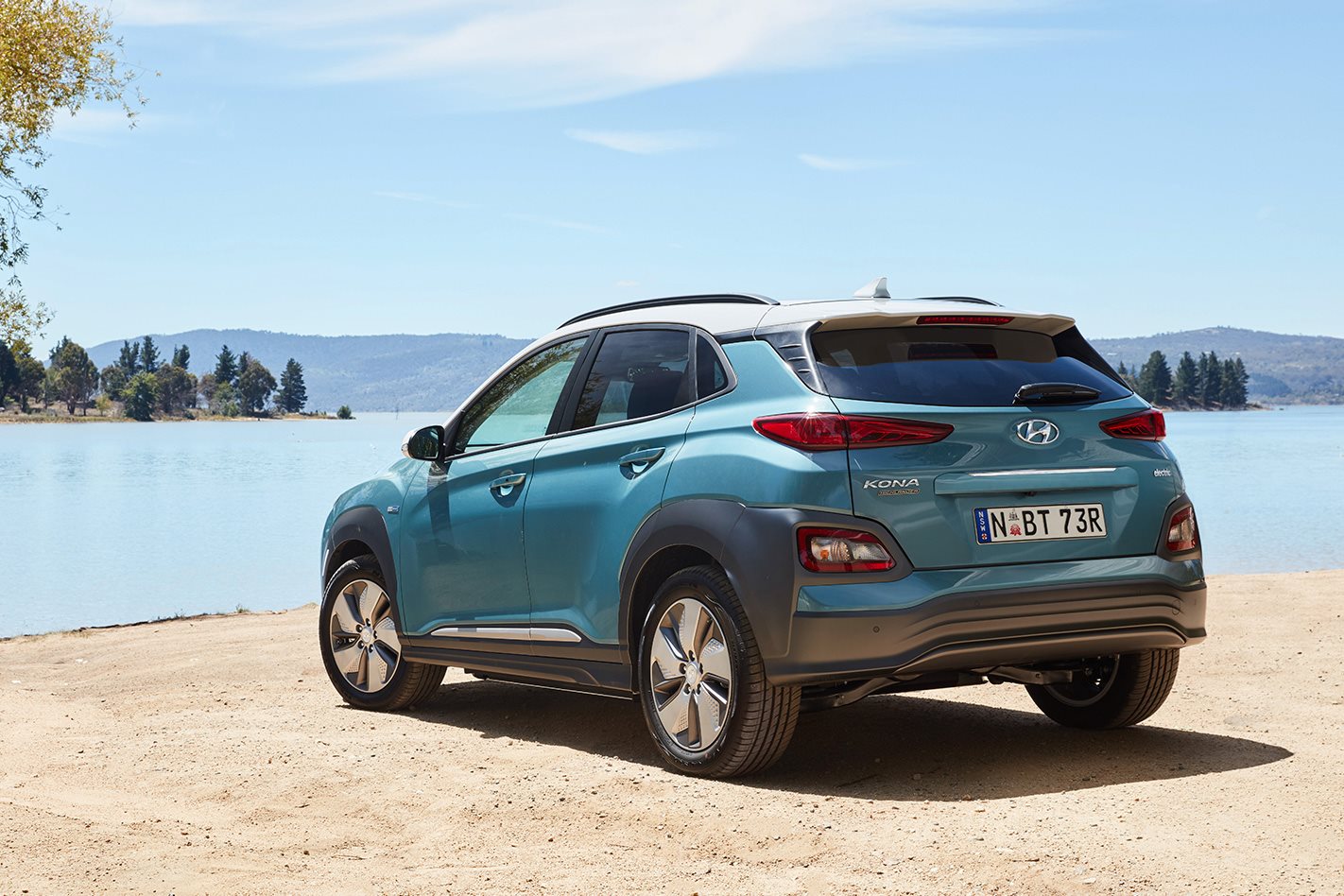
A digital chime plays on start-up, but aside from that the Kona is so quiet when running it’s been designed to project a low, harmonic sound at speeds below 30km/h to alert pedestrians to its presence.
Acceleration is instantly strong and linear, though there’s some initial jerkiness as you come to terms with its regenerative braking, which slows the car dramatically when you come off the throttle. This can be adjusted via paddles mounted on the steering wheel.
There are three drive modes – Eco, Comfort and Sport – with Comfort providing the best balance for highway driving. Overtaking performance is impressively brisk. Put the foot down at 100km/h and the Kona surges forward. Noise suppression is excellent, too, and driving position and seat comfort are both exemplary.
Our road test took four and a half days and covered 2212km up the Queensland coast, from Coolangatta to Cairns, so we did a lot of charging. A network of 50kW DC fast chargers took the battery to 90 percent capacity in between 60 and 90 minutes, each charge delivering an effective highway range of just under 400km.
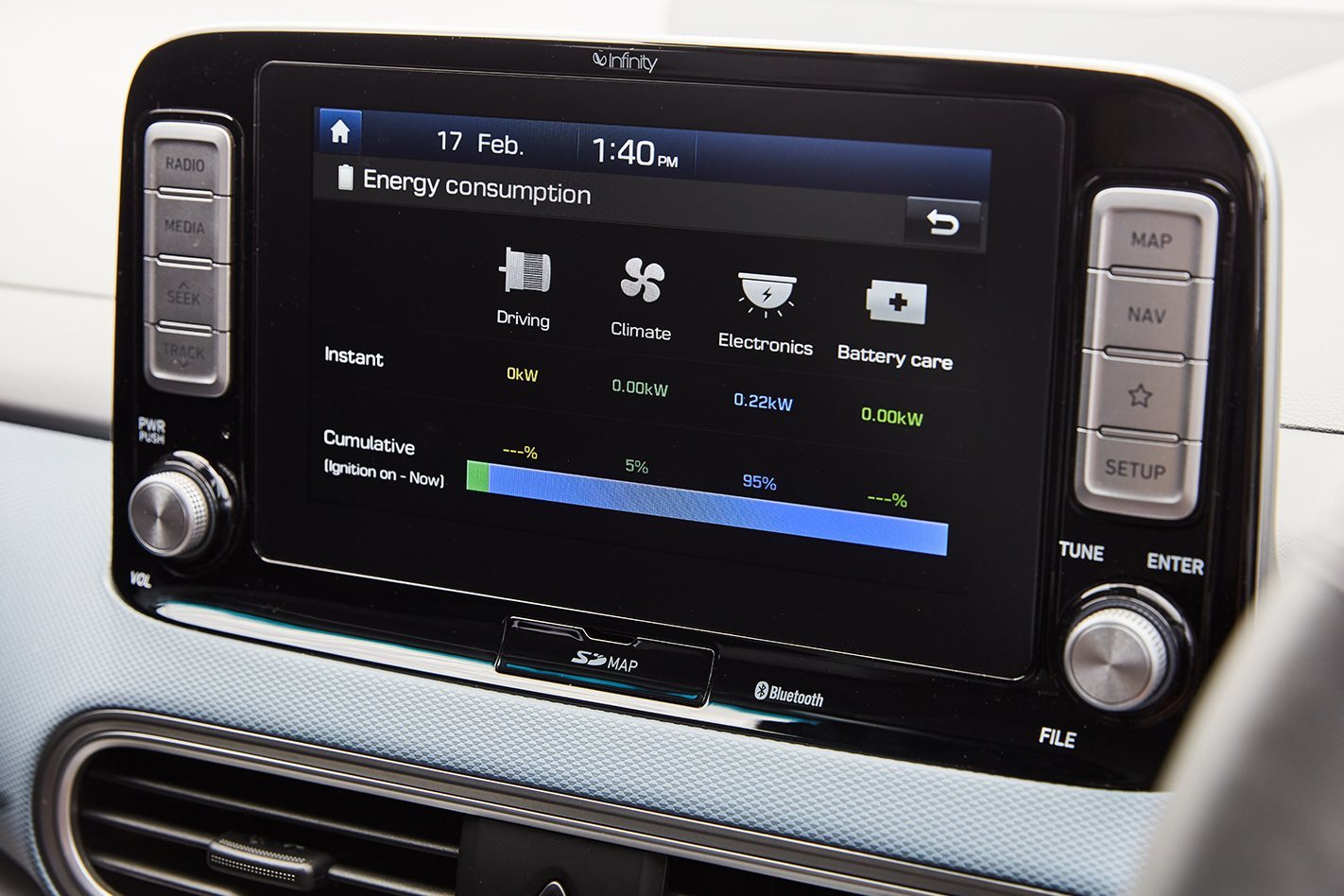
The car’s trip computer does a good job of keeping you appraised of battery status and distance to empty but we cut it fine a couple of times. When this happens, the Kona’s Eco+ setting, selected manually, can help you eke out your remaining battery life by shutting down air-con and limiting speed to 80km/h, unless overridden.
HYUNDAI KONA VS RIVALS
The Kona EV sits in rarefied company as there are so few pure EV options on the market. Perhaps its nearest rival is BMW’s i3S, which sells for only slightly more coin ($69,990) and has similar outputs of 135kW and 270Nm. However, its battery and range both fall short of the Kona, as does that of the Nissan Leaf, which will cost around $50K when it arrives here in August.
HYUNDAI KONA EV HIGHLANDER PRICE AND SPECS AUSTRALIA
- Model: Hyundai Kona EV Highlander
- Motor: Permanent magnet synchronous
- Max power: 150kW
- Max torque: 395Nm
- Transmission: Single speed reduction gear
- Weight: 1743kg
- 0-100km/h: 7.6 seconds (claimed)
- Economy: 14.7kWh/100km (tested)
- Price: $64,490
- On sale: Now
MORE: Hyundai Kona Range Review MORE: Hyundai Kona Specs, Range & Price
The days of Mercedes-AMG’s C63 being a rear-drive V8-powered brute are seemingly numbered, with the German performance company’s boss stating all future models are likely to have all-paw traction.
Speaking with Autocar in the UK, AMG boss Tobias Moers responded positively to the prospect of purely rear-wheel-drive vehicles disappearing from the company’s product range.
“Customers have given us the answer, and most want four-wheel drive,” he said.
“Back in the days when we had an AMG E-Class as rear-wheel drive and with four-wheel drive as an option, over 90 percent chose 4WD.”
However, that doesn’t mean that customers who want to enjoy the antics of rear-wheel drive will miss out, as evidenced by the AMG E63’s drift mode. The twin-turbo V8-powered sedan is capable of sending 100 percent of its 450kW/850Nm exclusively to the rear treads at the press of a button, despite its all-wheel-drive set-up for ‘regular’ duties.
Moers’ comments mean it’s also likely the next-gen AMG GT supercar will become an all-paw monster. The AMG boss’s justification for the shift is that it would allow everyday customers to safely enjoy the ever-increasing power of AMG’s high-performance products.
“When I ask customers about the GT, they ask me about all-wheel drive. Regarding our competition, this is the downside of the AMG in terms of usability. People in Munich, for example, always, always ask for four-wheel drive – I think it’s for safety and stability,” he said.
Wheels reported in August last year that the next-gen C63 would likely become a six-cylinder hybrid, capable of 400kW.
It’s expected the 2021 C63 will swap outright power for dynamics and athleticism, with Moers confirming at last year’s New York motor show that the all-new C-Class flagship “will be a hybrid – that’s now a given.”
Development of the hybrid technology will be taken care of by Mercedes-AMG High Performance Powertrains, who also bolt together Lewis Hamilton’s world-beating engine.
The M256 in-line 3.0-litre six-cylinder turbocharged engine found in the CLS53 is likely to be the starting block for the next-gen C63’s powertrain, with the addition of hybrid tech, a kinetic energy recovery system and beefed-up turbocharging.
While the C63 looks likely to miss out on the 4.0-litre twin-turbo V8 currently nestled under the bonnet, the venerable M177/M178 will continue to enjoy a place within AMG’s range.
The M177/M178 is in its most powerful guise while fitted to the GT 4-Door, where it produces 470kW and 900Nm. While the rumoured GT Black Edition could eclipse this figure, Moers says AMG won’t be pushing the unit beyond those yet-to-be-disclosed outputs.
“To go further, the system will be mated to a plug-in hybrid with an electric rear axle,” he told Autocar.
The hybrid AMG GT 4-Door would debut such a system.
New to Wheels Car of the Year?
Read the COTY 101.
LIKE David Hasselhoff’s musical career, Germany’s Ford Focus has never quite hit the big time in Australia. The bold 1998 original – with game-changing dynamic sophistication – was underpowered and over-priced when it launched here four years later; the second-gen of 2005 flirted with success but lived in the shadow of its popular Mazda 3 cousin; and the less said about this decade’s capable but Powershift problematic gen-3 the better.

Willkommen, then, to Focus gen-4. Hailing from the land of the Golf, nothing bar the badge and a few bolts carry over, in a wider, lower, roomier, quieter and stronger small car, which is also up to 88kg lighter than before.
Not everybody will be pleased that four cylinders have been superseded by three, or that the manual is no more. Beancounters be damned! Additionally, all but the ST-Line wagon versions (for now) ditch the old multi-link independent rear-end layout that helped forge the Focus’s reputation as a great steer, for a cheaper, simpler and less bulky torsion-beam arrangement – a move the Blue Oval claims is more than offset by a longer wheelbase, stronger steels, far better insulation measures, and advanced new driver-assist tech. And much of the latter is standard.
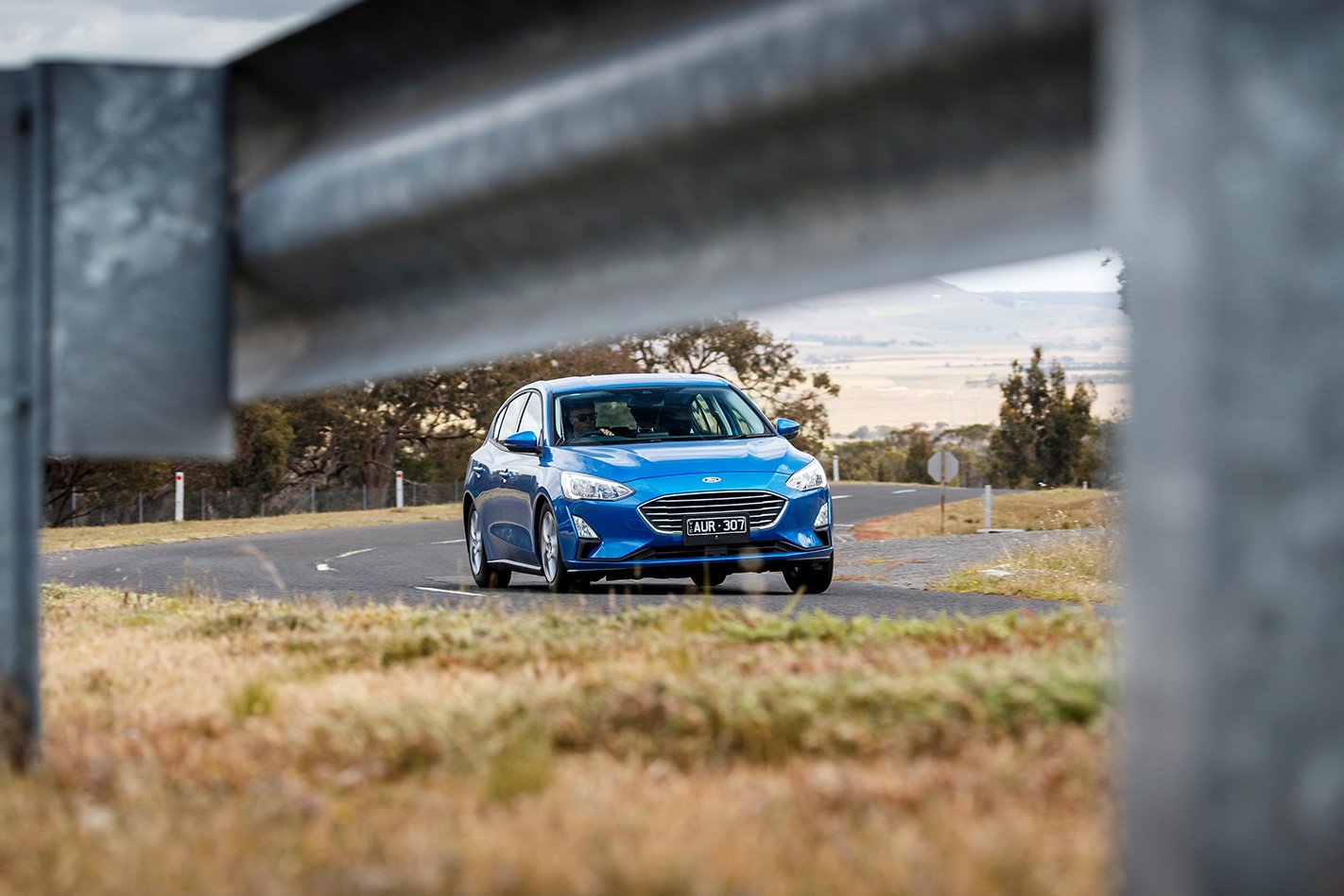
So, the big question is, has the Focus relinquished its dynamic mantle? Not if the $25,990 base Trend hatch is any guide. Muted at idle, the effervescent 1.5-litre three-pot turbo leaps into action and just keeps boldly bounding along, only betraying its diminutive capacity at proving-ground speeds well above the legal limit. The auto shuffles through its ratios with slick authority, and the whole drivetrain feels fighting fit. No qualms there, then.
Better still, the sparkling chassis is a revelation, with beautifully interactive handling. The front end’s lightness of touch is terrific, backed up by a poised and planted rear end that almost feels like it can be controlled from the seat of your pants. Factor in a hushed, cushy, yet controlled ride, and it is clear the latest Focus’s dynamic fluency is transcendental, regardless of the less-sophisticated suspension lurking out back. Mission accomplished.
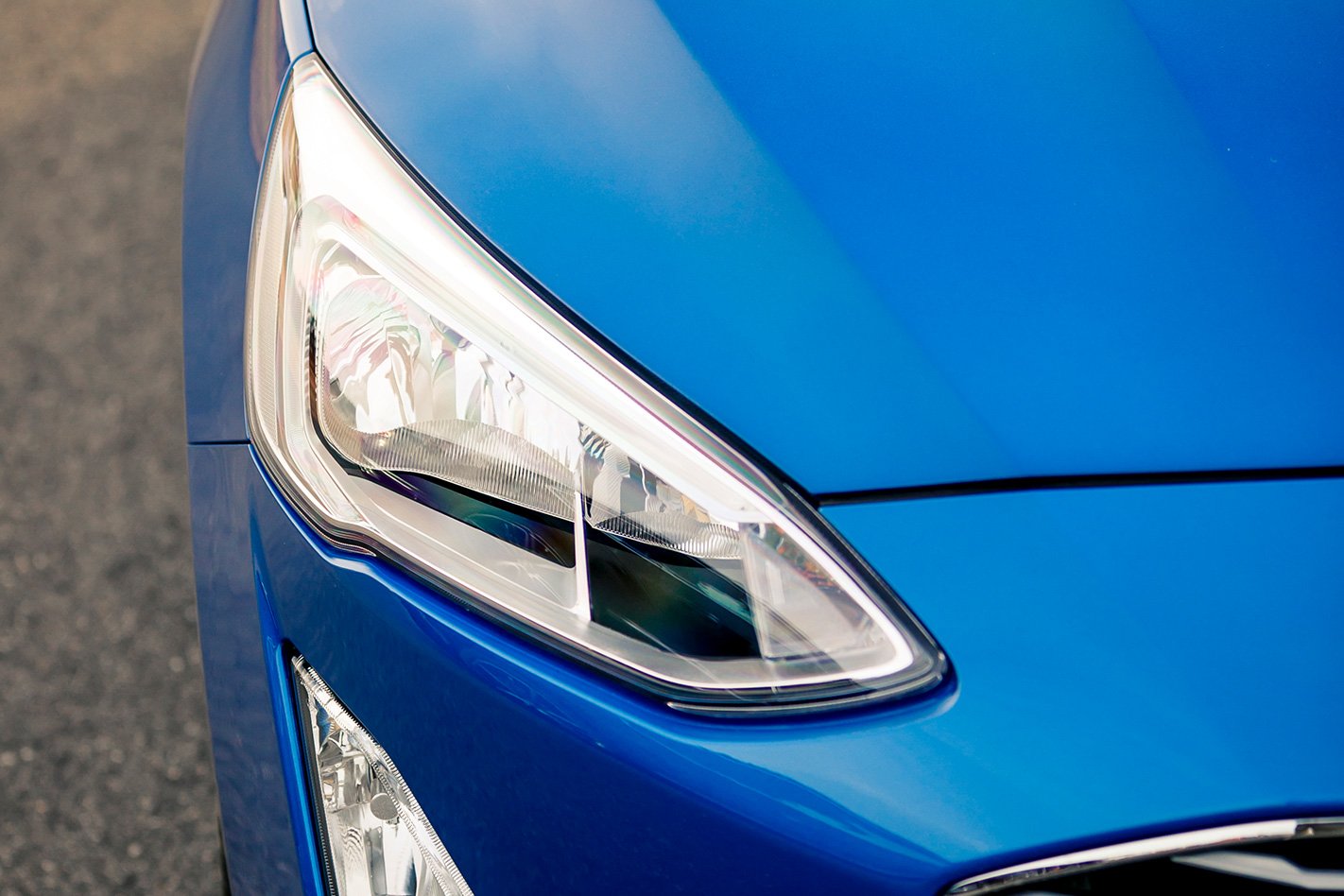
Yet while the Focus soars on the move, it stumbles in the showroom. As fine as the cabin space, dashboard workings and seat comfort are, it seems dated and a little downmarket for the (Golf) money asked. The rear is especially drab with no centre armrest, never mind knee-level air vents, even in the $31K ST-Line wagon, which offers truly useful load-carrying practicality, by the way. And the Trend misses out on keyless entry/start. There simply isn’t enough allure inside.

With Peugeot 308 alacrity and Golf refinement, but a sub-Hyundai i30 interior … and trailing key competitors for equipment, the Focus is a fabulous small car that is hamstrung by specification and pricing misfires. Just as with earlier iterations, it’s another case of defeat snatched from the jaws of victory.
There’s a bit of an odd story behind this 2000 HSV VTII GTS-R, in fact even a HSV spokesperson wasn’t too sure how it ended up in a Mecum auction.
Built as part of a limited run of rebadged VTII GTSs, this ‘GTS-R’ is essentially just a Callaway-tuned GTS 300 intended for export to the UK. Or that’s what corroborated information gleaned from the internet would suggest.
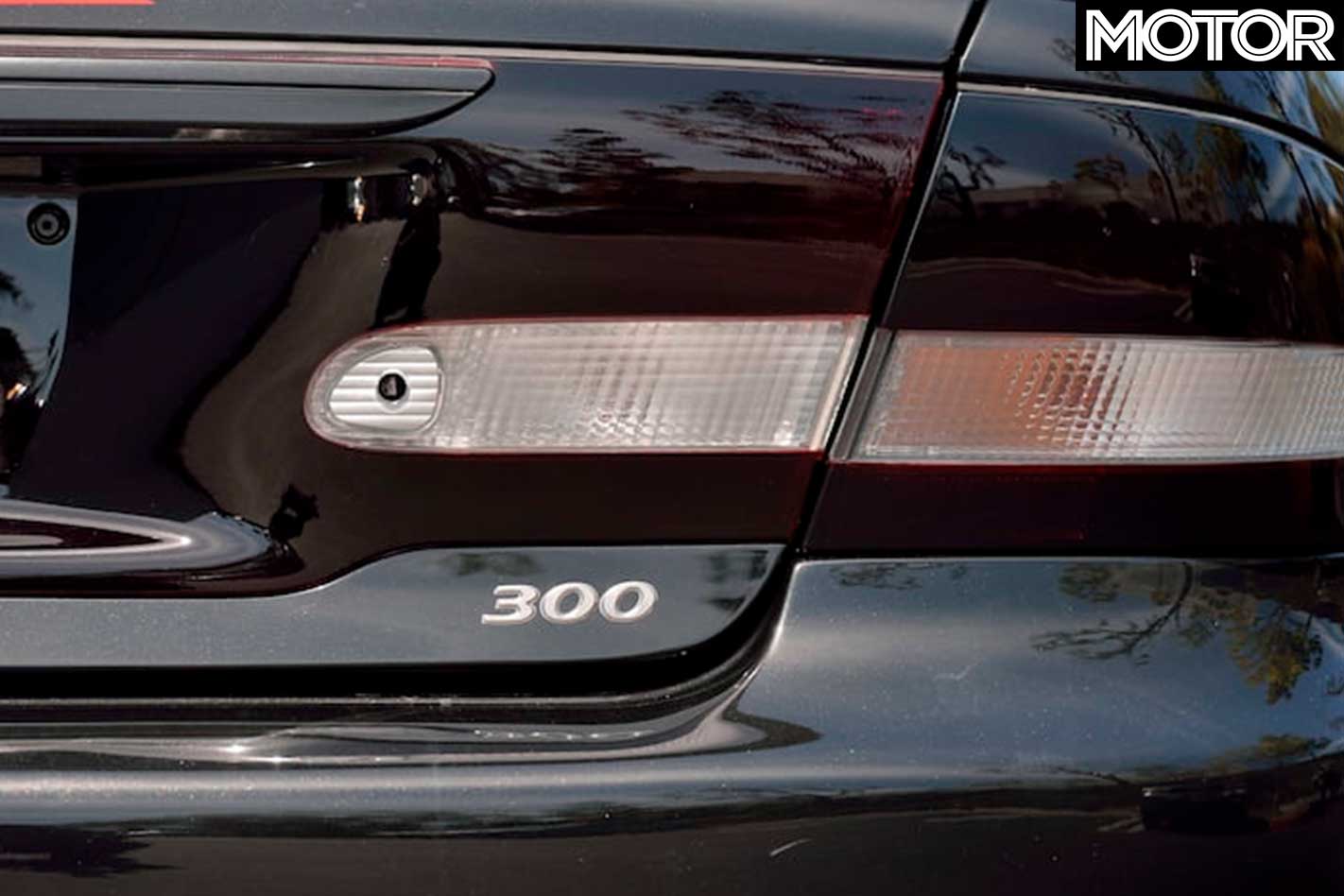
What’s not clear is how many were built. Mecum says 50 of these were produced, and that this is the only one that’s made it to America, though figures from HSV enthusiast forums tend to hover around 20.
As stated previously, the VTII GTS-R is just a GTS with an extra letter on the badge, intended for the UK, though it seems not all of them made it. One has appeared for sale a couple of times in Western Australia, for example.
The one in the auction, Mecum says, was used by Bob Lutz for a road trip and became part of the development of the 2004 Pontiac GTO.
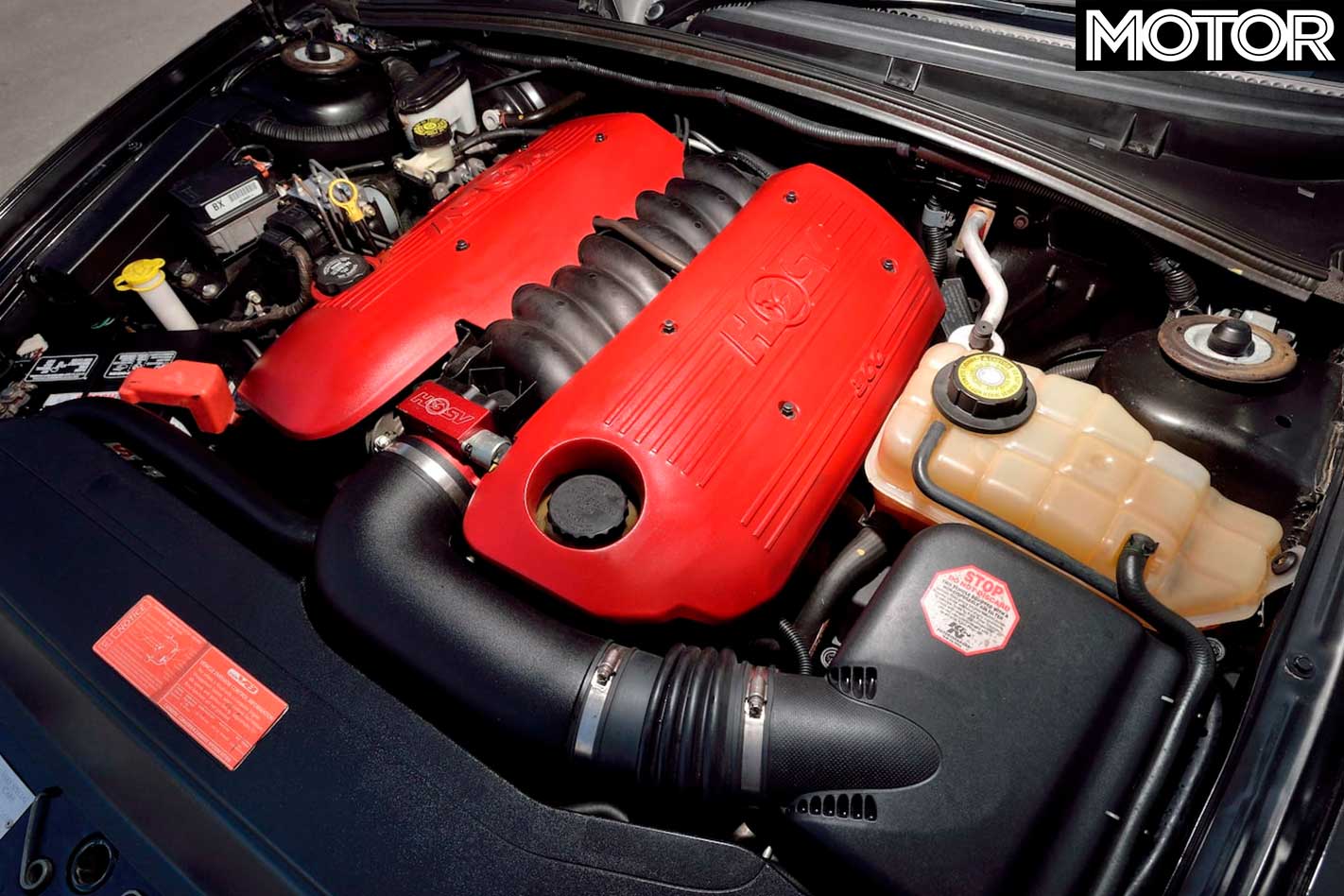
According to Mecum, the car made its way to America under the care of Gordon Wangers, an automotive industry executive who was CEO of marketing and promotional agency ACMI at the time.
Evidence of the car’s US presence in 2001 is available in the form of a comparison test with a BMW M5 by Car and Driver.
Though it’s wearing concept wheels by Curva, the original wheels are to be included in the sale. The odometer has recorded 42,395km.
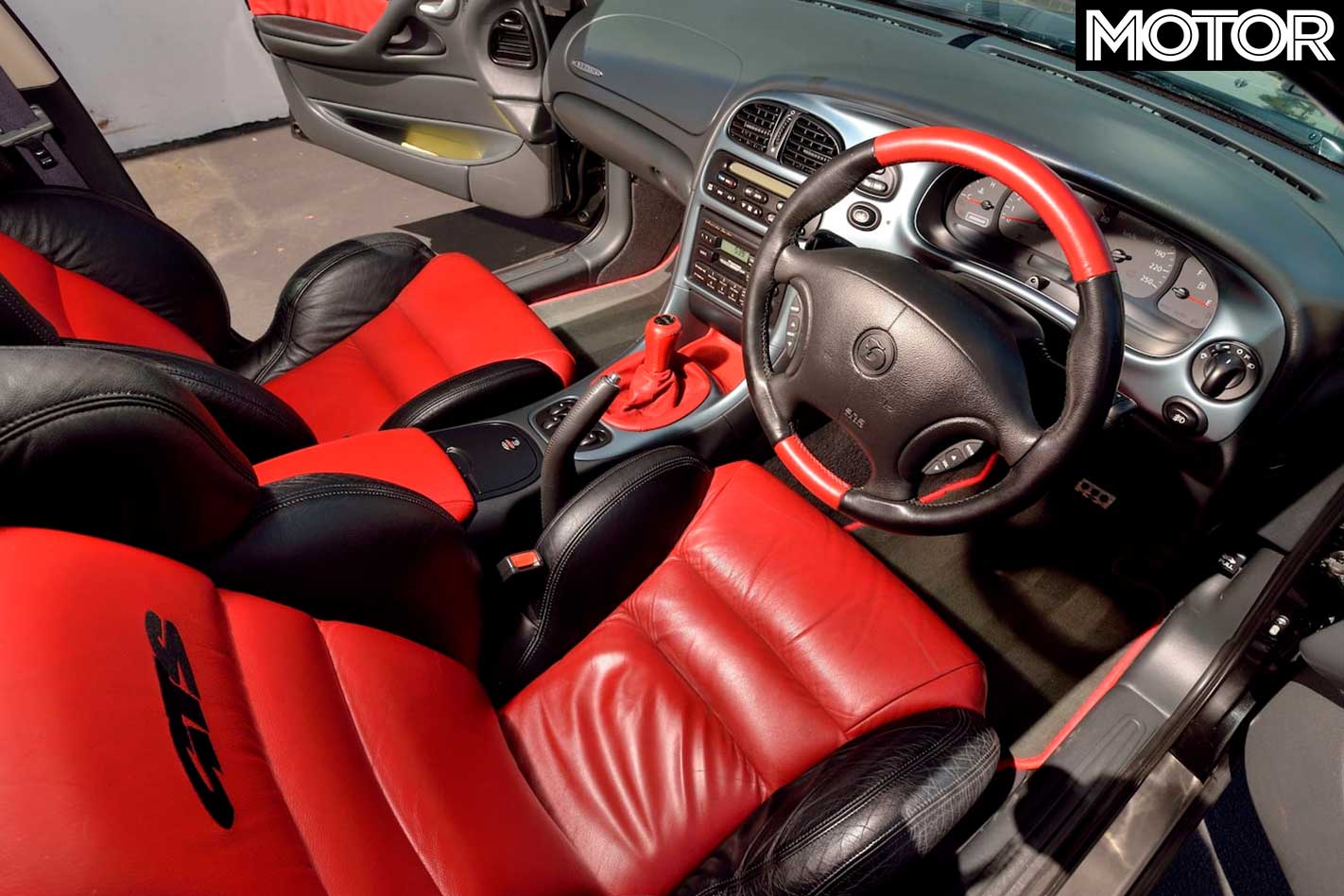
A 5.7-litre LS1 putting out 300kW and 510Nm, the Callaway-tuned ‘C4B’ engine was a marvel of the time and was used in HSV’s GTS Coupe soon after.
Mecum estimates the car will sell at the Indy 2019 Auction in mid-May for between USD$50,000 and $75,000, or between AUD$70,900 and $106,300.
Why is the compact SUV segment enjoying such a heyday? To answer this question we bring together the entire WhichCar team in a series of automotive events that test both the strengths and weaknesses of six crossover contenders.
Do SUVs actually offer any kind of all-terrain ability? With tiny dimensions can they be as practical as they pertain? And when you load them up with people and things, do these little high-riders have the performance to get you places with time to spare or are they frustratingly glacial?
It’s Suzuki versus Subaru for the Cross Country event, Hyundai bumps gloves with Nissan for the 1400m Sprint and Citroen weighs in with Toyota for the Autokhana. And there are plenty of surprises along the way.
See the team brought together for the first time in the series in this automotive olympiad like no other.
On-air: Channel Ten, May 5 (AU) / May 13 (NZ)
Catch-up: Watch at tenplay.com.au (AU) or primetv.co.nz (NZ)
What stands out?
The previous-generation Mazda 3 small car still impresses as a package. It is easy on fuel, stylish inside and fun to drive, with both engine options delivering ease on the highway. You can have a hatchback or a sedan. All third-generation Mazda 3s gained autonomous emergency braking in 2016, with several other active safety aids available in selected variants.
What might bug me?
Perhaps tyre noise at freeway speeds. Cars on sale since the facelift of August 2016 are quieter inside than their predecessors, however.Driving at 80km/h on the space-saver spare until you can fix your full-sized flat tyre.If you drive a friend’s new turbocharged small car, perhaps a sense afterwards that your 2.0-litre Mazda3 feels a bit weak when you first press the throttle to accelerate. It is a lovely, smooth, engine however, and it goes hard once it’s spinning.
What body styles are there?
Five-door hatchback and four-door sedan.Both are front-wheel drive. The Mazda3 is classed as a small car, lower priced.
What features do every third-gen Mazda 3 have?
A multimedia system built around a 7.0-inch colour screen and controlled by a dial on the centre console. The screen displays images from a reversing camera, as well as settings for AM/FM/Digital radio and in-built entertainment apps.Bluetooth connectivity and AUX, USB inputs for mobile devices, and six-speaker sound system.Rear parking sensors, and electric folding mirrors.Hill-launch assist, which controls the brakes automatically to help you start from rest on an uphill slope.Rear parking sensors, which help you judge your distance from the car behind you. Power-folding exterior mirrors, so that you can easily keep the mirrors out of the way when parked.Wheels made from aluminium alloy (which are lighter and nicer looking than steel wheels with plastic covers). A space-saver spare wheel, with a recommended maximum speed of 80km/h.G-Vectoring Control, a Mazda technology that makes the car respond more consistently to the steering wheel.Electronic stability control, which helps the driver recover from skids. (All new cars must have this feature.)Smart City Brake Support, a camera-based system that can detect an impending collision with a car or pedestrian ahead and apply the brakes automatically, perhaps avoiding a crash. (For more on Mazda3 safety systems, please open the Safety section below.)Six airbags: two directly in front of the driver and passenger; a side airbag protecting the torso of each front occupant; and a head-protecting curtain airbag along each side, covering front and rear occupants.2016-19 Mazda 3s were initially covered by a three-year warranty, with no limit on kilometres driven. Mazda extended its warranty to five years for all vehicles purchased from August 1, 2018.
Which engine uses least fuel, and why wouldn’t I choose it?
The 2.0-litre four-cylinder petrol is the more fuel-efficient of the two engines available in a Mazda3, consuming as little as 5.7 litres/100km in the official test (city and country combined). This is the only engine choice for the Mazda3 Neo, Maxx and Touring, and it is an excellent unit.A Mazda3 Maxx auto averaged 8.7 litres/100km in a real-world comparison undertaken for the January 2016 edition of Wheels magazine – a litre more than the most frugal of 10 cars reviewed, a Volkswagen Golf.The sportier Mazda3 SP25, SP25 GT and SP25 Astina models are available only with a bigger and more powerful 2.5-litre petrol. It brings you about 25 per cent more thrust in most driving conditions, which is not necessary but brings swifter overtaking and, for some drivers, more fun, while consuming more fuel but not much more.Both engines have an auto stop-start system that cuts fuel use in city driving. It shuts down the engine whenever you stop, and starts it automatically when you take your foot off the brake pedal to drive away (or in manuals, depress the clutch pedal).All Mazda3s offer a choice between six-speed manual and six-speed automatic gearboxes.
What key features do I get if I spend more?
Step past the least costly model, the Neo Sport, and spend more for the Maxx Sport and you get a more welcoming feel in the cabin, with the steering wheel, gear lever and handbrake lever trimmed in leather. On auto versions the wheel has paddle shifters for controlling the gearbox.The Maxx Sport also adds active safety features to the forward auto-braking that comes with the Neo Sport. Its auto braking also works in reverse, and there is a blind-spot monitor and rear cross-traffic alert.Dual-zone climate control that lets the driver and front passenger set their own temperature and fan settings.Dusk-sensing headlights and rain-sensing windscreen wipers add convenience and an electric parking brake switch frees up space on the centre console.Spend more again for a Mazda3 Touring and the cloth seat trim of the less costly versions are replaced with a mix of real and fake leather.You also get advanced keyless entry and the exterior mirrors fold automatically when you have parked.For not many more dollars than a Mazda 3 Touring you could have instead a Mazda3 SP25, which drops the leather seat trim (it reverts to cloth) but brings you the more powerful, 2.5-litre engine. The SP25 replaces the smaller-engined cars’ 16-inch wheels with 18-inch wheels, and these mount wider tyres that have shallower sidewalls (giving you more grip and sharper steering response). Smart key entry allows you to unlock the doors and drive away without taking the key out of your pocket or bag. Like the Touring, the SP25 has automatic wipers and dual-zone air-conditioning.The SP25 GT returns leather trim to the seats and adds heating for the front seats and powered seat-adjustment for the driver. It also brings you a great Bose sound system, with extra speakers. A head-up display projects the speedo on to an adjustable screen atop the regular instrument cluster. Headlights use very bright, long-lived LEDs and shine their beams into corners as you turn the wheel. A driver-attention alert monitors your control inputs for signs of fatigue, and Traffic Sign Recognition helps you keep track of speed limits.The most expensive Mazda3 is the SP25 Astina, which adds a sunroof and more active driver aids. These begin with LED headlights that automatically dip only a part of their high beams for oncoming traffic, retaining long-range illumination for your side of the road. There is radar cruise control (which automatically slows the car as you approach a slower vehicle ahead). The radar allows a more comprehensive automatic emergency braking system that works at speeds up to 160km/h. And a lane-keep assist not only warns you if you have begun to drift distractedly – and possibly very dangerously – out of your lane on the highway, but turns the steering wheel gently to help you guide the car back.Mazda3 SP25 GTs and Astinas in some exterior colours offer the option of white leather for the interior trim.
Does any upgrade have a down side?
The 2.5 litre petrol engine uses about 5 per cent more fuel than the 2.0 Petrol.The lower profile, wider tyres on the SP25 versions decrease ride comfort, because there is less air between the wheel and the road. These tyres may also cost more to replace.
How comfortable is the Mazda3?
The Mazda3’s cabin looks and feels elegant, with the switches and gauges conveniently placed. Seats even on the lower-priced versions feel supportive, and there is plenty of scope for tailoring the driving position for your body shape.In the centre of the dash there is a colour touchscreen that looks as though it was inspired by an iPad. A control knob is placed between the front seats. Main menu items work okay, but selecting radio stations from the screen can take more movements and clicks than it would have with traditional buttons. Unfortunately, Mazda is yet to adopt Apple CarPlay and Androind Auto, which makes it easier to access your phone’s functions via the infotainment system.The SP25 GT and Astina impress with their head-up speedos. These are teamed with a revised instrument cluster, which puts more emphasis on the tachometer. The leather seats in these cars come with stronger side bolsters that hold you in place around corners.Accurate steering helps the driver relax and the Mazda3 rides quite smoothly, disposing of bumps well and settling quickly. Noise from the tyres might intrude on coarser road surfaces, but other dins are kept at bay.Extra sound insulation and revised suspension have made Mazda3s on sale since the facelift of August 2016 a bit quieter and smoother to ride in than those that came before.
What about safety in a Mazda3?
Six airbags, stability control, seatbelt reminders on all seats, and rear parking sensors, contribute to a well-rounded safety package on all Mazda 3s.In addition, every Mazda3 comes with Smart City Brake Support Forward – a significantly enhanced version of the automatic emergency braking system that had been offered as an extra-cost option prior to the facelift of August 2016.The Mazda3’s auto braking now works at speeds up to 80km/h, using a camera to detect obstacles on the roadway ahead (typically another car that has slowed suddenly, but also pedestrians), and braking the car if you do not react immediately to a warning.On all but the least costly Mazda3, the Neo Sport, auto braking also works in reverse, applying the brakes to prevent your backing into objects (or people) detected by a sensor on the rear bumper.All Mazda 3s have a reversing camera and rear parking sensors to help you check back there yourself.All versions except the Neo Sport have a blind-spot monitor that alerts you, when you indicate to change lanes, if it detects another car near your rear corner but out of view of your mirrors. And a rear cross-traffic alert helps you avoid trouble when reversing out of parking spaces or driveways, warning you if it detects a vehicle approaching from either side.Two more driving aids arrive with the Mazda3 SP25 GT, most significantly a fatigue detector that looks for changes in the way that you steer the car on the highway. If it detects evidence that you may be falling asleep, it warns you to take a break. The other is Traffic Sign Recognition, which helps you keep track of speed limits. It reads roadside signs, and shows the most recently detected limit on your head-up display.On the SP25 Astina, the active safety suite is enhanced further. The addition of a radar sensor to the auto-braking system extends its operating range to 160km/h. And Lane Keep Assist acts to guide the car back into its lane if you have begun to drift distractedly across the roadway.The Australasian New Car Assessment Program (ANCAP) awarded the third-generation Mazda3 its maximum rating of five stars, most recently in August 2016.
I like driving – will I enjoy this car?
Yes, it is very likely you will. The 2.0 litre engine copes admirably with city life and has enough power for easy highway touring. It revs freely and mates well with the six-speed auto gearbox that most buyers opt for.While this engine does not thrust as hard when you first press the accelerator as the turbo engines in some small-car alternatives, needing to spin past 4000rpm before it really performs, it is keen from there and it even sounds a bit rorty.The bigger, 2.5 litre petrol engine in the SP25 versions is also a good fit for the car, and offers about 25 per cent more go than the 2.0. With the added grunt the car feels deliciously responsive, and its driveability is abetted in auto form by immaculate gearchanges.The Mazda3 dishes up an excellent blend of polished dynamics, with fluent yet engaging steering and an agility that makes light work of suburban streets and country roads alike. It has a very natural, flowing feel as you guide it through a series of bends. The ride feels soft but delivers enough control for sharp cornering.Cars on sale since August 2016 benefit from Mazda’s G-Vectoring Control, whose operating principle is simpler than the name might suggest. It adjusts the engine when you turn the steering wheel, decelerating slightly so as to transfer load to the front tyres and help them bite (and reversing the process as you return to centre). You don’t notice it working but the car feels more planted, while changing direction more fluidly.The August 2016 facelift also added a Sport mode to automatic versions, which allows the gearbox to encourage more thrust from the engine when you want to press on.
How is life in the rear seats?
Leg room is average for the class rather than generous. As in all small cars, three full-sized adults across the rear is a squeeze.There are no rear air-conditioning vents. And a rising window line means smaller occupants could be looking up rather than out.
How is it for carrying stuff?
The boot on the hatch is relatively spacious at 308 litres, helped by 60/40 split-folding seats and a broad tailgate opening. But it’s the sedan that has more space, at 408 litres, albeit without the hatchback functionality.
Where is the Mazda 3 made?
All Mazda3 versions are made in Japan.
What might I miss that similar cars have?
Support for Apple CarPlay and Android Auto, which would let you plug in a smartphone and run some of its apps on the car’s touchscreen. Among small cars offering this feature are the Volkswagen Golf, Hyundai i30, Subaru Impreza, Honda Civic, Ford Focus, Holden Astra, and Renault Megane.Perhaps a more robust first-response to the accelerator, such as you might get from a turbocharged engine. The Golf, Astra, Focus, and Civic offer this, for example.Perhaps the greater all-weather security of all-wheel drive, standard on an Impreza.If you plan on doing a lot of country-road driving, maybe better fuel-efficiency from a diesel engine. The Golf and Hyundai i30 offer diesels, for example.If you face a lot of city commuting, possibly a fuel-saving petrol-electric hybrid drivetrain. Toyota offers an excellent hybrid Corolla.Other small-car alternatives include the Kia Cerato and Peugeot 308.
I like this car, but I can’t choose which version. Can you help?
Our reviewers like the Mazda3 Maxx Sport. It brings you the central touchscreen, satellite navigation and reversing camera, rain-sensing windscreen wipers, and some helpful active safety tech in addition to auto braking. The leather-bound steering wheel is a nice finishing touch.
When did Mazda retire the third-generation Mazda 3?
The hugely popular third-generation Mazda 3 began being phased out in February 2019 and was ultimately replaced by the all-new model in April 2019. It was consistently the second biggest-selling passenger car behind the Toyota Corolla and went out on a high to be the biggest selling passenger car in March 2019.It first went on sale early in 2014 and received a significant mid-cycle facelift in August 2016 that kept it competitive against newer models and will make it an excellent ex-demonstrator or used by for months and years to come.Exterior changes were minor, but mechanical and software updates resulted in a Mazda3 that was quieter and more comfortable to ride in, and that steered more accurately (in part through the introduction of G-Vectoring Control). Autonomous emergency braking was made standard on all Mazda 3s, using an enhanced, camera-based system that operated over a much broader speed range than the laser-based system it superseded. Among other changes, the most expensive Mazda3s received a broader range of active driving aids, and the diesel-powered Mazda3 Astina XD was dropped.In February 2018, Mazda added new equipment to the Mazda 3 Neo, Maxx and Touring.The Neo and Maxx were renamed the Neo Sport and Maxx Sport, with the Neo Sport finally gaining an infotainment screen with reversing camera, digital radio and two extra audio speakers. The Maxx Sport gained rain-sensing windscreen wipers, dusk-sensing headlights, dual-zone climate control and an electric parking brake, and the Touring advanced keyless entry.The new-generation Mazda3 arrived in April 2019 with the same choice of powertrains as the third-generation model. However, Mazda’s new ground-breaking Skyactiv-X compression ignition engine will be available by the end of 2019.We’ll have Range Review for the all-new 2019 Mazda 3 soon.
See the video above for an explanation of when you should be changing your tyres.
Taking us out this week, Tony hops aboard one of 2019’s tiniest cars but one that’s making a big impression. The Suzuki Jimny is drawing quite a crowd with its charming looks but how does it go away from the beaten trail when there’s real work to be done?
See the full episode: Watch at tenplay.com.au (AU) or primetv.co.nz (NZ)
Then Dan jets to Japan to see how Mazda is celebrating 30 years of the MX-5 with a visit to the company’s restoration clinic. In the bowels of the Hiroshima headquarters, a team of techs is creating motoring magic and returning the original sportscar-for-the-people to incredible better-than-new condition.
See the full episode: Watch at tenplay.com.au (AU) or primetv.co.nz (NZ)
