
The prospect of Aussie consumers saving thousands of dollars on European and premium vehicles is a step closer, with EU trade negotiators mounting a strong case to scrap two contentious Australian vehicle taxes.
The Luxury Car Tax (LCT), and five-percent import tariff on European cars are in the negotiator’s sights, the latter of which affects all European-branded cars regardless of price, but is no longer required to protect local vehicle manufacturing.
Former Australian trade minister and deputy chair of the European Australian Business Council Simon Crean told The Australian that axing the import tariff is an inevitable consequence of the free trade agreement.
“As for the luxury car tax, I think the Europeans will continue to make that case (for it to be abolished), and I think they have got a strong case in that regard,” Crean said.
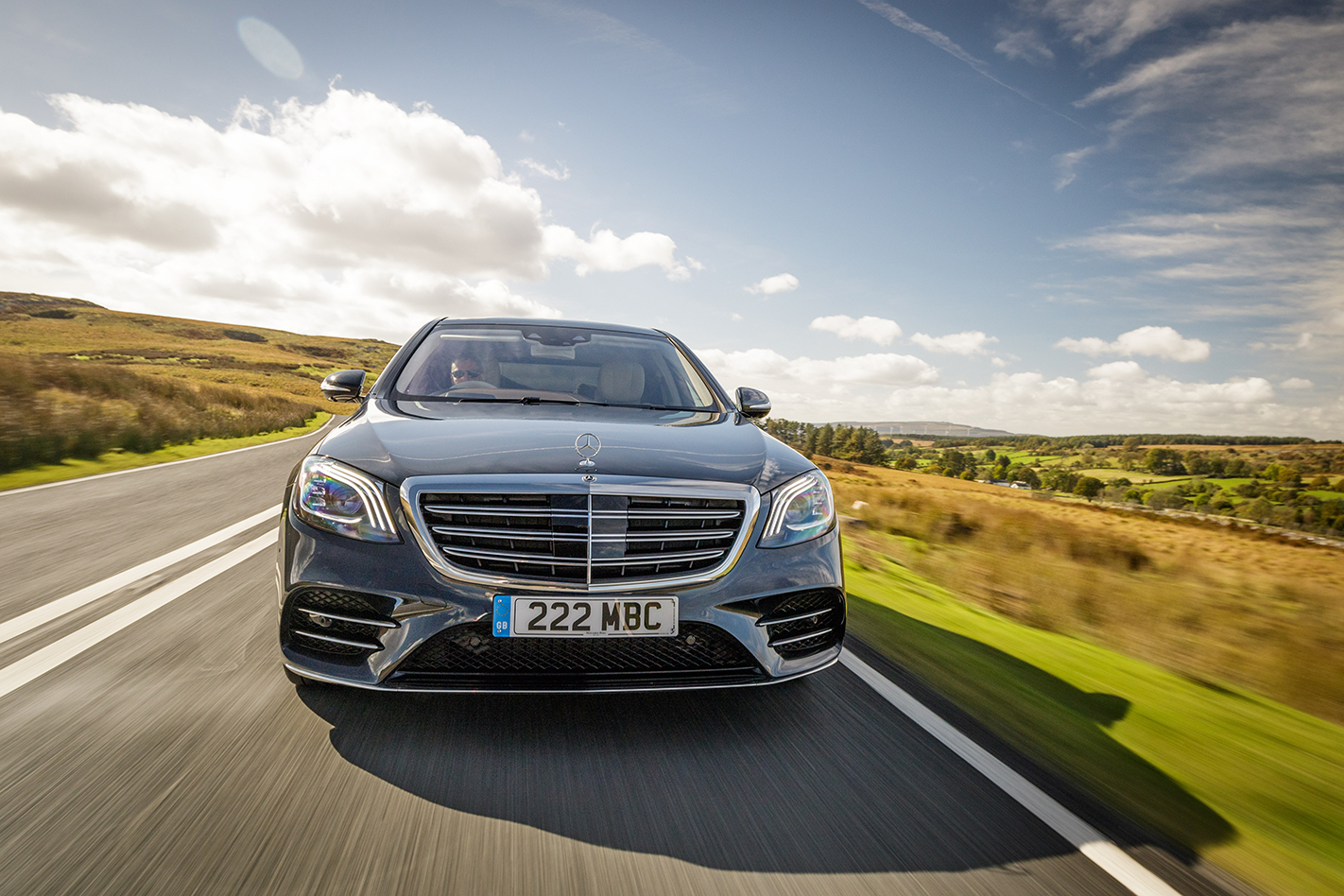
As you might expect, his comments have the backing of the European carmakers’ Australian operations such as Mercedes-Benz Australia, whose head of public relations and corporate communications David McCarthy told WhichCar the LCT’s demise would be passed on to consumers.
However, he said it would be unlikely the tax would be immediately abolished in its entirety, adding that Benz’s preference is for it to be phased out over three years to prevent what he calls a “buyer’s strike”, resulting in a temporary sales decline until LCT’s axing takes effect.
“With the Korean free trade agreement, they didn’t allow six-cylinder vehicles of more than 3.0-litres capacity to come in until the end of local manufacturing, even though the free trade agreement actually ran a couple of years before that,” McCarthy pointed out.
Some non-European vehicles such as the popular LandCruiser 200 Series and Toyota Prado VX and Kakadu will also become cheaper as a result of the scrapping of the LCT, which contributes between $1767 and $12,454 to prices depending on the variant.
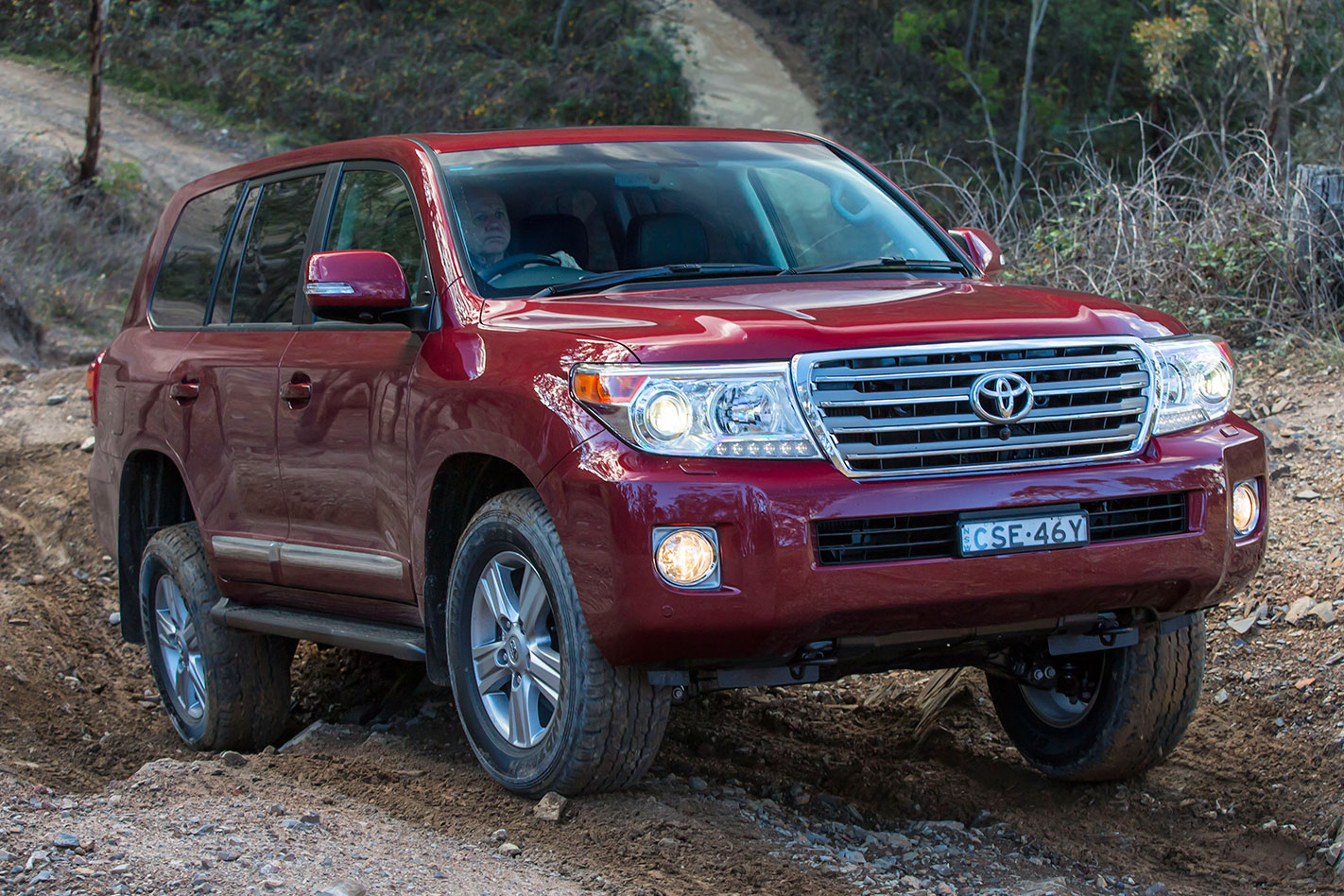
As you’d expect Toyota believes the LCT is an unfair impost on Australians and the automotive industry as it applies only to vehicles and not to other items.
“Motorists already significantly contribute to government revenue when purchasing a vehicle through GST, stamp duty and registration fees,” a spokesman told WhichCar.
The results of dropping the five-percent import tax won’t be as dramatic, however it will benefit more people including buyers of mainstream Euro brands such as Volkswagen, Skoda, Renault, Fiat and Peugeot.
Volkswagen Group Australia Managing Director Michael Bartsch said dropping the “inequitable tax” would create a genuinely level playing field, enabling consumers to make a choice based on the inherent merits of the cars.
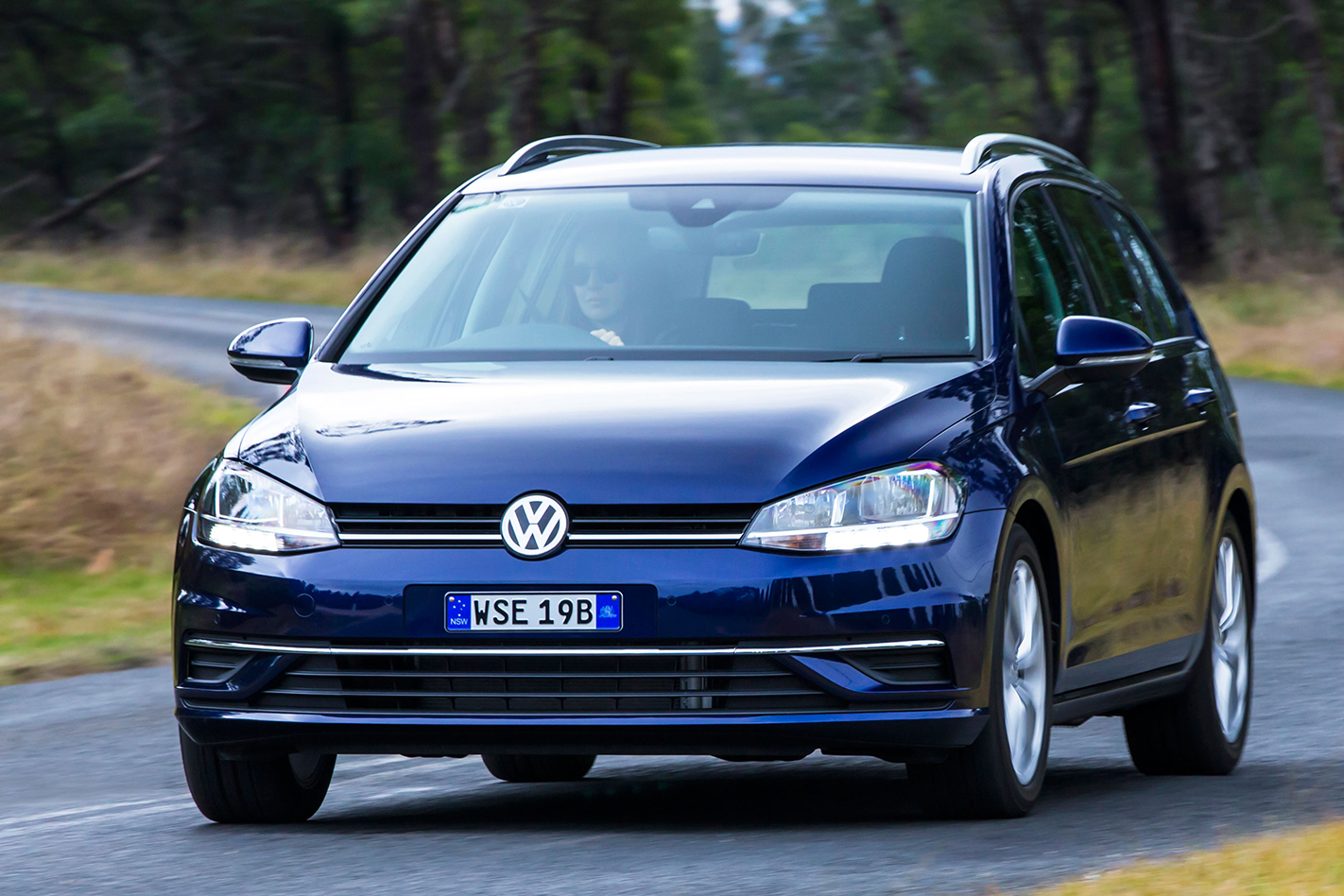
“It will lead to either a realignment down of our prices, an increase in standard equipment or possibly both,” he said.
Negotiations for the Australia-EU FTA officially started in June and are ongoing.
FERRARI’S forgotten Le Mans hero is being sold privately by auction house RM Sotheby.
The 275 P is one of Maranello’s earliest mid-engine sports cars, with the prototype fitted with a 3.3-litre V12 engine between its axles.
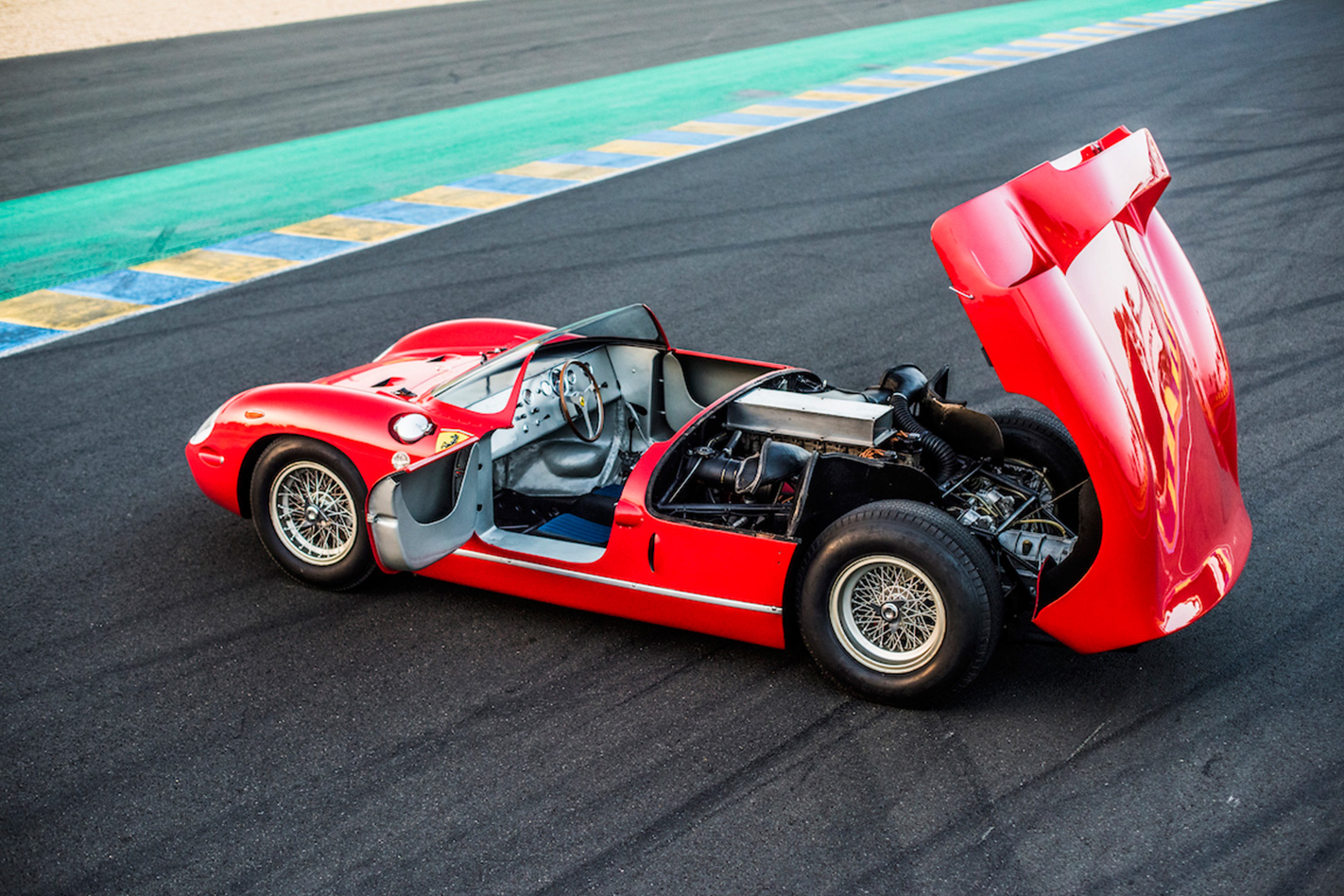
This particular example, chassis #0816, is one of Ferrari’s greatest racing cars, winning the 24 Hours of Le Mans twice (1963 and 1964), but the Italian company didn’t realise until recently.
According to the auction house, chassis #0816 wasn’t meant to race in the ’63 race.
The original plan was for 275 P #0814 to be entered, but that chassis badly damaged at the Nurburgring just a month before the French race.
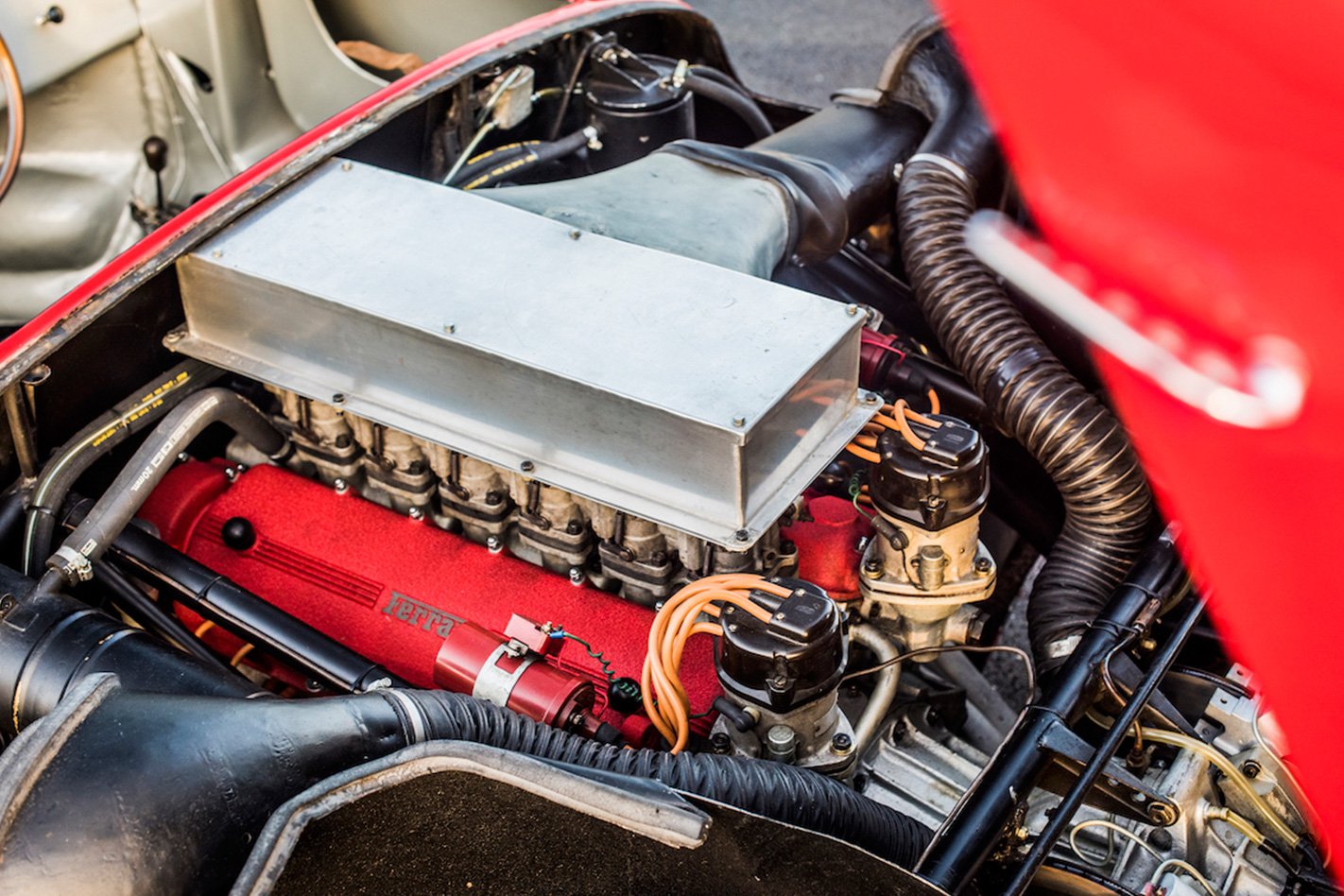
Instead of filling out the paperwork for the entry again, Ferrari simply sent #0816 in its place, finishing first outright
The very same chassis repeated the feat a year later, but Ferrari didn’t pick up the clerical error that hid the achievement for many decades.
The victories in ’63 and ’64 are also the final outright 24 Hours of Le Mans victories for the Scuderia.
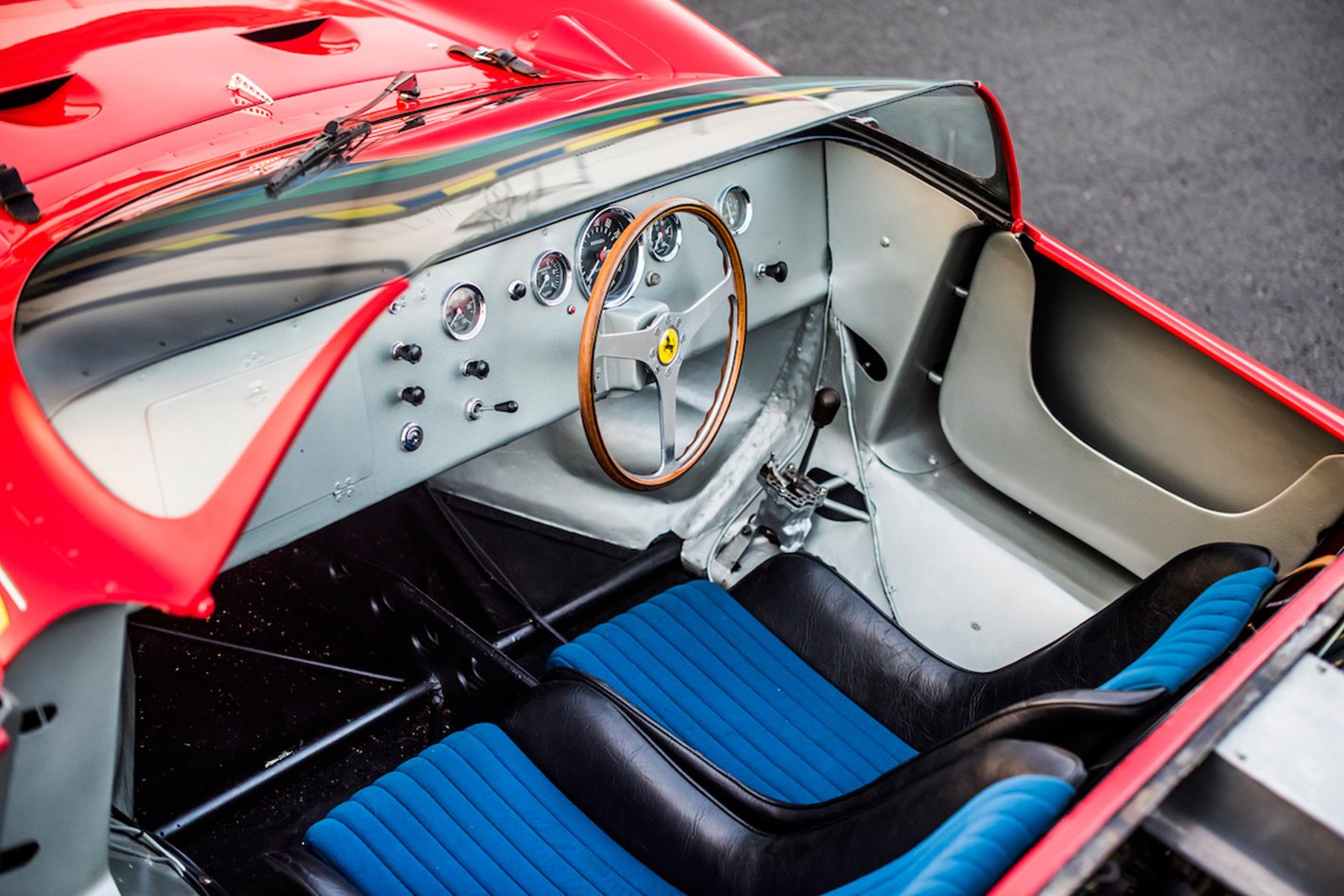
Only four other individual chassis have won the 24 Hours of Le Mans twice; a Bentley Speed Six in ’29 and ’30, the legendary Mk1 Ford GT40 in ’68 and ’69, a Porsche 956 in ’84 and ’85, and the TWR-WSC 95 in ’96 and ’97.
Belonging to the family of collector Pierre Bardinon, 275 P #0816 has lived a reclusive life for the past five decades, rarely being shown in public.
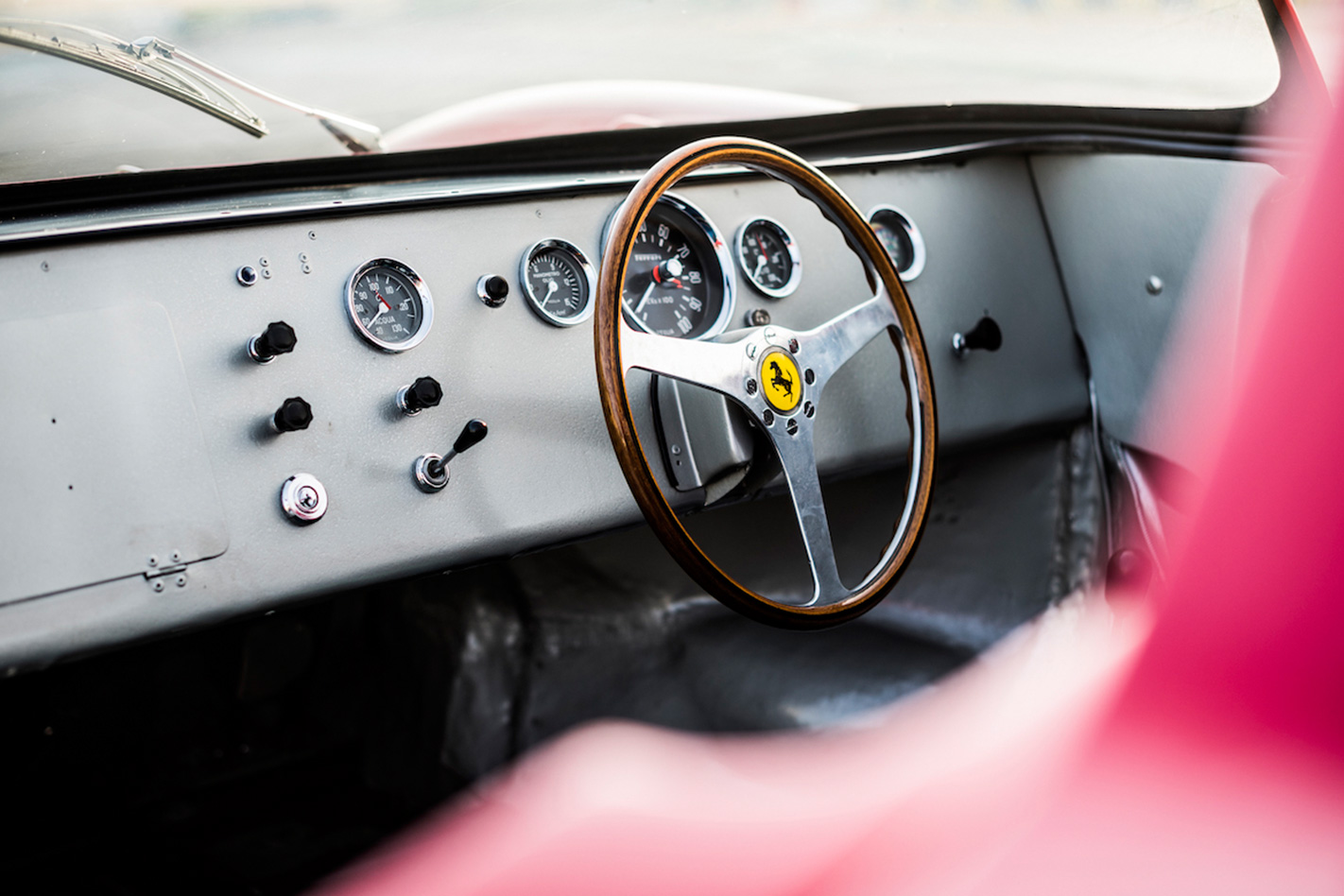
RM Sotheby’s says the car is being sold unrestored, with matching number engine, gearbox, and body.
The auction house doesn’t issue a price estimate for the private sale, but it’s likely to be deep into the eight figures.
FORD is expected to up the ante with its next-gen Focus ST, by showing its existing 2.0-litre turbo engine the door, and replacing it with a 2.3-litre four-cylinder EcoBoost unit and manual ‘box related to the powertrain in the current Focus RS hyper-hatch.
It is understood the next ST will remain front-driven, unlike the all-paw RS, and the bigger four-cylinder engine will deliver 186kW, wound back from its 257kW output in RS-spec. The current-gen ST produces 184kW and 340Nm, while the rival Golf GTI sends 169kW and 350Nm to the front wheels.
UK publication Autocar believes Ford has opted for the larger-displacement engine over a more-powerful tune of the 147kW/290Nm 1.5-litre three-cylinder turbo used in the Fiesta ST as the smaller unit would need to be run close to its reliable limit to achieve competitive outputs.
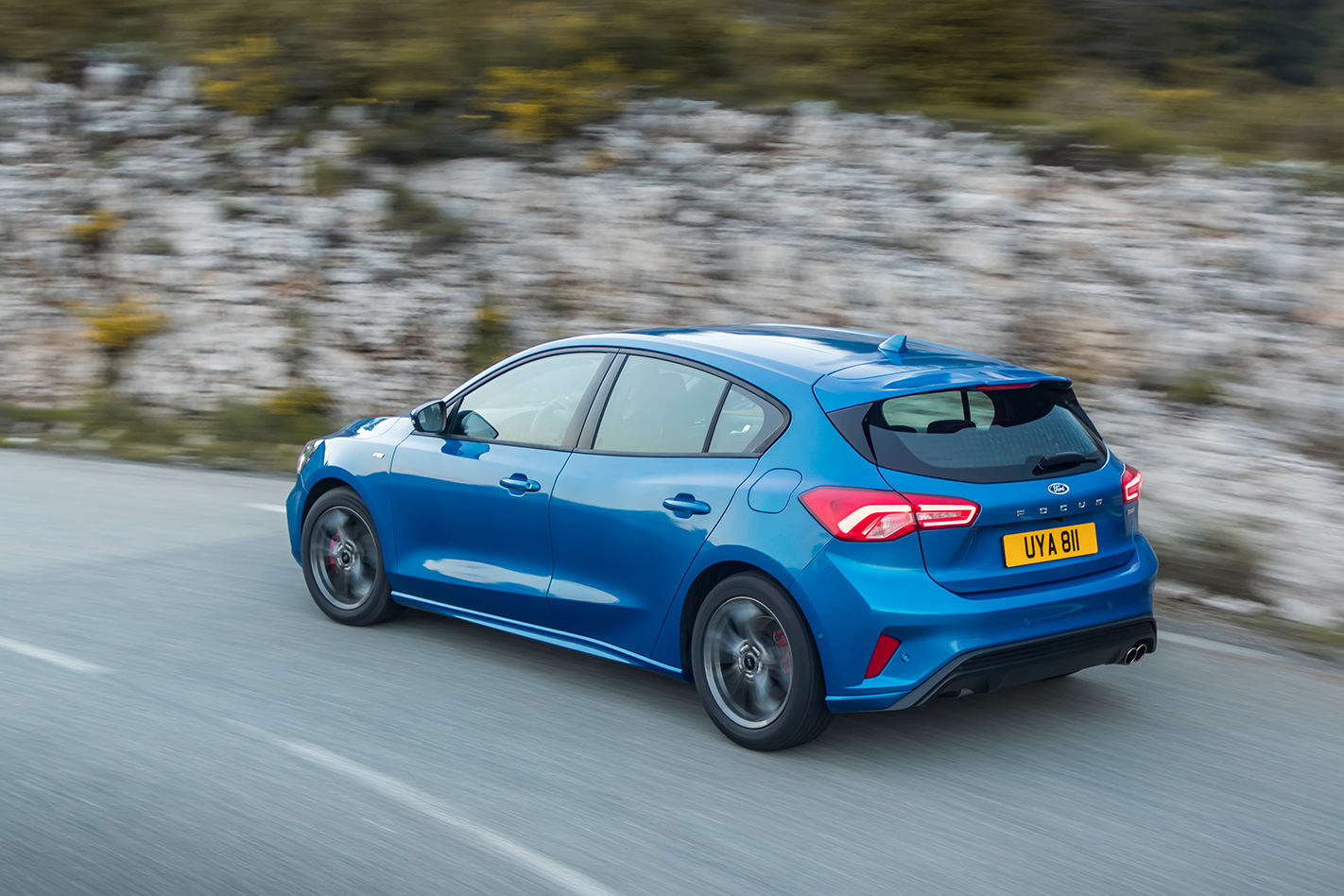
Reports suggest the Focus ST is to be the last high-performance Focus without any electrification. The next-gen iteration of the hard-core RS is rumoured to be a hybrid, with outputs in the region of 300kW.
Most driving enthusiasts will be pleased to hear that a six-speed manual gearbox is expected to be the only transmission offered for the Focus ST.
Earlier speculation suggested a self-shifting auto would be available, but the Autocar report states that Ford will launch the 2019 variant with a three-pedal setup only, as it has chosen to with the incoming Fiesta ST.
Autocar also claims the next-gen ST will be 88kg lighter than the current iteration, bringing it under 1400kg, with a 20 percent more rigid body.
A reveal of the production version of the 2019 Ford Focus ST is anticipated for next year’s Geneva motor show in March.
Lotus Cars Australia has confirmed the 2018 Lotus Exige Sport 410 is headed Down Under, expected to arrive priced at $159,990, including GST and LCT, but excluding on-roads.
Lotus says only 2 of the 10 limited import edition Exige Cup 430 cars are still available for purchase, likely put on pre-order since the Exige Sport 410 was revealed in May 2018.
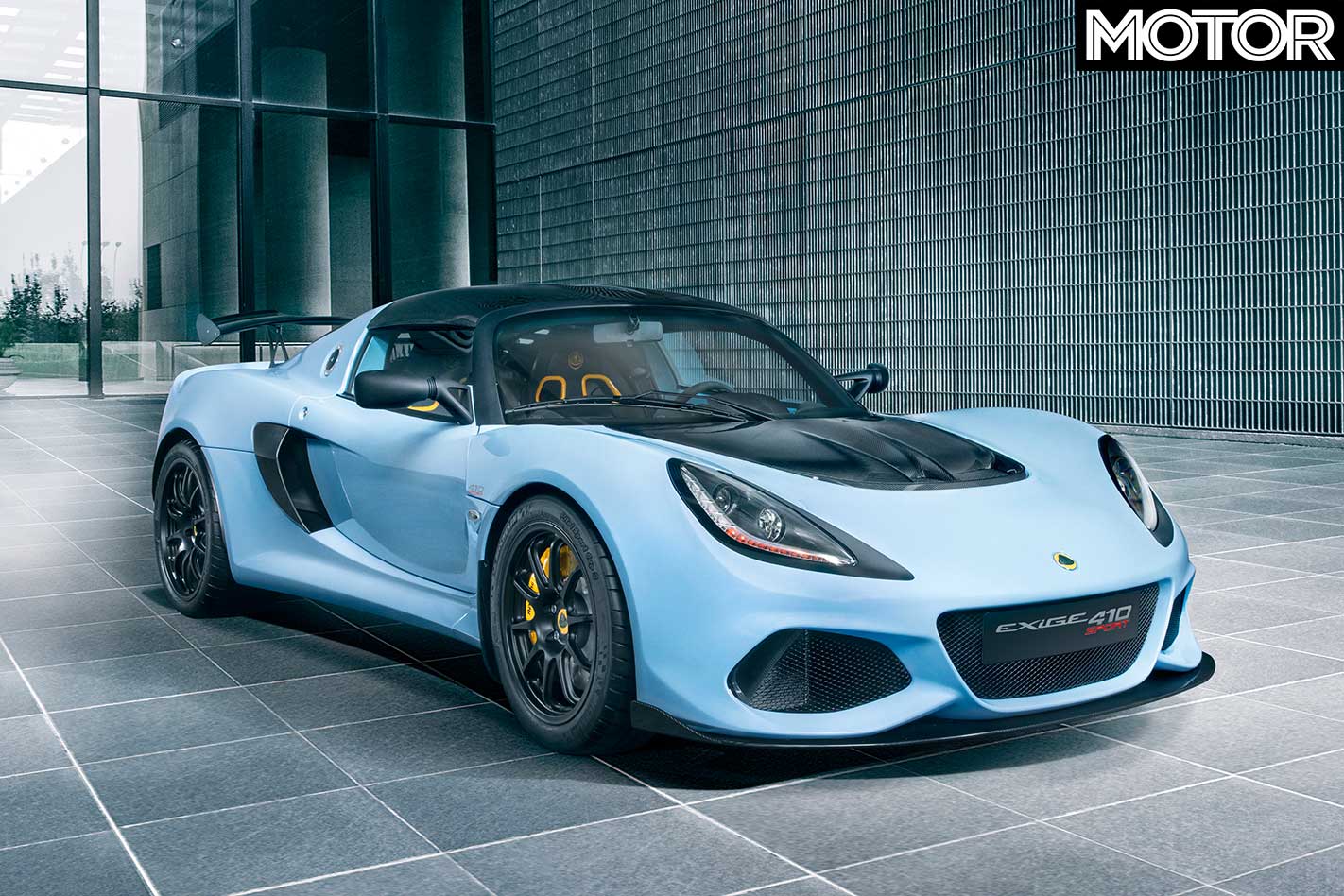
The Sport 410 is the less hardcore, more daily-driveable version of Lotus’ Cup 430 track weapon. Because of this, the 410’s 3.5-litre supercharged V6 is de-tuned from the 430 slightly to produce 306kW/420Nm instead of 321kW/440Nm.
It also utilises the same chassis, suspension, brakes as the Cup 430, though the dampers and chassis have been re-tuned to exhibit a ‘softer’ road bias, though the three-way adjustable dampers and roll-bars are able to be tweaked to suit the owner’s preferences.
All of these changes, Lotus says, complement the Sport 410’s altered aerodynamic set-up which produces 150kg of downforce at its top speed of 290km/h in coupe form. Michelin Pilot Sport Cup 2 tyres are the rubber of choice, helping hold onto the blacktop for a 0-100km/h sprint of 3.4 seconds.
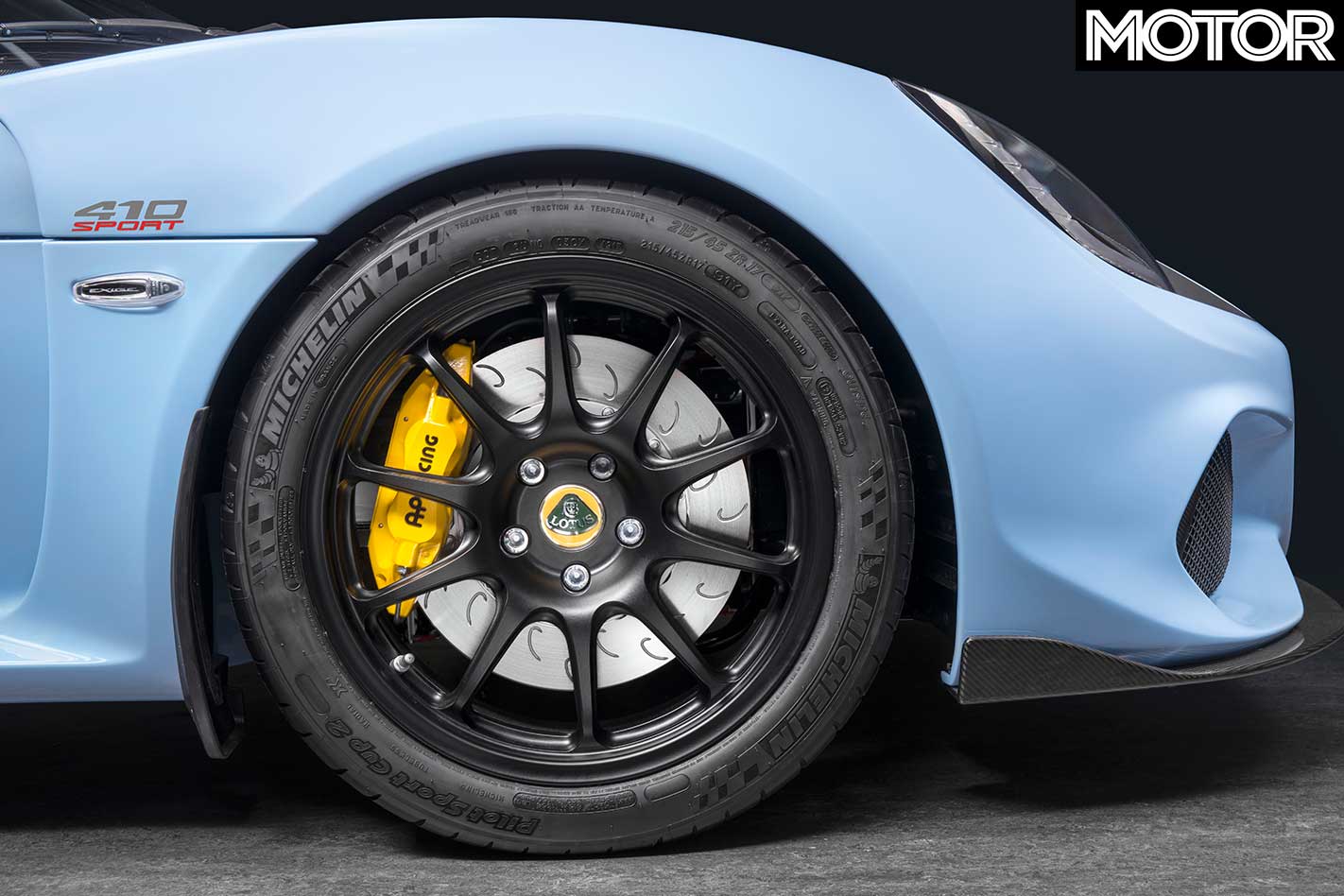
Australia also receives a few specific changes to the car, which Lotus details as follows:
Carbon Fibre race seats are replaced with Exige Sport 350 style seats, though carbon seats are available as an option.
The front splitter, wing blades in the front clam, and rear diffuser are finished in glass fibre reinforced plastic (GFRP) rather than carbon fibre.
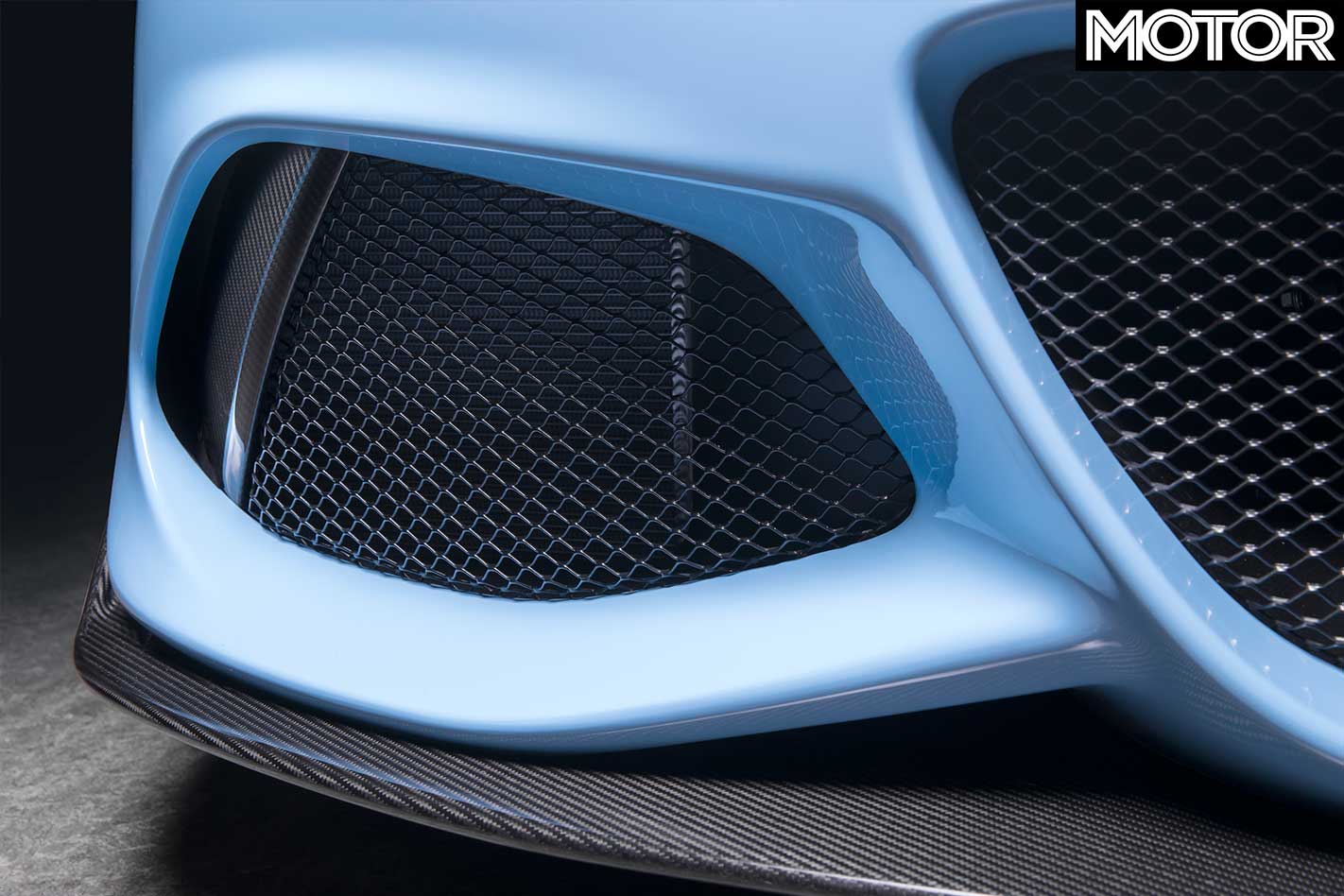
Also, the lithium-ion battery is replaced with a standard battery, and the air-conditioning is included as standard.
For prospective Sport 410 buyers, the best points of contact in Australia are Lotus Cars Australia or Simply Sports Cars.
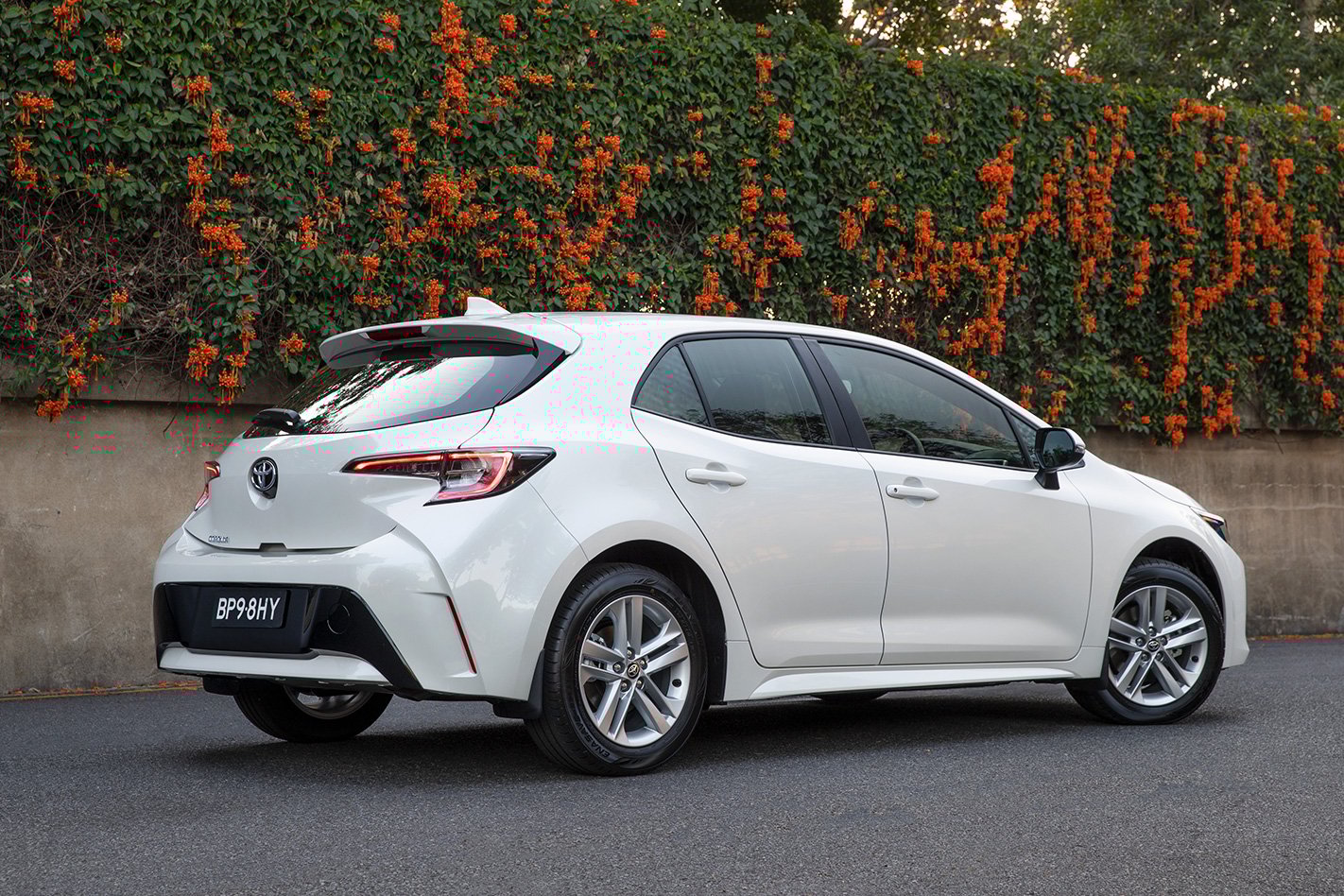
The 12th generation of Toyota’s long-lived Corolla is now on our shores, and this time around Toyota says it’s imbued its volume-selling hatchback with a great deal more equipment, refinement, and performance than before.
TELL ME ABOUT THIS CAR
Toyota typically takes a conservative strategy when it comes to generational changes, but with the 12th-generation Corolla nearly everything is fresh from the ground-up. The foundation of it all is Toyota’s TNGA platform, which first appeared in the new Prius and C-HR, and now underpins the 2018 Corolla, bringing with it a sophisticated new multi-link rear suspension and dimensions that are longer, wider and lower than before.
Two engines will be initially offered in Australia, a 2.0-litre naturally-aspirated petrol inline four, and a 1.8-litre petrol-electric hybrid. The hybrid is no longer a standalone model and can be had in any of the Corolla’s three trim grades (Ascent Sport, SX or ZR), but here we’re focusing on the petrol – the engine that’s expected to be the most popular choice in this country.
STRENGTHS
Engine – Under the bonnet of the new Corolla lies a naturally-aspirated 2.0-litre petrol inline four – a fairly ordinary configuration in this day and age, but this engine – which is all-new for Toyota – has a number of trump cards. For one, it’s powerful for its size. It generates a maximum of 125kW and 200Nm of torque, and it has the most power of all naturally-aspirated 2.0-litre engines in its size class. Furthermore, thanks to direct injection and variable cam timing on both the intake and exhaust it has the highest thermal efficiency of any engine currently in production, able to extract 40 percent of the latent energy in every litre of fuel it burns. Bottom line: it makes good power, yet sips fuel. Toyota claims an average burn of 6.0L/100km.
Driveability – Hooked up to the engine is your choice of a six-speed manual or a CVT automatic (the manual being only available on the Ascent Sport), but curiously we don’t necessarily favour the manual option. Toyota has engineered what it calls a ‘launch gear’ for the CVT that gives it a far crisper pick-up when moving away from standstill, something that CVTs (or continuously variable transmissions) typically don’t excel at. On the road, the Corolla’s auto performs well with none of the usual sluggishness or rubberband feel that CVTs normally display.
Ride and handling – Rolling on 16-inch wheels in Ascent Sport guise, the new Corolla excels when it comes to handling variable road conditions. It offers plenty of compliance to deal with lumpy rural roads, while its all-new multi-link rear suspension imparts a calm and composed manner over rough stuff. Aim for a set of corners, and the Corolla shows off a well-balanced chassis and nicely-weighted and direct-acting steering, making it surprisingly good fun to hustle hard.
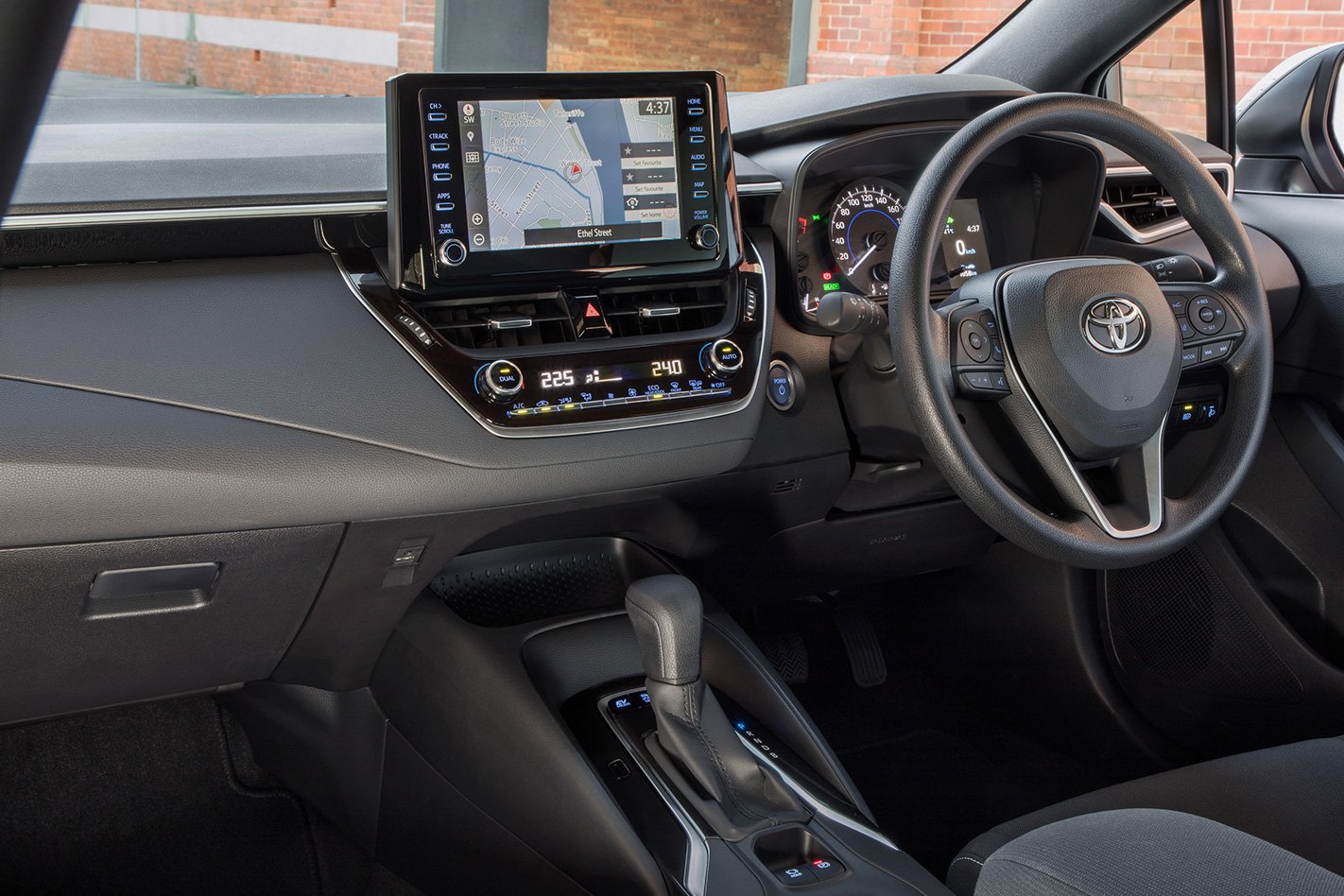
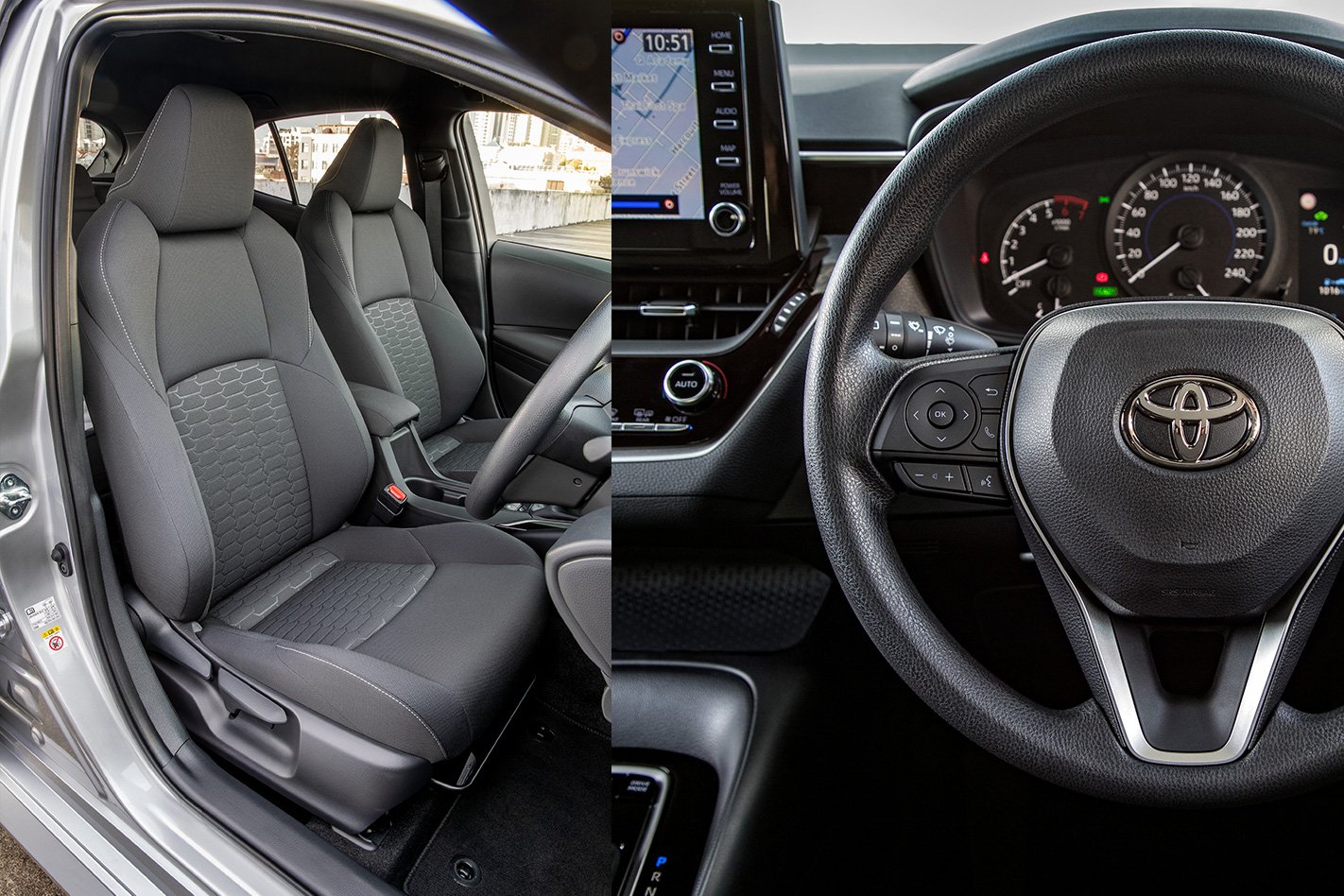
Cabin quality – It’s good to see that Toyota has put a greater emphasis on cabin design with its 12th-generation Corolla. From the urethane steering wheel and harder door card plastics it’s obvious that the Ascent Sport grade is the lowest-spec model, but the design is clean, handsome and ergonomically sound. The materials used also have a high quality feel (yes, even the harder plastics), and build quality is hard to fault. The cloth upholstery also feels durable and comfortable.
Features – Toyota Australia may have cut the entry-level Ascent grade from the Corolla lineup, but it’s compensated for the higher price of entry by dramatically improving the standard equipment list. All Corollas now come with active cruise control, autonomous emergency braking, lane departure warning, dusk-sensing headlamps with automatic high beam, heated wing mirrors, a reversing camera and an 8-inch colour touchscreen infotainment display. Seven airbags are also standard, and opting for the automatic nets you lane keep assist as well. The car can also recognise speed limit signs and display them for you, meaning wondering what the speed limit is on your stretch of road should become a thing of the past.
WEAKNESSES
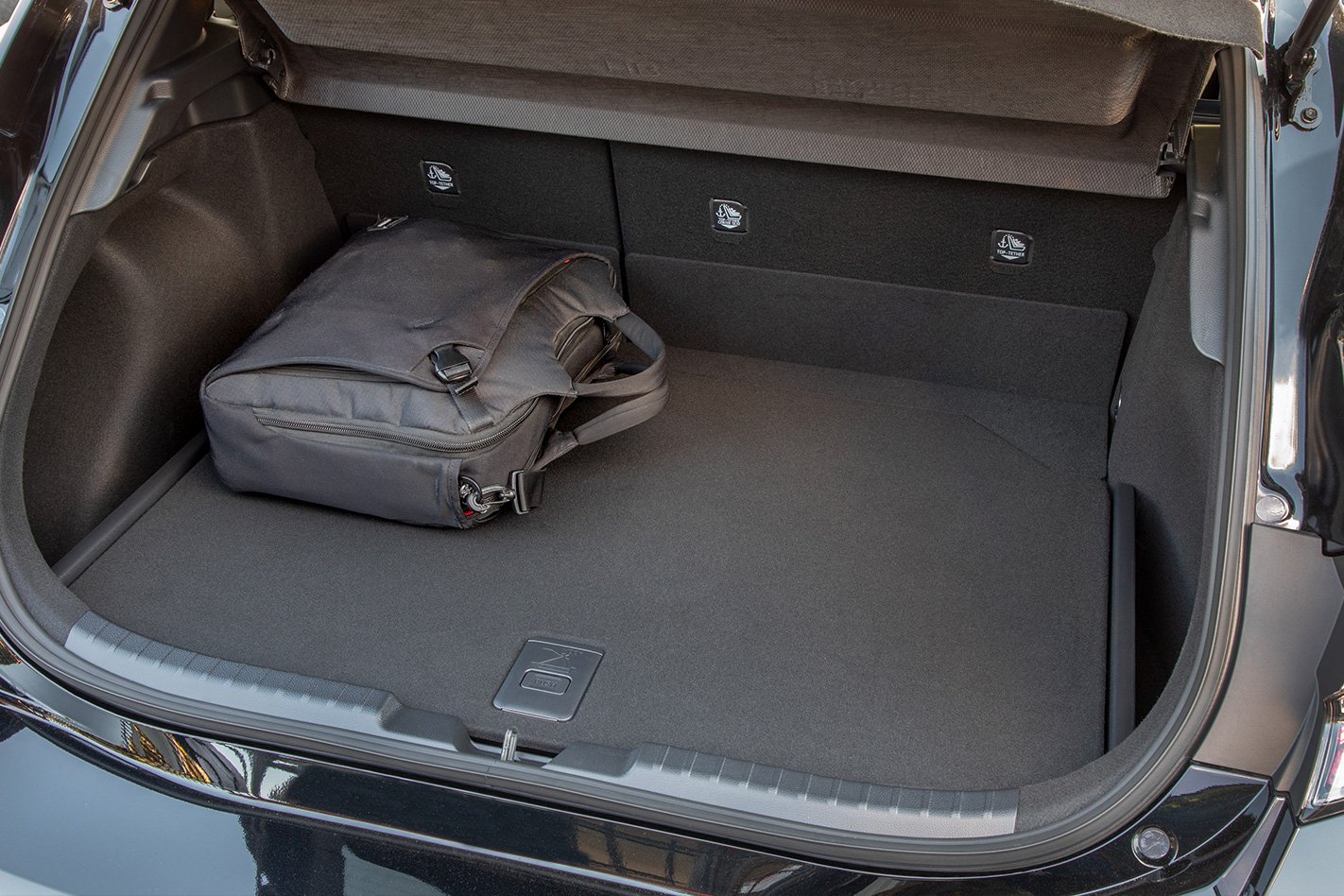
Boot capacity – The greatest disappointment of the new Corolla presents itself when you open its lightweight plastic hatch. Measuring just 217 litres, the Ascent Sport’s boot space is well behind the rest of the small car pack, where the average luggage capacity is well over 100 litres more than what the Corolla offers. The spare wheel is the culprit – the top-grade Corolla ZR Hybrid has a tyre inflator kit and consequently has a far more generous 333L boot space – but is having a full-size spare worth the inconvenience of a boot capacity that’s smaller than what a Yaris offers? For the vast majority of metropolitan motorists, the answer is probably ‘no’.
Rear seat space – The new Corolla measures 40mm longer in its wheelbase, and normally that translates into a significant improvement in legroom. Unfortunately, that’s not so in the Corolla. While the front seats are spacious and deliver superb comfort, the rear seats lack knee room and headroom. That’s a shame, because the rear bench is actually shaped very well and offers good support for a pair of adults. The absence of rear air vents is also a negative, given they’re available in the ZR grade but omitted from the Ascent Sport.
Infotainment – The Ascent Sport’s 8-inch touchscreen covers all the basics, but given its price point it does lack some crucial features. For example, there’s no integrated navigation system on the base grade as standard, and Toyota charges an extra $1000 to install it. The issue is compounded by the absence of Apple CarPlay/Android Auto smartphone mirroring, which can allow drivers to display the navigation software on their phones through the car’s screen. Toyota says it’s coming on a future update, but right now the Ascent Sport’s infotainment tech lags behind price rivals like the Hyundai i30 Active and Honda Civic.
ANY RIVALS I SHOULD CONSIDER?
The competition is fierce in the small hatchback segment, and core rivals for the Toyota Corolla include the Mazda 3, Hyundai i30, Honda Civic, Peugeot 308, Volkswagen Golf, Kia Cerato, Renault Megane, Skoda Rapid and Ford Focus – though the Ford is right on the cusp of an all-new replacement, and the Kia Cerato has only undergone a generational change in sedan form, with the hatch carrying over until the new model arrives in the New Year.
Ford Performance has officially revealed the 2018 Ford Mustang Cobra Jet in full, months after having initially teased the car and let some of its expected specs out into the open.
50 years after the original Cobra Jet, Ford’s legendary drag car is reborn as a non-road-legal beast capable of running in the mid-8 second range down a quarter mile while topping 240km/h.
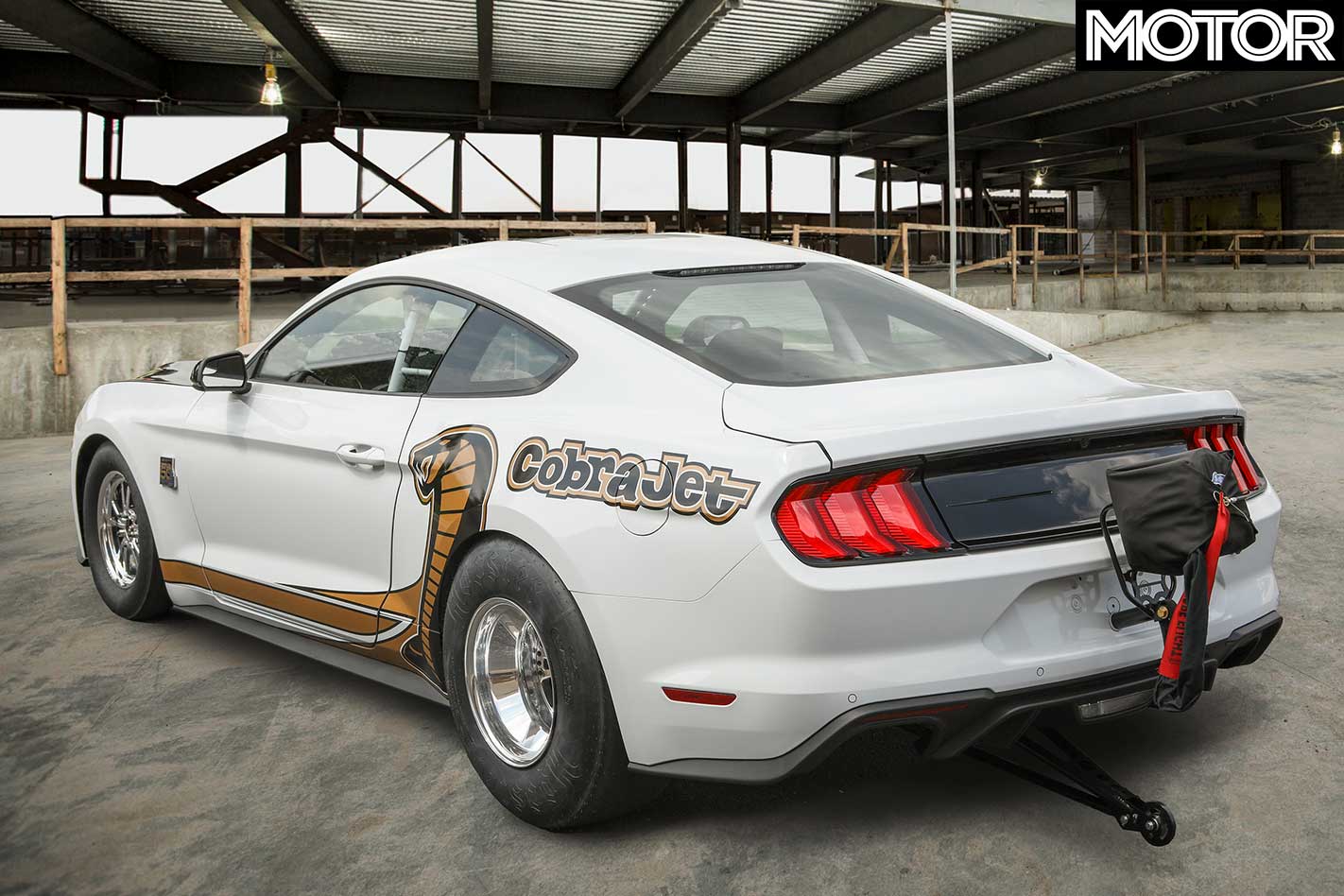
Ford Performance Engineering Manager Dave Born says a lot of the features on the Cobra Jet are particularly exciting to him, from the 3.0-litre Whipple supercharger mounted to the 5.2-litre engine, down to the low-resistance brakes and improved dampers.
“There are tonnes of great new features on this thing. It’s so powerful and so fast that this thing actually required us to put a parachute on the back, which is really great.”
The dampers are two-way adjustable coil-overs, which help keep the power down after it hits the rear wheels via the 9-inch solid rear axle.

An NHRA-certified safety roll cage and FIA-certified seats can be found inside the Cobra Jet.
Global director of Ford Performance Parts Eric Cin says, “From the very first Mustang Cobra Jets dominating the 1968 NHRA Winternationals to our modern-day racers, the Ford Performance Parts team continues to build on Cobra Jet’s success at the track over five decades.”
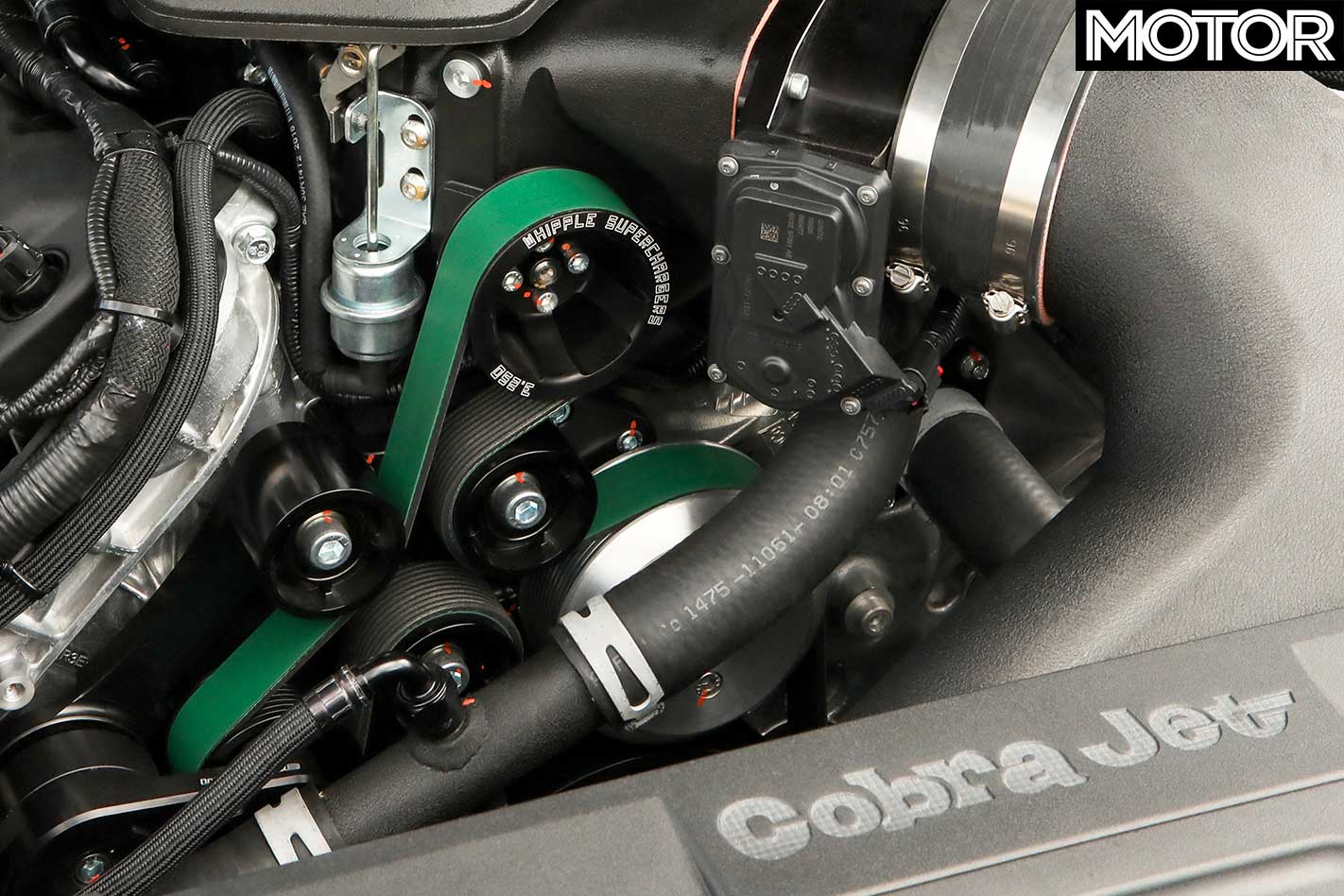
“This has inspired generations of Mustang fans to create their own performance machines for the street.”
The 50th anniversary Ford Mustang Cobra jet is available in Race Red or Oxford White, and is priced at USD$130,000 through Ford in the US, or AUD$179K to us.
You’ll have a hard time getting your hands on one, though, as MOTOR was told by Rob Herrod of Herrod Performance that there’s likely only one inbound to Oz, purchased by Herrod himself.
“Remember,” says Miki Biasion, “in this sport, the head is more important than the feet. When you become too confident in the car, it is easy to roll.”
This feature was originally published in MOTOR’s March 2004 issue
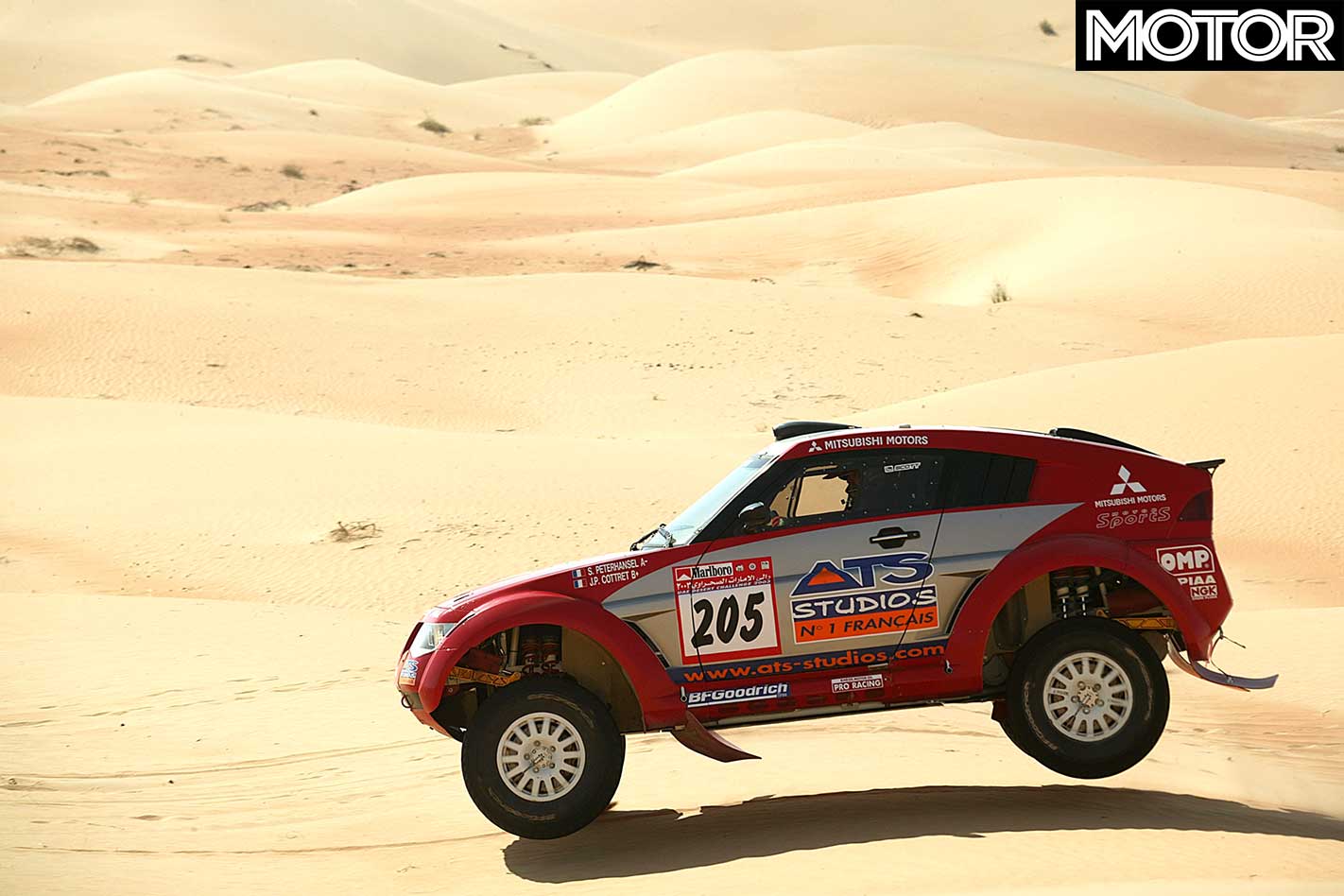
As if to illustrate the point, the Italian pauses to absorb the pain from the broken ribs sustained when he rolled his Mitsubishi Pajero Evolution on day two of the UAE Desert Challenge. “I thought I could jump a dune and I couldn’t,” he continues matter-of-factly. “You have to be correct and very careful.”
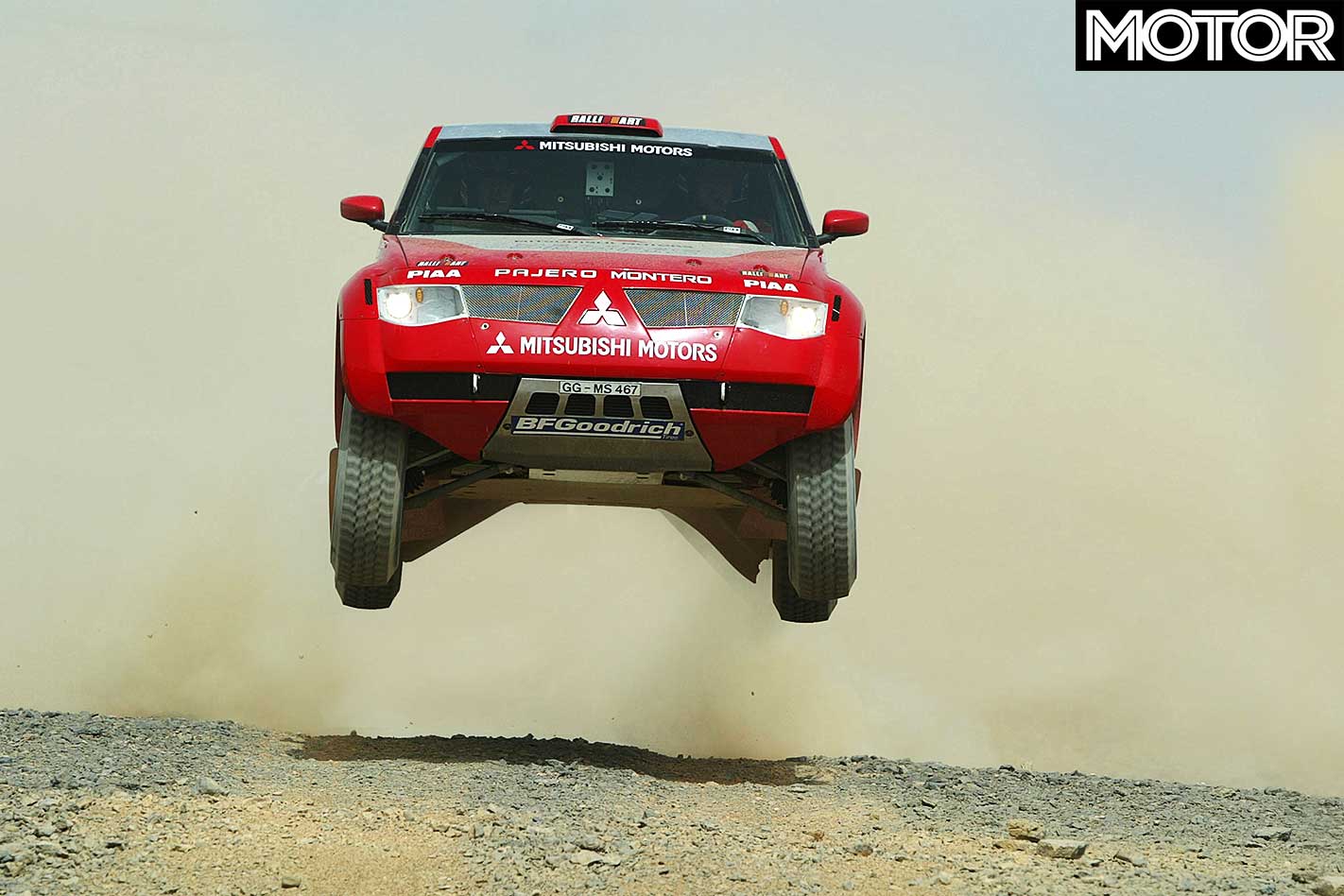
Thierry Viardot, the team’s technical director, ushers me into the passenger seat for a demo run. Everything inside the cabin is caked in a layer of desert dust and it has the acrid smell of stale sweat.
Despite the heat, this car has no air conditioning and the token side windows suck in sand instead of cool air. It’s difficult to imagine what it must be like to complete a 500km stage in this carbon fibre oven.
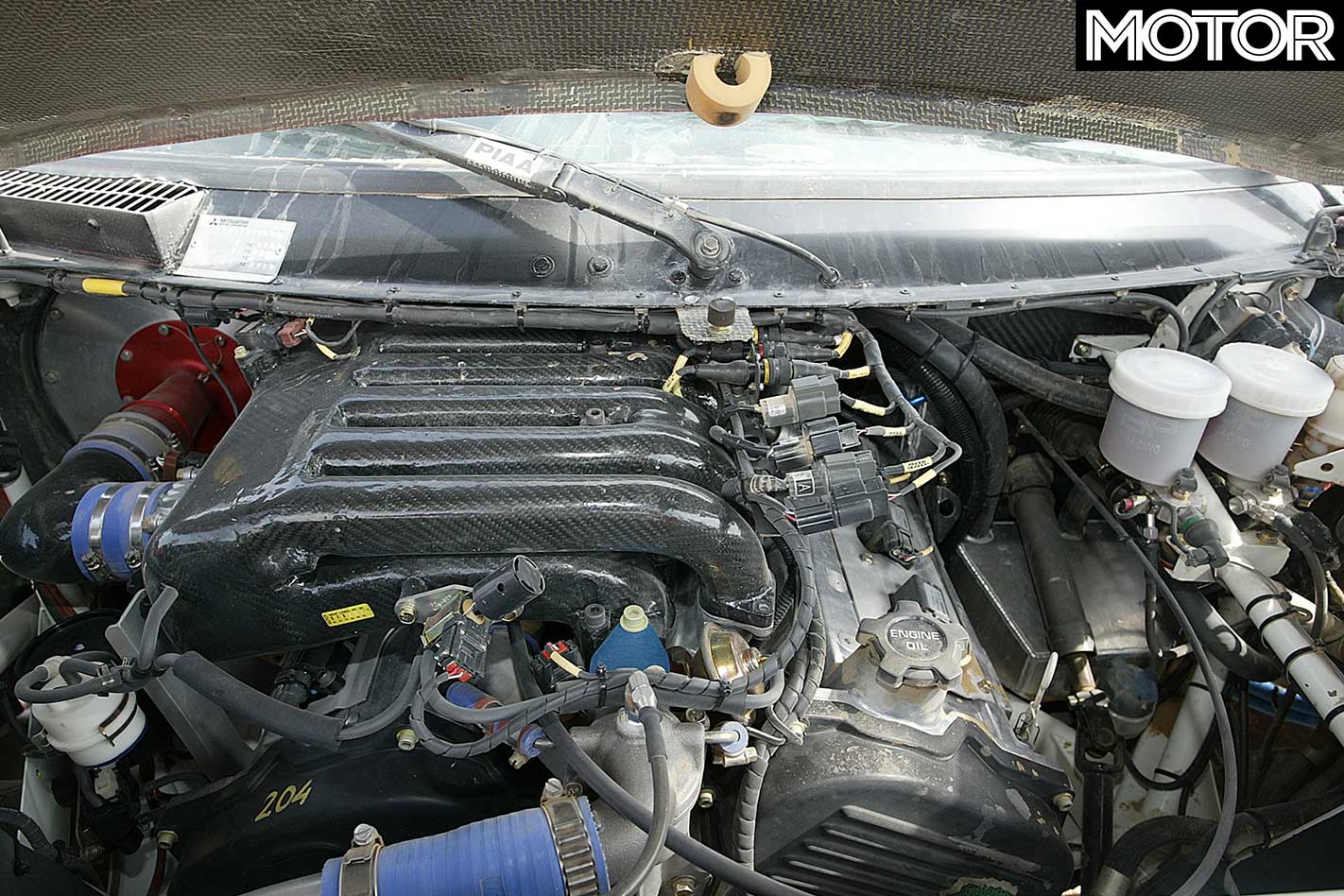
Viardot flicks a couple of toggle switches, prods a starter button and the 4.0-litre V6 grumbles to life. It’s based on the 3.5-litre road car unit but gains variable valve timing and modifications to the inlet and outlet ports. The power output is nothing to write home about at 201kW, but the engineers have concentrated on maximising the torque curve. The peak figure is a closely guarded secret, but Viardot admits that it’s “a lot”.
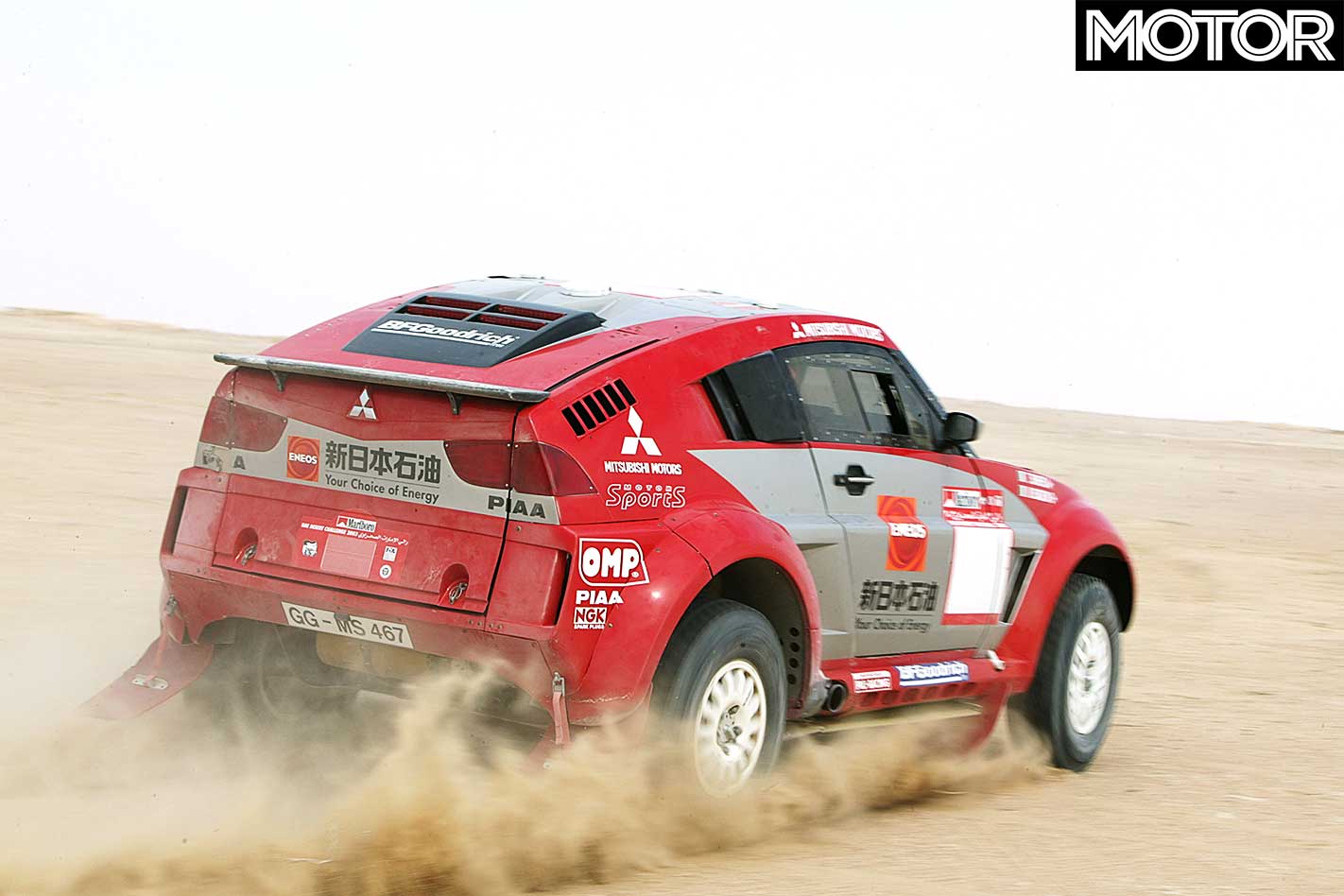
We complete a lap of the desert circuit and I’m struck by the Pajero’s civility. No racing car ought to ride this well. The way the Mitsubishi deals with the rocks and ruts that litter the desert landscape is exceptional. Mitsubishi should employ Viardot to sort the suspension of the road-going Pajero.
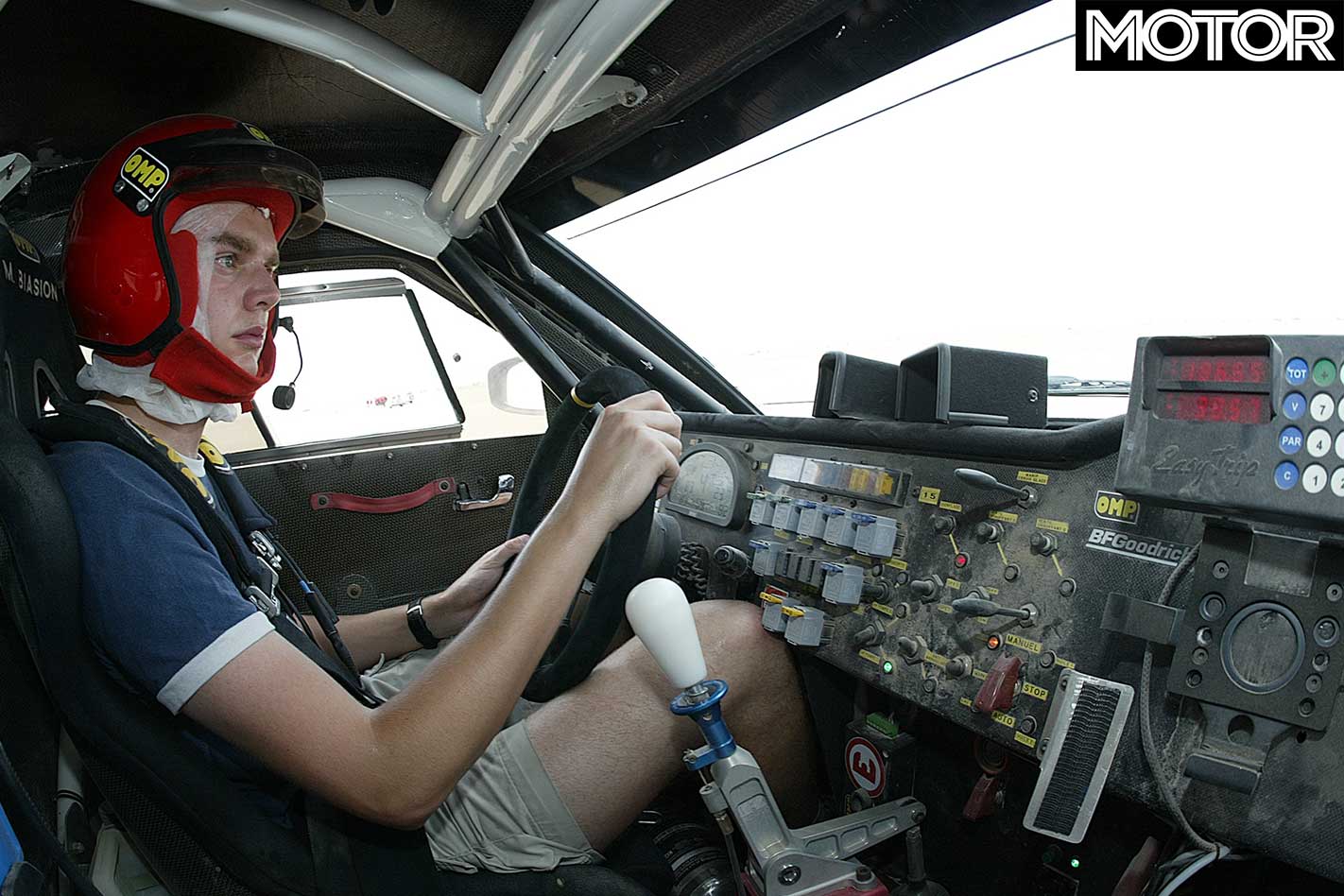
The technical director pulls to a stop and we swap places. It’s a nervous moment, but not for the reasons you’d expect. This car has been tailored to Biasion’s diminutive frame; it was never intended to accommodate 6ft 3in of gangly Pom. By the time I’ve levered my crotch behind the steering wheel, my legs are pinned to the facia in a way that will make any sort of yump excruciatingly painful. Chief engineer Bernard Lindauer looks at me disapprovingly. “Just be careful,” he says, and shuts the door.
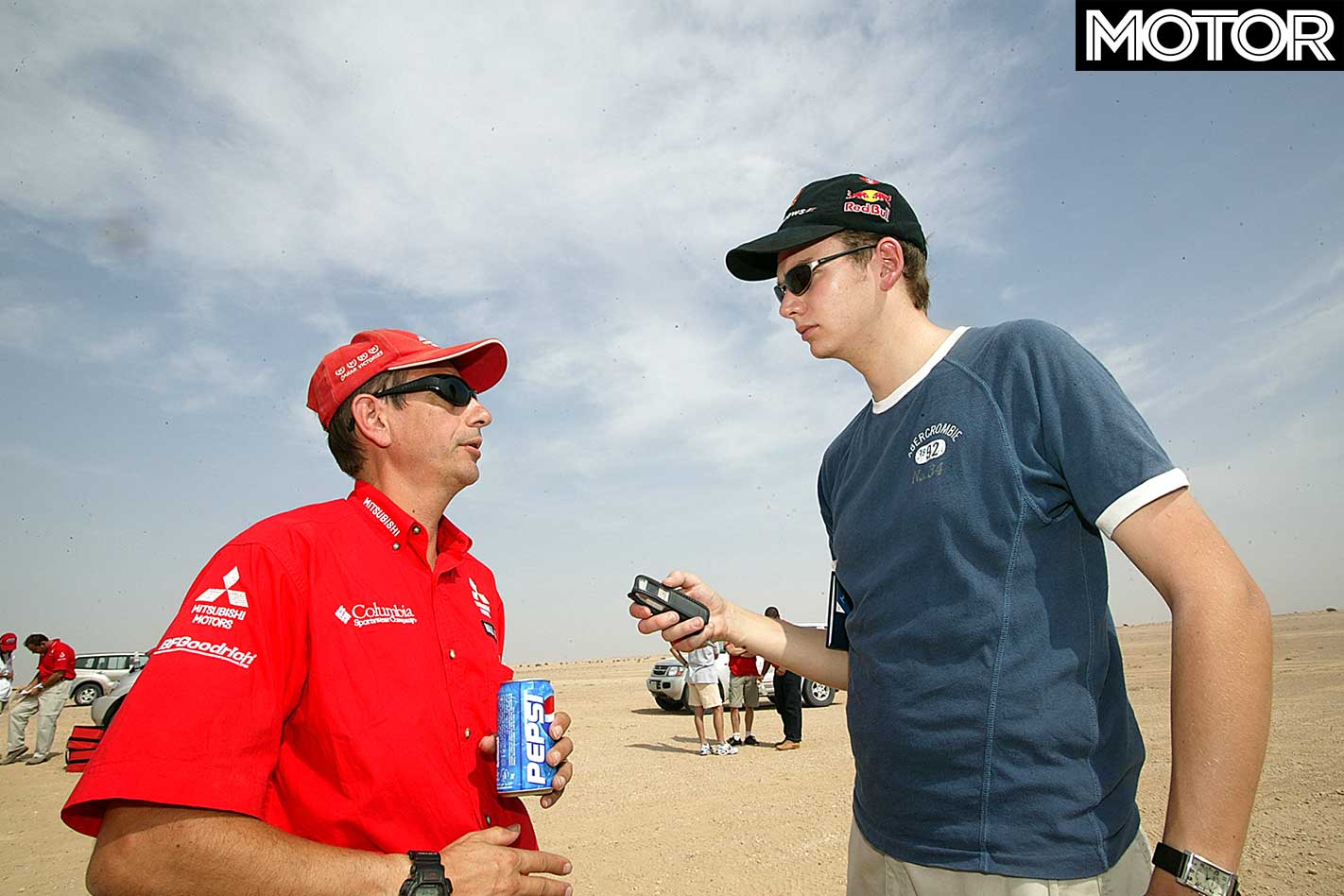
I’d spent some time earlier in the morning discussing the technique with Mitsubishi’s lead driver, Stephane Peterhansel.
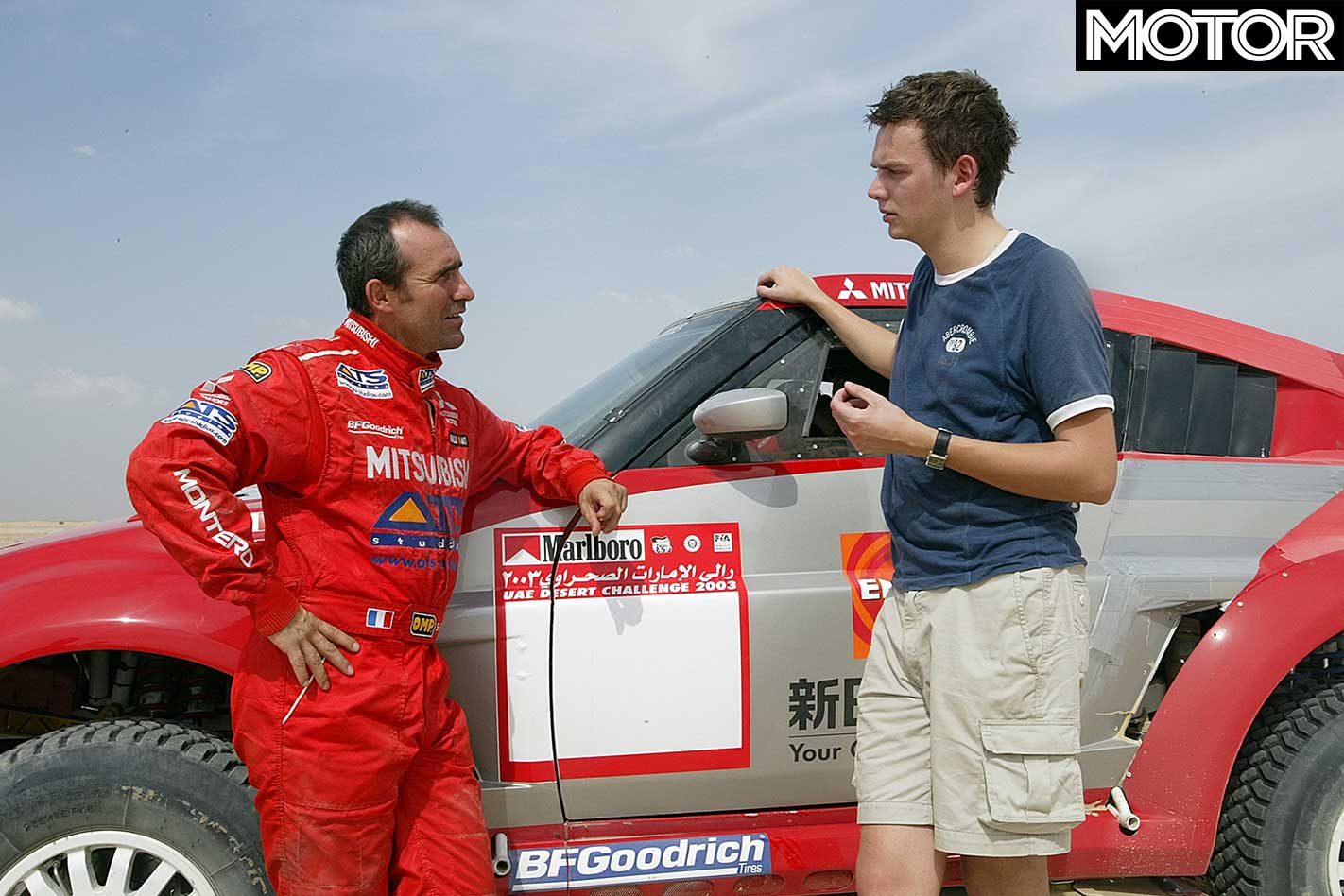
“The gearbox is sequential,” he explained, “and you don’t need to use the clutch. You put your right foot on the throttle and your left on the brake. That way you can use both feet to balance the car through high-speed corners.”
According to Peterhansel, the biggest difference between a rally raid challenger and a World Rally Car is the centre of gravity. “This is a big car, on big suspension and with a fuel tank capacity of 500 litres. When you turn, you must be careful because it’s easier to roll than a WRC,” he continued.
The other major difference, of course, is the absence of pace notes. The rally raid route directions appear on a roll of what looks like bog paper. They describe the desired trajectory, but offer no clue as to the nature of the corner.
“You are driving for many thousands of kilometres without a recce, so you have to find a pace where you can read the road and not be harmed by unexpected terrain, such as a jump,” said operations manager Bernard Lindauer, who used to work on Mitsubishi’s WRC program.
This view was echoed by Carlos Sousa, the newly crowned FIA World Cup for Cross Country Rallies drivers’ champion.
“I’m not the fastest driver in the team,” he said modestly, “but this is not important in a 20 or 22-day race, because if you were flat out all the time, something would happen. I don’t believe that the driver who wins the most stages will win the Dakar.”
Concentration is another key to success. “Endurance is very important,” continued Sousa. “It’s almost impossible to be concentrated 100 percent for all the hours and all the kilometres.”
Peterhansel interjected: “It’s probably the hardest part of the sport; you don’t know the road and African rallies are very dangerous.”
Enough of the theory. I jab the starter button and pull once on the gearstick to engage first. Then I depress the clutch and dial up a few thousand revs. The loud pedal isn’t super-sensitive like it is on a track car and the carbon clutch is super-easy to use; you don’t need the delicacy of a ballet dancer to effect a smooth getaway.
I describe an oval in second gear to acclimatise myself with the controls. The Evolution is not quick. With a full tank of fuel and four spare tyres it weighs 1825kg, so the weight-to-power ratio is a none-to-startling 9.08kg/kW – little better than a Ford Focus ST170. Top speed is just 205km/h, although this is a 10km/h improvement on earlier Evolutions.
The gearchange, though, is brilliant. You just lift off the throttle, jab the gearstick and the hydraulic system selects the next ratio with a satisfying clunk. The power-assisted rack and pinion steering is also pleasantly weighted and far from nervous. It all adds up to a car that is remarkably easy to drive.
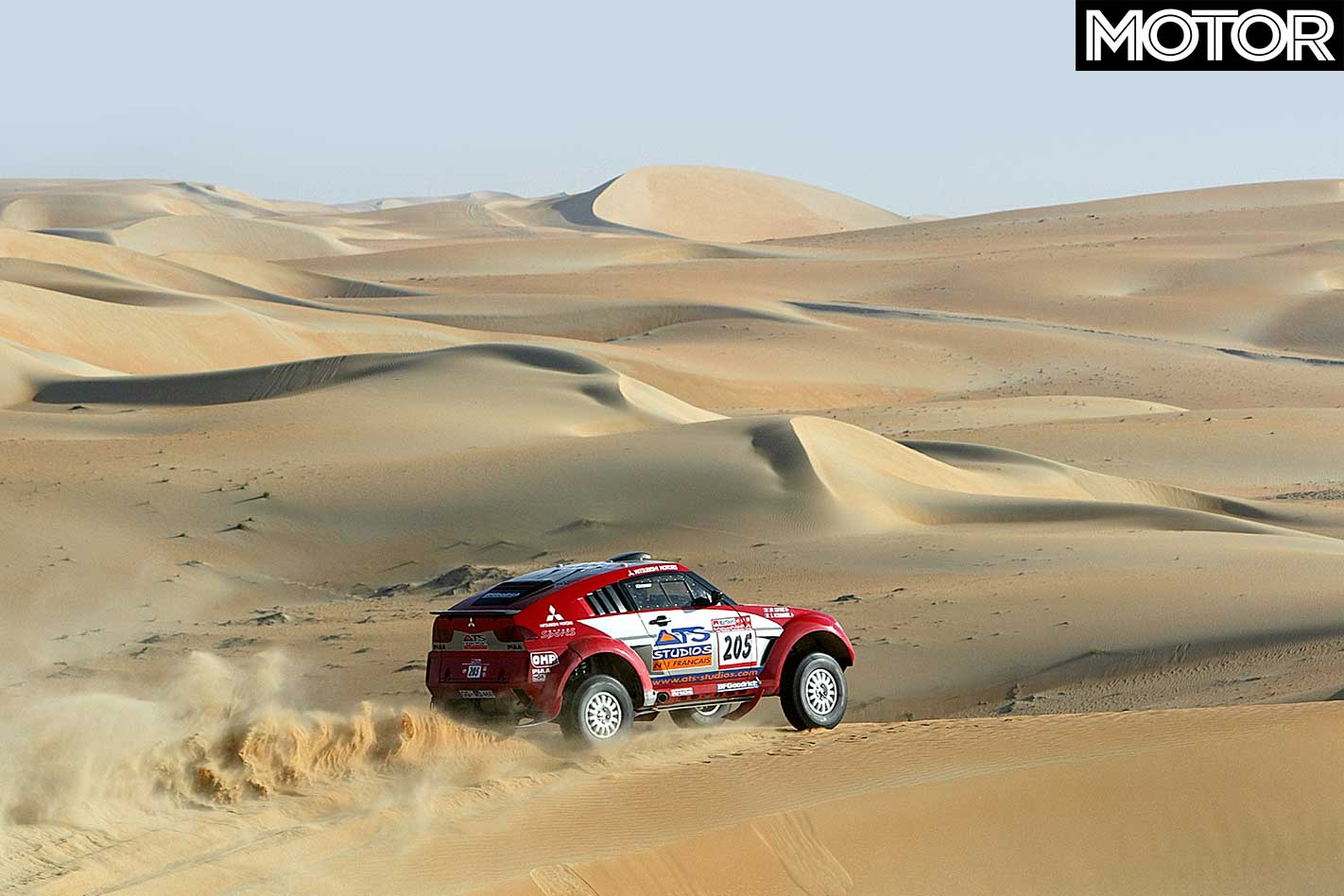
There is a crackle in my headphones: “Head for the dunes,” says Viardot. These are one of the trademark features of desert racing and crossing them successfully calls for patience and experience.
Sousa explained his strategy: “Some drivers tackle them at speed, but if you do that you take a risk on the other side. I prefer to cross the dunes using the torque. That way, I have the possibility to change direction at the top.”
Even this technique can be fraught with danger and, blessed with zero experience, I opt for the torque technique and summon second gear as we enter the soft sand at a moderate pace. It is here that the Xtrac self-locking differentials work their magic. Traction is impressive and the mountainous torque hauls the Evolution over the crests.
The descents are no less impressive. Regulations limit suspension travel to 250mm, but the combination of eight shock absorbers and excellent approach and departure angles help it to scale the most difficult terrain.
The road opens up once more and I accelerate hard, reaching 150km/h in the fifth of six gears. At such speeds, the experience feels almost otherworldly. The high-set driving position and suspension compliance create the impression that you’re aloof from the action. The sensation is not dissimilar to that of a high-speed catamaran.
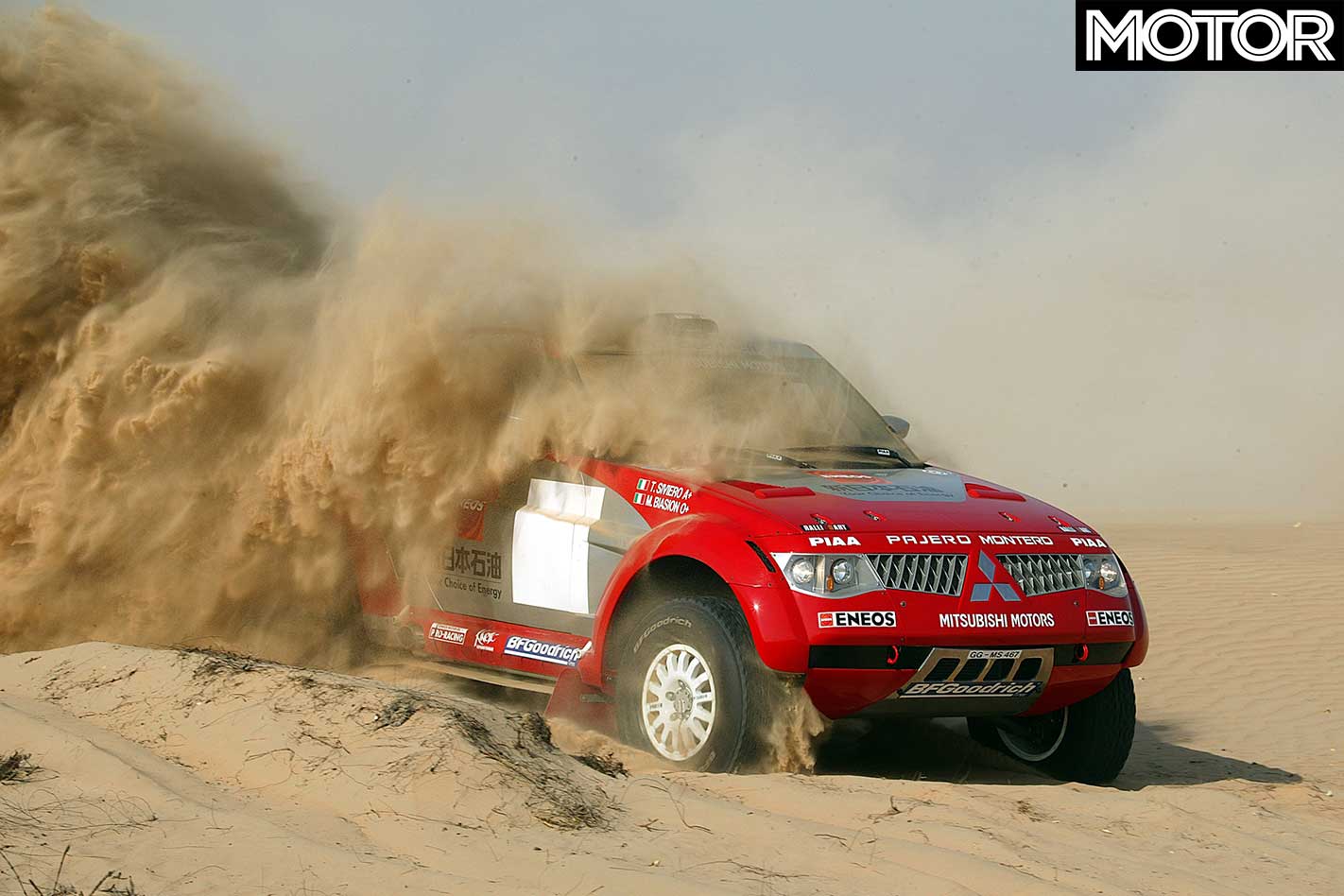
I dab the brakes, turn and deliberately stab the throttle in a bid to unsettle the rear. I’m anticipating a generous power slide, but the Evolution is coaxed into nothing more than a gentle four-wheel drift. Biasion is right: it would be easy to become overconfident in this car and Viardot tempers my enthusiasm with some words of caution.
“Stick to the track,” he urges. “It’s almost impossible to spot the holes in the desert that could cause a roll.” A few turns more and we return to our makeshift paddock. My knees are bruised and battered but my grin is larger than ever.
Lindau reckons an engineer can get just as much satisfaction out of rally raiding as out of the WRC, and Biasion believes that the desert challenges “invoke the spirit of rallying as it used to be”.
Both have clearly been charmed by their adopted sport, and it’s not difficult to see why. The Pajero Evolution rally raid car is attractive, exciting and thoroughly desirable. If only Mitsubishi could inject some of this spirit into its road cars.
FAST FACTS 2004 Mitsubishi Pajero Evolution
BODY: 3-door buggy DRIVE: all-wheel ENGINE: front-mounted 4.0-litre DOHC 24-valve V6 POWER: 201kW @ 6000rpm TORQUE: N/A BORE/STROKE: 99.0mm x 92.0mm COMPRESSION RATIO: 10.0:1 WEIGHT: 1825kg POWER-TO-WEIGHT: 110kW/tonne TRANSMISSION: 6-speed sequential manual SUSPENSION: double wishbones, coil springs, anti-roll bar (f); double wishbones, coil springs, anti-roll bar (r) L/W: 4445/1978mm WHEELBASE: 2725mm TRACKS: 1750mm (f); 1736mm (r) BRAKES: Brembo ventilated discs, six-piston calipers (f); Brembo ventilated discs, six-piston calipers (r) WHEELS: 16 x 7.0-inch (f & r), magnesium TYRES: BF Goodrich, 235/85 R16 (f & r) FUEL: 500 litres, PULP PRICE: how big’s your budget?
Five Reasons why Peterhansel is God – He’s won the Dakar six times on a bike. Six times! – He was world enduro champion in 1997 – He was robbed of Dakar victory last year – on the penultimate stage! – In the off-season he dabbles in French ice racing – He won Dakar this year despite being penalised five minutes for getting a push
Five Facts about Senegal and Dakar – Lingo is French, church is Islam – Birth rate 36/1000 people (Australia 12) – Life expectancy 56.4 years (Australia 80.13) – Infant deaths 61.3/1000 (Australia 4.83) – 5% GDP growth/year from ‘95 to ‘03
Pressure’s On
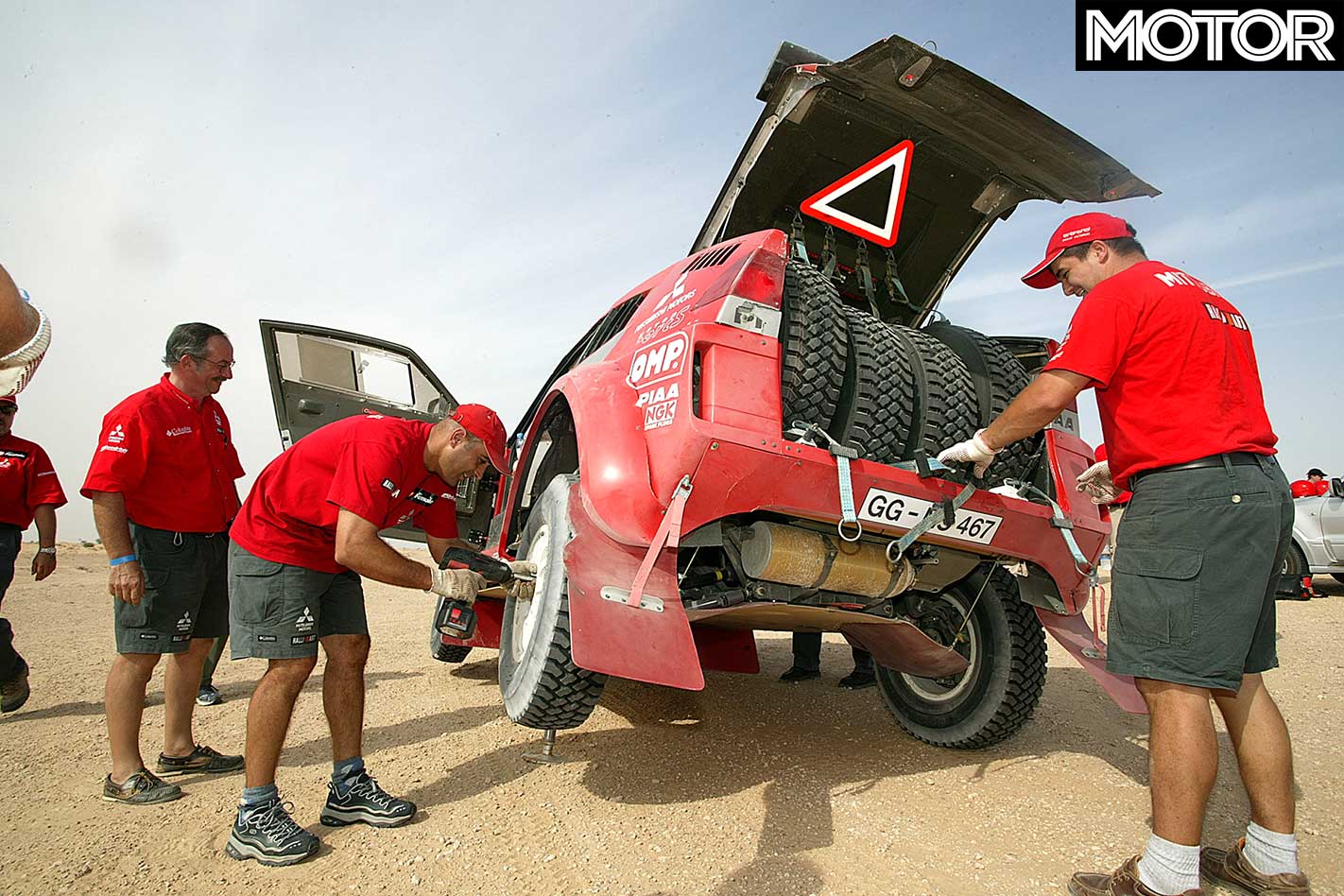
The Pajero Evolution is fitted with a TPC (Tyre Pressure Control) system. Developed in-house by Mitsubishi, TPC allows the driver or co-driver to adjust the pressure of the BF Goodrich tyres from inside the cockpit at racing speeds.
An on-board compressor feeds a supply line that is connected to the tyres’ external valves. In soft sand, for example, the driver will reduce the pressure in order to increase traction, before increasing it again on firmer ground.
Scot of the desert
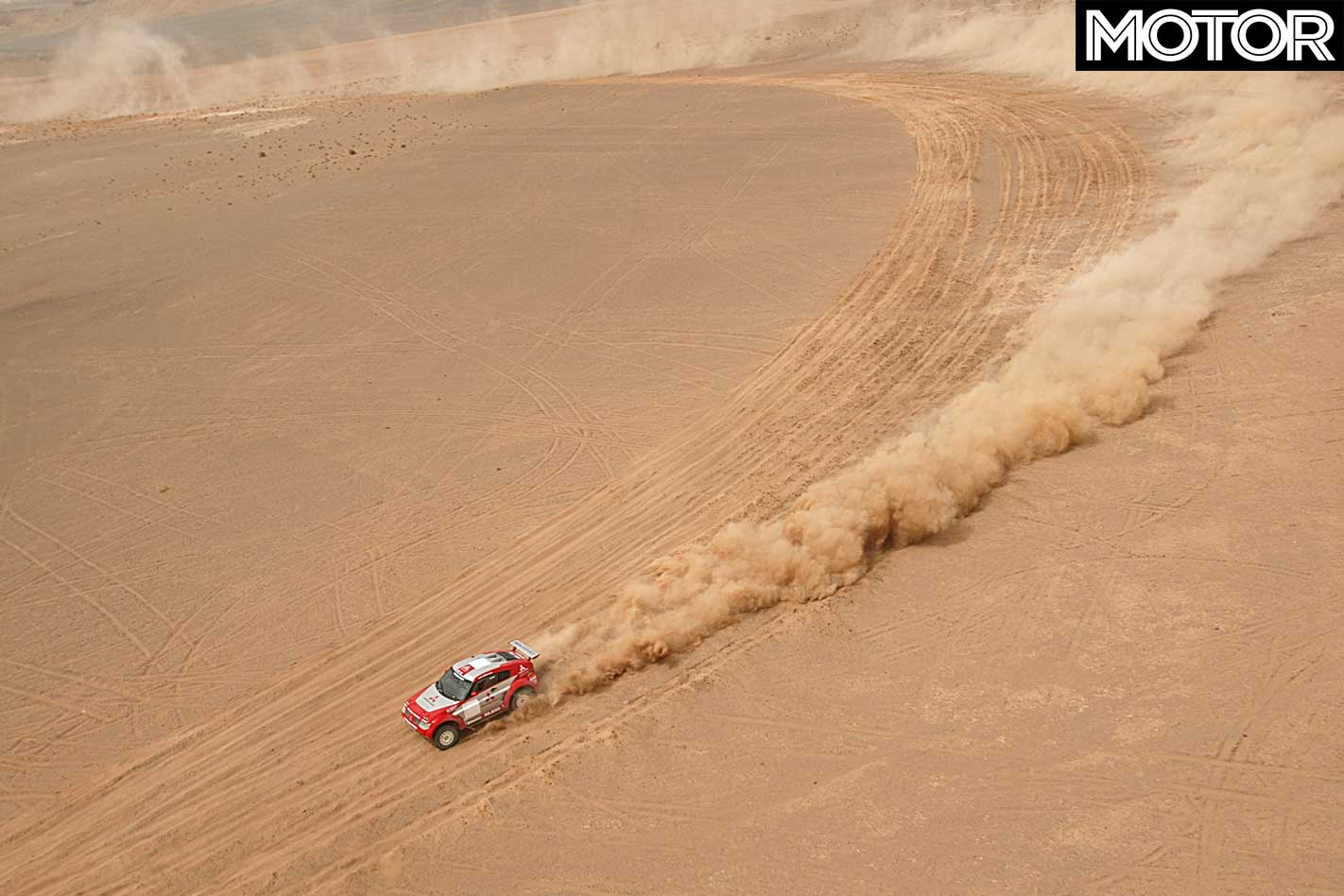
Not surprisingly, Mitsubishi’s drivers had some pre-Dakar advice for Nissan’s Navara-driving raid virgin Colin McRae. “For sure he will be fast,” reckoned Sousa, “but you need experience to cope with the sand dunes and the navigation.” Peterhansel concurred: “He’s got the car control but you have to be consistent. In WRC you are always at the maximum, but if you do that in rally raid, you will crash. He would be better to take a few months of holiday than to go to an African rally.”
Typically, McRae did the exact opposite. The 1995 world rally champion took his time, fighting back after being stranded in the desert with transmission problems to win the 475km Ayoun el Atrous stage and finish 20th overall. Without crashing!
IN THIS post Australian-vehicle manufacturing world, the significance of the Ranger’s massive success – both critically and commercially – is more profound than ever, seeing as it is now the only new vehicle left in production anywhere on earth designed and engineered here. Think about that for a moment.
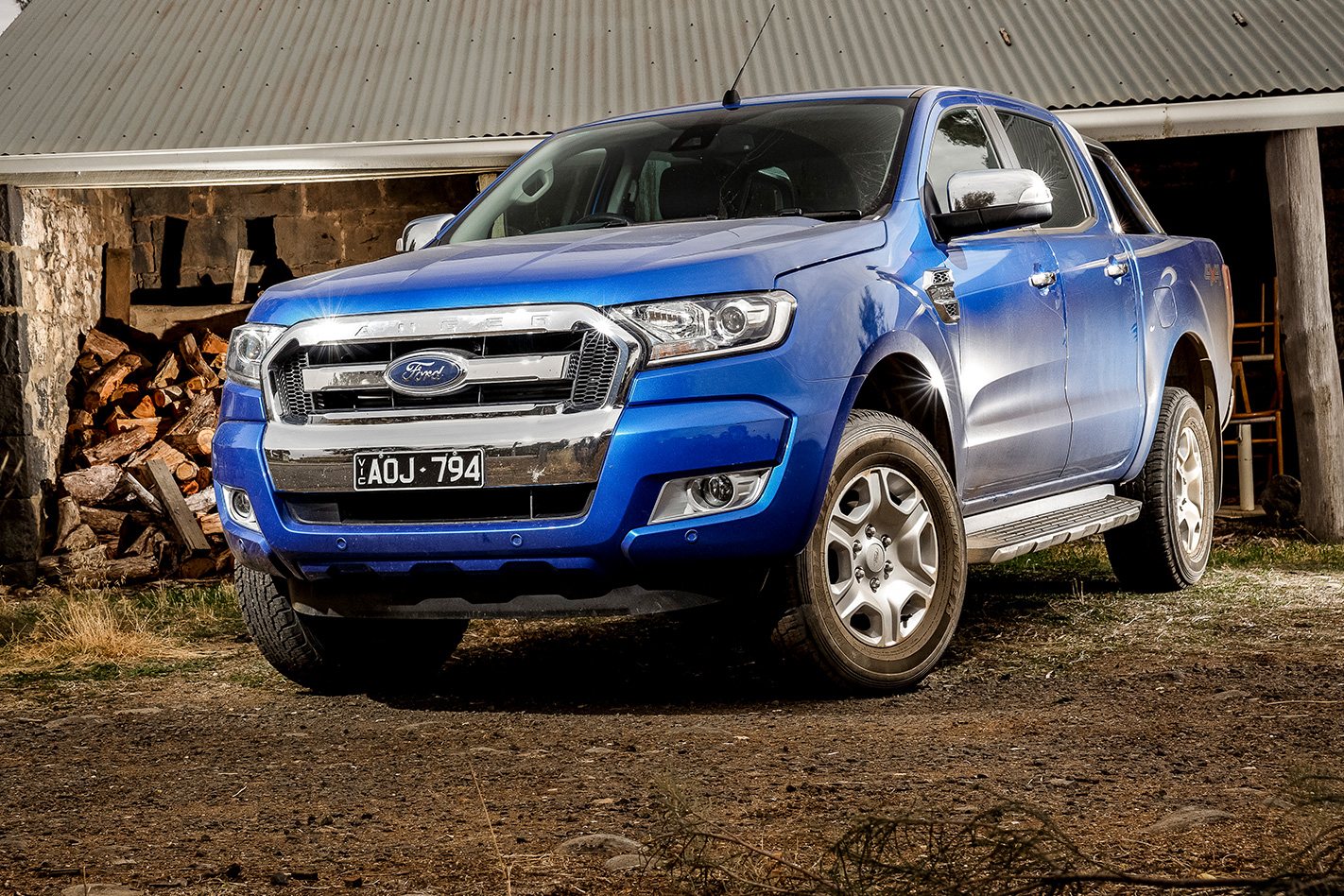
And therein lies the reason the Ford has performed so strongly and consistently in this Megatest. Bred, if not born, locally, the Thai-made Ranger feels and behaves like it’s made expressly for our tastes and environment on a number of fronts, starting with the rugged design that still conveys a broad, muscular aesthetic nearly eight years on – in much the way Holden’s VE Commodore did.
Completely overhauled three years ago, the XLT’s big, brawny interior is another highlight, with an appealing layout and focus on functionality that owners of, say, the late and lamented Territory (our only indigenous SUV) could relate to.
Points are allotted for an excellent voice-control system in SYNC3, attractive instrumentation, huge central screen, brilliant seats, an excellent driving position (despite a non-telescopic wheel), big storage solutions and intuitive, well-weighted controls up front, as well as an airy, wide and accommodating second row that offers up most of the amenities tradies or teenagers could wish for.
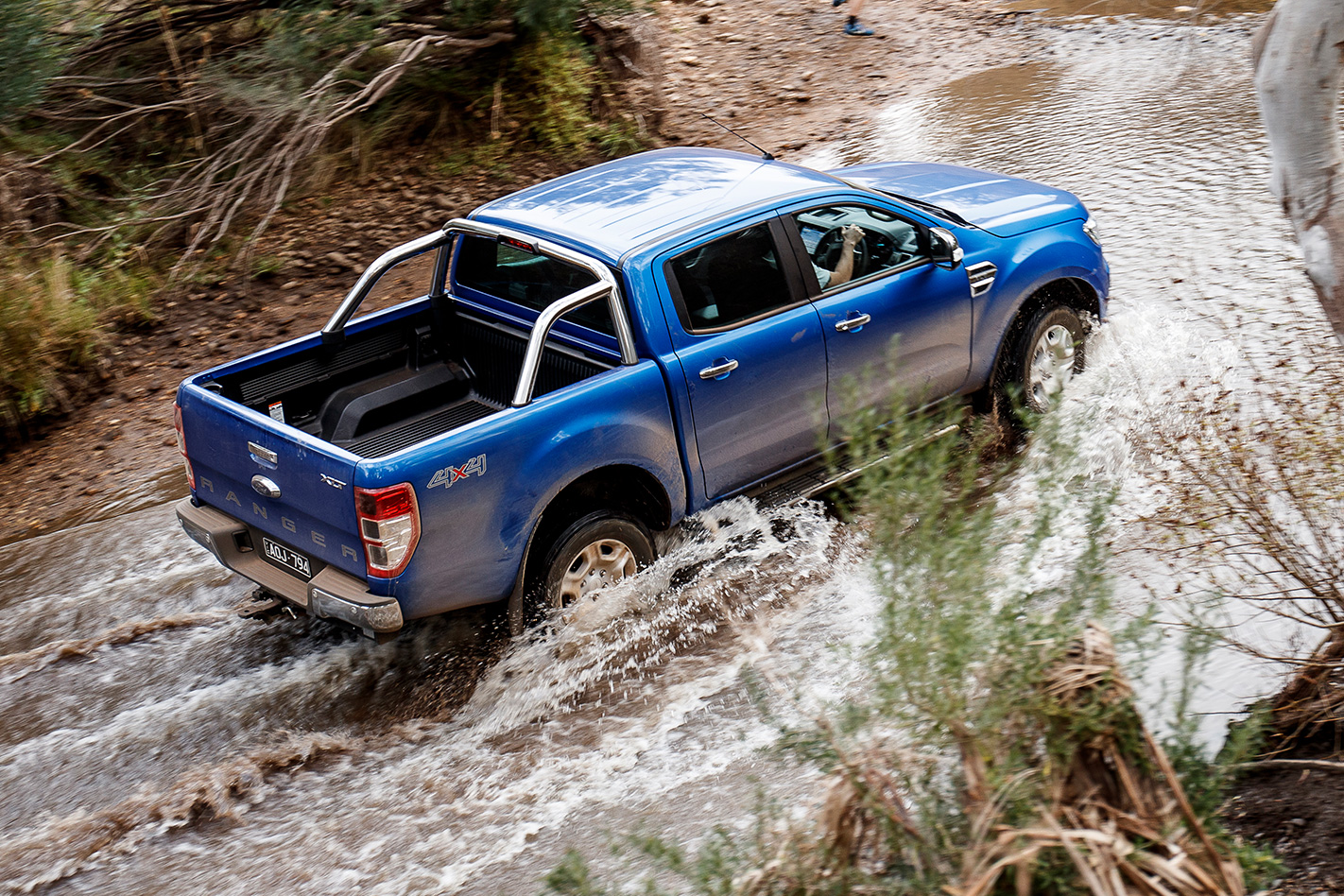
Sure, there’s a cheap sheen to some of the plastics, but the build quality and durability aren’t in question. While the absence of passenger-seat height adjustment and rear air vents are obvious oversights at the pointy end of this segment, massive air outlets up front provide effective cooling and ventilation throughout. Basically, Broadmeadows has nailed it.
Fire up the hoary old in-line five-cylinder and there are further plaudits in store, not least because Ford’s NVH engineers have ensured that there’s little to hear or feel other than a distant thrum, at idle at least.
Aussies have long preferred instant throttle responses, and the Ranger obliges thanks to an abundance of low-rev torque and intelligently calibrated gearing that results in strong acceleration and seamless, intuitive transmission action. The 3.2 pulls heartily and revs freely, though against the stopwatch and at the fuel pump the Ford isn’t so impressive, languishing in the bottom half of the field. There isn’t much between the Ranger and its rivals if you take the powerhouse Amarok V6 out of the picture … though you shouldn’t, as it turns out.
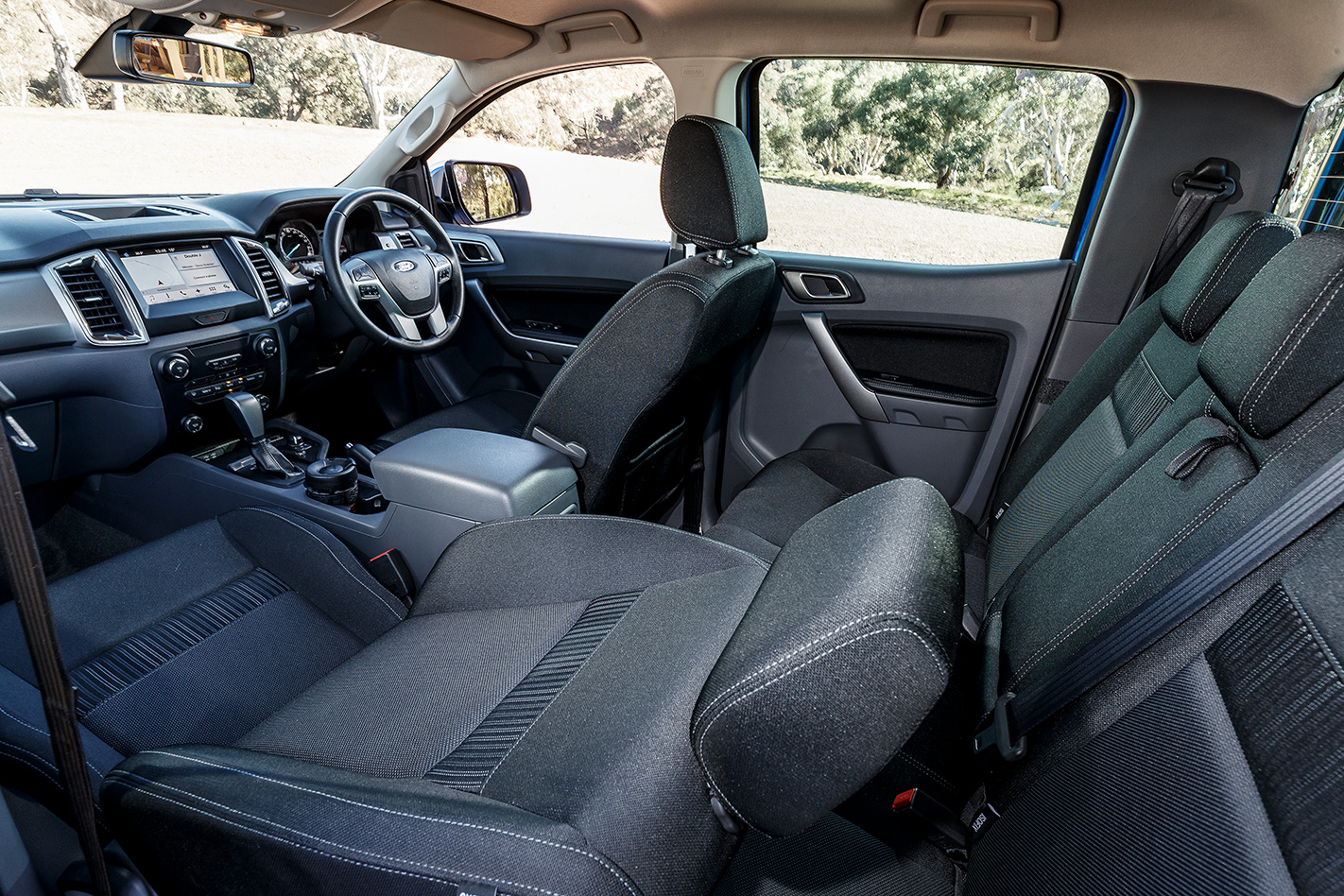
But we’re ahead of ourselves because while the Ranger’s numbers temporarily mire it in mediocrity, things pick up dramatically in its dynamics. Thanks to superbly linear steering that still sets the pace for feel and feedback, body control that seems as planted as the chassis feels alert, and appreciable suspension compliance, the Ford glides quietly over surfaces that agitate most others here. In these disciplines, on our roads, Ford’s Aussie-bred ute is peerless.
As a sweetener, since May, the Blue Oval has shown warranty innovation in this class by boosting coverage to five years/unlimited kilometres.
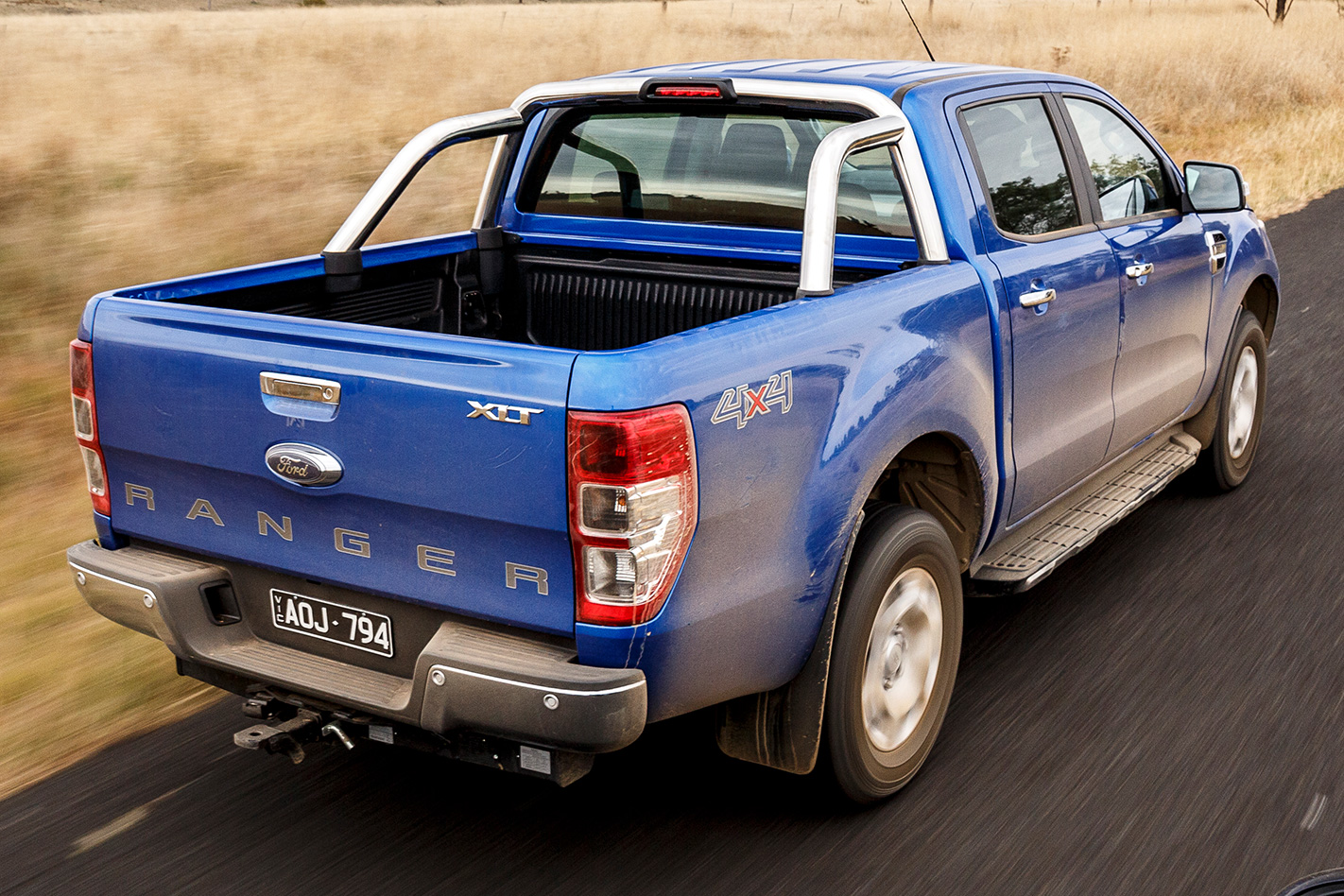
On the flipside, the Ranger has become a victim of its own success. Though just $110 shy of the Mercedes, the XLT is brow-raisingly expensive, yet lacks rear discs, keyless entry/start and AEB availability (though the latter two are set for the MY19 Series III revamp).
Ultimately, pricing, spec and performance/efficiency issues compared with the enterprising Amarok’s TDI V6 keep the outgoing Ranger from the top spot. That said, we expect the Ford to wreak its revenge on the Volkswagen in a rematch of the MY19s.
Still, given the sales figures, it’s heartening to see Australians still supporting a locally engineered product that’s so clearly right for our conditions.
SPECS
Price $57,690 Engine 3198cc 5cyl, dohc, 20v, TD Power 147kW @ 3000rpm Torque 470Nm @ 1750-2500rpm Transmission 6-speed automatic Dimensions (L/W/H/W-B) 5426/1860/1821/3220mm Weight 2247kg Tray capacity 952kg Braked towing capacity 3500kg Unbraked towing capacity 750kg Ground clearance 237mm Tyres Dunlop Grandtrek AT22 265/65R17 112T Test fuel average 10.9L/100km 0-100km/h 10.1sec 80-120km/h 7.9sec 100km/h-0 44.0m
Need more info?
Read the Wheels Dual-Cab Ute Megatest Introduction
The Contenders
#9 Isuzu D-Max LS-T
Rough ’n’ ready appeal pales when polished rivals are better at going bush too
#8 Nissan Navara ST-X
Tough and reliable aren’t enough as Navara wilts on price, spec and comfort
#7 Toyota Hilux SR+
Unbreakable? Possibly. Unloveable? Sadly, yes, as mediocrity is allowed to prevail
#6 Mazda BT-50 GT
Still in the fight, but ultimately overshadowed by its high-flying fraternal twin
#5 Mitsubishi Triton Exceed
A strong and likeable mid-fielder where consistency and value are king
#4 Holden Colorado LTZ
Colorado raises its game right when Holden needs a hero
#3 Mercedes-Benz X250d
Arrives carrying great expectations; delivers only a modest load
#2 Ford Ranger XLT
Continuous improvements make the only truly Australian-conceived ute world class
#1 Volkswagen Amarok V6 Sportline
Quiet achiever doesn’t have youth on its side, but still shows how it should be done
MORE: Ford Ranger Range Review
MORE: Ford Ranger Specs, Range & Price
UPDATED: 17/08/18
Since we outlined the various car-sharing models under consideration by all the premium German manufacturers, Mercedes-Benz has now thrown its hat into the car subscription ring, detailing its ‘free-floating’ Car2Go service.
It’s not yet confirmed for Australia, but the world’s largest car-sharing company is honing in on the east coast for a pilot program as early as next year.
Car2Go would introduce a sizeable Mercedes fleet to roads around the major capitals, potentially removing many privately owned cars that are used less frequently.
Unlike some sharing services, which require the cars to be kept at specifically designated spaces, the ‘free-floating’ model allows participants to leave the vehicle at any legal parking spot, and uses a sophisticated smartphone application to book, manage and coordinate the pick-up and drop-offs.
Mercedes-Benz Australia is keen to offer the service with only the legislative side of the strategy and the authorisation of various town councils standing between the car maker and a roll-out.
If successful, Mercedes’ Car2Go service is likely to continue the success of other ventures by the decade-old vehicle sharing giant, which already has 3.2 million subscribers in 28 cities around the world.
The article below was first published April 2018
For car enthusiasts, the annual expenses of owning a special car are like any other part of a hobby or passion, but many regard registration, insurance and maintenance costs, as well as the inconvenience of arranging all of the above, a chore they would rather avoid.
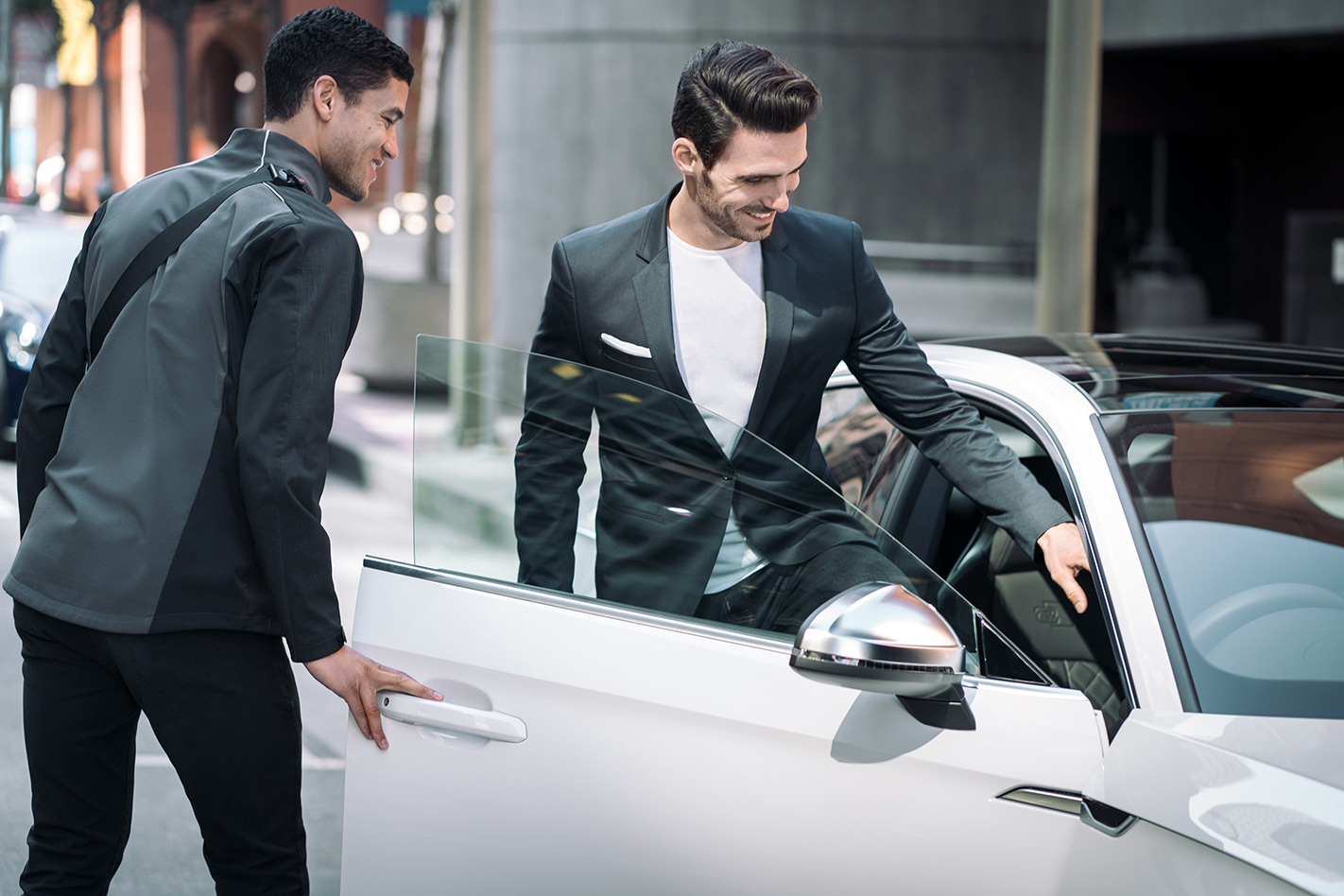
It’s the discerning but time-poor driver that a number of brands are targeting with revolutionary subscription services that allow you to swap the hardware sitting on your driveway according to your lifestyle, without the commitment of car ownership.
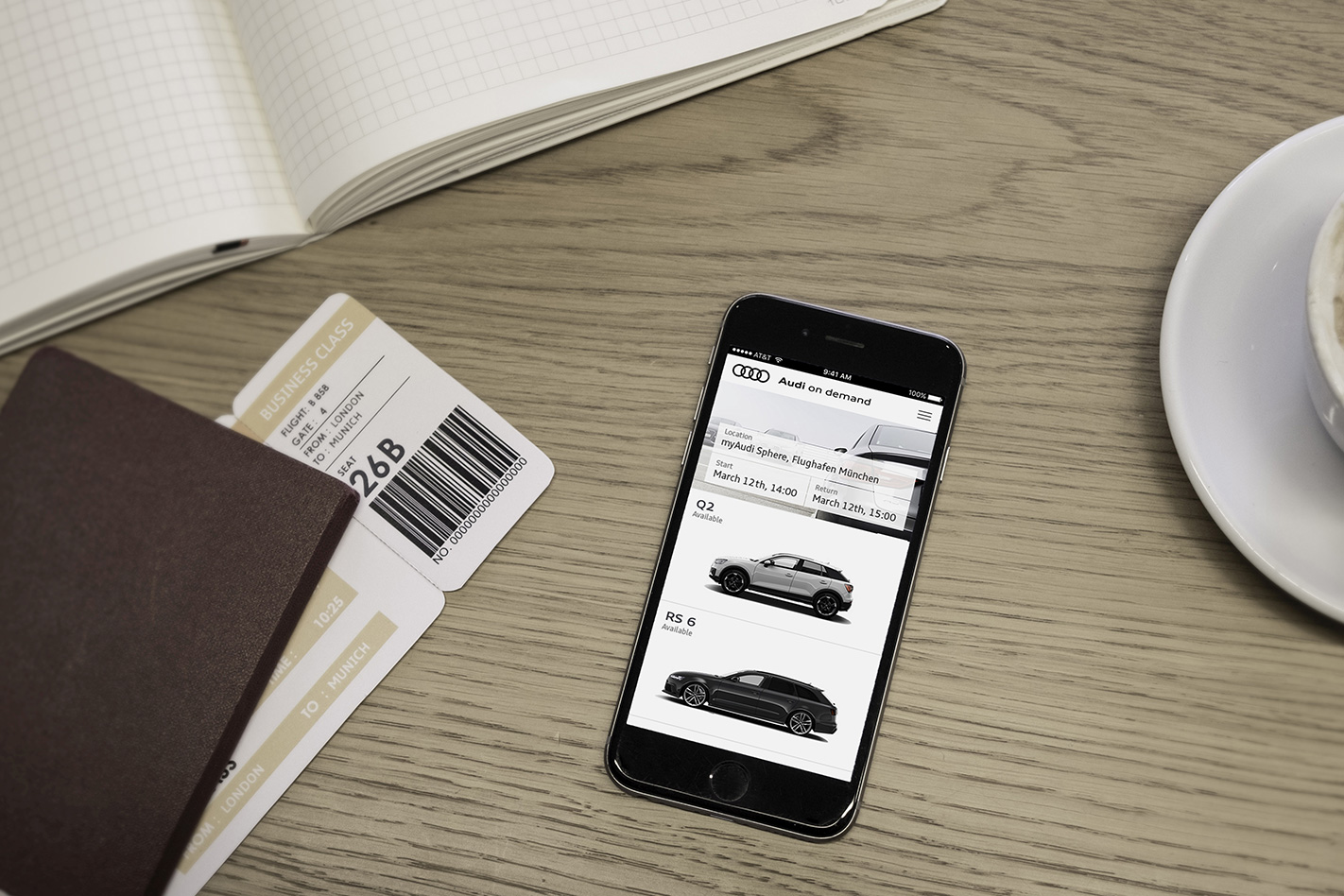
At this stage, no subscription services are on offer in Australia but a number are available overseas from premium brands. As it stands, Audi is the only manufacturer locally that has committed to offer its version, dubbed Audi On Demand, which will be here before 2020.

The format varies from brand to brand, but each service revolves around the same principle. Here’s how it works.
For a monthly or annual subscription fee, customers have access to a range of models from their chosen brand. If, for example, the subscriber is off to the snow for the weekend, they might request a large SUV to cart people and kit.
When back home, a smaller passenger model may be the more practical vehicle to live with for the daily commute into the city and, for the odd summer weekend, the customer can get into something convertible or a little more rewarding to drive.
Besides the flexibility to swap vehicles depending on a user’s lifestyle, the manufacturer also looks after all the necessary insurance, registration, servicing and upkeep as part of the subscription fee.
It’s a little like a mobile phone plan in which all costs are covered by one monthly payment, but you could change the handset whenever you like.
Of course, the service comes at a cost, with the existing trials ranging between $2300 and $3800 per month, which might sound like a significant ongoing expense, but for many users, the fee may be less than their ownership costs.
When all associated costs are factored in, including depreciation, registration, tax and maintenance, the subscription may be the most cost effective solution, particularly if a customer is able to replace more than one car with the plan.
With the exception of Audi, the other premium brands are waiting to see how consumers respond to the subscription services overseas before making any commitment to a local roll-out.
Porsche is one such manufacturer and an Australian version of its Porsche Passport trial will depend on how popular a pilot scheme is in the US.
“We’ll get the results of that and that’s what we’ll base our decision on for our market”, said Porsche Australia head of public relations Chris Jordan. “Of course the automotive space is evolving so we have to be open to new ideas, but at the moment it’s a matter of wait and see how the US pilot program goes.”
BMW Australia is also watching the response of its Access by BMW trial, which is underway in Europe, but corporate communications general manager Lenore Fletcher said it was likely that the premium brands would be the first to adopt subscription services.
“As always we will be looking to Europe to see where the trends and technology is coming from,” said Fletcher. “I think over time, all of these applications will have some relevance in Australia.
“I think that this is where the starting point always is because of the R&D that the premium brands put into the technology. There’s also a certain level of trust that is inherent in the premium brands. It’s a perception.”
Mercedes rounds out the mainstream premium brands in Australia and is maintaining a similar stance of the services until proven in other markets, but public relations, product and corporate communications senior manager David McCarthy said the introduction depends heavily on the price and demand.
“I think there is [potential ] it’s just when, because people are very wedded to their own car,” he said “We don’t have any plans in the near future but that could change.
“It comes down to price and what’s available. It really depends what the market wants and at the end of the day, it’s no use introducing something that the market doesn’t want.”
Car sharing programs are already on offer in Australia, which appeal to many drivers that only need occasional access to a vehicle, but for those drivers that need a car on their driveway around the clock, but don’t want the full responsibility of ownership, subscription could be the perfect solution.
The Monterey Car Week held each year around the Pebble Beach area is one of those events where you’ll see hugely expensive one-offs and concepts from carmakers all over the world.
This year will be no different, as Jim Glickenhaus is bringing the bizarre Ferrari 512S Modulo concept to Pebble Beach.
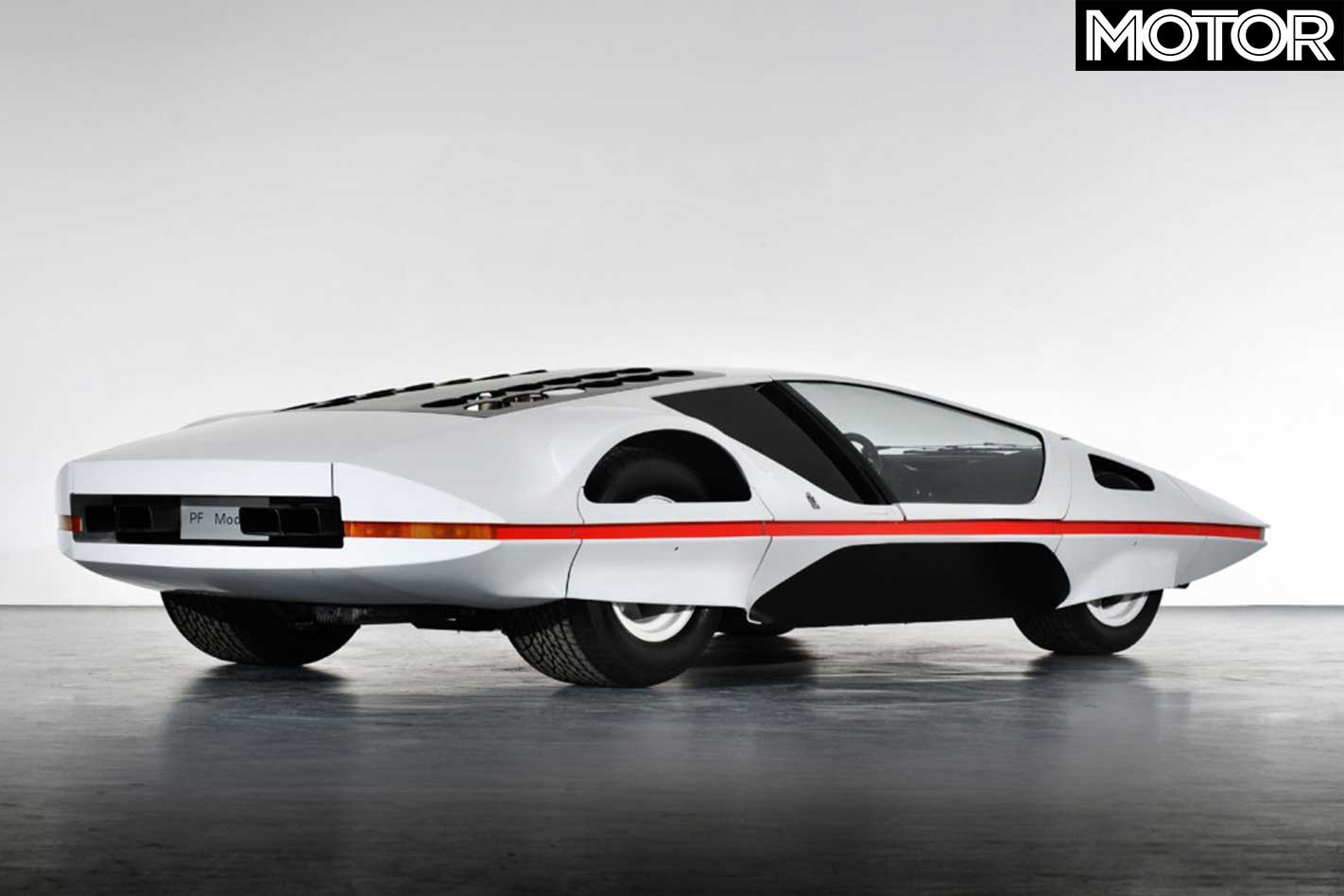
“Ferrari Modulo is an extreme special berlinetta, single-volume, experimental one-off prototype, built on the Ferrari 512S chassis, of a futuristic car breaking the fetters of the traditional stylistic language, representing the atmosphere of the early Seventies,” Pininfarina says of its unusual creation.
“Unveiled at the Geneva Motor Show in 1970 (in the pearl light blue colour), it won 22 international design awards for a pure formal research, in its intentional geometricity.
“The prototype was selected to represent the best of Italian coach building skill at the 1970 Osaka Expo and was displayed as envoy of Italian design, in Mexico City in 1971.”
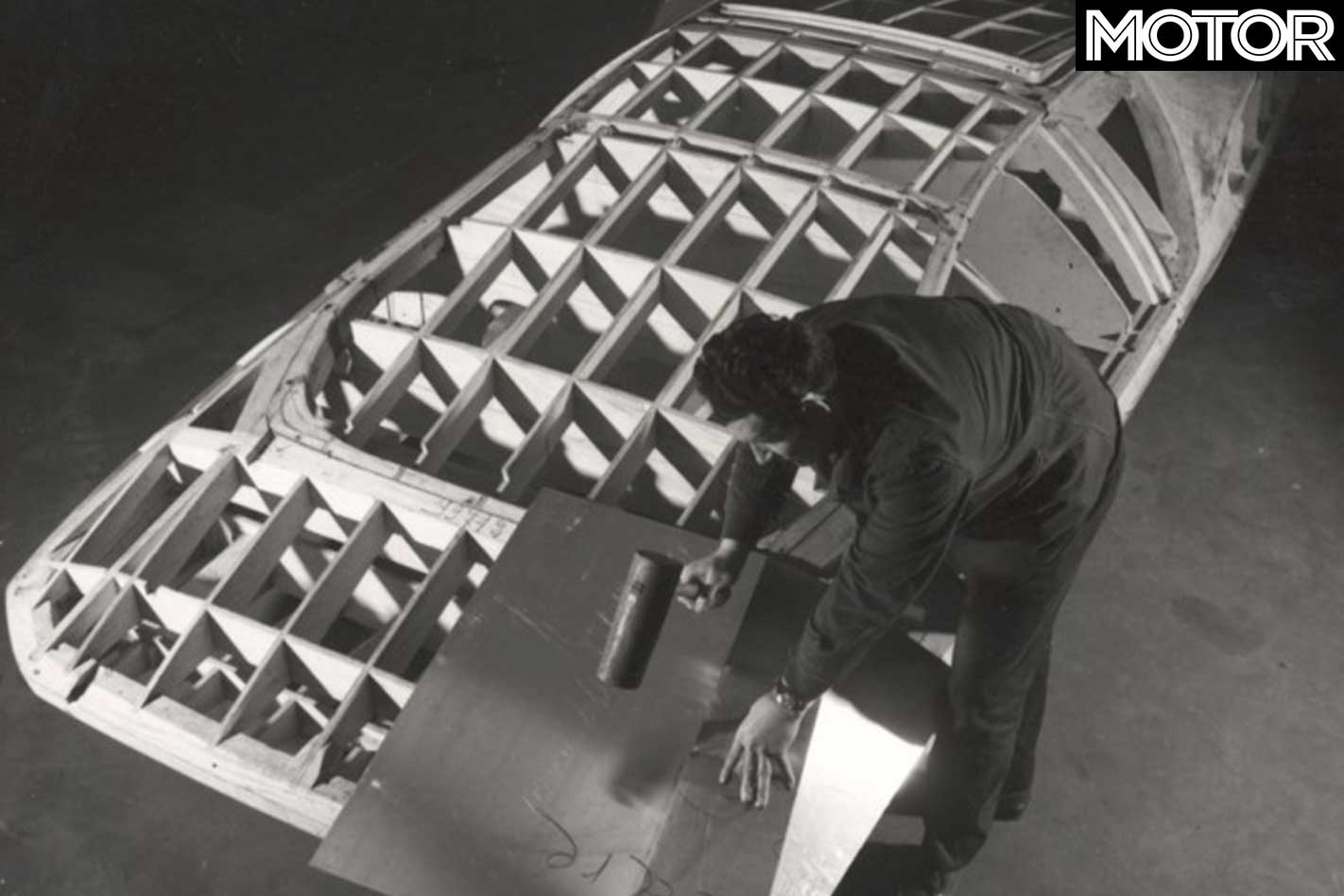
And, as previously mentioned, it’s now owned by Jim Glickenhaus of Scuderia Cameron Glickenhaus. As well as designing and building race cars, Glickenhaus is a car collector and was determined to restore the Modulo to ‘new’ condition, and have the thing driving.
That’s something the Modulo had never done before this year.
About three months ago, the Modulo drove for the first time, with its restoration nearing completion. This week, it ran on the road for the first time.
More recently, Glickenhaus has Tweeted images of the Modulo sitting in a transport truck, headed for the lush Pebble Beach.
Stay tuned.
