
Contenders
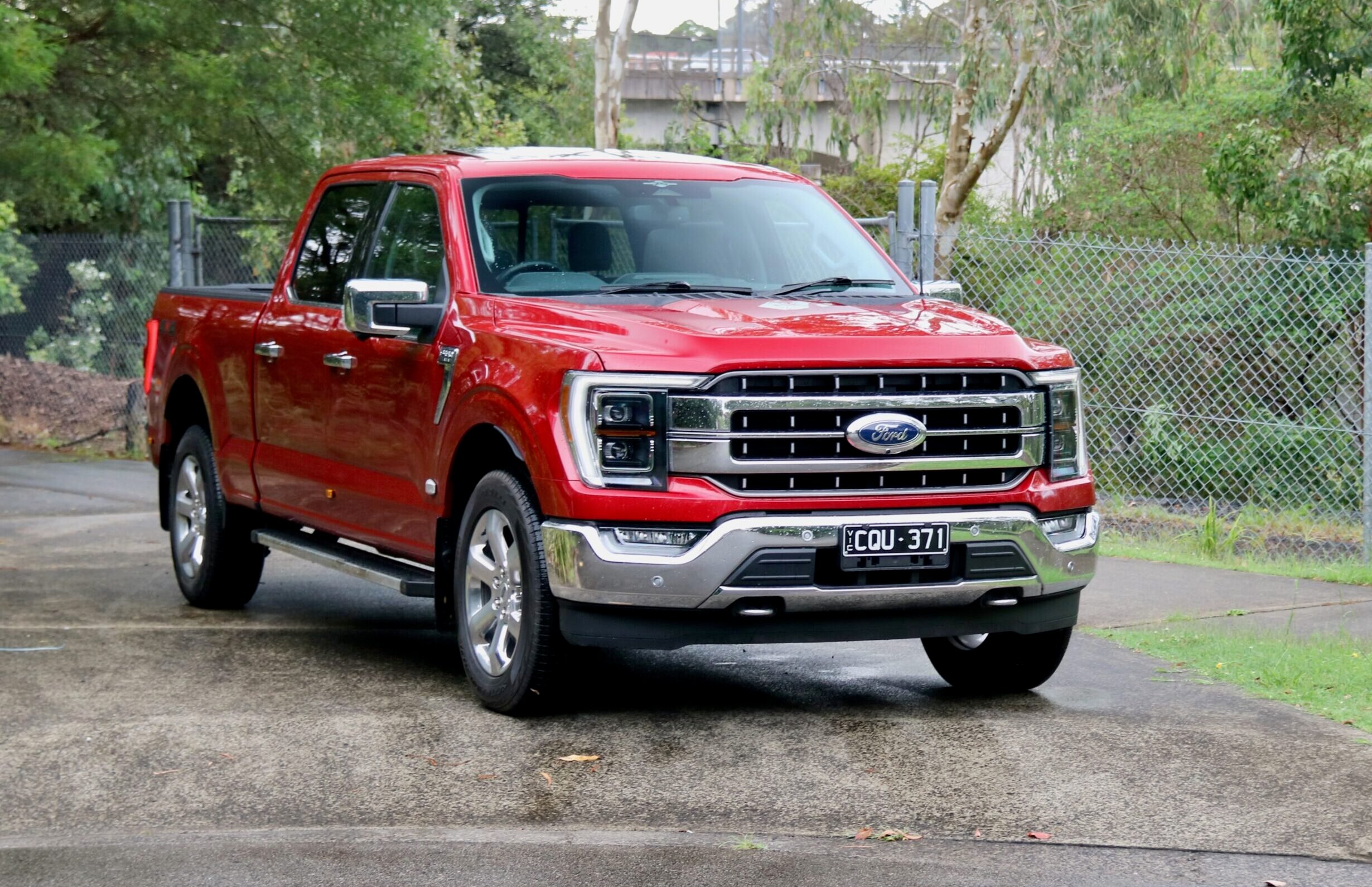
Winner: Ford F-150
- Price: From $106,950 plus on-road costs
- Drivetrain: 3.5L V6 petrol engine, 298kW/678Nm, 10-speed auto
- Combined fuel economy, CO2 emissions, fuel type: 12.5L/100km, 290g/km, 95RON
- Warranty: Five year, unlimited kilometre
- Five-year service cost: $2145 ($429 per year)
| Driving | |
|---|---|
| Interior | |
| Practicality | |
| Overall value |
Things we like
- Rides well for a big ‘un
- Slick towing technology
- Huge 136-litre fuel tank gives it legs
Not so much
- Feels like a leviathan
- Huge trim/price step from XLT to Lariat
- Need to step up to Lariat to avoid feeble halogen headlights
Nobody wants to tow anything. It’s a one of those activities that occasionally needs doing and is always more pleasurable when the vehicle you’re towing with takes as much strain as possible out of the process. That’s why the Ford F-150 reigns supreme in this category. Towing is what it’s for and its designers have clearly thought long and hard about how to get the very best from it in that regard. It doesn’t pretend at any off-road capability and it isn’t trying to be sporty. Want to drag a big boat, a horse float or heavy equipment? Here’s your rig.
Now it won’t have escaped your attention that the 4500kg towing class is stacked with a few capable contenders. Where the big Effie differentiates itself is firstly in the sophistication of its towing technology and secondly with a fuel tank that’s just, well, bigger. At 136 litres, it dwarfs the capacities of its key rivals and takes the range anxiety out of heavy towing. Couple that with the added benefit that the 3.5-litre V6 engine is, if anything, a little more economical than its published figures and it means that if you’ve got a caravan on the back, you won’t be eyeing the fuel gauge nervously every five minutes.
The other major benefit is that you won’t need to pack super-light. Even when taking a 10 pe rcent tow ball mass into consideration, the short wheelbase F-150 aces the likes of the Tundra, RAM and Silverado. It is, along with the Tundra, one of the only utes that can legitimately tow a 4500kg trailer without running into a Gross Combination Mass issue. And where you have 502kg of payload available to you in the Ford when you have a 4500kg trailer on the back, in the Tundra you’re left with 278kg. So if size really does matter, the F-150 wins.
F-150 buyers also get Pro-Trailer backup assist, which means you can steer the trailer in reverse by using a jog wheel. Some find this more intuitive, but experienced users will continue to twirl the steering wheel. The inbuilt trailer light check function is handy, running through a series off lighting checks that you can do yourself without having to call upon an assistant. Enter the length of your trailer into the infotainment system and the blind-spot monitoring will also take into account the combined length of vehicle and trailer and warn you accordingly when you’re thinking of switching lanes. The reversing camera also provides a top-down view of your tow ball so that you can position it perfectly when hitching up.
This combination of qualities, paired with probably the best ride quality in class, elevate the F-150 above the rest when it comes to towing. Couple that with strong value for money and line honours here are claimed, fairly comprehensively, by the Blue Oval.
Toyota Tundra
- Price: $155,990 plus on-road costs
- Drivetrain: 3.4L V6 hybrid petrol engine, 326kW/790Nm, 10-speed auto
- Combined fuel economy, CO2 emissions, fuel type: 11.8L/100km, 290g/km, 95RON
- Warranty: Five year, unlimited kilometre
- Five-year service cost: $4500 ($900 per year)
| Driving | |
|---|---|
| Interior | |
| Practicality | |
| Overall value |
Things we like
- Hybrid drive gives instant go off the line
- Decent towing technology
- Toyota’s RHD conversion work has been painstaking
Not so much
- It’s expensive
- Complexity of hybrid might be off-putting to some
- Ride is firmish
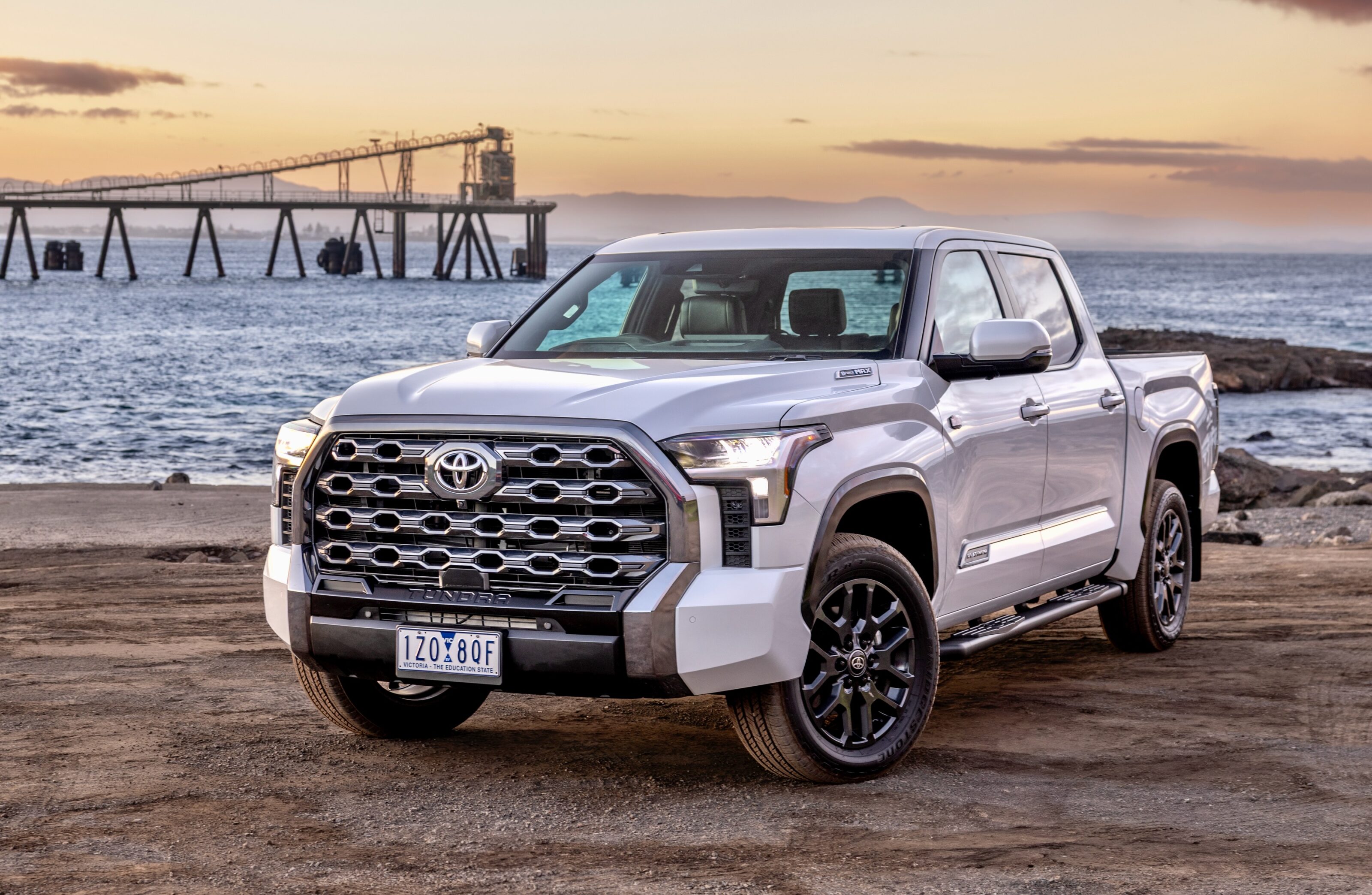
We awaited a long time for the Toyota Tundra. If you weren’t quick on the draw with placing your order you might still be waiting. There’s a very good reason for that. Toyota Australia was keen to dot every ‘i’ and cross every ‘t’ when it came to the engineering rectitude of its work in partnership with Walkinshaw. Get the Tundra right and the door could well open for other projects. Get this lengthy validation process wrong (it kicked off in 2017) and there’s a supersized serving of egg on face down in Altona.
Billed as Toyota’s ‘premium towing machine’, the Tundra focused on space, comfort and a long driving range. It features coil springs at the rear rather than the expected leaf springs, Toyota prioritising lateral location when towing over sheer carrying capacity in the tray.
The 3445cc i-FORCE MAX petrol V6 engine isn’t the run-of-the-mill lump of iron either. Featuring a motor-generator that adds 36kW and 140Nm, the system output is – now that the RAM TRX is dead – a monster 326kW and 780Nm. Best of all, the control systems ensure that that torque fill is instantly available off the line, which is the time that you feel most in need of it when towing a big trailer.
The ride quality is a little flinty on poor Aussie roads, which is surprising, and this can filter into the cabin setting up squeaks and rattles among the many hard plastic trim parts. Maybe that perception is exacerbated by the fact that the hybrid petrol drivetrain is incredibly refined. Buyers get an integrated brake controller, a couple of towing-specific drive programs, trailer sway assist and a clever trailer back-up assistant.
The Tundra also features a decent 122-litre fuel tank which, coupled with the best fuel economy in this class, gives it decent touring range. Unlike an F-150, there’s no low-range transfer case, so if you’re trying to drag a caravan up a wet and bumpy paddock, you’re reliant on 4H mode and some very road-biased Bridgestone Dueler rubber.
Toyota has capacity to convert 1200 Tundras per year, and is more than confident about shifting every one of them without having to mark down that $155,990 asking price. They’re probably right, as there’s a ready market here for not just a vehicle with this blend of qualities, but a Toyota vehicle with this blend of qualities. The badge carries serious clout in both town and country Australia. For many, it’ll be their first and last port of call in the 4.5-tonne class.
Chevrolet Silverado 1500
- Price: From $130,500 plus on-road costs
- Drivetrain: 6.2L V8 petrol engine, 313kW/624Nm, 10-speed auto
- Combined fuel economy, CO2 emissions, fuel type: 16.8L/100km, 290g/km, 95RON
- Warranty: three year, 100,000 kilometre
- Five-year service cost: Conditional
| Driving | |
|---|---|
| Interior | |
| Practicality | |
| Overall value |
Things we like
- It’s still got a big, characterful V8
- Respectable towing technology
- ZR2 has decent off-road ability
Not so much
- No capped price servicing deal
- Can it tow 4500kg in the real world?
- Unexceptional three-year warranty
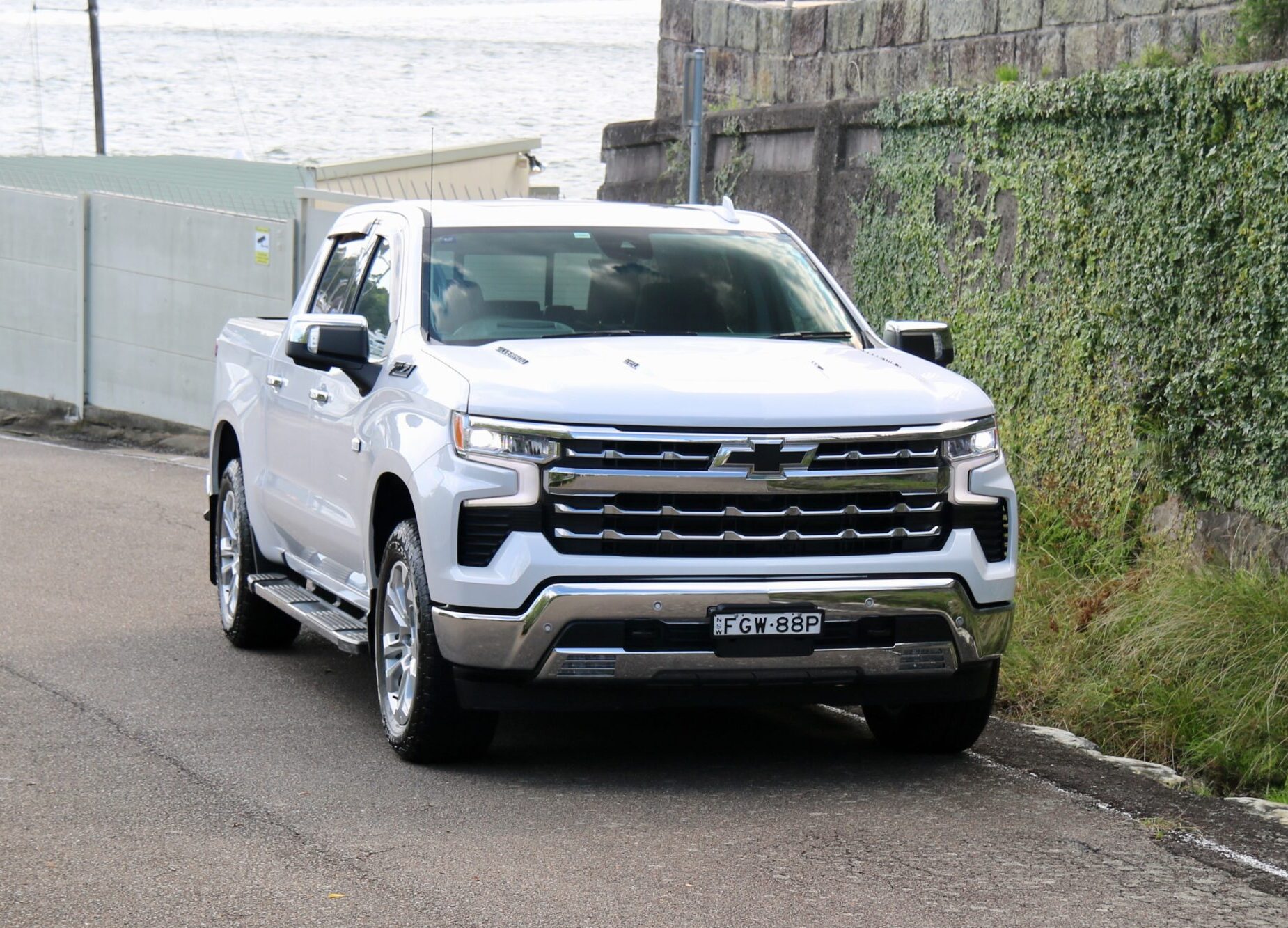
There’s nothing apologetic about a Chevrolet Silverado. It’s big, in your face and under the bonnet there’s a 6.2-litre V8 that isn’t shy of reminding people of its presence. If that all sounds a bit too much, there are plenty of competing attractions. If ‘less is more’ sounds like the playbook for a dull life, you’re probably going to love the big Chev.
Like many of its key rivals in this class, the Silverado doesn’t start life as a right-hand drive vehicle. It is comprehensively re-engineered by Walkinshaw in Clayton, who have been doing this for quite a while now and know their stuff. Such is the quality of their work that you’d never know that the steering wheel was once on the other side.
As a tow vehicle, there’s a lot in the plus column. Two models are available, the LTZ Premium, priced at $130,500 and the more off-road focused ZR2 at $138,500. Both are powered by the same 6.2-litre naturally aspirated petrol V8. While the 624Nm torque figure sounds meaty enough, without the benefit of either forced induction or hybrid assistance, that peak is achieved at a relatively lively 4100rpm, and at 2000rpm, that drops off to around 470Nm.
Nevertheless on back-to-back heavy towing economy tests with the Ford 3.5-litre Ecoboost, it returns marginally better fuel figures. You will find the engine downshifting more to make its power when compared with the turbocharged Ford F-150, but the 10-speed transmission is quick-witted and while the V8 can get somewhat vocal when pressed, such as on long inclines, there’s a constituency of buyers who would rate the long term reliability of a big atmo powerplant over that of a downsized turbocharged unit.
With a Gross Combination Mass (GCM) of 7160kg for the lTZ and 6851kg for the ZR2, both run into some mathematical issues when towing heavy loads. Drag a 4500kg caravan and when you deduct the LTZ’s kerb weight, you have a mere 117kg of payload before you’ve maxed out your GCM. That’s little more than me and the clothes I stand up in. So, in most practical instances you’ll need to lower your gaze a little with towing weights.
Fortunately, it earns a stack of credit with a whole host of features designed to make towing a whole lot easier. There’s Trailer Sway Control, Hill Start Assist and Auto Grade Braking. You’ll also get Trailer Theft Alert, Electric Parking Brake Hookup Assist and Brake Gain Memory on the integrated trailer brake controller. The Silverado’s Advanced Trailer System includes a pre-departure checklist, light sequencing, maintenance reminders and security alerts. The system can also provide trailer electrical diagnostics and monitor tyre pressure. Every Silverado is also fitted as standard with the Trailering Package, comprising a fitted tow bar, towing hitch platform and 12-pin connector. Then it’s down to you to choose your tow ball: 50mm diameter for towing up to 3.5 tonnes or 70mm for heavier assignments.
The ZR2 model, with its Multimatic DSSV dampers and Goodyear Wrangler Mud Terrain tyres is the best 4.5-tonne ute pick if you’re heading off road, but look out for a slightly reduced tow capacity and squirmier tread blocks when towing on road. If you’re not about to drag a huge load out bush, stick with the cheaper LTZ.
RAM 1500
- Price: From $141,950 plus on-road costs (Laramie Sport) – $159,950 +ORC (Limited)
- Drivetrain/economy/CO2 emissions: 3.0L turbo-petrol inline six: 313kW/635Nm (Standard Output) – 403kW/707Nm (High Output), eight-speed auto, 4WD, 10.7-11.8L/100km, TBC CO2
- Dimensions: 5916mm long, 2057mm wide, 1971mm tall, 3672mm long wheelbase
- Towing capacity/GVM/GCM: 4200kg (High Output) – 4500kg (Standard Output)/3505kg (High Output) – 3521kg (Standard Output)/7285kg (High Output) – 7711kg (Standard Output)
- Warranty/roadside assistance/service intervals: Three-year/100,000km warranty, three years of roadside assistance, annual/12,000km
- Five-year service cost: No capped price servicing
| Driving | |
|---|---|
| Interior | |
| Practicality | |
| Overall value |
Things we like
- Monster power and torque from inline-6
- Still looks the business
- Feature-packed cabin
Not so much
- Avoid 22-inch wheels if you value ride quality
- Powerhouse Limited model towing capped at 4200kg
- Three-year warranty and no capped price servicing
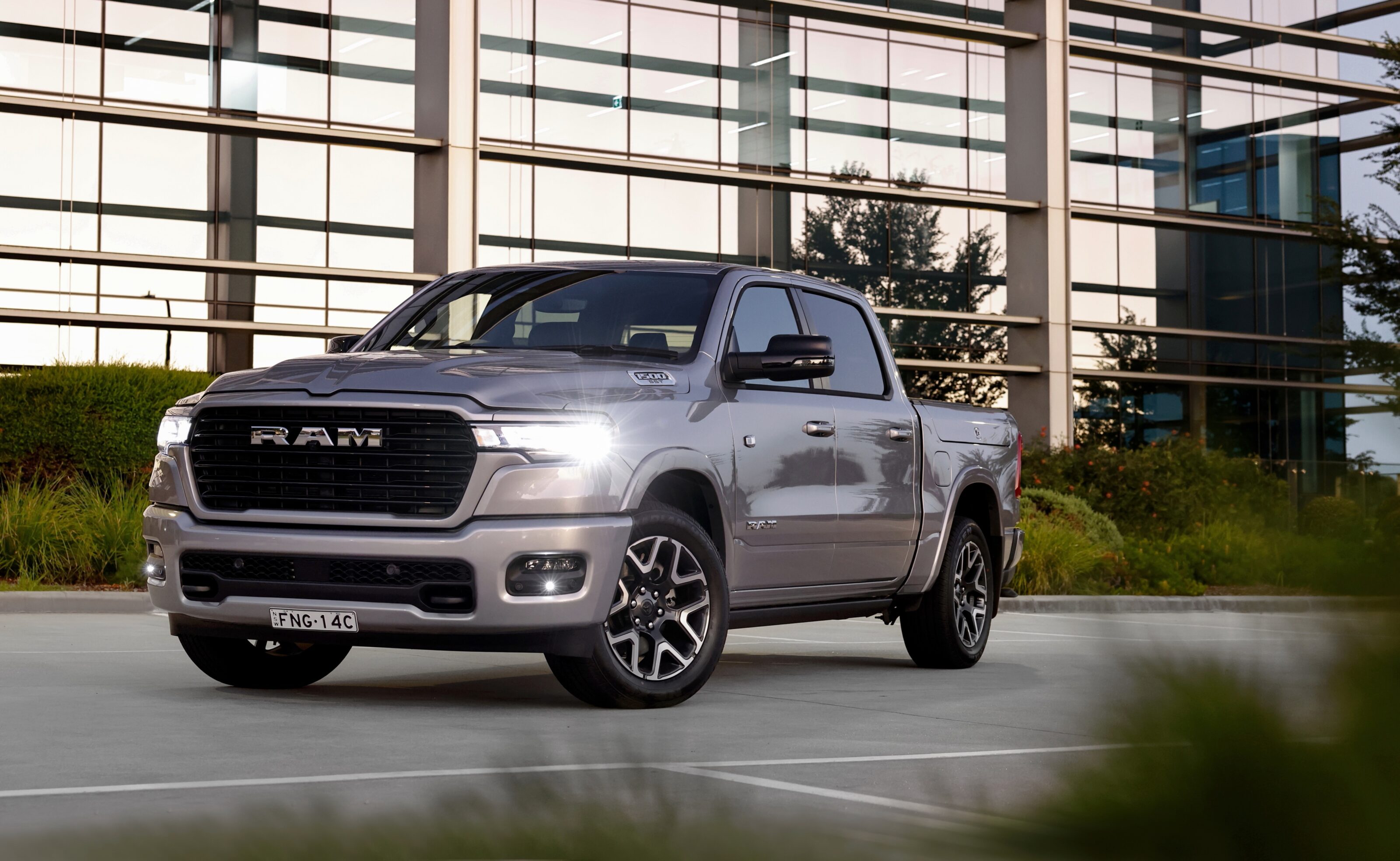
This DT generation is the fifth iteration of the big Ram ute and debuted back in 2019. Most associate a Ram ute with one engine: the 6.4-litre Hemi V8. And it is a heck of a powerplant. Times, they are a-changing though and the new generation of RAM 1500 models no longer get the bent-eight. Instead, Australia gets a 3.0-litre twin-turbocharged inline-6 in two discrete guises: either a 313kW/635Nm output in the entry-level Laramie Sport or – counterintuitively – a 403kW/717Nm tune in the Limited. And yes, in case you were wondering, even the lower output of those engines is punchier than the old standard trim Hemi.
The new engine has been a point of controversy for buyers, mostly because the Hemi V8 that the Ram used to use is a legendary engine. The company has promised to revive it in the US for 2026, under the marketing strapline ‘Symbol Of Protest’, but it’s yet to be locked in for Australia. Even if it does arrive here, it’ll be a little shy of the Hurricane twin-turbo inline-six’s massive 403kW of power and 707Nm of torque in the higher-output version.
Whereas those looking to tow a massive trailer might instantly gravitate to the one with the big torque figure, things aren’t quite so cut and dried in real life. With its 22-inch wheels, Pirelli Scorpion tyres, air springs, firmer ride and heavier kerb weight, the high output Limited is, in effect, the less competent tow vehicle, with a maximum braked figure of 4200kg versus the steel-sprung Sport’s 4500kg rating.
Some might baulk at the new entry price into Ram 1500 ownership. The $141,950 RRP of the Sport looks like a hefty $22k hike, but almost all of that premium is due to the fact that there’s no longer – for the time being at least – a budget Big Horn variant on offer. From there it’s a big step up to the $159,950 Limited.
Nevertheless, even the base Sport gets a stack of gear including heated and ventilated leather seats for everyone, LED headlights, dual wireless phone charging, a 14.2-inch centre touchscreen, and a decent Harmon Kardon sound system. There’s even a 10.5-inch passenger screen. What you will miss however, are the sort of towing technologies and smart camera systems that put the Ford F-150 at the head of this particular test.
As well as standard four-wheel drive with low ratio transfer case, the Ram 1500 gets a slick 4WD auto mode that allows it to be driven on the blacktop with 4WD engaged. That’s handy in the wet. Five drive modes are offered including a towing-specific map. Unfortunately, the fuel tank only holds 98 litres, which is some 28 per cent smaller than the standard item on the Ford F-150.
All up, this round of changes has given the Ram 1500 a new lease of life. It remains a competent tow vehicle, but unlike those big utes that are built for towing and little else, perhaps the Ram has a few other strings to its bow.
Ford Ranger V6
- Price: From $68,840 plus on-road costs
- Drivetrain: 3.0L V6 turbodiesel engine, 184kW/600Nm, 10-speed auto
- Combined fuel economy, CO2 emissions, fuel type: 8.4L/100km, 222g/km, 95RON
- Warranty: Five years, unlimited kilometre
- Five-year service cost: $1895 ($379 per year)
| Driving | |
|---|---|
| Interior | |
| Practicality | |
| Overall value |
Things we like
- V6 engine has the herbs for towing
- Clever towing tech
- Great ride and refinement
Not so much
- Some nagging reliability grumbles that Ford has addressed
- Prices keep creeping up
- Do you want to wait for the facelifted version?
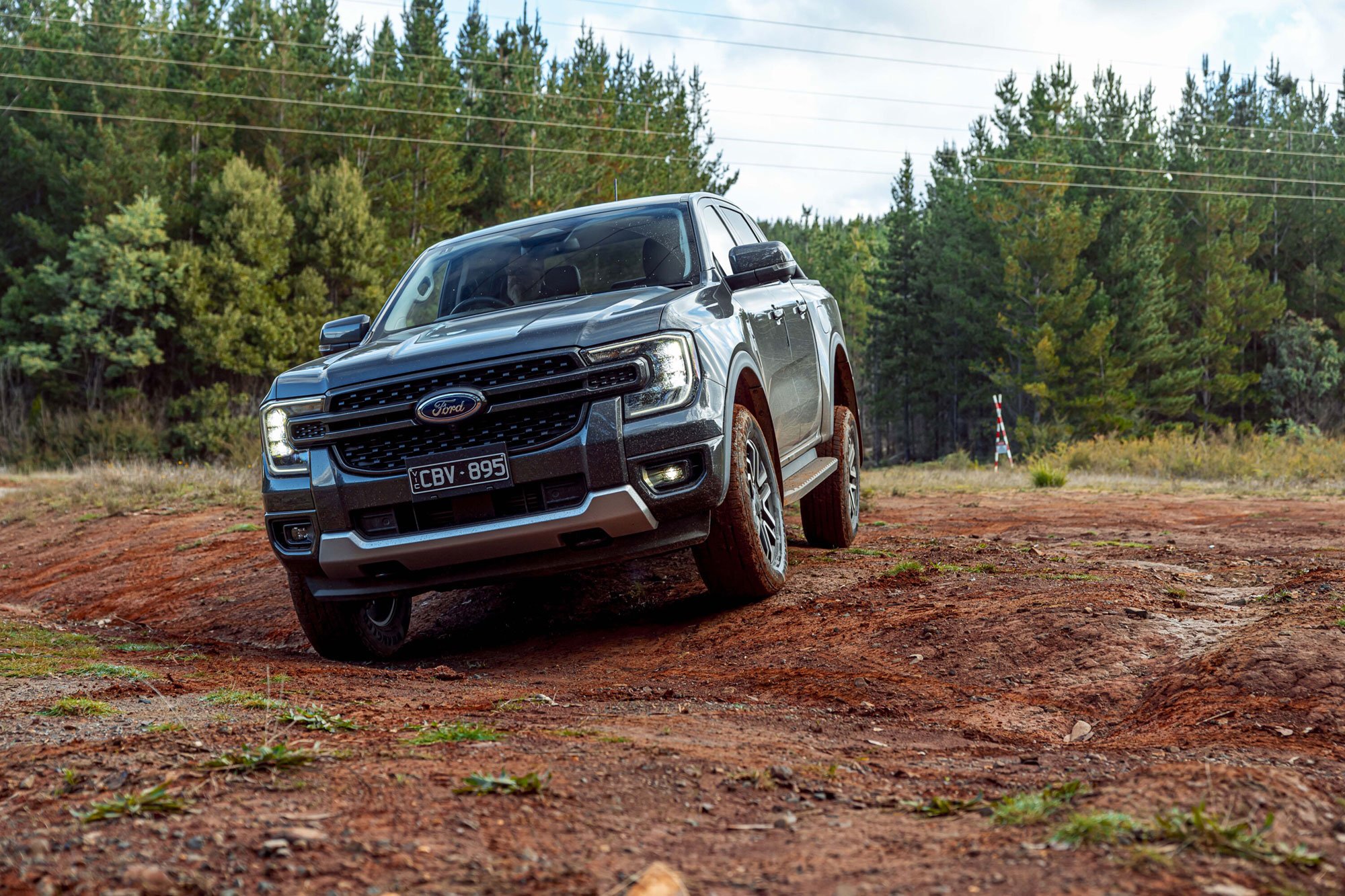
Let’s assume for a moment you’re not trying to drag an errant tectonic plate back into position and require a mere 3.5-tonne braked towing capacity. You don’t need a ute that requires council planning permission for your garage extension. Instead, how about something a bit easier to wrangle? Something like the Ford Ranger V6.
It’s no great secret why the Ranger has regularly topped the charts as Australia’s best-selling vehicle. It drives well, it’s packed with no-nonsense good ideas and, as a tow vehicle, it takes a lot of beating. The 3.0-litre diesel V6 versions feature a meaty 184kW/600Nm output and while that engine can trace its roots back almost as far as the demise of the dinosaurs, it still aces pretty much everything else in a comparable price bracket.
Pick, say, the Ranger Sport V6 and you have a GCM of 6400kg and when towing a 3500kg trailer, you have a payload of 555kg. Just a word to the wise: don’t be tempted to spring for a Raptor on the basis that it has more power. Torque is down on the diesel V6 and its peak rated towing capacity is a mere 2500kg.
In other words, when you’re at maximum towing capacity, the Ranger V6 has more payload available to you than any of the big 4500kg-rated trucks. It’s a genuinely strong towing package too, with a dedicated Tow/Haul drive mode which will hold gears longer to prevent the engine labouring. There’s also a ‘manual’ shifting mode on the 10-speed auto which allows you to knock the vehicle down a gear or two if you’d rather engage a bit more engine braking on a downhill incline. That’s reassuring, as is the 4A setting that allows you to run 4WD on road to alleviate the problem of rear traction in the wet.
Standard tech helps you manoeuvre the Ranger cleanly towards your trailer, with a centre line marked on the camera image that almost always guarantees a bullseye on the tow hitch. The optional Touring Pack includes a 360-degree camera and an integrated brake controller. The SYNC4 infotainment allows for easy configuration of your trailer and it will amend rear cross traffic alert and blind spot monitoring accordingly. The trailer light check mode is simple genius.
There’s a reason why the Ford Ranger is currently Australia’s most popular tow car. It’s clever, it drives well, there’s stacks of aftermarket support for it and it takes the stress out of towing. You can’t ask for much more than that. Or if you think you can, wait for the forthcoming Ranger Super Duty.
Volkswagen Amarok V6
- Price: From $70,990 plus on-road costs
- Drivetrain: 3.0L V6 turbodiesel engine, 184kW/600Nm, 10-speed auto
- Combined fuel economy, CO2 emissions, fuel type: 8.4L/100km, 222g/km, 95RON
- Warranty: Five years, unlimited kilometre
- Five-year service cost: $1800 ($360 per year)
| Driving | |
| Interior | |
| Practicality | |
| Overall value |
Things we like
- Grunty V6 powerplant
- Slick Volkswagen styling
- Excellent ride and refinement
Not so much
- Some don’t rate the 10-speed auto’s reliability record
- A smidge pricier than the Ford Ranger
- Touchscreen control for off-road functions not always ideal
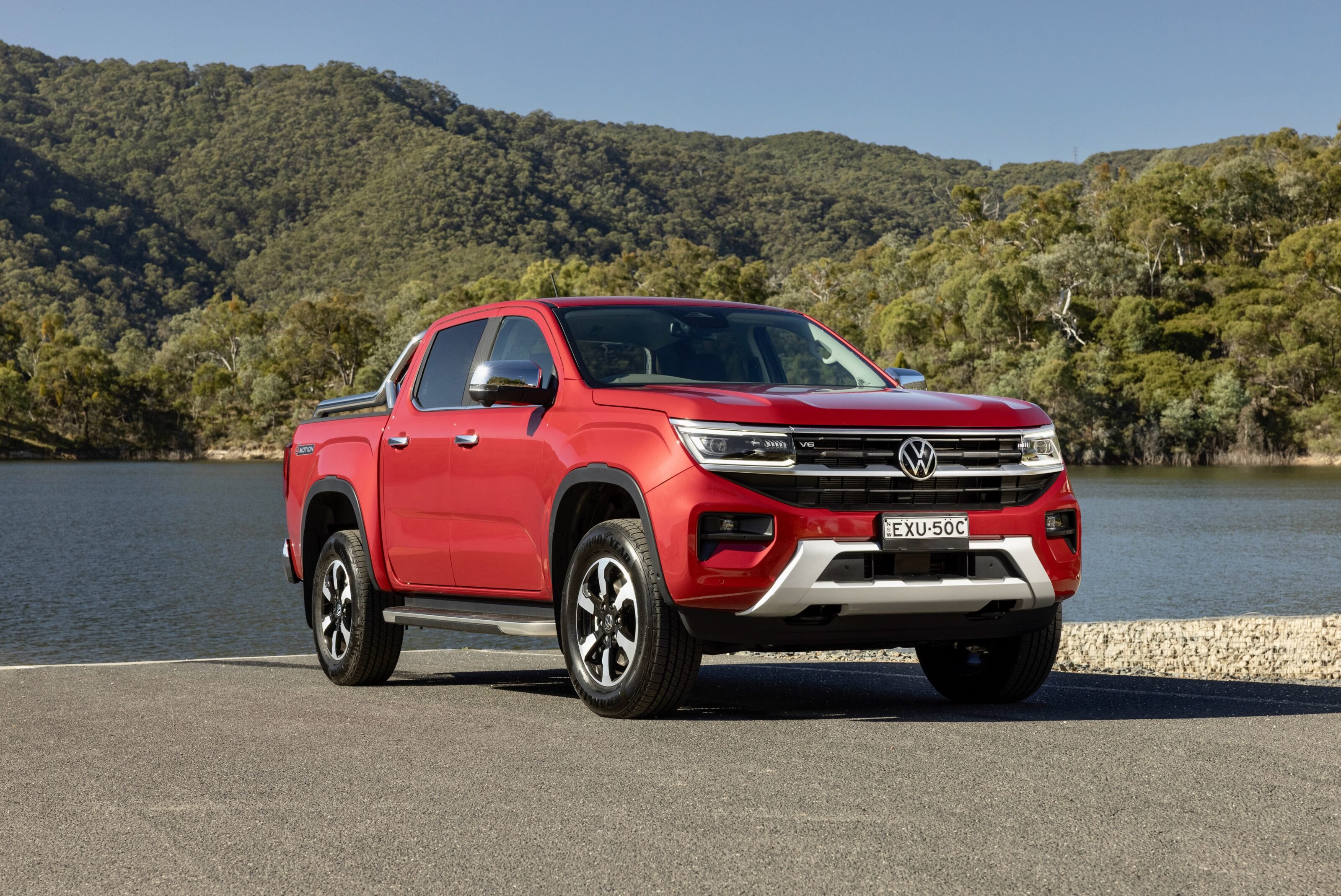
Volkswagen tends to try to excommunicate any of us that link its excellent Amarok ute in any way with the Ford Ranger, despite them sharing underpinnings, but we value the truth over being on Vee-Dub’s Christmas card list, so many of the attributes you’ll have read about for the Ford Ranger V6 previously apply equally to the Volkswagen Amarok.
It shares a lot of the really clever software for towing with the Ford, but the infotainment system has had a slick and effective res-skin in Volkswagen corporate fonts and layouts, which integrates well with the rest of the Amarok’s interior, which uses some high quality materials and finishes to elevate it above the smart but functional Ranger cabin.
Equipment levels are extremely strong, and even the entry-level Style model features gear like adaptive matrix LED headlights, 18-inch alloy wheels, a stainless steel sports bar and keyless go. Its microfibre upholstery is hardwearing and won’t freeze or roast you in the extremes of Australian conditions. You’ll find inclusions on the Style that you won’t find on the (broadly equivalent) Ranger Wildtrak including a 10-way power adjustable driver’s seat and leather-look inserts on the dash to add a bit of luxe.
A tow bar is fitted as standard and Volkswagen has released a whole range of approved accessories for the Amarok which include a lift kit, underbody protection. Like the Ranger, it offers all of the off-road ability including a low-range transmission, so it’s a great choice if your idea of towing is with an adventure caravan heading out into the more remote parts of the Aussie map. If you don’t want to follow the Ranger crowd, the Volkswagen Amarok V6 is a very convincing proposition.
The most powerful production General Motors product ever has been revealed with the Chevrolet Corvette ZR1X due to go on sale in North America later this year. Using a hybrid twin-turbo V8 drivetrain, the ZR1X makes 932kW – 1250hp in the old money – of power, enabling it to hit 100km/h in under two seconds and onto a top speed in excess of 375km/h.
Chevrolet also claims that the Corvette ZR1X can complete a quarter-mile sprint in “under nine seconds” at 241km/h, making it one of the quickest production cars ever made. While it was expected to be called the Corvette Zora after the Corvette’s chief engineer , Chevrolet decided on ZR1X as its name.
While the ZR1X appears to use a specialised engine, Chevrolet actually just took the best bits of the current Corvette range: the ZR1’s twin-turbocharged 5.5-litre V8 engine and the front-mounted electric motor from the E-Ray. By themselves, the V8 and electric motor produce 793kW/1123Nm and 139kW197Nm respectively.
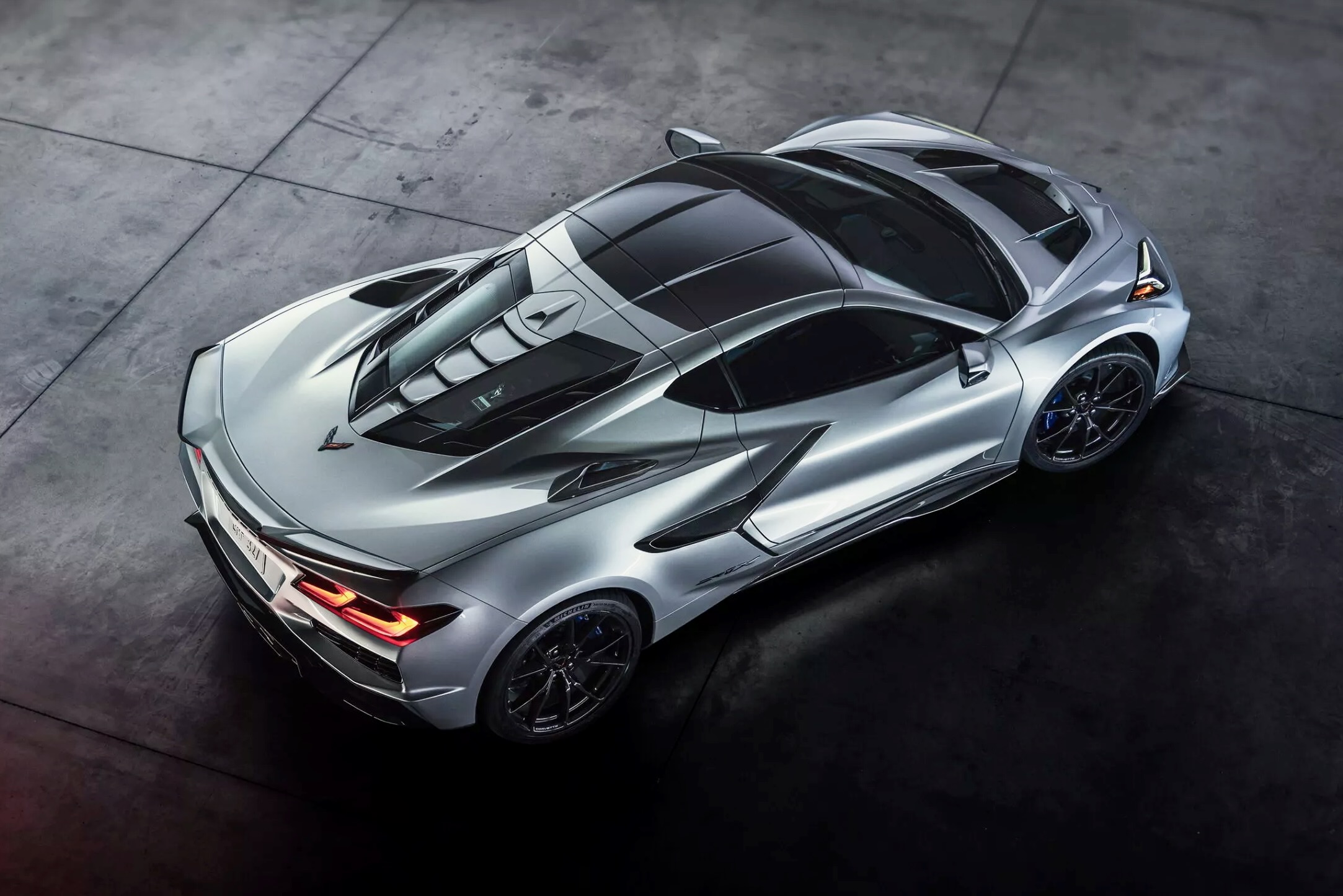
The V8 uses an eight-speed dual-clutch transmission to drive the rear wheels, while the electric motor drives the front wheels only. There’s no physical connection between the two axles, and while the two work together in acceleration, the electric motor stops at speeds higher than 258km/h. The electric motor draws power from a 1.9kWh battery, which is charged by the V8 engine or through regenerative braking.
The ZR1X also features new drive modes for track use – pressing the Charge+ button activates a new ‘Endurance’ mode to adjust the battery’s energy storage strategy for extended lapping and consistent output. There’s also a ‘Qualifying’ mode and a boost function to ensure maximum power is available on-demand.
In addition to the added performance, Chevrolet has also upgraded the braking system for the ZR1X. As standard is a ‘J59’ brake package with 419mm front and rear carbon-ceramic discs clamped by 10-piston front and six-piston rear Alcon calipers.
Buyers can also choose from a standard road-focused suspension tune with Michelin Pilot Sport 4S tyres, or the ZTK Performance Package with a firmer track-oriented set-up and sticky Michelin Pilot Sport Cup 2R rubber.
Buyers can also choose an optional ‘Carbon Aero’ package, which adds dive planes, underbody strakes, a hood gurney lip over the front heat extractor, and a sizeable rear wing for a claimed 544kg of downforce.
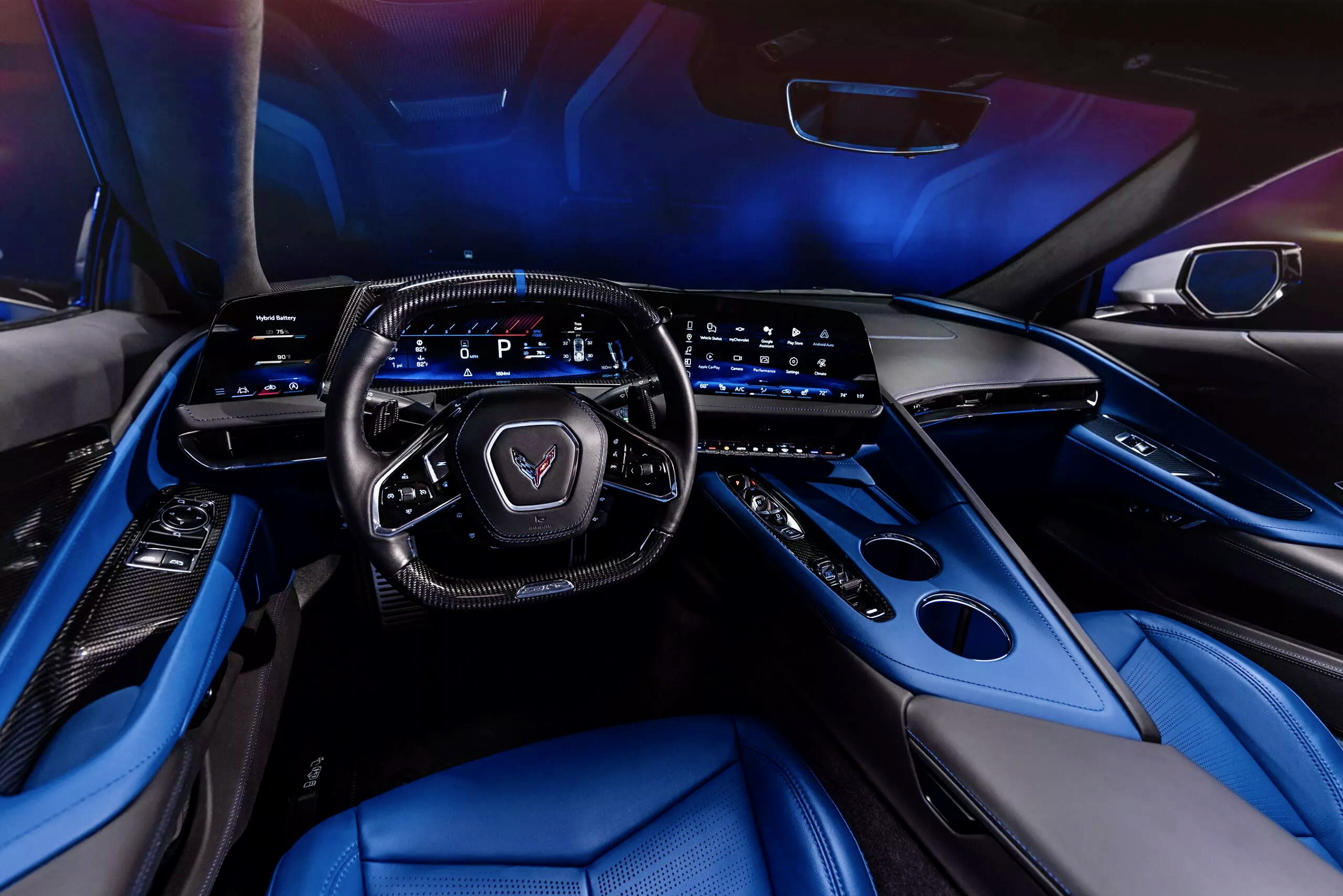
The ZR1X’s interior has also seen trim upgrades with the option for the passenger seat to be finished in a differing colour to the driver’s seat, while the new dashboard layout with a larger touchscreen and toned down central tunnel of all 2026 Corvette models also features in the ZR1X.
General Motors Special Vehicles (GMSV – the local arm of GM) is yet to announce any plans for the Corvette ZR1X for the Australian market.
Honda has confirmed that a new electric city car will be previewed at next month’s Goodwood Festival of Speed in the UK. Dubbed the ‘Super EV Concept’, the new Honda EV will replace the short-lived but much-loved Honda that ended production in 2024.
So far, Honda has only released one teaser image of the disguised Super EV Concept in front of the UK Houses of Parliament. It bares a strong resemblance to the N One kei hatchback sold in Japan, with similar cute circular headlights, a boxy body and wheels-at-the-corners dimensions – though, its wheel arches are noticeably broader than the N One, indicating that it may be wider.
Described as an A-segment model by Honda, the Super EV Concept will likely fall under kei dimensions – a maximum of 3.4 metres long and 1.48 metres wide – and Honda says that it will “marry fun to drive dynamics with the trademark Honda usability.”
Honda is yet to reveal any details of its drivetrain, though it will likely feature a healthier range than the former Honda e and its tiny 222km WLTP rating.
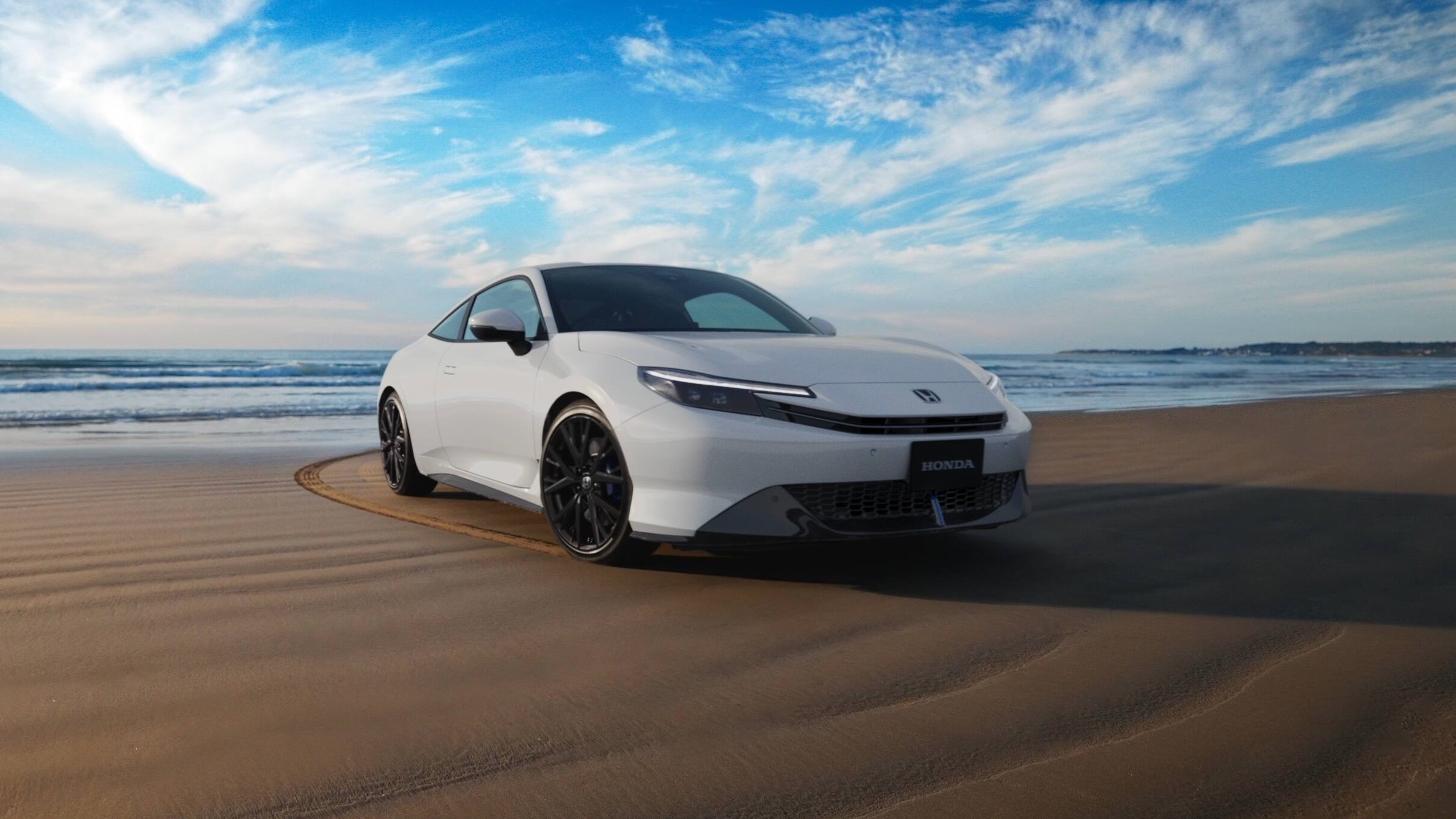
Honda will also use Goodwood to preview other new products, such as the electric Honda 0 SUV concept car, Civic Type R Ultimate Edition – the final Civic Type R to be sold in Europe – and new Prelude coupe (above). The brand’s motorcycle range will also feature, as will a hill run with the Honda-powered Williams FW11 F1 car from 1986, a CRF450 Rally bike and a CBR1000RR-R Fireblade SP superbike.
The Honda stage at this year’s Goodwood is built around a movie theme, and has been designed to mimic the experience of a live film set, according to the brand. There will be a range of interactive experiences centred around the products on display for attendees to take part in, such as shooting a film trailer on an extended reality stage with a Civic Type R and posing for an AI action movie poster to appear as though they’re riding a GoldWing motorcycle, hanging from the wing of a HondaJet or starring in a marine adventure.
The Goodwood Festival of Speed will run from July 10-13.
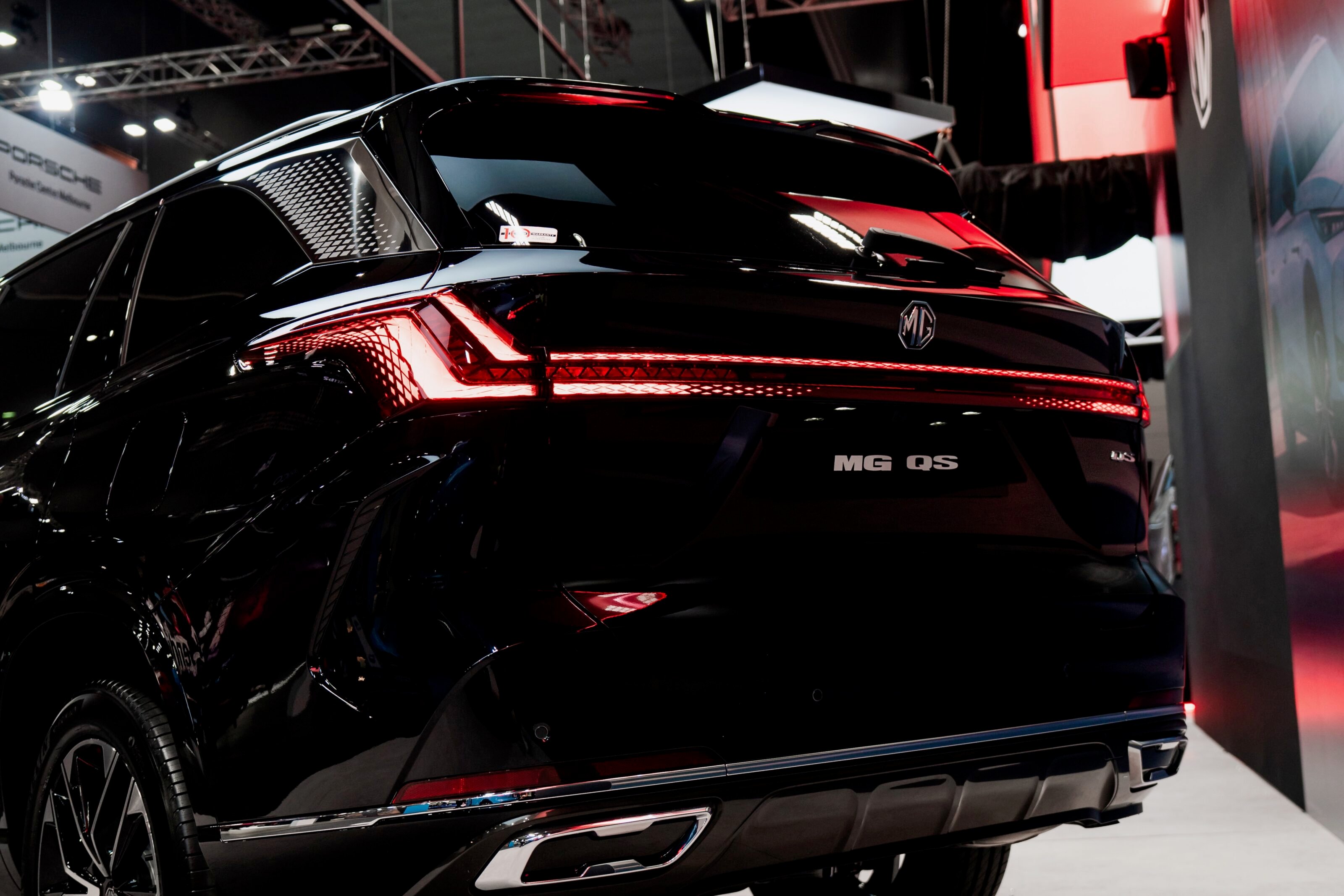
MG Motor Australia has officially unveiled the all-new MG QS, the brand’s first full-size seven-seat SUV, now available at dealerships nationwide.
With an attractive driveaway price of $46,990 for the Excite (FWD) variant and $50,990 for the all-wheel-drive Essence model, the QS is expected to make a splash in the large SUV category, taking on the likes of the Kia Sorento, Toyota Kluger, Ford Everest, Isuzu MU-X, Hyundai Palisade, and Mitsubishi Outlander.
Introductory pricing
| MG QS Excite (FWD) | $46,990 driveaway |
|---|---|
| MG QS Essence (AWD) | $50,990 driveaway |
Under the bonnet, both models feature a 2.0-litre turbocharged four-cylinder petrol engine that delivers a robust 153kW of power and 360Nm of torque, paired with a smooth 9-speed automatic transmission. Fuel consumption is rated at 8.4L/100km for the FWD and 8.8L/100km for the AWD model.
Designed with the modern Australian family in mind, the MG QS offers a true seven-seat layout, making it a practical and spacious option for daily commutes, school runs, and weekend adventures. The third-row seating is flexible and can be easily folded flat to accommodate bulkier items such as luggage, sports equipment, or prams.
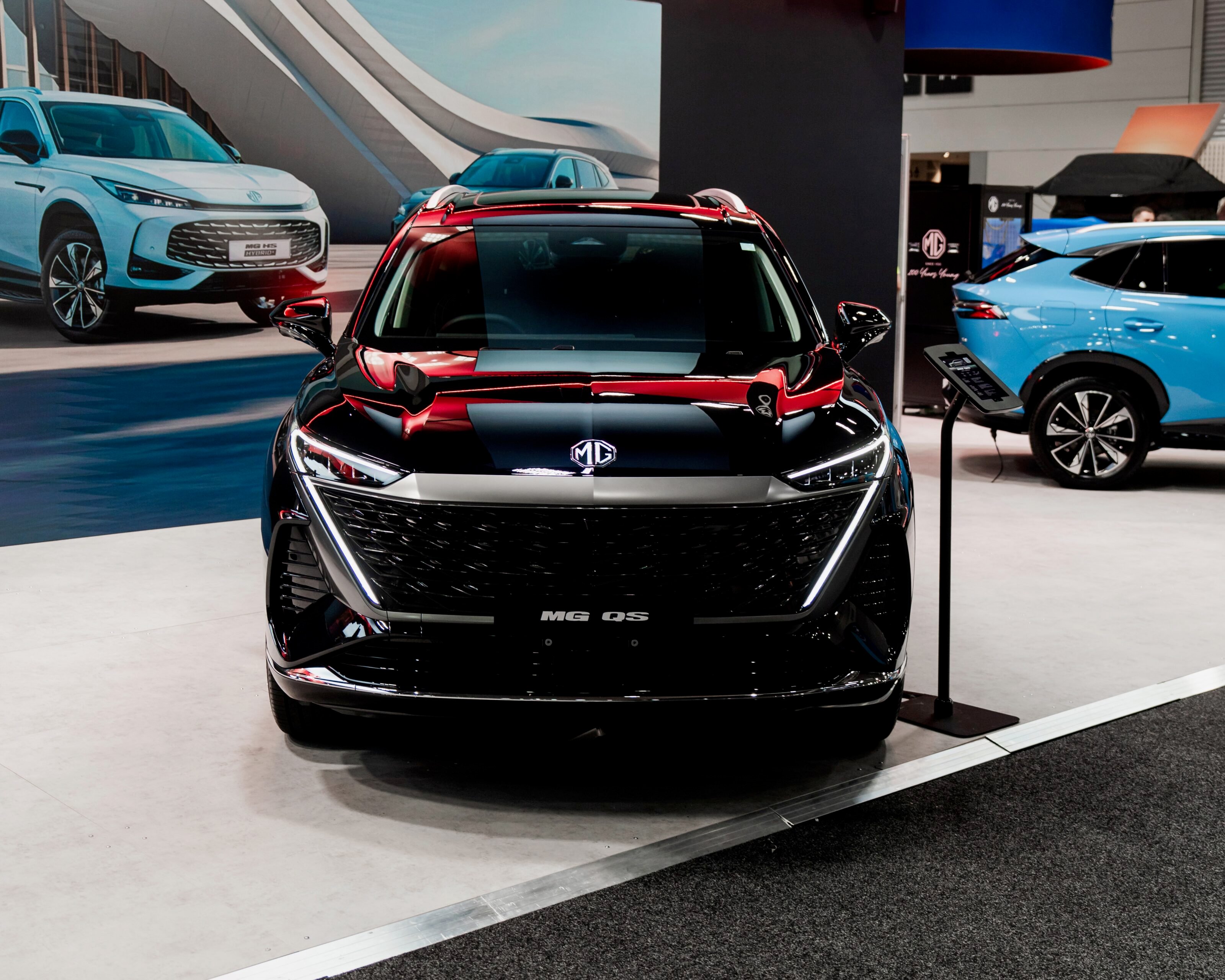
The QS doesn’t compromise on comfort or features. Standard across both variants are wireless Apple CarPlay and Android Auto, electric tailgates, and a choice of 20-inch alloy wheels for the Excite and larger 21-inch alloys for the Essence. Whether it’s advanced tech or functional space, the QS blends everyday practicality with premium style.
“This is an exciting milestone for MG as we introduce our first 7-seat SUV to Australian roads,” said Peter Ciao, CEO of MG Motor Australia. “The QS has been crafted with local families in mind, delivering flexibility, performance, and premium features – all at a competitive price.”
He added that the brand continues its commitment to offering high value without sacrificing quality or technology, a reflection of MG’s strategy for taking on the Australian SUV market.
Backed by MG’s industry-leading 10-year warranty and a national network of nearly 100 dealerships, the MG QS is now available for test drives and orders across Australia.
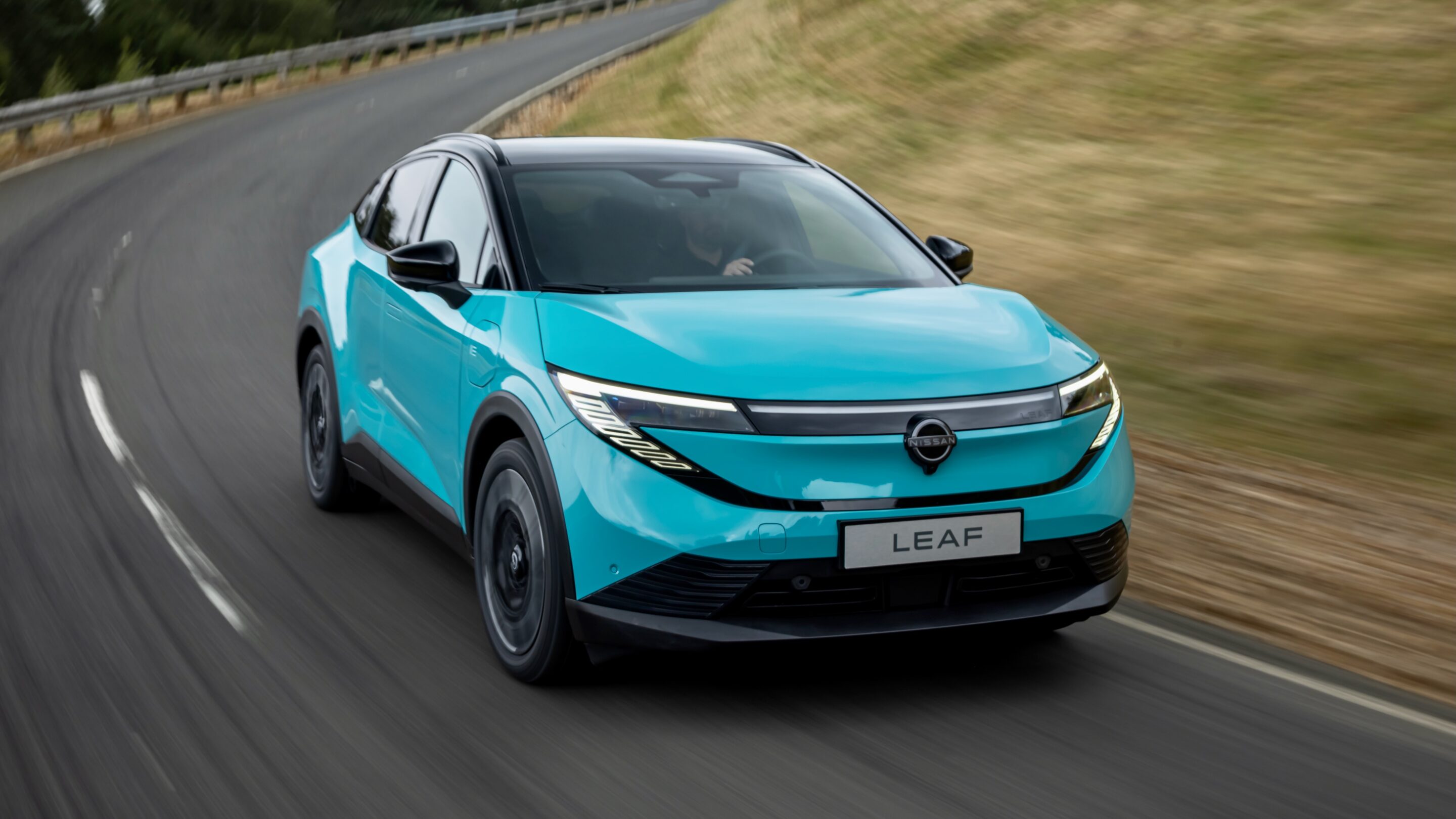
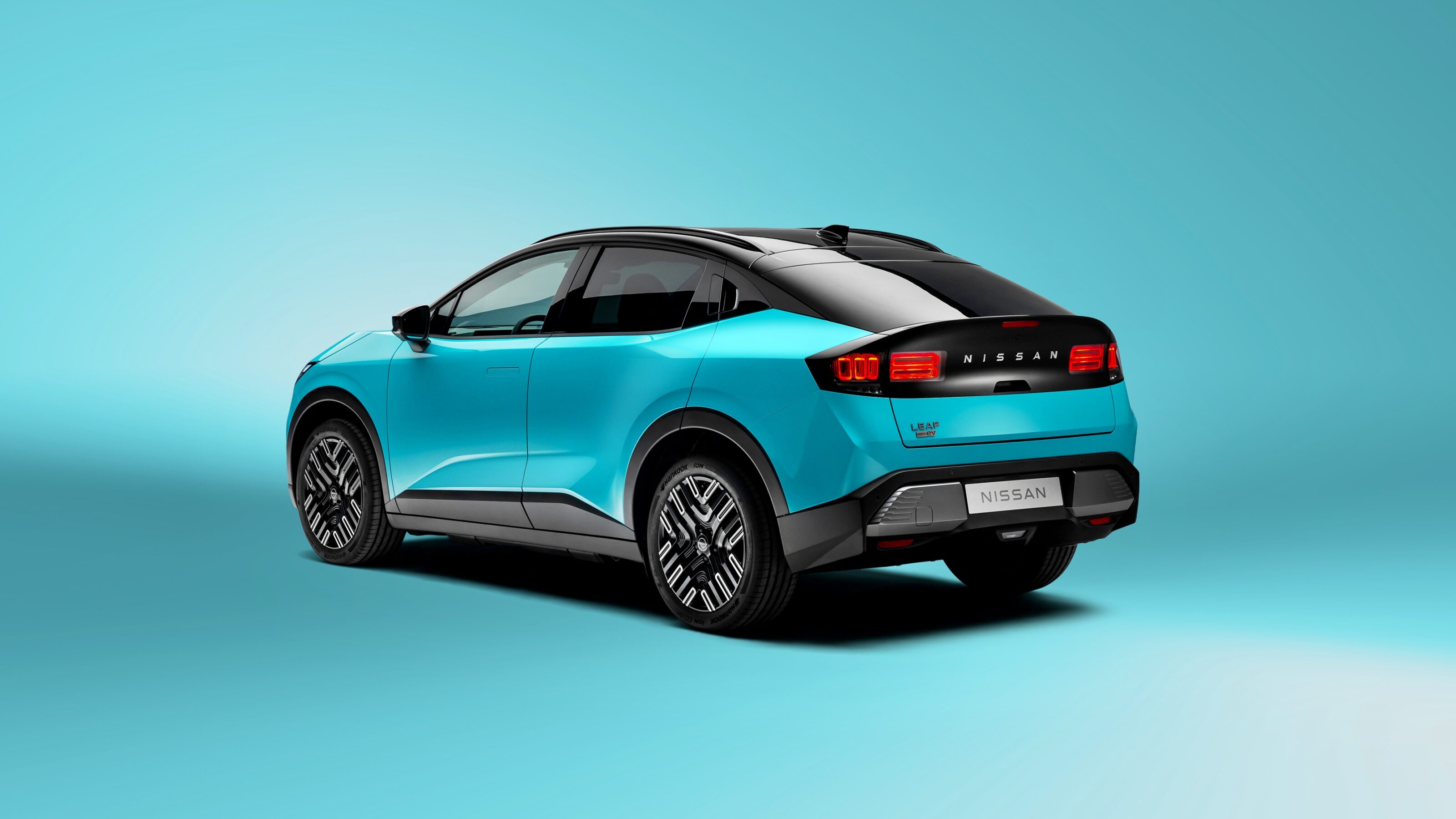
The Nissan Leaf, one of the first mass market EVs, has been transformed into a coupe SUV ahead of its 2026 Australian release. Based on the same platform as alliance cousins like the Renault Megane E-Tech, the new Leaf will offer two battery sizes with up to 604km of range – a big increase on the 385km maximum of its predecessor.
A clean sheet design, the new Leaf is now a coupe SUV than a hatchback, which Nissan says was done for cleaner aerodynamics for better range. While there are some elements of the exterior styling that mimic the brand’s latest products, like the China-specific N7 electric sedan, parts such as the tailights mimic Nissan products from the past such as the 300ZX sports coupe.
The interior is better quality and more modern than before with new 14.3-inch screens that are even larger than its bigger Ariya sibling, and they now feature Google-based navigation with live traffic and the ability to access the Google Play Store to download apps such as YouTube. The 437-litre boot is healthy for the segment and over 50-litres larger than the previous Leaf.
Two battery sizes will be available with the new Nissan Leaf: either a 52kWh unit or a larger 75kWh with the former capable of 436km of range and the latter 604km. Both are capable of a 150kW DC fast charge for a 20 to 80 percent charge in less than 30 minutes.
The smaller battery uses a 130kW motor and the larger one 160kW. The latter motor is capable of a 7.6-second 0-100km/h acceleration time, which is marginally slower than the previous model.
Available features on the new Nissan Leaf include a Bose sound system with speakers inbuilt into the driver’s headrest, battery pre-conditioning for the best possible charging speeds, a panoramic electrochromatic glass roof, vehicle-to-load (V2L) functionality up to 3.6kW, a 360-degree cameras with a ‘see-through’ view and over-the-air updates.
The 2026 Nissan Leaf will reportedly go on sale in Australia in 2026, with local pricing and specifications yet to be announced.
Contenders
- Ford Ranger
- Mitsubishi Triton
- Isuzu D-Max
- Mazda BT-50
- VW Amarok
- Nissan Navara
- GWM Cannon Alpha
- Toyota HiLux
- Jeep Gladiator
- BYD Shark 6
- Kia Tasman
- Toyota LandCruiser 70 Series
Winner: Ford Ranger
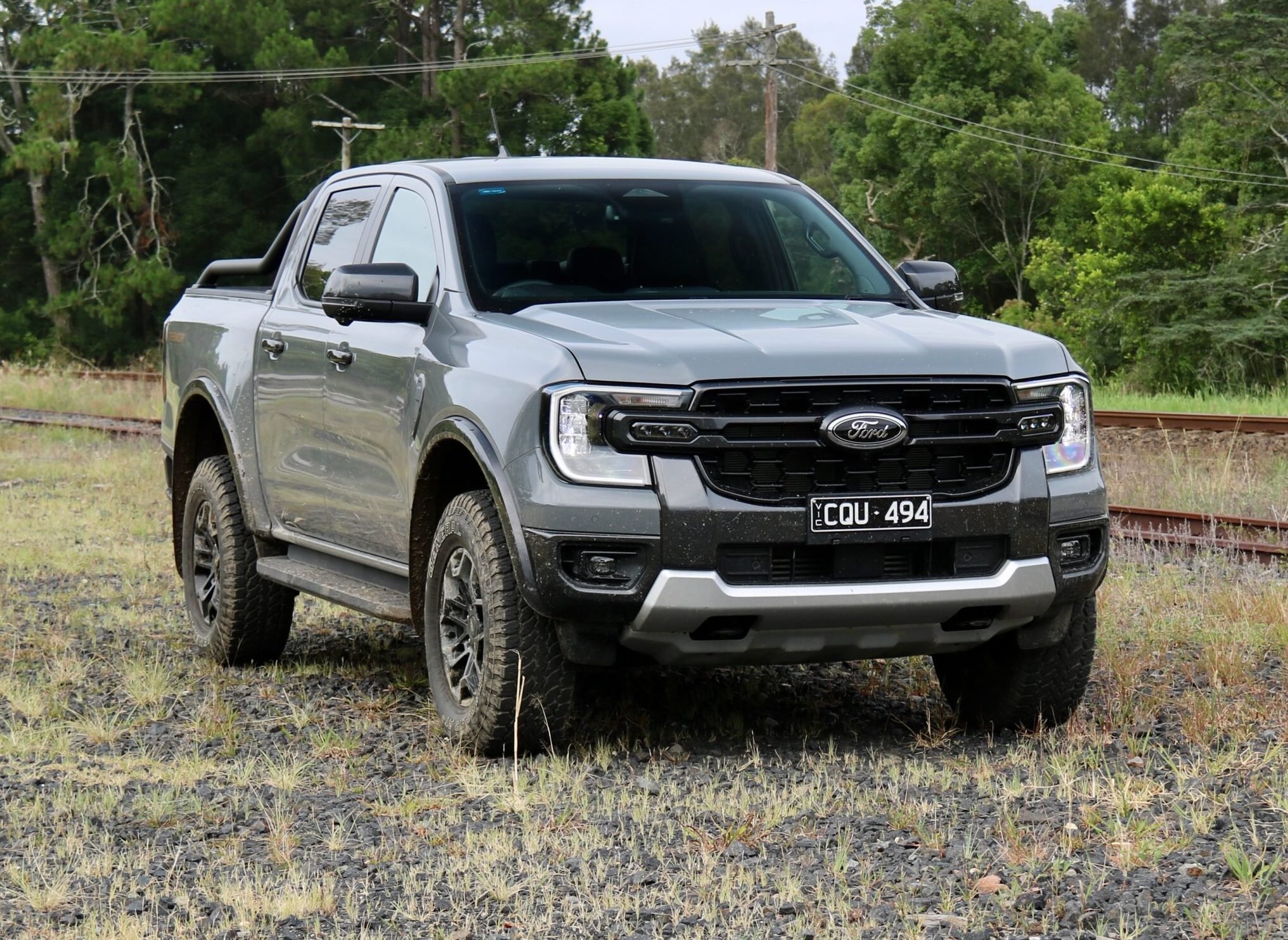
- Price: From $36,880 plus on-road costs (XL Hi-Rider 4×2 Single Cab), up to $90,440 +ORC (Raptor)
- Drivetrain/economy/CO2 emissions: 2.0L turbo-diesel: 125kW/405Nm, 6-speed auto, 2WD or 4WD, 7.6L/100km, 199g/km; 2.0L twin-turbo diesel: 154kW/500Nm, 10-speed auto, 4WD, 7.2L/100km, 189g/km; 3.0L turbo-diesel: 184kW/600Nm, 10-speed auto, 4WD, 8.4L/100km, 222g/km; 3.0L turbo-petrol (Raptor): 292kW/583Nm, 10-speed auto, 4WD, 11.5L/100km, 262g/km; 2.3L turbo-petrol PHEV: 207kW/697Nm, 10-speed auto, 2.9L/100km, 66g/km
- Dimensions: Up to 5380mm long, 1918mm wide, 1926mm tall, 3270mm long wheelbase
- Towing capacity/GVM/GCM: 2500kg -3500kg/3130kg – 3350kg/5370kg – 6400kg
- Warranty/roadside assistance/service intervals: Five-year/unlimited km, 12 months of roadside assistance with each dealer service up to seven years in total, annually/every 15,000km
- Five-year service cost: $1,516 ($303 per year)
| Driving | |
|---|---|
| Interior | |
| Practicality | |
| Overall value |
Things we like
- Easily the best ute to drive
- Wide range of variants and engines
- Intuitive and practical interior
Not so much
- No variant is particularly cheap to buy
- No more manual option
- Rear seat not huge for adults
There’s no great secret as to why the Ford Ranger has been this country’s best-selling ute over the last couple of years. Designed in Australia by Australians for Australians is its unique selling point, and that home-grown focus has paid off in spades. It’s not just here either. The Ranger is the second best-selling ute globally, is sold into over 180 markets and is the third best-selling nameplate for Ford after F-Series and Transit. Go figure.
Unlike many manufacturers who had viewed utes as lowest common denominator distress-purchases, Ford took the time to research what Aussie ute buyers wanted, understood the pride they took in their vehicles and developed a workhorse that drove well, looked good and was packed with ideas that worked in the real world.
From a core range, the popularity of the Ranger line up has allowed it to grow tendrils that start out as niche ideas, such as the specialised Raptor variant, which build a cult following in their own right. The rugged Super Duty, due next year, could well be the next to outsell Ford’s most optimistic predictions. The off-road focused Ranger Tremor version has boosted appeal for those who want more ability in the dirt without stretching to the Raptor, while the recent addition of a petrol plug-in hybrid version also broadens Ranger’s appeal.
The diesel engines remain the backbone of the range and both the 2.0-litre four and the 3.0-litre V6 have something to be said for them, although we’d gravitate towards the latter for its smarter all-wheel drive system. Teething issues with the gearbox have long since been sorted, as has an issue with oil weep around the turbocharger. There’s hardly a weak spot across the entire range, but a Sport on all-terrain tyres is probably the value sweet spot.
With strong off-road ability, 3500kg braked towing ability across the mainstream range, a whole host of smart towing and off-road tech features, heaps of choice across the line up and fresh models coming on stream, it’ll take a concerted effort from Toyota to knock the Ranger off its perch.
Mitsubishi Triton
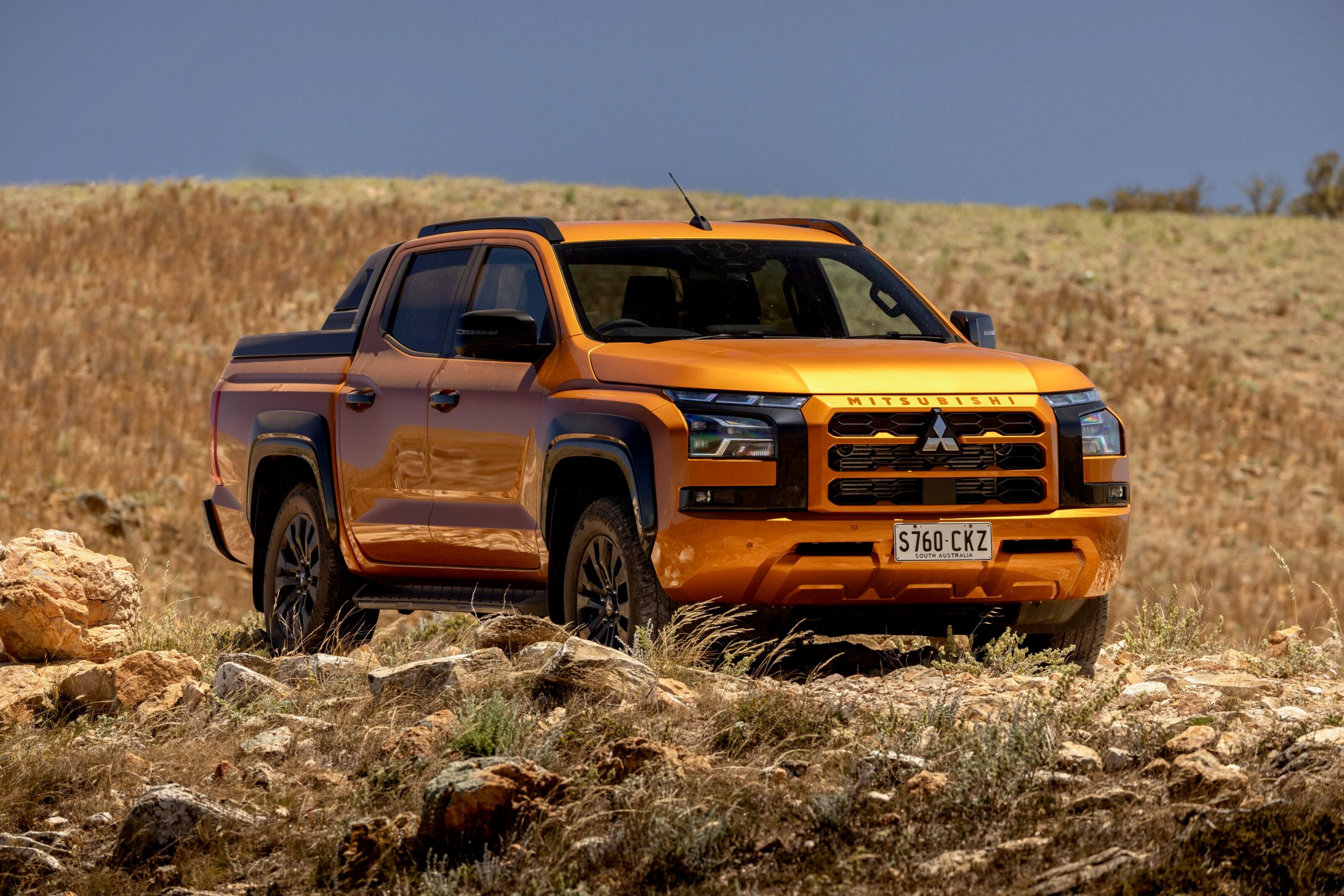
- Price: From $34,490 plus on-road costs (GLX 4×2 Single Cab manual) to $63,840 +ORC (GSR)
- Drivetrain/economy/CO2 emissions: 2.4L bi-turbo diesel: 140kW/470Nm, 6-speed manual or auto, 2WD or 4WD, 7.4-7.7L/100km, 195-203g/km
- Dimensions: Up to 5320mm long, 1865mm wide, 1795mm tall, 3130mm long wheelbase
- Towing capacity/GVM/GCM: 3500kg/3070kg – 3200kg/6210kg – 6250kg
- Warranty/roadside assistance/service intervals: Five-year/100,000km, extendable to 10-years/200,000km, 12 months of roadside assistance with each dealer service up to four years in total, annually/15,000km
- Five-year service cost: $2545 ($509 per year)
| Driving | |
|---|---|
| Interior | |
| Practicality | |
| Overall value |
Things we like
- Grunty bi-turbo diesel engine standard across the range
- Modern and practical interior
- Good refinement in the segment
Not so much
- More expensive than it used to be
- Manual only on base models
- No hybrid drivetrain yet
Released in 2024, the current shape Mitsubishi Triton received a big upgrade into its current generation. Not only was it made a lot more modern and feature-packed, but it’s also now more capable and more practical than ever before.
Under the bonnet of every Triton model is a new bi-turbo 2.4-litre four-cylinder diesel engine that outpunches rivals such as the Isuzu D-Max while also giving the Triton the industry standard 3500kg braked towing rating. On the road, the new Triton is a big improvement over the previous model, while giving a more solid road feel than some rivals. Its new engine is refined as well, especially against the loud 3.0L unit in the D-Max/BT-50 twins, though it would be great to see a plug-in hybrid variant as Mitsubishi is a pioneer in the PHEV space.
The cabin of the Triton is a massive improvement on the previous shape with better quality, more tech – a 9.0-inch touchscreen with wireless smartphone mirroring is standard across the range – and more practicality, with more rear seat space than the previous model.
While the standard warranty is a five-year/100,000km job, if it’s kept serviced at a Mitsubishi dealership after that, up to 10 years of warranty is available and its five-year service cost averages out to a reasonable $509 per year. Add in its big improvement over the previous model, its comfortable driving experience and grunty engine, and the Triton is a worthy ute option.
Isuzu D-Max
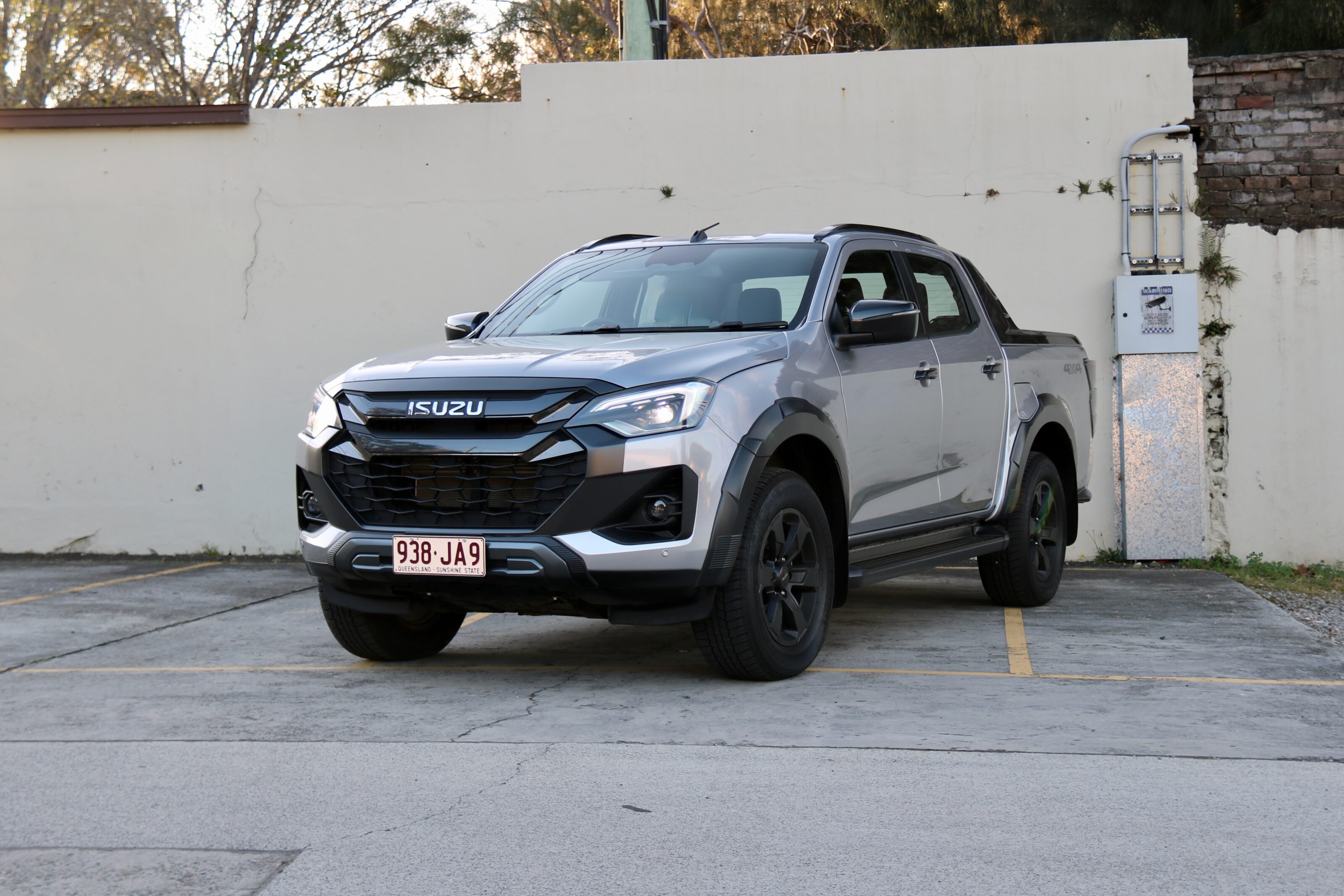
- Price: From $32,700 plus on-road costs (SX High-Ride 4×2 single cab manual) to $78,900 +ORC (Blade 4×4 dual cab auto)
- Drivetrain/economy/CO2 emissions: 1.9L turbo-diesel: 110kW/350Nm, 6-speed manual or auto, 2WD or 4WD, 6.7-7.0L/100km, 177-184g/km; 3.0L turbo diesel: 140kW/450Nm, 6-speed manual or auto, 2WD or 4WD, 8.0L/100km, 207g/km
- Dimensions: Up to 5430mm long, 1880mm wide, 1810mm tall, 3125mm long wheelbase
- Towing capacity/GVM/GCM: 2800kg -3500kg/3000kg – 3100kg/53700kg – 6000kg
- Warranty/roadside assistance/service intervals: Six-year/150,000 km, up to seven years months of roadside assistance with each dealer service, annually/every 15,000km
- Five-year service cost: $2,245 ($449 per year)
| Driving | |
|---|---|
| Interior | |
| Practicality | |
| Overall value |
Things we like
- Excellent safety equipment across the range
- Modern and feature-packed cabin
- Improved infotainment system
Not so much
- Trusty 3.0L diesel is loud
- Huge range can get confusing
- Manual only available on base SX
It’s easy to pigeonhole the Isuzu D-MAX as a crude but endearing workhorse that has built its own minor cult following. That’s to underplay the incremental development that has seen that D-MAX comfortably occupy the third spot in the Australian dual-cab ute sales charts for 2024, netting a near 12 per cent share of the market. That’s more than double the sales of the next best contenders, the Mitsubishi Triton and the Mazda BT-50. So Isuzu is clearly doing something very right.
No, the D-MAX can’t hold a candle to the Ford Ranger in terms of sophistication, but it’s not so very far off a Toyota Hilux. What’s more, it comes with a six-year warranty, although it does carry a 150,000km limit, which is something to consider if you’re cross shopping versus Toyota’s five-year, unlimited kilometre deal.
The 1.9-litre 110kW/350Nm powerplant that’s fitted to the SX Crew Cab entry-level versions should probably be given a wide berth, as for $2000 you can upgrade to the 3.0-litre with 140kW/450Nm. That’s money very well spent, as it nets you a far more flexible and relaxed engine. Because Isuzu only sells two models – this and the MU-X SUV – it keeps itself busy with a fully fleshed-out range of variants for each.
Therefore the steps from one model to the next are small and it pays to do your homework on which of the trims – SX, LS-M, X-Rider, LS-U, X-Terrain and Blade – is right for your requirements. The good-looking X-Rider Crew Cab is largely a dark-finish cosmetic pack above the LS-M grade, and will doubtless appeal to those who want a little more bling, but the LS-M is $3700 cheaper and comes with Bi-LED headlights, 17-inch alloys and higher grade cloth interior. As you ascend the range, the price tag begins to look a little more self-conscious, with the flagship $73,990 Blade being the off-road focused one, broadly adjacent to a Ranger Tremor or a Hilux Rogue.
With a thriving owner community and a wide range of accessories available, plus parts support in some of the more remote reaches of Australia, the D-MAX does a lot to appeal to those who prize capability and aren’t afraid to take their ute off the beaten track. It might not be the number one pick here, but it’ll be the first port of call for many who are looking for something that more than punches above its weight.
Mazda BT-50
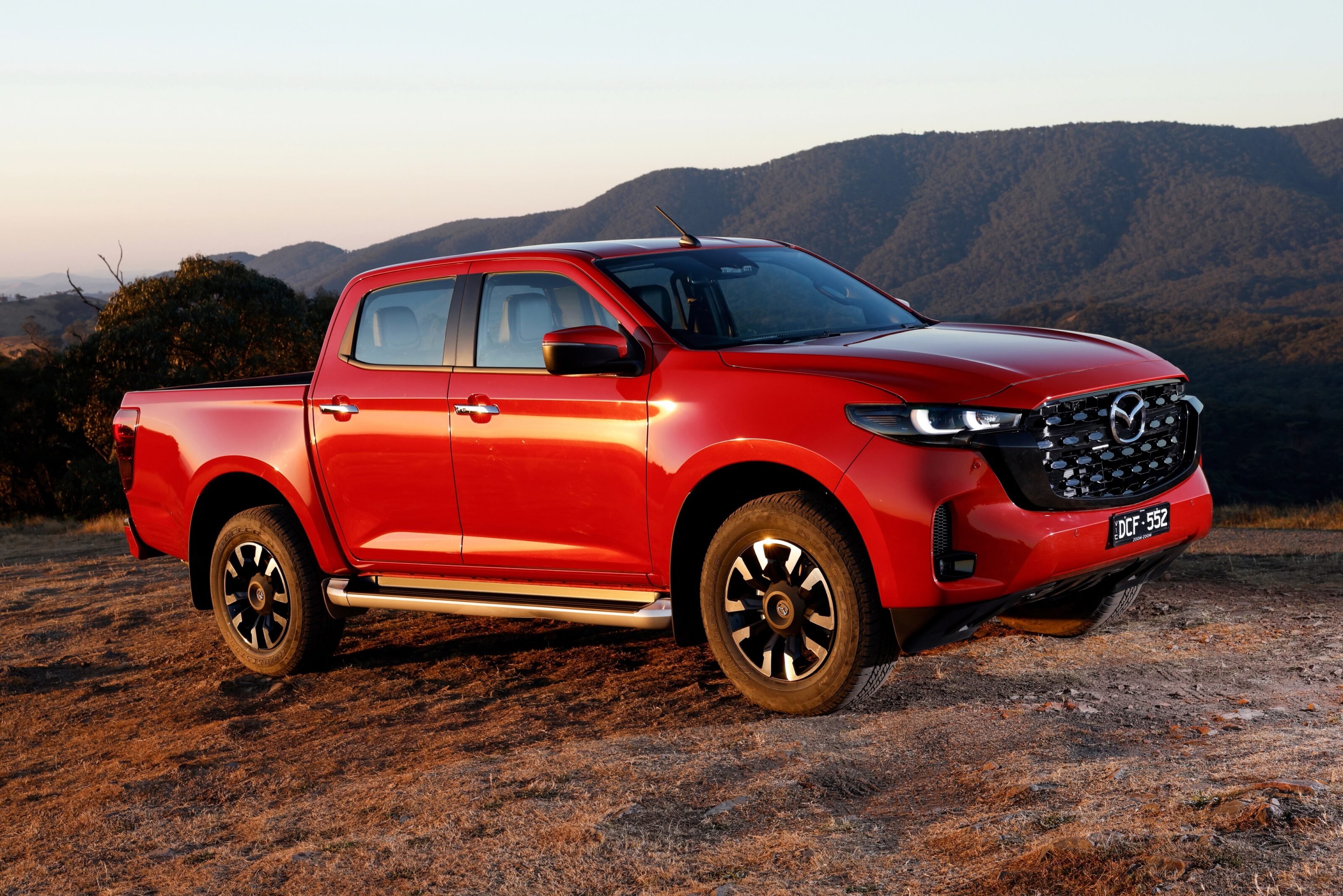
- Price: From $36,400 plus on-road costs (XS 4×2 1.9L cab chassis) to $71,500 +ORC (SP 3.0L 4×4 dual cab)
- Drivetrain/economy/CO2 emissions: 1.9L turbo-diesel: 110kW/350Nm, 6-speed auto, 4×2, 7.0L/100km, 184g/km; 3.0L turbo-diesel: 140kW/450Nm, 6-speed auto, 4×2 or 4×4, 7.7-8.0L/100km, 200-207g/km
- Dimensions: Up to 5230mm long, 1870mm wide, 1810mm tall, 3125mm long wheelbase
- Towing capacity/GVM/GCM: 3000kg -3500kg/3000kg – 3100kg/5500kg – 6000kg
- Warranty/roadside assistance/service intervals: Five-year/unlimited km, five years of roadside assistance, annually/15,000km
- Five-year service cost: $2210-$2547 ($442-$509 per year)
| Driving | |
|---|---|
| Interior | |
| Practicality | |
| Overall value |
Things we like
- Excellent safety equipment across the range
- Modern and feature-packed cabin
- Improved infotainment system
Not so much
- Loud 3.0L turbo-diesel engine
- Manual no longer available
- More grunt would be great
Shall we address the elephant in the room straight off the bat? Yes, the Mazda BT-50 is effectively an Isuzu D-MAX that has raided the dressing-up box. Mazda themselves make no great secret of that fact, and it’s easy to see why. The Isuzu bones are renowned as some of the toughest in the dual-cab division, and adding a better looking body and interior would, at first, seem to give you the best of both worlds: tough as old boots mechanicals and a level of sophistication up top.
That’s how it proves in practice too, up to a point. There’s no doubt that the BT-50 is utterly unafraid of rolling its sleeves up and getting stuck in, but where the plucky Mazda comes unstuck is in terms of overall sophistication, especially at the top of the range. When compared to the very best dual-cabs, such as the Ranger and the Amarok, were you to spend big on a BT-50, you’d soon start to suspect that you’d get a more value-dense package elsewhere.
The three-litre Isuzu four-pot engine seems – and is – unburstable, but its 140kW/450Nm is a long way shy of the numbers you’d get from a Ranger’s V6 and it’s a long way off the Ford’s measure in terms of refinement and handling too. That’s not so much of an issue if you’re spending little more than $50k on a BT-50, but dropping over $70k on a flagship BT-50 SP – which is Ranger V6 Sport money – seems like an exercise in diminishing returns.
There’s genuine reassurance in quite how strong the new BT-50 feels though. It can genuinely take a licking and still keep ticking, and it’s easy to understand how it accounts for a five percent share of the Aussie ute market. Most buyers will give the entry-level XT a skip in order to get the bigger and better screen from the XTR models up, but the introductory pricing that initially looked so attractive has ended, adding an irksome few grand to what looked like a decent value ute.
Mazda probably needed to come with more if it wanted to establish itself as a clear third option in Australia’s ute market, but what it has offered is well worth your time. If you want a properly rugged ute but don’t want your neighbours suspecting that you skin and eat all of your protein intake, the BT-50 is as good a pick as any.
VW Amarok
- Price: From $54,490 plus on-road costs (TDI405 Core) to $82,990 +ORC (Aventura)
- Drivetrain/economy/CO2 emissions: 2.0L turbo-diesel: 125kW/405Nm, 6-speed auto, 4WD, 8.0L/100km, 211g/km; 2.0L twin-turbo diesel: 154kW/500Nm, 10-speed auto, 4WD, 7.2L/100km, 189g/km; 3.0L turbo-diesel: 184kW/600Nm, 10-speed auto, 4WD, 8.4L/100km, 222g/km; 2.3L turbo-petrol: 222kW/452Nm, 10-speed auto, 4WD, 9.7L/100km, 222g/km
- Dimensions: Up to 5362mm long, 1917mm wide, 1884mm tall, 3270mm long wheelbase
- Towing capacity/GVM/GCM: 3500kg/3230kg – 3350kg/6200kg – 6400kg
- Warranty/roadside assistance/service intervals: Five-year/unlimited km, 12 months of roadside assistance extended with each dealer service, annual/every 15,000km
- Five-year service cost: $1900 ($380 per year)
| Driving | |
|---|---|
| Interior | |
| Practicality | |
| Overall value |
Things we like
- Great to drive, punchy engines – including hot hatch-like TSI452
- Simple model range: dual cab and 4WD across the range
- Best in class cabin quality
Not so much
- No more manual option
- Rear seat not huge for adults
- No plug-in hybrid or single cab
If you’re a little less price-sensitive when it comes to choosing a dual-cab ute, it becomes genuinely difficult to make a case against the Volkswagen Amarok. It’s an astonishingly polished package that is one of the most aspirational choices in the entire sector. But does that mean it’s a ute for people who don’t really like utes?
Not really. While there might be other choices that would be your go-to if your weekend fun involved mud ruts so deep that your diff does a decent impression of a ploughshare, the Amarok is nevertheless a lot more versatile than its sophisticated look and feel initially suggests. Under the skin, it’s much the same as the existing Ford Ranger, so it’s clearly a well-engineered package that’s designed specifically with Australian conditions front and centre of mind.
Buyers largely choose from the 125kW 2.0-litre turbodiesel TDI405 models, the 150kW 2.0-litre twin-turbodiesel TDI500 variants or the V6 turbodiesel TDI600 models, but where the Amarok has offered a key point of difference over its cousin with the Blue Oval badge is that it also offers the 2.3-litre petrol TSI452 powerplant. If you’re dead set against diesel but want these underpinnings, the $79,990 TSI452 Aventura was – hulking Ranger Raptor aside – the only show in town, but the addition of this engine with plug-in hybrid boost to the Ford’s range erodes Volkswagen’s USP here.
No great issue. The Amarok is still a better looking thing than the Ranger, with a nicer interior and the price step up isn’t perhaps as great as you might expect, with around $2k separating the entry-level Ford and Volkswagen V6 variants. That’s a relatively modest sum to apply some creative man-maths to.
Downsides? There are fewer physical controls for the air conditioning than the Ranger gets, with most of the functions incorporated into the reskinned infotainment system. You also don’t get an app to allow for the likes of remote monitoring, diagnostics, vehicle locating or over-the-air updating.
There is a feel-good quality to the Amarok that Volkswagen does very well. Choose, say, a mid-range Style version and it features leather-effect inserts on the dash and door cards and grippy microfibre ‘ArtVelour’ seating upholstery. It even gets matrix LED headlights, which you’ll value on those late drives home on country roads.
The Amarok makes all kinds of sense if you need a ute, but don’t want to shoulder many of the downsides that come with ute ownership. If you don’t think driving a ute means putting up with crude controls, second-rate interior materials and a poor ride, it makes a compelling case.
Nissan Navara
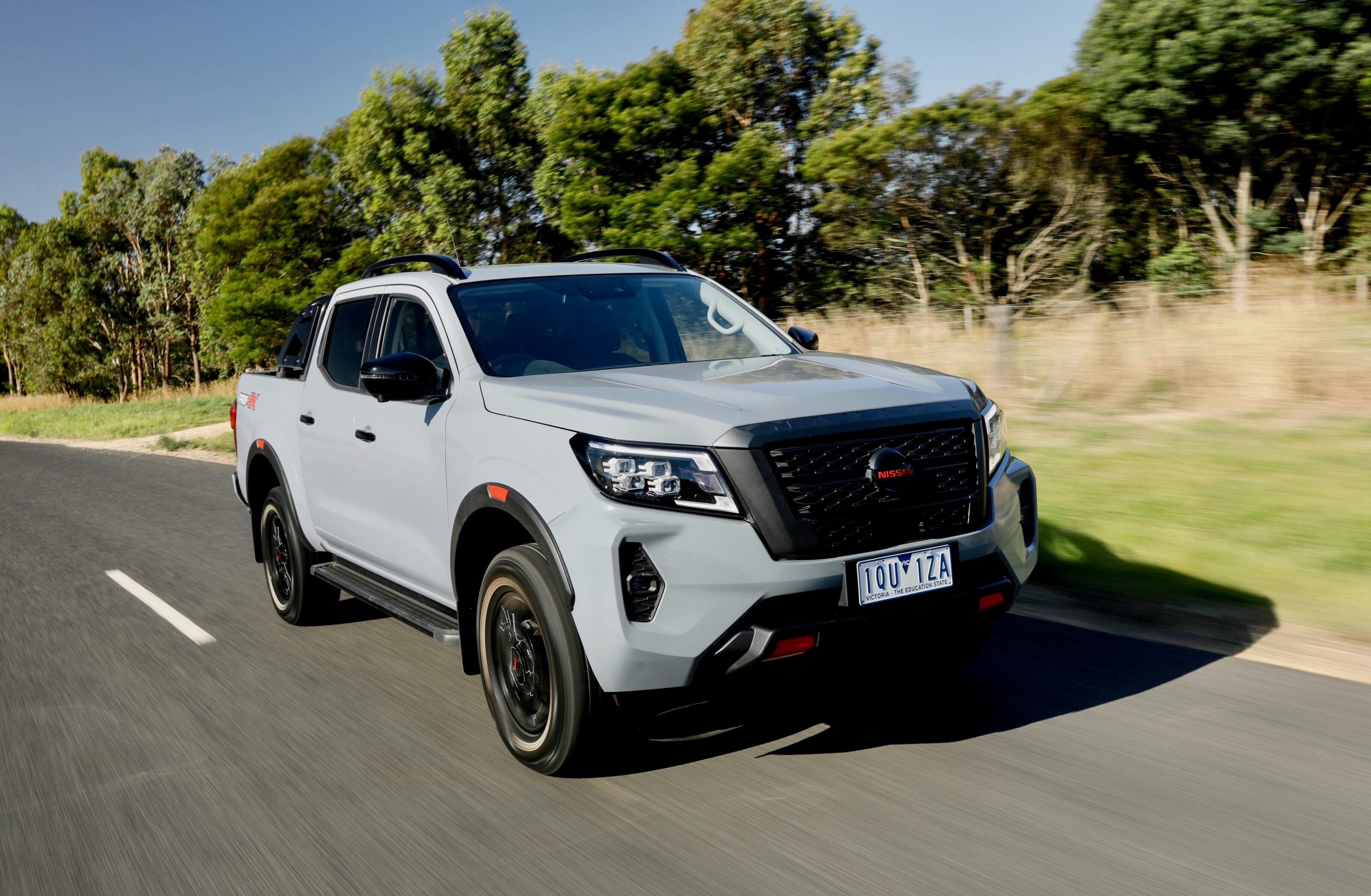
- Price: From $36,428 plus on-road costs (SL 4×2 cab chassis) to $71,643 +ORC (Warrior)
- Drivetrain/economy/CO2 emissions: 2.3L twin-turbo diesel: 140kW/450Nm, 6-speed manual or 7-speed auto, 2WD or 4WD, 7.3-8.1L/100km, 192-213g/km
- Dimensions: Up to 5311mm long, 1850mm wide, 1855mm tall, 3150mm long wheelbase
- Towing capacity/GVM/GCM: 3500kg/2190kg – 3150kg/5910kg
- Warranty/roadside assistance/service intervals: Five-year/unlimited km, up to 10 years/300,000km warranty with dealer servicing, 12 months of roadside assistance that can be extended to 10 years/300,000km with every dealer service, annual/every 20,000km
- Five-year service cost: $2495 ($499 per year)
| Driving | |
|---|---|
| Interior | |
| Practicality | |
| Overall value |
Things we like
- Most comfortable ride in the segment thanks to IRS
- Punchy twin-turbo engine standard across the range
- Very capable and Aussie-developed Warrior
Not so much
- Lacking features such as adaptive cruise control
- No hybrid or faster model
- Feeling old
One of the oldest utes in the segment, the Nissan Navara is set to gain a new generation in 2026. But we think there’s still merit in the current model, which Nissan has kept nicely updated across its lifecycle. The barebones of the Navara are impressive too, with a refined feel that outshone many rivals at its release – the independent rear suspension, for example, makes it more comfortable than a lot of competitors.
Under the bonnet of the Navara range is a twin-turbocharged 2.3-litre four-cylinder turbo-diesel engine that makes solid outputs – the same as a 3.0-litre D-Max but with 700cc less capacity for better fuel consumption – and both a six-speed manual and a seven-speed automatic are available across the range.
Like the Triton, the Navara has up to 10 years of warranty if serviced through a Nissan dealership – but it extends to 100,000km more than the Mitsubishi, and its roadside assistance can last for up to 10 years in total as well. Its $499 annual service for the first five years is reasonable in the segment, while its 20,000km annual service intervals are long as well.
While the Navara misses out on features such as adaptive cruise control and wireless smartphone mirroring, it’s otherwise still well equipped across the range and potential buyers have a heap of variantsto choose from, including the excellent Warrior by Premcar, with its off-road features made and fitted in Australia. Overall, while the Navara might be feeling a little old, it still has a lot to offer ute buyers including a potentially long warranty, grunty engine, solid driving dynamics and unique variants, like the off-road Warrior.
GWM Cannon Alpha
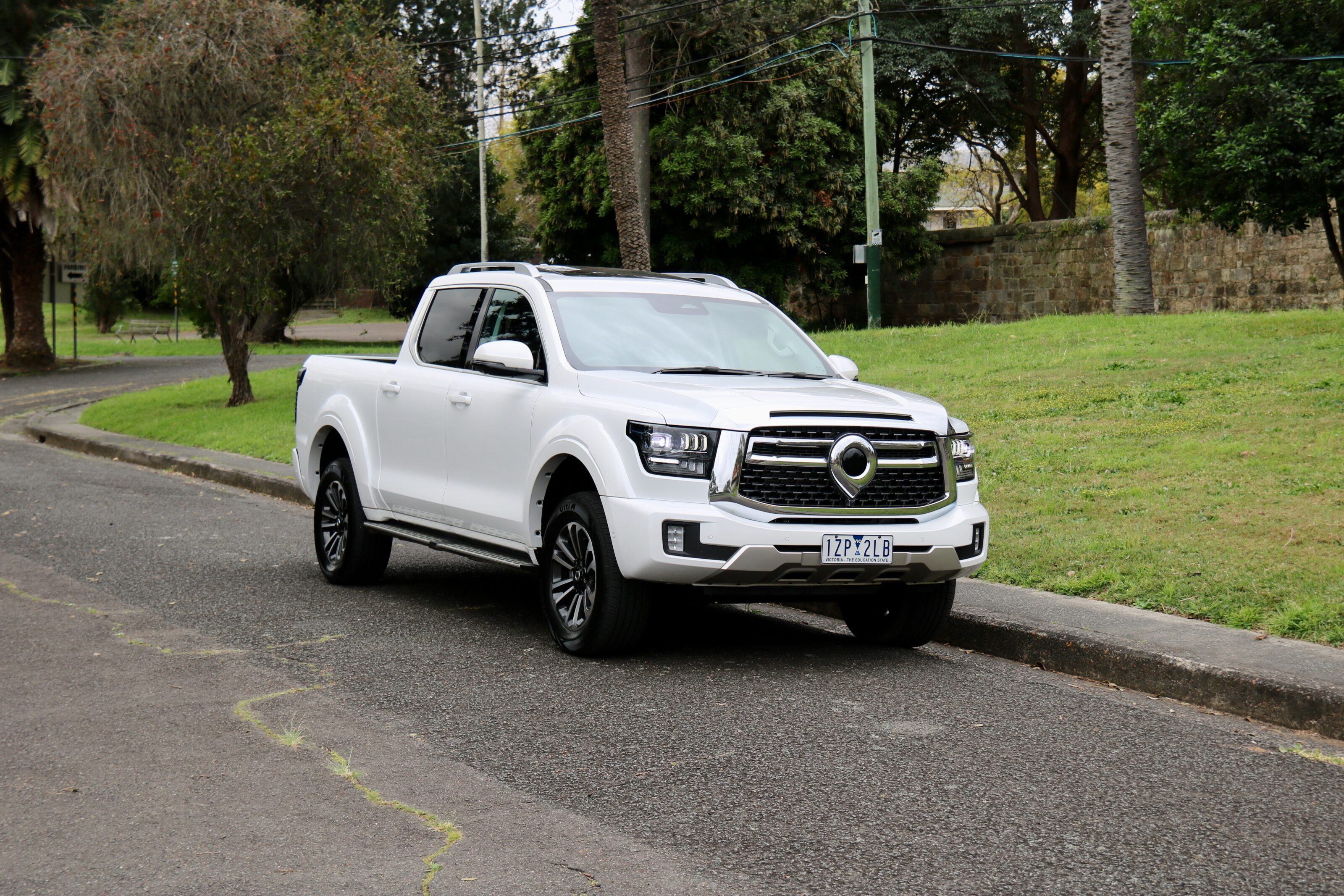
- Price: From $51,990 drive away (Lux) to $69,490 drive away (Ultra PHEV)
- Drivetrain/economy/CO2 emissions: 2.4L turbo-diesel: 135kW/480Nm, 9-speed auto, 4WD, 8.9L/100km, 234g/km; 2.0L turbo-petrol hybrid: 255kW/648Nm, 9-speed auto, 4WD, 9.8L/100km, 225g/km; 2.0L turbo-petrol plug-in hybrid: 300kW/750Nm, 9-speed auto, 4WD, 1.7L/100km, 39g/km
- Dimensions: Up to 5445mm long, 1991mm wide, 1924mm tall, 3350mm long wheelbase
- Towing capacity/GVM/GCM: 3500kg/3310kg – 3495kg/6555kg – 6745kg
- Warranty/roadside assistance/service intervals: Seven-year/unlimited km, eight-year/unlimited km battery warranty, five years of roadside assistance, six-month/first 5000km and then every year/10,000km afterwards (diesel), yearly/first 10,000km and then every 15,000km afterwards (hybrids)
- Five-year service cost: $3575-$4320 ($715-$864 per year)
| Driving | |
|---|---|
| Interior | |
| Practicality | |
| Overall value |
Things we like
- A curious entrant between mid- and full-sized utes
- Diesel, hybrid and plug-in hybrid drivetrains on offer
- Borderline luxurious interior
Not so much
- Strange and expensive service schedule
- No base hybrid variant
- Annoying active safety features
Sitting above the Cannon in the line-up, the GWM Cannon Alpha is a unique entry into the ute segment. While it’s not as large as something like a Ford F-150, it eclipses utes like its Cannon sibling to sit in a mid-way segment between the two. It’s also fairly unique not only in the ute segment but the car industry as a whole by offering two turbo-petrol hybrid drivetrains, as well as the 2.4-litre turbo-diesel that was recently installed into the Cannon.
While some buyers will choose the 135kW/480Nm 2.4-litre turbo engine, many are predicted to choose from one of two 2.0-litre turbo-petrol hybrids: either the 255kW/648Nm regular hybrid, or the 300kW/750Nm plug-in hybrid, the later of which gives a huge 115km of electric-only range and, if charged, a claimed 1.7L/100km fuel consumption rating.
Inside the Cannon Alpha is an impressively lux-feeling cabin for the ute segment, with elevated touches such as electric-reclining rear seats in the Ultra. The dashboard uses many software touch materials, while its huge 14.6-inch touchscreen controls most of the functions inside the cabin and that can be annoying.
Like the smaller Cannon, the Cannon Alpha is covered by a seven-year/unlimited km warranty and a strange servicing schedule. It’s also surprisingly expensive to service at over $700 per year. But overall, the GWM Cannon Alpha’s value equation is excellent, especially if you’ll be carrying bigger people in the rear seat. That it offers not one, but two hybrid options is impressive as well and all variants can tow a 3500kg braked trailer.
Toyota HiLux
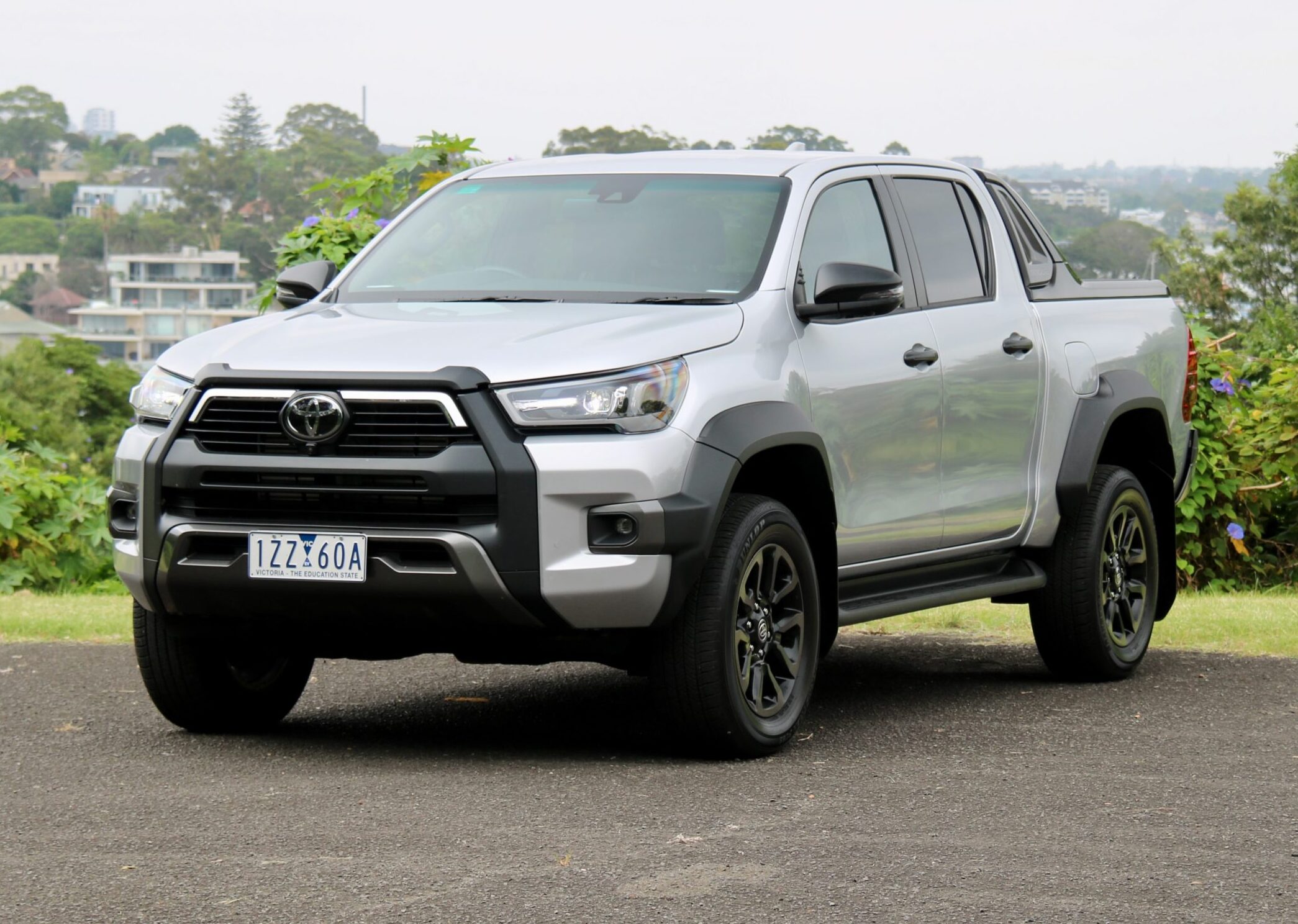
- Price: From $27,730 plus on-road costs (Workmate 4×2 Single Cab) to $74,310 +ORC (GR Sport)
- Drivetrain/economy/CO2 emissions: 2.7L petrol: 122kW/245Nm, 5-speed manual or 6-speed auto, 2WD, 10.4-11.1L/100km, 241-259g/km; 2.4L turbo diesel: 110kW/400Nm, 6-speed manual or auto, 2WD or 4WD, 7.5-8.0L/100km, 196g-211/km; 2.8L turbo-diesel: 150kW/500Nm, 6-speed manual or speed auto, 2WD or 4WD, 7.5L-8.1/100km, 197-213g/km
- Dimensions: Up to 5325mm long, 2020mm wide, 1880mm tall, 3085mm long wheelbase
- Towing capacity/GVM/GCM: 2500kg -3500kg/2700kg – 3100kg/5200kg – 5850kg
- Warranty/roadside assistance/service intervals: Five-year/unlimited km, no roadside assistance, twice annually/every 10,000km
- Five-year service cost: $3537-$4073 ($707-$814 annually)
| Driving | |
|---|---|
| Interior | |
| Practicality | |
| Overall value |
Things we like
- Wide range of variants
- Gutsy 2.8L diesel engine
- Well equipped
Not so much
- Loud engine options
- Feeling dated inside
- Base Workmate petrol very thirsty
A couple of years ago, we ran a test that pitched the Toyota HiLux against the Ford Ranger and Volkswagen Amarok. It probably won’t surprise you to hear that the Hilux finished a distant third. It felt a generation behind the others in virtually every regard and while an update has since been visited upon the venerable Toyota, the result would be the same today. But there was something telling at the wrap-up of that test.
As we prepared to depart, I asked our most experienced off-road tester which of the three he’d take if he wanted to get to Finke, or Cameron Corner, or a leisurely jaunt to Cape York. He pointed at the Hilux, snorted and said, “Not even a question.” And there, wrapped up in that appraisal, is the reason that Hilux sales have stayed so buoyant.
We can talk about infotainment systems, ride quality or interior materials all we want, but for many Aussies, it’s a HiLux or nothing. Parts are plentiful, they know what they’re going to get and, for a good proportion of these buyers, they’re on first name terms with the dealer down the road. The roots go deep here.
The current HiLux range benefits from 48v mild hybrid tech from SR trim upwards, but prices have crept up as a result. An SR5 with an automatic ‘box now retails at over $63k. Refreshingly, Toyota still offers a decent selection of manual models for those who prefer three pedals and a stick. The GR Sport version ekes another 15kW and 50Nm from the 2.8-litre turbodiesel four that is good for 150kW/500Nm in the rest of the range.
There’s little in the way of extraneous gear that can go wrong fitted to the current HiLux, although the addition of a damper for the tailgate (finally) is a welcome touch. Central locking for the tailgate? Don’t push your luck.
You’ll put up with heavy steering, an unsettled ride, poor quality cameras and an unrefined engine in order to feel at ease behind the vehicle that’s billed as ‘The Unbreakable Legend’. What’s more, with Toyota shelving plans for a new model based on TNGA-F underpinnings, the HiLux may well have to trade on that reputation for some time yet.
Jeep Gladiator
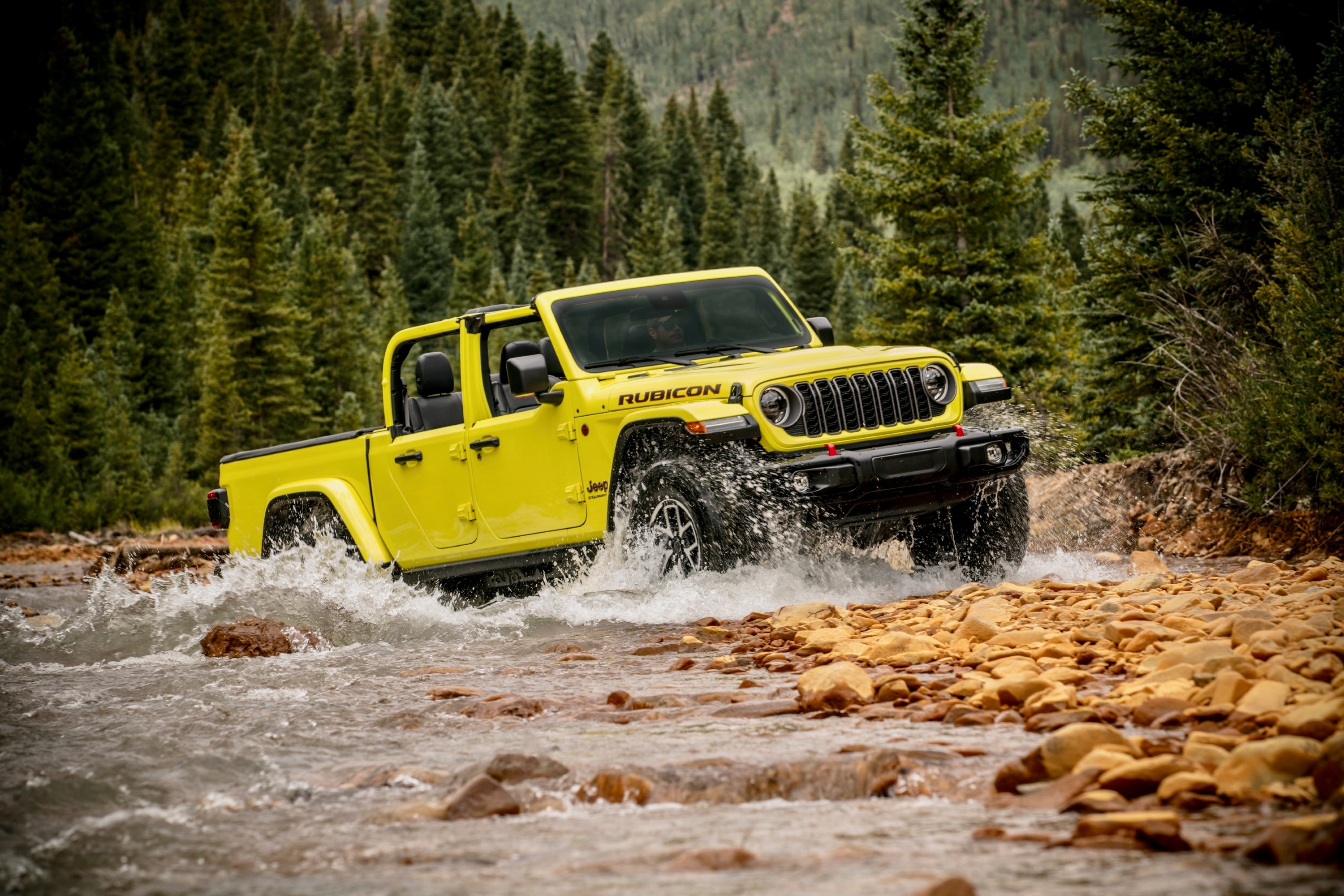
- Price: From $78,250 plus on-road costs (Night Eagle) to $87,250 +ORC (Rubicon)
- Drivetrain/economy/CO2 emissions: 3.6L petrol V6: 209kW/347Nm, 8-speed auto, 4WD, 12.4L/100km, 288g/km
- Dimensions: 5591mm long, 1894mm wide, 1905mm tall, 3488mm long wheelbase
- Towing capacity/GVM/GCM: 2721kg/2880kg/5601kg
- Warranty/roadside assistance/service intervals: Five-year/100,000km, 12 months of roadside assistance with each dealer service (no limit), annual/12,000km
- Five-year service cost: $1995 ($399 per year)
| Driving | |
|---|---|
| Interior | |
| Practicality | |
| Overall value |
Things we like
- Lots of fun touches, like the removable roof
- Excellent off-road ability
- Comfortable to drive
Not so much
- Rivals offer better towing and payload
- No diesel option, just a thirsty NA V6
- Quite expensive
The Jeep Gladiator was originally launched in Australia in 2020 and has received modest sales success since then. Really just a stretched version of the highly capable Wrangler off-roader, the Gladiator is more of a lifestyle product than a lot of the utes on this list – its braked towing capacity is only 2721kg or around 800kg less than most proper ute rivals, for example.
Part of that is that the Gladiator is only available in Australia with a 209kW/347Nm 3.6-litre petrol V6 engine mated to an eight-speed automatic – earlier North American versions were available with a V6 diesel engine that would’ve given it more capability, but alas, that was never offered in Australia. The petrol V6 is powerful, though it lacks torque – something you need when towing.
But the Gladiator has a lot more ‘cool factor’ than most other utes – for example, did you know that it’s actually a convertible? The roof panels are removable for that true wind in your hair off-road feeling. It’s also covered in Jeep ‘Easter eggs’ – small clues to its past – that give it more character than most rivals.
While the engine could be torquier, the on-road experience in the Gladiator is largely comfortable and its off-road ability is one of the best here. Jeep’s five-year/100,000km warranty is shorter than a lot of rivals here, but it does offer roadside assistance for the life of the vehicle if serviced through a Jeep dealer and the first five services cost only $399. Overall, the Jeep Gladiator is more lifestyle toy than serious ute, but those who understand it will love it.
BYD Shark 6
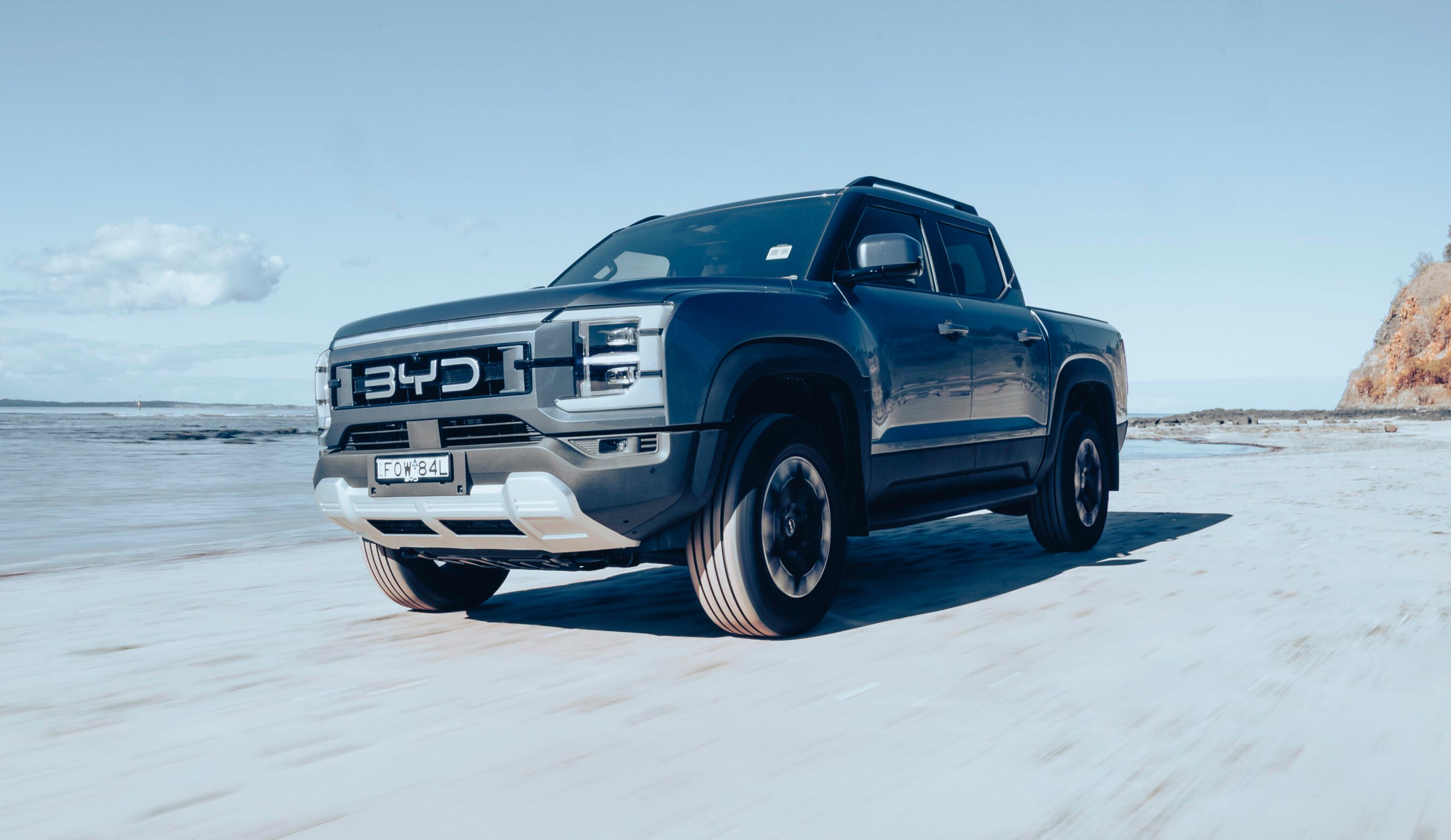
- Price: From $57,800 plus on-road costs (Premium)
- Drivetrain/economy/CO2 emissions: 1.5L turbo-petrol PHEV: 321kW/650Nm, single-speed auto, 4WD, 2.0L/100km, 46g/km
- Dimensions: 5457mm long, 1971mm wide, 1925mm tall, 3260mm long wheelbase
- Towing capacity/GVM/GCM: 2500kg/3500kg/TBC
- Warranty/roadside assistance/service intervals: Six-year/150,000km, eight-year/160,000km battery coverage, 12 months of roadside assistance with each dealer service, annual/20,000km
- Five-year service cost: $2489 ($498 per year)
| Driving | |
|---|---|
| Interior | |
| Practicality | |
| Overall value |
Things we like
- Excellent value for money
- Quick performance
- Feature-loaded and good quality cabin
Not so much
- Not as capable as Ranger PHEV in towing
- Not as capable off-road as rivals
- Thirsty if not charged
The BYD Shark 6 is a disruptor. And like most disruptor technologies, it does a few things extremely well, but it’s never going to be for everyone. We get that. We also understand that there’s a constituency of ute buyers who will never subject their machinery to terrain more arduous than an unsealed road and have no real requirement to tow huge loads. Even Ford’s figures back that up, with a large majority (70 percent) of Ranger owners never logging heavy towing journeys.
If that sounds like you, the Shark may well rack up a big score in the credit column. If you see a ute as something that opens the door to lifestyle activities like cycling, surfing or camping or if you need one to transport work gear around, it probably has you covered in a way that none of its rivals can quite manage.
For a start, it’s a plug-in hybrid that offers around 85km of real-world electric range, against a claim of 100km. And hooey, is it quick out of the blocks. If a Shark pulls up alongside your Raptor don’t start gunning your engine. You’ll only be embarrassed by the Chinese ute’s fierce step-off and left wondering whether the additional $33k you dropped on the Ford was money well spent. It was, don’t worry.
Nevertheless, the Shark keeps the surprises coming, with a polished ride, an interior treatment that’s more mature and well thought-through than we bet you were banking on, a useful and large tray with lighting and a trio of three-pin sockets to power tools, camping gear, e-bikes or other electronic gear. Do keep in mind the modest 790kg payload and the 2500kg braked towing figure though.
The 1.5-litre petrol engine sounds woefully underbaked for a 2710kg vehicle, but it can draw upon a 30kWh blade battery which translates into a punchy system output of 321kW and 650Nm. BYD quotes a 2.0L/100km fuel economy figure, and the Shark can charge at up to 55kW on a DC charger. You’ll get nearer 8L/100km, which is still lineball with many diesel utes.
Sales have been strong, and it’s possible that in 2025, the Shark will depose the Isuzu D-MAX as Australia’s third-favourite ute. That’s an incredible effort coming from a base of zero. Being a disruptor comes with a certain element of risk. Being a very talented one, less so.
Kia Tasman
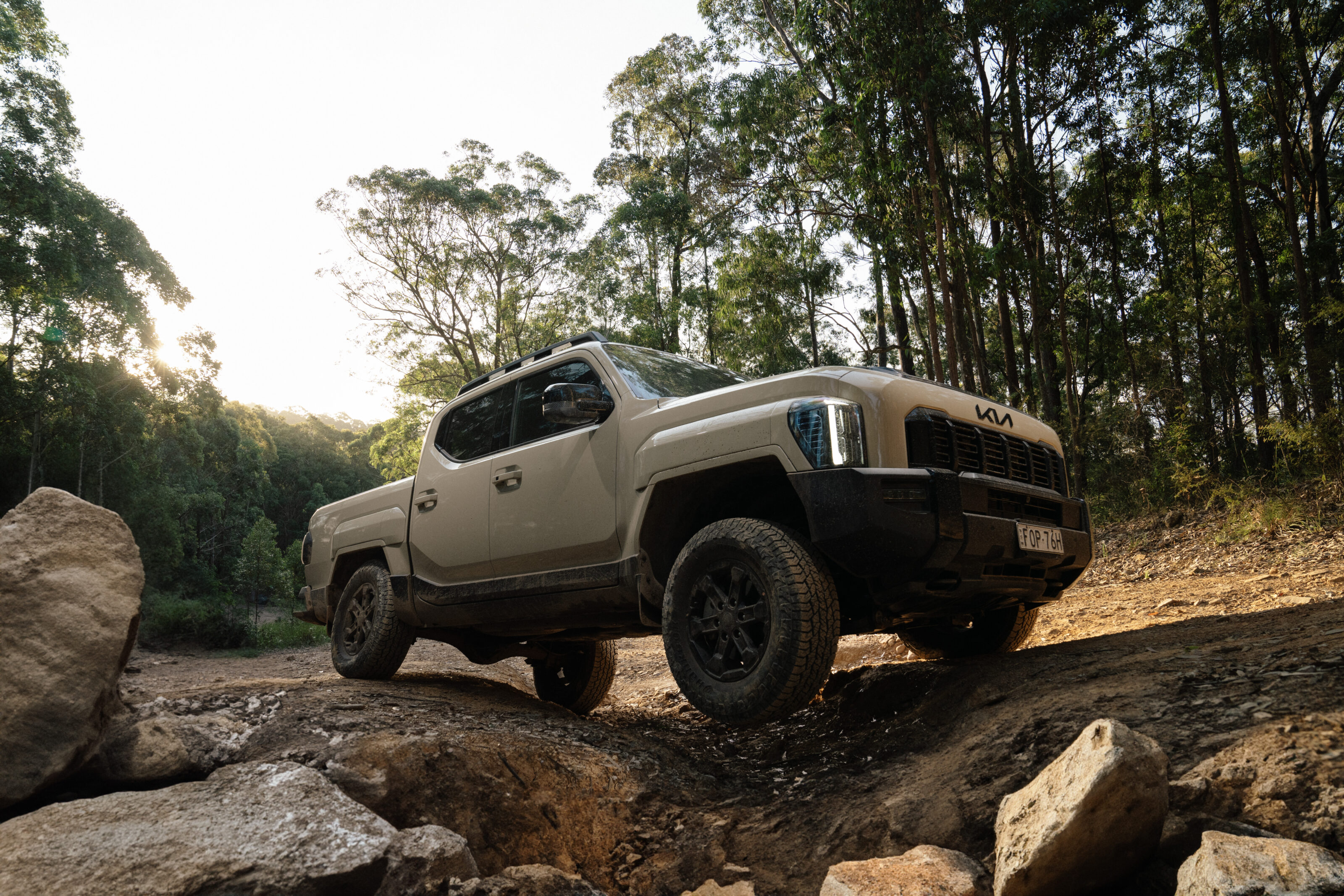
- Price: From $42,990 plus on-road costs (S 4×2) to $74,990 +ORC (X-Pro 4×4)
- Drivetrain/economy/CO2 emissions: 2.2L turbo-diesel: 154kW/440Nm, 8-speed auto, 2WD or 4WD, 7.6L/100km, TBC g/km
- Dimensions: Up to 5410mm long, 1930mm wide, 1920mm tall, 3270mm long wheelbase
- Towing capacity/GVM/GCM: 3500kg/3250kg/6200kg
- Warranty/roadside assistance/service intervals: Seven-year/unlimited km, 12 months of roadside assistance with each dealer service up to eight years in total
- Five-year service cost: $TBC
| Driving | |
|---|---|
| Interior | |
| Practicality | |
| Overall value |
Things we like
- Nice to drive, grunty diesel
- Simple model range
- Intuitive and practical interior
Not so much
- No variant is particularly cheap to buy
- No manual option
- No single cab or hybrid yet
The Kia Tasman is the new kid on the block and made by a brand that’s never entered the ute segment before. Using a distinctively Australian name, the Tasman was largely developed for Australia, so it had better be good. Luckily for Kia, in a lot of respects, it is quite good.
The cabin of the Tasman takes a lot of what we’ve seen from other new Kia models, such as the large dual panel infotainment and driver’s display, handy tabs to adjust the temperature of the cabin and plenty of cabin storage, into a more workman-like layout. Both families and tradies will appreciate the Tasman’s practical details, such as the dual wireless phone charger on some models.
The 2.2-litre turbo-diesel engine in the Tasman is also used in the Sorento SUV and Carnival MPV and it’s one of the most refined in the segment. While its peak 440Nm torque output could be better, its 3500kg braked towing capacity is up there with the leaders in the segment. On the road, the Tasman impresses with its Australian-tuned ride quality, and is more comfortable than most rivals over a variety of surfaces.
Overall, the Kia Tasman is a serious entrant into the ute segment that deserves attention. While some may not like its styling, it could offer more performance and we aren’t yet aware of how much it will cost to service, it’s still a very impressive first time effort from Kia. We expect it to push the brand’s sales further up the leaderboard in Australia. Top three? Time will tell.
Toyota LandCruiser 70 Series
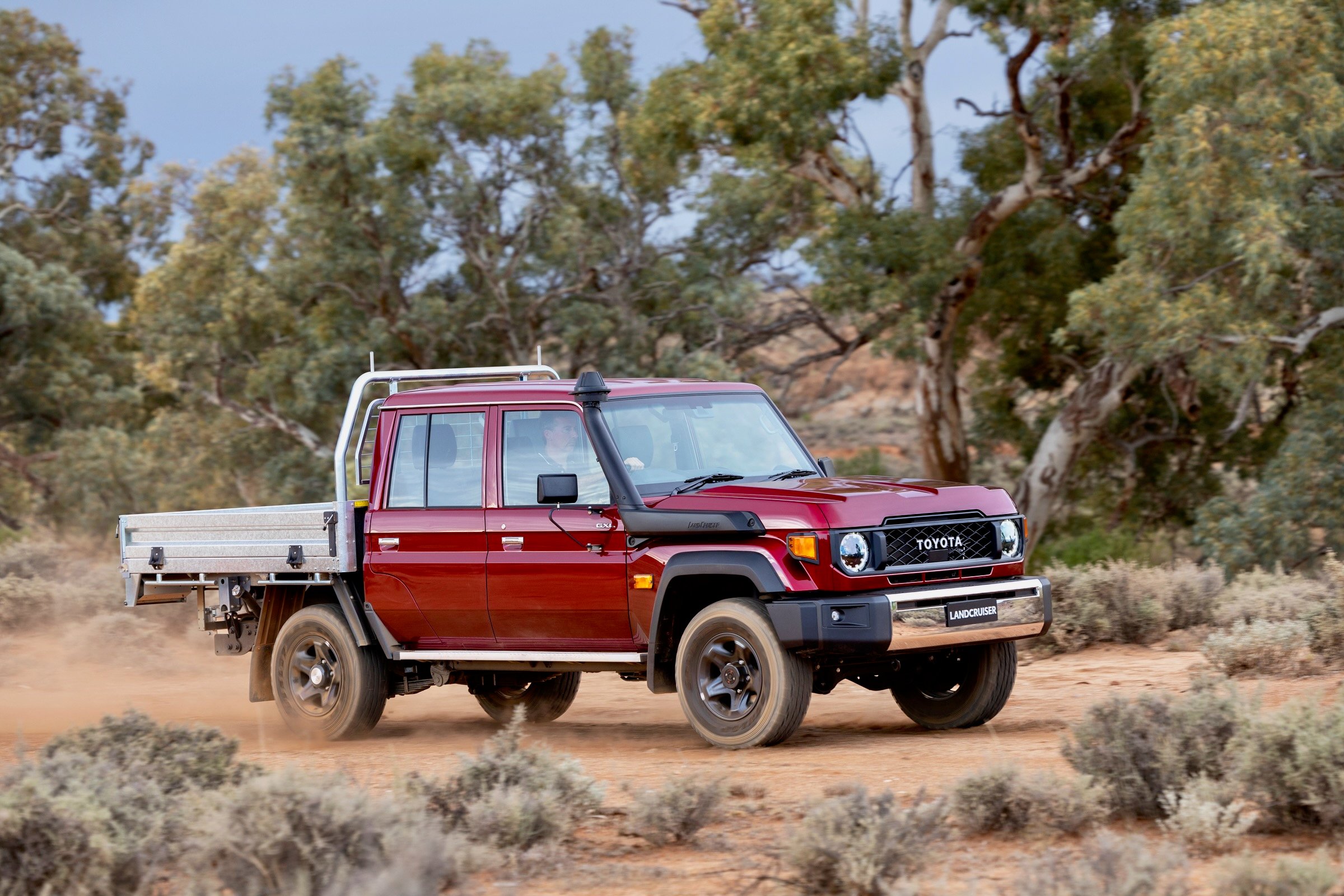
- Price: From $76,800 plus on-road costs (Workmate) to $83,500 +ORC (GXL)
- Drivetrain/economy/CO2 emissions: 2.8L turbo-diesel: 150kW/450-500Nm, five-speed manual or six-speed auto, 4WD, 9.6L/100km, TBC CO2
- Dimensions: 5175mm long, 1820mm wide, 1915mm tall, 3040mm long wheelbase
- Towing capacity/GVM/GCM: 3500kg/3510kg/7010kg
- Warranty/roadside assistance/service intervals: Five-year/unlimited km warranty, no roadside assistance, six-month/10,000km
- Four-year service cost: $5450 ($1090 per year)
| Driving | |
|---|---|
| Interior | |
| Practicality | |
| Overall value |
Things we like
- Punchy 2.8L diesel now standard across the range
- Great off-road ability
- Heavy duty GCM
Not so much
- Expensive to buy and service
- Feels ancient
- Some will miss the former V8
If an award was to be given for the most legendary ute, the Toyota LandCruiser 70 Series would likely be the winner. Production for the 70 Series started in 1984, and while it’s had numerous technological, mechanical and safety updates since then, it’s still the same basic hard-working product that it’s always been.
Recently, the former 4.5-litre V8 turbo-diesel engine that so many buyers loved about the LC70 was shelved and in its place, the 150kW 2.8-litre four-cylinder diesel that is used in products such as the HiLux and a six-speed automatic transmission. While some may lament the V8, there’s no denying that the four actually makes more power and torque, and an automatic transmission will open up its appeal against the former manual-only V8.
Inside the LC70 is a basic and ancient-feeling cabin with very little in the way of comfort – electric mirrors, lumbar adjustment and even automatic climate control aren’t available. A new 7.0-inch touchscreen now features with a very aftermarket look, though it at least has Apple CarPlay and Android Auto to bypass the native system’s lack of functionality. The new digital trip computer has also made it feel more modern than previous versions, though it’s still quite basic.
Like other new Toyota products, the LC70 is covered by a five-year/unlimited km warranty with no roadside assistance. Its servicing is quite expensive as well, and also quite inconvenient at six-month/10,000km intervals. But the expense and old feeling will be easily brushed off by those that the LC70 appeals to. It’s a no-nonsense go anywhere vehicle, now with just a sprinkle of modern tech like LED headlights, smartphone mirroring and – gasp – an automatic transmission.
Contenders
Winner: Ford Ranger Raptor
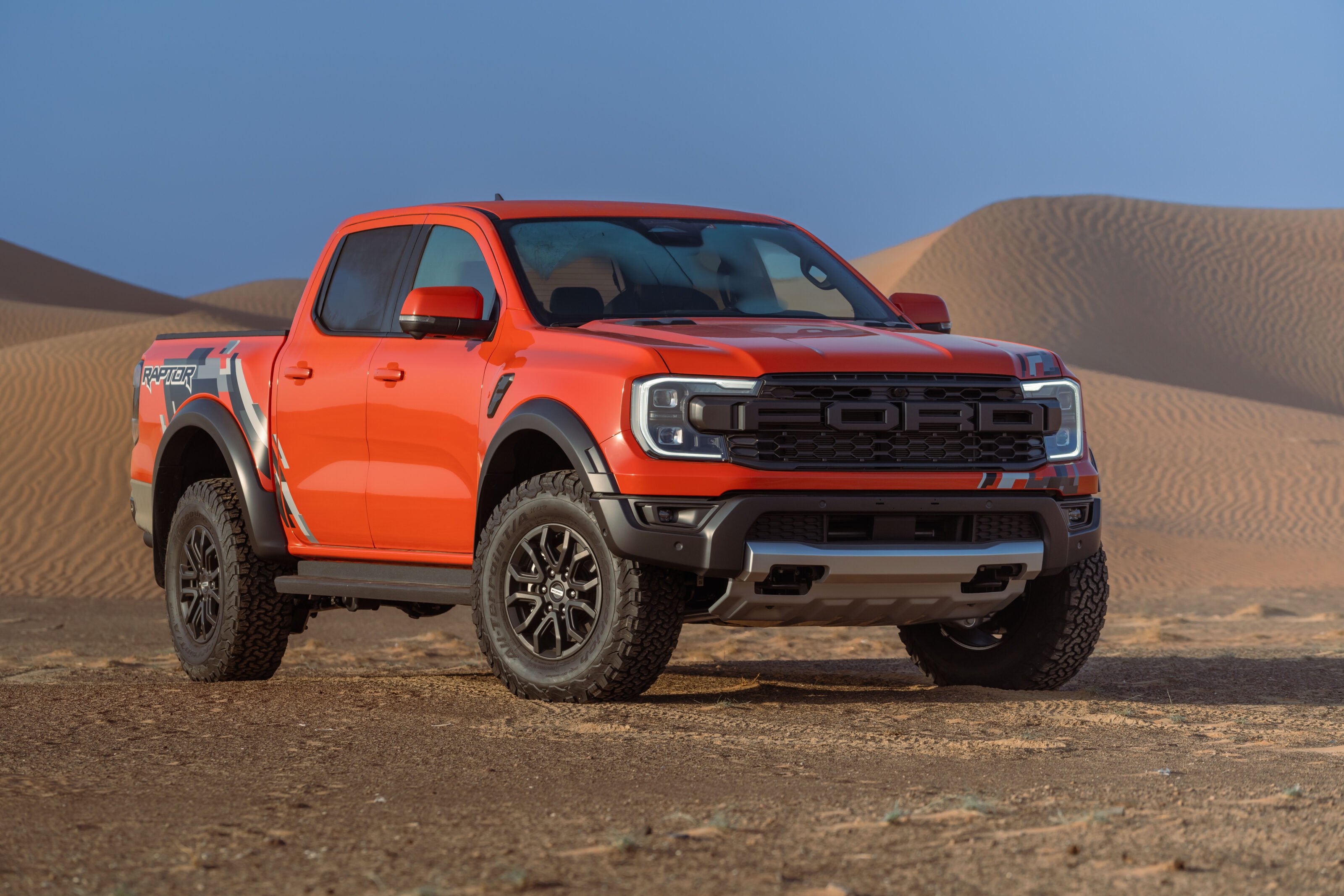
- Price: From $90,440 plus on-road costs
- Drivetrain: 3.0L V6 petrol engine, 292kW/583Nm, 10-speed auto
- Combined fuel economy, CO2 emissions, fuel type: 11.5L/100km, 262g/km, 98RON
- Warranty: Five year, unlimited kilometre
- Five-year service cost: $1645 ($329 per year)
| Driving | |
|---|---|
| Interior | |
| Practicality | |
| Overall value |
Things we like
- Built like no other ute
- Gutsy V6 petrol engine
- Tested on world’s toughest terrain
Not so much
- Pricey… but durable
- You’ll wince at the bowser
- Others offer a better rig for big fit-outs
Think Raptor and you probably have some super-saturated vision of big utes bounding over dunes in Baja, but the Australian reception to the Ford Ranger Raptor has been almost as euphoric. There’s a solid reason for that and it’s one that’s tough for any rival to replicate.
It’s a truly big-budget item that’s been designed by Australians in Australia for the Australian market. Yes, it’s screwed together in Thailand, but we genuinely do lay claim to the genesis of the world’s straight-out-of-the-crate off-road ute and that’s something we should be enormously proud of.
Back in the March 2025 issue of Wheels, Daniel Gardner had the opportunity to drive the Ranger Raptor, F-150 Raptor and the Bronco Raptor back to back on the dunes of the UAE, and he returned utterly convinced that the Ranger was the toughest and most capable package, so we certainly don’t need to tug the forelock to the US mothership.
The unique and near-indestructible rear end with its specific subframe, the Fox 2.5” Live Valve internal bypass shock absorbers, the electronically controlled front and rear diff locks, the 850mm wading depth, the clever and useful selectable drive modes (which include damper settings), Ford’s Trail Control (effectively a low-speed cruise control for off-road use) and the monster 17-inch BF Goodrich KO2 high performance A/T tyres give the Raptor incredible off-road capabilities, especially for a vehicle with what some off-road greybeards would see as the inherent caveat of independent front suspension. It also features 285mm of ground clearance, a 32° approach angle, 24° breakover angle and 27° departure angle allow.
A snorkel and a front bar may be the only aftermarket accessories you’d ever need to get to some fairly remote places on the map. And you’d certainly want to be in nothing else to cover kilometre after kilometre of red centre washboard.
Due to issues surrounding payload, we’d look to a leaf-sprung ute if we wanted to build a serious overlanding rig, but if you just want something that’s absolutely good to go bush straight off the forecourt, nothing really gets close to the Ford Ranger Raptor.
Nissan Navara Warrior
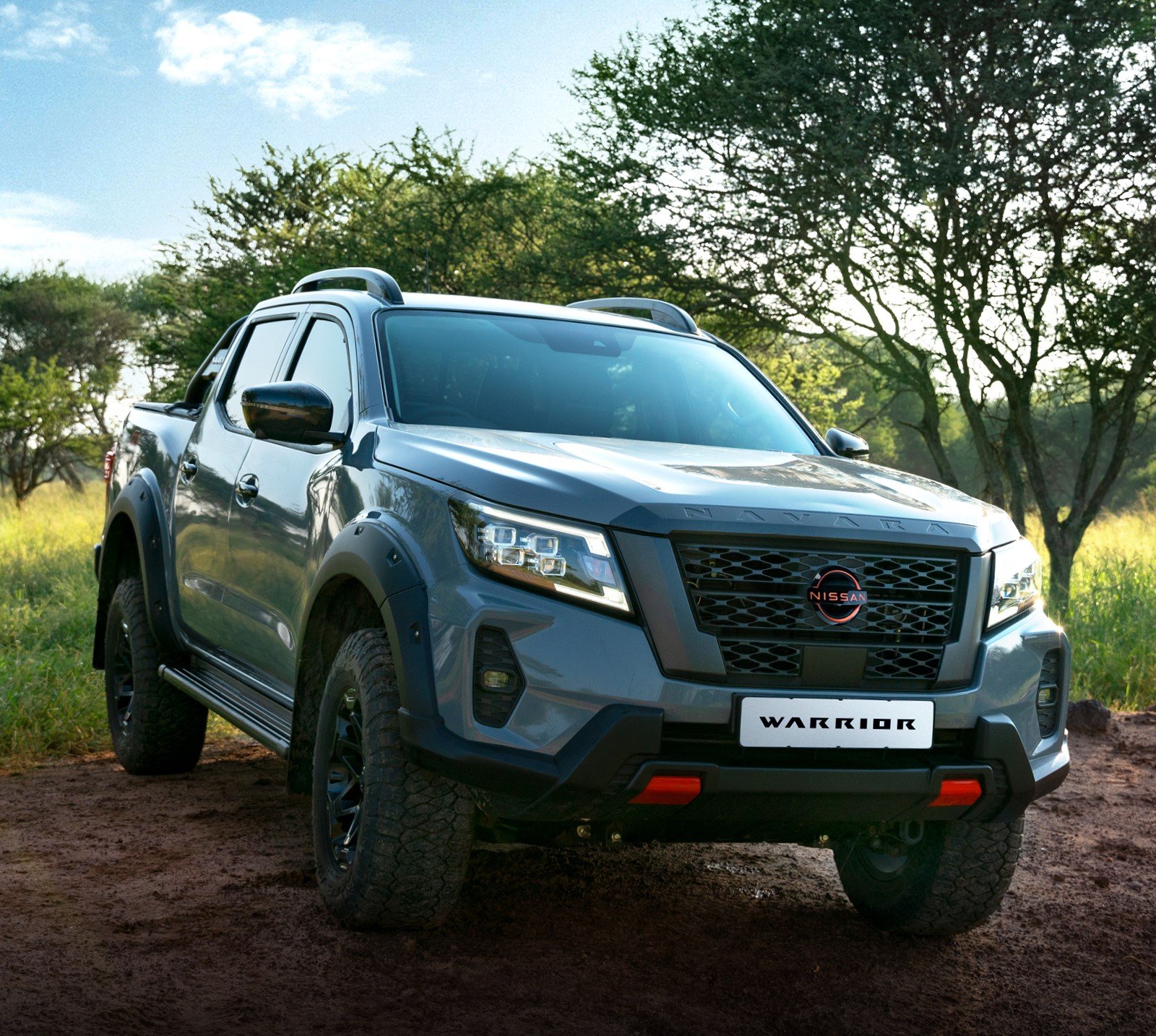
- Price: From $58,750 plus on-road costs
- Drivetrain: 2.3L 4-cyl turbodiesel engine, 140kW/450Nm, 6-speed manual/7-speed auto
- Combined fuel economy, CO2 emissions, fuel type: 7.6L/100km, 200g/km, diesel (SL auto)
- Warranty: Five year, unlimited kilometre
- Five-year service cost: $2495 ($499 per year)
| Driving | |
|---|---|
| Interior | |
| Practicality | |
| Overall value |
Things we like
- Re-engineered in Australia by Premcar
- Manual gearbox option
- Great standard tyres
Not so much
- Feels dated inside
- No seat heating even on PRO-4X model
- Low range selection can be fussy
Congratulations to Nissan for identifying that not everyone is ready or able to drop $90k on a Ford Ranger Raptor and that a budget alternative, offering much of the Ford’s capability at two-thirds of the price, could well find a ready market. And so it has proven.
Whereas the Raptor is unapologetically over-engineered, Nissan has taken a more pragmatic view regarding the Navara Warrior. Like the Ford, it’s built in Thailand, but from there it comes to Australia and is stripped back and worked up by Premcar in Melbourne.
The ground clearance is lifted by 40mm to 260mm and the track splays from 1570mm to 1600mm. The approach angles improves from 32 to 36 degrees, and the the suspension now features revised spring and damper rates for improved isolation and compliance. A bigger jounce bumper has been fitted to reduce shock pathways into the cabin at full suspension travel. That’s on top of all the gear such as a winch-compatible front bar, broader fender flares, meaty Cooper AT3 rubber, a 3mm steel underbody protection plate and a red front bash plate.
There’s even a respectable payload available – up to 961kg for the manual PRO-4X and 952kg for automatic versions. Not everyone’s a fan of rowing their own gears out in the rough stuff, but there’s a hardcore of off-road drivers who like that feeling of control, the mechanical simplicity and the challenge of right gear, right time. And choice has to be a good thing, right?
In practice, the Navara Warrior feels nigh-on unstoppable and there’s no real acclimatisation process to getting to grips with the drive controls. There’s even an old-school handbrake bar, which we love. The seating position takes a bit of getting used to, as there’s no reach adjustment for the steering column, and the low range system prefers to have no load on it and be on flat ground to engage and, as we all know, that’s not always a given. The fairly useless and largely cosmetic sports bar of the Warrior Pro-4X variant also limits access to the front tie-downs. Other gripes? Seat heating would come in handy for winter high country jaunts and the infotainment seems a bit off the pace. The fuel gauge can also be a little vague. It’s also worth noting that there’s no stock of the base SL Warrior manual on hand right now.
No, it’s not as sophisticated as a Ranger Raptor and nowhere near as fast, but if you value reliability and no-nonsense common sense engineering for your off-road ute, the Navara Warrior ticks all the right boxes.
Isuzu D-Max Blade
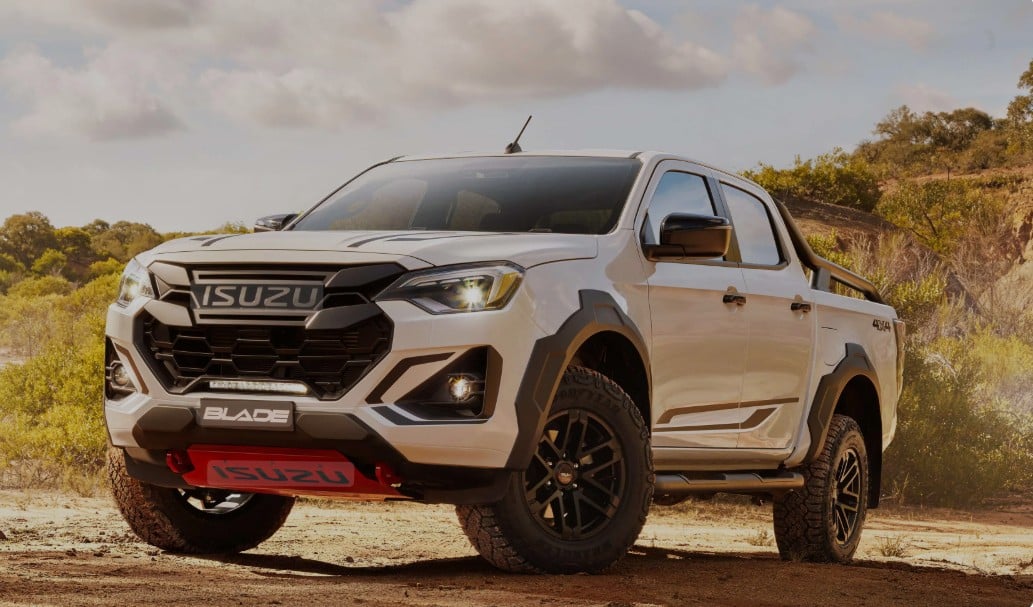
- Price: From $77,990 drive away
- Drivetrain: 3.0L 4-cyl turbodiesel engine, 140kW/450Nm, 6-speed auto
- Combined fuel economy, CO2 emissions, fuel type: 8.0L/100km, 207g/km, diesel
- Warranty: Six years, 150,000 kilometre
- Five-year service cost: $2245 ($449 per year)
| Driving | |
|---|---|
| Interior | |
| Practicality | |
| Overall value |
Things we like
- Re-engineered in Australia by Walkinshaw
- Tried and trusted drivetrain
- Worthwhile and well-chosen suspension upgrades
Not so much
- More grunt would have been nice for the money
- Extrovert exterior treatment
- Availability is limited
While there’s a lot to be said for the effectiveness of Isuzu’s D-Max Blade, originality probably isn’t its key asset. It effectively follows the pathway that Nissan took with the Navara Warrior models, bringing a well-considered base ute to an Australia specialist – in this case Walkinshaw – which undertakes a fundamental re-engineering of its suspension and off-road accessories.
There’s little to complain about the D-Max Blade’s off-road abilities, but its Achilles heel may well be the value proposition. Whereas Nissan offered the Navara Warrior in both a ritzy PRO-4X and a more utilitarian SL version, Isuzu has positioned the D-Max Blade as a model at the top of the range with just about every bell and whistle available crow-barred in. That means a drive-away price of nigh-on $78,000, when a little $50k can buy you a D-Max with the same 4JJ1 3.0-litre diesel powerplant. In percentage terms, that’s quite the uptick.
The bits that matter are the 29mm lifted suspension featuring Monroe 35mm MTV twin-tube dampers. The Blade runs on 275/65R17 Goodyear Wrangler Duratec RT all-terrain tyres, and there’s an extra 32mm of track width compared with a more familiar D-max LS-U model. There’s also underbody protection in the form of a steel plate that doubles the usual D-Max’s 1.5mm gauge to 3.0mm. There’s even a cross-braced eight-tonne load rated recovery point system. Rough Terrain mode also tamps down throttle sensitivity for those moments when the vehicle’s bouncing its way over truly awful terrain.
Buyers get 244mm of ground clearance and approach breakover and departure angles of 29.2, 25.2 and 19.2 degrees respectively. It’s a well engineered and wisely chosen set of upgrades that deliver a decent uptick in off-road capability for the already burly D-Max. You’re also buying a whole heap of stuff like embroidered headrests, scuff plates, identification plaques, Basalt Black detailing, decals, exclusive mud flaps and a vast list of such tinsel, so it would have been very welcome had Isuzu also offered the Blade off-road package on a more affordable variant without all the aesthetic extras.
With its leaf-sprung rear end and near-indestructible chain-driven 3.0-litre diesel engine, the beauty of the D-Max Blade is that it brooks no surprises with Aussie drivers who know and trust the D-Max. It’ll get you where you need to go and back again. It might not do so in the most comfort or in the quickest time, but there’s a lot to be said for rugged dependability in this wide, brown land and the D-Max Blade has that in spades.
Ford Australia has officially launched the all-new 2025 Ranger Super Duty Cab-Chassis range, revealing pricing and detailed specifications for what the company calls its most capable mid-size truck yet.
Designed with demanding industries and adventurous off-roaders in mind, pricing for the rugged utility vehicle starts at a Manufacturer List Price (MLP) of $82,990 plus on-road costs.
Built to endure the toughest job sites and most remote terrains, the Ranger Super Duty range is available in three configurations: Single, Super, and Double Cab-Chassis. All three are powered by Ford’s 3.0-litre V6 turbo-diesel engine, which delivers a robust 154kW at 3,250 rpm and 600Nm of torque from as low as 1,750 rpm. The powerplant features a specially tuned calibration to meet heavy-duty EUVI emissions standards and includes AdBlue integration while preserving the engine’s full torque output.
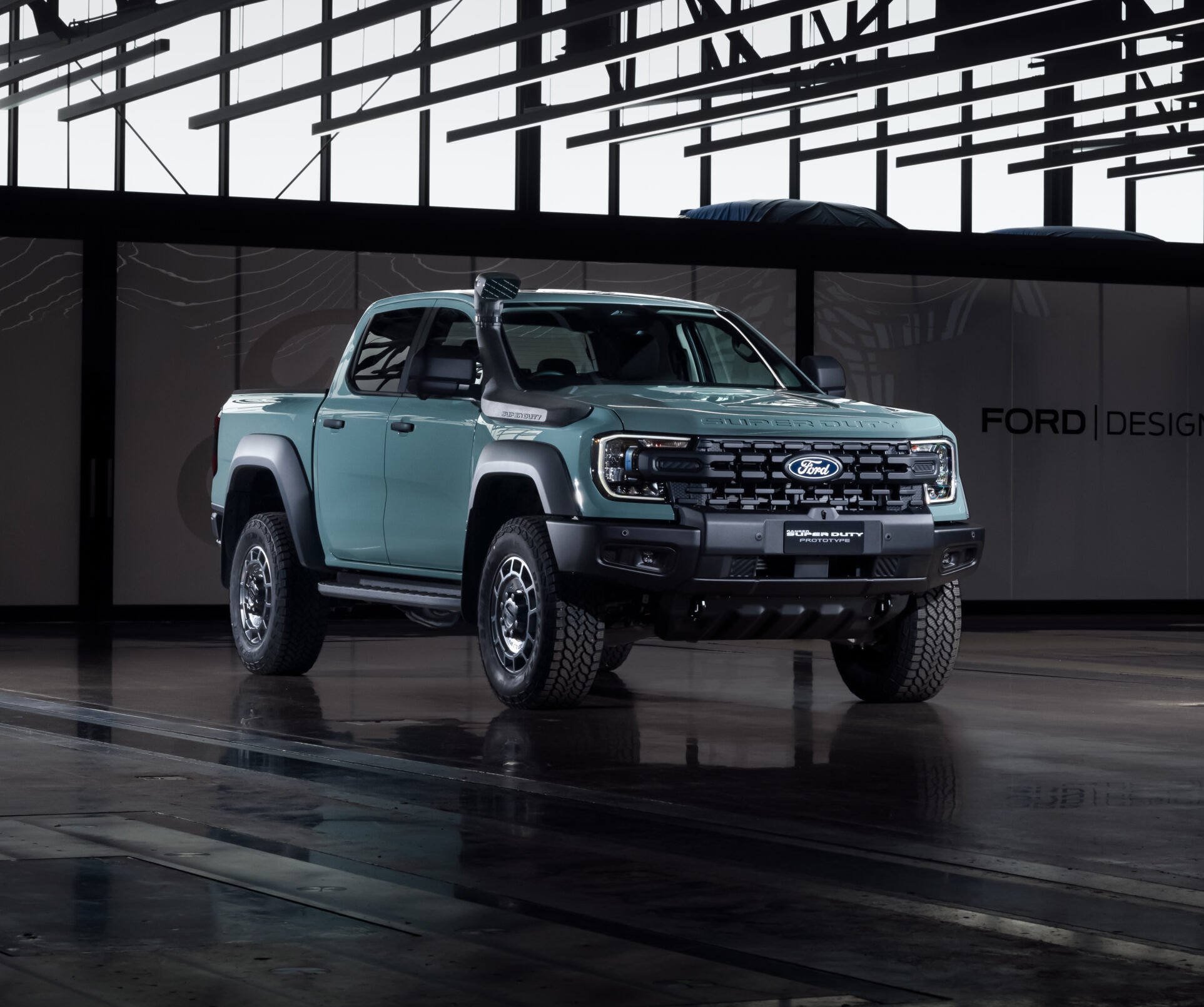
Ford has reinforced the Ranger Super Duty’s chassis, axles, and suspension system to support remarkable payload and towing capacities. The truck boasts a Gross Vehicle Mass (GVM) of 4,500kg and a braked towing limit of 4,500kg when equipped with genuine Ford tow components. With an 8,000kg Gross Combined Mass (GCM), the truck is ready to haul heavy loads with ease.
Payload figures impress across all variants:
- Single Cab-Chassis: Up to 1,982kg
- Super Cab-Chassis: Up to 1,896kg
- Double Cab-Chassis: Up to 1,825kg
Higher Gross Axle Weight Ratings of 1,900kg at the front and 2,800kg at the rear support these figures, while a redesigned cooling system provides 25% greater efficiency, ensuring consistent performance under load.
In terms of off-road capability, all variants feature increased ground clearance (up to 299mm), a widened track (1710mm), and a class-leading water wading depth of 850mm.
MLPs for each model are:
| Single Cab-Chassis | $82,990 |
|---|---|
| Super Cab-Chassis | $86,490 |
| Double Cab-Chassis | $89,990 |
Prices exclude trays and on-road costs.
“This truck is built to outperform,” said Ford Australia CEO Andrew Birkic. “Whether it’s towing heavy equipment or navigating remote work sites, the Ranger Super Duty delivers.” With durability and capability at its core, the new model sets a new benchmark in the mid-size truck category.
Read Wheels initial review here.
Audi has revealed the crucial third-generation of its Q3 small SUV, which will go on sale in Australia in the first half of 2026. It features sharp new styling, a lot more technology throughout and – potentially for Australian release – a plug-in hybrid with DC fast charging and up to 119km of electric driving range.
Using an updated version of the ‘MQB’ platform that underpins the previous Q3 – as well as cars such as the A3 and Volkswagen Tiguan – the new-generation Q3 is more sharply styled than before, ushering in its latest design theme from cars such as the new Q5 and A6. It also appears to be longer than before, though Audi is yet to confirm dimensions.

Inside the new Q3 is a new dashboard layout that heavily follows larger Audi models. At the centre of the dashboard is a new 12.8-inch touchscreen with new Android Automotive software, where owners can download third-party apps such as YouTube and Spotify. In front of the driver is a new 11.9-inch display and together, it and the touchscreen form part of a curved panel.
The separate passenger screen seen in other new Audis is not found in the Q3, while the gear selector has moved to the right-hand side of the steering column to free up space in the centre console. The brand has also introduced a new indicator and wiper selector, which has removed the traditional stalk and instead uses buttons to activate the indicators and wipers.
In Europe, the Audi Q3 will be launched with four drivetrains: a 110kW/250Nm 1.5-litre turbo-petrol engine, a 195kW/400Nm 2.0-litre turbo-petrol engine, a 110kW/360Nm 2.0-litre turbo-diesel and a 220kW/400Nm 1.5-litre turbo-petrol plug-in hybrid. The PHEV features a 19.7kWh battery for up to 119km of electric driving range (WLTP) and DC fast charging ability for an 80 per cent charge in under 30 minutes.

Later on, a 150kW/320Nm 2.0-litre turbo-petrol engine will join the range as well, with Australian engine choices yet to be announced. It’s expected that a full range of active safety features will be standard on the new Q3 when it launches locally, including a new semi-autonomous driving function that will allow it to make lane changes autonomously at speed of 90km/h and above.
Other available features for the new Q3 include a new driver monitoring camera, new adaptive dampers with a broader spread between comfort and sport modes, 30-colour ambient lighting, upgraded Matrix LED headlights, OLED tailights, a 12-speaker Sonos sound system, tri-zone automatic climate control and a 15-watt ventilated wireless phone charger.
The 2026 Audi Q3 will enter local Audi showrooms in the first half of 2026, with local pricing and specifications to be confirmed.

The escalating conflict between Israel and Iran is poised to impact Australian motorists, with petrol prices anticipated to rise in the coming weeks.
Brent crude oil prices have surged from $65 to $77 per barrel over the past week, marking an 18 per cent increase since hostilities intensified. This spike is attributed to Israeli airstrikes on Iranian nuclear facilities and subsequent retaliatory actions, raising concerns over potential disruptions to global oil supplies.
Australian Treasurer Jim Chalmers has warned that sustained high oil prices could exacerbate inflationary pressures domestically. He emphasized that while the immediate focus remains on the human cost of the conflict, the economic ramifications are significant. Chalmers noted that a 10 per cent increase in oil prices sustained over a year could add approximately 0.4 percentage points to Australia’s inflation rate.
AMP Chief Economist Shane Oliver highlighted that if current oil price levels persist, Australian petrol prices could rise by around 12 cents per litre. However, he also pointed out that Australia’s fuel supply, primarily sourced from Asia, may offer some insulation from direct supply disruptions.

The potential closure of the Strait of Hormuz, a critical chokepoint through which approximately 20 per cent of global oil passes, remains a significant concern. Any blockage could lead to further volatility in oil markets, impacting fuel prices worldwide, including in Australia.
Despite these challenges, the Reserve Bank of Australia (RBA) is expected to maintain its course on interest rates, with a potential rate cut anticipated in July. Analysts suggest that the RBA may view the inflationary impact of rising oil prices as temporary, focusing instead on broader economic indicators.
Motorists are advised to stay informed about fuel price trends and consider refueling ahead of potential increases. While the situation remains fluid, the Australian government continues to monitor developments closely, aiming to mitigate economic impacts on households.
