
Apart from a carbon-tubbed McLaren, you’re always going to lose something in performance terms by going topless.
Yet, how a car makes you feel can often be more important than if it vehemently clips apexes or if it wags its tail. Hence, the E400 Cabriolet scores well as an experience, but it’s no dux of the performance-car class. Mechanically it’s the same story as the E400 Coupe.
Apart from gaining 90kg thanks to the extra structural rigidity (given it’s now sans roof), the twin-turbo V6 still sends power to all paws via a nine-speed auto. While the 245kW/480Nm counts remain, the 0-100km/h blast increases to 5.5sec.
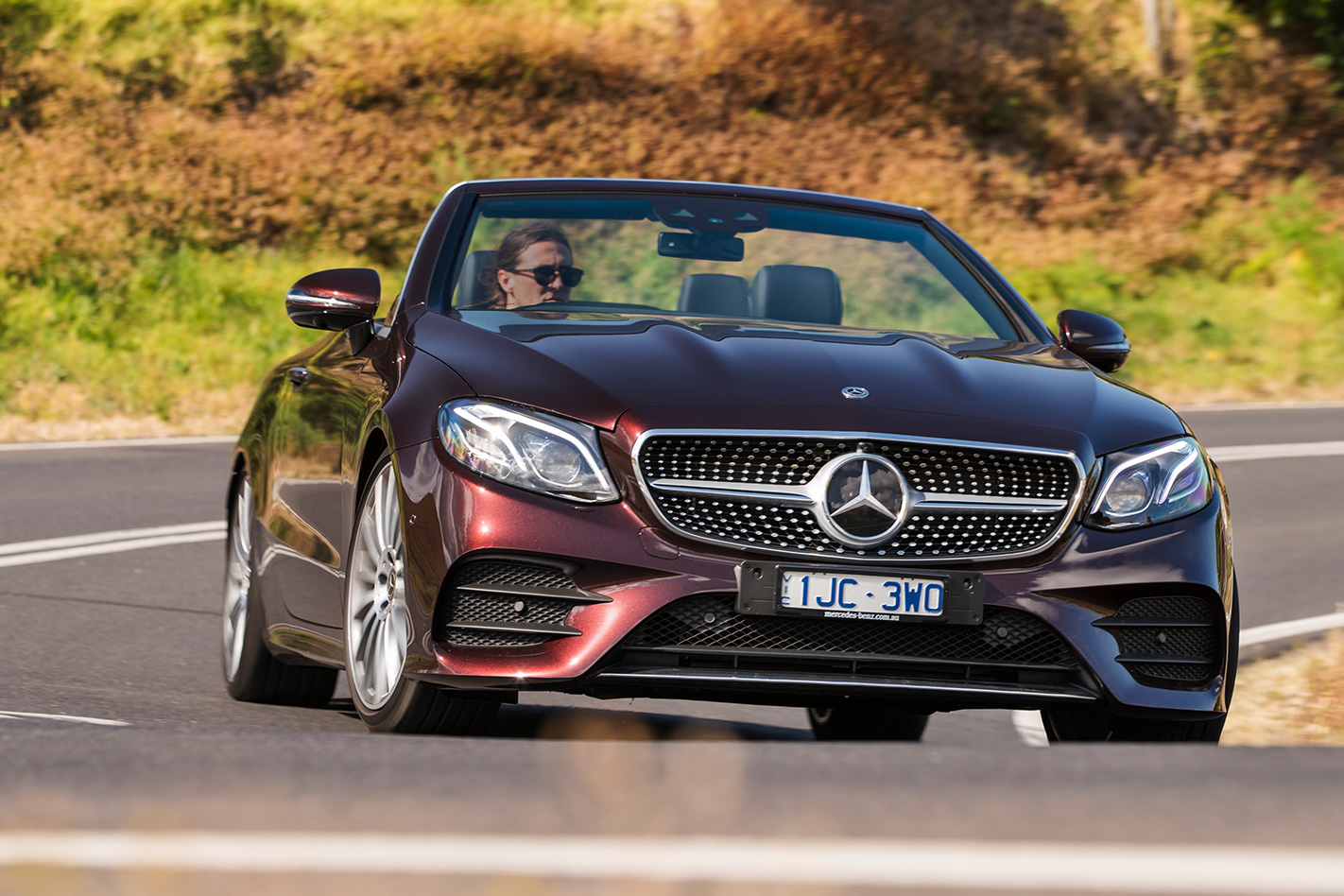
Interior wise, under the fabric roof which stows or erects in 20 seconds, it remains utterly gorgeous. The rear seats can genuinely fit adults with, ahem, endless headroom roof down; roof up it could use more sound deadening.
If you don’t need the extra space or elegance the E400 affords, the cheaper and more powerful C43 Cab will satiate your appetite for acoustic delights. However, the fastest E-Class Cab looks and feels all of its $157,500 sticker price.
Despite lacking aural theatre, there are few options more comfortable, stylish or luxurious for open-air, balmy-night motoring. In such an environment, topless works fine.
2018 Mercedes-Benz E400 Cabriolet Specs: Engine: 3.0-litre v6 twin-turbo Power: 245kw Torque: 480nm Weight: 1935kg 0-100km/h: 5.5sec Price: $157,500
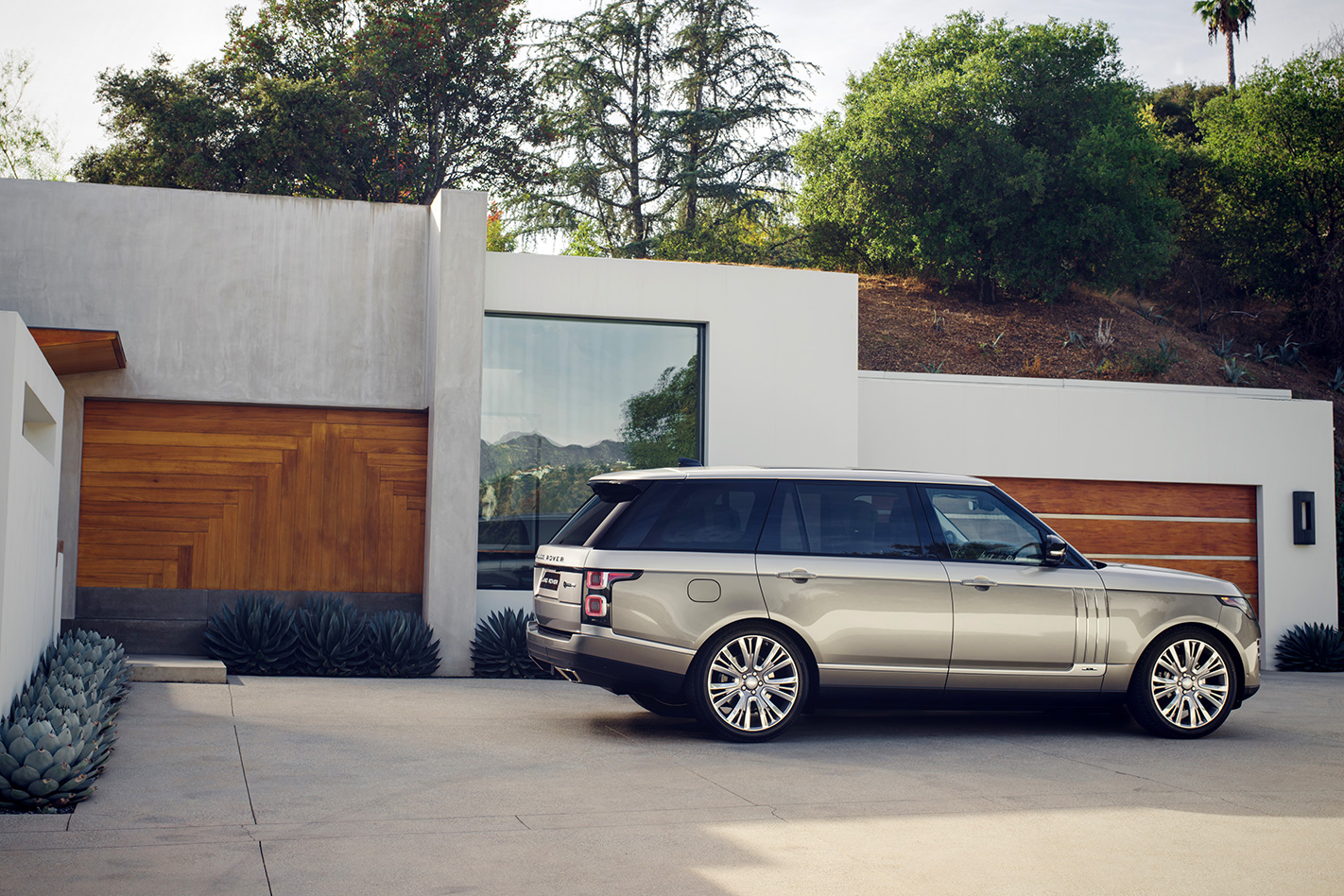
The 2018 Range Rover SVAutobiography has been unveiled ahead of the Los Angeles Motor show as Land Rover’s most luxurious SUV.
The long wheelbase SVA is available with powertrains ranging from the new Land Rover plug-in hybrid electric-petrol to the beastly SVR Supercharged 5.0-litre V8, which puts out an impressive 421kW in this instance.
Land Rover is keen to tout the rear-seat advantages of the LWB nature of the Rover SVA, with rear legroom of over 1.2 meters available to rear passengers.
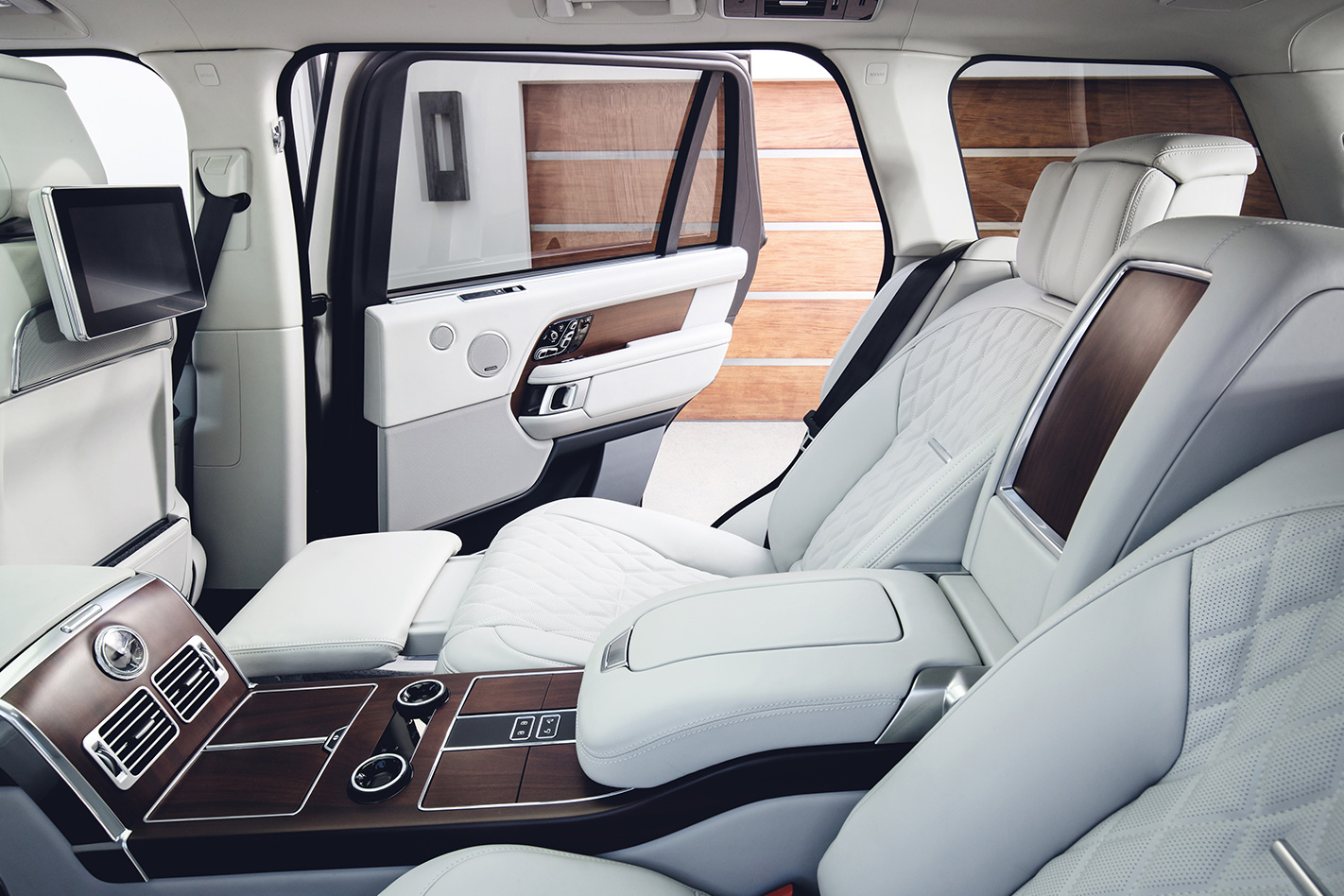
The rear seats also sit beside a fridge, which can hold “two wine bottles or four 600ml bottles,” and one rear seat can fold down to accommodate large luggage.
Gerry McGovern, Land Rover chief design officer, says it’s important that the SVAutobiography has features which aren’t available through the rest of the range.
“The Range Rover SVAutobiography is the epitome of luxury, comfort and refinement,” says McGovern.
Managing director of Jaguar Land Rover Special Operations John Edwards adds: “The SVAutobiography badge identifies our most luxurious vehicles in the same way the SVR and SVX monikers denote our most potent and capable derivatives,” says Edwards.
“The arrival of the enhanced Range Rover SVAutobiography further strengthens the peerless luxury pillar of the SV family.”
The Range Rover SVAutobiography’s pricing has been confirmed at £177,030 in V8 guise for the UK, but Australian pricing has not been revealed.
In an interview with Lutz Meschke, Porsche’s own CFO and vice president of the executive board, the company has revealed its idea to add an autonomous track mode to its future cars.
Dubbed ‘Mark Webber mode’ by Meschke, the idea is that the car would be able to traverse a track with the same precision that a racing driver would, and teach the occupant where to brake, power out, and where to apex.
“[The] idea is the Mark-Webber-function, as we call it – named after the race driver and our brand ambassador,” Meschke says.
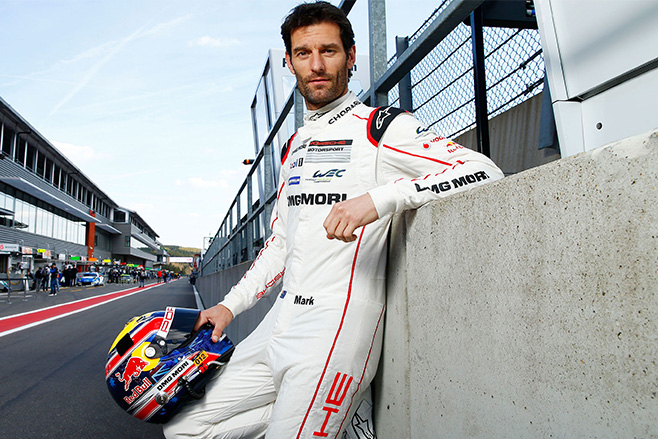
“First, software saves the exact course Mark Webber drives on a racetrack. These data are used by the autonomous vehicle to drive the course identically. Afterwards the costumer can reclaim the steering wheel and let the car show him the ideal course, thus training and improving his skills as a driver via direct feedback from the car.
Mark Webber’s Porsche 919 Hybrid in London
Even better, Meschke says this isn’t something that’s too far-fetched.
“This is technically possible already. Of course, the driver can improve over time and learn new things. In a first step, he lets the virtual Mark Webber drive and gets to know the course. Then he drives himself and learns from the virtual coach.
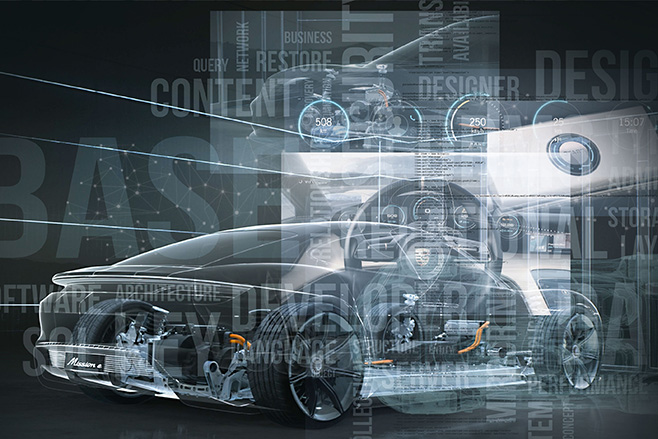
In the same interview, Meschke confirms that Porsche is likely to use autonomous driving tech as a more ‘assistive’ approach, rather than allowing it to take over the driving totally.
“A Porsche will always be a car that you will want and be able to drive yourself,” Meschke says.
“Nevertheless, there are of course aspects of autonomous driving that are interesting for us: Traffic jam assistants or automated parking, for example. It’s attractive to be able to use the drive into the office during rush hour for my first virtual meeting.”
GONE in 60 Seconds, the title of the iconic ‘70s car film (and wonderfully woeful 2000 remake), has become a shocking reality in the UK.
Footage released by West Midlands Police this week shows a pair of thieves stealing a new Mercedes-Benz C-Class in under a minute, without breaking a single window or threatening a single person.
The robbery could come as a shock for some car owners, particularly those equipped with features like keyless entry.
The robbers are able to unlock the Mercedes without forcing their way into the house, breaking a window, or prying the doors open.
Instead the duo use what is called a ‘relay’, or ‘man in the middle’ attack.
One of the men stands near the front of the house, waving a transponder around in an attempt to pick up a signal from the car’s keys inside the house.
Meanwhile, the other thief stands beside the car with a receiver, ready to pluck open the door once a signal has been received.
The devices the robbers use work by picking up on wireless signals which are usually used for features such as keyless entry.
While the key traditionally has to be in close proximity of the car to work, devices used by thieves have been designed to pick them up through walls, and amplify the signal.
Thieves steal $4.8M worth of Jaguar Land Rover engines
Sadly, Police are yet to retrieve the stolen Mercedes.
The video is a sad reminder of how easily cars can be stolen, even those kitted out with modern technology.
Immobilisers and tracking devices are handy insurance policies against these kinds of attacks.
Drivers will soon be able to recharge their EV at Shell petrol stations in Europe in the time it takes to fill a tank with unleaded.
The world’s second biggest oil company has entered into a venture with Munich-based charging network operator IONITY, which itself is a consortium between the BMW Group, Daimler, Ford and the Volkswagen Group – which all have electric vehicle programs in place.
Shell says the fast charging points, capable of charging cars in around the same time it takes to fill a fuel tank, will initially be installed at 80 of the biggest motorway Shell fuel stations in Belgium, Britain, France, the Netherlands, Austria, Czech Republic, Hungary, Poland, Slovakia and Slovenia.
In addition, IONITY is also partnering with other fuel retailers to expand it network through other parts of Europe including Ireland, Germany, Scandinavia, Estonia, Latvia and Lithuania.
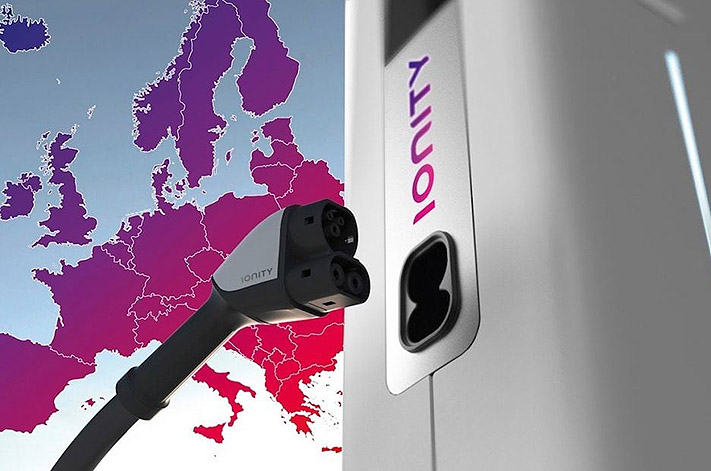
It’s claimed it will take little as five to eight minutes on average to charge an electric vehicle at the petrol stations. However, that figure is dependent on a 350kW charging rate (three times that of Tesla’s Superchargers) and vehicles capable of handling that kind of power are still at least couple of years away.
| BMW and Westfield team up to install 40 EV charge points around Oz
The endeavour follows Shell’s acquisition last month of NewMotion, Europe’s largest electric-vehicle charging provider, which has 50,000 public charging sites. The buyout coincided with the installation of Shell’s own charging points at petrol stations in the UK.
The Netherlands-based multinational is looking ahead to a future beyond oil and has already announced that it wants 20 percent of profitable income from fuel sold at its petrol stations to come from vehicles without petrol or diesel combustion engines.
Will the network expand to Australia any time soon? Don’t hold your breath. Putting aside the fact that Australian governments and business have been slow invest in EV infrastructure, Shell’s retail fuel business in Australia is licenced to a separate company, Viva Energy Australia, which puts it at arm’s length from the European business.
WhichCar has contacted Viva Energy and Shell Australia to see if there are any plans to roll out EV chargers across the Shell network in Australia.
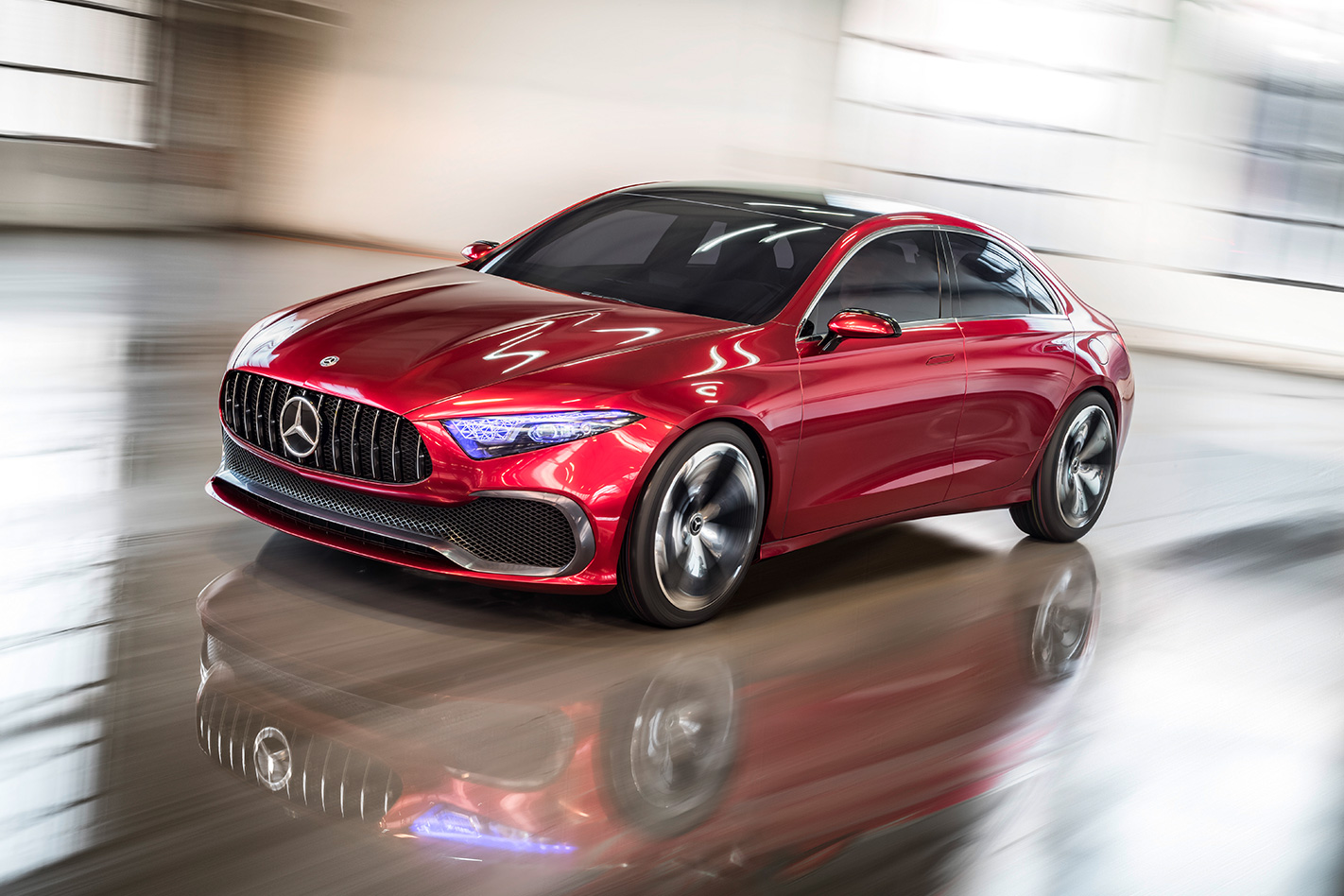
Mercedes has revealed the interior layout and design for its yet-to-debut A-Class.
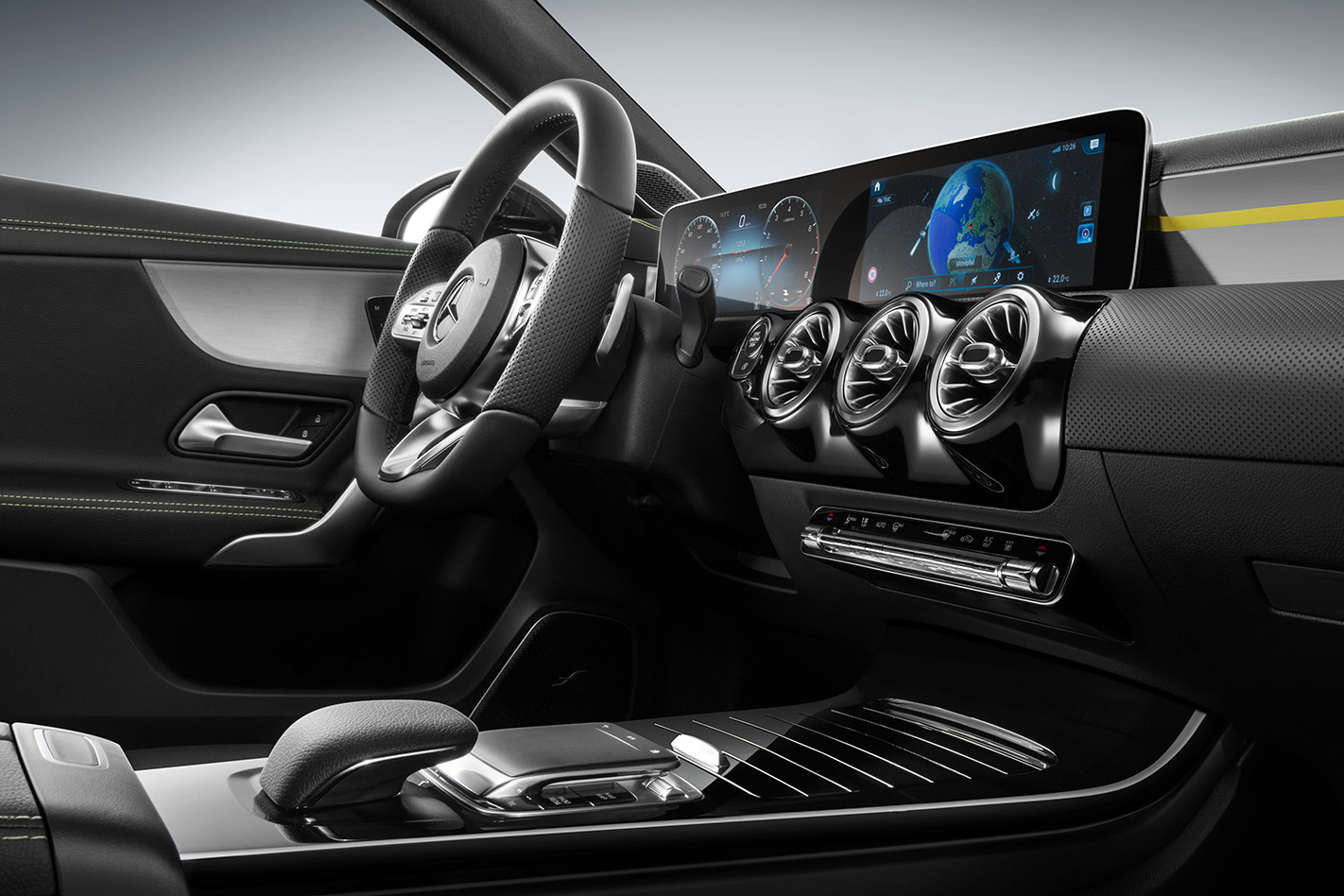
The next Benz A-Class will have a minimalistic cabin with few ‘lines’ as not to ‘clutter’ what Mercedes hopes its customers will see as an “avant-garde” design.
Much like the ‘Concept A’ revealed by Mercedes-Benz during the Shanghai Motor Show, the interior is quite a departure from the current generation of Mercedes design.
However, a trackpad and some drive mode controls remain on the centre console.
‘Turbine’ A/C vents are the most prominent features to depart from the dash’s surface, aside from the new flat-screen instrument cluster which has no cowl above it.
Mercedes-Benz head of interior design Hartmut Sinkwitz says the new A-Class cabin is intended to provide the compact segment with a luxury feel it has been lacking.
BMW and Mercedes sedans fighting sales trends
“It lends a new quality to the term “modern luxury” in the compact segment, and is an inner revolution.”
When the new A-Class is revealed in full, we’re expecting to find out everything we’e been wondering about the AMG variants, namely the A45.
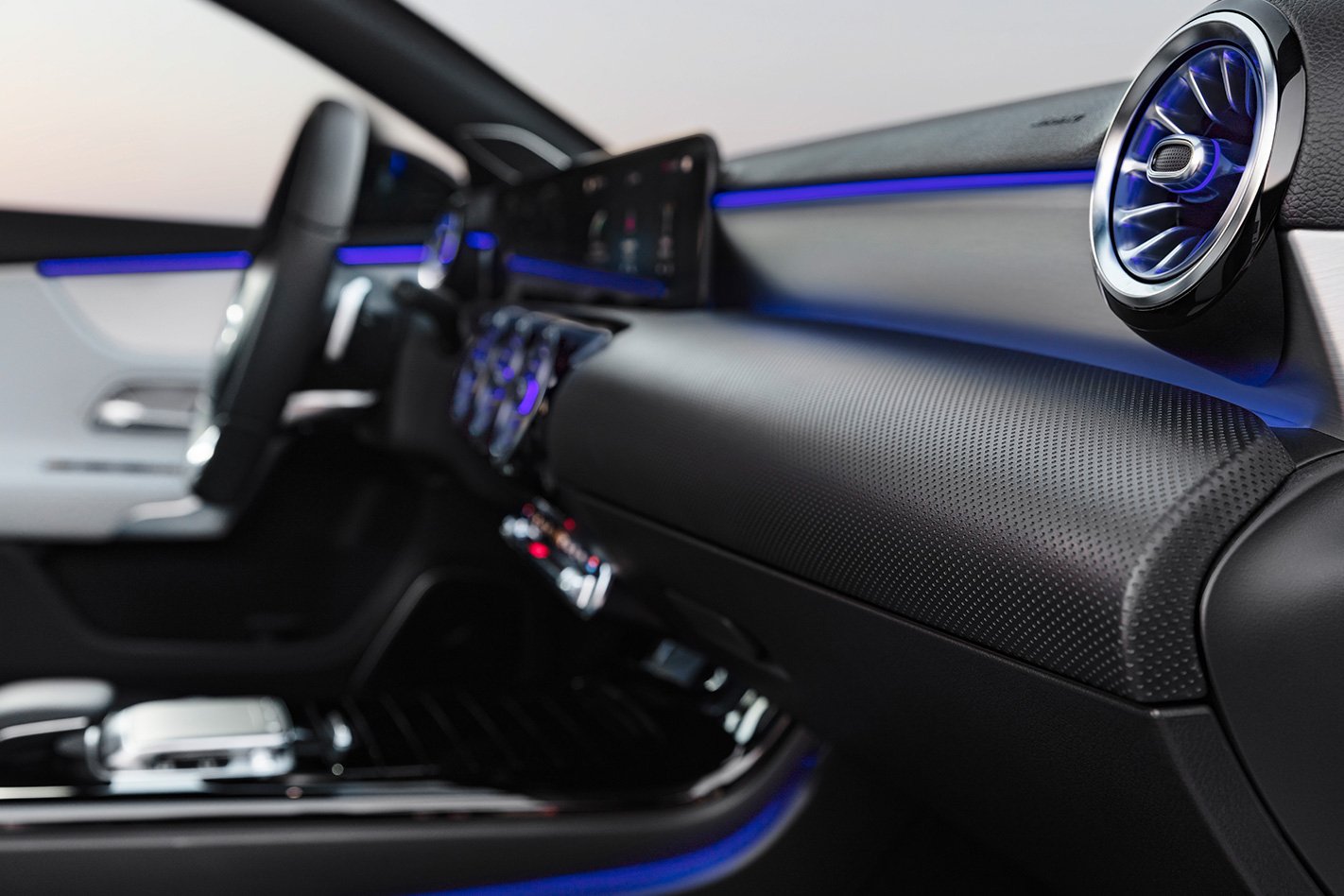
In addition, a less powerful AMG A-Class (which is likely to be called either the A32 or A36 according to an Autocar report) will join the new line-up.
Fiat’s $22K 500 Pop Cabrio easily snares the title of best-value convertible, but there are a few other value-rich options for sunseekers.
1st: Fiat 500 Pop Cabrio
Meet the car that beat its nearest rival by a greater margin than any other in Gold Star Value 2017. The Fiat 500 Pop Cabriolet amassed 50 percent more points than its nearest rival, most of these on the back of a $22,000 purchase price that makes it the least-costly drop-top in the land, and some $17,000 more affordable than the Mini Convertible.
The Fiat’s three-year resale is decent, at 54 percent, and sees it lose around $10K in the initial years – around half what key rivals shed. A little atmo 1.2 works with the 945kg kerb weight to deliver 5.0L/100km official economy, to undercut all comers on the fuel-cost front, and the Fiat boasts the cheapest annual insurance, too.
2nd: Mini Cooper Cabriolet
Lopping the roof lets the Mini’s 1.5-litre triple’s characterful warble into the cabin. The engine also helps the Cooper achieve 5.5L/100km economy to score good points against the fuel-cost criterion.
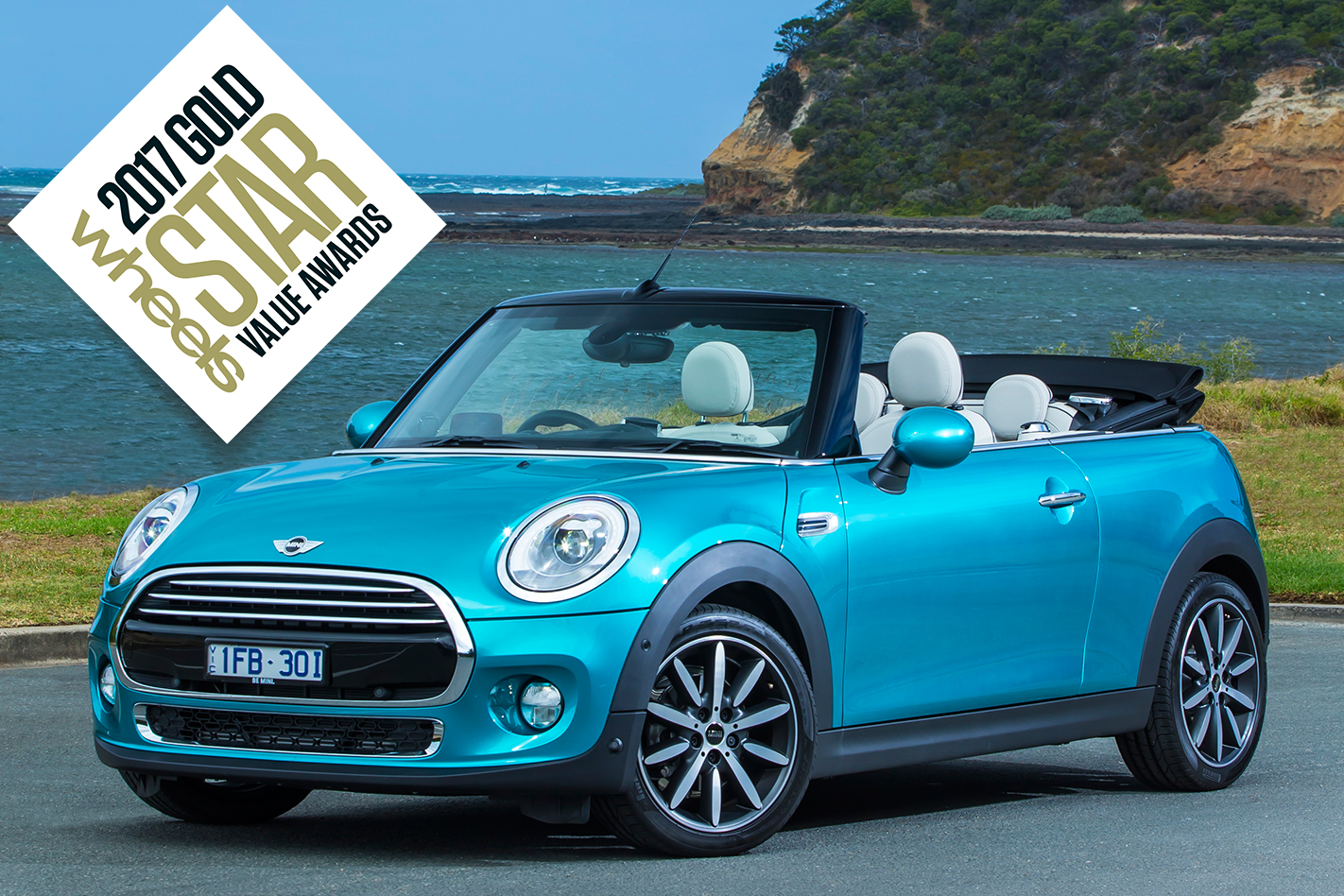
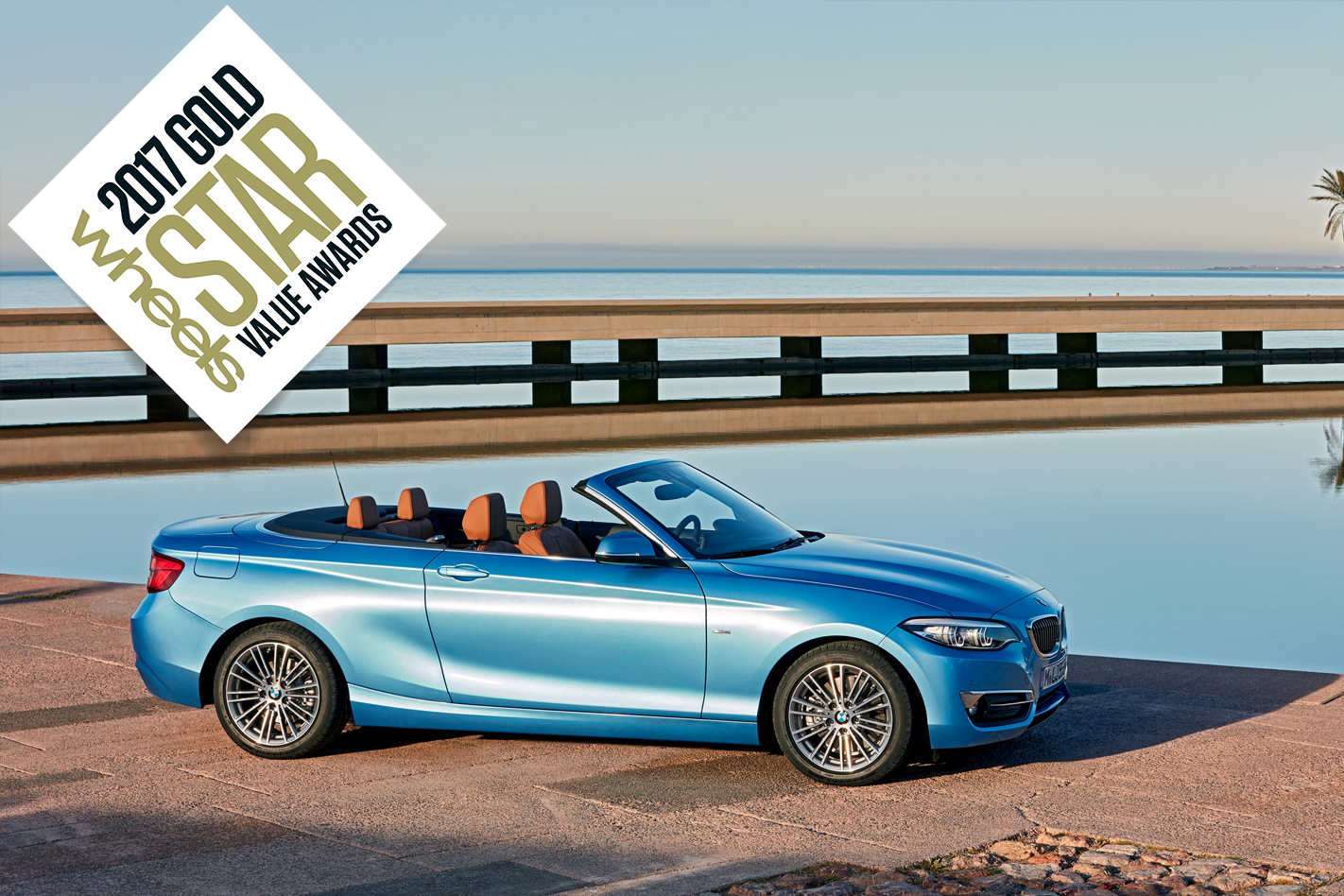
A very solid 61 percent three-year resale helps the BMW 220i offset a purchase price significantly higher than the cars that beat it, and the 220i delivers 2.0-litre turbo appeal to justify the outlay.
RATS and mice snacking on plastic bits of cars are responsible for about 200 insurance claims a year, a special investigation by WhichCar can reveal.
Statistics provided by insurance group Suncorp – the owner of car-related brands including AAMI, APIA and GIO – has revealed wayward rodents have consistently chewed through plastic parts on cars for the last five years.
And it appears their diet is quite varied, too.
Suncorp spokesman Michael Mills told WhichCar that in most instances where an animal had caused damage under the bonnet, it appeared rats were the ones responsible.
“Rats are the prime culprits,” Mills said. “They chew things and they like to nest under the bonnet.”
| What to do if your car is broken into
According to Mills, chewed wiring – where the animals strip the plastic insulation off the hundreds of wires that control modern car engines – was the most common cause of damage. However, other examples of damage include:
● Chewing the rubber around the rear tail shaft
● Eating through brake lines
● Chewing the plastic off spark plugs
● Chewing a hole in the windscreen washer water reservoir
● Chewing through the brake fluid reservoir
● Chewing radiator hoses and fuel lines
Mills said rats and mice would also sometimes get inside the car, and munch on seatbelts and upholstery.
Sometimes it was not until the owner had jumped in behind the wheel before they had noticed there was a problem.
“Customers have reported a wide range of symptoms including cars not starting, airbag warning lights and other warning lights going on, air conditioning not working property, brakes not working and vehicles unable to accelerate properly,” he said. One customer reportedly only found out that rats had attacked her brake hoses after the brakes failed and she crashed her car.
Mills said Suncorp encouraged car owners to regularly check over their vehicles “to ensure they are well maintained and in good condition”.
“These types of claims are more prevalent in the winter months, so keep a particular look out at when the temperature cools,” he said. “If the car is in a garage, ensure your garage is inspected whenever you have your home inspected for pests.”
When Kia pulled the silk sheets off its Proceed Concept at this year’s Frankfurt Motor Show, the Korean carmaker wasn’t just previewing what it could do with its next-generation Proceed C-segment hatchback, it was apparently dropping a major hint about what it would do.
The Proceed Concept, as a fastbacked wagon with the front axle pushed far forward and a low-hanging six-window turret, was new territory for the Kia. With an emphasis on style and utility only a secondary consideration, the Concept’s shooting brake silhouette drew parallels with the Mercedes CLA Shooting Brake… except with prettier proportions.
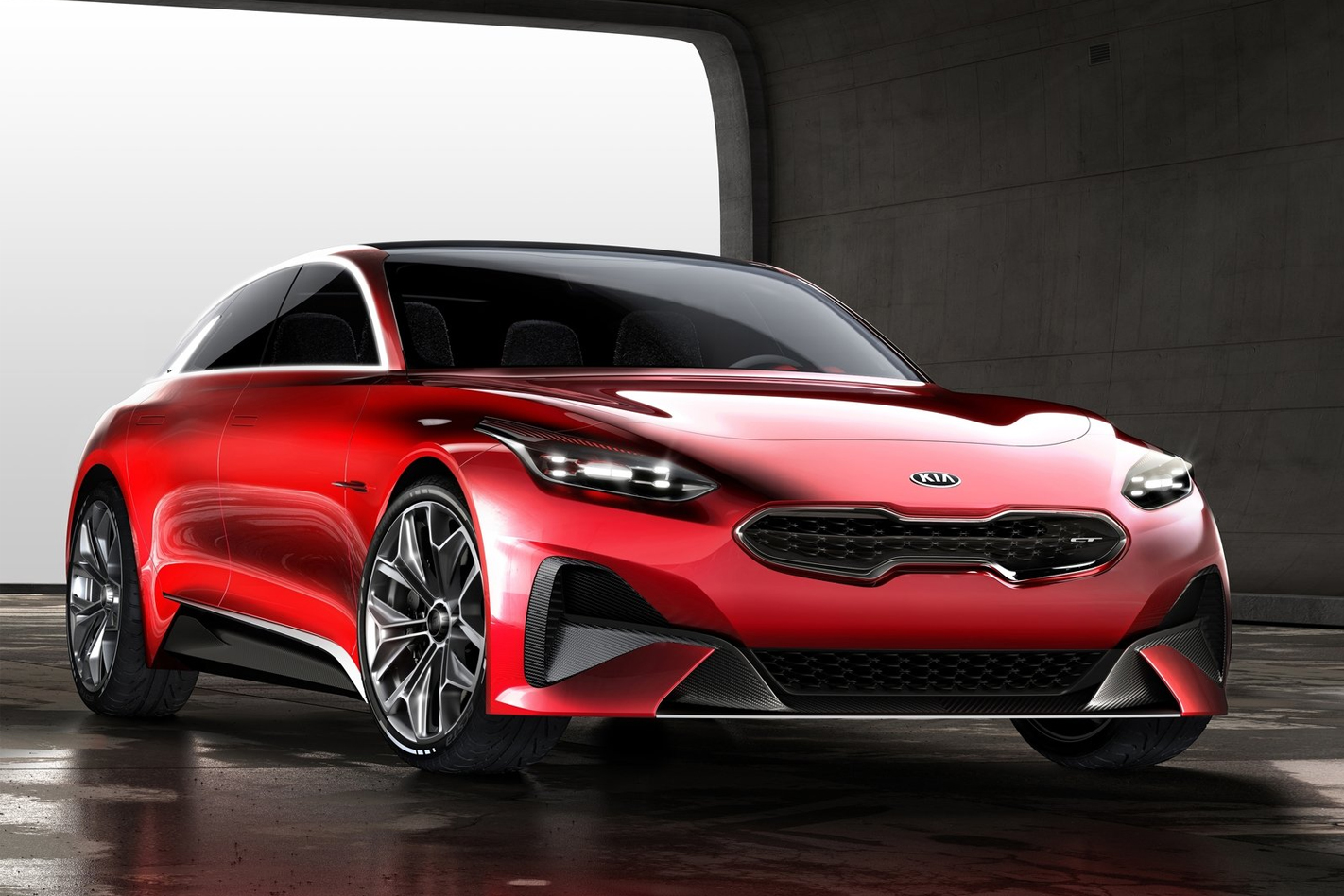
Kia’s apparent willingness to experiment with new bodystyles – the Shooting Brake will be the fourth in the Proceed range, along with a conventional hatch, wagon and crossover – signals that Kia’s recent design renaissance is having a profound effect not only how its cars are styled, but on what form those cars take. Form no longer necessarily follows function for Kia, which represents a paradigm shift for a brand traditionally concerned with making practical, but not necessarily pretty, mainstream cars.
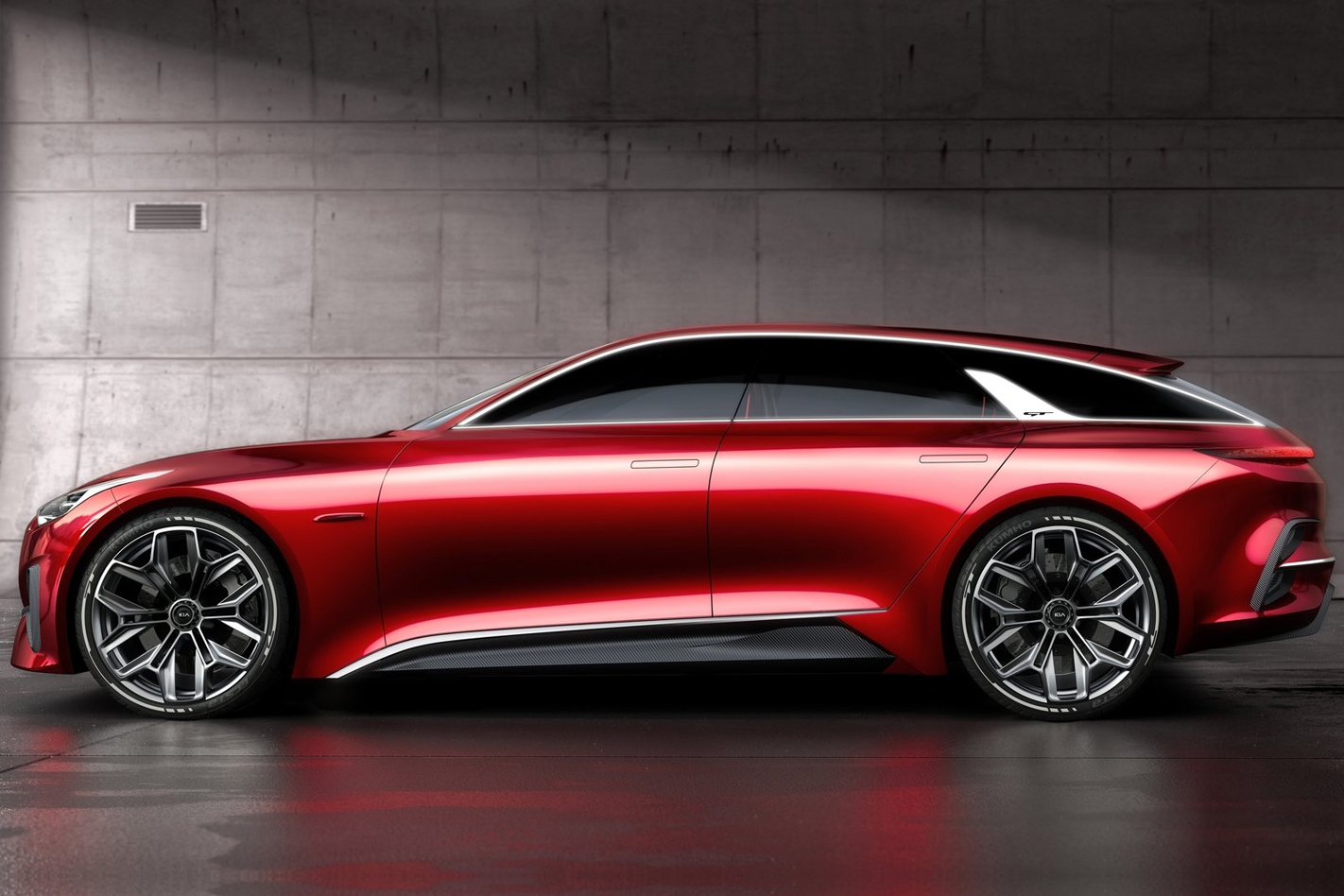
Kia’s CLA-esque shooting brake isn’t due to appear until late next year, roughly half a year after the debut of the regular Proceed hatch in the first quarter of 2018. However while a European debut would be assured, it has yet to be determined whether it has a future in Australia.
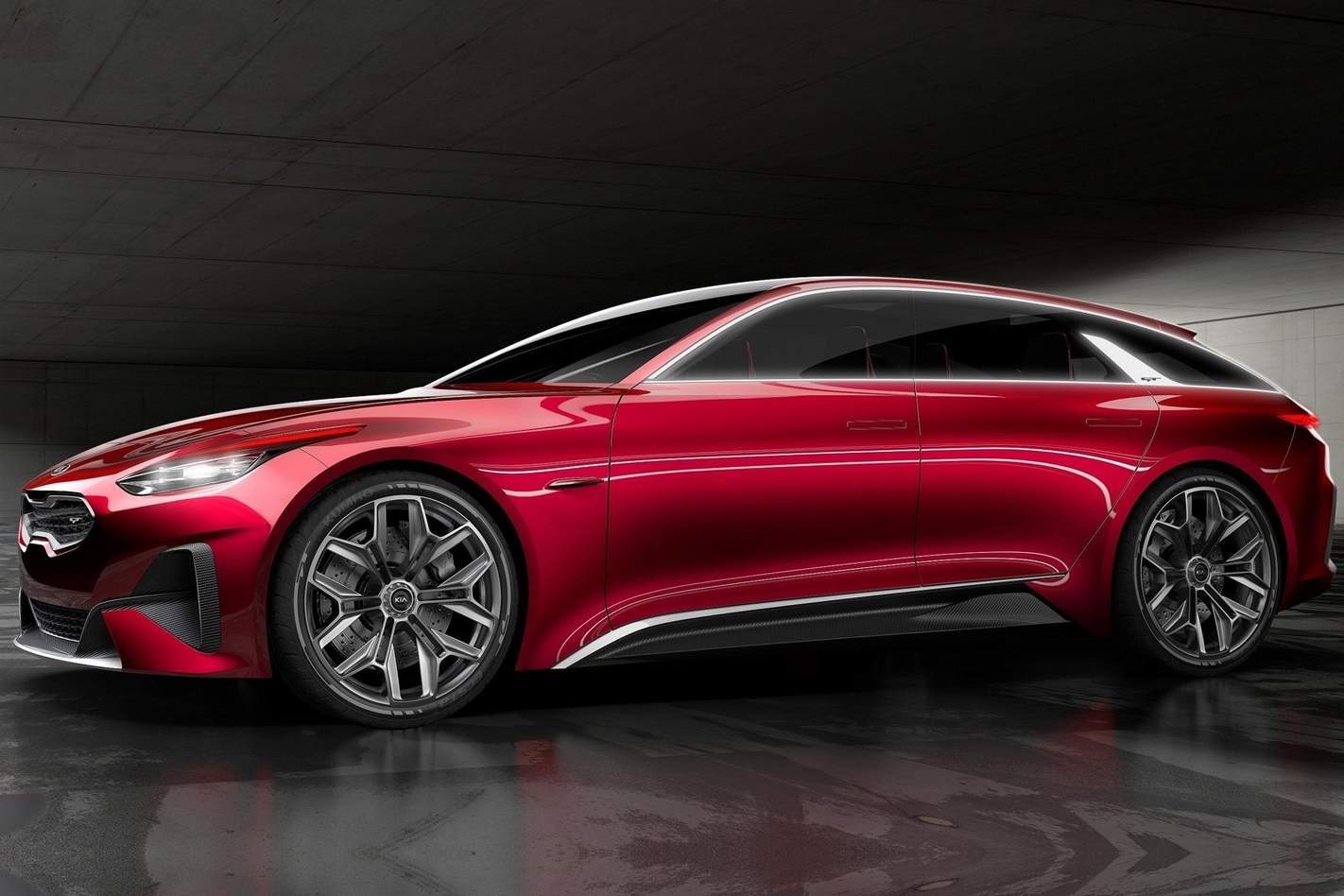
The higher retail price and fatter profit margin of the GT model gave it a fighting chance, but manual-only availability crippled its sales potential and led Kia Australia to drop it from its range. Does that put the next-gen Proceed Shooting Brake well behind the 8-ball as far as an Australian business case is concerned? Watch this space.
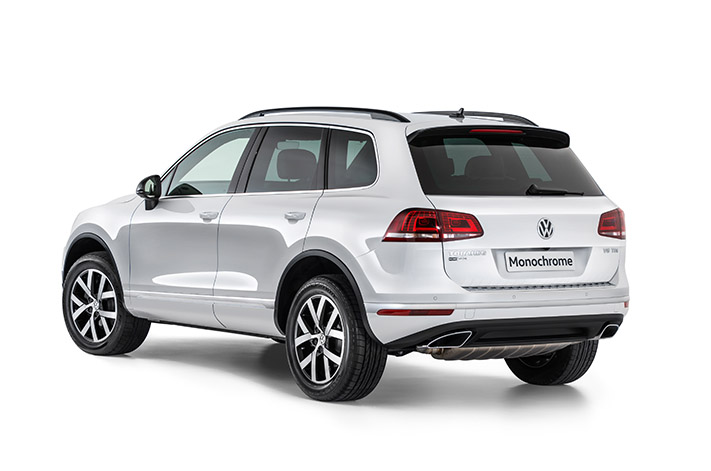
Volkswagen has introduced another runout variant of its Touareg large SUV ahead of an all-new model due next year.
The Touareg Monochrome, is up-spec version of the entry-level 150TDI, featuring unique black-and-white styling and additional equipment.
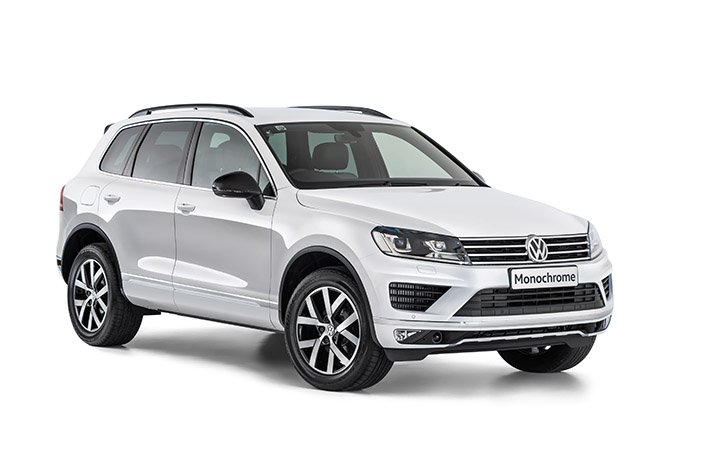
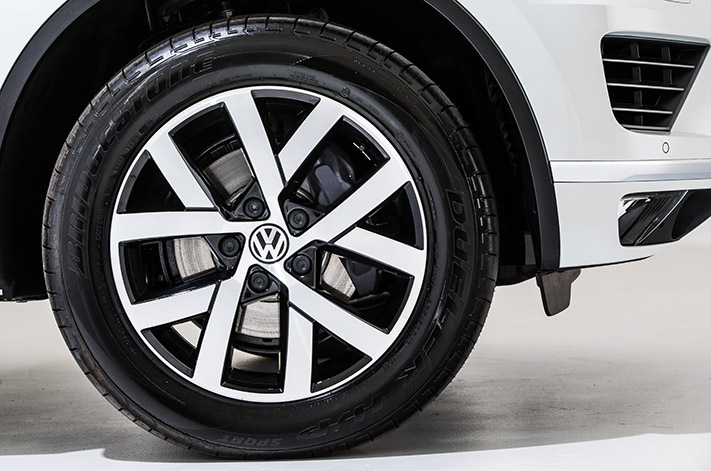
Available in Pure White, metallic Canyon Grey and pearlescent Deep Black, the Touareg Monochrome is distinguishable by its black exterior body elements such as mirror guards, lower front grille and roof rails. It also has dark-tinted LED taillights and 19-inch two-tone ‘Moab’ alloy wheels.
The interior is decked out with two-tone black and Moonrock Grey Vienna leather interior trim complimented by brushed aluminium, piano black dashboard inserts and a Titanium Black headliner.
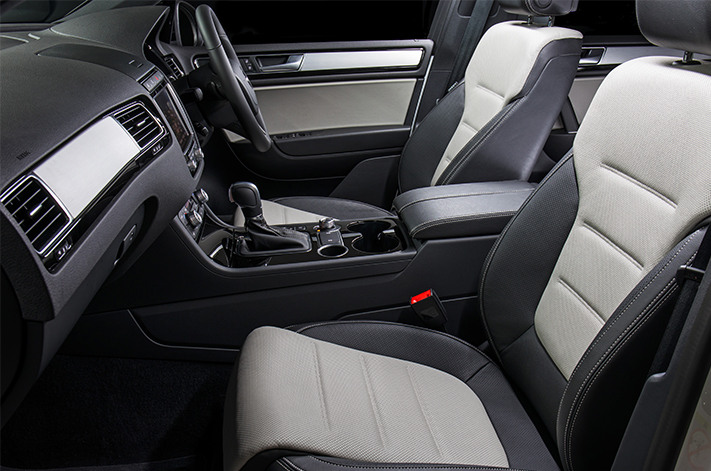
The Monochrome retails for $74,990, which is $6000 more than the standard 150TDI. The extra cost brings extra gear over the aesthetic enhancements including adaptive cruise control, front assist with city emergency braking, proactive occupant protection, keyless entry and start, electric tailgate, ventilated seats, heated steering wheel with paddle shifters and tinted rear windows.
Performance remains unchanged, with the 150kW/450Nm 3.0-litre turbo-diesel V6 under the bonnet coupled to an eight-speed automatic transmission and all-wheel drive.
This is the second Touareg model to be re-equipped in an effort to lure buyers ahead of the next-generation model’s arrival next year.
In March, Volkswagen released a cut-priced, limited edition version of the Touareg V6TDI called the Adventure, which had $5000 shaved off the $85,490 retail price by substituting Nappa leather seat upholstery with Vienna leather, and replacing 20-inch alloy wheels with 19s.
Volkswagen Touareg recommended retail pricing
- Touareg 150TDI – $68,990
- Touareg 150TDI Element – $70,990
- Touareg 150TDI Monochrome – $74,990
- Touareg V6TDI – $85,490
- Touareg V8 TDI R-Line – $116,300
