
QUESTION – RAJESH:
I the like Mazda 3, Kia Cerato S, Hyundai i30 AND THE Hyundai Elantra but I’m confused which one to buy. I also want climate control function in the car.
ANSWER – BYRON MATHIOUDAKIS:
All of the cars you mention are strong choices, but our pick for reasons of driving comfort and pleasure, affordability, and resale value is the Mazda3 Touring – the cheapest version with climate control functionality. It starts at $24,790 plus on-road costs (ORC) for the six-speed manual or $26,790 plus ORC for the six-speed automatic, making it slightly cheaper than the next car you mention, the Hyundai i30 SR with standard climate control ($26,550 manual/$28,850 auto).
The Hyundai Elantra Elite auto with standard climate control is $26,490 plus ORC, while the only Kia Cerato with climate control in the top-of-the-range SLi auto is at $31,990 plus ORC, or $32,490 drive away as advertised.
| Mazda 2 vs Mazda CX-3: which one should I buy?Please consider, too, that while the Mazda has the lowest warranty period (three years/unlimited kilometres), compared to the Hyundai (five-years/unlimited) and Kia (a generous seven-years/unlimited), the 3 Touring has a superior resale value rating, at over 60 percent over a three-year period, against 57 percent for the i30 SR, 53 percent for the Cerato SLI, and 51 percent for the Elantra Elite.Please keep in mind that these are the manufacturers’ recommended retail price, and that many do advertise lower priced specials on a regular basis. And we do recommend that you drive each car as well to find out which one you prefer, as each does offer a different experience from behind the wheel.
Mitsubishi’s plug-in hybrid electric vehicle has returned to Australia featuring fresh looks and more versatility
TELL ME ABOUT THIS CAR
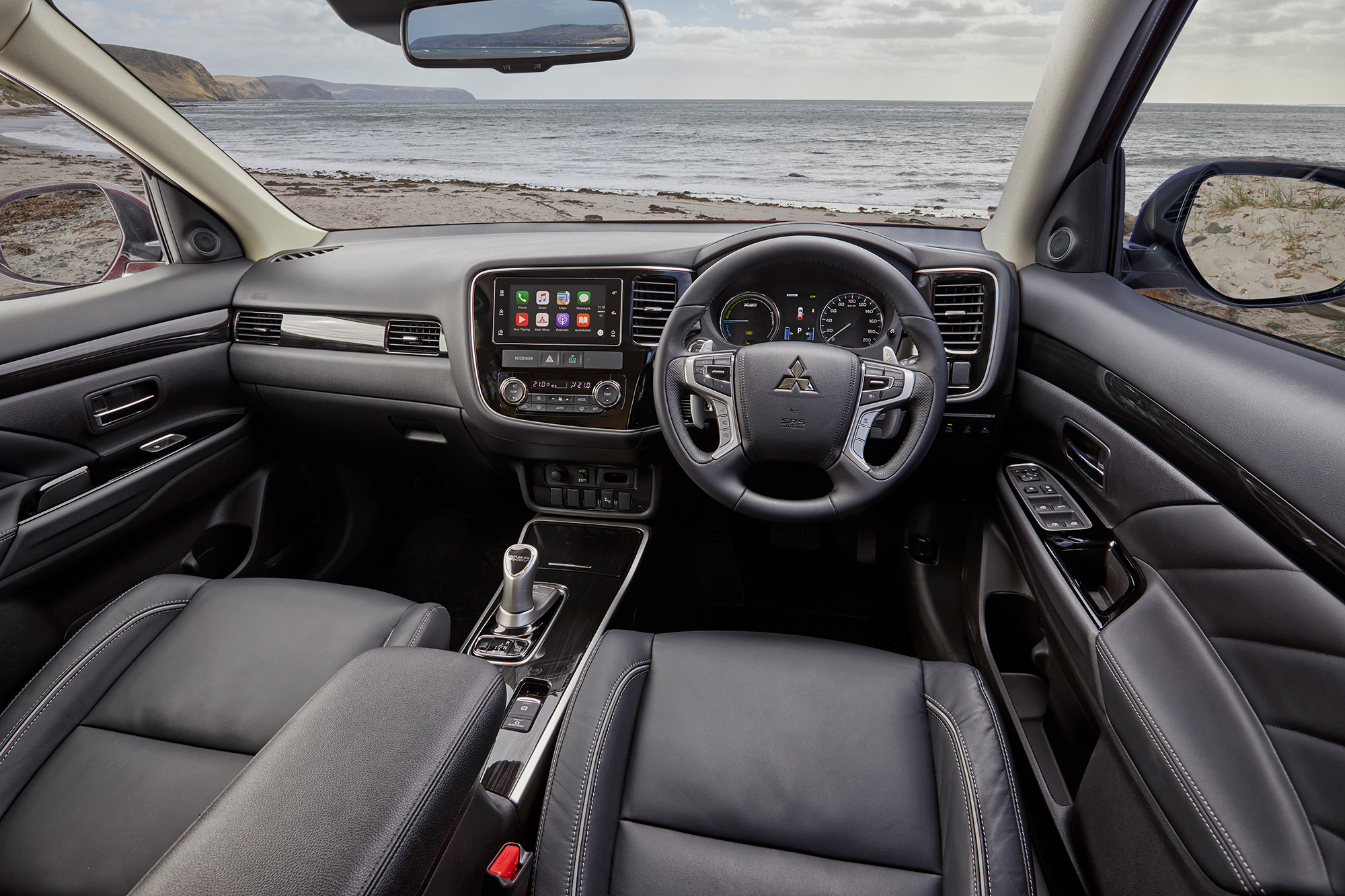
The 2017 Mitsubishi Outlander PHEV is something of an anomaly on the Australian market. It’s a big SUV, but it encourages drivers to plug it into a power point rather than pulling up to a petrol pump, even if you may need to occasionally do that.
Once the electricity runs out, there’s a 2.0-litre petrol engine that can double as a generator to recharge the batteries on the fly.
It’s the best-selling plug-in electric vehicle in Australia, with 1660 of the previous-generation SUVs finding buyers here.
STRENGTHS
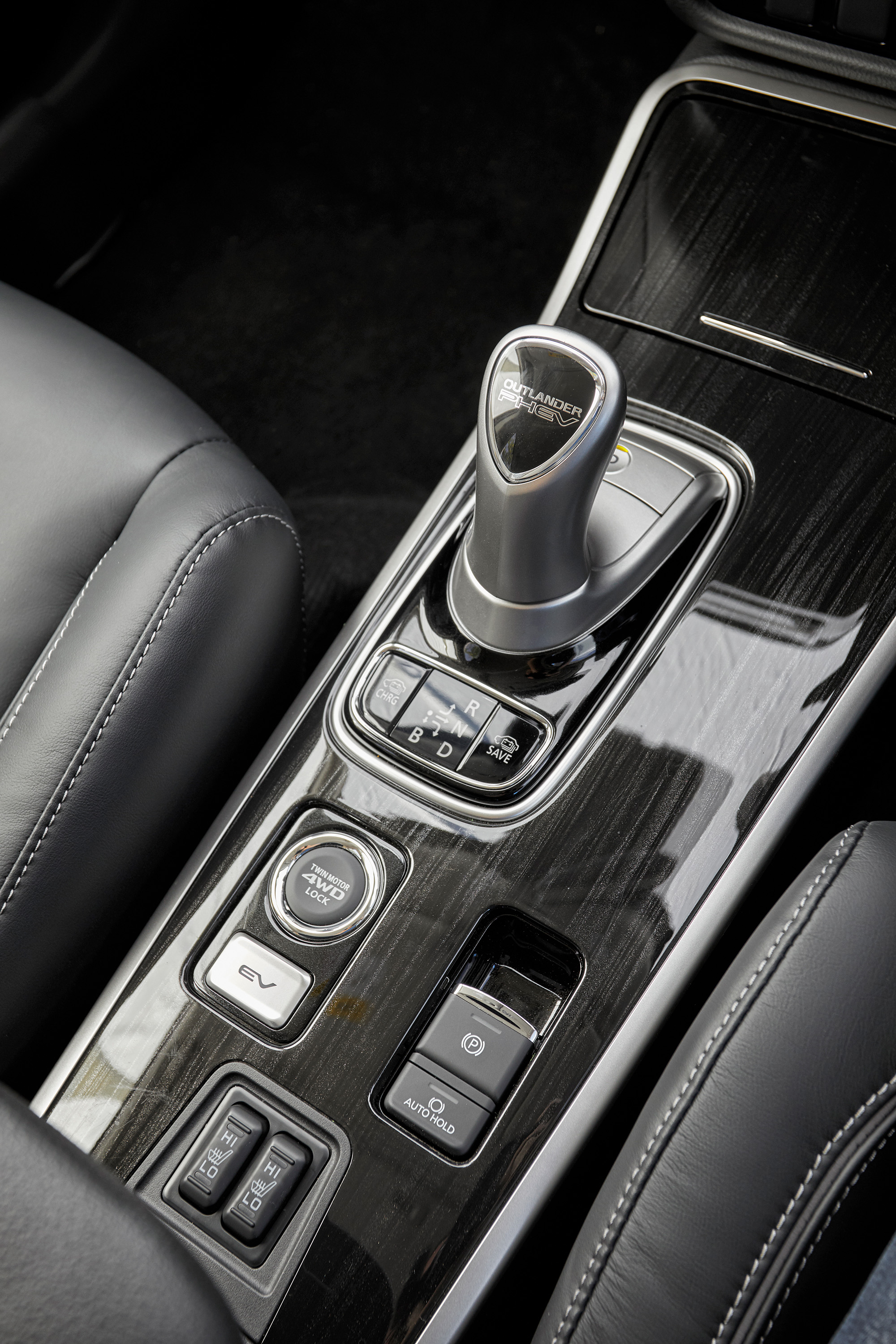
- It can operate as an electric car. A button will force the Outlander PHEV to shut down the petrol engine and force it to stay in EV mode for distances of more than 30 kilometres depending on how it is driven.
- It has two handy new functions that weren’t part of the previous car’s repertoire. One will force the Outlander PHEV to hold the battery at its current level of charge; handy if you’re on the freeway where fuel use is generally lower and you know you’ll be doing some low-speed city driving under electric power alone a bit later on. The other will turn the engine on and tap its resources to recharge the battery.
- It’s all-wheel-drive. If you’re going somewhere like the snow, the Outlander can tap two electric motors – one attached to the front wheels, and the other the rears – to help the SUV crawl along.
- It drives a heck of a lot better. The old car used to jerk and flare when the petrol motor stepped in to help the two electric motors move the Outlander PHEV along. Engineers have ironed that crudeness out, making the Outlander better to live with in stop-start traffic and “normal” mode.
- It has five roomy seats, and a decent-sized boot. Some plug-in cars carry a lot of compromise such as rear seats that won’t fold, low-slung rooflines that make getting in and out tricky, and reduced load spaces. The Outlander loses some luggage capacity because of the big battery hidden under the boot floor, but that is it.
- It’s quieter than before. There’s more sound insulation, including thicker glass on the boot-lid, which makes the Outlander PHEV a lot more hushed on the road.
- Mitsubishi has future-proofed the Outlander PHEV. There’s a new generation of super-fast “DC” chargers slowly rolling out in Australia that reduce the time it takes to get the battery to 80 percent in about 25 minutes instead of hours. They’re not common, but even so, Mitsubishi has fitted each Outlander PHEV with DC fast charge ability.
- Plug-in cars seem to be holding their value quite well in some cities where the government charges congestion fees, but gives electric cars a free ride. If it ever happens here…
WEAKNESSES
- Prices have gone up. The cheapest Mitsubishi Outlander PHEV has now jumped above $50,000 for the first time.
- It’s an orphan. The plug-in drivetrain is exclusive to the Outlander, and not other models such as the smaller ASX or even the Triton trade ute.
- Other conventionally engined Outlanders have seven seats, not five like the plug-in version.
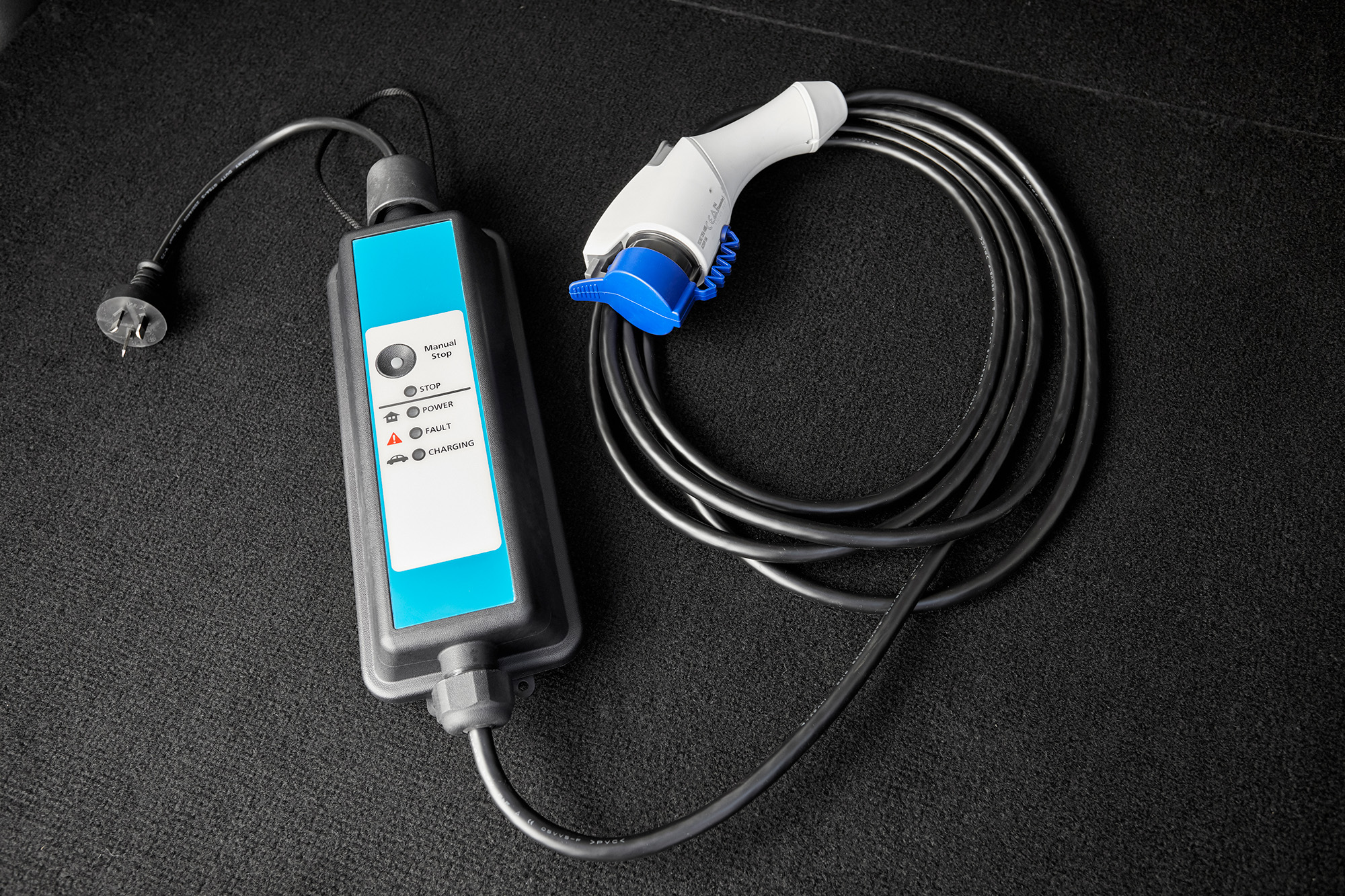
- The plug-in lifestyle may not suit everyone. If you live in an apartment, use off-street parking or the boss doesn’t want to pay for it while you’re at work, recharging the Outlander PHEV will be a problem.
- The Outlander PHEV will still use fuel, even if you want to drive it on electricity all the time. Fuel goes stale, and the plug-in Outlander will automatically burn it off to encourage you to give it a fresh splash of petrol every now and again.
- Adding all the latest safety features means you have to pay $5000 more for the Exceed-badged version. It also ads other features including a sunroof, electric tailgate and heated front seats.
ANY RIVALS I SHOULD CONSIDER?
There are no direct rivals. But weigh it up against the cheaper, conventionally-engined Outlander that is cheaper and seats more people.
Australia’s romance with the rear-drive car is well documented. We all have our own rear-drive memories – fondly recalled for different reasons.
Whether it’s regrettable flashbacks of single-spinner action in your mate’s VN Commodore as a red P-plater; or the first time you planted the throttle in a deserted shopping centre car park at 11.30pm, to feel the rear step out only to end up facing the wrong way, stalled, your heart pounding as a security guard in a Hyundai Getz came chasing after you…
Or perhaps it was the time you finally had an adult income and purchased your first power-packed rear-tyre-fryer – and, with a few track days under the belt, nailed that first drift, that sublime feeling as you successfully balanced throttle and steering and felt like a god.
Cars like the Ford Mustang GT and, though still some years away, Chevrolet Camaro, promise to feed our addictions, along with newbies like Kia’s surprising 272kW Stinger GT. But you don’t need to shell out fifty or sixty large to get that rear-drive feeling with the new car smell – budget back-axle action is taking off in ways we’ve not seen since we farewelled the Nissan Silvia in 2002.
Of course, you couldn’t say it all restarted with the revelatory Toyota 86 and Subaru BRZ twins which, when they arrived in 2012, promised proper, affordable rear-drive thrills, because the Mazda MX-5 has been offering this all along. The thing with the MX-5, though, is that rear-drive has almost seemed a functional piece of its makeup, rather than a character-defining part of its appeal.
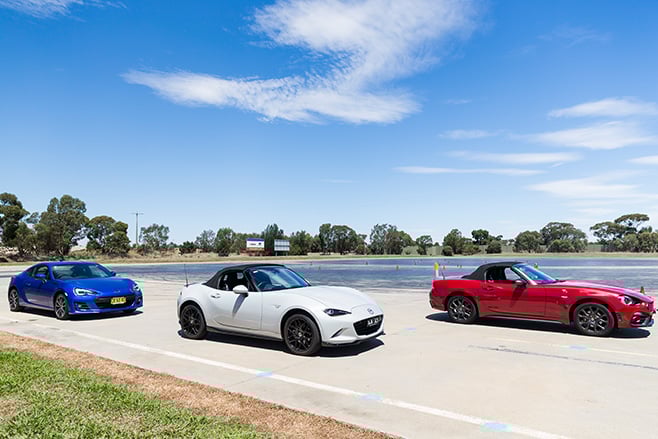
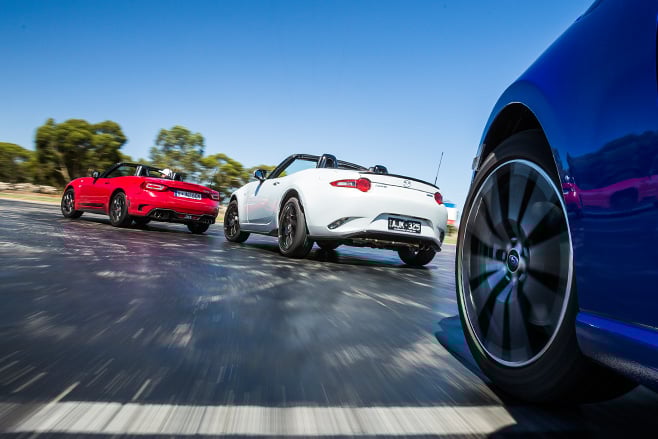
And for the first time, you can now get a factory turbo MX-5 – a global product, not a skunkworks car (like the Aussie-only turbo NB SP and SE). The only thing is, it’s not a Mazda. A quirk of two otherwise disparate car companies working together, Fiat now sells the Abarth 124 Spider – effectively a restyled MX-5 with a completely different engine, a turbocharged 1.4-litre four-cylinder – and with a totally different personality.
This sudden variety of pretty affordable rear-driven funboxes is all great news for anyone pining for a lone tailshaft under the centre console. To the point that, you might have a decision to make. We’re here to help.
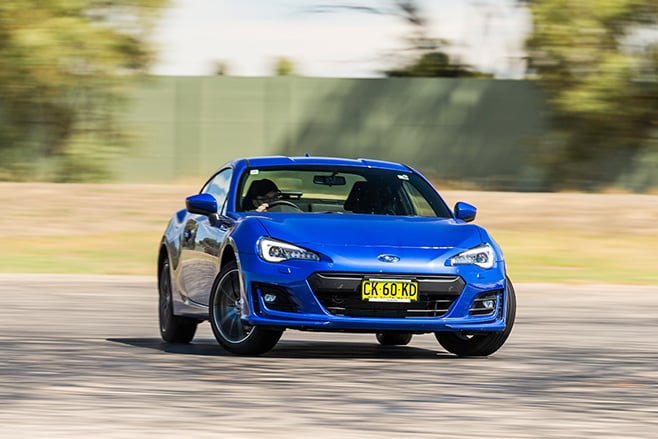
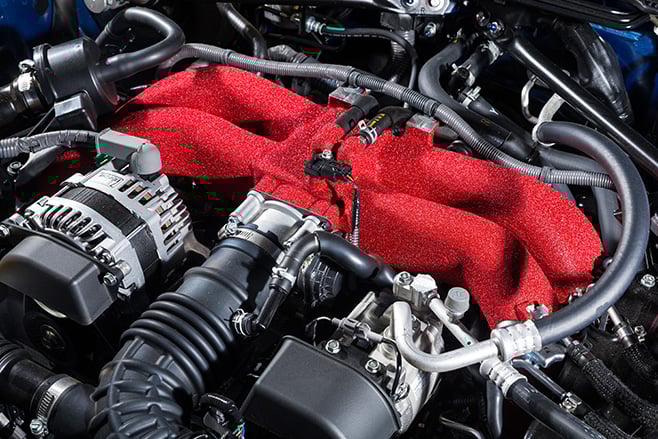
Power is also up, but only 5kW/9Nm, from the 2.0-litre horizontally opposed atmo four-cylinder, now 152kW and 212Nm. And the good news is, the price is down: $1230 less than the 2016 model, now $32,990 for the base manual.
The interior has also received some attention with new infotainment software, an attractive new steering wheel and a cool TFT display showing off vital mechanical signs in the instrument binnacle. And why we’d pick this over a Toyota 86? We always use that car for stuff like this and it was time to give the Subie some love.
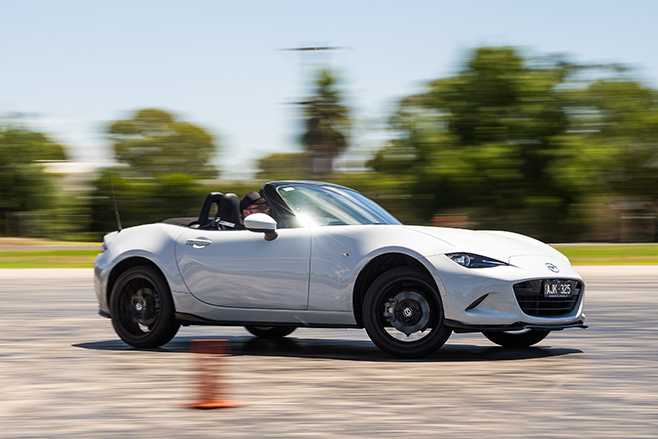
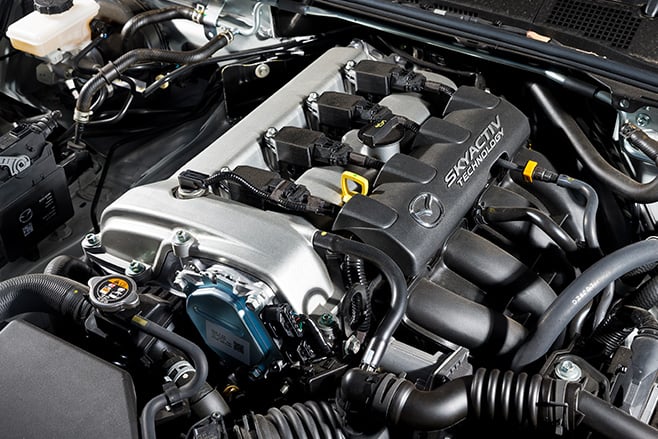
Packing a rorty 2.0-litre SkyActiv high-compression (13:1) nat-atmo four-cylinder, the ND belts out 118kW at 6000rpm and 200Nm at 4600rpm. Less than the BRZ, but the MX-5 has only 1033kg to shift compared to the Subie’s 1242kg. Of course, the MX-5 is also a smaller car.
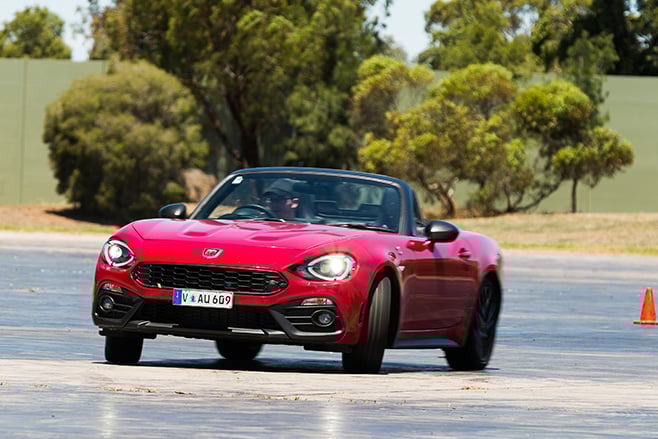
It’s smaller, too, than Fiat’s Abarth-enhanced 124 Spider. At $41,990, our red contender is the most expensive here and surprisingly, a whopping 139mm longer than the MX-5, a lot of it presumably down to the more pointy front and rear bars.
Though at 114kW/tonne, the MX-5 takes the wooden spoon for power-to-weight – the BRZ’s 122kW/tonne pipping the 124’s 118kW/tonne – interestingly, the MX-5 is the fastest car here in a straight line. On a warm and sunny day at the dragstrip, 4600rpm produces the best launch in the MX-5, bringing home the goods with a 14.9sec quarter at 149km/h, and a 6.7sec 0-100km/h.
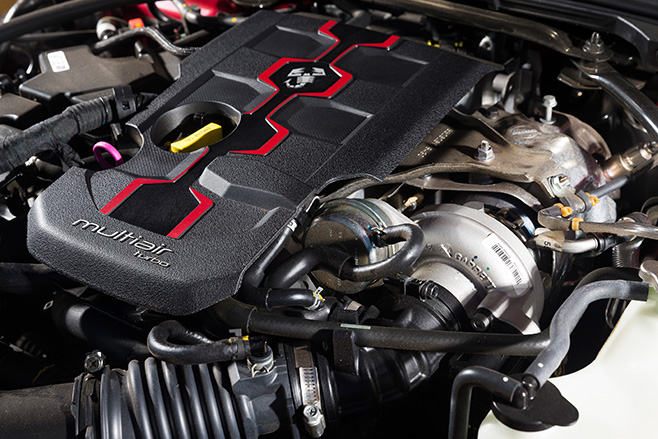
Next up the snorting 124 Spider needs a surprisingly large amount of revs (5500rpm) to avoid bogging down and asks for a lightning-fast one-two shift just before the limiter for a best of 15.0sec at 148.7km/h, and 0-100km/h in 6.9sec. Abarth claims 6.8sec.
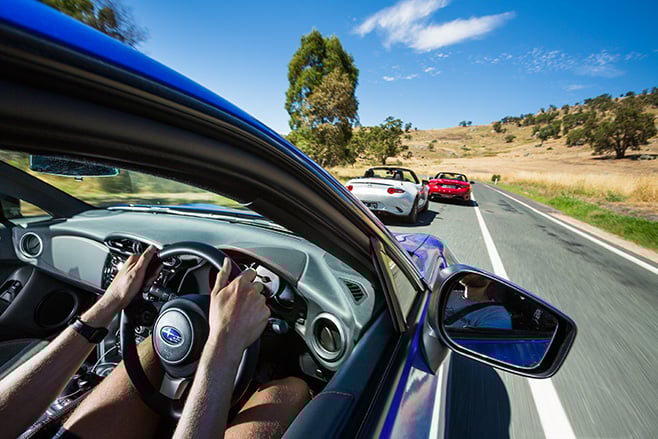
The numbers, too, tell a story of the 124 greatly benefiting from its turbocharged mid-range muscle, the best overtaker here. Put all cars in their top gears and nail it, and though they’ll be groaning against lower revs, it’s interesting that the 124 takes 8.6sec to cover the 80-120km/h rolling sprint in sixth gear, compared to the MX-5’s 11.5sec and the BRZ’s 11.6sec.
It’s turbocharging that gives the 124 Spider a completely different personality to the two other cars here. With the 124’s mid-range turbo torque you can lazily surf, making its grunt the most flexible, usable and versatile of our three. It’s enormous fun in the urban environment where it’s not possible to rev out every gear. Particularly because of the noise.
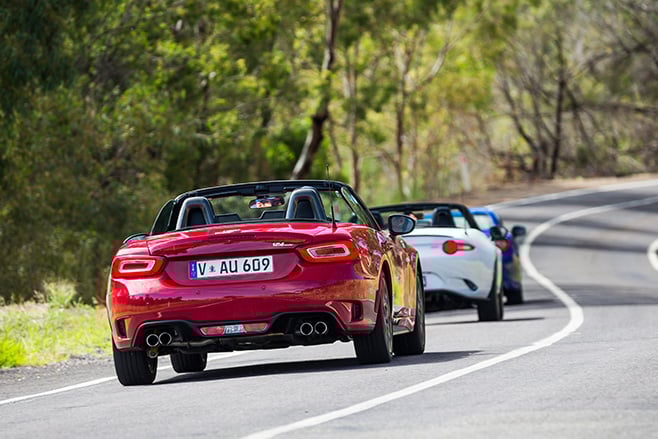
Though it sounds the best, the 124’s engine is not the best engine here – that honour goes to the MX-5’s. When you’re not having to stop at a red light or gun around a 90-degree corner every 100 metres, the open road invites using all of the engine’s performance and this is where the MX-5’s 2.0-litre nat-atmo four shines.
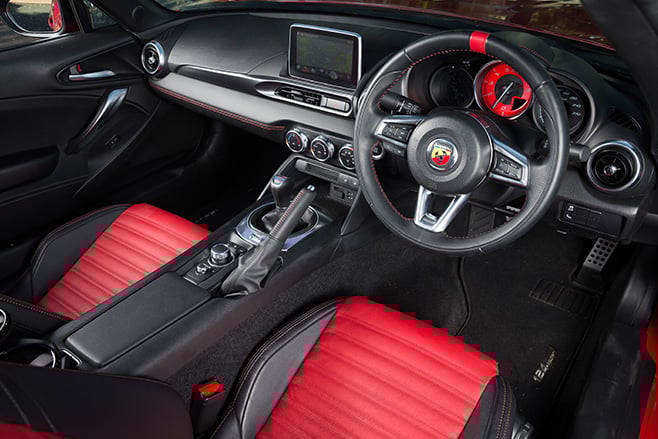
Interestingly, with the roof down in both cars, as wind noise rises and starts to muffle the Fiat’s exhaust, it’s the MX-5’s induction noise that makes it the more involving to the ears at speed.
By comparison to both engines, the BRZ’s boxer four has never felt more emotionless and functional – although if you ask this tester, the BRZ/86 engine gets a bad rap. Around town, below 5000rpm, it’s flat and lazy, and sounds a bit off.
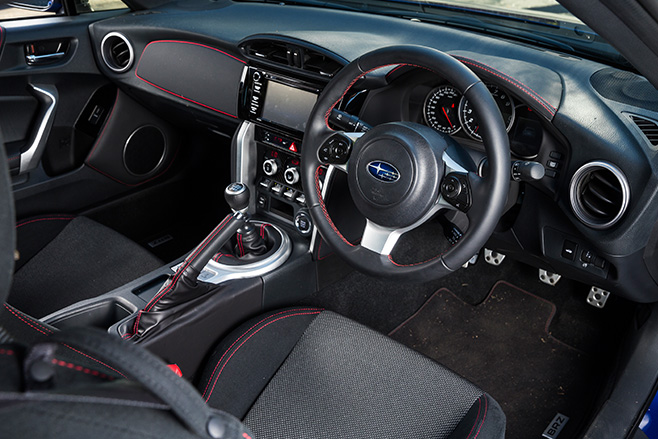
That’s because the BRZ remains the best, most satisfying driver’s car here. If you’ve ever gotten up at 5am just to go for a good drive, the BRZ remains your car. Its steering is still the best in the business, well-judged rack speed combining with fantastic feel and perfect weighting for an incredibly communicative and satisfying front end.
But what Subaru has done, and Toyota too with the 86, is bin an out-dated and unsuitable electronic stability program in place of something both cars – and their excitable rear axles – have been crying out for since day dot.
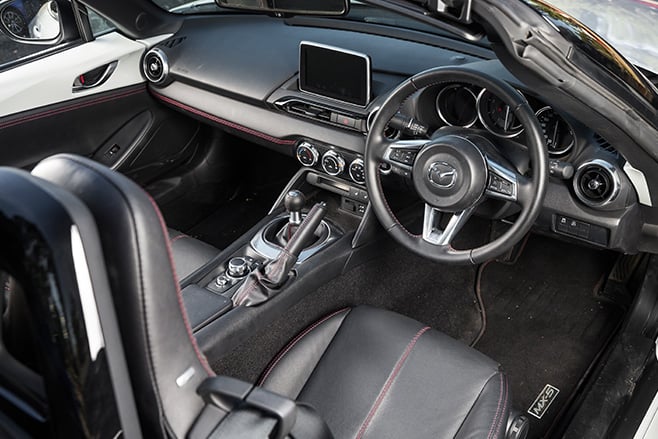
On the same twisty road, however, the MX-5 will have you pulling over to think in ways the BRZ won’t. It is a car that requires considered inputs to get the best out of and enjoy, owing mostly to its incredibly soft – relatively speaking – suspension.
Such is its extremely exaggerated and languid body-roll that the ND MX-5 would feel like a clown car to anyone who’s used to rock-hard coilovers with no body-roll. Pin the MX-5’s throttle and the nose visibly lifts. Hit the brakes and the MX-5 noticeably dives. Start turning and the car leans on to its outside tyres.
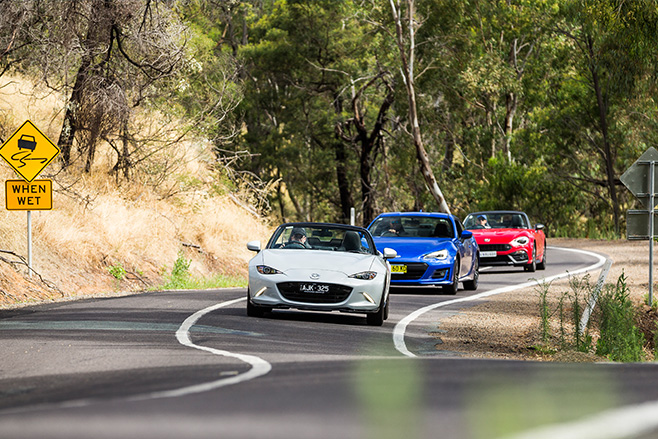
At the same time, the MX-5 is intolerant of scrappy, overly aggressive driving, getting upset if you ask too much of it, too abruptly. To the point that you need to know how to smoothly mop up a mistake prior to turning off its ESP, otherwise it’ll snap back the other way and put you in a ditch before you knew it. In this way, the MX-5 can be a deceptively bitey car. And that is one of its small issues: the ESP comes in two settings, on and off.
While the ESP doesn’t feel particularly intrusive in the MX-5, it’s in the 124 that you find yourself wishing there was a half-off setting. With slightly stiffer springs somewhat taming the MX-5’s surprise oversteer fetish, and with all that low-down torque, this is a car you’ll be searching for uphill hairpins in. It’s just a shame that you’ll need to turn the ESP all the way off for any throttle-invoked action. And as the 124’s handling is fundamentally the same as the MX-5’s, you don’t turn the ESP off lightly.
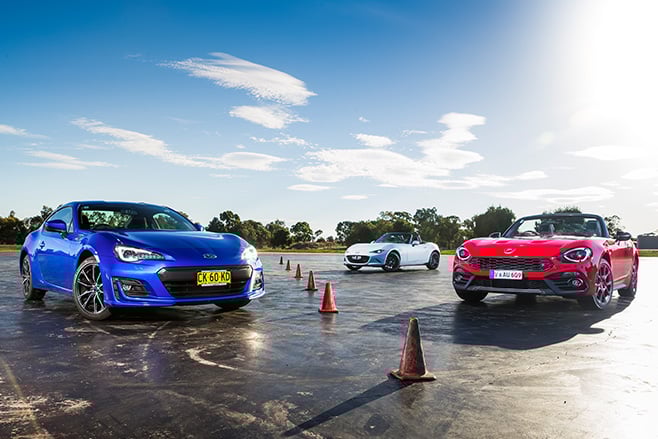
On a bewitching stretch of driving road with nothing but empty bitumen, you and a steering wheel? This is where the 124 slipped to third. While its engine is a downright laugh at lower speeds, on the open road with the roof down, the exhaust starts to become muted by wind noise at speed, and then you’re just left with an engine that feels a little breathless in its top end compared to the MX-5’s.
Thanks to an outstanding chassis and steering – and finally electronics to match – the Subaru is still the best car here for the hardcore driver. But the same driver will be beguiled by the MX-5’s exciting, old-school handling – and, crucially, invigorated by its keen, perky and revvy engine. All three cars on this test are truly excellent in their own ways, and will each appeal to different people, but for us, the MX-5’s combination of exciting chassis and engine – and top-down potential – means we’d grab its keys for the long, fast drive.
May the rear-drive romance continue.
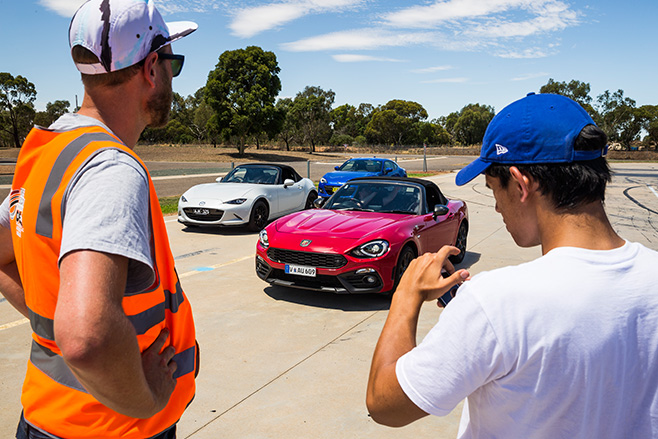
Second Opinion
Other road testers donate their two cents
LOUIS CORDONY – STAFF JOURNALIST IT DOESN’T matter which one you snaffle the keys to, any of these three bring big smiles. I loved the Abarth’s maniacal exhaust note and, interestingly, it has a rear-view camera and lane change alert – missing on the Mazda. But the Mazda’s atmo engine breeds a more endearing character, and its face is much easier to love than its Italian twin. The reasons you’d pick the BRZ over either comes down to its cargo space and sharper chassis. The former makes it easier day to day, while the latter pays on the weekend.
TIM VAN DUYL – DIEHARD ENTHUSIAST FIRST OFF, I can’t stomach the Abarth’s interior. The 80s need be left where it is, in the past. As a former MX-5 owner I gravitate to the ND, but ultimately my two metre frame isn’t very compatible. Would I recommend one to someone? In a heartbeat. Its engine is smooth, effortless, and is matched to nice gear ratios. But the BRZ’s my pick. Had it an engine like the ND, it would be near perfect. The BRZ’s confident attitude under brakes, its low slung feel, the high doors and tall dash make it feel fast even sitting at lights.
Specs
Infiniti has pimped its QX80 luxury SUV with bold looks that are still likely to divide opinion despite being a radical improvement over its aesthetically-challenged predecessor.
The QX80 Monograph Concept previews a new, sculptured design language that signals the Nissan luxury sub-brand’s intention to be a serious player in the large SUV segment.
As previously teased, the front end has had a welcome facelift with the low-set droopy headlights narrowed and raised to lead into the top of a larger ‘double arch’ grille that’s also been reshaped to match recent models such as the Q60.
Deep cheek vents in the lower corners of the front bumper are a more restrained interpretation of the QX50 Concept’s front-end design.
All pillars, except the reshaped-D, are blacked out for a floating-roof effect that emphasises the imposing brick-shaped body that is designed to make its presence felt on the open road.
While the audacious new shape is a welcome change, it remains to be seen if it will translate unaltered to production versions, with Infiniti admitting the concept “illustrates how the design of Infiniti’s QX80 could evolve”.
So, depending on how it’s received at its in-the-flesh reveal at this week’s New York Auto Show, expect some muted lines along with the addition of side mirrors by the time it rolls off the production line.
Production QX80s will share underpinnings with Nissan, Renault and Mitsubishi large SUVs including the Patrol and Pajero.
Being a design concept there are no details about powertrains though there’s likely to be a choice for production models including a hybrid version.
No one wants to be stuck in a car they don’t feel safe in. Thankfully, vehicle safety has come a long way over the years, thanks to tougher structures, better restraints and the addition of active safety technologies.
But with so much jargon and endless sales pitches, it’s hard to know what your car should and shouldn’t have.
According to ANCAP Safety, the three key areas of safety are:
Structural integrity: “how the shell of a vehicle withstands and channels crash forces away from occupants. This varies substantially from make to make, and model to model. A sound structure is vital when it comes to saving lives.”
Safety features: “built-in safety features such as airbags, antilock braking systems (ABS), electronic stability control (ESC) and seat belt pre-tensioners help prevent or manage the forces of impact. All are critical features”
And safety assist technologies (SAT): “advanced safety assist technologies assist the driver in avoiding or reducing the severity of a crash. These include autonomous emergency braking (AEB), lane departure warning (LDW), blind spot monitoring (BSM) and fatigue monitoring systems (FMS).
So what exactly are the features you should look for in your car?
Airbags
All cars have airbags, it’s a legal standard, but look for a car that at least offers head protection, side-airbags, and knee-protection. If a car offers all that and more, then it’s a tick. Look for frontal, side, curtain and knee airbags.
Automatic emergency braking (AEB)
AEB uses sensors and your cars electronic stability control (ESC, now standard in all cars) to stop your car when there’s an obstacle in your vehicle’s path and it senses you’ve not braked. It measures the speed and distance of objects head of you and will automatic apply the brakes if you don’t respond in time to either prevent or minimise an accident. While this is not currently available in all cars, it’s fast becoming a standard and is quite common in new models. Not all automatic braking systems are equal though – some cars will come to a complete stop while others will only slowdown enough lessen the impact.
Adaptive Cruise Control (ACC)
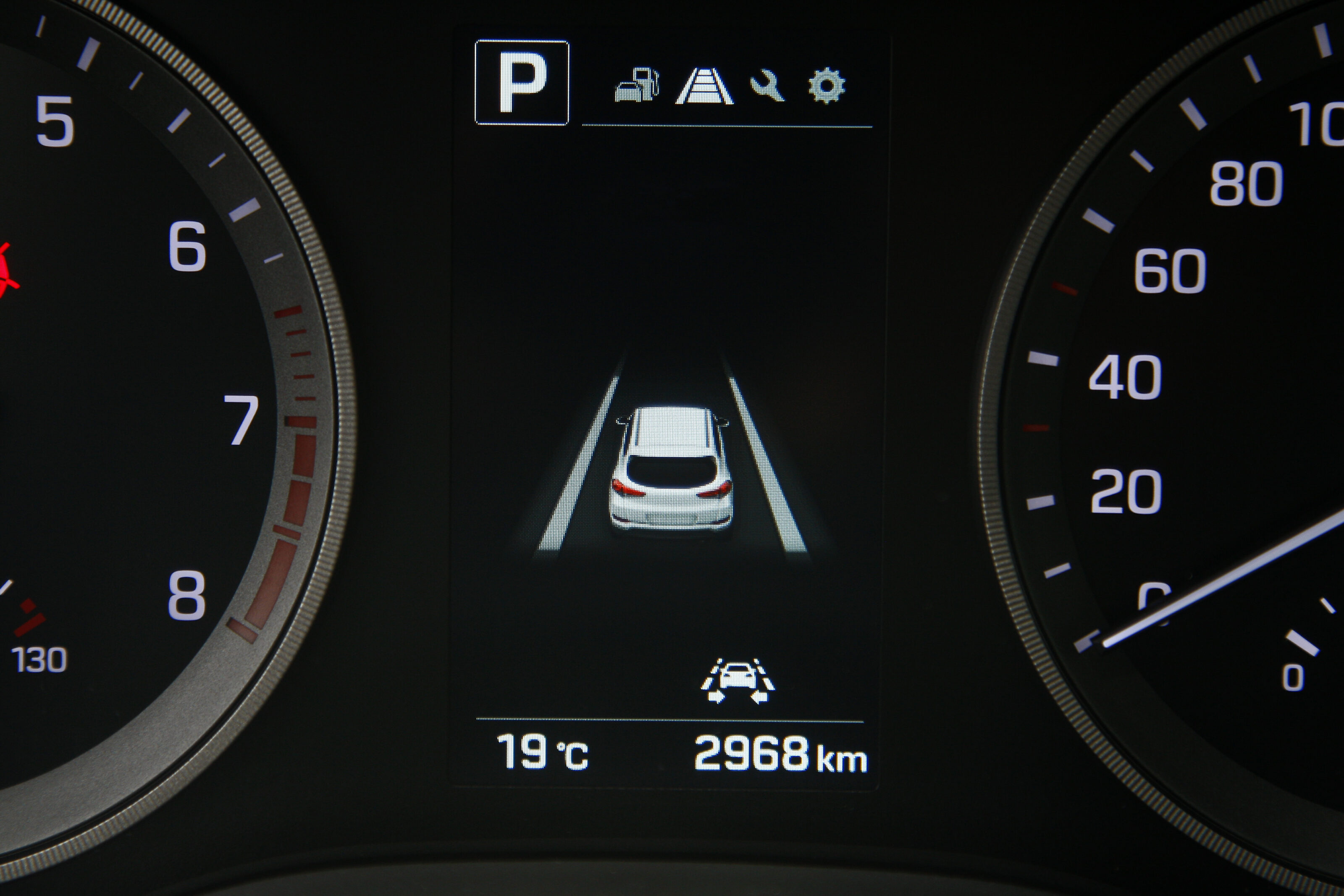
This is far less common but a very handy technology to have in your car. Using radar technology, the system will detect vehicles travelling ahead of you to mirror the speed and maintain a safe distance. So you avoid the annoying problem when you set your cruise control and the car in front of you suddenly slows down, forcing you to hit the brakes. You’ll likely have to pay a bit extra for adaptive cruise control, but it’s worth asking your dealer if it’s available in the car you’re buying.
Lane Keep Assist
According to the Transport Accident Commission of Victoria, 20 percent of fatal road accidents involve driver fatigue. That’s where Lane Keep Assist can help. The technology recognises lane markings and alerts a driver when they’re veering out of their lane without indication and will steering the vehicle back in position. This is still a relatively new technology, but certainly worth looking into, especially if you work long hours or shift work, or regularly drive long commutes. Fatigue reminders and detection are also technologies that can help, so ask about these if micro sleeps are a concern.
Blind Spot Monitoring
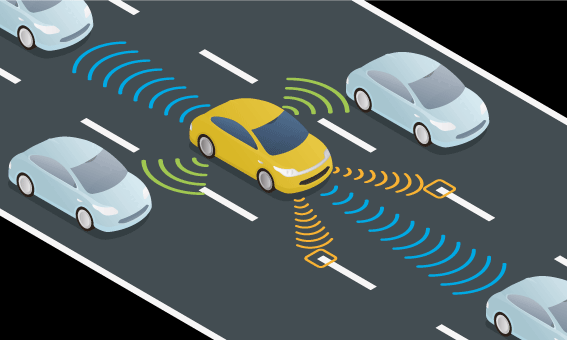
Most of us would have experienced a close call due to your blind spot at some stage, whether it was you changing lanes without checking, or someone else cutting you off and almost swiping out the front of your car. Blind Spot Monitoring uses sensors to warn drivers when someone is in the adjacent lane – this is usually through visual cues like a light on your side mirror along with audio cues like a beep or steering wheel vibrations.
Hill Launch Assist
Depending on the transmission of your car, this will be more valuable to some than others, but basically, when your car sensors you’re stopped on a hill, it’ll automatically apply the brakes to hold the vehicle and prevent it rolling backwards between the seconds of moving your foot from the brake to the accelerator. Particularly handy in a manual!
Reversing Camera
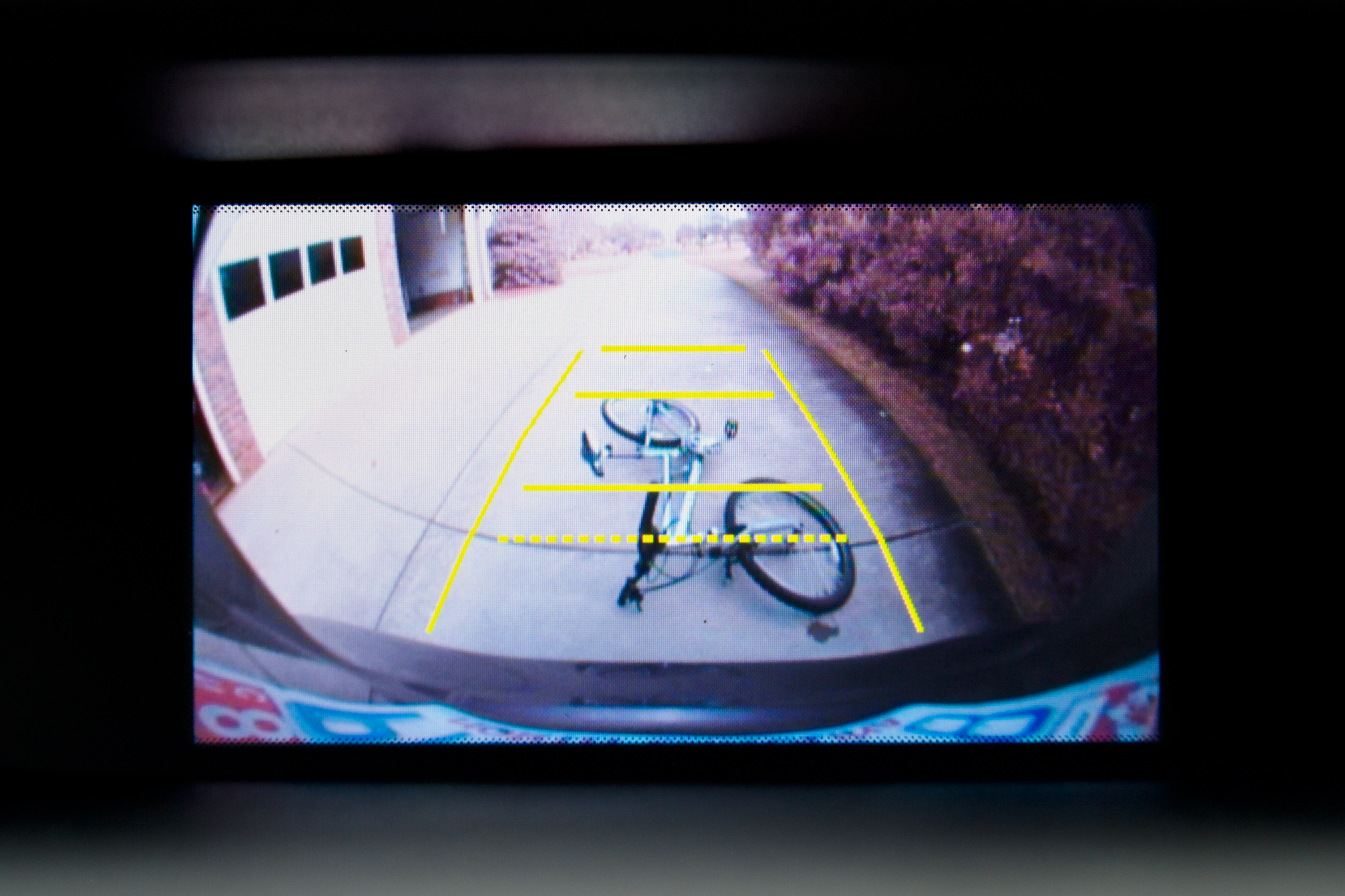
Cameras are almost a standard features in cars these days, with most models offering it at some stage in the line-up. While these are unlikely to prevent a crash on the road, they do help when you’re trying to reverse out of a space or can’t see what’s behind you. They’re biggest value, however, is helping spot pedestrians around your car, particularly children, when reversing out of a driveway.
Audi has the S8 and the S8 Plus, Mercedes-AMG offers the S63 and the even brawnier S65. Maserati weighs in with the powerful Quattroporte and Bentley is laying the finishing touches on the next Flying Spur. And now BMW also wants a share of the high-end, go-fast-in-total-comfort action.
Surely this means an M7 badge, right? Wrong. Just as Audi deems the RS8 badge a step too far, Munich’s new flagship instead carries the M760Li moniker.
“An M7 would not work in this essentially conservative segment,” claims Frank van Meel, head of the M division. “It’s almost impossible to find enough hardcore enthusiasts for an emphatically sporty, uncompromised, radically dynamic entry. That’s why we created the M760Li which aims to combine the best of both worlds.”
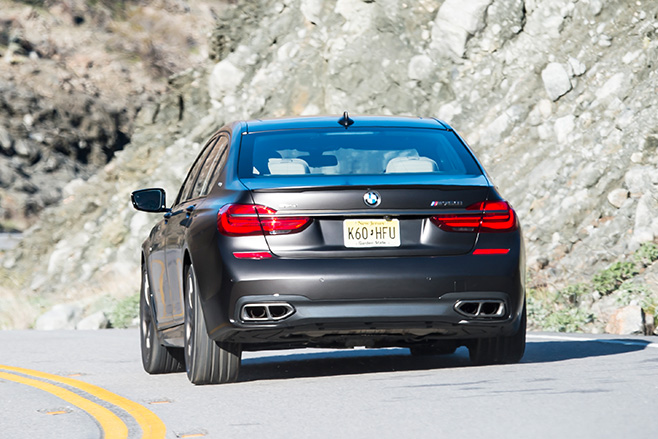
This wild beast, conceived within the skunkworks of the M division, weighs a substantial 2180kg, but counters that with an equally mammoth 6.6-litre, twin-turbo V12 packing 448kW/800Nm. Luckily, all-wheel drive harnesses all that oomph and rear-wheel steering subjectively shrinks the extended wheelbase and spices up turn-in at the same time. To keep the experience plush and 7 Series-esque, the package also includes air suspension, adaptive damping and active, electrically-operated anti-roll bars.
Getting the entire picture and fully comprehending the figures at play here is to understand that the M760Li is verging on supercar status – on paper, at least. Some thoroughbred sports cars would certainly pale with envy. With launch control activated, the would-be M7 gets to 100km/h from rest in just 3.7 seconds. Specify the M driving package and you can cruise at 305km/h instead of a mere 250km/h.
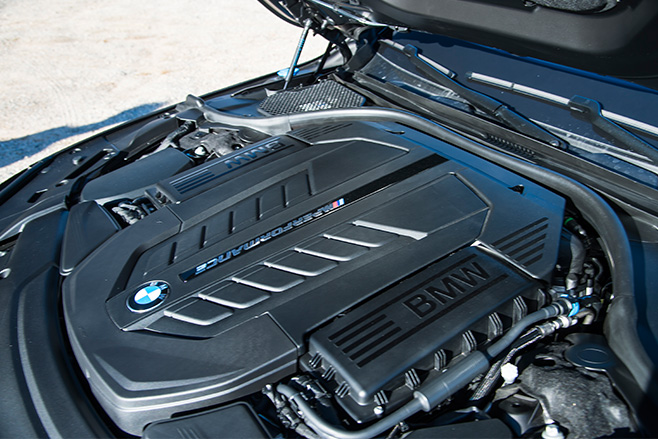
So the M part of the M760Li badge doesn’t look so out of place after all, however this model distorts the big picture even more when you remember that it’s primarily targeted at people who’ll sit in the back seat.
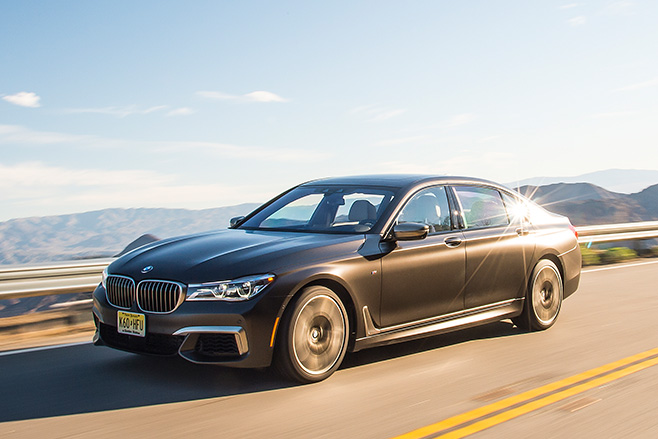
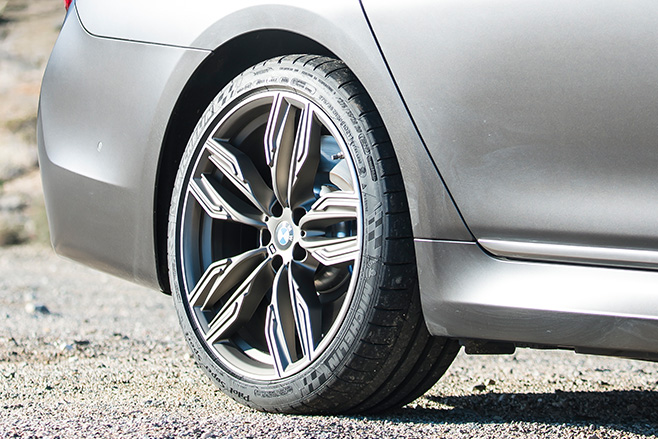
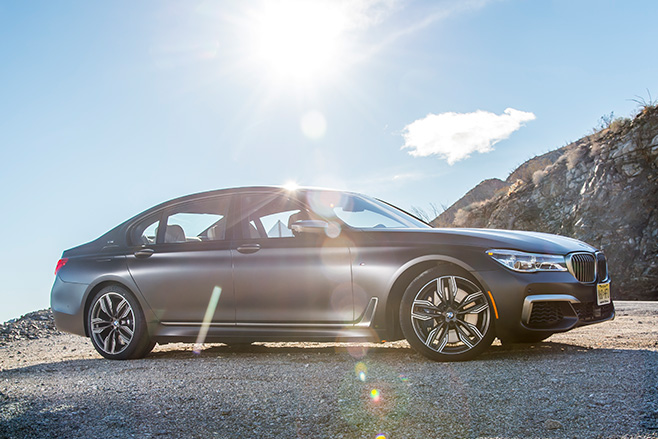
That is, image-greedy, chauffeur-driven customers with a penchant for opulence. Hence, sir/madam must have the classic M treatment, which looks funky and functional thanks to the wraparound aerodynamic kit and the bespoke 20-inch wheels, wrapped in 245/40 Michelin Pilot Sport tyres up front and even wider 275/35s at the back.
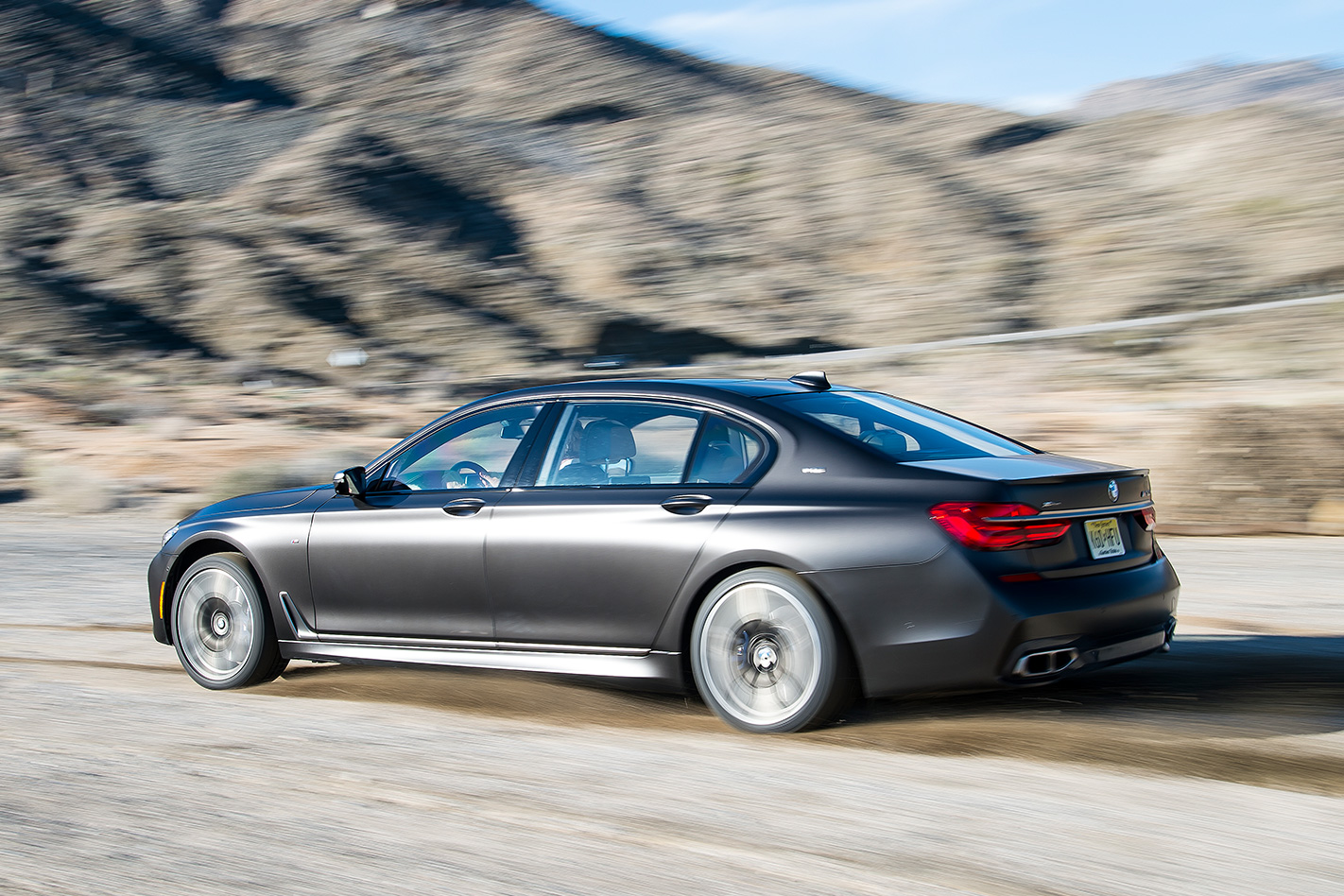
With former DTM champion Martin Tomcyk at the wheel of the pace car, our steed achieved remarkable tyre and brake degradation in no time. With so much weight, mass, momentum and ambition entering the equation, a first-class ticket straight to understeer city was the order of the day.
The nose-heavy V12 refuses to turn in on first attempt, but it’s something you deal with by taking it in your stride. Frivolity is electronically interrupted anyway by an overzealous stability control system. It can largely be avoided by opening up the steering and drip-feeding the masses of torque when on the limit of adhesion.
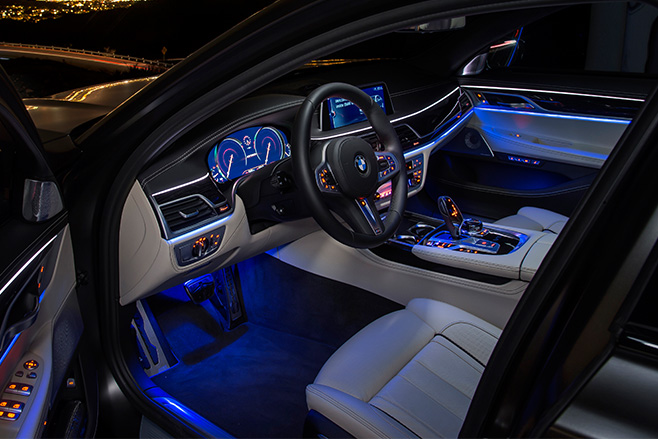
Basically, forget Comfort and Comfort Plus, except perhaps to tone down the dampers on truly rotten tarmac. Sport is clearly the preferred calibration; it warrants a meatier steering response and a livelier dialogue between the engine and transmission.
On this particular stretch of closed, skyward spiralling blacktop, the M760Li would likely eclipse its rivals in eight-out-of-10 disciplines. It is, for instance, more planted and focused than the S-Class twins from Affalterbach and its chassis is much more compliant than the unforgivably stiff S8.
Where the brakes have to be put on the praise is, ahem, in terms of brakes. On the second downhill run they start showing signs of distress, powdering the blue calipers with acid grey dust. Additionally, the overzealous stability control and the heavy demands of track work means the brakes exhaust early.
After merely three hot laps, effort increases notably and the pedal travel is a direct result of arresting the pace underfoot. All told, the stopping system does put on a brave face given the punishment being dished out.
Despite certain, shall we say, idiosyncrasies, this BMW does win you over with its epic performance, riveting cornering grip and the intriguing handling. Nurse the front tyres and the latest would-be M-car will inspire and satisfy, challenge and reward while generally going through its motion with verve and sharpness. For a change, all those weighty, chassis-related trickeries suddenly make a lot of sense. Body roll is now merely a gesture, chuckability bonds with directional stability and the overt sure-footedness permits indecent cornering speeds.
Similar praise would apply to an identically prepped 750i – which is another way of saying that it’s primarily the charismatic V12 which lifts the M760Li above the rest of the range. The trick twin-turbo motor makes all the right noises, too, from a bass-heavy purr at idle to a full-bodied growl when approaching the 6000rpm cut-out. Thankfully, the M division spared us the chip-induced, brash acoustics with fake throttle blipping and computer-generated lift-off misfiring.
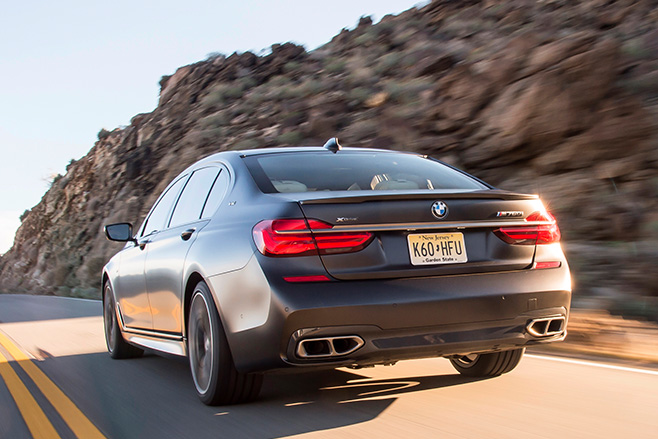
Not bad for what is essentially a revamp of an old engine, even if it must do without fancy e-chargers, 48-volt circuits, coasting functions and zero-emissions friendliness. The latter is also probably a good thing considering the claimed combined 12.6L/100km fuel consumption.
“BMW is one of the few manufacturers that still builds twelve-cylinder engines,” says van Meel. “With the 7 Series-based Alpina B7 covering the V8 side of the business, we took the V12 under our wings because of its awesome power and brand-shaping glory. You see, numbers aren’t everything in the ultra-luxury league. What matters every bit as much are the emotions triggered by this complex unit and the car it propels.”
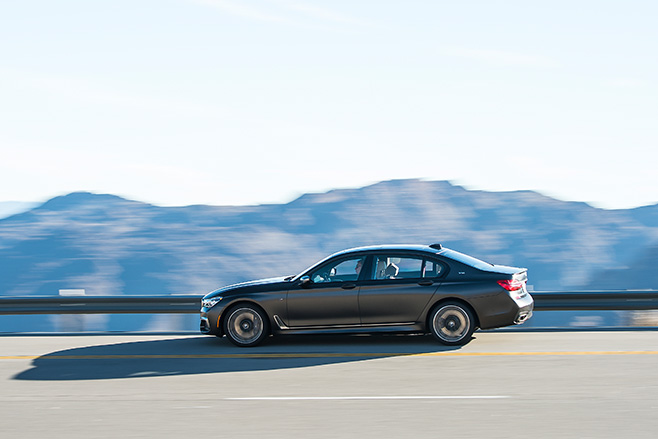
Overall, this is a car defined by marketing. It’s an impressively capable compromise and an intriguing breed of differing ideologies. Its strong dynamics, paired with commendable refinement, are the strength of this somewhat offbeat BMW. After all, you have to remember that this is a big car with staid looks, gentlemanly manners and more technological trickery than one can master.
Ultimately it misses M7 approval because its appearance is simply not special enough and its donor 7 Series DNA is conservative to its (carbon) core. Its trademark goals are, in part, compromised by the massive weight, ho-hum brakes and inherent preference for understeer, although the bonkers acceleration, seemingly mid-size-car agility in a full-size package and the thoroughly involving driving experience makes praise easy to dish out.
SPECS
Body: 4-door, 5-seat sedan Drive: all-wheel Engine: 6592cc V12, DOHC, 48v, twin-turbo Bore/stroke: 88.3 x 89.0mm Compression: 10.0:1 Power: 448kW @ 5500-6500rpm Torque: 800Nm @ 1550-5000rpm Power/weight: 206kW/tonne Transmission: 8-speed automatic Weight: 2180kg Suspension(F): A-arms, air springs, anti-roll bar Suspension(R): multi-links, air springs, anti-roll bar L/W/H: 5238/1902/1485mm Wheelbase: 3210mm Tracks: 1611/1640mm (f/r) Steering: electrically-assisted rack-and-pinion Brakes(F): 395mm ventilated discs, 4-piston calipers Brakes(R): 398mm ventilated discs, single-piston calipers Wheels: 20.0 x 8.5-inch (f), 20.0 x 10.0-inch (r) Tyre sizes: 245/40 ZR20 (f), 275/35 ZR20 (r) Tyre: Michelin Pilot Sport Price as tested: $419,000 Pros: Effortless performance; tech; handling Cons: Tame styling; weight, underdone brakes Star rating: 4/5
“The introduction of the HSV GTS-R is much more than another new model release.” Or at least it was in 1996.
HSV’s original press release for its ’96 VS GTS-R touts it as “a new model which takes Australian road car performance to new height and introduces an unprecedented level of customer service.”
HSV wasn’t lying, as the purchase of a GTS-R included a trip to Melbourne, a tour of HSV and HRT’s facilities, as well as a few other nifty bonuses.
- A flight to Melbourne via QANTAS business class.
- Executive welcome & VIP tours of HSV production and engineering facilities.
- An engineering presentation including GTS-R specifications, technical background, and development program.
- An executive luncheon hosted by HSV management.
- A tour of Holden Racing Team headquarters.
- Professional commemorative photograph of the visit to HSV including GTS-R and members of the HSV team.
- Where appropriate delivery of customer GTS-R.
- Overnight accommodation as required at Parkroyal (Parkview) St Kilda Road.
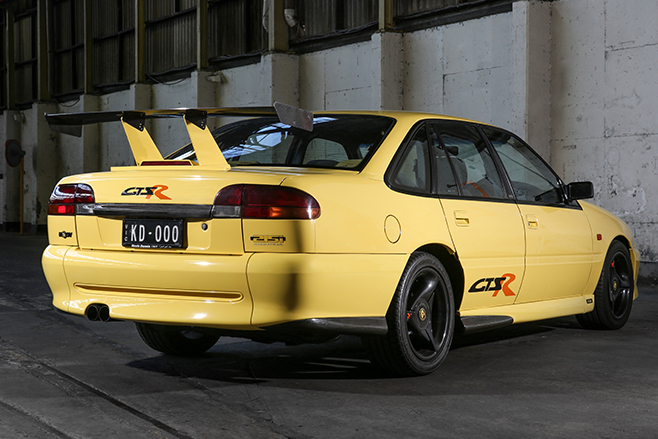
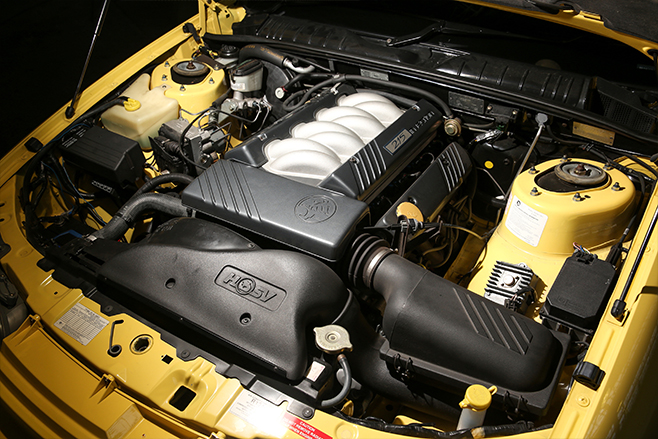
Unique to the GTS-R is the carbon fibre trim, charcoal black three-spoke alloy wheels, HSV and GTS-R model identification badging, plus the very, very obvious XU-3 Yellah paint colour.
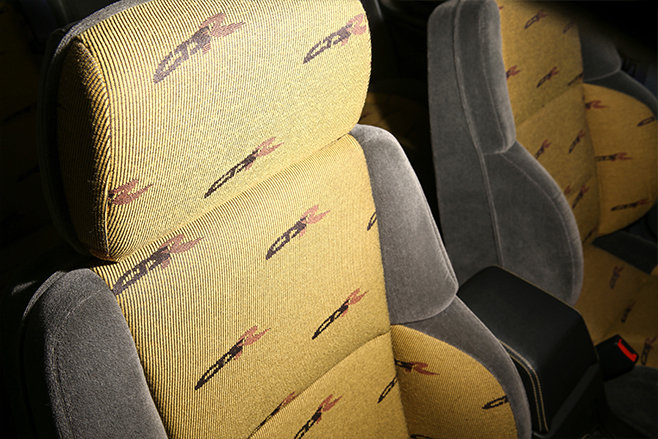
What has aged well is the car’s nostalgia factor. With only 85 built (75 for us, 10 for NZ) the car has incredible value due to its rarity.
“The price-tag is expected to be around $76,000 with and an extra $10,500 for the optimised option,” the original HSV literatures states.
We imagine you’d be able to double that now, especially considering we saw one advertised for almost $150K last year.
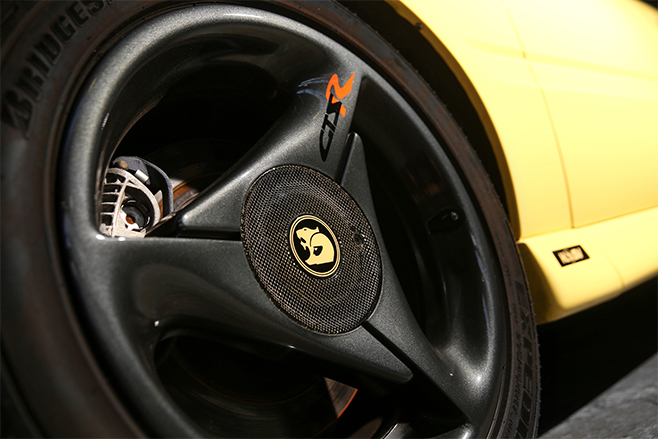
While the car’s value has now exceeded its original sum, we have to wonder what one would be worth if it came with the jacket.
LEWIS Hamilton banked a classy win for Mercedes under changing conditions at the Chinese Grand Prix, dominating Ferrari’s first round winner Sebastian Vettel and leaving the pair locked together at the top of the 2017 Formula One world championship table.
Hamilton’s win completed a rare perfect weekend – along with the race victory he took pole position, led every lap after another excellent start, and set the fastest lap of the race.
“I’m really happy with my starts right now so I want to keep that up,“ said Hamilton afterwards.
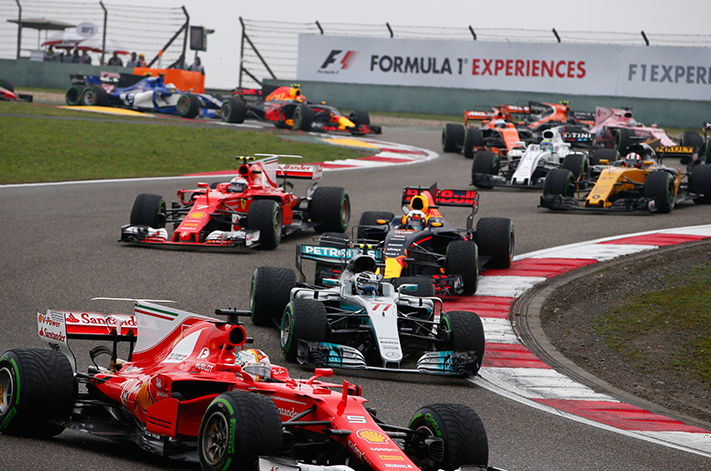
“In those final 20 laps Seb and I were just pounding around as fast as we could, exchanging fastest lap times… that’s what racing is all about.”
Most of the grid started the 56-lap race on Pirelli’s intermediate tyres after a wet start to the day.
Vettel was threatening early, but a strange call to pit under an early virtual safety car cost the Ferrari driver track position he could not reduce.
Why motorsport fans are abandoning the sport in droves
His fighting overtake on Red Bull’s Daniel Ricciardo at turn seven was a highlight, the two rubbing tyres in the hard but fair fight.
Closing the line, Vettel exclaimed to his team over the radio: “Grazie a tutti! I think we were a bit unlucky. It felt like we were the quickest, man. We couldn’t prove that today but next time we will.”
Max Verstappen produced another fantastic drive from 16th on the grid, making up 10 places on the opening lap and eventually fighting off fast-finishing Red Bull Racing teammate Daniel Ricciardo for third.
“That was a very special race,” exclaimed Verstappen. “When I woke up this morning I never expected to be on the podium.”
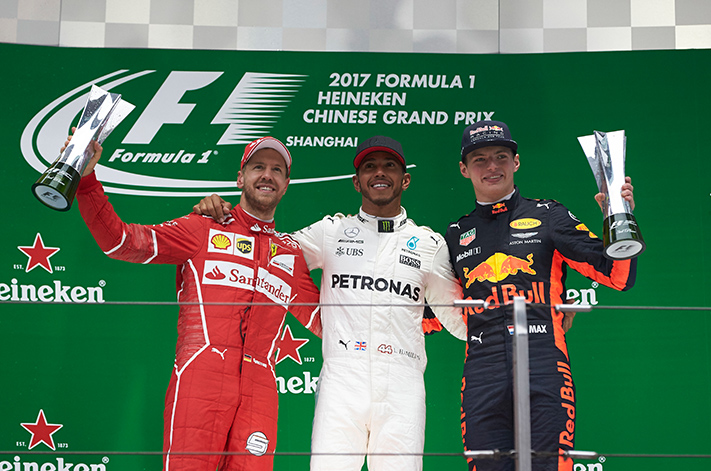
Never one to pass on opportunity, Ricciardo took an adventurous shot at Verstappen on the final lap but had to settle for fourth.
“I have mixed emotions – it’s obviously disappointing to miss out on the podium as it was so close today but as a team it’s a good result to finish third and fourth,” Ricciardo said.
“I lost a lot of time in the first stint as I struggled to keep my front tyres alive and that pretty much put us out of a podium position.
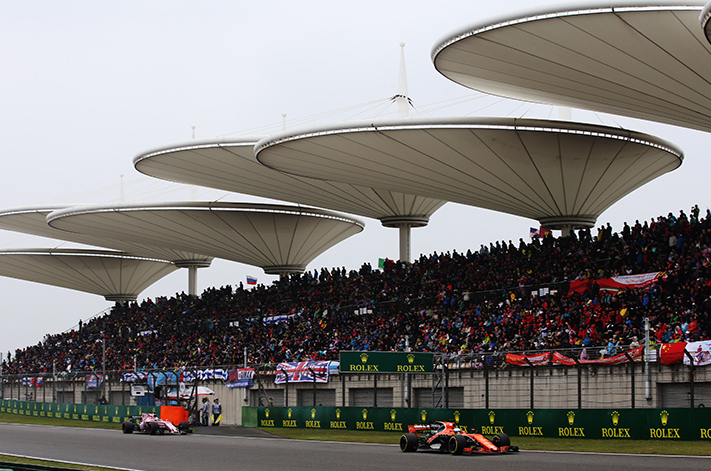
“The team let us race but even though I was in the DRS zone I was not really close enough to pull off a convincing move. I had a look but the inside lines were still quite slippery into the hairpin and I was honestly never really close enough to make a move stick.”
Riccardo suggested that it was noticeable that the DRS effect was way less helpful on the 2017 cars, making overtaking even more difficult.
“As a team we should be pleased with the result and we learnt a lot today but we still have some work to do to close the gap to Mercedes and Ferrari,” Ricciardo added.
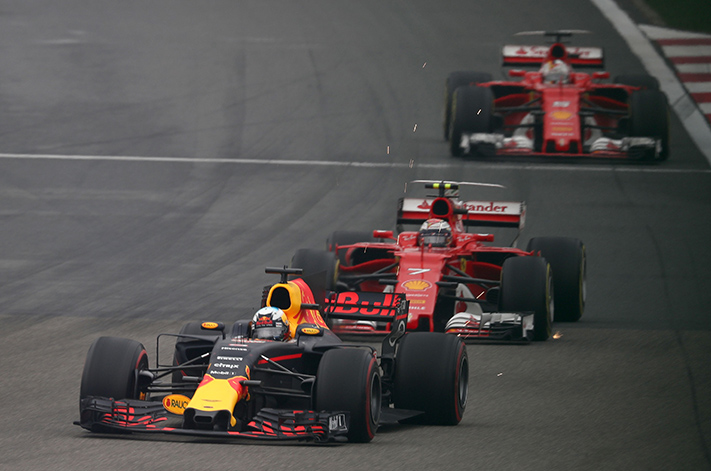
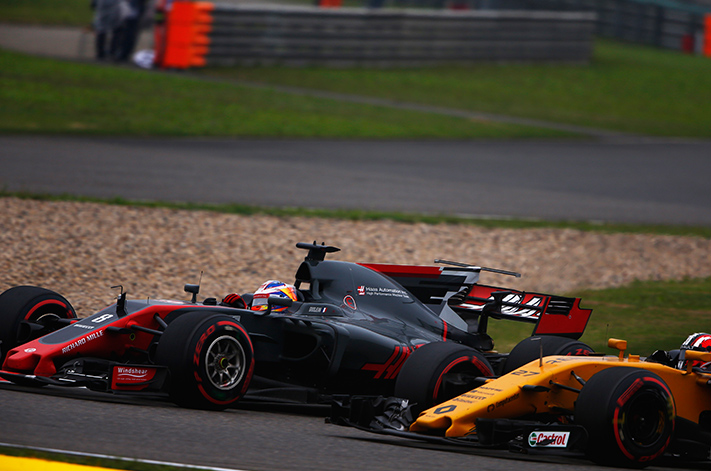
Seventh was Carlos Sainz’s Toro Rosso with Kevin Magnussen’s Haas eighth. The two Force Indias of Sergio Perez and Esteban Ocon completed the top 10.
Fernando Alonso fought hard to run inside the top 10 until his McLaren Honda failed on lap 33.
A wet track caused havoc early, especially with rookie drivers.
The virtual safety car was deployed on lap one after Lance Stroll spun off in his Williams. A bit later, the real-world safety car was activated after Antonio Giovinazzi slammed his Sauber into a barrier.
Hamilton and Vettel (43 points) hold the joint lead in the Drivers’ Championship, followed by Verstappen (25 points), Bottas (23 points) and Raikkonen (22 points).
Just add water to Supercars and unpredictability follows
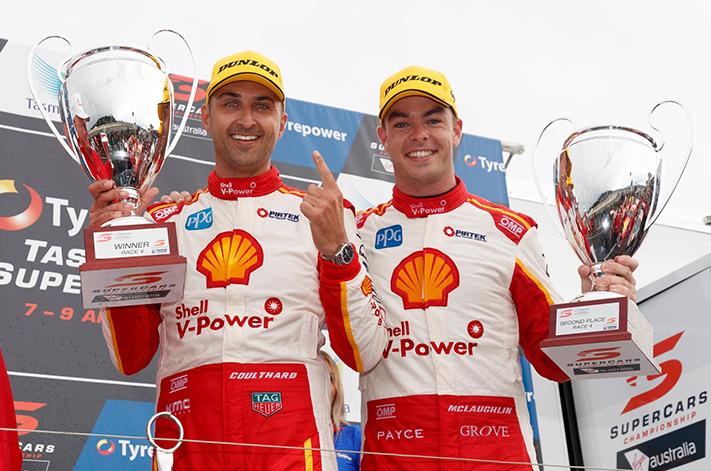
DJR Team Penske struck back with a vengeance in the Supercars Championship round at Symmons Plains yesterday with Fabian Coulthard and teammate Scott McLaughlin notching a resounding one-two result to confirm it poses a huge threat to the dominant Triple Eight camp this season.
Coulthard said it was great to get the team’s first championship win of the year, after both he and McLaughlin finished runners-up to Shane van Gisbergen at Adelaide’s Clipsal 500, the opening round of the 2017 campaign.
He was related to the back of the field after a pit lane penalty but typically forced his way back to ninth, doing enough to hang on to the championship points lead.
Coulthard and McLaughlin ultimately held sway on a damp track that brought a number of drivers into trouble including Chaz Mostert, who led for much of the first half of the race during a weekend of rain in northern Tasmania.
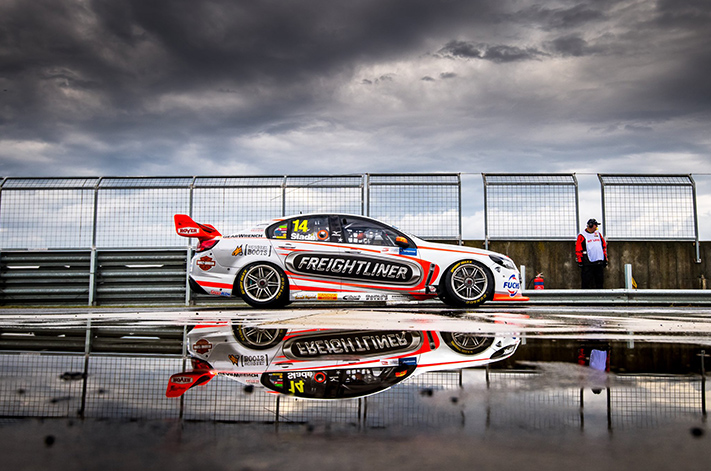
After a murky, disastrous Saturday for many teams on Saturday, it was a relief for all involved to get some serious racing happening on Sunday, albeit with a continuation of wet ‘n’ wild weather.
Still there were plenty of dramas on Sunday, though mercifully not of the same magnitude of the previous day when a dozen cars were involved in a frightening high-speed pile up on the main straight, a shunt resulting in Will Davison spending the night in a Launceston hospital where he was released last night with a suspected broken vertebrae.
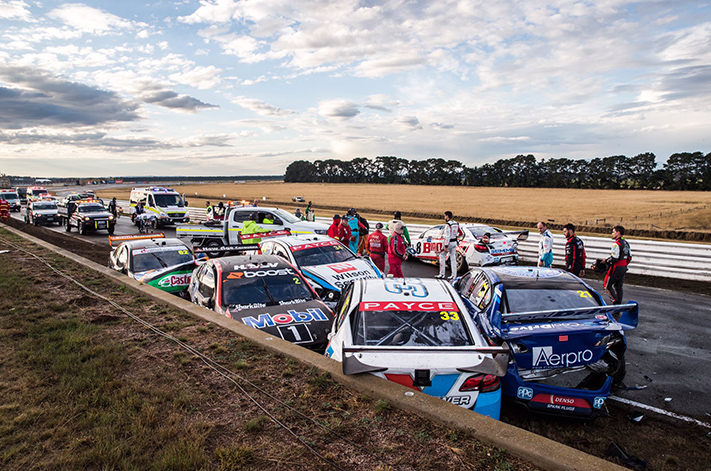
Remarkably, all but four damaged cars were repaired for the Sunday action.
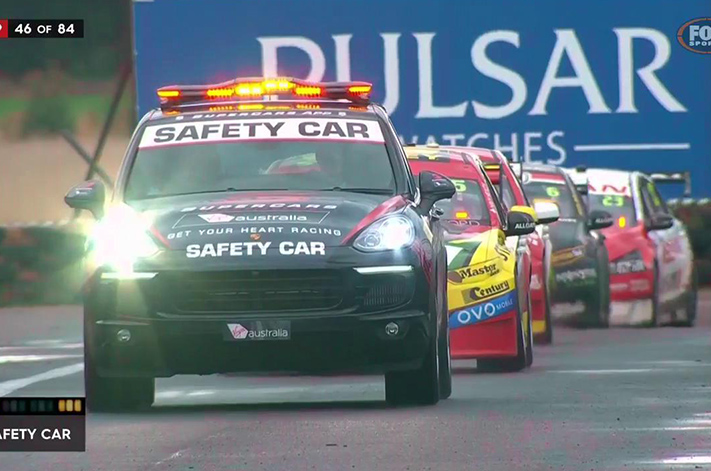
Pole winner Whincup held the lead early in Sunday’s race, jumping off the line in front of McLaughlin before the safety car was deployed during the fifth lap when Jason Bright went into the barriers.
When the race resumed, Whincup and McLaughlin duelled door-to-door before the young Kiwi squeezed past the Holden star to move into second.
A mistake from Mostert and clever strategy by his team gave Coulthard a chance to pinch the race from his teammate.

“On the dry it [his Falcon] was a jet but I didn’t think I was as quick as Scotty in the wet.’’
Coulthard did cop a 35-point penalty for playing a role in Saturday’s multimillion-dollar fender bender, possibly one of the most expensive in Supercars history.
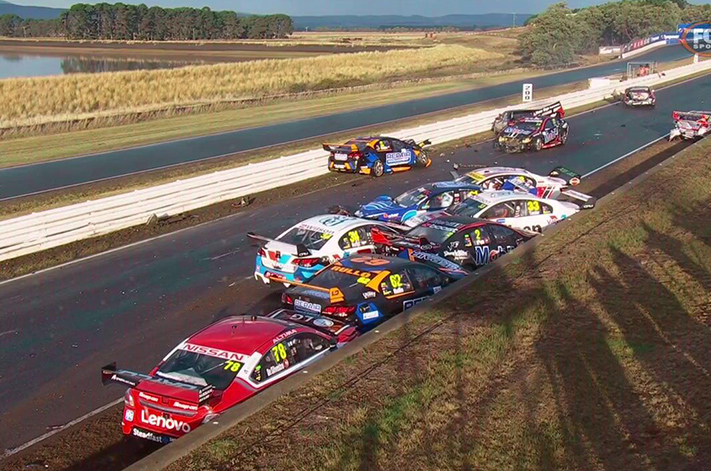
Whincup wasn’t too unhappy with third. “Maybe I have to step it up a bit in the future. But all in all I am happy with having a clean weekend in difficult circumstances. We had a wet set-up and it ended up pretty dry. I am now looking forward to Phillip Island in a couple of weeks.’’
WRC: Neuville and Hyundai take Tour de Corse
Hyundai and Thiery Neuville claimed a maiden victory of the 2017 FIA World Rally Championship at the Tour de Corse-Rally France.
What a tumultuous start to the season it’s been. Neuville is the fourth winner in a different car in the opening four rounds of the season.
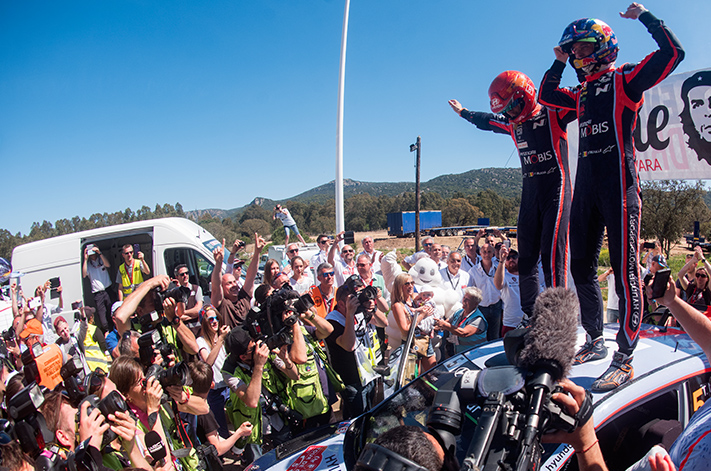
Ogier recovered from a final-morning electrical problem to overtake Hyundai’s Dani Sordo on the final stage to extend his championship lead.
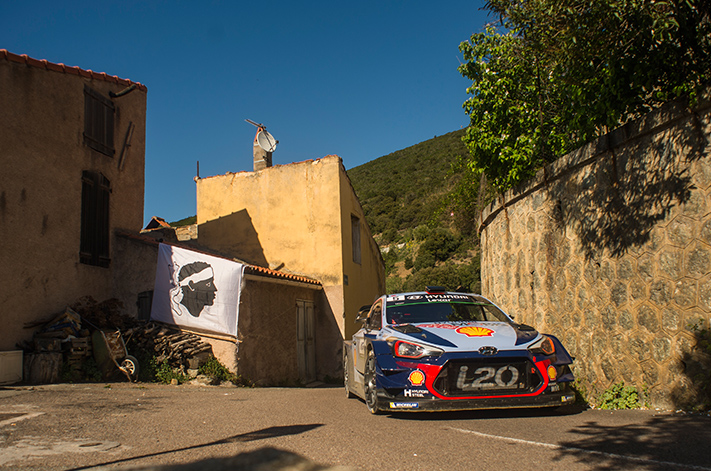
Citroen’s Chris Meeke dominated Friday and much of Saturday until the Northern Irishman coasted into retirement with a damaged engine.
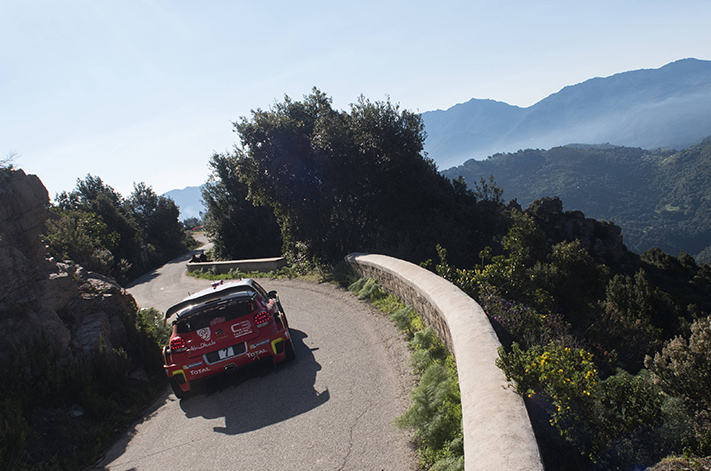
The win somewhat eased the pain of having controversially tossed away near-certain wins in Monte Carlo and Sweden.
“The feeling is amazing,” Neuville said. “Special thanks to the team; they have always believed in me and kept pushing me after Monte Carlo and Sweden. I struggled a bit in the opening day and I wasn’t sure we could win this event, but we came back and turned it around.”
While Neuville eventually finished Corsica with a comfortable gap, the fight behind continued to the end. Ogier conceded second place to Sordo on the penultimate stage then won it back in the Power Stage finale by just 1.3sec.
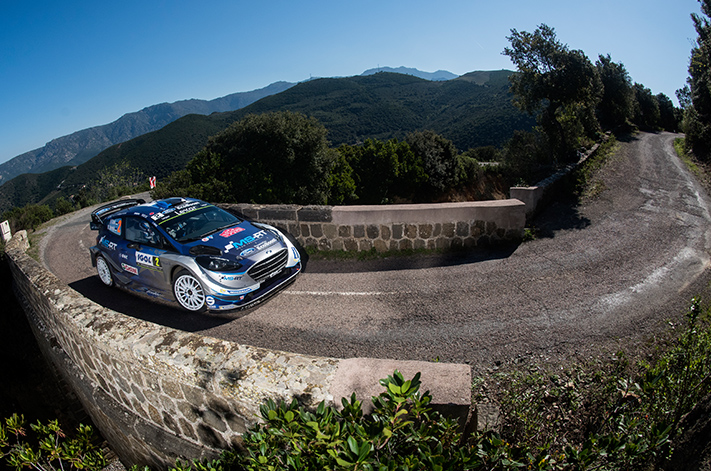
New Zealander Hayden Paddon was sixth at the wheel of the third factory Hyundai, still coming to grips with competing on tarmac.
An outstanding seventh outright and first in the WRC2 went to 2016 Rally Australia winner Andreas Mikkelsen in a factory Skoda Fabia R5.
With different winners on the first four events in starkly different conditions – icy tarmac in Monte-Carlo, snow in Sweden, high-altitude gravel in Mexico and ever-twisting tarmac in France – and faster cars built to new technical rules, the WRC is enjoying its most open season in many years.
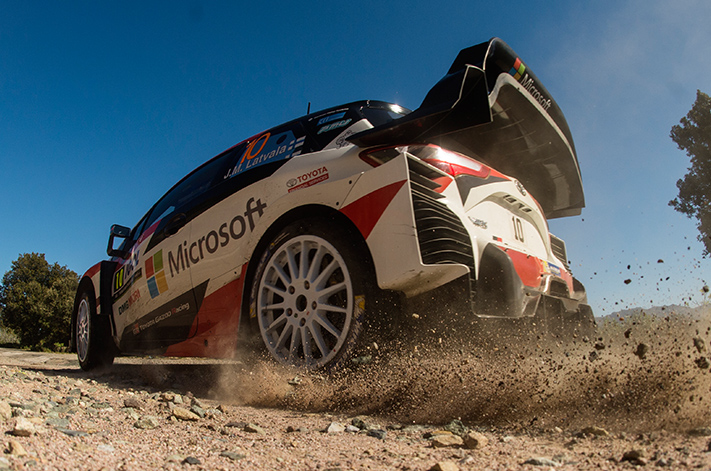
In the WRC standings, Ogier sits on 88 points ahead Latvala (75) and Neuville (54).
MotoGP: Vinales wins in Argentina
Yamaha rider Maverick Vinales has continued his magical start to the 2017 season , taking his score to two wins from two starts after thriving and surviving a crash-marred Grand Prix of Argentina.
The brilliant Vinales was followed by teammate Valentino Rossi, who came through from seventh on the grid to complete a crushing one-two for Yamaha, with Cal Crutchlow claiming the final podium spot for Honda.
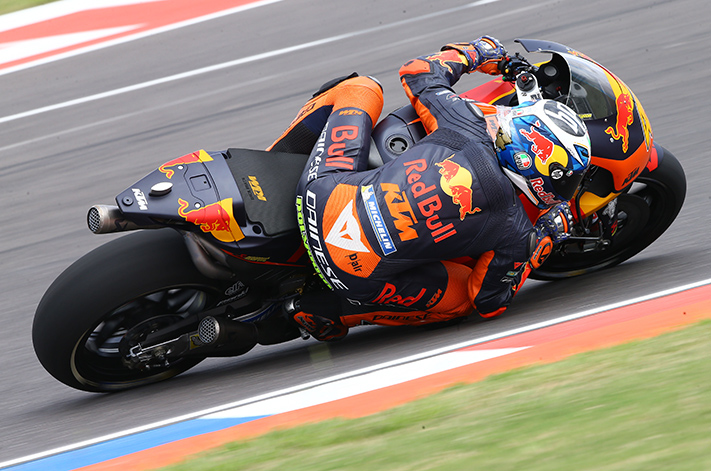
The defending champion Marc Marquez disastrously crashed out early after making an early break from pole position and immediately opening a lead. Stretching the gap too ambitiously, he went down on lap four, one of seven crashers, another being Honda teammate Dani Pedrosa.
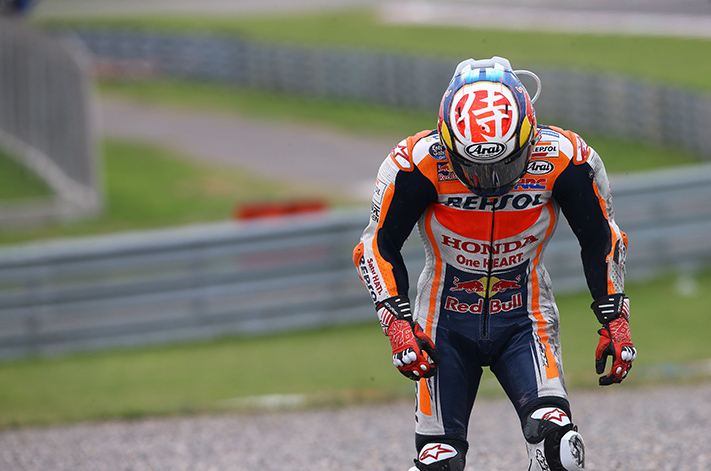
With seven laps remaining the Italian legend slipped into second, but there was no catching the young Spaniard.
Jorge Lorenzo’s Ducati miseries continue. His race was over by the first corner when he clipped the rear of Andrea Iannone’s Suzuki.
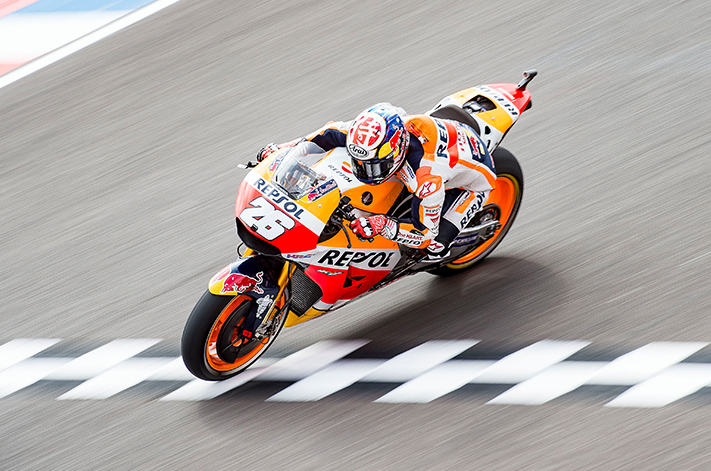
Aussie Remy Gardner’s unlucky start to his 2017 Moto2 World Championship continued in the Argentine GP aboard his Tech3 Moto2 Mistral machine; the #87 rider taken out on the opening lap for the second consecutive race and sustaining a broken ankle in the fall.
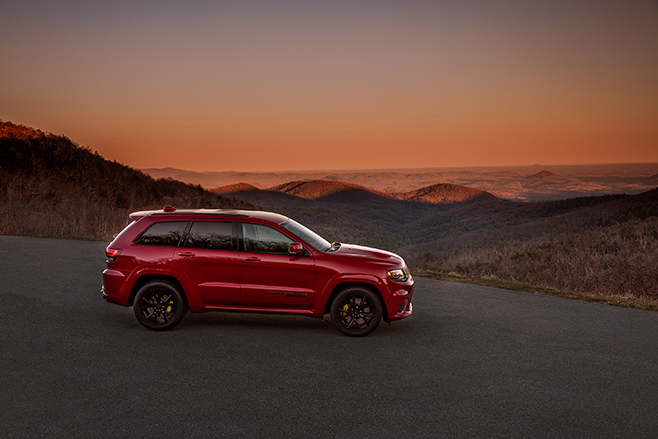
THE Dodge Hellcat-powered Jeep Grand Cherokee Trackhawk will lay claim as the world’s most powerful production four-wheel-drive when it is revealed at the New York Motor Show later this week.
Boasting a 527kW/874Nm supercharged 6.2-litre V8, the Trackhawk will be even more powerful than the 430kW/760Nm twin-turbo 5.5-litre V8 under the bonnet of the Mercedes-AMG GLE63 S. It will also hand the quick German a serve of humble pie, sprinting from 0-100km/h in just 3.6 seconds, a whole 0.6sec quicker than the Benz.
The 2.2-tonne beast will also hit top speed of 290km/h for one very memorable school run.
Stopping power is equally impressive, with the Brembo braking system bringing what Jeep claims to be the “quickest and most powerful production SUV on the planet” to a halt from 100km/h in just 36 metres, thanks to pizza-sized, 400mm two-piece vented rotors with six-piston calipers at the front, and 350mm vented rotors and four-piston calipers at the rear.
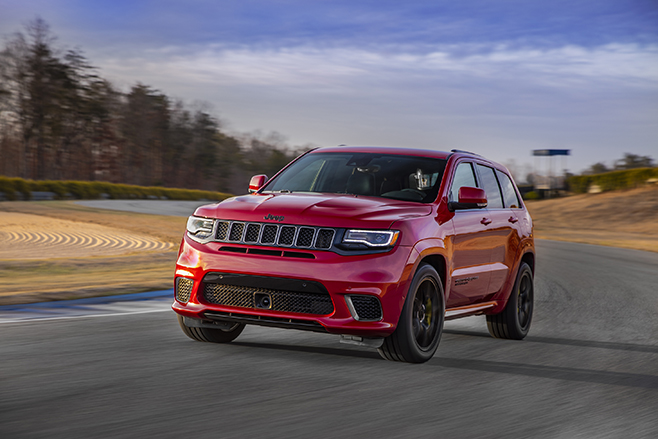
The Jeep Grand Cherokee Trackhawk also comes with five dynamic driving modes: Auto, Sport, Track, Snow and Tow, enabling drivers to choose a vehicle setting that ideally meets the environment. The drive modes separately control the four-wheel-drive system, transmission, paddle shifters, electric power steering and Bilstein adaptive suspension system. There’s also a “Custom” mode that allows the driver to personalise the vehicle’s performance.
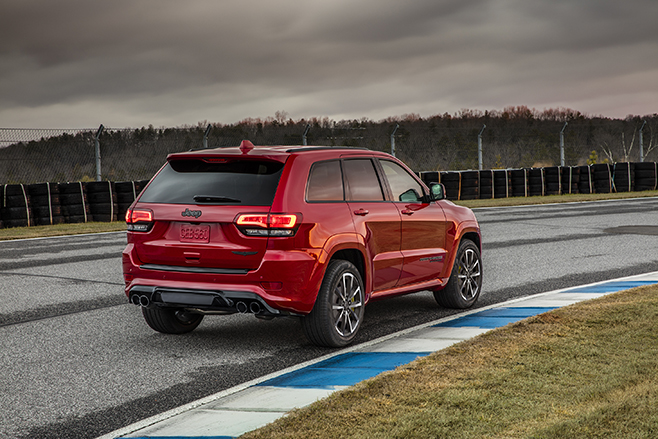
The Trackhawk also stands out thanks to its lower ride height, body-coloured wheel flares, side sill cladding, sculpted bonnet with dual heat extractors, and a gloss black rear valance with four-inch black chrome quad exhaust tips. And just to ensure there is no doubt, there are “Supercharged” badges on both front doors and a Trackhawk logo on the hatch.
Inside, there’s all the bits that say sportscar rather than SUV, including carbonfibre highlights and a three-spoke, flat-bottomed steering wheel with paddle shifters. Nappa and suede-accented sports seats are embroidered with the Trackhawk logo.
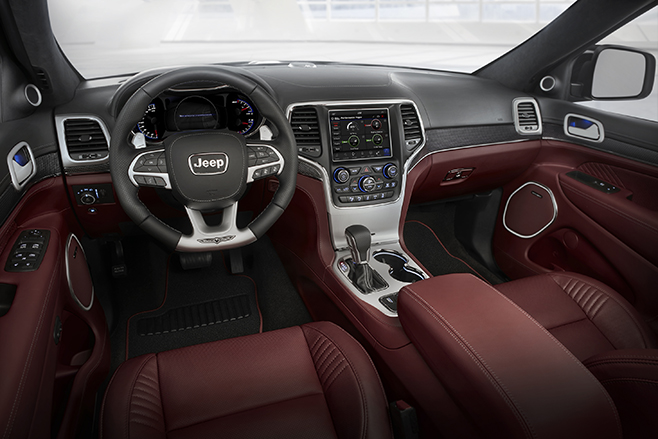
Despite its race track leanings, the Jeep Grand Cherokee Trackhawk comes with much of the same active and passive safety gear used in the regular SUV, including the ability for the driver to check on a towed load while driving.
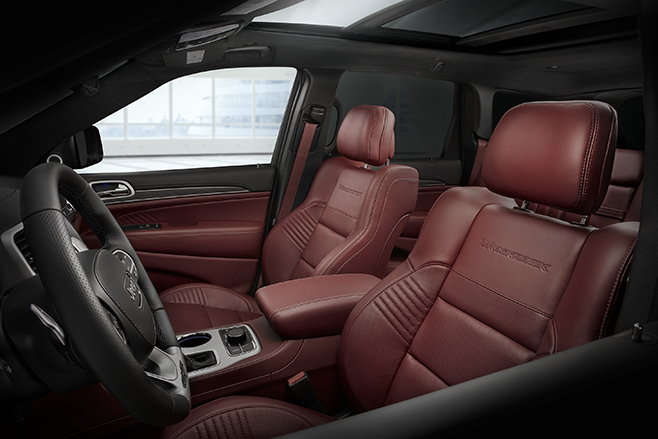
If that’s the case expect to see, and hear, it on local roads by the end of the year.
OKAY, so Toyota doesn’t make the 86 sports car in Australia. But that didn’t stop its Australian design centre from reimagining how the two-door coupe would look as a shooting brake – and then build it.
Based on the Japanese car maker’s runaway success two-plus-two sports coupe, Toyota Style Australia, under the direction of then-design chief Nicolas Hogios, conceived and created a version that added a dose of practicality: a wagon-style boot.
Not only did the evolution from coupe to wagonette add a little extra boot space, but it made the rear seats a more realistic proposition for second-row occupants robbed of headroom in the coupe, although legroom was still questionable.
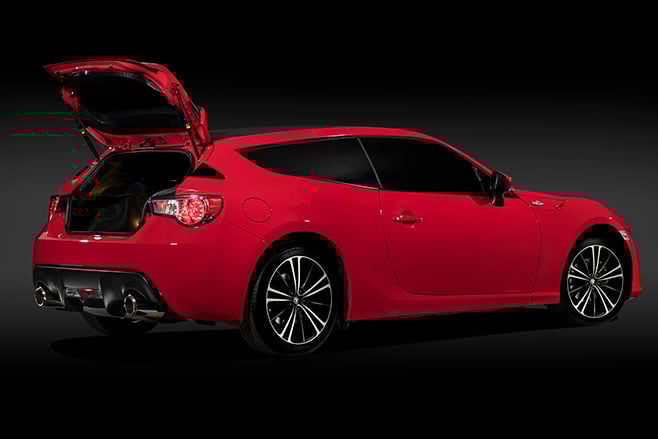
For the transformation, the styling team extended the roofline from the windscreen down to a completely new rear hatch, stretched the side glass and modified the rear quarter to marry up with the new profile. The extended roofline also suited a roof rack, which Toyota said would appeal to young, active people who would find the option to cart more kit attractive.
The result is not some museum-bound solid clay model with black windows, but a fully functioning 86 variant that can go to the track one day, and head out camping the next.
2017 Toyota 86 targets dynamics more than performance
The creative element was completed entirely on red dirt, but the task of building the concept was snaffled up by Toyota’s team in Japan after a quarter-scale clay model was shown to Toyota 86 chief engineer Tetsuya Tada. It was finished just in time to be shipped here for a surprise reveal at 2016’s Festival of 86 held in Sydney.
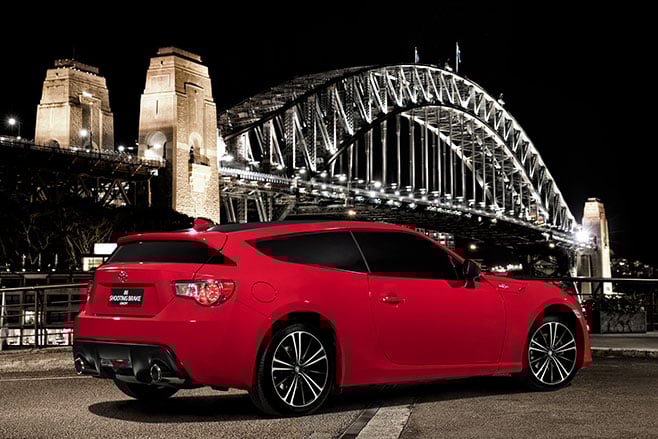
The car not only wowed local fans of Toyota’s sports model, but made headlines in automotive publications worldwide. It also prompted an international appeal for carmakers to go the full distance and chalk the Shooting Brake for production lines.
However, the design was regarded as too divisive and the car remains a one-off with no plans to offer a showroom version of the big-booted 86.
Toyota 86 GTS v Toyota 86 race car comparison review
Welding a more capacious derriere onto a sports car is not a new idea. BMW fans will likely remember 1998’s Z3 M Coupe that added a hardtop hatch to the vicious folding-roof Z3 M Roadster.
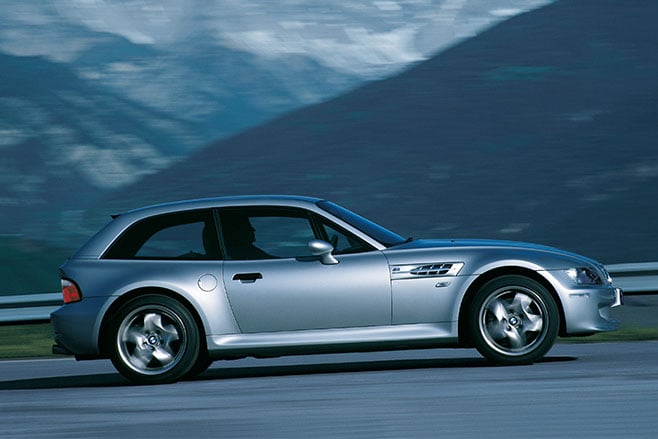
Similar to the Toyota 86 Shooting Brake, the Beemer bread van polarised the motoring community. But that didn’t stop the German carmaker putting it into production.
The Audi Shooting Brake that rolled out at the 2005 Tokyo Motor Show was another stillborn concept, although it did offer a sneak peek of what the nose of the gen-two TT coupe would look like.
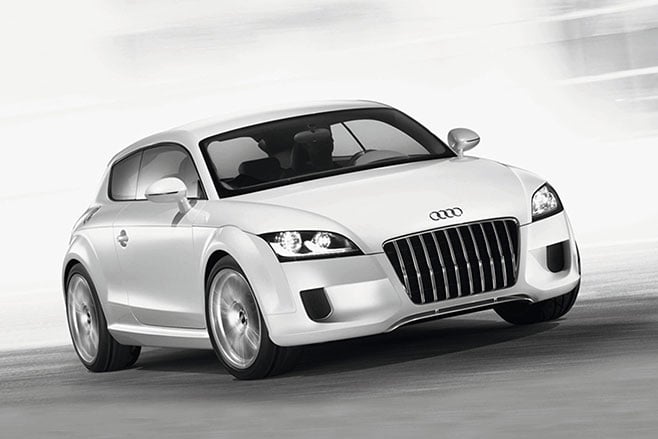
Some will lament at Toyota’s decision to shelve the 86 Shooting Brake, while others will thank the company for keeping the car off public roads, but a concept car is meant to provoke dialogue and gauge opinions. If that was the brief, then it’s job well done, Toyota.
