
There are two things I’ve always struggled to understand: Australian’s incessant love for SUVs and their lack of awareness of everything South Australia has to offer. So in a bid to debunk the stereotypes, I decided to drive a Volvo XC90 Inscription D5 to the south coast.
The Volvo XC90 is a seven-seater SUV, and as you’d expect from the Swedish carmaker, it’s jam-packed with safety gear.
As a childless-20-something, the appeal of an oversize SUV with no off-road capabilities and two extra seats is lost on me. But from the moment I sat on the leather-covered seats surrounded by the spacious and luxurious interiors, a bond was formed.
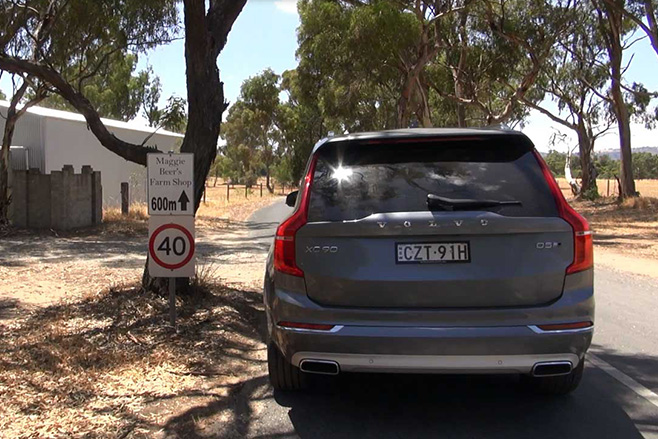
When I realised the boot was able to fit the gear for two people heading on a month-long vacation – two suitcases, two overnight bags, picnic hampers and gifts – I knew we were in business.
But first, I had to get the XC90 across the Victorian/South Australian boarder for some exploration of the state’s best wine regions – the Barossa Valley and the Fleurieu Peninsula.
THE BAROSSA VALLEY WITH A FAMILY OF THREE
It took less than one tank of the XC90’s 71-litre diesel tank to drive from Melbourne to the Barossa Valley and back to Adelaide. That’s almost 900km. The Volvo XC90 is ridiculously fuel efficient, with Volvo claiming 6.2L/100km for the D5.
Situated close to one-hour northeast of Adelaide, the Barossa is one of South Australia’s premier wine regions, specializing in Shiraz. But there was no wine tasting this time, just a chance to have some lunch with some friends at the delicious Maggie Beer’s Farm Shop.
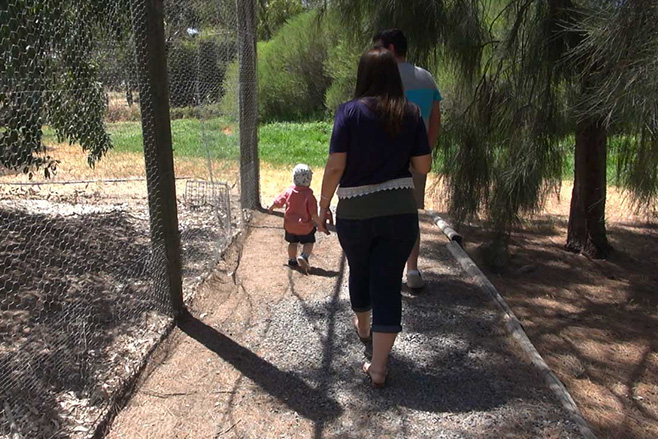
If you don’t know who Maggie Beer is, you haven’t been watching enough Masterchef. The Australian cook and food author originated from Sydney but she’s lived in the Barossa Valley for nearly 40 years and is an icon of the region.
In 1979 – along with her husband – Beer set up a restaurant, which is now known as Maggie Beer’s Pheasant Farm and Farm Shop; a delicious, homely café that merges rich aromas of home country cooking and fresh coffee.
An assortment of Beer’s locally produced quince, pate and verjuice are on sale in the shop, and the pheasant farm is a special treat for wandering toddlers who will no doubt get a kick out of the free-roaming peacocks.
After lunch, it was time to test how the XC90 performs as a family car. My friends’ two-year-old was still a bit small for the Volvo’s second-row in-built booster seats, but ISOFIX made transferring his seat nice and easy. Even if we had two child-seats in the back, there would have been plenty of room for an adult in the middle. Win!
Driving through the streets of the Barossa while vineyards flashed past our windows, it wasn’t long before the toddler fell asleep. Even the XC90’s road racket and noisy aircon wasn’t enough to push the exhaustion.
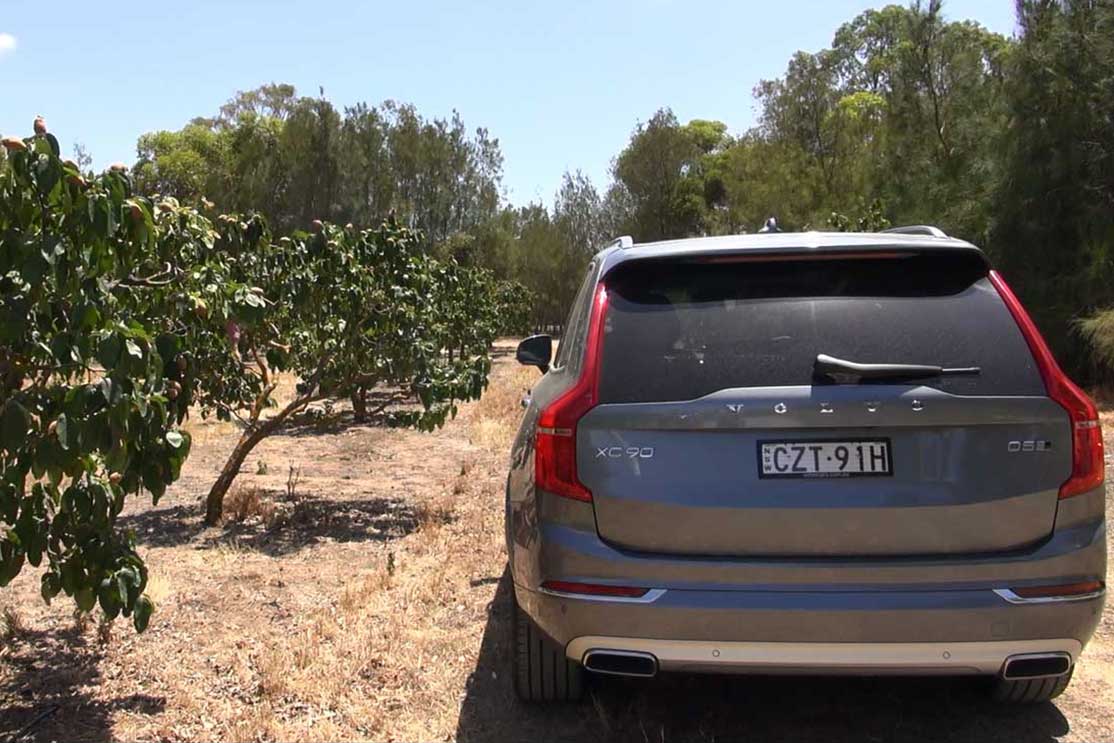
Stating the obvious, the XC90 is made for families, so it was interesting, then, to get the perspective of two new parents with an only child. First thing noticed was the lack of cup holders – two in the front, two in the back. By the time we secured our takeaway coffees, and the toddler’s drink bottle, there was nothing left, which meant forgotten water bottles rolling on the floor – every parent’s dream, right!?
It was also luckily we didn’t have any pooey-nappy emergencies on the way home, because the lack of a fold-down rear tailgate would mean my leather seats become a de-facto changing table, and I was just not ready for that kind of challenge.
VERDICT
For a young family of three, a large SUV is not a practical choice – it’s a lot of money for a lot of wasted seats. Unless you regularly play weekend taxi (in which case do you really want to spend all that money to accommodate other parents?), you’re probably better off looking at a medium SUV, like the Volvo XC60.
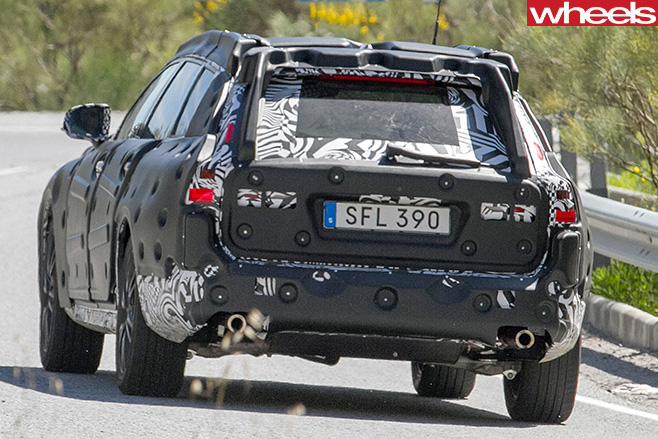
FANS of luxury crossovers are in for a treat with the first concrete proof of the long-rumoured Volvo V90 Cross Country.
Sprung testing in Sweden (where else!), this will be the largest, longest, and most expensive jacked-up wagon the company has ever produced when it hits dealerships in 2017.
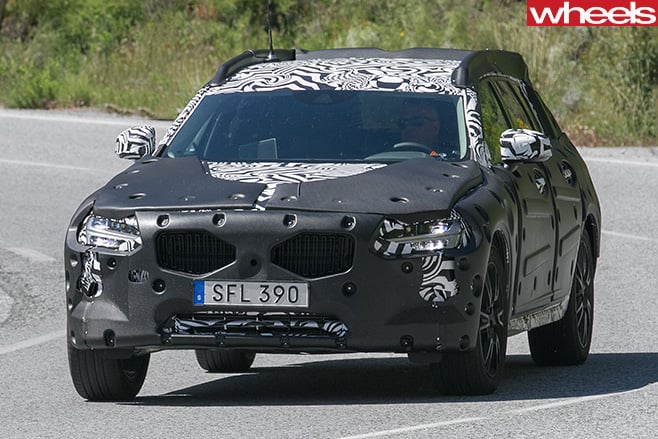
Mirroring Volvo’s own aging XC70, the newcomer will feature most of the usual crossover styling cues – a raised ride height, butched-up body cladding, bulky roof racks, and chunky wheels, suggesting that the V90 Cross Country will not stray too far from the proven formula first seen 20 years ago in the Subaru Outback.
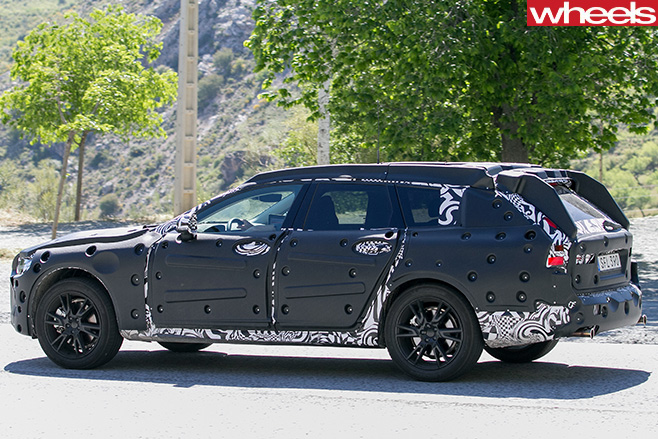
A brace of 2.0-litre four-cylinder turbo engine options in T5 and T6 petrol and D4 and D5 diesel applications are likely, while a T8 petrol-electric hybrid is also said to be in the pipeline. Most will drive all four wheels via an eight-speed automatic transmission, though the smallest-output versions may stick with front-drive only.
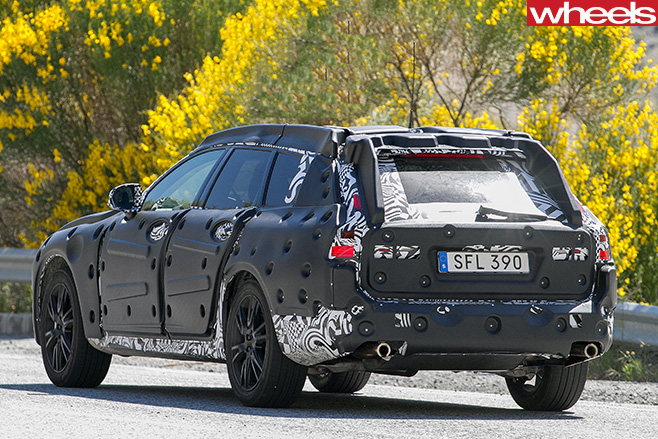
Being Volvo’s first full-sized crossover offering, predicting exact pricing is tricky. With the A6 Allroad 3.0 TDI quattro retailing from $111,900, it’s reasonable to expect the V90 Cross Country to start north of $100,000 when sales commence sometime in the first half of next year.
1. There have been three main generations of the Nissan GT-R, the first of them appearing in 1969. Only the second generation (codenamed R32) and this latest generation (R35) have officially been sold in Australia.
2. The GT-R’s 3.8-litre V6 twin-turbo engine is hand built in Japan by “Takumi” craftsmen. There are only five Takumi trained to build the GT-R engine and each engine takes about 9.3 man-hours. Once finished, the engine is stamped with the signature of the engine builder.
3. When the R35 Nissan GT-R was released in 2007 it was claimed to accelerate to 100km/h in 3.2 seconds. But utilising the launch control function that allowed such rapid acceleration could result in voiding the warranty. Nissan later updated the transmission and software to allow for faster starts and the claimed 0-100km/h dropped to 2.7 seconds. However, achieving that claim is another matter; Wheels magazine’s fastest 0-100km/h time in a GT-R is 3.2 seconds.
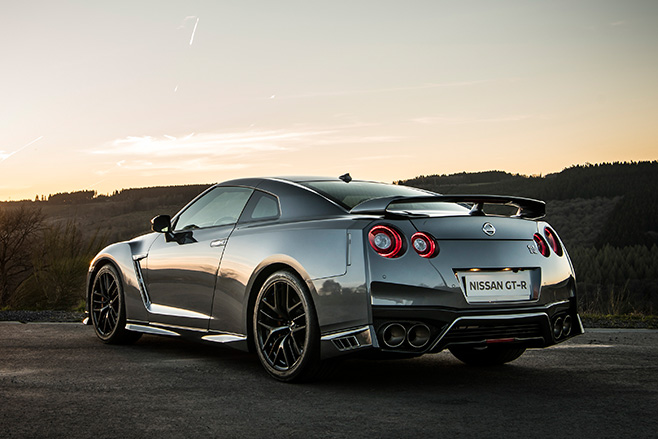
4. Despite the intense focus on improved performance with the updated MY17 (model year 2017) GT-R, Nissan no longer claims a 0-100km/h time for the car. It says the extra 15kW and 9Nm extracted from the engine (for total outputs of 419kW and 637Nm) don’t radically change initial acceleration.
5. While it looks broadly the same as the original R35 GT-R that was first seen in 2007, there are significant changes to the body. The windscreen pillars have been strengthened to improve structural rigidity, therefore improving handling. The bonnet has been revised to be stiffer, for less flexing at speed. The grille has been changed to allow more air in to cool the engine (for better performance). The rear bumper is new, with sharper outer edges to better separate the airflow and improve aerodynamics. And the most significant change is a redesigned C-pillar (the thick rear-most pillar connecting the roof with the rear of the car), which has been mildly resculpted for improved aerodynamics.
6. The Nissan GT-R is designed to run on 100-octane fuel, which is very rare in Australia. It will only produce its maximum 419kW/637Nm outputs when fueled with 100 RON petrol. However Nissan says it can also run on 98-octane fuel, which is readily available in Australia, but the result will be “slightly reduced” performance.
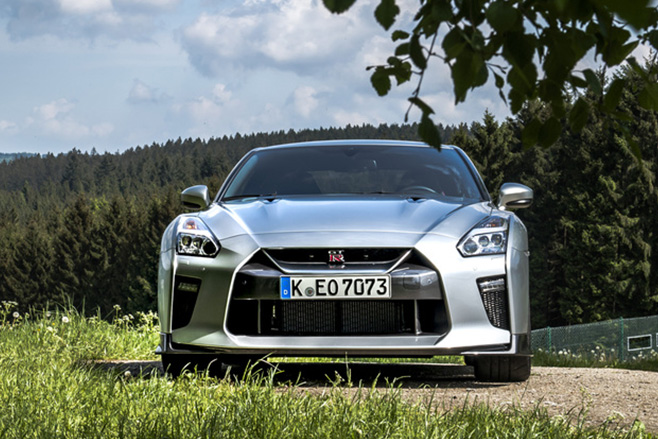
7. The leather-intense interior includes a single piece of Nappa leather across the dashboard. Nissan also revised the optional black leather interior for the MY17 GT-R to create a “higher quality appearance”; the black interior is now known as “amber black”.
8. The man in charge of the latest Nissan GT-R project, Hiroshi Tamura, sys the updated car is “now a step closer to my ideal super sports car”. While Tamura says performance is important for the GT-R – its performance is often compared with the Porsche 911 Turbo – he says it also needs to be a “grand tourer”, so must be comfortable on the road and in regular driving. Much of the focus of this updated GT-R was centred on improving refinement and making the suspension more supple over bumps.
9. The Nissan GT-R drives all four wheels but it is not designed to go off-road. The all-wheel drive system is designed purely for performance, helping better channel a lot of power to the road. Even in wet conditions the GT-R is very surefooted, resisting wheelspin that is often prevalent in high-powered cars. In regular driving all the drive is sent to the rear wheels, but when required the GT-R’s ATTESA E-TS all-wheel drive system can divert up to half the drive to the front wheels.
10. The GT-R’s six-speed automatic transmission is a transaxle, which means the gearbox sits at the rear of the car, between the back wheels. Drive is sent from the engine to the gearbox, then to the wheels, with some of that drive travelling back to the front of the car to power the front wheels. The drive shafts required mean there is a big hump, or transmission tunnel, on the floor between the two (tight) back seats.
11. The GT-R has 52 percent of its weight over the front wheels and the remaining 48 percent over the rear wheels.
12. Despite a trend towards lightweight aluminium construction in sports cars, the GT-R’s body is made of steel. That’s despite an earlier GT-R from the 1990s using some aluminium body panels.
13. The GT-R has a braking system produced by brake specialist Brembo. Up front there are six pistons pushing the brake pads onto each of the front discs. The rear has a four-piston setup.
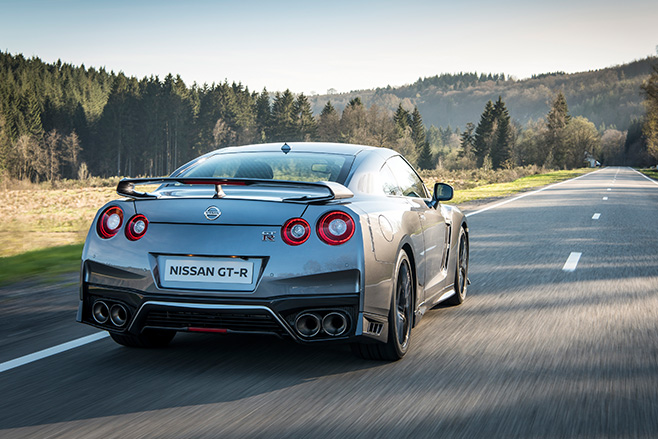
14. Every generation of the GT-R has been getting heavier, in part because of bigger components needed for better handling and more power, but also because of additional safety systems, including airbags. The latest R35 GT-R weighs 1725kg, which is more than half a tonne heavier than the original 1969 Slyline GT-R (1120kg).
15. The most famous Nissan GT-R sold in Australia was the R32 model that arrived in 1990. Just 100 were imported by Nissan Australia, making them a collector’s item that still commands good money today. Many others were privately imported, but these are typically not worth as much as the ones officially imported by Nissan. The GT-R was made famous for its V8-killing performance on Australian race tracks, including Bathurst, where it dominated the locally-made V8s in the Bathurst 1000. The GT-R was later banned from racing with the introduction of the V8 Supercar championship in 1994.
Making the case for less really is more.
WHAT IS IT? The cheapest McLaren ever offered in Australia. Dubbed the 540C, this ‘baby’ McLaren is a new entry-point to the British marque’s supercar line-up, thanks to a $325,000 price tag.
WHY ARE WE DRIVING IT? It might be the runt of the litter, but the 540C still uses the same, brutally fast 3.8-litre twin-turbo V8 as the rest of the McLaren range. Match that to a 0-100km/h sprint of 3.5sec, plus increased comfort and usability, and the 540C promises to tick a lot of boxes.
MAIN RIVALS Porsche 911 Turbo, Porsche 911 GT3, Audi R8, Mercedes-AMG GT S, Aston Martin V12 Vantage
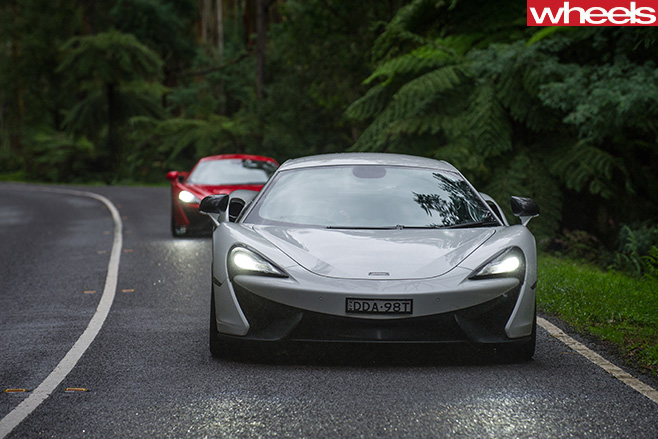
PLUS: That engine; everyday usability; your license will feel safer MINUS: The sound; not as raw or exciting as other McLarens; some equipment lacking; some interior plastics
THE WHEELS REVIEW ASKING how much performance a supercar needs sounds idiotic. The obvious answer is “as much as possible!” But is that really the case? Drive most modern supercars – your Lamborghinis, your Ferraris and McLarens – and you’ll quickly discover they’re too fast to properly exploit on the public road.
In today’s age of the trigger-happy, radar-wielding policeman, or worse, the hidden speed camera, opening the taps on your half-million dollar supercar for more than three seconds is enough to tear your license in half.
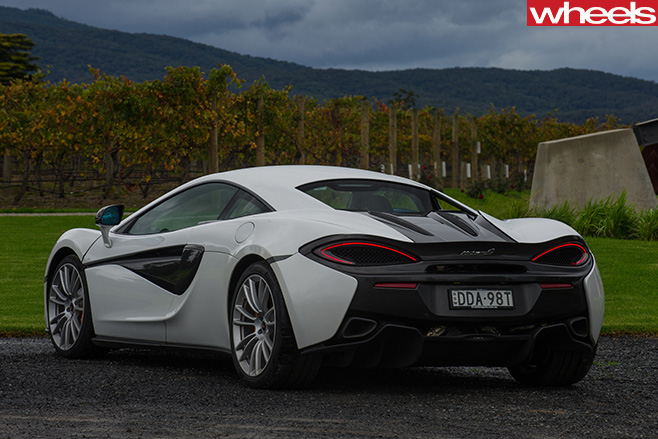
Which is where the McLaren 540C comes in. What you see here isn’t only the British firm’s cheapest offering, but also its least powerful. And that’s exactly why it might also be its best.
Starting at $325,000 the 540C is powered by the same brutally fast, 3.8-litre twin-turbo V8 as McLaren’s other models, only detuned to produce 397kW/540Nm. There’s the same seven-speed dual-clutch gearbox too, and the same carbonfibre tub chassis construction.
But while the bones are familiar, the 540C’s character couldn’t be more different from its more expensive siblings. Where their turbos spool aggressively, the 540C is more docile and refined below 4000rpm. The dual-clutch box plays a part here, slipping smoothly and swiftly between cogs to make the 540C as easy to drive in city traffic as a Ford Fiesta.
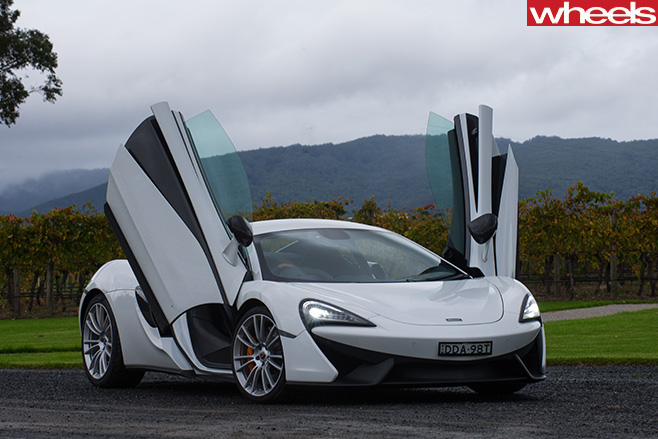
The rest of the dynamic package is well-judged too, aside from the exhaust note, which sounds flat and utilitarian. The hydraulic steering is nicely weighted, the chassis feels balanced and the ride – which ditches the complex layout of other McLarens for a more conventional set-up of adaptive dampers with front and rear anti-roll bars – is firm, yet not unbearable.
And it’s not like you’re giving up the supercar visuals either. Only trainspotters will notice the 540’s different sideskirts, rear diffuser and front splitter, or that it’s hiding steel brakes, not carbon ceramics, behind its wheels (225/35R19 up front, 285/35R20 at the rear)
The same goes for the cabin, with the manually adjustable seats and lack of reverse camera the only real clues you’re in McLaren’s cheapest model. And just like its bigger brother, the 570S (see breakout), the 540 is built on McLaren’s MonoCell 2 carbon tub, which scores thinner and lower sills for easier entry and egress.
So is the 540C as much fun, or as raw, or as exciting as McLaren’s more powerful, and more expensive, offerings? Not even close. But it still feels super, and because its performance is more accessible on the public road, it feels super more of the time.
Big brothers
Confused by McLaren’s growing model range and number-heavy nomenclature? Fear not, it’s all rather simple. Modern Macs are split into three families, or sub-groups: Sports Series, Super Series and Ultimate Series.
The Sports Series, which comprises the 540C, 570S and soon-to-arrive 570 GT, are designed to be more affordable, more comfortable and focus more on driving enjoyment than pure speed. Things gets faster and more serious in the Super Series (650S and 675LT), while the Ultimate Series is reserved for McLaren’s pinnacle of performance, the P1 and P1 GTR.
SPECS Model: McLaren 540C Engine: 3799cc V8 (90⁰), dohc, 32v, twin-turbo Max power: 397kW @ 7500rpm Max torque: 540Nm @ 3500-6500rpm Transmission: 7-speed dual-clutch Kerb weight: 1350kg 0-100km/h: 3.5sec (claimed) Fuel economy: 11.1L/100km (EU) Price: $325,000 On sale: Now
THE SNAEFELL Mountain course is a hallowed and dangerous road.
Home of the Isle of Man TT, the course is a winding rollercoaster of twisted bitumen that is notorious for destroying motorbikes, egos, and – unfortunately – lives.
There is something about the 60-kilometre track, which utilises public roads, that captures the imaginations of millions who attend, compete in, or watch the Isle of Man TT every year.
Traditionally, the TT is reserved for those more fond of vehicles that fall over if you don’t go fast. But cars also have a history on the circuit.
Subaru has made a concerted effort in the last couple of years to own the mountain, sending a relatively stock WRX STi to the TT each year to set and re-set the car lap record.
It was a successful exercise, with Manx native Mark Higgins lapping in the sub-20-minute mark to hold the record.
But this year, Subaru didn’t want to send another almost-stock STi. No, this year it put the Rex on the juice, and sent Higgins armed with his most powerful weapon yet.
The car that took to the Mountain course this year was a stripped-out, race-ready STi with a 550-horsepower WRC engine.
Higgins obliterated his old record, lapping the course in the high 17-minutes mark in his first attempt. Then on round two he lowered his record by further 14-seconds to put down a scorching 17:35.139 lap.
This now stands as the fastest time a four-wheeled car has ever lapped the Snaefell Mountain course, but Higgins will have another crack at the track on Friday.
To put into perspective how quick this lap was, Higgins topped out at 271km/h, and was just 30-seconds adrift of the full-blown Superbikes that are taking part in the TT this weekend.
Watch a short video of the attempt, courtesy of British publication, Autocar.
Ian Luff speaks to Wheels about a life dedicated to speed, and doing it better.
First published in the May 2016 issue of Wheels magazine, Australia’s most experienced and most trusted car magazine since 1953.
Mention the surname Luff and many people will think of Warren, the hard-charging V8 Supercar, GT and Carrera Cup racer. But Wazza is merely a chip off the old block; his dad Ian has been at the forefront of advanced driver training and a fixture in Australian motor sport for more than 40 years.
At 66, Luff is one of the funniest, most energetic and entertaining people in the automotive arena. Yet he’s deadly serious about driving, and has been since the day in 1972 when Peter Wherrett – the pioneer of driver training in Australia – began to channel Luff’s talents for driving and communicating.
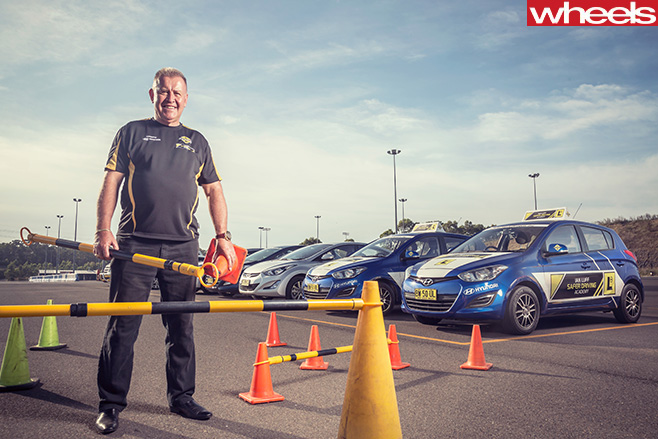
An apprenticeship at Repco led to a meeting with Jack Brabham. “It was in 1966, he’d just won his third [world] championship and he came to the Repco training centre. He shook my hand and said, ‘What are you going to do with yourself?’ And I said, ‘I’ll have a crack at this racing game myself; it looks like fun’.”
Qualified as a mechanical engineer, Luff got started in club motorsport at Phillip Island, driving a Datsun Bluebird SSS. “Along with a mate, we’d also go to the old Lilydale grass airfield at night and see how many 360s we could do. That’s where I learned a lot of car control skills.”
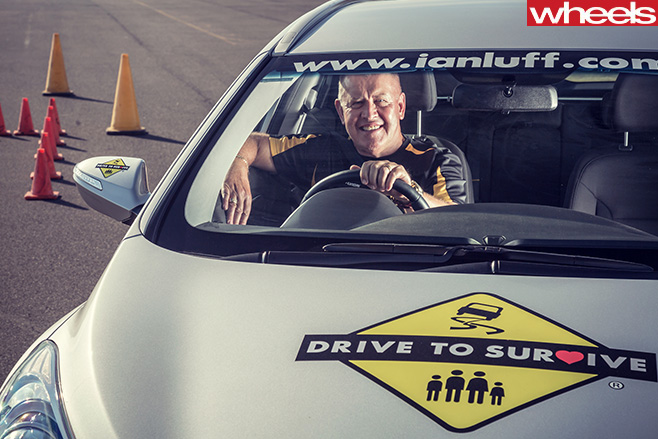
In 1971 Luff left NT for a job in Sydney with his then brother-in-law, Rick Pickering, at Mark IV car air-conditioning. Luff helped engineer the compressor pulleys for aftermarket under-dash units.
“In Sydney, my sister booked me into the Wherrett school [Peter Wherrett Advanced Driving]. She said, ‘You have to do a driving course because you’re gonna kill yourself. You’re a lunatic’. On the day I did my course, I kissed the Armco and a bolt sticking out of the fence opened up the passenger side of my trusty EH like a sardine can.
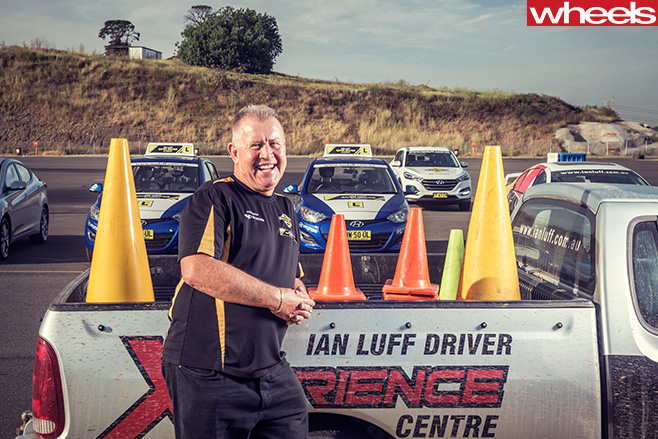
With Wherrett as mentor, and soon part-time employer, Luff’s racing career progressed to an LC Torana. Since then he’s had countless outings, a swift and safe pair of hands in other people’s cars. He lists a class win and 10th outright (Commodore VX SS) in the 2002 Bathurst 24-Hour as a highlight. “That and seeing Warren racing internationally now.”
Wherrett’s 1980 sale of his advanced driving business led to Luff’s starting his own, in 1983. His entrepreneurial flair and entertaining style helped the business quickly expand to cover learner drivers, workplace driver training and racing courses. “As Wherrett said to me: it’s not about how good a driver you are – it’s about how good you can make them.”
The Giulia isn’t set to land in Oz until February 2017, and WhichCar got to taste it first.
The verdict? It’s above board in almost every measurable manner, and ready to take the battle to the British, European, and Japanese manufacturers that make up the premium sedan market.
Alfa Romeo lost its way – to put it lightly – in recent years, and the Giulia is the latest step in a concerted push to get the brand back on track, and to a place that would please its most loyal fans; the Alfisti.
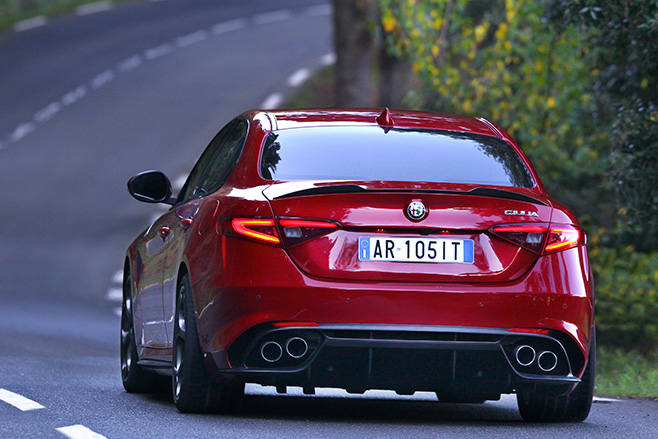
Three different versions of the Giulia will be available in Australia initially; the ‘entry-level’ 147kW 2.0-litre turbo petrol model which we got the chance to taste in this video, a 132kW 2.2-litre turbodiesel, and the top of the range Alfa Romeo Giulia Quadrifoglio; a 375kW/600Nm performance monster intended to take the fight to BMW’s vaunted M3 and the Mercedes-AMG C63, among others.
The Giulia wasn’t a cheap project for Alfa Romeo, with parent company Fiat Chrysler Automobiles (FCA) being stumping up €5 billion ($A7.7 billion) to get it running.
From that investment, Alfa is expecting at least two more cars (a pair of SUVs slated for release within five years) to be produced atop the Giorgio platform the Giulia utilises. Plans are also in place for a 166 large sedan successor to challenge the BMW 5 Series, and maybe even the next generation Giulietta small hatchback.
But that’s the future. For now, enjoy what’s set to hit our shores early next year.
McLaren’s Special Operations division is to build a further 25 675LT Spiders dubbed the ‘Carbon Series’.
The regular 675LT Spider already features plenty of carbonfibre bodywork, including the front bumper and underbody, side skirts, side intakes and rear guards, deck, bumper and diffuser, but the Carbon Series adds to that with the roof, tonneau, A-pillars, bonnet, side blades and front guards also created from the lightweight material.
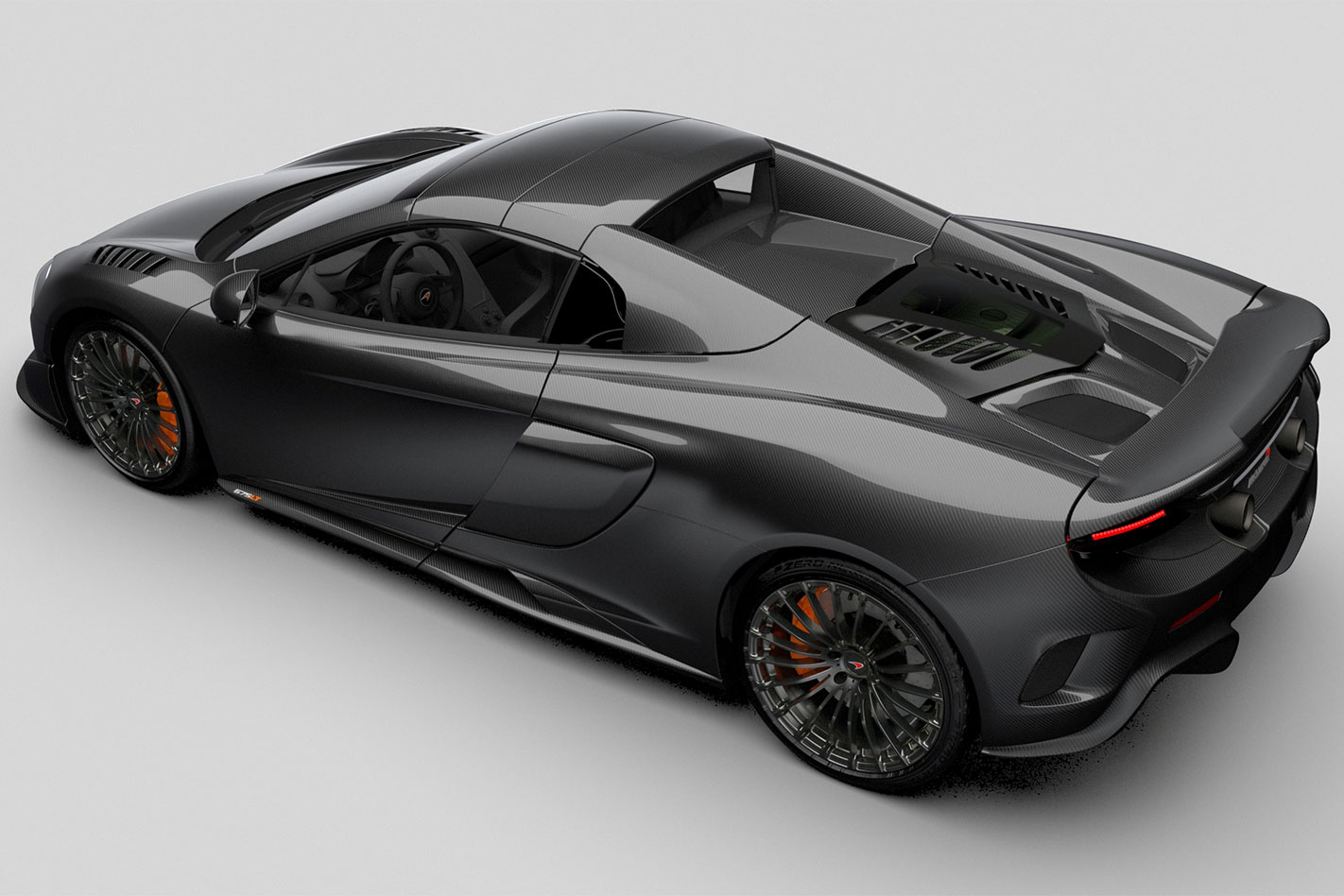
As it’s not possible to retrofit the additional carbon panels, the 25 Carbon Series are in addition to the 500-strong 675LT Spider production run.
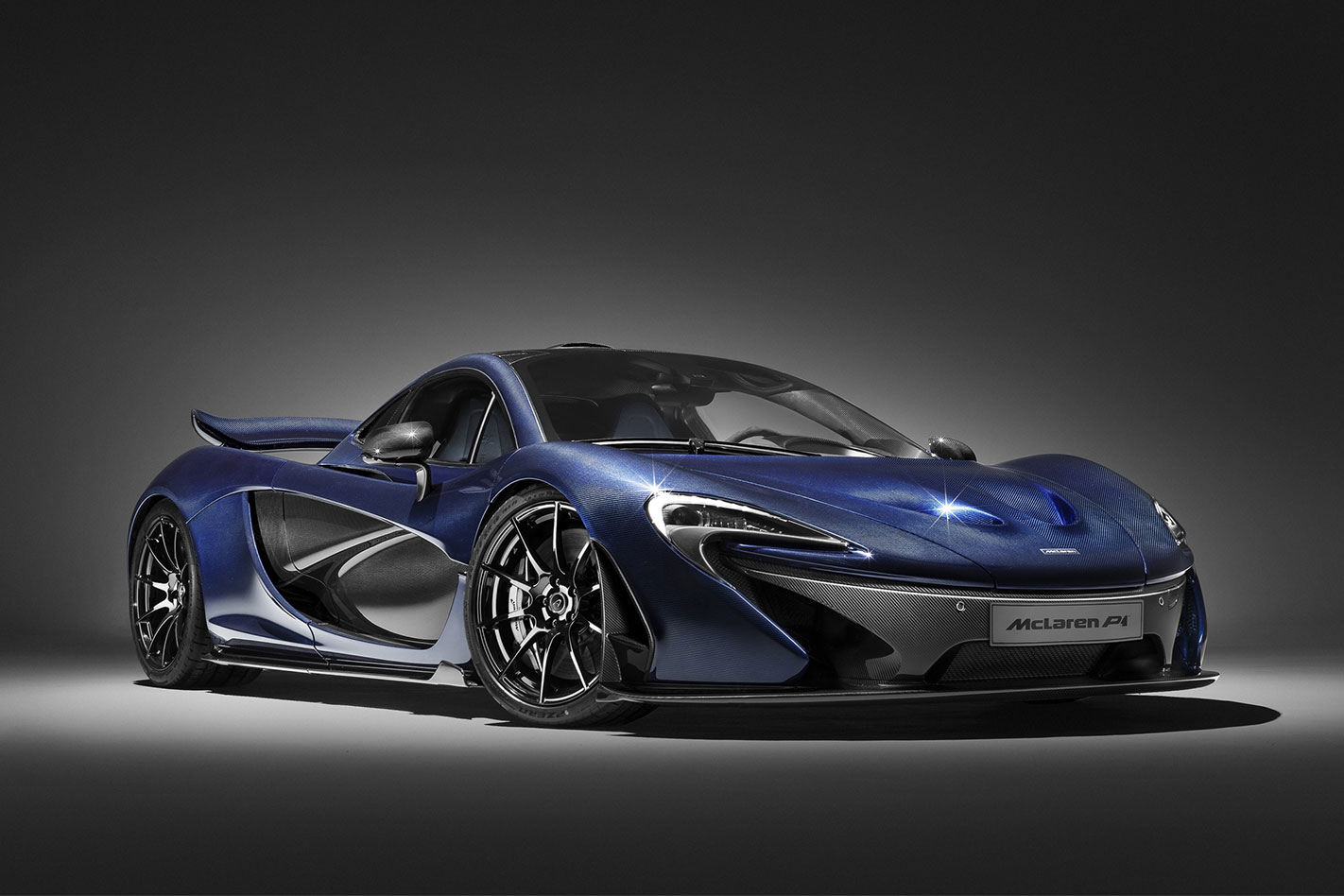
Performance is unchanged compared to the regular 675LT Spider, with the 3.8-litre twin-turbo V8 producing 497kW/700Nm, which allows it to hit 100km/h in 2.9sec and 200km/h in 8.1sec. All 25 cars are sold.
If we’re talking about a car with a rear-mounted engine, rear-wheel drive and a manual gearbox, you’d usually expect us to be describing a product of Stuttgart.
This time, however, we’re talking French. Well, Slovenian technically, as that’s where production of Renault’s Twingo city car takes place.
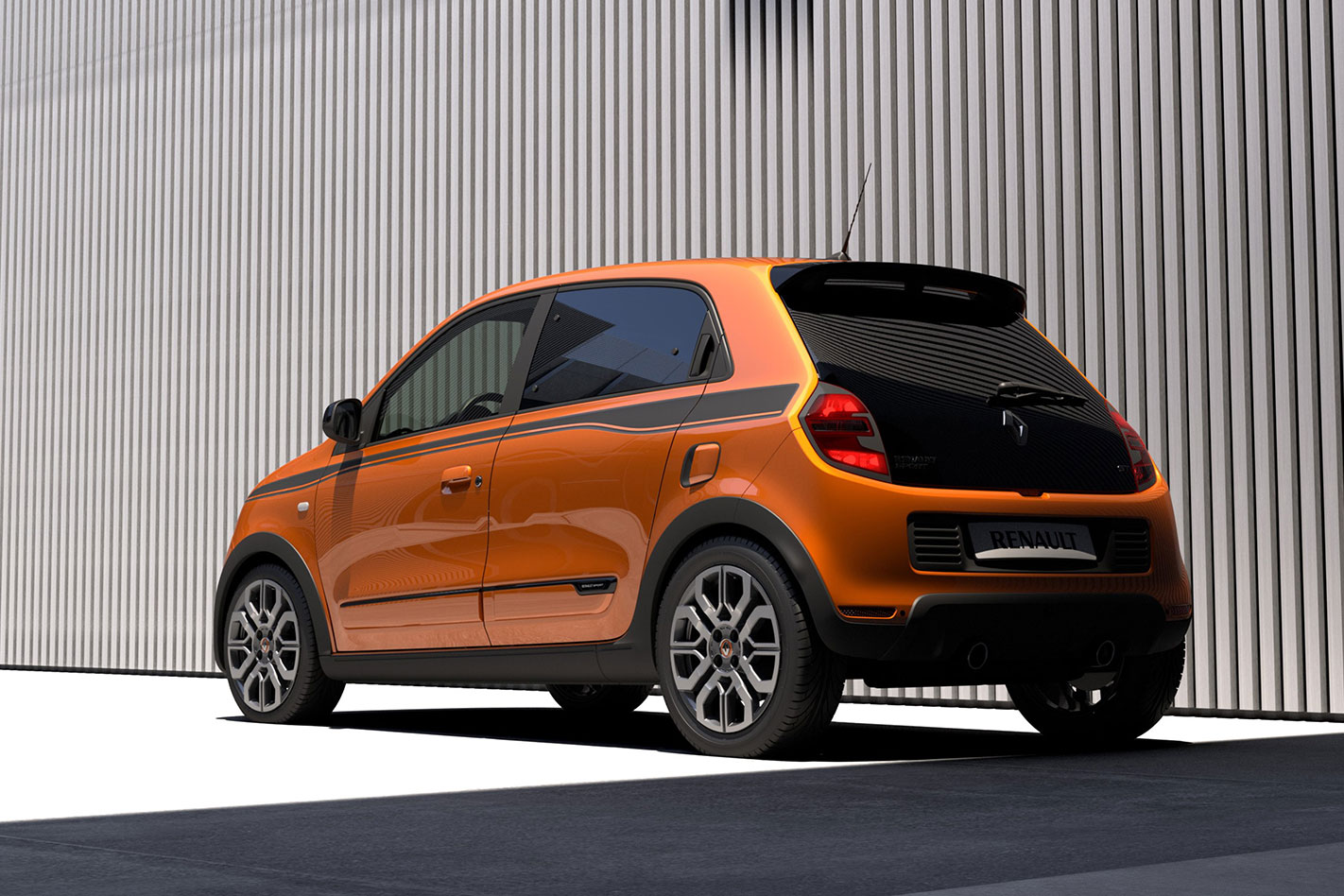
Power comes from Renault’s 898cc turbocharged three-cylinder engine, which produces 82kW/170Nm. That mightn’t sound much (and it isn’t) but bear in mind the Twingo weighs less than a tonne and performance should be sprightly, if not intimidating.
Renault also claims “precise cornering and outstanding road-holding” thanks to 17-inch wheels, revised suspension, variable-rate steering and a new ESP calibration.
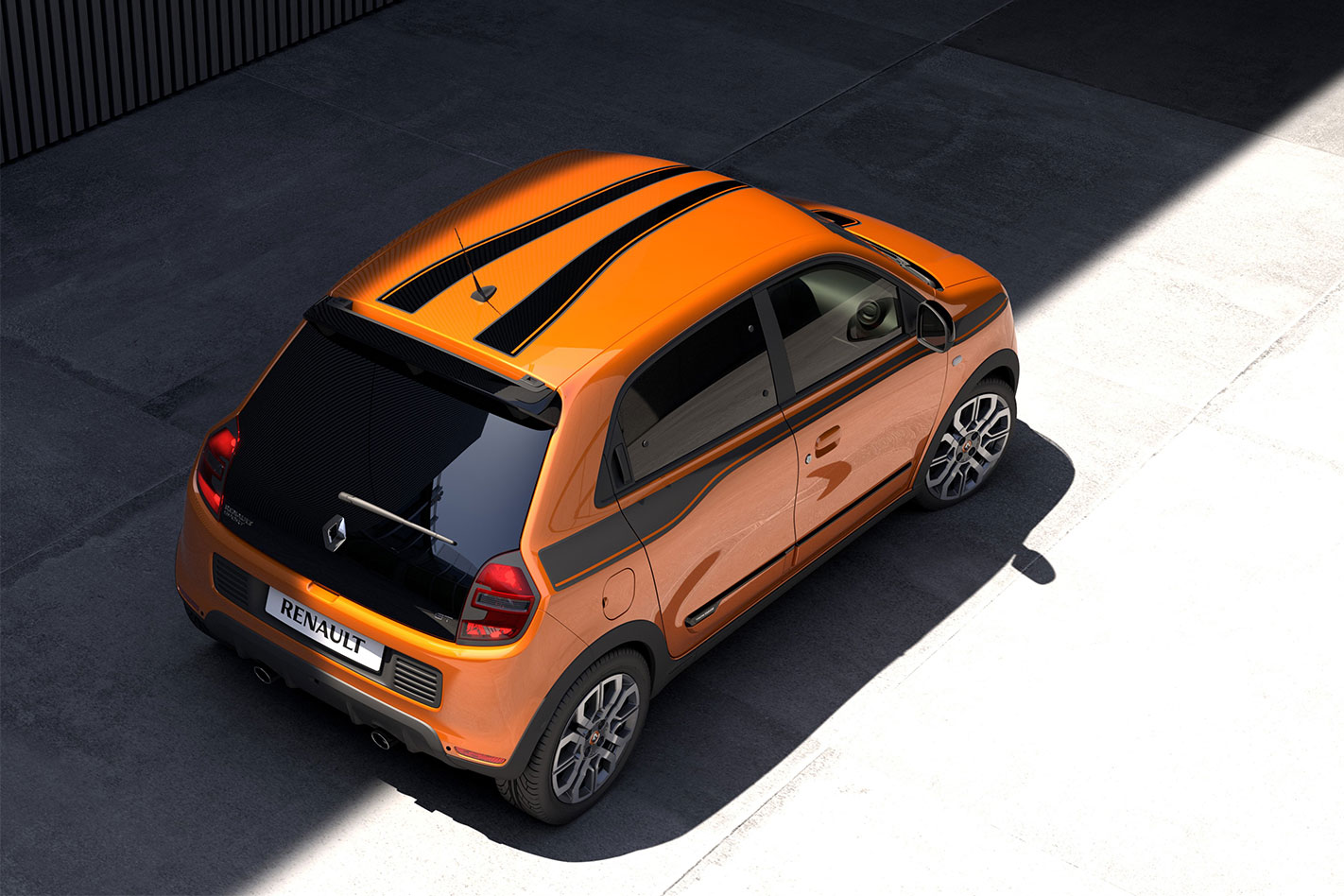
Sadly for Australian Regie enthusiasts (and there are plenty) the Twingo GT won’t be making its way Down Under, but if you happen to be going to the Goodwood Festival of Speed, you’ll be able to see it on display.
Close to 30 percent of parents would avoid teaching their kids to drive again because it’s too stressful, according to a survey of 15,000 Navman customers.
Teaching your child to drive is a daunting experience; there’s a lot that can go wrong. From accidents and conflicts to passing on your bad habits, giving your child the experience they need is a big responsibility. You want to make sure they learn the right skills to stay safe and pass their test, and you want everything to go smoothly.
Victoria’s Transport Accident Commission (TAC) lists car crashes, nerves, being too busy, conflict and danger as the top reasons parents and supervisors avoid getting in the car with L-platers.
There are other options, like paying a driving instructor and sending your kids to a driving school, but this won’t always get you out of the passenger’s seat – the more practice your child gets, the safer they’ll be when they’re out there on their own.
According to the Managing Director of Safe Drive Training Australia, Joel Neilsen – who is teaming up with Navman to run a ‘How to teach your kids to drive’ webinar in June – the biggest mistake parents make is throwing too much information at their child while he or she is trying to focus on the road.
“You are making the driver do things at the same time: take in new information and do a lot more that requires concentration. It is like if a Navman were to shout instructions in the middle of a busy intersection. This can increase the stress, risk of wrong action and possibly a crash,” he said.
Instead, he suggests “parents should always prepare the learner ahead of time to avoid potential risks on the road.”
Naturally, with a third of Navman customers scared off from driving with L-platers again, we had to get to the bottom of why. So we asked a few parents to share their driving-instructor experiences…
“My wife and I shared the teaching of our son, and then he had a few ‘proper’ lessons as he got close to his 120 hours. (Also did a Safer Driver program through his school). He was very focused on getting his licence from the day he sat his L test and got his Ps three days after his 17th birthday (we live in Sydney). It was actually not that stressful and he was a very willing learner!” – Andrew
“Well, my partner and I taught my mum how to drive – now that was stressful. The reason mum took so long to learn how to drive in the first place was because she is terrified of oncoming traffic. She felt like every car moving towards her was going to drive into her head-on. There was also this time she confused the accelerator pedal with the brake while parking, so the car went flying up a curb with the front wheels helplessly spinning in the wet grass. And now my grandmother decided that at the age of 76 she would go and get her Ls and learn how to drive. Now my mum has to teach her mum – what goes around comes around.” – Anna
“I taught my older sister to drive when she was 25 and I was 21. She had an auto licence only (that’s a thing in WA!) and needed a manual licence for her new job, so I taught her in two weeks… she burnt out the clutch in my car but she passed so I considered it a success.” – Laura
“I taught my sister to drive. Mum took her out first in a manual Nissan X-Trail and she drove about 200m without any dramas. I had a little automatic Honda Jazz. I took her around the block, but she couldn’t grasp the concept of how far she needed to turn the steering wheel to turn a corner. When I told her to turn into the driveway, she didn’t turn the steering wheel far enough and ended up accelerating instead of braking, right into the park next door to us. She crashed into the log bollard, which cracked in half and swung around to the doors, locking us in. I had to climb through the back to get out. The damage to the car was minor, but we were lucky we didn’t end up hitting the tree 30cm away. She didn’t drive for a year after she crashed the car, and four years later, I’m still teaching her to drive.” – Elise
“I have no recollection as my mind has erased the experience.” – Stephen
“One day I was shopping with my daughter (Anna) and decided I was going to let her drive around the carpark for one of her very first driving lessons. It had been raining all week, but on this afternoon the weather had cleared so I thought we’d make the most of it. I explained the workings of the Ford Falcon and the importance of seat belts, steering, gears, pedal, brakes etc. Anna listened intently with excitement in her eyes. She got into the driver’s seat, started the engine and carefully put the car in drive… then put her foot down HARD on the accelerator and the Falcon took off…. I shouted at her to brake subsequently causing the car to slide sideways to a screeching halt. Anna got out of the car quietly, and I drove us home in silence. I booked driving lessons for Anna the very next day. Now she’s a motoring journalist.” – Georgia.
“My daughter Rachel was my first L-plate guinea pig. She was nervous, and so was I. I drive a Mitsubishi 380, a lot of car for a learner first-up. I took her to an industrial area and we went through the basics. She seemed to enjoy it a little bit too much. We went out every day, night and weekend. Her hours climbed steeply and her confidence grew, she thought she was home and hosed. Then she got over-confident – she sailed through a roundabout, got a blast from the narrowly missed vehicle to her right and then the adrenaline hit her. We were minutes from home, she felt sick, the blood drained from her face and she wanted me to drive. We stopped and I told her to rest for a moment and then we’d go again. She stopped. We talked. She drove us home and now is much more diligent at intersections and roundabouts. She has had her licence for almost two years now and has close to 30,000km more on her odometer than when she purchased her car. Practice and many long distances have made her a good driver for her age group.” – Janette.
“The scariest time on the road was when we had all the distractions in the car – the dog, the boyfriend (who the dog vomited on) and the sister – on a country road, on a dark night. We came across a rabbit in the middle of the road, and then a car decided to be on the wrong side of the road until the very last minute. Twice in one night we all thought we would die. Then an ambulance appeared out of nowhere, in the middle of nowhere. She handled the drive like a professional and we all managed to all stay alive, even the rabbit.” – Lindsay
