
Available as a single-cab and dual-cab cab-chassis, the 4×4 Mahindra Genio starts at $23,490 for the 4×4 single-cab and $28,490 for the 4×4 dual-cab models.
All variants come with a five-speed manual and a 2.2-litre, four-cylinder diesel that produces 88kW and 280Nm.
Mahindra Australia national sales manager Russell Thiele says the Genio’s appeal for tradies will be its affordability, “best-in-class” interior space and its standard equipment.
“The 2016 Genio really holds its own against competitors by setting out to provide functionality and practicality in a cost-affordable overall package,” Russell says.
Features include SRS airbags for the driver and front passenger, side intrusion beams in the door, crash protection and crumple zones, a collapsible steering column, and ABS braking. There’s also air-conditioning, power steering, central locking, cruise control, power windows and audio controls mounted on the steering wheel. Bluetooth is optional and operates through a push-button control on the dashboard.
As far as work credentials go, the Genio 4×4 single-cab has a payload of 1160kg while the dual-cab 4×4 has a 1000kg payload. At the front the Genio has a double-wishbone, independent coil-spring set-up. At the rear there are leaf springs. Brakes are disc at the front and drum at the rear, and its maximum tow-weight capacity is 1800kg for a braked trailer. It’s also available as a 4×2.
Read our full story on Australia’s best values utes here.
This article was originally published in 4×4 Australia April 2016.
The snow storm continues for VW Group. A faulty pedal clip has brought about a recall affecting 800,000 Volkswagen Touareg and Porsche Cayenne models globally.
The fault concerns a circlip which could become loose, or go missing, from the pedal assembly.
While the company’s statement says the recall is “purely precautionary” and that there “have been no reports of accidents or injuries as a result of this concern”, there is a possibility of pedal malfunction when activating the brakes.
The fault was found during internal inspections, and should take less than half an hour to fix. The repairs are free.
Word is 6168 Porsche Cayennes are affected in Australia, and an uncertain number of Touaregs. While the fault poses no immediate danger to drivers, it’s recommended anyone who owns the above vehicle models built between 2011 and 2016 contact their local dealer and book a time for inspection. Better safe than sorry.
This news follows a series of recalls from the German car-maker over the last couple of months, and of course, the Dieselgate scandal of 2015.
Click here to read the full review on the Volkswagen Touareg range.
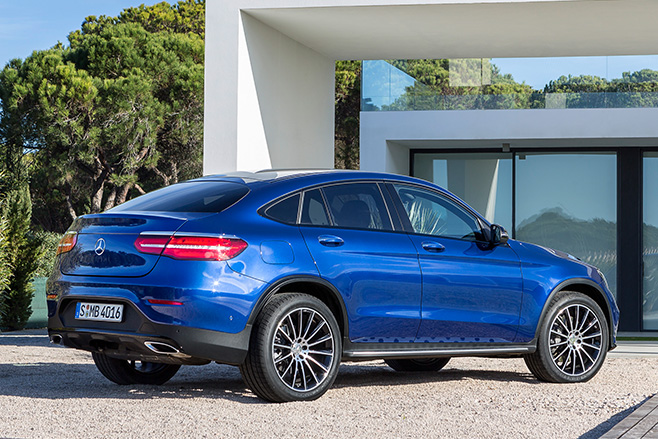
The name of the twin to the Mercedes-Benz GLC SUV that went on sale in 2015 has more to do with its swoopy styling, as practicality requirements means it features four rather than two doors.
A vehicle height that is 4cm lower in comparison is characterised by a less-upright windscreen and a dramatically drooping roofline.
And while the wheelbase is unchanged from the regular GLC, the body length of the Coupe – expected locally at the very end of 2016 – is extended by 7.5cm.
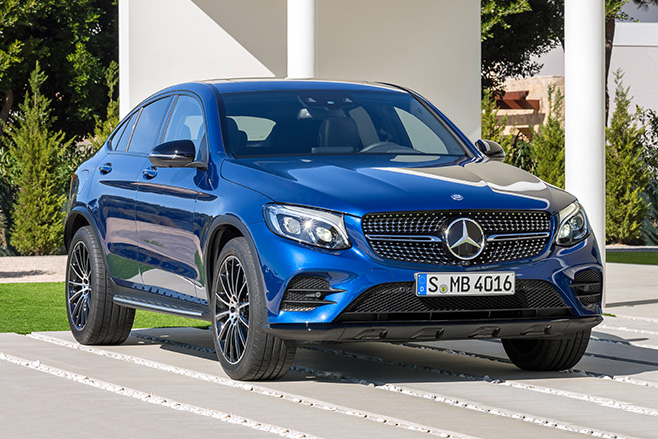
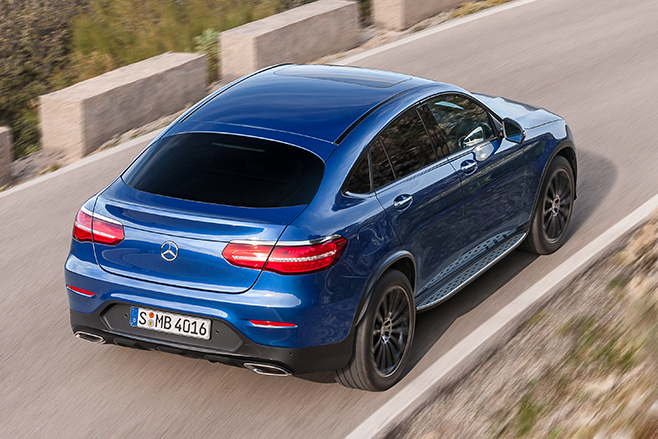
In the less-obvious details, the different airflow of the Coupe’s shape means Mercedes could dispense with a rear wiper, and a lowered sports suspension is standard under every model.
Air suspension – called Air Body Control – is also available optionally.
The drooping roof inevitably reduces boot capacity of the Coupe – down 59 litres to a volume of 491 litres.
Mercedes-Benz Australia has yet to confirm pricing for the all-wheel-drive GLC Coupe but expect a premium over the wagon sibling that went on sale in late 2015, pricing from $64,500.
Details on engine options will also be a wait-and-see situation. Eight engines – split even between petrol and diesel – and paired with a nine-speed automatic gearbox will be available globally eventually as they are with the GLC wagon.
The latter is currently sold with two diesel models (220d, GLC 250d) and one petrol (250), though both the GLC Coupe and GLC wagon are likely to be offered in dual AMG forms: the GLC43 powered by a twin-turbocharged V6, and the Mercedes-AMG GLC63 that utilises a twin-turbo V8.
The GLC Coupe was first shown as a concept at the Shanghai motor show in April 2015. It already has a bigger sibling in the shape of the GLE Coupe, which went on sale here in the second half of 2015.
Click here to read the full review on the Mercedes-Benz GLC range.
Rumour has it next year we’ll see Range Rover’s response to the BMW X6 – the Range Rover Sport Coupe.
Based on the Jaguar F-Type’s aluminium chassis, which was also used in the Jaguar F-Pace SUV, and using lightweight aluminium body panels, the Range Rover Sport Coupe is expected to be the lightest and fastest Land Rover badged vehicle, reaching 100km/h in four seconds.
According to Autocar, the SUV coupe will measure in at around 4.7 metres long, putting it between the Range Rover Evoque (4.4 metres) and the Range Rover Sport (4.85 metres).
Given its size, it won’t have a third row, and sources say that it’ll only feature four seats with an optional fifth in the second row.
There’s also talk it may include a pure electric powertrain or a four-cylinder petrol and six-cylinder diesel engine as seen in the F-Pace.
We have an inkling the Range Rover is going to be styled to the nines, but we’ll just have to wait until 2017 to find out.
Toyota’s first update of the 11th-generation small sedan that went on sale in early 2014 will see the top-spec ZR model add autonomous emergency braking, lane departure warning and auto high beam added to its standard features.
The systems will be optional on the Ascent and SX models that comprise the rest of the sedan range, which accounts for about 25 per cent of Corolla sales alongside the twin hatch.
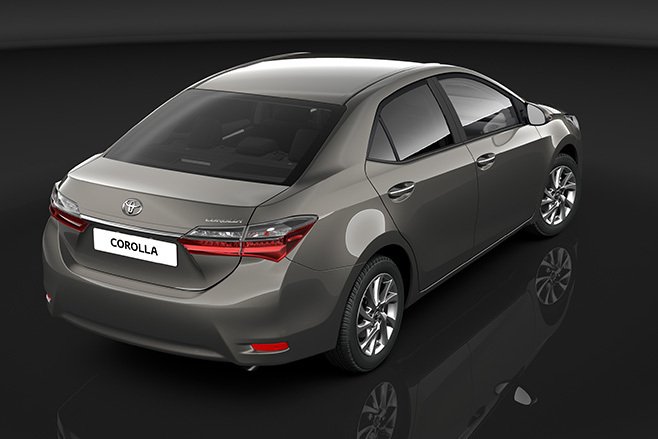
Toyota’s biggest change for the sedan version of what has been Australia’s biggest-selling vehicle since 2013 is up front.
A narrowed grille is complemented by squinty headlights, while the lower air intake is enlarged and blends more naturally into the foglight housings for a sportier look overall.
The Toyota Corolla ZR sedan features headlamp clusters and daytime running lights formed from LEDs, with all variants gaining LED tail-lights.
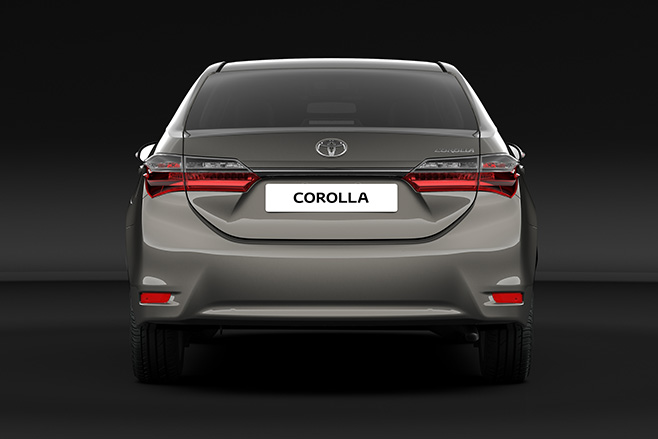
ZR also receives chrome finishes for the doorhandles and rear end.
The Corolla hatchback was given its update in mid-2015, though the five-door currently doesn’t offer the active safety systems.
The Corolla currently trails the Mazda3 in the 2016 race to be Australia’s favourite car.
Click here to read the full review on the Toyota Corolla
FOR a city that has adapted to largely cope without cars, New York sure knows how to put on a motor show. And the stars? Everything from small city runabouts to hulking SUVs.
Wheels was there as the covers were pulled off everything from an all-new version of the Subaru Impreza hatchback built on the Japanese carmaker’s future platform, a hard-topped Mazda MX-5 unveiled in the shadow of a restyled Toyota 86, to a Genesis-badged New York Concept that aims to lure cost-conscious luxury car buyers to Hyundai’s standalone premium brand.
For supercar fans, there was also a restyled version of Nissan’s beer-budget supercar, the twin-turbo V6 GT-R, as well as a track version of the Honda NSX, badged the Honda NSX GT3.
Oh, and a sporty take on the compact SUV from Mercedes-Benz.
Join us on a quick tour, where we name our picks of the 2016 New York Motor Show.
Welcome to the new dawn at Ferrari. Having flown the naturally-aspirated flag for as long as possible, eventually even the most sacred of sports car makers has had to bow to regulatory pressures and turn to turbos.
Our initial taste of Ferrari’s forced induction future, the California T, proved promising, however the addition of a pair of air compressors to Maranello’s new super sports car, the 458-replacing 488 GTB, is a much bigger deal.
Any slight hesitation in power delivery, something that would be almost a non-issue in a GT car, will be a fatal flaw in a machine that has driver involvement as its raison d’être. Still, two of the finest tracks on Ferrari’s Greatest Hits album, the 288 GTO and iconic F40, have been powered by boosted V8s, and with F1 once again a turbo formula, there’s the opportunity for technology to transfer directly from the racetrack to the road.
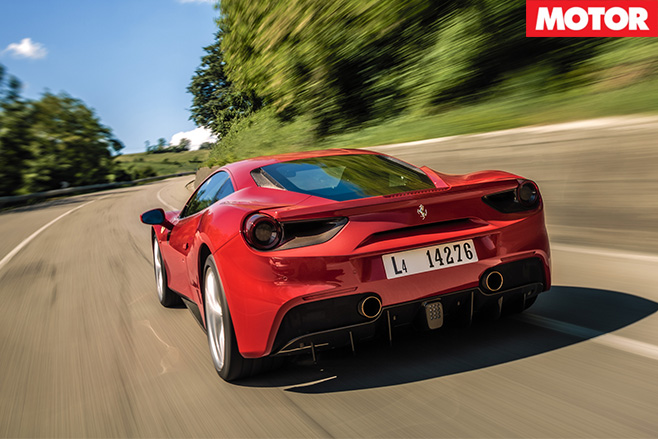
The new 488 GTB’s 4.0-litre V8 has sacrificed half a litre of engine capacity compared to the outgoing 458’s naturally-aspirated unit, but two turbos have sent outputs into the stratosphere.
Compare the 445kW/540Nm produced by the wild 458 Speciale to the 488’s 492kW/760Nm. And while the new turbo engine is unable to match the atmo’s dizzying 9000rpm redline, it still develops peak power at 8000rpm while maximum torque is on tap from just 3000rpm. Unsurprisingly, given the associated plumbing adds just 10kg to the 458’s 1465kg, performance also lifts to a whole new level.
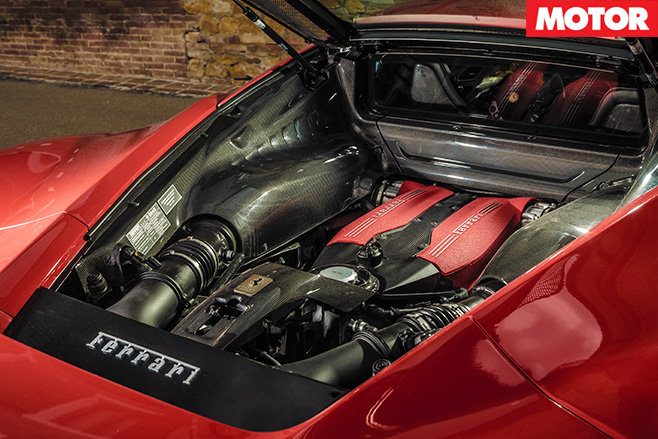
Still, while it’s all change under the bonnet – or bootlid in this case – some things, like the Ferrari launch schedule, never change. Our initial exposure to the 488 is to take place at Fiorano, under the guidance of 34-year-old Raffaele de Simone, Ferrari’s friendly and super-talented chief test driver.
A protégé of the legendary Dario Benuzzi, de Simone is responsible for ensuring that each new Ferrari not only has segment-leading performance, but that that performance is accessible to the average Ferrari owner – no easy feat when the new 488 is capable of lapping Fiorano in 1min23sec, half a second quicker than the 458 Speciale and, staggeringly, almost two seconds faster than the Enzo.
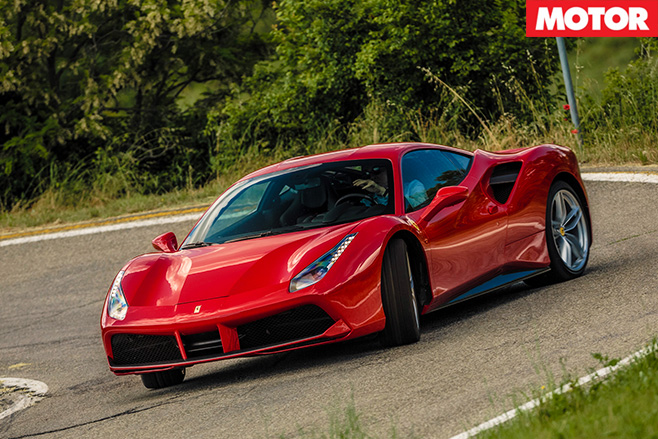
SSC is now also able to adjust the dampers to subtly alter the 488’s weight shift and keep the car teetering on the edge of adhesion, all the while making the driver feel that pole position on an F1 grid is easily within their grasp.
Ingesting a maximum 1.5bar (21psi) of boost, the 4.0-litre V8 revs with such vigour and eagerness that the LED shift lights atop the steering wheel are rarely unlit. Fears of lethargic throttle response are unfounded – Ferrari claims the response time at 2000rpm in third gear is 0.8sec – an undetectable 0.1sec slower than the Speciale – thanks to the turbos housing titanium-aluminium alloy compressor wheels mounted on ball-bearing shafts.
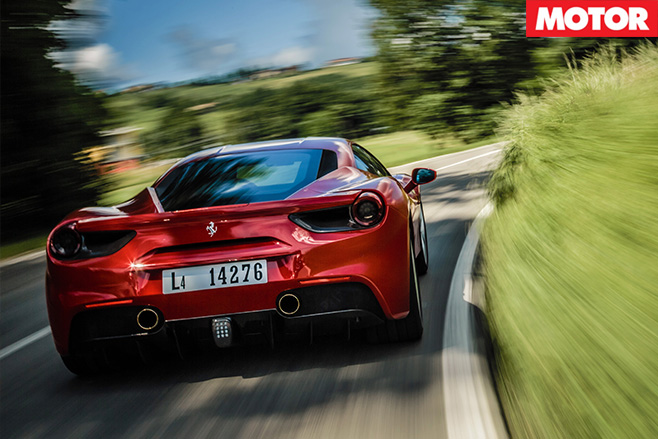
Weight may have crept up a token 10kg to 1475kg, but the 488 feels more agile, manoeuvrable and light-footed than its predecessor, though the now-traditional super light, ultra-fast Ferrari steering makes it easy to overdrive the car by turning in too early or using exaggerated inputs.
The trick is to simply trust the car, to keep it on a reasonably long leash and let it sort itself out. You can brake hilariously late yet get back on the throttle eerily early, but maintaining a smooth line is essential.
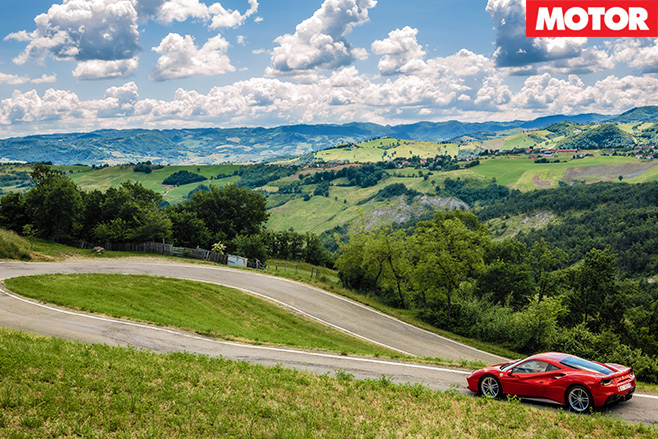
The combination of many hot summers and cold winters – not to mention the occasional earthquake – has left this tarmac badly scarred, with crater-deep potholes that could swallow a Vespa, broken pavement and puffy undulations.
It’s a tough test for any car, let alone a ground-hugging, low-flying supercar, but it’s one the 488 GTB must pass, for the majority of owners will spend far more time traversing the occasionally uncomfortable streets of Los Angeles, Sydney and London than they will hot-lapping perfectly manicured racetracks.
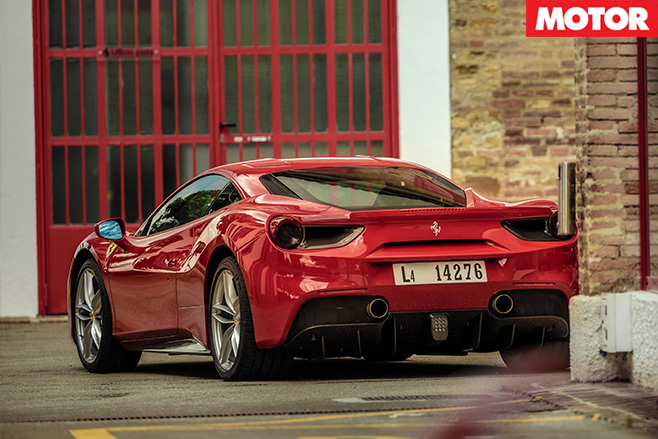
It works wonders, particularly on this third-rate stretch of Italian back road, with no bottoming out or nervous sidesteps. It’s a confidence-inspiring setup, always connected and communicative, never feeling wayward.
On the road, the 488 is a latent threat to your driving licence thanks to the velocities it can achieve in the blink of an eye. Thankfully, the tireless Brembo carbon ceramic brakes, lifted from the LaFerrari, are able to shed giant chunks of speed with tireless efficiency.
Hold the left-hand gearshift paddle while doing so and the seven-speed dual-clutch will fire in downshifts as soon as mechanically able, swapping ratios effectively instantly with a perfectly timed flare of revs.
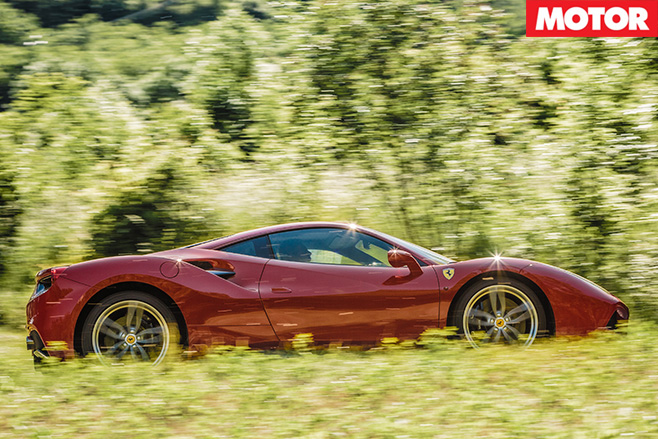
Although it raises the high-tech bar by one full notch, Ferrari’s latest brainchild follows a relatively economical and straightforward engineering concept and the result is a more accessible, better balanced and absolutely confidence-inspiring car. There is no need for the exotic construction, rear-wheel steering or all-wheel drive favoured by some of Ferrari’s rivals, just engineering of the highest order.
Responsible for this mechanical wizardry are folks such as Vittorio Dini, who’s been able to turn the California T’s grand-touring-focused engine into a proper sports car masterpiece, and Enrico Cardile, whose aerodynamic mastery works wonders for speed and stability without resorting to in-your-face wings that would compromise weight and drag, as well as beauty.
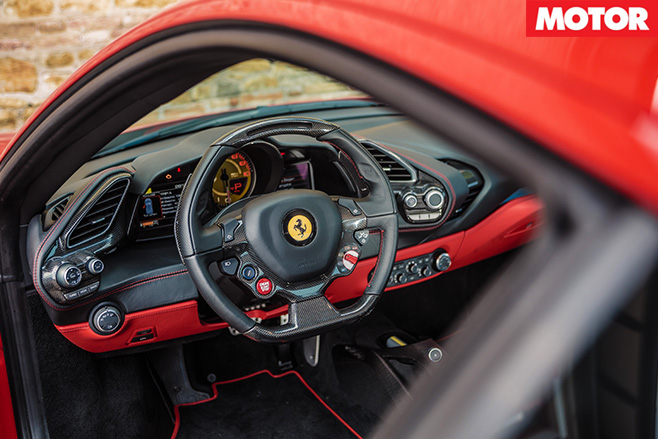
As the afternoon draws to a close, attention turns to more prosaic matters. Practicality may not be front of mind for most potential Ferrari buyers, but it is no coincidence that sales have exploded in the 20 years since former boss Luca di Montezemolo decreed that Ferraris must be useable everyday.
The 488 takes a further step forward, incorporating keyless entry-and-go for the first time. Italian ergonomics are also a thing of the past, with comfortable standard seats, all major controls located at your fingertips and good vision. Only the lack of a head-up display and sat-nav that dates back to when Michael Schumacher was top dog at Maranello stand out as needing improvement.
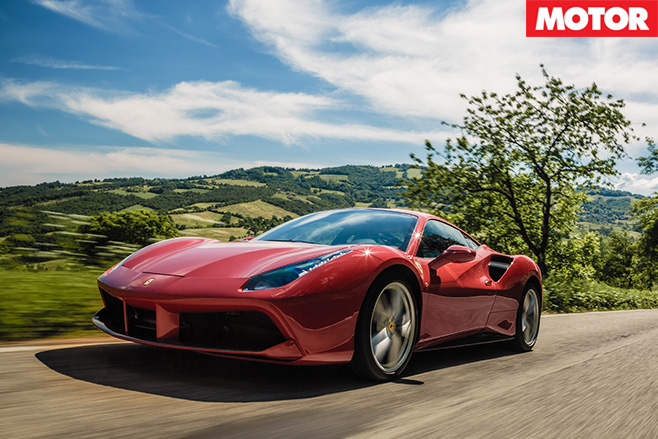
The 488 GTB is the first new-school model, more sensible, homogenous and comfortable. But while it may be a slightly less emotional driving machine, it is undeniably the faster and more complete car. However, for those addicted to the old-school thrills, remember that there is still the 488 Spyder and Speciale still to come.
5 out of 5 stars
Specs: Ferrari 488 GTB Body: 2-door, 2-seat coupe Drive: rear-wheel Engine: 3902cc V8, DOHC, 32v Bore/stroke: 86.5 x 83.0mm Compression: 9.4:1 Power: 492kW @ 8000rpm Torque: 760Nm @ 3000rpm Power/weight: 334kW/tonne 0-100km/h: 3.0sec (claimed) Transmission: 7-speed dual-clutch Weight: 1475kg Suspension: double A-arms, adaptive dampers, anti-roll bar (f); multi-links, adaptive dampers, anti-roll bar (r) L/W/H: 4568/1952/1213mm Wheelbase: 2650mm Tracks: 1679/1647mm Steering: electrically-assisted rack-and-pinion Brakes: 398mm ventilated carbon discs, 6-piston calipers (f); 380mm ventilated carbon discs, 6-piston calipers (r) Wheels: 20 x 9.0-inch (f); 20 x 11.0-inch (r) Tyres: 245/35 ZR20 (f); 305/30 ZR20 (r); Michelin Pilot Super Sport Price: $540,000 (estimated) Positives: Otherworldly performance; supreme comfort; benchmark handling Negatives: No more atmo V8; we miss the Speciale; waiting list is already very long
Want to create your own Gymkhana videos? Here’s a good start
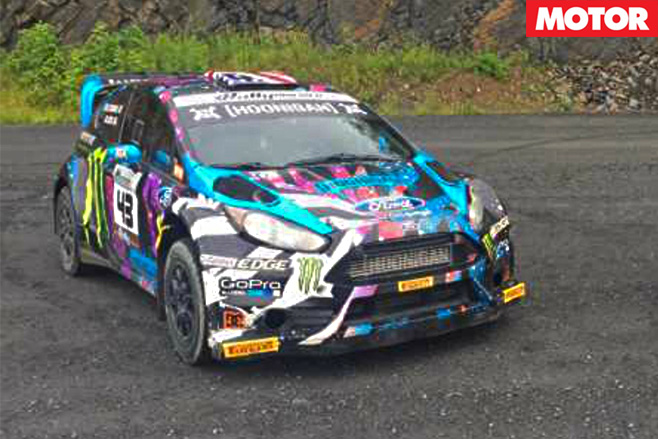
If you’re a fan of Ken Block and want your own slice of the Gymkhana phenomenon, then here’s your chance to buy the Hybrid Function Hoon Vehicle.
Listed on motorsportauctions.com for 250,000 pounds (A$470,000), the Fiesta HFHV has appeared in the Gymkhana series and most recently won the 2015 Rally Whangarei with Block at the wheel.
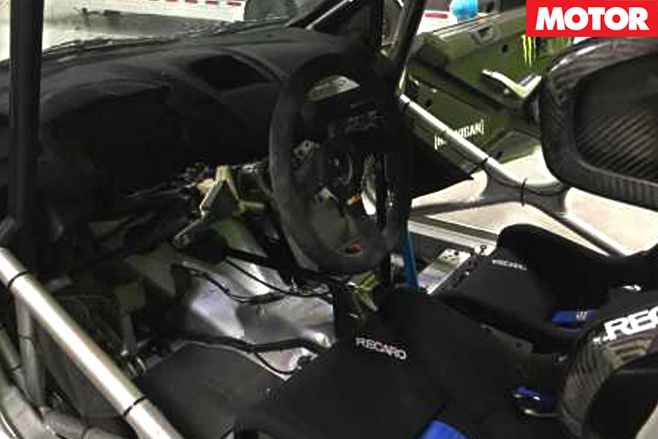
In rally specification with a 34mm intake restrictor it produces around 260kW, however in rallycross tune with a 45mm restrictor it produces a thumping 447kW/900Nm, which requires the upgrade to a tougher Sadev sequential transmission and stronger rear differential.
An unknown quantity, that’s what this is. With some cars, you know what you’re going to get. With the limited-run Lamborghini Aventador LP750-4 Superveloce, I’m not so sure.
The past couple of new Lamborghinis we’ve driven have left our flabbers slightly unghasted: the Aventador is stupidly fast but can feel clumsy, while the smaller, cheaper Huracan is also absurdly quick at the money, but in making it easy to drive, Lamborghini has left it one-dimensional. In some ways both feel a bit ‘not for us’.
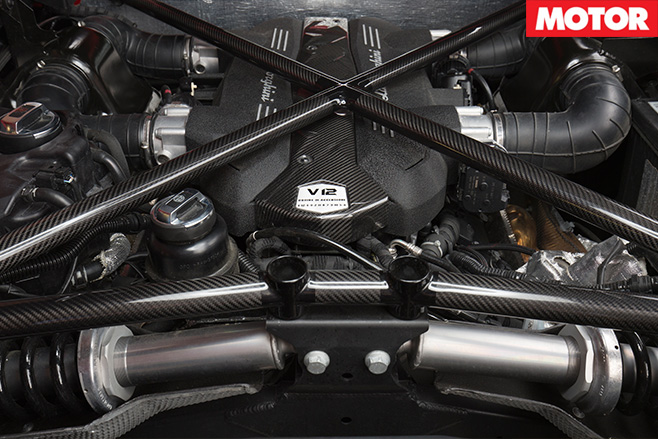
But, says Lamborghini, this is a Superveloce. This is different. There have been only three SVs in Lamborghini’s history before now, and in Miura, Diablo and Murcielago forms, they’ve developed 385, 530 and 670 metric horsepower (283, 390 and 492 kilowatts respectively). That’s plenty for their time, but nothing like the 750 indicated by the numerical designation of the Aventador.
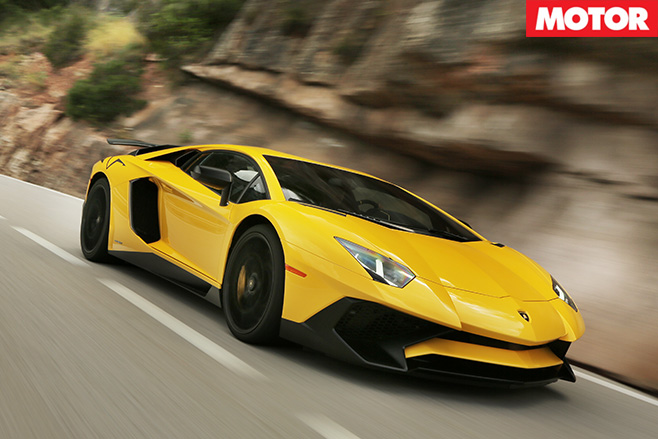
Again, it’s mated to a single-clutch automated manual gearbox with, we’re told, an improved shift calibration, but more significant still is that the SV is, impressively, 50kg lighter than standard. There are new door skins and a couple of lighter panels clad over the carbonfibre monocoque, but I suspect the real weight saving comes from the stripped-out interior.
Lamborghini quotes a dry weight of 1525kg; probably closer to 1700kg at the kerb. What else? A big wing for serious downforce. Magnetorheological adaptive dampers are standard, as is dynamic steering, which changes ratio depending on road speed and a host of other factors such as how much of a ‘bung’ you give the car on the way into a corner.
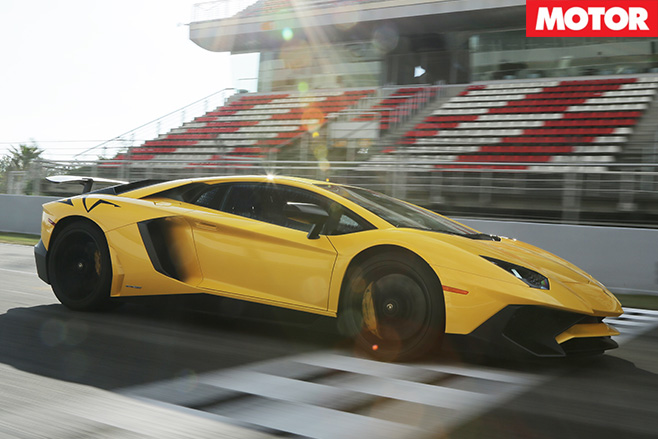
Other stats? The 0-100km/h time is claimed at 2.8sec, and I believe every millisecond. That’s down by only 0.1sec from the standard car, but that’s because whether you’re talking 515kW or 552kW, initial acceleration is limited by traction as much as anything. The top speed – more than 350km/h – is actually electronically governed. Bloody oath, this car is fast.
When will the horsepower war end? Not yet, according to Lamborghini’s head of R&D, Maurizio Reggiani. The extra power is important at more than 200km/h, preventing acceleration from tailing off. That’s why it’s worth having.
Not only does that improve the throttle response to electric levels, but it also changes the calibration of the dampers, the steering and the four-wheel-drive system, which is actually more rear-biased in Sport than Corsa. In Corsa, forget having fun: it’s all about going fast.
And this car is fast everywhere. I say ‘everywhere’, but we’ve only driven it on track and then for not long. But even on this acquaintance, I can tell you it’s agile and alert, in a way that the standard car isn’t. That’s partly because of the reduced weight, partly the downforce and partly the adaptive dampers keeping body movements more tightly controlled. But it’s also because the steering is quick – more on that in a moment – and the chassis extremely throttle adjustable.
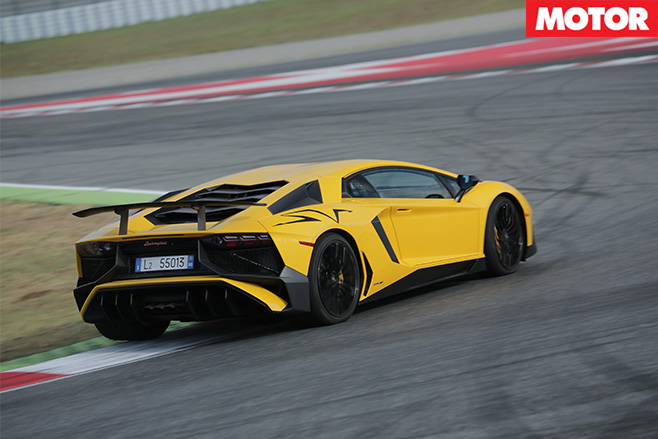
Eventually, the four-wheel-drive system shuffles power towards the front to pull it straight, but such is the weight and ferocious delivery that it’s possible to have an extremely large moment in the SV. It’s a car that likes positive, controlled pedal applications. Use those and it’s hugely rewarding. And ridiculously fast.
To the steering, then, because previously it hasn’t been without controversy. Here, it’s better. Around most hairpins, you don’t need more than a third of a turn of lock because the ratio quickens, which is most of the point. And it’s stable at high speeds because it slows, which is the rest of the point.
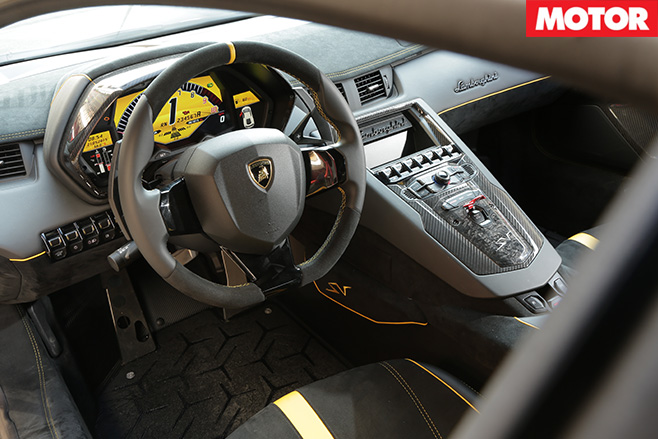
The gearbox is also improved and gives a satisfyingly quick shift at max revs at full throttle, but it’s still a single-clutch automated manual that can feel lethargic at lower revs and on smaller throttle openings.
It doesn’t spoil things, though. The SV is a hugely likeable car. The best car Lamborghini makes, by a mile. There’s more to it than just raw speed, but if you do want something that’s as fast as the Superveloce, you’ll have to spend much, much more money to get it.
Forgive me, I’m going to mention the Nürburgring Nordschleife for a moment. Lamborghini, with only a 15-minute window, at little notice, decided it would have a crack at a Nürburgring lap time. Pirelli test driver, Marco Mapelli, then set a time of 6min 59sec in this car.
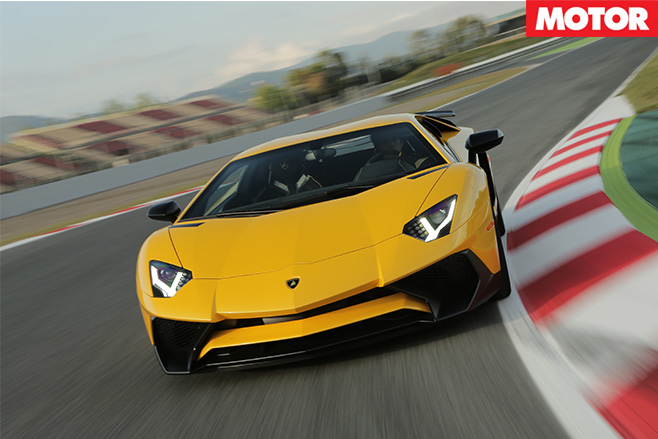
Porsche and Lamborghini are both part of the Volkswagen Group, which means that Lamborghini won’t take the opportunity to go faster and reveal what might be a slightly awkward truth: that this is the fastest car in the group’s portfolio. Funnily enough, then, even at over $880K, you might – might – almost consider it a bargain.
4.5 out of 5 stars
Specs: Lamborghini Avendator LP750-4 SV Body: 2-door, 2-seat coupe Drive: all-wheel Engine: 6498cc V12, DOHC, 48v Bore/stroke: 95.0 x 76.4mm Compression: 11.8:1 Power: 552kW @ 8400rpm Torque: 690Nm @ 5500rpm Power/weight: 362kW/tonne (dry) Transmission: 7-speed automated manual Weight: 1525kg (dry) Suspension: double A-arms, adaptive dampers, push-rod coil-overs, anti-roll bar (f/r) L/W/H 4835/2030/1136mm Wheelbase: 2700mm Tracks: 1720/1680mm Steering: electrically-assisted rack and pinion Brakes: 400mm ventilated/drilled carbon-ceramic discs, 6-piston calipers (f); 380mm ventilated/drilled carbon-ceramic discs, 4-piston calipers (r) Wheels: 20 x 9.0-inch (f); 21 x 13.0-inch (r) Tyres: 255/30 ZR20 (f); 355/25 ZR21 (r); Pirelli PZERO Corsa Price: £320,000 (AU$882,650) Positives: Retina-peeling pace; menacing SV looks; relative bang for buck Negatives: Ageing transmission; dynamic steer still not perfect; no road drive yet
HALL OF FAME: Who was missing?
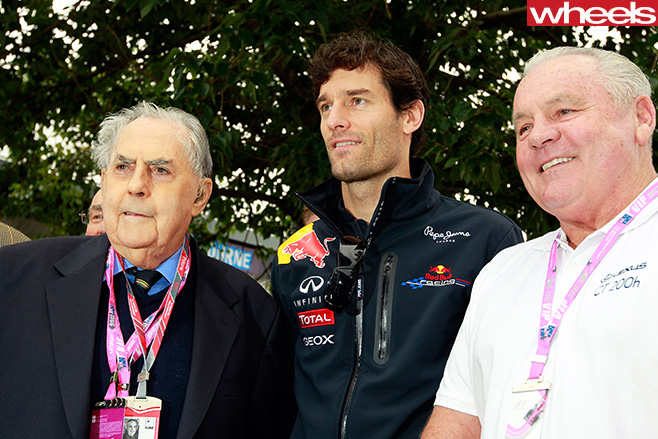
THIRTY very worthy people were inducted into the Australian Motor Sport Hall of Fame over the grand prix weekend in Melbourne – but there were contentious omissions.
The oversights – especially that of race car design genius Ron Tauranac – have started spot fires around the country.
The Australian Motor Sport Hall of Fame is an initiative from the Confederation of Australian Motor Sport (CAMS), involving the governing bodies of every major discipline of motor sport in the land.
On a positive note, the 30 inaugural inductees were responsible for 29 world championships and 50 Australian championships in individual and team competition. These bold statistics are evidence of the standing of these stars in the motor sporting firmament.
They include legends from of Formula One, circuit racing, speedway, rallying, off-road, drag racing, karting and motorcycle competition.
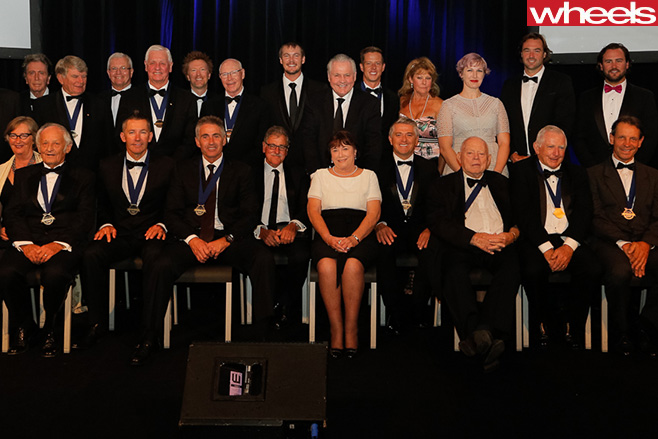
The hall-of-famers included heroes going back to Lionel Van Praag, who won the 1936 World Speedway Championship, and Phil Irving, who engineered the Repco engine to power Brabham to his third world championship.
Hall of Fame chairman Garry Connelly conceded there were many worthy individuals who should have been included in the inaugural induction. But he said it was impossible to honour more than 30 people appropriately in one evening.
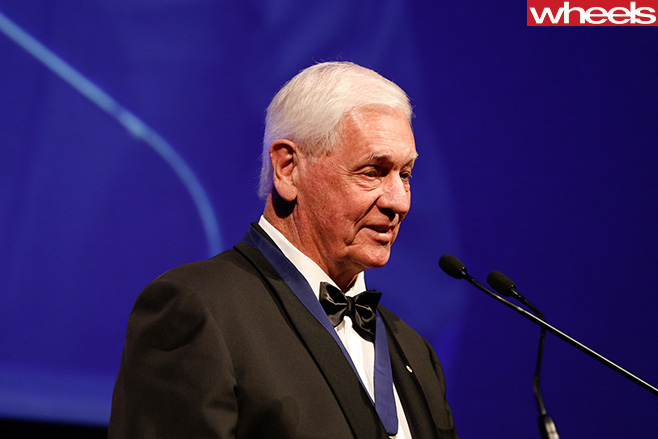
For mine, the most glaring omission is Tauranac, the design and engineering genius who with Jack Brabham founded the Brabham racing team and later established Ralt, one of the most successful racecar manufacturers of the day.
But he wasn’t the only one who may feel miffed.
Geoffrey Brabham should be a shoo-in for next year, after his four IMSA GTP titles (1988 – 1991), a Can-Am championship (1981), and winning the 1993 24 Hours of Le Mans and the 1997 Bathurst 1000 for Super Tourers.
David Brabham too. He has won the 24 Hours of Spa and the Le Mans 24 Hours. The youngest of Sir Jacks’ offspring also won the American Le Mans Series in 2009 and 2010.
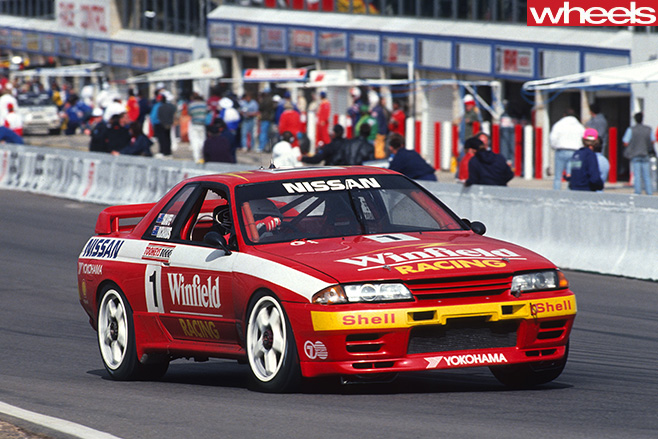
Versatile Vern Schuppan won the 1983 24 Hours of Le Mans and was also runner-up twice and third once. He was the 1976 Rookie of the Year at Indy and finished third there in 1981. Earlier in his career, Schuppan took out the 1971 British Formula Atlantic Championship, the Singapore Grand Prix in 1973, and the 1974 and 1976 Macau Grand Prix. At home, he won the 1976 Rothmans International Series, run for Formula 5000 cars,
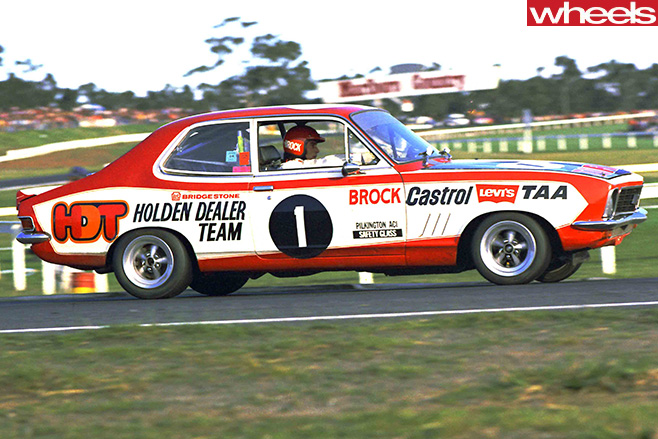
I would support the inclusion too of Garrie Cooper, the innovative founder of the highly successful Elfin Sports Cars and a competitive racing driver in his own right. He won the 1968 Singapore Grand Prix, the 1968 Australian 1½ Litre Championship, and the 1975 Australian Sports Car Championship – all in cars of his own design.
At least the Hall of Fame selectors have plenty of choices for next time.
Here’s the full list of inaugural inductees.
Formula 1
Sir Jack Brabham – 3 times F1 World Champion
Alan Jones – 1980 Formula 1 World Champion
Phil Irving – Designer, Repco Formula 1 engine
Circuit Racing
Harry Firth – multiple Bathurst winner, patriarch Holden Dealer Team
Bob Jane – Bathurst and Australian Touring Car Champion, Australian NASCAR founder, circuit owner
Peter Brock – 9 times Bathurst 1000 Champion, 3 times Australian Touring Car Champion
Dick Johnson – 5 times Australian Touring Car Champion and twice Bathurst 1000 victor
Allan Moffat – 4 times Australian Touring Car and 4 time Bathurst 1000 winner
Frank Matich – Australian open-wheel champion and highly lauded engineer of sports cars and F5000s
Motorcycling
Lionel van Praag – 1936 World Speedway Champion – our first motorsport world champion
Jack Young – 2 times World Speedway Champion
Jason Crump – 3 times World Speedway Champion
Kel Carruthers – 1969 250cc World Champion, Isle of Man 250TT Champion
Wayne Gardner – 1987 500cc World Champion
Mick Doohan – 5 times 500cc World Champion
Casey Stoner – dual MotoGP World Champion
Gregg Hansford – winner of 10 motorcycle GPs (and 1993 Bathurst 1000 and 1994 Bathurst 12 Hour)
Troy Bayliss – triple World Superbike Champion
Stephen Gall – 5 times Australian Motocross Champion, 4 times Mr Motocross, Australian Speedcar Champion
Jeff Leisk – World Junior Motocross Champion, twice Australian Motocross Champion
Speedway
Ray Revell – 5 times Australian Speedcar Champion
Garry Rush – 10 times Australian Sprintcar Champion
Rally
‘Gelignite’ Jack Murray – REDeX Trial winner, London to Sydney Marathon pioneer
Colin Bond – 3 times Australian Rally Champion, Bathurst 500 Champion, Australian Touring Car Champion
Ross Dunkerton – 5 times Australian Rally Champion, Asia-Pacific Rally Champion
Karting
James Courtney – twice World Karting Champion (and V8 Supercars Champion)
Drag Racing
Ash Marshall – Australian Drag Racing Pioneer
Off-Road
Mark Burrows – 7 Australian Off-Road Championships, 5 Finke Desert Race wins
Land Speed
Norman ‘Wizard’ Smith – Australian Land Speed Record Pioneer
Administrative Services
Donald Kingsley Thompson – Co-Founder & inaugural President, Confederation of Australian Motor Sport
F1: And so to Bahrain…
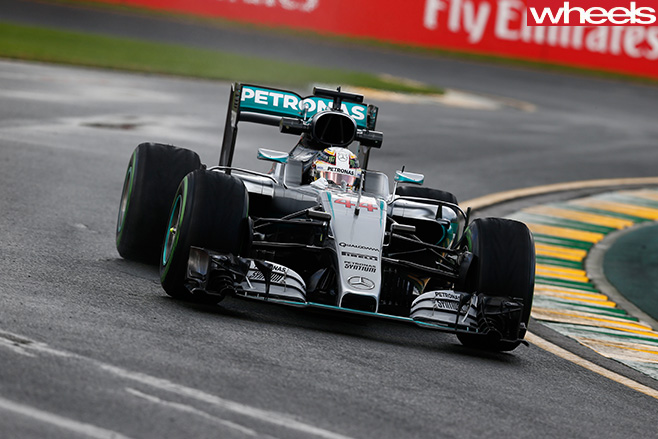
The Mercedes pair is still the pacesetter. Ferrari is possibly more competitive than last year but still prone to on-the-fly strategy mis-calls. The modern F1 car is one helluva crash-resistant safety capsule. And perhaps there is some hope that Red Bull and Daniel Ricciardo are near-term podium chances.
Was there more?
Fernando Alonso’s great Houdini act remains the big talking point around the bars and coffee shops, and testament to the structural integrity of the cockpit. McLaren has been in the business a long time, and it showed in Turn Three eight days ago.
For Bahrain, next weekend, McLaren has some work to do to get Alonso on to the grid. Both the chassis and the power unit were heavily damaged. And the workforce is already stretched back at Woking as the constructor toils with engine partner Honda toil to narrow the gap to the front runners. The key people had only one day off – Christmas Day – as they worked on the new cars for 2016.
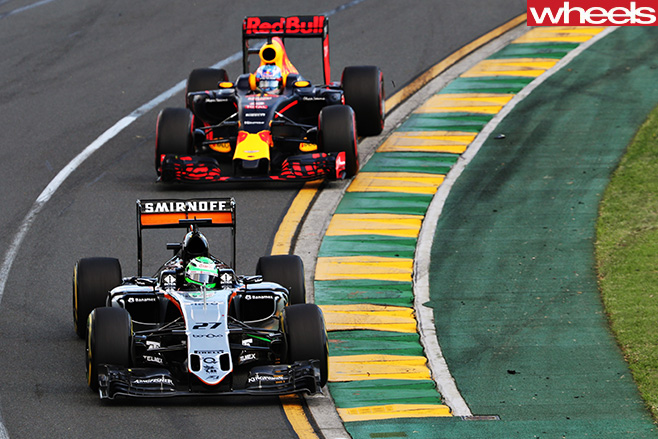
Boullier certainly has no concerns about the quality of his two world champion drivers. Asked by Wheels to have the pick of the grid, the Frenchman fired back with: “I’m very happy with the two guys I have.”
It was music to the ears of Jenson Button, who is out of contract at the end of the season.
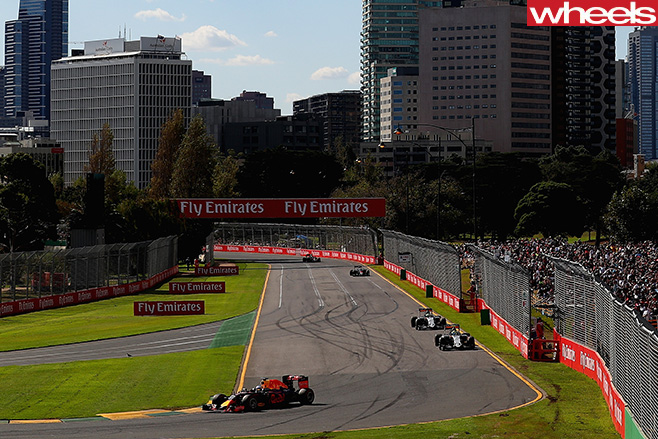
We rightly occasionally slam the F1 rule-makers for some breathtaking stupidity. Focusing on changing what wasn’t broke (qualifying) when other priorities loomed large (take your pick…) was roundly bagged from every quarter – drivers, team bosses, Bernie Ecclestone, media and, most importantly, the fans. But when it degenerated into farce, the team bosses met the following morning and it was quickly dumped in favour of last year’s format. Good.
V8 SUPERCARS: Triple Eight triumph looks ominous
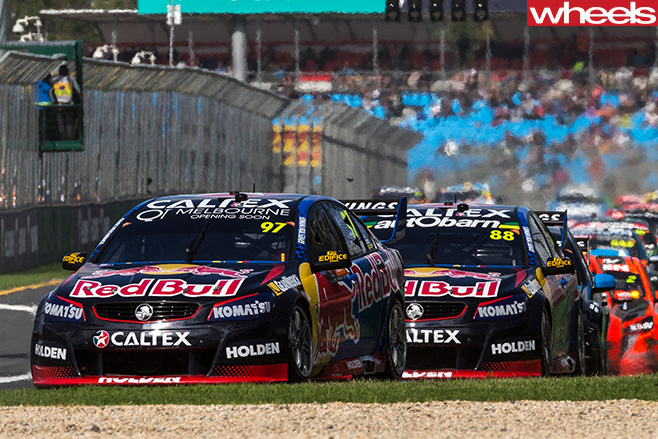
Though inconsequential in championship terms, the utter domination of the three Triple Eight Racing Holdens in the four sprints at Albert Park must have rival team owners anxiously rattling the worry beads.
Shane van Gisbergen won the overall V8 Supercars Challenge after winning three of the four races in Melbourne.
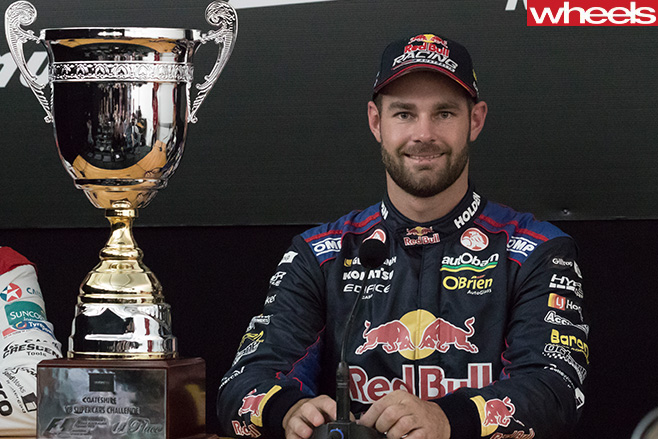
Craig Lowndes was also very quick throughout the races, and left the impression that he won’t be letting fellow Triple Eight men Whincup and van Gisbergen steal the thunder this year.
The three-way scrap between Roland Dane’s trio of drivers should have some fascinating moments.
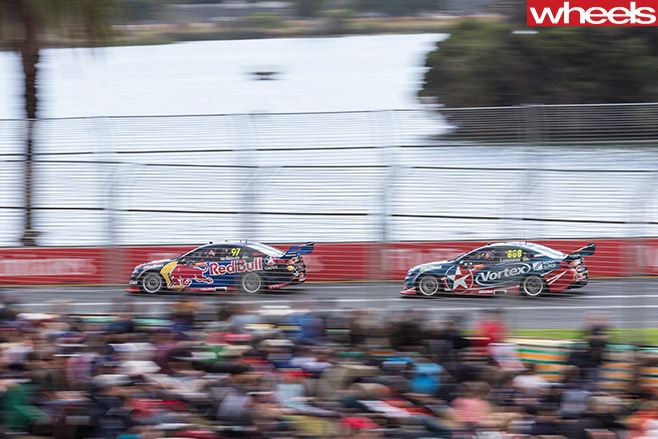
The HRT pair was also strong, while Chaz Mostert was never far away in the Prodrive Falcon. What must be of concern to Prodrive though is the failure of Mark Witterbottom to yet show real signs of his championship-winning pace.
Tasmania should reveal if Frosty or anyone else has substantial firepower for the Triple Eight triumvirate.
