
BMW Oz will lock horns with Mercedes-Benz and Audi in the go-fast limo segment with news it will land its M badged 7 Series down under.
After speaking to BMW Oz’s product planning department, MOTOR understands the firm is planning to land a small batch of its recently revealed M760Li xDrive to reintroduce a V12 offering and bolster the new 7-Series range with a halo model.
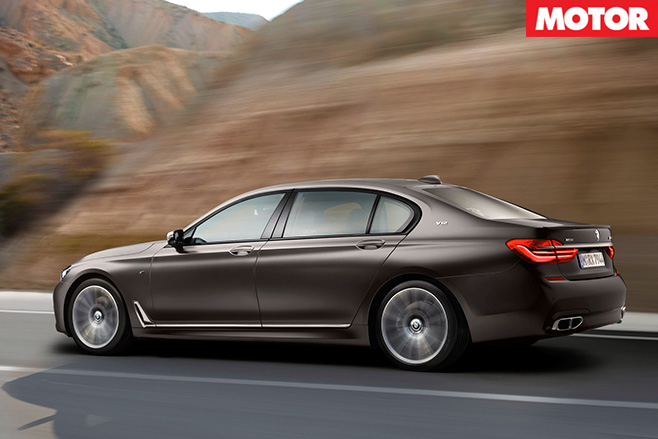
Plus, extra grip seems only logical with how much power the M760Li’s 6.6-litre V12 will produce. With two turbochargers the powerplant will spin up 441kW and 800Nm, more than anything in BMW’s range.
While it’s called an M ‘Performance’ model, which implies it’s a sort of M-lite, the resulting acceleration figures suggest otherwise. Flicking through an eight-speed automatic gearbox the M760Li is said to crush 100km/h in 3.9sec before storming to 305km/h with a raised limiter.

BMW Oz’s expecting to land only a double-digit allocation of the M760Li xDrive after the car first goes on sale in Europe early 2017.
Pricing is yet to be determined, but expect it to lurk around the $400K mark.
Car accidents are the most common cause of physical trauma during pregnancy, worldwide.
A 2012 study by combined minds from the University of Sydney and the Royal North Shore Hospital surveyed 600,000 Australian women and found an average of 3.5 per 1000 pregnant Australian women were admitted to hospital following a car accident. It’s a rather high figure, but it follows doctor’s advice that pregnant women be checked out immediately following a bingle, no matter how big or small the crash.
Of the women admitted, about 95 per cent went on to have an uncomplicated, normal pregnancy. But no one wants to be the other 5 per cent.
So in the event of an accident, there are ways to decrease the risk factors and protect both you and your unborn baby.
DRIVING/BELT POSITION
There are a number of ways to protect your unborn bub while driving. Some are as simple as modifying your belt and seating position.
First, when you belt up, lift your belly right up and over the lap belt, keeping the belt as low on the hips as possible. Even if your bump isn’t bulging yet, it’s important to keep the belt low on the hipbones, which can take impact in the event of an accident far better than the internal organs and soft tissues of the tummy (and hence why any child harness should also be as low on the hips as possible).
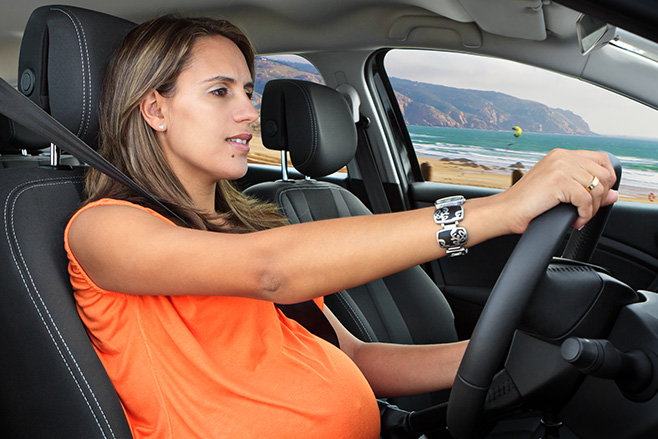
Click in the belt and pull firmly on the shoulder strap (sash) to ensure the lap belt is tight and stays low.
The steering wheel should be tilted as far up as possible, so if the airbag goes off the bag inflates away from the belly. Same with the seat position; you need to be a good distance away from the airbag inflation zone, so measure the distance from the wheel by placing your wrist on the top of the steering wheel. If your arm is straight, you are in the proper driving position (pregnant or not!), and with the seat set as upright as possible, it will reduce the chances of the seatbelt rising up your belly.
And where possible, be a passenger, not the driver. It is far safer – you can be farther away from the airbag, sit much lower where adjustment in the seat allows, and you won’t have a big round belly getting in the way every time you try to turn the wheel.

ANCILLARY DEVICES
There are a host of bump protectors on the market to help seatbelts do their job, but keep them away from the belly.
Most of these devices look like a seat pad with belt clips or loops, either on either side of the hips or through the centre of the legs. By sitting on the seat pad and clipping or feeding the belt through the loops, the lap sash belt is retained low on the hips. (Prices range from $40 to $75).
Another option is a belt locker that secures, or locks, the lap belt at the clip, so it sits low and tight but doesn’t pull or retract (the sash still does), keeping you stable in the seat through turns and heavy braking. It also doubles as a pregnancy belt ($70).
WhichCar prefer this to the maternity-specific offerings, as there is full control over the tightness of the lap belt.
For the truly paranoid there are maternity harnesses on the market, which convert the standard belt into a lap-only belt and add an upper body harness which straps around the shoulders and chest, buckling at the sternum. Crash testing proves their worthiness, but they look uncomfortable, particularly for sensitive prenatal boobs. Being pregnant is uncomfortable enough!
Congratulations, you’ve done well. The merger went through without a hitch, the market responded favourably with a boost in share price and there’s a fat bonus waiting at the end of the financial year.
Time to reward yourself by splashing out on a new high-performance luxury coupe, something to take you from the mansion to the boardroom in cosseting luxury, yet blast you to the airport in double-quick time when you’re running late for that flight.
There’s plenty of choice in this segment, though the field narrows surprisingly fast. Aston Martin’s DB9 and Maserati’s Gran Turismo are both laden with character, but neither is exactly cutting-edge in terms of technology or performance. Porsche’s 911 Turbo? Ticks both boxes objectively, but that silhouette is just a little too familiar these days.
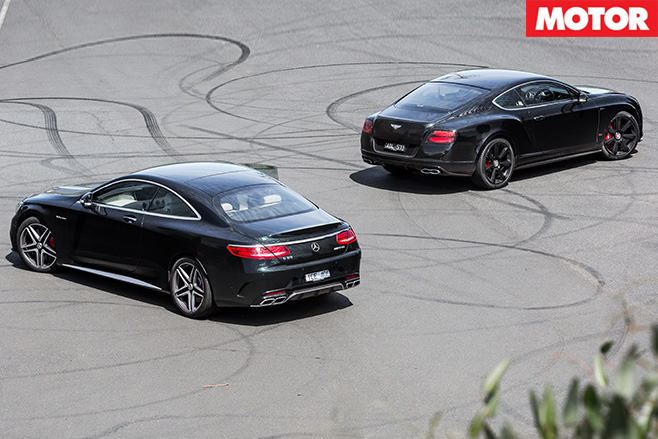
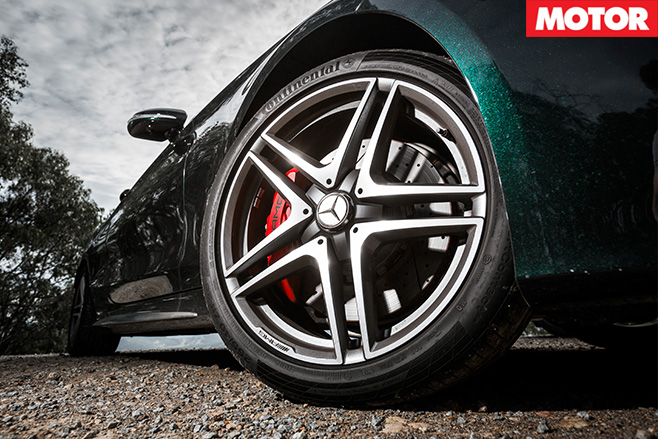
The only dud angle is from directly behind, where it looks tall and narrow, but in general – particularly in profile or from front-three-quarter – it looks sensational. The only indication of its size is the fact that the 20-inch rims look like 17s.
Its visual impact is increased by our test car’s paintwork – almost black in low light, it explodes into a Wizard of Oz-like emerald green in direct sun, though trying to capture it on camera almost gives photographer Nathan Jacobs a nervous breakdown.
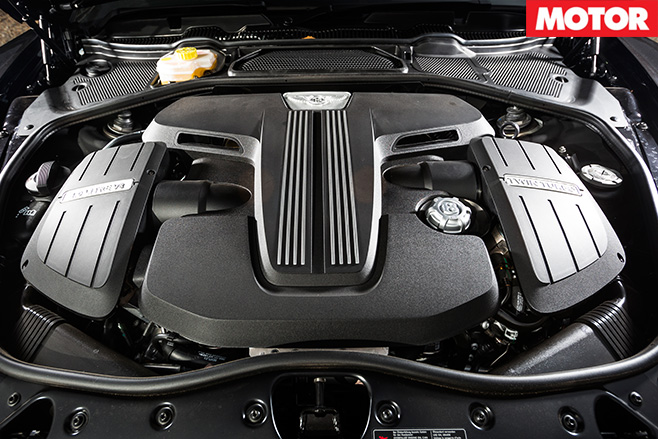
For reasons of price and engine parity we have chosen the V8 S, the second rung on the Continental ladder. On paper, the Audi-derived 4.0-litre twin-turbo V8 might look like a poor relation compared to its 12-cylindered siblings, but on the road it proves anything but.
With 389kW and 680Nm, the ‘S’ offers 16kW and 20Nm more than the base V8, though it’s 23kW and 20Nm down on what the same engine produces in the Audi RS6. It does, however, make every single one of those kilowatts and newton metres count.
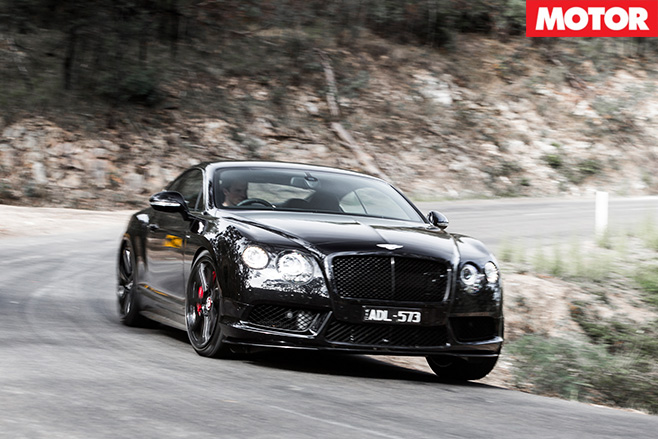
It feels like the front wheels spin slightly through first gear, but it doesn’t stop the big Bentley reeling off 0-100km/h in just 4.3sec (0.2sec faster than claimed) and hauling through the quarter mile in 12.33sec @ 187.92km/h.
But while the speed is impressive, it’s the engine’s character that is most appealing. Throttle response is sharp, and while it’s hardly lacking in low-end urge, the top-end ferocity above 5000rpm means there’s real reward to be had by revving it out.
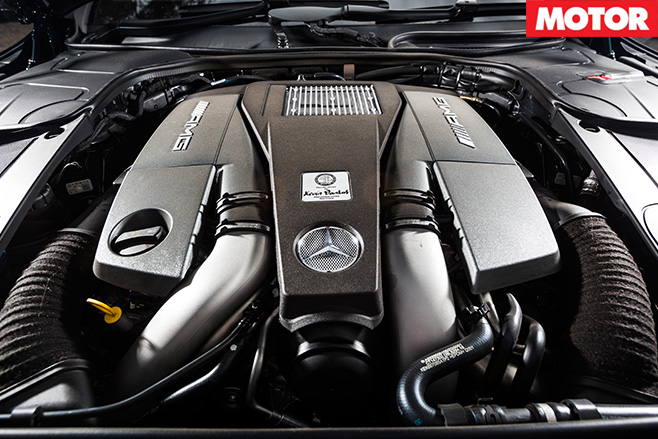
The twin-turbo V8 in the Merc might be identical in configuration to the Bentley, but the two are polar opposites when it comes to personality. Whereas the Continental’s engine thrives on revs, AMG’s 5.5-litre engine is all about torque; its 430kW are produced at a relatively low 5500rpm, backed by a monumental 900Nm on tap from 2250rpm.
Its overtaking punch is outrageous and can make the Bentley feel a little flat-footed, though it’s unable to match its English rival on the drag strip. The 285mm-wide rear Continentals put up a hell of a fight, but the S63 Coupe is ultimately traction-limited in the first two gears, clocking 0-100km/h in 4.5sec before making up time over the rest of the quarter, crossing the line in 12.55sec at a whopping 191.61km/h – 3.69km/h quicker than the Bentley.
With this much grunt, gear selection is almost academic, which is perhaps just as well, as AMG’s wet-clutch auto isn’t the slickest transmission around. Both up and downshifts occasionally thump through and the odd stumble at low speed feels out of character in a car such as this. Thankfully, when left to its own devices in Sport mode, it does an exceptional job of choosing the right gear for any given situation.
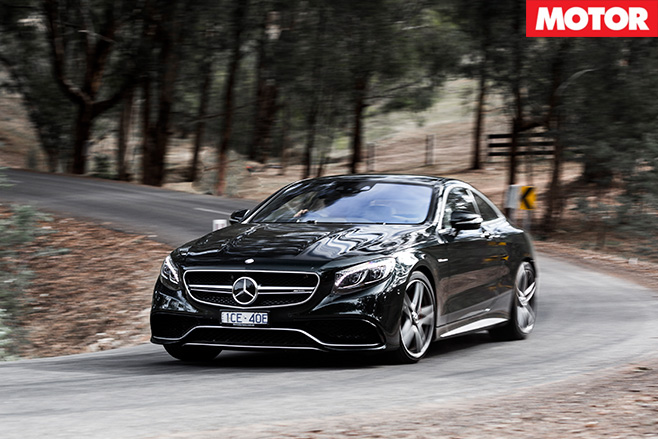
On-the-limit handling might not have topped the S63 Coupe’s design brief but, put simply, it possesses a freakish level of dynamic ability for something so big and heavy. Certain allowances must be made for its size, but you quickly learn it can be thrown around like a car 300kg lighter.
The steering feels slightly artificial just off-centre, but the variable-ratio rack provides great turn-in response. Really commit hard and there is gentle understeer, but in general front-end grip is tenacious. Traction is equally strong; in fact, the amount of throttle you can apply on corner-exit is staggering, with real provocation needed to break the rear end free.
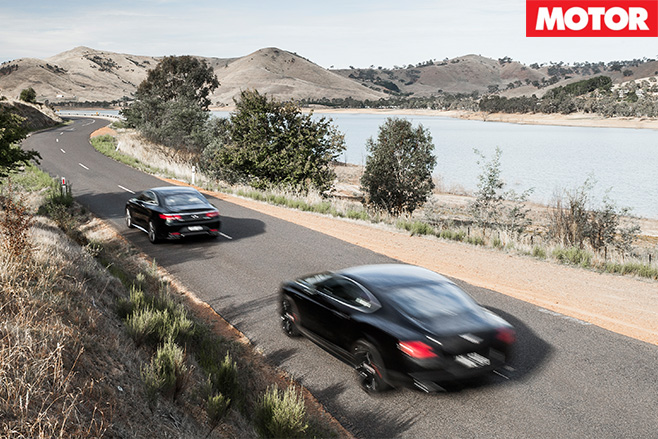
At this point a quick mention of the S63 Coupe’s ‘Dynamic Curve’ function seems appropriate. Much has been made of the car’s ability to ‘lean’ into corners like a motorcyclist, but in our experience the system offers little practical benefit.
It’s supposed to negate the effects of cornering forces on occupants, but snapper Jacobs notices little difference from the passenger side of the car, and from the driver’s seat the steering becomes hyper-sensitive and nervous.
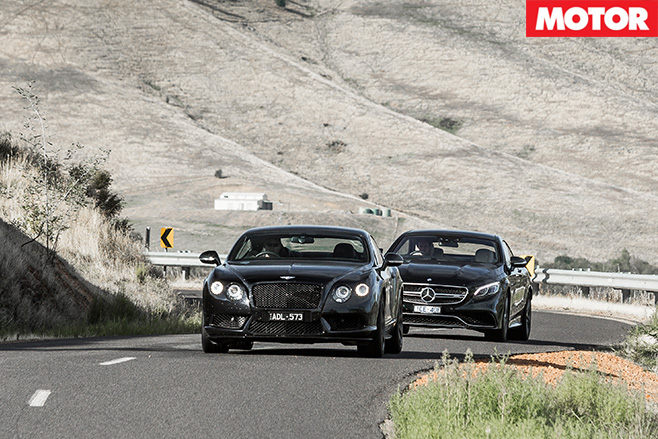
By any normal standard, however, the V8 S is still an extremely capable car, albeit one that needs a certain type of road to give its best. Being even bigger and heavier than the Mercedes with a hefty front weight bias (57.5 per cent front; 42.5 per cent rear), the Continental isn’t fond of tight, twisty roads.
Managing understeer is your only option, and despite carbon-ceramic rotors the size of manhole covers, the brakes struggle to consistently slow the car.
As the road opens out, however, its behaviour improves markedly. The linear-rate steering feels more natural than the AMG’s, though some – such as fellow tester Adam Davis – may find it too light to inspire confidence. Like the AMG, it’s much more agile than its size and weight would suggest, with the way it responds to mid-corner throttle and brake inputs bringing to mind an oversized hot hatch.
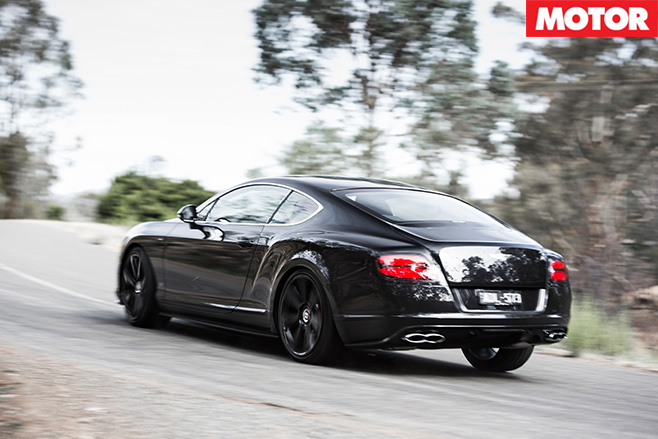
In general, and perhaps unsurprisingly, faster and more flowing roads suit the Continental GT much better. And it’s on these kind of roads, rather than twisting mountain passes, that these high-performance coupes are designed to excel.
With double-glazed windows and enough sound deadening to muffle an AC/DC concert, both are as quiet as Tutankhamun’s tomb, though the Bentley in particular does an exceptional job of stifling wind noise.
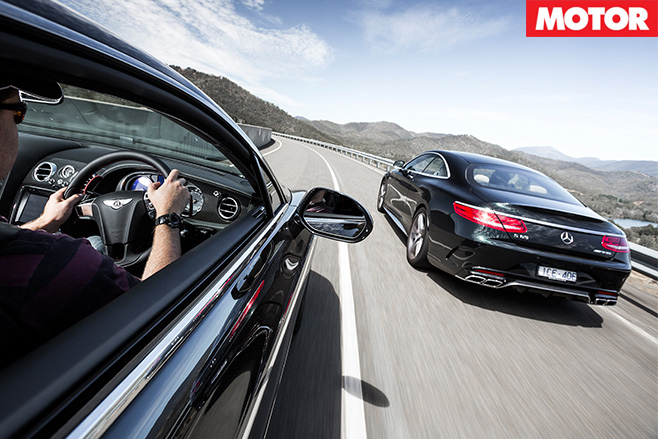
This is only in comparison to the S63, though. In isolation the Bentley rides well, but the Merc’s trick Magic Body Control system, which uses stereo cameras to scan the road ahead and prepare the suspension for upcoming bumps, offers a spooky level of absorption.
It doesn’t quite offer the same magic carpet ride as the non-AMG S-Class sedan, but the slightly firmer set-up feels perfectly in tune with the two-door’s more sporting aspirations – even with the dampers set to Sport, it’s extremely comfortable.
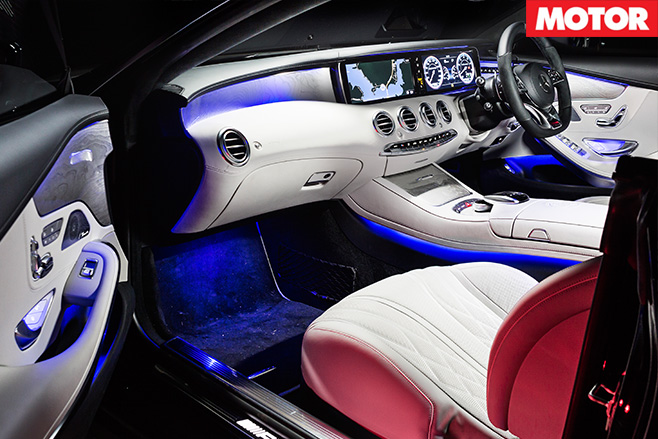
If feels expensive which, with an as-tested price of $427,100, it undoubtedly is. That money does buy a full array of the latest active safety technology, though it’s debatable how much benefit these gadgets provide to anyone that actually pays attention while driving.
The lane-keeping assist, for example, rams on the brakes and jerks the car back to the centre of lane should you so much as stray towards a white line at the road’s edge. Annoying, and immediately turned off.
The Bentley approaches luxury from a very different angle. In terms of technology, it’s a PlayStation 2 to the S63’s PlayStation 4. Its only concession to active safety technology is adaptive cruise control, and while most Bentley owners are unlikely to be aware their car shares an infotainment system with a VW Passat, something a little more bespoke should be the standard at this price point.
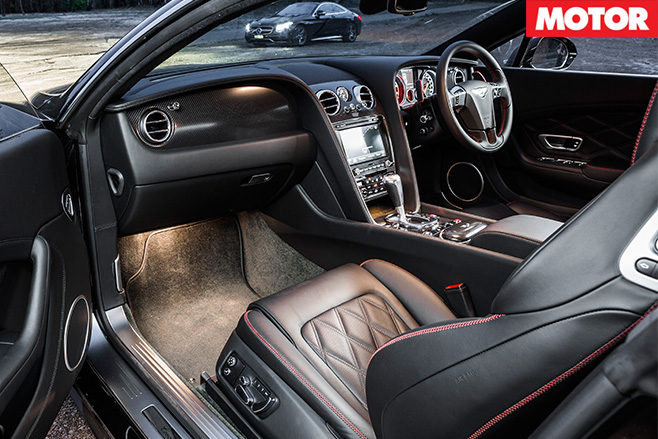
Soak in the details, such as the diamond-quilted leather, retro gauges and the key sticking out from the dash like an old fighter plane, and the outdated sat-nav suddenly doesn’t seem so important. It does come at a price, though, with a hefty helping of options lifting our test V8 S to $509,000 on-road.
Both of these cars are extremely capable and desirable coupes, and which is ‘better’ is undoubtedly going to be down to the individual preferences of each buyer, as these cars are likely to be bought for what the owner wants to portray about themselves as much as what each car is capable of.
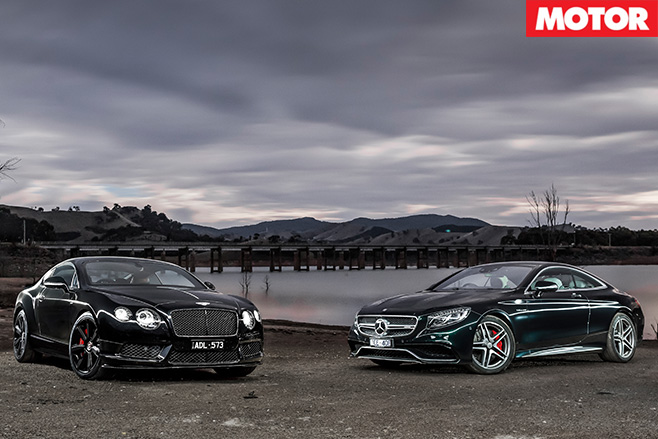
The Bentley, on the other hand, is a car you’d love for the way it makes you feel. The noise it makes, the way it performs, and its lavish, infinitely customisable interior make it a personal statement and loaded with feel-good factor. The Mercedes wins this comparison, but either one is well worth spending that bonus on.
| u00a0 | MERC-AMG S63 COUPE | BENTLEY CONTI GT V8 S |
| Body | 2-door, 4-seat coupe | 2-door, 4-seat coupe |
| Drive | rear-wheel | rear-wheel |
| Engine | 5461cc V8, DOHC, 32v, twin-turbo | 3993cc V8, DOHC, 32v, twin-turbo |
| Bore/stroke | 98.0 x 90.5mm | 84.5 x 89.0mm |
| Compression | 10.0:1 | 9.3:1 |
| Power | 430kW @ 5500rpm | 389kW @ 6000rpm |
| Torque | 900Nm @ 2250-3750rpm | 680Nm @ 1700rpm |
| Power/weight | 216kW/tonne | 175kW/tonne |
| Transmission | 7-speed wet-clutch auto | 8-speed automatic |
| Weight | 1995kg | 2220kg |
| Suspension | multi-links, air springs, adaptive dampers, torsion bar (f/r) | four-link, air springs, anti-roll bar (f); multi-links, air springs, anti-roll bar (r) |
| L/W/H | 5044/1913/1422mm | 4818/2226/1391mm |
| Wheelbase | 2945mm | 2746mm |
| Tracks | 1610/1616mm (f/r) | 1664/1655mm (f/r) |
| Steering | electrically-assisted rack-and-pinion | electrically-assisted rack-and-pinion |
| Brakes | 390mm ventilated/drilled discs, 6-piston calipers (f); 360mm ventilated/drilled discs, 4-piston calipers (r) | 420mm ventilated/drilled carbon ceramic discs, 8-piston calipers (f); 356mm ventilated/drilled carbon ceramaic discs, single-piston floating calipers (r) |
| Wheels | 20 x 8.5-inch (f); 20 x 9.5-inch (r) | 21 x 9.5-inch (f/r) |
| Tyres | 255/45 ZR20 101Y (f); 285/35 R20 (r); Contintental ContiSport Contact | 275/35 ZR21 (f/r) Pirelli P-Zero |
| Price as tested | $427,100 | $509,000 (including on roads) |
| Positives | Incredibly fast, amazing interior, handles brilliantly, ride comfort | Thumping engine, special interior, people know itu2019s expensive |
| Negatives | A bit u2018sensibleu2019, technology overload, not much really | Unsettled ride, nose-heavy handling, outdated interior tech |
| Star Rating | 4.5 starsu00a0 | 4 starsu00a0 |
ROLAND Dane is going to have to be careful or his reputation as a hard-nosed prick is going to end up in tatters.
The owner of Triple Eight Race Engineering did as you would expect of a merciless motorsport mogul when he secretly signed Shane van Gisbergen in 2014 to a three-year deal that starts at this year’s V8 Supercars championship opener, the Clipsal 500 on March 5-6.
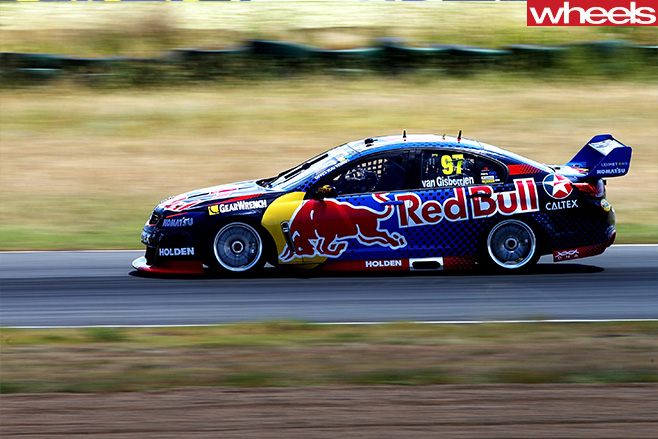
Dane identified the ludicrously talented Kiwi as the next big thing in V8 racing and decided he had to have him in a Red Bull Racing Holden Commodore VF, even though it meant poaching him from his own customer, Tekno Autosports.
So far, so cut-throat.
At least in part, Dane is doing this because he feels an obligation to Lowndes. They joined up in 2005 before T8 was a powerhouse when the safe bet would have been for Lowndes to stay with Ford Performance Racing.
Even Dane acknowledges the risks he is taking.
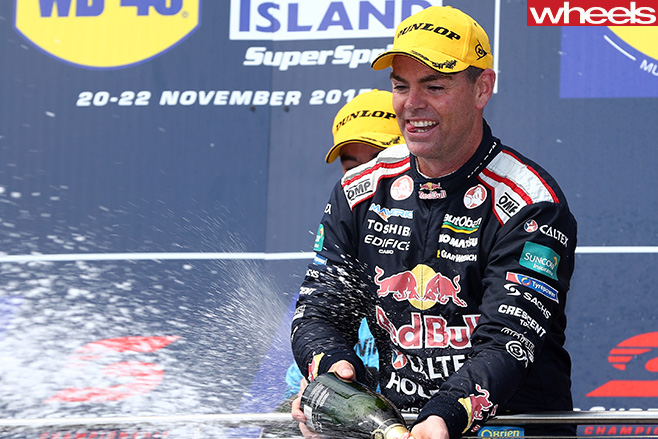
“I like the concept of two cars and … the only reason we are running three cars is because we are in a position where we want to carry on running Craig as long as possible and as long he wants to,” he told Wheels. “It is a fairly unique set of circumstances.”
Other teams run three or even four cars, but T8 is the operation that has dominated Australia’s most popular, most professional, hardest fought and highest profile motorsport category for a decade.
Now Dane has junked that and thrown a hairy, oppy-locking, tyre-smoking grenade into the mix.
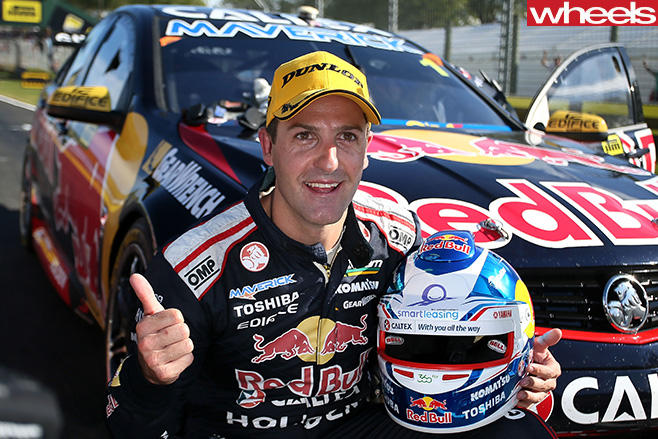
Whincup and Lowndes have got on as well and as co-operatively as motorsport team-mates could, but van Gisbergen will change that dynamic seismically. He’s the young gun, the next big thing and the two established T8 drivers will simply be targets for him to beat.
Along with that very visible management issue comes a rearrangement of the backroom line-up. Engineers have swapped, mechanics have been reallocated, more staff hired, more cars and parts built – including for T8’s growing band of customers. Logistics have inevitably become less wieldy.
There’s no doubt fiddling with a successful formula can cause success to go from expected to elusive, like it did for Whincup in 2015. It took a temporary shuffle of engineers to get that speed back again. But in the process he dropped out of contention for the championship.
But T8 has a habit of rising to challenges; like when it swapped from Ford to Holden in the 2009-10 off-season and still won Bathurst and was just pipped for the drivers’ title.
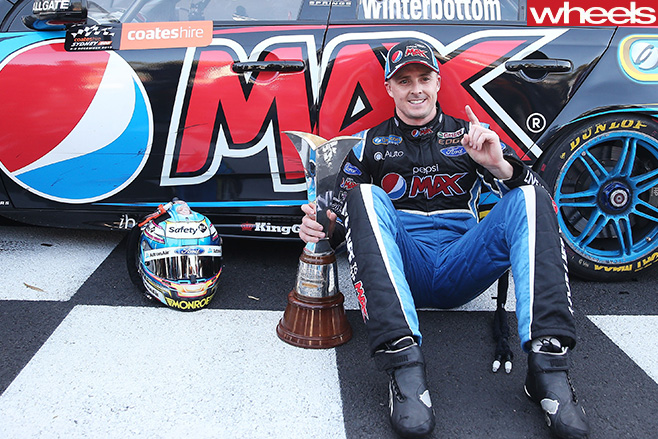
Besides, anyone who really thinks Dane is expanding because he’s gone soft isn’t looking at the whole picture. Lowndes is still blisteringly fast. He won Bathurst for the sixth time in 2015 and doggedly pursued Winterbottom in the drivers’ title, finishing runner-up for the sixth time.
Then there’s the commercial reality. As the fan favourite, Lowndes drives massive commercial returns for T8. He’s a merchandising monster and a sponsor magnet.
The Caltex deal is said to be by far the most lucrative in the category on a per-car basis and the involvement with Lowndes will be mass-marketed. He’s the only driver on the grid who has the widespread public recognition and appeal to do that.
“You would have to be bonkers to say goodbye to Craig,” Dane says.
Meanwhile, the team expected to be 2016’s big improver, DJR Team Penske, grows from one car to two, having signed Fabian Coulthard to join Scott Pye. Again, maximising performance is the reason cited.
All up, the entry for 2016 (shown in pitlane order below) grows by one to 26 cars. They will follow a more logical calendar that arranges the championship in two more concentrated blocks.
There’s also a revised Supersprint format, a trip to Kuala Lumpur … and the prospect of watching the best team in Australian motor racing rise to its latest self-imposed challenge.
If it doesn’t, don’t worry; the mongrel in Roland Dane will soon reappear.
| 88 | Triple Eight Race Engineering | Jamie Whincup |
| 97 | Triple Eight Race Engineering | Shane van Gisbergen |
| 888 | Triple Eight Race Engineering | Craig Lowndes |
| 19 | TEKNO Autosports | Will Davison |
| 1 | Prodrive Racing Australia | Mark Winterbottom |
| 6 | Prodrive Racing Australia | TBA |
| 55 | Rod Nash Racing | Chaz Mostert |
| 111 | Super Black Racing | Chris Pither |
| 2 | Walkinshaw Performance | Garth Tander |
| 22 | Walkinshaw Performance | James Courtney |
| 8 | Brad Jones Racing | Jason Bright |
| 14 | Brad Jones Racing | Tim Slade |
| 21 | Brad Jones Racing | Tim Blanchard |
| 18 | Team 18 | Lee Holdsworth |
| 15 | Nissan Motorsport | Rick Kelly |
| 7 | Nissan Motorsport | Todd Kelly |
| 23 | Nissan Motorsport | Michael Caruso |
| 96 | Nissan Motorsport | Dale Wood |
| 33 | Volvo Polestar Racing | Scott McLaughlin |
| 34 | Volvo Polestar Racing | James Moffat |
| 12 | DJR Team Penske | Fabian Coulthard |
| 17 | DJR Team Penske | Scott Pye |
| 222 | Lucas Dumbrell Motorsport | Nick Percat |
| 3 | Lucas Dumbrell Motorsport | TBA |
| 9 | Erebus Motorsport | David Reynolds |
| 4 | Erebus Motorsport | Aaren Russell |
Nissan Qashqai TS diesel long term review HERE
Part One: Changeover Issues
SOME clichés really irk me, so I tend to avoid them like, well, the plague. Such as the old line about having one’s cake and eating it, too. I think I understand the sentiment, but it’s still a pretty moronic expression.
Has anyone ever said to you, “Hey, please come over for my birthday party; we’ll eat, drink, dance, and best of all, there’ll be a cake! In a glass case, of course, purely for viewing purposes, because, you know, we can’t have our cake and eat it too…”
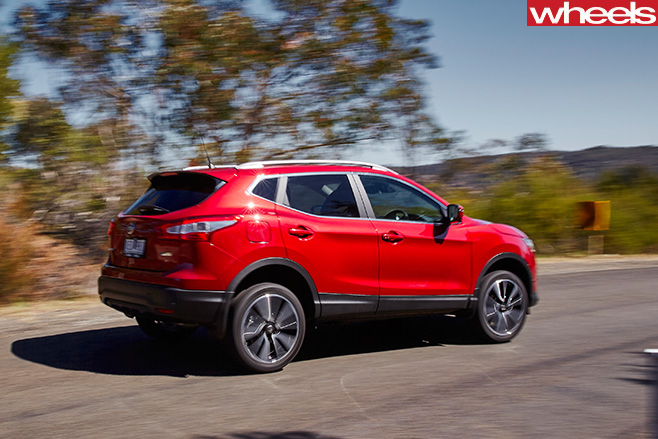
See, my recently departed oil-burner SUV was, if I can continue to torture the cake metaphor in powertrain terms, more like Rocky Road than whipped cream.
It was agreeably grunty in the mid-range, as modern turbo-diesels invariably are, but too loud and vibey at idle. Plus the power delivery was quite laggy, so throttle response, especially in heavy traffic, was a little lazy.
Enter the petrol Ti, and with it a whole new level of refinement. Its idle is a polished mechanical whisper, its throttle tip-in millimetrically perfect. Where the diesel and CVT transmission felt like an arranged marriage, the petrol engine and the same CVT feel more like soul mates united in blissful harmony.
There are no low-speed stumbles, no quarrels about whose turn it is to pick a ratio, take out the bins, etc.
It’s deceiving, but because there’s no lag and no surge, just a predictable and satisfying response to any sized throttle input, the petrol doesn’t feel gutless or hollow. It starts making torque progressively, rather than waiting for a bit then dropping a big wodge to the front wheels.
It also revs willingly, eagerly even, to where peak power resides at 6000rpm. So you never feel like a mechanical sadist by spinning it out to overtake or plug a gap in traffic. This petrol Ti is also about 100kg lighter than the diesel, and a second quicker to 100km/h, which are numbers that do help tell the story.
So there’s my cake; rich, creamy and satisfying. But where there’s cake, there’s consumption (except in clichés) and so it is with the petrol Qashqai.
Where the diesel was sipping in the mid-eights, my first measured tank of this thirsty bastard came in at 13.1L/100km, which admittedly included some hard driving for photography. Even so, it cruels the tank’s range from 700km or so to mid-400s; and is closing in on double the meaningless combined ADR figure of 6.9L/100km.
But if the bowser-wowser in me sucks it up, takes it on the chin and sees the glass as very much half full, I can skirt the clichés and say that me and the petrol Ti are as happy as fat kids with a slice of you know what.
Rock, unblocked
Regular readers who manage to suffer through my whinging and general first-world problem-mongering may recall that I moaned the base ST Qashqai’s sound system is right up there with a Taiwanese phone for sonic satisfaction.
Well, you get what you pay for, clearly. This top-spec model adds a decent amplifier and higher quality drivers and tweeters to transform the sound from gloopy to glistening. It’s not reference-grade but is sufficiently loud and engaging for my in-car garage parties to have resumed.
Nissan Qashqai Ti Price as tested: $35,490 Part 3: 468km @ 13.1L/100km Overall: 468km @ 13.1L/100km Odometer: 2342km Date acquired: August 2015
Part Two: Bang Or Bucks
According to popular wisdom, no-one buys base models anymore. It’s surely a more effective form of social suicide in certain suburbs of Australia than admitting you don’t have an Instagram account, or you buy non-organic kale.
But what about in the case of the Qashqai, where there are only two equipment levels offered? Does the lower-spec one actually count as a ‘base’ model? And is there real value in the top-spec job?
I should be well-placed to adjudicate, as I’ve spent three months in the entry-level Nissan Qashqai TS model, and am now high-falutin’ around in the top-spec Ti. If we were to ignore the engine change that came with this switch, the extra spend would be in the order of $6500.
So is it worth it? Honest answer – er, I’m not certain. It’s difficult to be definitive, as it depends much on where you place your priorities.
First up, cabin presentation. There’s no question the Ti is a nicer environment to slide into each day, with perforated leather seats and door panels, better trim treatment, and higher grade multimedia display.
Only the driver’s seat gets electric adjustment, which I rate as a borderline benefit, given that there’s no memory function and the manual controls in the ST (and passenger side) work well.
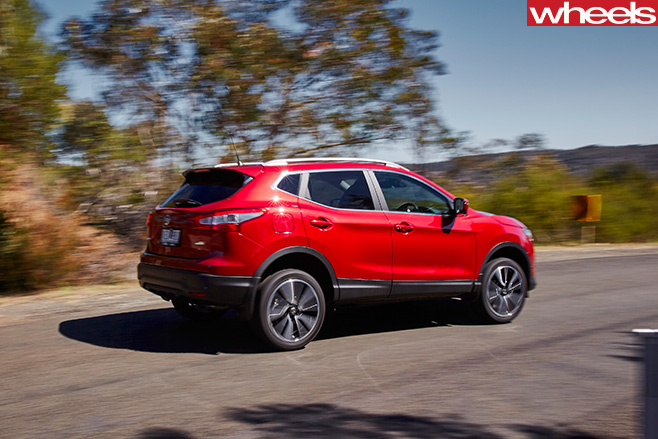
But probably the most obvious external indicator that you plumped for up-spec over entry level are the 19-inch wheels, seeing as they are a ‘plus-two’ jump over the ST’s 17s.
And yes, they do fill the arches more substantially and give the Qashqai a more solid stance. But the trade-off is that the absorbent ride of the ST goes out the window, replaced by a far more reactive, often jittery passage over typical Aussie roads. Maybe 18s would be a better compromise.
Then there’s Intelligent Park Assist, which sounds impressive, but I tried it once then quickly slapped myself. I may not be a drift god, but I do like to think I’m a reverse parker of reasonable competence. Plus I’m a male car enthusiast; why the hell would I hand parking responsibility over to a machine? How defeatist would that be?
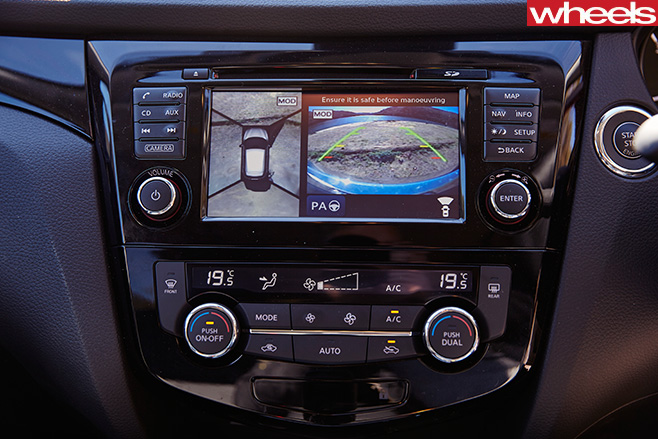
Then there’s blindspot warning; nice to have, but not necessary if you own a functioning neck capable of 45 degrees of rotation. Likewise the lane-departure warning – it false-alarmed too many times in the first few days and has stayed switched off ever since. Sat-nav is occasionally handy, but the Around View camera doesn’t really add a practical advantage over regular parking sensors.
So the bottom line: while I’m a fan of the Ti’s slicker presentation, I’m not sure it’s brimming with a load of additional features I couldn’t live without. At least not $6500 worth.
Tall storage
Learning firsthand that your new Ferrari can’t accommodate a jumbo Slurpee would not, I’m guessing, be a deal-breaker for most owners. But SUVs need to play by a different set of rules, one where practicality and general liveability are often as important as performance.
The Qashqai stacks up well here, with generous, deep cupholders for front-seat occupants, door bins that can take full-sized water bottles, and very handy dual-level storage under the centre armrest.
Nissan Qashqai Ti Price as tested: $35,490 Part 2: 852km @ 12.9L/100km Overall: 1320 @ 13.0L/100km Odometer: 3194km Date acquired: August 2015
Part Three: Ride, Interrupted
I’m loathe to admit that some slightly colourful adjectives have been slung at the Qashqai in its last few weeks. Trust me, I don’t feel good about it.
The three-month ownership experience of this top-spec petrol Ti model has been largely very positive, so I do feel a bit harsh and churlish after I’ve muttered a few choice expletives in its general direction.
A large part of the issue is the main thoroughfare between my place on Sydney’s northern beaches and the city. It’s possibly one of the most annoying roads in existence since the driveway to Kyle Sandiland’s place was completed, and there’s no escaping its clutches.
It’s built from concrete slabs joined by expansion gaps, most of which have shifted and subsided over the years. It takes any car with marginal ride quality and turns it into a jolting, bump-thumping impact box that makes you curse the road builders who’ve clearly never been to Germany, the car’s suspension engineers and pretty much anyone else in earshot.
Part of my frustration stems from the fact that the base-model diesel Qashqai I spent the first three months in surfed over this road with well-isolated ease, blotting up the sharp edges with muted thuds that never intruded into the cabin.
It rolled on 17-inch wheels with chubby 65-aspect sidewalls. This top-spec Ti, as I’ve previously mentioned, runs 19-inch 45-series Continentals, and they’re clearly a step too far for anyone who regularly drives on anything short of billiard-table roads.
They also give the car a more heavy-footed feel, as if there’s extra unsprung weight hanging off each corner, and the suspension struggles to keep up over any stretch of lumpy and patched bitumen taken at suburban speeds.
The result is an incessant jiggling, hammering and steering shimmying that can be both intrusive and irritating, yet not evident on the base-model’s 17s.
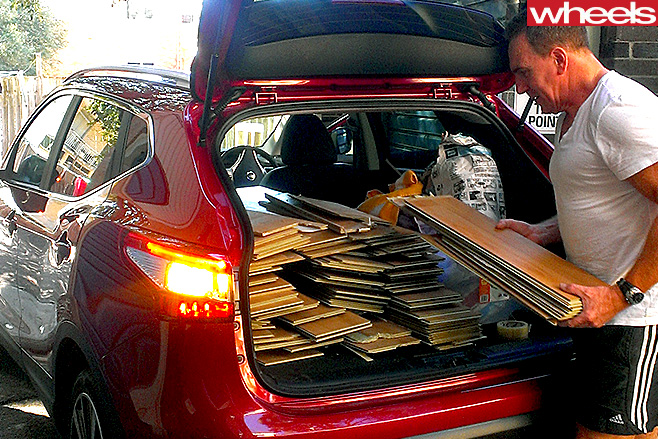
Likewise, the packaging proved near perfect for my needs. With rear seats folded and the front passenger’s seat moved slightly forward, it swallowed my bicycle with no wheel removal required, and there was still ample room for an oversized gear bag and the usual other bits of crap I carry over the weekend.
The vast panorama roof’s blind was always requested to be open when my teenage daughter and her friends rode back there, with the consensus that it made the space, “like, way more airy… and stuff.” Even if bright sunlight did impact on the legibility of her smartphone, which now appears to be fused to the palm of her hand via an operation I don’t remember being told about.
The Qashqai’s slated replacement is a Hyundai Tucson, in diesel Highlander trim, no doubt promising lower consumption than the petrol Nissan, and hopefully, less conflict issues with Pittwater Road.
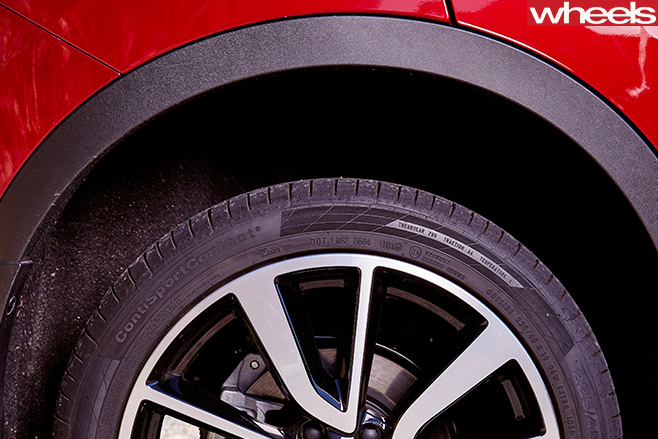
Rolling form over function
Several of Wheels’ more pragmatic journos have, over the years, written at length about how the steady increase in wheel size (and a corresponding drop in tyre sidewall) is buggering ride quality. Designers start their sketches with massive wheels filling the arches, while product planners and marketing types are only too happy to see big wheels on the options list, and fitted to cars in the showroom to sex up the offering.
Spare a thought for the suspension engineers who are expected to come up with a single spring and damper setting that works with tyre sidewalls ranging from bread-box high to liquorice strips.
These days, wheel diameters on some small cars can start at 15-inch, and top out at 18. Similar story, larger sizes for SUVs, most of which spend their lives trundling around suburbs and cities, rarely getting pushed anywhere near the limits of adhesion. So yes, big wheels/low-profile rubber are a fashion accessory that really can take a toll on liveability.
Nissan Qashqai Ti Price as tested: $35,490 Part 3: 789km @ 12.8L/100km Overall: 2109km @ 12.9L/100km Odometer: 3983km Date acquired: August 2015
It was bound to happen. Try as it might, Peugeot couldn’t make it through a launch presentation without mentioning the venerable 205 GTi.
This is despite stressing to us, in no uncertain terms, that the new 308 GT is NOT A GTi! Instead, the GT badge is intended to signify a halfway house between the regular models and the GTi hero models.
GT means a 151kW and 285Nm 1.6-litre turbo four, larger brakes, 18-inch alloys and a lower, stiffer suspension tune. Those outputs might seem a bit lukewarm, but the 308 GT’s impressively light 1200kg kerb weight results in a power-to-weight of 126kW/tonne. To choose a not-so-random example, VW’s Golf GTI offers 122kW/tonne.
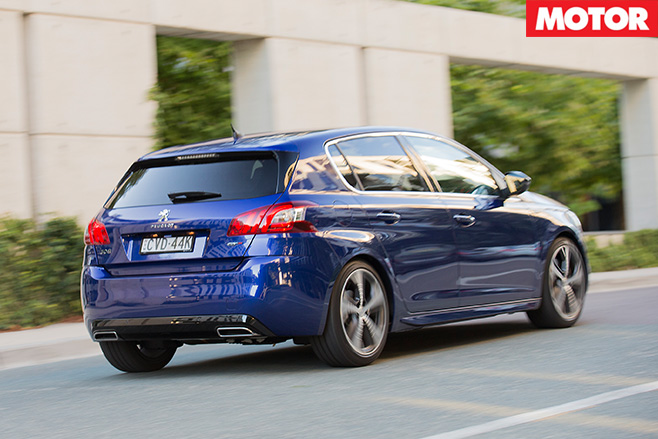
The 308 GT is reasonably handsome in an understated way, and the interior impresses with its minimalist approach. Moving all the controls, including those for the HVAC, to the central touchscreen, has allowed for a very clean dash design and it feels well bolted together – Peugeot is keen to leave the usual French reputation behind.
Peugeot’s controversial new driver’s layout – mounting the instruments above the steering wheel – remains, but works much better here thanks to the lower driver’s seat; you actually feel like you’re sitting in, rather than on, the car. The tiny steering wheel takes some getting used to, but the driving position is good.
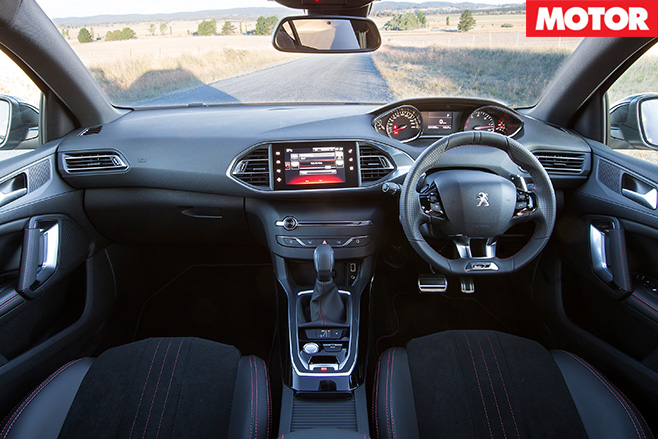
Pressing the Sport button adds a rorty fake engine note and extra weight to the steering, which is quite slow but more eager and communicative than that in the 208 GTi. Occasional traction difficulties arise, but in general the 308 GT is a nice car to drive.
It’s not going to leave you breathless and panting at the end of a thrash – IT’S NOT A GTi, REMEMBER – but accept its limitations and it’s an enjoyable car to make progress in. It’s quiet and, in general, rides well, too, though it can get a bit choppy on rough surfaces.
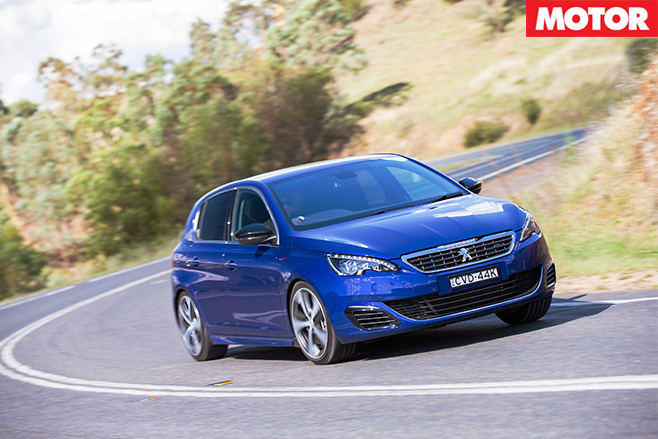
The GT is a welcome addition to the ‘warm hatch’ crowd, but with a few choice goodies from the RCZ-R, the 308 GTi could be something worth mentioning 205 GTi for.
3.5 out of 5 stars
Specs
Engine 1598cc inline-4, DOHC, 16v, turbocharger Power 151kW @ 5000rpm Torque 285Nm @ 1750-4500rpm Weight 1200kg 0-100km/h 7.5sec (claimed) Price $35,590 (manual)
The world’s appetite for SUVs knows no bounds! At least auto manufacturers seem to feel that way as yet another carmaker adds an SUV to its ranks for the first time.
The Maserati Levante has been revealed in photos ahead of the Geneva Motor Show. It’s a smart looking SUV with distinctive Maserati styling features like the trio of air vents along the quarter panels and the Maserati Ghibli-inspired front grille.
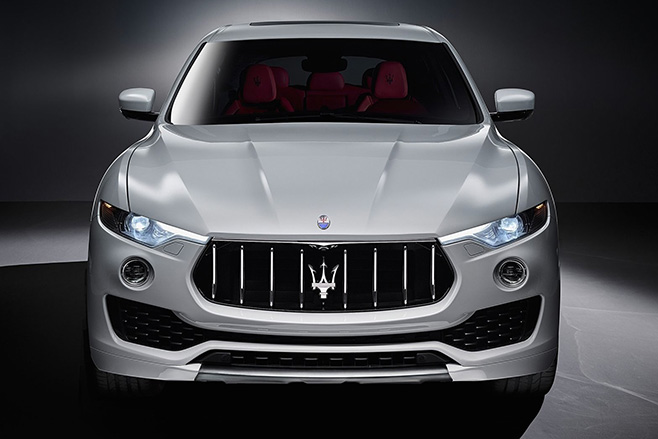
Flared wheel arches and quad exhaust tips bring in the performance aesthetic synonymous with the Maserati brand. Beneath standard SUV proportions is a muscular looking vehicle.
Specific details about the Levante’s engine and drivetrain are under wraps for now, all we have officially been told is there will be a choice between petrol and diesel, and an eight-speed automatic gearbox will be standard. All-wheel drive and adaptive suspension will also be featured in every Levante.
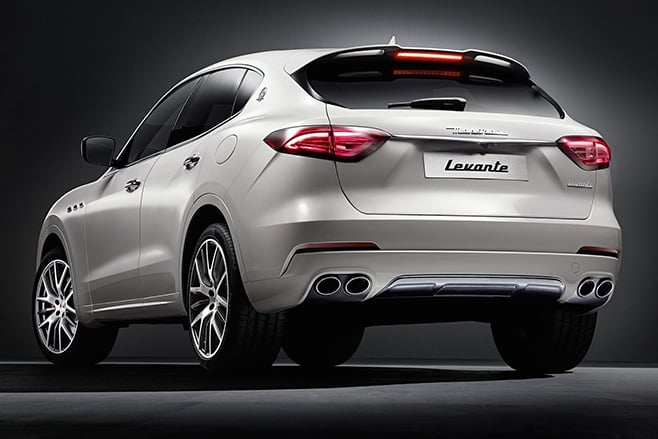
Levante will likely receive its engines from the current Maserati Ghibli and Quattroporte models, which includes a 202kW/600Nm 3.0-litre turbo-diesel V6 and a 3.0-litre twin-turbo petrol V6 available in two trim levels – 243kW/500Nm and 301kW/550Nm.
A performance variant of the Maserati Levante is possible if the choice is made to offer it with Maserati’s 390kW/650Nm 3.8-litre twin-turbo petrol V8 engine. We will have to wait at least until the Geneva Motor Show to find out for sure.
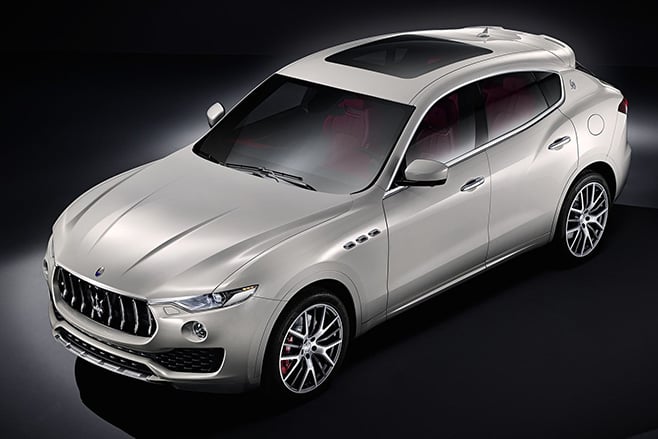
Levante goes up against a growing list of high-end SUVs including the Porsche Cayenne, Range Rover Autobiography, Mercedes-AMG GLS63 and recently released Bentley Bentayga.
Production of European market Levantes is scheduled to start before the middle of this year. Models for the rest of the world will roll out of the Maserati factory by the end of 2016.
Hyundai’s iMax people-mover and iLoad van have received a welcome Series II update, bringing with it new tech and revised styling.
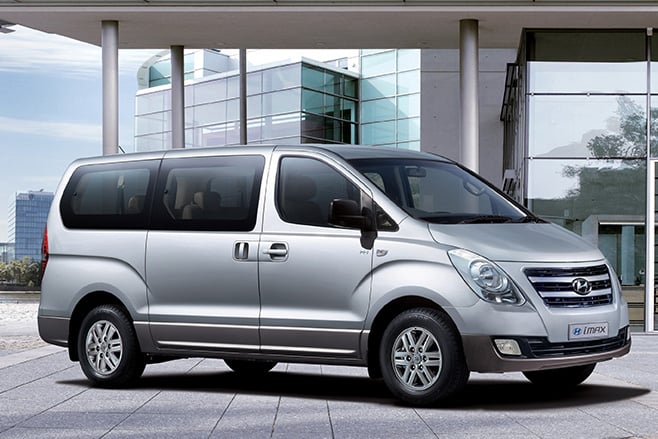
A 7-inch touchscreen display and reversing camera are now standard in all variants of iMax and iLoad. The updated infotainment system adds Siri Eyes Free (for iPhone) and Google New (for Android) hands-free voice activation services.
Series II also brings additional airbags to the cabin of iMax and iLoad, plus standard cruise control for diesel automatic vehicles.
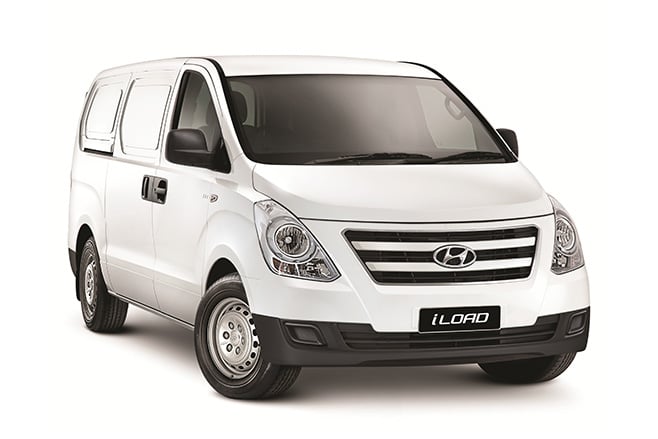
Updated iMax and iLoad vehicles are outwardly recognisable thanks to styling changes including new-look front grilles, bumpers and tailgate garnish. iMax Series II now features standard foglights and 16-inch alloy wheels.
iMax and iLoad Series II carry over Hyundai’s 2.4-litre petrol and 2.5-litre turbo-diesel engines. The 2.4-litre petrol engine produces 127kW and 224Nm. The 2.5-litre turbo-diesel engine has an output of 100kW and 343Nm.
The rollover seemed like a big deal at the time. It certainly got my attention when the horizon went vertical for a fraction of a second before disappearing in a cloud of dust.
It was only a second gear roll, on a dirt track, but second gear in a WRX STI on rally rubber is still quick enough for bad things to happen. The crash was violent but was over quickly, unlike the seemingly never-ending tumble-dryer terror of a high-speed multi-roll crash I had a few months later (RIP my sweet Datsun 1600).
This time in the STI, when the dust cleared, the horizon reappeared in the position it was supposed to be. There was no fire, thank goodness, but I could see the bonnet was crumpled. I shut off the engine and let out a muffled curse in my helmet. I only had a sore neck, but the damage to the car, a blue 1998 two-door STI, was worse than we first thought. Dad and I grappled with the fact it might have to be written off.
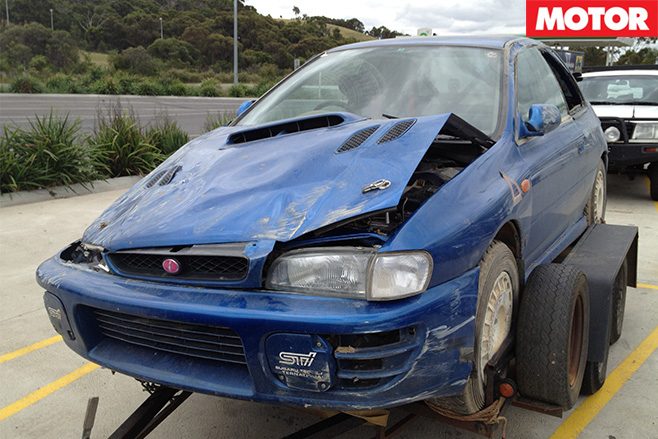
Then, on race day, I would drive the ring out of the car; absolutely confident it would not fail me. At one brutally rough track I was six seconds a lap clear of the field, thanks to my lack of mechanical concern and confidence in Dad’s homemade shrapnel-proof sump guard. He was a brilliant product engineer at Ford Australia and he was my unfair advantage at the track.
That world ended when I was out shopping and received a phone call from a family friend: “I’m sorry to tell you this, but your Dad has passed away.”
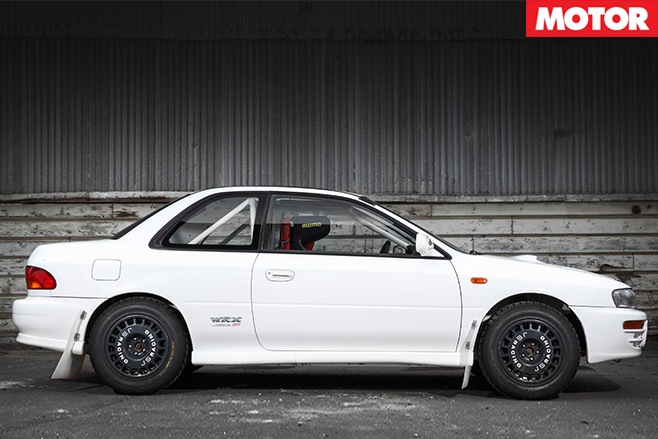
I tighten my helmet and do the five-point harness up so hard I can only just breathe. Then, on the start line, I press the intercooler spray switch and prepare to launch. The procedure might be the same, but everything else is different.
Have you ever cried in your helmet? Well, I did, and I’m not ashamed to admit it. The first run in the car felt so good. To get out and do something that used to bring so much joy is fantastically therapeutic.
But I had to cross the finish line and return to the pits. Normally, Dad would walk over slowly and tell me my time and pass on some information, offer advice and sometimes, praise. Of course, the heart attack meant he wasn’t there and will never be there again. He won’t be in the passenger seat on the long journey to and from each event either.
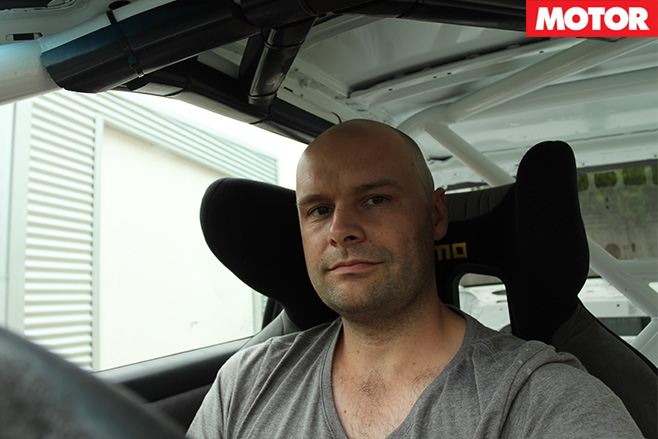
My two-year-old son just adores it and often orders me to start the engine just so he can listen. He doesn’t talk much, but says “rally car” a lot. I won’t push it, but if he’s still interested in racing when he gets older, I’d be glad to stand there in the pits waiting for him to come back in.
Back in the 70s, it was the epitome of style to have a lush green or maroon hue coating one’s car.
But what were once hero colours of the hip era are now some of the least attractive – unless it lacquers a cult classic or collectible, a green or maroon hue is now, by the numbers, globally unpopular as a car colour.
So does a car’s colour affect its resale value, and does it make it more difficult to sell the car when it comes time to move on? Conversely, what are the most fashionable colours today’s buyers want?
It’s not hard to guess the most popular colours in today’s automotive marketplace: just watch the oncoming traffic and one will be hard pressed to find colours outside of the monochrome spectrum of black, white and grey.

The annual PPG Industries Automotive Colour Popularity survey provides all the facts and figures required. The global data PPG collects each year (pictured above) is an industry standard on popular paint trends, and its most recent results from September 2015 revealed that good ol’ white was the most popular colour at 35 per cent (up 7 per cent from 2014), followed by black (17 per cent) and silver (12 per cent).
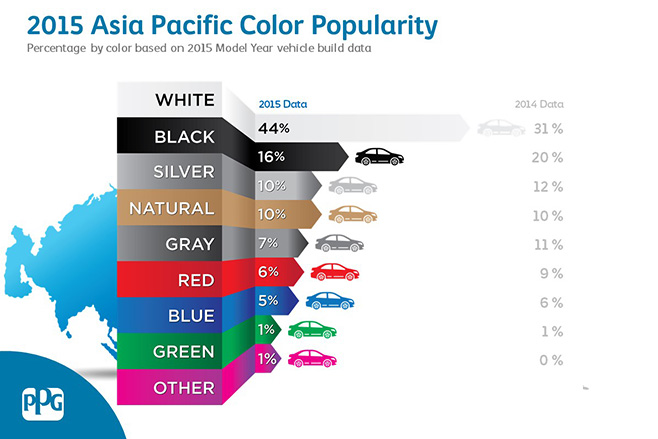
In the Asia-Pacific market (pictured below) white was even more popular, polling at 44 per cent (up 13 per cent on 2014), followed by black at 16 per cent, with natural/earthy colours and silver tied at 10 per cent each. Grey was further back at 7 per cent.
Fleet sales and hire cars have a hand in this percentage, but by and large we’re obviously a conservative bunch. These colours have been at the top of the charts for many years now, and when it comes to resale, there will be plenty of eager buyers lining up for them.
Given this evidence, why would one buy a bright-coloured car? Well, for one, it can be a saving grace when it comes to safety.
The Monash University Accident Research Centre in Melbourne performs some interesting motor vehicle studies, and one such study on crash data linked car colours to crash occurrences.
The study found dark-coloured cars are up to 12 per cent more likely to get into a smash in full daylight, and, staggeringly, are almost 50 per cent more likely to be involved in crashes between the hours of dusk and dawn.
It also found low visibility colours are at a higher risk of more severe crashes. So one of the safest car colours is white, but second in line is yellow – a colour that was ironically one of the fastest depreciating a decade ago, and is still on the outer.
Also affecting dark cars are washability and paint-scratching issues. As cars are made of steel and typically covered in a light base-coat of paint before receiving their final layers, scratches can show up more easily on dark cars than on light-coloured cars.
A bad buff can leave swirls and whorls in the paint, and dust and dirt also show up more easily on a dark car, particularly one that is metallic or pearlescent.

So it’s obvious why white is the most popular, but what about the other bright colours?
Unfortunately a gaudy or loud colour can not only lose popularity as trends change, but it can also cost you time as the car sits and waits for that one buyer who wants to stand out from the crowd.
In comparison, a plain white vehicle can be snapped up much quicker by the collective of conservative car buyers. However, this doesn’t necessarily mean it demands a higher price. While there may be many people lining up for the top-rated paint, those rarer buyers wanting a bright colour, particularly a limited-edition paint job, will often shell out a bit more for their hue of choice. It just may take a bit more time for them to find you.
