
To Japanese car tragics or Gran Turismo fans, the Nismo 400R will need no introduction.
It’s one of the rarest and most legendary GT-Rs ever produced. Back in 1997, Nissan’s motorsport arm NISMO was given the task of creating a special R33 GT-R and it delivered in spades.
Key to the transition was a new engine. The venerable RB26DETT was given a thorough going over, so much so that it carried a new designation, the RBX-GT2.
Bored and stroked to 2771cc, upgraded rods, polished ports, high-lift cams, an upgraded oil system, a larger exhaust manifold and stronger turbochargers lifted power to a claimed 294kW/470Nm. This was good enough for 0-100km/h in just over four seconds and a top speed on the high side of 300km/h.
Externally, a new bodykit, including a carbon fibre rear wing, improved cooling and increased downforce, while wheels were upgraded to 18 x 10-inch Nismo LM-GT1s at all four corners. One hundred examples were originally planned, but only 44 were eventually built before R33 production ended in 1998. In GT-R terms, only the R34 Z-Tune (19 built) ranks as rarer.
While Nismo has recently released its own version of the R35 GT-R, we reckon it’s being a bit timid – time to be let off the leash.
BARE BONES All business in here. Lightweight fixed-back buckets are your only seating option with six-point harnesses holding you in place. The rear seats are binned, as is most of the sound deadening, while air-con and a roll-cage are options.
HEN’S TEETH Such an extreme car is never going to be a volume seller. A price of A$260,000 would limit the 800R to diehard Nissan fans, but there should be few issues shifting 250 units globally.
AIR APPARENT Aero package more or less a straight lift from the Nismo ‘N Attack’ GT-R, which set a blistering 7min08sec lap of the Nordschleife – any more extreme and road legality is getting sketchy.
FEELING BLUE Balanced and blueprinted VR38 scores upgraded internals to handle more boost, lifting outputs to 588kW/800Nm. Real-world 0-100km/h time drops to 2.5sec with 0-400m disappearing in 10.6sec.
STICKY BUSINESS With no 20-inch R-spec tyres currently available, Yokohama saves the day with bespoke 265/40 front and 295/35 rear AO50 competition tyres wrapped around 20-inch lightweight rims inspired by Nismo’s GT3 race car.
HARDEN UP Strengthened clutch packs and hardened gears will do nothing for the GT-R’s already grumpy low-speed driveability, but will stop an explosion of metal fragments when putting the monstrous power to the ground.
They emit only water, refuel in three minutes, and you can buy one in Japan. So why aren’t they here?
AUSTRALIA is at something of a crossroad when it comes to what will power our cars when fossil fuels eventually run out.
In the words of Federal Industry Minister Ian Macfarlane, the safe bet from some manufacturers – electric cars – is not the way of the future.
“The reality is that if you drive an electric car, the chances are it’s being fuelled by fossil fuel-generated electricity,” Macfarlane said recently. “Outside that, it’s an idea, not a solution.”
Macfarlane has hinted that Australia’s path to fossil fuel freedom will be via hydrogen, an element that is readily available and easily generated using nothing but sunlight.
Why, then, aren’t the carmakers rushing to fill the hydrogen-fuelled void?
Compared with Japan, the US and Europe, where it’s already possible to drive long distances using hydrogen fuel, Australia has a lot of catching up to do.
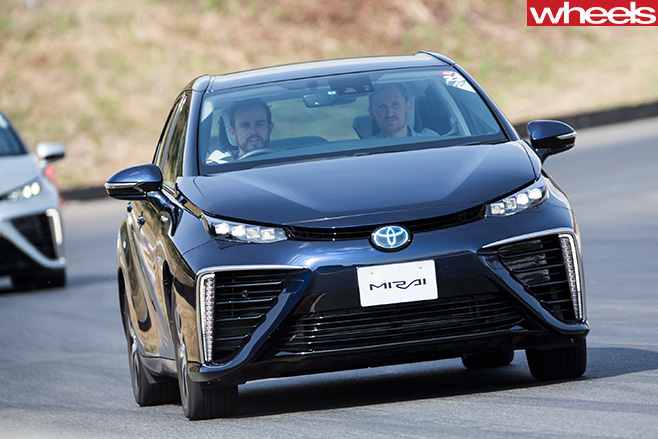
However Toyota’s Executive Director of Sales and Marketing, Tony Cramb, said the brand had “no plans” to sell the Mirai here, even though it had brought the car to Australia in October last year, to coincide with the World Hydrogen Technology Convention.
The idea had been to “start the conversation with some of the key stakeholders, to try to get the infrastructure in place,” Cramb said.
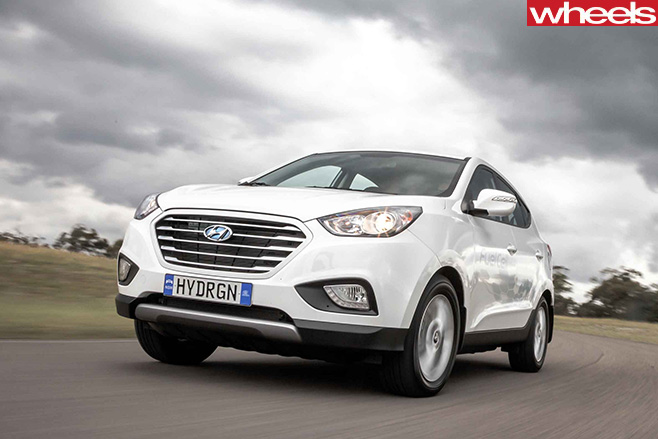
Toyota’s wait-and-see approach contrasts starkly with that of Hyundai, which is gaining traction with government via a fuel cell-powered ix35 SUV running around our roads.
The futuristic-looking Toyota Mirai is also the world’s first commercially available hydrogen fuel cell vehicle. It is on sale overseas for the equivalent of $108,000.
Hyundai’s more conventional-looking ix35 Fuel Cell is the Korean company’s fourth-gen FCV. The next gen version will be mass produced in both left-hand and right-hand drive, putting Australia firmly on the map as a potential market.
Hydrogen fuel cells are already in use in buses and forklifts, and in non-auto applications such as back-up generators for mobile phone towers. How large a piece of the sustainable motoring puzzle the technology will contribute remains to be seen, but brands such as Honda, Volkswagen, BMW and Mercedes-Benz are all on board.
“In Australia, we’ve got the best environment to be able to do things in a cleaner way – as in solar and wind,” Hyundai’s Nargar said.
The challenge in making hydrogen mainstream is not with producing the gas, but distributing it – setting up places where the drivers of hydrogen cars can refuel. Even the experts are not certain how such infrastructure will roll out in Australia.
One model is built on setting up refuelling depots at, say, bus or courier companies, or for a fleet of government or corporate cars. A hydrogen highway linking cities such as Sydney and Melbourne via the calculated placement of hydrogen-enabled fuel stations would make fuel-cell cars viable for some private buyers.
For now, the refueller at Hyundai’s headquarters at Sydney suburb Macquarie Park is quite possibly your nearest servo.
“It’s open to any manufacturer who wants to use it,” says Nargar, typifying the spirit of cooperation between the brands.

“You’re splitting the smallest element into its H-plus ion and an electron at a rate of a billion times a second in your vehicle,” explains hydrogen expert Cranston Polson.
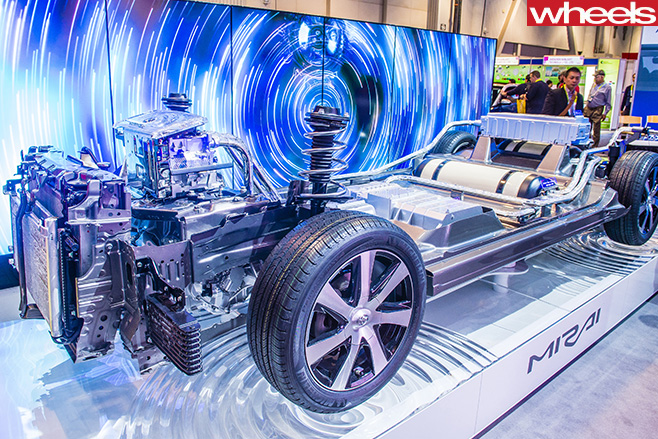
However, the rest of the modern fuel cell vehicle is decidedly – and deliberately – normal. For example, it takes about three minutes to refillo the tank, which typically holds about 6kg of hydrogen at high pressure. Filling up with hydrogen is as easy as filling with LPG.
Range officially totals 550km in the Mirai and 594km in the ix35 Fuel Cell. The service interval is in the realm of conventional cars, and the cost is likely to be lower than anything with an engine.
Hydrogen has a low atomic weight – it’s lighter than air – so it diffuses quickly into the atmosphere rather than forming explosive concentrations.
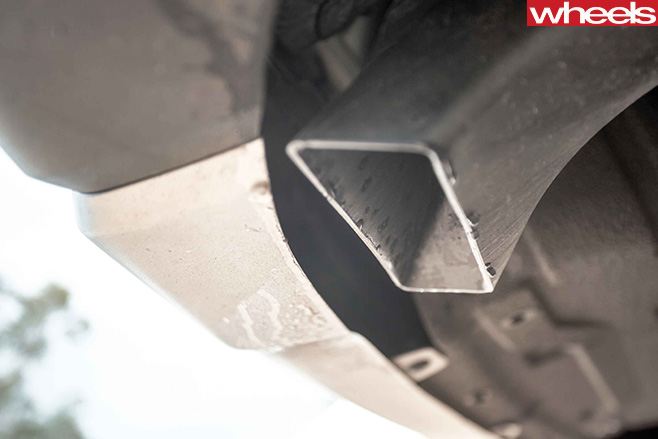
The experience of driving a fuel cell vehicle won’t confront anyone who has driven a hybrid or electric car – as our drives of the Hyundai ix35 Fuel Cell and Honda Clarity Fuel Cell late last year made clear. Although they do have some curious features – such as the H2O button on the Mirai, which prompts it to take a leak on the street before coming inside.
Taste the technology and it occurs that the question is when – not whether – hydrogen will make an impression in Australia. Hyundai’s next-gen FCV could be here within three years.
What’s inside a fuel cell? That’s secret
THE grapevine has gone quiet on the materials inside the modern fuel cell. “Discussion on that just completely dropped off,” says hydrogen expert Cranston Polson of H2H Energy, who is working with Hyundai Australia. The fact that R&D has shifted from universities into company IPs is a sure sign that commercialisation is in full swing.
“They could be using low-density platinum, or another material all together,” says Polson.
The Toyota Mirai costs more than $100,000 in Japan, but price reductions will come with volume production, and from the further development and in-house manufacture of fuel cell membranes and hydrogen tanks.
Incredible ability for the price makes the new Ford Focus RS something special.
WHAT IS IT? Ford’s feral fast all-wheel-drive super-hot hatch
WHY WE’RE TESTING IT You need to ask?
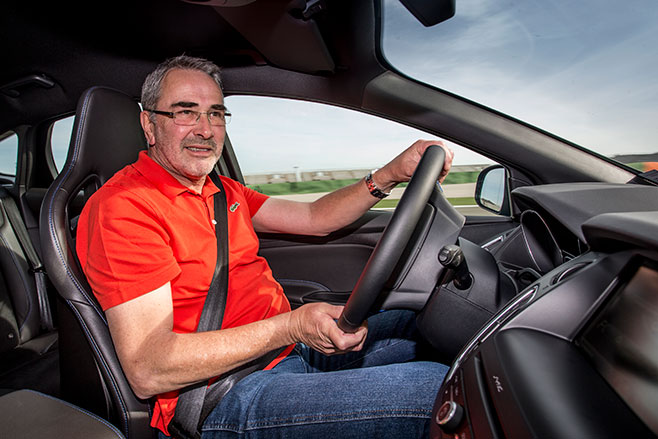
MAIN RIVALS For ability it’s an Audi RS3 and Mercedes-Benz A45 AMG competitor, but for price the Ford Focus RS is in Subaru WRX STi and Volkswagen Golf R territory.
THE WHEELS VERDICT Brilliant new Focus RS is a delight to drive, combining a truly terrific chassis with a fiercely effective drivetrain. It’s a bargain-priced challenger that’s worthy of comparison with notionally superior and much more expensive cars.
Plus: Engine; steering; brakes; grip; handling; price Minus: Interior; thirst when performance exploited; turning circle
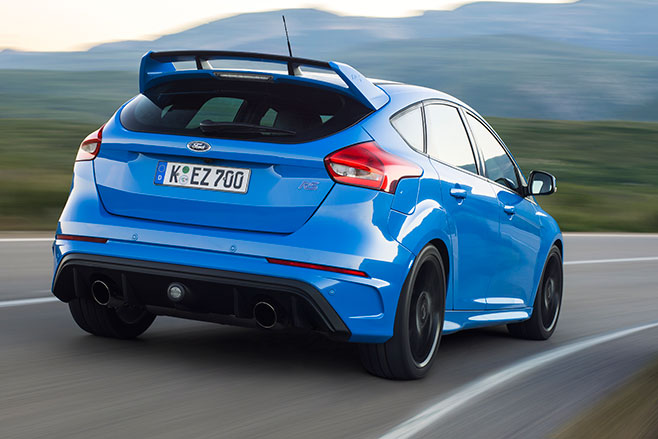
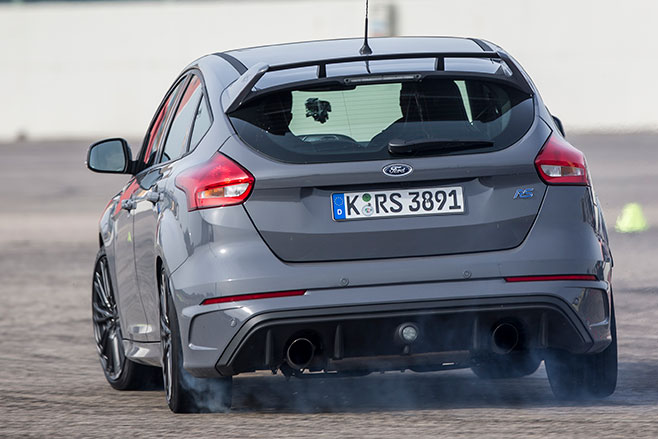
THE WHEELS REVIEW Can they read the smoke signals rising from Spain as far away as Germany? Source of the smelly haze is the Focus RS noisily scribing sideways circles in a car park behind the pit area of the Circuit de Valencia. Drift Mode is the Ford’s spectacular party trick, a world-first, purpose-developed drivetrain, ESC and chassis calibration intended to unleash the Ken Block that lurks inside all of us.
Drift Mode’s effectiveness is attention grabbing, but it’s not what Mercedes-AMG and Audi’s quattro division should be worried about. What must instead concern them is the way this all-wheel-drive Ford delivers stellar performance and handling at a price that reads like a misprint.
There’s a delicious harmony to the way the $51,990 Focus RS drives that’s lacking in the A45 and RS3. Both the Mercedes-AMG and the Audi are well above $20,000 more costly than the Ford, but neither can match the fluidity and cohesion of its dynamics.
The Ford’s snarly 257kW Ecoboost 2.3-litre four-cylinder turbo, a close relative of the same-size engine in the new Ford Mustang, delivers a lovely and linear surge of thrust. It may not produce quite as much power as Mercedes-AMG’s 265kW 2.0-litre turbo four or Audi’s 270kW 2.5-litre turbo five. But the RS does have a drivetrain that more than compensates for the shortfall.
Bolted to the gearbox of the Focus RS is a simple power take-off unit for the propshaft to the rear axle. There’s no central differential or Haldex-style inter-axle clutch. Instead the rear drive unit in the Ford’s aft axle is home to a pair of multiplate clutches. The left- and right-side clutch packs’ electrically powered hydraulic actuators can be individually controlled. This component, supplied by Brit drivetrain specialists GKN, is the car’s not-so-secret weapon.
It’s perhaps the chief reason for a couple of the Focus RS’s almost miraculous abilities. When cornering, the rear drive unit can channel significant torque to the outside rear wheel, practically exterminating that joy-killer called power-on understeer. From a standing start, the system can lock both clutches to deliver truly awesome traction.
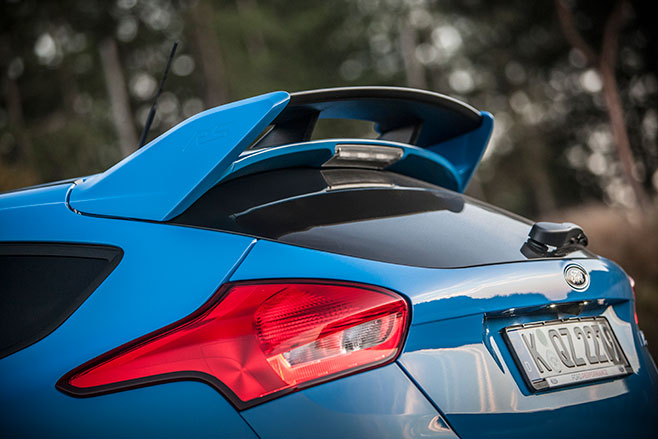
Achieving a good 0-100km/h was important to Ford, and the company’s claim of 4.7sec is impressive. Though realistic, it’s a few tenths shy of the A45. But as Ford Performance vehicle engineering manager Tyrone Johnson points out, in the Mercedes-AMG Launch Control must be selected to ready its seven-speed double-clutch for access to the car’s full potential. The Focus RS, which has a six-speed manual, is always ready to give its best says Johnson.
This isn’t the reason a manual was chosen for the Focus RS, the engineer explains. Instead it was the six-speeder’s weight advantage compared to any kind of auto. A prime program objective was to minimise understeer, he says, so having around 30kg less mass over the front axle was irresistible.
And the Focus RS is superbly understeer resistant. Its quicker-than-Ford Focus ST electric steering rack – just 2.0 turns lock-to-lock – highlights the car’s fabulous agility. Slight torque steer can sometimes be felt, but its direct and well weighted steering is one of this Ford’s best attributes.
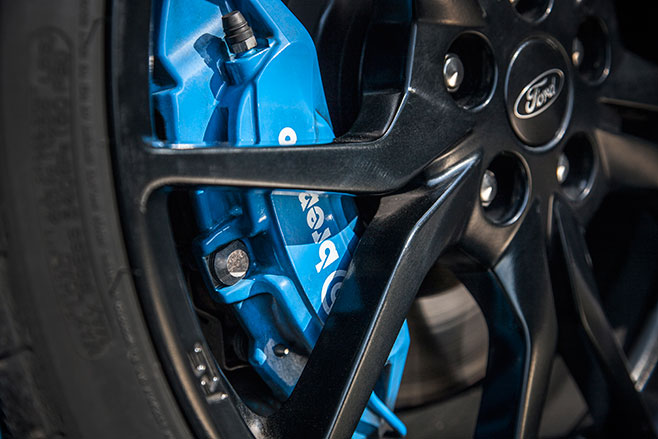
The brakes aren’t bad, either. Big front discs clamped by fixed, four piston Brembo calipers do a great job of shedding speed. They only began to wilt a little after nine hard Track-mode laps of the Valencia circuit.
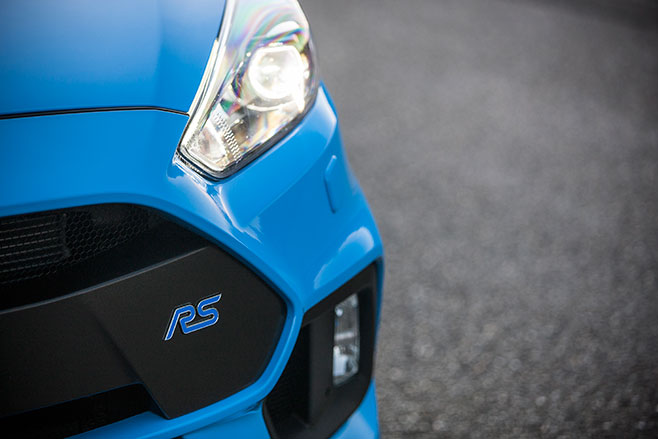
What didn’t change during those laps was the Focus RS’s unwavering composure. It turns better into corners, and drives earlier and harder out of corners than any obvious competitor. These same qualities make the Ford a formidable public road car. Its ride in both default Normal and selectable Sport modes, which use the same softer setting for the car’s two-stage variable dampers, is firmly disciplined, but not unbearable. Only Track mode engages the stiffer damper setting.
The Focus RS has few weaknesses. Its interior fails to convey the same visual excitement as the exterior, its thirst will be heavy when driven hard (it flashed an 80km-to-empty warning on the circuit with the fuel gauge showing above half full!) and its turning circle, like any other Focus with large wheels, is atrocious.
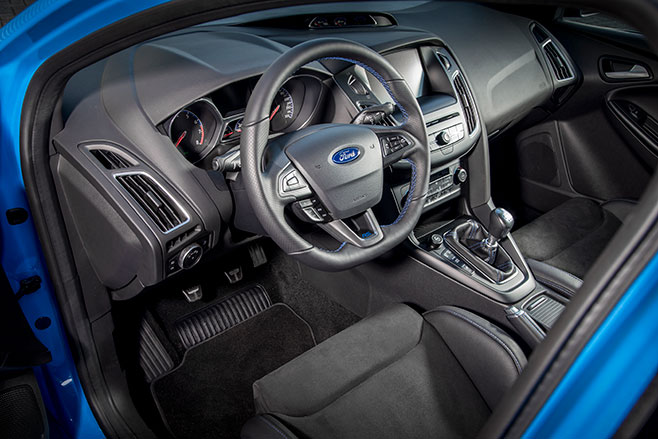
But this Ford is a case of where there’s smoke, there’s a fiery new challenger for the hyper-hatch crown.
DON’T MENTION THE WAR Tyrone Johnson doesn’t hesitate when asked if his team intended to produce a Focus RS that could take on the likes of the A45 AMG. “Yes,” he replies. But then, the Ford Performance vehicle engineering manager doesn’t have a very high opinion of Mercedes-AMG’s hot hatch. “I have one in my department, but it’s got a dust layer about that thick (indicates with fingers) on top of it,” Johnson says. “No-one drives it any more. No-one enjoys it. It’s fine for transportation, but that’s it.”
SPECS Model: Ford Focus RS Engine: 2261cc 4-cyl, dohc, 16v, turbo Max power: 257kW at 6000rpm Max torque: 440Nm at 2000 to 4500rpm Transmission: 6-speed manual Weight: 1599kg 0-100km/h: 4.7 sec Economy: 8.1L/100km Price: $50,990 On sale: mid-2016
A mid-life update for Land Rover’s biggest seller introduces a new engine, sexier styling and even greater individuality.
WHAT IS IT? The Ingenium refresh for Range Rover Evoque, bringing an all-new, in-house diesel with much-improved refinement over the old Ford/PSA unit, along with a reshuffled model line-up.
WHY WE’RE TESTING IT? Given the new Ingenium turbo-diesel’s excellent work in Jaguar’s athletic XE, we’ve been champing at the bit to see just how much difference it would make to the Evoque (and its Discovery Sport sibling). Given that the laggy, gravelly old diesel was arguably the Evoque’s weakest link, “all-new” is guaranteed to mean “better”.
THE WHEELS VERDICT If you head to the top of range, with all the attendant bells and whistles, the MY16 Evoque has a striking presence to match its fashionable trim and improved connectivity, not to mention an impressive new diesel engine. Considering its 2011 vintage, the handsome Evoque is maturing nicely, and can only improve further when the all-new Ingenium petrol comes on stream late this year.
PLUS: Handsome and alluringly customisable; strong and refined new diesel; impressive ride quality, even on 20-inch wheels MINUS: Ageing turbo-petrol’s driveability flaws and lack of a manual ’box; smallish boot; slightly claustrophobic rear seat; fiddly transmission dial; over-eager ESC
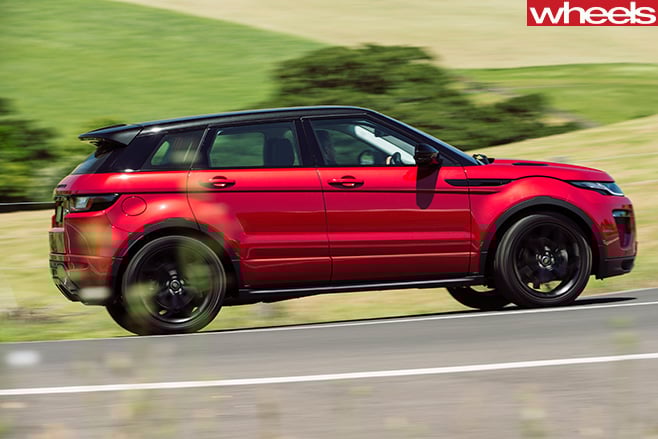
For 2016, the Evoque has been treated to its most comprehensive makeover since its 2011 launch. Fresh and techy new lighting signatures, new-gen multimedia, lusher trims and tastier colours garnish the MY16, which has also had its model line-up reshuffled for greater commonality with other Range Rovers.
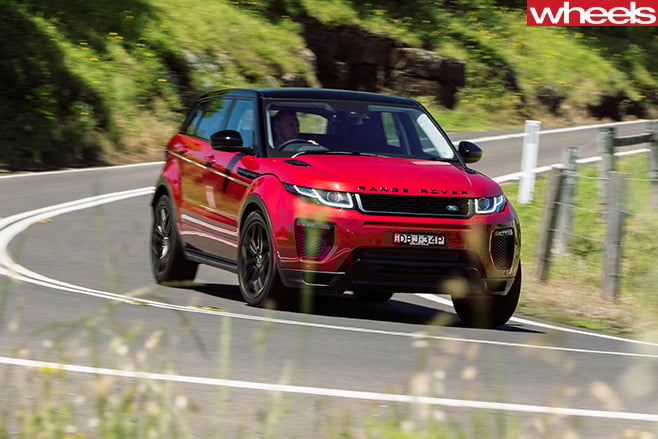
The HSE trim lines are also the only variants offered on the 3dr ‘coupe’, while the carry-over 177kW/340Nm turbo-petrol Si4 engine is offered across SE, HSE and HSE Dynamic models, solely with a nine-speed auto.
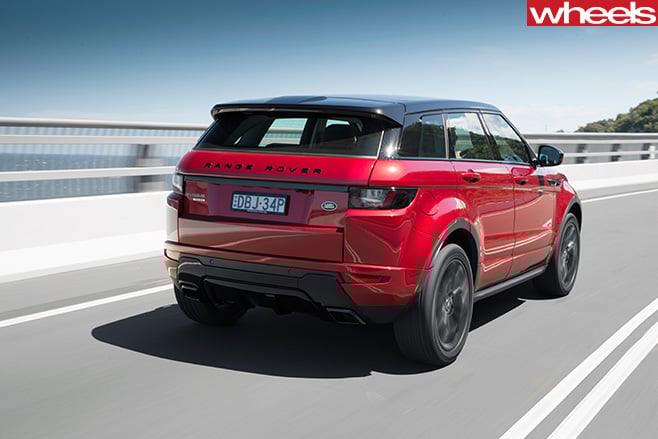
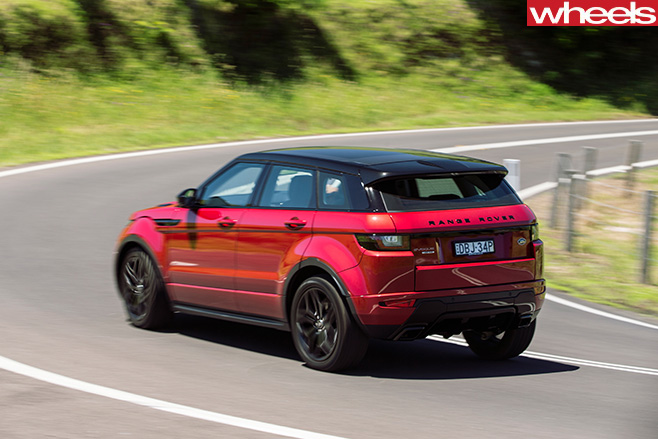
We drove a pair of five-doors – an SE Td4 180 ($66,495), and a hot-looking red HSE Dynamic Si4 ($80,605) sporting optional Adaptive Dynamics suspension ($1850) and a Black Design Pack ($4650) with 20-inch alloys and a sinister black-out treatment.
With the MY16’s striking full-LED headlamps and shapely running lights, the HSE Dynamic really steps up its game as a tantalising Evoque flagship. As an SUV for young, affluent hipsters with a penchant for driving fun and fashion, the HSE Dynamic nails the brief better than any Evoque ever has, and does a terrific job combining guard-filling wheels with really robust damping that absorbs big hits effortlessly.
Far more cohesive, and much more pleasant to sit behind, is the new Ingenium diesel. There’s still a bit of lag from standstill, but the diesel is easily strong enough to surge off the line in second gear. It will pull from as low as 1250rpm without gasping for boost, then briskly spins to 4400rpm before smoothly shuffling through its vast ratio set. Land Rover boasts a combined fuel number of 5.1L/100km, which is hugely impressive, though not quite as amazing as the front-drive manual’s 4.3L/100km, or the Ingenium diesel’s incredible two-year/34,000km recommended service intervals.
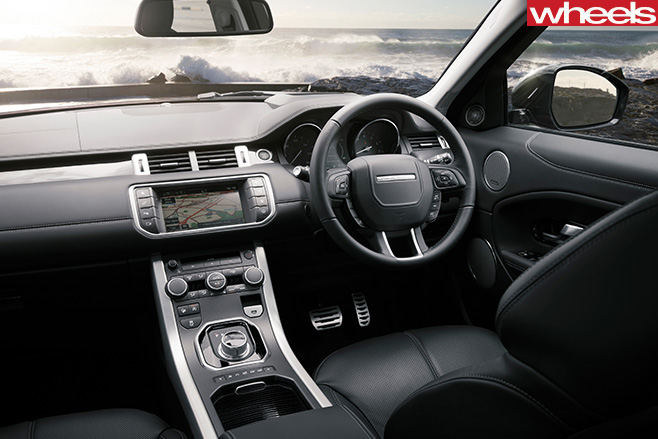
Yet for all its airs and graces, there’s still something refreshingly egalitarian about the MY16 Evoque. At base level, you get a surprising amount of car and equipment for the money, while for those willing to spend quite a bit more, no other SUV this side of a Porsche Macan can match the Evoque’s everlasting style and class.
Model: Range Rover Evoque HSE Dynamic Td4 180 Engine: 1999cc 4cyl, dohc, 16v, turbo-diesel Max power: 132kW @ 4000rpm Max torque: 430Nm @ 1750rpm Transmission: 9-speed automatic Weight: 1674kg 0-100km/h: 9.0sec (claimed) Fuel economy: 5.1L/100km Price: $76,995 On sale: Now
WHERE a future of driverless cars once seemed some far-off dystopian nightmare, today that future is bearing down on us like a two-tonne SUV with no-one at the wheel.
Pilot trials are already taking place, and in 2017 Volvo will hand 100 autonomous cars to members of the public as part of its DriveMe project. Terrifying, no?
These Volvos will initially self-drive in ‘simple’ scenarios – one-way traffic, no pedestrians, central guardrail – before handing back to the driver when necessary.
Eventually, the machines will be intelligent enough to tackle complex urban driving.
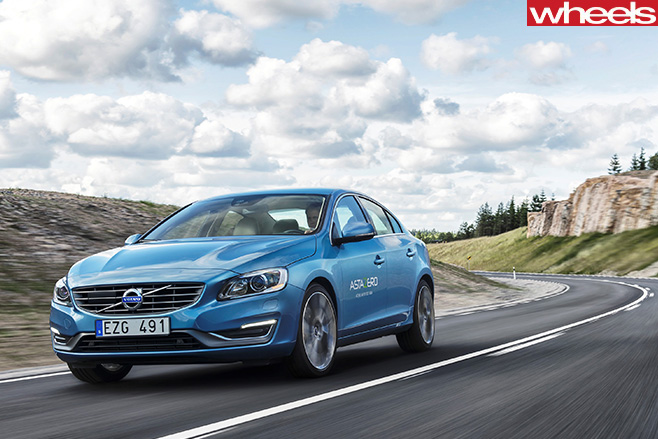
The answer lies next door to Volvo’s Hallered proving ground in Sweden. Called AstaZero, the all-new facility opened in August 2014 and is dedicated purely to the testing and development of active safety systems.
Asta is an acronym formed from Active Safety Testing Area, and Zero alludes to the Swedish government’s target for road deaths and serious injuries.
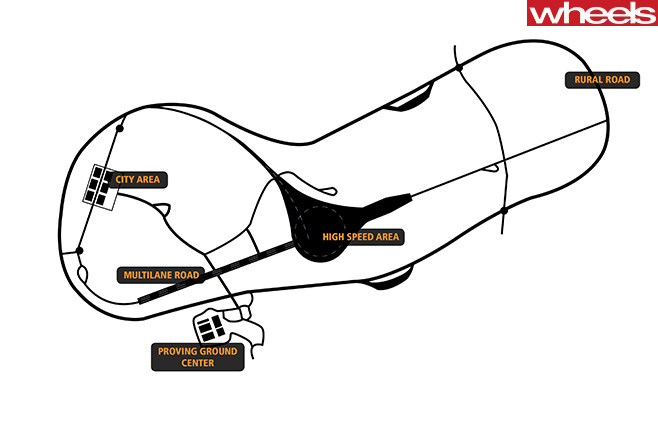
“Our focus is now more on collision avoidance than passive safety,” says Jan Ivarsson, Volvo’s deputy director of safety systems. “We can make bigger gains with active safety systems.”
The 280 hectare facility is divided into different areas to replicate typical driving environments, and can accommodate up to 100 test cars simultaneously.
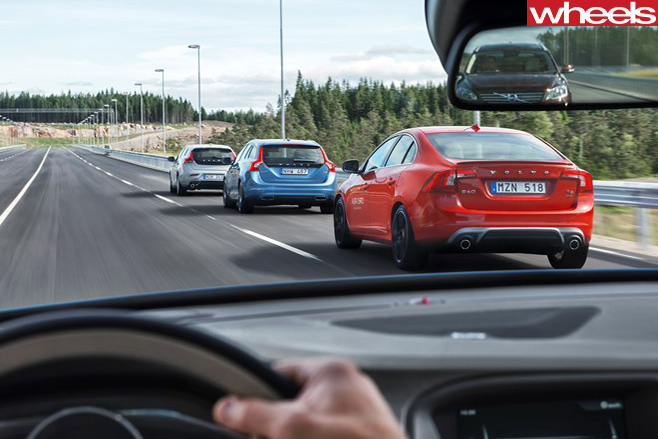
But anyone can schedule test time at AstaZero. It’s no trackday, but here’s what to expect.
The World’s Most Boring Road
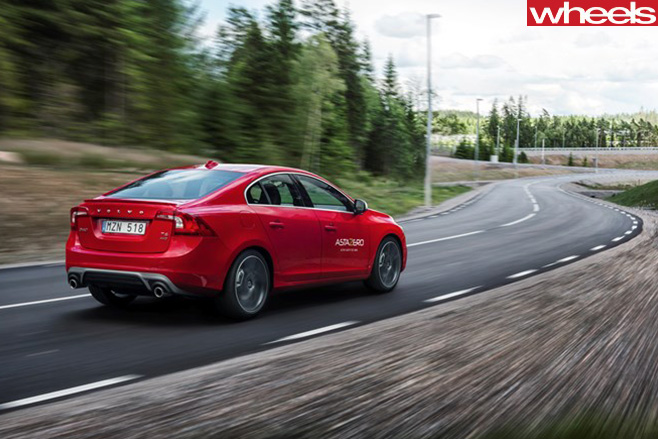
Volvo is developing elk-avoidance technology here, hoping to reduce the 5 percent of Swedish accidents caused by the animals annually. As technology improves – faster-acting cameras with wider angles of vision – it might even stop us hitting a few ’roos.
The Ghost Town
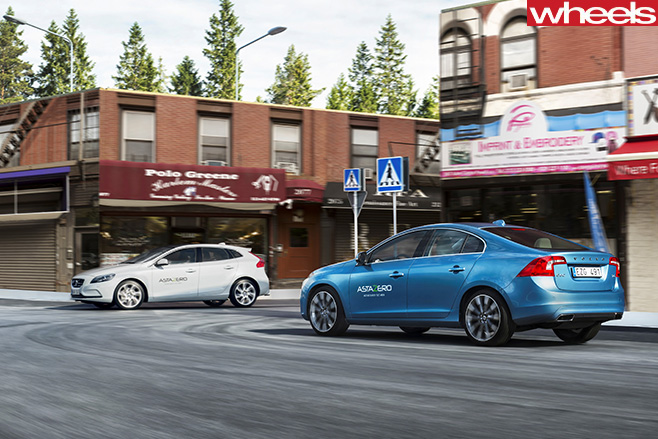
Cars can be driven at each other (pictured top) –or at fake pedestrians or cyclists – with buildings blocking their line of sight, so the cars’ safety systems must detect hazards with very little warning, and respond quickly. While today’s systems can detect people and cyclists moving at relatively slow speed in front of the car, fake Harlem will help develop faster-acting systems that can manage more complex scenarios.
“We’ve seen a high level of reduction of in-car fatalities,” explains Ivarsson, “but you don’t get that with cyclists and pedestrians – in fact, there was an increase in Sweden last year. In young economies where you have cyclists and pedestrians and motorbikes, this is really the problem, so from a governmental perspective it will be an increasing focus.”
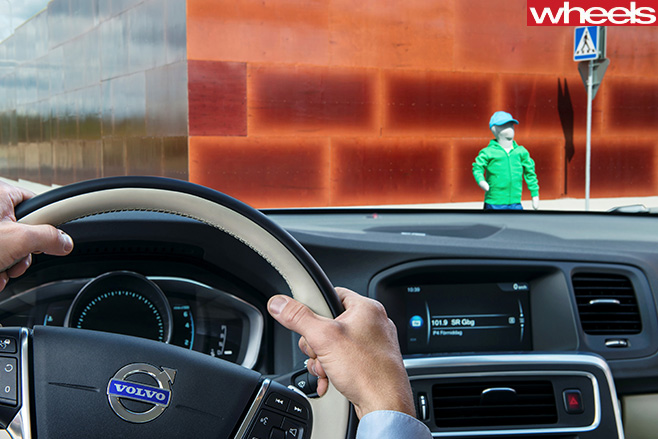
Numerous cars now offer lane-departure warning and lane-keeping assist features: electric power-steering systems combine with grille- or windscreen-mounted cameras to monitor lane markings, and vibrate the steering or actively turn it while you’re not paying attention. (“On average, drivers spend 20% of the time not looking at the road,’ reveals Ivarsson.)
When autonomous cars arrive, the need to accurately decipher road markings will become even more imperative. Think of the nightmare of making that work globally. Hence AstaZero has a multi-lane 700-metre straight road with road markings used throughout the world: solid lines, broken lines, Botts’ dots from the US, cat’s eyes from the UK… It’s like some inebriated road crew has gone on a rampage.
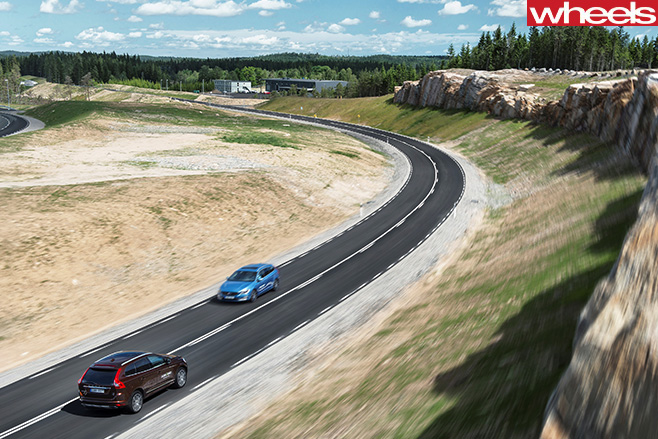
No, not a Hispanic sub-culture with Cadillacs on air suspension. “Low riders” are integral to the autonomous test process, and were specially developed at AstaZero. These car-sized remote-controlled platforms skim along the road surface on four tiny wheels at up to 100kph, with ‘top-hat’ foam structures used to replicate vehicle dimensions. It allows engineers or remote-controlled cars to simply drive at them. If a safety system designed to prevent an impact fails, the low-rider’s foam structure bites the dust, but there’s no damage to the test car. Low riders already exist at other test locations, but typically can’t exceed 80kph, and aren’t suited to poor weather conditions.
The High-Speed Area
Introducing a Toyota Prius you might actually want to drive – complete with a small-block 3.4-litre V8 hooked up to a hybrid drive system.
Engineered by APR Racing in conjunction with Toyota Racing Development (TRD) to compete in the GT300 racing series in Japan, the model tagged ‘Super GT Prius’ is obviously not for road use.
The production version of the odd-looking next-generation Prius is due in Australia later this year with a mildly revised 1.8-litre four-cylinder engine producing a weedy 72kW and 142Nm.
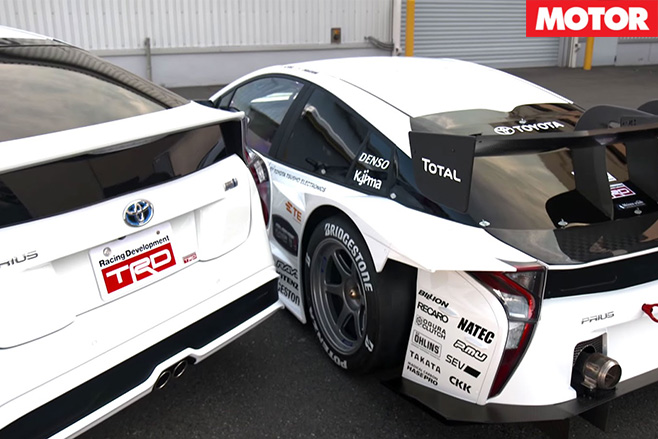
While that petrol powerplant has been ditched for the Super GT Prius, the racing outfit has retained the patented Hybrid Synergy Drive system that makes green-thumbs feel warm and fuzzy. The system has been relocated to the passenger footwell for better weight distribution, ensuring that, “this racing Prius clearly hasn’t forgotten its roots as Toyota’s environmental icon.”
No outputs are supplied for the high-revving ‘RV8K’ V8 engine, but the electric motor retained from the showroom Prius adds just 53kW to the total.
Although “racing Prius” shares the road car’s 2700mm wheelbase, a beefy new body takes width from 1760mm to 1950mm. Overall height drops from 1470mm to 1190mm, helping the Super GT Prius find much-needed stance that the production version sorely lacks.
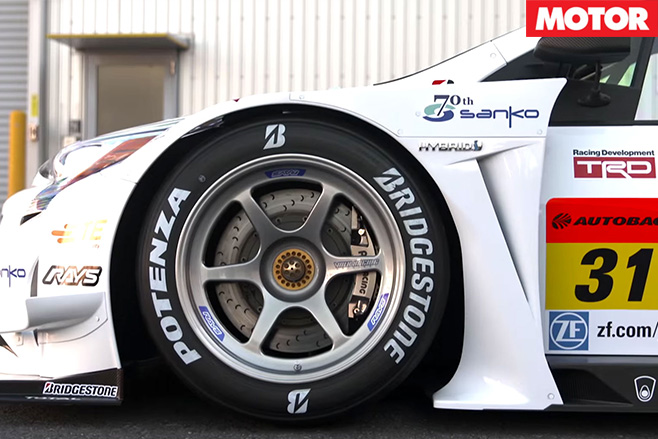
A duo of Super GT Prius will front the GT300 racing championships that kick off at Okayama International Circuit from April 9-10. Meanwhile, TRD has launched a sports edition production Prius to commemorate 40 years since the outfit opened – sadly, without a V8 in sight.
Outrageous speedsters bound to raise a smile.
First published in the September 2014 issue of Wheels magazine, Australia’s most experienced and most trusted car magazine since 1953.
Lykan Hypersport
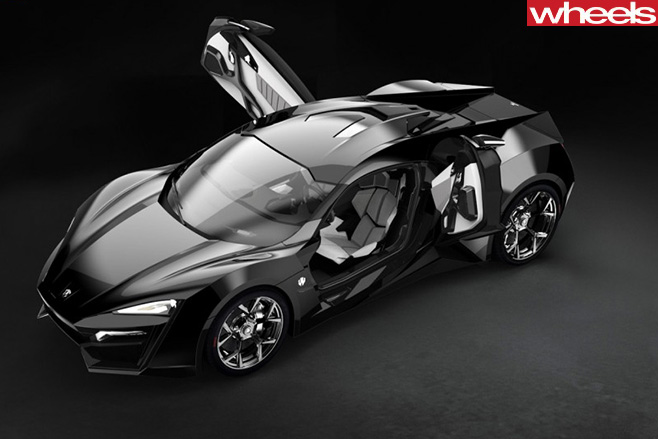
The Lykan HyperSport might not be the most expensive car in the world – it’s a million bucks cheaper than the Lamborghini Veneno, only three of which were made – but it’s certainly the most expensive car you’ve never heard of. A pre-production example was revealed at the Dubai Motor Show last November and production has been capped at a giddy seven units to ensure exclusivity.
If you think the price is steep, bear in mind that things you might consider to be options come as standard. Mark my words, this car has features that will be considered must-haves in years to come.
For example, this is the first car with diamonds embedded in its headlights. No fewer than 420 of them, amounting to 15 carats, and you can even select what you want – rubies, diamonds, yellow diamonds or sapphires. Better be careful where (and how) you park, though.
Then there’s the gold-stitched leather, the gold-plated bonnet and more diamonds in the “holographic” interior. They even throw in a limited-edition watch worth $200,000.
But don’t think it’s all show and no go. A twin-turbo RUF-tuned 3.7-litre Porsche flat-six pumps out 552kW/960Nm and 0-100km/h is said to take just 2.8 seconds.
Why we love it Well, we don’t really, but those potential buyers who love a bit of bling certainly will.
Why we laugh An astronomical price for a car with absolutely no brand value; the bling comes as standard.
Splinter
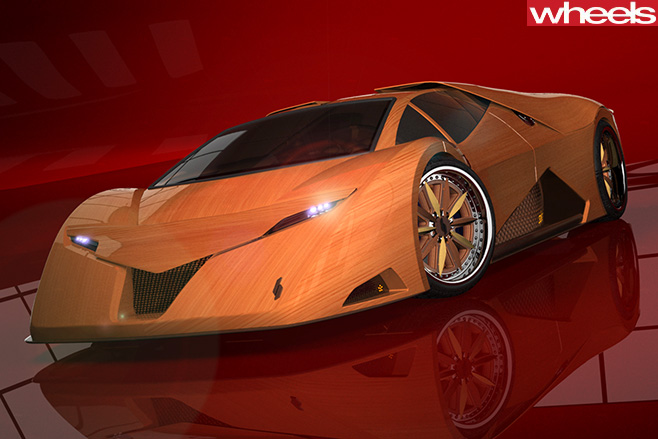
The Splinter – a wonderfully self-deprecating name if ever we heard one – is the brainchild of Joe Harmon, who in 2006 was a 28-year-old industrial design student in North Carolina.
Joe “wanted to show that wood isn’t an antiquated, low-technology material”, so he set about building a wood supercar for his masters thesis. Of course, like all car projects, it quickly got out of hand.
Joe charged ahead with what could only be described as missionary zeal. He took basket-weaving lessons to learn how to weave the seats, invented a wood veneer cloth to use instead of fibreglass or carbonfibre, designed special looms and invented a way of producing wooden wheels that are not only massively strong, but look good.
For the record, the car is almost complete, weighs just 1134kg and is powered by a Northstar supercharged 4.6-litre V8 developing 450kW, with an old-school Indy-style spaghetti exhaust on top to get heat away. Theoretically, it will accelerate to 100km/h in about three seconds.
All sorts of wood were chosen for different applications – oak for the wheels, hickory for the tie rods, Osage orange for the leaf springs. It’s all hugely impressive and elegant. What a shame that former Lotus engineer Frank Costin, who proclaimed wood as “God’s own composite”, isn’t around to see the Splinter.
Why we love it Built with real passion and craftsmanship; one man’s utter obsession with attention to detail.
Why we laugh It’s a car that is made almost entirely from wood! And it’s not a Morgan either.
Cizeta V16t
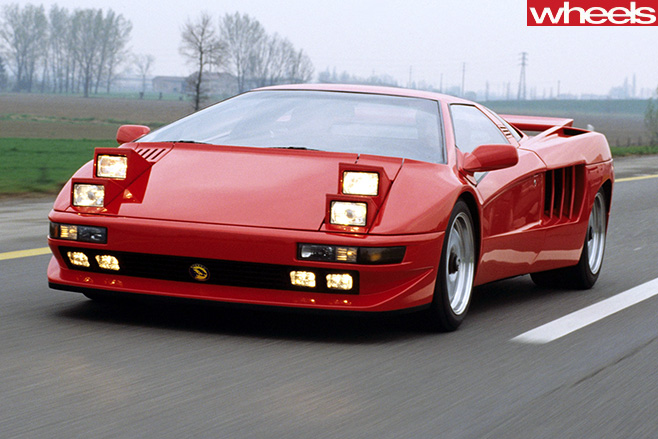
Both cars were penned by Italian maestro Marcello Gandini, who may have defined your childhood. Remember that poster in your bedroom – no, not the one of Farrah Fawcett, the Lamborghini Countach one – he designed it. He also designed the Miura, the Diablo and the Lancia Stratos, any one of which would be any designer’s career highlight.
However, Gandini was so incensed when the lines of his original Diablo were softened under new Lambo owner Chrysler that he went off in a huff and built his own, with the help of a couple of Italian mates. Those mates were Ferrari dealer Claudio Zampolli – whose initials are pronounced “Cizeta” – and world famous music producer Giorgio Moroder, creator of such classics as Donna Summer’s Love To Love You Baby, Irene Cara’s What A Feelin’ and the film soundtracks for Midnight Express and Top Gun. Although the Oscar-winning producer quit the project soon after the car debuted in 1991, he did design the badge, for which he won an award in the US.
Aside from its distinctive quadruple pop-up headlights, what really made the Cizeta stand apart was its incredible 403kW/542Nm 6.0-litre V16 engine, formed by joining two Ferrari V8s on a single flat-plane crank. About 15 cars were built in Modena up to 1995, when Zampolli moved to the US and continued to build them to order for $US800,000.
Why we love it It’s what the Lamborghini Diablo may have ended up looking like if one man had his way.
Why we laugh Two Ferrari V8s joined together; imagine having to rely on those Italian-designed pop-up lights.
Jaguar XJR-15
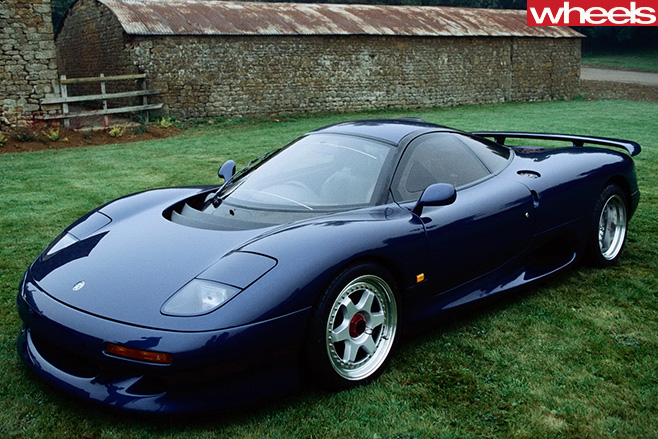
When was conceived in the late 1980s, supercar mania was at its pre-recession peak and Jaguar – despite only producing the XJ40 and XJS luxo barges – was basking in the glory of Le Mans glory thanks to Scottish bulldog Tom Walkinshaw. So Jaguar jumped at Uncle Tom’s idea of producing a road version of the incredible racecar.
The car looked a million dollars, so that’s the price Jaguar stuck on it. And that’s in 1991 dollars. Trouble is it didn’t go like a million bucks. That big 6.0-litre V12 sounded glorious, but 336kW couldn’t match a Ferrari F40’s 356kW, which cost half as much.
Fifty cars were built and most were parked immediately to appreciate in value (which of course they didn’t).
Jaguar somehow convinced 16 owners to put their million-dollar cars in the hands of professional racers in a three-race series supporting F1 races. The drivers soon discovered the handling was spooky – a higher ride height ruined the aero and suspension – and not even the inevitable carnage attracted much public interest.
Finally, to spice things up, Jaguar offered a $1 million prize for the final race winner at Spa. When the drivers started doing deals with one another to snare the prize, Jaguar refused to tell them when the chequered flag would come out. A suitably farcical note on which to finish.
Why we love it That smooth Peter Stevens-designed bodywork looks like it was melted on.
Why we laugh Twice the price of an F40, half the performance, handling, collectability and prestige.
Vector W8
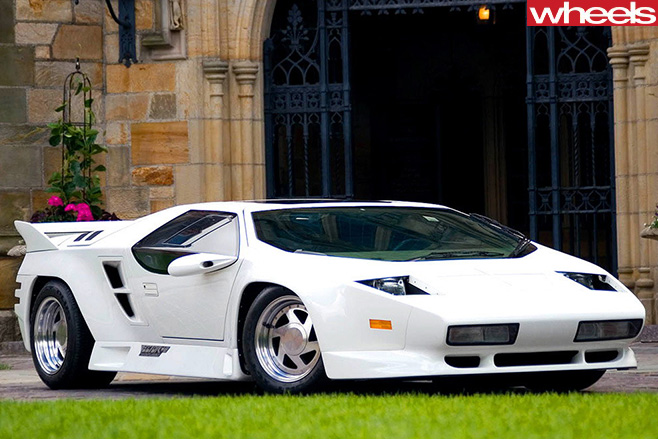
What really defines Vector, though, is the Hot Wheels styling of what turned out to be its most popular model – they built 17 – the W8 of the early 1990s, when supercars ruled the earth. Before the foreclosures and Wall Street swan-dives.
Outrageous as the W8’s styling was, it was matched by the engine, a 6.0-litre Chevy V8 with twin turbochargers that on its regular eight pounds of boost produced some 485kW and 880Nm. But that was just to keep the insurance companies happy. The boost was adjustable and could be screwed up to 14lb, at which point dyno testing indicated as much as 900kW, possibly moments before the room was splattered by small pieces of Detroit iron.
Tennis star Andre Agassi – surely the archetypal W8 owner – plonked down $455,000 for the first production model and demanded delivery pronto. But the car still wasn’t fully developed and broke down, resulting in lots of bad publicity for Vector before it finally took the car back and refunded the once-flamboyant Las Vegas playboy.
Now, after the inevitable financial dramas, takeovers and buy-backs, founder Gerald Wiegart is back in charge and developing an even wilder Vector with a twin-turbo 10.0-litre big-block V8 producing 1500kW. We just hope they’ve found a wind-tunnel in California.
Why we love it What boy wouldn’t want a real-life Hot Wheels car? Just hope the axle doesn’t bend.
Why we laugh 400km/h in a car that looks like it was designed on the back of a napkin at Burger King.
Koenigsegg One:1
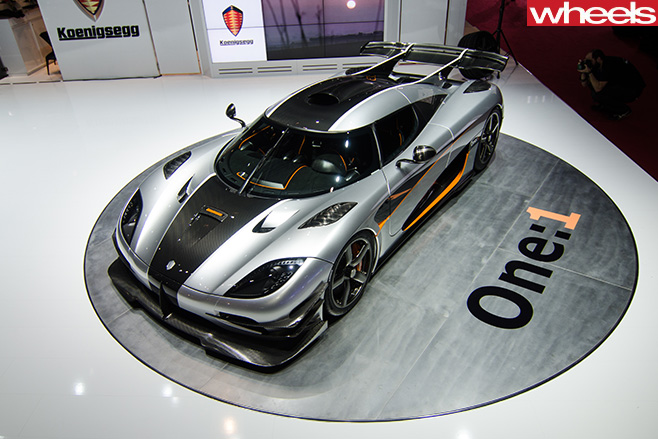
Yes, it’s full-size. And mega.
You can’t argue with them. The One:1 has a twin-turbo version of Koenigsegg’s own 5.0-litre aluminium V8 that produces some 1000kW of power, making it the first production car in the world to be rated at one megawatt. You see, it really is mega.
There’s also a load of torque available – some 1371Nm of it, with more than 1000Nm available from 3000rpm all the way through to 8000rpm. Good for towing the caravan, then.
We’d like to tell you how fast it accelerates from 0-100km/h, but we suspect it’s too quick to measure because Koenigsegg doesn’t quote a figure. What they do say is it will go from rest to 400km/h – yikes! – in about 20 seconds. And back to zero in another 10 seconds. From 100km/h, it stops in just 28 metres.
But it doesn’t stop accelerating at a mere four ton. It hasn’t been proven yet, but the One:1 is expected to top 440km/h, which would make it the fastest production car in the world. What a pity they’re only producing six, and most will go to China, where apparently they can still afford $2.4 million megacars.
We should also explain that the car’s name doesn’t really relate to its size, but its power-to-weight ratio of one horsepower per kilogram. That’s so extraordinary we’ll forgive them the mixed imperial/metric measurements.
Why we love it It runs on E85, so no need to think you’re an environmental terrorist as you roar to 440km/h.
Why we laugh Its 1 megawatt output; the power of a horse for every kilo of weight. Imagine that!
Covini C6w
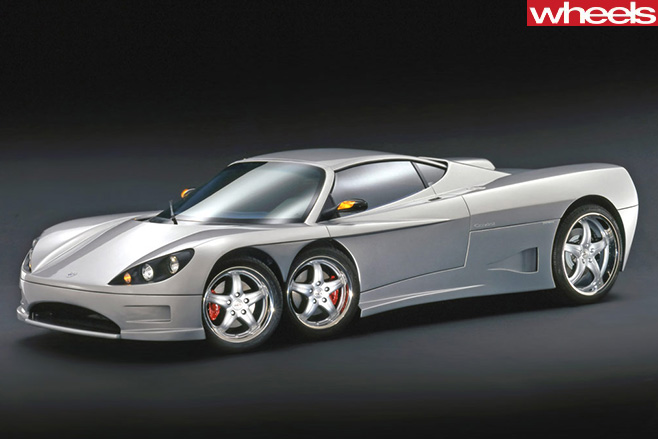
Ferruccio Covini is an Italian engineer who has been building cars since 1978, and before he started producing quirky diesel-powered 4x4s and sports cars, he had been inspired by the famed Tyrrell P34 six-wheeler that turned Formula One on its head in the mid-70s.
Future world champion Jody Scheckter snagged an historic Grand Prix win in the publicity grabbing Tyrrell six-wheeler, but more sophisticated aerodynamics and tyre technology overtook its theoretical advances and none of the other teams followed the trend.
But Covini never forgot his dream and in 2003 – obviously tired of sanity – revived his six-wheeler project, which had lain dormant since the ’80s due to a lack of suitably low-profile tyres for the proposed Tyrrell-style 10-inch wheels. He built a prototype, now with regular 16-inch fronts, improved it and in 2005 put the car into limited production, fitted with an Audi 4.2-litre V8 developing 324kW and 470Nm.
We’ve driven Lambos and the like where the wheel-wells push your legs into uncomfortable positions, so we reckon it would help to be literally legless in this thing. And heaven knows what the turning circle is like. Still, it scores top marks for novelty value, even among this lot.
Why we love it Two extra brakes; no need to stop for a puncture; no chance of being upstaged.
Why we laugh Holding on to a bad idea; just look at the thing: it’s got six freakin’ wheels! We can’t stop laughing.
Tramontana R
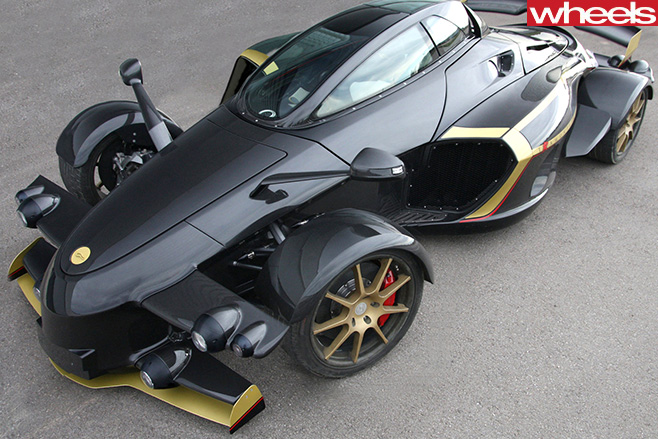
After looking at this car, you should not be surprised that Josep – who studied at the Royal College of Art in London – was offered a job designing for the Star Wars movies in the US, but turned them down to concentrate on making cars. Yeah, we like Josep.
The first version of the Tramontana in 2005 arrived on the back of Fernando Alonso mania in Spain, and it looked even more like a Formula One car, having an open top, but in 2009 Rubau produced this R Edition with a canopy roof that clinched the jet fighter look.
If you would expect a little turbo four slotted in the back of the carbonfibre tub, forget it. There’s a monster Mercedes-sourced 5.5-litre twin-turbo V12 wedged in there, pumping 537kW and a crazy 1100Nm through a six-speed sequential ’box to the rear wheels. With a kerb weight of 1268kg, that’s enough to send this Eurofighter to 100km/h in 3.6 seconds.
Josep builds about a dozen cars a year, with a base price of around $700,000, but be careful when approaching the options list. Tick the boxes for silver wiring, gold badges and fittings, or a diamond-encrusted interior and you’ll quickly crack a million. And that’s real dollars, not pesos or goat futures or whatever they deal with in Spain these days.
Why we love it It looks like a fighter jet; costs ‘only’ about $700,000 if you avoid the tempting options.
Why we laugh You just don’t want your missus sitting in a seat behind you; not for claustrophobics.
Rimac Concept One
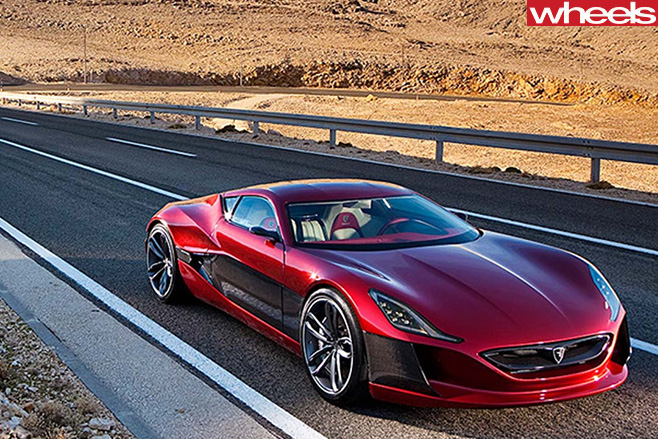
Not that this is an ordinary electric car for beetling down to the supermarket. Oh no, this one produces … wait for it … 800kW and 1600Nm (from 0 to 6500rpm). And that’s enough to send it screaming – well, humming, if we’re honest – to 100km/h in just 2.8 seconds.
This remarkable supercar was built in Croatia of all places, on the outskirts of Zagreb, and made its public debut three years ago at the Frankfurt motor show, where it went largely overlooked under the weight of attention directed at the world’s car-making heavyweights.
Finally, there’s now a production plan for this amazing car, starting next year.
In the meantime, here are a few more facts for you: dry weight 1950kg, four electric motors (one for each wheel), 92kWh of energy in the batteries, 600km of range. There’s a lot going on under that full carbonfibre body and chassis.
And the interior was designed by a bunch of former Pininfarina artisans from Italy, so that can’t be bad.
And who’s that bloke we mentioned called Mate? That’s company founder Mate Rimac, who not only believes that the electric motor is better than the internal combustion engine, “especially for a sports car”, but still uses his battered old BMW 3 Series as a test mule, and to set the occasional speed record. Good onya Mate.
GTA Spano
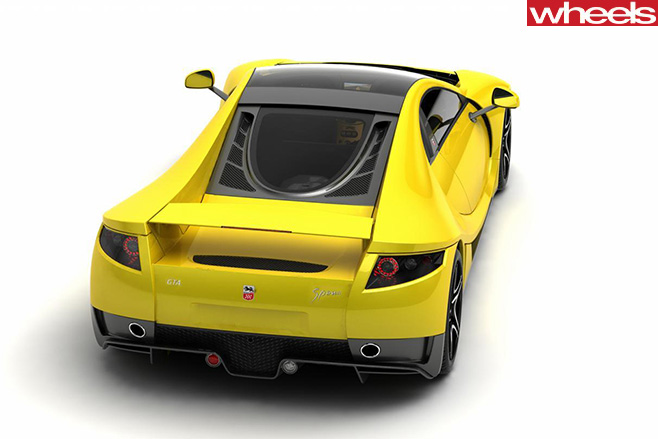
Mind you, it’s not any old truck engine from a Kenworth. This is the 8.3-litre V10 that Dodge crams under the bonnet of its muscly Viper sports car and, while it was indeed fitted to the Ram pick-up, it was developed with the help of Lamborghini in the late 1980s when Chrysler owned Lambo. So it does have Italian supercar breeding.
Not that Spano Motor was happy just to have breeding. It wanted grunt, and plenty of it. So it fitted a supercharger to the mighty V10 so that power soared to 580kW – 625kW when slurping the higher-octane ethanol fuel for which it’s tuned – and torque peaked at a massive 920Nm.
With an ultra-strong chassis made from Kevlar, carbonfibre and titanium, the 1350kg Spano GTA accelerates like a cut cat. When it was launched in 2009, the company claimed the GTA was one of the five quickest cars in the world, with a 0-100km/h sprint time of only 2.9 seconds.
But Spano has tried to keep it user-friendly as well, employing its motorsport experience to develop an engine management system that feeds the power in progressively, and an active suspension system that raises the car 80mm to get over speed humps. It even has a tight 10.8-metre turning circle. Pity the $1m price tag isn’t so friendly.
Why we love it Scintillating performance and smart technology from an unknown, upstart car maker.
Why we laugh A supercharged truck engine in a slinky supercar; $1m price tag with no brand value.
Frazer-Nash Namir
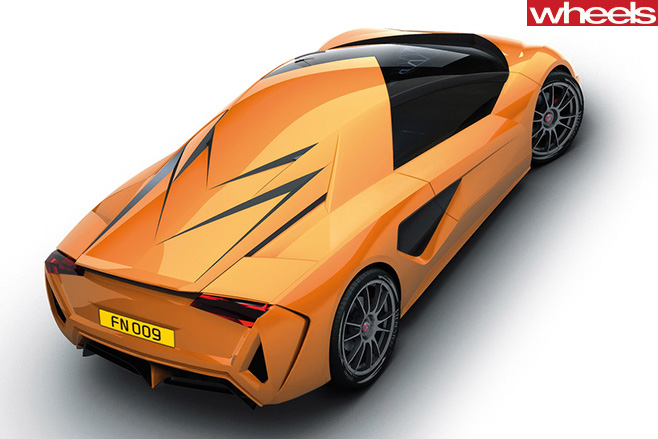
Just one look and it’s clear this car is not British. There’s not a whiff of leather patches or chain-drive as there was with the original Fraser-Nash. And that’s hardly surprising when you learn that the car was produced in Italy, by none other than famed design house Italdesign Giugiaro. Surely those sharp lines – inspired by the diamond-shaped Frazer-Nash logo – could only have come out of Turin.
But this is not all Italian supercar fantasy. And it’s not just reviving an old name for nostalgia’s sake. It was produced in conjunction with Frazer-Nash Research, a company that traces its roots back to the original firm and for a quarter of a century has been at the forefront of electric drivetrain development for hybrid cars and mass transit systems.
And so the Namir – an Arabian name meaning tiger – has a drivetrain that is a little bit different to the average hybrid, let alone the average supercar. In addition to a powerful electric motor for each wheel, it has an 814cc rotary engine that acts as a generator. And that’s enough to propel the sharply styled Namir from rest to 100km/h in just 3.5 seconds while using less fuel than a Smart city car.
Jolly good show.
KTM X-Bow
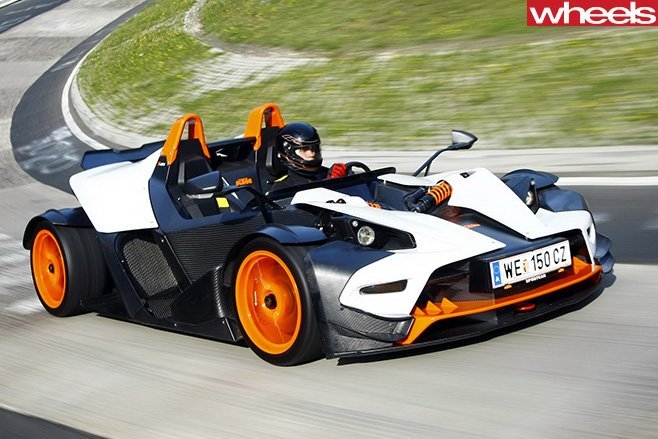
To be fair, it is finished. And we have to admit it’s just a little bit brilliant. In fact, it’s been so well received since KTM showed the prototype at the 2008 Geneva motor show that the company had to increase production from 100 to 500 units a year, then to 1000, and even build a new plant near Graz to meet the high demand. That represents a nice little earner for the Austrian motorcycle maker, not to mention racing car company Dallara, which helped engineer the car and produces the carbonfibre tubs in Italy.
Light weight, of course, is the key to the X-Bow (pronounced “crossbow”). It weighs just 790kg – that’s 62kg less than the lightest Lotus Elise and about half the weight of a Gallardo Spyder – so it doesn’t need massive horsepower. Even with the base 2.0-litre turbo producing only 177kW and 310Nm, the 6-speed manual screams from 0-100km/h in just 3.9 seconds. With the ‘R’ model’s more powerful 224kW/400Nm version of the Audi-produced engine – it also appears in the VW Golf GTI – and the even more track-focussed ‘RR’, it’s even quicker again. But KTM won’t say how much. Spoil sports.
Sadly, while the X-Bow can be registered to be driven on the road in Europe, local authorities won’t allow it. So, despite being offered Down Under all too briefly for $119,500, you won’t see any on Australian roads.
Why we love it Zero to 100km/h in less than four seconds for about $100K. That’s pretty good value.
Why we laugh Stupid bike company… it looks someone forgot to put a body on the thing before it went on sale.
Many, many years ago, Wheels Magazine ran an R50 Mini Cooper for six months – a red manual with a white roof and mirror caps, and 16-inch alloys. Cute as a button, yet frequently left alone in the carpark on weekends, the original New Mini was too patchy to tug at our heart strings. We couldn’t wait to see the back of it.
Thirteen years and two generations later, the Mini Cooper has morphed into a much more sophisticated, comfortable and liveable little hatch, yet much of its ‘retro’ styling has been diluted along the way. Instead of being a flab-free and crisply formed slice of re-imagined 60s charm, today’s Mini looks a bit like a gym junkie who’s turned puffy from too many steroids. Still, if you can handle the styling, you’re definitely getting more Mini for your money. Less money, as it turns out.
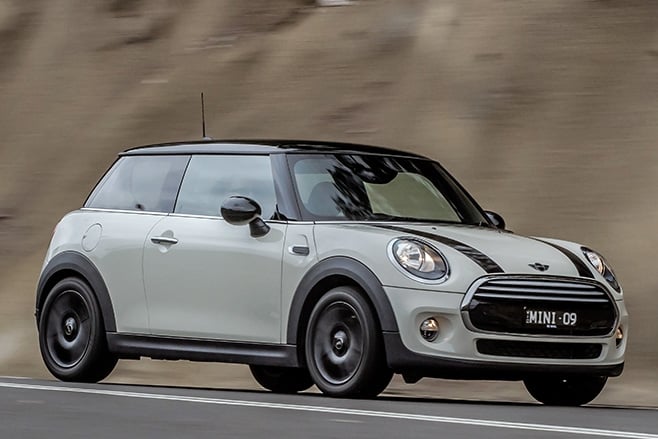
Yet, somehow, I failed to bond with this manual Mini Cooper Pepper. And much as it hurts to admit it, I blame the drivetrain.
On paper, a feisty 100kW/220Nm 1.5-litre three-pot turbo tied to a six-speed manual gearbox should be a recipe for proper small-car shenanigans. But Mini negates the fun factor by over-gearing the Cooper to a ridiculous level, while failing to capitalise on the potential acoustic thrills of a tuned triple. Impressively elastic as the Cooper’s engine is, it feels like it belongs in a much bigger car, not a sporty little hatch.
In low-speed urban commuting, particularly over the speed humps and deep gutters that predominate where I live, there are times when you need to blip back to first gear to prevent the Mini from stalling. And yet when darting through small roundabouts, third gear is too tall to take advantage of peak torque arriving at just 1250rpm. Could this ill-suited gearing be the reason for the Mini’s unexpected thirst?
After the first month’s 9.6L/100km average, I drove specifically for economy, surfing the engine’s torque curve and grabbing a taller gear wherever possible. Admittedly, the Mini Cooper sounds quite charming when thrumming along at low revs in a high gear, but it never delivered the leap in efficiency I expected.
The Mini’s 7.8L/100km personal best included a 270km motorway trip, while its 11.5L/100km low point consisted of a spirited drive up the Old Pacific Highway to Brooklyn and plenty of urban commuting. Given its official combined figure is 4.7L/100km, my Cooper’s 9.3L/100km average doesn’t look too rosy. Nor does it compare well with my previous Alfa Giulietta’s 8.8L/100km, from a larger car with an engine whose roots can be traced back to 1983!
The Cooper’s notchy gearshift often made me wonder whether the six-speed auto would be a better bet, and even without optional run-flat tyres or big wheels, its roller-skate ride served as a spiritual reminder of the 1959 BMC original. The Hankook tyres didn’t work in harmony with the super-sharp steering, and the average quality of its stereo speakers meant it would be wise to carefully cherry-pick from Mini’s extensive options catalogue (see breakout).
Yet I didn’t dislike my cream Mini. Its frameless doors, comfortable seats, grippy steering wheel, wieldy size, parking sensors and optional reversing camera made it great for inner-city living. And the F56’s improved space efficiency was always appreciated when shoving passengers into the rear seat, or filling the boot with stuff.
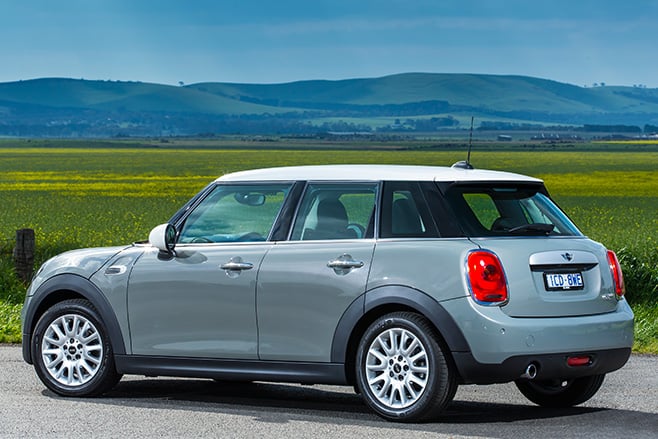
Like its predecessors, I think the F56 Mini gets better the higher up the chain you climb. The Cooper S is a significant step up for grunt, growl and gearshift feel, as well as ride quality if you stick with 17s and add adaptive dampers.
Given shorter gearing and a meatier induction note, the Cooper could easily be a poor man’s Cooper S. It’s just a pity Mini doesn’t see it that way.
OPTING IN
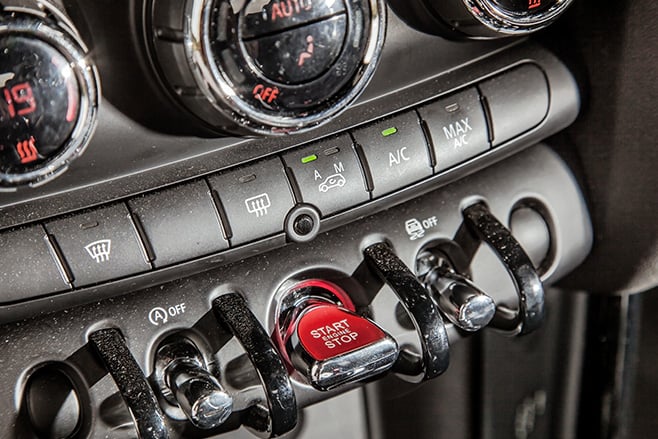
If I had to build my own Mini Cooper, I’d begin with Dynamic Damper Control ($700) and the mandatory Mini Driving Modes set-up (a collar around the gearstick that flicks between Eco, Mid and Sport modes – $250). That’s just under a grand for a big improvement in ride. I’d probably stick with the $3000 Pepper Pack, and I’d want this car’s black Victory Spoke 16s, as well as Harman Kardon hi-fi with 10 speakers ($1200). If the engine doesn’t make enough music, something else needs to!
BACK-DOOR POLICY
After returning my Cooper, I spent a few days in a Mini Cooper D five-door manual with adaptive dampers and Michelin Energy Saver 195/55R16 tyres. And really liked it! Admittedly, the stumpy (framed) doors look dorky and have a whiff of Austin A30 about them, but they’re more practical in tight carparks. The diesel’s torquey grunt is also much better suited to the gearing, and the urban ride on adaptive dampers and a longer wheelbase is comparatively bloody marvellous.
This article was originally published in Wheels March 2015.
Click here to find out more about the Mini Cooper.
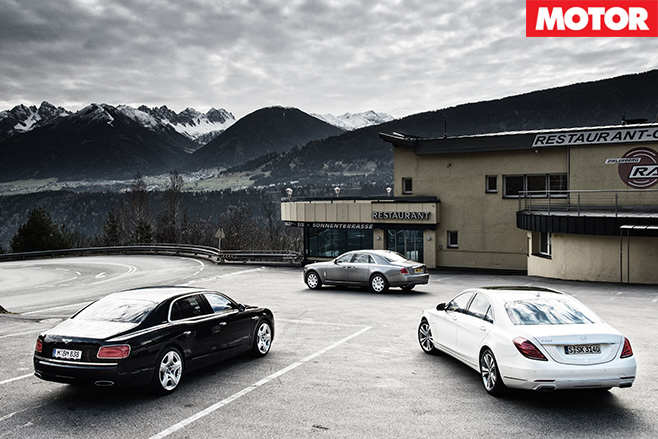
These three 12-cylinder ultra-sedans are all vying for space in the garages of the wealthy.
But while their trademark grilles seem to be sniffing the same lucrative niche, they differ dramatically in approach, ambience and appeal.
The Bentley is an old-school five-seat sportster, fusing a classic interior with a high-performance chassis and drivetrain. The S600 L may look like a sharp-dressed S300 but its spec list includes every high-tech detail from the Benz catalogue. And the Ghost II packs the dynamic talents of a properly engineered plaything under its status symbol exterior.
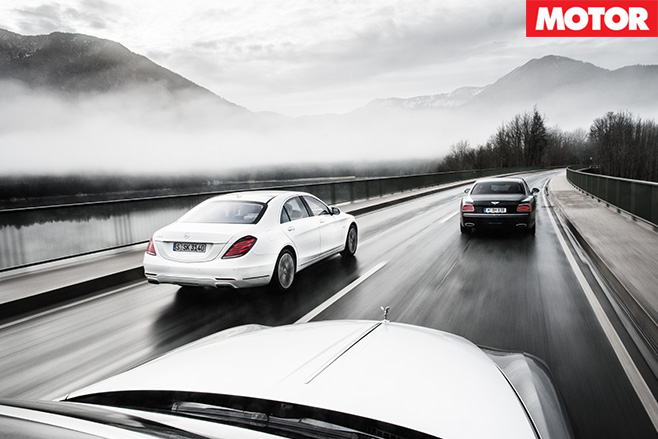
The recent facelift can’t hide the fact the Bentley’s the oldest car here. The slimfit interior comes despite a length of 5300mm, the stiff suspension has been set up for surefootedness at speed, and the 2.4-tonne weight suggests the body hasn’t heard of the carbon diet.
The driver’s seat is hard and lacks contours and adjustability. The beautifully finished antique interior lacks standard shift paddles, the latest driver aids or contemporary infotainment. But you’d have to look long and hard for a luxo-barge that gets you from A to B faster than the Bentley.
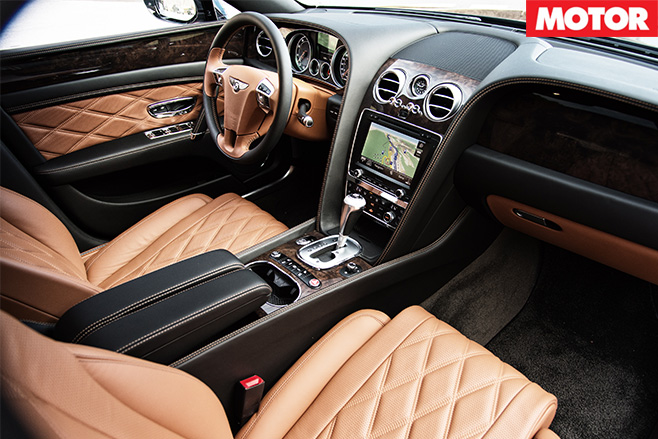
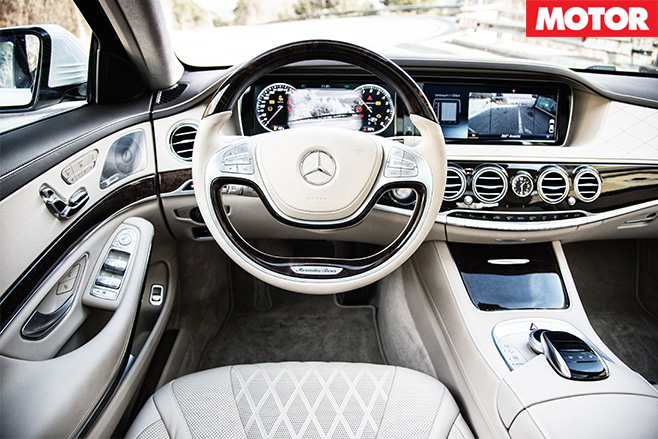
Wide, well poised and planted, the S-class feels rock-solid dealing with rain-soaked roads, yawning expansion joints and fast washboard sweepers. The two-spoke wheel may be ugly but the driver benefits from adaptive cruise control complete with brake actuation, automatic lane guidance, night vision and Magic Body Control – three cameras scan the road ahead and prep the suspension for what’s to come.
Matching the Bentley in length, the S600 is notably roomier inside, its seats are complex and comfortable, parking is fully automatic if you desire, sat-nav is governed by real-time traffic info, on-demand surface heating extends to the door panels and the centre console, and the intelligent light system outshines its rivals for diversity, range and response. Yet despite the cossetting interior and full suite of driver aids, it remains a commendably involving drive.
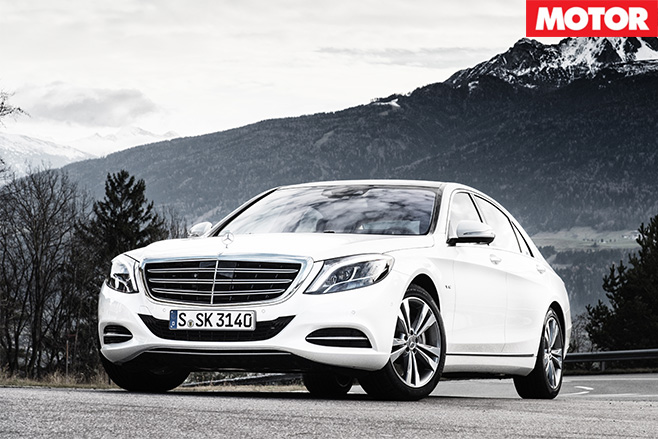
Quicker steering operated by a thicker-rimmed wheel, revised struts all ’round, tauter hydraulic rear suspension mounts and recalibrated shock absorbers were all it took to add a welcome dash of precision and an extra dose of ground-hugging ability.
The slight slack around the straight-ahead position that made us frown at high speed in earlier Ghosts has all but disappeared; body roll and brake dive are better suppressed and, despite the mass and momentum, the Series II feels more confidence-inspiring when pushed.
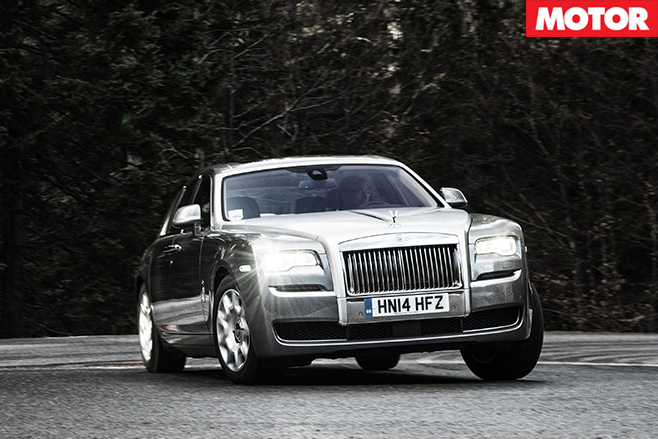
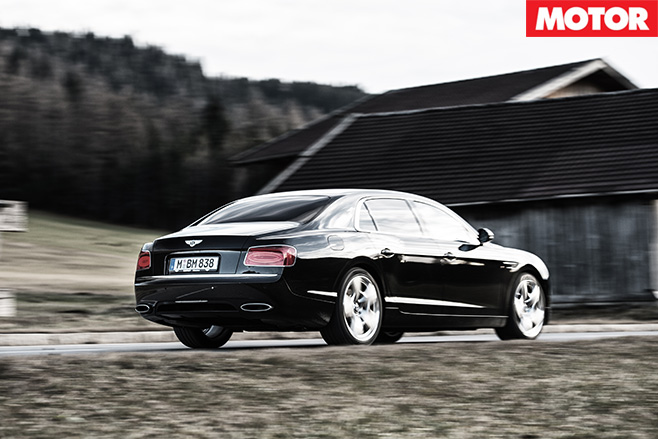
The mountain range linking Bavaria and Austria spoils visitors with a network of challenging tarmac – twisty B-roads, passes and rural byways dotted with single-track sections. Whenever a mix of tight corners and steep climbs ups the ante, the Flying Spur steps to the fore.
The only car boasting four-wheel drive, it is virtually unbeatable in terms of traction and grip, and with 800Nm dished up by the 6.0-litre W12, quickly gave the Benz and Roller nightmares about swiftly vanishing Bentley tail-lights.
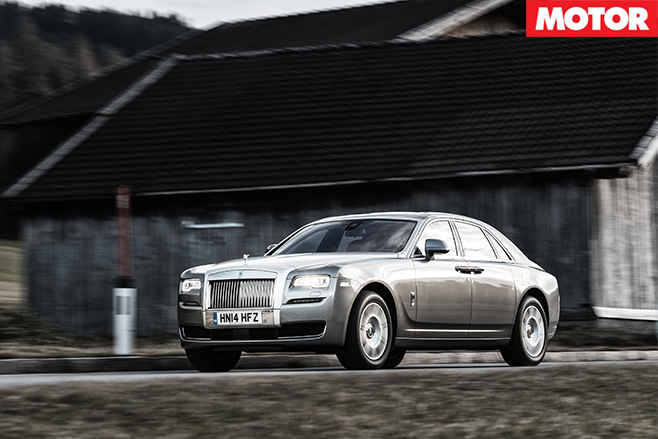
Dynamic Driving Package notwithstanding, the Rolls simply prefers a more leisurely pace and in this illustrious company that’s more obvious. With ESP on, the Ghost in the machine keeps control so the glasses on the rear picnic tables stay put.
Switch ESP off, however, and you find yourself manoeuvring the Titanic through iceberg alley. There’s sporting ability but Emily (the R-R bonnet mascot) isn’t an outright competitive spirit and as the roads narrow, so the Ghost prefers to ease off.
To confirm that 12 cylinders make the smoothest powerplants money can buy, we put them to the test, balancing a €2 coin upright on each engine at idle. The coin stayed put every time. True to the character of the Bentley, the W12 is the sportiest. It sounds gruff on overrun, hoarse at full song and quite sonorous at part throttle.
Eager to rev, the UK-built engine needs 6000rpm to deliver all the goods. It redlines at 6200rpm, just like the 6.0-litre kraftwerk from Stuttgart, but the Benz spreads its peak power from 4900 to 5300rpm.
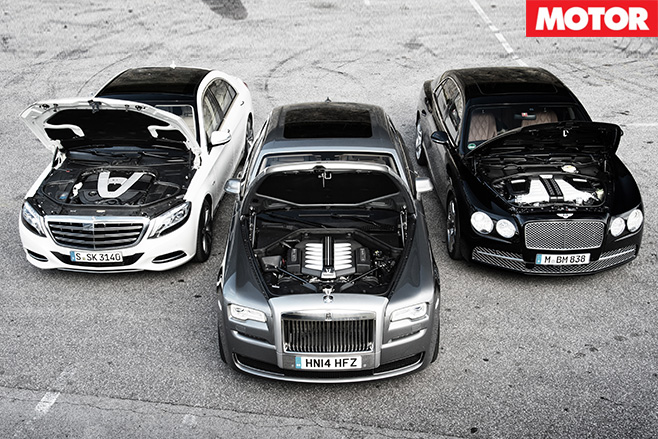
The Spur boasts eight speeds and the extra ratio is useful, helping spread the rev and speed bands. Like the W12 fitted to the Spur and the 6.6-litre V12 shoehorned into the 5400mm Ghost, the S600’s V12 isn’t exactly new, the three-valver harking back to the 5.5-litre V12 shown in the Maybach 57 in 2002.
At 395kW, the twin-turbo motor can’t quite match the Ghost’s 426kW or the Bentley’s muscular 466kW, but with 830Nm of torque, the comparatively light (2110kg) Mercedes is rapid. It matches the Bentley for the 0-100km/h dash at 4.6sec; both eclipse the Rolls by 0.3sec. But while S600 and Ghost stop at 250km/h, the Flying Spur will march on to a mega (in this league) 321km/h – the magic 200mph.
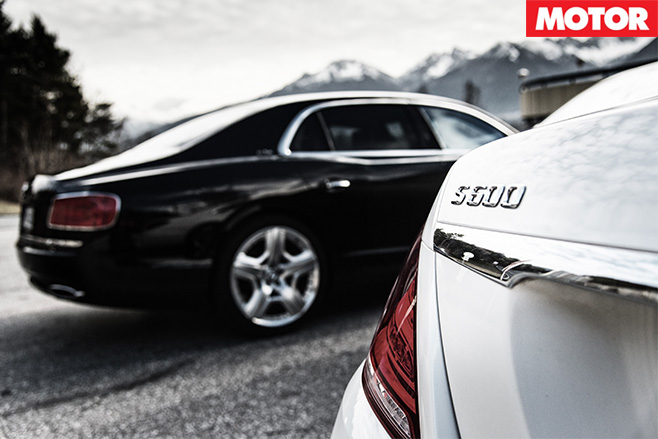
You would expect cushy rides, effortless drivetrains and competent suspension from these, and you get that – albeit to differing degrees. What may come as a surprise is the stopping power of the brakes. All employ manhole cover-size discs straddled by roadtrain calipers.
With optional carbon-ceramic rotors, the Bentley (on 21in Pirelli P Zero summer tyres) combines powerful deceleration with progressive pedal feel and absolutely zero fade. The S600’s 300kg advantage pays off with a shortened stopping distance and quicker responses. Even the Rolls-Royce boasts potent and neatly balanced stoppers – like its two-finger steering, the brake pedal only needs a touch to deliver.
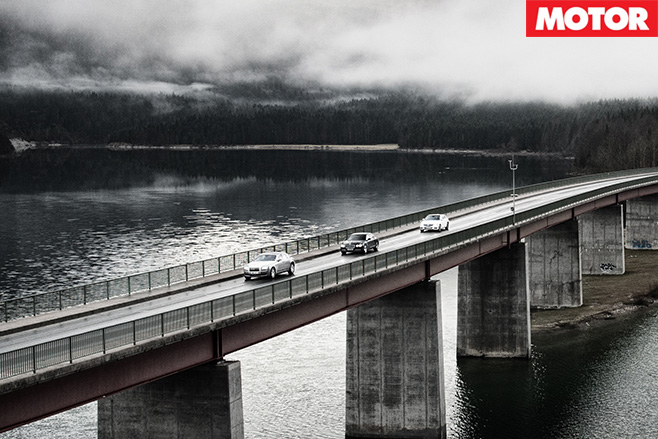
Luxury has many facets, and these three have it all covered. Space? The German is hard to beat, second-row accommodation combining ample leg and headroom with active massage seats that do everything but the dishes. Equipment? Top honours again to the Benz as it doesn’t charge extra for most of the goodies.
Ergonomics is a narrow win for the BMW-inspired Rolls Royce, with a bespoke and improved version of iDrive. The cockpit of the S600 is loaded with touchpads, knobs, buttons and thumbwheels, but the maze is hard to decipher, and some details are questionable.
But to make a statement of real presence and affluence, nothing beats the dramatic front-opening, coach-style rear doors of the Ghost, the inviting theatre seats and the remarkably tasteful yet functional cockpit.
If you’re in this market, economy isn’t going to be your deciding factor but we can’t ignore the cash angle altogether. First up, fuel consumption. It took a hammering as soon as we gave our thoroughbreds their heads; the Mercedes averaged 16.0L/100km, the Ghost II gave a touch over 19L/100km and the Bentley drank 20.5L/100km.
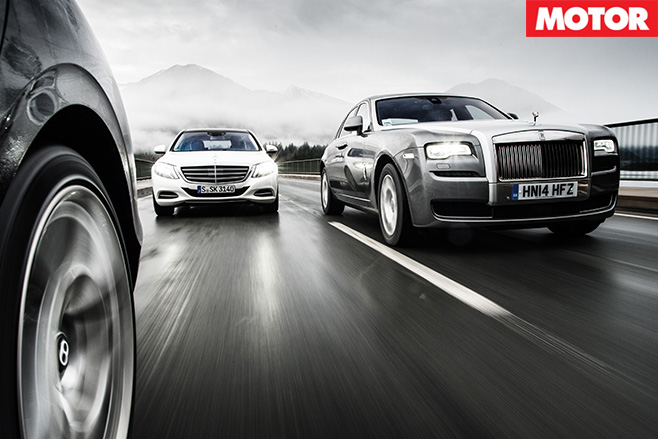
Much harder to improve are the terrifying list prices. Least expensive is the Benz which retails at $417,500 heavily kitted out. The Bentley is $423,160, but get tick happy with the long options list and it’ll balloon considerably.
Your local Rolls-Royce dealer will liberate $545,000 from your wallet for a Ghost in base trim but, like the Bentley, it’s a cinch to send it sky high with options. Even so, 82 per cent of R-R customers option their purschases to a level a quarter more expensive than the already huge base price.
Jekyll and Hyde types may fall for the Bentley – it’s two cars in one, a stylish four-door sports sedan, and a purveyor of traditional British craftsmanship that appeals to customers who deem a Jaguar XJR too mundane.
But the gut reaction would almost certainly be the Ghost. Why? Because if you want the best of the best, the most extroverted and prestigious, you might as well go with the car that shouts: ‘Look at me!’ the loudest.
Probably the most talked-about feature of the new Ford Focus RS is its Drift Mode, designed specifically to allow drivers to burn rubber regardless of skill level.
To encourage this all-wheel drive hot hatch to hold a slide, Drift Mode fiddles with the all-wheel drive system to send more power to the outside rear wheel than it normally would.
In addition, the steering reverts to its lighter Normal setting to allow easier corrections and the dampers soften to allow more weight transfer. ESP can be on or off, though if things get out of hand you’ll need to catch the slide yourself with the electronics disabled.
Does it work? Well, yes. Simply add steering lock, floor the throttle and the rear swings wide. The key is not to add too much opposite lock; keep the corrections small, modulate the accelerator and soon you’ll be getting dizzy in an expensive cloud of vaporised Michelins.
In someone else’s car it’s very amusing, however beyond bragging to your friends it’s difficult to imagine a scenario where you’re really going to use it. Still, it’s a nice two-fingered salute to the nanny state and you’ll never look at a roundabout the same way again.
