
BMW will once again race in Australian motorsport.
Marc Werner, BMW Australia CEO, officially announced today in Melbourne the brand will compete in next year’s Australian GT Championship, saying its brand new BMW M6 GT3 monster will line up on next year’s grid.
Just two of the first 20 M6 GT3s to be built in Munich will make their way here, with BMW Australia snaring one and offering the second to customers.
The firm’s 2016 Australian GT effort will be headed by the eponymous Steve Richards Motorsport team, which will field the sole ‘factory’ BMW in the championship, with Steve Richards as a driver, and provide technical and customer support to privateer M6 GT3 entries.
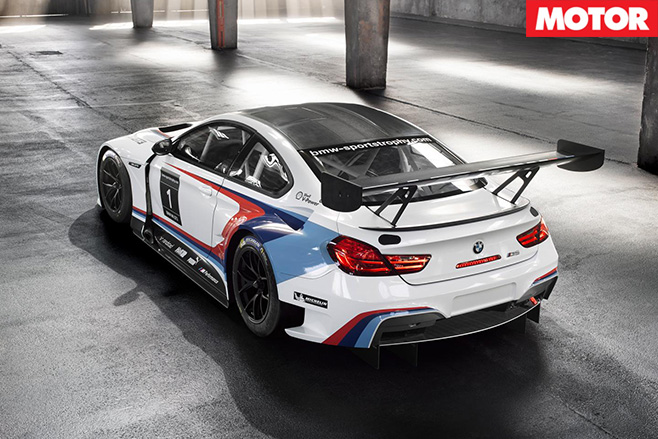
The news marks BMW’s first return to Australian motorsport in an ‘official’ capacity since involvement in local touring car championships that ceased after 1997.
During the press event Werner also denied V8 Supercars, the spiritual successor to the competition it won in 1985 and ’87, for the new program, even with new 2017 regulations set to open eligibility to coupe-bodies and all engine configurations.
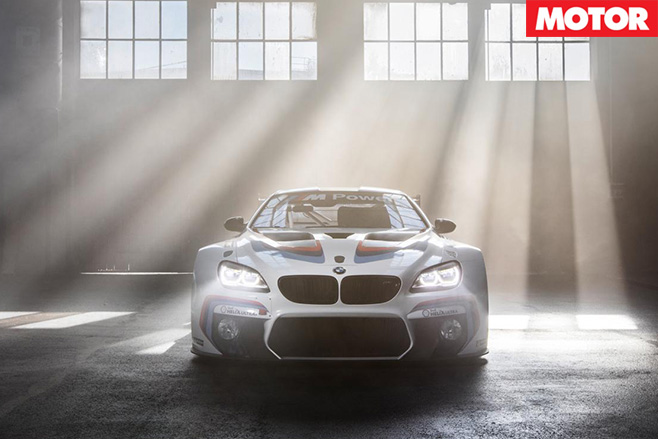
Neither will the brand race at the Bathurst 12-hour next year, as the current M6 GT3 won’t be homologated in time. However, SRM Team BMW intends to works towards being the basis for an international factory effort in 2017.
After the first M6 GT3s are delivered in February, SRM Team BMW’s will begin preparing its car for a debut at the Australian Grand Prix, March 17, where it will compete in the GT Championship’s second Sprint round.
AN INTERNAL review has paved the way to clearing Volkswagen of suggestions it had fudged emissions and fuel use figures for its popular Golf GTI hot hatch.
Volkswagen Group said today that fears it had cheated in government mandated tests of about 800,000 current and recent model cars appeared to have been largely unfounded.
Its testing of a long list of models under suspicion – among them current Australian versions of the turbo petrol Golf GTI and Golf R – had found that only nine used more fuel than claimed.
Annual production of the nine models amounted to only 36,000 vehicles, Volkswagen Group said.
The group also said none of the nine models that failed to reproduce test claims had been offered for sale in Australia, putting the performance Golfs in the clear.
Even in the case of the nine, the discrepancy between stated and actual test results was only about 0.2 L/100km, it said.
Unusually, the fears that it may have understated fuel consumption and related carbon dioxide emissions for 800,000 petrol and diesel cars had been raised last month by Volkswagen itself, as it probed events leading to its being caught up in the Dieselgate scandal.
It had learned that for some Volkswagen Group cars, official test cycles had been run with friction-reducing measures such as overinflated tyres and the addition of diesel oil to engine lubricants, in the interests of reducing tested fuel consumption and hence emissions of CO2 – a gas widely associated with global warming.
The aim had apparently been to bring these models under various thresholds applied in the European Union used to calculate annual vehicle taxes.
Measures taken were unrelated to those underpinning the explosive revelations in September – since labelled Dieselgate – that up to 11 million Volkswagen Group diesels had been fitted with cheats that could dramatically reduce their emission of poisonous pollutants – notably nitrogen dioxide, associated with respiratory problems – when under typical test conditions.
The cars – delivered since 2008 – all used 1.6- or 2.0-litre versions of the group’s EA189 turbodiesel engine, and nearly 100,000 of these have been sold in Australia. They included Volkswagen, Audi and Skoda vehicles.
VW Group said late last month it believed it had found a way to rectify the engines so that they met relevant emissions standards while maintaining prior performance – although it had not tested every model affected. The change involved only a software update in 2.0-litre cars, and software and minor induction tract modifications in 1.6-litre cars.
Volkswagen Group Australia has announced it will recall the affected diesel cars but has not said when.
Most of the offending engines were fitted to vehicles since superseded. The few current Australian models affected have been withdrawn from sale.
Electric ‘turbochargers’ are one of those why-didn’t-that-happen-before ideas we all expected to see first in sports cars.
After all, what motor most needs fine throttle response and the elimination of off-boost torque holes?
Well, Audi thinks diesel engines do. What’s more, it think diesels and electric ‘turbos’ fit together so well its demon spawn might replace the 4.2-litre V8 petrol motor in the RS5.
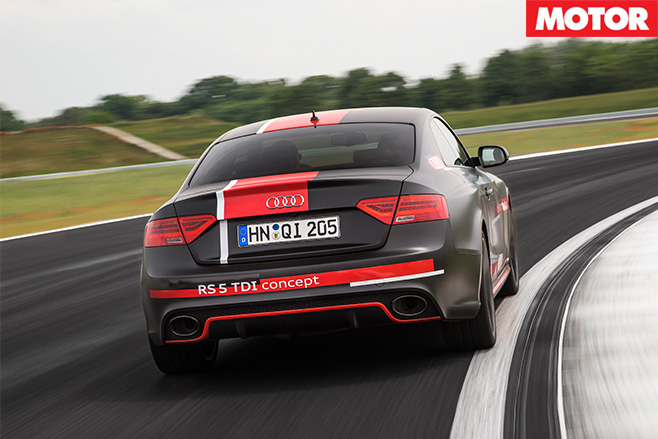
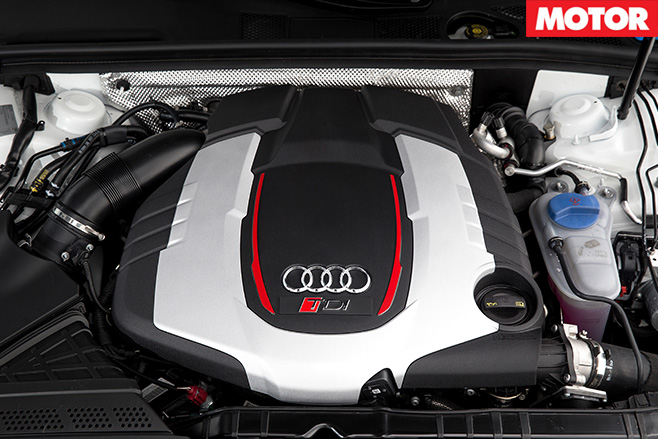
The RS5 TDI uses the bi-turbo 3.0-litre V6 TDI, plus an electric turbo that’s technically not a turbo. A turbocharger sticks out into the exhaust flow, which hurts it down below 3000rpm when there isn’t enough air going past.
An electric turbo doesn’t have that problem, and sits so far away from the hot bits that it doesn’t need an intercooler. The full picture adds a lithium-ion battery, a separate 48V electrical system and the 7kW electric whizzer. The package weighs 20kg all up and regenerates off the brake system.
That low-down grunt ends up translating to, as we found out after several side-by-side tests, the TDI concept being quicker than the RS6 Avant to about 60km/h. Easily. There’s no dialing up revs, no managing boost, it’s just stomp and go. Audi’s also cranked the artificial sound up to 11, so it’s deep and angry like an outrageously masculine, lower-revving RS6.
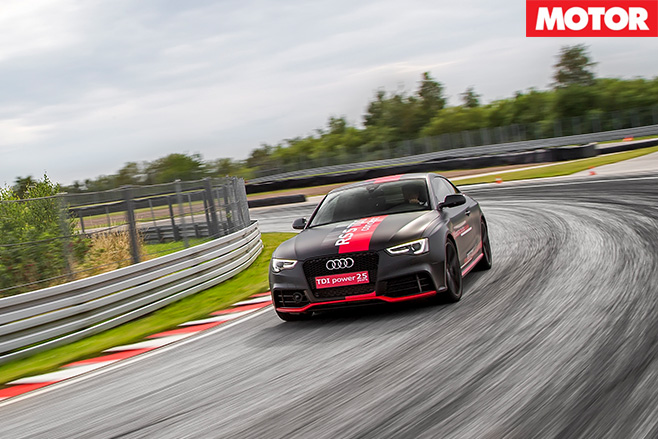
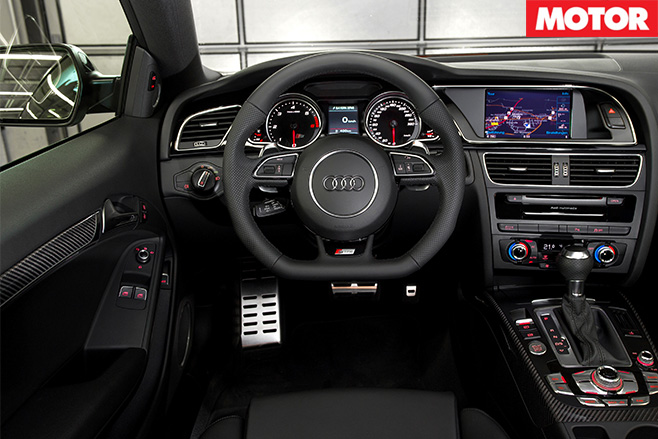
Petrol engines will always have a place, but if this is the almost-present then hi-po mainstream petrol power might be numbered.
Specs
Engine: 2967cc V6, DOHC, 24v, twin-turbo, electric compressor Power: 283kW @ 4200rpm Torque: 750Nm @ 1250rpm 0-100km/h: 4.0sec (claimed) Top Speed: 280km/h (claimed) Price: N/A
WHERE DOES IT FEEL AT HOME?
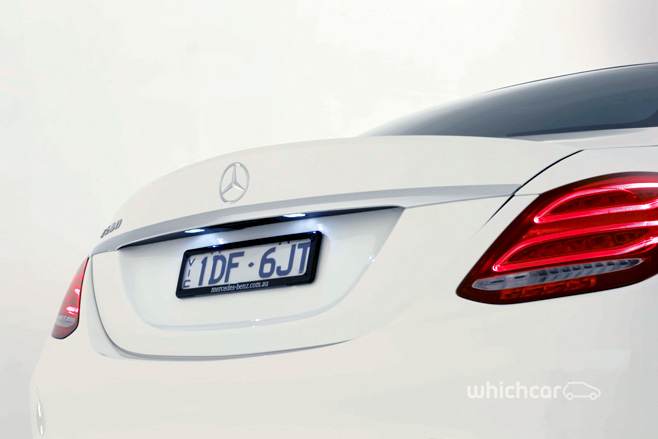
You wouldn’t look out of place rolling up to a red carpet gala in the C-Class. Mercedes has styled it to look like the baby brother of the flagship S-Class sedan. Its gorgeous interior will cosset you anywhere in peace and quiet making it ideal for the weekday commute, but it can also fit a family and long trips are effortless.
WHAT IT’S MADE FOR
The build quality of the C-Class has few rivals. Most of the exterior panels are made from aluminium to reduce weight, and aerodynamics has been carefully considered to improve fuel economy.
STAND OUT FEATURES
When this C-Class launched, Benz eagerly pointed out the more than $10,000 worth of equipment that used to be optional extras, are now standard fitment. Even in this C200 base model you get a raft of included technology including LED headlights, nine airbags, auto emergency braking, sat nav, reversing camera, electric seats, blind spot detection, lane assist and a head-up display.
WHAT’S THE INTERIOR LIKE?
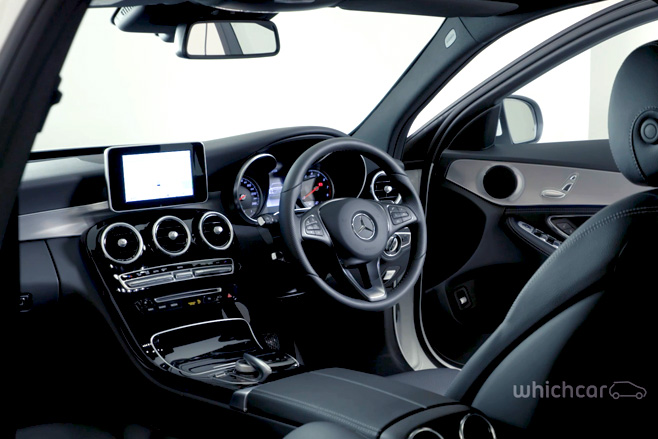
Once you’re inside, you won’t want to get out. It’s more comfortable in here than the couch in my living room. Mercedes-Benz has shown off its design flair with stylish appointments, superior materials and first class fit and finish. The gear shifter has migrated to a stalk on the steering column to clear space on the centre console. These piano black surfaces are available in a wood grain finish that we think is a must have. You can even option a perfumed air freshener for the climate control for a scent that one journalist described as being like an angel passing wind.
HOW IS IT TO DRIVE?
On the road the C-Class is a refined performer. There’s a wide range of engines, and all of them do their job well. The 7-speed auto is as smooth as you would expect from a Benz, and you can cycle between comfort and sport driving modes when you feel like it. If you spend a lot of time behind the wheel, the optional self-levelling air suspension is a Godsend.
WHO WILL IT SUIT?
Suitable for any professional or executive, the new C-Class is a major step up for this segment. Those who appreciate well-made things and like their cars with a little distinction would do well to check out the Mercedes-Benz C-Class.
Click here to read the full review on the Mercedes-Benz C-Class.
PLUS
- Interior. Every element inside the current C-Class has been carefully considered and it’s a beautiful place to be.
- Styling. Though it may be the C-Class entry level, the C200 still looks premium on the road. Like a baby S-Class.
- Headlights. Benz has developed its own tricky LED headlights and they’re a big step up over conventional halogen lights.
- Efficiency. The C200’s 2.0-litre engine is powerful enough while still being wonderfully economical on fuel.
- Equipment. Merc hasn’t held back the tech from the C200. You get a raft of nine airbags, auto emergency braking, sat nav, reversing camera, electric seats, blind spot detection, lane assist and a head-up display.
- Ride. We wouldn’t call the C-Class uncomfortable. That would be unfair. Though if you want truly sublime Mercedes-Benz smoothness you’ll need to option the self-levelling air suspension.
- Trim. As standard the C200’s interior lacks a little panache. It really benefits from the optional wood grain trim at the very least.
Meeting the demise of the Falcadore by 2017 will be a Hyundai Genesis with rear-drive and a 510Nm 3.3-litre twin-turbo V6 engine.
Hyundai has revealed the brand new Genesis G90 in South Korea, but that Caprice-sized, 5.2-metre-long limousine flagship is unlikely to be made in right-hand drive for the Australian market. However it debuts a new engine that will likely be installed in the smaller Genesis imported locally.
The new 3.3-litre twin-turbocharged V6 engine produces 272kW and 510Nm, handy increases on the 232kW/397Nm made by the 3.8-litre non-turbo V6 in Hyundai’s current Calais competitor.
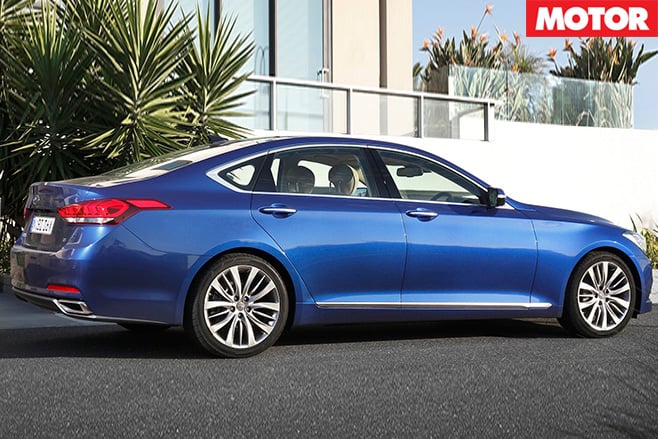
Although the big-boy Genesis G90 won’t make it to our shores, the facelifted Genesis G80 certainly will, by early 2017. That’s when the twin-turbo V6 will likely be installed, sources say, and unlike the V8 also available, it will be built in right-hand drive.
The engine accelerates the G90 from standstill to 100km/h in 6.2 seconds, so expect our lighter G80 to duck into the fives.
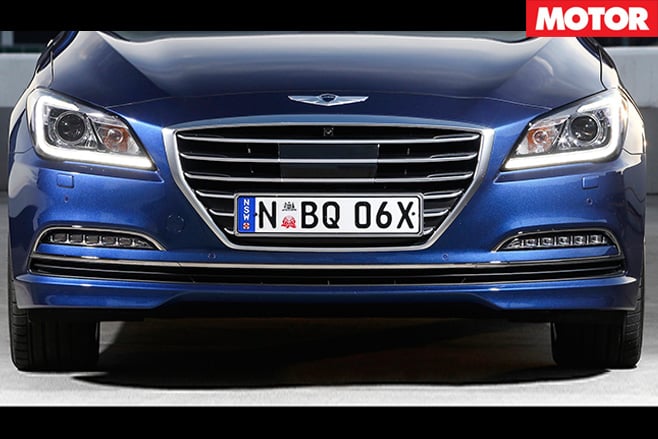
Hyundai Australia had also hoped to secure the coupe version of the Genesis by that year, however the model to replace the small, sporty US-based model now looks to have grown into a larger, luxurious model aimed at China.
That places the future of such a model under a cloud for our market, because what the Hyundai brand needs in this market is a proper, fast halo product aligned with what our market loves – sports cars rather than luxury limousines.
FORD has denied media accusations that it gave a frosty reception to newly crowned V8 Supercars Championship winner Mark Winterbottom after he steered his Falcon FGX to the 2015 title last weekend.
Days after Winterbottom won the title at the final round of the season in Homebush, Sydney, Ford Australia boss Graeme Whickman said the car maker didn’t ignore the achievement, despite pulling factory backing and finance from the team for the 2015 season.
“People can report what they want, and at times people report without not all the facts at hand,” Whickman told Wheels at an event celebrating the 50th anniversary of its You Yangs proving ground this week.
He said the car maker still had a strong relationship with the team, and was proud of its championship-winning effort.
Whickman pointed to Ford Australia’s Facebook and Twitter social media accounts, which both carried messages of congratulations to the privateer Prodrive team’s effort as restrained celebration given the company’s death sentence for the Falcon, which will officially end its production run on October 7, 2016.
“I saw some commentary around ‘no-body had reached out’ [about Winterbottom’s title win],” said Whickman.
“Over the course of the weekend, yes there were people reaching out in an appropriate way, and yes we acknowledged and congratulated on the social channels.
“So we were there, but what we didn’t do was take out a full-page ad, or a television advertisement.”
The more subtle congratulations – a far cry from the Falcon’s more famous motorsport victories such as the famous one-two finish in the 1977 Bathurst race – are consistent with Ford’s delicate handling of the end of local manufacturing operations, and don’t reflect any bad blood between the carmaker and the team.
“We keep it to the channels where we think the fans are, where we think it’s relevant,” he said.
“We’re not going to try and get involved in chest-beating around that type of success – at the same time we’re trying to be a humble brand.”
“We’ve been very up front with [team principal] Rod [Nash] and [team manager] Tim [Edwards] and the team all the way through. We’ve acted honourably; they’ve acted honourably,” Whickman said.
“At a personal level we maintain a good relationship, and we celebrate where appropriate. That’s very distinct from taking out public pages, and people can make the observation how they wish, but we’ve done, I think, the right thing.”
Mini’s once-quirky Clubman grows an extra door for this generation, making it more family-friendly. But is it truly a Mini?
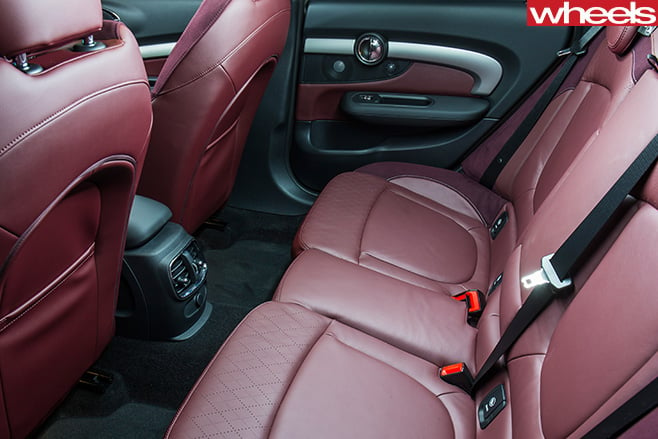
WHAT IS IT? The world’s first six-door wagon! Yep, Mini’s ditched the wonky, single rear door of the previous Clubman and thrown in better packaging and more space for good measure. This Clubman is so big, Mini says families can use it as their primary car.
WHY ARE WE DRIVING IT? To see if Mini’s right, about the family-sized thing. And to check if all that extra space and practicality has ruined the Clubman’s go-kart handling.
MAIN RIVALS Volkswagen Golf, Audi A3, Ford Focus
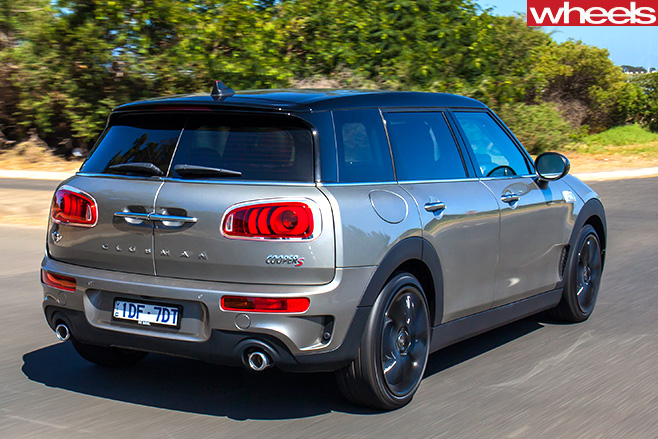
PLUS: Quirky styling; improved packaging; spacious interior; zingy engines; still handles like a go-kart MINUS: Firm ride; artificial steering; interior lacks the polish of German rivals
THE WHEELS REVIEW LET’S face it, the previous Mini Clubman was an oddball. A cool one, yes, but it was cramped inside and had that wonky, single rear suicide door that opened on the driver’s side into traffic. Things are much more conventional with this new model. Longer, wider and better packaged than before, the Clubman now boasts six doors – four conventional openings and two spring-loaded portals at the rear.
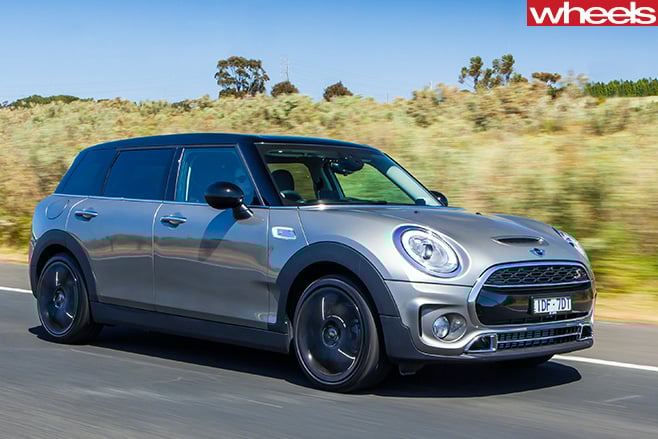
Outside you notice the new Mini family face and redesigned, horizontal taillights, and while the interior is typical Mini funky, there are dashes of Clubman uniqueness. This is due to the Clubman’s extra width which meant copying and pasting a normal Mini interior wouldn’t fit. As ever, the large dial-like central screen dominates proceedings, but there are new square air vents, plenty of standard equipment (reverse camera, rear parking sensors, cruise control and Bluetooth) and a different wrap around dash. There’s also an armoury of safety systems, some optional, like forward collision warning, radar cruise control and high beam assist.
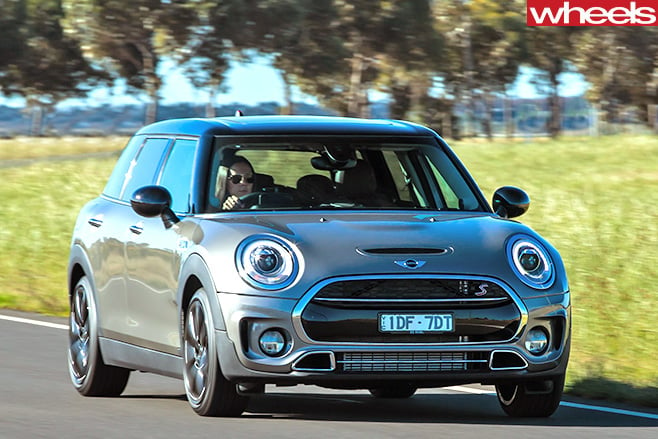
This being a Mini, the list of options is vast and peppered by a wide range of visual and equipment upgrades. One worth noting is the $910 adaptive dampers, that promise to improve the Clubman’s firmly spring ride.
Engine-wise, the $34,900 Cooper uses Mini’s lovely 100kW/220Nm three-pot, which is paired to a six-speed automatic as standard. A six-speed manual is a no-cost option.
Power junkies will prefer the gruntier 141kW/280Nm 2.0-litre turbocharged four in the $42,900 Cooper S. Mated to an eight-speed auto as standard, it shoots from 0-100km/h in 7.1 seconds.
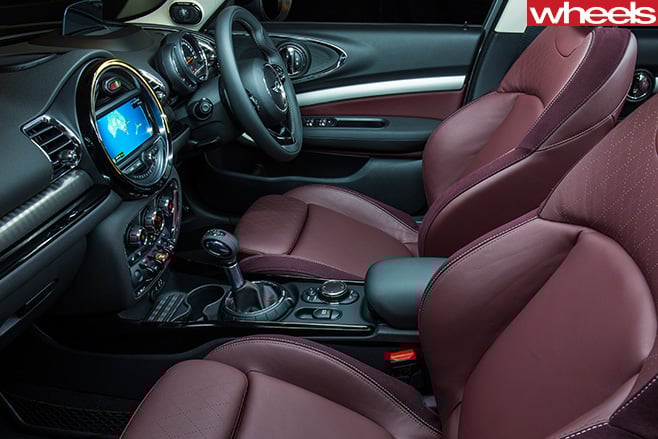
And don’t fret that all this extra space and practicality has compromised the Clubman’s handling. All the usual Mini character traits are there. The steering is sharp and the front axle quick to turn in. And while the Clubman isn’t quite as frenetic or responsive as the Mini five and three-door hatches, its longer wheelbase gives it a more planted feel when pushed hard. Downsides are a ride that is overly firm and unsettled, and the steering that, while sharp, is artificial and springy off-centre. For Cooper S money, a Golf GTI is a more convincing all-rounder.
SPECS Model: Mini Cooper Clubman Engine: 1499cc 3cyl, dohc, 12v, turbo Max power: 100kW @ 4400rpm Max torque: 220Nm @ 1250rpm Transmission: 6-speed automatic Weight: 1320kg 0-100km/h: 9.1sec (claimed) Fuel economy: 5.4L/100km Price: $34,900 On sale: now
Click here to the read full range review of the Mini Clubman
Hyundai has revealed its new World Rally Car in Alzenau, Germany overnight, based on the new-generation i20 hatchback.
The car was originally scheduled for introduction during the 2015 season, but was delayed to ensure it had the pace to match the all-conquering VW Polo WRC, which has won all but five events over the past three seasons (an 87 per cent win rate).
Having completed over 8000km of testing, two examples of Hyundai’s latest challenger will make their debuts at the 2016 Monte Carlo Rally in early January before expanding to three identical cars at the second round in Sweden.
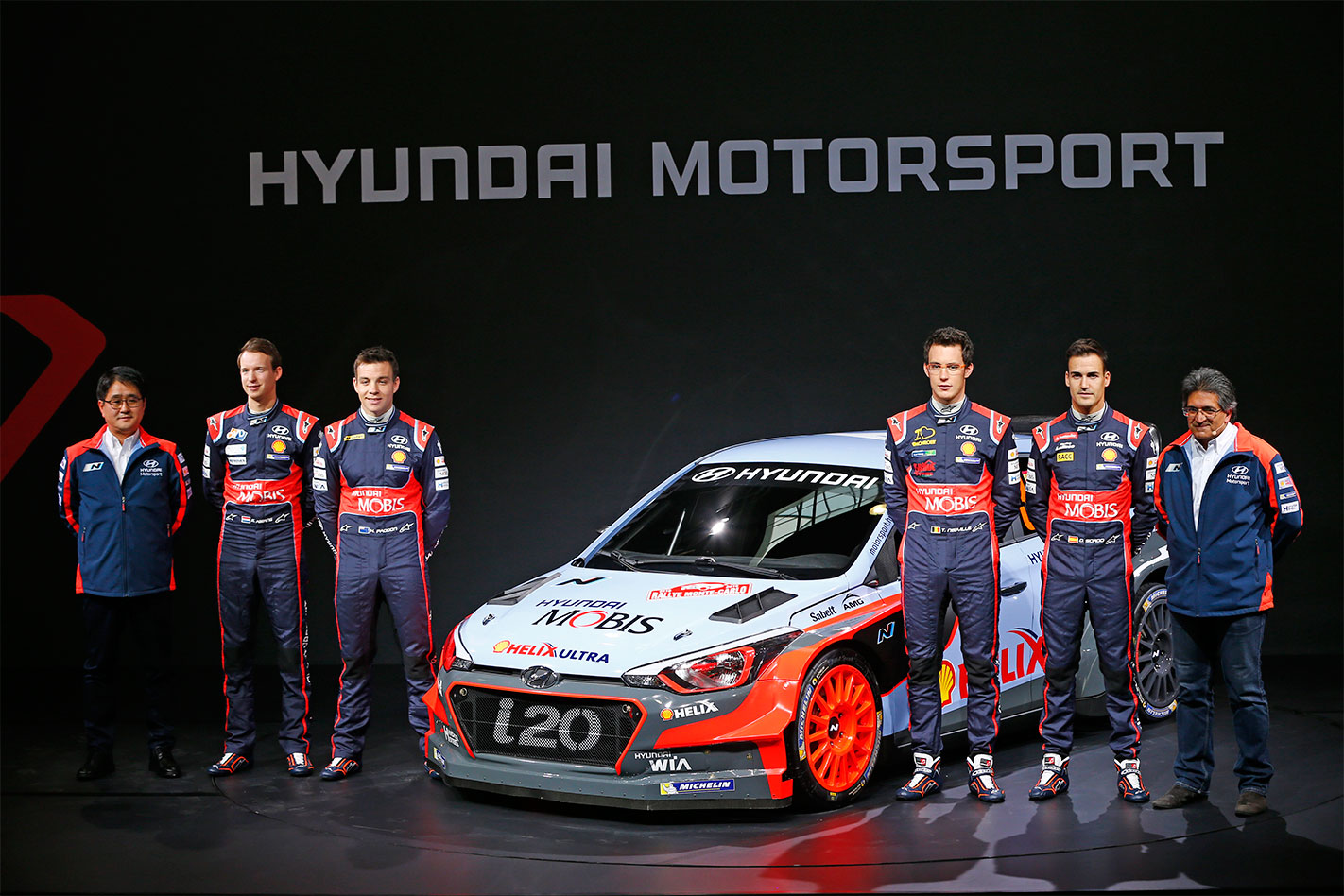
Judging by the below footage of the team testing for the Monte, Sordo and Neuville will start in the new-generation i20 WRC while Paddon, who has limited experience of the season-opener, will retain last year’s car before upgrading in Sweden.
With only two drivers able to be nominated each rally to earn manufacturer points, Hyundai is continuing its policy of rotating its drivers according to their strengths and experience.
Kiwi Paddon was the sensation of 2015, often Hyundai’s fastest driver, but still lacks experience compared to WRC veteran Sordo and former Ford and Citroen driver Neuville.
Neuville had a torrid 2015, losing motivation once it became clear the new car would be delayed until 2016 and suffering a number of accidents. At his best, though, he is as good as any driver in the WRC and will be looking to regain his form in Monte Carlo.
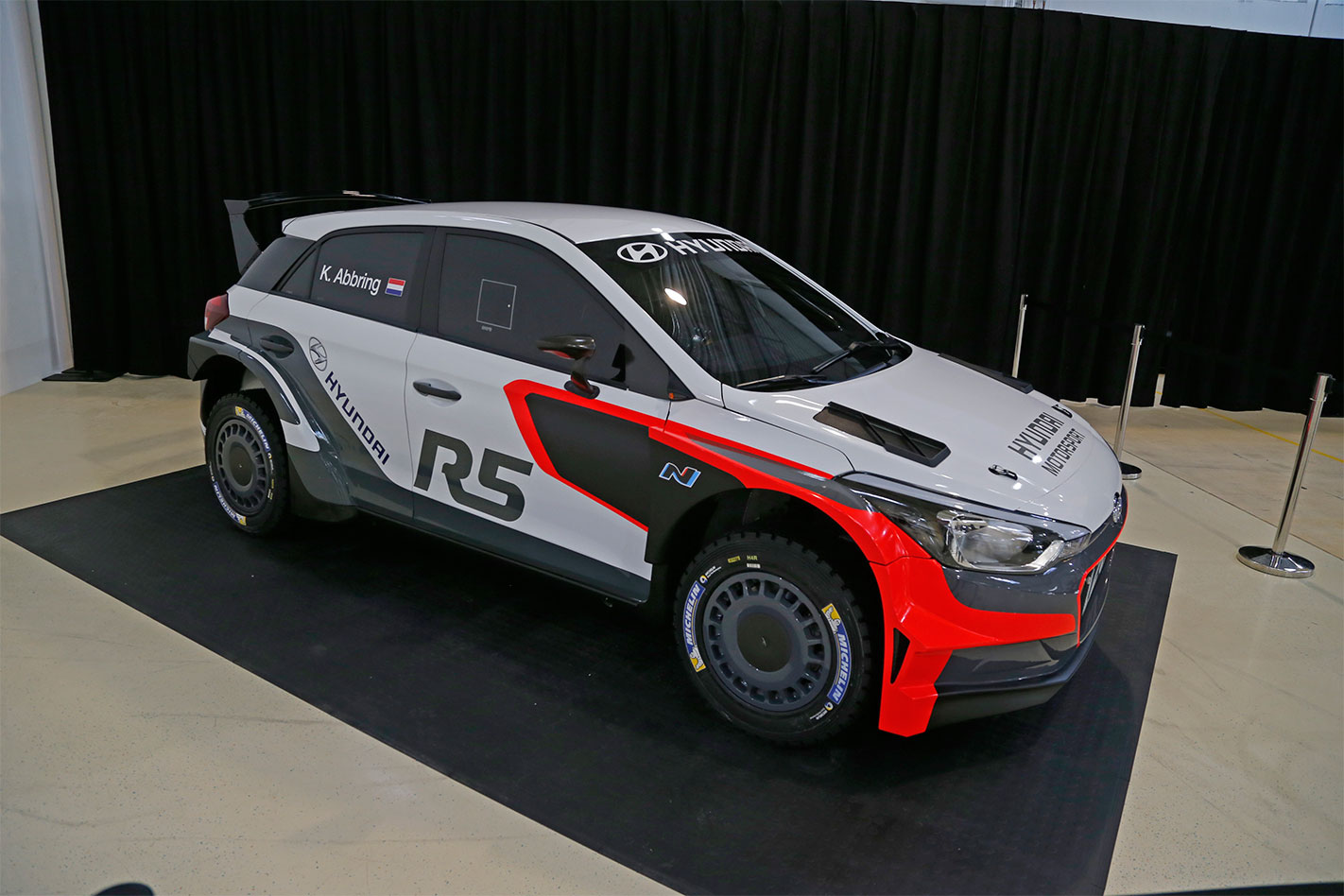
Development for the R5 and Hyundai’s 2017 World Rally Car will be handled by Dutchman Kevin Abbring, who will also compete on selected rounds of the 2016 WRC.
The change in WRC technical regulations for 2017 means the new i20 WRC will have a mere one-year competitive life, however the expense will be deemed well worth it if Hyundai can wrestle the title away from the dominant Volkswagens.
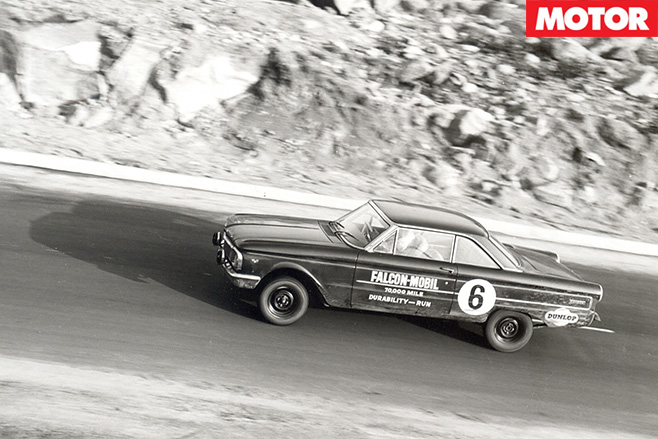
Seems a bit ironic to us that Ford should be blowing out 50 candles to celebrate the half-century of its You Yangs Proving Ground near Geelong in Victoria.
After all, the death knell has well and truly sounded for local manufacture of Ford cars; the very reason the proving ground was established back in 1965.
But look at it another way and you might just be able to see that the proving ground stands to be a bit of a metaphor for Ford Australia’s future once the assembly line grinds to a halt for the last time.
See, post-2017 when all three local manufacturers will have taken their bat and ball and gone home, Ford claims it will be the country’s biggest automotive employer.
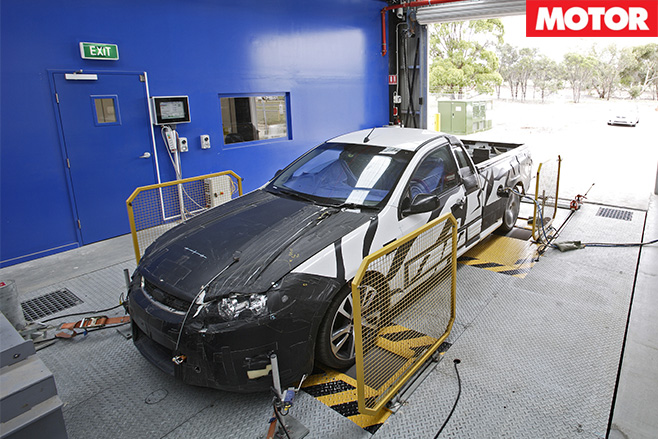
The You Yangs facility was, in fact, key to the development of the new Everest and, of course, the all-conquering Ranger pick-up which is built in Thailand but sold in more than 180 markets around the world.
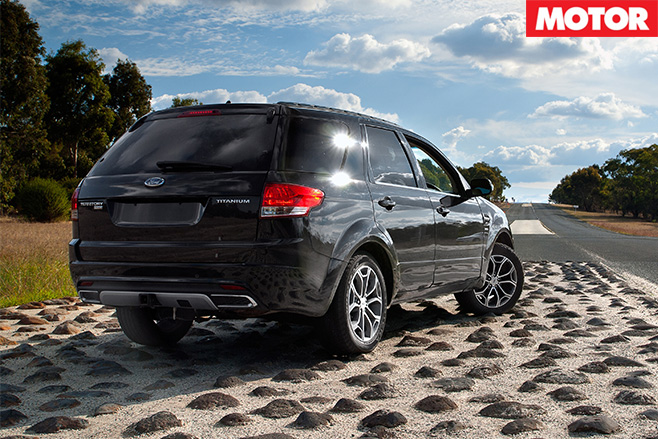
It’s also a facility for hire and one of the most recent tasks for the wind-tunnel was to test and storm-rate a new design of hiking tent for a foreign maker.
