
PLUS
- The grunt. 270kW and 530Nm is more than supercars from only a few decades ago. This thing is swift.
- Excluding HSV, it’s the best fast Commodore ever. It corners with confidence, hammers in a straight line, has great brakes and decent steering.
- It’s rear-wheel drive. Experienced drivers will relish its willingness to slide out of corners with a throttle dollop.
- It’s comfortable. It rides nicely and just inhales huge Aussie distances without any fuss. As a long-range bomber, it’s expert.
- It’s loveable. It’s has a huge boot, four doors and plenty of space. It looks good. Big, honest, Aussie performance sedan, we will miss you greatly.
- The noise. You won’t doubt it’s a V8, but it’s a little lukewarm – it could use more mongrel.
- Its thirst. Of course you’re buying a 6.0-litre V8, not a Prius. Be suitably prepared for the nearly sailor-level thirst.
- The front seats. Comfy but made for Very Large humans at a cost to Not So Large humans. The latter may slide around a bit in heavy cornering.
- Controls can feel heavy. Use a manual SS V Redline’s gearbox and clutch, you won’t have to train your left limbs at the gym.
- The steering. Best Aussie steering ever. But still far from perfect with off-centre straight-line slack; wants for some feel when driving fast.
FORMULA 1: Singapore springs surprises
IN A HOPEFUL sign that Ferrari’s renaissance is continuing to build, Sebastian Vettel has raced to a dominant and beautifully driven victory in the Singapore Grand Prix.
In a race of two halves – the first dull and processional, while the second came alive – Vettel held command throughout, managing his tyres well and judging the right time to put the hammer down and when to ease off.
Vettel and the Marina Bay circuit have a steamy love affair going: the German had racked up a stunning record of four wins and two seconds in the six grands prix there.
Now, with six rounds remaining in the world championship, what we all want to know is whether normal service will be resumed at the next round – or was Singapore a portent of what will continue to be served up by Ferrari.
Australia’s Daniel Ricciardo was a strong second for Red Bull, 1.4 seconds behind the cruising Vettel. He was realistic afterwards.
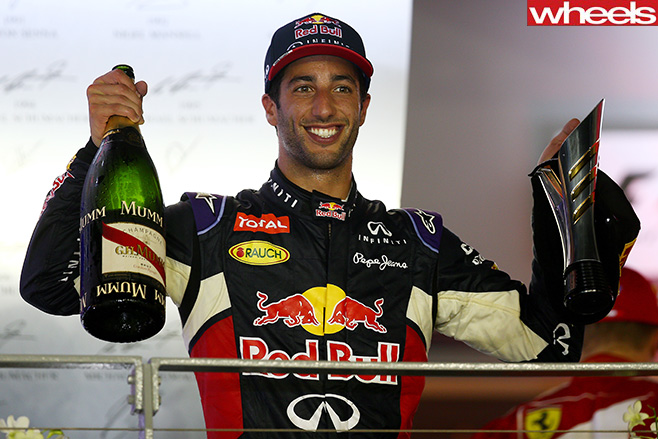
That first safety car was triggered when Felipe Massa and Nico Hulkenberg got together heavily as the Williams was leaving the pits.
There was another later in the race, which also hurt Ricciardo’s strategy. This time the cause was a bizarre track invasion by a 27-year-old man who was arrested and charged.
Commented Ricciardo: “Making both stops under the safety car affected our chances and I think that dictated the race really.”
Ricciardo’s consolation prize was the race’s fastest lap.
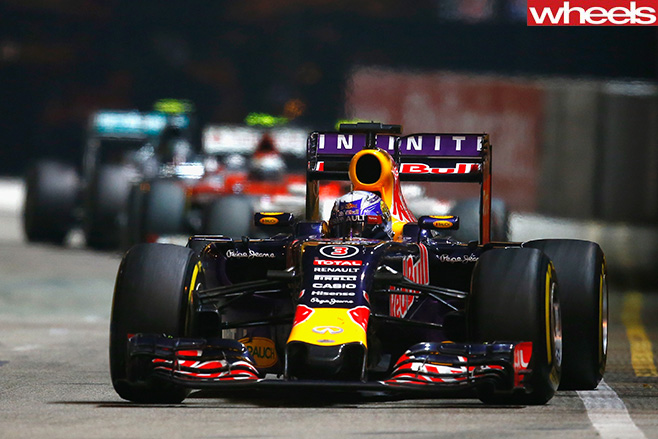
Championship leader Lewis Hamilton was forced to retire mid-race with a lack of power, while his team-mate Nico Rosberg was a benign fourth. Mercedes said the Hamilton non-finish was the result of a freak failure. A metal clamp holding the plenum broke, allowing a power leakage.
Valtteri Bottas was fifth in the Williams, followed by Daniil Kyvat’s Red Bull.
American’ Alexander Rossi’s debut in very trying conditions ended well with a 14th place finish ahead of his Manor Marussia team-mate Will Stevens.
Both McLaren Hondas failed to go the distance.
The first of a series of shocks at the Marina Bay circuit came on Saturday – a Mercedes was not on pole, for the first time in 15 months.
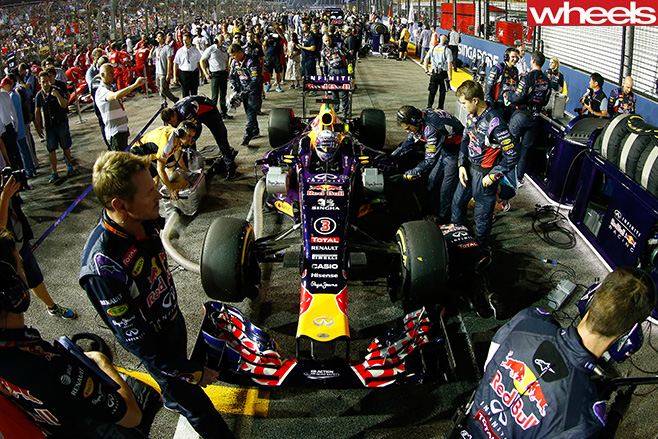
The second row was also bereft of Mercs. That was taken by Raikkonen’s Ferrari and Kvyat’s Red Bull.
You had to look to the third row to find the Silver Arrows – Hamilton in fifth with Rosberg alongside. It was if someone called Bernie had waved a magic wand and got his wish for some unpredictability with the grid.
The turn of events left everyone mystified, including those within the Mercedes team. There was no explanation, but Vettel expressed the view that the Mercs would come bounding back on race day.
That was about the only thing he got wrong all weekend.
WEC: Red face and then triumph for Webber in Austin
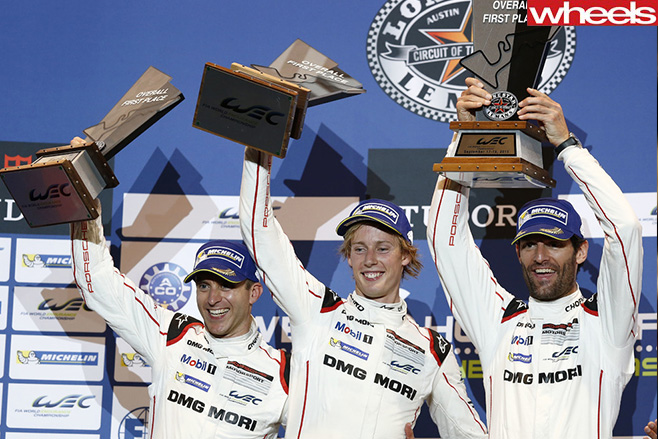
Hitting the front in the first turn and then opening a lead of more than half a minute, it was the perfect start for Webber.
But after his second stint, Webber overshot his waiting crew and had to be pushed back to his bay, losing 25 seconds of that handy lead.
A commentator wryly observed: “Maybe Mark was looking for the Red Bull pit…”
“I had a super start, got the braking point for turn one perfectly right and passed Neel [Jani],” said Webber after the race. “Everything went really well except for my second pit stop. In this very wide pit lane I overshot our garage.”
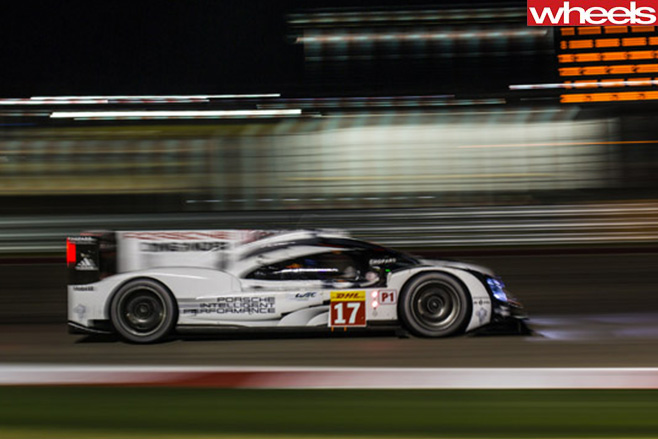
This thrust the pole-winning #18 Porsche of Jani/Romain Dumas/Marc Lieb into a comfortable lead, and on track to win its first race of 2015.
Until…with just 33 minutes remaining, the leading #18 Porsche was crippled with electrical maladies meaning a long stop and handing the race to the sister Porsche of the almost disbelieving Webber/Hartley/Bernhard.
Both Audi R18 e-trons, never really in the picture, suddenly found themselves in with a shot at the podium.
With three races remaining in this year’s WEC, the title race is heating up tantalisingly for Webber and his cohorts, now just 10 points adrift of Audi’s Fässler/Lotterer/Tréluyer with three races remaining.
FORMULA 1: VW ‘close to F1 decision’
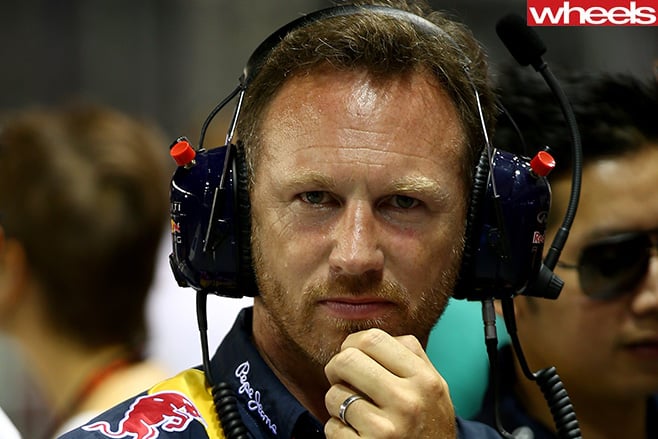
Whilst the Bulls are believed close to locking down an arrangement to have Ferrari engines from next season, the VW takeover, which would include VW building its own power unit and the drink brand continuing as the major sponsor, would not have an impact until 2017-2018.
Just which of the VW Group’s portfolio of brands would be highlighted through F1 is the subject of much intrigue. VW also owns the Porsche, Bentley, Lamborghini, Audi, Bugatti, Seat and Skoda marques. Audi is favoured although this points to the Ingolstadt car maker abandoning sports car racing, where it has been astonishingly successful.
Maybe the grand plan is for world domination in global motor sport: Audi in F1, Porsche in prototype sports cars, and VW in rallying.
Bentley, Lamborghini and Audi are also prominent in international GT racing.
One potential impediment to any costly F1 involvement is the huge fine – potentially billions of dollars – faced by VW, accused by the US Environmental Protection Agency of installing software on 482,000 diesel cars in the US to evade federal emission regulations, potentially exposing citizens to harmful exhaust pollutants. VW admitted to investigators that it had installed a “defeat device”.
At the Singapore Grand Prix, Red Bull team figures Christian Horner and Helmut Marko, and Horner, again declared that Red Bull would quit F1 if it did not secure a competitive engine.
RALLY: Ogier opposes making Rally Oz the WRC grand finale
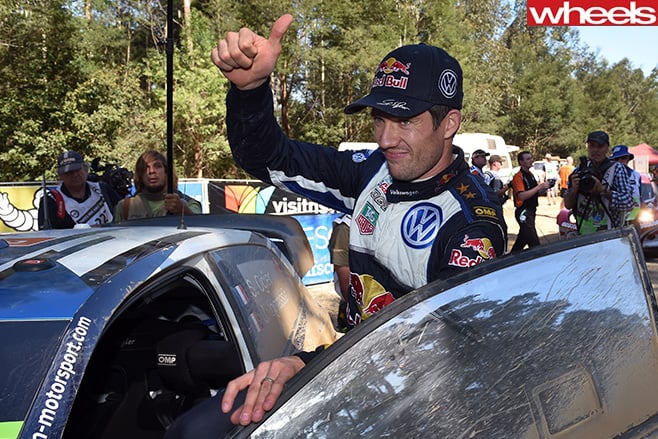
Three-time champ Ogier is no supporter of the plan, citing the Aussie event’s loose gravel and dust as being potentially unfair in a tense championship decider.
He is against traditional last round Rally GB swapping with Rally Australia for 2016.
Next year’s WRC calendar is due to be announced at the end of this month, but Australia’s behind-the-scenes organisation has been lobbying hard to force a move to the season finale.
Ogier urged FIA officials to ponder the sporting implications of such a change, pointing to the “road sweeping” that the championship leader would face in Australia.
For two days at last weekend’s Rally Australia, world championship leader Ogier started first on the road, and was therefore the nominal loose-gravel sweeper for rivals starting behind him.
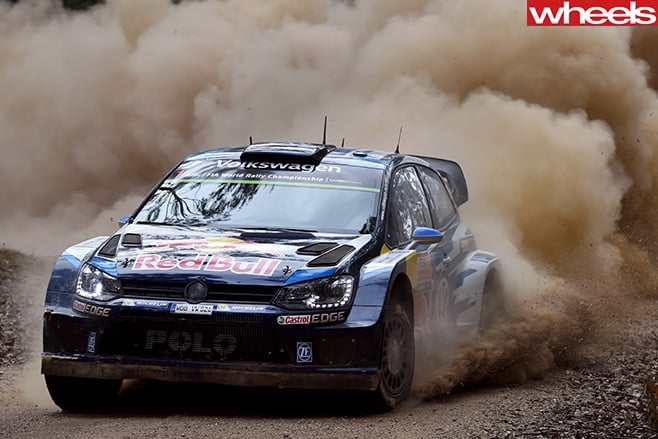
“With such a disadvantage on the starting order, would it be a nice end for the championship? I don’t think so.”
Ogier stated the obvious, that in damp and muddy Wales such conditions just never exist and there is little handicap being first on the road.
Ogier and some team bosses also dismissed another reason for the season to climax in Australia: an end-of-championship black-tie function to be held in Sydney.
Though they were all diplomatic, the clear message was that they didn’t want to hang around after the rally was done and dusted. They’d prefer to celebrate closer to home back in Europe.
GT RACING: Bathurst 12 Hour to be part of Intercontinental GT Challenge
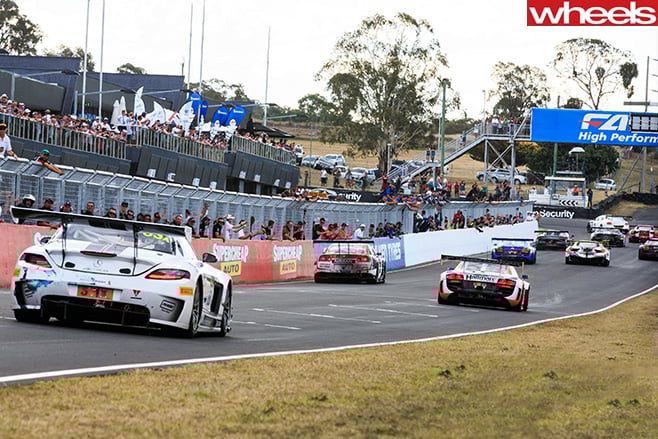
Under a series name yet to be revealed, there would be one race per continent: the Liqui-Moly Bathurst 12 Hour in Australia, a three-hour race at Austin in America, the Total 24 Hours of Spa for Europe, and the 12 Hours of Sepang for Asia.
This series, aimed at GT manufacturers in order to give their products a worldwide stage, would consist of four key GT endurance races, held across four continents, all of which have GT3 cars as the leading category.
John Casey of Supercars Events, promoter of the Liqui-Moly Bathurst 12 Hour, has welcomed the idea and is excited by the prospect of participating in this series.
Have you ever seen Long Way Round, the TV series in which intrepid Pom Charley Boorman and his film star mate, Ewan McGregor, ride motorcycles 31,000km from London to New York?
I’ve always wanted to do an epic trip like that – in a car. However, the only machine I thought capable of copping such punishment is something like a Toyota Landcruiser. I’d rather ride an old donkey 31,000km than take that option.
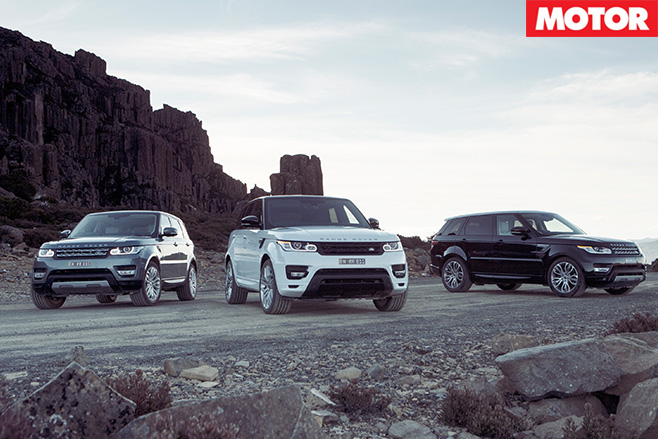
But after a day driving around Tasmania, I rolled out of a new Range Rover Sport and had an epiphany. This is the car I could confidently traverse the Mongolian wilderness in and, if I happened upon a bit of blissful bitumen, could easily use for a bit of gleeful driving.
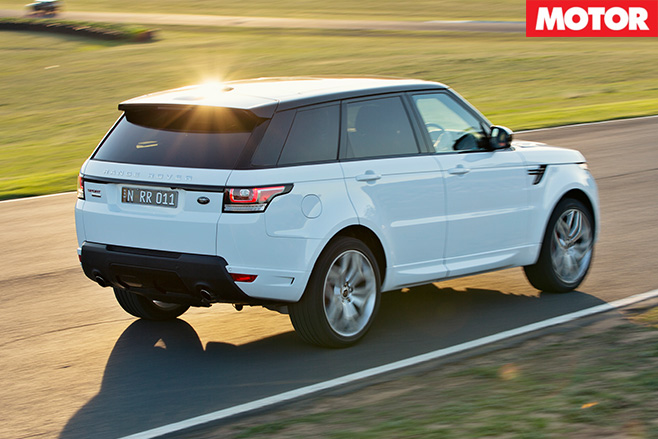
Select Dynamic mode (available in the more powerful models) and engine, throttle and gearbox get angry and the air suspension hunkers down. Active, hydraulically-controlled sway bars and active dampers (again in the gruntier versions) vanquish body roll in the 2310kg V8 Sport, helped by a new aluminium monocoque that is up to 420kg lighter than the previous model.
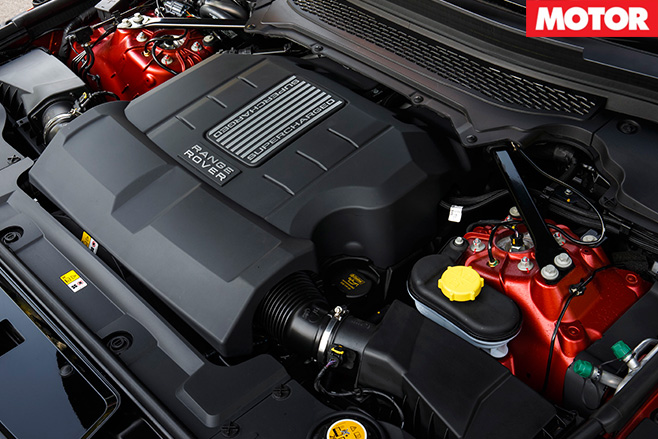
And punch it does. The 375kW/625Nm 5.0-litre V8 summons 100km/h in 5.3sec, with an exhaust note that sounds like a track off Satan’s latest album. Off road? The drive selector also unlocks an arsenal of bush-friendly settings, too many to list here. Ride height can be raised 65mm, there’s a 2.93:1 low range and 900mm wading depth; all adding up to impressive mud-raking ability.
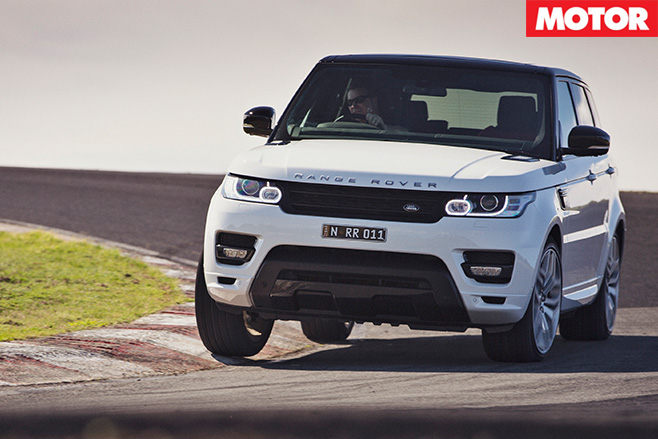
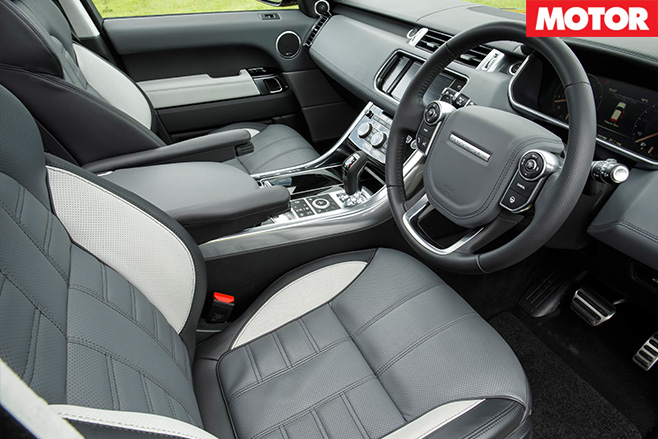
And that blown V8? That’s $182,400 in range-topping Autobiography trim. There’s also a 250kW/700Nm 4.4-litre turbodiesel V8 coming in early 2014 but the supercharged V8 is the one you want. And the one I’d happily spend 31,000km in.
4/5
Specs
Engine: 4999cc V8, DOHC, 32v, supercharger Power: 375kW @ 6000-6500rpm Torque: 625Nm @ 2500-5500rpm Weight: 2310kg 0-100km/h: 5.3sec (claimed) Price: $182,400 (as tested)
THE 2015 FRANKFURT motor show was largely about speed, even when it was trying to be green, or comfortable.
Take Porsche’s Mission E. Fantastic design, the promise of fast charging tech, and no fuel bills. Oh, and it’s to be the fastest electric car the world can handle.
When it arrives in showrooms around 2018 it seems doing your bit for the environment could also keep you pinned to the back of the seats like nothing before it.

Sounds a lot more like bragging rights than a genuine advance in motoring. But hey, in the quest to be thorough we still want to make sure it lives up to its claim.

Yet people never seem to tire of the lure of speed.

The reality is most owners won’t get close to experiencing the full potential of their go-fast machines. Even more won’t care.
But they’ll at least know they have something really, really fast. Just in case.
Check out our other Frankfurt motor show stories and video.
Remember the movie Outbreak, where a monkey played host to a deadly virus called Motaba that became airborne and rapidly spread across the US? Well, replace the word Motaba with SUV and you have yourself a somewhat dramatic indication of the rise of SUVs in Australia.
If we take a look at the figures, SUV sales have increased while the sales of the more popular passenger car segment has dropped. If we dive in further, medium SUVs have the higher sale numbers, but small SUVs have the faster growth.
Mini-SUVs are tall cars made for the city. In the case of the Mazda CX-3, the wheelbase – the measurement from the front wheels to the back wheels – is identical to the Mazda2. The major difference, however, is the CX-3’s all-wheel drive and diesel-engine options.
With that in mind, the WhichCar team naturally had to see what all the fuss was about. And what better way to do this than with one of Australia’s newest and most popular small SUVs. We grabbed the keys to the CX-3 Akari 2.0L petrol AWD and prepared ourselves for a road trip to see the delights of Victoria’s Yarra Valley.
There’s a lot of preparation that goes into upgrading to an SUV. Trips to the shops are delayed to avoid the hassle of parking, and one’s ‘dump-and-run’ garage needs to be renovated to fit the bigger car. You can imagine our delight when we realised the CX-3 is pretty much a hatchback on steroids, which meant the little red bubble found itself right at home in our little spot in the WhichCar garage.
The CX-3’s style stood out on first impressions. Crisp edges and the blacked-out pillars make the glass appear as if it’s extended all the way around the back, while the black wheel arch brings out the touch of metallic in the wheels.

When Friday finally arrived – and we’d finished playing jigsaw puzzles fitting our weekend gear into the minute boot space – it was time to hit the freeway. Around town, tyre noise wasn’t much of an issue, but once on the open road it took a bit of getting used to. Then again, we stopped noticing after a while because our music was turned up pretty loud – it was a girl’s trip, after all.
Despite it being the middle of winter, which meant the foliage of the Yarra Valley was in hibernation, it was still a welcome escape from city life. It just meant that instead of frolicking between the vines for selfies, we went in search of warm fires and hot chocolates – and what better place to stop than the Yarra Valley Chocolaterie and Ice Creamery. We’re not usually ones for visiting the touristy stuff, but when they mentioned chocolate, I couldn’t resist! I guess it was the right thing to do when you’re designated driver and can’t drink the wine.
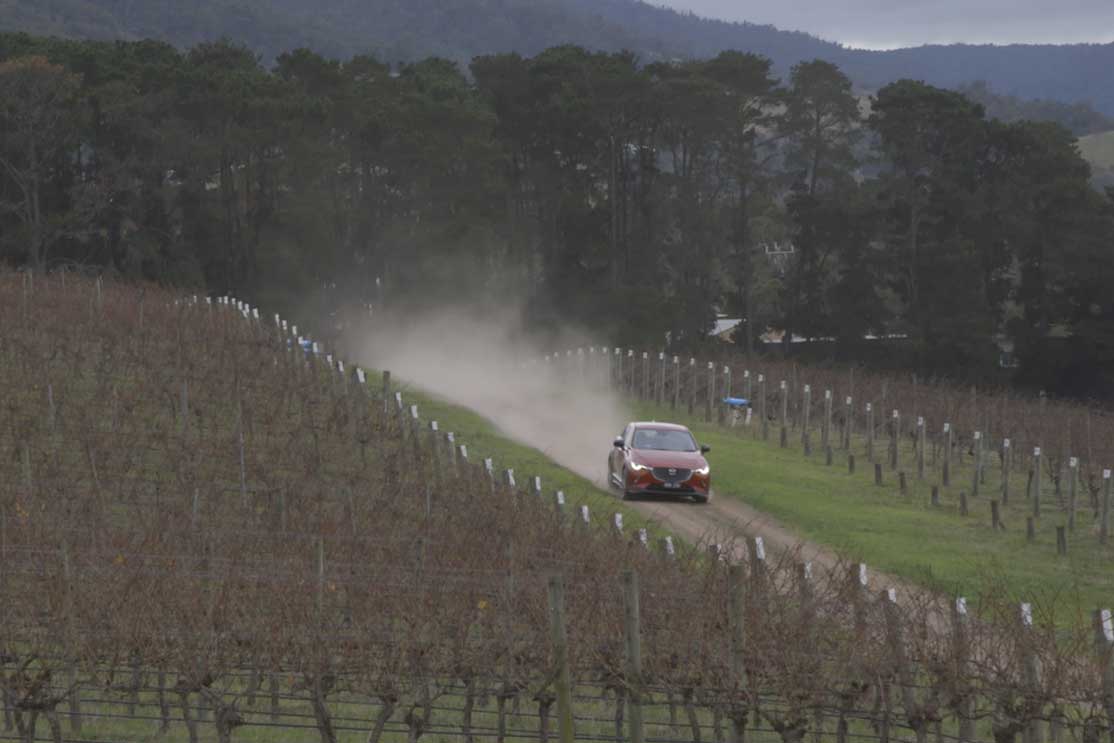
But what’s a trip to the Yarra Valley without a stop at the beautiful De Bortoli Winery, even if you can’t drink the product? In truth, this was the perfect ditching ground. While my friends were inside sipping red, I launched into the opportunity to take the Mazda CX-3 onto the unsealed roads. With permissions in hand, I took to the access tracks between the winery’s vineyards. Expectations weren’t high for the little bubble, but I was interested in seeing what it could do. And boy was I surprised.
Sure, I’m not about to attempt anything too extreme in the CX-3, but it took to the gravel roads with a confidence I didn’t expect of it. The suspension was a little stiff and the ride firm, so it meant my derriere copped the brunt of the bumps. It wasn’t the smoothest SUV I’ve ever driven, but it wasn’t the most uncomfortable, either. Who knows, maybe my next step is to pack up a CX-3 and move to the Nappa Valley where I can drive between vineyards all day long.
At least the Nappa Valley would be warmer than it was in the middle of July in the Yarra Valley. Luckily, we had booked ourselves a couple of rooms at Balgownie Estate Vineyard Resort – we had to maintain our stylish reputation, after all. Finally, it was my turn to indulge in a glass of wine!
The CX-3 may have soaked up the Melbourne roads just fine, but it was the open roads of the Yarra Valley where it really hit its stride. I was even reluctant to give the keys back – I enjoyed it a little more than I expected. From the city to the weekend getaway, this car is everything you want in a small SUV.
Click here to read more about the Mazda CX-3.
The Pikes Peak hillclimb is one of the world’s greatest driving challenges.
That challenge has attracted some of the world’s greatest drivers, driving unbelievably fast machinery thanks to the open rulebook.
1987 Audi Sport Quattro S1 Pikes Peak

Not only did it pack 100 kilowatts more than the ultimate Group B Audi WRC cars, but it was lighter and featured dramatic aero that included a double front wing. His time of 10min 47.850sec meant he was the first driver to break the 11minute barrier.
The Sport Quattro S1 Pikes Peak was a catalyst for some of the craziest rally-inspired machinery to head to PPIHC over the next 30 years.
1988 Peugeot Sport 405 T16
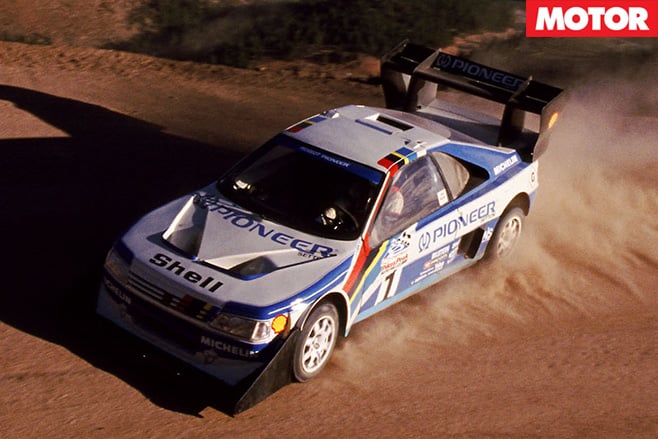
While it’s called a 405 there’s not much related to Peugeot’s family car except the headlights – you couldn’t get a mid-mount 447kW turbo motor, lightweight coupe shell, huge aero, all-wheel drive or all-wheel steer at the dealership!
Ari Vatanen’s 10min 47.47sec record-setting run is a favourite among gearheads; it even overshadowed Robby Unser’s 1989 win in the Unlimited Class.
Peugeot’s 1988 effort was the last big manufacturer entry until its reappearance this year.
1994 Millen-Toyota Celica
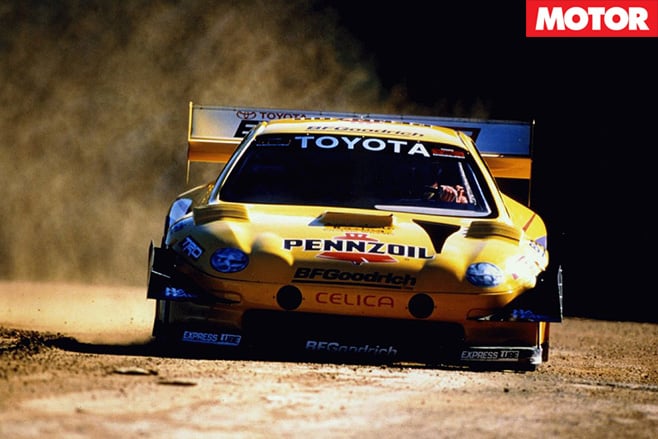
Powered by a 2.1-litre version of Toyota’s 3S-GTE four-cylinder engine, it makes over 745kW and signalled the start of an era dominated by ever-wilder machinery. His record, set on a predominantly dirt road, stood until the course was almost totally paved in 2007 and is one of five wins Rod has taken in the Unlimited Class.
Rhys Millen even admits he reckons the wild yellow Celica is still faster than his PM580T!
Suzuki Escudo Pikes Peak
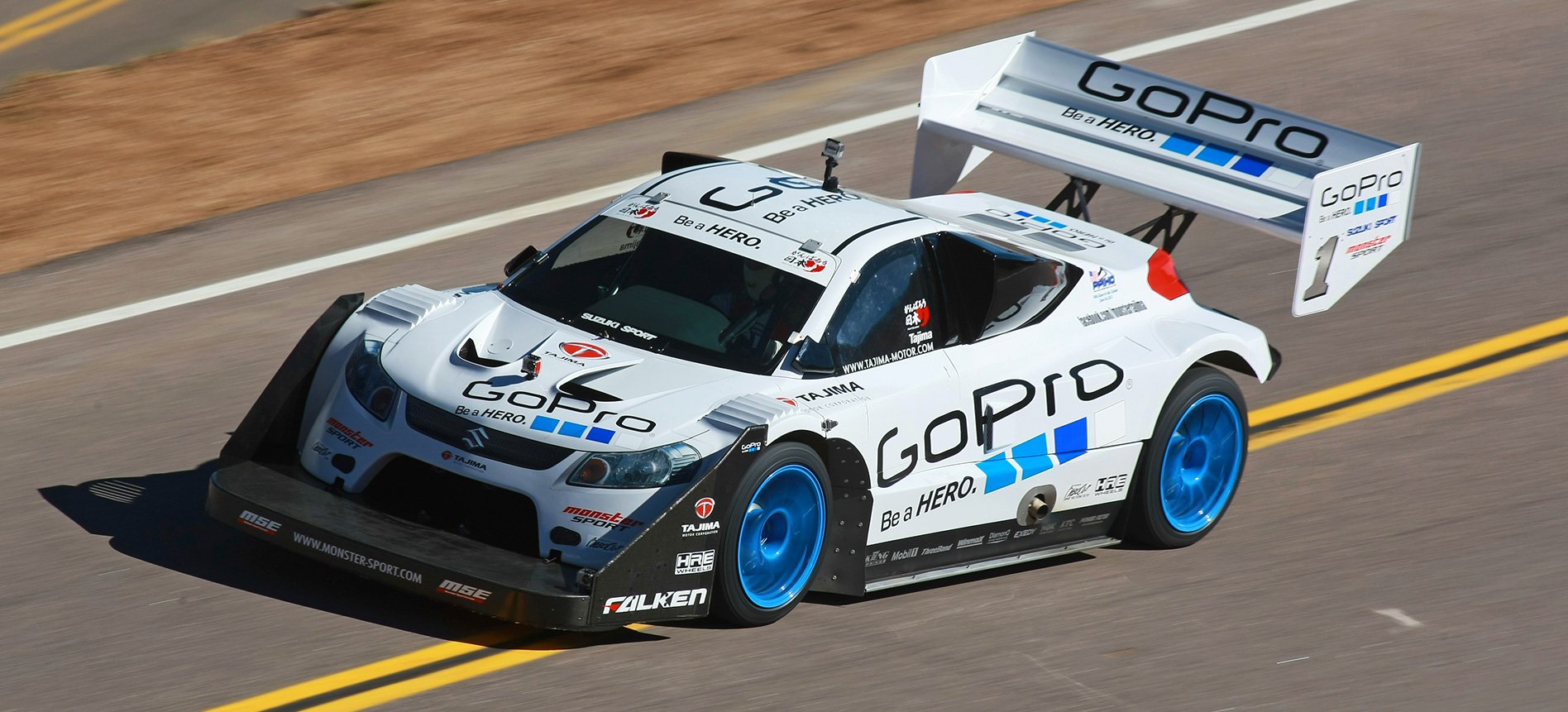
But it was his late-’90s red Escudo (Vitara to us Aussies) that really fires up the imagination of anyone who grew up in the 1990s – thanks to it being the fastest car you could buy in the mega-popular PlayStation driving simulator, Gran Turismo.
Packing over 750kW and the biggest wings motorsport has ever seen, Monster’s car was one of the first to really drive the aero game forward and his nine PPIHC Unlimited Class wins mark him as one of the climb’s all-time legends.
2013 Peugeot Sport 208 T16
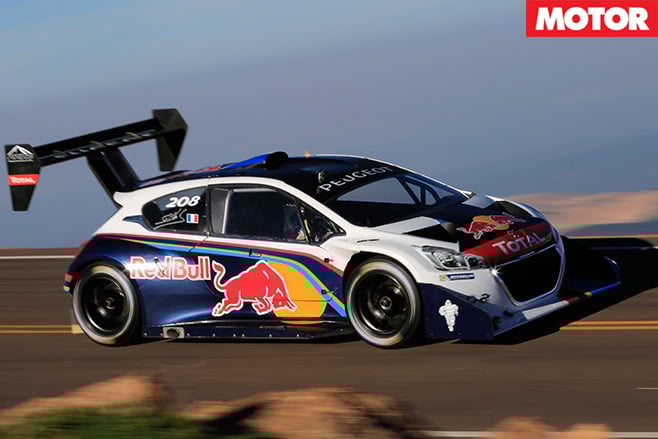
The aero alone could fill a book with the work involved in getting the 208 to not fly off the side of the mountain at its 250km/h top speed. There are serious questions as to whether Sebastian Loeb’s time of 8min 13sec will ever be bettered, given the car has now been removed from competition by Peugeot.
ALPINE WILL re-launch onto the global market after more than two decades, with its own sports car set to begin production in northern France by the end of next year.
However the head of the company, Bernard Ollivier, has rebutted rumours there will be both a RenaultSport version and an Alpine SUV – while not confirming whether a manual gearbox will be offered.
“I don’t answer this question, because I want to give a surprise on the car,” he told Wheels at the weekend’s 60th anniversary event for the Alpine brand, in its home town of Dieppe, France.
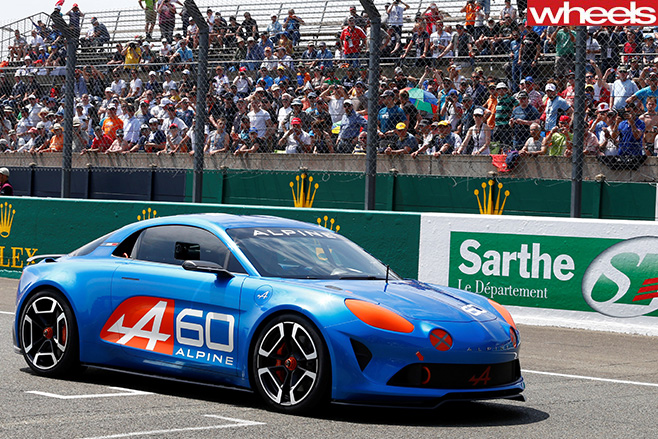
A dual-clutch transmission is a sure thing for the first Alpine produced in two decades, despite the fact that the new model – arising from a concept called the Alpine A120 that was raced at the 2015 Goodwood Festival of Speed – will be closely related to the Renault Clio.
In fact, Alpine intends to produce 3000-4000 cars annually in the same French factory that currently produces the Renault Clio RS.
The current Clio RS was the first performance model from the French maker to become dual-clutch and five-door only, after the all-new model was introduced in 2013. The savings in terms of manufacturing efficiency have helped Clio RS sales in Europe increase dramatically.
Watch rally legend Jean Ragnotti wrestle the Alpine A110 over the same stage as Damo.
And, while the current Megane RS is available as a three-door and with a manual gearbox, the unveiling of the new Megane at this week’s Frankfurt motor show has confirmed that it too will be five-door only. While yet-to-be-confirmed, it’s likely that the next Megane RS will follow suit and become dual-clutch only as well.
That leaves the Alpine with few choices in terms of manual drivetrains, with the Nissan-supplied 1.6-litre turbo used in the Clio tipped to be used in the new sports car, albeit heavily modified.
The last vehicle sold to the public with a clear Alpine imprimatur was the Renault Spider, manufactured between 1996 and ’99. That car was badged Renault instead of Alpine, due to Renault’s involvement in Formula One and its intention to leverage that effort.
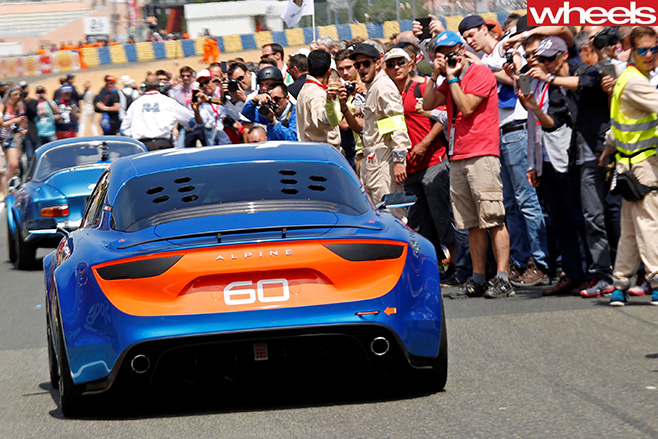
The decision to end the arrangement with Caterham in 2014 didn’t end the plan. Instead, it demonstrated to Renault the positive response and reverence for the Alpine brand, in effect galvanising the project.
Like the Spider, the new model will follow the tradition of low power and light weight. “For me [light weight] is a signature of Alpine; the weight as important as the performance, and with lightness you don’t need a very big and heavy engine and powertrain,” Ollivier said.
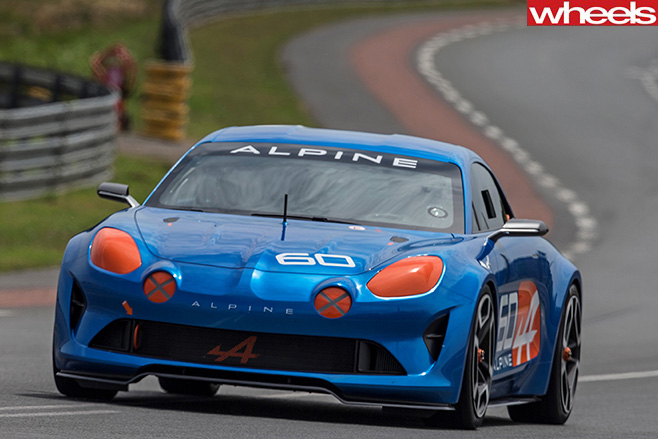
“To make an Alpine, we have to make all things adapted for an Alpine, and the DNA of Alpine is not the DNA of Renault,” he said.
“I was a creator of RenaultSport, but it’s not the same customer as a Clio RS. A Clio RS is quite heavy, with four seats. You can put your children to school; you can go on the weekend to the track. An Alpine is not that. An Alpine is a pleasure on a daily basis, but not to take your children to school; it’s a specific use pleasure. A beautiful car with big driving pleasure.”
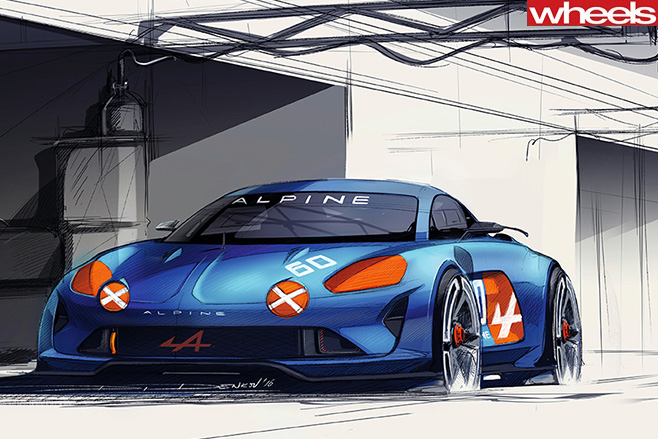
The styling of the A120 concept car is still not the final production car, said Ollivier, despite the fact that the sports car is less than 14 months away. Renault’s standard time between design sign-off and production is 30 months.
That also means that the price is far from certain, despite the description of the car as a ‘premium’ sports car. That suggests that it will cost more than the new Mazda MX-5 and the Toyota 86, but Ollivier would not confirm that it would be a Porsche rival, despite some media reports claiming that it will have an asking price similar to a Porsche Cayman, which starts at $106,200.
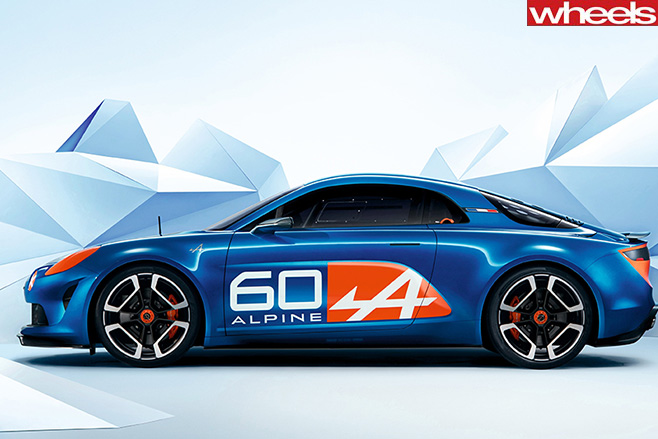
The car’s positioning is still to be set in stone, as relaunching Alpine brings several unknowns.
“After more than 20 years, it’s difficult to understand the value of the Alpine brand; how much the customer is ready to put in an Alpine car, against an Alfa Romeo car, a Porsche car, a Lotus car, a BMW etc. It’s very difficult,” Ollivier admitted. “Today we are working on that, because we cannot make a mistake – if our car is too expensive, it will be difficult, and if it is not enough it will also be difficult.”
It’s faster, feistier, and a lot more comfortable. But is the more complete Mercedes A45 AMG still the king of hot hatches?
WHAT IS IT? An update for the flagship model of the most affordable Mercedes-Benz range, the Mercedes-Benz A-Class. And a very quick compact car that is also the most affordable AMG.
WHY WE’RE TESTING IT The flagship A45 has been facelifted, and as well as minor stying revisions gets significant tweaks to the driving experience. Have they improved it, or has it lost its edge?
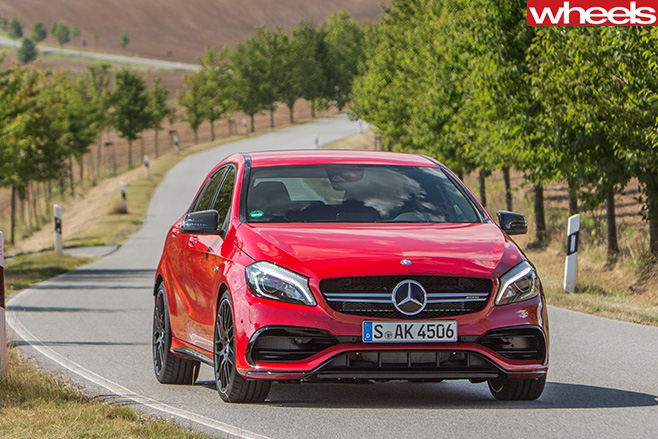
THE WHEELS VERDICT The formula hasn’t changed but the execution has, for the reigning hot hatch king.
PLUS: Fiery four-cylinder turbo; all-paw traction; great turn-in and grip; attention to detail MINUS: Tight rear seat; power rules over torque; launch control could launch harder
THE WHEELS REVIEW MERCEDES AMG product planners knew they had such a good thing with the A45 AMG that they told engineers not to worry about more power for the facelifted model, which has just gone on sale in Europe.
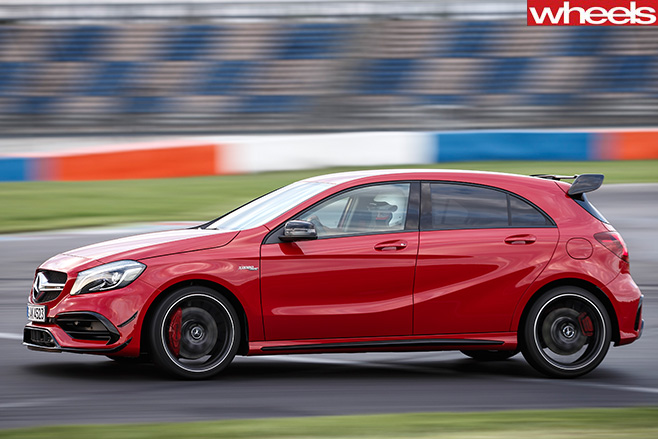
But in the quest to sharpen the gear shifts from the standard seven-speed auto, engineers also took the time to revise the ratios. And they found a few more neddies as well. Power and torque still lead the class, now at 280kW and 475Nm.
AMG says the engine is tapped out, and any future performance gains will be incremental.
Still, it’s a mighty whack from a hatchback that at its more affordable and sedate end – the A180 for Australia – kicks off the Mercedes-Benz lineup.
Engage the A45’s launch control and it scrambles to 100km/h in 4.2 seconds. That’s Porsche 911 territory – in a city hatchback.
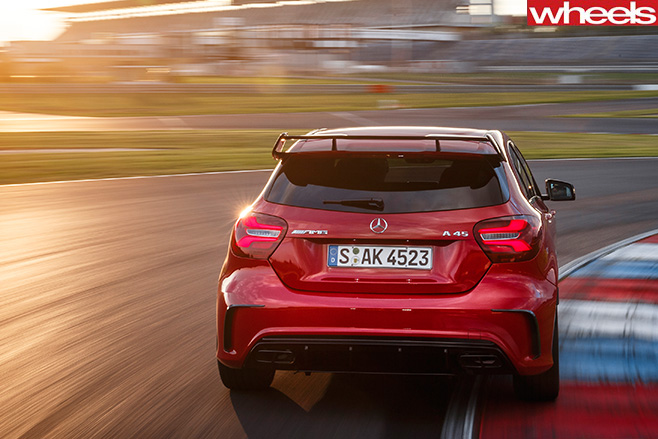
In its most sedate, Comfort, mode the exhaust is bassy but otherwise lacking character. Throttle response, too, is borderline languid, and the gearbox quickly relaxes into upper ratios unless you’re brutal with your right foot.
But engage Sport or Sport+ and the exhaust fires into a symphony of blaring upshifts and lift-off burbles backed up with the occasional crack. Gear shifts too are more purposeful, especially the aggressive downshifts when rushing into a bend.
A blat along a German autobahn reinforced the fiery nature of the 2.0 turbo, still building speed relentlessly as the needle tickled past 200km/h.
But it’s the chassis that’s had the biggest forward leap for the A45 AMG. It’s now available with adjustable dampers, with the aim of quelling the stiff ride that robbed the diminutive five-door of comfort on anything but smooth hotmix.
Excellent front-end grip translates to crisp turn-in, although the A will ultimately push wide at its nose. Yet it’s still playful on the throttle: lift off on a sweeping bend and the tail gradually glides wide.
The short suspension travel and sporty focus means it’ll rock and roll at low speeds. And if you dial up the Sport+ or Race settings the bone jarring is back, good only for a track attack.
The launch control, teamed with the four-wheel drive system, goes a long way to delivering that wild initial acceleration. It doesn’t engage with the neck-whipping ferociousness of some, though.
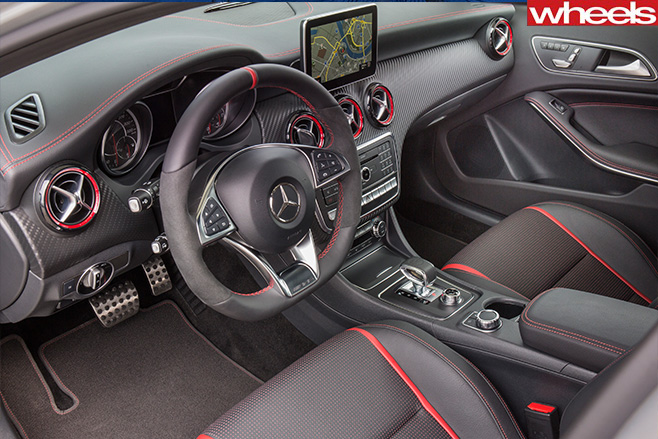
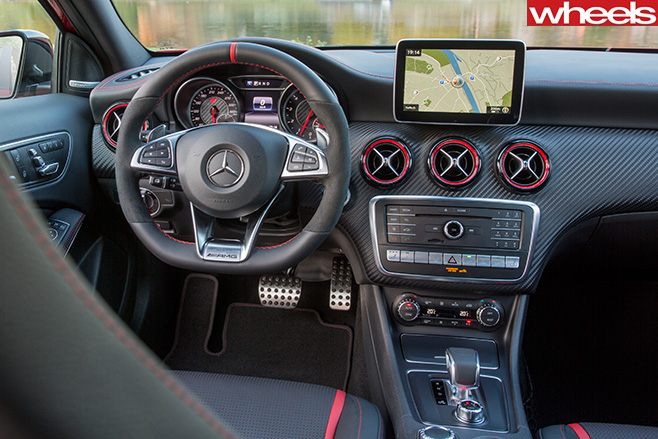
Inside there’s not much new, aside from the chunky steering wheel and a new 8.0-inch Apple-esque screen artistically grafted to the dash. A quintet of circular air vents with metallic highlights set the scene for a modern, detailed dash that’s topped off with a carbon fibre-inspired matte material and red highlights, right down to the stitching.
Storage is still a letdown, with the cupholders the most obvious home for a phone. The rear seats, too, are tight for head and leg room, best left to the littlies. Yet there’s a split-fold rear seat and netting under the parcel shelf, in a rare hint of practicality.
None of which will be a turnoff to the target buyers. It’s fast, loads of fun and occasionally wilfully frenetic. Yep, the A45 still nails the hot hatch brief, for those prepared to fork out close to $80k. Only now it’s a lot easier to live with when you’re not on a hot lap.
SPECS Engine: 1991cc 4cyl turbo Max power: 280kW @ 6000rpm Max torque: 475Nm @ 2250-5000rpm Transmission: 7-speed auto Kerb weight: 1480kg0-100km/h: 4.2sec Price: $78,000 (estimated) On sale: Early 2016
Click here to read the full range review of the Mercedes-Benz A-Class.
The steamy climate of Singapore generates unique challenges for Formula 1 drivers this weekend. How do Daniel Ricciardo and his rivals stay cool?
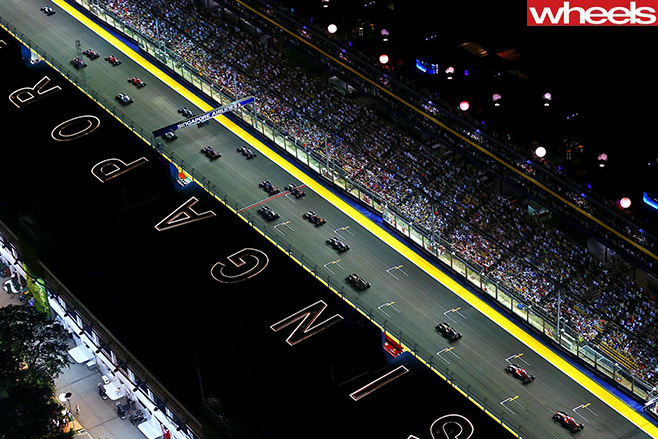
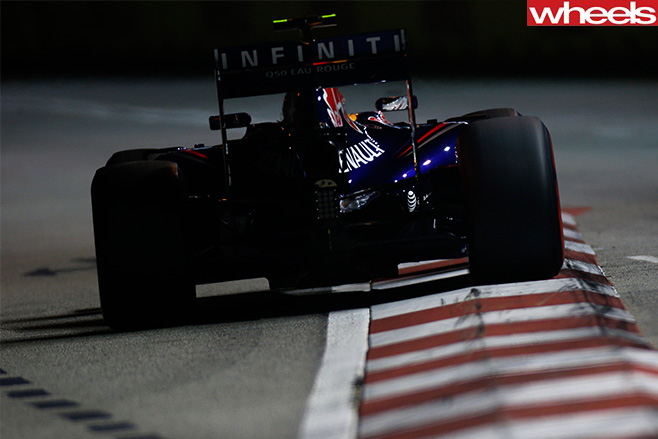
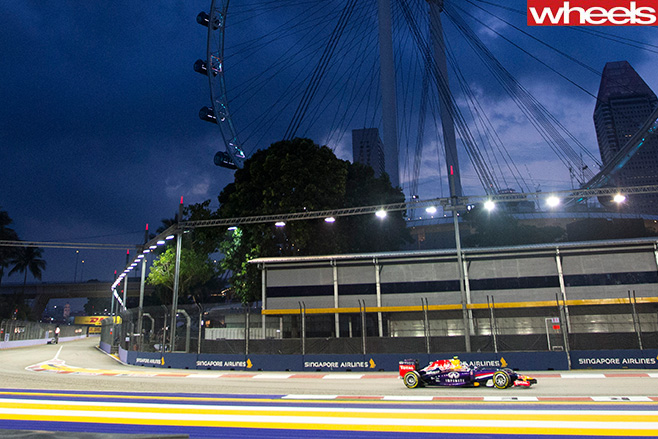
THE Formula 1 Singapore Grand Prix is one of the world’s most amazing sporting spectacles. The city backdrop, F1 cars threading the barriers at up to 320km/h, that sound… all with the Marina Bay Street Circuit lit up bright. It’s got a wow factor few can match.
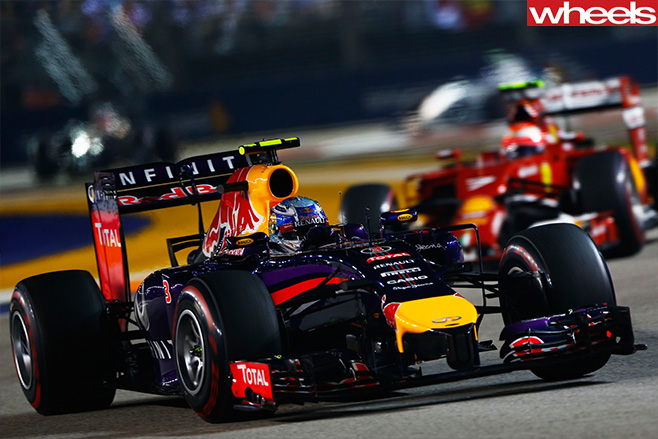
Naturally, it’s even better being there – with the balmy Singapore evenings just perfect for relaxing with a cold beverage, while Mercedes’ Lewis Hamilton, Red Bull Racing’s Daniel Ricciardo and Ferrari’s Kimi Räikkönen duke it out right in front of you and your mates.
For the drivers, though, it’s the race they train hard for – one of the toughest physical challenges on the calendar. Outside, it’s 30C and 70 per cent humidity. Inside the garage it’s a sauna, with big metal fans keeping things cool.

And in the car, cockpit temperatures reach 55C at racing speed.
Things aren’t made any easier with a busy 5km lap, including 23 corners and few places to catch your breath among the concrete barriers.
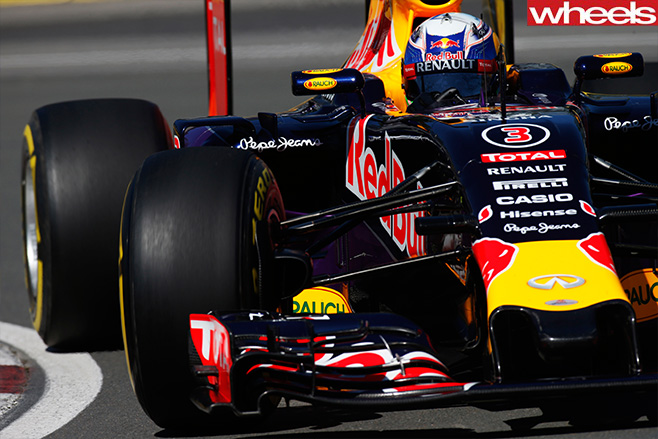
“In my opinion, Singapore is the most physical challenge of the year for a driver,” says Red Bull’s Daniel Ricciardo.
“A street circuit already requires a high level of concentration – and doing that with the humidity of Singapore is fun but challenging.
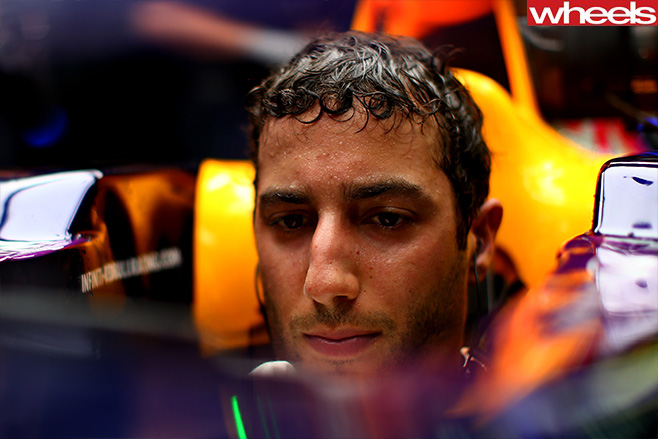
“It’s the one race of the year where you can’t open your visor to get cool air, and it’s actually worse because all the humidity and heat of the car just stays inside the streets as it doesn’t have anywhere to go.”
Two-time world champion Mercedes driver Lewis Hamilton puts the relentless tropical heat in perspective.
“You have long-sleeve underwear on, balaclava, and then the suit on top of that – which is another three layers, and then gloves,” says Hamilton, smiling.

It’s not just physically exhausting, either.
“It’s mentally tough, too,” says Force India’s Nico Hülkenberg, “because street circuits are more unforgiving. The walls are close and you have to get close to them if you want to be quick.”

That’s where the serious training and preparation comes in.
“With this sort of event, the importance of a driver’s fitness becomes very big,” says top driver trainer Phil Young from GP Human Performance.
“All their hard work is done before they even get to Singapore. We have a saying that you train up to race down, so all your hard work is done in the training, and when you get in the car the only thing you’ve got to concentrate on is the driving and racing. You’re not worrying about your fitness.”
To get in that zone, Young says it’s vital to prepare the driver for the worst-case scenario – the longest race, the toughest calls, and the hottest temperatures.
“The best way is to train in the heat,” says Young, who was once Jenson Button’s physio, and even re-joined him in Canada this year to help out.
“They might do some exercise with their race suits on, just to generate the sort of heat you would see when they’re actually driving the car.”

Most, like Red Bull’s Daniel Ricciardo, prefer to get out in the heat – rather than simulate things in a sauna or gym.
“If I can work out outdoors, it’s a lot more fun,” says Ricciardo.
“I was brought up in Australia, so of course I spent a lot of time outside as a kid.
“I can get motivated in a gym, that’s not a problem, but I love to be out cycling in the sun or doing something in the forest. I always find that a lot more exciting.”
Other than training, it’s important how the drivers’ fuel up – with hydration, the intake of customised drinks, a key factor in keeping them in the zone.
“Generally the drivers are weighed before they get in the car and once they come out of the car,” says Phil Young.
“So you can accurately determine the amount of fluid loss they’ve had over a race or a session. And then you adjust the hydration to suit that. Generally you try and replace the amount they’ve lost, plus another 50 per cent.
“Each driver has their own tailored cocktail of drink mixes, some will be stronger and some will be weaker, according to tastes – but most F1 teams have access to sports scientists and major drinks manufacturers which would be doing a lot of development to suit the needs of the driver.
“It’s isotonic, hypotonic type drinks they use. You need a drink that will replace your fluids, and salts and minerals you would lose naturally through sweating – along with some sort of carbohydrate for energy.”
And while nutrition is important as well, with drivers enjoying a healthy mix of protein and carbohydrates, and a typical meal over the weekend being steamed fish and vegetables – a crucial ingredient often overlooked is sleep.
“Sleep plays a massive part in recovery,” Young says.
“And that’s a huge thing for these guys. You want to get them into a routine that will enable them to have the right amount of sleep.
“What you don’t want them doing is getting back from the track and then having to go out for dinner, which could take two hours to arrive, and your routine goes out of the window.
“So generally the drivers would be looking at either eating at the circuit, where you can pretty much order what you want, or maybe even just have something back at the hotel so that they don’t have to travel.”
One other roadblock in terms of drivers’ getting some sleep is the simple fact the race starts at 8pm Singapore time (10pm AEST), so the paddock stays on a European timezone to be in peak condition later.
The late-afternoon and early evening session start times mean that the teams go to bed in the early hours of the morning, gets up around lunchtime, and then heads to the track in the early afternoon.
“The best thing is to put a ‘do not disturb’ sign on the door of your hotel room,” says Red Bull Racing team manager Jonathan Wheatley.
“Because someone will make a mistake at some point – even if it’s just returning the laundry. The hotels are really great there, though. They work with us, but it still helps to put the sign on your door.”
It all adds up to one of the most incredible sporting events on the planet. Tough, as it should be, for the drivers – and an amazing spectacle for those watching at the barriers, soaking up the atmosphere as the Singapore skyline sparkles in the background.
It certainly makes you think twice about what goes into getting the drivers to the chequered flag on Sunday.
* For session times and more on the Formula 1 Singapore Grand Prix, go to http://www.singaporegp.sg
Infiniti has come up with a potential four-door retort to the likes of the Audi RS6, BMW M5, Jaguar XFR and Mercedes-Benz E63 AMG: the rapid Q50 Eau Rouge.
First unveiled in January as a styling concept, the four-wheel-drive performance saloon has since progressed into a road-going prototype and was being considered for low-volume production until .
The starting point for the fastest-ever production-based Infiniti is the standard Q50, although the changes clearly run deep. Infiniti’s designers have given it an added dose of visual aggression, including new F1-inspired carbonfibre bodywork at the front and rear, extra cooling and twin exhaust pipes.
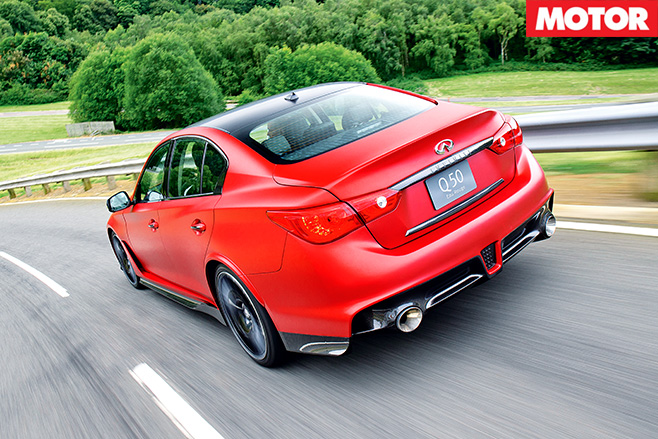
The heady reserves are currently sent to all four wheels via a modified version of Infiniti’s six-speed automatic gearbox.
Underneath the skin – a mixture of steel, aluminium and carbonfibre – is a largely unique chassis. The changes include 100mm-wider tracks and lower ride heights (down 15mm up front and 20mm at the rear).
Further changes include special lightweight components, larger front and rear anti-roll bars and firmer springs and dampers, while a set of 20-inch wheels shod with a set of sticky 255/35 Pirelli P Zero Corsa tyres reside underneath the widened wings, adding to the assertive appearance.
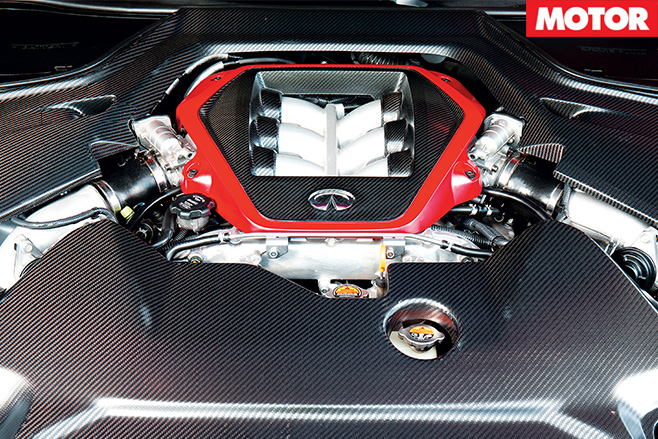
From the outset, it is the engine that steals the show. The retuned GT-R 3.8-litre V6 powerplant endows the Q50 Eau Rouge with serious pace – enough to challenge its German rivals in a straight line.
With a four-wheel drive system providing impressive levels of traction off the line, the Q50 launches with great bravado and delivers huge on-boost in-gear shove on a pegged throttle.
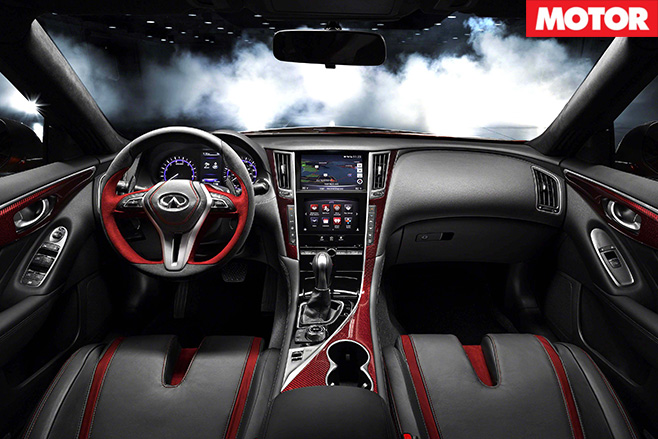
The electro-mechanical steering is encouragingly direct, conspicuously quick and nicely weighted. There are enthusiastic turn-in traits, and with quite a bit of initial front-end bite, it manages to carry an impressive amount of speed up to the apex.
Infiniti has tuned the Q50 Eau Rouge’s four-wheel drive system to provide a nominal 50/50 drive split front-to-rear, in a move aimed at achieving neutral handling characteristics. It is very impressive in high-speed corners.
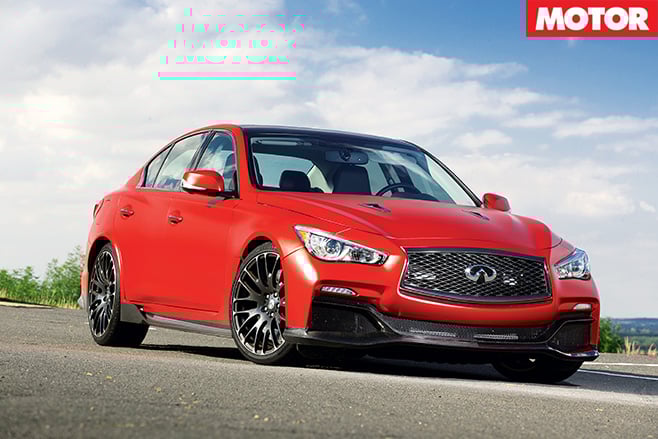
Sadly, the Q50 Eau Rouge will never hit the public road, Infiniti syaing the numbers just don’t add up for a production version. It’s a great shame, as the vital ingredients of what promised to be quite a special performance car were already pretty much in place.
3.5/5
Specs
Engine: 3799cc V6, DOHC, 24v, twin-turbo Power: 418kW Torque:600Nm 0-100km/h: 3.9sec (est) Weight: 1825kg Price: TBA
