
PORSCHE will stun visitors to the 2015 Frankfurt Motor Show with the breathtaking styling and advanced technology of its all-electric, four-door Tesla fighter, the Mission E concept.
While rumours had circulated that Porsche would show a sports-sedan concept to rival the BMW 5 Series, the Mission E reality is far more adventurous and is one of the show’s big surprises.
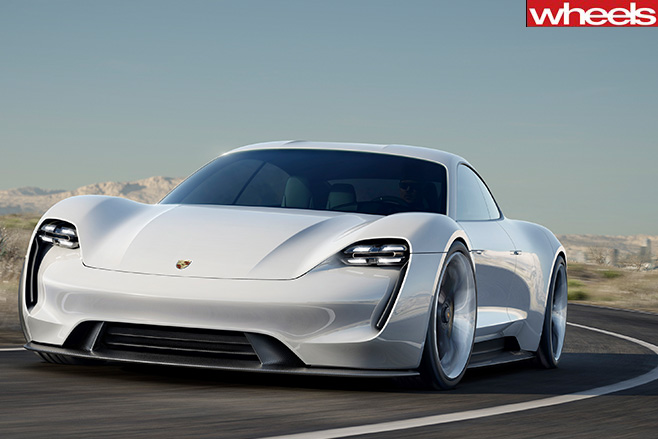
Standing just 1300mm tall, with a latest-technology Lithium Ion battery running the length of its wheelbase for a super-low centre of gravity, the Mission E combines stylistic hints of the 911, the 918 Spyder and Porsche’s Le Mans racers.
But it is what’s under the Mission E’s exquisite aluminium, steel and carbonfibre reinforced polymer skin that really excites.
Featuring a pair of permanently excited synchronous motors, just like the Le Mans-winning 919 hybrid, which split drive evenly to both front and rear axles, the Mission E is a 440kW super sedan capable of reaching 100km/h in under 3.5 seconds and 200km/h in less than 12 seconds.
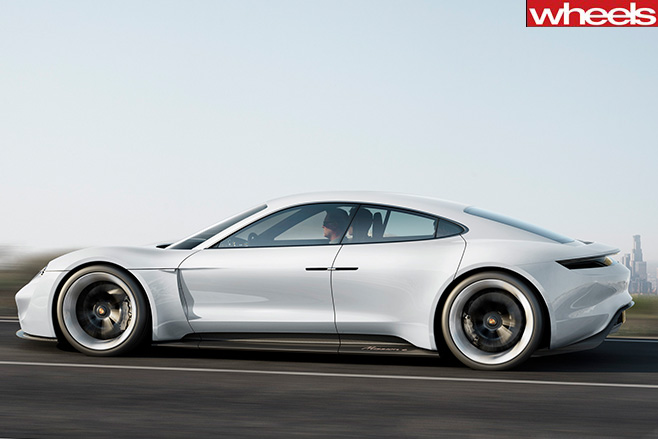
And its chassis employs the full gamut of Porsche dynamic smarts – all-wheel drive with torque vectoring, plus four-wheel steering – to make a sub-eight-minute Nurburgring lap time achievable.
While Porsche claims the Mission E can travel up to 500km on a single charge, it’s the astounding improvement in charging time that really grabs headlines.
Admittedly, it needs to operate at 800 volts – double the voltage current production electric vehicles need – and will require a bespoke charge port, but this reduces charge time to the point where the Mission E can reach 80 percent capacity in just 15 minutes.
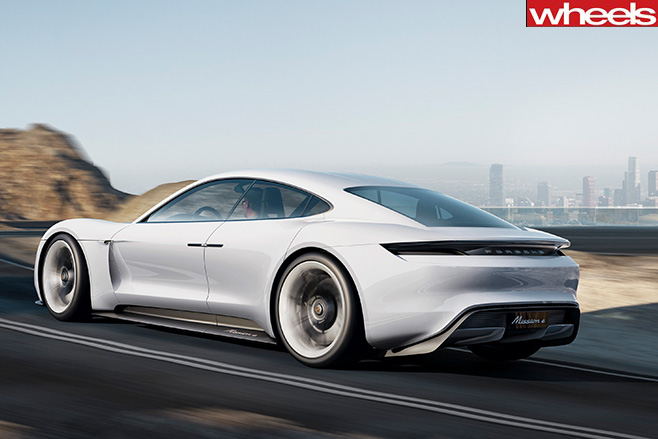
In the flesh, the Mission E is a show-stopper. It’s essentially a montage of Porsche styling cues that miraculously gel organically, and with real beauty. It’s svelte, yet sinister, and that’s a hard combination to pull off.
Based around a flow-through design intended to improve airflow around the wheels and reduce overpressure in the wheel wells, it’s the Mission E’s striking suicide-door design – minus a B-pillar – and its lighting signatures that demand attention. At the rear, a full-width red LED band spans the Mission E’s tail, like Knight Rider for the mid-21st century, with the P-O-R-S-C-H-E letters below it also glowing red. Whatever you do Porsche, please don’t mess up this design for production!
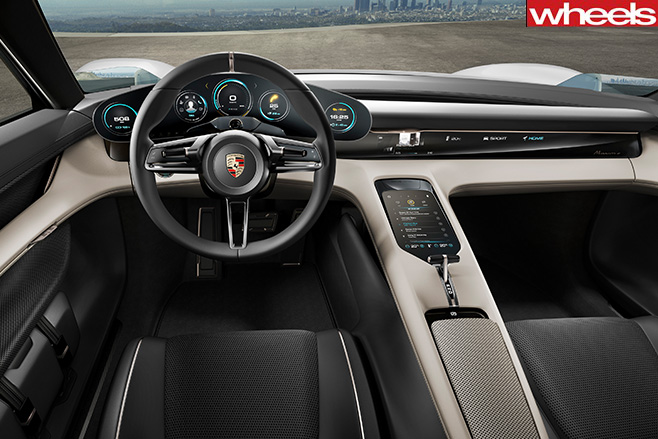
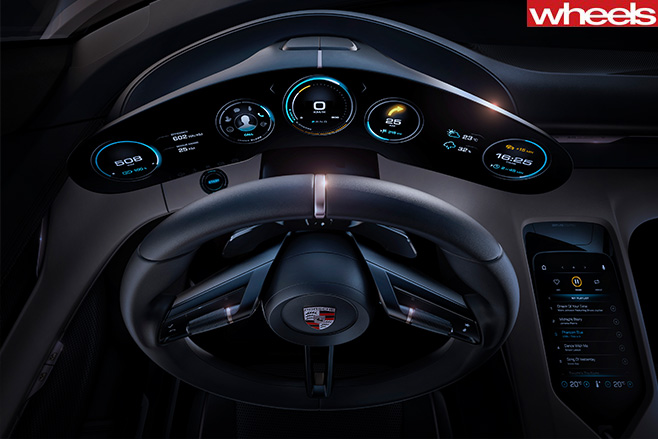
A camera detects which instrument the driver is viewing, and the menus inside that dial can then be controlled by a button on the steering wheel. It’s essentially a mix of eye-tracking and manual operation. The instruments also follow the driver’s movement in what Porsche calls the Parallax Effect, meaning all instruments will always be visible.
More importantly, the Mission E debuts ‘gesture control’, something Volkswagen says will filter down to cars like the Golf. It allows you to select different functions in the car by hand gestures, detected by sensors. A grasping gesture means select, while pulling means control.
Given that the greater Volkswagen Group intends to launch 20 electric or plug-in hybrid cars before the end of this decade, we may well see the Mission E in reality (with a proper name) sooner than we think.
But please Porsche – don’t do an original Boxster and bugger the concept’s styling. This one is a keeper.
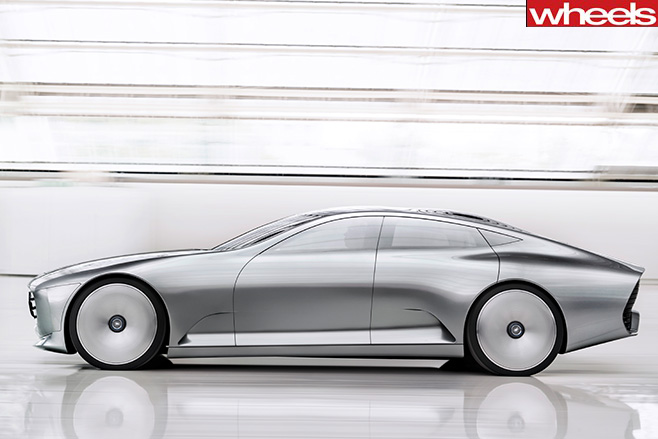
MERCEDES-BENZ has taken active aerodynamics to another level with the radical Concept Intelligent Aerodynamic Automobile (or Concept IAA) – revealed at the 2015 Frankfurt motor show – which changes shape at 80km/h for better aero efficiency.
The sleek and svelte four-door also gives a clue to the next generation CLS four-door coupe, due in 2017 or 2018.
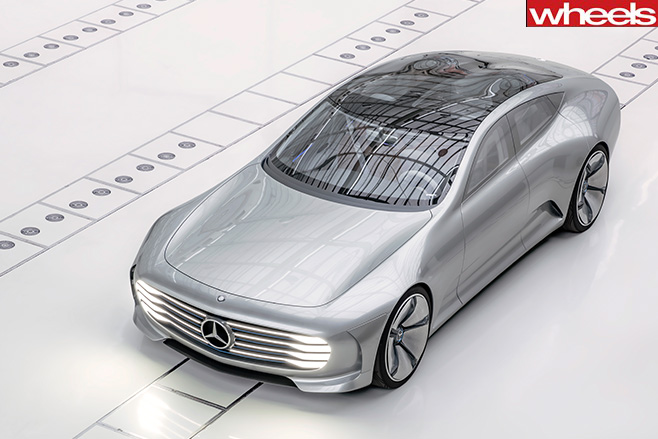
The keys to the Concept IAA’s split personality are eight extendable segments at its retro-infused rump, which extend the car by 390mm (the wheelbase remains the same). It takes the body from a lengthy 5040mm to 5430mm.
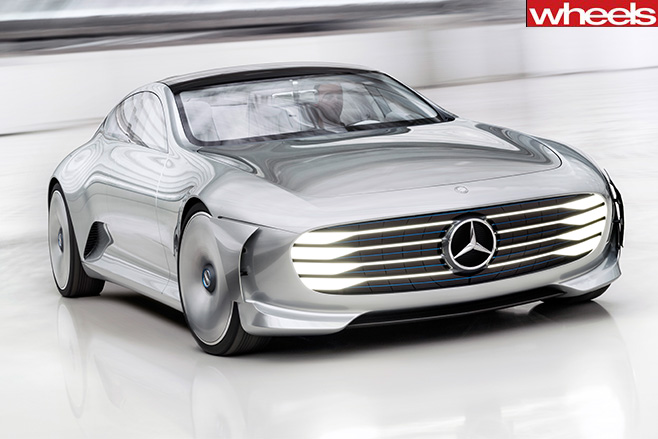
Even the wheels change at the 80km/h transformation speed, from “design mode” to “aerodynamic mode”: the deep dish transforms to a flatter surface designed to further smooth the air flow.
“The Concept IAA applies intelligent innovations to resolve the conflicting aims of functionality and aesthetics, and shows that we still have plenty of ideas on how to achieve further improvements in efficiency,” says Thomas Weber, board member and the head of research for Mercedes-Benz cars.
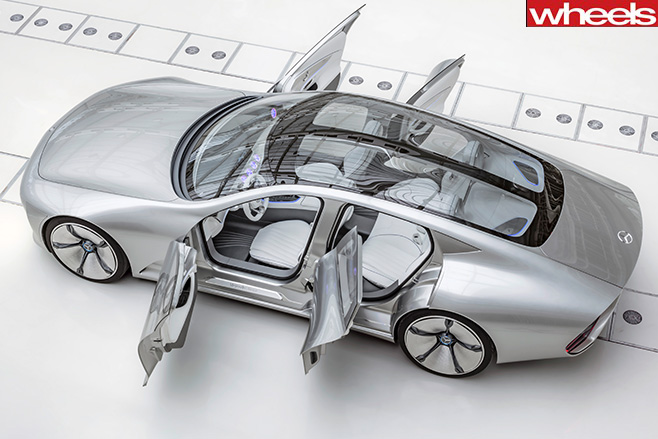
“The Concept IAA symbolises the emotional core of Mercedes-Benz … and it shows in a host of details what our customers can look forward to in future production models,” says Ola Kallenius, Daimler board member and the head of sales and marketing for Mercedes-Benz.

While the radical aerodynamic transformation is unlikely to translate into a production model in the near future, expect it to give clues as to next generation active aerodynamics.
The Concept IAA also expresses some of the design themes being explored for the third generation CLS due within a few years.
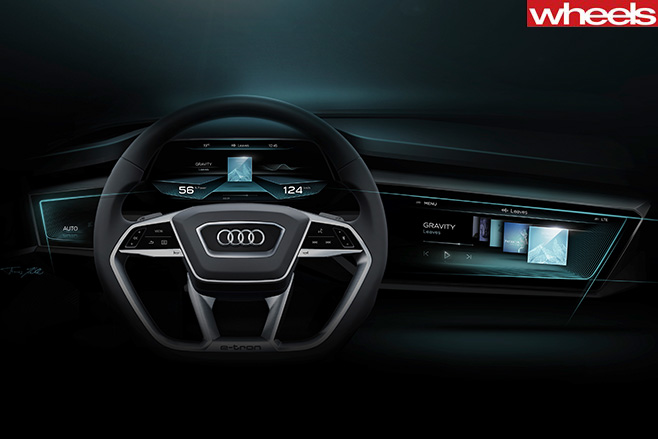
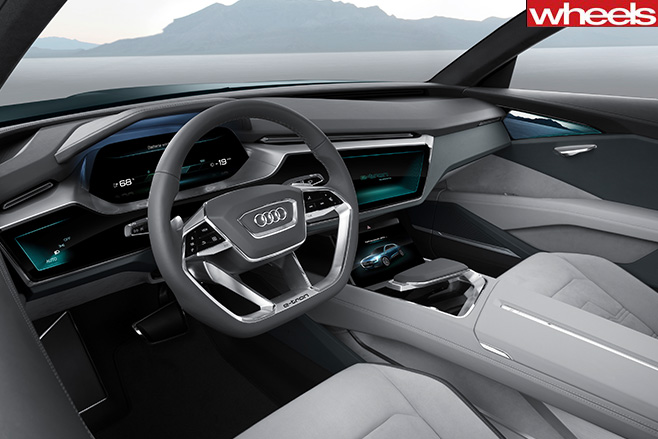
THIS is the fully electric SUV that Audi hopes will run four rings around the Tesla Model X – if released in a production version.
It’s called the e-tron quattro concept, and if the German brand is to be believed, it can travel over 500km on a single charge.
That would mean it had the largest range of any electric SUV to date, with Tesla’s imminent Model X expected to manage around 390km before it runs out of juice.
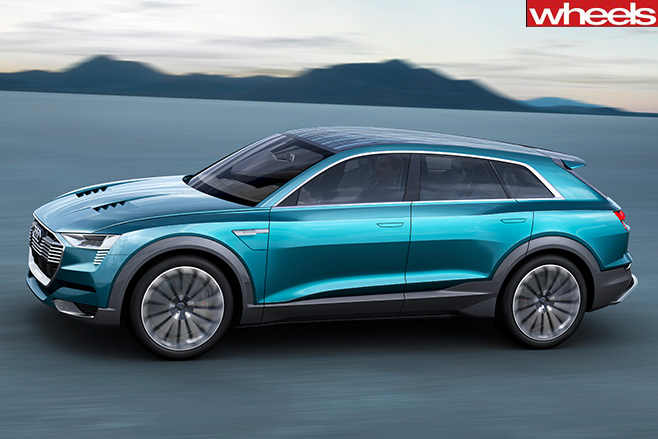
Importantly, though, it’s no pie in the sky concept either. What you’re looking at is the best hint yet at Audi’s upcoming Q6 e-tron, tipped to hit our roads in 2018.
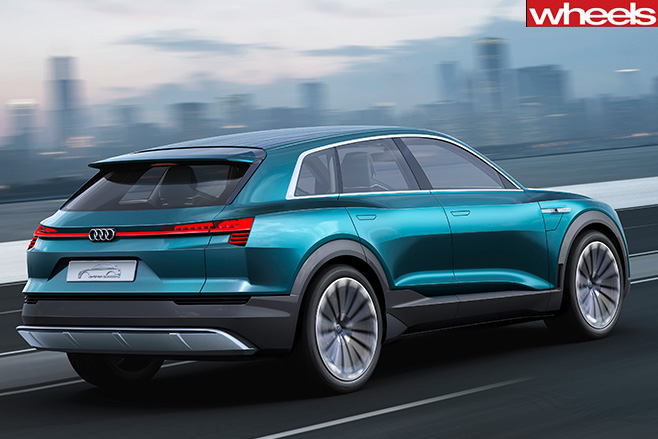
“It combines driving pleasure with great range, an expressive design and excellent comfort.”
A new-generation intelligent drive management system governs how the electric motors work with each other to achieve maximum performance and efficiency, while a Torque Control Manager supersedes a conventional differential to shuffle all that grunt to all four wheels.
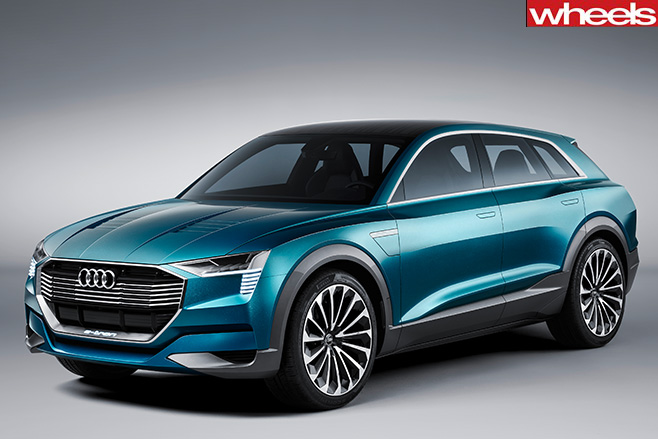
As you’d expect, regenerative braking is used to recapture lost energy. But there’s also 1.98 metres of solar panelling on the roof, which can help charge the on-board batteries.
Lamborghini revealed its convertible Huracán, the successor to the popular Gallardo Spyder, at the Frankfurt Motor Show overnight.
Named the Huracán LP610-4 Spyder, most of the car’s story revolves around what’s happened to its roof, as underneath its gizzards and skeleton are shared with the hard-roof Huracán.
That means it still packs a howling 5.2-litre V10, with all of the coupe’s 449kW and 540Nm, and claws at road surfaces with all-wheel drive.
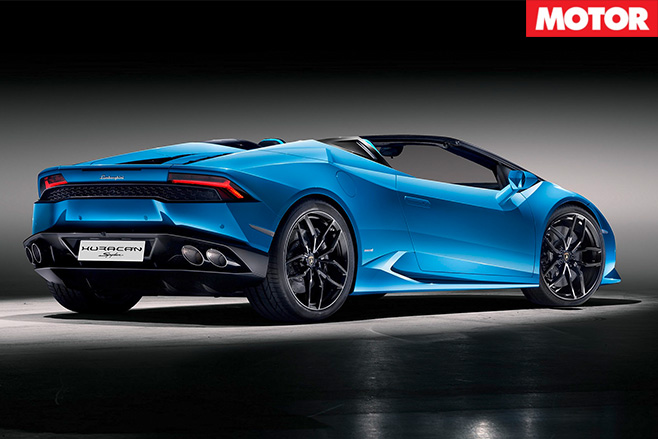
But because the new electrohydraulic cloth roof adds 120kg to its overall weight, pegging the Spyder on the scales at 1542kg dry, the Spyder lags behind the coupe by 0.2sec and is ultimately 1km/h slower.
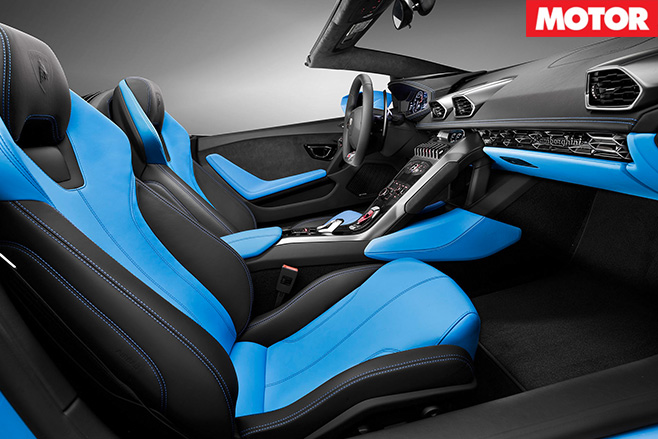
New ‘fins’ now feature behind the seatbacks and continue from there to the rear wing, meanwhile a model specific engine bonnet is plonked in between them.
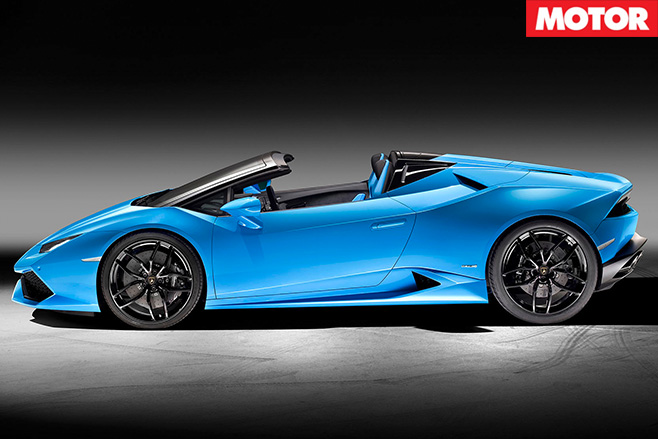
You’ll have until 50km/h to drop the roof, and if you’re particular about style you can even have the shade cloth coloured red or brown as opposed to boring old black.
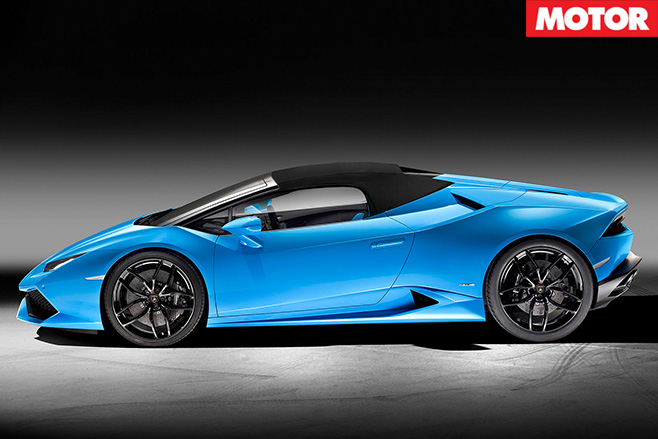
The chopped Huracan is due for Oz by spring next year.
Porsche is responsible for the first shock unveiling of the Frankfurt Motor Show with the debut of the Mission E concept.
Looking like an elongated, futuristic 911, the Mission E features two permanent magnet synchronous electric motors to provide propulsion and recover braking energy.
Developed from a similar system in the Le Mans-winning 919 Hybrid LMP1 car, together the motors produce “over 440kW”, enough to shift the Mission E from 0-100km/h in a 3.5sec and to 200km/h in under 12 seconds, very similar numbers to the current 911 GT3.
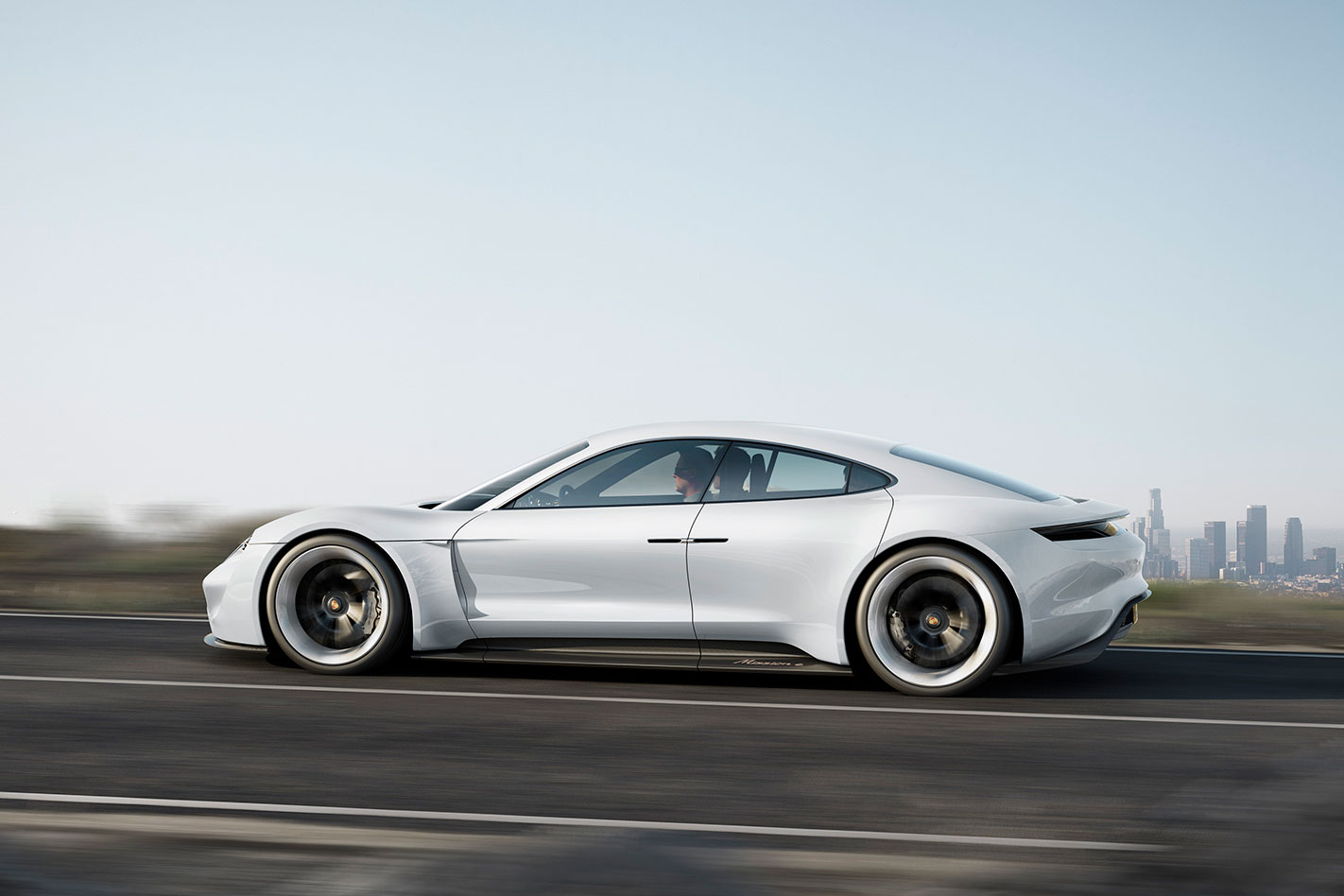
All-wheel steering, similar to the system used in the 911 Turbo and GT3, is also present, and Porsche claims the Mission E is good for a sub-8min lap of the Nurburgring Nordschleife.
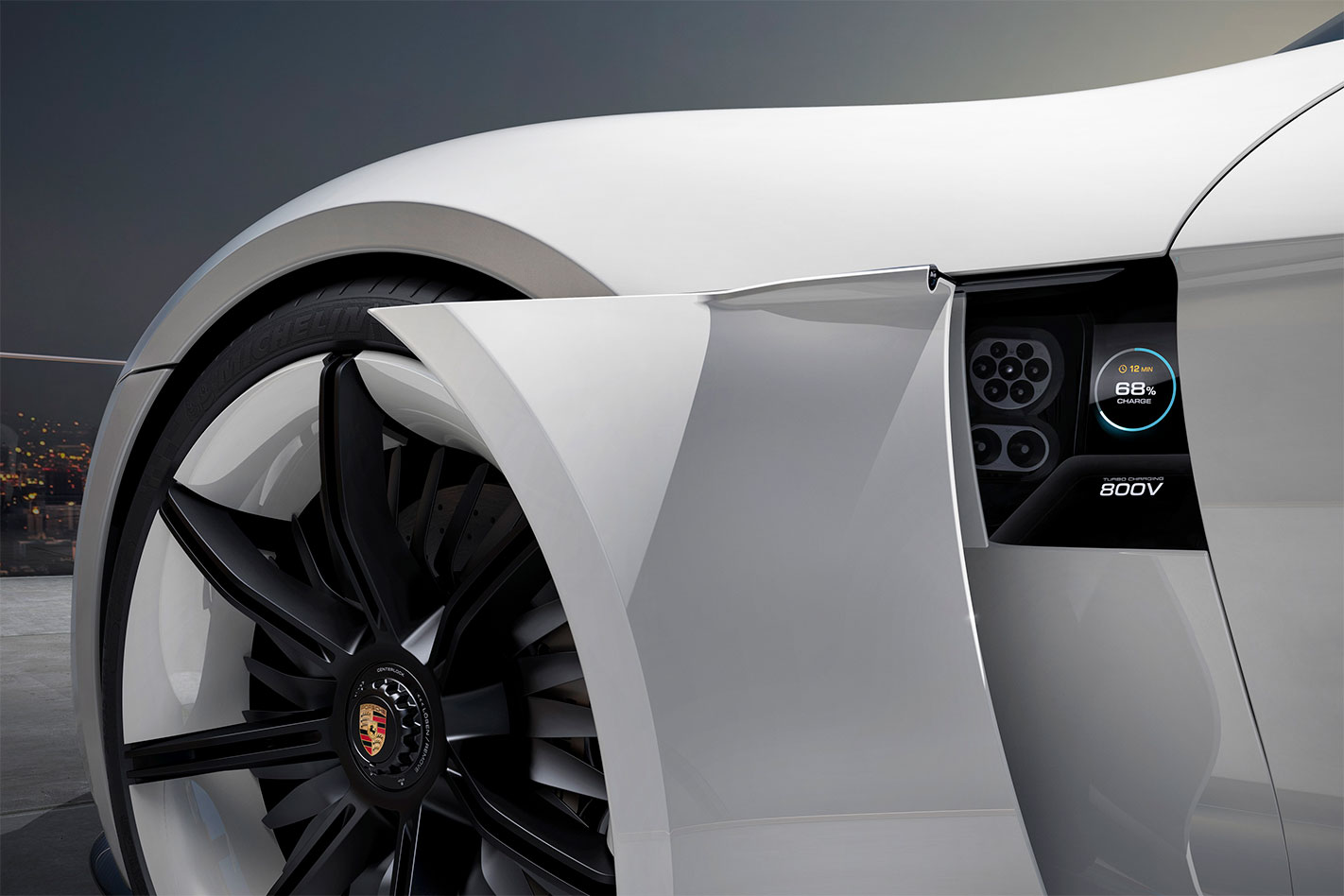
Maximum driving range is claimed to be over 500km, while the ability of the Mission E to plug into an 800-volt outlet – compared to a maximum of 400 volts for current electric cars like the Tesla Model S – means the batteries can be charged to 80 per cent capacity in just 15 minutes.
The all-electric drivetrain now only results in an extremely low centre of gravity, but the space liberated by the lack of mechanicals has allowed Porsche to increase interior accommodation and install four individual bucket seats.
Inside, Porsche has taken a leap into the future. The cabin layout is familiar from current Porsches, but the display surfaces are like something out of The Fifth Element.
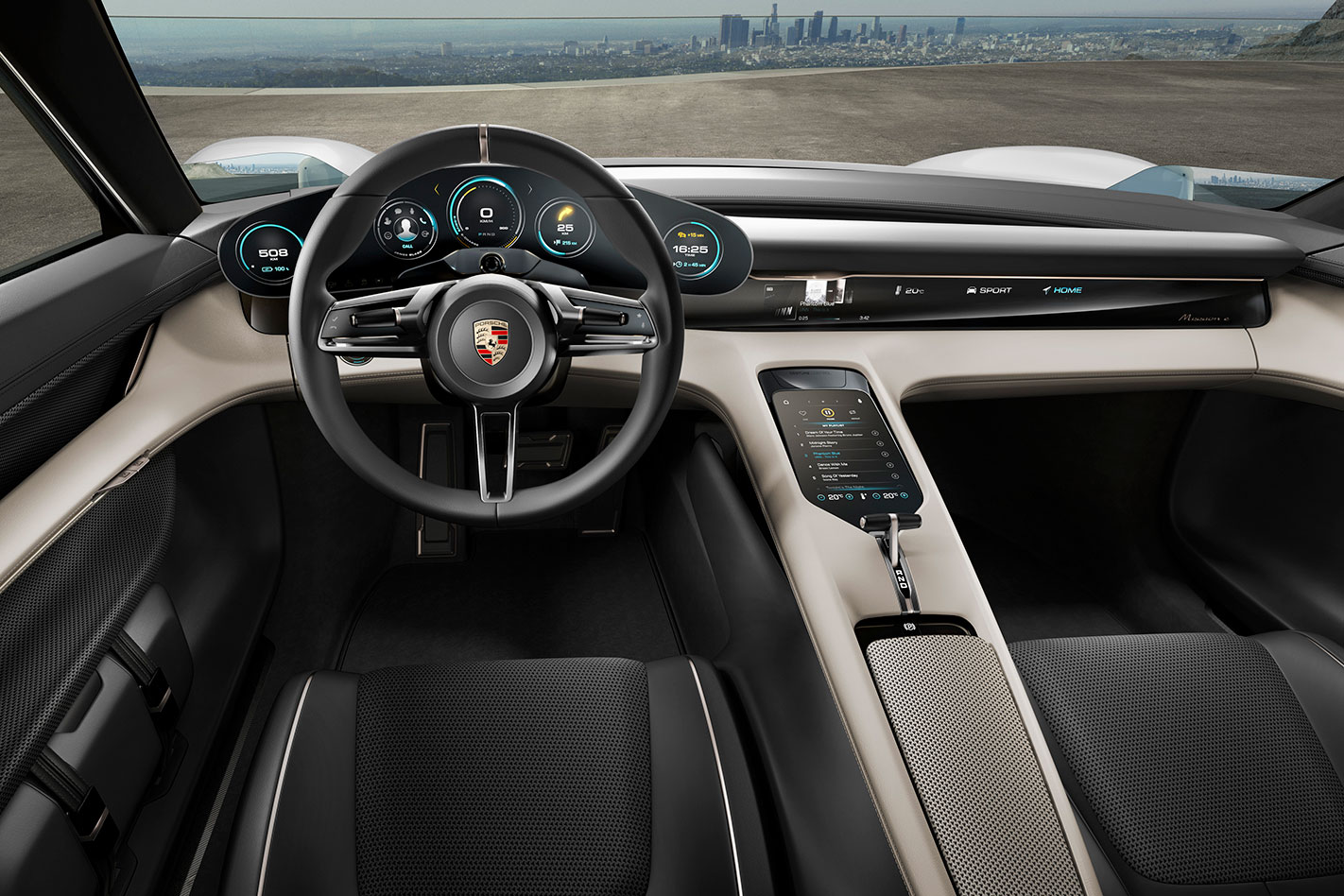
Porsche has also revolutionised the side mirror by deleting them all together and displaying what would traditionally be shown by an external mirror in the bottom corners of the windscreen.
In addition, a holographic display that extends the length of the dashboard allows the passenger to control media, sat-nav, climate control and vehicle functions using touch-free gesture technology, though these functions can also be controlled using the centre-console-mounted touch screen.
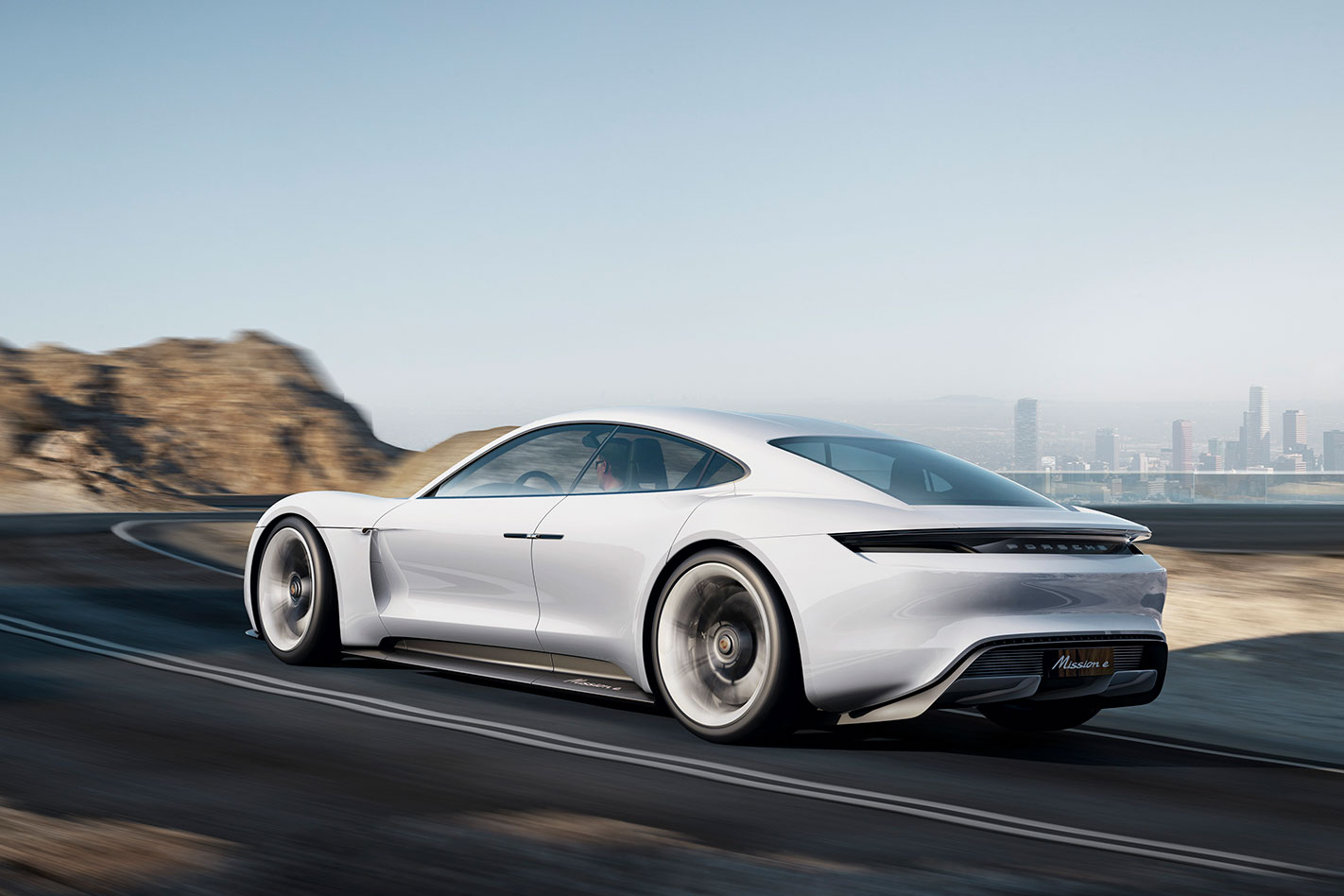
While cars such as the Tesla Model S P85 D and Mercedes-Benz SLS AMG E-Cell have proved that battery-powered performance cars can have huge appeal, is the world ready for an all-electric Porsche? We suspect it’ll arrive soon regardless.
BMW has released a cut-down version of its powerhouse M5 sports sedan – and this one cuts the price-tag way deeper than it slashes lap times.
WHAT IS IT? A bargain, that’s what. By deleting a few choice options and removing the regular M5’s standard Competition Pack, BMW has sliced $45,000 from the sticker of its iconic super sedan.
WHY ARE WE DRIVING IT? It’s not every day a car company calls to offer exclusive access to an empty racetrack and a new, special edition, M5. So when BMW picked up the phone, we came running.
MAIN RIVALS Audi RS7, Mercedes-Benz E63 S, HSV GTS
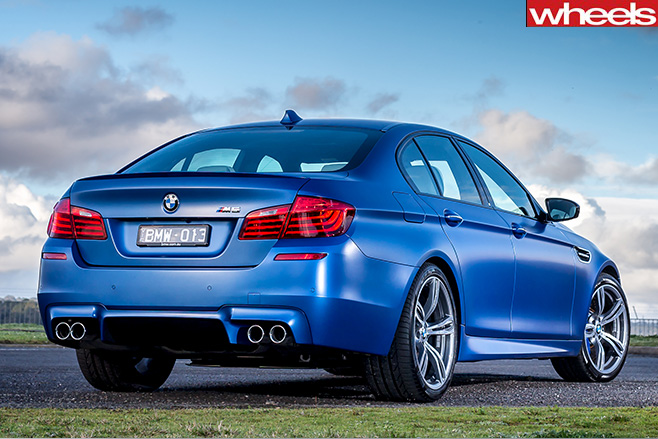
PLUS: Huge saving for minimal loss of performance; blunderbuss power MINUS: Some more steering feel would be nice; interior not as special; lacks the regular M5’s aural fireworks
THE WHEELS REVIEW SLAPPING a Pure badge onto the rump of a BMW M5 creates certain expectations. Particularly when BMW itself says this new Pure special edition is “raw and track-inspired”. This makes you think the Pure M5 will be a stripped-out special with less weight, fewer luxuries and a greater focus on hard-core performance. Could it even be an M5 CSL?
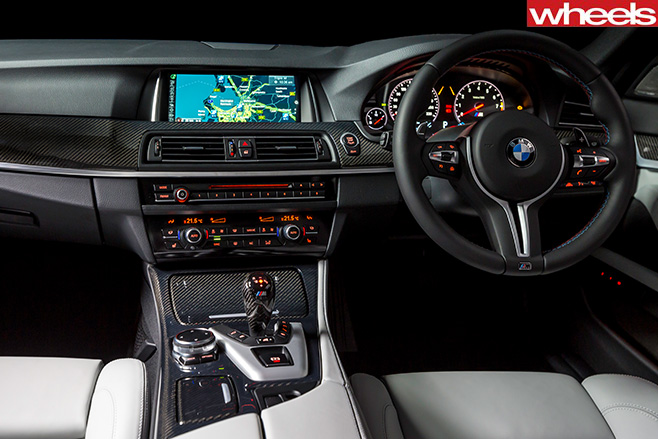
It leaves you with the realisation that BMW has tried to create a track-inspired special by deleting the track-inspired package. That’s enough to hurt your brain.
Where the Pure badge really makes sense is with its new, $185,000 price tag. That’s $44,540 cheaper than the normal M5.
Dropping the Competition Pack gear obviously saves some serious coin, but the Pure also does without some of the regular car’s lavish standard equipment and a few key options.
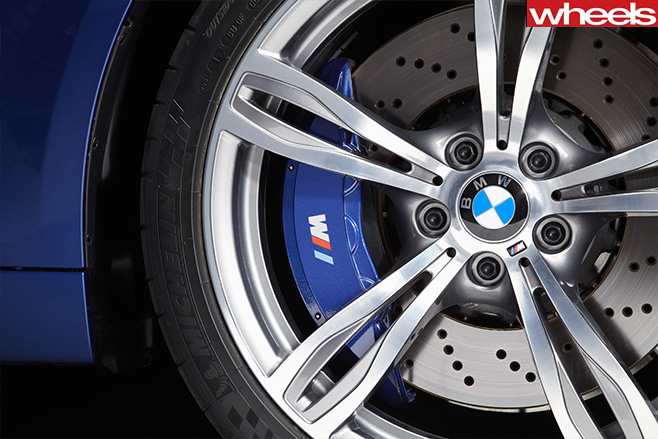
After performance testing at Sandown Raceway, we can confirm it’s the former. Losing 11kW has done nothing to blunt the M5’s ballistic straight-line performance and, while its 4.4-litre twin-turbo V8 has plenty of low-down punch, its party trick is above 4000rpm and the way it pulls relentlessly and rapidly to the 7500rpm redline.
There’s nothing lost through the corners, either. It’s true that the Pure’s higher ride height means there’s slightly more roll onto the outside tyre at corner entry, but there’s still the same pointy front axle and super-glue levels of mid-corner grip.
Of course, get too excited with your right foot and the Pure will demolish its rear 295/30 rear tyres with an unforgiving tsunami of torque. Feed the throttle in, though, and there’s traction to burn.
Is the M5 Pure not enough car for you? Then check out this drive video of the BMW M5 Nighthawk.
All this means that when you hook the Pure up, it’s a breathlessly quick super-sedan. But it’s not perfect. While the steering is smooth and fluid in its rate of response, there’s still not enough communication between the front wheels and the wheel in your hands. The Pure’s standard exhaust also means you lose some of the M5’s aural fireworks.
So should you feel ripped off if you’ve just dropped $230K on a normal M5? BMW, naturally, says you shouldn’t. The purpose of the Pure is to expand the reach of M5 to different people at a different price point.
But the reality is, the Pure offers 99 percent of the regular M5’s performance for a fraction of the cost. It’s marginally slower and slightly softer, and its interior is a little less special, but in real-world traffic on real-world roads, we’re willing to bet you’ll appreciate the $45K saving more than the loss of a tenth in the rush to 100km/h.
If a BMW M5 is on your shopping list, this one’s a bargain. Pure and simple.
SPECS Model: BMW M5 Pure Engine: 4395cc V8 (90°), dohc, 32v, twin-turbo Max power: 412kW @ 6000-7000rpm Max torque: 680Nm @ 1500-5750rpm Transmission: 7-speed dual-clutch Weight: 1865kg 0-100km/h: 4.3sec (claimed) Fuel economy: 9.9L/100km Price: $185,000 On sale: Now
In 1984 Peter Brock and Larry Perkins took on the 24 Hours of Le Mans in a Porsche 956 sponsored by Bob Jane, and Wheels was along for the ride – literally. Here is how it all came about.
THE AUSTRALIAN attack by Bathurst heroes Peter Brock and Larry Perkins on the 1984 24 hours of Le Mans never really stood a chance. Rushed preparation, a leased and decidedly second-hand Porsche 956, and without the promised engine and gearbox: they were always on the back foot.
Running on adrenalin, Team Australia – funded by Bob Jane and organised by Greg ‘Peewee’ Siddle (who managed world champion Nelson Piquet) – somehow managed to be race competitive. Until, at 2.00am on Sunday, half-way through the race, disaster struck.
From the moment we knew of the Le Mans attempt, this was a story Wheels had to have. So it happened that Phil Scott, fresh from the Monaco Grand Prix, which gave Wheels readers his magic Murray Walker’s Monaco story (see Classic Wheels, July 2015), pointed his trusty AWD Alfa 33 north for the once magnificent Le Grande Perray, a big and drafty 14th century chateau with but one shower.
On his first visit to Le Mans, Phil’s next week belonged to Team Australia. Entrepreneur Siddle, lovely bloke that he is, had arranged for our man to spend the lead-up to the race living in the Brock/Perkins chateau, knowing that, regardless of the outcome of Le Mans, Scott’s inside story would make captivating reading.
Scotty’s diary, dense with drama, mental anguish and heartache, and fuelled by Larrikinisms from the ultra-dry wit of Perkins and the casual, matter-of-fact Brock, deserves to be read quietly, without interruption, in company with a large glass of quality red.
It was Brock who suggested that Scotty should run shotgun for a lap in the orange 956 during Thursday morning practice. “C’mon, you’ve been lurking long enough, let’s go for a speed,” Brock insisted. Insurance arranged – premium long forgotten – they literally crammed Phil into the 956 for the ride of his life.
From the moment Phil rang from France with the news that he was doing a Le Mans lap with Brock, I knew we had the makings of a great story. I also knew it would be extremely long, but knowing that the detail and conversations were all-important, I still wanted Scotty to let it run and run.
He did, all 9000 words, or four times the normal length of a Wheels feature story in 2015.
Should we cut it, like Evan Green’s two-part story on Donald Campbell’s land speed record attempt (Classic Wheels, March 2015), or just let it occupy whatever space it took? Tough call. But not really, not with words of this quality. The uncut story occupied almost 13 pages, fully deserving the cover line The REAL Le Mans: With Brock at 353km/h.
Speeding debate? I never really worried about it, to be honest.
But that was when I lived in Sydney. Since my move to Melbourne it’s taking a long time to get used to Victoria’s semi-Orwellian attitude to speeding. I can’t speak for the other states but, compared to NSW, it’s way over the top, like we’re trapped in Groundhog Day, except, it’s April 1.
First, a billboard threatened me as I drove into Victoria. “We’ll get you,” it said. Another one was particularly graphic. They have those in NSW, too, but they’re not so full-on that they make your lunch creep up your oesophagus. Has it always been like this in Victoria?
Now, I’m not actually sure where I stand on the issue. On the one hand, speeding fines are a tax on the dangerous and disobedient. You have to draw an arbitrary line somewhere, yes?
And though the speed limit is so low in some areas you might call it farcical, the law needs to cover everyone from Craig Lowndes to the dodgy overseas tourists who’ve just landed in the country, dithering about in their Yaris hire car.
Correct? Otherwise, lest the law was more relaxed, who knows what would happen. And anyway, if you don’t want a speeding fine, the arithmetic is pretty easy: do the speed limit.
But then there’s the flip side. Do we really need the government – a body whose sole existence is to serve us, the citizens – telling us what’s good and bad for us? They’ll happily continue doing so.
Last year, NSW earned $67m from speed camera revenue. Victoria? $293m, more than four times more. I’ve heard the cries that one day, news cars will be speed limited by GPS. Not if you live in Victoria – the treasurer would choke on his tie.
Of course, the fines help to pay the $3 billion hospital bill for people broken in car crashes. On top of that, in terms of car crash fatalities per number of registered vehicles, I can’t speak for the other states, but Victoria is lower than NSW.
Thank the speed cameras! The government bots will moan. I don’t need to point out to you that, in terms of safety, cars have obviously taken intergalactic leaps even in the last five years.
Yet, it doesn’t feel right. Since moving to Victoria, I’ve been driving around, my eyes fixated on the speedometer like they’re attached with Tarzan Grip, absolutely terrified I’ll make a mistake and do five over past a hidden speed camera.
When I stop at traffic lights, and pick my eyes off the speedo like they’re scabs, I see in the faces of my fellow motorists a look like we’re living under an occupying army. “Oh well,” they whimper. “Not much we can do about it.” Really? Don’t get me wrong, I don’t want to speed on the road – I’ll save it for the track.
This is more about you, driving around on roads you paid for with your taxes, but gripped in fear. It doesn’t feel right to me.
To our readers across Australia, what’s it like where you are? And what could be done to make it better? Send us your opinion: [email protected]
RALLY: Sublime Ogier takes Rally Australia and world championship
HOW SWEET it was. Sébastien Ogier won Coates Hire Rally Australia to snare his third straight FIA World Rally Championship, cementing his place as one of the greats of the sport.
Still a youthful 31, he has time, certainly the talent, and apparently the inclination, to go on and accumulate championships in the fashion of his countryman Sébastien Loeb.
The Volkswagen star finished the 17 stages on the Coffs Coast 12.3 seconds ahead of his Volkswagen team-mate Jari-Matti Latvala, with Citroën’s gallant Kris Meeke a further 20.3 seconds behind in third place.
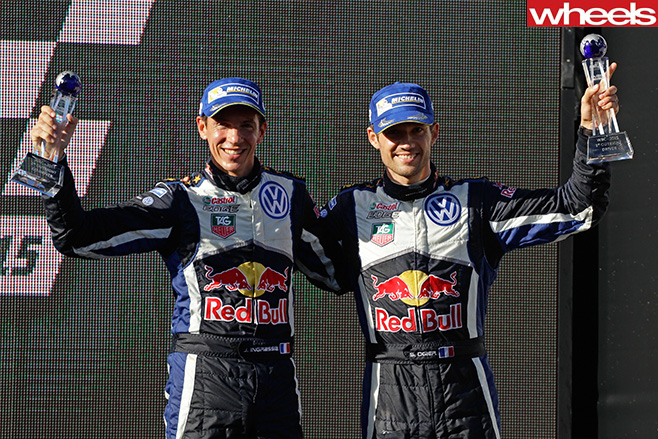
On Friday and Saturday, when he was in the unwanted role of road sweeper and massively handicapped by the characteristically slippery loose surface gravel, Ogier just couldn’t match the pace of those who had firmer, grippier tracks to work with. But he kept his cool, didn’t make mistakes and stayed in the hunt.
Northern Ireland’s Meeke did not quite inherit the earth, although he led Rally Australia for much of the first two days, relinquishing the lead to the flawless, persistent Ogier late on Saturday.
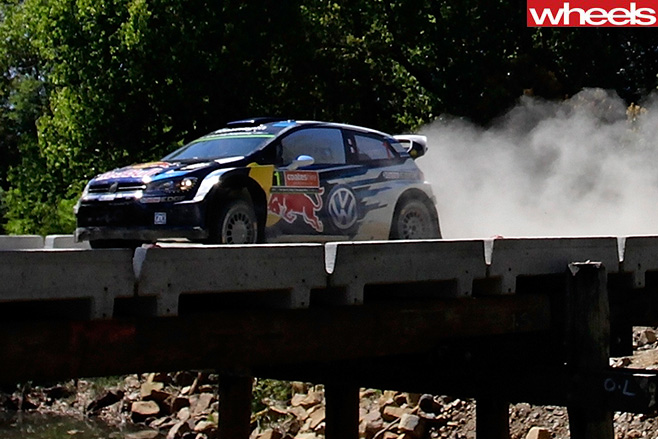
Knowing a win in Australia would secure his third world title, Ogier went on the attack on the final morning, relishing the firmer gravel to push out his lead, rubbing his supremacy in the noses of the others with a brilliant win in the final power stage.
Cruising just isn’t in his nature. Nor is making mistakes (ignoring his shakedown miscue, when he almost stuck the Polo on its lid!).
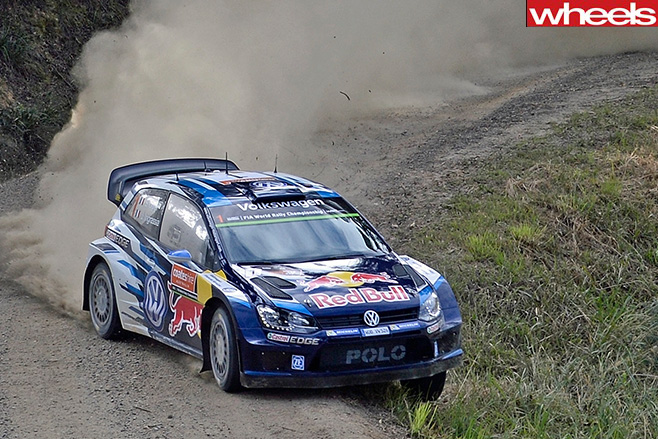
“It was for sure the most difficult rally to open the roads, so it’s perfect to get this win for the third time. On paper this one was impossible to win – so is a very beautiful result.” Up with his best ever? “For sure,” Ogier beamed.
Latvala/Miikka Anttila started Sunday in third, 2.6 seconds off the lead, but then fought like crazy to claim second over Meeke for a VW one-two.
Latvala, who usually applies brutal candour to self-evaluation, conceded that Ogier was simply faster and better in Australia.
Ogier’s third victory Down Under also landed world championship hat-tricks for co-driver Ingrassia and manufacturer Volkswagen, the achievement coming in round 10 of the 13-event series.
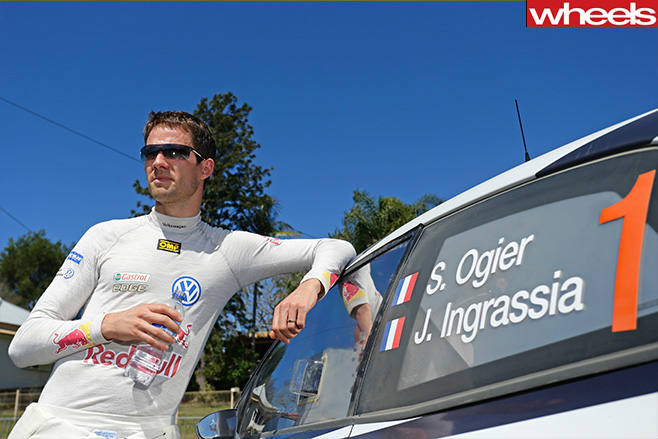
Andreas Mikkelsen, Volkswagen’s third driver, piled the pressure on Meeke on the last day, but fell 5.9 seconds behind Meeke in fourth.
Hyundai’s Kiwi goer Hayden Paddon again showed his abundant potential, taking fifth, 16.6 seconds shy of Mikkelsen. Some experts are rating him a future world champion.
There were amazing scenes when the three-time champs returned to the VW service park to celebrate with the other 52 team members who were part of the victorious squad. Cue champagne sprays. TV cameras poking every which way, thumping ‘80s mood music, and even the obligatory selfie by Ogier and his delighted TV star wife.
This Rally Australia was some kind of wonderful. Some of the best action in the WRC, in glorious sunny weather and set in some delightful north coast countryside.
V8 SUPERCARS: Frosty takes Sandown in Ford one-two
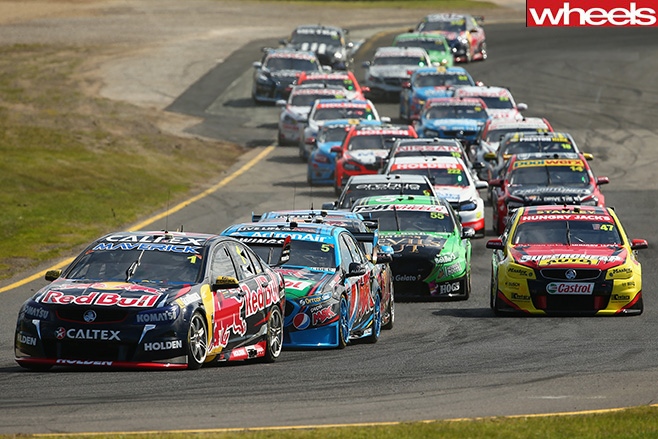
Whincup and Paul Dumbrell led for the majority of the race until a freak puncture caused by a discarded bolt in pit lane agonisingly sank hopes of a third consecutive Sandown 500 victory – and a pogo jump up the points table.
Ford drivers Mark Winterbottom and Steve Owen led home team-mates Chaz Mostert and Cameron Waters for a crushing one-two, sending ominous messages that the 2015 title is looking like a raffle between Prodrive Australia’s leading drivers.
Sandown, the first of the enduros, introduced co drivers to the mix, with pressure on the steerers supporting the title contenders.

Leading late in the race, Winterbottom was in cruise control until a Safety Car period to clean up debris decimated his lead.
“It killed me. I had a seven or eight second lead, and was starting to think about what’s for dinner. Then the safety car comes out and you’re not hungry anymore!” said Winterbottom.
Shane van Gisbergen and Jonathon Webb took third, a bounce back after an ordinary season for Tekno, with Garth Tander/Warren Luff threatening in fourth.
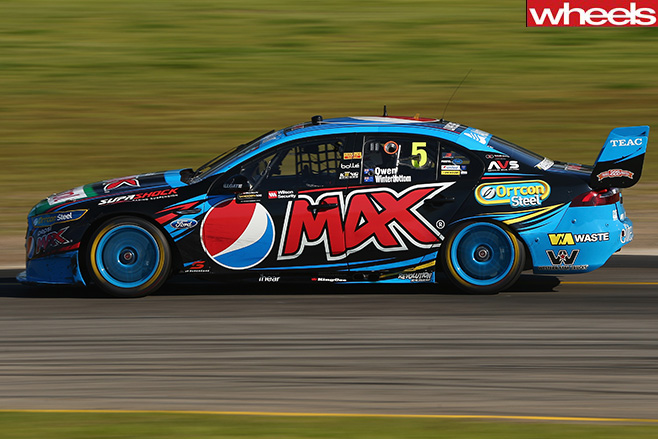
Fifteenth was not the poor outcome the pair deserved. ”It’s been an unbelievably tough month,” said Whincup. “Today just demonstrates what a cruel game we play…”
Ingall shook off the cobwebs to help Jack Perkins to ninth for HRT, a good result for a returnee and a part timer.
Scott Pye and Ambrose finished 12th, hampered after Ambrose’s poor start.
“I simply did not get the start procedure right and did not have it in first. A quick reset and we were underway but it cost the Xbox Falcon a lot of spots,” Ambrose said.
“We did not seem to have the ability to pass other cars from that point to really make more progress.”
The win extended Winterbottom’s lead over his young intra-team challenger Mostert to 198 points. Emphasising the Blue Oval dominance, PRA stable-mate David Reynolds (fifth at Sandown with Dean Canto) moved to third in the standings, heading into next month’s Bathurst 1000.
BATHURST: Later start and finish for 1000
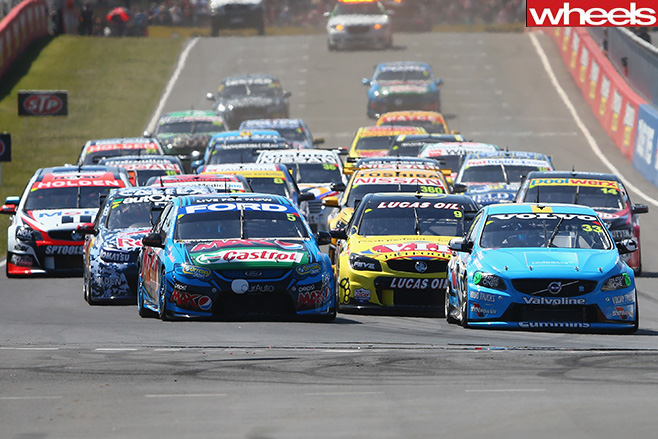
V8 Supercars has taken the decision to push the start of the Bathurst 1000 back to 11am – the latest The Great Race has ever got underway.
Back in the olden days, the start was always 10am. Then in 2007, organisers pushed it to 10.30.
The call to start later and finish later was no doubt a hopeful response to last year’s unintended tardy finish, which had a very positive effect of boosting TV numbers because the dramatic finish slipped into the regular (normally high rating) nightly news programming.
V8 Supercars is no doubt looking for more of that good news. The difference is that this year the telecast will be live on battling Ten and pay Foxtel rather than top-rating Seven.
The Bathurst 1000 is the only race on the V8 Supercars calendar not to have a time-specific finish. The arrangement with telecasters is that it runs to its full length of 161 laps, barring aggressive weather acts, or something unusual. Like darkness.
There will again be six practice sessions over the three previous days, with qualifying on Saturday.
The V8 development series, Porsche Carrera Cup, V8 Utes, Touring Car Masters and Aussie Racing Cars are again on the support program.
GERMAN F4: Aussie Mawson keeps title hopes alive
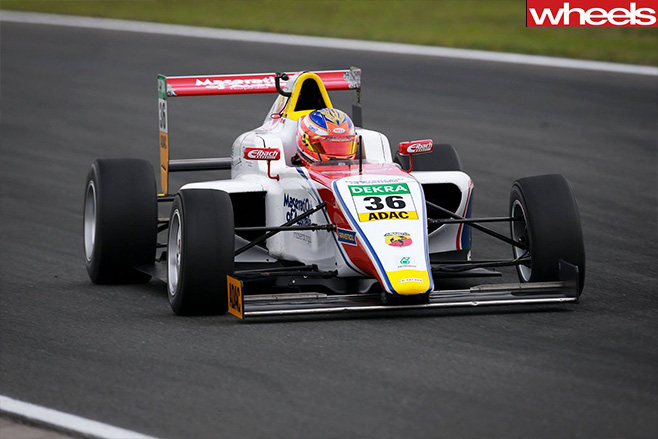
“This victory is a good way to round off an otherwise mediocre weekend,” said Mawson, who took the lead and charged away to win by 8.7 seconds.
With three races remaining, series leader Marvin Diensti of Germany will be hard to catch. He is 30 points ahead of Swede Joel Eriksson, with Mawson third but 54 points adrift.
V8 SUPERCARS: Malaysia on 2016 calendar
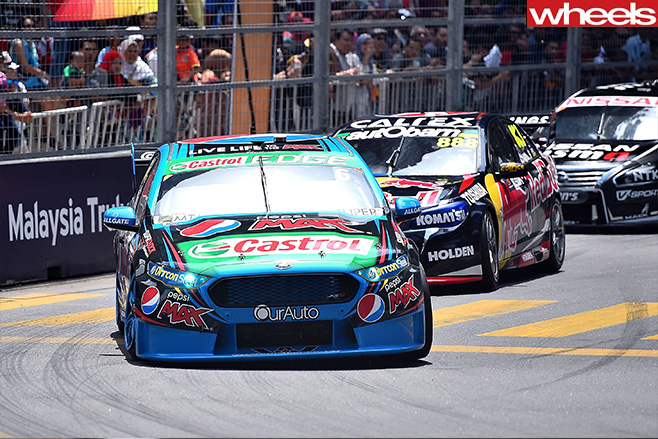
Despite a 100 per cent record of massive fails at successfully selling V8 Supercars in other markets, V8 Supercars Australia is determinedly pushing ahead with its offshore venture on the streets of Kuala Lumpur next August 12-14.
V8 Supercars Chief Executive James Warburton also suggests there will be a second race in Asia before too long.
This is despite trying and losing races in Shanghai, Bahrain, Abu Dhabi and Austin (Texas) as well as a street race a little closer to home, in Hamilton, NZ.
“We expect up to 10,000 Australians to travel to Kuala Lumpur for the event, which will also build exposure for V8 Supercars across Asia,” said Warburton, rather optimistically, perhaps, in light of the fact that the category can’t attract that many payers to Phillip Island.
More consistent scheduling throughout the season – with shorter breaks – are other features of the 2016 calendar, which commences with the Clipsal 500 Adelaide on March 3-6.
Other notable changes include moving the struggling Phillip Island SuperSprint from November to April 15-17, just two weekends after the Formula 1 Australian Grand Prix.
The Sydney 500 will again close the season but has been moved forward a week to November 25-27.
“A more condensed calendar will help build even more momentum and still provide adequate breaks for the teams and drivers,” said Warburton.
The V8 Supercars races on the 2016 Formula 1 Australian Grand Prix weekend continue to be non-championship events.
MOTOGP: Rossi extends lead at crazy Misano
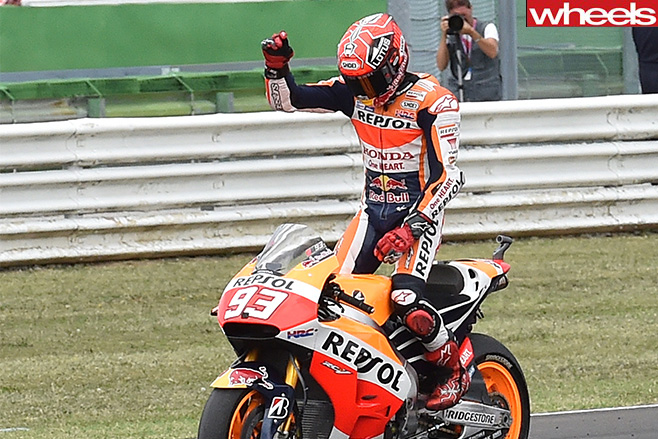
Yamaha star Jorge Lorenzo had earlier claimed pole by a handy margin and was favoured to claw back some of the points advantage held by his superstar team-mate.
Then the weather gods turned all mischievous. Not long after the start, won by Lorenzo over Marquez and Rossi, rain began to fall.
By lap five, rain flags were displayed and riders began to pit to swap to their wet setup bikes.
With the rain intensifying, the leaders finally pitted, the three ultimately pushing back to the front of the field,
Into the second phase of the race, the rain desisted and a dry line began to emerge. Many back in the pack again pitted to revert to their dry-weather bikes.

Then on his first lap back on slicks, Lorenzo binned his Yamaha at high speed, gifting a swag of points to Rossi, who went on to take fifth.
On the podium with Marquez were two disbelieving Brits: Bradley Smith and, after an early low-speed crash, Scott Redding.
“It was a very strange race but I’m happy with the end result. It is difficult to explain everything that happened during the race but I think the key was the second tyre change – from wets to slicks,” said Marquez.
“That was where we made a difference and – believe it or not – it was not me who decided everything! The team informed me of the situation with the pit board and helped me decide when to come in to change bikes, and I have to thank them!”
Rossi now holds a 23-point lead over Lorenzo, who remains defiantly confident. “If I win all the coming [five] races I can still become the world champion, and it wouldn‘t matter in what position Valentino would finish in.”
One thing bound to ruin your day is a flapping piece of paper under the windshield wiper of your car. Unfortunately, I came back to this little red flag on my windscreen a few weeks ago, and for once, I would have preferred it to be a parking ticket.
The note read: “I hit the back of your car, I’m so sorry. My details are…” with the person’s full name and number.
The immediate emotions were conflicting ones: dread, mingled with a heady feeling of relief. The latter was a surprising emotion, particularly as I stared at the bull bar-shaped depression in my rear bumper. But these days it’s sadly rare for someone to own up to an accident that could cost them serious money, even when insured.
Thankfully this driver was both insured and honest. I half-expected the phone number to be false, but it wasn’t. Instead, the driver answered, apologised yet again, and was very helpful in providing the details of the rental company, who had already been alerted to the incident involving their truck and my car.
Moving house is bad enough, but hiring a truck only to bump it headfirst into your new neighbour’s car upon arrival – what a terrible day this person must’ve had.
They did the right thing by leaving a note, but they should have called the police as I was not there to exchange details, and to my knowledge there were no witnesses. It’s a legal responsibility to call the police and report the incident.
There are whopping fines for drivers who leave the scene of an accident without exchanging details – even hitting a parked car. So if both parties are not present to swap details, it’s best to call it in as soon as possible (or at least ask the cops for advice).
As both vehicles had sustained minor damage – and one was a hire car – insurance was the only way to go. In other circumstances drivers may be tempted to keep insurance out of the picture to retain no-claim bonuses or to have a clear record with the insurance register.
Many people don’t know that every single insurance claim, from not-at-fault through to at-fault (even stolen or vandalised vehicles), all ends up on your record as part of an insurance register.
I was reminded of this when calling my own insurance company to report the incident and have them deal with the particulars of payments and reimbursements. I was walked through my record, which included three other claims in the past five years, and I nearly fell off my chair. Was I this bad a driver to have all these bumps and bruises recorded?
However, only one had been an accident; two were windscreen replacements from stone chips and one was a stolen trailer. Unfortunately, these all add up to make you appear more of a risk. It can also affect annual insurance estimates, particularly when moving from one insurer to another.
However tempting it may be to go around insurance and try to settle it with cash, those tiny dings can quickly blow out.
Following the (very long) phone call to my insurer, the car went straight to my local repair shop for a quote, and though the bumper was pushed in only lightly, the bull bar of the moving truck managed to scrape the limited-edition paint, the OTT rear diffuser and the reversing sensor strip. Damage totalled a whopping $3700.
The only bit of good news in this sad story was the other driver’s decision to pay an extra $30 insurance cover when hiring the moving truck, which reduced any accident damage down from $3000 to $500. The same price as a moving service, really – something the driver promised to do next time.
