
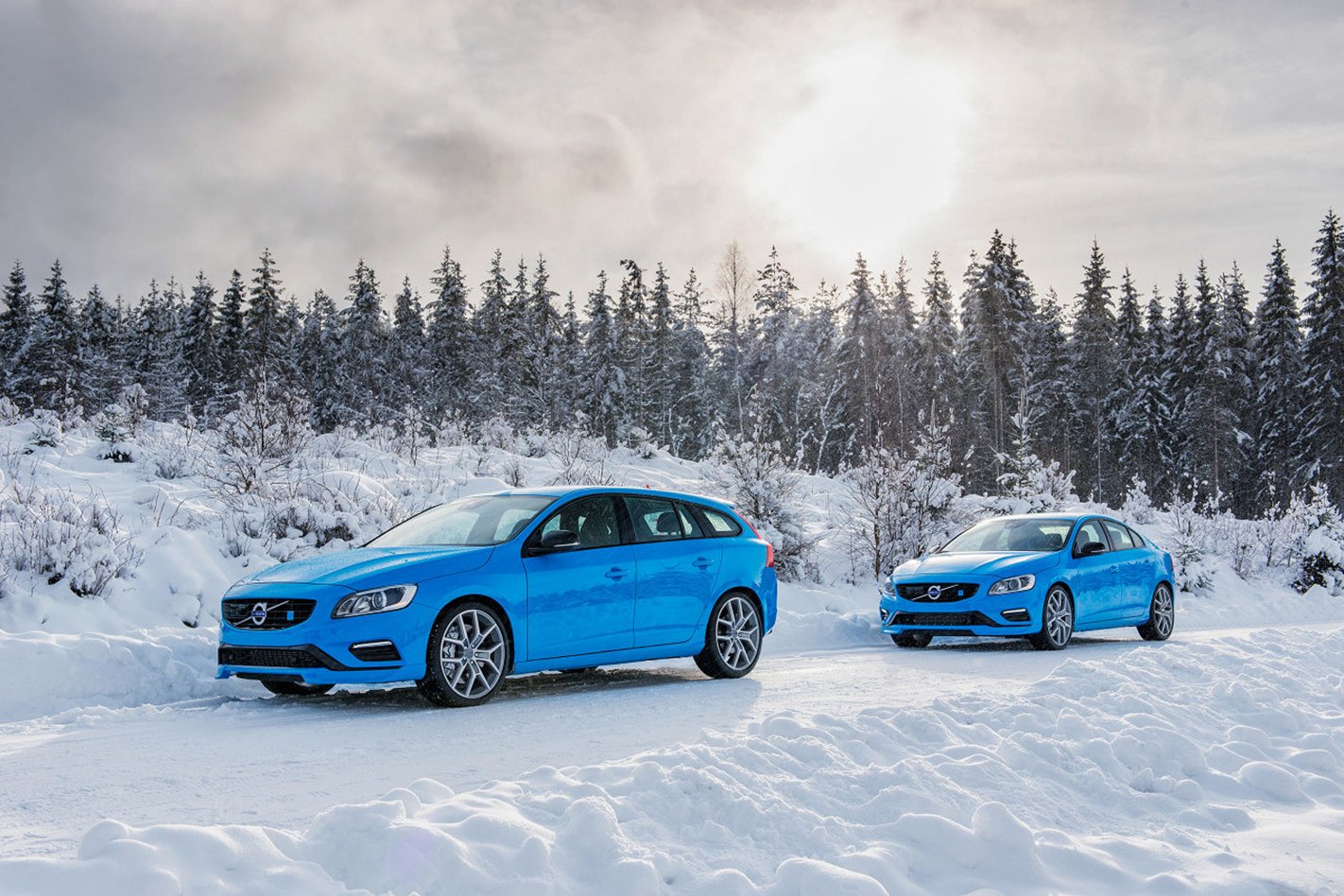
VOLVO Australia is keen to build on the success of the S60 Polestar sports sedan by helping the Swedish brand develop more high performance models, CEO Kevin McCann says.
Speaking recently at the launch of the Volvo XC90 SUV, McCann told Wheels that Australia’s contribution to shaping hot Volvos was likely to continue, now that Volvo had completed the purchase of Swedish high-performance brand Polestar.
“I think because of the acceptance of the brand [in Australia] and the willingness to try different aspects of it … I believe Australia will play a role,” said McCann, appointed to head Volvo Australia less than a year ago.
“It’s all new news at the moment, so there’s nothing formal, but I think there’s a lot of information down here that can be effectively used, and it will give us some benefit from being here on the ground floor as well.”
Australia was the first country in the world – even before Sweden – to get the Volvo S60 Polestar, which has subsequently launched in other markets including the UK and North America.
McCann said this may not have happened if the groundwork put in by Volvo Australia and Polestar, and the feedback from Australian owners, had not been so positive.
The S60 Polestar also paved the way for Volvo Australia to join V8 Supercars to help promote the go-fast models locally.
Volvo’s recent purchase of the road-car and tuning side of Polestar’s business was brought on by the success of the S60 and V60 Polestar models.
“Polestar is a family business owned by one family headed by Christian Dahl, and I think the development timelines and capital requirements have become quite large,” said McCann.
“When you’re investing $100million, if you can see the return coming in six or twelve months’ time … you’d probably invest it. If you were saying, well, the return’s not going to come for five years (which is the automotive business), an individual putting his family’s wealth at risk, is going to say no, I’m not interested.”
McCann rejected the notion that Volvo’s participation in V8 Supercars and motorsport in general contradicted the brand’s core safety message.
“Racing drivers are incredibly safety conscious,” he said.
“If you look at the number of racing drivers that go on to run driver safety training schools and so on, their protection of themselves and the crowds that they’re racing in front of is paramount.
“Motorsport for us is to expand the footprint of the brand beyond safety, and I don’t think we can ever lose safety … but it also stands for other things: being fun, to be associated with, and good design and engineering.
“We don’t have a concern. When I go to a motorsport event, the safety consciousness is so obvious; it’s all about safety.”
LOTUS EXIGE S ROADSTER – Score: 74/100
PRICE AND EQUIPMENT These mid-engined, rear-drive lightweights are similar in philosophy but separated by a big price gap; the $138K Lotus is $49K more than the Alfa. Despite this, it’s the Lotus that lacks kit. It gets air-con, radio/CD audio and dual airbags as standard, but cruise control, rear parking sensors, leather trim and heated seats cost extra. 14/20
INTERIOR AND VERSATILITY The continuous curve of backrest into seat base promotes a slumped driving position and thin padding means comfort is lacking for longer trips, but the seats offer fabulous lateral support. Cabin is spartan without optional leather seats and interior trim. Boot is minuscule at 98 litres – a small hatch has about three times that. 13/20
PERFORMANCE AND ECONOMY Blown 3.5-litre V6 Exige S is heavier, thirstier and a bit quicker than the old four-cylinder lump, with 258kW and 400Nm driving via a six-speed torque-converter auto. The new auto is a tenth quicker to 100km/h than the manual, at 3.9sec, and more economical, at 9.6L/100km. At that rate you’d go about 400km on a full 42.5-litre tank. 16/20
RIDE AND REFINEMENT Primary ride quality is good in this pair, though a light car with stiff suspension and low-profile tyres has comfort trade-offs. Lotus wears 205/45R17 fronts and 265/45R18 rears that allow small road imperfections to filter in. Exhaust drone can be draining and combines with tyre roar to drown out wind noise. 13/20
STEERING AND HANDLING Despite the light-weighting, unassisted rack-and-pinion steering makes both cars heavy to steer at low speed. Pay-off comes at max attack, where the Lotus system lets the driver feel everything. You can arrow the snout into corners with precision, but must brace for bumps, which prompt some pretty serious kickback. 18/20
ALFA ROMEO 4C – Score: 75/100
PRICE AND EQUIPMENT It was okay for cars like this to be stripped out, until the Alfa arrived. The $89K 4C is well equipped for such a driver-focused machine, with cruise, rear parking sensors, leather-trimmed seats, an audio system with Bluetooth connectivity, LED head- and tail-lights (as well as air-con and dual airbags in common with the Exige). 16/20
INTERIOR AND VERSATILITY Alfa wins the style stand-off inside, thanks to artful design and standard leather. Like the Lotus, there’s some parts-bin switchgear, which is more forgivable here given the price. Lovely exposed carbonfibre of chassis tub is beautifully finished. Seats are more comfortable, if still quite firm. Alfa’s boot slightly bigger at 110 litres. 14/20
PERFORMANCE AND ECONOMY The 4C musters 177kW/350Nm from a turbo 1.8-litre four, but at 1025kg, it’s 125kg lighter. Pace is down at 4.5sec for 0-100km/h. Six-speed dual-clutch ’box offers snappy paddle shifts, though it can’t match the Exige’s low-speed gloss. Similar-sized (40L) fuel tank but superior 6.8L/100km economy could take you 550km between fills. 14/20
RIDE AND REFINEMENT Alfa gets the nod for ride comfort. Wears identically sized 17-inch alloys up front, but 18s down the back are skinnier (235mm) and lower profile (40 aspect) than the Exige’s. The 4C seems a bit better sound-insulated, while de-selecting Dynamic mode does more to improve cruising refinement, though it tramlines worse than the Brit. 14/20
STEERING AND HANDLING ‘Like a go-kart’ is overused, but few cars go closer to a kart’s balance and adjustability than this pair, which share double A-arm front suspensions and tub chassis, but differ with ‘evolved’ strut (Alfa) and double A-arms at the rear. Lighter 4C feels a bit more agile, and the steering less kickback-prone, but not as consistently weighted. 17/20
VERDICT
Both brands have histories littered with lightweight sports cars, but it’s Lotus that sets the modern-day template. Comparing key dimensions, the Alfa is slightly shorter and a bit wider and taller than the Lotus, with a 10mm-longer wheelbase; to get to the differences you have to dig deeper.
In terms of philosophies, Lotus argues that its cars scream ‘enthusiast’ rather than ‘wanker’, while the Alfa looks like a baby supercar. Mechanically, the conventional automatic transmission in the Lotus can’t match the shift speed or involvement of the Alfa’s dual-clutch, though at least you can opt for a manual.
The key criteria of steering, handling and performance are all marginal wins for the Exige, but money talks – our narrow victor costs less than two-thirds the price of its rival.
Sign up here to receive the latest round-up of Wheels news, reviews and video highlights straight to your inbox each week.
Close your eyes and think of the coolest car you can imagine. Odds are it is low-slung and maybe it’s pointy, with a long lean nose, fierce oversized wheels and some crazy angles that suggest speed. There’s a good chance it has gull-wing doors, or an open top. Perhaps you’ve had dreams of a super-chunky Jeep with articulated rock-crawling wheels and massive bucket seats. Or, perhaps, a Lady Penelope-type chariot with fins, dashes of chrome and oodles of royal flourishes.
Now, open your eyes. Can you see any car on the road that comes close to the shape and detail in your head? Unless you’re looking at a Lamborghini Aventador in stealth matte grey, a Land Rover Defender on steroids, or a 1958 pink Chevy Bel Air, then the answer is no.
So why, when consumers crave sharp folds and shiny ornaments, are today’s cars so rounded and squashy? And where did all the flashy grilles, lights and hood ornaments go?
Take tail fins for example; a classic fantasy-car detail. Inspired by WWII fighter planes, General Motors designer Harley Earl created them for his 1948 Cadillac. Other American automakers followed, using jet turbine detailing and lashings of chrome. There was suggestion that tail fins added weight to ‘stabilise’ those yank-tanks. A couple of makers experimented with central dorsal fins and Mercedes added them as ‘sight lines’ for reversing.
So where are fins they now? Turns out that the pointed ‘jet wing’ is lethal to pedestrians and is at just the right height to take out children. ’Nuff said.
Pop-up headlights were first used in the 1930s, but hit their stride in the 1970s when the technology allowed designers to drop the bonnets and pop the lights up. Some of my favourite sleek machines – Maserati Bora, Corvette Stingray, Lamborghini Countach and Monteverdi Hai 450SS – came from this era of barely-compromised form.
The beloved Mazda MX-5 was one of the last cars to sport pop-ups. Where’s the downfall in a feature that offers uninterrupted lines, you ask? Well, a pop-up headlight would shred a pedestrian unfortunate enough to be scooped up onto the low bonnet.
Are you getting a feel for what killed the fun? That’s right, it was kids playing in driveways, adults jaywalking and people texting as they crossed busy roads.
Bonnet ornaments in the shape of stars and pouncing felines, once a mark of luxury, are now a mark of an out-dated car. Since the mid-2000s, carmakers have phased out hood ornaments because of the impact they can have on soft bodies.
Grilles have changed, too, because they can act like cheese graters on a hapless human. Bumpers, too, are designed to protect lower limbs.
What about those lumpy car forms? The whole front of the car is styled around keeping a pedestrian alive. That’s why the lines swoop and swerve like a slide at a water park, because they are maintaining a gap of around 10cm between the bonnet and the stiff engine parts, which significantly reduces massive head injury, while optimising aerodynamics and packaging.
Respect to the designers who can keep our unpredictable fellow critters safe and still make a car look good.
Sally Dominguez is a multi-award winning Australian product designer and architect now living in the USA. Her products include the Nest highchair and HOG tank. She is currently running her own Adventurous Thinking tools and strategies program.
There’s a theory that no one knows who the best driver on earth is, because it’s possible that that person has never had the opportunity to sit behind the wheel.
Likewise, amateur motorsport is littered with exceptionally talented drivers who have never had the money or opportunity to pursue racing professionally.
People like the driver of this green GC8 Subaru WRX, taking part in a strange autocross/gymkhana event in what appears to be Poland.
Having done some internet digging it seems this guy – who goes by the name Ryjeks on YouTube and Facebook – is an amateur rally driver who seems to be a dab hand at making underpowered all-wheel drives dance.
The level of commitment and aggression brings to mind to exploits of a certain C. McRae and while it’s arguable in this day and age whether it’s the fastest way around, it’s certainly spectacular and a pleasure to watch.
Whoever you are, mystery Impreza driver, we at MOTOR salute you!
Get your free weekly report from the world of fast cars – subscribe to the MOTOR newsletter!
A low mileage Ferrari F40 sold for 1.12 million Euros (A$1.66m) in Germany over the weekend, establishing a new benchmark for the model at auction.
Sold by Coys at the Oltimer Grand Prix held at the Nurburgring, the one-owner-from-new F40 has covered just 7881km in the last 23 years, the mileage verified by its service history.
Built in December 1992, this F40 was one of the last examples produced, and despite not having been driven since 2010 it had recently been serviced and carried the all-important official Ferrari Classiche certification.

In 2011, an Australian-delivered F40 was sitting in Maranello Motorsport’s Melbourne showroom for $699,000, as an example of just how far prices have risen in recent years.
Other notable results from the same auction were a 1937 BMW 328 Roadster selling for A$862,000 and 1971 Lamborghini Espada reaching A$215,000, itself a record.
MAKE no mistake, V8 Supercars really needed to buy the increasingly valuable property that is the Bathurst 12 Hour, the annual race for GT cars.
The surprise move to purchase the rights to promote and run the 12 Hour certainly triggered a tsunami of comment in the grown-up media as well as the usual gossip – much of it ill-informed and hysterical – on blogs, Twitter and Facebook.
In some quarters, the bold act by V8 Supercars – the same rival category that earlier this year blocked its drivers from competing in the Bathurst 12 Hour – could be interpreted as being bad for the future of that enduro.
Some even suggested the V8s only wanted it to kill off a rising threat, a race with real momentum and one that in recent years has been emerging as an increasingly popular and significant event internationally.
Not so. V8 Supercars Australia (using owner Archer Capital’s money) wanted the 12 Hour for many fascinating reasons – mostly very positive for V8SA and some potentially beneficial for the race.
V8SA is structurally geared to market and run big events and, according to Speedcafe, was prepared to fork out $4 million to secure it. V8SA has shown it can be quite capable in growing existing domestic events with obvious potential.
V8SA CEO James Warburton and Archer probably know they paid over the odds for the race, but given their current struggles with V8 Supercars, it was an outlay they really had to make.
To do nothing meant V8SA would face a serious rival GT race with great growth potential on the free-to-air Seven Network.
V8SA is in the business of propagating motor racing, a business aim not limited to whatever its core business happens to be.
GT racing has momentum here and globally and, helpfully, the 12 Hour is held at the Mecca of motor sport.
Buying the Bathurst 12 Hour means V8SA has alternatives if there is an earthquake in V8 Supercars – and we’re already feeling tremors.
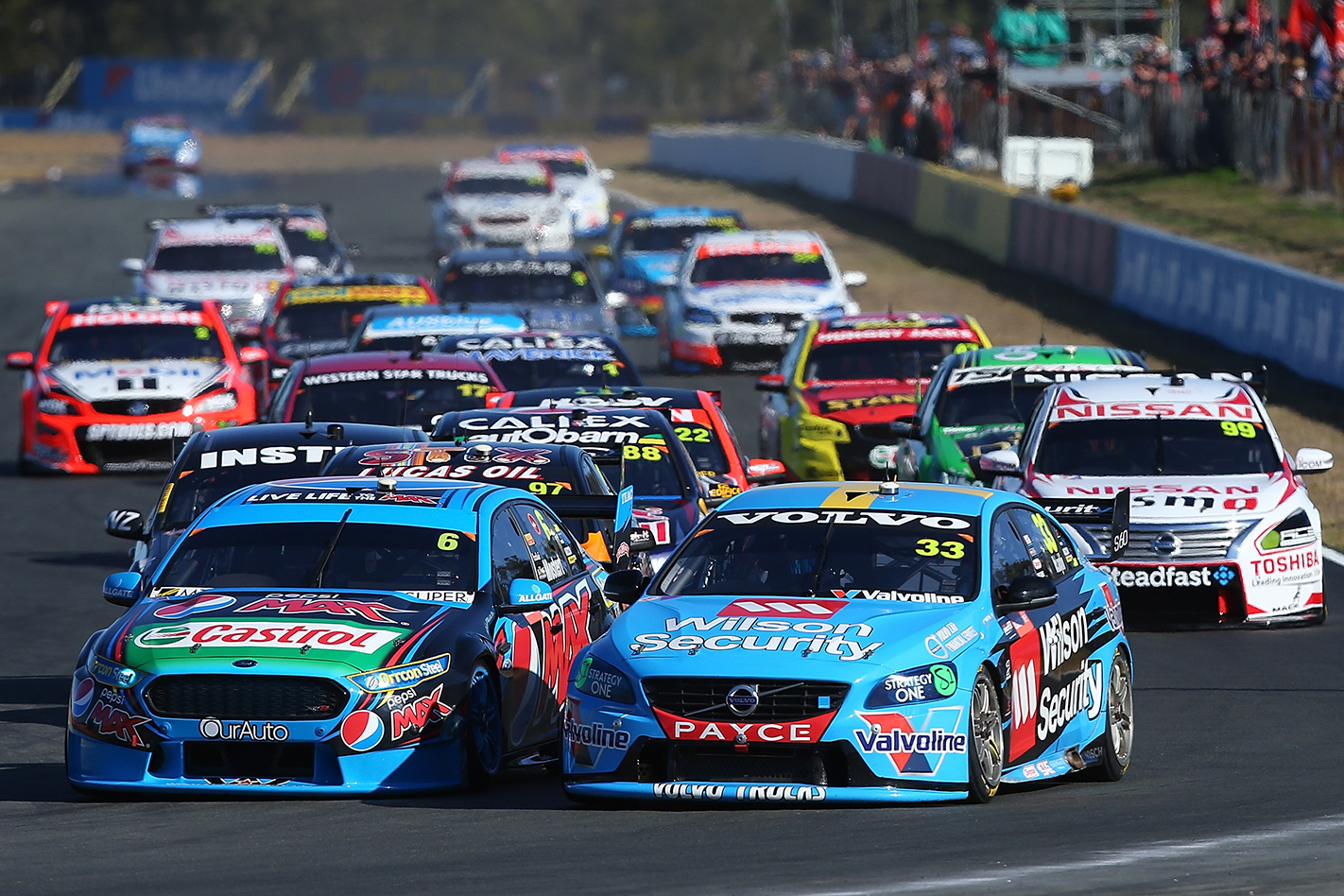
V8 Supercars is about to wear the full effects of some very harsh realities, specifically the reaction of media buyers and sponsors to the tiny viewership on pay TV. The people who sign the cheques don’t care a fig about pretend repeat/cumulative audiences; it’s really all about live TV viewer figures.
There will be pain, too, when the Ford and Holden car plants are shuttered, with tears and confusion among long-time supporters. No more Aussie Holdens or Fords. Best of luck converting these loyalists to cheer for made-up cars originally badged Daewoo, Opel, et al.
Ford Australia has gone, Volvo is reviewing its involvement and will likely go, Nissan is swinging in the breeze, and Erebus is reliant on the enthusiasm and war chest of Betty Klimenko.
That leaves Holden, the brand with the longest investment in high-level Australian motor racing, as the beacon. Holden’s motor sport boss Simon McNamara wants to encourage his teams to adopt V6 twin turbos from 2017, rather than the optional current V8. Selling them to deeply financially troubled teams will not be easy.
On top of this, the local Car of the Future platform is proving very expensive while GT is playing a bigger, far-reaching globalisation game with involvement and support from many of the world’s evocative brands using exotic poster cars as their track stars.
It’s easy to appreciate why some thinkers within the V8SA fortress see the Bathurst 12 Hour and the international GT formula as a handy parachute, a fall-back position.
Instead of the trouble and expense of maintaining a local Supercars formula, teams could just order off-the-shelf cars from Ford, GM, Ferrari, McLaren, Nissan, Audi, Mercedes-Benz, Lamborghini, Bentley, Porsche, Lexus and others – at prices no higher than that of a V8 Supercar. And the FIA does the costly parity process.
A few V8 Supercar team owners have already noted opportunities to generate more dollars by playing in GT racing. You’ll see this at the 2016 Bathurst 12 Hour.
V8SA and Archer are also interested in adding the Australian GT Championship to its portfolio. Approaches have already been made to current series owner Tony Quinn.
Grabbing the 12 Hour also cements V8SA’s existing joint-venture relationship with the Bathurst Regional Council. There’s a clear synergy in having the February and October events fed from one source. If V8SA can grow the February race – and it believes it will – the council will be delighted.
TV is a crucial part of the scenario, too. The Seven Network was happy with the audience the 12 Hour attracted last February and it has two more years to run on its current contract to show the race.
Given the cosiness of V8 Supercars with its TV partner, Foxtel, it’s not hard to imagine that when the Seven deal expires V8SA could align the Bathurst 12 Hour to the pay network, possibly as a five-day carnival with V8 Supercars on the program.
The Seven camp is bemused at the notion of taking the race coverage away from free-to-air Seven/7Mate to Foxtel with the outcome of making the viewing audience shrink.
One Seven insider told Wheels: “I can’t see James Warburton moving the 12 Hour from FTA to pay Foxtel. Given the viewer figures we’re seeing with the V8s this year, the manufacturers and sponsors would go berserk.”
The same contact suggested that, because of the poor Foxtel/Ten numbers (compared with last year on Seven), the V8 drivers are now having problems even getting deals for helmet sponsors.
Nissan Australia CEO Richard Emery, who has a vested interest in both categories – the Kelly-run Altima V8 Supercars and the NISMO GT-R GT3 that won the 12 Hour this year – wasted no time delivering a strong message to the new B12 owner “not to f–k it up”.
In an interview with the Speedcafe, Emery emphasised that the new owner should not mess with the formula that has turned the 12 Hour into a flourishing event for GT cars.
The Nissan boss told Speedcafe: “As we all know, the 12 Hour has got some momentum now. It was probably already going to roll along and didn’t necessarily need to be ramped up.”
Sign up here to receive the latest round-up of Wheels news, reviews and video highlights straight to your inbox each week.
V8 Supercars: Ipswich ratings disaster
ANY way you look at it or play with numbers, the television figures from Queensland Raceway (August 1-2) were nothing short of disastrous, with serious implications for those teams attempting to renew or hook sponsorship deals for next season and beyond.
The size of the problem comes into worrying focus when comparing this year’s live telecast figures on Foxtel with those on Seven a year ago.
Applying the five city metro measure, Foxtel had a mere 43,035 viewers of the live coverage. The delayed highlights package on free-to-air Ten and One were watched by 93,211 people across both days.
At the corresponding round in 2014, Seven’s live free-to-air coverage attracted 209,596 viewers overall.
Overall live coverage of the event was therefore down 79 percent across the vital metro markets. Losses were consistent across the two days (Saturday down 80 percent; Sunday down 79 percent).
Worryingly, Sydney was the worst-performing market, plummeting 92 percent overall and 96 percent on Sunday alone. Little more than 3000 Sydneysiders watched Sunday’s live Foxtel telecast.
V8 Supercars has tried to pump up its television ratings by lumping together the Foxtel average with the packaged highlights on Ten/One, plus repeats and ‘other media’, counting apples and oranges and plums to come up with a positive spin.
MotoGP: Marquez edges Lorenzo in Indianapolis thriller
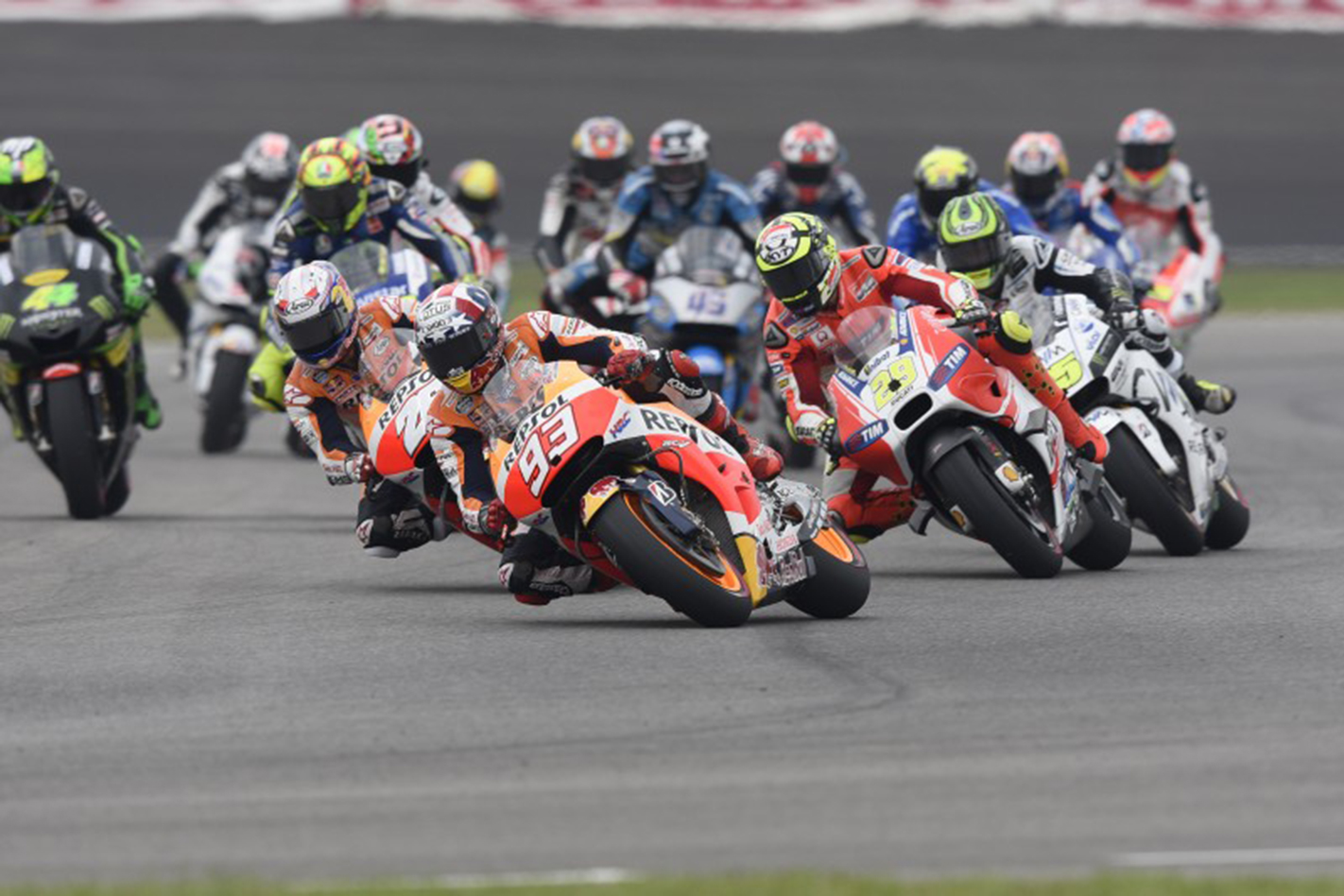
TWO memorable duels marked the Indianapolis round of the MotoGP championship, with Honda’s Marc Marquez emerging victorious over Yamaha’s Jorge Lorenzo, and Valentino Rossi claiming third after a tight battle with Dani Pedrosa.
Since moving up to the MotoGP class, Marquez has never lost in America. The Spaniard’s win streak covers all seven races since he moved to the premier class – three in Austin, one at Laguna Seca and now three in Indianapolis.
The race was held under a threat of thunderstorms and with eight laps remaining rain flags were displayed, but the storm held off.
Lorenzo led for much of the race, with Marquez setting a new lap record as he chased down his countryman, passing him with three laps remaining to score Honda’s 700th GP victory.
Rossi still holds sway in the championship standings with 195 points, nine ahead of Lorenzo. Marquez is now third overall, but 56 points behind Rossi.
Jack Miller secured the best grid position of his rookie MotoGP season (16th) but Sunday brought only pain for the Queenslander, who dropped out after another good start.
Sign up here to receive the latest round-up of Wheels news, reviews and video highlights straight to your inbox each week.
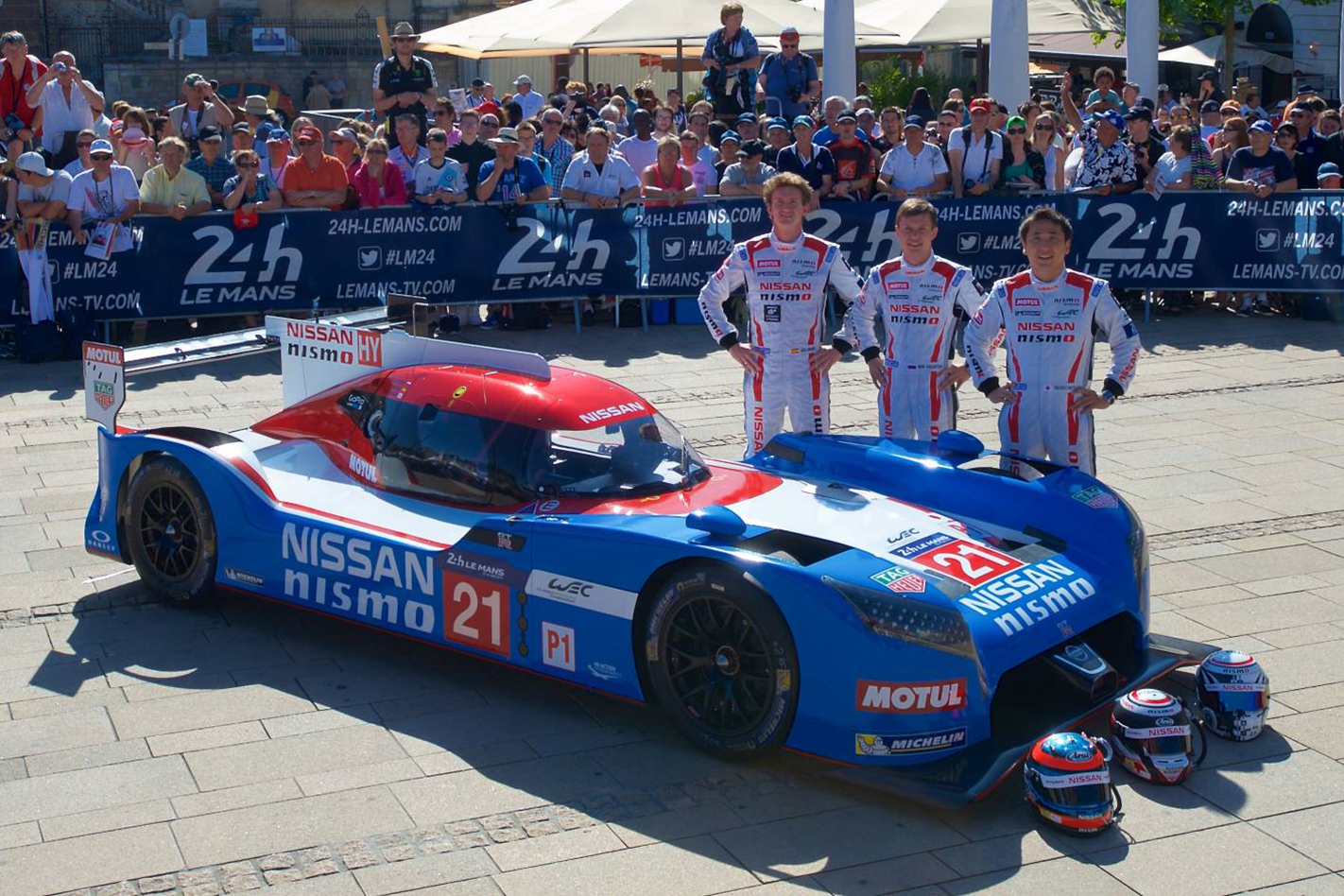
Nissan is whipping its GT-R Nismo front-driver off the racing circuit to urgently address technical issues.
The Japanese brand admits its GT-R Nismo is uncompetitive in the FIA World Endurance Championship (WEC) and will be yanked from racing for an unspecified period of time, “Depending on the progress of the test program”.
Nissan was disqualified from Le Mans earlier this year after it failed to complete 70 per cent of the 24-hour race. Major energy recovery system (ERS) issues forced its LM P1-class racer to run on 3.0-litre twin-turbo V6 power alone and it spent too much time in the pits.
“Be assured that nobody is more disappointed than us,” said Nismo president Shoichi Miyatani in a statement.
“We are racers and we want to compete, but we also want to be competitive. When you innovate, you don’t give up at the first hurdle. We are committed to overcoming this challenge.”
It seems there are many challenges, though, with Nissan LM P1 technical director Ben Bowlby confessing, “We have many areas to work on – not least ensuring that we have the best ERS option available to us.”
“The team is pushing hard on track, in the wind tunnel and at Nismo’s various facilities around the world to deliver the long list of improvements we know that we need.”
The GT-R Nismo was hyped by Nissan ahead its Le Mans debut, despite some raising an eyebrow to its atypical front-engine, front-wheel drive configuration. Few could argue with a 1250hp output from the V6 and twin electric motors, at least until the racer fell well behind Porsche, Audi and Toyota rivals for pace.

Nissan is maintaining faith in its unusual racer, though, with Nismo global head of brand, marketing and sales Darren Cox saying the company is committed to “motorsport innovation”.
“We’ve said it before, but innovation hurts,” he added.
“We’ve built an LM P1 car that is very different to other racing cars [and] the beauty of this program is that people have got behind us and they are willing us to succeed. This has shown us once again that people want something different in motorsport, and that gives us increased motivation to make our LM P1 car competitive.”
The GT-R Nismo will now go back into testing, primarily in the US, but a decision for a return date to WEC racing has not been set. Nissan says it will deliver regular progress reports.
Get your free weekly report from the world of fast cars – subscribe to the MOTOR newsletter!
Thanks to the Alfa Romeo Giulia’s popular reveal we all know what the company’s game-changing sedan looks like.
With the car’s launch still some time away, though, few have seen or heard it on what will be its natural habitat: the road.
Now we have had that pleasure as the Giulia has surfaced in action on streets.
While the reason for its appearance isn’t clear, what makes the footage pleasing is that, judging by its low ride height, low-profile tyres, and twin-tailpipe arrangement, the car captured is likely of Quadrifoglio Verde bent.
That would mean it’s packing a twin-turbo V6 that’s developed with Ferrari’s input, and promises to swing a 380kW bat at the high-performance compact sedan segment.
It would also explain the heavenly growl that escapes its rear end when the car sheds a gear.
Alfa Romeo plans to offer the Giulia sedan in rear-wheel and all-wheel drive, and it’s reported that the range so far will comprise a range-topping QV variant and a turbocharged four-cylinder variant.
More details about the car’s line-up, engine capacity, and transmission will be confirmed at the Frankfurt Motor Show next month.
Get your free weekly report from the world of fast cars – subscribe to the MOTOR newsletter!
Audi’s extra-large SUV is smarter, safer and faster than before, and spoiling for a fight with the new Volvo XC90, the fresh Mercedes-Benz GLE and the BMW X5.
WHAT IS IT? The long-awaited second generation of Audi’s flagship people mover, which also happens to be the most advanced car Ingolstadt has ever made.
WHY WE’RE DRIVING IT Audi’s mega-big and formerly mega-bloated Q7 has hit the gym, hard. It arrives Down Under 240kg lighter and bristling with high-tech toys, improved dynamics and class-leading refinement.
MAIN RIVALS Volvo XC90, Mercedes-Benz GLE, BMW X5, Range Rover Sport, Infiniti QX80.
THE WHEELS VERDICT PLUS: Ride; interior quality and comfort; armoury of high-tech toys; diesel performance MINUS: Busier ride on 21-inch wheels; no third-row air vents; some tech doesn’t work in Oz
THE WHEELS REVIEW CUT IT any way you want, 240kg is a lot of fat. It’s the weight of a big motorcycle, two fully grown pandas or, amusingly, two sumo wrestlers. It’s also how much Audi has sliced off its new Q7.
The second generation of Ingolstadt’s XXL SUV arrives Down Under this September not only lighter but smaller (on the outside), bigger (on the inside), and bristling with more on-board computing power than the Starship Enterprise.
Throw in improved dynamics, a 21 percent fuel efficiency improvement and class-leading levels of refinement, and Audi’s flagship SUV has quite a lot to crow about as it takes the fight to Volvo’s fresh XC90, Benz’s updated GLE and BMW’s driver-focused X5.
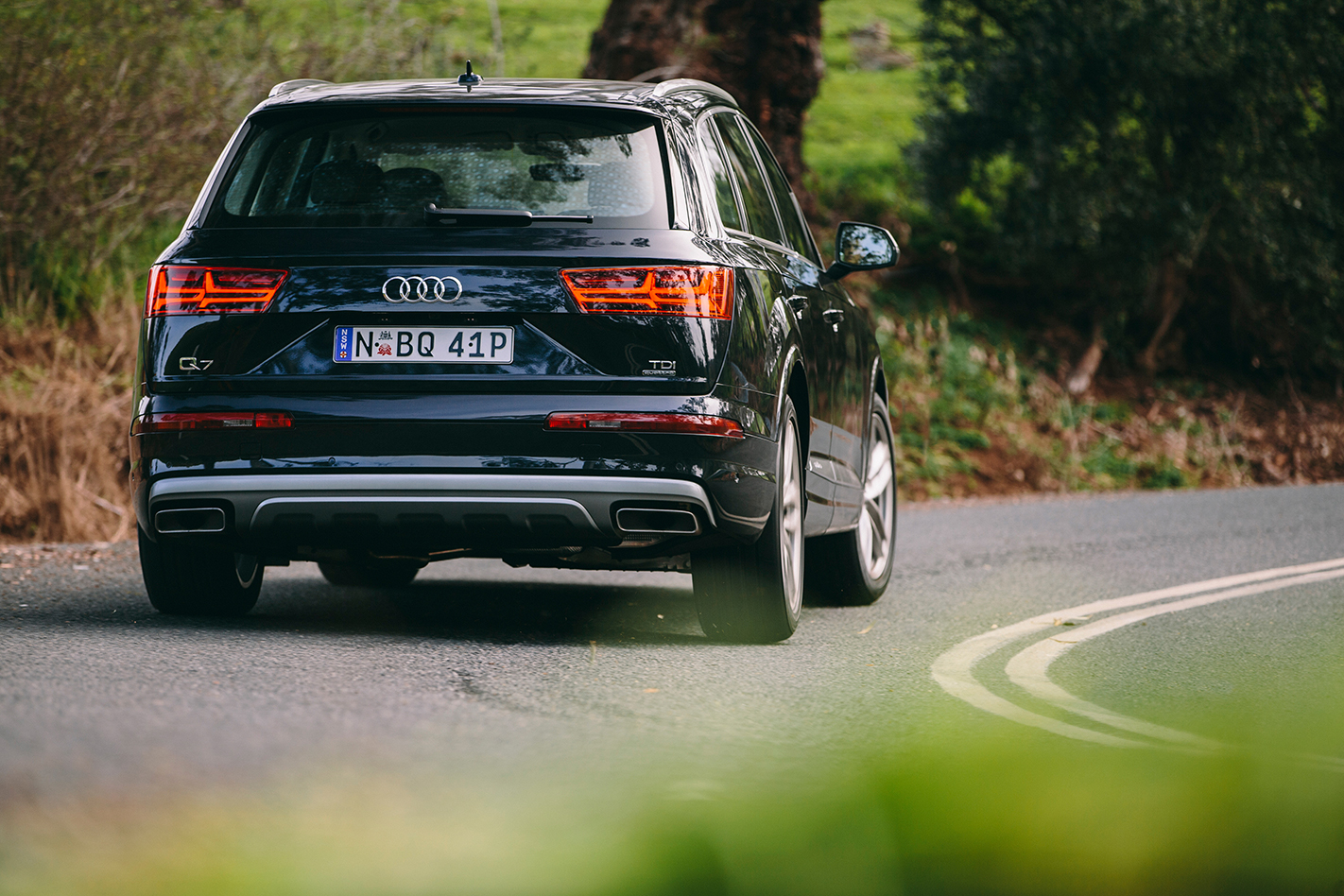
The Audi Q7 is the first car to be built on the VW group’s MLB Evo platform (which will be shared by the new A4, the next Porsche Cayenne and the Bentley Bentayga), and boasts a weight-saving aluminium-intensive body and a smaller footprint that’s 37mm shorter and 15mm narrower. (The Q7 is also 12mm taller.)
The sole engine choice at launch is a 200kW/600Nm 3.0-litre turbo-diesel (a cheaper, detuned version of the same donk is also being considered). This oiler is a peach: whisper quiet, dripping with torque and happy to rev.
It’s also fast. Weirdly fast. Fire the big 3.0-litre unit into life and you can hit 100km/h in 6.5seconds, which is quick enough to embarrass a hot hatch.
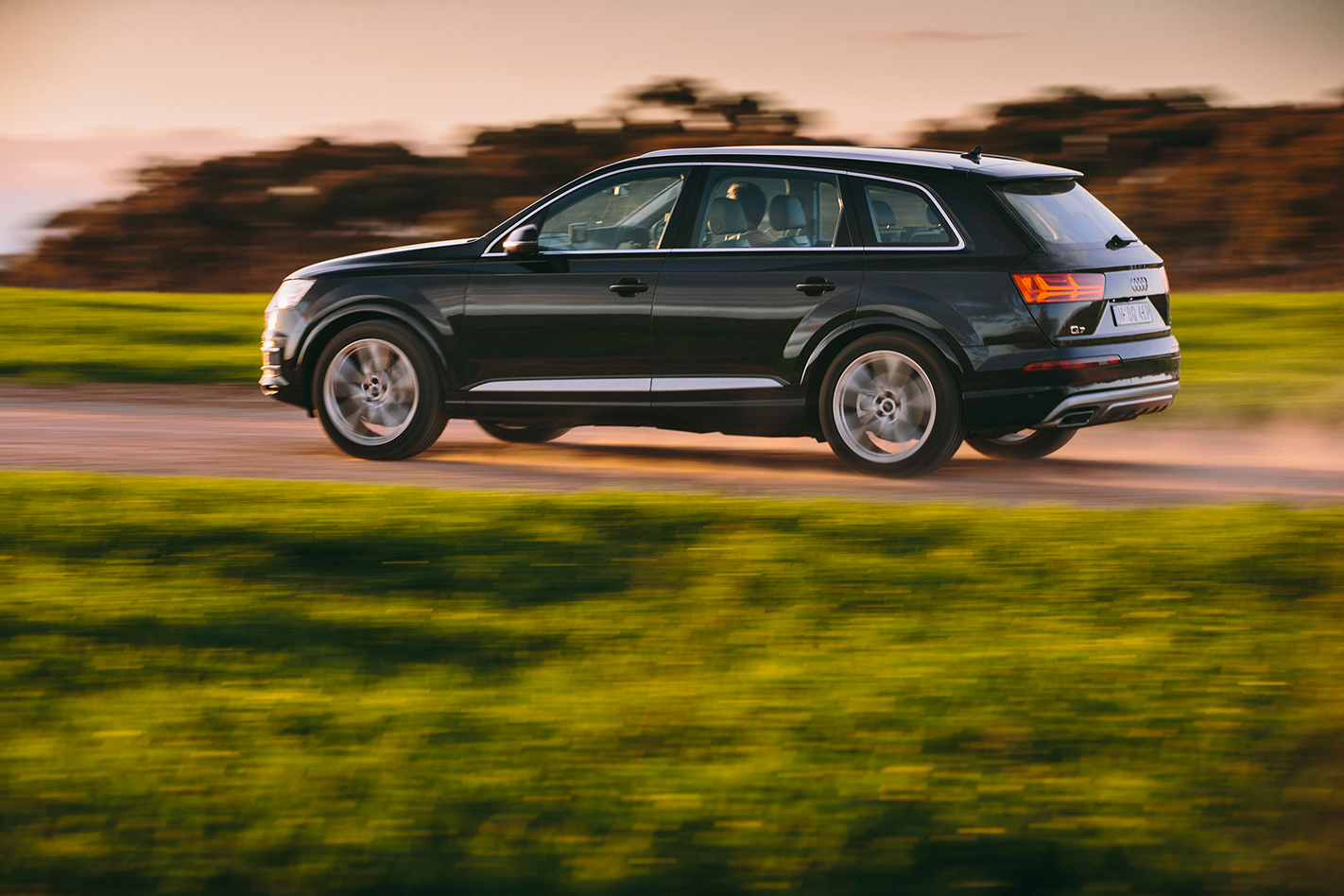
It’s how the Q7 delivers its prodigious pace that’s so disarming. Where a hot hatch leaps off the line, the Q7 never feels hurried. Instead it surges forward with a refined yet relentless ferocity. Shifts from the new 8-speed auto are seamless and fast and make the response to flattening the throttle a revelation. It’s like watching a two-tonne turtle effortlessly destroy Usain Bolt over the 100 metre sprint.
Mercifully, Audi has resisted the urge to use this performance as an excuse to make the Q7 sporty (that job belongs to the rumoured SQ7). As rapid as it is, the Q7 remains a big SUV that’s relaxed and luxurious.
The ride on standard 19-inch wheels and optional air-suspension (a $4950 option worth ticking) is excellent in Comfort mode, and the car is impressively agile in Dynamic, which drops the ride height and firms up the adaptive damping.
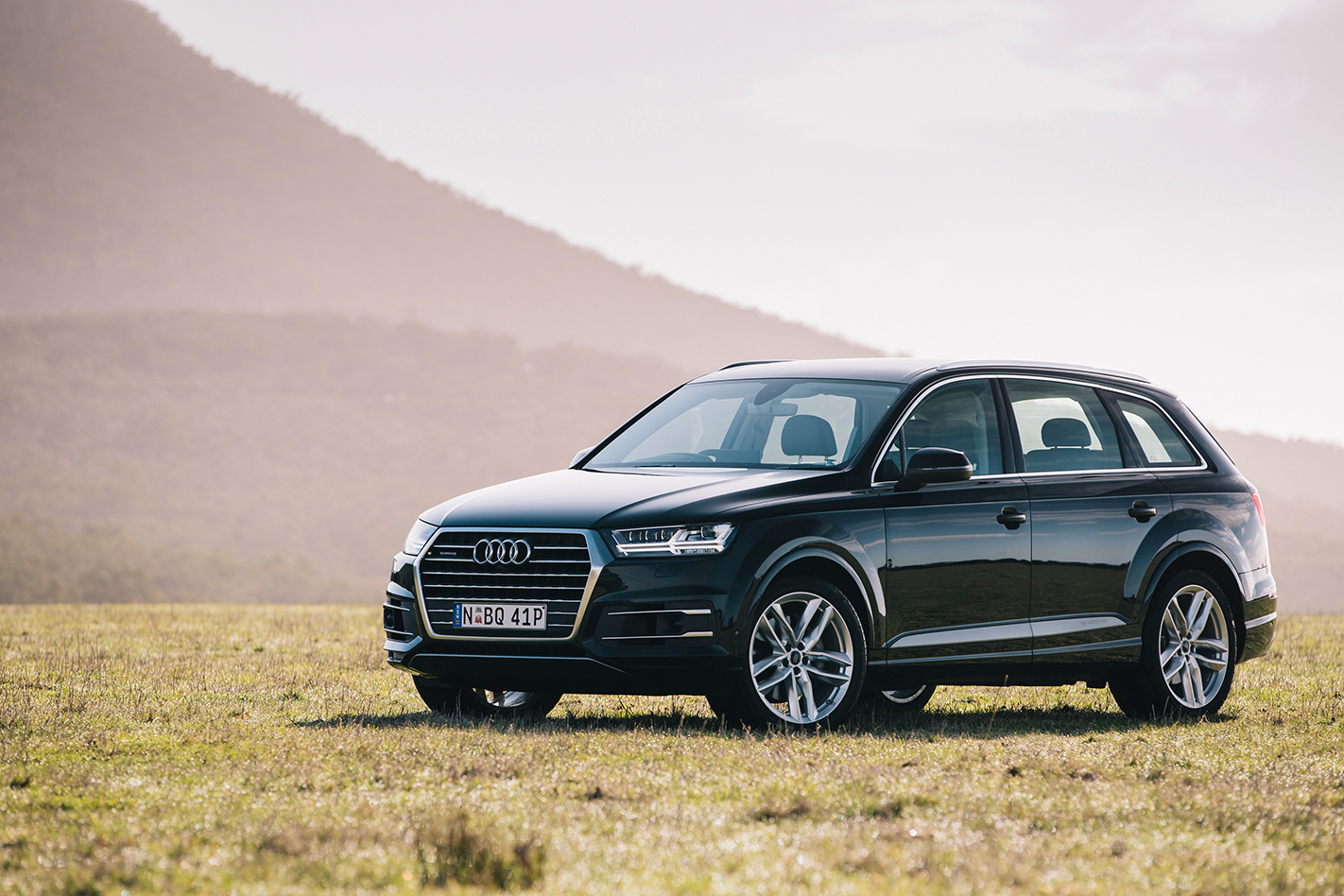
The new cabin is one of Audi’s best, and not just for its beautiful materials, improved space and high-tech digital dash (nicked from the new TT). Even with the turbo-diesel ticking over, shutting the door is akin to locking yourself in a room full of meditating monks. It’s that quiet in there.
It’s clever too. The second-row seating is split into three sections (35/30/35), with each individually adjustable fore-and-aft. Third-row access is a breeze, thanks to a two-stage fold and flip system. The third-row seats are erected electronically, and offer enough space and comfort for occasional adult use.
One glaring oversight is the absence of third-row air vents, which were standard on the first-gen Q7. And with seven seats in play there is nowhere to stick the bulky luggage bay cover.
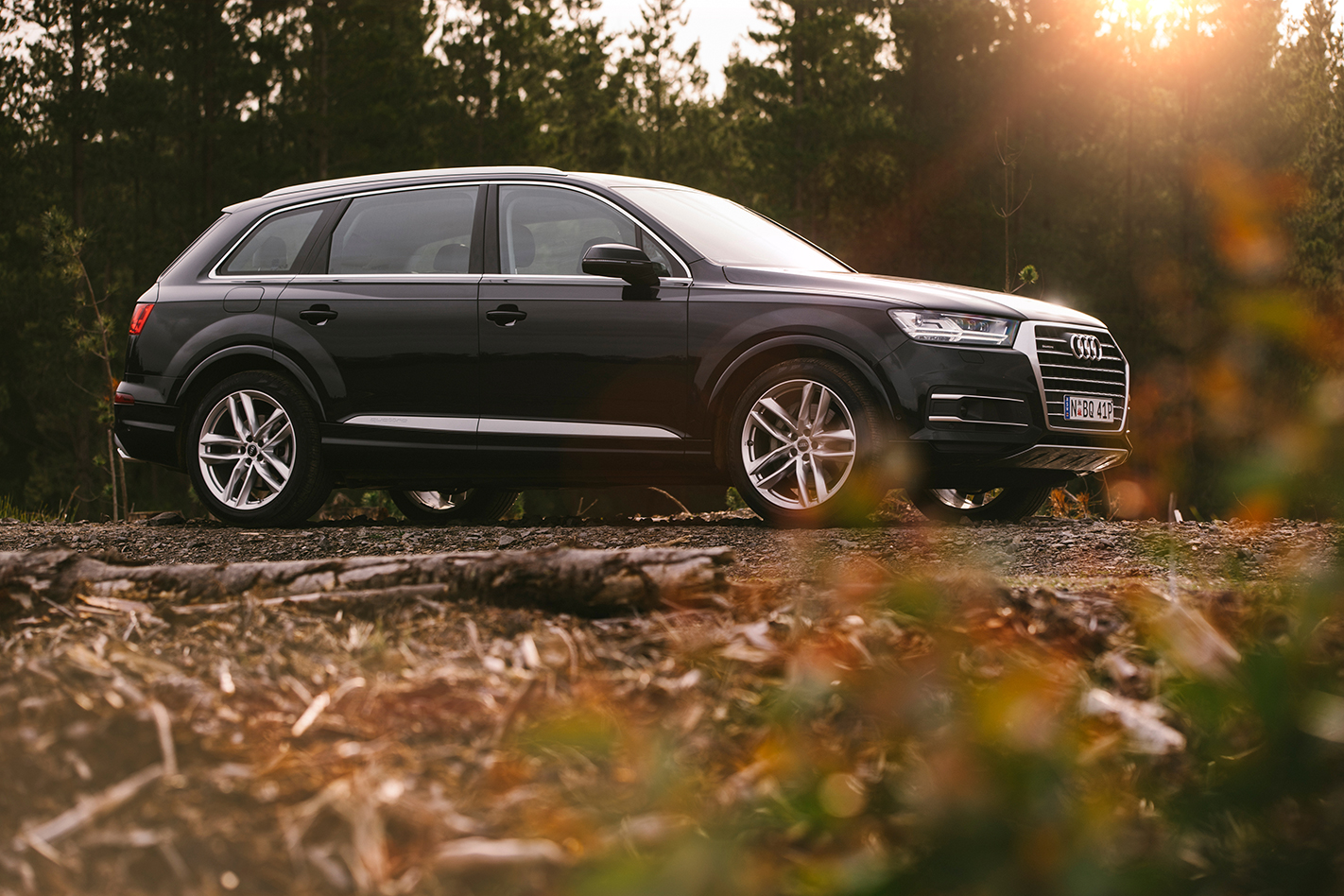
Then there’s the Q7’s glut of technology. Option all of the Assistance systems and the Q7 is the most advanced car Audi has put on sale. Semi-autonomous tech means it can steer, brake and accelerate on its own in city traffic, park itself, warn you of approaching cars when reversing or getting out of the car in traffic, and even prevent the driver from turning into the path of an oncoming vehicle at intersections. There are also clever Matrix LED headlights that shine around oncoming cars, but they’re a $5100 option.
In fact, none of the Q7’s new tech is cheap, with the $103,900 sticker a $13,400 jump over the car it replaces. But it’s a price worth paying. The new Q7 isn’t only brainier, safer and more efficient. It is also better to drive and it has one of the most comfortable, high-tech and luxurious interiors in its class. Cut that any way you want.
SPECS Model: Audi Q7 3.0 TDI quattro Engine: 2967cc V6 (90°) Power: 200kw @ 3250-4250rpm Torque: 600Nm @ 1500-3000rpm Transmission: 8-speed automatic Weight: 2135kg 0-100km/h: 6.5sec (claimed) Economy: 5.9L/100km Price: $103,900 On sale: September
