
Turtle Wax Australia teams up with professional drifter Mad Mike Whiddett in a new video campaign. Watch the full video of Mad Mike putting his Mazda BT-50 through its paces, then check out Turtle Wax Australia on Facebook.
AUSTRALIANS will soon pay more to top up the tank – and the government’s cash reserves are poised to grow fatter – after the federal opposition said today it would throw its support behind twice-a-year hikes to fuel prices.
The Coalition Government and Labor today announced they had struck a deal to green-light the fuel excise, which already taps motorists on the shoulder for an extra 38 cents a litre on top of 10 percent GST every time they make a fuel stop, to raise more than $1.8 billion a year over the next five years, jumping to $23 billion over the next decade.
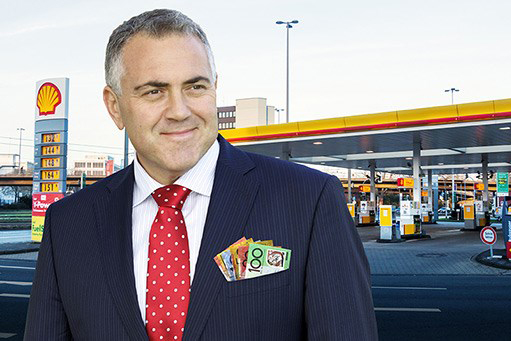
Of that $1.8 billion-plus a year, the coalition has only committed to setting aside the excise increases – amounting to only about $21 million a year – to fixing the nation’s roads.
It has also committed to spending $550 million a year for the next two years for the Roads to Recovery program that gives financial help to state, territory and local governments to repair road systems.
“While the impact on individual households is modest, this measure will provide a predictable and growing source of revenue, which will help the government boost its investment in job creating and productivity enhancing road infrastructure,” a statement from Treasurer Joe Hockey said.
“While the impact on individual households is modest, this measure will provide a predictable and growing source of revenue, which will help the government boost its investment in job creating and productivity enhancing road infrastructure.”
However, the Australian Automobile Association, which represents the interests of motoring clubs around Australia, said the planned excise hikes failed to provide motorists with “a fair and acceptable link between the enormous amount of taxes they pay and the return they get in road funding commitments”.
“Australian motorists currently pay more than $15 billion in fuel excise every year and over the past two decades, less than half of this money has been committed to transport funding.” AAA chief executive Michael Bradley said in a statement.
“Thanks to today’s deal, Australian motorists will now pay an extra $23 billion in tax throughout the next 10 years, and there will still be no adequate or meaningful link between this enormous tax contribution and future funding commitments to transport infrastructure.”
According to the government, the hike in excise is likely to add an extra 40 cents to the weekly fuel bill of a motorist topping up with 50 litres.
The excise will be adjusted to the consumer price index, currently running at about 1.2 percent, in February and August each year.
Sign up here to receive the latest round-up of Wheels news, reviews and video highlights straight to your inbox each week.
Mitsubishi’s SUV means that the demonic Dodge will have to find a new name if it arrives in Australian showrooms.
CHRYSLER Australia is in the midst of a campaign to bring its fire-breathing Dodge Challenger and Dodge Charger Down Under. Wheels understands that Australian FCA chief Pat Dougherty conducted a recent trip to Chrysler HQ in Michigan, USA, to state the case for bringing the wild muscle cars to local showrooms.
Yet even if the Dodge Challenger was produced in right-hand drive from the factory, re-engineered and certified for sale in Australia, it would not be called Challenger here.
Mitsubishi owns the Challenger name in Oz – and has been using it for its ute-based four-wheel-drive (pictured below) since 1998.
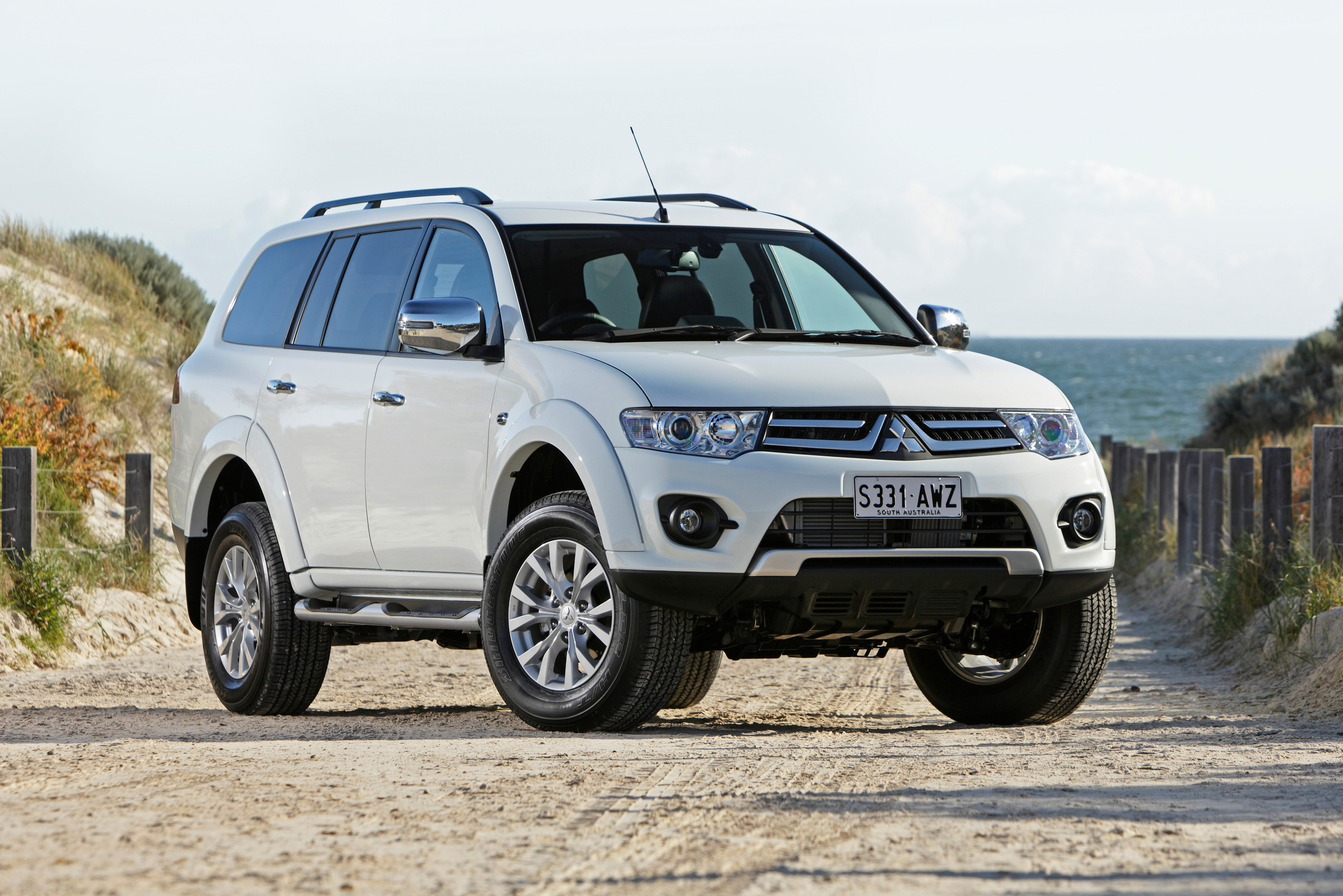
Mitsubishi says it has no intention of handing over the name to Dodge: “We’re planning on retaining the Challenger nameplate in Australia,” spokeswoman Shayna Welsh told Wheels.
An obvious alternative would be the equally evocative Charger nameplate, but that may not be possible if we also get the four-door Dodge of the same name.
FCA has had the Charger name trademarked with IP Australia since 2002, having first lodged an application in 2000. It was renewed in 2010 and two ‘applications for assignments’ have been lodged this year, adding weight to the possibility it would soon be used.
Dodge also has older names it could fall back on – Caliber, Avenger and Nitro, for example.
Dougherty is reluctant to talk names for now, telling Wheels: “If and when [it] gets approved we’ll start looking at alternatives. At this stage there are a number of things that need to be satisfied before we go there.”
Chrysler is set to bring its wild rear-drive 527kW V8 thunder Down Under
LOOK out HSV, AMG and M: Dodge is about to bring America’s most potent performance car, the Dodge Challenger Hellcat, to Oz in 2016. Even better, the next-generation four-door Dodge Charger Hellcat could also arrive Down Under in 2018, making for a formidable two-pronged V8 line-up.
The 527kW Challenger Hellcat, which could carry a price tag under $100K, is billed as the most powerful muscle car to roll off a US production line. It packs a bigger V8 punch than anything from Mercedes AMG and BMW M, and boasts almost 100kW more than the mighty 430kW HSV GTS flagship, also powered by a 6.2-litre supercharged V8.
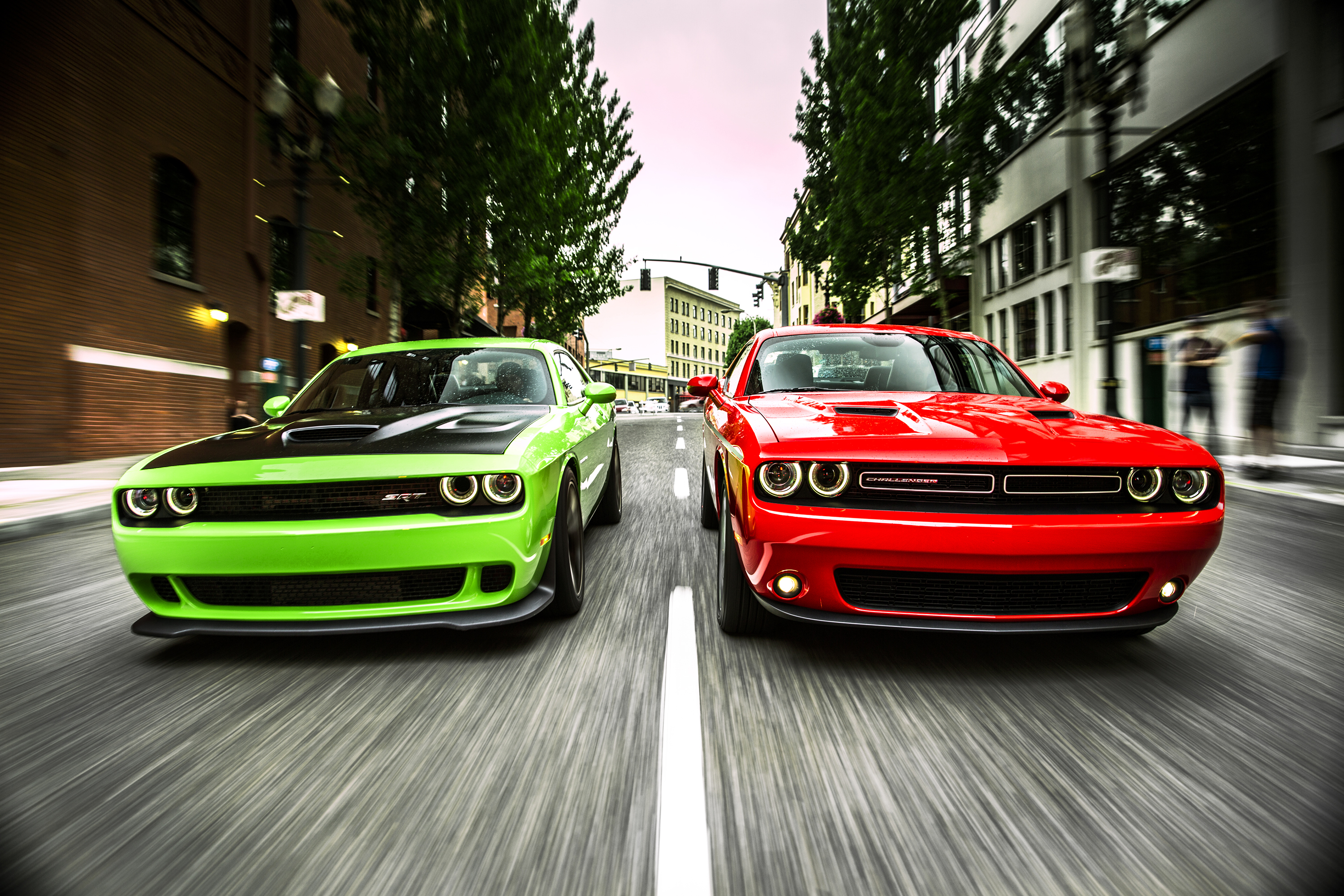
Fiat Chrysler Automobiles (FCA) Australia, which owns the Dodge brand, is building a case to import the mighty Challenger Hellcat. The V8 coupe would be the cream on an American pie that would also include regular models of the retro-infused two-door Challenger to take the fight to the Ford Mustang that arrives later this year.
Wheels understands FCA Australia CEO Pat Dougherty has journeyed to America to plead the case for the rear-drive monster, which can hit 100km/h in less than four seconds and cover the quarter-mile in a Ferrari-like 11.2 seconds.
“The Dodge Challenger is one of the world’s most iconic vehicles, so of course we’re interested in bringing it to Australia,” Dougherty told Wheels. “We’ve done our market analysis, and we believe there’s an appetite here for a car like the Challenger.”
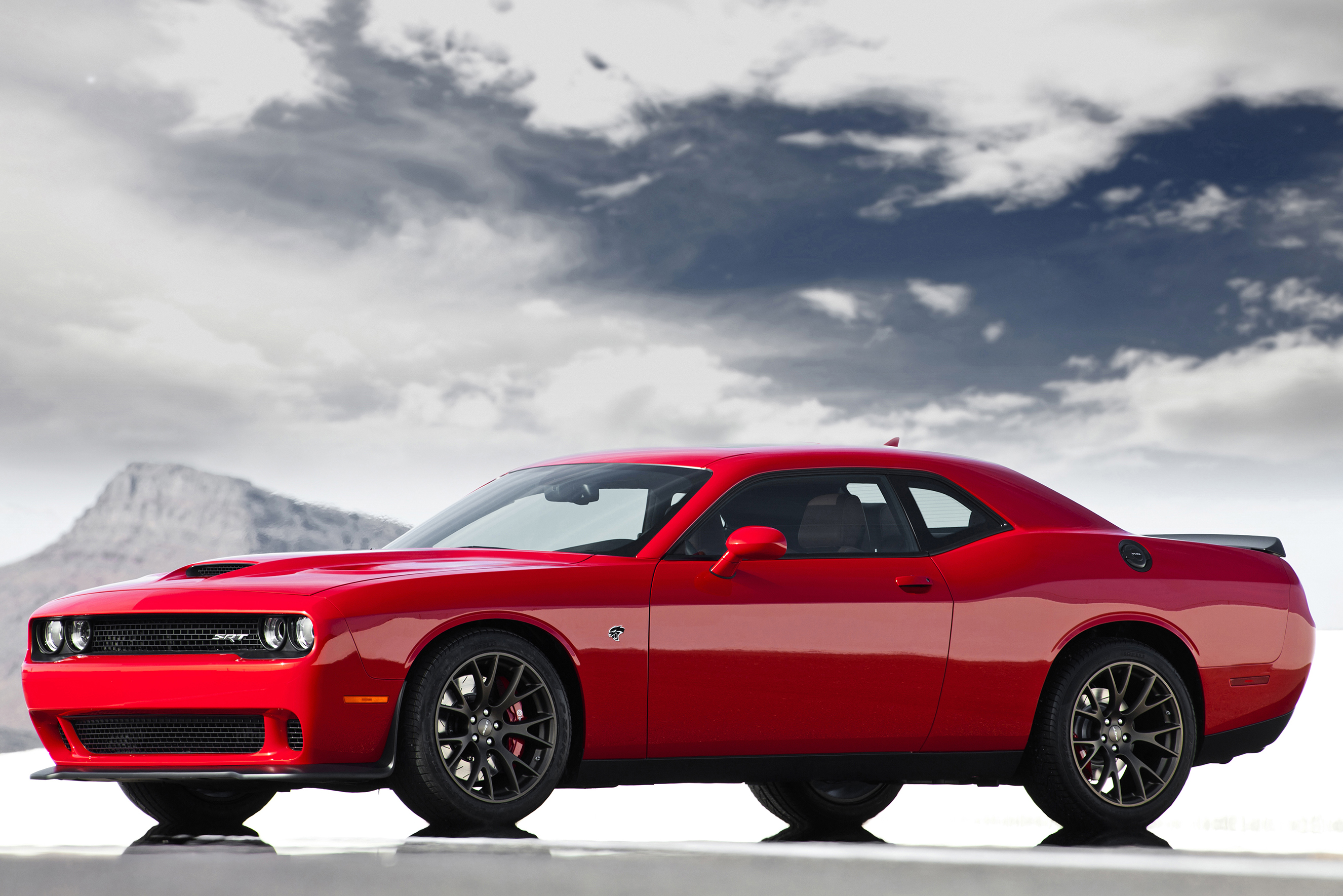
Dougherty is believed to have asked visiting US-based product planning chief Stephen Bartoli, who came to Oz in March, for the Hellcat hero for Aussie showrooms. However, he’s cautious of pre-empting factory right-hand-drive production. “While there is absolutely nothing confirmed, it’s certainly something we are looking at, and will continue to look at,” he said.
Far from waiting for the next-gen Challenger, FCA is pushing for the current car, launched in 2008 and updated in 2014.
Dealers are said to be desperate to get hold of what would be a low-volume car – prices could crack $100,000 for the Hellcat – but a crucial image-builder for a brand that has receded in recent years as FCA focused its efforts on expanding and growing Jeep and rebuilding the Fiat and Alfa Romeo brands. It’s part of a plan to position Dodge as a performance king in a market where power sells.
“I’ve always said I’d be looking at some of the terrific FCA product from around the world, and potentially mounting a case to have certain vehicles built in right-hand drive,” Dougherty said. “Steve Bartoli’s recent visit was a key part of that plan.”
The move makes sense as Ford and Holden wind down Falcon and Commodore production, which will likely see the end of affordable rear-drive cars.
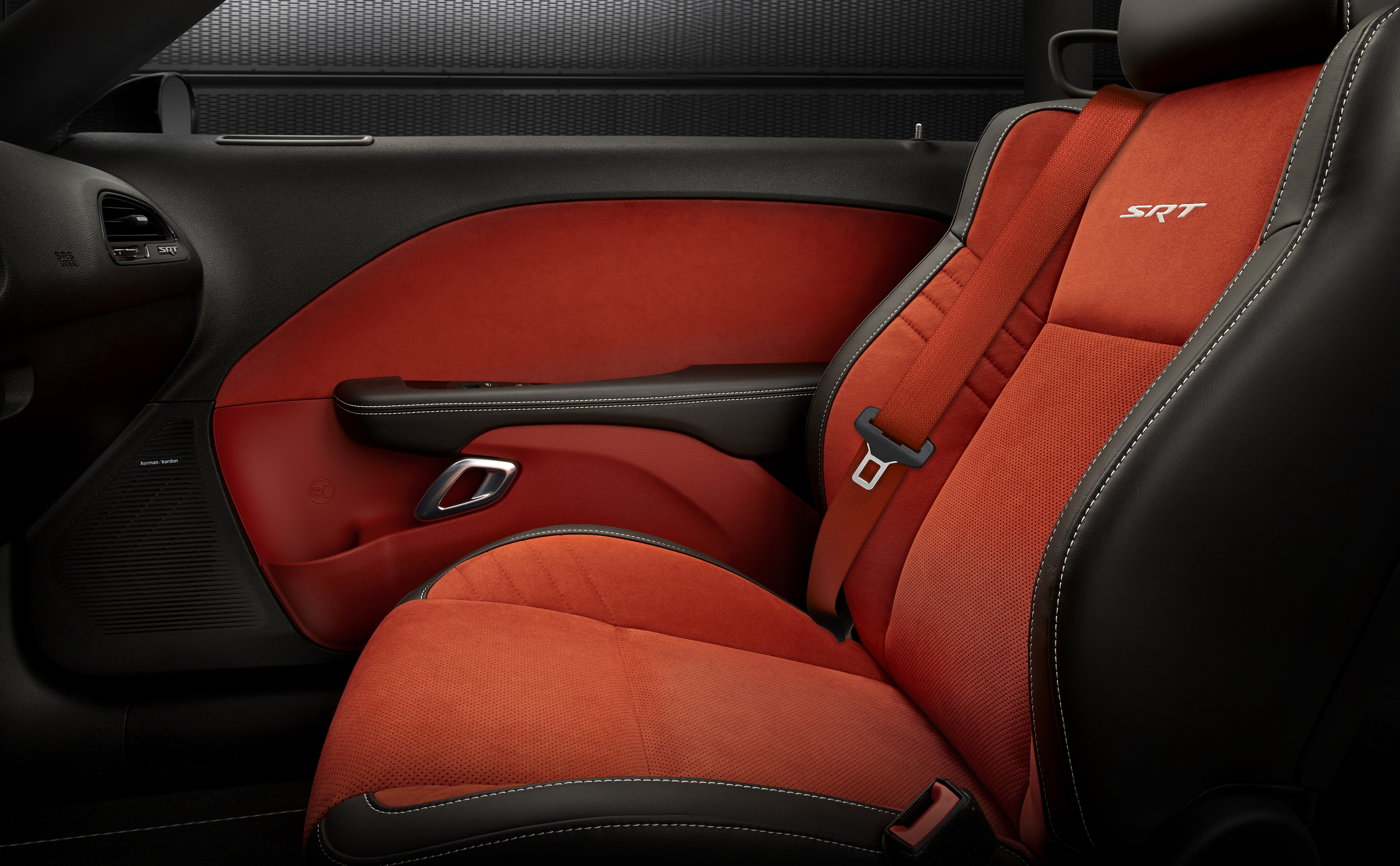
It’s not the first time Australia has looked to get the Challenger and Charger to Australia. Previous FCA management looked at both but ruled them out because of the substantial engineering costs involved in converting them to RHD for the comparatively small Australian market.
Fiat Chrysler global COO Mike Manley was cautious when asked in January about the Hellcat’s prospects for Australia.
“You could argue that the vehicle would sell itself. But there’s a whole host of things that would come with it, not ignoring just the engineering work that [goes] into creating a right-hand drive. I have no idea, by the way, if that Hellcat engine would package in right-hand drive. Packaging would be the very, very first thing [we] have to look at. Then you have all the homologation; you have to support that vehicle.”
Wheels understands that the business case has progressed internally and is now being considered by executives at Chrysler’s Michigan head office.
Dougherty is key to this latest push. He is one of Fiat Chrysler’s longest-serving executives and was formerly vice-president of Mopar, the company’s performance arm. He has the ear of senior executives in America.
Adding weight to his pitch is that the Charger name still resonates in Australia, with the “Hey Charger” marketing catchcry still recognised four decades later.
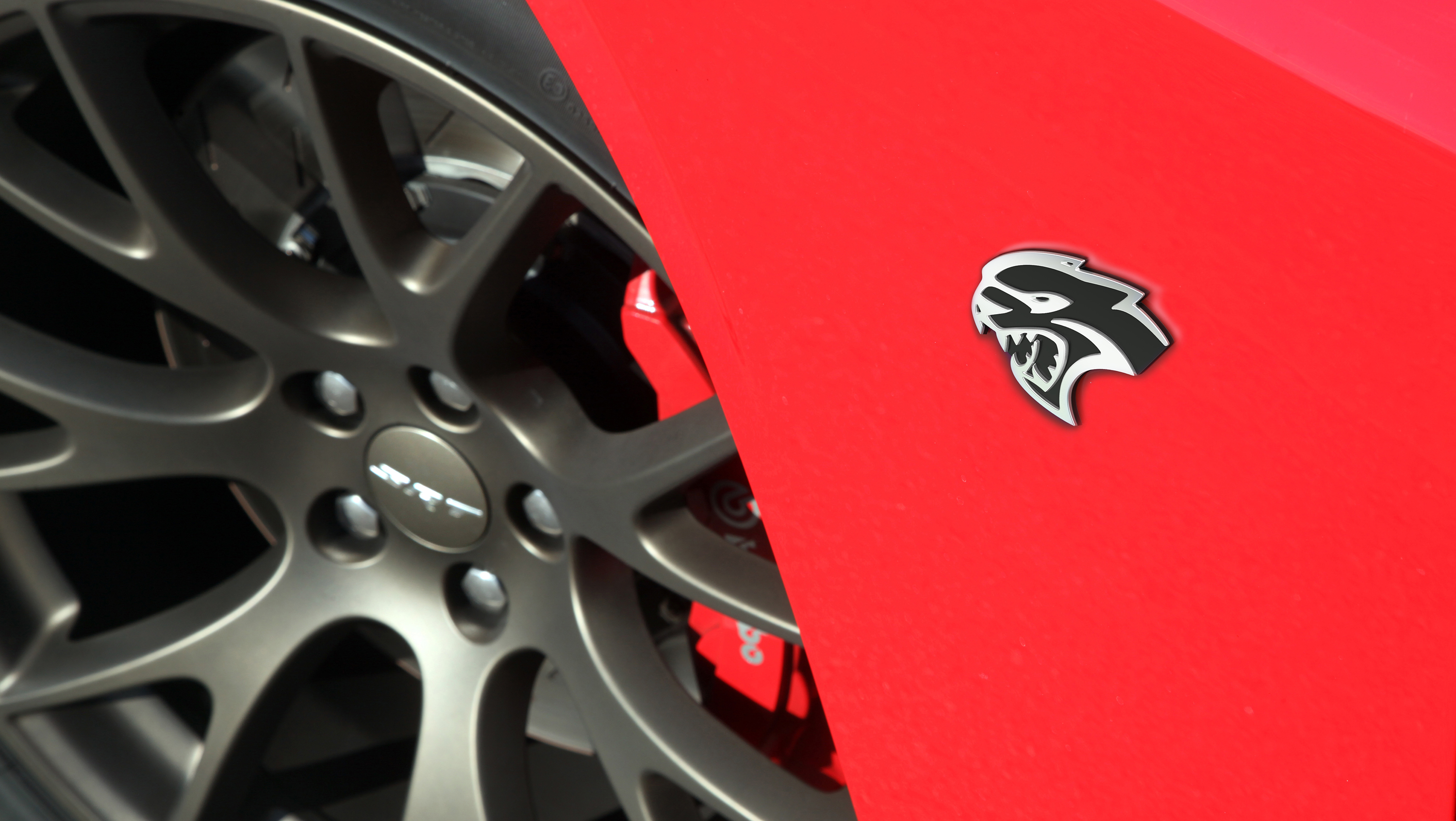
While the V8s will steal the publicity limelight, V6s will form part of the Dodge mix, appropriate given it was a six-cylinder that put the Valiant Charger on the performance map. But lovers of performance will no doubt want the Hellcat with its supercharged Hemi V8 delivering 881Nm on top of its ferocious 527kW.
The Challenger will likely adopt the iconic Charger nameplate (see separate article here) when it lands Down Under. In April, FCA registered the Hellcat name with the Australian government’s IP Australia website, following on from an ‘application for assignment’ for the Charger nameplate it already has rights to.
Local demand is unlikely to be an issue judging by the success of HSV’s GTS. Since arriving in October 2013, the $95K performance hero has accounted for about one in three HSV sales, with approximately 2000 sold.
The Hellcat ups the ante and would add American heat to a performance market long dominated by Holden, Ford and higher-priced Europeans.
Better fuel efficiency and manners for Mercedes-Benz’s best-selling SUV wagon; and it gets a swoopy Coupe brother to rival the BMW X6.
WHAT IS IT? This is the fourth generation of Benz’s biggest selling SUV wagon. Along with a name change to align with the rest of Benz’s SUV models, the GLE gets a few styling and operational modifications to improve its performance, efficiency and practicality. Of bigger news is the arrival of a four-door Coupe version for SUV buyers who place an emphasis on sporty looks and abilities over wagon practicality.
WHY WE’RE TESTING IT Finally, Benz builds a rival for the BMW X6. Enthusiasts may deride these more expensive, less practical versions of otherwise practical SUVs, but a growing number of consumers clearly see value in standing out from the burgeoning SUV wagon crowd with something that visually promises a more dynamic drive.
MAIN RIVALS For the more traditional GLE wagon, rivals include the Audi Q7, BMW X5 and Range Rover HSE. The slope-roofed GLE Coupe has only one rival right now, the BMW X6, but more are sure to follow.
THE WHEELS VERDICT PLUS: Vision; grip; refinement; decent room despite the roof MINUS: Busy ride; high loading lip; transmission sometimes clunks
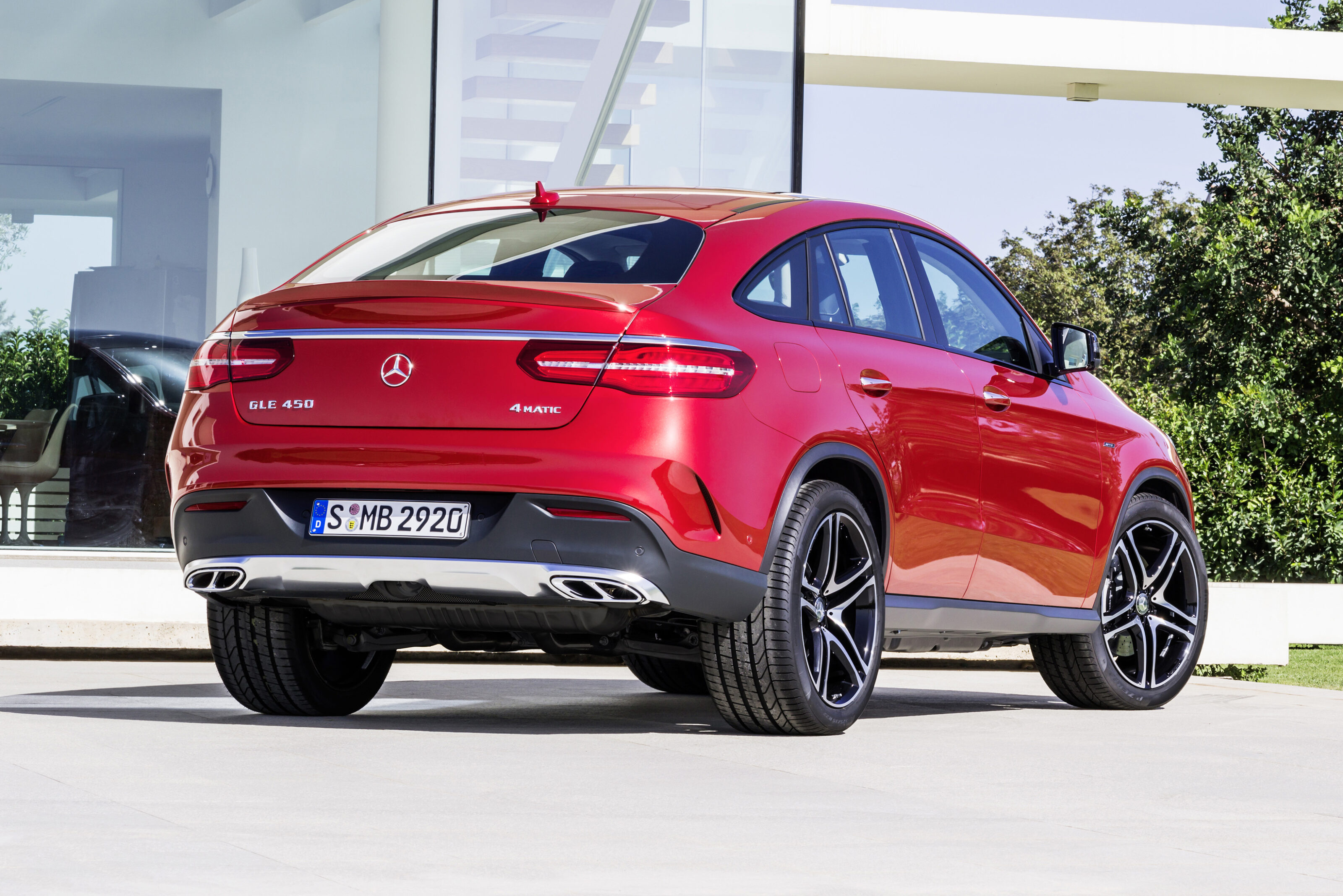
THE WHEELS REVIEW THE 2015 Mercedes GLE Coupe is only the first step on a journey of body-style discovery for the German car maker. To some, it may seem like Benz is playing catch-up with the BMW X6 four-door coupe that arrived in 2008. Not so, says the three-pointed star; the SUV Coupe project was well advanced in the mid-2000s, says head of SUVs Wolf-Dieter Kurz.
“We looked into [an SUV coupe] at that time and said ‘let’s invest the money differently to give us the wider portfolio base than just investing in the niche’. On one end of course it’s a financial issue; on the other even more it’s a question of capacity. Where do you put your R&D guys, in which type of vehicle type to be developed?
“A new vehicle development costs the same whether you do a vehicle which has 100,000 units in its life cycle or a million. So for us it was more important to expand the A-class portfolio.”
The niche SUV’s time has now come. At its core, the GLE Coupe is based on the new GLE wagon, which in itself is essentially a styling and efficiency refresh of the ML-Class. The underlying architecture is the same, as is the 2915mm wheelbase. The biggest difference between the two, obviously, is the body.
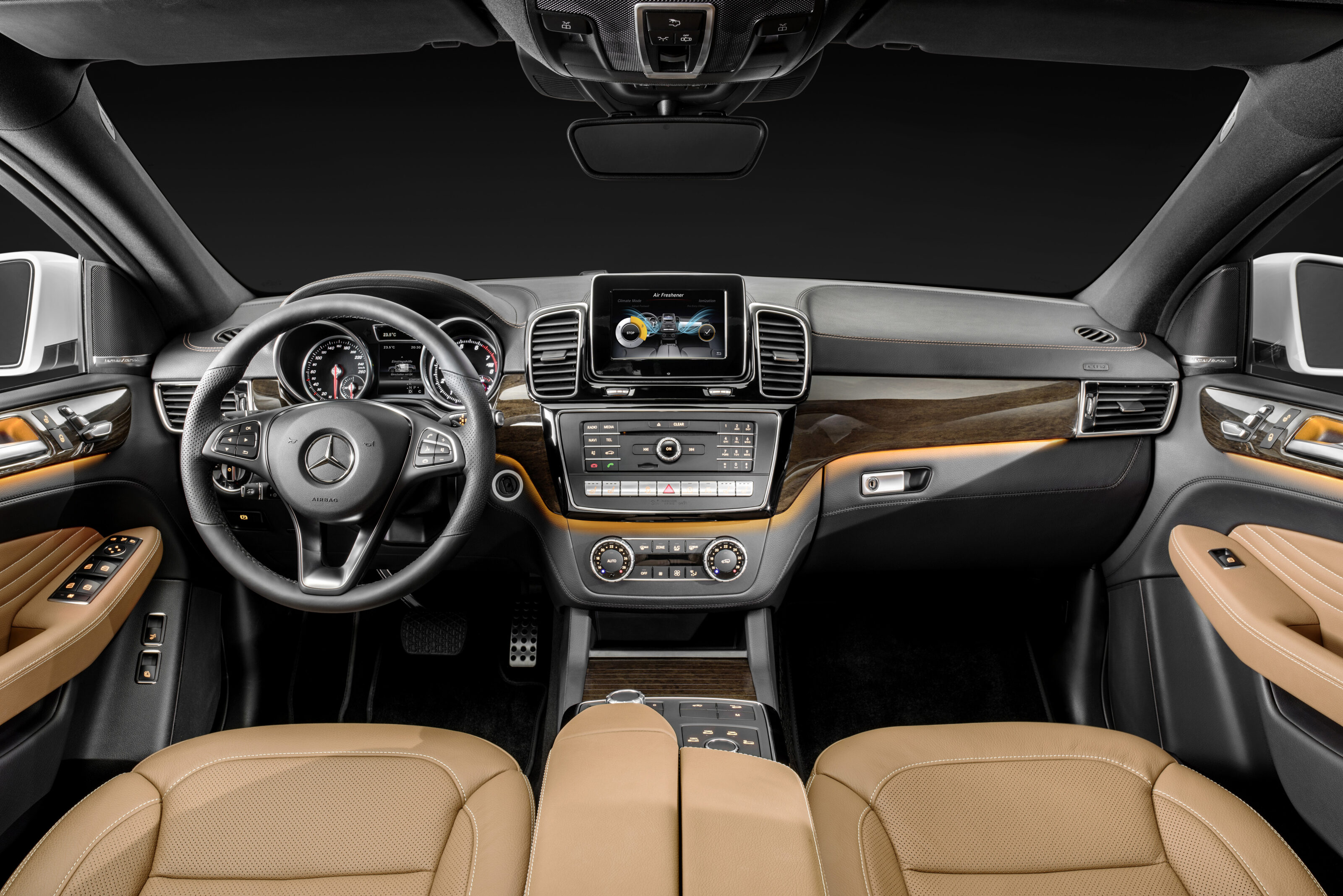
Where the GLE conforms to the traditional SUV wagon shape, the GLE Coupe casts a more rakish profile thanks to a dramatically sloping rear roofline draping a 91mm longer and 68mm wider body. That roof, by the way, sits 65mm closer to the tarmac despite the GLE Coupe’s much taller tyres adding 20mm to floor height. Overall, the GLE Coupe weighs around 55kg more than the wagon.
The GLE’s performance edge is assisted by a small but strong choice of engines. Where the GLE wagon gets four across its range − a 150kW 2.1-litre turbo-diesel (GLE 250d), 190kW 3.0-litre V6 turbo-diesel (GLE 350d), 245kW 3.0-litre twin-turbo petrol (GLE 400) and the GLE 500 which is essentially a GLE 400 plug-in hybrid with batteries and electric motors for extra performance or fuel-free running (for 30km) − the GLE Coupe, which is expected to sell in considerably smaller numbers than its more practical sibling, makes do with just two: the GLE 350d Coupe and GLE 450 AMG Coupé.
Both models will have an AMG variant with a 410kW/700Nm 5.5-litre twin-turbo V8 capable of hustling the 2.2-tonne SUVs to 100km/h in 4.3 seconds.
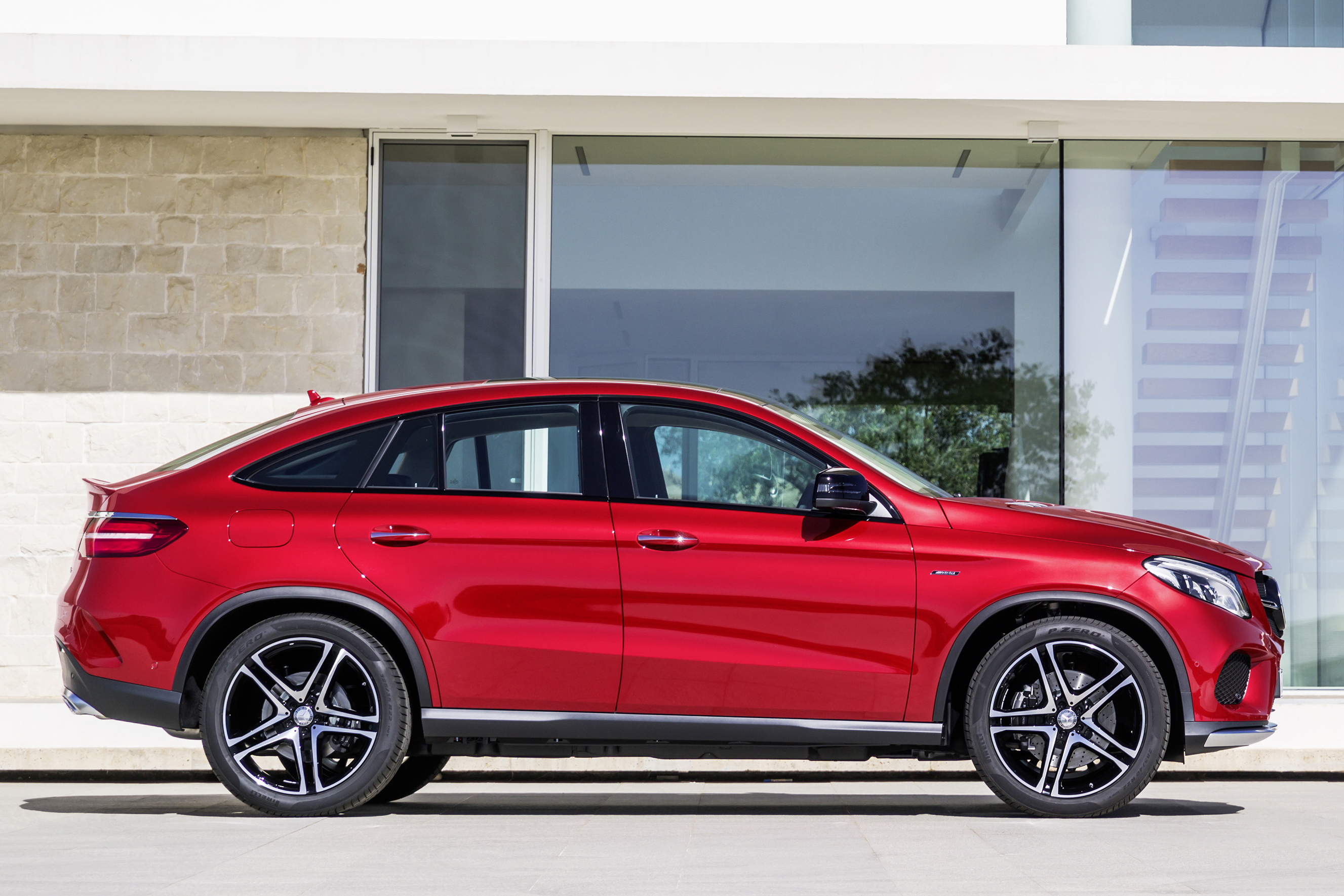
Benz has tried to differentiate the GLE Coupe dynamically, with a wider track, firmer suspension and a faster steering ratio. It’s a busier ride, but not out of character for a machine claiming sporting pretences. And monster 21-inch tyres on even the cheapest model give the GLE Coupe good grip, though when the law of physics wins out, the GLE loses grip at the front first and last. Until then, it does feel marginally more alive than the GLE wagon, though it’s still a long way short of being truly satisfying for an enthusiast.
Still, you have to respect what modern engineers can make a 2.2-tonne machine do. And you’re gonna have to get used to it, too, because there’s a lot more growth to come from the SUV family tree.
SPECS Model: Mercedes-Benz GLE 450 AMG 4Matic Coupe Engine: 2996cc V6, DOHC, 24v, twin turbo Max power: 270kW @ 5500-6000rpm Max torque: 520Nm @ 1800-4000rpm Transmission: 9-speed automatic Weight: 2220kg 0-100km/h: 5.7sec (estimated) Fuel economy: 9.4L/100km Price: $141,900 On sale: September 2015
The Aston Martin DB11 keeps shedding its camo skin ahead of its 2016 revea
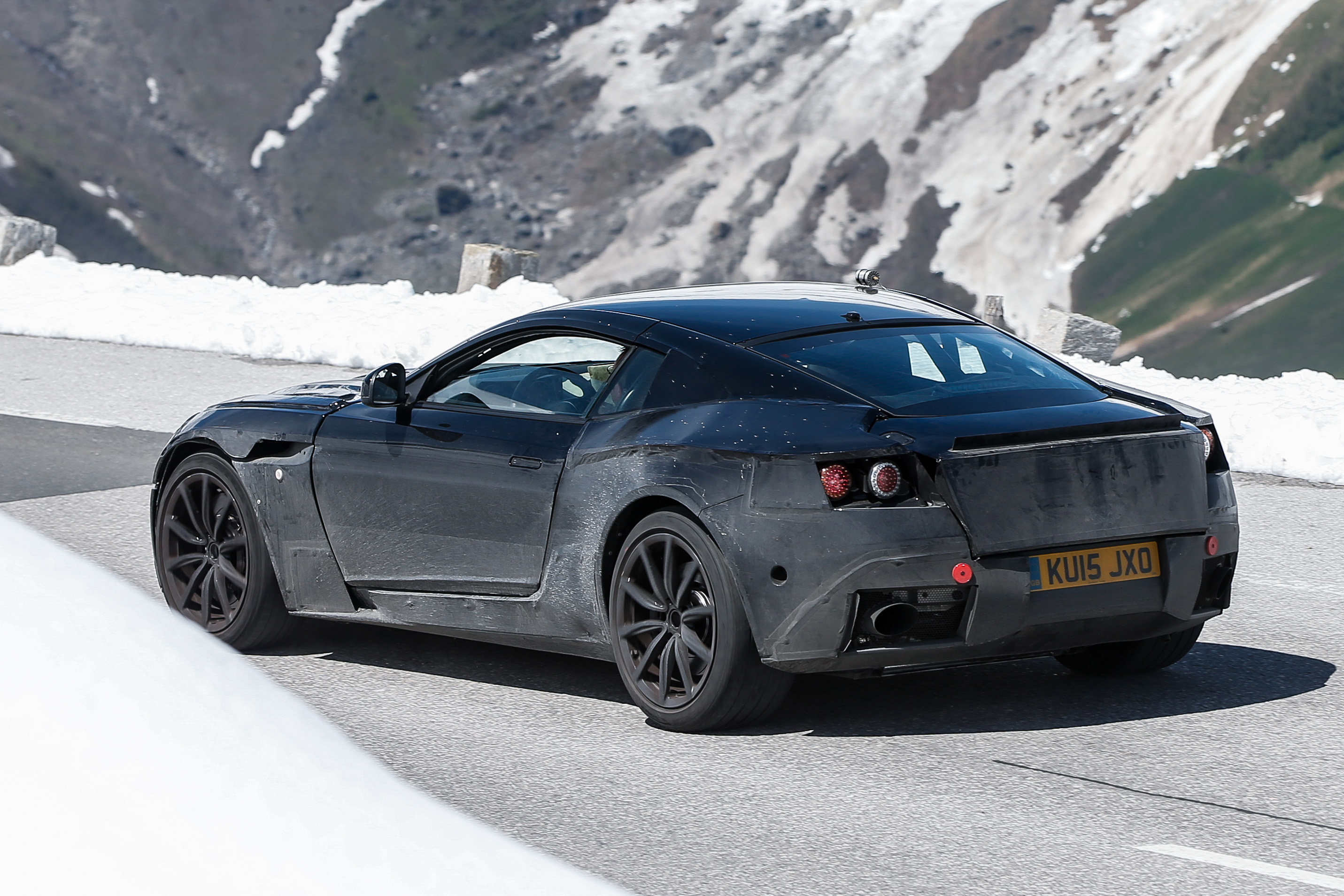
THE 2017 ASTON MARTIN DB11 continues to play hide and seek with our scoop photographers, this time popping up in the Austrian Alps showing a few more details than the last prototype snapped just a couple of months back.
Aimed at buyers of mile-munching grand tourers like the Bentley Continental GT, Ferrari California T, Maserati GranTurismo, Mercedes-AMG S63 Coupe, and Porsche Panamera GTS, the usurper of the ageing Aston Martin DB9 remains on track for a Geneva 2016 global unveiling, though that may be stretched out further as the company’s engineers work flat-out to ensure everything runs smoothly.
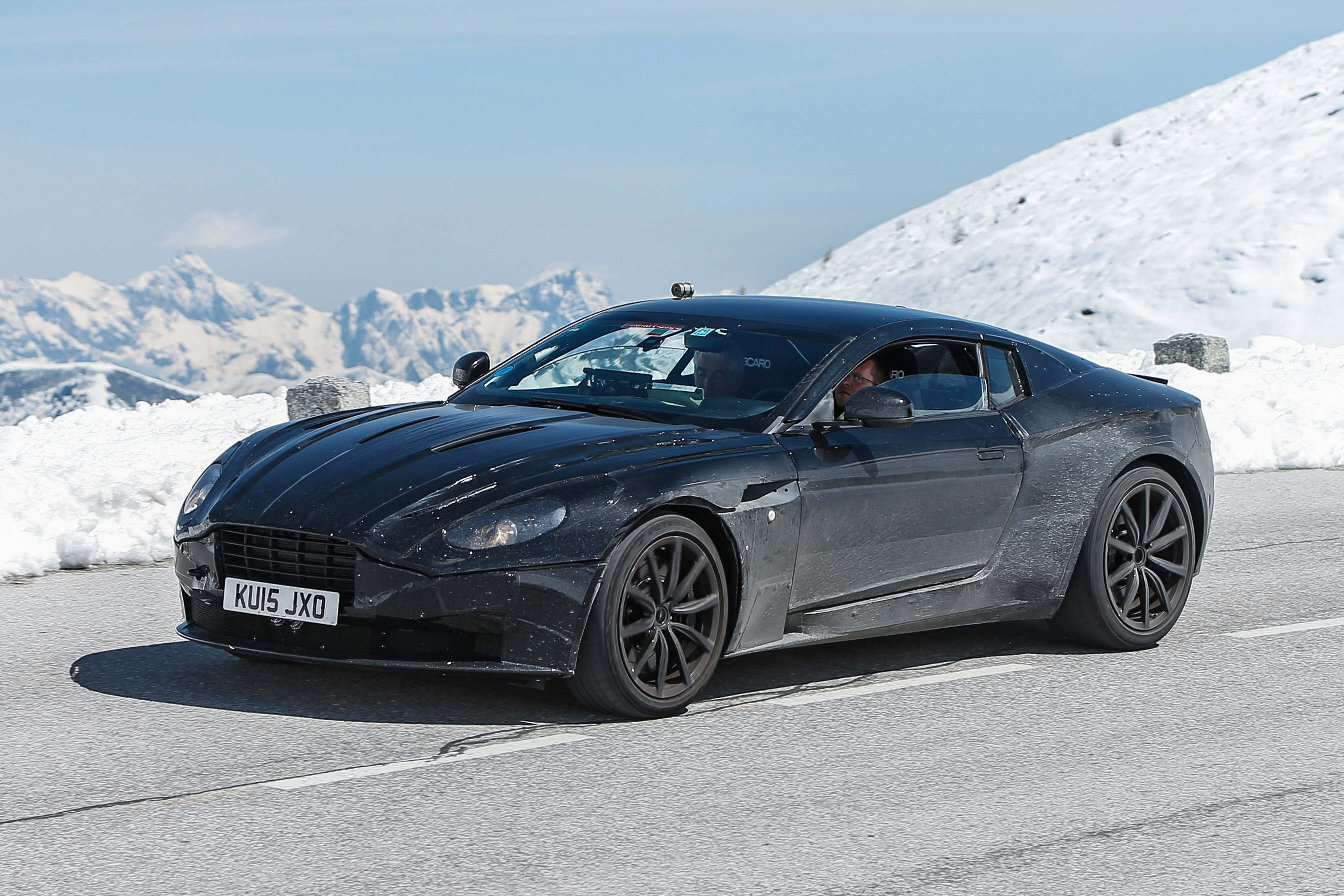
Keeping true to its predecessor’s design themes, the DB11 – that’s the badge most punters are betting will make the final cut – sports a similarly deeply raked windscreen, muscular rear haunches, sleek headlights, a traditional Aston grille and horizontal guard vents.
The latter allows the DB11’s engine to breathe as easily as possible; two are slated to make the cut, leading with a Mercedes-AMG-sourced 4.0-litre V8 twin-turbo as well as a revised and supercharged version of the existing V12. Others are expected to follow later.
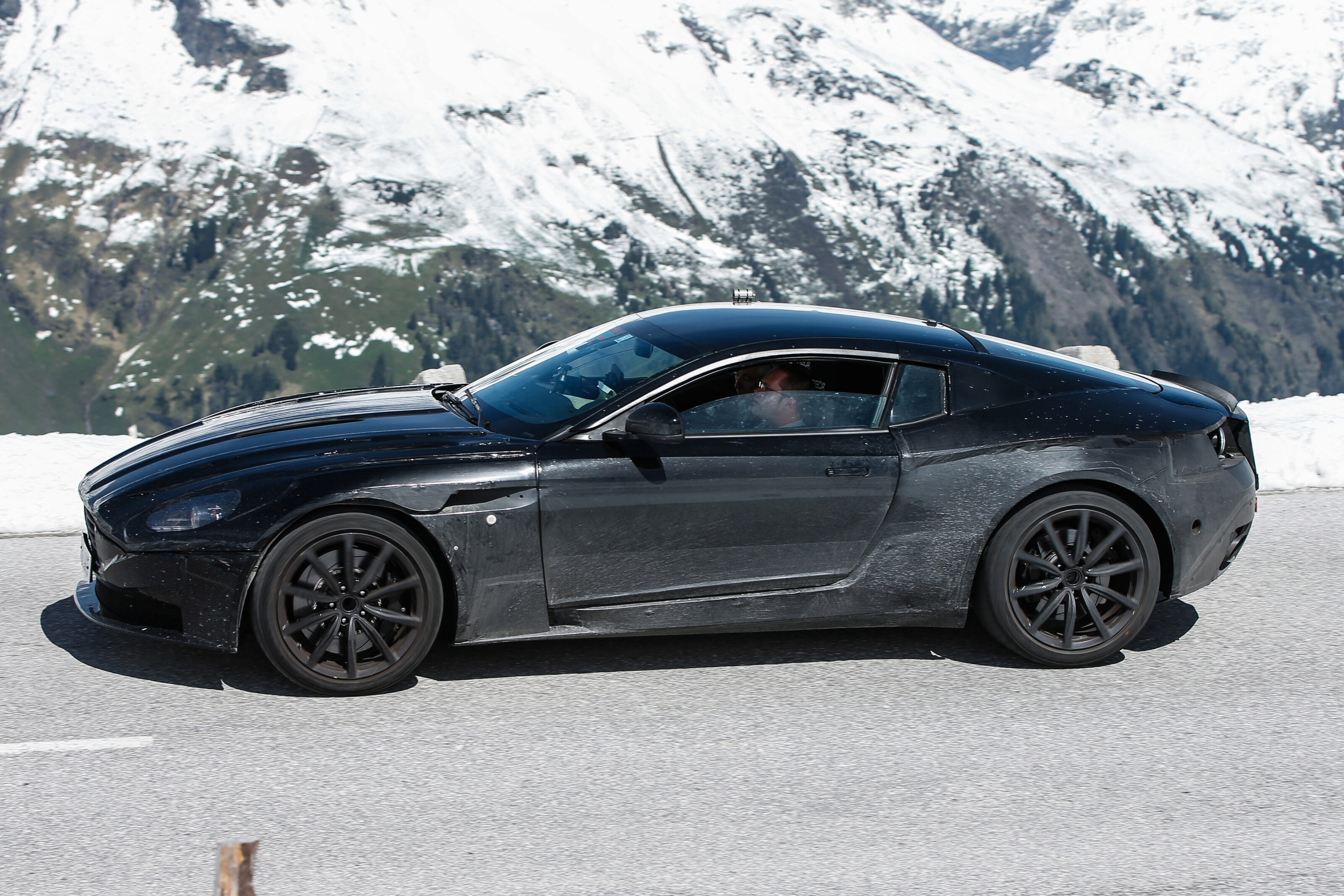
Shorter front and rear overhangs and a longer and wider wheelbase mean subtly altered proportions for the somewhat more angular 2+2-seater. As we reported in April, it will be based on the new VH500 architecture – a reworked version of the long-serving VH (for vertical/horizontal) basis that currently underpins every model in the range, from the Porsche 911-chasing V8 Vantage to the larger Vanquish coupe and Rapide sedan.
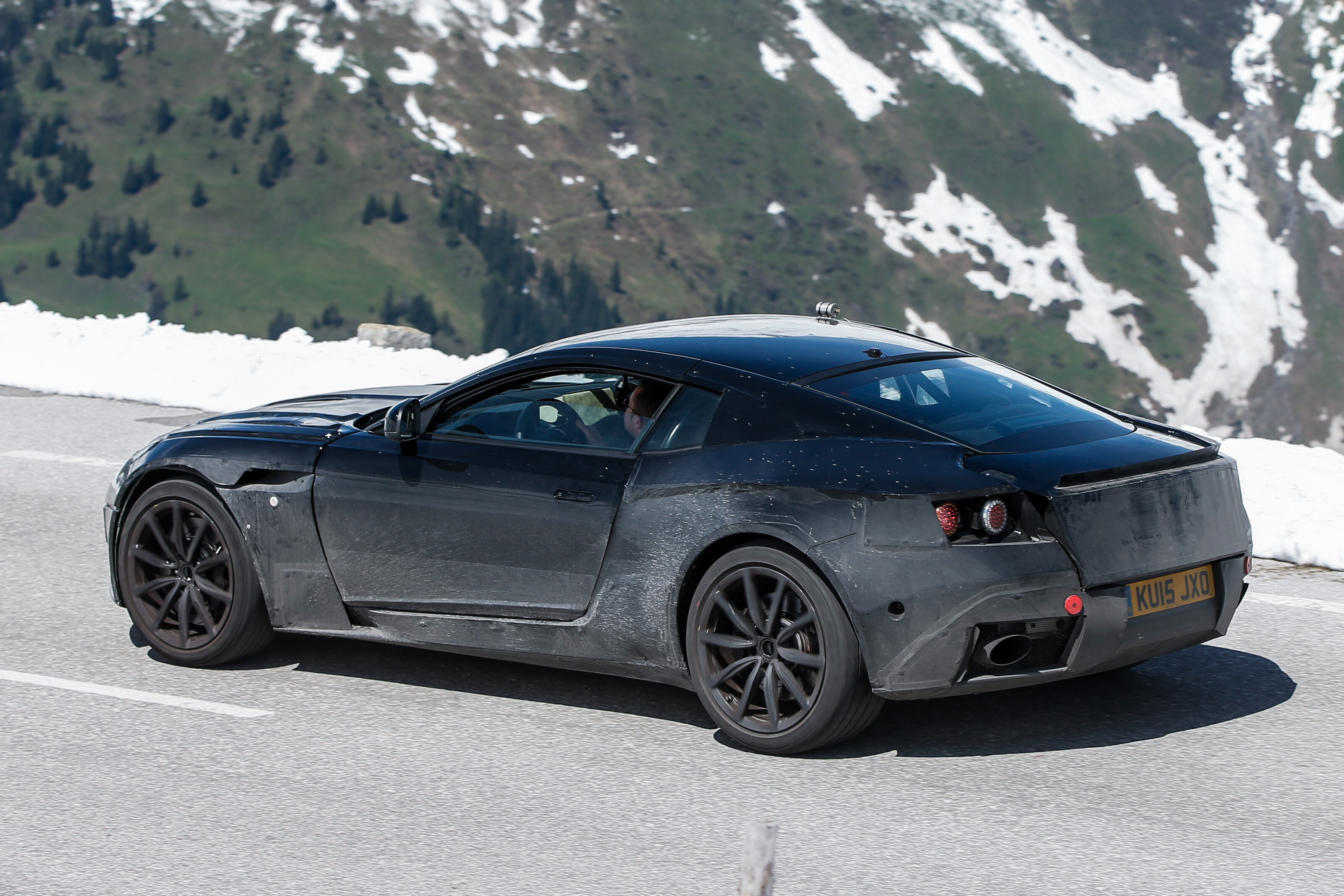
As with the DB9, the DB11’s asking price will be in the $350,000 to $400,000 bracket, putting the Aston head-on with its aforementioned rivals including the Continental GT and GranTurismo.
Have spy pics of your own? We’d love to see them. Send them to [email protected]
There will be no more lap records set at the Nurburgring for the rest of the year – and potentially beyond.
Just as Koenigsegg was preparing for its new One:1 hypercar to beat the Porsche 918 Spyder’s lap record of 6 minutes 57 seconds, management of the ‘Green Hell’ has effectively told the specialist Swedish maker to go play in another sand pit.
The enforcement of speed limits in places of the 20-kilometre circuit comes as a result of a spectator death when a Nissan GT-R Nismo became airborne over a crest and flipped into the crowd.
Nurburgring CEO, Carsten Schumacher, told Carscoops blog in an email:
“Following the tragic accident on 28 March 2015, the German motorsport association (DMSB) introduced speed limits for races at the Nurburgring … [we have] decided to extend these speed limits to other activities on the Nordschleife, which is why record drives are currently not permitted on the Nürburgring Nordschleife”.
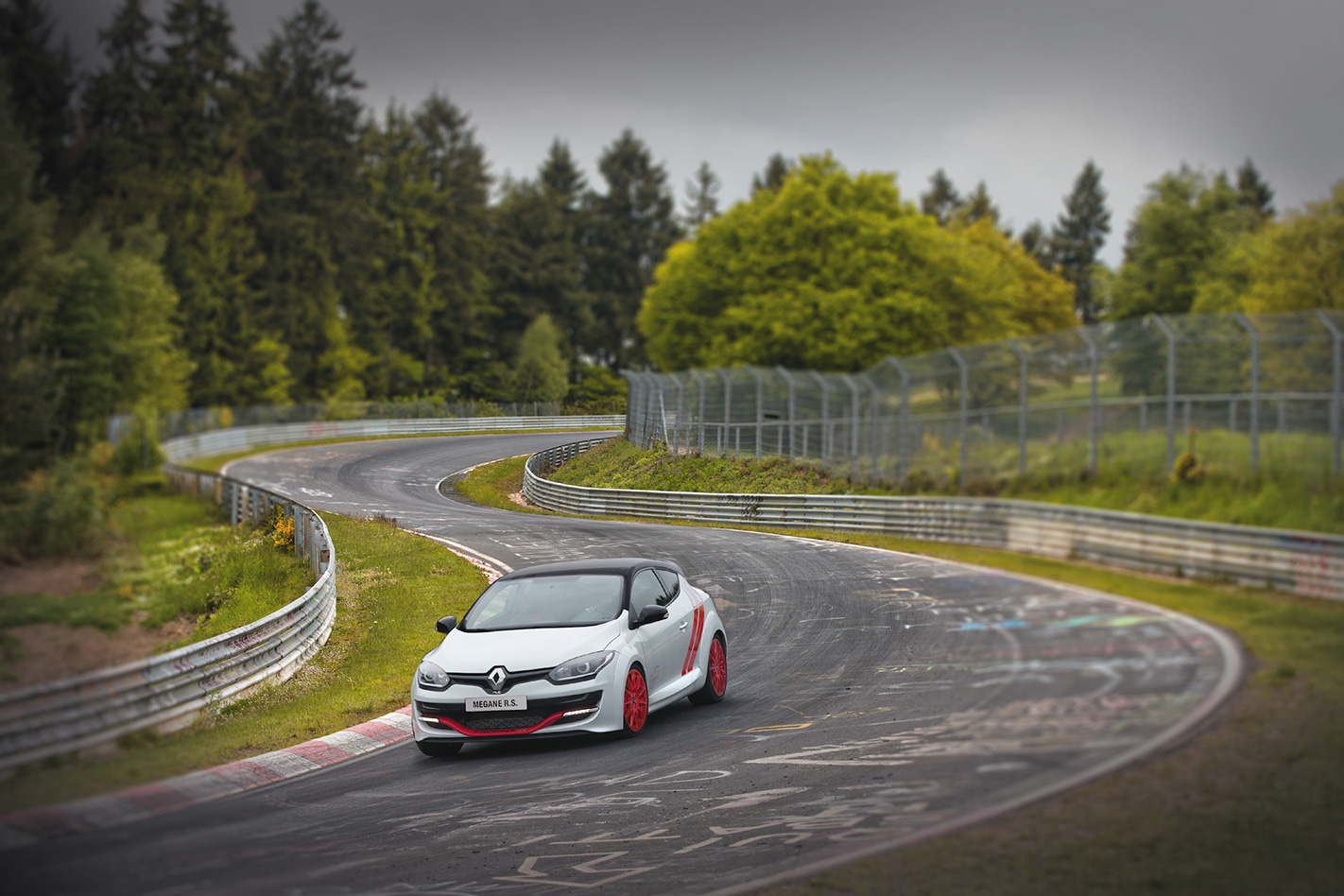
The speed limits by default make records unattainable, although the restrictions will be reviewed at year’s end.
Koeniggsegg were preparing a record-breaking run to be filmed for a documentary called Apex.
Other current record holders include the Renault Sport Megane 275 Trophy-R, which set a 7min 54sec record as the fastest ever front-driver around the iconic track in June last year; while in the same month Holden even got in on the bragging rights action, with the VF SS V Redline ute at setting a 8min 19sec time to make it the fastest ute to ever lap the ‘ring.
Those records may now be locked in forever, too.
Get your free weekly report from the world of fast cars – subscribe to the MOTOR newsletter!
A tale of two Ms: Motor magazine competition winners get behind the wheel of a vast range of BMW M cars at Sydney Motorsport Park.
The fast-fleet includes the likes of the M3, M4, M5, M6 and X6 M, with a 428i and M235i thrown in for good measure. The baby coupe may not be a full M car (M2 is coming) but is among our readers’ picks of the day for packing big entertainment into a compact size. X6 M also overcomes scepticism that SUVs can’t cope with a track attack.
Driver-training action incorporates braking, skidpan and (timed) motorkhana exercises, though our participants are most in their element lapping SMP behind BMW’s skilled instructors. Or sitting beside them for hot-laps – where the M3s spend more time sideways than straight-ways. All in the name of education, of course.
Get your free weekly report from the world of fast cars – subscribe to the MOTOR newsletter!
The 19 winners of Wheels magazine’s BMW M Driving Experience competition take to the Sydney Motorsport Park track to lap up their prize.
It’s a flat-out day driving the German brand’s fastest cars, mixed with braking and oversteer exercises – and a timed motorkhana to allow competitive spirits to run rampant.
Legendary badges such as M3 and M5 are there, as well as new models including the updated M6 and second-generation X6 M. The SUV surprises punters with its agility-to-size/weight ratio, while a semi-official M car – the M235i – is widely adored for its lively, shrinks-around-you performance.
Instructors finish the day with participants riding shotgun for hot-laps – with the temperature of rear tyres frequently reaching smoking point. Naturally.
Sign up here to receive the latest round-up of Wheels news, reviews and video highlights straight to your inbox each week.
Nico Rosberg lands another punch on team-mate Lewis Hamilton’s title hopes; Craig Lowndes sets another record during a weekend of carnage; Eli Evans takes ARC lead; Sebastien Loeb’s winning ways in WTCC
NICO Rosberg has won his third Grand Prix of the 2015 Formula One season after beating team-mate and championship leader Lewis Hamilton in a straight fight at the Austrian Grand Prix.
A smart start from the dirty side of the track saw Nico Rosberg establish an early lead in Sunday’s race, after pole-sitter Hamilton’s clearest opportunity to pass his Mercedes team mate was thwarted by the intervention of a safety car after a spectacular coming-together between two ex-world champions saw Fernando Alonso’s McLaren perched atop Kimi Raikkonen’s Ferrari. Both drivers were fortunately unhurt but Alonso, whose car slid along the top of the Armco barrier perilously close to Raikkonen’s head, described the incident as “scary”. It prompted a six-lap safety car intervention while both cars were craned from the circuit.
Upon the restart, Rosberg steadily built his lead, aided by a five second penalty Hamilton later accrued for crossing the merge line after a pit stop. Felipe Massa, who achieved pole and a good result at this circuit in 2014, inherited the third step on the podium when Sebastian Vettel’s Ferrari was delayed by a recalcitrant right rear wheel during a tyre stop. Vettel closed on the Brazilian driver, but couldn’t pass him before the 71 laps were completed. Massa’s Williams teammate Valteri Bottas again displayed superb overtaking skills but was unable to equal his 2014 podium, finishing in fifth place ahead of newly-crowned Le Mans vwinner Nico Hulkenberg’s Force India. Daniel Ricciardo’s Red Bull scraped into a points-paying finish, crossing the line in tenth, after starting in 18th place.
It was unusual to see Ricciardo in the company of the McLarens of Jenson Button and Alonso at the blunt end of the grid after the Aussie was given engine change penalties, a burden also shared by the Perth driver’s Red Bull teammate Daniil Kvyat. Qualifying had been bizarre when both Hamilton and Rosberg spun off the track during the final minutes of Q3, but not before they’d secured their usual one-two positions ahead of perennial podium companion Sebastian Vettel, giving Mercedes-Benz a clean sweep of poles over a twelve month period.
With the absence of a Grand Prix in Germany this year, Austria’s Red Bull Ring was the nearest thing to a home race for Rosberg and Mercedes-Benz (and its Austrian principals Niki Lauda and Toto Wolff), but the next event is in Lewis Hamilton’s back yard at Silverstone where he will hope to increase his championship lead over Rosberg, which has slipped to just ten points.
V8 Supercars, Darwin: Craig Lowndes’ Century Shines Through Carnage
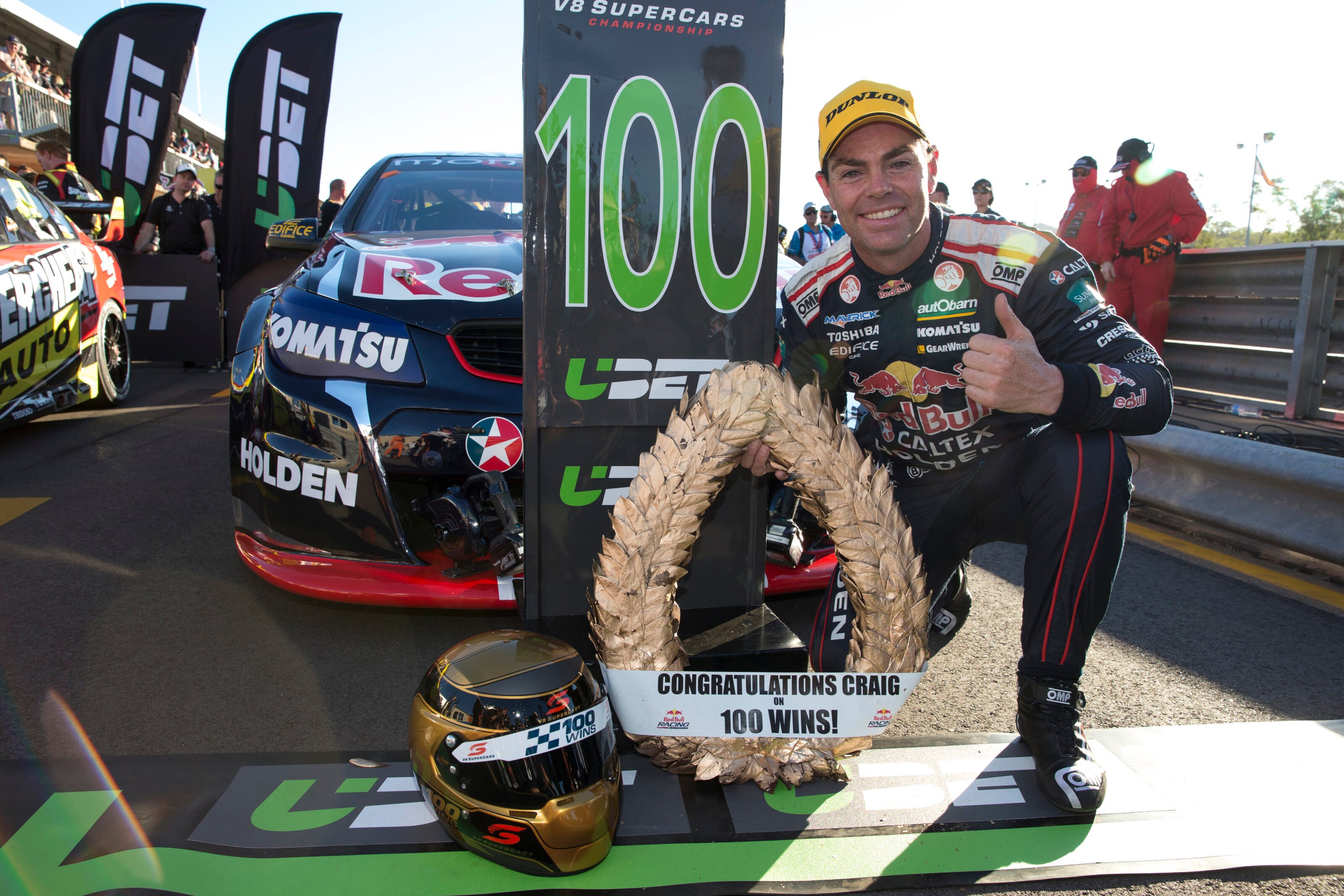
ON the day before his 41st birthday, in the 888th V8 race, Craig Lowndes in his Number 888 Red Bull Holden Commodore won his 100th race, an all time record ahead of Jamie Whincup on 91 and Mark Skaife on 90 victories. Lowndes shone at Hidden Valley, Darwin, on a Saturday otherwise memorable as a crashfest.
There’s simply not enough space to write about the Saturday morining carnage, but notable victims included Lowndes and his teammate Jamie Whincup, as well as pole sitter James Courtney and his teammate Garth Tander in Race One. The Smiling Assassin wasn’t looking too chirpy when penalised 15 points, Jamie and James both lost 25 while Jason Bright dropped 25 points twice. Unlike these vastly experienced competitors, young star Chaz Mostert in his Prodrive Ford was able to keep his nose clean by outpacing the field in front of teammate Mark Winterbottom and Rick Kelly’s Nissan who finished ahead of two more Nissans.
In Saturday’s second sprint race, no further penalties were deemed necessary other than a black flag for pole sitter Rick Kelly for taking out Fabian Coulthard. However, it was another demolition derby with the Mercedes-Benz drivers having a family squabble while Jamie Whincup had another dismal outing, unlike his teammate who enjoyed his unique achievement ahead of Tim Slade and Chaz Mostert in third.
Over the weekend Chaz proved to be the most consistent driver in the field by securing second in the 70 lap Race Three behind pole-sitter David Reynolds in the third of the Prodrive Fords, with Coulthard back in third position after having been punted off on the first turn in the previous two races.
In comparison to Saturdays’ two races, the Sunday event was almost free of controversy (other than Reynolds’ quaffing champagne from his sweaty shoe on the rostrum) although Reynolds, while leading, experienced a huge off while lapping a Nissan.
Championship rankings as the circus heads off to Townsville find Mark Winterbottom on 1165 ahead of Craig Lowndes on 1070 and Fabian Coulthard third on 1010, followed by Chaz Mostert up to fourth on 991.
Australian Rally Championship, IROQ, Queensland: Eli Evans Dominant in Caloundra
ELI Evans has taken the lead in the East Coast Bullbars Australian Rally Championship after scoring a resounding victory at the International Rally of Queensland. Crossing the finish line some seven minutes ahead of second-placed finisher Adrian Coppin, Evans now leapfrogs crowd favourite and winner of the last round, Molly Taylor. She finished third in Kandanga South, some two minutes behind Coppin after an event plagued by problems of one sort or another. She considered herself lucky to finish at all, let alone on the podium and now finds her 17 point lead over Eli switched to an eight-point deficit after the third round of the Championship.
The IROQ (International Rally of Queensland) is also a round of the FIA Asia-Pacific Rally Championship, with competitors participating from across the globe. Sweden’s Pontus Tidemand in a Skoda Fabia finished four minutes ahead of Kiwi Mike Young’s Subaru, with Indonesian Subhan Aksa’s Mitsubishi in third and Eli Evans fourth overall.
WTCC, Slovakia: For anyone wondering what happened to Sébastien Loeb, he’s still winning
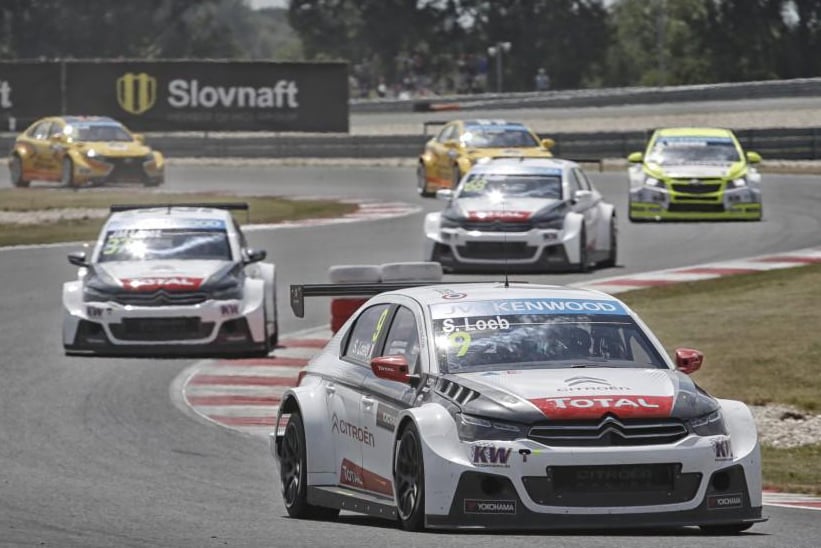
IN only his second season of circuit racing, nine-time former World Rally Champion Sebastien Loeb has won for the fourth time after taking out Race Two at the Slovakia Ring.
Loeb moved from eighth on the grid to second by turn one and then passed the enormously experienced Gabrielle Tarquini at the start of the second lap.
Loeb now stands third in the championship standings with 178 points at the season’s halfway mark, still within touching distance of second-placed Yvan Muller (209 points) and current leader Jose Maria Lopez (239 points).
Sign up here to receive the latest round-up of Wheels news, reviews and video highlights straight to your inbox each week.
