
Released overnight in the US, the Shelby Mustang Super Snake delivers over 560kW of power from its supercharged 5.0-litre V8 engine.
That’s well up on the 468kW and 522kW supercharger kits previously released and far beyond the 331kW of the standard ‘Stang.
Mustang Motorsport will officially import the Shelby Super Snake package to our country, which will add around $90,000 (exact price TBC) to the $55,000 standard V8 version purchased from your Ford dealership.
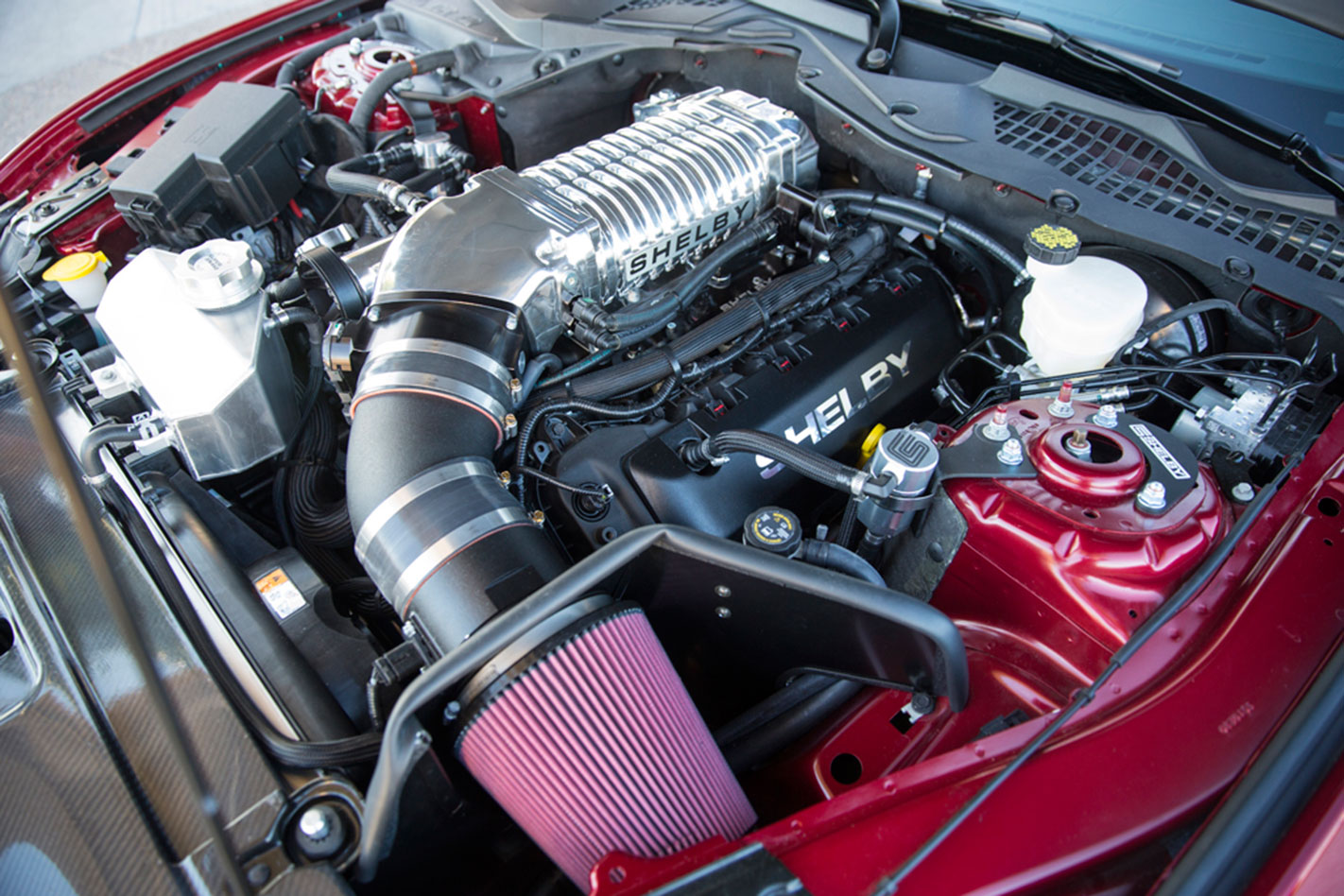
In addition to the most powerful supercharger package, other inclusions are differential and transmission cooling, an adjustable rear control arm, camber/castor plates, racing seats, 6-piston front brakes, a Borla exhaust with Shelby tips and 20-inch Weld Racing wheels with Michelin tyres.
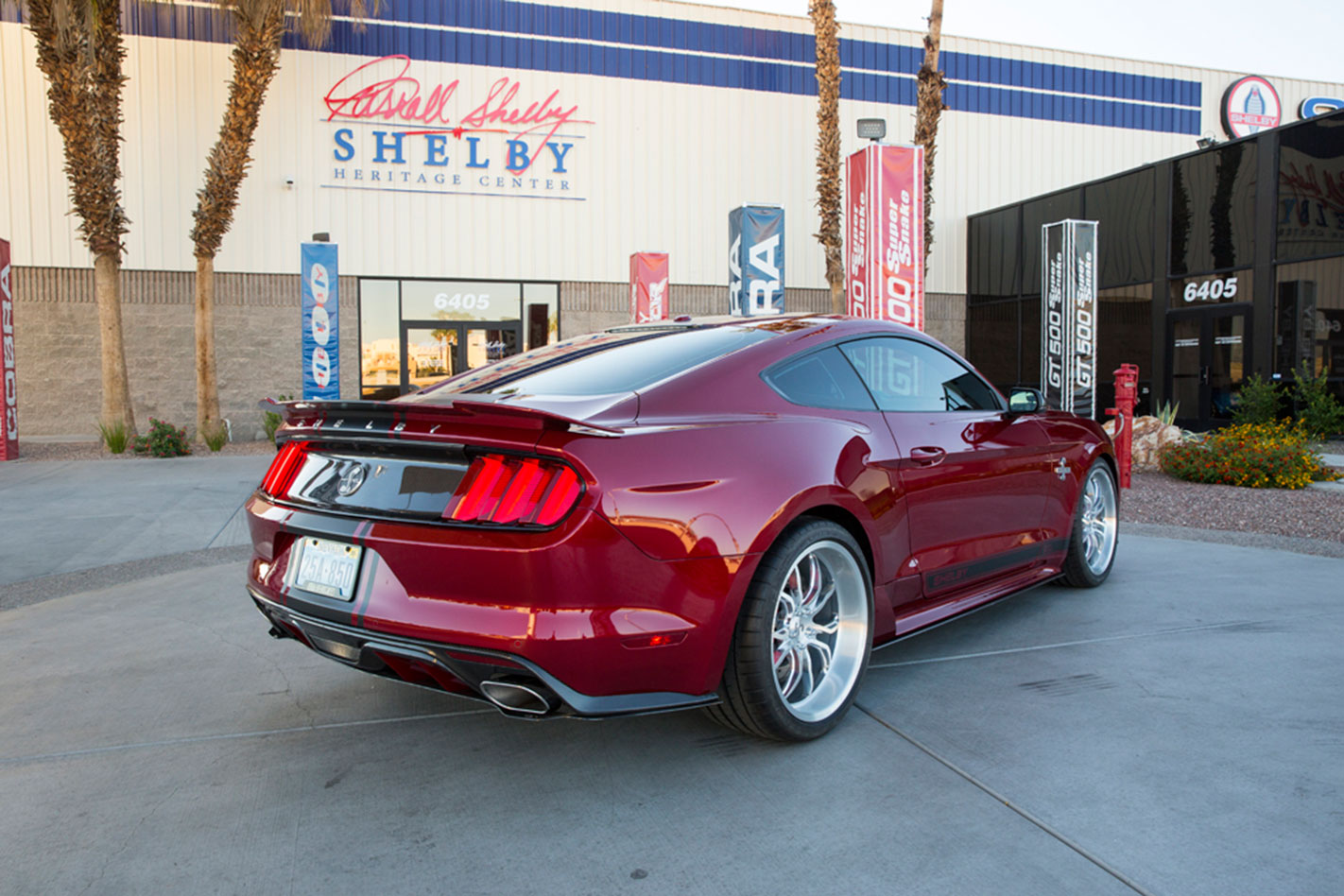
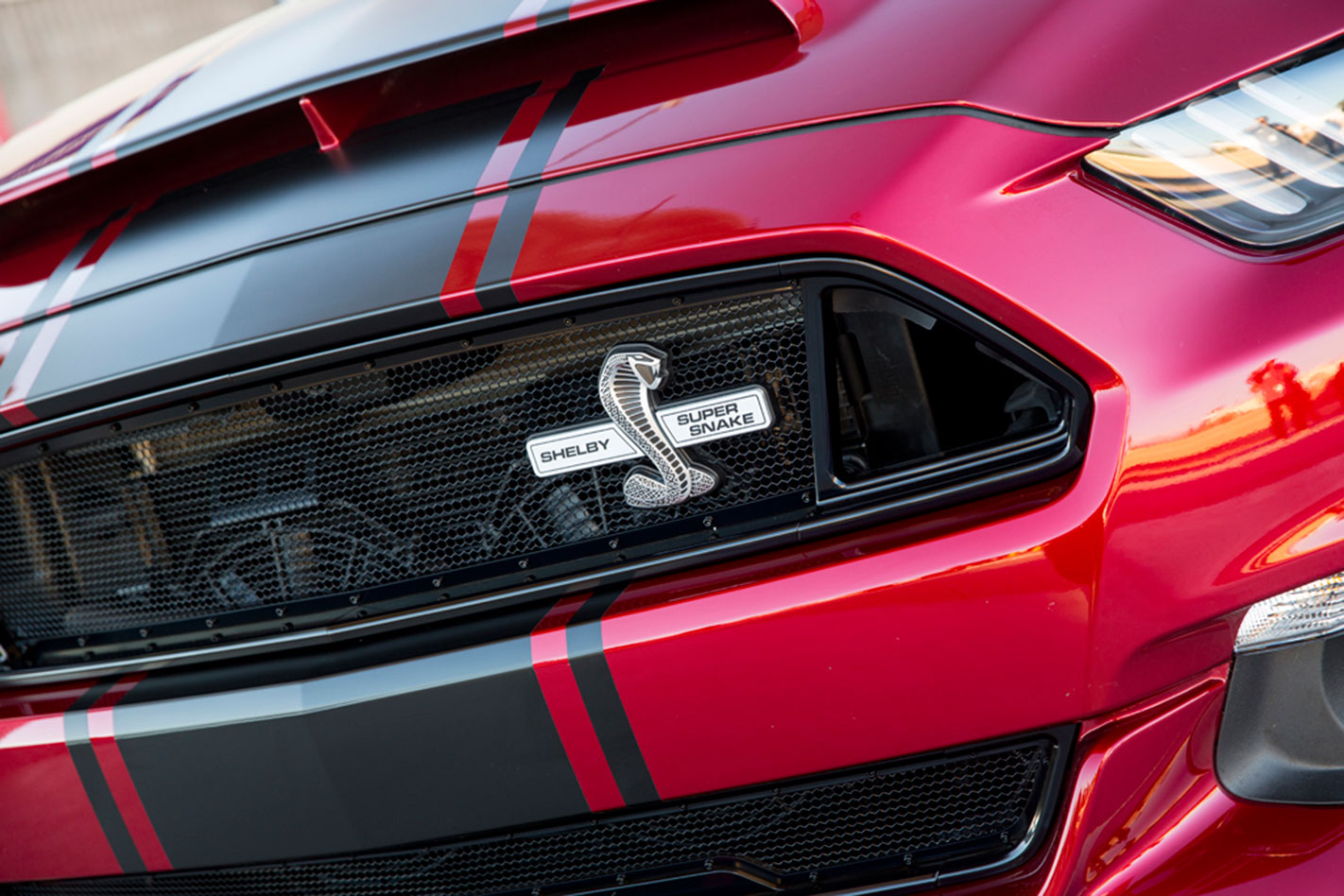
Outside, it’s as you see in the photos; the Super Snake styling package includes racing stripes and bulging carbon fibre bonnet, splitter, rocker panels, diffuser, spoiler and mirror covers.
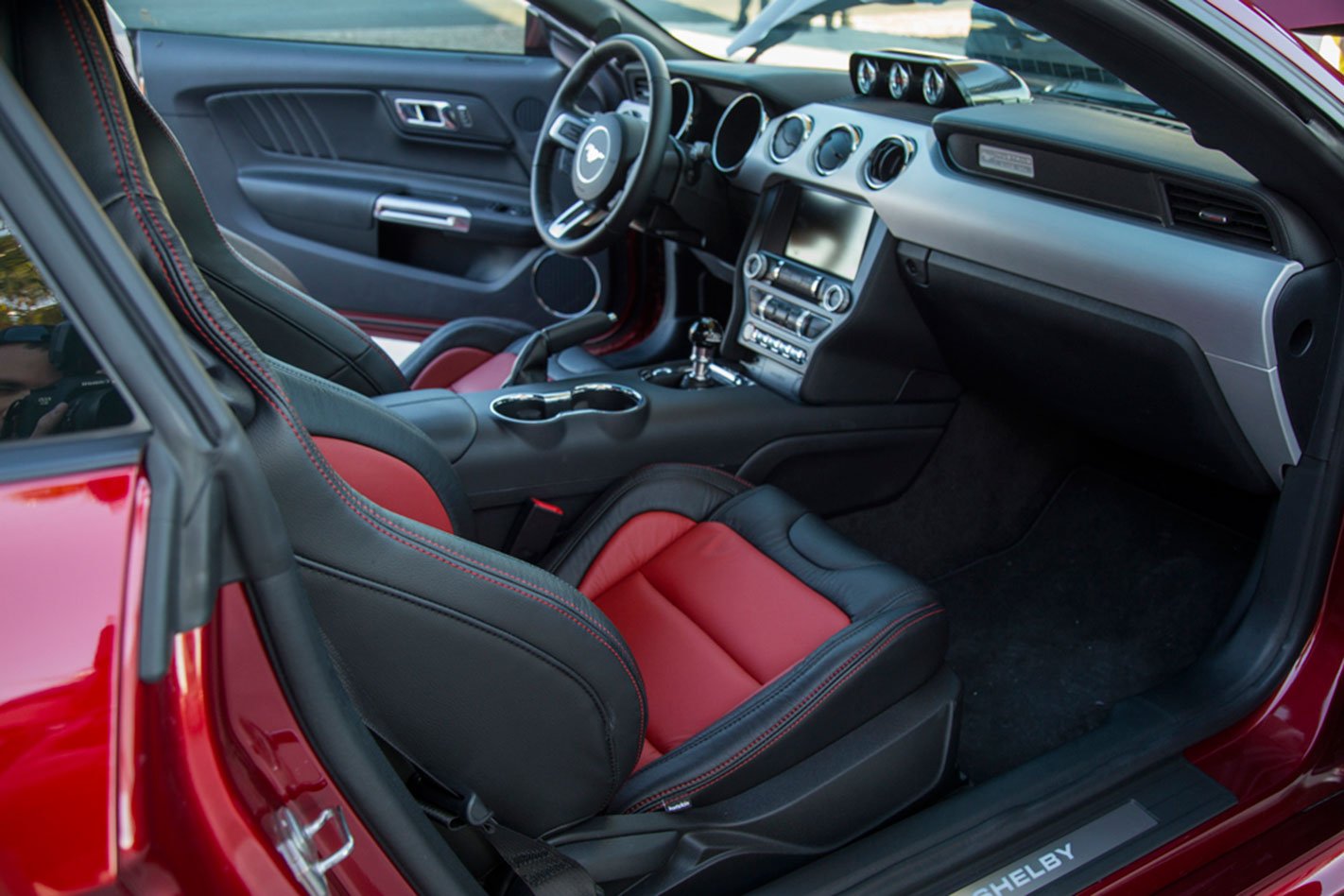
Inside there’s a short-throw shifter kit (though you can also get the whole kit with an auto), tri-gauge pod, Super Snake branded headrest covers and Shelby labelled floor mats and sill plates.
You’ll get a proper certificate of authenticity and Shelby serial number in Oz, too, marking the car as more than just a Mustang GT bolt-on kit.
It does, however, place the Super Snake up there with the BMW M3 on price, though well beyond the 430kW HSV GTS on grunt – but perhaps it’s cooler and more bespoke than both.
If that is a bit rich for your blood, Mustang Motorsport has also announced prices for the supercharger kits producing 468kW (BYO plus $14,000) and 522kW (another $2000).
You can run those kits separately or together with a Roush styling package (BYO plus $14,153) that includes 20s, front fascia kit, spoiler and other exterior enhancements.
The Shelby GT kit is one step above the Roush but one below the Shelby Super Snake. Turning your Mustang GT into a Shelby GT will cost a still-hefty amount (BYO plus $46,990) and that’s without either supercharger option.
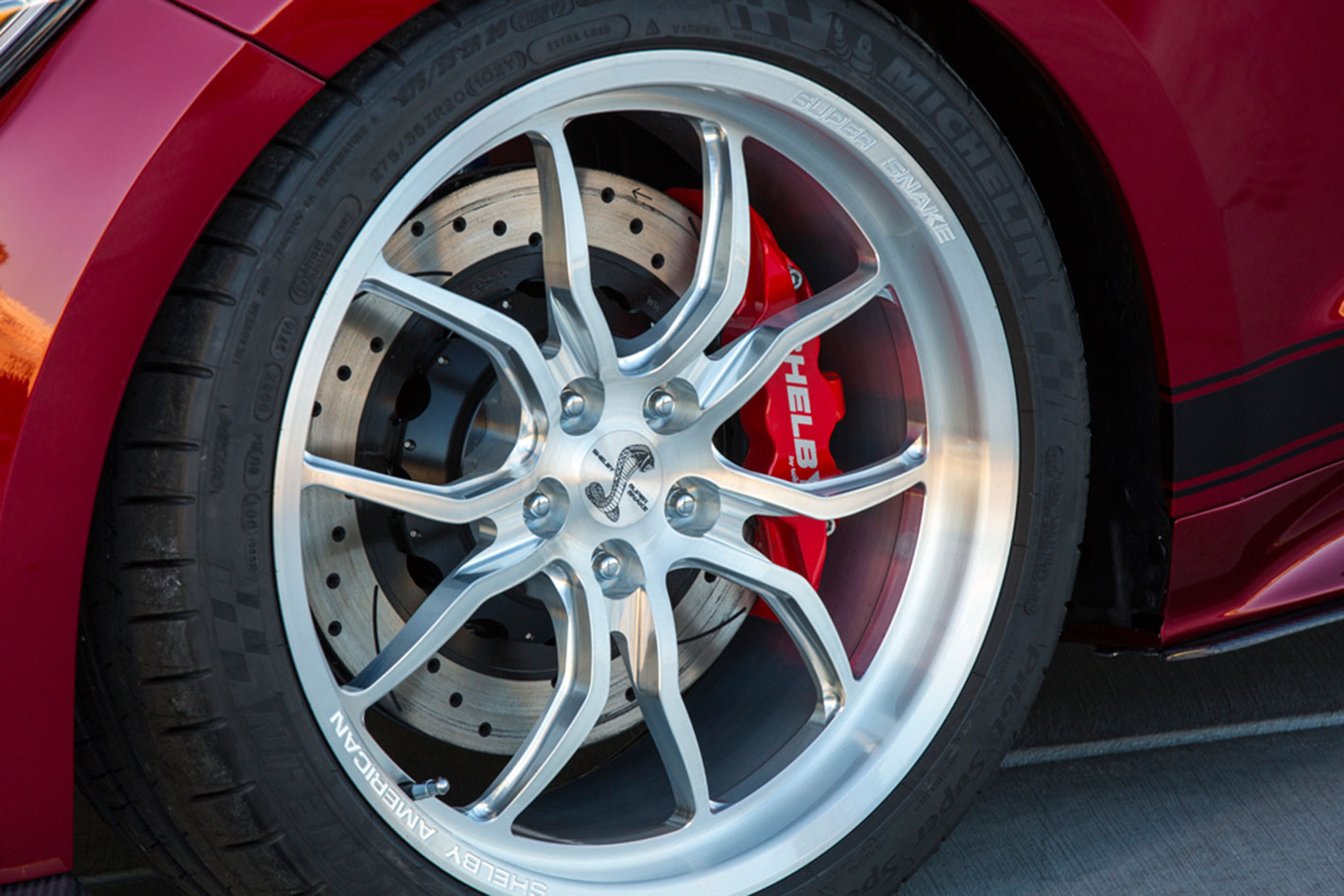
For that price you also get full Shelby branded exterior and interior parts that are identical to those officially sold in the US, in addition to a handling package, cold air intake, exhaust with tips, forged alloy wheels and a short-throw shifter kit.
All the parts are official, and make your Mustang GT official, as you will get an official Shelby serial number.
Add the blower to the Shelby GT kit, and an approximate pricetag of $115,000 for the 468kW version places it in the ballpark of the 430kW HSV GTS. Game on…
Maserati turns to nature to set Ghibli apart from tech-touting German rivals. Optional silk interior, trimmed in fabrics specially developed by Italian textile and fashion leader Zegna, are the highlight of MY16 update from Fiat Chrysler Automobiles’ fast-growing luxury brand.
WHAT IS IT? Large premium luxury sedan, Italian style. Launched in European markets in 2013, the Ghibli has driven Maserati’s recent rapid growth spurt; from just over 6000 cars in 2012 to 36,500 in 2014.
WHY WE’RE TESTING IT To try silk seats for the first time, obviously.
MAIN RIVALS Mainly A-grade German rear-drive sedans like top-end BMW 5 Series and Mercedes-Benz E-Class models, but new Jaguar XF, too, when it arrives.
THE WHEELS VERDICT Simpler, sexier, sportier … and now silkier … than anything Germany has to offer.PLUS: Performance; responsiveness and agility; exterior MINUS: Firm-ish ride; rear seat space; interior presentation; price
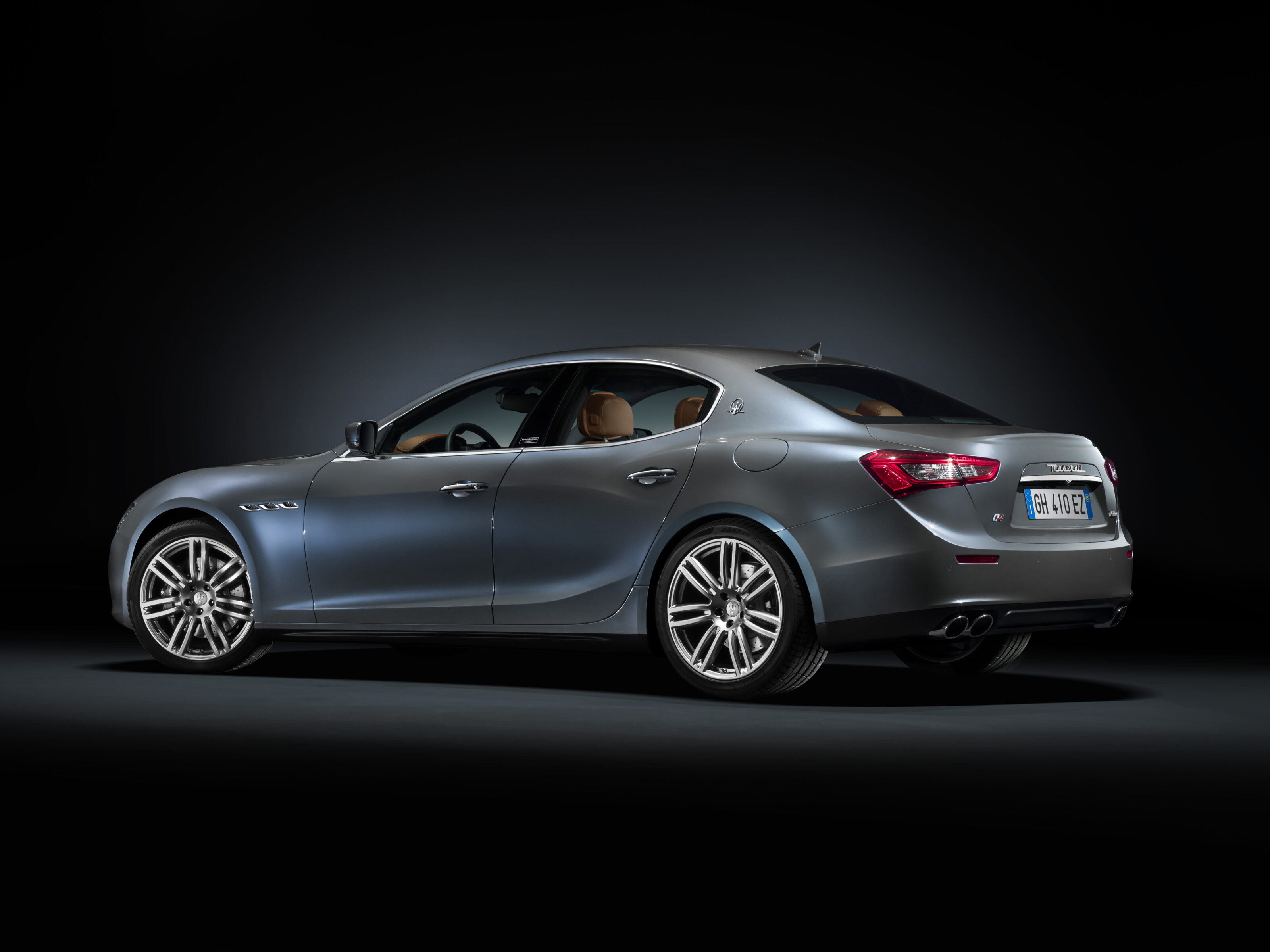
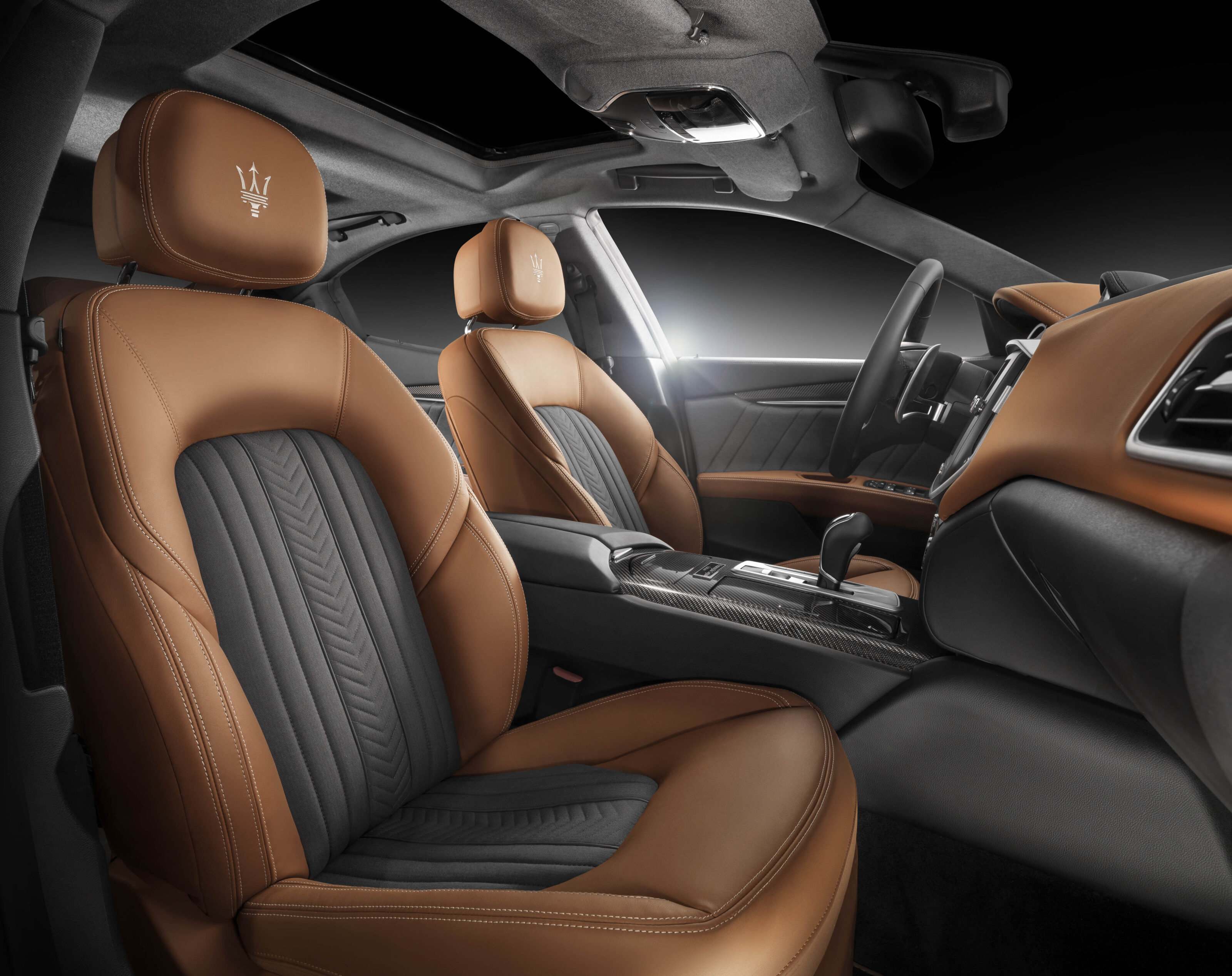
THE WHEELS REVIEW IF you didn’t know it was silk, you would never guess. But this isn’t going to bother the Italian brand’s growing band of customers, according to the man in charge. “You don’t really see it, but you know it,” says Harald Wester, head of Maserati. “And it adds something to your well-being.”
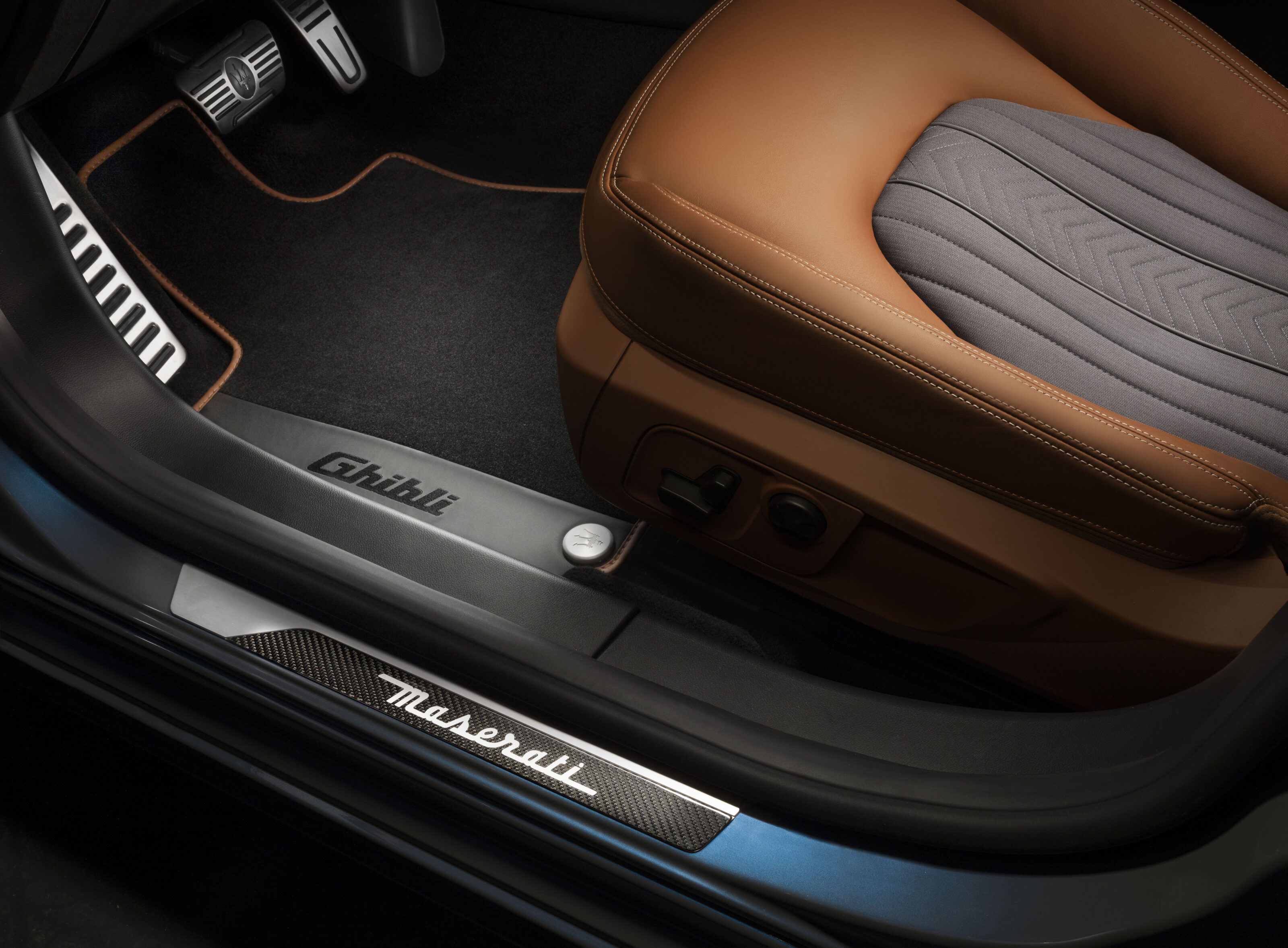
The grey fabric is most prominently used for seat cushion and backrest inserts, combined with black, red or natural tan Poltrona Frau leather. Door trim inserts, the roof lining and sun visor coverings are also in silk, made for Maserati by Ermenegildo Zegna. As well as being huge in upmarket male fashion, the Italian company has more than a century of textile manufacturing expertise.
While the fabric is good to look at, my well-being meter doesn’t suddenly spike as I settle into the Maserati’s seats, stroke its door trims and run my eyes over its roof lining. Maybe the magic only works if you’ve actually paid for it yourself…
To achieve the durability standards demanded by Maserati, the silk in the seats is a very dense weave, which lacks the pliant softness of a clothing fabric. Zegna says the textile inserts have great breathability, which should make the silk seats more comfortable in summer. In the mild weather of our test drive in Italy, the silk inserts felt as firm as the leather around them.
According to Harald Wester, the optional Zegna interior will cost around the same as Maserati’s premium leather package. Globally, around 60 percent of the trident brand’s customers choose to pay more for classier cowhide. Price won’t be a barrier to the silk interior’s success.
If you’re wondering why we’re lingering so long on the subject of silk, it’s because there’s little else to get excited about in this MY16 update.
The good-looking Italian is a more involving drive than comparable Germans, but it was that way from launch. And except for the silk option, nothing significant has really changed inside Maserati’s most popular model.
An upgrade to Euro VI emissions standards has improved fuel efficiency of the car’s Ferrari-manufactured twin-turbo 3.0-litre V6 petrol-burners, mainly because of the addition of a idle-stop system. But Ghibli and Ghibli S power outputs remain unchanged at 243kW and 301kW. Same goes for the Ghibli’s 202kW 3.0-litre turbo diesel, where the big change for Euro VI is the addition of an AdBlue tank.
The remainder of the MY16 tech upgrades are equally yawn-worthy; blind-spot alert and rear cross path warning, hands-free boot operation, upgraded standard Harman Kardon audio and the option of Apple’s Siri as an on-board assistant. This is tech that’s commonplace in much less expensive cars than the Ghibli. But silk? No-one else does it…
SPECS Model: Maserati Ghibli Engine: 2997cc V6 (60°), dohc, 24v, twin turbocharged Max power: 243kW at 5000rpm Max torque: 500Nm at 1750 to 4500rpm Transmission: 8-speed automatic Kerb weight: 1810kg 0-100km/h: 5.6sec Price: $145,000 (est.) On sale: Q4 2015
Sign up here to receive the latest round-up of Wheels news, reviews and video highlights straight to your inbox each week.

Here are the clearest pics yet of the next-generation Audi A4, as it edges closer to September’s Frankfurt show debut
CAUGHT virtually undisguised this month is the 2016 Audi A4, the ninth generation that’s undergoing final testing prior to its global debut at the IAA Frankfurt show in September.
Staying faithful to the company’s signature three-box sedan ethos – aero-influenced silhouette, six-light window profile, and a stubby high-set tail – the B9 series is a somewhat predictable evolution of the successful preceding version that’s been on sale since 2008. Since then, we’ve seen an all-new BMW 3 Series (2012) and a new Mercedes C-Class (2014) in Australian showrooms.
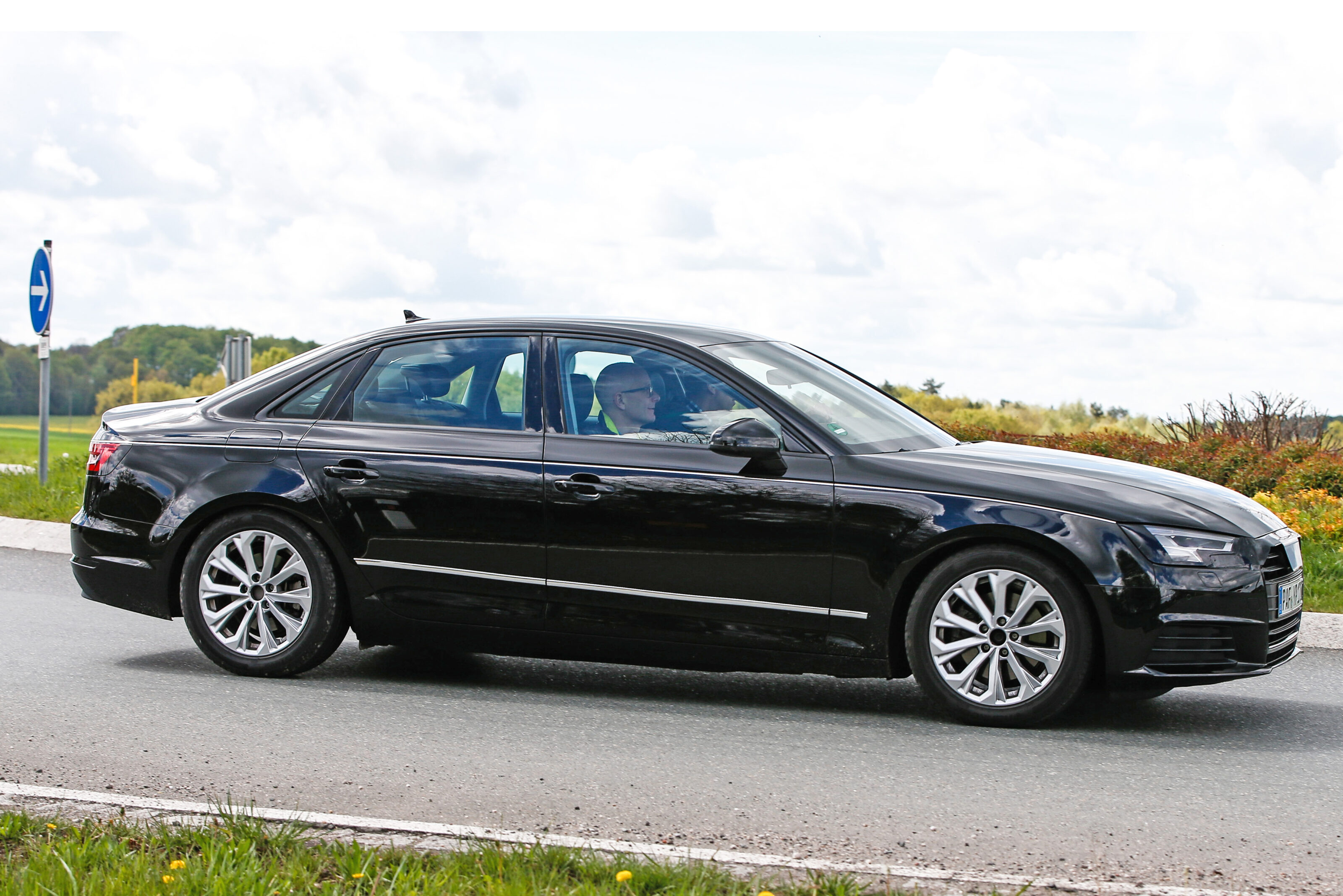
A closer inspection of the A4 reveals a few departures for the automotive design icon, including a lower-than-expected belt line, shoulder rather than window-mounted door mirrors, and what appears to be an extended dash-to-axle ratio, for a more aggressive stance than before. Along with a greater windscreen rake, it helps disguise the A4’s front-drive fundamentals, in a class where key rivals like the BMW 3 Series, Mercedes C-Class, Lexus IS, and Infiniti Q50 all boast rear-drive architectures. Of course, quattro all-wheel drive will remain an option, just as all Audis in this segment have since the old 80 days of the early 1980s.
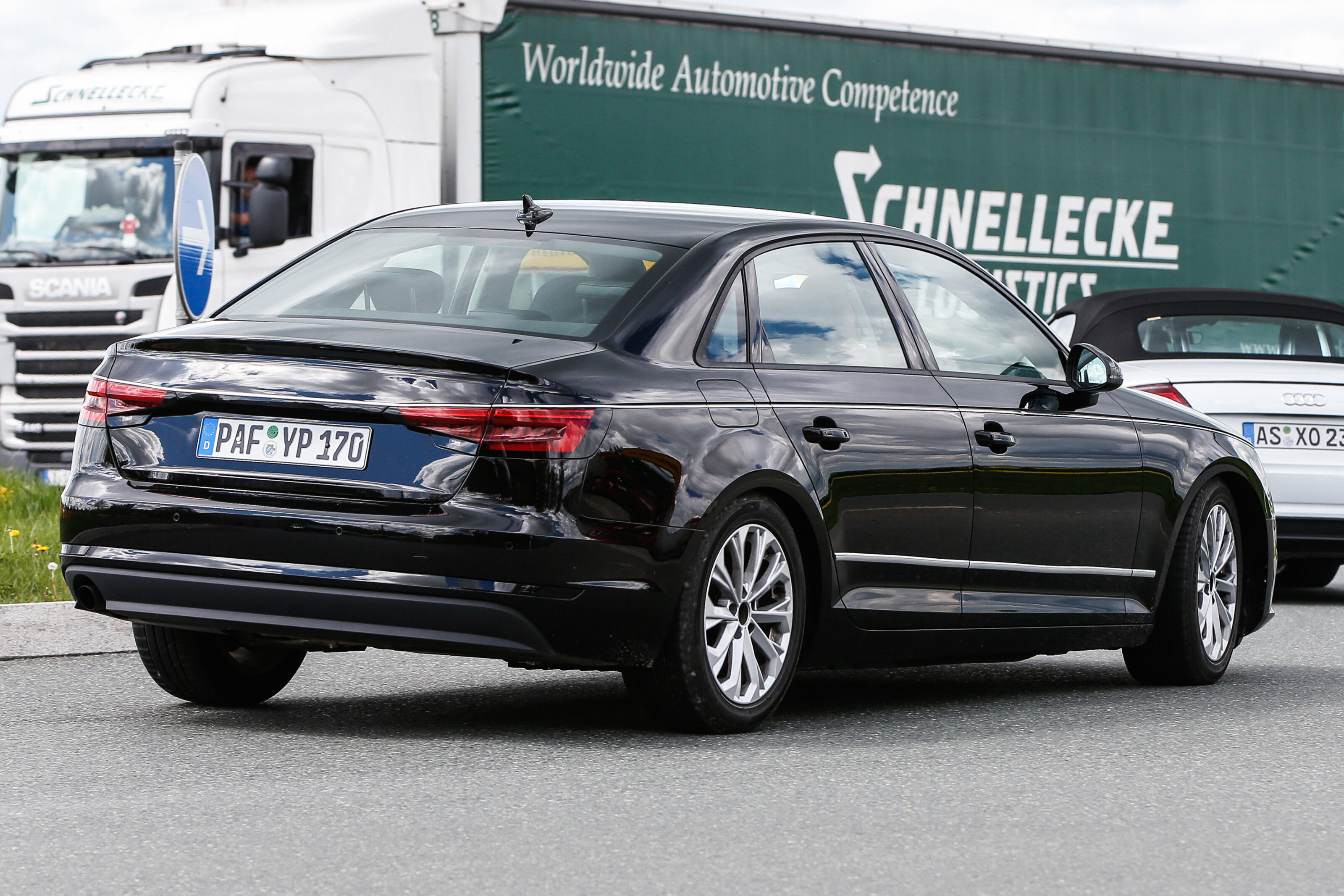
The near-production ready prototypes snapped this month also exposes the B9’s TT-esque hexagonal single-frame grille treatment, which seems to jut out more than before, as well as the overtly boomerang-shaped headlights that are expected to become one of this series’ most defining visual elements. These are less clearly defined in the spy shots due to some subtle cladding appliqués.
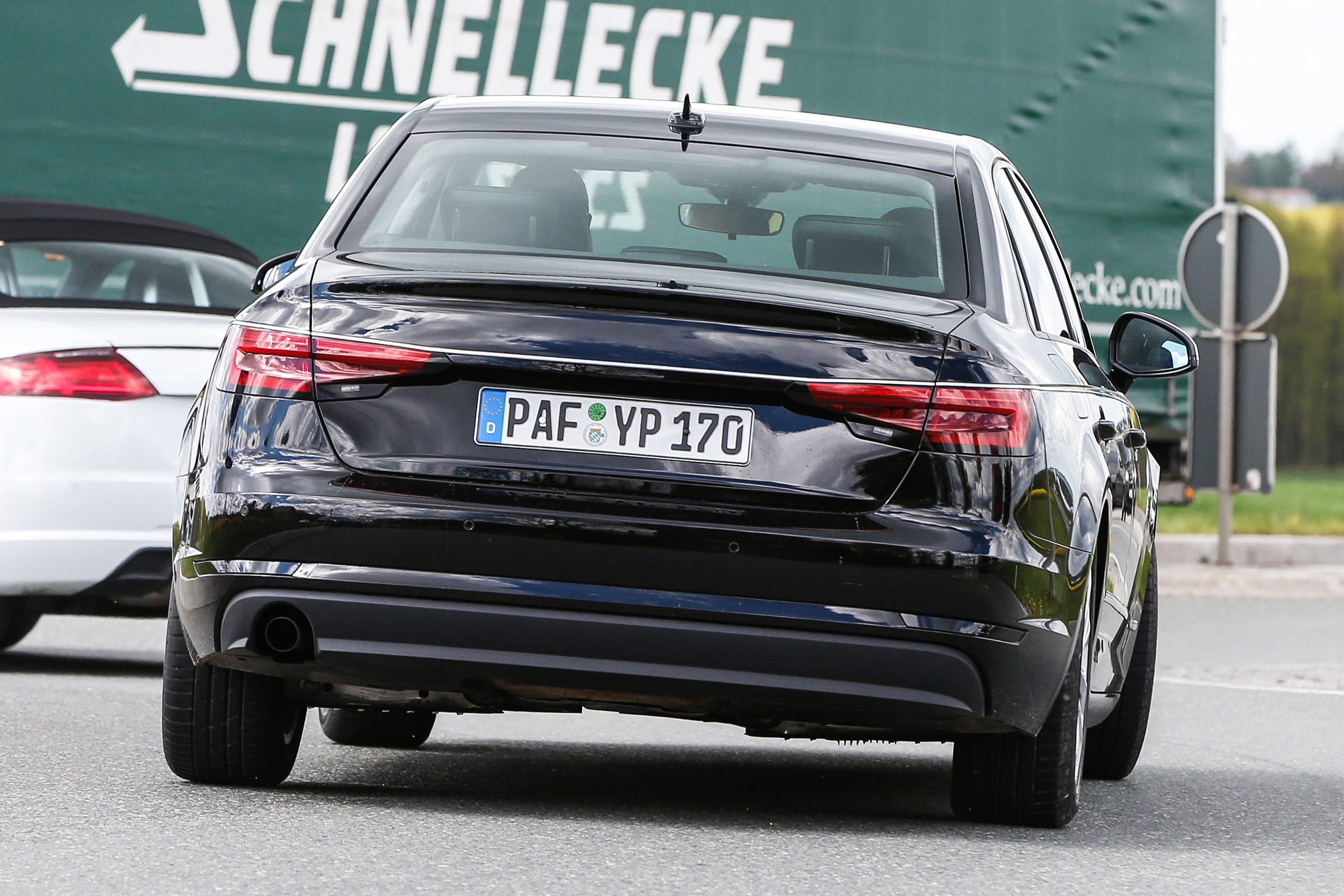
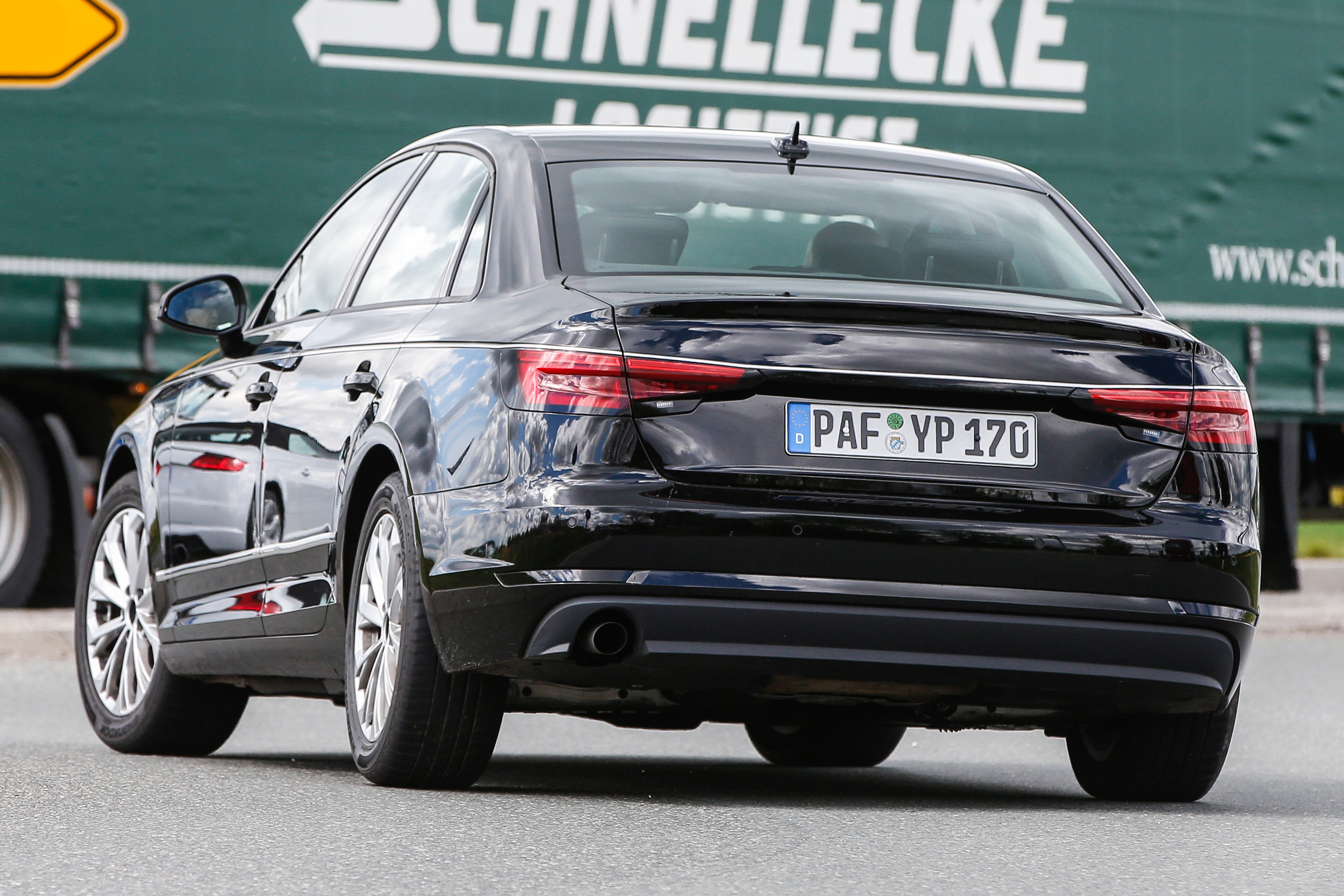
At the other end of the sedan is the freshly tapered tail-light theme, melding seamlessly within the scalloped boot lid, emphasising the sleeker nature of the beast. A more pronounced lip spoiler and cleaner diffuser design also separate new from old.
As we mentioned earlier in the year, the A4’s all-new aluminium and composite-enhanced MLB Evo modular longitudinal platform will bring massive weight savings as well as a lot more strength and rigidity, so expect a sportier and more dynamic experience combined with greater comfort and refinement.
Powertrains will consist of 1.4-litre to 2.0-litre four-cylinder and 3.2-litre V6 petrol options, as well as 1.6-litre to 2.0-litre diesel applications – all turbo and some with cylinder-on-demand tech – while an A4 e-tron plug-in electric/diesel hybrid using a 2.0-litre TDI engine should also be in the mix.
Avant wagon and A5 coupe and liftback offshoots are also waiting in the wings, so the new sedan is just the first of a string of A4-based models heading our way over the next 18 months or so.
Obviously prices will rise a little, but so should the standard specification, since the competition is currently red-hot; so count on the base petrol 1.8 TFSI front-driver to start off from $55,000, stretching towards $150K plus once the fire-breathing RS4 hits the street.
Have spy pics of your own? We’d love to see them. Send them to [email protected]
The world was very nearly minus one Ferrari F430 thanks to this young Italian gentleman, who decided it was a good idea to drive at warp factor nine on narrow country roads.
The video above tells the story, but all we can say is that this guy doesn’t need a Ferrari parked in his driveway to know he’s an extremely lucky individual.
His no doubt petrified passenger might have thought his accident avoidance skills were “Perfecto”, but we doubt the people in the Mercedes-Benz R-Class coming the other way were quite so complimentary.
Driving fast is awesome, but there’s a time and a place kids!
Call it that awkward moment when a V6 diesel knocks on the door of its V8 brother only to boast it can now produce pretty much the same torque.
In what is becoming the month of limousine releases – following last week’s all new BMW 7 Series – the updated Jaguar XJ boasts a 3.0-litre twin-turbo diesel V6 that makes a monstrous 700Nm as well as 220kW.
Outputs rise significantly from the pre-update 200kW/600Nm and Sir’s sprint to 100km/h is reduced by two-tenths to 6.2 seconds. Consumption falls from 6.1L/100km to 5.7L/100km, thanks partially to a new electro-mechanical power steering system.
The XJ oiler also exceeds the 195kW/620Nm made by the brand new 730d with the same capacity diesel engine, though the BMW is 0.2L/100km thriftier and a tenth faster because it is around 100kg lighter.
Jaguar doesn’t plonk its V8 diesel into the XJ and probably for good reason when the 4.4-litre twin-turbo unit in the Range Rover makes 250kW/740Nm, though you can now also get the XJ V6 diesel in the RR Sport.
Styling-wise the 2016 XJ is a case of spot the difference – note the more upright grille and new full LED headlights with ‘double J’ blade daytime runners. If you want to pump that radio station inside, there’s also a new 26 speaker, 1300-watt Meridian sound system with which to enjoy 1990s alternative tunes.
A brand new InControl Touch Pro infotainment system with both iOs/Android connectivity also replaces the laggy old system, and there’s plenty of new technology including auto park assist, adaptive cruise with queue function that stops and moves with traffic and 360-degree camera.
The updated XJ is due locally in Australia in November, priced from $199,000.
In addition to the entry-level diesel, you can also select the carry-over 250kW/450Nm 3.0-litre supercharged V6 petrol, and 375kW/625kW or 404kW/680Nm 5.0-litre supercharged V8 petrol versions.
Five grades will be available – XJ Premium Luxury and XJ Portfolio in V6 diesel or petrol, XJ R-Sport in V6 petrol only, XJR in 404kW V8 trim and XJ Autobiography with the 375kW V8.
Jaguar says the Premium Luxury interior features last year’s Portfolio trim, and for those who don’t want to go the full hog with the XJR there’s the new R-Sport – it gets 20-inch wheels, a three-piece front splitter, deep side sills, side power vents and a rear spoiler, as well as sports seats, R-Sport tiller, ‘Jet’ headliner and piano black trim inside.
The supercharged V6 wouldn’t be our pick, though, and that torquey baby V6 may possibly even be tempting over one of the V8 petrols. Possibly.
Get your free weekly report from the world of fast cars – subscribe to the MOTOR newsletter!
The full-fruit 4×4 Colorado shows Australia’s desire for customised utes as Holden and Ford chase the top-selling Toyota Hilux
THE 2015 Holden Colorado Z71 is the brand’s new flagship ute. Priced from $54,990, Holden has taken the four-wheel drive Colorado LTZ crew cab and thrown almost everything it has at it to come up with a top-spec model that hits showrooms in July as an alternative to the upcoming facelifted Ford Ranger Wildtrak.
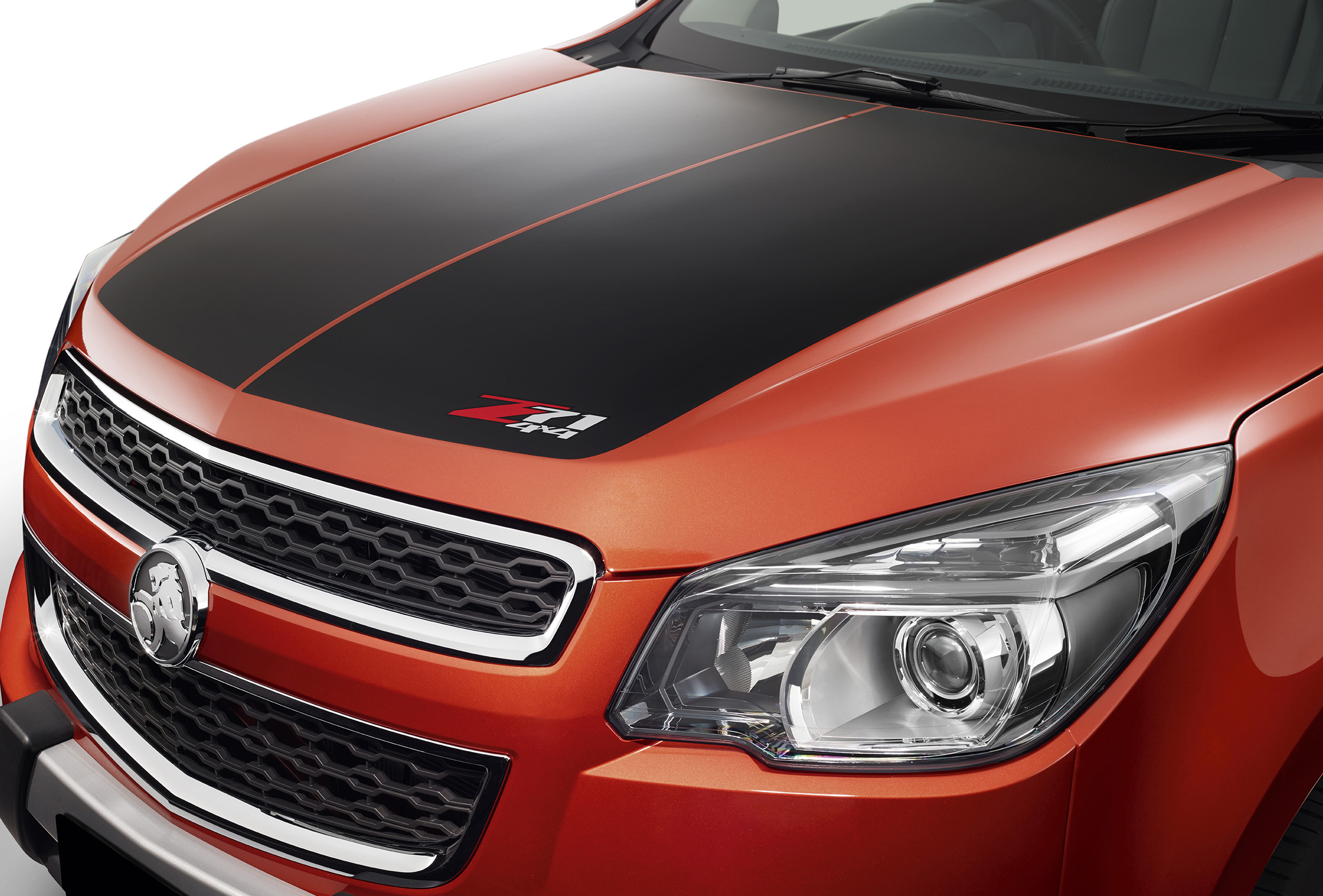
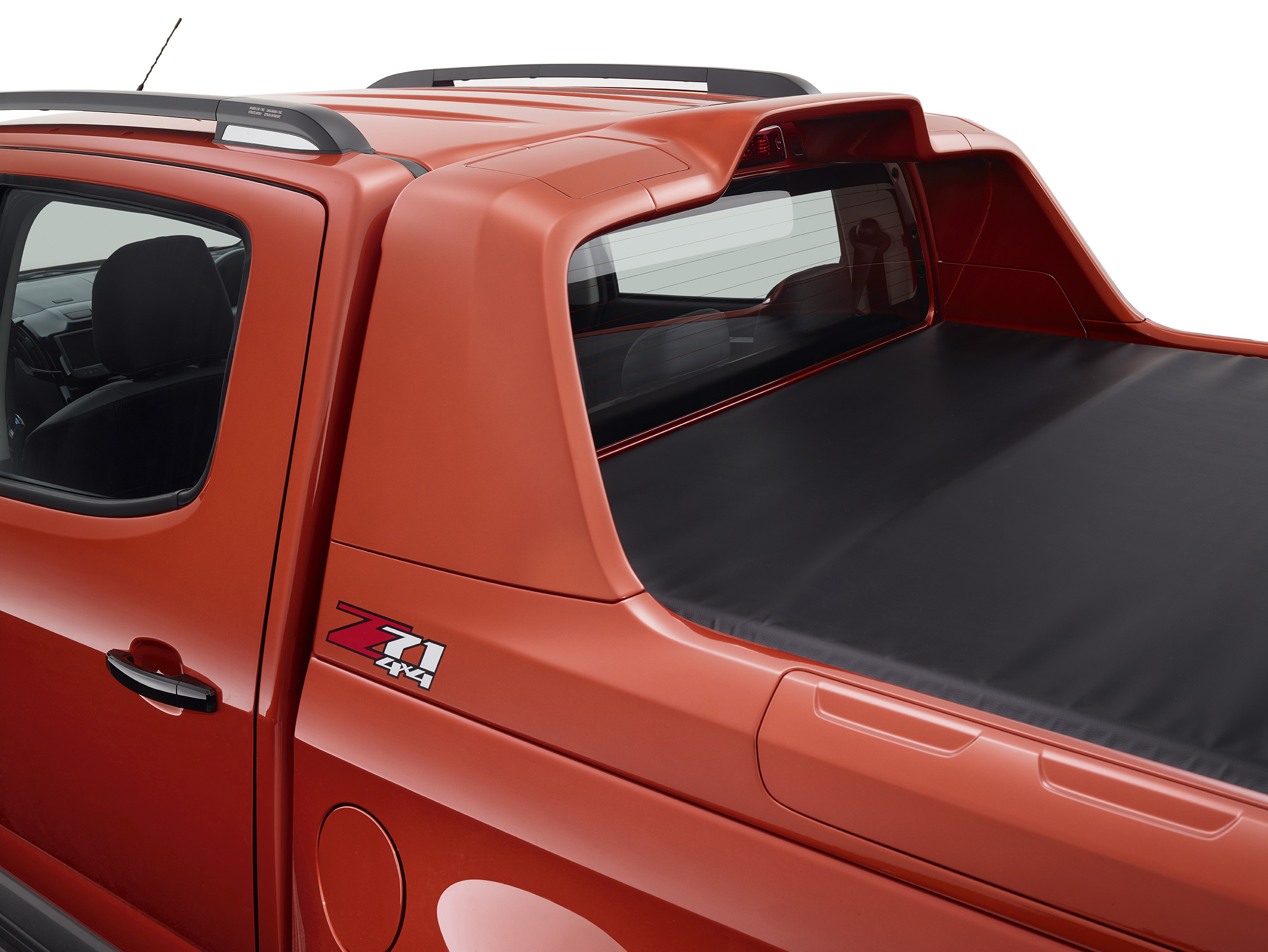
The Z71 – which comes with unique grey 18-inch alloys, nudge bar, a huge sail plane sports bar over the rear window, a soft tonneau, and unique “Z71” graphics on the outside and leather seats inside – isn’t expected to set the sales chart alight, but comes within a week of the 2015 Ford Ranger Wildtrak being shown. The Wildtrak and the Z71 both serve the same role as a flagship, premium-priced halo model.
“You have a look at the growth of pick up and the LCV market and it’s a huge growth market in Australia,” Holden spokesperson Sean Poppitt told Wheels of the top-of-the-tree Colorado. “People have a real appetite for customising their trucks and having something that can do the workday thing, but then is also stylish and can be driven around in the weekends.”
“It’s a real aspirational model,” Poppitt said. “It’s basically got every option you can throw at it … We don’t expect it to be a huge volume seller but we expect it to be a real halo for that [Colorado] brand”
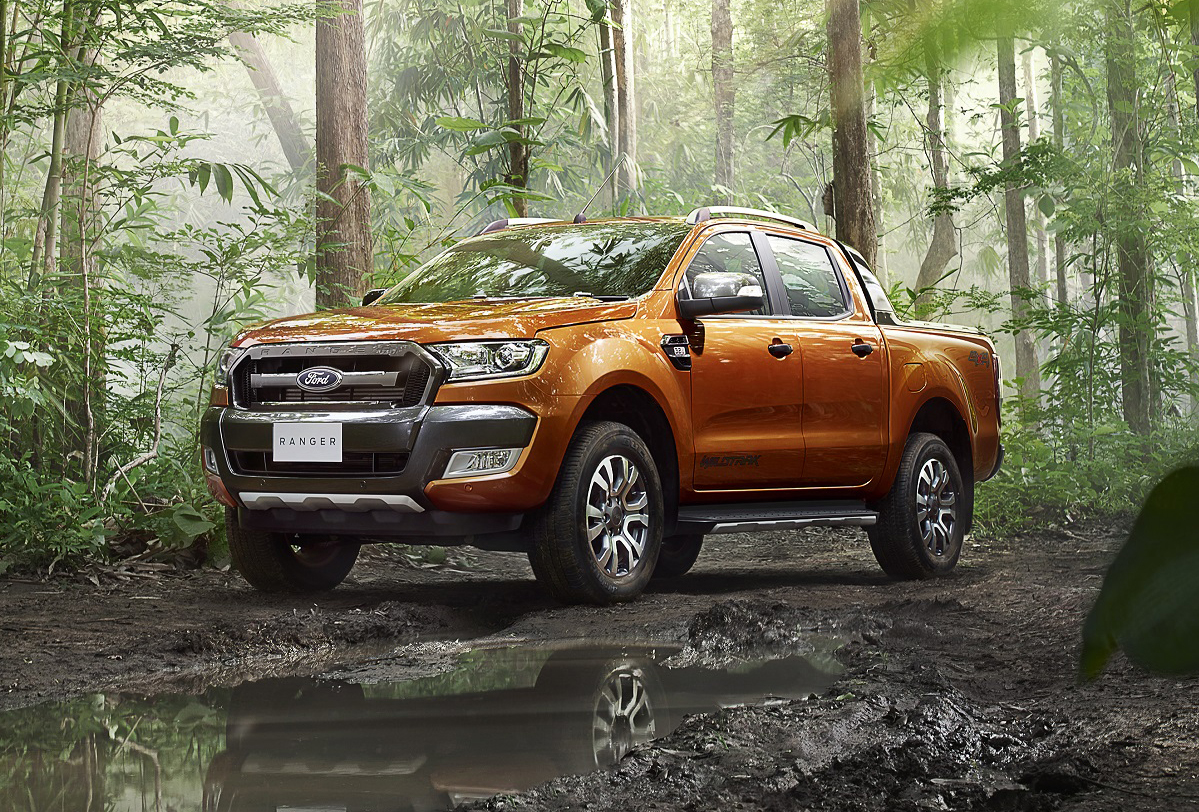
Ford says that a halo model for its Ranger, which is the second-best selling ute in Australia and the brands’ best-selling vehicle, is a must.
“It is critical,” says Ford’s Wes Sherwood. “Our 4×4 sales are going up; Toyota’s are going down, so this is really an area of the market that’s driving our momentum … where we’re particularly gaining momentum is in our 4×4 models and higher-end models like Wildtrak.”
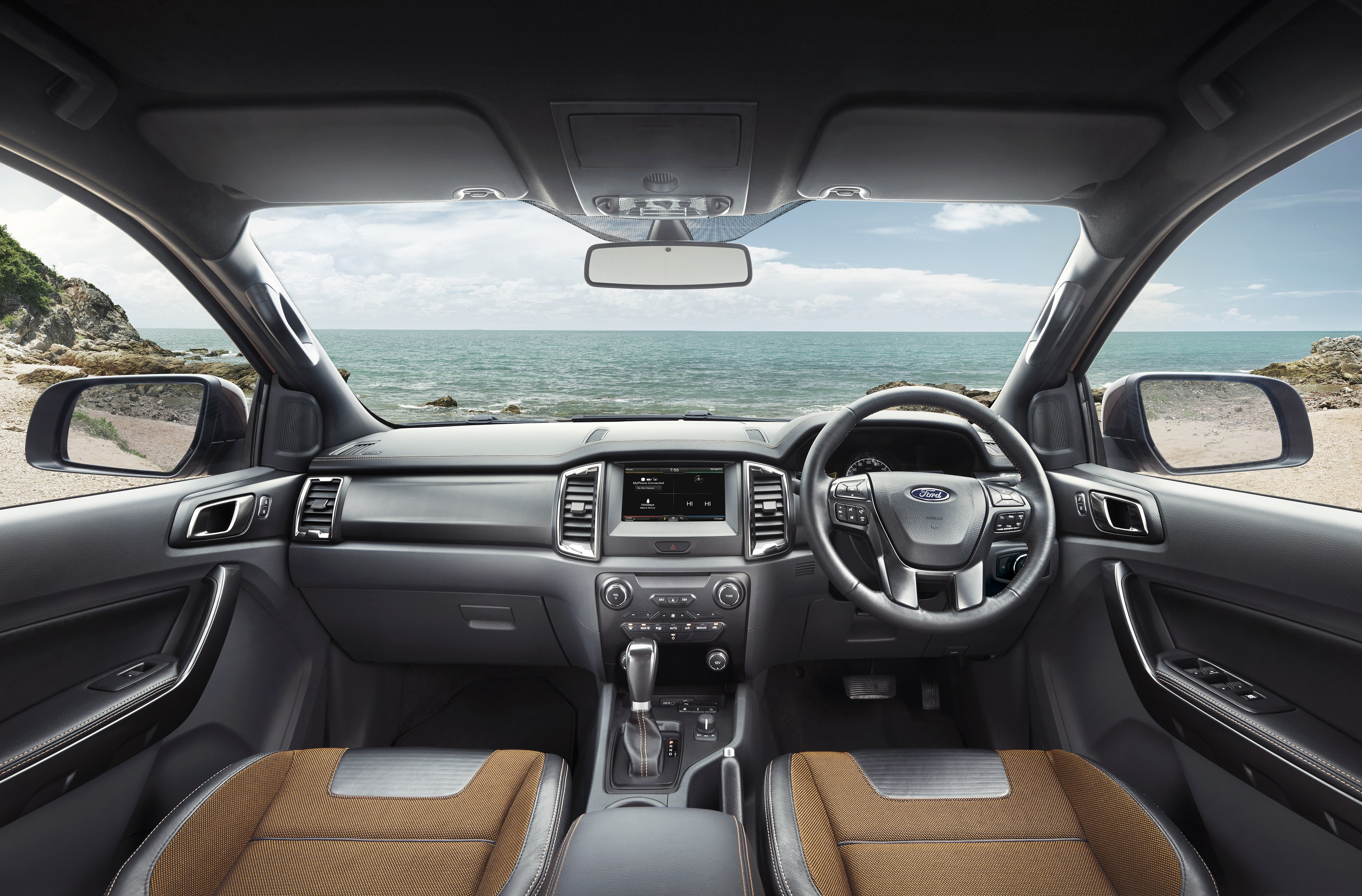
The Wildtrak crew cab, powered by a 3.2-litre diesel, offers four-wheel drive just like the Colorado. The halo Ranger also boasts a full suite of gear including bold colours, Ford’s SYNC2 connectivity and safety gear.
“This is a trend and it’s happening globally, and we feel we’ve been leading the way with our F-Series trucks in American and our Ranger in Asia-Pacific,” said Sherwood.
“What we believe is behind this are people using trucks for dual use. So, work during the week and their families on the weekend. So they need to use their vehicle as an office, so it has to have all the connectivity and advanced features, and they need to have their families in it, so they need all the safety equipment and all the creature comforts you’d expect from sedans and SUVs.”
The Holden Colorado Z71 goes on sale in July priced from $54,990 (manual) and $57,990 (automatic). Pricing for the Ford Ranger Wildtrak is yet to be confirmed.
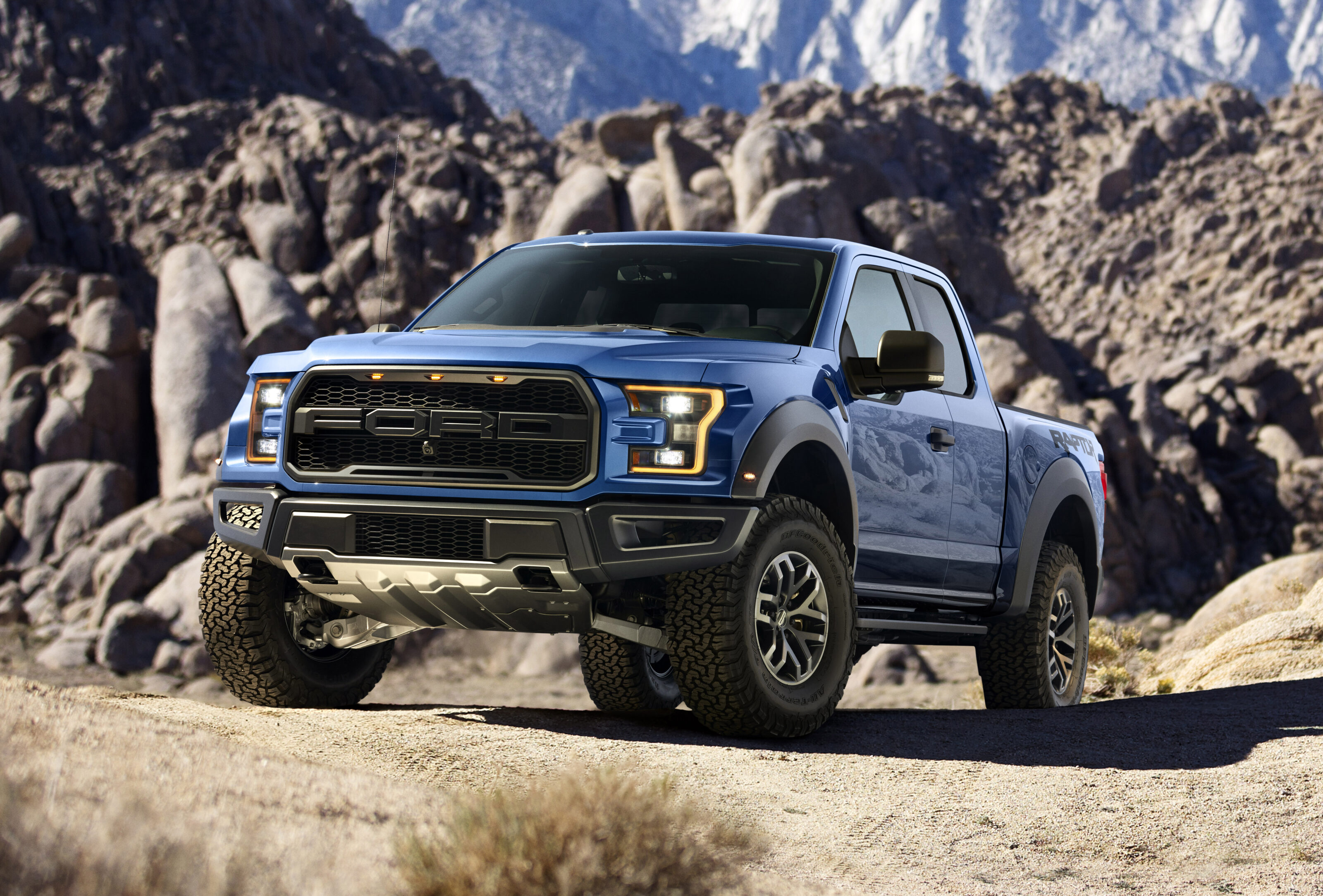
Don’t blink or you’ll miss it; the updated BMW 6-Series is more about price tweaks and added value than rewriting the $300k rule books
WHAT IS IT? A mild update to BMW’s flagship sports car, the 6-Series. It applies to the Coupe, Gran Coupe (four-door) and Convertible.
WHY WE’RE TESTING IT We had the chance for a quick spin ahead of its arrival in dealerships.
MAIN RIVALS Mercedes-Benz E-Class Coupe, Mercedes-Benz CLS, Audi A7
THE WHEELS VERDICT More of a good thing, done slightly better. But start saving…
PLUS: Elegant cabin looks special; great roadholding; fantastic V8 MINUS: Heavy; 20-inch alloys don’t deal with small bumps well; expensive
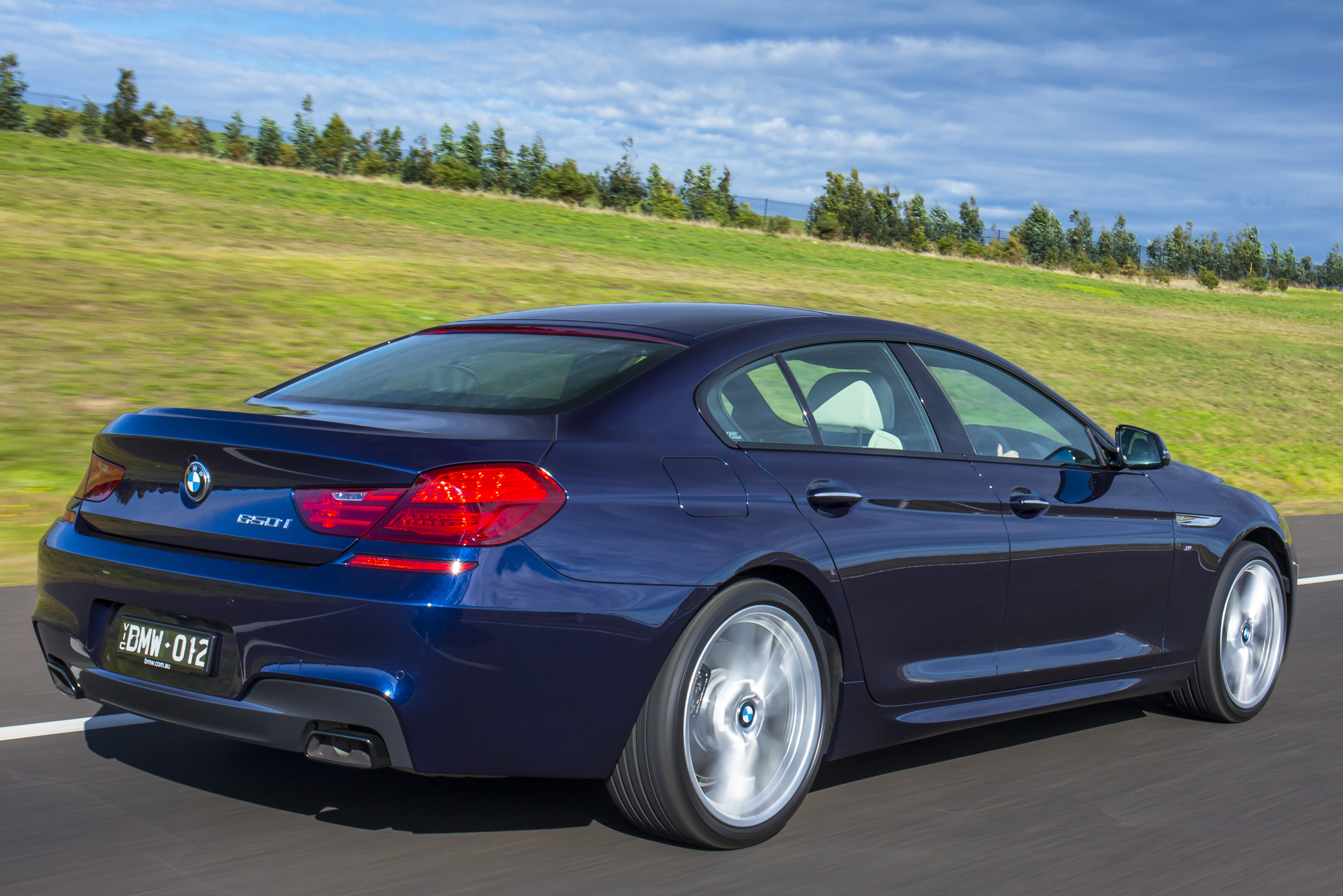
THE WHEELS REVIEW THERE aren’t many four-doors these days with pillarless windows, but the BMW 6 Series Gran Coupe is one. The sleek quad aperture ‘coupe’ that is the top seller of the trio of 6 Series body styles – siblings include a real Coupe and a Convertible – is all about making you feel special.
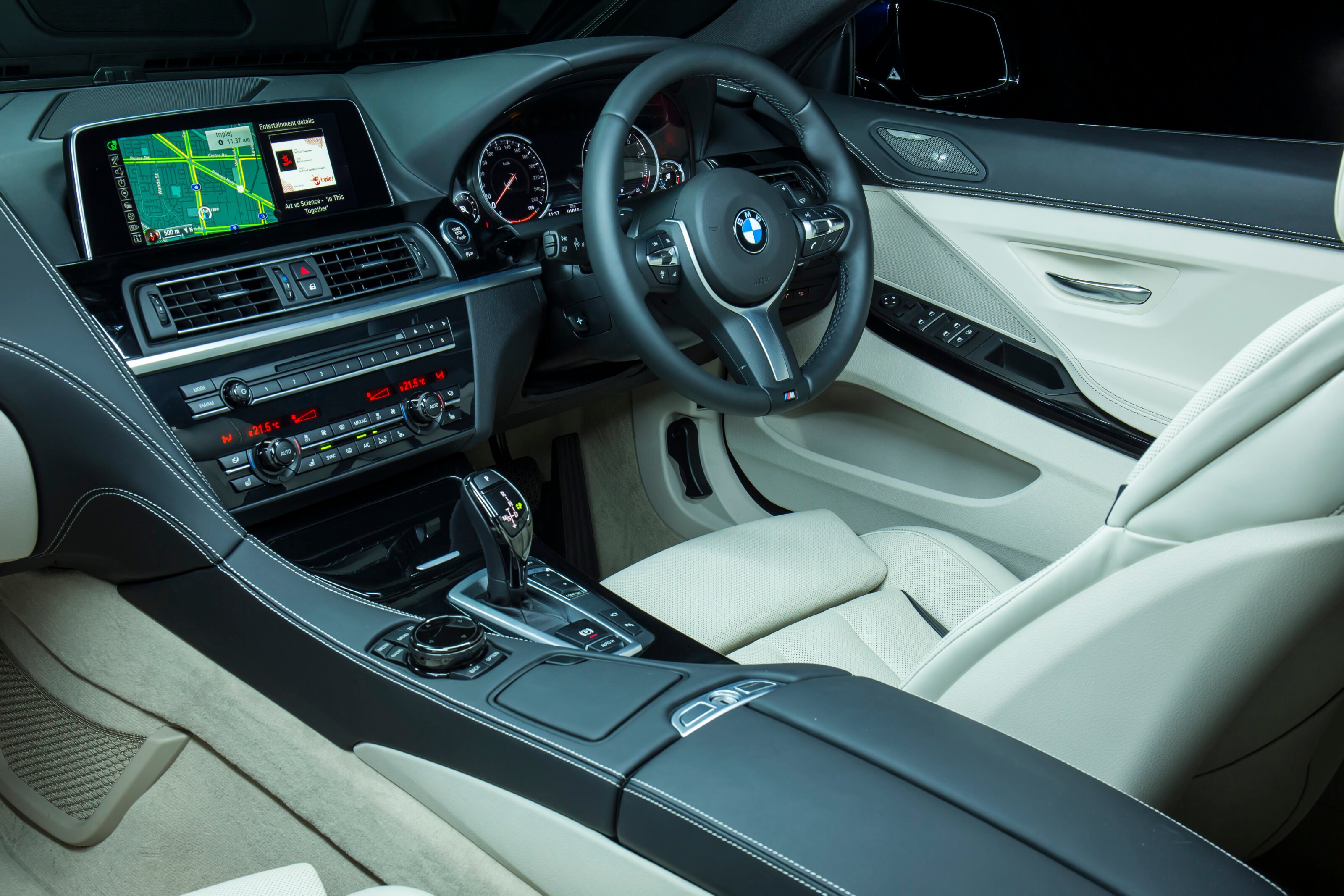
That’s something it does brilliantly, from the scaled 7 Series interior to the lashings of gear, with this update bringing plenty of extra equipment. Active headlights with “Selective Beam” high beams block out other vehicles while retaining high beam, more active safety features (lane departure warning and self-parking) and digital radio also join the well-appointed leather-lined list of standard kit.
Then there’s the presentation. The digital instrument cluster is a class act, combining the adjustability of a colour screen with four real circular rings around the main gauges to bring it to all to life.
The centre stack is clean and refreshingly functional, teaming nicely with the broad colour screen and iDrive controller.
Existing 6 niggles remain. It’s light-on for storage up front, limited to covered cup-holders and a long but shallow centre console. Even the door pockets are slim.
Rear seat occupants will be similarly constrained, while also putting up with minimal under-seat foot room and adult-welcoming head room. The high window line and low floor, while cementing the sporty flavour up front, do little for the comfort factor.
The Gran has five seats, but between the camel hump centre base and ventilation system joined to that rear pew it’d be a flexible and understanding participant who volunteered for the jump seat.
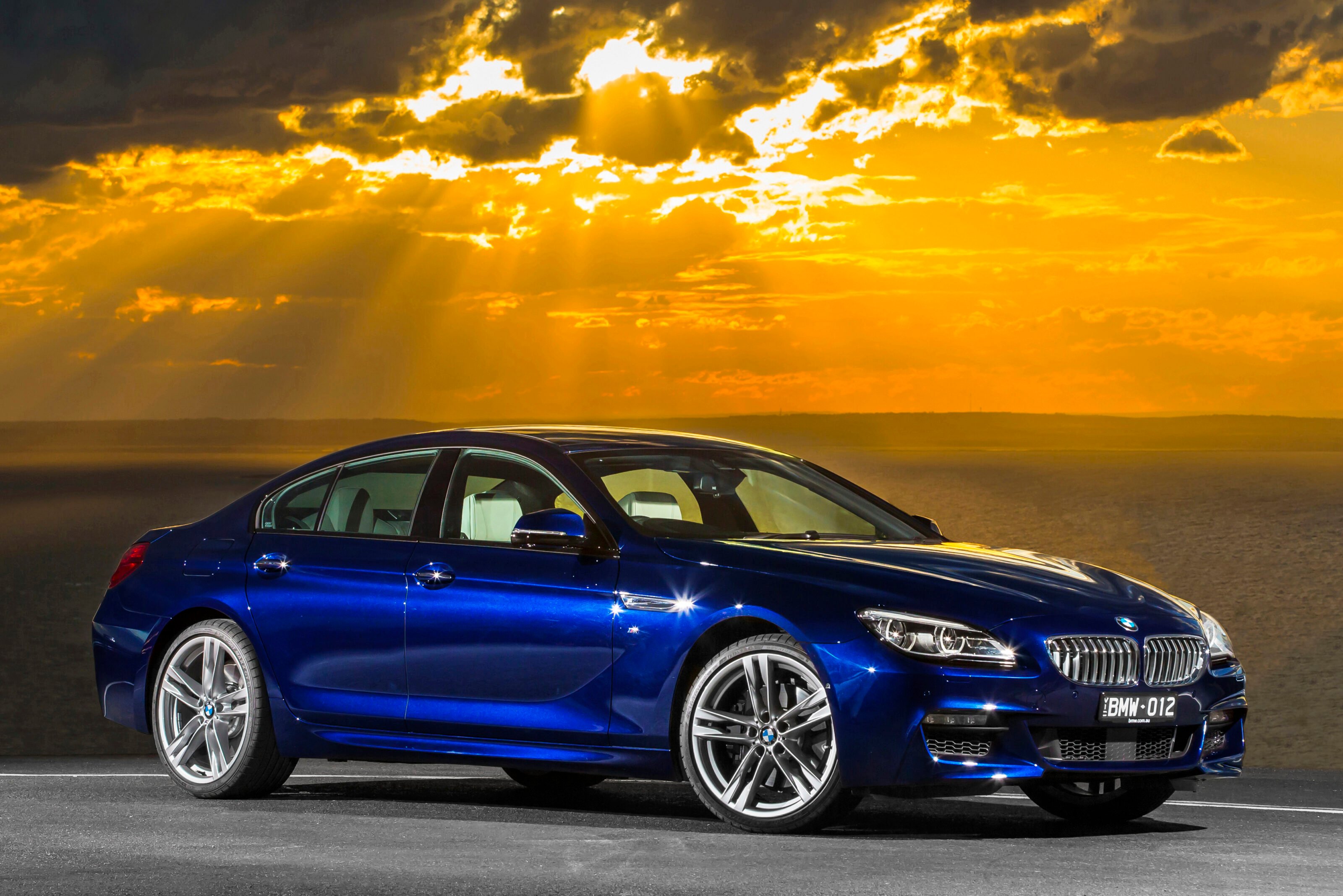
Visual changes outside are minimal; new bumpers and mildly revised kidney grilles are it, although the new hues (four paints previously reserved for the Individual options list) and M Sport 20-inch rims add to that specialness.
The price is pretty special, too. The range stretches from $177,900 for the 640i Coupe, also offered in the BMW 640i Convertible body style, to $308,600 for the M6 Convertible. That M6 line-up now picks up the Competition Pack standard, for 441kW (up 29kW) and 700Nm (up 20Nm), unique 20-inch wheels and tyres among other go-fast goodies.
Still, even the $238,900 ask for the 650i Gran Coupe we tested is a deep dig.
With its 4.4-litre twin-turbo V8 belching out 330kW and a hearty 650Nm, it also gets a new exhaust with more beef. Dial up the Sport mode and there’s a pleasant rumble, yet still without the bark of an AMG.
Then again the 650i is the next tier down and is more about brisk touring and effortless punch than cutting hot laps.
For that the V8 does a superb job. It’s loaded with torque anywhere in its rev range and spins freely. It’s a beautiful engine and makes light work of any conditions.
The eight-speed auto is also a ripper, happily holding lower gears and leaning on that 650Nm when it makes sense, before darting down a couple of ratios to tap into the full 350Nm.
Our brief wet road drive had the stability control working hard up a snaking hill. Even at 70km/h it wanted help to contain the slipping and sliding, more an indication of the engine’s thrust than any traction issues.
Not that the 6 is lacking in cornering talent – far from it. The 20-inch wheels on our 650i held on well, while the direct steering and flat cornering stance cement the heavy (think 1.8 tonnes) five-seater as highly capable.
Less endearing is the way it deals with sharp bumps, even in its most sumptuous Comfort+ mode that softens the dampers, the low profile rubber catches most imperfections, something exacerbated once you dial up the firmer chassis by choosing Sport.
But Sport does bring much appreciated additional enthusiasm to the throttle thanks to a sharper feel. Combined with the weightier steering it’s a machine that pampers through long, sweeping corners.
The breadth of ability of the 650i makes it a better everyday bet than the more focused, track-ready M6.
And if you see the interior more as snug than cramped – or you’re happy not to use them much – the Gran Coupe is a tempting alternative to BMW’s flagship limousine.
Classy and quick, luxurious and slick. At a price.
SPECS Model: BMW 650i Engine: 4395cc twin turbo V8 Max power: 330kW @ 5500-6000rpm Max torque: 650Nm @ 2000-4500rpm Transmission: 8-speed auto Kerb weight: 1795kg 0-100km/h: 4.6sec Fuel consumption: 8.6L/100km Price: $238,900 On sale: Now
The Bentley Flying Spur is four business class seats bolted into a sumptuous marble mausoleum, with suspension pinched from a hovercraft, and an engine billeted from the chests of bodybuilders.
Ever popular with rich Russians and Chinese who’d rather sit in the front than the back, Bentley’s fiddled with the styling, made it faster but less thirsty, and sprinkled in technology to make sure it’s $423,160 super sedan is keeping up with the digital Joneses.
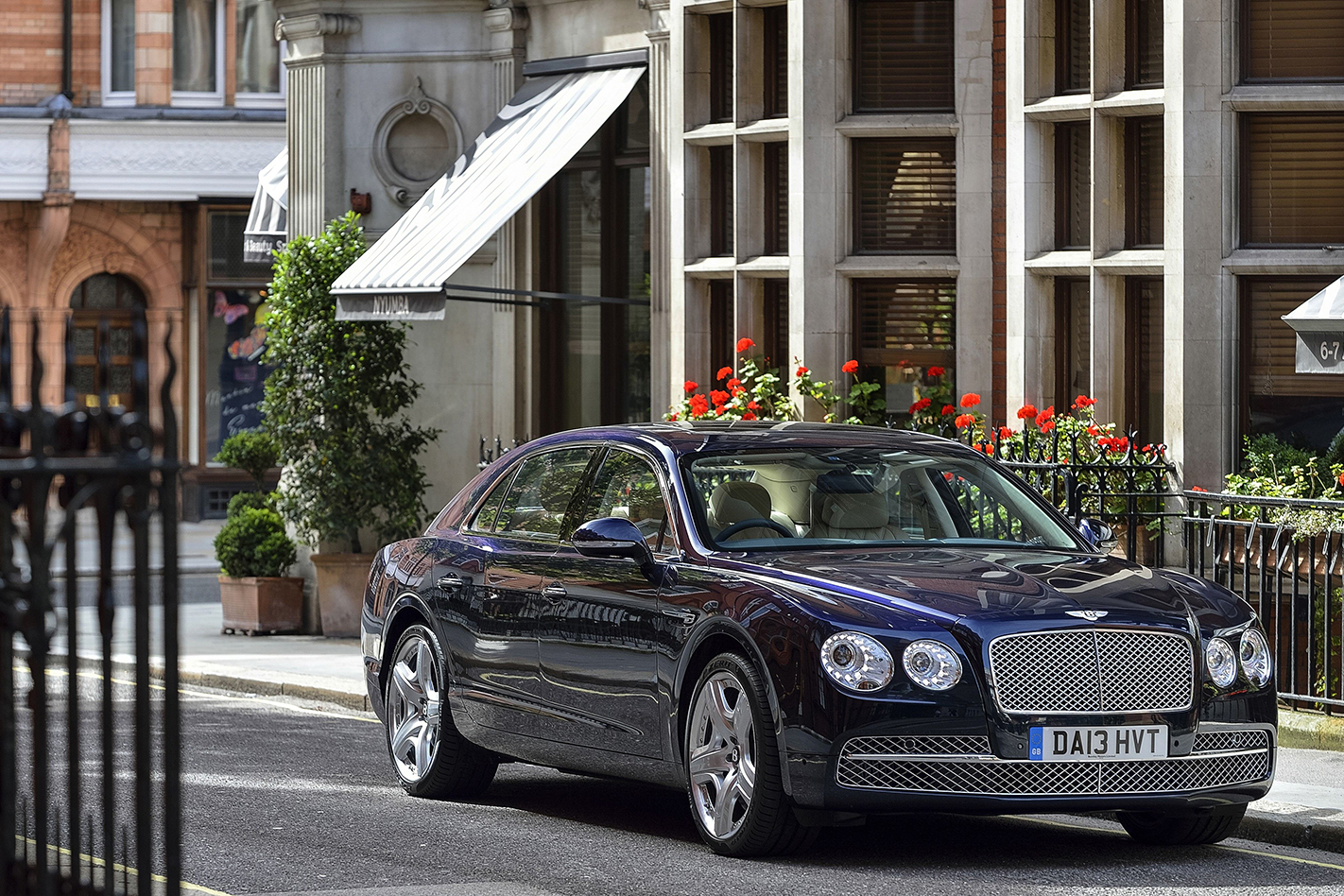
The outside front headlights are now bigger than the inside ones (it was, somewhat clumsily, the other way around before).
At the rear, new LED tail-lights and a longer, lower boot lid make the Spur look more swept and sleek. It looks tough.
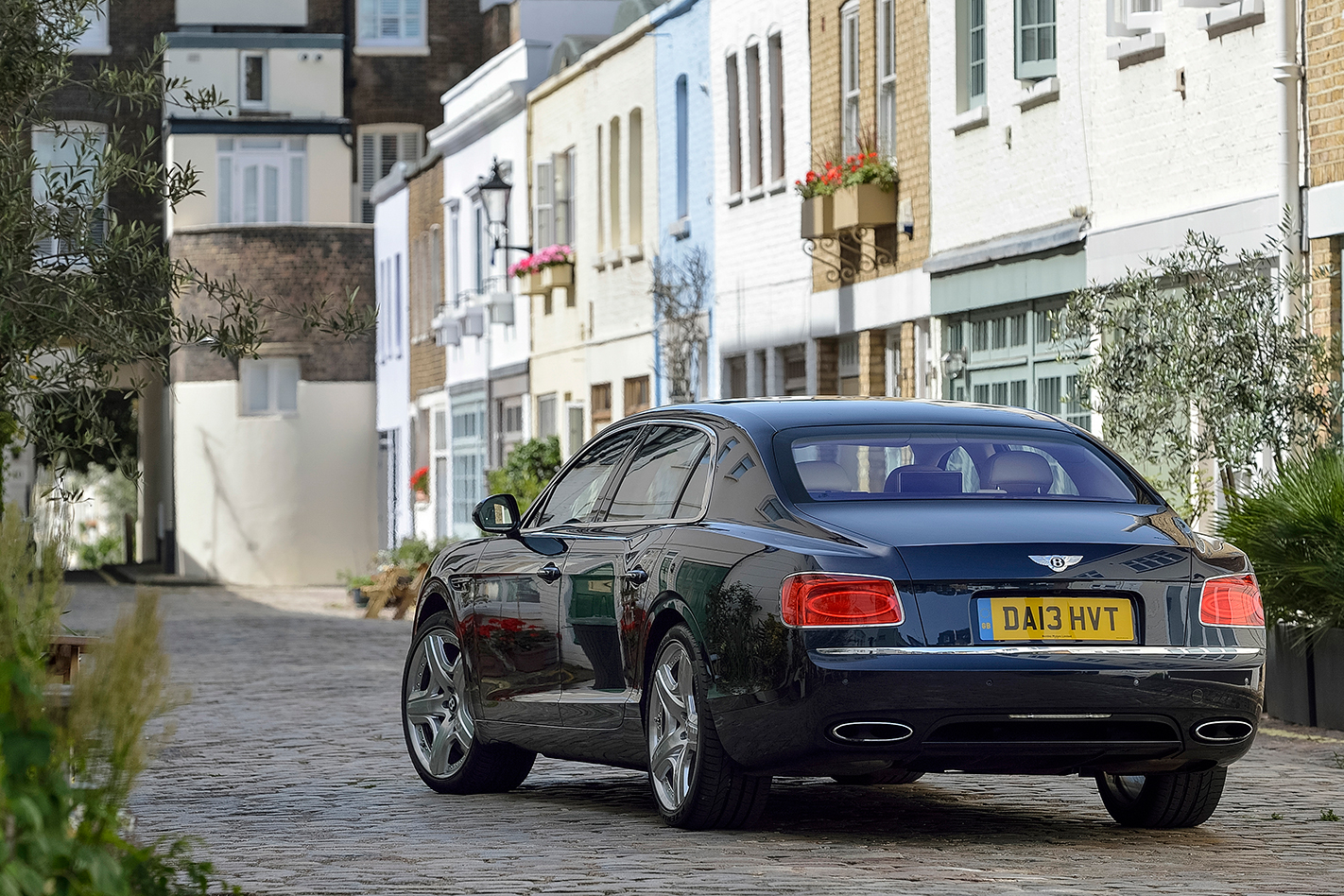
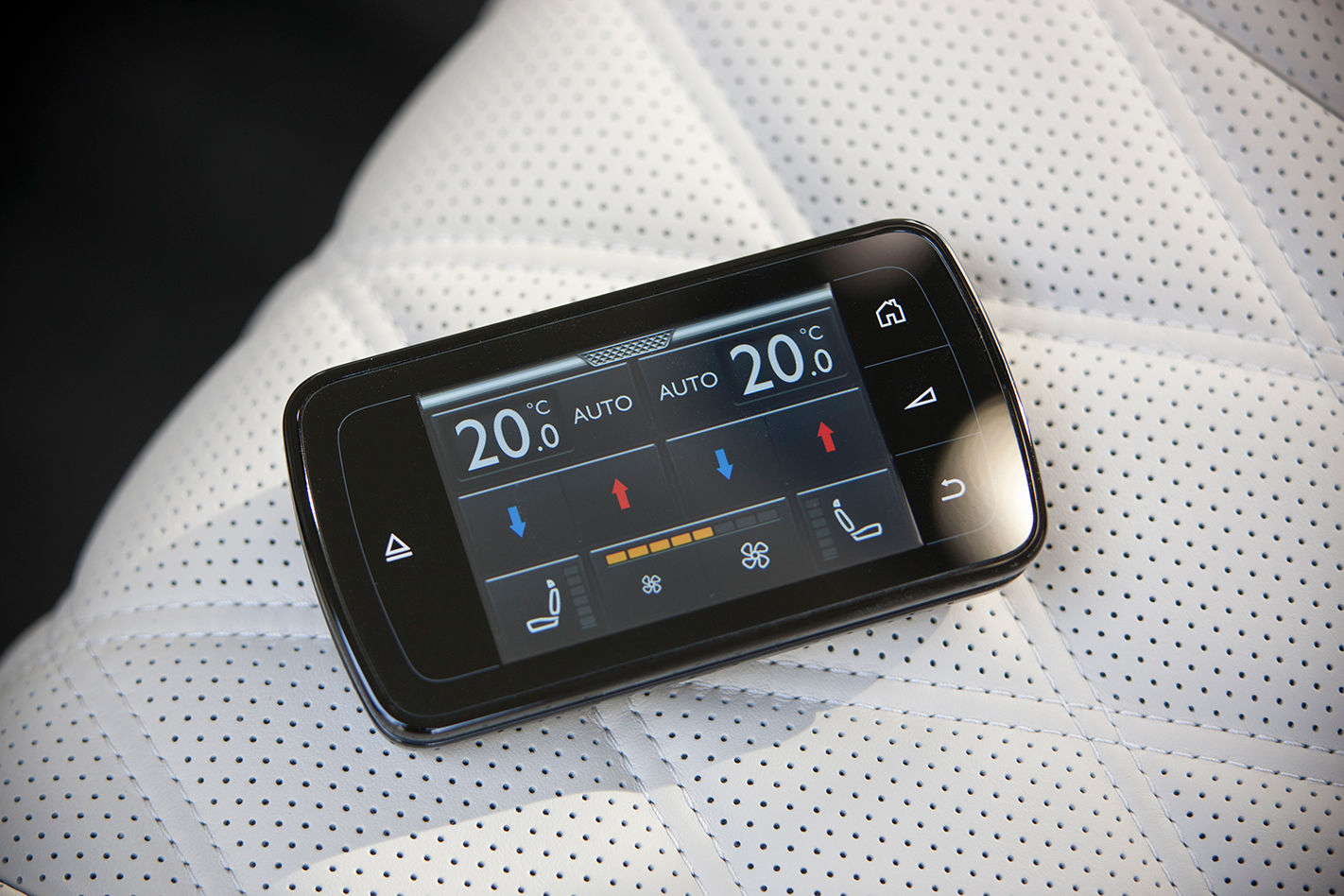
The interior is practically all-new, but Spur owners had a sook that there wasn’t enough tech, so now it has all the connectivity you could ever want, or need, including its own WiFi connection.
Bentley, though, asserts that its customers don’t buy its cars for ground-breaking tech like the new S-Class’s ‘magic ride control’, so it doesn’t come with anything like that.
On the plus side, when you first sit inside the Spur, it does feel like something an Ottoman sultan would have driven his concubines around in. You won’t see any milk-crate plastics here.
It’s all buttery leathers, extravagant carpets, piano finishes. The seats don’t cosset you like you’re seated in a cupped hand, but they’re sumptuous – thrones for wealthy hippopotamus-sized buttocks.
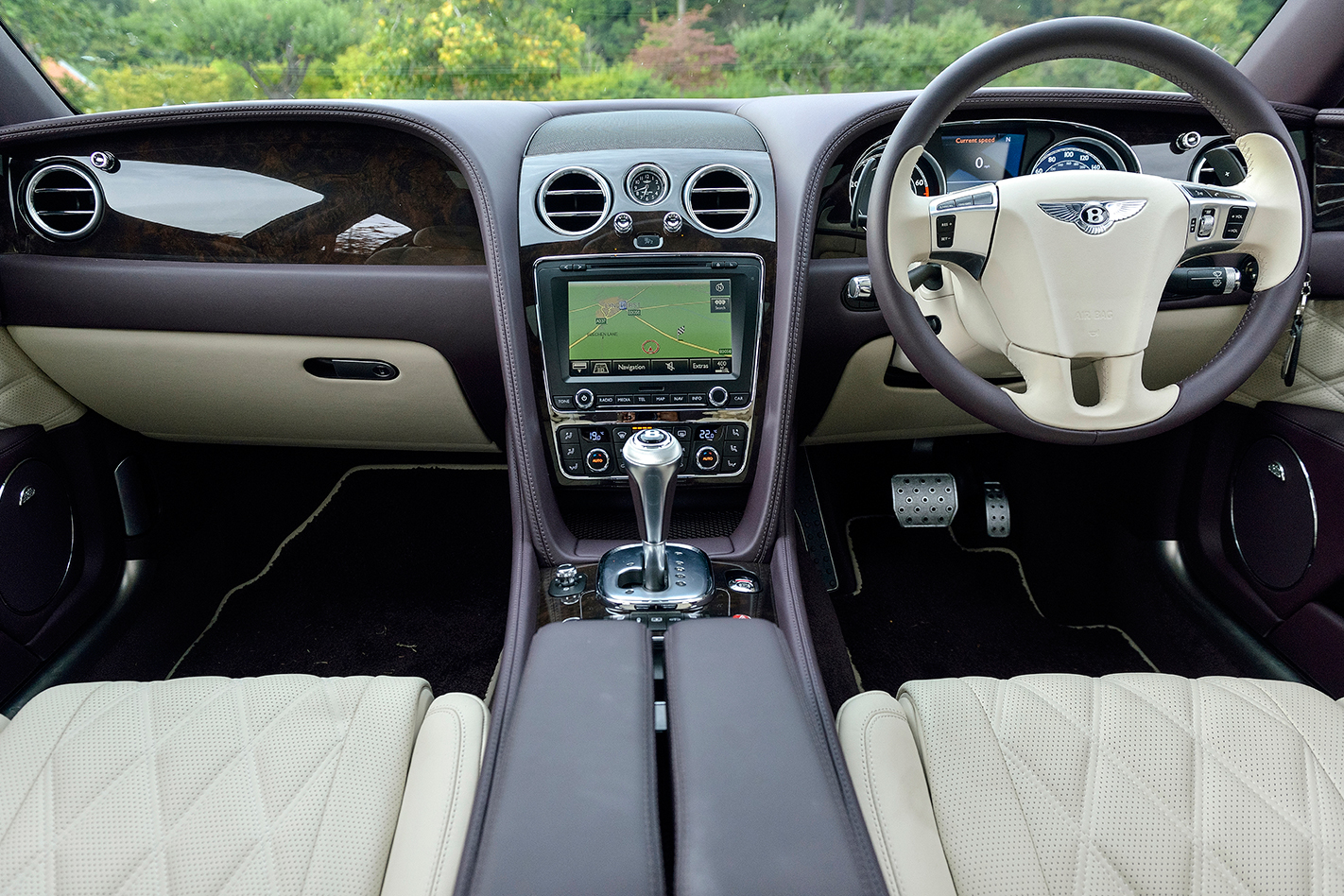
Poke the Bentley’s start button and the twin-turbo W12 murmurs politely to life. Drag the chunky, bejewelled shifter from P to D, somewhat inelegantly, aim the luxury behemoth at the horizon, then you’re ready to mush throttle into carpet.
It’s fast. It smashes forward, like a boulder in a giant rubber band. The 6.0-litre W12 suddenly pipes in, but only gently – while it sounds good, it won’t upset the neighbours.
As if picked up and flung forward by a tsunami, the Bentley taps into its hearty 800Nm and flings its 2475kg to 100km/h in 4.6 seconds, swapping up its eight gears quickly and smoothly, if not with the crispness of a twin-clutch gearbox, given it’s still in the Torque Converter Age (something about making peak torque at 2000rpm).
It squats on its rear axle with such aggression that you almost feel like the exhaust is going to scrape on the road. In a car this big, it’s actually mildly terrifying, like riding rodeo on a charging rhinoceros.
Corners, therefore, are frightening as they approach, but hit the brakes, which feel stiff and nurse a feeling of confidence, and the Bentley dives onto its nose, washing off speed.
The brakes are tremendous – eight-pot calipers bite into 405mm front discs, 335mm rear. Helping the squat, dive and body-roll, though, are adjustable dampers which, with a few presses of a button, stiffen like tensed calf muscles. They need to, given that the Spur weighs 300kg more than a Range Rover.
It hides its immense mass very well, though. The steering, though a bit heavy at car park speed for something this luxurious, lightens up and is surprisingly deft, if completely devoid of feedback. The big Spur won’t change direction like a Renault Clio – it’s more for Eau Rouge at Spa than the Swimming Pool at Monaco.
At maximum attack, the Spur will do 320km/h, at which the body, on its self-levelling air suspension, automatically sinks down over the wheels to assume a prone position, to help autobahn stability.
As for the continuous, 40:60 all-wheel-drive system, we pondered if it was worth its weight in a car like this. But then we remembered 460kW and 800Nm. We’ve driven enough cars with disco traction control lights lately.
There was one thing that annoyed us: the shift paddles. In the Spur, they’re more like insect antennae, sprouting from the steering column like huge indicator stalks. They’re not paddles and you might mistake them for the indicators. Please fix this, Bentley.
Fuel thirst? Bentley says it’s improved by 13 per cent. Combined fuel use is now 14.7 litres per 100km. Dithering about the city, you’ll use 22.4 litres. And they’re Bentley’s official claims (with a jockey in the driver’s seat and a strong tailwind). We didn’t look at the fuel use after our fang. We were too scared.
No, the Spur is more at home when you cruise back into the city, buttocks barely registering the road beneath, bumps big and small benumbed by the royal air suspension on its softest setting.
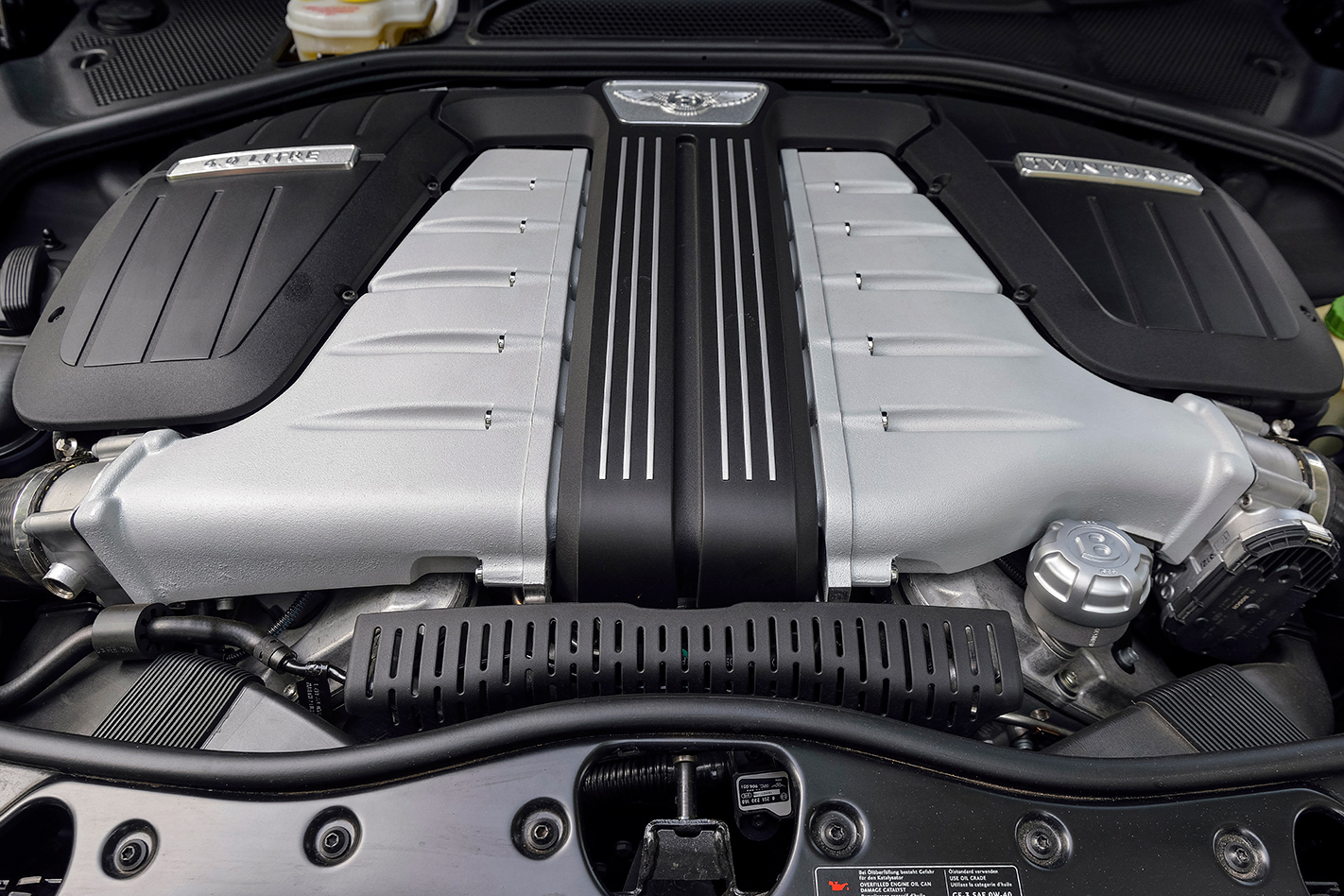
It’s a magnificent car – fast, and while you wouldn’t call it driving bliss, you won’t want to get in the back.
4/5
Specs:
Engine: 5998cc W12, DOHC, 48v, twin-turbo Power: 460kW @ 6000rpm Torque: 800Nm @ 2000rpm Weight: 2475kg Gearbox: 8-speed automatic 0-100km/h: 4.6sec (claimed) Top speed: 320km/h (claimed) Price: $423,160
Nissan saw two of its three cars fail to complete the Le Mans 24 hours, yet it’s third car came home dead last before its 242 laps meant it was classified as a non-finisher. That’s still an achievement, says Nissan Motorsport boss Darren CoxWHILE most pregnant women will proudly display their baby bump to friends, family and anyone interested, not many would be prepared to go through all the mess and glory of giving birth in public.
Yet in some ways that’s exactly what Nissan has done at Le Mans over the weekend with its radical GT-R LM racecar: presenting its imperfect and dripping wet new offspring to the world while the nurses are still trying to wipe it dry.
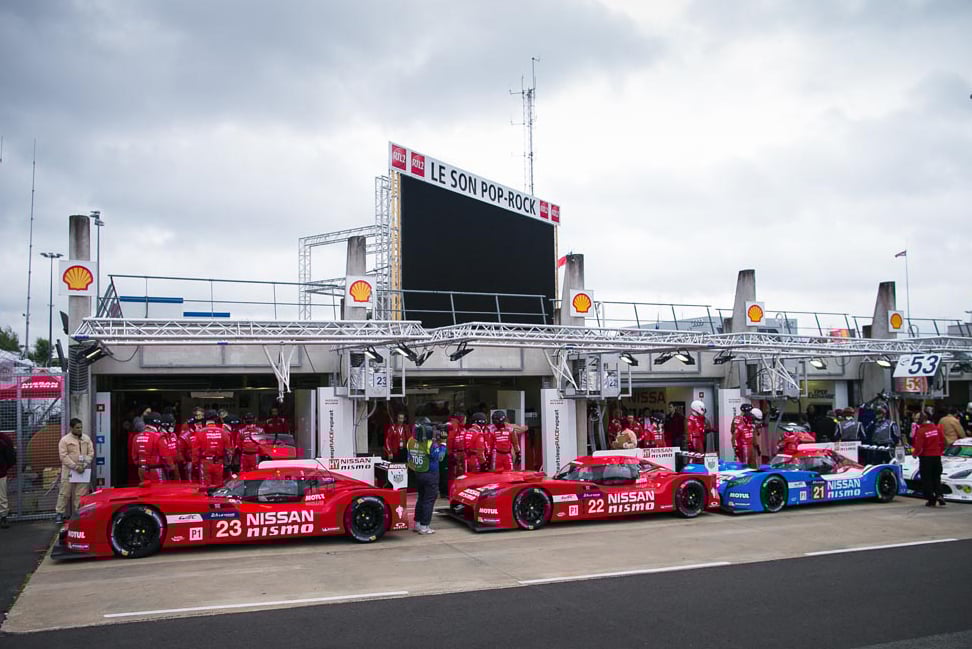
This was the first outing for Nissan’s front-engined, front-wheel-drive race car that in the LMP1 category goes head-to-head with the might of the race-winning Porsche 919, Audi R18 and Toyota TS040 rivals. In qualifying the fastest GT-R LM was a full 20 seconds slower than the pole-sitting number 18 Porsche with the third Nissan another two seconds further back.
While the pre-race results may’ve seemed disastrous – and a vindication of obvious criticism the car’s layout is all wrong – for Nissan it’s the beginning of a development process that is being carried out in public, not over a long period of private testing as might be undertaken by other manufacturers.
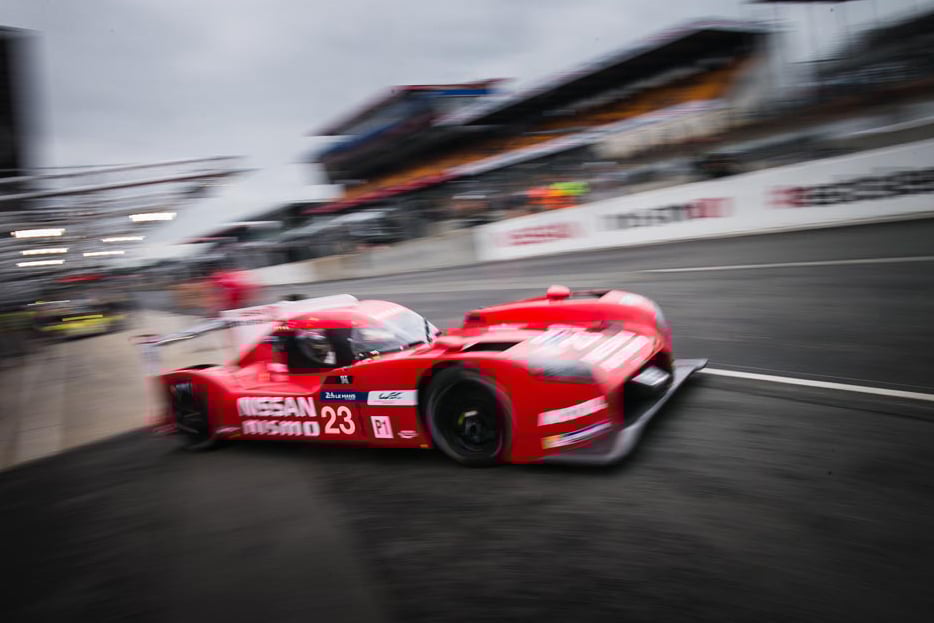
According to Nismo’s global brand director Darren Cox the decision to enter Le Mans a year earlier than it probably should have is intrinsic with the way motorsport is currently managed.
“We’ve got to recognise that the sport is in decline,” he said between qualifying sessions.
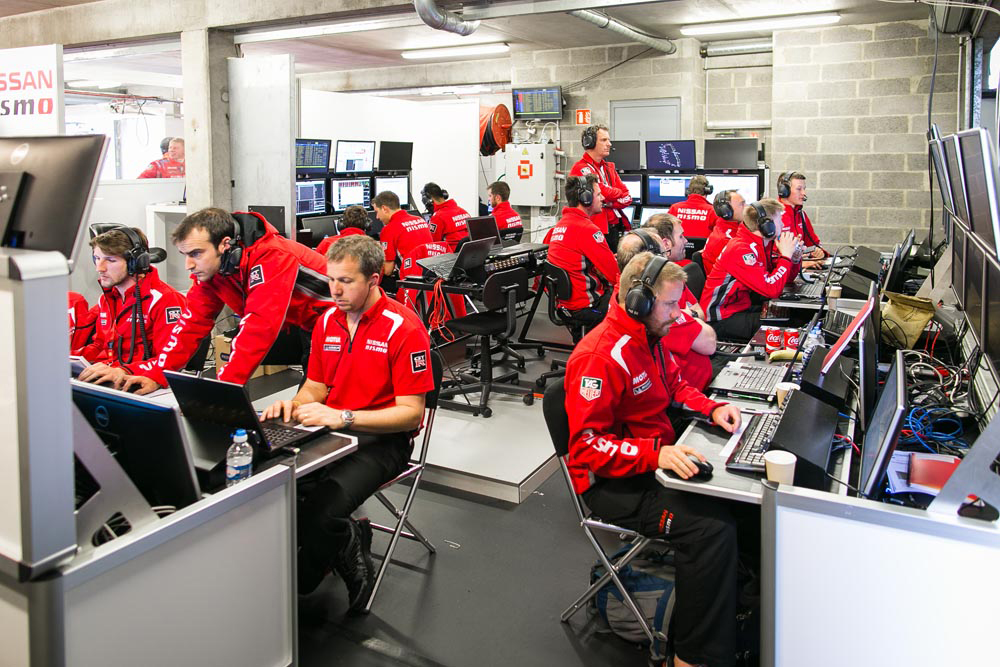
“You’ve got to look at Formula One, World Rally Championship, NASCAR whatever it is, the numbers are going down. One of the reasons for that is that people expect now accessibility. Social media, live streaming, people expect openness and I think in a way people are judging us on being open.”Rather than being vaguely hopeful of winning Le Mans at first try, ahead of the race Cox was only optimistic that at least one car will finish somewhere behind the historically dominant Audis and eventual Porsche victors. One of three Nissan entries finished, and it was dead last, but Nissan issued a confident ‘Mission Accomplished’ release post-race.
“We have shown the world that going to win at Le Mans isn’t easy and I think that’s great: it’s bloody difficult. Those blokes out there with the four rings have been doing it for 15 years, they’ve spent three billion dollars and they are a machine.”
“So if you ask why do we do what we’re doing, this is Year One of a multiple year program for Nissan and this is our first baby steps and we will improve going forward.”
Nissan is adamant its innovative car design isn’t just for grabbing headlines, it will really work. Its front mounted 3.0-litre, twin turbo V6 and front wheel drive leave ample scope to manage air flow under the car and in qualifying it was fastest in a straight line despite lacking the power of other rivals.
“For this track our car is incredibly slippery, the drag rate is pretty much zero as you can see from our straight line speeds, and it shows this concept works,” said ex-F1 driver and current Nissan pilot Max Chilton after qualifying.
“I think we all know it’s well down on power and when we come back next year with more power we will completely show it works.”
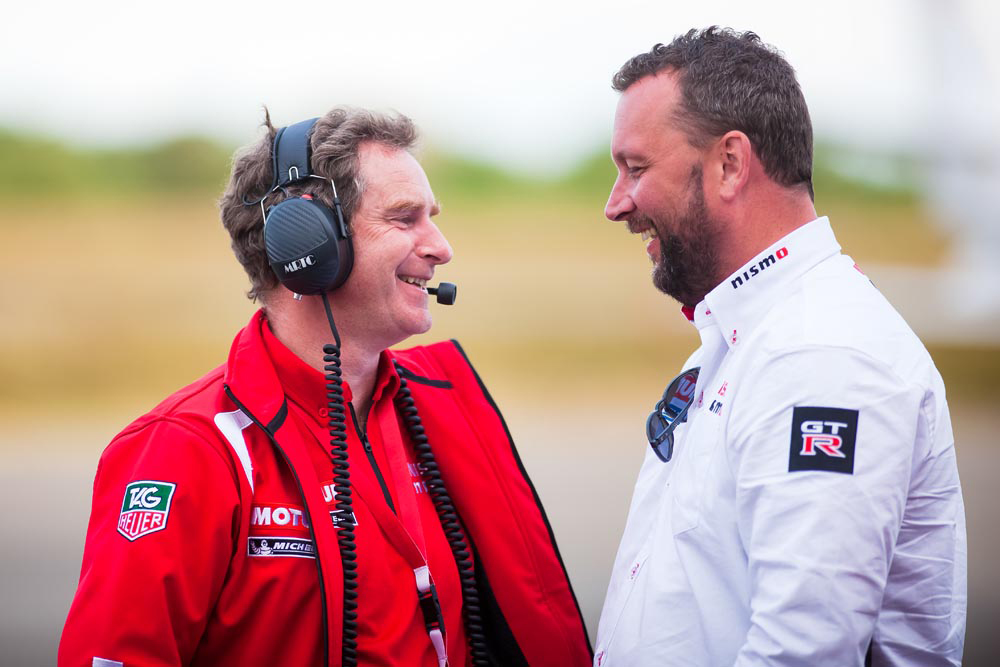
Just why the GT-R LM is down on power is the fact that lacking normal development time, its hybrid energy recovery system is only a fractionally functional part of what has been designed. The mechanical ERC system is meant to use two flywheels – one for each axle – developing eight megajoules but at the moment just the front axle is benefitting to the tune of two megajoules.
“In some respects we would have taken another year to work it out in private testing and bring a fully functional and developed system in the car,” technical director Ben Bowlby said. The outcome would be 820kW burst to supplement the V6-engine’s 410-odd kilowatt current output, he reckons.
“But we were in front of everybody and it was a given we were coming to come to Le Mans, a given we were coming with three cars and that maximises the steepness of the learning curve.”
“We could have gone and bought a Williams hybrid power unit off the shelf like Audi but then we’d be just copying Audi, I suppose.”
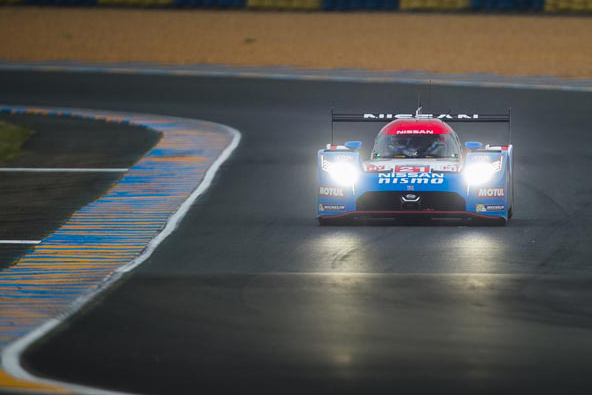
Just delivering a drivable package to the nine Le Mans drivers has been challenging enough with braking issues being sorted out, and also bespoke Nismo fuel saving technology such as a coasting function activated by GPS in parts of the circuit where no throttle is needed. Or, more scarily for the drivers, other parts of the circuit depending on whether it worked properly.
Then there’s the issue of front wheel drive, and the fact the rear tyres are far more narrow than those at the front. Not surprisingly perhaps, the drivers don’t see these as problems.
“I’m asked a lot if the drivability’s like a front wheel drive and to be honest, in mid to high speed corners the thing has so much downforce you don’t notice it,” Chilton said.
“You can feel it at low speed and that’s where we’ll have to work on it for next year. Especially when we get the four wheel drive active, we won’t notice it.
“Lots of us drivers when we first saw [the car] we thought with the skinny rear tyres we would have a lot of oversteer issues but we haven’t, it’s usually our fault not washing off enough speed under brakes.
“But at high speed the rear end is planted so the concept does work and we’ll keep developing it over the race and come back for the next couple of years and show that it’s going to work.”
That confidence, and the confidence of the rest of the team in the GT-R LM concept indicate that while the car’s first Le Mans appearance may be premature, it might also be premature to write it off as unworkable.
The Nissan GT-R LM Nismo’s next race is the Six hours of Nurburgring on 30 August 2015.
Sign up here to receive the latest round-up of Wheels news, reviews and video highlights straight to your inbox each week.
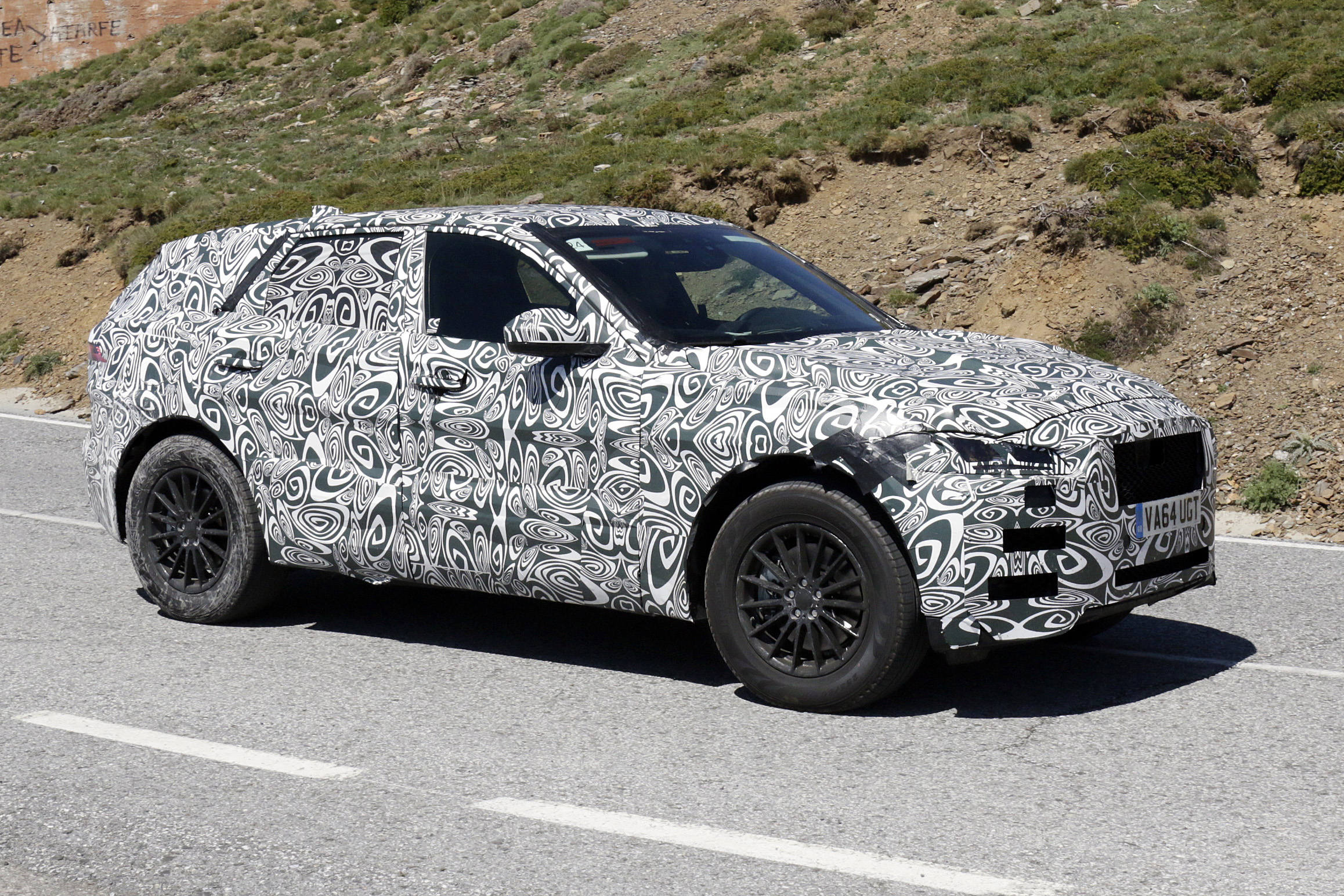
The Jaguar F-Pace breaks new ground for the cat as it chases down its predominantly German opposition
THE LONG-AWAITED 2016 Jaguar F-Pace crossover has been sprung yet again in pre-production prototype form, the British rival to the BMW X4 and Mercedes GLC Coupe undergoing a final shakedown in preparation for its IAA Frankfurt motor show debut this September.
Clearly derived from the C-X17 concept from the last IAA almost two years ago now, the Coventry company’s first SUV will hit European markets early next year, with Australia set to follow soon after.
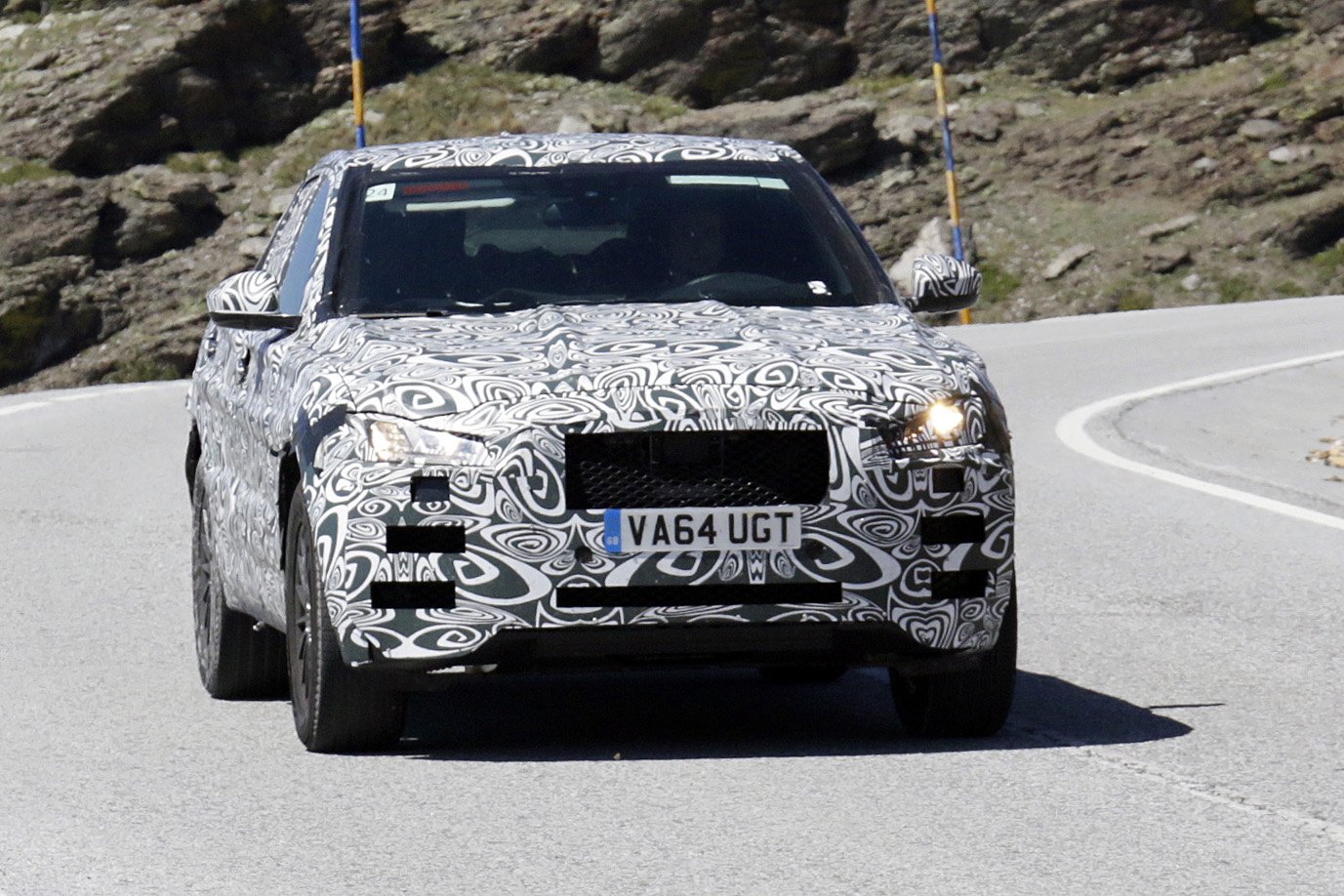
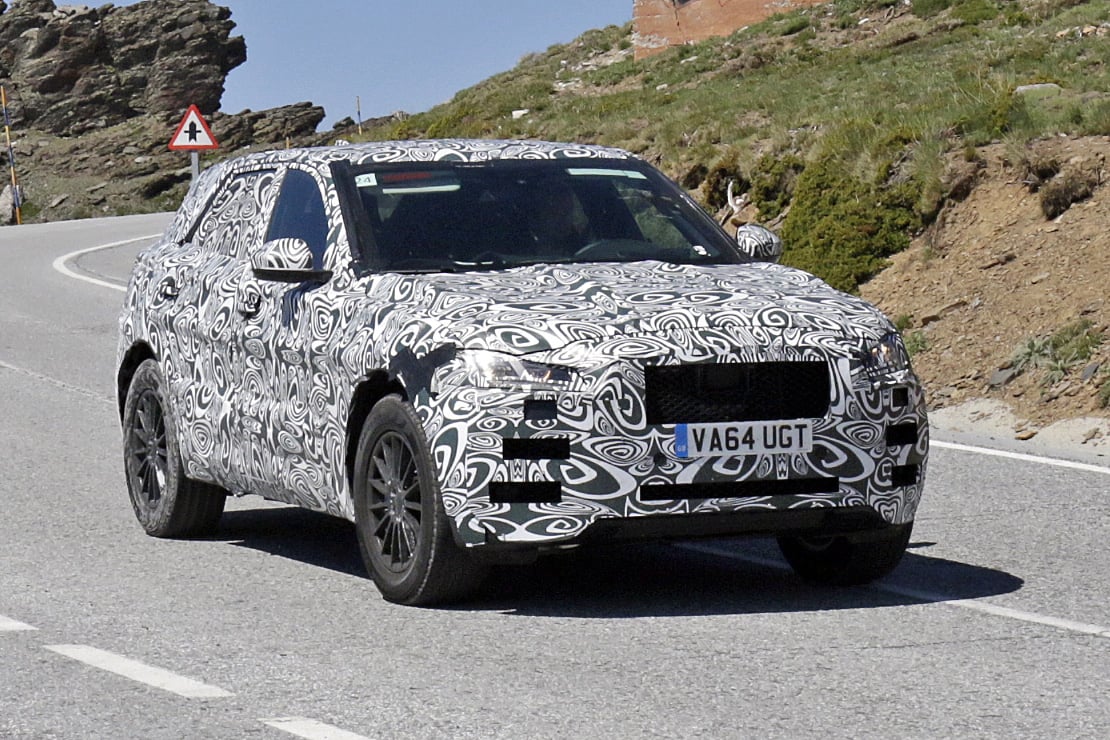
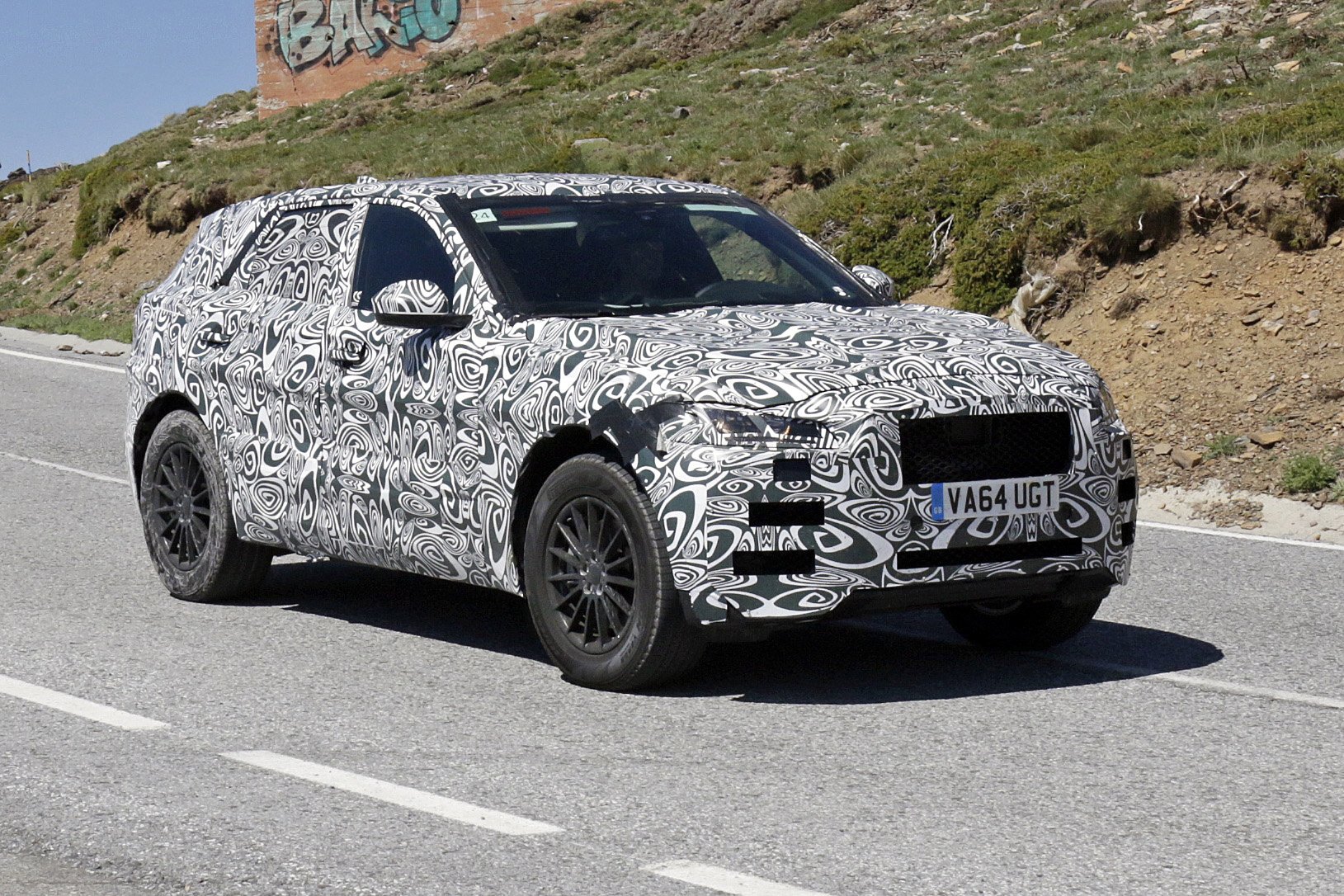
Brandishing an all-new interior design in four and five-seat configurations depending on specification, the dashboard is believed to follow in the new XE and XF sedans’ footsteps in adopting the company’s latest inControl touchscreen multimedia set-up.

Have spy pics of your own? We’d love to see them. Send them to [email protected]
