
What stands out?
The BMW 3-Series is an athletic and balanced luxury car that has special appeal for keen drivers. It is a good size, too: easy enough to park but able to carry five in comfort. And there is plenty of diversity, with wagons, very swift sedans and even a hybrid. This review covers the range prior to the mid-life update of October 2015.
What might bug me?
BMW uses run-flat tyres which do what the name suggests: they allow you to keep driving after a puncture. The catch is, once a tyre goes flat you are not supposed to drive faster than 80km/h, and you are not supposed to drive further than 80km. So if that flat tyre happens in the boondocks, more than 80km from a tyre shop, you’re in strife.
What body styles are there?
A four-door sedan, and a four-door wagon.What used to be called a 3-Series coupe or convertible is now dubbed a 4-Series. And that’s another story.The BMW 3-Series is rear-wheel-drive, and it is classed as a medium car, higher priced.
What features do all 3-Series BMWs have?
Even the 316i has 17-inch wheels in an aluminium alloy, Xenon headlights (which are brighter than the more common halogen lights), and dual-zone air-conditioning (which allows different temperatures on either side of the cabin).There is a head-up display that projects information on to the windscreen, allowing you to keep your eyes on the road.There is also a raft of driver aids, including lane-departure warning (to tell you that the car is drifting to either side), and automated city braking, which allows the car to brake itself at low speeds to maintain a safety gap to the next car, even you haven’t noticed the danger. At freeway speeds, active cruise control can maintain a safe distance to the car in front. All 3-Series models have this feature.You get a comprehensive audio system with a CD slot, MP3 and USB compatibility, and even Bluetooth and voice control. All 3-Series cars also get controls for those functions on the steering wheel, a colour screen with satellite-navigation, and a rear view camera that displays a bird’s-eye-view of the car from above, showing obstacles to the rear and each side.Keyless start permits you to start the car with your key kept safe in a pocket or bag.There are six airbags: two directly ahead of the front-seat occupants, two to protect front occupants against side-impacts, and a curtain air-bag down each side to guard front and rear occupants against head injuries.Every 3-Series also has electronic stability control, which can help you keep control on a slippery surface. All new cars must have this feature.The 3-Series range uses run-flat tyres, which means they have no spare tyre or repair kit whatsoever.The 3-Series is covered by BMW’s three-year/unlimited kilometre warranty.
Which engine uses least fuel, and why wouldn’t I choose it?
BMW has a huge range of engine options for the 3-Series. The smaller turbo-diesel, the 318d, is the fuel-saving champion, using just 4.5 litres/100km in the official test (city and country combined). But that engine option is only available in the station-wagon body.The next step up is another turbo-diesel called the 320d, which is just about as frugal and can be had in a sedan. These engines might be the fuel-sippers, but both produce plenty of oomph and feel as though they propel the car effortlessly.For utter refinement, however, you need to look at one of the petrol engines in the 3-Series line-up. And there is plenty of petrol choice.It starts with the 316i, which uses a turbocharged 1.6-litre four-cylinder that is smooth and quiet, although straight-line performance is adequate rather than exciting.From there, you move up to the 320i, with a turbo 2.0-litre which is just as smooth but has more urge.Then there’s the 328i, which is a hotter version of the turbo 2.0 that, frankly, has more performance than you will ever need. Some people like that.The 335i is a turbocharged 3.0-litre six-cylinder. It is smoother and even faster than the 328i, and is for people for whom too much is barely enough.And then there’s the almighty M3, a bona fide supercar with an even more powerful 3.0-litre turbocharged inline six. Unnecessary, but awesome if that’s your thing.For something different again, there is a hybrid-powered 3-Series called the ActiveHybrid 3, which teams the 3.0-litre six-cylinder engine with an electric motor to boost performance. This is also ridiculously fast. In fact, this hybrid is more about performance than fuel efficiency, so don’t automatically link it with fuel sipping as in, say, a Toyota Prius. The 3-Series diesels use less fuel than the ActiveHybrid 3.The 3-Series cars are available with a six-speed manual gearbox or the more popular eight-speed conventional automatic. The M3 is the exception here, with a choice of either the same six-speed manual or a seven-speed computer-controlled manual which shifts gears by itself, like an automatic.
What key features do I get if I spend more?
The 316i and 318d Touring (Touring means wagon) are the first steps on the 3-Series ladder. If you have more money to spend, the next step up is the 320i, which has the 2.0-litre petrol engine and adds adaptive suspension that lets the driver tailor its firmness to their wants at the time. The wheel diameter is bigger at 18 inches, and tyres are lower in profile and wider, which adds a little grip but is mainly about looks.The 320d is next, and apart from the turbo-diesel engine it is equipped identically to the 320i.The popular 328i gets you 19-inch wheels and even wider tyres (for the same reasons), digital radio, and a larger colour screen with 20GB media storage.The 335i gets the optional M Sport package as a no-cost add-on, and that means sportier front seats to hold you in place better, firmer suspension settings for better handling, and a range of interior and exterior window-dressing.The ActiveHybrid 3 carries the same equipment level as the 335i, and the extra money is all absorbed by the hybrid driveline.The M3 is all about performance and road-presence so it gets its own, lightweight (designed to improve cornering) 19-inch wheels, even wider tyres, and a body kit with touches like four exhaust tips to make sure it doesn’t get ignored. As well as that thunderous driveline, of course.BMW offers the 316i, 318d, 320d, 320i and 328i with its Sport Line package at no extra cost. That gets you some detail difference in the trim: things like a red splash on the ignition key and a sportier looking steering wheel.Or, you can order any of the 3-Series cars (but not the M3) in what BMW calls Luxury Line, which ditches the red, sporty touches for a more restrained presentation. Again, it’s a no-cost option.Generally speaking, each model upgrade involves more performance rather than more trinkets. That said, the range of options is complex enough to be confusing. Make sure you ask the salesperson lots of questions and be absolutely sure you’re getting what you want, rather than merely what he or she has already on the floor to sell you.
Does any upgrade have a down side?
It’s worth noting that there’s not much to distinguish the different 3-Series models visually, so spending more doesn’t necessarily mean more street cred. Nor do they vary a lot for equipment and in-cabin pampering. So if the 316i is fast enough for you, you might be wasting your money on a higher-spec car.The M3 is a serious, hard-core, high performance vehicle. As such, it won’t be cheap to run or insure. Brakes, tyres and other consumables will be expensive and the servicing required is very specific. It will also drink plenty of fuel if you use that performance.Choose the hybrid model and you also get the usual hybrid compromises of reduced load space and a heavier vehicle, thanks to the battery pack. There’s also the spectre of what happens when the batteries finally die.Any 3-Series on 19-inch tyres will be expensive to re-shoe when the time comes.
How comfortable is the BMW 3-Series?
BMW has always prided itself on making ergonomically pure interiors. Nothing has changed there with the 3-Series. All the switchgear operates with a plush, precise action and the gauges are crisp and clear.The front seats on all models are supportive and comfy, while the M3 has proper sports seats – which are necessary given the cornering forces that car can generate.The four-cylinder engines sound good, but not as good as the six-cylinder 335i. The M3’s soundtrack is a let-down because part of it is a synthesised audio file that you hear through the car’s speakers. The M3’s engine is not as smooth as the 335i’s engine, either.The M3 rides quite a bit more firmly than the other models, which are easier to live with day-to-day. Even then, the 3-Series as a whole has suspension aimed at taut handling rather than armchair comfort. And the run-flat tyres (while better than previous generations of run-flats) don’t ride as softly as the equivalent conventional tyre.
What about safety in a 3-Series?
The 3-Series has pretty much all of the latest safety technology, and all models make it into the Standout category.As well as the air-bags and anti-skid system, each 3-Series gets smart braking that can ensure the brakes are fully applied in an emergency, and that also can apply the brakes automatically at city speeds to maintain a safe distance to the car in front. That said, they don’t bring the car to a complete halt as some other cars’ systems do.Every model also gets what BMW calls Active Protection, which is a clever system that automatically and quickly tensions the seat-belts, closes the windows and shuts the sunroof if the car thinks it’s about to be involved in a crash.The eye-in-the-sky camera makes reversing and parking much safer. And there is an alarm that warns if you are drifting out of your lane. It adds up to a very safe package.(To see a list of the safety features on any model, select the car and look under the features tab. Safety-related features are listed in red.)The Australasian New Car Assessment Program (ANCAP) awarded the 3-Series its maximum five stars for safety.
I like driving – will I enjoy this car?
Oh yes you will. Even the least costly 3-Series car brings an intuitively satisfying relationship between what the driver puts in and what the car gives back. You steer a 3-Series towards 10 o’clock, and it heads for 10 o’clock. Balance is another word for it.That’s mostly the result of the suspension tuning, which aims to provide a comfortable ride without the usual trade-off of baggy cornering and soggy steering.Hybrids don’t usually appeal to enthusiasts but the 3-Series hybrid is sharper than the vast majority of its peers, thanks to its skew towards performance rather than economy.For real thrills, the M3 is the way to go if you can afford the price of admission. It’s a true supercar with eye-watering acceleration, clothed in a sensible four-door package.But even the much cheaper 328i has a lot to offer somebody who is interested in how a car feels as much as what it does.
How is life in the rear seats?
The 3-Series of today is about as big inside as a 5-Series of a couple of decades ago, so it’s quite roomy.The rear seat is commendably wide and will cope with three backsides, and there are temperature-controllable rear air-conditioning vents to keep everybody happy.That said, some parents find strapping babies into restraints easier if they’re up off the ground, as in an SUV.
How is it for carrying stuff?
BMW claims a capacity of nearly 500 litres for the boot in the 3-Series sedan – that is about as much as you will get in any similar car.The Touring also swallows heaps of luggage, and it features a split tailgate which allows you the option of opening only the glass section.The rear seat folds 40:20:40, so it’s quite adaptable for all sorts of longer loads while still carrying three or four people.
Where does BMW make the 3-Series?
Most 3-Series sedans are made in BMW’s South African plant. The ActiveHybrid and M3 sedans and all the Touring (wagon) models are made in Germany.Making part of a range in South Africa is not new for German brands. Mercedes-Benz has been building C-Class sedans there for years.
What might I miss that similar cars have?
Autonomous braking which will bring the car fully to a stop at city speeds if it detects an obstacle is probably the biggest omission, which the newer Mercedes C-Class has fitted across the board (although only recently).Another car you might consider is the Audi A4, and it’s available with all-wheel-drive.
I like this car, but I can’t choose which version. Can you help?
Our pick would be the 328i, which gives plenty of performance and sportiness without the huge price-tag.Its engine is perky and playful and it’s smoother than most. In fact, forget that it is ‘only’ a four-cylinder, because it doesn’t go or feel like one. It also has the adaptive suspension, which adds greatly to the 3-Series’ athleticism.Make it a 328i wagon and you’ll wonder why anybody buys a compact SUV.
When did BMW update the 3 Series?
A facelifted 3-Series arrived in October 2015, bringing higher equipment levels, a new range of engines, and (in most cases optional) more advanced automatic braking and cruise control.
If you love design, take a good hard look at your car. Your vehicle is probably the most complex consumer product you will ever buy. It’s a cunning, compact mix of fabrics and form, ergonomics, touchscreens and gadgets, all wrapped in a shiny, weatherproof metal safety capsule.
Okay, confession time: I wasn’t always that keen on cars. I’m not a gear-head and at least 50 percent of cars on the road bore me more than daytime TV. But in 2005 Wheels magazine invited me to guest-judge its annual Car Of The Year award – yep, COTY. I wasn’t exactly champing at the bit. Why would anyone want to drive more than 50 cars non-stop over a week? GTFOOH. Then my car-crazy brother threatened to disown me unless I accepted. Now, several Wheels COTYs later, I’m first in line for more. You see, via Wheels COTY, I came to realise the synergy between cars, interiors and products, and I was hooked. Styling, sustainability, space-age concepts, technology, new materials, people-centric design – what’s not to love?
Wheels COTY is a gruelling week-long marathon of testing, arguing, limit-pushing, car-wrangling goodness. It’s an exhausting critical process, at the end of which the expert judges squeeze out a winning car. There’s more tension and drama than a hospital delivery room! Wheels COTY picks apart the ads and the hype, discrepancies in quoted and actual fuel figures, drivetrains, airbag options and technical jargon, and it funnels it into a set of finalists.
As the world’s oldest continuously running new car award, the Wheels COTY accolade carries huge clout for manufacturers, so to ensure a level playing field during testing, Wheels judges all cars against five criteria (function, efficiency, value, technology and safety) to identify a single winner.
A key ingredient for an effective Wheels COTY is a diverse range of experts. Ideally the judging panel includes a trainspotter, a techno-geek, a technophobe, designers, parents and a range of body types and genders, all of whom are counted among the most experienced, well-informed and most critical automotive journalists in Australia.

Years of professional judging on ABC TV’s New Inventors had equipped me to assess a vehicle based on its materials, technologies, user interface and fit and finish. But no amount of product experience could have prepared me for the first time a skeptical bloke handed me the keys to a Porsche Boxster and told me to hit a dirt track “without driving like a nanna”. Talk about performance anxiety!
I’ve come to realise that my background in design and sustainability, my physique, and yes, my gender, gives me a unique insight into cars. Where the boys saw “interesting dashboard plastics” I saw “lazy-arse use of toxic off-gassing phthalates”. Where they saw “fits three in the back”, I saw “kill me if I ever have to sit in a middle seat that hard and narrow”. I questioned a two-seater car with five cup holders, a ski-port that wouldn’t fit wide skis and a ‘family’ car with no vanity mirrors or reversing sensors (please, these are like five-dollar items, people. Just make them standard).
Wheels COTY: think of it as the car Olympics, and I’m the skeptical but artistic Russian gymnast judge.
Click here to read details of the contenders that battled it out in the latest Wheels Car of the Year
Sally Dominguez is a multi-award winning Australian product designer and architect now living in the USA. Her products include the Nest highchair and HOG tank. She is currently running her own Adventurous Thinking tools and strategies program.
With the high-flying Mercedes GLA and upcoming second-gen BMW X1 threatening the Q3’s sales leadership, Audi has fitted more efficient engines and more kit to help buoy the premium compact SUV’s appeal. But is it enough?
WHAT IS IT? The Audi Q3 is a globally successful premium compact SUV based on the Volkswagen Tiguan. It’s offered in front-drive or all-wheel drive with a range of turbo direct-injection petrol or diesel powerplants, mated to dual-clutch transmissions. Prices vary from low-$40s (1.4 TFSI front-drive model) to over $80K for the revised RS Q3 hot-shot.
WHY WE’RE TESTING IT Now in its third year, the Audi Q3 has undergone a series of minor changes and updates designed to keep fickle premium compact SUV buyers away from the Mercedes GLA. We used to rate the old model as one of the better examples of the breed, so let’s see how the facelift fares.
MAIN RIVALS Mercedes-Benz GLA, BMW X1, Lexus NX, Mini Countryman, Range Rover Evoque
THE WHEELS VERDICT IN many ways, the Audi Q3 would make a deeply satisfying ownership proposition, possessing high quality engineering, handsome design, punchy yet efficient turbo powertrains, and safe, predictable and even at-times entertaining dynamics. And now it’s better value too. But bigger wheels spoil the ride, the packaging remains compromised, and the advanced tech found on newer Audis isn’t always to be found on the company’s smallest SUV, smacking of cynicism.
PLUS: Performance, efficiency, added value, handling, refinement, material quality MINUS: Hard ride and squeaky trim on bigger wheels, tight rear seat, dating dash
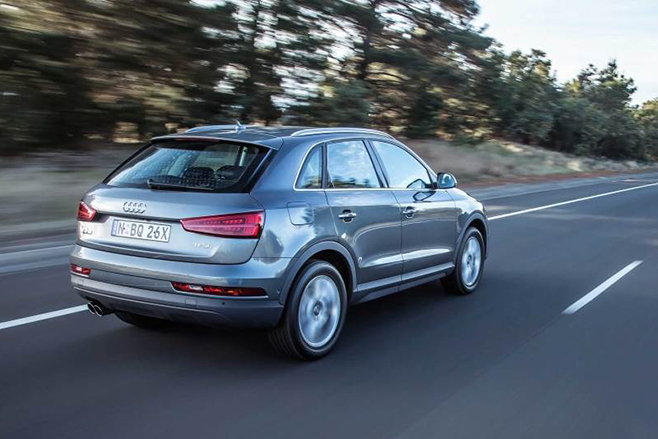
THE WHEELS REVIEW THE Audi Q3 is a curious thing. Seen purely as an SUV, it ranks among the better ones, thanks to car-like dynamics, strong all-turbo performance, impressive efficiency (though not in rear-seat packaging terms) and classy quality. No premium compact crossover has felt as rounded – though, of course, with the BMW X1, Mercedes GLA, Mini Countryman, and Lexus NX as competitors, the field isn’t exactly brimming with overachievers. Little wonder then that the Ingolstadt crossover has been a massive success worldwide.
But there is a nagging sense of expediency about this Audi, being so heavily based on that most Volkswagen of VWs, the Golf (via the Tiguan, of course). And yet even that doesn’t quite reach the crux of it, for the Q3 misses out on the company’s latest advanced lightweight MQB technologies, settling instead for the outdated PQ35 platform of a dozen years ago. Not very Vorsprung durch Technik…
Now, the Q3 Series II has launched, with up to seven percent more power, 17 percent lower consumption, and between $3000 and $7000 of previously additional equipment standardised, and all for only around $600 more.
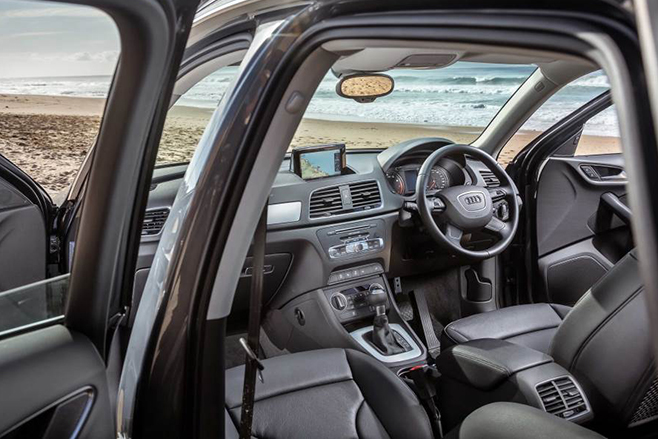
Some 60 percent of buyers choose the base 1.4 TFSI front-driver from $42,900; except for new COD Cylinder-On-Demand technology that saves 0.3L/100km, it feels identical to the last one – a bit laggy off the line until the revs (and turbo) kick in, sweet and strong after that, and always smooth and quiet. As before, the steering is a tad muted but light, flowing, and planted when pointed through a fast corner, accompanied by some body lean and suspension that – wearing optional 235/50R18 tyres – never quite feels settled, though it isn’t uncomfortable.
The extra 220kg of the combined (Haldex 5.0 part-time) all-wheel drive gear and turbo-diesel engine blunt the more powerful of the 2.0 TDI quattro offerings somewhat (there’s either a $56,900 135kW/380Nm or 110kW/340Nm version for $9K less), though once this hushed engine is on song, the mid-range response is a revelation. We preferred the eager and zingy 132kW/320Nm 2.0 TFSI quattro (from $52,300), brandishing refinement levels more in line with brand expectations. No Q3, however, is a particularly inspiring drive.
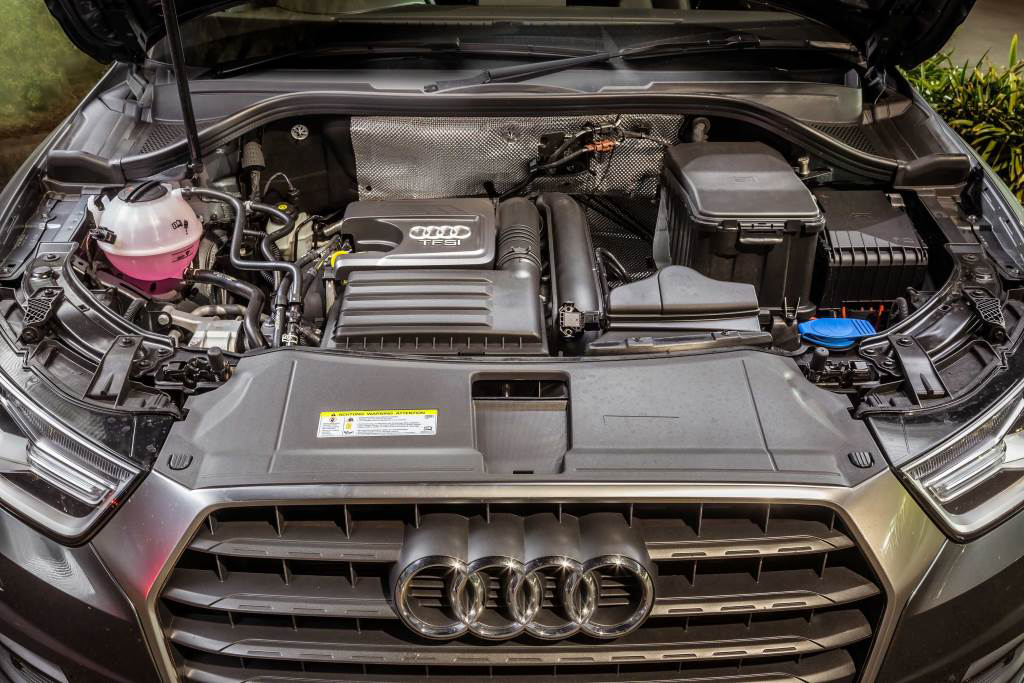
Finally, the very mid-last-decade dashboard is a far cry from the firm’s more modern aeronautical-inspired efforts, undermining an interior that – on variants wearing the optional 255/35R20 tyres – suffered from very atypical squeaks within the door trim.
And that, ultimately, sums up the Q3. Though one of the better breed of mediocre premium compact SUVs, it feels puzzlingly un-Audi.
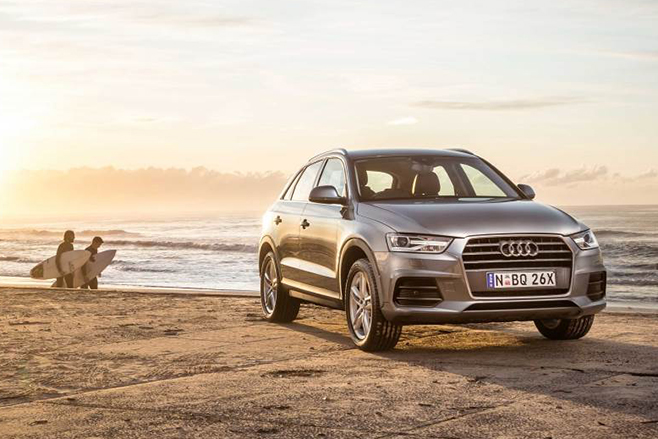
ECS Model: Audi Q3 1.4 TFSI COD S-tronic Engine: 1395cc 4cyl, dohc, 16v turbo Max power: 110kW @ 5000-6000rpm Max torque: 250Nm @ 1500-3500rpm Transmission: 6-speed dual-clutch Weight: 1405kg 0-100km/h: 8.9sec Fuel economy: 5.9L/100km Price: $42,900 On sale: Now
BMW says that Golf GTI buyers are the prime target for its new aggressively priced 1 Series
Look out Volkswagen Golf GTI as BMW has you in its sights.
The iconic hot hatch – a market leader that’s often held up as a benchmark – is a prime target for the repositioned, restyled and repriced BMW 1 Series hatchback.
It’s the $48,900 BMW 125i – with a 160kW/310Nm 2.0-litre engine and $2100 cheaper than the outgoing model – that BMW sees as a game changer that could tempt some away from its more mainstream German rival.
With larger brakes (painted in M blue) and rear-wheel drive BMW sees the 125i as the perfect step up for the thousands of GTI owners looking for new wheels.
“We’re going for GTI customers,” BMW Australia CEO Marc Werner confirmed to Wheels.
He said market research leading up to the reveal of the facelifted 1 Series had confirmed there were some GTI owners looking for something new.
“I certainly believe there are some GTI customers out there that are considering buying 1 Series,” said Werner.
“I believe we are within reach … so the GTI customers can now make the next step and join us in the BMW brand.”
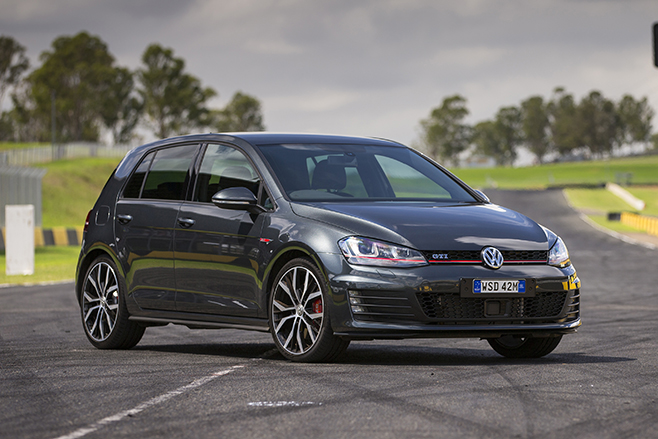
The GTI has more power than the 125i (162kW/350Nm in regular trim and 169kW/350Nm as a Performance model) and is more affordable ($41,990 as the regular GTI and $48,490 as the auto-only Performance).
But Werner believes the BMW badge and rear-drive dynamics comfortably carry that premium.
“We are more expensive than a Golf GTI but we can be and should be more expensive,” he said.
For those wanting more performance BMW has the M135i, with a 3.0-litre twin-turbo six-cylinder with 240kW and 450Nm and a claimed 0-100km/h time as low as 4.9sec.
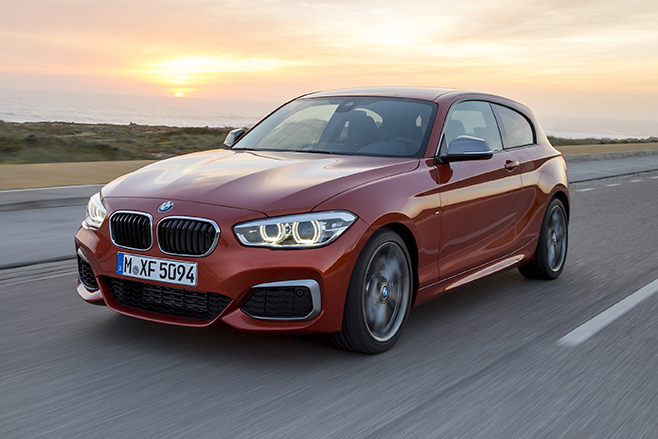
Werner said the freshened 1 was positioned to tempt some buyers out of mainstream small cars, including more expensive versions of the Golf and Mazda 3.
“We are definitely pushing for customers from the mass brands,” he said. “We are actually very affordable … it’s a really good price point.”
And despite the imminent shift to front-drive for the next generation 1 and 2 Series models – each will be based on the 2 Series Active Tourer front-drive architecture – Werner says the brand will continue to plug what it sees as the benefits of rear-drive.
“It certainly helps to position the car … rear-wheel drive is certainly one of our unique selling propositions,” he said. “This car offers something our competitors don’t do in terms of driving dynamics.”
As for weaving some front-drive magic on the next generation 1 Series, Werner is of the opinion the engineers have time to nail it.
“BMWs should always drive like a typical BMW regardless of whether it’s front-wheel drive or rear-wheel drive. I’m more than certain that the 1-Series successor – which is still far, far away from being launched – will certainly drive like a BMW.”
Want to watch the new 2015 BMW 7 Series park itself with no-one at the wheel? It’s now a reality as the maker shows off its return shot at the Mercedes S-Class
THE new 2015 BMW 7 Series is the first production car in the world to park itself via the key. You read correctly – the new sixth-generation of BMW’s answer to the hot-selling Mercedes S-Class and Audi A8 can not only park itself, but is larger, lighter, longer and loaded with a suite of technology to woo buyers away from the big Benz into its technical showcase.
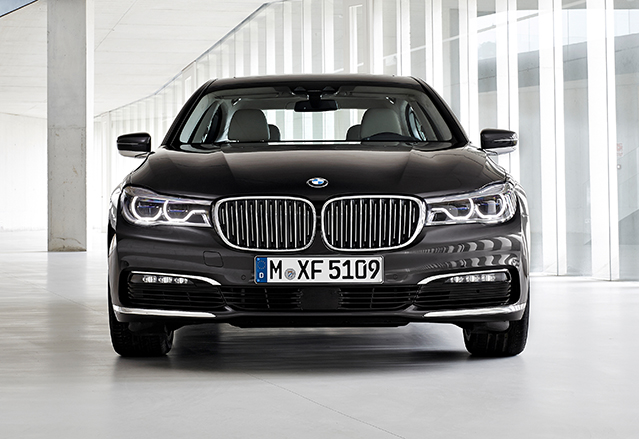
Hardly a game-changer in aesthetic terms, the new design is more athletic, with a swooping roofline after the dominant kidney-grilles up front, and overall the new 7er is longer than before by 19mm to measure 5098mm overall and sit in a 3070mm wheelbase. It’s also 7mm higher (1478mm) but at 1902mm is identical in width to the previous F01 model. Long wheelbase versions will add 40mm in length (all in the wheelbase), and sit at 1485mm. That makes it slightly shorter than the 5246mm standard-length S-Class, but slightly a negligible 3mm wider.
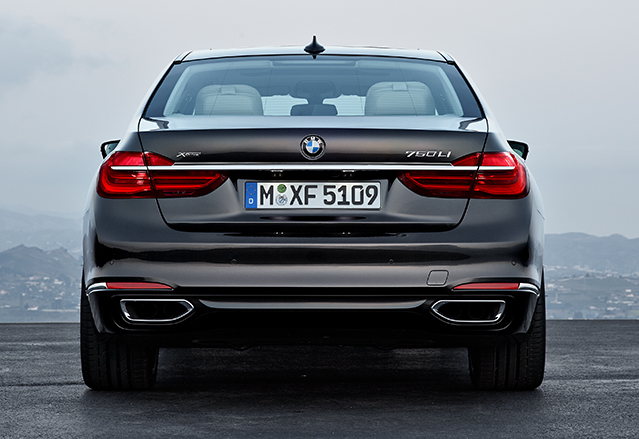
Of course, there are the twin circles in the headlamps – with LEDs standard and optional laser lights that are also offered on the BMW i8 – as well as the now obligatory ‘air breather’ that channels air from a vent inside the front wheel arch through to another in the guard to improve aerodynamics. The vertical bars in the grille also move to direct airflow. There’s also the traditional Hofmeister Kink that’s a single piece with the wrapround window frame, while the smallest wheel size will be 17 inches. The typically reserved colour palette will include bolder colours through BMW Individual, at additional cost of course.
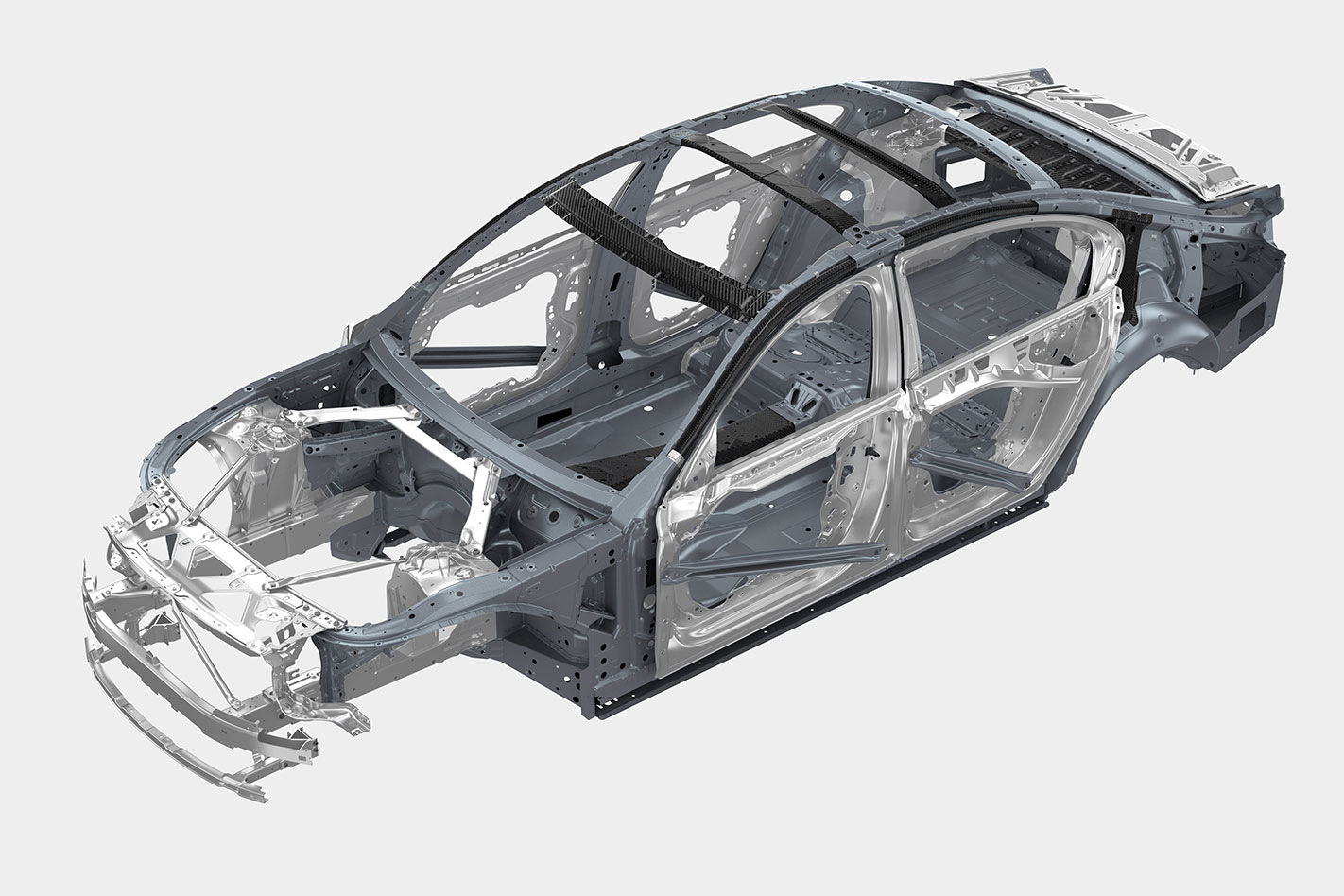
Despite the size increase, the 7er is up to 130kg lighter than its predecessor, says BMW, thanks to extensive use of carbonfibre reinforced plastic (CFRP) in conjunction with high-tensile steel and aluminium. The B-pillars are made of CFRP, the boot lid is aluminium and BMW says that the new 7 delivers 50:50 weight distribution and a starting weight of 1725kg.
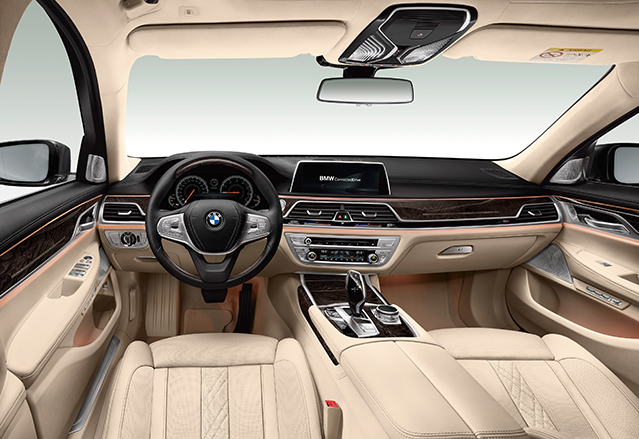
New electric steering with a variable ratio replaces the previous planetary gearset, while adaptive dampers are standard. Air suspension is now an option, allowing a 20mm height adjustment, with electro-mechnical roll stabilisation to keep the huge 7’s posture flat around corners. And, like the S-Class, there’s anticipatory chassis control through cameras that read the road surface ahead of the wheels.
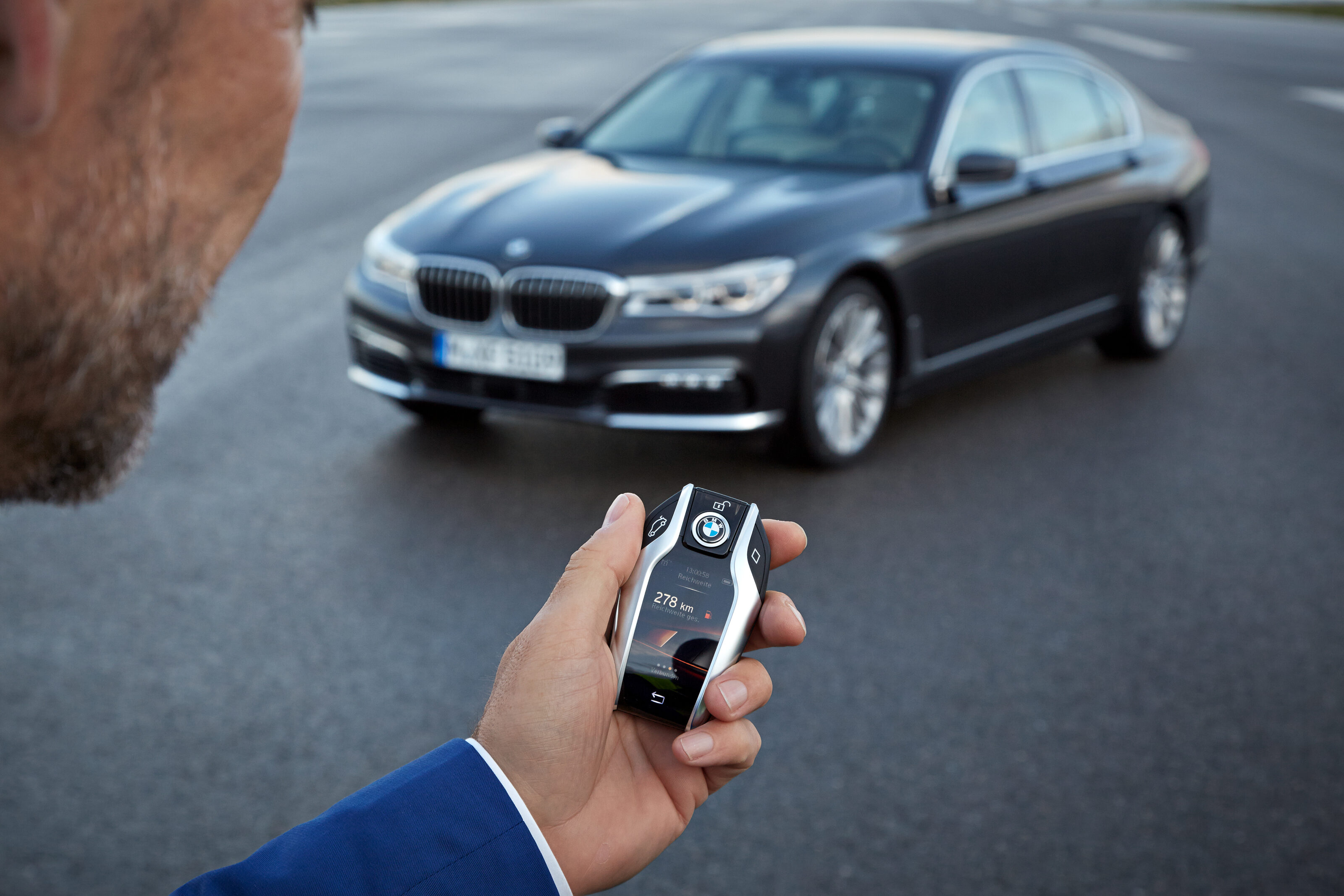
There’s also Remote Control Parking as part of the 7 Series’ role as techno-warrior. “It’s a showcase of our technology,” BMW Australia spokesperson Lenore Fletcher told Wheels following the car’s reveal. “The 7 Series is going to be a showcase of what BMW is capable of.” That includes parking the car via the key fob, and watching on. The system – which BMW claims is a world first for a production car – allows the car to complete parking semi-autonomously once it’s positioned in front of a parking spot. It’s not quite an autonomous vehicle, though, as it’s limited to travelling 1.5 times the length of the car without a human at the helm.
The range is expected to remain unchanged for Australian buyers, kicking off with the six-cylinder 730d and 740i models, V8-powered 750i and side-ordered of the new 740e Hybrid and V12 flagship 760i.
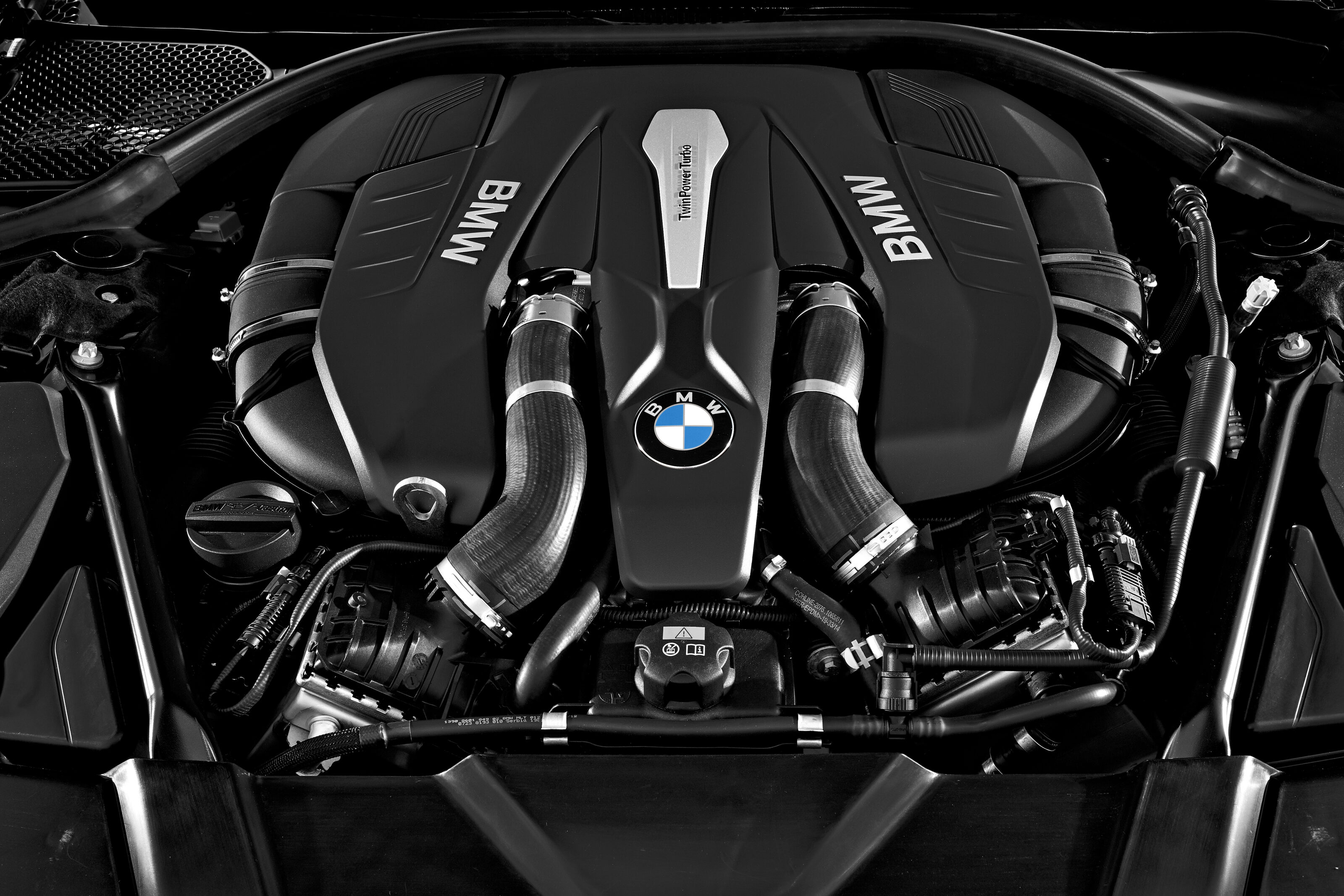
New six-cylinder engines are found in the 730d and 740i. The 730d’s B57 3.0-litre in-line six given an additional 5kW for 195kW, but a larger increase in torque from 560 to 620Nm. The petrol six in the 740i (codenamed B58) gets 240/550Nm, an increase of 5kW and 50Nm, while the heavily reworked version of the 4.4-litre twin-turbo V8 that’s also used in the BMW X5 and X6 SUVs as well as 650i and the BMW M6 remains at 330kW/650Nm.
The new 740e plug-in hybrid model replaces the ActiveHybrid7. It uses one of BMW’s new modular 2.0-litre turbocharged four-cylinder petrol engines,as seen in the BMW X5 Drive40e. In 740e’s case it produces 240kW and is teamed with a lithium-hybrid battery pack and electric motor for a claimed EU fuel figure of 2.1L/100km. That blows the ActiveHybrid’s 8.6L/100km claim into the weeds, and is helped by a 40km range under electric power only.
A V12 for the 760i is expected to be announced at a later date.
The 7 Series uses the eight-speed XF automatic exclusively, but there’s now a launch control option There’s also an M Sport package, despite the land-ship 7 being the one of the few BMWs not offered as an M car (thankfully) despite calls from markets such as the USA.
BMW Australia says that the 7 is not chasing the S-Class is terms of pure sales volume, despite the current BMW being outsold in 2014 by more than by the Mercedes (326 against 127 for the year). “We’re conscious of our competitors,’ Fletcher told Wheels, “but it is a niche segment. But because of the technology, the investment in training and marketing of the 7 Series in Australia is huge.”
Pricing is expected to remain close to existing models, which starts at $206,200 for the 730d, with full Australian specification to be announced ahead of the 7 Series launch in Q3 2015.
Sign up here to receive the latest round-up of Wheels news, reviews and video highlights straight to your inbox each week.
Drivers can pedal the new BMW 7 Series to 100km/h in 4.4 seconds then get out of the big limousine and watch it steer itself into a parking spot.
In the latest round of the German flagship sedan war, the sixth-generation 7 Series fires shots back at the S-Class it came under heavy attack from last year.
For the first time BMW has pinched technology from its ‘i’ division, both for the carbonfibre reinforced-plastic (CFRP) passenger cell and electric drive components.
The 3.0-litre turbo six makes 240kW between 5500-6500rpm and 450Nm over a broader-than-outback-skyline 1380-5500rpm. Thank the weight loss program for the 5.5-second 0-100km/h and 6.8L/100km claims.
That said, the new 740e takes just a tenth longer to get to the same performance standard, its combination of 2.0-litre turbo four, electric motor nestled within the eight-speed automatic and batteries under the rear seat (note: not taking up boot space) delivering 2.1L/100km. The plug-in 7 Series will also go 40km on silent running at up to 120km/h.
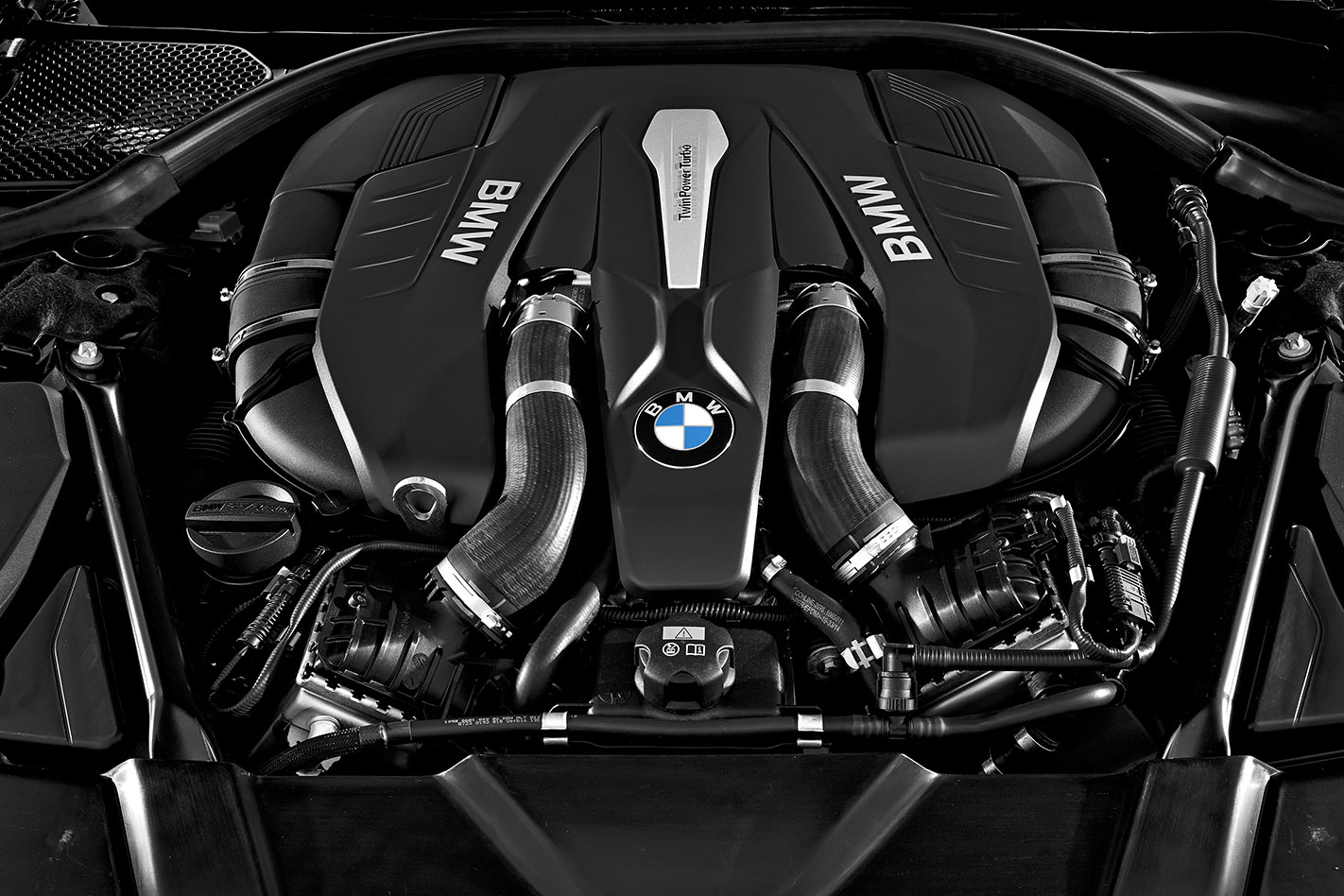
Its overhauled 4.4-litre turbo V8 pumps out 330kW (at 5500-6000rpm) and 650Nm (at 1800-4800rpm), allowing the 1870kg limo to do a 4.4sec 0-100km/h.
That is a match for our rear-drive-only Mercedes-Benz S63 AMG, by the way, which has 900Nm from its 5.5-litre, with the V12-engined 760iL yet to come.
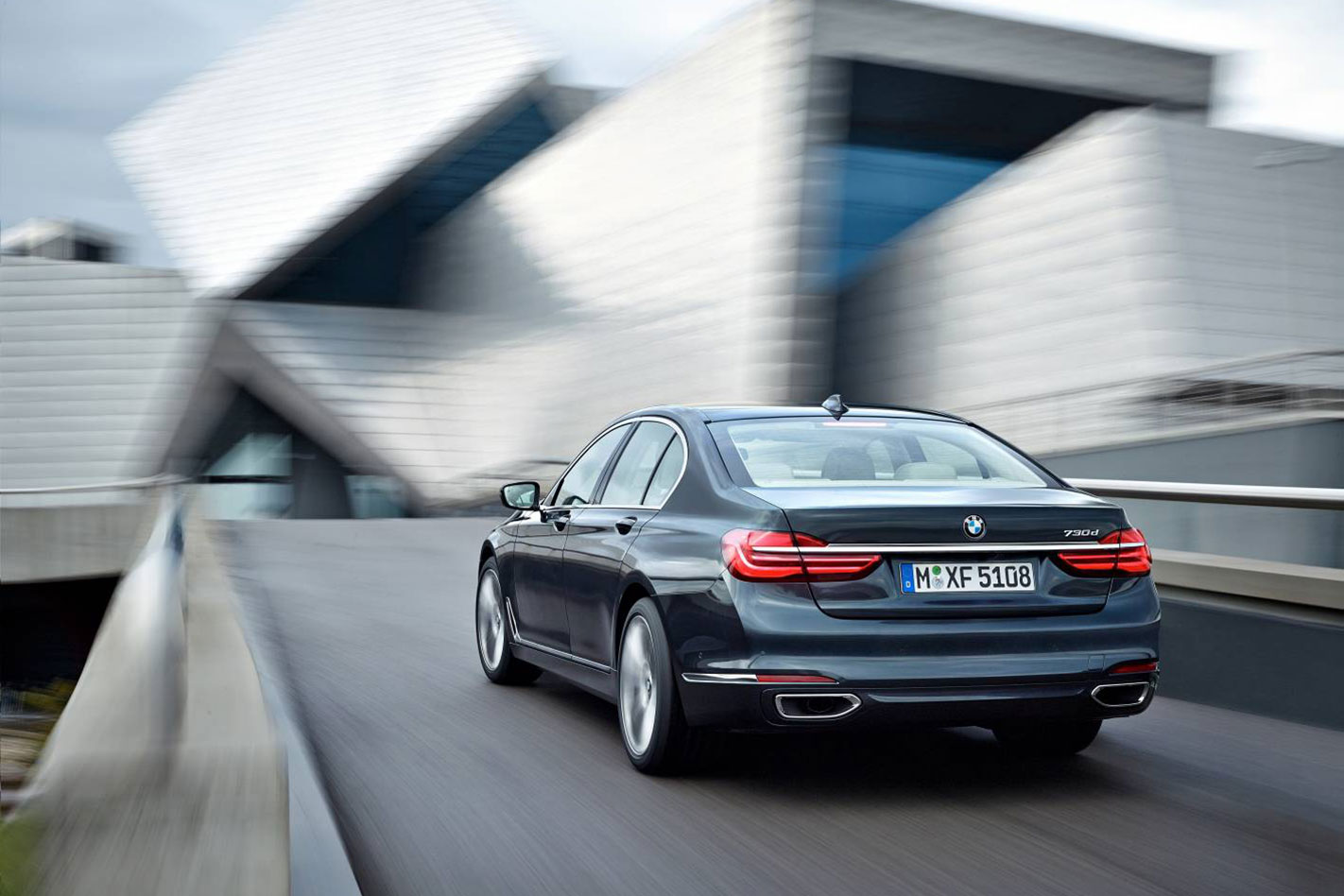
All models now come standard with five-link aluminium air suspension, while four-wheel steering can operate even on xDrive models for the first time.
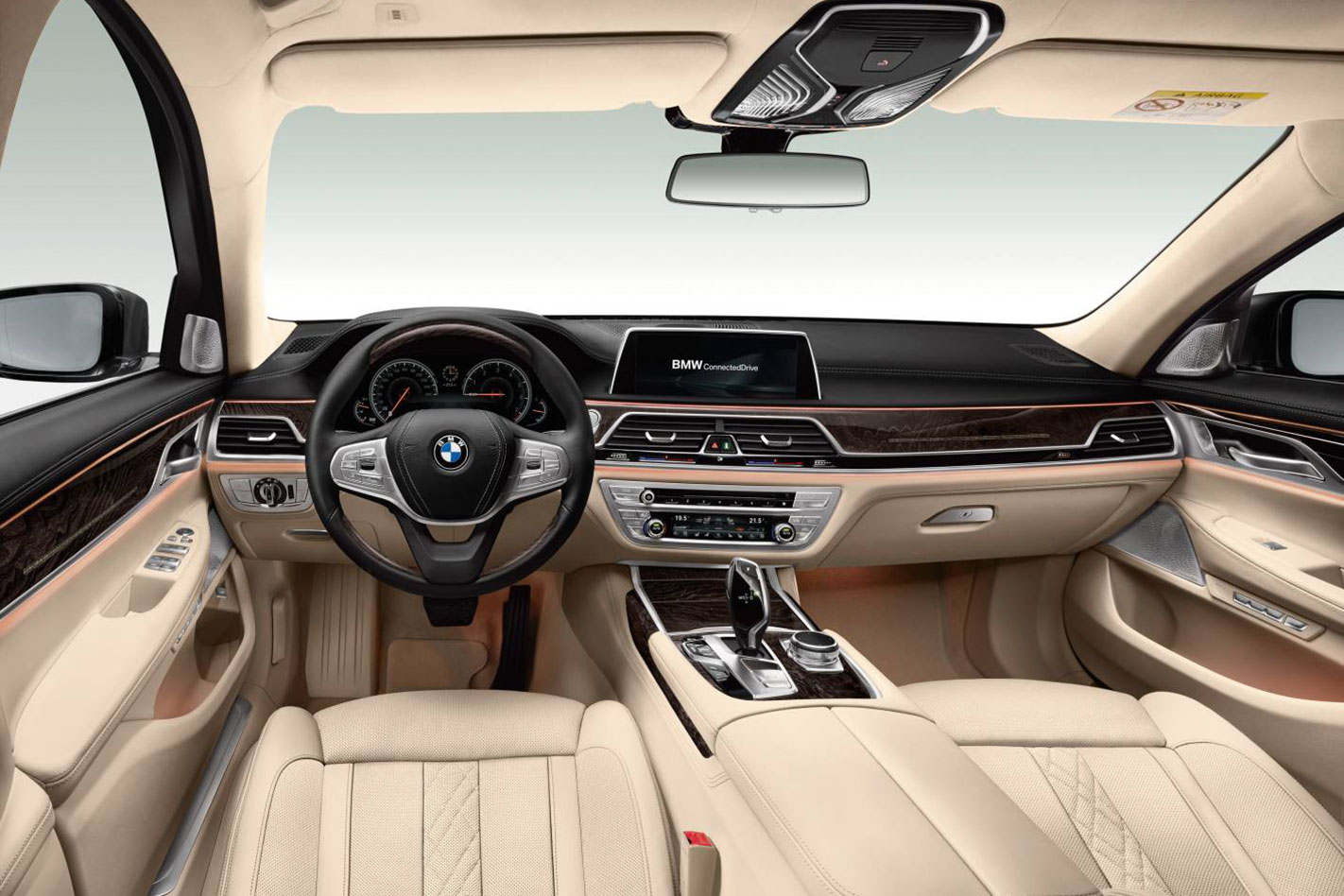
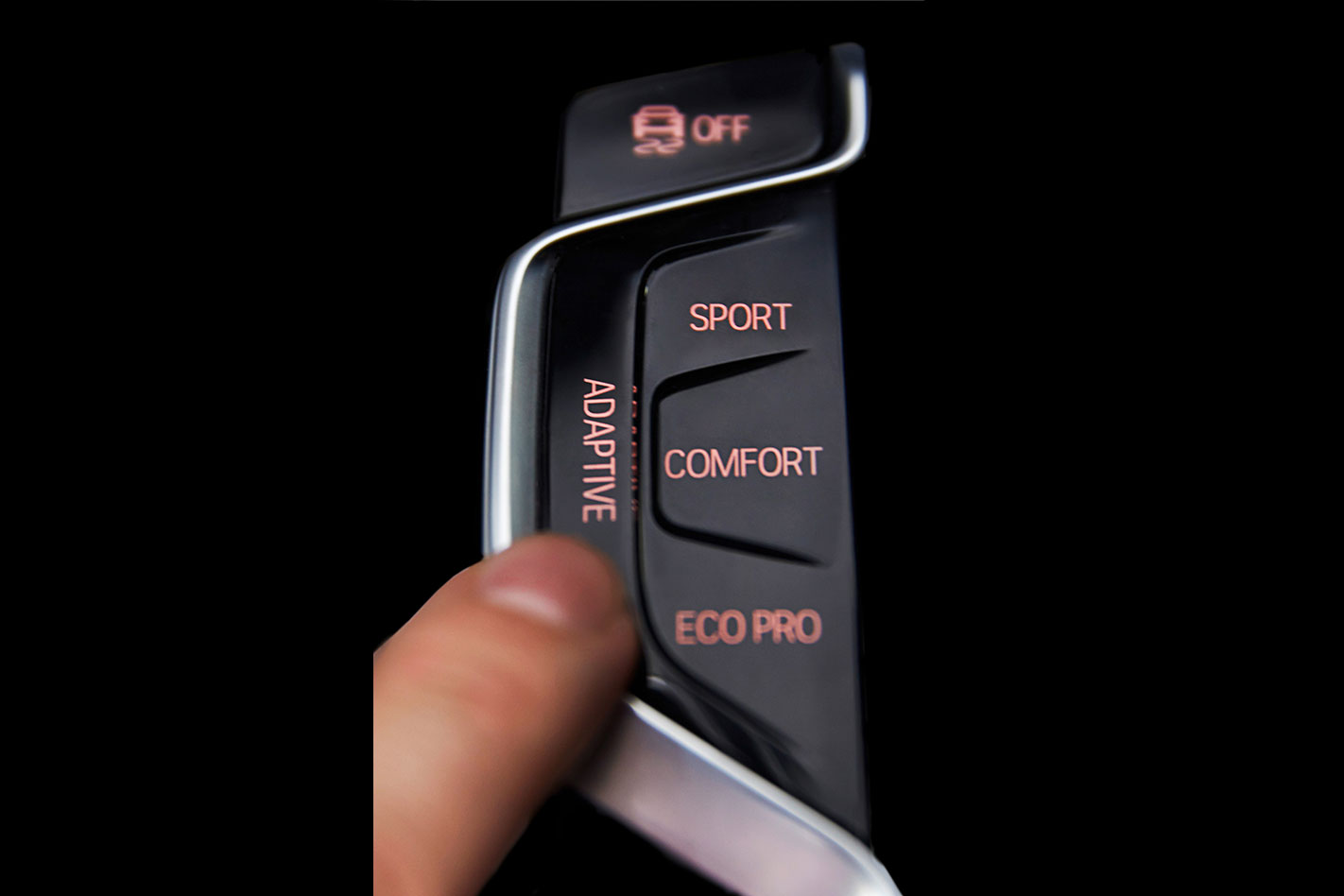
The system has a “data-based predictive function” that uses sat-nav, forward stereo camera and info on your driving style to prepare its suspension for the road ahead before it arrives (if you choose the new Adaptive mode, added to the usual EcoPro, Comfort and Sport).
Thanks to a new BMW key with a screen on it, you can literally jump out of your car and watch it park by pressing forward and back on the remote – a world first.
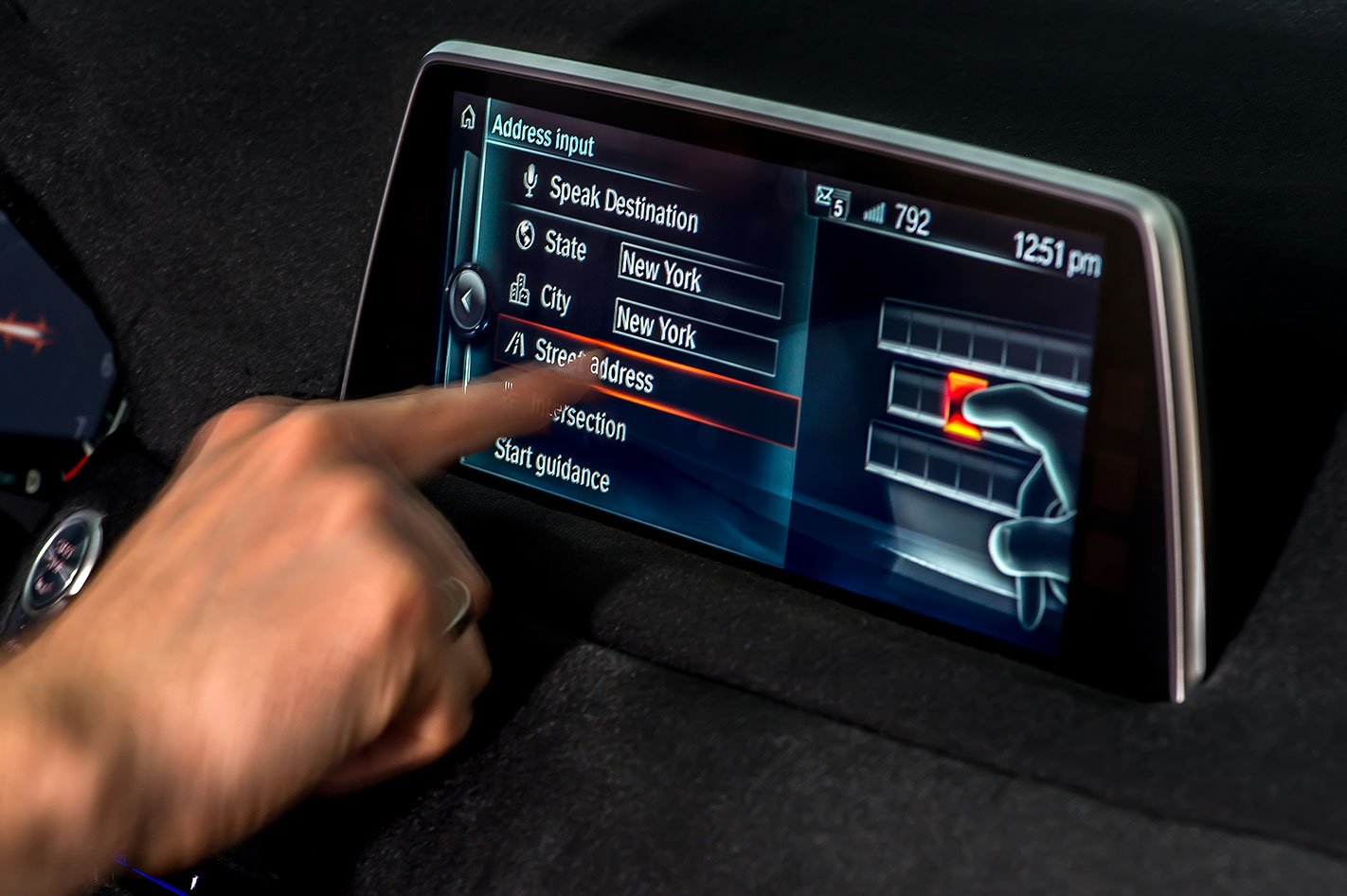
There is also inductive mobile phone charging, matrix laserlights that can double the standard LED beam to 600 metres, a panoramic roof that uses LEDs to form stars at night, and an Executive Lounge option; it reclines the rear pews by 42.5 degrees, and can perform a ‘vitality’ massage that promotes a “active physical exercise”.
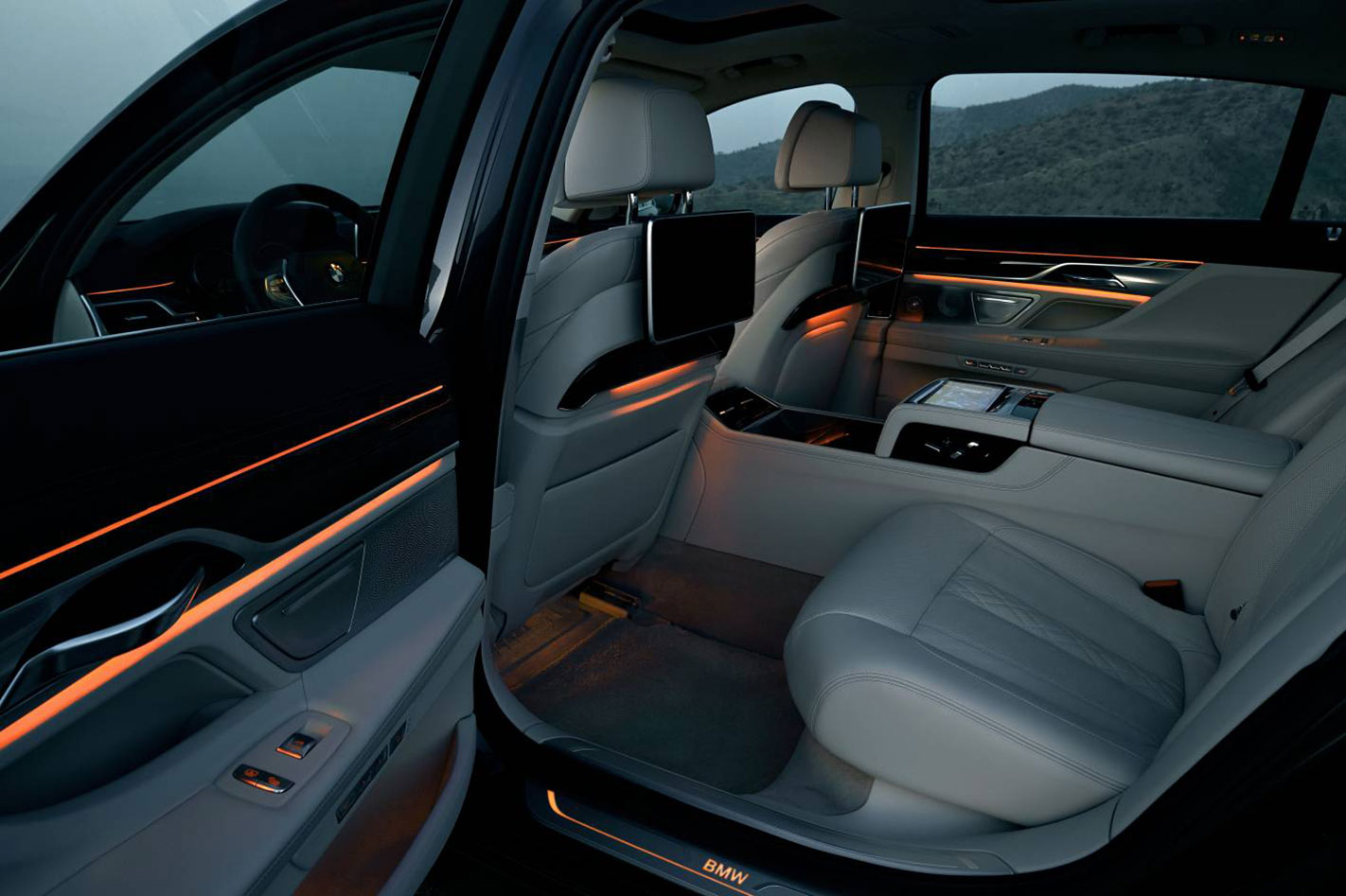
It isn’t sure on all-wheel drive yet, but xDrive is the only option if the 750i is to appear. The local arm wants all the technology, too, though it is still seeing what may work for Australia. The Mercedes-Benz S-Class is on notice.
Get your free weekly report from the world of fast cars – subscribe to the MOTOR newsletter!
British comedian and actor, Rowan Atkinson, has sold his McLaren F1.
While the final sale price has not been disclosed, the asking price of the legendary supercar was £8million, equivalent to A$16.05million at current exchange rates.
This is significantly more than the highest amount paid for an F1 at auction, which was around A$11million at Pebble Beach in 2013.
One of the more high profile F1 owners, Atkinson was also one of the more enthusiastic, clocking up over 66,000km during his seventeen-year ownership period.
Famously, that period included two well publicised accidents, the second of which, in early 2011, led to the most expensive insurance claim ever in the UK at a hefty A$1.7million.
In a feature in the current issue of MOTOR, Atkinson explains his rationale for parting with a car he is clearly fond of: “I bought it for the quality of thinking behind it. Now it has become a thing of value, it is time for someone else to enjoy it.”
An extremely handy amateur racer, Atkinson was not shy in using the F1’s performance, but says it is the McLaren’s useability that he was most impressed by.
“You can take the car to the racetrack, but what makes it so different to other supercars is that you don’t have to. You don’t need to plan a long distance journey with military precision before it’s worth getting out of the garage. The vast majority of the miles have been accried doing outwardly very mundane trips.”
While any McLaren F1 is a rare machine – just 63 standard road cars were built – Atkinson former steed is truly unique, being the only one painted in its deep burgundy-red hue and the only car with white-on-black dials. Every other F1 is the other way around.
Fortunately, despite the astronomical price tag, the new owner says he intends to use the F1 regularly just as Atkinson did.
Concept cars aren’t necessarily made for people’s driveways, but they do often show how a revolution can be born from a simple idea.
In 2008, then-BMW design chief Chris Bangle introduced a car concept so out there that nobody has come close to replicating it – until now. GINA was her name, and she was a shape-shifting car.
GINA stands for Geometry and Functions in ‘N’ Adaptations, a suitably obscure acronym for such a revolutionary design. Bangle’s team had been working on GINA since 2001, in order to demonstrate how car design could employ unconventional materials, technologies and design features that all work together. GINA’s skin was translucent polyurethane-coated Spandex wrapped around a moveable, aluminium-wire frame. When her winged doors lifted, the Spandex pleated. Her tail-lights shone through the waterproof fabric, and her life-force, the engine, was accessed through a slit in the bonnet.
The team worked with an origami master to determine how the panels would fold if metal was used, before devising how a similar look could be achieved with textiles. The flexible outer layer and moveable inner frame meant that the car would adopt its most accessible shape while parked, and then morph into a form optimised for speed once the driver was seated.
Materials and production technologies have moved at light speed since Bangle’s exploration. Seven years after GINA was revealed, German engineering group EDAG have just unveiled a “bionically inspired” concept vehicle called Light Cocoon. The body of Light Cocoon was made using 3D printing technology, and is based on the structure of leaves and branches, engineered to maximise the vehicle’s strength while using minimal material to keep it light. The result is a bare-bones structure overlaid with a tough but delicate weatherproof fabric skin that is said to be four times lighter than printer paper.
A skeletal frame is not unusual in car design: if you strip the metal panels off any production car it’s essentially a reinforced cage, engineered to be as light and efficient as possible. The big difference here is that underneath Light Cocoon’s translucent skin are LEDs that shine through the branching frame to create patterns of coloured light on the car’s panels. It’s like a lamp on wheels.
The car isn’t intended to actually be sold as an on-road vehicle – EDAG make no mention of its powertrain. But as far as proving a point on the possibilities of vehicle design goes, this Light Cocoon makes a very bright statement.
Where Light Cocoon is a fixed-frame colour chameleon pushing the limits of 3D printing and fabric technology, the monochromatic GINA is an actual shape-shifter. Both represent an exciting paradigm shift both in the way cars are made, and the way they ‘emote’.
Sally Dominguez is a multi-award winning Australian product designer and architect now living in the USA. Her products include Nest highchair and HOG tank. She is currently running her own Adventurous Thinking tools and strategies program.
This weekend arguably the world’s most famous motor race, the Le Mans 24 Hour, will take place once again at the legendary Circuit de la Sarthe. It’ll be a flat-out battle between Audi, Porsche, Toyota and Nissan as sports car racing once again enters a golden age. To get you in the mood, we’ve dug up five of the greatest onboard laps over six decades for your viewing pleasure. 1956 – Mike Hawthorn, Jaguar D-Type
We begin our journey in 1956, at a very quaint looking Le Mans. No kerbs, no grandstands, little in the way of protection for drivers or spectators – and this is the upgraded version after the horrific 1955 tragedy. Hawthorn calmly makes his way around the course in his D-Type, commentating and making disparaging remarks about French cyclists as he goes. He would eventually finish sixth, the race won by Ninian Sanderson and Ron Flockhart in another Jaguar D-Type. 1977 – Jurgen Barth/Jacky Ickx, Porsche 936 Spyder
It’s not often a car sounds fast, but with 400kW pushing just 740kg, you can audibly hear just how frighteningly rapid the Porsche 936 Spyder is as it hammers around Le Mans. It’s only two decades on from Hawthorn’s lap, but the difference in speed is light years. With a top speed of 360km/h, the 936 blasts past 911 RSR GT cars like they are standing still, with Barth/Ickx (it’s unclear who the driver actually is) fighting stabs of oversteer exiting slow corners. The pair, along with American Hurley Haywood, would go on to win the 1977 race by 11 laps! If you speak German, you’ll get even more out of this! 1983 – Derek Bell, Porsche 956
Arguably the most famous Le Mans video of them all. One of the race’s most successful drivers (Derek Bell – five wins) in one of the race’s most successful cars (Porsche 956 – four straight wins from 1982-85, followed by another two for the 962 in 1986-87). Engine screaming, wastegates chattering, scenery a fluid blur, this is onboard footage at its very best. How any car or driver could sustain this level of pace is beyond us. 1990 – Mark Blundell, Nissan R90CK
Possibly the most balls-out qualifying lap of all time. A faulty wastegate on the Nissan’s twin-turbo V8 was leading to it overboosting; the team called for Blundell to abandon his lap and pit, but with almost limitless power at his disposal (estimated around 820kW) he went for it, blitzing the field to record the first Le Mans pole for a Japanese manufacturer. 2014 – Andre Lotterer, Audi R18 e-tron quattro
And now to the modern age. Gone are the screaming engines of old, replaced by, in the case of the Audi R18 e-tron, a whisper-quiet diesel overlaid with the other-worldly whines of electric motors. The speeds, however, are greater than ever and at no point is this more visible than at nigh. Driving flat-out through the dark is Le Mans’ greatest challenge and a true testament to the skill of the incredible drivers that are able to maintain barely diminished pace all through the night.
Get your free weekly report from the world of fast cars – subscribe to the MOTOR newsletter!
PLUS
- The colour range. It comes with quite the selection.
- The boot size is decent for such a small car and leaves plenty of space for all those little bits and pieces we put in the boot… and never take out again!
- Its reputation for reliability and value are high on the list of pros for this little city car
- Its fuel efficiency gets a big red cross. It uses fuel faster than most of its rivals.
- We admit it’s got most of the things you need in a basic car, but the decision to leave cruise control off the sedan range probably wasn’t the smartest.
- Its windscreen wipers are missing a gear in between its slowest speed and the next one up either. They’re either screeching like a banshee or have too much of a lag in removing droplets. Argh!
Click here to read the full review on the Toyota Yaris.
