
Go behind the scenes and take a look at the making of the video, and an insight into the rise of professional drifter Mad Mike Whiddett.
Get your free weekly report from the world of fast cars – subscribe to the MOTOR newsletter!
Go behind the scenes and take a look at the making of the video, and an insight into the rise of professional drifter Mad Mike Whiddett

Wheels has been at the forefront of Australian motoring media since 1953, creating quality, credible content that consumers trust, and taking readers behind the scenes of the automotive industry.
The 2015 Honda Civic Type R comes as the Japanese maker returns from the hot-hatch wilderness and a snoozefest of road cars with a turbocharged, samurai-sword sharp warrior
WHAT IS IT? The new Civic Type R could be a return to form for Honda: it’s the first time the maker, known for its rip-roaring, high-revving atmo VTEC engines, has decided to use turbocharging to motivate one of its Type R high-performance models.
WHY WE’RE TESTING IT It’s time for Honda to show its hand: following a drip-feed of spy images and Nurburgring lap-time claims, it’s time to see if Honda really has rediscovered its mojo with the Civic Type R showing a return to form – or an epic failure…
MAIN RIVALS VW Golf R, Renaultsport Megane RS275, Ford Focus RS, Audi RS3, Holden Astra VXR, Mini Cooper S JCW
THE WHEELS VERDICT Radical shift in Type R philosophy gets largely positive results. Banzai power and the smarts to get it all to the road without drama create a technically impressive package that’s a blast to drive. Only character and good taste is lacking.
PLUS: Ferocious pace, super grip levels and power delivery MINUS: Lack of steering feel and precision, still not locked in for Australia
THE WHEELS REVIEW THE 2016 Honda Civic Type R had to change. Honda built its high-performance brand on naturally aspirated fours that revved so hard you thought the needle was doing a second lap of the dial. But rivals nailing sub-eight-minute Nürburgring laps and tightening global emissions standards boxed the hot Civic – the last Type R in eight years – into a corner.
Honda simply had to go for forced induction. So while the new Civic Type R still retains a 2.0-litre four with a VTEC kick, there’s now a mono-scroll turbocharger and an air-to-air intercooler hanging in front of it. The result is a meaty 228kW and 400Nm – huge 80kW and 199Nm increases over what went before – to net a 7min 50.63sec lap of the ’Ring, a new front-wheel-drive record.
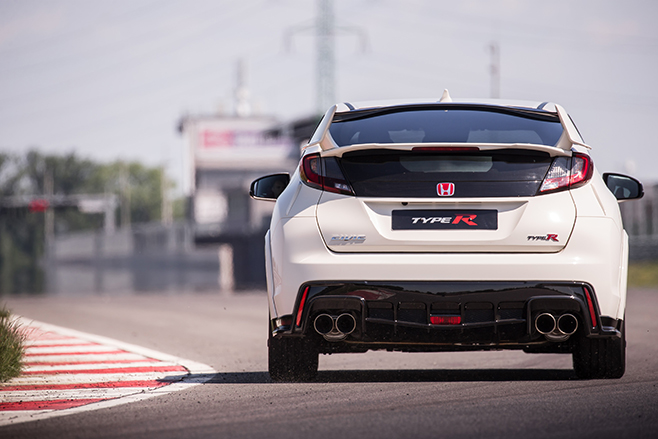
Laggy down low, the motor needs to be pulling 3000rpm to do business, but it does get a serious shift on beyond that threshold, whipping to its 6500rpm power peak in a blur of scenery and an uncharismatic roar of boost. The VTEC switch no longer induces a step-change in either delivery or sound, but the Type R does keep on revving to 7000rpm without feeling like you’re flogging it to prove a point.
It means third gear is often enough on fast and flowing back roads, but to hold one gear is to miss out on one of the sweetest shifts you’ll experience: the six-speed manual has just a 40mm throw, so you can knock the shifter back and forth like you’re playing Grand Theft Auto on the PlayStation. If we’re being picky we’d say the last-gen car’s shift was defter still, and that the brake and accelerator could be closer together for heel-and-toe fetishists, but still, nice gearbox.
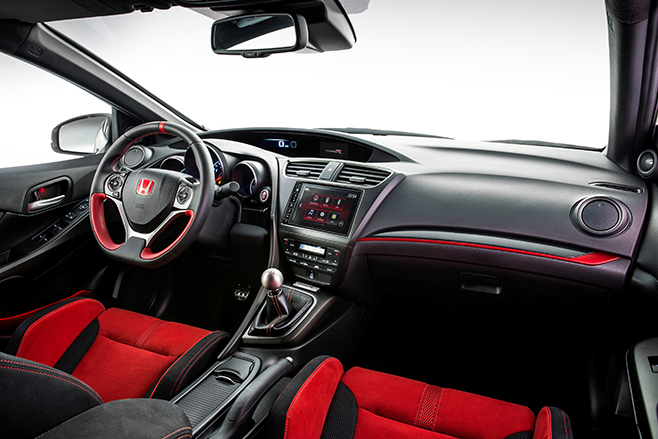
Putting 228kW through the front wheels is a big ask, but a helical slippy diff, 235/35 R19 tyres and what’s called Dual Axis Strut Front Suspension gives the Type R an answer. Like similar hardware on the Focus and Megane RS, DASFS – catchy, huh? – isolates the suspension strut from the turning of the front wheels, so more rubber touches the surface through corners. More rubber, more traction, simple.
Wipe off speed with the four-pot Brembos – great pedal feel, great stopping power – point the nose at the apex and mash the throttle, and the rubber bites, you’re sucked through the corner on the perfect line, with grippy Alcantara bucket seats holding you all the while. In the dry there’s no hint of wheelspin or torque steer, and you’ll need excessively optimistic entry speeds to find understeer. Adaptive dampers are a big step over the fidgety last-gen Civic, too, still feeling firm but providing far more compliance; it means you don’t lose confidence bouncing over the road surface.
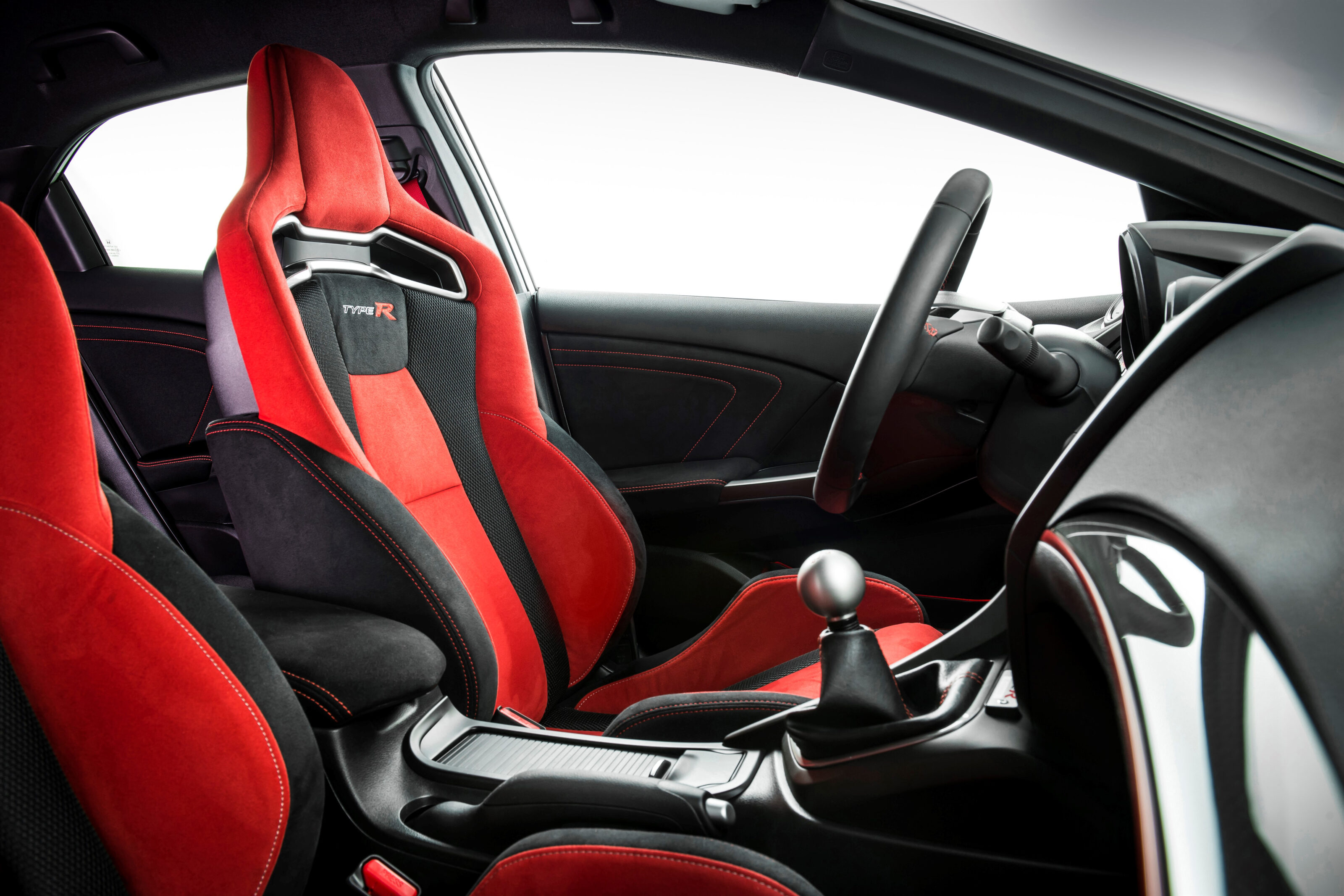
Press the R+ button and hard-core gets harder still. Throttle response snaps from slushy to engagingly sharp, the fast and accurate steering gets heavier for no real reward – sensitive types will already crave more feel – and the adaptive dampers become 30 percent stiffer, which makes the car pogo madly. It’d be nice to tweak each setting individually because really it’s the engine mapping that’s the big win here, the steering tolerable, suspension feeling downright daft for the road.
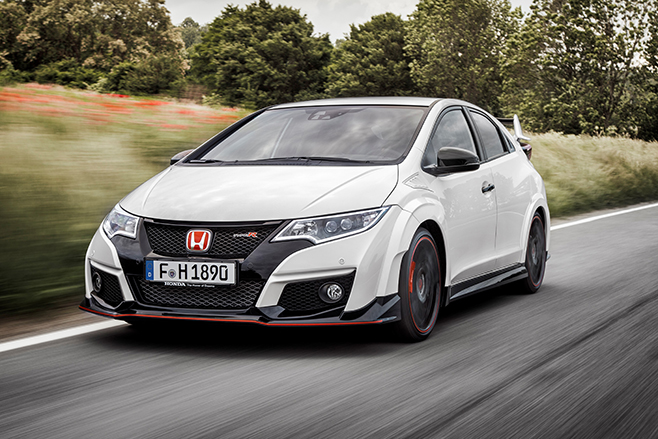
That’s a criticism you could level at the body styling, too, but Honda says the vents in the front wings and behind the front wheels are essential to release heat from the crammed engine bay, and the spoilers and sideskirts and stick-on bits elsewhere team up with a nearly flat under-floor for genuine downforce. Proceed straight to jail if you detect any of that on the public highway.
There’s much to admire about the Civic Type R, then, because this really is a hot hatch to give double-the-cash performance cars a headache. But the Megane RS remains the more tactile and interactive machine, and that’s still where we’d spend our cash.
SPECS Model: Honda Civic Type R Engine: 1996cc 4cyl, dohc, 16v, turbo Max power: 228kwW @ 6500rpm Max torque: 400Nm @ 2500rpm Transmission: 6-speed manual Weight: 1382kg 0-100km/h: 5.7sec Fuel economy: 7.3L/100km (EU) Price: $40,000 (estimated)

Motor focuses exclusively on high-performance cars, offering a heart-stopping, hair-raising blast into the world of prestige and performance culture.
Well, this has seemed a long time coming. But the Honda Civic Type R is here, and it arrives not short of mechanical promise.
Some 228 promises, in fact, which makes it one of the most powerful hot hatchbacks in existence. And one of the most extreme, thinks Honda, which calls it nothing less than the most extreme Type R to date.
For a company with the Integra Type R in the back catalogue, that’s quite something. Especially given this is the first Honda to get both VTEC variable valve timing and a turbocharger. That’s unusual; Type Rs are traditionally naturally aspirated and rev to the stratosphere.
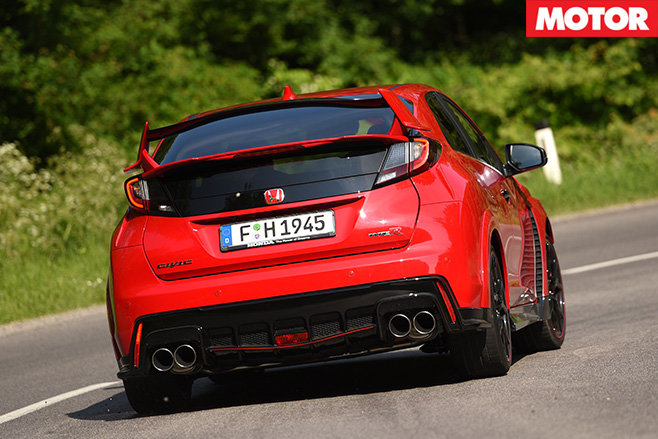
Drive to the wheels is also more like the Renault. Honda has tasked the Civic with deploying quite a lot of poke through only the front wheels via a mechanical limited-slip differential.
To achieve this, Honda has fitted dual-axis strut front suspension – as Ford, Renault and Vauxhall already have. Honda says this will reduce the torque steer effect by 55 per cent.
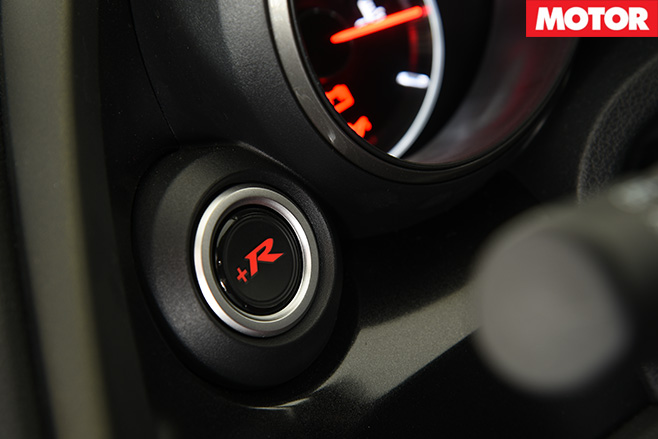
Honda’s making quite a big song and dance about the Civic’s speed around some German race circuit or other. The ‘+R’ mode is optimised for that circuit, so as well as stiffening the dampers, it firms up the steering, increases throttle response, and reduces the intrusion of the stability program. And – woo! – the dials turn an angry red.
Not as angry as the outside, where the Type R is generously winged and vented. Honda says that the various addenda on the Civic’s five-door body are present for aerodynamic or heat dissipating purposes; they’re not for aesthetics. I should hope not. Graceful it isn’t.
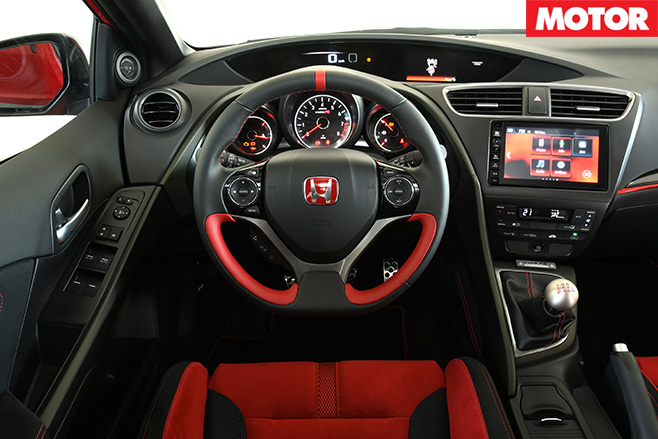
That’s fine, especially when you consider how good the control weights are. The throttle and brake could be closer to ease heel and toeing, and the gearshift could use a little less notch, but I’m picking holes here. Mostly, the Civic’s an easy a car to drive.
The engine’s docile, too, which makes for brisk progress at fair to middling inputs, though there’s obvious turbo lag at lower revs. Which, if you care to get all philosophical, isn’t particularly Type R at all.
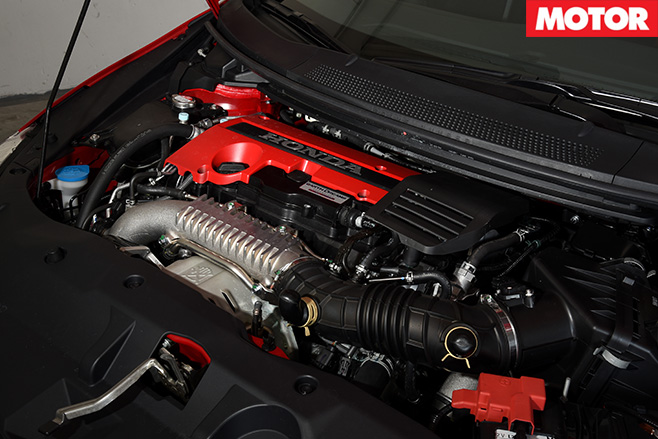
Our test car only had 1930km on it, but a recent test Renault Sport Megane felt freer revving at the same mileage. There’s no denying the shove, mind you. This is an exceptionally capable car.
Ditto, it’s capable when it comes to ride and handling. Or the handling, at least. A fuller judgement of the ride will have to come until we drive it on roads bumpier than the cricket wicket-smooth tarmac we’ve driven the Civic on today.
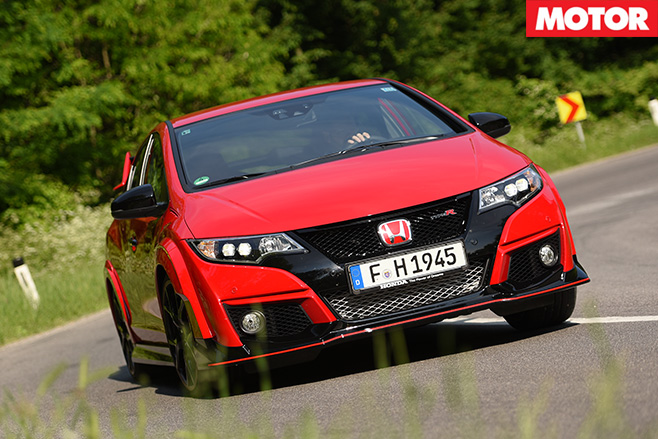
There’s no question it’s promising – and doubtless effective at posting a sub-eight minute at you-know-where – but there’s more to life than that. If you’re looking for the last word in communication and engagement, the Type R isn’t the car to provide that.
The steering, consistent and accurate though it is, is less impressive than the mechanical grip; it’s a less engaging steer than the one you get through Renault Sport’s feel-some rack. Likewise I think, although I’d want a back-to-back test to be sure, less torque steer gets through to the Honda; at the expense of some precision and insight.
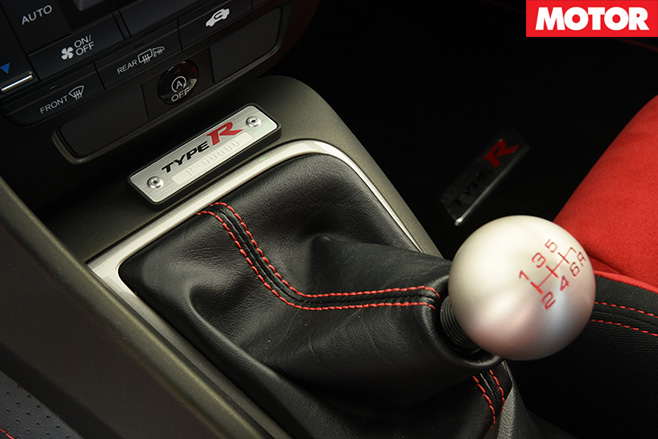
Not that it’ll matter to everyone. That the Type R is wilfully different to both of its main rivals means Honda has chosen a decent path for it.
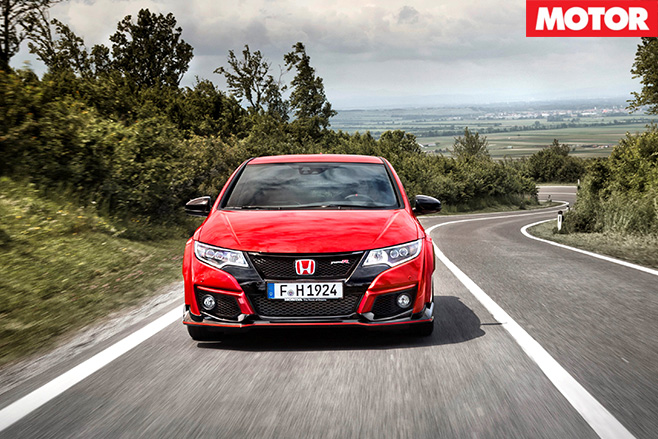
4/5
| u00a0 | u00a0 | u00a0 | u00a0 | HONDA CIVIC TYPE R GT | |
| Body | u00a0 | u00a0 | u00a0 | u00a0 | 5-door, 4-seat hatch |
| Drive | u00a0 | u00a0 | u00a0 | u00a0 | front-wheel |
| Engine | u00a0 | u00a0 | u00a0 | u00a0 | 1996cc inline-4, DOHC, 16v, turbo |
| Bore/Stroke | u00a0 | u00a0 | u00a0 | u00a0 | 86.0 x 85.9mm |
| Compression | u00a0 | u00a0 | u00a0 | u00a0 | 9.8:1 |
| Power | u00a0 | u00a0 | u00a0 | u00a0 | 228kW @ 6500rpm |
| Torque | u00a0 | u00a0 | u00a0 | u00a0 | 400Nm @ 2500rpm |
| Power/Weight | u00a0 | u00a0 | u00a0 | u00a0 | 165kW/tonne |
| 0-97KM/H | u00a0 | u00a0 | u00a0 | u00a0 | 5.7sec (claimed) |
| Transmission | u00a0 | u00a0 | u00a0 | u00a0 | 6-speed manual |
| Weight | u00a0 | u00a0 | u00a0 | u00a0 | 1382kg |
| Suspension | u00a0 | u00a0 | u00a0 | u00a0 | struts, adaptive dampers, anti-roll bar (f); torsion beam, adaptive dampers (r) |
| L/W/H | u00a0 | u00a0 | u00a0 | u00a0 | 4390/1878/1466mm |
| Wheelbase | u00a0 | u00a0 | u00a0 | u00a0 | 2545mm |
| Tracks | u00a0 | u00a0 | u00a0 | u00a0 | 1605/1528mm (f/r) |
| Steering | u00a0 | u00a0 | u00a0 | u00a0 | electrically-assisted rack-and-pinion |
| Brakes | u00a0 | u00a0 | u00a0 | u00a0 | 350mm ventilated discs, 4-piston calipers (f); 296mm solid discs, single-piston calipers (r) |
| Wheels | u00a0 | u00a0 | u00a0 | u00a0 | 19 x 8.5-inch (f/r) |
| Tyres | u00a0 | u00a0 | u00a0 | u00a0 | 235/35 R19 (f/r) Continental Sport Contact 6 |
| Price | u00a0 | u00a0 | u00a0 | u00a0 | u00a332,195 (approx. A$50,000) |
| Positives | u00a0 | u00a0 | u00a0 | u00a0 | Benchmark performance; impressively capable |
| Negatives | u00a0 | u00a0 | u00a0 | u00a0 | Could be more involving; styling an acquired taste; two-year wait in Oz |
Click here to read the full range review of the Honda Civic.
Mazda, Nissan add another 195K cars – some more than a decade old – to a growing list of Australian vehicles with potentially dangerous safety systems.
ALMOST 850,000 vehicles – the equivalent of 1 in every 15 cars on our roads – have now been scooped up as the tally to fix potentially dangerous airbags in Australia continues to grow.
Mazda and Nissan today added their tally to the biggest recall in Australian history related to a single component – airbags supplied by Japanese car parts maker Takata – identifying almost 195,000 vehicles on top of the 640,000 already identified by carmakers.
The new batch of Australian recalls comes only weeks after the number vehicles related to airbags in the US blew out to more than 33 million, as more manufacturers were identified. The global number, which is still growing, is estimated to be beyond 50 million.
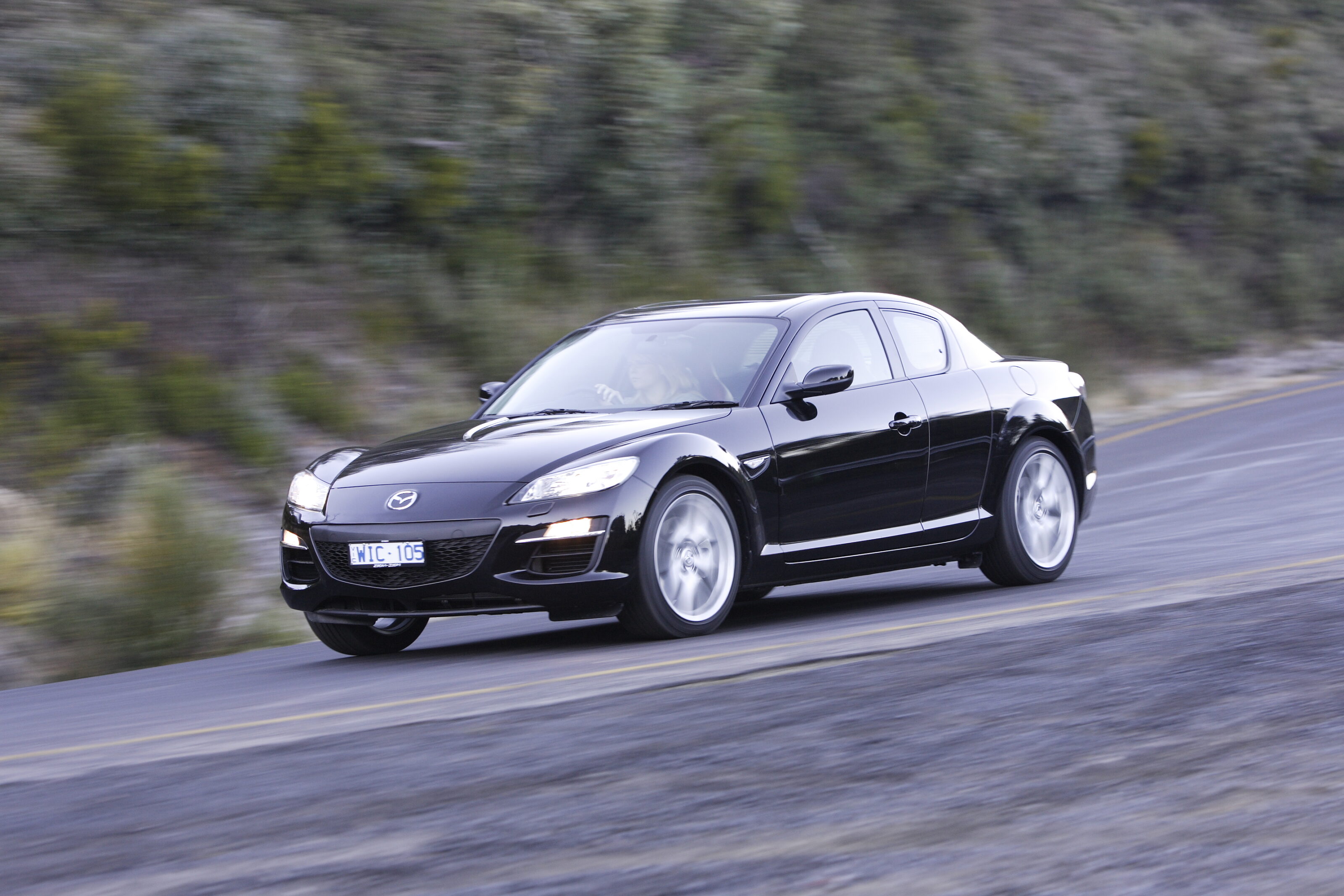
Mazda’s Australian recall count, announced today, numbers 79,451, with most of them related to the Mazda 6 mid-size sedan, hatch and wagon dating back to as early as 2002.
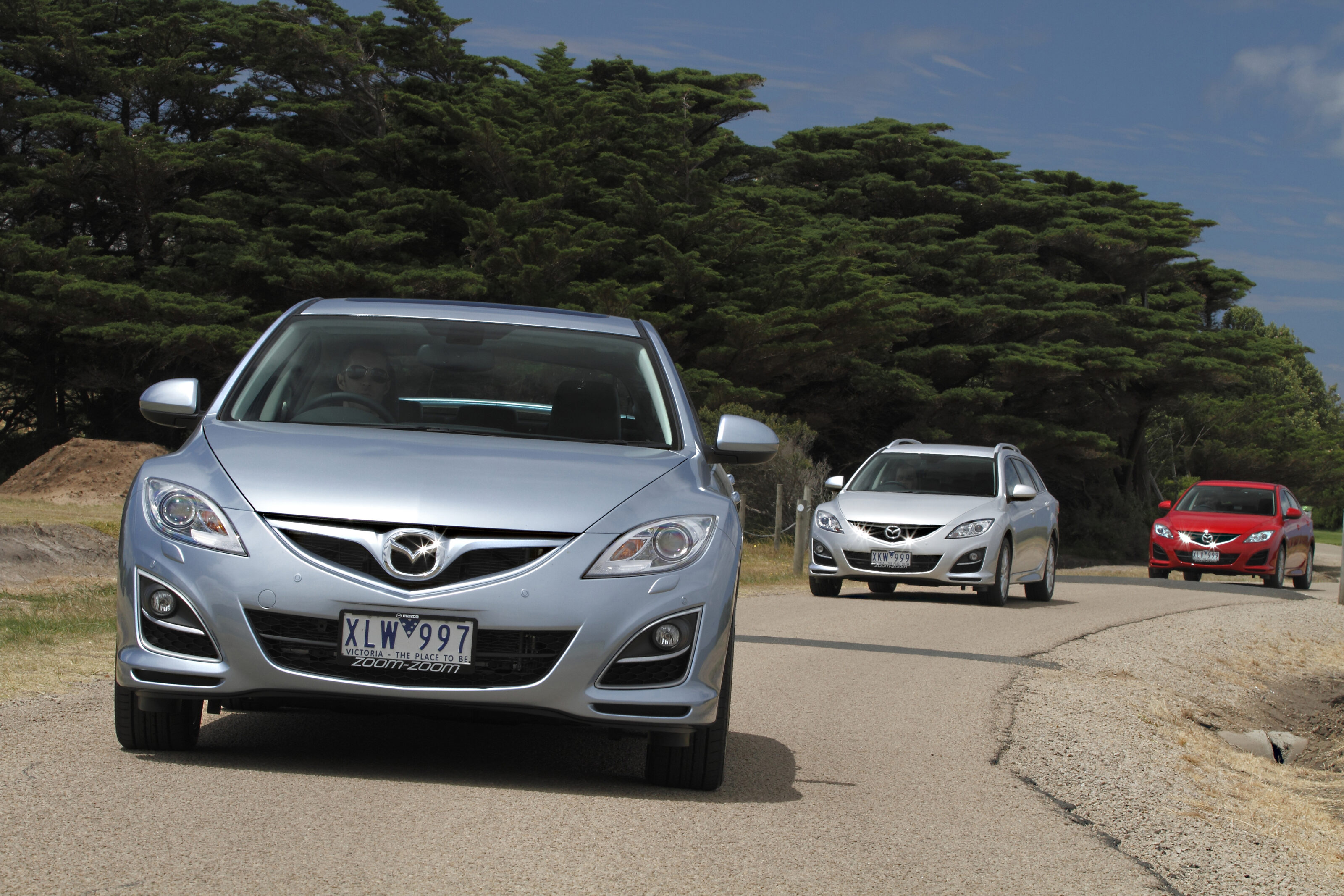
Mazda Australia spokeswoman Karla Leach told Wheels that the carmaker had worked with Takata to identify which vehicles in Australia were affected by the faulty airbags, which can either split when they inflate, or shoot dangerous amounts of shrapnel into the face of the people they are designed to protect.
She said the two-week delay in announcing the Australian recall in the wake of the expanded US one was because Mazda Australia did not know which cars sold here were affected.
She said the company was confident that it could contact all affected owners despite some of the cars now being more than a decade old.
Mazda says it will need to replace either the driver’s or front passenger airbag, and in some instances both.
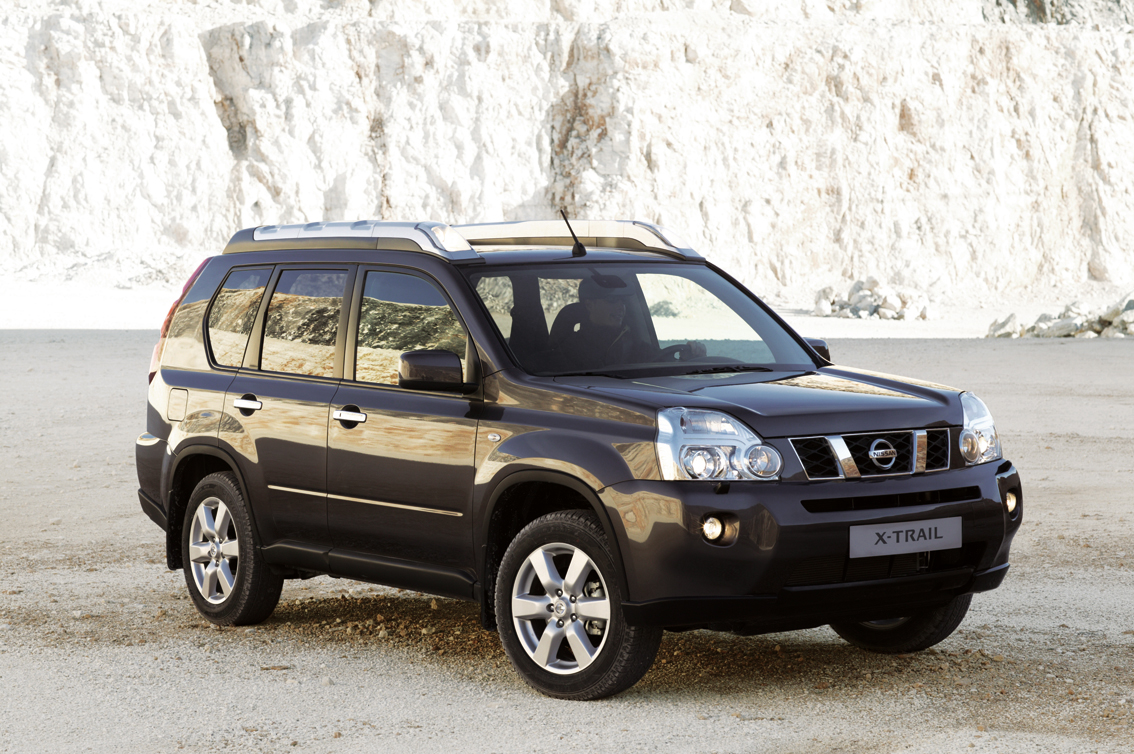
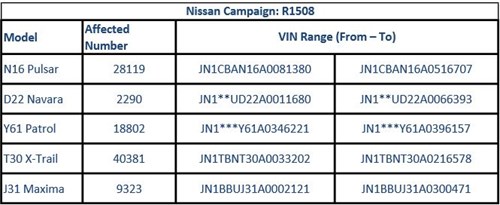
Nissan, meanwhile, has added more than 115,000 vehicles to its tally, including the X-Trail mid-size SUV, Nissan Pulsar small hatchback, Patrol large off-roader, Navara trade ute, and Maxima large sedan.
Last year resulted in a record for the number of vehicles recalled in Australia, which nudged past the 1.1 million mark for the first time. It also meant that one car was recalled to fix a potential safety issue for every new vehicle sold during 2014.
The year’s record run of recalls varied from malfunctioning windscreen wipers, which had the potential to severely restrict vision while driving through rain, to engines and gearboxes falling out of cars.
Does your vehicle need to be recalled? Here’s the full list of Mazda and Nissan recalls announced today:
MAZDA
Contact Mazda Australia on 1800 034 411
Mazda 6 (GG1031) Sedan, Mazda 6 (GY1031) Wagon/Hatch, RX-8 (FE1031) Coupe, E-Series (SK) Van, T-Series (SY) Cab Chassis, B2500 (UN) Ute/Cab Chassis & B2600 (UN) Ute/Cab Chassis sold between 22nd August 2002 – 19th November 2007
VIN JM0 GG1031 00 101238 – JM0 GG1031 00 177625 JM0 GY1031 00 100008 – JM0 GY1031 00 104582 JM0 FE1031 00 100007 – JM0 FE1031 00 105664 JM0 SKW082 00 301824 – JM0 SKW082 00 303809 JM0 SKX0E2 00 301825 – JM0 SKX0E2 00 303931 JM0 SKY0E2 00 301835 – JM0 SKY0E2 00 303934 JM0 SYEAT1 00 200206 – JM0 SYEAT1 00 200620 MM0 UNY062 00 361395 – MM0 UNY062 00 412063 MM0 UNY0W2 00 362122 – MM0 UNY0W2 00 433739
Mazda 6 (GG1032) Sedan/Hatch, Mazda6 (GY1032) Wagon sold between 29th July 2005 – 19th November 2007
VIN JM0 GG1032 00 500011 – JM0 GG1032 00 522282 JM0 GY1032 00 300007 – JM0 GY1032 00 301989
Mazda 6 (GG1032) Sedan/Hatch, Mazda6 (GY1032) Wagon, Mazda6 Diesel (GG10R2) Hatch & Mazda6 Diesel (GY10R2) Wagon sold between 28th April 2006 – 30th March 2009
Identifying features
JM0 GG1032 00 522007 – JM0 GG1032 00 554710 JM0 GY1032 00 302020 – JM0 GY1032 00 306600 JM0 GG10R2 00 531178 – JM0 GG10R2 00 554710 JM0 GY10R2 00 303070 – JM0 GY10R2 00 306480
NISSAN
Contact Nissan Australia on 1800 988 334
Sign up here to receive the latest round-up of Wheels news, reviews and video highlights straight to your inbox each week.
The question burns in the mind of every enthusiast who doesn’t want a driver’s car that burns a hole in their back pocket – which hot-hatch should I buy?
For under $20,000, you’re buying used, and you’ll need to play a trading game – getting an older car with more kilometres that is as fast as a newer car that’s smaller or has less badge cachet, for example.
So let’s take up that challenge right now with our top 5 used hot-hatch bargains that have teen pricetags and are less than 10 years old, oldest to newest.
1. 2006 BMW 130i
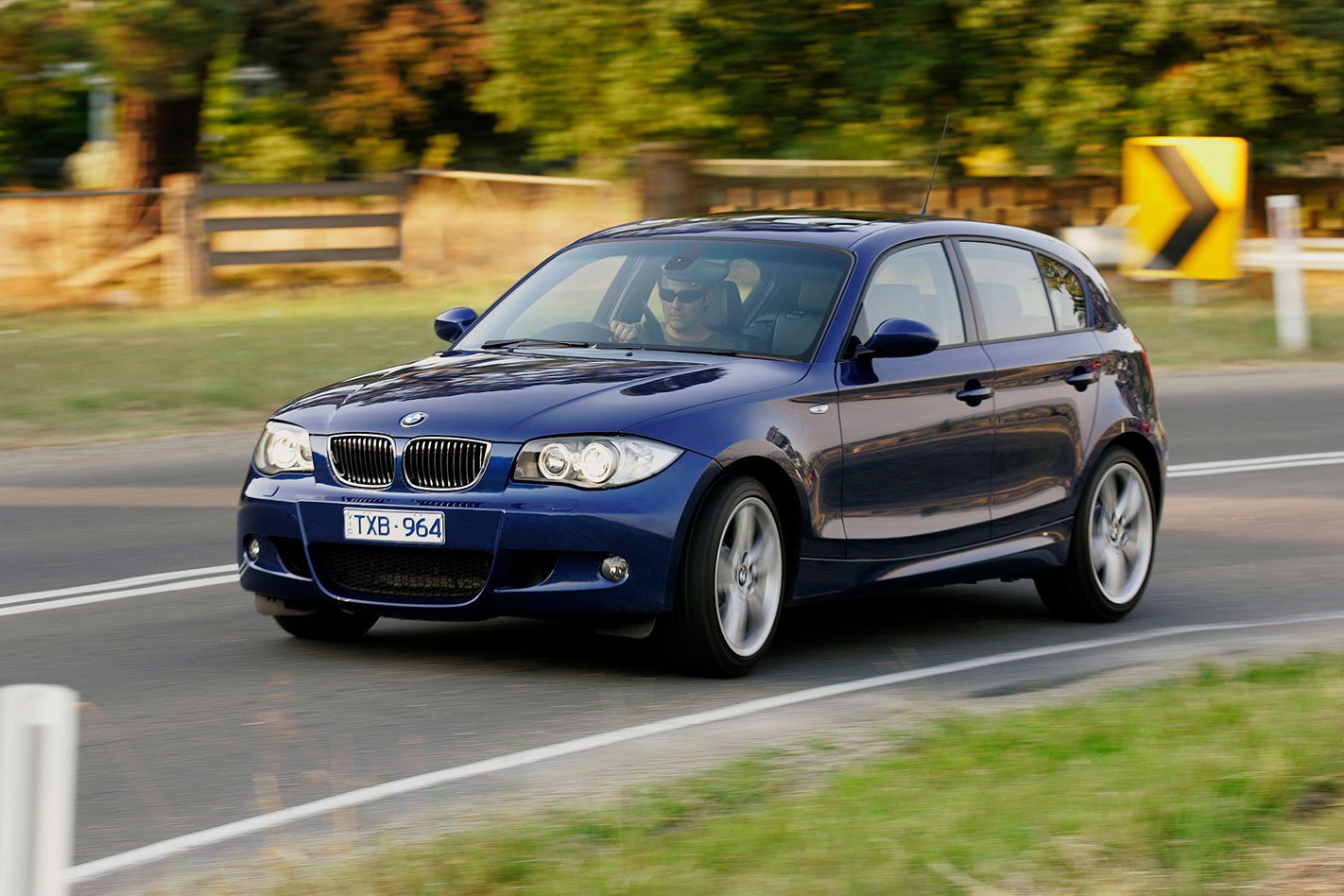
Two words – BMW six. Actually, let’s add another two – rear drive. The original 1 Series may not be the prettiest little hatchback in the premium lounge, but it brushes vanity with a 195kW/315Nm 3.0-litre six that revs and has great throttle response.
Delivers 6.1 second 0-100km/h performance with six-speed manual. At the time of writing we saw a 2006 model with 88,000km for $18,500.
2. 2010 Mini Cooper JCW
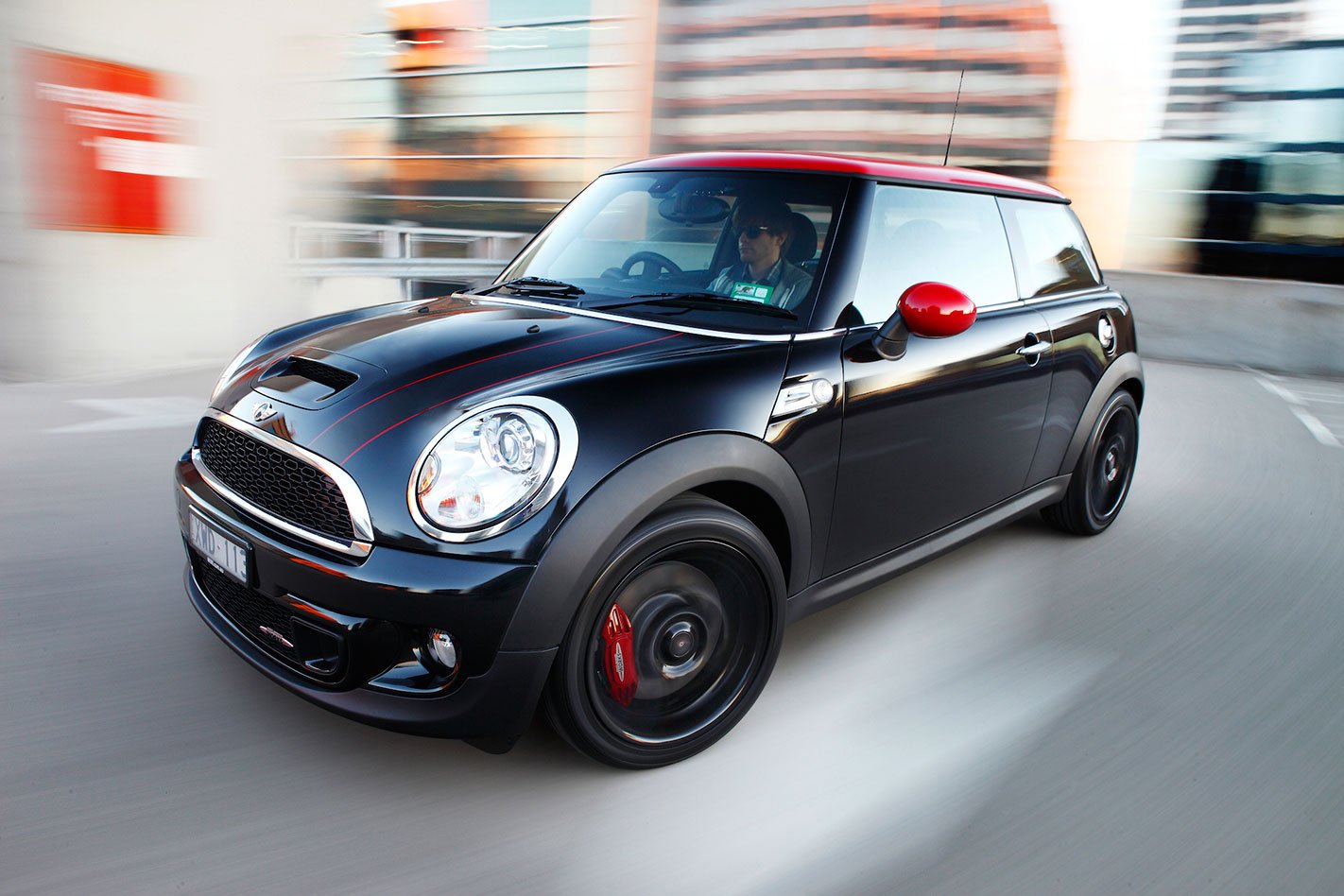
If you have a dog that likes to pull you along on its leash then you’ll feel right at home in the gen-two Mini Cooper JCW. No supercharger whine here to hear, but rather a 155kW/260Nm 1.6-litre turbo in a 1205kg little brick that flies to 100km/h in 6.5 seconds.
We’ve seen a 2010 model with 100,000km on the clock for the same price as a same-age Golf GTI. As silly as our fourth option is sensible.
3. 2010 Volkswagen Golf GTI
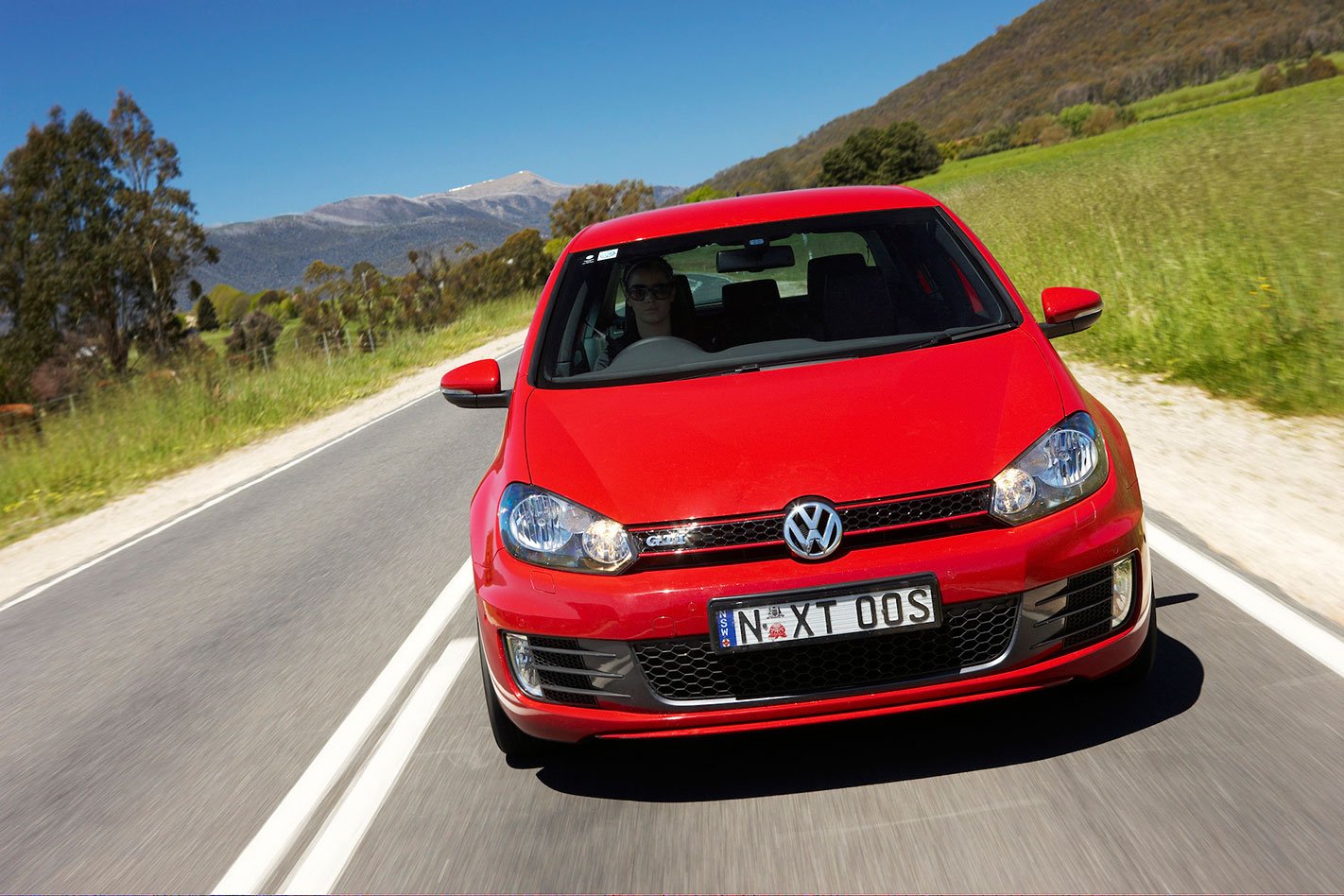
The Mark V is fast becoming a classic, but the Mark VI is finally starting to fall under the $20,000 mark. Gen-six GTI may not look as charasmatic as the gen-five, but it refined the breed and still remained the consummate all-rounder and fine driver’s hatch.
Buy the lovely manual as a 2010 model for a high-teen price with about 90,000km on the clock.
4. 2011 Renault Sport Clio 200
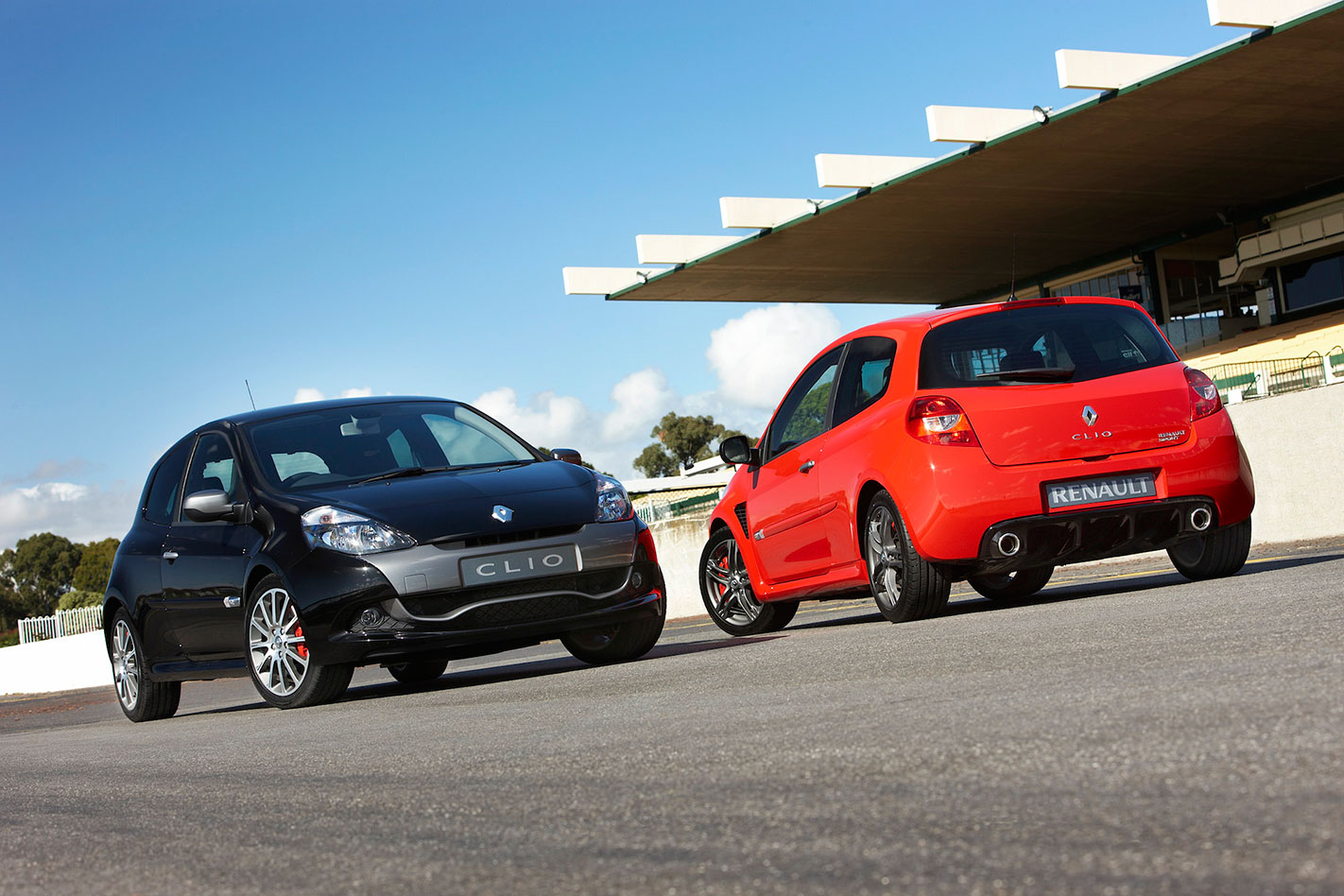
It took the brilliant 2005 Clio 182 and made it heavier, slower, but also stronger and more agile. The gen-three Clio 200 gets a close-ratio six-speed manual to keep its absolutely brilliant 2.0-litre on the ball (thankfully because it loves a caning).
We’ve spotted a last-of-the-line 2012 Angel and Demon specification with 41,000km for $23,000 that’s waiting for a low-ball offer.
5. 2013 Ford Fiesta ST
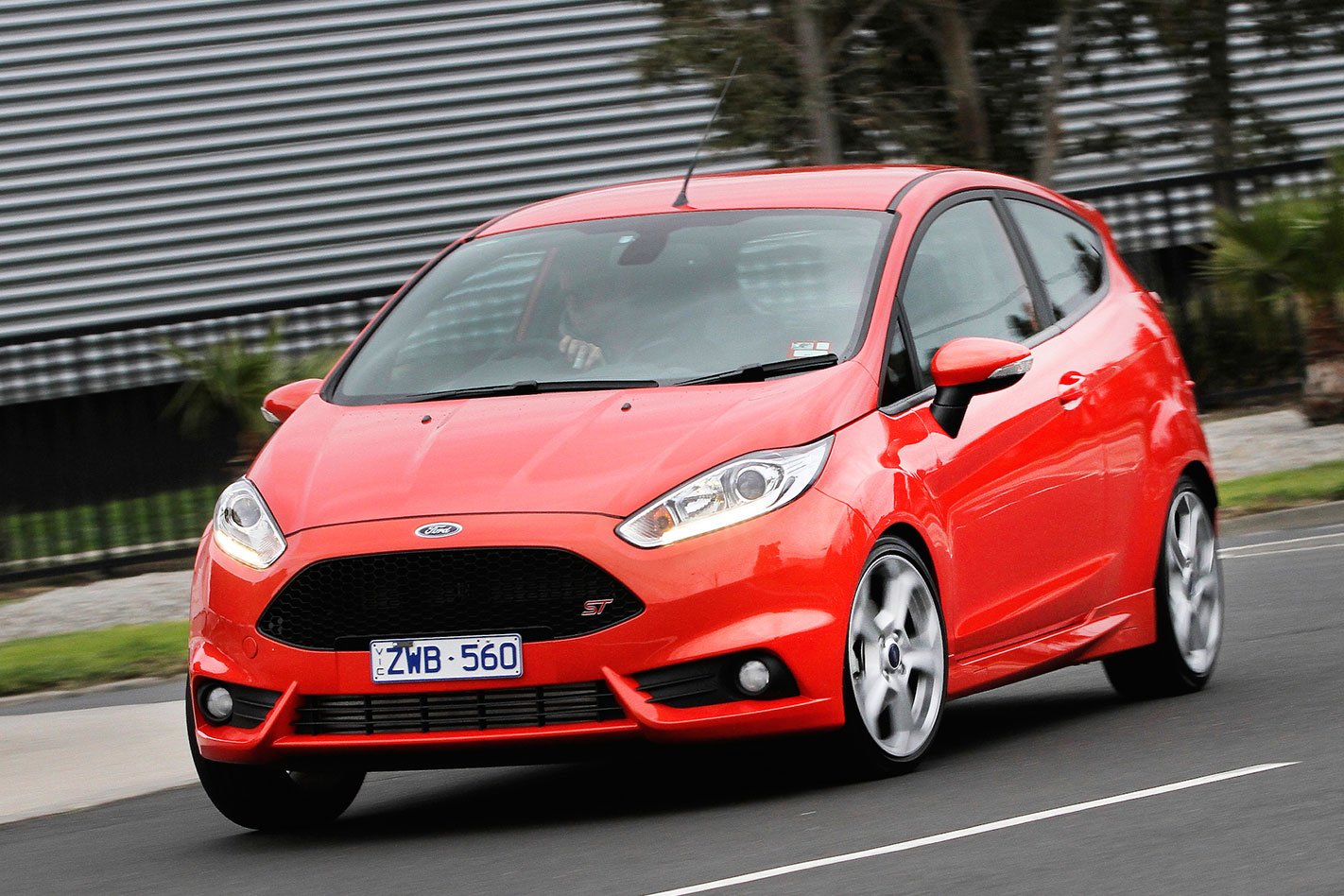
Hazzah! We’ve just spotted our first Fiesta ST that is selling for $20,000 and as kilometres and age racks up on this 2013-launched hot-hatch more should be popping up.
Simply, with a combination of steering precision, chassis balance, fine grip and 1.6-litre turbo punch, the baby Ford betters many hot-hatches and other driver’s cars of twice and thrice the price. A future classic.
A third-generation Kia Sorento seven-seat SUV wings in, delivering better quality, superior refinement, a reassuringly stellar crash rating and a tall stack of standard equipment to fight the likes of the Toyota Kluger and homegrown Ford Territory.
WHAT IS IT The Kia Sorento forged its reputation on offering a lot of metal for the money. As it tiptoes upmarket, is this seven-seat SUV still the standout bargain it used to be? That’s debatable, but the Koreans have done a great job shoe-horning it full of gear and making it as safe as possible.
WHY WE’RE TESTING IT Kia is killing it in the passenger car market, with its year-to-date sales just 279 units behind Ford in Australia. The Sorento has always represented a hefty chunk of the overall product plan, so we’ve been invited to see whether those who aren’t very good at contraception will continue to form an orderly queue for this seven-seat SUV.
MAIN RIVALS Ford Territory, Holden Captiva 7, Hyundai Santa Fe, Toyota Kluger
THE WHEELS VERDICT The third-gen Kia Sorento is undoubtedly better, but as this car moves upmarket, it’s open to question whether the improvements will result in more sales. The petrol version handles better, but its fuel figures will see the refined but lumbering AWD diesel mop up most sales.
PLUS: Diesel refinement; equipment, build quality, practicality, safety MINUS: Diesel’s flabby handling; getting expensive, dullard auto ‘box
THE WHEELS REVIEW WAIT. Rewind. Did Kia man really just say the words ‘barbecue credibility’ when extolling the virtues of the third-generation Sorento? Clearly things have moved on. Golf clubs and school gates are no longer the preferred venue for delivering a crushing blow to the ego of your peers. Your seven-year warranty is clearly something designed to reduce your rivals to shrivelled husks, wearing the inferiority apron at their grill of resentment snags.
Kia also had a lovely euphemism for describing how the Sorento was a bit of a clunker off-road. “Maintaining the promise of adventure,” they said. You can maintain that promise right up until that moment that you realise you have no low range and a rear overhang so long that your tow ball’s going to be filing its own mining claim. On the plus side there is a locking centre diff.
It’s hard to be too critical here, because a Hyundai Santa Fe or a Toyota Kluger is no different. These are predominantly road cars that project a marginally less suburban image than an MPV and that can tow 2000kg. But here’s the rub.
You can buy the Sorento as a front-wheel drive petrol model or as an all-wheel-drive diesel, and the moment you get behind the wheel and deviate from straight ahead, you’ll realise that they’re chalk and cheese.
Despite a torque-vectoring AWD system, the diesel’s vague body control is a little unnerving, whereas the petrol car, with 50kg less burdening the front axle, feels a wholly sharper and more gratifying experience.
You’re then faced with the prospect of buying a front-wheel-drive SUV which, while nobly pragmatic, is going to leave you catastrophically short of barbecue credibility.
Kia’s Australian chassis engineers explain this disparity in handling by admitting they specified the beefiest spring and damper rates for the petrol car and wanted even heavier duty items from the Korean factory for the diesel but couldn’t get them, so the spring rates are exactly the same, despite the oiler lugging 117kg more up the road. So that’s the bad bit.
The good parts? The electrically assisted power steering now has its motor mounted on the rack rather than the column, which is a big improvement, especially when you switch the sport mode on. This adds a meaty level of heft to the steering. Unfortunately it also couples that with a spikier throttle map, which isn’t quite so welcome.
The diesel is decently refined, even though its performance is blunted by a half-witted six-speed automatic gearbox. You can take over shifting duties yourself, but there are no paddles, the lever shifts the wrong way (forward for upchanges) and it wilfully ignores many shift requests if it doesn’t like the cut of your jib.
It’s a bigger car than before, with an extra 80mm grafted into the wheelbase and another 15mm tacked onto the rear overhang. You feel it inside, with an extra 25mm of legroom up front and another 15mm in the middle row.
The boot is bigger, too, with another 62 litres of space in seven-seat configuration at 320 litres. Fold the rear pair down and there’s 1077 litres to rattle about in. The vast dash moulding imparts an impression of burly build integrity and, given the Sorento’s price point, materials quality throughout the cabin impresses.
The base Si model, with its cloth trim, sat nav and reversing camera, looks to be the go, and Kia reckons it’ll account for 35 percent of sales, with a paltry 15 percent of buyers set to choose the leather-bedecked SLi with its LED tail lights, power tailgate and 10-speaker Harman Infinity stereo.
Should you wish, you can thrill your friends by pointing out that this is the first Kia to do away with a CD slot. There’s no clever Apple CarPlay or Android MirrorLink available, which seems a bit of a weird omission, as is the lack of active city braking or an idle-stop system.
Kia explains the latter away by claiming it didn’t make sense from a cost/benefit perspective, which would suggest that every item inside the Sorento has really had to work to justify its inclusion.
The range-topping Platinum is expected to command 50 percent of all Sorento sales and gets a suite of radar-based safety features and over 40kg of panoramic glass roof right where you need the weight least.
Make no mistake; the Kia Sorento still represents punchy value for money. It’s never going to appeal to those who like an SUV that will convincingly carve a corner but it feels a league ahead of a Toyota Kluger in terms of modernity and design cohesion.
Drive both diesel and petrol models and you can’t help but come away with the feeling that the ideal Sorento is somewhere between the two. A diesel model with beefier suspension might not be long in coming. Those looking to be top dog at the barbecue may well prefer to wait until then.
SPECS Model: Kia Sorento Platinum Engine: 2199cc inline-4, dohc, 16v turbo-diesel Max power: 147kW @ 3,800rpm Max torque: 441Nm @ 1750-2750rpm Transmission: 6-speed automatic Weight: 2036kg 0-100km/h: 9.6 sec Economy: 7.8L/100km (combined) Price: $55,990 On sale: Now
History is littered with obscure supercars, built in tiny numbers and often with outlandish performance claims, but we thought we’d heard of most of them.
The Lotec C1000 was new to us, however. That is until we stumbled across this ad from US dealer RK Motors, who has this incredible one-off supercar for sale.
The story goes that in 1990 an incredibly well-off oil tycoon from the United Arab Emirates fancied owning the fastest car in the world.
With nothing commercially available that took his fancy, he commissioned German engineering firm Lotec to build him his ultimate supercar.
It took five years and US$3.4 million, but Lotec did just that, creating a 745kW monster claimed to be capable of 431km/h.
Even two decades later, that puts the C1000 even with the current record holder, the Bugatti Veyron Super Sport.
How’d Lotec do it? Well, carbonfibre construction keeps the C1000’s kerb weight to just 1060kg, while a twin-turbocharged 5.6-litre V8 provided by Mercedes-Benz produces an old-school 1000hp.
A triple-plate clutch will build up your left thigh muscles and transfers all that grunt to a five-speed Hewland manual gearbox.
Suspension is double wishbone front and rear with adjustable anti-roll bars and electronically adjustable dampers.
Behind those 17-inch BBS alloys are race-spec AP brakes and the rims themselves are wrapped in Expedia rubber.
There’s plenty of leather on the inside and air conditioning, too, but it’s still a rather spartan affair, and judging by this rare video of the C1000 in action, it doesn’t look to be the most refined machine on the move.
The question is, given an unlimited budget and your own imagination, what would you create?
Get your free weekly report from the world of fast cars – subscribe to the MOTOR newsletter!
It’s been a hot-hatch kind of month here at chez MOTOR.
Through various quirks of both feature planning and manufacturer releases, it just so happens that we’ve been inundated with practical, turbocharged front drivers.
However, despite the homogeneity of their mechanical layouts, there’s been an incredible diversity in the cars sampled, from warmed-over sub-$30K offerings like the Holden Astra GTC Sport and Hyundai Veloster Turbo, to arguably the granddaddy of them all, the hardcore, limited-edition Renault Sport Megane RS275 Trophy R.
Over the past few weeks we’ve covered thousands of kilometres, including track and straight-line performance testing, and it’s resulted in the following conclusion – front-wheel drive is hard.
It’s tempting to see hot hatches as an easy or ‘soft’ option for hardcore drivers. Because they don’t have the breathtaking, passenger-scaring speed of a supercar, nor can they do heroic, tyre-smoking powerslides like a well-sorted 500bhp rear-driver, they’re viewed as girls’ or hairdressers’ cars – both ridiculous notions in their own right.
The reality is, there’s a real art to driving a front-wheel drive fast. With all the weight sitting in the nose, it’s like a 911 in reverse, only in this case the front tyres have to not only steer but handle all the power and the majority of the braking as well.
Even in something as focussed as the fabulous Megane Trophy R, with its sticky tyres, massive brakes and aggressive limited-slip differential, the compromise of having one end of the car shoulder the entire load means you’re always battling to get the car to behave.
Having spent most of my formative driving years in rear-drive machinery, the art of making a front-driver dance is still a struggle; it’s all too easy to over-drive and end up understeering madly everywhere and lift-off oversteer seems like a lottery.
Still, that’s all part of what makes driving so great, there’s always something more to learn. Until then, if you’re still not convinced hot hatches can be fun, check out the video above of front-drive master, French rally driver Jean Ragnotti, in action.
Get your free weekly report from the world of fast cars – subscribe to the MOTOR newsletter!
THE Canadian Grand Prix has produced no surprises at the top of the points table. Despite crashing in a rain-soaked Friday practice session, pole-sitter Lewis Hamilton, and Mercedes teammate Nico Rosberg locked out the front row of the grid to effortlessly take a 1-2 race result yesterday.
Kimi Raikkonen, whose Ferrari started third on the grid, looked set for the final place on the podium until he spun at the hairpin and finished fourth, behind the Williams of always-there Valteri Bottas in his first podium of the season.
Sebastian Vettel, in the other Ferrari, was relegated to the back of the grid for a red flag infraction during practice, but put in a typically gutsy drive to finish fifth.
The Circuit Gilles Villeneuve, run around an island in the middle of Montreal, is noted as the venue for Aussie Daniel Ricciardo’s maiden victory, but will go down as his worst result so far this year.
Facing penalties if he used another Renault engine in his Red Bull, he qualified down in ninth position, and for the first time this year finished out of the points in 13th as his car progressively lost pace. While his fifth in the previous race at Monaco remains his best result this season. Teammate Daniil Kvyat shook off his poor start to the season to finish in the points, even if it was a lowly ninth. Ricciardo has been vocal about Red Bull needing to do a lot of work to recapture the team’s previous form.
The best racing, though, was further back in the field. Felipe Massa pushed his Williams though the field from 15th on the grid to take sixth.
Both Lotus drivers collected points, with Pastor Maldonado in his first finish of the season in 7th and Romain Grosjean – who looked set for fifth but finished 10th after colliding with Marussia’s Will Stevens and incurring a five-second penalty, while Nico Hulkenberg’s Force India finished eighth.
Rosberg’s shortfall in the championship has grown to a still-not-insurmountable 17 points, but his chances are looking increasingly slim against an more confident Hamilton, who chanted with the post-race crowd – a stark contrast to his demeanour after the Monaco pits debacle.
The next race will be in a fortnight at the Red Bull Ring in the Austrian mountains.
IndyCar: Kiwi Scott Dixon wins Firestone 600
AUSTRALIAN-born Kiwi Scott Dixon has won the latest round of IndyCar, proving the old adage that everything is bigger in the Lone Star State – if the speeds achieved at the Texas Motor Speedway are anything to judge by.Despite fears that new aero packages would again send cars flying, Dixon won with an average speed of 191.940 mph – that’s 309km/h.
While Dixon only qualified seventh, he led for 97 of 248 laps in what was one of the fastest races ever held to cement his second win at this circuit, second win of the year and his 37th IndyCar victory.
In a race that ran under caution only once to clear debris, Dixon crossed the line 7.8 seconds ahead of Ganassi team-mate Tony Kanaan, with Helio Castroneves third ahead of his Penske teammate Juan-Pablo Montoya.
The key element in the winner’s pace versus the Penske cars lay in the higher downforce used by the Ganassi team, which achieved its 99th IndyCar victory. The first five finished on the lead lap, with Marco Andretti fifth and teammate Carlos Munoz sixth, fresh from his first win at Detroit last weekend.
Dixon’s win has pushed him within 43 points of series leader Montoya, and 8 behind Australian-born pole winner Will Power – Power’s third time fronting the grid in succession, and the fourth of his season.
After leading for seven laps, Power’s pace abandoned him, leading to a disappointing 13th place finish after a brush with the wall. Fellow Aussie Ryan Briscoe had a better day of it, running as high as fourth from 19th on the grid, finishing eighth as substitute for the injured James Hinchcliffe.
Le Mans: Mark Webber’s Kiwi teammate tops testing
MARK Webber (pictured) has posted only the 20th best time for Porsche a Le Mans test day that deteriorated from a dry circuit to a wet one.
In contrast, his 25-year-old NZ teammate Brendon Hartley secured the fastest time of day, a rousing seven tenths up on the 2014 pole lap time and almost nine tenths ahead of the second-placed Porsche.
Of the 64 teams entered, as expected Porsche and Audi took the first six places, followed by two Toyotas. Of particular interest will be the performance of the radical front-wheel-drive, rear-wheel electric assist Nissan steered by a group of PlayStation enthusiasts who achieved a creditable 18th first time out.
Free practice will start on Thursday Australian time, with the race to start at 11pm our time on Saturday.
V8 Supercars: Asian race series returns from 2016
UNDETERRED by lacklustre response to the Aussie V8s in Texas, China, Abu Dhabi and Bahrain over the years, V8 Supercars supremo James Warburton has announced a street circuit event in Kuala Lumpur from 2016 to 2019, along with another race at an undisclosed Asian venue from 2017.
To be named the “KL City Grand Prix” (potentially confusing, given that the Malaysian Grand Prix takes place at KL’s Sepang circuit), the event will consist of a demonstration race by five V8 Supercars on August 7-9.
While the V8 Supercars calendar is likely to expand with the inclusion of more local and overseas events, it is not likely to expand to the extreme number of events favoured in some American series such as NASCAR.
Racing should be more intense, with points awarded for both Saturday and Sunday races instead of only a Sunday main event. V8 Supercars currently only has one overseas event — in New Zealand — alongside 14 in Australia.
Warburton says the series is not overreaching itself by going overseas, as in contrast to sending cars to the Middle East or the US, freight to Asia is affordable and viable.
The “V8” moniker will be retired when the “future-proofed” “Gen2” cars move to turbo 4 and V6 engines, as well as V8s in 2017.
TT: Kiwi Bruce Anstey wins Superbike prelude
THE senior race in the Isle of Man TT – the one that is spoken of in hushed terms and with references to Joey Dunlop – is slated to take place next Friday. However, the first event in the TT week was the Superbike race, won in record time this year by 46-year-old Kiwi Bruce Anstey.
This was his 10th career victory in Isle of Man TT, but his first on a 1000cc bike. The race was postponed a day because of strong winds, but was run in perfect conditions on the Sunday over six long and astoundingly dangerous laps.
The race was red flagged after only six bikes had crossed the finish line – Michael Dunlop, nephew of the legendary Joey, crashed after running as high as third. He was able to limp away to an ambulance, not seriously injured.
Michael’s brother William finished fifth, underscoring the “family business” nature of the TT to the Dunlop clan of Ulster.
Joining Anstey on the podium were Ian Hutchinson and James Hillier, who both led at various times.
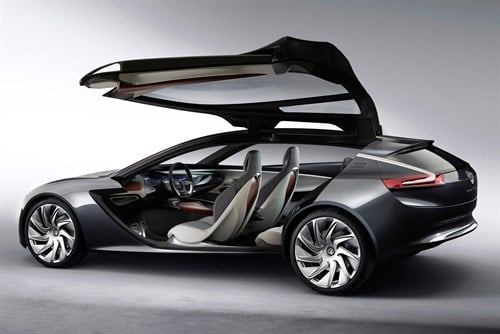
THE Holden Monza could be a reality by 2018 as the local arm of General Motors shores up its next sports car. The name was last on the bootlid of a Holden when Peter Brock’s Holden Dealer Team produced two V8 coupes in 1984, based on the Opel Monza coupe.
General Motors has trademarked the name ‘Monza’ for use in Australia, the name given to a stunning, be-winged two-door concept car shown by German arm Opel in 2014. Opel had been on sale in its own right in Australia from August 2012, but GM suddenly closed the Aussie arm of the brand after 12 months. Importantly, this trademark application was filed well after Opel shut its doors Down Under.
That means that this name is not for an Opel-badged model in Australia, but more likely a performance model wearing the Holden lion up front.
GM’s Stefan Jacoby, vice-president of Consolidated International Holdings in Singapore that oversees the Australian operations, confirmed to Wheels in March that the Australian carmaker would offer a desirable model in the wake of its locally made performance Commodore disappearing from showrooms in the wake of the closure of its Australian manufacturing arm. “We will bring a Holden sports car in the near future,” he told Wheels. “It will be something which truly fulfils the requirements of a genuine Holden sports car.”
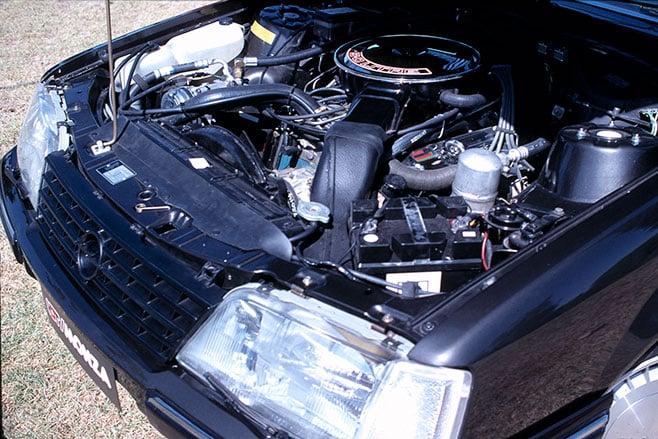
The Monza name hasn’t been seen on a two-door Holden since Peter Brock produced several Holden Dealer Team Monza coupes in 1984. Based on the two-door Opel Monza, which used the same platform as the VK Commodore that was in showrooms at the time, the racing legend fitted them with Holden 5.0-litre V8 engines in what became his vision of a Commodore coupe.
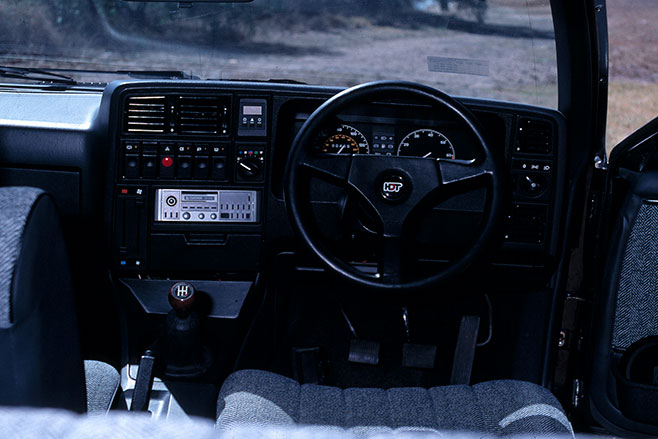
The HDT Monza graced the cover of Wheels in May 1984, but only two were built and the model didn’t become a full-time member of Brock’s operations, which at the time was Australia’s “sixth-largest car manufacturer”.
Sign up here to receive the latest round-up of Wheels news, reviews and video highlights straight to your inbox each week.
