
THE Holden EFIJY concept car debuted by Holden at the 2005 Australian International Motor Show was the perfect storm of my childhood obsessions. I grew up around the first two Holden models, watching them get restored, hotted up and raced.
When it came time to get my licence, my peers were getting excited about twin-cam Corollas, but for me there was never any question that an FJ would be my first ride. I also love American and Australian custom car culture of the 50s and 60s, and the creations of the Barris brothers, Ed Roth, Gene Winfield and their contemporaries.
In EFIJY, Holden designer Richard Ferlazzo and his team melded these obsessions, re-imagining the iconic FJ Holden of 1953 as a longer, wider, lower and significantly slinkier custom show car. EFIJY took all of the FJ’s modest styling touchstones and made them sing, from the single chrome tail-light to the iconic toothy grille. Underneath, it was full of the best go-fast gear from the GM parts bin, including a Corvette chassis, transaxle and 6.0-litre V8.
So, thanks to a group of passionate car heads at Holden, a surprised GM discovered that it had built one of the standout custom cars of the modern era. It won accolades around the world and was emblematic of the last great peak of Holden’s time as a manufacturer. And here I am, about to drive it!
I’ve been fortunate enough to sit in EFIJY before and I’ve driven one of Holden’s other great concept cars, the GTR-X, but not this one, the ultimate FJ.
I’ve geeked-out with Ferlazzo a few times in the past, but he’s as unflinchingly polite and happy to chat about it as ever. If he’s nervous about me driving it around a race track, it doesn’t show. Comfortingly, he confides that the car has had some upgrades to keep it running well, including new airbag suspension and refreshed Harrop brakes.
Although it is more than five metres long, the car is strictly a two-seater and you sit low to the ground, like a real custom should.
Ferlazzo talks me through the start-up procedure, which includes push-buttons for the ignition, handbrake and automatic trans. The car fires up – the exhaust is loud and the supercharger whine is noticeable, but being a modified car guy, this is entirely familiar and welcome. I would have been disappointed if it was production-car quiet.
Everything about the car, from the door-shuts, the handling and braking is production standard, the only major compromise being the lack of side glass. The view through both the front and rear screens is like looking through a letterbox – as it should be in any car with a chopped roof.
As we pull away, EFJIY is as tight as a drum, without any bangs, drones or clangs to break the spell. With a claimed 480kW, it hammers, too, though I take it nowhere near its limit, hyper-aware that I’m responsible for a one-of-a-kind work of art. All I want to do is drive out the gates and blast up the Hume to Sydney, so I can take my mates for a cruise through Kings Cross at night – this thing needs to be seen!
Sadly, that isn’t going to happen, so we pull over and take some shots of the car beside my humble custom EJ. Ferlazzo takes a liking to the EJ’s trick bubble tail-lights, though he doubts they’d meet modern ADRs. This sparks off a discussion about photometrics and EFIJY’s own trick lighting systems. The headlights, for example, consist of three fan-cooled high-intensity LEDs, surrounded by LED rings that flash amber as blinkers. All stuff that was new in 2005, but starting to surface in production cars today.
EFIJY was as much about looking forward as it was about looking back.
Did you know?
- EFIJY’s Corvette chassis was easy to extend, but Ferlazzo was worried about sourcing a longer torque tube. Turns out Corvette torque tubes were manufactured in Melbourne – problem solved!
- Holden approached Street Machine for help building EFIJY. We were flattered, but had to admit it was out of our league at the time
- EFIJY produces the same amount of horsepower as 11 standard FJ Holdens
Living the dream
RICHARD Ferlazzo has been Holden’s design director since 2013. He has been involved with the design of every Commodore since the VN and was the chief designer for the VE and VF. He has worked extensively on US models and even redesigned the Holden Lion logo in 1994 – still in use today – but he will forever be known as the father of EFJIY.
Although he dreamed only about Italian sports cars and Australian muscle cars as a kid, in the late-80s he was inspired by CadZZilla, a ’48 Cadillac custom car built for Billy Gibbons of ZZ Top fame and designed by young GM designer Larry Erickson. Ferlazzo met Erickson at the GM Design studios, planting the seed that would become EFIJY.
In the early 2000s, with the 50th anniversary of the FJ coming up, Ferlazzo sketched up his dream. Mike Simcoe gave him the go-ahead to make a one-third scale model, then MD Denny Mooney approved the project – with a budget of just $200,000. That meant it would be a labour of love for Ferlazzo and his team, something that shines through in the finished product. It was the 2007 Concept Car of the Year and Hot Rod magazine’s Hot Rod of the Year.
Ferlazzo takes obvious pleasure in his role as EFIJY’s guardian, escorting it to car shows and exhibitions here and abroad. He also loves to drive it, giving it far more right boot around Broadford than I dared.
Model: Holden EFIJY concept Engine: 5967cc V8 (90°), ohv, 16v, supercharger Max power: 480kW @ 6400rpm Max torque: 775Nm @ 4200rpm Transmission: 4-speed automatic Kerb weight: Lots 0-100km/h: Fast Economy: Who cares? Price when new: Not for sale
I’VE always had a thing for small cars and underdogs; technical savvy as a replacement for displacement. I could probably trace it to mum’s Minilite-shod, cage-equipped Escort Twin Cam, which would be thrashed around a circuit on Sunday and deliver us to school (noisily) on Monday.
I’ve had a lifelong lust for two particular cars, the first being the Porsche 911, one of which I now own. Both it and the Alpine, as it happened, were born within 12 months of me, both would be giant-killers in racing and rallying during my fascinated childhood, and both happen to be rear-engined.
The Alpine Renault A110 was launched at the 1962 Paris Motor Show. An evolution of the A108, it was designed to accept the drivetrain from Renault’s new R8 rear-engined sedan. Capacities climbed from 1.1 to 1.6 litres during the A110’s 16-year run and the A110’s steel monotube backbone and fibreglass polyester monocoque body barely burdened the Alpine-tuned fours, with laughable kerb weights of between 565 and 750kg.
The bodyshell is a bit of an oddity. In effect there are two pieces; upper and lower, which are glued and riveted to the backbone frame. The moulds were made by hand and, as a result, the bodies were never entirely symmetrical, requiring a lot of hand finishing to ensure a workable result. Still, symmetry’s really not the A110’s thing. The engine is offset way to the left. I’d love to get one corner-weighted with a driver on board.
None of this was an impediment to the A110’s sporting success, though. What Alpine’s racing coupes were soon achieving at Le Mans, the A110 replicated in rallying. The A110 racked up a 1-2 at the 1971 Monte Carlo Rally, topping that with a 1-2-3 in 1973 – en route to winning the inaugural World Rally Championship.
Ove Andersson, who helped steer Alpine to the International Championship for Manufacturers title in 1972, once said “you wear it like a glove”. The A110 is tiny, but quite accommodating once you’re inside. There’s even a pair of kid-sized rear seat cushions.
The cockpit looks to be at 90 percent scale, but the ambience is that of 1960s production racer, not kit car.
Driving the Alpine was absolutely everything I’d hoped. This example, powered by a 1.4 derived from Renault’s R5 Alpine hatch, makes just 80-odd kW, but has only 700kg to propel. The power-to-weight ratio is about what you’d get in a contemporary Golf GTI, but it sounds and feels a lot faster than it is. What is going fast about, if not the feeling of going fast?
The engine’s sexy, sucky induction growl is my idea of mechanical music, and each barely engaged slot in the quickish four-speed ’box launches another verse from the carburettor choir.
The pedals are wildly offset to the right, but every control in the Alpine is just so beautifully, naturally weighted. The steering is the most deliciously direct I’ve ever experienced – not ‘kart-like’, because a kart’s is way heavier. I caught myself cornering with my tongue.
It’s small enough to throw around and spooky enough to be hugely entertaining. The rear swing-axle suspension has a reputation to rival the early, short-wheelbase 911’s (and the Alpine’s wheelbase is 111mm shorter), and it was most noticeable in the rapid build-up of load on Broadford’s two longest corners.
The rear end feel was probably exaggerated by the wet-compound tyres, squirming with the heat.
I barely drove anything else on the day. Almost all were cars I had driven previously anyway, but I just wanted to spend all the time I had with the Alpine. I totally loved this car. There’s only one that I want to own more. And I can’t afford them both.
Did you know?
- The A110 was small, but incredibly labour-intensive to build. Each car constructed at Alpine’s small workshop in Dieppe required about 650 man-hours
- Renault’s (and rivals’) parts bins were raided for the A110’s bumpers, turn signals, handles and switchgear. The signature inset driving lamps were introduced as an option from 1967
- “You up there – pull over!” In the late-1960s, the French motorway police’s rapid intervention team was equipped with Alpine A110s good for 210km/h
Living the dream
ALPINE is synonymous with the French coastal town of Dieppe, but the A110 was also built under licence in Spain, Brazil and Mexico. Annual production generally topped four figures, whereas Alpine’s earlier A106 and A108 models had totalled just a couple of hundred each.
Colin Stark, of Australian Alpine specialist Alpine Affaire, estimates there’s now about 20 A110s in Australia. Most are Mexican-built, basic in spec and fitted with 1.4-litre Renault 12 engines. They’re less prized than Spanish cars, and much less than French ones, capped by the Renault 16-powered 1600S.
The A110 was only ever built in left-hook, but a RHD-converted, French example sold in Australia recently for $110K.
Melbourne-based Greg La Manna’s Spanish-built 1972 A110 featured here is fitted with a 1397cc engine derived from the Renault 5 Alpine hot hatch. La Manna is a confessed car nut, with an interesting and ever-changing collection. He’d only bought the A110 (from Stark) a couple of weeks before our drive.
And now he reckons I should buy it.
Model: 1972 Alpine Renault A110 Engine:1397cc 4cyl, ohv, 8v Max power: 80kW @ 6400rpm (est) Max torque: 120Nm @ 4000rpm (est) Transmission: 4-speed manual Kerb weight: 695kg (est) 0-100km/h: 8.0sec (est) Economy: 10.0L/100km (est) Price when new: FRF21,960
Sign up here to receive the latest round-up of Wheels news, reviews and video highlights straight to your inbox each week.
RIGHT from the moment I first saw the Citroen 2CV, in imported British car magazines sometime in the mid-1970s, I wanted to drive it. To a teenager growing up in country NSW, it appeared alien, exotic and deeply, weirdly alluring. The fascination didn’t fade as I learned more about this car.
The story of the 2CV’s WWII-delayed development, with patriotic Frenchmen hiding prototypes from nefarious Nazis, had all the drama of a black and white movie about plucky Resistance fighters. But it was the car’s design, in the end, that fascinated me most. Not design in the sense of styling, because the 2CV wasn’t stylish, but in the sense of engineering.
Compared with the first cars I owned, which were mostly conventional, second-hand Australian metal, including an EH Holden and a series of XP Falcons, the 2CV was amazingly unorthodox.
It weighed next to nothing, had a tiny air-cooled two-cylinder engine, a mind-warping gearshift mechanism, and the strangest suspension system I’d ever heard of. Metal cylinders mounted horizontal and lengthways beneath each side of the car contained coil springs. Rods from the spring boxes sprouted fore and aft, to connect the front and rear wheels of each side. Those wheels were mounted on pivoting arms, leading at the front and trailing at the rear. Dampers were mounted horizontally, adjacent to the pull/push rods.
In my everyday world of live axles and leaf springs, this was crazy stuff.
But it gradually dawned on me that the 2CV was pure engineering brilliance. Citroen’s team had created a very useful car using the least amount of material possible. By this time I had become an admirer of Car magazine columnist Leonard John Kensell Setright. The scarily eccentric and formidably erudite LJK, who died in 2005, summed up the 2CV better than I’ll ever be able to. It was, he wrote, “the most intelligent application of minimalism ever to succeed as a car” and “remorselessly rational”. Precisely…
Though I once rode in a 2CV while living in London in 1982, the chance to drive one somehow never happened. Until now.
Don Scutt’s very original 2CV 6, with the big-bore 602cc engine, is, amazingly, the same colour as the one I rode in more than 30 years ago.
The Citroen sinks on its suspension as we climb aboard. It’s a trip a long way backwards through time. The flat windscreen is close, the tiny number of gauges and switches are arranged without any apparent thought for ergonomics.
The other thing that’s obviously missing is safety. The skinny steering wheel has no airbag and the steering column ignition switch seems perfectly placed to cause maximum damage to the right knee.
But the sheer joy of driving the 2CV obliterates any namby-pamby concerns from the 21st century. My first surprise is that’s it’s not as slow as I’d expected. The chuffing little flat-twin seems almost eager, in the lower gears at least. The gearshift is light and has good feel, and after a very short while the loony shift pattern makes perfect sense. The brakes, inboard drums at the front, are relatively feeble. The 2CV’s legendary roll angles are awesome through Broadford’s corners, but it feels supremely stable even when listing a long way to port or starboard.
But it’s the 2CV’s ride that is the most astonishing thing about it. The suspension weirdness works brilliantly, and on badly pockmarked Victorian country roads it feels more like a hovercraft than a wheeled vehicle. It’s vastly, supremely, incredibly superior to any modern light car in this respect.
So now I’m wasting hours on the web checking out 2CV specialists in Germany and the UK. Beginning with a brand-new chassis, these places can build you a better-than-original 2CV to order, for prices that aren’t insane. I’m tempted, sorely tempted…
Did you know?
- Counting sedans and vans, 2CV production between 1949 and 1990 totalled five million. As well as France, it was assembled in the UK, Belgium, Spain, Portugal, Yugoslavia, Argentina, Chile and Uruguay
- Most exotic 2CV spin-off is the Sahara; fewer than 1000 were produced from 1958-66. With two 425cc engines (one in the usual place, the second in the cargo area) it was a surprisingly capable little 4WD
- Shifting in the 2CV: From neutral, twist left and pull for first. Push, let it spring across neutral to the two-three plane, push again for second. Pull right back for third. Push, twist right from neutral, push again for fourth. Simple!
Living the dream
DON Scutt, semi-retired 75-year-old metallurgist whose career has encompassed air crash investigation, teaching materials science at Monash University in Melbourne and making training videos, bought his orange 2CV 6 new in the UK in 1976.
With Don, his wife, two daughters and camping gear aboard, it was used to tour Europe before being shipped back to Australia. It remains in regular use as a second car (the other one’s a Citroen, too; a 10-year-old C3). Having racked up more than 400,000 miles, Don thinks it might be time for the 2CV’s engine to be given a proper rebuild. It’s made it this far with only a new set of piston rings, he says.
Don likes the 2CV for exactly the reasons I find it such a fascinating car. “Its simplicity. Its uniqueness,” are the key characteristics at the core of his 39-year relationship with the car. A lifelong Citroen guy, alongside his current stable of 2CV and C3, Don has previously owned Light 15, ID, DS, GS and CX models. It’s the CX, though, not the 2CV, that is his all-time favourite.
Model: 1976 Citroen 2CV 6 Engine: 602cc flat-twin, ohv, 4v, air-cooled Max power: 21kW @ 5750rpm Max torque: 42Nm @ 3500rpm Transmission: 4-speed manual Kerb weight: 585kg 0-100km/h: 33.0sec Economy: 5.5L/100km Price when new: £1640
Sign up here to receive the latest round-up of Wheels news, reviews and video highlights straight to your inbox each week.
Fancy a Ford Mustang but can’t wait till Christmas? Mustang Motorsport is already shifting the steering wheel to the right side.
The Melbourne company has been toying with ‘Stang tillers for 25 years and will continue to do so, despite Ford Australia soon importing the US muscle coupe.
“It’s what we do for a living, why wait for Ford to bring me a car?” tells Mustang Motorsport managing director Craig Dean.
Dean says it will only take three or four sales to offset the engineering costs of the conversion, little surprise when a GT V8 will ask $125,000 and the Ecoboost $10K less – more than twice the official price.
You can also buy a Roush supercharged version for $155,000 – a model Ford Australia won’t bring here at any cost. It packs 468kW with a Stage 1 tune (alternatively, $12,000 if you BYO car), or 522kW+ with a Stage 2 (added price TBC), a healthy boost on the 303kW produced by the standard 5.0-litre V8.
Although officially taking the ‘Stang to local Ford dealer stables may crush conversion business, Dean sees a new opportunity to sell styling, braking and performance modifications to thousands of fresh Mustang buyers.
“That’s what we’re banking on,” he confirms.
“The main reason to bring in the Mustang was to prepare our tooling for putting bodykits on them, doing Shelby mods and the Roush upgrades, and doing our own product line of unique components.
“So we thought let’s convert them and get them on the road anyway. It wasn’t really to sell new ones to people unless they really want them.”
Regardless of demand, Mustang Motorsport won’t be allowed to import the vehicles once official importation begins. But having done the tooling hard yards, Dean at least hopes to convert the must-have Mustang Shelby GT on local soil before Christmas.
For standard ‘Stang owners, the Roush tuning list includes an exhaust upgrade, cold air intake (for Ecoboost and V8), single- or triple-adjustable coil-over suspension, a front fascia kit with bonnet scoop, spoiler and front splitter and 20-inch black or polished forged wheels.
Shelby modifications add racing seats (with five-point harness), gauge kit, camber/castor plates, adjustable rear control arm, along with most Shelby-specific exterior and interior treatments.
Prices are also to be confirmed.
Get your free weekly report from the world of fast cars – subscribe to the MOTOR newsletter!
A UK collector is clearing out his collection of six BMW M5s. Yep, six!
Last year marked 30 years of the M5, an occasion BMW marked with the ’30 Jahre’ special edition, but at $238,400, it’s fair to say it’s a little beyond the reach of most.
However, with these six special BMWs being offered with no reserve, there’s a chance you could own one of every previous generation for the price of one ’30 Jahre’.
Arguably the most desirable of the lot is this original E28 M5, the car that kicked off the whole super sedan movement. A shade under 2200 E28s were built in total, making it one of the rarest M cars.
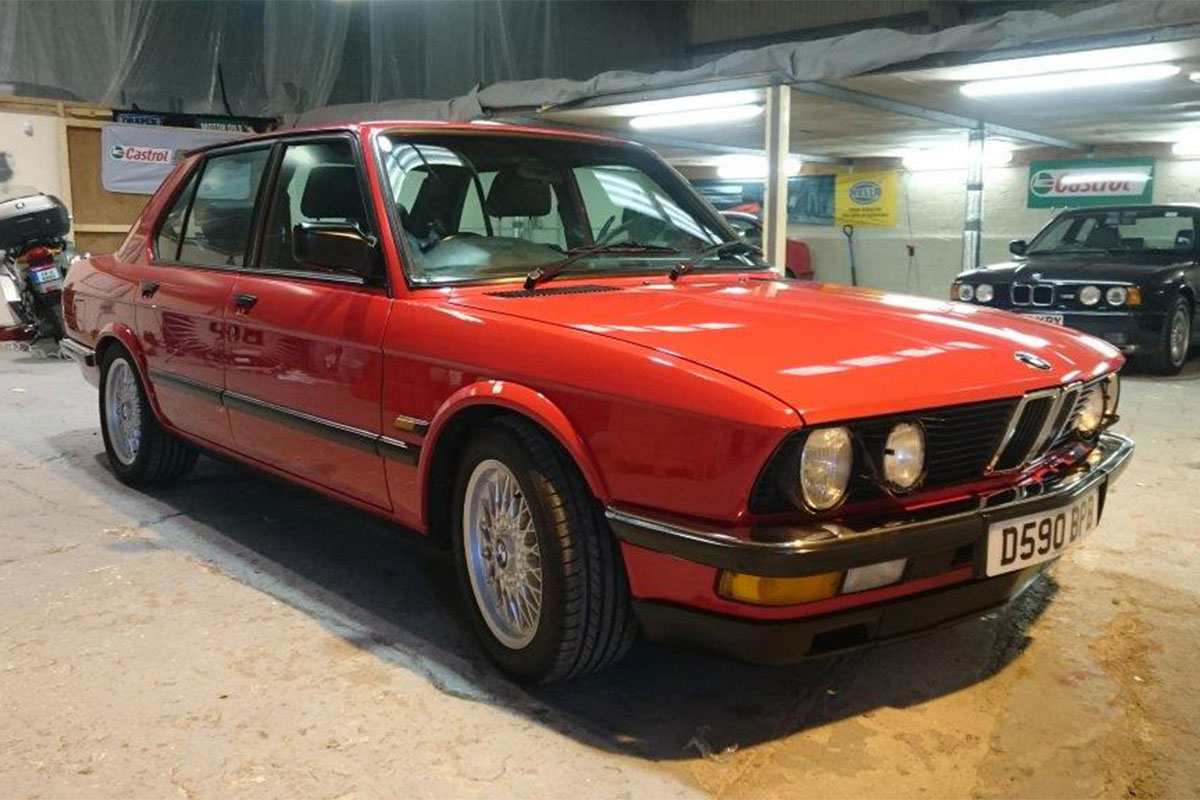
It’s travelled over 280,000km, which speaks volumes for the model’s reliability, but despite the frequent and constant use it remains in extremely good condition.
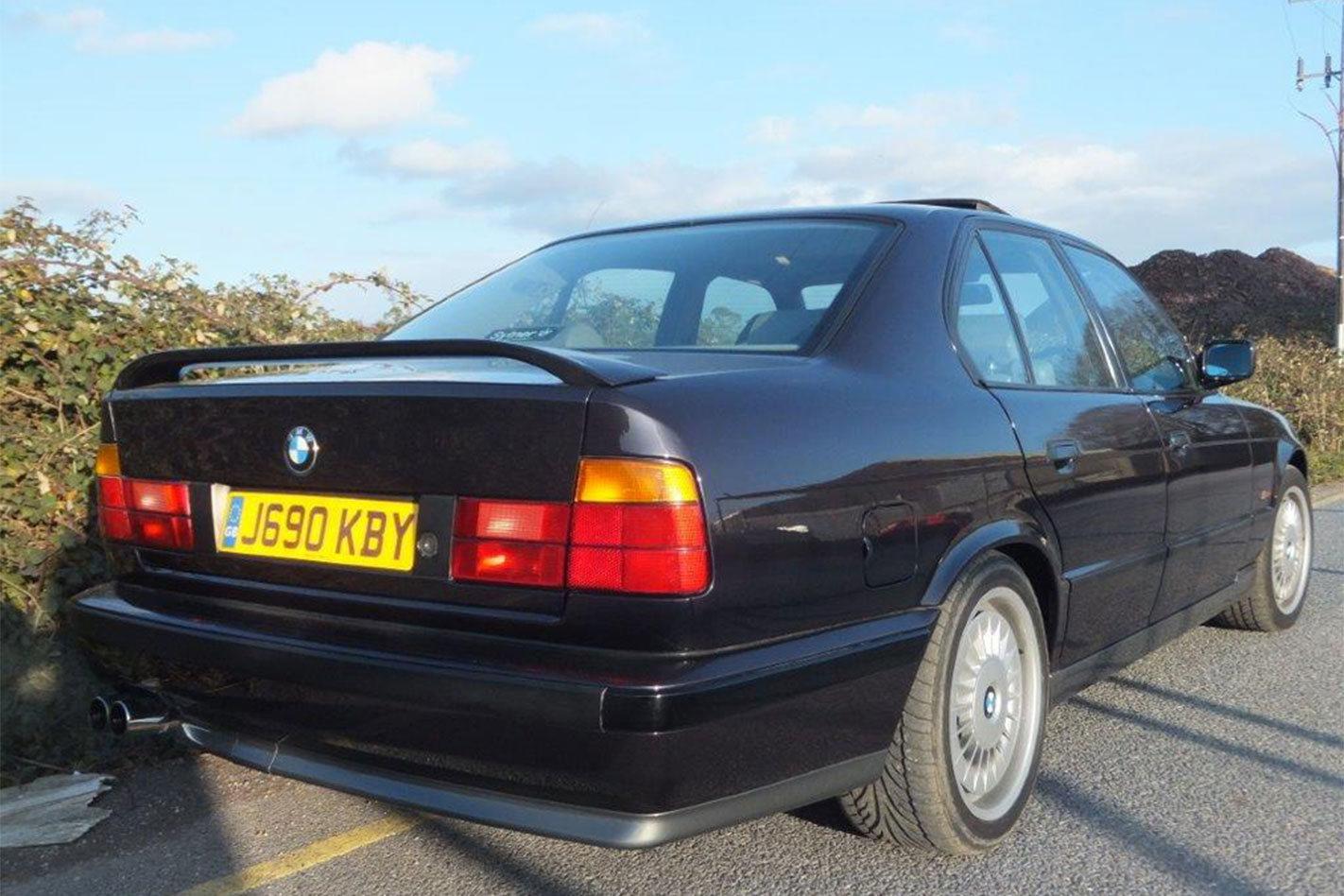
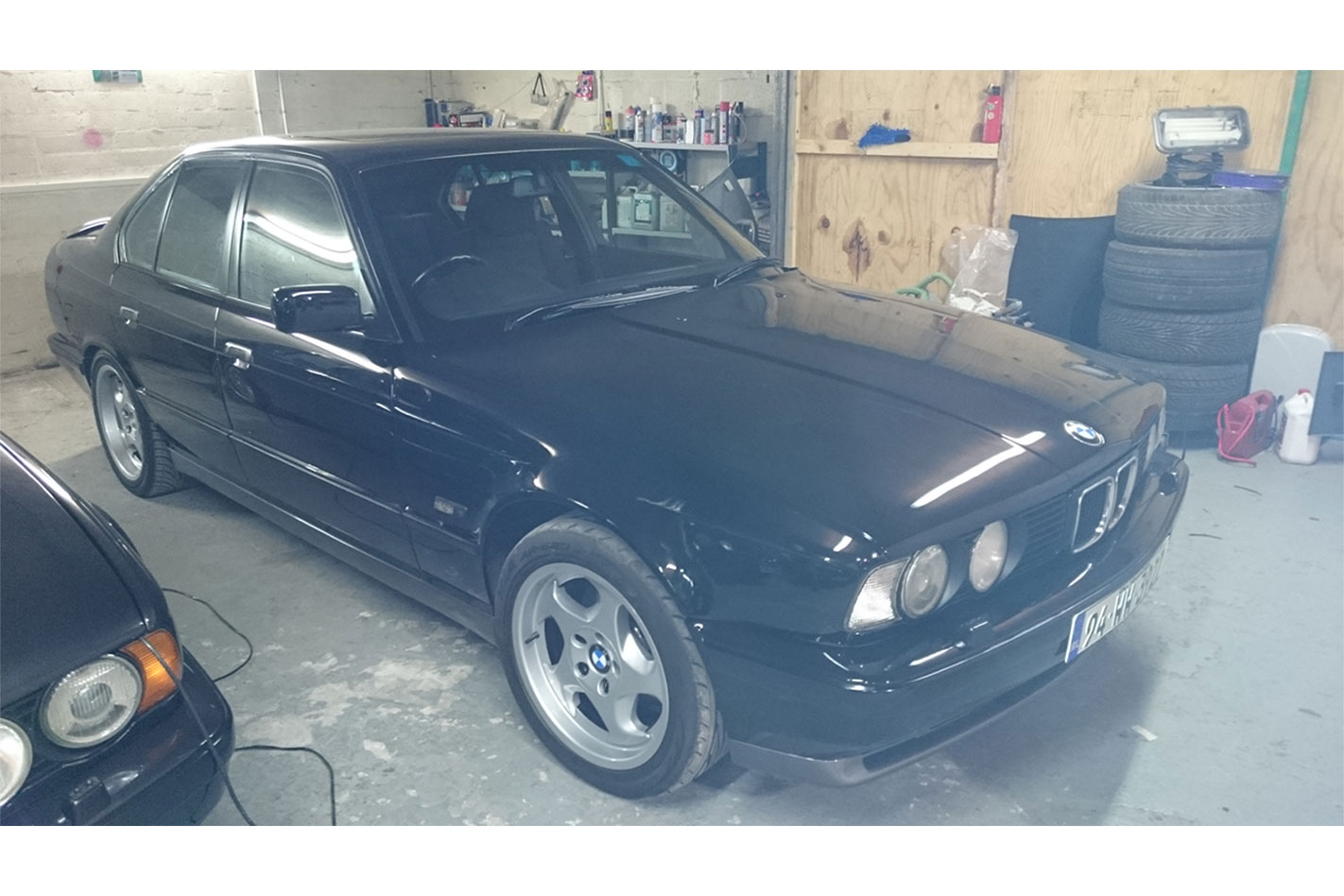
Despite being possibly the least fondly remembered M5, no less than three E34s appear in this collector’s brood.
The first example is an earlier 3.6-litre car, still with the sensational ‘M-system’ bolt-on wheel covers that were intended to improve brake cooling.
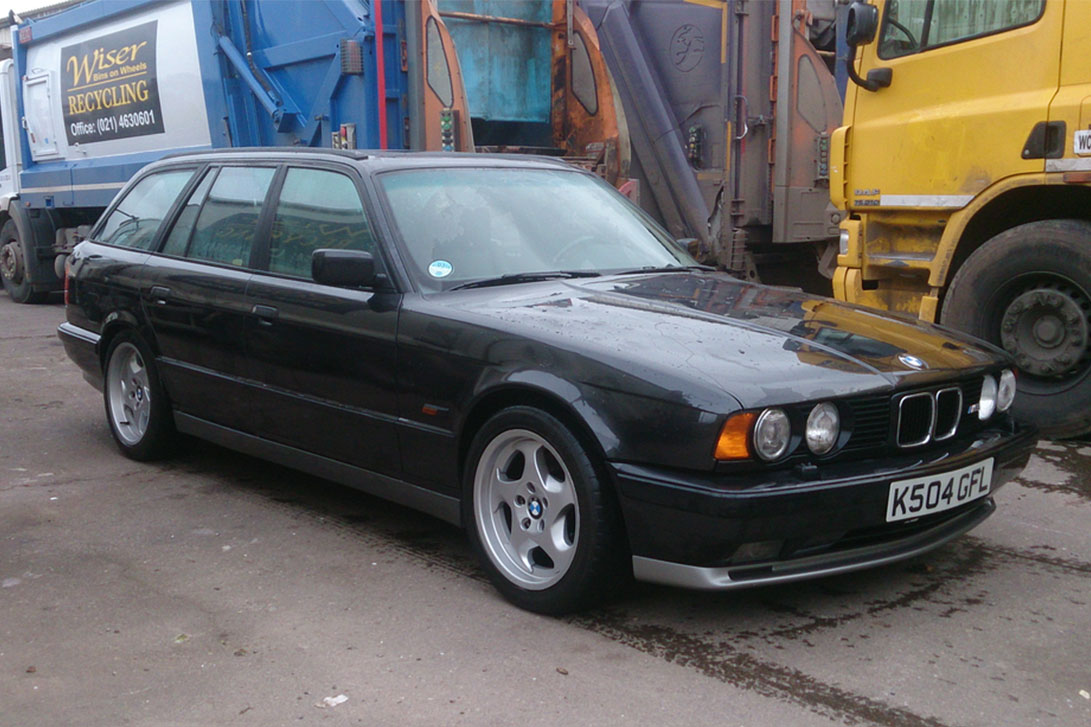
The V10-powered E60 model is the only other M5 generation to feature a wagon model.
The E39 is a hero car here at MOTOR. In its day its combination of speed, luxury and dynamic ability was unmatched by anything else in its segment.
It’s also the last M5 to be available with a manual transmission (unless you live in the US, where a manual version of every M5 has been available).
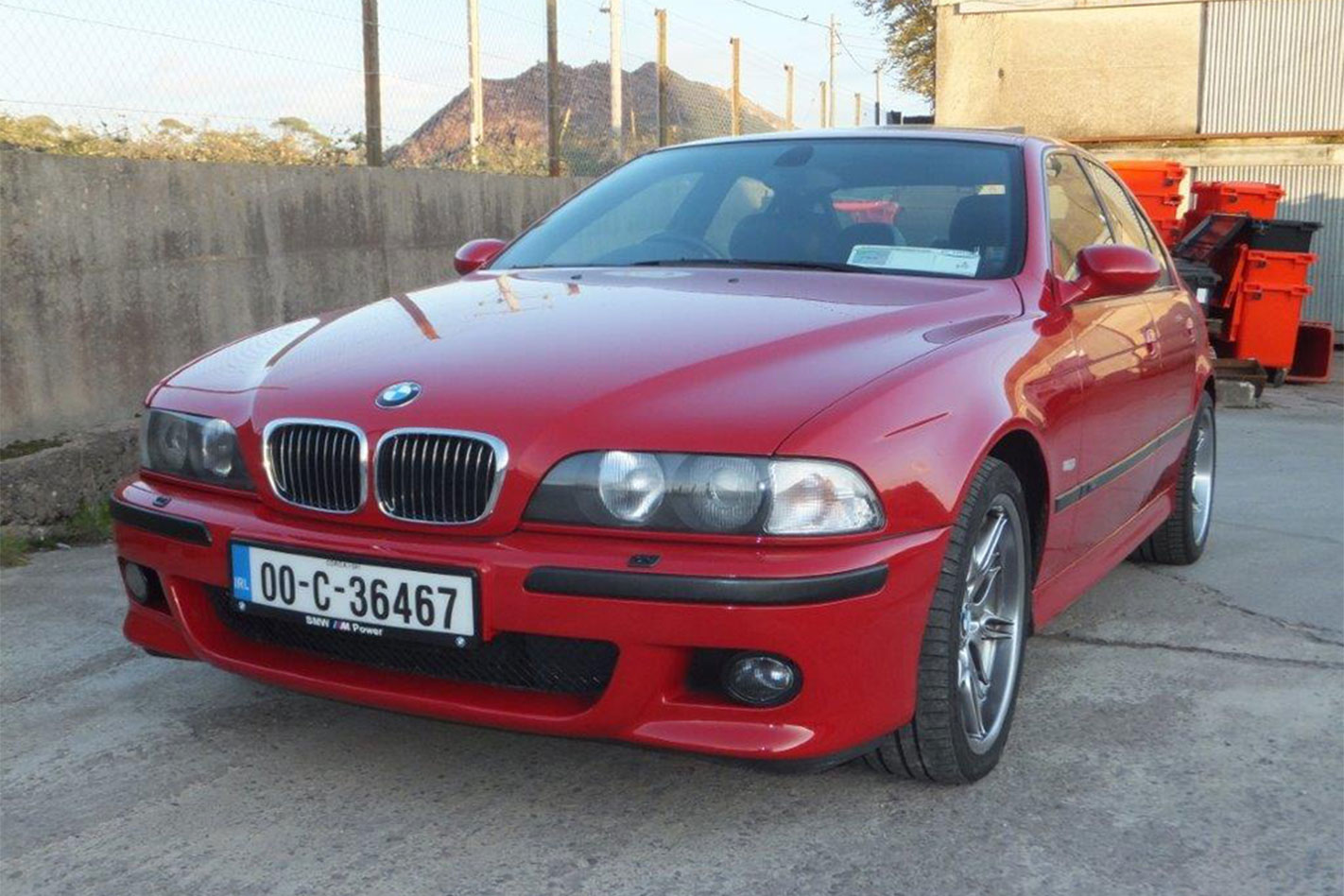
This example was professionally resprayed in 2014; Imola Red is a rare colour on M cars, but it’s also a colour that suits the E39 particularly well.
The last car on offer looks to be the most common on the surface; after all, plenty of E60 M5s were built.
However, this example is one of just 25 ’25th Anniversary’ models, built to celebrates the M5’s 25th birthday in a similar manner to the current 30 Jahre.
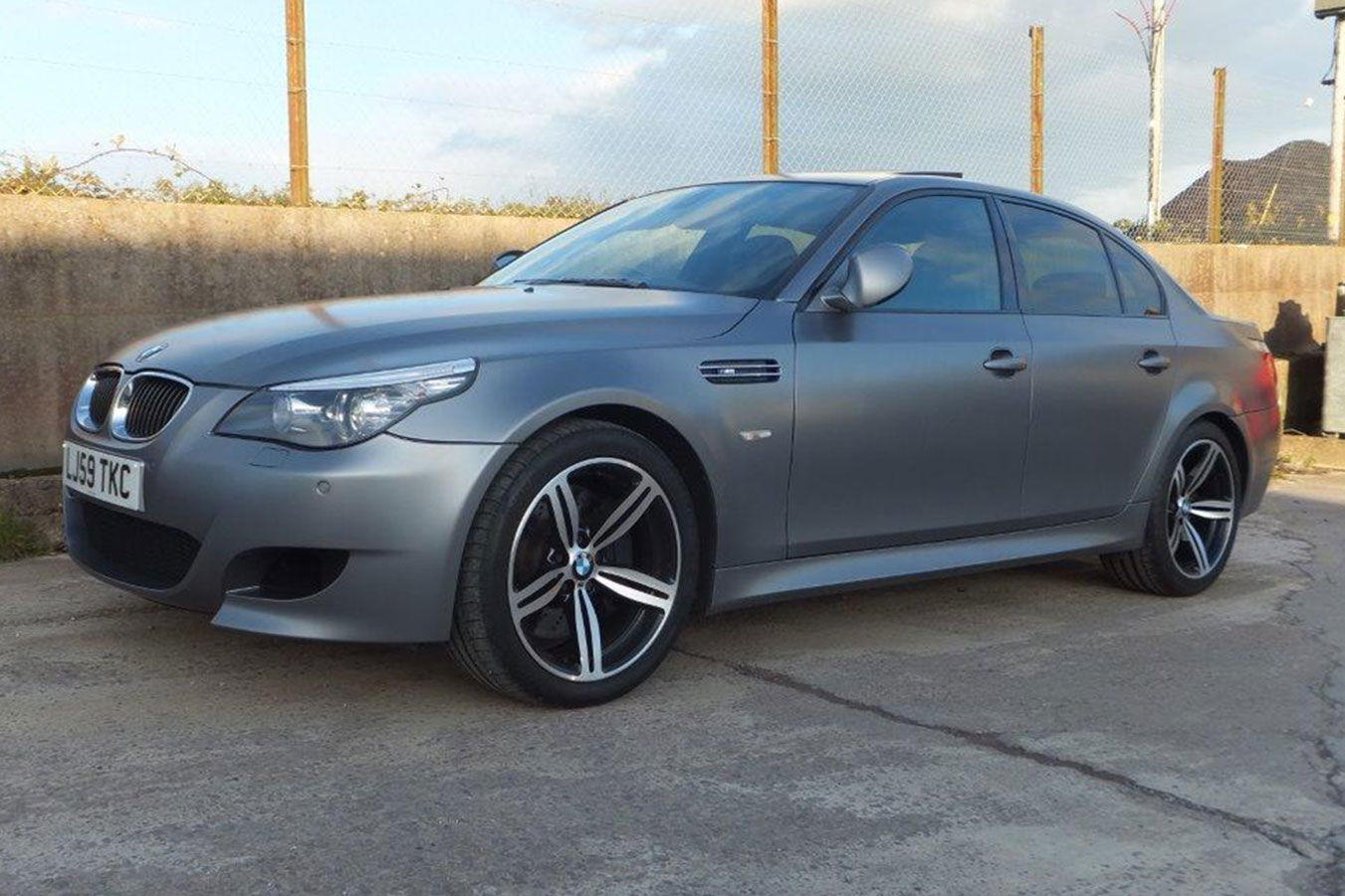
It debuted the impressive Frozen Silver matt grey paintwork, which subsequently appeared on the E92 M3 and a similar hue covers the 30 Jahre.
Of course, being located in the UK limits the appeal of this collection for Australian buyers, but if you’ve got a friendly relative over in Blighty, it’s a rare opportunity to own an example of every generation of arguably the world’s greatest ever sports sedan.
You can view the full lot here.
A NISSAN Navara that rides more like a car than a trade ute promises class-leading fuel economy and features.
WHAT IS IT The NP300 Nissan Navara is the latest offering in more than 80 years of ute manufacturing from Nissan and Datsun. It brings more to the table for family and recreational users as well as tradies.
WHY WE’RE TESTING IT The NP300 Navara is the first vehicle in this class to offer a coil-sprung rear suspension set-up. In a workhorse segment where old school leaf springs are the usual fare, the Navara’s rear suspension is an indication of the changing face of the ute buyer offering more passenger car-like ride and handling characteristics.
Combine this with a new twin-turbocharged diesel engine that offers 450Nm or torque and class leading 6.5L/100km (manual) fuel use and it’s a convincing package.
MAIN RIVALS The new Navara isn’t a game changer in the ever-competitive ute segment however. It is a better vehicle all round than the two Navara models it replaces but it hasn’t made the great leap forward in terms of size and road manners that competitors like the Volkswagen Amarok and the Ford Ranger/Mazda BT-50 cousins have in recent years.
With updates to the Ranger/BT-50 coming soon, a new Mitsubishi Triton just delivered and a new model of the sales-leading Toyota Hilux due in October, the Navara will have its work cut out for it to maintain its popularity.
THE WHEELS VERDICT A better ute from Nissan but no game changer.
Plus: Strong, torquey engine; rear suspension stability on rough roads; fuel economy Minus: Lacks latest safety tech: spongy steering feel of 4×4; limited range for now
THE WHEELS REVIEW THE D23 series NP300 Nissan Navara replaces both the current D40 and well-aged D22 utes from Nissan, and when the full range arrives in September there will be some 27 different variants available. For now, buyers will have to be content with just 14 models – four 4×2 and three 4×4; all dual-cab utes with pick-up style rear tubs – with six-speed manual or seven-speed automatic transmissions. Models to come will include single- and king-cab variants, as well as a cab-chassis to take a tray on the back.
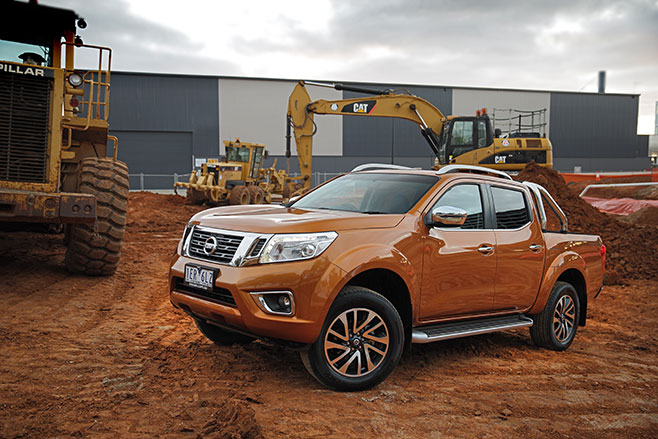
All dual-cab Navaras feature the new coil-sprung live rear axle as these are the vehicles that are becoming increasingly popular, not just among tradies and farmers, but families and recreational 4×4 enthusiasts as well. The single and king-cab models will retain leaf springs which are standard fare for load haulers.
The list of specifications and features are also indicative of the changing use of utes. Power adjustable, heated leather seats, dual-zone climate control, satellite navigation, and USB ports are all included in the top-spec ST-X grade 4×4 we are driving here. Five-star safety ratings are also de-rigueur in this class and Nissan Australia is hoping for the full rating when the Navara is tested by ANCAP, although the omission of a head rest in the centre rear seat could count against it.
Standard safety kit includes seven airbags, a reversing camera (ST and ST-X only) anti-lock brakes, electronic stability and traction control and brake assist. Missing are some of the latest safety technologies that, while yet to appear in the ute class, are expected on other new models before year’s end. Features such as autonomous emergency braking, emergency stop warning and lane departure warning are not offered at all on Navara.
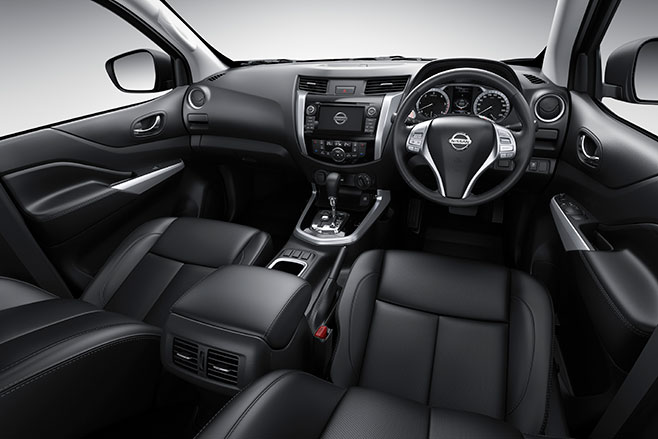
Comfort and convenience features make the cabin of this new Navara a much nicer place to be than inside the utes of yore. The seating position is comfortable even though the steering column is not adjustable for reach, and thanks largely to the rear coils, the general ride and refinement are more passenger car-like than in the past.
There’s nothing lacking in the performance, either, with the twin-turbocharged diesel engine delivering its torque in droves from low in the rev range up to redline, where it is a bit noisy and harsh in the upper reaches. The seven-speed auto transmission is smooth and effortless in general driving but it became fussed when pushed on hilly, twisting roads where the manual shifting function gives more control.
The 120kW/403Nm, single turbocharger version of the same 2.3-litre diesel engine proved up to the job as well when sampled in the six-speed manual base-spec RX Navara. If anything, it felt as punchy as its twin-turbo counterpart, although that could have more to do with the manual gearbox. Both the clutch action and shift quality of the manual car are comfortable but certainly not inspired or sporting.
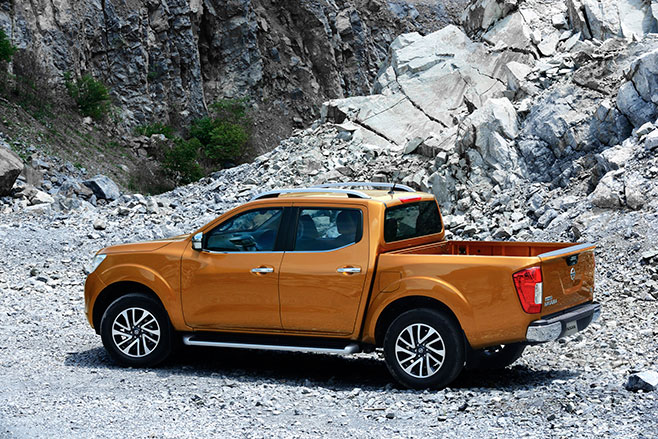
Composure of the coil sprung rear suspension became evident driving on corrugated outback gravel roads, where conventional leaf springs would be prone to axle hop and skip. The Navara remained controlled and relatively smooth here. A further positive of this configuration is that is doesn’t affect the load and towing capacities which, on this ST-X model, are 930kg and 3500kg.
With those load-lugging abilities, the Navara will remain a good choice for both work and play and it’s certainly a step up from the previous models from Nissan. It might not be the biggest or most powerful ute in the class but it’s a price competitive segment and Nissan has positioned the NP300 well to keep it as one of the better sellers in the booming class.
SPECS Model: Nissan Navara ST-X 4×4 Engine: 2298cc 4cyl, dohc, turbo diesel Max power: 140kW @ 3750rpm Max torque: 450Nm @ 1500-2500rpm Transmission: 7-speed automatic Weight: 1921kg 0-100km/h: N/A Fuel economy: 7.0L/100km ADR combined Price: $54,490 (MSRP of ST-X automatic) On sale: NowClick here to read the full range review of the Nissan Navara
COLOMBIAN racer Carlos Munoz scored a lucky maiden IndyCar victory in the first of two races at Belle Isle in Detroit on the weekend, while former multiple series champion Sebastien Bourdais took out the second.
The circuit through the manicured park of Belle Isle, an island in the river adjacent to downtown Detroit, shows off IndyCars better than anywhere else: spectators can sit close to the 14 twists and turns and appreciate that these race cars are big – some 175mm wider than an F1 car.
Saturday’s race one of the ‘Chevrolet Dual’ event was a damp squib, red-flagged on the 47th of 70 scheduled laps after a 20-minute postponement.
Munoz, a 23-year-old former Indy 500 rookie of the year, qualified only 20th and won by staying out two laps longer before refuelling.
He was the sixth different winner in seven races and was joined on the podium by his Andretti Autosport teammate Marco Andretti, the two Honda-powered cars leading four Chevrolet-engined cars to the (red) flag, with Simon Pagenaud in third.
The race started well for Team Penske driver Aussie Will Power, who was on pole alongside Helio Castroneves, and ahead of 2015 series leader Juan Pablo Montoya in third.
Power, the reigning series champion, finished fourth just ahead of Brisbane-born Kiwi Scott Dixon, but well ahead of Montoya in 10th.
Montoya was on pole for race two, reminding us again what a loss he has been to Formula One since he walked away, although he was awarded that grid spot when qualifying was washed out before completion.
Another F1 refugee won the second race (again shortened, though only by five laps) with Frenchman Sebastien Bourdais in his KVSH Chevy/Dallara recovering mightily from a heavy crash in practice.
While rain and crashes were factors, so too was fuel: Bourdais crept home on vapours just ahead of Takuma Sato and Graham Rahal.
Montoya ended with a dry tank, falling from a dominant lead to 10th place, but still leads the championship.
Scott Dixon retired after making contact, but the big story was the race being red-flagged just before the end due to a crash between Penske Chevrolet teammates Power and Helio Castroneves.
The post-race debrief with Roger Penske might have been somewhat tense.
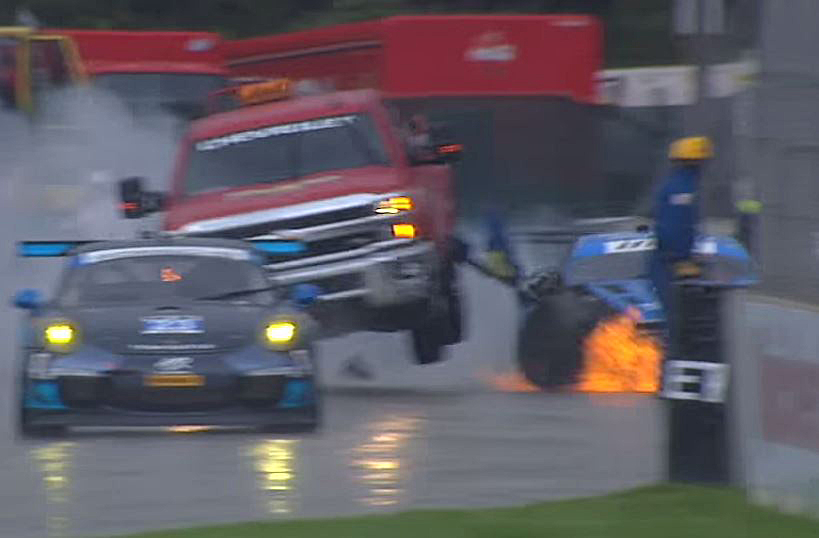
Sports cars: Davison crashes into safety truck
AUSTRALIAN James Davison was caught up in a bizarre multi-car crash that injured two track workers after the chequered flag had fallen on the United Sports Car Championship race at Belle Isle.
Just before the race finished and as rain reduced grip, one car slid into the barrier at the end of the main straight.
As soon as the chequered flag fell, a safety vehicle entered the track to recover the crashed car.
Davison lost control after noticing, and then attempting to avoid the recovery truck, and ended up smashing into the back of it, lifting it off its wheels and turning the front of his Aston Martin V12 Vantage into a fireball. He had run as high as third, enjoying some fine dicing before eventually finishing fifth.
Race two was later cancelled “due to safety concern and track visibility both for the drivers and course workers” resulting from heavy rain.
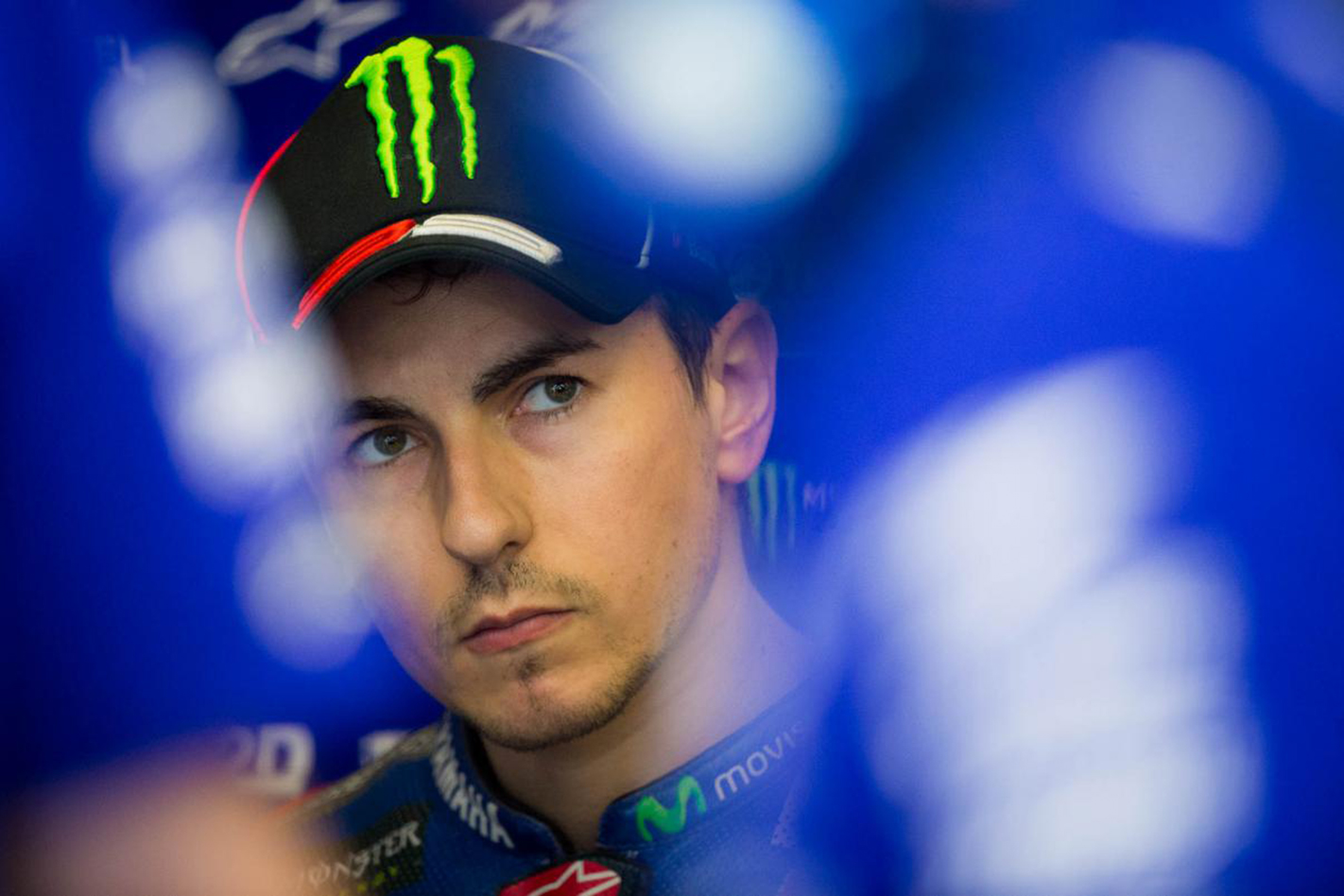
Moto GP: Marquez crash helps Lorenzo win
JORGE Lorenzo continued his challenge for another Moto GP world title with his third successive win, this time in round six at Mugello in Italy, as defending champion Marc Marquez crashed again.
The Spaniard on his Movistar Yamaha finished well ahead of Italian Ducati rider Andrea Iannone, who just held off local legend Valentino Rossi.
The freakishly gifted Marc Marquez put on another remarkable performance after a disastrous qualifying but, in trying just a bit too hard when battling for second, he put the bike down, without injury to himself.
Cal Crutchlow was not so fortunate, incurring a leg injury after crashing.
Rossi continues to lead the championship, but teammate Lorenzo is now just six points behind, while Marquez has dropped to 49 points behind.
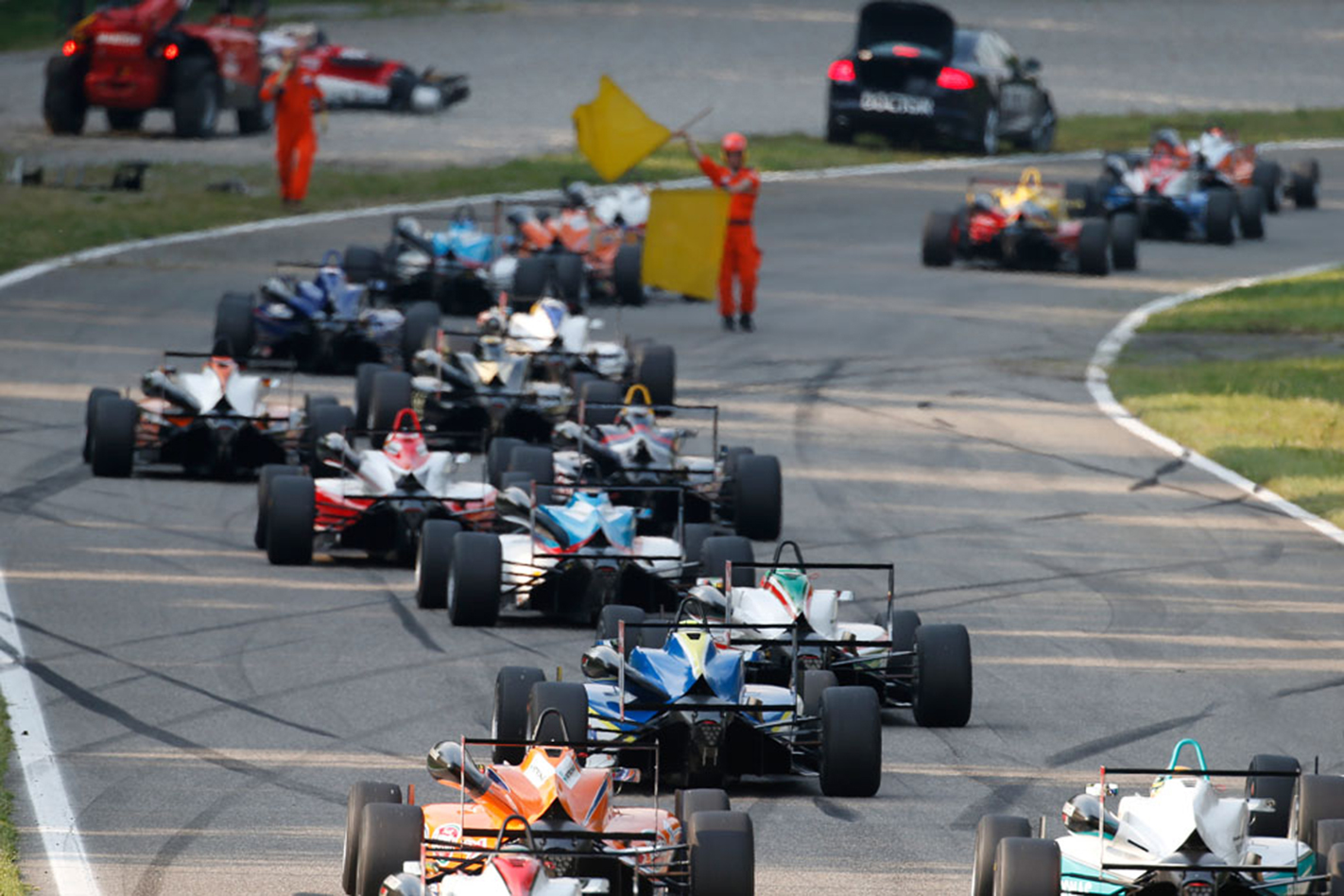
Formula 3: Poor driving red-flags Monza race
RACING in Europe’s Formula 3 championship was red-flagged at Monza after drivers acted as though they were in a demolition derby rather than a feeding ground for the pinnacle of open-wheel motorsport.
After sounding warnings about poor racing standards on Saturday that resulted in two drivers cartwheeling dangerously off the track, race officials called a late-night driver’s meeting to call a stop to the practice.
However, after yet another avoidable crash during Sunday’s event as drivers pushed each other off the track attempting overtaking manoeuvres, the red flag was shown and racing stopped.
“During the [Saturday] briefing we informed the drivers that it was not acceptable or the way we want to present F3,” Formula 3 European Championship race director Nils Wittich said. “I’m very sad for the good drivers, but it was the drivers’ decision in driving this way.”
Sign up here to receive the latest round-up of Wheels news, reviews and video highlights straight to your inbox each week.
IT HAS been a long time coming but the Audi Q7 has finally delivered the second generation of its large SUV, taking on rivals such as the BMW X5 and upcoming Mercedes-Benz GLE. By the way, it’s a huge step up.
WHAT IS IT? An all-new version of Audi’s biggest, most expensive SUV. The Q7 was conceived in 2006 and has received facelifts in that time but has been forced to soldier on against far fresher rivals.
WHY WE’RE TESTING IT Audi unleashed the media on its new Audi Q7 in Switzerland and Wheels was there for the ride.
MAIN RIVALS The two biggies are the Mercedes-Benz ML (soon to be GLE, with the arrival of a major update late in 2015) and sales-leading BMW X5. The upcoming new Volvo XC90 will also lob directly in Q7 territory. The Porsche Cayenne and Volkswagen Touareg could also be on the cross-shopper’s list.
THE WHEELS VERDICT A huge leap over the outgoing Q7, especially in refinement and comfort. And while it has undergone a massive diet, it’s still a sizeable seven-seater with generous space and a hig- quality feel.
PROS: Supple ride on air suspension; diesel engine; refinement; elegant and functional interior CONS: Storage up front; top-shelf price yet active safety still optional
THE WHEELS REVIEW TO SAY it’s been a long time between Q7 drinks is an understatement. It was 2006 that Audi’s flagship SUV headed to the Aussie outback for an ambitious journey from Sydney to Broome, through the red centre.
Since then rivals from Mercedes-Benz and BMW have been replaced with completely fresh metal, the Audi only tweaked and touched-up. But Q7 take two is here, almost.
In this bigger-is-better world the Q7 has taken the opposite approach and shed 37 millimetres in length and 15mm in width. There was plenty to lose, and at 5052mm long and 1968mm wide Audi’s biggest Q car is still significantly longer and wider than the Mercedes ML (4803mm/1926mm) and BMW X5 (4886mm/1938mm).
It’s also a featherweight compared with the outgoing model, shedding up to 325kg. It’s a big car, then. Practical too, with Australian versions picking up the third row of seats that takes capacity to seven.
Even with those seats in place there’s a modicum of boot space for some well-stocked soft bags; fold the seats with the press of a button and there’s a vast, flat floor.
It’s a spacious cabin and one that pampers adults in the middle row. That centre pew slides fore and aft to allow compromises for luggage or the sixth and seventh on board, while the 40/20/40 split-fold allows for any shape Ikea can muster.
Shame some hidey holes for phones and other gizmos are light-on, limited to the cupholders and a shallow tray – unless you delve into the broad covered console.
Initially the Q7 will arrive solely with a 200kW version of a heavily revised version of the familiar 3.0-litre V6 turbo diesel. Power and torque have jumped 20kW and 50Nm respectively to a hearty 200kW and 600Nm.
Teamed to an eight-speed ZF auto – complete with plasticky paddle shifters on the back of the wheel (a rare drop in otherwise excellent tactility throughout) – it’s a grunty combination, and one that typically gets the job done without the need to venture beyond D.
Snaking up the steep, narrow Swiss roads into nose-bleed territory does little to halt progress; having the full 600Nm on tap from 1500rpm makes light work of grades. While a feisty petrol V8 would be more fun, the V6 diesel is beautifully suited to the Q7’s demeanour.
However, a little enthusiasm comprehensively kicks the claimed (and class-leading) 5.9 litres per 100km fuel use over the craggy hills. We saw almost double that on a spirited alpine route, but it settled into single digits during more gentle operation.
But it’s the refinement that’s the headline act in the Q7. The engine is deceptively smooth and hushed, right down to the subtle stop-start system. Other noises are well contained, too; there’s no suspension clunking and little wind noise.
The ride completes the cushy, comfortable theme. Our car was running on optional 21-inch wheels with Goodyear rubber mated to optional air suspension, yet it was plush and supple, dealing ably with small city bumps or more strenuous mid-corner lumps.
Vigilant Aussie councils will do a better job than their Swiss counterparts when it comes to mismatched bitumen, potholes and sub-standard maintenance, but it’s difficult to imagine the Q7 getting overly flustered.
At the same time there’s enough dynamic nous to pique the interest of those more into the journey than the destination. Excellent high-speed stability and a relaxed, confident nature is reasserted with impressive cornering grip.
Fire enthusiastically into a hairpin and it ultimately push its nose wide as the Goodyears fight to redirect two tonnes. But the optional four-wheel steering system helps nudge the tail around if you’re below 40km/h (it also reduces the turning circle by one metre; above 40km/h the rear wheels turn in the same direction as the fronts for added high speed stability).
None of this comes cheap. Think $103,900. Then again it’s well appointed, with sat-nav, leather, tri-zone air, digital radio and 19s. But options quickly add up, and it would be good to see thinks like auto emergency braking fitted standard. The air suspension adds $4950 to the sticker, too, while fancy removable tablets for those in the rear are just shy of $3k a side. Ouch.
Thankfully the utterly convincing luxury should soothe just about any bill shock.
SPECS Model: Audi Q7 3.0 TDI Engine: 2967cc turbo V6 diesel Max power: 200kW @ 3250-4250rpm Max torque: 600Nm @ 1500-3000rpm Transmission: 8-speed auto Kerb weight: 2060kg 0-100km/h: 6.5sec Price: $103,900 On sale: September
Brabus has turned its tuning sword to plug-in hybrid models, starting with the 890Nm Mercedes-Benz S500 PHEV.
Dubbed the Brabus PowerXtra B50 Hybrid, the super-sized limo has had its 3.0-litre twin-turbo V6 petrol engine tweaked to deliver an extra 38kW of power and 70Nm of torque, taking the totals to 283kW/550Nm.
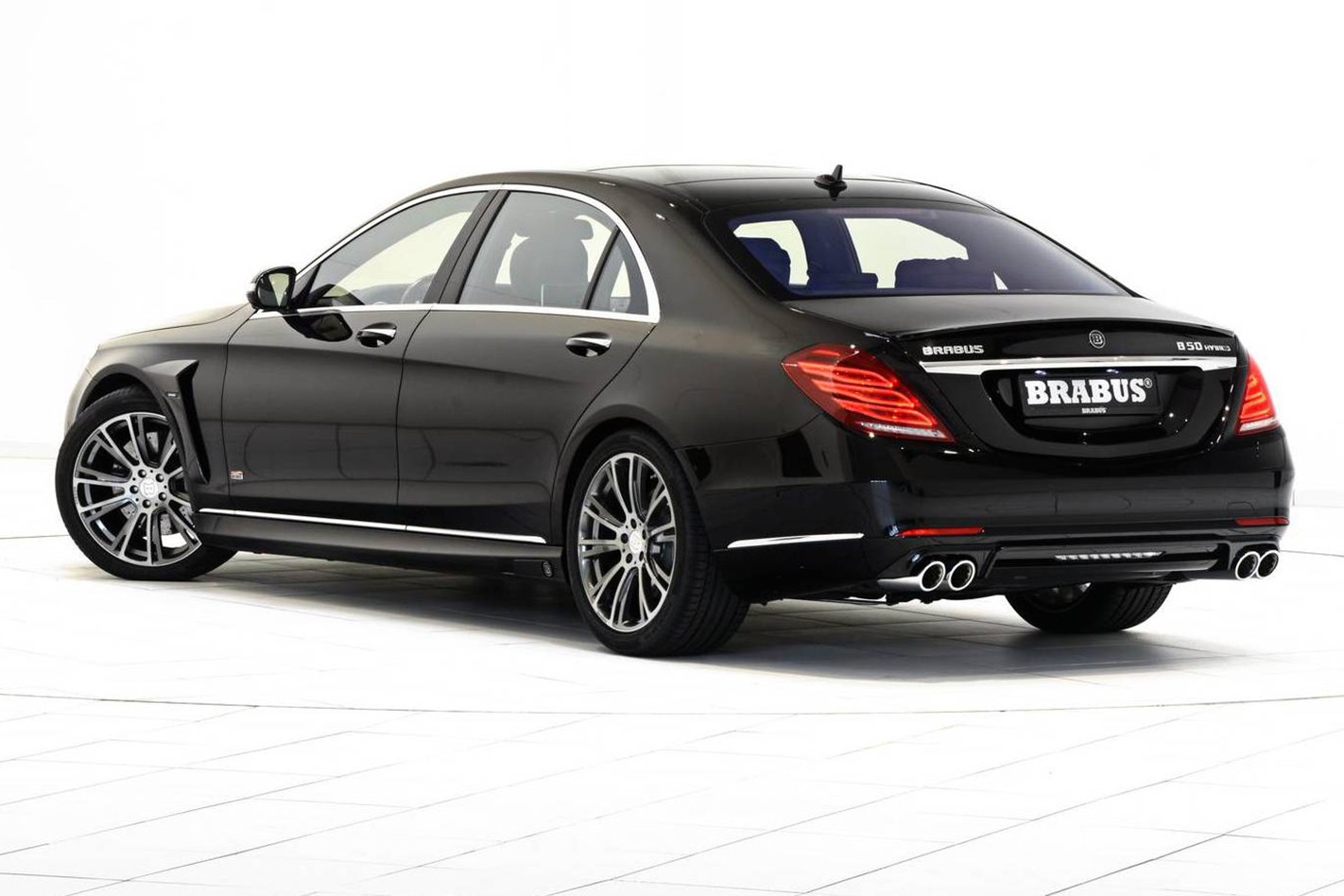
Brabus says, “special mapping for injection and ignition as well as a moderate increase in boost pressure” is all that’s required to achieve the gains.
Add in an (unchanged) electric motor delivering 85kW/340Nm and you have a monstrous 368kW/890Nm total, just 10Nm shy of the 5.5-litre twin-turbo V8 Benz S500.
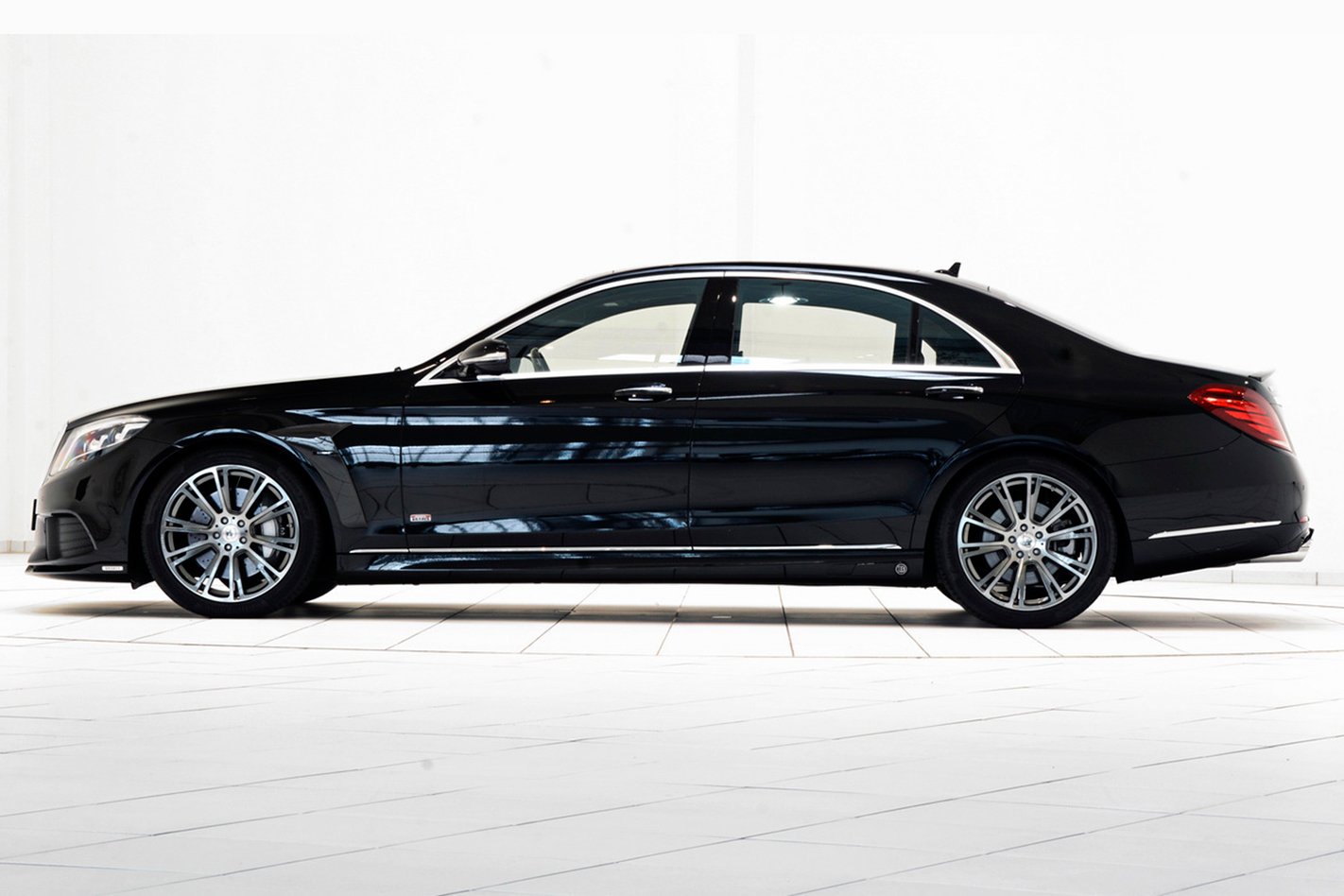
Forget about economy (no official mention) as the 0-100km/h sprint is slashed from 5.2 seconds to 4.9sec, though a top speed of 250km/h remains as that is the capability of the Benz hybrid system.
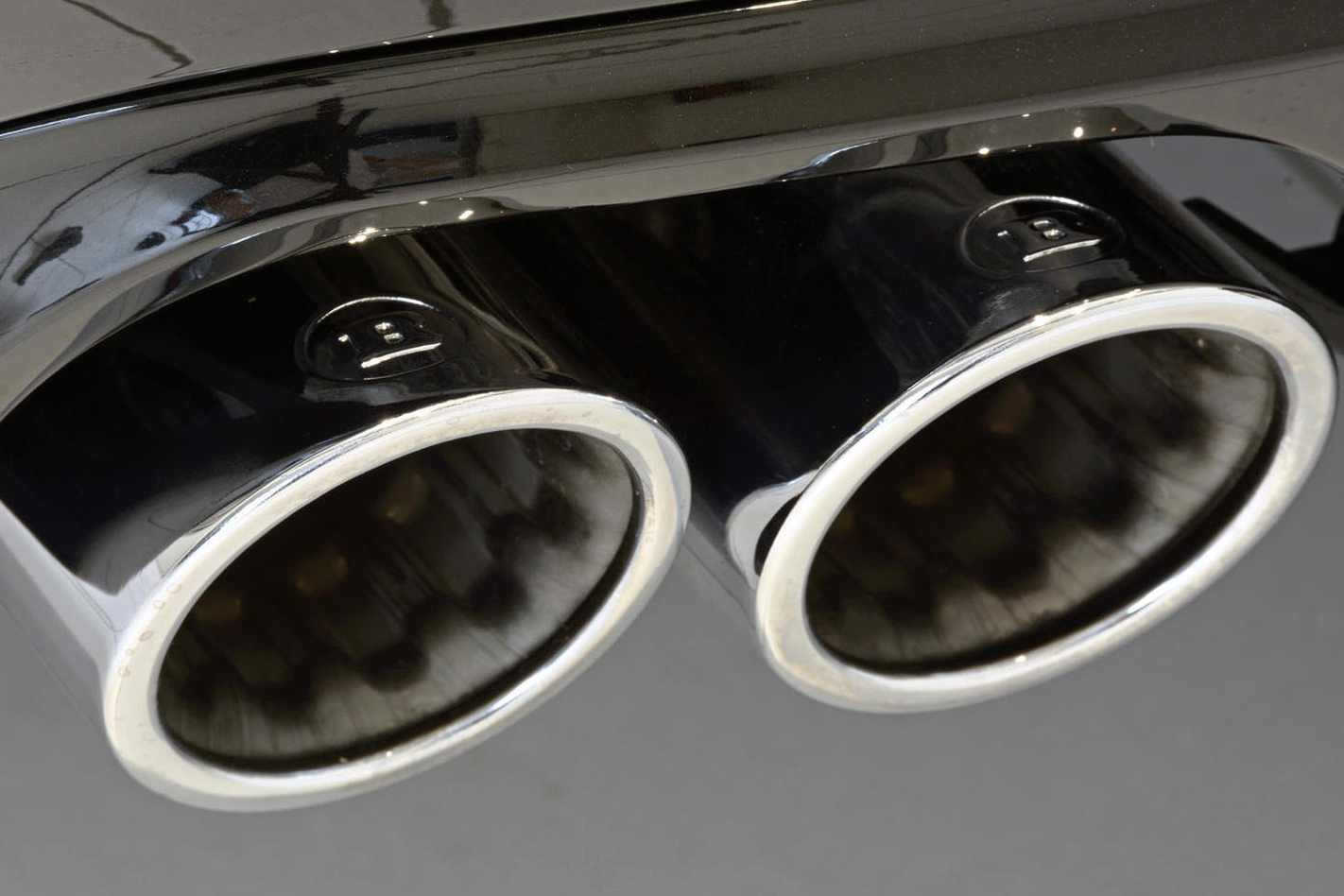
A more aggressive Brabus front bumper is attached, along with aero-enhancing bits made of carbonfibre, 19-to-21-inch wheels and a special quad sports exhaust just to ensure any remnants of a green tinge is singed.

Although Brabus B50 is stamped across the stately rear, the hi-po tuning company is cute enough to retain the ‘hybrid’ badge – though nobody will be mistaking this bad boy for a new variant of stretched Prius.
For all the tweaks, Brabus offers a three-year/100,000km warranty – real peace of mind as you power down the freeway, though perhaps not past as many service stations as you would in the regular S500 PHEV that claims to sip just 2.8L/100km.
Subtle exterior changes but major engine developments for the sports car world’s most enduring icon
HEADING for production soon – via the Nurburgring circuit of course – is the first facelift for the current 991-generation Porsche 911 and it could be in Australian dealerships by the end of this year.
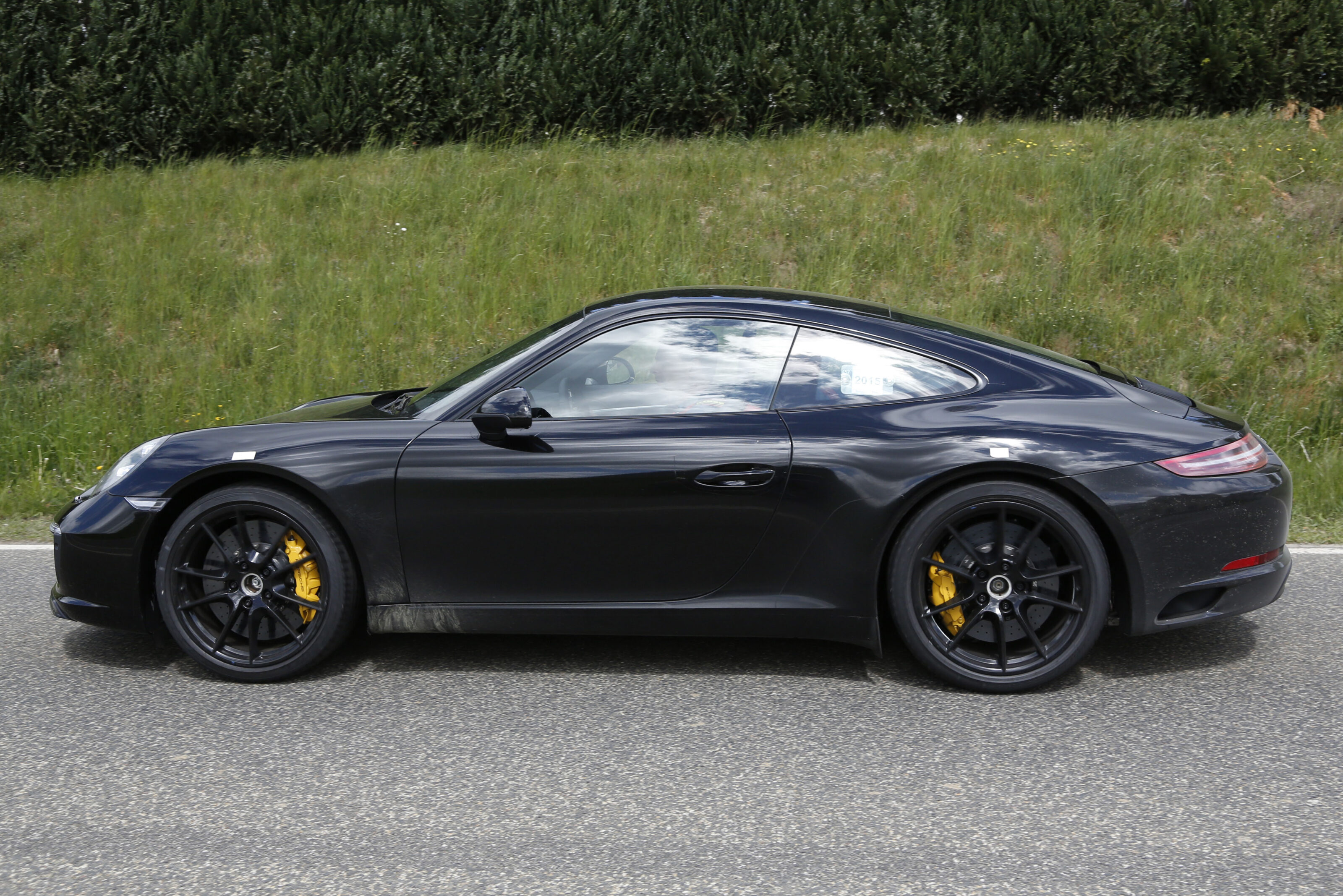
Spotted earlier this week racing through the notorious Nordschleife, the changes seem restricted to non-sheetmetal, and include new LED lighting elements, redesigned bumpers (with revised side air intakes), restyled alloys, and repositioned exhaust tips.
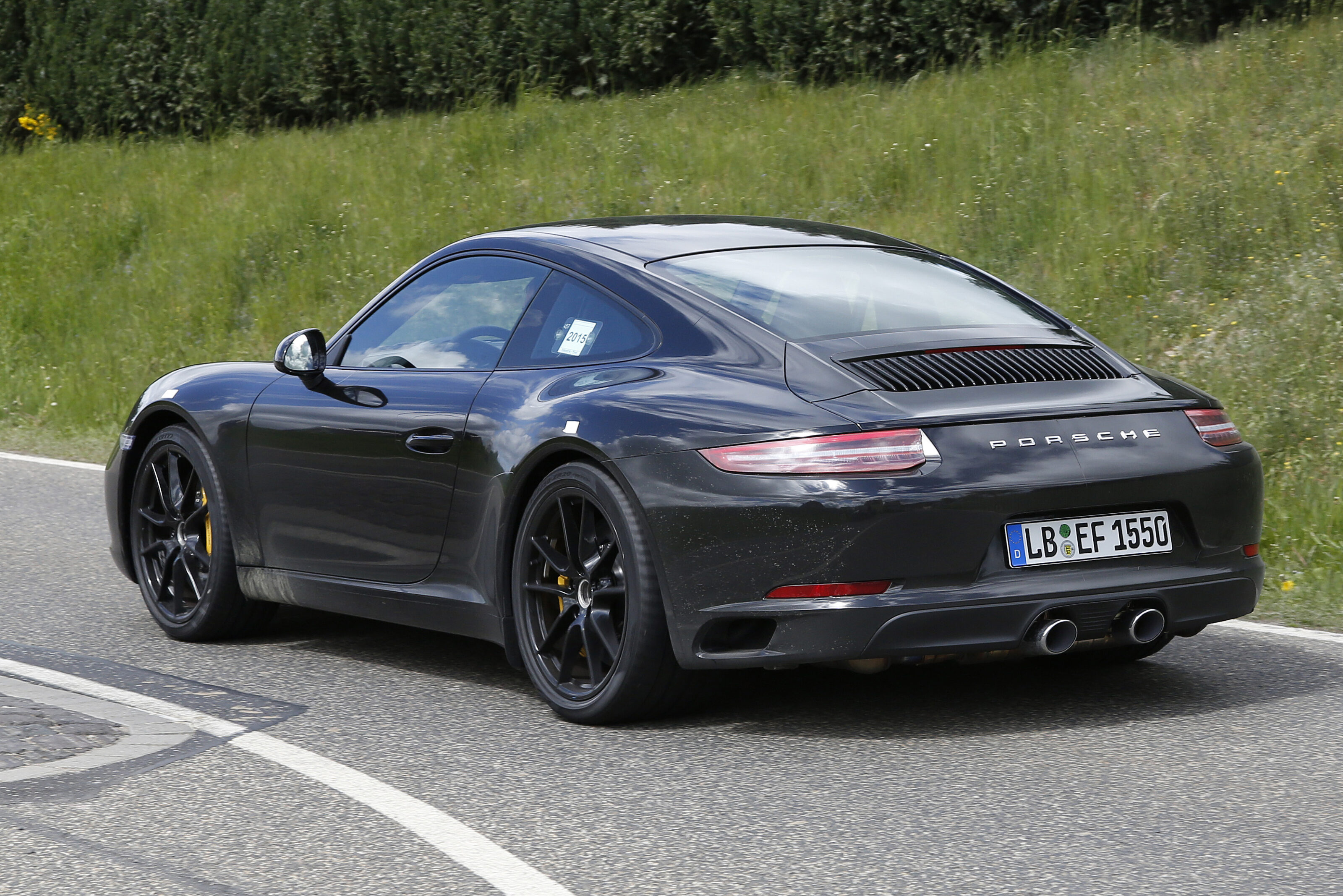
The latter suggests significant modifications underneath, including the long rumoured switch to all-turbo powerplants for the core range, replacing the naturally aspirated versions of the 257kW/390Nm 3.4-litre and 294kW/440Nm 3.8-litre flat sixes. Whether the forced induction move brings smaller-capacity units in the name of achieving greater fuel efficiency numbers is unknown, though the scuttlebutt is abuzz with a sub-3.0-litre flat-six turbo for the 911’s opening gambit. The track-focused 911 GT3 may remain atmo.
One thing you can be sure of is an upgrade of the current 911’s multimedia and communications interface, with a move to the Volkswagen Group’s latest systems. Accompanying these will be revisions to the dash, centre console, and possibly steering wheel, along with the usual trim and specifications updates associated with mid-life makeovers of this level.
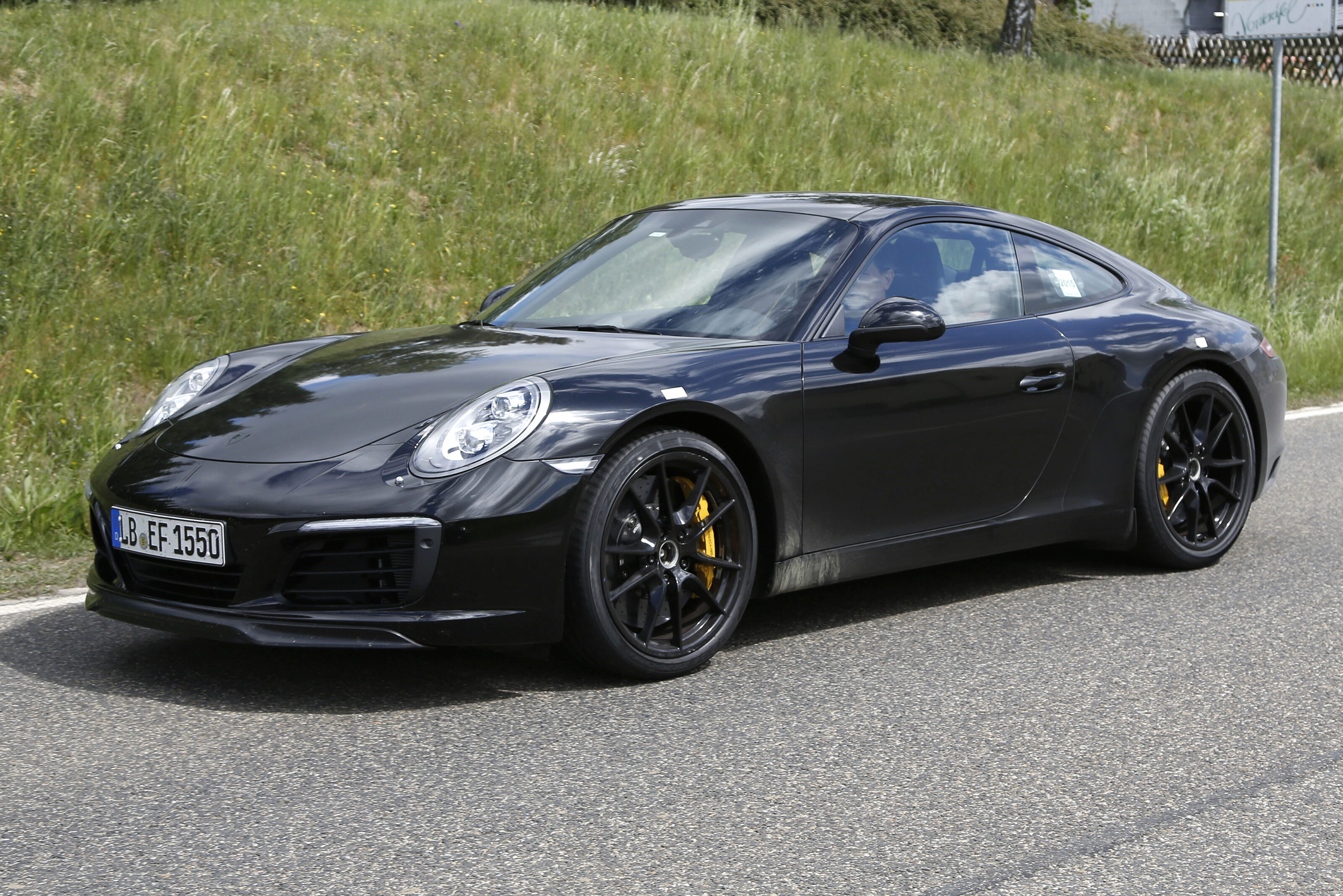
While Porsche is keeping mum on when the facelifted 991 will surface, bets are on that it will star on the firm’s IAA Frankfurt motor show stand starting in mid-September.
The spy shots have surfaced in the wake of Porsche’s limited-run 911 Black Edition series, suggesting that the 2012-era current version is indeed in runout, and offering $25,000 of additional gear over the standard-issue Coupe and Cabriolet models, including LED headlights with Porsche Dynamic Lights System Plus, Park Assist with a reversing camera, and 20-inch Turbo wheels.
Pricing for the 991.2 should shadow that of the existing range, which kicks off from $208,600 for the Carrera Coupe with the seven-speed manual transmission, topping out at $466,900 for the Turbo S Cabriolet PDK.
Have spy pics of your own? We’d love to see them. Send them to [email protected]
