
UPDATED: Holden is believed to be investigating how images of its HSV-rattling Commodore were snapped deep inside its top-secret proving ground.
The leaked images show Holden’s last-ever Aussie-made Commodore is shaping up for a 300 kilowatt-plus V8-fuelled swansong.
The images, published on industry website GoAuto overnight, show what looks like a Chevrolet-nosed version of the highly anticipated VF Series II, which as well as more aggressive, hardline looks, boasts a bigger, more powerful V8 engine.
The brand refused to speculate on the images, saying only that they do appear to have been taken from inside its top-secret Lang Lang proving grounds in a location far away from prying lenses.
Mirroring what is already happening with its US export model, the Chevrolet SS, the Commodore’s last significant makeover before the tap is turned off Australian production in late 2017 is expected to shelve the 270kW 6.0-litre and instead shoehorn the US market’s 6.2-litre V8 – opening the door to tyre-smoking HSV-rivalling performance for Commodore money.
With VF Series II due in showroom later this year, Wheels understands bigger power and sharper styling are just part of a raft of changes to ensure Commodore remains relevant until 2017.
The V8 models, which account for about one in three Holden Commodore sales, will once again cop the brunt of the changes, which could include a sharper and stiffer suspension tune and substantial brake upgrades. A new bi-modal exhaust system and a recalibrated ESC that adopts Holden’s competition mode, currently exclusive to SS-V Redline models, are also possible.
Bigger and tougher-looking alloy wheels – wider at the rear just like the current SS-V – will complete the makeover, which could also see high-performance variants adopt bonnet vents, if this testing mule’s heavily camouflaged nose is any indication.
Wheels believes that similar to the last mid-life refresh of the Commodore range, V6 variants will relieve lighter upgrades with little to no change to the existing 185kW 3.0-litre and 210kW 3.6-litre engine line up.
Another sign of things to come is the loss of the Commodore’s bee-sting antenna, which is replaced with a more stumpy version. It hints that upgrades to the Commodore’s in-car multimedia system will be enhanced further, with digital radio and even in-car wireless internet hub likely.
Despite the leak, Holden refused to shed new light on future Commodore models, except to say it is committed to ensuring the Commodore name remains relevant “until 2017 and for many years after”.
It also wouldn’t be drawn on whether the expected upgrades would see Commodore prices increase to reflect the improved hardware.
HSV, meanwhile, has also remained tight-lipped over how the threat of a 300kW-plus Commodore with cut-price, HSV-killing performance would impact its business.
“We won’t speculate on our future product plans or Holden’s future products either,” said HSV spokesperson Damon Paul.
Either way the clear winner will be V8 fans, with the VF Series II destined to become one of the greatest Commodores of all time.
Continental declared ‘Czech-mate’ in this year’s MOTOR Tyre Test stealing the crown as Australia’s best high performance tyre.
As revealed in MOTOR’s June issue on-sale tomorrow, the Czech Republic-made ContiSportContact 5P pipped seven other tyres after a gruelling regimen of wet and dry tests at Sydney Motorsport Park and Sydney Dragway.
V8 Supercar driver Warren Luff wrung each tyre’s neck in disciplines of dry braking, dry slalom, a dry figure eight course, wet motorkhana and wet braking.
Mercedes provided the hardware for this year’s test, an A45 AMG with 235/35R19 rubber, while JAX Tyres played pit crew as efficiently as ever.
Michelin fronted-up with its Pilot Sport Cup 2, standard fitment on cars like the 458 Speciale and 911 GT3, while Toyo had a tilt with its Proxes T1 Sport.
Bridgestone arrived with its RE050A, Dunlop the Direzza DZ102, Falken the Azenis FK453 and Goodyear the Eagle F1 Asymmetric 2. Meanwhile Winrun went into bat in the budget stakes with its underdog R330.
The Michelin dominated the dry running but couldn’t hold off the storming Continental in the wet, the ContiSportContact 5P coming away with the outright win.
For the full results and analysis, grab MOTOR’s June issue, out now.
For iPad users MOTOR is available in the App Store and for Android, head to Zinio.
Get your free weekly report from the world of fast cars – subscribe to the MOTOR newsletter!
With the only private example of Holden’s stillborn Monaro HRT 427 project up for sale again, we thought it a good chance to revisit the time Holden threw us the keys.
The following article first appeared in the August 2004 edition of MOTOR.
The HRT 427 is destined to become the next Phase IV GT-HO; the big fish that got away.
See, despite the projected price-tag of around 200-large, the bean-counters at HSV just couldn’t see how the mutha was ever going to make money. So they scrapped the whole idea.
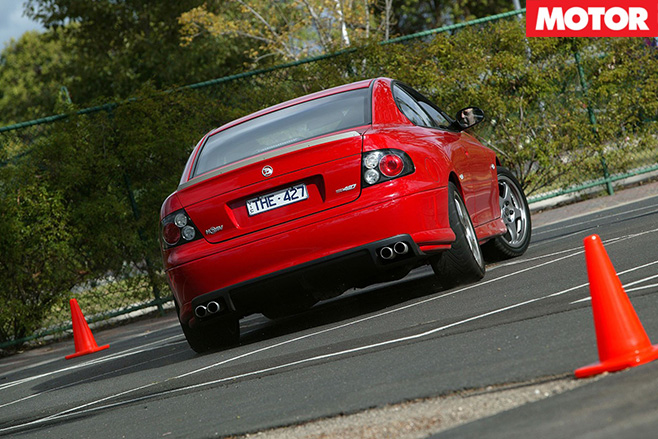
How do we know? Cos we’ve driven the bugger. Not a full-scale drive, we should add, more a teensy-weensy little taste of what might have been. Sadly, we couldn’t let the 427 off its chain for any more than three of its six gears, but let me tell you, this would have been one brutal sonofabitch.
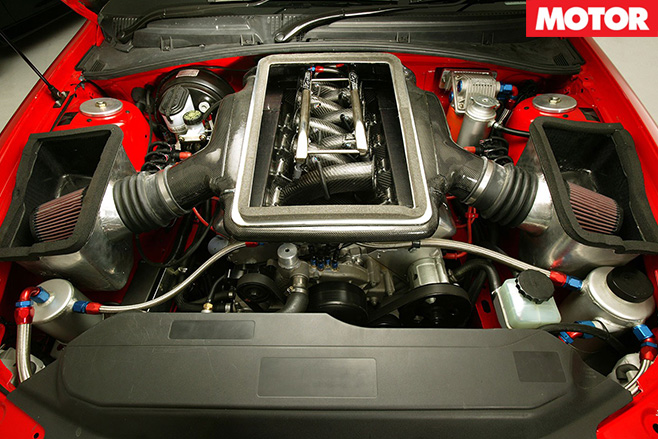
But it ain’t just an engine here; the rest of the HRT’s hand-fabbed suspension components, integral roll-cage and race-car-with-number-plates attitude and style would have made plenty of big, big-dollar supercars run and hide.
A lot of cars will chirp the rear hides going into second, but very few will torch the bags just by squishing the throttle at about 3000rpm. And we’re not talking a little squeak, either, mash the gas in second and that headbanger motor will be smashing pick-handles out of the rev-limiter before you’ve even clocked the tacho.
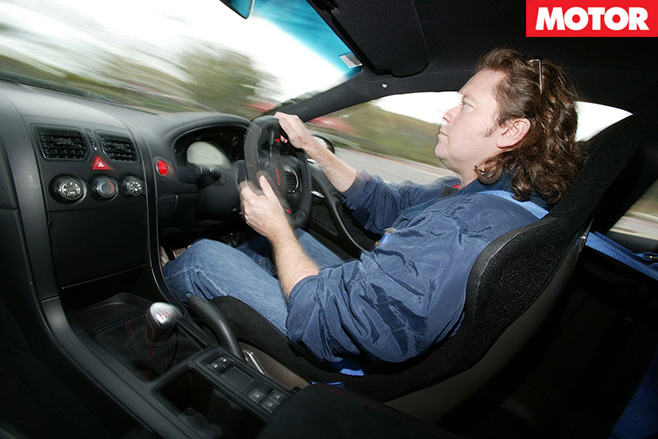
Cogs are a close-ratio T56 and the clutch is a single-plater that feels a bit dead at first but is actually pretty progressive. Glitches? Well, the steering’s a bit slow for the rest of the razor-sharp package, and the token stuff like five-point harnesses and the Wiggles-spec starter button have no place on a road warrior.
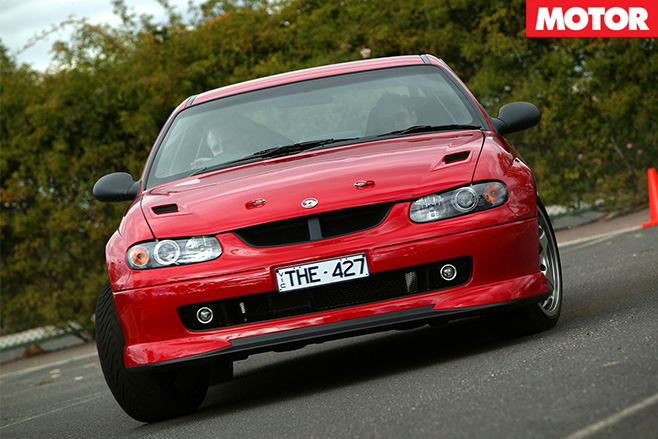
Even the HSV and Holden brass get misty eyed when you quiz them on the whys and wherefores of canning such a project, and some of them are off-the-record downright cranky that the vision was blanked out by the almighty dollar.
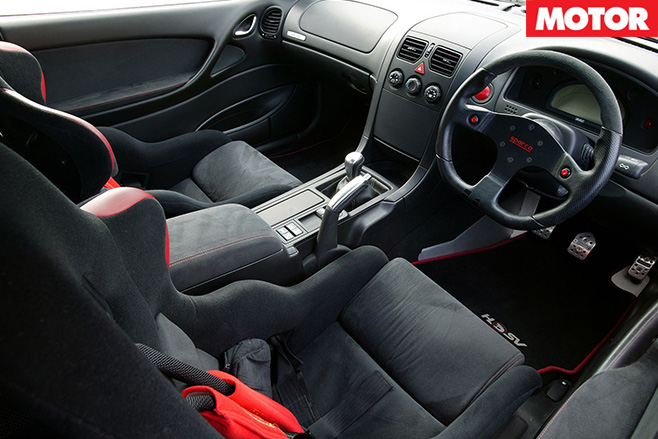
Maybe, but I kind of hope not, because I’d hate to think that I’ll never have the chance to own a HRT 427 simply because somebody blabbed about pricing too early in the game.
And as for the accountants of the world: Damn them all to hell.
What stands out?
Sharp pricing places the ix35 among the least costly family-sized SUVs, and it comes with a five-year warranty. You can choose two-wheel drive or all-wheel drive, and unusually for a car like this there is a full-sized spare tyre. The blue-lit interior is something different.
What might bug me?
Filling her up: the ix35 uses more fuel than many similar cars.
What body styles are there?
Five-door wagon only.The ix35 is available in front-wheel drive and in all-wheel drive. It is classed as a small SUV, lower priced.
What features do all versions have?
Rear parking sensors, cruise control, a touchscreen, and Bluetooth connectivity.Roof rails. These act as mounting points for the optional roof racks. (If you want to carry something on the roof, you also need the racks.)Electronic stability control, which can help control a skid. All new cars must have this feature.Six airbags: two directly in front of the driver and front passenger; side airbags to protect the upper body of front occupants; and head-protecting curtain airbags covering front and rear side windows.A full-sized spare tyre.The ix35 is covered by a five-year, unlimited kilometre warranty.
Which engine uses least fuel, and why wouldn’t I choose it?
The 2.0-litre turbo diesel is the most frugal engine in an ix35, with consumption of 7.2 litres/100km in official tests (city and country combined). It is also the most powerful engine.One reason you might not choose the diesel is price: it is available only in the more expensive Elite and Highlander models, where it still costs more than either petrol engine.The 2.0-litre petrol engine is rated at 8.4 litres/100km with a six-speed automatic transmission – the configuration most buyers choose. It is the only engine available in two-wheel drive versions.The 2.4-litre petrol engine has about 15 per cent more power than the 2.0 petrol in most situations.Both the diesel and the 2.4 petrol come only with a six-speed automatic gearbox. The 2.0 petrol is also available with a six-speed manual.
What key features do I get if I spend more?
The least costly ix35, the Active, comes only in front-wheel drive form and with the 2.0-litre petrol engine. Wheels are 17-inchers in steel, with plastic wheel covers to make them look better.The Elite too is available in front-wheel drive with that engine. But here you can also choose all-wheel drive, with either the 2.4 petrol engine or the turbo-diesel.With any engine, the Elite rolls on lighter and more stylish aluminium alloy wheels. It has a leather-wrapped steering wheel, which carries answer and hang-up buttons for a phone (these are on the dash in Active models). There’s a reversing camera, satellite-navigation, and a 7.0-inch colour touchscreen (the 5.0-inch screen on the Active is monochrome).Headlamps switch on automatically at night, while dual-zone air-conditioning allows different temperatures to be set for each side of the cabin. Seat trim adds some fake leather to the Active model’s cloth. Smart key entry allows you to leave the key in your pocket or handbag, and simply grab a front door handle to unlock the car.The most expensive i30, the Highlander, is available only in all-wheel drive, with either the 2.4 petrol engine or the turbo-diesel. Wheels grow to 18 inches, fitted with tyres of a slightly lower profile, sharpening steering response on hard surfaces. In addition to the Elite’s features, there is a sunroof covering the front and rear occupants, full leather-look trim (some of it is fake leather), exterior mirrors that fold electrically when parked, heated front seats, and windows tinted to reduce sun penetration.
Does any upgrade have a down side?
Choosing all-wheel drive adds some weight (which contributes to higher fuel use) and raises service costs slightly. The diesel engine costs about 40 per cent more to service than the petrol models.The bigger tyres on the Highlander could cost more to replace. White is the only standard colour, with all others costing extra.
How comfortable is it?
The cabin has some hard plastic finishes that detract from its appeal: the upper dash, and plastics on the doors, for example. In other places, though, the ix35 is presented more elegantly, such as the faux leather cover with stitching over the centre console.The touchscreen on the Active is small but it is high on the dash where it is easy to see and operate, as are the larger screens on Elite and Highlander models. Door-mounted window switches and air-conditioning controls fall easily to hand.Vision out the front is good, too, although the smaller rear side windows reduce vision when looking over your shoulder for other cars.Seats on the ix35 are comfortable but don’t have much side support, so that you might find yourself sliding around through corners.The suspension on the ix35 is relatively firm (for more stable cornering) but not so firm that it jars occupants over bumps.Noise from airflow and the tyres is well supressed, with the engine the biggest source of unwanted sound. The 2.0-litre petrol engine, in particular, can be quite noisy if you drive it hard.
What about safety?
There is good airbag coverage on the ix35.A reversing camera is not available on the Active, but it is standard on the Elite and Highlander.(To see a full list of the safety features on any model, select the car and look under the features tab. Safety-related features are listed in red.)The Australasian New Car Assessment Program (ANCAP) has rated the ix35’s safety at five stars.
I like driving – will I enjoy this car?
The 2.0-litre engine provides enough power around town but it is less convincing at freeway speeds, where it can struggle when climbing hills. The extra oomph of the 2.4 brings better response and this engine feels more relaxed. The six-speed automatic does a good job of choosing the right gear, kicking down quickly when required.If you appreciate more performance, the diesel engine is a good option. It feels much more powerful than either petrol engine in most situations, something particularly noticeable when climbing.Push fast into a tight corner and the tyres on the Active and Elite models reach their limits quickly. The bigger tyres on the Highlander inspire more confidence.Steering is very light, and while the ix35 is quick to respond when you turn the wheel, it does not give much feedback as to what’s going on at ground level.All-wheel drive versions of the ix35 are light-duty off-roaders designed predominantly for on-road use. The full-sized spare tyre adds confidence to try tracks and trails, but the suspension design and low ride-height limit its ability.
How is life in the rear seats?
The ix35 is one of the smaller family SUVs, so leg room is tight for adults and there are no rear air-conditioning vents. Head room is good, though.While the overall dimensions here are better suited to children, the rear windows get shorter towards the rear of the car. This gives it a stylish look from outside, but hinders side vision for small children.The centre rear seatbelt pulls out of the roof, and therefore requires users to do up two buckles.
How is it for carrying stuff?
The boot is relatively short but it has a large opening, and the rear seat backs split-fold in a 60/40 configuration.There’s also a small storage binnacle in the far right corner of the boot. A retractable hook behind the rear seats is a neat touch for carrying a shopping bag or two.Pockets in all four doors provide extra space for odds and ends, with the front ones big and including a large space for a bottle. The ix35 is rated to tow 1600kg.
Where is it made?
All ix35s are made in South Korea.
What might I miss that similar cars have?
Rear air-conditioning vents (on the Honda CR-V and Ford Kuga, for example).Active safety features, including automatic emergency braking and lane departure warning (standard on some Mazda CX-5s, Honda CR-Vs and Subaru Foresters, for example).Other alternatives include the Volkswagen Tiguan, Kia Sportage, Nissan X-Trail, and Toyota RAV4.
I like this car, but I can’t choose which version. Can you help?
The ix35 Elite 4WD picks up plenty of features that justify the modest price increase. The 2.4-litre engine, reserved for all-wheel drive models, is a decent step up on the 2.0 engine.
Are there plans to update this model soon?
The Hyundai ix35 arrived in 2010 as a replacement for the Tucson, which had been on sale since 2005.The 2015 ix35 was superseded in August 2015 by an all-new model. However the new car reverted to the Tucson nameplate, and has gone on sale as the Hyundai Tucson.
What stands out?
The Hyundai i20 is designed to get you around a city without making a meal of your savings. It is one of the least costly new cars on the market but comes with a five-year warranty. Steering is light, and it is easy to park.
What might bug me?
Working to keep up with traffic. The engine needs a good prod from the accelerator to provoke much response from the four-speed auto gearbox. It’s more effective if you choose the six-speed manual and change gears yourself – but you’ll be doing a lot of that.The tinny sound from the speakers: most city cars have better audio systems.
What body styles are there?
Three-door hatch and five-door hatch.All i20s drive the front wheels. The i20 is classed as a light car, lower priced.
What features do all versions have?
Bluetooth connectivity, which allows you to make phone calls wirelessly and stream music from your phone to the car.Mirrors that fold at the press of a button, to reduce the chance of damage from other cars when parked on narrow streets.A trip computer, which predicts how far you can drive on the remaining fuel.Six airbags: two directly in front of the driver and front passenger; side airbags to protect the upper body of front occupants; and head-protecting curtain airbags covering front and rear side windows.There’s also a full-sized spare tyre.Electronic stability control, which can help control a skid or slide. All new cars must have this feature.All i20s are warrantied for five years, with no limit on distance.
Which engine uses least fuel, and why wouldn’t I choose it?
A 1.4-litre four-cylinder petrol is the only engine on offer. It is more fuel-efficient with the six-speed manual gearbox, with claimed average consumption of 5.3 litres/100km.Most buyers prefer to let the car choose the gears, and order the four-speed automatic. With that gearbox the car uses about 10 per cent more petrol.
What key features do I get if I spend more?
The least costly i20 is the Active three-door. Spending more for an Active five-door gets you the two additional doors.Spend more again for an i20 Elite, which is only available as a five-door, and you get a leather-wrapped steering wheel with buttons for adjusting the sound system. There are rear speakers, for better sound throughout the cabin.The Elite also has nicer looking wheels made from aluminium alloy, and foglights at the front. (Legally, the foglights may be used only in foggy or wet weather: they are designed to help you see in fog and make your car more visible to other drivers.)
Does any upgrade have a down side?
No, except that white is the only standard colour: the other five all cost extra.
How comfortable is it?
The i20 is more about saving you money than pampering you. Seats, for example, are flat and don’t have much side support, so that even corners around town can have you bracing with your legs to resist sliding around. And the materials and finishes – such as the grainy dash plastics and shiny metal-look sound system and buttons – look cheap.However, the major controls are easy to find and use.The sound system in Active models has speakers only at the front, and the sound they produce does not have much depth or vibrancy. Even in the Elite, with its additional pair of speakers, the audio quality is best suited to talkback radio.That’s not helped by the engine, which gets noisy if you drive it hard. And that is something you have to do frequently, especially when the terrain is hilly.The i20 is small on the outside, and therefore it is easy to park. And it feels light to steer and quick to manoeuvre.
What about safety?
Six airbags and stability control help the i20 reach a good level of occupant protection. It also has seatbelt warning lights for all five seats.(To see a full list of the safety features on any model, select the car and look under the features tab. Safety-related features are listed in red.)The Australasian New Car Assessment Program (ANCAP) has awarded the i20 its maximum five stars for safety.
I like driving – will I enjoy this car?
The 1.4-litre engine doesn’t have much power and you don’t have to drive it far to realise that. You often need a hefty push on the accelerator pedal to keep up with traffic or accelerate to freeway speeds.That is not helped by the automatic transmission, which only has four ratios to choose from.Keen drivers will get more pleasure from the manual gearbox, which is light and easy to use. The additional gear ratios help keep the engine in its happiest place.The i20’s suspension is bumpy around town at low speeds, and big bumps (such as a pothole or speed hump) jar into the cabin.The steering, while light and accurate, provides little feedback, and so it does not inspire confidence at open-road speeds.
How is life in the rear seats?
It’s okay for short trips. Knee room is tight, especially if those in the front are stretching out. For such a small car, head room is not bad.There is no more space in five-door versions than in the three-door, but they are easier to get in and out of. The three-door demands that you flip the front seat forward and squeeze between it and the door pillar.You can’t even wind down the windows in the back of the three-door – and there are no rear air-conditioning vents.
How is it for carrying stuff?
The boot is shallow but wide, so it will swallow a pram or some weekend-away bags. Seatbacks fold 60/40 to accommodate bulky items.There are a couple of hooks in the boot for shopping bags.
Where is it made?
All i20s are made in India.
What might I miss that similar cars have?
Active safety features, such as automatic emergency braking or lane departure warning. These are options on the Mazda2.Built-in apps that help you to stream music via your smartphone. The Mazda2 and Holden Barina have these.A reversing camera. This feature is standard on the Honda Jazz and Toyota Yaris, and is fitted to more expensive versions of competitors such as the Mazda2, Volkswagen Polo, Kia Rio and Renault Clio.An automatic transmission with six or more ratios. Those on many other light cars have at least six gears, which boosts performance and fuel efficiency.Cruise control. It’s less relevant in the city than on trips out of town, but it can be helpful to set a speed that the car will maintain. Other tiny hatchbacks such as the Mazda2, Volkswagen Polo, Toyota Yaris, Holden Barina and Kia Rio offer this.Cars you might also consider include the Nissan Micra, Ford Fiesta and Suzuki Swift.
I like this car, but I can’t choose which version. Can you help?
The i20 Active five-door. Value is the key selling point with the i20, so while the Elite has some worthwhile features, the Active is better buying. We’d pay extra for the rear doors because it should make the car easier to sell when you want to trade up.
Are there plans to update this model soon?
The i20 has reached the end of its model life. The current model went on sale in 2010 and has received updates in most years since then.Hyundai has shown off an all-new i20 but has since said it will not come to Australia. Instead, it replaced the i20 from the third quarter of 2015 with a low-price variant of the bigger Hyundai Accent. That is powered by a 1.4 litre engine – the same size as the i20 engine – with the option of a continuously variable (CVT) auto gearbox.
The Holden Cascada is the convertible version of the Astra – the Opel sourced hatch has just made a return to the Lion brand’s line-up in three-door GTC, GTC Sport and VXR form.
The Holden Astra and Cascada are the first of 24 Opel models set to join the Holden range over the next five years, and the Cascada provides a welcome alternative to the small (and medium) European convertibles already on sale.
WHAT IS IT The Holden Cascada is a soft-top convertible version of the fourth-generation J-Series Astra.
The Cascada’s mechanical makeup is similar to its coupe siblings, the GTC and GTC Sport. It uses the same new-generation 1.6-litre direct injection turbo four cylinder engine, but is offered only with a six-speed automatic transmission. Just as in the Astra, this means outputs are reduced to 125kW and 260Nm (compared with the manual transmission Astra).
A pair of well-equipped variants is offered – the basic Cascada and a run of 50 Cascada Launch Edition versions, with 20-inch alloy wheels and Nappa leather among the upgrades.
WHY WE’RE TESTING IT Wheels was given a drive of the 2015 Holden Cascada ahead of its imminent arrival in showrooms.
MAIN RIVALS Renault Megane CC and Volkswagen Golf Cabriolet
THE WHEELS VERDICT Compared with the Astra, the Holden Cascada trades performance in search of top-down fun. Because it’s six-speed automatic only, the 1.6-litre turbo is detuned 22kW and 20Nm, and the Cascada piled on a lot of weight in the transition from Astra coupe to convertible – it weight more than 1700kg – which mean it’s no star performer.
The Cascada is built on the same platform as the Astra, and has its HiPerStrut front suspension. It’s a decent handler.
The powered soft top is quick (it takes 17 seconds to open/close) and can be operated during driving, at up to 50km/h.
PLUS: Connected steering and capable chassis; well-equipped; spacious cabin MINUS: No shift paddles; weight hurts agility, performance and economy; cabin design far from cutting edge
THE WHEELS REVIEW DRIVER appeal, in the Holden Cascada, comes from dropping the top on a nice day rather than the drive experience, but fortunately that’s just as true of the small cabrio class as a whole, including rivals such as the Volkswagen Golf Cabrio and Renault Megane CC.
Similar to the Holden, they’re heavier and less powerful than the hatches they’re derived from, come only as autos, and ultimately place frills ahead of thrills.
But the Astra-based cabrio has aces. The Cascada offers more performance than the atmo Megane CC, thanks to a new-gen 1.6-litre direct injection turbo four shared with the Astra GTC, and while it’s not as swift as the Golf Cabriolet, it’s better equipped and has more space in the front, back, and the boot.
Meanwhile, the Cascada is much less costly than the likes of the BMW 2 Series and Audi A3 convertibles, at $41,990, or $44,990 for the limited (to 50) Launch Edition.
The engine offers 125kW and 260Nm and is paired with a six-speed automatic transmission. A hefty 1744kg kerb weight means performance is only okay – the 9.9sec 0-100km/h claim feels right – and the engine’s note, though refined, does little to make it feel any quicker.
The porky kerb weight conspires to remove agility and involvement compared with the coupe variants, even though the Cascada shares their clever HiPerStrut dual-axis front suspension, which can be sensed in the steering’s connected feel and the chassis’ agreeable country-road manners.
Ride on the Gold Coast hinterland roads of our test was taut, but with enough elasticity to smother most bumps on the standard 18-inch wheels and tyres. It’s a bit busier at low speeds, especially on the Launch Edition 20s, which also allow in more NVH.
The Cascada’s roof is of the folding fabric variety, and it operates quickly, powering open or shut in 17sec at road speeds of up to 50km/h. When stowed, the roof reduces boot space by 100 litres, to 280L. There’s some scuttle shake, as there is in almost every cabrio, though windscreen wobble isn’t too obvious.
The interior will be familiar to anyone who has driven a new Holden Astra – or a 2012 Opel Astra. The multimedia screen looks dated and proved a less-than-intuitive interface. However, LED ambient lighting adds class, and a heated steering wheel and front seats, dual-zone climate control and a reversing camera are standard.
We’re not sure why the Cascada weighs as much as it does, and gear shift paddles would inject a bit more involvement. However, despite suffering its share of small-cabrio issues, the Cascada looks set to lure value-conscious Euro-cabrio buyers away from the pricier prestige players.
SPECS Model: Holden Cascada Engine: 1598cc 4cyl, dohc, 16v, turbo Max power: 125kW @ 4750-6000rpm Max torque: 260Nm @ 1650-4500rpm Transmission: 6-speed automatic Weight: 1744kg 0-100km/h: 9.9sec Fuel economy: 7.5L/100km (ADR) Price: $41,990 On sale: Now
Ah, the solitary life of a test driver. They’ll try and tell you driving around churning out lap after lap is a chore, that it’s really no fun at all.
That’s rubbish. For our money, the keys to an FXX K and an empty Fiorano is surely about as good as days come.
The footage here is from serial supercar filmer NM2255 who spent a day camped out at Ferrari’s test track capturing the incredible sound of the FXX K’s 6.3-litre V12.
According to Ferrari, the FXX K’s slick tyres, extra power and increased downforce add up to a five-second-a-lap advantage over the base LaFerrari, lapping in 1min14sec.
That’s quick, but to put it in perspective, Michael Schumacher’s lap record, set in Ferrari’s 2004 F1 car, stands at 56seconds.
If you like what you see and are thinking of getting one, sadly all 40 cars are accounted for.
Get your free weekly report from the world of fast cars – subscribe to the MOTOR newsletter!
Chances are this car will need no introduction.
Most of you will be familiar with the story of the stillborn Holden Monaro HRT 427, but for those new to the game, it was basically a Monaro given the Porsche GT3 treatment, and then some.
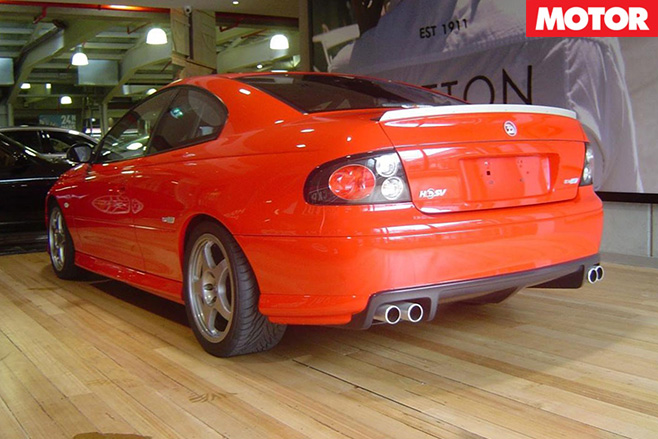
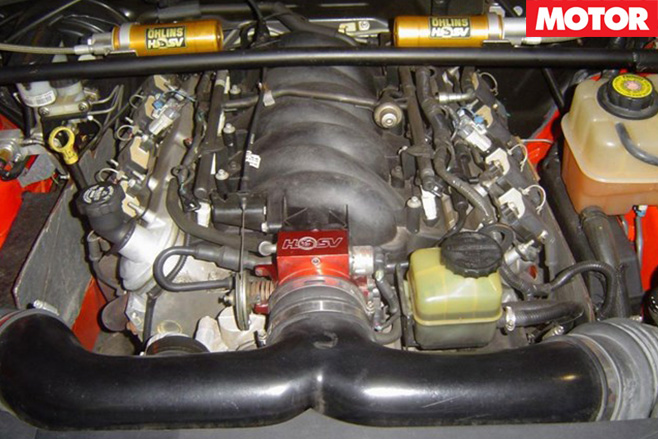
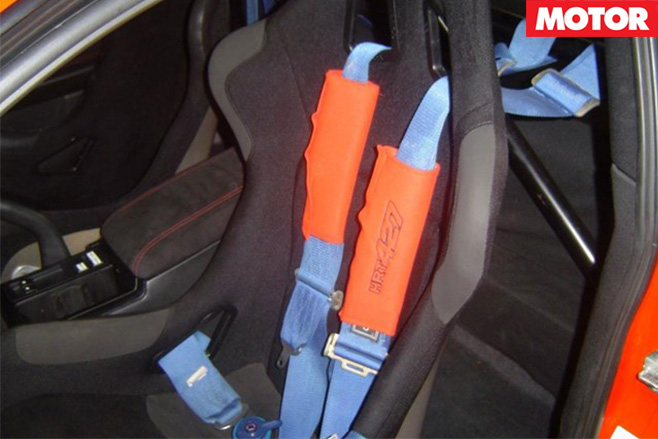
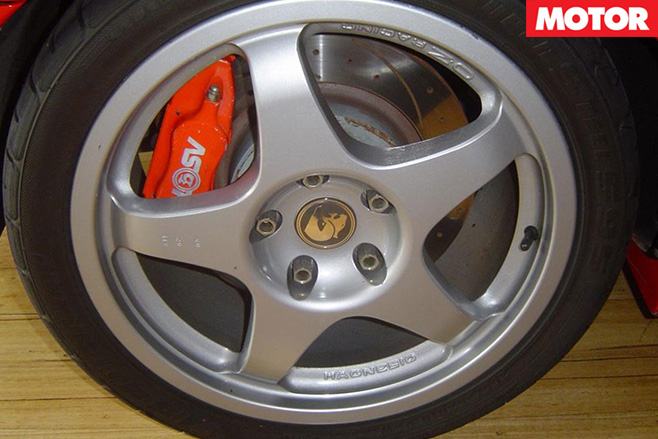
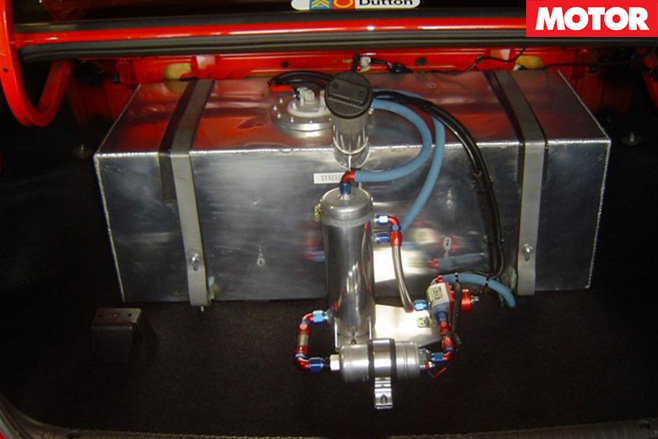
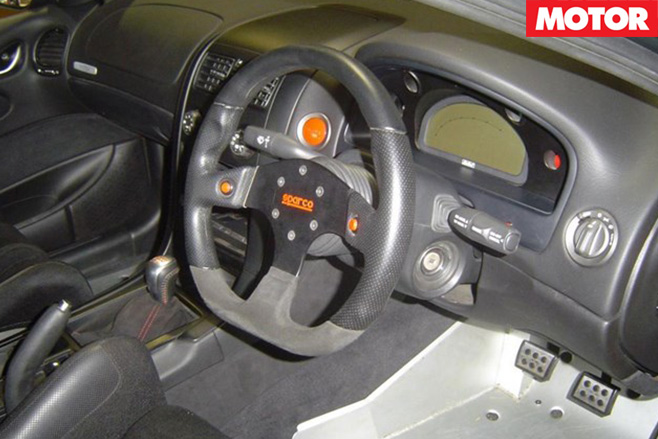
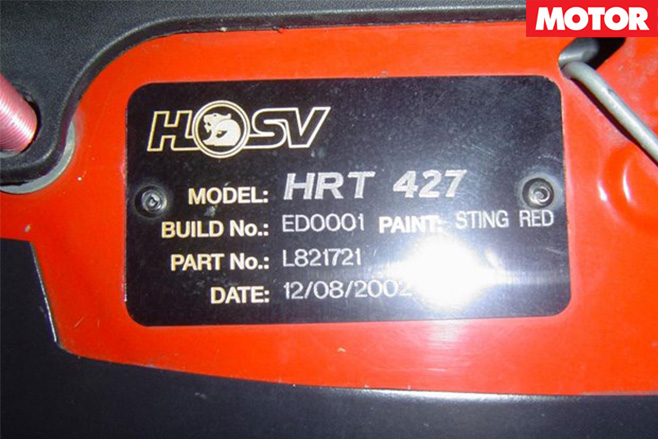
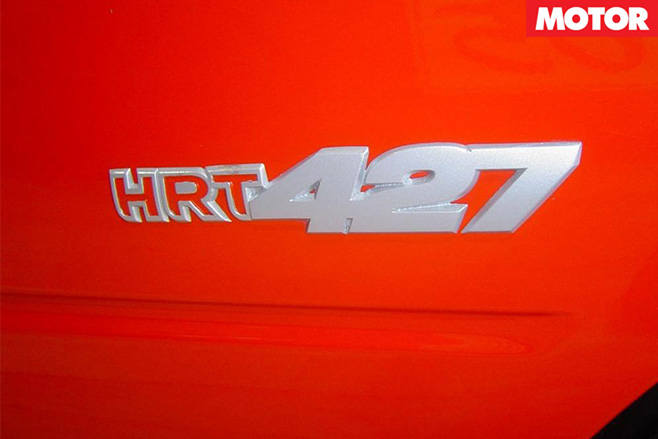
You can find the ad here.
Get your free weekly report from the world of fast cars – subscribe to the MOTOR newsletter!
THE nation’s love for high-riding SUVs appears to know no bounds, with booming sales in the sector in April pushing traditional sedans and wagons to the bottom of buyers’ showroom shopping lists.
The Australian new-car market grew to 81,656 sales in April, up 1.2 percent compared with the same month last year according to VFACTS data released today, with SUVs such as the new Mazda CX-3 and even the ageing Toyota Prado off-roader making up more than half of the top 10 best-selling models.

Helping to drive the market were mum and dad buyers, who are now eating up anything with a higher ground clearance in huge numbers. SUV sales in the private buyers’ segment were up 25 percent in April compared with the same month last year. Even fleet and rental buyers are feeling the love, with SUV sales up 17 percent for the month.
By comparison, sales of traditional passenger cars fell 10.3 percent. SUV sales now account for 36.3 percent of Australia’s new-car purchases, with passenger cars accounting for 42.9 percent. If the trend continues, SUV sales will soon overtake passenger car sales.
Despite the SUV rush, city hatchbacks rounded out the top three spots on the April sales chart.
The Toyota Corolla, a traditional fleet car favourite, posted 3238 sales, down 2.3 percent, for the month.
Despite the slight slide, it was more than enough for the Corolla to take the monthly crown as the best-performing model, with daylight between it and the second-placed Mazda 3 (2365, down a big 22 percent), with the Hyundai i30 hatchback a close third (2298, up 1.2 percent).
A sore month for the Holden Commodore saw it slump more than 16 percent to 2043 sales, down more than 16 percent but enough to keep it in fourth spot.
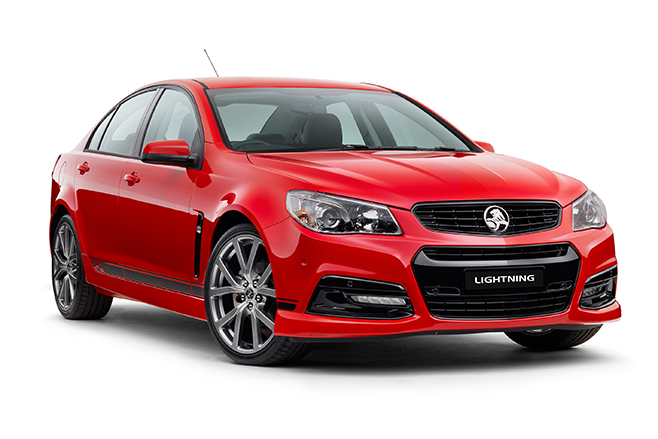
Mazda’s strongest-selling model, the CX-5 soft-roader, sits comfortably in the top five as Australia’s best-selling SUV with 1868 sales, a gain of more than 21 percent for the month.
The Commodore’s pain was a reflection of the overall performance of Australian-made cars, which now account for only eight out of every 100 new-car sales. Its locally made stablemate, the Holden Cruze, only attracted 1031 buyers, down almost 30 percent on April last year.
The Ford Falcon lost the strong momentum from a strong March, falling to 446 sales for April, down almost 32 percent over April last year. However, while buyers steered away from Falcon-badged sedans, they jumped into Falcon utes, with sales of the load-lugger hitting 265 for the month, an almost 43 percent gain over April last year. Likewise, the Ford Territory SUV posted another solid month, pegging 802 sales and pushing numbers up more than 15 percent.
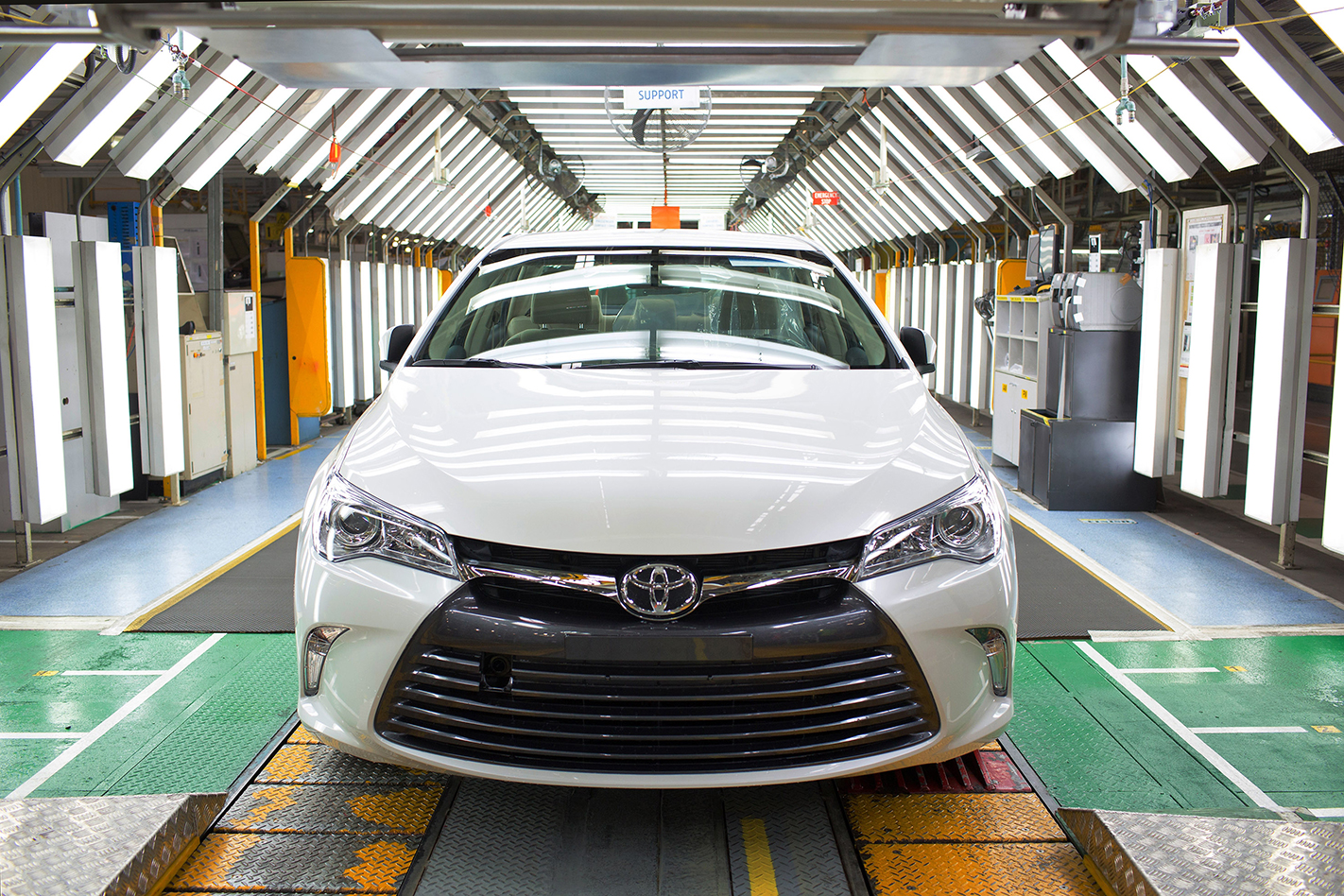
Buyers lost favour with another normally strong top 10 contender, the locally made Toyota Camry sedan, in the face of a new model due in June. It sold only 1141 units, down 7.6 percent for the month. It’s V6-engined cousin fared worse, with the Aurion pegging only 241 sales, down more than 22 percent.
Toyota was the top-selling brand for the month, snaring 28.5 percent of the market with 15,299 sales buoyed by strong interest in its Kluger seven-seat SUV. Mazda placed second with 8068 sales, up 15.3 percent, as its newly introduced CX-3 added to strong SUV sales.
Hyundai held out Holden to hang on to third place despite a 5.5 percent slip to just 7210 sales for the month, compared with the Lion Badge’s 7072, down almost 12 percent on April last year.
Ford managed fifth on the brand leader’s board, although take away its 2200 Ranger trade ute sales and it would have only have just slipped into the top 10.
Malaysian carmaker Proton managed to sell a dismal 20 cars in April, with year-to-date sales for the brand slumping almost 70 percent compared with the first four months of 2014. Chinese ute and SUV maker Great Wall did worse, managing only 12 sales for the month and managing to be outsold by British luxury sports marque Aston Martin with 13.
Speaking of luxury marques, the top end of town is doing very well, thank you. Adding to Aston’s good month, Ferrari sold 17 cars in April, Lamborghini sold 16, Maserati 39, and McLaren 6.
Even higher up the money tree, Rolls-Royce posted six sales, while Bentley had a modest eight added to its books.
Sign up here to receive the latest round-up of Wheels news, reviews and video highlights straight to your inbox each week.
The trouble with rallying is there is really nowhere to go if you make a mistake.
You might get lucky and find a handily placed escape road or soft ditch to land in, but more often than not you’re going to hit something hard and unforgiving.
Case in point, this footage from the recent Rally Ronde de La Durance. The crew of this Citroen C2, Yoan Droumenq and Gabriel Durand, are slightly off line over the preceding crest, which lightens the rear and pitches them into the right-hand bank.
This launches the car into the air where it heavily impacts a tree, thankfully with the empty rear of the car, rather than the front where the occupants are.
Thankfully, both crew members escaped shaken but unharmed, but the same can’t be said for the poor little Citroen.
Get your free weekly report from the world of fast cars – subscribe to the MOTOR newsletter!
