
NEW car sales dropped 2.0 percent in Australia in 2014, but for the seventh time in eight years exceeded one million units in the face of gloom over the end of local manufacturing.
According to official VFACTS figures released this morning, Australians bought 1,113,224 new vehicles last year, only 23,003 fewer than the 2013 tally, which was a record.
Toyota was comfortably the top-selling brand again, despite a 5.2 percent drop, shifting 203,501 vehicles – about twice as many as Holden (down 5.3 percent to 106,092), Mazda (down 2.4 percent to 100,704) and Hyundai (up 3.1 percent to 100,011).
Ford dropped further behind its rivals, shedding 8.6 percent to 79,703 units, but was spared the ignominy of dropping lower than fifth by declines for both Mitsubishi (down 4.0 percent to 68,637) and Nissan (down a massive 14.0 percent to 66,025).
Australia’s love affair with SUVs continues unabated, sales increasing 5.6 percent while passenger car sales fell 6.1 percent and light commercials dropped 3.2 percent.
F1: Ricciardo tops Autosport driver list
AUSTRALIAN golden boy Daniel Ricciardo has been named the world’s leading race driver by Britain’s Autosport in its recently published ranking, ahead of new Formula One champ Lewis Hamilton.
The rankings show the high regard in which the West Aussie is held in F1 circles after a year in which he won three grands prix and finished third in the world championship in a car widely conceded as no match for the Mercedes-engined machines.
But how seriously do we take the Autosport list of the top 50 drivers?
We Aussies may want to believe in its authenticity, and it is relatively easy to mount an argument in favour of Ricciardo’s entitlement to #1. A dash of jingoism helps, but he was spectacular and largely mistake-free all season long.
Equally, there are many reasons why we should overlook the reality that Hamilton is a prize prat, concentrate on his talents in the car, and give him due credit for walloping his team-mate in identical equipment.
Another world champion, the McLaren-bound Fernando Alonso, was ranked third in the world for 2014.
Two other Australians made the top 50.
Queenslander Will Power, the first Australian to win an IndyCar title, was placed eighth, with V8 Supercars dominator Jamie Whincup 21st.
You’ll have to ask the Autosport panel of experts how they manage to fairly compare the performances in 2014 of drivers in such diverse categories as F1, IndyCars, WTCC, WEC, NASCAR, WRC, V8 Supercars, GP2, world rallycross, etc.
Mark Webber, in his first year out of F1 and on his return to sports cars, wasn’t included in the top 50.
F1: Lotus unconfirmed in slim 2015 entry
HIGHLIGHTING the confronting issues sweeping Formula One, a shallow 16-car grid is possible this year with Lotus still to confirm its participation in the 2015 World Championship.
The British outfit is the glaring “subject to confirmation” inclusion in an updated FIA entry list announced on December 30.
Though Lotus had earlier locked in drivers Romain Grosjean and Pastor Maldonado for 2015, the unconfirmed status of its entry underscores the hurdles some teams are facing in securing budgets to contest the coming season.
The loss of tail-enders Marussia and Caterham last season (although the latter turned up for the final race after sending the begging bowl around for contributions) highlighted the crisis facing F1, a pain exacerbated when Force India, Lotus and Sauber went public to push for more equitable distribution of F1’s wealth.
In a lavish display of unwarranted optimism, Marussia and Caterham have also been listed on the FIA entry as “subject to confirmation”.
Marussia in particular must be viewed as wishful thinking given that much of the team’s assets have been flogged off to partly appease debtors.
Ferrari, which was Marussia’s engine supplier, is owed $US25.8 million ($A31.9m) while McLaren, which had a technical partnership with the defunct team, is staring at a write-off of $US11.0m ($A13.6).
Marussia’s administrator, FRP Advisory, says there is little chance of reviving the team, but that the factory in Banbury will be acquired by Gene Haas, the American entrepreneur with ambitions of entering F1 in 2016.
The administrator has scheduled another auction this month, with three 2014 cars set to go under the hammer.
Caterham’s future is also unclear, although administrators Smith & Williamson continue to seek a buyer capable of putting the team back on to the grid in 2016.
Bernie Ecclestone may well have choked on his muesli last week when he opened The Times to read Kevin Eason’s sobering story that right through F1 are deep concerns that a third team will follow Marussia and Caterham into the fiscal mire, leaving the grid of motor sport’s premier category at an almost desultory 16.
That team on the brink is most likely Lotus, although there are ominously threatening clouds hovering over Sauber and Force India as well.
Not helping avert a potential catastrophe is the cruel, selfish resistance by the healthy manufacturer-supported squads against changing the historically loaded, discriminatory process of allocating funds to the teams. The rich get richer; the poor take care of themselves.
Or not…
Updated Formula 1 2015 Entry List
| # | Driver | Team | Engine |
| 44 | Lewis Hamilton | Mercedes | Mercedes |
| 6 | Nico Rosberg | Mercedes | Mercedes |
| 3 | Daniel Ricciardo | Red Bull Racing | Renault |
| 26 | Daniil Kvyat | Red Bull Racing | Renault |
| 19 | Felipe Massa | Williams | Mercedes |
| 77 | Valtteri Bottas | Williams | Mercedes |
| 5 | Sebastian Vettel | Ferrari | Ferrari |
| 7 | Kimi Raikkonen | Ferrari | Ferrari |
| 14 | Fernando Alonso | McLaren | Honda |
| 22 | Jenson Button | McLaren | Honda |
| 27 | Nico Hulkenberg | Force India | Mercedes |
| 11 | Sergio Perez | Force India | Mercedes |
| 33 | Max Verstappen | Toro Rosso | Renault |
| 55 | Carlos Sainz Jr | Toro Rosso | Renault |
| 8 | Romain Grosjean | Lotus F1* | Mercedes |
| 13 | Pastor Maldonadou00a0 | Lotus F1* | Mercedes |
| 9 | Marcus Ericsson | Sauber | Ferrari |
| 12 | Felipe Nasr | Sauber | Ferrari |
| TBAu00a0 | – | Manor Grand Prix (Marussia)*u00a0 | Ferrari |
| TBAu00a0 | – | Manor Grand Prix (Marussia)*u00a0 | Ferrari |
| TBAu00a0 | – | Caterham* | Renault |
| TBAu00a0 | – | Caterham* | Renault |
* Subject to confirmation
Pikes Peak: Aussie back for third shot at fabled ’climb
AUSTRALIAN driver Jeff Denmeade is preparing for his third shot at the world’s most famous hillclimb, Pikes Peak in Colorado.
The towering Denmeade, who vies with George Miedecke as the nation’s tallest race driver, has entered a highly modified Honda Integra built by Sydney tuner BYP and will tackle the rarefied air of the 19.99km, 156-turn climb in partnership with Honda Racing USA.
The 93rd Running of The Broadmoor Pikes Peak International Hill Climb Brought to you by Gran Turismo – yes, that’s its official title – is set for Sunday, June 28.
Denmeade says the 550-horsepower pocket rocket BYP Integra lays claim to being the fastest front-wheel-drive car in Australia after its standout performances at the World Time Attack.
Depending on which class the organisers place the Integra, Denmeade believes he has a potential class winner.
“If we get to the top unscathed, our goal is to take the class win and become the fastest FWD car and fastest Honda car ever up Pikes Peak.”
Denmeade is looking forward to working closely with Honda Racing’s engineers from California and plans to be ultra-fit to better cope with the exertions of driving in the thin air at altitudes of up to 4300 metres.
At Honda’s request, the Integra will run under the car giant’s Acura premium brand in the US.
Denmeade last competed (in an Australian-built Honda-powered Skelta) at Pikes Peak in 2012, when he and co-driver Catherine Hammond snatched third in class, even though the weather turned on them within five km of the finish.
In 2010, when the ’climb still had dirt sections, Denmeade and Hammond contested Pikes Peak in Mitsubishi Evo Turbo, taking out the Time Attack Class and setting a new qualifying mark.
Under a new partnership with automotive entertainment giant GTChannel, fans will for the first time be able to watch Pikes Peak in-car footage through the official PPIHC YouTube Channel minutes after each machine crosses the finish line.
Enthusiasts can also follow Denmeade’s progress on facebook.com/BYPRacing
FORMULA RENAULT: De Pasquale signs with champion team
AUSSIE Anton De Pasquale’s career trajectory continues to look good following news that he has signed to compete in the 2015 Formula Renault 2.0 Eurocup with 2014 championship-winning team Koiranen GP.
The championship comprises 17 races across seven weekends in Europe and forms part of the elite ‘World Series by Renault’, regarded by many to be the toughest category at this level in the world, and the pathway for many Formula One aspirants.
De Pasquale, 19, had an almost perfect 2014 season, crushing all-comers to win the Formula Renault 1.6 Championship (now renamed Formula Renault 1.6 European Series), so it was important for him to advance to the next level.
Some Formula Renault 2.0 test days with three leading European teams gave De Pasquale and his handlers the info to make an informed choice of squads for the coming season.
Koiranen GP is a Finnish racing team based in the more weather-friendly Spanish city of Barcelona. More importantly it has an impressive roll-call of success, including in GP3.
Two recent graduates from the team are Daniil Kyvat, Dan Ricciardo’s new team-mate at Red Bull, and Carlos Sainz Jr, now at Toro Rosso for 2015.
“We are sure Anton will be a good challenger straight from his first year and we will give him all the necessary tools to fight in this very high-profile championship,” said Koiranen GP CEO Afa Heikkinen.
As usual, there are 146 pages of the latest performance car news and reviews for you to enjoy. Here are some of the highlights:
- Godzilla gets angry! Our man in Japan has all the details on the R35 GT-R.
- An all-Aussie stoush between Holden’s SS and SS V Redline and Ford’s XR6 Turbo and XR8 to crown the best local performance car.
- It’s a brave new world as we abandon petrol power with first local drives of the BMW i8 and Tesla Model S.
- We lift the lid on Ken Block’s wildest creation yet, the 630kW all-wheel drive ‘Hoonicorn’ Mustang.
- Want to hit 300km/h on the public road? Here’s how to do it and live to tell the tale.
- Mercedes-Benz and Bentley take on Rolls-Royce in the fight for the finest 12-cylinder limo.
- Inside Porsche’s secret stash of treasured one-offs, prototypes and race cars.
- Track testing ROH Wheel’s wild turbo and supercharged Toyota 86.
- Plus first drives of the new VW Polo GTI, Renault Sport Megane RS 275, Porsche 911 GT3, Lexus RC 350 and much more
Part two of our 2015 showroom special rounds out the cars due this year we’re most excited about.
Tesla Model X
WE’RE yet to see the final form of Tesla’s sub-$90,000 SUV. A version of the high-riding wagon was unveiled at the Los Angeles motor show in 2012 wearing a near-production face, but we’re not convinced that its gullwing doors will work in cramped garages.
However, we do know that when it does arrive, seven-seat practicality will combine with permanent all-wheel drive, and will even include a sports-honed powerplant option.
The Californian car-maker is yet to set a launch date in Australia, but for $ 6000 you can already reserve one. And did you know that buying one will support the Australian automotive industry? Melbourne-based car parts group Futuris supplies seats to Tesla for its Model S hatchback, and will add the upcoming Model X to its books.
WHY WE WANT IT Swaps petrol bowsers for power points
WHEN IT’S DUE HERE December 2015, from $90,000
Volvo XC90
VOLVO’S previous-generation XC90 launched in 2003 was one of the oldest models on the Australian market. This ground-up remake of the seven-seat SUV will underpin an all-new generation of vehicles for the Chinese-owned Swede, with a host of driver aids to help the car-maker achieve its ambitious goal of fatality-free driving by 2020.
The XC90 will be an exclusively 2.0-litre, four-cylinder line-up, and include a plug-in hybrid option that features a 300kW supercharged and turbocharged engine. Despite its performance bent, the petrol-electric XC90 will cover up to 40km in full battery mode and average fewer emissions than a Toyota Prius. Other drivetrain options include a twin-turbo diesel and a supercharged petrol.
Volvo’s biggest challenge, though, is matching the more luxurious XC90 to the current model’s narrow $70K-plus price.
WHY WE WANT IT 300kW hybrid range-topper offers guilt-free pleasure
WHEN IT’S DUE HERE May 2015, from $90,000
BMW M2
STEP aside, M4: this is the new performance king. With a turbocharged 3.0-litre straight-six in a more compact package than the brilliant M4, the M2 will be more affordable, more pined-after and, potentially, more fun.
It will use the same eight-speed M-DCT dual-clutch transmission from the M4, ditching the eight-speed auto used in the M235i, and the same suspension components and carbonfibre prop-shaft to feed an M-Sport LSD.
All the same, the M2 will suffer from ‘Cayman Syndrome’, with its power reigned in to keep the M3/M4 the top-dog of M cars. That still means a substantial 295kW and a 0-100km/h sprint in 4.2sec, but there won’t be a carbonfibre roof, meaning the weight difference to an M4 won’t be as much as you’d expect (as little as 15kg) so it doesn’t cut the M4’s lunch…
Yet the chassis’s ability and playfulness – already seen in the excellent M235i – won’t be held back, and neither will we.
WHY WE WANT IT? A successor to the brilliant 1M Coupe
WHEN IT’S DUE HERE December 2015, $110,000
Mercedes-AMG GT
FORMULA One champion constructor Mercedes is set to give its rivals another dominant display with the SLS-based GT.
The GT is smaller and lighter than the big daddy Gullwing and packs the new-gen 4.0-litre, twin-turbocharged bent-eight. Merc claims 0-100km/h in 3.8sec in the S version (the lower- powered models are not part of the Aussie launch line-up).
Merc is brimming with confidence, but carrying F1 silverware may not be enough to knock off the biggest rival of all, the car AMG has benchmarked for the GT: Porsche’s 911. For that, we may have to wait for a more potent Black Series version to knock the wind out of the next Porsche 911 GT3 RS.
WHY WE WANT IT A rear-drive German sports car that’s not a Porsche 911
WHEN IT’S DUE HERE March 2015, from $270,000
Mazda MX-5
IT LOOKS stunning. Brooding and low to the ground, the MX-5 is the benchmark for unadulterated rear-drive fun, with no performance gimmicks: it’s how it drives that explains why it exists.
The new model, which will be $10K cheaper than the current hardtop Down Under, is a whopping 105mm shorter overall, with the wheels pushed even further to the corners thanks to the wheelbase losing only 15mm. The fourth-gen MX-5 will also weigh little more than 1000kg.
Power from a 1.5-litre turbo, the only boosted member of Mazda’s SkyActiv engine family, is confirmed for Europe, but the US market demanded a naturally aspirated 134kW 2.0-litre four that’s also heading to Australian dealerships. God bless America.
WHY WE WANT IT Shows that enjoyment needn’t come at a cost
WHEN IT’S DUE HERE September 2015, $37,000
Mazda CX-3
AUSTRALIA is one of Mazda’s most successful markets, and this car is likely to become the brand’s next-best seller after the hugely popular 3.
Despite the CX-3 designation, this crossover is based on the new Mazda 2 platform and benefits from Mazda’s SkyActiv tech. That means it has the same 2750mm wheelbase, and will have to do much better than the 2’s small 220-litre boot if it’s to mix it with the 356-litre space in the Holden Trax. There will be 1.5-litre and 2.0-litre four-pots, mounted longitudinally to accommodate all-wheel drive: Mazda’s pushing the CX-3 as a proper SUV, not a soft-roader.
If the 2 is anything to go by, though, CX-3 will have a class-leading cabin and a raft of safety gear, including lane assist, radar cruise and auto emergency braking.
A shrunken CX-5 starting at around $20,000? Mazda could be on to something.
WHY WE WANT IT? Concentrated CX-5 should be a class act
WHEN IT’S DUE HERE November 2015, from $18,000
Porsche Cayman GT4
THE Porsche Cayman has finally landed one on big-bro 911.
The GT4 will be more than a mere successor to the Cayman R, one of the most sublime sports cars we’ve driven; it turns the wick up even more.
That means the GT4, with bewinged versions seen carving up the Nurburgring, will easily see off lower- spec 911s, packing stiffer suspension, carbon-ceramic brakes and more punch from its larger 3.8-litre flat-six than the most potent model now on sale, the 3.4-litre 250kW GTS.
Its expected 4.5sec 0-100km/h is set to send the 911 packing, yet big brother will bite back in 2016 with more grunt and turbocharging (see page 28), so it’s far from game over for the iconic sports car. All the same, the Cayman GT4 will be one hard car to pass, metaphorically and physically…
WHY WE WANT IT What could be better than a cut-price 911 GT3?
WHEN IT’S DUE HERE November 2015, $210,000
Toyota HiLux
WE USED to be a nation that rode on the sheep’s back: in 2015, we’ll ride on back of the Toyota HiLux.
The all-new eighth-generation HiLux is set to capitalise on a humble ute that outsells most passenger cars here, and with a new Nissan Navara and the Ford Ranger nipping at its heels, the HiLux turns it on with bigger dimensions, including a larger tray area and increased load capacity. There should also be new engines, as the current lumps aren’t compliant with Euro VI emissions regs, so need to be benched.
Making a comeback will be a seven-seat version complete with tin-top (like the old 4Runner). Called the ‘Fortuner’, it will be a cheaper ($48K), family friendly HiLux to battle Holden’s Colorado 7 and Ford’s Territory replacement, the Everest, for the family dollar.
WHY WE WANT IT The hardest worker in Australia gets tougher
WHEN IT’S DUE HERE November 2015, from $35,000
Mitsuoka Orochi
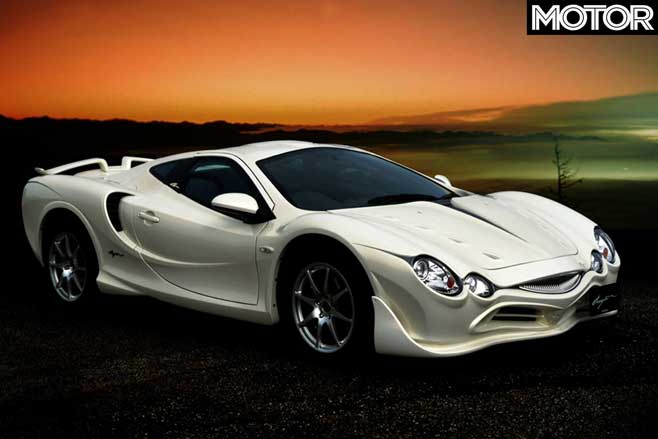
Styled by a blind man, the Japanese Orochi is neither beautiful, nor fast. Its 3.1-litre Toyota V6 – also used in Camrys and Hiluxes – needs every one of its 173kW to move the 1590kg Orochi. And by move, we mean, you’ll want to take the Stelvio in the downhill direction.
Gumpert Apollo
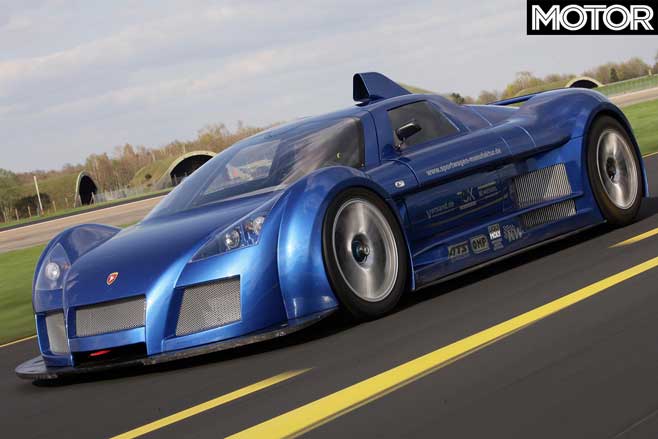
Made in Germany and looking like it’s having an allergic reaction to something, the wide and wild Apollo was basically a racecar with numberplates. A 588kW, twin-turbo 4.2-litre V8 was nestled in a spaceframe chassis, and clad in carbonfibre panels it weighed 1100kg.
Panoz Abruzzi
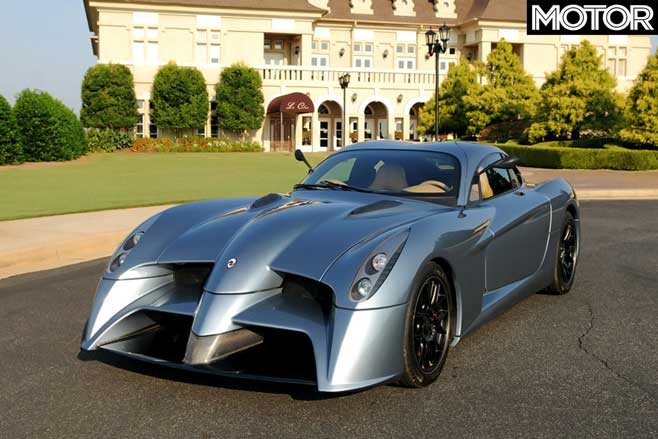
If a mummy rhinoceros and a daddy echidna loved each other very much, they might conceive something like the Panoz Abruzzi. Though visually-challenged, a 440kW front-engine V8 powered the rear wheels. Eighty one were built to celebrate 81 years of Le Mans.
Yamaha OX99-11
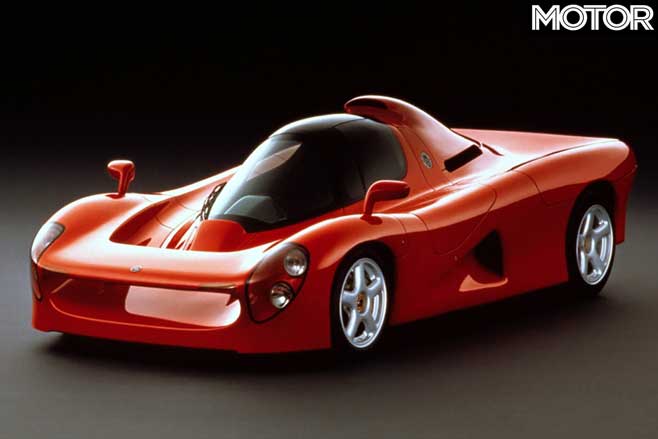
Ever wondered why sports bike makers (KTM aside) don’t have a crack at cars? Here is the evidence: a hammerhead shark on wheels. Still, it had a 3.5-litre V12, 300kW and weighed 1150kg. It went over budget and was never produced.
Caparo T1
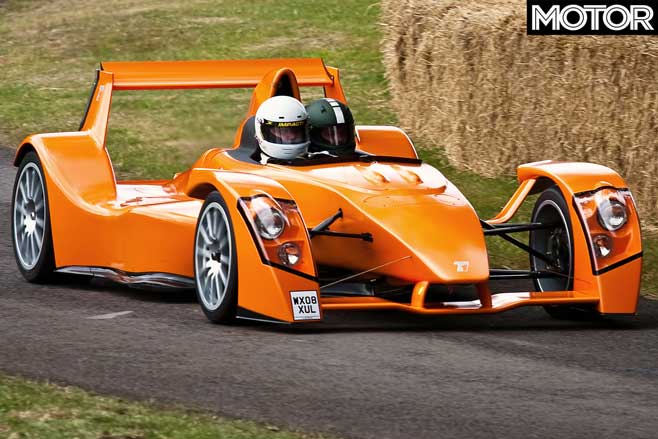
As close as you’ll get to an F1 car for the road, the goggle-eyed, insect-like T1 was built by engineers who worked on the McLaren F1. With a 3.5-litre, 429kW atmo V8 – in a chassis weighing 470kg – the berserk T1 was on fire (sometimes literally).
Lamborghini Egoista
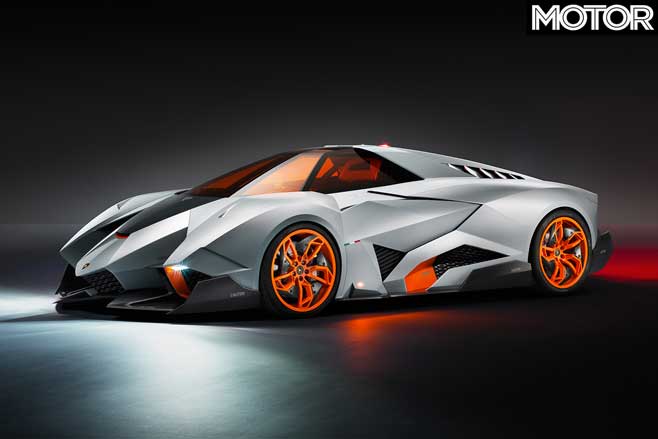
One-off, Gallardo-based, with a 447kW V10 and as gentle on the eyeballs as sulfuric acid. With styling modelled off a fighter jet, you’d ask Lamborghini to fit yours with an ejector seat in case you ever drove past somebody you knew.
Bugatti Centodieci
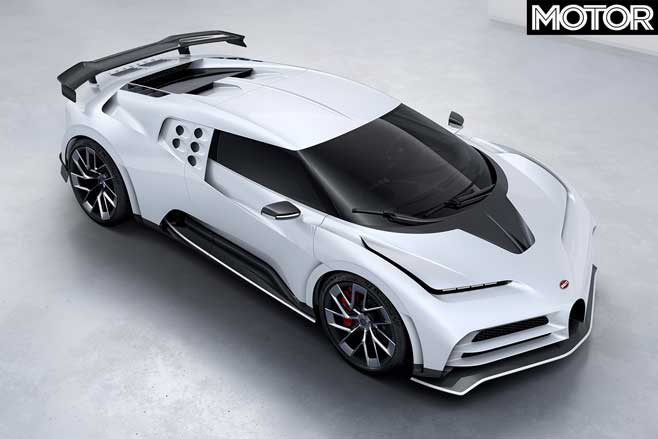
Have you ever seen an old car and thought: ‘I wonder how that’d look with a modern design?’ It works for the likes of the Mustang, but we wish Bugatti’s designers hadn’t thought the same thing about the epic EB110 – itself perhaps not the prettiest thing. Too many lines, and holes, make this a bit of a visual mess.
Covini C6W
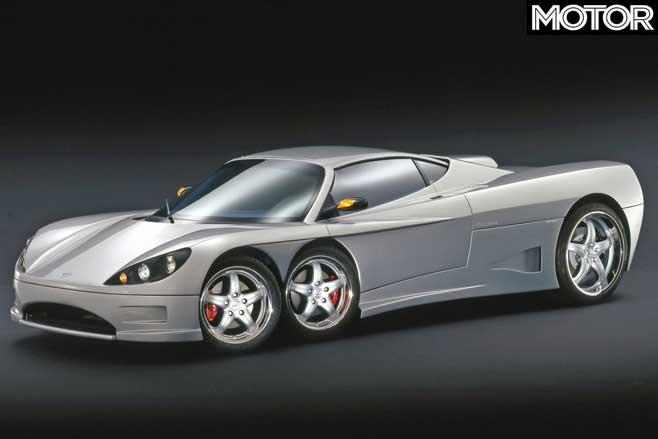
Looking like it just crawled out of a river in the Chernobyl exclusion zone, the Covini brings a little F1 Tyrrell P34 to the 21st century. Boasting a 4.2-litre V8 and rear-wheel drive, the Italians who built it say the extra wheels give more front-end grip and better braking. Who cares?
Weber Faster One
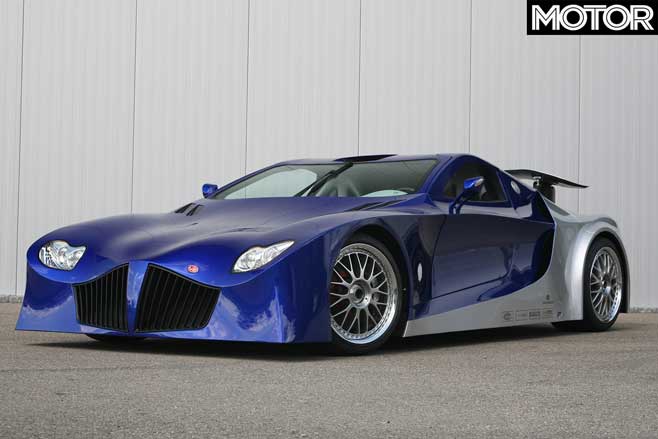
One for the ‘put-it-back-it’s-not-done-yet’ files, the Swiss Faster One might have a moustache, but its speed will boil the marrow in your bones. Weighing 900kg with a 671kW twin-supercharged LS7 V8 and AWD, it hits 100km/h in 2.7sec. Fast, but fugly.
Mansory Cormeum
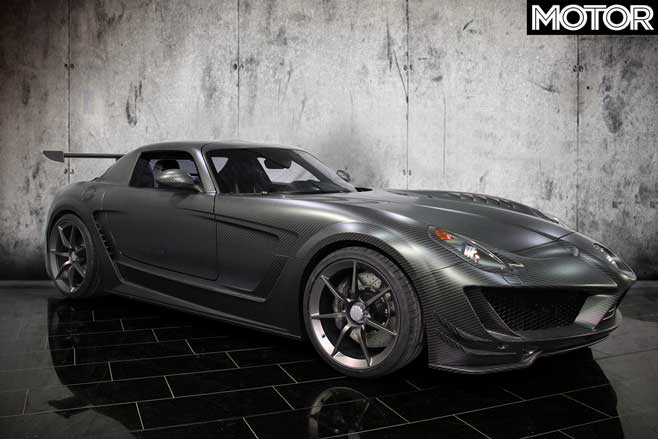
The Cormeum started life as a dignified Mercedes-Benz SLS AMG, then the Swiss tuning house Mansory worked their, er, magic and mostly ruined it. With a silly wing on the back, Ferrari 599 lights at the front and a one almighty grille, this one has a face only its mother could love. Fortunately just 15 SLS’s were ruined by Mansory so the chances of you ever seeing a Cormeum are slim.
Drive into our ultimate 2015 showroom. It’s going to be a very happy New Year!
Audi R8
THE German Lamborghini is one way to summarise the new R8, Audi’s arse-kicking supercar based on the new Huracan.
So take the best bits of the new Lambo – 5.2-litre V10, dual-clutch gearbox and lightweight aluminium construction – and drape it in a sharper yet evolutionary silhouette, with the laser LEDs that BMW and Audi have been wrestling each other over, and you have the most potent, salivating and awe-inspiring Audi sports car since the Auto Union cars of the 1930s.
Gone is the chrome gate for the manual gearbox: the new R8 only comes with a seven-speed R-tronic (dual-clutch).
The storming R8 will be offered in rear- wheel drive for the carryover 4.2-litre V8 used in entry-level versions. A Spyder will follow the coupe by 12 months.
WHY WE WANT IT An evolved combo of two brilliant cars, the current R8 and Lambo Huracan
WHENS IT’S DUE HERE October 2015, $300,000
Honda Civic Type R
THIS is the most powerful Type R ever, with even more grunt than the NSX R tuned by one Ayrton Senna. The UK-built ‘more than 206kW’ Civic ditches the traditional atmo engine for a turbocharged 2.0-litre four and a suit that looks like some kind of Japanese anime armour. Yet the warrior-like wings and addenda aren’t merely to woo wannabe racers; they’re for carving up the Nurburgring, with Honda out to beat the hot-hatch record of 7:54.36 held by the radio-less Renaultsport Megane Trophy R.
Forget lap times, though: the R will be one hard charger, with an adaptive chassis, six-speed manual only and trick ‘Steer Axis’ system to get all that power through the front treads. At around $45K, it makes the VW Golf R look plain boring.
WHY WE WANT IT It’s about time Honda sent a salvo to the Europeans
WHEN IT’S DUE HERE September 2015, $45,000
Ford Mustang
THERE will be no Falcon coupe, but this is even better. Ford doesn’t want its new global sports car to be mere ‘Boulevard Cruiser’ and our first drive of the new sharply styled yet still unmistakable Mustang in its native North America proved it’s on the money.
With an independent rear end for the first time and obligatory creamy 5.0-litre V8 soundtrack to back up its 324kW pun h, the Mustang is an everyman’s two-plus-two coupe. It’s red meat. It’s craft beer. It’s old- fashioned, and unashamedly so.
Aussies miss out on the excellent V6, but we’ll be able to buy the 2.3-litre turbocharged four-cylinder model as the entry-level ’Stang, priced around $45K. The bent-eight will start at about $ 60K.
WHY WE WANT IT Old-school cool, rear-drive V8, classic style
WHEN IT’S DUE HERE October 2015, from $45,000
Mercedes-AMG C63
ABOUT one in every 10 new Mercedes-Benz cars rolling out of Australian showrooms last year wore an AMG badge. Not only that, but when an even more potent version of the previous-generation C63 AMG, called the 507, rolled out, sales of the boggo C63 hit a brick wall as buyers sought bigger bang for their bucks.
This huge appetite for luxury performance means that when Mercedes-Benz brings its new-gen C63 here next year, it will only be the higher-output S version cranking out a stonking 375kW and 700Nm from its twin-turbo 4.0-litre V8.
The sedan version comes first, followed by the wagon, and if you haven’t already noticed, the new Affalterbach rocket also wears a different name (dropping Benz) that will spread across the bootlids of other AMG models.
WHY WE WANT IT One of the sweetest treats in the AMG stable
WHEN IT’S DUE HERE July 2015, $160,000
Land Rover Discovery Sport
LAND Rover’s expanded Discovery family will kick off with this entry-level five-seat model that will also offer an option to seat seven – a first for the premium SUV segment, the off-roader specialist says.
Like the Freelander it replaces, the Discovery Sport will still be a serious off-road athlete, and the base S is expected to kick off for less than $50K.
An urban-friendly crash mitigation system will automatically brake the car at speeds of up to 80km/h if it senses a collision is likely. At speeds below 50km/h it can avoid one altogether. Expect the Oz line-up to feature a mix of petrol and diesel drivetrains, six-speed manual and nine-speed auto, and drive to all wheels.
The smaller Discovery Sport precedes the fifth-generation Discovery due in 2016, which will have autonomous off-roading functions.
WHY WE WANT IT Country meets city wearing a crushed velvet tracksuit
WHEN IT’S DUE HERE May 2015, from $45,000
Citroen C4 Cactus
BENEATH its quirky skin, Citroen’s C4 Cactus hides a package designed with ease of use in mind.
The car’s innovative door skins house colourful ‘Airbump’ panels with ribbed surfaces, but full of impact-absorbing bubbles. They’re meant to bounce back from small impacts such as shopping centre dings, and can be swapped out for new ones if a dent or scrape is more serious.
Another area the circa-$20K Cactus stands out from the crowd is the deep dash. Citroen has sandwiched the front airbags into the roof, where they drop down like a curtain in a crash. Freeing up all that real estate on the dash allows Citroen to provide something we’ve not seen in a long time; a decent, easily accessible glovebox.
Cost- and weight-saving shortcuts, such as pop-out rather than powered rear windows, and door pulls instead of handles, don’t appear to cheapen the whole experience, either.
WHY WE WANT IT Citroen shows that cheap doesn’t have to mean cheerless
WHEN IT’S DUE HERE October 2015, $20,000
Jaguar XE
Jaguar XE JAGUAR’S 3 Series rival comes out swinging with an aluminium-intensive body designed to take a leap forward in terms of handling, performance
and refinement.
Expected to start from about $ 60K, the XE will feature a range of idle-stop turbo four-cylinder petrol and new-gen
‘Ingenium’ diesels, and a supercharged V6 for the XE S cranking out 250kW, all paired with an eight-speed automatic. Wheels sources tells us the blown six is
a short-lived engine for the XE; Jaguar is working on a new-generation in-line turbo six to replace it.
Meanwhile, rumours swirl about other XE spin-offs, from a wagon to the f lagship XE-RS performance model.
WHY WE WANT IT Could be a genuine rival to the Germans
WHEN IT’S DUE HERE August 2015, from $50,000
As we launch into a new year Wheels looks ahead at the trends shaking up the automotive world in 2015.
Connectivity
2015 will be the year our cars really start talking to our smartphones with the imminent introduction of Apple CarPlay and Android Auto. Each aims to mirror much of the functionality of your phone – including apps, mapping and entertainment – on to the main screen of the car.
All major car makers are working with Apple and Google to implement the technology, which is claimed to make it safer to stay connected while staying mobile. It’s also another nail in the onboard sat-nav coffin, with phones set to do the directing through the car’s screen. The negative is each connectivity system currently requires the phone to be plugged in, not just connected wirelessly as is the case with Bluetooth.
Standard reversing cameras
There’s little doubt the car world is heading to an existence where reversing cameras are standard. The standard fitment to cheapie models such as the Toyota Yaris and Honda Jazz is proof of that, and they’re already used on most SUVs. Once some mainstream brands make a big consumer item such as that standard it’s usually not long till competitors follow suit. Expect the standard fitment of cameras to ramp up during 2015.
Rechargeable cars
The first hybrids went on sale in Australia in 2001, yet with the exception of the Camry Hybrid – which is popular with fleets and governments – their market share has been minimal (they’re still just 1.1 percent of the market). But we’re seeing more and more partially electric cars, something set to gather pace in 2015.
The impressive Tesla Model S has just gone on sale, as has the BMW i3. And Audi’s e-Tron is one of many plug-in hybrids due throughout the year. While pure electric cars have so far been unpopular, the chances of your next car having partial electric propulsion are set to grow over the next 12 months.
Active aerodynamics
Wings that open and close are popular in F1 but the idea of aerodynamics that change depending on the speed or conditions is gaining pace. Already many mainstream European models use some form of active aerodynamics, whereby a flap may open or close at certain speeds to improve the air flow and reduce fuel use. Expect more mainstream manufacturers to fit active aerodynamic systems to new or updated models as the rush to save fuel and reduce emissions intensives.
Four, three, two…
2015 is shaping up to be the year when smaller capacity engines stamp their authority on the motoring world. BMW’s i8 plug-in hybrid gets supercar performance with help from a three-cylinder engine, while the iconic Ford Mustang will be sold here with a four-cylinder turbo that’s decidedly un-muscly – but with 227kW it will probably do what most owners want. BMW, Audi and Volkswagen, too, are ramping up their three-cylinder offerings, while other European manufacturers are taking advantage of the increased acceptance of three- and four-cylinder engines.
Autonomous braking
In modern motoring the safety focus is all about stopping without the driver having to lift a leg. The top end of the new-car market has largely jumped aboard the autonomous emergency braking craze, or AEB for those in the know. The ability to detect an imminent collision and apply the brakes if the driver hasn’t is being seen as a win for reducing crash bills and a win for reducing the road toll.
Like all active safety systems, though, there are degrees with how effectively AEB systems do their job. Some auto braking systems only work when the radar cruise control is active (they’re technically not AEB) while others are limited to lower speeds, typically below 30km/h. The more useful ones work at most speeds without the need to activate them.
More for less
Expect to see new-car competition ramp up in 2015. The government is set to implement free trade agreements with Japan and South Korea, something that will affect more than 40 percent of the cars sold in Australia. Combined with exiting FTAs with Thailand the USA it means more than two thirds of the cars sold in Australia will dodge the 5 percent tariff lumped on imports from other countries. Many manufacturers have hinted they could be reluctant to drop prices, so may instead offer more equipment. Either way, consumers should be winners.
The one thing threatening to unravel any such move is a weakening Australian dollar. While most economists make weather forecasters look like geniuses with their often wayward predictions, there’s enough of a groundswell from financial experts to suggest the Aussie dollar that helped kill the local car industry is in for a slippery downward slide.
Even more SUVs, at the expense of small cars
The SUV boom that began in the 1990s is showing no sign of fizzing out. Three big new arrivals are slated for 2015 in the small SUV segment – the Mazda CX-3, Honda HR-V and Jeep Renegade. The newcomers promise to kickstart a segment with its fair share of anonymous and underwhelming entrants. But those sales will have to come from somewhere and it’s the small cars that look to be in the firing line. Sales of traditional small sedans and hatches have been trending down for a few years and there’s every chance that will continue when buyers realise they can get something chunkier and funkier for about the same price.
Lightweight materials
Once reserved for exotic supercars, aluminium is now relatively common in panels and bodies of mass produced vehicles. The just released next generation of the F-Series truck that’s popular in the US has an aluminium body, while the locally produced Holden Commodore uses some aluminium panels. The lighter metal will continue to flow through to more models as a way to reduce fuel use and improve agility and dynamics. Carbon fibre, too, is becoming more common, albeit predominantly at the top end of the market. BMW’s i cars – the i3 and i8 – each use it extensively and manufacturers are increasingly looking at ways to mass produce components from it.
Brown and out
Like jeans, stripes and pointy shoes, colours go through trends in the car world. We’ve been through the white and red phases, while blue has been popular in recent years too. Black, predictably, never goes out of fashion. But if the motor show stars of 2014 are anything to go by we’re in for many hues of brown in years to come. Mazda already offers “Titanium Flash Mica” in some of its latest models, while the Mercedes C-Class can be had in “Citrine Brown”. We’re prepared to bet the brown phase will be one colour trend with a limited lifespan…
I know what you’re thinking. ‘Here we go again.’ Just when we all thought it was dead, the Joss wriggles its legs.
We were thinking the same thing about the ambitious Aussie supercar maker. But then we spoke to Matt Thomas, the well-spoken engineer and Joss founder – and, after 17 years of having a crack with this Joss thing, one unbelievably tenacious bloke – who just told us through an entirely untamed grin that Joss has secured tens of millions of dollars of financial backing, all Australian.
The money will create $35m manufacturing facility to be built in Brisbane and engineering offices will be set-up in Brisbane and Alice Springs. Joss will have the budget to confidently headhunt the best automotive engineers and designers in Australia – and beyond – for its engineering offices and also for its Melbourne design studio.
Thanks to a new deal with Brisbane-based investment firm the Hatzimihail Group, Joss will finally have the monetary muscle to have a red-hot go at a world-class supercar. Yep, Joss has finally cracked the big time. The new deal means Thomas relinquishes majority share of the company to Alex Hatzimihail, the new CEO. But Thomas stays on as Joss’s chief technical officer and retains a 40 per cent stake.
It all sounds too good to be true and Thomas admits it still hasn’t fully sunken in. But he assures us it’s the real deal.
“I think the reality that these guys [the Hatzimihail Group] really are what they are has definitely sunk in,” Thomas tells MOTOR. “We did a lot of due diligence and realised how equipped the group was and that there’s even more and more potential and possibilities. “It can take us to a level financially and business-wise we never imagined. It seemed all so distant before. We always said in our board meetings that we felt like we had all the parts but we just didn’t have the glue. And I think this is what Alex [Hatzimihail] is for us.”
Not that long ago, Joss seemed to be in danger of going the same way of Falcon and Commodore. “In one word I was starting to feel a little anxious,” he laughs. “I passionately wanted the company to stay here… So when I started talks with Alex I realised, oh my god, this is what we’ve been after for so long.” And indeed Thomas has toughed it out for a long time. He says a passion to showcase Aussie talent has kept him going.
“We were so successful decades ago with Frank Matich and Gary Cooper and also Bruce McLaren in New Zealand,” he explains. “The Southern Hemisphere was the pointy end of it, the world was struggling to hold us back. Since then we haven’t seen that sort of success and we’re desperate to show people we’re just as good as we were then.
“I think a supercar is symbolic of the technology that you have in the country so it’s not just about a vehicle, this is about showing what we can do.”
Now Thomas has the backing, he’s busy again working on its first car. He says it’ll be a track-focused, mid-engine, rear-driven supercar weighing under 1000kg. It’ll sport a tubular spaceframe chassis, an off-the-shelf turbo engine from a still-secret German car company with around 440kW/800Nm and a high-tech alternative gearbox from Australian firm Albins.
The goal is to equip it with locally-calibrated Bosch launch control and nail 0-100km/h in “2.5 to 2.6” seconds. It will get a new name, too – the Vanguard. Thomas wants to take it to the Nordschleife and nail a sub-seven minute lap. A Porsche 918 does a 6min 57sec. You can’t accuse him of lacking ambition.
“The beauty of a track car is that it builds the brand and shows people it’s real, it’s tangible and the level at which we’re going to base this company product-wise,” he explains. “And also it allows us to get a lot of data and feedback to come out with our production vehicle as a second step to that… We see racing as a proof of concept for us. We want to be a car company that’s based on racing technology that then feeds into our road vehicle. It’s a system that’s obviously used by Ferrari in the past because it works.”
Thomas relates a story about Ferrari that’s stayed with him because, he says, it shows there’s a place in the market for the Vanguard, despite supercar buyers these days being spoiled with offerings from well-established brands.
“I saw an article years ago in an English magazine,” he recalls. “It was about a 1950s motor show in Europe. It had a black and white photo of two Ferraris with the caption, ‘Ferrari, who are these cocky guys to think they can come along and challenge the likes of Bentley, Rolls-Royce and Bristol’. And you realise, jeez, they started somewhere too… So I don’t buy into the ‘why try because there are other vehicles in the space’. I think we can do something quite unique, quite different, something super sexy that just makes people want to buy it.”
Thomas says he’ll set the Vanguard apart with striking styling, an innovative powertrain and a focus on build quality and bespoke components. He wants Pagani exclusivity with McLaren P1 performance and sees a sub-seven minute ’Ring lap as bold but essential to selling Joss to the world.
“Somebody’s got to do it,” he says, nonchalantly. “This is a performance car. If we’re saying all these things then we need to back it up. We’re confident we will have the engineers, the know-how, all of the right partners, to do that. We will do it… I would suggest [in] approximately one and a half years we’ll be there.”
Despite the tight timeframe it’s not like Thomas hasn’t had a few years to think about what kind of car he wants the Vanguard to be – and what it’ll be like to drive.
“You’ll probably need an adult nappy for a start and air sickness tablets,” he laughs. “I like the idea of taming the beast. The Vanguard needs to be an aggressive animal that is driveable. So the interaction needs to be where you don’t feel like you’re going to lose your life at any moment.
“It needs to be classy, sophisticated, the right balance of technology, but jeez, when you want to give it some stick around a track it’ll work. I’d like to think that we have a philosophy that will get the right balance. It’s going to go fast, believe me.” After all the years of ups and downs, you know what, we do.
Surprise! Shout out if you didn’t see this result coming. Ah, silence.
And silent certainly described our blue 911 Turbo parked in the Victorian High Country, its rock-punctured radiator relieving itself all over Granya Gap Road. Given he was last to drive it, Dylan broke it (after all, free of human intervention, cars don’t break themselves).
Suddenly, in an event Porsche has largely dominated throughout PCOTY’s quarter-century history, it looked like perhaps the most all-round accomplished 911 ever to turn a tyre was facing a DNF. We hadn’t run the numbers yet.
Thankfully, Porsche Oz sent us a black replacement car with zero notice, for which we are hugely grateful. And so the hottest of favourites was kept in the PCOTY running.
Equally thankfully, I (and a couple of other judges) had completed our road loop testing of the $366,500 ‘basic’ (as opposed to the top-spec S) Turbo prior to radiator-gate. Having sampled Porsche’s myriad 911-based winners throughout the German icon’s extraordinary PCOTY hit rate, a half-dozen kays of grand-touring muscle flexing its 3.8-litre boxer revealed that, indeed, the turbocharged all-paw 911 had moved the game forward everywhere when tasked with sensible, real-world driving.
Let’s ignore sheer heroics for a moment. For all-round automotive goodness, the Turbo isn’t just unflappable, it’s a multi-layered benchmark.
In comfort mode, between stationary and urban commuting speed, the Turbo is probably the smoothest machine of the PCOTY field. Its transmission shifts cleaner than RS7’s, its low-rpm tractability – 660Nm from 1950rpm – more malleable and user-friendly than the Maloo’s or Jag’s.
Its structure is so stiff and its architecture so sorted that its dampers, when set soft, offer ride comfort to match its rivals’ best without hindering a connection with the road that only the firmer-riding Cayman GTS can match.
Sure, you expect it to be exceptionally appointed for its price, but unlike other big-dollar machinery, it neither assaults you with motorsport-esque gimmickry nor superfluous bells and whistles.
It’s not simply superbly made but has the kind of ergonomic purity that offers not only hard-driving purpose but exceptional long-haul comfort. It’s also easy to see out of, has a scant turning circle and offers a neat ‘sailing’ fuel-saving function that decouples drive and idles the engine when you lift off throttle at a cruise.
Had this been Luxury Car Of The Year, the 911 Turbo would be a front-runner. It’s such a liveable, easy-to-use vehicle. You really have to be pedantic to find shortcomings, and those that do exist are few and minor. It can be thirsty when pedalled with vigour. And, really, for the lofty outlay, it should have a reversing camera (though it does have sensors).
Another fine attribute is that it’s not Jekyll-and-Hyde bipolar through the curse of electronic band-aids. When the road opens up, a squeeze of the right foot is all it takes to enhance and amplify the one glorious character the Turbo possesses.
All without the laborious drive-mode fiddling or ESP button-prodding most of its PCOTY rivals demand as a wake-up call. The Turbo treats performance like a massive volume knob.
And when it pumps up that volume, it’s to AC/DC arena-like levels of potency. Nothing in this year’s field was so effortlessly swift, so within its abilities when everything else – bar the Cayman – was getting hot under the collar and squirrelly underfoot. Conversely, the Turbo always seems to engage its driver; it’s completely co-operative without argument or fight.
From the outside, the impossibly fat and squat 911 looks unwieldy, yet from behind the wheel the more you dig in the more the Porsche seems to shrink around you. All the other larger PCOTY entries this year seemed to do quite the opposite. Push on and the RS7 would strain against its weight, the Maloo would get more ungainly, the M4 looser and less composed.
Such is the Turbo’s blend of comfort, enjoyment and effortless pace that, cabin and boot space of the Audi notwithstanding, the big Porsche would’ve romped it in for Grand Tourer Of The Year if that was the criterion. It’s so quick even at its own six- or seven-tenths that your biggest open-road issue is rounding up other traffic.
Then, when you give it the berries – sweet Jesus it’s quick! The entry in my notebook after my Granya Gap Road punt contains just two words: “Holy firetruck!” Or, ahem, some rhyming words to that effect.
“I just saw this explosion of blue in the mirrors,” joked Morley, who had been given a lengthy headstart in the Jag, probably PCOTY 2014’s second-quickest point-to-point open-road device.
Where does its speed come from? From the brilliantly calibrated feel from its tremendously powerful brakes. From its incredible front-end point, particularly in tight corners, enhanced by a new infinitely variable rear-steer system. From its otherworldly road-holding grip and unflappable body control.
From converting the 3.8 boxer’s incredible any-rpm shove into intuitively controllable corner-exit drive, thanks to tricky rear-axle torque-vectoring, and revised front-to-rear-axle torque control via a new hydraulically-actuated centre differential. From the finely honed cohesion of all of these systems working in harmony – when the radiator hasn’t spilt its guts.
Enter Big Black, delivered on a flatbed to Winton Raceway. It arrived at lunchtime. The mercury was in the 30s – far from ideal – but the launch pad was clean. And off it marched, three seconds dead to 100km/h, a whisker short of the Terrifying Twos. Porsche’s official claim for the base Turbo is actually 3.2 seconds. And it rates the 412kW/700Nm ‘S’ version only one-tenth quicker (3.1sec) still.
Of course, the heroics don’t end there. The 400m mark flashed by in just 10.95sec at 202km/h, nearly a full second swifter than the next-quickest competitor, the RS7. And just to rub dirt into its three 400+kW rivals (RS7, Jag, HSV), the 383kW Porker bounded from 80 to 120km/h in a victorious, head-pinning 1.87sec!
As if to drill home its total statistical domination, the Turbo’s 32.87m braking distance was the shortest of the field.
The MOTOR collective mounted the pitlane wall as Our Luffy launched Big Black out onto the Winton circuit. The time to beat was the M4’s 1:36.2 stunner, set much earlier in the day in cooler conditions. Bets were laid…
Luffy pulled off a blinder and, crikey, did it look fast from our pit-wall vantage point. Then the car sauntered back in, stopped, and Wazza rattled off the numbers as the Porsche’s brakes tink-tinked in cool-down contraction.
“One thirty-three one,” he said. Good enough to vault into equal fourth on MOTOR’s all-time Winton laptime leaderboard, equal with the track-honed GT3 RS, which is essentially a road-going Carrera Cup car. Holy firetruck!
Wazza later admitted that there were probably a few tenths more in the tank, but we’d already pushed the friendship with Porsche Oz and wanted to ensure Big Black was returned home in pristine condition. He also explained that he opted not to switch the ESP system off, either, such is its superb performance-friendly calibration.
Few off-the-hook superlatives describe just how fast and capable the Turbo is on a smooth, grippy racetrack. So, instead, I’ll point out a few highlights for perspective.
No other PCOTY 2014 entry demands such an accelerated brain process to keep up with the
Turbo’s abilities. Yet conversely, it’s among the easiest cars to stay on top of because it is so friendly and intuitive to drive. This 911 works with you, not against you, with bona-fide supercar pace but with companionship few, if any, supercars offer.
Its scintillating 10-second straight-line potency is perfectly matched with extraordinary abilities both in corners and under braking. And that’s an incredibly tough balance to achieve in a track-focused special, let alone a comfortable, luxurious all-rounder road car that you’d happily lend to your Nanna to drive to the shops in.
And while a Turbo S might’ve milked some extra performance here and there, frankly, the basic Turbo offers so much goodness and such eye-widening go-fast capability that you’d wonder if it’s worth the extra $80K for the 412kW ‘S’ version. In a sense, then, even the $359,800 ask seems good value.
A big round of applause, then, to help break that inevitable silence.
Drive any Porsche Cayenne, from the base-model to the Turbo S, and it’s the GTS that hits the sweet spot.
Do the same with the entire Panamera range and an identical result crops up. So you can imagine that hopes were high for the Cayman GTS before anybody had even driven it.
Mind you, any Cayman is odds-on to be a pretty decent way of getting around, what with that gorgeous flat-six mounted in the middle, a front-end that yaks like a neighbour over a paling fence and an inherent balance that dares you to try to unload it, even at track speeds.
And, all that applies to the entry-level version, so adding some more kit, rubber with more grip and a bigger serve of kilowatts can’t do any harm, can it? Indeed.
Jump into the Cayman and – super-low-slung seating aside – it is perfection. There’s a level of quality apparent in the Alcantara and plastic that very few competitors can get close to. The stitching on the dashboard, for instance, is straighter than an FBI Christmas card.
Fire it up and the flat-six sounds urgent and kind of wholegrain, but smooth (if that makes any sense). The bellow when you hit the active exhaust (‘das racket-flappen’, in its native German) also promises many hours of fun going back and forth through tunnels and underground car parks.
It’s more than just fits of giggles, too; the steering is among – if not THE – best in the business. There’s just enough wriggle through your palms to tell you all you need to know about the road surface, and equally, there’s also just enough weight to fill you in on your current yaw and G-loading.
Throw in the sight of the two front guard-tops doing that old-timey Porsche thing of bobbing along in front of you, and you have a car with more tactility than a sandpaper singlet.
But don’t let the overt fun and feel of the Cayman GTS fool you; oh no, wind it up on a racetrack or dragstrip and you soon discover this ain’t no toy. The first 100 clicks arrive in just under 4.5 seconds, while the full quarter-mile occupies just 12.7 seconds of your valuable time, at which point you’ll be heading for jail (gaol, in my day) at a bit over 177km/h.
Attack the track with something like Luffy filling the space between the wheel and pedals, and you’ll lap Winton in 1:37.7sec, or fourth fastest of this lot. And when this lot includes the new 911 Turbo and potential track day heroes like the new M4, that’s nothing short of amazing.
It’d be even faster with even more grunt. And while there’s no question that the chassis could easily cope with more snot, that’s missing the point a little. See, the Cayman is all about that elusive commodity: balance.
Now, I seem to remember when the first Cayman S was bashing through the 13-second barrier, and marvelling to anybody standing still that this was, indeed, a mighty effort for the 911’s poor relation. That’s a twisted view, of course (my speciality, I’m told) and I have to admit that calling the Cayman a poor relation to anything is selling it short beyond belief.
In fact, there’s an argument that, these days, with the ever-higher price of admission to the 911 club and the extra weight and width of same, the Cayman GTS has been elevated to a higher post than ever before.
See, at $166,390 and with all the ability and purity it encapsulates, the big question anybody with half a brain will ask when they step from a test drive in a Cayman GTS is this: “Do I really need a 911 these days?” And that, folks, is the motoring leap of the century.
