
The latest version of Google Maps is now able to not only provide directions to chargers for electric vehicles, but also provide details of their wattage.
This will serve EV drivers in helping them locate which charging point will get them a faster charge – provided the faster point isn’t being used.
Recharge time has long been a bugbear of EV ownership, so the extra help in finding a faster charger would certainly benefit those time-wary drivers who may not be familiar with the nearby charging network.
Searching for “EV charging stations” in Google Maps will yield results that show the location, opening hours, plug type (ie CCS, CHAdeMO, Tesla etc) and charging capability of the station.
The filter option will also let drivers choose which type of charger they’re seeking – although our personal attempts on the iOS and iPadOS versions of the app provided a crash to home screen.
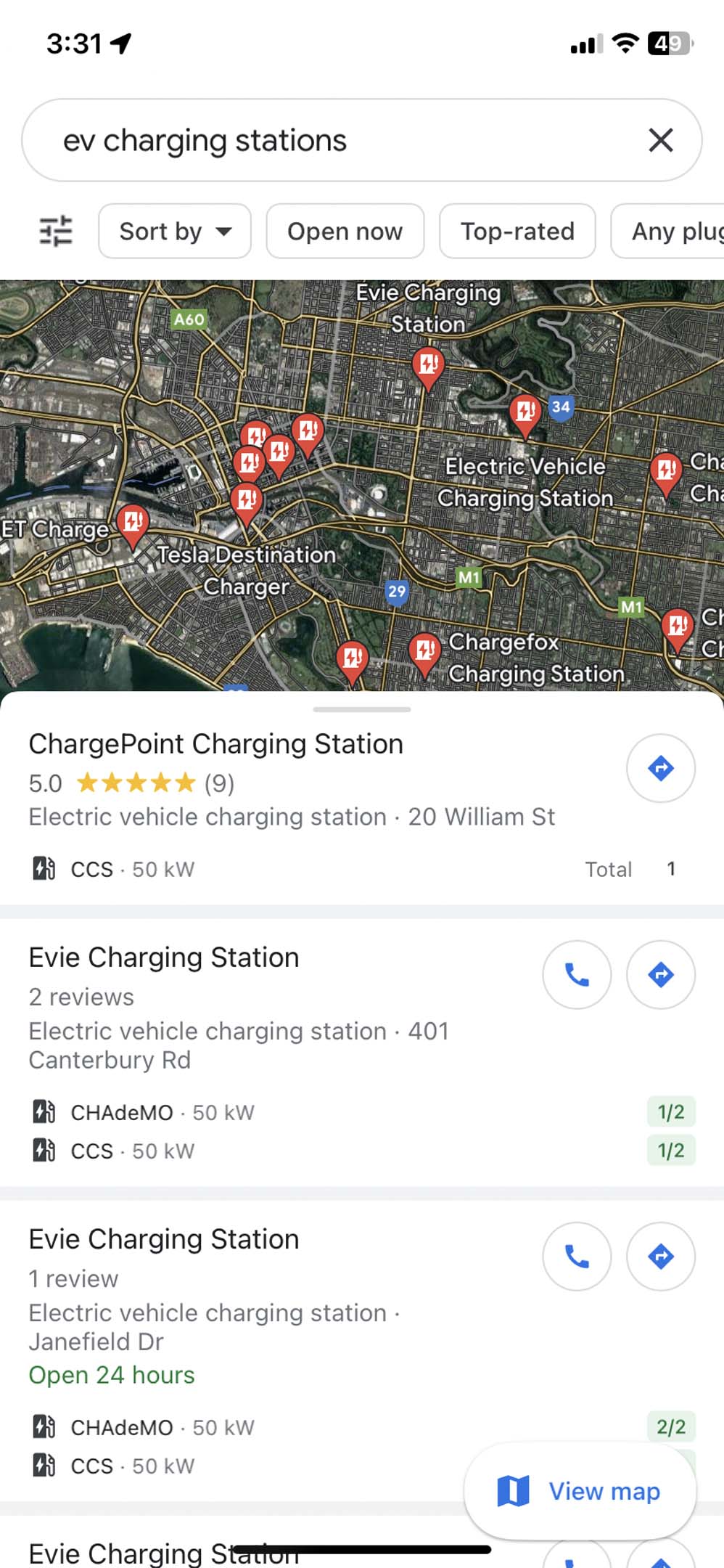
In comparison, Apple Maps search results will currently return only the location, opening hours and number of chargers at the location.
The update follows previous EV-centric features on Google Maps, which included charger availability and provided routing that showed best the best path based on the kind of vehicle being driven.
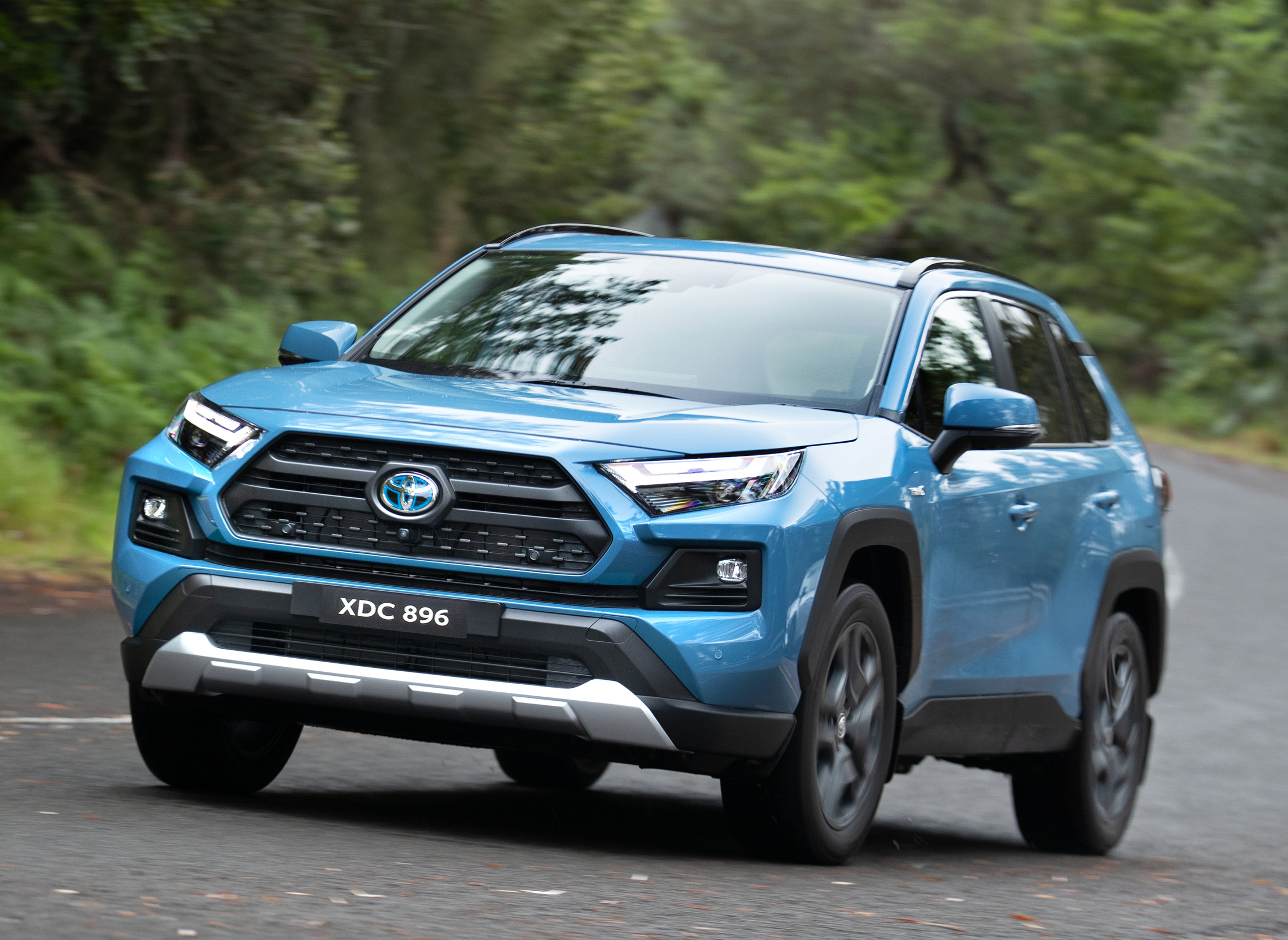
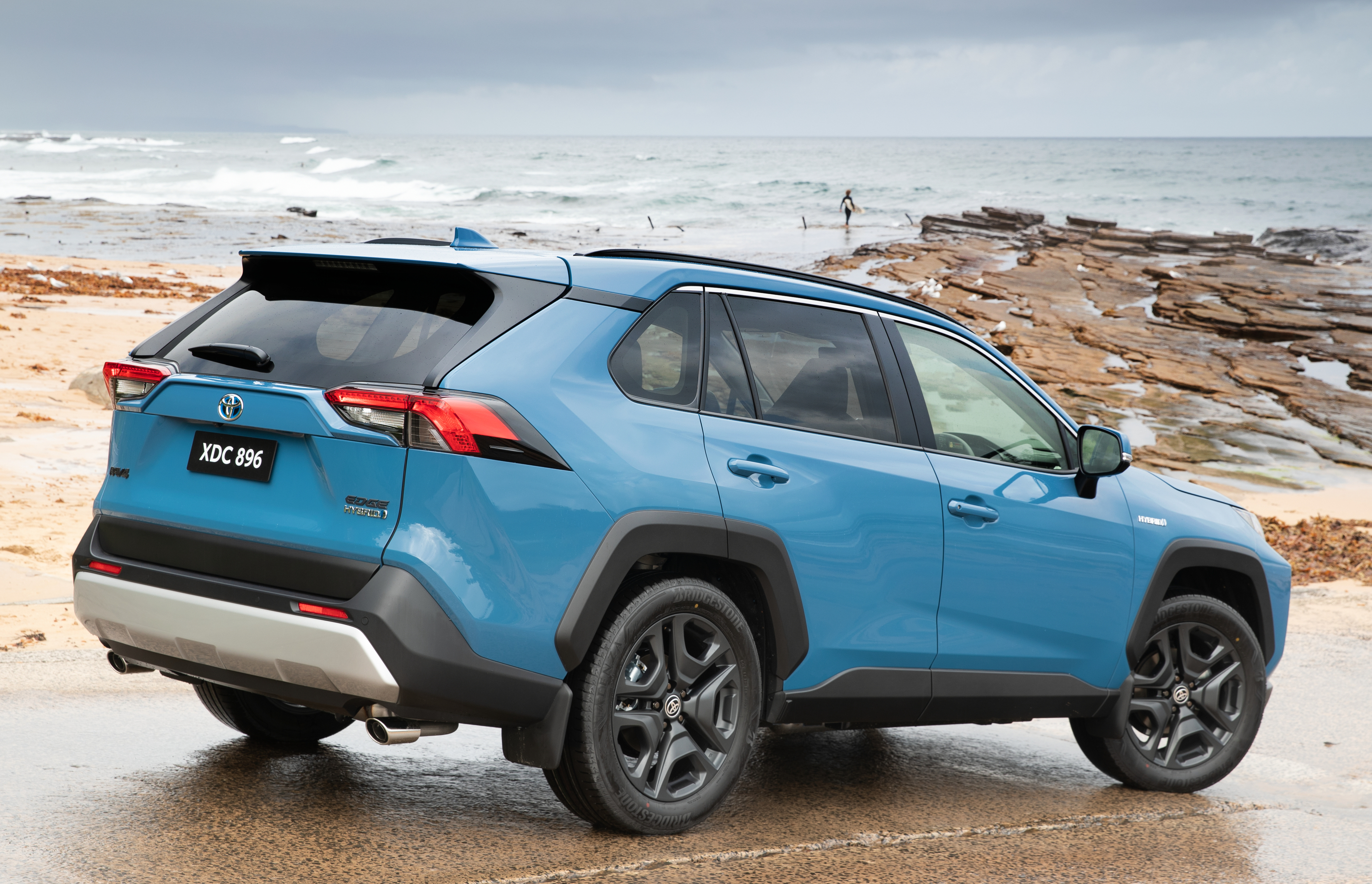
The updated 2023 Toyota RAV4 mid-size SUV has arrived in Australia.
Snapshot
- 2023 Toyota RAV4 pricing and features
- Updated medium SUV gains larger screens, new infotainment software, and other enhancements
- Price increases between $2150 and $2820; on sale now
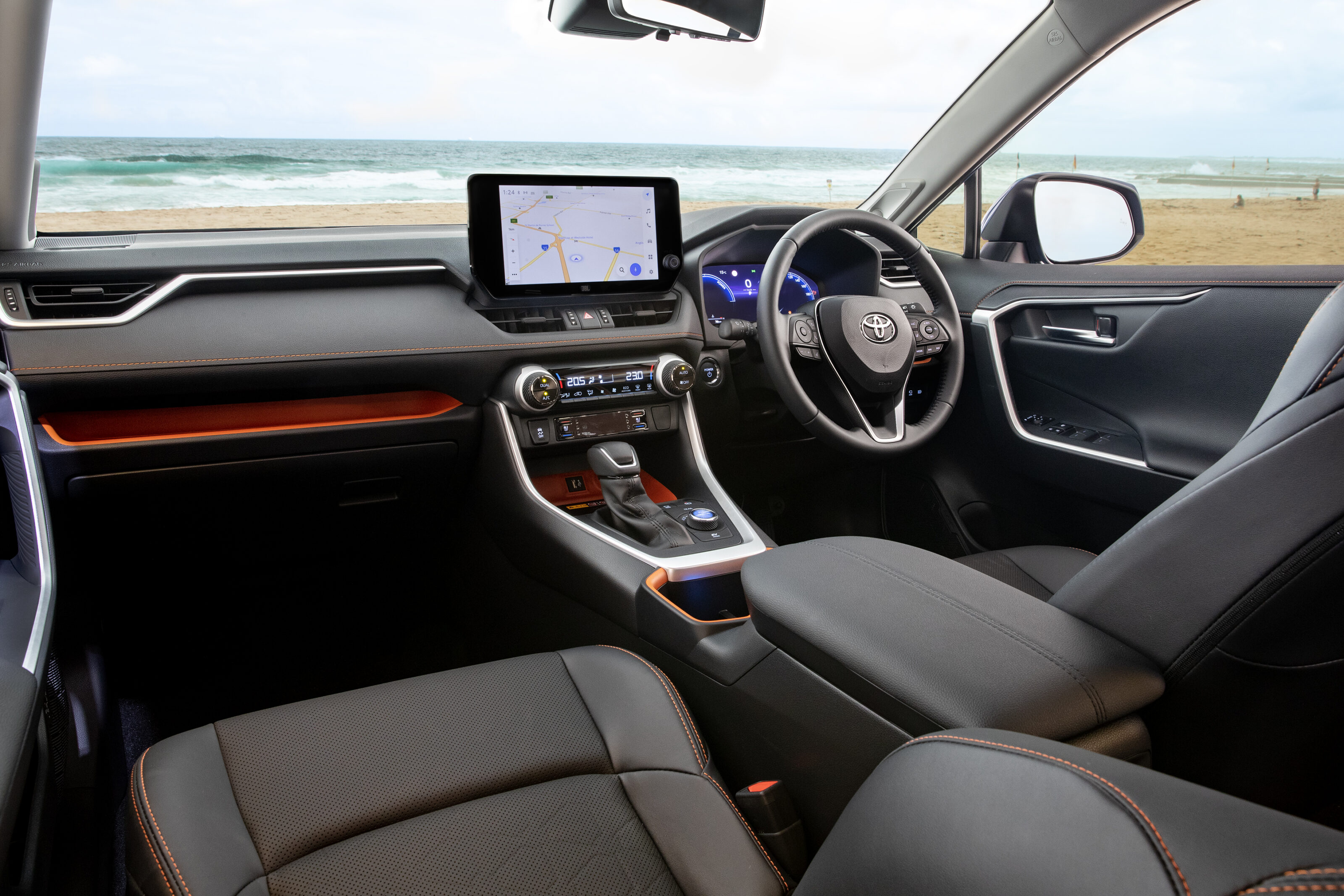
It is on sale now, with the brand’s latest infotainment software – as found in the Corolla Cross small SUV and latest Corolla hatch/sedan – and a larger, 12.3-inch digital instrument cluster on XSE, Cruiser and Edge grades.
These variants also pick up an upsized 10.5-inch touchscreen, while the entry-level GX and GXL retain an 8-inch unit running the new software, which supports wireless Apple CarPlay (but wired Android Auto), over-the-air software updates, and connected satellite navigation on select variants.
Toyota Connected Services is standard across the RAV4 line-up for model-year 2023, with a 12-month complimentary period before owners must choose between two monthly subscriptions to retain the service.
It features stolen vehicle tracking, remote engine start, SOS emergency calling, a vehicle locator, and the ‘Hey, Toyota’ voice assistant.
For a full run-down on the updated Toyota Connected Services, including every feature available and the cost of each monthly subscription, click on the read more link below:
Other additions include non-connected satellite navigation for the base GX (removing the previous $1000 option), updated active safety features with intersection detection for its autonomous emergency braking system and emergency steering assist, and a higher-resolution digital reverse camera with active guide lines.
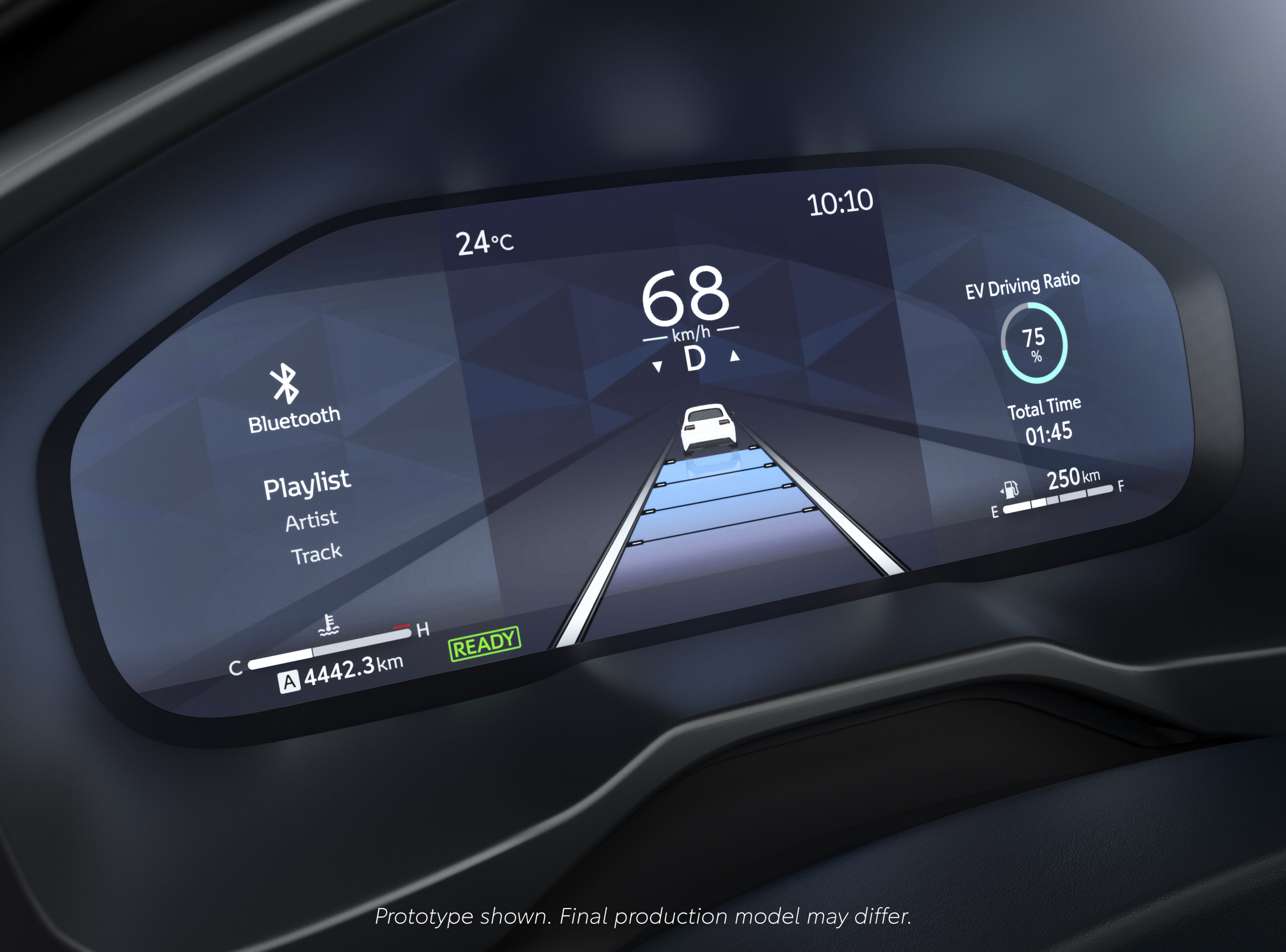
In addition, the seven-inch semi-digital instrument cluster previously available on XSE, Cruiser and Edge has filtered down to the entry-level GX and GXL, replacing the outgoing 4.2-inch display.
USB-C ports replace four USB-A ports, with one USB-A port remaining for a total of five, while the internal microphones have been upgraded to support the improved voice recognition system.
Inside, the switches are now backlit in white, while the speed of the electric tailgate has increased by 1.7 seconds when opening and 2.8 seconds when closing.
In addition, the 360-degree camera system, available on Cruiser and Edge, now includes an underfloor view that displays “composite images of the terrain underneath the vehicle”, and the petrol Edge now features the same projector-type LED headlights available on all hybrid models.
The updated RAV4 – which is Australia’s most popular SUV, and a rival to the Mazda CX-5, Mitsubishi Outlander, Hyundai Tucson, Kia Sportage and Volkswagen Tiguan – is on sale now, although buyers should expect a wait time stretching beyond 18 months for most hybrid variants.
JUMP AHEAD
- 2023 Toyota RAV4 pricing
- 2023 Toyota RAV4 features
- Options
- Colours
- Engine, drivetrain, and fuel economy
- Safety
- Dimensions
- Warranty and servicing
- Availability
2023 Toyota RAV4 pricing
Prices exclude on-road costs.
| Model | Pricing | Change |
|---|---|---|
| GX 2.0 petrol FWD | $36,550 | up $2150 |
| GX 2.5 hybrid FWD | $39,050 | up $2150 |
| GX 2.5 hybrid AWD | $42,050 | up $2150 |
| GXL 2.0 petrol FWD | $40,100 | up $2150 |
| GXL 2.5 hybrid FWD | $42,600 | up $2150 |
| GXL 2.5 hybrid AWD | $45,600 | up $2150 |
| XSE 2.5 hybrid FWD | $45,700 | up $2450 |
| XSE 2.5 hybrid AWD | $48,700 | up $2450 |
| Cruiser 2.0 petrol FWD | $45,700 | up $2450 |
| Cruiser 2.5 hybrid FWD | $48,200 | up $2450 |
| Cruiser 2.5 hybrid AWD | $51,200 | up $2450 |
| Edge 2.5 petrol AWD | $53,020 | up $2820 |
| Edge 2.5 hybrid AWD | $55,150 | up $2450 |

2023 Toyota RAV4 features
GX
| 7-inch semi-digital instrument cluster (new) | Rain-sensing wipers |
| Satellite navigation (new) | Five USB ports (4x USB-C, 1x USB-A) |
| Wireless Apple CarPlay (new) and wired Android Auto | Push-button start (hybrid only) |
| Over-the-air software updates (new) | Cloth upholstery |
| Toyota Connected Services (new) | Leather-wrapped steering wheel |
| 17-inch alloy wheelsu00a0 | Front and rear carpet floor mats |
| 8-inch infotainment system | 60/40 split-fold rear seats and centre armrest |
| AM/FM/DAB+ radio | LED headlights (parabolic in petrol; projector in hybrid) and daytime running lamps |
| Heated, power-folding side mirrors | LED interior lighting |
| Dual-zone climate control (hybrid only) | LED fog lights. |
GXL
XSE
Cruiser
Edge
Options
Colours
Metallic paint incurs a $675 premium.
Engine, drivetrain and fuel economy
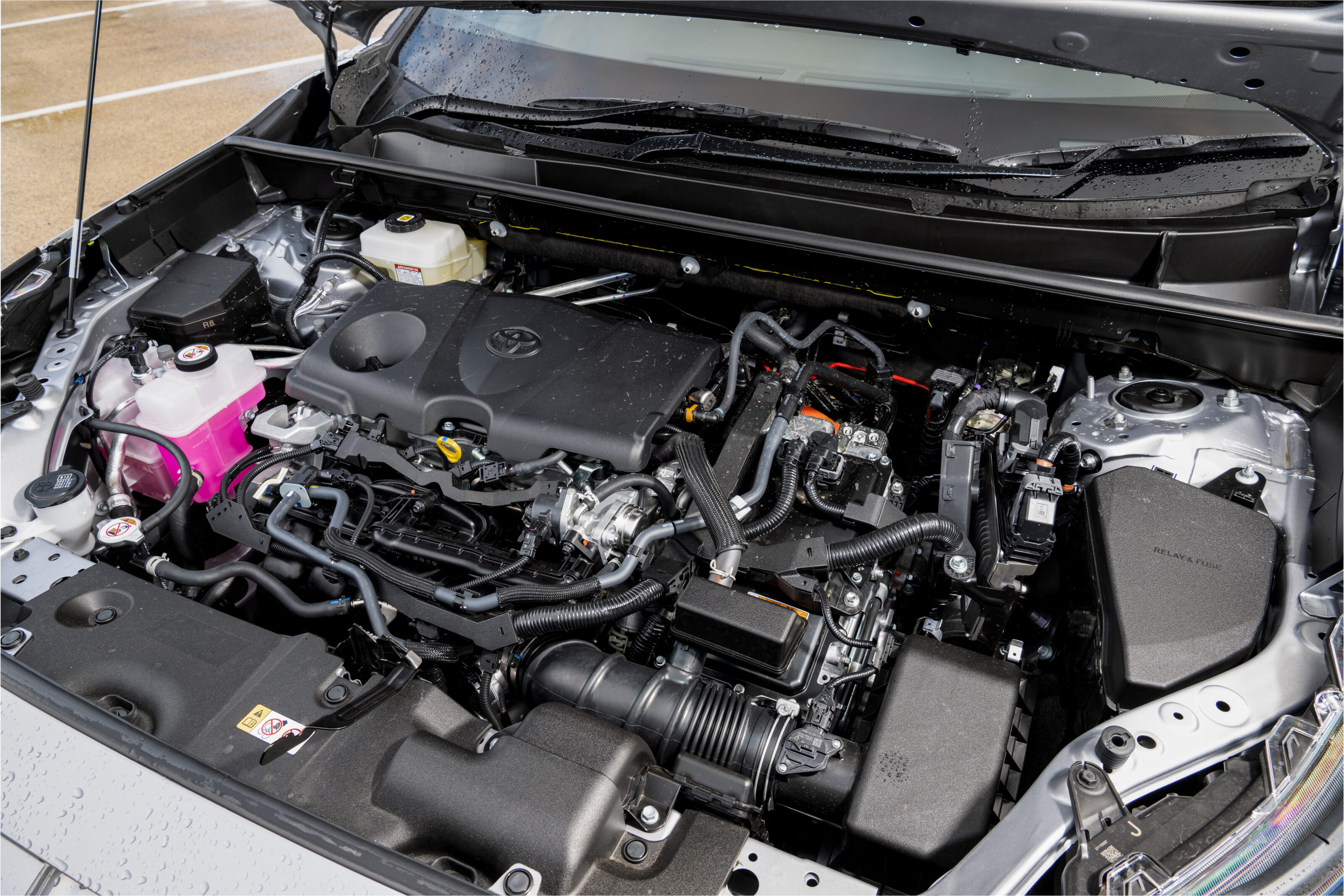
Under the bonnet, the Toyota RAV4 is available with two four-cylinder naturally-aspirated petrol engines and a 2.5-litre petrol-electric hybrid.
The entry-level option is the 2.0-litre non-turbo four-cylinder petrol, which produces 127kW and 203Nm. It is matched with a CVT automatic transmission driving the front wheels only.
It is available on GX, GXL and Cruiser variants.
Across the entire range, a hybrid option is available, with front- or all-wheel drive. It comprises a 2.5-litre naturally-aspirated petrol engine, an electric motor and a 1.5kWh lithium-ion battery, with a 160kW total system output in FWD guise.

The all-wheel drive hybrid brings an additional electric motor on the rear axle, which boosts power to 163kW.
Meanwhile, the flagship Edge petrol is exclusively available with a 2.5-litre naturally-aspirated four-cylinder engine, which produces 152kW and 243Nm. It is matched with an eight-speed automatic transmission and an all-wheel drive system.
While the hybrid AWD and 2.5-litre petrol RAV4 has a 1500-kilogram braked towing capacity, the petrol and hybrid 2WD are limited to 800kg and 480kg, respectively.
Fuel economy figures can be found in the table below:
| 2.0-litre petrol FWD | 6L/100km | 137g/km |
|---|---|---|
| 2.5-litre hybrid FWD | 4.7L/100km | 107g/km |
| 2.5-litre hybrid AWD | 4.8L/100km | 109g/km |
| 2.5-litre petrol AWD | 7.5L/100km | 159g/km |
Safety
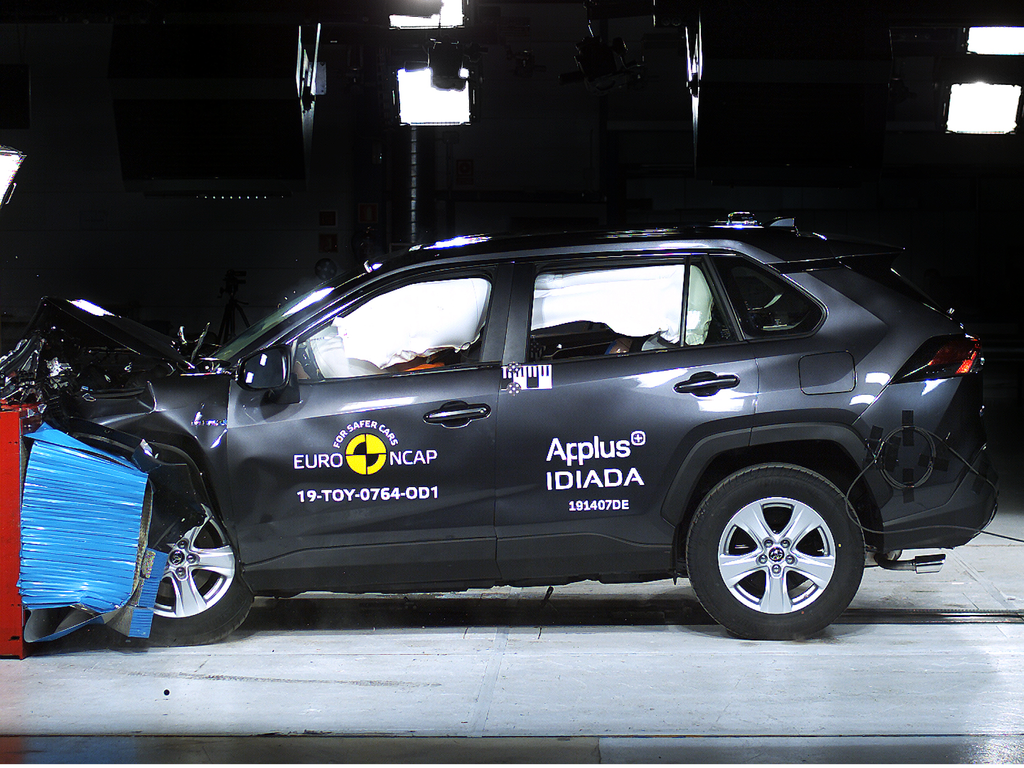
The Toyota RAV4 is covered by a five-star ANCAP safety rating, based on testing conducted in 2019. This score applies to all variants.
It received a score of 93 per cent for adult occupant protection, 89 per cent for child occupant protection, 85 per cent for vulnerable road user protection, and 83 per cent for safety assist.
Seven airbags (dual front, side, curtain and driver’s knee) are fitted across the range.

Dimensions
The Toyota RAV4 has a 2690-millimetre wheelbase, and is 4615mm long, 1865mm wide and 1690mm tall.
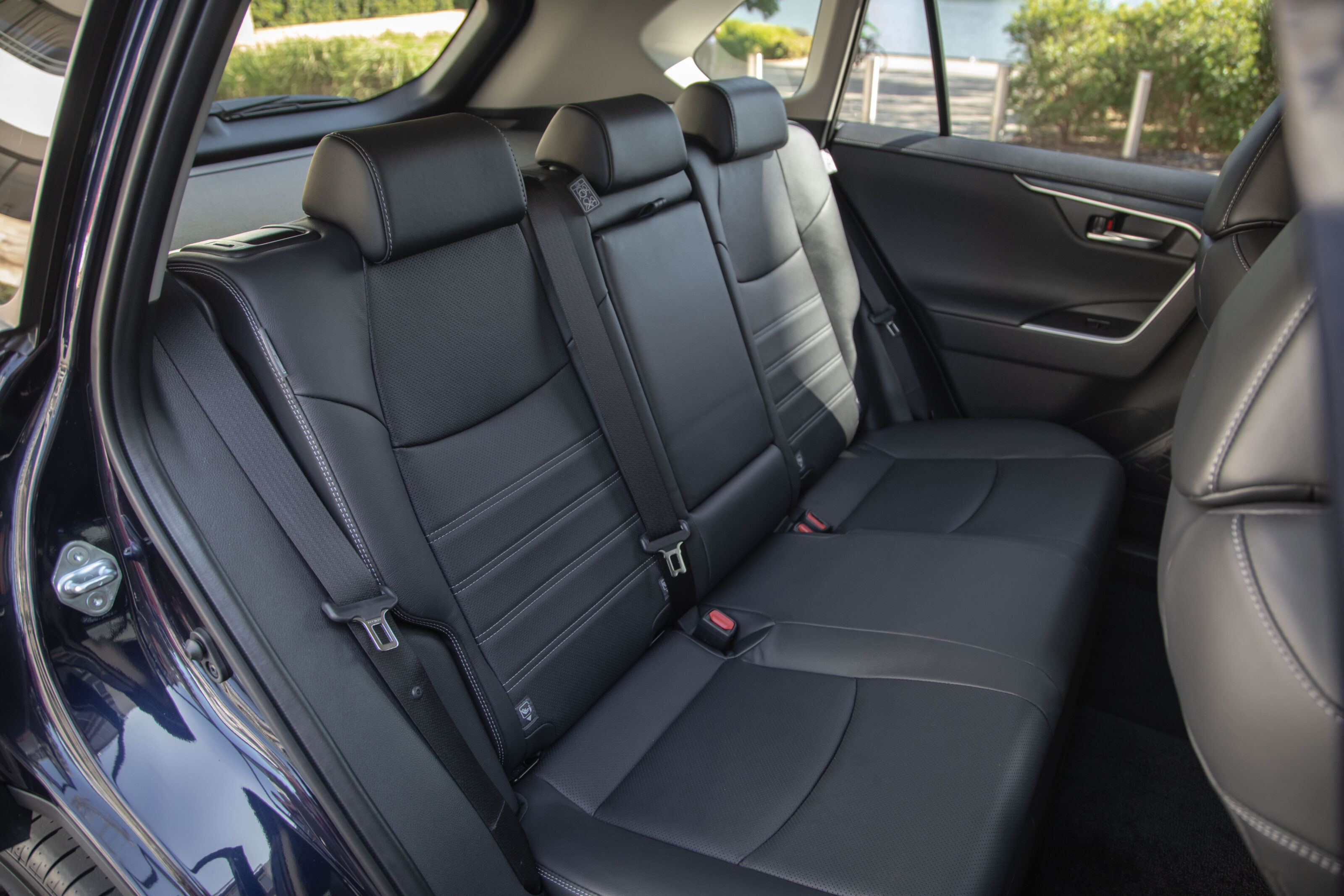
With the rear seats up, the Toyota RAV4 has a 580-litre boot capacity with a space-saver spare. A full-size spare is optional on GX models.
Folding the second row increases luggage capacity to 1690 litres.
Warranty and servicing
As per the wider Toyota range, the RAV4 is covered by the brand’s five-year, unlimited-kilometre warranty.
Servicing for the RAV4 is required every 12 months or 15,000 kilometres, whichever comes first.
Capped-price servicing is available for the first five years or 75,000 kilometres, priced at $215 a pop.
Availability
The 2023 Toyota RAV4 is on sale now, albeit with extended wait times – particularly for the most-popular hybrid variants.
For information on Toyota’s wait times, click here.
Volkswagen Commercial Vehicles will expand its range of converted vans and utes from the end of 2022.
It follows the success of the Amarok W-Series and Crafter Kampervan programs, with both vehicles completed by two well-known Victorian aftermarket firms, Walkinshaw and Jayco.
The vehicles are designed to provide factory-backed solutions to buyers, allowing the entire vehicle to be purchased in a single transaction from a Volkswagen dealer – removing the need to engage with a third-party company.
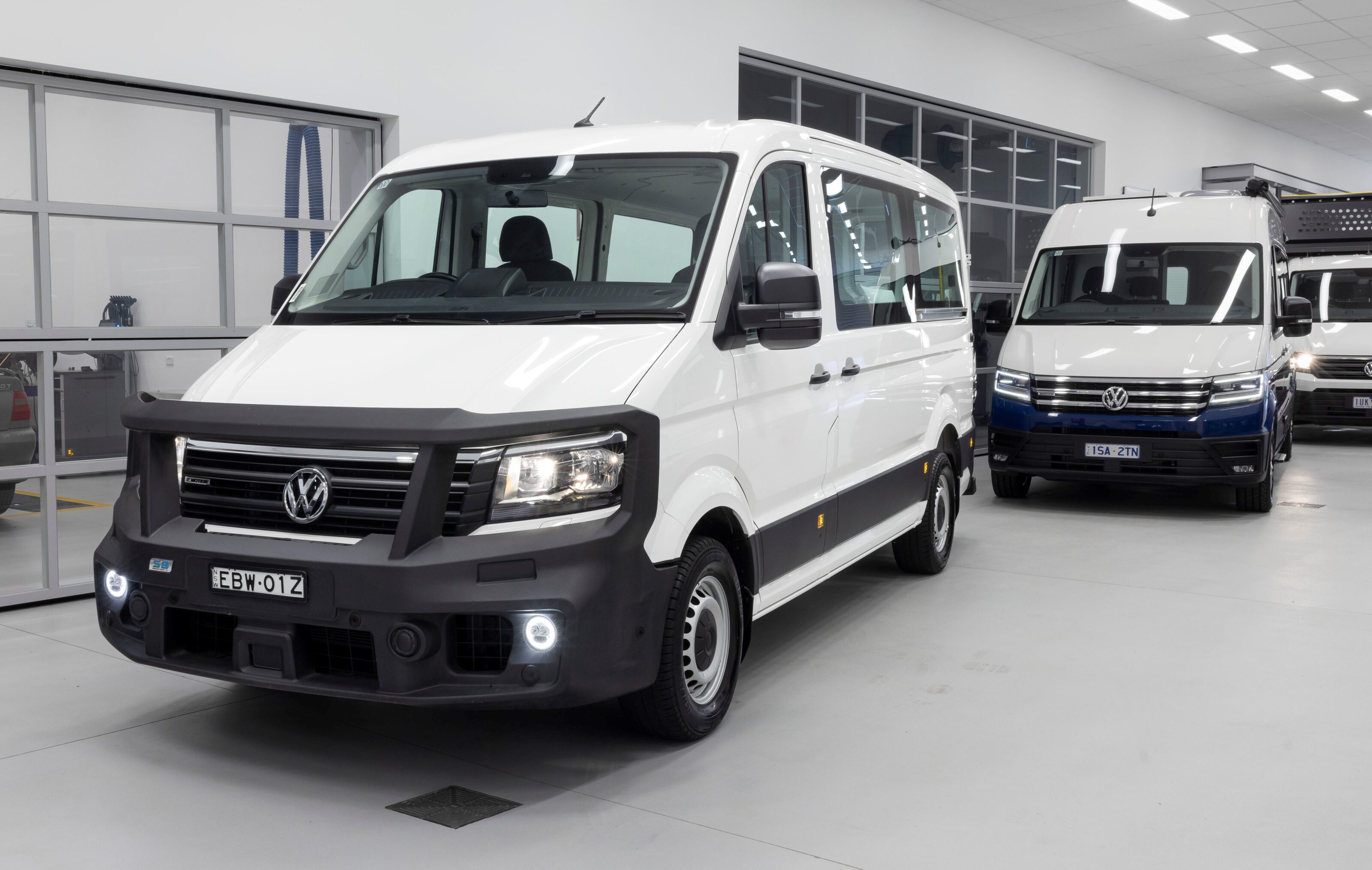
The latest addition to the converted vehicle line-up is a wheelchair-ready Caddy Maxi people-mover, a factory-backed bullbar for the Crafter to cater for ambulance use, and a ‘box body’ van.
In late 2023 or early 2024, tipper and cold goods bodies for the Crafter are expected to become available, subject to final approval by the brand.
A second-generation version of the Amarok W-Series is also tipped to arrive in 2024, while local Volkswagen Commercial Vehicles director Ryan Davies said the all-electric ID.Buzz – which remains on the wish list – could receive similar ‘turn-key’ conversions.
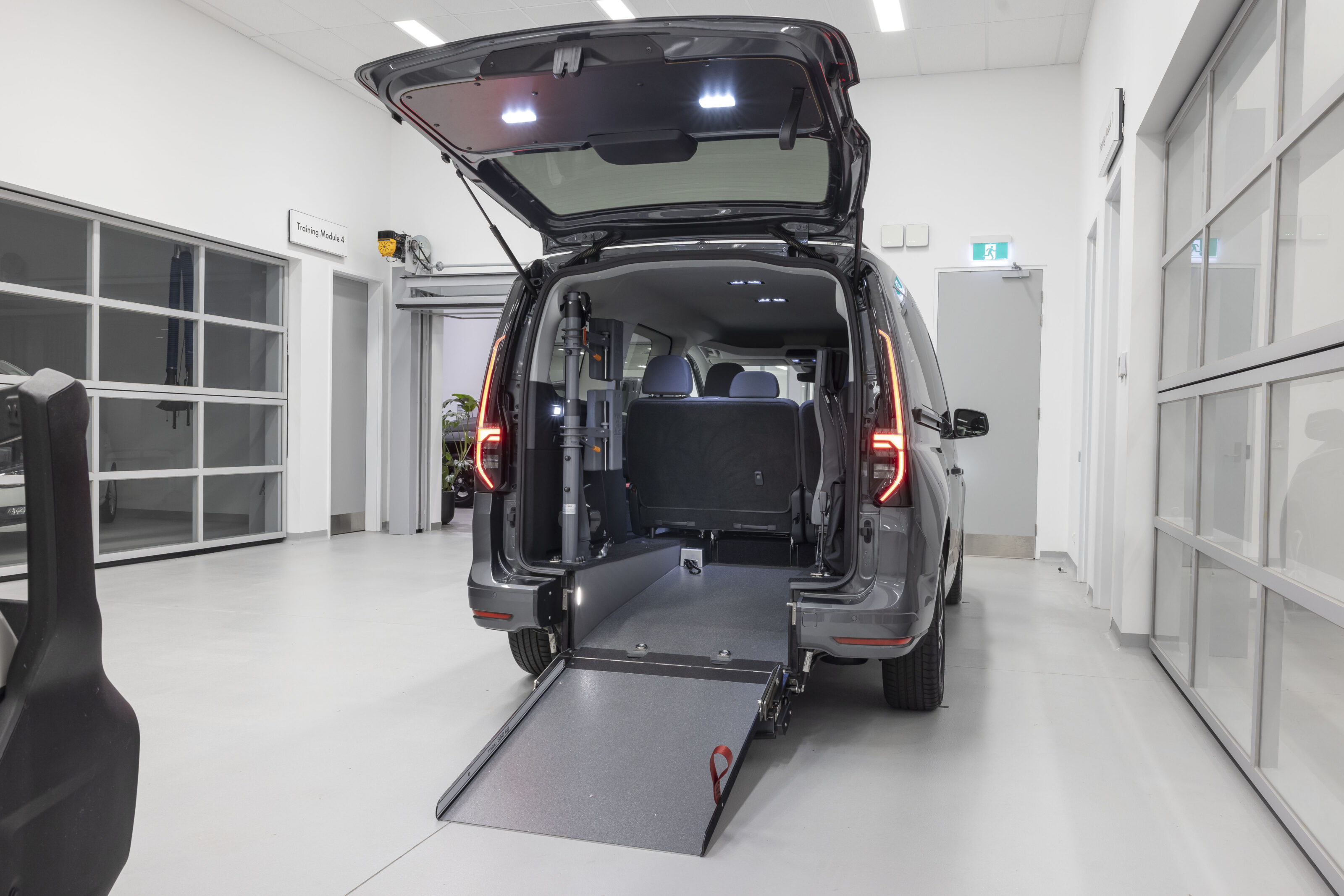
While local partners are utilised for the Amarok W-Series, Crafter Kampervan and Crafter bullbar, the other vehicles will be manufactured in Europe and imported into Australia for sale.
The third-party converters are split into two categories: an integrated partner onboarded into the program, or an OE-level premium partner with stronger qualifications and quality control.
Volkswagen will work with the aftermarket supplier to resolve any potential faults under its five-year, unlimited-kilometre warranty.
JUMP AHEAD
- Wheelchair-accessible Volkswagen Caddy
- Ambulance-ready Volkswagen Crafter
- Volkswagen Crafter Kampervan
- Volkswagen Crafter box, tipper and cold goods bodies
- ID.Buzz and Amarok
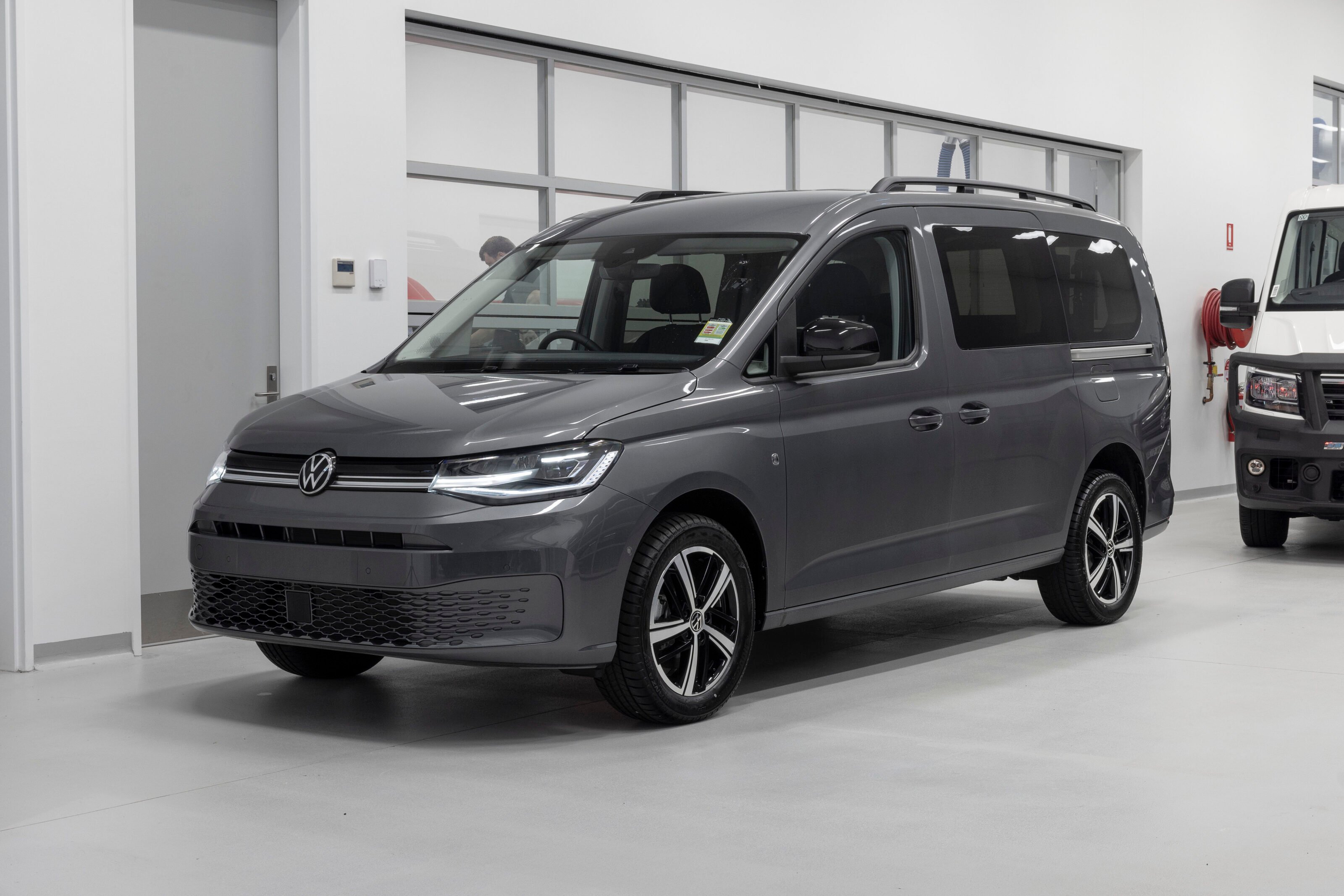
Wheelchair-accessible Volkswagen Caddy
The wheelchair-accessible Volkswagen Caddy people-mover, based on the flagship, seven-seat Maxi Life variant, will be released in late 2023.
It is developed and fitted by AMF-Bruns in Germany, which is one of Volkswagen’s premium conversion partners.
While final details are subject to local homologation, it is expected to incur a circa-$25,000 premium over a stock Caddy Maxi Life priced from $52,640 before on-road costs.
A six-seat configuration will be standard for normal use, with a fold-up seat in the third row similar to the Toyota Fortuner. A seven-seater model will also be available with two folding chairs.
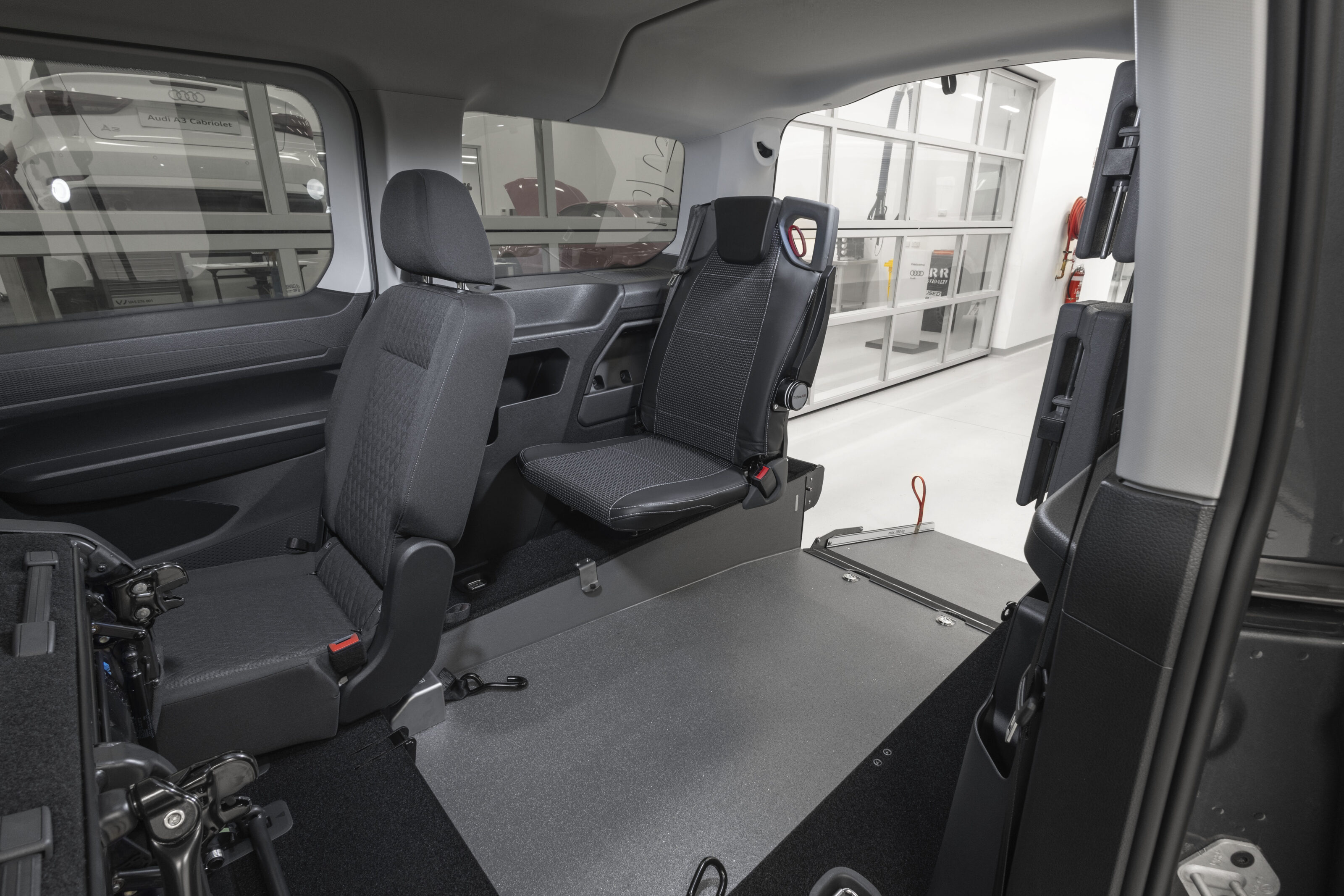
To provide accessibility for a wheelchair occupant, the modified Caddy features a cut-out floor, a fold-flat ramp, a foldable head and backrest, an extra-long seatbelt with electric retract, and a restraint system.
It has been crash-tested to 20 G-forces on a sled, with full European certification and further engineering to maintain rigidity with a torsion test.
Compared to a standard Caddy Maxi Life, the wheelchair-accessible variant includes a unique suspension setup, while the spare wheel and tow kit is deleted.
Volkswagen Australia expects approximately 30-40 sales in the first year, with the potential for NDIS support for the conversion price – but not the whole vehicle.
Ambulance-ready Volkswagen Crafter
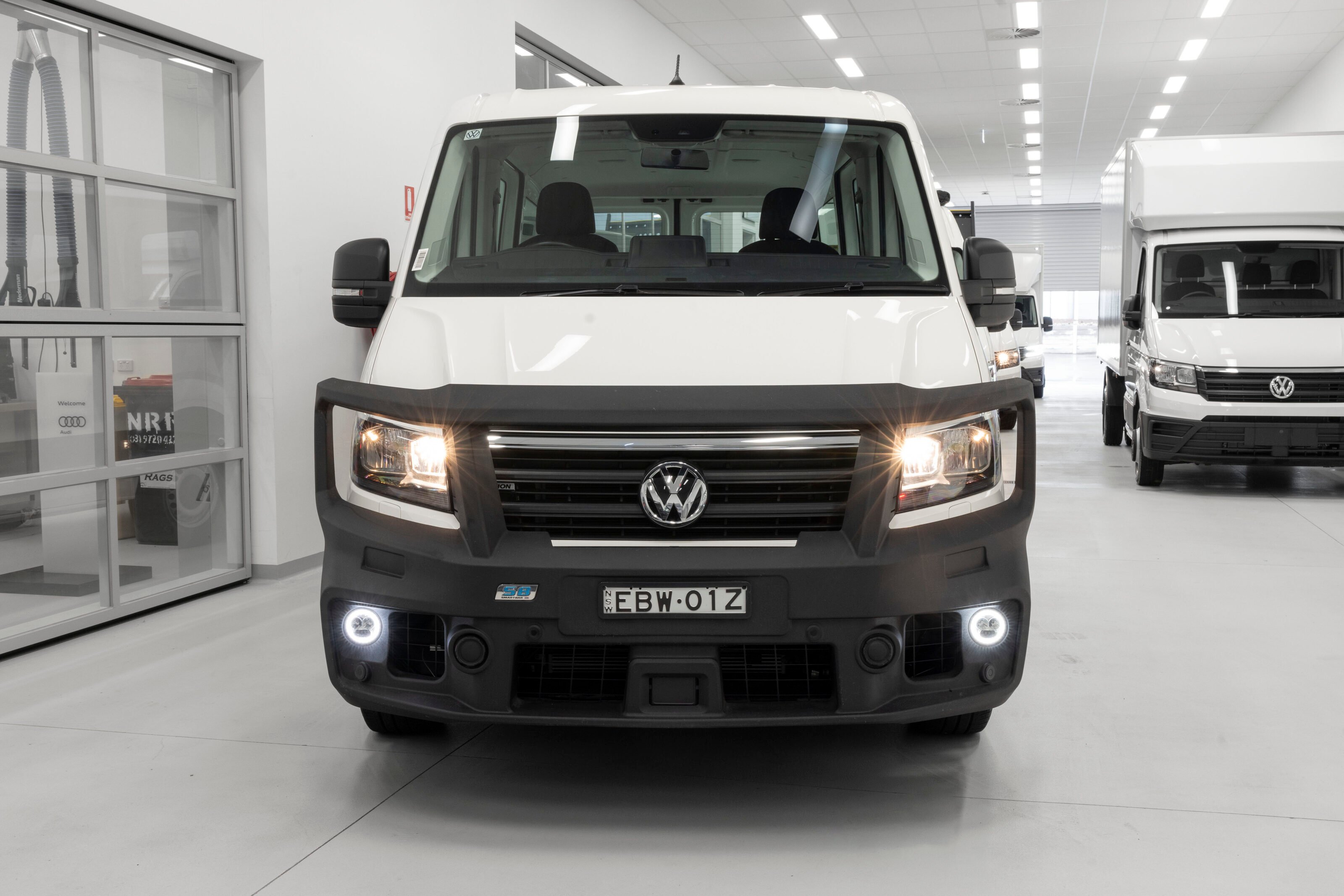
With the local ambulance fleet dominated by the Mercedes-Benz Sprinter, Volkswagen Australia hopes to appeal to the emergency services fleet with a factory-backed bullbar.
The product is designed and developed in Australia by Adelaide-based Smartbar ARB, which provides bullbars for fleets, emergency services and mining use.
It is available for $3600, with a lightweight polycarbonate construction and full compatibility with driving lights, emergency lights and sirens.
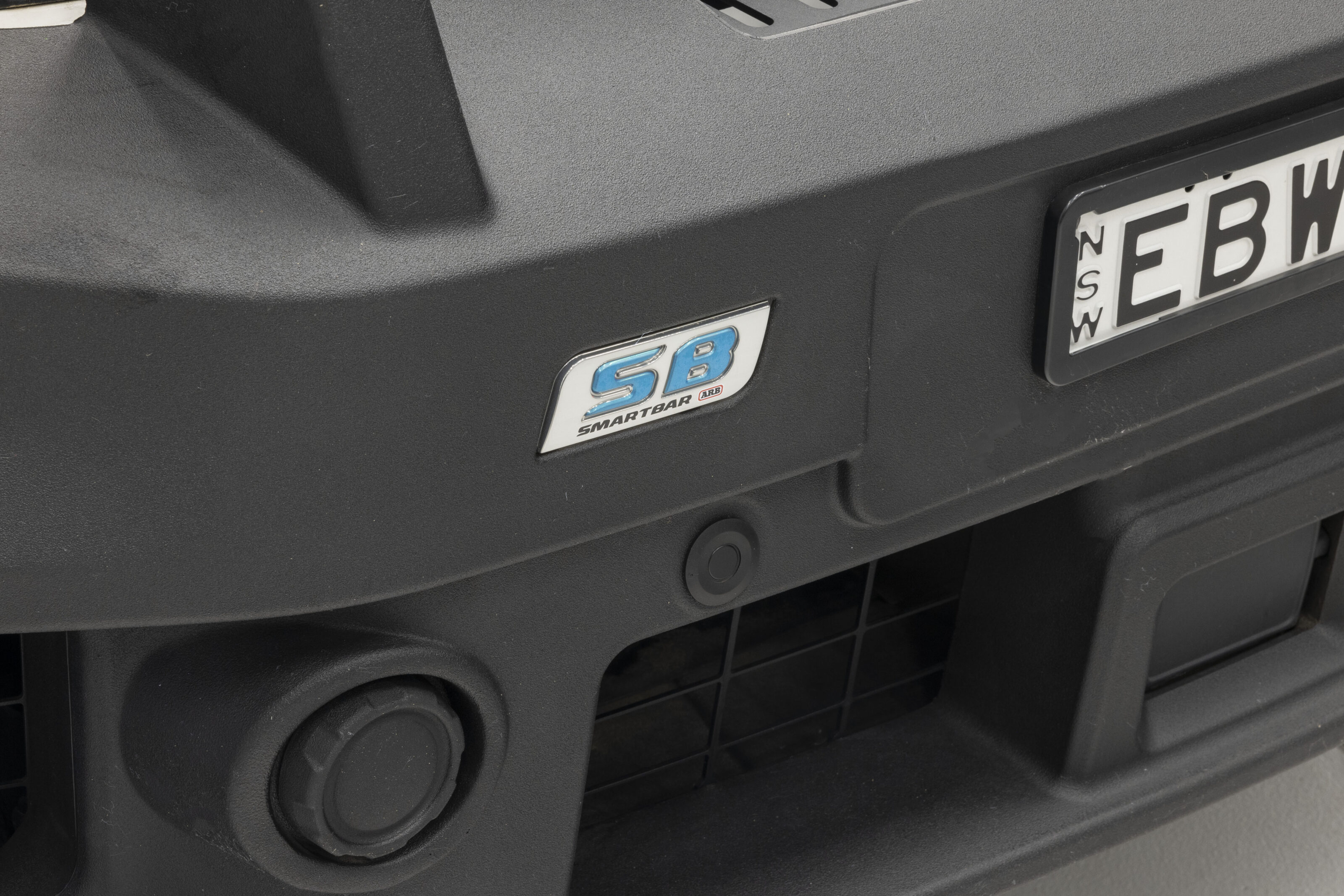
The hollow construction – weighing approximately 57 kilograms – is said to be around 30kg lighter than a traditional steel bullbar, with the ability to flex and absorb in an accident.
All driver assistance features, such as autonomous emergency braking, remain available, while the integrated parking sensors have identical tolerance to the stock units.
Currently, the Volkswagen Crafter is primarily used by St John WA, along with NSW patient transport, South Australia, and in the Ambulance Victoria fleet.
Volkswagen Crafter Kampervan
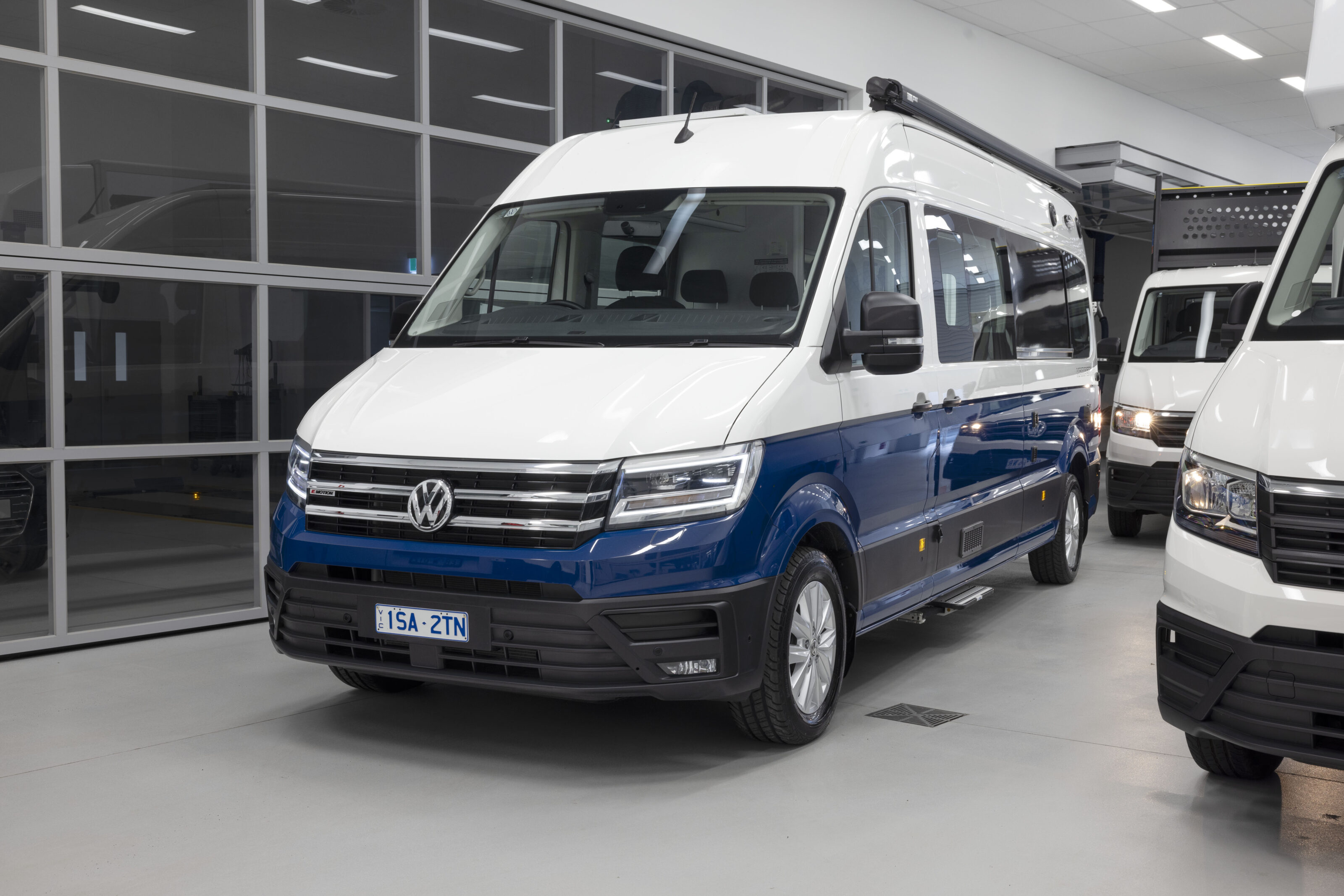
First revealed in April, the 2023 Volkswagen Crafter Kampervan will be delivered to customers before Christmas.
Volkswagen says the initial allocation of 69 units for the Crafter Kampervan sold out in less than 12 hours, with more examples set to become available in mid-2023.
It is converted by Jayco in Melbourne’s south-east, with three variants available with standard all-wheel drive and a 2.0-litre turbo-diesel engine.
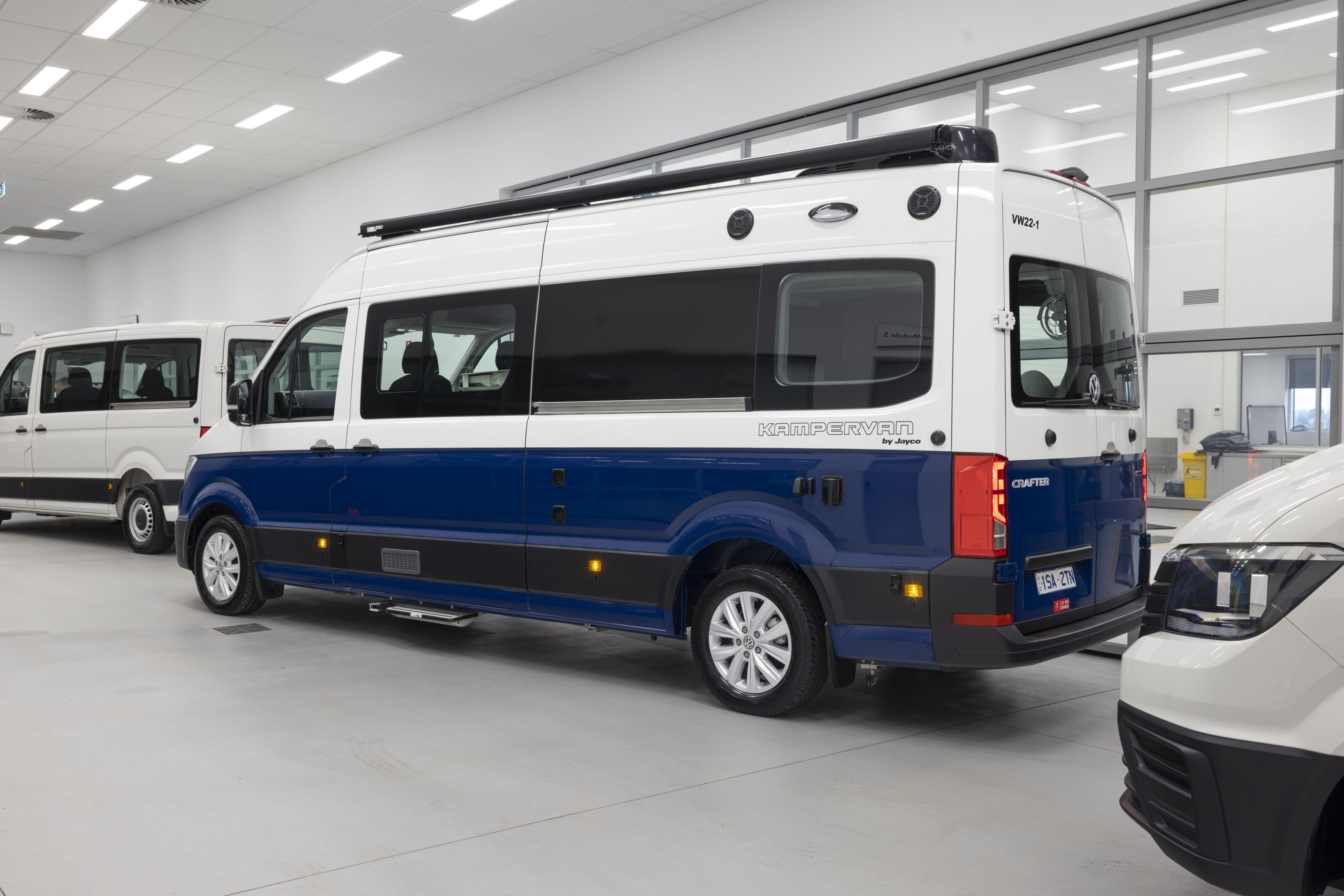
In response to customer feedback, Volkswagen Australia has added two lithium-ion batteries with a 240Ah total capacity, and a 240-volt inverter. It has also fitted the Crafter Kampervan with a portable rear entry step, table and two chairs, and external accessories such as a water hose, wheel chock and power extension lead.
It is priced from $133,390 before on-road costs. For a full run-down on the Crafter Kampervan, click on the read more link below.
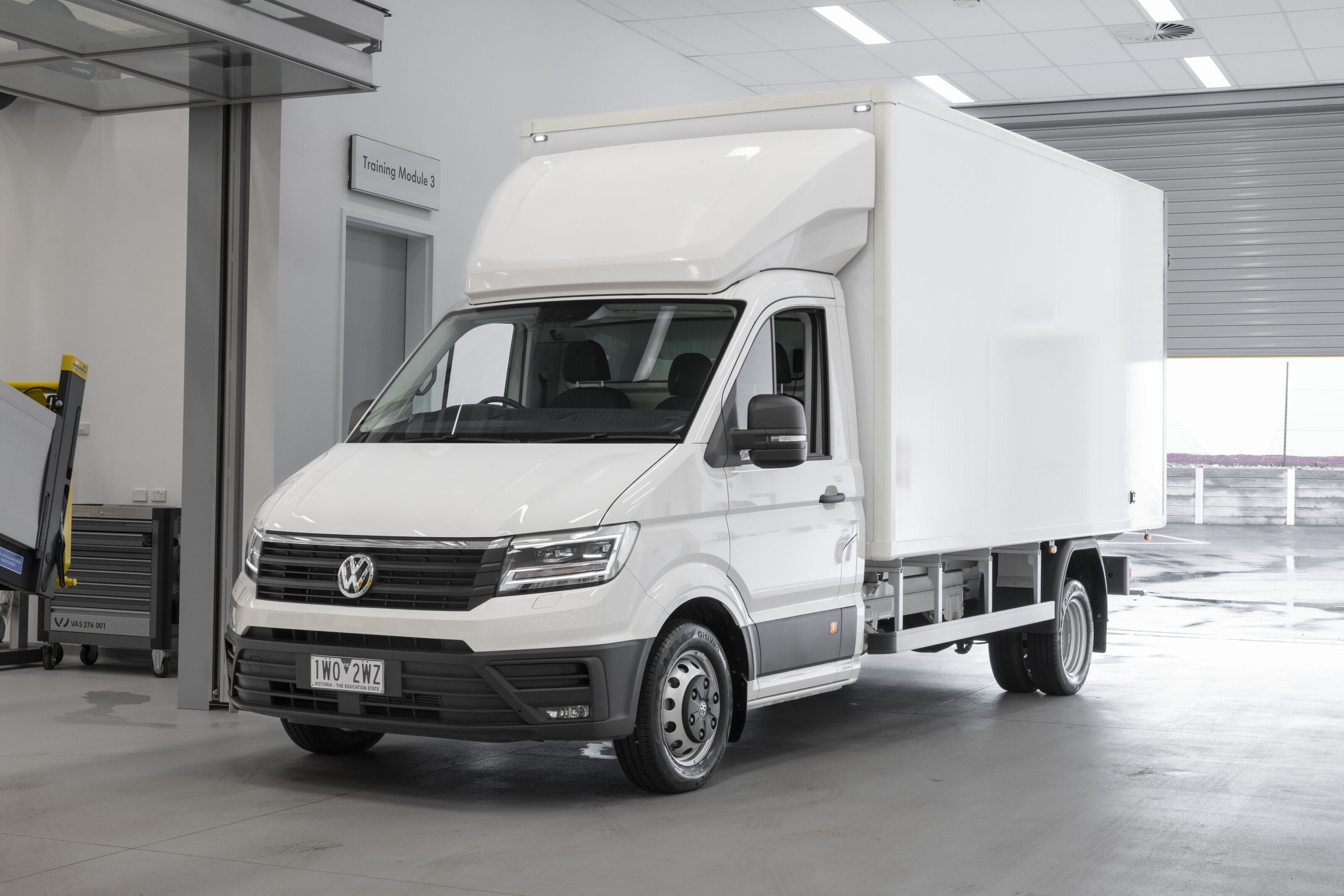
Volkswagen Crafter box, tipper and cold goods bodies
The box body is the first converted Crafter model to reach local shores, based on the single-cab 50 variant. It is converted by Ingimex in the United Kingdom.
Volkswagen says it has the highest payload in its sub-4.5-tonne truck class, at just under 1750 kilograms.
It features a roller door, flat surfaces for signwriting or wrapping, a 500-kilogram column-mounted or cantilever-mounted tail lift, and a second battery.
The box body Crafter is priced from $79,990 before on-road costs, with the first 22 vehicles set to arrive in Australia by Christmas.
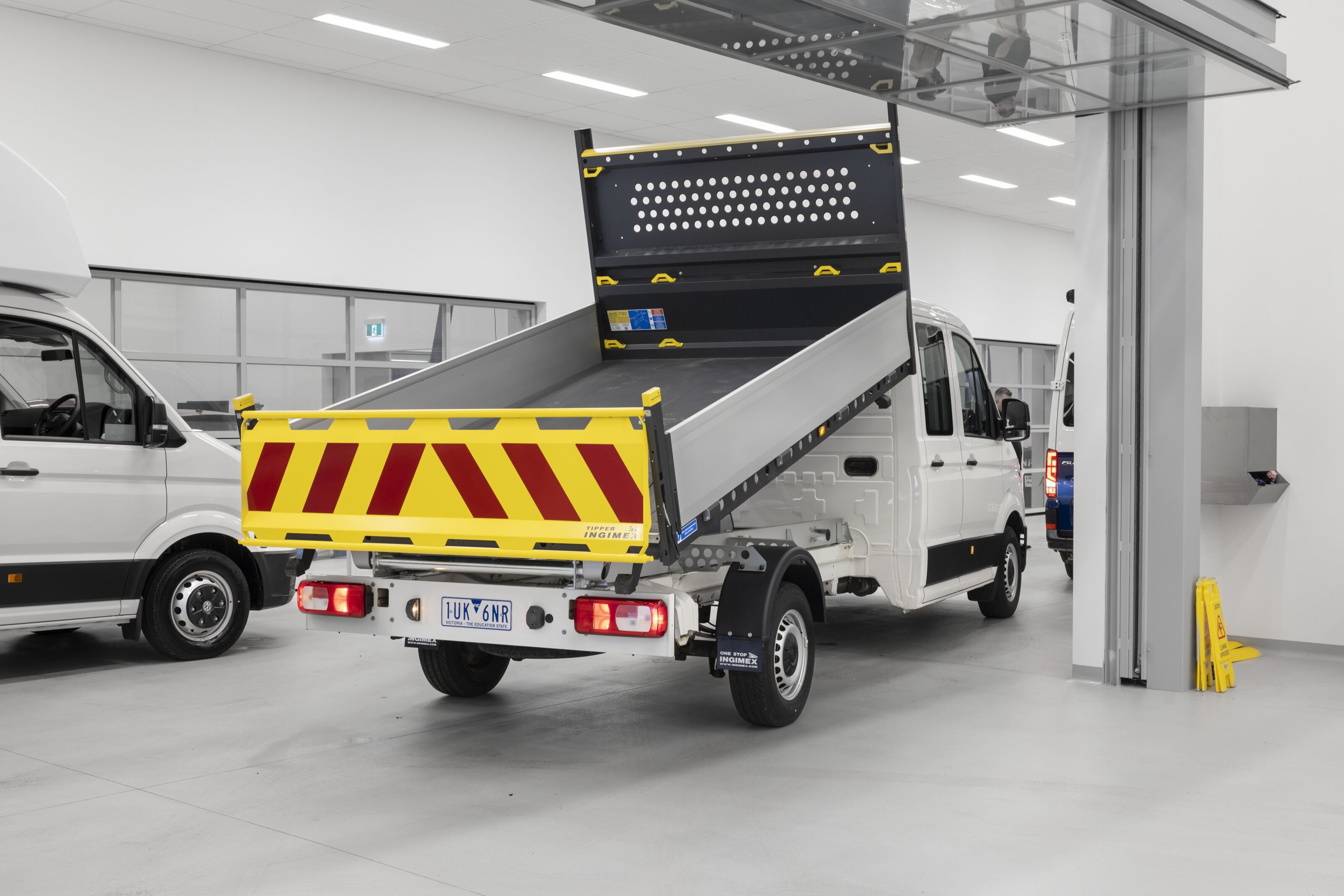
Meanwhile, the Crafter tipper and cold goods body are currently under evaluation for Australia, with sales expected to commence in late 2023 or early 2024.
It is based on the Crafter 35 dual-cab, however, Volkswagen Australia said a single-cab variant is under investigation.
The tipper is also converted by Ingimex, with a full-height steel construction, side-mounted locks to avoid finger traps, and high-visibility markings at the rear.
It has a 400-kilogram capacity for the gantry, with three load-lashing levels.
In the United Kingdom, the payload is listed at 1065kg.
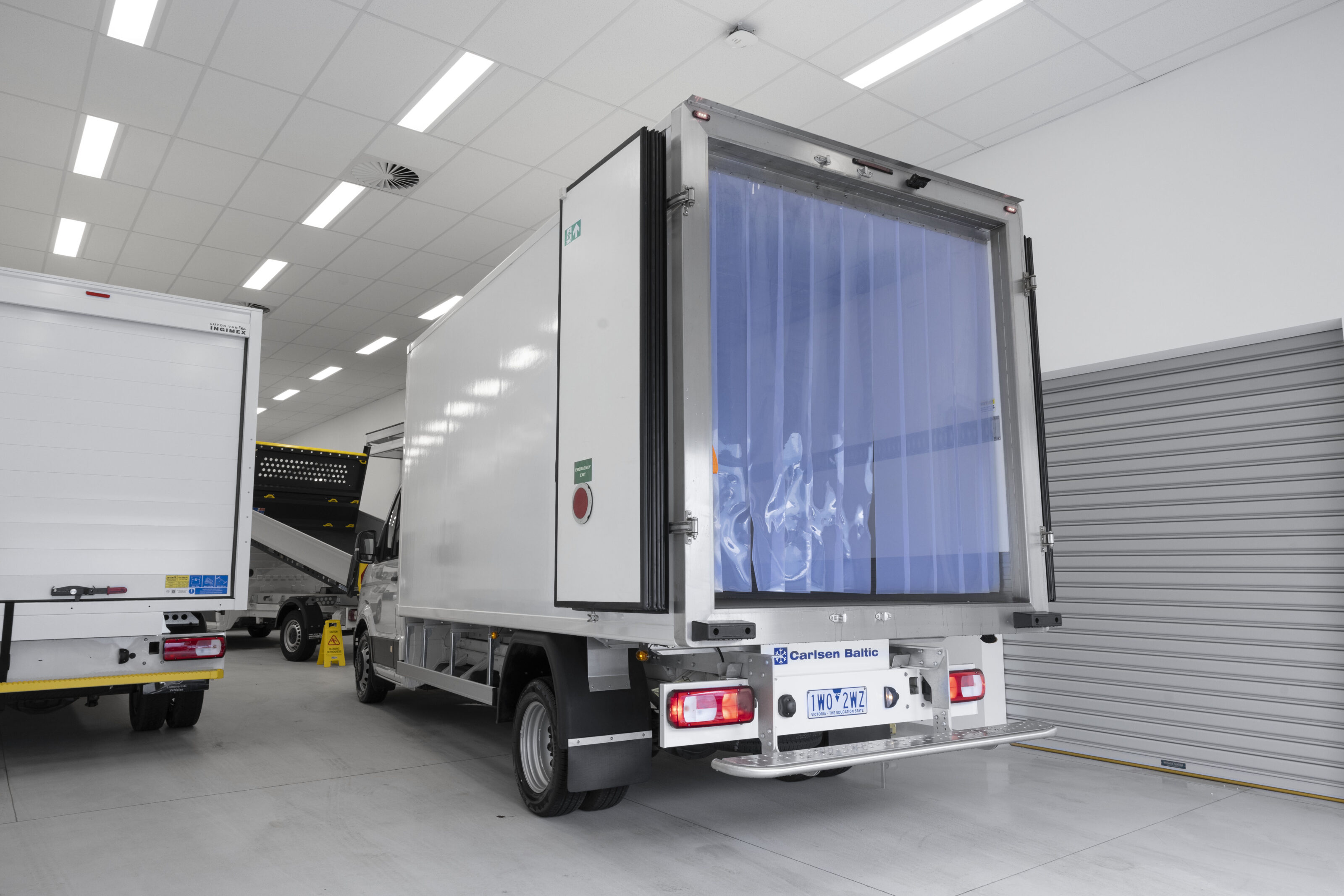
The cold goods Crafter is built by Carlsen Baltic in Lithuania, with a eutectic cooling system that does not require engine power to keep the body cold in transport.
“This solution is perfect for the transition to zero-emissions commercial vehicles, as it only requires power via a 3-phase plug “back at base”,” said Volkswagen Australia.
It supports temperatures between -22 and -33 degrees, with the example in Australia set to undergo real-world testing in the summer to fine-tune it to our climate.
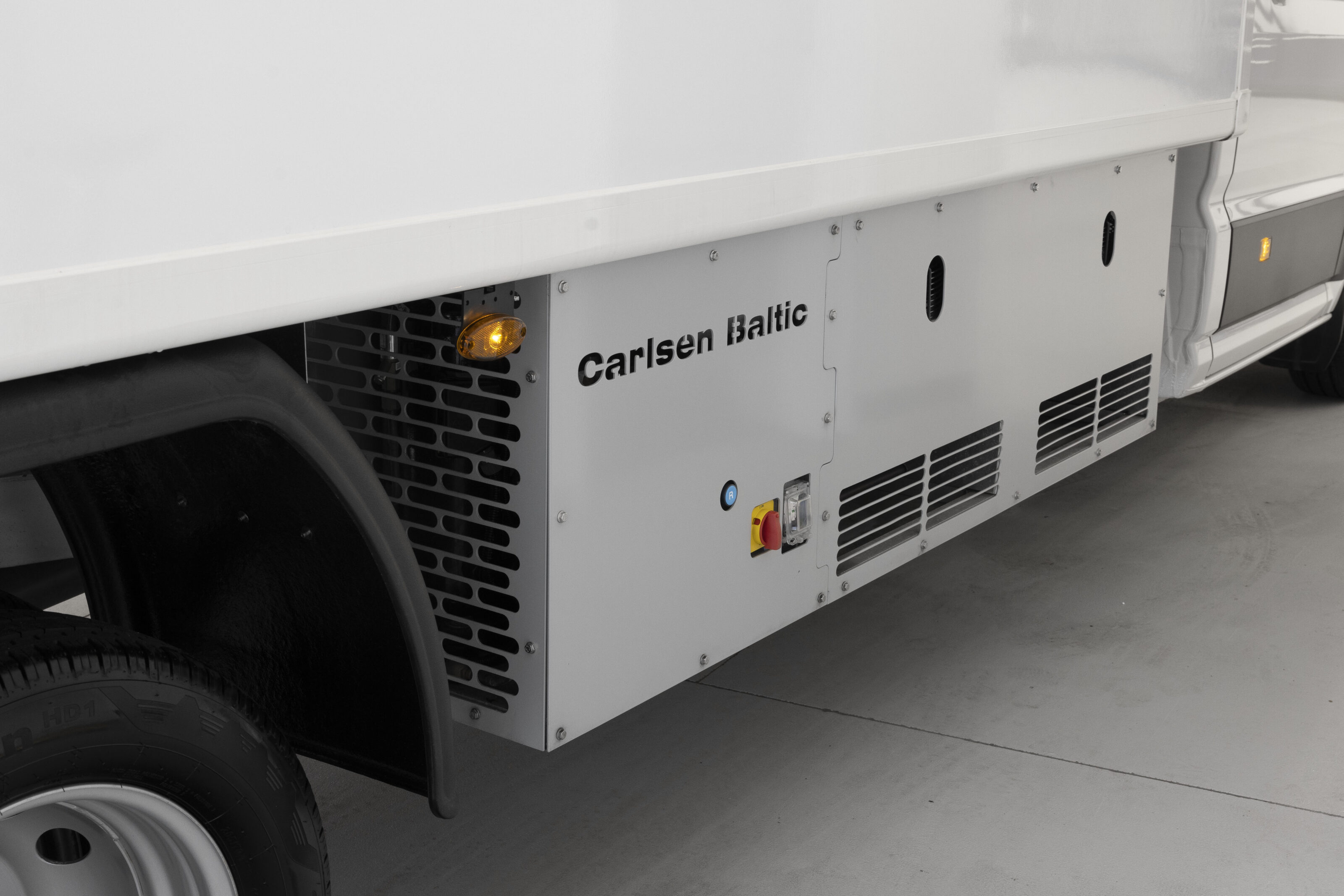
This will be conducted by a cold goods distributor, before heading further north into warmer temperatures, with climate testing data sent back to the manufacturer in real time through a GPS tracking system with temperature sensors.
It has room for up to three pallets, with full approval in Europe and Australia.
While final pricing is yet to be locked in, Volkswagen Australia expects a circa-$130,000 list price.
What else?
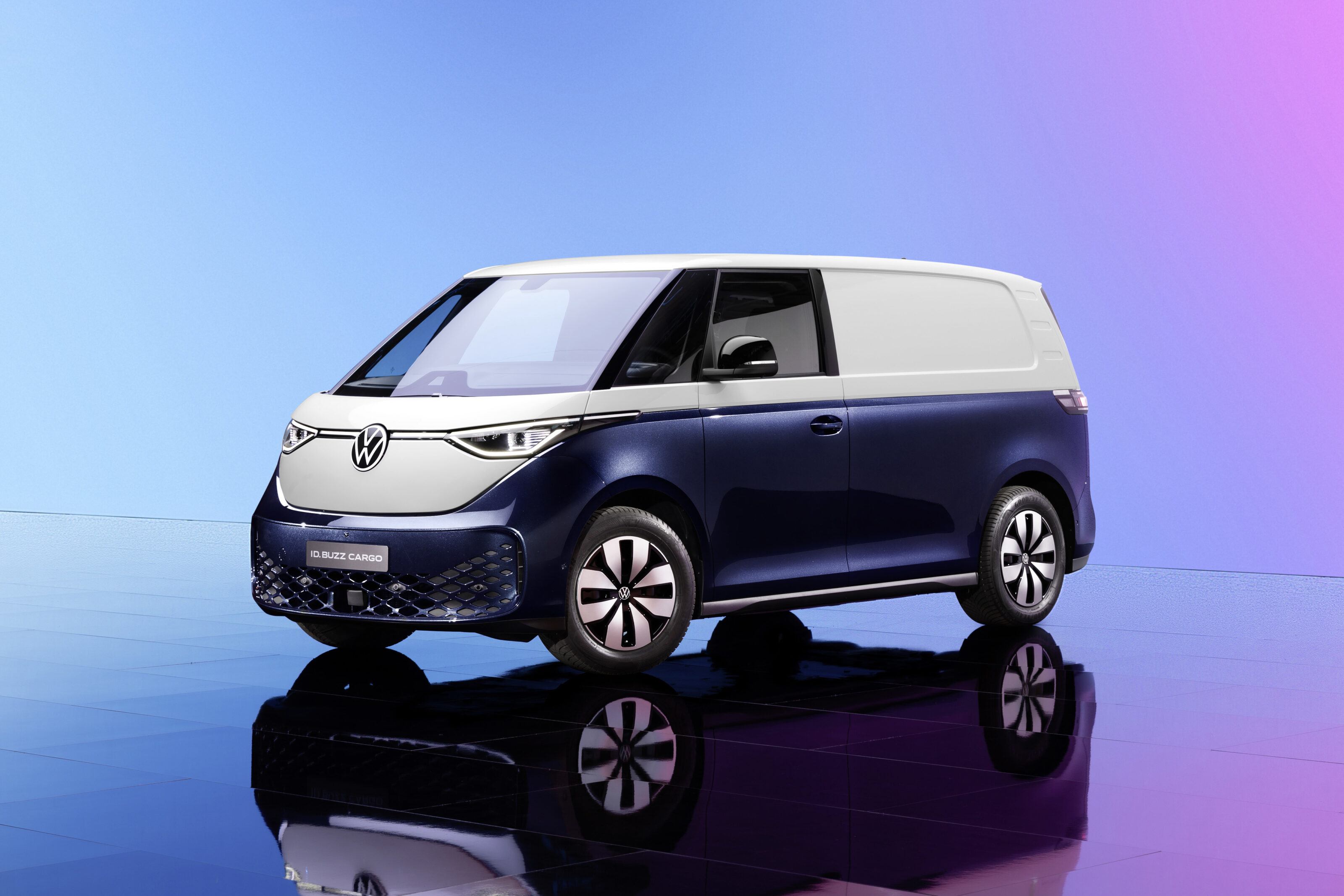
Volkswagen ID.Buzz electric van
The all-electric Volkswagen ID.Buzz remains under consideration for Australia, but local executives are hopeful it will arrive in early 2024.
Speaking with media at its conversions day event, local Volkswagen Commercial Vehicles director Ryan Davies said conversions for the electric van are likely.
“The recent IAA in Hanover had a huge number of converters that have had access to [the ID.Buzz Cargo], and they’ve already developed a number of conversion solutions for that car. It definitely going to continue with that iteration of vehicle despite the fact that that it’s electric,” he said.
“Customers still want solutions that suit their needs, whether it be racking or…the ability to have a coffee machine in the back, or whatever.
“You might get more flexibility given that it’s got an electric power as well, so, you know, there’s some interesting options there and I think that the conversion space with continue to grow, even with EVs at the forefront.”
Next-generation Volkswagen Amarok XL and XXL extended-wheelbase
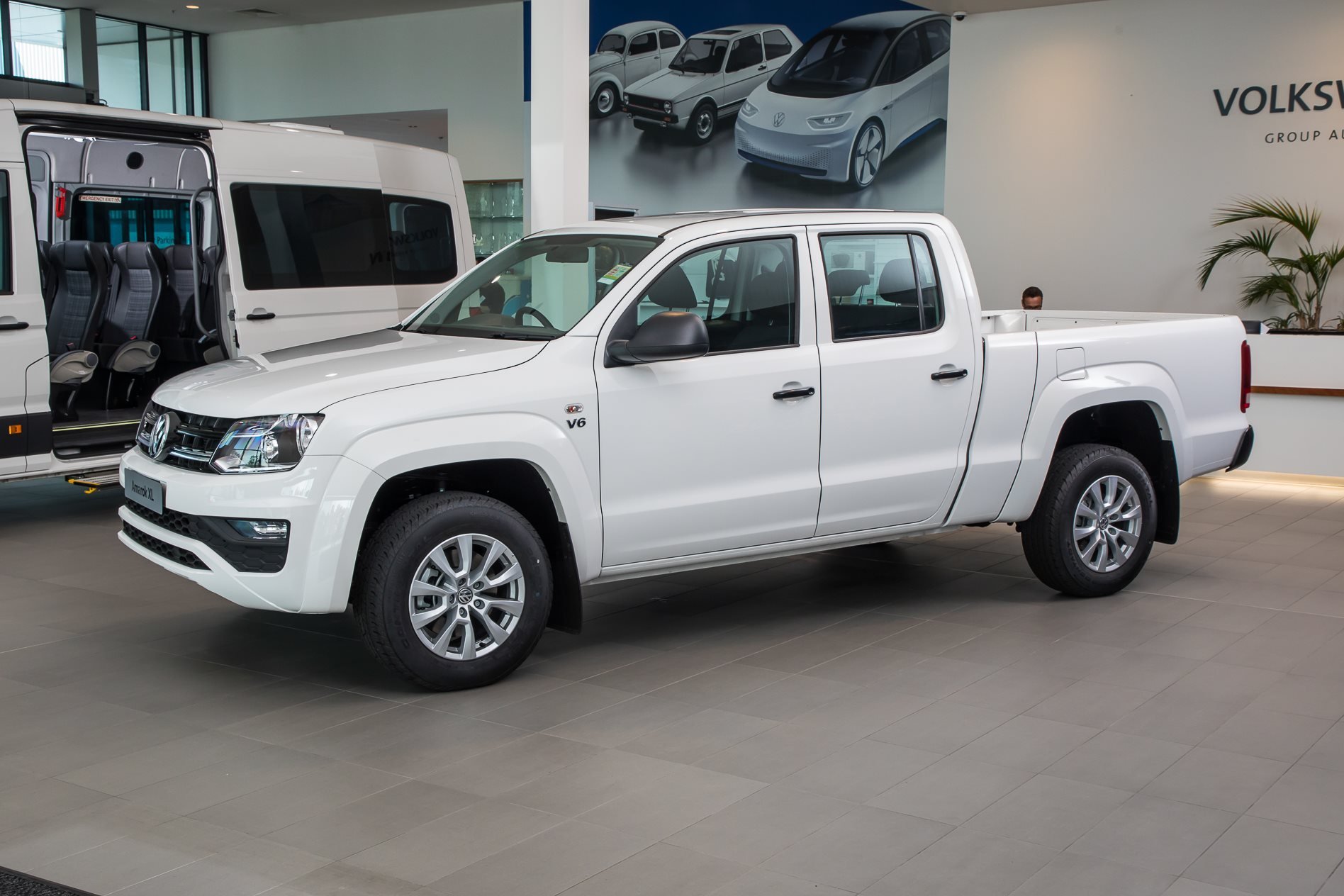
Two years ago, Volkswagen Australia introduced extended-wheelbase versions of the previous-generation Amarok, with the work completed by South Australian-based Adaptive Manufacturing.
The conversion was engineered by Veth Automotive in the Netherlands, which is said to be working on an extended wheelbase for the next-generation model.
“I believe [the supplier in the Netherlands is] working on it,” said Ryan Davies.
“I’m not aware where it’s up to with it at this stage, but that’s something that will come out over time as these partners get access to the car.
“I don’t know if it will definitely get an XL or an XXL, but my guess would be yes, at some point.”
Snapshot
- PHEV discounts to be phased out in 2025
- Federal Government fleet to go electric
- FBT exemption for fleets
The Federal Government has negotiated a compromise to get its election promise of incentives to make electric cars cheaper through the Senate.
Labor’s bill had been held up by an objection from the crossbench to the inclusion of plug-in hybrids (PHEV).
Greens senators and the independent Senator for ACT, former Rugby Union player David Pocock, agreed to a deal to phase out discounts on PHEVs in April 2025. The Federal Treasurer, Jim Chalmers, was keen for PHEVs to be included in the bill to ease concerns over EV driving range for rural buyers.
Some car companies expect 2025 to be the inflection point where EVs cross over with internal-combustion engine (ICE) vehicles’ pricing, although COVID-19 may put paid to that.
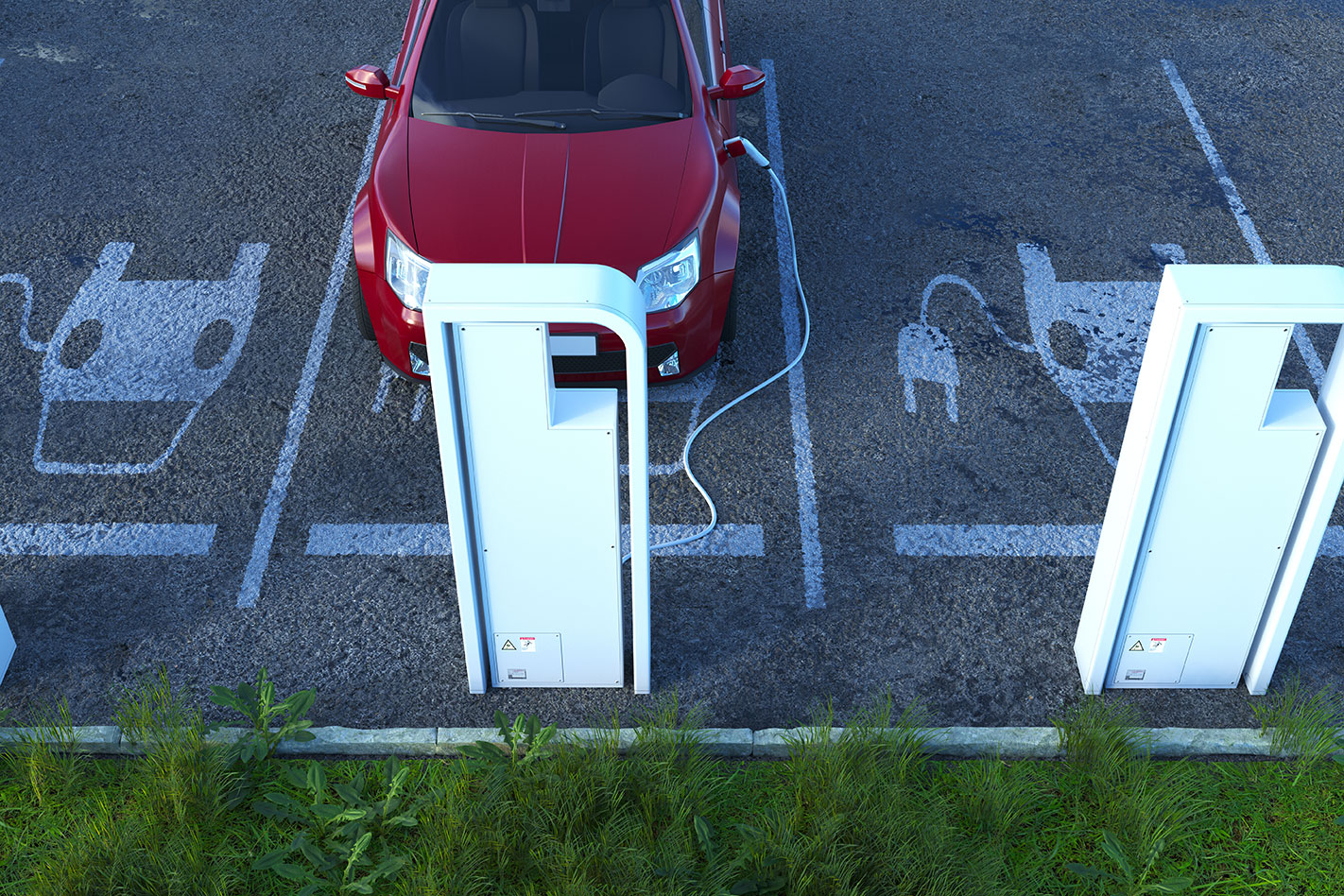
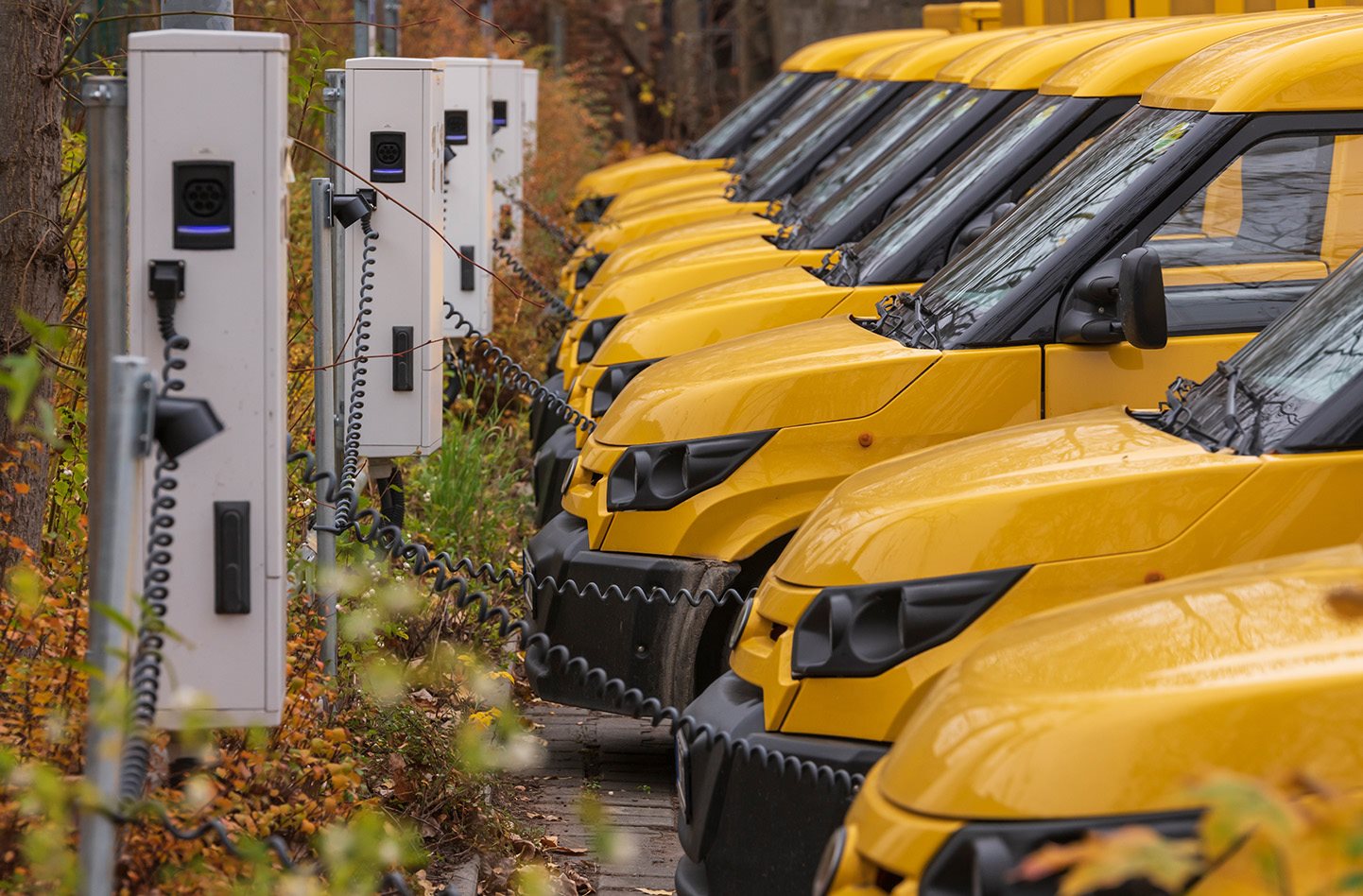
The Government has also agreed to only buy internal-combustion engined vehicles where absolutely necessary. EV lobbyists often put forward the idea that a government fleet of EVs accelerates the creation of a second-hand market, which will help buyers who can’t afford a new car.
Greens lower house MP Adam Bandt agrees, claiming the policy as a win for his party, which moved the final amendments to clear the way through the Senate. “The Government fleet will go electric and when these cars are sold second-hand it will help bring [down] the cost of EVs for everyday people,” he said.
Senator Pocock echoed Bandt’s sentiments. “Bold and decisive action is needed to address high EV prices.”
The policy is expected to reduce the cost of cars like the BYD Atto 3, MG ZS and Nissan Leaf by between $1000 and $2000 for retail buyers with the axing of import charges. Fleets will see bigger discounts in the form of Fringe Benefits Tax exemptions. The Government said earlier this year that savings could be up to $4700 for employees salary-sacrificing a car and up to $9000 for businesses.
The bill has been backdated to July 1, 2022, and the discounts are in addition to the available incentives offered by states. The discounts apply to cars below the Luxury Car Tax threshold of $84,916
Opposition estimates put the cost of the bill at $4.5 billion over the next decade, although it’s unclear whether the incentives would last that long.

Labor’s Jim Chalmer’s talked up the package, saying: “The Government has worked in good faith with the crossbench on amendments. These changes are a win for motorists, a win for business and a win for climate action.”
The policy win comes on the back of a positive week following the COP27 climate summit in Egypt, with other nations praising the new Government for being easier to work with on climate than the previous one.
“This is a landmark moment for EV policy in Australia. It’s a powerful demonstration of how far we’ve come in just a few short years,” said Electric Vehicle Council chief executive Behyad Jafari.“This bill will allow thousands more Australians to get behind the wheel of an EV where they can access the benefits of lower fuel bills, cutting pollution, and an enjoyable driving experience.“Making new EVs easier to buy will turbocharge the creation of a strong second-hand market for EVs, which is vital for affordability.“If the federal government combines this bill with new fuel efficiency standards we will soon see a market develop in Australian through which everyone will be able to enjoy the benefits of EVs.“By achieving stronger EV uptake we will significantly lower Australia’s carbon emissions and reduce our precarious dependence on foreign oil.”
Ford Performance’s latest hero, the Ranger Raptor, is headlined by its new petrol-powered twin-turbo 3.0-litre V6 bringing a significant step up in power output and a much more aggressive exhaust note.
But Ford knows that a loud exhaust isn’t desired at all times, especially if you need to creep out for work early, or are returning home late at night. Engineers have thoughtfully fitted the new Raptor with a valved active exhaust system, giving owners increased control over how their Raptor sounds in a variety of scenarios.

Justin Capicchiano, Ford Performance and Special vehicle engineering manager, said: “We wanted to really make the character of the car come alive, to emphasise the power and define the presence of the vehicle, but not make the car tiring when it didn’t need to be.
“We spent hundreds of hours tuning and developing the sound of the vehicle and really think we have something that sounds right for the truck”.
Exhaust profiles are natively linked to the Ranger Raptor’s drive modes, spanning: Quiet, Normal, Sport, Slippery, Mud, Rock Crawl or Baja Mode.
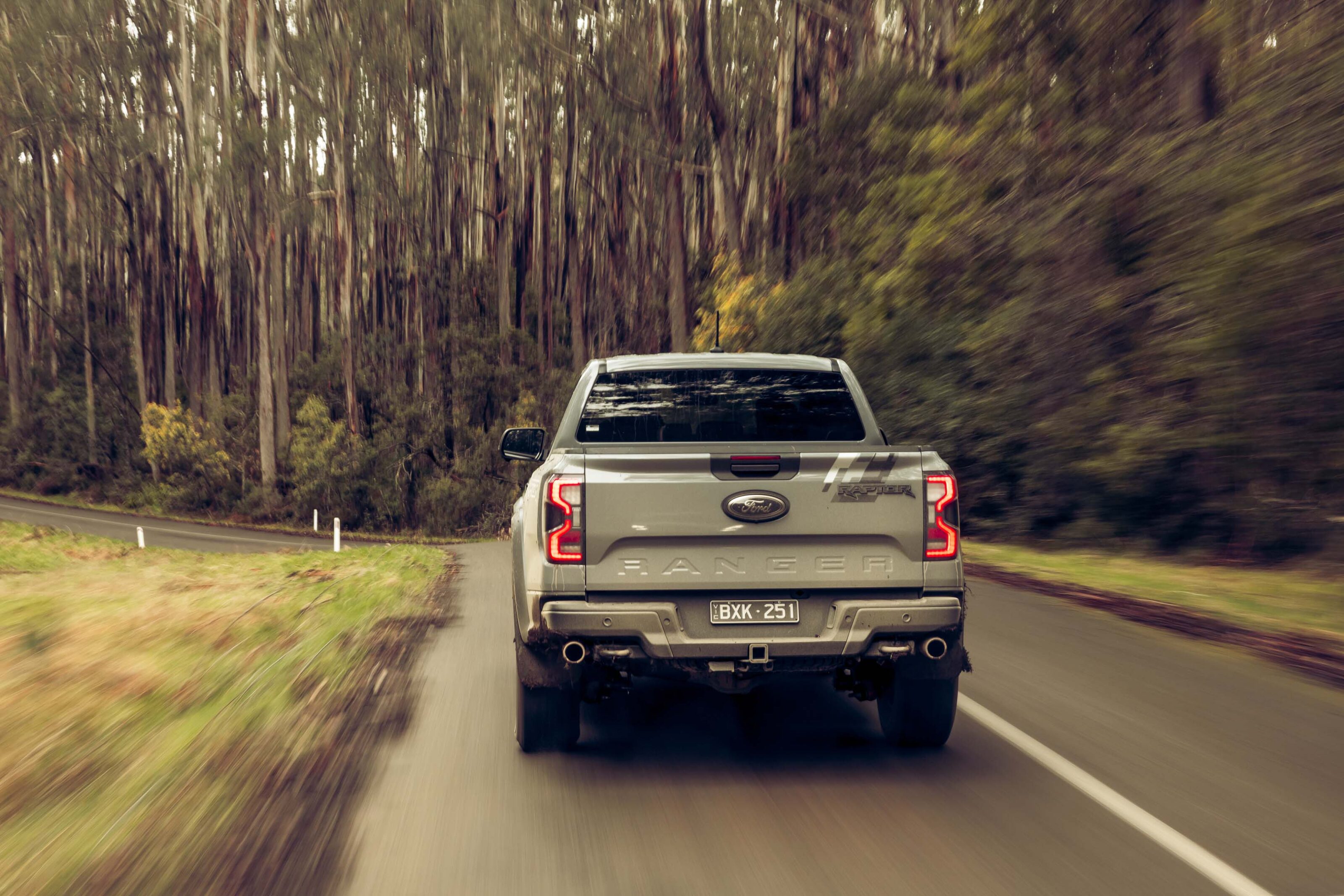
Considerate owners can program their vehicle to always start in Quiet mode, or even schedule certain hours (including start and end times) during which the Raptor will startup with closed exhaust valves.
For complete control, owners can engage the steering wheel-mounted exhaust button, which will unshackle the Raptor’s exhaust profile with its current drive mode and allow drivers to manually select their car’s soundtrack.
The 2023 Ford Ranger Raptor’s exhaust modes include:
- Quiet – Valves closed, the quietest possible setting for all conditions
- Normal – Default setting provides balance of comfort and feedback. Applied by default to Normal, Slippery, Mud/Rut and Rock Crawl drive modes
- Sport – A spirited driving profile that is slightly louder than Normal
- Baja – Loudest setting for off-road use only. Open valves for maximum exhaust noise under all conditions.
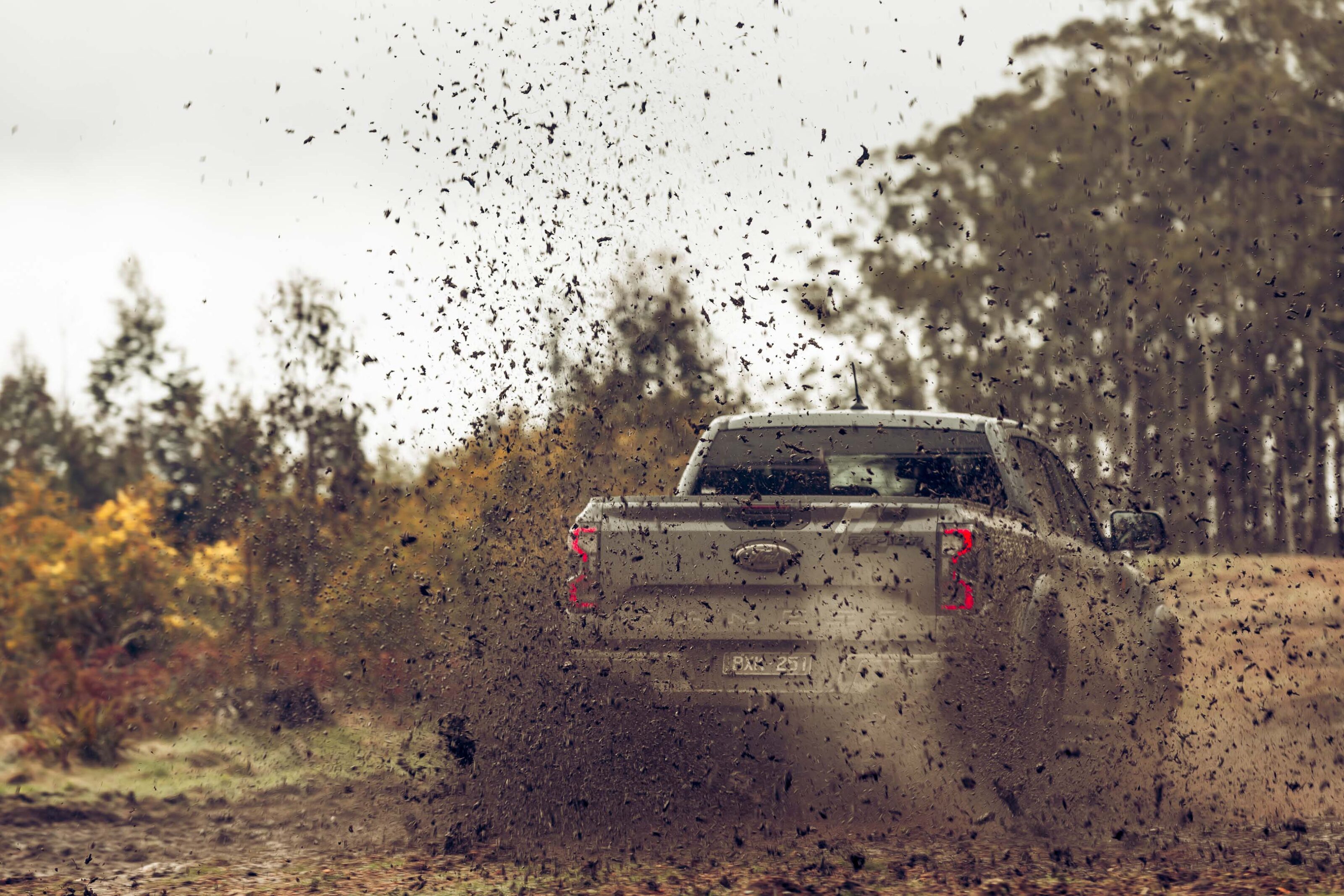
For an audible comparison, check out this video below from Ford Australia. Reckon they’ve nailed it? Let us know in the comments below.
https://www.instagram.com/p/ClP_nSVjTNE/
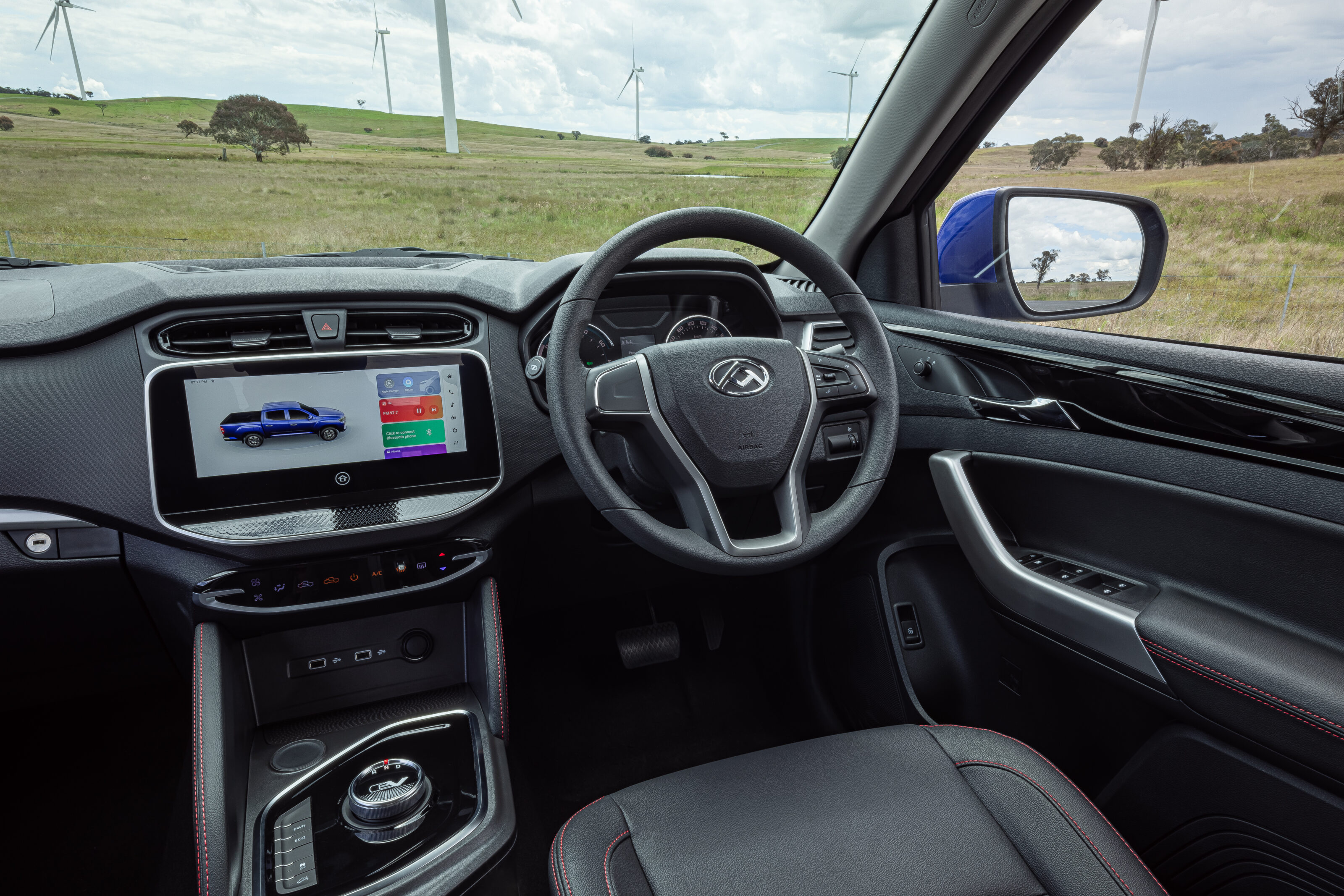
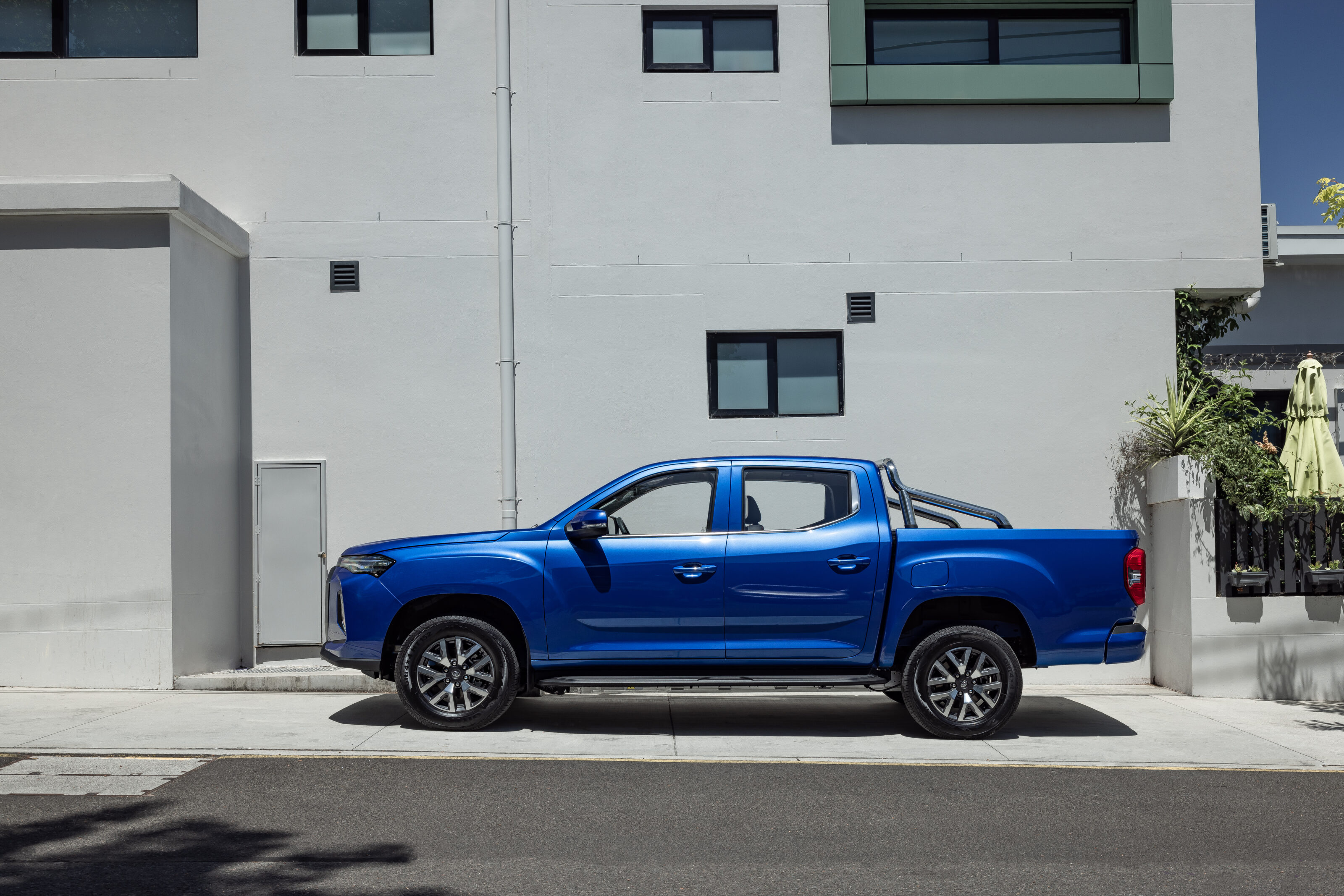
It’s fair to say the price of Australia’s first electric ute, the LDV eT60, has raised some eyebrows.
At $92,990 before on-road costs the EV dual-cab is more than twice as pricey as a diesel T60 Max and well above the threshold to be eligible for any state government incentives.
The Aussie pricing is also higher than what the same ute costs in New Zealand where you can buy an eT60 for NZD$79,990 drive-away.
LDV’s other new electric models, the eDeliver 9 van and Mifa 9 people-mover, also carry similarly high price tags in Australia and start at $116,537 and $106,000 respectively.
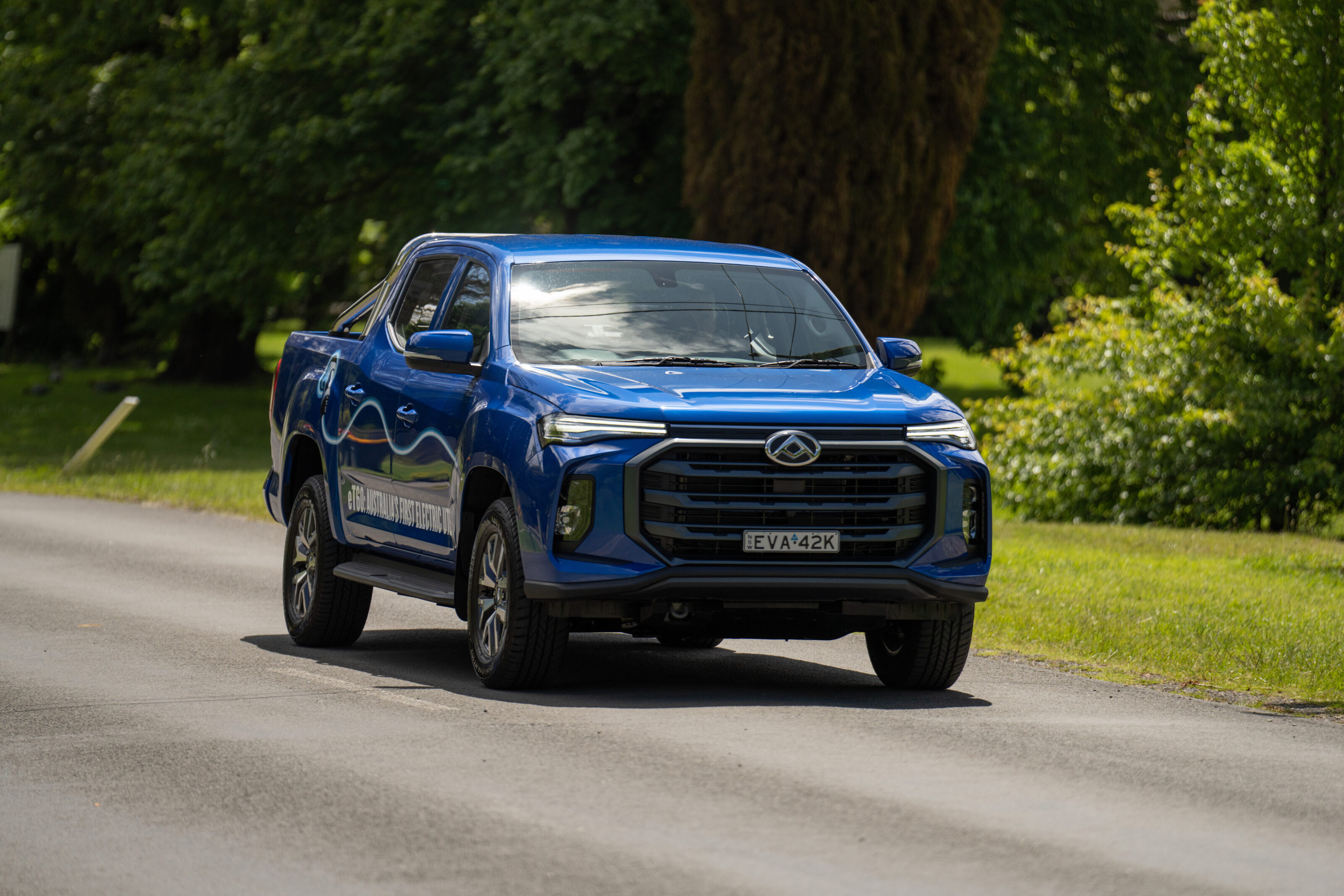
The EV pricing lifts LDV – which is known for its budget-focused combustion models – into new territory, but the company’s Aussie boss says he’s happy with where the new vehicles are positioned.
“We’re okay with the pricing,” Dinnesh Chinnappa, LDV Australia’s general manager, told Wheels. “We believe the pricing aligns to our volume expectations. To be very clear our core business is still our internal-combustion vehicles (ICE). We’re not dependent on the EVs to keep us alive or propel the business forward, but it’s wonderful to be at this early stage and be one of the first to market.”
A key driver behind the eT60’s price is its target market. Australia’s first electric dual-cab isn’t pitched at private buyers, sole traders or small business owners. Instead, LDV says the eT60 is targeted directly at blue chip companies, fleets and all three levels of government which are looking to hit strict emissions targets. And on that front, LDV says it’s already generating an encouraging degree of interest.
“We’re holding about 80 orders across everything with a huge bias towards the eT60,” said Chinnappa. “We’re had about 600 enquires come through our website, so I’d regard that interest as being a fairly high level of interest. And that interest is coming from both private people who are just tech geeks and love technology and want to be involved. But we’re also getting decent enquiries from fleet. Of the 80 deals we’ve done, two or three are private individuals. The rest are all fleet.”
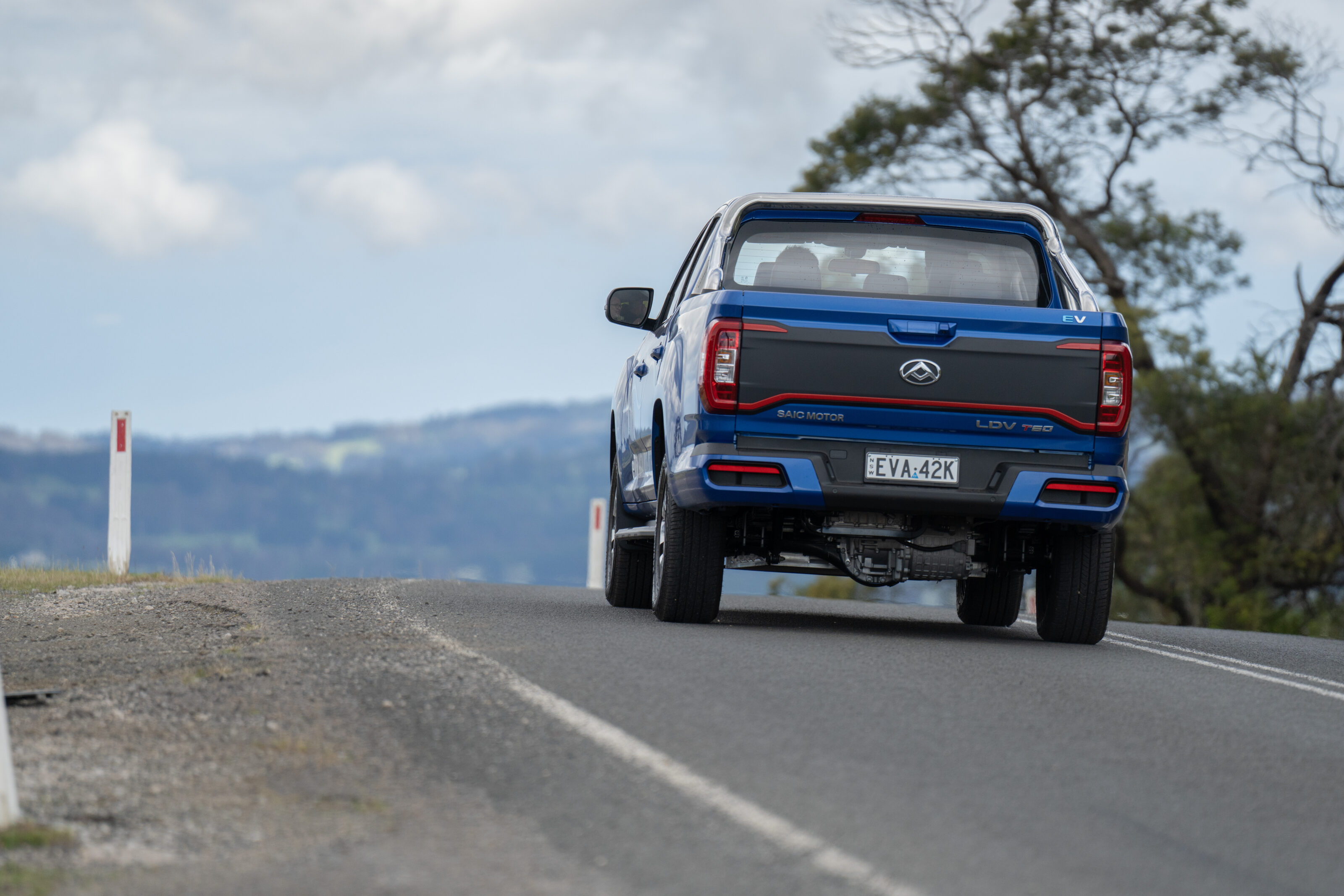
Higher production costs are also a key contributor to the pricing of the EV models, according to LDV spokesperson Oliver Peagam.
“We understand these prices position LDV in a new realm,” he said. “But we are expanding our product portfolio to appeal to a broader group of customers. The fact is these new products and technologies cost more to produce currently and LDV is leading the way in electric commercial vehicles in Australia.
“But to be clear we are not walking away form our current core ICE business of providing new vehicles at affordable pricing. LDV is in the nice position of being able to do both: offer a range of affordable ICE vehicles and a range of segment leading electric vehicles.”
Peagam added early interest in the eDeliver 9 van has been encouragingly high. The EV van is available in a range of sizes and shares the same 88.5kWh battery as the eT60 ute, but has a lower claimed WLTP driving range of 280 kilometres.
“We’re in deep discussions with a cross section of some of Australia’s largest corporations – they’re household names – and government agencies,” Peagam said regarding the eDeliver 9.
“And all of the tier one fleet management organisations are kicking our doors down to find out more. Some have already embarked on self-funded trials and the rest are working through their internal processes before doing likewise. All of these companies we are confident will place orders.”
LDV says it’s having similar conversations with multiple customers about ordering fleets of the eT60 dual-cab, despite the limitations of its 330km WLTP driving range, reduced towing rating and 4X2 capability.
“We have orders and active conversations with some of Australia’s most-storied companies and fleet operators who are committed to running their business in a more environmentally sound manner,” said Peagam. “I can’t name them of course, but they know the rear-drive eT60 isn’t going to cross the Nullarbor or cross the Simpson Desert and they also know the 330km [driving] range is more than adequate for what their businesses require.”
But it’s not just who will buy LDV’s new EVs that helps to provide some context around the high pricing; it’s how they’ll buy them. Chinnappa told us LDV is currently exploring a host of new finance and leasing deals that will make the EVs more attractive from a cost perspective.
“We’ve already been contacted by a number of EV turn-key solution providers,” he said. “There are a number of people who are emerging and they’re saying: ‘We will do everything. We’ll fund the cars, we’ll fund the recharger infrastructure and we’ll fund the delivery of the electricity to your warehouse or loading docks’.
“We’re in communication with two or three of those companies already and I might be holding an order with one of those companies,” added Chinnappa. “There’s all these different business models popping up. You may not even own the car. You may not own the battery. The battery might be on lease and if it shows an issue you swap it out, it’s not your problem. All this stuff is emerging and evolving. Everyone is looking at ways to make it easier for people to get in and out of these vehicles.”
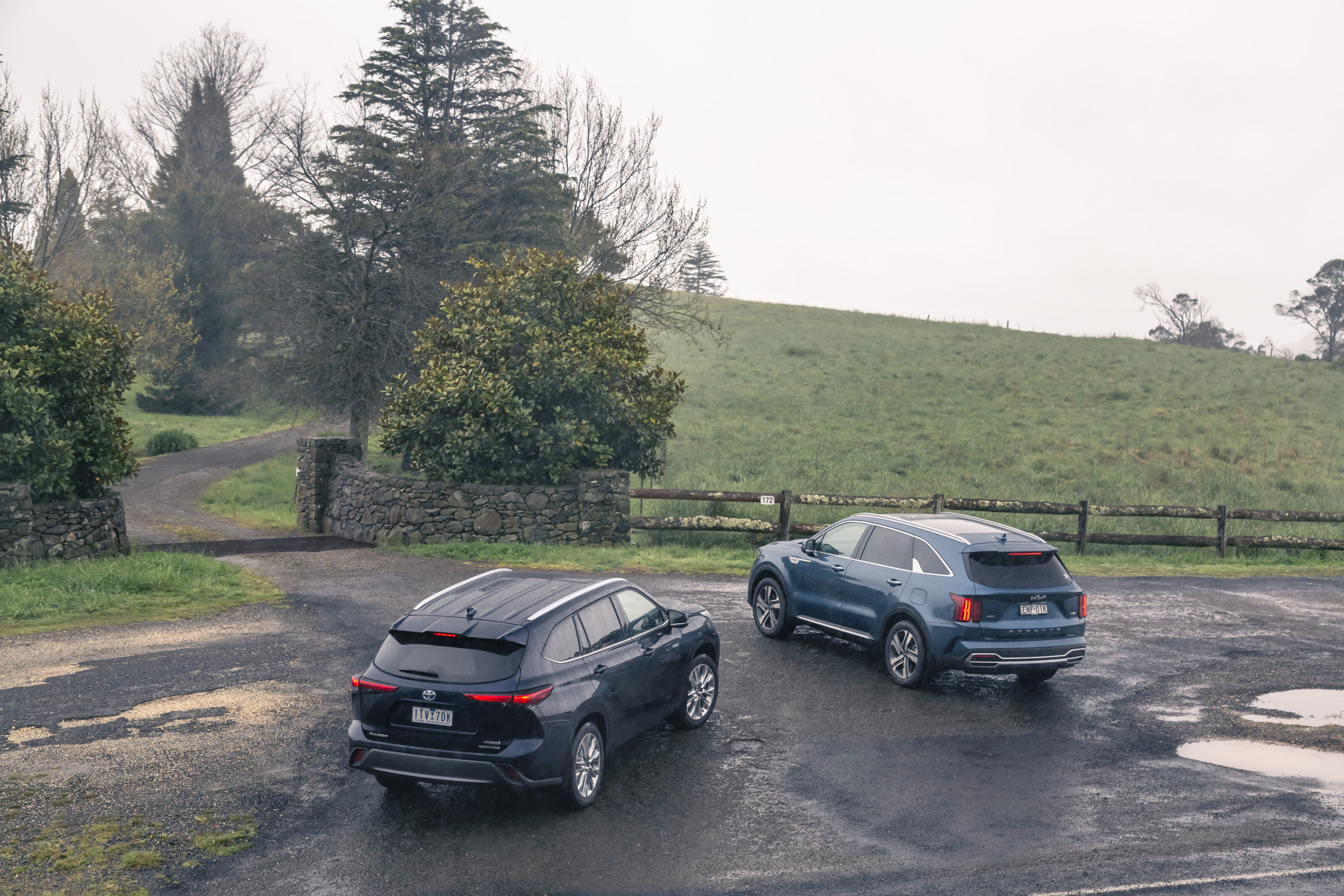
Picking between a Toyota Kluger and Kia Sorento was, historically, not very exciting. Both seven-seaters served a purpose – that being the ability to carry parents and their quintuplets in relative comfort and safety – if little more.
Launched in September 2020 and June 2021 respectively, the new Sorento and Kluger truly evolved – especially the Kia. With chiselled good looks, lashings of USB charge points and an engaging chassis, the Sorento impressed at launch, even if its 3.5-litre petrol V6 and 2.2-litre turbo-diesel didn’t move the game on like the cabin did.
That became a problem when Toyota’s new Kluger debuted on TNGA-K underpinnings packing a petrol-electric hybrid based around a 2.5-litre four-cylinder engine.
Hybrid drive promised to cut the V6 Kluger’s consumption by 40 per cent in ADR figures, and it delivered on the road.
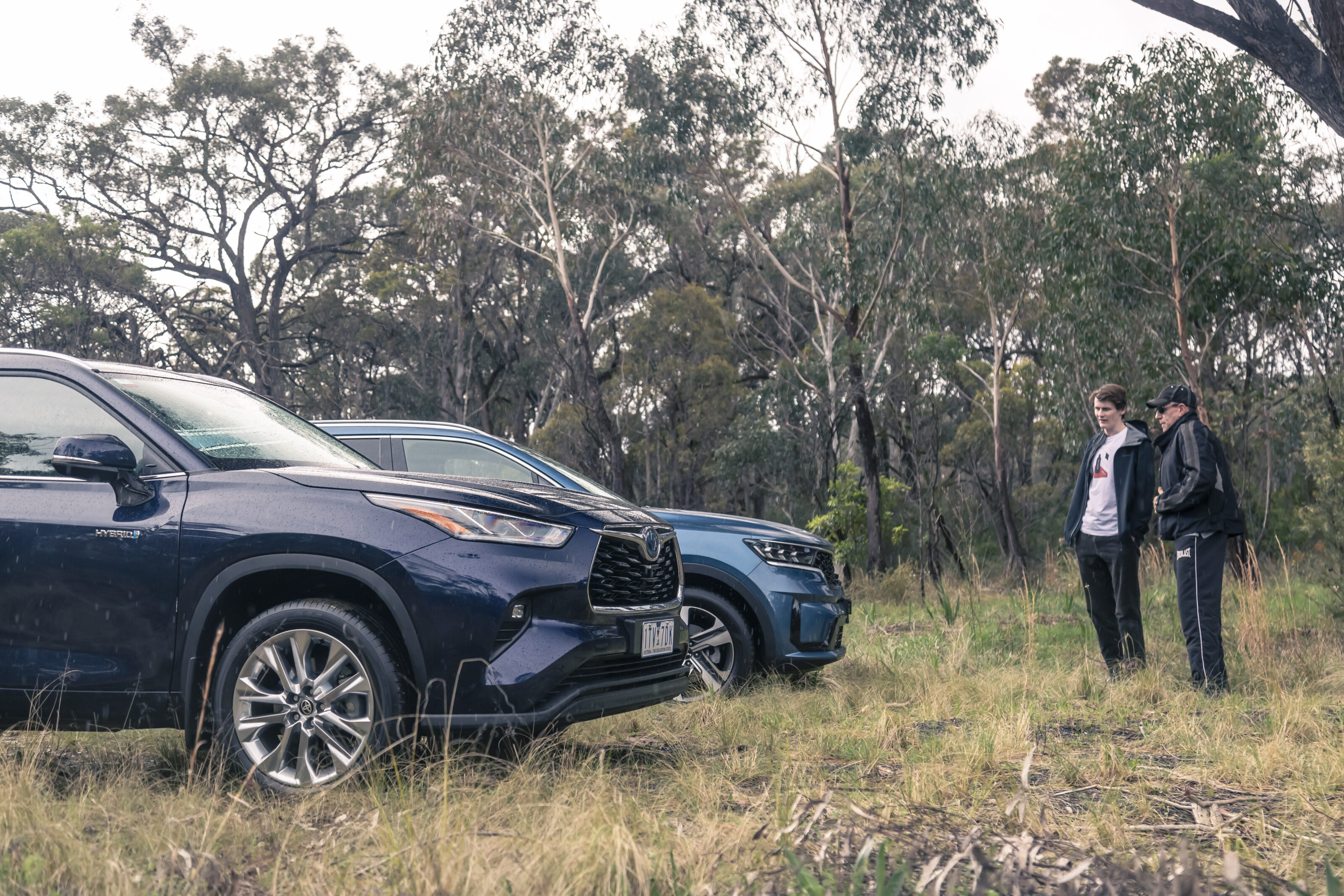
The new Kluger was a revelation, and although the Sorento and Mazda CX-9 both possessed slightly better dynamics and more cohesive interiors, the frugal Toyota hybrid powertrain is now an Aussie staple.
The Sorento didn’t have an answer until the motoring press, dealers and customers basically begged, and Kia secured some hybrid production for Australia. It started with the rather expensive ($81,080 before on-road costs) Sorento PHEV (plug-in hybrid), shortly followed by the regular hybrid we have today available in front- ($66,750) or all-wheel drive ($69,750). Both before on-road costs.
Both of these popular three-row SUVs are in hot demand and low supply. The Kluger in top Grande hybrid eFour trim tested here ($75,700 before on-road costs) demands six to nine months of patient waiting in metro areas. There is some lightly-used dealer stock about, but the price gouging is hard to swallow.
The Sorento hybrid wait list is about 12 months long as Kia is only able to secure roughly 20 each calendar month, and there’s no dealer stock. The Sorento is still available with a 2.2-litre turbo-diesel that – as I’ll come back to – is probably better than the hybrid for country buyers.
JUMP AHEAD
- Pricing and features
- Comfort and space
- Boot space compared
- On the road
- Safety
- Fuel efficiency
- Ownership
- VERDICT
- Scoring
- Specs compared
Pricing and features
Both SUVs on test are fully loaded. For the Sorento, that means the GT-Line trim and for the Kluger, Grande. If there’s a theme that runs through this twin test, it starts here. The Sorento’s Euro ‘GT-Line’ name against big-gulp Grande sums up each car’s approach.
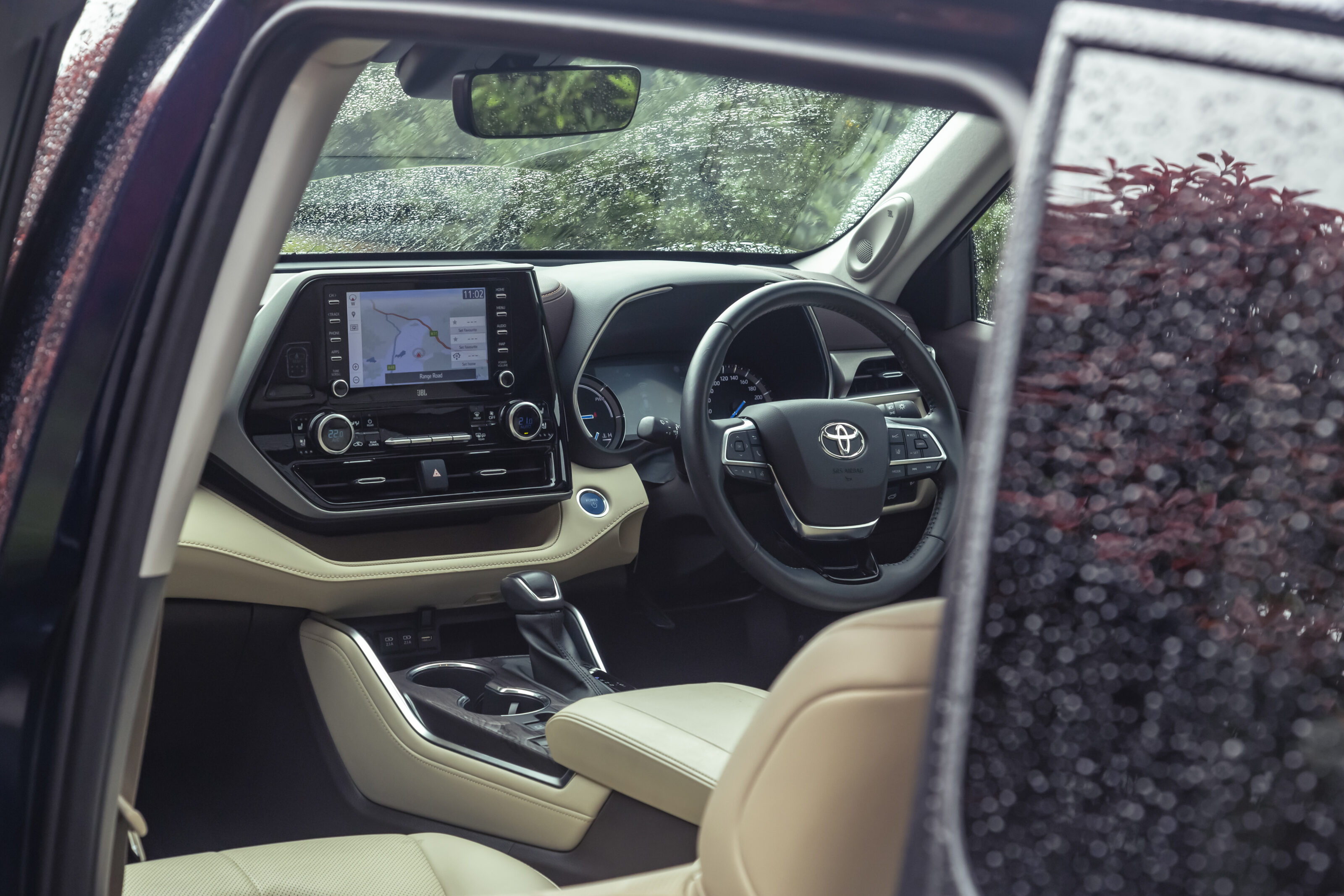
The Sorento and Kluger have wired Apple CarPlay and Android Auto, three-zone climate control, electric front seat adjustment, leather upholstery, seat heating and cooling, name-brand sound systems, surround-view cameras and digitised driving displays.
Despite being nine months older in Australian market terms, the Sorento feels like a far newer vehicle. Its 10.25-inch central touchscreen is not only larger than Kluger’s small 8.0-inch infotainment unit, but the colours are far more vivid and the resolution higher.
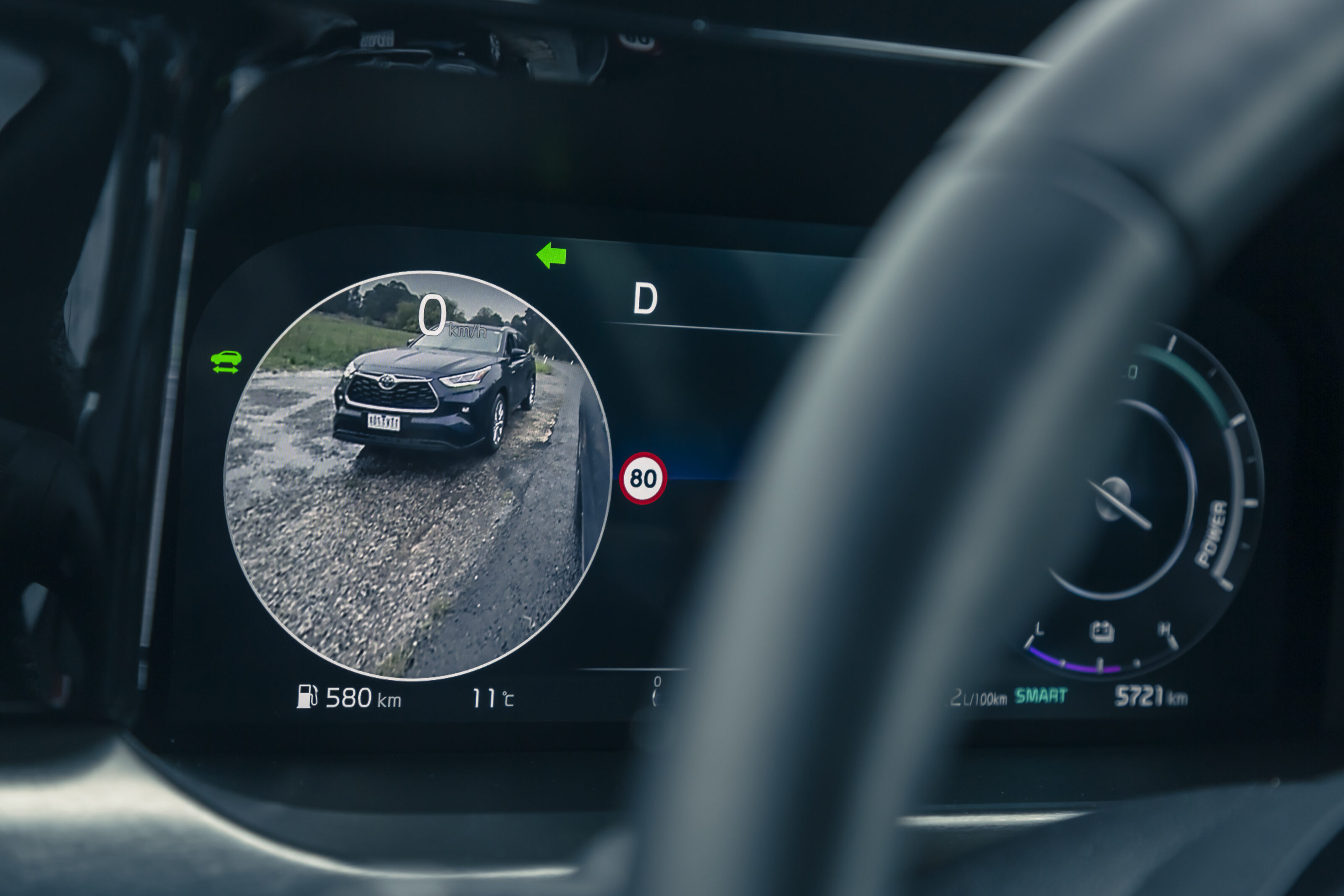
The Sorento also has a 12.3-inch digital driver’s display with blind-spot cameras, whereas the Toyota has a 7.0-inch TFT screen that you can’t see properly when glared upon by Sydney’s bright sun.
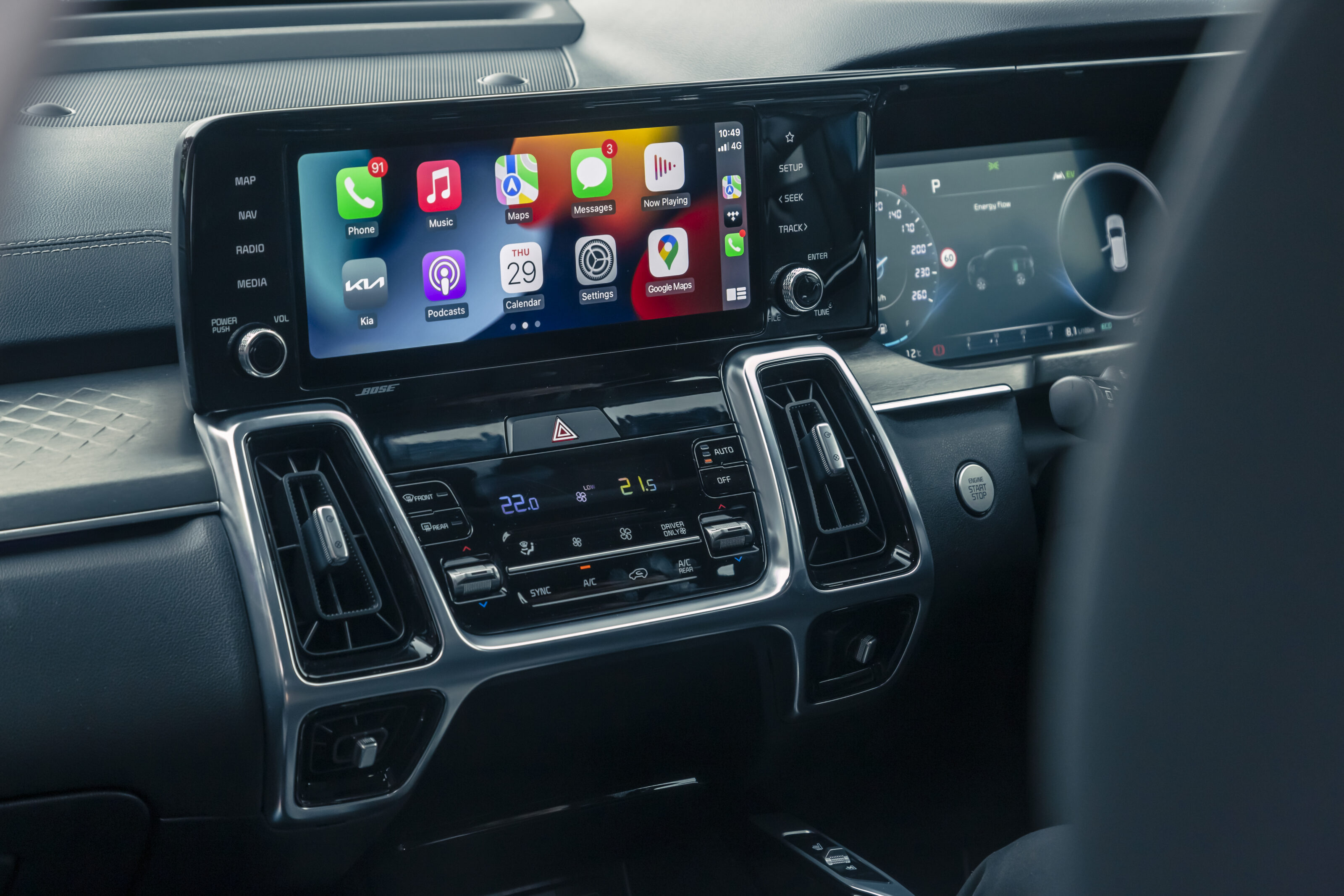
Kia has also gone to town when it comes to interior presentation with ambient lighting glowing softly through fish-scale metal, art-deco-inspired design choices and nicer feeling secondary plastics. The steering wheel controls are more logically laid out in the Sorento and it has a total of eight USB charging points against Kluger’s five.
Some may find the Kluger’s back-seat Blu-Ray entertainment system (a $1500 option) dated in a world of iPads, but it’s actually a great way to re-explore the family’s entertainment collection. The included infrared headphones mean parents in the front will be able to enjoy blissful silence.
If the front seat passengers want to listen to music, the Kluger’s 11-speaker JBL stereo is powerful but the Sorento’s warmer, more natural-sounding Bose system is easier on the ears.
While the Kluger is absolutely fit for purpose (and some may like the choice of two interior colour schemes, which certainly differs from Kia’s black-or-black), the Sorento’s technology package and cabin design are more cohesive.
Sorento GT-Line and Kluger Grande hybrid features
| Sorento GT-Line hybrid | Kluger Grande hybrid |
|---|---|
| $69,750 ($70,445 as tested*) + on-road costs | $75,700 ($77,875 as tested**) + on-road costs |
| 10.25-inch touchscreen | 8.0-inch touchscreen |
| 12.3-inch digital driveru2019s display | 7.0-inch TFT readout |
| 12-speaker Bose sound system | 11-speaker JBL sound system |
| 14-way power heated and cooled seats | 14-way power heated and cooled seats |
| Quilted Nappa leather upholstery | Leather upholstery (tan or black) |
| Tri-zone climate control | Tri-zone climate control |
| Keyless entry and go | Keyless entry and go |
| Power tailgate | Power tailgate |
| Projector LED headlights | Projector LED headlights |
*Premium paint ($695)
**Premium paint ($675), rear-seat entertainment ($1500)
Comfort and space
The Kluger gets off to a fantastic start as you sink into its soft, Werther’s Original-inspired leather-upholstered seats with three-stage heating and cooling (black leather is available too). The driving position feels suitable for a taller driver, too, which worked for me at 188cm.
Initial comfort in the Kluger gives way to long-distance fatigue that the Sorento’s firm quilted Nappa leather-appointed seats don’t introduce. The Kia’s pews are less plush but more supportive on long hauls. It, too, has electric seat adjustment with memory, heating and cooling, but there’s more adjustment and heaps of under-thigh support to keep leg fatigue at bay.
The second row is where the Kluger draws ground back (except for the lack of seat heating, which is a weird miss). A longer vehicle simply has a little more space, with better headroom and legroom than a Sorento. Both SUVs have a separate rear climate zone, built-in sunshades and sliding benches with adjustable backrests.
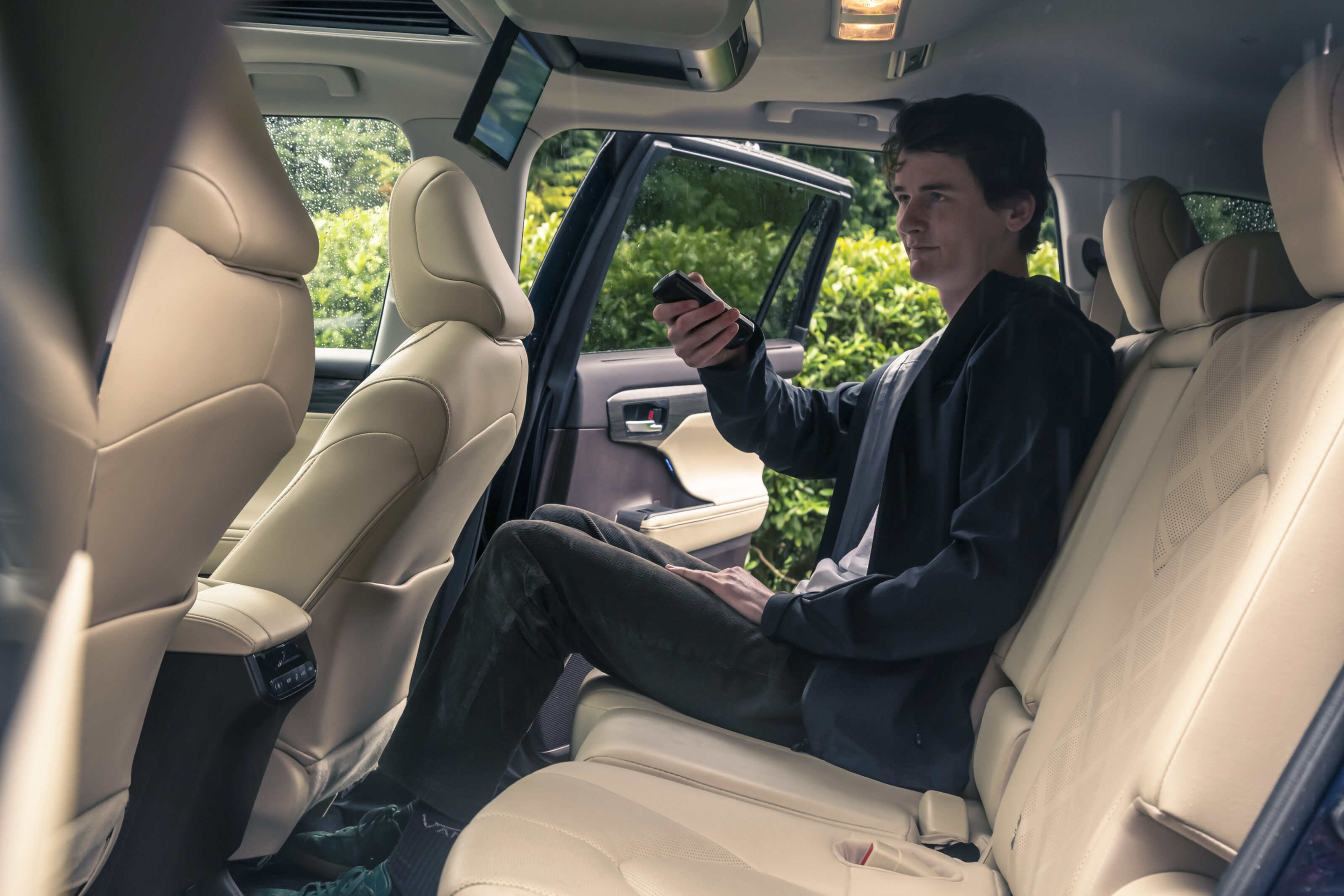
It would be nice if the Sorento offered another upholstery choice rather than simple-but-safe black. The Kluger’s brown and tan isn’t, perhaps, so on the money but the Sorento’s Hyundai Santa Fe Highlander relation has a lovely cream upholstery option worth considering outside this twin test.
On the whole, this pair is sturdily constructed inside. Having a full-length opening sunroof is great in the Sorento, though I noted some rattles and creaks over broken tarmac during our test week that were not evident in the Kluger.
The second rows of both Kluger and Sorento have three ISOFIX points and top tether anchors for securing child seats. While the Kluger one-ups the Sorento by having curtain airbags that protect occupants all the way at the back, there are no top tether or ISOFIX points in the third row of the Toyota – unlike the Sorento, which has both.
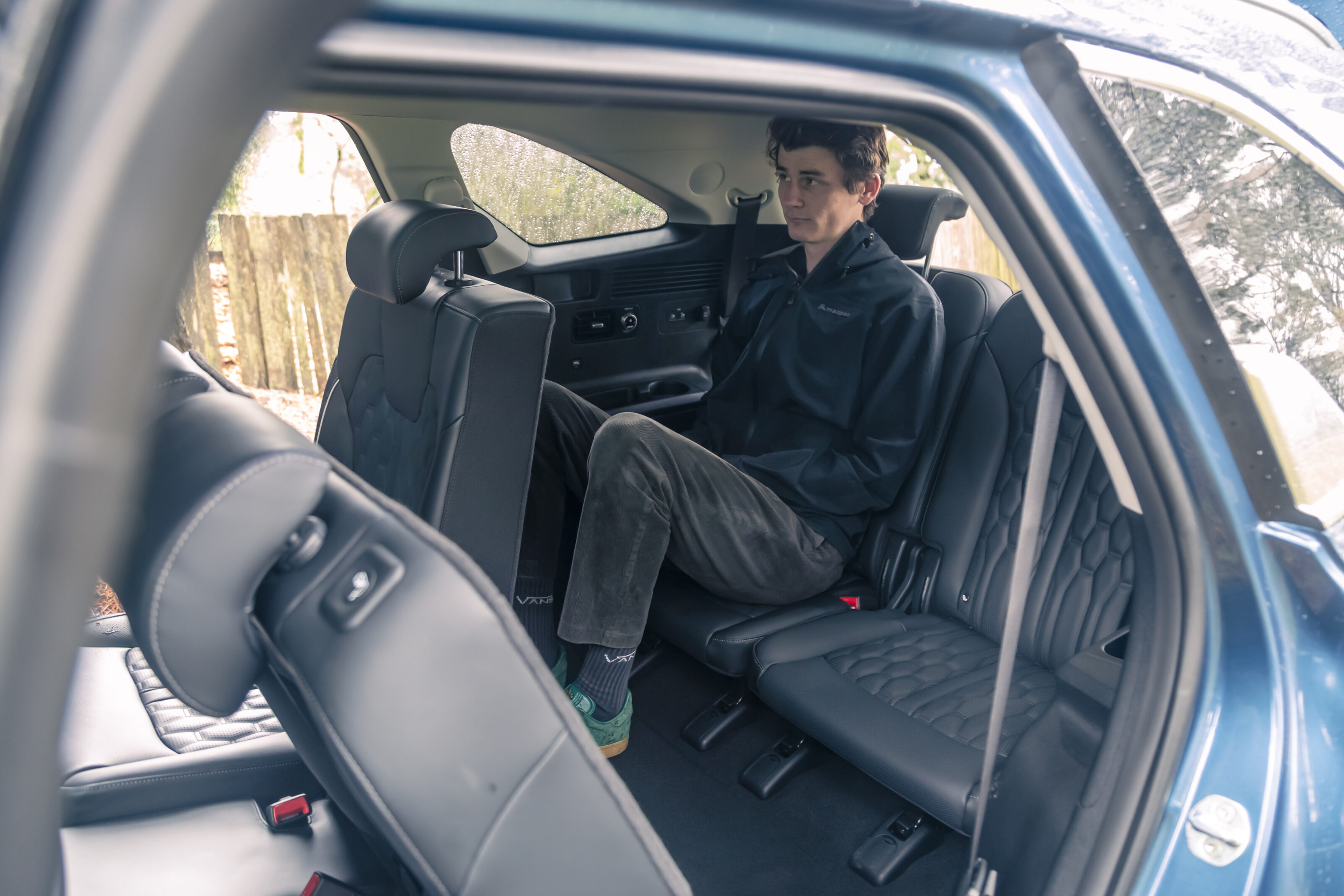
Space in the Sorento’s third row is more impressive than the Kluger. Despite the sunroof, there is more headroom than the physically bigger Kluger.
That physical size does help the Kluger in boot space. It offers 241L against Sorento’s 179L with all three rows in place. The seats fold easily in both cars, with five-seat mode netting 552L in Kluger and 608L in Sorento. Kia’s ease of use is excellent, with an electrically actuated folding second row flipping down with almost no effort, whereas the Kluger’s manually folding seats require a certain amount of huffing and puffing.
Despite hybrid powertrains, both vehicles are equipped with full-sized spare tyres. Power tailgates are standard, naturally.
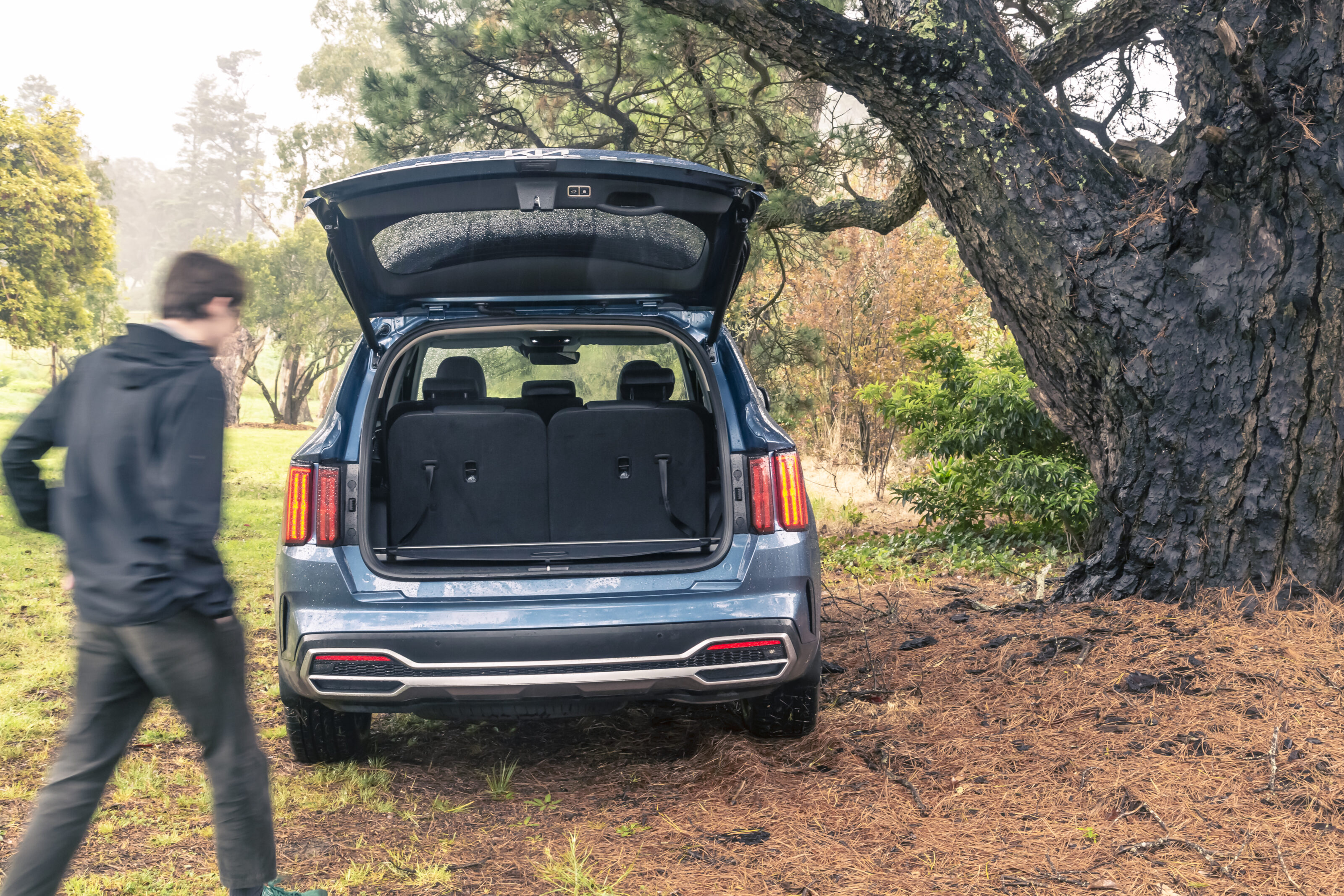
Sorento GT-Line and Kluger Grande hybrid boot comparison (VDA)
| Seats in place | Sorento GT-Line hybrid | Kluger Grande hybrid |
|---|---|---|
| Seven seats | 179L | 241L |
| Five seats | 608L | 552L |
| Two seats | 1966L | 1150L |
On the road
We’ve driven both of these family SUVs at Wheels before, but never directly back-to-back. Mostly, the Kluger and Sorento’s driving traits carry over from pure ICE vehicles, so it’s really about the polish and integration of each car’s hybrid systems.
Kia uses a direct-injected 1.6-litre turbo-petrol engine with a single 44kW/264Nm electric motor. You can get a Sorento hybrid in front- or all-wheel drive and the peak 169kW/350Nm outputs are the same. This is due to Kia’s system sandwiching the electric motor between the engine’s output shaft and gearbox.
This also means the Kia keeps a traditional six-speed automatic rather than the Kluger’s continuously variable transmission. While this can make for some awkward low-speed manoeuvres as the Sorento transitions between electric and petrol power, it also keeps the engine’s din at bay better than a Kluger’s.
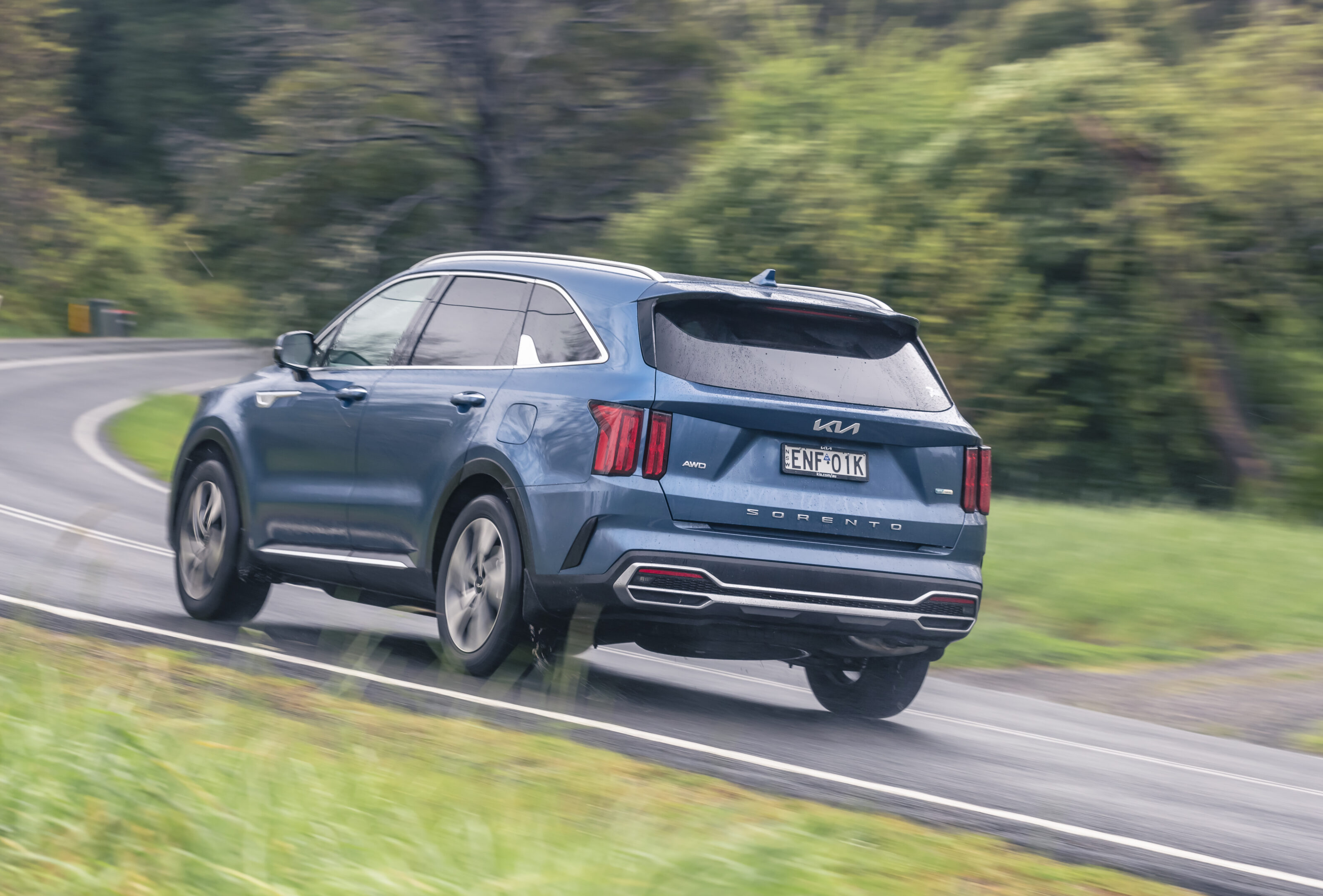
Unfortunately, the Kia’s electrics simply don’t have as much grunt. There’s no optimistic EV mode – only Eco, Smart, Sport and a host of off-road settings – and oftentimes when taking off from the lights the Kia’s petrol engine will kick in where the Kluger’s wouldn’t.
In terms of urban operation and efficiency then, the Kluger takes the cake.
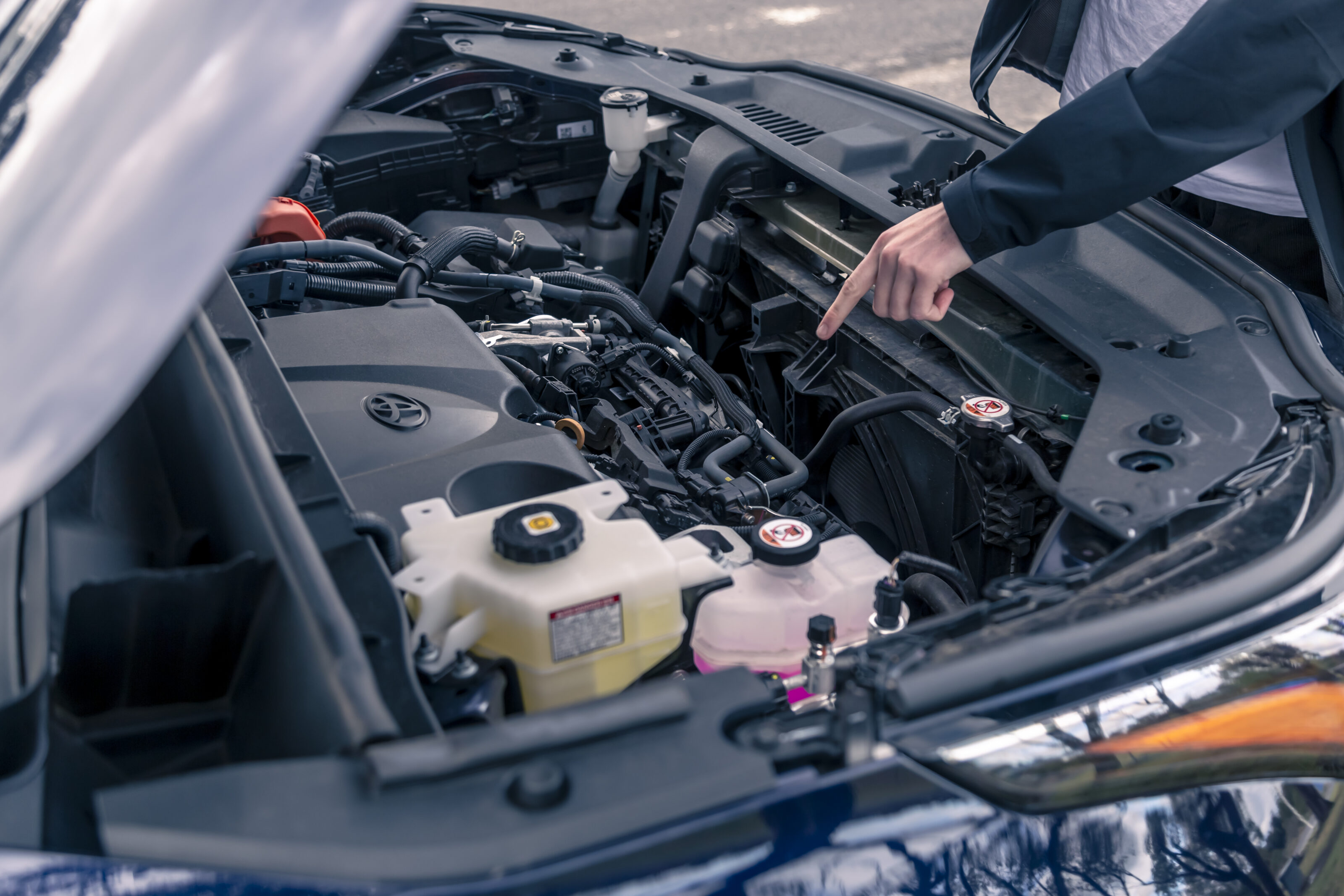
Toyota’s hybrid is rather different to Kia’s, the Kluger tested here equipped with the proven ‘eFour’ powertrain. This comprises three electric motors – one for battery regen, another (134kW/270Nm) to help the petrol engine at the front axle and a free radical for the rear wheels.
All this is both good and bad. In theory, (and in practice) it makes the Kluger more efficient. It also gives independence to the rear axle, though the rear motor’s outputs (40kW/121Nm) don’t match the front axle for a true 50:50 AWD torque split. Total system power is quoted at 184kW; Toyota does not claim a combined torque figure.
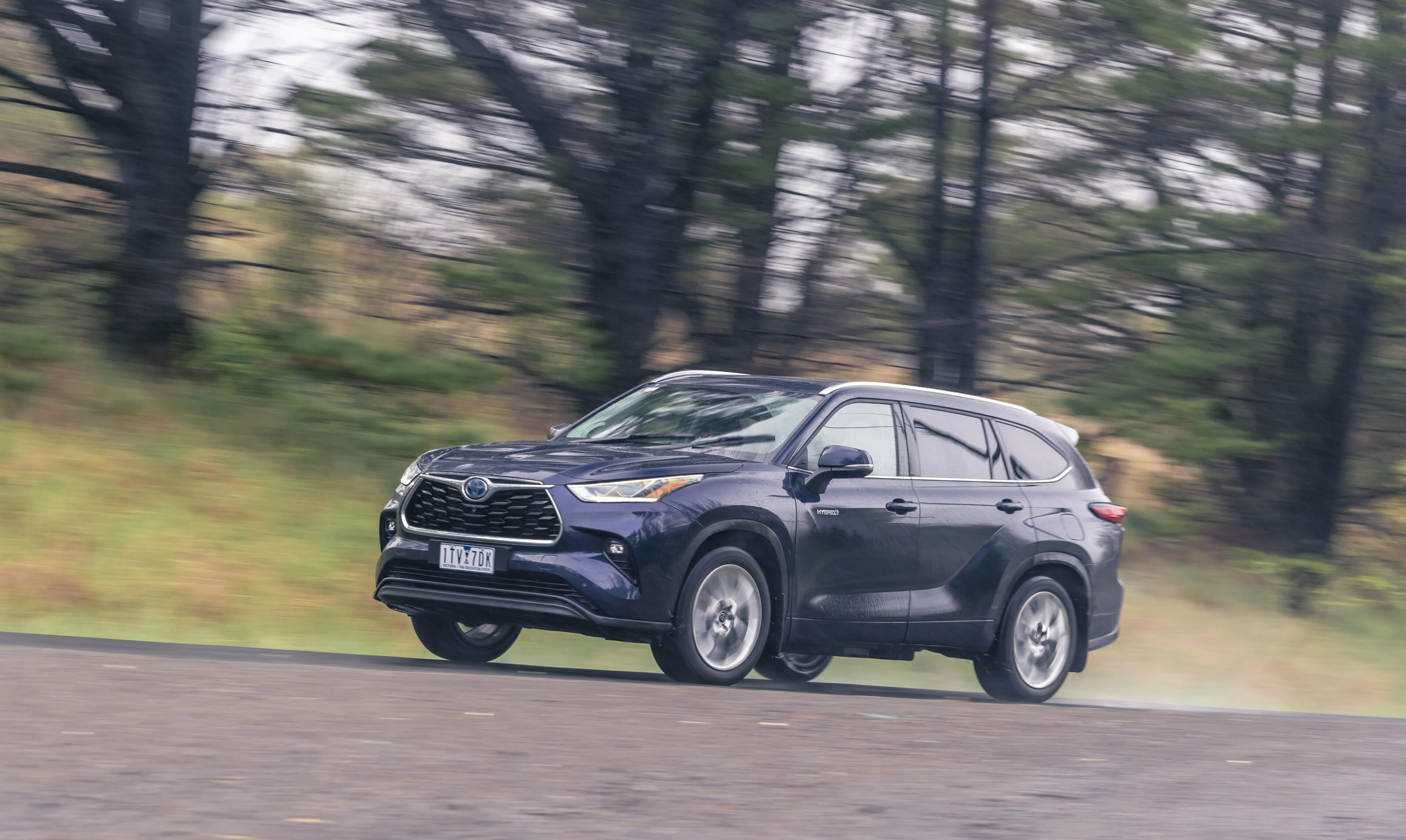
So the Kluger’s powertrain is better, hands down then. Right? Well, not quite, because even though Toyota’s CVT is smooth and seamless, the Atkinson-cycle 2.5-litre atmo four-banger is not as refined as the Sorento’s 1.6.
That means when kicking the Kluger to 100km/h in a claimed 8.4 seconds, it can get quite noisy. This is expected, but a similar level of noise comes through when making brisk getaways from the lights in Sport mode.
Despite being down on power, the lighter Sorento (1948kg vs 2090kg) ought to be a little quicker than the Kluger, though Kia doesn’t claim a 0-100km/h time, and they feel about the same on the road.
I mentioned Europe vs USA earlier, and I think Westerman put it best when he leaned into the Kluger window and said to me: “This is a simple call, it’s Europe vs the USA”.
What you value in a vehicle will probably determine your preference between these two. For those after ultimate plush comfort, the softly-sprung and almost underdamped Kluger will suit your tastes.
Crawling slowly through Sydney’s pothole- and concrete-littered inner west suburbs, the Kluger’s soft springs and long travel soaked up road imperfections best, the Sorento being occasionally abrupt, even on its smaller 19-inch alloy wheels (the Kluger wears 20s).
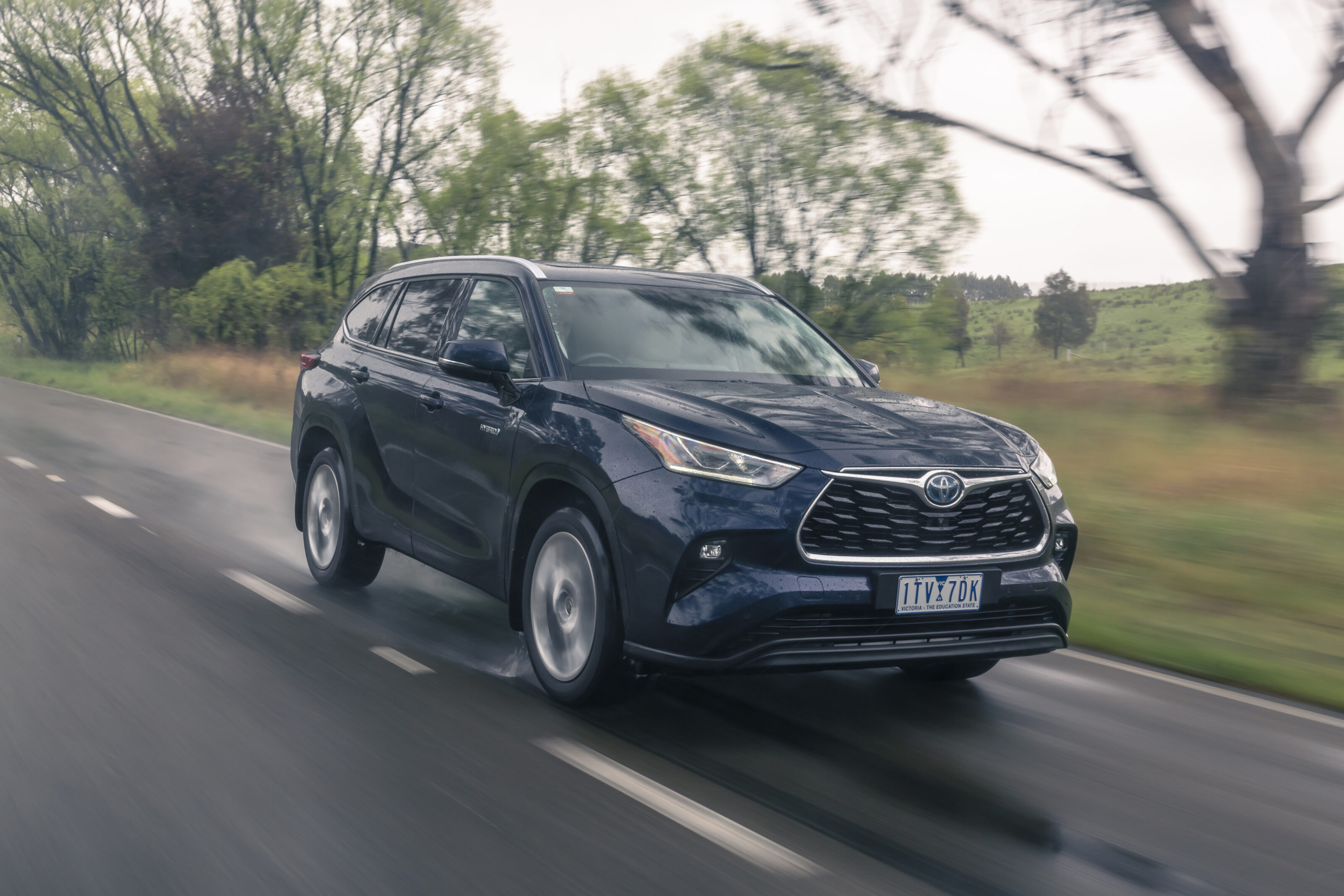
Both are easy to see out of and park, but the Sorento’s more compact 4.86-metre length means it fits into more spots than the 4.96-metre-long Kluger. The Sorento’s blind-spot cameras that come on with the indicators seem gimmicky at first, but add an extra layer of confidence when changing lanes or turning left in the vicinity of motorcyclists.
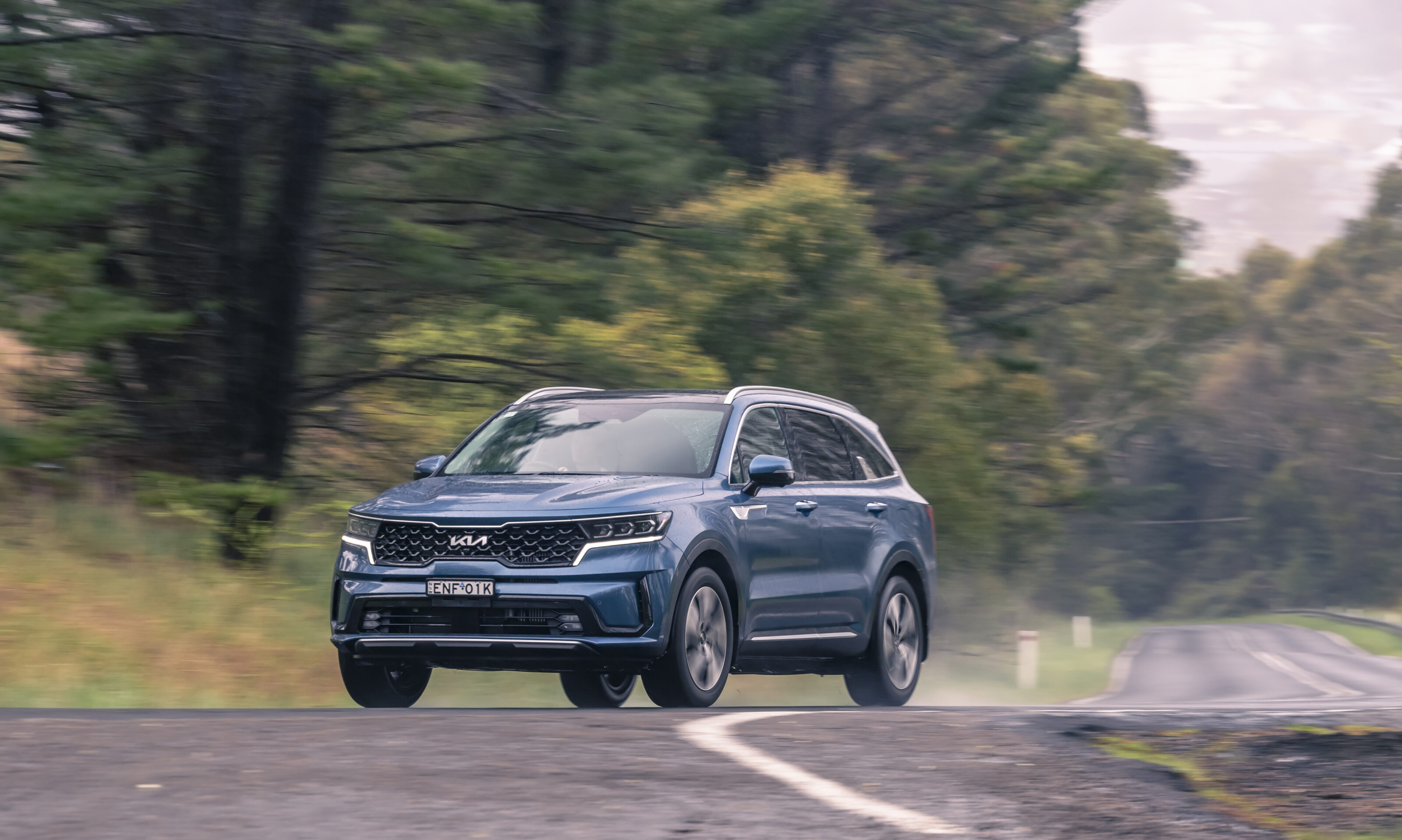
The Kluger’s ride comfort was welcome on a 90-minute jaunt out of Sydney on the M5 and Hume Highway. The Kluger is a truly plush vehicle with enough body movement to isolate all seven passengers. I do wonder how the car’s dampers will age over time, though, as it sometimes takes two oscillations to settle after a high-speed compression.
Away from the straight-and-dull Hume is where the Sorento’s Australian-tuned chassis comes to the fore. This pair isn’t about on-limit dynamics, of course, but the Sorento’s secure and natural handling inspired more confidence on unsighted wet roads. The Kluger isn’t a sloppy mess in the country, but for us at Wheels, the Sorento wins out for overall prowess.
Safety
In the safety aids department, the Sorento’s high-res 360-degree monitor and blind-spot cameras in the digital driver’s display give it a massive advantage over the Toyota – seriously, the Kluger’s pixelated surround-view monitor is almost unusable.
Both cars have front auto emergency braking with pedestrian and cyclist detection, blind-spot monitoring, rear cross-traffic alert, lane-departure warning and adaptive cruise control.
The Kluger and Sorento both have semi-autonomous modes that combine adaptive cruise and lane-trace assist. Neither works particularly well, with lots of bouncing from one side of the lane to another. The Toyota’s system also slows down particularly early when approaching vehicles from behind on the highway.
Fuel efficiency
Each of these vehicles promises to nearly halve fuel usage next to their petrol V6 counterparts. The Sorento AWD is rated at 5.8L/100km and the Kluger 5.6L/100km on the ADR combined cycle.
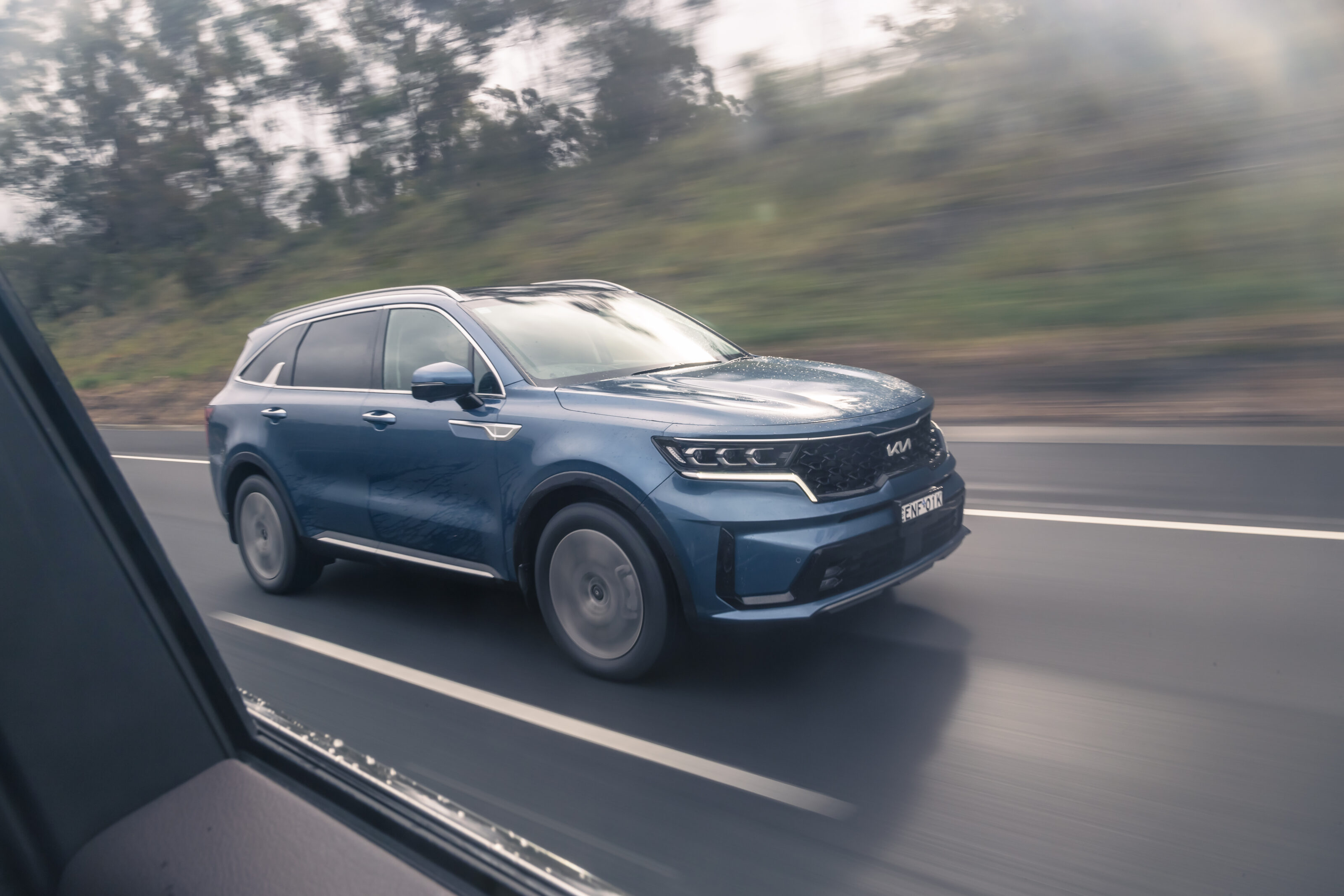
Our real-world urban testing showed that the Kluger was demonstrably more efficient around town, recording a flat 8.0L/100km. The Sorento’s electric motors simply aren’t as strong, which means more time using the petrol engine and a 9.2L/100km figure in town.
Both cars improved while heading down to the Southern Highlands from Sydney for a more in-depth test, though the Sorento’s more frugal 1.6 turbo-petrol engine showed greater potential, dropping to 7.1L/100km against the Kluger’s 6.9L/100km.
The crutch is, the Sorento’s 2.2-litre turbo-diesel is just as efficient as the hybrid for country touring with an ADR extra-urban rating of 5.3L/100km. Its 2000kg braked towing capacity is also more useful than the hybrid’s 1650kg, plus you save $4680 on the purchase price. If you really want to lower your fuel consumption – especially around town – the Kluger wins here.
Ownership
The same is true over a longer period. The Sorento may be $5960 cheaper to buy than the Kluger but in the first five years, you’ll spend $1816 more on scheduled maintenance – not a small sum.
For five years or 75,000km of maintenance, the Sorento costs $2841 and the Kluger just $1025. The Kluger’s capped-price servicing runs out after five years though, whereas the Sorento’s runs for seven.
Sorento also hits back with a seven-year, unlimited-kilometre warranty to Toyota’s five. The Toyota’s more proven hybrid powertrain and atmo engine may, for you, go some way to ease any worries about its shorter warranty.
VERDICT
Throughout the test, Ash and I were bickering over the Sorento’s keys. Its attractive cabin with surprising delights like the ambient glow through the ‘fish scale’ trim is just scratching the surface of its brilliance. Except, with the Kia’s fuel consumption figures, I’d seriously consider saving some cash and getting the diesel.
A Kluger, on the other hand, undeniably succeeds at cutting local emissions and lowering fuel consumption in urban settings. If that’s the sole reason you’re tossing up between Kluger and Sorento hybrids, then the Kluger is where you’ll end up – with the bonus of a very plush ride.
The Sorento’s more supportive seats, better sound system, and more cohesive ride and handling package mean this is the car I’d buy with my money though, and the winner of the test.
Overall, the Sorento does more with the space it has and is the more complete package.
SCORING
Kia Sorento GT-Line HEV AWD: 8.5/10
Things we like
- Slick technology
- Interior practicality
- Country road handling
Not so much
- Firm urban ride
- Hybrid isnu2019t that frugal
- Still no wireless mirroring
Toyota Kluger Grande hybrid eFour: 8.0/10
Things we like
- Seamless hybrid
- Urban ride comfort
- Affordable servicing
Not so much
- Front seats lack support
- Dated infotainment
- Expensive to buy
| Toyota Kluger Grande hybrid AWD | Kia Sorento GT-Line hybrid AWD | |
|---|---|---|
| Safety, value and features | 8 | 8.5 |
| Comfort and space | 8.5 | 8.5 |
| Engine and gearbox | 8.5 | 8 |
| Ride and handling | 7.5 | 8 |
| Technology | 7.5 | 8 |
| Overall | 8.0/10 | 8.5/10 |
2022 Kia Sorento and Toyota Kluger hybrid specifications
| Toyota Kluger Grande hybrid eFour | Kia Sorento GT-Line HEV | |
|---|---|---|
| $75,700 ($77,875 as tested**) + on-road costs | $69,750 ($70,445 as tested*) + on-road costs | |
| DRIVETRAIN | ||
| Engine | 4cyl, dohc, 16v, Atkinson cycle | 4cyl, dohc, turbo, direct-injected 16v |
| Layout | front engine (east-west) + tri motors (F + R), AWD | front engine (east-west) + single motor, AWD |
| Capacity | 2487cc | 1598cc |
| Power | 184kW | 169kW |
| Torque | not stated | 350Nm |
| Gearbox | continuously variable | 6-speed automatic |
| CHASSIS | ||
| Body | steel, 5 doors, 7 seats | steel, 5 doors, 7 seats |
| L/W/H/Wu2013B | 4966/1930/1755/2850mm | 4810/1900/1700/2815mm |
| Track (F/R) | 1660/1660mm | 1660/1660mm |
| Weight | 2090kg | 1948kg |
| Boot | 241/552/1150L | 179/608/1996L |
| Fuel/tank | 91 RON / 65 litres | 91 RON / 67 litres |
| Economy | 6.9L/100km (tested) | 7.1L/100km (tested) |
| Suspension | Front: struts, coil springs, anti-roll bar. Rear: multi-link, coil springs, anti-roll bar | Front: struts, coil springs, anti-roll bar. Rear: multi-link, coil springs, anti-roll bar |
| Steering | electric rack-and-pinion | electric rack-and-pinion |
| Front brakes | ventilated discs (340mm) | ventilated discs (325mm) |
| Rear brakes | ventilated discs (338mm) | Ventilated discs (325mm) |
| Tyres | Toyo Open Country AO20 | Goodyear Eagle F1 SUV |
| Tyre size | 235/55R20 | 235/55R19 |
| SAFETY | ||
| ANCAP rating | five stars | five stars |
| PERFORMANCE | ||
| 0-100km/h | 8.4sec (claimed) | 8.5sec (estimated) |
| **Premium paint ($675), rear seat entertainment pack ($1500) | *Premium paint ($695) | |
Snapshot
- Hino found to have falsified emissions and fuel data in North America
- Three engines affected by the cheating saga
- Australian industry calls for more real-world testing
UPDATE: Class action investigated in Australia over local emissions claims
Law firm Maurice Blackburn Lawyers is investigating a class action against truck manufacturer Hino over possible misreporting of fuel efficiency and emissions performance claims of some of its models in Australia.
The potential class action is being looked into on behalf of owners and lessees of new or second-hand Hino diesel vehicles made between 2003 and 2022.
Hino admitted in March that it had falsified engine performance data in applications for vehicle certification in Japan as far back as 2016. A Special Investigation Committee later found that Hino had misreported the engine performance of various diesel vehicles from as far back as 2003.
Maurice Blackburn’s Principal Lawyer, Vavaa Mawuli, said Hino’s conduct misled its truck and bus owners who could be entitled to substantial compensation.
“Hino’s alleged misrepresentations may have caused financial loss to new and second-hand customers here in Australia and all around the world. It’s time to hold them to account.”
The potential Hino class action is similar to one launched in 2015 by Maurice Blackburn Lawyers against the Volkswagen Group, where the settlement resulted in around $124 million in legal costs being paid in relation to more than 40,000 eligible claimants.
The story to here
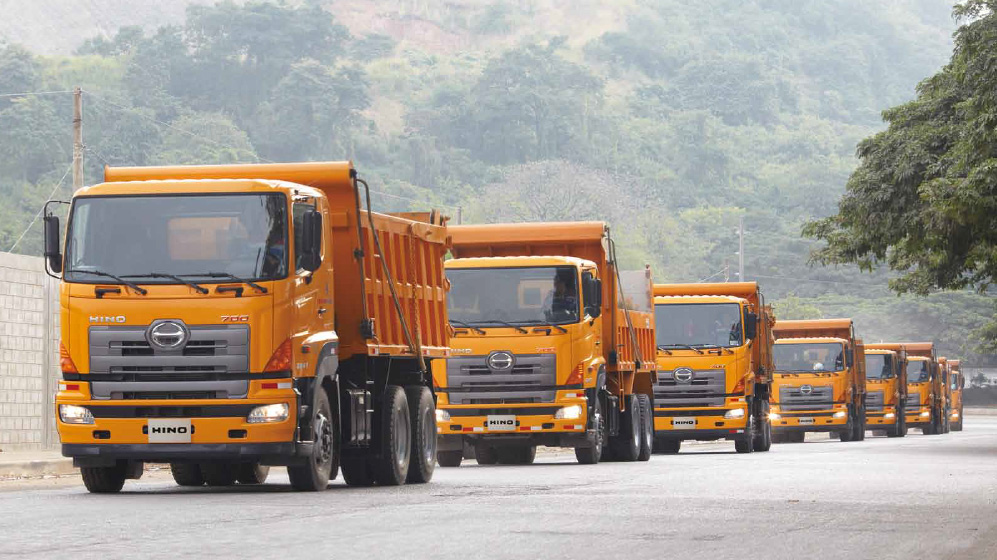
March 2022: Truck manufacturer Hino has been cheating in its emissions and fuel economy tests in North America.
The Japanese brand – owned by Toyota – said its performance data in emissions durability testing for its A05C (HC-SCR) medium-duty engine, and measurement of fuel economy in its A09C and E13C heavy-duty engines, had been falsified.
According to Hino, it internally identified discrepancies and issues relating to its certification figures in the North American market leading it to open up its own investigation before submitting those findings to regulators at the United States Department of Justice.
After then looking at the certification procedures in its native Japan, Hino identified further misconduct, leading it to suspend the sale of its A05C (HC-SCR), A09C and E13C engines, as well as vehicles fitted with the drivetrains.
Hino said it found emissions tests were cheated by replacing the second muffler of the A05C’s after-treatment system, with the certification process continuing after the muffler had been changed.
The decision to change the muffler was made “after learning that emissions performance would deteriorate over time and that the engine may not meet the regulatory emissions standards,” with further retesting leading Hino to discover “there is a possibility that this engine may exceed regulatory emissions standards over the course of the vehicle’s full useful life”, according to a statement issued today by the manufacturer.
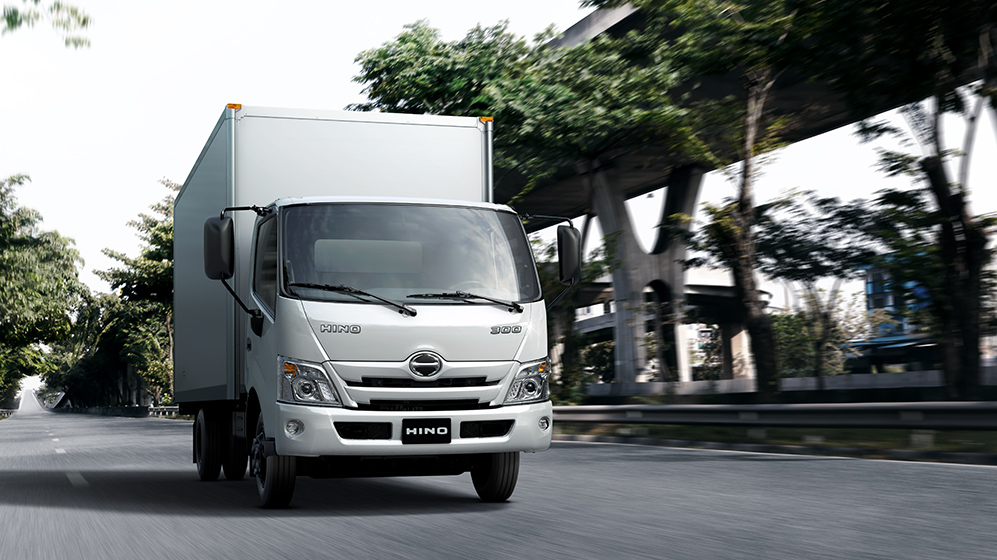
Hino’s headquarters offered an apology and explanation to customers, saying it was looking inwards to better manage its team to prevent further issues arising.
“We sincerely apologise for the inconvenience and concern caused to our customers. In order to minimise the impact on their business, we will implement various measures immediately and with care. Customers are not required to take any action and may continue to use their vehicle until further notice from Hino with respect to our measures for in-use vehicles,” the manufacturer said.
“Based on the findings to date, Hino believes that it failed to appropriately respond to internal pressures to achieve certain targets and meet schedules that were placed on Hino employees. Hino management takes these findings extremely seriously.
“Hino has already begun working on improving its governance system, including organisational restructuring and commencing a review of Hino’s internal processes and procedures. In addition, Hino will proceed to promote the compliance awareness of each employee.”

Following Hino’s admission, Australia’s automotive industry has amped up calls for change, headed up by the Australian Automobile Association.
AAA’s managing director Michael Bradley said Hino’s misconduct is the latest to stem from the use of worldwide laboratory-tested emissions and fuel data, allowing manufacturers to figure out ways to beat the system.
“Increasingly stringent emissions standards around the world are pressuring carmakers to produce cleaner cars, and this is just the latest example of a manufacturer being caught manipulating results to avoid commercial pain,” said Bradley.
“This scandal again highlights the inability of the current laboratory-based testing regime to catch such misconduct and once again it shows consumers deserve a cop on the beat, that’s able to properly scrutinise vehicles entering the Australian market.
“Rising fuel prices mean Australian motorists deserve to know exactly how their vehicles perform in the real world; how much fuel they will actually use; and the veracity of their claimed green credentials.”
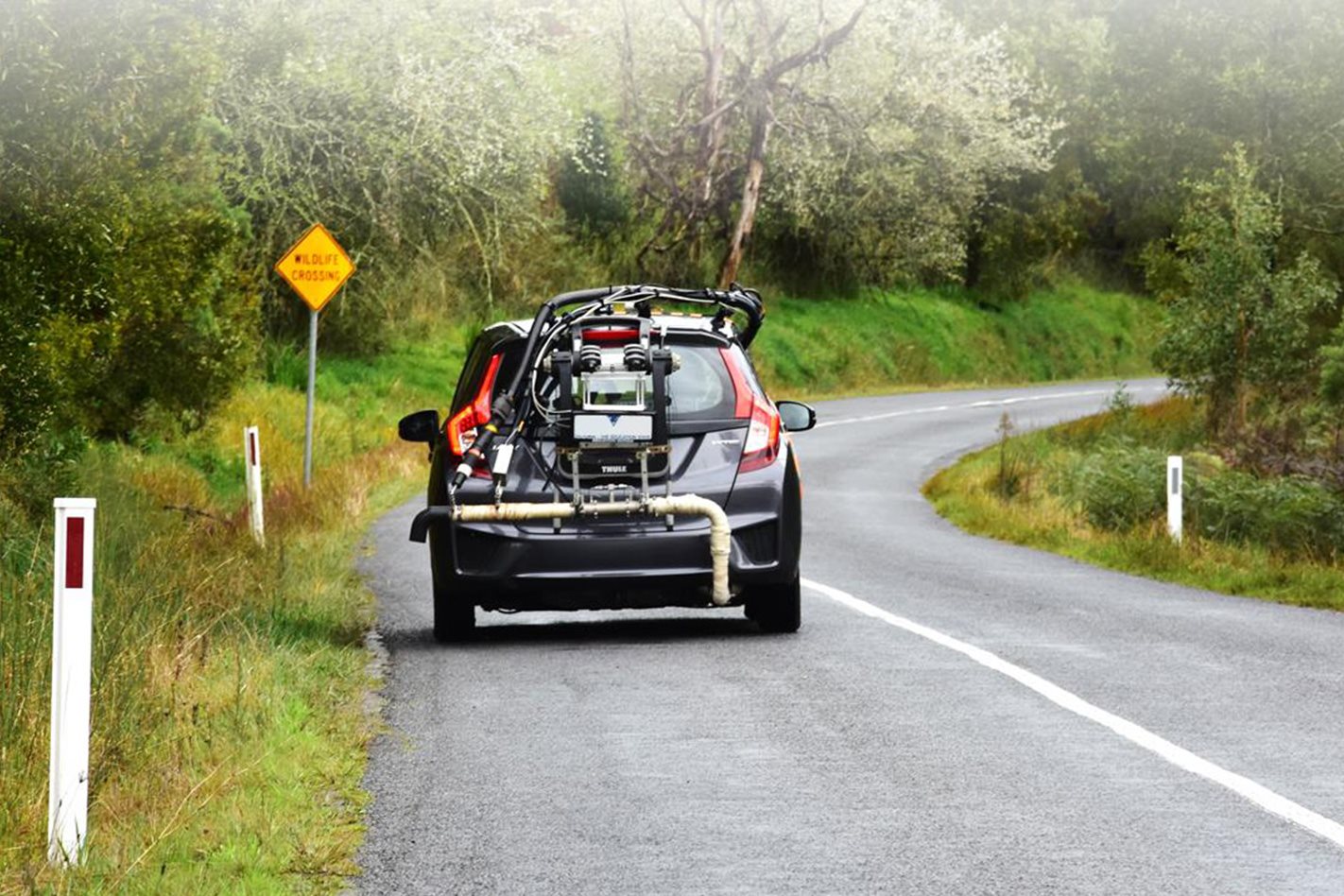
In the wake of the Volkswagen Dieselgate saga in 2015, an AAA pilot study found a number of vehicles failed to meet Australian emissions standards in real world tests, with some producing four times as much carbon monoxide as is allowed locally.
With today’s announcement from Hino, the AAA is again kicking off its calls for the Australian Government to consider the implementation of real world emissions and fuel economy testing, allowing consumers to have a more accurate set of data for the vehicles they purchase.
“Reporting real world performance will inform consumers and ultimately crush demand for vehicles that fail to deliver promised fuel savings and environmental performance,” said Bradley.
“Australians desire a clean environment, but with petrol prices around $2 per litre and the typical Australian city household now paying more than $20,000 on annual transport costs, voters also want policies that reduce cost-of-living pressures.
“By promoting real world fuel consumption, the Government can change consumer demand and reduce Australian emissions, while improving motoring affordability and Australia’s environmental performance.”
Snapshot
- 2023 LDV Mifa 9 electric MPV pricing and features
- Priced from $106,000 plus on-road costs
- Three variants available; single electric motor and 90kWh battery
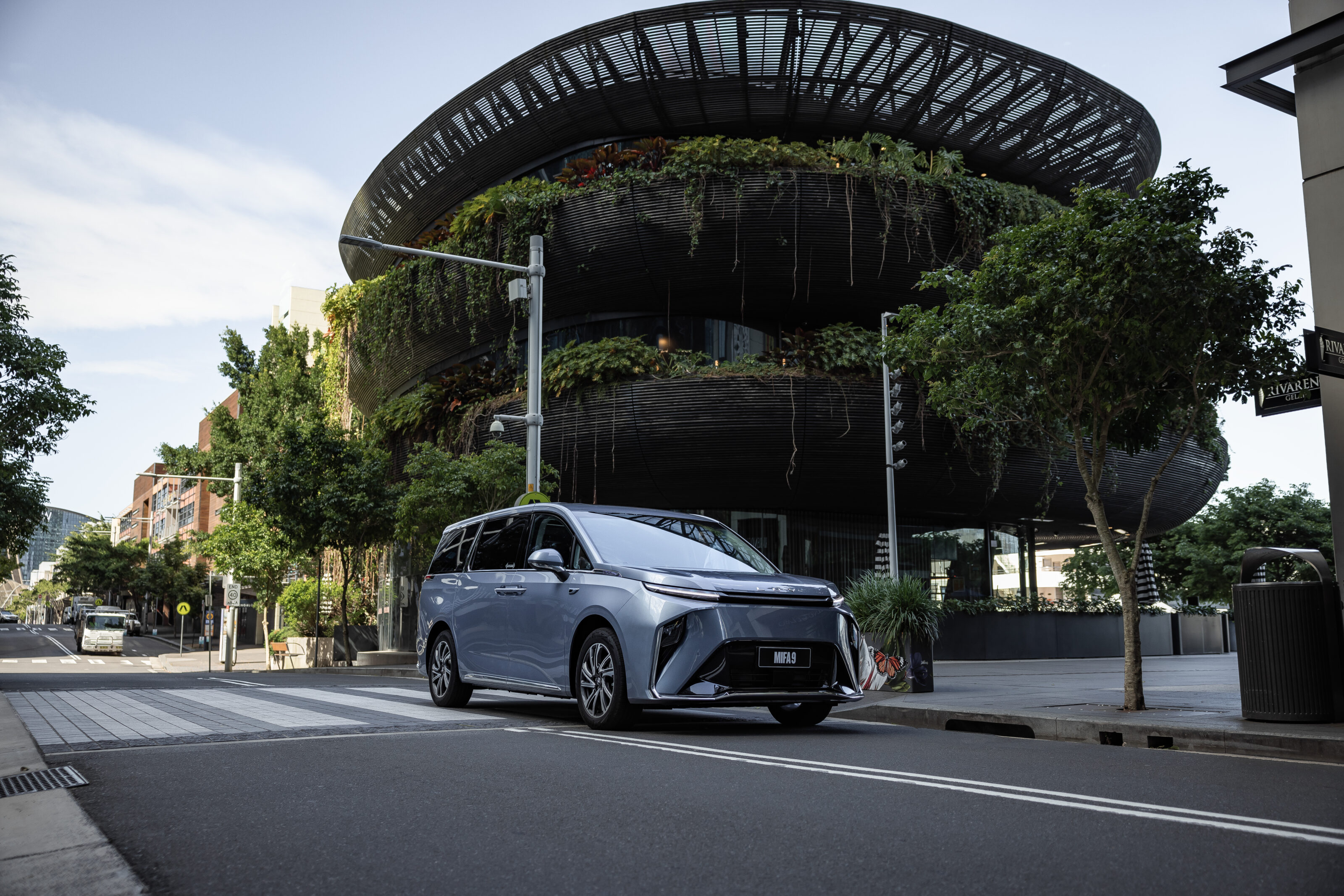
The 2023 LDV Mifa 9 has arrived in Australia priced from $106,000 before on-road costs.
It comes in the form of a battery-electric version of the recently-launched, petrol-powered Mifa, which is known as the G90 in other markets.
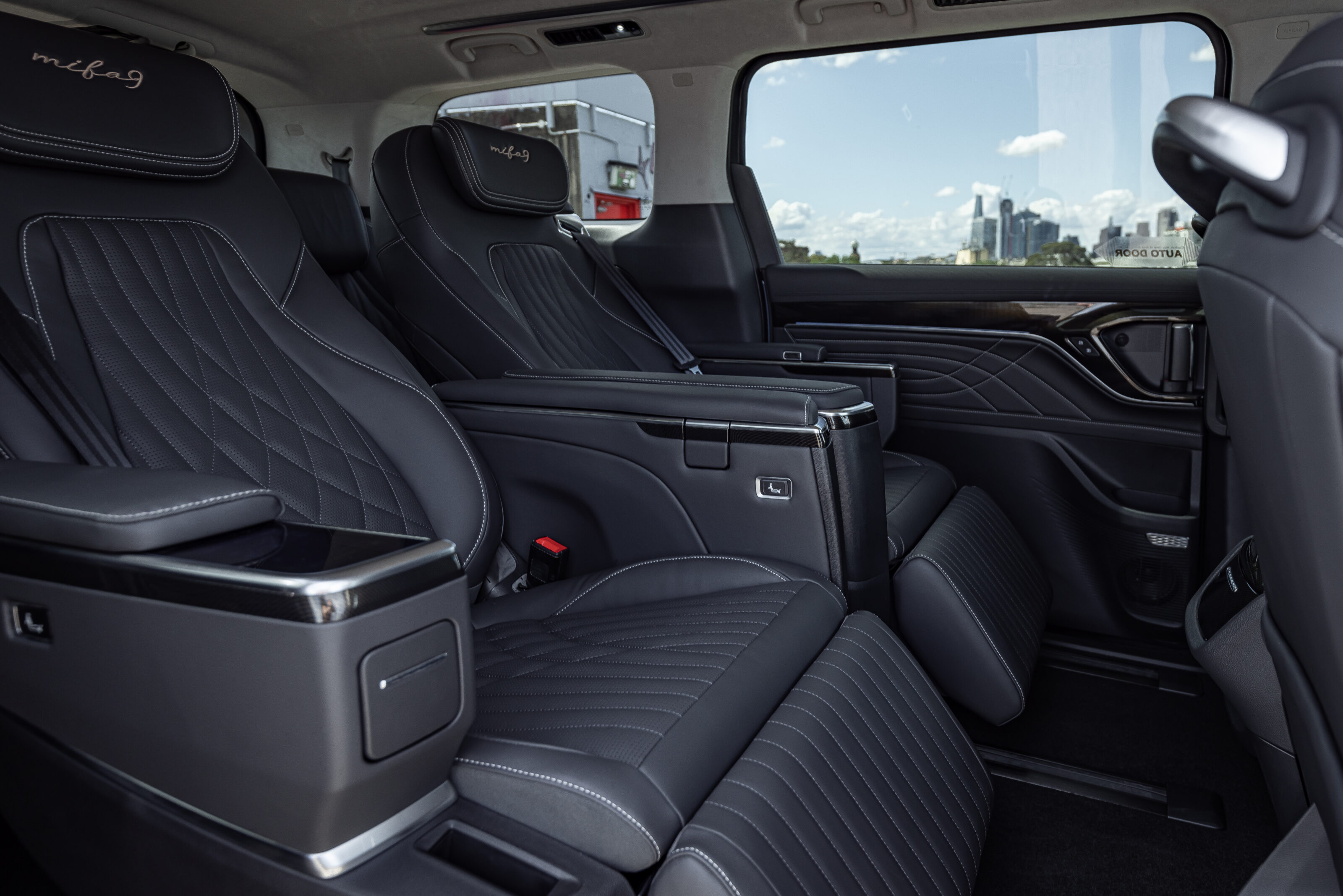
LDV Australia has confirmed pricing for the seven-seat Mifa 9, with the Mercedes-Benz EQV firm in its sights.
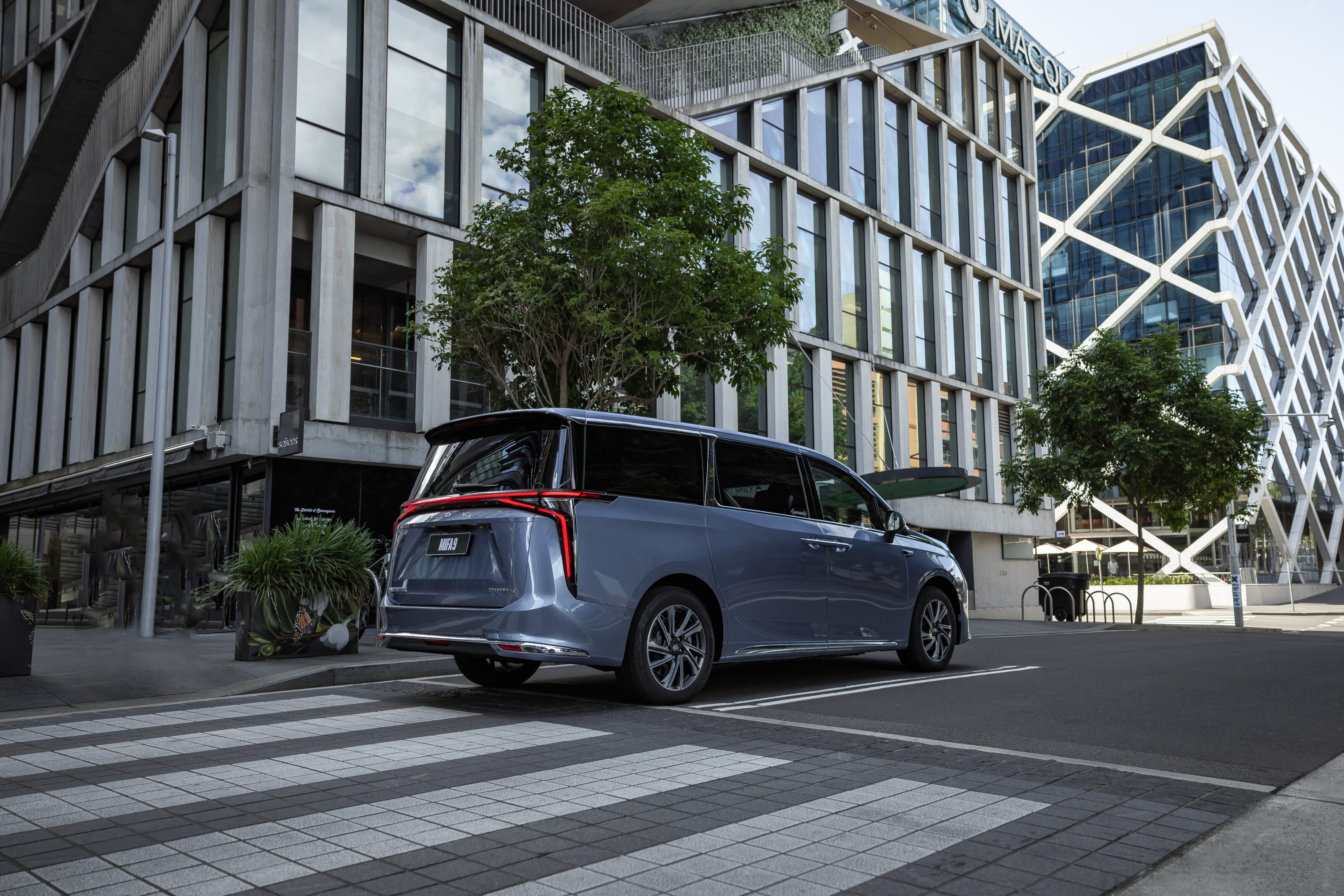
It is priced from $106,000 before on-road costs, extending to $131,000 plus on-roads for the flagship variant.
This is more than $58,000 dearer than the range-topping internal-combustion LDV Mifa, and is almost the most-expensive Chinese-built vehicle sold in Australia, eclipsing the Volvo XC60 T8 Recharge plug-in hybrid and Tesla Model Y Performance by around $30,000 – but just coming in behind the BMW iX3 which retails for around $115,000.
First announced in September, the Mifa 9 has launched alongside the eDeliver 9 commercial van and Australia’s first electric ute, the eT60 dual-cab.
An eight-seat version of the Mifa 9 will become available in early 2023.
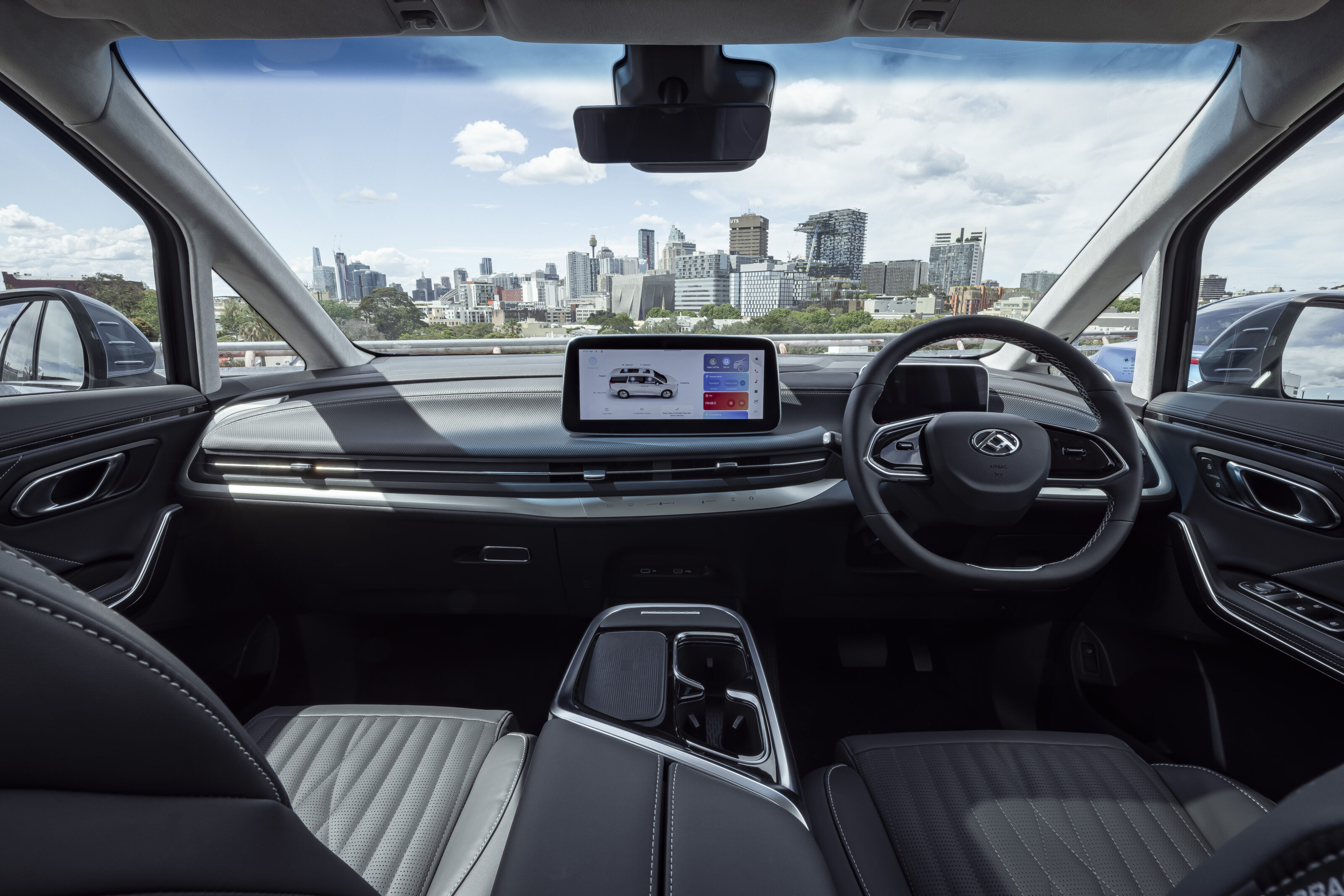
JUMP AHEAD
- Pricing
- Features
- Colours
- Powertrains, charging, and driving range
- Safety
- Dimensions
- Warranty and servicing
- Availability
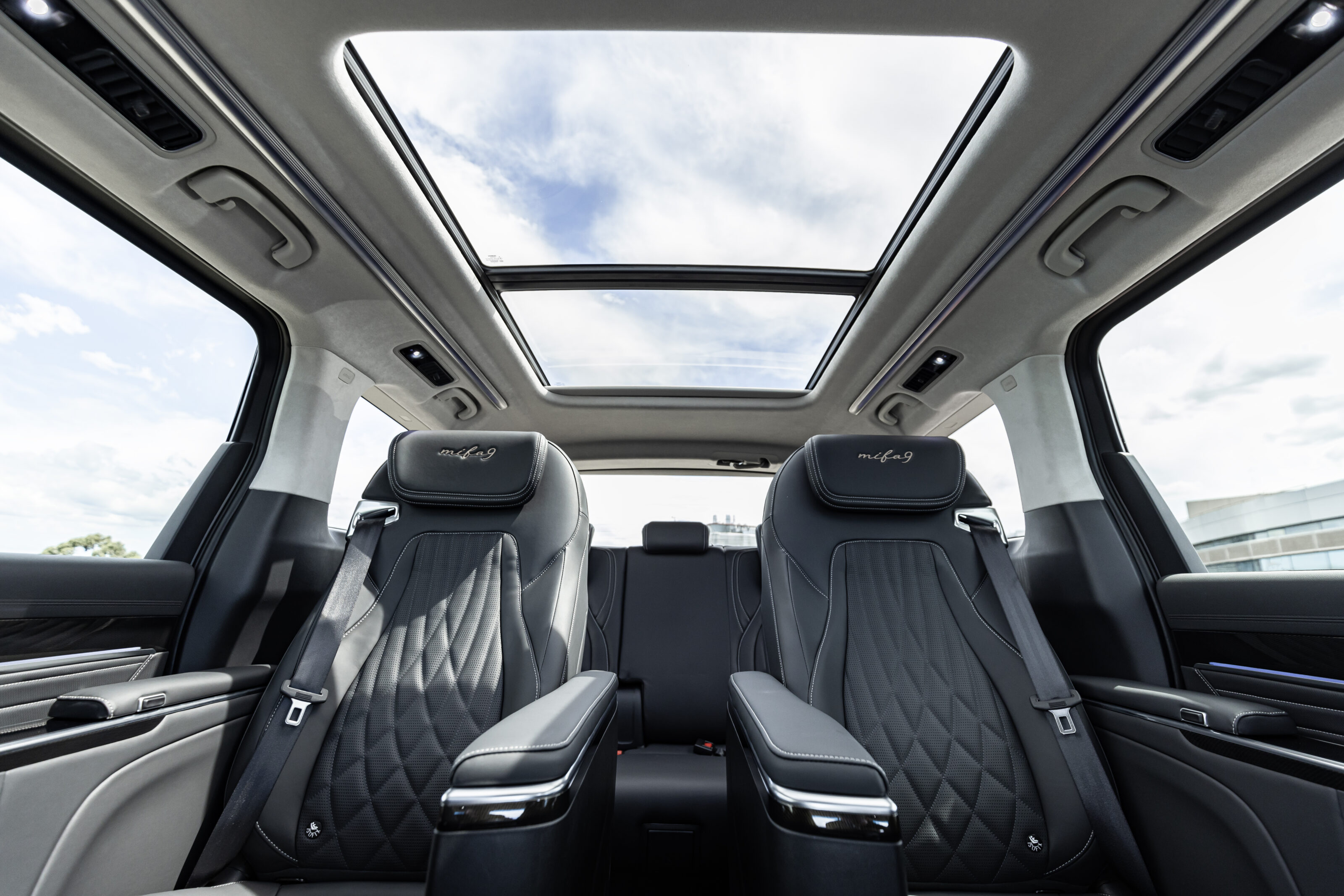
2023 LDV Mifa 9 EV people-mover pricing
Prices exclude on-road costs.
| Model | Pricing |
|---|---|
| Mifa 9 Mode | $106,000 |
| Mifa 9 Executive | $117,000 |
| Mifa 9 Luxe | $131,000 |
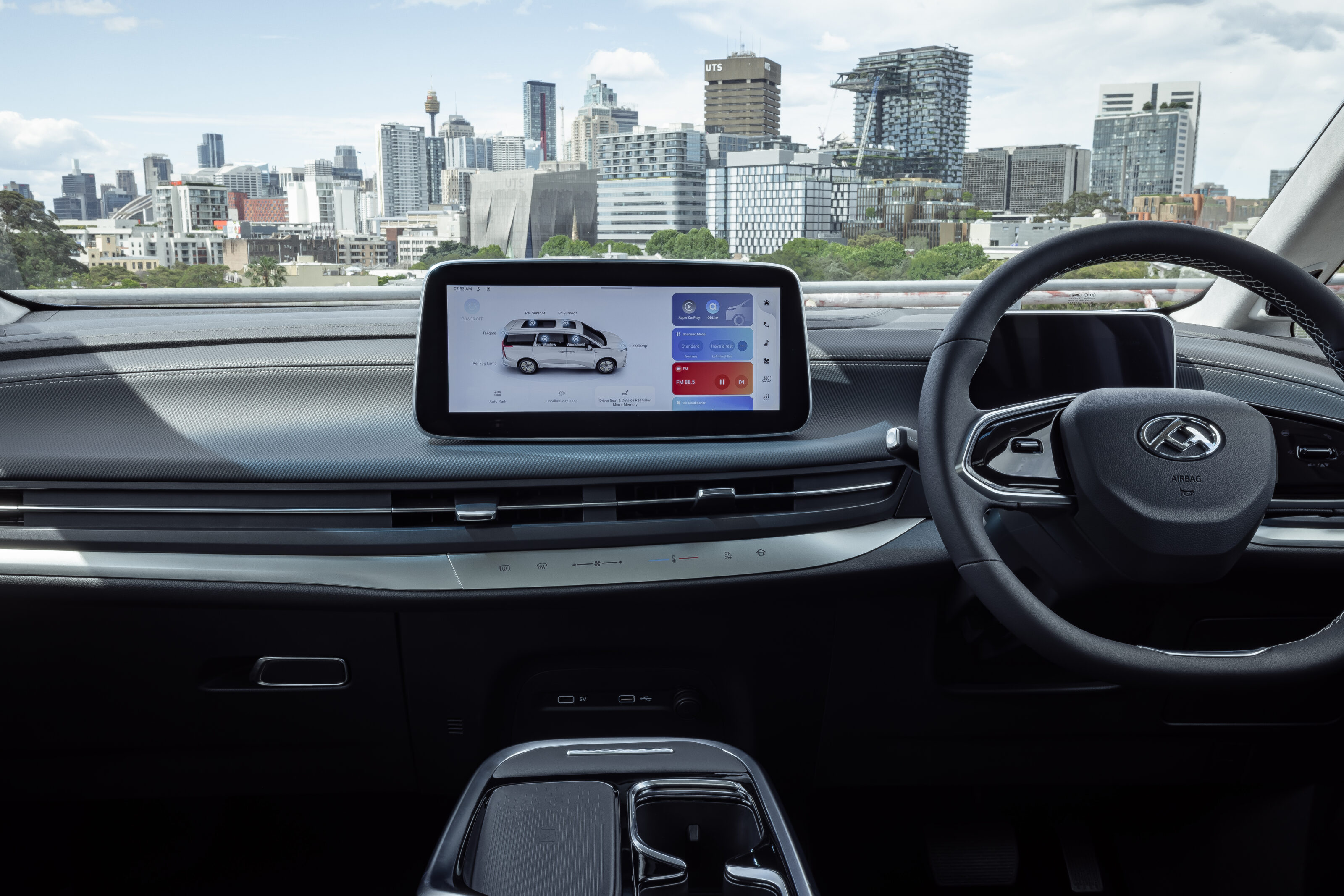
2023 LDV Mifa 9 EV people-mover features
Mode
Executive
Luxe
Colours
A two-tone black roof finish is available on the Executive and Luxe in the following colours:
Powertrains, charging, and driving range
A 90kWh battery pack sits underneath the body of the Mifa 9, allowing for a claimed driving range of 440 kilometres on the stricter WLTP cycle, depending on the variant.
It features a single electric motor producing 180kW and 350Nm, with power exclusively sent to the front wheels.
LDV says the Mifa 9 will charge from 30 to 80 per cent in around 36 minutes with a 120kW DC fast charger, while an 11kW AC unit will complete this in approximately 8.5 hours.
A regenerative braking system is standard.
Safety
The LDV Mifa 9 was awarded a five-star safety rating by ANCAP in December 2022.
ANCAP awarded it the following scores: 93 percent for adult occupant protection, 88 percent for child occupants, 73 percent for vulnerable road users, and 90 percent for safety asssit.
Eight airbags (dual front, side, farside and full-length curtain) are fitted across the range.
Each variant includes the following active safety equipment as standard:
Dimensions
The LDV Mifa 9 measures 5270 millimetres long, 2000mm wide and 1840mm tall, with a 3200mm wheelbase. This is larger than the Mercedes-Maybach GLS, but similar in size to the recently-discontinued G10 MPV.
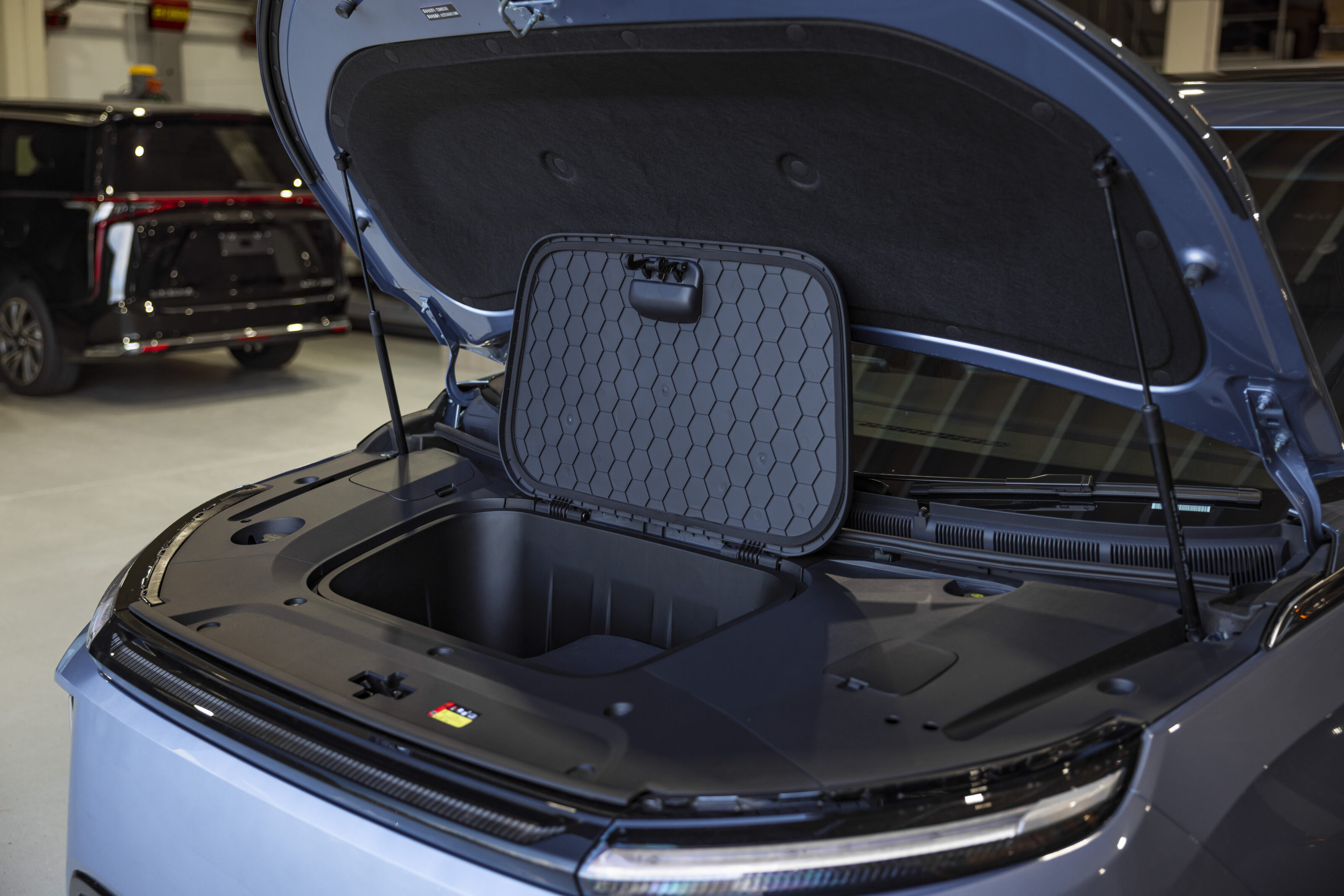
It has 466 litres of luggage space with the third row in place, extending to 1702L with the third row folded or 2017L with the second and third rows folded.
All variants have a 1000-kilogram braked towing capacity or an unbraked limit of 750 kilograms.
Warranty and servicing
Unlike the latest internal-combustion Mifa and T60 Max, which feature a seven-year/200,000-kilometre warranty, the Mifa 9, eDeliver 9 and eT60 remain covered a five-year/200,000-kilometre period.
The high-voltage battery pack is covered by an eight-year/200,000-kilometre warranty.
It includes a complimentary five-year roadside assistance program.
Maintenance is required every two years or 30,000 kilometres, whichever occurs first.
LDV has yet to announce capped-price servicing details for the Mifa 9 electric people-mover.
Availability
The seven-seat 2023 LDV Mifa 9 electric people-mover is on-sale now. Eight-seat variants will arrive next year.
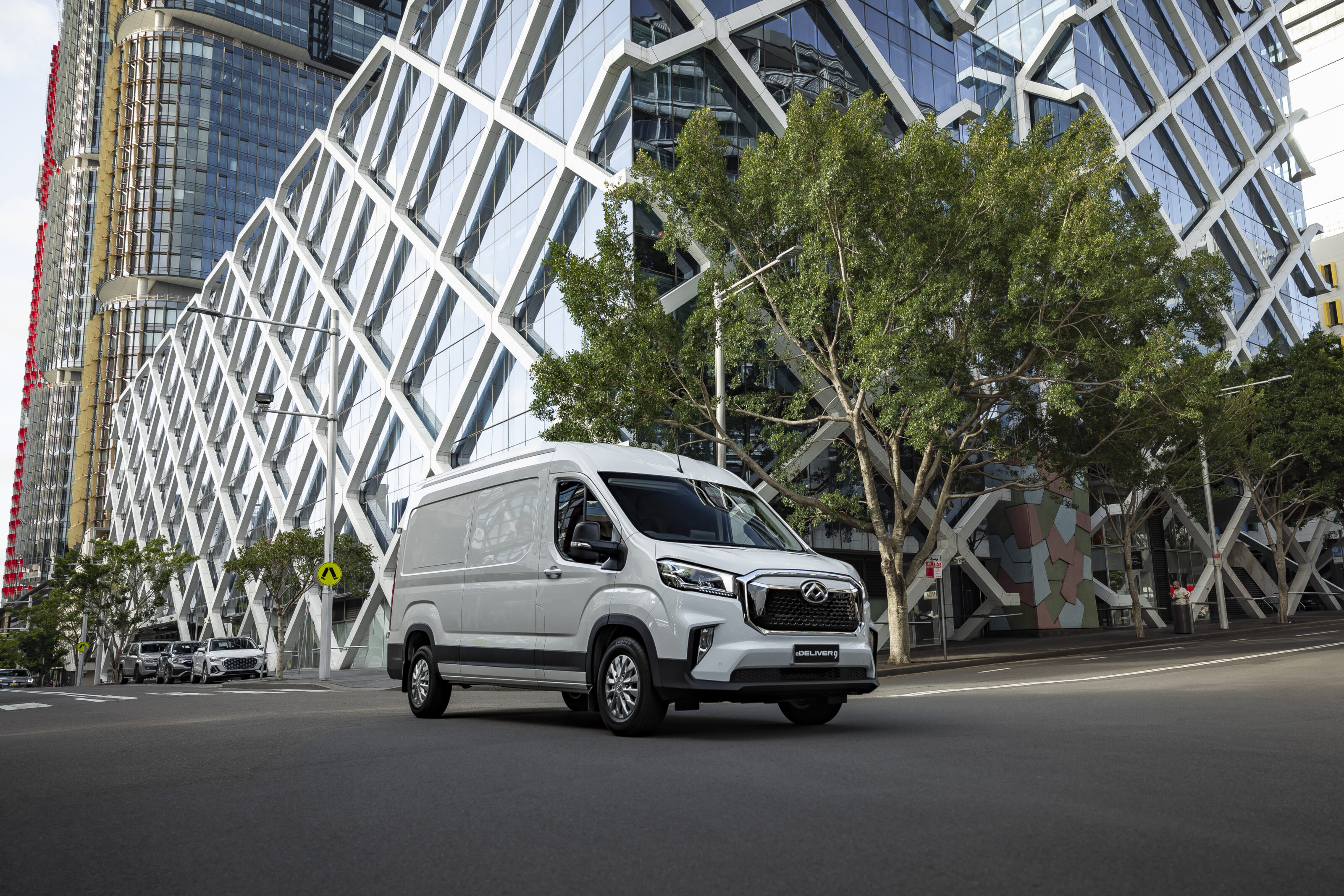
The 2023 LDV eDeliver 9 electric commercial van has arrived in Australia.
Snapshot
- 2023 LDV eDeliver 9 electric van pricing and features
- Priced from $99,990 plus on-road costs
- Available in cab-chassis or panel van guise
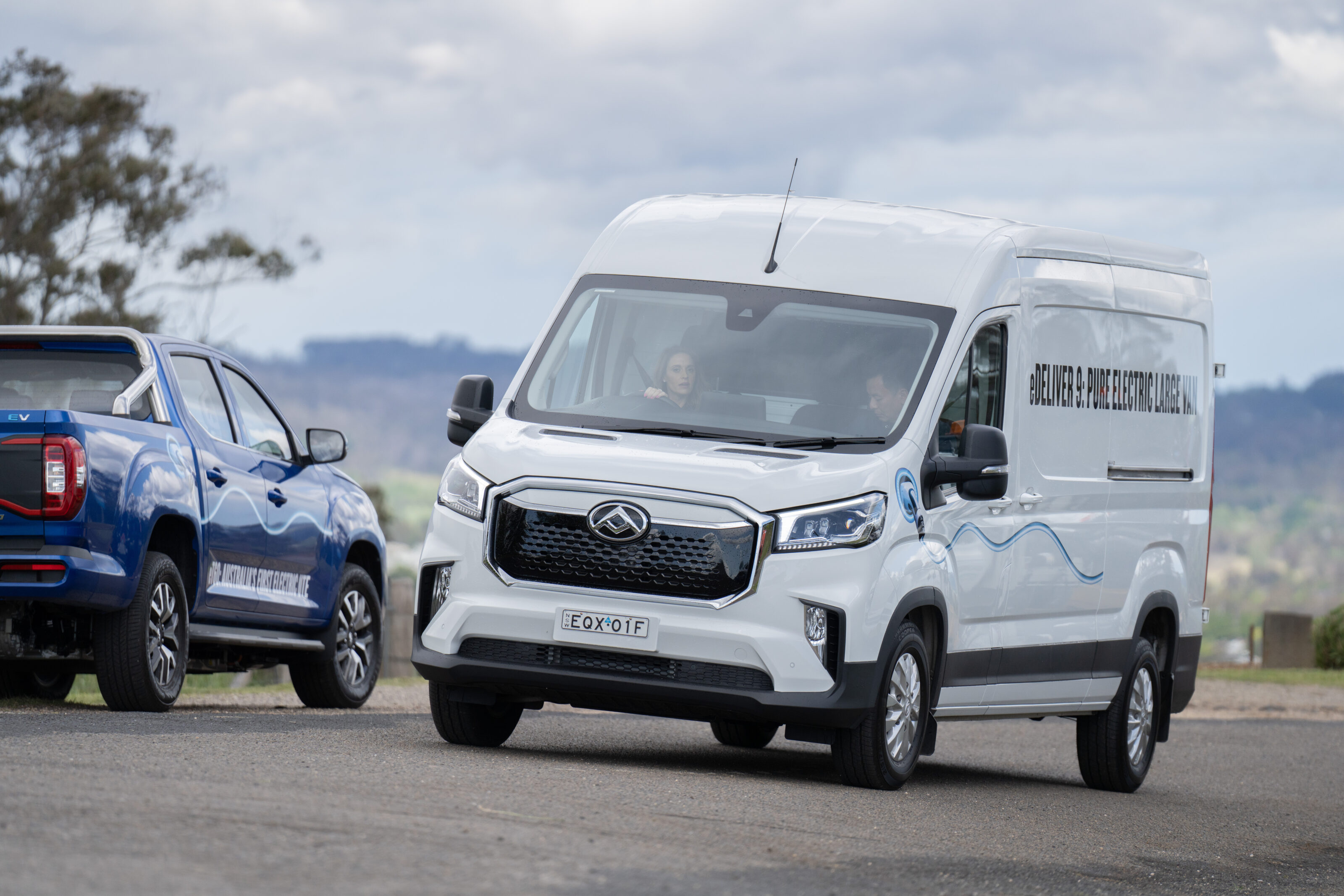
It is available in cab-chassis and mid-roof or high-roof panel van form, priced from $99,990 before on-road costs.
This is more than $52,500 dearer than the diesel-powered Deliver 9 cab-chassis, making it by far the most-expensive single-cab van available in Australia.
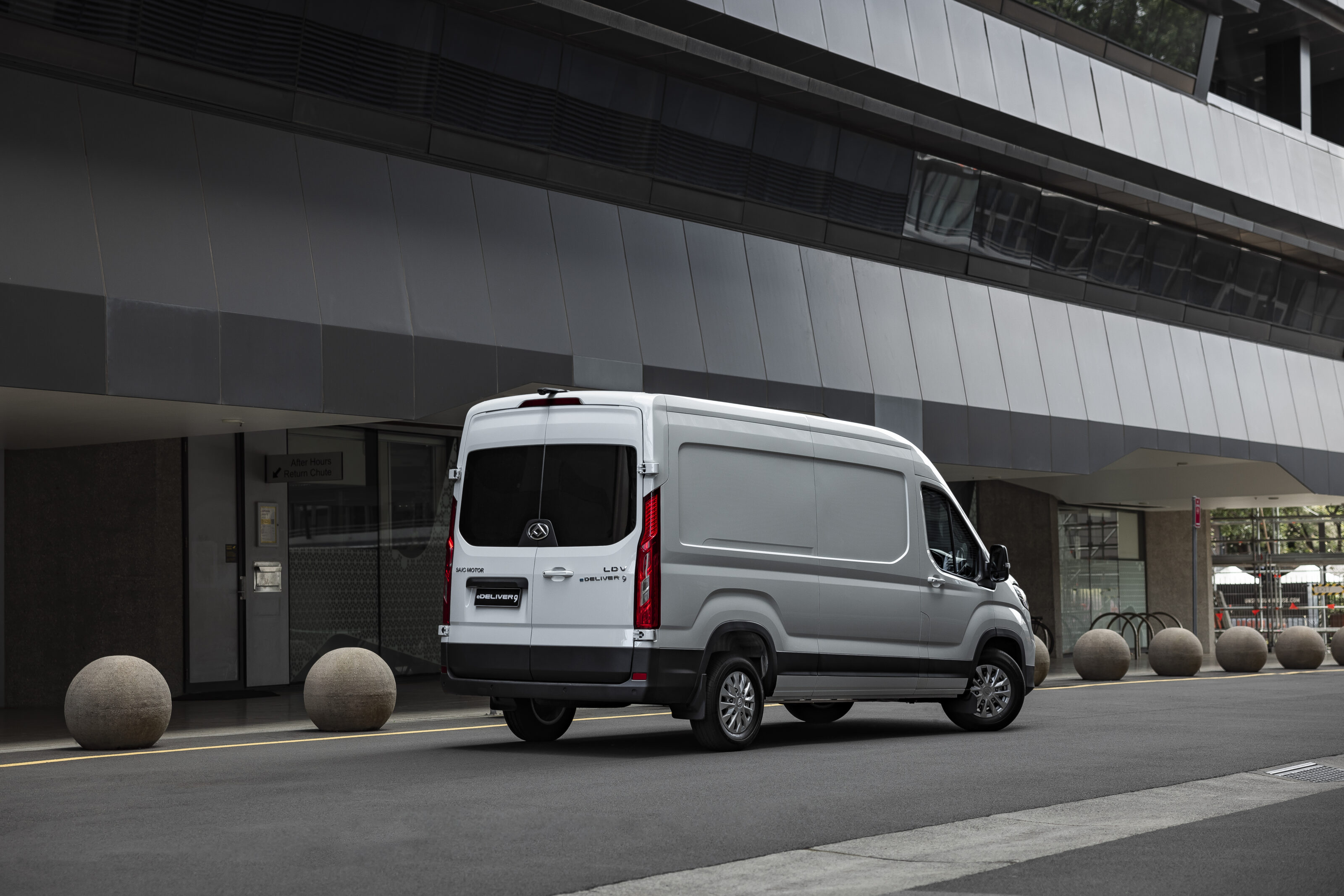
The panel van is priced from $116,537 plus on-road costs, which compares to $89,353 before on-roads for the smaller Mercedes-Benz eVito – although the LDV has a more powerful electric motor and a much larger, Mercedes-Benz Sprinter-sized body.
First announced in September, the eDeliver 9 has launched alongside the Mifa 9 people-mover and Australia’s first electric ute, the eT60 dual-cab.
RELATED
January 2024: The eDeliver 9’s little brother is now on sale in Australia.
JUMP AHEAD
- Pricing
- Features
- Colours
- Powertrains, charging, and driving range
- Safety
- Dimensions
- Warranty and servicing
- Availability
2023 LDV eDeliver 9 pricing
Prices exclude on-road costs.
| Model | Pricing |
|---|---|
| eDeliver 9 cab-chassis | $99,990 |
| eDeliver 9 LWB mid-roof | $116,537 |
| eDeliver 9 LWB high roof | $118,836 |
2023 LDV eDeliver 9 features
Cab-chassis
Panel van
Colours
Powertrains, charging, and driving range
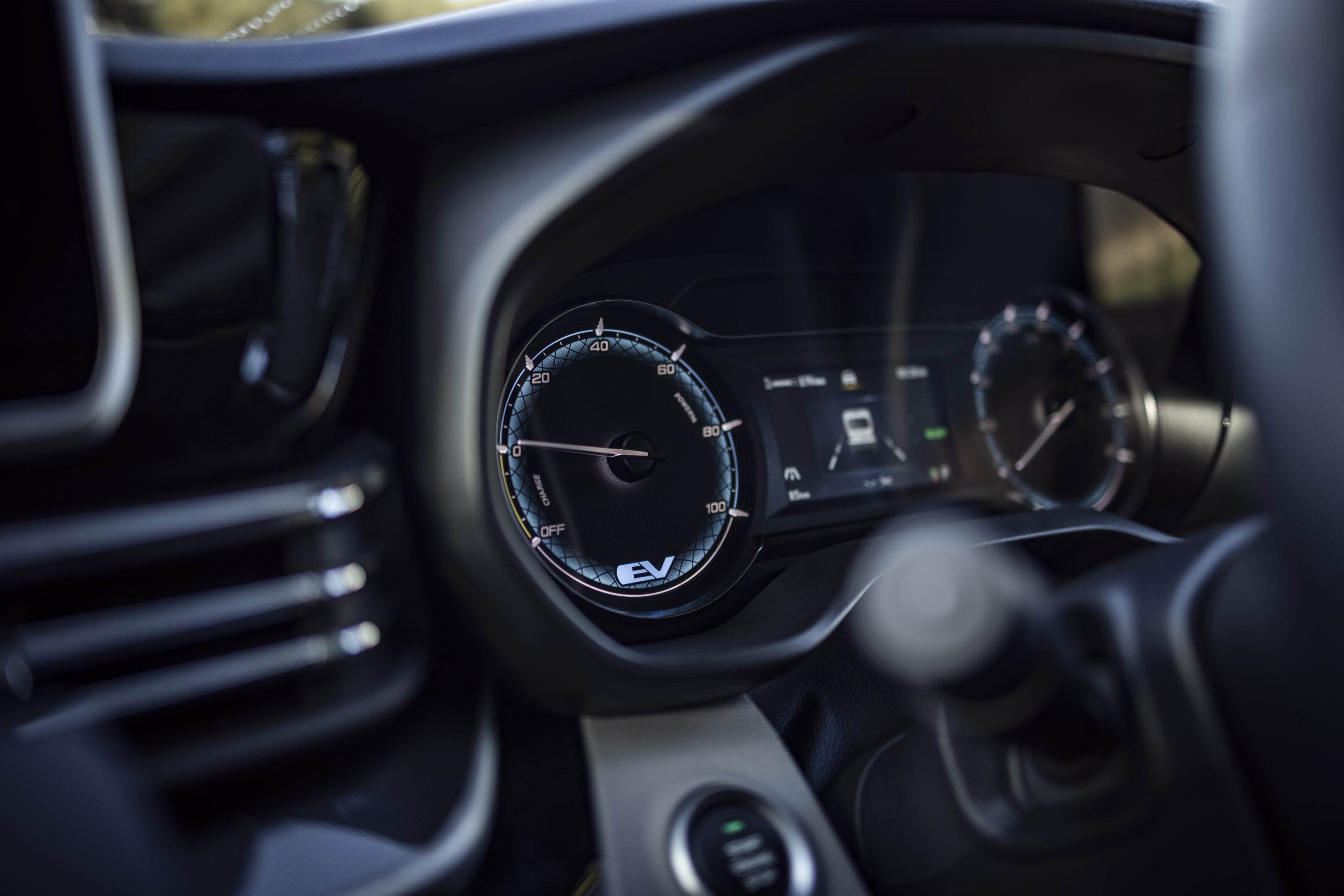
A 65kWh lithium-ion battery sits underneath the body of the eDeliver 9 cab-chassis, allowing for a claimed driving range of 150 kilometres on the stricter WLTP cycle, with a ‘large box’ fitted.
The panel van models step up to an 88.5kWh battery pack, with a claimed driving range of 280km and 275km for the mid-roof and high roof variants, respectively.
It features a single electric motor producing 150kW and 310Nm, with power exclusively sent to the rear wheels.
All variants have a 90km/h maximum speed limit.
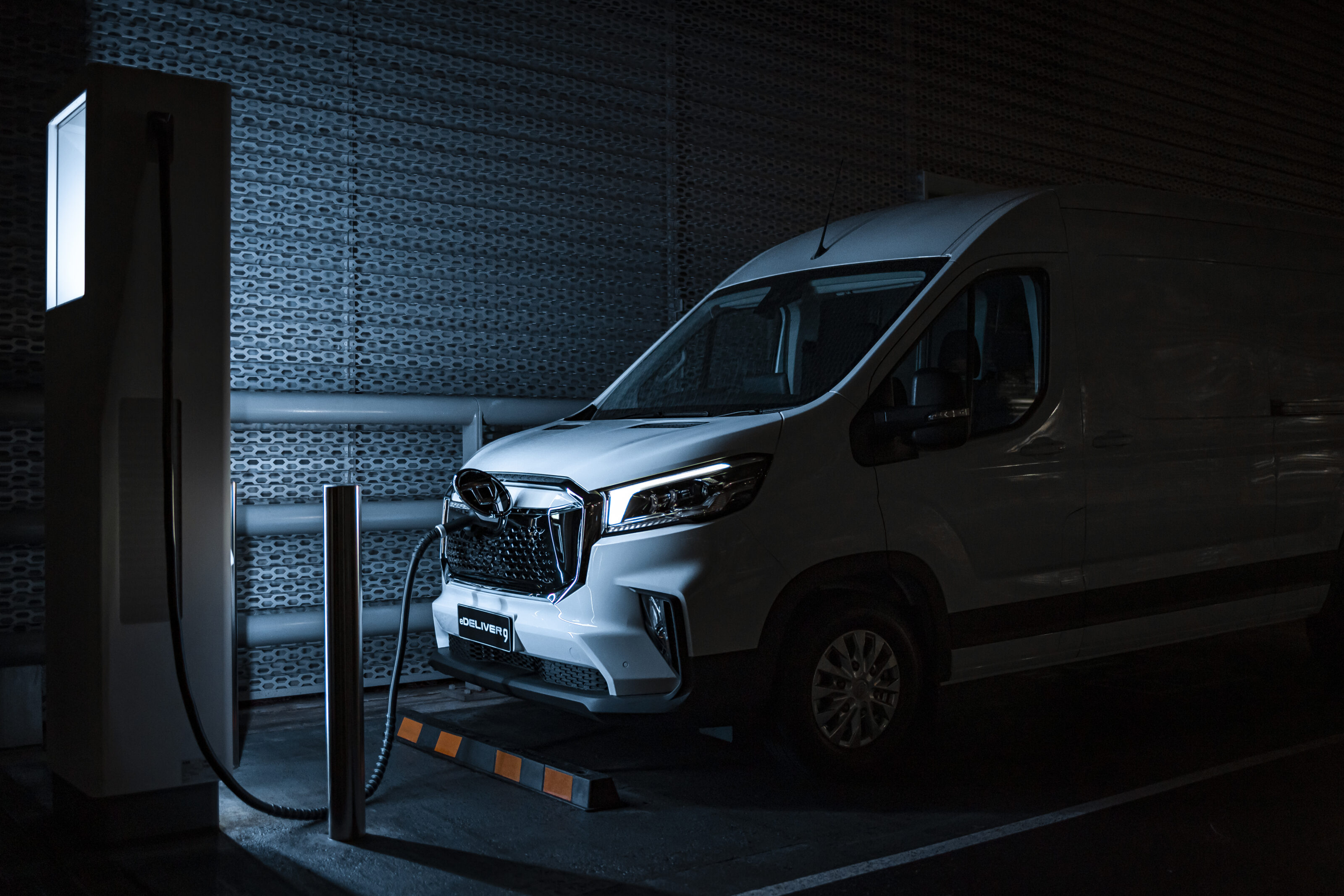
LDV says the eDeliver 9 will charge from 20 to 80 per cent in around 36 minutes with an 80kW DC fast charger or 45 minutes for 88.5kWh models, while an 11kW AC unit will charge from five to 100 per cent in eight hours, or 6.5 hours with the smaller battery.
Safety
The LDV eDeliver 9 or its internal-combustion sibling have yet to be tested by ANCAP or Euro NCAP.
Six airbags (dual front, side and curtain) are fitted across the range.
Each variant includes the following active safety equipment as standard:
Dimensions
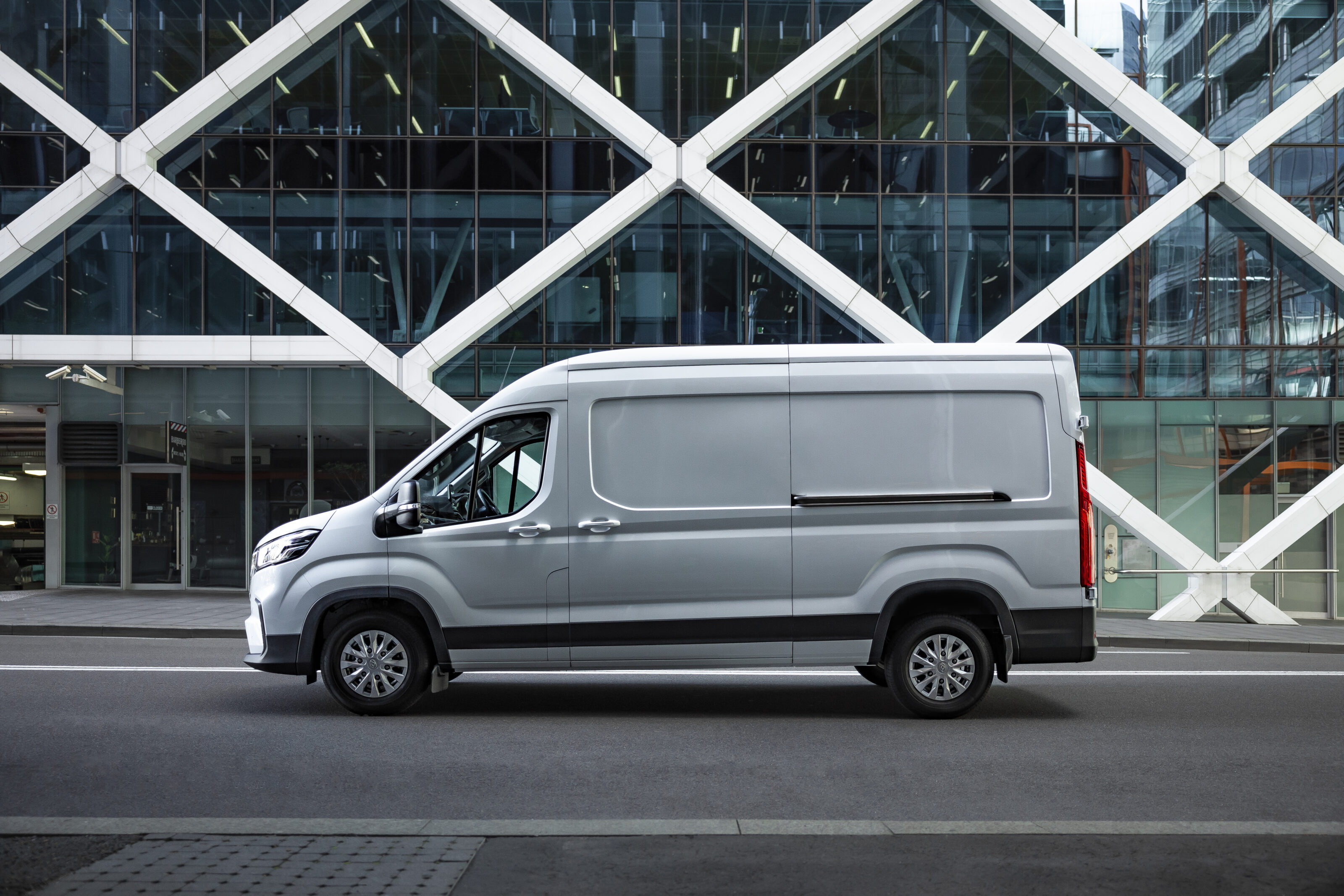
The LDV eDeliver 9 panel van measures 5940mm long and 2062mm wide, with a 3760mm wheelbase.
Mid-roof variants are 2545mm tall, while the high roof is 2765mm high.
The cab-chassis is longer at 6680mm, while it is 2315mm tall with a 4048mm wheelbase.
All panel van variants have a 1500-kilogram braked towing capacity or an unbraked limit of 750 kilograms. The cab-chassis is limited to 1200kg.
Warranty and servicing
Unlike the latest internal-combustion T60 Max and Mifa, which feature a seven-year/200,000-kilometre warranty, the Mifa 9, eDeliver 9 and eT60 remain covered under a five-year/200,000-kilometre period.
The high-voltage battery pack is covered by an eight-year/200,000-kilometre warranty.
It includes a complimentary five-year roadside assistance program.
Maintenance is required every two years or 30,000 kilometres, whichever occurs first.
LDV has yet to announce capped-price servicing details for the eDeliver 9 electric van.
Availability
The 2023 LDV eDeliver 9 electric van and cab-chassis is on-sale now.
