
UPDATE, November 29: Mazda CX-60 Australian pricing
Full Australian details, including pricing and specs for the entire 2023 Mazda CX-60 line-up, has been announced today. Get all the details in the video below, or at the link above it, and continue reading here for our first international drive. Our first Australian drive will come soon.
Story continues: CX-60 initial first details revealed for Australia
Snapshot
- 2023 Mazda CX-60 to launch in first half of next year
- Hybrid-only powertrains, including PHEV and inline-six petrol/diesel
- Three grades to be available; pricing and spec details before Christmas
The 2023 Mazda CX-60 will arrive in Australia in the first half of 2023 with hybrid-only powertrains and standard all-wheel drive.
It will slot between the CX-5 and CX-8 in Mazda’s local lineup, with full details and pricing for the CX-60 to be announced before Christmas.
Mazda has confirmed three trim levels will be offered in Australia – Evolve, GT and Azami – with each offering a comprehensive list of standard equipment.
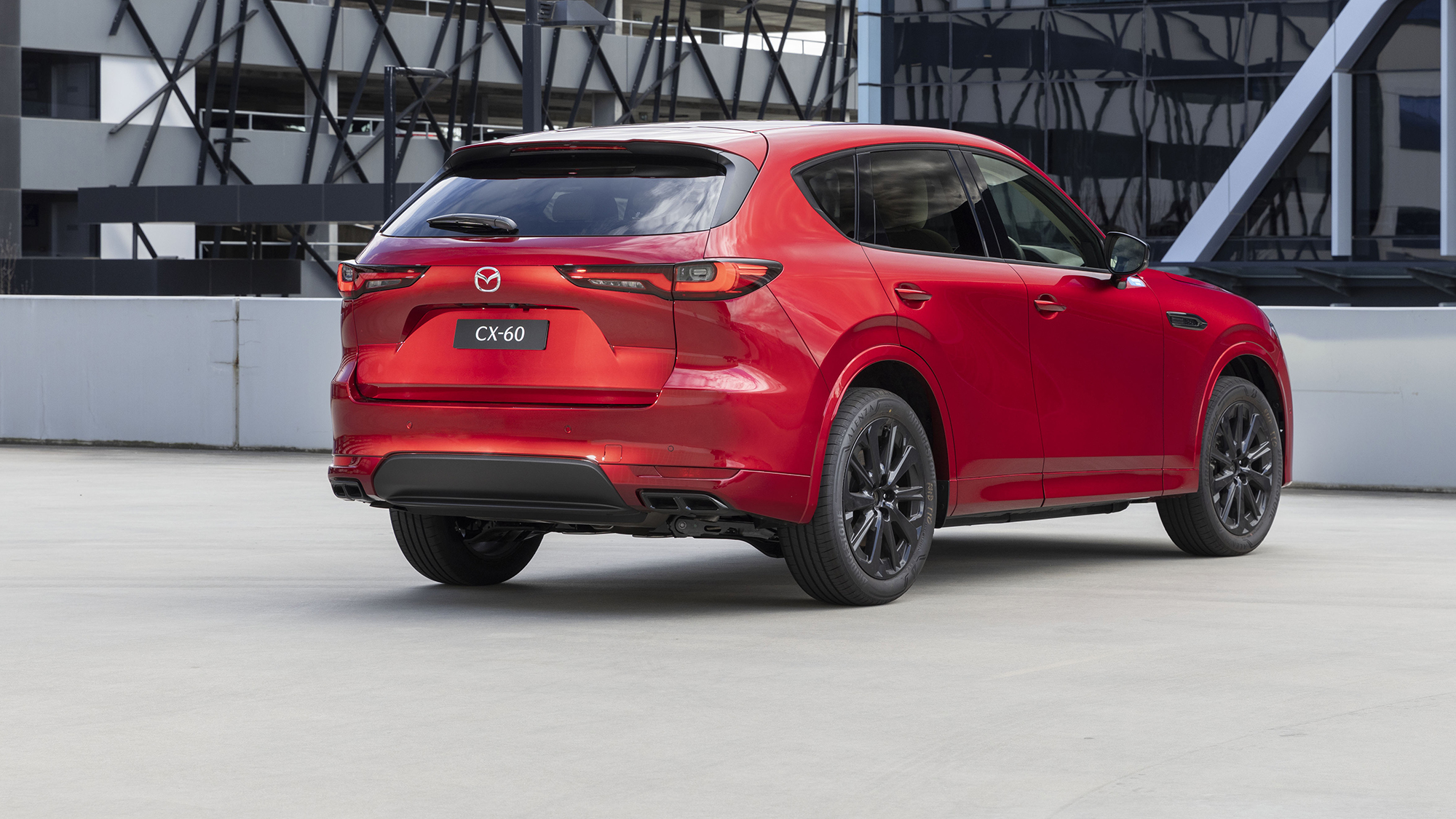
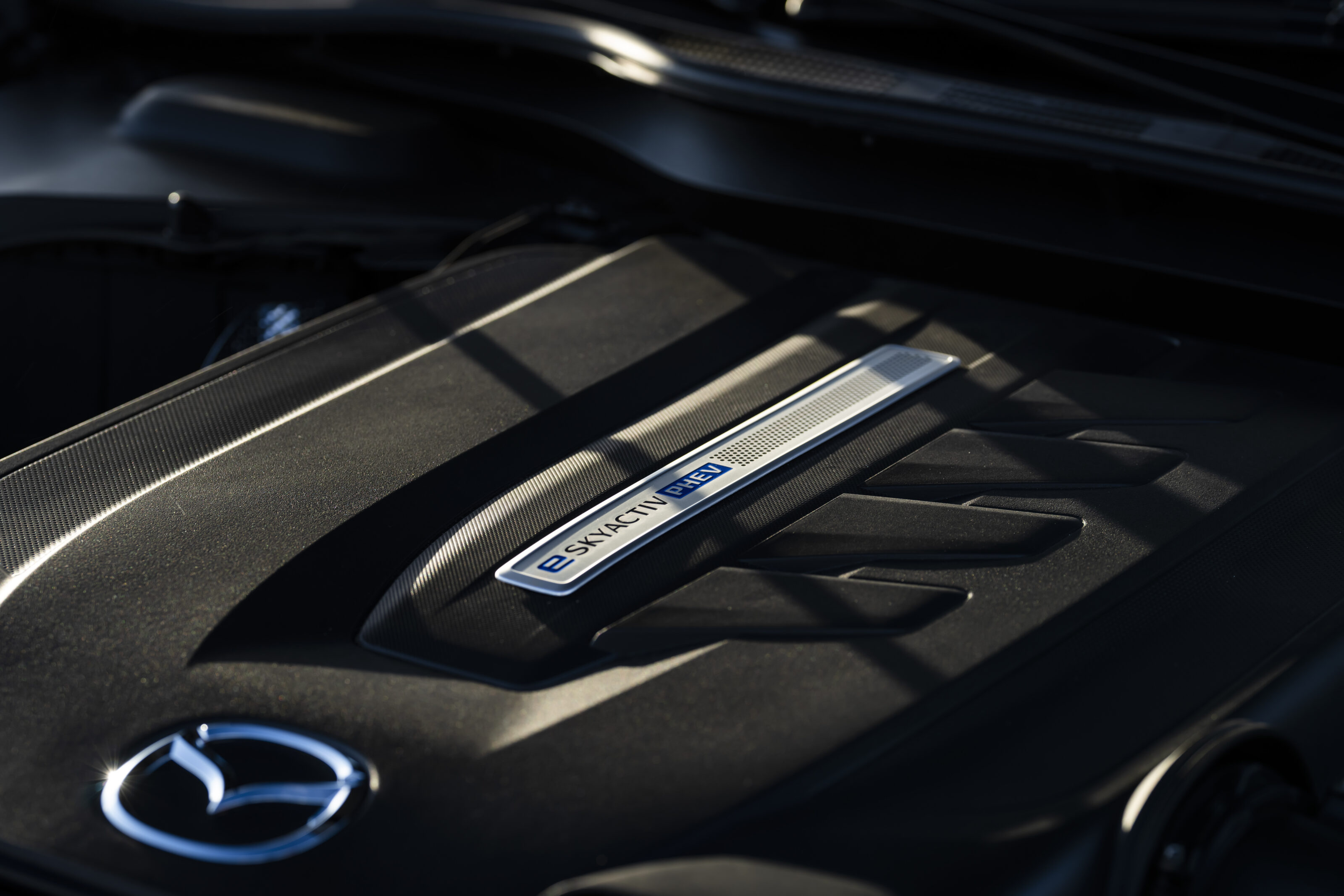
The rear-biased CX-60 is headlined by Mazda’s first plug-in hybrid (PHEV) powertrain, a 2.5-litre four-cylinder matched with a 129kW electric motor and 17.8kWh lithium-ion battery, producing 241kW and 500Nm in total.
This allows the CX-60 to be the most powerful PHEV in its class – and Mazda’s most powerful road vehicle in its history – with a claimed 0-100km/h sprint of 5.8 seconds.
The four-cylinder plug-in hybrid will be joined by two inline-six engines: a 3.3-litre turbocharged petrol or diesel, both featuring 48-volt mild-hybrid technology.
Mazda has now confirmed outputs for its 3.3-litre turbocharged six-cylinder, which delivers 209kW and 450Nm – up 39kW and 30Nm over the 2.5-litre turbo-petrol found in the CX-5, CX-9 and 6.
0-100km/h and top speed figures for the petrol six are currently unconfirmed.
Featuring traditional spark plugs and a turbocharger, the 3.3-litre mill is different to the supercharged 3.0-litre announced for the European market.
Mazda Australia has confirmed there are “no plans” to offer the latter engine, branded e-Skyactiv X, here. It features Mazda’s Spark Controlled Compression Ignition technology, as per the diesel-like 2.0-litre in X20 versions of the 3 and CX-30.
As previously announced, the 3.3-litre inline-six diesel produces 187kW and 550Nm, with the assistance of a 12.4kW electric motor and 0.33kWh battery.
According to the Japanese marque, the mild-hybrid diesel can complete the 0-100km/h sprint in 7.3 seconds, on the way to a top speed of 220km/h.
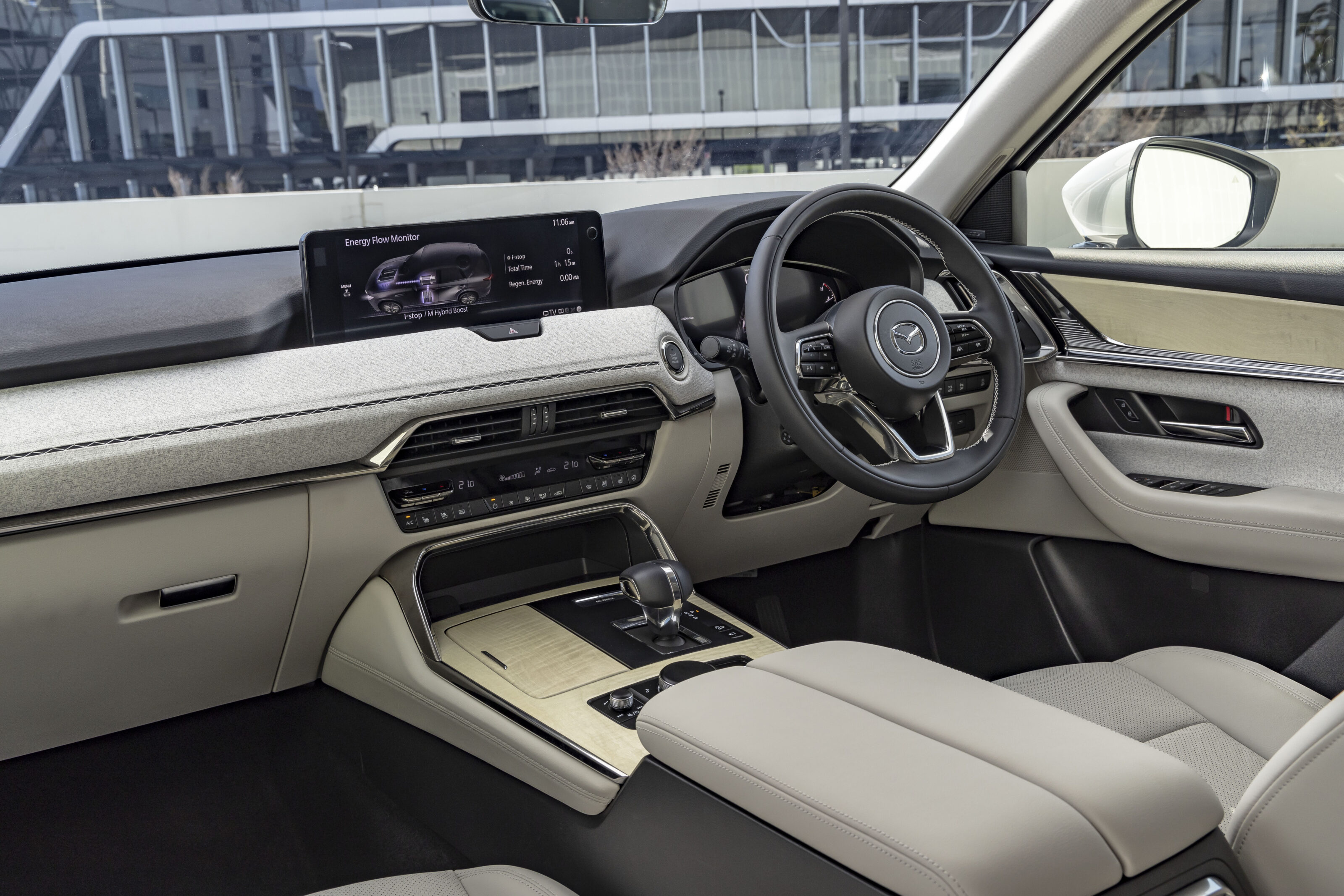
The naturally-aspirated 2.5-litre available on entry-level Japanese variants will not be offered in Australia – at least initially.
All powertrains are matched with an eight-speed automatic transmission, while the diesel and PHEV have a confirmed 2500-kilogram braked towing capacity.
While pricing is being kept under wraps for now, Mazda has previously said it is aiming for entry-level CX-60 to be priced from around $55,000 plus on-roads.
The flagship Azami PHEV will likely be priced between $80,000 and $90,000 – in line with the Lexus NX450h+.
2023 Mazda CX-60 standard features
Mazda CX-60 Evolve, GT and Azami grades will receive the following equipment as standard:
Full specification details will be confirmed later this year.
See below for a list of features available on the CX-60 globally.
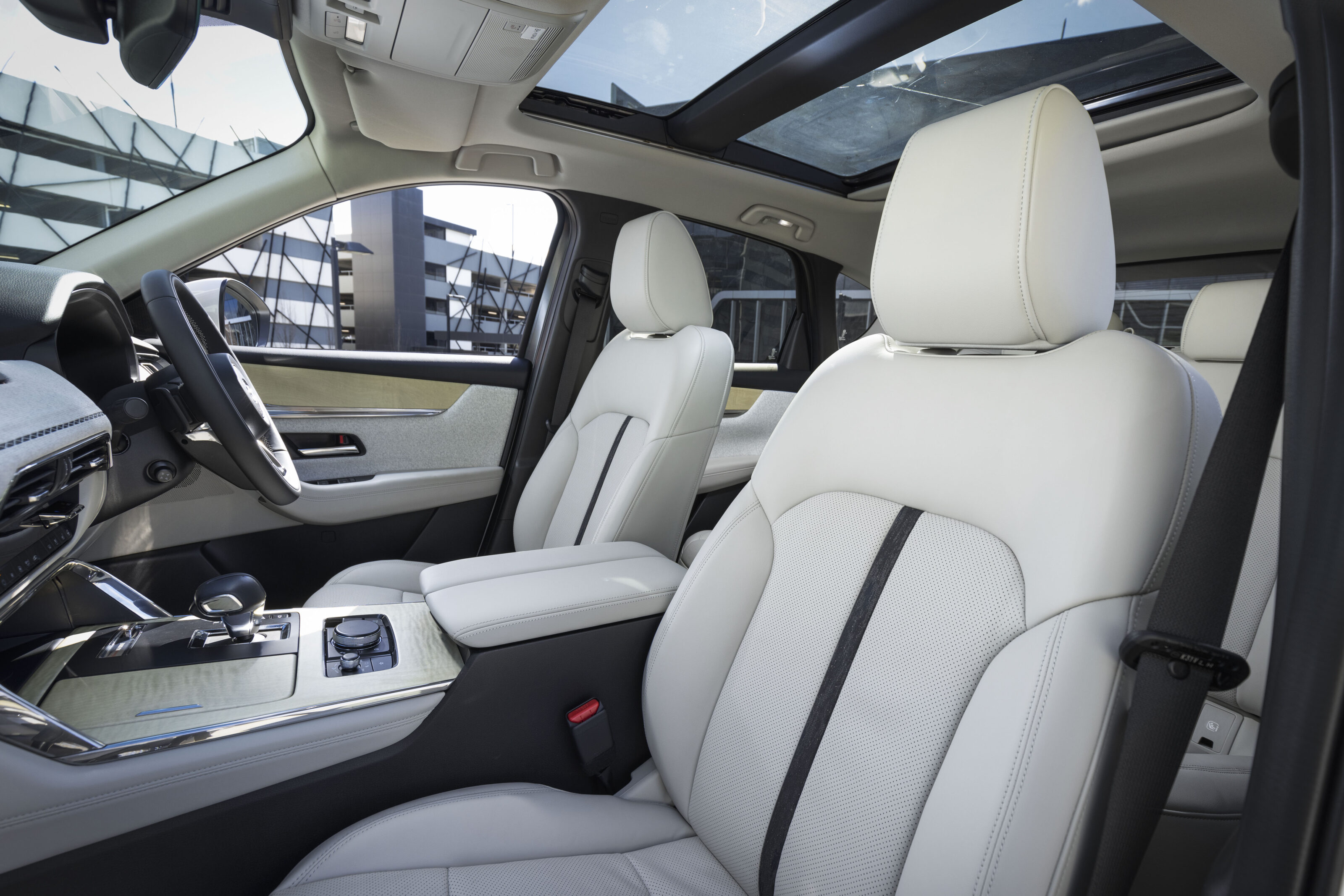
Mazda CX-60 available features
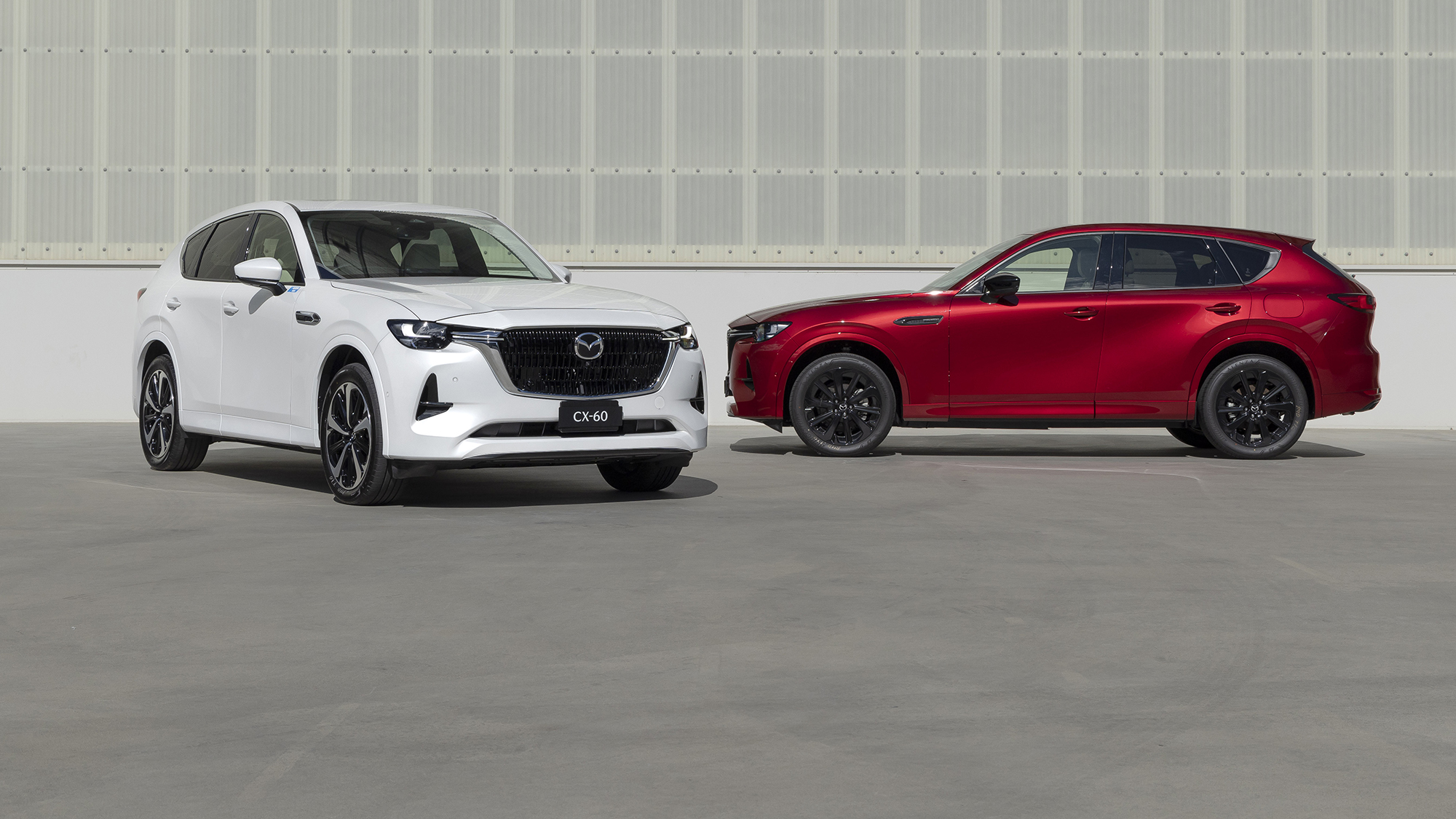
Colours
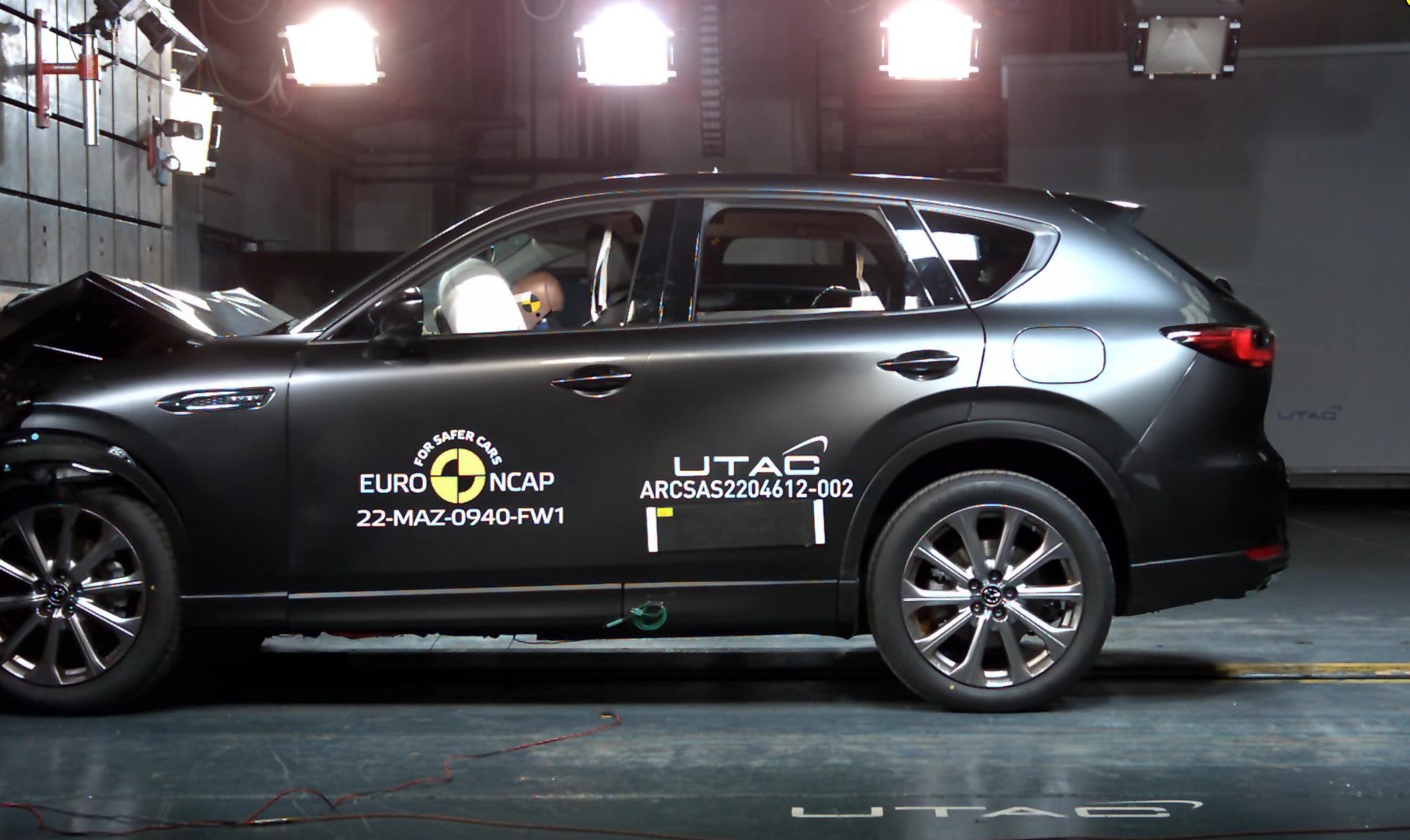
Safety
The 2023 Mazda CX-60 has yet to be rated by ANCAP, but it has received five stars from Euro NCAP under the latest 2020-22 criteria.
It has an 88 per cent score for adult occupant protection, 91 per cent for children, 89 per cent for vulnerable road users, and 76 per cent for safety assist.
In addition to the regular suite of airbags, it includes a front-centre airbag – designed to prevent a potentially deadly head clash between the driver and front passenger in a side impact collision – and rear-side airbags.
The Mazda CX-60 is available with the following active safety equipment:
Dimensions
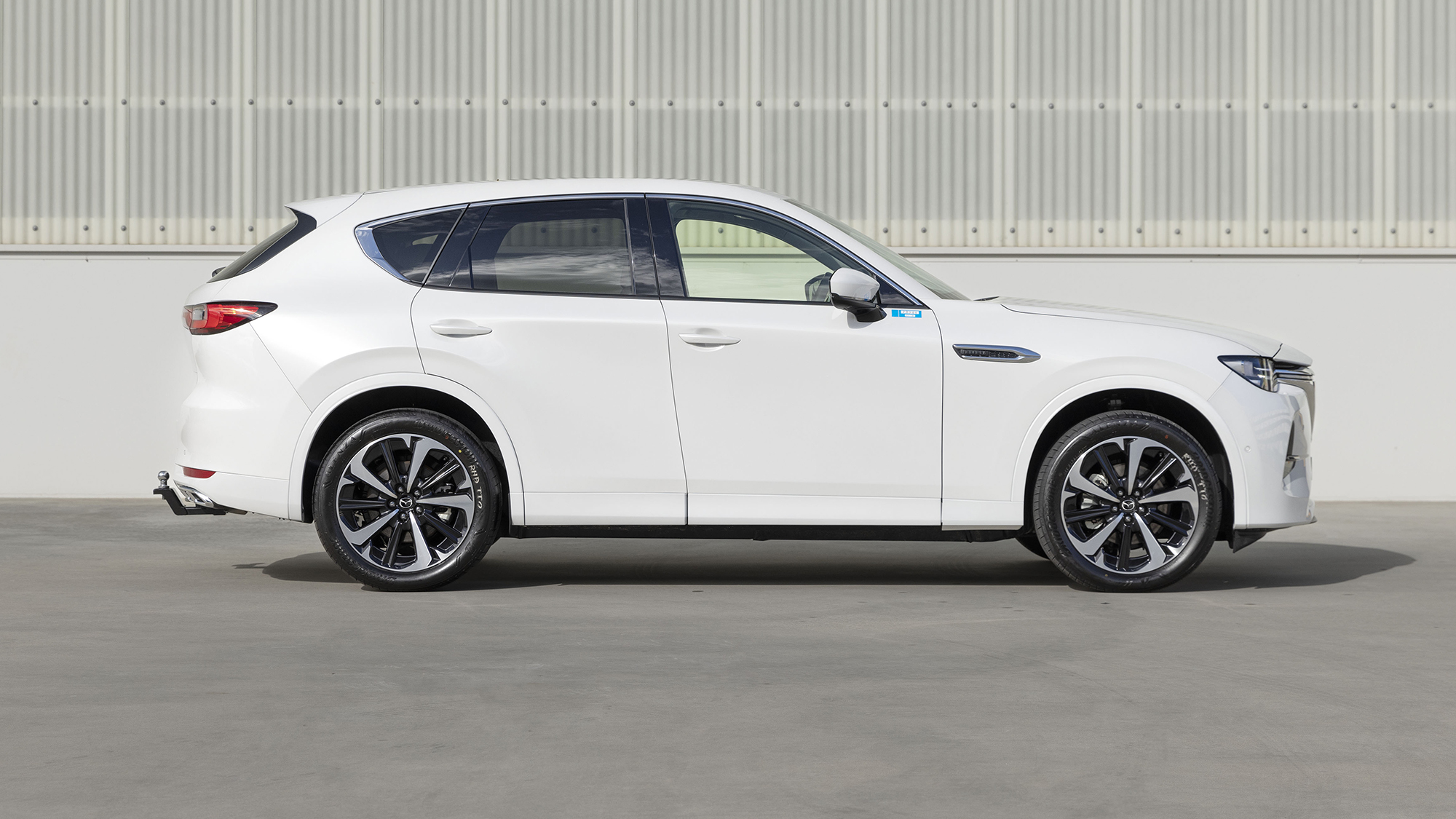
The Mazda CX-60 has a 2870-millimetre wheelbase, and is 4745mm long, 1890mm wide and 1680mm high.
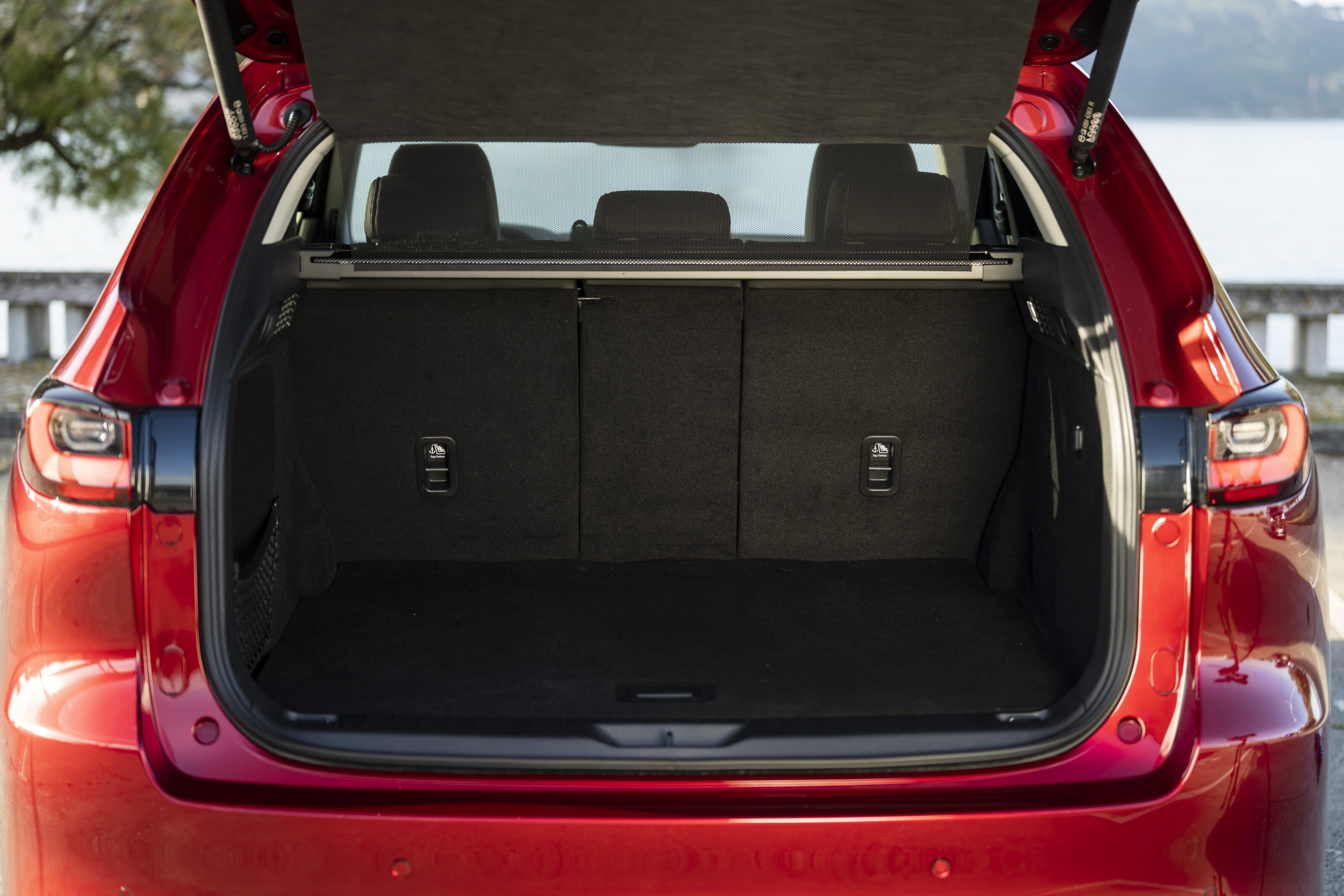
It has a claimed 570-litre boot capacity, extending to 1726 litres when the second row is folded flat.
Warranty and servicing
As per the wider Mazda range, the CX-60 is covered by the brand’s five-year, unlimited-kilometre factory warranty. It has a complimentary roadside assistance program over the same period.
Mazda offers five years of capped-price servicing. Maintenance details will be announced closer to the CX-60’s launch.
Availability
The 2023 Mazda CX-60 will arrive in Australian showrooms in the first half of 2023.
Full details, including local pricing, will be announced later this quarter.
The 2023 Volvo C40 Recharge electric car has received five stars in ANCAP’s latest round of testing.
The crash test authority awarded top marks to the new model in both the Australian and New Zealand markets this week.
The rating applies to single motor variant, as well as the higher-spec twin motor grade.
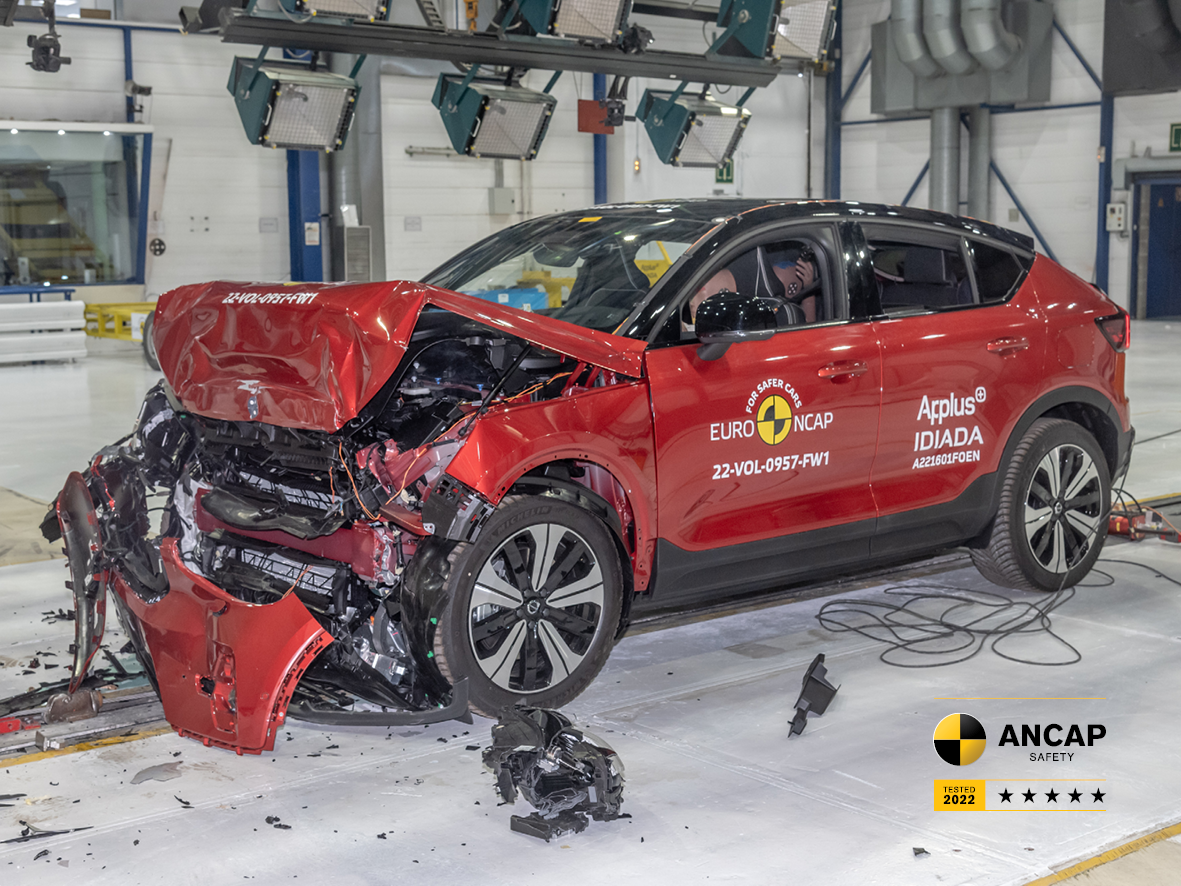
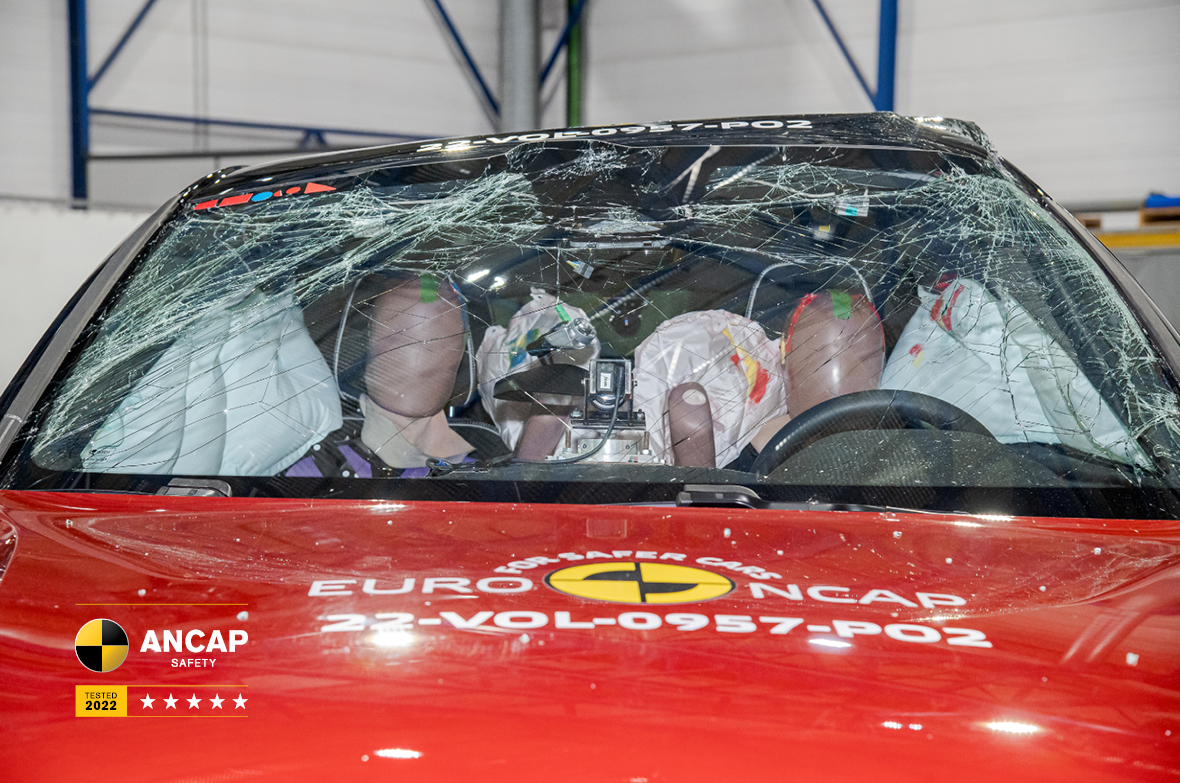
Maximum points were given to the Volvo C40 Recharge for protection offered to the driver and front passenger in the frontal offset test, and for the driver in the full width frontal test, side impact test, oblique pole test, and both of the far-side impact tests.
These scores were, however, offset by the full four-point penalty applied for vehicle-to-vehicle compatibility, with the C40 Recharge presenting a higher risk to occupants of an oncoming vehicle if struck.
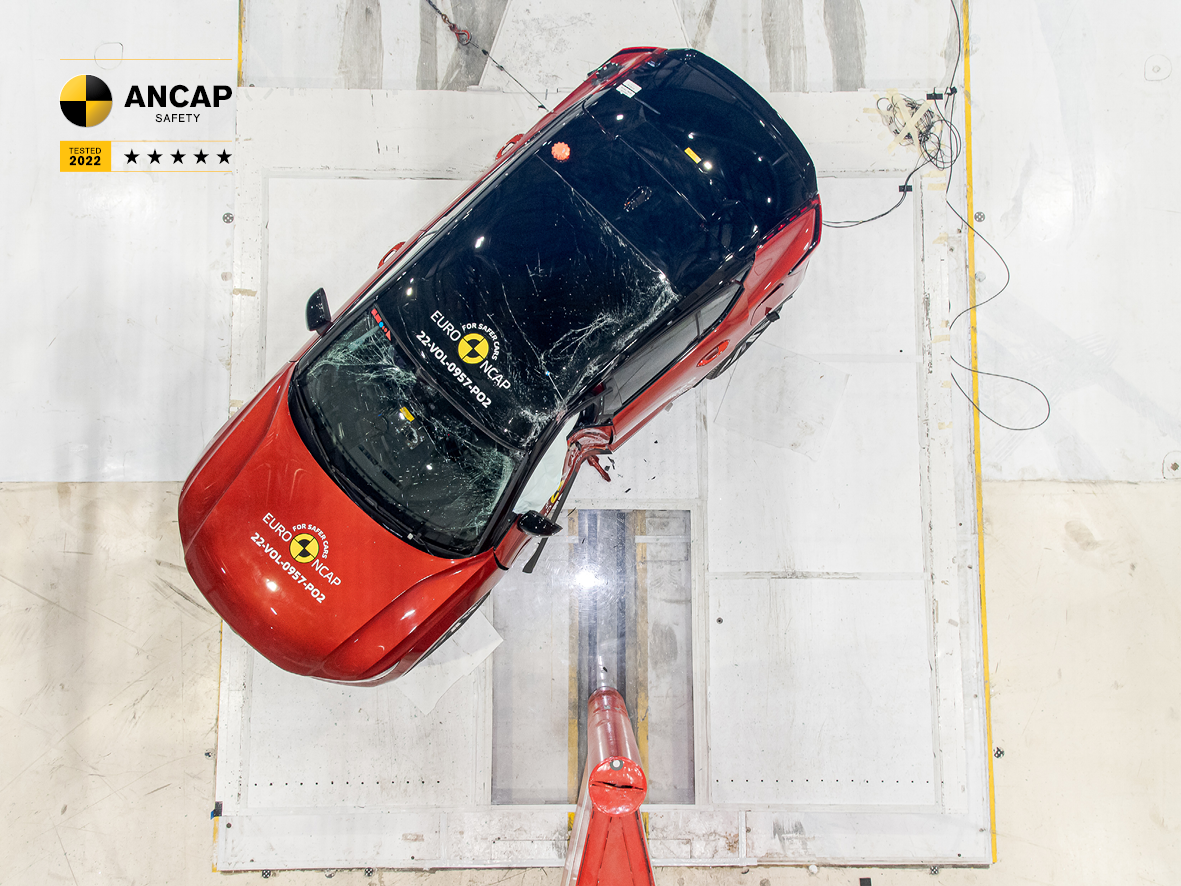
But again, the EV did well in the child occupant protection category where it took a clean sweep in the side impact and frontal offset crash tests.
Examining the C40 Recharge’s active safety capability, full points were scored for its ability to maintain its intended lane of travel and avoid run-off-road crashes through its lane support system (LSS) functionality. The C40 Recharge’s autonomous emergency braking capability also scored well.
The the upcoming 2023 Volvo C40 is due to launch in Australia imminently, with the single-motor variant to go on sale for $7500 less than its dual-motor counterpart.
Starting out at $74,990 before on-road costs, the model jumps up to $82,490 for the dual-motor.
Powering the single-motor front-wheel-drive grade will be a 69kWh battery, which can go from 10 to 80 per cent charge in as little as 32 minutes – eight minutes less than the larger battery – and offers a claimed 434 kilometres of driving range by the WLTP standard.
Meanwhile, inside the dual-motor all-wheel-drive variant is a 78kWh lithium-ion battery, which provides an estimated 420km of driving range and can be charged from 10 to 80 per cent capacity in 40 minutes with a 150kW DC fast charger.
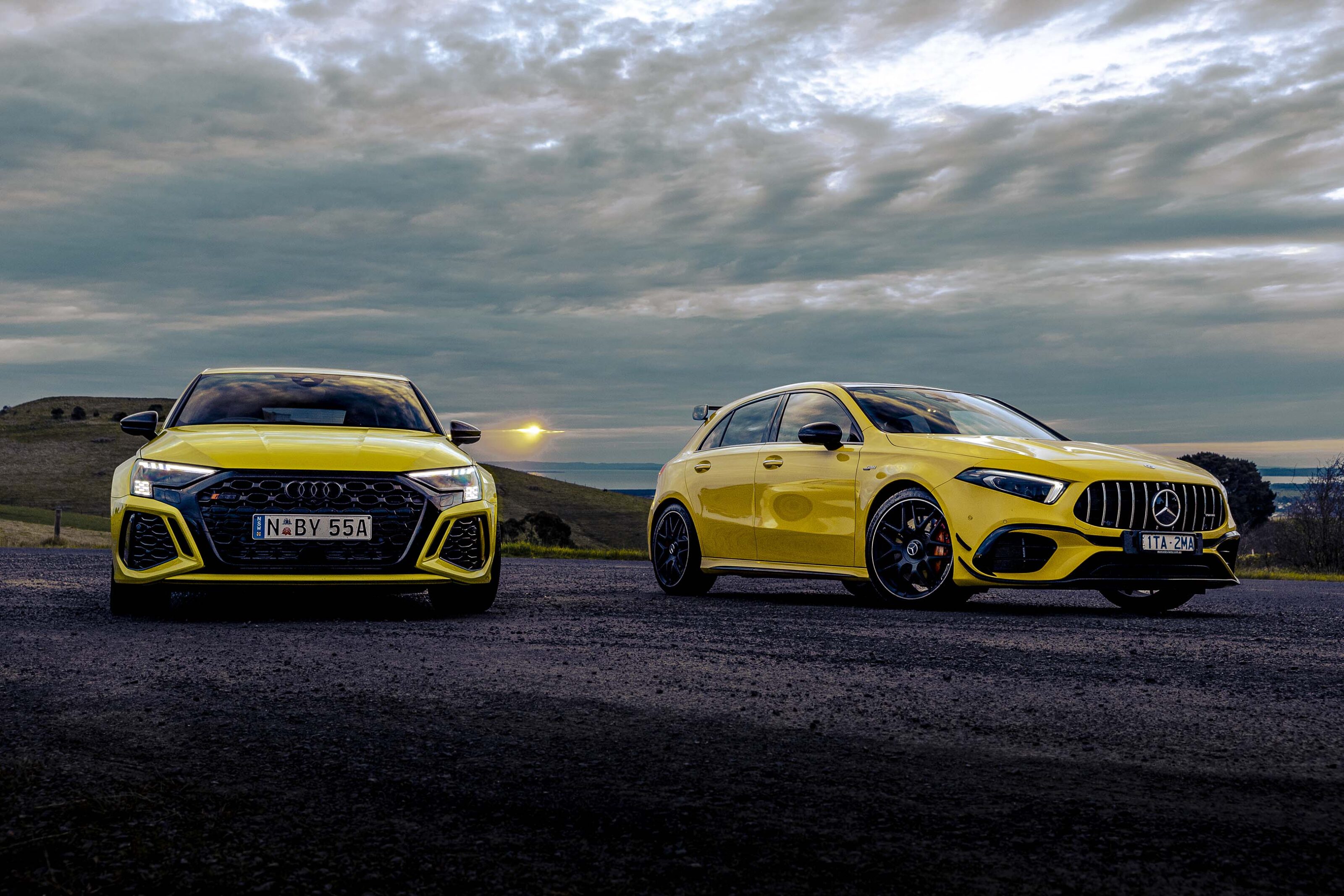
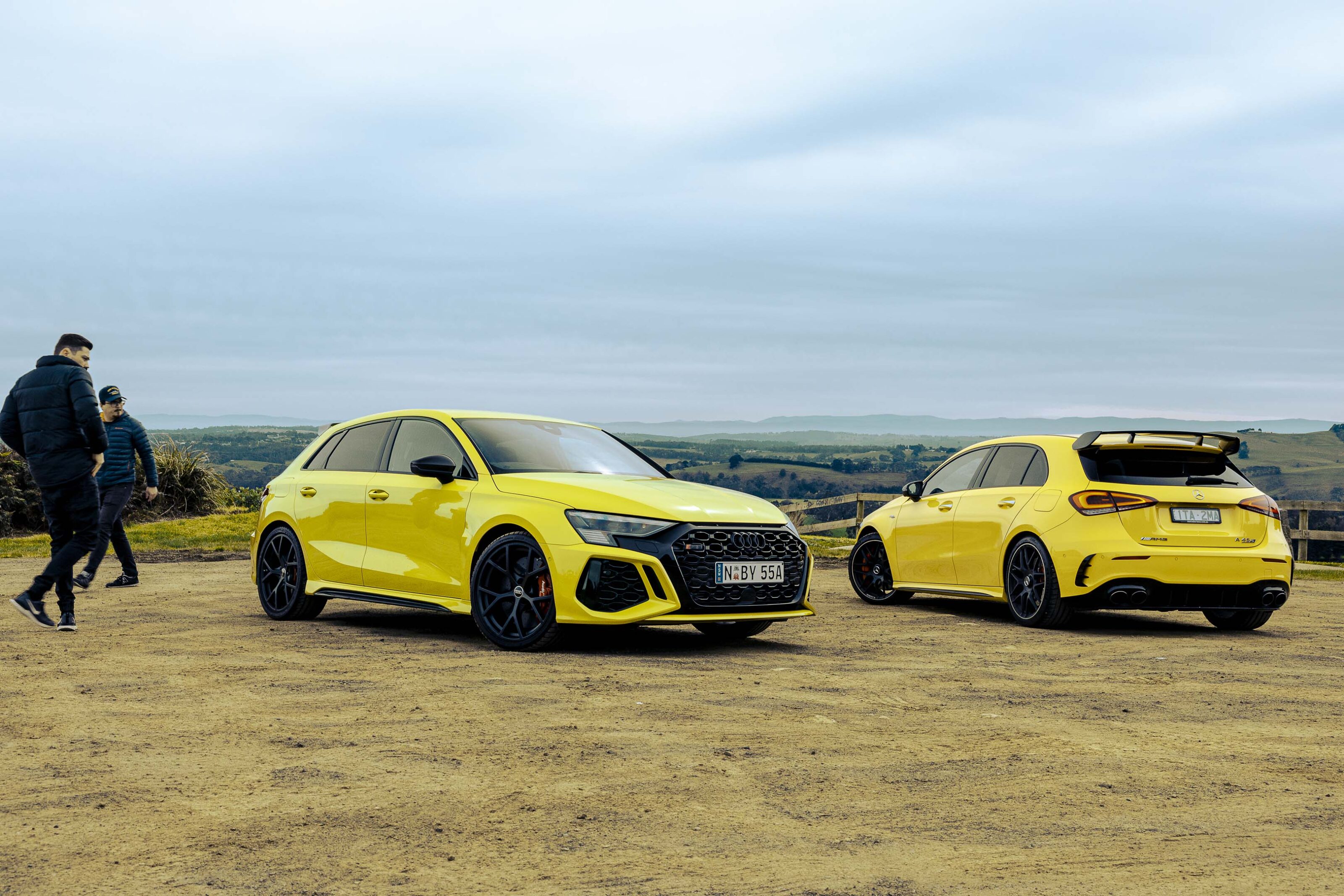
Audi’s first RS3 was part of the triumvirate of German hyper hatches, with the BMW M140i and AMG A45 for company. That’s a lot of firepower to deal with and the arguments were endless, full of excellent points and counterpoints. Then the (relative) bargain M140i disappeared and we were left with only two choices.
The RS3 was a fun – if slightly flawed – car that was improved after a few years on sale with the addition of the sleeper sedan. For car nerd points, that car rolled on the same short-wheelbase platform of the hatch so had a stubby-looking boot and a tight rear seat.
With a new A3 hatch and sedan, the performance versions have rolled through relatively quickly, the hot S3 and even hotter RS3 now completing Audi’s small car line-up. And the new RS3 has an intriguing new diff that might iron out the wrinkles of the old car.
Psst, hey. When you’re done here, you should read this one:
Story continues…
Pricing and features
The second-generation Audi RS3 has landed with a hefty price increase. The hatch starts at $91,391 and the sedan – the car I had – a whopping $93,891 (both before on-road costs).
Yes, prices are up everywhere, but a jump of more than 10 per cent is sobering.
Perhaps surprisingly, it’s the bargain of this tiny segment, with the Mercedes CLA 45 AMG weighing in at $117,687 before on-road costs, which is almost an entire Hyundai i30 hatch more expensive. Or $23,976 if you like your figures in a slightly more relatable format.
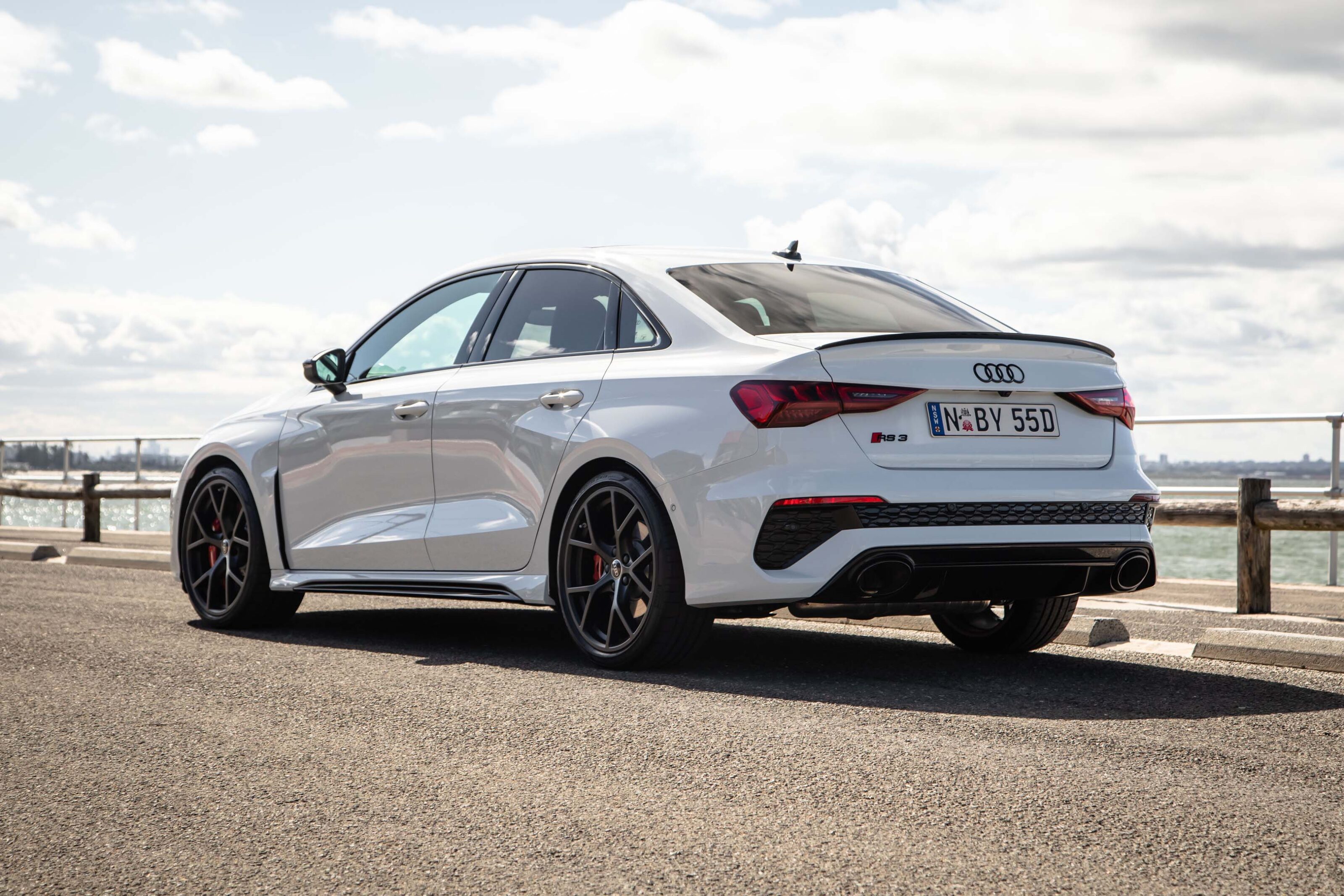
With a new platform underneath it, more aggressive new looks and a predictably sleek new Audi interior, it’s still a lot of money for a car this size. But Audi has softened the blow with a fairly comprehensive feature list.
And a bank of LED lights packed into the headlight assembly animates R-S-3 when you hit the unlock button. Trust me, that never gets old.
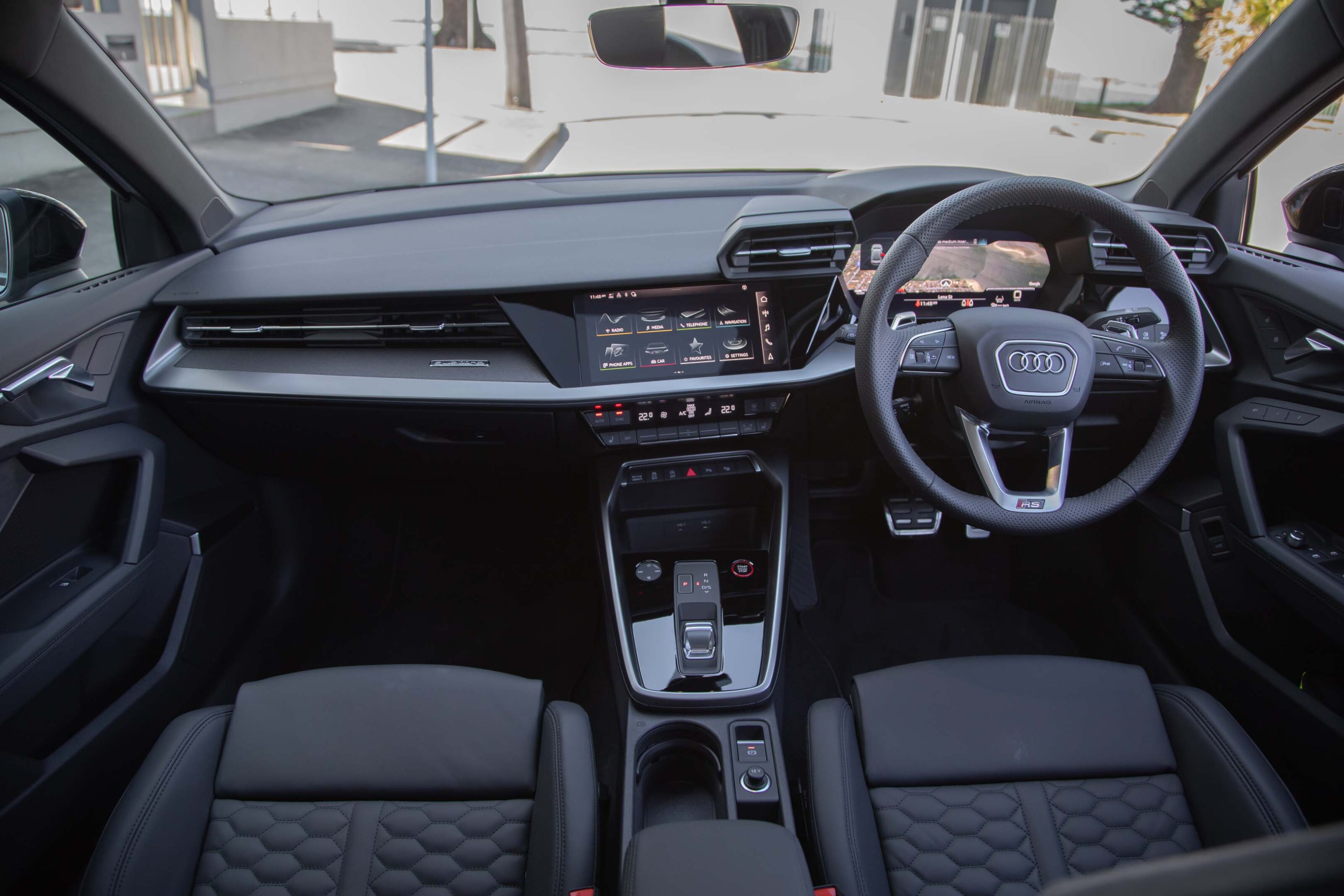
Highlights
| 19-inch cast alloy wheels |
| adaptive dampers |
| Matrix LED headlights |
| electric RS front seats with heating and massage function |
| 12.3-inch configurable digital dashboard |
| head-up display |
| 10.1-inch touchscreen |
| satellite navigation |
| wireless phone charging |
| RS exterior design package |
| DAB+ digital radio |
| 15 Bang & Olufsen-branded speakers |
| Nappa leather upholstery with RS honeycomb stitching |
| reversing camera |
| around-view cameras |
| heated and folding side mirrors |
| power windows front and rear |
| keyless entry and start |
| adaptive cruise control |
| tyre repair kit |
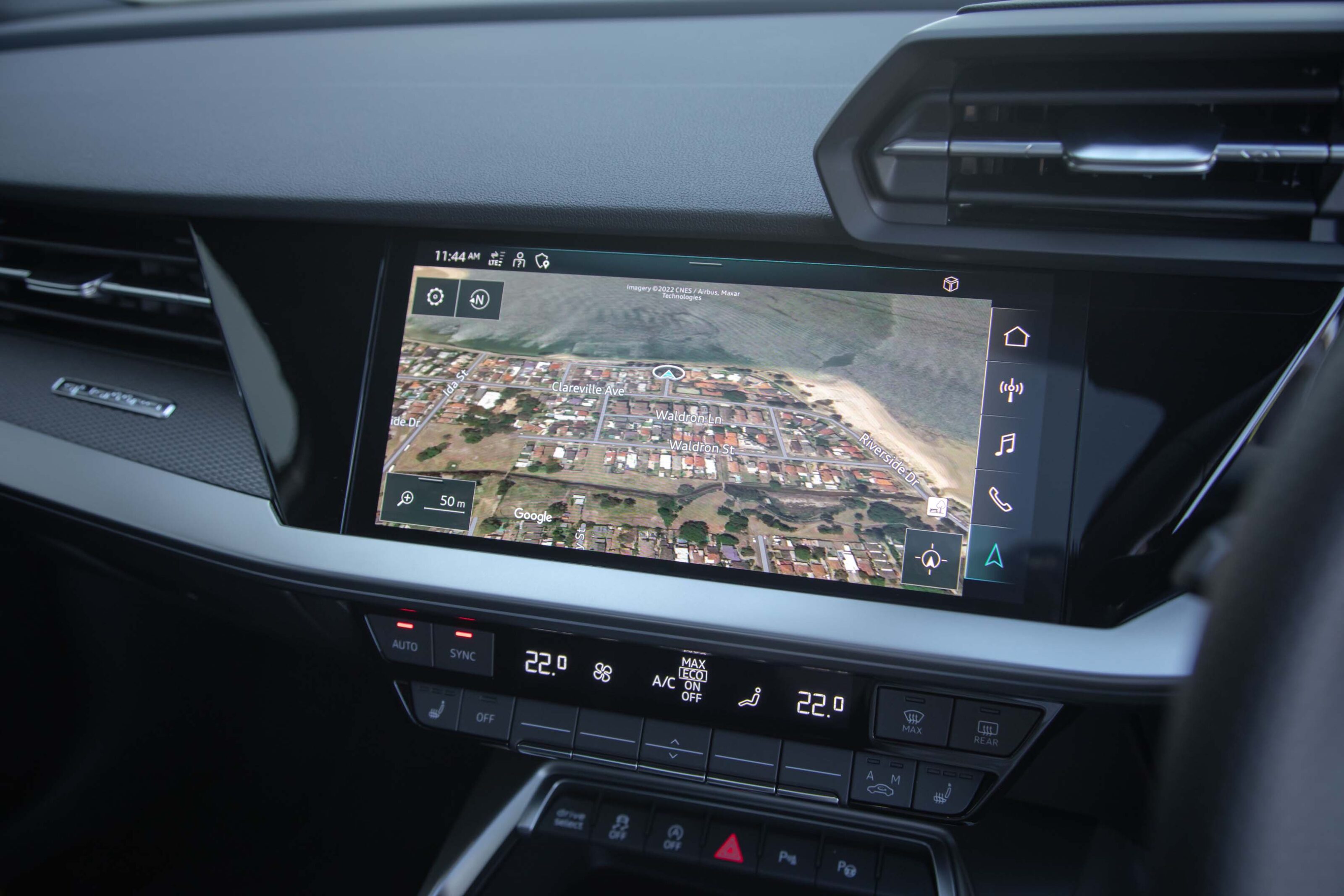
Audi’s MMI system includes sat-nav and Audi Connect Plus online services as well as wireless Apple CarPlay and wired Android Auto. The 15-speaker audio system wears B&O branding and it’s mighty impressive. The touchscreen is beautiful to look at too and offers access to a bunch of functionality.
The RS3 is yet to be tested by either ANCAP or EuroNCAP and it’s probably unlikely to happen, however, the standard front-wheel drive A3 scored five ANCAP stars in 2020.
| 7 airbags (including centre front airbag) |
| anti-lock brakes |
| stability and traction controls |
| forward auto emergency braking (up to 250km/h for vehicles, pedestrian and cyclist detection up to 85km/h) |
| reverse AEB |
| forward collision warning |
| blind-spot monitoring |
| rear cross-traffic alert |
| exit warning |
Audi offers several option packages with varying degrees of usefulness and taste.
For a whopping $13,000 you can get the RS Dynamic Package Plus with carbon-ceramic front brakes and calipers painted red, blue or grey.
The $2150 RS Design Package (available in red or green) adds Alcantara steering wheel trim, coloured edges on the seat belts, coloured seat shoulders in Dinamica microfibre, RS floor mats and an accent on the centre bar of the front air vents.
A $7400 Carbon Package adds a carbonfibre lip spoiler, black styling pack, side skirt with carbonfibre inlay and carbonfibre mirror caps.
Finally, for $2000, you can replace the mirror caps and exterior bits in matte aluminium and high gloss on the honeycomb front grille.
Comfort and space
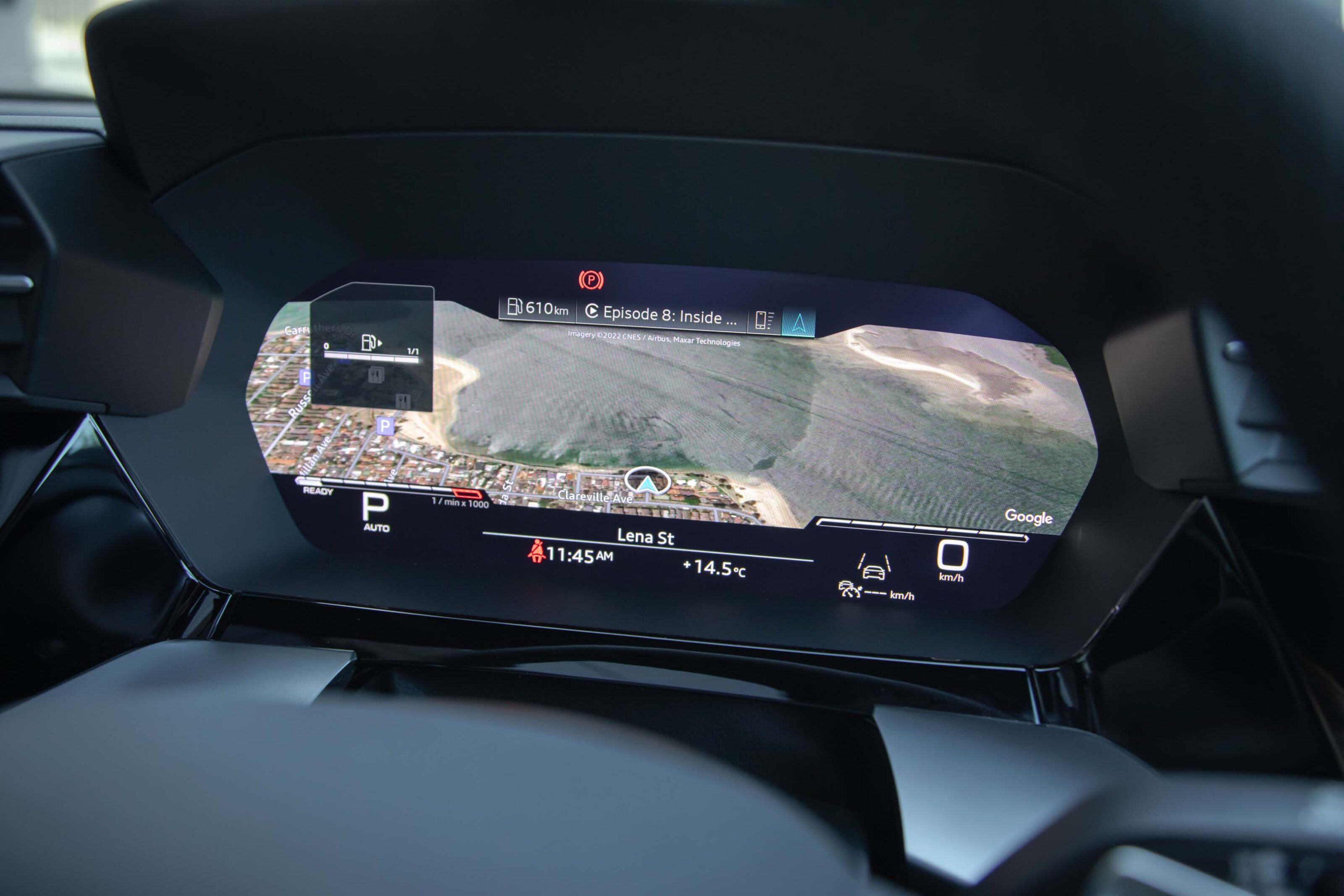
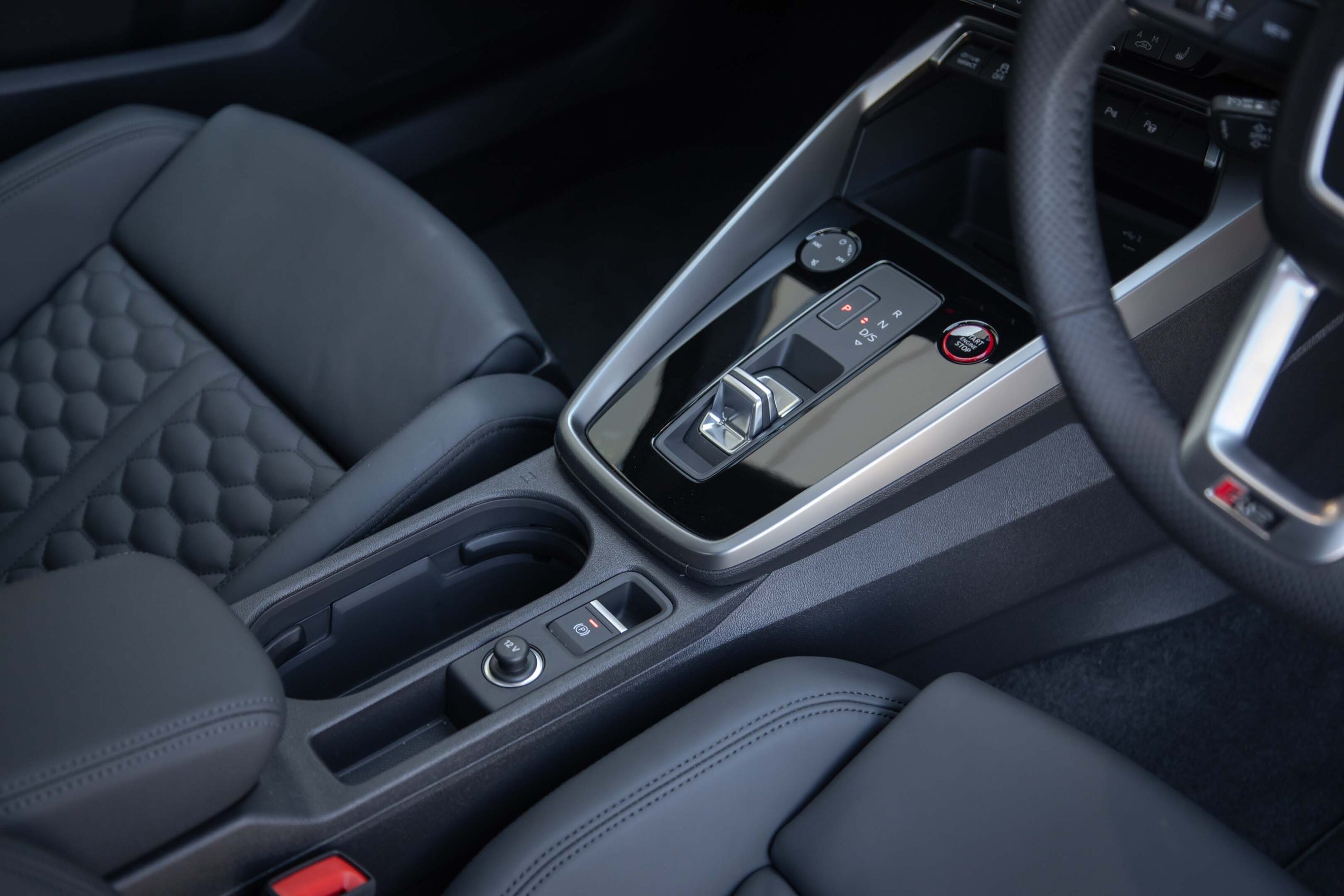
Sat in the front seat, a lot of screen real estate spans before you. The Virtual Cockpit digital dashboard is as clear and crisp as ever while the big MMI screen integrates beautifully with the dash structure.
The seats are slung low in the chassis so with a low ride height and deep bucket seats, you really are hunkered down in the car. The Nappa leather is lovely, as is the steering wheel – which for once isn’t flat-bottomed. Once you’re in these seats, you’re not going anywhere.
For storage, you have a wireless charging pad, a pair of cup holders, a pair of bottle holders and a bin under the armrest.
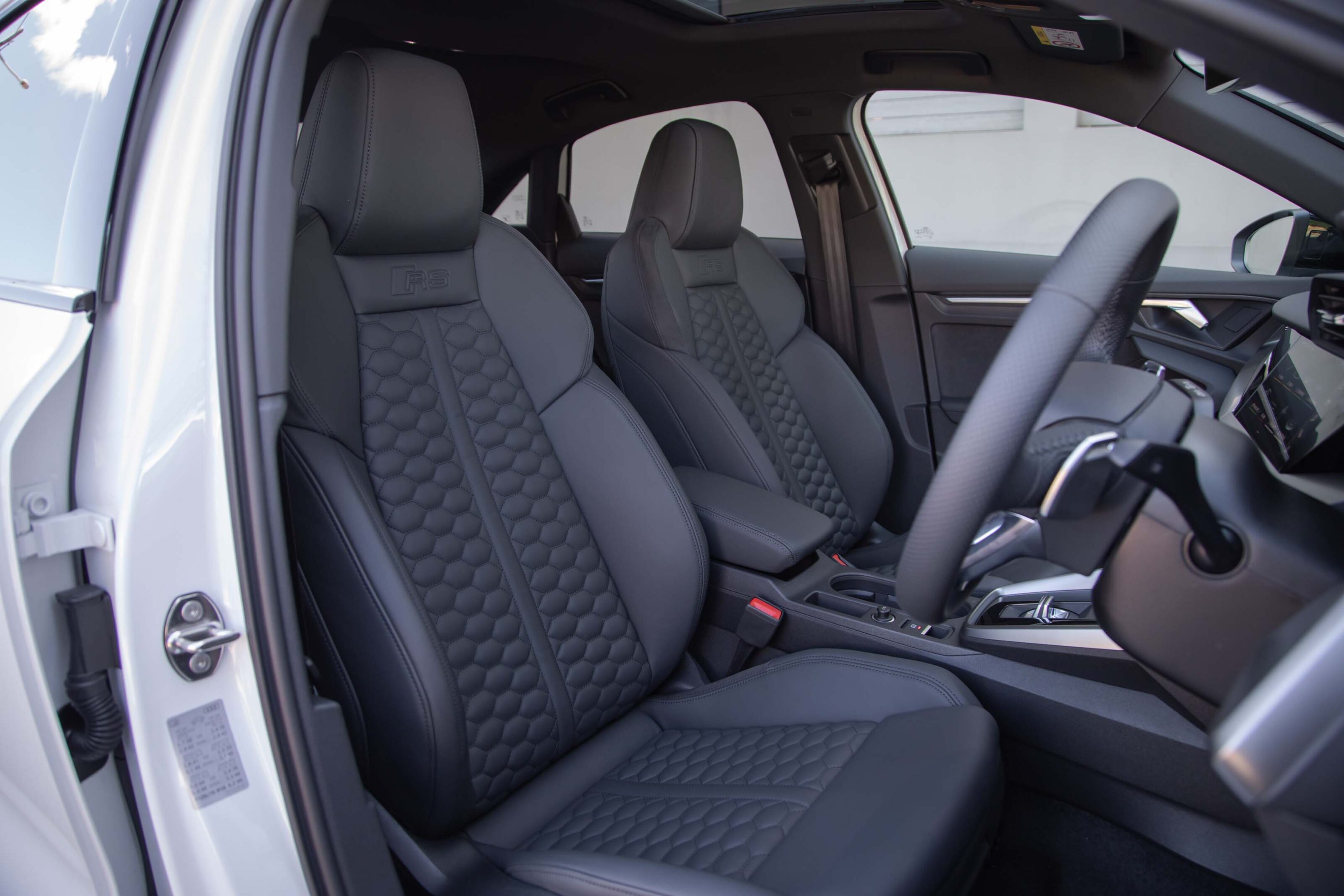
The rear is more welcoming than the old car, with a little more legroom but still no feline-twirling space. It’s fine if you’re under six foot, but the seat is a little on the firm side and the roof does fall towards the rear glass and therefore your bonce. You get two cup holders in the armrest, rear air vents and bottle holders in the doors.
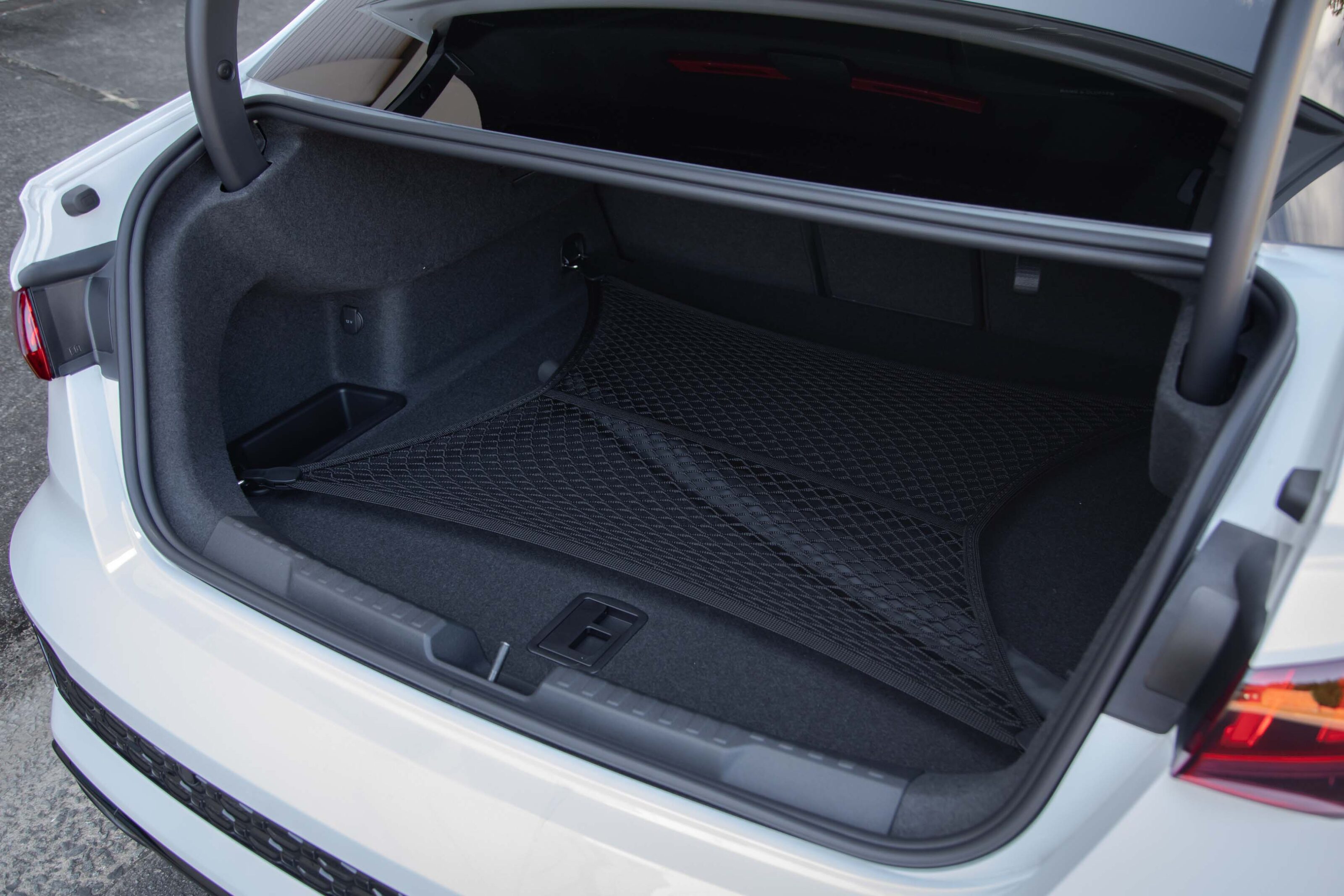
Boot space is a so-so 321 litres and while the seats do fold, there’s no official capacity figure for the available space once you’ve done so.
If you want a roomier, five-cylinder turbocharged machine, you’ll need to switch to the RSQ3. Which is pretty good fun, too.
On the road
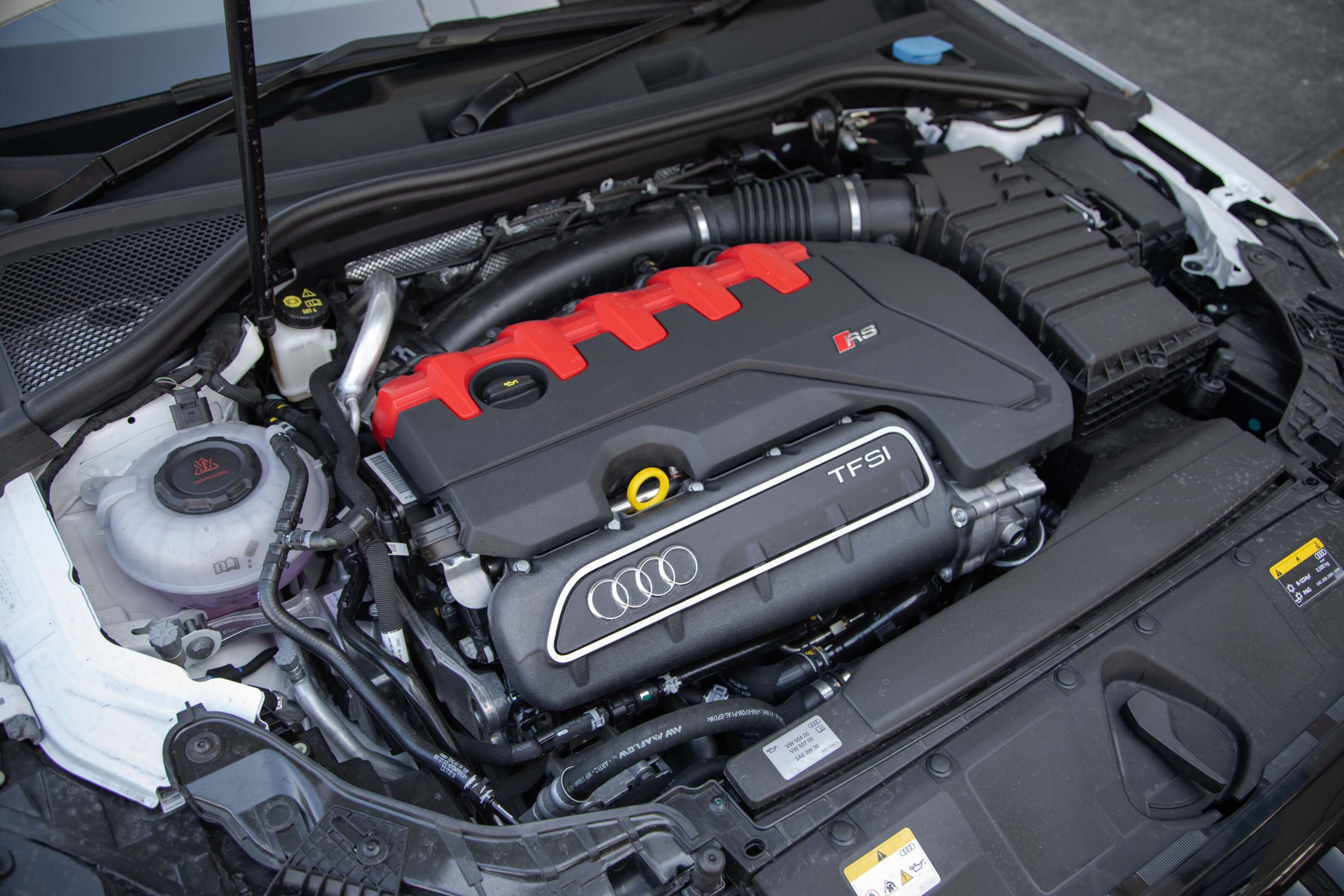
The core of the RS3 experience has always been the tuneful turbo five-cylinder. With its offbeat vibe, cello-like sound and excellent driveability (with a ton of power to boot), it has dominated this car (and more recently its RSQ3 SUV relative) for over a decade.
In this new car, the same 294kW as the previous car makes a welcome return. Torque is up by 20Nm to a nice round 500Nm, turning all four wheels via a seven-speed dual-clutch auto. Audi Sport’s engineers have spent a lot of time on this driveline, adding a new rear differential.
Everyone is talking about how that delivers a drift mode function to the Drive Select menu. While that’s a good laugh, I think the diff’s overall effect on the new RS3 has been transformative in a broader sense.
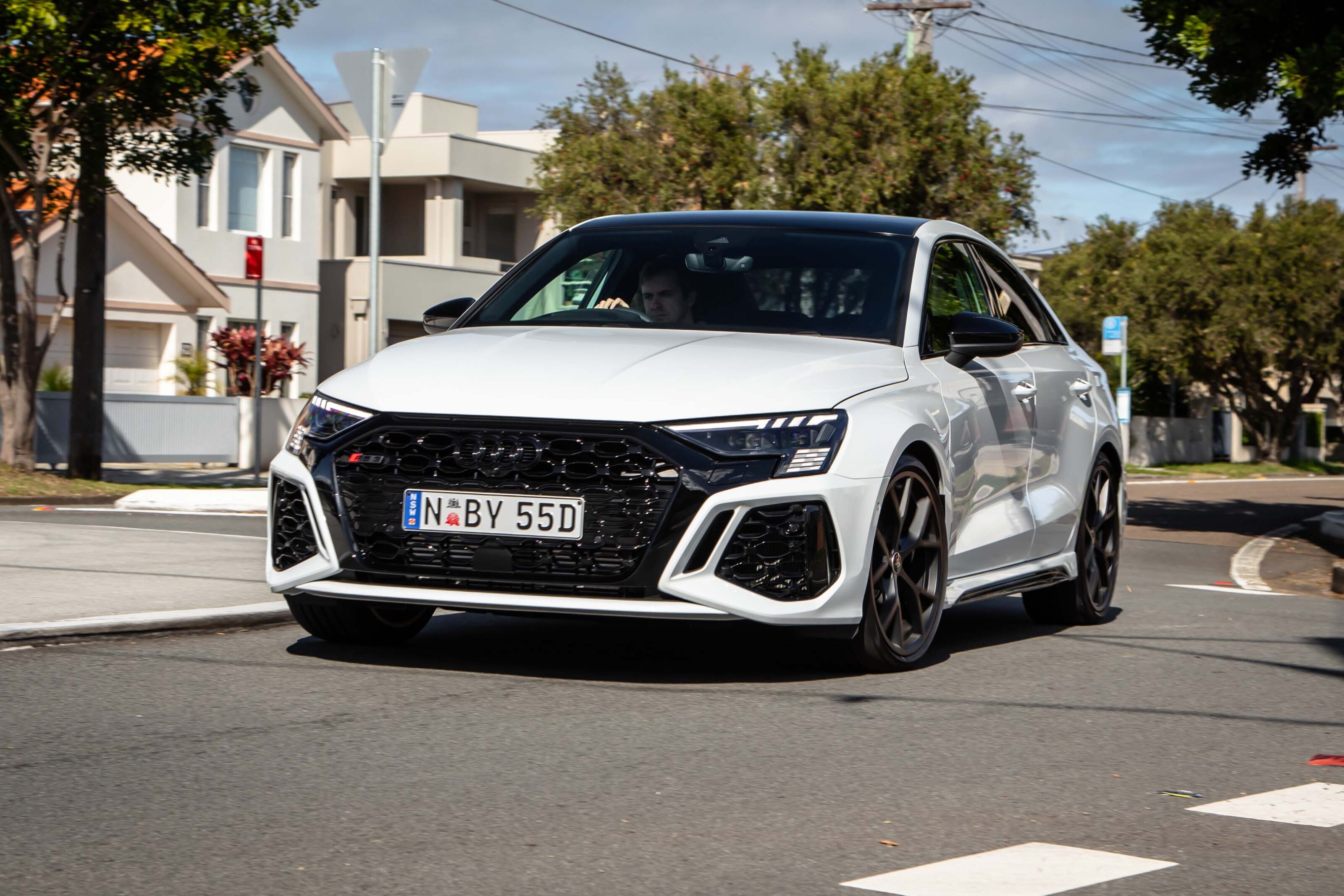
The old car – which I liked very much – had a frustrating flaw. I had many an entertaining argument with internet randos about why it did what it did, with people confidently telling me it was the tyres, suspension geometry, “understeering Audi syndrome” and, of course, a couple of them blamed me for not driving it properly.
And what it did was understeer, but not the way you might expect. When you put the boot in to get out of a corner, the old car would want to wash wide. You really had to wait for the car to straighten before feeding in the power. It was apparent both on road and on the track.
It didn’t ruin the car, but it meant it didn’t have the edge of its BMW rival, the much cheaper M140i. The old A45 had its problems (more than the Audi in my humble opinion, tell me how wrong I am in the comments), but that wasn’t one of them.
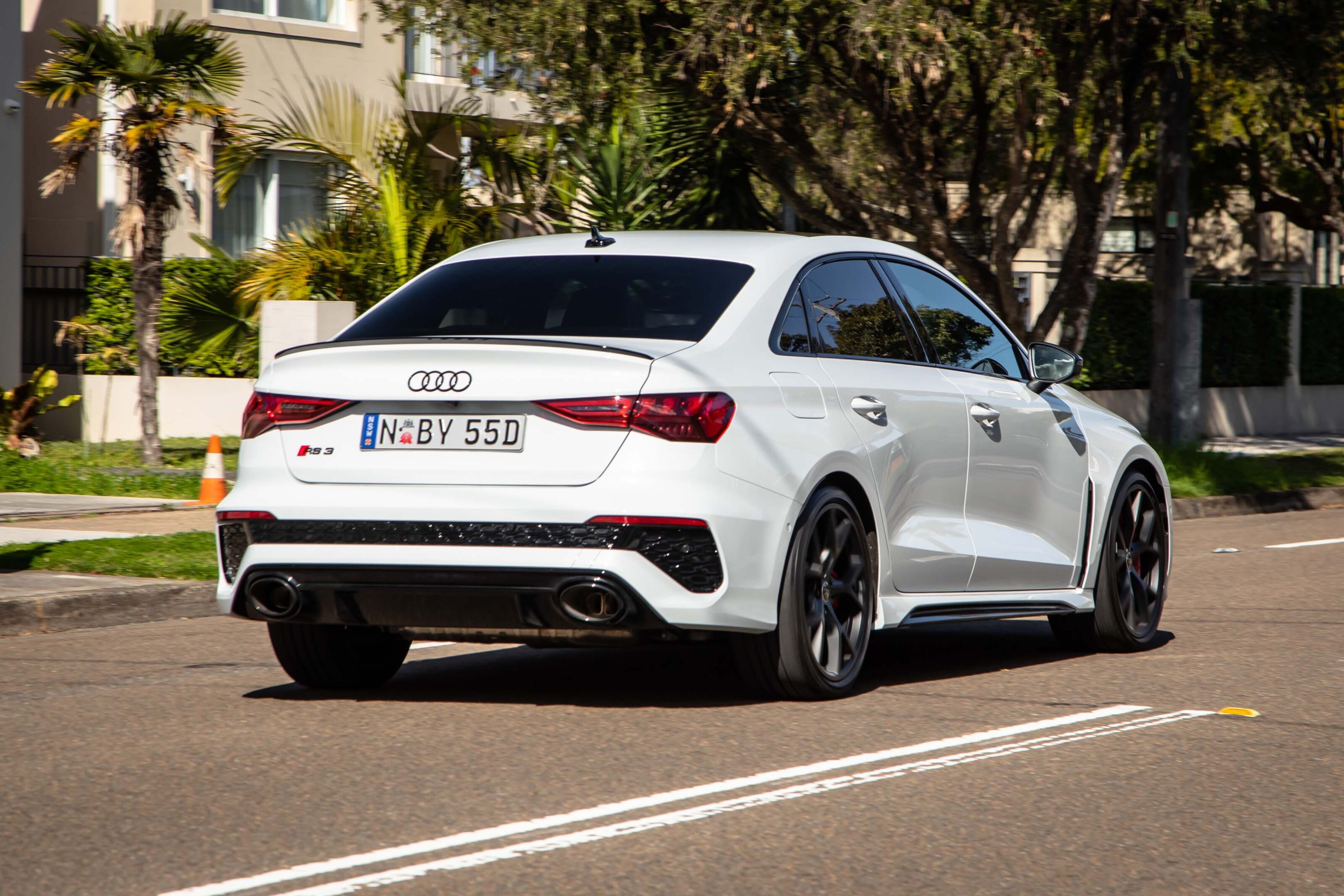
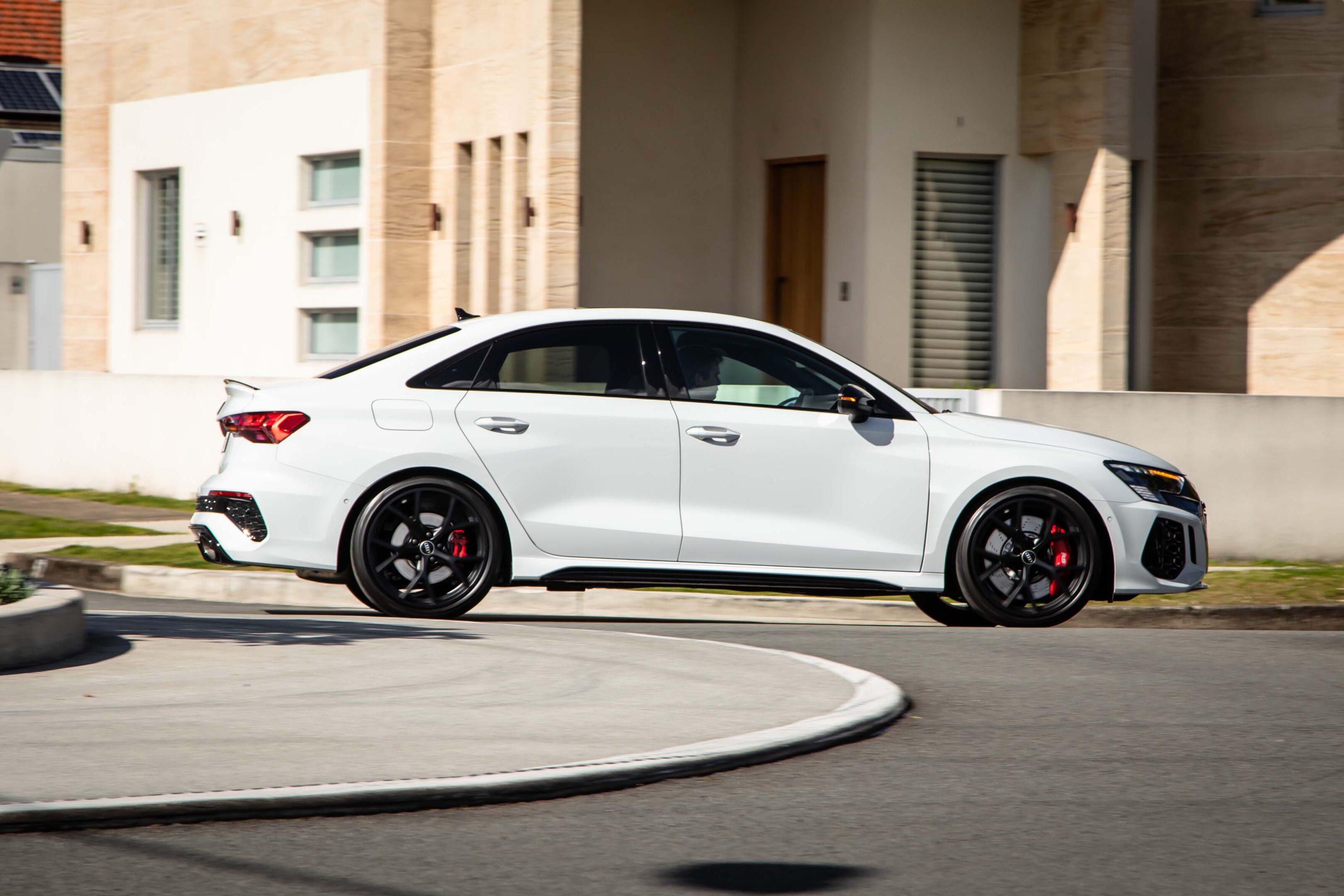
Now, though, that slack is gone. The new diff steps in early to help turn the front end unless you’re driving at insane speeds. The front end is now so much more positive and you can lean on it into the corner knowing it will be there for you when you unleash the power.
It’s subtle, effective and a whole lot more fun. It also means you concentrate more on the corner rather than judging when you should put your foot down.
One of the old car’s strongest features made it through and that’s a suspension set-up that doesn’t want to spit you off the road. My test loop includes a road that is in desperate need of resurfacing and I hope it never is because it’s nail-biting fun in some cars and, in the RS3, brilliant.
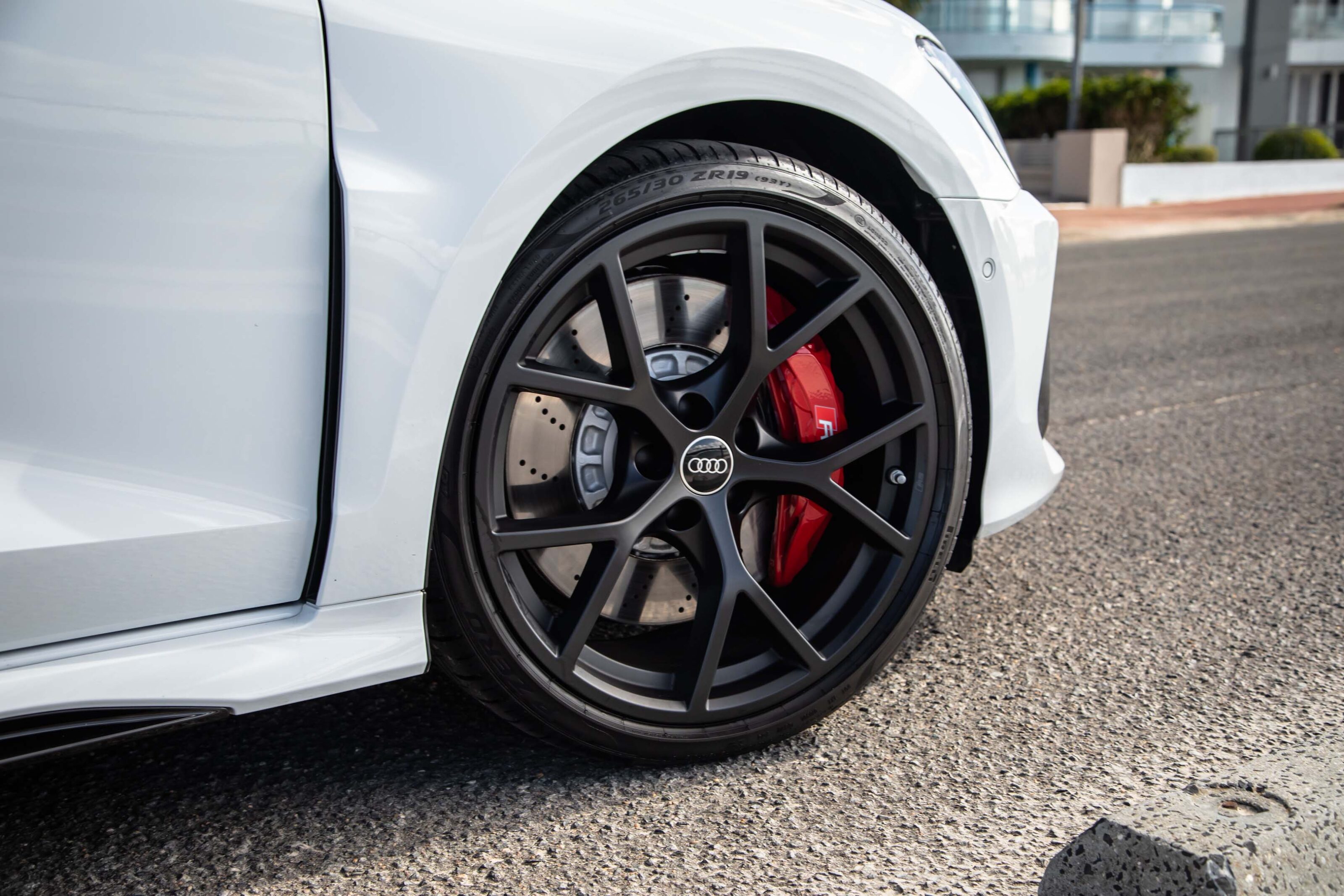
It rides the bumps without unsettling the car or your kidneys, leaving you to steer and brake with a mountain of confidence.
That confidence in the steering comes from the right weight – not too heavy to make an irrelevant sporting point, not so light that you feel disconnected – which matches nicely with the colossal grip you get from the sticky rubber and well-sorted front axle.
Chuck in great brake feel and incredibly strong performance from the standard steel discs, you’ve got everything you need to have plenty of fun with a ton of security.
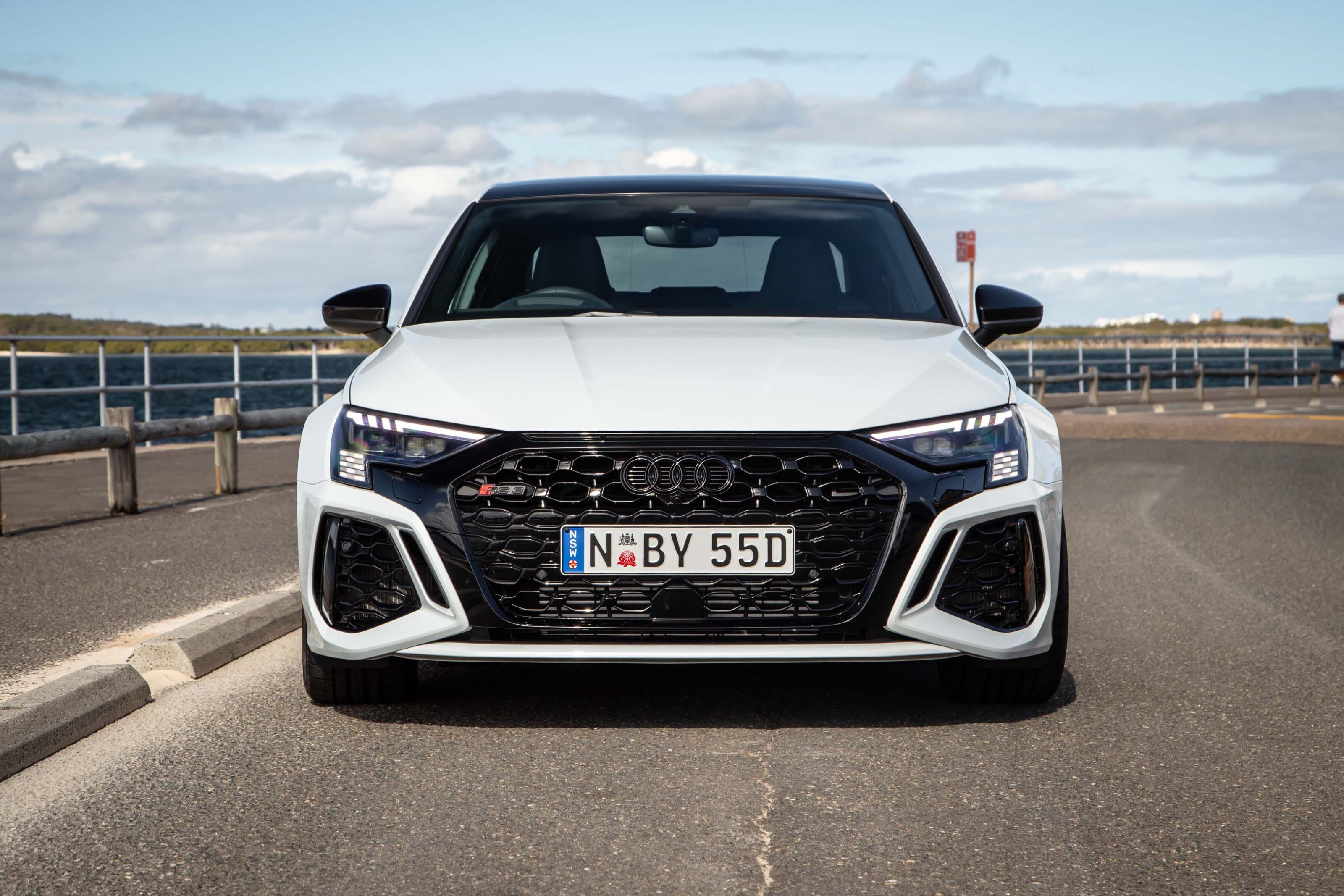
So the fun end of things is sorted. Thing is, when you’re dropping this kind of cash, you want a broad set of capabilities. Here is where the RS3 turns out to be the everyday machine you might want. The suspension is so supple, especially so for a sports sedan but it also out-rides plenty of so-called softer machines.
It shouldn’t be this comfortable, especially running on 19-inch wheels and tyres with less sidewall than a Matchbox car. But there we are, in Comfort mode, and could almost be wafting along in a 2.0-litre TSI A3. Just with really good steering, four hundred horses and chassis that’s track-ready with a flick of a switch.
And if you hit the Rear Torque function, it will do skids with its tricky clutch-pack diff sending all the power to the left or right tyre depending on which way you’re steering. As I don’t have a skidpan handy, I didn’t give that a lash.
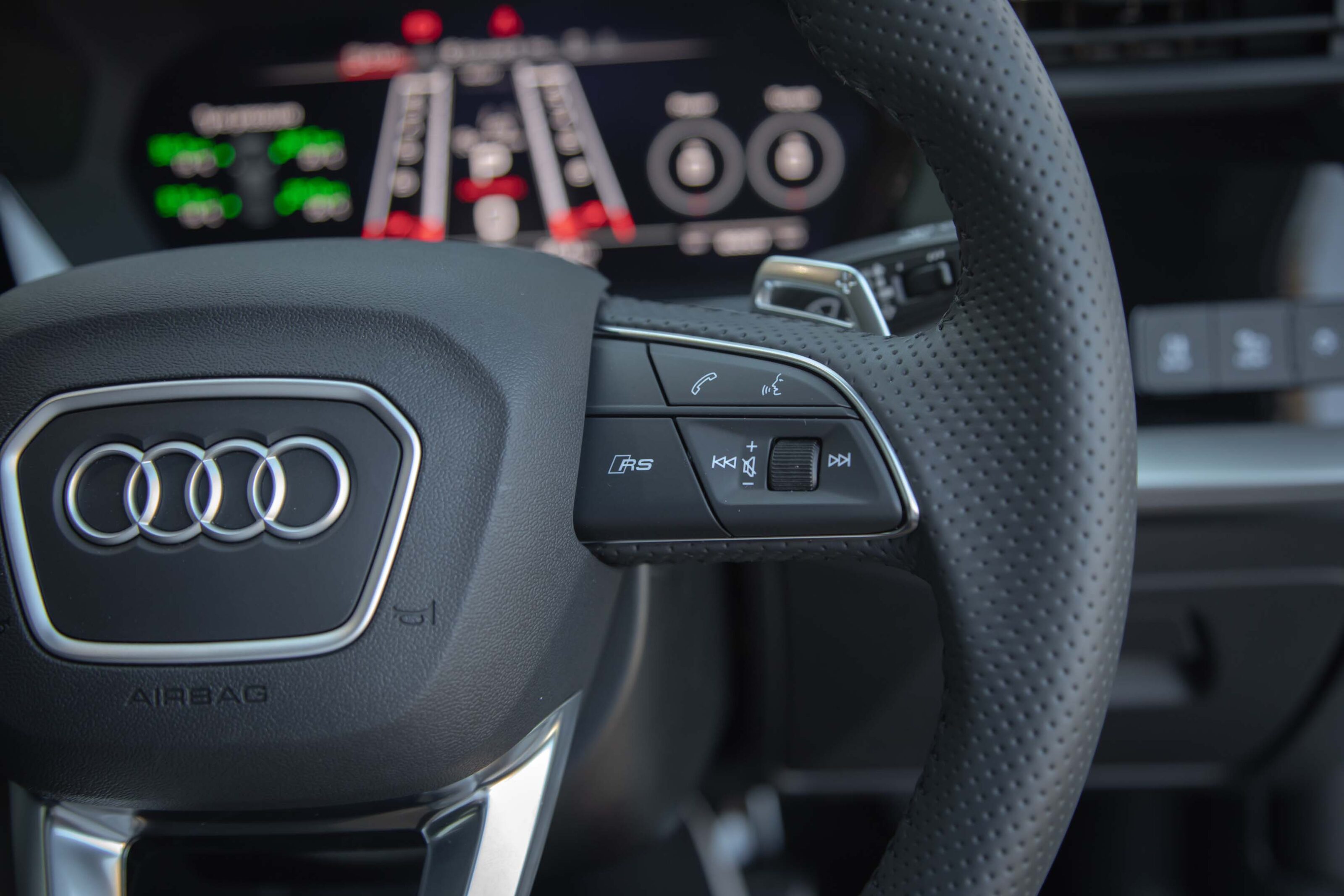
The only real issue I had with the RS3 was the racket from the tyres on motorways. If the surface was smooth, it was fine, but Sydney’s idiotically surfaced motorways produced a fair amount of roar from the rubber. That’s where they get ya – this car might ride like it’s on taller tyres, but you can’t so easily escape the sound.
Audi reckons the RS3 sedan will drink premium unleaded at the rate of 8.2L/100km (0.1L/100km better than the hatch so hey, every little bit helps). My week had plenty of totally normal driving, including a run up the Blue Mountains, the usual suburban rushing about as well as a memorable backroad blast.
The RS3’s trip computer told me I’d used 10.7L/100km, which isn’t a huge miss and startlingly good for a near 300kW headbanger.
Ownership
Audi’s five-year warranty covers the RS3. There’s even a capped-price servicing regime and an official warranty extension.
Five services cost $3580 ($716 per service on average) and if you want to go nuts, you can add the Audi Advantage pack for $3800. That buys you two more years of warranty and servicing and if you want to double down, you can, for $7600 giving you nine years of warranty and servicing.
VERDICT
The RS3 is probably the last of the line, but if you’re gonna go, go out with an instant classic. While the previous car was a blast, it didn’t have that final edge to take on the Merc or the BMW with which it traded blows.
A sensible set of changes – and rolling on the much more modern MQB Evo platform – results in the 2023 RS3 being an absolute belter. More engaging, more inspiring, more fun.
Complaining it costs a lot doesn’t really come into it at this level – nobody is paying more than ninety grand for a car with their hard-headed accountant’s blessing.
At this price point, you’re after something that moves you and the RS3 does that spectacularly well.
Now get onto this one:
2022 Audi RS3 sedan specifications
| Body | 4-door, 5-seat small sedan |
|---|---|
| Drive | all-wheel |
| Engine | 2.5-litre five-cylinder turbo-petrol |
| Transmission | 7-speed dual-clutch transmission |
| Power | 294kW @ 7000rpm |
| Torque | 500Nm @ 2250-5600rpm |
| Bore stroke (mm) | 82.5 x 92.8 |
| Compression ratio | 10.0 : 1.0 |
| 0-100km/h | 3.8 sec (claimed) |
| Fuel consumption | 8.2L/100km (combined) |
| Weight | 1570kg |
| Suspension | MacPherson struts front/multi-link rear |
| L/W/H | 4389mm/1851mm/1463mm |
| Wheelbase | 2636mm |
| Brakes | 375mm discs with 6-piston calipers front/310mm discs rear |
| Tyres | 265/30 ZR19 front/ 245/35 ZR19 rear |
| Wheels | 19-inch alloy (puncture repair kit) |
| Price | $93,891 + on-road costs |
February 2023: Polestar 3 Australian pricing announced
Australian pricing for the Polestar 3 electric SUV has finally been announced.
As expected, it will arrive in Australia with a starting price of $132,900 – just shy of the estimated circa-$135,000 described to media at the big reveal. Get the full story below, and continue with our reveal story further down.
October 2022: Polestar 3 revealed
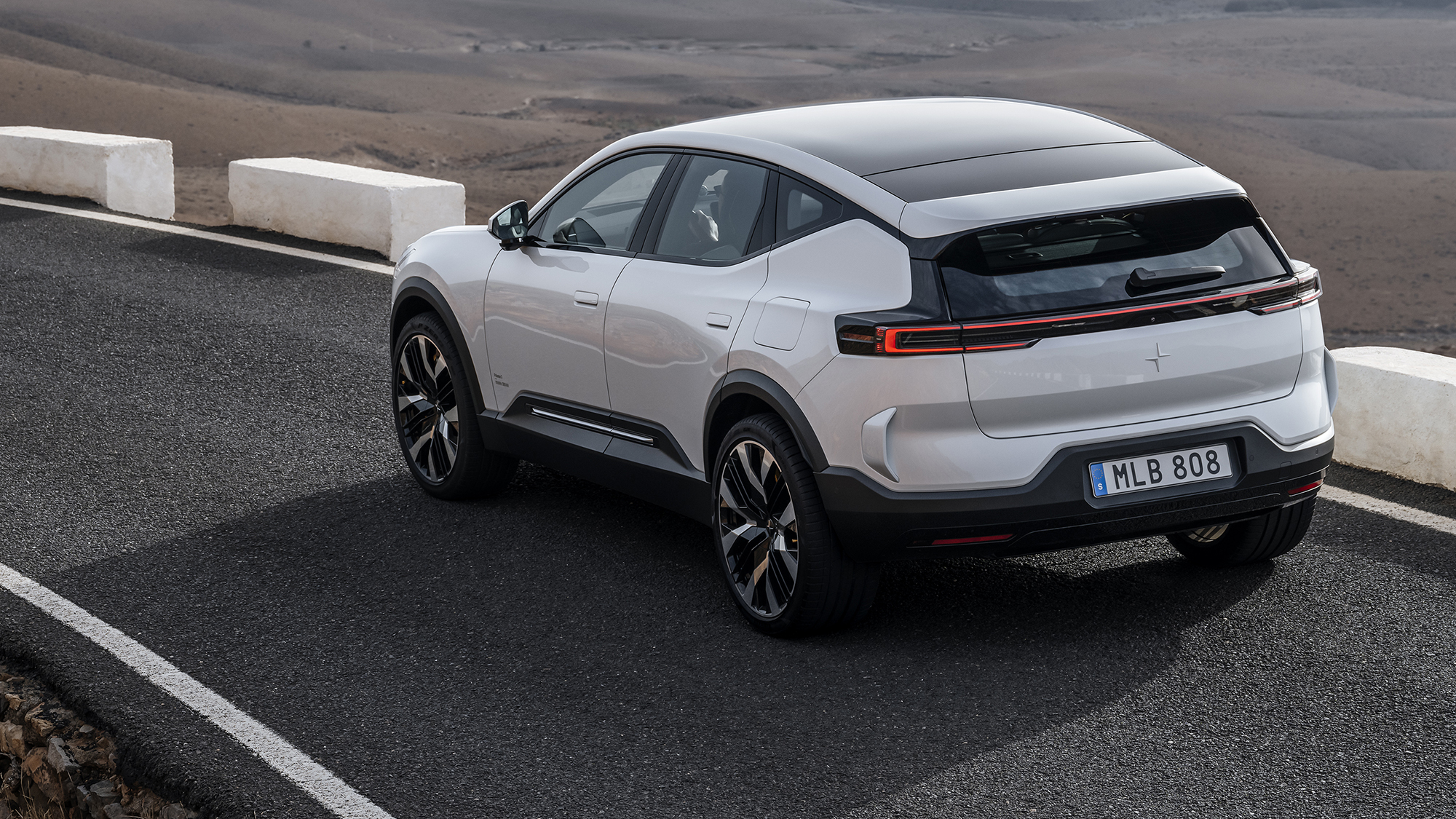
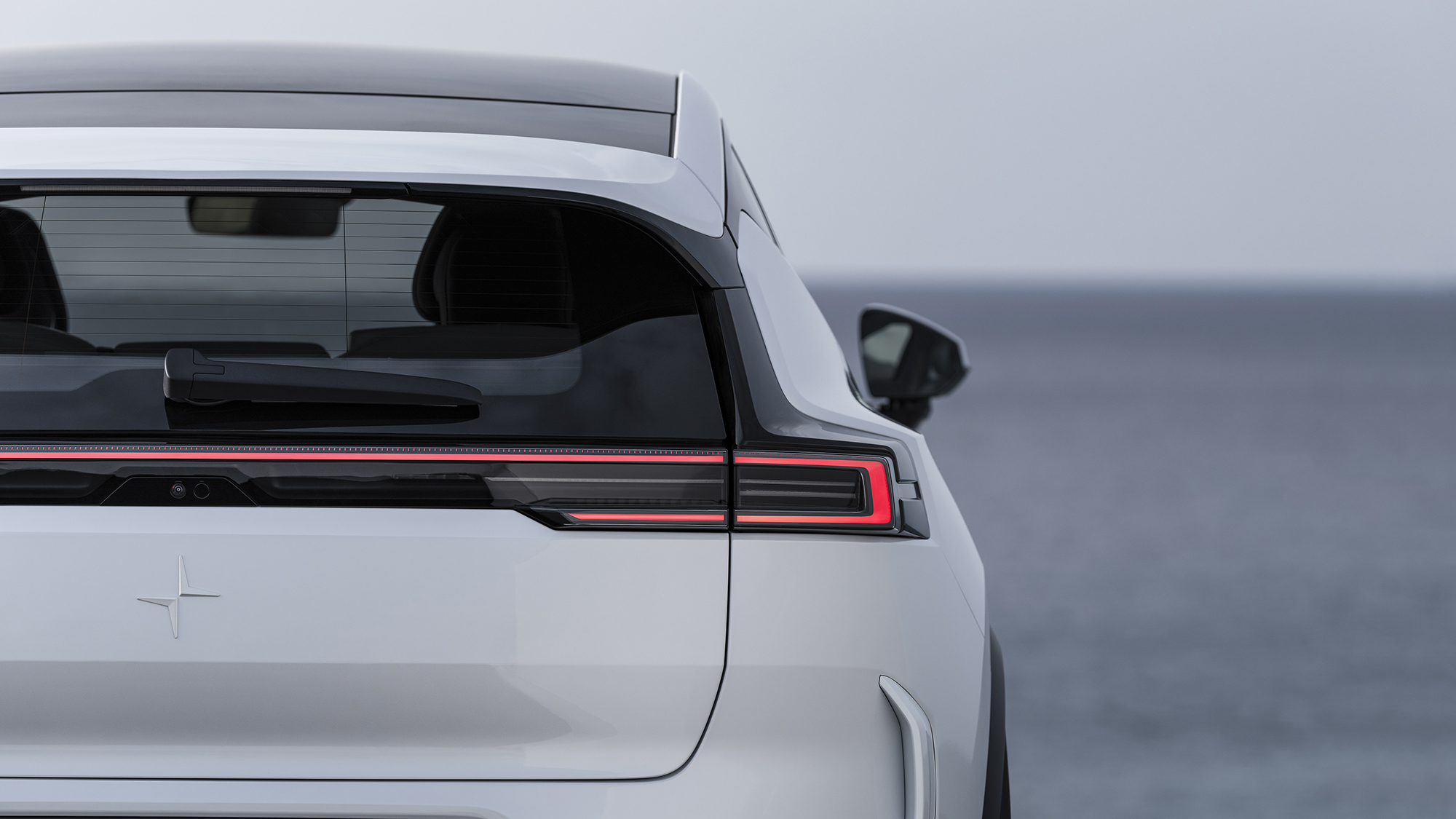
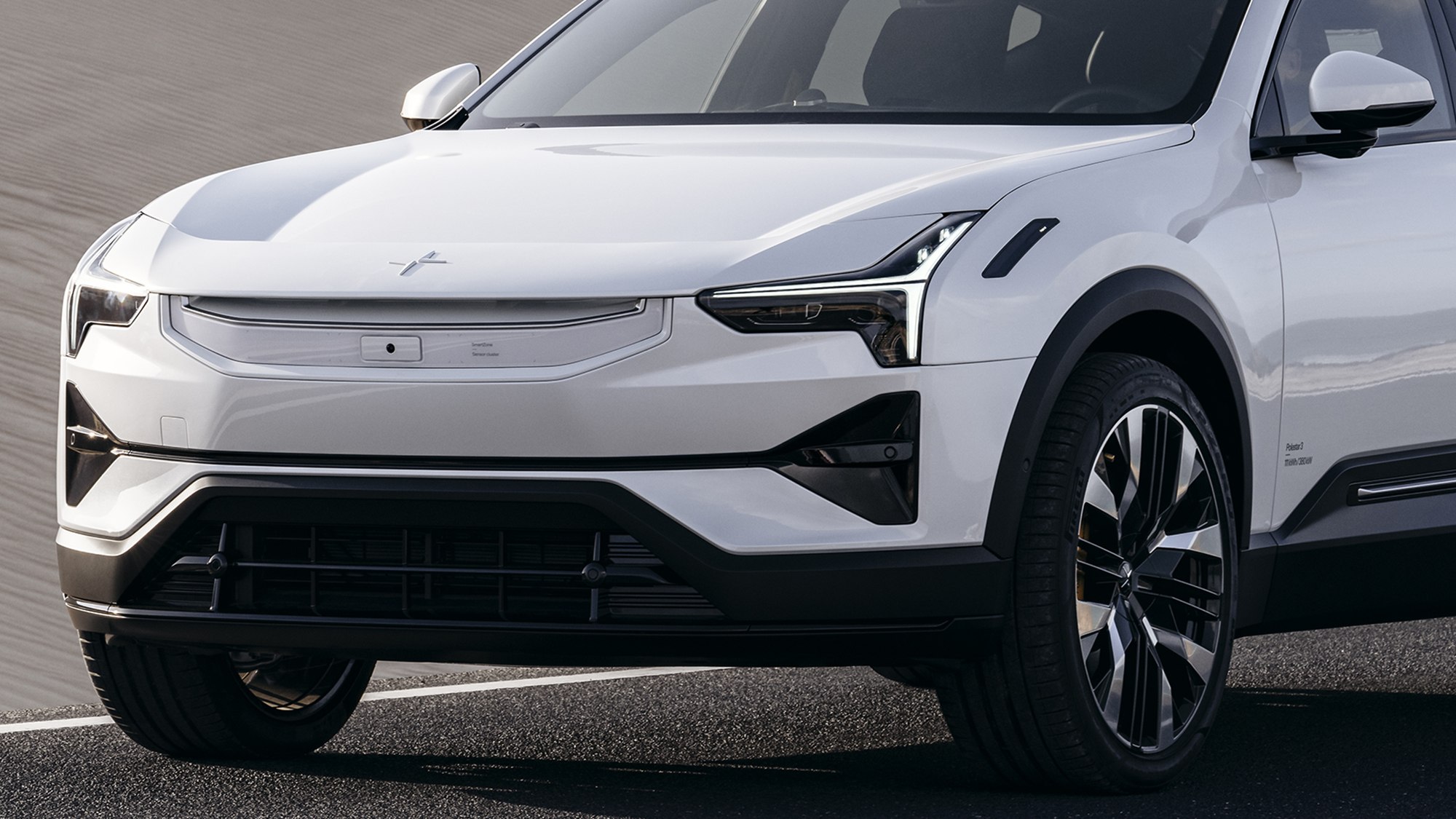
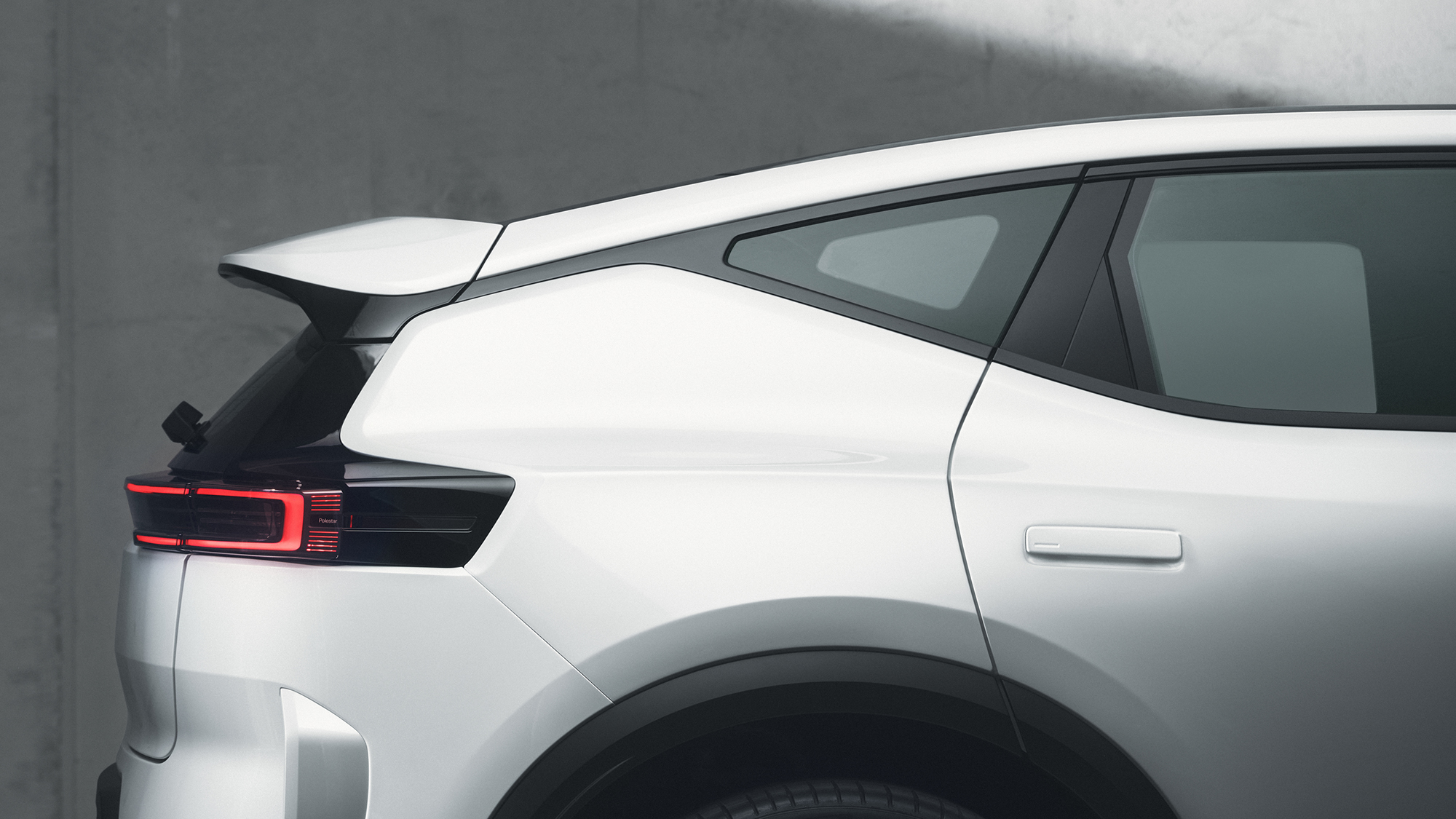
The wraps have come off the world’s latest new electric vehicle, with the 2024 Polestar 3 large electric SUV unveiled in Copenhagen this week.
The large five-seat Polestar 3 will go on sale in Australia in the first quarter of 2024, the company has confirmed – leaving the brand to soldier on in the meantime with its solitary but popular launch model, the compact and high-riding Polestar 2 sedan.
Snapshot
- $135,000 price range for Australia
- 111kWh battery, 610km driving range
- Australian launch in Q1, 2024
JUMP AHEAD
- Battery and motors
- Charging time
- Driving range
- Rivals
- Performance
- Dimensions and storage
- Interior features and materials
- Infotainment
- Safety features
- Warranties and roadside assist
- Equipment packs
- Australian price and availability
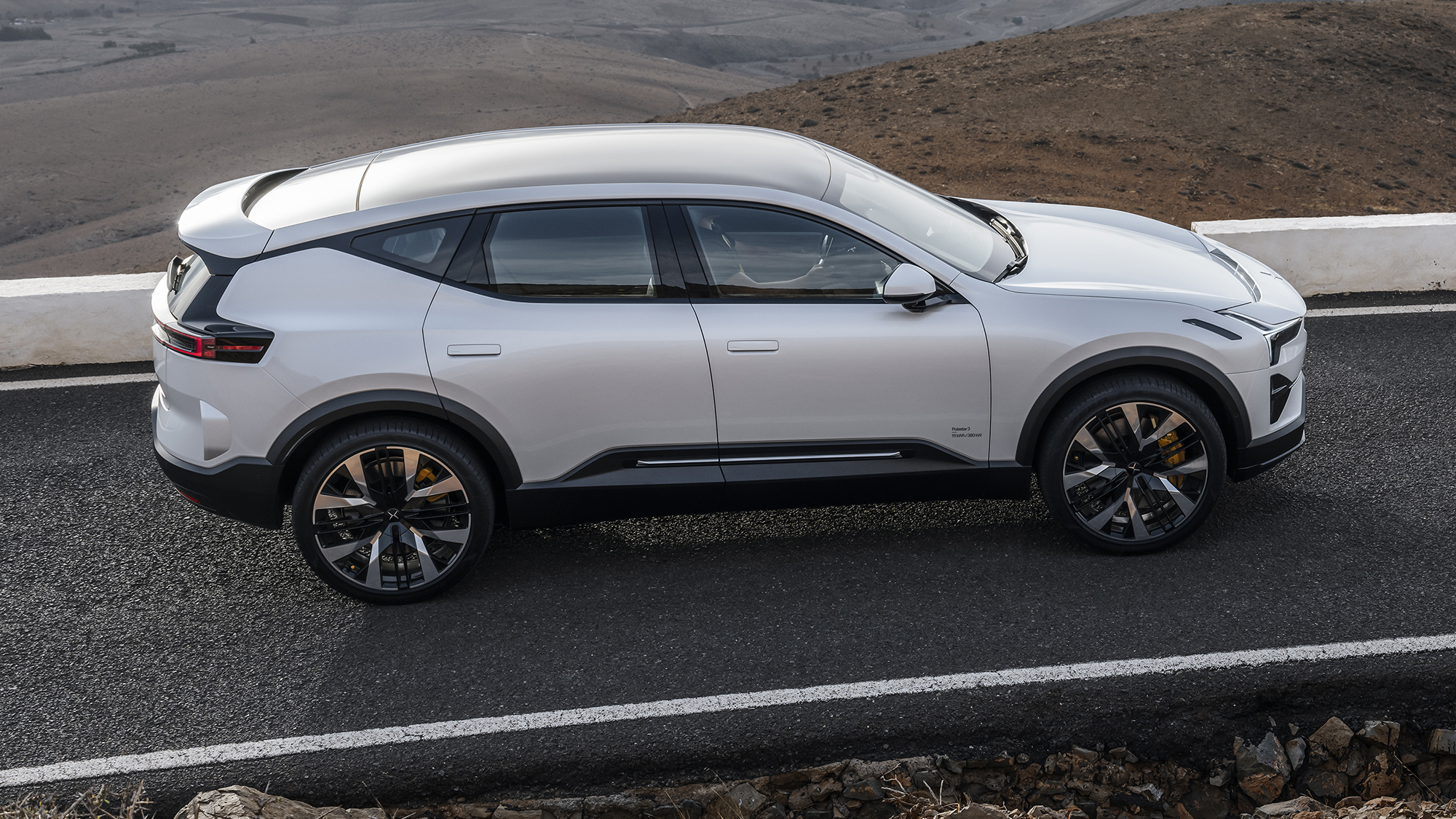
Australian pricing and features are still to be confirmed, but today’s debut at least gives buyers a clear indication of the design, technology, comfort, driving range and performance that will be on offer when the Polestar 3 reaches our market.
The Polestar 3 will launch in Europe from 89,000 euros, which converts to around $140,000 in Australian dollars. For now, Polestar’s local arm has confirmed an estimated price range of around $135,000, making for a fairly direct price conversion – although it remains to be seen if our models will be specified with the same standard equipment levels.
At around that price, and with similar dimensions, it is clear the Polestar 3 will enter as a rival to models like the Audi E-Tron and BMW iX. When it launches, the Mercedes-Benz EQE SUV will also stand among these models.
The E-Tron and iX are available in multiple variants, whereas the Polestar 3 has been revealed in just one grade, with an optional 6600-euro (AU$10,000) Performance Pack – arguably a variant in its own right.
Importantly, the Polestar 3 will comfortably outdo all E-Tron variants for price and driving range, match the iX xDrive40 on price and better its driving range, and match the iX xDrive50 on driving range while bettering its $169,900 price. (See our full breakdown table below.)
The Polestar 3 has been revealed with just one dual-motor long-range drive and 111kWh battery specification, but it’s likely we’ll see more affordable options debut at some point – likely in the form of single-motor standard and single-motor long-range variants. Whether either of those will come under $100,000, however, remains to be seen.
Battery, motors, charging and driving range
Battery and motors
Power in the Polestar 3 is provided by a large CATL-supplied 111kWh 400V lithium-ion battery pack, providing energy to a dual-motor system – one motor at each axle for an all-wheel drive arrangement.
Polestar has confirmed it is developing an 800V battery architecture for its upcoming Polestar 5 performance flagship, making it a rival – at least in electrical tech – to the Porsche Taycan and Audi E-Tron GT twins, and the Hyundai Ioniq 5 and Kia EV6 twins.
For now, the Polestar 3 will keep company with most other premium EVs that rely on a 400V design.
Across the industry, American startup Lucid appears to hold the record for longest driving range off a similar 113kWh battery size, claiming a 520-mile (840km) range off its 924V system, developed in-house (rather than going to a supplier like Bosch, as most legacy brands do).
Charging time
Running at its fastest on a DC ‘ultra rapid’ charger, 250kW (which ramps up and down as needed to preserve the battery cells), the Polestar 3 will take its battery from 10 to 80 per cent capacity in 30 minutes.
Connected to an AC charger, the Polestar 3 can take up to 11kW, giving it a 0-100 per cent charge time of 11 hours.
Like its upcoming platform sibling the Volvo EX90, the Polestar 3 will also be capable of bi-directional charging, allowing it to offer V2L (vehicle to load; powering homes and devices or appliances) and V2G (vehicle to grid, feeding any additional solar energy into a city’s power grid to benefit from feed-in tariff programs).
Driving range
Polestar says the 3 has achieved a preliminary WLTP driving range of up to 610km – matching Hyundai’s smaller new Ioniq 6 sedan (77.4kWh battery) – with an efficiency of around 20 to 21kWh/100km.
KEEPING SCOREThe $135,900 entry-level BMW iX xDrive40 is equipped with a 77kWh battery pack, claiming a WLTP driving range of 425km. The more directly comparable xDrive50 u2013 available only in $169,900 xDrive50 Sport form u2013 packs a 112kWh battery with a claimed 630km range. . Less impressive are the E-Tronu2019s figures. The $139,900 E-Tron 50 boasts a 71kWh battery pack with a claimed driving range of around 330km, while the $148,900 E-Tron 55 has a 95kWh battery with a driving range of around 420km. . Both lines offer flagship performance models in the form of the iX M60 and the E-Tron S. The M60 sits above all in price and performance (details here), but the E-Tron S, and the iX xDrive 50, are comparable to the Polestar 3 with its optional Performance Pack installed. . |
MINI MATCH-UP
| MODEL | PRICE | POWER | BATTERY | RANGE | 0-100KM/H | CHARGING (10-80%) |
|---|---|---|---|---|---|---|
| Polestar 3 | ~$135,000 | 360kW/840Nm (380kW/910Nm w/ PP*) | 111kWh | 610km | 5.0 seconds (4.7sec PP) | 250kW, 30 minutes |
| BMW iX 40 | $135,900 | 240kW/630Nm | 77kWh | 425km | 6.1 seconds | 150kW, 31 minutes |
| BMW iX 50 | $169,900 | 385kW/765Nm | 112kWh | 630km | 4.6 seconds | 200kW, 35 minutes |
| Audi E-Tron 50 | $139,900 | 230kW/540Nm | 71kWh | 334km | 6.8 seconds | 120kW, 30 minutes |
| Audi E-Tron 55 | $148,900 | 300kW/664Nm | 95kWh | 446km | 5.7 seconds | 150kW, 30 minutes |
| Audi E-Tron S | $168,400 | 370kW/973Nm | 86kWh | 413km | 4.5 seconds |
*PP – Performance Pack
Performance
Outputs and acceleration
In its standard form, the Polestar 3 produces 360kW and 840Nm through its front- and rear-mounted all-wheel-drive dual-motor system. The 6600-euro Performance Package boosts these outputs to 380kW and 910Nm.
Polestar says the 3 will hit 100km/h from a standing start in 5.0 seconds, dropping to 4.7 seconds with that Performance Pack in play.
The axle-mounted motors are set up for a rear bias, although no specific numbers have been offered. There’s also a torque-vectoring dual-clutch function at the rear, developed off the Polestar 1 plug-in hybrid coupe, and a decoupling function will also allow the car to run in an energy-saving rear-wheel drive arrangement until the front motor is needed or called on.
Lastly, active one-pedal braking is also included as part of the brake energy recuperation system, with adjustable settings to suit comfort and needs.
Tyres
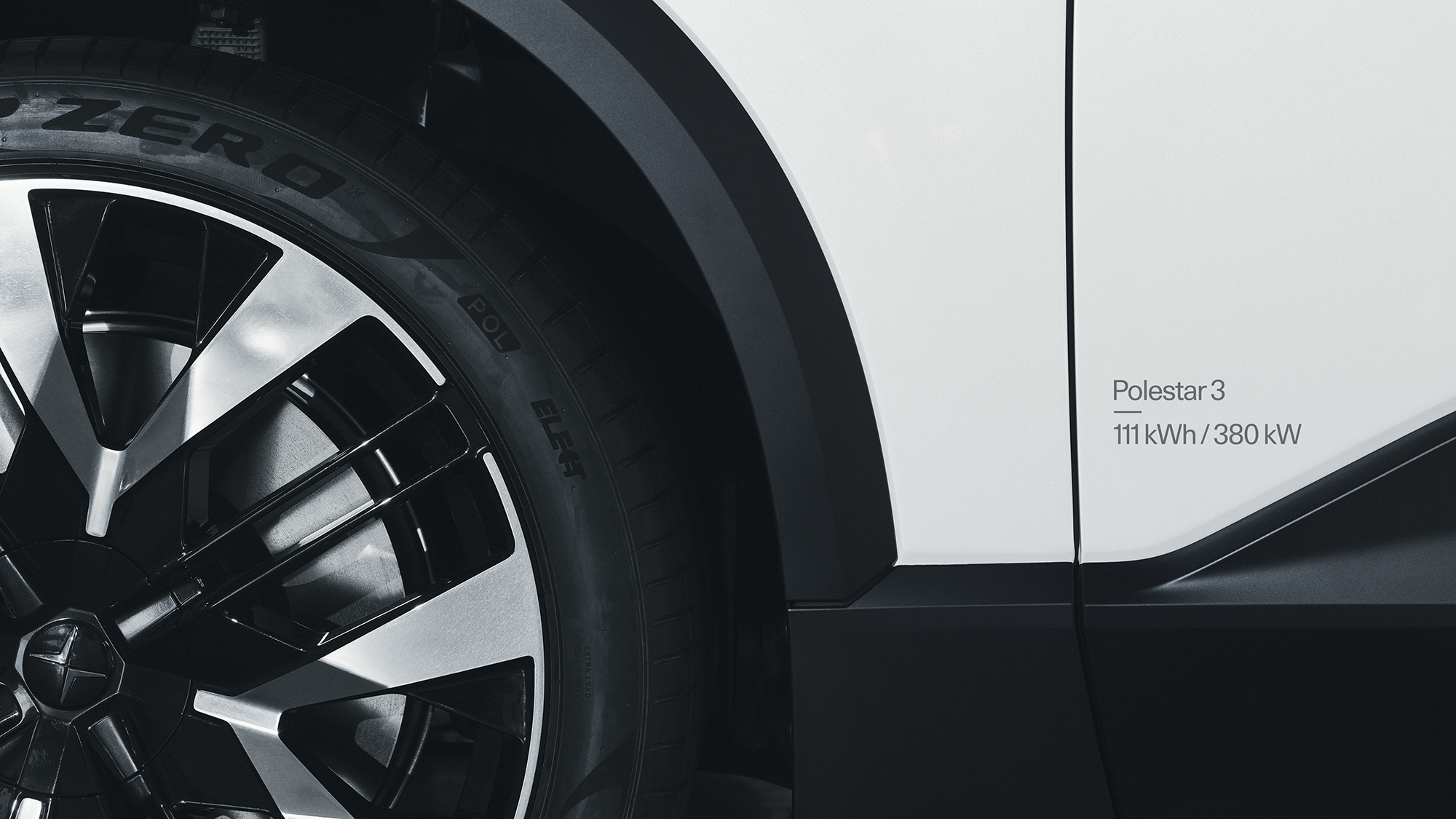
As standard, the Polestar 3 rolls on 21-inch alloy wheels, wrapped in either Michelin Pilot Sport 4 EV or Continental SportContact 7 tyres (265/45R21 front and 295/40R21 rear in both cases).
Braking
Brakes are a Brembo package at the front with four-piston calipers on 400mm drilled and ventilated discs, while the rear gets a standard single-piston caliper on 390mm ventilated discs.
Suspension
Suspension is by a double wishbone design at the front, with an integral link setup at the rear.
Perhaps surprisingly, but clearly highlighting Polestar’s focus on a sporting drive with this new model, the 3 is equipped with adaptive, self-levelling dual-chamber air suspension and ZF active dampers. Polestar says the 3 can adjust its active damper velocity once every two milliseconds.
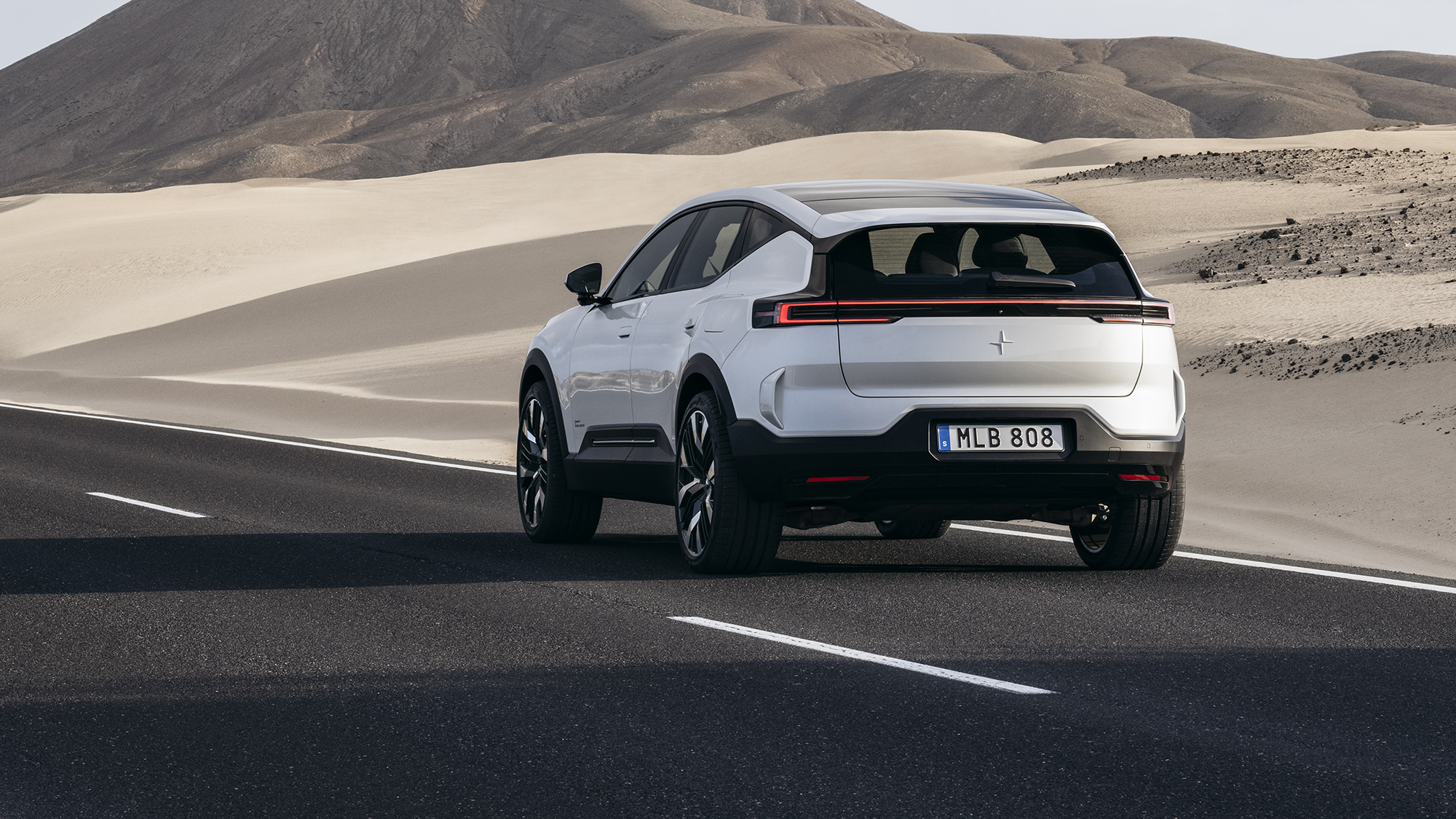
? Performance Pack
Adding the Performance Pack to the Polestar 3 unlocks a software upgrade to 380kW and 910Nm. (How much more could be unlocked, we wonder…)
The 6600-euro upgrade also adds Polestar Engineered chassis tuning, 22-inch forged alloy wheels wrapped in Pirelli P-Zero tyres (265/40R22 front, 295/35R22 rear), ‘Swedish gold’ valve caps and seat belts (as with the Polestar 2), a laser-etched gold interior ‘light line’, and a range-optimisation drive mode.
Interior space, comfort and technology
As a proper large SUV, the Polestar 3 rides on a 2985mm wheelbase and measures 4900mm long overall. Its height is 1627mm, and total width including mirrors is 2120mm. Ground clearance is 211mm.
Thanks in large part to its big 111kWh battery pack, the Polestar 3 is a heavy unit, weighing in at between 2585 to 2670kg, depending on spec – a range fairly common to electric vehicles.
By comparison, the Audi E-Tron sits on a 2928mm wheelbase and measures 4901mm long overall, while the BMW iX boasts similar figures at 2997mm and 4953mm respectively. Weight varies depending on battery and spec, but both are around 2450kg to 2650kg.
Dimensions and storage
| MODEL | WHEELBASE | LENGTH | BOOT | FRONT STORAGE | WEIGHT |
|---|---|---|---|---|---|
| Polestar 3 | 2985mm | 4900mm | 484-1411L | 32L | 2200kg |
| Audi E-Tron | 2928mm | 4901mm | 660-1725L | 60L | ~2500kg |
| BMW iX | 2997mm | 4953mm | 500-1750L | none | ~2500kg |
Interior features and materials
Standard features in the cabin include a panoramic glass roof, powered electric tailgate with hands-free opening and soft closing, powered front seats, four cup holders (two front and two rear), and a 12V power outlet in the boot.
| Climate |
|---|
| u2022 Electronic climate control, 3-zone |
| u2022 CleanZone with pre-ventilation, multifilter |
| u2022 Parking climate including scheduled preconditioning via centre screen and Polestar app |
| u2022 Heat pump |
| u2022 Climate timers |
| u2022 Heated front seats |
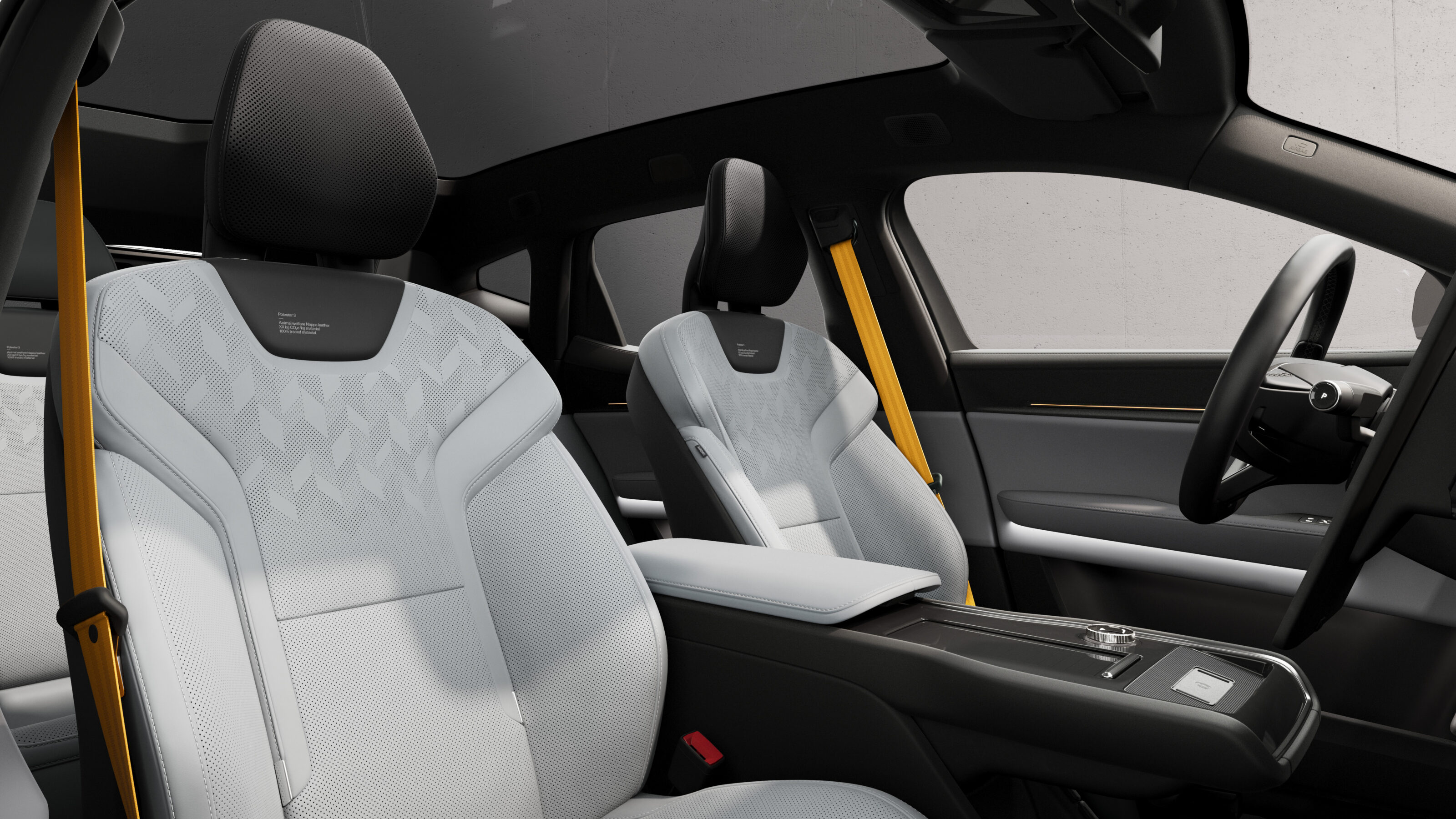
Polestar is also making a big point of its “Animal welfare leather”, using leather sourced from Bridge of Weir in Scotland, which complies with strict requirements for the care of the animals used – including 100 per cent traceability from farm to slaughterhouse.
Likewise, no leather is to be sourced from areas with deforestation risk, such as the Amazon.
Depending on the trim material chosen, the Polestar 3’s seats will also show a marking that announces the sustainability declaration and carbon footprint of the materials used – giving the buyer a choice in which they will specify.
Infotainment
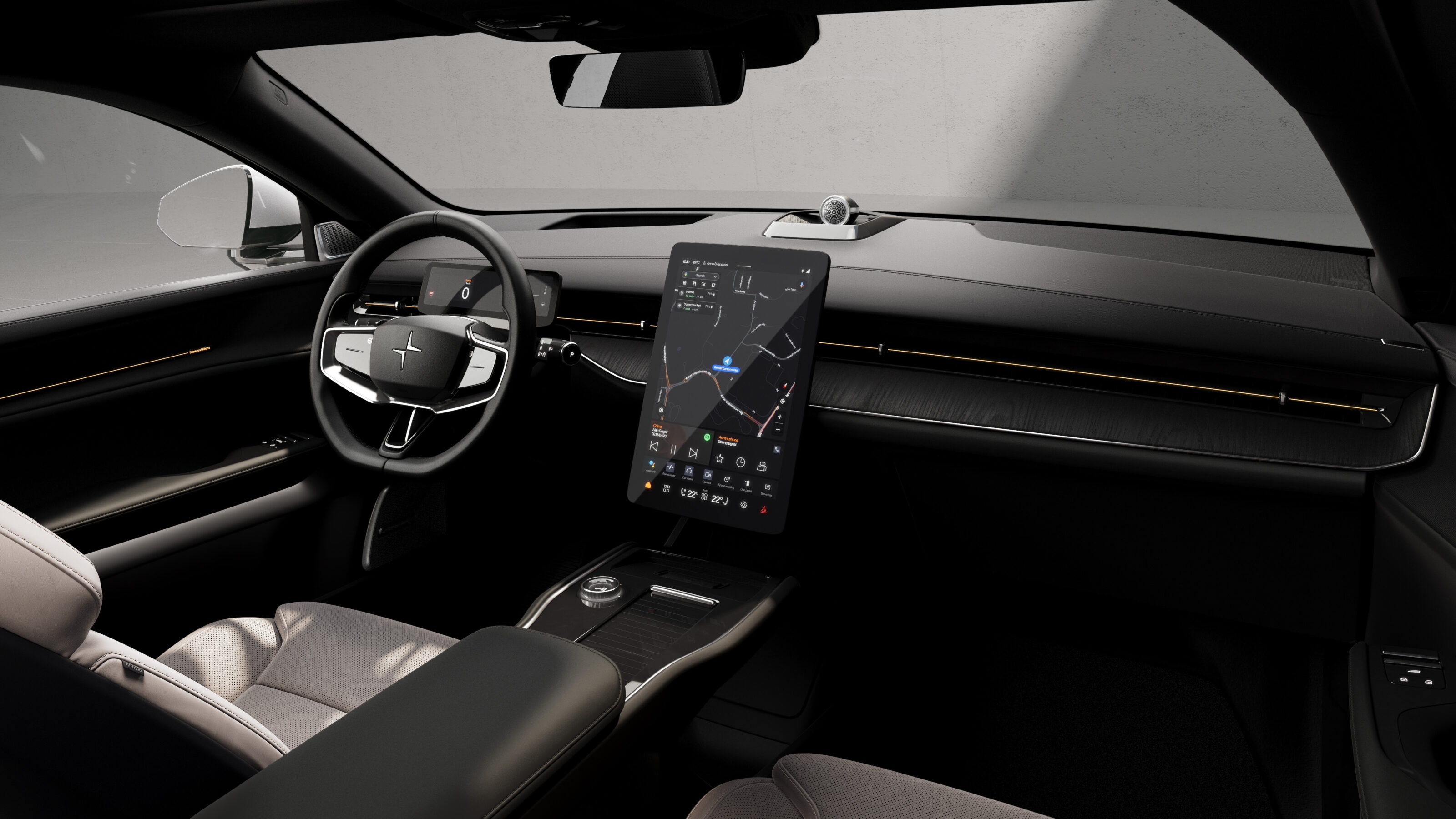
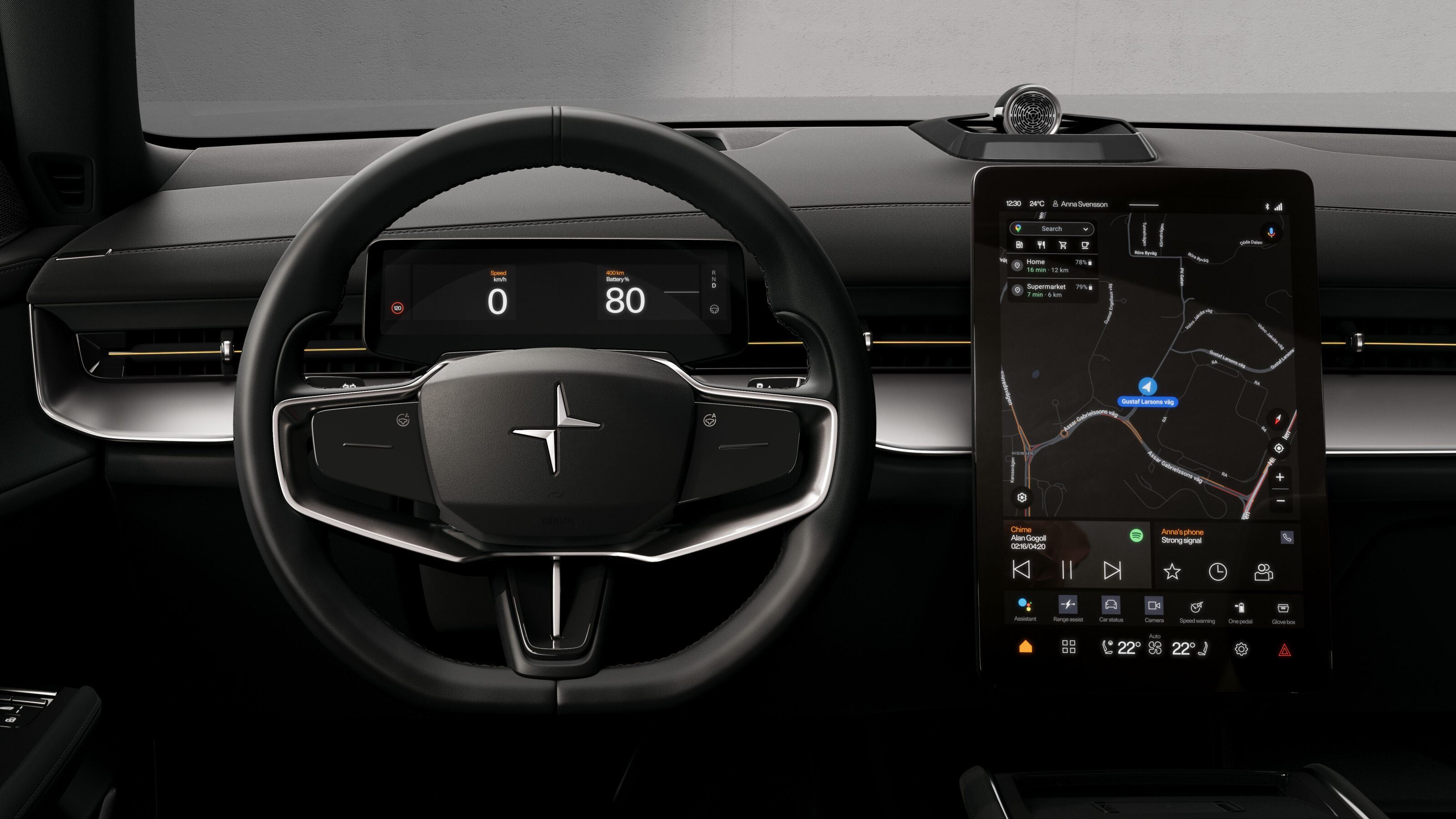
Infotainment is again delivered by Android Automotive OS, as with the Polestar 2.
This means the entire 14.5-inch main display and 9.0-inch driver display interfaces are built on top of Google’s integrated technologies, requiring a Google account (such as a gmail address) to make the most of the features.
Built-in Google features include Google Assistant, Google Maps and the Google Play Store (Google’s equivalent of Apple’s App Store).
There are four USB-C ports, two in the front and two in the rear. Inductive wireless phone charging is through a 15W charging pad.
Driver monitoring is standard, with two dash-mounted cameras monitoring the driver’s eyes to look for signs of distraction, drowsiness or distress.
The Polestar 3 also benefits from an interior radar system, designed to ensure no children or animals are accidentally left in the vehicle. If it does detect a moving or breathing body in the vehicle, it will sound an alert, keep climate control active and block the owner from locking the vehicle. The owner can deactivate this feature, however, as necessary.
Safety features
| Safety and security |
|---|
| u2022 ADAS: Safety assistance |
| o Map-adapted ACC (Adaptive Cruise Control) |
| o Collision Avoidance and Mitigation with braking and steering support; vehicle, cyclist and pedestrian detection |
| o Run-off Road Mitigation |
| o Forward Collision Warning |
| o Oncoming Lane Mitigation |
| o Lane Keeping Aid with steering support |
| o Post-Impact Braking |
| o Road Sign Information |
| o Driver Alert |
| o Speed limiter |
| u2022 ADAS: Driver awareness |
| o Blind Spot Information System (BLIS) |
| o Cross Traffic Alert (CTA) with brake support |
| o Rear Collision Warning & Mitigation |
| o Rear view camera |
| u2022 Hill Start Assist |
| u2022 Electronic Stability Control (ESC) |
| u2022 Direct Tyre Pressure Monitoring System |
| u2022 AVAS (Acoustic Vehicle Alert System) |
| u2022 Up to 10 airbags o Driver and front passenger |
| o Dual side |
| o Dual inner-side |
| o Dual curtain |
| o Driveru2019s knee |
| o Passenger knee (North America only) |
| u2022 Whiplash protection, front seats |
| u2022 Cut-off switch, passenger airbag |
| u2022 Driver Monitoring System with two interior cameras |
| u2022 Interior radar to help protect against accidentally leaving children or pets inside, including u2018keep climateu2019 function |
| u2022 Alcolock preparation |
| u2022 ISOFIX for rear seats |
| u2022 Alarm with interior alarm motion sensor |
| u2022 Double-locking door locks |
| u2022 Alarm inclination sensor |
| u2022 Tyre repair kit |
| u2022 First aid kit |
| u2022 Warning triangle |
Warranties and roadside assistances
As with the Polestar 2, the Polestar 3 will be sold in Australia with a five-year vehicle warranty, along with a battery warranty of eight years / 160,000km (or if its charge capacity drops below 70% in the first eight years), and a 12-year corrosion warranty. Polestar Connect is free, and roadside assistance is free for five years.
Equipment packs
The below equipment lists are specific to Europe, with Australian details still to be confirmed.
| Plus Pack (standard at launch) |
|---|
| u2022 25-speaker Bowers & Wilkins audio system with Dolby Atmos, 1,610W |
| u2022 Soft-closing doors |
| u2022 Powered steering column with profile memory |
| u2022 Air quality u2013 advanced cabin sensor and filtration |
| u2022 Bio-attributed MicroTech or 100% traced wool upholstery |
| u2022 Repurposed Aluminium deco |
| u2022 Heated windscreen wiper blades |
| u2022 Heated rear seats |
| u2022 Heated steering wheel |
| u2022 Infra-red windscreen |
| u2022 Rear cargo floor u201clid in lidu201d with bag holder |
| u2022 21-inch 5-V spoke black diamond cut wheels with 265/45 front and 295/40 rear tyres |
| Pilot Pack (standard at launch) |
|---|
| u2022 ADAS: Driver assistance |
| o Pilot Assist with acceleration, braking and steering support up to 130 km/h |
| o Park Assist Pilot |
| u2022 Head-up display |
2024 Polestar 3 Australian price and availability
The Polestar 3 will go on sale in Australia in the first quarter of 2024, with pricing currently estimated by the local division to come in at around $135,000 before on-road costs.
Watch for more on the Polestar 3, including our first-drive review, to come in the year ahead.
How data sharing between autonomous cars and authorities will affect us in future has ignited fresh debate, with concerns raised about the implications if it isn’t handled right.
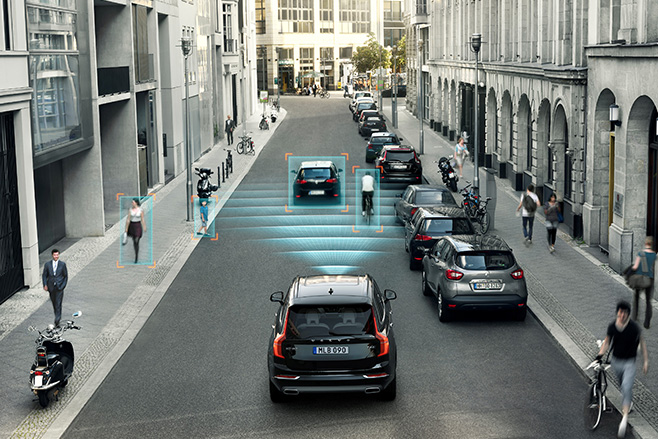
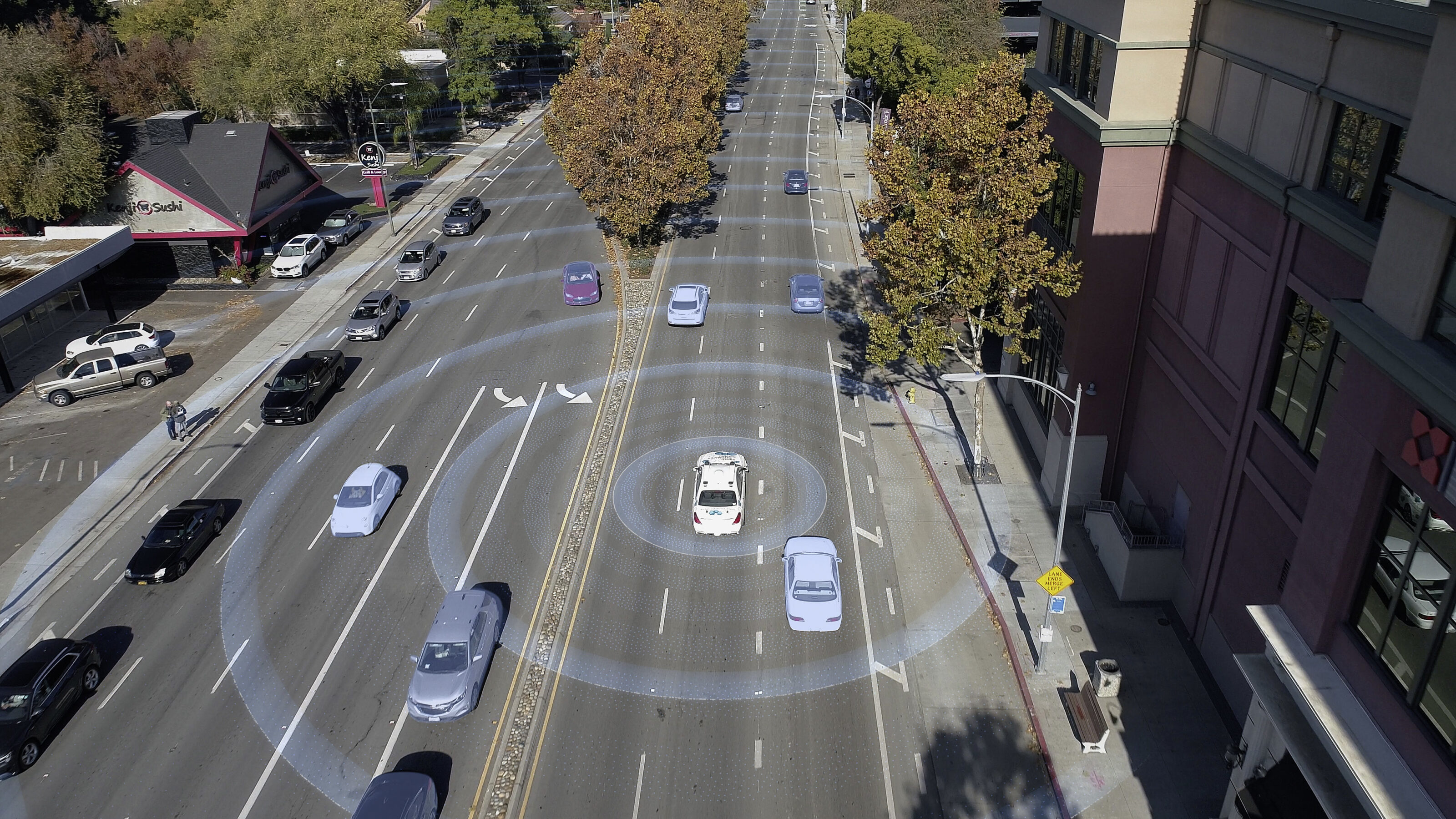
A wide range and complex set of issues – such as, privacy, safety, the practicality of driving on roads and keeping our network moving as well as cybersecurity – need to be ironed out before autonomous vehicles (AVs) become commonplace, with some concerned that current discussions are “trying to run before we can walk”.
Panellists at the recent Autonomous Vehicle Technology Conference (APAC21) in Melbourne talked about the idea that an agreement on manufacturers sharing vehicle-generated data from AVs in future with both federal and state governments was a key factor in transport reform going forward.
But Dr Shane Richardson, a forensic engineer at private crash investigation firm Delta-V Experts based in Melbourne’s west, asked why companies like his currently do not routinely get access to airbag control module data from existing non-autonomous cars in Australia.
Praising the likes of Kia, Hyundai and Toyota, which do share data, he slammed the authorities for failing to make it a legal requirement (as it in the US and is about to be in Europe) – and raised concerns about similar blockages occurring involving emerging technologies in autonomous vehicles further down the track.
“If they won’t start doing it for non-AVs then they’re not going to be doing it for AVs, and if they do start with AVs then that’s like learning to run before you can walk or jog. It’s a legal requirement in the US and is about to be in Europe,” he said, speaking to Wheels.
“This is not about the benefit of my business, it’s about data being used to make safety information more accessible, it could be being used to understand how crashes happen. Sure it makes my job a little bit easier if it is more readily provided, but I can get hold of it in other ways. We are choosing to be arrogant and the reality is we crash more regular cars than AVs.”
Speaking at last week’s event, James Hurnall, Director of Policy at crash test authority ANCAP, said it’s really a question that should be addressed by the vehicle industry.
“It’s one of the issues we are looking at with the work the National Transport Commission (NTC) has been doing regarding the sort of information requirements that we would need from highly automated vehicles,” he said. “If you have a look at the work that it has done, what it has identified is a range of requirements that would be imposed upon increasingly automated vehicles.
“Now I understand your point, which is that it is not currently being required – which is not an issue that I’ve looked at personally, but when we look forward to automated vehicles there absolutely is an issue that we need to have a consistent agreement about the sort of information that we need from vehicles so that we are monitoring their performance and safety over time because the way in which they will operate over time will change because they’re operating software.”
“The NTC has taken the lead as directed by the transport ministers and is trying to work through some of the nuts and bolts of the regular proceedings – which relate to some of the questions we’ve been asked around responsibility, insurance, about access to data, about standards when they enter the market,” added Jonathan Spear, Chief Executive Officer at Infrastructure Victoria.

“And those are then being considered for adoption in future years. And of course part of it is at a federal level where there’s the standards around acceptance of vehicles into the country and part of it will then need to be adopted at state level to everyone’s safety regulations and so forth.”
Over the last few years, the National Transport Commission (NTC) – which is tasked with leading a range of transport reforms on behalf of jurisdictions across Australia – has been working on a complete end-to-end overhaul of regulation on this topic, which involves untangling more than 700 existing laws.
Earlier this year, transport ministers across the country made an agreement to start drafting new legislation by the end of this year, with a view of a national law being put into effect by 2026.
As part of this, a report published by the NTC on autonomous vehicle reform in 2020 noted that: ‘The vehicle industry has expressed its willingness to exchange data for road safety–related (and other) purposes.

‘However, industry has raised concerns over the breadth of purposes vehicle data could be used for because transport and road agencies are both regulators and transport system operators. Industry reluctance is founded on concerns of government use impacting on them or their customers through enforcement or compliance action, inadvertent release of commercial intellectual property and impinging on customer privacy.’
As a result, a National Vehicle Data Working Group was proposed to develop a system of data sharing all parties could agree on for the purposes of network operations, investment, maintenance, planning and road safety – which could include a roadmap, as well as how it would be governed and funded.
The Federal Chamber of Automotive Industries (FCAI), as well as four manufacturers (representing the wider group of all of those who sell cars here) are members of said group, and are understood to broadly be showing a willingness to engage – but the “devil is in the detail” and future discussions will focus on what is possible (both technically and financially from a cost versus benefit perspective) and what the challenges might be.
Some of that is also sure to look at what manufacturers are happy to provide on an ‘in kind basis’ – as in for the wider public benefit – compared to what might be used by third parties commercially to make a quick buck.
“The FCAI wants international alignment, where appropriate, and national consistency with the industry playing a part. We’d like Government engagement with industry around the future possibilities and challenges in this space – that are of course in line with the Australian Privacy Principles to protect consumer rights,” said FCAI CEO Tony Weber.
If we don’t align ourselves with what’s happening around the world, and instead choose to make our own way, we run the risk of delaying AVs coming to Australia or even manufacturers choosing not to send them here at all as our legislation doesn’t match what is needed in other markets.
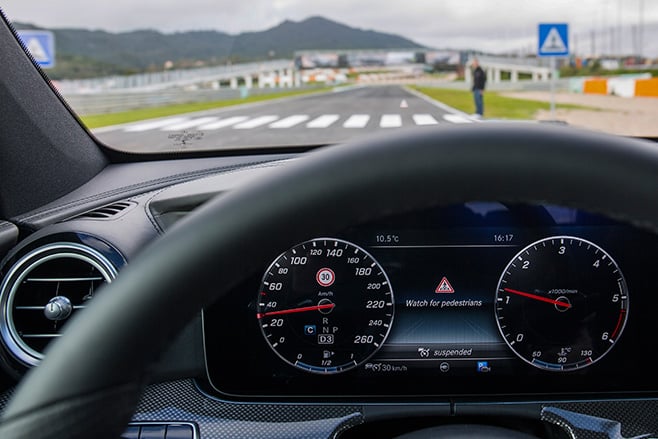
At present, vehicles have what are called Event Data Recorders, which are running on a constant loop but don’t have a lot of storage and when there is a crash they only record for a short period of time. A carmaker can provide that information for crash investigation purposes, but there is no legal requirement to – though it is common for regulators and police forces to be given that information when needed or, at the most severe, to subpoena it however there are privacy implications in doing so.

The next step beyond an EDR is what is referred to as a Data Storage System for Automated Driving (DSSAD). The United Nations legally requires any cars to have this if they are operating tech at Level 3 or above as it is needed to determine who/what was responsible in the event of an accident – the car or the human driver.
However, at the moment, DSSADs have only been developed for lane keeping systems by the UN Working Party 29 and more capabilities will be added and upgraded over time – though after Australia’s AV law comes into effect in 2026 so discussions around data sharing and what needs to be shared particularly in terms of safety, both internationally and locally, will continue to progress beyond that date, with mandated requirements for Australia expected to come via Australian Design Regulations (ADR).
For the FCAI it is it crucial, it says, that the very concept of what ‘road safety’ is gets defined appropriately so data is not shared unnecessarily. For instance, an uneven/potholed road may not constitute critical information in the same way that a warning about a pedestrian about to cross in front of a vehicle might be.
Snapshot
- Hyundai, Kia and Genesis vehicles to receive OTA updates by 2025
- New, centralised Connected Car Operating System (ccOS) allows for greater changes
- Feature-on-demand subscriptions set for 2023 launch
The parent company for Hyundai, Kia and Genesis has announced its vehicle line-up will feature a new connected infotainment system by 2025 – even those as affordable as Kia’s tiny Picanto.
In a global software event this week, the Hyundai Motor Group unveiled the upcoming system, known as the Connected Car Operating System – or ccOS for short.
It will be capable of receiving over-the-air software updates, with improvements to vehicle performance and functionality – particularly for electric cars.
The first models running the new infotainment suite will launch next year, with “all of the Group’s vehicle segments sold worldwide” to support over-the-air updates by 2025.
This includes internal-combustion vehicles; however, electric cars will benefit from enhanced support, including performance upgrades, with a modular electrical architecture.
Much like upcoming operating systems from Toyota, Volkswagen and Mercedes-Benz – known as Arene, VW.OS and MB.OS, respectively – the Hyundai Motor Group has developed ccOS in-house, with assistance from technology company Nvidia.
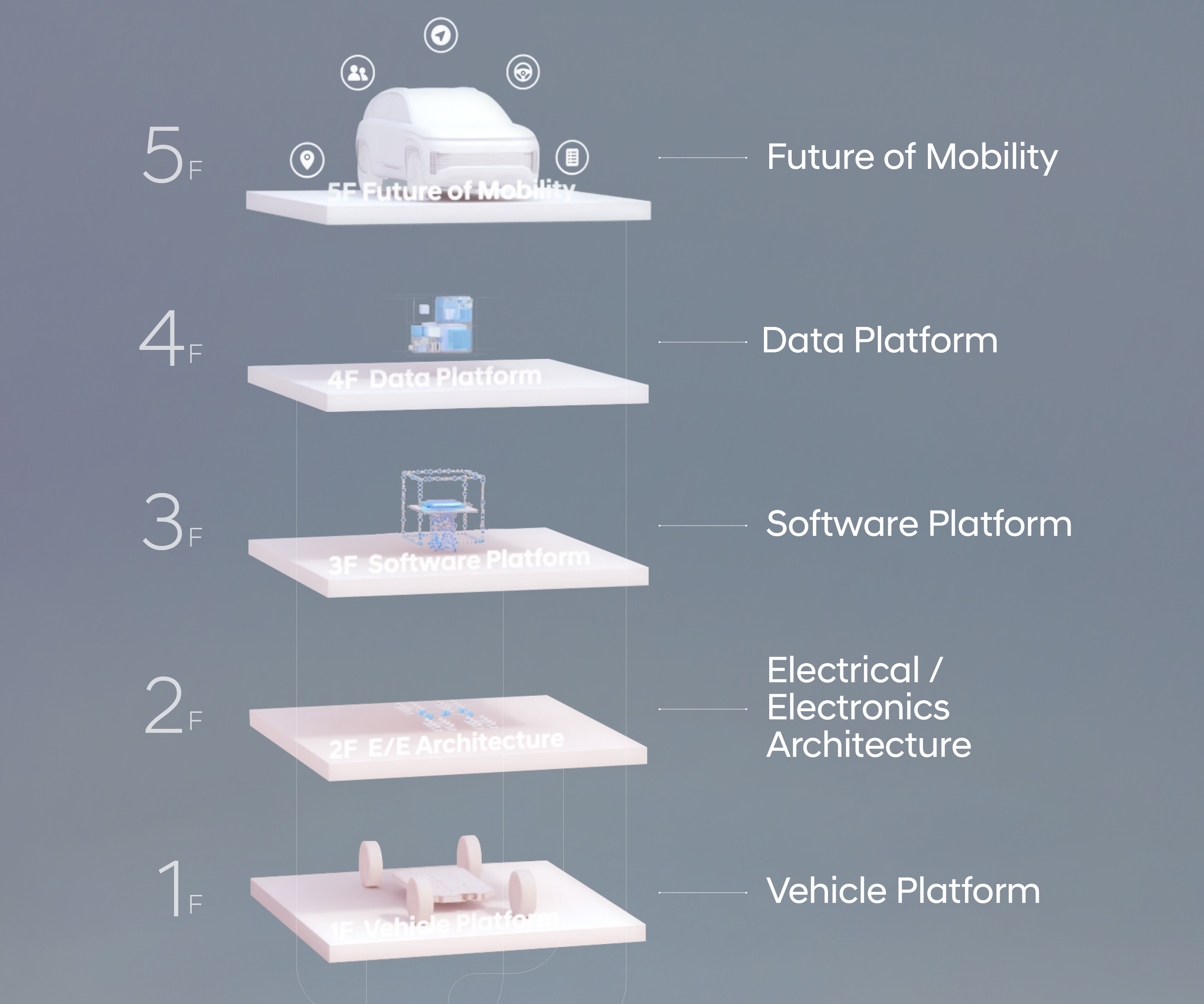
Nvidia will design and manufacture the graphic processing units (GPUs), branded as Nvidia Drive, for ccOS.
The high-performance semiconductor chip – said to allow for “computations at blazing speeds” – will control various aspects of the vehicle, including the infotainment, driver assistance systems, electrical architecture, and integrated cockpit.
“From entry-level to premium vehicles, these fleets will feature a rich, software-defined AI user experience that is continuously updatable through the life of the car,” said Ali Kani, vice president of Nvidia’s automotive division.
Similarly to Tesla and BMW, the Hyundai Motor Group will launch feature-on-demand services in 2023.
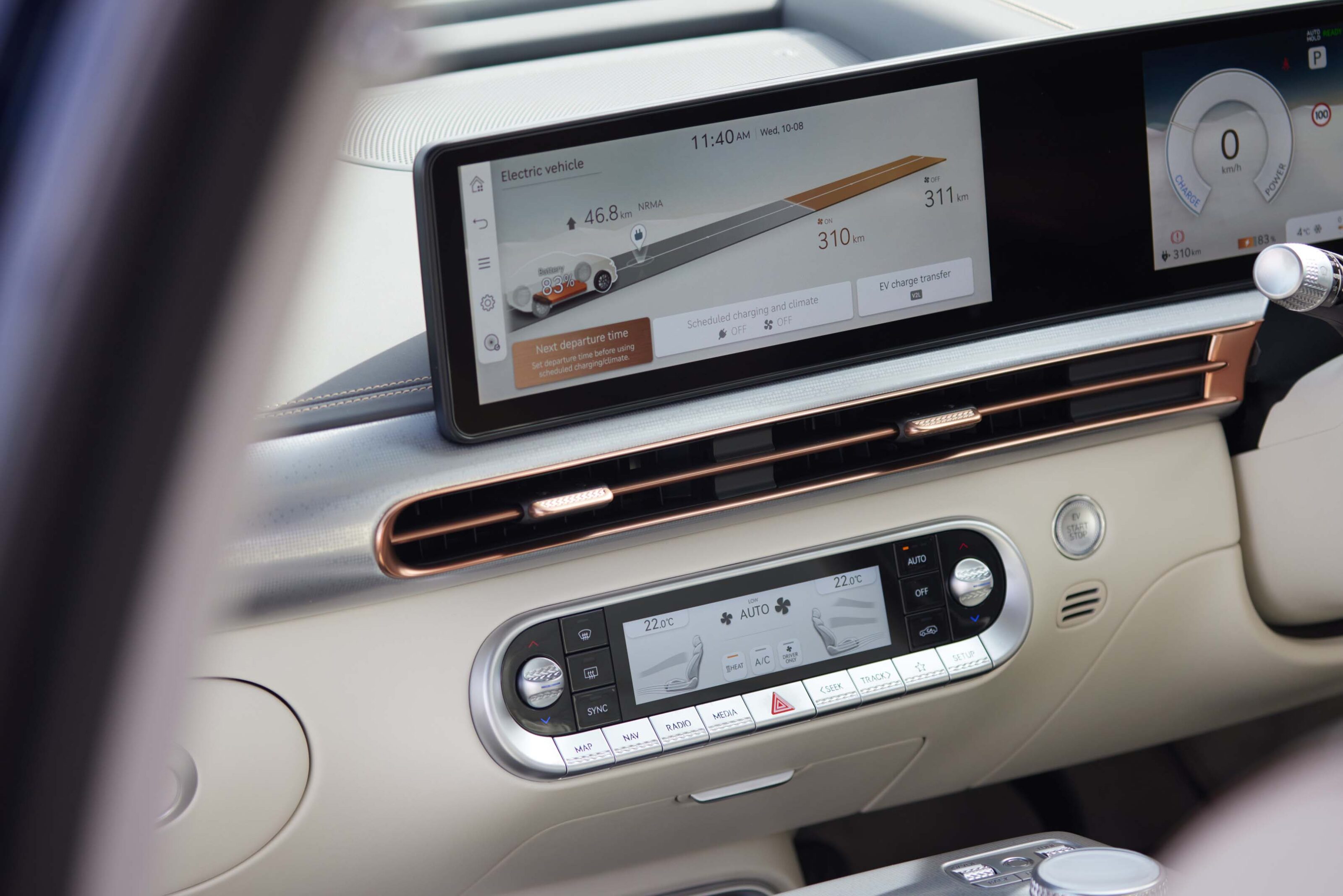
This will allow customers to purchase selected vehicle functions on subscription after it is manufactured, potentially including heated seats or real-time satellite navigation.
“[The] constantly upgradeable software will provide diverse, stable revenue streams while offering fresh functionality and features to keep customers’ vehicles up to date,” said Hyundai Motor in a statement.
In addition, the company says the evolving and customisable software will bring higher resale values for its vehicles.
The shift to ‘software-defined vehicles’ will see the Hyundai Motor Group invest 18 trillion won (AU$20 billion) into its R&D headquarters by 2030, including a new global software centre.
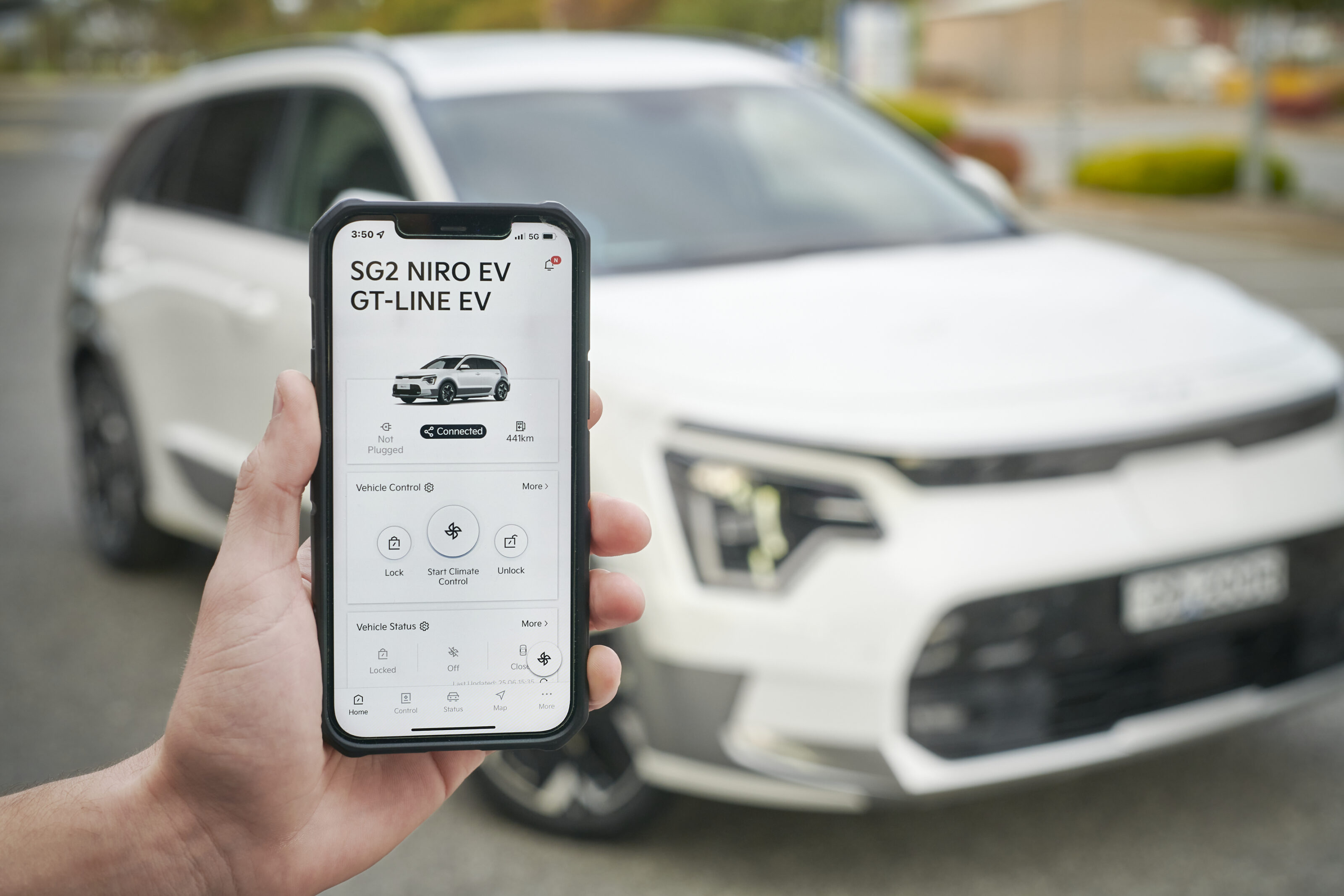
It expects 20 million vehicles will support connected services by 2025 – including vehicles running the existing Hyundai Bluelink, Kia Connect and Genesis Connected Services.
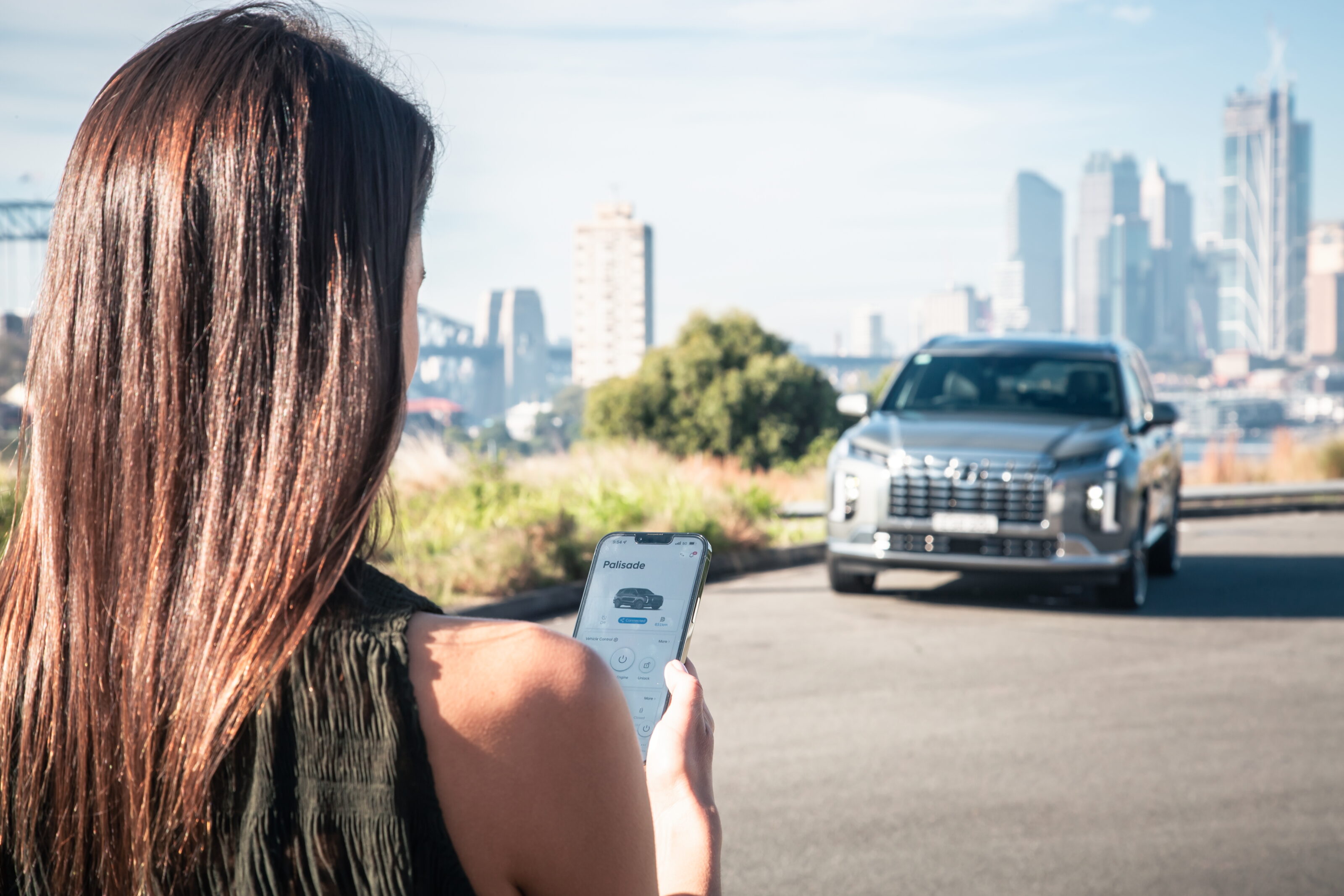
Hyundai Bluelink and Kia Connect launched in Australia earlier this year, supporting remote smartphone access, vehicle tracking, emergency calling and destination send-to-vehicle – but not over-the-air software updates.
The services are currently limited to the 2023 Hyundai Palisade, Kia Niro and Kia Seltos, with the roll-out likely to continue with new software allowing for remote upgrades from next year – including the Hyundai Ioniq 6 electric sedan.
Snapshot
- Hyundai, Kia and Genesis electric vehicles to get range boost
- eM and eS architectures to launch in 2025 with unified software and hardware platform
- Level Three autonomous driving to launch on Genesis G90 and Kia EV9
The Hyundai Motor Group – comprising Hyundai, Kia and Genesis – has announced two new electric vehicle platforms set to debut in 2025.
An evolution of the current E-GMP platform, the new architectures – eM for passenger vehicles and eS for ‘purpose-built vehicles’ – will include modular components that can receive performance and functionality improvements remotely.
In a similar fashion to Tesla, the Hyundai Motor Group says this will allow for a unified hardware and software platform across its EV line-up, possible through its new Connected Car Operating System (ccOS).
As detailed here, the electric vehicles will run Hyundai Motor’s new infotainment suite, which has been developed with technology company Nvidia.
Internal-combustion vehicles and E-GMP-based electric cars, such as the upcoming Hyundai Ioniq 7 and Kia EV9 large SUVs, will also run ccOS and support over-the-air updates by 2025.
With an integrated modular architecture, the eM and eS platforms will support a reduced number of controllers, allowing for software upgrades to improve vehicle performance and functionality.
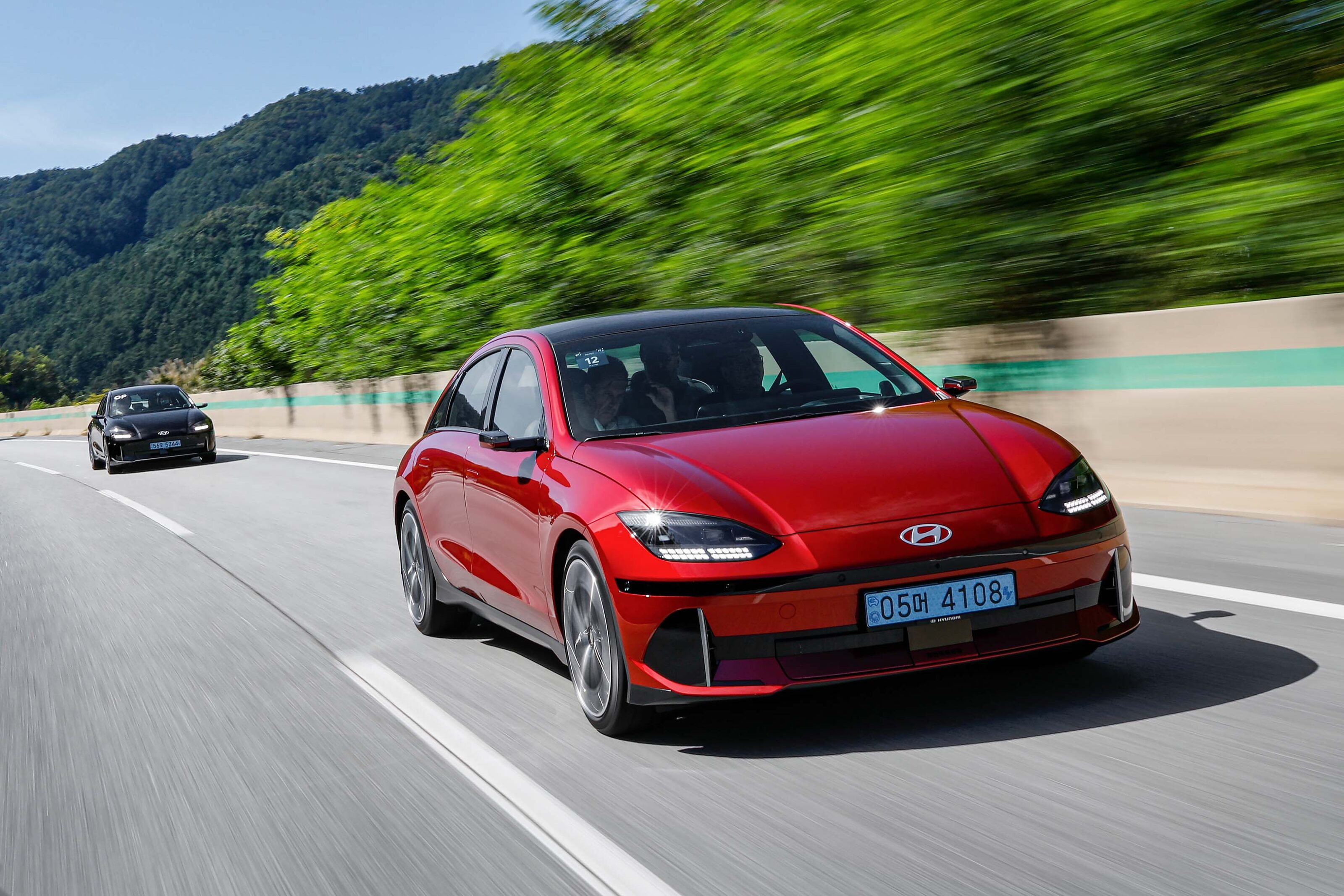
In addition, standardised electric vehicle components – including the high-voltage battery and electric motors – will allow the Hyundai Motor Group to expand its battery-powered line-up more efficiently.
It claims the eM platform will provide a 50 per cent improvement in driving range compared to the vehicles on the E-GMP platform currently found underneath the Hyundai Ioniq 5, Hyundai Ioniq 6, Kia EV6 and Genesis GV60.
The first vehicles underpinned by the next-generation eM and eS architectures will launch in 2025, with eM designed to support “Level 3 or higher” autonomous driving technology.
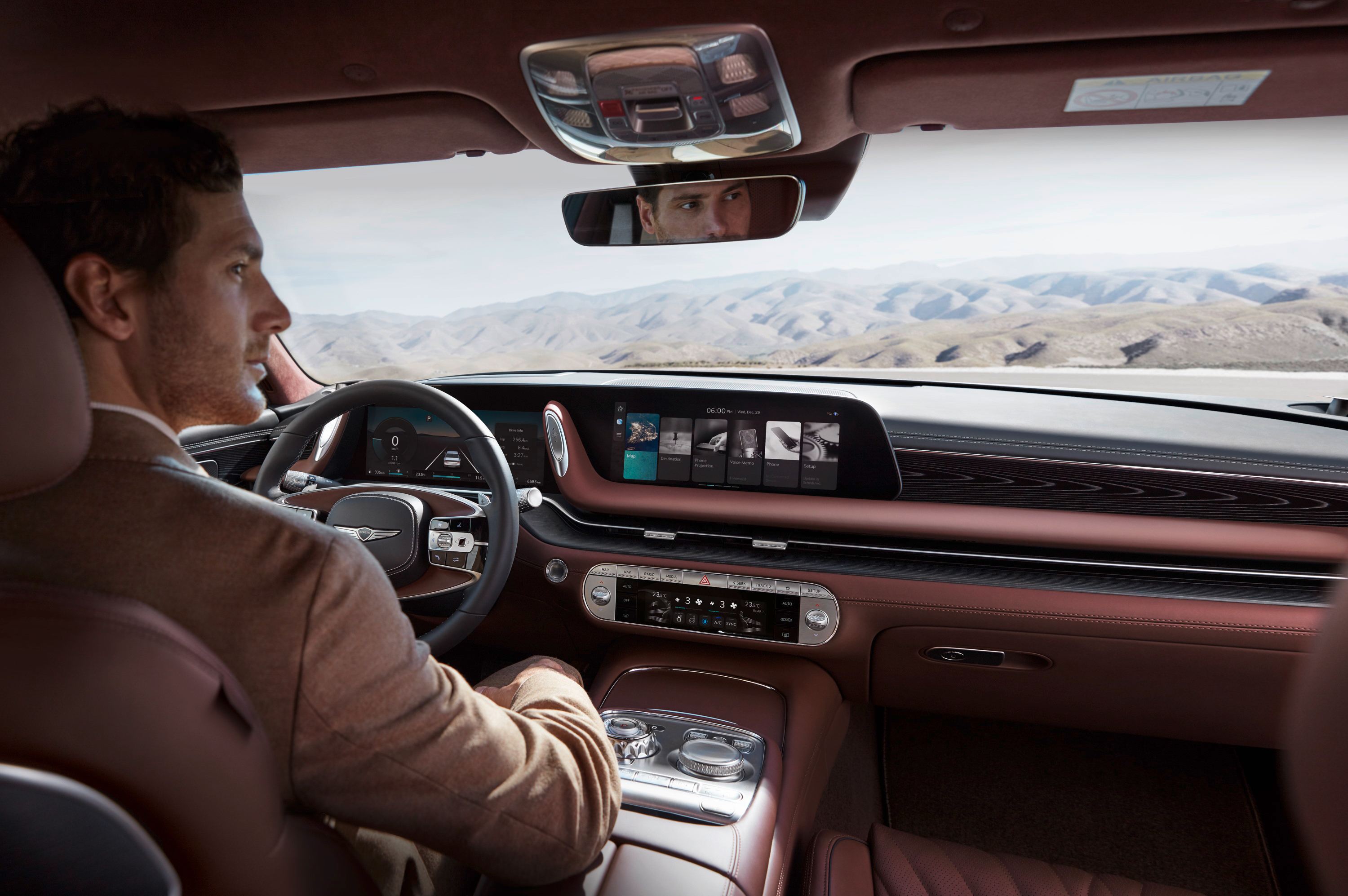
In the meantime, the company will debut level three Highway Driving Assist and automated self-parking on the Genesis G90 and Kia EV9 in 2023, based on second-generation self-driving controllers.
Hyundai Motor said its upcoming third-generation self-driving system will allow for faster computations.
Meanwhile, the eS platform is intended for ‘purpose-built’ applications with a flexible structure to “meet B2B demands, and provide tailor-made solutions for companies operating in the delivery, logistics, and car-hailing sectors.”

“The electrical and electronic architecture can be thought of as an organically connected structure that improves the function of a vehicle’s electrical device components,” said Hyung Ki Ahn, vice president of Hyundai Motor Group’s electronics development group.
The shift to ‘software-defined vehicles’ will see the Hyundai Motor Group invest 18 trillion won (AU$20 billion) into its R&D headquarters by 2030, including a new global software centre.
Genesis has announced it will move to an all-electric line-up by 2030.
Snapshot
- 2023 Toyota Corolla Cross pricing and features
- Priced from $33,000 before on-road costs
- Three trim levels on offer with petrol and hybrid options
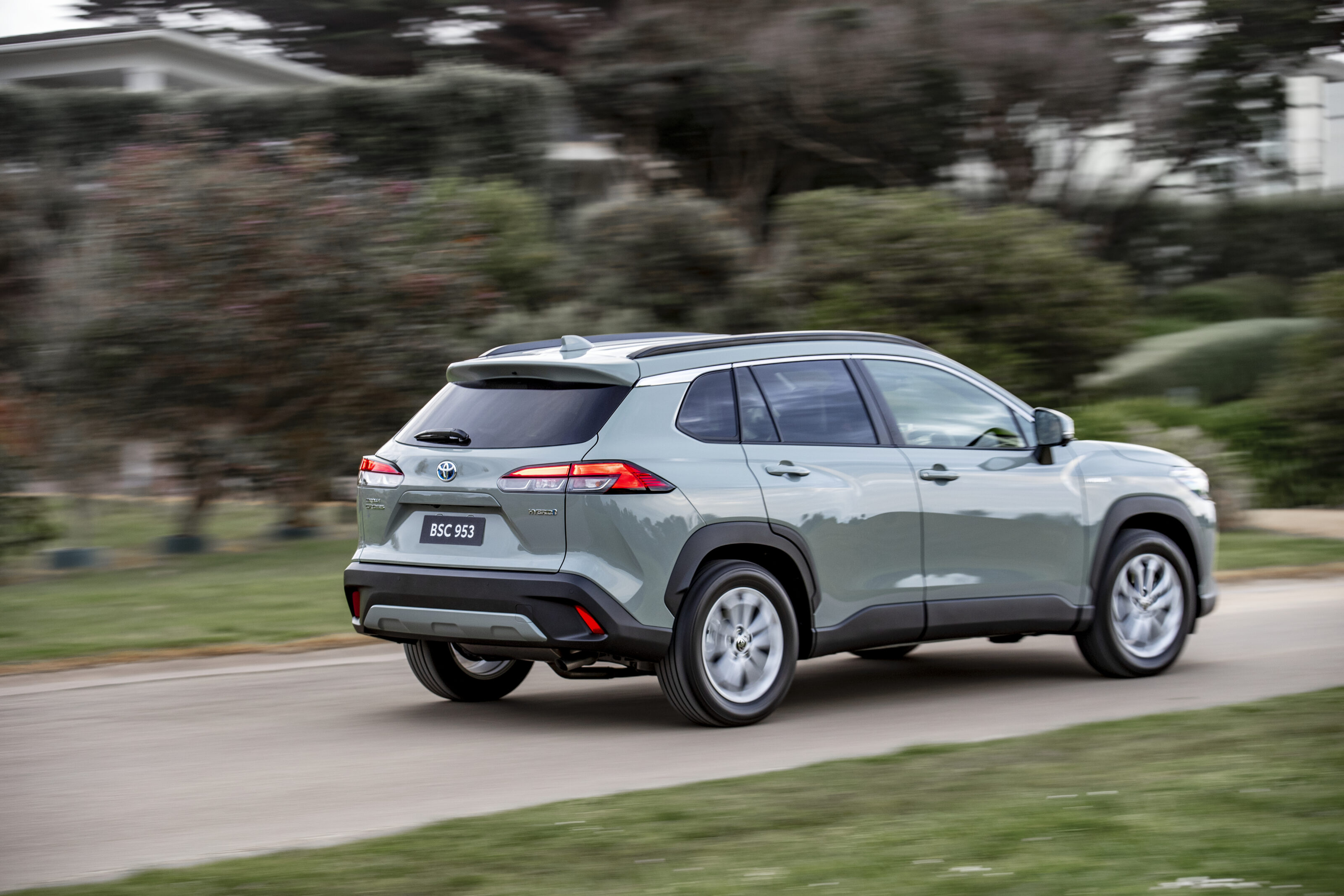
The 2023 Toyota Corolla Cross small SUV has arrived in Australia, starting from $33,000 before on-road costs.
It offers three trim levels, with a naturally-aspirated 2.0-litre petrol, or a 2.0-litre hybrid with front- or all-wheel drive.
The Corolla Cross is the first Toyota product sold in Australia to be fitted with the 146kW 2.0-litre self-charging hybrid powertrain. It can reach 100km/h in as little as 7.5 seconds.
It competes in the small SUV segment in Australia, with rivals including the Mazda CX-30, Hyundai Kona, Kia Seltos, Mitsubishi ASX, MG ZS and GWM Haval Jolion – in addition to Toyota’s own C-HR.
2023 Toyota Corolla Cross pricing
Prices exclude on-road costs.
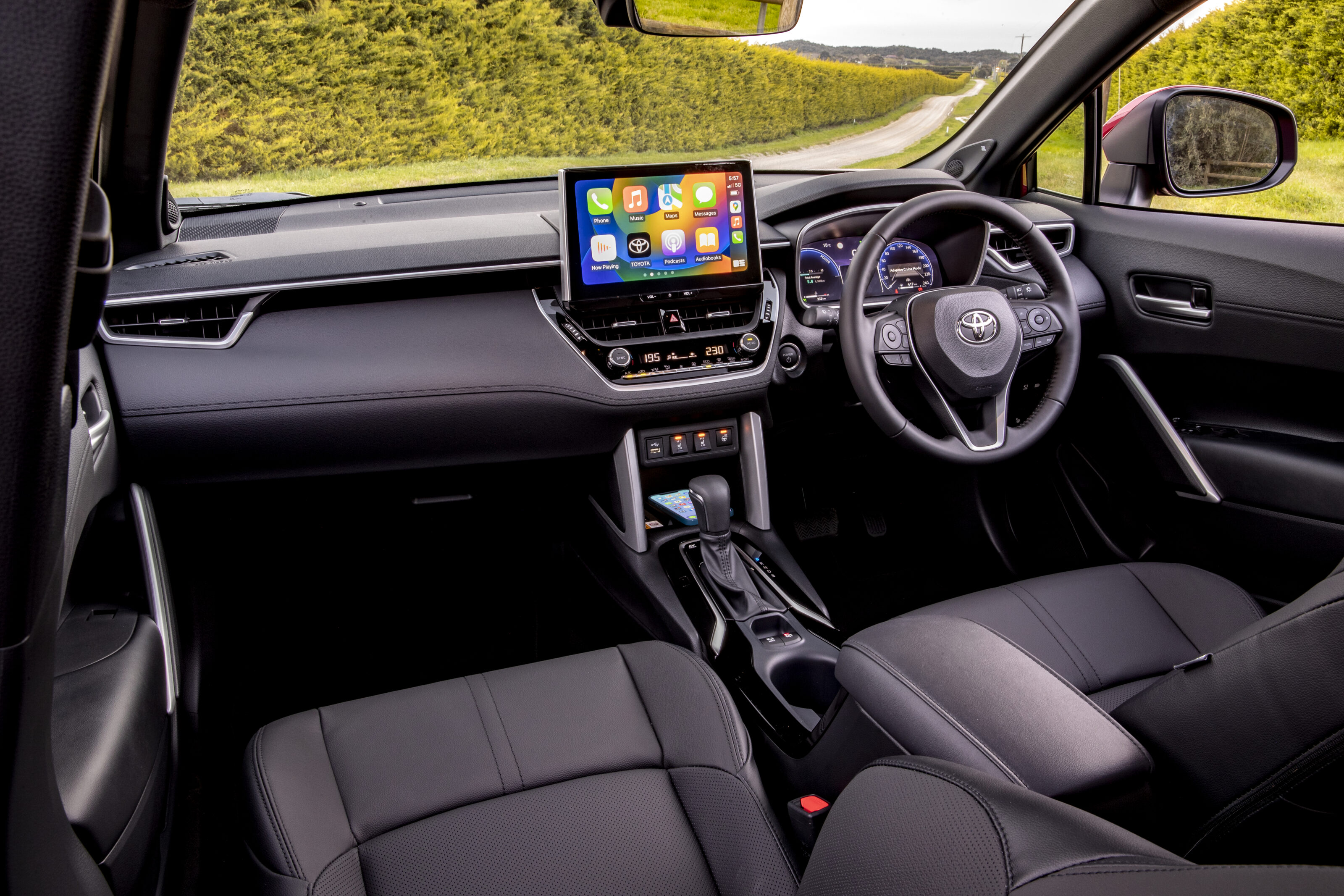
Features
GX
GXL, in addition to GX
Atmos, in addition to GXL
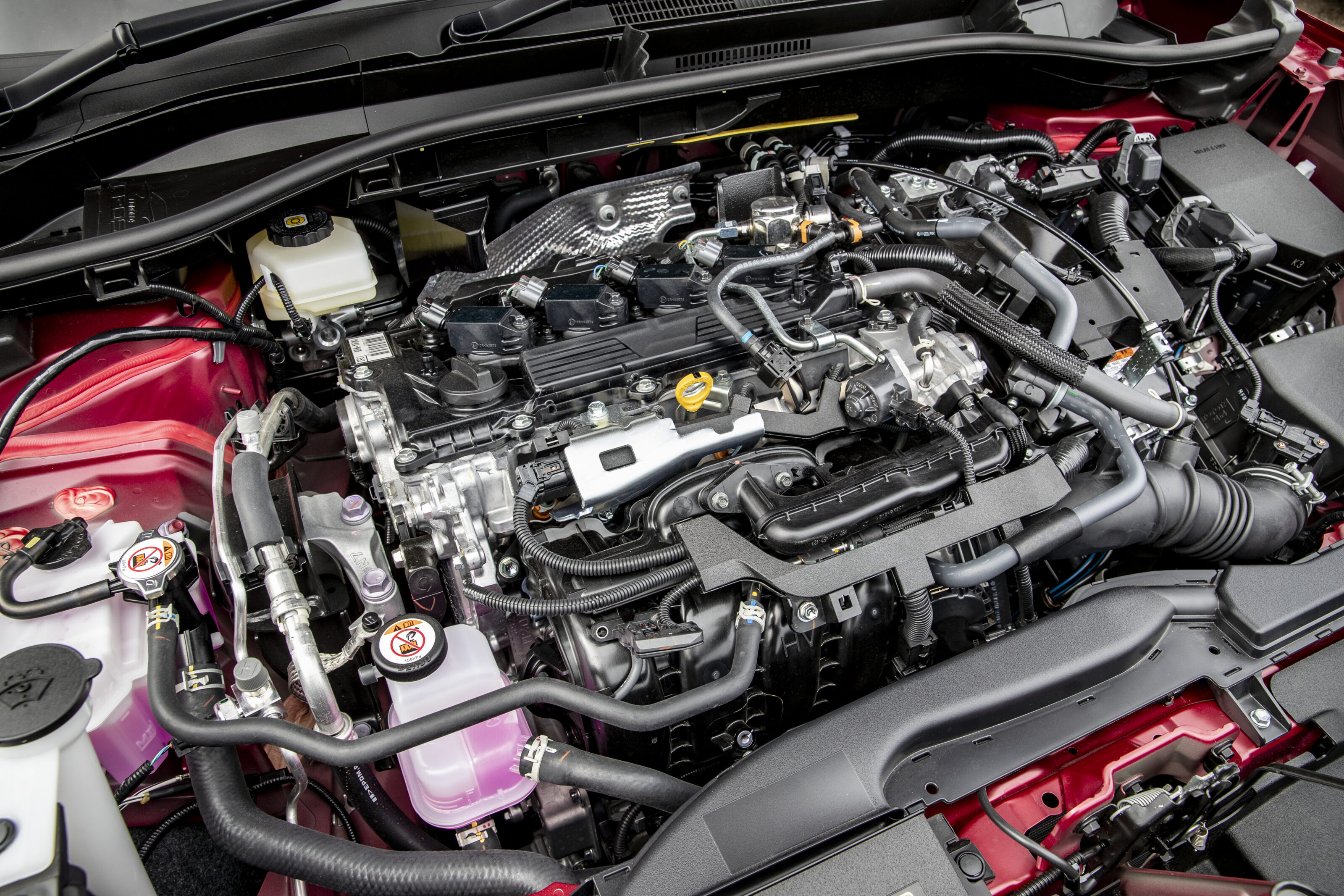
Engine, drivetrain and fuel economy
As standard, the entry-level Corolla Cross GX will feature a naturally-aspirated 2.0-litre petrol engine shared with the regular Corolla hatch/sedan and RAV4, producing 126kW of power, with a CVT automatic transmission and front-wheel drive.
Hybrid versions – $2500 on top of the base petrol-powered price – use a new-to-Australia 2.0-litre petrol engine and 4.06Ah lithium-ion battery pack.
The hybrid has a combined power output of 146kW and is paired with an electronically-controlled continuously variable automatic transmission (e-CVT).
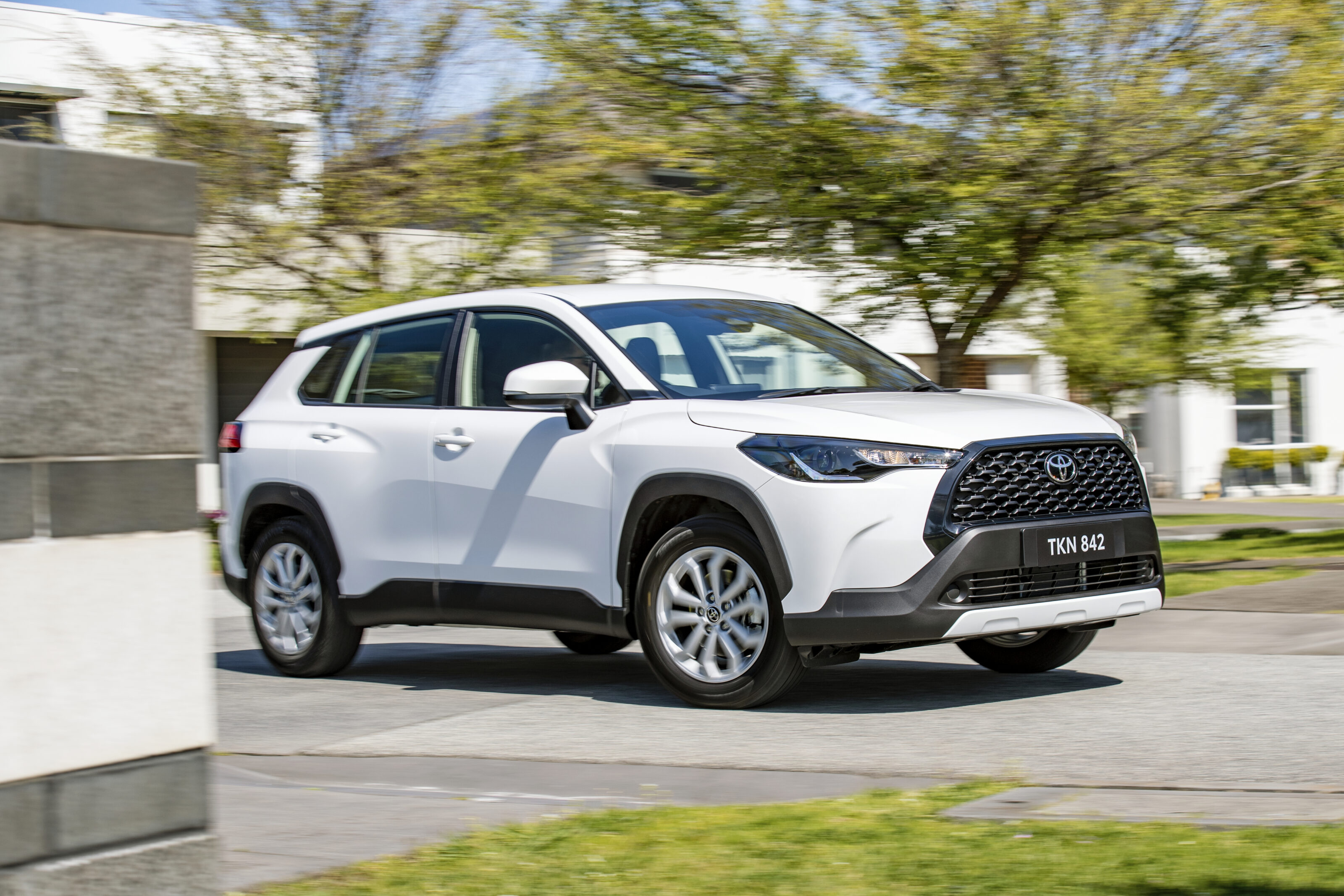
Stepping up to the all-wheel-drive hybrid, available in mid-spec GXL and flagship Atmos trims and asking $3000 over the 2WD hybrid, adds a second electric motor to the rear axle.
Under the skin, FWD variants sport torsion-beam rear suspension, while AWD grades adopt a multi-link set-up.
Both powertrains are compatible with 91 RON regular unleaded.
Fuel economy figures can be found in the table below:
Safety
The 2023 Toyota Corolla Cross has yet to be tested by ANCAP or Euro NCAP.
As standard, all grades will include the latest Toyota Safety Sense suite – including autonomous emergency braking (AEB), lane-keep assist and adaptive cruise control plus lane change assist, pre-collision assist (alert) with pedestrian and cyclist detection, active (adaptive) cruise control with curve speed detection and lane departure alert.
A centre airbag between the front seats – designed to prevent a potentially deadly head clash between the driver and front passenger in a side impact collision – is fitted as standard.
As standard, the 2023 Toyota Corolla Cross includes the following active safety equipment:
| Autonomous emergency braking |
| Lane-keep assist |
| Adaptive Cruise control |
| Lane change assist |
| Pre collision assist with pedestrian and cyclist detection |
| Active cruise control with curve speed reduction |
| Lane trace assist |
| Lane departure alert |
| Eight SRS airbags |
| Automatic high beam |
| Blind spot monitoring with safe exit assist |
| Rear cross traffic alert |
| Reversing camera |
Atmos
The flagship Corolla Cross Atmos adds:
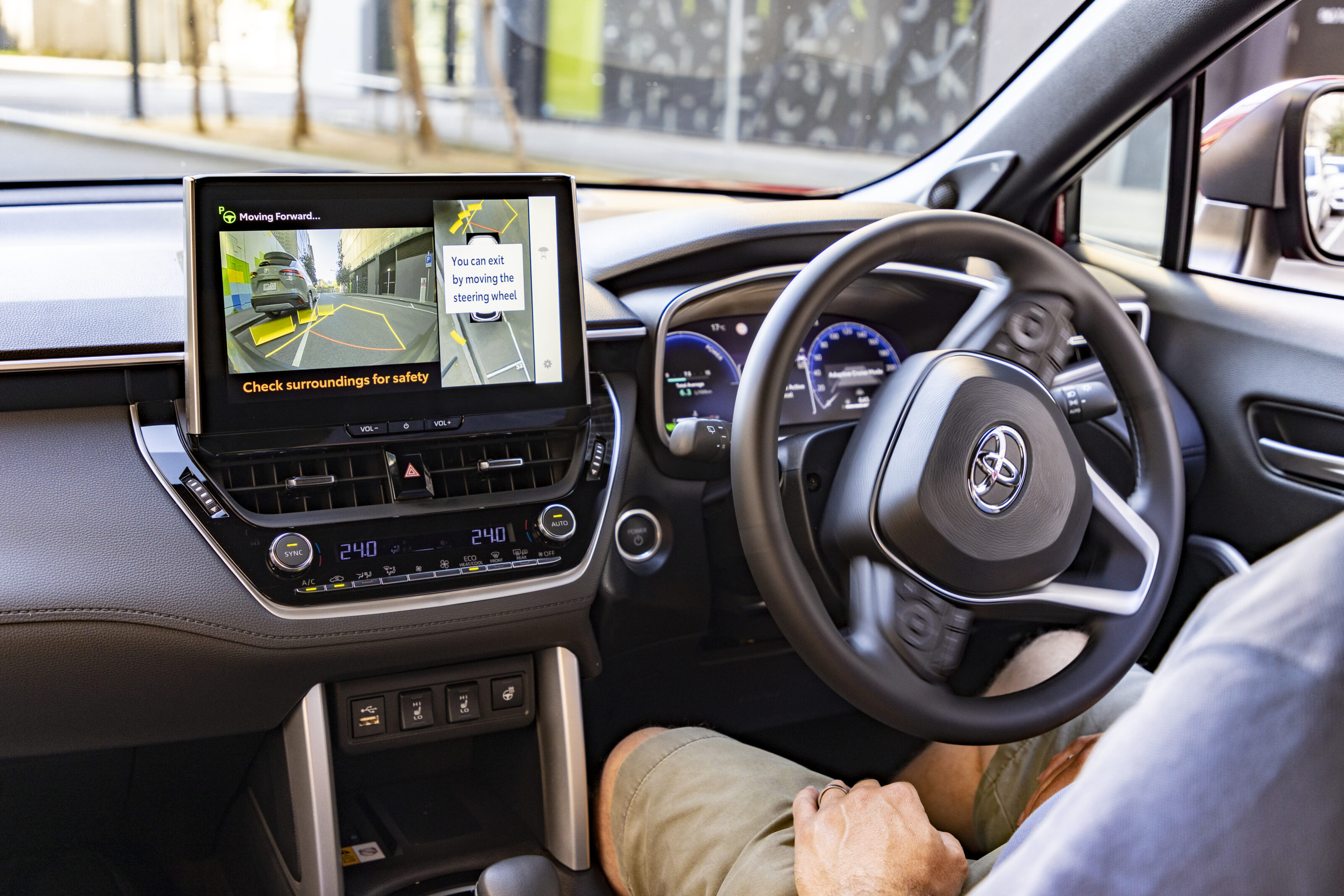
| Front and rear parking automatic brake assist with static object and rear-crossing vehicle detection |
| Panoramic View Monitor (PVM) |

Dimensions
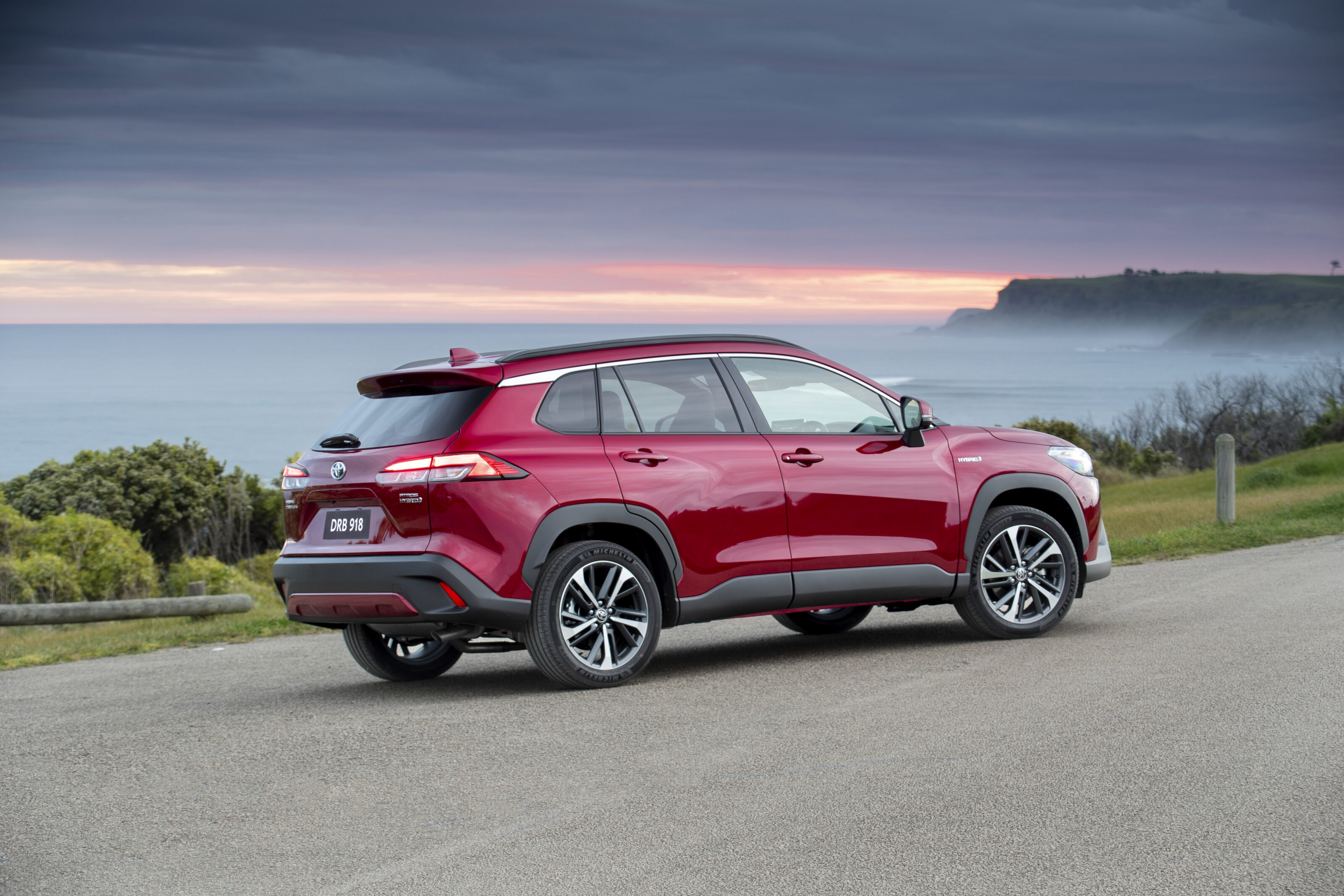
It rides on an identical 2640 millimetre wheelbase to the C-HR, and is 4460mm long, 1825mm wide and 1620mm high.
For reference, the RAV4’s wheelbase is 50mm longer, while the Yaris Cross’s is 80mm shorter, at 2560mm.
However, despite slotting between the Yaris Cross and RAV4 size-wise, the Corolla Cross is lower than the Yaris Cross, with 160mm of ground clearance – compared to 170mm and 195mm for the Yaris Cross and RAV4, respectively.
Braked towing capacity is rated at 750 kilograms, regardless of the powertrain, while the unbraked limit is between 725kg and 750kg.
Warranty
All new Toyotas are currently covered by a five-year, unlimited-kilometre warranty including parts, panels and accessories made by Toyota.
Under certain conditions, Toyota may extend its engine and driveline warranty by two years if the annual service schedule is
New Toyota owners will also be covered for any car hire or towing required during the first seven years of ownership.
Availability
The 2023 Toyota Corolla Cross is on sale now.
Get more on the Corolla Cross, including an early first-drive impression, at the links below.
UPDATE: Australian pricing revealed for 2023 BMW M2
Australian pricing for the new second-gen BMW M2 has been revealed, get the full story at the link below.
The story to here
2023 BMW M2 revealed
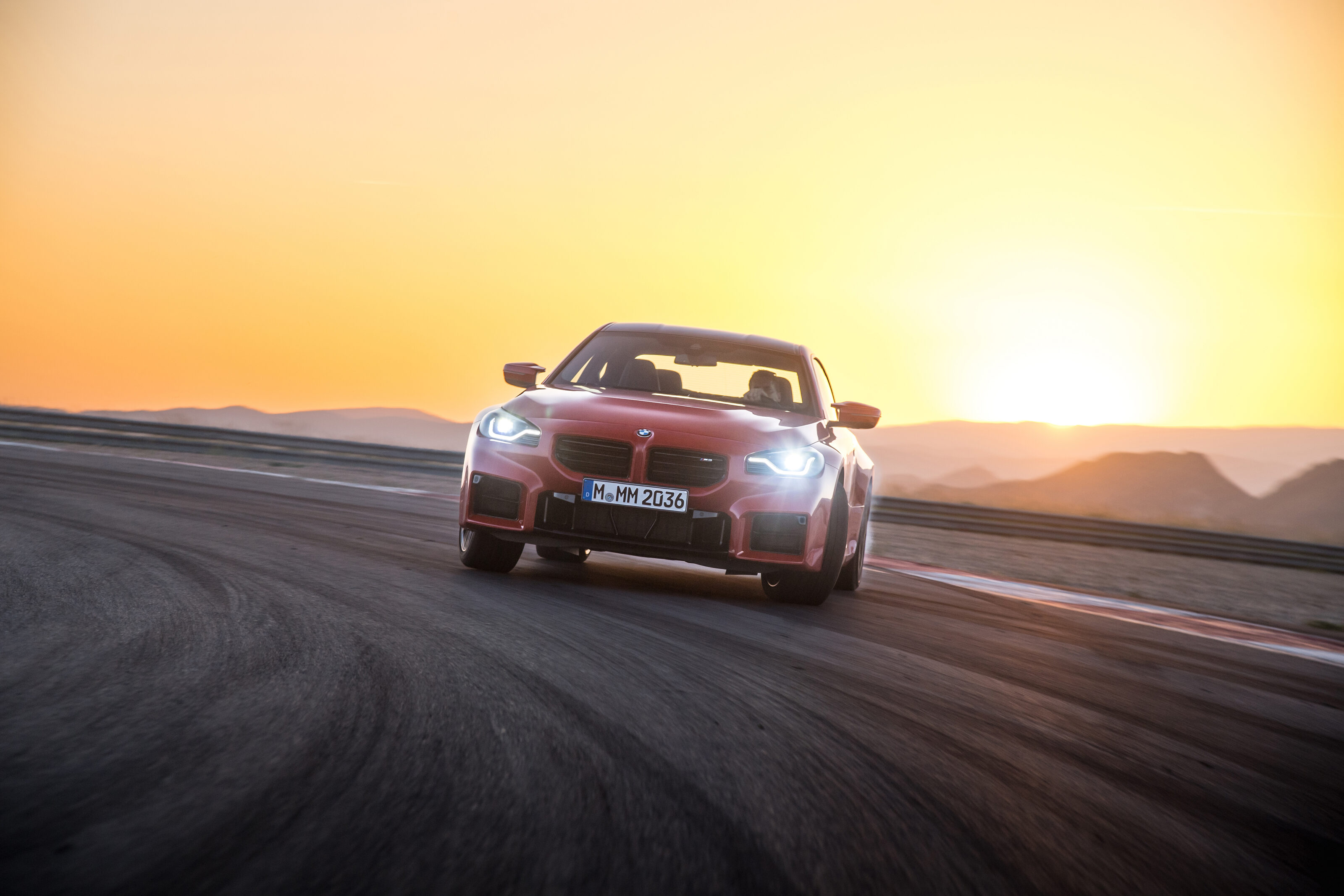
After a development path dripping with leaks – the hugely talked-about 2023 BMW M2 has finally been officially revealed.
Debuting a bold new look, with the powerhouse S58 twin-turbo inline-six lifted from its bigger M3/M4 siblings, the latest G42-based M2 represents the last all-new M car powered purely by internal combustion.
Key Points
- 338kW/550Nm from BMW’s masterful S58 twin-turbo inline-six
- Rear-drive only, manual standard, eight-speed auto is an option
- Yes, that’s really how it will look
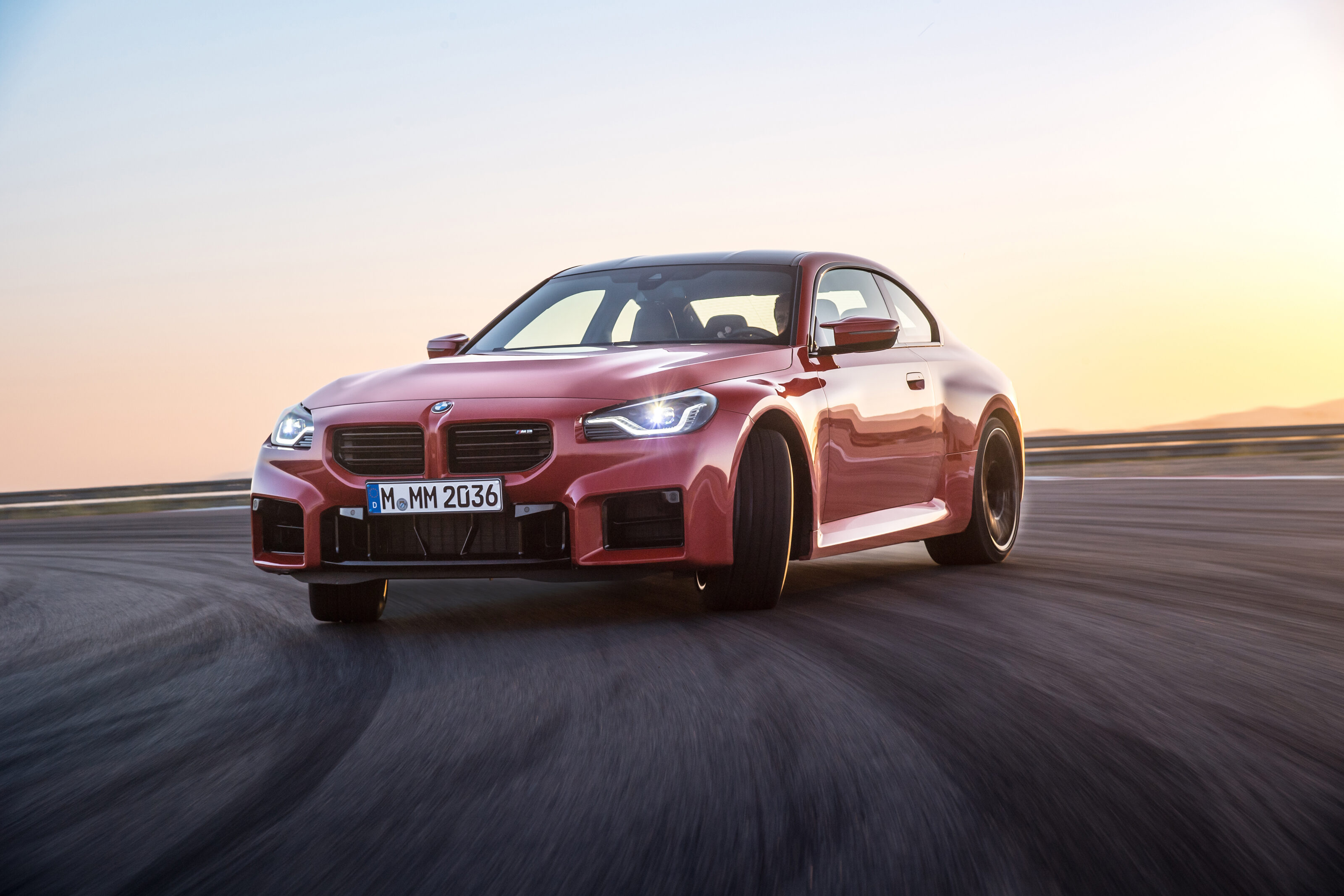
The all-new BMW M2 is expected to launch locally within the first half of 2023. Global production is scheduled for December 2022.
As is tradition, M Division’s pocket-rocket adopts that primal small car, big engine philosophy, borrowing the masterful S58 3.0-litre twin-turbo inline-six from its M3/M4 siblings and spits out 338kW and 550Nm. The new M2 powers the rear wheels only. It remains to be seen whether a Competition xDrive variant sprouts further down the pipeline.
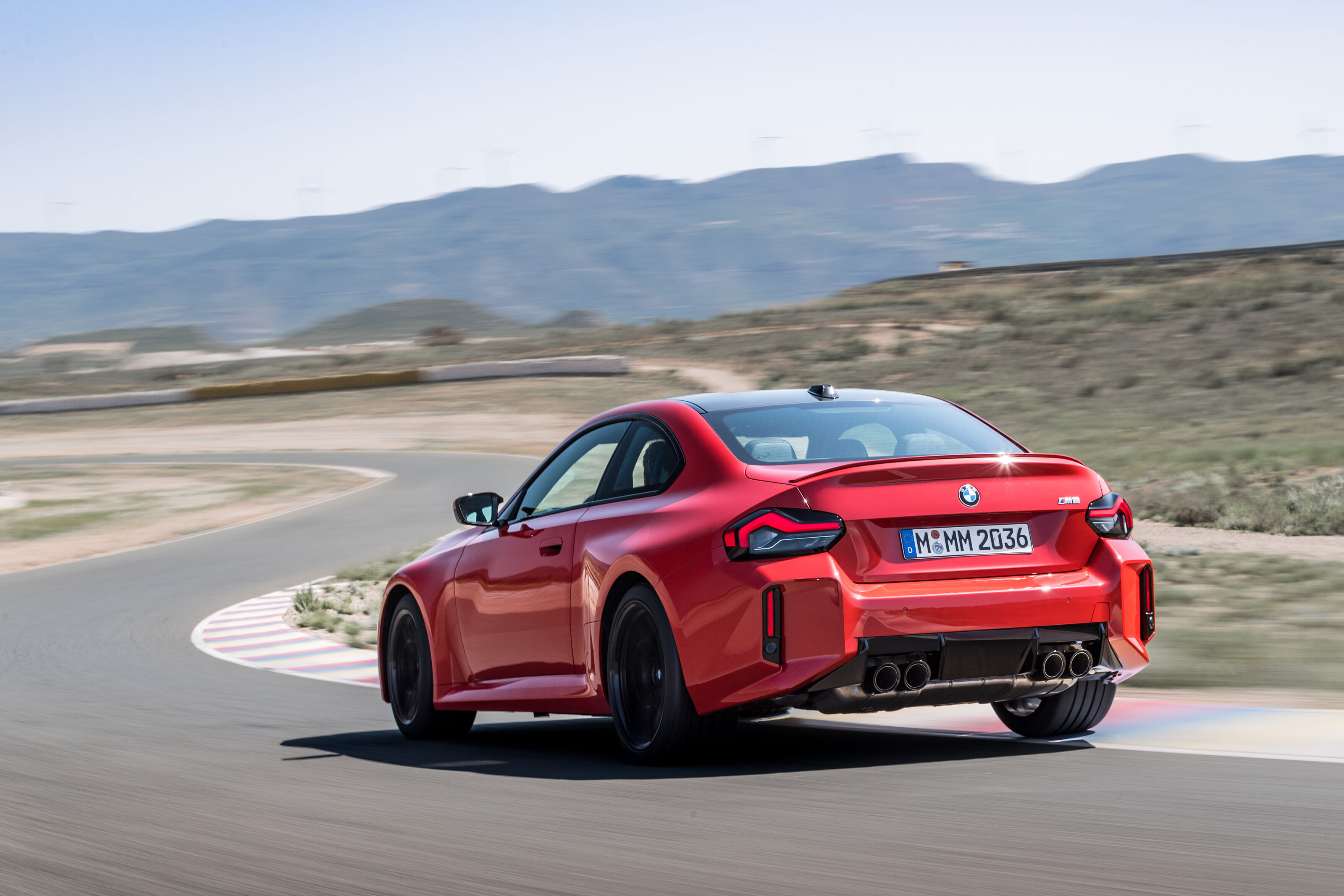
That’s down a nominal 7kW from the non-Competition M3, but is also a neat 7kW more than the old flagship M2 CS.
The all-new M2 powers the rear wheels only. It remains to be seen whether a Competition xDrive variant sprouts from the pipeline, but it will be built from the factory as standard with a six-speed manual, with the ZF eight-speed automatic available as an option.
BMW quotes 4.3-seconds from 0-100km/h in the manual, and 4.1-seconds in the ZF eight-speed.
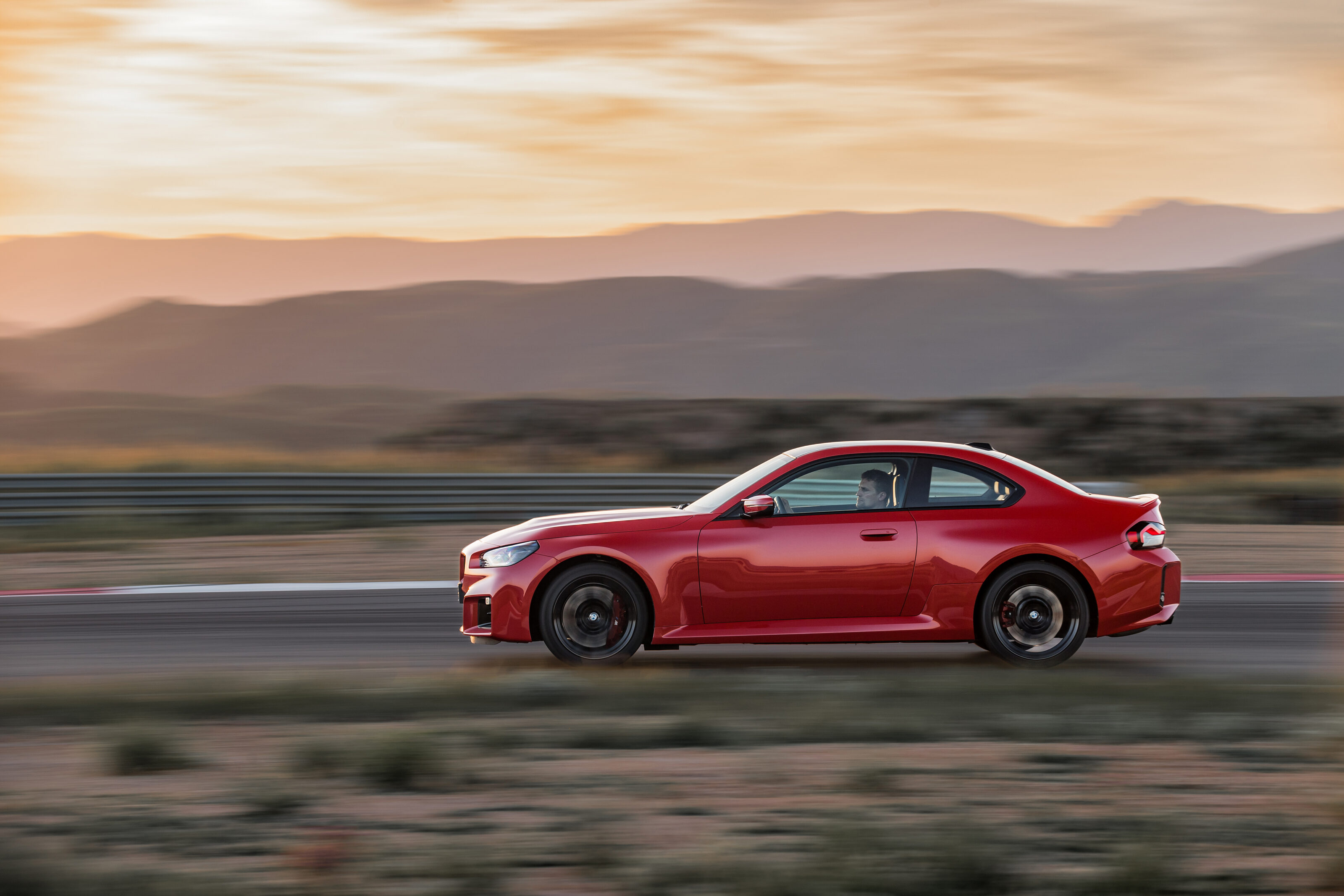
The new M2 measures 120 millimetres longer, 15mm wider and 10mm lower than its predecessor, with its wide blistered haunches provided by adopting the same track widths as the larger M4. The manual vehicle’s kerb weight is quoted at 1710 kilograms and the automatic, 1725kg.
BMW claims an even 50:50 weight distribution, and has fitted its M2 with an electronic limited-slip differential, adaptive suspension and variable ratio steering.
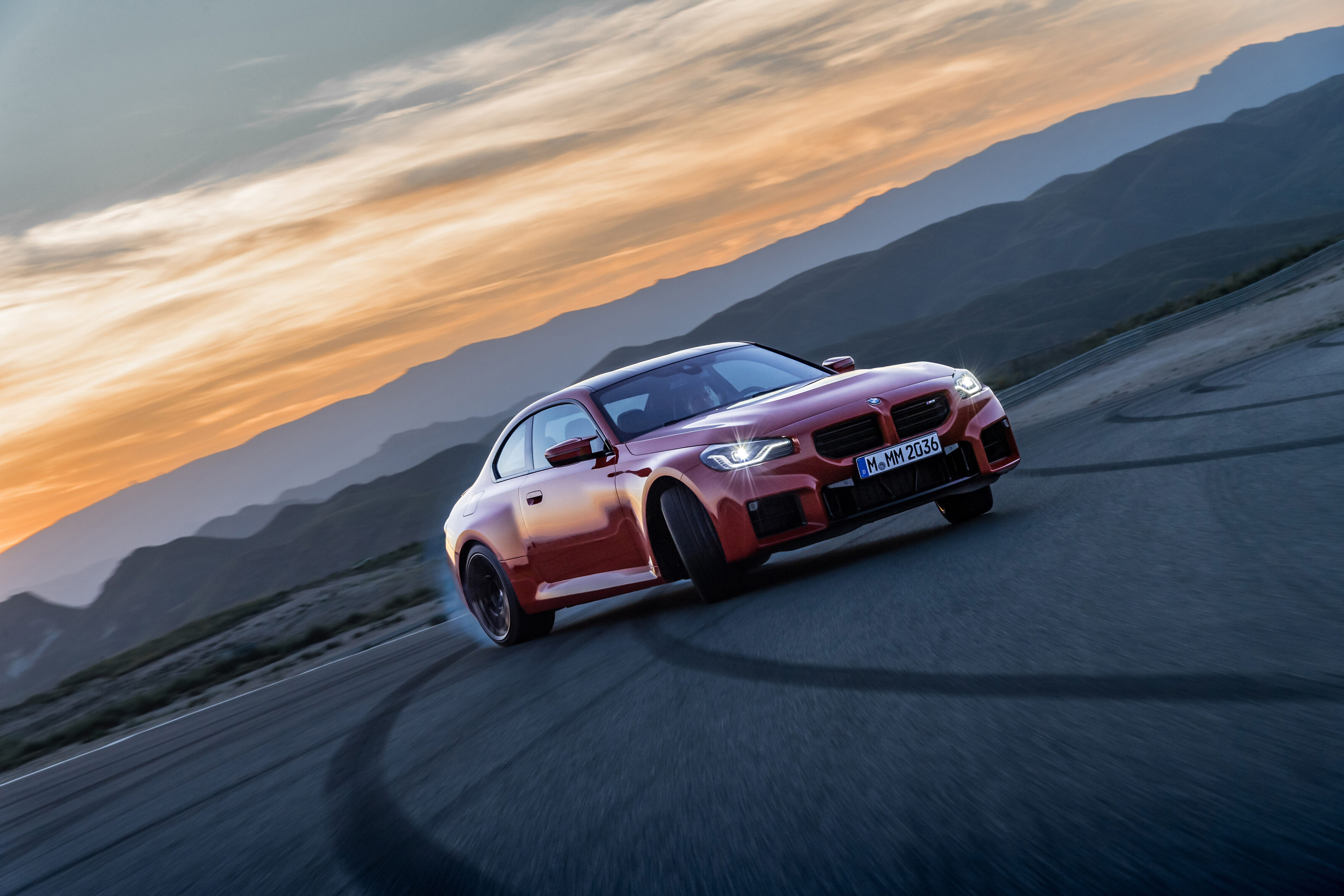
Staggered 19/20-inch wheels, just like the M3/M4, wear 27535 front and 285/30 rear tyres, cornered by 380mm six-pot front and 370mm single-piston rear brakes.
A 12.3-inch digital driver display, merging with a central 14.9-inch infotainment touchscreen, provides the centrepiece to the G-series M2, displaying M-exclusive graphics.
The M3 and M4’s divisive optional carbon sports seats, along with a carbon fibre roof and other composite-clad packages, will be available as options.
Elsewhere, three-zone climate control, wireless Apple CarPlay and Android Auto, integrated satellite navigation and ambient lighting feature as standard equipment.
Safety items will include autonomous emergency braking, lane departure warning, parking sensors and rear view camera.
With the international launch set to take place in April 2023, an Australian launch is expected to follow around mid-next year.
Pricing is yet to be confirmed, but we will update this story as more information is revealed ahead of the M2’s launch next year.
UPDATE, February 2023: Peugeot E-Partner confirmed for Australia
Peugeot has now confirmed its electric E-Partner van for Australia, with registrations now open for buyers. Details at the link below.
Story continues…
Peugeot’s first EV in Australia will be a van
Snapshot
- Peugeot’s first full-EV locally to be a van
- Will join 3008, 508 and 308 PHEVs
- Could be based on Boxer, Expert or Partner
Peugeot Australia has revealed its first fully-electric offering destined for our shores will be a light commercial vehicle (LCV) due to arrive sometime next year.
The French marque shared the news at the launch of sister firm Citroën‘s new C5 X this week.
“We have previously talked about our electric vehicle plans for Peugeot encompassing an SUV, passenger car and LCV,” a spokesperson for the brand told Wheels.
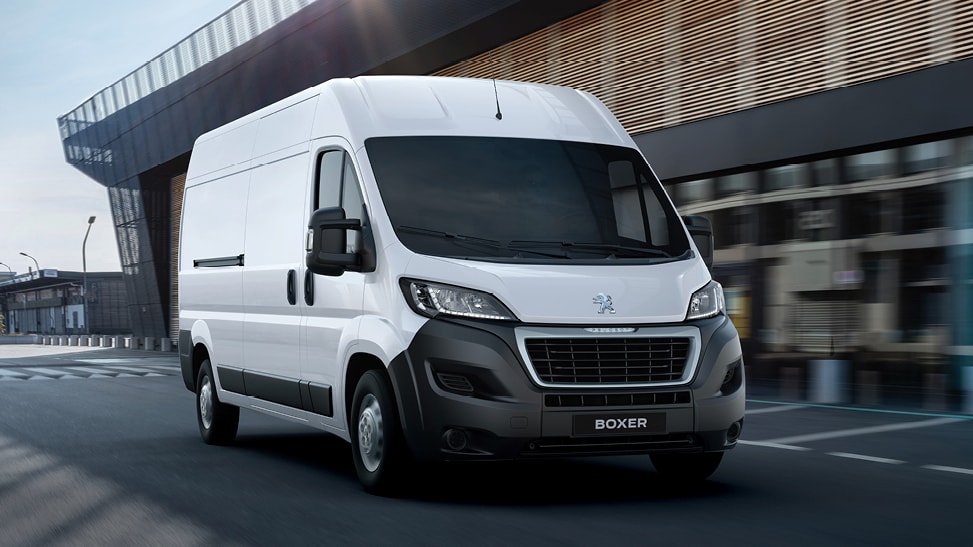
“We’re now delighted to confirm that the first battery-electric vehicle in Australia for Peugeot will be an LCV. We’re not at a stage where we are going to be sharing the exact model. But I think globally you can see obviously what’s available and one so one of those we will bring into the market starting next year.”
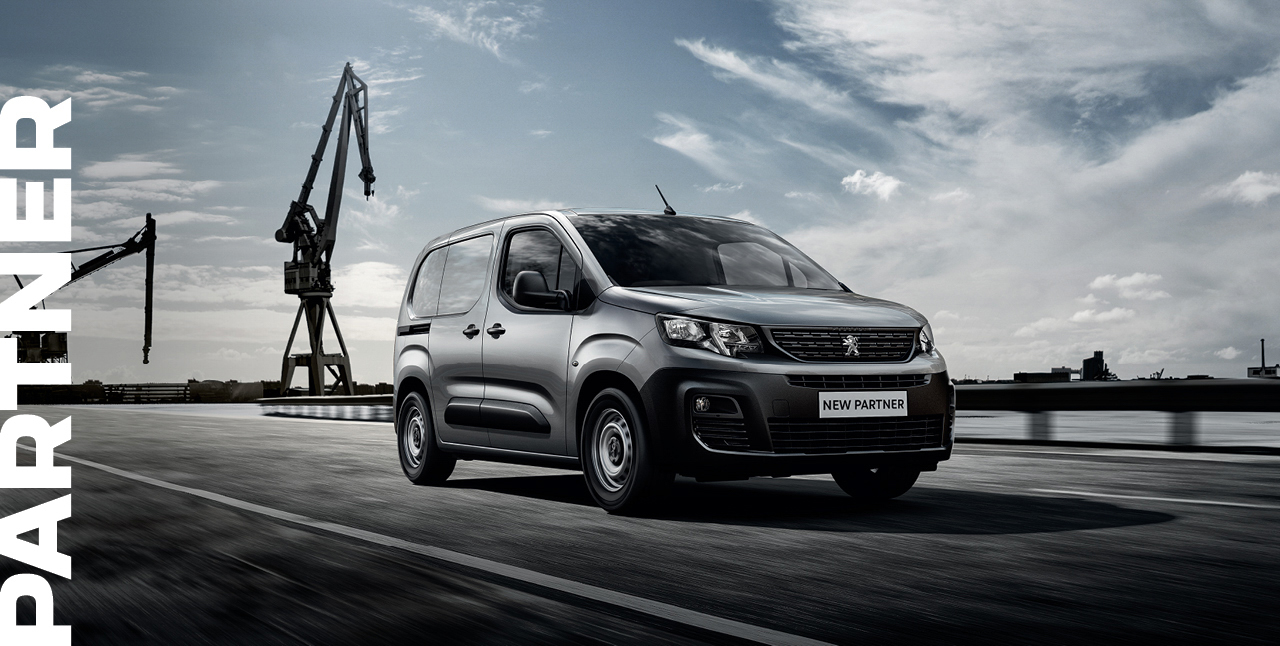
Currently, the local market offers three light commercial vehicles: the small Partner van, mid-sized Expert and large Boxer.
At this stage it’s unknown which of these would be electrified first. In European markets all three have electric options available.
Powering both the electric Partner and Expert is a 100kW electric motor, coupled to a 50kWh battery. A larger 75kWh option is also available in the Expert. Driving range for the Expert is rated at between 240 and 340 kilometres, or 275km in the Partner.

Meanwhile, the Boxer is powered by a 90kW electric motor with a choice between a 37kWh or 75kWh battery for a claimed driving range of either 117km or 250km respectively.
In 2023, that means Australia will receive the already confirmed 3008 SUV and 508 sedan, as well as a fully-electric van.
The 308 PHEV is powered by a 1.6-litre four-cylinder turbo-petrol engine mated to a 81kW electric motor for a combined 165kW/360Nm. Further details, features and pricing for the 308 have yet to be released.

The 508 PHEV utilises the same engine and electric motor for identical combined outputs, also featuring an 11.5kWh battery pack and an eight-speed automatic transmission. Peugeot claims a 55km driving range in electric mode.
The 3008 PHEV however claims a slightly higher 60km driving range in electric mode. While it uses the same 1.6-litre turbo-petrol hybrid engine, it combines it with two motors – one on each axle – for joint outputs of 222kW/520Nm.
