
Not all compact SUVs are made equal. Some look amazing, some are loaded with tech, some are more fun to drive, some are dirt cheap and feel it. They come from just about every major car-making country on Earth, too, such is their popularity.
Here we have two seemingly similar competitors. They’ve got two of the biggest interiors in the segment and are two of the sharpest-priced. Dig a little deeper, though – you knew this was coming – and you’ll find a few differences.
One of the most intriguing differences is that one has been on sale for just a year. The other one is probably a year or so from being replaced after more than a decade on the market, having been a hot seller for a good chunk of that decade.
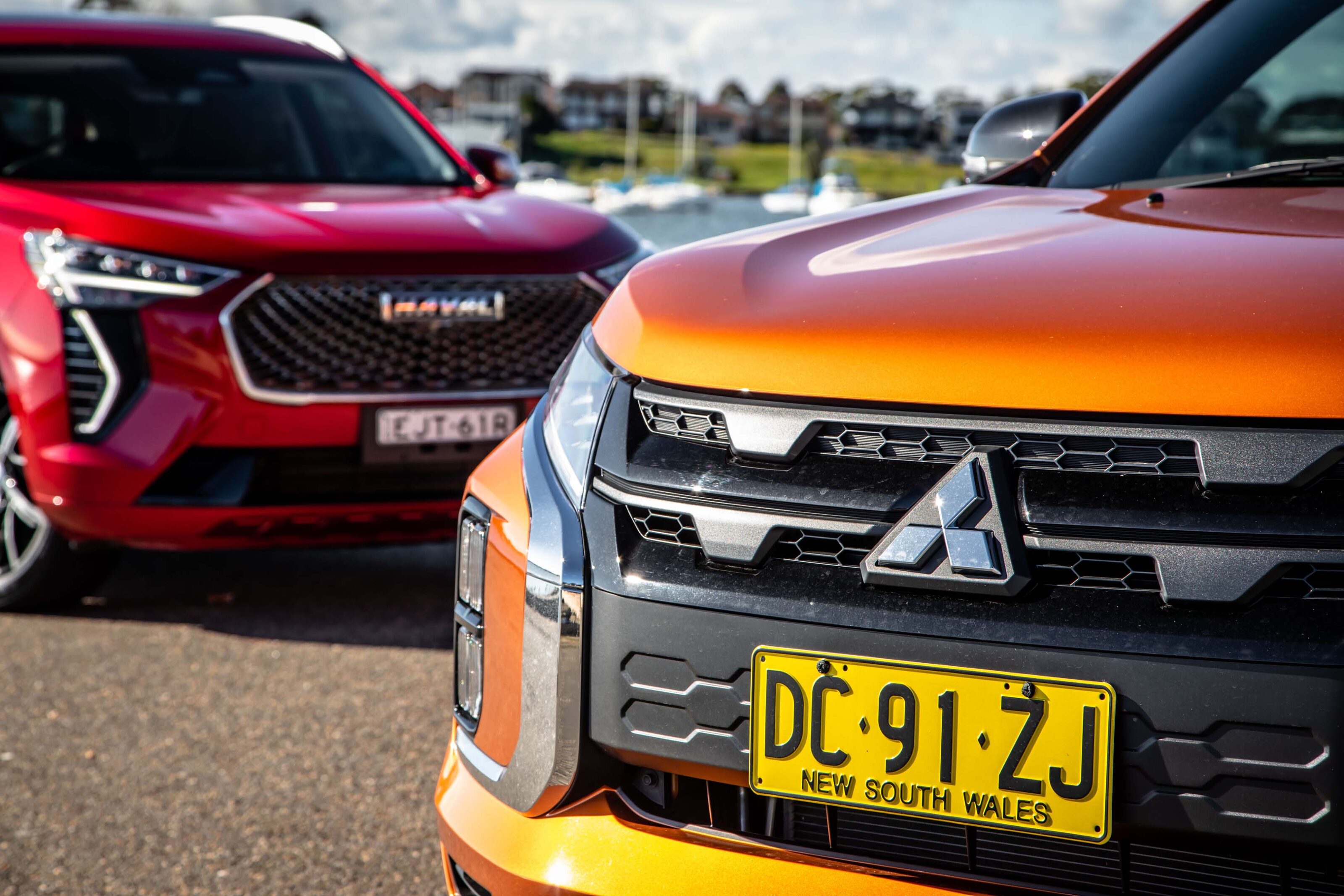
The price here is the key, though, with the Haval Jolion and Mitsubishi ASX priced seemingly against each other in a fiercely fought part of the market. This is the battle of two bang-for-your-buck SUVs.
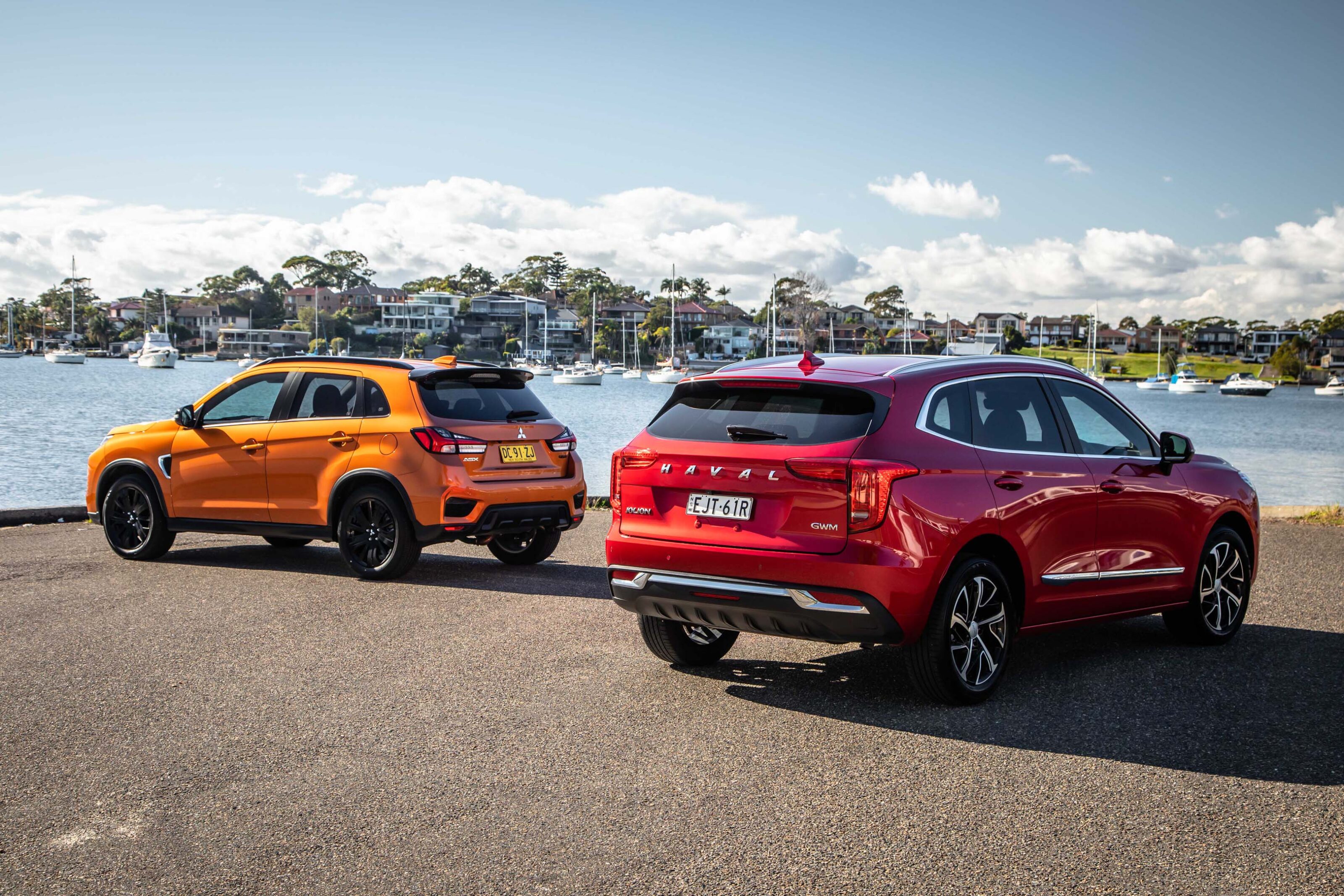
Pricing and features
The ASX GSR starts off with a $31,990 price tag (before on-road costs). The GSR is a fairly recent entry in the ASX line-up, reviving an old badge first seen forty years ago on the Lancer. For nerd points, the ASX is based on the platform of the final Lancer first sold here in the mid-2000s.
Featuring 18-inch alloy wheels, a six-speaker stereo, climate control, reversing camera, keyless entry and start, rear parking sensors, cruise control, auto LED headlights with auto high beam, leather wheel and gear selector trim, power windows all round, auto wipers and a space-saver spare, it’s not a bad start.
The Haval Jolion Lux rolls in at $33,990 drive-away, with 18-inch alloys, reversing camera, multi-view cameras, front and rear parking sensors, fake leather trim, digital dash, 12.3-inch touchscreen, dual-zone climate control, powered and heated front seats, leather-trimmed steering wheel, LED lighting (including headlights, daytime running lights and fog lamps), six-speaker sound system, panoramic sunroof, wireless charging pad, head-up display and a space-saver spare.
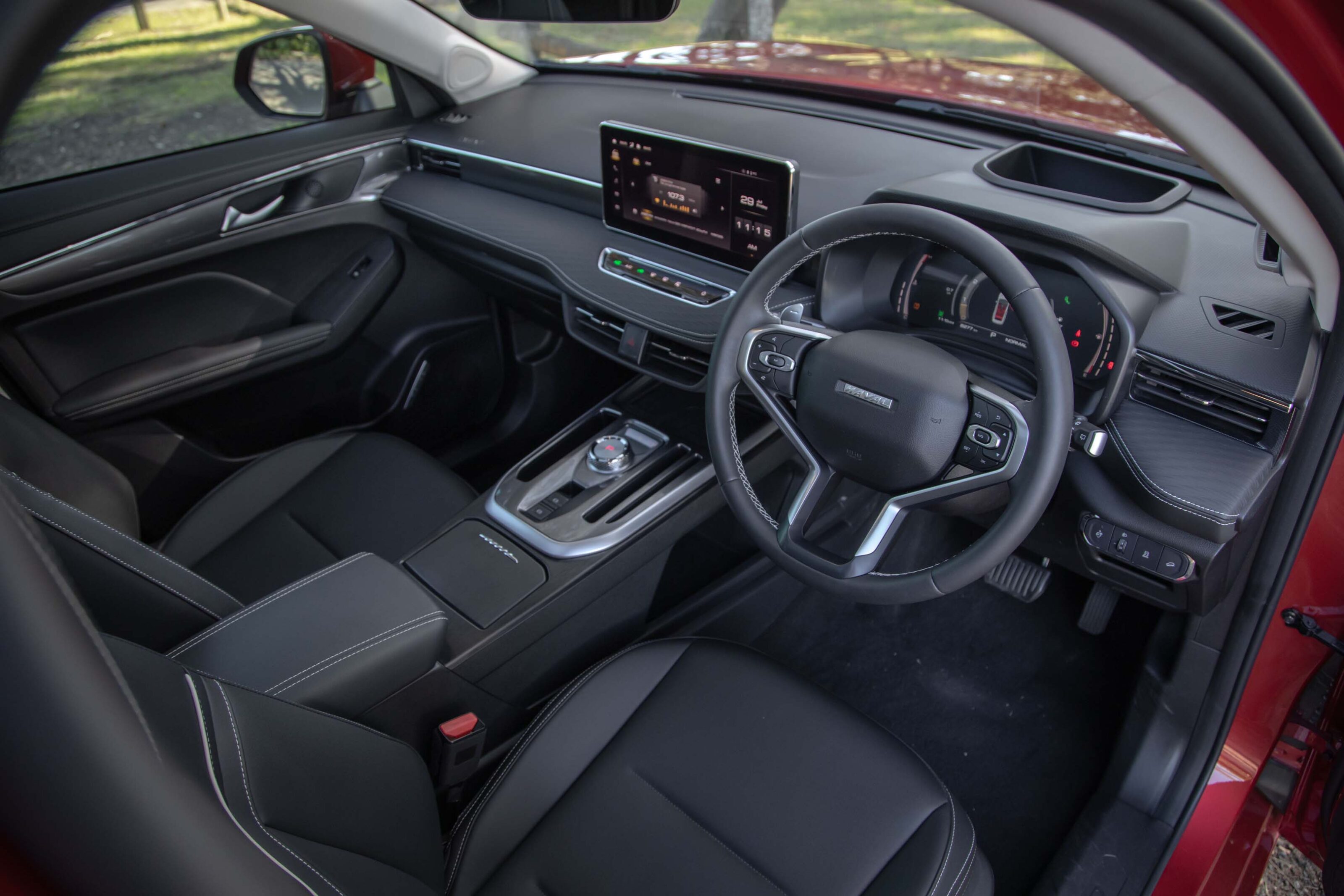
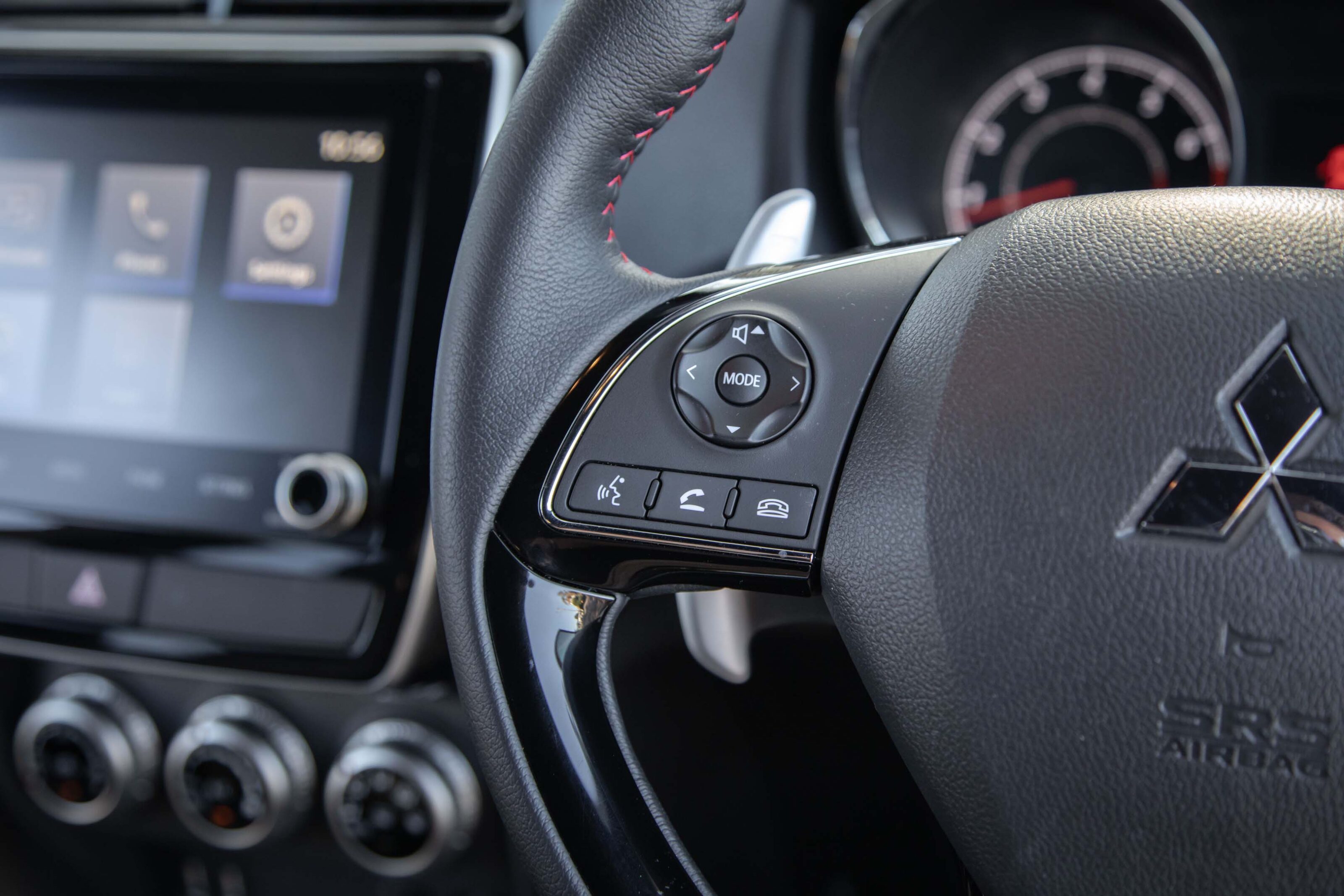
Both feature touchscreens but they couldn’t be more different. The Mitsubishi’s is a basic 8.0-inch unit with a mix of touch and physical controls, with the obligatory Apple CarPlay and Android Auto along with DAB+ digital radio. And not much else.
The Jolion’s 12.3-inch unit is a modern beast, with lots of features packed in at the expense of a lot of physical switches and knobs, such as climate control. It’s absolutely filled with settings and functions, some of which are perfectly at home, some that really should be easier to get to, easier to use or properly positioned for a right-hand drive car, like the seat heating controls.
Overall, specifications are where you really notice the age gap between the two cars. The Jolion is packed with contemporary technology for similar money.
On the safety front, the ASX has seven airbags (including a driver’s knee airbag), blind-spot monitoring, forward auto emergency braking (up to 80km/h), forward collision warning, lane departure warning and rear cross-traffic alert.
The Jolion matches the seven airbags but the seventh is a centre-front airbag to help prevent head clashes in side impacts. It also has the usual braking and stability controls, secondary collision avoidance, forward and reverse AEB, rear cross-traffic alert, forward collision warning, lane departure warning, lane-keep assist, lane centring, emergency lane-keep assist, traffic sign recognition and blind-spot monitoring with lane-change assist, further underscoring the Jolion’s comparative modernity.
Both have three top-tether anchors and two sets of ISOFIX points.
A five-star ANCAP safety rating adorns the ASX, although it does stretch back to 2014. The safety specification has drastically improved on the Mitsubishi since then but today’s much tighter set of ANCAP rules make it unlikely that the ASX would renew a five-star rating. It’s not a bad spec, but as the Jolion – and other rivals show – it’s a solid start.
The Jolion is yet to be tested by ANCAP but with that very long list of features and the centre front airbag, it would be wholly unsurprising if the Haval scored the maximum rating, as its larger and closely related H6 sibling did.
Buyers of both can choose from just one free colour, white. While a Mitsubishi dealer wants a hefty $740 or $940 for metallic paint depending on the colour, the Haval dealer will instead try and extract a more reasonable $495. Neither has any factory options.
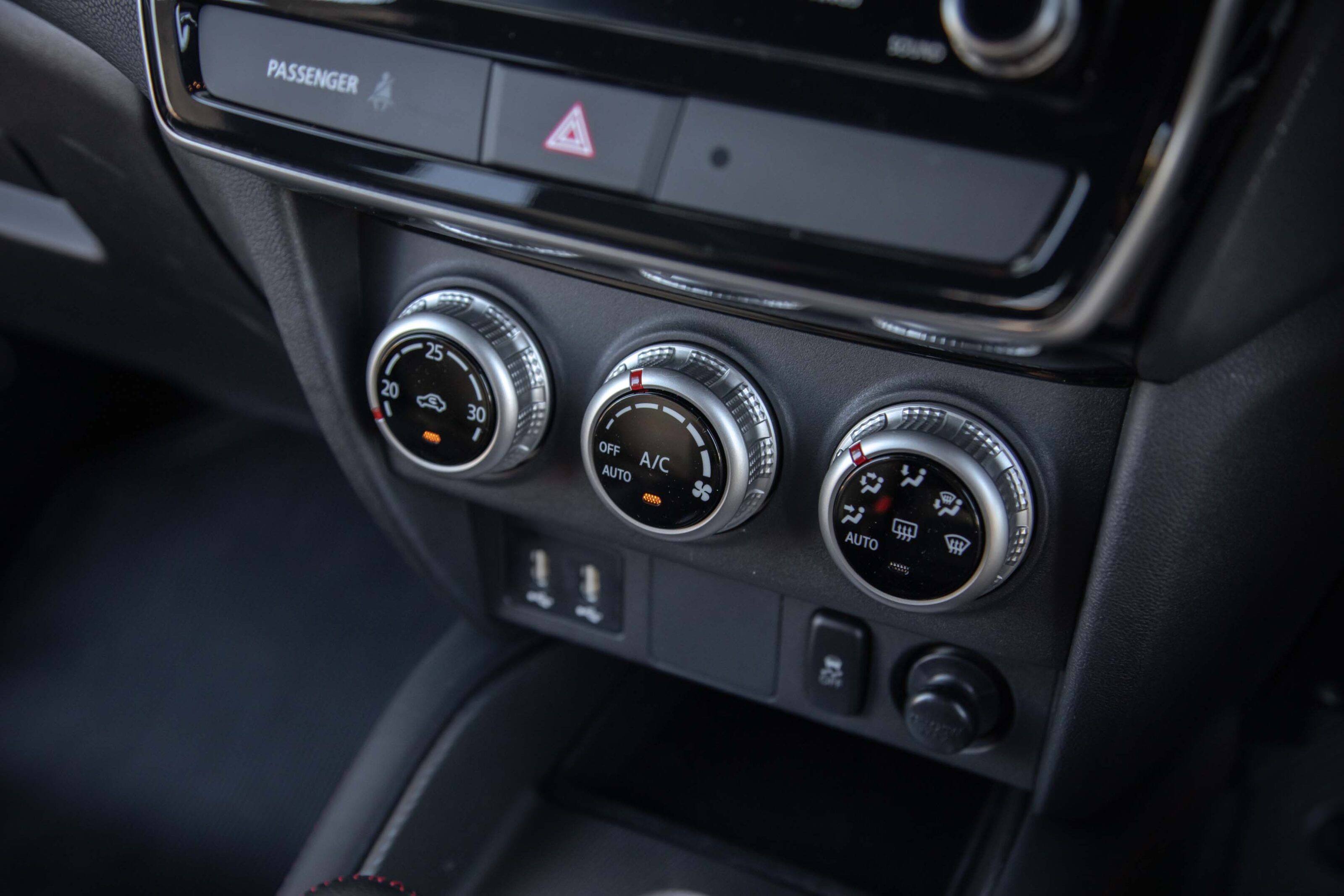
Comfort and space
Where these two really shine is in interior space.
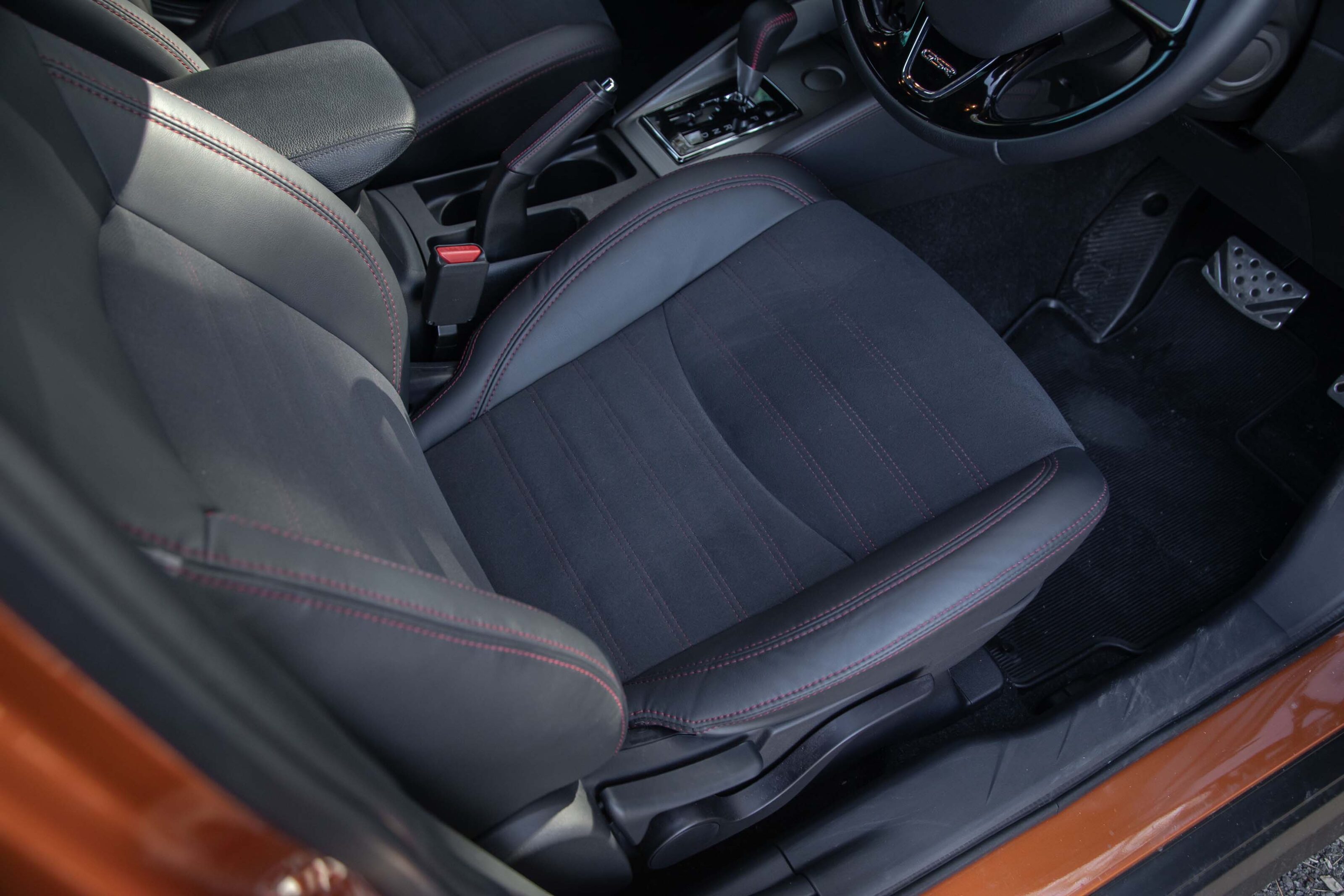
The ASX has a textile suede and fake leather upholstery combination that looks a lot better than it sounds. Apart from being quite comfortable – particularly in summer when the suede panels won’t scorch you as much as leather does – it looks quite good and matches the darker theme of the GSR. I personally prefer this upholstery but that’s definitely a subjective call.
The interior design of the ASX is very simple and completely unadventurous. There’s a lot of hard plastic in the structures and, once again, it shows the age of the car.
In the Jolion you have great swathes of fake leather not only on the seats but on the dashboard. The Jolion has a more interesting mix of materials than the Mitsubishi, although grey plastic dominates both.
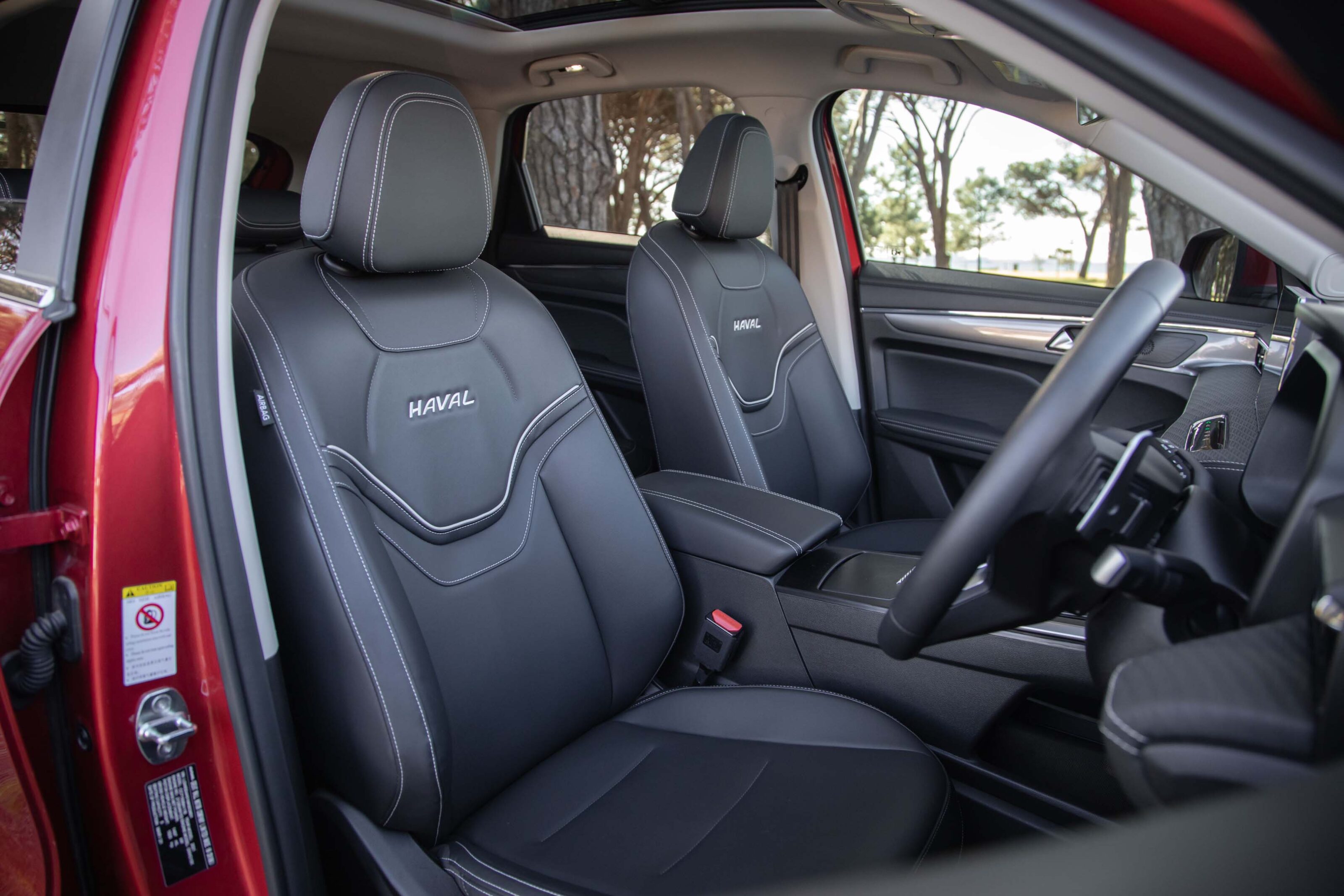
Both feature cup holders in the front and rear, bottle holders in the front doors (the Jolion also has them in the rear) and places for your phone in the front. You also get two USB-A ports up front in both and two USB ports in the back, although the ASX has the more modern USB-C, unsympathetically cut into the vent-free console.
The Jolion counters with air vents, a near-flat floor and, despite the ASX having a pretty good helping of legroom, the Haval trounces it. Both have heaps of headroom, too, but the Jolion’s cabin is slightly wider than the ASX’s.
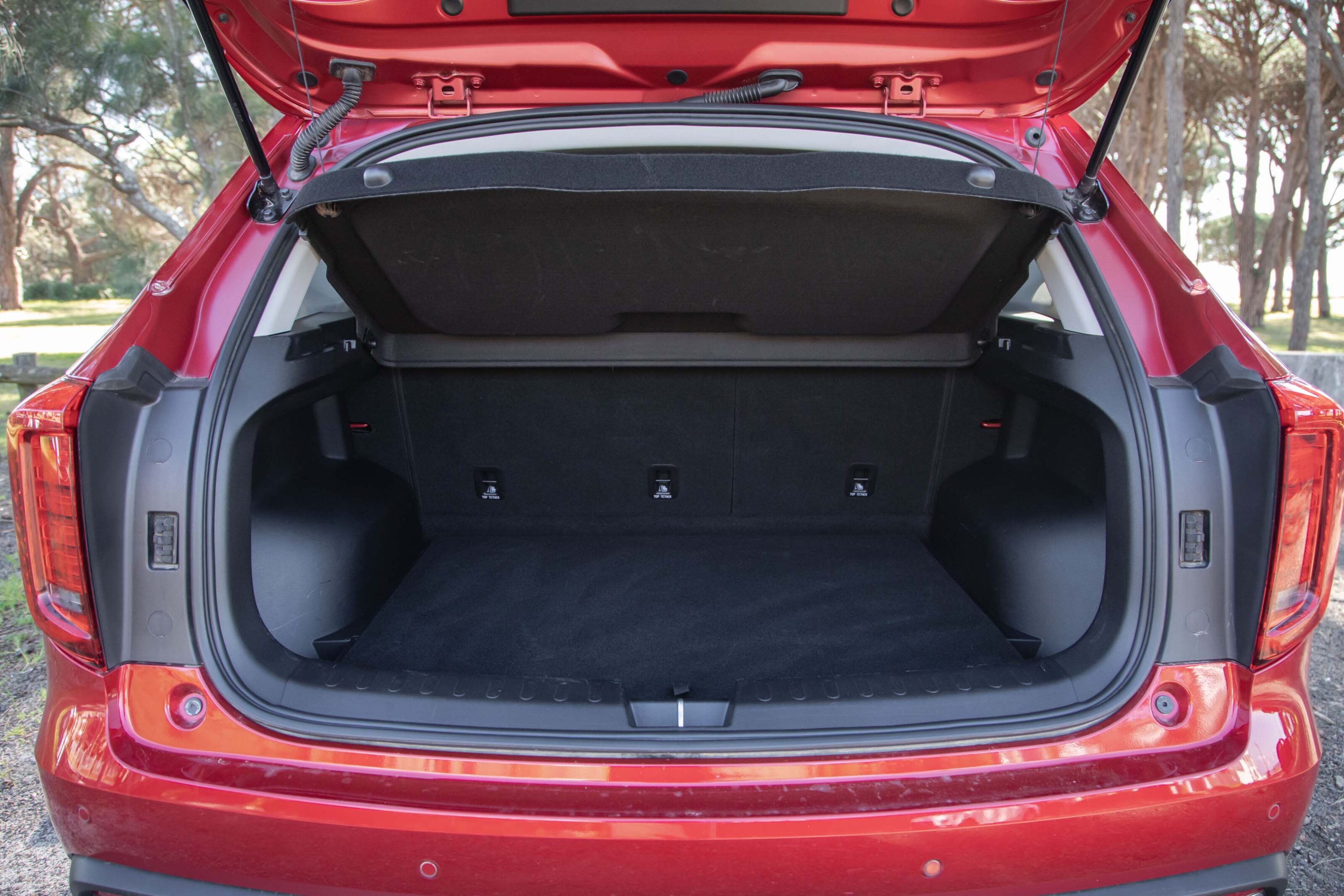
In terms of boot space, Haval again shades Mitsubishi, with 433 litres against 393L. In practice, that’s not a huge amount of difference and if you had them side by side, you’d think they were basically the same.
With the seats down, the Jolion’s 1133 litres is actually slightly smaller than the ASX’s 1143L, but again, you’re hardly going to notice. So we can call boot space even, back seat accommodation goes to the Jolion and overall accommodation also goes to the Haval.
On the road
As I said earlier, these two cars are at opposite ends of their lifecycle. The ASX stretches right back to the mid-2000s Lancer platform while the Jolion rides on GWM’s very modern if unfortunately titled Lemon B30 platform. Like the ASX, the platform is shared with other cars, in this case, the H6 and tremendously named Big Dog, a car we don’t get in Australia.
The two cars diverge markedly under the bonnet. Mitsubishi’s venerable 2.4-litre four-cylinder petrol is the more powerful of the two with outputs of 123kW and 222Nm. With an automatic continuously variable transmission (CVT) turning the front wheels it’s a fairly low-drama, tried-and-true kind of driveline.
Under the Jolion’s bonnet is a 1.5-litre turbocharged four-cylinder petrol producing 110kW and 210Nm, driving the front wheels through a seven-speed dual-clutch transmission. All very modern and a lot more complex but, unusually, that hasn’t resulted in higher servicing costs, at least not for the first five years.
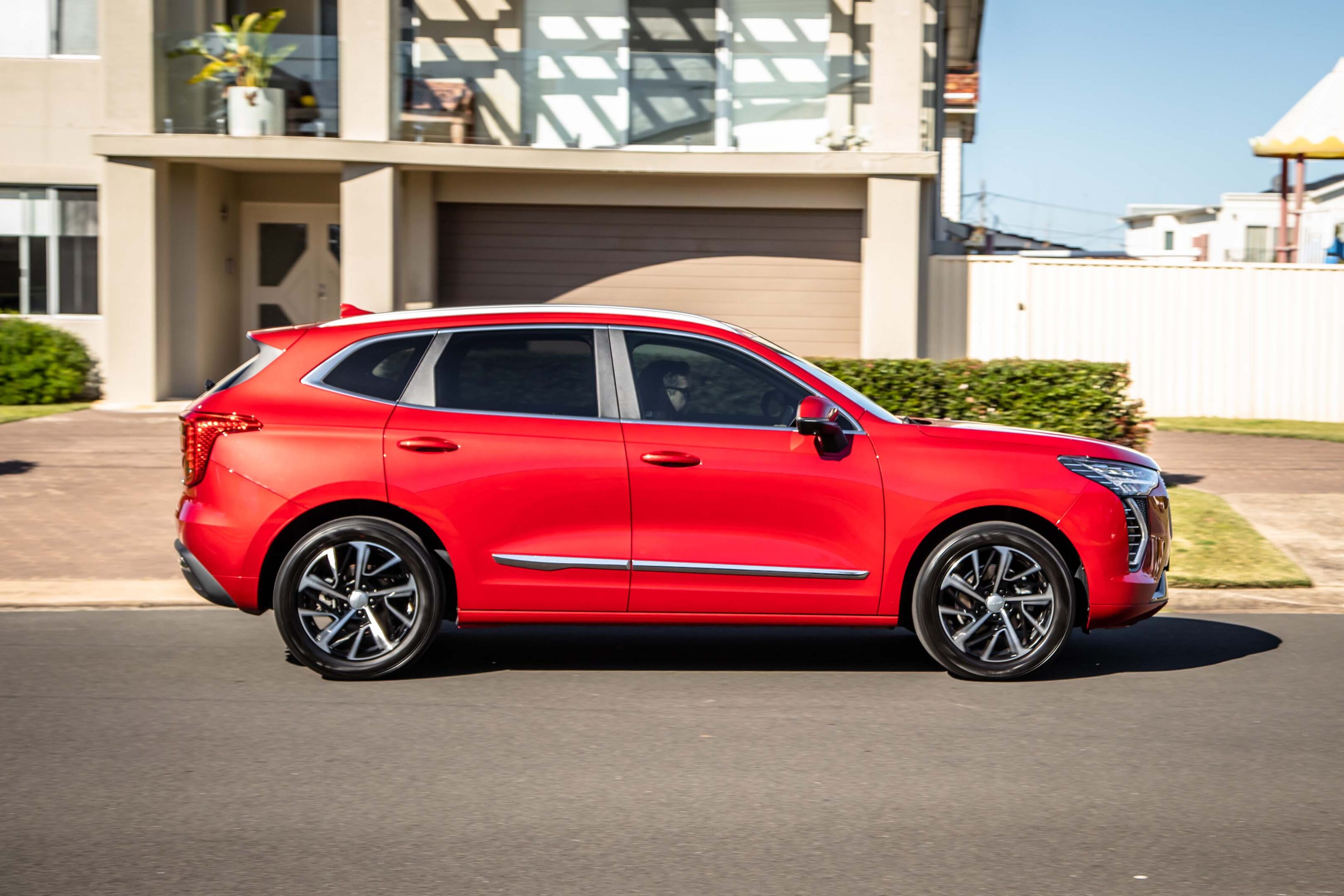
Unfortunately for the Haval, modernity does not translate into superior driveability. The engine itself seems reasonably flexible but it’s hard to tell through the vagaries of the seven-speed dual-clutch.
I’m a big fan of the slick rotary dial selector – something I never say because most of them aren’t very good – but the clutch engagement from a standstill or switching between Drive and Reverse is not very slick at all.
The gearbox is also not very adept at picking the right gear when you’re driving around the suburbs, holding third until you either pull the paddle or give the accelerator a prod in the way your partner might use their elbow when you say the wrong thing at dinner.
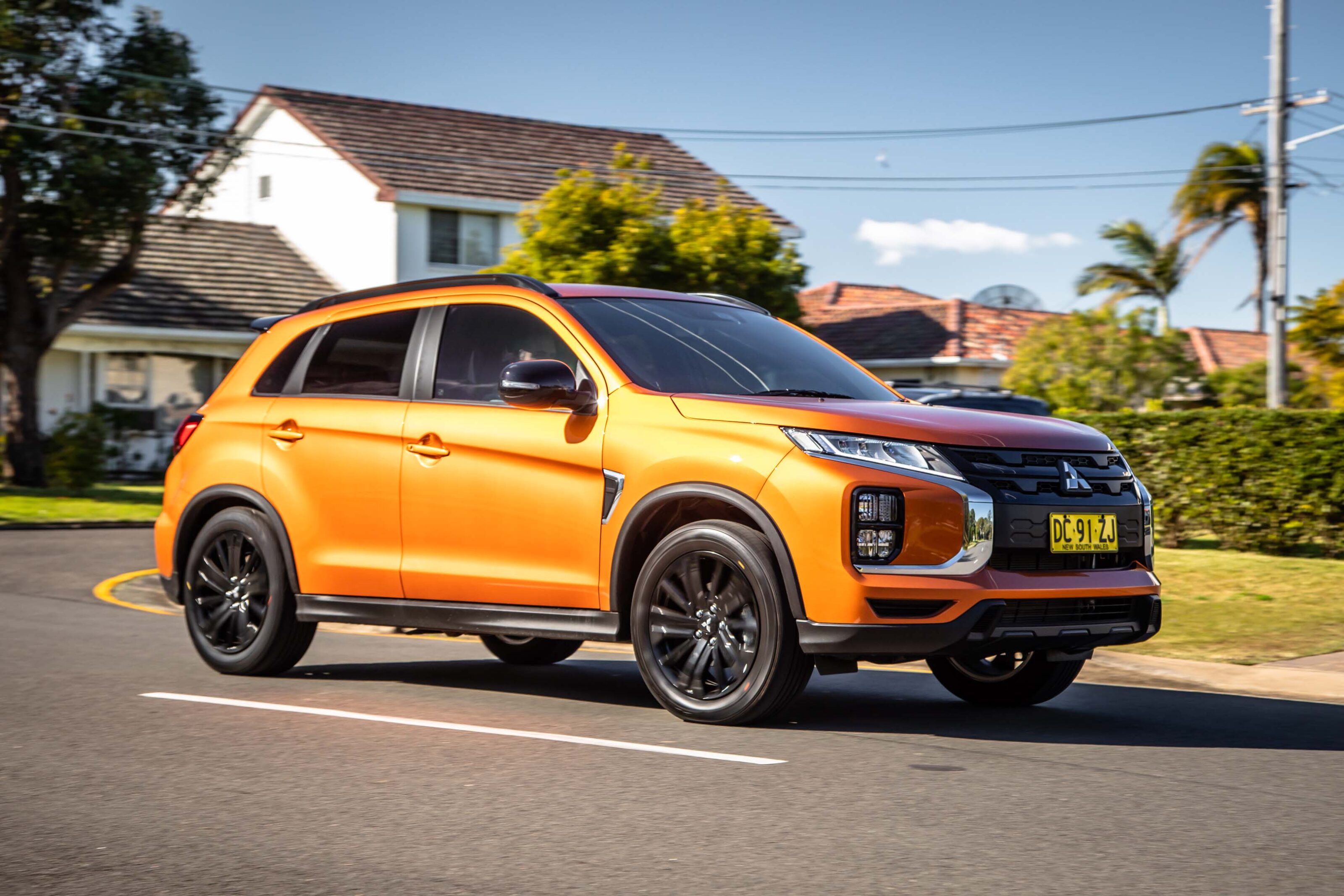
Helpfully, the Jolion recovers some ground by having a smoother ride, although it’s not quieter. With torsion beam rear suspension, it doesn’t look better on paper than the ASX’s multi-link rear, but there’s quite a gap between the ride quality of the pair.
The ASX bumps around on less-than-perfect surfaces and dislikes speed bumps whereas the Jolion sounds like it should be bumping around but doesn’t.
Both have similarly low-communication steering set-ups, the ASX’s wheel in particular not helped by being slightly too small for my liking (not everyone agrees). Both handle corners quite well and neither body rolls excessively but if you’re a keen driver, you’re not going to get too excited here.
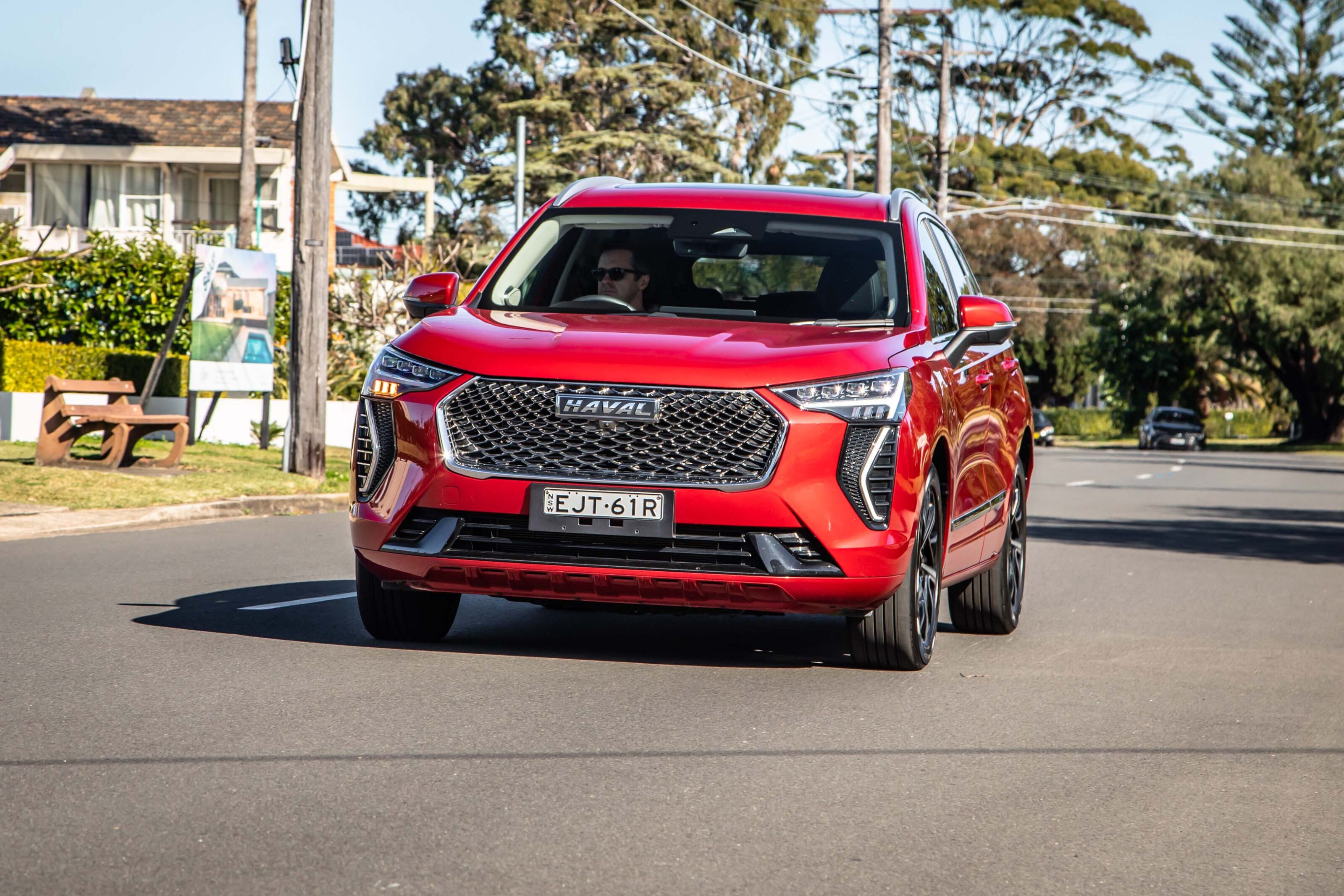
Where the Jolion’s drivetrain is awkward and occasionally shunty, the equally uninspiring-sounding ASX’s naturally-aspirated four-cylinder is better served by its continuously variable transmission. The CVT itself isn’t the peak of high technology but wrangles the kilowatts and Newton metres with considerably more decorum.
It seems to have improved over the years, too, with a little less flaring and a very positive pick-up from the lights (which sometimes means a wriggle of torque steer).
The ASX’s comparatively big-banger results in a higher real-world fuel consumption number than the Jolion’s. The official number of 7.9L/100km for the Japanese car has always seemed unattainable to me, having never got less than 12L/100km in nearly a decade of driving ASXs.
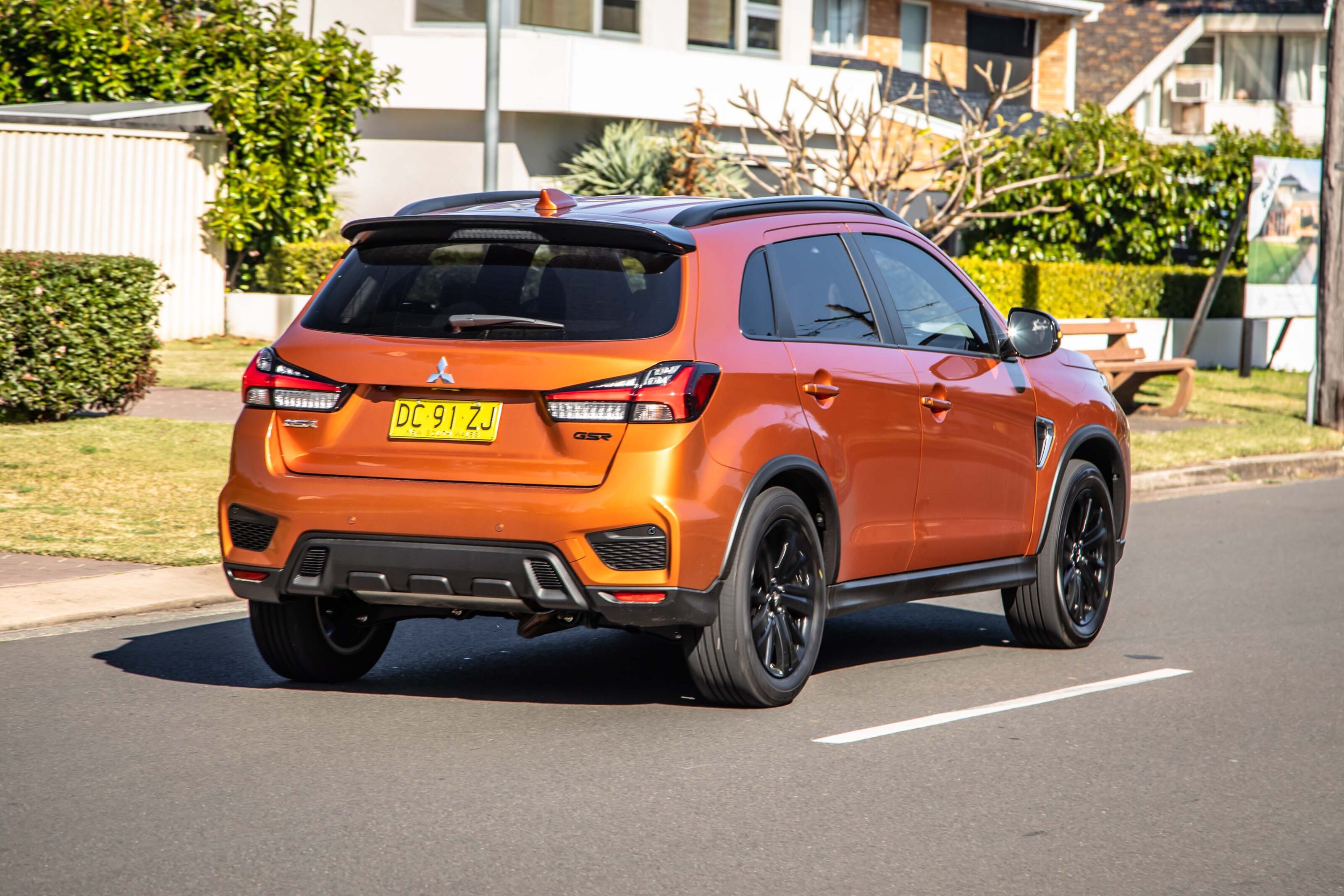
This time around I made it, but only by a solitary tenth of a litre, with 11.9L/100km.
I’d like to be able to compare the Jolioin’s 8.1L/100km figure against the real-world figure, but it’s impossible to find the average figure in the trip computer because, as I discovered in the Lux I drove last year, the steering wheel buttons don’t provide the ability to scroll through the on-screen information.
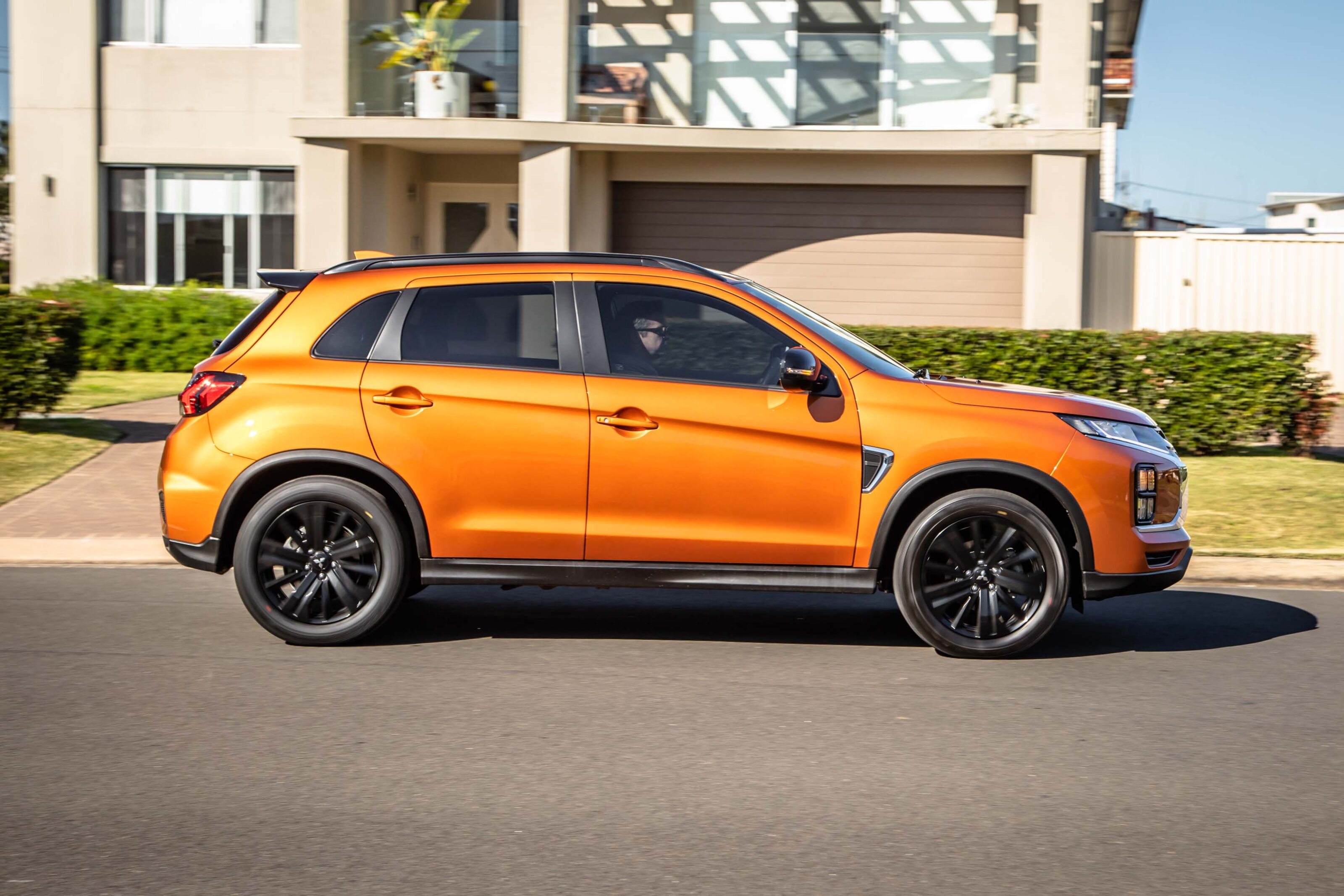
Ownership
Haval sends its cars out with a seven-year, unlimited-kilometre warranty, which is up there with Kia and beaten only by Mitsubishi’s ten-year warranty. There’s a five-year roadside assist package to go with it.
Also lasting five years is the capped-price servicing program. The first service arrives at 12 months or 10,000km but subsequent services stretch to 12 months or 15,000km.
The total for the first five services comes out at $1550 or an average of $310 per visit.
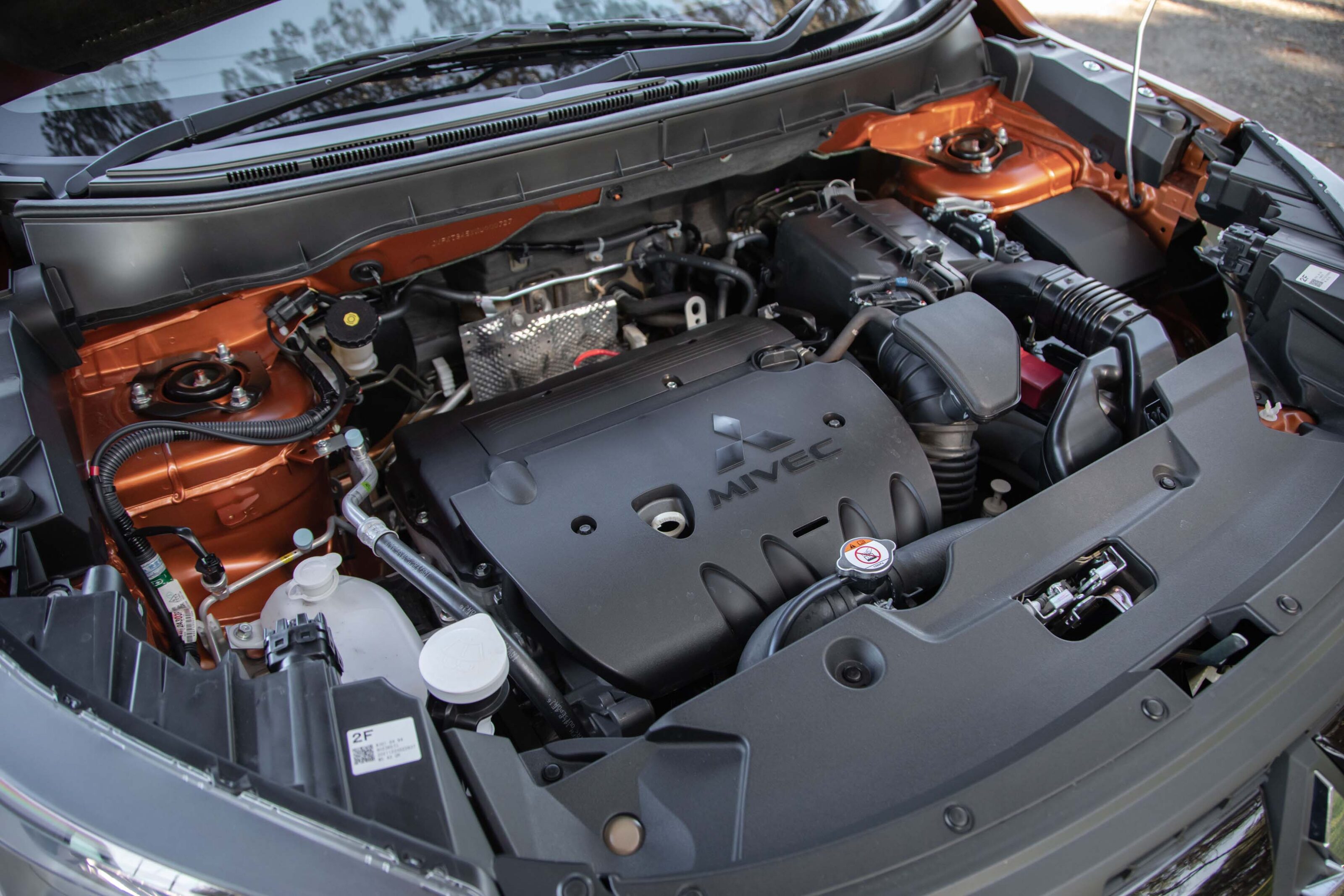
Mitsubishi’s headline ten-year/150,000km warranty beats all-comers. If you do crack the 150,000km limit, the warranty reverts to a five-year, unlimited-kilometre warranty, which is still good going if merely the current industry standard.
To go with the ten-year warranty is a ten-year capped price servicing program. For most of your visits – which come around every 12 months or 15,000km – you’ll pay $299. The sixth, eighth and tenth services jump to $599 each.
Over the decade of the program (that really is a very long time), that works out to $3890 or $389 per service.
While Mitsubishi’s program is longer, the Haval’s is narrowly cheaper for the first five years, so that’s worth considering if you don’t intend to keep your car for a long time.
VERDICT
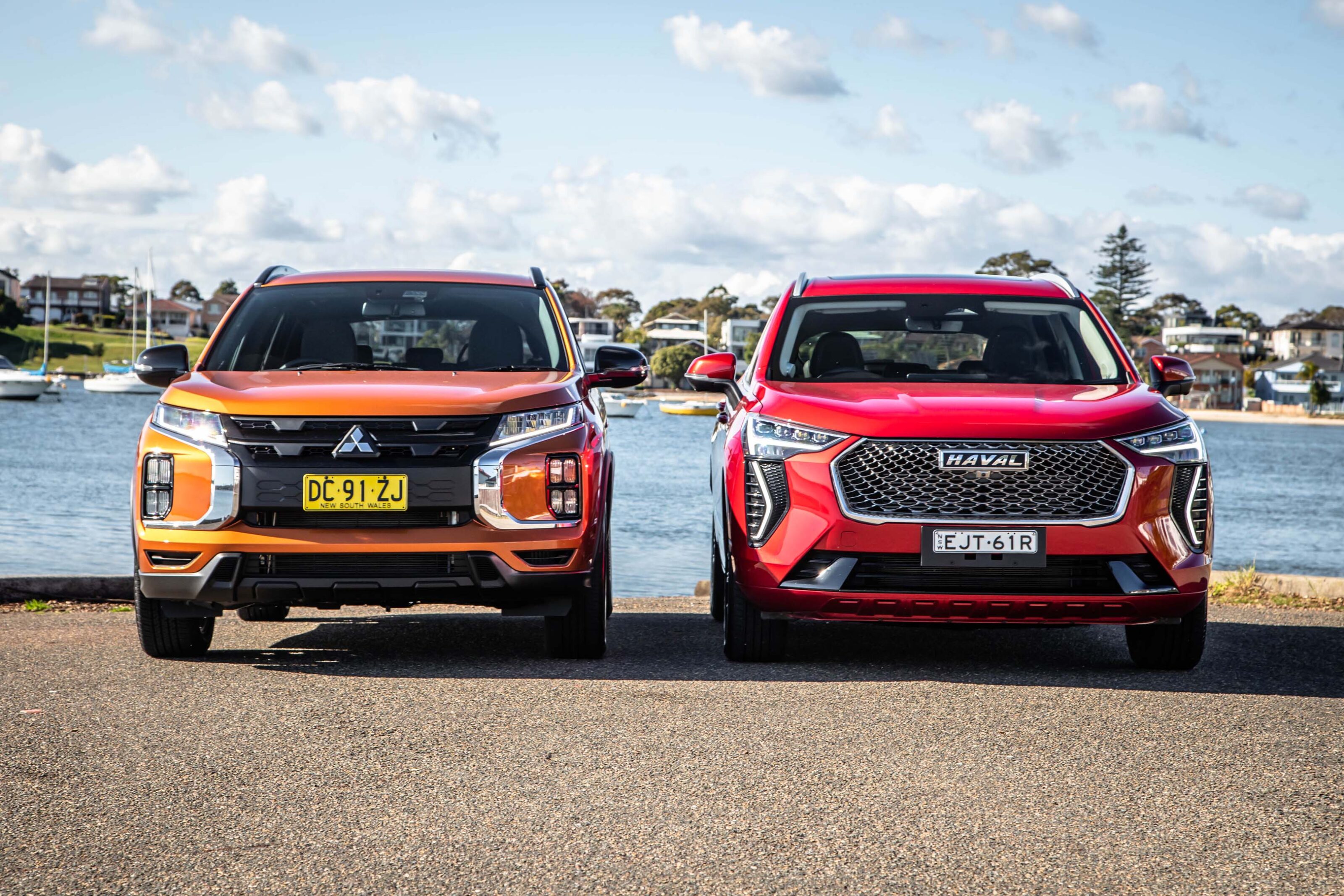
The Haval takes a narrow victory but both of these cars share the same, solid values: sharp pricing, plenty of equipment and a whole of space for you and your things.
If the Jolion Lux were here, the gap would probably be slightly wider in favour of Haval as its smaller wheels result in a quieter ride and you’re not losing much from the Ultra’s spec list, at least not much that matters. And it’s cheaper. But it’s the Ultra we’re looking at here.
On the other side, the ASX GSR is probably the best-value ASX and the best-looking with its black pack theme. An unbeatable warranty ensures it closes the gap on the Jolion, along with a friendlier engine and transmission combo.
The ASX is still selling well and continues to beat the Jolion comfortably with its far more familiar badge.
But the Jolion’s victory in this test comes down to a bigger and better cabin, better ride and handling and comprehensive safety and technology package without the significantly bigger price.
SCORING
Haval Jolion Ultra: 7.7/10
What we like
- Solid cost of ownership
- Heaps of gear
- Huge interior
Not so much…
- Noisy ride
- Dash and media software lack polish
- Dithery gearbox
Mitsubishi ASX GSR: 7.3/10
What we like
- Huge inside
- Looking good in its old age
- Long warranty and servicing program
Not so much…
- Uninspiring drive
- Bitty interior
- Fuel economy
| Haval Jolion Ultra | Mitsubishi ASX GSR | |
|---|---|---|
| Body: | 5-door, 5-seat small SUV | 5-door, 5-seat small SUV |
| Drive: | front-wheel | front-wheel |
| Engine: | 1.5-litre four-cylinder turbo-petrol | 2.4-litre naturally-aspirated four-cylinder petrol |
| Transmission: | seven-speed dual-clutch | continuously variable |
| Power: | 110kW @ 5600-6000rpm | 123kW @ 6000rpm |
| Torque: | 210Nm @ 2000-4400rpm | 222Nm @ 4100rpm |
| Bore stroke (mm): | 84.7 x 75 | 83.0 x 97.0 |
| Compression ratio: | 9.3 : 1.0 | 10.5 : 1.0 |
| 0-100km/h: | 11 sec (estimate) | 11 sec (estimate) |
| Fuel consumption: | 8.1L/100km (combined) | 7.9L/100km (combined) |
| Weight: | 1400kg | 1398kg |
| Suspension: | MacPherson strut front / torsion beam rear | MacPherson strut front / multi-link rear |
| L/W/H: | 4472mm/1841mm/1619mm | 4365mm/1810mm/1640mm |
| Wheelbase: | 2700mm | 2670mm |
| Brakes: | Ventilated disc front / solid disc rear | Ventilated disc front / solid disc rear |
| Tyres: | 255/55 R18 Kumho Solus | 225/55 R18 Bridgestone Ecopia |
| Wheels: | 18-inch alloy (space-saver spare) | 18-inch alloy (space-saver spare) |
| Price: | $33,990 drive-away | $31,990 + on-road costs |
Snapshot
- 4.0-litre twin-turbo V8 punches out 404kW/700Nm
- 180 millimetres longer than regular Bentayga
- 0-100km/h in 4.6 seconds
August 12: 2023 Bentley Bentayga EWB goes into production
The 2023 Bentley Bentayga EWB’s production has started, with a new sign-off process coming into play for its hand-craftmanship.
According to the British carmaker, digital techniques deliver its softest ever quilting, and more than 10 hours is needed to curate the wood set for each individual car – 132 hours for the flagship to be handcrafted in total.
As of the last week production has been able to commence, as workers return to the Crewe factory following Europe’s summer shutdown.
The model will make its UK public debut at the Southampton International Boat Show in September.
Bentley says more than half of customers have opted for the airline-style seats or diamond illumination in their orders, while 30 per cent have gone for colour options from the extended paint range, metal overlays in the veneer and open pore wood.
For more about the Bentayga EWB, read our original reveal story below.
The story to here
May 10: 2022 Bentley Bentayga EWB revealed
It may have been designed and engineered by Germans, but the Bentley Mulsanne was a Bentley to its bootstraps.
It was a giant, imposing sedan with an interior of wood and leather and chrome, and a rumbling torque-monster of an engine under the bonnet that was capable of propelling the final Speed variant to the silly side of 300km/h. It was, rightly, Bentley’s flagship.
Was. The final Mulsanne rolled off the Bentley assembly line at Crewe in 2020. And stepping up to the flagship role is…a stretched version of the Bentayga SUV.
At first glance the Bentley Bentayga EWB doesn’t sound – or look – like a successor to the gloriously charismatic Mulsanne. But there’s method in Bentley’s madness.
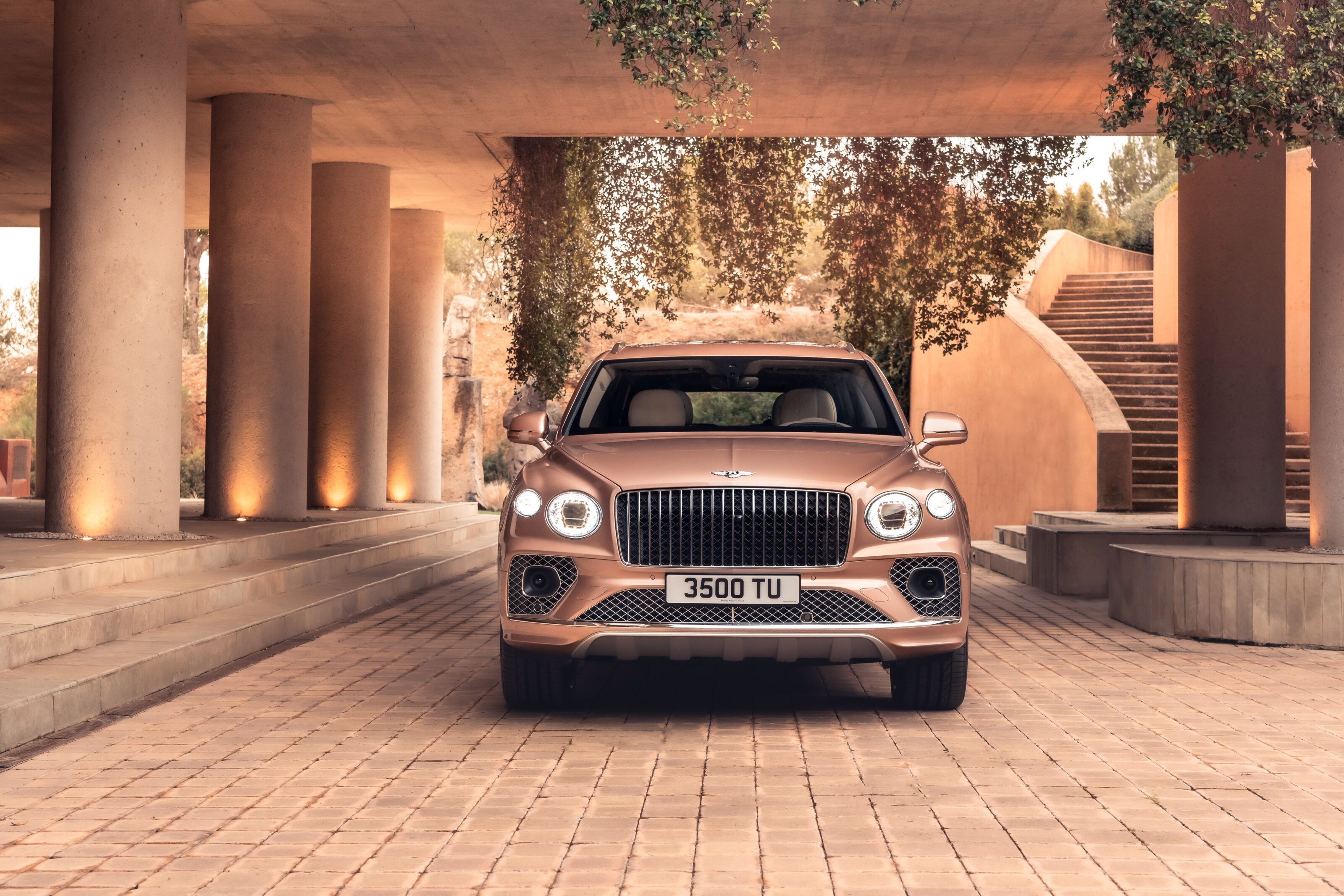
With Bentley planning to build nothing but electric vehicles by 2030, there seemed little point in developing a conventional Mulsanne replacement, especially as demand for large luxury sedans has been steadily shrinking. Meanwhile, Bentley’s research showed the market for luxury SUVs was expected to grow 35 per cent by the end of the decade.
The Bentayga has consistently been a best-seller for Bentley and customers, particularly in the US and China, have long been asking for one with limo-like room in the rear. Against this background, the Bentayga EWB is a supremely logical piece of product planning.
In simple terms, the Bentayga EWB is a Bentayga V8 with an extra 180 millimetres between the B-pillar and the rear axle. But it’s more than just a basic stretch job, insists Bentley.
Over $100 million has been spent on designing and engineering more than 2500 new parts for the car, including a new floorpan, bodysides, power-close rear doors, and a sunroof repositioned further rearwards.
Why no W12 under the hood if this is meant to be the new flagship Bentley? “It’s a strategic decision,” says product line director Chris Cole. “We want to keep the W12 for the Bentayga Speed as the halo sports model. The EWB is meant to be a luxury vehicle, emphasising well-being and comfort.”
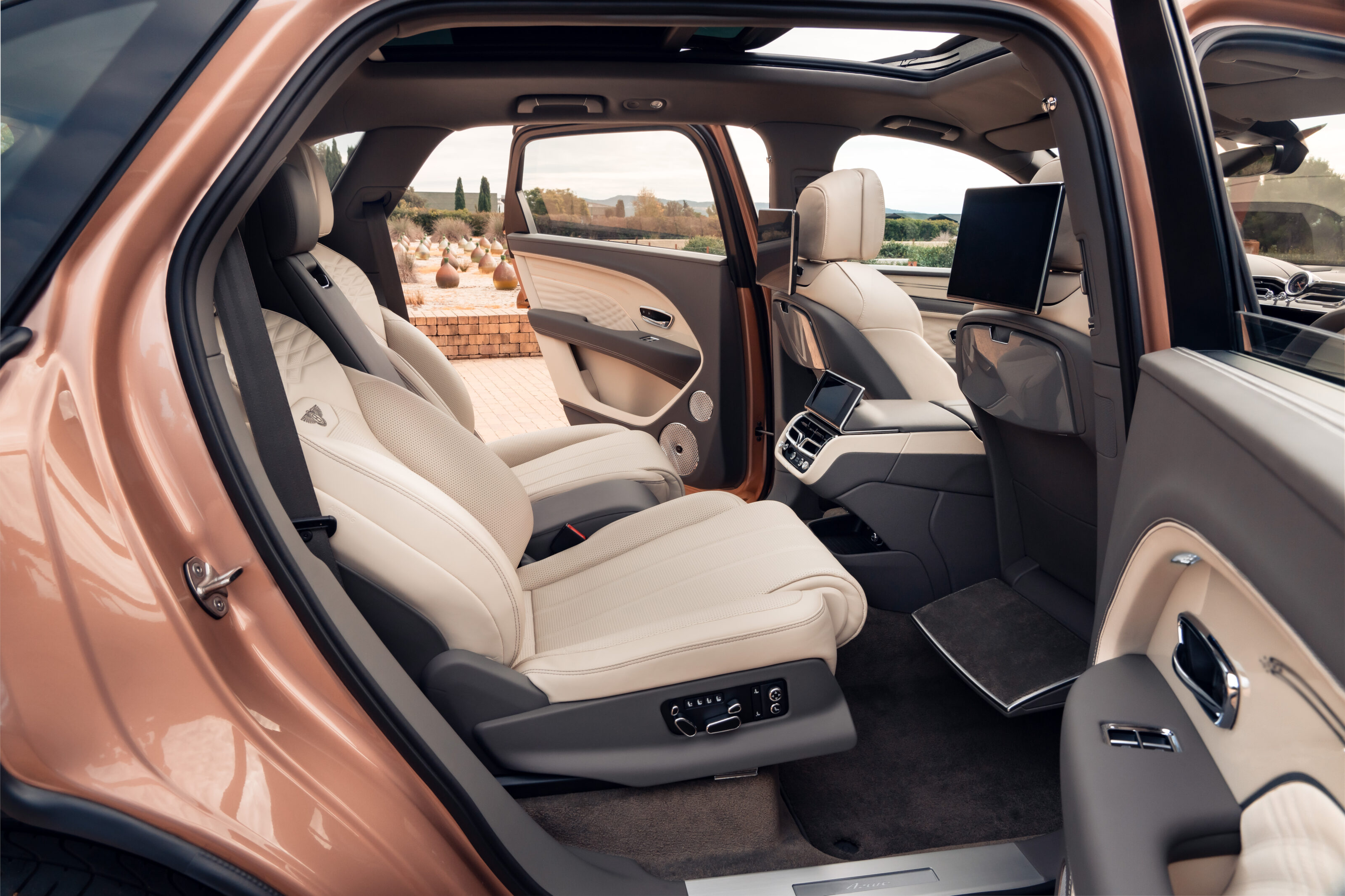
And it certainly does that. Bentley says the EWB’s rear passenger area has more room than the old Mulsanne, the Rolls-Royce Cullinan, and the Range Rover LWB.
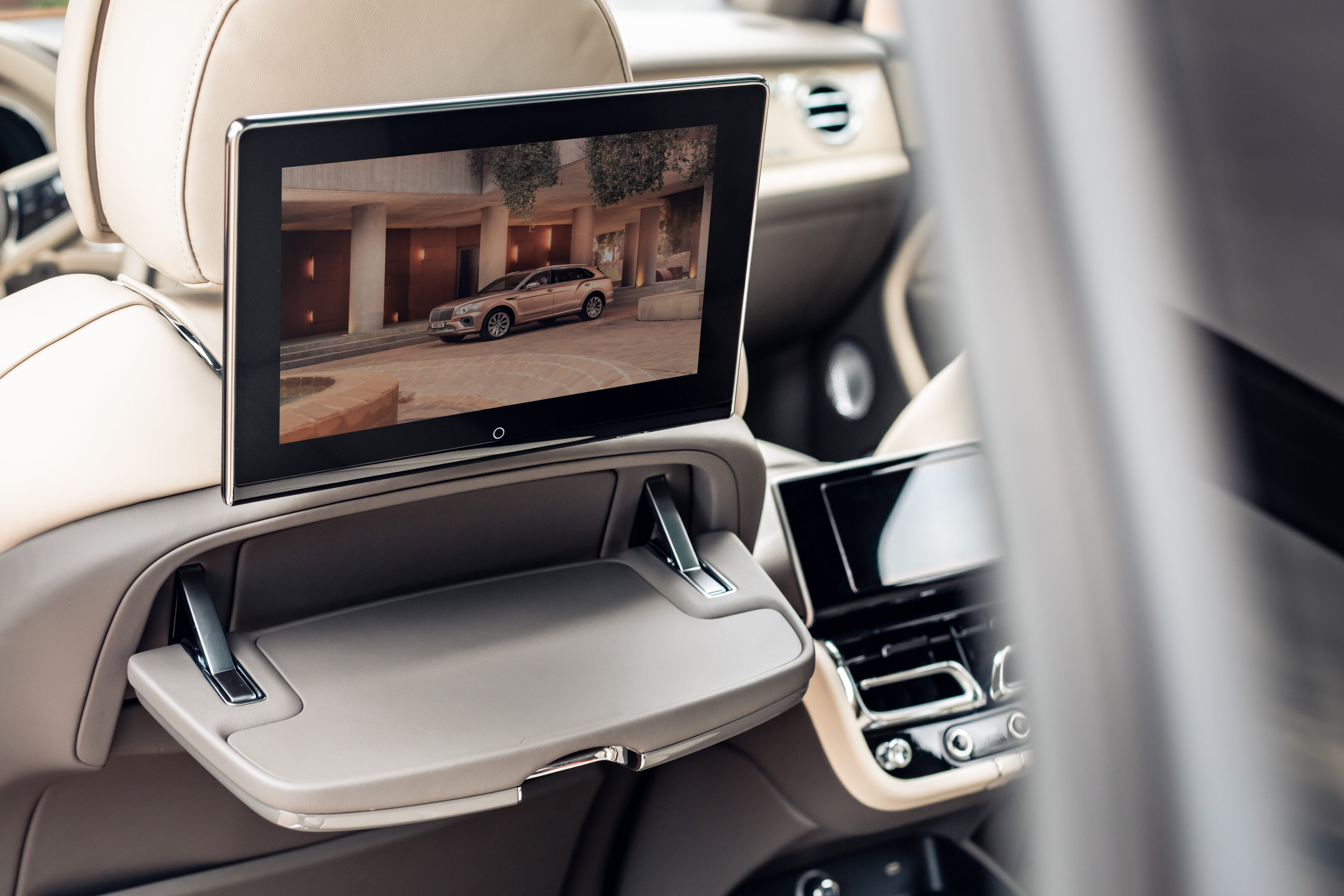
Three different rear seat combinations are available – a three-passenger bench, two single seats separated by a fixed console, or a two-plus-one seater with a folding centre console. Despite the extra length, there’s no third row. Indeed, the load space behind the rear seats is no bigger than in the regular Bentayga.
The optional ‘Airline Seat’ available with the four-seat specification is the most advanced ever fitted to a car, says Bentley’s head of colour and trim, Maria Mulder.
The seat will automatically react to passenger body temperature and humidity to independently heat and cool different areas to ensure maximum comfort, and what Mulder calls a ‘postural adjustment’ system uses 177 pressure points across six zones to provide a slow, almost imperceptible three-hour massage.
The EWB’s 4.0-litre twin-turbo V8 punches out 404kW at 6000rpm and 770Nm of torque from 1960rpm to 4500rpm, just as it does in the standard wheelbase Bentayga V8.
Remarkably, despite all the extra metal, the EWB is a mere 100 kilograms heavier than the Bentagya V8, and so delivers near-identical performance, says Bentley. The 0-100km/h sprint takes 4.6 seconds, making the EWB just a tenth slower, while the 290km/h top speed is identical.
In terms of the chassis, the EWB’s biggest upgrade is the adoption of rear-wheel steering, the first time the technology has been available on Bentley’s SUV. This reduces the turning circle to 0.6 metres less than that of the regular Bentayga V8 – a useful selling point to the 74 per cent of buyers Bentley says drive their luxury SUVs in the city nearly every day.
Long wheelbase sedans or SUVs invariably look more awkward than their standard wheelbase counterparts, but the EWB is the exception that proves the rule.
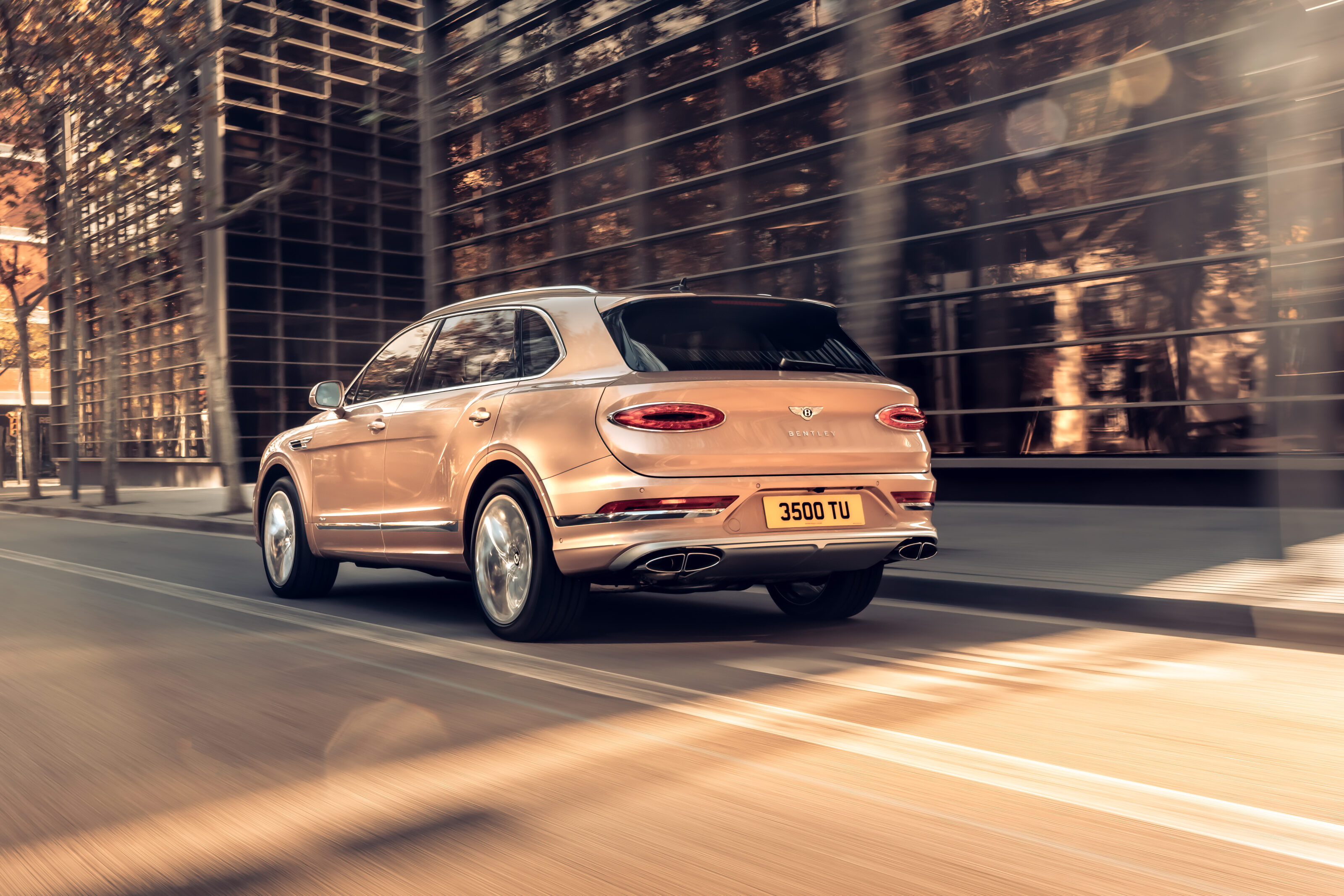
Even though the B-pillar has not moved, which means the front doors look quite short, the EWB appears more gracefully proportioned than the standard wheelbase Bentayga. Apart from the longer rear doors, the EWB is distinguished from other Bentaygas by a new vertical vane grille like that on the Flying Spur sedan, and unique 22-inch 10-spoke alloy wheels.
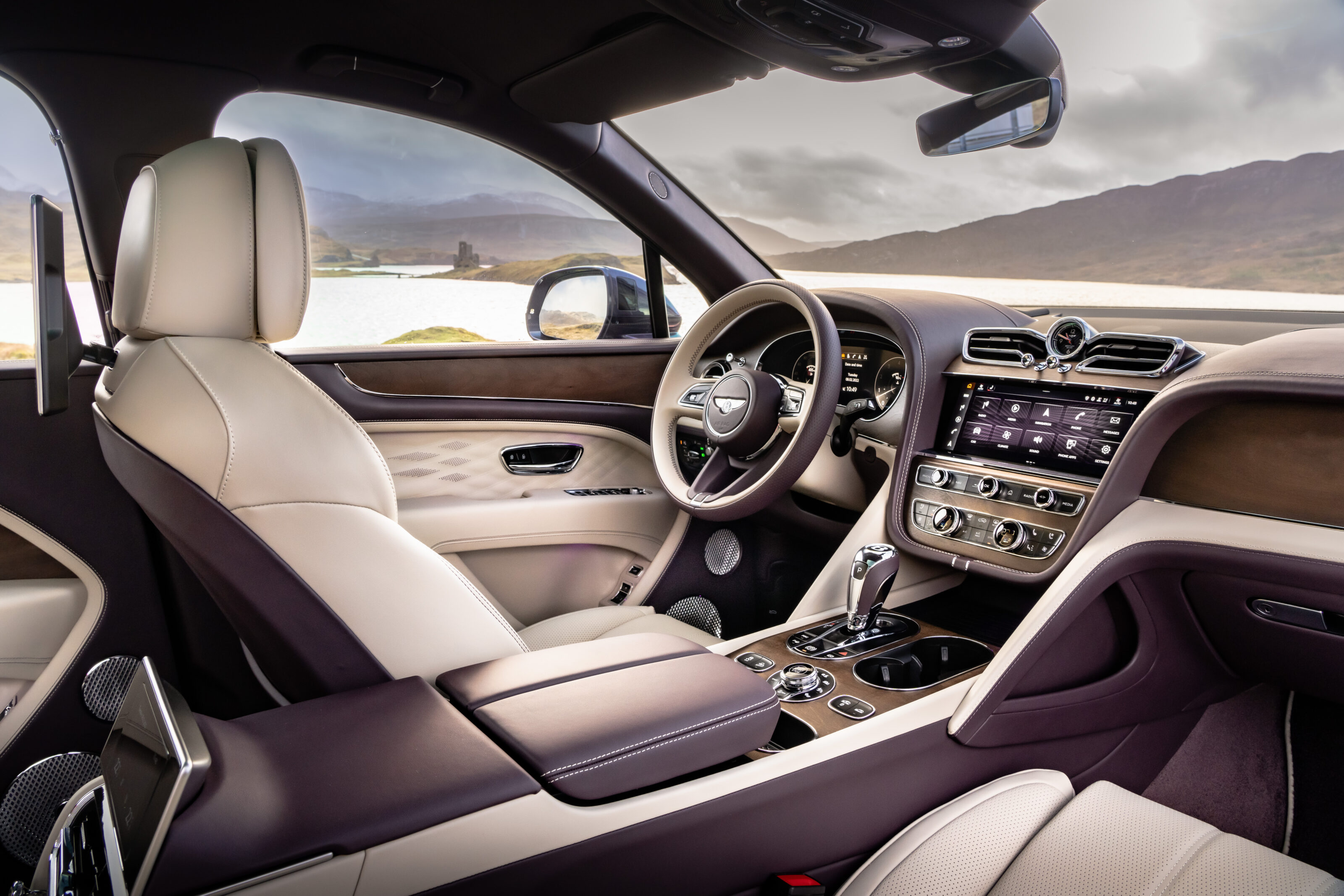
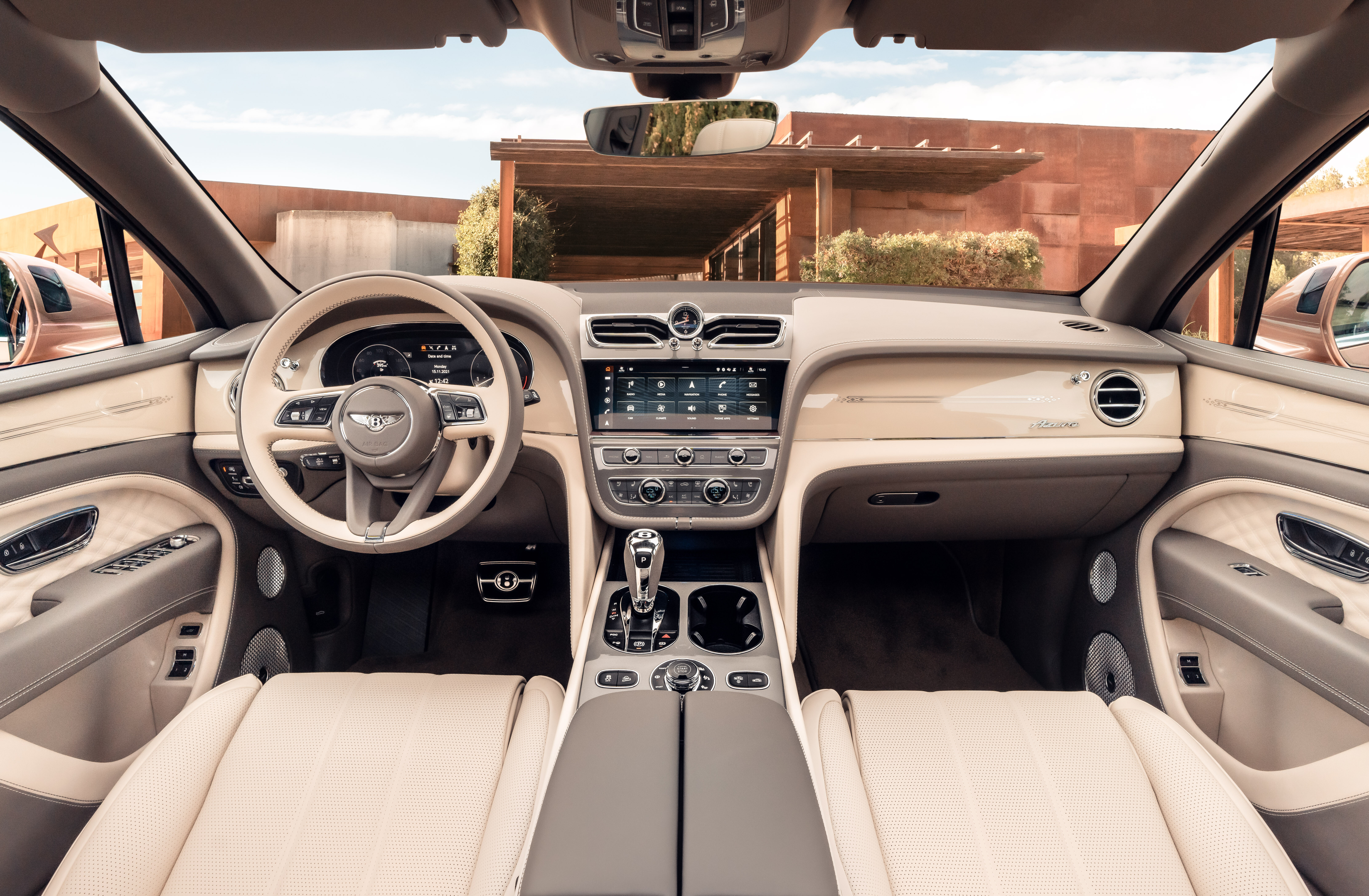
Inside, the spacious interior features new precision metal inlays, and unique asymmetric quilting on the leather, with an optional lighting package that shines through the holes in the leather trim on the doors in up to 30 different colours.
If a fully loaded EWB still isn’t luxurious enough for you, Bentley’s in-house bespoke coachbuilding shop Mulliner will be happy to build you one just the way you like it.
Bentley says the EWB will account for about 45 per cent of global Bentayga sales, and shrugs off suggestions it will steal sales from the standard wheelbase model.
It’s hard to see how it won’t, however, especially in the US and China, both markets where consumers prefer long-wheelbase luxury sedans over their standard wheelbase counterparts. Indeed, Bentley insiders suggest the EWB could account for as much as 60 per cent of Bentayga sales in the US.
If the EWB does steal sales from the regular Bentayga, the truth is Bentley probably won’t mind too much. In Australia, the entry-level Bentayga V8 currently retails for about $380,000; the EWB is likely to be about 30 per cent more expensive. So, even if the EWB doesn’t increase the overall number of Bentaygas sold, it’s going to drop more dollars to Bentley’s bottom line.
Mercedes-AMG and Audi’s RS division have been going toe-to-toe in the hyper-hatch world for years now, but in 2022 things have hit fever pitch.
Now we have a pair of grocery getters that produce 300kW/500Nm, cost six figures and, thanks to sub 4.0 second 0-100 times, have enough acceleration on tap to make a Porsche 911 Turbo feel a touch sheepish.
But if you want to buy the fastest hatchback from 0-100 which do you go for: Audi RS3 or AMG A45 S?
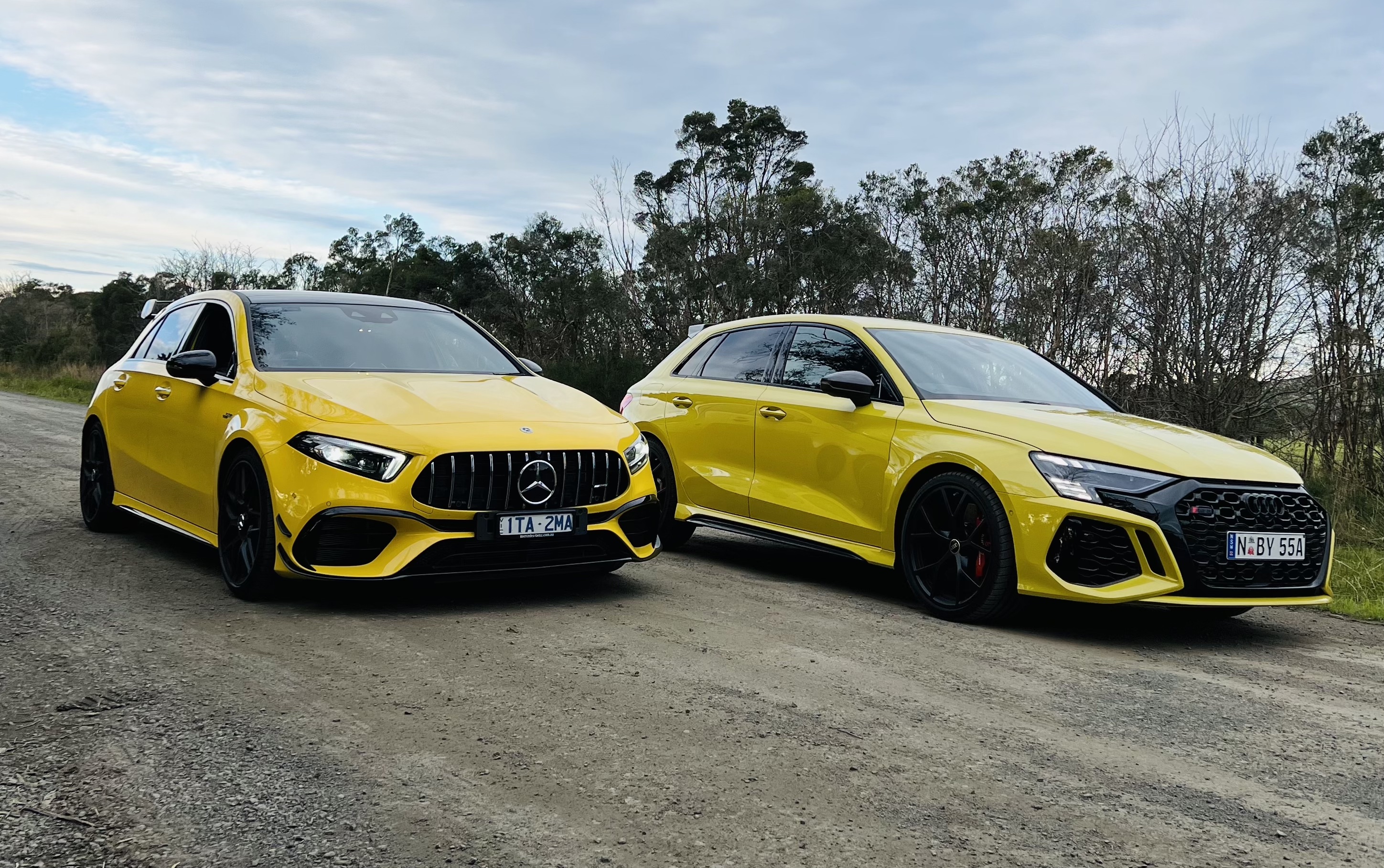
On paper, the Audi is the quickest of this pair. Its 0-100km/h claim of 3.8 seconds is a tenth quicker than the AMG A45, which passes the same marker in 3.9sec.
But as we’ve discovered on multiple occasions, on-paper performance figures are one thing – actually achieving them in the real world is another.
Time to strap on our trusty VBOX data logger and dial up launch control.
Before we get to the numbers, some important house-keeping. Both cars were tested on the same day, in the same conditions and with the same driver. They’re also rolling on road-biased tyres.
You can opt for sticky Trofeo R rubber on both cars, but for this test the AMG was fitted with Michelin Pilot Sport 4 S rubber while the RS3 was on staggered Bridgestone Potenza Sports.
First up against the clock was the AMG. With 310kW/500Nm on tap from a frenzied M139 2.0-litre turbo, it’s the more powerful of this pair.
Its eight-speed dual-clutch also has an extra ratio compared to the RS3, although both cars tightly stack their first three gears to hit 0-100km/h in the quickest time possible.
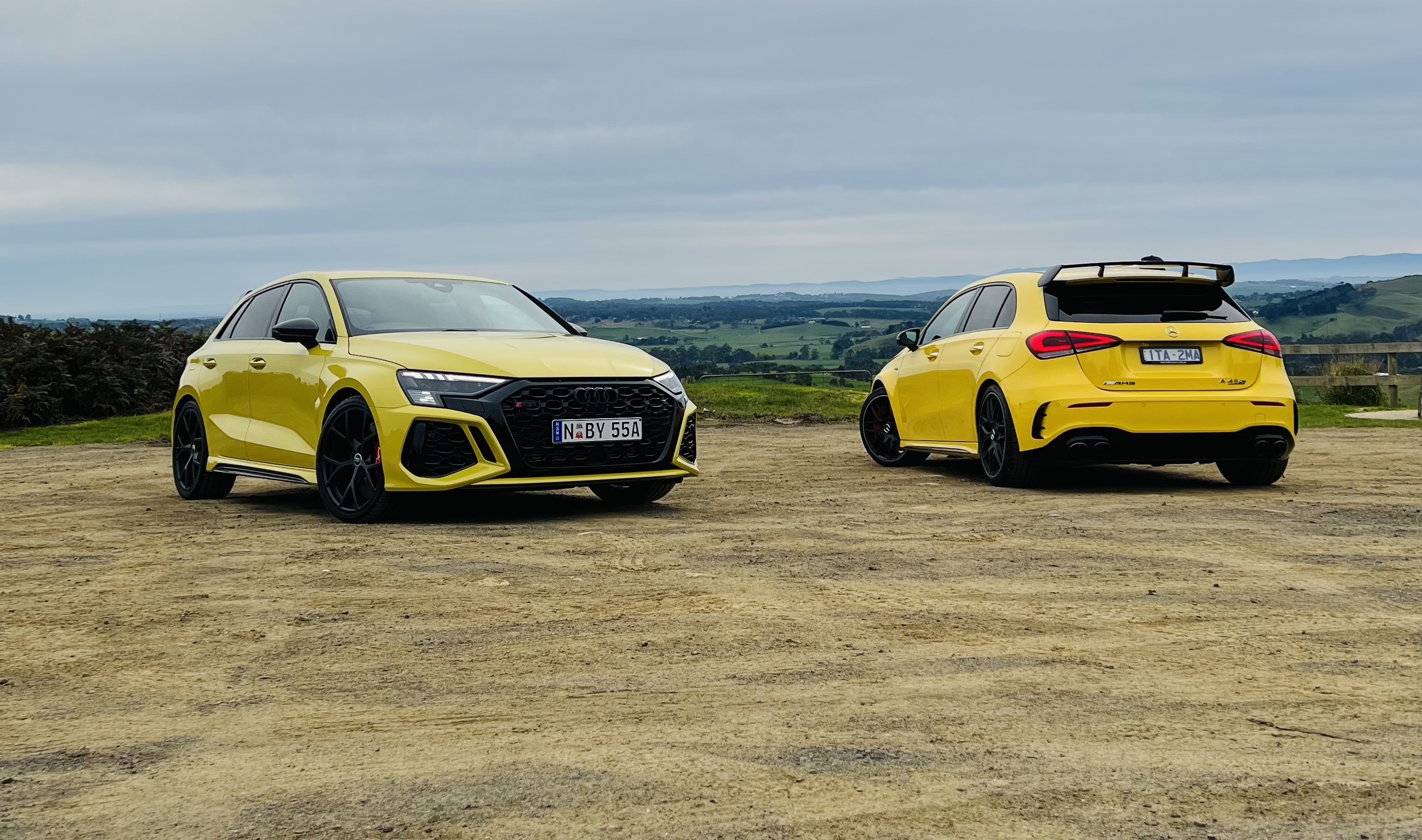
With Race mode and launch control engaged, the A45 S hit 0-100km/h in 4.0 seconds dead.
That’s a tenth away from its official 3.9sec claim, and also a tenth slower from what we’ve recorded before on a sticky drag strip, but in slightly cool conditions and on regular black top, the A45 was metronomic.
It recorded 4.0sec run after run – regardless of whether we changed our launch technique or drive mode. We know from experience the A45 can match its 3.9 sec claim, but today that last tenth evaded us. And in the end, it didn’t matter.
The Audi’s first run made mincemeat of the A45. And it completely destroyed its official claim of 3.9sec.
With RS Individual dialled up and launch control engaged, the RS3 hit three figures in 3.5 seconds.
Weirdly, it didn’t feel quite as fast as the frenzied AMG. The A345 is louder and its gearshifts hammer home with shocking speed and intensity. The RS3 is more like an electric car in how it rockets away from the line. Minimal wheel spin, seamless gear shifts and a seemingly relentless stream of acceleration.
The RS3 clocked 3.6sec to 100km/h on the next two runs, proving that Audi has seriously undersold its true straight line potency.
Related video: 2022 RS3 track & road review
It’s also worth pointing out our testing is from 0-62mph, not 0-60 as some times are recorded in America and the UK.
We also don’t use a ‘one-foot rollout’, which doesn’t start the clock right when the car starts to move and can shave a few tenths from the time.
Washing off speed is equally important in cars like this and both recorded similar 100-0 km/h braking distances.
The Audi was fitted with optional carbon ceramics and took 36.5 metres to come to a complete stop. The A45’s regular steel stoppers saw it complete the same exercise in 37.6m.
So the Audi is the quickest of this pair and by a decent margin, too. As for which is the better all-round hyper hatch, we have a full comparison test dropping soon. Stay tuned.
| Speed | Audi RS3 | AMG A45 S |
|---|---|---|
| 10km/h | 0.3 | 0.2 |
| 20km/h | 0.6 | 0.6 |
| 30km/h | 0.9 | 1.0sec |
| 40km/h | 1.2 | 1.3 |
| 50km/h | 1.5 | 1.7 |
| 60km/h | 1.8 | 2 |
| 70km/h | 2.2 | 2.5 |
| 80km/h | 2.6 | 2.9 |
| 90km/h | 3 | 3.5 |
| 100km/h | 3.5 | 4.0sec |
| True at 100km/h | 97 | 96 |
| 100km/h-0 | 36.5m | 37.6m |
Mazda has yet to confirm a successor for the ageing 6 sedan and wagon – and expectations were dampened by the marque’s engineering boss in recent months.
However, with the recent emergence of the jacked-up part-sedan, part-crossover body style – as seen with the Peugeot 408, Toyota Crown Crossover and Ford Evos – could Mazda follow suit?
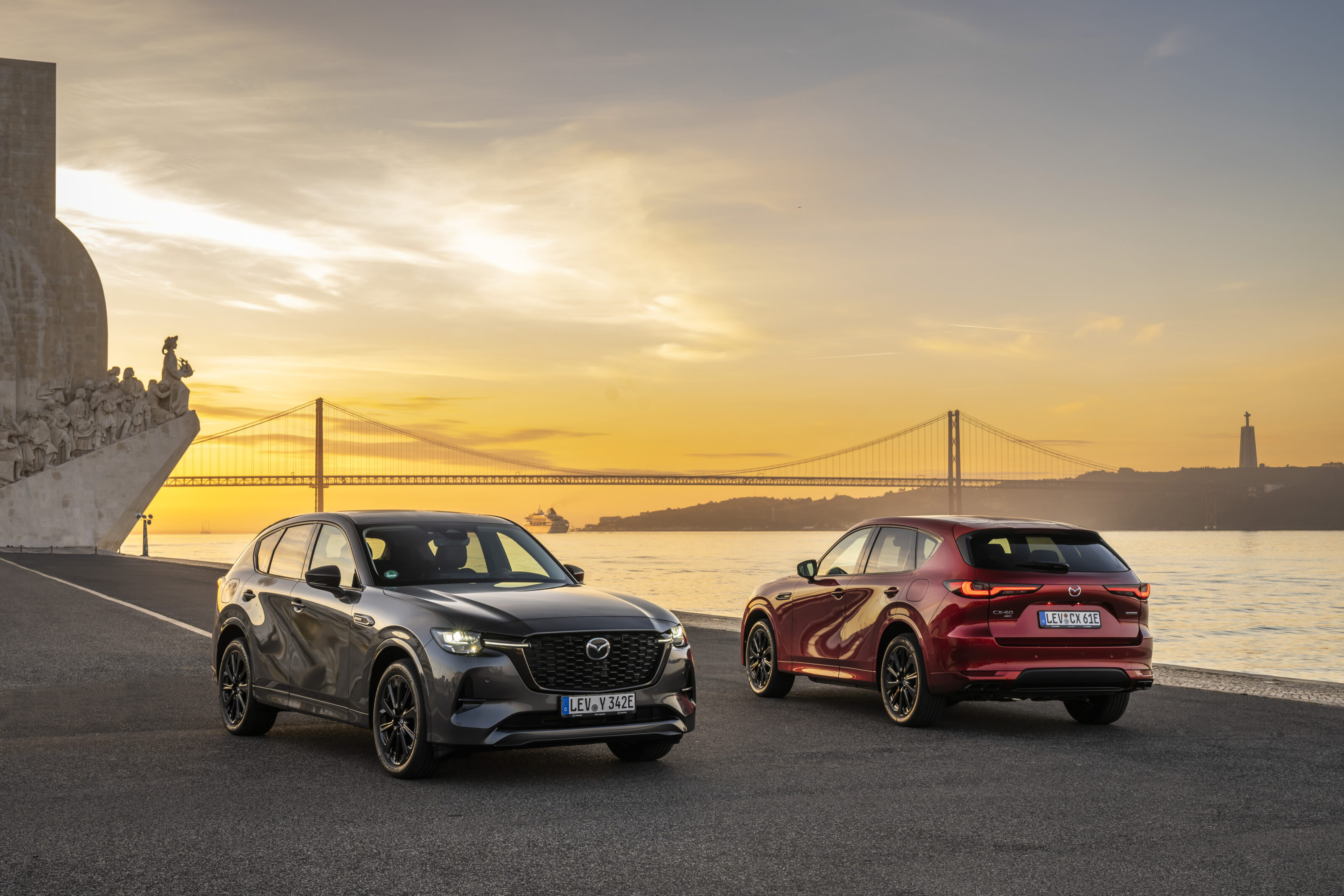
A new rendering by digital artist Theottle has imagined a hypothetical Mazda MX-60 crossover based on the brand’s new rear-drive Large Architecture platform, which debuted underneath the CX-60 medium SUV in March.
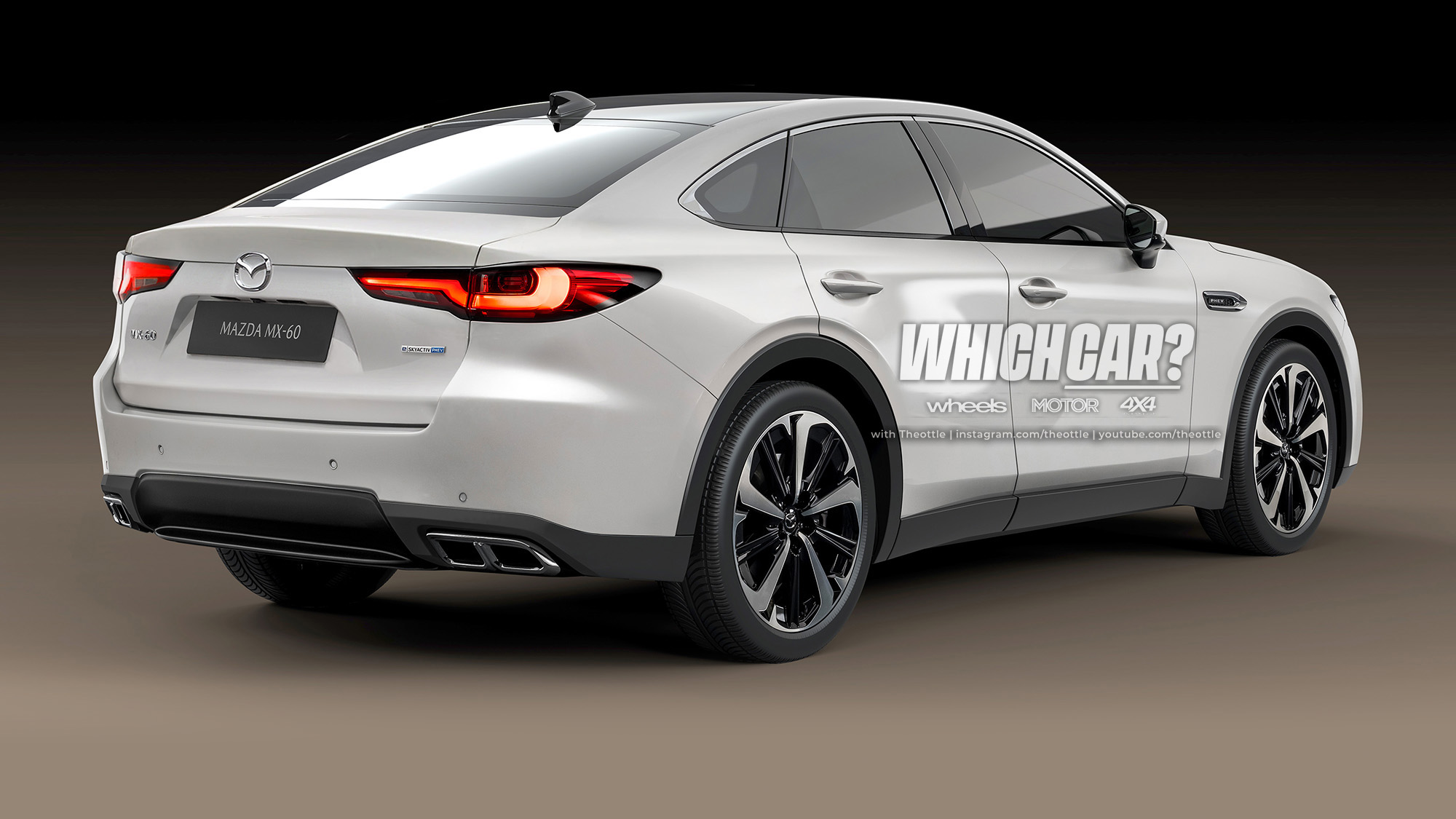
The vehicle adopts the formula of the Peugeot and Toyota, with a sedan-like front end, plastic body cladding and a rear design akin to a coupe SUV, but with a traditional sedan boot.
While the MX moniker – which stands for ‘Mazda Experimental’ – is typically associated with the MX-5 roadster, the previous MX-6 available between 1987 and 1997 was a two-door coupe sibling to the modern 6’s predecessor, the 626.
In addition, the recently-introduced MX-30 is a funky crossover, with mild-hybrid and all-electric powertrains.
With an emphasis on style and a higher ride height for ease of access, the MX-60 would appeal to the European, North American, Chinese and Japanese markets – and would consolidate the brand’s mid-size ‘passenger car’ range to one body type to reduce complexity.
Under the bonnet, the MX-60 would share its powertrains with the CX-60, with a focus on the 2.5-litre four-cylinder plug-in hybrid system producing 241kW of power and 500Nm of torque.
A range of six-cylinder petrol and diesel mills could also be offered, alongside the entry-level 2.5-litre naturally-aspirated petrol – as found in the current Mazda 6.
Mazda hasn’t confirmed power outputs for the 3.3-litre ‘Skyactiv-X’ petrol six; however, the flagship 48-volt mild-hybrid six-cylinder diesel engine produces 187kW and 550Nm.
The plug-in hybrid and six-cylinder powertrains are a step above the current 170kW/420Nm 2.5-litre turbo, which is the most potent engine available on the Mazda 6 following a major update in 2018.
First launched in 2012, the third-generation 6 was recently discontinued in North America, but remains available in other markets, including Australia – albeit in declining numbers.

VFACTS data reveals Mazda has sold 680 examples of the mid-size 6 sedan and wagon to the end of July, down 30.7 per cent over the same period in 2021.
Earlier this year, Mazda’s engineering and development lead in Europe, Joachim Kunz, downplayed a potential rear-wheel-drive successor to the 6 sedan – the first such vehicle since the Mazda 929 of 1997.
The senior engineer said the company’s focus was on the popular SUV body type, suggesting the Mazda 6 could be on the back-burner for the time being.

“It would be very nice… to have the [rear-wheel-drive] concept and six-cylinder engine for a Mazda 6 successor or a large sports coupe,” he said, in an interview with Autocar.
“We would love to have it, but at this point in time, it’s most important to sell SUVs.”
However, the engineering boss stopped short of saying a potential rear-drive Mazda 6 was dead entirely.
“The SUV trend is continuing, and even more for Mazda. It’s what’s selling best,” added Kunz.
Would you like to see the Mazda MX-60 reach production? Let us know in the comments below.
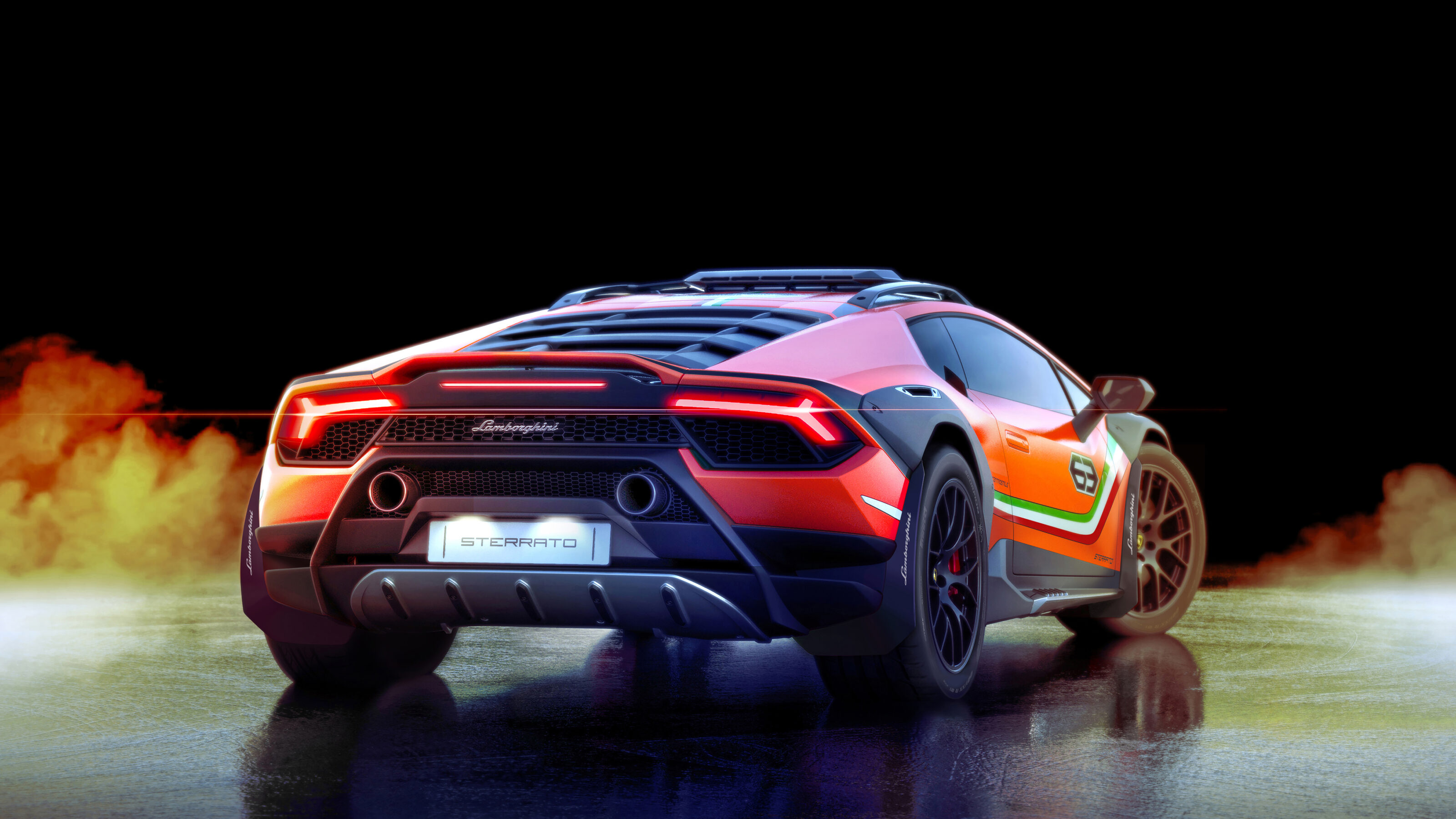
Remember the wildly unhinged Lamborghini Sterrato concept from 2019? Well after years of silence, it looks like the jacked-up, off-road capable version of the Huracan is set to make it into full scale production.
Lamborghini has confirmed it will reveal the last ever version of the Huracan in December – and it has strongly hinted that model will be the Sterrato.
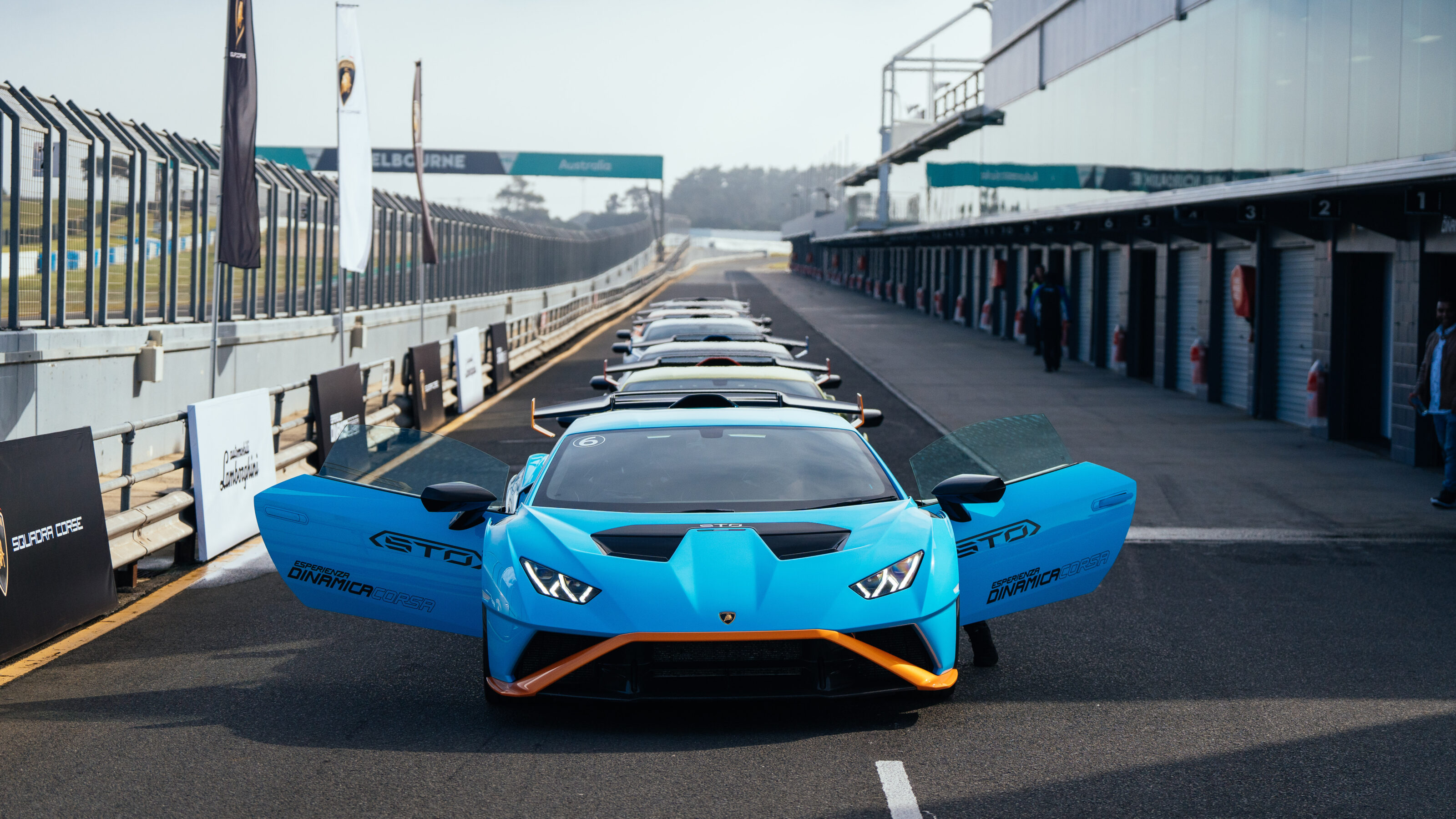
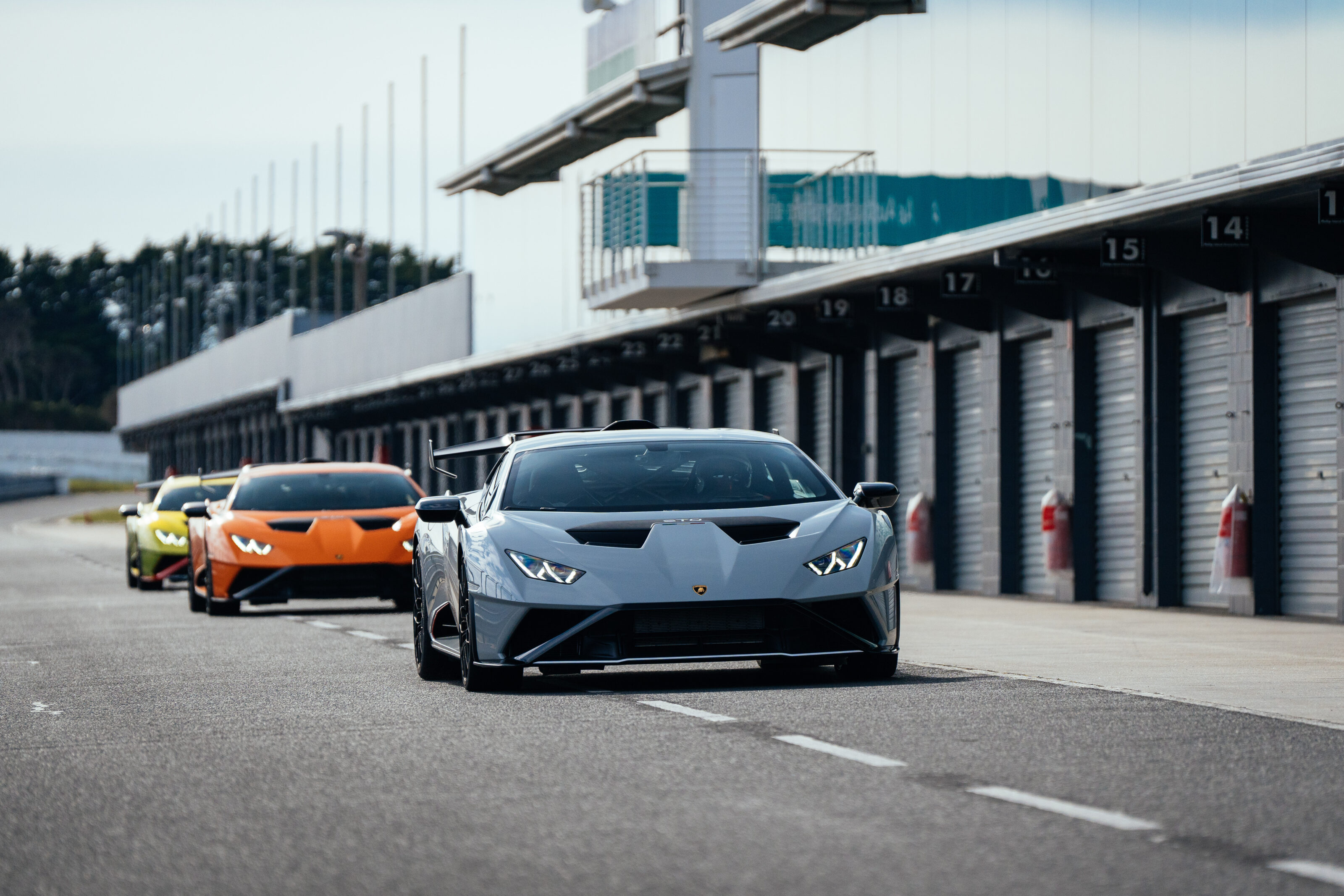
Speaking to media at the Australian launch of the new Huracan STO, Lamborghini’s director of Asia Pacific, Francesco Scardaoni, was asked if the track-focused STO is a final send off for the Huracan – or whether customers will get another chance to buy one with a V10 engine.
“They will have another opportunity in December to buy the finale, but it’s totally another kind of version of the Huracan,” Scardaoni revealed. “It will be a segment that doesn’t exist up until now. We wanted to explore new roads. So yeah December will be a new one for the Huracan. A new derivative.”
Scardaoni added that Lamborghini already has strong demand for the Sterrato and that Australian customers have placed deposits, even though order books haven’t officially opened.
“We are witnessing a pretty high interest on this car,” he said. “Again it’s a new segment so we don’t have historical data to rely on. But we see a lot of customers asking a lot of details which are pretty uncommon for us. Things like ground clearance, what the pitch angle is blah blah, so it’s really interesting because we’re seeing lot of expression of interest and a lot of deposits paid to our dealers for these cars – including here in Australia.
“So we’re really positive on this…how do you call it? [Sterrato?] Yes.”
The concept version of the Sterrato is widely different to other Huracan variants. The ride height is raised by 47 millimetres, the suspension geometry and dampers are new, and chunkier tyres with an off-road focus fill the wheel arches. It’s all-wheel-drive, of course, and boasts circa-470kW from a naturally-aspirated V10.
How much performance the production Sterrato will make is unclear, but it’s almost certain the jacked-up Huracan will be the last ever Lamborghini to be powered solely by the brand’s iconic 5.2-litre V10.
Scardaoni confirmed that a new-generation Huracan will arrive in 2024 and it will be powered by a fresh plug-in hybrid powertrain.
“The electrification plan for Lamborghini starts this year with celebration of internal combustion engine,” said Scardaoni. “2023 is the kick-off date of hybridisation and it will come first with the Aventador successor which will be the first one to be hybrid. Then in 2024 will follow with Huracan and Urus. I cannot disclose the powertrain we will use on the new Huracan, but it will be a plug-in hybrid system.”
Lamborghini isn’t the only brand working on a supercar with off-road potential. Porsche has shown several concepts for a 911 Safari or Dakar variant and it has been snapped recently testing a new variant with a taller ride height.
Snapshot
- 2023 Mercedes-Benz EQB electric SUV priced for Australia
- Available in two variants: EQB 250 and EQB 350 4MATIC
- Priced from $87,800 before on-road costs
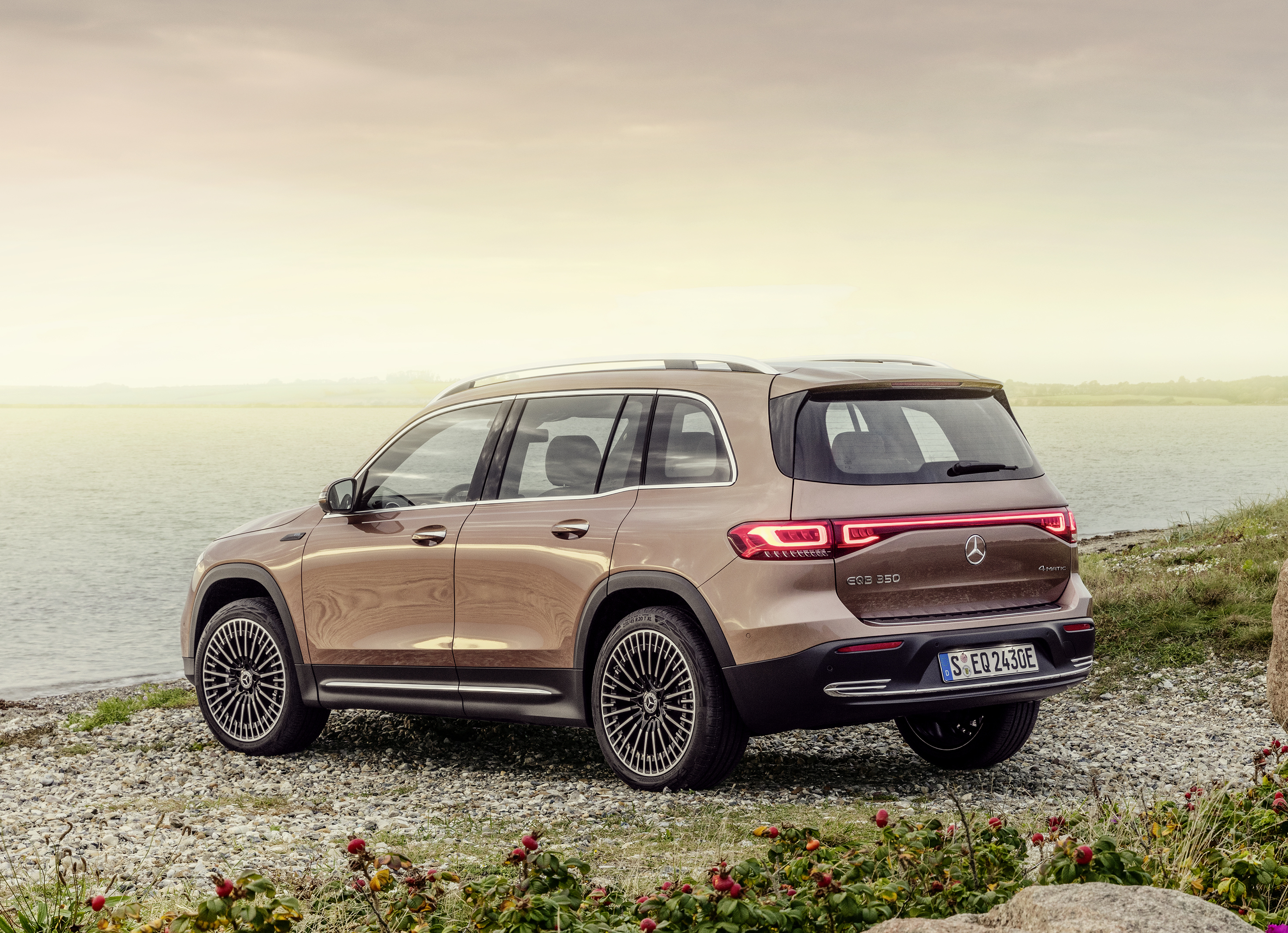
The 2023 Mercedes-Benz EQB electric SUV is now available in Australia, providing local buyers with a seven-seat option under $100,000 for the first time.
Priced from $87,800 before on-road costs, the family-orientated EQB is an electric twin to the GLB medium SUV, in an identical fashion to the popular EQA that launched in 2021 as a sibling to the smaller GLA.
As such, the exterior of the EQB is very similar to the GLB, with the main visual difference being the closed front grille, which helps the EV to achieve its slippery drag coefficient of 0.28.
UPDATE, October 2022: Mercedes-Benz EQB Australian review
The Mercedes-Benz EQB is finally in Australia, and we’ve driven it. Get our full story at the link below, and check out our video too.
Story continues
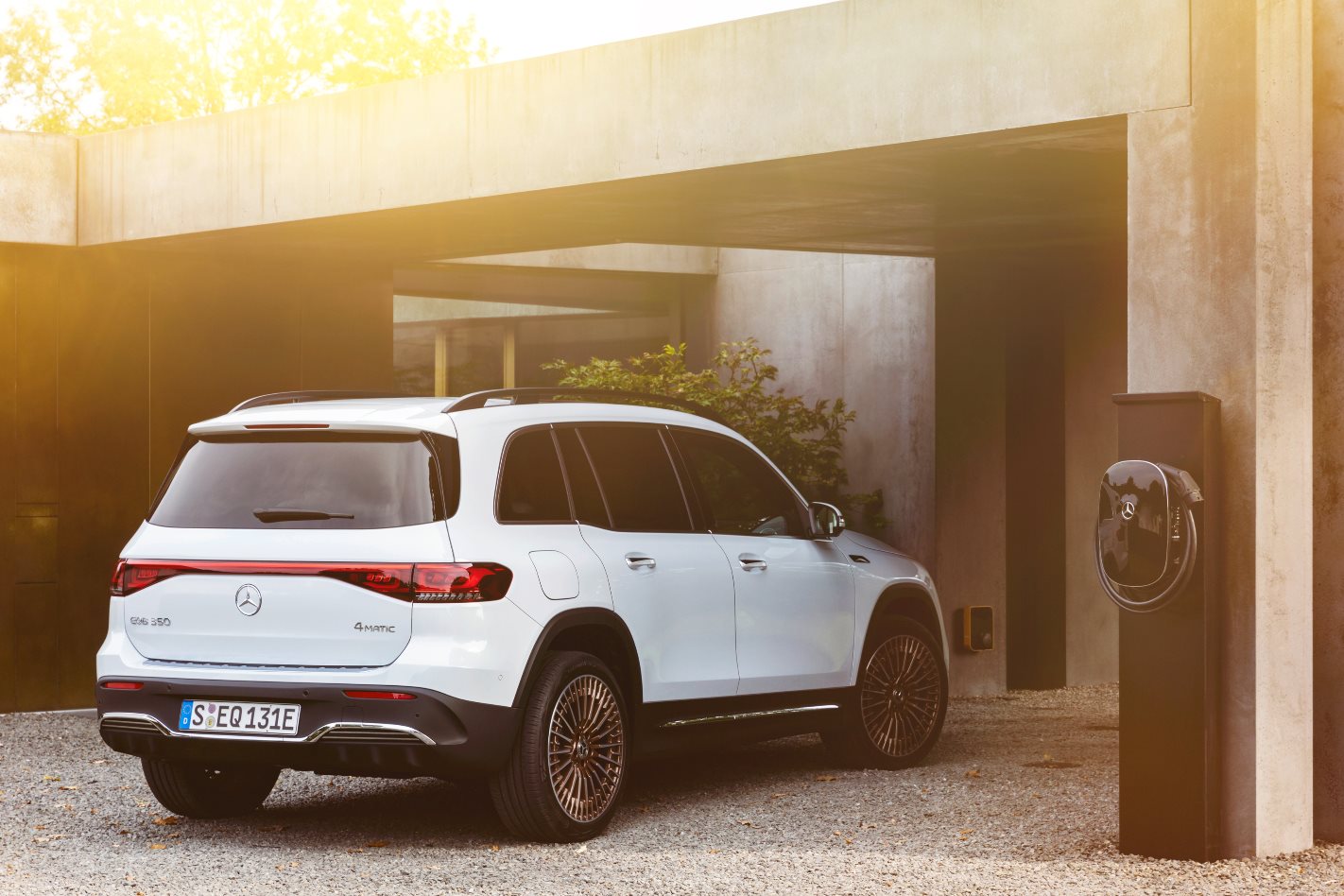
Other exterior changes include; a redesigned front spoiler and rear diffuser, bespoke front and rear wheel arch spoilers, aero-optimised alloy wheels, and redesigned head and tail-lights that bring the EQB into line with the rest of Mercedes-Benz’s electric vehicles.
The Mercedes-Benz EQB competes with the Tesla Model Y, Kia EV6 and Hyundai Ioniq 5 in Australia.
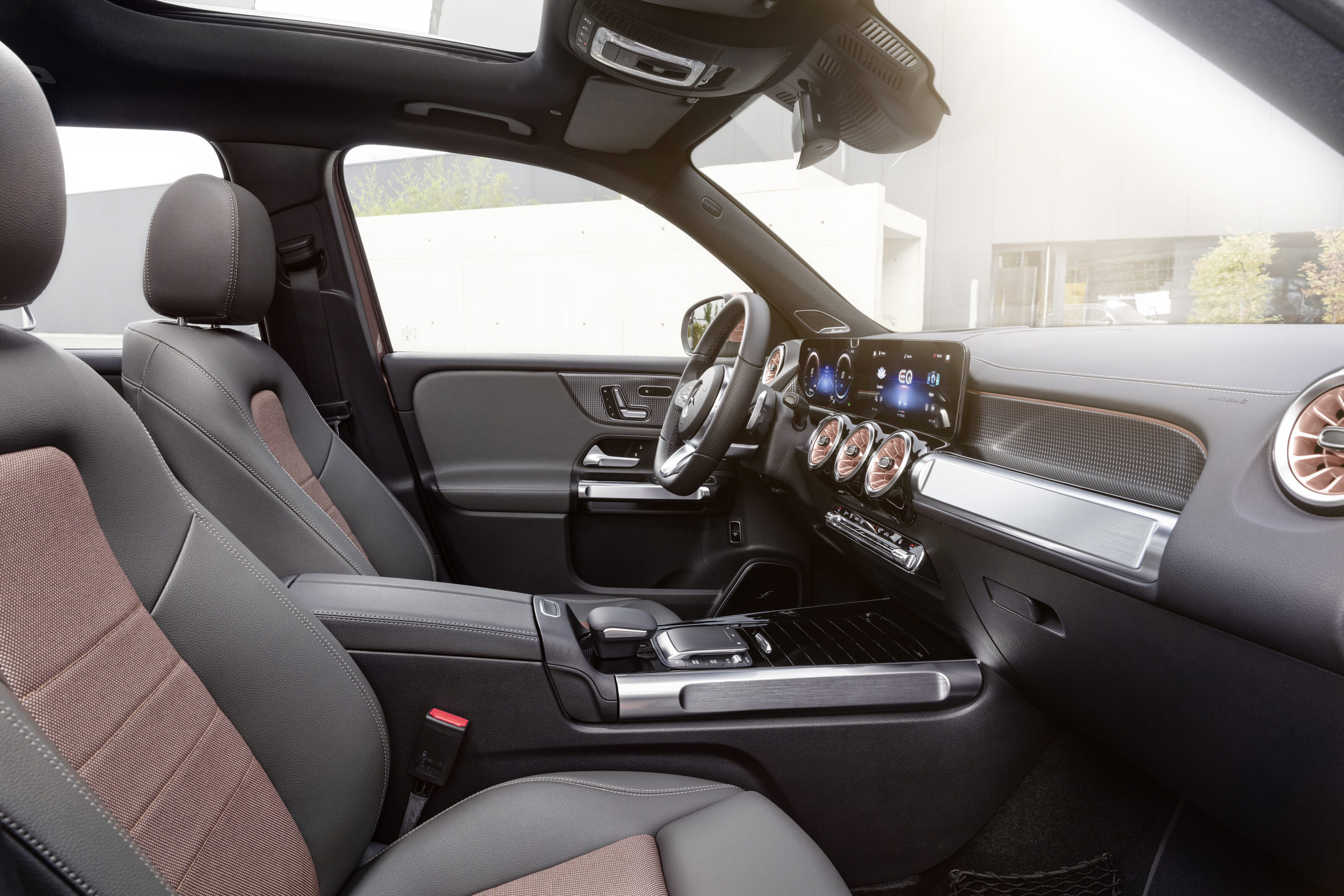
However, the third-row of seating provides a unique selling point for the German brand, with the EQB becoming the only EV currently offered in Australia with more than five seats for under $100k.
Tesla does offer the Model Y with seven seats, but only in select markets such as the United States, with local prospects currently unknown.
The addition of the EQB is set to be followed by the launch of the EQE sedan, EQV people-mover and more-potent EQA 350 before the end of 2022, following the recent arrival of the AMG EQS 53 performance sedan.
Mercedes-Benz will expand its EQ range in 2023 with the standard version of the EQS and the high-riding EQS SUV, ahead of a plan to become all-electric by the end of the decade (in most markets).

2023 Mercedes-Benz EQB Australian pricing
Prices exclude on-road costs.
| Model | Pricing |
|---|---|
| EQB 250 five-seat | $87,800 |
| EQB 250 seven-seat | $90,700 |
| EQB 350 4MATIC five-seat | $106,700 |

2023 Mercedes-Benz EQB features
EQB 250
EQB 350 4MATIC
Options
Edition 1 package – $9100 (EQA 250), $3900 (EQB 350)
According to Mercedes-Benz Australia, the Edition 1 package will be available for “a limited time”.
AMG Line (EQA 250)
Vision Package (EQB 250)
MBUX Innovation Package

Powertrains, charging and driving range
Mercedes-Benz offers the EQB with two powertrains in Australia.
The entry-level EQB 250 guise features a single electric motor producing 140kW of power and 385Nm of torque, exclusively sending power to the front wheels.
It has a 66.5kWh battery pack, with a WLTP-rated 371-kilometre driving range.
Stepping up to the dual-motor, all-wheel-drive EQB 350 brings 215kW and 520Nm, with a slightly lower 360km driving range.
There are several charging options for the EQB, including an onboard charger that allows up to 11kW with an alternating current (AC).
It also supports direct current (DC) charging of up to 100kW, with the 10 to 80 per cent fast charge claimed to take approximately 30 minutes.
Safety
The Mercedes-Benz EQB is yet to be scored by ANCAP; however, it received a five-star rating from Euro NCAP, based on testing conducted on the petrol GLB in 2019.
It has a 95 per cent score for adult occupant protection, 91 per cent for children, 78 per cent for vulnerable road users, and 74 per cent for safety assist.
It includes a suite of airbags, including dual front, front and rear side, curtain for the second and third rows, and driver’s knee.
Each variant includes the following active safety equipment as standard:
Dimensions
The Mercedes-Benz EQB has a wheelbase of 2829 millimetres, and is 4684mm long, 1834mm wide and 1667mm high.
This makes it 50mm longer and 9mm taller than the GLB, due to the placement of the batteries underneath the vehicle.
The medium SUV has a claimed 465-litre boot capacity with the third-row folded (where fitted), expanding to 1620L with the second-row folded. There is 110 litres of luggage space behind the optional third-row.
Warranty and servicing
As per the wider Mercedes-Benz range, the EQB electric SUV is covered by the brand’s five-year, unlimited-kilometre warranty, along with a complimentary roadside assistance program during the vehicle’s warranty period. The program can be extended at a cost of $149.60 per year.
The battery pack is covered by a separate 10-year, 250,000-kilometre warranty.
Service pricing can be pre-purchased, consisting of three-, four- or five-year packages with 12-month/25,000km intervals.
Mercedes-Benz has yet to announce exact pricing for the EQB; however, prices for the related EQA can be found below:
| Three-year | Four-year | Five-year |
|---|---|---|
| $1600 | $2200 | $2650 |
Availability
The 2023 Mercedes-Benz EQB electric SUV is now arriving in Australian showrooms.
Snapshot
- Cars recalled by Ferrari North America
- More than 23,000 affected
- Could impact every example sold in the US in last 17 years
Ferrari North America has been forced to recall every car it has sold since 2005 over a potential defect with its braking system.
The notice affects a total of 23,555 vehicles sold during the last 17 years, and involves the: Ferrari 430, 488 Pista, F60 America, 612 Scaglietti, 812, California, F12, F8, FF, GTC4 Lusso, LaFerrari, Portofino and Roma models.
According to a recall filed with the National Highway Traffic Safety Administration in the US, the problem is with the cap of the brake fluid reservoir.
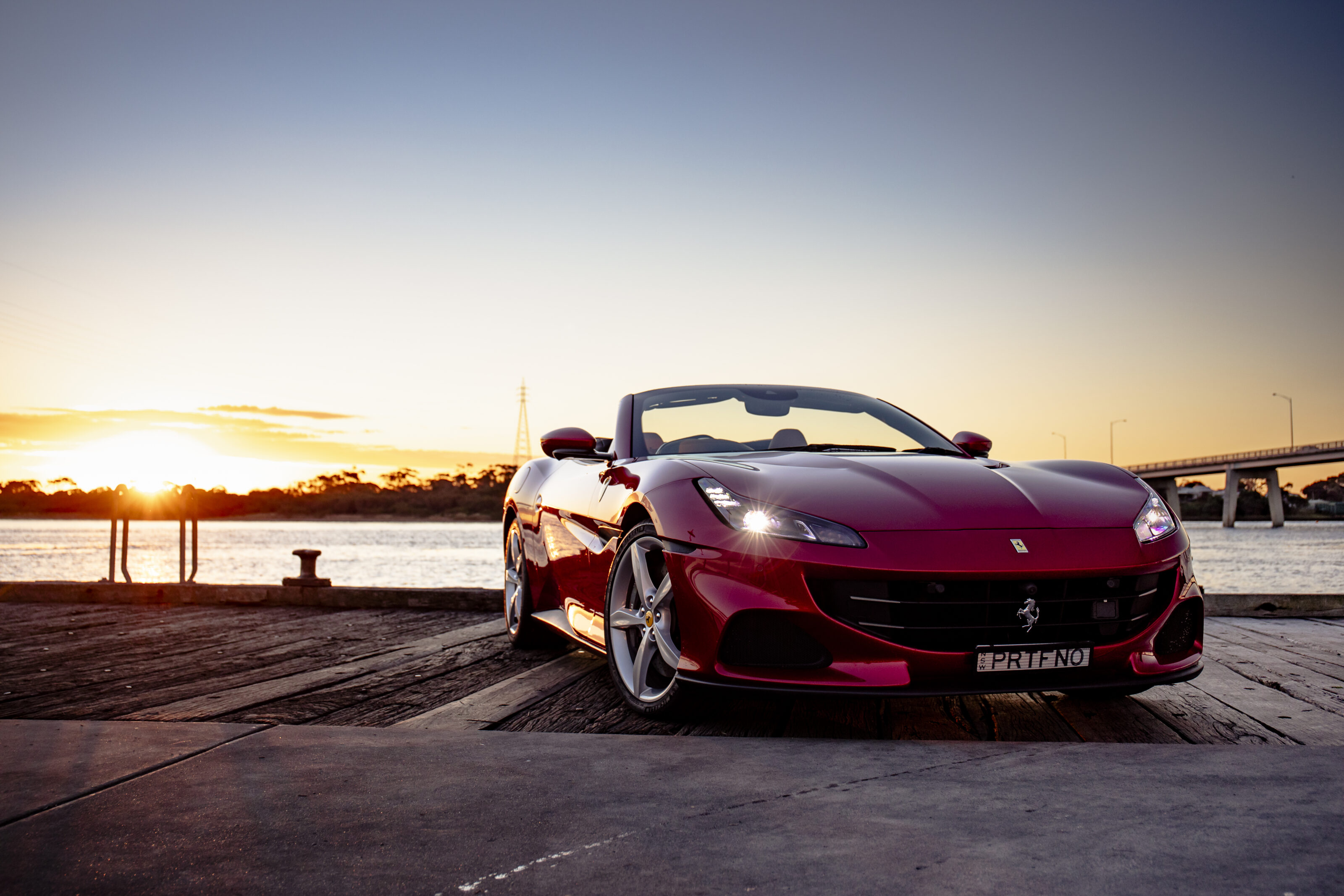
The cap may not vent properly, thereby creating a vacuum inside the brake fluid reservoir – which may potentially leak brake fluid and lead to a partial or total loss of braking capability.
An investigation by the Italian carmaker revealed that the brake fluid reservoir cap fitted on the affected vehicles did not provide the proper ventilation for the braking system.
The company thinks that only around one per cent of cars are affected, but has to recall all 23,000 of them nonetheless – starting with 612 Scagliettis built in early 2004. In fact, the only Ferraris that will be exempt will be the 575M Maranello, 599 GTB, SF90, and the new 296 hybrid.
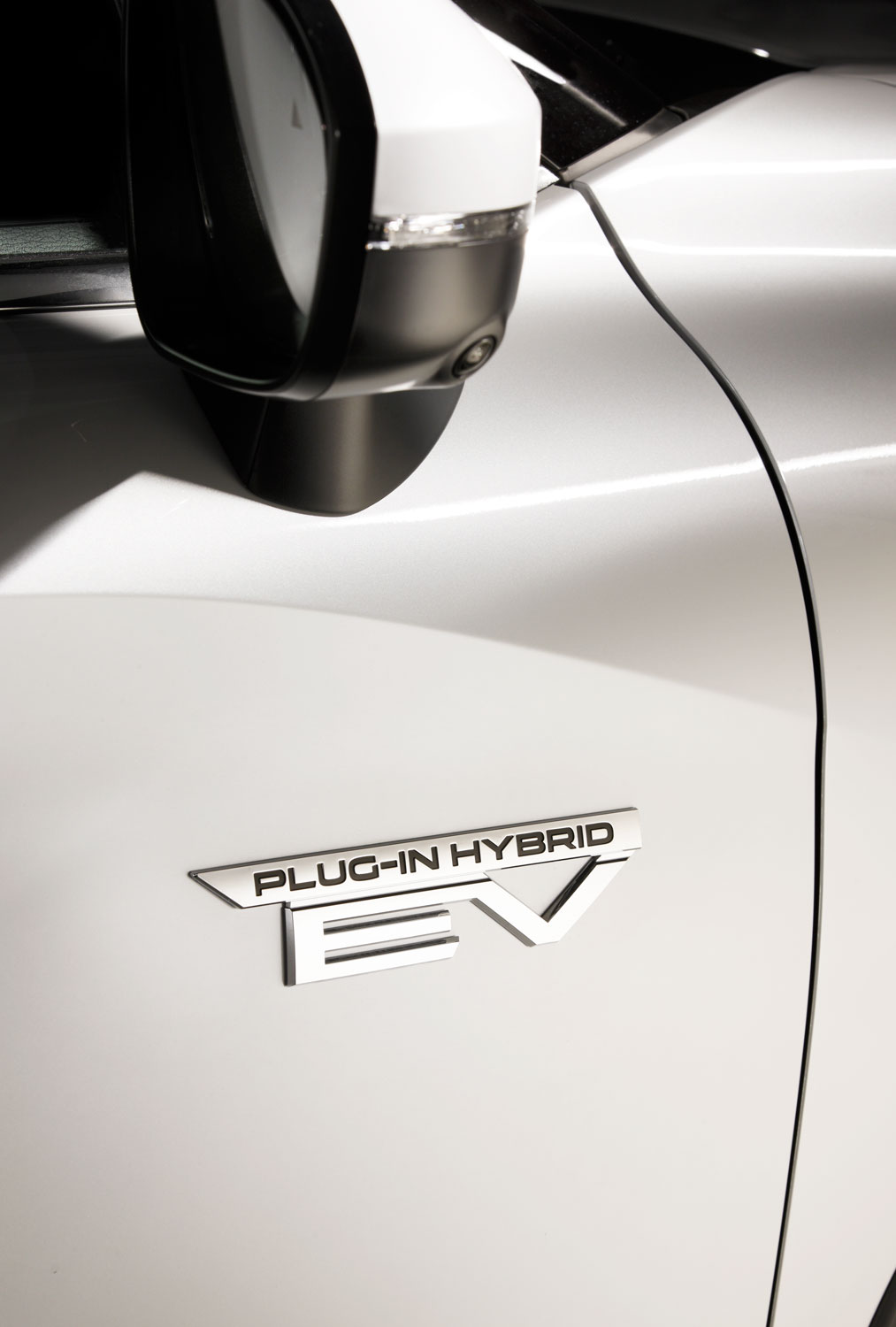
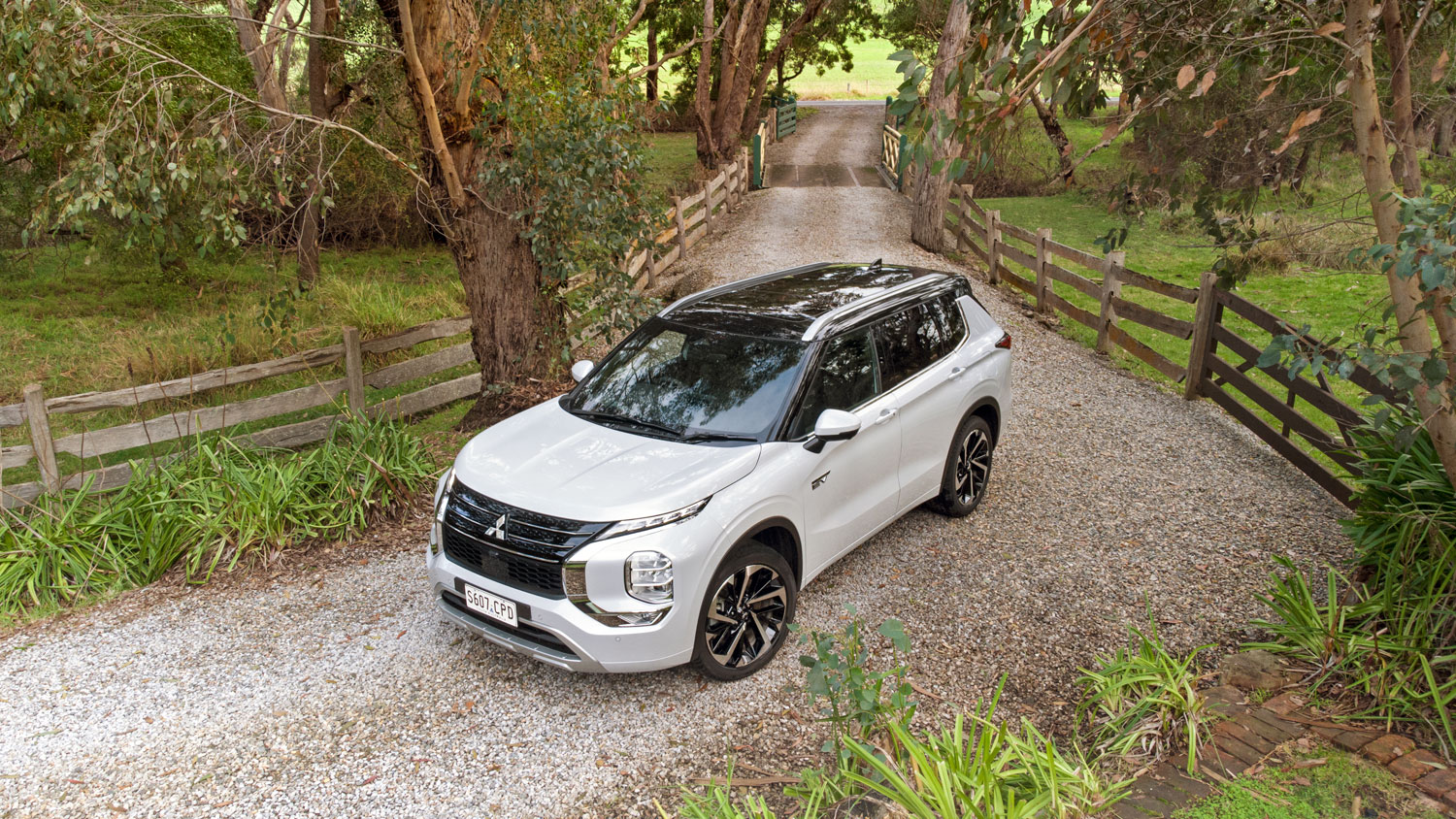
Mitsubishi prides itself on being a plug-in pioneer. The previous Outlander PHEV wasn’t only one of the first plug-in hybrid family SUVs to hit the market, but it still holds the title as the world’s most popular plug-in.
Since it was introduced about a decade ago, Mitsubishi has sold more than 300,000 of these things.
Now, though, we have an all-new Outlander PHEV and it’s a significant improvement. EV-only range is up, there’s more performance on tap and unlike the previous model, which was only available as a five-seater, this time around you can opt for a PHEV that has a third row.
There’s no sacrifice in boot space, either, or towing capacity. The PHEV retains the same 485L boot and 1600kg braked towing capacity as the rest of the Outlander range. Win.
Predictably, the downside is you’ll need to pay for the privilege. The plug-in powertrain is available in nearly every trim level across the mode range but compared with a petrol-powered Outlander, the PHEV is at least $16,000 more expensive. Question is, is it worth it?
After all, $16,000 buys a lot of petrol… But as we’ll discover, the Outlander PHEV’s appeal stretches beyond its ability to simply save you cash at the bowser.
UPDATE: Outlander Range Review
Looking for more detail on the wider Outlander line-up? See our full Outlander range review at the link below!
How much is it and what do you get?
The basics
| Body | 5-door, 7-seat SUV |
|---|---|
| Power | 185kW |
| Torque | 450Nm |
| Transmission | Single-speed reduction |
| Drive | All-wheel drive |
| Fuel consumption | 1.5L/100km |
| Price | $68,490 |
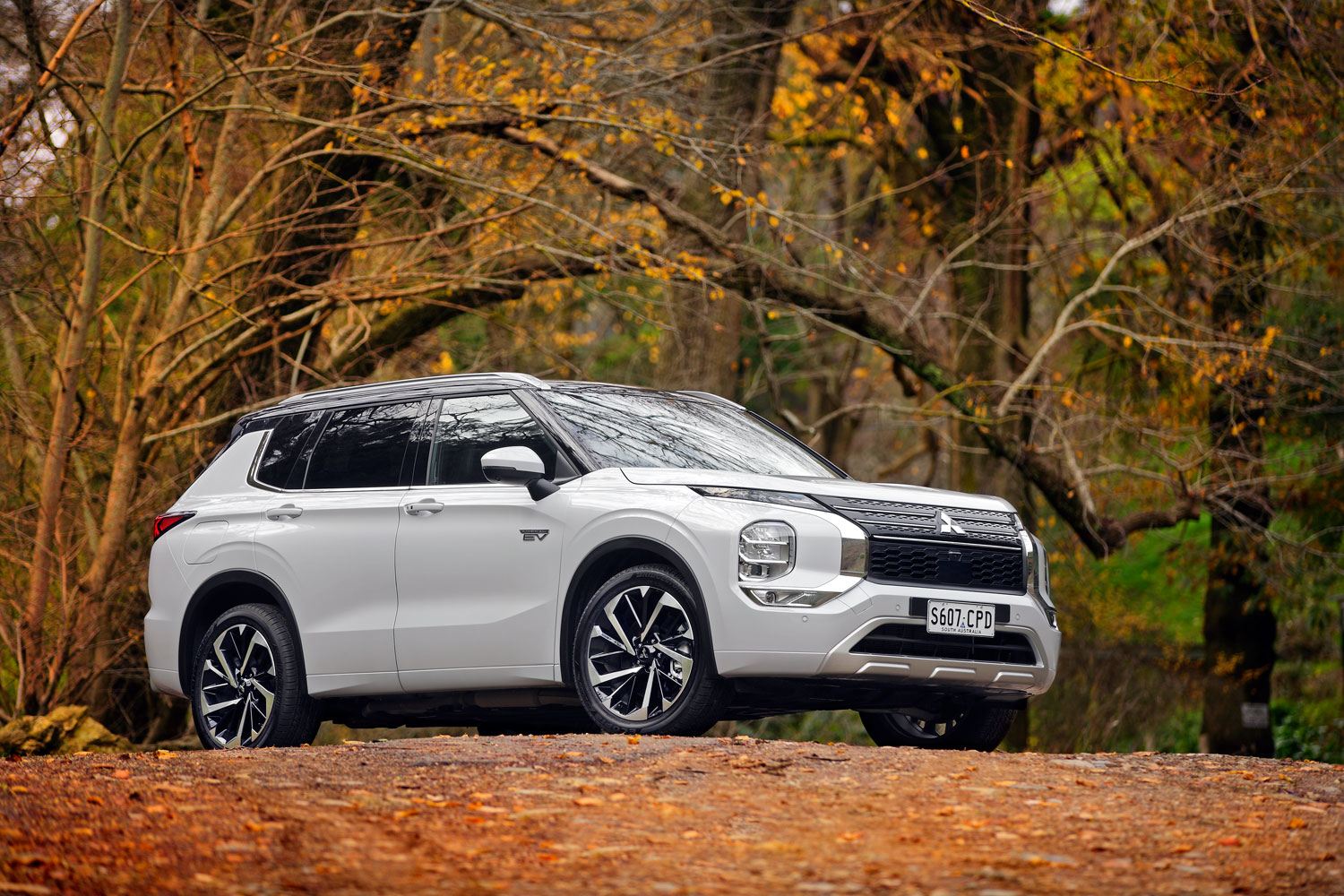
You can slip into a new-generation Outlander PHEV for $54,490 before on-road costs. That outlay scores you an entry-level ES five-seater and prices rise incrementally from there.
You can slip into a new-generation Outlander PHEV for $54,490 before on-road costs. That outlay scores you an entry-level ES five-seater and prices rise incrementally from there.
A mid-spec Aspire (also only available with five seats) will set you back $60,990 while the flagship Exceed and Exceed Tourer models are $65,990 and $68,490 respectively (all before on-road costs).
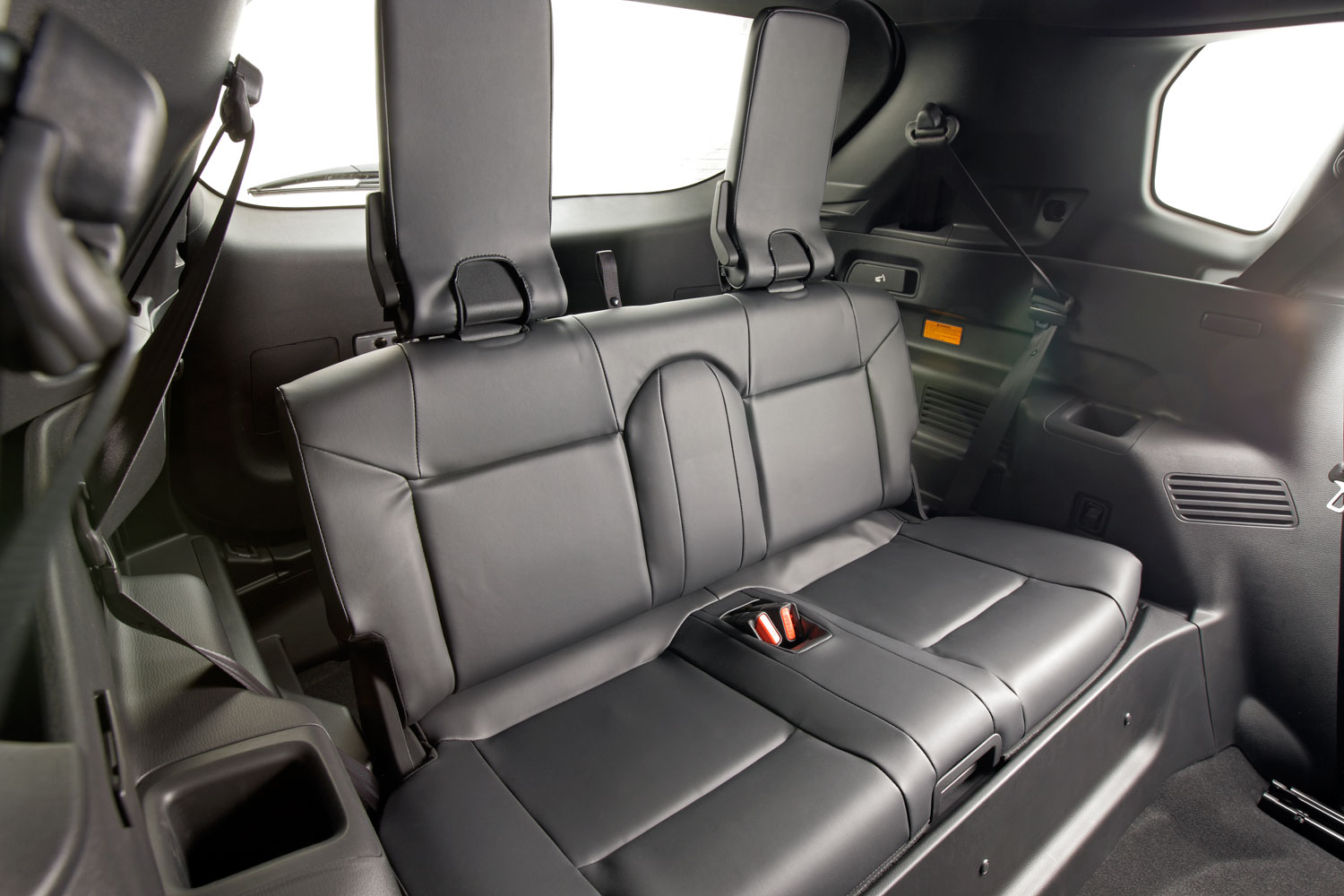
Need seven seats? The two extra pews are only available in the two top-spec Exceed models.
PHEV prices are roughly $16,000 more than an equivalent Outlander that’s powered by petrol alone. And you don’t score a host of additional equipment either. The only difference between a regular Outlander ES and an ES PHEV, for example, is the powertrain.
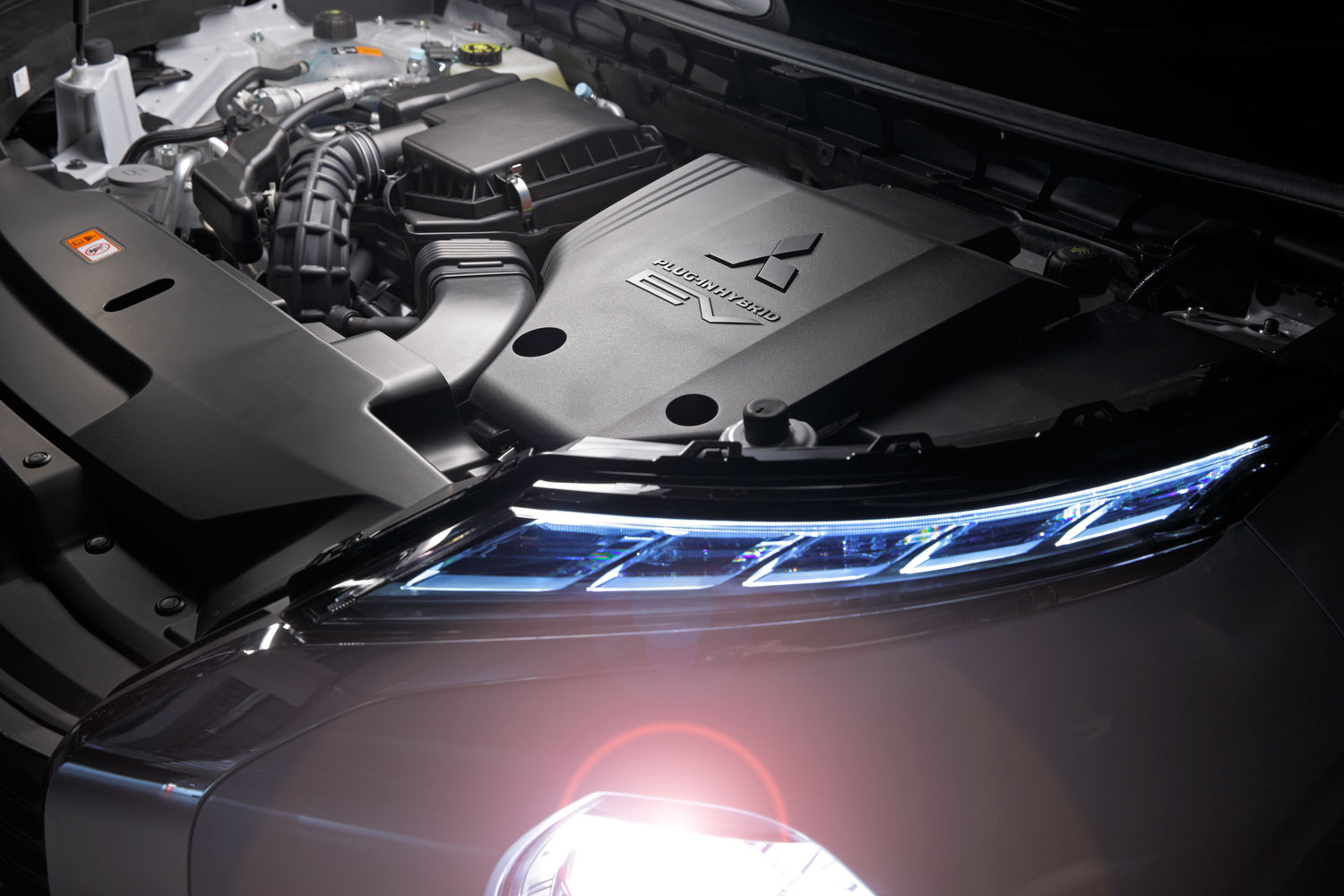
Happily, that powertrain is a vast improvement. The basic set-up is the same as before. Propulsion comes from the combination of a 2.4-litre four-cylinder petrol engine paired with an electric motor on either axle but those electric motors are all new.
They’re now more powerful, take up less room and are fed by a battery pack that has almost 50 per cent more capacity than before. The battery now measures 20kWh (that’s total capacity, meaning the useable capacity is slightly smaller) and the EV-only range has lifted to 84km, which is a useful 30km increase over the old PHEV.
It’s also vastly superior to the Outlander’s primary mainstream rival, the Ford Escape plug-in hybrid, which can only travel 54km on electricity alone.
Slashing your fuel bill is a clear PHEV attraction but the Outlander PHEV’s powertrain also offers a desirable bump in performance.
Total combined outputs are 185kW/450Nm, which is an appreciable increase over petrol-powered models that produce 135kW/245Nm from a Nissan-sourced 2.5-litre four-cylinder.
There are other ways you can benefit from the larger battery capacity, too. Aspire model grades and above score two on-board power sockets that can power anything from laptops to household appliances, like coffee machines or blenders.
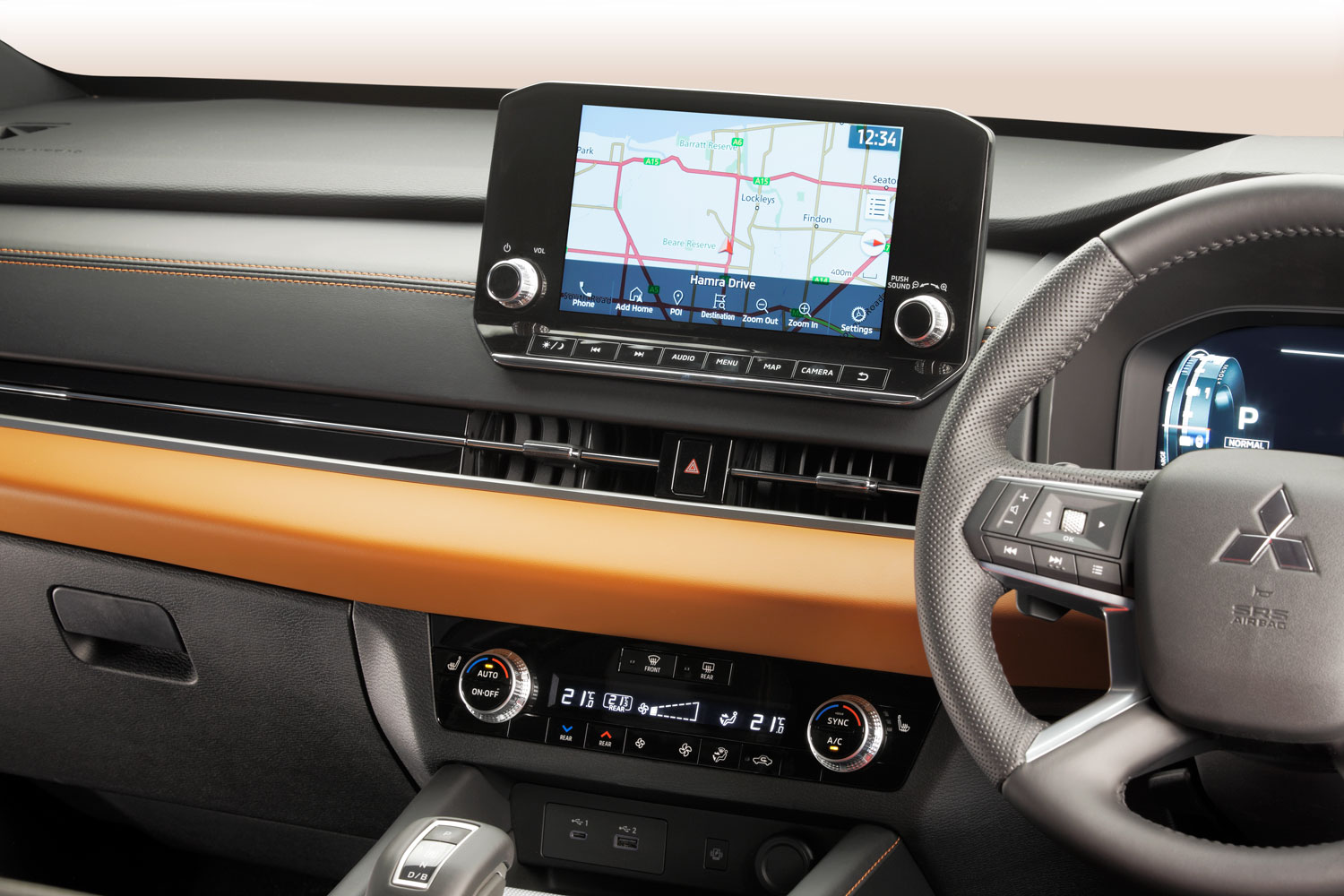
Just like the rest of the Outlander range, standard equipment levels are generous. Every PHEV model scores a comprehensive active safety suite (the full list is below), a configurable 12.3-inch digital instrument cluster, large 9.0-inch central touchscreen and wireless Apple CarPlay.
Android Auto is also standard but you need a wired connection, which remains a frustrating reality for several manufacturers in 2022.
The entry-level ES is targeted mostly at fleet buyers and its cloth seats, plastic steering wheel and 18-inch wheels certainly feel more hardwearing than premium.
Things take a noticeable step up in the mid-spec Aspire and Exceed trim levels, which Mitsubishi expects to account for 60 per cent of total sales.
Key additions for the Aspire include 20-inch alloys, a leather-trimmed steering wheel, heated front seats, head-up display, powered tailgate, wireless phone charging and twin USB charging points for second-row passengers.
The Exceed goes a step further with leather seats, a panoramic sunroof, rear window sunshades, tri-zone climate control and a nine-speaker Bose sound system. The flagship Exceed Tourer adds two-tone exterior paint, higher quality leather seats and a massage function for front passengers.
How do rivals compare on value?
Despite surging EV sales, the number of mainstream family SUVs available with a plug-in powertrain is actually fairly small. Ford offers the most logical rival to the Outlander PHEV and its Escape PHEV is also fresh to the market, having launched here in May 2022.
Unlike the Mitsubishi, however, it’s only available in a single ST-Line PHEV trim level and is priced at $53,440 before on-road costs. That means it’s roughly the same price as an entry-level Outlander PHEV but the Ford offers a richer spec for your cash.
No third row of seats, though, and unlike the all-wheel drive Outlander, the Ford is front-drive only. Plus it can’t match the Outlander for battery capacity or range. The Escape PHEV’s 14.4kWh battery offers 54km of pure EV propulsion.
Another alternative worth considering is the Peugeot 3008 PHEV. It’s more expensive than the Outlander at $79,990 before on-road costs, and its cabin isn’t as roomy, but what the Pug interior lacks in room is more than made up for with style and luxury.
The 3008 PHEV is also seriously quick. It’ll rocket for 0-100km/h in a hot-hatch like 5.9 seconds.
Equally fast is the soon-to-arrive Mazda CX-60 plug-in hybrid. The CX-60 debuts an all-new platform and pairs a 2.5-litre petrol engine with an electric motor for outputs of 241kW/500Nm.
EV-only range is 60km but the Mazda’s braked towing capacity of 2500kg is impressive.
If all of these PHEV rivals sound a touch pricey, we’d also recommend a Toyota RAV4 hybrid. Toyota’s hybrid system isn’t a plug-in, so you won’t be able to complete your daily commute (or even short journeys) on EV power alone, but its hybrid set-up does offer useful efficiency gains over petrol power alone.
Prices are more achievable, too, due to its smaller battery pack and older technology. Most hybrid versions of the RAV4 only command a $2500 premium over the petrol equivalent.
Interior comfort, space and storage
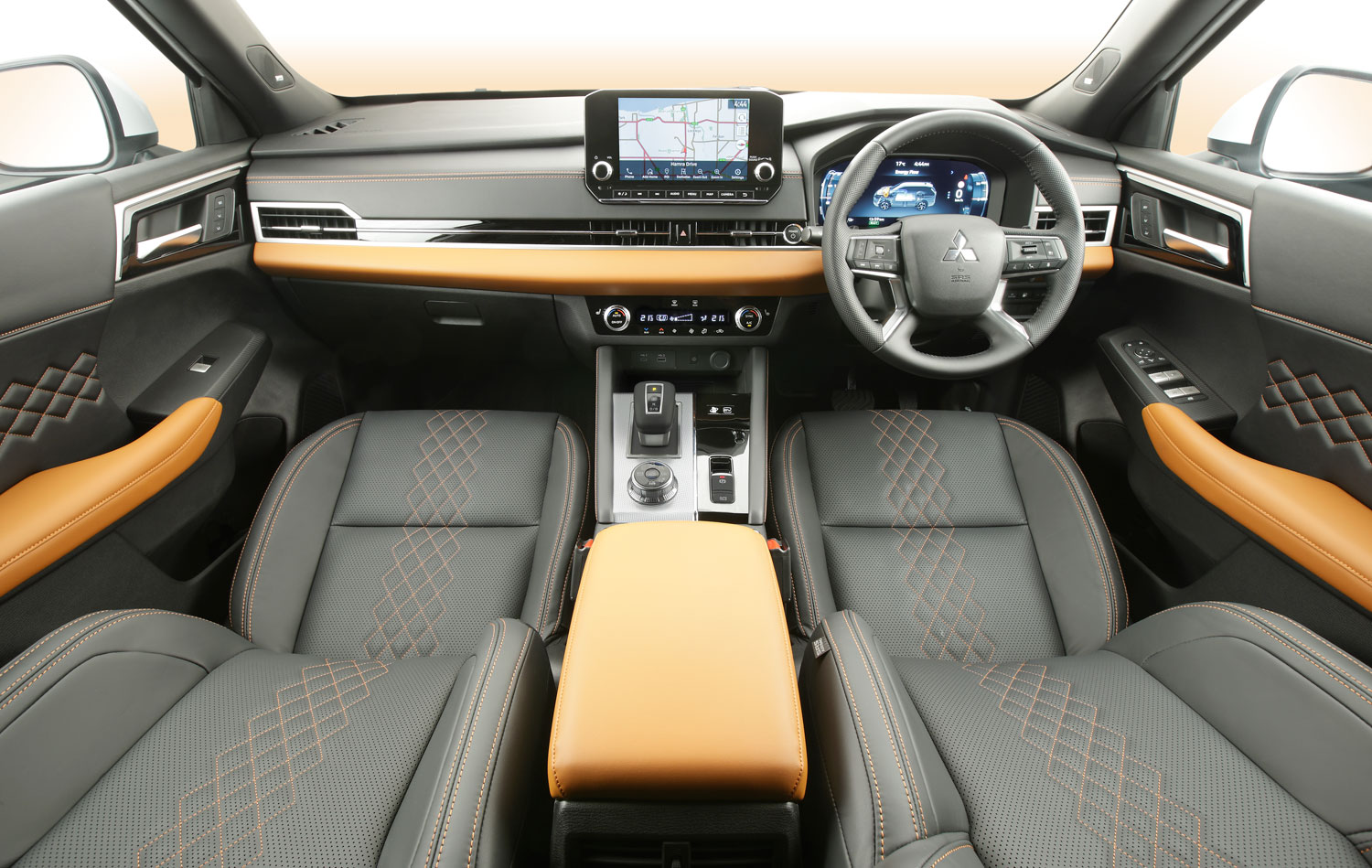
Cabin presentation and quality are highlights for this generation of Outlander and the PHEV is no different. The interior feels modern, majors on comfort and is also logically laid out and easy to use.
It’s also surprisingly premium. Aspire model grades and above offer a pleasing mix of high-quality materials and the cabin ambience is a clear step above the ‘cheap and cheerful’ Mitsubishis of old.
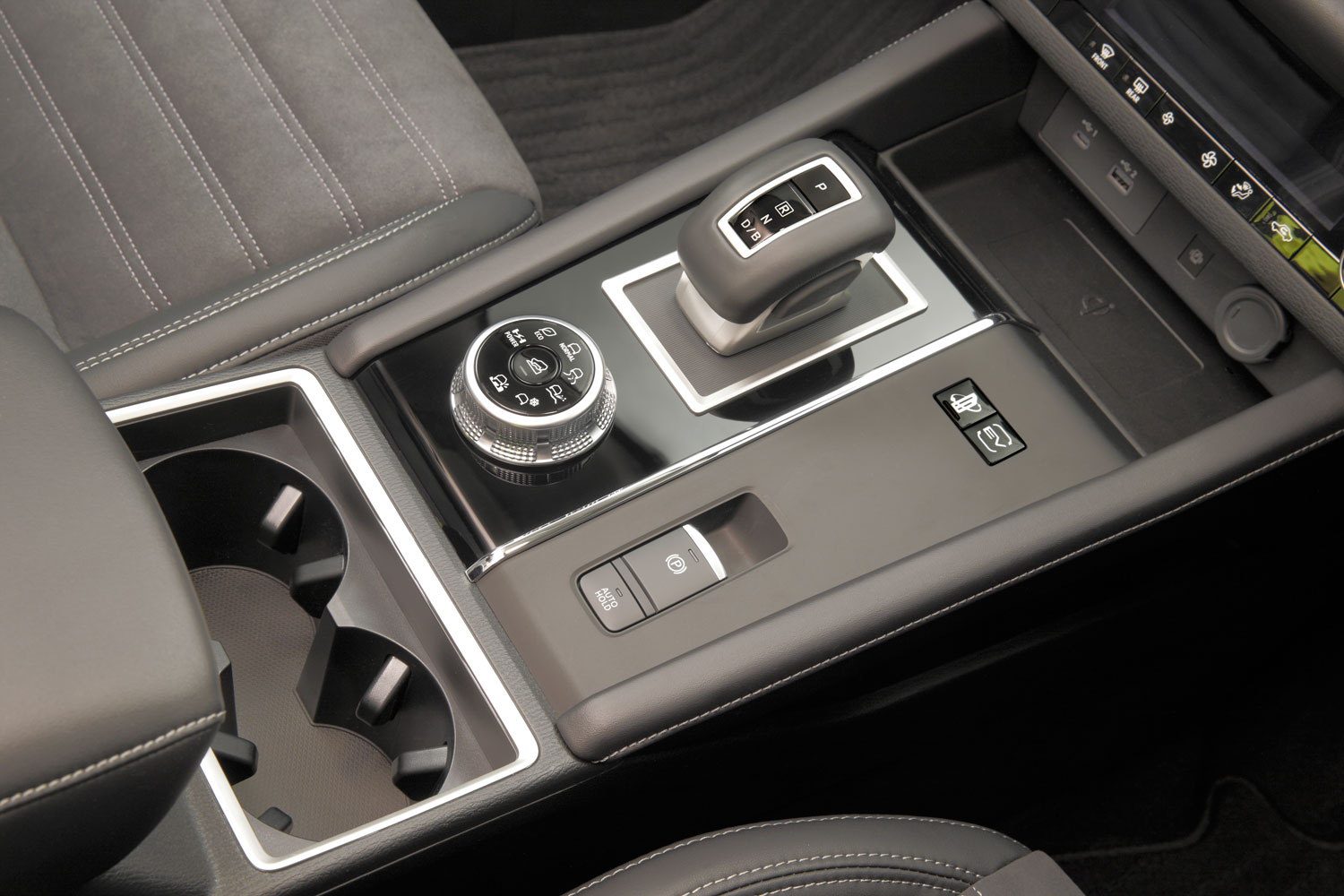
Ergonomics haven’t been sacrificed in the pursuit of style, either. The centre console retains old-fashioned buttons and dials for the HVAC controls meaning that, mercifully, they aren’t buried in the central screen, which can be difficult to access on the move.
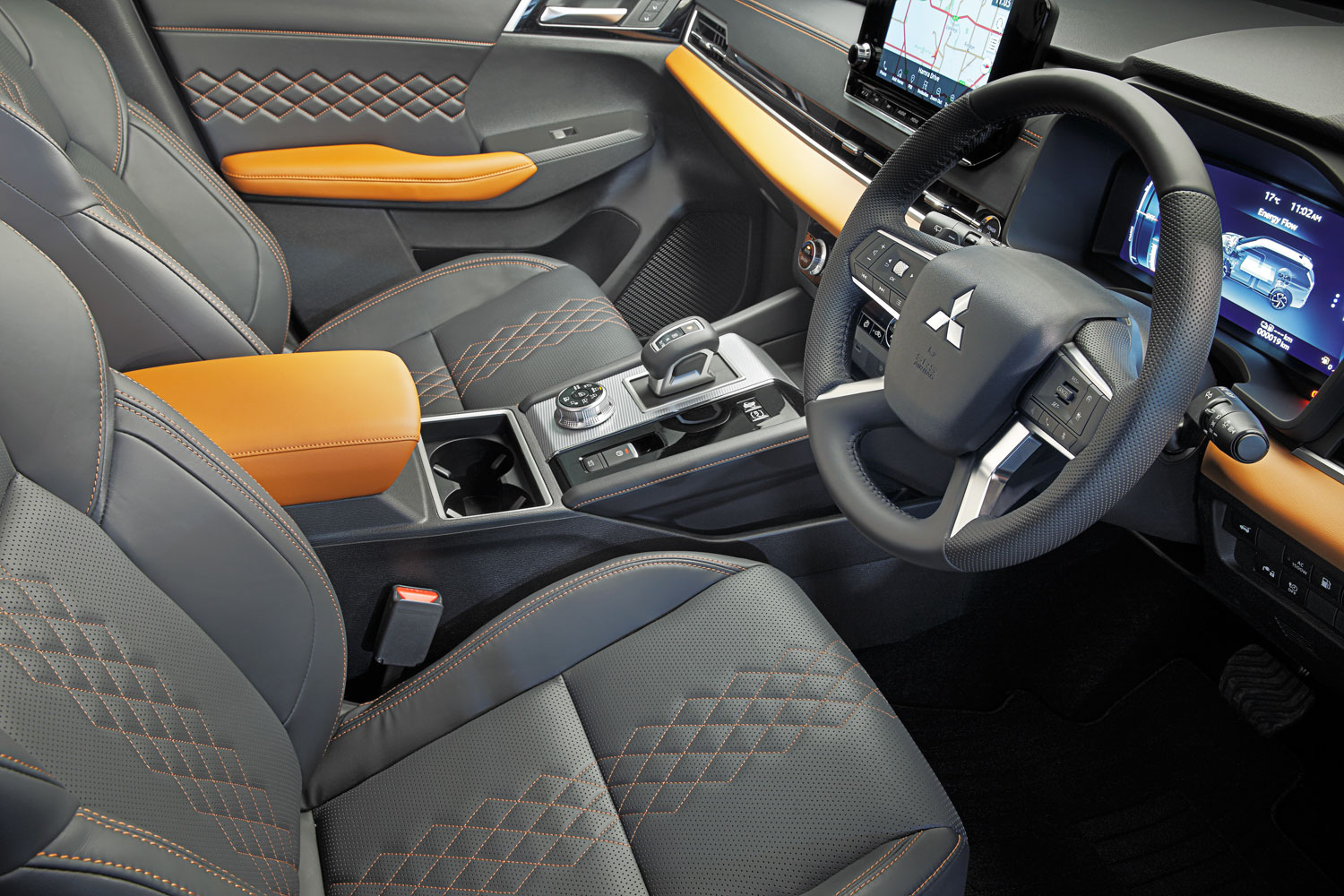
The infotainment system itself is also simple to navigate and there’s a USB-A and USB-C port ahead of the gearshifter. One minor annoyance? The wireless phone charging connection was frustratingly patchy, which is a niggle we’ve encountered in other Outlander models.
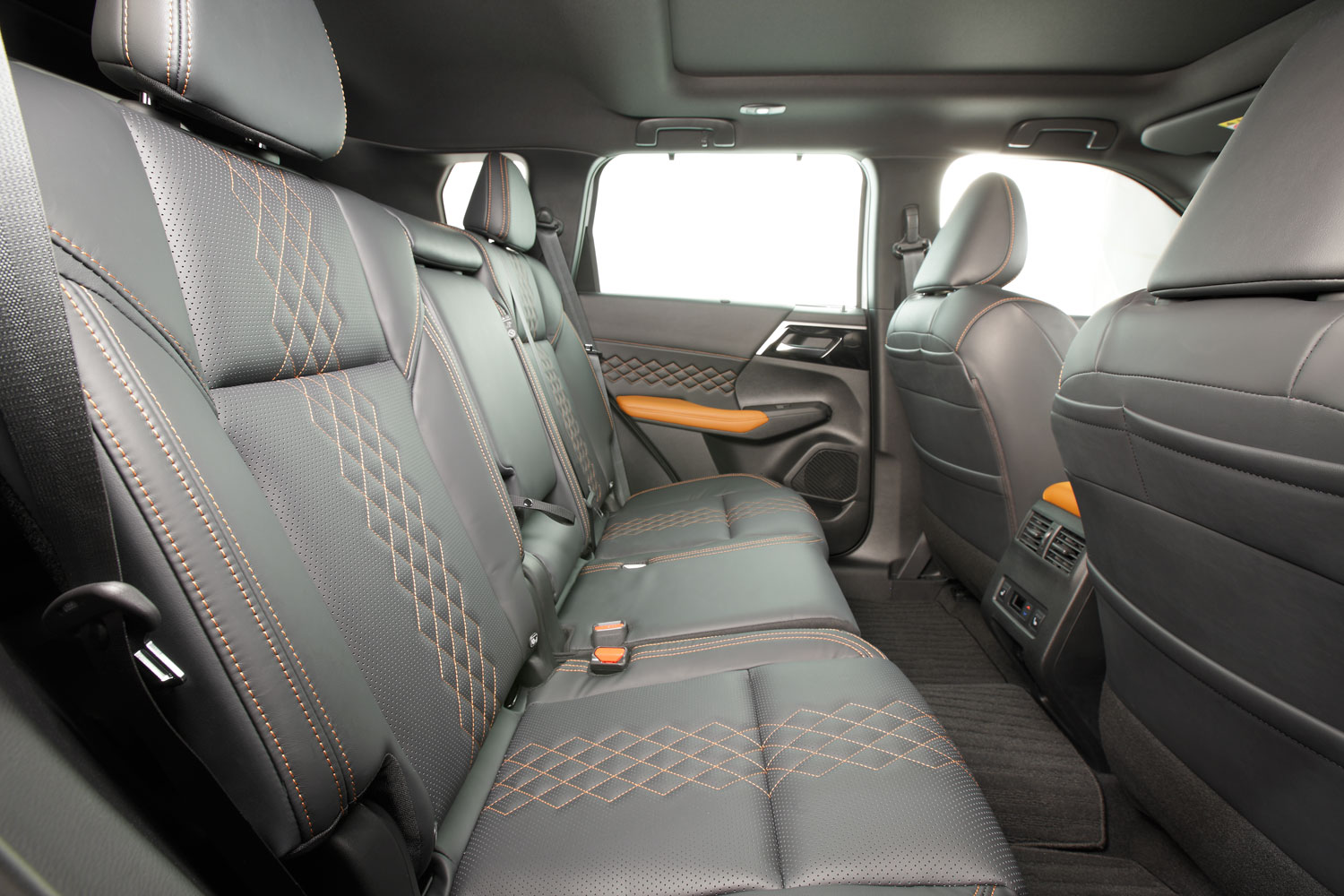
Interior space is adequate rather than ample. The front pews are roomy and comfortable but squeezing in a third row of seats means the Outlander’s second row and boot aren’t quite as spacious as other five-seat mid-size SUVs.
The seat itself slides, meaning you can vary the amount of rear room and boot space but even with the bench in its most rearward position, taller passengers may feel tight on knee room.
It’s not a dealbreaker – we’ve completed several long journeys in the rear seat and didn’t feel cramped – but there are other contenders in this segment with roomier cabins. And the Outlander’s 478L boot, while decent, is about 100L less than you get in a Toyota RAV4.
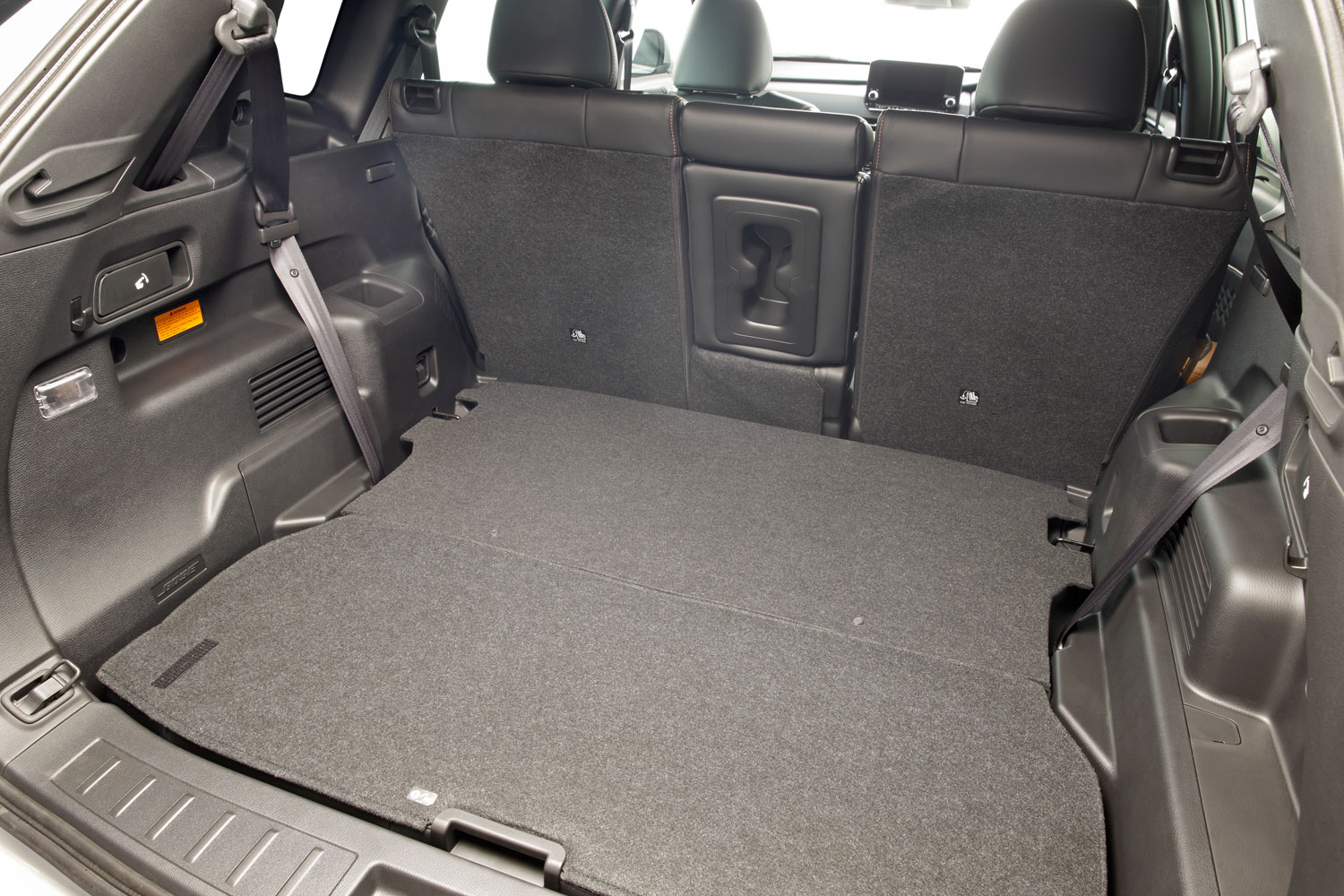
Still, at least buyers have the choice of seven seats this time around. The old PHEV was a five-seater only but clever packaging of the new rear electric motor, which is now around 50 per cent smaller, has liberated enough room to include the additional seats.
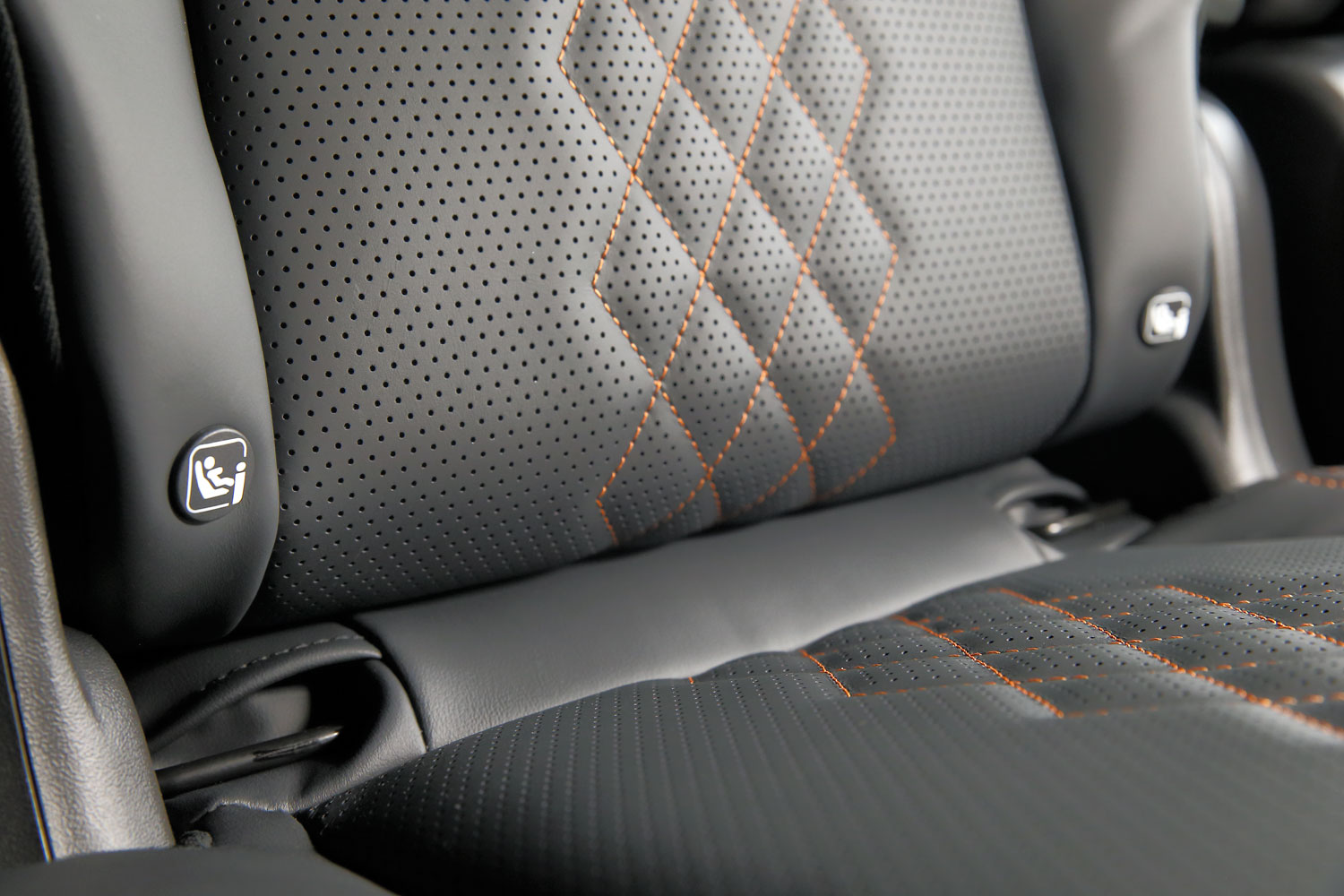
A few things worth pointing out? Erecting the third row is different to other Outlander models. In petrol variants, the two additional seats can be easily lifted up individually but in the PHEV it’s a four-step process that requires you to lift and flip both seats together. It’s a bit of a faff and the seats are surprisingly heavy.
Squeezing an electric motor onto the rear axle also means the PHEV has no spare tyre. Instead, you get a puncture repair kit that could be a dealbreaker for buyers that travel into remote areas.
What is it like to drive?
This is a vastly different SUV to drive compared with the rest of the Outlander range.
Where other Outlander models rely on a fairly average and unremarkable Nissan-sourced 2.5-litre naturally aspirated petrol engine paired with an automatic continuously variable transmission (CVT), the PHEV’s powertrain is considerably more polished, potent and sophisticated.
First impressions are that it feels more like a genuine EV to drive than a typical hybrid. Throttle response is instant and the level of available performance feels genuinely muscular low in the rev range, which makes it ideal for nipping into tight gaps in traffic.
Despite the complexity of pairing two electric motors with a petrol engine, it’s fuss-free, smooth and swift to operate. Not to mention silent.
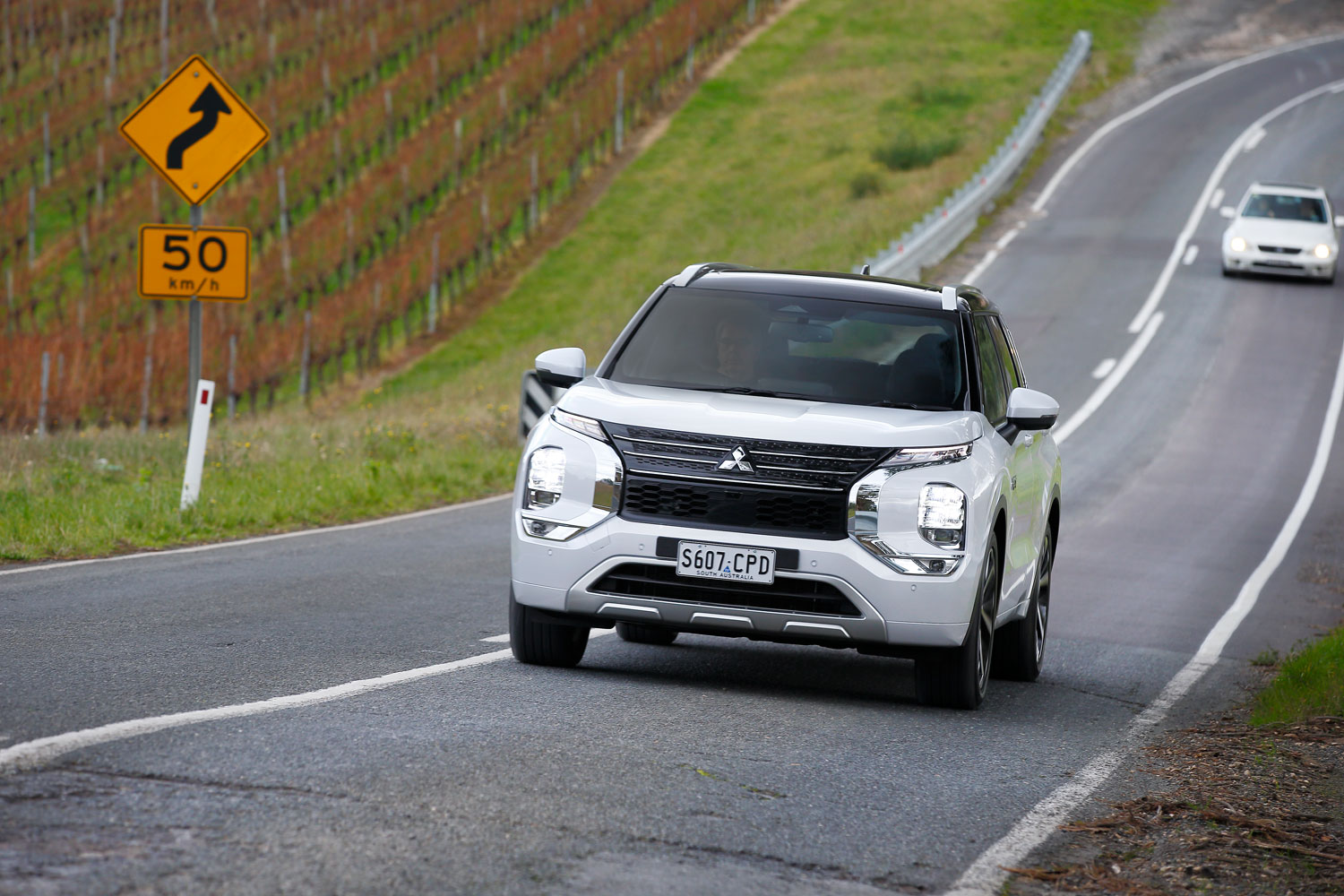
And unlike a Toyota hybrid that clunkily fires up the combustion engine if you add too much throttle, the Outlander can be driven as an EV with confidence. Much of that is down to how the hybrid system is calibrated.
Unlike most plug-in systems, which revert solely to petrol power once the battery pack is depleted, the Outlander always favours electricity to turn the axles. The petrol engine is used mostly as an on-board generator to top up the battery, meaning that in the majority of scenarios the driver benefits from instant throttle response and sprightly off-the-mark acceleration.
This set-up also means the handover between electric propulsion and petrol power is seamlessly integrated. Some plug-ins can feel clumsy and jerky when the petrol engine kicks in but the Outlander is impressively smooth.
Unlike a Toyota hybrid that clunkily fires up the combustion engine if you add too much throttle, the Outlander can be driven as an EV with confidence.
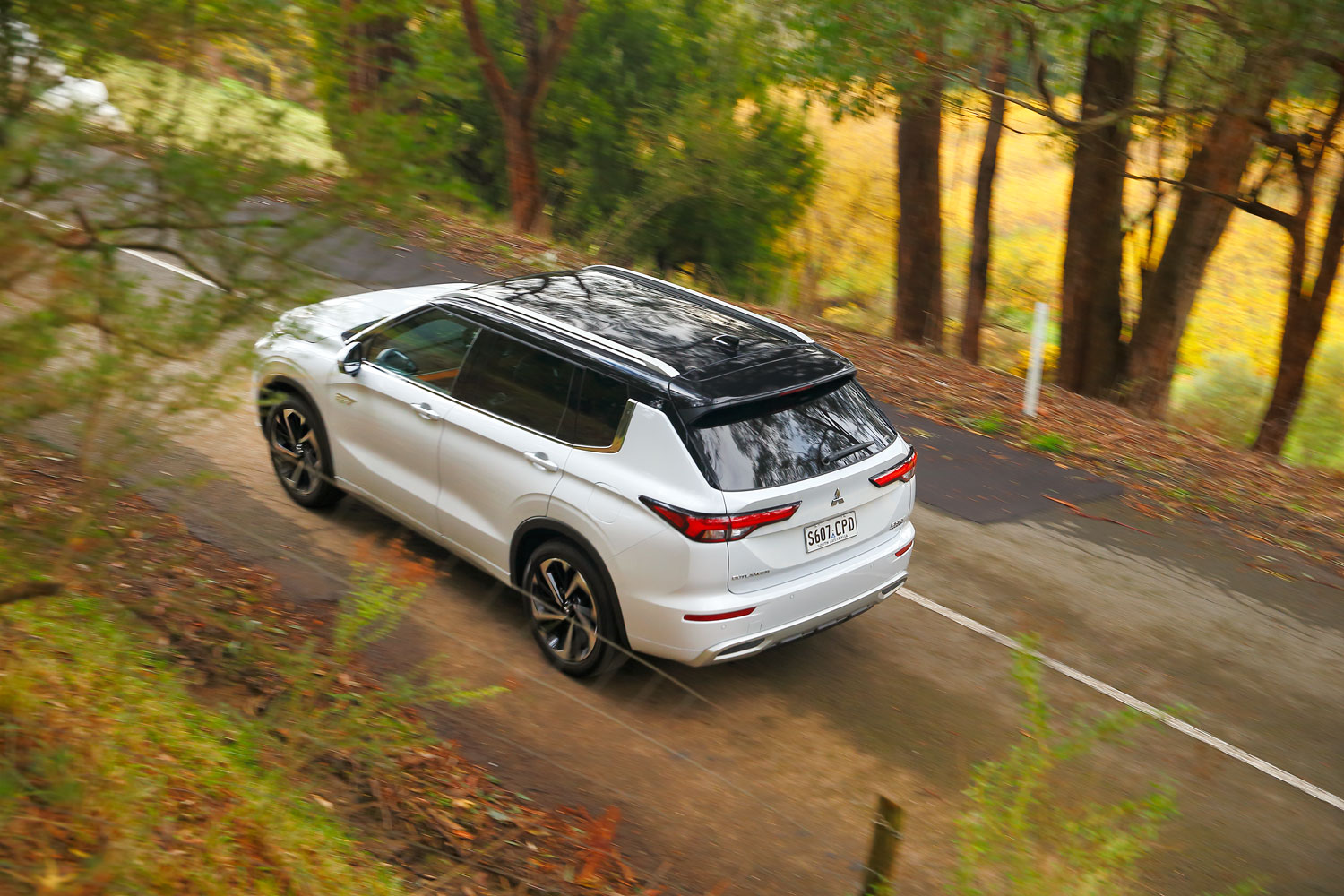
Its petrol engine is remarkably quiet, too. The 2.4-litre unit itself is quite old – it first debuted way back in the mid-2000s – but Mitsubishi’s engineers have worked hard to improve its refinement.
The result is a powertrain that isn’t only commendably civilised and efficient but one that’s equally eager and responsive. It can also seem quite complex once you start to explore the multitude of different settings and modes…
These are split three ways. The first concerns drive modes, where a new Power setting joins the usual suite of Eco, Tarmac, Gravel, Snow and Mud.
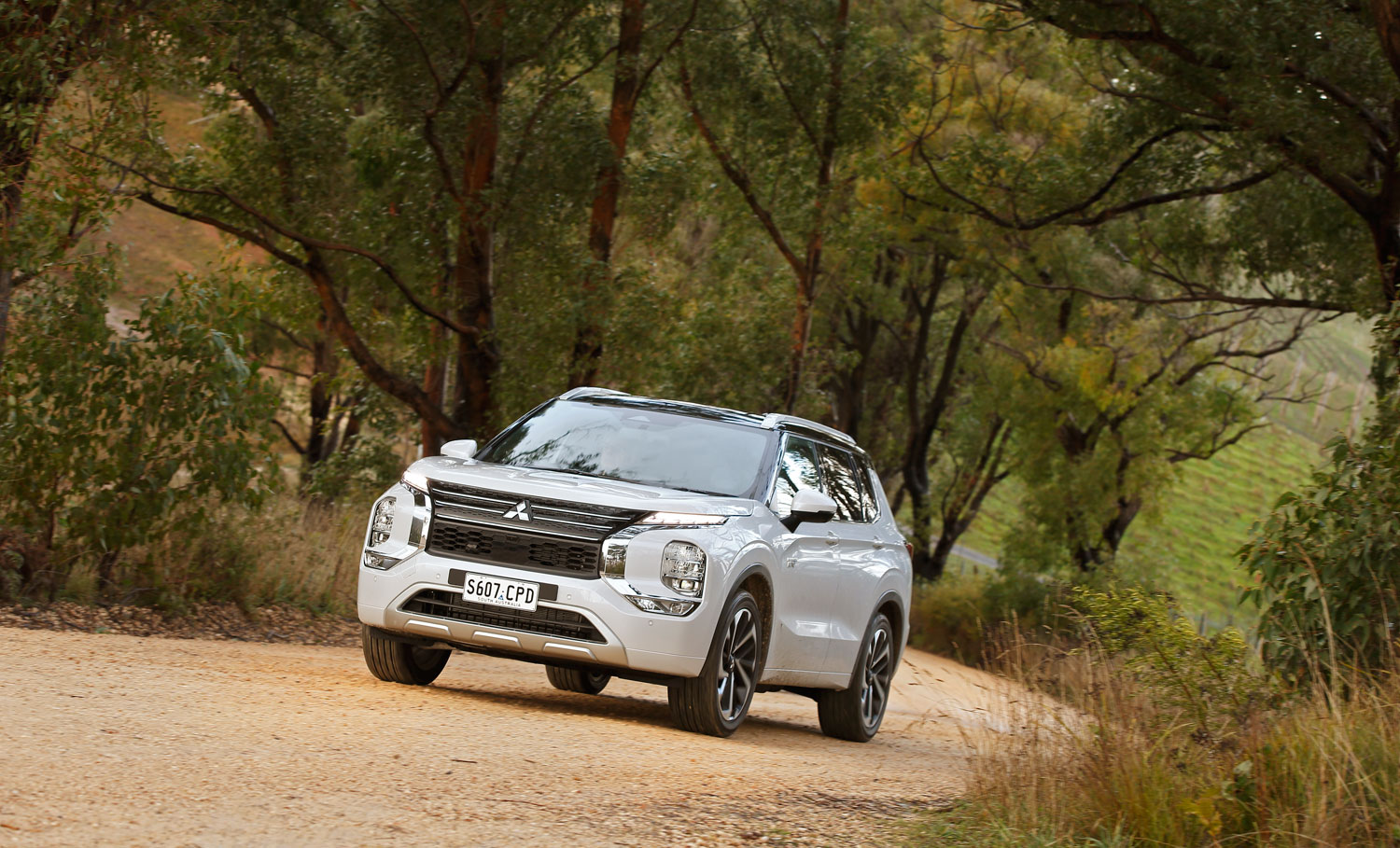
Power mode unlocks all of the PHEV’s powertrain performance and is needed to achieve its commendable 8.2-second 0-100km/h time. Without Power mode, that same dash is completed in just over 10 seconds, which is about the same as a petrol-powered Outlander.
The second suite of settings alters the behaviour of the battery. The default mode is Normal, which leaves the car to judge how best to deploy the battery and petrol engine.
EV mode ensures battery-only propulsion, even if the throttle is pressed to the firewall, while Save deploys the petrol engine to retain the amount of charge currently available in the battery.
Charge is the fourth mode and it uses the petrol engine to top up the battery while you’re on the move. Interestingly, Mitsubishi says the petrol engine takes around an hour to top the battery up from 0-80 per cent.
Power mode unlocks all of the PHEV’s powertrain performance and is needed to achieve its commendable 8.2-second 0-100km/h time.
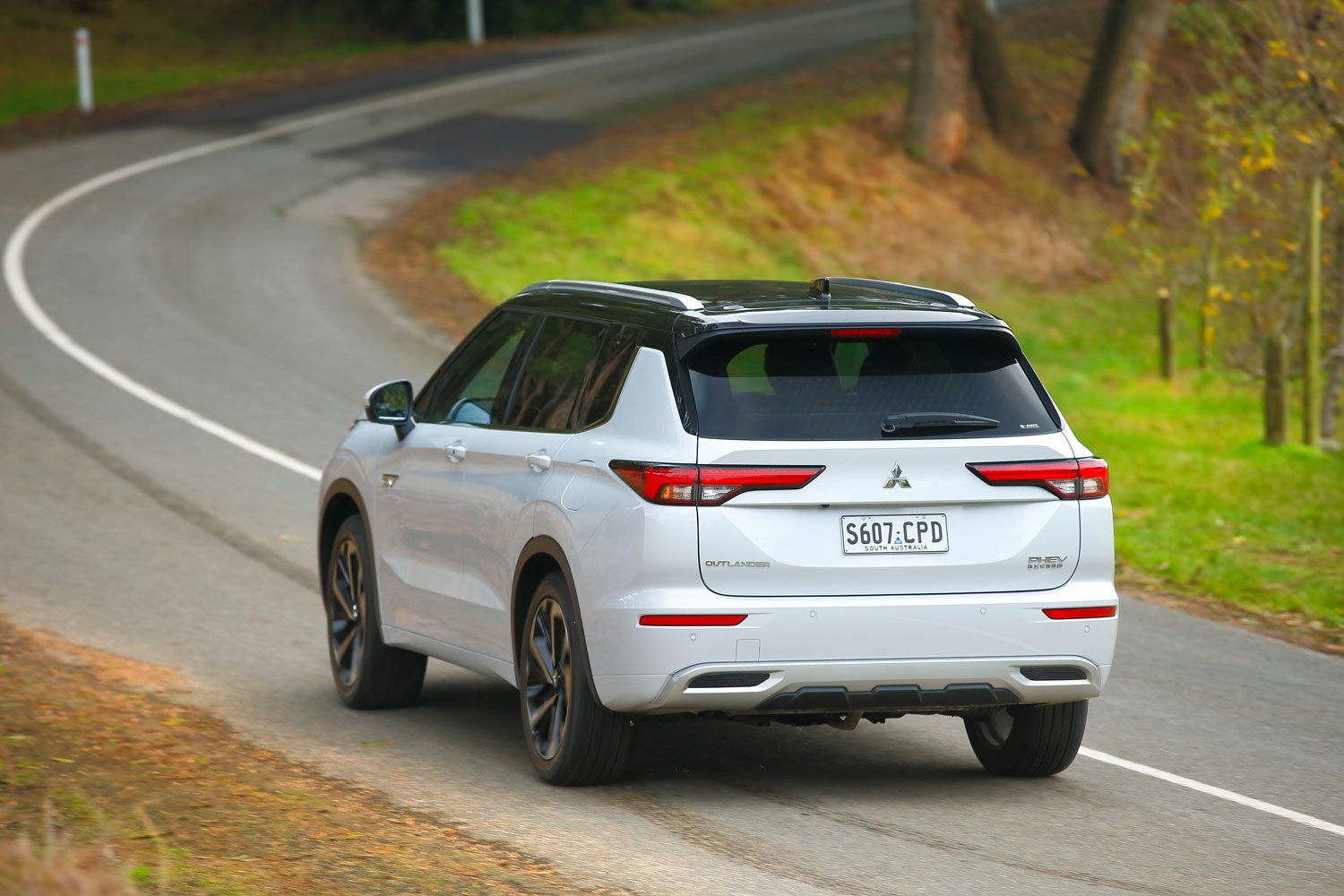
Finally, you have six different stages of regenerative braking to play with. Five of these are explored by using the shift paddles behind the steering wheel. The left paddle adds more regen while the right paddle takes it away. It’s quite effective to use on the fly and this time around, the regenerative effect is twice as strong as on the original Outlander PHEV.
The sixth and heaviest regen mode is activated by pushing a button on the centre console. This deploys enough recuperation that one-pedal driving is possible in most situations, although the brake is still needed to bring the SUV to a complete stop.
Does all of that sound a little overwhelming? It can be at first, but after a few hours we found switching between the different powertrain and braking modes to be simple and intuitive, even while driving.
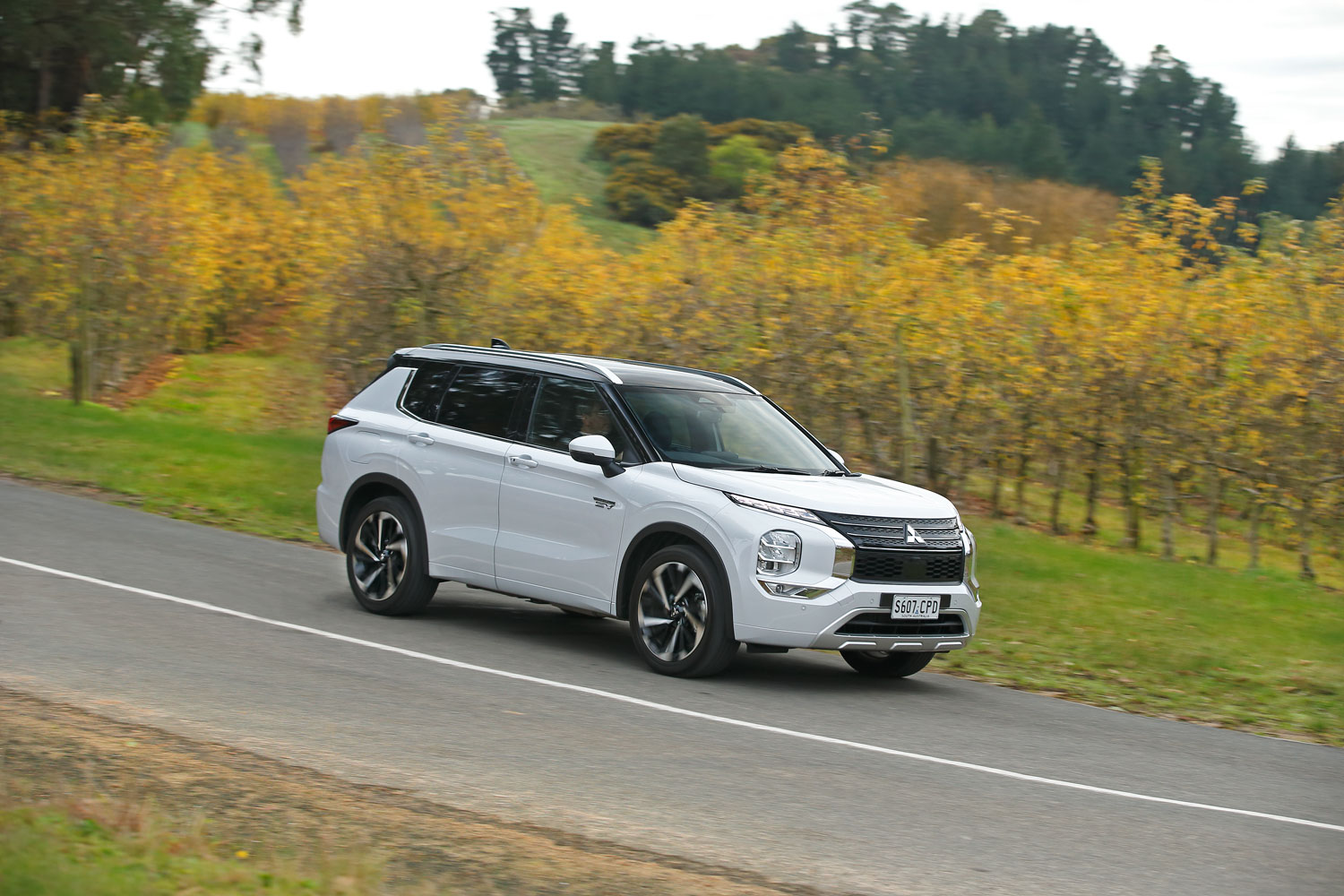
The rest of the PHEV’s ride and handling compromise is nicely judged. Adding the battery and two electric motors means the PHEV is around 340kg heavier than petrol models but deft chassis tuning and mounting most of that weight low in the chassis means it hides its additional mass remarkably well.
Body control is impressive and grip levels from models on 20-inch wheels is surprisingly high. Combine this with the instant low-down shove of the electrified powertrain and the PHEV is actually quite fun and composed to hustle up a twisty mountain road.
The brake pedal feels nice and natural too, with none of the corruption and travel inconsistency that can plague hybrid cars. There’s ample stopping power on offer too, thanks to larger discs that measure 350mm up front and 330mm out back.
Body control is impressive and grip levels from models on 20-inch wheels is surprisingly high.
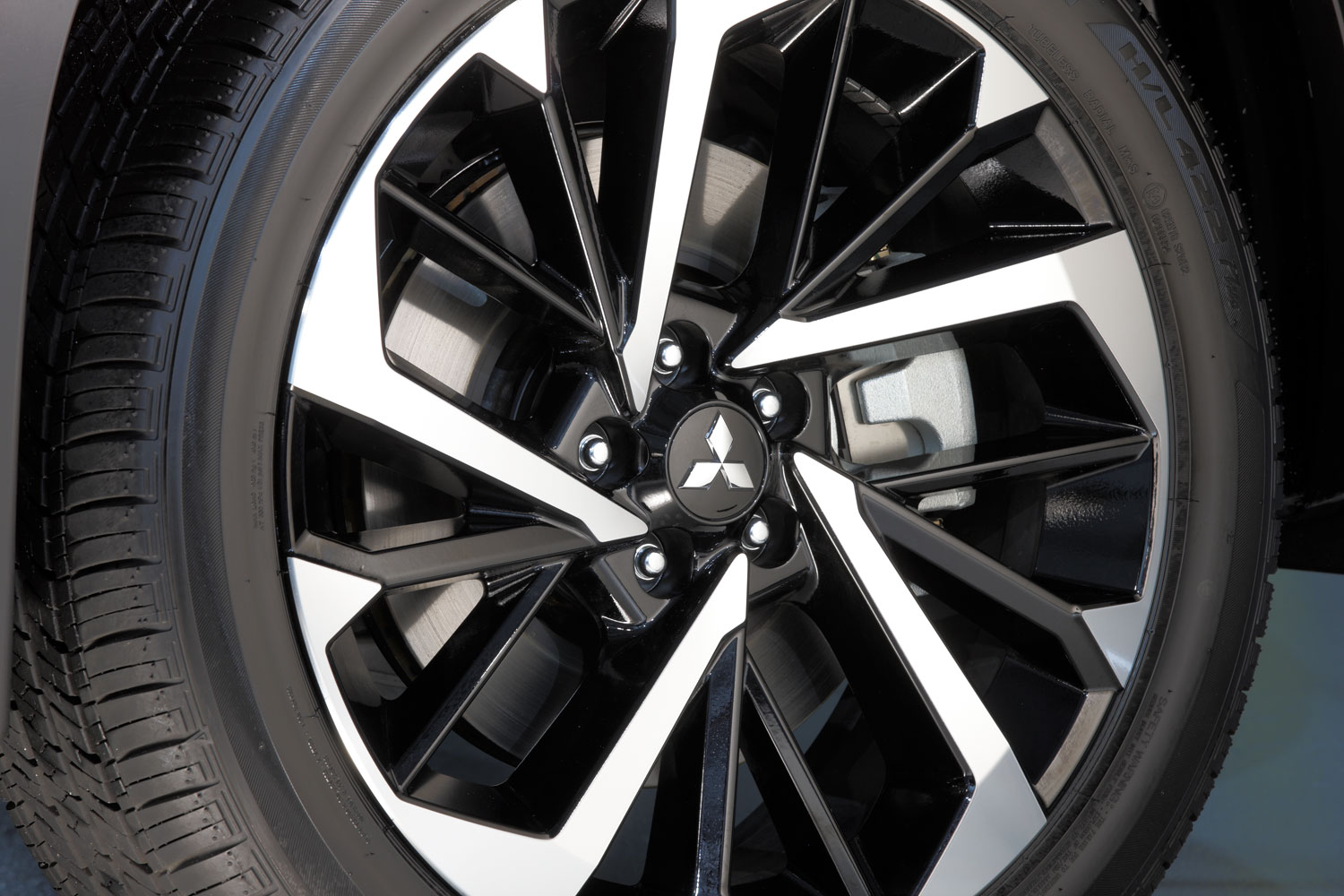
The ride mostly strikes a sweet balance between comfort and control, but just like the rest of the Outlander range, sharp bumps and surface imperfections can jolt unpleasantly through the cabin.
You feel bumps more keenly on the 20-inch wheels but, weirdly, the ES we drove on the 18-inch alloys didn’t deliver an appreciable improvement.
Another minor chassis criticism? The PHEV’s steering tune has been recalibrated and it now feels lighter on either side of the straight ahead. Not a dealbreaker in daily driving but during spirited driving, you do notice it feels a touch vague.
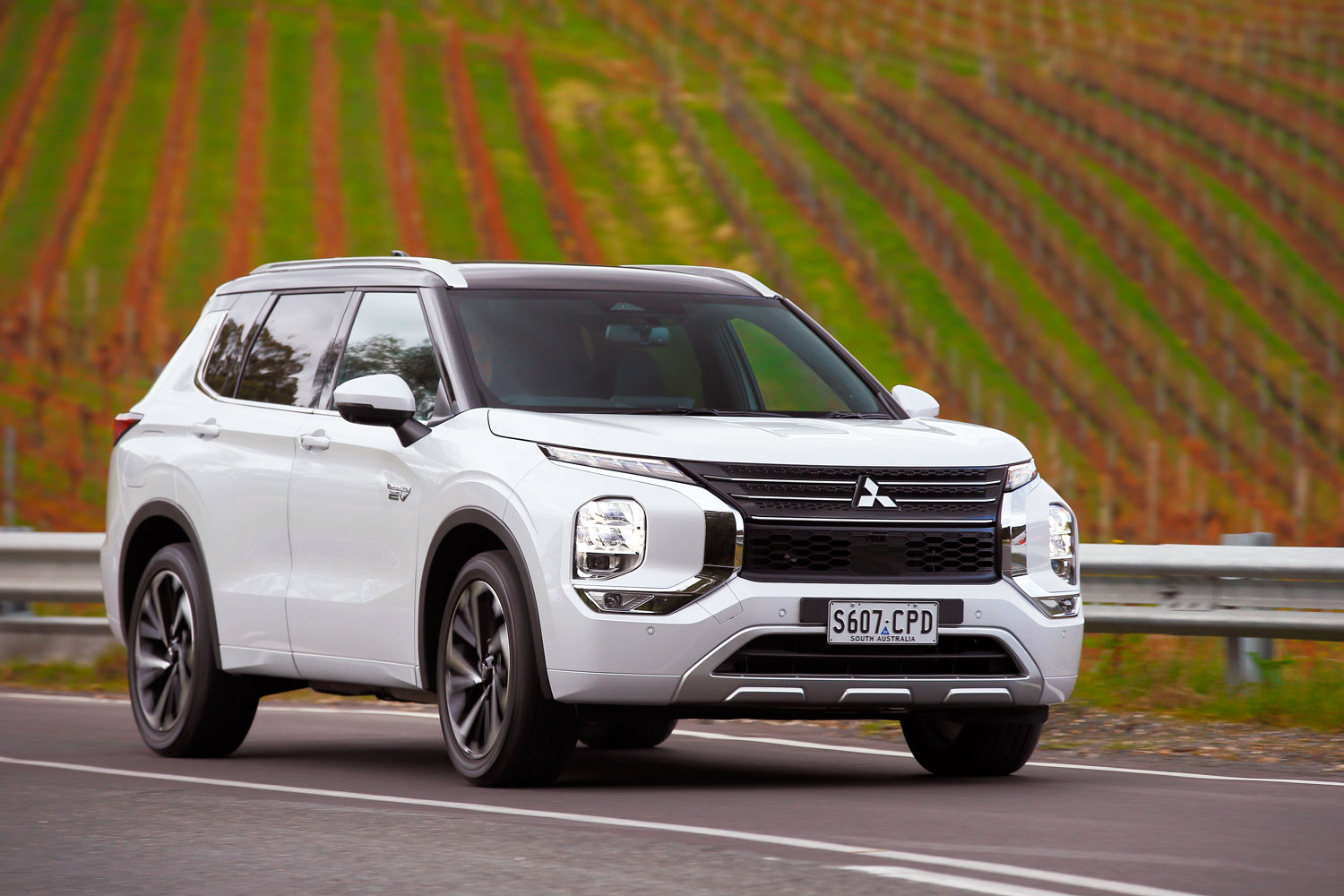
How is it on fuel?
Finally, we arrive at the PHEV’s strongest discipline. Officially Mitsubishi says the Outlander PHEV uses 1.5L of dinosaur juice per 100km.
That’s a huge improvement compared to the regular Outlander range, which has a combined fuel consumption figure of between 7.5L for front-drive variants and 8.1L for those with all-wheel drive.
Our real-world experience of driving an AWD Outlander Exceed has returned around 9.0L/100km.
But is 1.5L/100km actually achievable in the PHEV? Mostly that will come down to how you use it. Mitsubishi’s own research shows owners of the previous PHEV drive it in pure EV mode 84 per cent of the time, meaning that if your daily commute is less than 84km, the goal of drastically slashing your fuel bill should be an achievable one.
For reference, our consumption after a day of fairly rigorous driving averaged 2.0L/100km according to the trip computer.
Electricity consumption was 26kWh/100km, a little on the heavy side compared with many dedicated EVs.
Mitsubishi’s research also shows owners recharge the PHEV at home 99 per cent of the time and the majority plug it in once a day. On a regular 240V socket, the PHEV takes around 9.5 hours to achieve a full charge. Fitting a more powerful AC wallbox at home drops this to 6.5 hours.
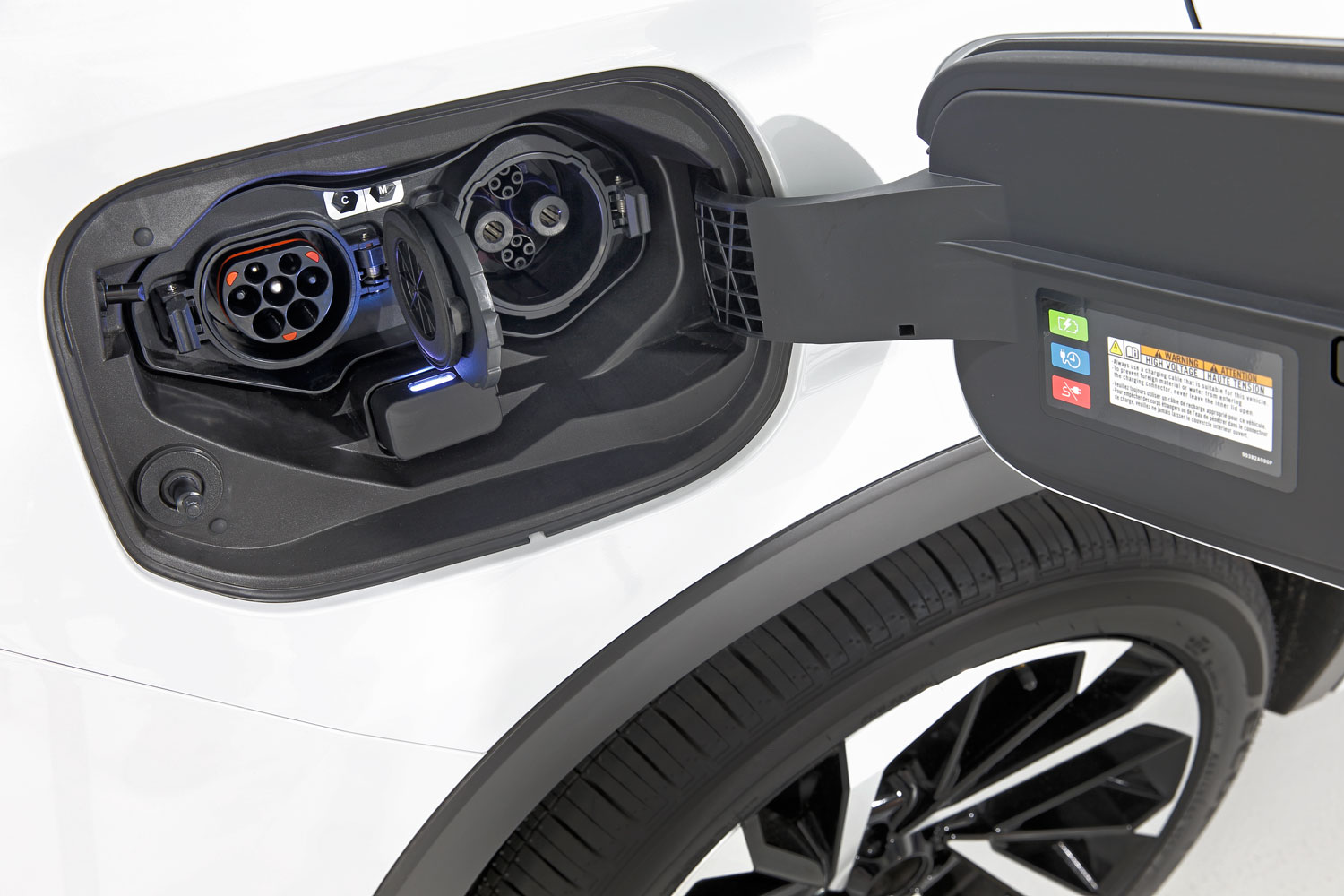
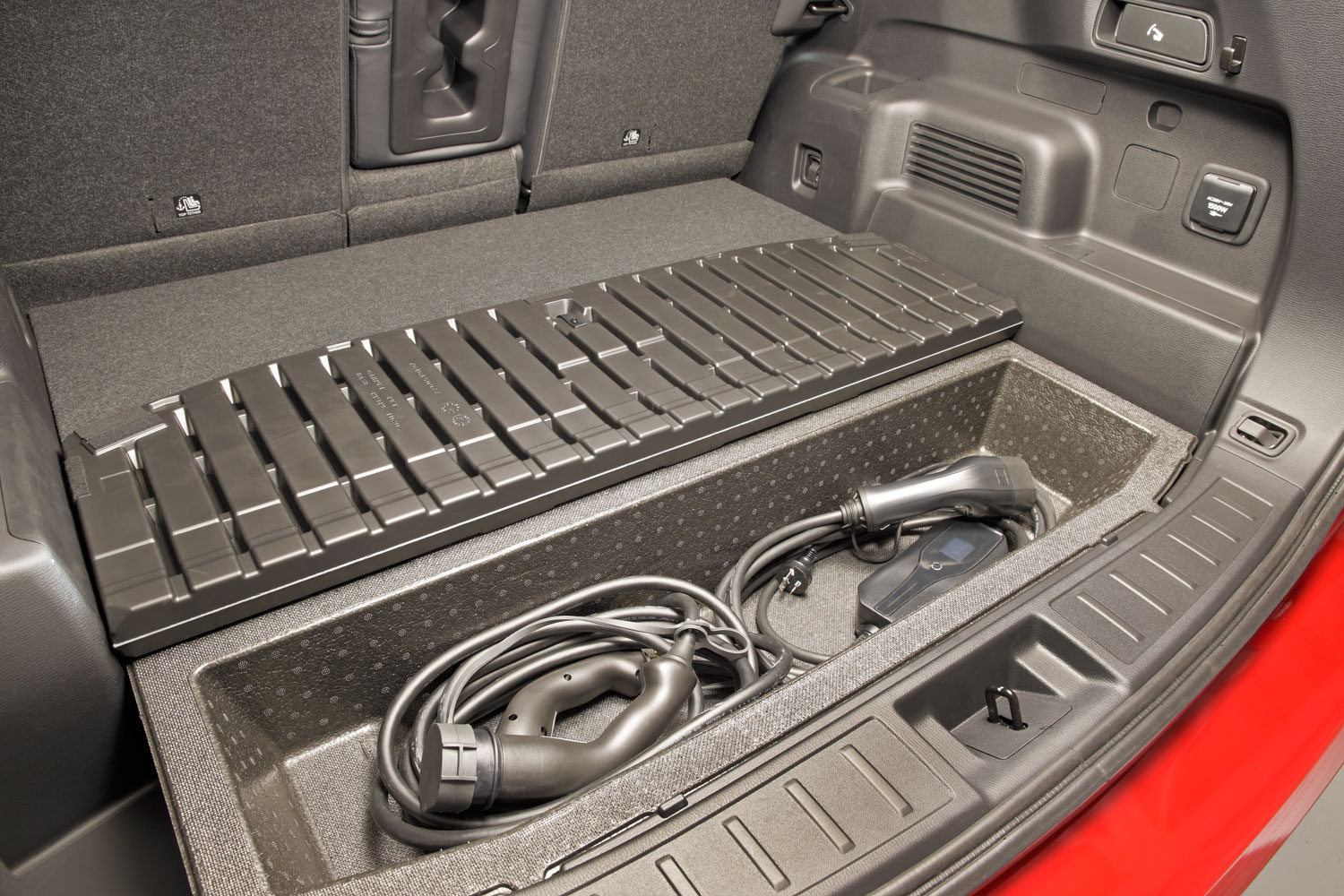
The cables required for both forms of AC charging are included as standard across the PHEV range. DC fast charging is also available via a CHadeMo plug and allows a 0-80 per cent charge in 38 minutes.
How safe is it?
Just like the rest of the Outlander range, the PHEV carries a five-star ANCAP safety rating.
Standard safety equipment levels are high across all PHEV models and includes:
Warranty and running costs
Worried that the PHEV’s complex powertrain means it’ll be expensive to maintain? Don’t be.
Service intervals are the same as the rest of the Outlander range at 12 months or 15,000km and 10 years of capped price servicing is available as a standard inclusion, too.
Minor services cost $299 while a major service ranges between $599 and $799.
Like all new Mitsubishis, the Outlander PHEV benefits from a market-leading 10-year factory-backed warranty, providing it’s serviced at an authorised dealer.
One key distinction? That battery pack in PHEV models carries a lesser warranty of eight years or 160,000km. Mitsubishi will also guarantee the battery against excessive degradation and will replace it if its useable capacity dips below 66 per cent over that eight-year period.
Still, that’s something to be mindful of. All batteries degrade and in eight years, your EV-only range could drop from 84km to 56km.
VERDICT
The second-generation PHEV is a convincing and appealing addition to the Outlander range. Its powertrain is superior to the existing 2.5-litre petrol and it not only drinks considerably less fuel but is smoother, quicker and quieter. The elephant in the room is the PHEV’s price premium.
If you’re buying a family SUV on cold hard numbers alone, it’ll take a long time for the PHEV to deliver a return on investment at the bowser alone. But the PHEV’s appeal stretches beyond its ability to use less fuel.
The powertrain feels more premium, it’s easier to drive in cut-and-thrust city traffic and unlike the old PHEV it carries no compromise in boot space, seating capacity or its ability to tow.
It also stacks up favourably against its plug-in rivals for price and performance, meaning it’s a tempting proposition if you’re interested in an electrified family SUV but aren’t quite ready to make the jump to a pure EV.
The second-generation PHEV is a convincing and appealing addition to the Outlander range. The elephant in the room is the PHEV’s price premium.
NEW, October 2022: Outlander PHEV long-termer arrives!
Inwood has transitioned out of the petrol Outlander and into a new Outlander PHEV. Get that long-term diary here.
2022 Mitsubishi Outlander PHEV Exceed specifications
| Body | 5-door, 7-seat SUV |
|---|---|
| Drive | All-wheel drive |
| Engine | 2360cc 4cyl DOHC 16v |
| Compression | 12.0:1 |
| Bore/stroke | 88 x 97mm |
| Power | 185kW |
| Torque | 450Nm |
| 0-100km/h | 8.2sec claimed |
| Transmission | Single-speed reducation |
| Weight | 2144kg |
| Fuel consumption | 1.5L/100km |
| Front suspension | MacPherson strut |
| Rear suspension | Multi-links |
| L/W/H | 4710/1862/1745 |
| Wheelbase | 2706mm |
| Brakes | 350mm discs (f); 330mm discs (r) |
| Tyres | 255/45 R20 |
| Wheels | 20 X 8J |
| Price | $68,490 |
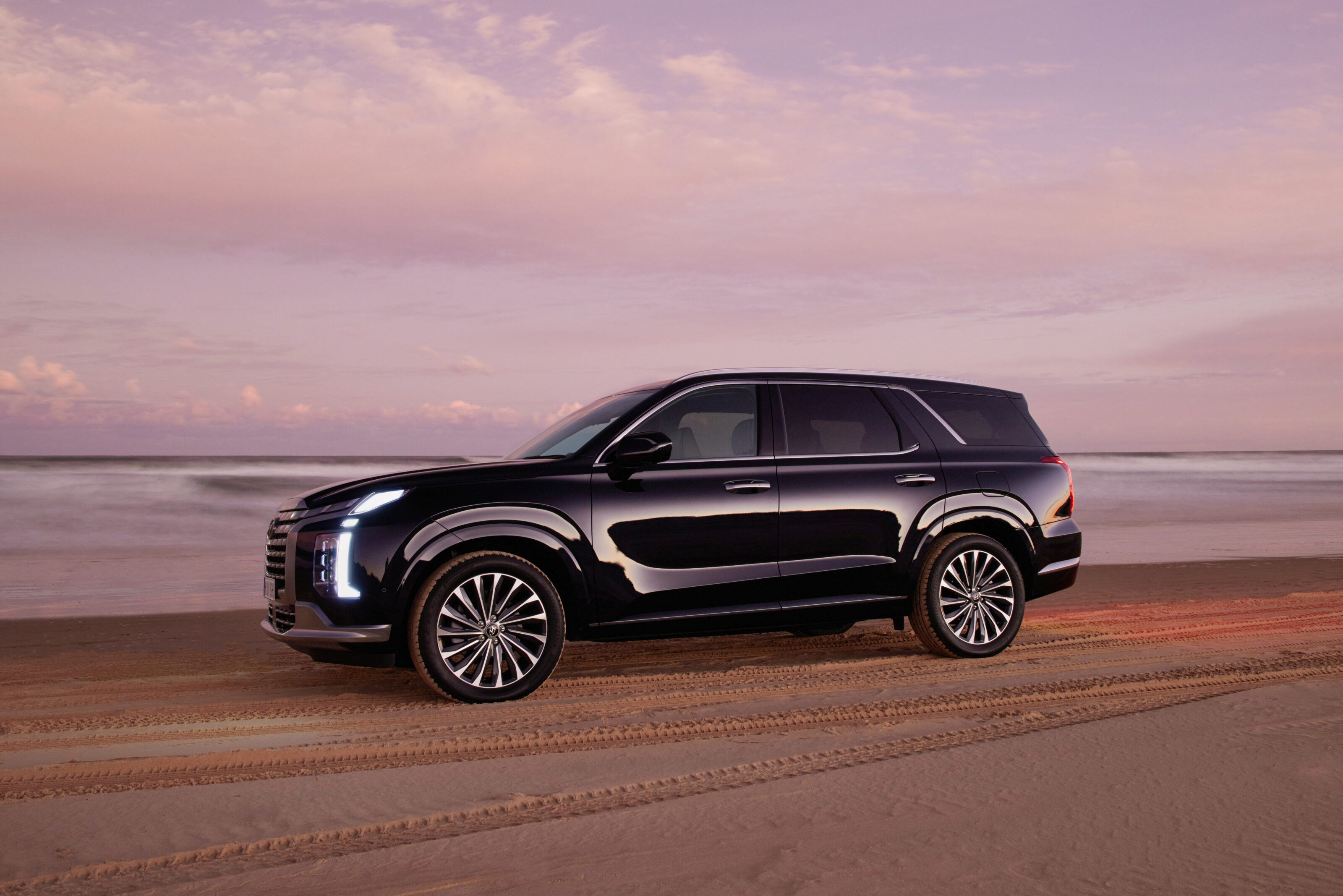
As a relatively new offering in the large SUV segment for Australia, more than 6000 Hyundai Palisades have been sold here since the first model landed on our shores in 2020, showing Aussies love a bit of bang for their buck if they can get it.
Though still selling in smaller numbers than its Santa Fe sibling, what Hyundai calls its premium SUV just got a little more sophisticated for the year ahead.
Despite retaining the same powertrains, a load of new tech and safety gear has been thrown at the facelifted model for 2023, making it an even more compelling option for families seeking oodles of space and lots of high-end features.
Pricing and features
For 2023, there are two grades of the Palisade – the Elite and Highlander carry across from the previous model.
The entry-level ‘Palisade’ variant has now gone from the line-up as it didn’t prove as popular with customers.
Both grades are available with a choice of front-wheel drive petrol or all-wheel drive diesel powertrains and configured with either seven or eight seats.
With a petrol engine, the Elite costs $65,900 or the higher-spec Highlander costs $75,900. If opting for diesel power, the Elite is $69,900 and the Highlander $79,900 (all prices before on-road costs). Premium paint is available for all variants, which adds $695.
Although the gear underneath remains much the same in the facelift compared to the model that launched here in 2020 (with some tweaks to refine it here and there), the differences for MY23 are tech and safety focused – headlined by the debut of Hyundai’s Bluelink smartphone connectivity system in Australia.
Hyundai BlueLink – how does it work?
At its simplest, Hyundai says Bluelink provides, via a smartphone, control of basic functions such as monitoring of tyre pressures, brakes, and airbags, alongside remote starting.
Remote door locking and window controls are available too, protected by the phone’s PIN system or biometric scanning.
Hyundai also touts real-time navigation via ‘Connected Routing’, using an inbuilt SIM and cloud-based server instead of a traditional internal sat-nav. ‘Last Mile Navigation’ allows you to transfer directions from your car to the app to provide on-foot assistance via augmented reality or Google Maps.
Other functions include a ‘find my car’ option and saveable trip summaries, plus voice recognition for climate controls.
More importantly for families, Bluelink brings bonus safety features to the large SUV, such as automatic collision notification and an SOS emergency call button.
What else does the 2023 update bring?
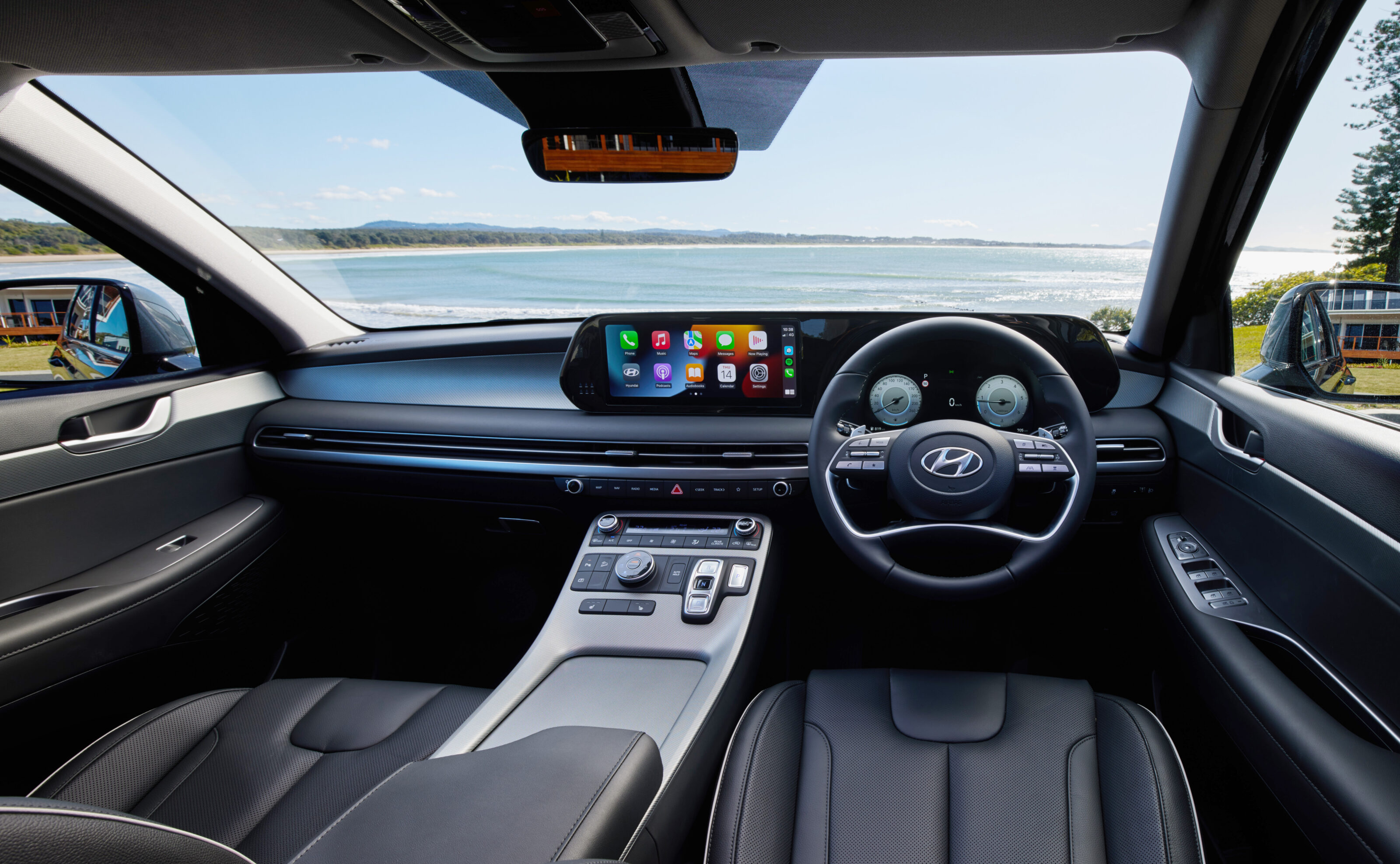
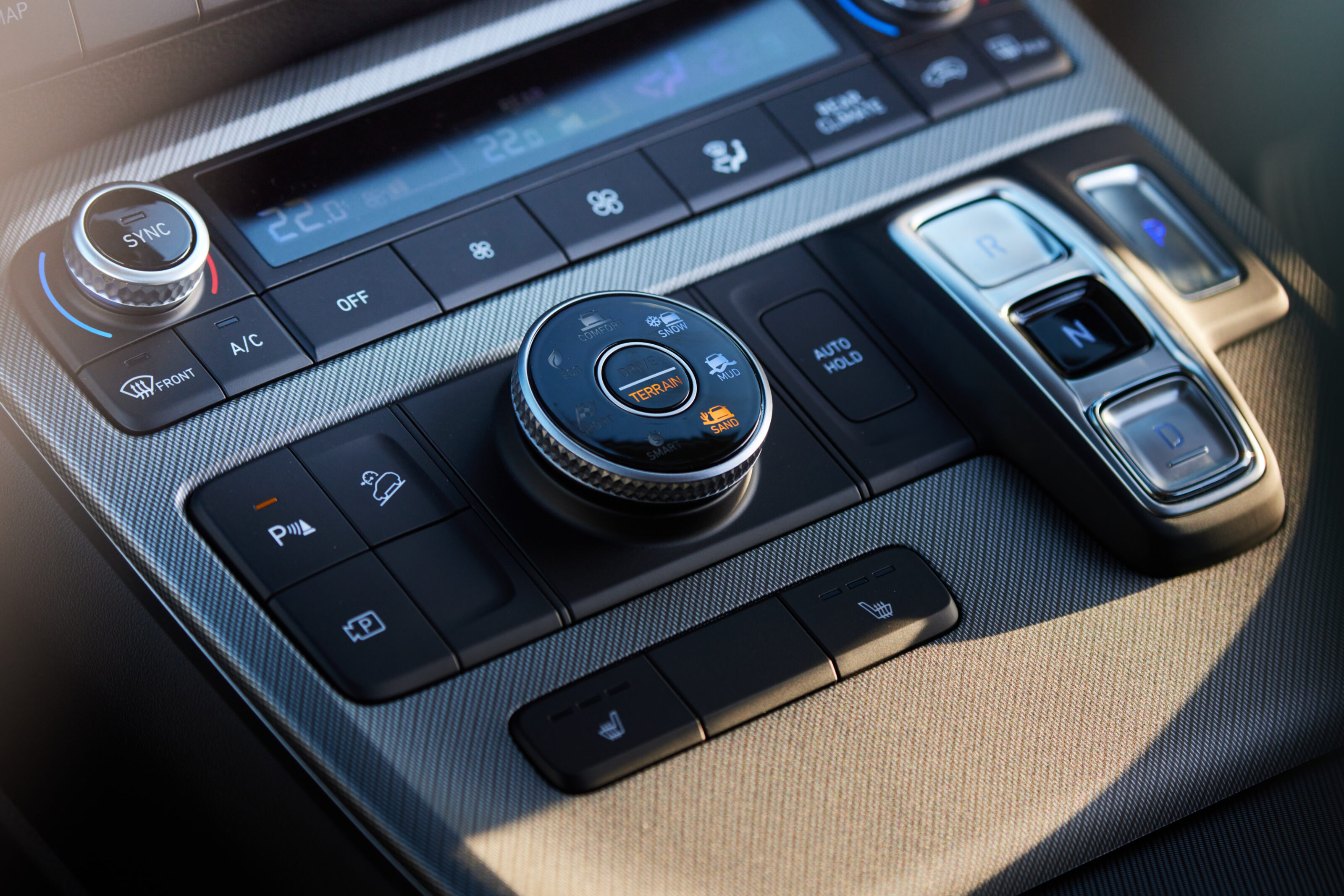
Alongside Bluelink, other new features for the facelift version include ventilated seats in the second row of eight-seat variants for the first time, a revised head-up display, USB ports upgraded from type A to C, a more powerful wireless charging pad and an infotainment screen and digital cluster that have both grown considerably to 12.3 inches, as well as a digital rear-view mirror.
The digital mirror, also making its Australian debut, uses a camera mounted to the back of the car’s spoiler and provides a 44-degree angle to give the driver a better look at what’s behind them than a conventional 20-degree unit.
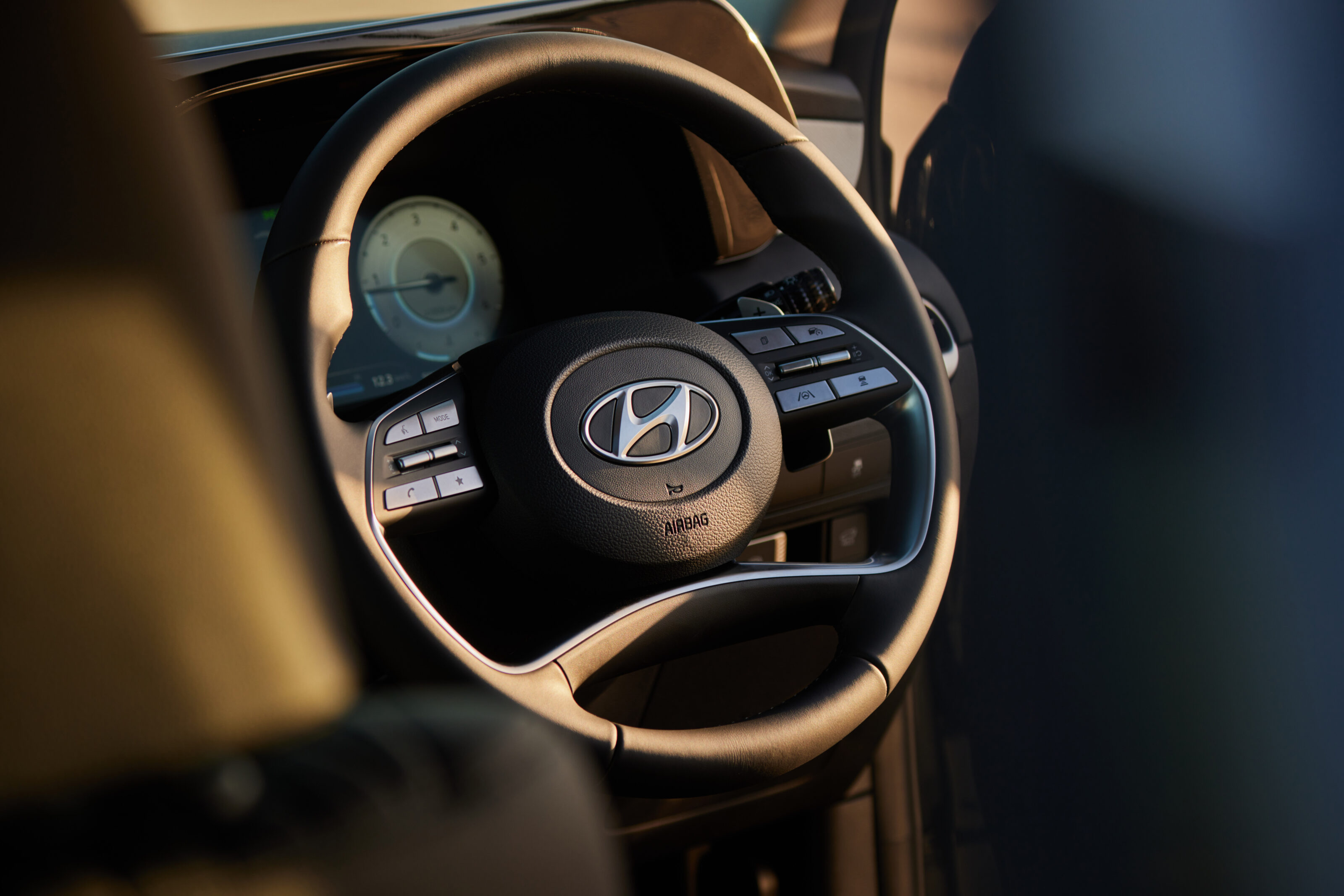
There are a few aesthetic changes to be found in the MY23 Palisade too, including Hyundai’s new parametric grille design – a jewelled black look for the Elite and soft chrome for the Highlander – with vertically-stacked LED headlights, a four-spoke steering wheel and fresh 20-inch alloy wheel designs.
Above the Elite, the Highlander also gains new skid plate designs, a full-width high-mounted LED stop light and a separated hidden-type tail-light design.
The facelifted 2023 Hyundai Palisade has now received a five-star ANCAP safety rating – bettering its predecessor’s four-star result.
All petrol and diesel variants of the Palisade made since May and sold from this month onwards in Australia and New Zealand are covered by the new ranking awarded by crash-testing authority ANCAP, while any cars manufactured prior to that retain the four stars.
The lack of a front-centre airbag and less sophisticated autonomous emergency braking (AEB) were to blame for the previous four stars, but the new model now has both a centre airbag and improved AEB performance.
Other improvements also include an intelligent speed limit information system (even if it is a little too nannying – sounding an alarm four times at just 1km/h over the limit) and multi-collision braking.
With the addition of a front-centre airbag, the MY23 Palisade now has seven airbags and comes standard with a full suite of Hyundai SmartSense safety technologies – many of which are new or revised for 2023 – including blind-spot collision avoidance assist and blind-spot view monitor (Highlander only), forward collision-avoidance assist, lane following and lane-keep assist, parking collision avoidance assist, surround-view monitor and more.
Comfort and space
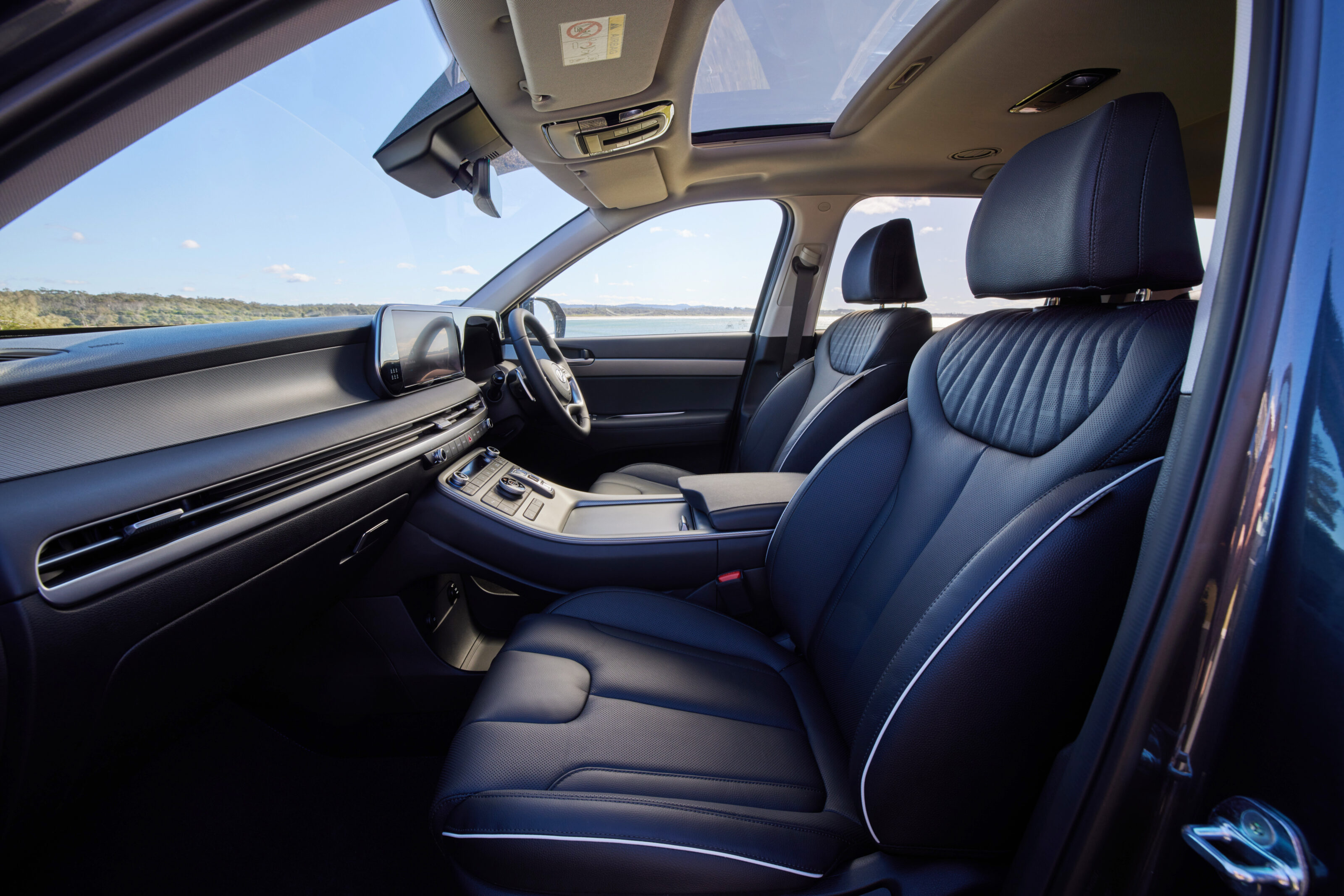
Both the Elite and Highlander offer plush accommodation that combines luxury and family living into one.
The Elite gets black quilted leather seat upholstery and a cross-line alloy-look trim, which in no way feels basic or entry-level, while the Highlander adds black Nappa leather with better quilting and a gloss black/pinstripe trim.
Beyond that, the top-spec version can also be had with warm grey and dark khaki Nappa leather with unique wood-look trim, dependent on the exterior paint colour chosen.
All materials feel very high quality and the seats throughout are incredibly comfortable. An optimal driving position can easily be found thanks to electric seat adjustment, which the front passenger also gets in the range-topping grade – with memory function too.
Even in the Elite, the front row gets heated seats, and second-row passengers have a manual sliding arm to adjust legroom too.
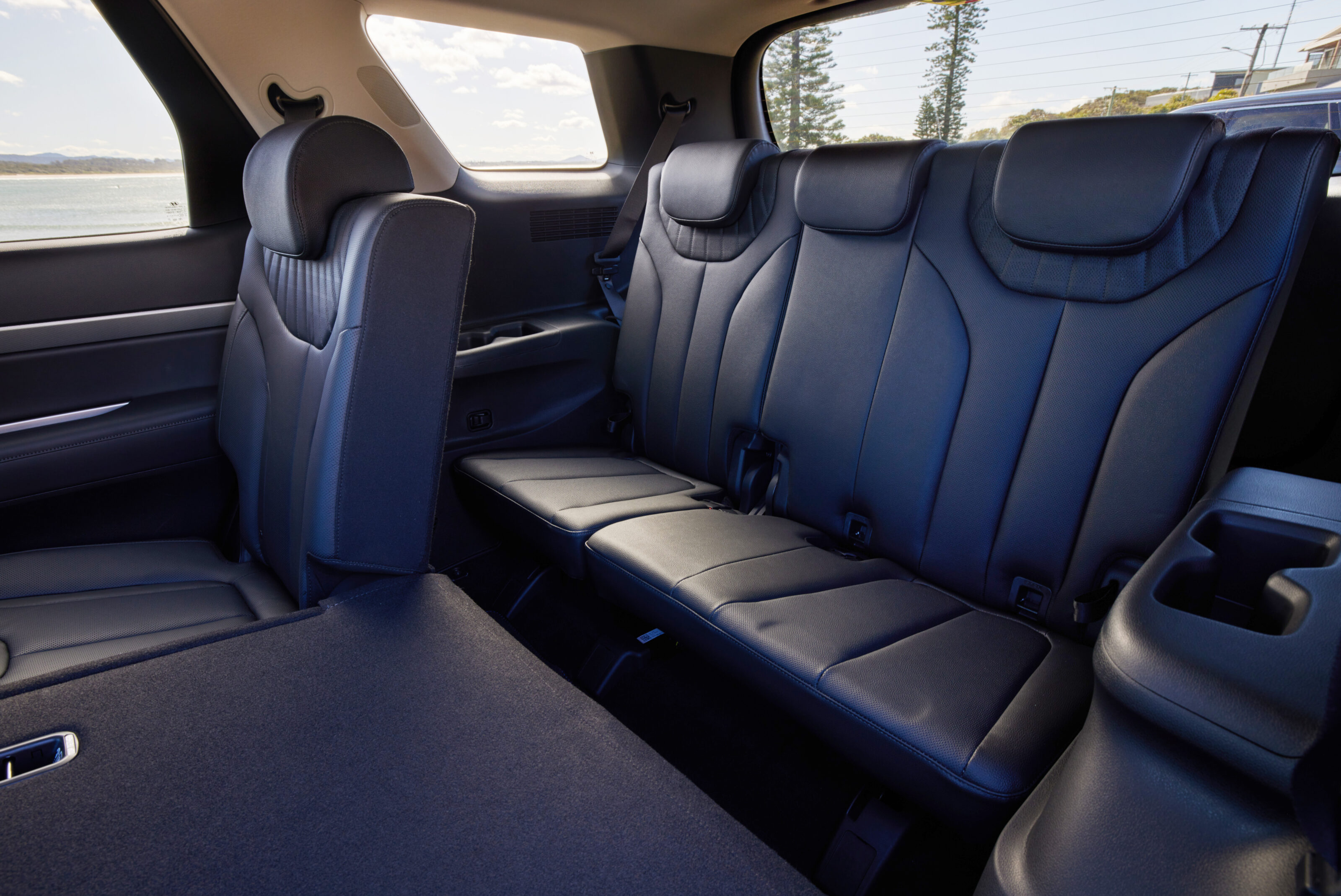
In seven-seat versions, the second row is made up of two captain’s chairs, offering more space for rear passengers to spread out while giving the driver or front passenger the opportunity to catch a glimpse through the gap between seats at what little kids or grumpy teens in the third row might be getting up to!
Additional luxuries for Highlander variants include heated and ventilated front and second-row seats, and wing-out aircraft-inspired second-row headrests.
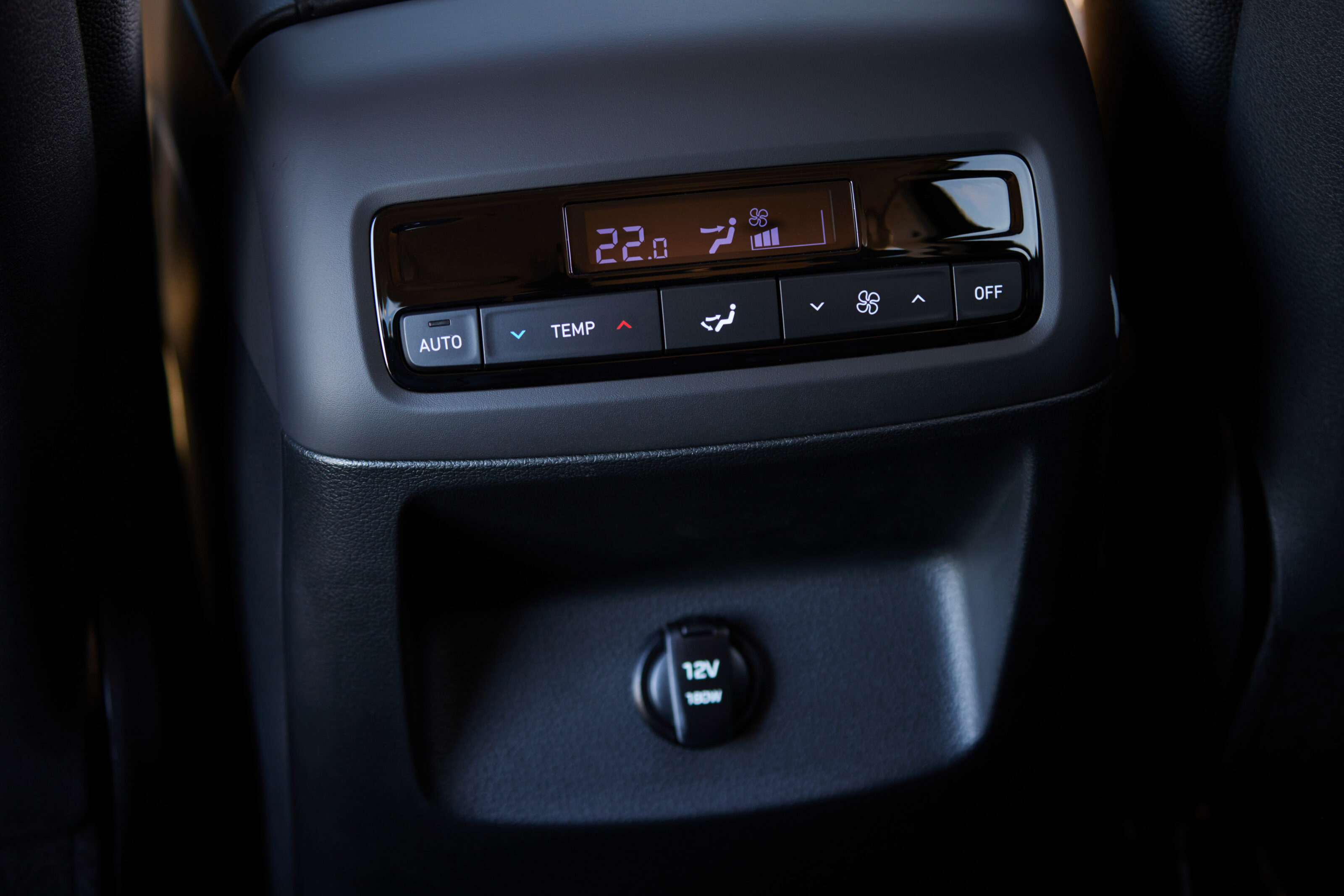
Plenty of creature comforts are found throughout the entire cabin, showing this is a vehicle made with the whole family in mind. There are USB-C ports for every row (yes, even the very back!), digital climate controls in the second row and a total of 16 cup holders.
While stretchy map pockets, a sunroof (single pane for the Elite and dual for the Highlander) and heaps of legroom are great for family-focused buyers, the door bins could do with a little more space – only really proving useful for regular-sized drinks bottles, with no extra nooks and crannies for toys.
Rounding out the family functionality are three ISOFIX anchor points, two in the second row and one in the third, and two top tether points for the middle bench (three if an eight-seater) plus another two at the very back.
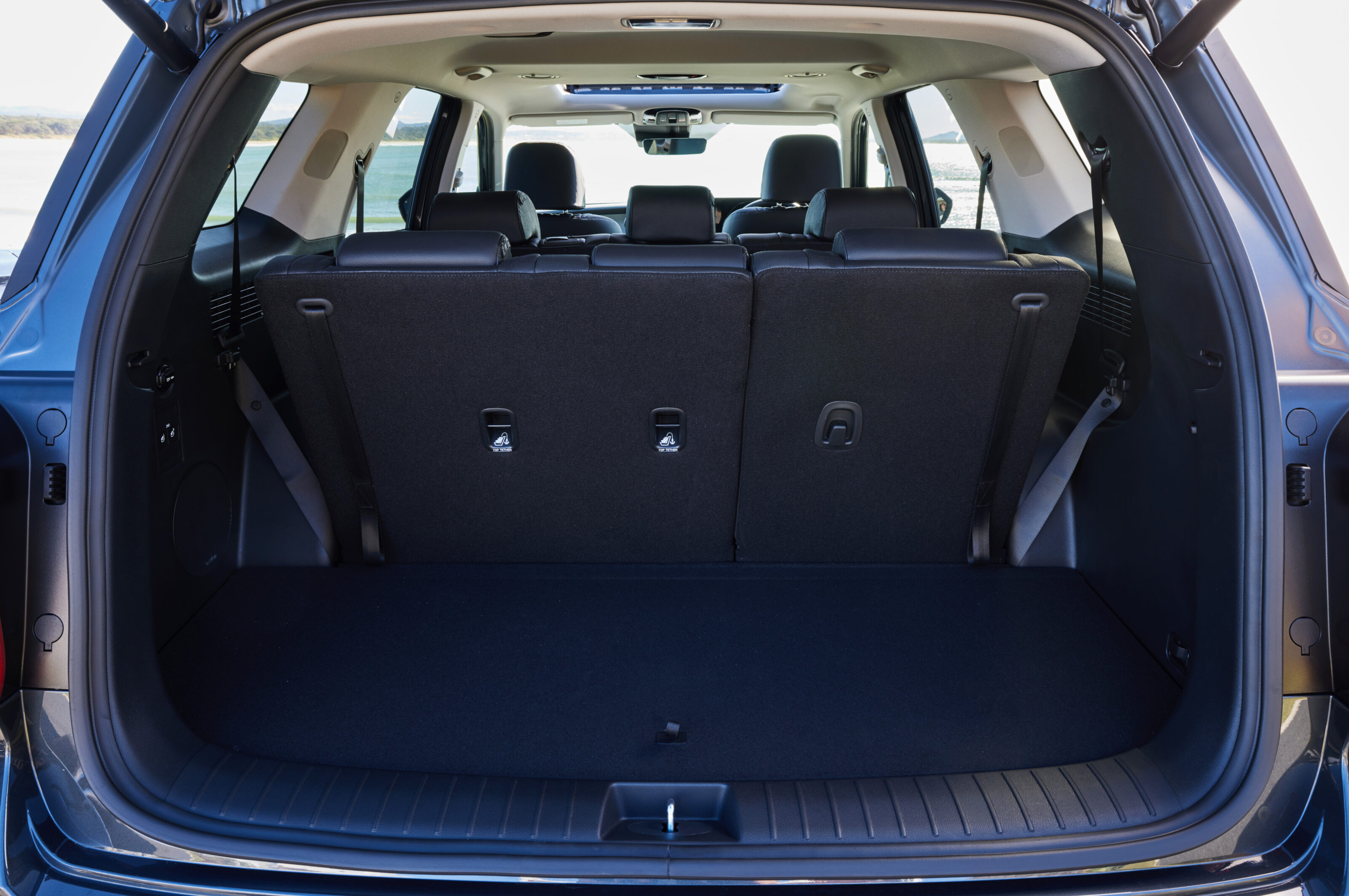
With all three rows up, the boot space is not huge, rated at 311 litres, but it would do for a few school bags or a week’s food shop. If most of the time you only needed four or five seats and had the third row down, you’re in business, as that number is bumped up to 704L.
Lose the second row as well and you’ve basically got a van’s worth of luggage space, rising further to 2447L.
On the road
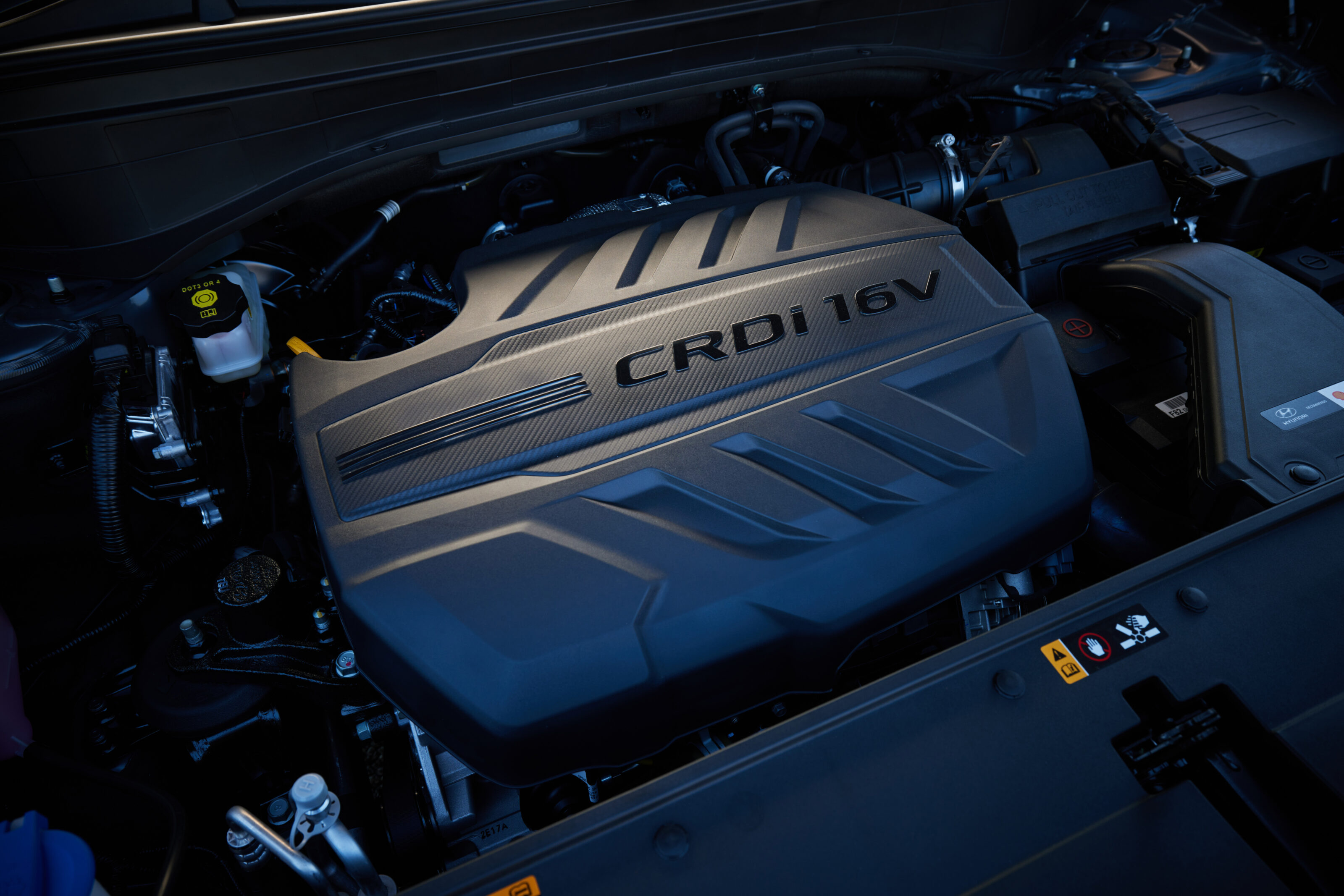
Each trim grade is available with the same choice of a 3.8-litre petrol V6 with front-wheel drive, or a 2.2-litre turbo-diesel with all-wheel drive, both teamed with an eight-speed automatic transmission – as in the previous model.
However, for 2023 Hyundai has made a number of small revisions to improve the Palisade’s driving experience.
The transmission has been tweaked to produce smoother, more refined gearshifts – making the torque converter feel like a good match for either engine – and the chassis structure has been modified to improve body rigidity and safety.
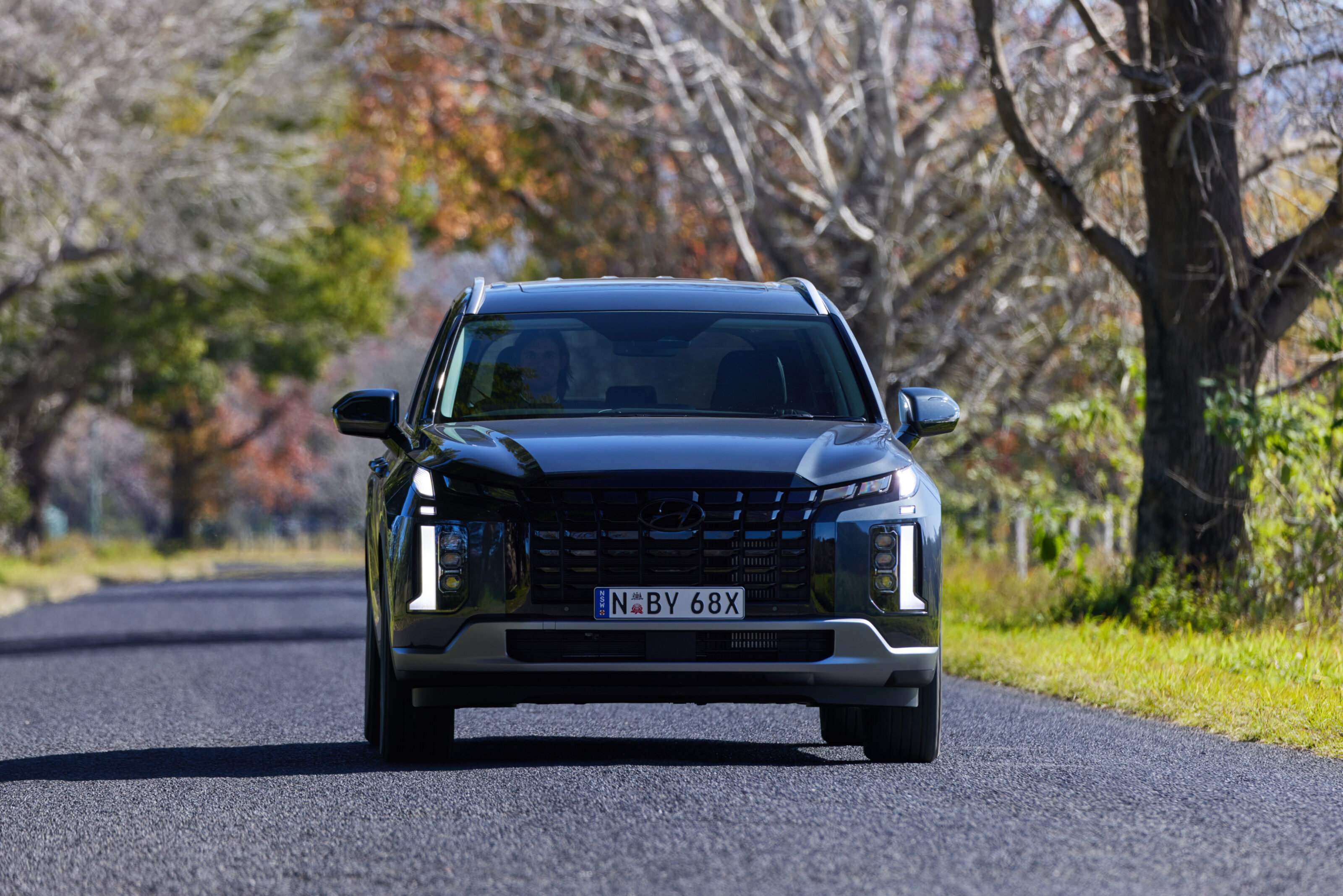
Hyundai’s third-gen Selective Damping Control technology is part of a suspension upgrade that also includes revised spring rates to improve ride and handling, while the multi-terrain mode controls have been adjusted and more insulation, as well as thicker glass, have been added to reduce noise in the cabin.
As a result, wind noise only becomes intrusive in super blowy conditions (as we experienced on the launch in rural NSW) and tyre/road sounds are kept to a hushed minimum.
Power for the petrol is 217kW and 147kW for the diesel, with torque rated at 355Nm and 440Nm respectively. Neither is a slouch, though the diesel is the better all-rounder for load-lugging torque, fuel economy and traction thanks to its all-wheel-drive system.
Both offer prompt off-the-mark acceleration and decent performance for overtaking considering the Palisade’s size, but in both wet and dry conditions the front-drive petrol easily spins its wheels under harder acceleration.
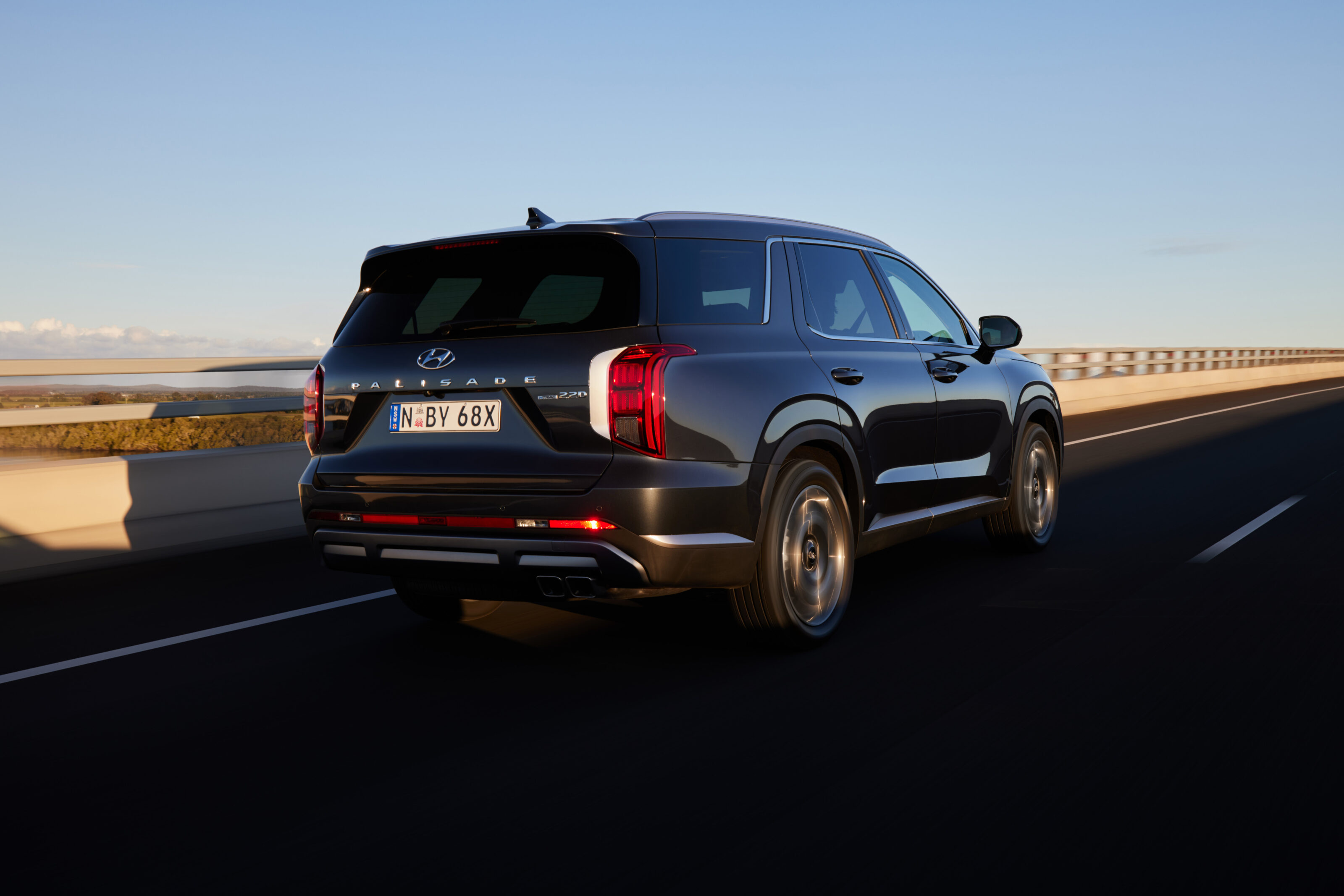
However, the petrol’s power is more consistently available, aside from feeling a tad lazy coming away from traffic lights, whereas the diesel feels slightly more stunted in the mid-range where you’d usually expect its sweet-spot to be – only demonstrating more pep in its step under 60km/h or over 90km/h. Braking meanwhile is solid and dependable, with no need to apply too much pressure in either weather condition.
Again, considering its size, the Palisade’s claimed range of 7.3L/100km on the combined fuel economy cycle for the diesel is pretty respectable, though less so in the petrol that offers 10.3L/100km.
We found the best fuel consumption came when the Smart drive mode was selected, even better than the more obvious Eco mode, where we achieved 6.9L/100km with freeway driving in the diesel and 9.9L/100km in the petrol.
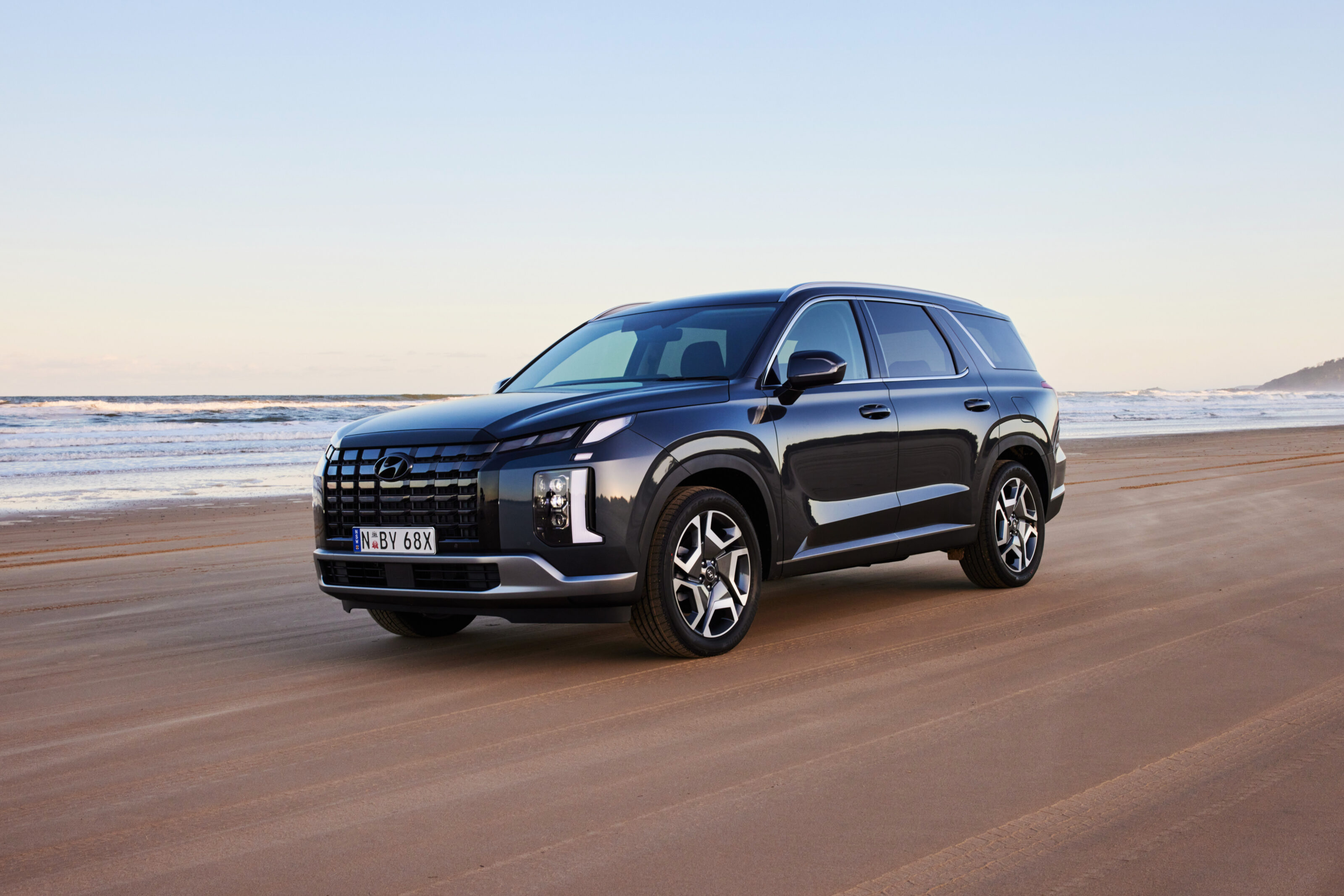
In a manner befitting its premium intentions, the Palisade’s ride stands out as incredibly smooth thanks to its front MacPherson strut and rear multi-link suspension arrangements, which have been specifically tuned for local roads and hide the big SUV’s 2200kg weight and size well.
Composed over almost all surfaces – with the exception of the worst potholes – the Palisade never feels unsettled or bouncy.
Steering is smooth too, not requiring too many turns lock-to-lock in manoeuvring and predictable round faster bends, with any flick of the hand in either direction revealing the Palisade to be alert and ready to respond.
Ownership
Hyundai Australia offers a five-year, unlimited-kilometre warranty, complimentary roadside assistance for 12 months on new vehicles, a 1500km complimentary first service and lifetime capped-price servicing at intervals of 12 months or 15,000km.
Pricing for each service is $399 for the 3.8-litre V6 petrol or $489 for the 2.2-litre diesel over the first five years.
When servicing with Hyundai, customers also receive an extra 12 months of complimentary roadside assist for up to 10 years, along with updates to their sat-nav system for the duration.
VERDICT
With the 2023 Palisade, Hyundai has made some worthwhile and noticeable improvements for customers after a premium SUV, going beyond fresh looks and a few touch-ups here and there.
Its cabin in particular is full of luxuries normally found on cars beyond even this vehicle’s top asking price of $80K, showing that Hyundai is now competing at a level it hasn’t done in the past.
The arrival of Bluelink technology makes for a really interesting proposition from the Korean carmaker, one definitely worth having on your test-drive list if you’ve got the cash and need a large SUV for hauling lots of people.
While the Highlander ticks all the boxes you could ask for, there’s still a whole lot of bang for your buck in the Elite – with just those few extra touches like greater paint choices, different wheels, a head-up display, remote smart parking, and blind-spot view monitor to set it apart.
Even with the Elite, the Palisade represents money well spent to get a lot of car for less than $70K.
2023 Hyundai Palisade specifications
Snapshot
- Honda HR-V, CR-V and Accord pricing up
- HR-V e:HEV L hybrid hit hardest with a $2000 hike
- CR-V medium SUV range up between $100 and $300
Honda Australia has increased pricing for the HR-V, CR-V and Accord from August 1, 2022.
However, buyers who signed a contract before the start of August will be price protected, with the original drive-away pricing to be honoured upon delivery.
The recently-launched HR-V e:HEV L hybrid is hit hardest, receiving a $2000 price hike – after it arrived locally in April, at $45,000 drive-away.
It is now priced from $47,000 drive-away, with the entry-level petrol HR-V Vi X remaining unchanged at $36,700 drive-away.
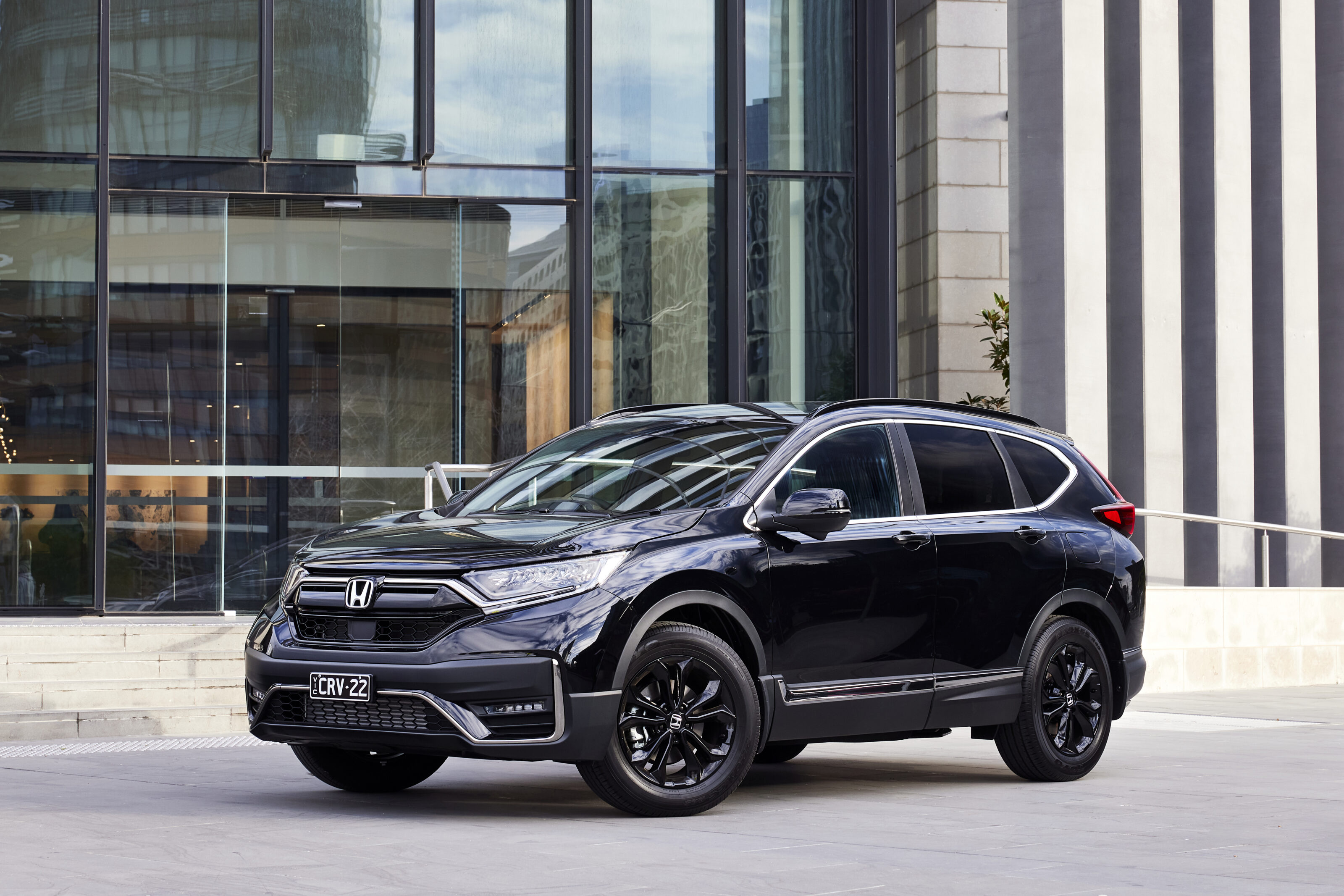
Meanwhile, the CR-V medium SUV is between $100 and $300 dearer – excluding the recently-announced VTi 7 +Luxe special edition. However, the also-new Black Edition has increased by $300.
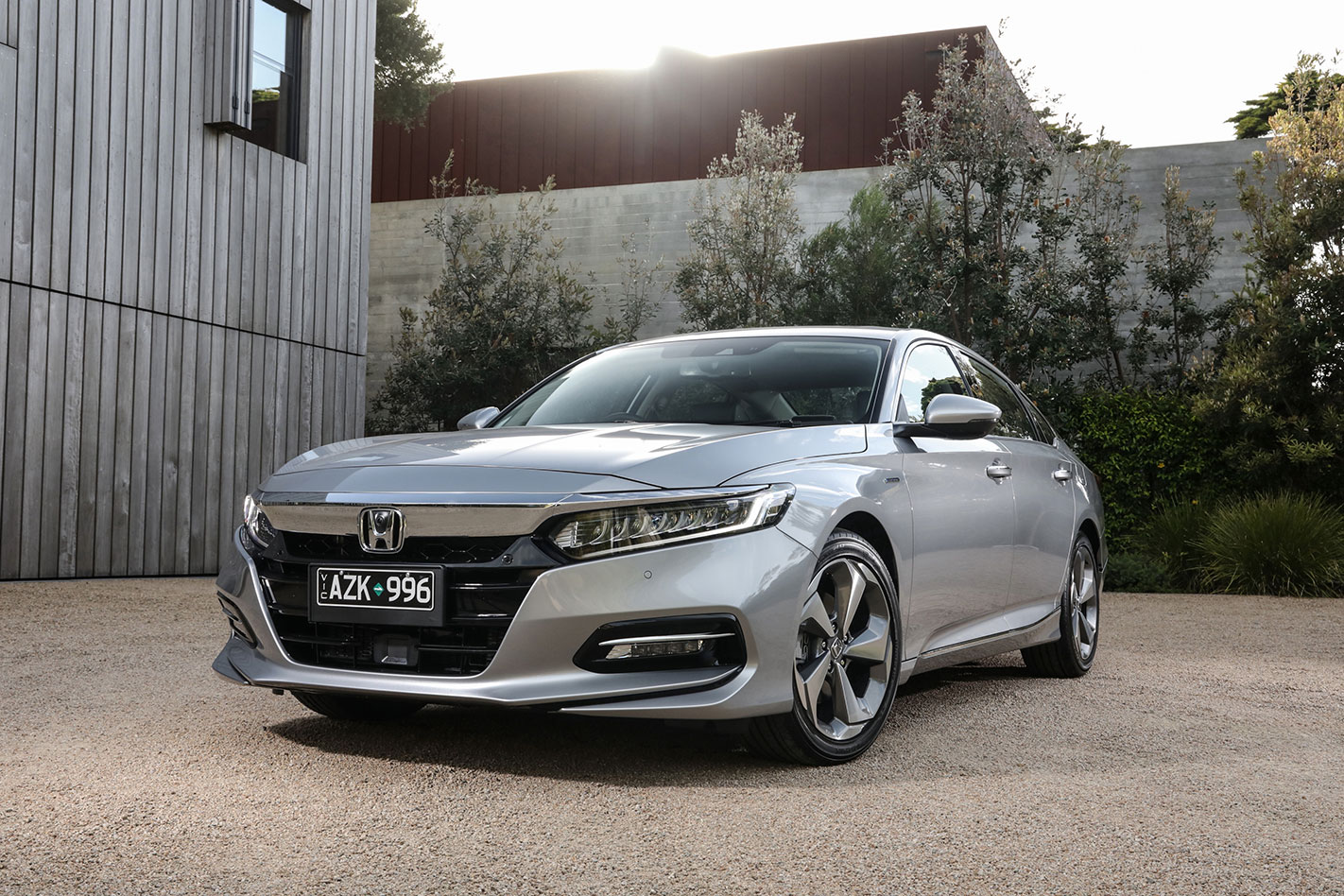
Pricing for the slow-selling Accord sedan has also increased, with the petrol model up by $500, to $57,900 drive-away – and the hybrid variant subject to a previous $1500 price increase in July, to $61,900 drive-away.
A spokesperson for Honda Australia said hybrid versions of the HR-V and Accord are subject to wait times of around 10 months, due to a “build-up of customer orders”.
As such, examples of the HR-V e:HEV L set to be delivered in Australia before the end the year will be handed over at the $45,000 drive-away launch price, pending accessories and other extras.
“A number of models/grades in the Honda line-up received pricing adjustments as of August 1, which are reflective of the current market conditions, with demand continuing to exceed forecast production levels and the global supply chain continuing to be impacted by parts shortages, rising raw material and energy prices, and other logistics challenges,” said Honda Australia in a media statement.
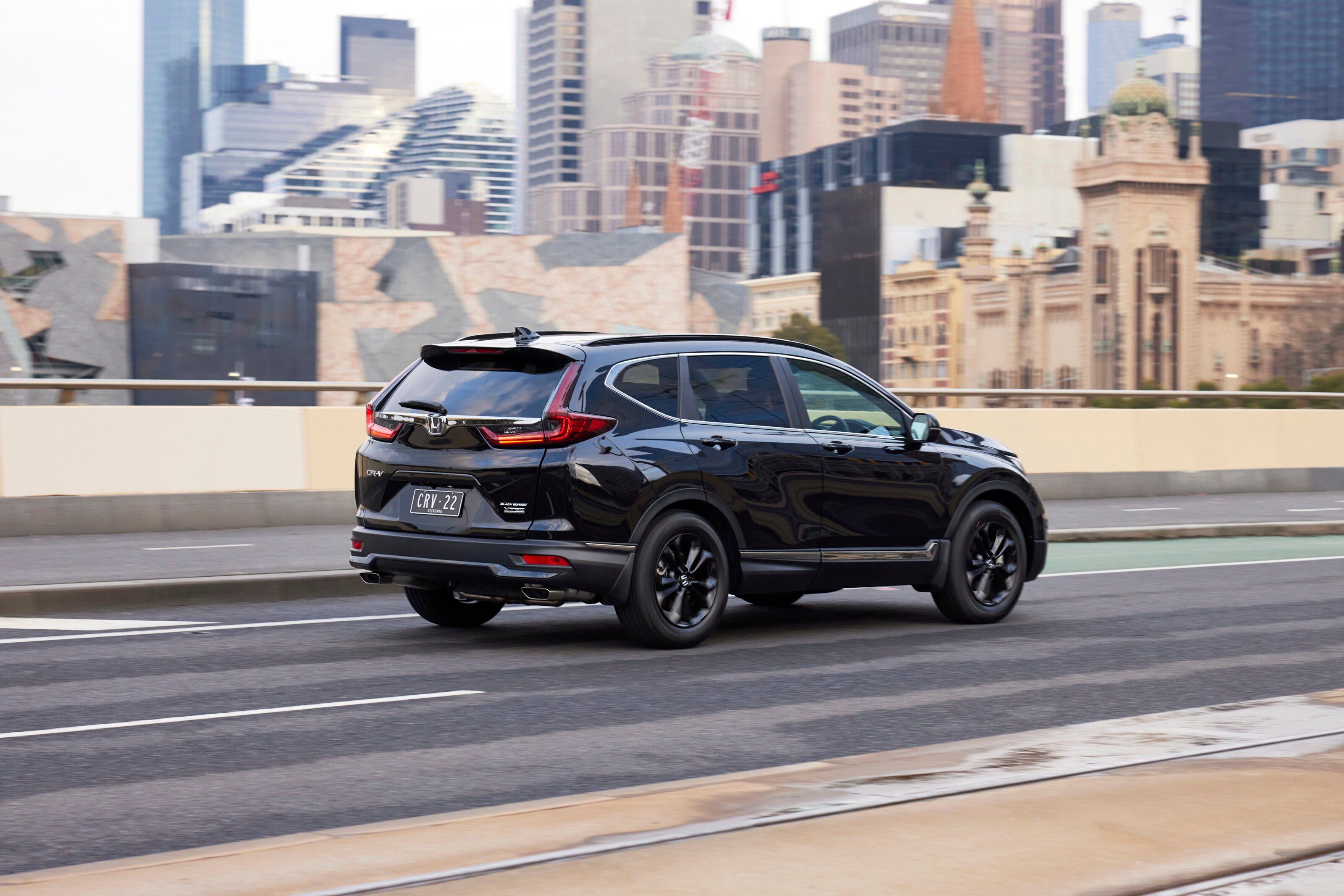
“Honda’s price protection policy will apply to any contracts signed prior to the change, where the vehicle is yet to be delivered. This means there will be no change for customers who signed a contract prior to August 1 – the drive-away price will remain unchanged at the pre-price-rise level.
“It’s also worth noting, with a build-up of customer orders resulting in extended lead times on a number of vehicles, such as HR-V hybrid and Accord hybrid (both currently at 10 months), recent price changes would only come into effect on vehicles to be delivered well into 2023.”
The price increases for the HR-V, CR-V and Accord represent the first significant price increases since Honda Australia introduced its fixed-price ‘agency’ business model on July 1, 2021.
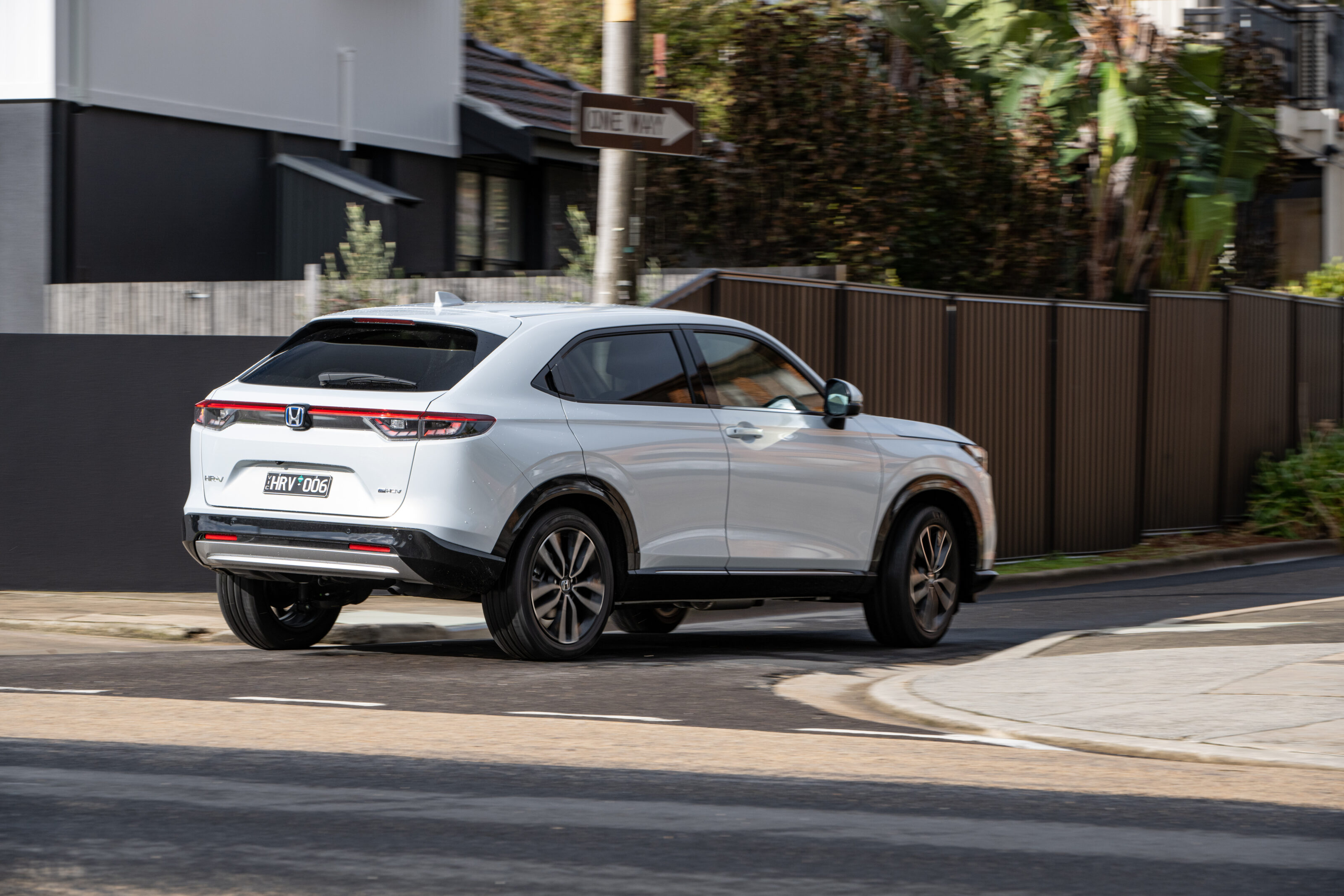
Honda currently sells four vehicles in Australia – the Civic, Accord, HR-V and CR-V.
It will introduce a Civic e:HEV hybrid in the coming months and the Type R hot hatch in early 2023. The hatchback line-up is currently limited to the single-variant VTi LX, which remains priced at $47,200 drive-away.
The local arm will also introduce the ZR-V medium SUV, which recently debuted in Japan, to slot between the HR-V and CR-V next year. A larger, new generation of the CR-V was unveiled overseas last month, but it won’t arrive in Australia until mid-2023 at the earliest.
2022 Honda HR-V pricing
| Model | Pricing |
|---|---|
| Vi X | $36,700 (unchanged) |
| e:HEV L | $47,000 (+$2000) |
2022 Honda CR-V pricing
| Model | Pricing |
|---|---|
| Vi five-seat | $35,900 (+$300) |
| VTi five-seat | $38,900 (+$100) |
| VTi 7 seven-seat | $40,900 (+$200) |
| VTi X five-seat | $41,900 (+$200) |
| VTi 7 +Luxe seven-seat | $43,700 (unchanged) |
| Black Edition five-seat | $44,900 (+$200) |
| VTi L five-seat | $46,200 (+$200) |
| VTi L7 seven-seat | $49,500 (+$300) |
| VTi LX AWD five-seat | $53,600 (+$200) |
2022 Honda Accord pricing
| Model | Pricing |
|---|---|
| VTi-LX petrol | $57,900 (+$500) |
| VTi-LX hybrid | $61,900 (+$1500) |
