
Snapshot
- New Palisade features a facelift, upgraded equipment
- Engine and drivetrain options remain unchanged
- Now available, pricing starts from $65,900 before on-roads
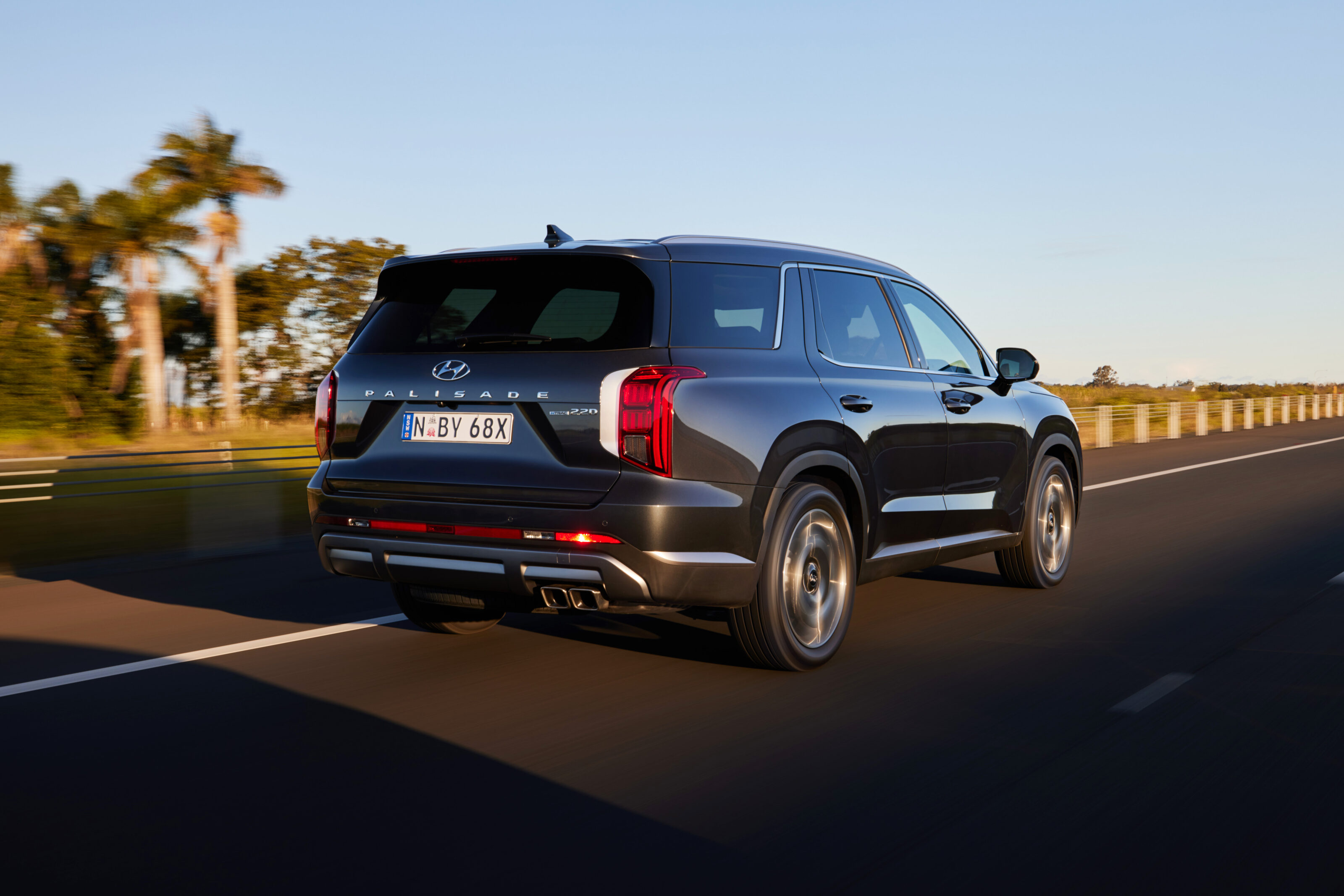
The 2023 Hyundai Palisade has launched in Australia, with local pricing and features confirmed for the large SUV.
The Palisade, a facelift of the SUV which made its local debut in 2020, features a number of equipment upgrades over its predecessor – from safety enhancements to more interconnected technology, becoming Hyundai’s first Australian model to use its new Bluelink smartphone connectivity system.
With the outgoing Palisade taking fifth place in the most recent outing of Wheels Car of the Year, big things are expected of the 2023 model, which will launch in Australia next month starting from $65,900.
The 2023 Hyundai Palisade has now been awarded a five-star ANCAP safety rating, up from four stars for the previous model. This story has been updated to reflect the change and you can read our safety story by clicking the link below.
2023 Hyundai Palisade Australian pricing
All pricing is before on-road costs.
| Variant | Pricing |
| Elite 2WD | $65,900 |
| Elite AWD | $69,900 |
| Highlander 2WD | $75,900 |
| Highlander AWD | $79,900 |
Premium paint for all variants costs $695.
Features
With the base Palisade variant dropped for 2023, the upcoming model has been reduced to just the Elite and Highlander grades, with the former opening the SUV’s account with standard equipment such as:
Elite
| 20-inch alloy wheels |
| Full size alloy spare wheel |
| Black tinted grille |
| Skid plates |
| New LED headlights, tail-lights and daytime running lights |
| Speed adjustable, hands-free power tailgate |
| Four-spoke leather steering wheel |
| Black leather seats |
| Power driveru2019s seat |
| 16 cup holders |
| Bluelink |
| Apple CarPlay and Android Auto compatibility |
| Multi-Bluetooth connection |
| Satellite navigation with telematics |
| Voice recognition |
| 12.3-inch touchscreen display |
| 12.3-inch Instrument cluster |
| 12 speaker Infinity audio system |
| 15-watt wireless phone charging pad |
| Driver talk function |
| Quiet mode function |
| Electro-chromatic mirror |
| Single panel sunroof |
| Tri-zone climate control |
| Creamy white, shimmering silver, graphite grey, abyss black, sierra burgundy, moonlight blue or robust emerald exterior paint |
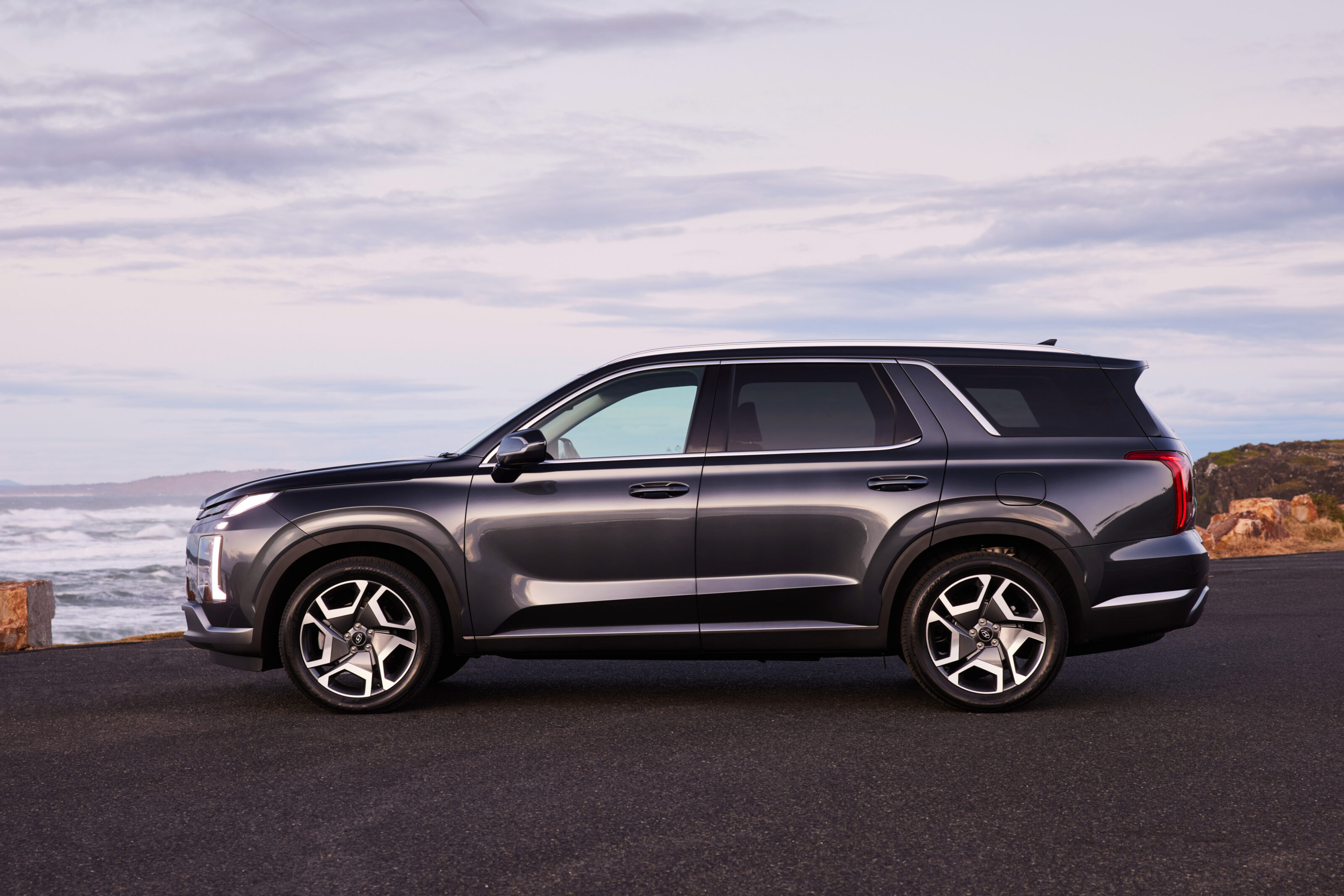
On top of this, the flagship Highlander variant gains:
Highlander
| Nappa leather seats (available in warm grey two-tone, dark khaki two-tone or black) |
| Dual sunroof with tilt function |
| Separated tail-light feature |
| Back-up light guide |
| Body coloured cladding and bumpers |
| Highlander exclusive skid plates and chrome grille with hidden DRL |
| Power adjustable front passenger seat with two-way lumbar |
| Suede roof lining |
| Head-up display (HUD) |
| Rear door blinds |
| Driveru2019s seat integrated memory system (IMS) |
| Heated front and second row seats |
| Ventilated front and second row seats (now available on both seven and eight seat variants) |
| Automatic defog |
| Second row wing-out headrest |
| Four-spoke, two-tone leather heated steering wheel |
| Digital electro-chromatic mirror with full display |
| Remote smart parking assist |
| Rain-sensing wipers |
| Creamy white, shimmering silver, graphite grey, abyss black, gaia brown, sierra burgundy, moonlight blue, olivine grey or robust emerald exterior paint |
In addition, the 2023 Palisade can be optioned with either seven or eight seats – the former offering two individual captain-type chairs in the middle row as a no cost option.
Engine, drivetrain and fuel economy
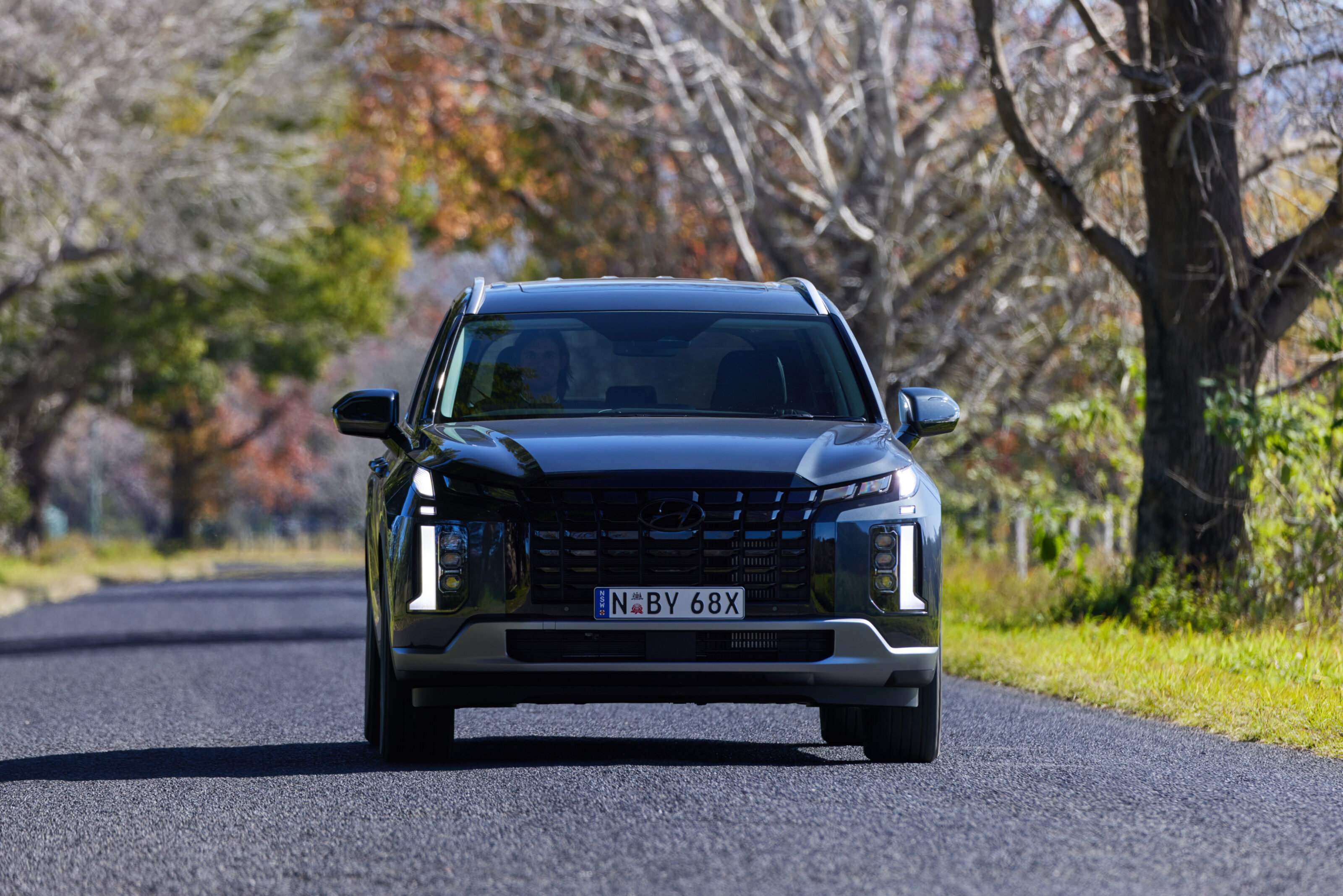
While the 2023 Palisade gets a facelift, its powertrain options remain the same. Both variants are offered with a choice of two engines – one petrol, one diesel.
The petrol-powered Palisade features a 3.8-litre, naturally-aspirated V6 under its bonnet, producing 217kW and 355Nm, with power sent to the front wheels through an eight-speed automatic gearbox.
For the diesel, its 2.2-litre, turbocharged four-cylinder setup is unchanged, pushing out 147kW and 440Nm to all four wheels via the same eight-speed auto as its petrol counterpart.
Hyundai has confirmed fuel economy figures will carry across from the 2022 model, with the petrol engine consuming 10.7L/100km, while the diesel is able to manage 7.3L/100km.

Safety
Hyundai has given its latest Palisade a number of safety tech upgrades for 2023, and now has a five-star ANCAP safety rating after the previous diesel model was given just four stars – the third car since 2020 to miss out on top marks.
Standard equipment and upgrades over the outgoing Palisade include:
| Electronic parking brake (EPB) with auto hold function |
| Blind-spot collision-avoidance (BCA) |
| Driver attention warning (DAW) |
| Forward collision avoidance (FCA) |
| FCA junction turning assist (FCA-JT, new) |
| High beam assist (HBA) |
| Lane keeping assist (LKA)u00a0 |
| Lane following assist (LFA) |
| Rear cross-traffic collision avoidance assist (RCCA) |
| Rear occupant alert (ROA) |
| Smart cruise control with stop and go |
| Parking distance warning (front and rear) |
| Rear view camera with guide lines |
| Tyre pressure monitoring (TPM) |
| Trailer stability assist (TSA) |
| Multi-collision brake (MCB, new) |
| Intelligent speed limit assist (ISLA, new) |
| Parking collision-avoidance assist (PCA, new, Highlander only) |
| Blind-spot view monitor (BVM, Highlander only) |
| Surround view monitor (SVM, Highlander only) |
Warranty and servicing
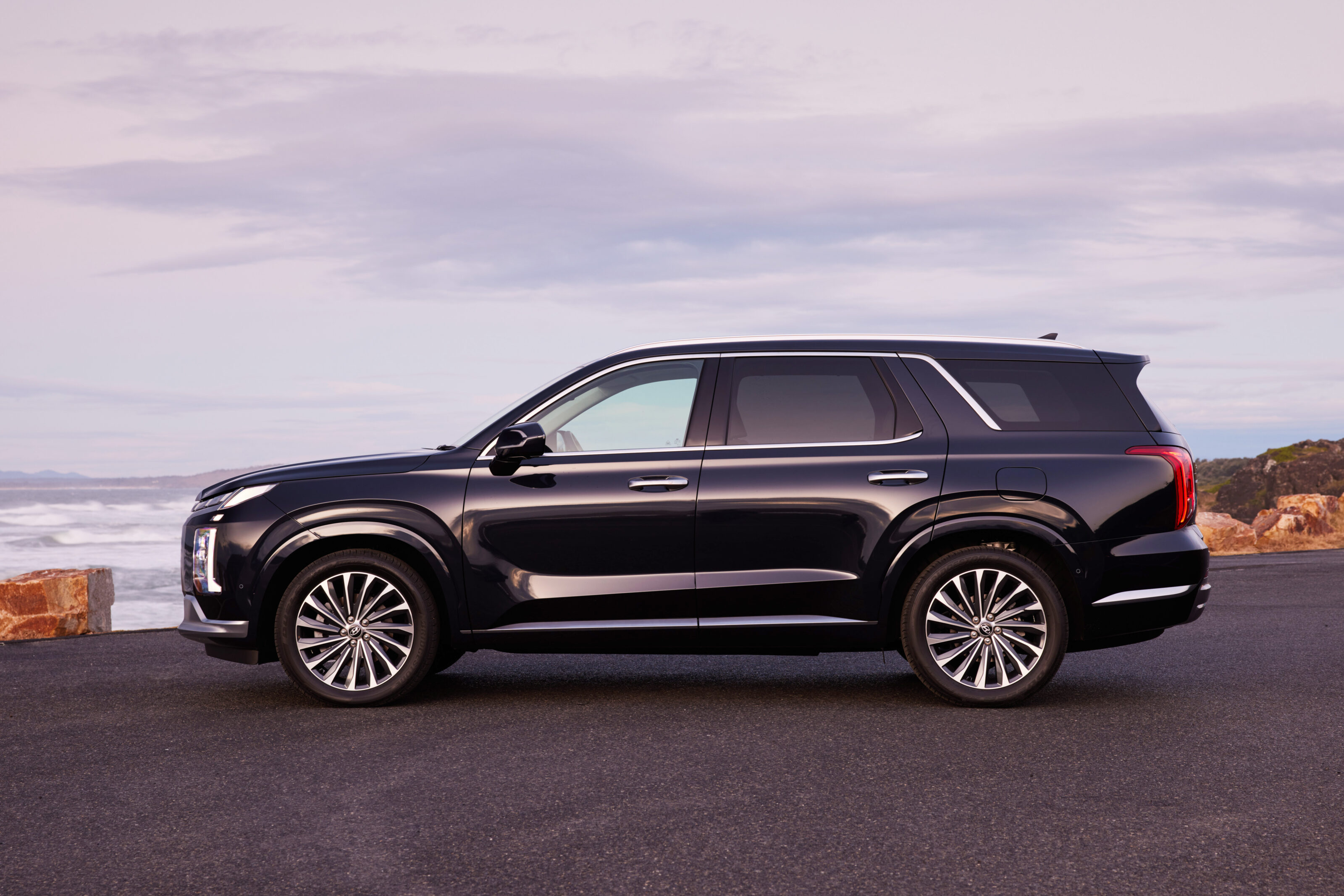
As with the rest of Hyundai’s passenger vehicle range, the Palisade is covered by a five-year/unlimited-kilometre warranty with service intervals at every 15,000km or 12 months.
Capped-price servicing comes into effect after a free 1500km check-over, with each service setting owners back $399 for the petrol and $469 for the diesel over the first five years/75,000km.
Availability
The 2023 Hyundai Palisade will launch in Australia this August, priced from $65,900.
Aston Martin will reveal two new models at the Pebble Beach Concours d’Elegance this month, including an “ultra-exclusive” car to mark the 10th anniversary of the bespoke Q service.
The first model to debut is top-secret; however, Aston Martin states it will offer “high-octane emotion and intense driving pleasure.”
It will debut at the American motor show on August 19, with reports claiming it could be a roadster version of the recently-unveiled V12 Vantage.
This would fill a gap in Aston Martin’s line-up, with the last V12 Vantage Roadster discontinued in 2018 ahead of the current-generation model, which features the V8 Vantage that is still available as a convertible.
The second ‘ultra-exclusive’ model is from the Q by Aston Martin personalisation division, designed to “encapsulate the brand’s winning track bloodline, with a nod to success at the 24 Hours of Le Mans.”
Both vehicles will adopt Aston Martin’s latest identity, including the first major update to its iconic wings logo since 2003 and a new global brand strategy to appeal to a broader audience.
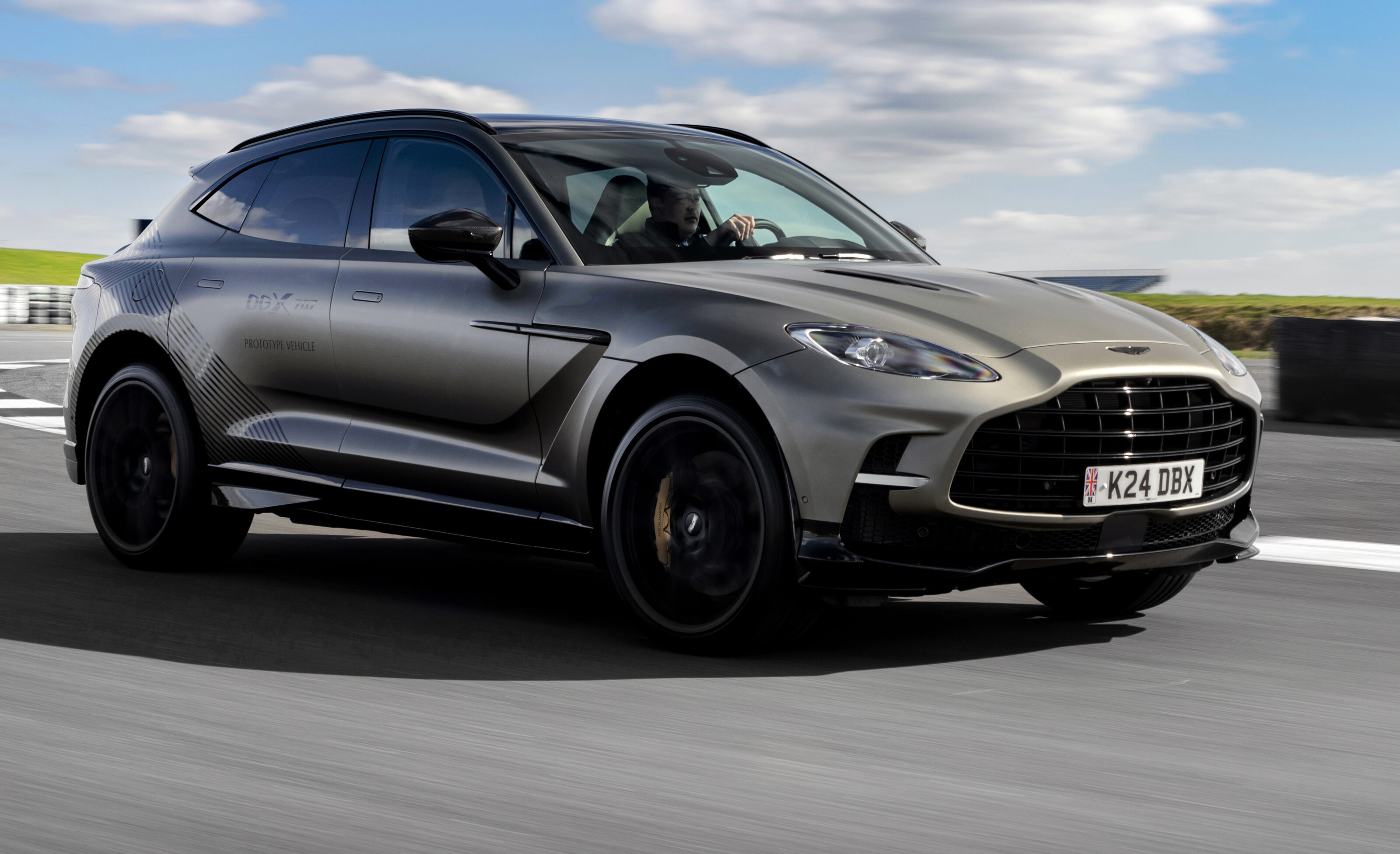
In addition, the British marque will provide a demonstration of the F1-inspired cockpit found in the Valhalla and facilitate test drives of the DBX707 performance SUV.
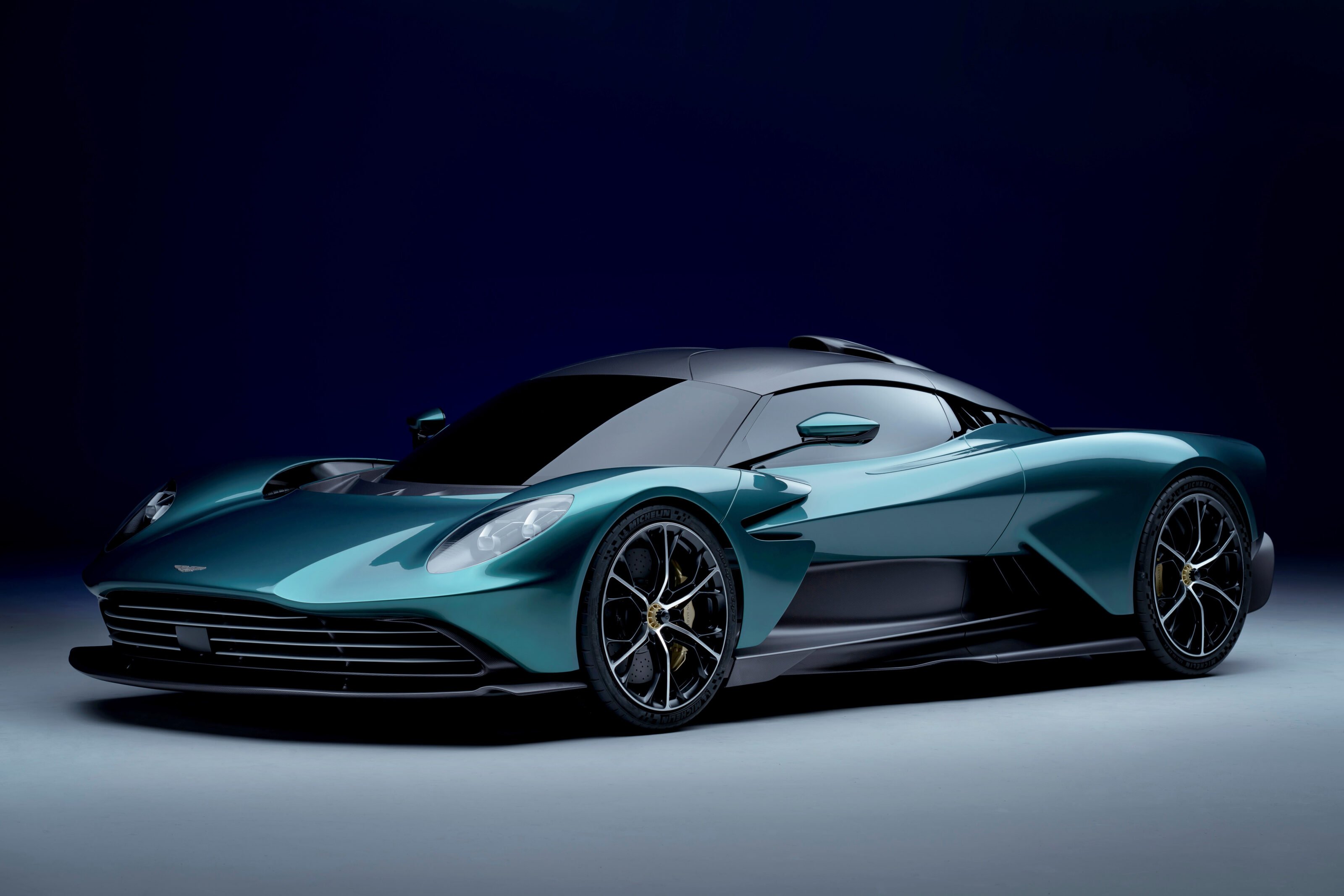
The mid-engined, Ferrari SF90 Stradale-rivalling Valhalla hypercar is powered by an AMG-sourced 4.0-litre petrol V8 with electric assistance, for a total system output of 669kW and 1000Nm, and an estimated 0-100km/h sprint time of 2.5 seconds.
Aston Martin will produce 999 examples of the Valhalla, with deliveries expected to commence in 2024.
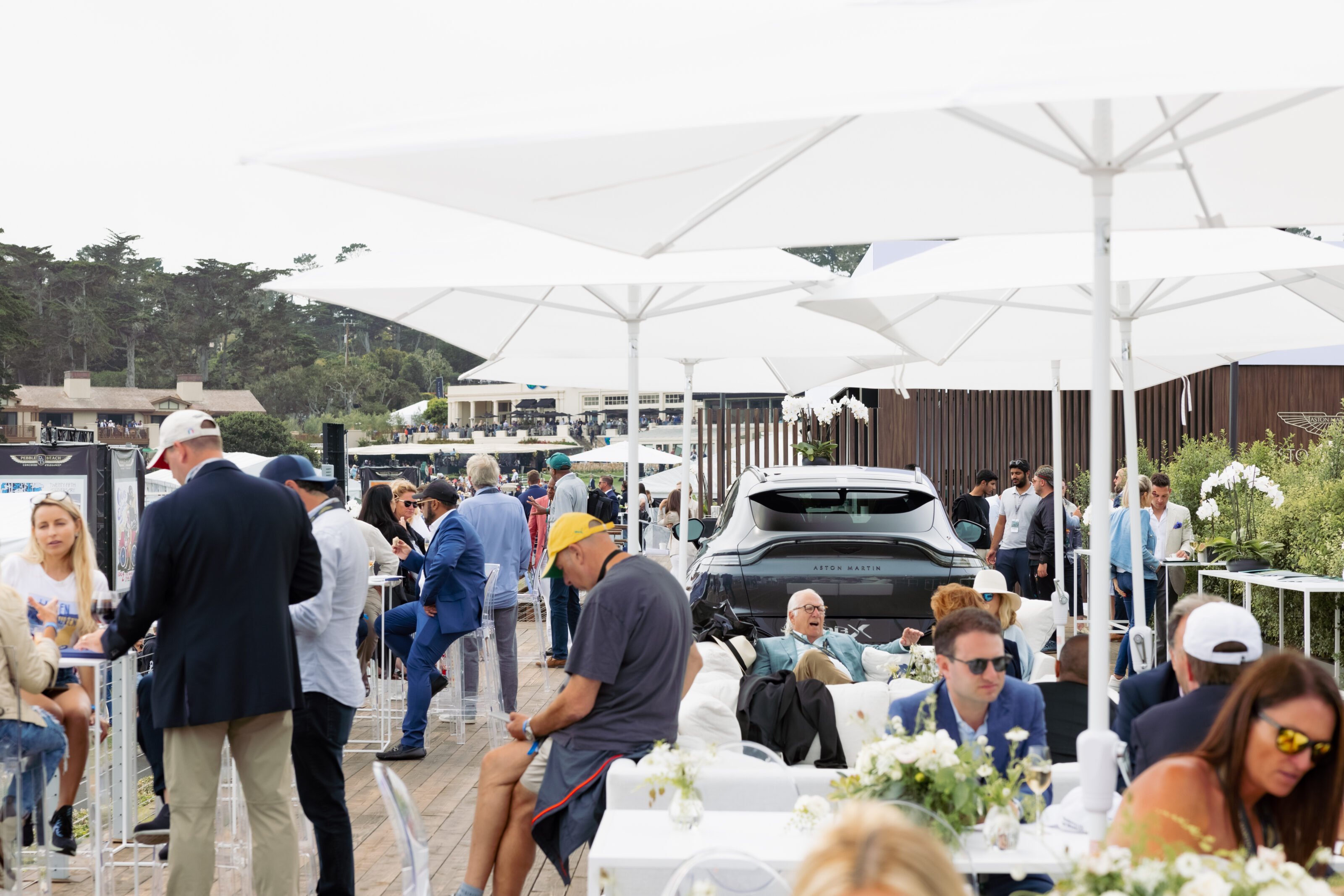
It made its US debut at the last year’s Pebble Beach event, with the 2022 running providing an in-person glimpse at the stripped-back interior for the first time.
A static display of the DBX707 will also feature, with both vehicles situated at the Aston Martin Club 1913. Unfortunately, access to the clubhouse is by invitation only.
“As one of the premier luxury events in the world, the Pebble Beach Concours d’Elegance is an important opportunity for Aston Martin to connect with our loyal customers and showcase our latest product offering,” said Renato Bisignani, head of global marketing and communications at Aston Martin.
“We look forward to celebrating Aston Martin’s new era of performance at Pebble Beach and displaying our iconic ultra-luxury models, including a world-first reveal of an exciting new model, and the public debut of another thrilling addition to our breathtaking portfolio.”
A new, more capable version of the Mitsubishi Triton could soon be coming our way, with Mitsubishi revealing it is working with a third-party engineering firm to create a new flagship model.
It is understood the new Triton will be similar in concept to the Nissan Navara Warrior or Toyota HiLux Rugged X and that increased off-road ability is the primary goal, rather than improved performance.
Speaking to Wheels, Mitsubishi Australia’s head of product planning, Owen Thomson, confirmed plans to create the new Triton variant are underway but cautioned the program is still in its early stages.
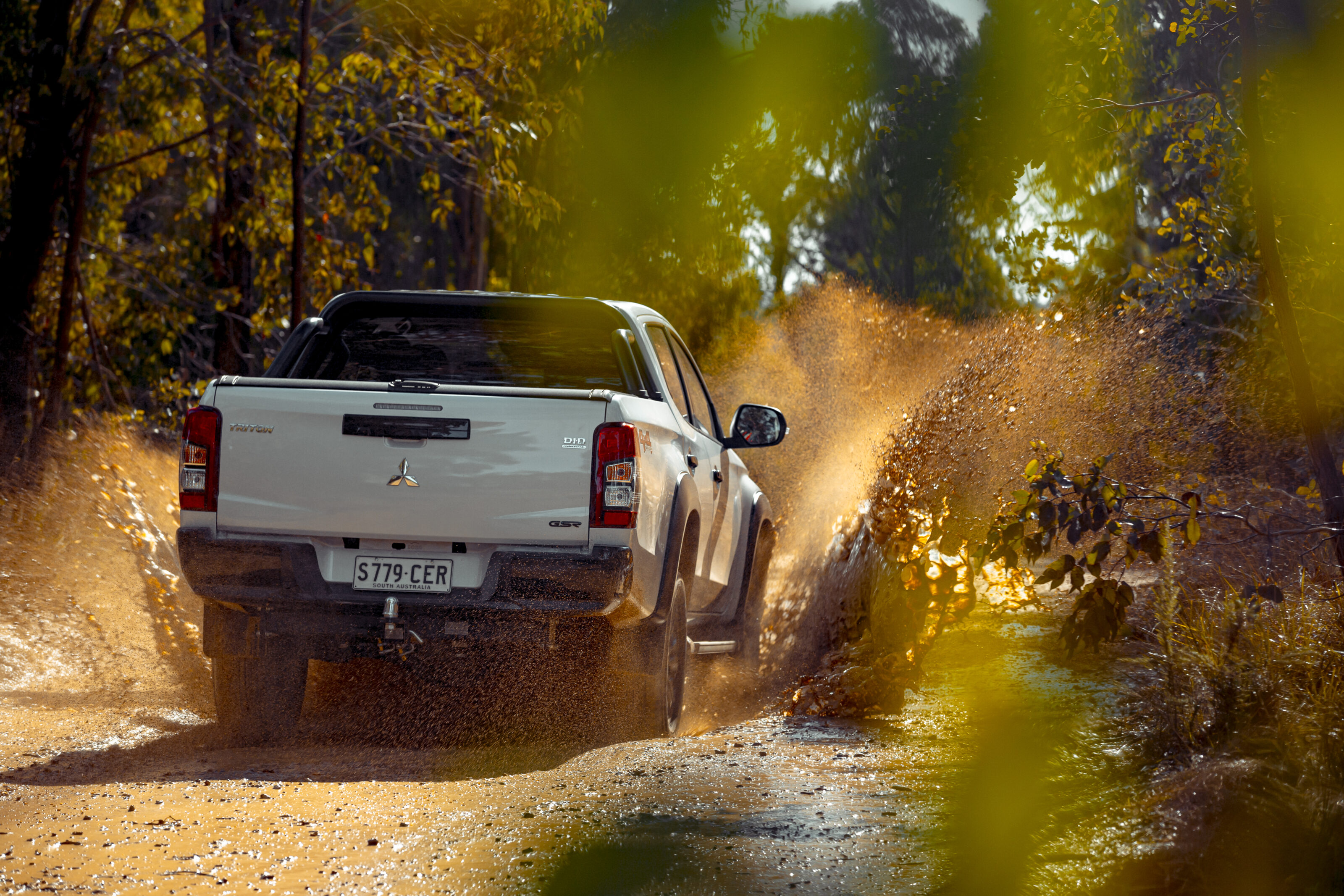
If given the green light, it’s possible the new Triton could be badged as ‘Raider’ given Mitsubishi filed a trademark application for the nameplate earlier this year.
However, Wheels understands the Raider name is currently earmarked for another project if the trademark application is successful.
“We have some plans for Triton,” said Thomson. “And we’ve had some really good interest from a third party about doing something with Triton. But exactly what that is and what format that takes, we’ll say something when the time is right…”
Thomson wouldn’t be drawn on who the third party is, but Mitsubishi’s product PR manager, Adam Davis, added: “There are several globally recognised engineering firms out there that do this kind of work.”
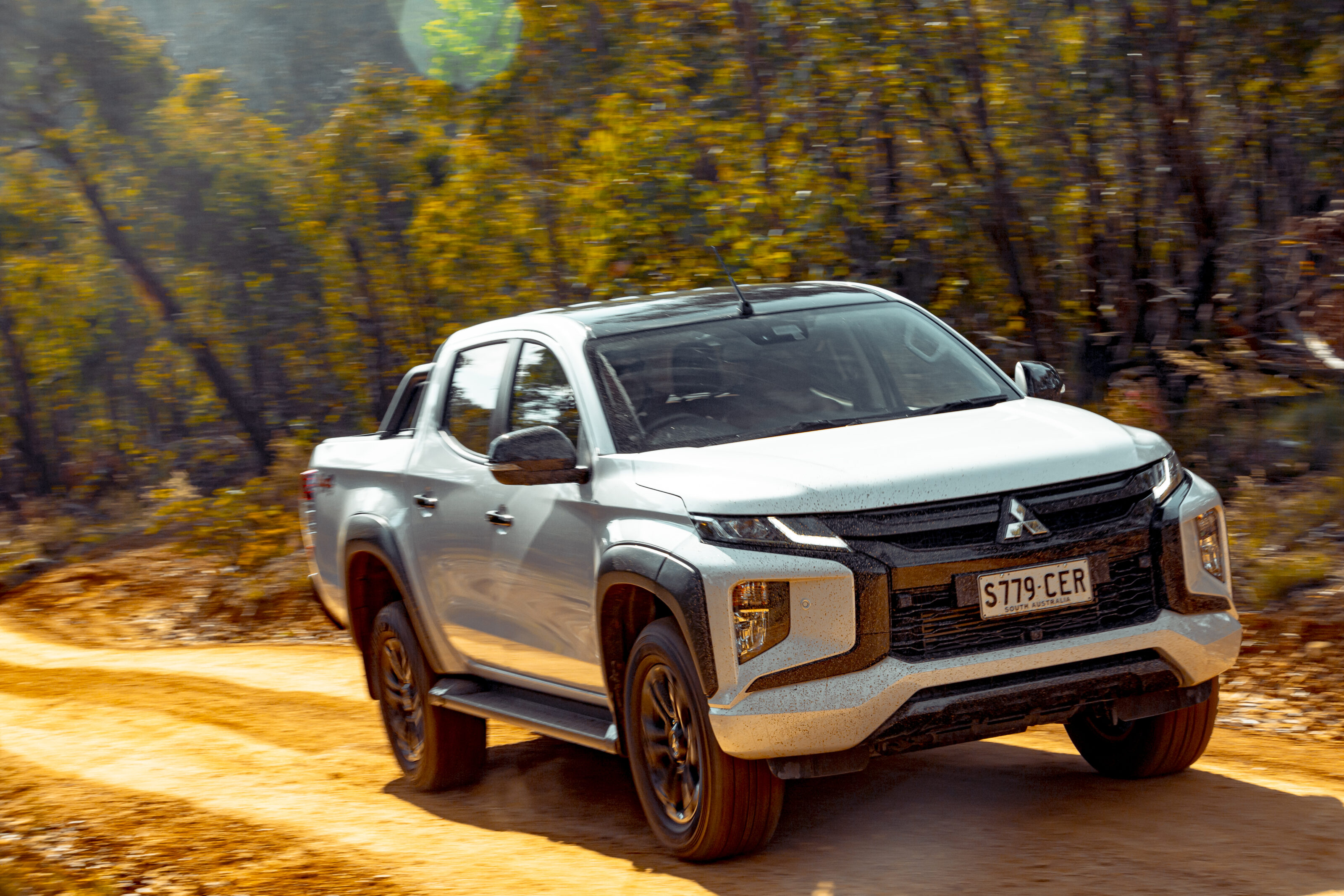
How Mitsubishi plans to modify the new Triton variant remains to be seen, although treading a similar path to the hugely popular Nissan Navara Warrior makes sense.
The Nissan Navara Warrior is built in conjunction with Melbourne engineering firm Premcar, increasing its off-road ability through revised suspension, greater ground clearance and tougher underbody protection, amongst a host of other changes.
Mitsubishi’s role as part of the Nissan/Renault/Mitsubishi alliance means Premcar could also be a logical candidate to work on the Triton. However, Premcar boss Bernie Quinn confirmed to Wheels that Premcar “isn’t working with Mitsubishi at this stage.”
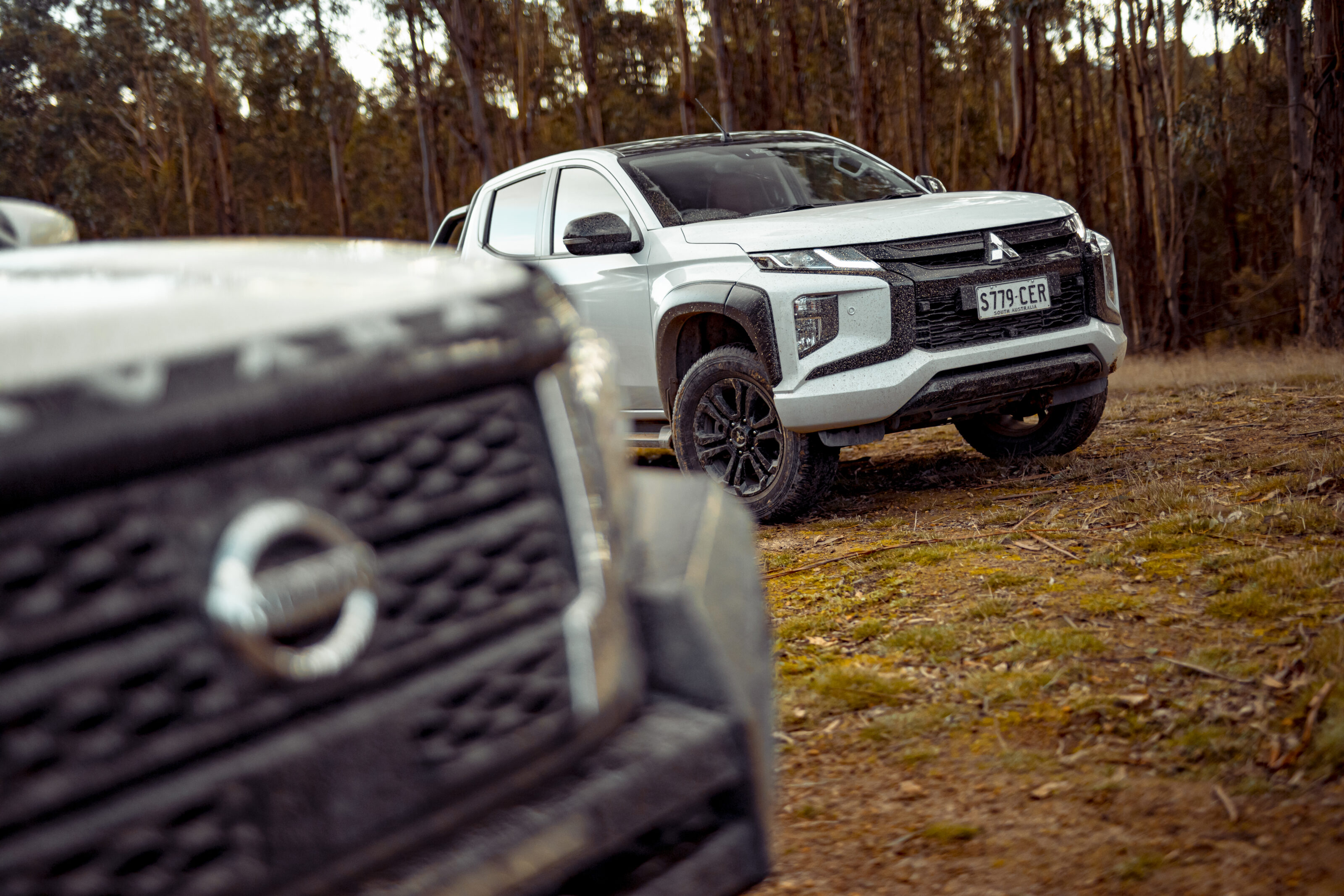
Walkinshaw, Tickford, Multimatic and RMA Group are other possible candidates given their engineering expertise and experience in working on dual-cab ute projects.
Regardless of which third party helps Mitsubishi, it’s clear the new Triton variant will be something of a swansong for the current generation Triton, before it is replaced with a new-generation model towards the end of 2023.
Wheels understands Mitsubishi has several new model additions or modifications planned to inject fresh interest in the current ute before it’s replaced.
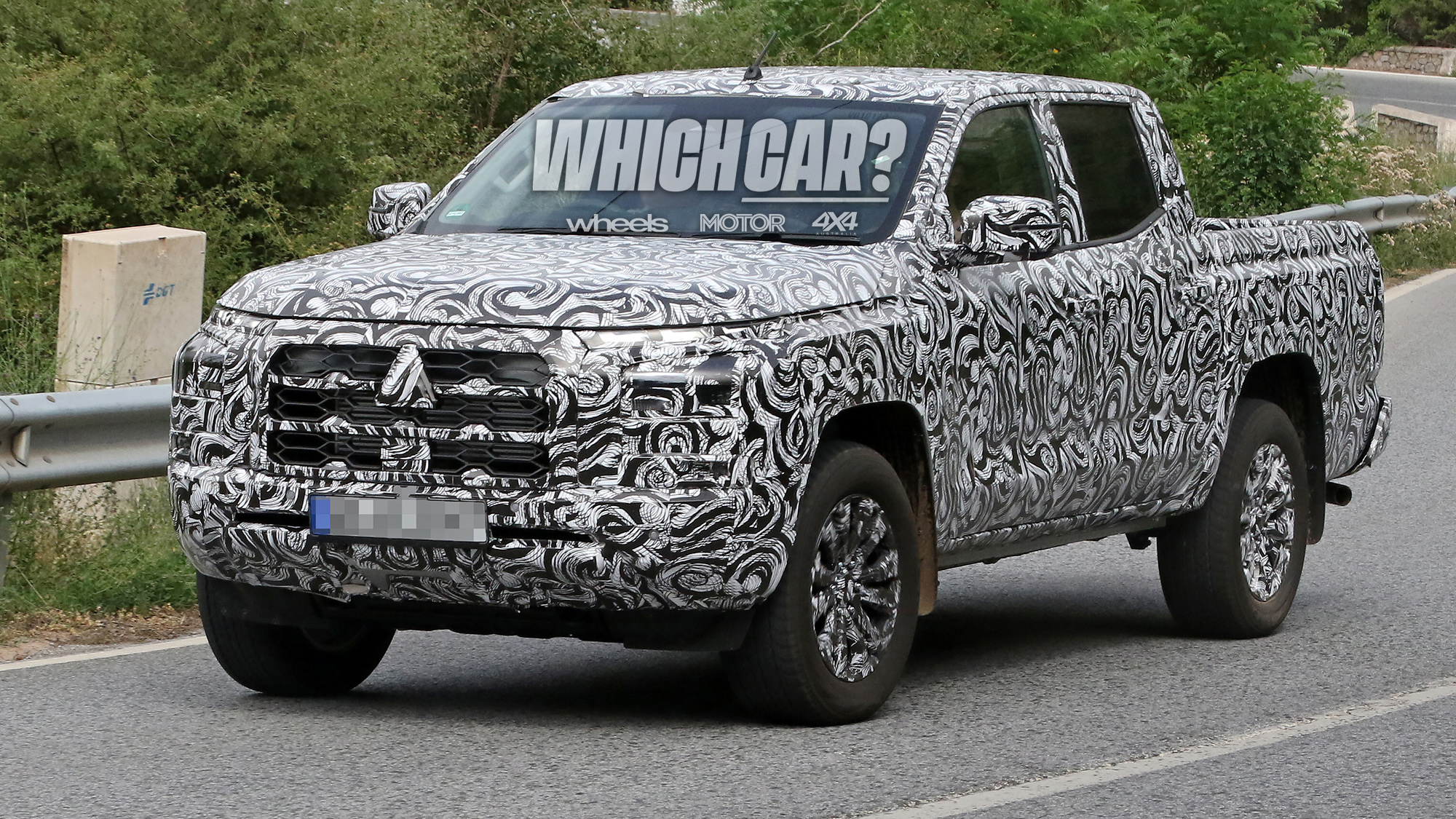
Shaun Westcott, chief executive officer of Mitsubishi Motors Australia, further hinted at this.
“There’s already been a lot of new speculation about new Triton and there’s already been some photos out of Europe of the new Triton. But let’s just say there’s still some life left in the current Triton, and there’s still much to come in that space,” he said.
“As always, from a product planning point of view, part of our job is about profitability,” added Thomson.

“You have to be a little hard-nosed. We love cars and we love the product, but you’ve also got to balance that off against what’s good for the business.”
Despite its age and imminent replacement, the current Mitsubishi Triton remains popular with Australian buyers.
Sales are up 28 per cent year-to-date to the end of June 2022, and in March, it was the third most popular dual-cab on sale after the Ford Ranger and Toyota HiLux.
Snapshot
- 4000 Atto 3s ordered so far
- 3000 production capacity every month from now until December
- Dolphin hatch and Seal sedan on sale this year
The 2022 BYD Atto 3 has launched locally, with its first right-hand-drive vehicle unveiled to the public in Brisbane today.
BYD’s importer EV Direct said 4000 orders have already been taken so far for its electric SUV, with production capacity for 3000 per month between now and Christmas.
There are, said the carmaker, 5000 currently in production and it is “lining up ships to bring as many as possible to Australia this year”. At present there are said to be three ships stocked with Atto 3s on the water heading Down Under.
EV Direct’s Managing Director, Luke Todd, told Wheels: “The response has been overwhelming. The sales we had early on, and the engagement with the BYD brand, has been amazing. As such, because of that increased potential here, we have brought forward production in a larger capacity.”
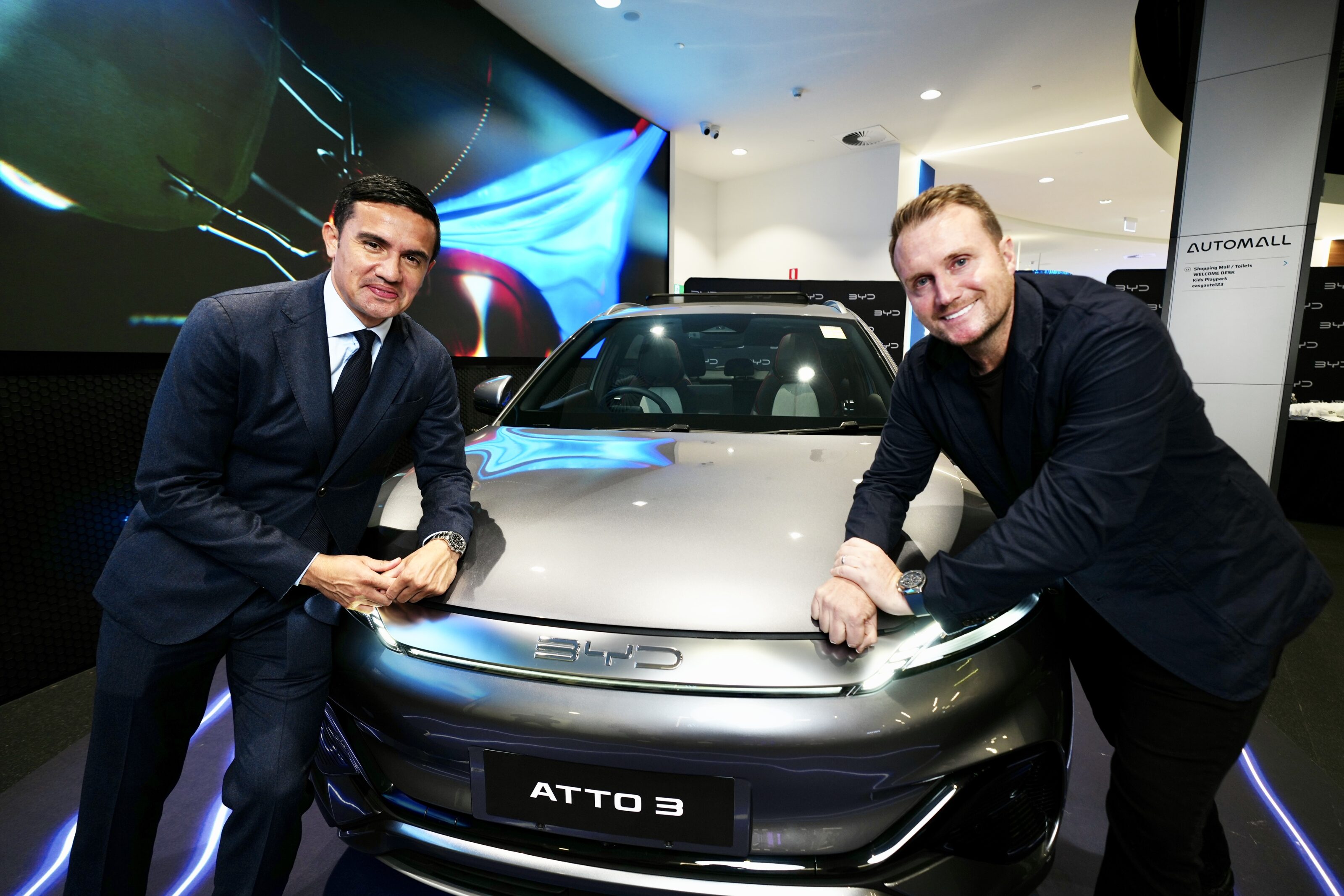
The Atto 3 is a front-wheel-drive compact SUV and will go into battle with its Chinese compatriot, the MG ZS EV, currently in the process of getting a facelift, range boost and significant specification improvement.
From the model’s official launch, which was back in February, there have been two versions of the Atto 3 available: the 50kWh battery-equipped Atto 3, which has a base price of $44,381, and the 60kWh, which starts at $47,381. All prices are before any state-based incentives.
With a single 150kW/310Nm electric motor up front, the Atto 3 will accelerate to 100km/h in a claimed 7.3 seconds
BYD’s Blade battery powers both versions. The 50kWh has a WLTP range of 320 kilometres and the 60kWh 420km, with NEDC figures coming out 20 per cent higher. Both have a longer claimed range than the MG and, if accurate, are competitive with more expensive offerings from Polestar, Volvo and Nissan.
BYD is offering a seven-year warranty for both the battery and the car and servicing is through MyCar.
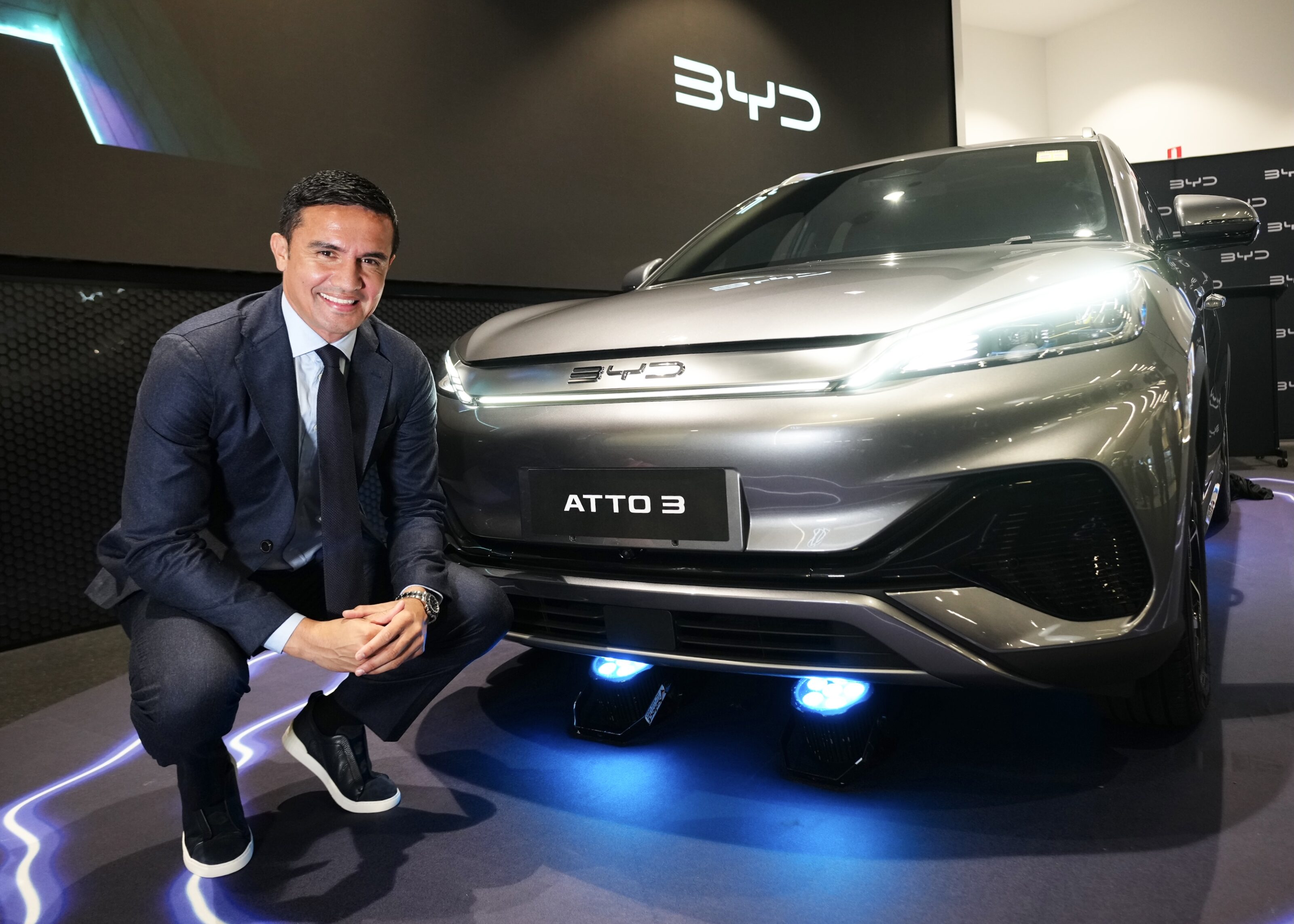
Last month, EVDirect informed customers the start of production for the 2022 BYD Atto 3 Standard Range in China had been pushed back to mid-October.
It was scheduled to launch in Australia alongside the Extended Range option. This has since been pushed back to August or September for the Extended Range, and November or December for the Standard Range.
However, the apparent delay is not as it first appeared, with Todd telling Wheels that 90 per cent of initial orders were for the Extended Range variant so production for that was increased in China. The company then spoke to local customers who were after the Standard Range to let them know and claims most were happy to switch to the higher-spec grade in order to get their car sooner – even if it meant parting with an extra $3000.
“We contacted the Standard Range customers and told them production for that variant had been pushed back because of the popularity of the Extended Range and we could offer them the same spot if they changed – more than 95 per cent opted to do so and pay a bit extra.
“A handful of people wanted to stick with the Standard Range and were happy to wait.”
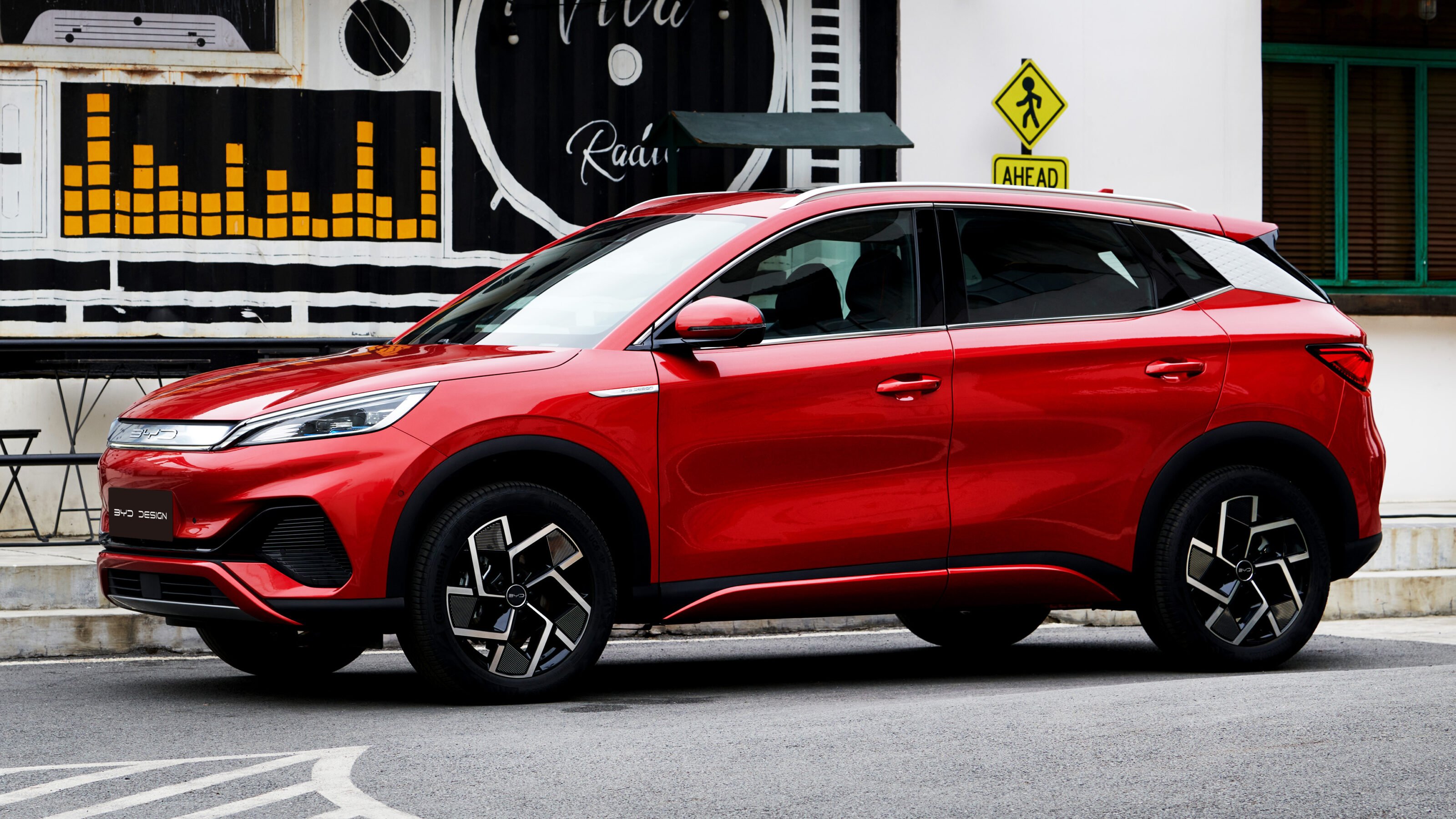
EV Direct has also confirmed its Dolphin hatch and Seal sedan will both be going on sale locally for pre-order later this year, with a first half of 2023 arrival expected – albeit likely with different names. Other models are coming but have not yet been confirmed.
Todd said production numbers for both the Dolphin and Seal models would mirror that of the Atto 3, with 3000 cars being made per month with the ability to increase dependent on demand.
Snapshot
- SMP Global study shows 18 per cent of vehicles will be electric by 2030
- FCAI says Government needs to set an emissions reduction target
- Three step plan looks at roadblocks stopping progress on climate change
An industry lobby group has released a three-point plan aimed at pressuring the Federal Government to remove roadblocks to reducing carbon emissions.
Headlining the plan, introduced today by the Federal Chamber for Automotive Industries (FCAI), is a call for the Government to set an emissions reduction target for carmakers that reflects global standards and local needs.
Other key factors include; replacing blockages with incentives such as public, private and fleet charging and hydrogen refuelling, free parking/charging, access to transit lanes and the setting of government fleet procurement targets, investment in the recharging network/electricity grid, and adopting an international standard of fuel quality.
Last week the Albanese administration brought forward legislation introduced by the previous Government to improve the quality of Australian fuel from 2027 to 2024.
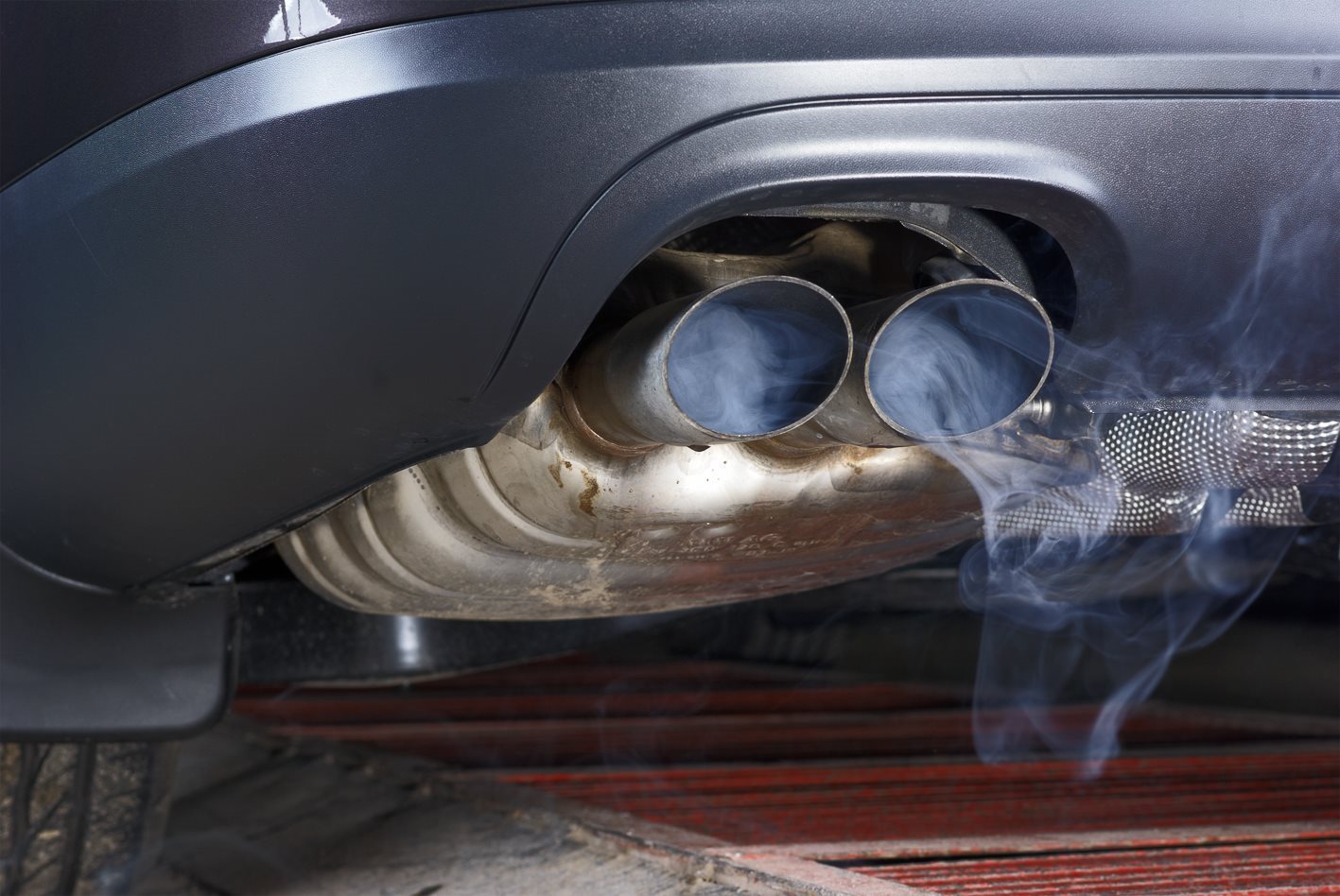
“Once the target is set, FCAI members are well placed to provide the technology mix needed to reach it,” said FCAI Chief Executive Tony Weber.
“The ultimate goal is a fully decarbonised car fleet, but to get there a mix of hybrid, plug-in hybrid, battery electric and efficient internal combustion engine vehicles will be needed.
“An emissions reduction target complemented by incentives will help move our nation up the global vehicle supply list and ensure Australians can access the low emission vehicles they want to drive.”

Together with setting the emissions reduction target, the three-point plan also calls for impediments to be replaced with incentives – including; free parking, access to transit lanes and fleet procurement targets, as well as investment in the recharging network and electricity grid to meet the needs of Australia’s growing fleet of decarbonised vehicles.
Today’s news follows an historic agreement made last week between 10 industry groups about Australia’s path from internal combustion to electric.
Part of that agreement included that targets should be made across a mix of technologies based on availability, acceleration, allocation and consumer needs, including hybrid, plug-in hybrid, battery-electric, hydrogen and efficient internal combustion powertrains.
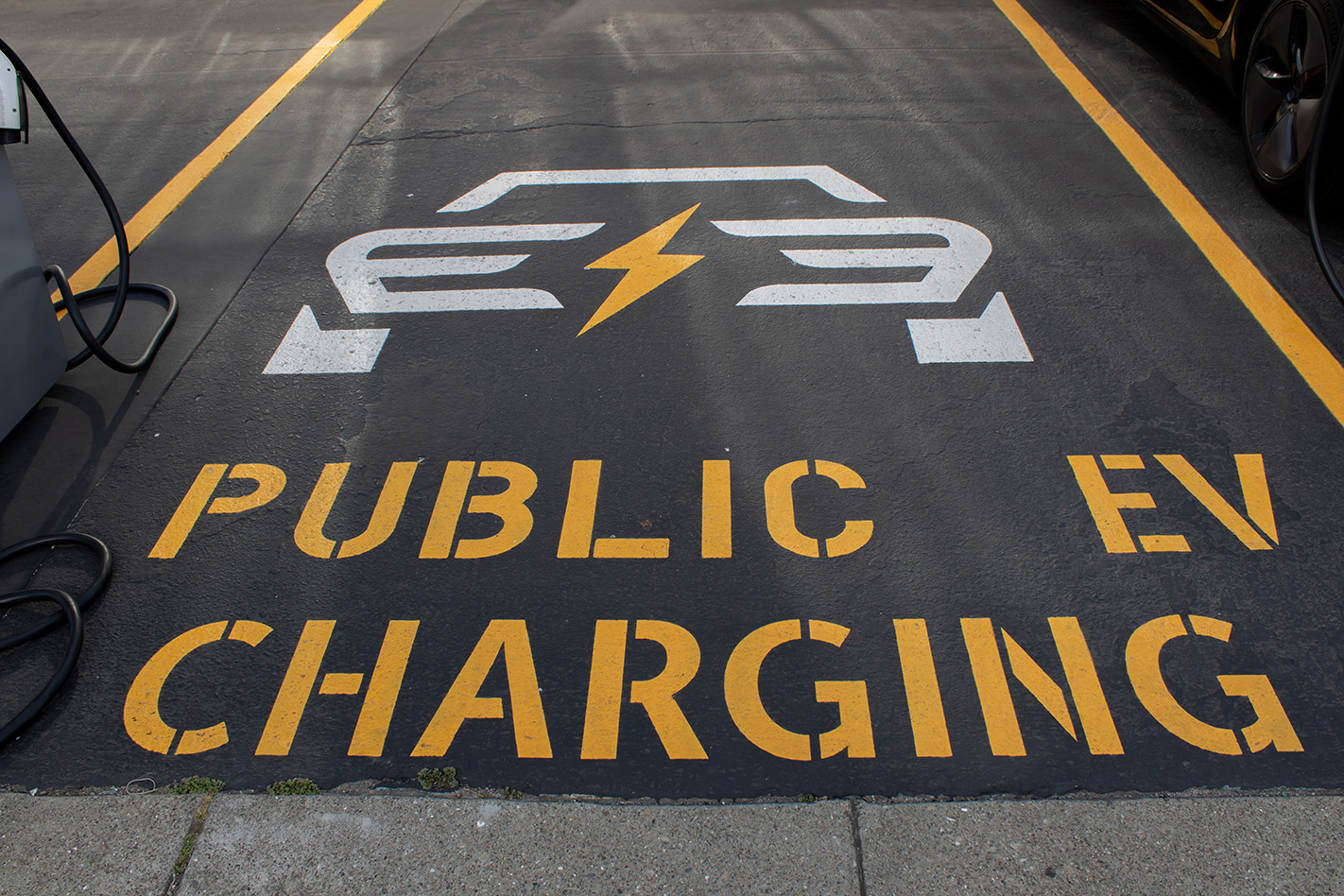
Alongside the new plan, the FCAI has also commissioned a study by marketing firm SMP Global into what new car sales would look like by 2030 if the Government did nothing and kept business as usual.
By the end of the decade, in such a scenario, just 18 per cent of new cars would be fully-electric, four per cent would be plug-in hybrid, 31 per cent mild hybrid, 23 per cent hybrid and 24 per cent internal combustion.
It’s forecast that 77 per cent of premium brands’ sales would be electric by 2033, versus around 21 per cent of volume sellers’.
For light commercial vehicles meanwhile, with no policy change, it’s expected there would be no real difference – SMP saying only two per cent of the market would be full-EVs in 2033.
By comparison, in 2021 88 per cent of sales were made up of petrol and diesel vehicles.
Jaguar Land Rover has appointed a new Managing Director to head up its Australian operations.
Penny Ferguson joined the British firm’s local arm in July after leading other luxury brands Tiffany & Co. and Paspaley, and brings more than 15 years leadership experience in the fields of retail sales and operations, customer service, and finance.
Before that, Ferguson built her early career in chartered accounting and holds a Bachelor of Commerce from the University of Sydney.
She succeeds Mark Cameron who returned to the UK to become the company’s global Commercial Director for Vehicle Programmes and Transformation, following three years as MD Down Under.
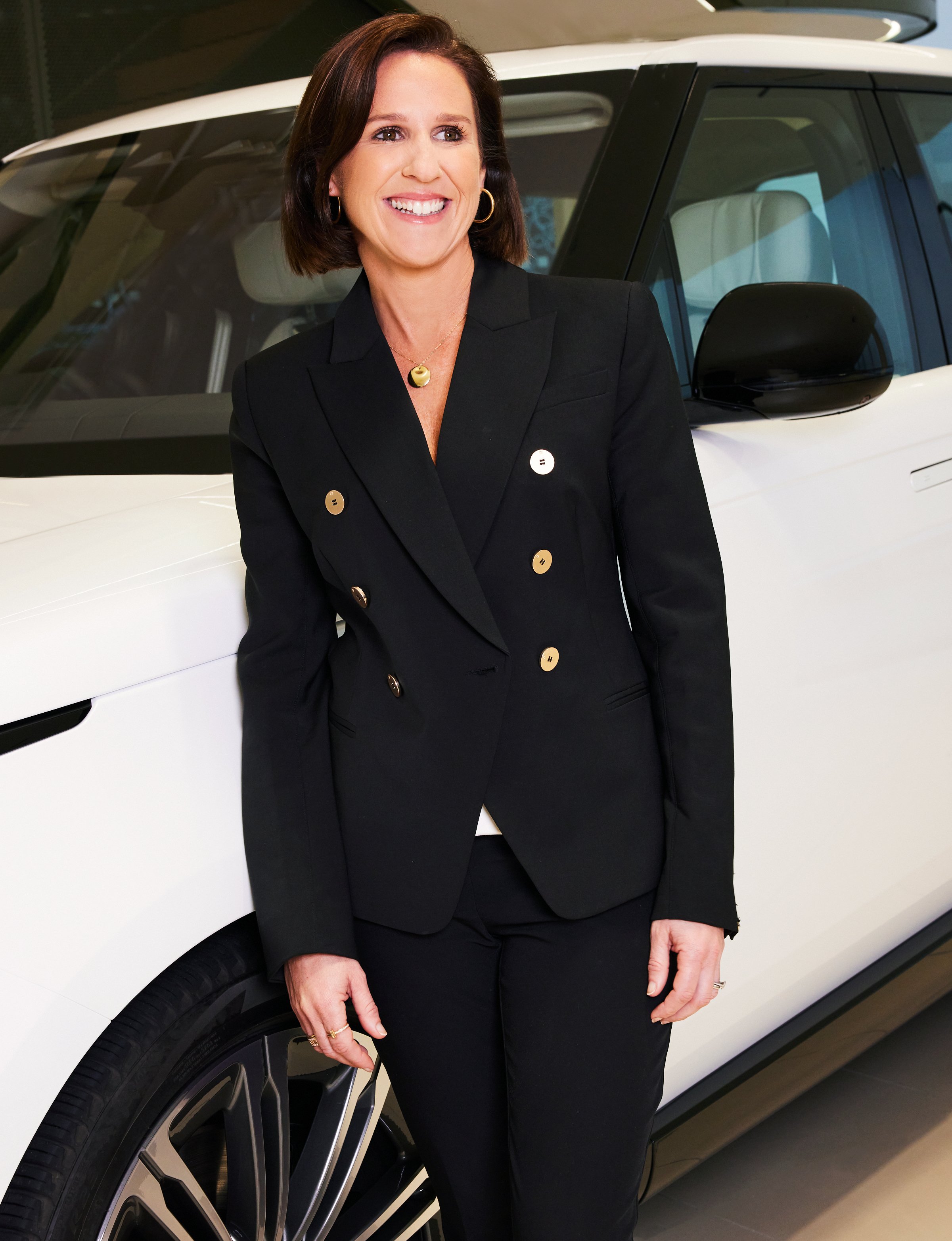
“Penny brings a depth of business experience gained within the luxury jewellery industry,” said Martin Limpert, Regional Director Overseas at JLR.
“As Market Director and member of Tiffany & Co.’s leadership team for Australia and New Zealand, Penny successfully drove the establishment and expansion of its operations in the region.
“With her broad expertise in multi-channel luxury retail operations and finance, customer-centric mindset, and modern leadership style, Penny is well-placed to drive our business transformation in line with the Jaguar Land Rover Reimagine strategy.”
Launched in February last year, the brand’s Reimagine strategy is designed to help Jaguar Land Rover achieve zero tailpipe emissions by 2036 and net zero carbon emissions across its supply chain, products and operations by 2039.
From this month, online learner permit and probationary licence hazard perception tests will be free in Victoria.
VicRoads has announced that all new drivers in the state will also no longer pay a probationary car licence fee or permit issue fee.
The concessions come under VicRoad’s new Motorist Package. For successful new learner drivers in Victoria, that means a saving of $77.40 in total.
For successful probationary licence drivers, that saves $19.40 for the online Hazard Perception Test, and anywhere from $85.50 to $113.90 for the licence issue fee.
It’s not a completely free ride, however, so to speak, as there are still some fees applicable. See the table below for a full breakdown of the new savings.
| Online Learner Permit Test | Learner Permit Test In-Person | Probationary Licence | |
| Eligibility | Car | Car, motorcycle | Car |
| Fees waived | Learner Permit Test – $25.40 | Learner Permit issue fee – $26 | Online Hazard Perception Test – $19.40 |
| Learner Permit issue fee – $26 | Probationary Lience issue fee – $85.50-113.90 | ||
| Fees still applicable | Appointment fee (overseas licence holder)* | Appointment fee – $19.60 | Appointment fee – $19.60 |
| Learner Permit in-person test fee – $25.40 | In-person test fee – $19.40 | ||
| Motorcycle learner test fee | Drive Test fee – $47.10 | ||
| Drive Test appointment fee – $19.60 |
*Overseas licence holders who have completed the online Learner Permit test and require in-person licence verification to be issued a Victorian Learner Permit.
Furthermore, under an existing initiative, those aged under 25 and coming off their P plates onto a full licence may be eligible to receive a free three-year licence if a good driving record is maintained throughout their probationary period.
Current full licence-holders (car, motorcycle or heavy vehicle) who haven’t collected any demerit points or committed other road safety offences for three years prior to their licence renewal will receive a 25 per cent discount on their next one as part of the Victorian Government’s Safe Driver Discount Program, which rewards good behaviour behind the wheel.
In other road safety news, Victorian Police has announced increased targeting of dangerous and distracted drivers after a recent spike in road deaths.
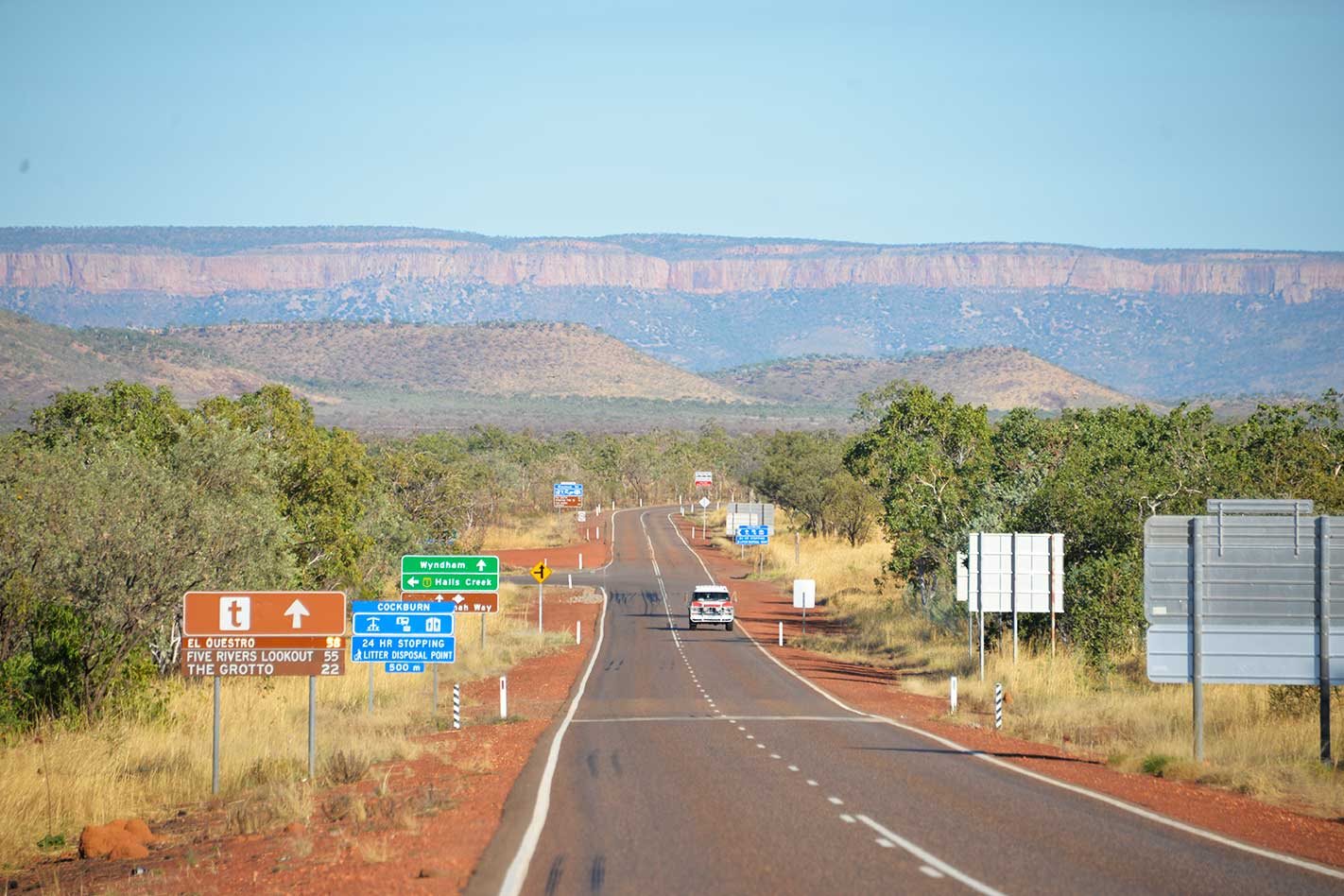
With busier roads out there as the nation advances out of COVID-19 lockdowns, the Transport Accident Commission (TAC) reports that 142 people have died on Australian roads as of the end of July this year. Up 13.6 per cent compared to that measured over the same period last year.
Toyota Australia today has announced it will temporarily stop taking orders for the popular LandCruiser 70 Series in reaction to supply and demand factors that have blown out waiting times for customers.
Availability is affected by ongoing supply and production disruptions currently felt throughout the automotive industry. Conversely, Toyota Australia states that the 70 Series is currently enjoying historical demand and local popularity.
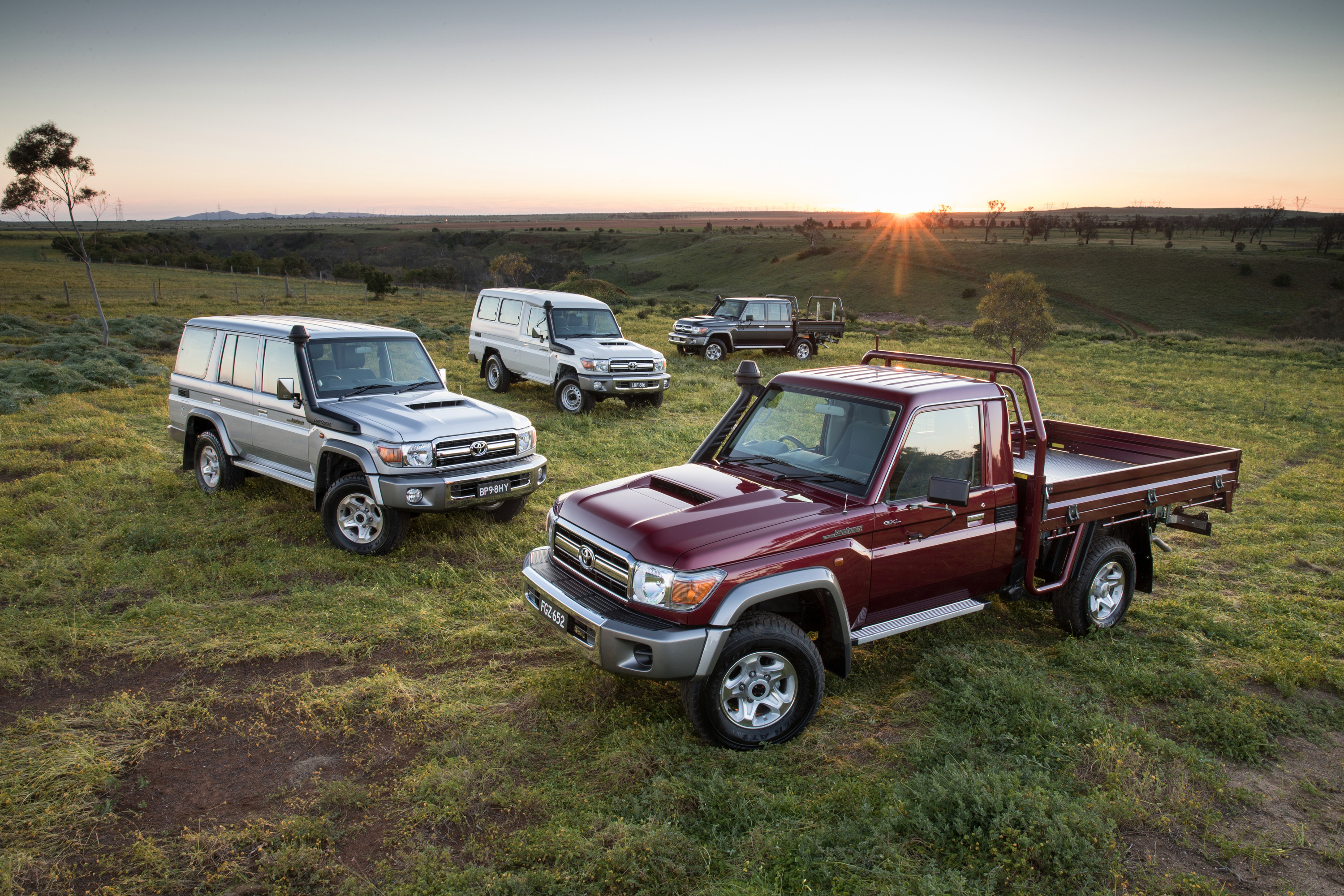
Sean Hanley, Vice President of Sales, Marketing and Franchise Operations said “Toyota has made this decision amid an evolving situation”.
“The Toyota team has been working diligently to deliver a record number of vehicles with extraordinary support from our parent company. At the same time, strong demand and industry-wide supply challenges globally mean we simply cannot fulfil orders more quickly”.
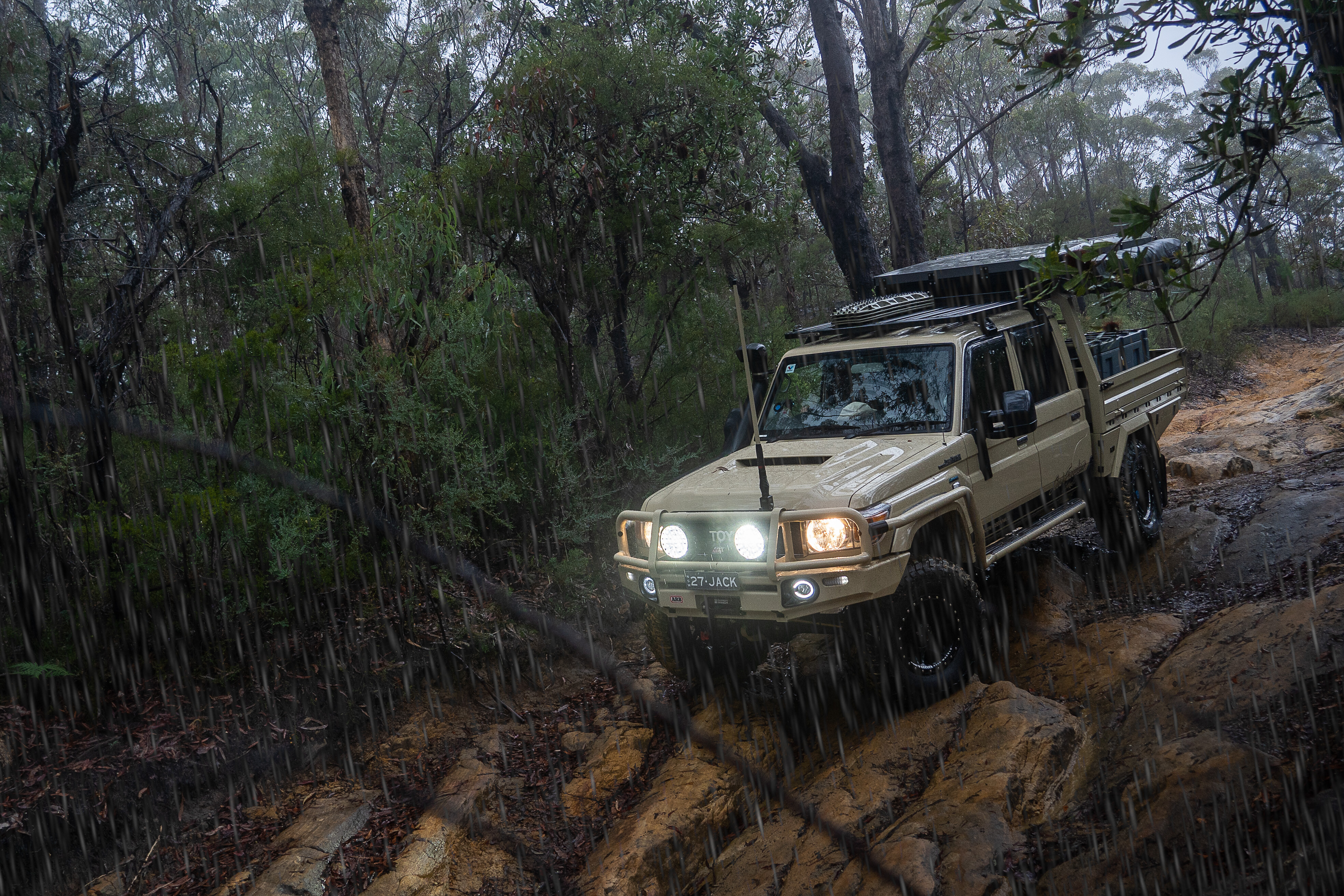
“Therefore, we have decided to pause new customer orders for the LandCruiser 70 Series. Dealers will be in direct contact with customers about wait times for individual existing orders over the coming months”.
“We are monitoring the global supply situation closely and will continue to make decisions based on the best interests of our customers and dealers”.
“I understand this news will be disappointing and want to sincerely apologise to our customers and assure them we will continue to provide updates as further information becomes available”.
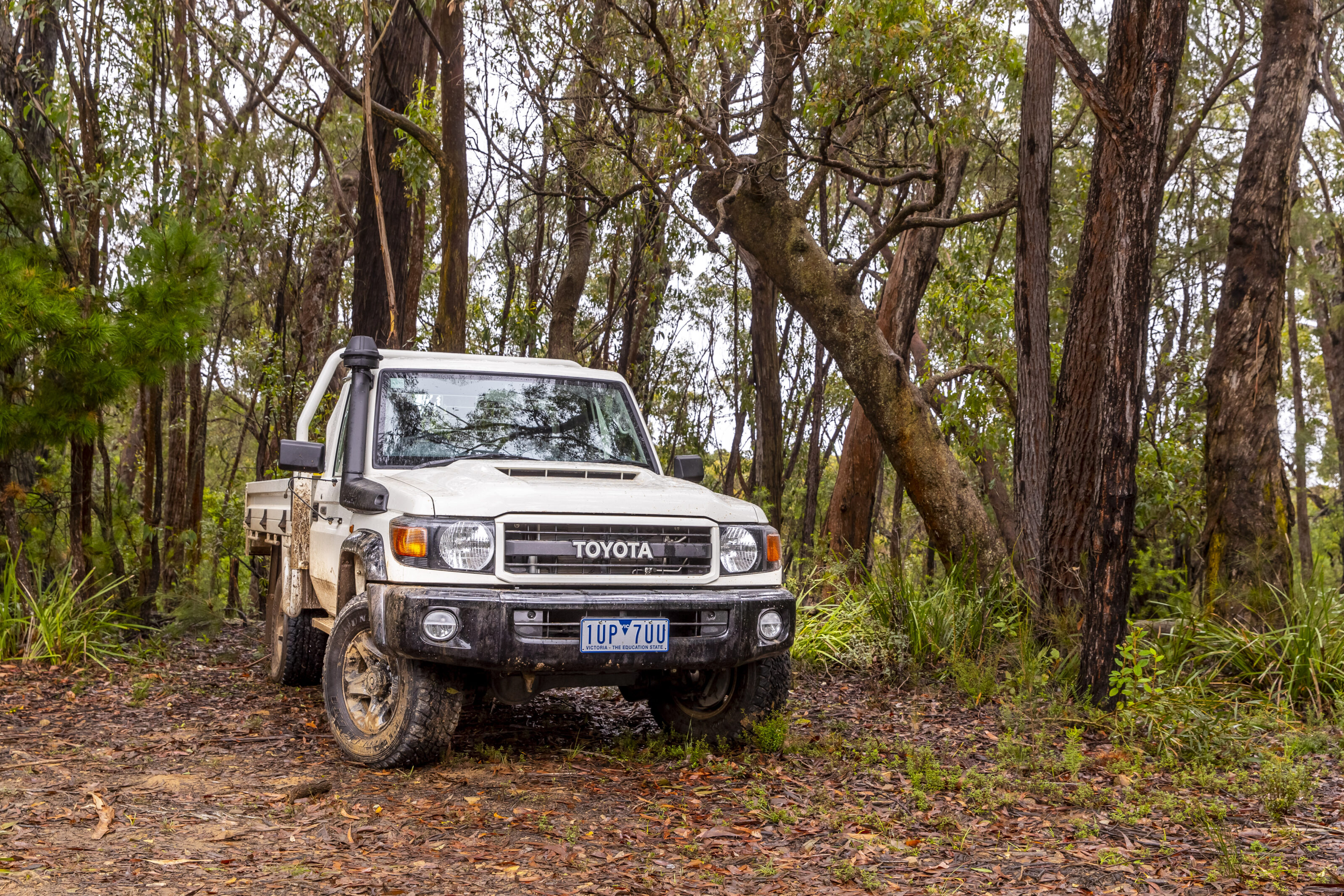
It was recently understood that wait times averaged 12 months or longer for the LandCruiser 70 Series, currently ranking among the Top 20 best selling vehicles nationally for 2022, as of June.
A spokesperson for Toyota Australia told Wheels, “Toyota dealers are best placed to continue to provide updates to our customers on delivery timeframes for individual orders”.
Is the humble station wagon making a comeback in 2022?
The Germans understand it. Cast an eye over the new-car sales figures of our Teutonic counterparts and you’ll notice a strange anomaly: wagons account for 17 per cent of their total sales. Dig a little deeper and the stats get even more interesting. Single out the Mercedes-Benz C-Class, for example, and you’ll discover that two out of every three cars sold is the ‘estate variant’.
That’s a phenomenal stat but also one that’s easy to fathom. Want a car that can seat five, is a tidier handler than most SUVs and has room for dogs, bags and ski gear? Buy a wagon. Aussies used to get it, too – who else grew up with a station wagon in the driveway? – but then the SUV arrived and wagon sales didn’t so much drop. They nosedived.
But, and I barely want to whisper it in case it somehow jinxes things, is the humble station wagon making a comeback in 2022? Not on the sales charts, obviously – the ‘long roof’ is still very much a niche player Down Under – but there seem to be more wagons on sale now than we’ve had in years.
| Click any photo in this story to see our full comparison gallery of the stylish Arteon Shooting Brake, G70 Shooting Brake and Peugeot 508 Sportswagon! |

Subaru has revived the WRX wagon. BMW has revealed a new M3 Touring. A fresh Golf R wagon has just launched locally, there’s the excellent Passat wagon and Skoda has the Superb and Octavia. And if you really want to terrify your Labrador with a practical car infused with supercar performance, you can buy an Audi RS6, Porsche Panamera Cross Turismo or Alpina B5 Touring.
And then we have these three. Of all the new wagons on sale, this trio perhaps best encapsulate the unique appeal of buying a wagon in 2022. They’re relatively large so they major on room and boot space, they aren’t eye-wateringly expensive so are mostly attainable for families considering a highly specced mainstream SUV, and they all major on style.
See the VW’s sharp creases, the Pug’s white fangs and the classic cab-back/rear-drive proportions of the Genesis? This is quite the handsome trio. Question is, should you consider one over an SUV? Spoiler alert: yes. And if so, which one’s best?

This is quite the handsome trio. Question is, should you consider one over an SUV? Spoiler alert: yes. And if so, which one’s best?
Price and equipment
Intriguingly, for all their similarities, this group of wagons is also surprisingly diverse. We have a mix of driven axles (front in the Pug, rear in the Genesis and both in the VW), a virtual gulf in the level of performance on tap (5.6sec 0-100km/h in the VW plays 8.6 in the Peugeot with the Genesis sandwiched between) and a sizeable discrepancy when it comes to price.
Want to get the most bang for your buck? Go for the Peugeot.
With a starting price of $61,940 before on-road costs it’s by far the most affordable wagon in this test, but it never feels like a cut-price offering. In fact, slip inside the 508 and it actually feels the most expensive and special.
The cabin design is modern and cutting edge and the mix of materials is genuinely premium: supple Nappa leather on diamond-stitched seats, soft-touch rubber on the dash with a dog-nose finish and faux carbon for the inlays on the dash and doors. And you can park those jokes about dodgy French build quality; the 508 is nicely screwed together with nary a squeak or rattle.

It goes toe-to-toe with the others for kerbside appeal, too, thanks to its attractive exterior design, frameless doors and 19-inch wheels shod with premium Michelin Pilot Sport 4 rubber (which also features on the Genesis).
And there’s nothing in it on the tech front. All three wagons boast parking sensors front and rear, a 360-degree surround view camera and LED head- and tail-lights. About the only thing the Pug misses out on equipment wise is in the headlight department; both the Arteon and G70 feature Matrix technology that can mask out oncoming traffic.
So outright value is on the Peugeot’s side but if it’s eye-catching looks you’re chasing, it’s hard to go past the Arteon.
Seemingly punched out of a machine that specialises in creases so sharp they look as though they could cut your finger, VW’s svelte Arteon ‘shooting brake’ starts at $70,740 before on-road costs.

It really is a dramatic thing to behold. Chiselled, tautly proportioned and festooned with an eye-catching LED light signature that extends, like a moustache, below the central VW badge. It teeters on the edge of being overwrought yet neatly manages to look chic rather than overdone.
Like the Pug, the Arteon features pillarless doors but it dials up the visual theatrics with a clamshell bonnet and larger 20-inch wheels wrapped in Pirelli P Zeros. It’s also the biggest of this group dimensionally, although it hides its visual mass convincingly. The fake exhaust outlets, though, aren’t to our taste…
It’s the Genesis that’s the hardest sell on the value front.
At $79,990 before on-road costs, it’s a sizeable step up from the Arteon and a whopping $17,000 more than the 508.
For that price, you might expect the Genesis to be armed with the brand’s punchy 3.5-litre twin-turbo V6 or the 3.3-litre V6 used in the Kia Stinger but no, like the other two on test, the Genesis only has four cylinders under the bonnet. It also rides on passive suspension, where the other two score adaptive dampers.

Looks sharp, though, thanks to classic rear-drive proportions and a long bonnet with a stretched axle-to-dash ratio. And the Genesis does hit back with five years’ free servicing (genuinely useful, that) and a few equipment niceties that are missing from the others.
All three of this trio are bursting with standard equipment including heated leather seats with electric adjustment, Apple CarPlay/Android Auto, large infotainment displays, digital instruments and premium audio systems. But on each front, the G70 offers incremental improvements.
It has the largest central screen (10.25 inches vs 10.0 inches in the Pug and 9.2 inches for the VW), its seats offer ventilation as well as heating and are 16-way adjustable, you gain a sunroof as standard, and the Lexicon sound system has 15 speakers where the others only offer 10 (plus a subwoofer in the VW).
| Infotainment | 2022 Volkswagen Arteon 206 TSI | 2022 Peugeot 508 GT wagon | Genesis G70 Shooting Brake |
|---|---|---|---|
| Screen size | 9.2-inch | 10-inch | 10.25-inch |
| Apple CarPlay/Droid auto | Yes, wireless | Yes, wired | Yes, wired |
| Digital dash | 10.25-inch | 12.3-inch | 12.3-inch |
| Sound system | Harman/Kardon 10 speaker + sub | Focal 10-speaker | Lexicon 15 speaker |
| HUD | Y | N | N |
| Wireless charging | Y | Y | Y |

The G70 trumps them on the safety front, too. All three cars feature AEB, lane-keep assist, blind-spot detection and speed-sign recognition but the Genesis also features rear occupant alert and has the most airbags thanks to the inclusion of one between the front passengers, which takes its total to 10.
Peugeots offers the weakest safety credentials as the 508 misses out on rear cross-traffic alert, which is standard on the VW and Genesis, and it only has six airbags. Still, all three wagons boast five-star safety ratings from ANCAP.
Comfort and space
Okay let’s talk back-seat room and boot space. Of all the battlegrounds in this test, this is arguably the most important for a wagon. And on both fronts, the VW is a clear winner. Measuring 4866mm long, the Arteon is 76mm and 181mm longer than the Pug and G70 respectively and it fully exploits its dimensional advantage.
| BOOT SPACE | 2022 Volkswagen Arteon 206 TSI | 2022 Peugeot 508 GT wagon | Genesis G70 Shooting Brake |
|---|---|---|---|
| rear seats up | 565L | 530L | 465L (VDA) |
| rear seats down | 1632L | 1780L | No official figure |

Crack open the auto tailgate and you’ll find 565 litres of boot capacity, which trumps the Pug’s 530L and smashes the G70’s offering of 465L, but it’s not just the sheer size of the Arteon’s boot that impresses. It’s the only one to offer a full-size alloy spare beneath the boot floor (top marks, VW!) and the luggage bay itself is deep, long and devoid of wheel arch intrusions.
A ski port is provided for loading longer items and there’s loads of amenity back here. Buyers score a retractable cargo blind, luggage net, twin bag hooks, two lights and four tie-down points.
The sense of space continues in the back seat. Spy the Arteon’s rakish roofline and you might think rear passengers will be tight on headroom but slip inside and you’ll discover the Arteon’s second row verges on limousine-like.

Knee, toe and headroom are all ample for six-foot adults and the seat itself is surprisingly comfortable thanks to a natural backrest angle and a deep-set cushion with decent under-thigh support.
Facing the prospect of a long trip in the backseat of this group? Make a beeline for the VW. Heated outboard seats, twin rear air vents, dual ISOFIX anchor points, tri-zone climate control and large door pockets all feature but there are a few missteps worth pointing out, too.
There’s only one USB-C outlet in the back, for example, so only one of your kids can charge a device. And for all its amazing sense of space, the Arteon’s near impenetrable privacy glass and huge black leather front bucket seats mean the rear bench can feel dark and gloomy.

Quality also takes a slight step backwards compared with the front seats due to harder plastics on the door cards, but as a wagon, the Arteon offers the most of this trio when it comes to lugging around people and things.
The Peugeot comes in a close second. It might trail the VW, just, for boot capacity when both rows of seats are in use but drop the second row and the advantage swings the other way. The 508 has 1780L of load-lugging ability with the rear seat folded, which trumps the Arteon’s 1632L, and the Pug also has a slim advantage in the utility stakes.
Its boot opening is slightly wider than the VW’s and the 508 also has the advantage of four moveable tie-down hooks that slide on rails embedded into the boot floor.

The 508’s second row is airier and easier to see out of, too, thanks to pronounced stadium seating, slimmer front seats and a low window line. There are also twin rear USB-A ports and the transmission tunnel isn’t as intrusive as the VW’s, which makes it easier to seat three adults across the rear bench.
You don’t get quite the same amount of room, however. Knee room is tighter and because the roofline tapers in slightly, the back seat feels narrower and a few passengers bumped their heads during entry/egress.
The seat cushion also isn’t as deep, which makes it feel like you’re sitting on the 508’s rear bench rather than in it. But even with its slightly squishier dimensions, the Pug feels palatial compared with the Genesis.
Sadly for the G70, it’s a distant third in the practicality stakes. Its more compact footprint means trying to sit behind my own driving position is a struggle. I’m short on toe room, my knees press uncomfortably into the back of the driver’s seat and the roofline sweeps in even more aggressively than the Peugeot, so headroom feels quite tight.

The seat itself is comfortable but the base of the outside pews is quite low, which limits under-thigh support for passengers with long legs. And the opposite is true of the middle seat, which is raised to such a level that my head brushes the ceiling.
Rear storage is also a weakness due to the slimmest door bins of this trio and the boot just isn’t in the same league. Officially Genesis says it offers 465L but a high boot floor and narrow opening means that when you eyeball it next to the cavernous Arteon, it looks like significantly less than that figure.
So it’s been an inauspicious start for the most expensive car in this group test. Here’s hoping the Genesis can redeem itself by playing its strongest hand: how it drives.

On the road
| 2022 Volkswagen Arteon 206 TSI | 2022 Peugeot 508 GT wagon | Genesis G70 Shooting Brake | |
|---|---|---|---|
| Engine | 1984cc 4cyl, dohc, 16v, turbo | 1598cc 4cyl, dohc, 16v, turbo | 1998cc 4cyl, dohc, 16v, turbo |
| Power | 206kW @ 4950-6600rpm | 165kW @ 5500rpm | 179kW @ 6200rpm |
| Torque | 400Nm @ 2000-4950 | 300 @ 2750rpm | 353Nm @ 1400-3500rpm |
| 0-100km/h | 5.6sec (claimed) | 8.2sec (claimed) | 6.1sec (claimed) |
| Transmission | 7-speed dual-clutch | 8-speed automatic | 8-speed automatic |
| Fuel consumption | 10.59L/100km (tested) | 11.54L/100km (tested) | 11.78L/100km (tested) |
There’s lots to like about the G70’s dynamic potential on paper. It may only pack 2.0-litres and four cylinders but it’s rear-drive, has a limited-slip differential, uses staggered tyres (225/40 ZR19 Michelins up front, 255/35 ZR19 out back) and it boasts a brake package supplied by Brembo.
Its steering (2.5 turns lock to lock) is also well weighted and accurate and in day-to-day driving, the chassis tune strikes a nice balance between control and comfort.
Unlike the other two, the G70 uses passive damping so bump absorption and body control remain unchanged as you cycle through the drive modes but the default set-up is nicely judged.
There’s decent compliance over rough sections and when driven at a moderate pace the car feels eager and controlled.

Hustle the G70 up a twisting section of road, though, and things unravel a touch. The front axle can feel a smidge soft and lazy through tighter turns so you find yourself managing body roll on the way into corners instead of exploiting the G70’s rear-drive character on the way out. Not that there’s much performance on tap to overwhelm the rear tyres…
The 179kW/353Nm 2.0-litre certainly sounds aggressive thanks to a heavy-handed artificial soundtrack that’s piped into the cabin – dial in Sport and Sport+ mode and it actually sounds like a V8! – but the engine never delivers the potency its acoustics promise.
Of this trio, the Genesis actually has the weakest power-to-weight ratio, with its 105kW/tonne trailing the lightweight 508 (115kW/tonne) and powerful VW (120kW/tonne). The G70 will slide, and it’s actually quite rewarding at the limit, but you really have to commit and work hard to extract its best.

At least the driving position is excellent. The seat itself is comfortable and offers great support, and the cabin design makes a decent fist of feeling premium, too.
The ergonomics are sound, the central screen is crisp and quick to respond, there’s a head-up display and Hyundai’s blind-spot monitor, which pops up on the digital dash when you use the indicators, also features and is genuinely useful.
And hallelujah for physical climate control buttons! Unlike the Peugeot and VW, which force you to dive into the central touchscreen or fumble with touch-sensitive sliders to change the temperature or fan speed, the G70 is a shining example of the benefits of keeping things simple.
There are a few niggles, though. Hard plastics aren’t that tricky to find, our car had an annoying creak/rattle near the sunroof and Apple CarPlay and Android Auto can only be fired up with a wired connection, despite there being a wireless charging pad. But these are minor niggles in what is ultimately a polished, premium and handsome wagon.

It’s just a shame it can’t compete with the other two in this test for value, rear-seat room or boot space. The G70 is a likeable thing but in the context of this comparison, it finishes last. It’s a shame because wagon buyers should be an easy sell for style-driven challenger brands looking to attract discerning, broad-minded customers but in a few key areas, the G70 underdelivers.
So far the opposite has been true of the Peugeot. It has overachieved for value and cabin space but it only takes a few corners to realise it’s by far the least sporty of this trio. With 165kW/300Nm on tap from a smooth and eager 1.6-litre four-pot, the 508 lacks the firepower and acoustic personality of the G70 and Arteon.
Its widespread gear ratios also contribute to a dearth of urgency and where the other two get better dynamically the harder you push, the 508 feels happiest at about eight tenths.

Keep things dialled back a touch and the Pug is a beautifully fluid wagon to drive swiftly. It feels light on its feet, the steering is accurate, the cabin is the quietest and most refined over coarse surfaces, and there’s a suppleness to the suspension that’s lacking in the other two.
Like the Arteon, the 508 is fitted with adaptive dampers that provide a noticeable difference in firmness and body control as you cycle between the drive modes, but even in its most aggressive setting, the 508 never feels flustered or harsh on our challenging road loop. Brilliant turning circle, too, although I’d wager not everyone will gel with its polarising human-machine interface…
To view the digital dial cluster the 508 forces you to drop the steering wheel into its lowest position, which feels odd for drivers who prefer their wheel high and close, and the wheel itself is disarmingly small. “It feels like you’re steering an enormous car with a bagel in your lap,” remarked a member of our road-testing team.
There are some other interior idiosyncrasies to overcome, too. Charging or connecting your phone is a bit of a palaver because the dual USB ports and wireless charging pad are hidden away in a hard-to-reach cubby beneath the centre console.
Reversing camera resolution is also disappointingly poor and while the finger-like hotkeys below the centre screen provide useful shortcuts, some of the system’s menus can be a touch confusing. Oh and Apple CarPlay doesn’t extend to the full width of the 10.0-inch screen, and the Pug is the only one of this trio not to have a head-up display. Still, it’s been a strong showing from the 508 and it romps home to second place.
Which leaves the Arteon. Push all three wagons up a challenging hill climb and it’s the VW that will reach the finish line first. It has the punchiest engine, the strongest brakes and thanks to the surety of its all-wheel-drive system, the grippiest chassis. It’s surprisingly athletic, too, for a car approaching five metres in length.

The steering (2.2 turns lock to lock) is light and accurate and body control is kept rigidly in check thanks to a dynamic damping system with 14 stages of stiffness to explore.
The VW rides on 20-inch wheels compared with 19s on the other two and while there’s no escaping the fact it’s the firmest of this group, especially over sharp imperfections, it never feels jarring or unpleasant.
Its powertrain is impressive at speed, too. VW’s venerable EA888 revs cleanly to its 6500rpm redline and the seven-speed dual-clutch is quick and decisive. In regular driving, however, there’s a lethargic side to the VW that can catch you out.
Even in Sport mode, the engine and transmission calibration feels overly focused on fuel saving and is reluctant to shift down through the gears when you try to slot into gaps in traffic.

Another downside is that those flashy 20-inch alloys mean the VW suffers from the most intrusive tyre roar of this group. And some of the cabin tech also feels like a sideways step…
VW seems to be on a mission to move everything it can into a touchscreen menu and while the Arteon doesn’t suffer from this minimalist approach quite so badly as some other models, like the new Golf, there are still some issues to contend with.
Touchpads with haptic feedback replace conventional buttons on the steering wheel spokes and while they look great, they simply aren’t as intuitive to use. Same goes for the touch-sensitive sliders that are used to change the climate control’s temperature or fan speed; impressive to swipe in a showroom but tricky to get right on the move.

Still, the rest of the cabin exudes quality. The materials mix is high, the resolution and functionality of the digital displays is excellent and the seating position is natural from comfortable and heavily bolstered sports seats.
All of which feeds into the conclusion…
VERDICT
The Arteon is a brilliant all-rounder
It’s sleek, quick, turns the most heads and despite being the most powerful car here, it also drank the least fuel over our test loop: 10.6L/100km plays 11.5L for the Pug and 11.8L for the Genesis.
And as a wagon, it offers the biggest back seat and the largest boot. It’s a clear winner in this group test but truly, if you were to choose any of these wagons over a conventional SUV, there are no real losers.
The humble station wagon might still be a niche player on the Aussie sales charts but for those select few who ‘get it’, we doubt any of this trio will disappoint.
If you were to choose any of these wagons over a conventional SUV, there are no real losers.
Specifications
| 2022 Volkswagen Arteon 206 TSI | 2022 Peugeot 508 GT wagon | Genesis G70 Shooting Brake | |
|---|---|---|---|
| Body | 5-door, 5-seat wagon | 5-door, 5-seat wagon | 5-door, 5-seat wagon |
| Drive | All-wheel drive | Front-wheel drive | Rear-wheel drive |
| Engine | 1984cc 4cyl, dohc, 16v, turbo | 1598cc 4cyl, dohc, 16v, turbo | 1998cc 4cyl, dohc, 16v, turbo |
| Compression | 9.3:1 | 10.1:1 | |
| Bore/stroke | 82.5mm x 92.8mm | 86mm x 86mm | |
| Power | 206kW @ 4950-6600rpm | 165kW @ 5500rpm | 179kW @ 6200rpm |
| Torque | 400Nm @ 2000-4950 | 300 @ 2750rpm | 353Nm @ 1400-3500rpm |
| 0-100km/h | 5.6sec (claimed) | 8.2sec (claimed) | 6.1sec (claimed) |
| Transmission | 7-speed dual-clutch | 8-speed automatic | 8-speed automatic |
| Weight | 1717 (tare) | 1430kg | 1699kg (kerb) |
| Fuel consumption | 10.59L/100km (tested) | 11.54L/100km (tested) | 11.78L/100km (tested) |
| Front suspension | MacPherson struts, coil springs, adaptive dampers, anti-roll bar | Struts, coil springs, adaptive dampers, anti-roll bar | MacPherson struts, coil springs, anti-roll bar |
| Rear suspension | Multi-links, coil springs, adaptive dampers, anti-roll bar | Multi-links, coil springs, adaptive dampers, anti-roll bar | Multi-links, coil sprngs, anti-roll bar |
| L/W/H | 4866/1871/1447mm | 4790/1860/1420 | 4685/1850/1400 |
| Wheelbase | 2840mm | 2800mm | 2835mm |
| Brakes | Ventilated discs | Ventilated discs (front) solid discs (rear) | Ventilated discs |
| Tyres | Pirelli P Zero 245/35 R20 (f/r) | Michelin Pilot sport 4 235/40 ZR19 (f/r) | Michelin Pilot Sport 4 225/45 ZR19 (f) 255/35 ZR19 (r) |
| Wheels | 20-inch alloy wheels | 19-inch alloy wheels | 19-inch alloy wheels |
| Price | $70,740 | $61,940 | $79,000 |
| Boot space | 565L/1632L | 530L/1780L | 465L (VDA) |
| Warranty | 5yr/unlimited | 5yr/unlimited | 5yr/unlimited |
| Servicing | 12months/15,000km | 12 months/20,000km | 5yr complimentary servicing |
| P2W | 120kW/tonne | 115kW/tonne | 105kW/tonne |
Snapshot
- Motoring trade industry facing shortage of over 30,000 people
- Currently around 10,000 apprentices in training
- Skilled migrants provide a short-term solution
UPDATE, July 29: MTAA says don’t let other issues derail summit
Auto industry figures are calling on Prime Minister Anthony Albanese to ensure his September Jobs Summit will not be distracted or diluted by other issues, as the sector faces an epic skills shortage.
Motor Trades Association of Australia (MTAA) CEO, Richard Dudley, said any distractions at the upcoming event will not help alleviate the nation’s crippling shortage of skilled workers, and reports of it being sidelined by unions pushing for work from home guarantees is of grave concern.
“The new Government won some well-deserved kudos by acknowledging the current skills shortage and promising to bring together stakeholders to address the challenges,” Dudley said.
“However, reports that the Australian Council of Trade Unions (ACTU) will use the Summit to lobby for counter-productive outcomes have already damaged optimism and support from business.
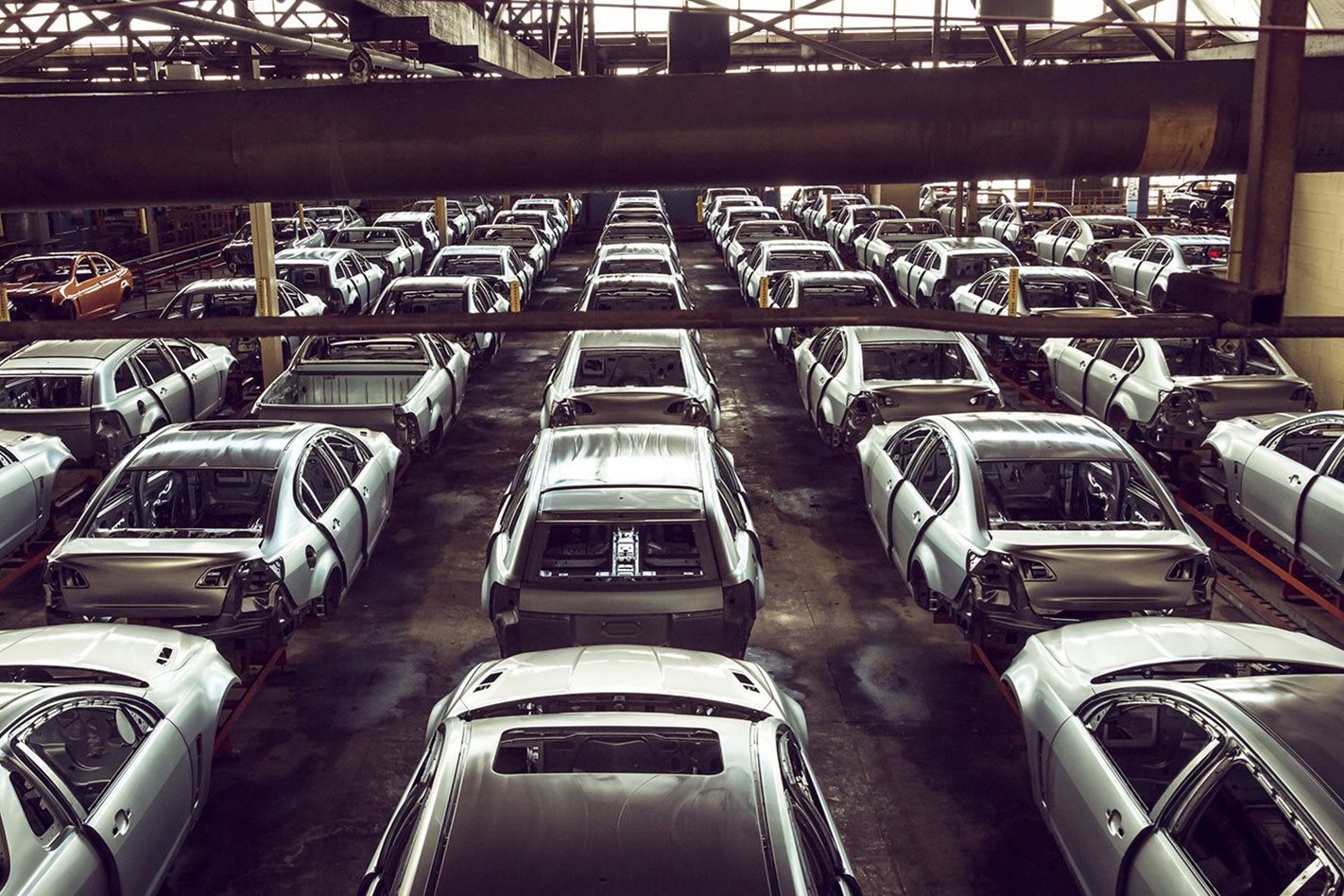
“Like many sectors, Australia’s motor trades have long suffered from a lack of available skilled workers, which has been exacerbated by the pandemic and other inflationary pressures.
“We understand other stakeholders have issues on their agendas too, but Prime Minister Albanese must publicly rein in the ACTU and ensure the Summit proceeds with the single focus of finding immediate solutions to the issue it was created to resolve.”
In recent days the The Sydney Morning Herald and The Age reported that unions were negotiating working from home rights on behalf of tens of thousands of workers, led by ACTU Secretary Sally McManus.
McManus says employees should be able to work from home even after the latest COVID-19 wave has subsided, to boost productivity and reduce stress and living expenses, such as petrol.
“For some jobs, there’s just no reason why everyone has to be together. Where it can be done, why shouldn’t it be?” McManus told ABC radio.
“There’s going to be change, and it’s mainly driven by workers.”
The story to here
June 7: Industry needs 30,000 more skilled workers
The automotive trade industry is facing a massive shortage of skilled professionals to the tune of more than 30,000 people.
Across the sector, automotive businesses are feeling the hit of the skills shortage, with those in the mechanical and collision repair business feeling the brunt of it, according to industry leaders.
At the Australian Automotive Dealer Association’s Convention and Expo, a number of key figures from the local industry spoke about the shortage and how to fix a problem which continues to grow.
Australian Automotive Aftermarket Association executive director Stuart Charity believes the problems started well before the global pandemic, but the past two years have done little to improve the situation.
“We are facing a skills crisis of unprecedented proportions,” said Charity.
“It’s not just dealerships; it’s the aftermarket industry, it’s the collision repair industry too. In fact, there are estimates the shortage is something like about 25- to 30,000 technicians. There’s a whole range of reasons for that.
“We went into the COVID-19 years already with skills shortages and then border closures, so we couldn’t get skilled migration. Economic uncertainty meant that businesses weren’t bringing apprentices through in the same sort of numbers and we’ve also had other sectors, like mining, poaching our qualified technicians.
“So we’ve got a kind of perfect storm of issues and there’s no short term solutions.
“We are seeing businesses forced to poach technicians from other businesses because there’s just no one else coming through. That puts upward pressure on wages and I think that’s only going to exacerbate.
“The challenge we have as an industry, whether you’re in the aftermarket dealership or whatever else, is that competition for talent is going to drive up wages.
“I don’t think it’s a bad thing that we start paying our technicians more because we are competing against other industries, but I think we need to look at how we pay them substantially more so we become an industry of choice.
“The only short term solution is to get some skilled migrants in and we need to fix the system. We’ve got a situation where it takes between six and 12 months, or even longer, to get someone in it – which could cost up to $25,000 per employee.
“The system is so complex that it’s almost impossible to navigate yourself. So you’ve got to use an immigration lawyer. There’s got to be a better way to do this.”
Richard Dudley is the CEO of the Motor Trades Association of Australia, arguably the worst-hit sector which is affected more than any other by the shortage.
While skilled migrants are one solution for the MTAA to get its members back on track, Dudley says using lessons from overseas’ counterparts can help provide a long-term solution.
“Quite simply we are in a historic time,” said Dudley.
“We’re currently short 33,000 skilled professionals across the automotive trades – the vast majority of those are in the mechanical and collision repair sectors.
“Isn’t it quite strange that on the priority skills migration list, you can have a CEO right up there, but we can’t have a panel beater or a spray painter?
“These are the anomalies that we’re hoping to fix with the new Labor Government. Across Victoria, WA, South Australia, New South Wales and Queensland, we currently have 10,000 apprentices in training as we speak, but that’s still not enough.
“Skilled migration is part of the solution, but so is learning lessons from overseas. We have been liaising with kindred organisations in Norway, Sweden, Germany and France, over the last 12 months.
“The lessons that have been learned in those European countries as they’ve transitioned the fleet – how they’re looking at utilising the legacy mechanics etc – show that we need to continue to operate the legacy through fleet in this country, but also the emerging opportunities and the problems that we’re going to have to face in terms of the professions of tomorrow and the technicians that we need.
“So in terms of statistics, there are no short term answers to the problems that we are facing here today, but also in the transitioning of the fleet from internal combustion engine vehicles, eventually to electric vehicles, there is a whole world of opportunity, but also pain that has to be carefully managed.”
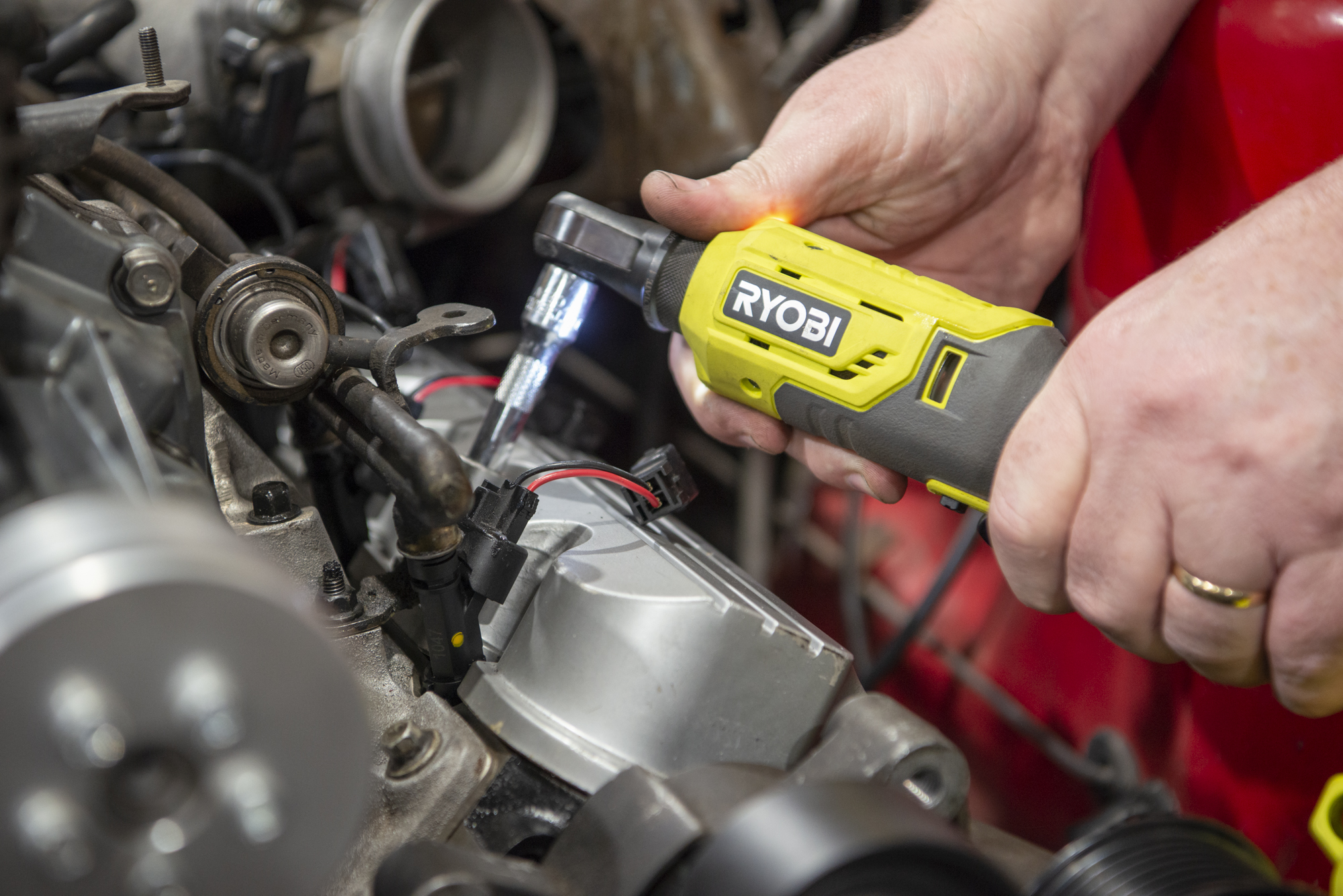
The new Labor Government is also interested in implementing Labour Market Testing (LMT), where a position will be tested and advertised locally to try and find a suitable local worker before an employer takes on an overseas worker.
Rod Camm from MTA Queensland, a subsidiary of the MTAA, is worried LMT will result in further delays to filling a position, instead wanting reforms for the apprentice program.
“The gut part of the Government’s election policy commitments is creating a different skills commission,” said Camm.
“That’s fine, they’re in the process of doing that, but Brendan O’Connor [Minister for Skills and Training] is a big fan of LMT.“I think Richard will have success in getting some qualifications added to the skills list, but they’ll then put us through LMT to try and prove that there’s shortages.
“Now we run lots of pre-employment programs at the [MTA] Institute and let me tell you, there’s real evidence that the labor market’s tight, but notwithstanding that there’s still people there. Yes, they’re second and third generation unemployed and that presents a challenge.
“One of our problems is like a few other industries, we’re a one trick pony. The vast majority of apprentices finish inside three and a half years. They are finishing earlier, but a lot of school kids when they’re told ‘you’ve got to wait four years’, think ‘oh, I might just do engineering, it’s the same’.
“In addition to apprenticeships – because it’s a fantastic model, you set yourself up for a lifetime of employment – we have to find other models. There are other models we’re working on with the Queensland Government now around how to fast track skills development so we can parachute people into businesses with genuine productivity.”
