
Snapshot
- Korean reports suggest Veloster production will end shortly
- Three-plus-one-door hatch debuted in 2012
- Pulled from the Australian market in 2021
The Hyundai Veloster will be the next model dumped by the Korean manufacturer, with reports suggesting production of the quirky hatchback is being wrapped up.
According to Korean publication Hankyung, Hyundai will end production of the three-plus-one-door hatchback after an 11-year run, with the Veloster becoming a victim of the manufacturer’s electric vehicle push.
Having been launched in Australia a decade ago, the first-generation Veloster racked up more than 17,000 local sales before the second-generation, i30-based model succeeded it in late 2019 – lasting just over a year before being taken off the local market due to its conventional hatch sibling’s $10,000 discount.
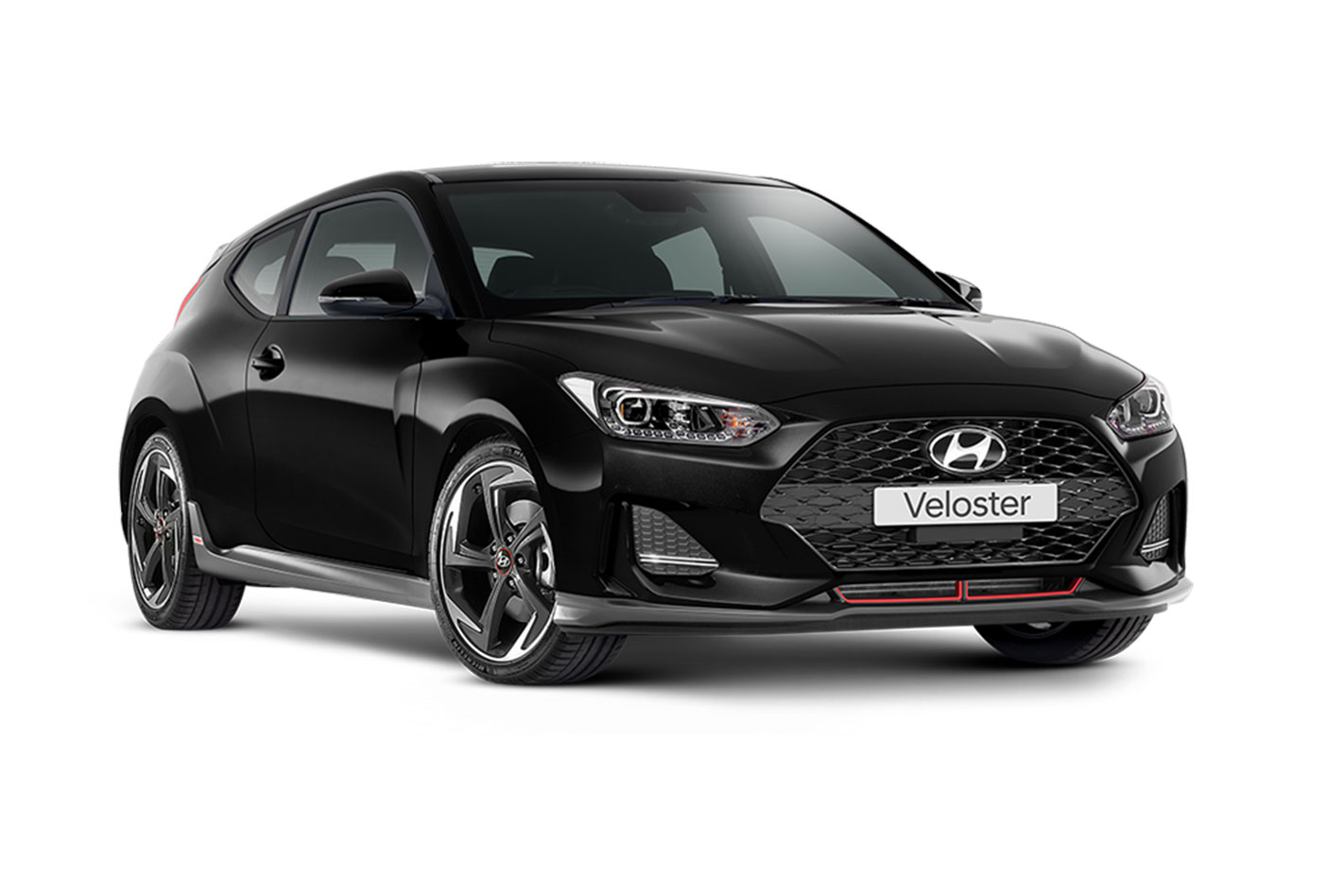
Hankyung’s report suggests the Veloster has taken a significant hit in popularity thanks to the launch of the i30 Sedan N (known as the Avante N in Korea), with the new four-door model taking away sales from the unconventional hatchback offering.
In a four-month period between January and April, just 99 units of the top-spec Veloster N were sold in its local market – the i30 Sedan N managed 1624 sales in the same period.
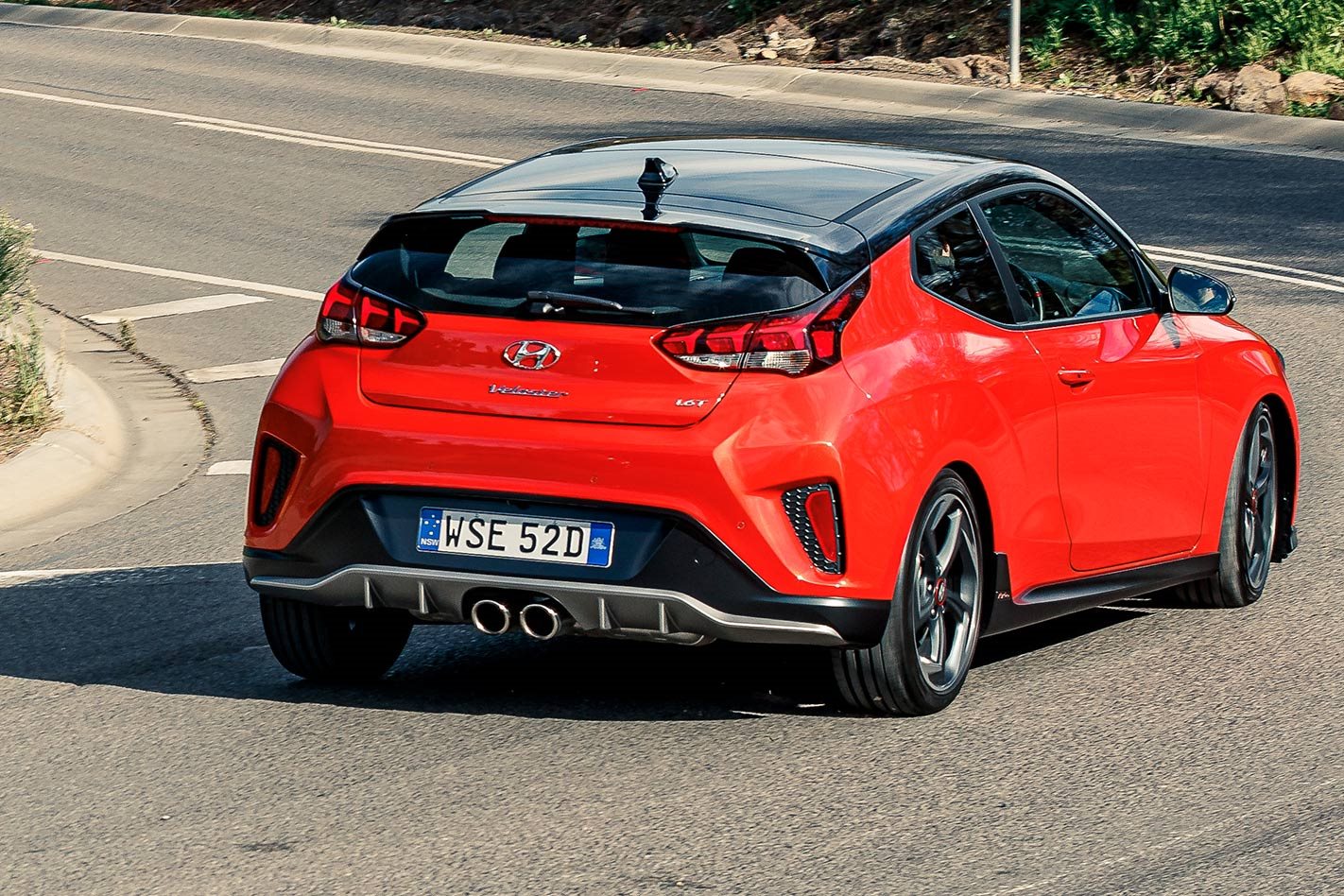
The upcoming fully-electric Kona has also been blamed as a catalyst for the Veloster’s demise, with the latter’s Ulsan 1 plant production line occupying space which could be used for production of the EV crossover.
With the Veloster now disappearing from international showrooms, there is a void in the market for a hatchback with one door on its driver’s side and two on the passenger’s side – a unique layout which likely won’t be repeated.
Snapshot
- Mannering has previously held roles at Audi locally
- Taking over the role from Paul Sansom
- Coming from Audi Korea
Audi Australia has appointed company exec Jeff Mannering to the role of Managing Director.
Mannering is currently the Executive Director of Audi Korea, a post he has held since 2019. Before that he was Managing Director of Audi in the Middle East and of Audi Singapore.
The new MD is no stranger to the firm’s Australian arm though, having held senior aftersales roles locally earlier in his career.

“I am excited to return home to lead the extraordinary team at Audi Australia,” said Mannering.
“Audi is boldly shaping the future of personal, premium mobility around the world, and it’s a mission that I hold very closely. I look forward to sharing in our owners’ enthusiasm for the Audi brand in Australia, and taking them along with us on this exciting journey.”
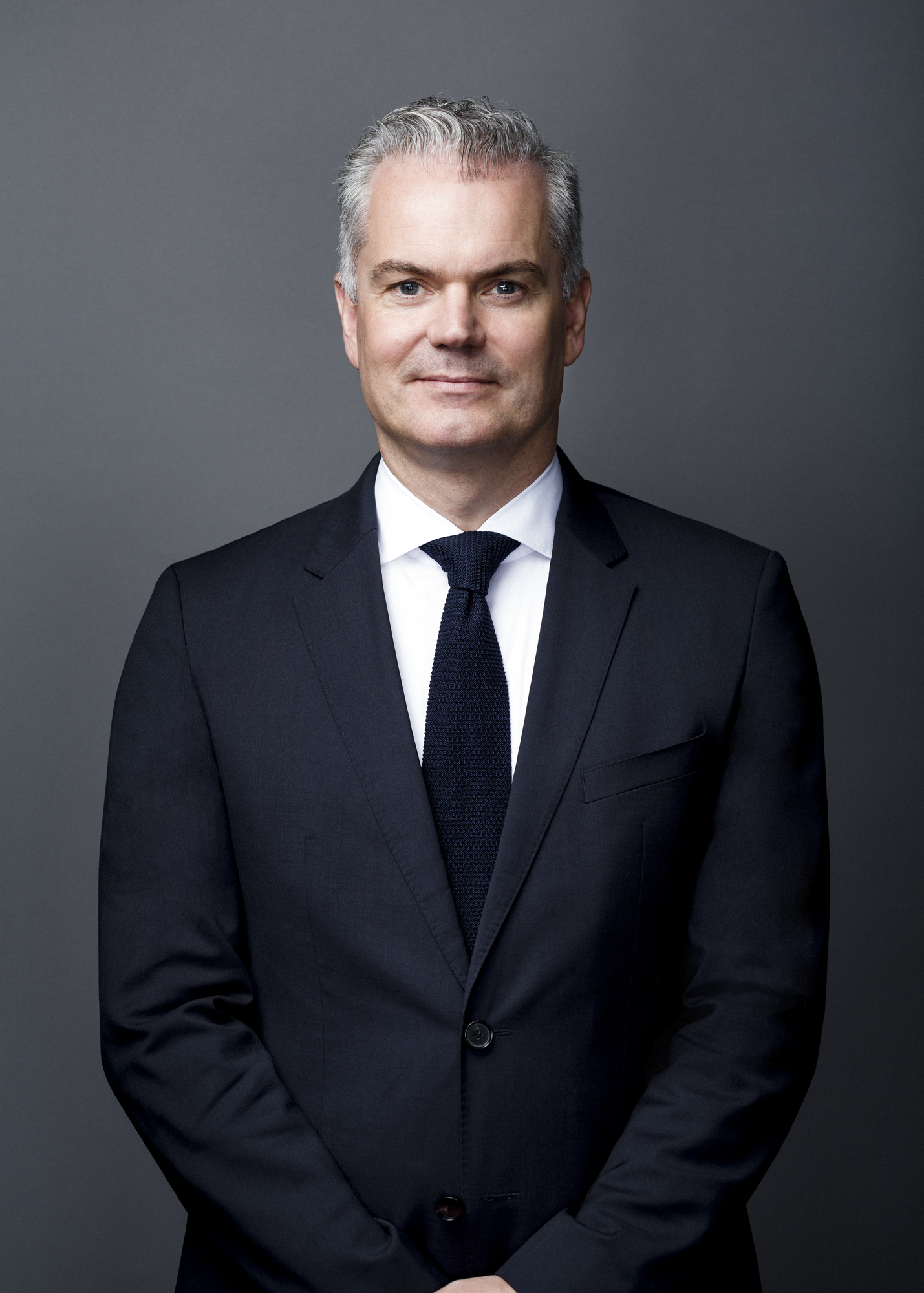
Mannering takes up the post from Paul Sansom, who in turn became Group Managing Director of Volkswagen Group Australia from January 1 this year following its merger with Audi Australia.
Prior to that, Sansom had been the MD of Audi Australia since 2017 following a three-year stint in South Africa.
“I am delighted to hand over the reins of Audi Australia to an executive of Jeff’s calibre,” said Mr Sansom.
“I look forward to seeing Audi continue on its innovative path, as the technological spearhead of Volkswagen Group Australia, to deliver our customers the very best of premium mobility into the future.
“It has been an honour to lead this incredible brand in Australia and I have the fondest memories of all that we have achieved together.
“Jeff has proved his expertise in successfully steering the Audi brand in several markets around the world,” said Andre Konsbruck, Vice President of Sales – Region Overseas at Audi AG.
“I am convinced that Jeff’s broad experience will be of great benefit to Audi Australia, and of course, to our many customers Down Under.”
UPDATE: Model Y Performance driven
We’ve now had our hands on the rapid Tesla Model Y Performance, and it’s as satisfying as you’d hope – but, it isn’t without flaw. We’ve also put the Model Y Performance up against the Kia EV6, because… well, it was just the right thing to do. Get both stories at the links below.
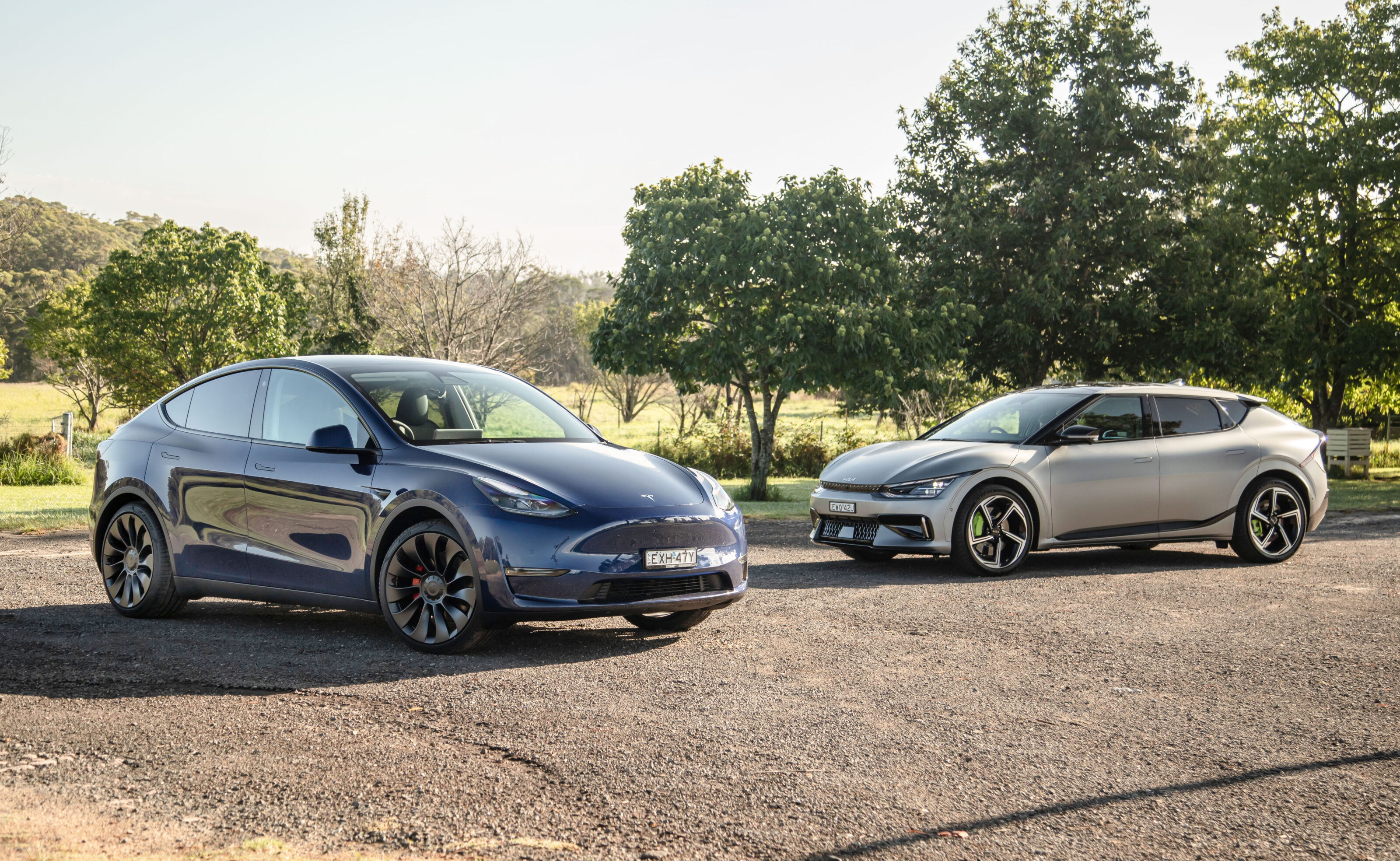
Elon Musk has promised – via Twitter, naturally – increased right-hand-drive production of the Tesla Model Y after being surprised by initial demand that pushed out delivery times rapidly from second-half 2022 to first-half 2023.
Yet, surely not even an experienced product planner would have been needed to forecast buyer response once official pricing had been confirmed for the company’s most affordable SUV yet.
The Model 3 sedan on which it’s based was already proving popular here before supply issues hit, and the Y has an obvious body-style advantage over the sedan.
The two vehicles are so closely related they share about 75 per cent of their parts. From front-on, it’s even tricky to tell them apart; in profile and from the rear, the Model Y looks like a Model 3 that’s been overdoing the steroids.
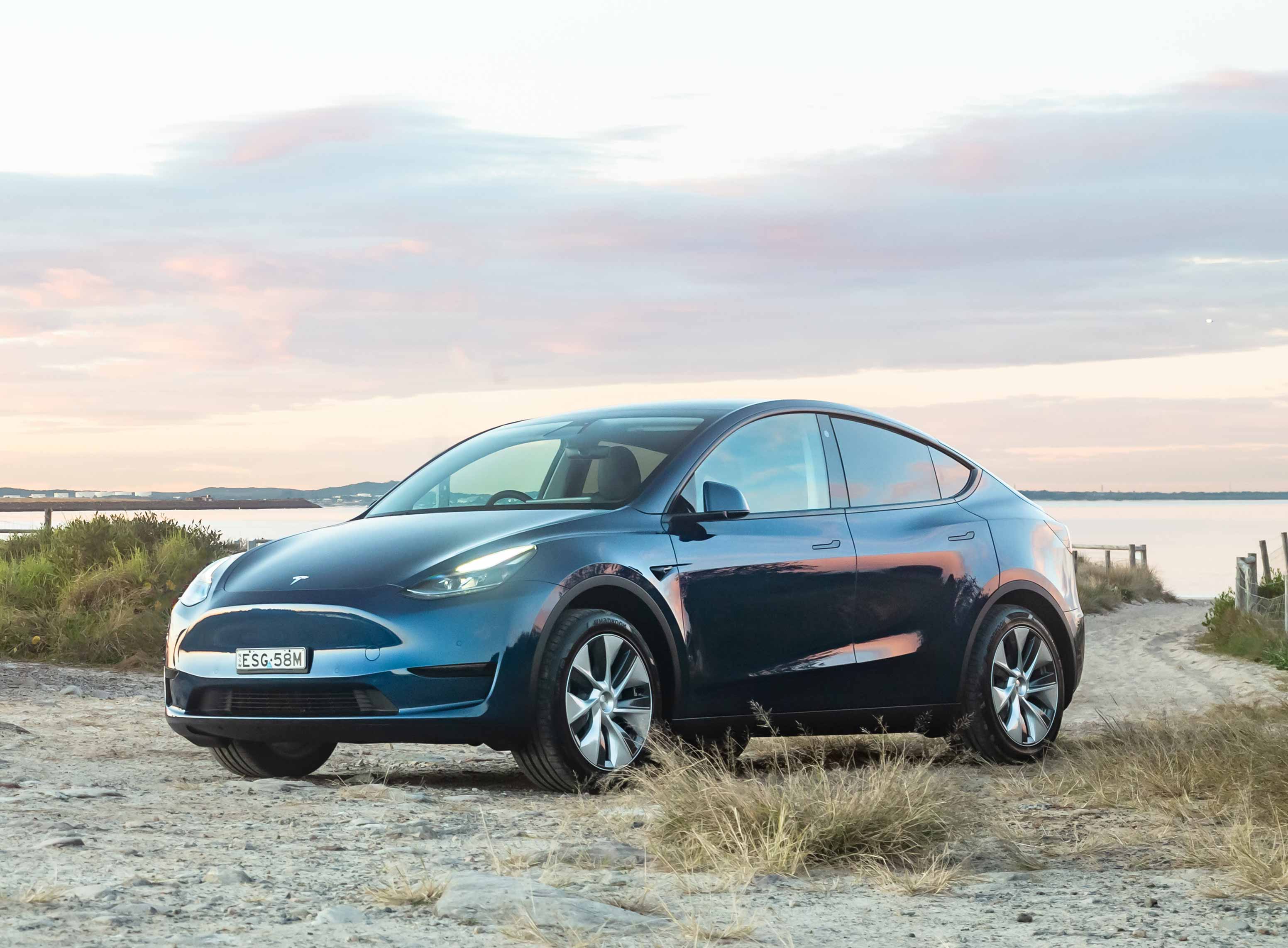
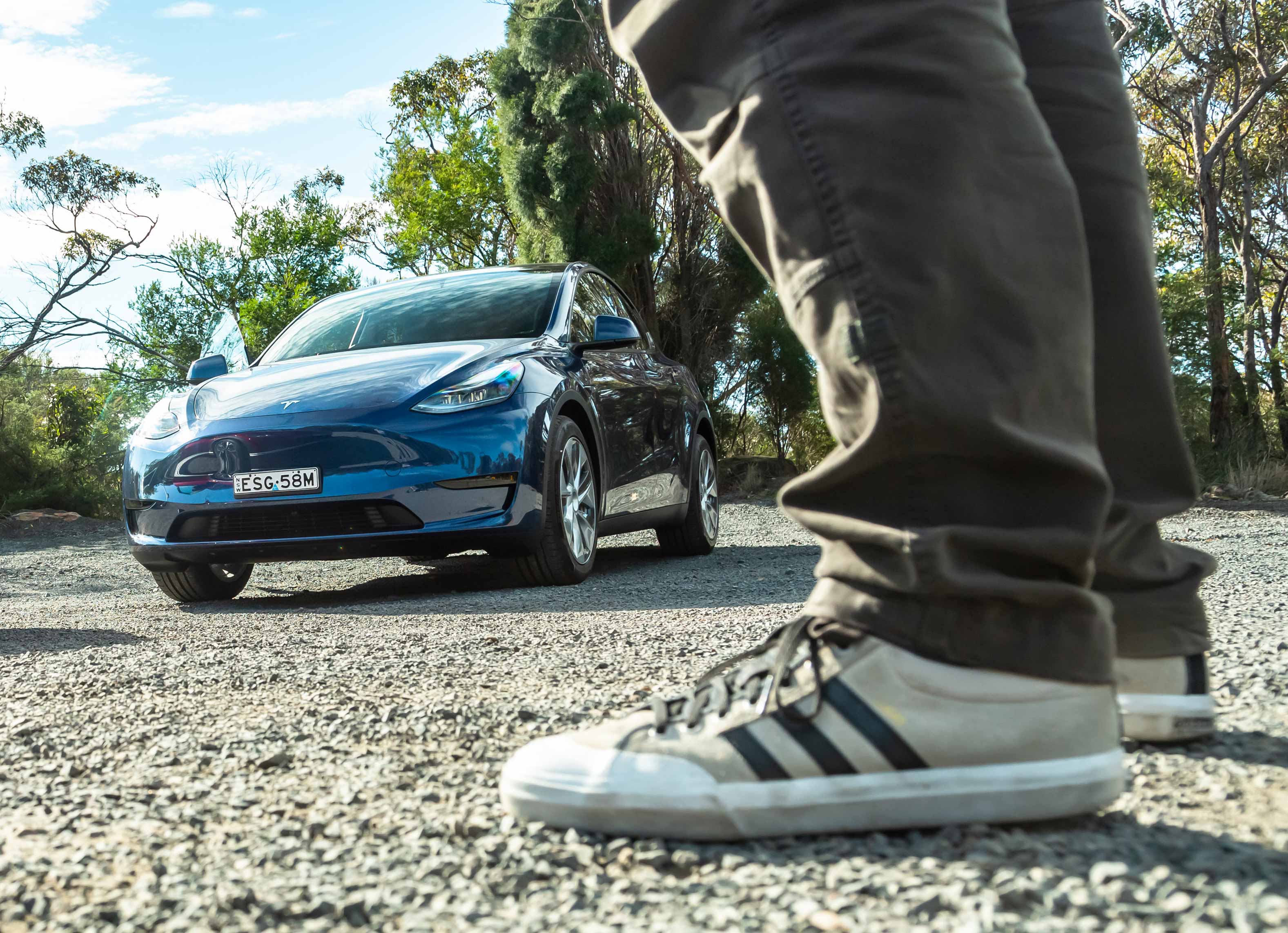
The Model Y is nearly six centimetres longer, touching 4.75 metres, and is seven centimetres wider. The wheelbase is stretched just 1.5cm, leaving height as the most dramatic physical difference; the top of the Y reaches an extra 18cm into the sky.
About three centimetres of that comes in increased ride height, though the Model Y is no pseudo-off-roader with its 167mm ground clearance.
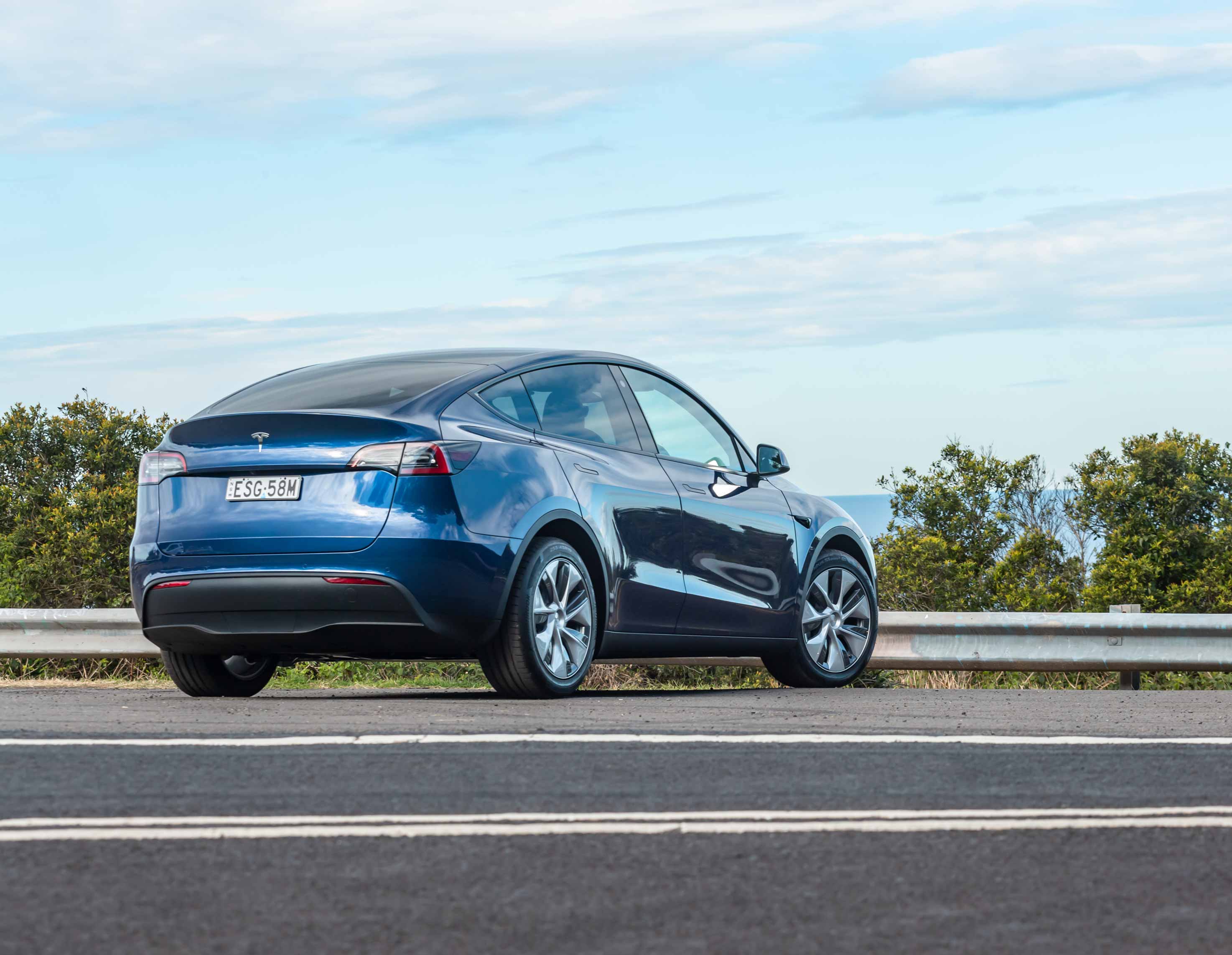
The Model 3 was already proving popular here before supply issues hit, and the Y has an obvious advantage of being an SUV rather than a sedan.
Pricing and Features
Initial pricing placed the Tesla Model Y starting point at $68,900 – $5000 above the equivalent Model 3.
However, just a week after announcing pricing, Tesla jacked the Y’s entry price to $72,300, just as delivery times were pushing out from latest-November to latest-May-2023. This increased the gap to $6800 after the base 3’s price was also increased.
While Model Y RWD buyers already missed out on $3000 rebates in NSW, Victoria and South Australia as the base model’s price was above incentive thresholds, the sudden increase was a bit naughty – with a perception, wrongly or rightly, that it was a response to big demand.
That’s not to suggest there’s poor value now. Spending more on the Y over the 3 brings more than a bigger vehicle with more interior space. The Model Y RWD entry variant comes with 19-inch wheels where 18s are standard on the base Model 3, as well as a 13-speaker ‘Premium’ audio that’s an option on the 3 RWD.
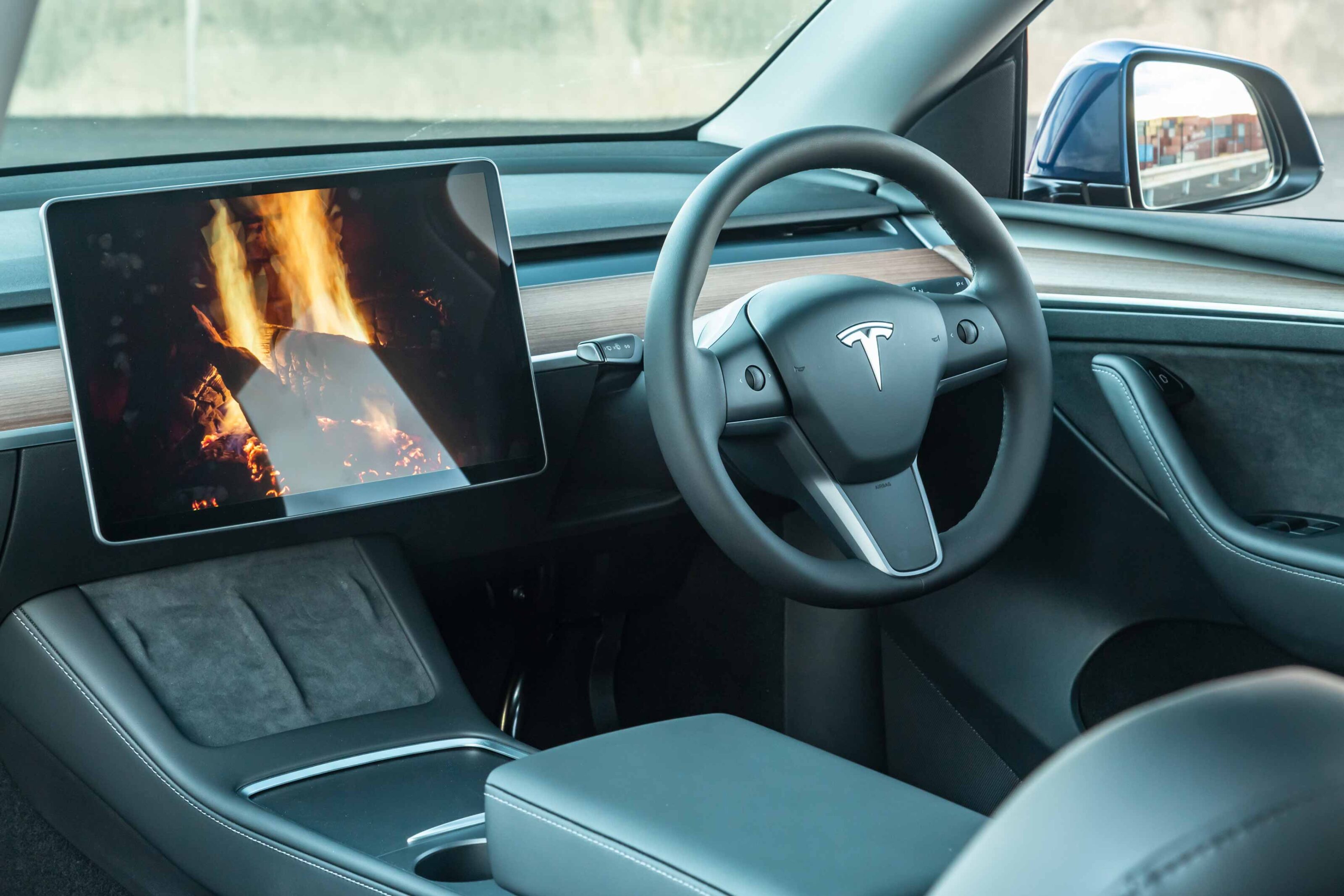
Shared features include electric front seats, heated seats front and rear, heated steering wheel, and full-length glass sunroof. Driver aids include blind spot detection, lane departure warning, and forward collision assist.
Options are also similar. White paint is standard, choosing black, silver, or blue (as per our test car) costs $1500, or it’s $2900 for a multi-coat red. It’s another $2900 for 20-inch ‘Induction’ alloy wheels and $1500 for a duo-tone black/white interior rather than pure black.
Old for markets such as the US but new for Australian in 2022 is a $5100 Enhanced Autopilot package, giving buyers access to a bunch of temporary-use autonomous-driving functions.
These include auto lane-changing, auto overtaking, and auto steering/accelerating/braking for freeway use, self-drive parking manoeuvres, and Smart Summon that (theoretically, at least) allows owners to bring their parked Model Y to them in a car park via the Tesla app.
Full Self Driving Capability offers all those functions plus Traffic Light and Stop Sign Control … and the enticement (when available and legal in Australia) of a properly advanced self-driving computer.
The Model Y has several direct rivals. These include the Hyundai Ioniq 5 (priced from $71,900) and our 2022 Wheels Car of the Year, the Kia EV6 (priced from $67,990).
Other models anticipated for the Australian market include the Audi Q4 E-Tron and Volkswagen ID4.
The Model Y has several direct rivals. These include the Hyundai Ioniq 5 (priced from $71,900) and our 2022 Wheels Car of the Year, the Kia EV6 (priced from $67,990).
Comfort and space
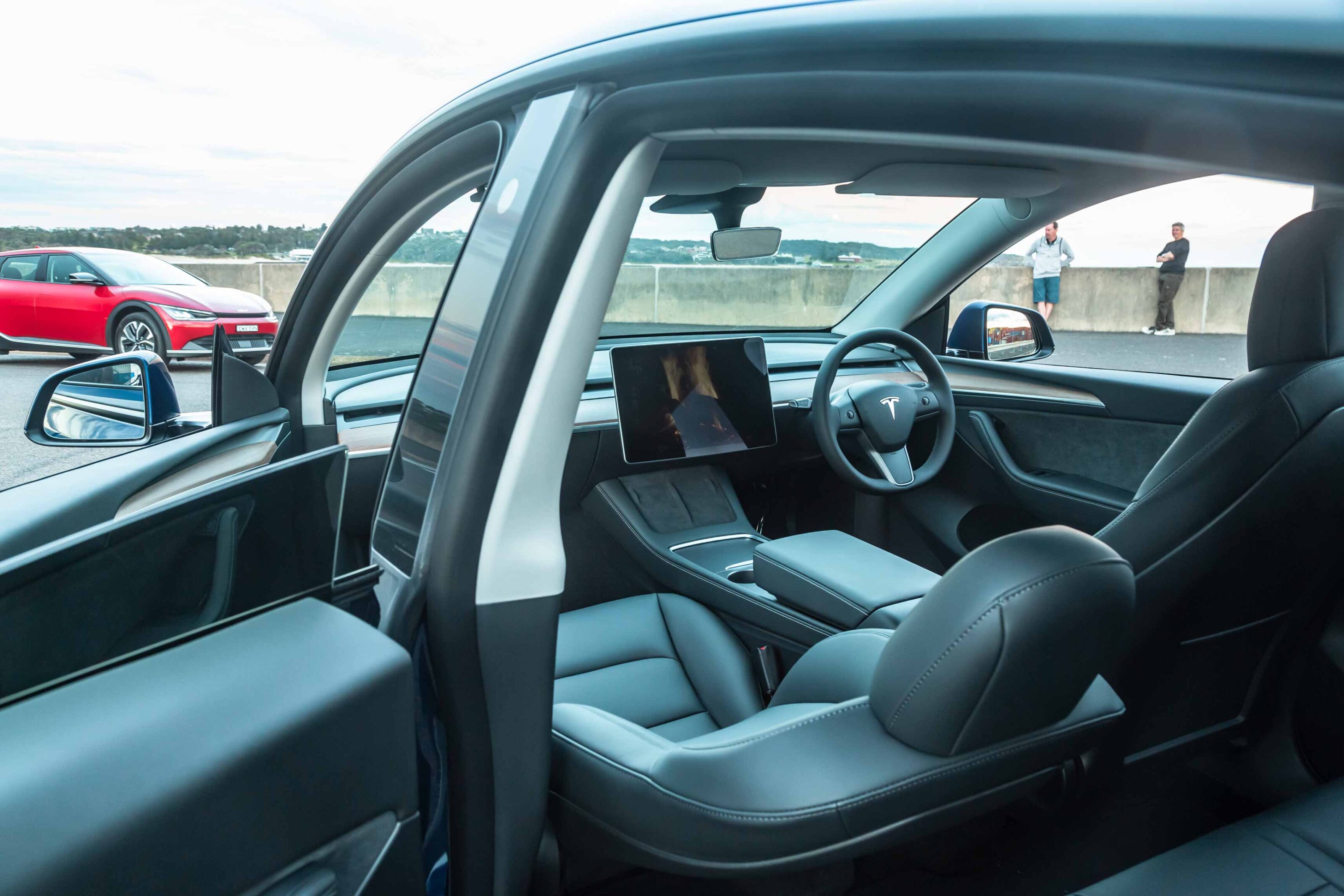
Model 3 owners switching up to a Model Y will instantly feel at home in the SUV; the interior design is shared along with platform, batteries, and drivetrains.
As befitting an SUV, however, you do sit a bit higher – a combination of 27mm extra ride height and an extra mounting base for the front seats.
The Y trades off a couple of centimetres of front legroom compared with the 3 that we can’t say was obvious – at least without a back-to-back test – though that high roofline brings headroom advantages right from the top of the windscreen.
Front occupants gain an extra 1.7cm of clearance, while there’s almost an extra layer of atmosphere for rear passengers – an increase of nearly 4.5cm.
Legroom increases by a whopping 13.5cm, achieved with revised packaging that also takes advantage of a slightly longer wheelbase (by 1.5cm) as well as that slightly shortened front legroom.
Unlike the Model 3, the Y’s rear seats also offer a choice of two recline positions (though the EV6 and Ioniq 5 provide a greater range of seatback tilting).
Shoulder room is virtually unchanged and hip space shrinks by 4.5cm despite the Y puffing out by about 7cm in width, according to Tesla’s specs.
A completely flat floor still makes the middle seat viable for an adult, if still the short straw for journeys.
An impressive tinted sunroof spans virtually the entire roof, a seamless expanse of glass where the model 3’s roof features a middle beam. The glass features UV protection, while accessory sunshades are available for owners concerned about particularly hot days.
A 7-seater version of the Model Y is available in markets such as the US but is an unknown for Australia (yes, we tried asking!). However, US reviews point to the third row being all but unuseable.
Arguably the biggest reason Model 3 owners are being tempted into the Y, or first-time Tesla buyers will pick the SUV, is found in the boot.
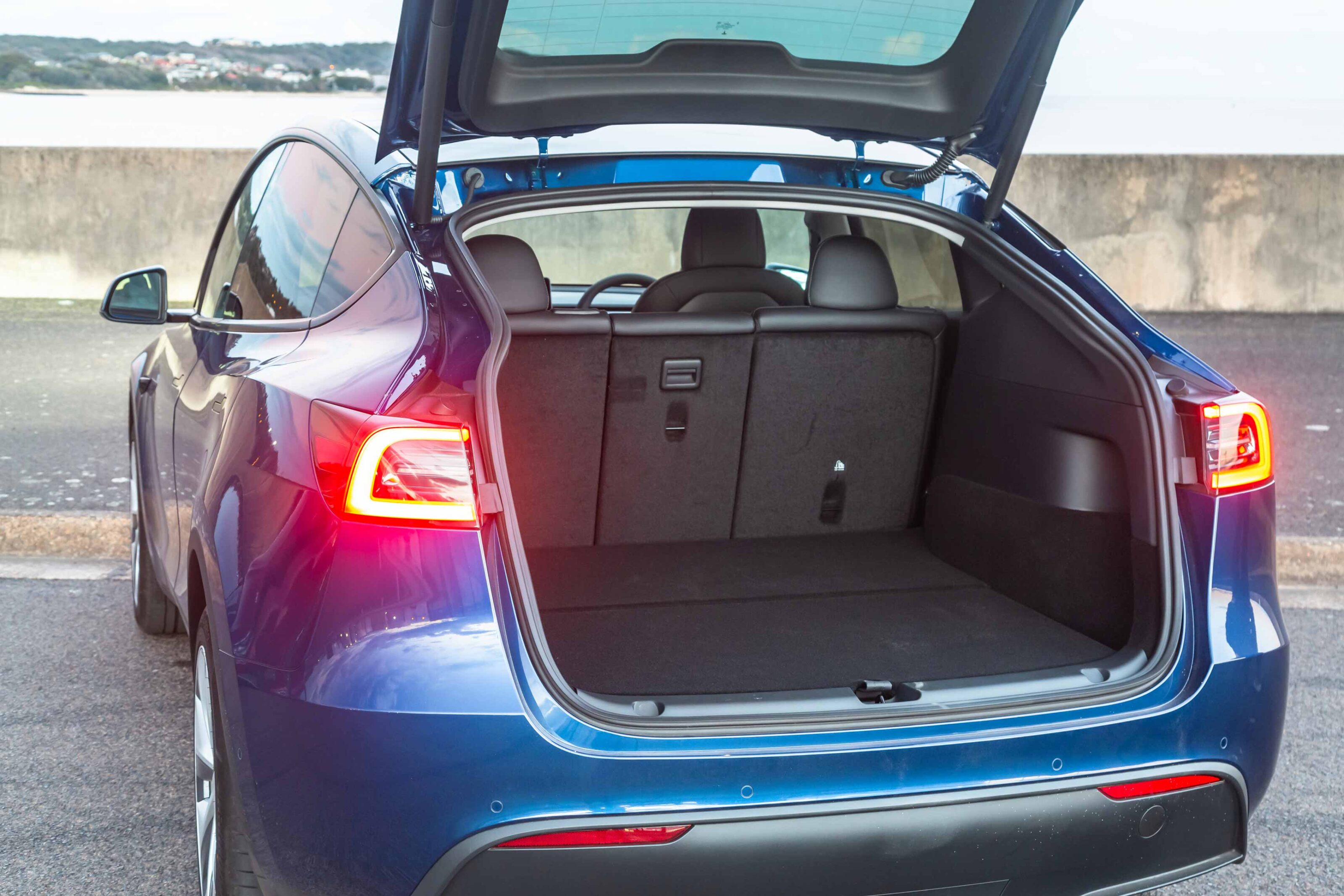
Opening the automatic tailgate immediately reveals a far larger aperture than the relatively narrow – though far from impractical – opening of the Model 3’s boot.

Quoted luggage capacity is a vast – and unrivalled – 854 litres (measured to the roof); a 52 per cent increase over the 3’s 561L boot. In both cases, these figures include underfloor storage.
This is more again in the Y – where it features a larger/wider tub nearest the boot opening, while adding an extra, shallower underfloor section behind that is useful for cables.
Another bonus is two electric release switches, which you hold to fold down the 60-40 rear seats – completely flat. The middle seatback can be flattened individually for a ‘ski trip’ set-up.
Unlike the Model 3, then, the Y will accommodate mountain bikes inside. Or, alternatively, opt for the Roof Rack accessory.
Up front, there’s a 117-litre ‘frunk’ under the bonnet – not just larger than the version in the Model 3 (88L) but also more than double the volumes quoted for the EV6 and Ioniq 5 (52L and 54L, respectively)
A 7-seater version of the Model Y is available in markets such as the US but is an unknown for Australia (yes, we tried asking!). However, US reviews point to the third row being all but unuseable.
Back to the cabin, and our test car had the best build quality we’ve experienced yet in a Tesla. Where we’ve always found loose bits of trim, or misaligned joins, everything felt encouragingly tight.
The long, Scandi-inspired wood across the dash and suede-panelled doors lift perceived quality.
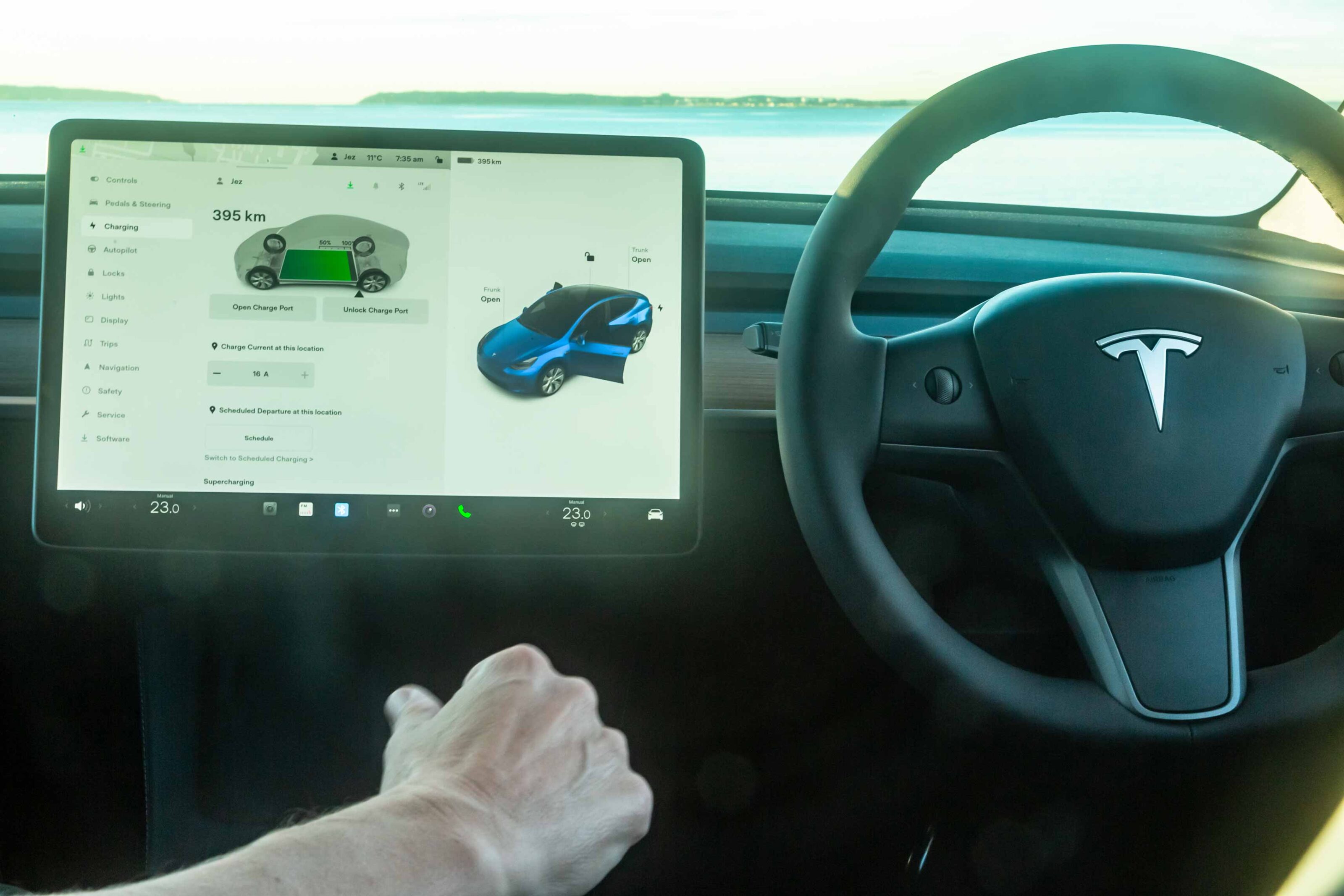
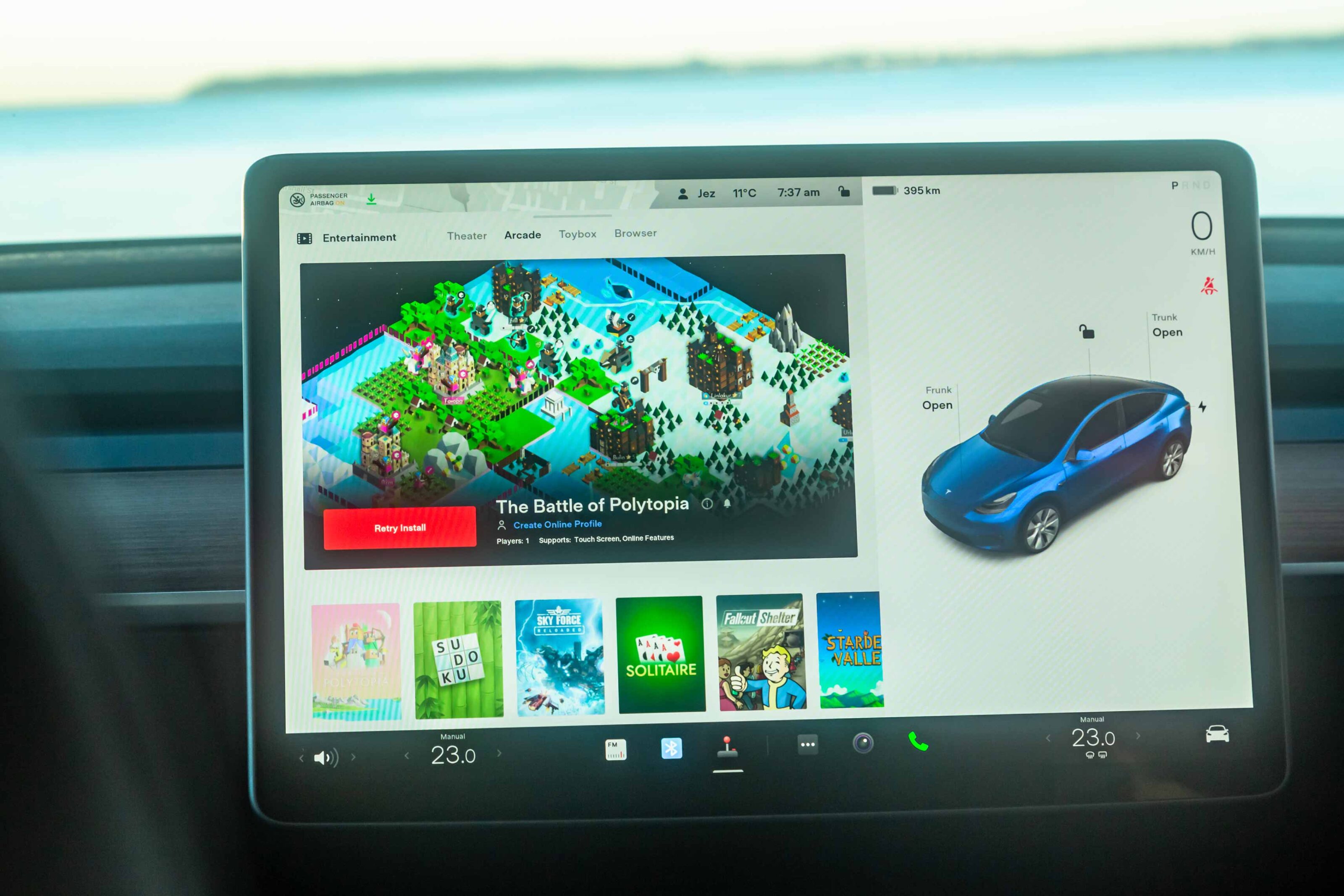
The 15-inch central touchscreen shared with the 3 also stands out in that ultra-minimalist dash.
While previous Tesla owners will get to grips with this display that hoards virtually all car functions, it can be daunting for first-timers – especially as all driving information including the speedo is on the screen.
As with other Teslas, familiarity doesn’t prevent the touchscreen from being a distraction at times on the road, as eyes are averted to press various icons or words that can be quite small.
A head-up display would do wonders for this vehicle.
The design, layout and response are all impressive, though, as is the amount of entertainment options available. There’s an assortment of games, and you can even stream Netflix or YouTube.
After a 30-day complimentary subscription, owners just need to pay a monthly ($9.99) subscription to retain some of those features. (Sorry, there’s no Wordle feature yet.)
The standard Premium audio system also sounds excellent.
You can also expect the infotainment system to be constantly upgraded via Tesla’s over-the-air updates (though a major update in late 2021 was a mixed result for functionality).
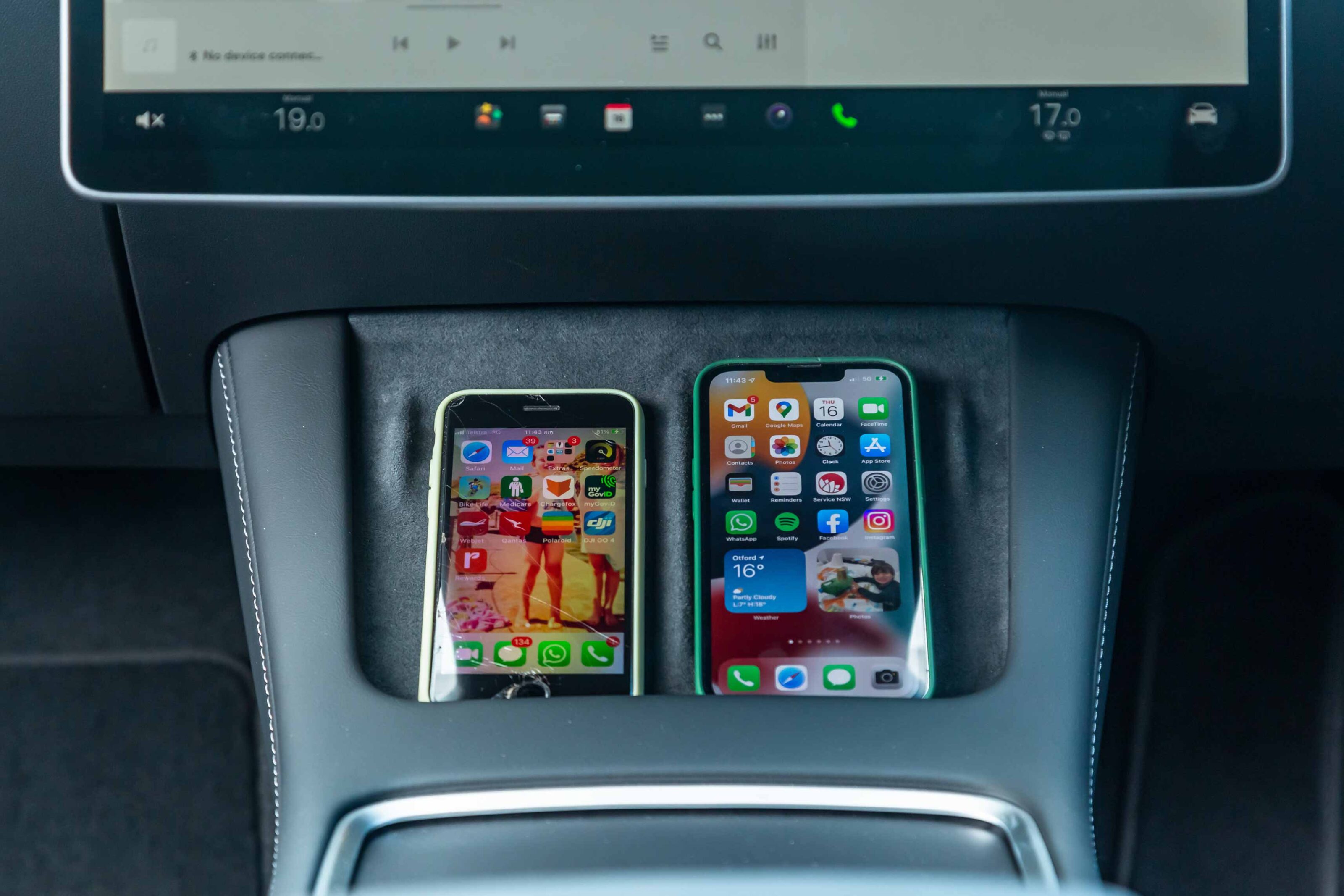
Again, as with the 3, the Y features not one but two charging trays for smartphones, and they’re neatly positioned/angled below the dash.
On the road
It’s easier to discover the recipe for KFC’s secret sauce than battery and power specs for Teslas, so some presumptions and estimates are needed for the Model Y RWD.
One presumption is that it uses the same circa-60kWh Lithium Iron Phosphate (LFP) battery found in the base Model 3, while power/output estimates are 220-240kW and 400-420Nm, based on varying sources.
This makes sense based on the official specs Tesla does provide, as the Model Y RWD is slower and more range limited than the equivalent Model 3 that is 157kg lighter.

According to Tesla, the Model Y can accelerate from 0-100km/h in 6.9 seconds. While that’s slower than the 6.1 seconds of the Model 3, proper perspective comes from comparing rivals.
Rear-drive versions of the EV6 and Ioniq 5, for example, have claims, respectively, of 7.3 and 7.4 seconds.
A much faster Model Y is available with the all-wheel-drive Performance variant, which has a claimed 0-100km/h time of 3.7 seconds. It needs to be a major buying priority, though, as the Performance costs about $110,000 on the road.
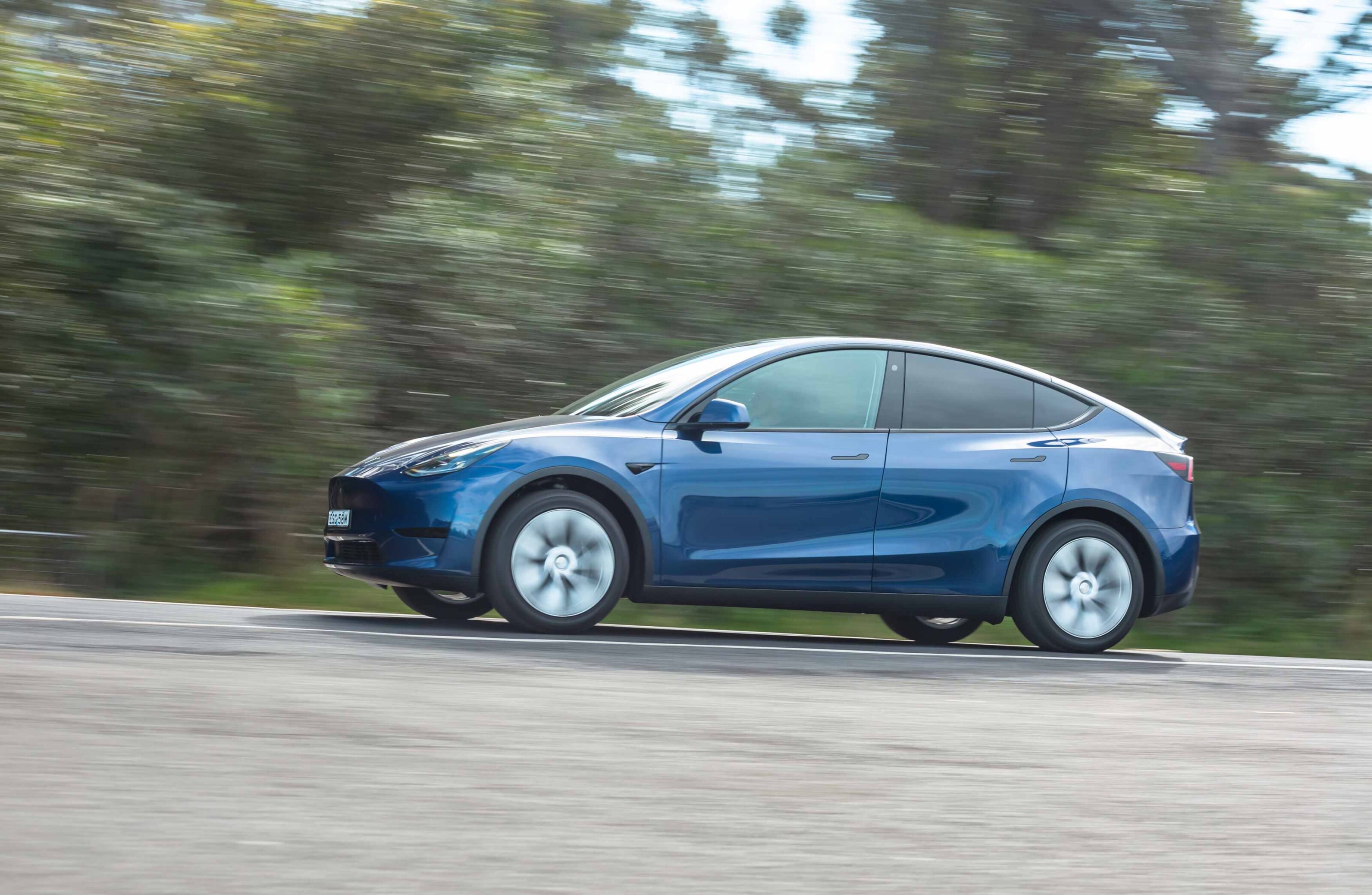
According to Tesla, the Model Y can accelerate from 0-100km/h in 6.9 seconds. While that’s slower than the 6.1 seconds of the Model 3, proper perspective comes from comparing rivals.
The more important figure for EV buyers/owners is range. And, here, the Model Y RWD has a WLTP-rated maximum range of 455km. That’s below the 491km of its sedan relative, fractionally ahead of the Hyundai’s 451km, but well short of the EV6 RWD’s 528km.
The Model Y Performance has a WLTP range of 514km, while a Long Range variant available overseas but not yet confirmed for Australia serves up a maximum 533km.
EVs are not renowned for ever achieving those lab-derived range estimates, though we were surprised when our testing pointed to a theoretical maximum range of only 335km after our longest drive of the Model Y.
This incorporated about 200km of mostly suburban roads, with some country roads thrown in, and only minimal freeway driving.
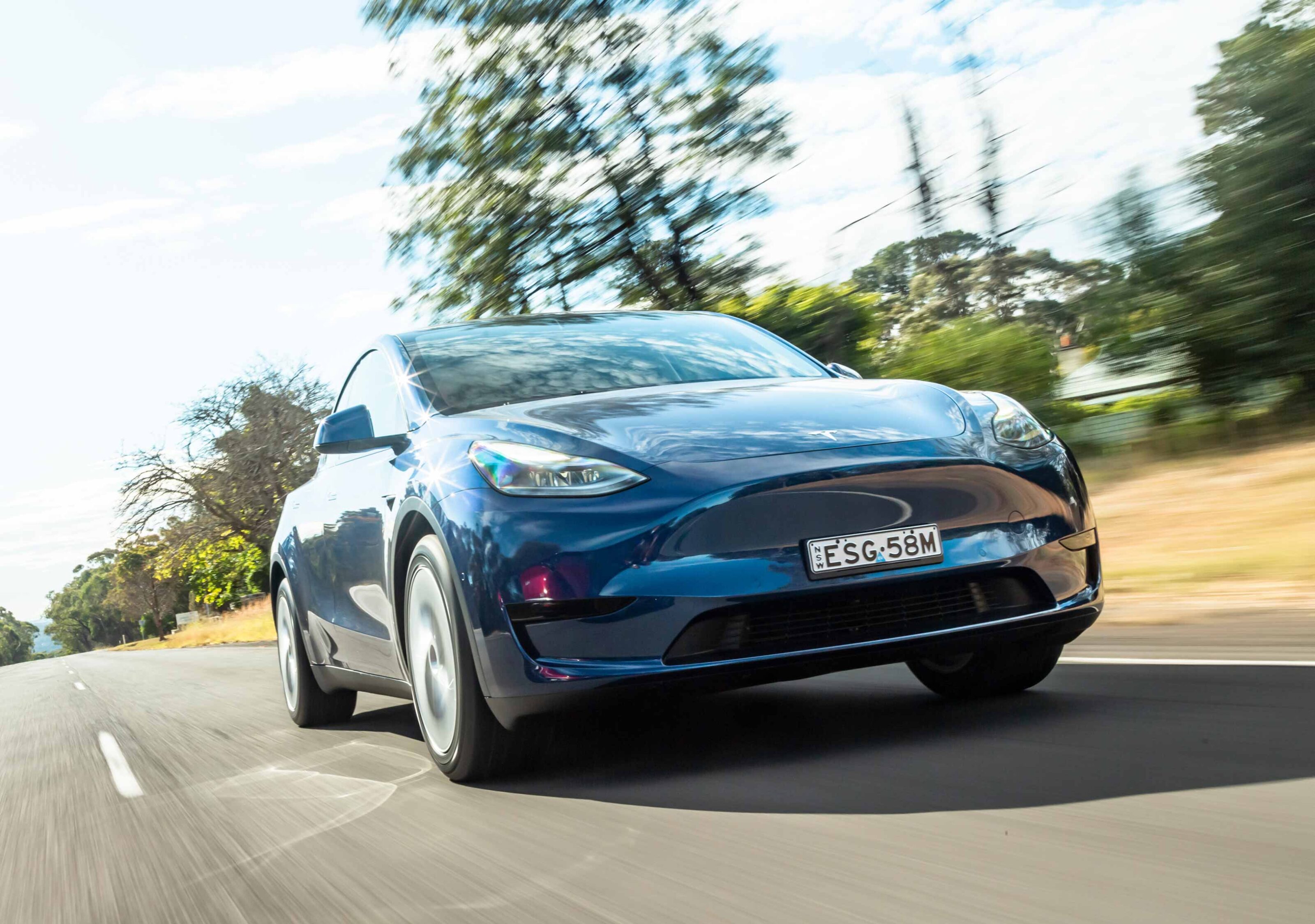
The biggest issue with the Model Y, however, is ride quality. It’s not deal-breaking poor, but it’s certainly not good. The Model 3 is no paragon of smoothness, but the Y’s larger wheels and heavier body compound the suspension’s lack of compliance.
Not only does the Model Y struggle to settle, regardless of surface, but suspension noise can be intrusive.
We’ve yet to test the optional 20-inch wheels, which could further exaggerate the ride issues.
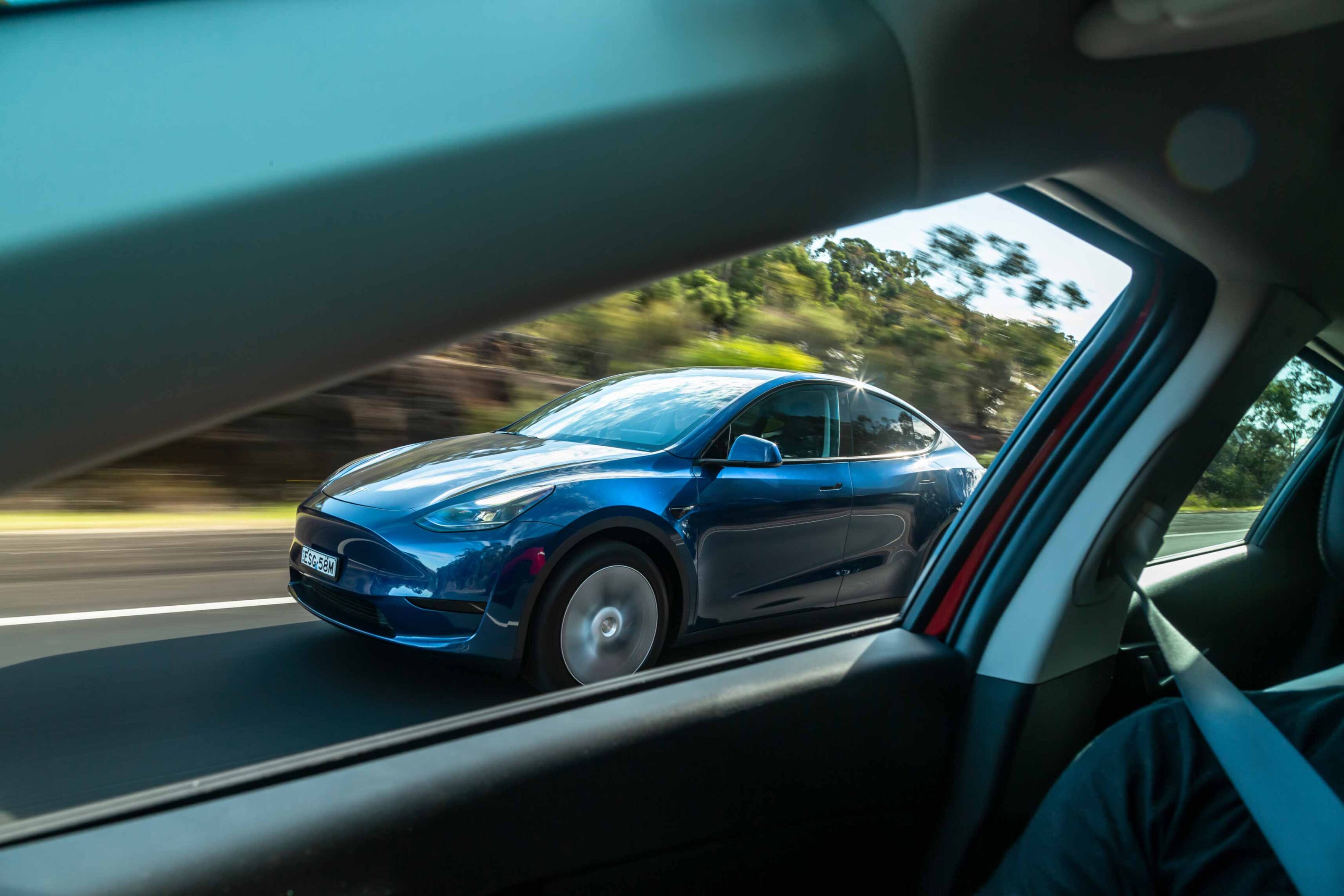
EVs are not renowned for ever achieving those lab-derived range estimates, though we were surprised when our testing pointed to a theoretical maximum range of only 335km after our longest drive of the Model Y.
Unless you’ve previously driven a Model 3, the ridiculously quick steering – barely two turns lock to lock – can take time to get accustomed to; the front end is reactive to just a small movement of the steering wheel off centre.
This makes the Model Y highly responsive on twisty roads, though the steering is numb even if you choose the Sport mode that adds extra resistance to the wheel. Comfort is the lightest setting, though we’d be happy sticking permanently with the default Standard weighting.
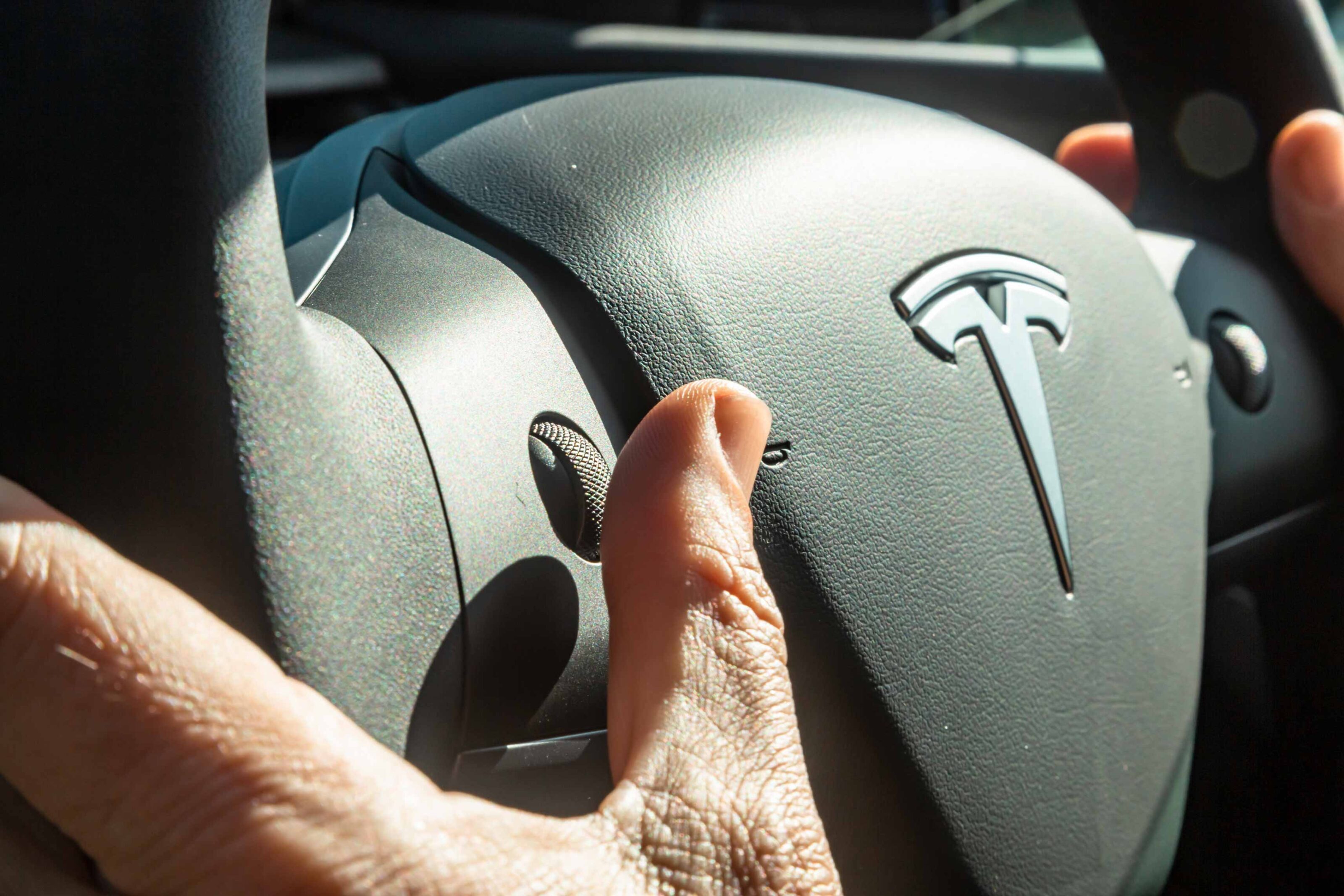
At least the steering wheel is still round, with Tesla’s ‘yoke’ thankfully not migrating from the Model S Plaid.
While Tesla has widened the Model Y’s tracks to help counter the SUV’s higher centre of gravity, it doesn’t feel as composed in corners as the Model 3.
Keen drivers will derive much greater satisfaction from the EV6, which delivers superior ride comfort, especially in base Air form, and a generally more fluid and relaxing motoring experience.
This extends to throttle pedal usage. In late 2020, Tesla inexplicably – because the company doesn’t operate a PR department – deleted a choice of Standard and Low settings for its regenerative braking system.
The Low mode made for less aggressive deceleration when lifting off the throttle pedal.
Standard, which is stronger and better for harnessing the kinetic braking energy that is turned into electrons to partially replenish the vehicle’s battery, is now the default.
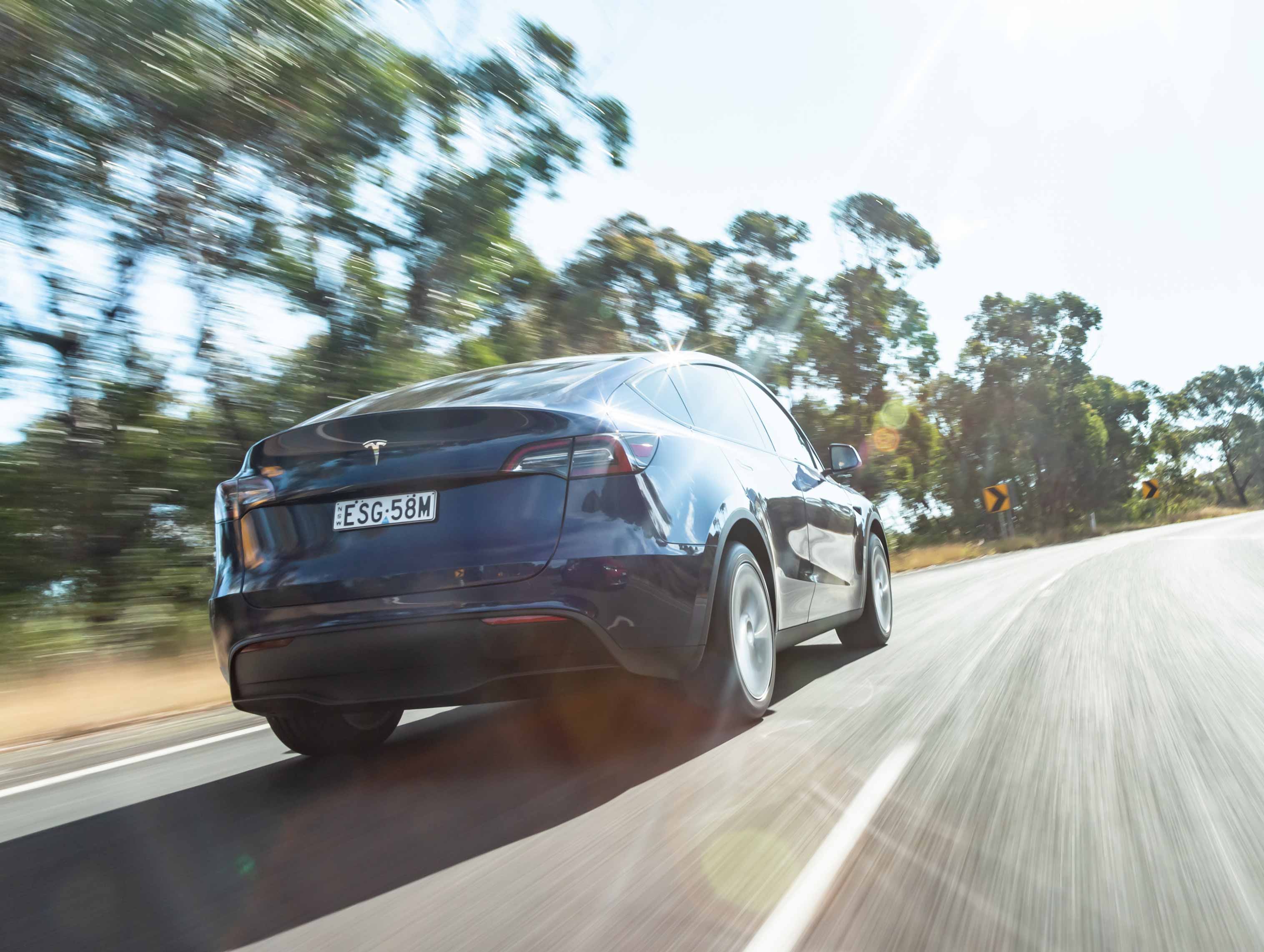
Even for EV newbies, it shouldn’t take long to feel instinctive. It also delivers one-pedal driving, though maintaining a set speed asks a bit more effort from your right calf muscle than in the EV6 or Ioniq 5 that offer four different levels of regen braking (which can be conveniently adjusted by paddle levers behind the steering wheel).
The Model Y RWD’s acceleration undoubtedly feels slower than the Model 3’s, yet the SUV remains sufficiently, and enjoyably, brisk.
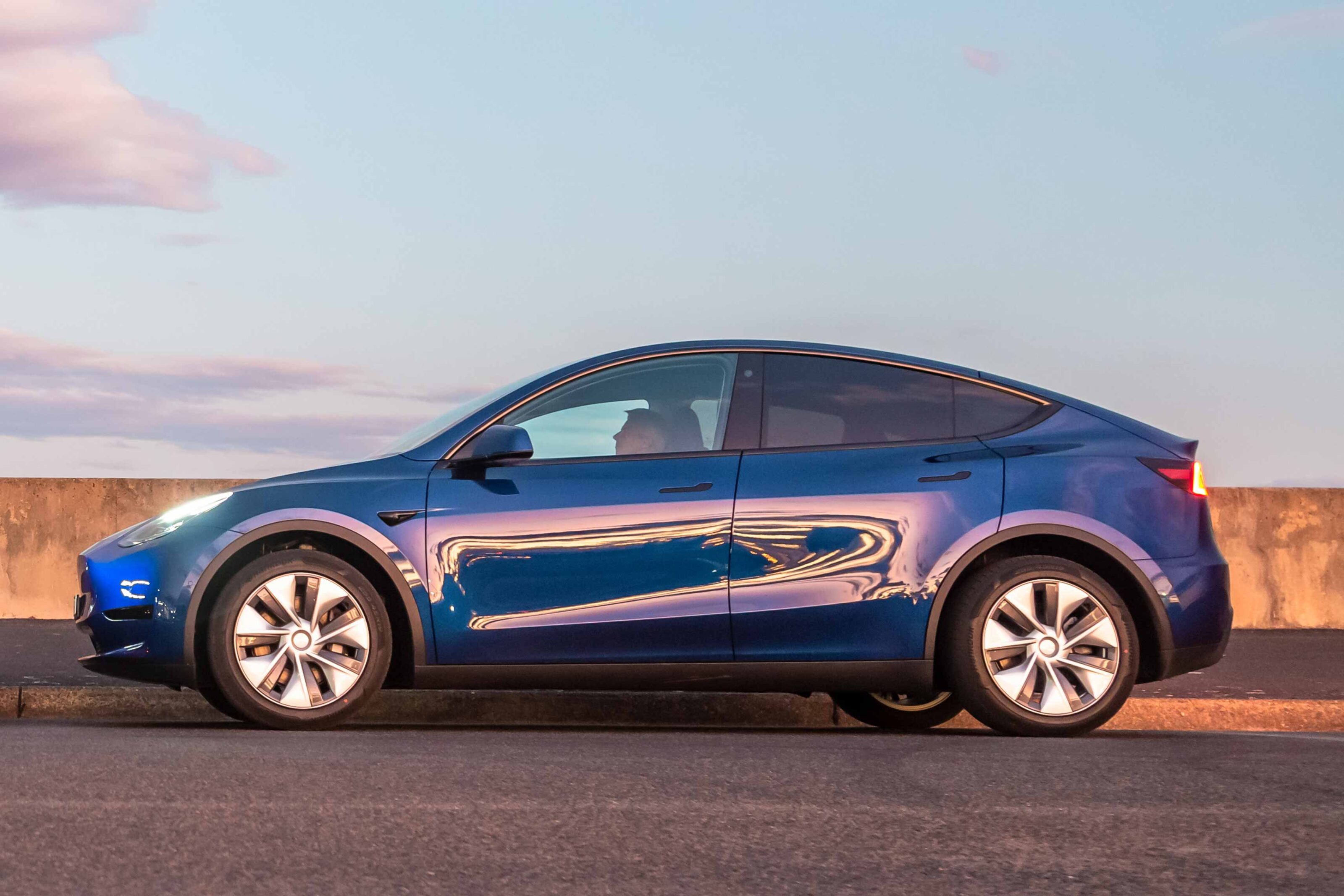
The front seats are comfortable and the view forward is better compared with the Model 3, though the Model Y’s rear vision is very narrow and the side mirrors are smaller than on the average midsized SUV.
Recharging
The Model Y lacks the super-rapid, 800V charging capability of the EV6 and Ioniq 5, but Tesla provides a bigger real-world benefit – an established network of Superchargers that gives owners greater confidence to venture out on long drives.
The company says it’s possible to add up to 261km of range in just 15 minutes.
The Model Y can also be recharged via CCS ports that most other EVs utilise.
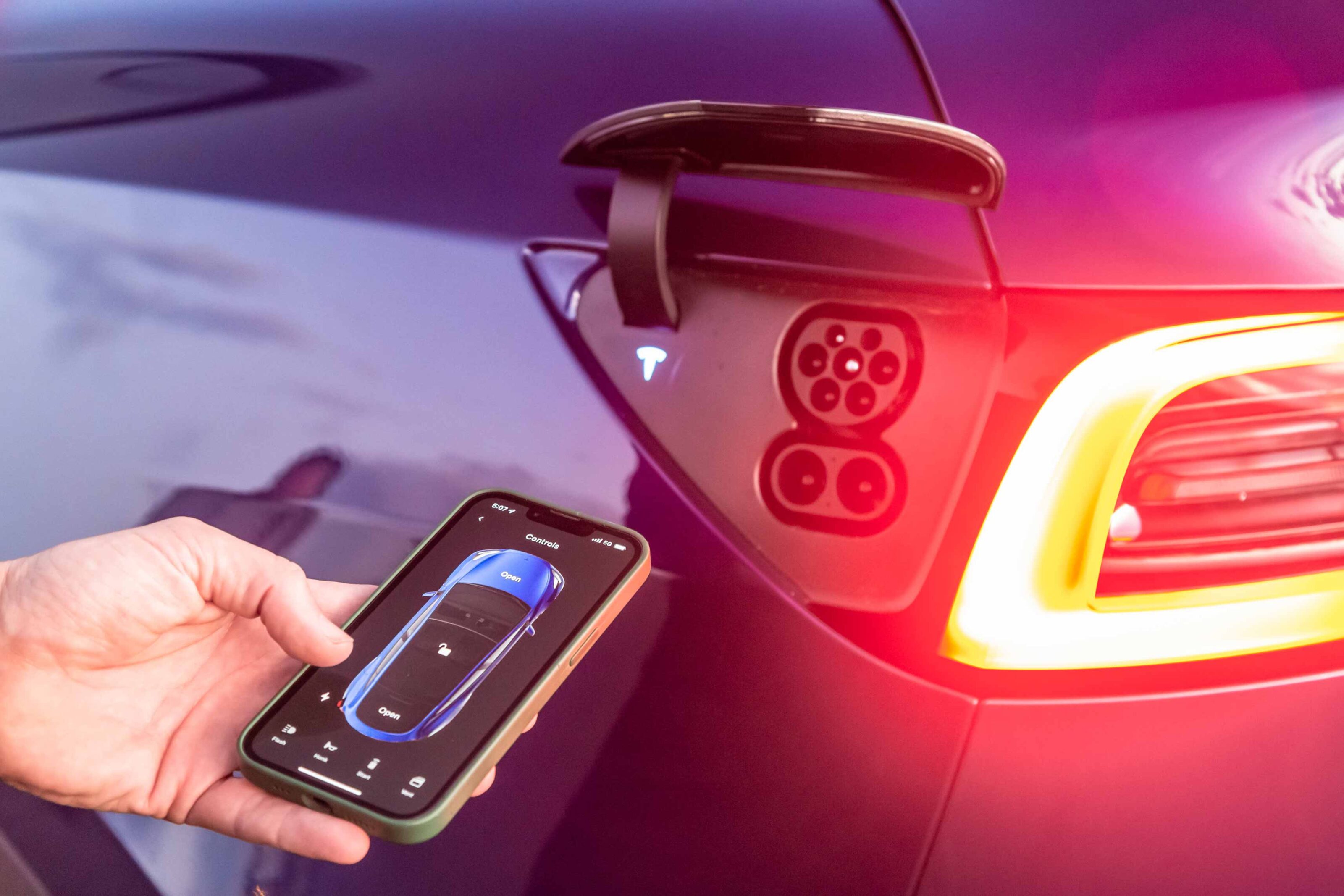
Invest $780 in a Gen 3 Wall Connector (not including installation costs), and Tesla says you can add about 71km per hour of charging.
It’s also worth noting that for models equipped with an LFP battery (such as the Model Y RWD), Tesla recommends sticking to a 100 per cent charge limit and fully charging the vehicle at least once a week.
Tesla recommends charging to 90 per cent for its AWD models – such as the Model Y Performance – which use a different, Nickel Cobalt Aluminium Oxide (NCA) battery.
Ownership
Tesla vehicles come with a general four-year/80,000km warranty, with an eight-year/160,000km warranty applied to the battery and drive unit.
The Tesla app is a key pillar of ownership, offering a level of smartphone-based functionality currently unrivalled.
It’s possible to make the key card redundant by connecting it to your phone, then using the lock/unlock function (otherwise entry is achieved by ‘scanning’ the car against the B-pillar).
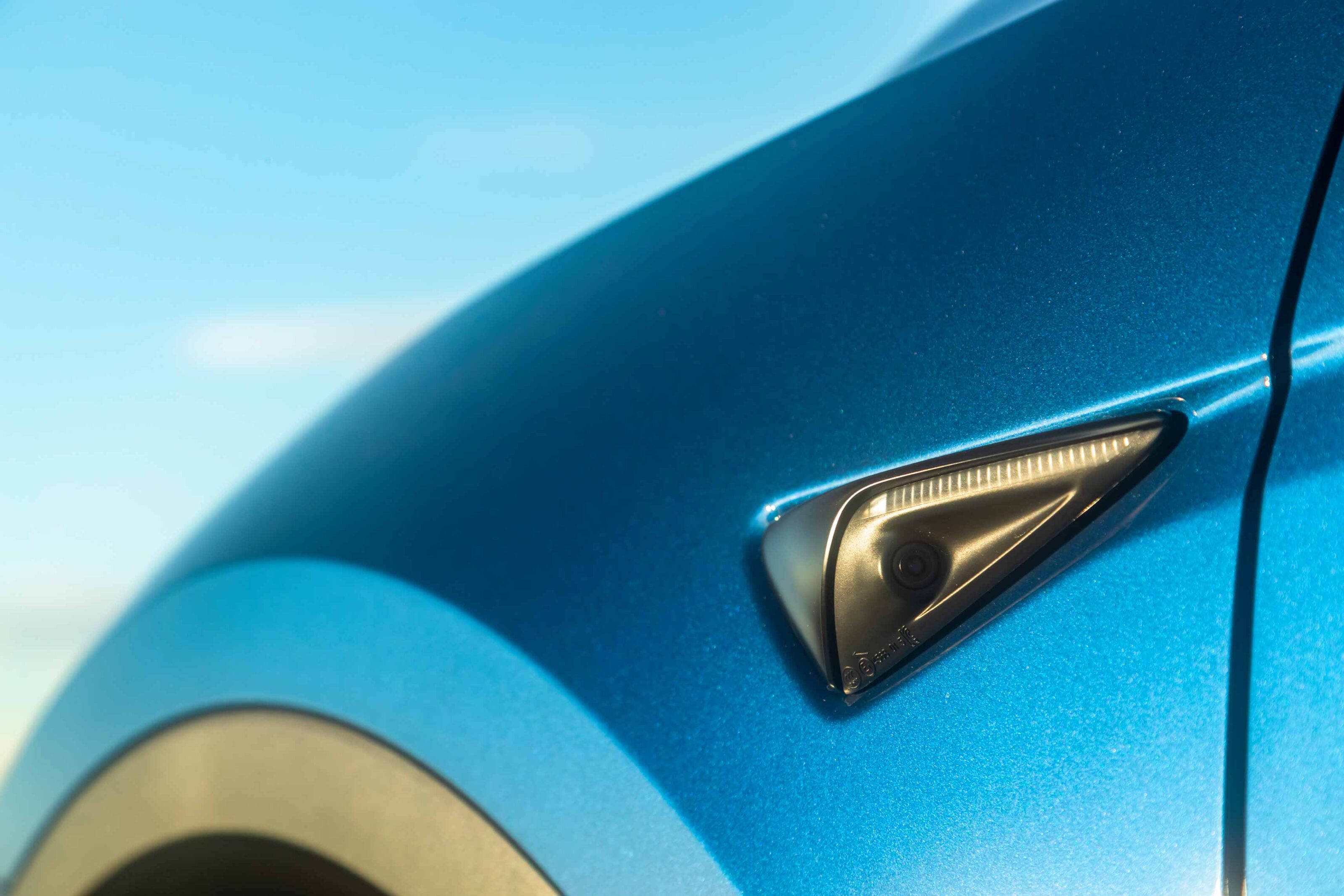
You can press the respective parts of a birds-eye graphic of the car to open the tailgate or frunk, pre-heat or pre-cool the car before you get to it, and monitor battery life.
This writer’s favourite feature is Location, which provides a map guide to the nearest Tesla Supercharger – select your choice and you can then send the route instructions direct to the Model Y’s navigation on the centre display.
Tesla vehicles come with a general four-year/80,000km warranty, with an eight-year/160,000km warranty applied to the battery and drive unit.
Roadside assistance is complimentary under the main warranty, covering towing (and transport costs up to 800km) in the event of a malfunction, lockouts, and flat tyres.
The latter will be needed if you get a puncture as the Model Y doesn’t come with a spare wheel – and an optional tyre repair kit no longer appears to be available.
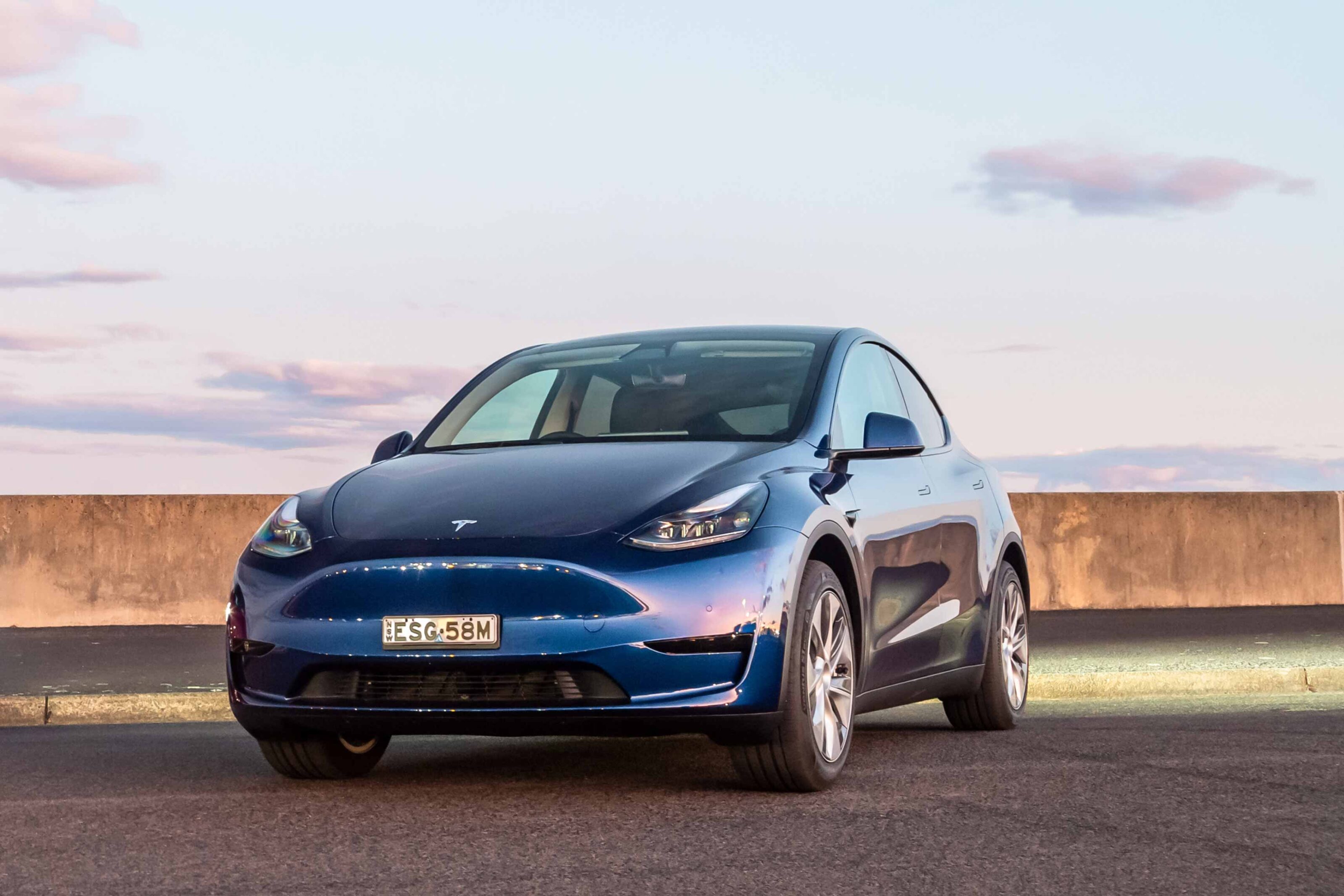
VERDICT
It’s no big shock that the Model Y feels very much like a bigger Model 3, yet justifying its higher premium almost entirely with interior space that is not only more substantial than the sedan’s but unrivalled in its segment.
And against rival EVs, the appeal of Tesla’s relatively expansive Supercharger network – in what is otherwise a lacklustre EV infrastructure in Australia – can’t be underestimated. We just hope owners will manage to extract more range from their Model Y than we did on test.
Ultimately, though, it’s the SUV’s lack of dynamic polish that means the Model Y doesn’t stand out for class leadership like its close relative, the Model 3.
https://www.instagram.com/p/Ce0PzWrAsuv/
2022 Tesla Model Y specifications
Snapshot
- Will focus on development of eco-friendly tyres
- Joint tyre monitoring system to look at wear and road environment factors
- Follows first five-year partnership signed in November 2017
Hyundai Motor Group has signed a memorandum of understanding with Michelin to develop next-generation tyres optimised for electric vehicles.
The signing of the agreement, set to last three years, took place at Hyundai’s Namyang Research Center (sic) on Friday, and follows the two parties’ first partnership formed in November 2017 to jointly develop an exclusive tyre for the Ioniq 5.“This partnership with Michelin will result in real innovations in tyre technology, solidifying Hyundai Motor Group’s position as a leader in the smart mobility industry,” the Group’s Vice President, Bong-soo Kim, said.
“By fully leveraging our mobility technology and Michelin’s tyre expertise, we are confident in our ability to achieve ground-breaking innovations in tyre performance enhancement and create synergies in this organic collaboration.”
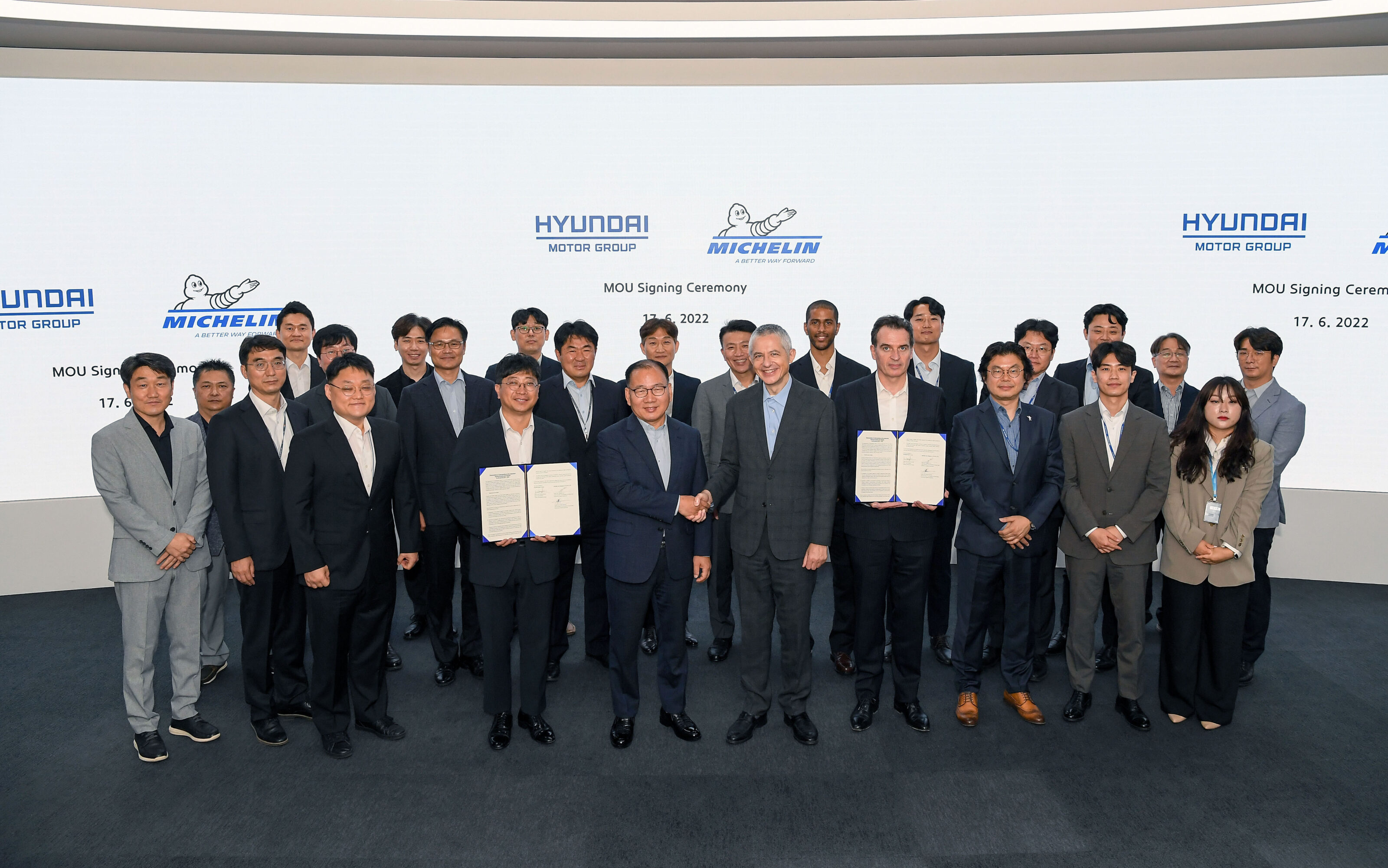
The next-generation tyres resulting from the collaboration will find their way onto future Hyundai Group EVs.
The Group and Michelin also plan to conduct joint research to analyse tyre wear, load and road friction beyond the current standards of temperature and air pressure. The new tyres are also expected to significantly improve drivers’ ride comfort by reducing vibration and noise generated by EVs at high speeds.
It’s said the venture will also explore ways to raise the use of eco-friendly materials in tyres to about 50 per cent of their total weight, up from 20 per cent currently.
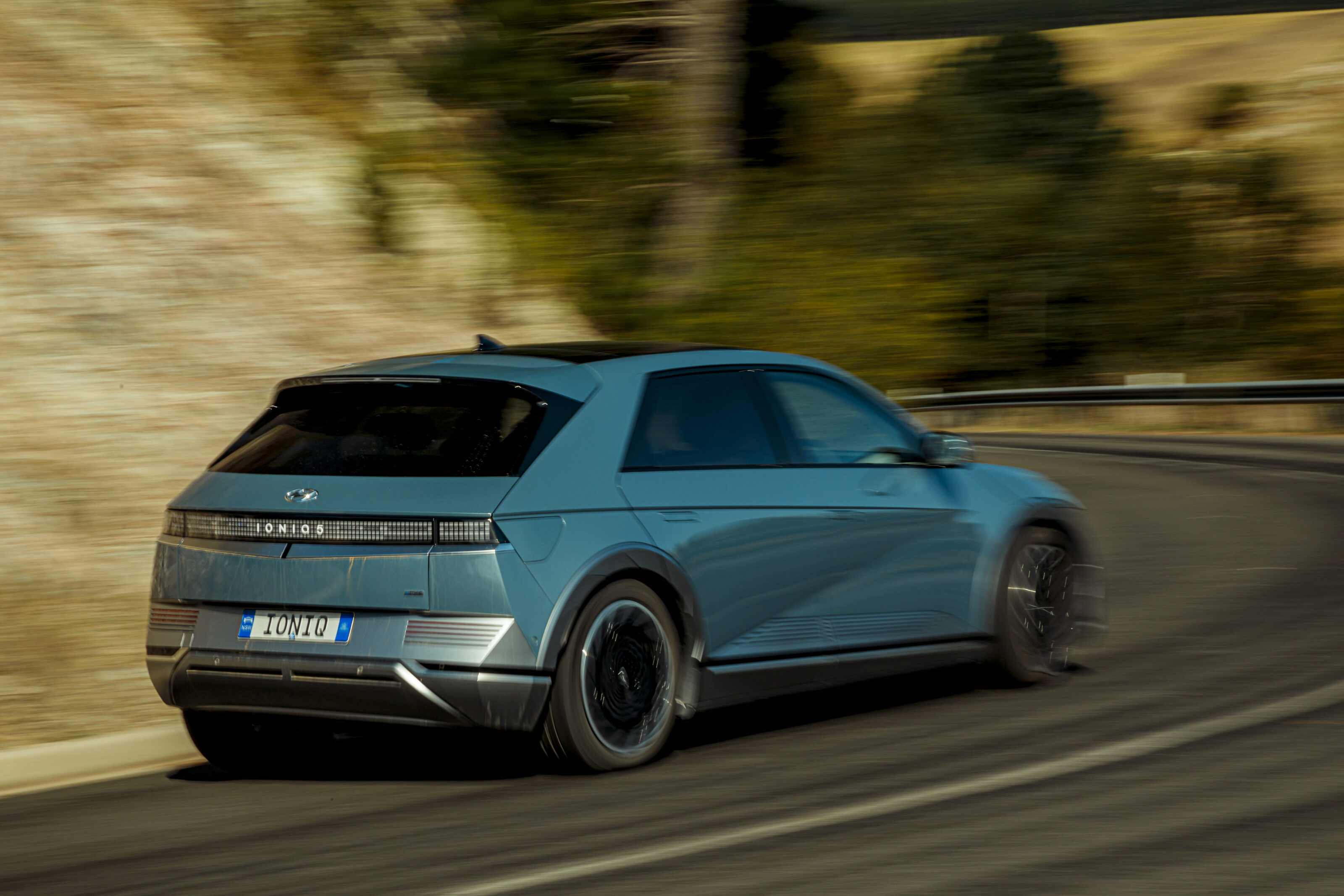
“The collaboration between Hyundai Motor Group and Michelin over the past five years contributed to the successful launch of the Hyundai Ioniq 5,” said Georges Levy, Executive Vice President of Automotive Original Equipment at Michelin.
“We are pleased to announce that the relationship has been extended for three more years to continue our work together on new technologies in favour of safer, cleaner mobility.
“The association between Hyundai Motor Group and Michelin is founded on the same vision and on a shared passion for excellence, performance and innovation that have become increasingly essential factors as we rise to the mobility-related challenges we all face today.”
Bentley is to reveal the next vehicle to come from its Mulliner department at this year’s Goodwood Festival of Speed.
The announcement is expected to be made this Friday by Bentley’s Chairman and Chief Executive, Adrian Hallmark, on the carmaker’s stand at the event.
No details are yet known about what the company has planned, with Bentley only saying: “The next Mulliner adventure will again combine exceptional design, engineering and handcraftsmanship in world-leading ways to create a new family of highly exclusive Bentleys.”
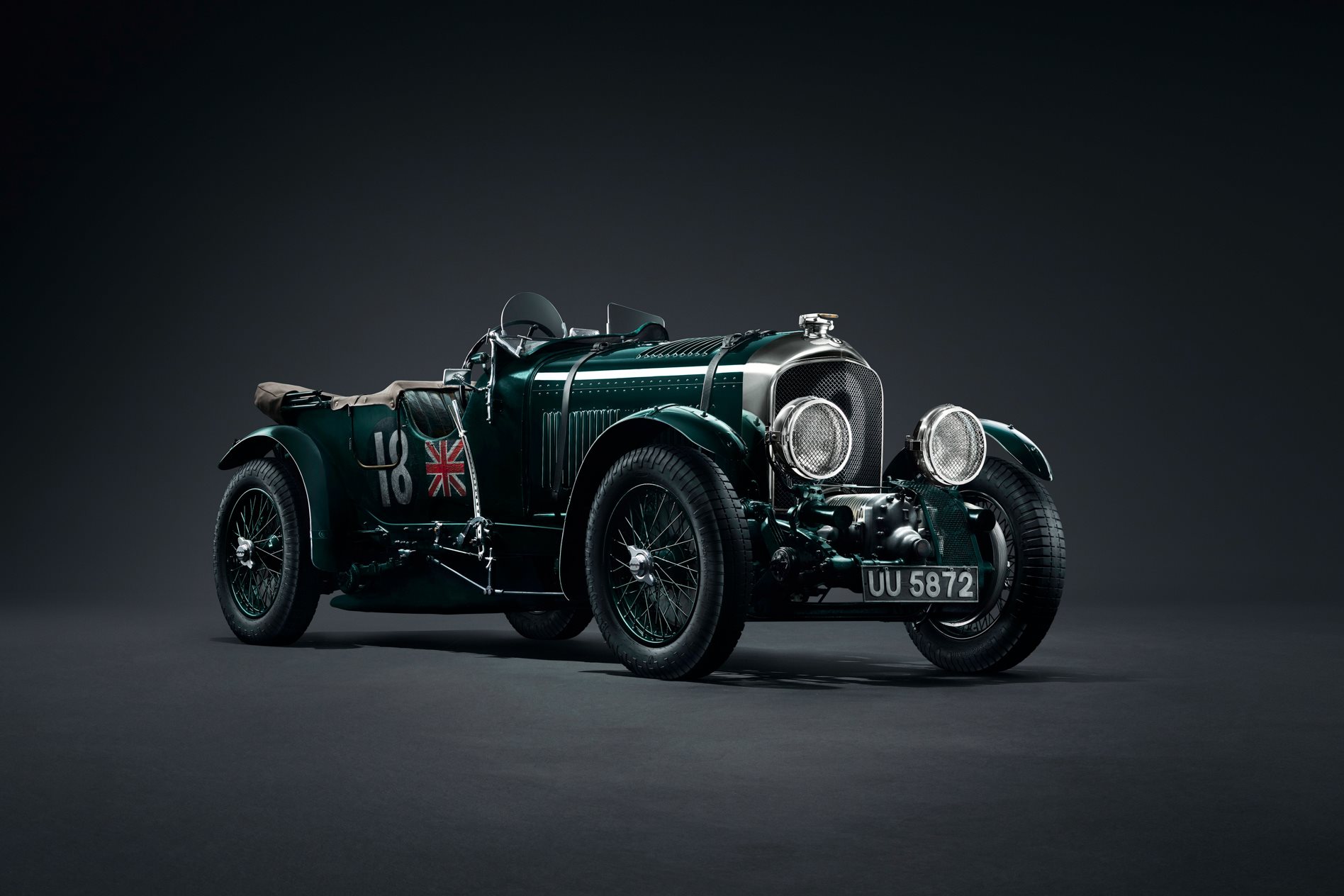
This year’s Goodwood has been a busy time for the British marque, having already used the Festival to debut its new S range of models – the GT S and the Flying Spur S – to reveal a new Continental GT Mulliner, to celebrate 40 years of turbocharged Bentleys.
All of these cars will be joined on the famous hillclimb by the Blower Continuation Series Car Zero.
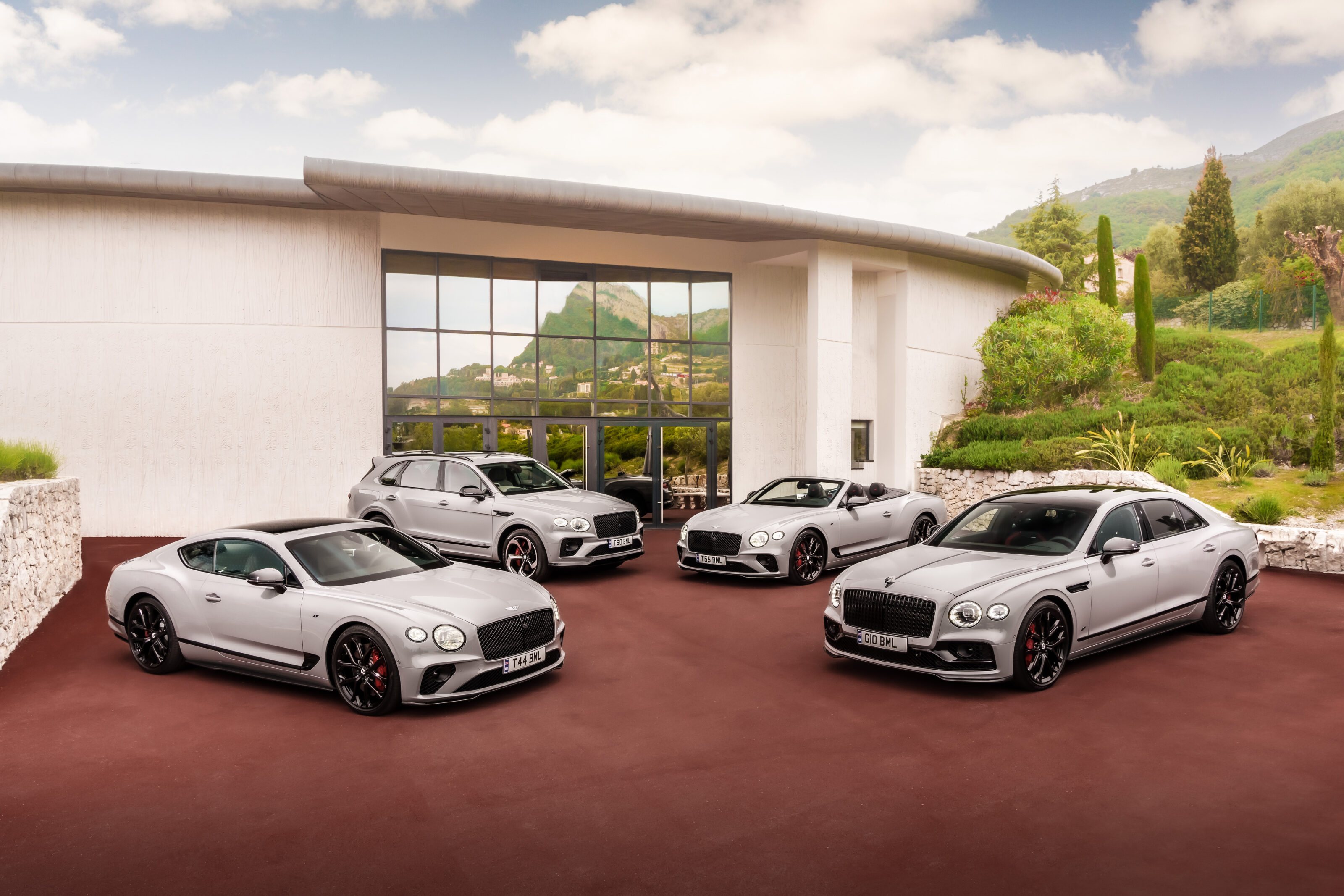
Established in 2020 with the reveal of the Bacalar roadster, Mulliner completed its first production spec vehicles last year.
The first of the two vehicles, the Bacalar is a V12 two-seater limited to just 12 units.
The second car to come from the Mulliner workshop is the first from its Continuation Series – a recreation of a 1929 Blower Bentley, as originally raced by Sir Tim Birkin.
In period correct Birkin green, the recreated vehicle is an identical replica to the Bentley Team Car No. 2 upon which it is based, right down to its leather interior trim and wire wheels.
Snapshot
- Toyota BZ sedan for China further revealed in patent images
- Developed using BYD’s lithium-ion-phosphate battery tech
- Australian launch unlikely
Toyota is gearing up to launch its second ground-up electric vehicle, but there’s a caveat.
Patent images published on Chinese social media have uncovered the 2023 Toyota BZ sedan, first previewed by the BZ SDN concept in late 2021.
Rumours suggest the electric vehicle could adopt the BZ5 nameplate; however, it will likely remain exclusive to the Chinese market to battle countless homegrown competitors.

While sedans remain a core market in China, the BZ sedan isn’t likely to make a global appearance due to declining sales.
This is because SUVs and commercial vehicles, such as the BZ4X crossover, are now the preferred vehicle type in most other markets.
The medium-sized electric sedan has been developed in collaboration with Chinese vehicle manufacturer BYD, bringing lithium-ion-phosphate ‘Blade’ battery technology underneath.

In comparison to the BZ SDN concept revealed at Toyota’s electric vehicle showcase back in December 2021, the renderings for the production version expose minor design changes.
For instance, the aerodynamic wheel covers are replaced with multi-spoke alloy wheels, while the front bumper design is slightly revised.
The remainder of the design is carried over from the concept, including; the liftback shape, full-width LED lighting units and a floating roof design.
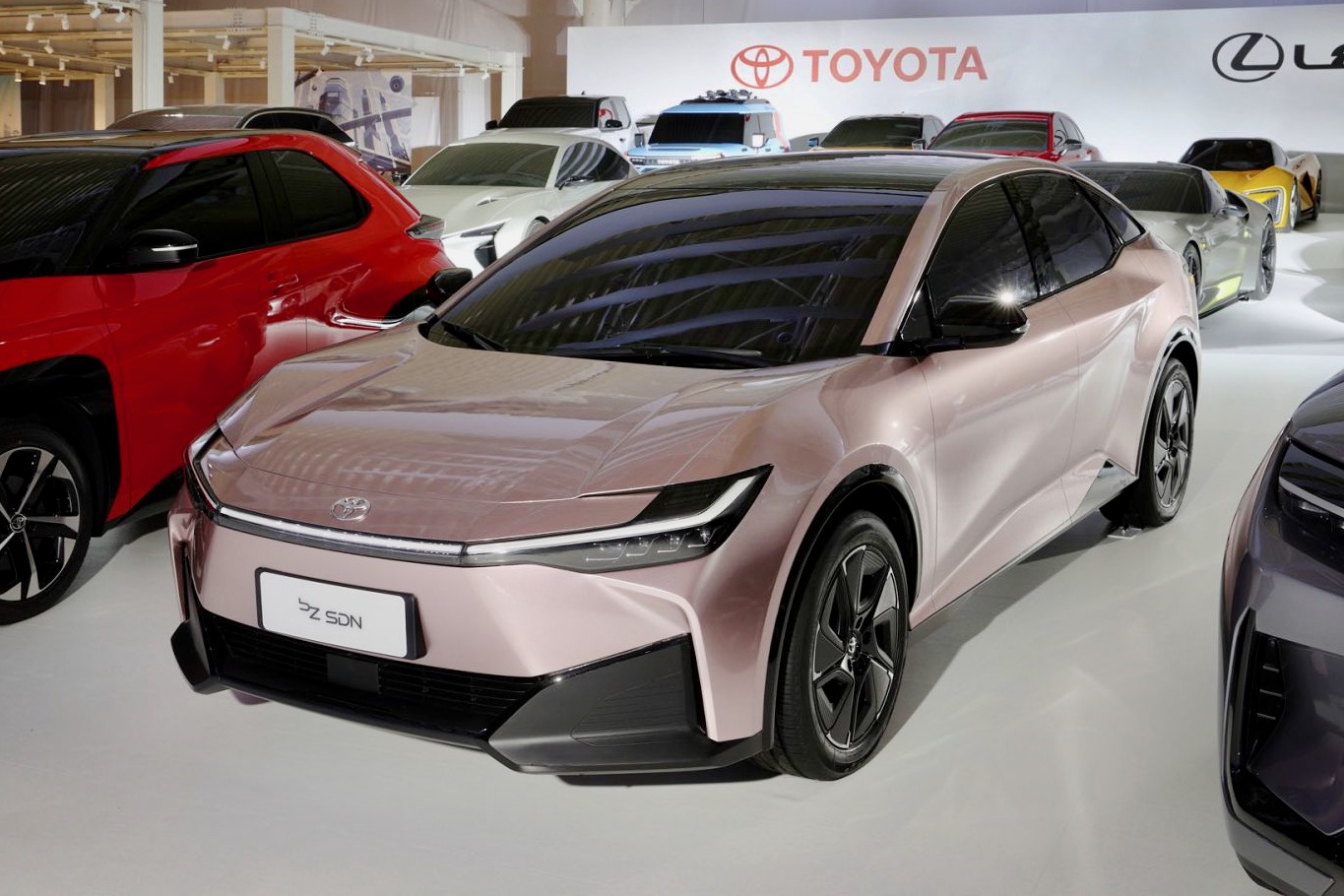
Interestingly, while both are present in the BZ SDN concept, the model shown in the patent images does not feature black-painted side mirrors or flush door handles.
It is currently unknown if the BZ sedan will be underpinned by the modular Toyota New Global Architecture for electric vehicles (e-TNGA) or the platform used for the BYD Qin Plus electric mid-size sedan.

Toyota’s electric New Global Architecture currently features in the BZ4X medium SUV, its identical Subaru Solterra twin, and the Lexus RZ.
A leaked specification sheet, published by Car News China, states the BZ sedan will be roughly the same size as a Tesla Model 3 at 4725 millimetres long. This is longer than a Corolla sedan, but shorter than a Camry.
The 2023 Toyota BZ5 is expected to go on sale in the Chinese market before the end of 2022, with further information likely in the coming months.
Snapshot
- Toyota appeals Federal Court DPF finding
- Potential class action could cost up to $2 billion
- Affected owners could bank close to $7000 each
Toyota Australia is to appeal a Federal Court decision which found it misled customers about vehicles fitted with defective diesel particulate filters (DPF).
If Toyota loses, the battle could cost the manufacturer more than $2 billion in compensation to 250,000 owners.
In April this year, the Federal Court found Toyota had misled customers about a defect with the DPF equipped to cars fitted with either a 2.4-litre ‘2GD-FTV’ or 2.8-litre ‘1GD-FTV’ turbo-diesel four-cylinder engine, impacting a total of 264,170 vehicles built between October 1, 2015, and April 23, 2020 across the HiLux, Fortuner, and LandCruiser Prado model ranges.
While the Court believed Toyota’s “conduct in marketing the vehicles as being of acceptable quality was misleading”, the local division of the manufacturer intends to appeal the decision – claiming it has worked to issue a remedy for its customers.
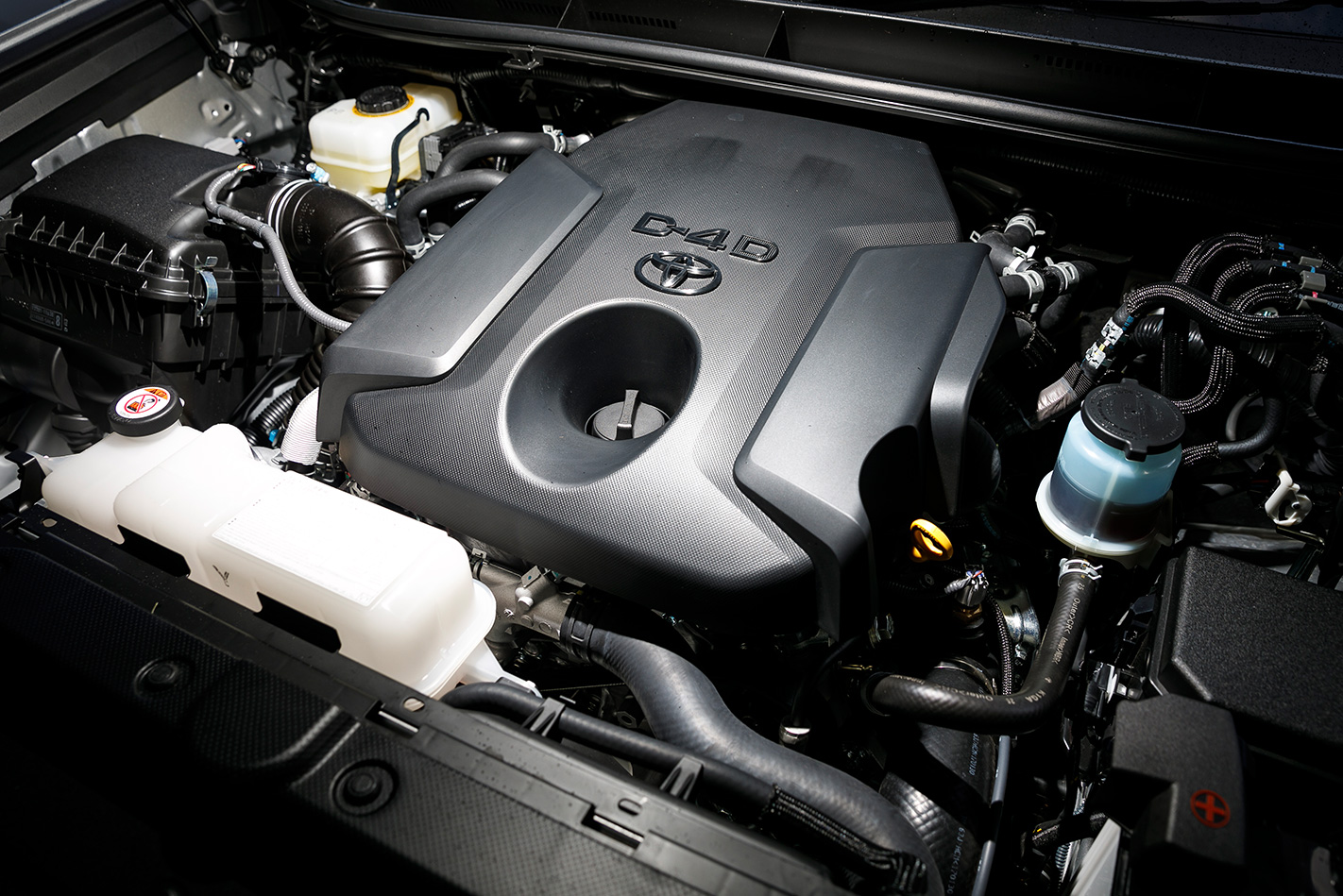
“Toyota has been, and remains, committed to assisting any customer whose vehicle experiences the DPF issue and to providing free-of-charge repairs”, the manufacturer said.
“Toyota’s appeal includes challenges to the factual and legal basis for the award of damages, particularly in circumstances where many of the group members did not experience the DPF issue.
“At the same time, we understand some customers have experienced inconvenience and discomfort from this issue. For this we apologise. We have worked continuously since becoming aware of DPF concerns on an effective resolution for affected customers.
“At every step, we have implemented customer focused and technically grounded remedies to resolve customers’ concerns.”
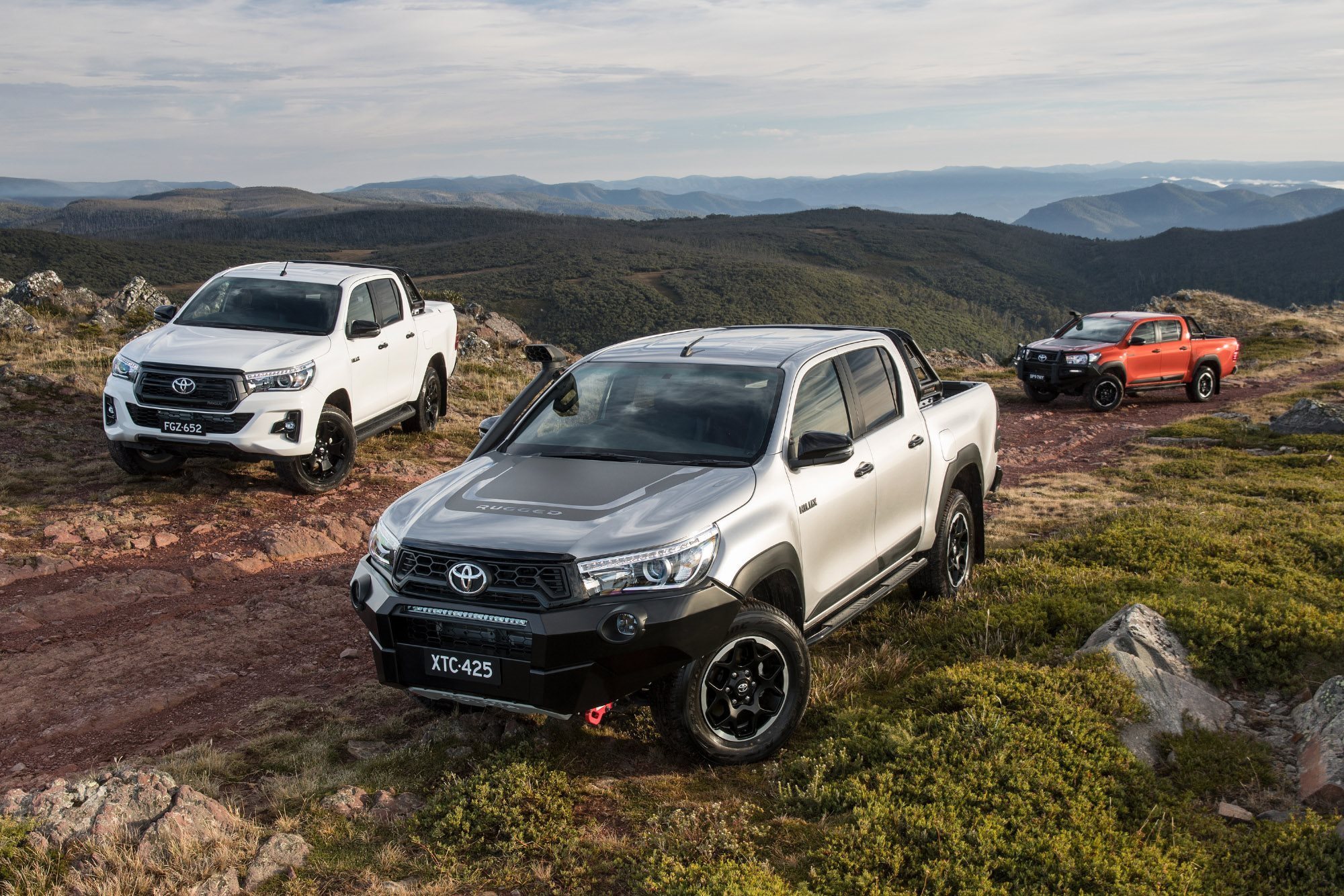
In the April finding, The Honourable Justice Lee deemed a 17.5 per cent reduction in the average retail value of an affected vehicle was appropriate as a penalty, coming to an average of just over $7000 per customer.
Solicitor Gilbert and Tobin is handling the class action of owners with funding from Balance Legal Capital, establishing a dedicated website for eligible group members who own an affected model.
Snapshot
- Alpina D4 S Gran Coupe debuts as diesel-powered liftback offering
- All-wheel drive system paired to BMW’s twin-turbo diesel straight-six
- No confirmation of Australian debut
German luxury manufacturer Alpina has revealed its latest BMW-based model with the D4 S Gran Coupe launching in Europe.
Using the sloped-back BMW 4 Series Gran Coupe as its base, Alpina has taken the diesel four-door liftback and given it a number of visual and performance upgrades which carry over from its petrol-powered B4 sibling.
A tuned version of the 4 Series’s 3.0-litre, twin-turbo straight-six diesel engine now produces 261kW of power and 730Nm of torque, with the mild-hybrid powerplant mated to an eight-speed automatic gearbox with power sent to all four wheels.
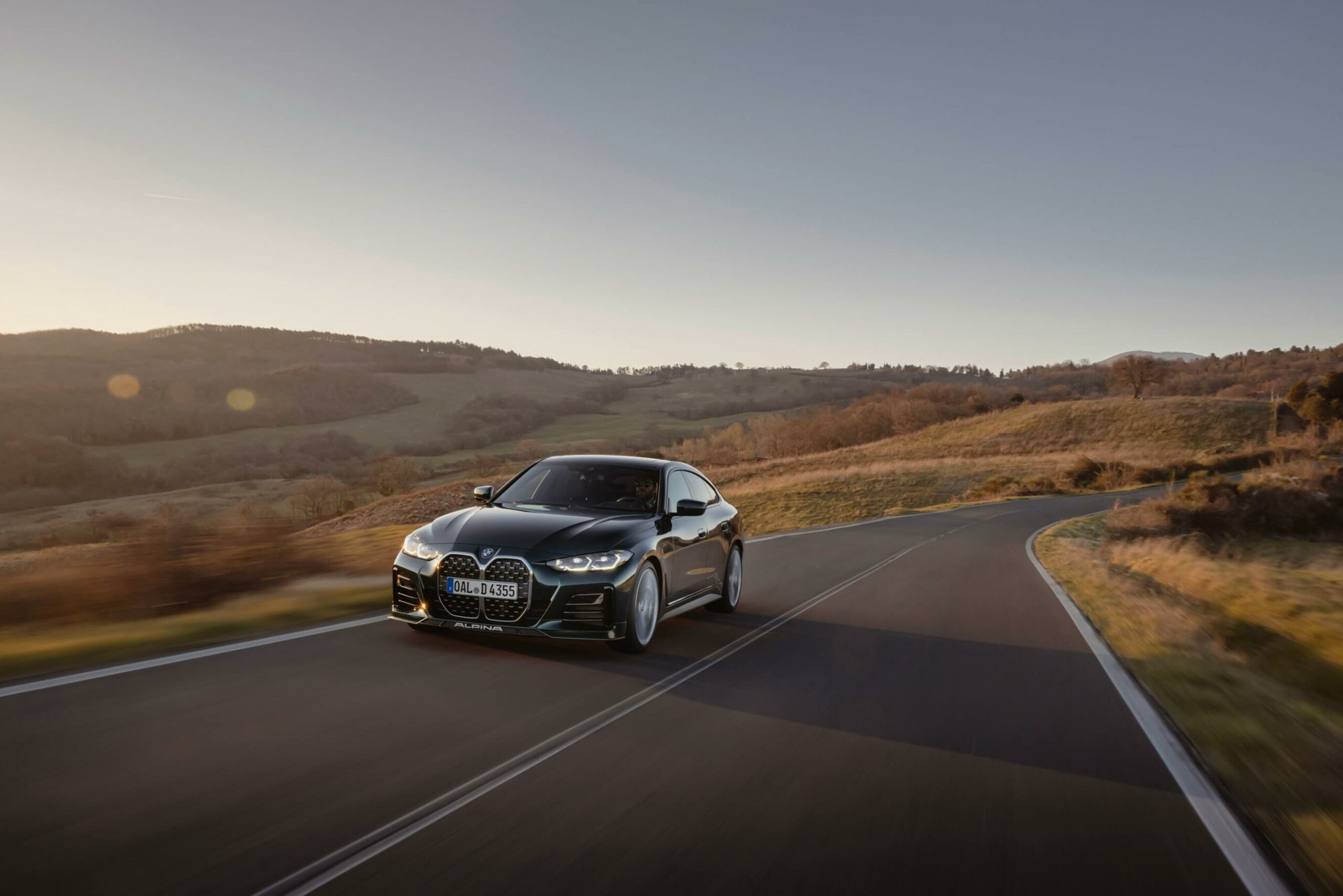
Its revised front bumper delivers form and function, channelling extra air to the updated cooling system, while also reflecting the front end of the aforementioned B4.
At the back there’s now two dual-outlet exhaust tips and a rear diffuser, tying in with the mild side skirt tweaks and lower sport suspension, tuned specificially for the D4 S with bespoke spring and damper settings.
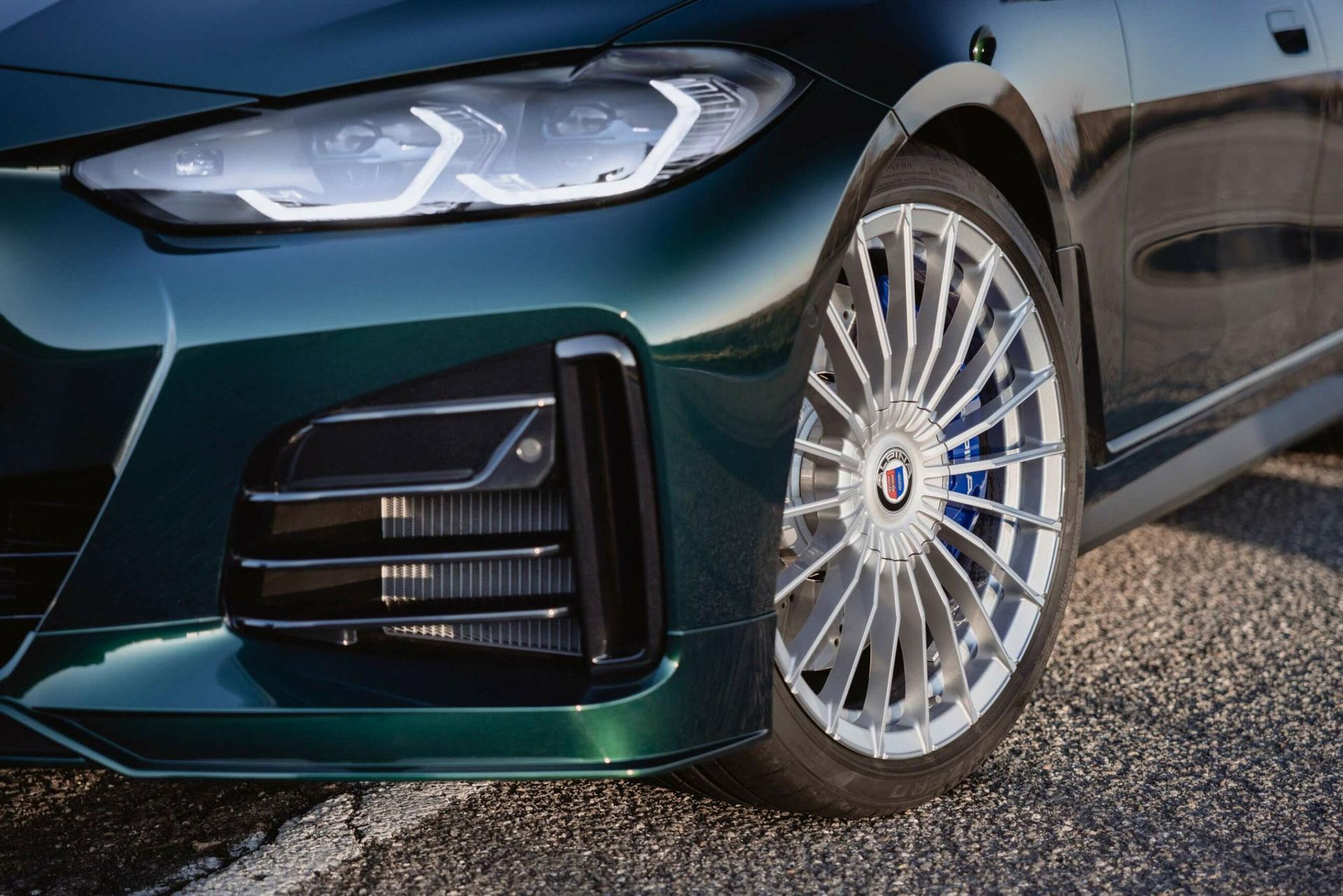
As to be expected, a set of 20-inch Alpina Classic wheels fill the arches, shod in Pirelli P Zero rubber for the best compromise of grip and comfort in the nearly two-tonne model.
Just like its other Alpina siblings, the brand’s distinctive blue and green finishes can be ordered, although those who want to blend in with the Beemers can select whichever colours from BMW’s palette they like.
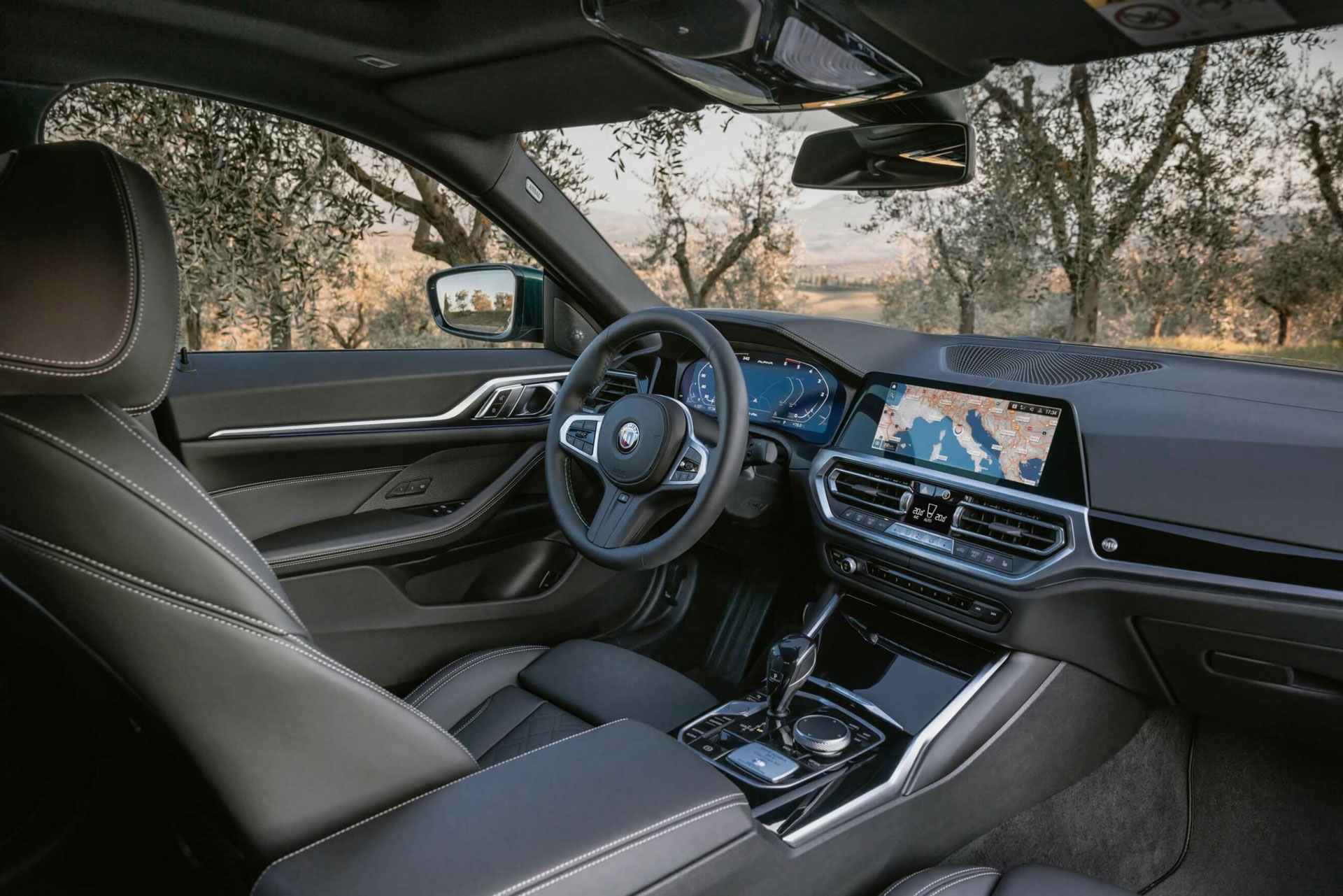
Going on sale from €79,700 (AU$120,000) in Europe, the D4 S will remain a dream for prospective Australian buyers for now, given BMW doesn’t offer the diesel engine in the 4 Series locally and Alpina’s only non-petrol model is the XD3.
The Toyota Crown, a long-time favourite for ‘grey import’ buyers and a darling of many ‘cars and coffee’ meets, looks set to be reinvented as an SUV of sorts – and it could, just maybe, make its way to Australia.
These images, understood to be official design patent application files published in Japan, appear to reveal that the Crown will head into its 16th generation with a new high-riding design.
It is possible the jacked-up Crown will debut as a new variant alongside the traditional sedan – perhaps as the Crown Cross – with Japan’s Best Car claiming a ‘New Crown Sedan Plus’ fastback sedan will also be offered.
No official images for that version have surfaced, but Best Car has published a speculative rendering of its own, shown below. A full gallery can be seen at the link above.
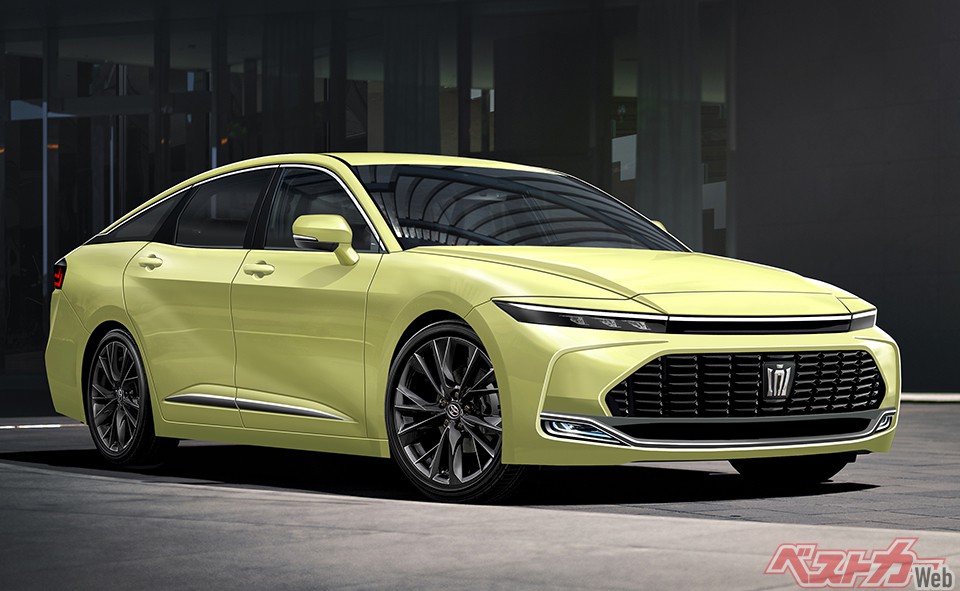
Interestingly, Toyota’s decision to embrace the global market trend for SUVs has resulted in ‘four-door coupe’ styling, rather than a wagon body – something the Crown had offered right up until the 2003 S180 launched in a sedan-only design.
Best Car reports that the new Crown – in sedan form at least – will measure 4930 millimetres long, stretching it beyond the 4910mm body of the current model.
The upcoming new design marks another key evolution point for the revered badge, following the 2018 launch of the most athletically styled Crown yet.
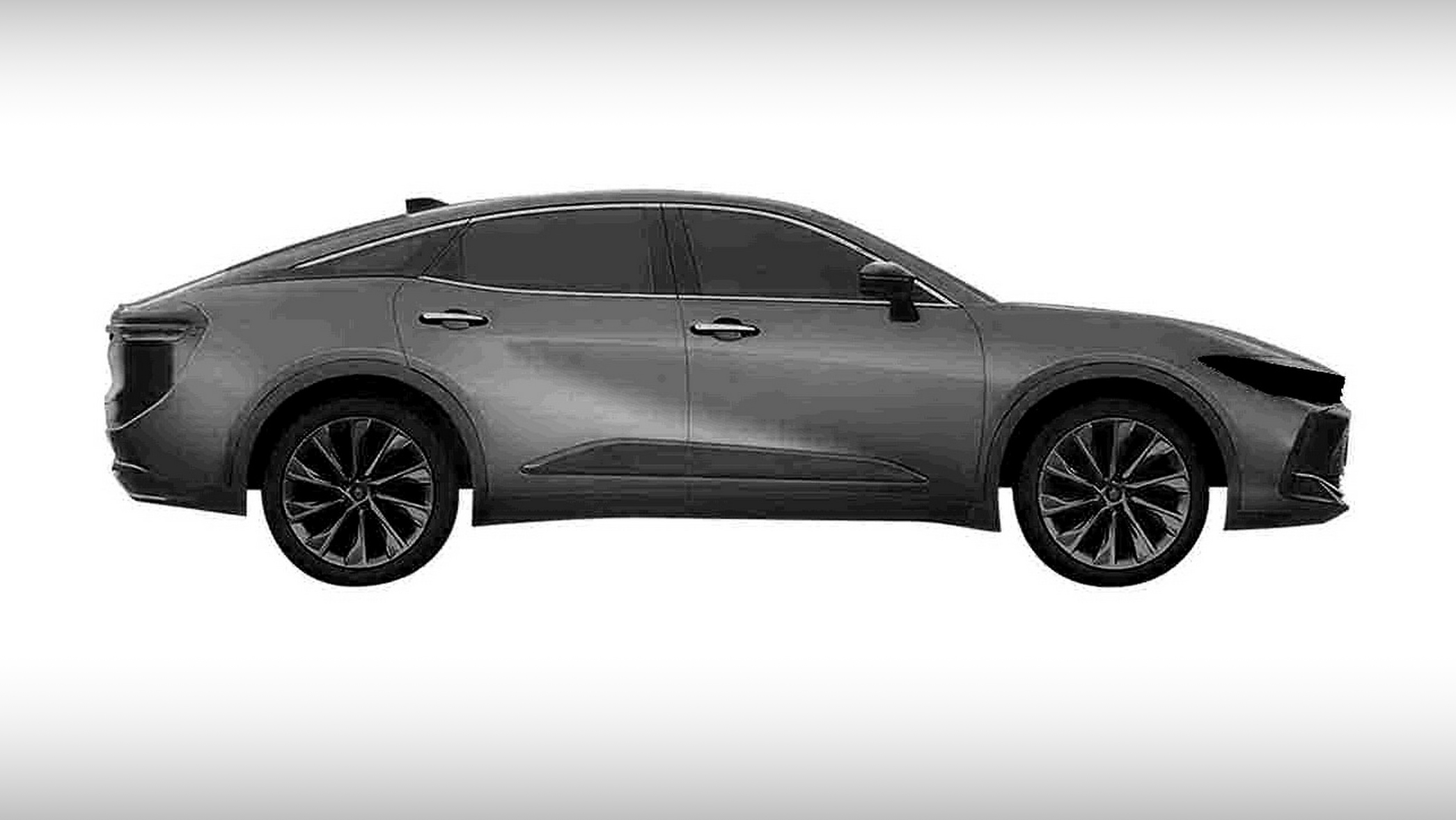
The model debuted in 1955 as a family commuter car like any other, and it kept to a fairly conventional boxy look – if a dull one from around 2003 to 2018 – for most of the 66 years that followed.
Like the new-generation Camry, the current 15th-gen Crown is blessed with a more sporting design, giving fans of rear-wheel-drive turbo sedans something to think about. Those in Japan, that is.
This new look is understood to form part of a plan to bring the Crown to the global stage, with business publisher Reuters claiming to have had sources confirm plans for a debut in at least China and North America.

The next Crown is expected to again be offered with a hybrid powertrain, along with plug-in hybrid EV and full-electric options. Reuters says the hybrid will debut next year, with the EV to follow in 2024.
New Toyota Crown for Australia?
The Crown hasn’t been offered in Australia since 1988 (having at one stage even been assembled locally), and that was seven generations ago when AMI-Toyota became Toyota Motor Corporation Australia.
Toyota Australia as we know it today has never ruled the Crown out for a local launch, but with Lexus already tailored for Western markets, it has so far opted to pass on the option (although it has never confirmed if Toyota HQ would even make it available if requested).
The company does own the Crown trademark in Australia for passenger vehicles (unrelated to the US-based Crown forklifts sold here, an industry Toyota also competes in), and while that could be a hint, it’s also common practice to retain useful trademarks rather than let them fall into rival hands.
Still, if this new generation is indeed headed for a wider global audience, Australia could finally be on the invites list.
The local arm, for its part, has not commented on the matter.
Snapshot
- New Kluger seat-back frames not manufactured to ADR requirements
- Total of 5417 vehicles affected
- Toyota is contacting owners
The 2021 Toyota Kluger has been recalled, with the fourth-generation SUV’s front seats not meeting Australian Design Rule (ADR) requirements.
Affecting a total of 5417 Toyota Klugers sold since the new model debuted last year, an apparent manufacturing issue means the front seat-back frames were not manufactured with the minimum radius criteria to meet the requirements of the Australian Design Rule (ADR 3/03).
While this could present itself as a safety risk to occupants in the event of an accident, the more immediate issue is that none of Toyota’s 2021 Klugers are compliant with the ADR.

Toyota has confirmed it will contact owners in writing to request an appointment at their preferred dealer to rectify the issue, free of charge.
Alternatively, any affected owners of 2021 Klugers can use Toyota’s online booking service to arrange an inspection.
A list of VINs for affected vehicles can be found here.
