
This is our first preview of the 2022 Cupra Leon VZx. Stay tuned for a full on-road drive in the near future.
Australians have been spoilt for choice in the hot hatch market for some time, but now there is a new player in town with the Cupra Leon launching locally in the coming months.
We are at Sydney Motorsport Park to drive the Spanish challenger as part of our first taste experience with Cupra locally. Launching officially in Australia in July, Cupra brought a number of New Zealand market vehicles to our shores for evaluation.
Although we aren’t able to drive the cars on public roads, we can give them a thrashing on the track. We’ll reserve a proper final verdict until we are able to conduct a comprehensive road test, but our initial experience with the Leon, and its two SUV siblings – the Ateca and Formentor – are impressive.
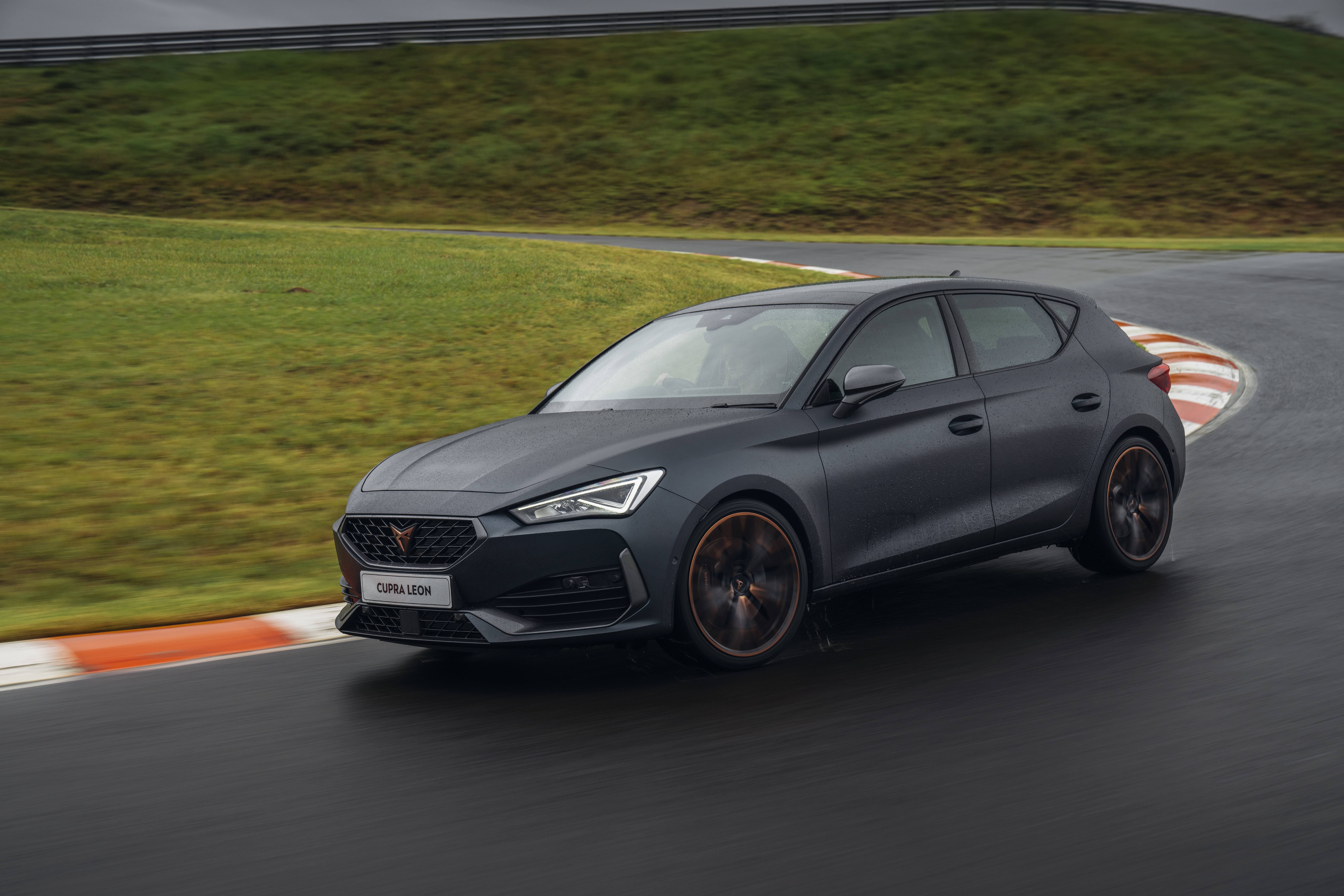
Only a single variant was available to drive at the event, the flagship VZx. However, when the Leon officially launches, a total of four model grades will be offered to Australian customers.
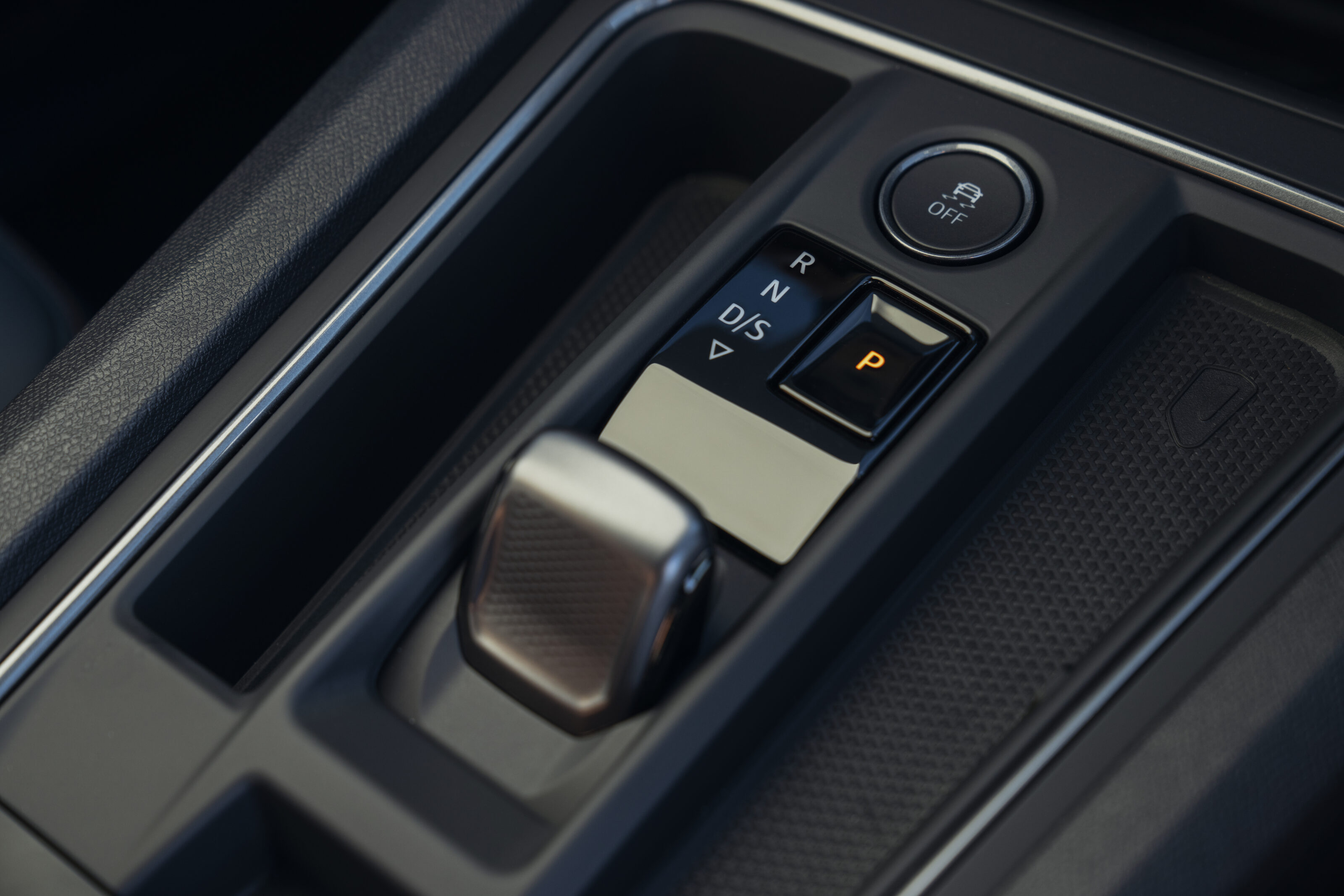
Sitting at the top of the tree, the VZx uses an EA888 2.0-litre turbocharged four-cylinder to send 221kW and 400Nm to the front wheels via a seven-speed dual-clutch transmission. That engine code might be familiar, because it is. As a member of the Volkswagen Group, Cupra has access to the automotive giant’s expansive parts catalogue, including engines and chassis.
Don’t think of the Leon as a reskinned Golf GTI though, it is much more than that, with a unique personality of its own that was able to shine through even with our initially limited exposure.
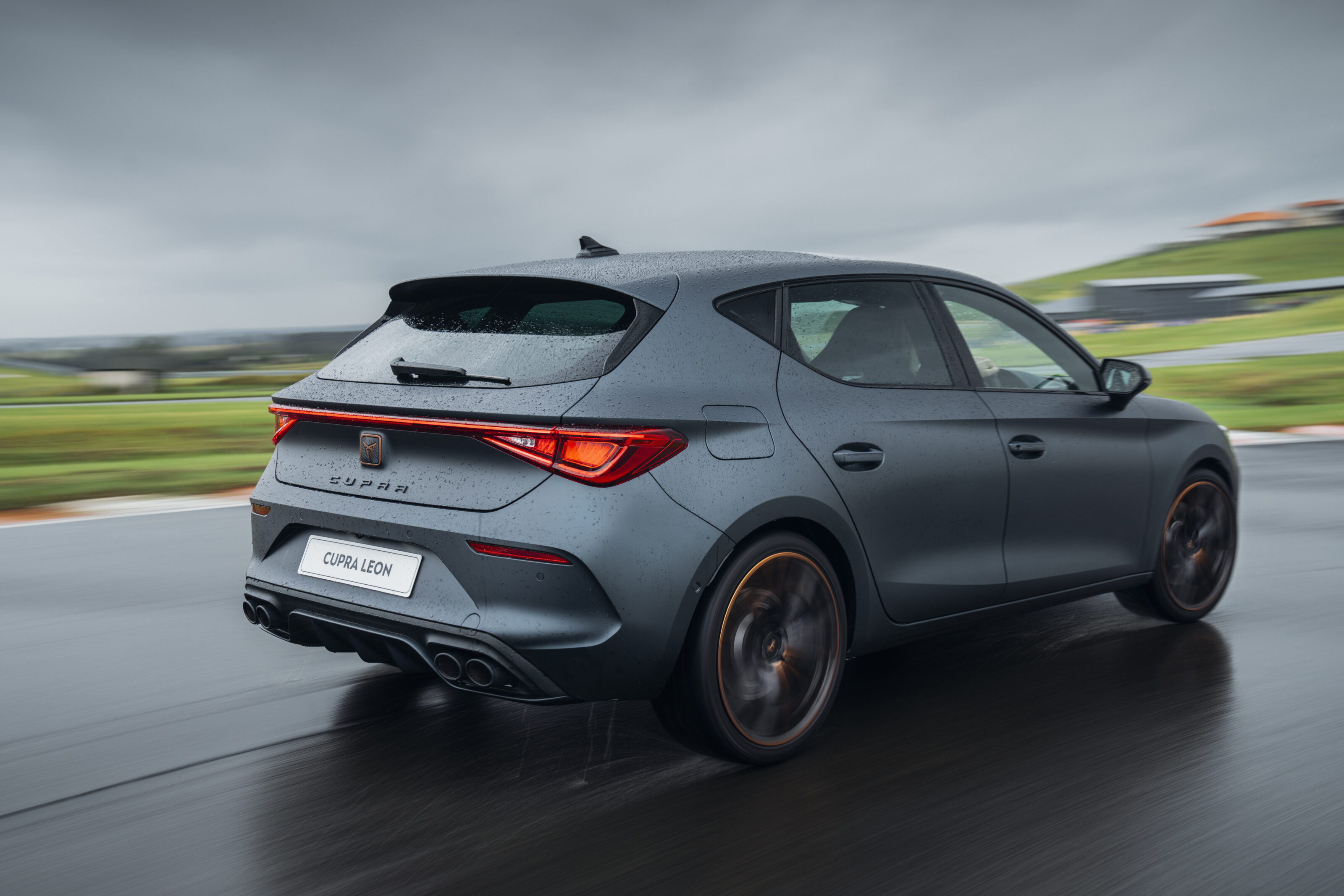
Each variant is offered with a five-year, unlimited-kilometre warranty. All feature adaptive cruise control, lane-keep assist, auto emergency braking, three-zone climate control, keyless entry and start, adaptive dampers, LED headlights and taillights, and wireless phone charging as standard.
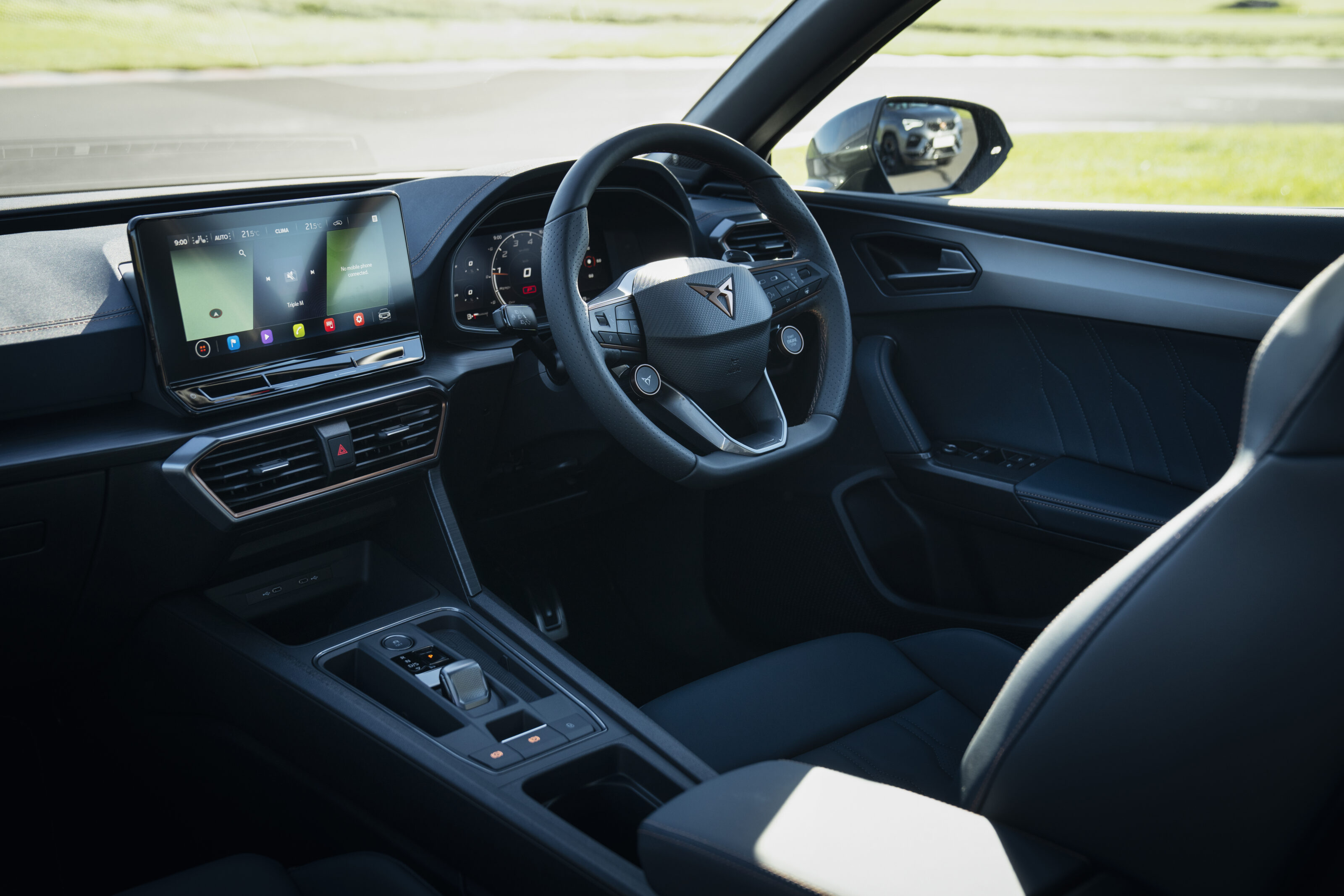

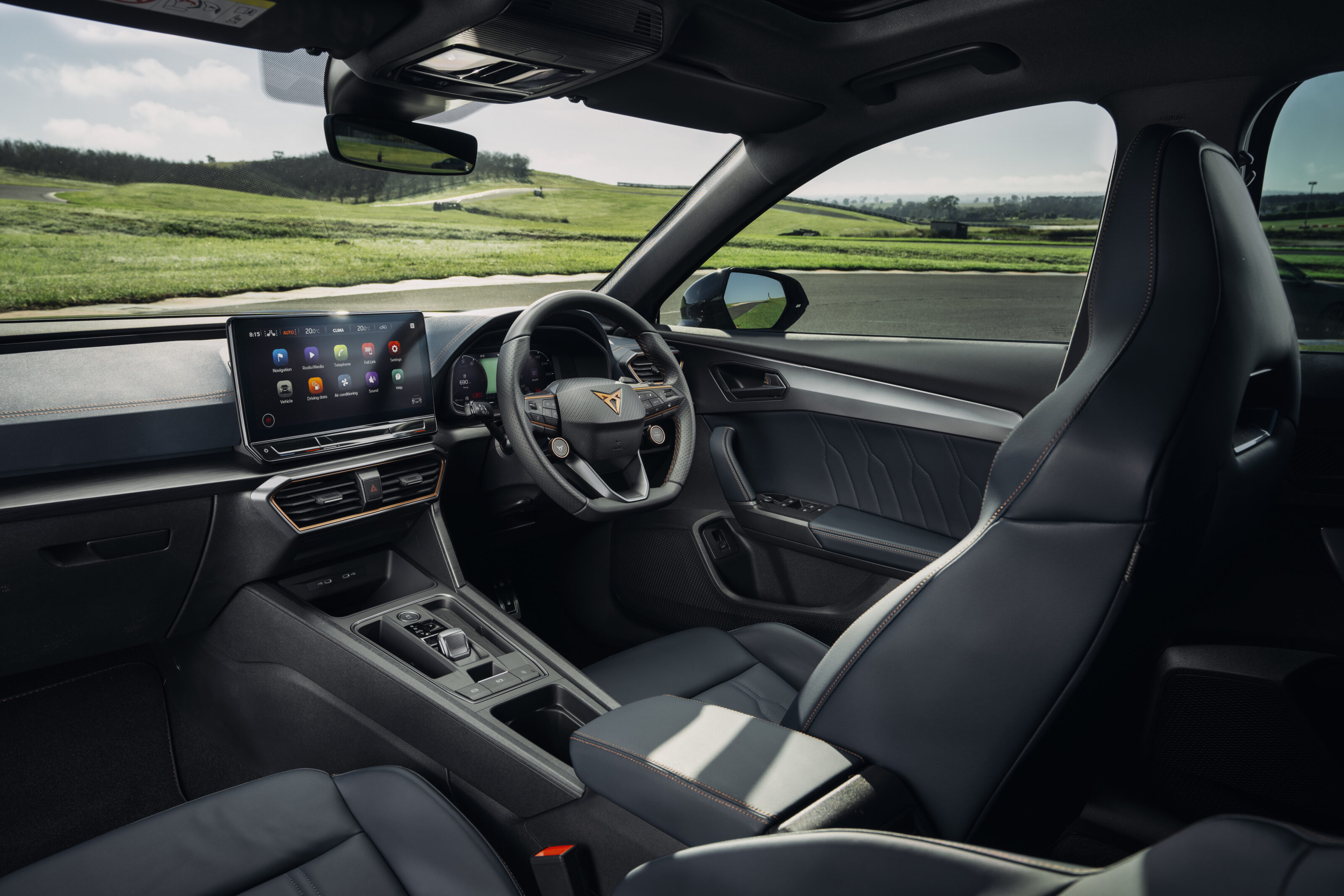
Inside the cabin, a 10.25-inch digital instrument cluster sits in front of the driver, with a central 10.0-inch infotainment touchscreen featuring Apple CarPlay and Android Auto as standard.
Leather bucket seats are the main feature of the cabin, offering impressive levels of support, and can be adjusted to a Goldilocks ‘just right’ position
Starting the range is the V, which won’t be available at the initial launch, but carries a retail price of $43,990 before on-road costs. This variant uses a 140kW/320Nm tune for the 2.0-litre turbo four-pot engine. The entry-level Leon V will be available in Q3 of this year, with deliveries expected to start next year.
Next is the VZ, which has Golf GTI-rivalling 180kW and 370Nm outputs, available from July with drive-away pricing of $56,990. A plug-in hybrid, badged VZe, will be available at $59,990 before on-road costs. The total system output from the 1.4-litre turbocharged four-cylinder engine and electric motor is 180kW and 400Nm. Cupra claims the VZe will be able to drive up to 65km on electricity alone thanks to its 12.8kWh battery pack.
But we are here to drive the fastest version of the Leon, the VZx, with its Golf R-rivalling power outputs. The flagship model has a $64,990 drive-away price and is stacked with generous levels of equipment as standard.
Leather bucket seats in striking Petrol Blue colour are the main feature of the cabin in the VZx, offering impressive levels of support, and can be adjusted to a Goldilocks ‘just right’ seating position. This is the first indicator that Cupra is a brand that takes the art of driving seriously.
The Leon is quick. Like, really quick. It deploys its power impressively and revs eagerly. The steering is sharp, and the car responds positively and directly to inputs. Track driving offers little in ride assessment so we’ll need to wait to get the car on an Aussie B-road for that, but the chassis is tied down and composed when driven aggressively.
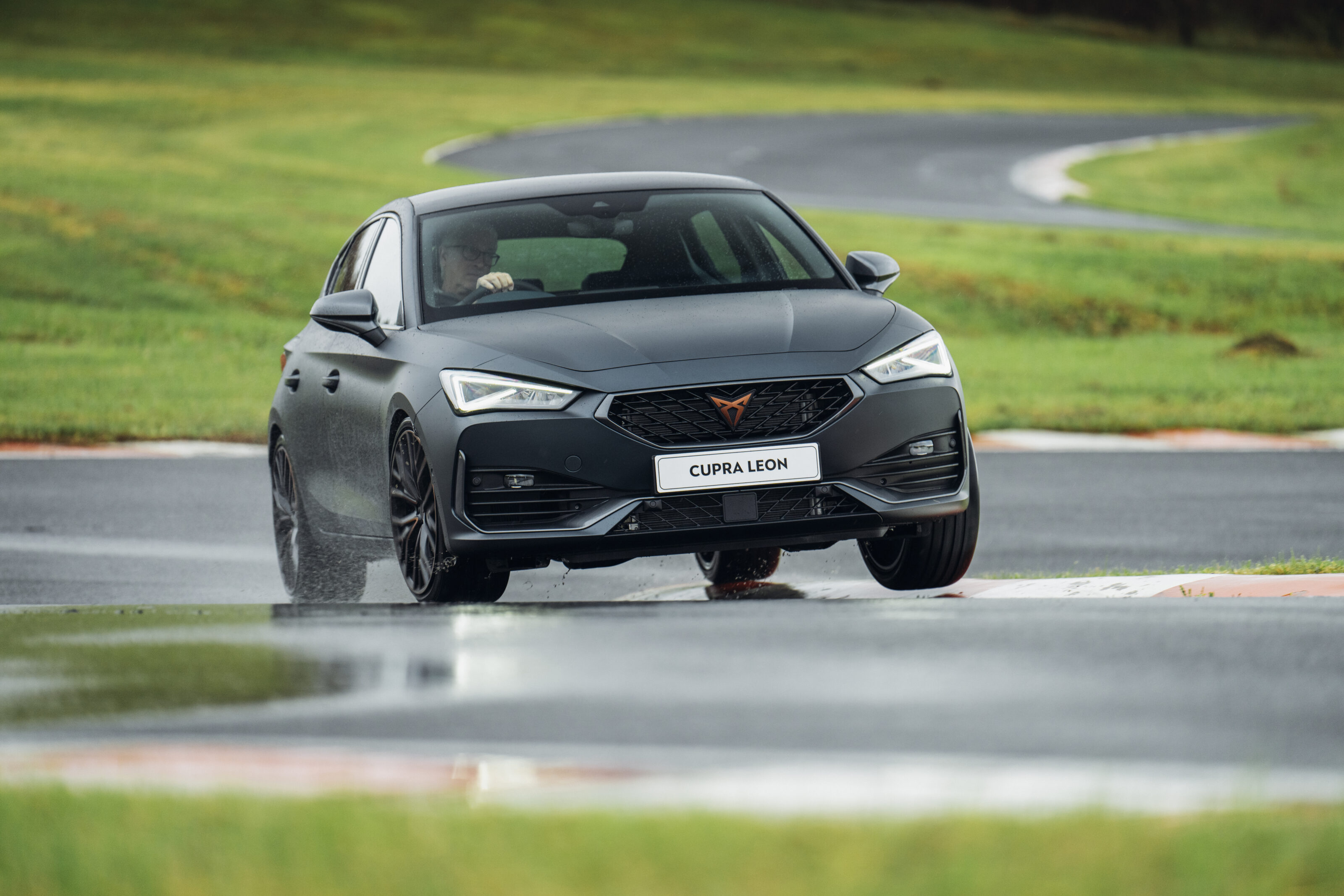
The Leon’s platform is shared with fellow Volkswagen Group siblings the Audi S3, VW Golf R, and Skoda Octavia RS. Where the S3 and Golf R use similar power outputs, they make do with two extra driven wheels – the Leon VZx being exclusively front-driven.
An electronically activated mechanical limited-slip diff deals with the power adequately. Sydney Motorsport Park requires patience before applying the throttle in many of its corners but the Leon VZx accommodates the greedy driver by gripping and pulling the hatch out of corners with vigour.
In a straight line, the Leon VZx is an absolute weapon. Cupra claims a 0-100km/h time of 5.7 seconds which is on-par for this kind of front-drive performance, but when up and running the Leon is something to behold with relentless in-gear acceleration.
Despite using well-known Volkswagen Group ingredients, there is a distinct character to the Leon. Livelier than a GTI, but more sensible than a Civic Type R
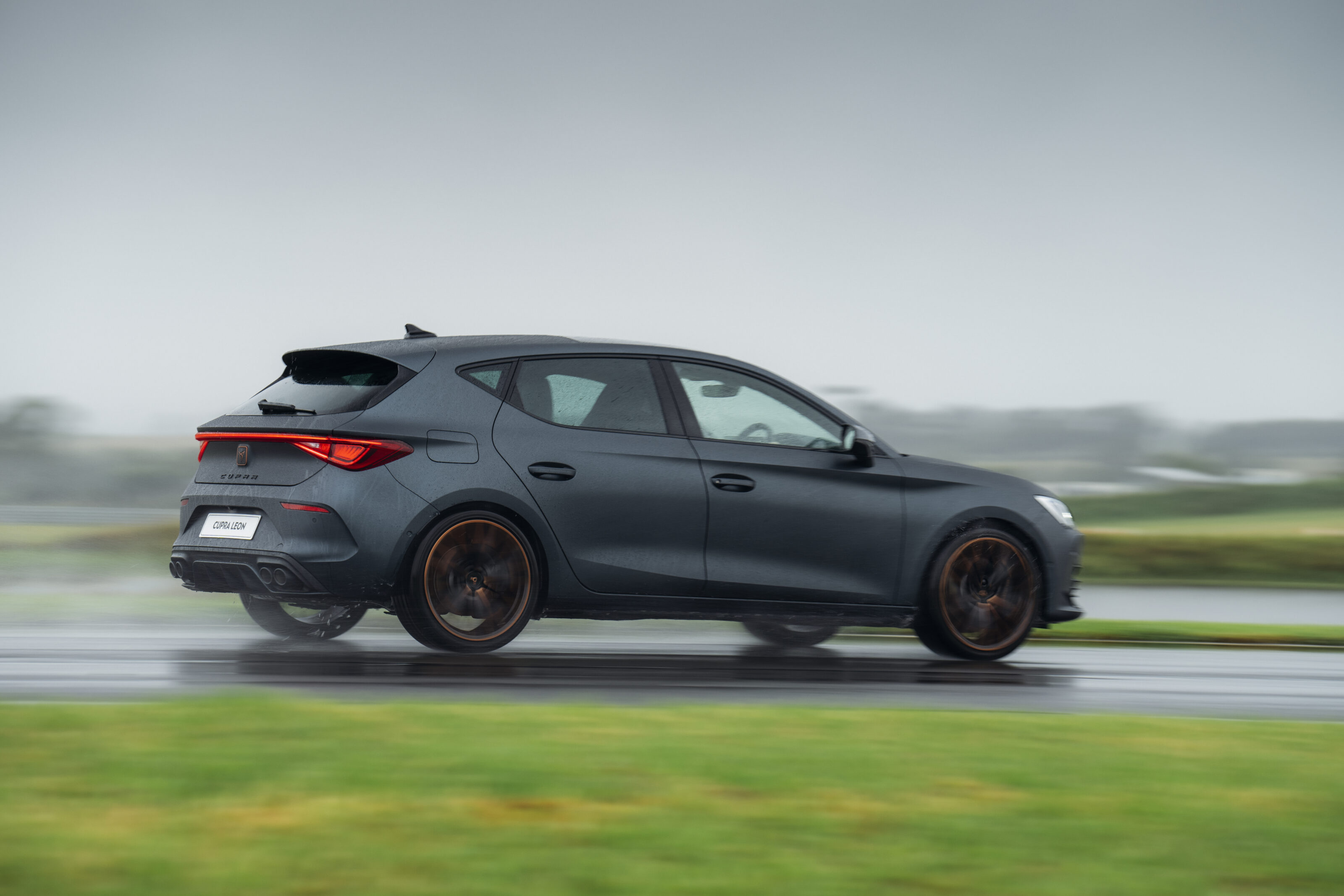
It’s no one-trick pony though, willing to duck and dive through the bends in a way that engages and rewards. It doesn’t have the early mid-corner rotation of something like a Ford Focus ST, but the Leon VZx possess a potent and sharp front-end.
The actual mechanical grip is paired well with well-judged steering that has the car darting toward apex just off centre when applying lock. Impressive too is the weight, which is heavier than some key premium rivals, speaking to Cupra’s performance intent. Feedback is ample, and you are well aware of front grip levels through the wheel.
Despite using a selection of well-known Volkswagen Group ingredients, there is a distinct character to the Leon. Livelier than a GTI, but more sensible than a Honda Civic Type R. The Leon looks to fill a surprising hole in the hot hatch market.
From our initial impressions, customers looking in that particular niche will be well-served by the Leon, and our wider performance car market got just that little bit more competitive.
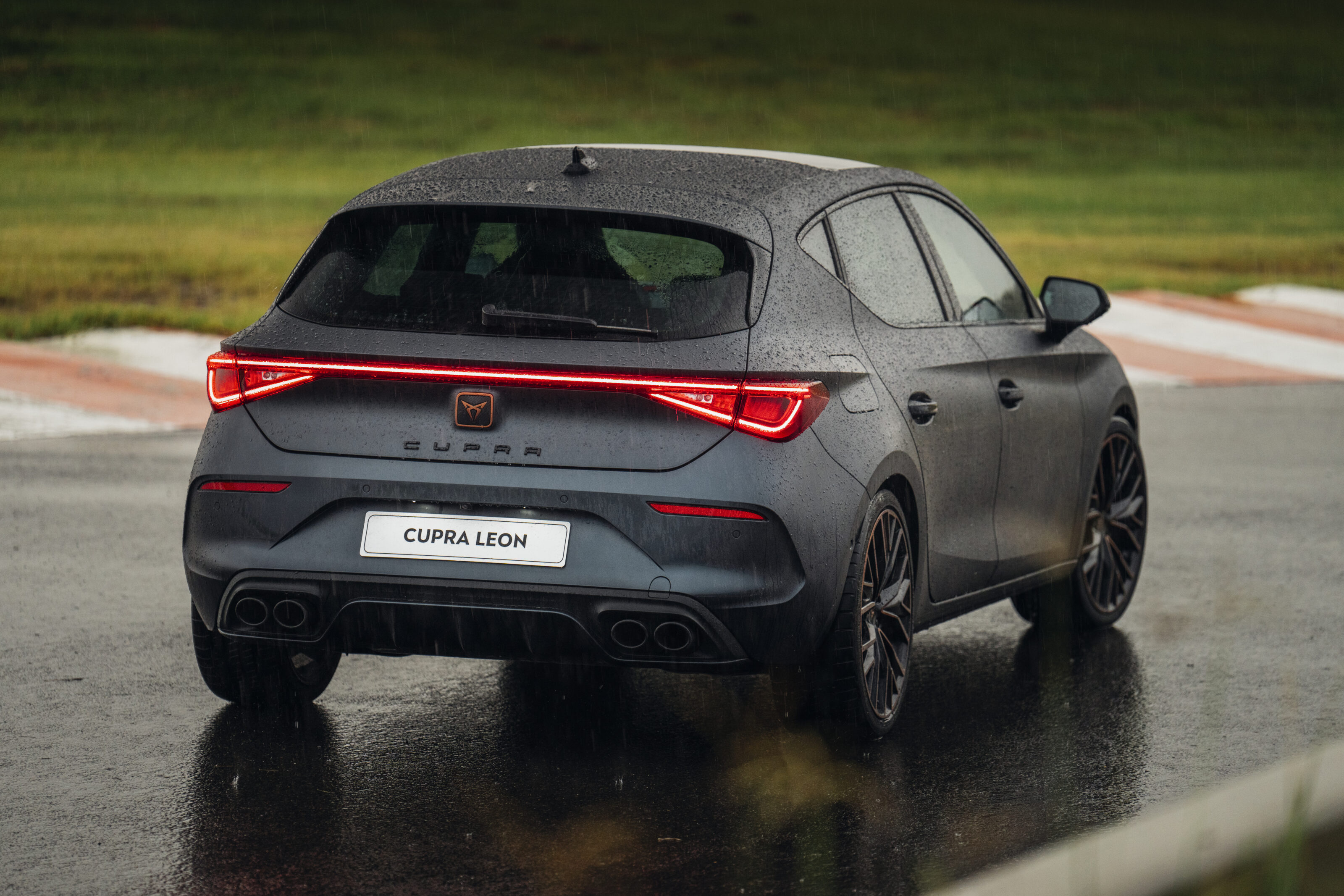
When Cupra officially launches in July with cars being delivered to customers, Australia’s performance car landscape will gain a new, endearing challenger. Stay tuned for our comprehensive first drive on Australian roads in the near future.
This is our first Australian preview of the 2022 Cupra Ateca VZx. Stay tuned for a full on-road drive in the near future.
Australians will soon be able to add a new model to their small SUV shortlist, with Spanish brand Cupra launching locally in the coming months. As part of the company’s three-model line-up, it will offer the Ateca exclusively in high-grade VZx trim.
In Australia, the Cupra Ateca VZx is powered by the venerable EA888 engine courtesy of the Volkswagen Group – of which Cupra is a subsidiary – with 221kW/400Nm outputs. Power is delivered to all four wheels via a seven-speed dual-clutch automatic transmission.
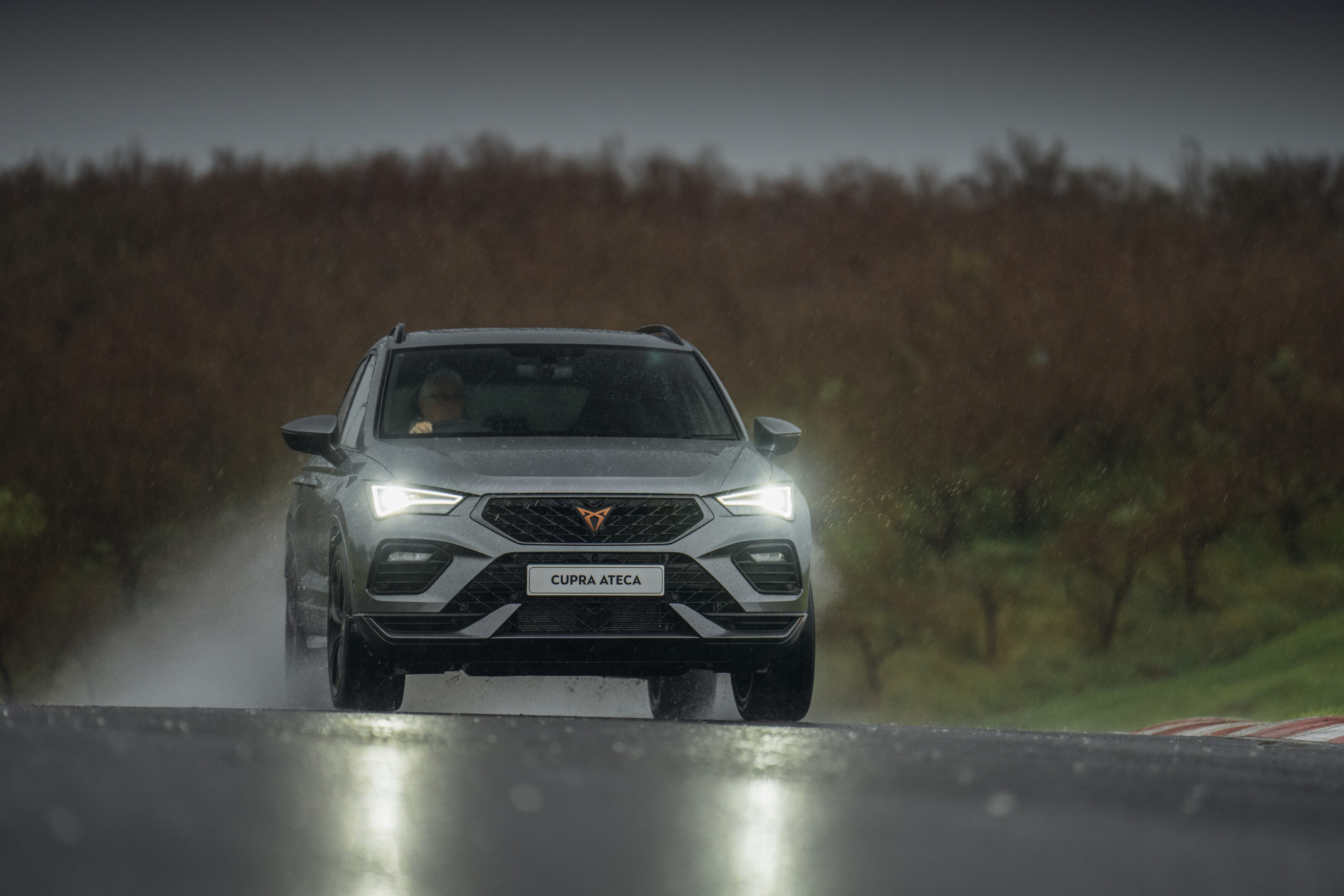
Unlike the multi-faceted line-ups of its Leon and Formentor siblings, the Ateca is offered in a single high-spec variant for Australia, which can be purchased with a $65,990 drive-away pricing. This includes three years of servicing and a five-year, unlimited-kilometre warranty. The retail pricing is $60,990. In that price range, the most obvious rival for the Ateca is the Audi SQ2.
Standard features are generous given the single high-grade model. Fitted without the need for extra box-ticking is metallic paint, 19-inch alloy wheels, LED headlights and taillights, powered tailgate with hands-free function, quad exhaust tips, heated front seats, three-zone climate control, ambient interior lighting, wireless phone charger, and a nine-speaker Beats sound system that includes a 340-watt amplifier.
Cupra has worked on providing a product that appeals to Australians … it is finished with a generous specification. It feels like a premium product inside and out
This is our first chance to get behind the wheel of Cupra models in Australia but it isn’t a first full-drive experience as there are some important external factors at play.
We are unable to drive the cars on a public road as Cupra has brought the cars we are driving to Australia for evaluation from New Zealand, providing local media the chance to see them in person and drive them on track to better understand the brand’s positioning locally.
As a result, it would be reductive to apply a definitive score as well as pros and cons to this first taste.
The good news is, our first impressions are quite positive and have us eager to get back into Cupra’s models for an extensive, comprehensive road drive. Testing took place at Sydney Motorsport Park, which includes several technical sections to challenge the Ateca’s body control, power-down ability and stability under braking and changes of direction.
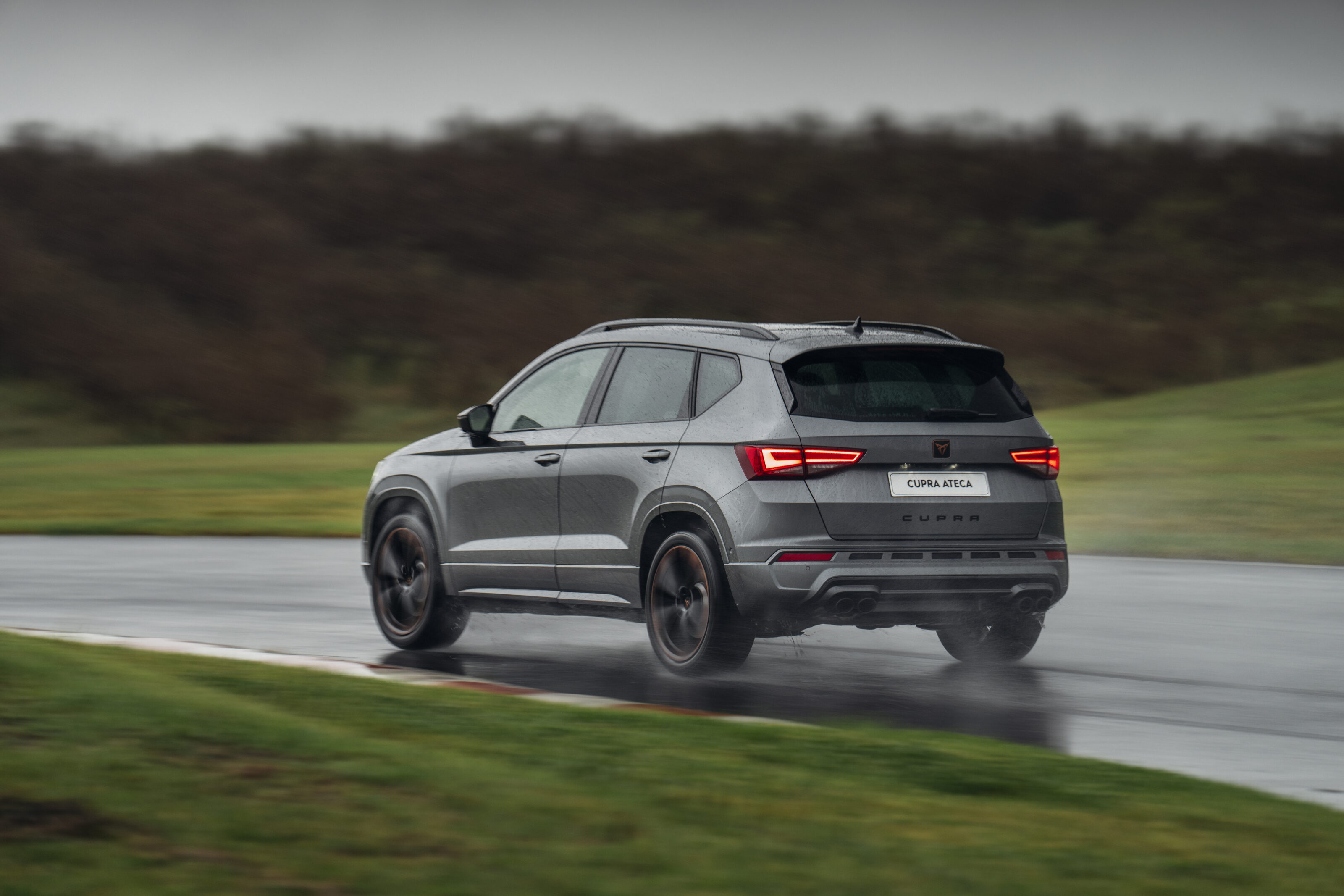
Quite the challenge for a small SUV, but something the Ateca took into its stride. Flat out track performance isn’t in the Ateca’s remit, its nearly 500-litre boot space indicating that owners will be more likely to use the Spanish SUV for weekend getaways than setting PBs. Though there are hints at the car’s sporty nature. The first is the Petrol Blue leather sports bucket seats look seriously cool and offer impressive lateral support.
Cupra has worked hard on providing a product that appeals to Australians. Not only does the Ateca have the credentials to appeal to our nation’s ferocious performance appetite, but it is finished with a generous specification that includes prolific use of high-quality materials at all the key points in the cabin. It importantly feels like a premium product inside and out.
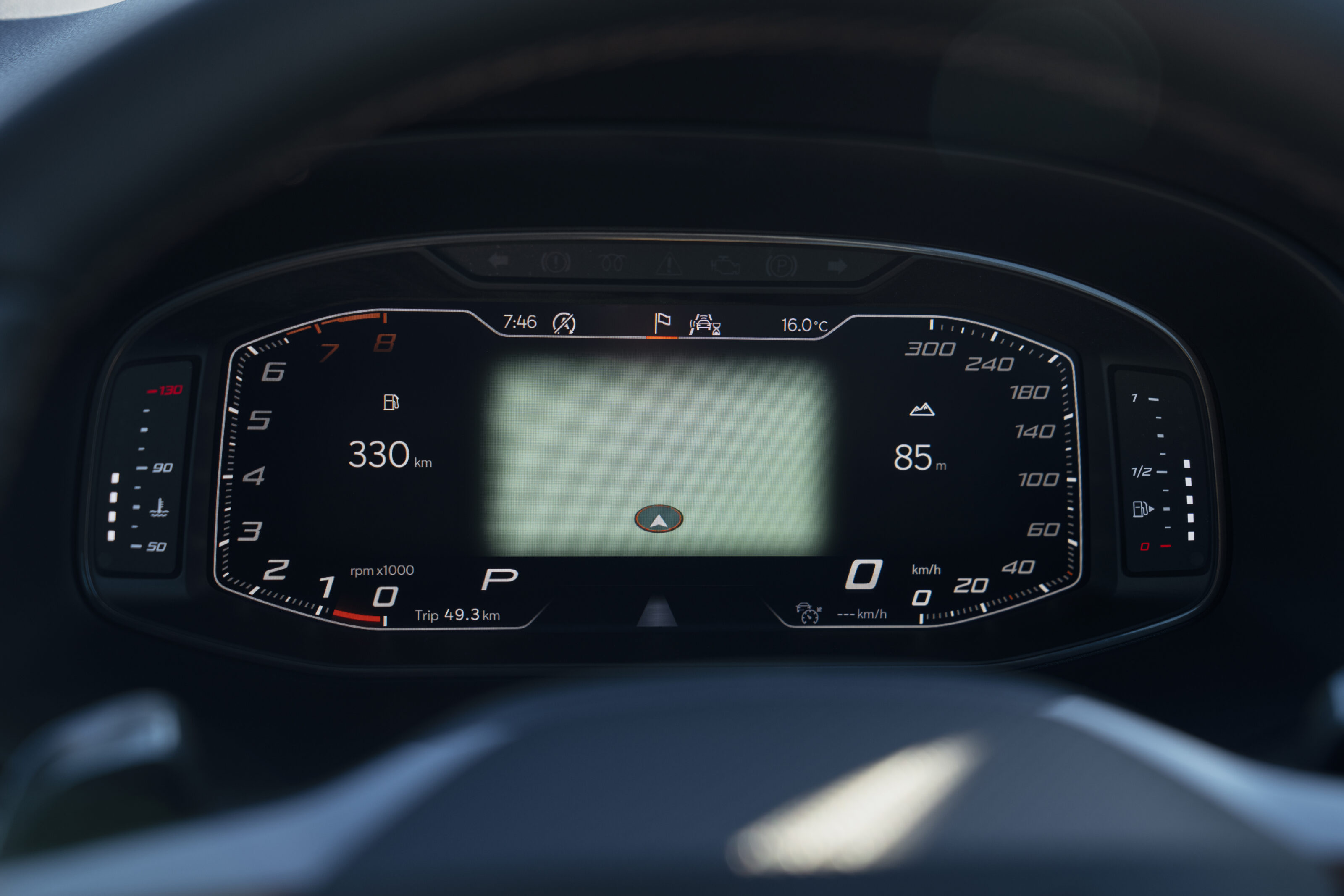
There is a central 10.25-inch digital instrument cluster, while the central infotainment system is controlled through a 9.2-inch touchscreen. Apple CarPlay and Android Auto feature as standard.
Cupra claims the Ateca can sprint from a standstill to 100km/h in 4.9 seconds. While we didn’t get the opportunity to test this claim, the Ateca was capable of piling on speed admirably and pulled healthily through its gears. It was only beginning to run out of top-end punch at the end of Sydney Motorsport Park’s lengthy front straight.
Gearshifts are crisp and executed without sudden jolts. It feels like the calibration would be well suited to a spirited road drive, but made some small missteps on track. Namely, not shifting down enough gears during hard braking, and only realising midway through progressive throttle application, rectifying with a sudden drop of ratios and flare of revs.
You’d be forgiven for initially thinking near Golf R levels of power in a compact SUV platform with practical levels of ride height would be a recipe for disaster. Quite the opposite, with the Ateca retaining a resolved composure that speaks to the passion put into its engineering process.
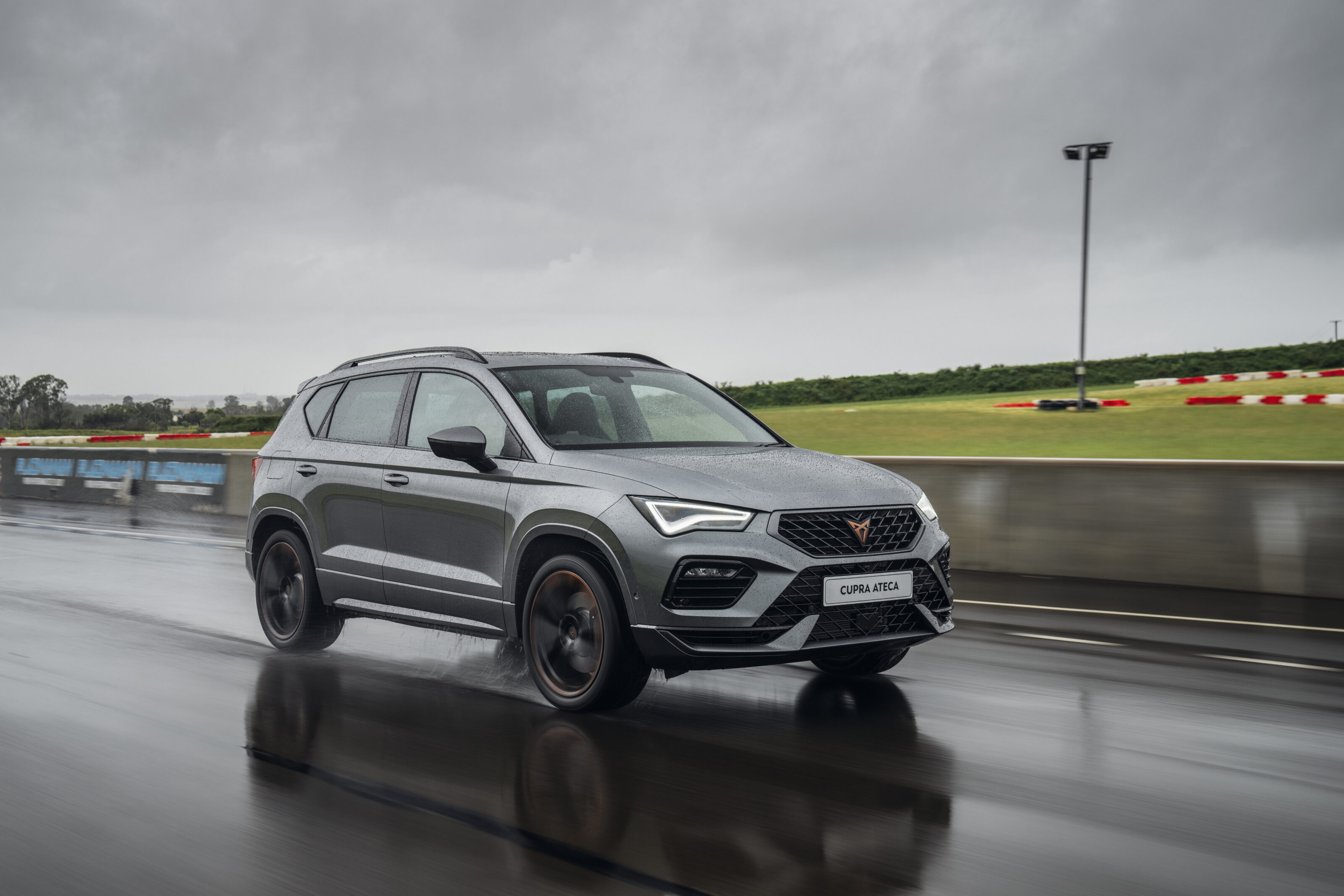
Dynamic chassis control is standard, as well as different driving modes. However, due to our limited exposure, our assessment of these features isn’t extensive enough to provide a proper verdict.
On-road ride quality remains a mystery, though the Ateca demonstrated impressive body control. There was the kind of pitch and roll you’d usually associate with a car of this stature, but it remained controlled and purposeful.
Owners of the Ateca will never dream of taking their purchase onto a circuit. But the good news is they can, and we feel those who do would benefit from opting for the Brembos
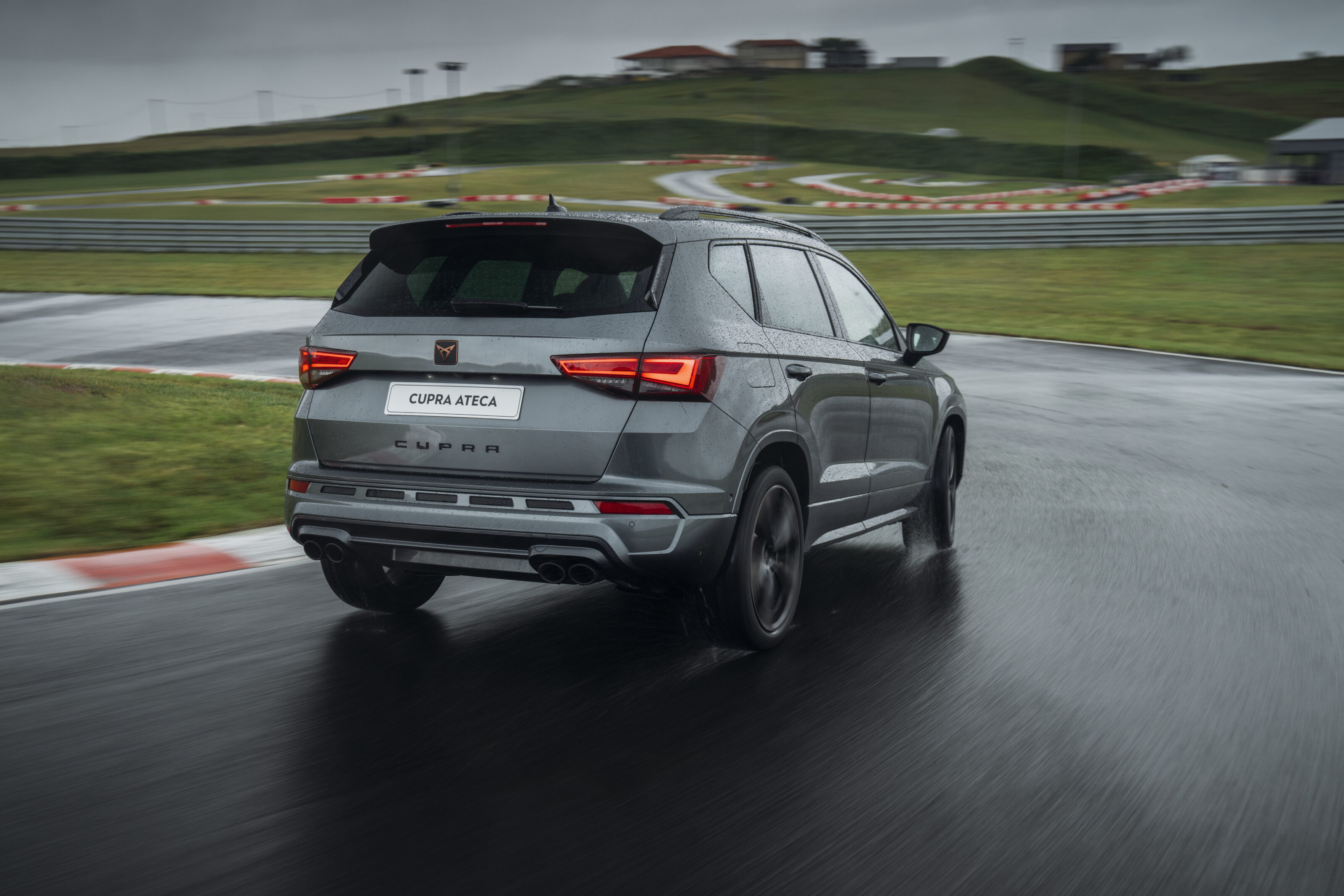
We wouldn’t call the chassis playful by any stretch, but the fact the Ateca remained composed and unfaltering on track speaks volumes about the small SUV’s abilities. Steering is crisp and direct, with enough feedback to be appropriate. Ultra-keen drivers will want for an extra level of involvement, but the Ateca’s main remit as a useable and practical small SUV with punch makes any additional changes for improved fidelity a game of diminishing returns.
There are some important optional extras you can add to the Ateca’s standard specifications. The first is an Akrapovic exhaust for $5960, along with a panoramic sunroof for $1800.
High-performance Brembo brakes are also available ($4050) which would add some bite to the Ateca’s braking performance. No bad thing considering the car’s straight-line ability. That said, we are aware that the Ateca isn’t a track car. Owners of the Ateca will never dream of taking their purchase onto a circuit. But the good news is they can if they wanted, and we feel those who do would benefit from opting for the Brembos after our experience with the standard units.
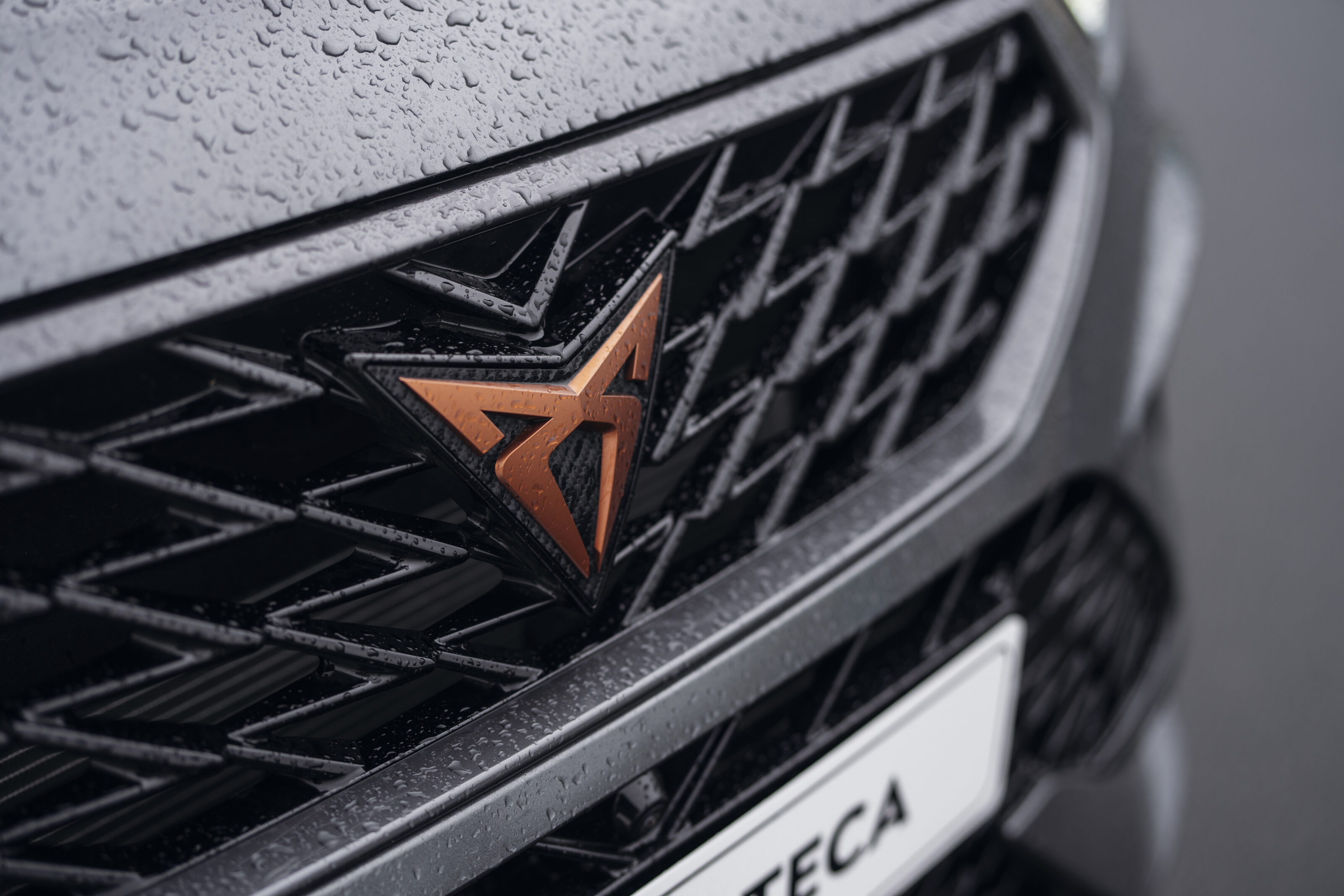
The Ateca represents the most pragmatic vehicle in Cupra’s local line-up. While not built for the circuit, it’s mighty exciting to drive and offers a practical body that will suit owners wanting something useable day-to-day, but can be enjoyed on a classic Aussie driving road.
This is our first preview of the 2022 Cupra Formentor VZx. Stay tuned for a full on-road drive in the near future.
Australian buyers love two things. Performance cars, and SUVs. Handy then, that to lead its charge into Australia for the first time, Spanish brand Cupra has arrived with a 228kW SUV as its flagship model – the Formentor VZx.
We’ve headed to Sydney Motor Park to get our first hands-on experience with Cupra locally before the brand’s official Australian launch mid-year. Of its three-model line-up, the Formentor is at the forefront, flanked by the Leon hatch and Ateca small SUV.
All three models were available to drive, so make sure to read our initial impressions of those after this.

The cars available for assessment have been brought to Australia from New Zealand. Unfortunately, that means there will be no road driving today. We’ll have to leave a definitive verdict on the Formentor until we get the opportunity to drive it on Aussie roads, which should be in the near future.
The range starts at $50,690 before on-roads for the entry-level V. Powered by a 2.0-litre turbocharged four-cylinder engine, the V puts 140kW and 320Nm to the ground via all four wheels using a seven-speed dual-clutch automatic transmission. The V also has drive-away pricing of $54,990.
All variants come with three years of free servicing, and a five-year, unlimited-kilometre warranty.
Instead of pitching backwards dramatically on launch, nose waggling in the air, the Formentor VZx simply squats and fires forward with purpose
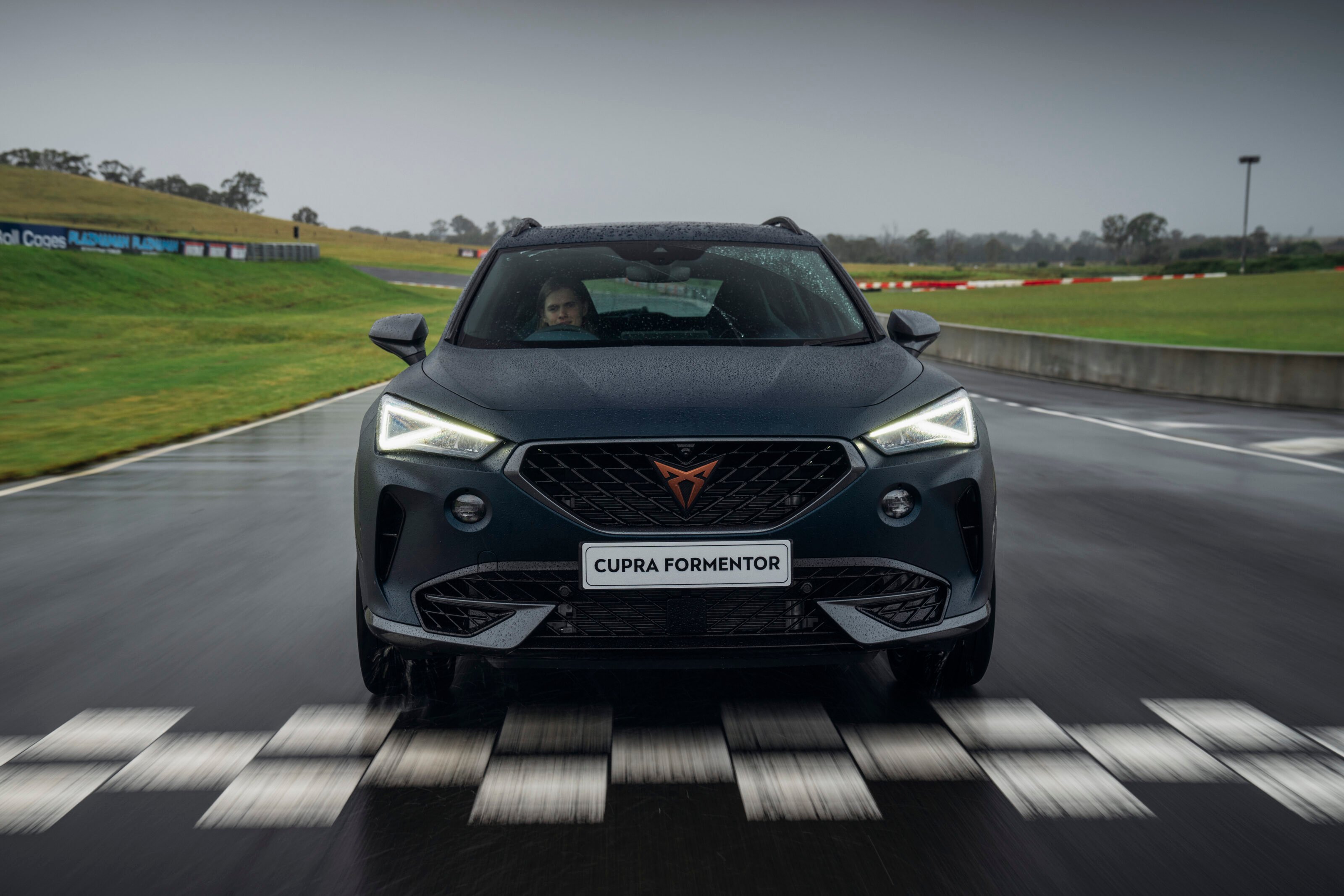
That 2.0-litre four-cylinder turbo engine remains throughout much of the Formentor range. Stepping up to the VZ, priced at $53,790 before on-road costs ($58,490 drive-away), brings a bump in power to 180kW/370Nm. Next in the line-up is the VZe plug-in hybrid, which has a $60,990 price before on-road costs, with the drive-away figure varying state-to-state depending on incentives.
Powering the VZe is a 1.4-litre turbocharged engine and 12.8kWh battery with an electric motor, boasting a total system output of 180kW and 400Nm.
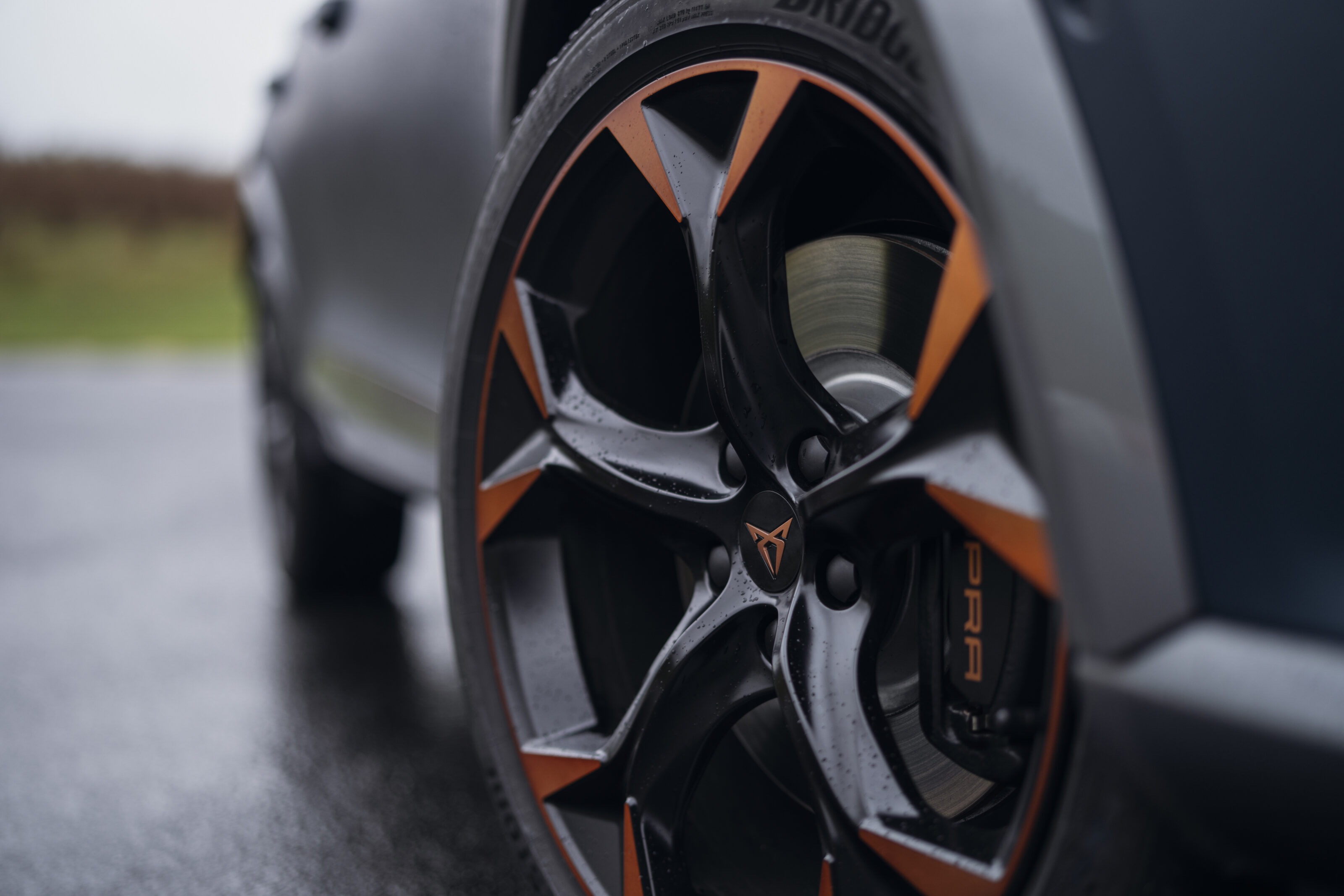
Sitting atop the four-car family is the VZx. The EA888 engine returns, this time with 228kW and 400Nm available, along with generous standard equipment including a nine-speaker sound system with 340W amp, heated front seats with electric driver adjustment and memory, hands-free powered tailgate, 19-inch alloy wheels and quad exhaust tips.
Unlike the Ateca and Leon, which started life as Seat models, the Formentor is Cupra through and through. It’s the spearhead for the brand in Australia, and will likely become its most popular model locally. Though the Formentor does use some key Volkswagen Group componentry, it represents Cupra’s values and youthful spirit.
The chassis is VW Group’s MQB Evo architecture, which is seen throughout the line-ups of Audi and Volkswagen. While overseas markets are sold versions of the Formentor with torsion beam suspension on the rear axle, the only variants available to Australian customers use multi-link suspension front and rear.
You can hustle the Formentor on track, pitching it into corners thanks to direct steering that responds positively to inputs
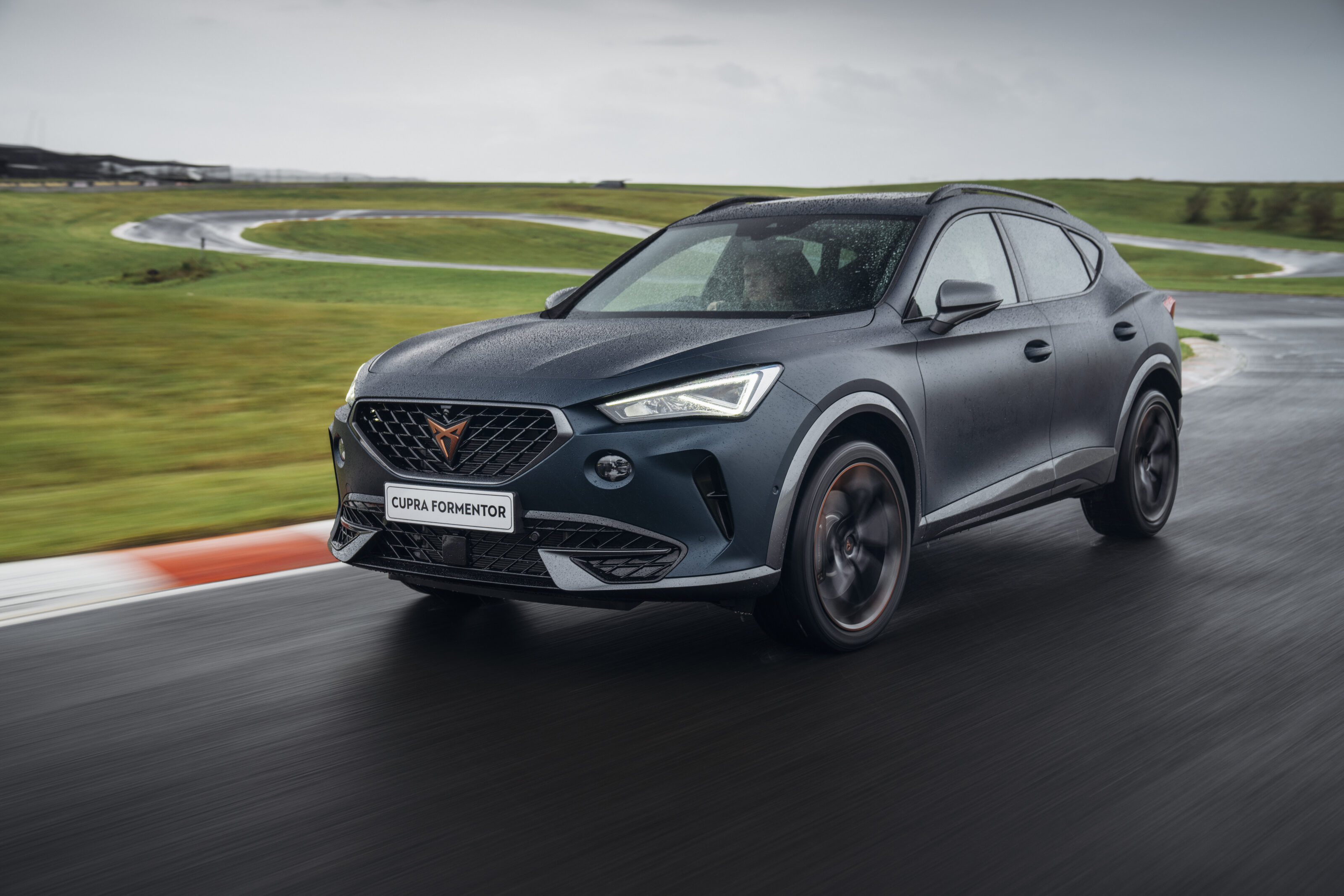
Compared to its Ateca sibling (which is much more traditional in its SUV proportions), the Formentor is a touch longer, but notably has a roofline 100mm lower. This gives the car a much more hunkered-down stance, which then flows into its driving dynamics.
By virtue of marketability, the Formentor is an SUV. The slightly raised ride height, 420 litres of boot space, and styling denote as much. However, it doesn’t feel like it sitting behind the wheel. You can get its sports bucket seats into the kind of low driving position you’d usually associate with a fast wagon. It’s a dynamic sleight of hand that continues when you press the accelerator.
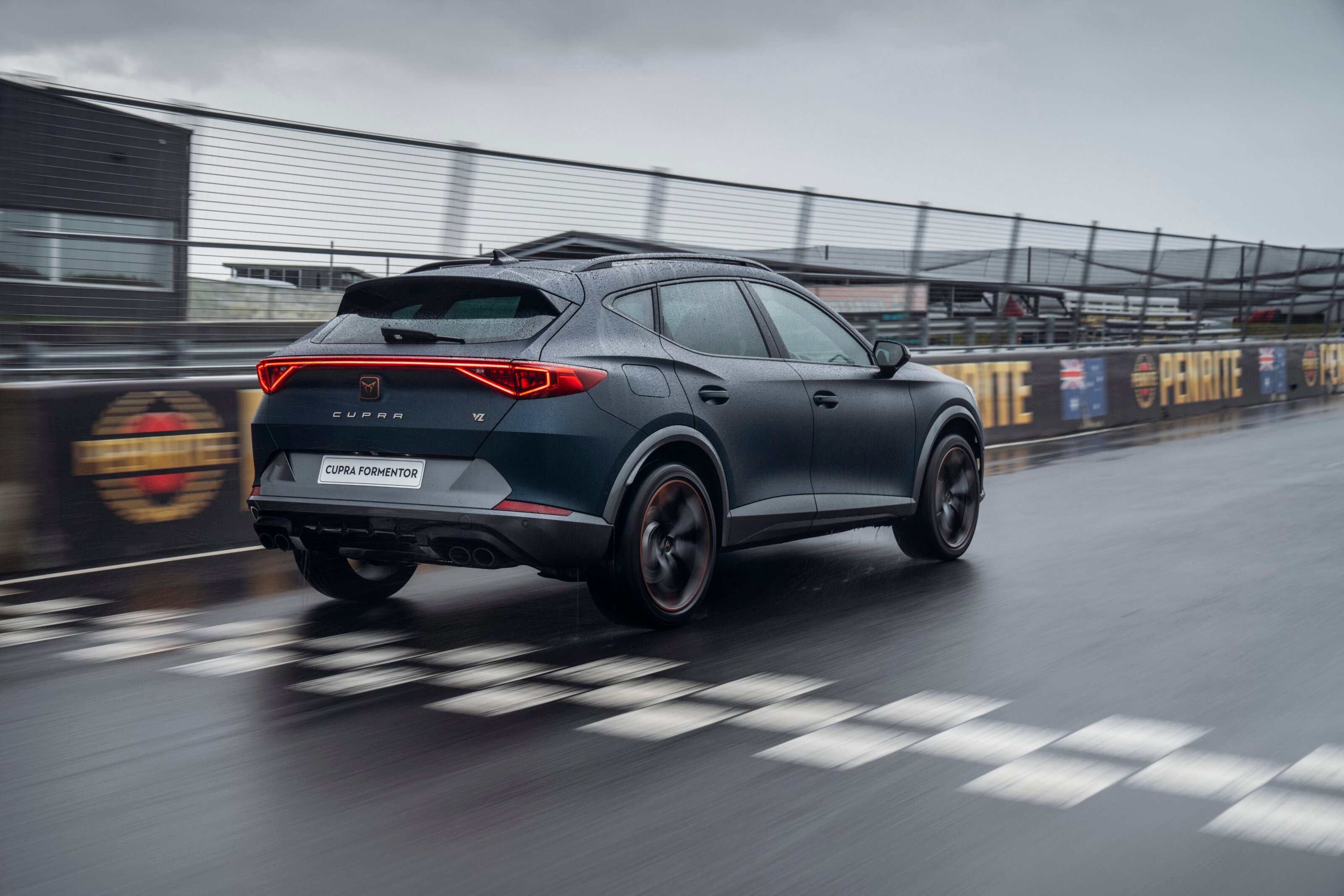
Instead of pitching backwards dramatically on launch, nose waggling in the air, the Formentor VZx simply squats and fires forward with purpose. Power is put to the ground with ease in the Formentor, the all-wheel-drive system apportioning the 228kW and 400Nm as required.
Weight is the main thing that breaks the illusion, making its undeniable presence known during braking. Not in a way that ruins the experience but having just jumped out of the Leon hatch, the extra heft of the Formentor was particularly noticeable.
Braking stability is very impressive. Optional Brembo brakes ($4150) are available, which is sure to add to the Formentor’s stopping power, but it tracked true with impressive pedal feel during a number of hard applications throughout our laps behind the wheel.
Optional Brembo brakes are available … it tracked true with impressive pedal feel during a number of hard applications
You can hustle the Formentor on track, pitching it into corners thanks to direct steering that responds positively to inputs. Steering weight isn’t particularly meaty – no doubt a conscious decision to appease the Formentor’s more appropriate daily driver commitments than outright track use – but it still has plenty of feedback. Fidelity isn’t crystal clear, but it is easy to parse what the tyres are doing through the bends.
While body roll isn’t completely eliminated, the lateral movement is minimal and well controlled, settling into each corner with purpose and remaining composed when the driver makes liberal use of Sydney Motorsport Park’s yellow kerbing.
Adaptive dampers are standard, but we are unable to provide a proper assessment of the Formentor’s ride until we drive the car on road. It is there that the Formentor will be more comfortable. That said, its ability to be hustled on track is impressive for the class.
An SUV for driving enthusiasts? We wouldn’t be so bold as to lock it in just yet, but the early signs are certainly positive.

What the Formentor best exemplifies is Cupra’s willingness, and ability, to turn what could be a pedestrian and mundane product into something altogether more engaging, regardless of body shape.
Cupra could have launched here focused entirely on outright value and practicality, but that’s not true to its roots. This is a brand that wants you, the driver, to have fun, and it has engineered its products to facilitate that as best as possible.
When our Skoda wagon turned up in a nondescript silver exterior colour with accessory roof racks fitted, I couldn’t help but feel that we had borrowed a VW employee’s company car for the week. I do hope they weren’t planning a trip to IKEA that weekend. But once you look more closely at the design, you really start to appreciate the technology and the quality of the execution.
The Octavia wagon is one of very few alternatives to the ubiquitous mid-sized SUV. Whilst it doesn’t display the robust image of an SUV, it remains a stylish offering, in a classic way.
Essentially a different version of the sister Golf variant, Skoda does a good job of consolidating its own design language. As Dan noted, “Octavia nicely redresses the difference between VW and Skoda and puts some distance between them.”
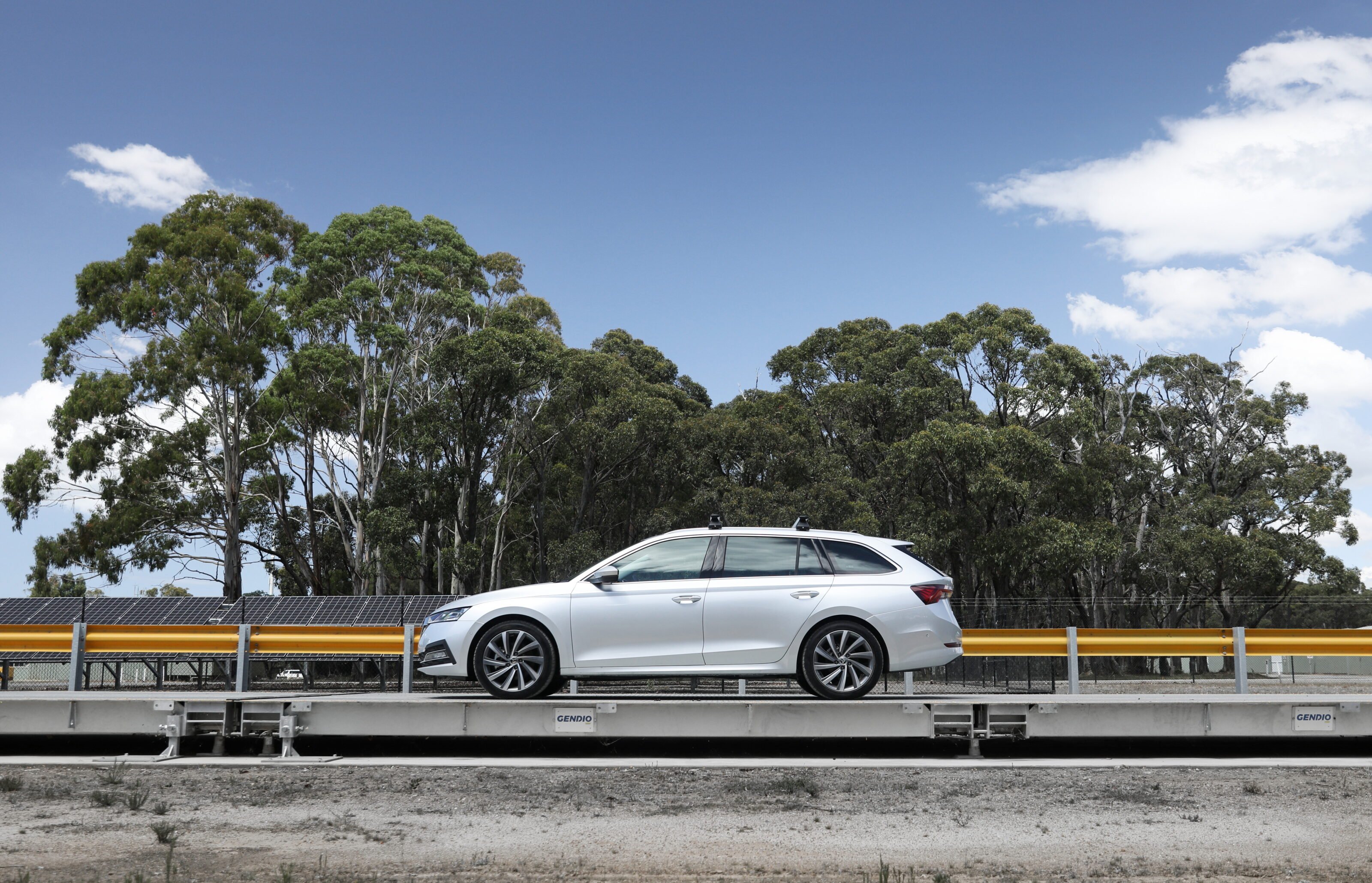
One of the main benefits of a wagon bodystyle over an SUV is the luggage compartment. The low-slung proportions and additional length provide for a longer cargo space, particularly when the rear seats are being used. The Skoda delivers 640 litres with rear seats up and 1700 litres when fully folded; however, it was disappointing that the seats don’t fold perfectly flat.
Other nice touches included carry hooks and reversible carpet mat. Indeed, there were a few little surprises which pleased the judges. “I’ll never get bored discovering Skoda Easter eggs, such as the picnic rug in the boot or the umbrella in the door,’’ quipped Jez.
“Like Golf, a champion of all-round goodness” – Curt Dupriez
The cabin design echoes the external persona with a pared-back, sleek but modern feel. Dual screens provide all the information, with a nice visual interface, but not everyone will appreciate the lack of tactile controls. Like the Golf, most functions require a few swipes at the screen menu.
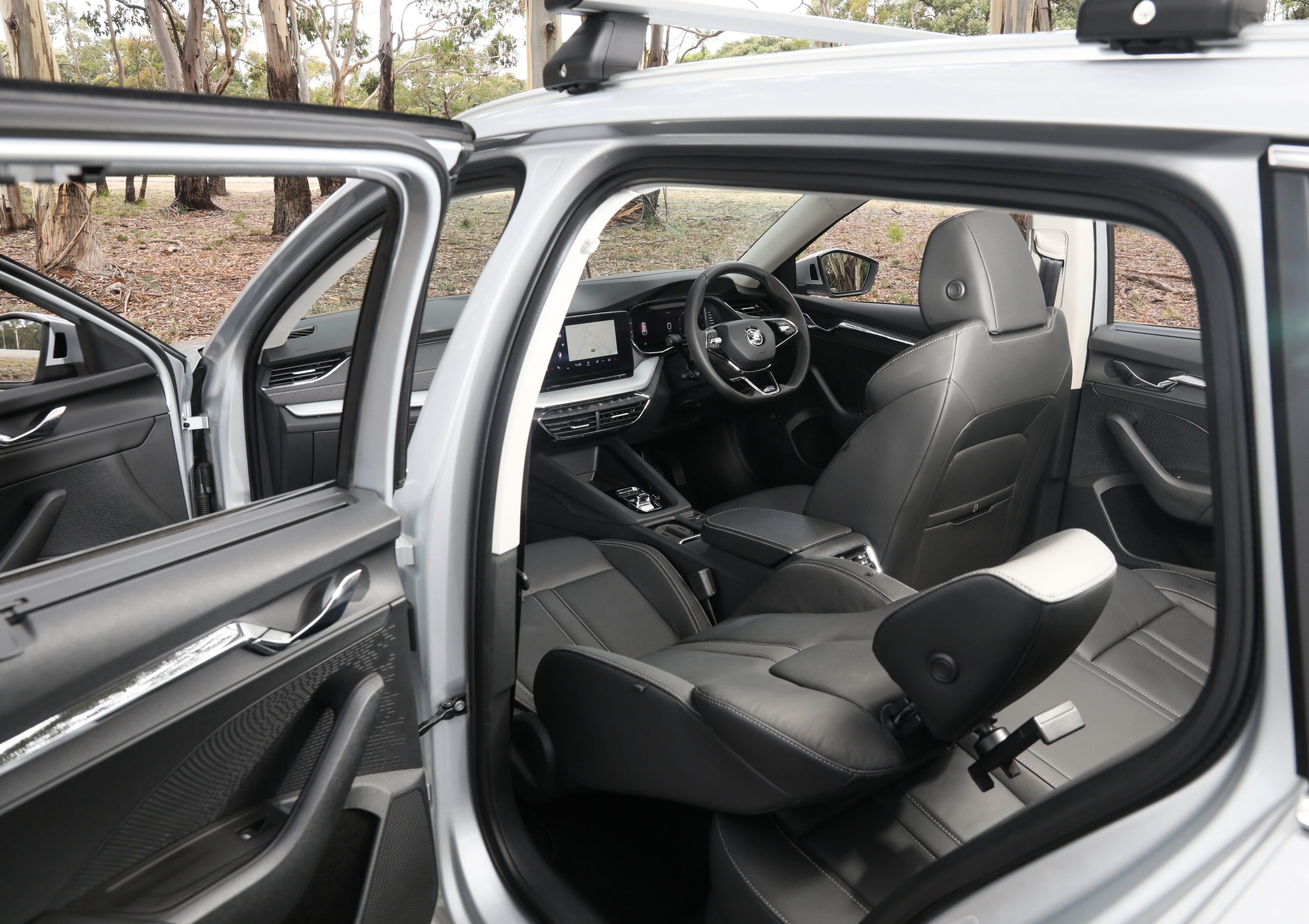
The electronic gear selector is nicely styled and adds a touch of jewellery to the otherwise austere console. Rear-seat accommodation is good for this size car and in the back of the front seats there are some clever electronic device holders.
Overall, the cabin space is all nicely executed and well built, but buyers who are accustomed to more vibrant Japanese or Korean interiors may find it a bit austere and clinical.
However, the more discerning driver will find the real difference on the tarmac. This is where the Skoda shines with rewarding road manners beyond the image of a dowdy wagon. Although powered by a 1.4-litre turbo engine delivering a modest 110kW and 250Nm, the real joy is how it combines sweetly with the dynamics.
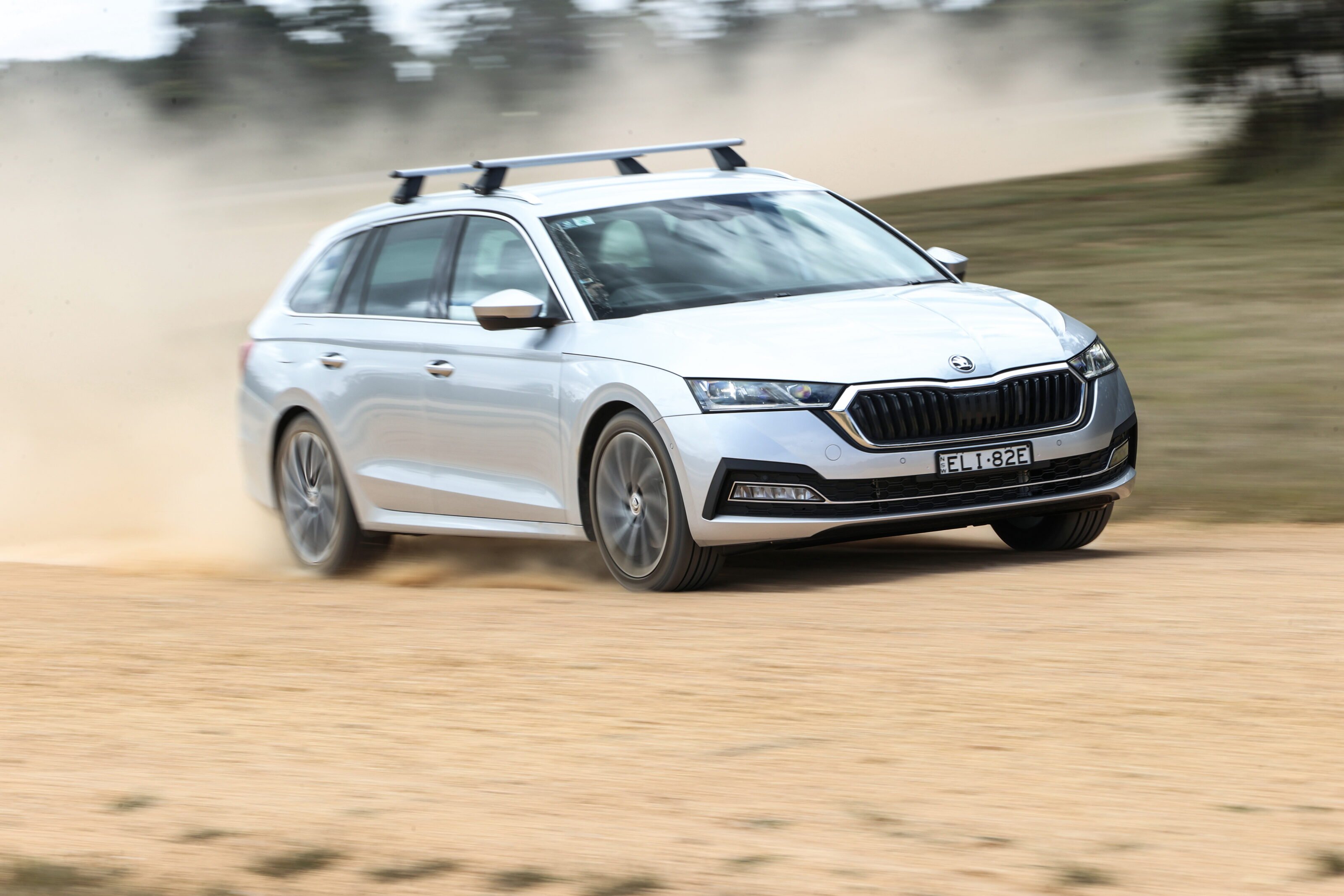
All judges agreed that it was easy to forget that we were driving a wagon. Under that utilitarian body lies a rewarding driving experience, and that is precisely the hidden charm of this little gem.
I don’t mind confessing that I was a wagon nerd for many years as I believe the bodystyle makes a lot of functional sense. For those buyers looking for a different kind of versatility, the Octavia is a great package and would surely put a contented smile on its owner’s face.
The Skoda was a favourite with all of the judges, delivering a fit-for-purpose solution with engaging dynamics: “A peach of a car,” said Dylan. But whilst it does everything well, there was no major breakthrough to elevate it further. Alex summarised it: “Nails function, but no real X-factor.”
The new generation of BMW M3 and M4 represents a radical departure from their long line of esteemed predecessors. M Division’s latest spearhead, the G80-series, is all-new, based upon BMW’s versatile CLAR modular platform.
Topping the M3/M4 range with a base price of $176,900 ($11k over an M4 xDrive coupe), this M4 Competition Convertible isn’t what you’d call cheap. Those are stout figures, however, when you consider that a Porsche 911 Cabriolet yields a 92kW/100Nm disadvantage while wielding an $86,000 premium.
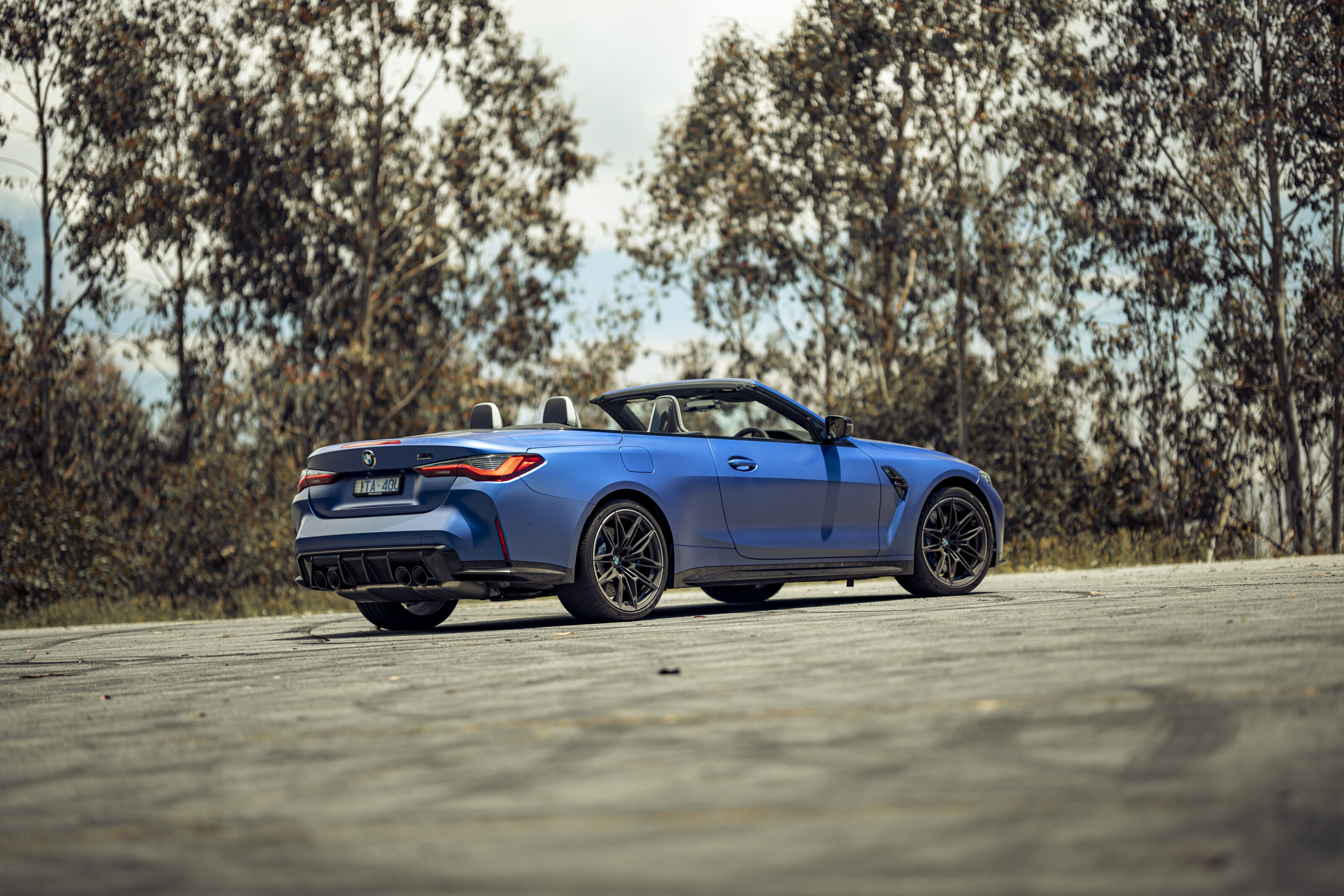
It should outrun the Porsche from the traffic lights, too, as the adoption of all-wheel drive drops the M3/M4’s 0-100km/h time from 3.9-seconds to 3.7-seconds, compared to the 911 Cab’s blousy 4.4-second claim.
As expected, it’s grown in size, measuring 123mm longer and 26mm wider than the superseded F8x generation. A 45mm increase in the wheelbase also delivers improved rear legroom and aids stability at speed.
Unlike the previous F83 M4 convertible, the new G83 trades the old folding metal roof for a more conventional fabric softop, delivering a 40 per cent weight saving and freeing up an additional 80 litres of stowage space in the boot.
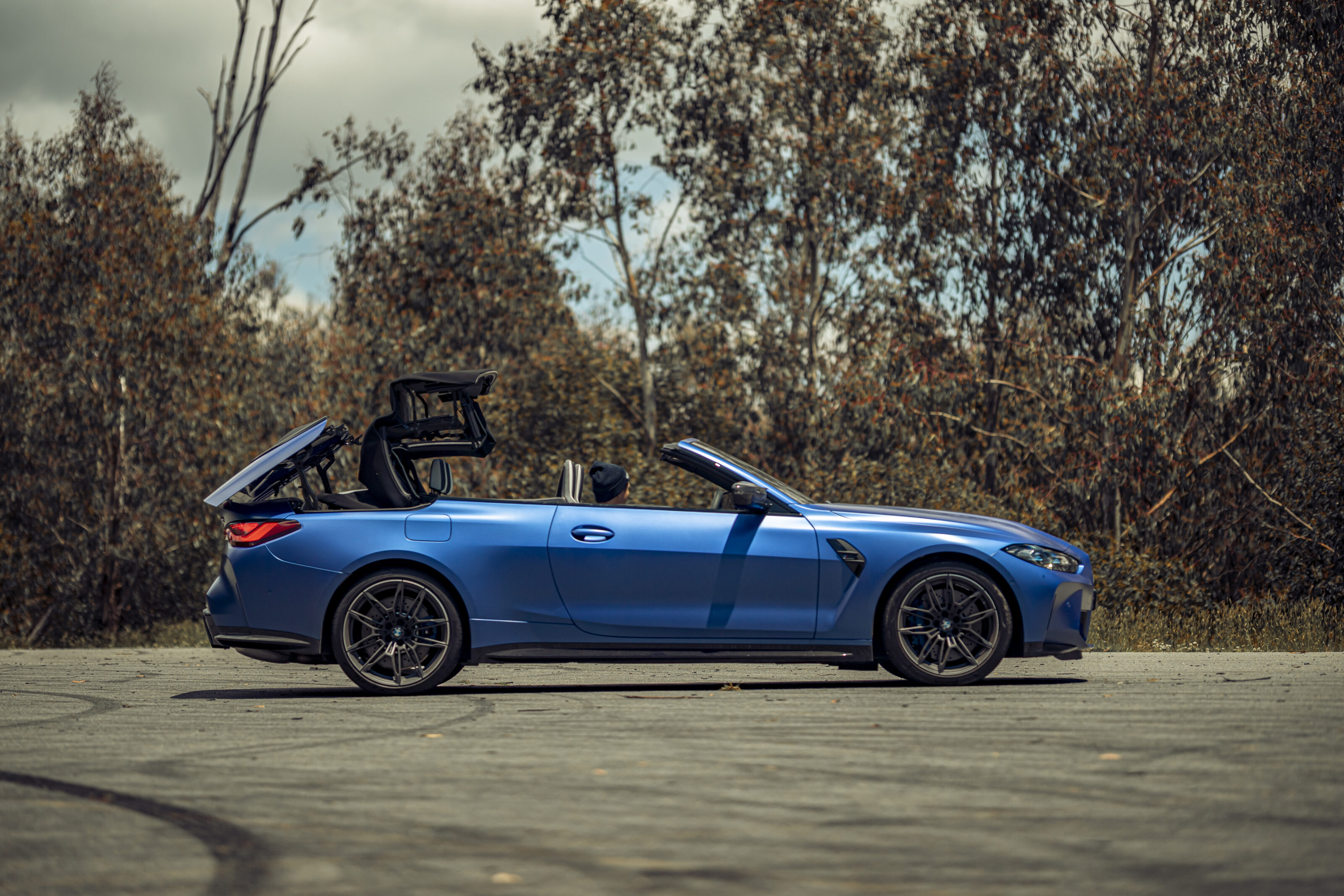
Naturally, however, lopping metal off the top invariably means adding more metal down there. BMW has gone to great lengths to minimise the loss of body rigidity in the open-top M4. A unique aluminium shear panel has been affixed to the xDrive-specific double-joint spring strut front axle subframe, with its five-link rear axle rigidly-mounted to the body along with unique torsion struts and specially tuned elastokinematics and kinematics. The M4 convertible has also benefited from a bespoke steering ratio and geometry.
Factor in the added componentry of the xDrive system, and the G83 M4 convertible tips the scales at a portly 1995kg. That’s 205kg more than the preceding M4 convertible, 265kg more than the current rear-drive M3 Competition and, astoundingly, 25kg more than the outgoing X3 M Competition SUV.
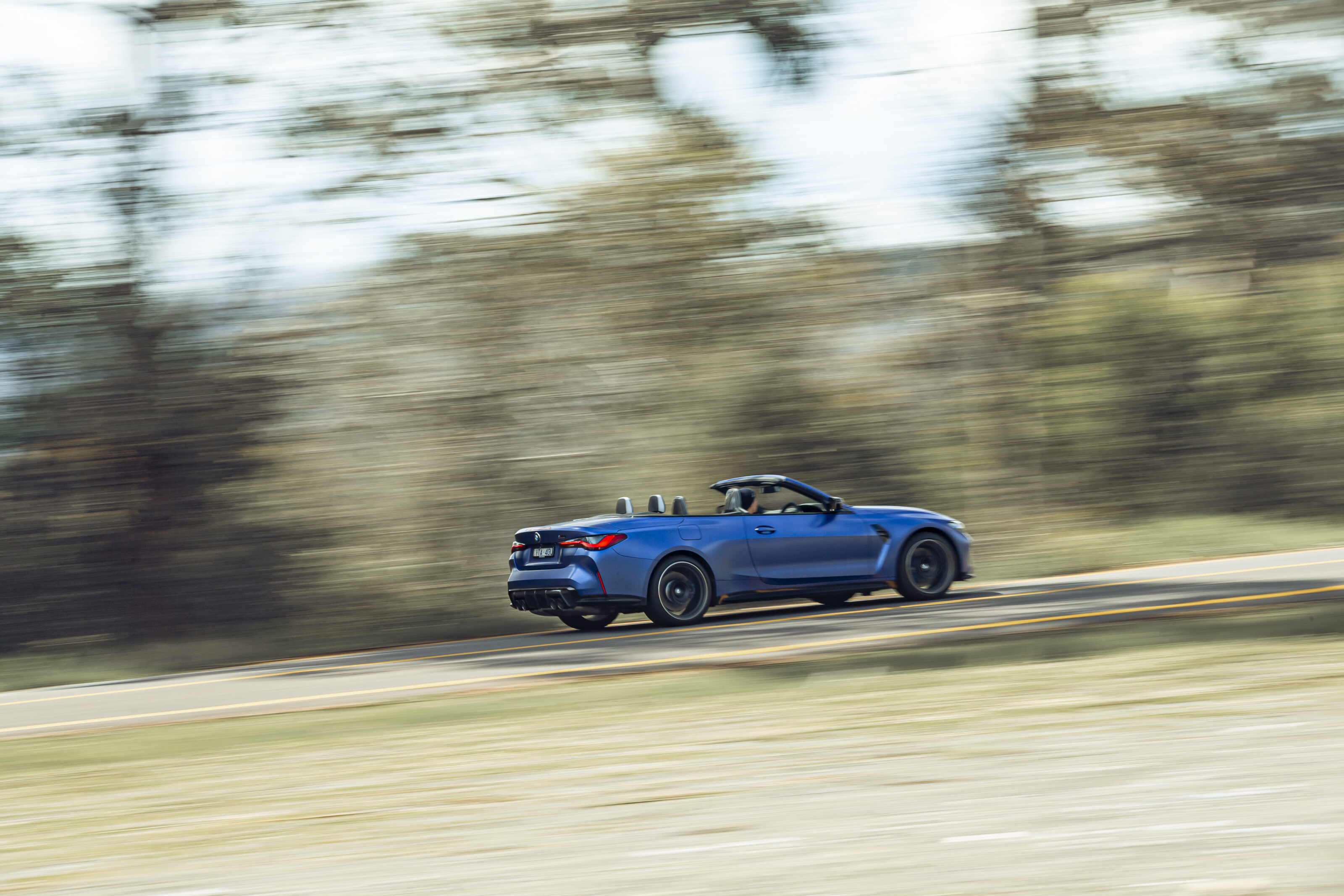
Despite weighing nigh on two tonnes, the M4 Competition convertible disguises its added mass well thanks to the deep well of power and torque produced by the S58 inline-six.
Superficially, the basics appear similar to the old S55, sharing its twin-turbo inline configuration and 3.0-litres of swept capacity. In truth, however, the new S58 differs in the details by way of its stronger closed-deck construction (a boon for power tuners), forged crankshaft, longer stroke (increased to 90mm), lower compression (9.3:1 v 10.2:1) and breathes in more boost through two mono-scroll turbines (maxing out in Competition trim at 18.9 psi).
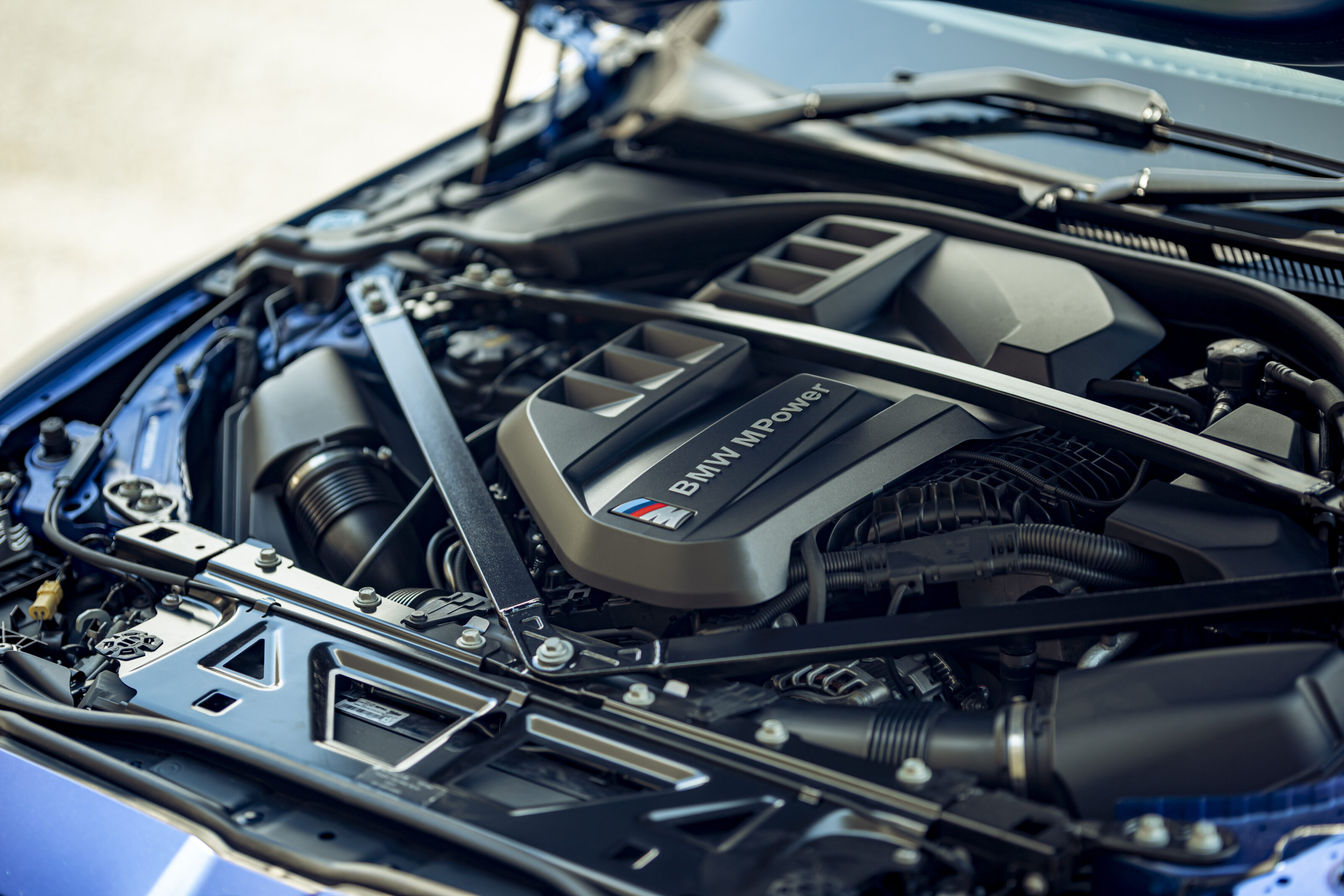
Developments under the bonnet improve efficiency and emissions as well as performance. A peak of 375kW is delivered at 6250rpm, with a maximum of 650Nm on tap between 2750 and 5500rpm – 1400rpm lower than the old S55. We’ll get to the fast stuff in a minute, however.
Hit the centre console-mounted starter button and set off down the road and, instantly, you can tell that the new series of M3 and M4 are vastly different to their predecessors. It feels dense, and surefooted, with markedly improved low-speed comfort and damping.
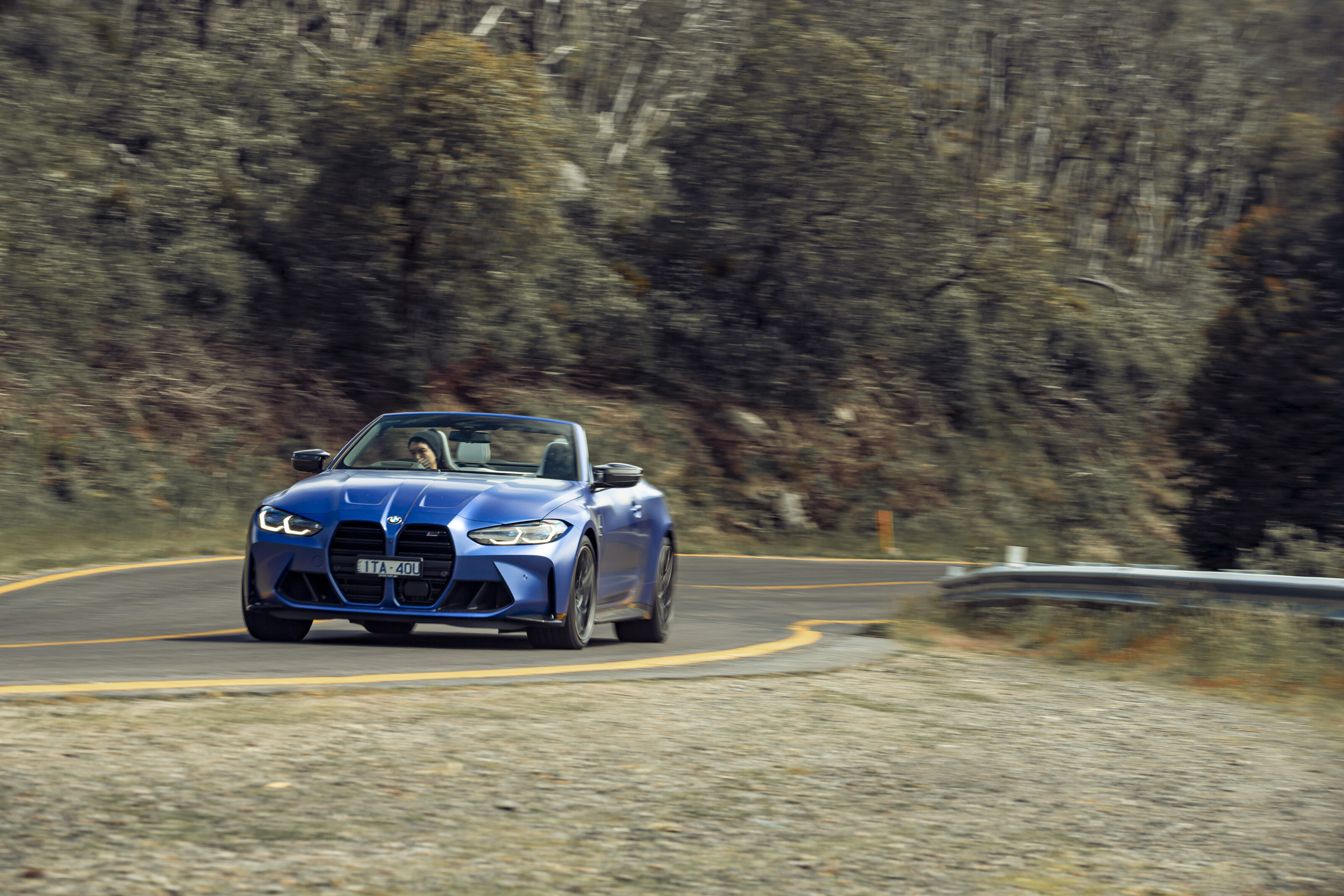
There’s still an underlying firmness, but it no longer crashes and jolts over bumps and small potholes like the previous generation did. Reaching for Sport, and even Sport Plus, suspension modes on anything other than manicured tarmac is no longer an exercise in masochism. Impressive, considering the car rolls on staggered 19/20-inch alloy wheels shod in low-profile 275/285 tyres.
The ZF eight-speed torque-converter auto quells much of the old dual-clutch’s urban idiosyncrasies. Shifts are solid, but it’s a much smoother unit in traffic and urban settings. I did find that Auto Hold function caused a moment of hesitation followed a by slight shunt upon take off. Disabling Auto Hold and contending with the minor drivetrain creep resulted in far smoother progress.
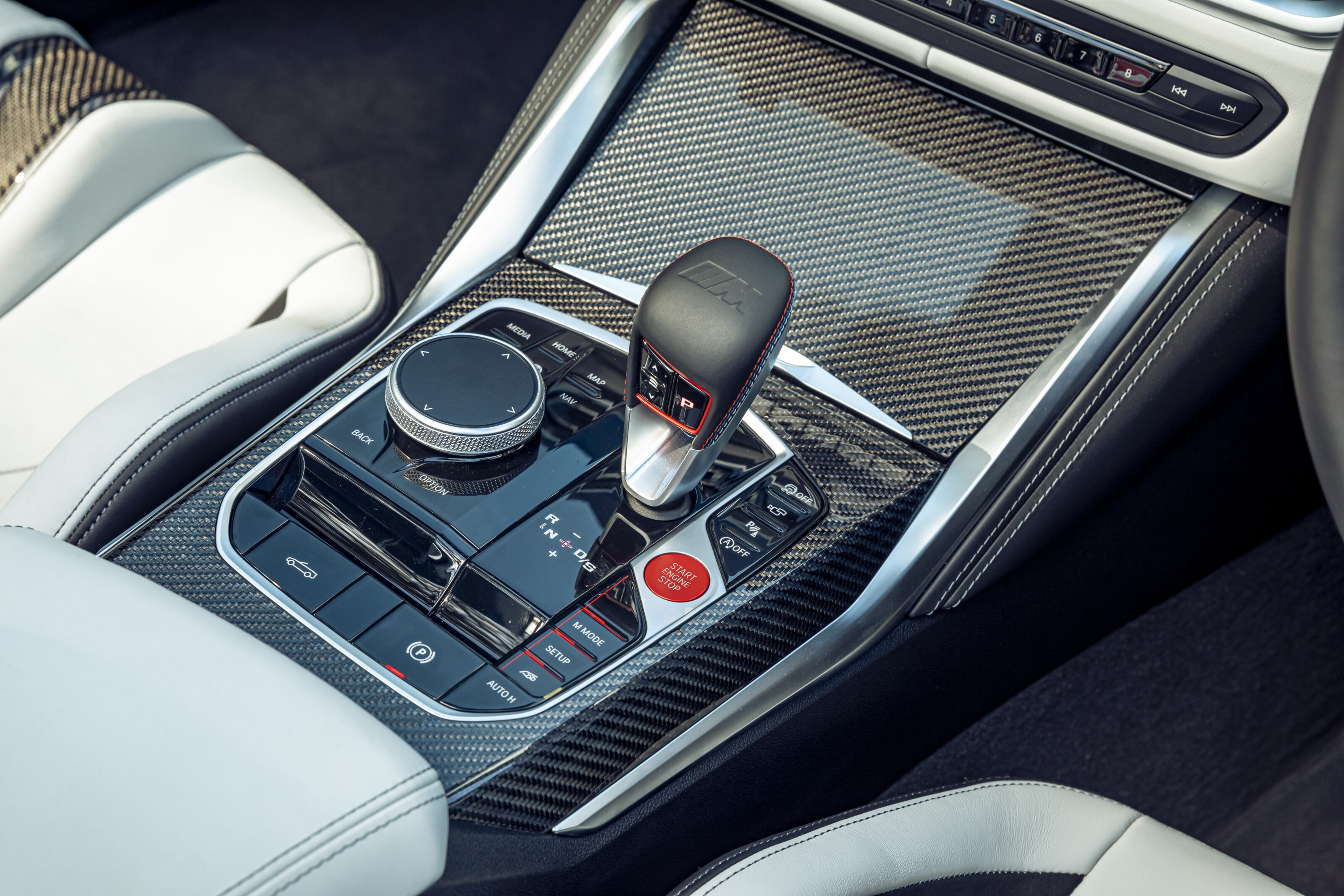
It can feel slightly hesitant to respond from idle due to a lazy throttle calibration in comfort mode, and a lower compression motor working through some slight turbo lag. Once it gets going, which doesn’t take long, the M4 is a seriously quick machine.
Even more impressive, however, is the effortless mid-range response. For the quickest and most discreet point-to-point transport, you’ll be leaning on the S58’s prodigious torque loads more than top-end power, short-shifting and keeping the digital tachometer needle plugged into the meaty mid-range.
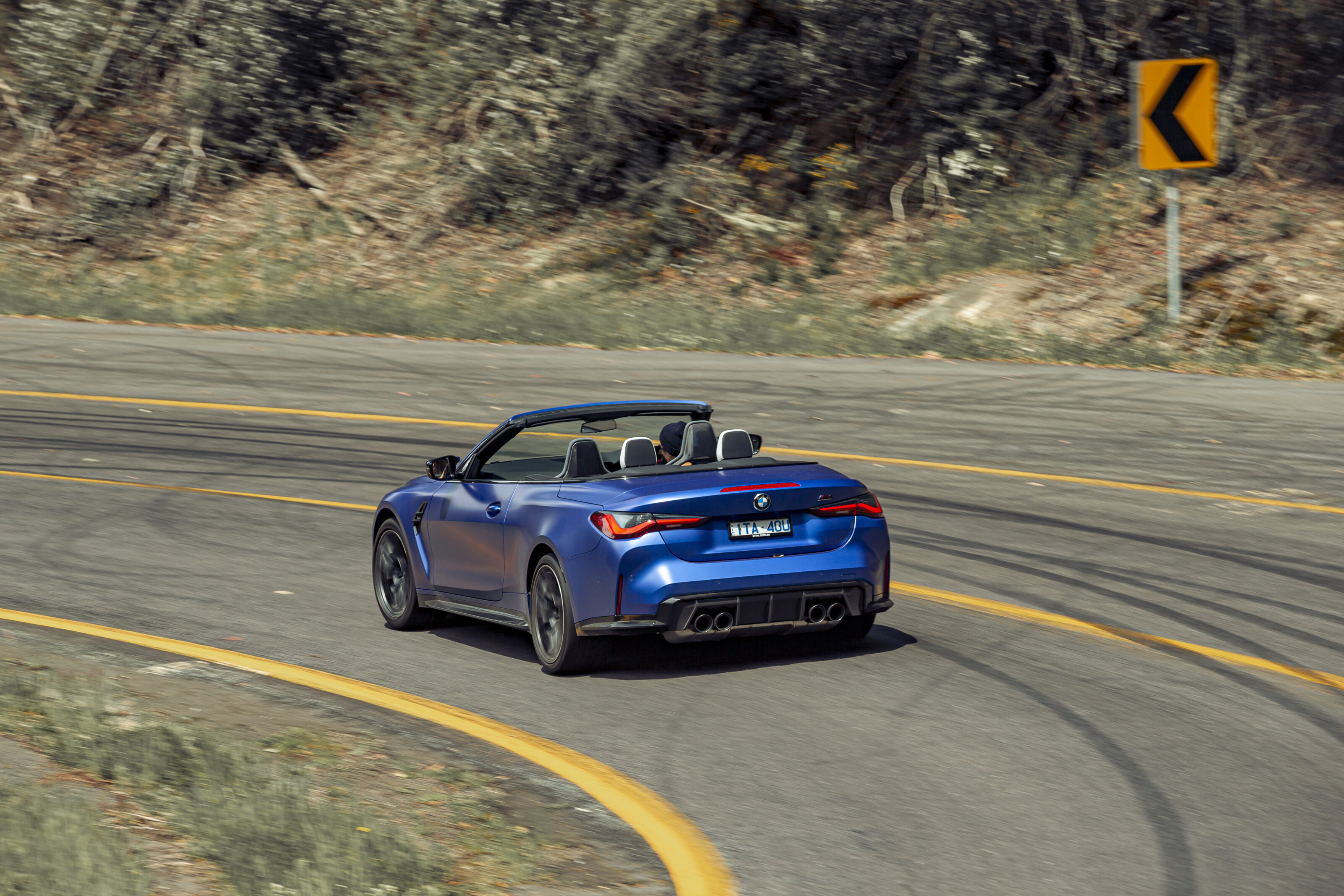
Despite a 7200rpm redline, you essentially never need to exceed 6000rpm as there’s little payoff to be found up there. Certainly not the aural kind either.
Fitted with two petrol particulate filters, the latest M4 doesn’t boast the histrionic bark of certain other rivals, but it still sounds purposeful and tough from the inside. BMW’s Active Sound Design feels more organic and authentic, but you get the feeling that the car is never as loud from the outside as it is from inside the cabin. The active exhaust button on the centre console doesn’t add much volume, instead dropping the note a semitone or so with more rumble on idle.
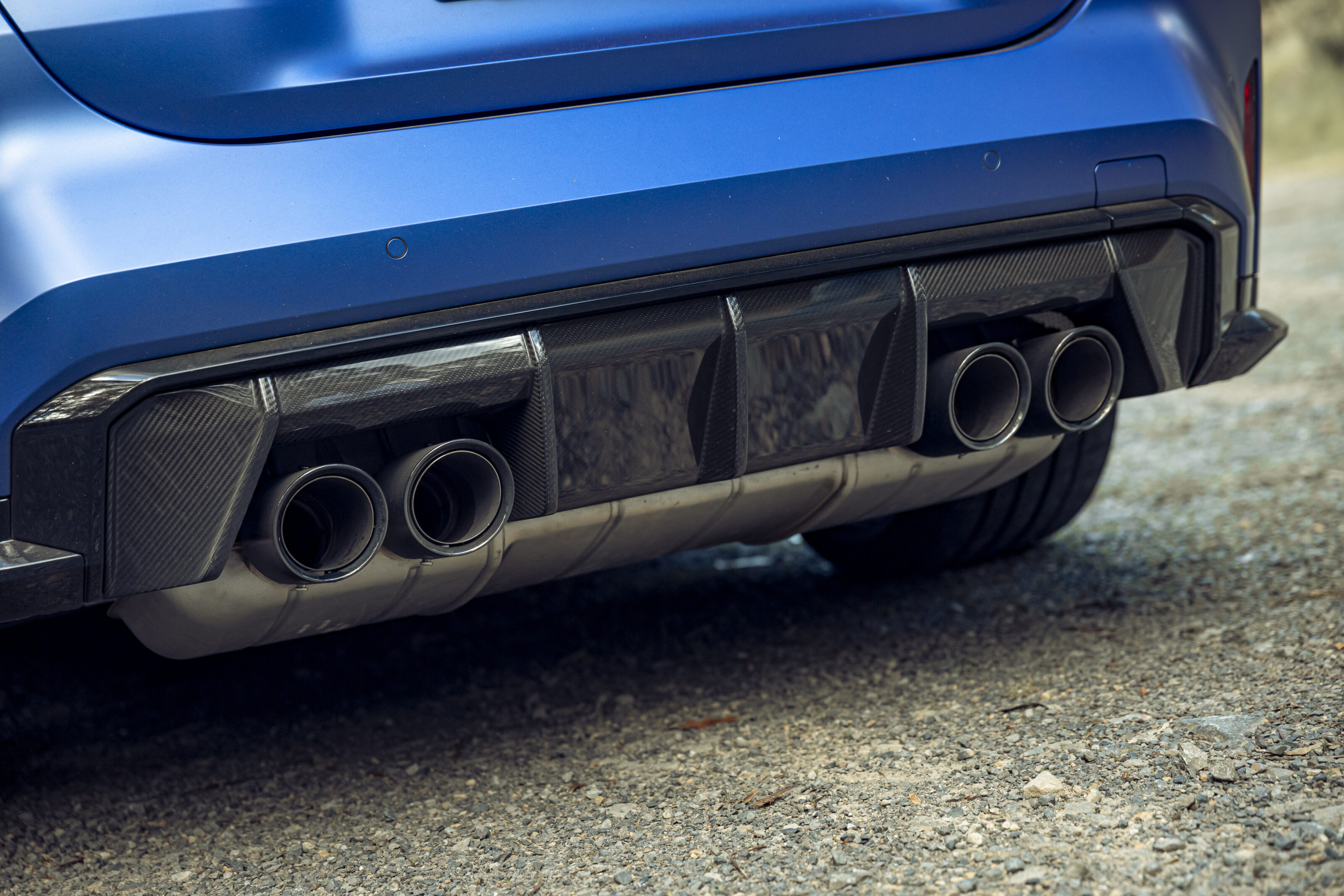
With the roof up, cabin noise is well-contained, dominated by a slight wind rustle – though that’s to be expected of any soft-top convertible. When the surface changes to coarser tarmac, the dominant sound switches from wind noise to a dull tyre roar – this car coming fitted with a bespoke BMW blend of Pirelli P Zero.
It was a near-30 degree day up on Victoria’s Lake Mountain, and by the day’s end the the rubber was audibly signalling its displeasure on the cruise back down to Marysville. The front end remains composed, however, progressively easing into understeer which is easily remedied with a nudge of throttle.
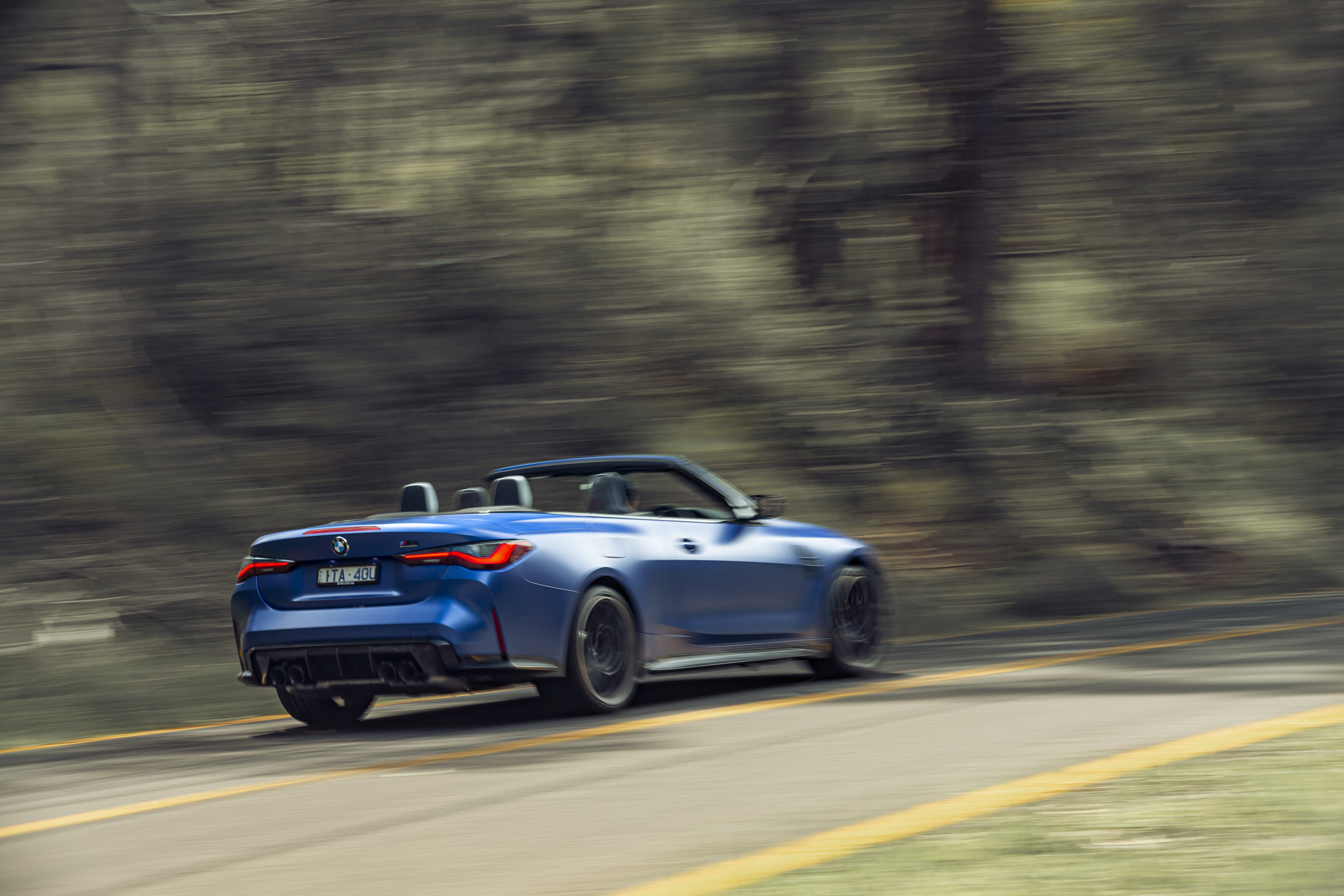
Any concerns that the adoption of xDrive has sanitised M Division’s MVP can be laid to rest. It’s a sophisticated system that feels seamless, primarily feeding power to the rear wheels and only to the fronts when the vehicle senses extra traction is needed. About the biggest compliment you can give it is that if you weren’t told, you’d be hard pressed to guess it had a pair of front driveshafts. Any notion of torque steer is completely absent.
Driving the M4 convertible quick is still an involving experience, even with everything in its most relaxed settings, the M4 will give frequent hints of neutrality if you begin playing with lateral inertia, and will wiggle its hips just so on corner exit under throttle.
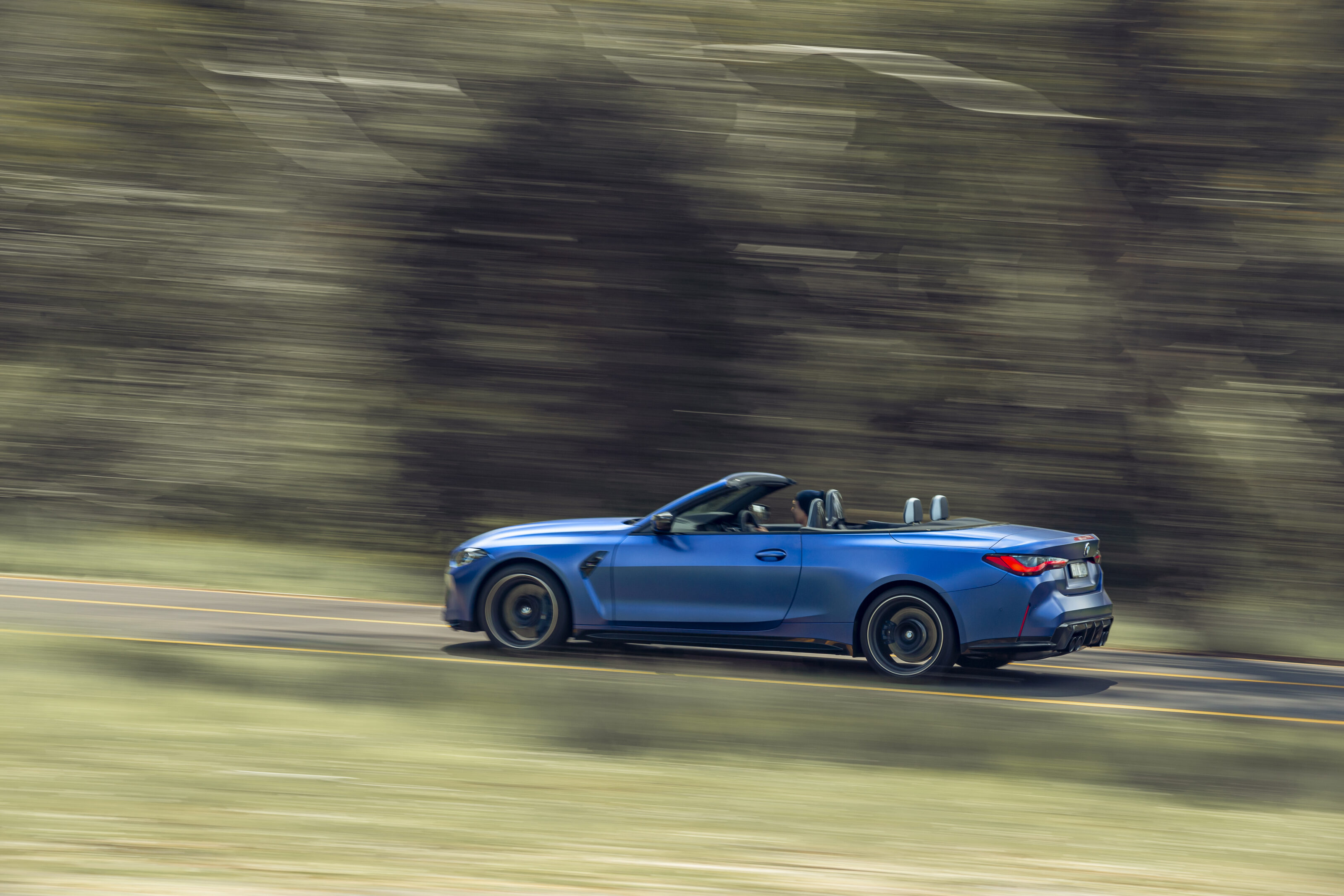
It might lack the white-knuckled thrill of the rear-drive car, but for some that’s like saying you miss the thrill of skydiving or snake charming. In a pure performance sense, the xDrive simply feels better equipped to deploy this impressive level of power, adding a light touch of composure to the effortless consumption of kilometres.
There are even more layers to discover once you delve into the various configurable settings within the drive modes menu, easily engaged by the button near the shifter. Settings for engine mapping, transmission speed, adaptive dampers, steering, brake-by-wire response and ESC all offer varying levels of ferocity.
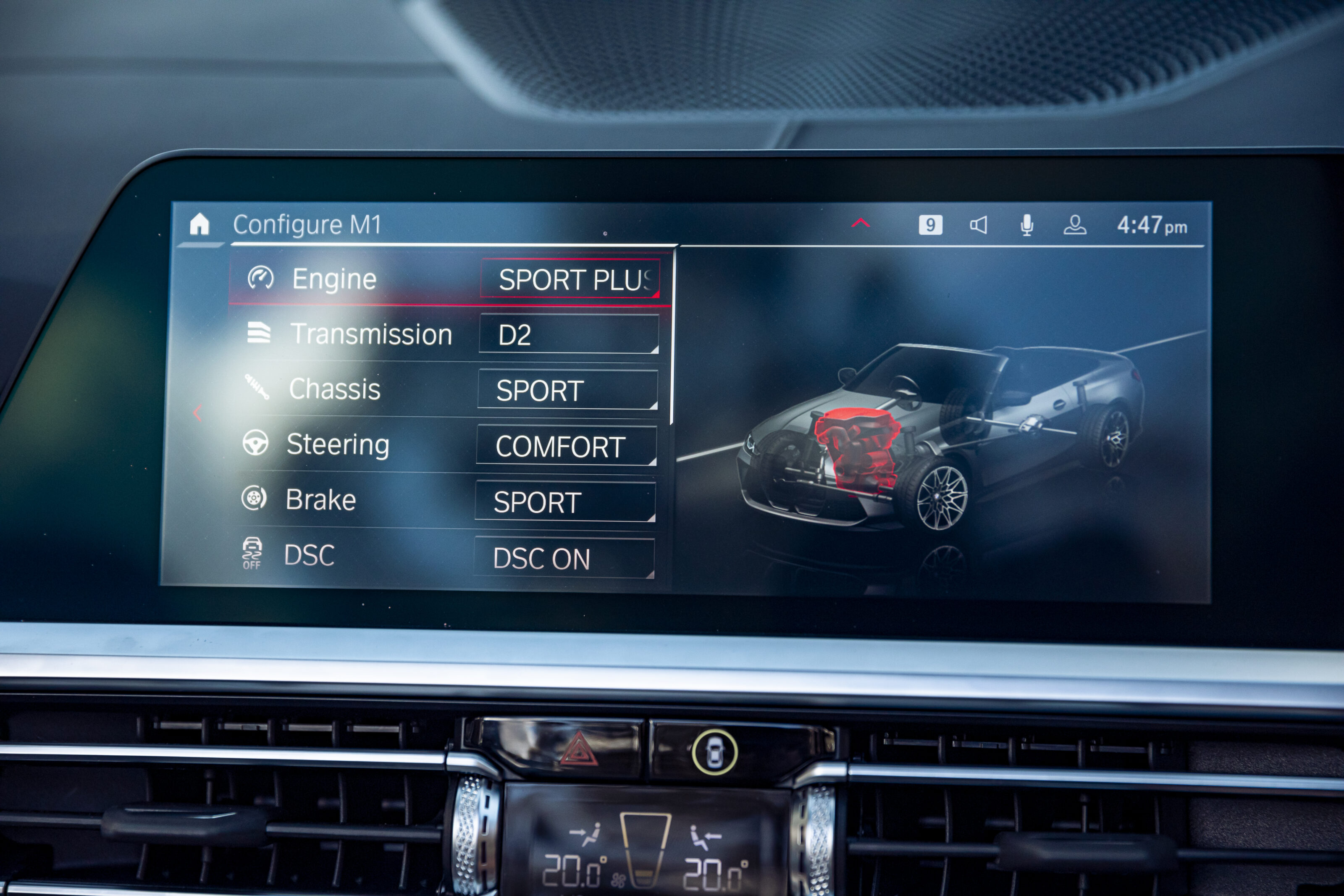
M Dynamic Mode (MDM), a loosened ESC setting, barely distinguishes itself from a fully engaged system, and certainly doesn’t yield the sublime generosity found in the rear-drive manual non-Comp M3 we drove recently. Turn ESC off and lock the car into its permanent 2WD mode, and there are ten settings of traction control to experiment with. This also unlocks BMW’s gamified M Drift Analyser that will score your yaw readings out of five stars.
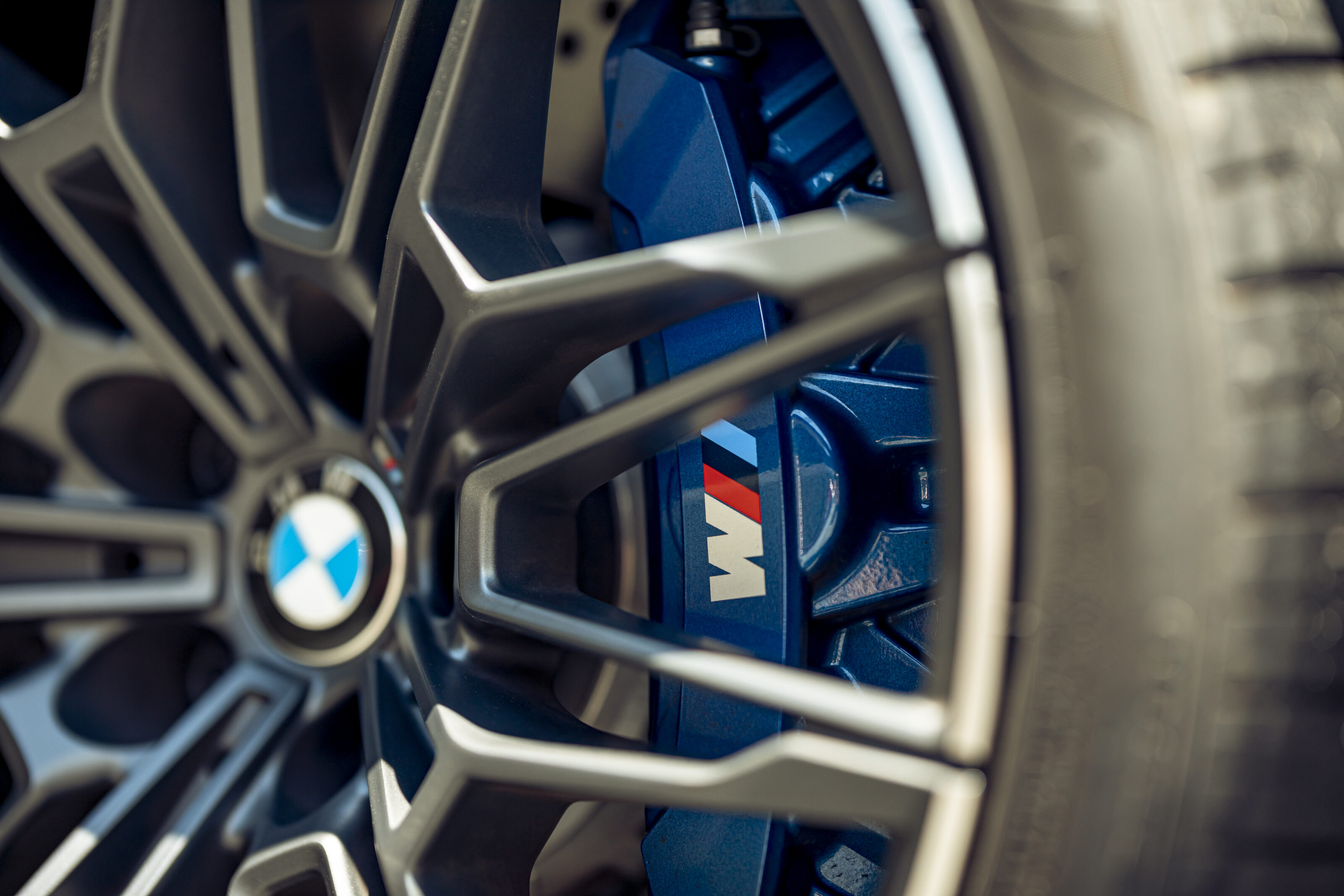
Wick everything up and the steering becomes quicker and weightier, providing more immediacy on corner entry and more feedback from the front end. With brakes in Sport, pedal travel to the bite point is reduced and more sensitive, although on the road this can narrow the window of modulation.
There’s little detectable difference between the three transmission speeds and, even at its fastest, still feels more cogent and cohesive than the old twin-clutch.
While the xDrive M4 Convertible disguises its kerb weight through the sheer ease in which it piles on pace, combined with its high-levels of grip, there is increased body roll to contend with, and you’ll feel its heft under rapid direction changes and moments of hard braking; forcing a pause as you wait for the car to settle on its springs.
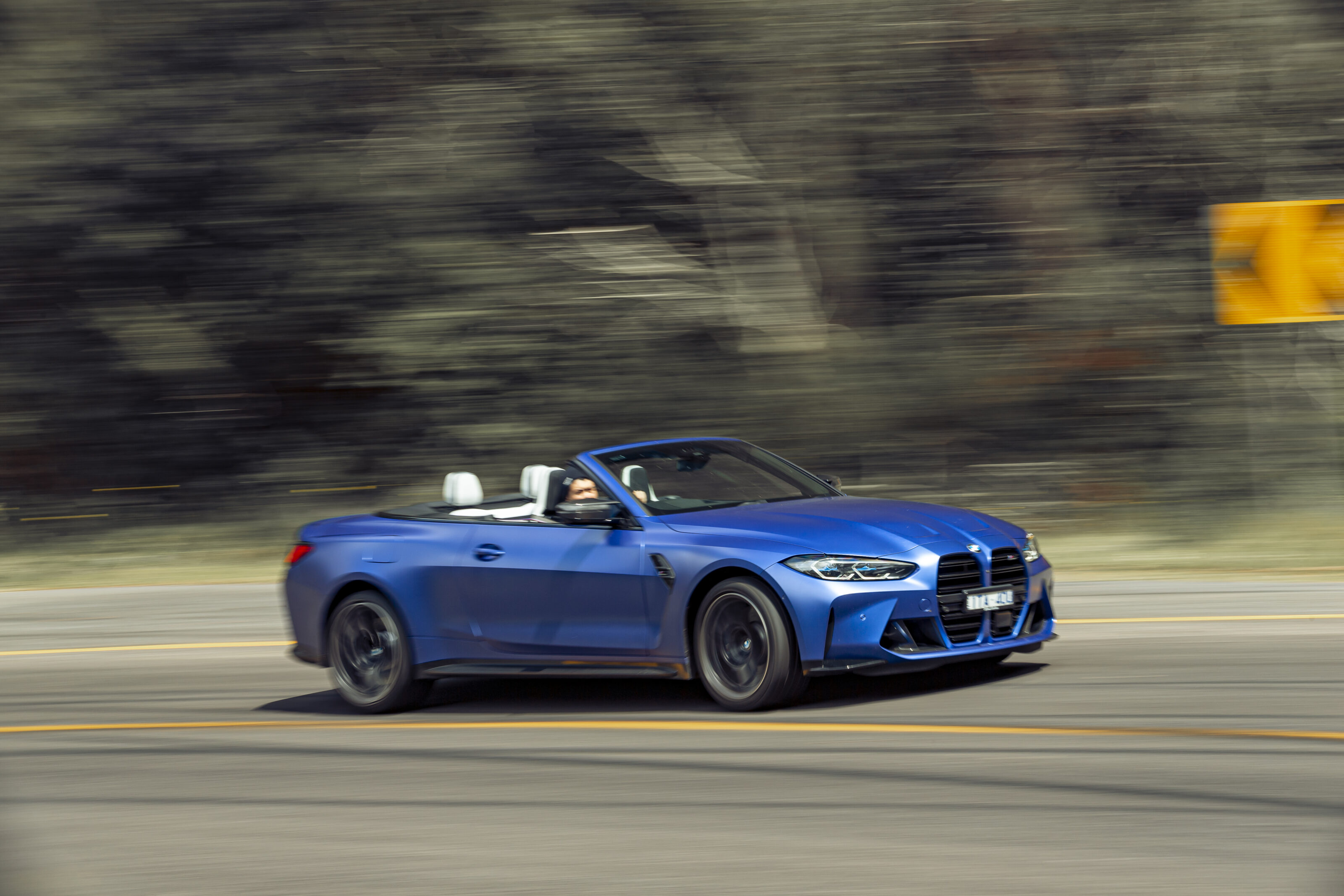
Scuttle shake was minimal, appearing only a few times and is primarily felt through the steering column. There were only a couple of instances of momentary body shudder over heavily corrugated tarmac when really pushing.
But few M4 Convertible owners will likely be seeking ten-tenths of limit performance. So while the open-top M4 may concede minor dynamic ground to its fixed-head siblings, and their manual rear-drive availability promises the ultimate enthusiast experience, the xDrive M4 convertible arguably delivers the most versatility and widest bandwidth in the everyday experience with the added lifestyle perks of open-air motoring.
In many ways, it almost feels like you’re getting two, maybe even three, cars for the price of one.
In that respect, as an ownership proposition, you might find that the most expensive M4 in the range also has the most to give.
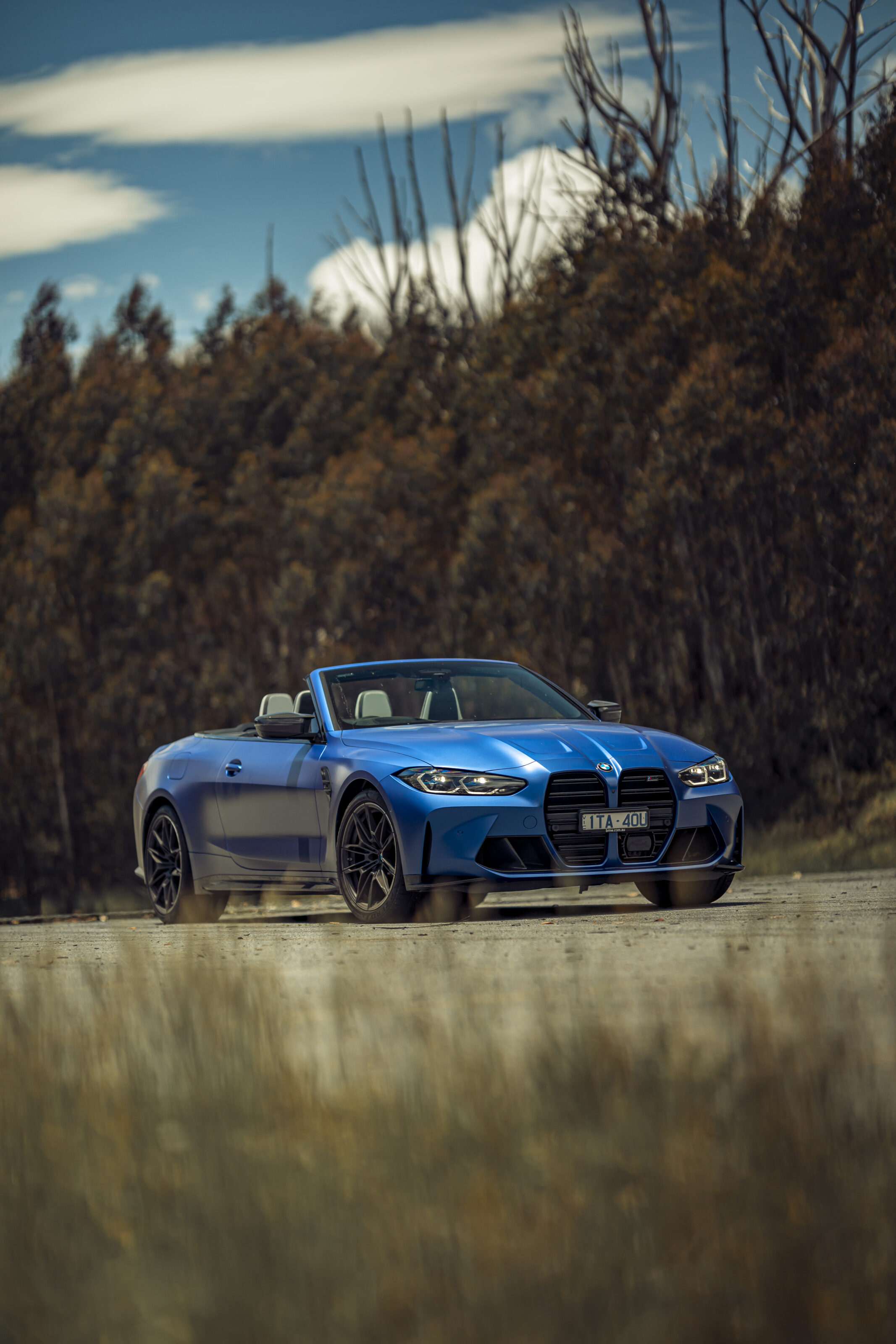
2022 BMW M4 Competition xDrive Convertible technical specs
Traditional, conservative, outdated, or anything else you’d like to call the Lexus RX probably won’t matter to a Lexus RX customer – it’s still the second-most popular Lexus model behind the now-replaced (and smaller RAV4 sibling) NX.
Both NX and RX topped the Lexus sales charts through 2020 and 2021 by quite a margin, with both towards the end of their lifespans. Of the total 9290 Lexus sales in 2021, some 1908 were for the RX and 3091 the NX. If nothing else, it proves their popularity among… er, Lexerati?
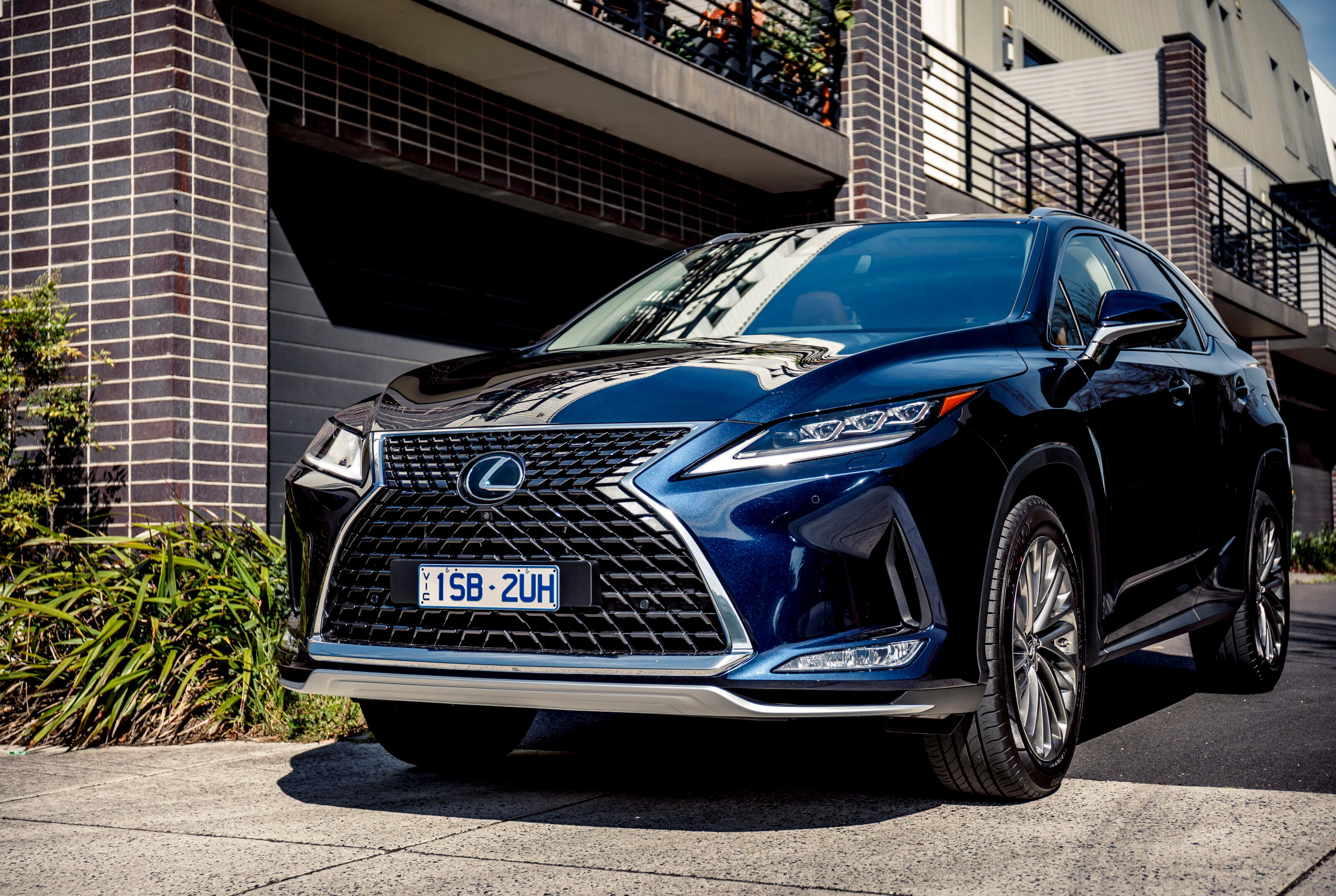
And while the newer, smaller, and cheaper UX catches up (1744 units in 2021), the NX has just entered its second generation and a new RX is likely to arrive next year.
We know Lexus customers tend to prefer a plush, luxurious product and can be smart with their money about this. So what is it about the ageing RX large SUV, twin to the last-gen Toyota Kluger, that keeps Lexus customers coming in? As far as old-school, big atmo engine family cars go, the RX is still very much holding the fort.
Pricing and Features
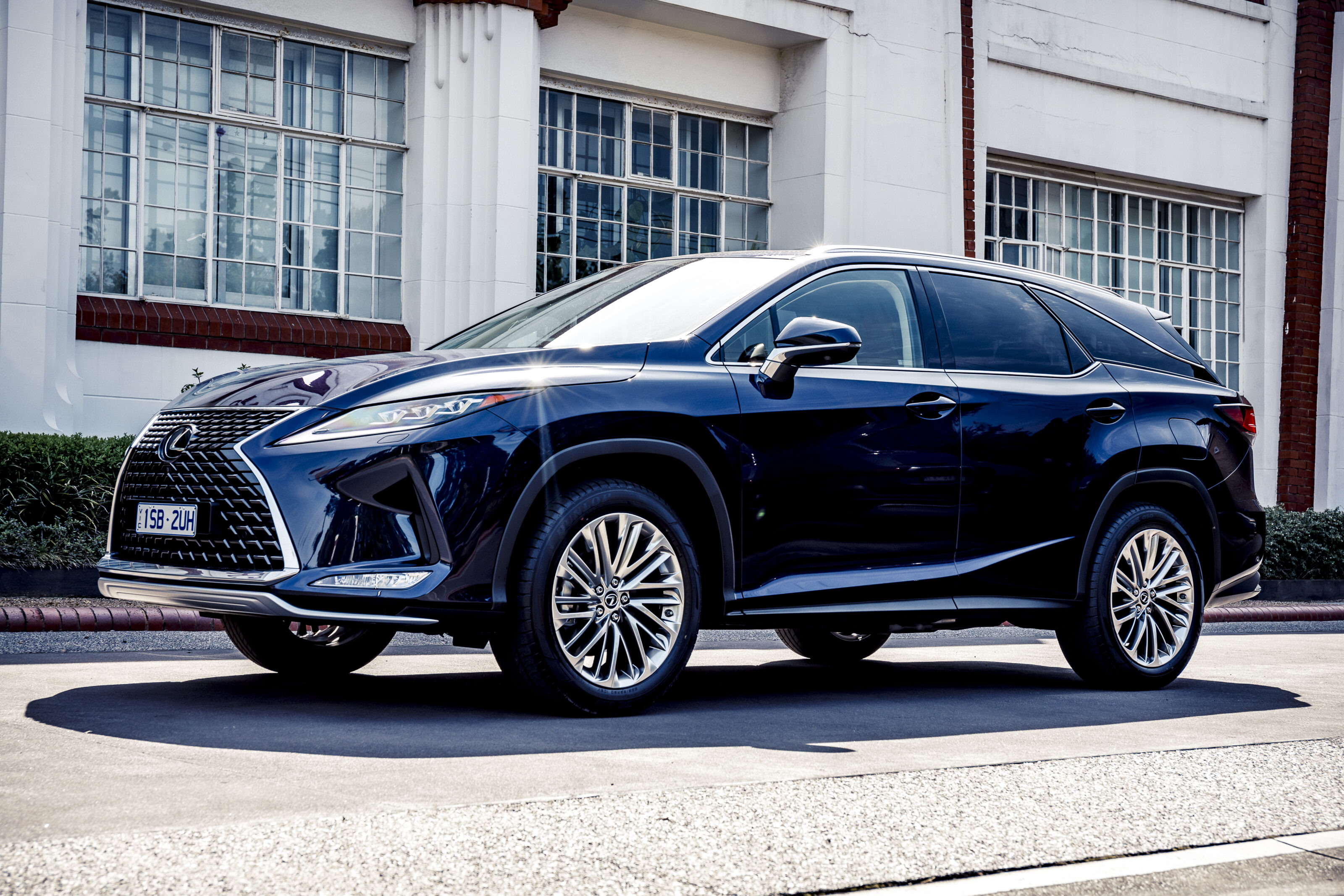
The specific variant we have here is the $103,836 2022 Lexus RX350L Sport Luxury, the largest and highest spec version of the RX before including a hybrid drivetrain. It goes up against the likes of the Audi Q7 45TDI, BMW X5 25d, or even (after a small price step up to $110,000) the base Mercedes-Benz GLE 300d. More obviously, the Genesis GV80 is a relative newcomer to the large luxury SUV category that lines up quite closely with the RX.
But a third row comes standard in the 350L, the L denoting the longer-bodied seven-seater. The Audi do too, but the pricier base GLE doesn’t have a third row as standard, nor does the X5.
The Q7 is the only of the Germans with a V6 (turbo-diesel), plus the GV80’s range-toppers come with petrol or diesel turbo sixes to stand up to the Lexus’ 3.5-litre petrol V6.
However, unlike the Audi, the RX350L Sport Luxury is no base model.
We know Lexus customers tend to prefer a plush, luxurious product, and can be smart with their money about this
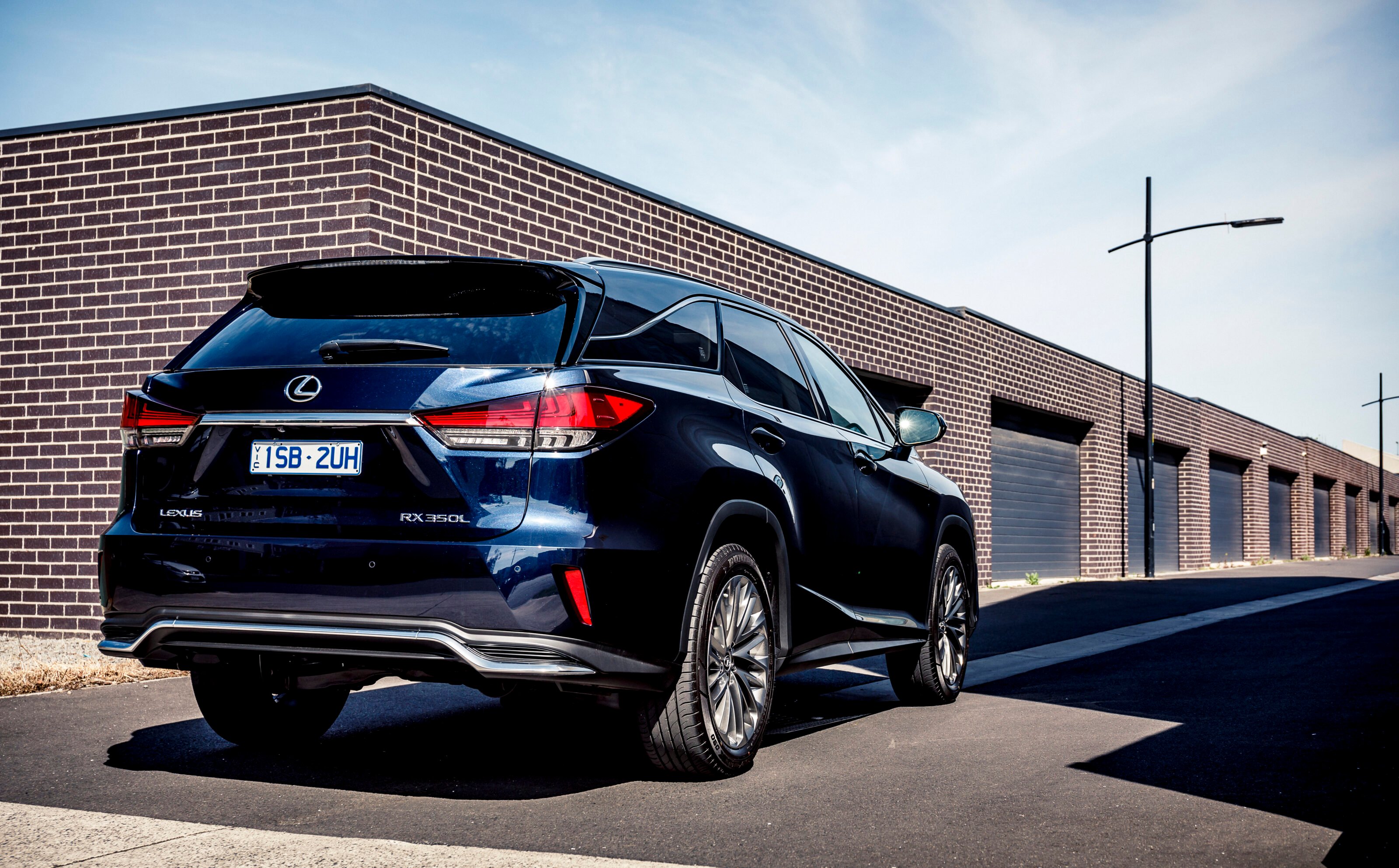
The list of features leaves little missing, with the Sport Luxury gaining additional gear over the already packed Luxury grade. Adaptive suspension, a 15-speaker Mark Levinson sound system, a partially leather-upholstered interior, fully adjustable front seats and seat heating in the second row, plus a specific set of 20-inch alloys and triple-LED adaptive headlights are just a handful of the highlights.
On top of that, carry-overs from the lower-spec Luxury spec include paddleshifters with drive mode select, the Lexus safety suite with Lane Trace Assist (LTA), road sign assist, pre-collision safety and braking. Blind-spot monitoring, radar cruise, a panoramic parking camera, ten airbags, and active corner assist are also included.
Comfort and Space
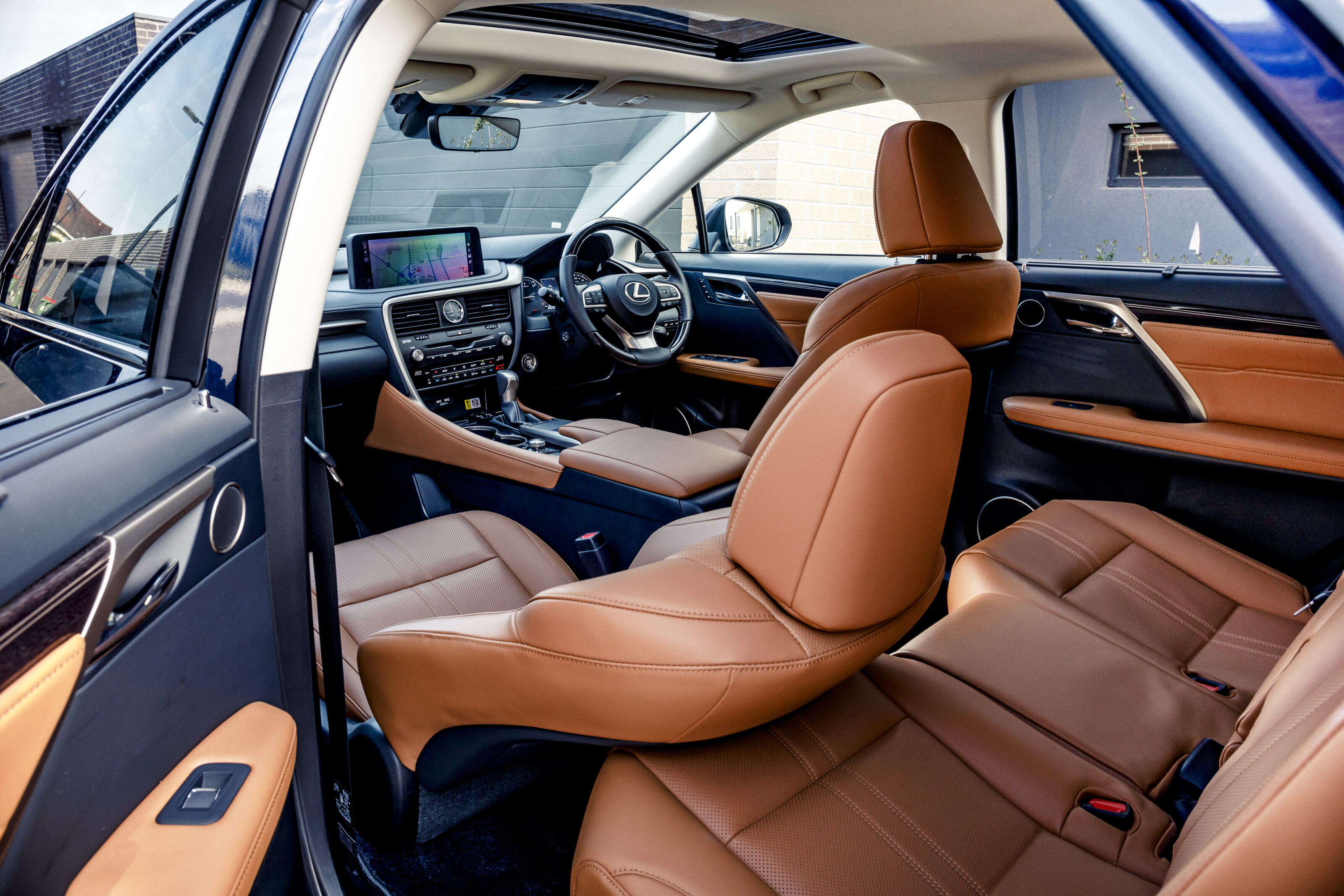
From the driver’s seat, where you’re not always able to directly appreciate the safety suite or 20-inch wheels, there’s still plenty to enjoy. From the little things like a slot to hold your smartphone in place firmly (and importantly, out of use) to the more obvious such as heated and vented front seats, plus the heated steering wheel, the RX350L Sport Luxury exudes Big Spec Energy.
In our test car, the caramel leather provided a nice contrast to the dark, almost black laser-cut wood panelling that accents the centre console, though the coated wood trim on the steering wheel is a little more of a jarring textural change when steering.
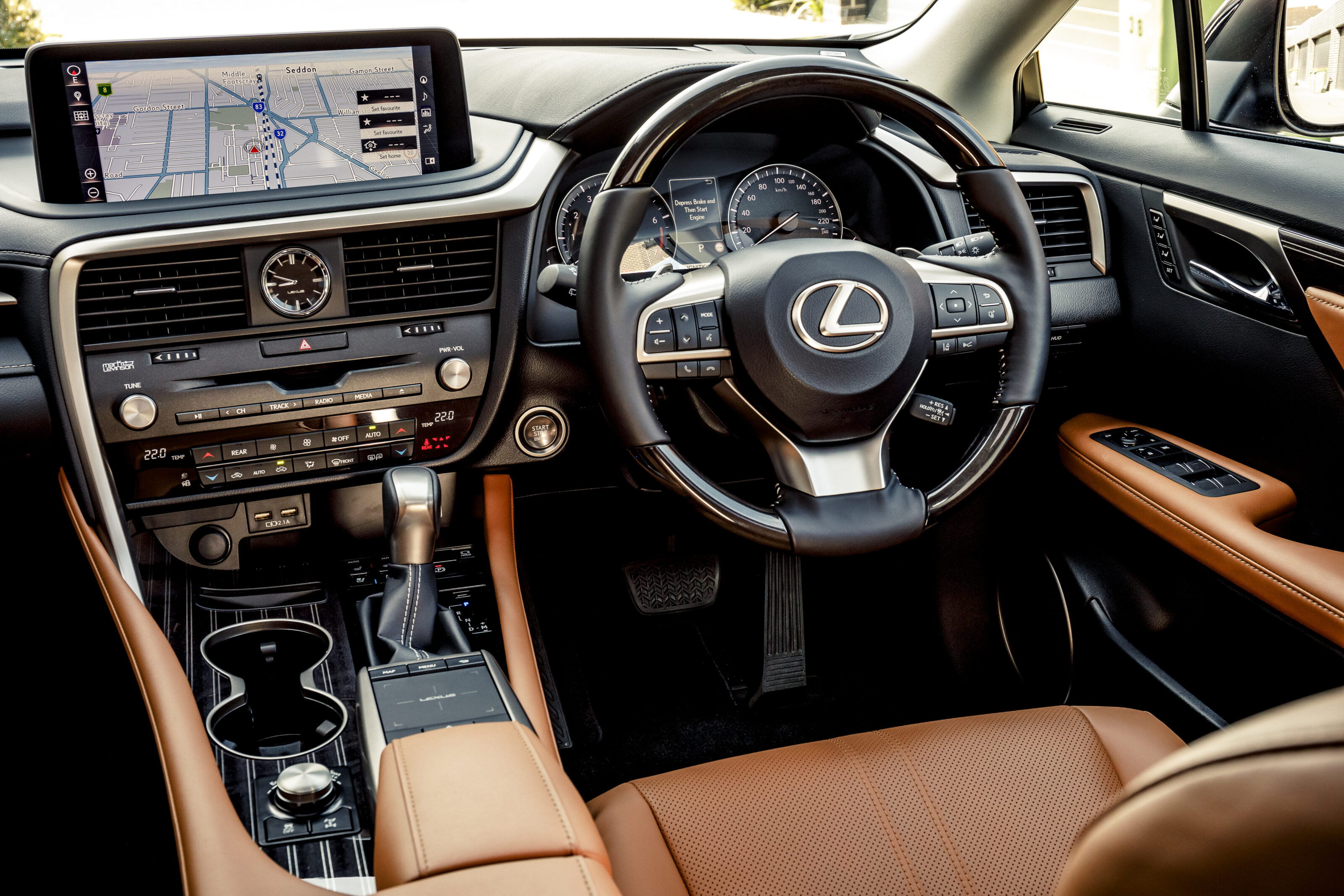
A wireless charging pad sits forward under the ventilation controls, all still relatively traditional buttons. Speaking of traditional, the next section up on the middle is the CD player. Lexus still includes these, even in its new models, and for its target audience, there’s always a chance the CD collection will come out when there’s no radio reception on a road trip.
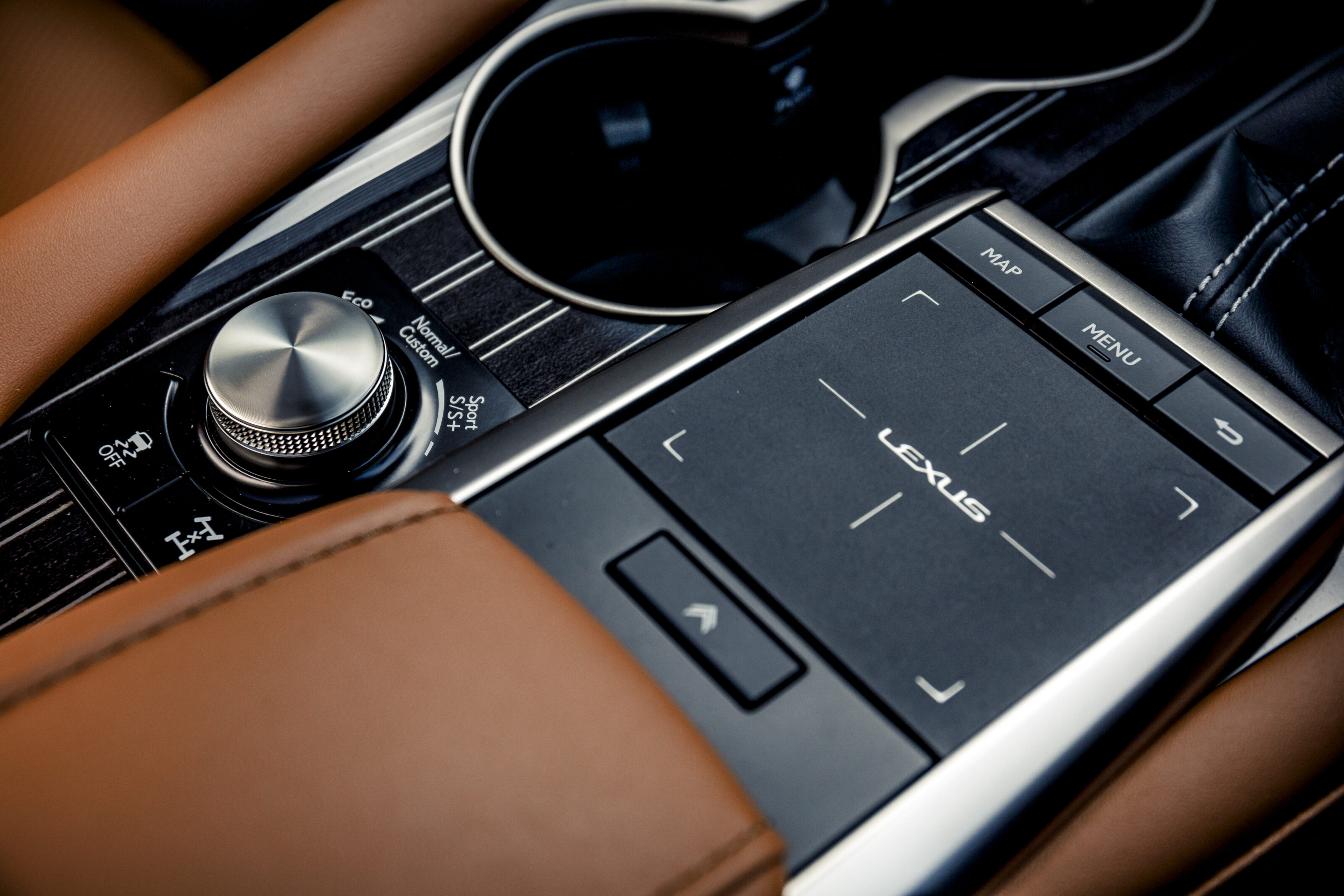
Unfortunately, Lexus’ ageing infotainment system persists too, with the main control for it being the haptic touchpad by the gear selector. It’s a point of Lexus design that has bothered road testers for years as it’s quite fiddly to use, but opinion among owners is more divided as some get used to it… in a Stockholm syndrome kind of way, probably.
The infotainment itself is acceptable, though a new system from Lexus is coming through in new models like the NX and it’s a major improvement. With the RX system, graphics are outdated and basic, navigation is frustrating to use and even the resolution of the reversing camera is sub-par given the crystal-clear image even budget cars provide these days.
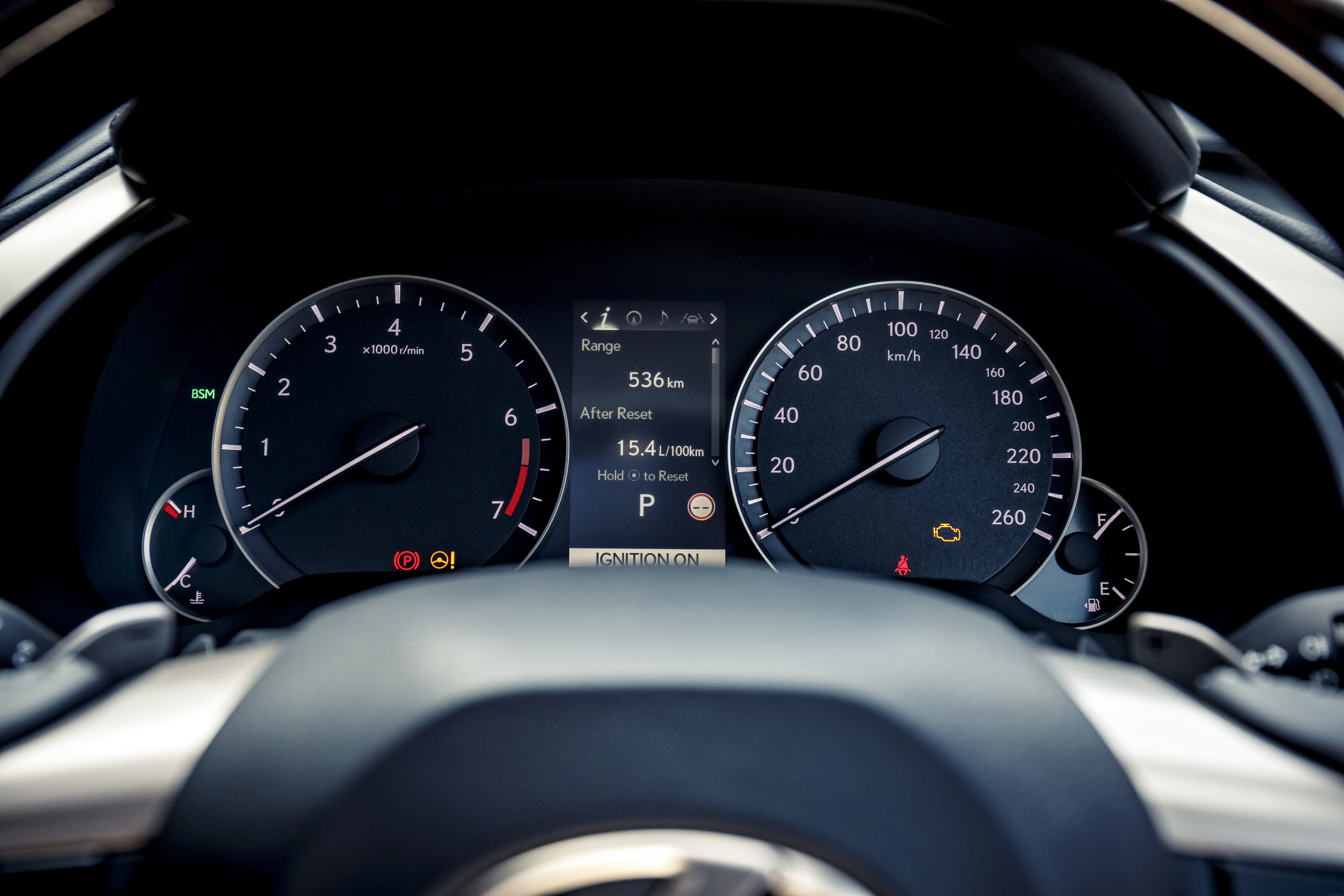
On the other hand, the basic and old-school driver display and steering wheel controls are welcome, with uncomplicated visuals in the form of two analogue dials, a simple centre digital display, and large, well-placed buttons on the wheel.
Lexus’ ageing infotainment system persists too, but opinion among owners is divided as some get used to it … in a Stockholm syndrome kind of way
The front seats, then, are comfortable and ergonomic, and the story doesn’t change much in the next row. Further back, passengers are treated to more caramel leather, heated on the outboard seats as mentioned, and enough adjustability to get comfortable no matter how you sit.
Getting further back into the final row isn’t a challenge, even for a six-foot adult, but sitting back there for any longer than a short trip is child’s play. As in, probably don’t do it unless you’re a kid.
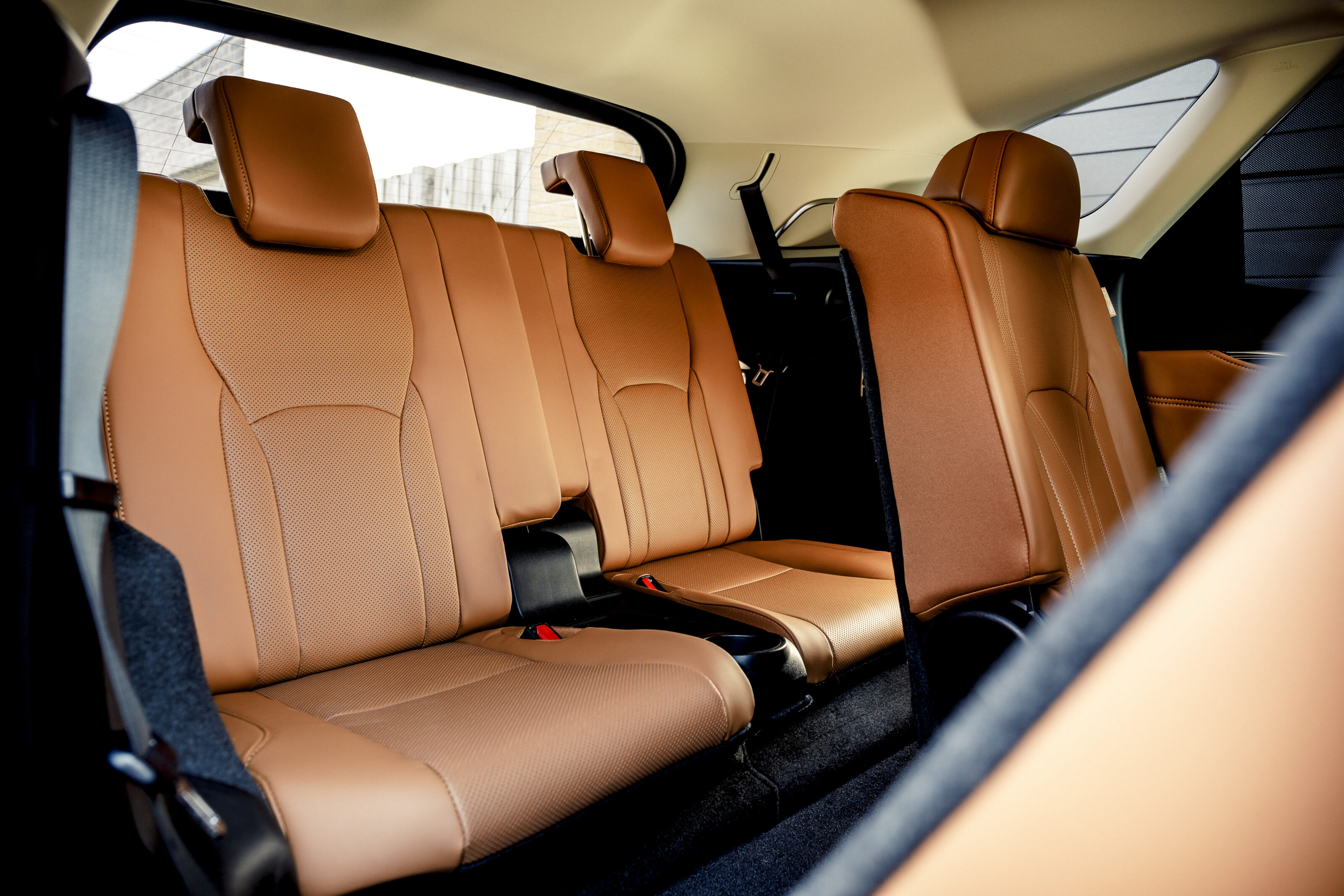
With all the rows up, there’s a relatively small 176 litres of boot space (Lexus measures this to the top of the seats) but with the third row down that increases to 432 litres to the seat tops, or 652 litres to the roof. Fold all the seats down, and a cavernous 1656 litres is all yours.
On the Road
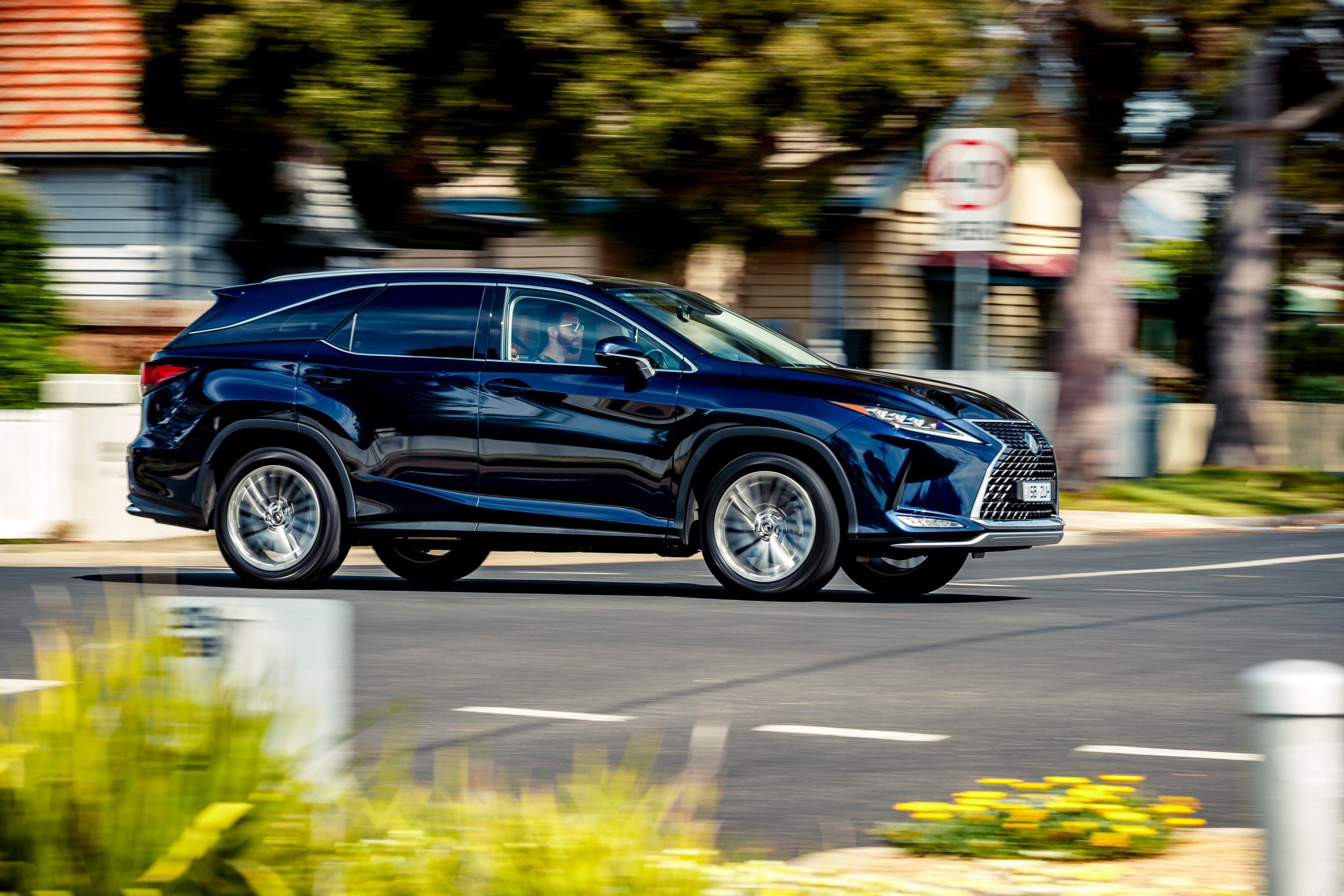
Much like its interior while stationary, the Lexus RX350L Sport Luxury feels luxurious in motion. While it’s getting on in years, the mechanical underpinnings of the RX remain true to the Toyota/Lexus ‘if it ain’t broke, don’t fix it’ approach.
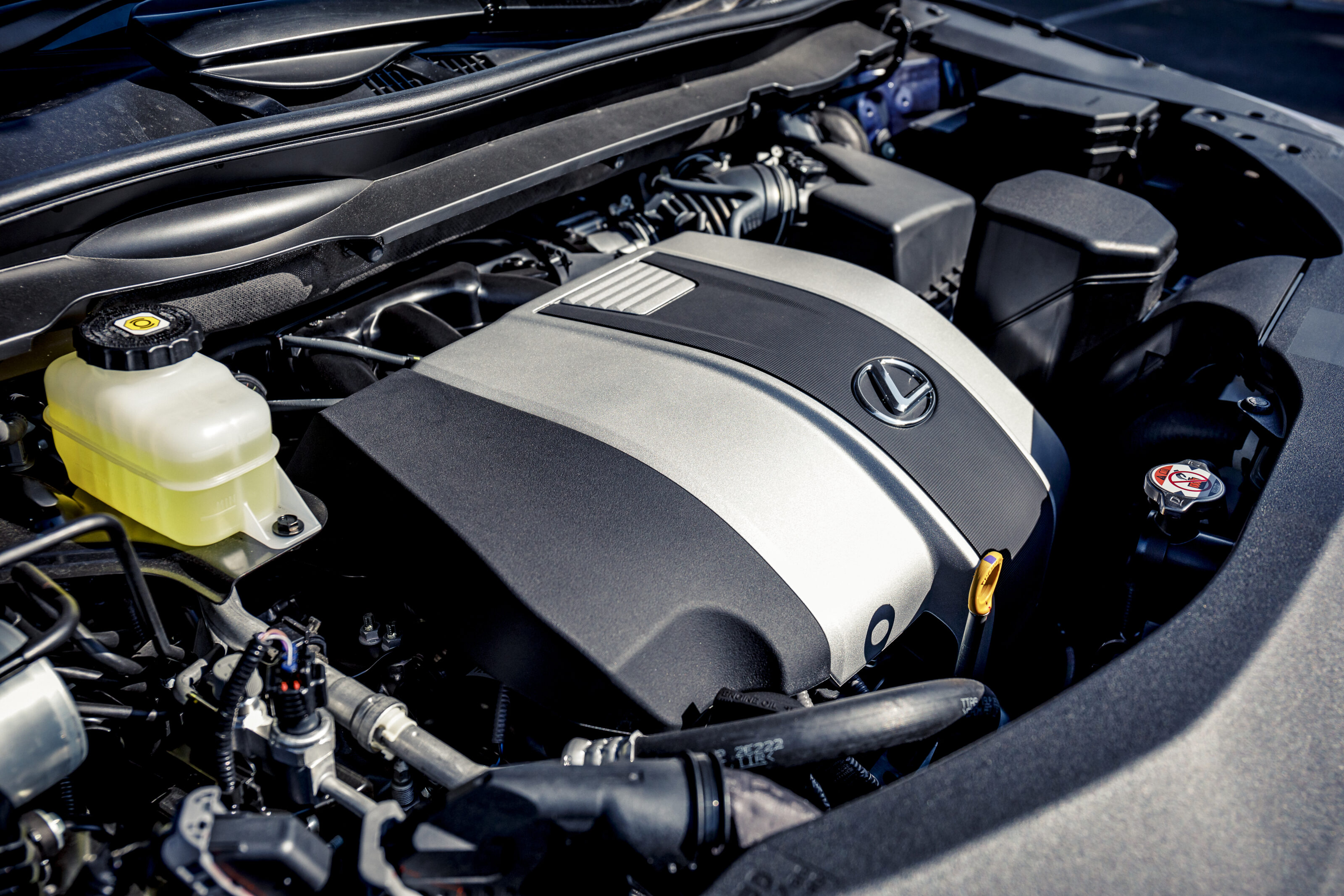
The 3.5-litre atmo V6 under the bonnet is a smooth, if thirsty, beast drinking up to 17.5 litres of the expensive stuff per 100km on our admittedly very unconventional test – standstill photography and spirited test driving do not make for frugality with more than 2.2 tonnes of Lexus and driver. Thankfully, when keeping things calm, the Lexus’ fuel economy reading sat far closer to the claimed 10.2L/100km. Expect yours to average in the low teens.
In terms of spirited driving, you might be surprised with the RX’s stability … body roll feels under control and the V6 doesn’t feel particularly sluggish
In terms of that spirited driving, you might be a little surprised with the RX’s stability, given its size. Of course, careful hands are needed, but body roll feels under control and the V6 doesn’t feel particularly sluggish. The eight-speed auto, when pushed, will keep revs high enough and bump through the gears quickly, but smooth, gentle acceleration is of course where it’s most comfortable.
Around town, the RX excels at being calm and comfortable, with a plush ride thanks to adaptive dampers combining with the smooth drivetrain to ensure intrusions into the cabin are minimal.
The steering is well-weighted and the big steering wheel doesn’t require an intense amount of lock to get anything done, though corner too sharply and a little hint of understeer and body roll will quickly warn you to dial it back.
Ownership
Lexus now offers a five-year, unlimited-kilometre warranty across its range, with 12-month/15,000km servicing intervals capped at $495 for the first three visits. Previous to 2021, Lexus’ warranty was only four years.
Lexus’ relatively new Encore program is also available to buyers, with discounts on fuel, discounted access to luxury accommodation and events, and the ability to borrow other Lexus models.
Verdict
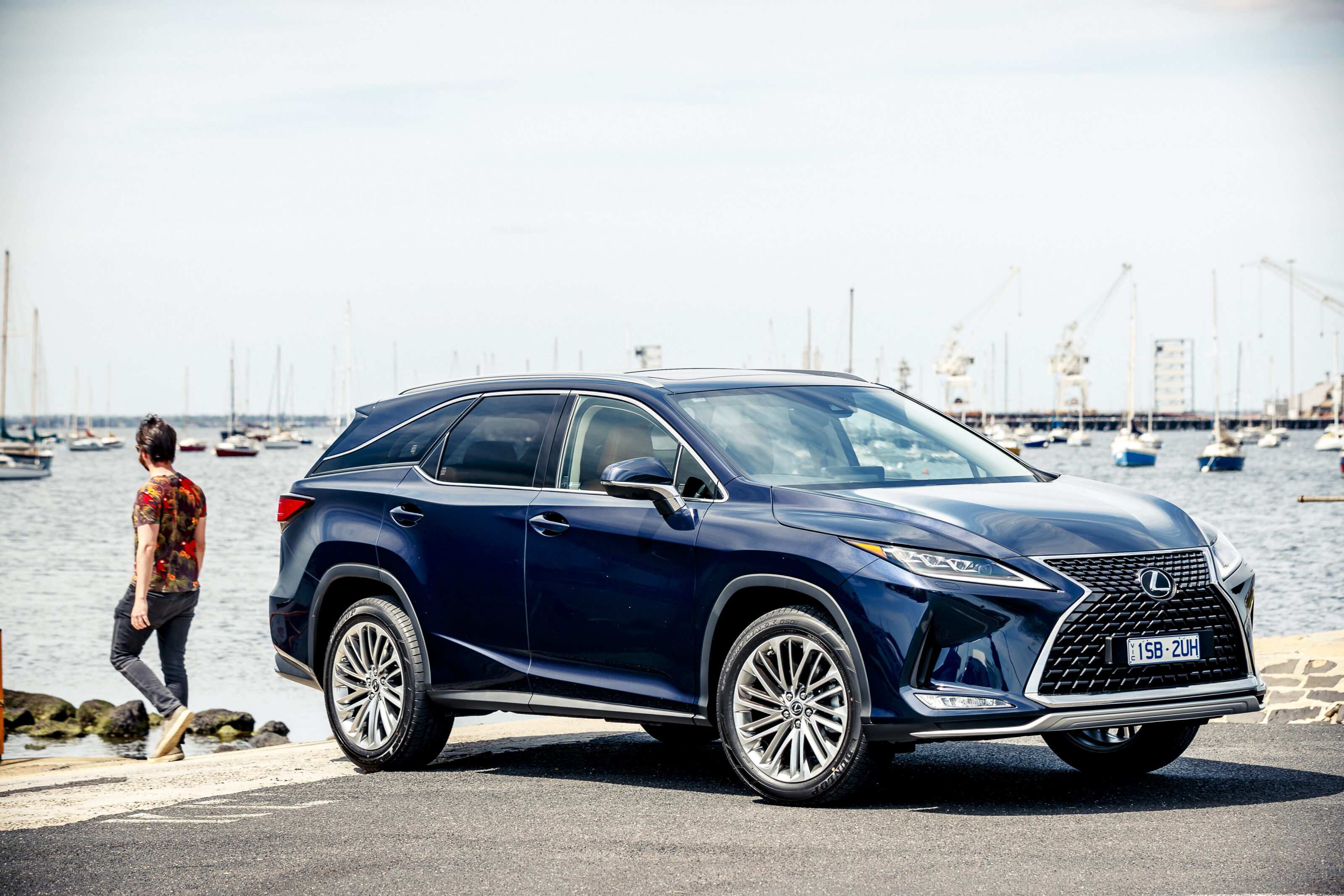
While parts of the Lexus RX350L feel outdated when compared to some rivals, there’s a sense that, for the outlay, you’re really buying a luxury seven-seater, rather than dropping in at the start of the range as with the Germans. The spec and feature list is extensive and the driving experience feels properly premium, even with its big old atmo V6.
As alternatives, it’s worth trying the Genesis GV80 on for size, to see if a little bit more of a modern interpretation of a big luxo SUV is your speed. The drivetrain options are more varied too, though don’t discount the hybrid RX450h as an option. It’s almost $10K pricier in Sport Luxury spec, but with more power and more efficiency.
But if the simplicity of six unassisted cylinders in a couple of tonnes of plush Japanese engineering appeals, the RX350L fits the bill perfectly. That is, unless you can wait for the incoming next-gen.
2022 Lexus RX350L Sport Luxury specifications
| Body | 5-door, 7-seat large SUV |
|---|---|
| Drive | all-wheel |
| Engine | 3.5-litre petrol V6 |
| Transmission | 8-speed automatic |
| Power | 216kW @ 6300rpm |
| Torque | 358Nm @ 4600-4700rpm |
| 0-100km/h | 8.2sec (claimed) |
| Fuel consumption | 10.2L/100km (combined) |
| Weight | 2150kg |
| Front suspension | independent MacPherson struts |
| Rear suspension | independent trailing-arm double wishbone |
| L/W/H | 5000/1895/1700mm |
| Wheelbase | 2790mm |
| Front brakes | 328mm x 28mm ventilated discs with floating double-piston callipers |
| Rear brakes | 338mm x 18mm ventilated discs with floating single-piston callipers |
| Tyres | 235/65R18 |
| Wheels | 20-inch alloy wheels (space-saver spare) |
| Price | $103,836 + on-road costs |
Ford is set to drop the three-door Fiesta from production, owing to low sales of its cheap hatchback in this new SUV-obsessed era.
As reported by Automotive News Europe, Ford is reportedly ditching the Fiesta three-door, which is sold in Europe as both the entry-level variant to the range as well as one of the two body styles for its flagship ST grade – also available as a five-door.
However, the five-door looks to be the sole survivor once its three-door sibling departs the line-up, a decision which Ford’s Australian division has already made after first deciding to only offer the latest generation as a five-door from 2018 onwards, followed by the range being slimmed down to the ST variant only for this year.
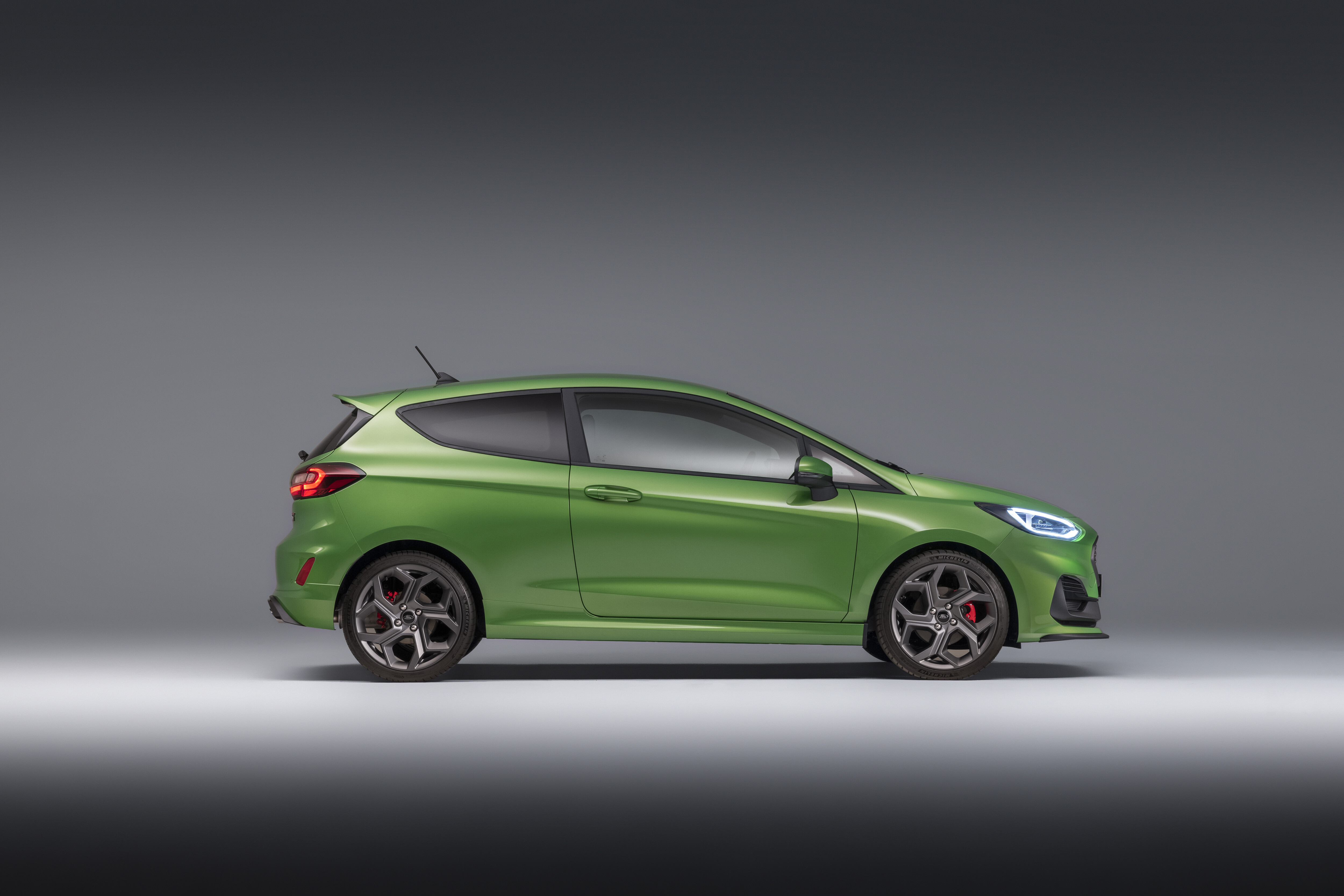
Ford is looking to reduce the number of variants in the Fiesta range to keep its Cologne production line rolling after multiple parts issues have hampered deliveries worldwide.
Production of the hatchback was paused for a fortnight this month due to a supply chain disruption, with the Cologne plant resuming operations on April 25.
Over the first two months of the year, sales of the Fiesta and Europe dropped to 7608 units compared to 19,844 12 months prior, with a more significant decrease highlighting the lack of local deliveries, as just seven examples were recorded as sold to the end of March – down from 123 over the same period last year.
Snapshot
- Ten zones of displays
- A whole new look
- Online museum and Kids Channel to follow
The Mazda Museum – attached to the Japanese carmaker’s Hiroshima headquarters – is to re-open at the end of May following an extensive renovation. The museum first opened its doors during one of its golden design eras in May 1994 and was last renovated in 2005.
Mazda is, once again, in a purple patch of design and the updated museum reflects that, with a “monotone colour scheme coupled with warm lighting and wood surfaces” to provide “an elegant and cosy space for visitors.” That could be the press release for an MX-30.
The museum’s ten different zones take visitors on a journey through Mazda’s 102-year history, starting with the Origin of Monotsukuri (car-making) spirit. The company was founded in 1920 by blacksmith Jujiro Matsuda and the first zone covers his life and the creation of the company.
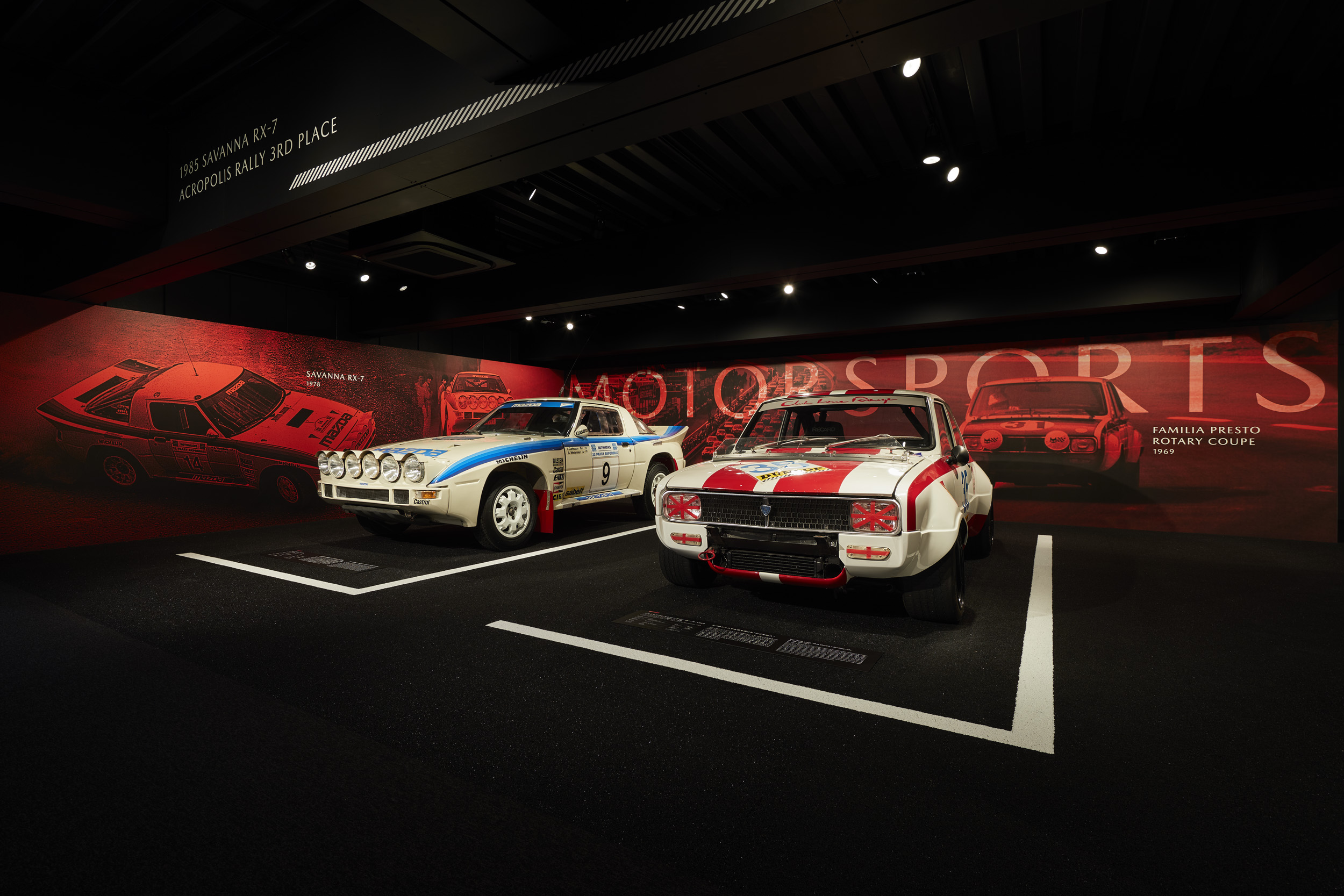
The zones work you through to the present day – including a comprehensive motorsport exhibit – and then in the final zone, a vision for the next century of Mazda.
No doubt there is a huge section devoted to Mazda’s most famous powerplant, the rotary and of course the wildly popular MX-5.
There is also a display covering the birth of the Mazda’s Autozam brand, which mostly re-badged Suzukis and sold under the kei car regulations and, briefly (if not bizarrely) imported Lancias to the Japanese market.
Other Mazda sub-brands include the company’s failed luxury division, known here as Eunos and badged elsewhere as Xedos and Amati.
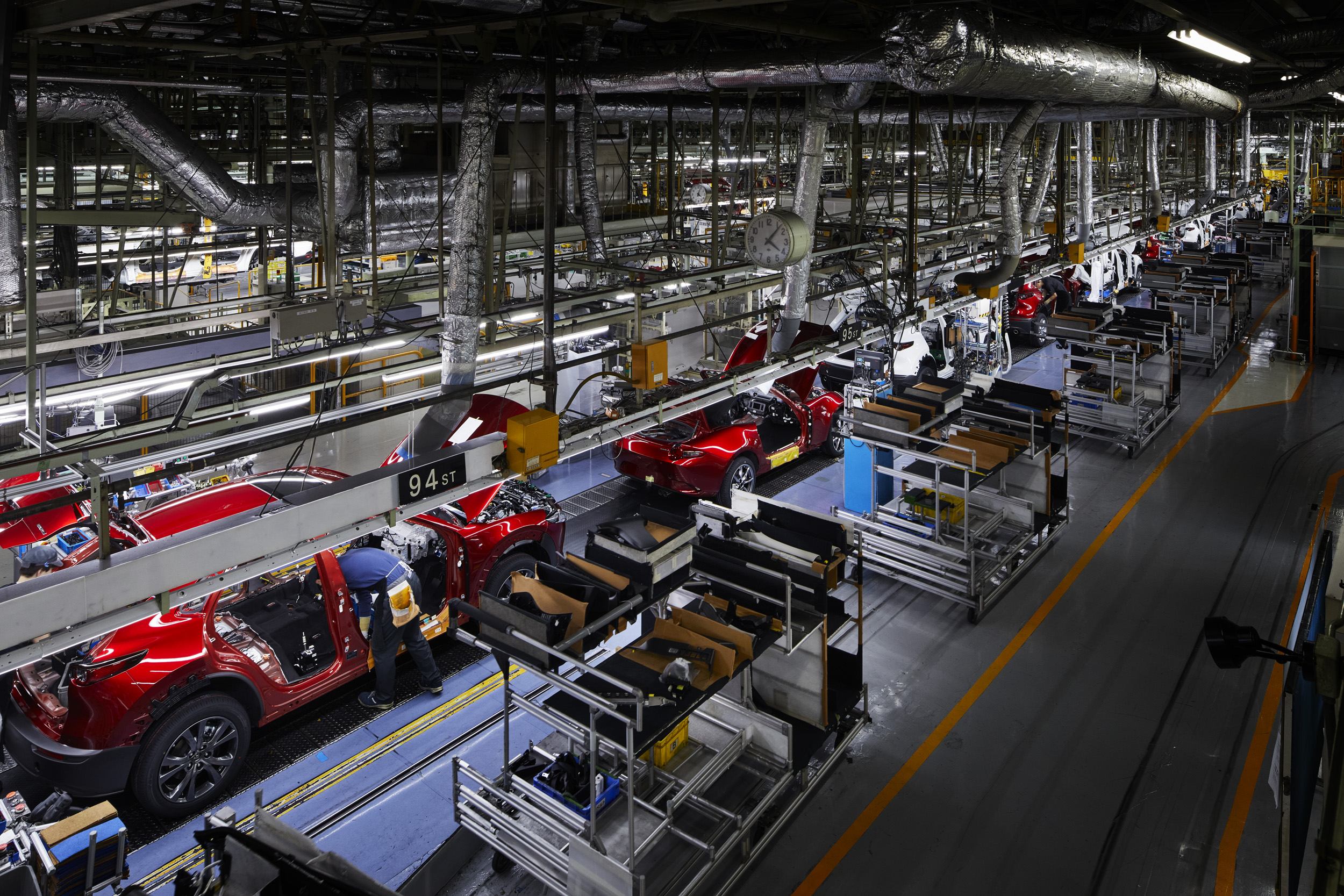
An entire zone is also devoted to car making that puts people first, which covers topics as diverse as safety and sustainability.
In addition to the museum, visitors can book factory tours, which have proved very popular over the years. Tours are currently only in Japanese, sadly, but the wording suggests that English may be an option.
To visit the museum, you can book up to six months in advance online and as the museum is not currently barrier-free, you may need to email if you have any wheelchair users with you.
The museum will open to the public on May 23, 2022.
Ford’s luxury sub-brand Lincoln has revealed its Star Concept electric vehicle, making use of the manufacturer’s latest EV architechture.
Showcasing Lincoln’s new design language ahead of its transition away from internal combustion engine vehicles and towards EVs, the Star Concept uses the benefits of Ford’s electric platforms to enhance its luxury image.
Parts of the Star Concept will be borrowed by future Lincoln models with three new full EVs set to debut by 2025, with a fourth to come in 2026 – all of which are to be underpinned by Ford’s next generation of electric architecture and shared between the Blue Oval and Lincoln.
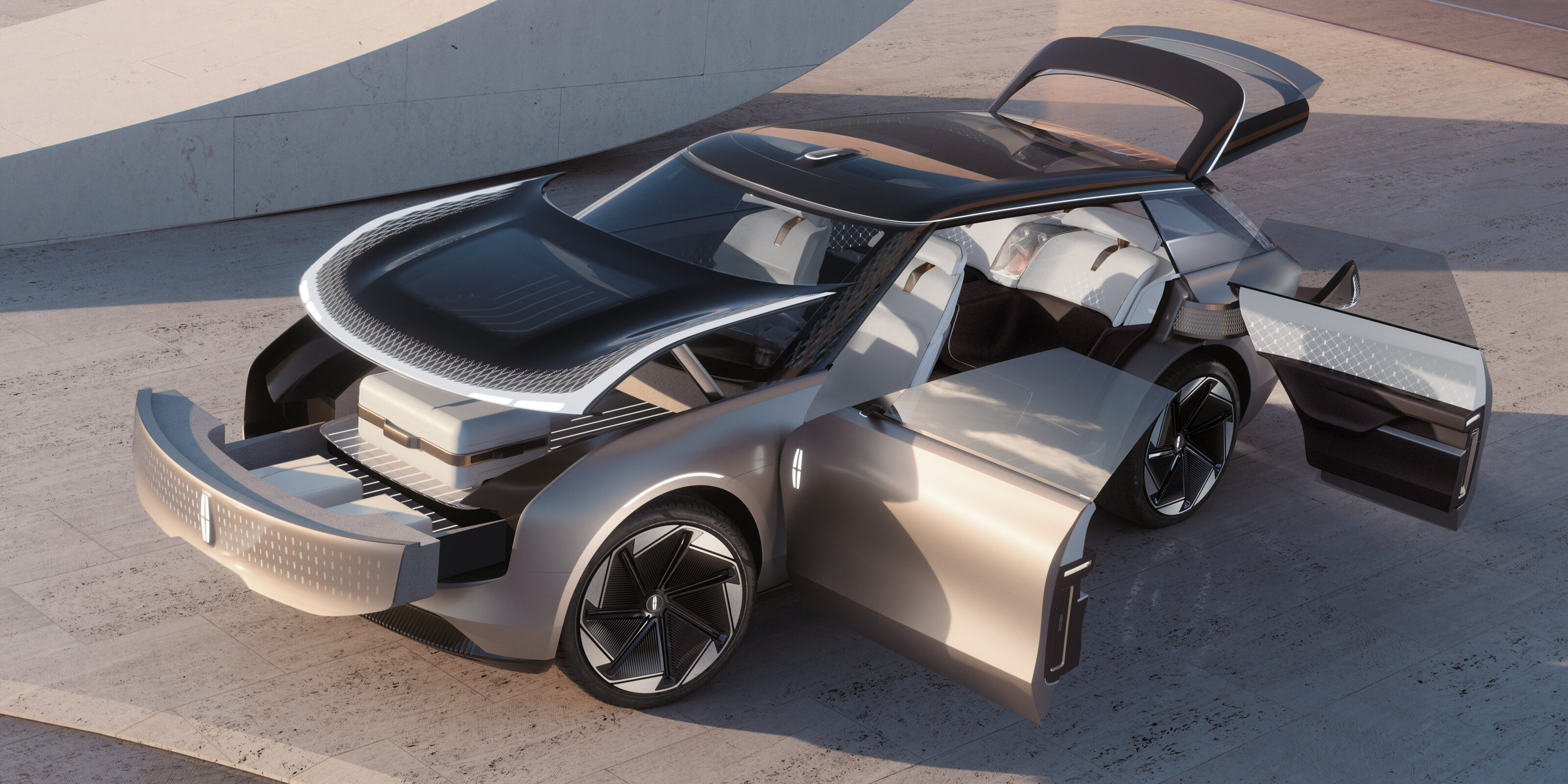
Lincoln believes the concept encapsulates its “core tenets of beauty, human, gliding and sanctuary”, although there are certain aspects of its current Aviator SUV and Ford’s old Flex which show on the Star, especially its wrap-around glasshouse illusion.
Electro-chromatic glass in the place of traditional materials is used for the bonnet, which acts as a cover for the front boot thanks to the lack of an internal combustion engine up front.
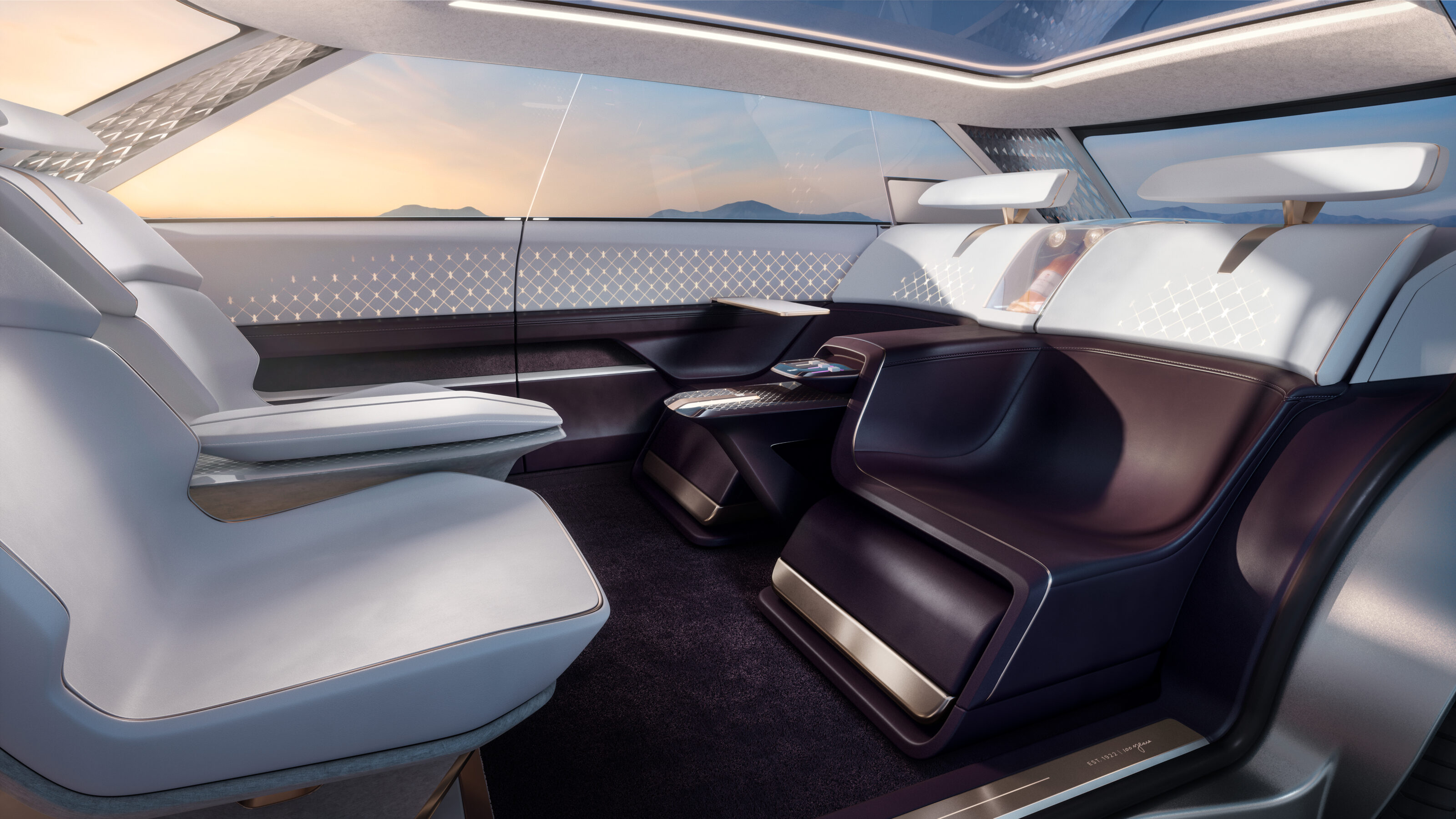
As expected, the cabin is a space of luxury, with Lincoln saying the concept “uses design, light, displays, scents and sounds to create an immersive experience for clients”, as reclining seats in both the first and second row allow occupants to relax with “curated storage for devices and slippers” also featured.
Three rejuvenation moods can be triggered in the vehicle’s infotainment system, from coastal morning (using ocean sounds and sea mist fragrance), to minful vitality (upbeat audio and a flowery smell) and evening chill (calm sounds coupled with an evergreen scent) help to set the scene inside the cabin.
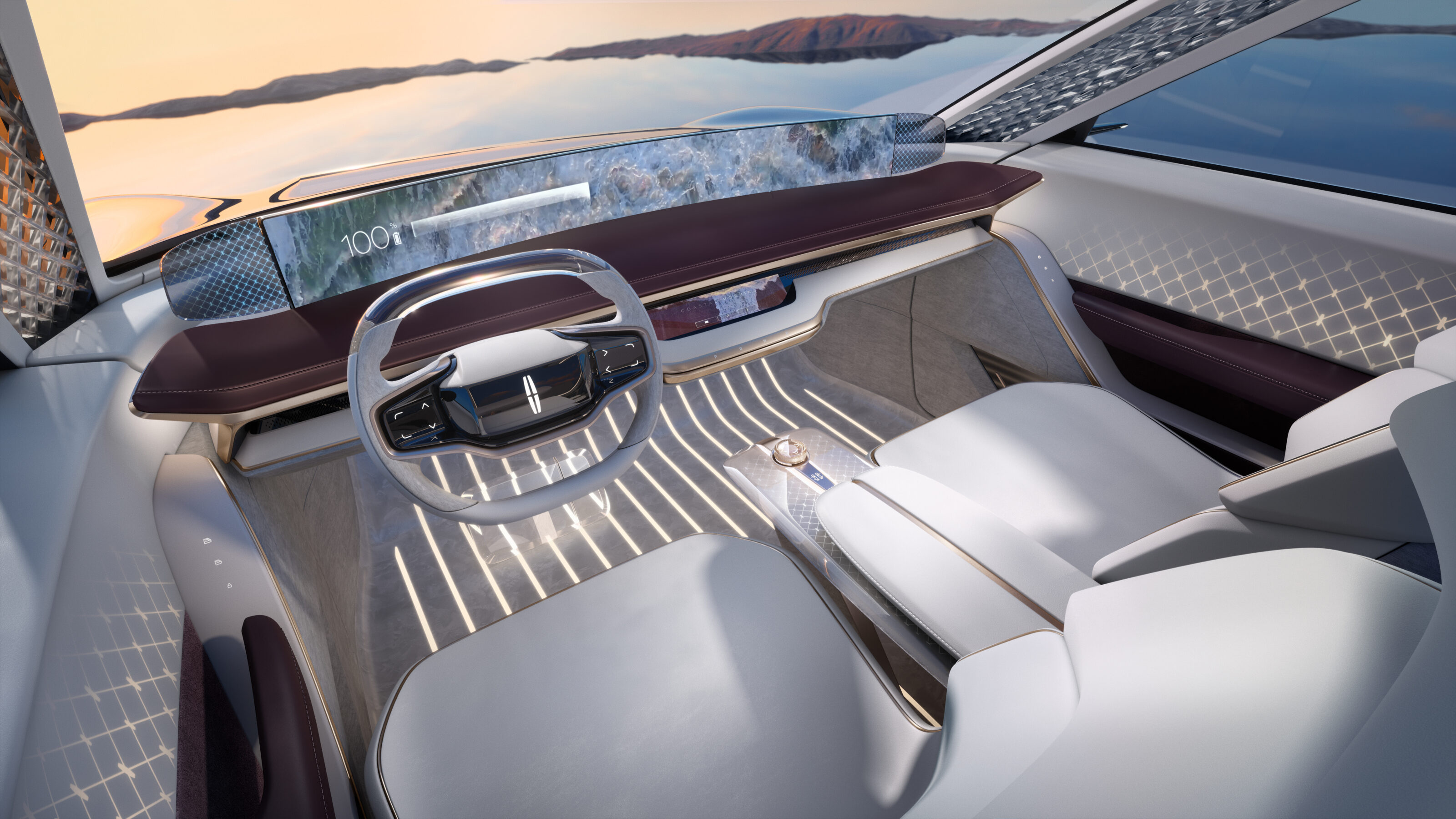
Lincoln is aiming for EVs to make up 50 per cent of its sales in North America by mid-decade, as company President Joy Falotico says the Star Concept shows what the luxury brand can do with electrified vehicles.
“As Lincoln enters the next chapter in our transition to a zero-emissions future, the Lincoln Star Concept will lead the way for our portfolio of fully electric vehicles,” said Falotico.
“It is an excellent example of how we are redefining luxury for the next generation as we work to transform the vehicle into a third space – a true place of sanctuary – for our clients.”
Despite abandoning passenger vehicles in the United States, Lincoln unveiled the Zephyr for the Chinese market last year, becoming the only sedan currently produced by the manufacturer.
The Subaru BRZ’s reputation precedes it. Here’s a car that, in its previous generation, was as decorated as a war hero, including recognition as the 2012 Wheels Car of the Year, which it claimed alongside congenital twin, the Toyota 86. Now in its second incarnation, the Japanese sports car is returning to the battlefield firmly holding onto its principles, offering a modern interpretation of affordable, lightweight, front-engined, rear-drive, coupe fun.
But is it modern enough? While the boost to power and torque from a larger capacity flat-four engine is welcome, the new 2.4-litre boxer unit is thirstier than the 2.0-litre. An updated cabin now features a large central touchscreen and cup holders that hold cups and not occupant’s elbows, but the interior revisions are light in the context of the outgoing model.
And while the new exterior look manages to be fresh, mature and has been achieved using all-new body panels, its underpinning structure is the same. This gen-2 BRZ is therefore perhaps better described as a heavy update rather than an altogether new model.
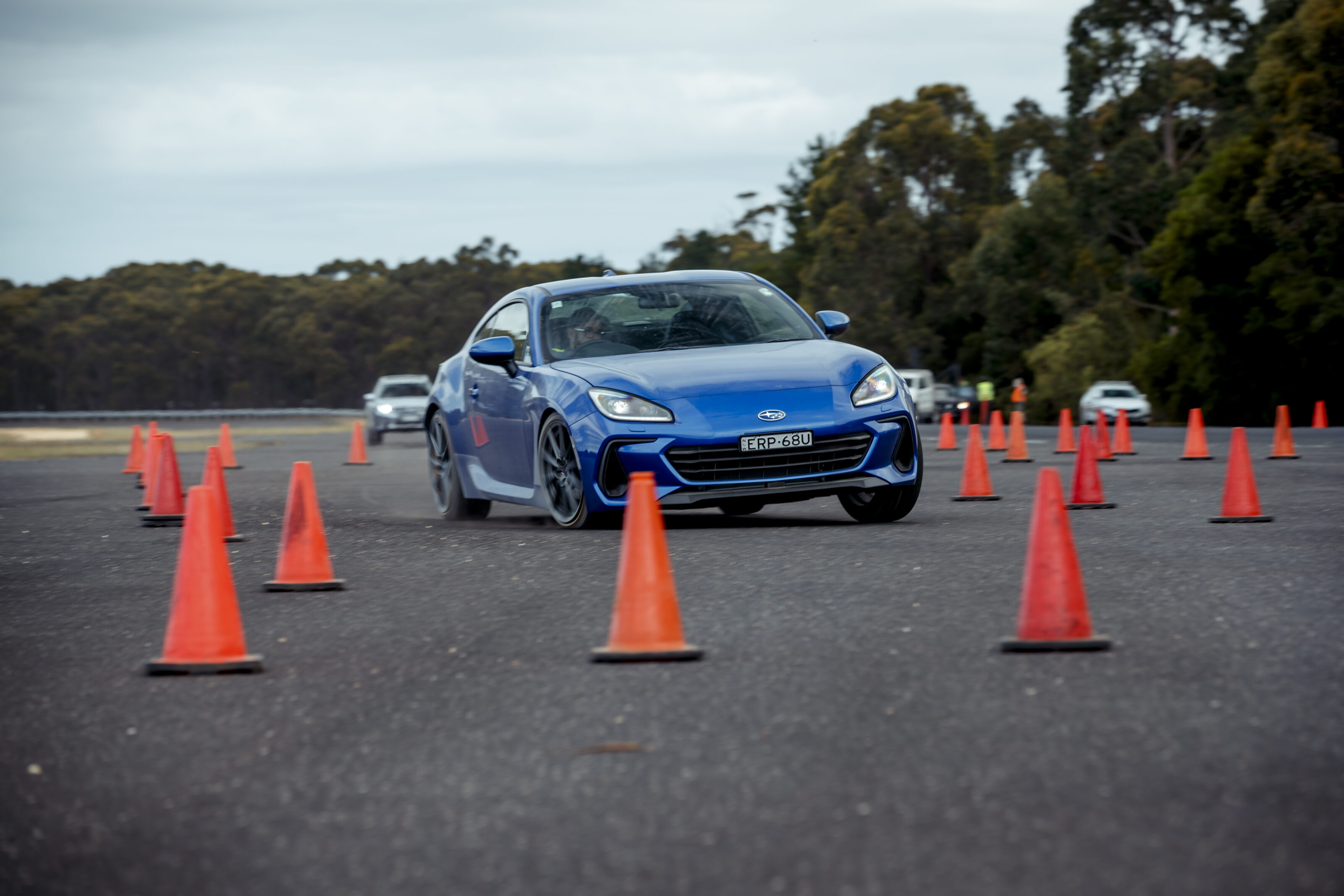
There’s still a lot to like, however. The bigger engine is an eager revver and is equally happy deep into the torque zone or snapping the tacho needle off at 7500rpm. The synthetic engine sounds piped into the cabin divided the judges, but all agreed the 2.4-litre is well applied to the Subaru’s sports halo if not necessarily the sweetest or most advanced unit.
Praise was also awarded to the snappy six-speed manual, although opting for the stick forfeits the excellent Eyesight suite of safety features the auto customers get as part of the deal – a black mark against the criteria.
“BRZ is as fun as cars get, and they’ve made it about 10 percent more fun again” Dylan Campbell
But easily the BRZ’s party piece is its chassis.
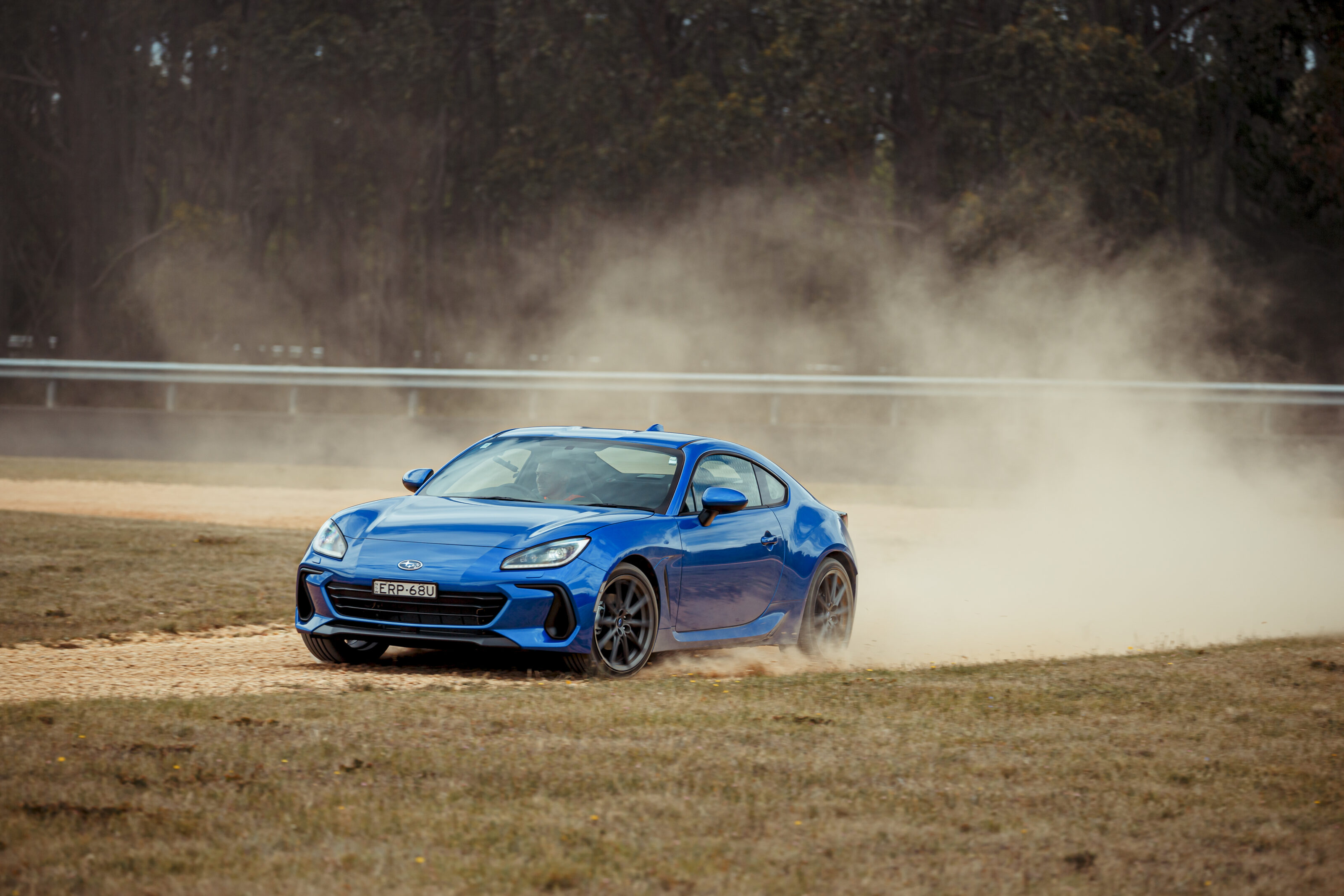
“A big welcome back to a Subaru for keen drivers!” said Jez. “Wonderfully quick steering, responsive front end and no shortage of grip.”
Near-perfect spring and damper rates for the round-one testing in the PG helped the BRZ stand out dynamically, and yet its sports-focused suspension tune offered surprising composure over a wide range of surfaces. The little Subie demonstrated that all-round incremental improvement is sometimes all that’s necessary to maintain the appeal of an existing model.
But despite styling as sharp as its price, and a brilliantly involving package of classic BRZ performance and dynamics, the 2022 model advances the game only incrementally from the generation that put it on the map.
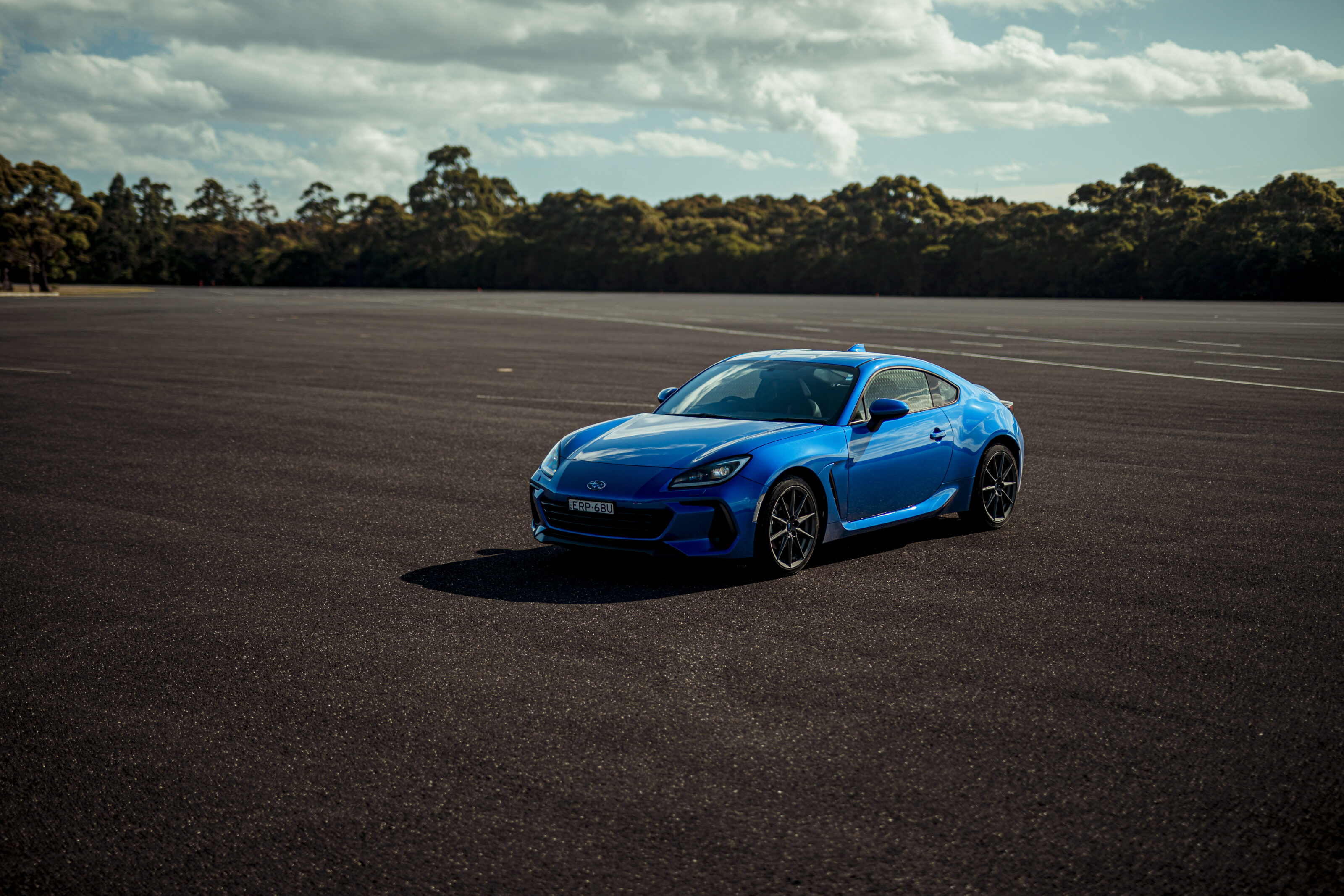
“The old BRZ felt old-school and somewhat classic out of the box a decade ago,” noted Curt. “And this newie just feels very much more of the same, if a little extra where it needed to lift its game over the original, such as friendlier torque and more grip from those Michelins.”
A more-efficient turbocharged engine could have achieved the same performance enhancements and more, minus the impact to fuel economy, while the inclusion of all safety features for all variants would also have given the BRZ a chance to advance its cause.
None of that, however, prevented the Subaru’s keys being among the hardest to pry out of judges’ hands in this year’s testing.
