Korea’s premium brand continues to show promise, if not perfection
Like Lexus and Infiniti before it, the Genesis brand is following the proven path of a pragmatic alternative to the big German luxury brands. It’s a daunting task to take on these heavyweights but cars like the GV70 indicate that success is certainly attainable.
The GV70 is an exclusive architecture, not shared with any other Hyundai family members. Importantly, the chassis is engineered as a longitudinal engine, rear-wheel drive configuration, although it is all-wheel drive.
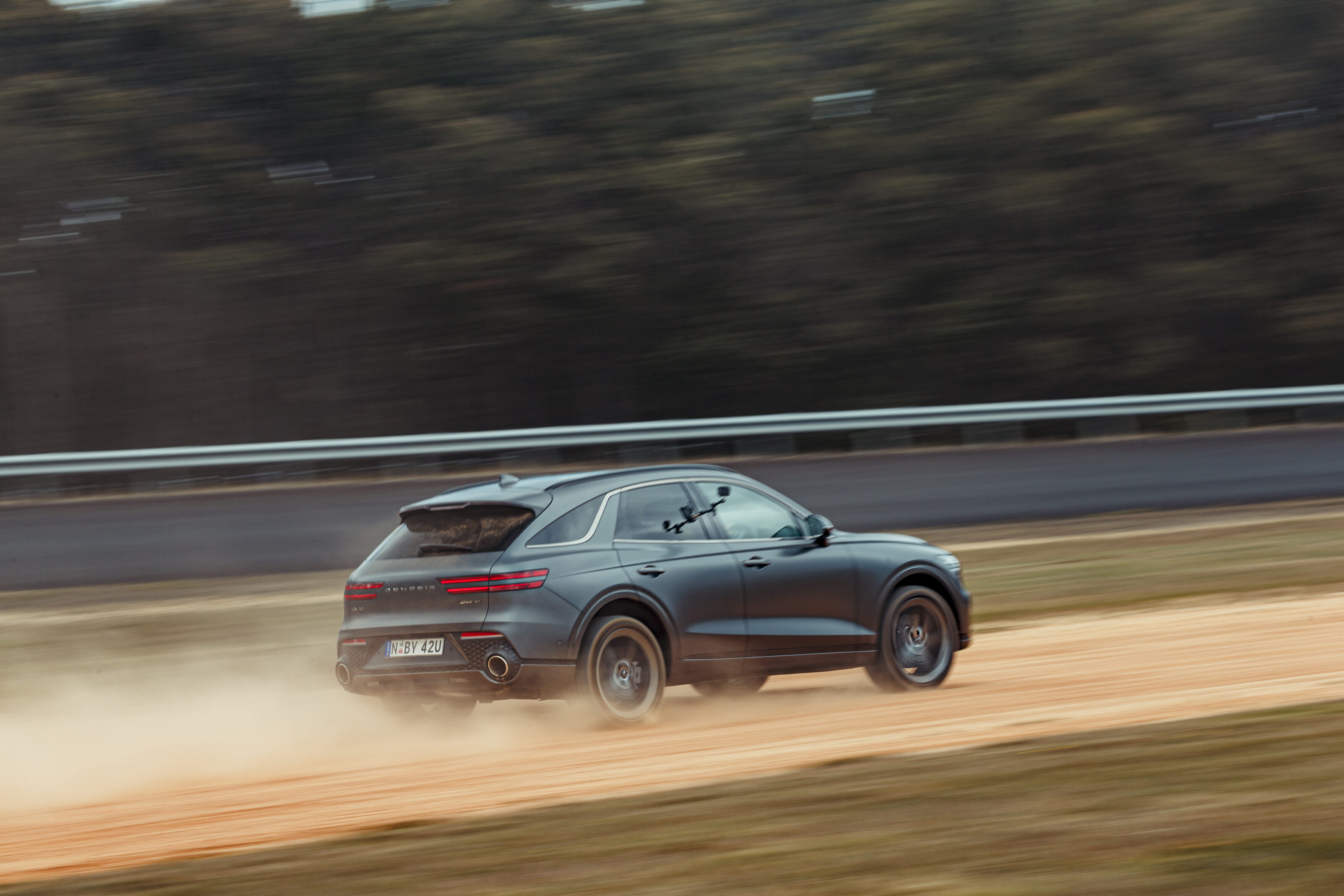
From an exterior design perspective, it has the traditional rear-wheel drive characteristic of long dash-to-axle proportion; this translates into a long bonnet-to-body ratio, providing a subtle suggestion of potency. It is actually quite a handsome vehicle with its swoopy roofline and really nice stance.
The signature diagonal grille mesh is executed well, much better than the bigger GV80. Overall, a much more resolved styling execution than its bigger brother and a refreshing contrast to the German rivals.
The interior space of this luxury five-seater is beautifully executed. Double-stitched leather abounds throughout the cabin and the craftsmanship is exquisite. The instrument panel design is a familiar arrangement of hooded cluster screen with 3D graphics and a separate 14.5-inch landscape centre screen, mounted high in the dash.
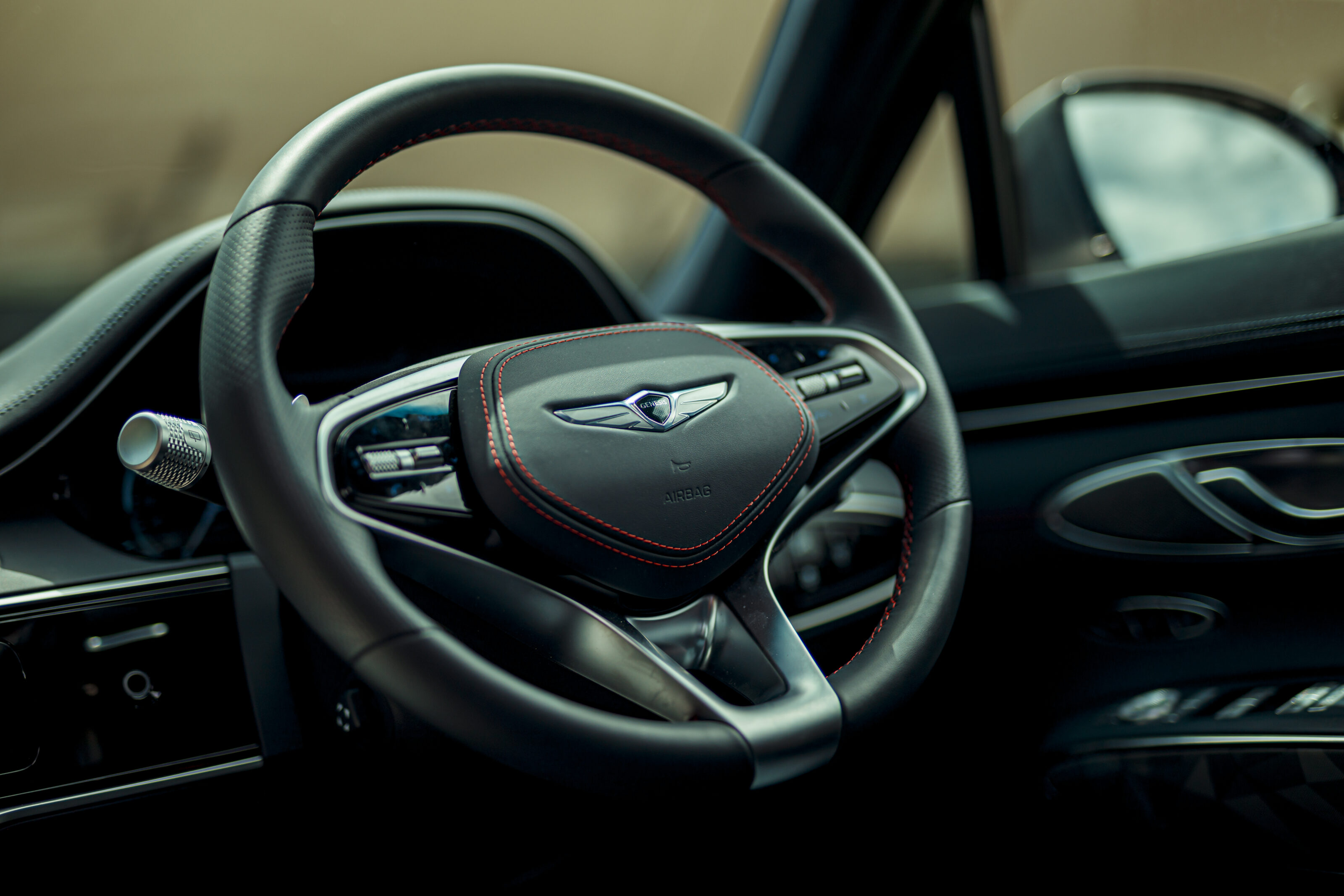
However, the unique design aspects are the torpedo-shaped elements which repeat around the cabin. This is found in the HVAC control panel, the door inserts and the centre console. Our particular example featured a backlit, fractured geometric pattern which was beautifully done, although not to the taste of all of the judges.
Seats are very comfortable, with good accommodation in the second row and luggage area.
“A sporty, driver’s SUV – lusty V6 delivers loads of punch” – Alex Inwood
On the road, propulsion is provided via the 3.5-litre, twin-turbo V6 mated to an eight-speed transmission. With 297kW and 530Nm, it really feels grunty, once it overcomes the inertia of the two-tonne body. There is plenty of power for any occasion, complemented by a nice soundtrack.
Given this type of luxury SUV is likely to be driven mostly in leafy suburbs, some of the judges were initially a bit sceptical, with the performance recipe feeling a bit old school, and the price getting up there.
All were impressed with the performance of the lusty V6 turbo. But when pushed harder, our judges found a few steering niggles. Jez noted, “Steering can feel gooey off centre, particularly at lower speeds, though improves as lock is wound on”, while Curt felt “the heavy, under-assisted steering in the sporting drive modes just robs engagement and fluidity. Use Individual for best results.”
Genesis has probably learned a great deal from Lexus and Infiniti, and in a short time is achieving results which took the Japanese brands many more years.
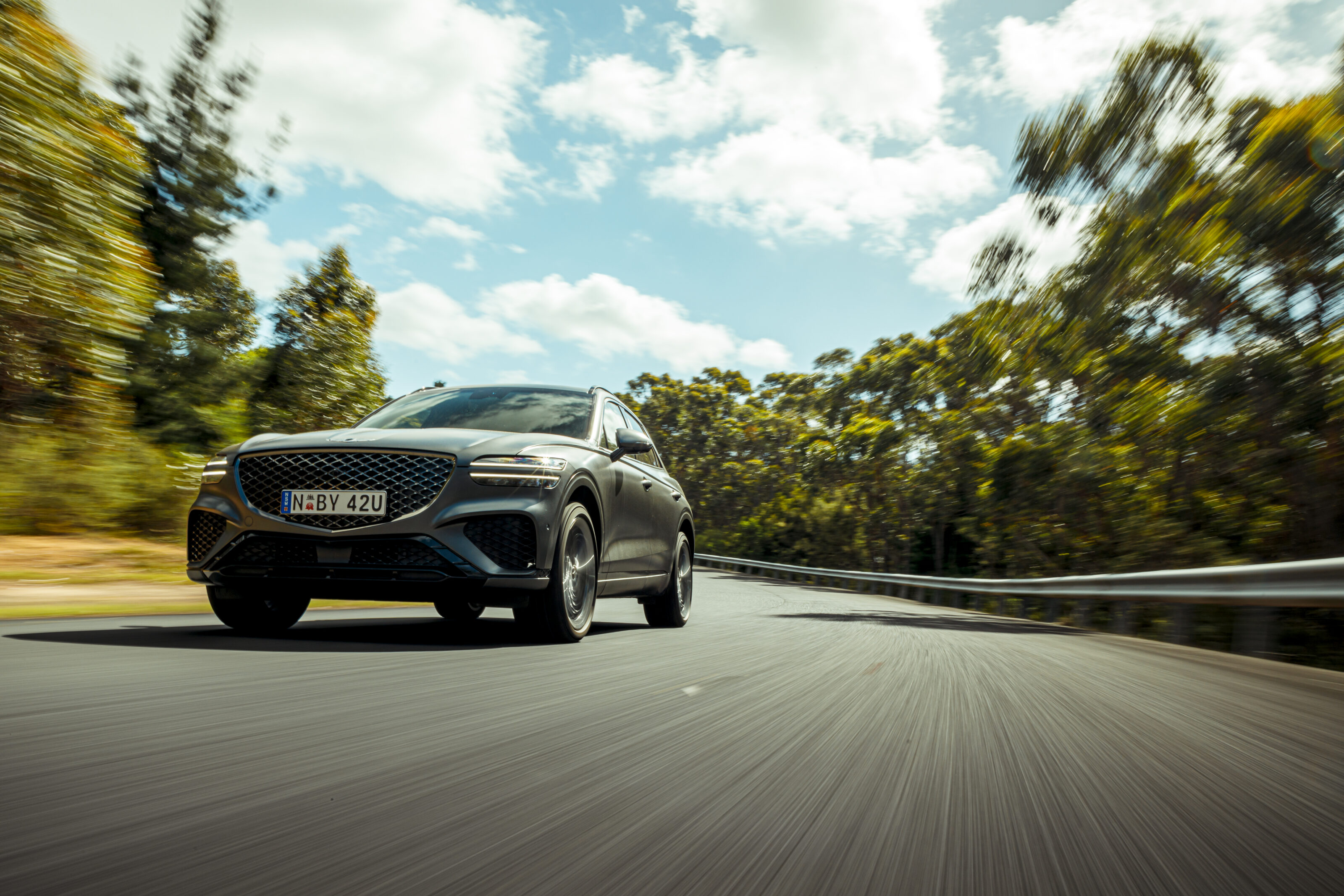
Some of the judges thought the GV70 had a bit of an identity crisis, not knowing what it wanted to be. But ultimately, I think it is comfortable in its own skin. It’s a luxury SUV which delivers style, comfort and performance and would satisfy any buyer not fussed about a German badge.
Value is a relative thing when we’re talking around $90K, but it is usefully under the comparable Europeans.
Whilst it does a great job at disrupting convention, there’s not quite enough in it to advance in the COTY arena.
UPDATE, Nov 2022: Australian pricing for all X-Trail petrol and e-Power models now available, e-Power driven
Australian pricing for the regular petrol 2023 X-Trail and petrol-electric 2023 X-Trail e-Power models is now available. We’ve also now driven the e-Power version. Get all the details at the link below.
REVIEW: 2023 Nissan X-Trail first drive
December, 2021: Despite its age, one can’t call the X-Trail long in the tooth because it’s popular with Nissan customers around the world, hauling families and delivering solid value in the medium SUV segment.
Still, this current generation has been around since 2013 and was facelifted in 2017, so by age factor alone it’s due for a redesign.
The 2021 model year marks this generation’s swansong, but the new-generation 2023 Nissan X-Trail will arrive in Australia with improvements across the board and Nissan hopes these updates will resonate with buyers.
What’s more, the new X-Trail is based on the same architecture that underpins the next-generation Qashqai and the latest Mitsubishi Outlander that has just gone on sale Down Under.
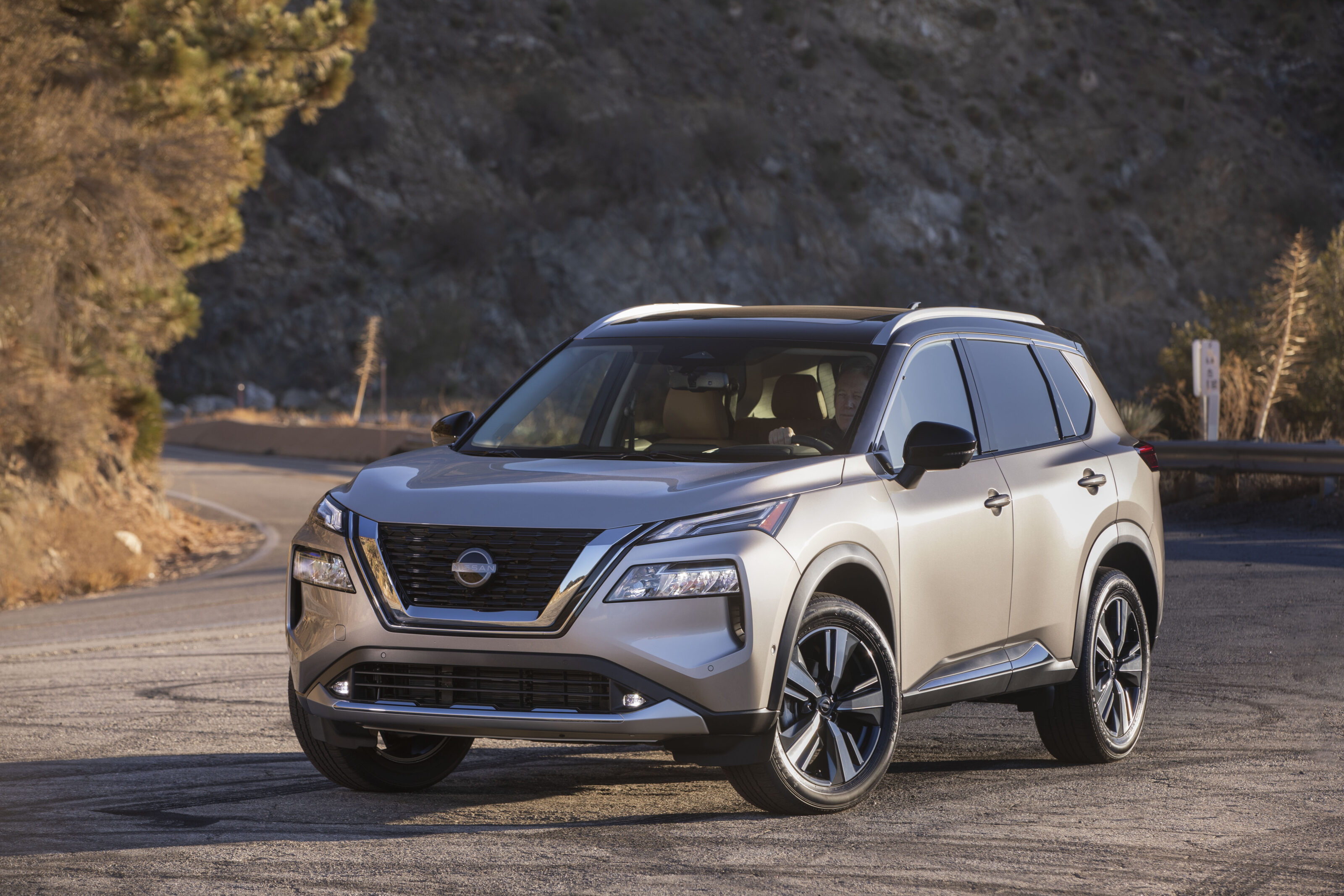
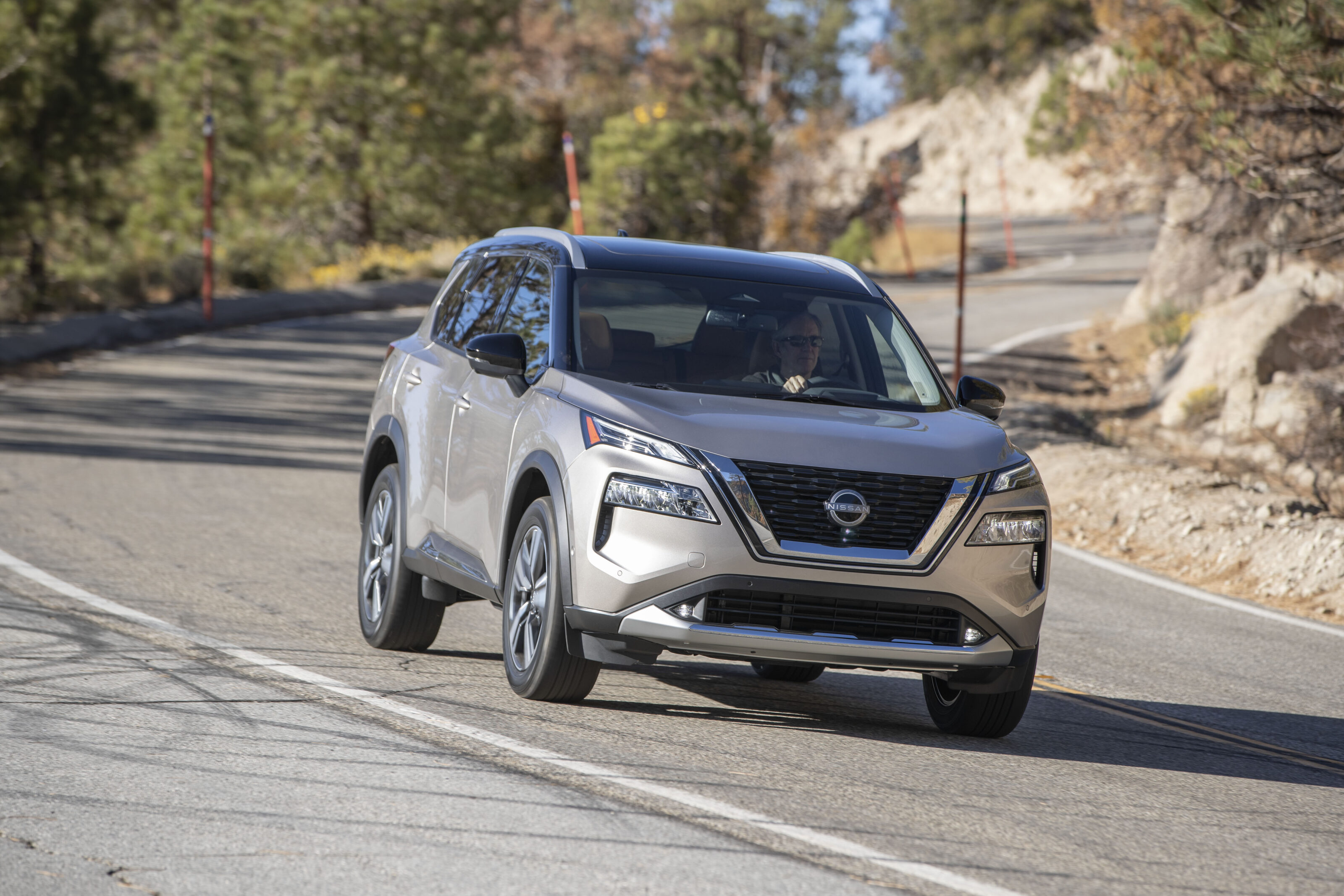
The exterior design is recognisable as a modern evolution of the current X-Trail, although it’s 38mm shorter in length and 5mm lower-slung.
The styling itself tightens up the soft lines of the previous model but may appeal to those who grew up on Transformer films. LED headlights are now standard across the range, with top trims also including LED foglights. Aerodynamic refinements include active grille shutters.
Busy families purchase medium SUVs like X-Trail and, with that in mind, Nissan designed the rear doors to open to 85 degrees wide, which makes installing child seats a snap, let alone installing children into said seats on a daily basis.
This all-new model now permits the unlocking of all doors with the touch of any door handle, as long as you’ve got the intelligent key in your pocket. As any busy parent knows, when you’re arms are full of kiddos, the last thing you want to do is fumble for your keys. The power tailgate is motion activated.
For the time being, there is just one engine and one transmission available, which is an evolution of the existing 2.5-litre naturally aspirated four-cylinder petrol engine. Power is up 8kW to 135kW and, similarly, torque has been increased to 245Nm, a bump of 8Nm over the old engine.
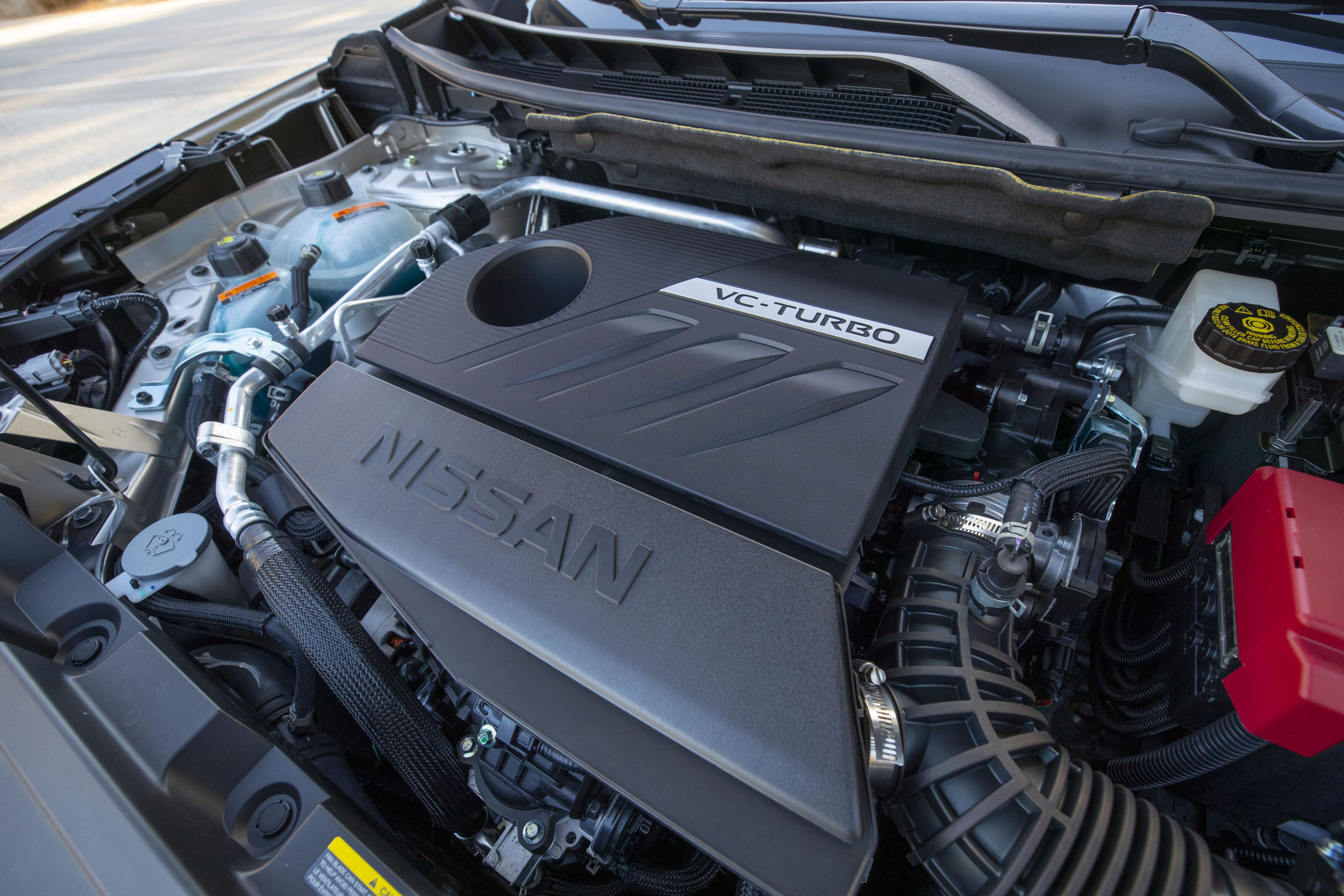
Nissan’s Xtronic automatic continuously variable transmission (CVT) is standard on both front-wheel or all-wheel drive configurations, with paddleshifters for simulated gearchanges.
The all-wheel-drive system uses an electro-hydraulically controlled clutch for torque transfer to the rear axle and this new system is said to be more responsive than that of the outgoing X-Trail.
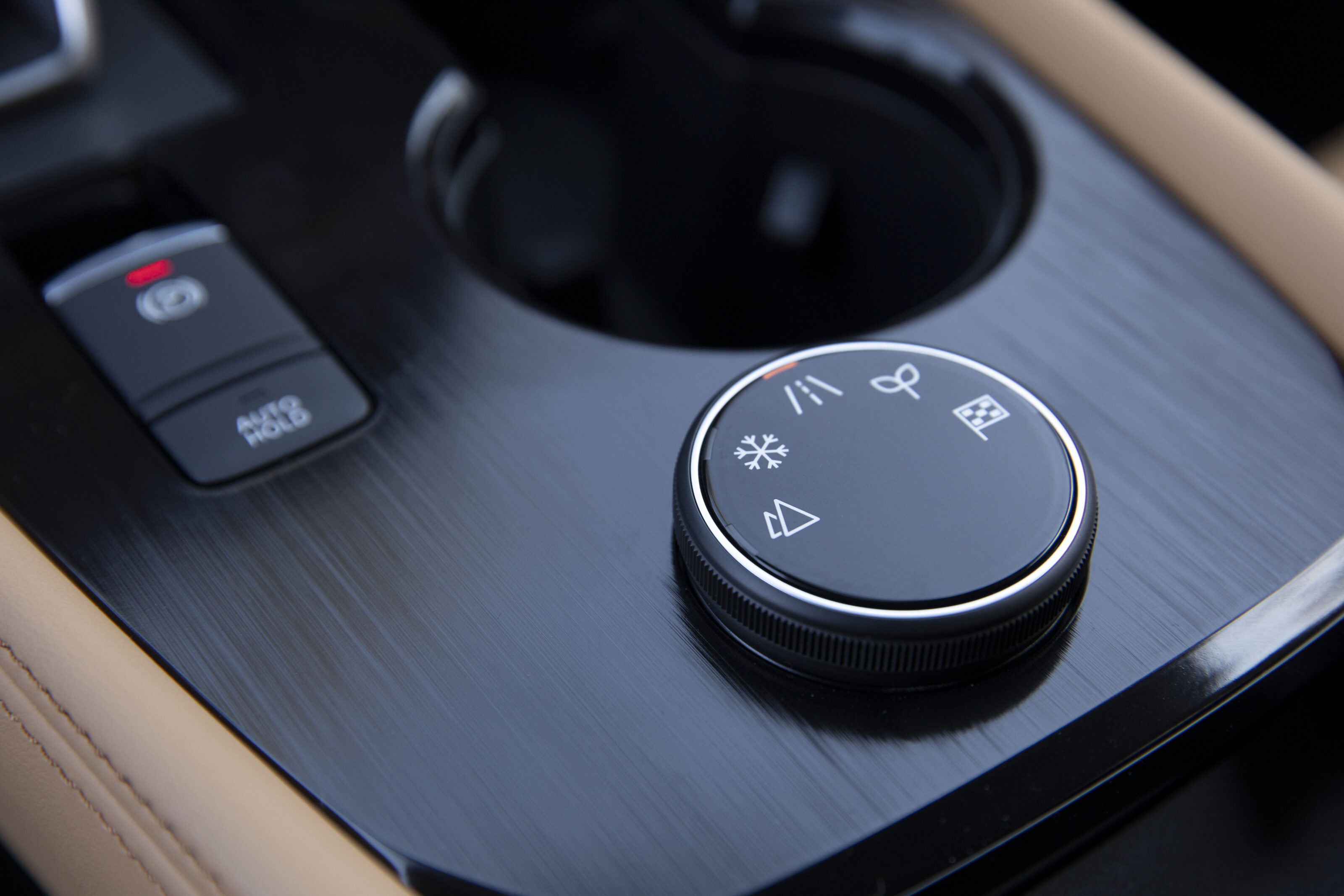
The front driver includes Eco, Standard, and Sport drive modes, the all-wheel drive X-Trail adding Off-Road and Snow settings.
Nissan makes no mention of manual transmission or diesel engine offerings, however, in some international markets, Nissan has announced its turbocharged, 1.5-litre three-cylinder petrol, which is said to be similarly powerful to the 2.5-litre while promising better fuel consumption.
That engine may facilitate an opportunity to offer manual gearbox availability for customers and markets that demand it.
The electrically assisted power steering system uses a rack-mounted assist unit that varies assistance depending on vehicle speed and the steering ratio is slightly quicker than the previous X-Trail. Brakes are four-wheel ventilated discs and the ABS is a four-channel system.
Not straying from the medium SUV norm, the suspension uses MacPherson struts at the front and a multi-link set-up at the rear, with anti-roll bars at both ends.
Like the exterior, the interior receives a comprehensive redesign that brings together modern technology and improved functionality.
Depending on trim level, the driver enjoys a customisable digital instrument panel in either 7.0-inch or 12.3-inch sizes, and a large head-up display is available on top models.
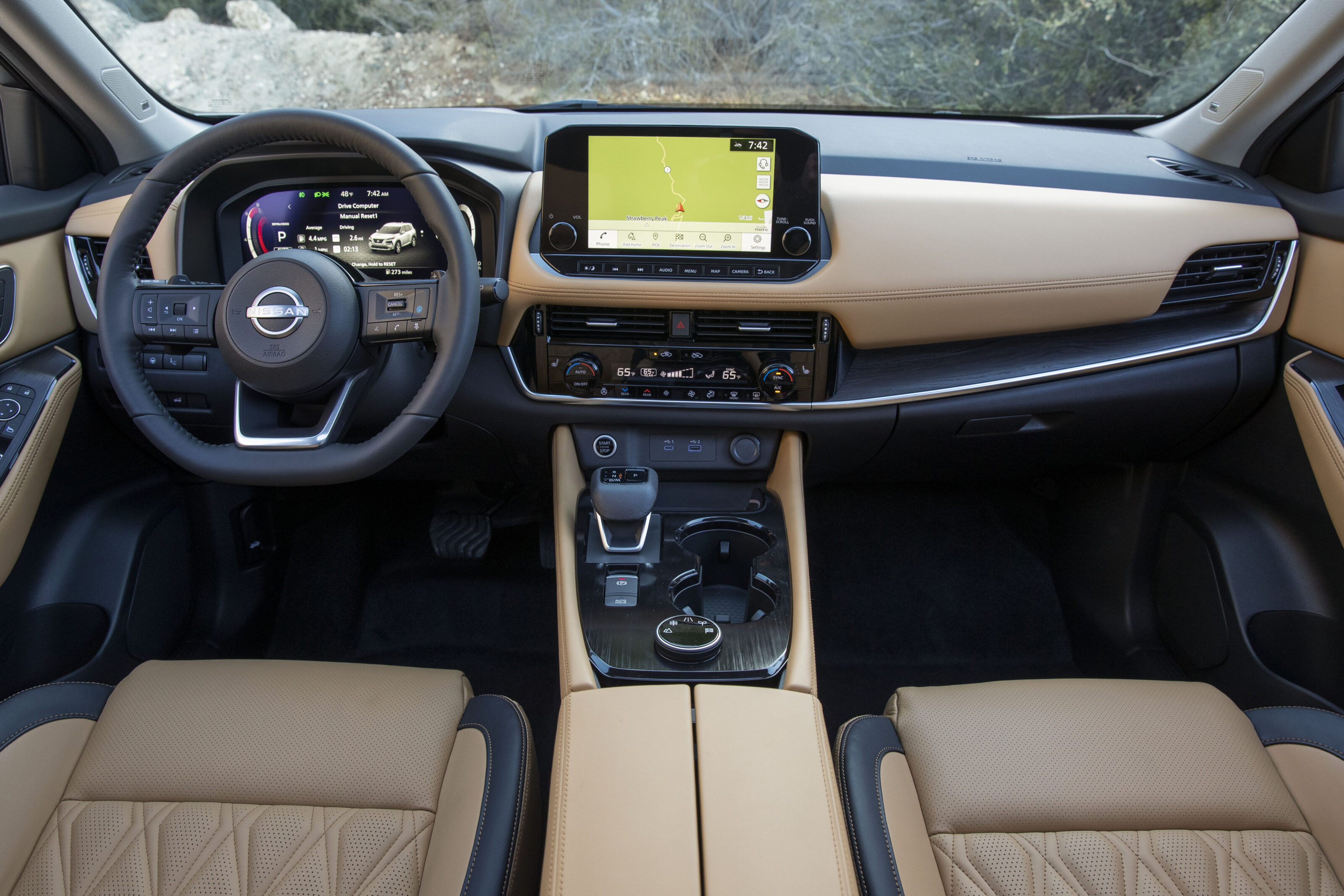
The front row is dominated by the 9.0-inch touchscreen that lives atop the dashboard and is equally accessible for both driver and passenger.
The infotainment system supports Bluetooth, as well as Apple CarPlay and Android Auto, and a wireless phone charger is available on the upper trim levels.
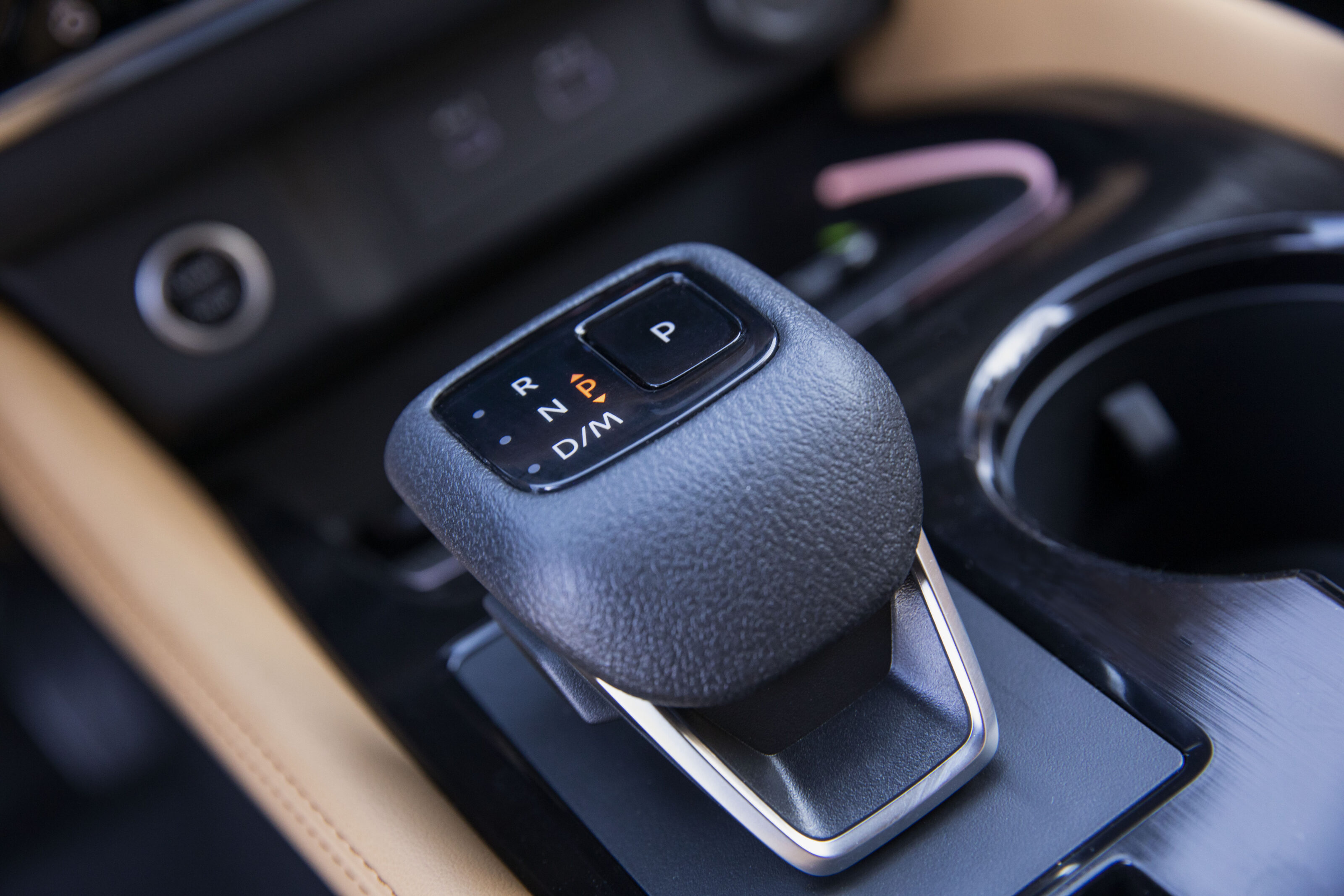
A key update to the interior design is the electronic gear selector, which creates additional storage directly underneath, a boon to buyers who need space for the bits and bobs that go along with their lifestyles.
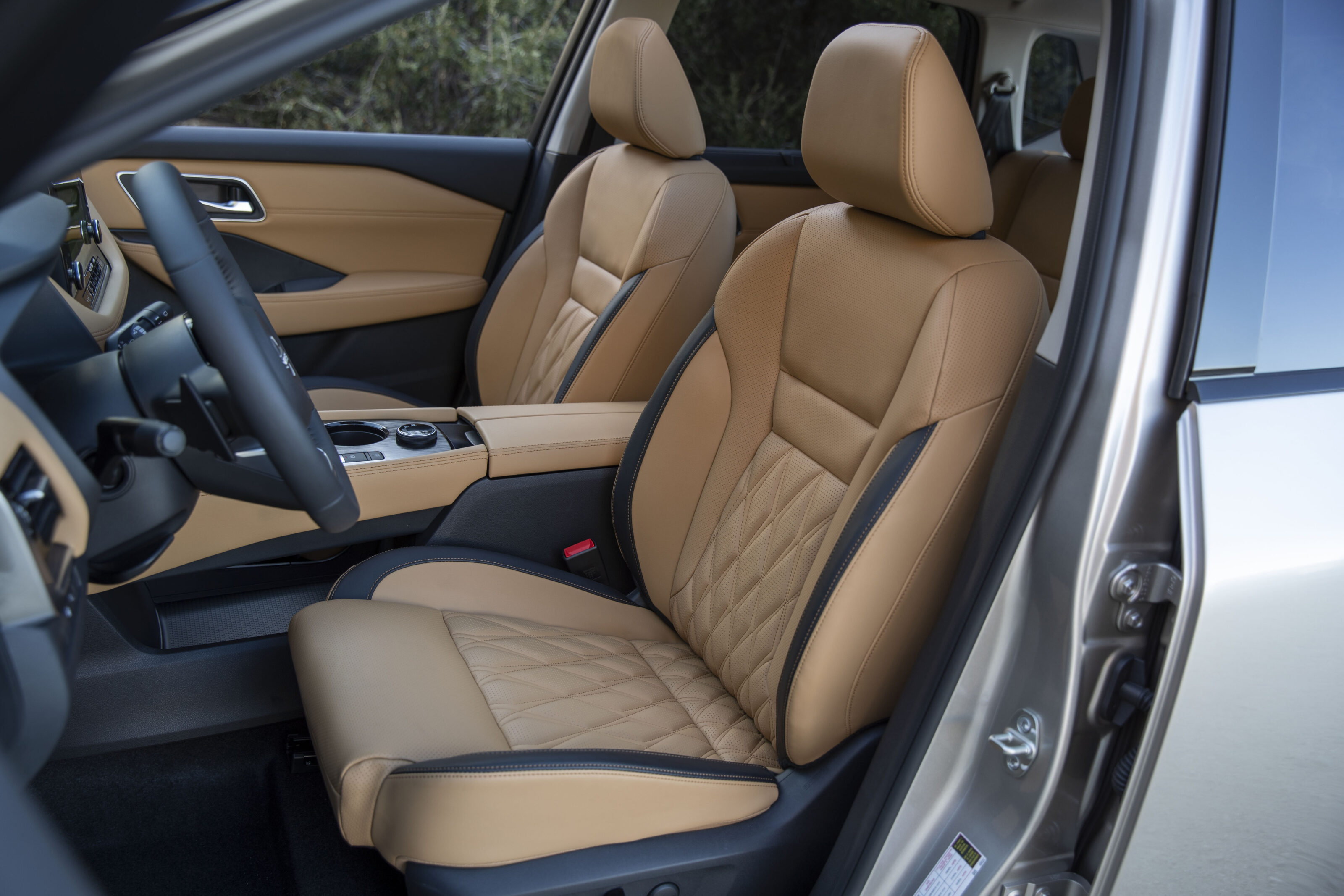
The armrest uses a butterfly-style lid instead of one that’s rear hinged because, according to Nissan, it provides easier access to small items for passengers in both first and second rows. Both front and rear passengers benefit from Nissan’s NASA-inspired Zero Gravity seats.
The exterior design is recognisable as a modern evolution of the current X-Trail. The styling itself tightens up the soft lines … but may appeal to those who grew up on Transformer films.
Under the boot floor is flexible storage for your essential gear. Nissan calls it Divide-N-Hide, but what they’ve done is provided a configurable set of dividers that can be used to secure items of various sizes, keep those items out of sight from prying eyes, and among the six different arrangements, can be used to construct a simple set of shelves.
An extensive array of active and passive safety tech is standard on the new X-Trail, including 10 airbags, 360-degree cameras, forward autonomous emergency braking (AEB) with pedestrian detection, rear AEB and cross-traffic alert, blind-spot and lane departure warning, and it will monitor the driver for alertness.
The Nissan ProPilot system available on some variants is a hands-on semi-autonomous system based around sophisticated adaptive cruise control and active lane-keep tech that will perform modest steering and braking inputs while cruising on the open road or in rush-hour traffic.
Nissan says the new X-Trail uses the latest radar and camera technology for smoother vehicle inputs and when the ProPilot system is used. When linked to the native sat-nav, ProPilot will also reduce speeds for motorway off-ramps or when approaching corners. And, with the system’s traffic sign recognition capability, it can actively adjust vehicle speed to match changing speed limits.
From the taller-than-a-sedan seating position, visibility is excellent in all directions and the driver’s seat itself is comfortable and supportive. Although the benefit of the NASA seat foam technology isn’t apparent at first sit, the driver isn’t fatigued after long stints behind the wheel.
Adjustments for the steering column are manual tilt and telescope, which are critical to ensure proper seating positions for a range of driver sizes. The electronic shifter is easy to operate and correctly shifts to Park when the X-Trail is switched off with the start/stop button.
The large digital instrument cluster is impressive for its clarity in most lighting conditions and basic driving information is presented clearly. The head-up display suffers from the same malady as most systems, which is limited visibility if the driver is wearing sunglasses with polarised lenses.
The secondary controls are laid out logically and ergonomically, save for the drive mode selector, which sits in the furthest aft position behind the shifter and cup holders.
The large infotainment screen makes interfacing with the functions a straightforward affair and the system will switch quickly from one mode to another, which suggests Nissan has not skimped on the processor that is conducting the real business behind the scenes.
While the X Trail’s climate controls are laid out simply and logically, the system has an unusual way of maintaining temperature while on automatic mode. Instead of holding an absolute temperature, the HVAC’s algorithm seems to favour relative temperature values instead of the number desired by the occupants and feels off by a degree or two.
Even on auto mode, you find yourself regularly adjusting the temperature setting to be comfortable. It’s a three-zone system with one zone for the driver, one for the front passenger, and another for the second row.
With 135kW to motivate 1600kg, acceleration is adequate and the experience is dominated by the sound of the large four-cylinder engine being held at optimum revs by the CVT, particularly at max thrust.
Like other CVT-based drivelines, this one will let the engine run to redline, then drop revs and repeat, mimicking a stepped transmission in those more extreme throttle situations. In normal driving conditions, the drivetrain runs smoothly with the occasional aural intrusion of that large four-cylinder.
Acceleration is adequate and the experience is dominated by sound of Nissan’s large four-cylinder engine being held at optimum revs by the CVT.
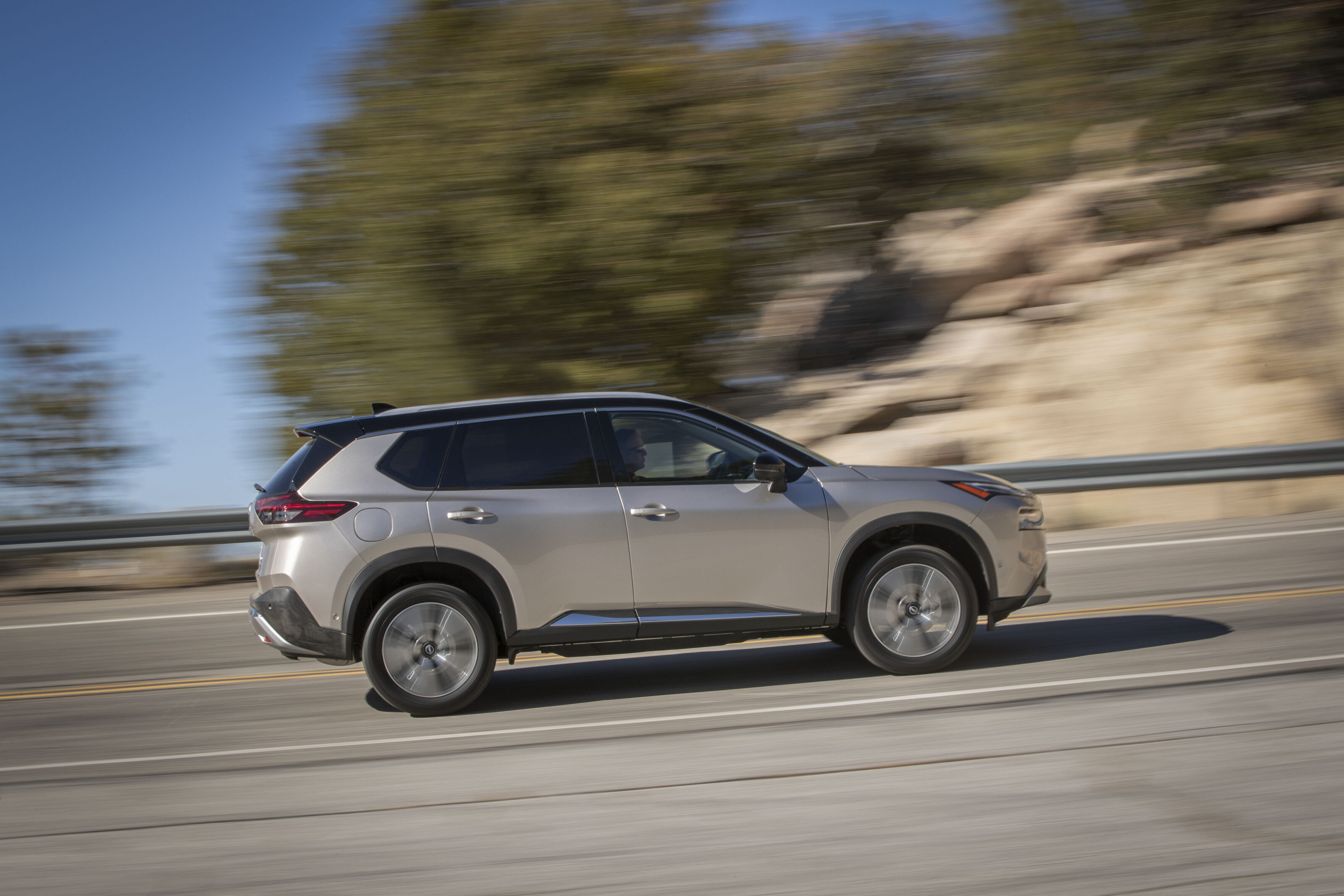
When pushed to extremes, the X-Trail’s all-wheel-drive system does indeed transfer torque to the rear axle quickly, almost imperceptibly, though a further test in low-traction driving conditions is in order.
Suspension tuning is perfectly inoffensive and prioritises passenger comfort over satisfying dynamics. When pushed into corners, the tall Nissan exhibits modest and expected body roll while providing the driver with some chassis feedback.
Body and wheel control is above average, with limited crash through over road imperfections.
The ProPilot system sounds great in theory but in practice, the adaptive cruise control and lane-keep assist systems would benefit from some further refinement. While it is a hands-on system, it lets the X-Trail stray a little too far towards lane markers without driver intervention.
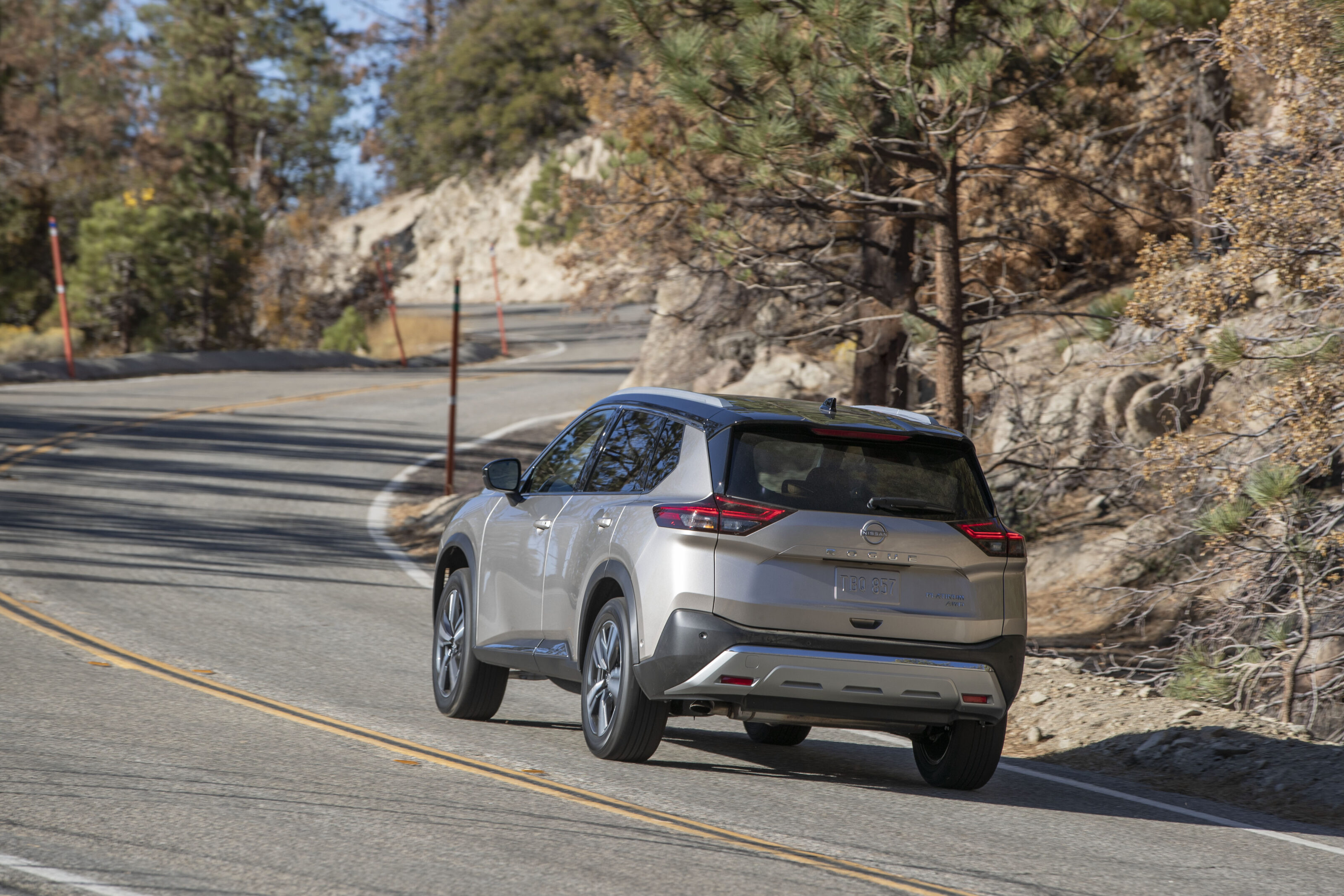
The electric power steering responds directly to driver inputs and the variable-assist lightens up for parking, making quick manoeuvres – like a rushed parallel park in the city – much less of a chore. A sportscar this is not, so don’t expect high-fidelity steering feel or feedback with the X-Trail.
Brakes are your first level of active safety and the Nissan’s four-wheel discs give the driver confidence and control, with good modulation and above average feel. Like most SUVs, expect some dive under moderate to heavy braking, but the system makes driving the X-Trail enjoyable and is one of the highlights.
Suspension tuning is perfectly inoffensive and prioritises comfort over satisfying dynamics; when pushed, the tall Nissan exhibits modest and expected body roll.
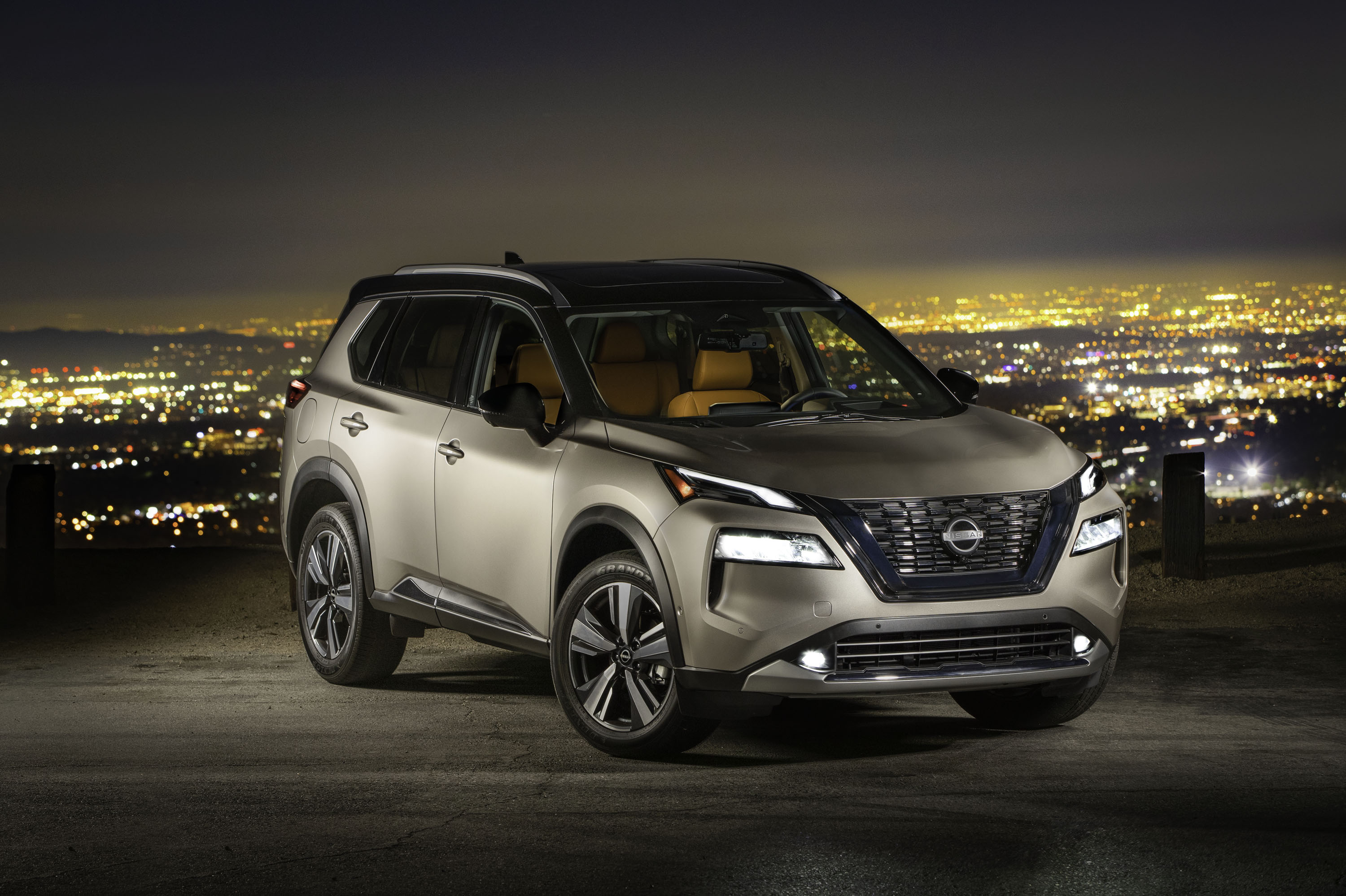
For some, a new generation of X-Trail has been long overdue and Nissan has taken the qualities that buyers have enjoyed to a new level.
With improvements and enhancements across the board, it makes this popular Nissan a more useable SUV for modern families. It’s a solid evolution, not a radical revolution, which is exactly what buyers are looking for.
2022 Nissan X-Trail specifications
| Body | 5-door, 5-seat medium SUV |
|---|---|
| Drive | all-wheel drive |
| Engine | 2488cc I4, DOHC, 16v |
| Gearbox | CVT |
| Power | 135kW @ 6000rpm |
| Torque | 245Nm @ 3800rpm |
| Bore/Stroke | 89 x 100mm |
| Compression ratio | 12.0:1 |
| 0-100km/h | 8.9sec (estimated) |
| Fuel consumption | 8.1L/100km (combined/claimed) |
| Weight | 1608kg |
| Power/weight | 84kW/tonne |
| Front suspension | MacPherson struts, anti-roll bar |
| Rear suspension | Multi-link, anti-roll bar |
| L/W/h | 4648/1840/1689mm |
| Wheelbase | 2706mm |
| Tracks | 1585mm (f); 1590mm (r) |
| Steering | Electrically assisted rack-and-pinion, variable ratio |
| Front brakes | 296mm ventilated discs, single-piston calipers |
| Rear brakes | 292mm ventilated discs, single-piston calipers |
| Tyres | 235/60R18 (f/r) all season |
| Wheels | 18 x 7.5-inch (f/r) |
| Price | TBD |
In the end, they couldn’t be separated.
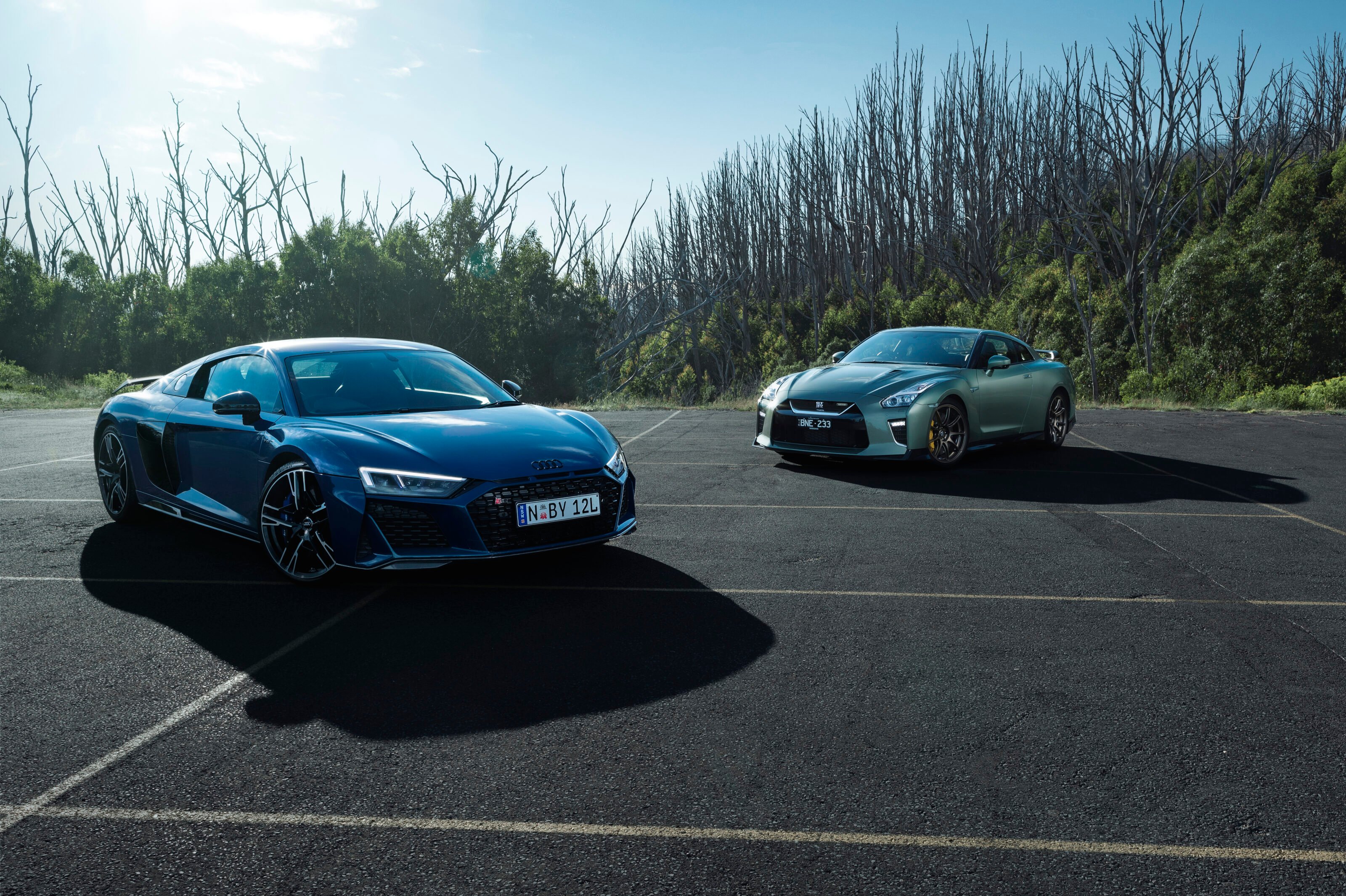
Three judges plumped for the Nissan GT-R and three cast their votes for the Audi R8 V10. That was MOTOR’s Performance Car of the Year 2009, the first and only occasion that two cars tied for the PCOTY crown.
While we might well question the wisdom of an even number of judges, even prior to that event, the Nissan GT-R and the Audi R8 had always been inextricably wedded.
Now, as they disappear from sale in Australia, we couldn’t miss the opportunity to take these two performance icons for one final sortie into the high country in order to put an end stop on our own history with them and attempt to place their respective legacies into some sort of context.
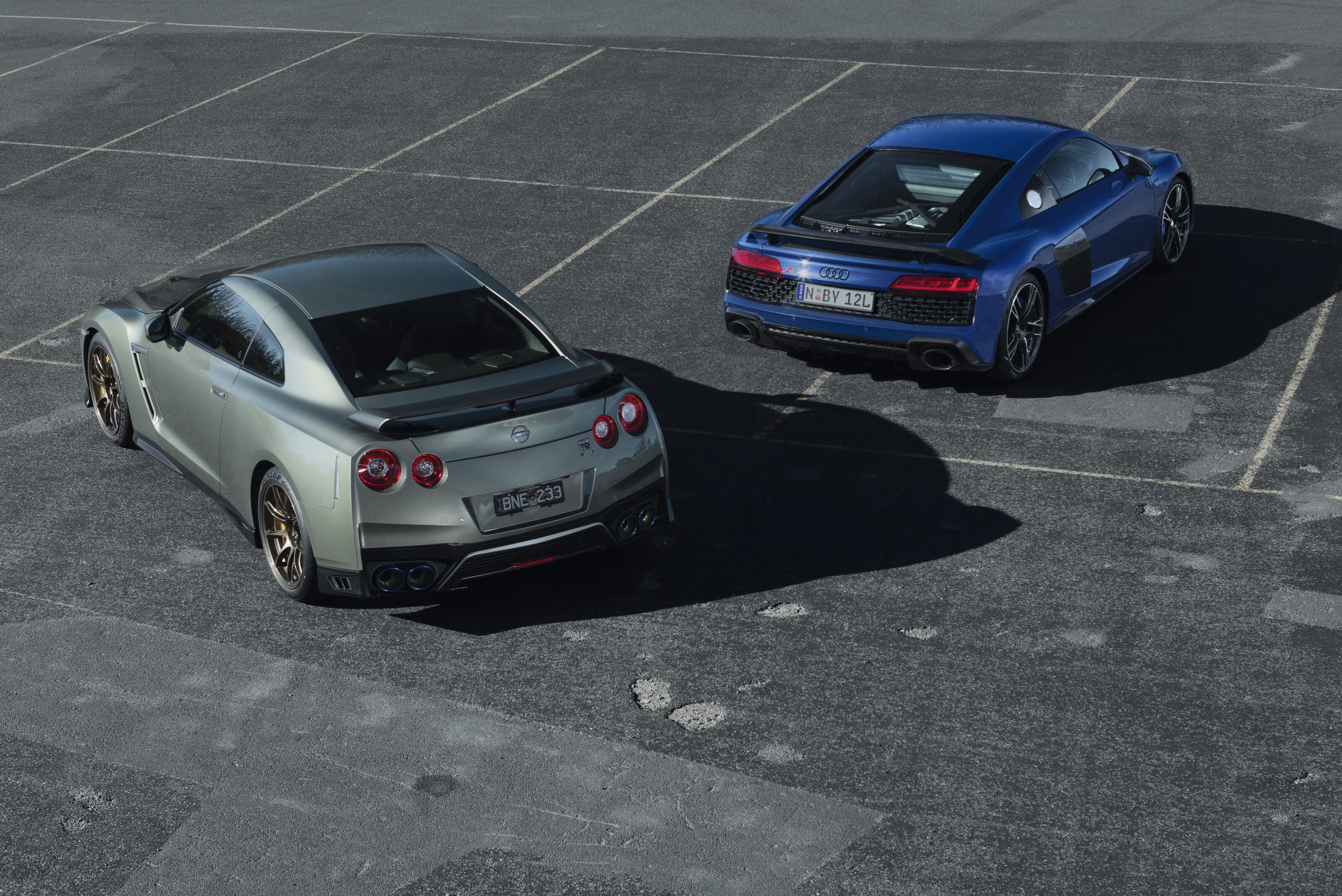
I had an unxpectedly early acquaintance with the GT-R. Back in May 2005, somewhere near the Nürburgring, ex-Wheels editor Bill Thomas and I were looking for a place to clean a Nissan 350Z when we chanced upon a country servo with a functioning jetwash. That’s not always easy to find in Rheinland-Pfalz on a Sunday morning due to local noise regulations, so we were a little annoyed to be shooed away by a horde of Nissan employees clearly anxious to hide what was inside the cleaning bay.
A glimpse of the headlight unit confirmed that the silver and black mule inside was the new GT-R, months prior to its appearance in Proto Concept guise at the 2005 Tokyo Motor Show. It was like finding a unicorn.
The introduction to the Audi R8 was more conventional, but no less striking. The international launch for the first 4.2-litre V8 Type 42 car was held on the roads around Circuit Paul Ricard. A colleague had arrived with a Porsche 997 Carrera 4S so that a clandestine comparo could be run on the local hill routes.
His face afterwards was one of shellshock. The Audi hadn’t just bested the 911. It had demolished it. It was way quicker, sounded better, handled better, looked more striking, felt better screwed together and just contrived to make the Porsche appear a dated also-ran. That was deeply unfamiliar terrain, and felt as if the sports car world had just shifted decisively on its axis.
Weissach attempted to reassert itself against the GT-R with the 997 GT2, the fastest and most powerful road-going 911 to date, only for the somewhat porky production version of Nissan’s R35 GT-R to eclipse its time on hometown title Auto Zeitung’s test track. The 997 was again made to look second best.
Of course, with hindsight, we can see the subsequent development timeline, Porsche making good with the excellent 991 generation and now the 992 evolution has once again stamped Zuffenhausen’s superiority on its class, which only serves to render the achievement of the Nissan R35 GT-R and the Audi R8 all the more jaw-dropping.
But, alas, unless you’re talking bottomless crab buffets, all good things come to an end. Australian Design Rule 85 and its requirement for additional side impact protection has done for the R35 GT-R while Audi’s Hungarian engine plant will no longer build the Aussie-spec 5.2-litre V10, the mothership at Ingolstadt not seeing any compelling numbers that would convince them of the cost benefit to homologate the car with a new engine specification. So it’s auf wiedersehen to the Audi, at least until the next generation model arrives.
What that car will look like is open to question. What it sounds like isn’t. Instead of using Porsche’s now-abandoned SPE modular and scalable platform, the next R8 will instead lean ever further on Lamborghini, so in 2025 we ought to see the R8 sharing body and chassis structures from the front to the B-posts with the next-gen Huracan. In place of the brand-new hybridised V8, Audi looks set to instal a T-shaped 90kWh battery stack and two or three e-motors. On the plus side, you’ll get more than 635kW to play with, but that yowling V10 will, sadly, be a thing of the past.
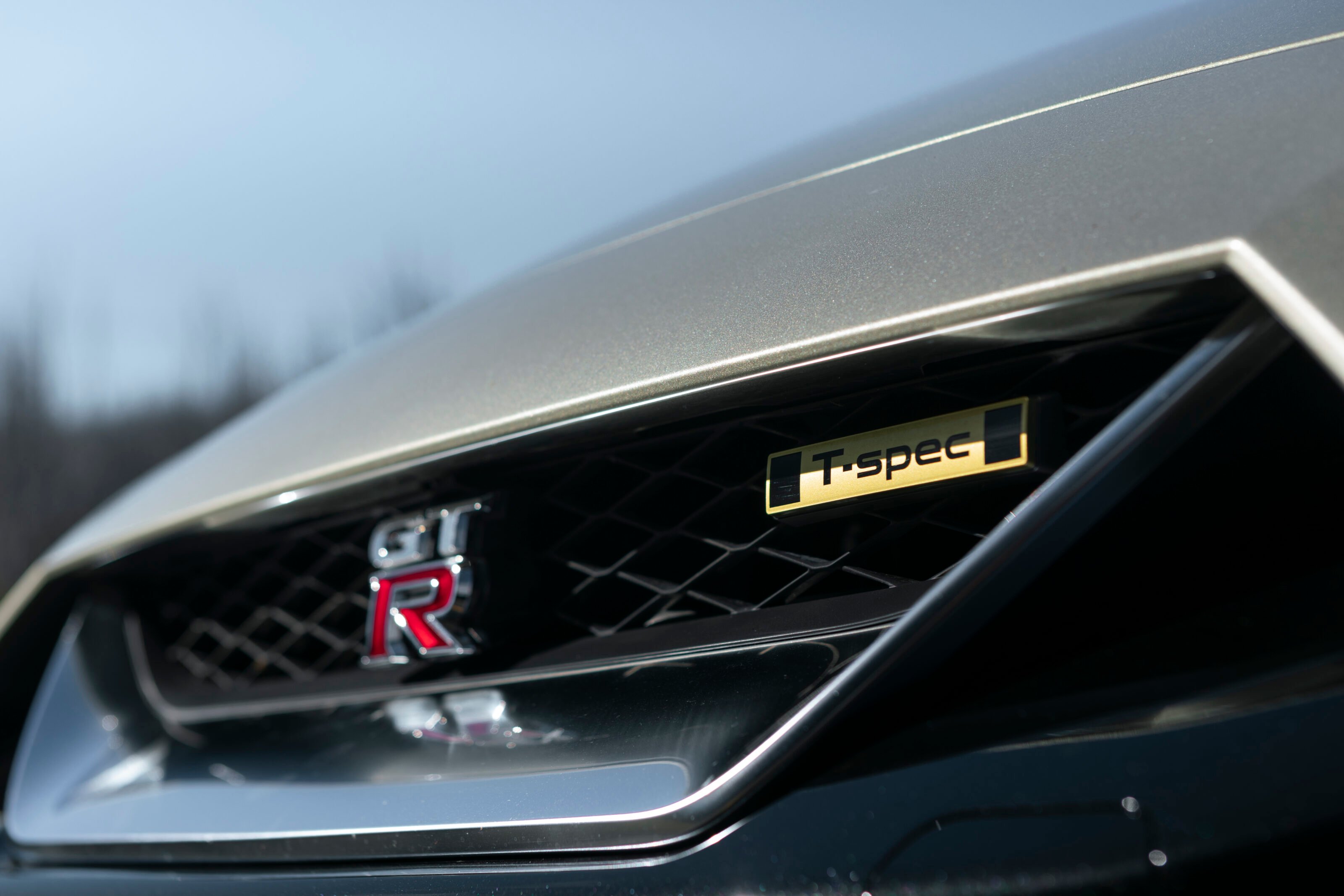
As indeed will a Nissan GT-R with an internal combustion engine, but not just yet. It’s likely that Nissan will unveil an updated R36 version of its performance flagship which will continue to drink 98RON, with Nissan having experimented with both a kinetic energy recovery system and 48v mild-hybrid power. That car is seen as a stepping stone to a more radical fully electrified R37 version that will appear towards the end of this decade.
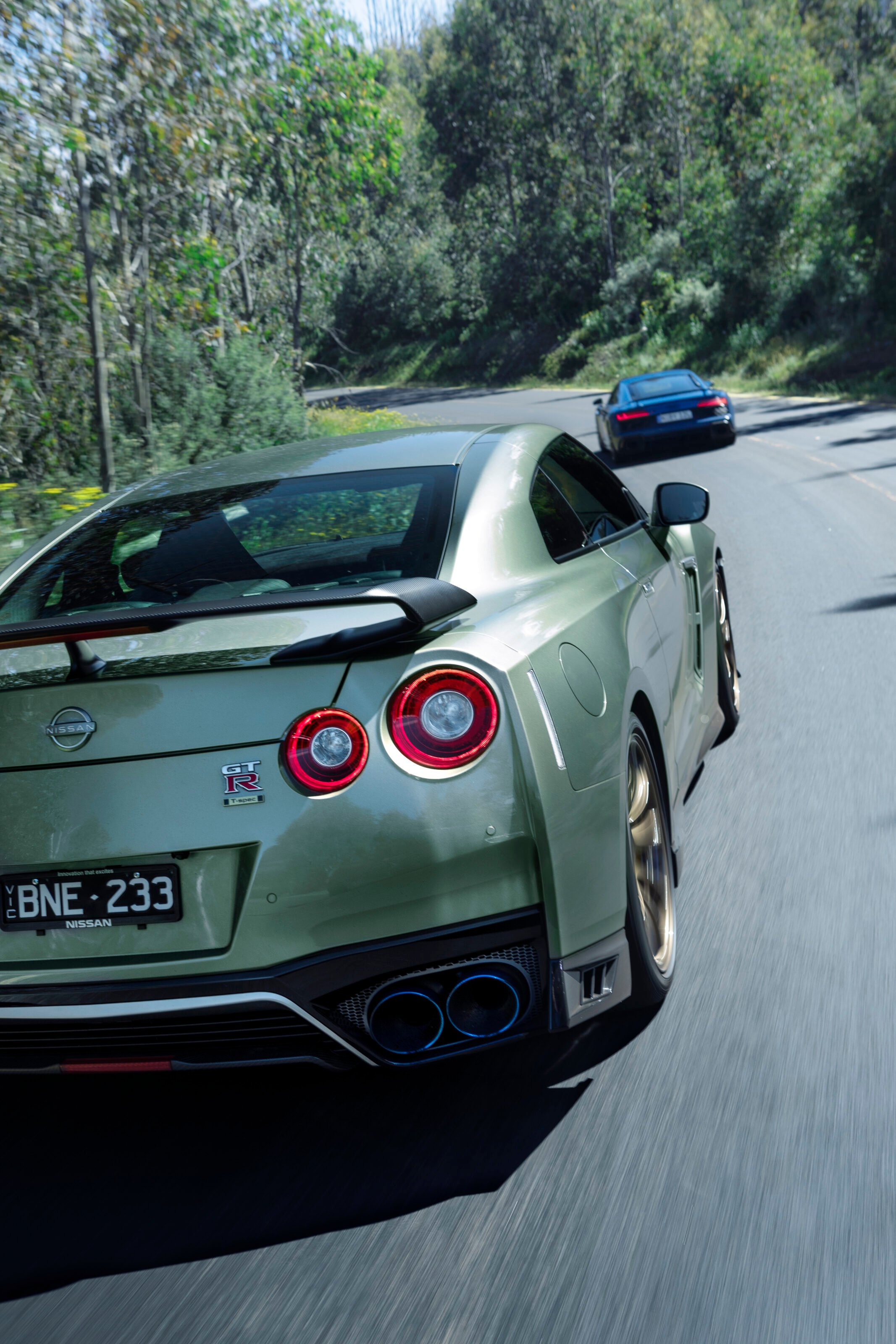
The GT-R initially feels resolutely of its time. There’s that giddy impression of ‘new old stock’ about this Millennium Jade T-Spec version, as if you’ve stumbled upon a 15-year-old barn find with delivery kilometres. Even the key feels like a period piece, being pretty much the same fob you’d get with a $25k Juke, but fire the engine up, let that trademark starter clatter settle and you can’t help but grin and realise that you’re in for a singularly memorable driving experience.
The most disorientating thing about the GT-R is the disconnect between what you’re seeing and how well it actually drives. The Super Nintendo-style infotainment screen, the manual handbrake, the riotous clash of fonts and textures lulls you into thinking you’re in for a somewhat period driving experience, that the game has moved a long way over the horizon.
You’ll search in vain for modern features like smartphone mirroring, a head-up display or a wireless charging pad, and the reversing camera appears to have the definition of a Goldfinger-era buttonhole spy camera. Indeed, the way the 419kW VR38DETT powerplant only really starts to get its trousers on at 3000rpm is a throwback. As is the GT-R’s hydraulically assisted steering, which tramlines and constantly jinks and chatters. But stick with it.
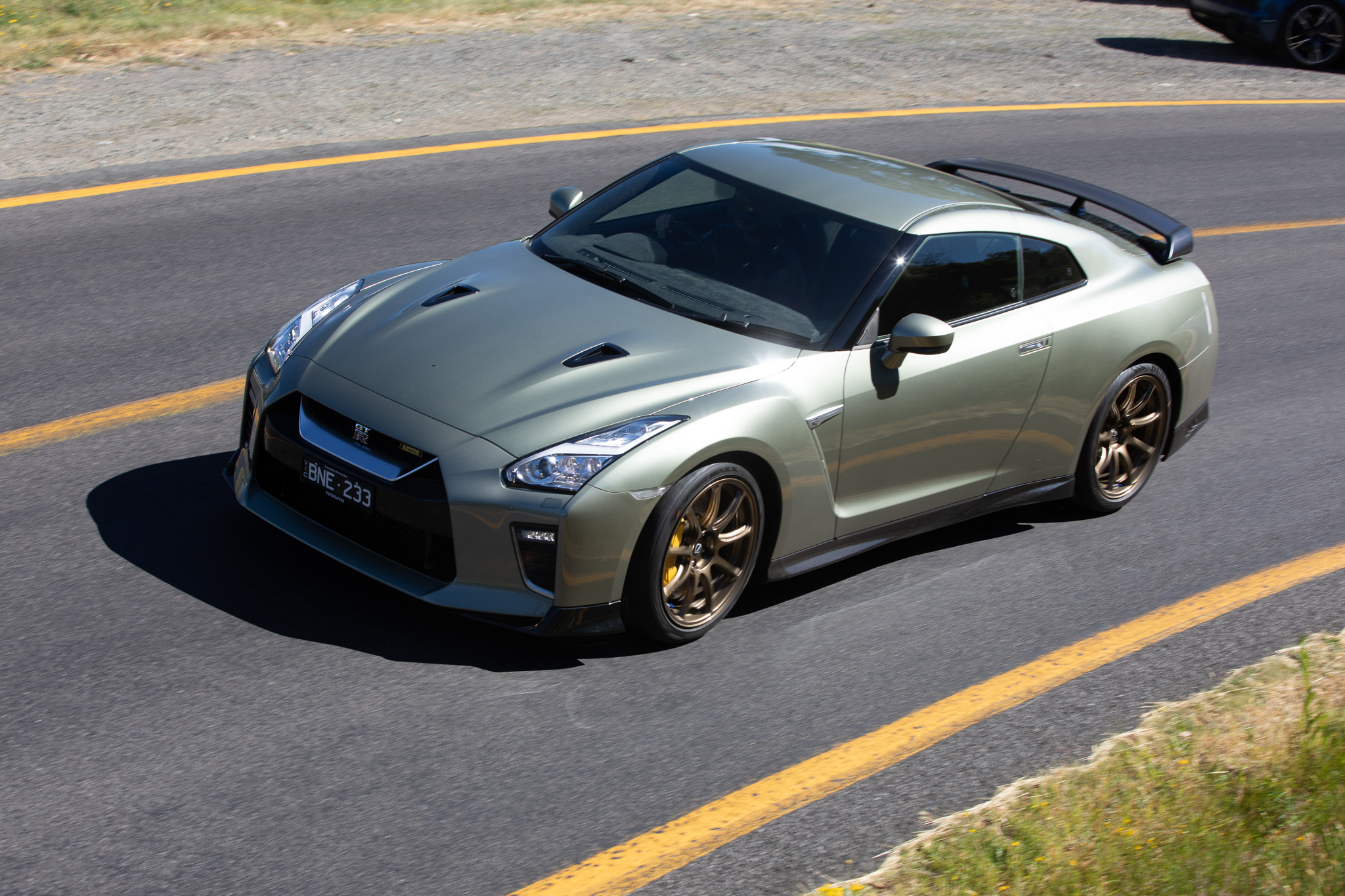
There’s a good deal of compliance in the way this T-Spec rides in Comfort mode. The received wisdom that the R35 rides like a trolley jack couldn’t be further from the truth. In fact, there’s a delightful long-stroke cadence to the ride, especially when you’re just wallowing in the 632Nm available at 3300rpm.
You don’t need to redline the GT-R in order to cover ground quickly and effortlessly. Using the stubby wheel-mounted paddles to shortshift up at around 5500rpm reinserts you into the fattest part of the torque band without having to work the twin IHI turbochargers too mercilessly.
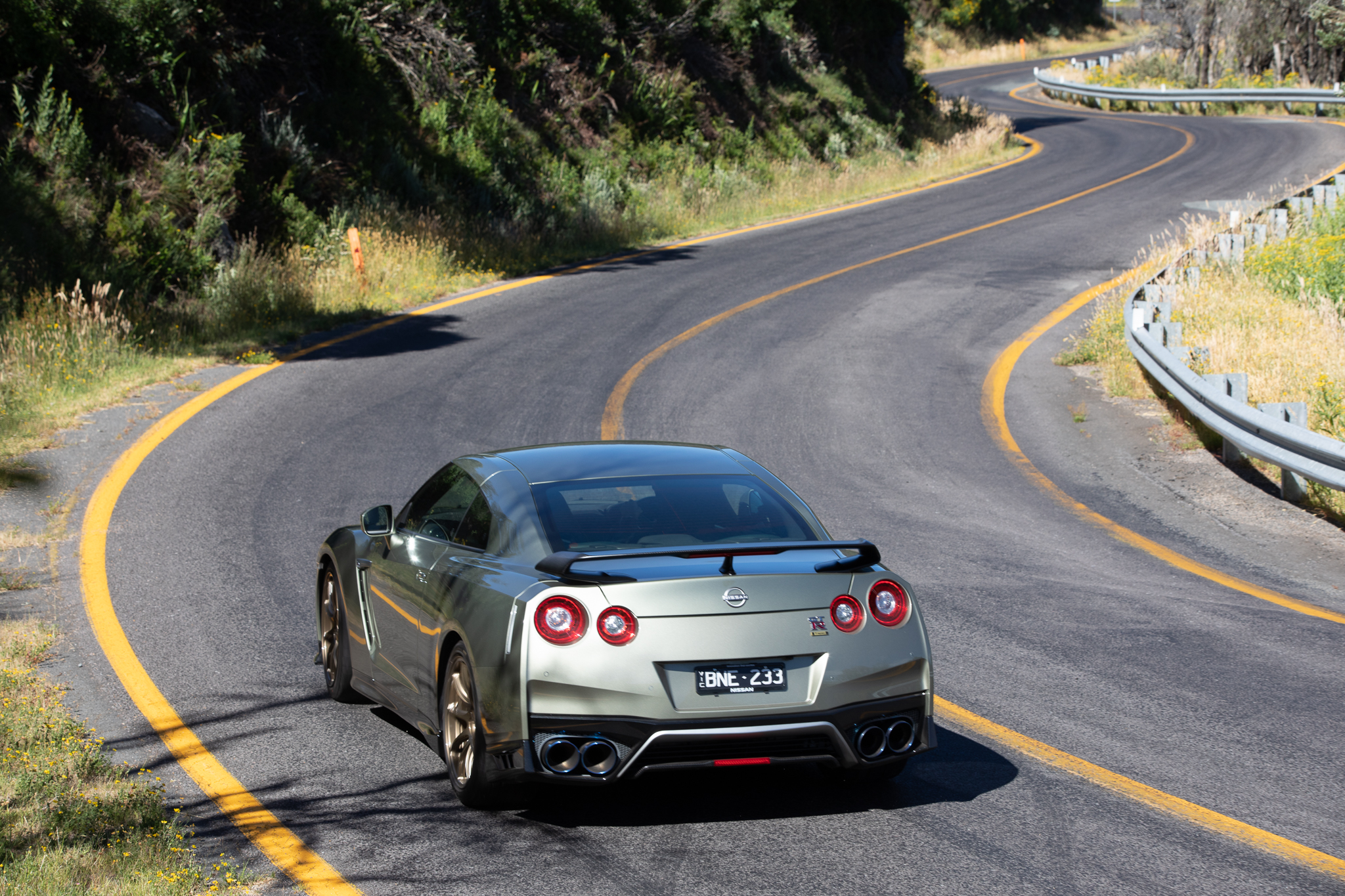
The driveline lash of old has been notably quelled in later R35 iterations, but the chassis now feels a step behind in terms of torsional rigidity, lacking the Nismo model’s seam-welded shell.
Don’t believe the figure of 50,000Nm/deg bandied about for the GT-R – that’s for certain subassemblies only. By way of comparison, the R8’s chassis twists by one degree when 40,000Nm is applied.
Dial the pace back a bit and there’s still a lot to take in. Tyre roar is so great if almost feels as if Nissan has programmed a coarse chip sound symposer to fill the cabin with low frequency white noise. You sit high in the car and headroom isn’t great, but your coif scuffs gently on a beautiful Alcantara headlining with some quite ornate diamond stitching.
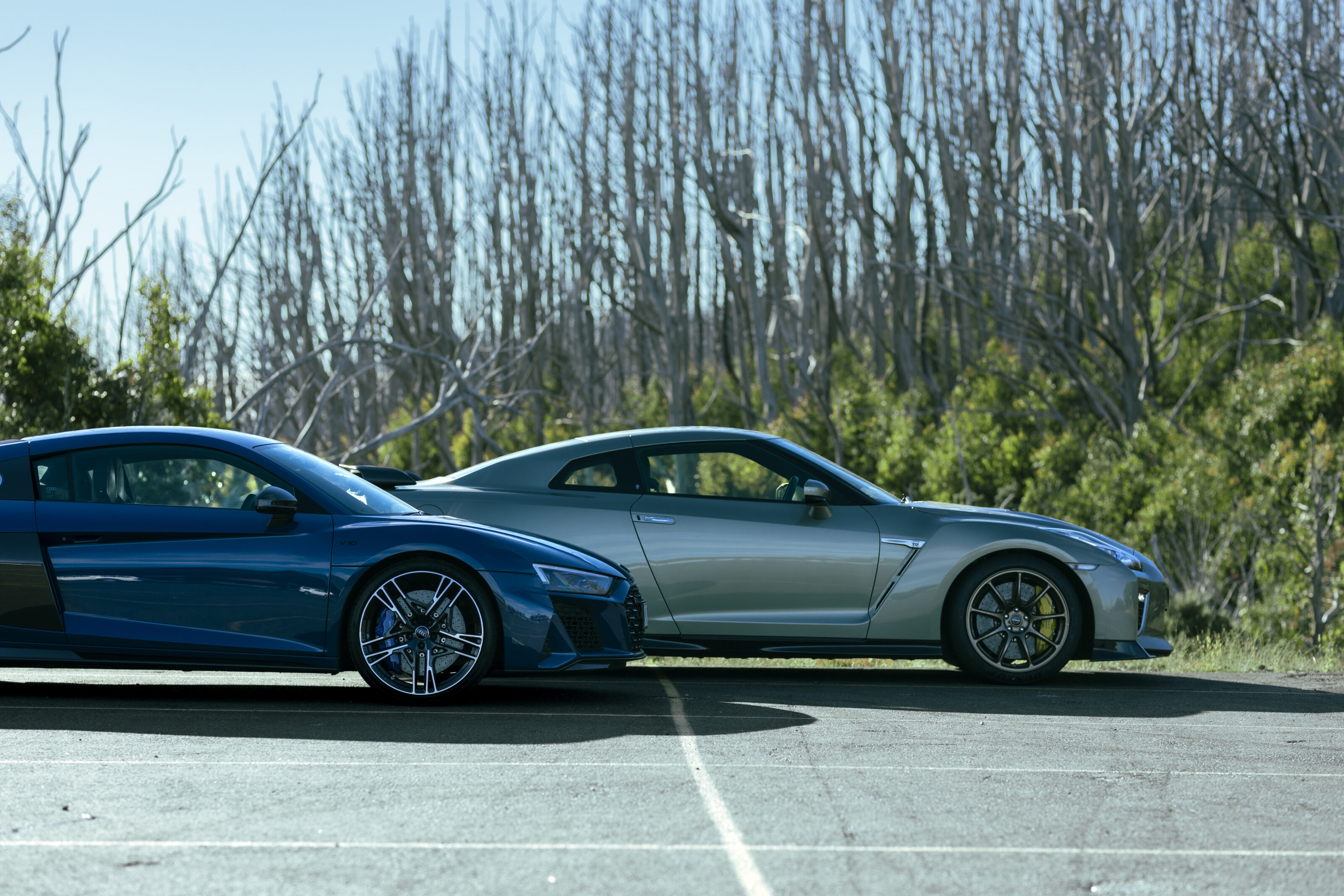
The seat height combines with the fact that the highest part of the GT-R’s roofline is at the windscreen header rail, the aero blade canopy arcing downwards to the ‘sword-edge’ C-pillar.
Remember the fuss we made about the GT-R tipping the scales as if it was sculpted from a billet of depleted uranium? This T-Spec weighs 1751kg, slotting neatly between all-wheel drive, six-pot coupe rivals the Porsche 911 Turbo and the BMW M4 xDrive.
Fling it into a corner and you can feel that mass, but it’s possible to neutralise the feeling of heft with a stab of throttle. The steering wheel is near-perfectly proportioned, bereft of the thuggish circumference of many latter-day rivals, and the front Dunlop SP Sport Maxx rubber feels supremely keyed into the bitumen. Lean hard on the Brembo ceramic brakes (390mm front, 380mm rear) on turn-in and you can feel the car swing to neutrality, the drive logic then attempting to figure out how much rear bias is going to be sufficient on corner exit.
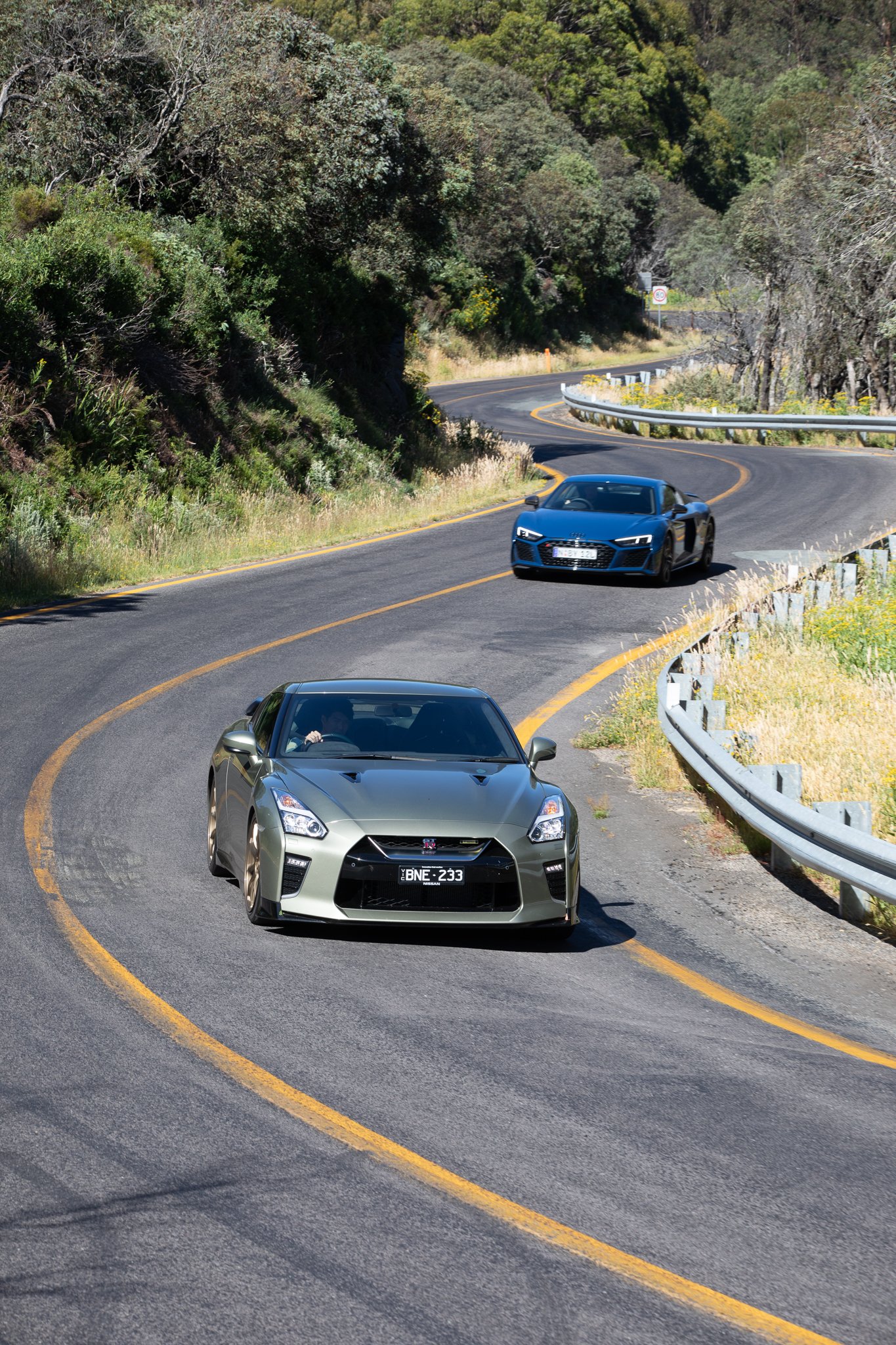
Despite the great – and deserted – roads, this isn’t really a day for hard driving.
It’s a chance for us to consider how this car, once hailed as some sort of self-driving Gundam automaton, now offers a more analogue feel than virtually any rival. And given that speculators have ramped values of these T-Spec cars up to almost a million dollars, I’m a little conscious about getting it back to Nissan in one piece.
The Audi is a car that might give seasoned MOTOR readers an element of déjà vu. This very same R8 Performance coupe was featured in the March 2021 issue as part of our Car of the Year event and has some miles under its belt. In fact, it covered more laps of Winton than any other car at PCOTY, which speaks volumes as to how popular it was with judges. Only tired brakes and contact patches like crêpes called a halt to proceedings.
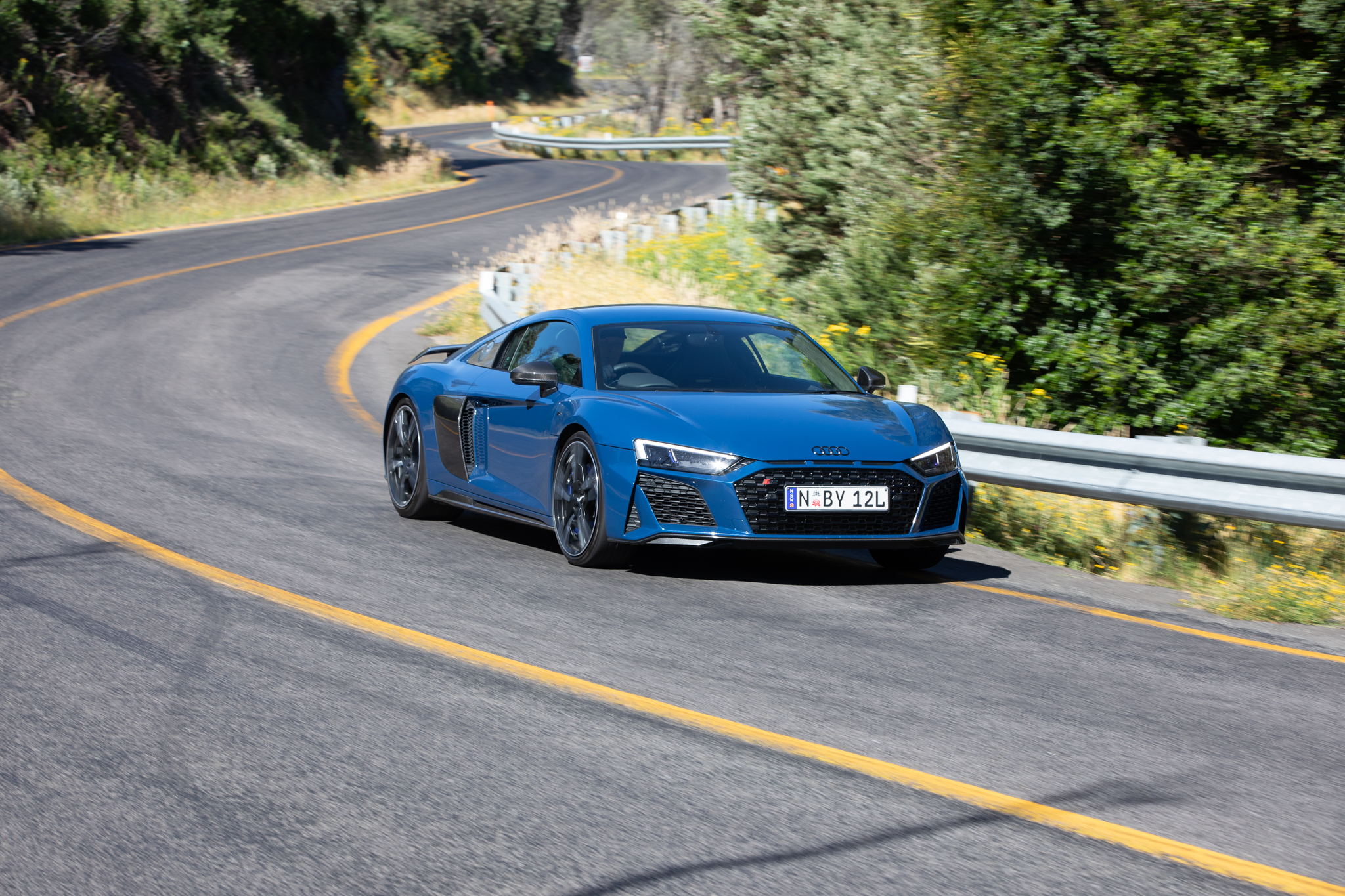
Balancing that blend of the exotic and the prosaic is what makes the R8 such an intriguing proposition. On the one hand it’s a V10 mid-engined junior supercar that has a fair amount of Sant’Agata in its chromosomes, yet for the most part it’s as undemanding to drive, and indeed live with, as a scaled-up TT.
It has also benefited from an extensive mid-life update when the original Type 42 model morphed into the 4S model nine years after launch in 2015, at which point the V8 engine and the gated manual gearbox were quietly pensioned off.
There’s a school of thought that says that the V8 is the sweeter engine, better suited to the character of the R8. While it is a lovely thing, the eight-pot needs to be worked harder to feel quick. Look at the comparative dyno plots for the two engines and the V10 actually needs more revs to make its peak torque, but the fact remains that at 4000rpm the V8 makes 250Nm, whereas the 10-cylinder engine is already delivering 28 per cent more shove, some 320Nm. And it sounds more exciting, too.
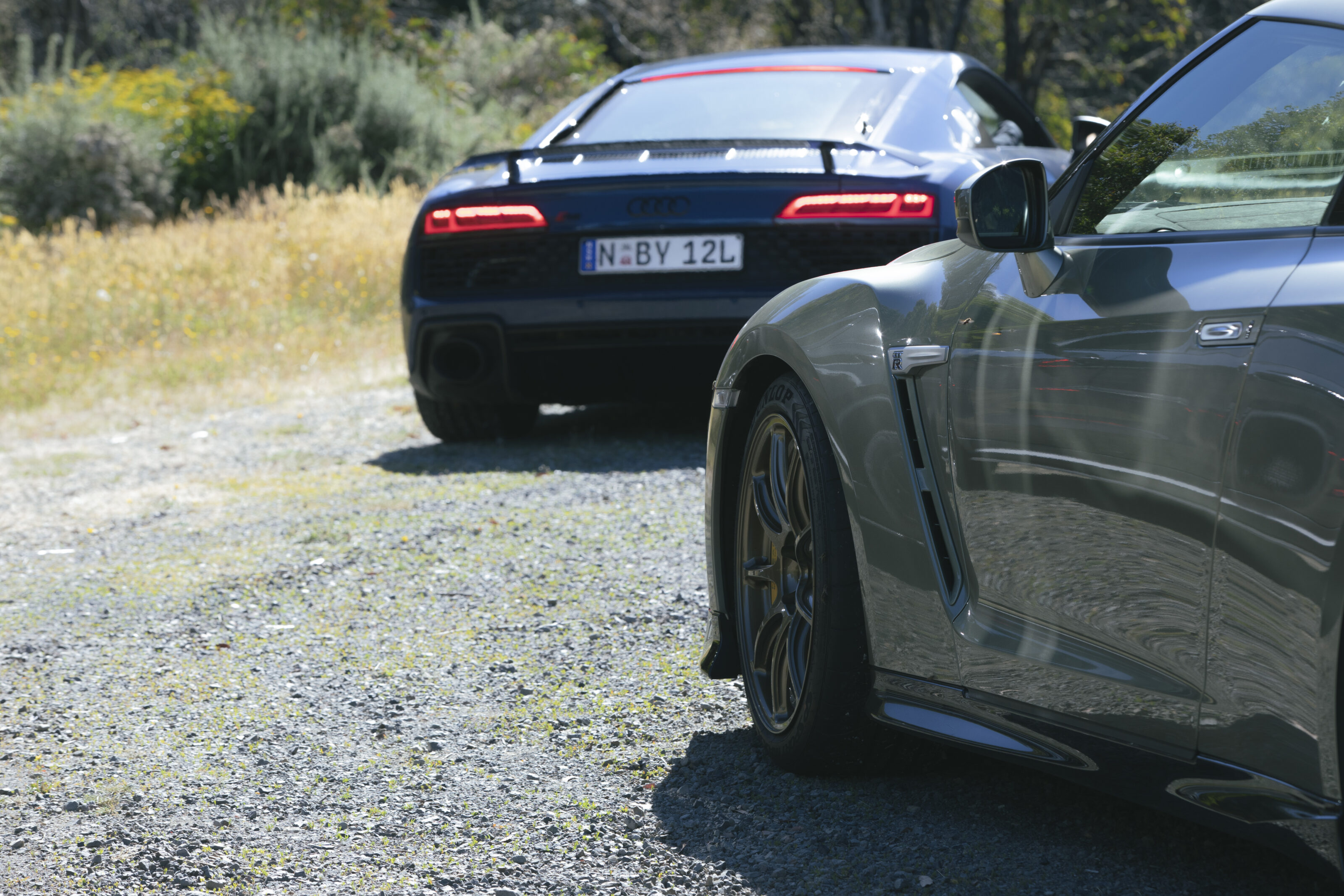
This second-gen R8 was updated in 2018, with the V10 plus becoming the V10 performance quattro, power creeping up by 7kW to 456kW in the process.
Where the Nissan hefts a power-to-weight figure of 239kW/tonne, the Audi muscles in with a hale and hearty 281kW/tonne. That’s still quite something when a current Porsche 992 GT3 makes 261kW/tonne.
The R8’s polish and civility makes it easy to underestimate. Get after it and the ferocity of the V10 remains something to behold.
It’s also something that can almost be too much. Accelerating the Audi to redline reminded me of once climbing a route in the French Alps that ran up the side of a roaring waterfall. It wasn’t a technically demanding pitch, but the closer you got to the din of the water, the more your adrenaline would spike.
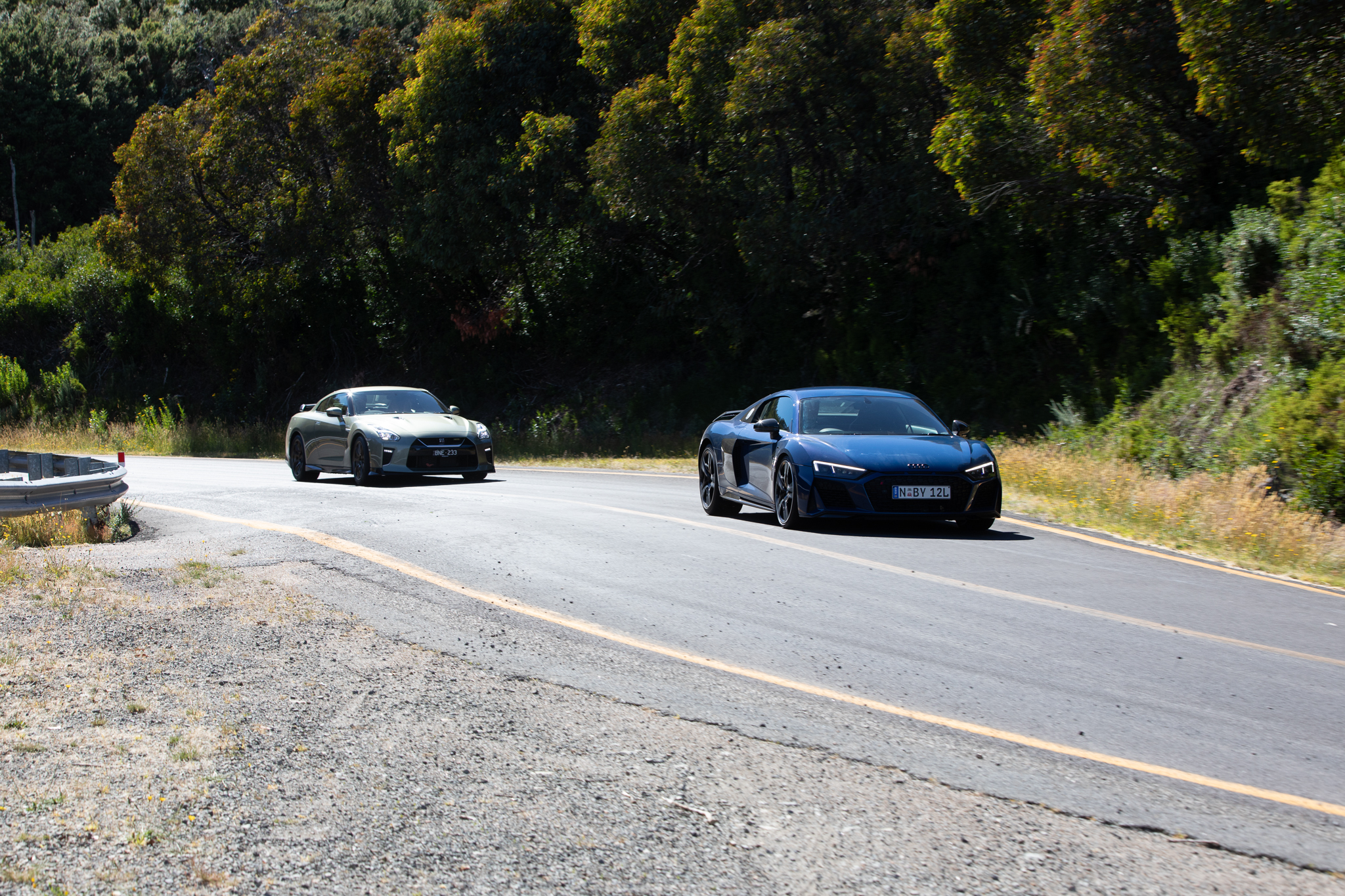
You’d end up shaky and juiced in no time at all, primarily due to the noise. It’s the same chasing the V10 around the dial. You become so bathed in stress hormones that there comes a time when you just need to snick up out of the power early to give yourself some respite.
And now this V10 is the last one standing. When the R8 V10 first appeared, you could also get a 10-pot in a Chrysler Viper, a Lamborghini Gallardo, a Porsche Carrera GT, BMW’s M5 and M6 and even in Ford trucks and Volkswagen SUVs.
Lexus’s awesome LFA with its 1LR-GUE powerplant followed in 2009, but by then the V10 had been erased from the F1 playbook and as a result its cachet dimmed. Lamborghini will likely be the last to persist with this engine configuration, and being the last to persist with anything rarely smacks of dynamic innovation. Maurizio Reggiani would doubtless disagree.
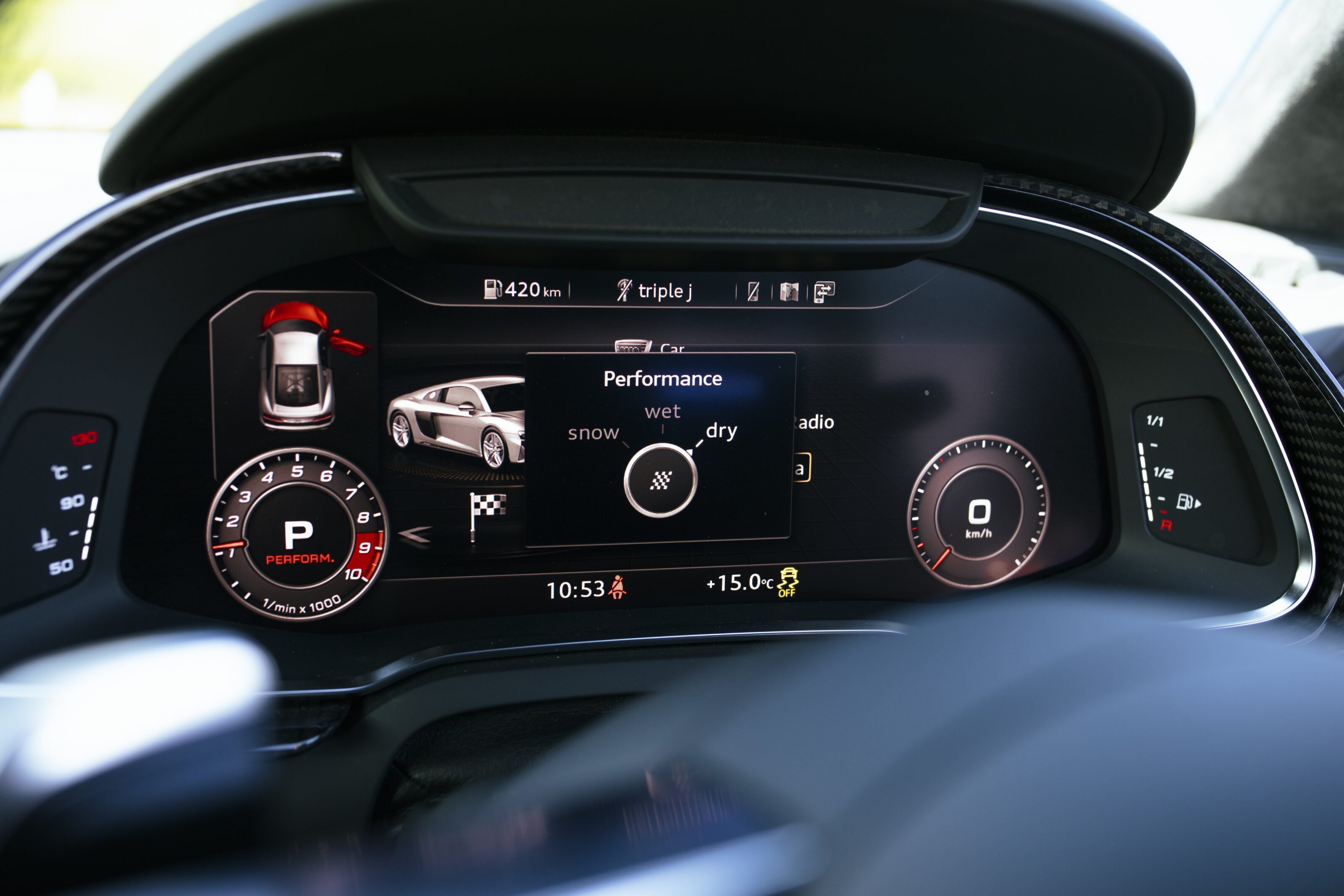
It’s a fact that this Audi wouldn’t hold station with a V6-engined Maserati MC20. I’d wager it would languish some way behind a V6-engined McLaren Artura or the six-pot Ferrari 296 GTB. Their sixes weigh around 160kg, the weight of a passenger less than the Audi’s mill. Dressed with turbochargers and, in the case of the Artura and 296GTB, battery assistance and they deliver a power density that’s in another league.
But then so does a Tesla Model 3 Performance and you wouldn’t take one of those into the hills at dawn and revel in an aural palette of such astonishing richness. It’s hugely indulgent, utterly unsustainable and borderline antisocial, but the R8’s V10 delivers such a reward for the keen driver that it feels depressingly predictable that something this good is being slowly legislated out of existence. Experience one while you still can.
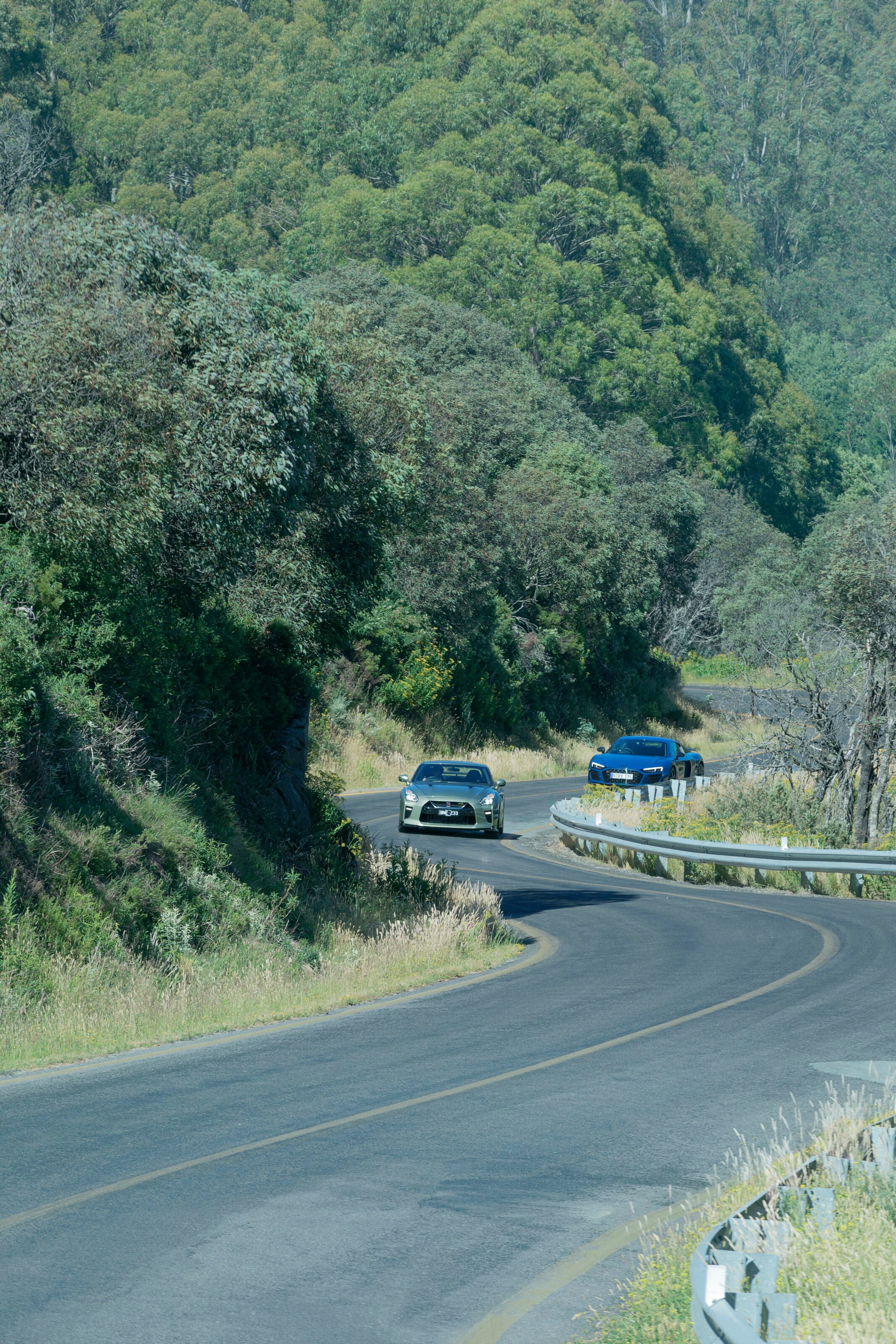
Even today, it’s hard to pick a favourite. The Nissan is warmly received everywhere it goes, offers a genuine and discrete charisma even if you’re not a GT-R otaku, and has weathered the demands of time in a curiously endearing fashion.
The Audi initially feels a little more modern-generic right up until that moment when it doesn’t. It flatters and coddles and then drenches you with its sheer sonic intensity. Both are something to be treasured and each, in its own way, has left an indelible mark on the performance car landscape.
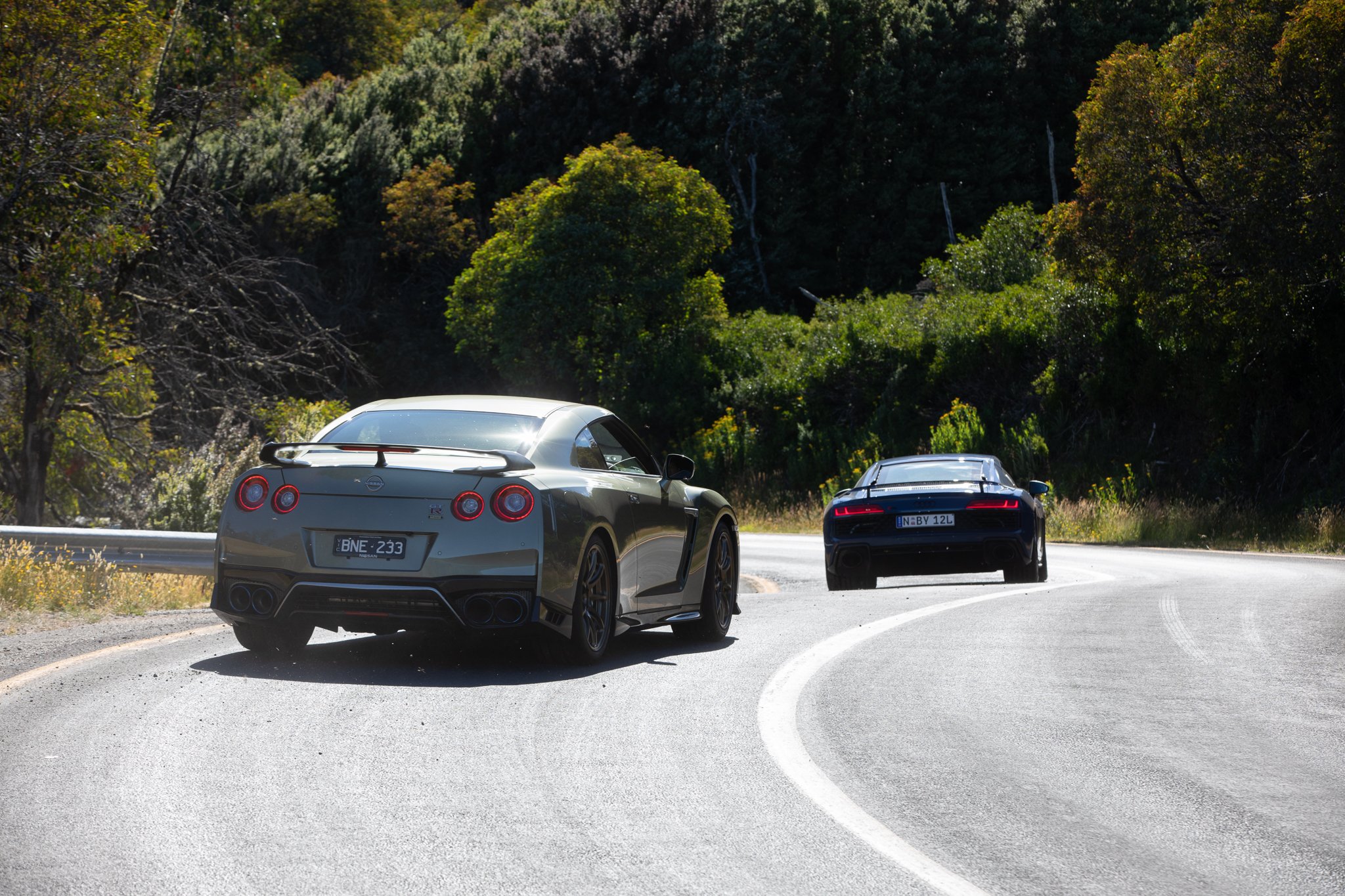
Alex Affat takes the keys to the Nissan and heads back towards Melbourne. From my vantage point I can track the characteristic rear lights jinking through the trees as the car snakes down the hill towards Marysville. Then it’s gone, perhaps for good.
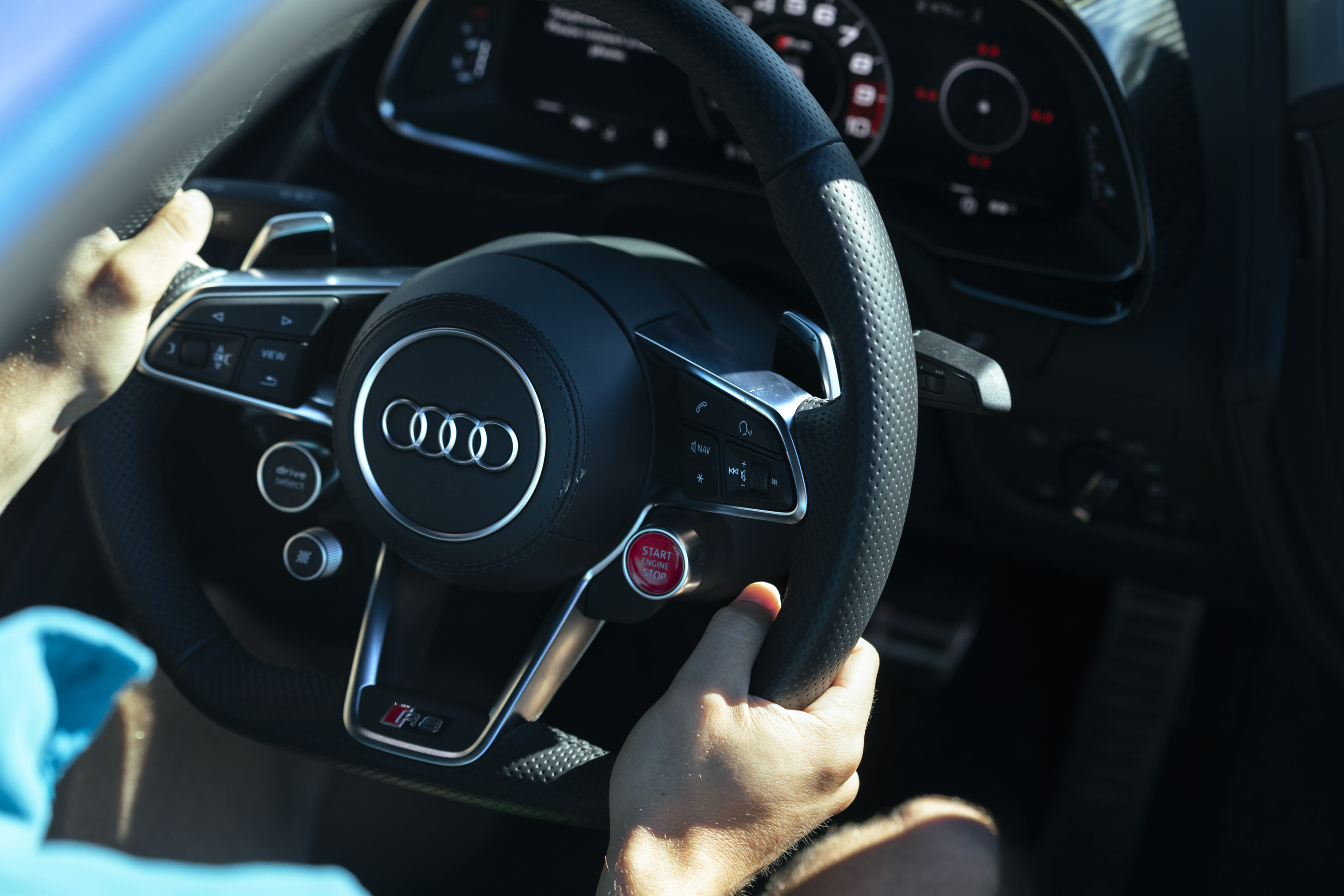
This could well be my last ever drive in an Audi R8 too. I’m not ashamed to say that the last drive was a long one, heading down Reefton Spur and back up again, returning to the top of Lake Mountain as the sun set over the hills.
Despite dwindling sales that point to an inevitable conclusion, I don’t feel that the Nissan GT-R or the Audi R8 ever outstayed their welcomes. Perhaps familiarity bred complacency rather than contempt; a feeling that they’d always be there regardless of our patronage.
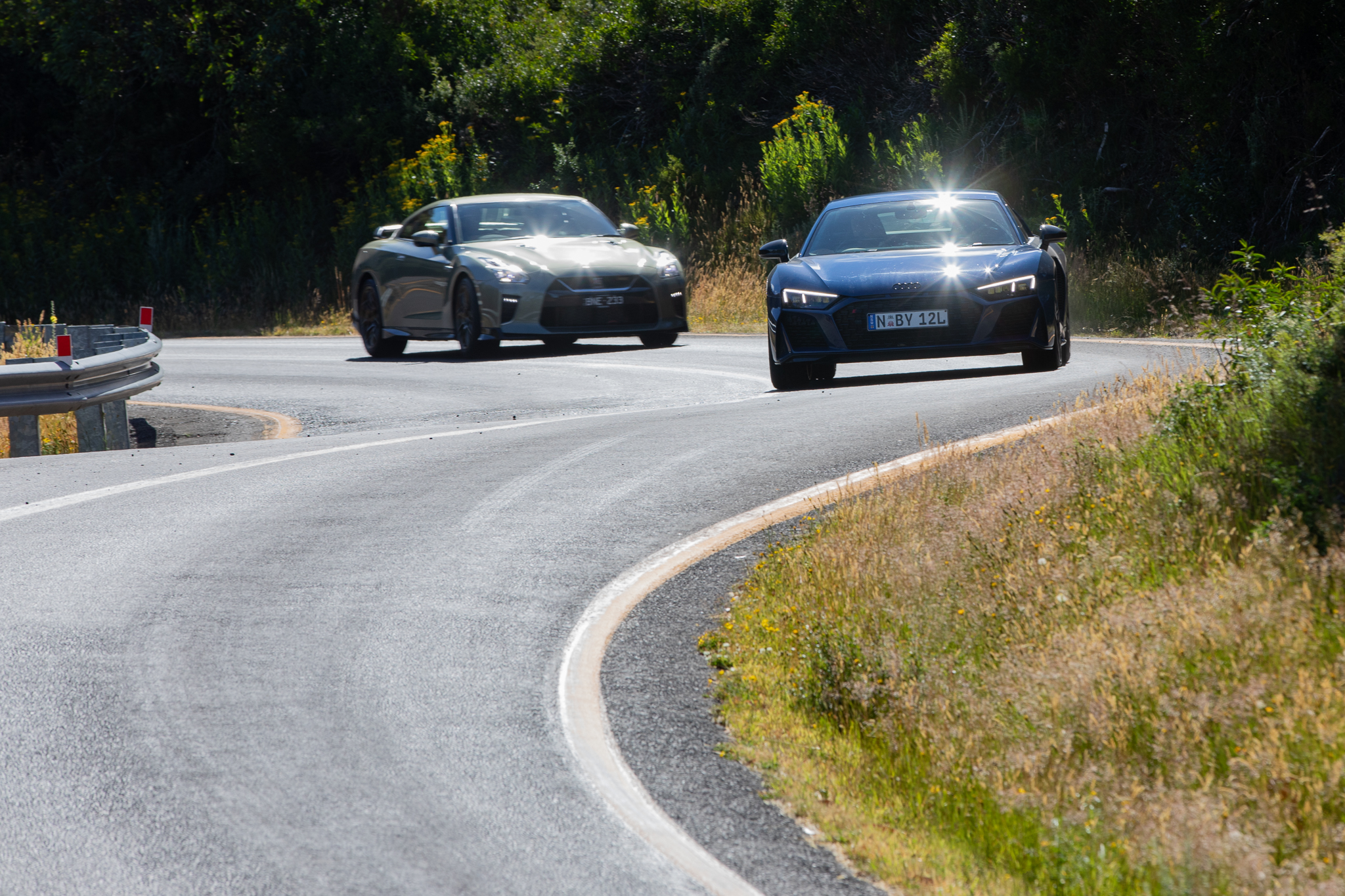
Audi demonstrated that a hand-made supercar could punch well beyond the weight of its niche. Nissan understood the value of both a gold-standard competition history and creators who are, and remain, genuine enthusiasts. Both moved the meter. Both will be missed.
And then, just like that, the lights blinked out for both.
Fast Facts
1. Make the Grade
Back when MOTOR had these two cars at PCOTY 2009, the Nissan retailed at $155,000 and the Audi was a hefty $351,000. Today, the Audi is 12.5 per cent more expensive whereas the Nissan is a massive 65.6 per cent pricier.
True, neither are entry grade, but it’s still quite an eye-opener
2. The Lambo Link
So how much of the R8 is common with the Lamborghini Huracan? Both chassis come from Audi at Neckarsulm and both engines from the plant at Gyor in Hungary. Despite both cars looking and feeling very different it’s estimated that there is still around a 70 per cent parts commonality
3. High Top Jade
Millennium Jade made its debut in 2002 on V-Spec II Nür and M-spec Nür variants of the R34 GT-R. Some 718 V-Spec IIs and 285 luxurious M-Specs saw out R34 GT-R production with gold engine covers (specifically finished in EY0 Silica Breathe). Lift the bonnet of the new GT-R T-Spec, and it’s replicated here
Technical specs
Snapshot
- 2022 Skoda Karoq gets redesign to improve aerodynamics
- New tech and vegan interior options
- Arriving in Australia early in the third quarter of 2022
UPDATE, May 26 2022: The updated Karoq is now on sale in Australia, which you can read about at the linke below. The rest of this story remains unchanged, but our latest reviews are also linked below.
The story to here
UPDATE, April 22, 2022: Skoda’s local division has confirmed the facelifted 2022 Karoq medium SUV will arrive in Australian showrooms in the third quarter of the year.
A spokesperson for the brand said the Karoq is now expected to arrive in Australia during July or August, at least four months after the planned March on-sale date.
The company has not provided a reason for the delay, however, the global semiconductor chip shortage has caused chaos in the automotive industry over the past 18 months, along with parts shortages created by the Ukraine crisis.
Pricing and local specifications will be announced closer to launch.
December 2021: Karoq facelift revealed
The 2022 Skoda Karoq has received its mid-life update, with fresh looks inside and out, and new safety gear.
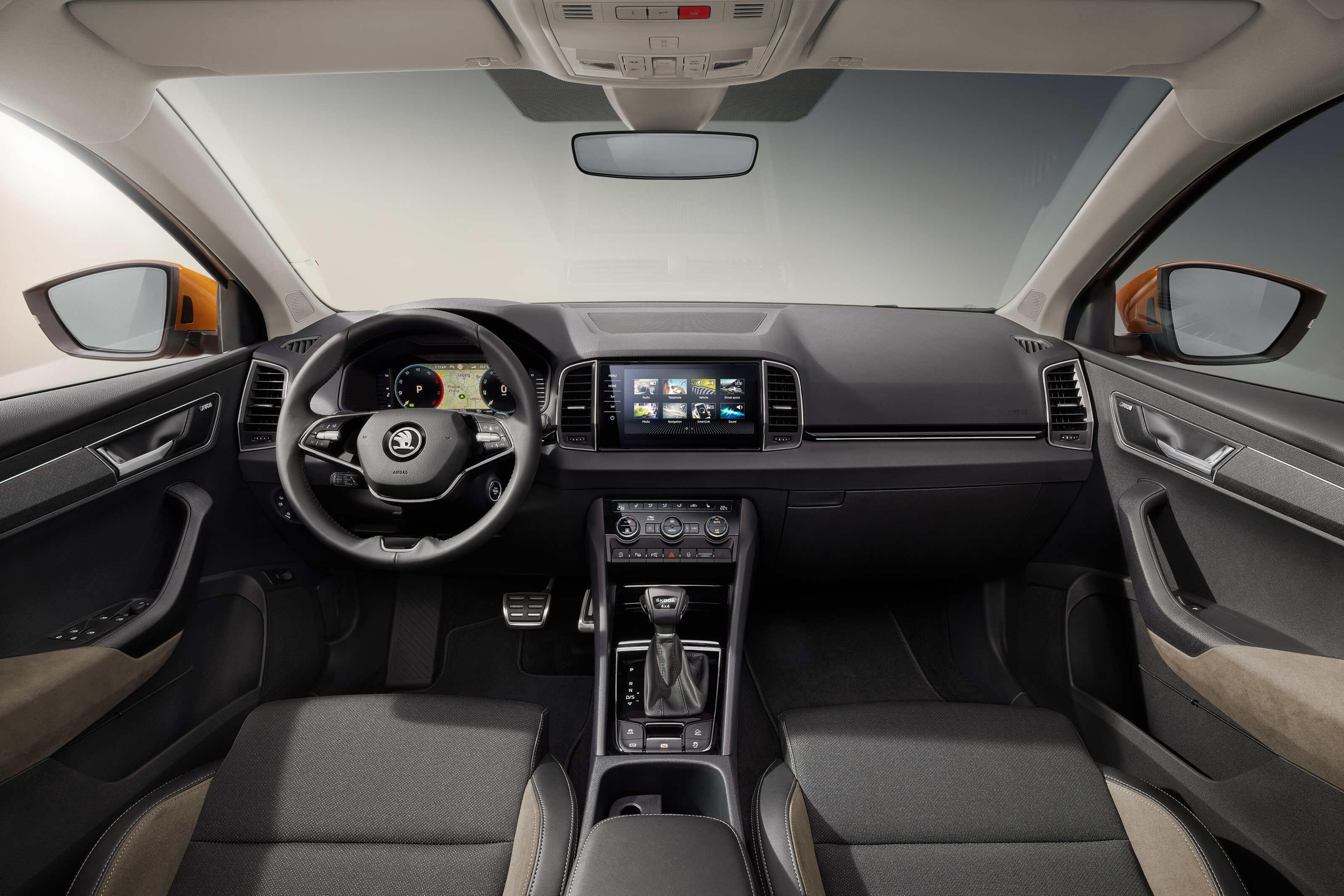
Skoda has redesigned the Karoq’s front end, making subtle changes to the LED headlights, grille, and bumper, while the rear gains slimmer tail-lights and a spoiler.
Along with revised alloy wheel designs and a new undertray, the Karoq has benefitted from a nine per cent improvement to its aerodynamics, reducing its drag coefficient to 0.30 – or roughly the same as a Ferrari LaFerrari.
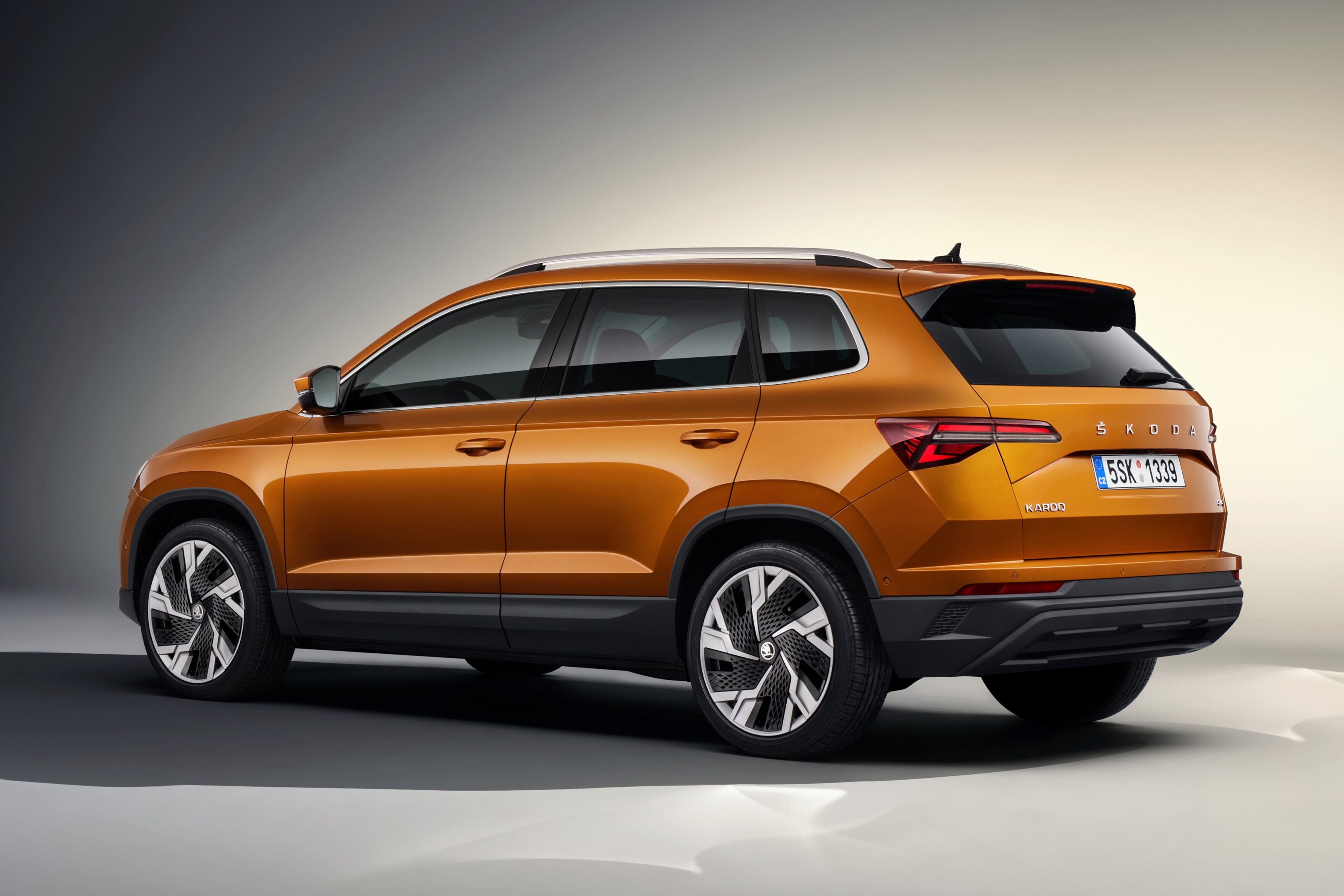
Occupants are greeted with either an 8-inch or 9.2-inch infotainment screen with DAB digital radio and voice assistance, depending on the variant, with the latter gaining wireless Apple CarPlay and Android Auto.
The driver gets a digital instrument cluster measuring in at 8.0 or 10.25 inches, while an electric seat with memory can be optioned for the front passenger.
Yet to be confirmed for Australia is a new Eco Pack, which gives buyers the option of leather-like upholstery created from a combination of vegan and recycled materials.
While final specification for Australia will be announced in the new year, it’s expected the Karoq will continue to be offered a choice of two engines.
Buyers can opt for either the 1.4-litre turbo-petrol four-cylinder engine, producing 110kW and 250Nm, coupled with an eight-speed automatic in the 110TSI, or a 2.0-litre turbo-petrol four, which sends 140kW and 320Nm to all four wheels through a seven-speed dual-clutch automatic transmission in the 140TSI variant.
On the safety front, the updated Skoda gets Travel Assist, which incorporates up to eight features, including semi-autonomous radar cruise control with lane-keep assist and traffic sign recognition.
Also available is park assist, blind-spot monitoring, rear cross-traffic alert, and 360-degree parking cameras.
Snapshot
- Russia set to drop Euro 5 emissions standards
- New car sales expected to drop by 50 per cent in 2022
- Ukraine invasion has led to a 63per cent collapse of Russian new-car market
Russia is said to be dropping emissions regulations for new cars in an effort to shore up supply.
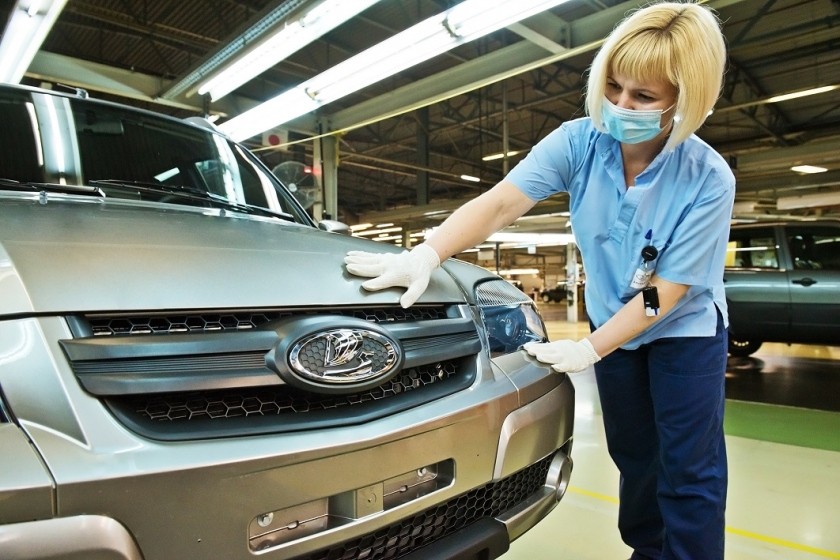
With most major car manufacturers having suspended production and exports to Russia in the wake of the Ukraine conflict, local newspaper Kommersant is citing sources familiar with the matter who say the Kremlin is allowing domestic carmakers to drop Euro 5 standard for new cars.
It’s understood a lack of supply of electronic control units from Germany company Bosch is largely to blame for the decision.

Locally-made catalytic converters will continue to be required by law.
The provisions only apply to Russian companies, with Chinese brand Haval – one of the few manufacturers still operating in the country – being excluded from the concessions.
According to the Association of European Business (AEB), via Kolesa, new-car sales in Russia are set to drop by as much as 50 per cent in 2022.
Dealerships across the nation sold a total of 1.67 million vehicles last year, but the AEB predicts the number will shrink to less than 850,000 – the lowest figure in more than a decade.
Sergey Tselikov, director of the analyst firm Avtostat, thinks the scenario may be even direr, suggesting Russia is headed for 750,000 in the current circumstances, adding that the number could be as low as 470,000, or as high as 980,000 if the situation improves.
Kolesa reported the Russian new-car market collapsed by 63 per cent in March 2022.
Haval is one of those brands that has seemingly come out of nowhere. For those who haven’t been paying very close attention, Haval is the SUV child of Great Wall Motors, now more known commonly as GWM (because that’s how they want it).
Last year saw a bit of a shift for the brand as the fairly terrible (but extremely cheap) H2 was consigned to the scrap heap of history and replaced with the rather more capable Jolion. Also last year came the replacement for the equally ordinary H6 with the second-generation of the mid-sizer arriving to take on one of the toughest segments in the country.
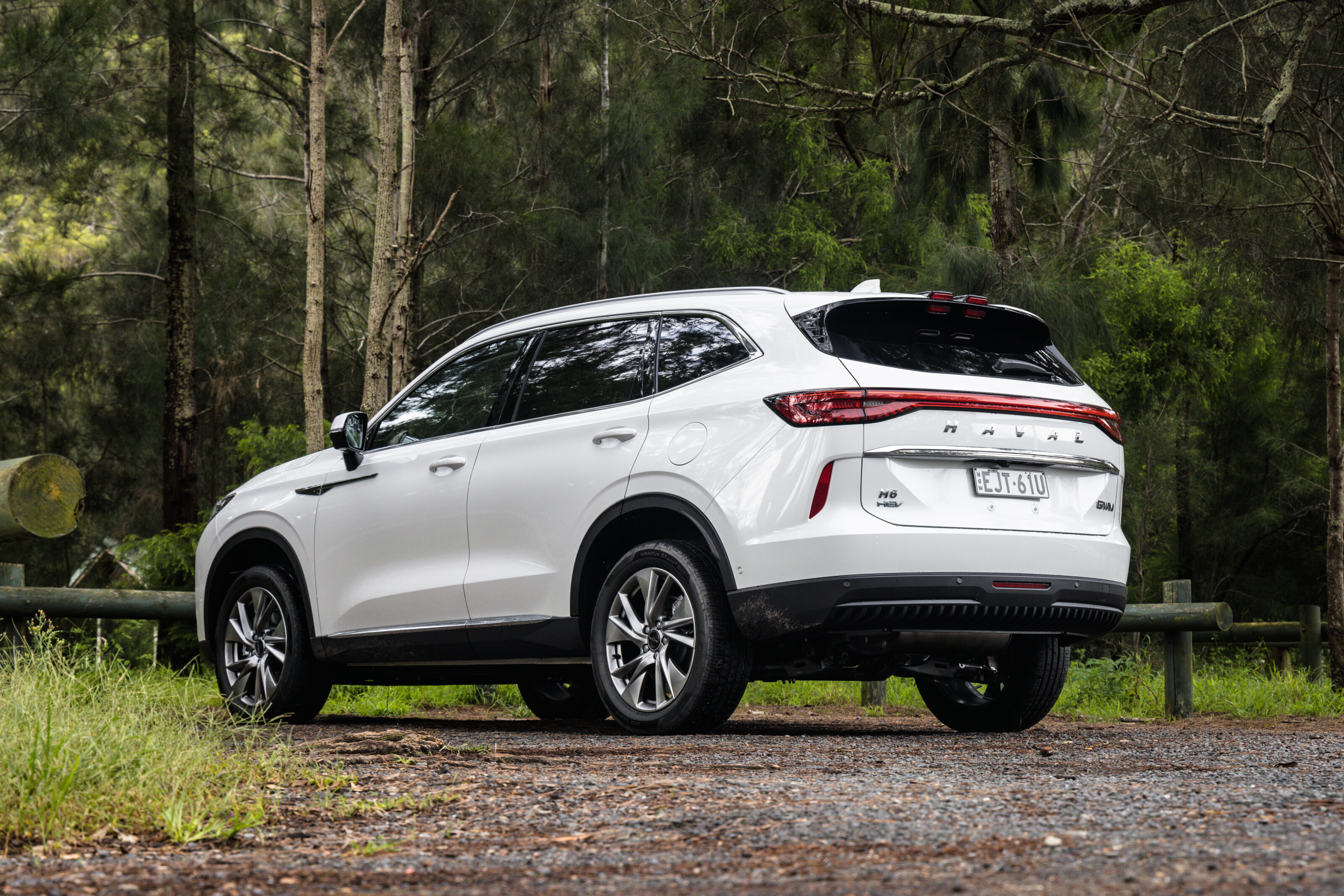
The new 2022 Haval H6 presents far better than the old, with a very confident, big-grilled face, better design but still very sharp pricing. And no obvious Land Rover Evoque, er, references.
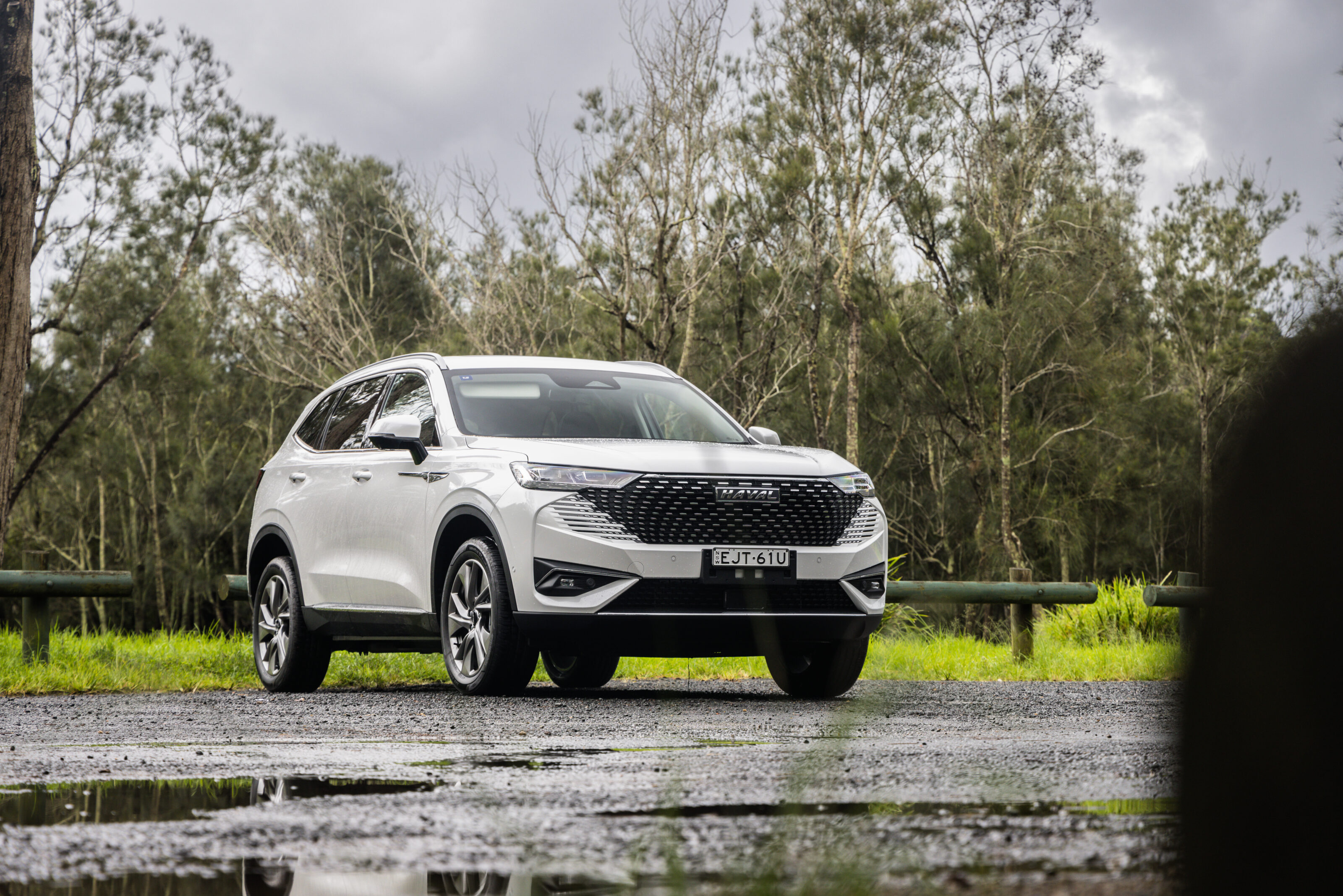
This year promises yet more from Haval. No, probably not the very amusingly named Big Dog SUV or Cool Dog lifestyle machine, but two new powertrain options for the H6.
Later in the year we’re expecting the plug-in hybrid (PHEV) to take on the Mitsubishi Eclipse Cross PHEV and compatriot MG HS PHEV, but right now we have the one which might cause some mild consternation among the mid-size SUV pack, the H6 Hybrid.
Pricing and Features
The H6 Hybrid we have here is in the one and only Ultra spec. That seems a bit odd given that there is already a clear price advantage over the Toyota RAV4 hybrid as well as – according to Haval, anyway – a stable supply of the machines from its Chinese factory.
An opportunity to make hay while the sun shines, you might say, as Toyota explains to its customers a 12-month wait and no discounting on its wildly popular SUV.
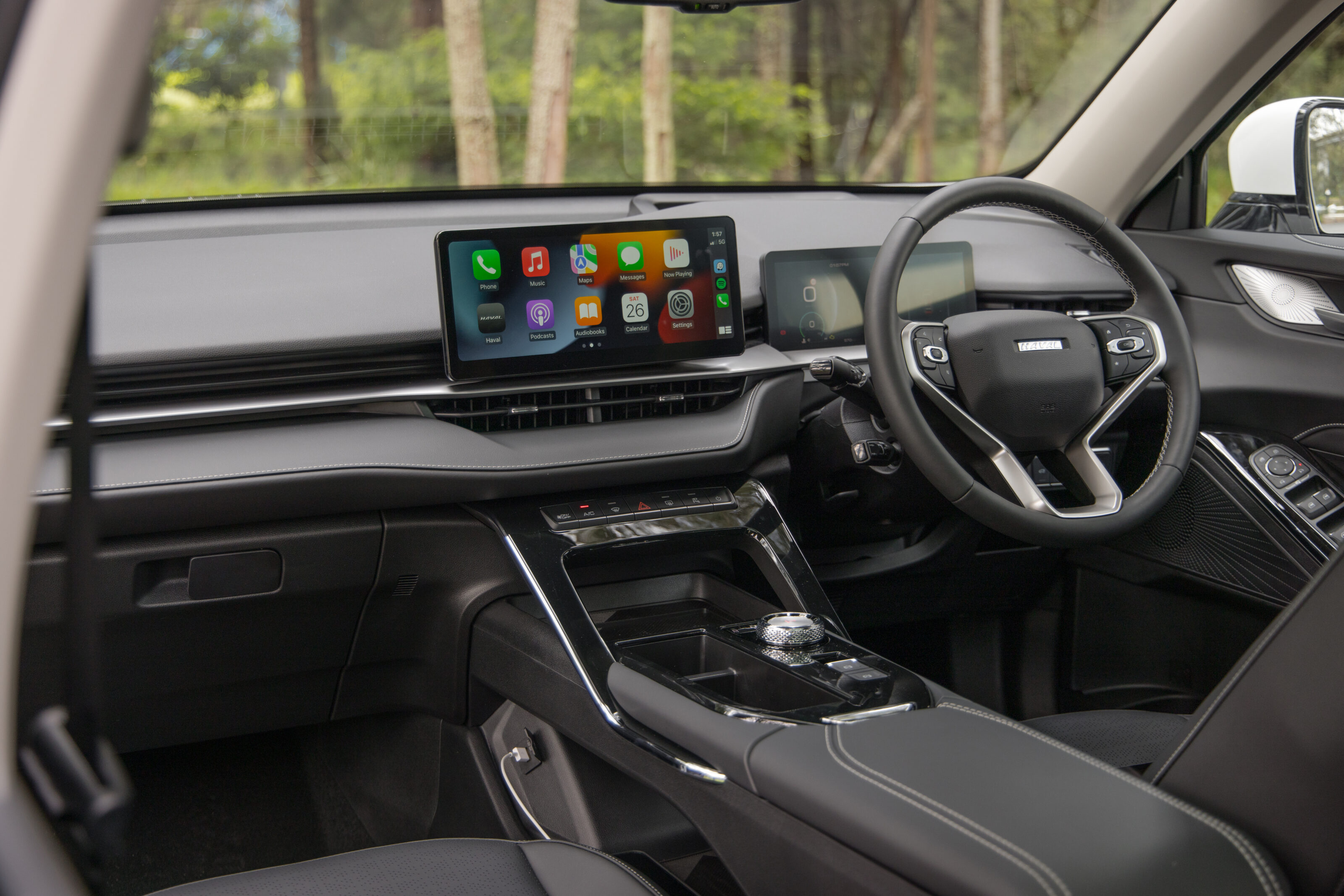
For $44,990 drive-away you get 19-inch alloys, an eight-speaker stereo, dual-zone climate control, reversing camera, around-view cameras, front and rear parking sensors, powered and heated front seats, auto LED headlights, head up display, keyless entry and start, auto parking, powered tailgate, gigantic sunroof, wireless charging pad, heated steering wheel, digital dashboard and a tyre repair kit.
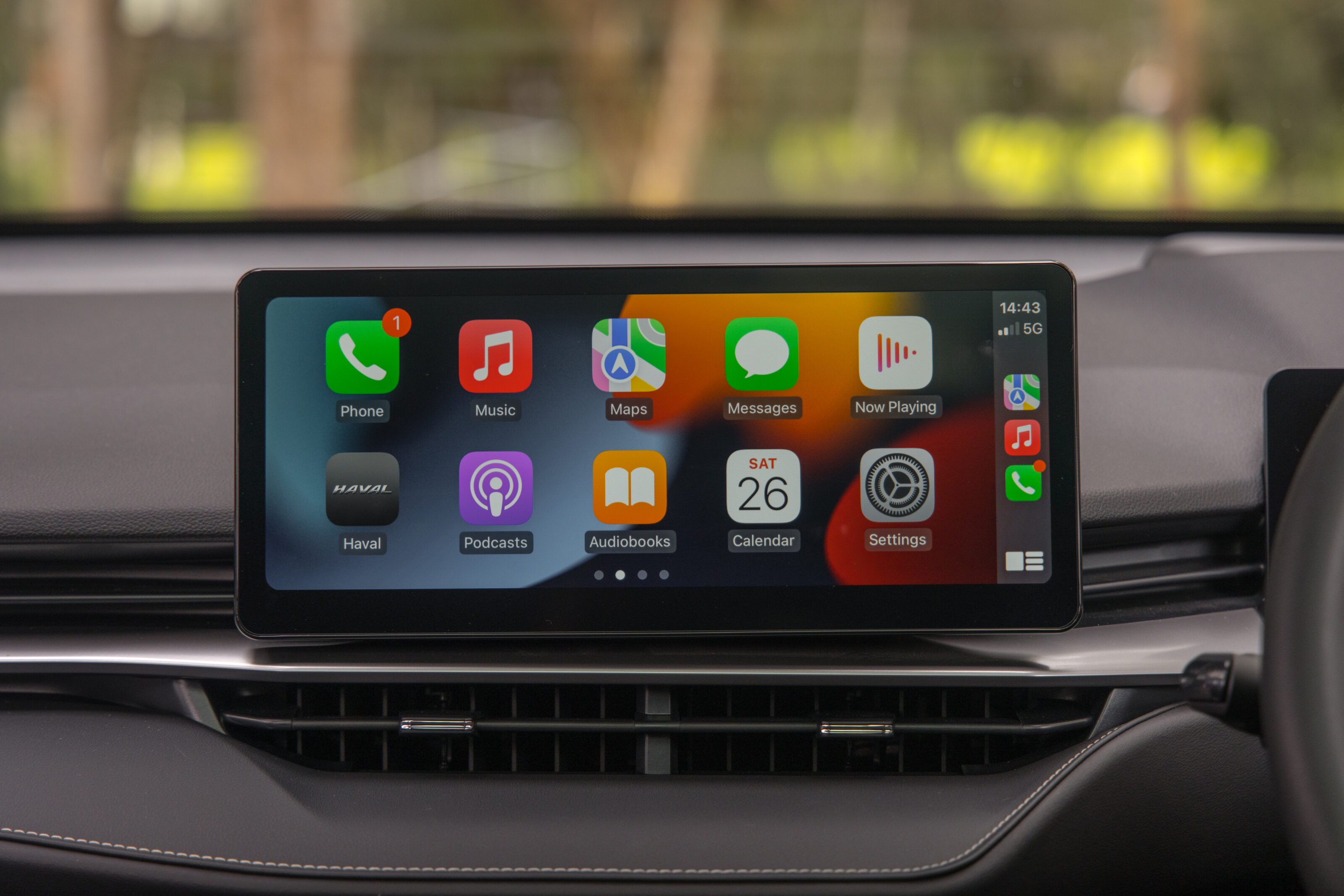
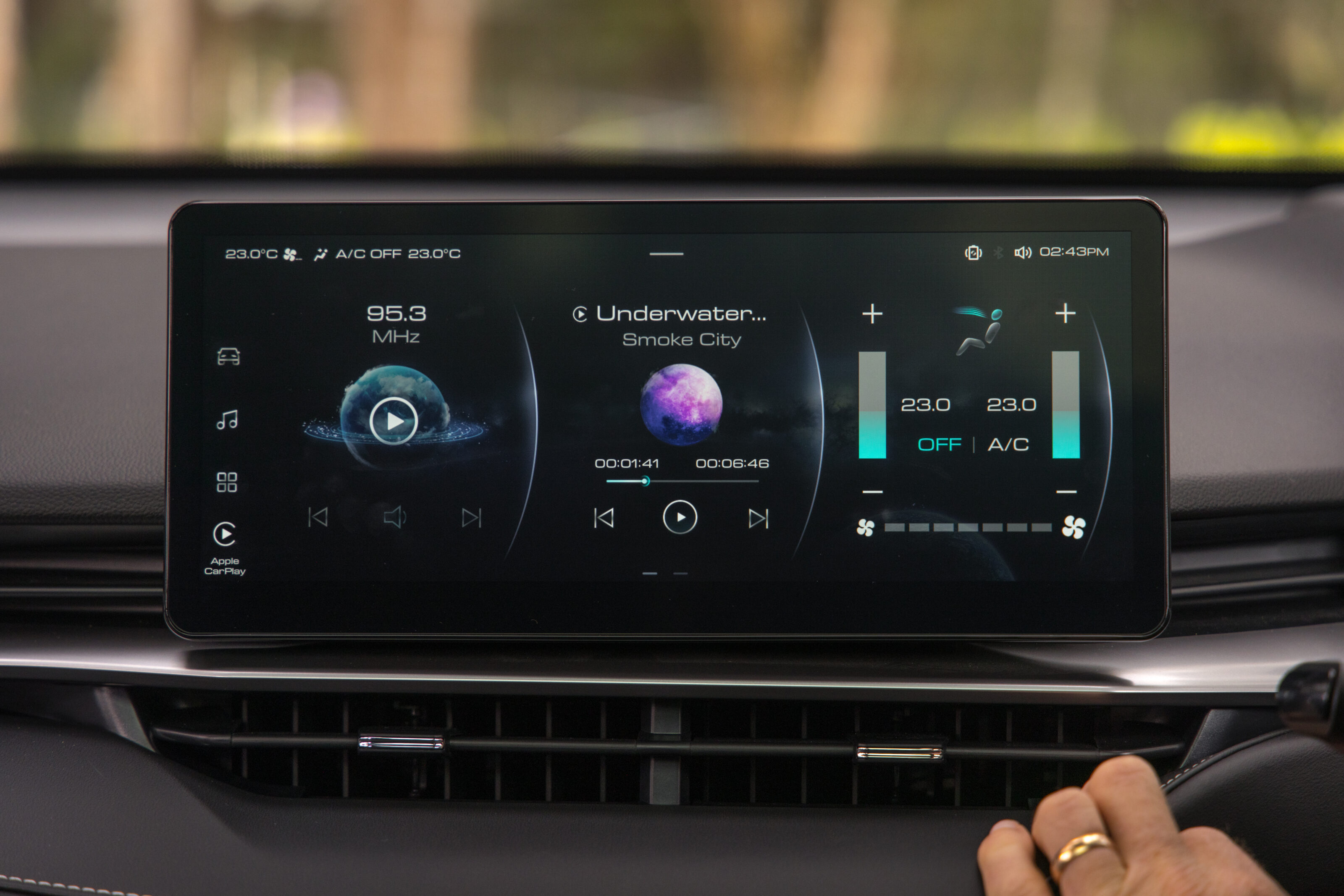
The interior features a huge central touchscreen 12.3-inch touchscreen featuring Apple CarPlay and Android Auto. It’s pretty snappy and works well but everything is crammed into it which can make navigation a bit tricky. It seems like a better system than the hard-to-use system I used on the Jolion last year.
There is a ton of safety gear on board. The H6 Ultra has seven airbags (including a front centre airbag), the usuall traction and stability controls, forward AEB, forward collision warning, rear collision warning, rear cross-traffic alert, rear AEB, blind spot detection with lane change assist, lane tracing, lane keep assist, collision braking and cameras everywhere.
The forward AEB detects pedestrians, cyclists and if you’re about to turn right across oncoming traffic.
The non-hybrid H6 scored five ANCAP stars in March 2022 and unless something extraordinary happens, it’s probable the Hybrid would score the same, we’ll have to wait and see what the crash testers say.
Comfort and space
I reckon the H6 is one of the bigger cabins in the segment, certainly roomier than the CX-5 and it also has the edge over the RAV4, particularly for rear seat passengers.
Upfront you have big flat seats which are comfortable and wrapped in what is likely fake leather, but that’s fine. I’m not a huge fan of the steering wheel but can’t explain why, so there’s nothing actually wrong with it.
You sit in the car rather than on it, which is something I like but the big A-pillar is a bit imposing and makes vision out the front a little awkward.
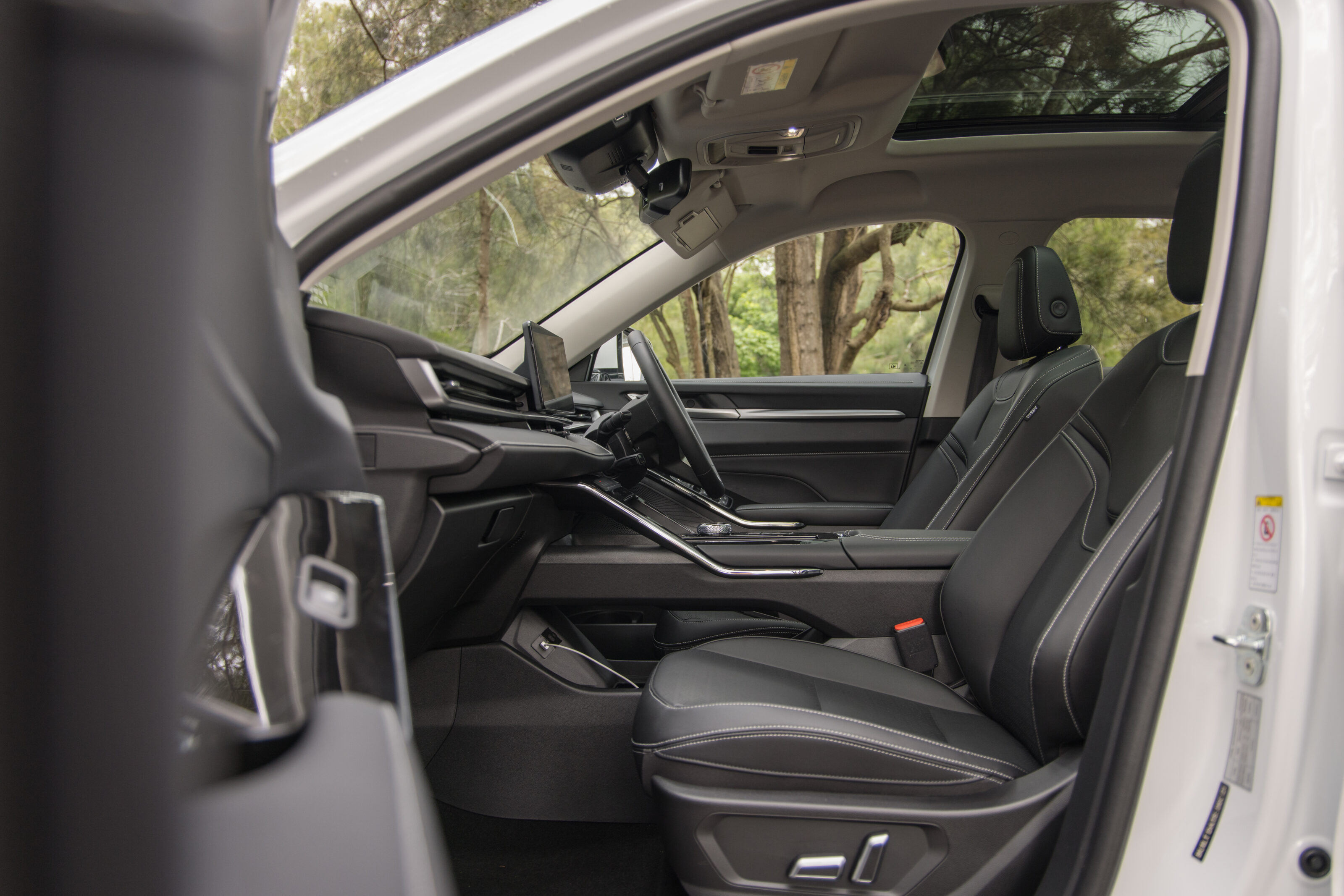
You have a wireless charging pad for your phone, a pair of good-sized cupholders with a retractable separator to convert the cupholder to a deep tray, which is handy.
The armrest covers a reasonably big bin, too. Under the console is a storage area like in the up-spec Santa Fe and points to a low transmission tunnel…
…which you really notice in the rear seats. You can get three comfortably across the back seat as the tunnel is just a mere bump in the floor rather than a saddle.
The middle seat is a little high but even with my six-foot frame, I don’t knock my shins against the rear air vents or the two USB ports to go with the two up front.
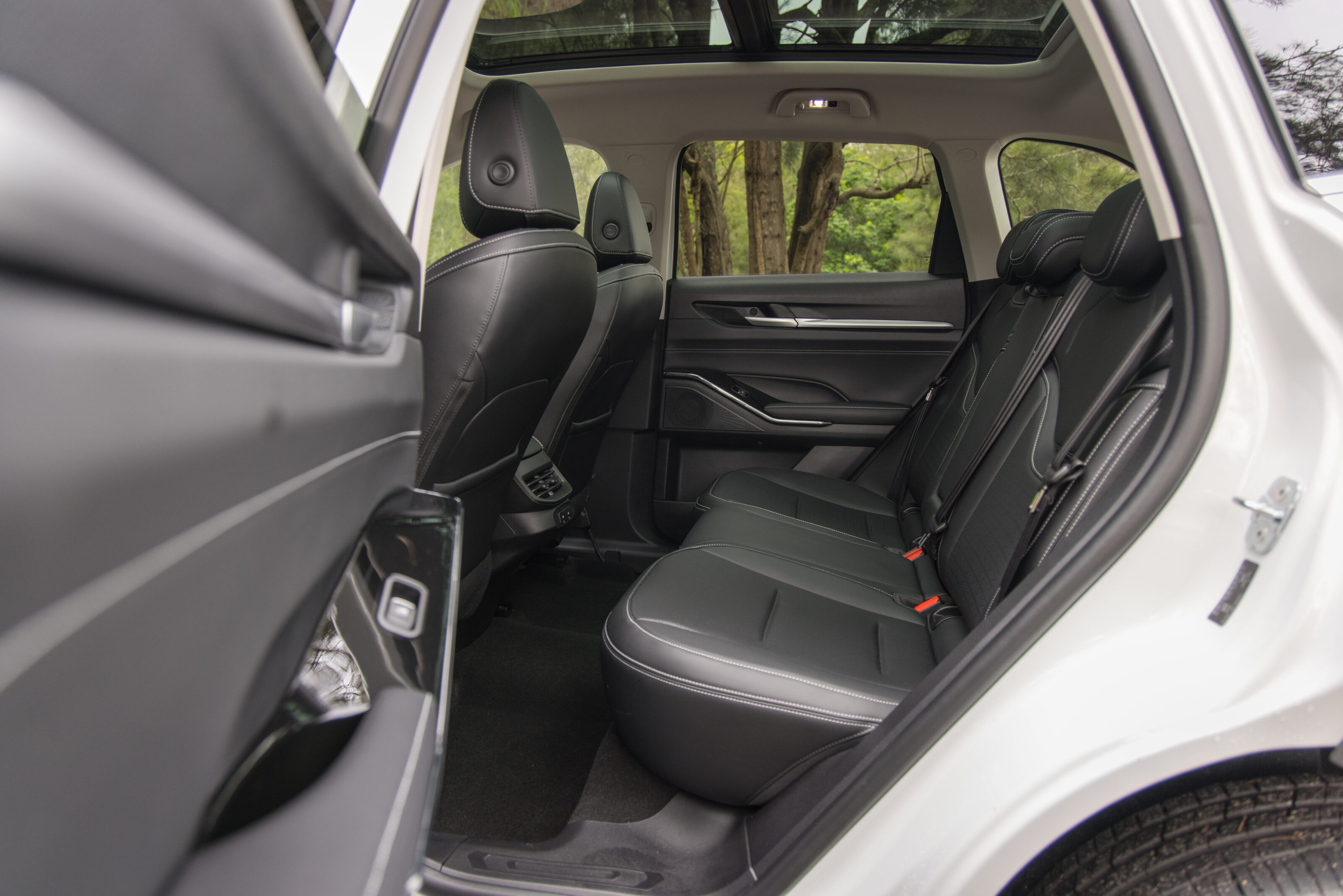
There is a lot of knee room behind my driving position and if you’re a tall family, this is definitely among the roomiest in the class. Even with the panoramic sunroof, there is plenty of headroom (you’ll see in the video what is surely my signature move, the coffee-cup-on-the-head clearance-test) and with the proper sunblocking blind retracted, the cabin floods with light.
It’s worth mentioning that this is the nicest finished Chinese brand car I’ve been in which demonstrates how rapidly car makers from that part of the world are adjusting to market expectations.
It’s a good-looking interior, with many nice materials and less of the scratchy hard plastic of, say, the Kia Sportage’s door cards.
There’s nothing groundbreaking or overly-ambitious about it, it just does a great job.
On the road
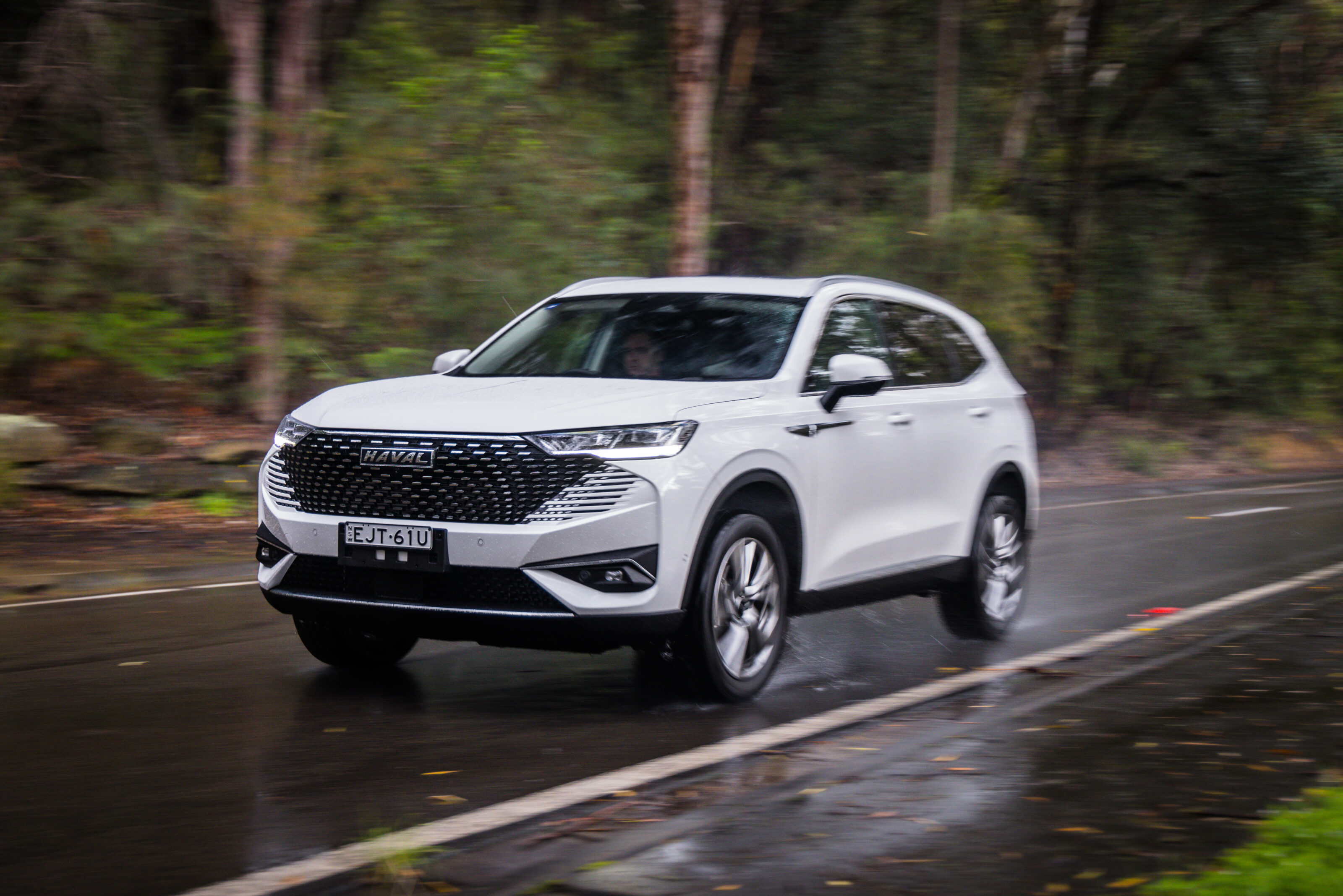
The first thing you’ll probably want to do is disable the lane tracing function. I’ve driven some cars with pushy systems, but it’s almost like this car wants you to be going somewhere else, such is the constant intervention from the steering, writhing around in your hand on even the most modest of bends. Frankly, I felt the car was judging my lane discipline.
Dive into the menus to find it and kill it just in case it’s a poltergeist trying to take you to the cemetery or something. Helpfully, it stays dead when you shut it off, rather than resetting every time you get out of the car.
While the cabin is commendably free of switchgear it might be too liberated from the tyranny of functional buttons because this is the kind of thing you probably want to use on a semi-regular basis. The climate controls particularly aren’t particularly well laid-out and makes getting things the way you want them a look-and-touch-and-look-again business.
Like the Jolion, a lot of the features on the screen are a bit fiddly because the targets are small and the layout a little odd, but I’m sure with time, updates and patience, you’ll be fine. The Jolion system would always be annoying, so this is an improvement.
The digital dash can also be a bit hard to read, with a lot of small script on an otherwise functional instrument pack, with all the important information projected on to the windscreen in the HUD. I also noticed that the navigation directions from my phone were projected in the head-up display, which is really clever.
The H6 is reasonably good to drive although the remote steering and suspension’s reactions to small bumps aren’t exactly cutting edge and don’t match up with the segment’s high benchmarks. It’s set up quite softly, so you’ll notice body roll in the corners if you get a bit excited and a slightly heavy foot with any steering lock on will get you an entertaining chirp.
A flat foot uphill in the rain will have the car torque-steering up the road as the traction control’s light touch keeps the power flowing. I prefer it that way and, as you’ll have gathered, I was trying to see what would happen.
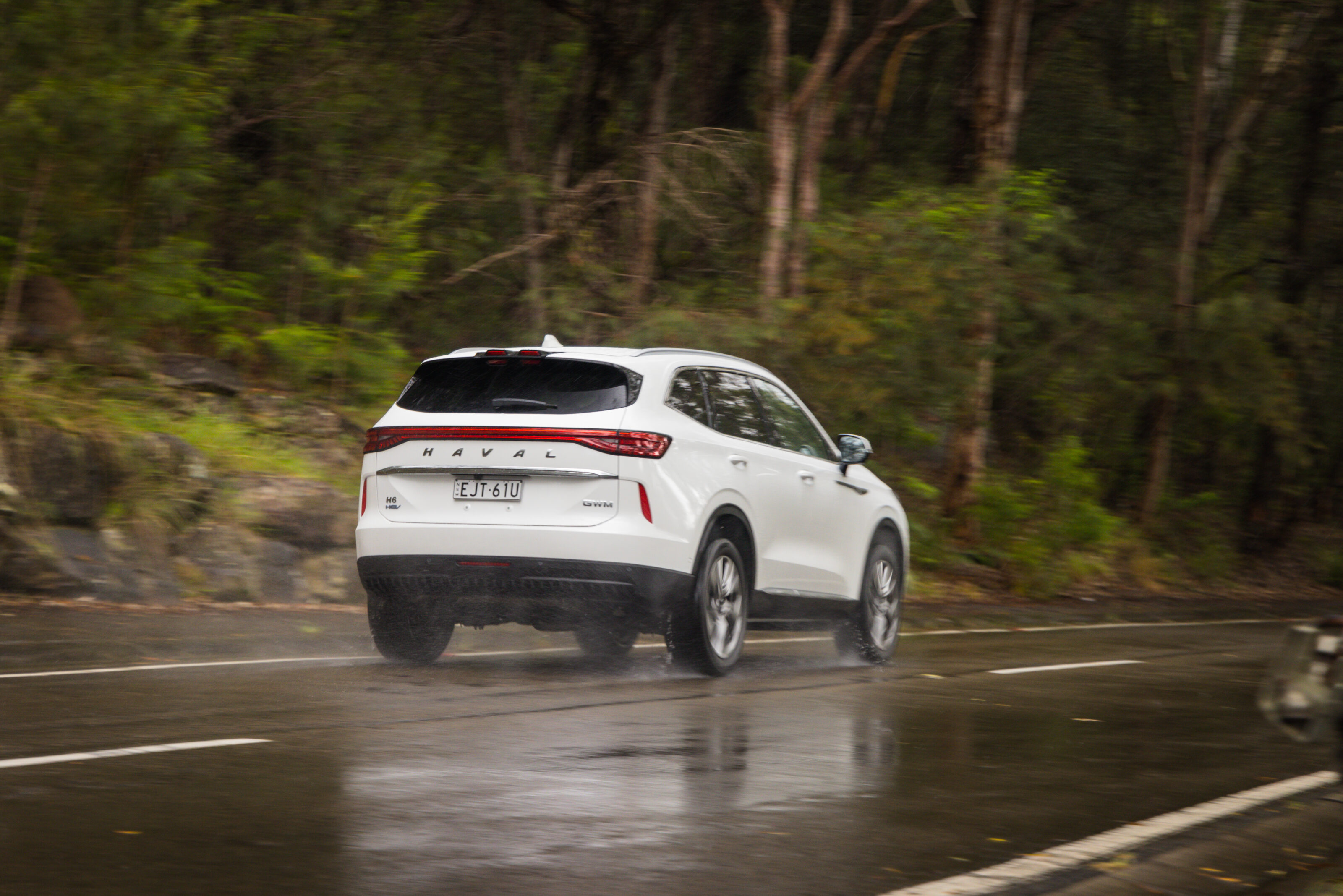
When not being driven like a car journalist, the H6 is very quiet, though, impressively so. The rain was really hammering down in Sydney and often with cheaper cars, the cheapness can come from skimping on sound deadening. It helps that the roof is a thick glass sunroof but there wasn’t a drum solo on the bonnet, either, at least not an audible one.
The quietness around town is largely to do with the powertrain. Most of us would compare it to the series hybrid setup of the RAV4 but it’s rather more complicated than that.
The basics are a 1.5-litre four cylinder with 110kW and 230Nm. Added to that is an electric motor with 130kW and 300Nm. Haval says that the combined power output is 179kW and…um…530Nm. Think the same amount of torque as a 911 with a turbo flat-six.
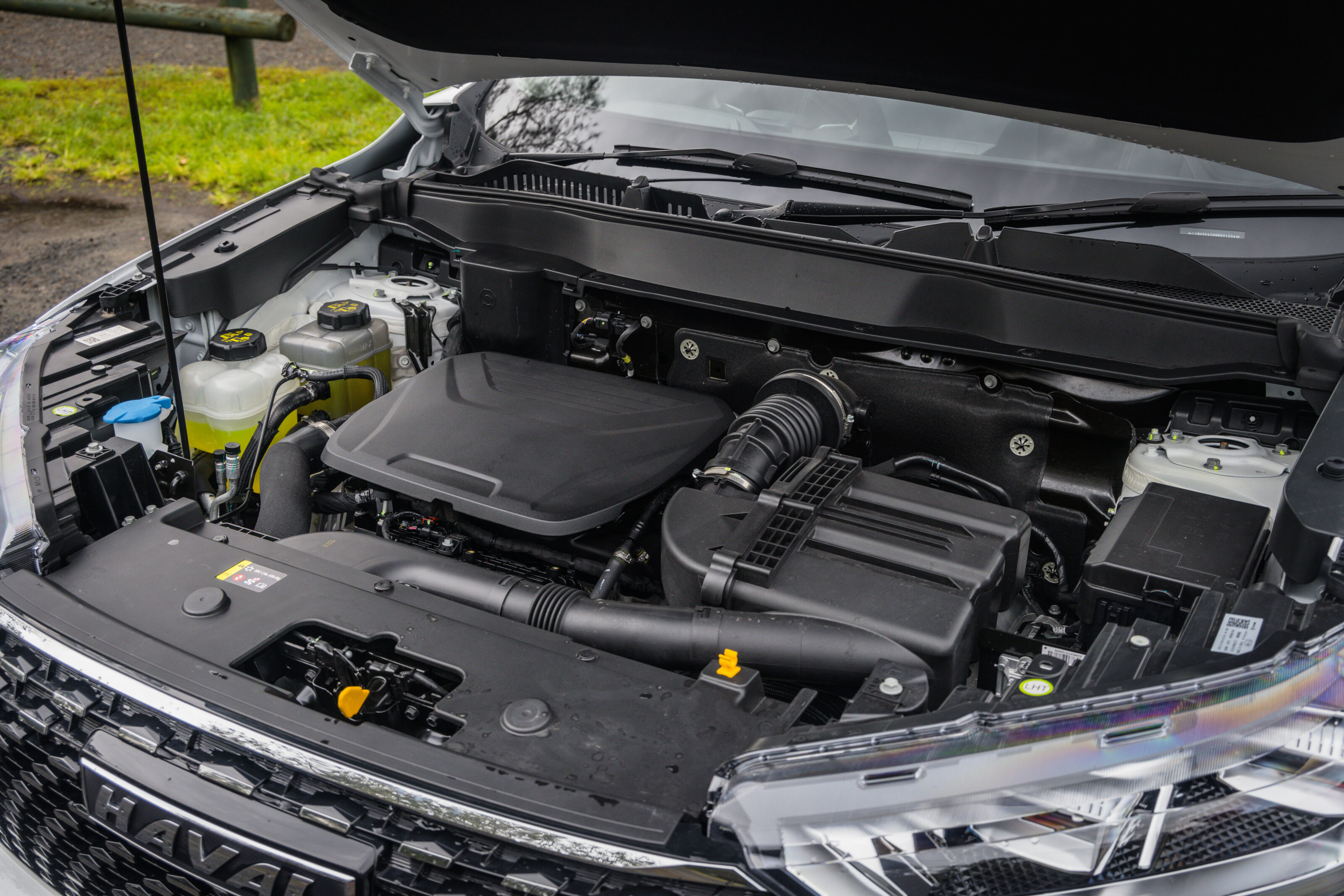
That’s a colossal amount of twist but I’m not sure you get it for very long. As I said before, the H6 will chirp with a heavyish right foot but there’s no sense that you’re packing that kind of heat with a full throttle in traffic.
Obviously, the Porsche has double the power, but hey, 530Nm isn’t anything to sneeze at (you probably shouldn’t be sneezing at things, let’s face it), especially if you’ve loaded up with people and their stuff.
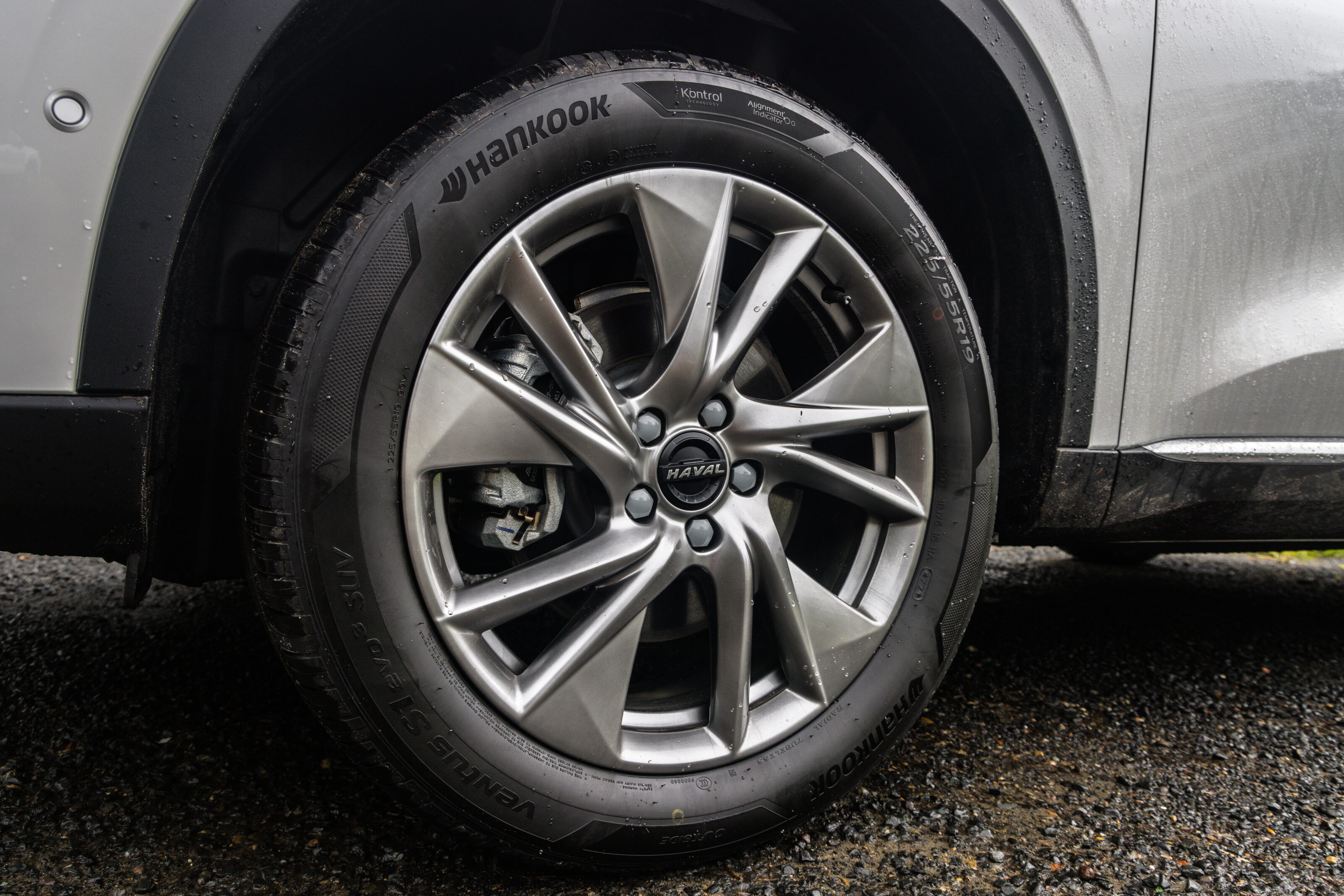
Having said that, the H6 does respond smartly to a gap-grabbing throttle input and the steering, while a bit remote even in the heavier setting, does respond and once you’re used to the body roll, you can work this car through traffic. Overtaking on the freeway, where it is again very quiet despite being on 19-inch wheels and fairly wide rubber, is impressive, the electric motor chucking you a big slab of torque when you need it.
The drivetrain is a little difficult to explain because the information that came to me wasn’t really that helpful and there’s not much about the system in English. As far as I can tell the ICE and EV motors can work independently of each other, together in either series or parallel modes and the EV motor has a two-speed gearbox for improved efficiency.
You can get up quite a speed in EV only mode, the 1.8kWh battery working quite well and seemingly offering more of that EV experience than most other hybrids on the market.
It might be hard to explain, but it works really and with a better set of tyres, the scrabbling and chirping would probably go away.
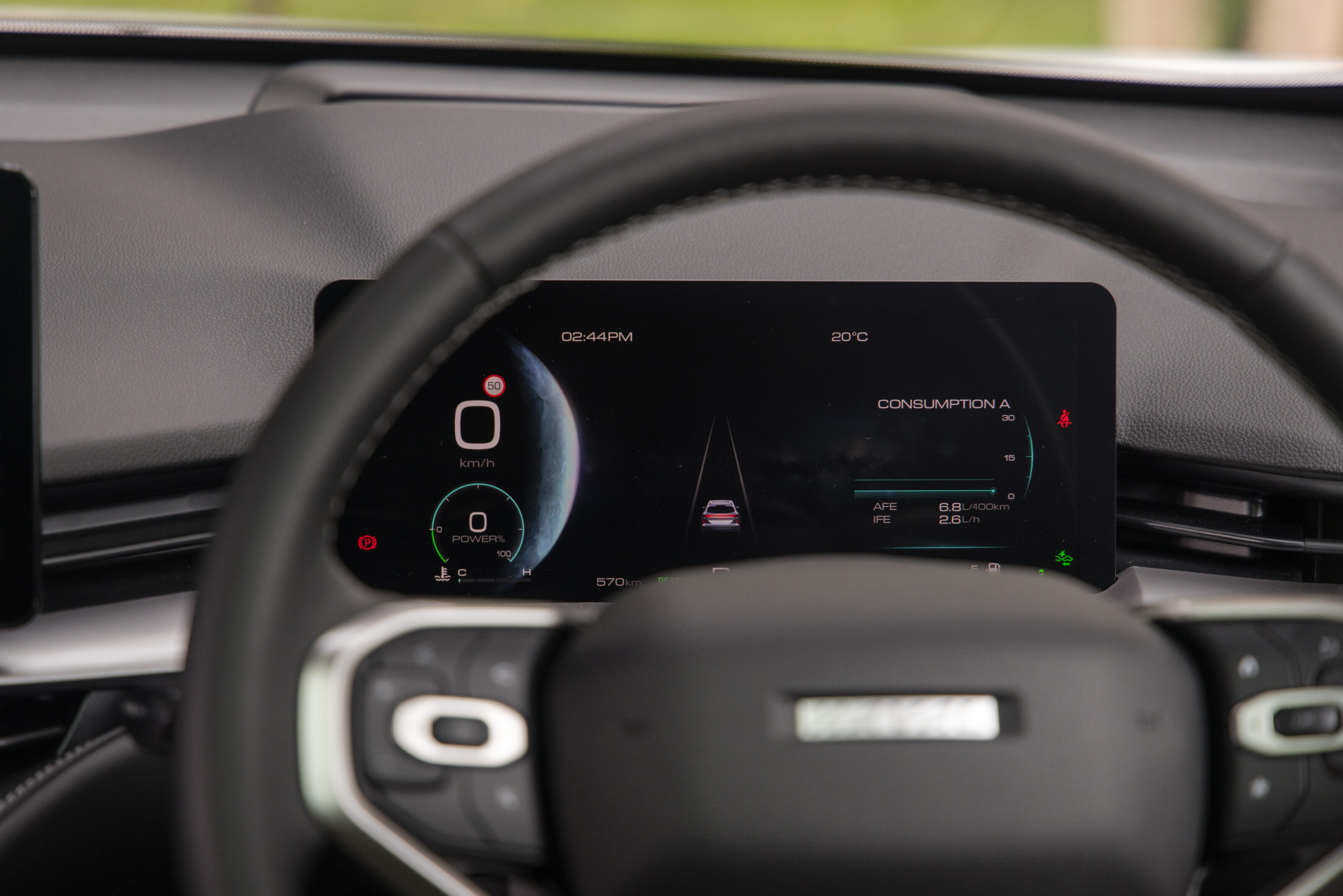
Haval claims a modest 5.2L/100km (about half a litre more than the RAV4) seems achievable given the longer I drove the car, the lower the figure moved, eventually settling at 6.0L/100km. When compared to the Toyota, the H6 has a lot more power and torque, so it’s not unexpected to see a higher fuel figure. Although the RAV does have an AWD option.
Ownership
Haval offers a seven-year/unlimited kilometre warranty along with five years roadside assist. The battery has an eight year/15 million kilometre warranty, so I look forward to folks pushing that particular envelope. Either way, that’s a good deal and is bettered only by Mitsubishi’s 10/150,000km (well, bettered if you do average miles, anyway).
The capped-price servicing regime calls for a first service at 12 months/10,000km for $225 and after that every 12 months/15,000km. Price ping around a bit with the next four costing $250, $400, $550 and $225 for a five service total of $1650 or an average of $330. More than a RAV4 but you’re getting a longer warranty and a more powerful drivetrain.
VERDICT
The H6 Hybrid is more convincing than the standard car, no question. The hybrid power unit is smooth and clever and will probably get better fuel efficiency than I extracted once it’s loosened up a bit more and isn’t being pushed about.
It’s a very mature and capable offering from Haval, with only some silly picky things like warning and information messages written in Google Translate-style English and some pernickety complaints about some of the functions.
The H6 doesn’t have the dynamic finesse of the RAV4 or much of this highly competitive segment, but that may not be an issue for many. The big savings over a fully-loaded RAV4 – or even a hybrid Subaru Forester for that matter – will get a few people in the door and quite few might drive out as a result of finding a car that is rather better than the price tag or unfamiliar brand name suggests.
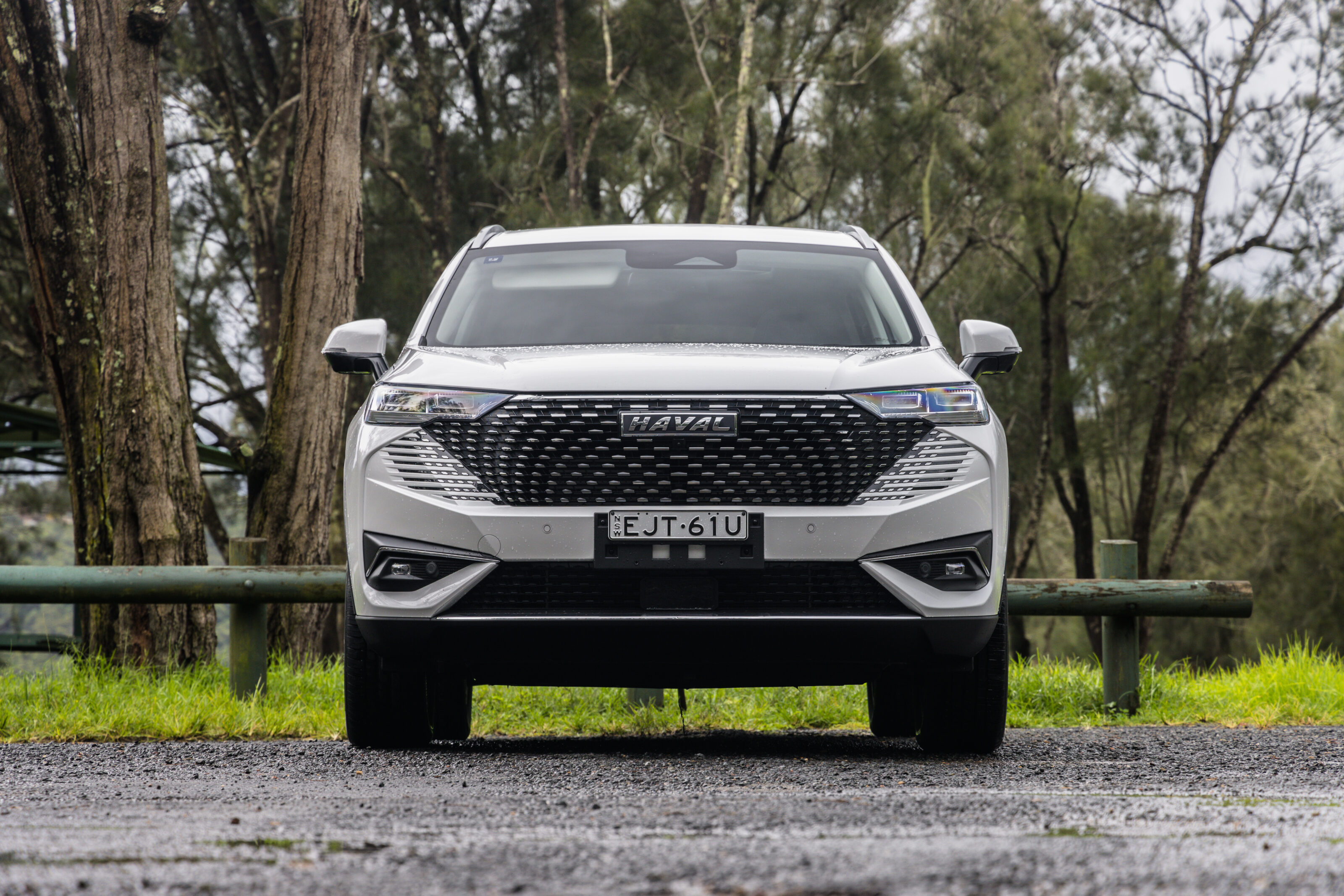
2022 Haval H6 Hybrid specifications
| Body: | Five-door mid-size SUV |
|---|---|
| Drive: | FWD |
| Engine: | 1.5-litre four-cylinder |
| Transmission: | Seven-speed DCT |
| Power (ICE): | 110kW @ rpm |
| Torque (ICE): | 230Nm @ rpm |
| Bore stroke (mm): | 75.0 x 84.9 |
| Compression ratio: | 11.8 : 1.0 |
| Electric power: | 130kW |
| Electric torque: | 300Nm |
| Combined power: | 179kW |
| Combined torque: | 530Nm |
| Battery capacity | 1.8kWh |
| 0-100km/h: | 7 sec (estimate) |
| Fuel consumption: | 5.2L/100km (combined) |
| Weight: | 1690kg |
| Suspension: | MacPherson struts front / multi-link rear |
| L/W/H: | 4653mm/1886mm/1724mm |
| Wheelbase: | 2738mm |
| Brakes: | ventilated disc front / solid disc rear |
| Tyres: | XXX/XX XXX |
| Wheels: | 19-inch alloy wheels (no spare, tyre repair kit) |
| Price: | $44,990 DA |
The next-generation 2023 Mini Countryman looks set to grow in size, with a smaller all-electric crossover also reportedly in development.
At the larger end of the Mini range, the high-riding duo is expected to debut before the end of 2022, joining the next-generation Cooper hatchback.
According to UK publication Autocar, the smaller electric-only SUV will sit beneath the larger, third-generation Countryman designed to better appeal to the North American market.
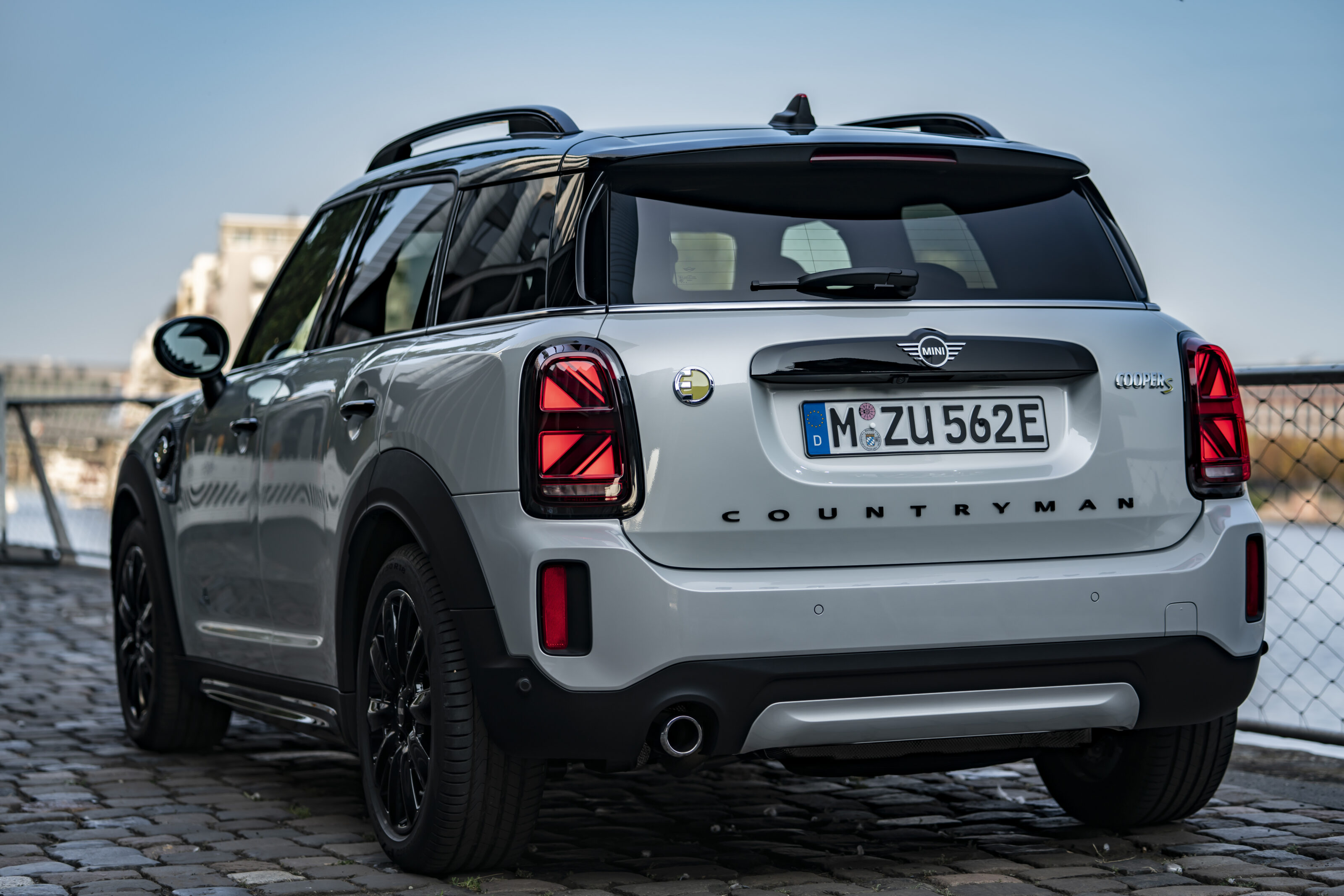
It will be produced in China as part of the joint venture between the BMW Group and Great Wall Motor, alongside the electric Cooper SE.
As reported by Wheels in November, the forthcoming Countryman will shift production to Leipzig, Germany from its current assembly line in the Netherlands, with the brand’s UK plant in Oxford continuing to focus on the hatchback and convertible.
In addition, an electric version of the five-door Hatch will reportedly not be produced, with the Clubman estate also potentially facing the axe.
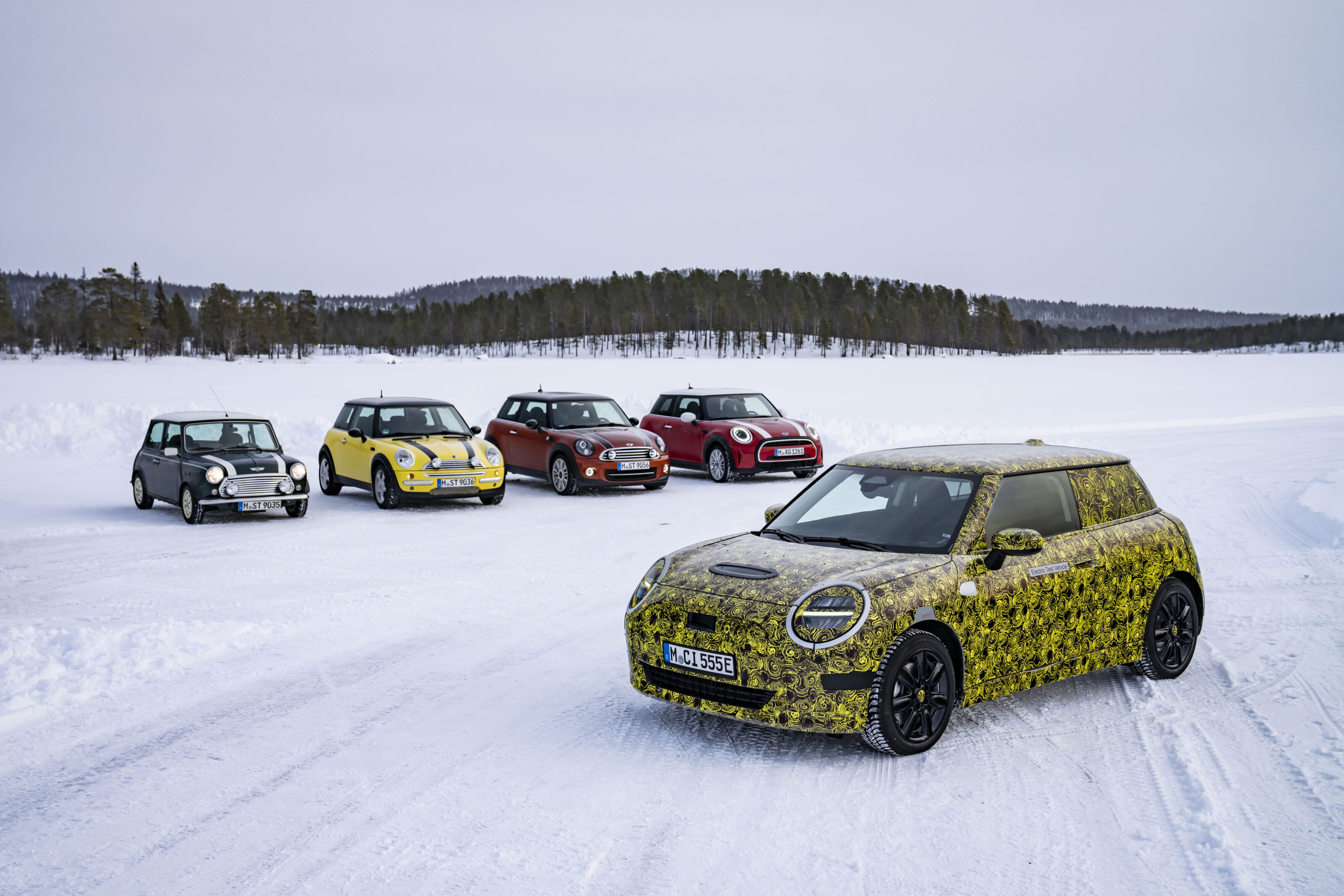
While most Mini variants focus on retro-inspired styling, the next-generation Countryman is expected to adopt a more streamlined design to better cater to the US-market and family buyers, who are more inclined towards larger vehicles.
An electric version of the Countryman will be offered alongside petrol and diesel models, although the existing plug-in hybrid variant will be axed in favour of full electrification.
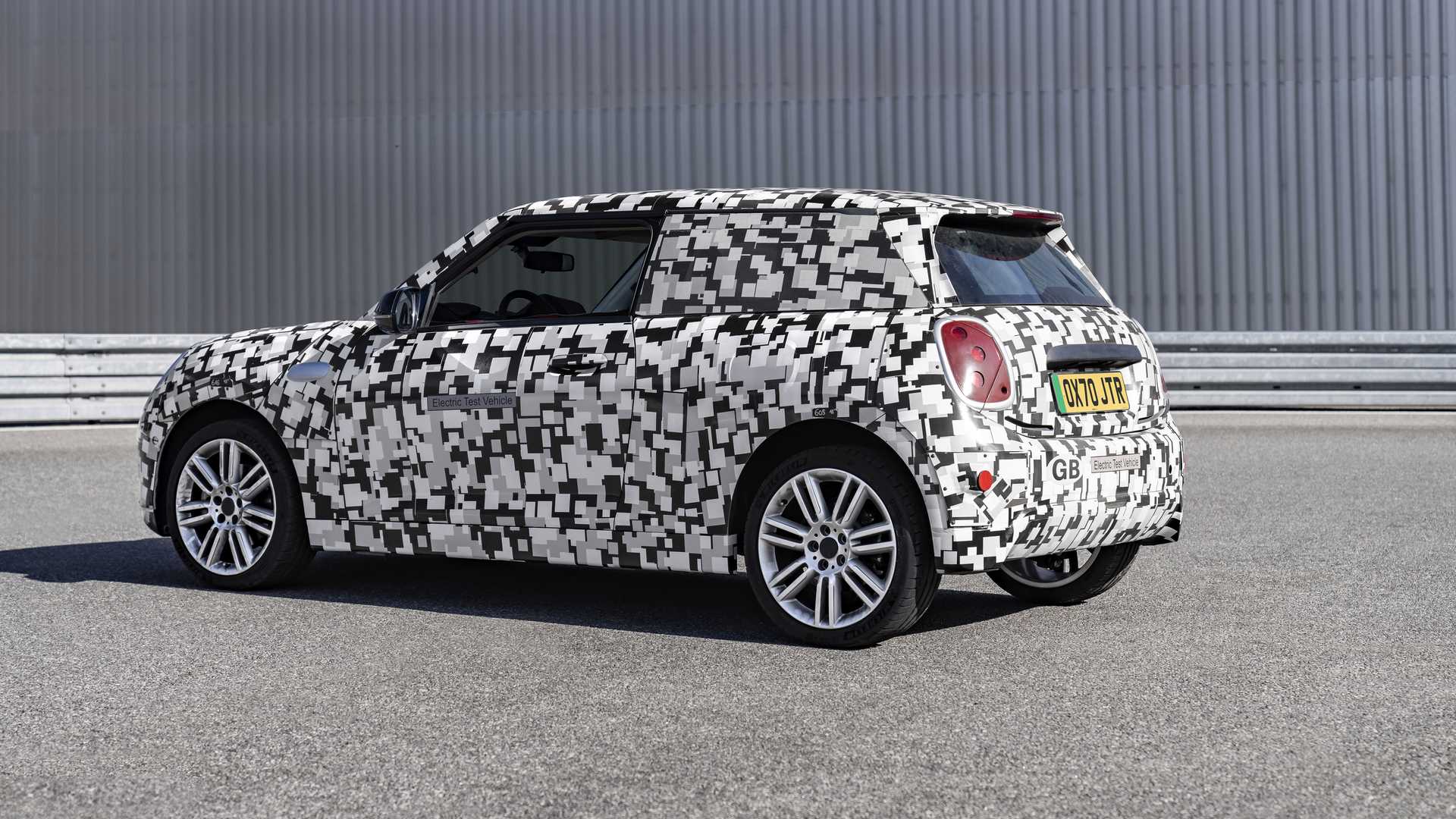
By comparison, the as-yet-unnamed smaller electric SUV is likely to pick up a more radical design than existing retro-focused Mini models.
With a target for 50 per cent of sales to be electric by 2027, ahead of an EV-only deadline in the early-2030s, Mini is planning for a wider range of electrified vehicles – although it isn’t planning to drop the internal-combustion engine (ICE) just yet.
The fourth-generation Hatch will continue to offer efficient petrol and diesel engines, alongside a full-electric SE variant, with the final new ICE model to debut in 2025.
It’s a barrage of Hyundais at COTY this year, though none comes with the same level of commercial criticality as the Tucson mid-sized SUV.
Competing in the country’s most popular vehicle segment after utes, the Tucson is a big-volume player that jostles with the likes of the Toyota RAV4, Mazda CX-5, Subaru Forester, and its stablemate in this very field, the Kia Sportage.
The fourth-generation Hyundai Tucson follows its predecessor with myriad variants, yet choosing one for COTY wasn’t that tricky.
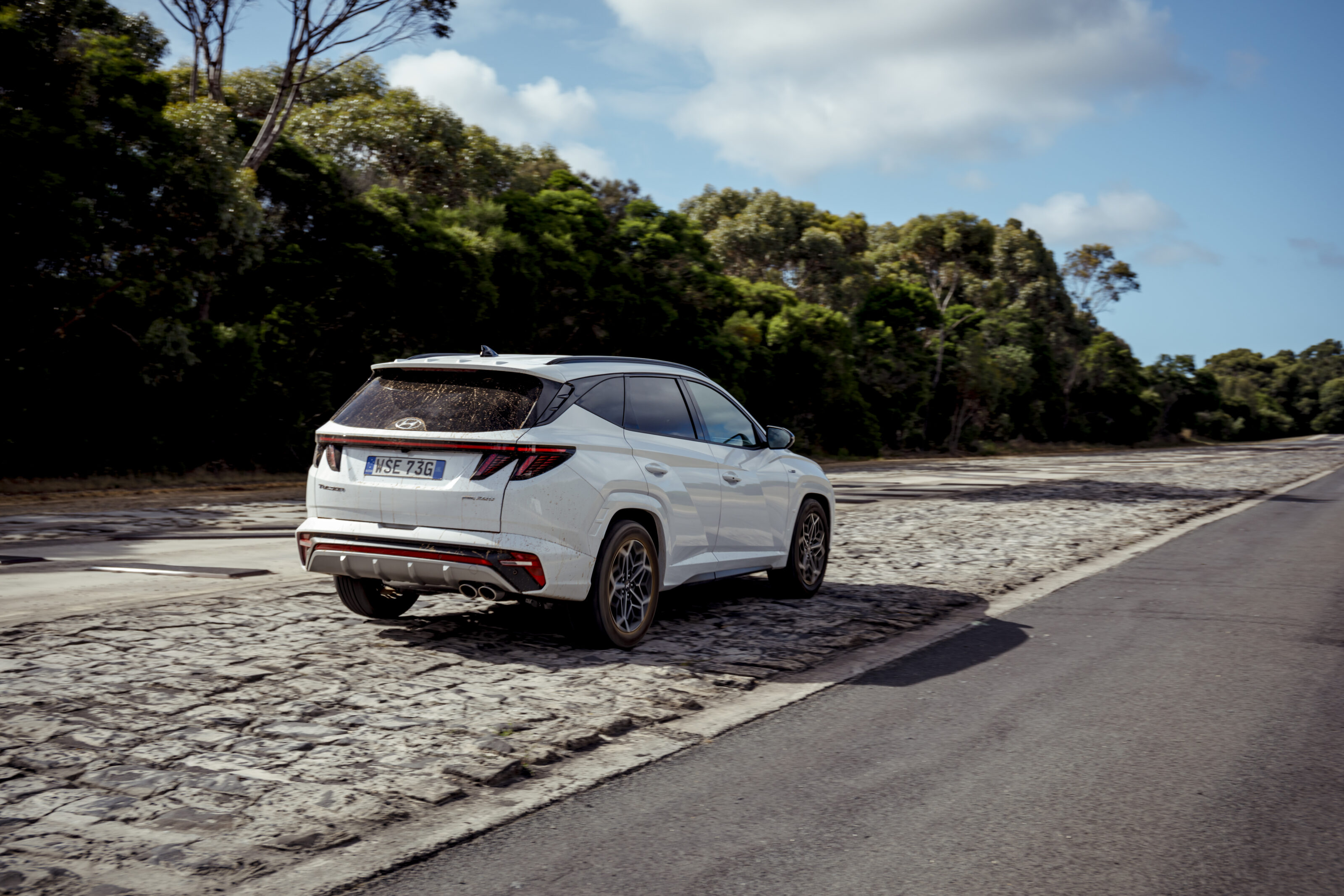
First, picking the 2.0-litre turbo-diesel over the two petrol drivetrain alternatives was a no-brainer: the base 2.0-litre petrol is underpowered and the 1.6-litre turbo is hobbled by a recalcitrant dual-clutch auto.
Second, the $45,000 Elite trim grade is a mid-spec model that offers worthwhile extras over the base Tucson while delivering significant savings over the range-topping Highlander.
Our COTY test car’s value was further boosted by an optional N-Line pack that, for just $2000, adds a whole raft of goodies including LED headlights, full-size digital driver display, leather/suede upholstery, auto high beam, and various external/internal embellishments that lend the Tucson a slightly sportier – read: better – look.
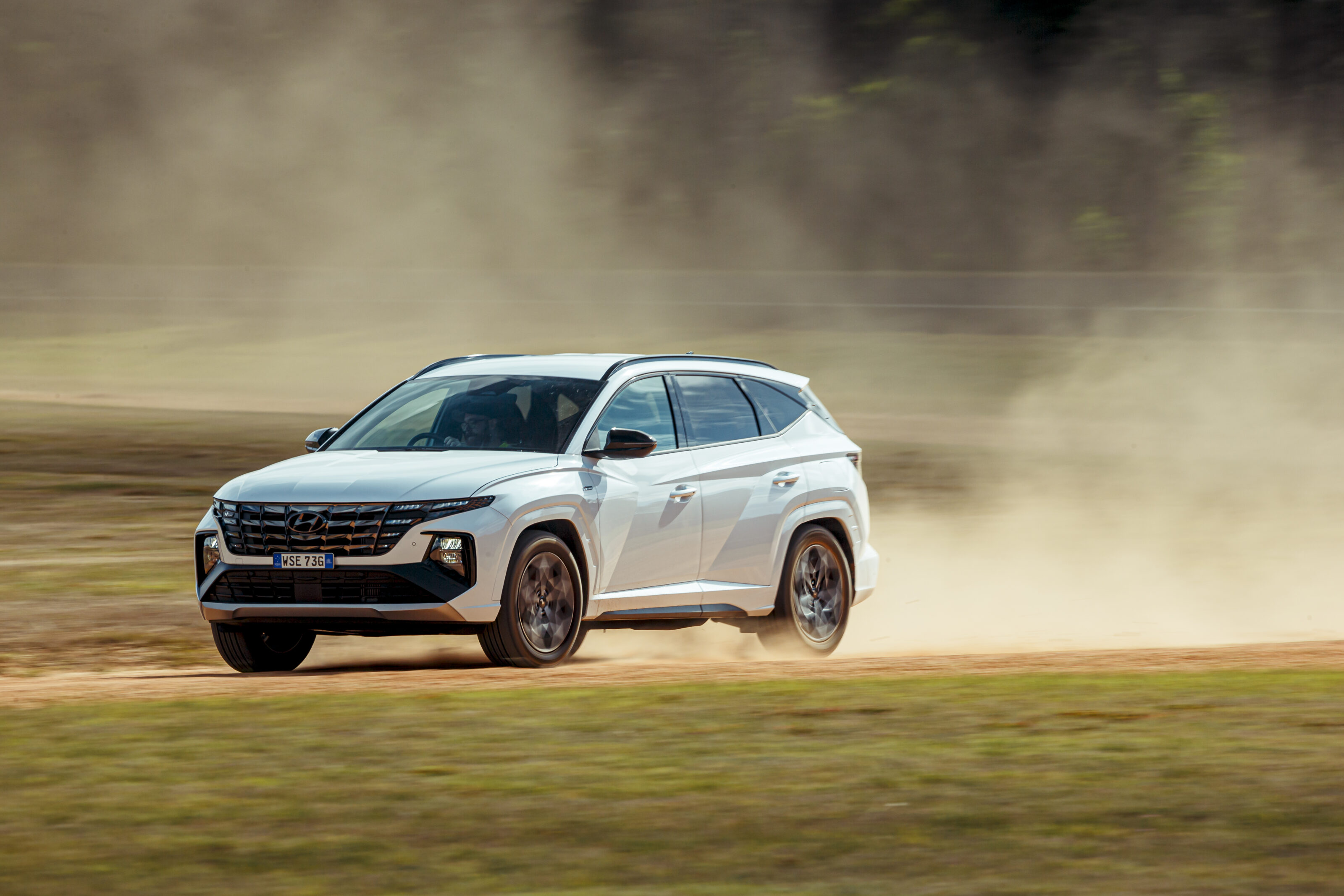
If we restrict our subjective views on the styling to our resident car designer, Richard was quietly impressed. “The exterior and interior styling isn’t trendsetting but is nice and contemporary.”
But onto more objective matters…
All cars may be tested against the Car of the Year criteria, yet it’s impossible to ignore some form of comparison when two heavily related vehicles are in the mix.
And so it wasn’t ignored; the Hyundai Tucson and Kia Sportage were bundled into the same driving group to ensure judges could test them back-to-back. There were differences discovered at the proving ground, including ESC calibrations.
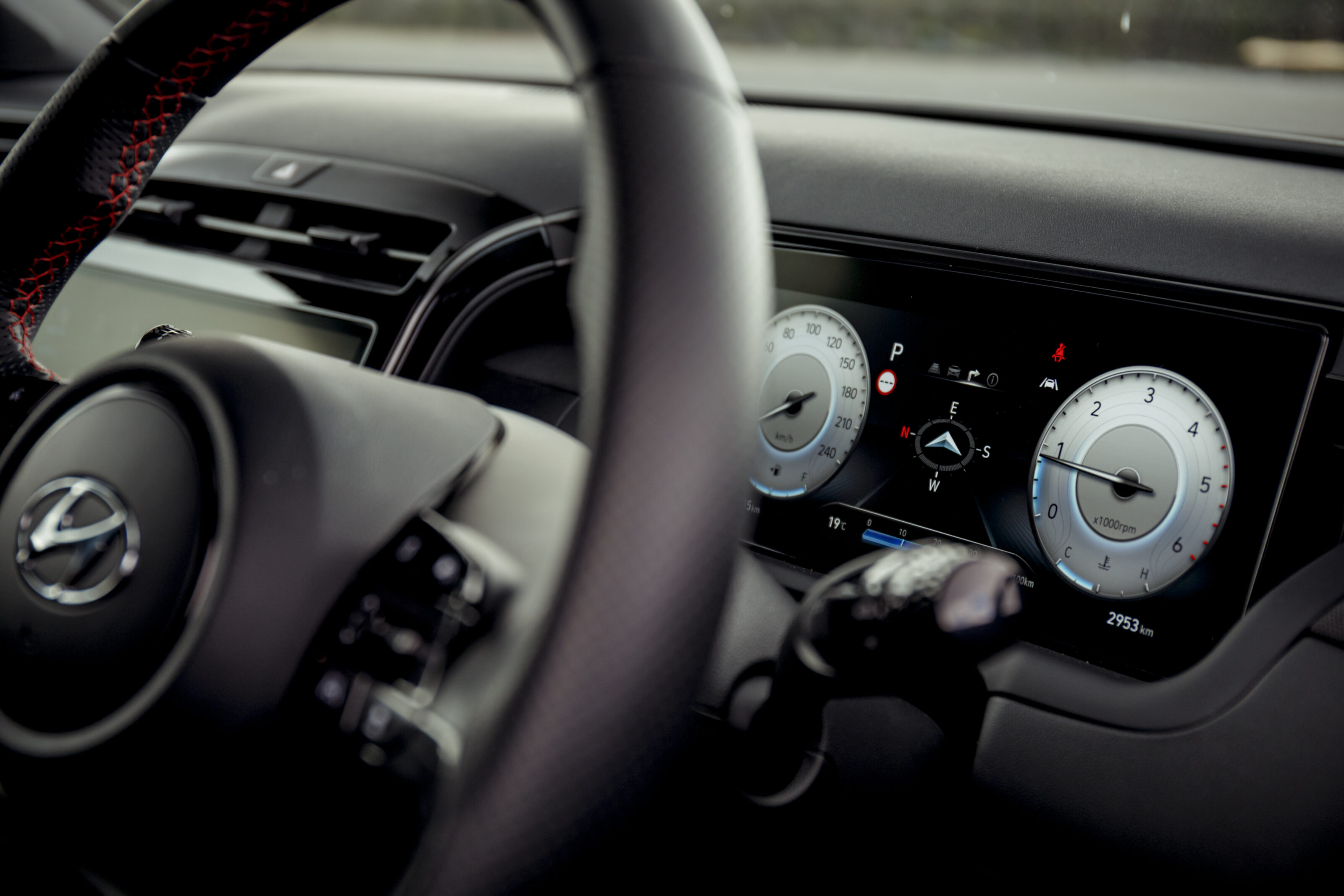
“Strangely, the Tucson’s stability control and traction smarts are more intrusive on gravel than the Sportage’s – they’re overly nannying,” Curt proffered. “The traction control seems to be forced into an old-school approach of turning off the power taps completely rather than trying to work out a response that allows progress.”
“Decent oiler; nicely paired with a torque-converter auto” – Curt Dupriez
However, all judges acknowledged the system was at least doing its thing to keep the driver on the straight and narrow. And it was the Hyundai that handled the emergency lane-change manoeuvre with greater distinction.
“The Tucson was less scrappy than the Sportage, containing its mass more convincingly,” noted Alex.
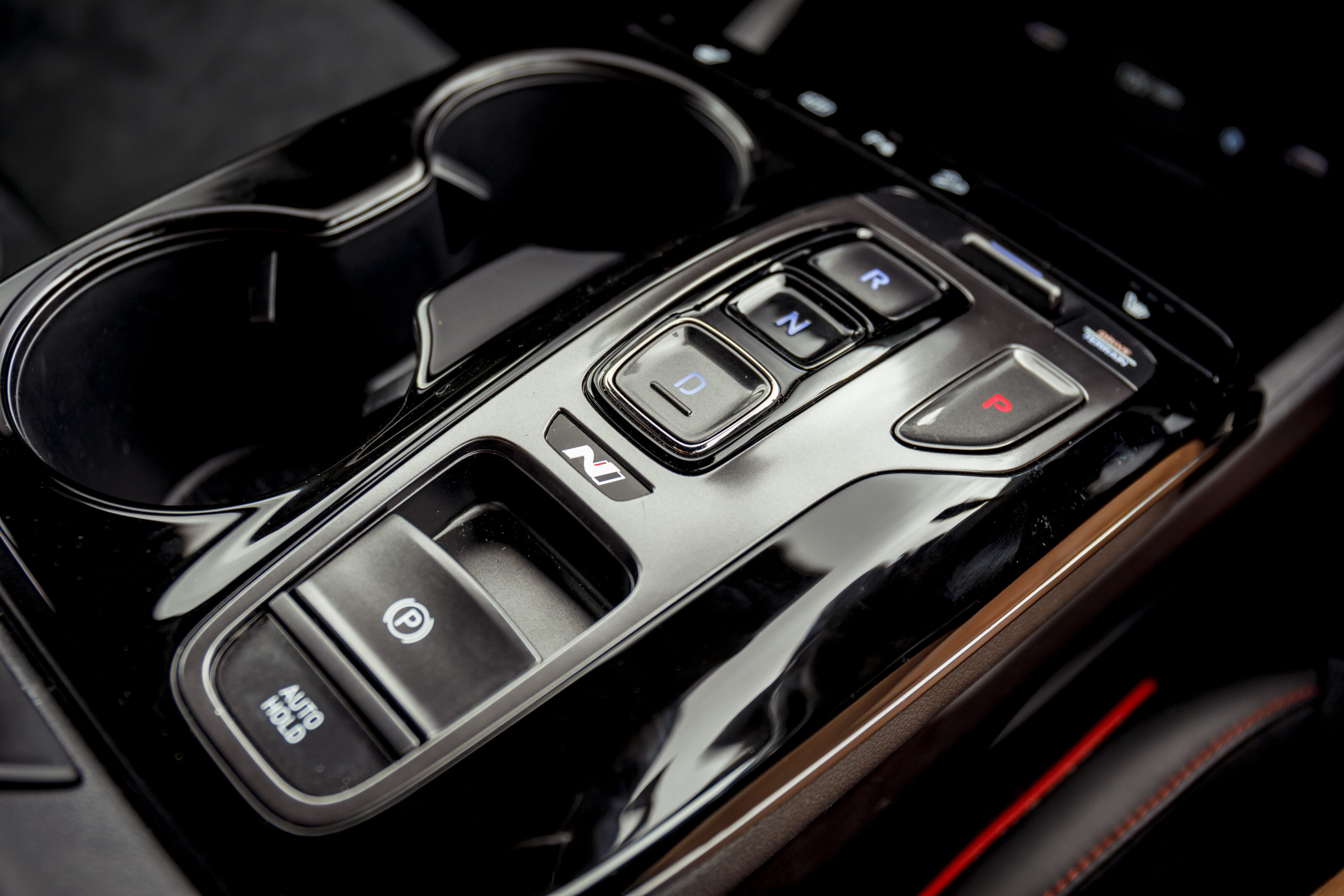
There was also shared disappointment that the N-Line badge doesn’t bring any performance or dynamic gains for the Tucson as it does with other Hyundai models, yet there was still widespread praise for the SUV’s good levels of grip, decent steering, and solid handling on the Five Percent Gradient course.
The 2.0-litre turbo-diesel was not quite as admired as the 2.2L diesel in the Palisade, with judges imparting some criticism for the engine’s slightly coarse and clattery nature.
There was also wonderment at the lack of new-generation engines – including the badly needed hybrid option that would help give the Toyota RAV4 a tougher run for its money.
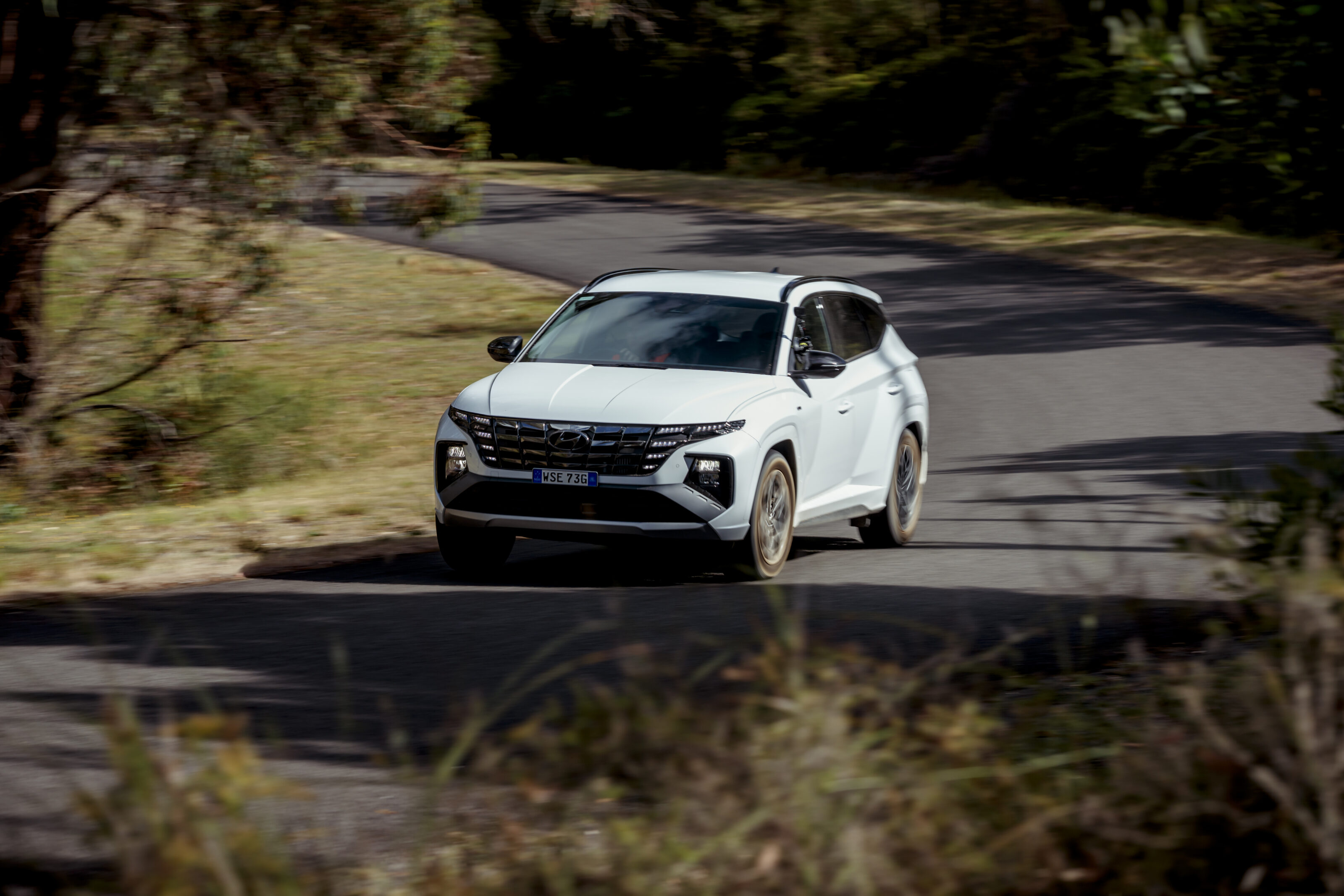
While not every item of cabin technology ticked boxes for judges – such as the so-so digital driver display and lack of wireless phone charging in all but the Highlander – the interior was considered a major improvement.
That especially applies to increased cabin space that comes as a natural result of larger vehicle dimensions.
It’s an improvement shared with the Sportage, of course.
Dylan summed up the inescapable comparison. “Picking between this and Sportage is like choosing between Cokeand Pepsi.”
The question is whether the Kia would taste just that bit sweeter to go one step further…
Australian electric vehicle (EV) charging network provider Chargefox has announced the cost of using its ultra-rapid chargers will jump by 50 per cent..
From May, fees for Chargefox ultra-rapid chargers (50kW to 350kW) will increase from 40 cents/kWh to 60c/kWh.
In practical terms, this would mean that a 50kW top-up would now cost $30 instead of $20.
The price change brings the fees into line with rival Evie, with Chargefox stating the introductory pricing of 40c/kWh was first set in 2018 and hasn’t been updated since.
It’s understood Tesla charges 52c/kWh for up to 250kW.
Chargefox said that fees for its fast chargers (up to 50kW) will remain, and discounts of up to 100 per cent will still be available to owners of partner EV models at ultra-rapid chargers., with members of the NRMA, RACV, RACQ, RAA, RAC, and RACT continuing to receive a minimum 20 per cent discount.
The recent fluctuations in the price of petrol and diesel have resulted in a sales boom for new and used electric vehicles, as motorists look to reduce their household expenses.
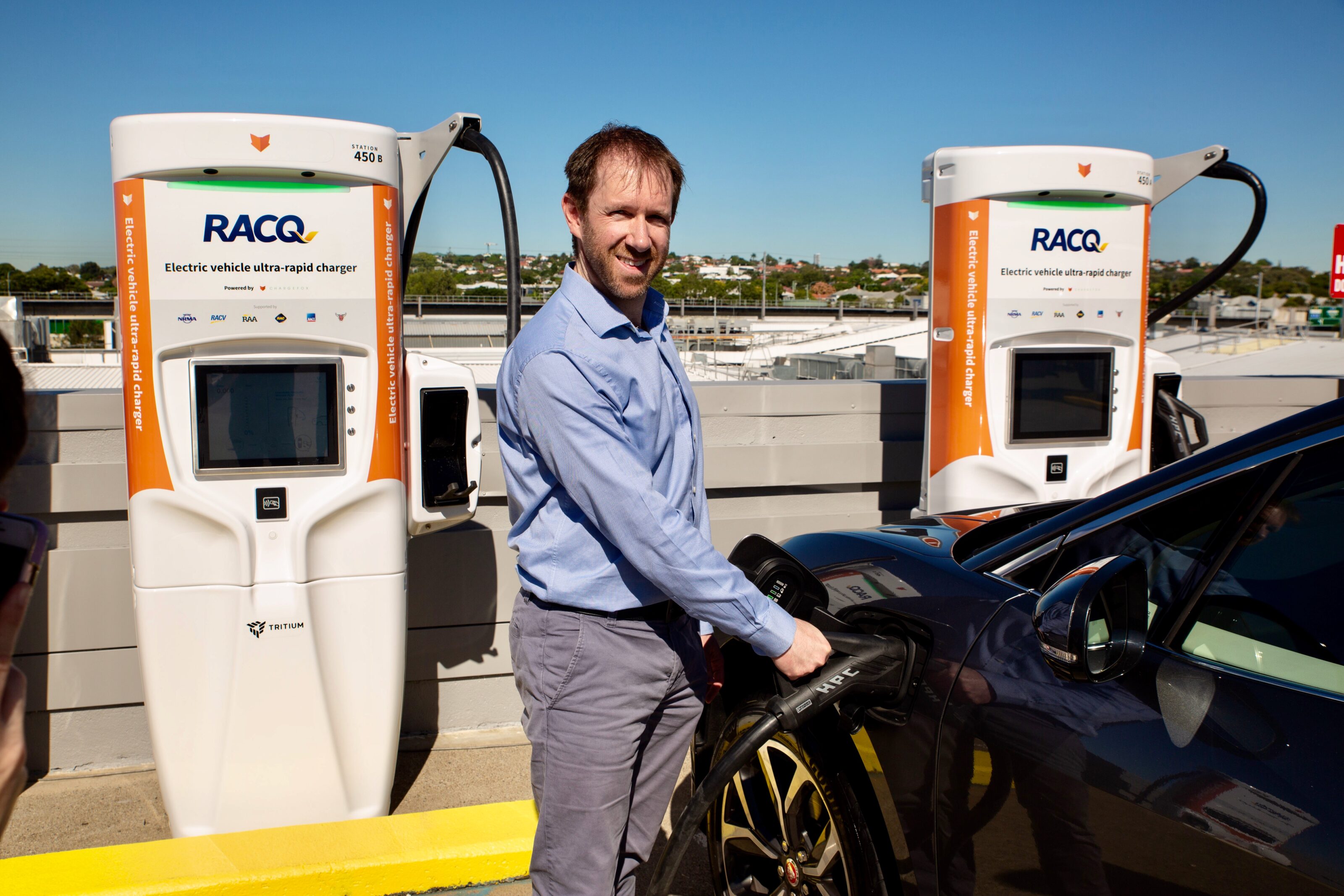
“The Superchargers and Ultra-Rapid chargers on the Chargefox network are there to support you on a long-distance drive,” Chargefox CEO and co-founder Marty Andrews told WhichCar in 2020.
“If they end up similar [to the cost of a petrol car] … the average [per kilometre running cost] is still going to be way, way lower,” he said at the time.
“EVs are cheaper to run because you can locally charge them at home and you can use solar.”
The increased Chargefox ultra-charging fees will come into effect on May 9, 2022.
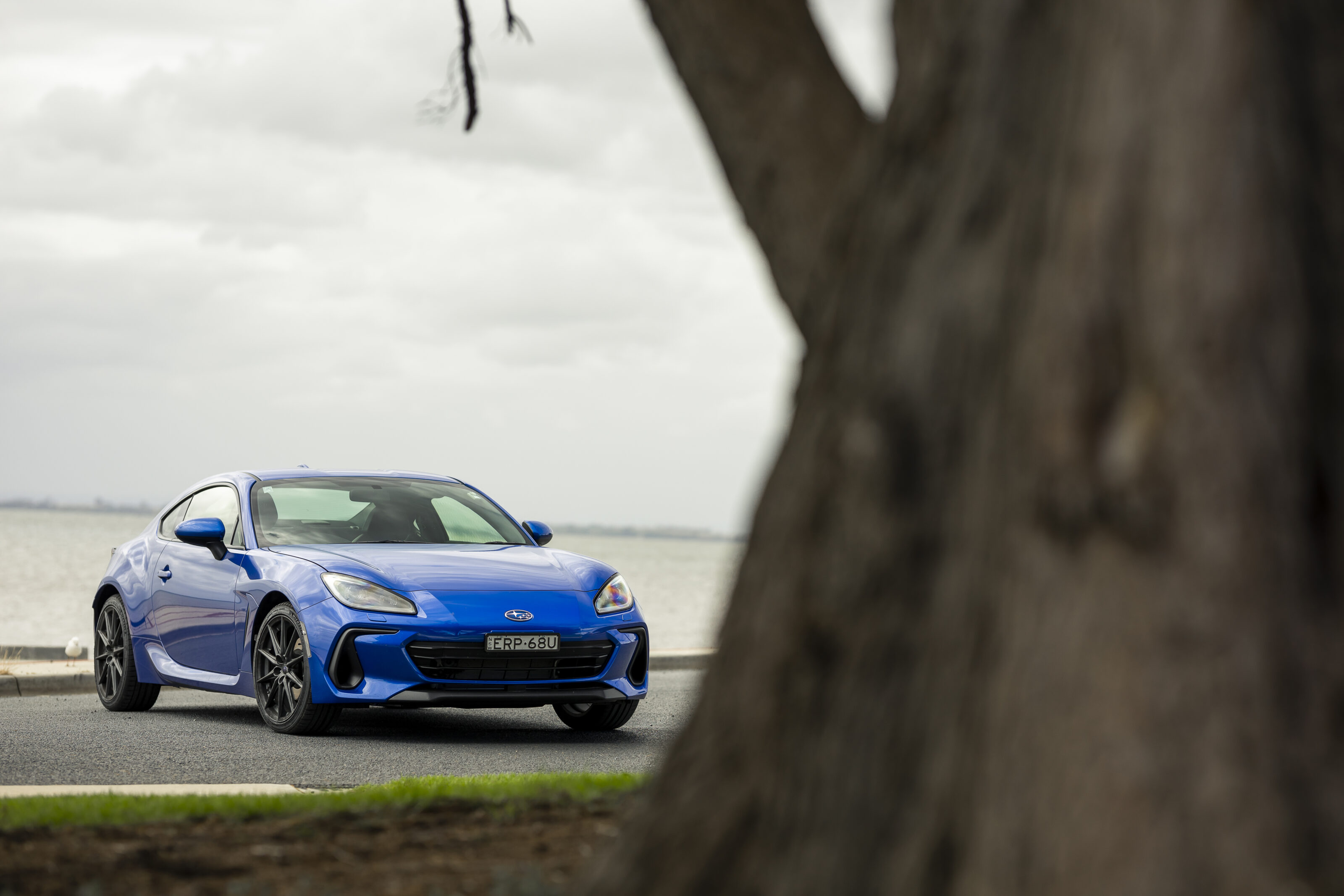
Our first real taste of the 2022 Subaru BRZ came inside the melting pot of PCOTY, in our inaugural sub-$100k Sports Car of the Year challenge, that saw the wonderful manual BRZ Coupe rising to the top of the ranks.
The main drawcards remain: it’s affordable, accessible, and every bit as engaging to drive. Yet, virtually every point of criticism levelled at the breakout original has been directly addressed.
We want to know, however, if the lustre begins to wane when swapping that slick six-speed manual transmission for a conventional six-speed automatic.
The BRZ range starts at $38,990 (before on-road costs) for the base BRZ Coupe Manual, with the base Auto stepping up to $42,790. The up-spec Coupe S trim adds leather/Ultrasuede upholstery and heated front seats, the Coupe S Manual asking $40,190 and the Coupe S Auto (which we’re driving today), topping the range at $43,990.
The second-generation BRZ (and incoming Toyota GR 86) is best thought of as a significant redesign, rather than an all-new model. It still sits atop the same basic architecture as the original, albeit with various developments learned from Subaru’s new Global Platform (SGP).
The results are significant, with torsional stiffness increased by 50 per cent and lateral rigidity quoted at 60 per cent improved. The base manual tips the scales at 1286kg, with the flagship Automatic, seen here, pegged at 1310kg.
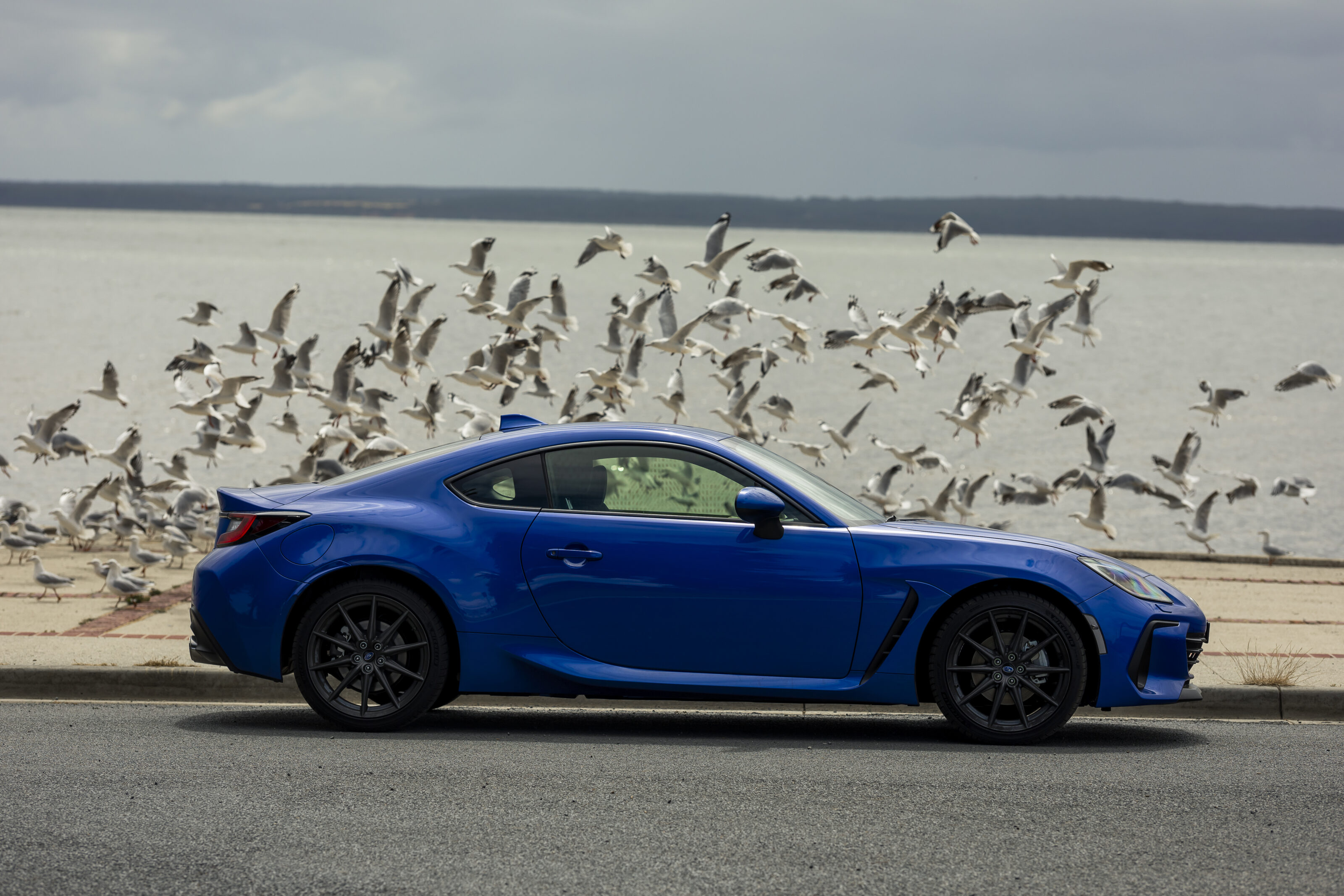
That’s a relatively nominal weight gain of around 20kgs over the superceded model. Dreaded weight creep has been mitigated due to a larger adoption of aluminium, now appearing in the roof, bonnet, guards and wheel hubs. The wheelbase is now 5mm longer, and the car now measures 25mm longer in total length. Rear track, too, has increased by 10mm while overall height has lowered by 15mm.
Rolling stock has inched up, with the alloy wheels now measuring 18×7.5-inches front and rear, now wrapped in 215/40 Michelin Pilot Sport 4s – a marked improvement over the previous generation’s eco-spec Michelin Primacy tyres.
The big news, however, lies under the bonnet. Instead of resorting to forced induction (despite seemingly unending vocal demand), Subaru has gone decidedly old-school to give the new BRZ a much-needed bump in power. Swept capacity has increased to 2.4-litres, thanks to a new engine block, revised internals and a new induction system harnessing both port and direct fuel injection.
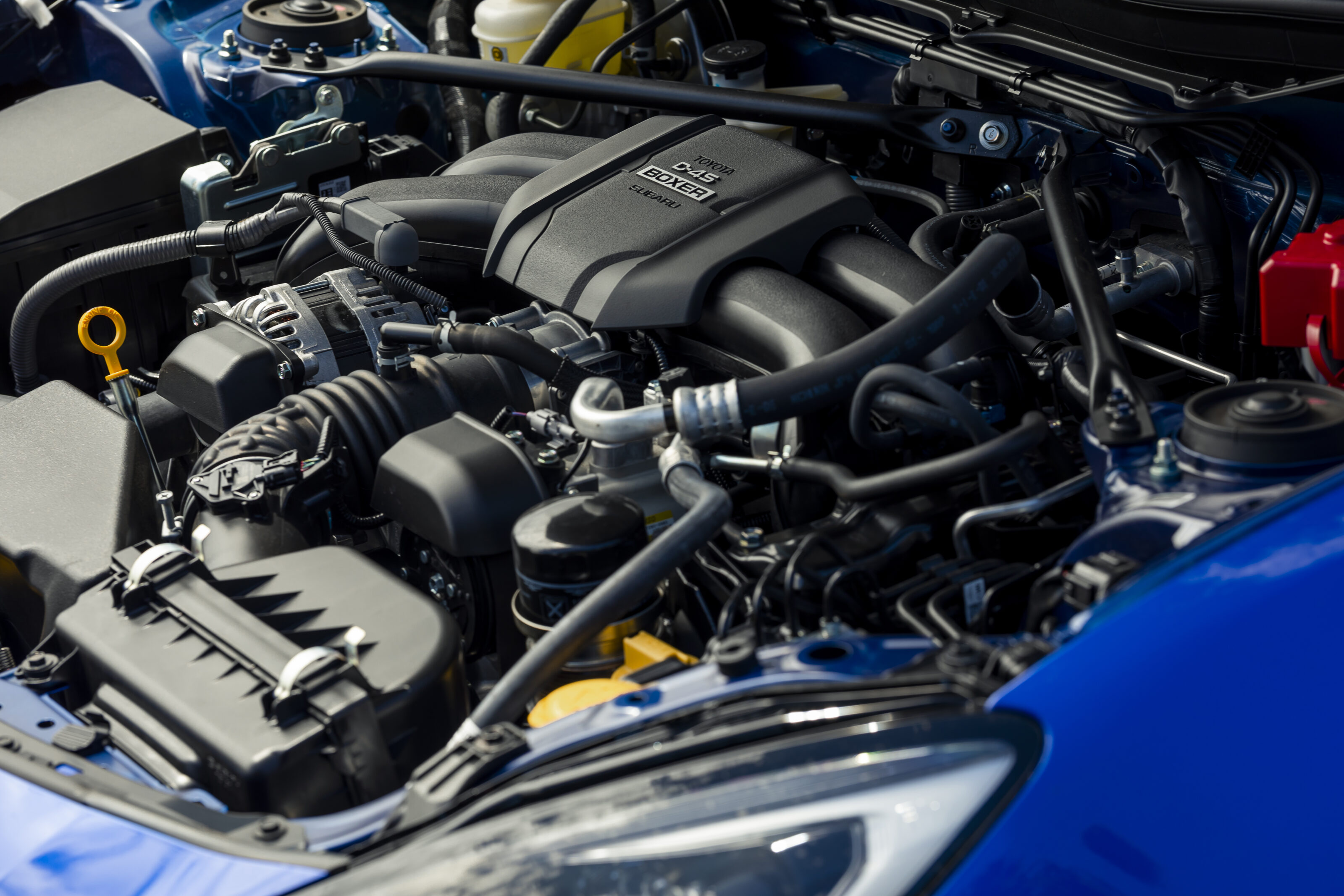
The new and improved BRZ now produces 174kW @ 7000rpm and 250Nm at 3700rpm, the same for both Manual and Auto vehicles. While the ultimate outputs may still look modest to some, the improvement to power and torque is immediately clear from the seat of the pants.
Even in civilian circumstances, you’ll never find yourself struggling to keep up with traffic (a genuine concern in the old car), winding through the first three gears, exploiting the chunky mid-range. You no longer need to wring its neck out in second to make it up a steep incline, either, and in many ways the BRZ builds pace with the same ‘slightly oversized’ linear verve as a 2.0-litre MX-5.
It may not boast the histrionic force-fed rush of its turbocharged contemporaries, but it’s a much more responsive powerplant that feels unburstable in its eagerness to chase the upper regions of the rev-range.
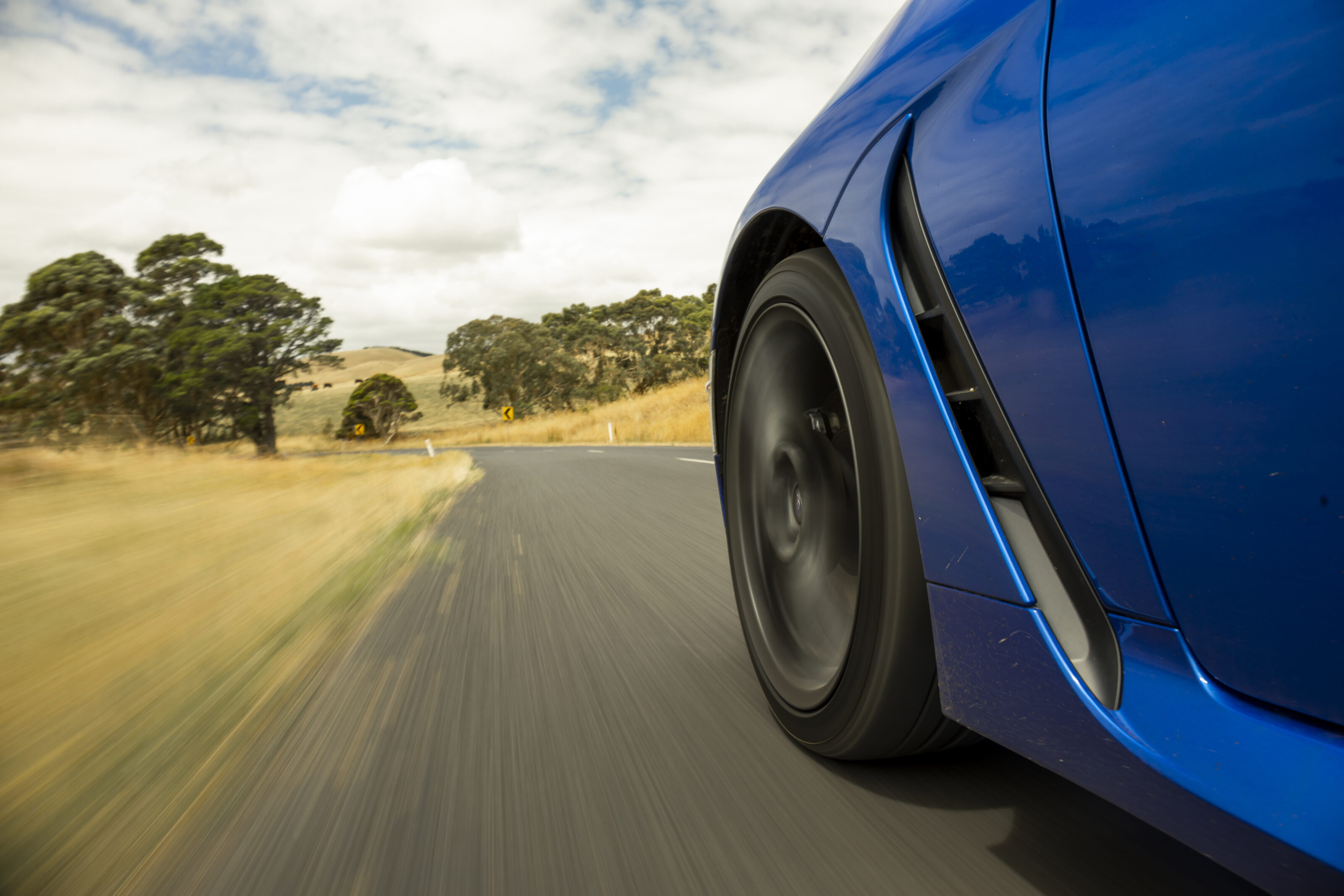
Not that you realistically need to high-five the redline with frequency, as power does tail off just below the 7200rpm cutout.
While the manual car may represent the ultimate enthusiast’s choice, Subaru Australia says 40 per cent of their initial 500 allocation were ordered with an automatic transmission.
It’s a smooth unit in everyday circumstances, only yielding some slight shunting on pickup at a slow, almost-stationary, roll; for instance when you’re creeping towards a red light that turns green or when switching between reverse and first when parking.
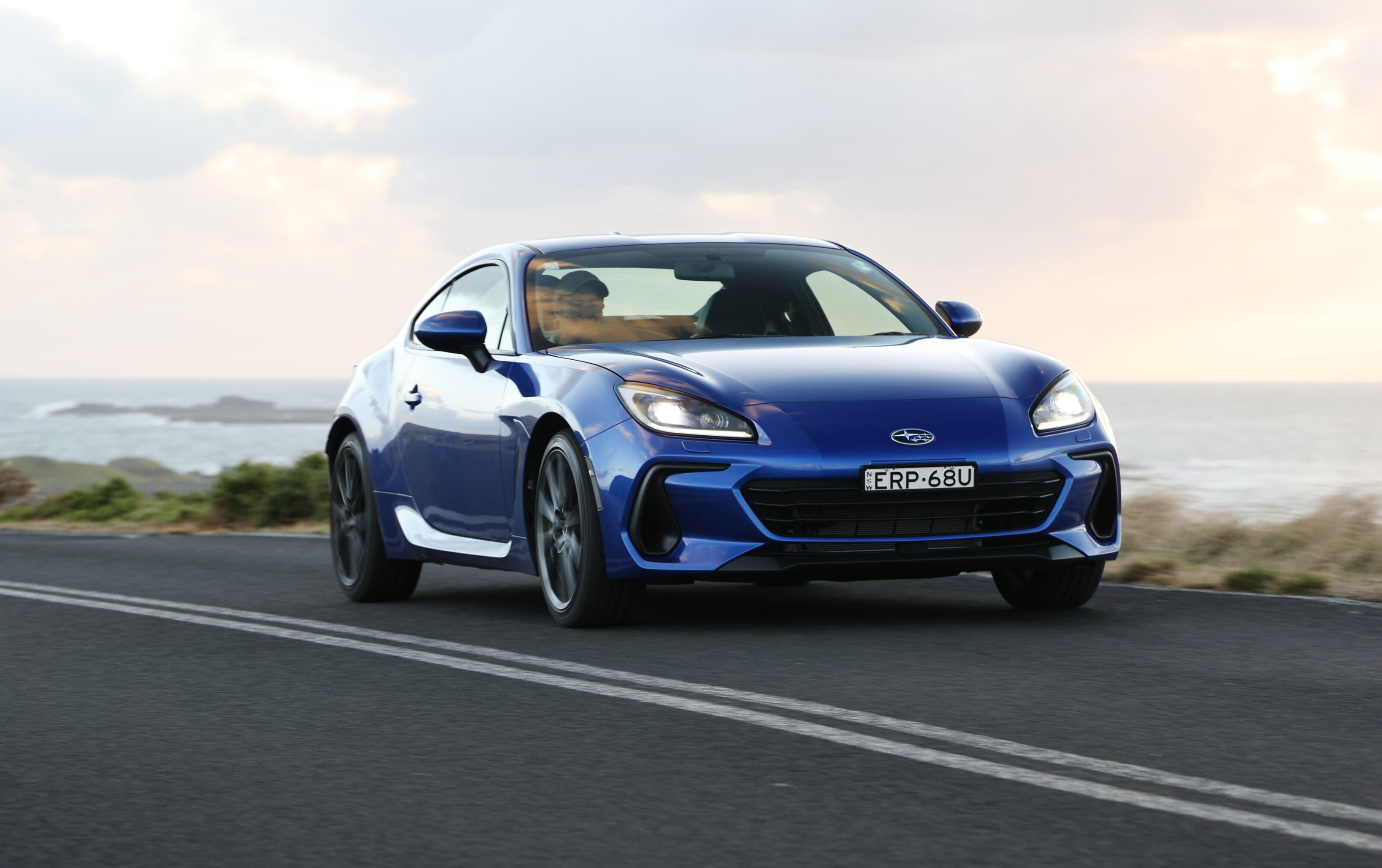
The prior generation saw automatic BRZs hampered by a slight power deficit compared to the manuals, however an improved torque converter caters to the full 250Nm while improved sensors and software improve logic.
At speed, it’s an intelligent box when left to its own devices, however, Normal Mode calibrations frequently settle in gears too high. Sport Mode wakes it up, holding revs high and intelligently downshifting under braking.
Black aluminium paddle shifters add a further element of engagement, and are satisfying to use. The tiptronic shifter, however, is backwards, pulling ‘back’ to downshift and ‘up’ to upshift. Upshifts are responsive and it will give the downshift request if in range.
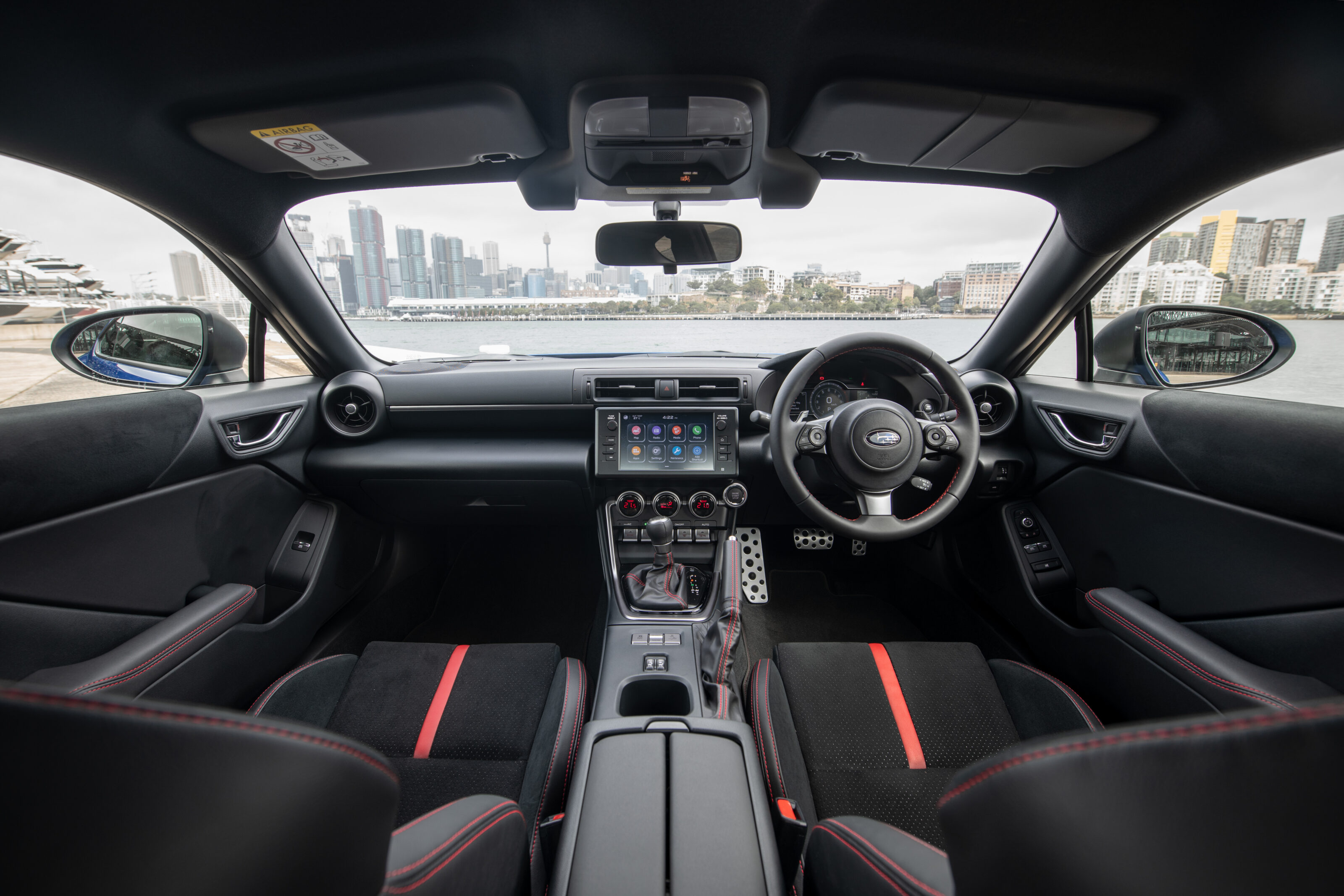
In-cabin sound can be dominated by wind and road noise when cruising, but the engine note comes into its own as you climb up the range. Subaru’s ‘Active Sound Control’ can prove divisive, but we found it to be rather unobtrusive and rather liked the shrieking inline-four vibes over the more natural agricultural flat-arrangement.
Compared to the first-generation car, the steering has been finely tuned with less inherent weight and a slightly slower steering ratio (13.5:1 versus the old car’s 13.1:1), requiring slightly more input off-centre before the fast front-end begins to react. I miss the slight heft of the old car’s steering, but the marginally slower steering ratio makes sudden direction changes a bit more fluid, and sudden oversteer corrections less snappy. That’s not to say it feels doughy on turn-in, as the lighter steering further contributes to a feeling of lightweight agility and nimbleness.
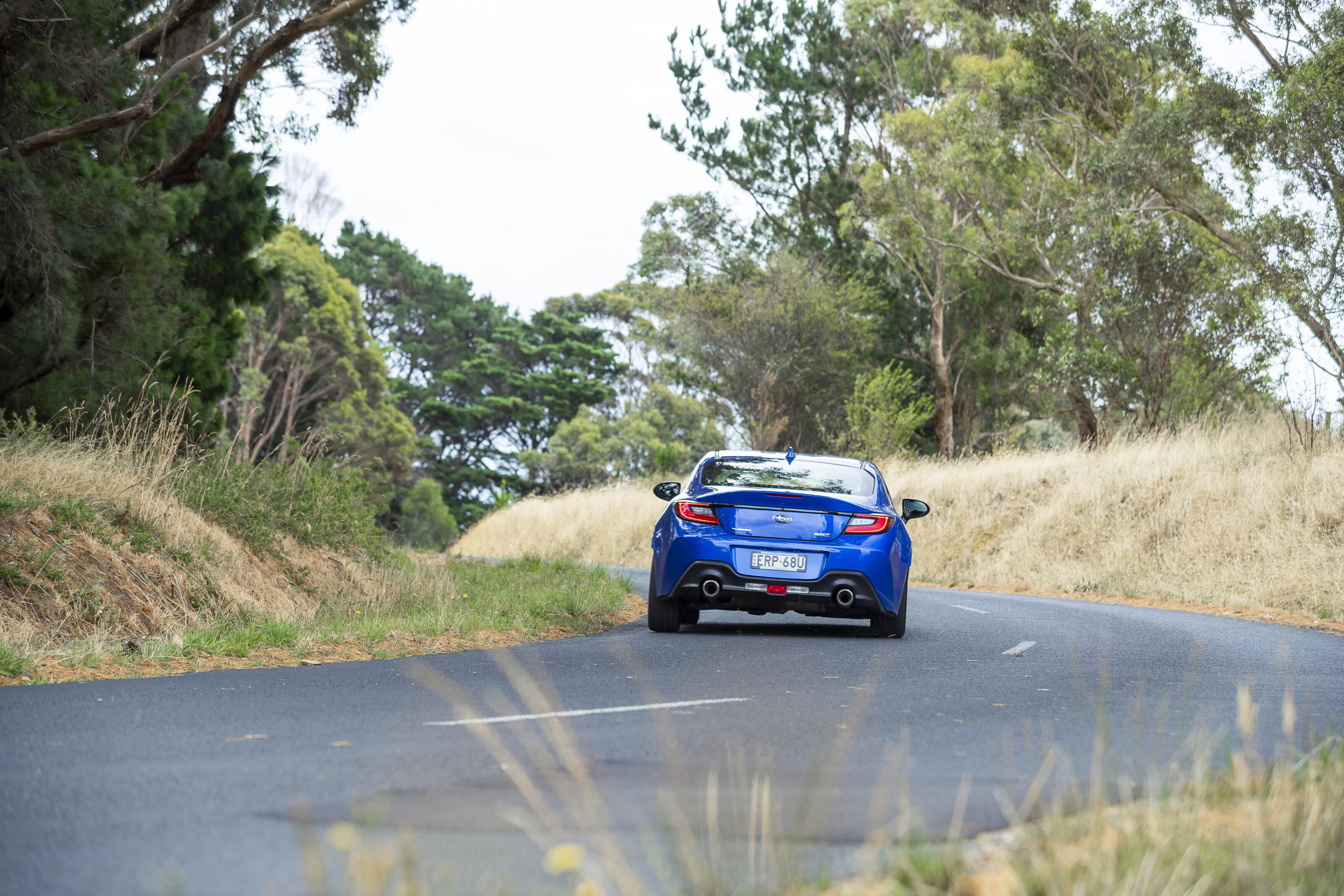
The light package and short wheelbase can lead to some jinkiness on heavily potted roads when really pushing, which can be initially discouraging. Body control is well contained, however, and you soon find that the car quickly regains composure despite being upset by larger road imperfections.
Continue to push, and the BRZ reveals itself as a confident and quick tool with which to cover ground. The chassis is remarkably neutral for a short rear-driver. You can steer with the rear if you begin flicking it into corners but, in most cases, there is more mid-corner mechanical grip than you might initially expect.
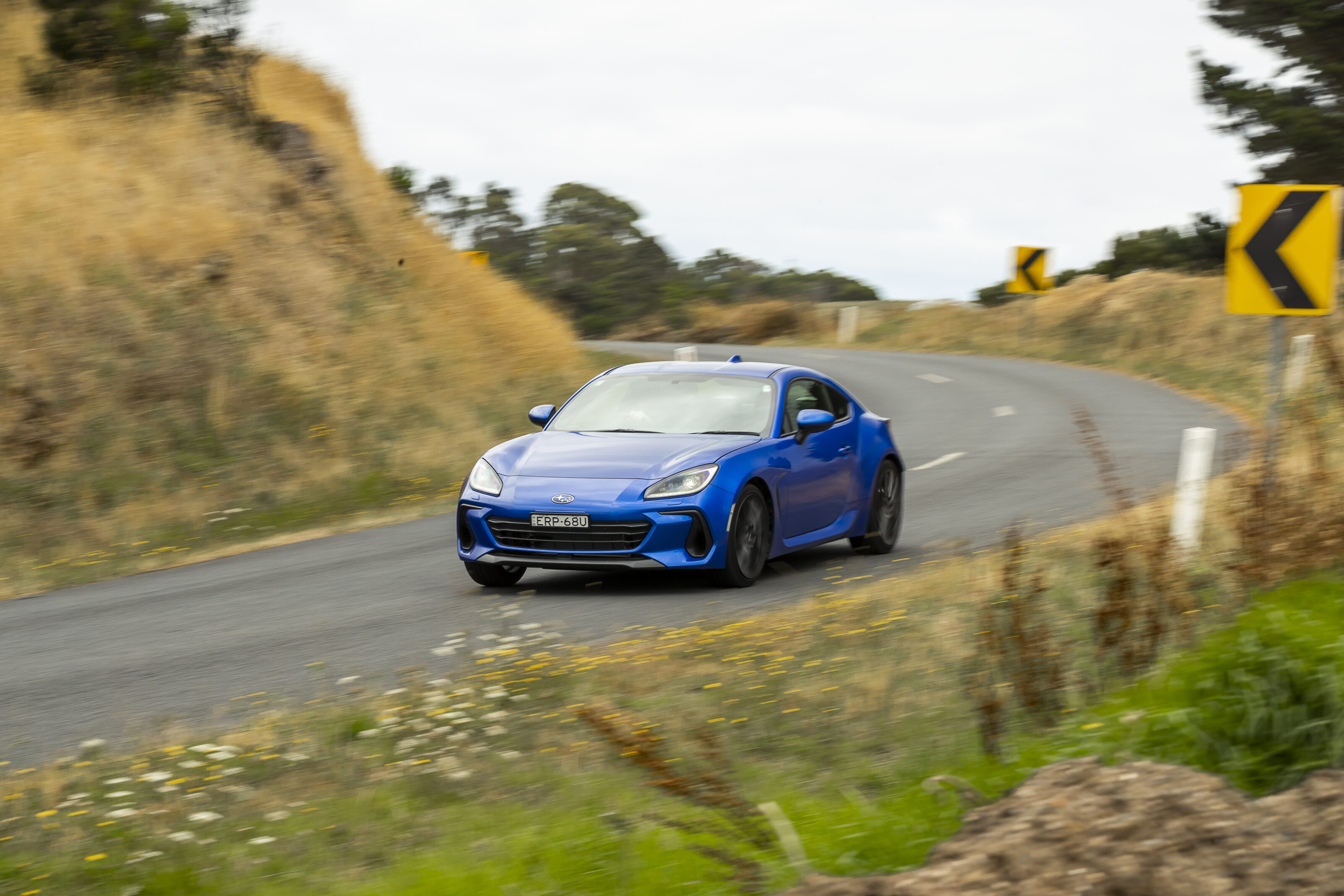
ESC is well calibrated in most circumstances, but can interrupt proceedings by withholding power for lingering seconds after the initial slip moment has passed.
You’ll want to brake in straight lines, too, as the car can pull under heavy braking. Front rotors have been increased to 298mm, and the whole package is less servo-assisted than the original BRZ. The brake pedal now requires solid leg effort to realise full braking power. Those who are very familiar with the old car may be caught off guard, as the brakes now require a little more forethought given the increased pace and reduced servo assistance. In effect, however, the pedal is far easier to modulate at speed, and lends itself well to beginner left-foot brakers.
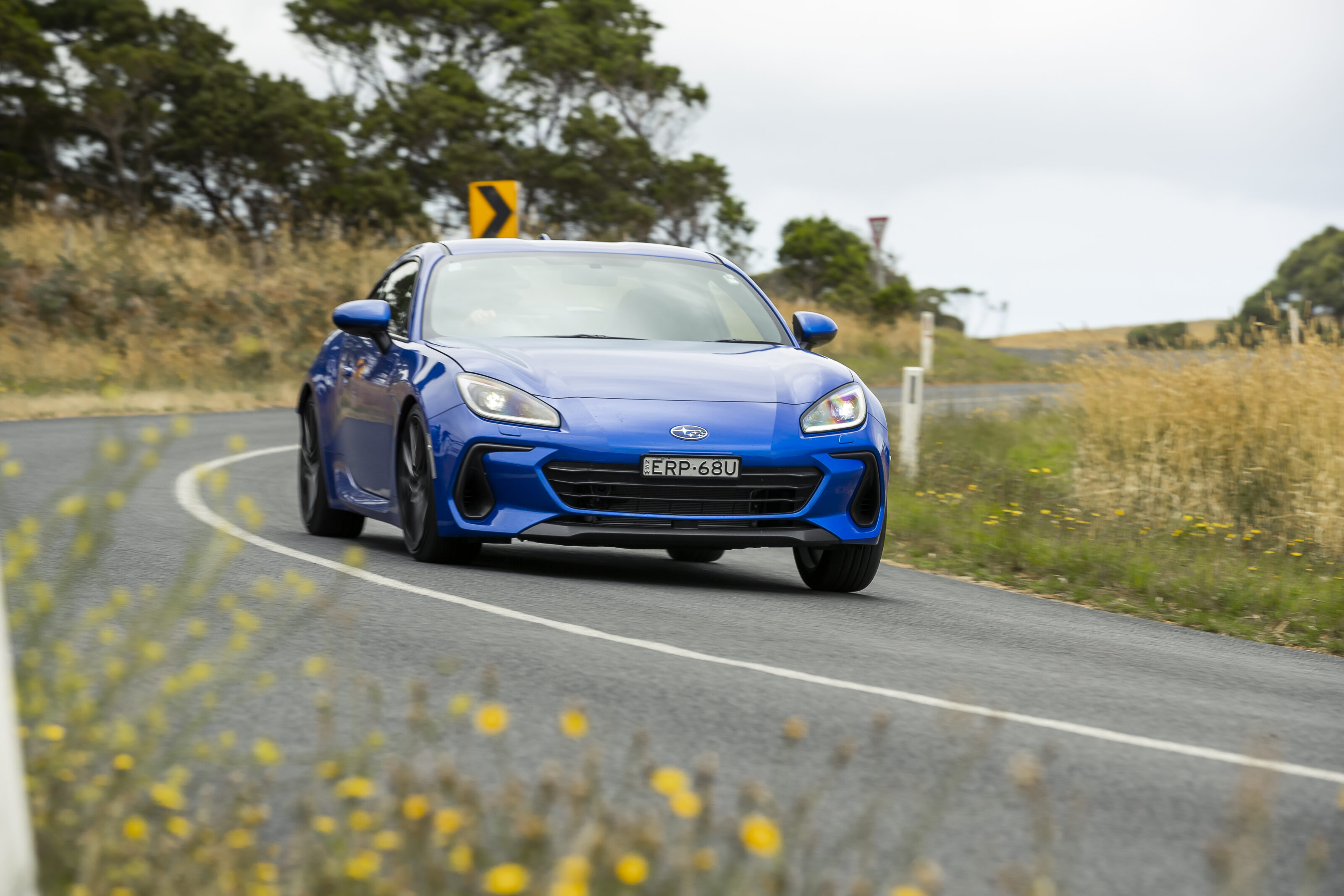
It’s not just the dynamic department where the 2022 BRZ makes strides in improvement. Low-speed ride feels perfectly liveable. There is an inherent firmness, but the car feels composed on rebound with little jostling and crashing over sharp juts.
Opting for the Automatic transmission also affords you Subaru’s impressive EyeSight active safety suite that includes: AEB, adaptive cruise control, lane-departure warning and lead vehicle start alert.
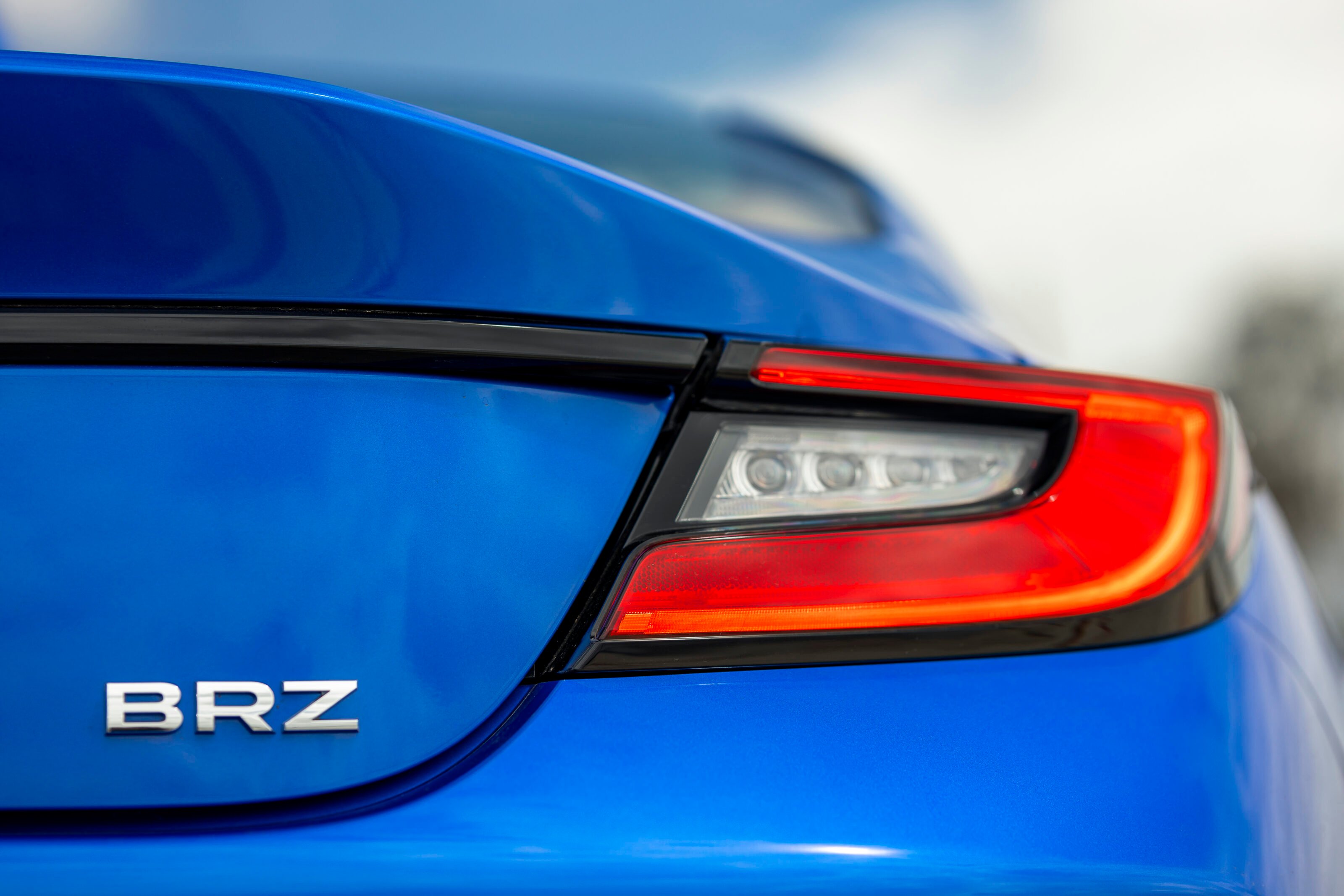
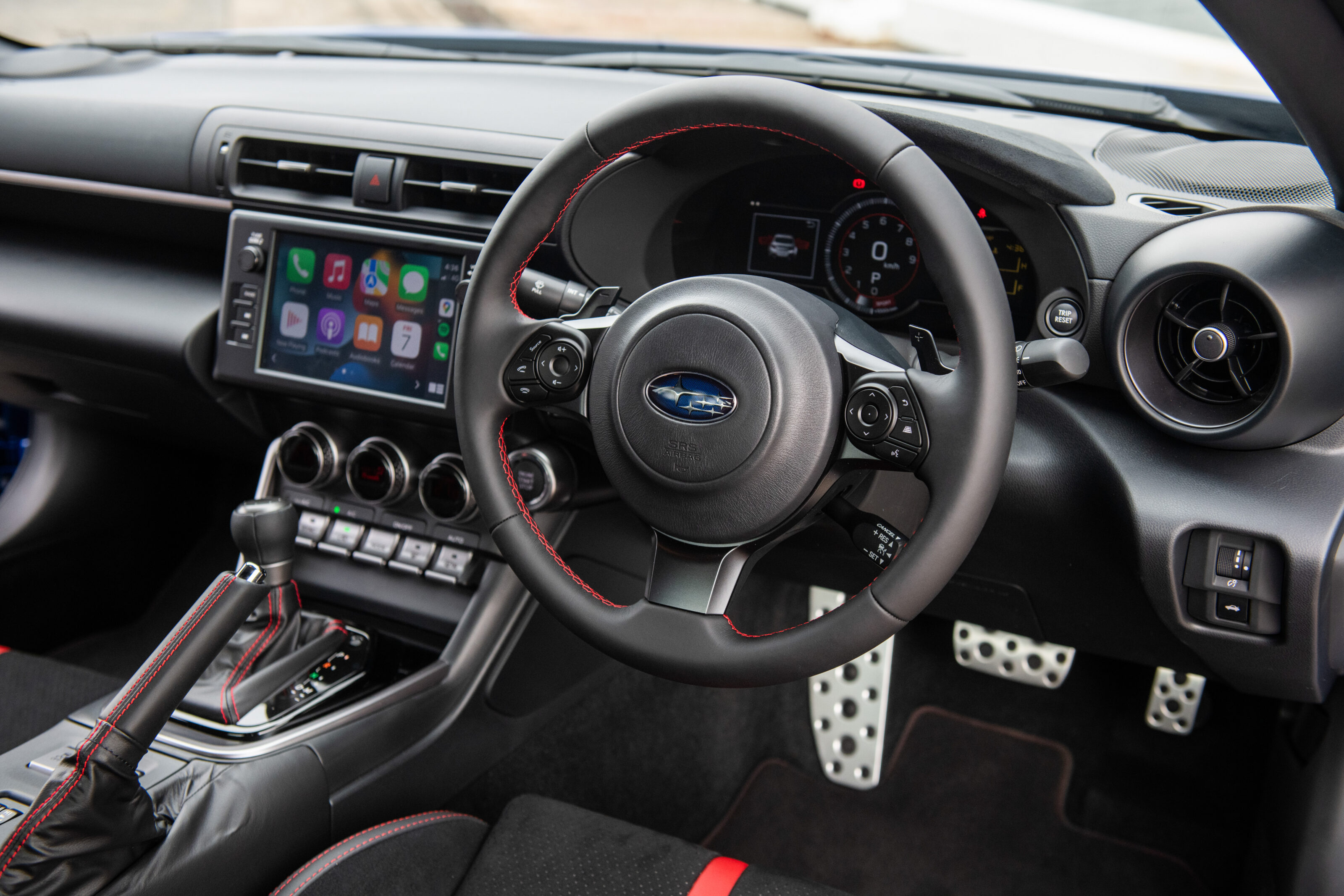
A welcome improvement to in-car tech sees both transmissions equipped with automatic LED headlights, dual-zone climate control, Apple CarPlay and Android Auto, SatNav and Digital Radio. In cabin materials and frequent touchpoints have also taken a stepup in material quality. Everywhere you look; there’s a new dash, new HVAC controls and an armrest (finally!). Look closer and you’ll spy new window switches, doorcards and a nice aluminium-ringed mirror adjuster in place of the old plastic nub.
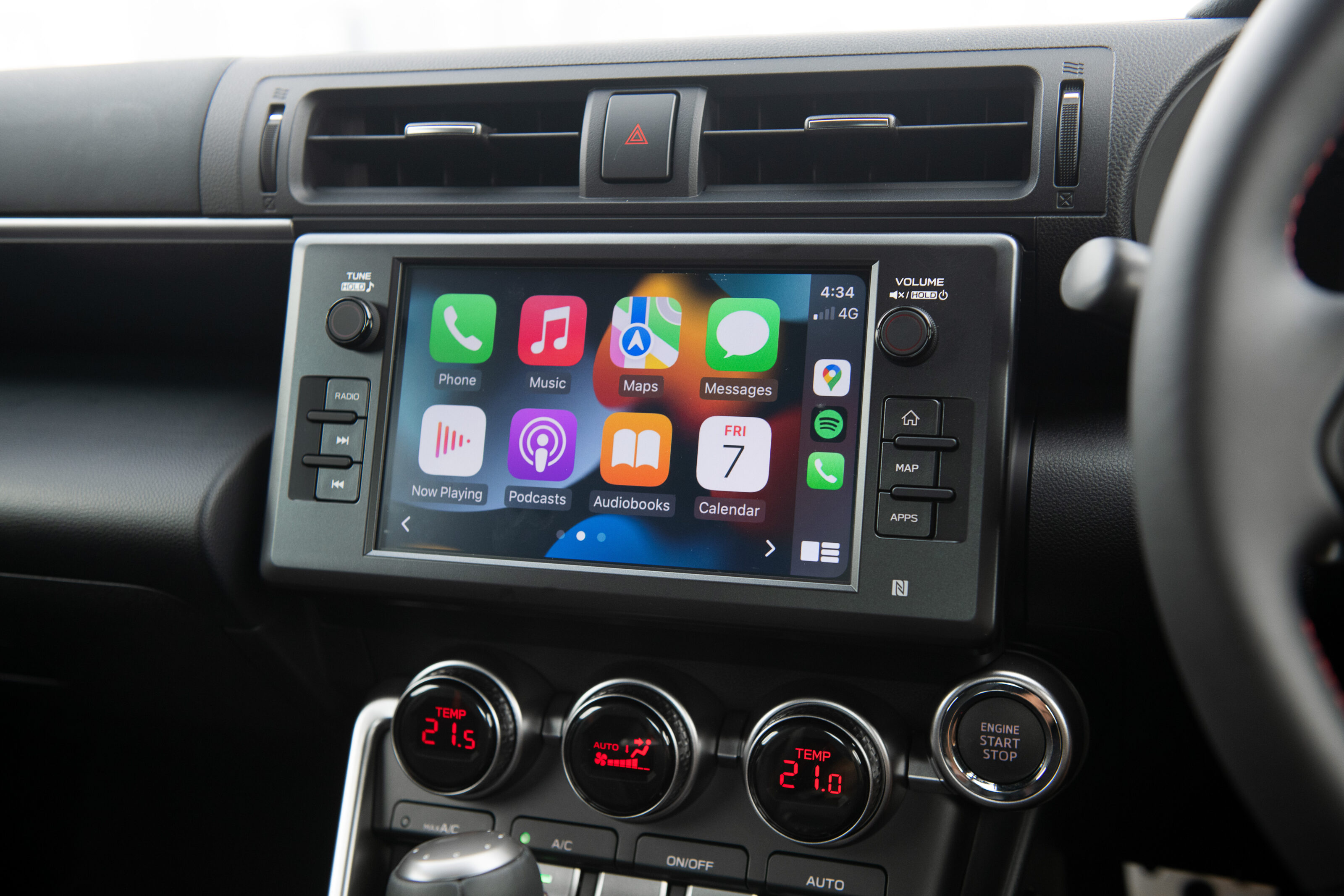
Some classic quirks remain, however: the rear seats, despite a 5mm increase in wheelbase are still, at best, vestigial and the full size spare still sits proud of the boot floor, encroaching on space and making for awkward loading.
However, in a dynamic sense, the automatic BRZ is certainly no consolation prize. Surprisingly, it doesn’t sap the life out of the new 2.4-litre boxer and, given that almost half of buyers will choose this route, that’s great news.
The manual may remain the ultimate enthusiast’s choice but, while it might be conveyed as blasphemous to hardcore fans, the auto doesn’t kill the BRZ’s mojo.
Bravo Subaru, now where are you Toyota?