
A silver lining of our delayed COTY testing this year is that despite the odds, COTY ’22 features a bumper field of 21 contenders from 14 different manufacturers.
Because we had to massage our dates slightly, it meant we could include exciting heavy hitters like the Kia EV6 and Mercedes-Benz C-Class even though they didn’t arrive Down Under until the end of January. Bonus.
2022 Wheels Car of the Year revealed!
COTY class of ’22
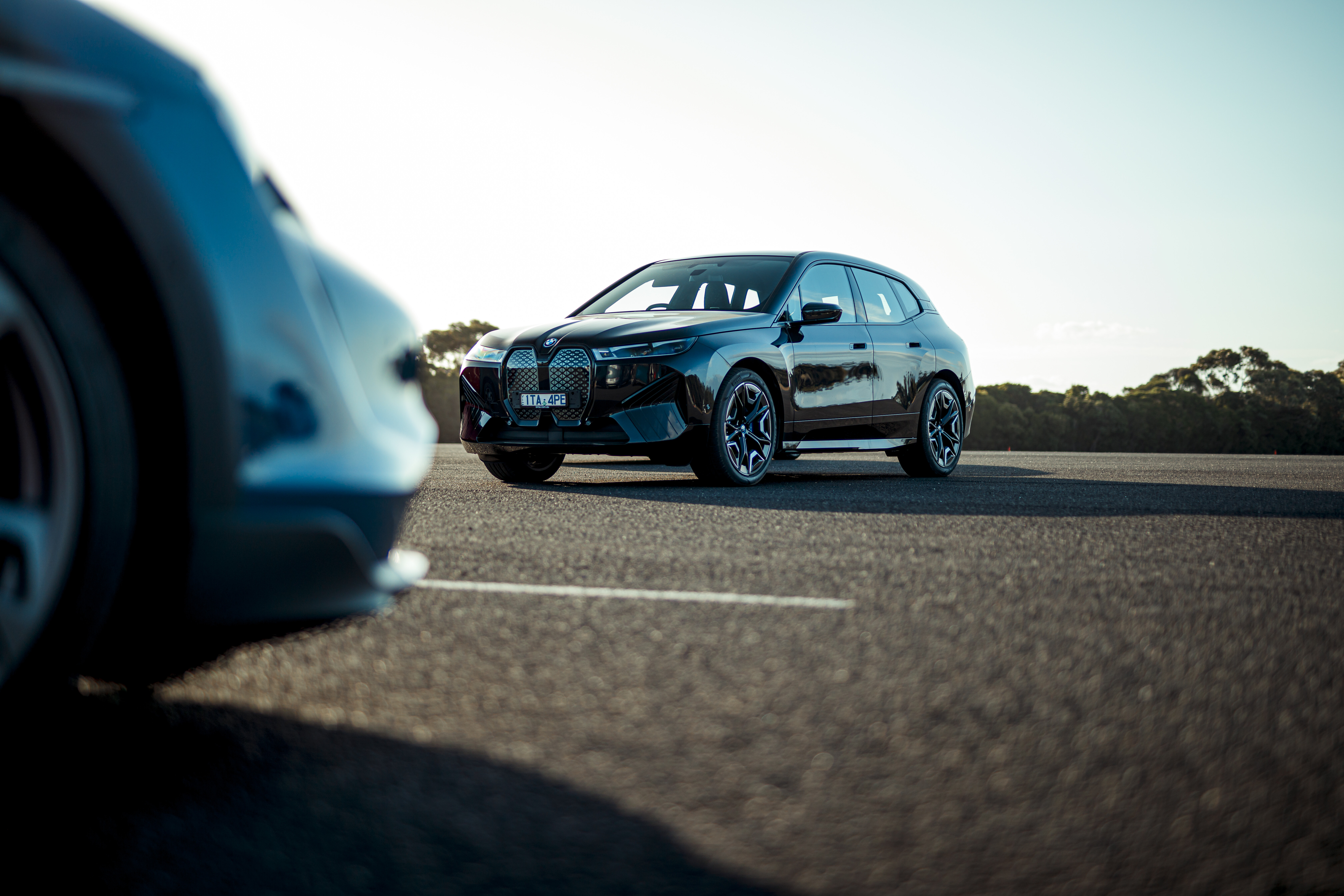
BMW iX
BMW’s imposing and slick EV SUV makes a bold impression, but so does its price tag. It wouldn’t be the first time a car in this segment has made it to the top of the pack, though…
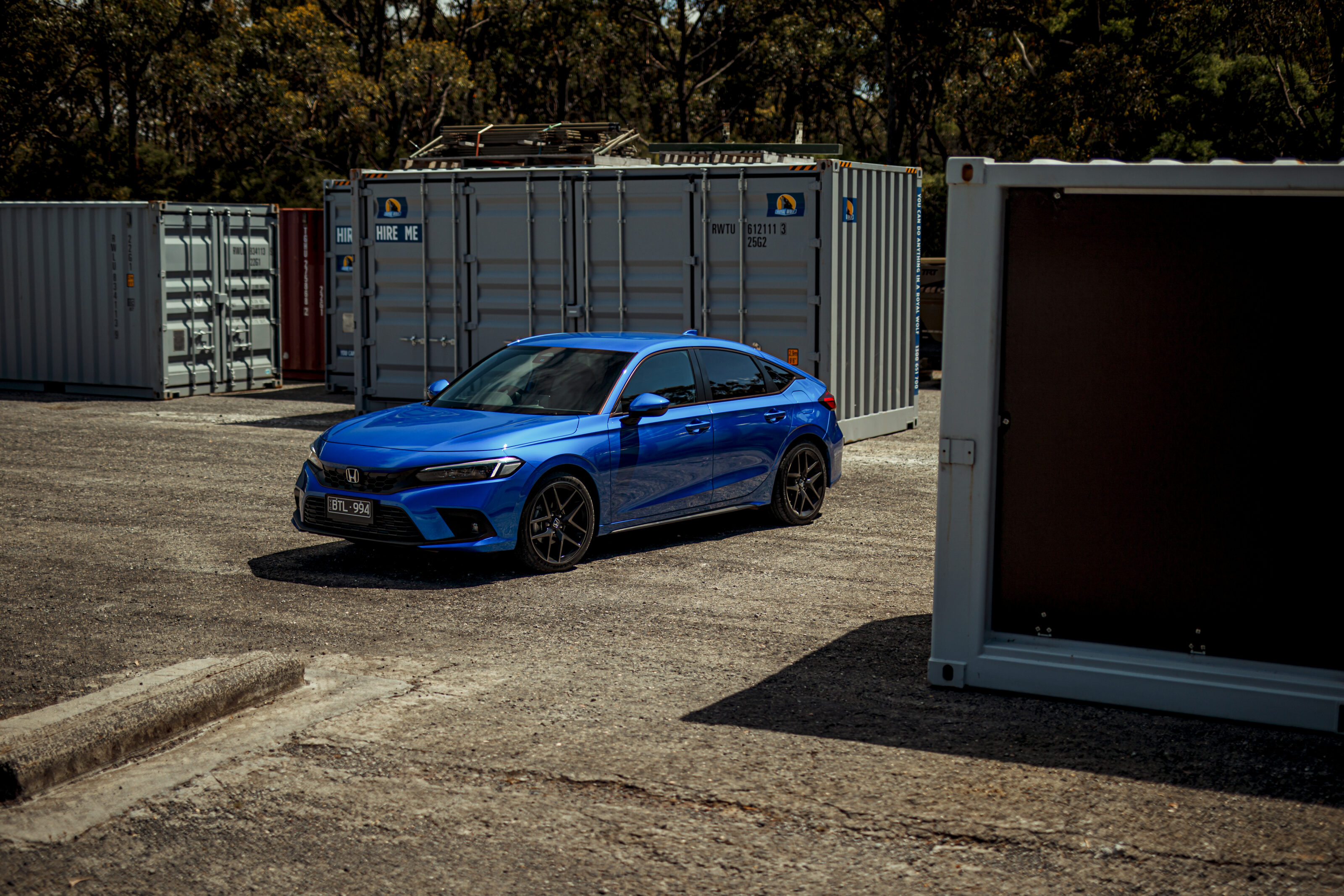
Honda Civic
New generation of Honda’s hatchback darling. A single, high-spec variant with a steep entry price take aim at Europe under Honda’s new sales model. Will the value equation stack up at COTY?
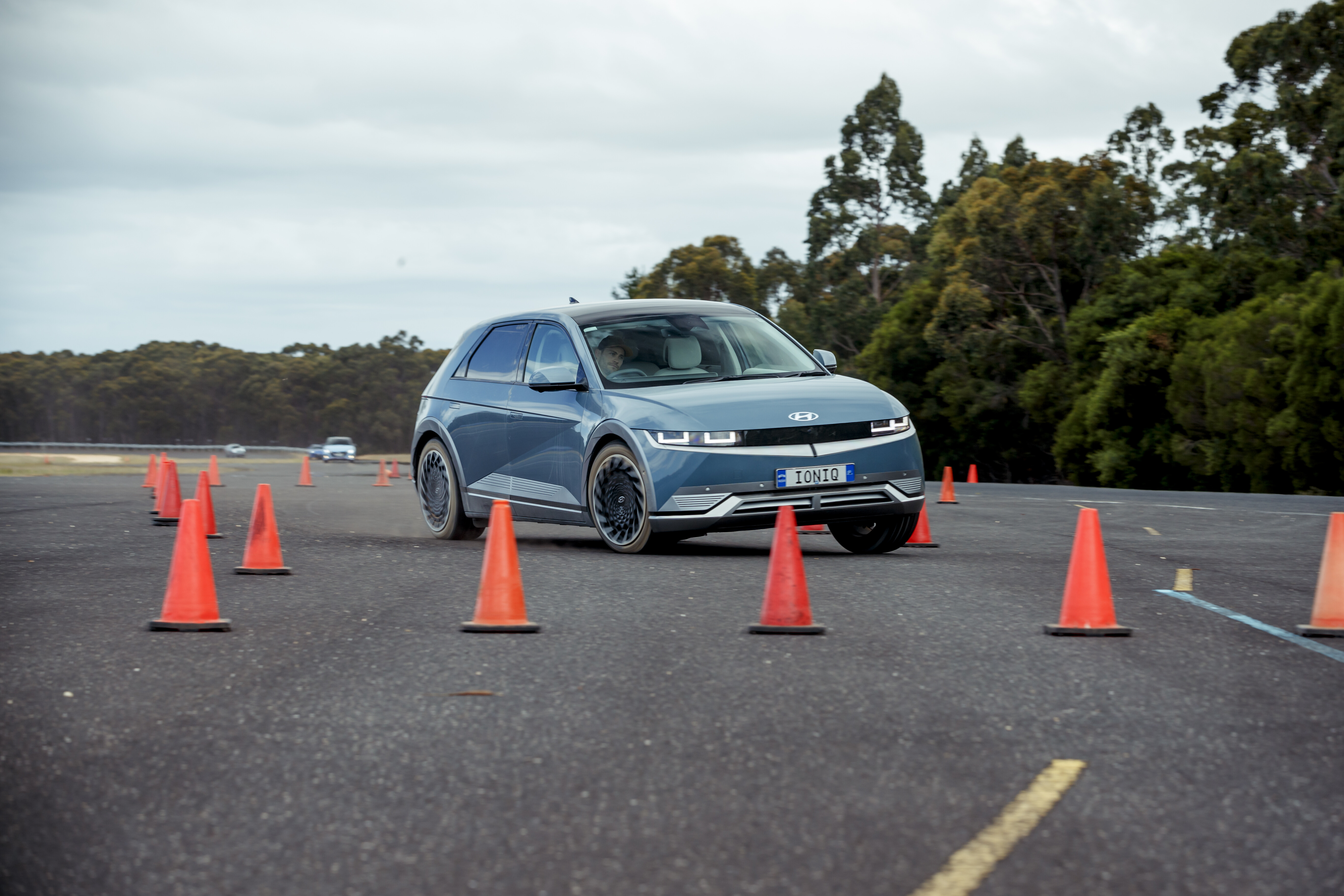
Hyundai Ioniq 5
Probably the bookie’s favourite to take out our gong, providing it can edge out its sibling from Kia. Stacks up well against our criteria for Function, Efficiency, Safety and Technology while also offering plenty in the way of X-Factor thanks to its adventurous exterior and interior design. Our first taste at the local launch did raise a few question marks around its ride quality, and its value equation will be thrown under the COTY microscope, yet there’s no escaping this is Hyundai’s best shot yet to win its first Wheels COTY trophy.
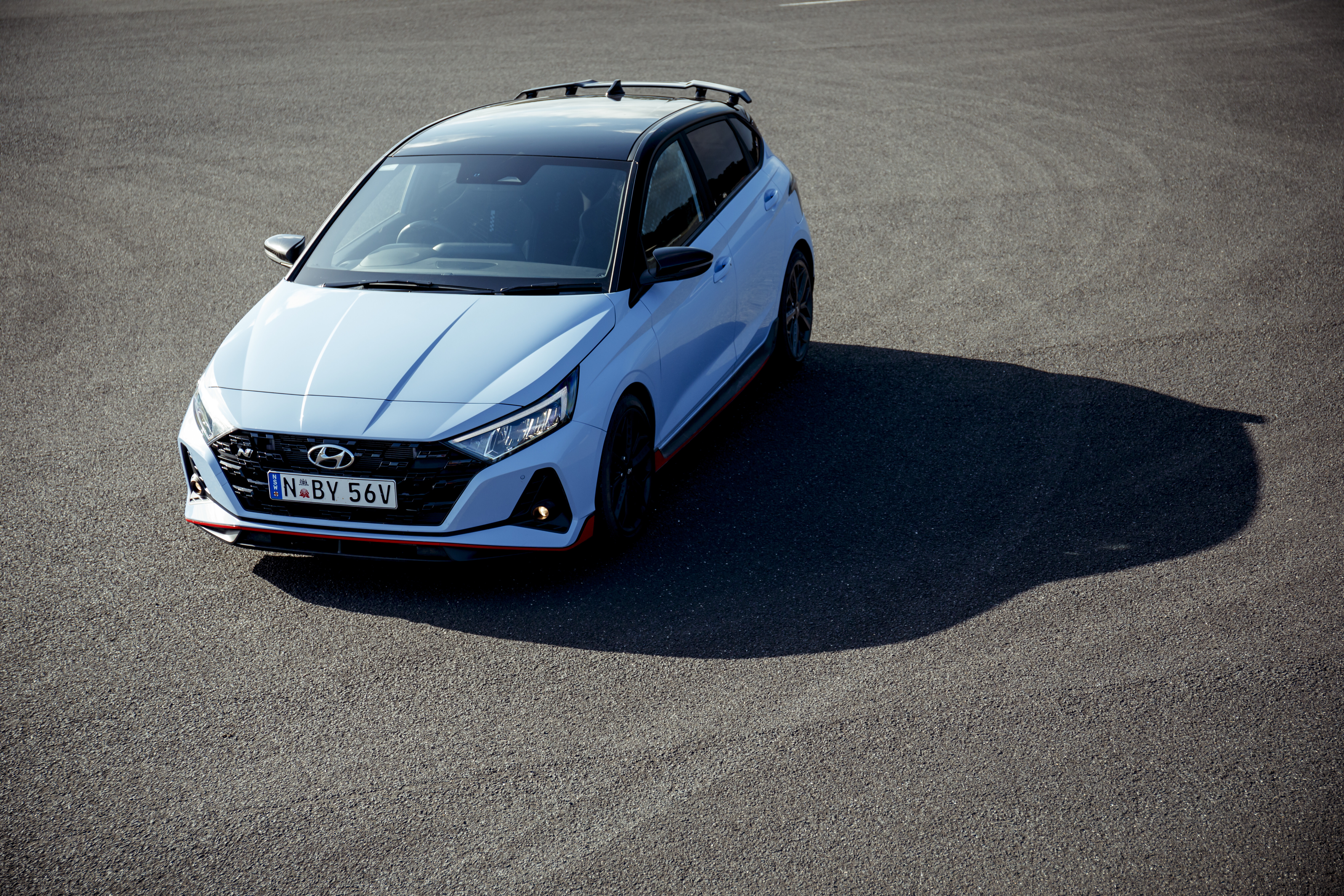
Hyundai i20 N
Distilling much of the brilliance of its bigger brother – the excellent i30 N – into a smaller and more affordable package makes the i20 N one of 2022’s most exciting hot hatches. It makes a convincing on-paper case against COTY’s Function and Value criteria, too, meaning Hyundai’s pint-sized contender is tipped by many to feature at the pointy end of the process. Translating that on-paper promise into the real thing is no small feat, however, but there’s no obvious hole in the i20 N’s armour. Let’s see if it remains that way…
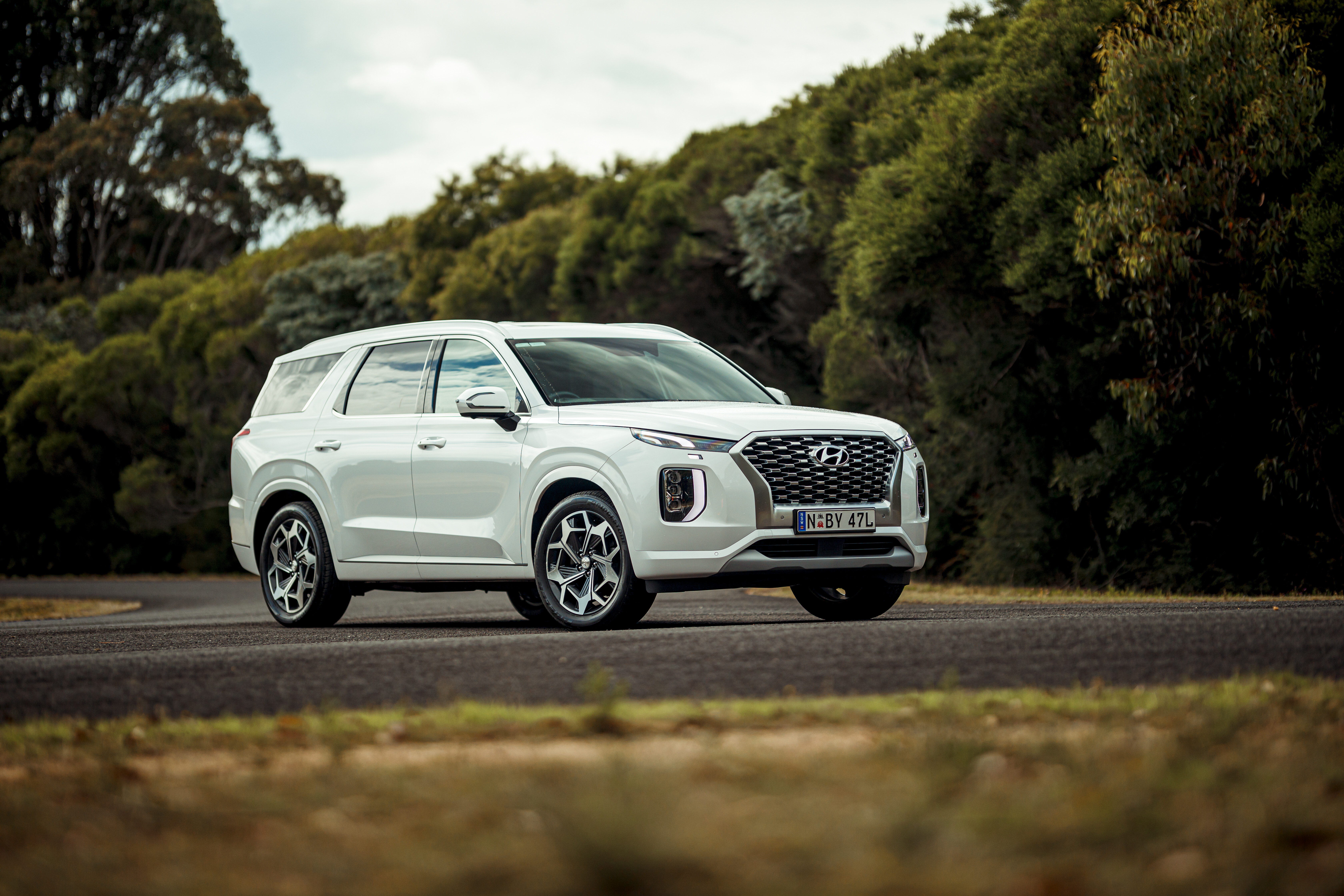
Hyundai Palisade
A clever use of a lot of space, and an all-round impressive bit of machinery on paper, but will the big diesel seven-seater impress our judges with its premium angle?
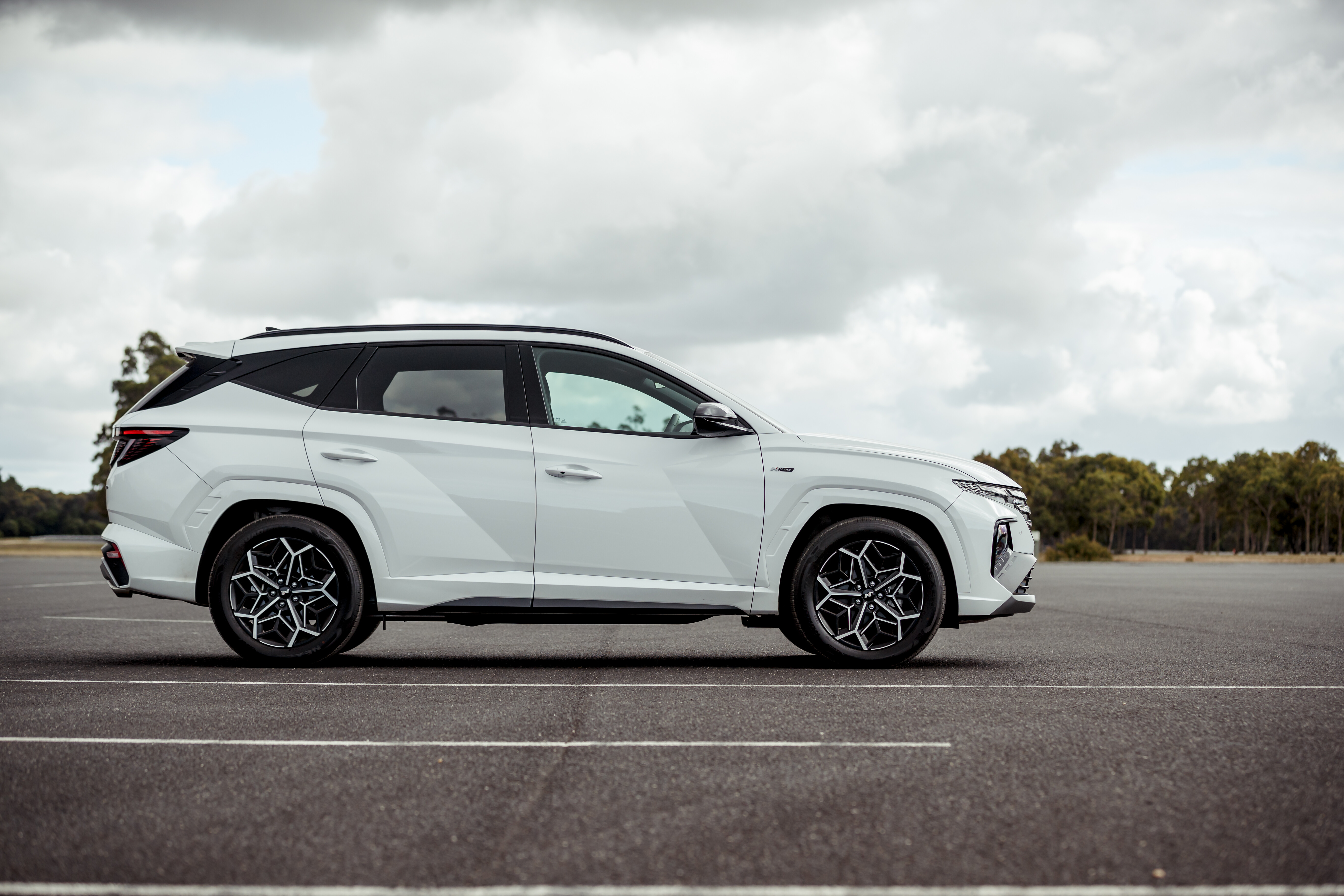
Hyundai Tucson
Hyundai number four is a sensible, family-friendly offering, but is there anything about the Tucson, aside from proven competence, to set it apart from the crowd?
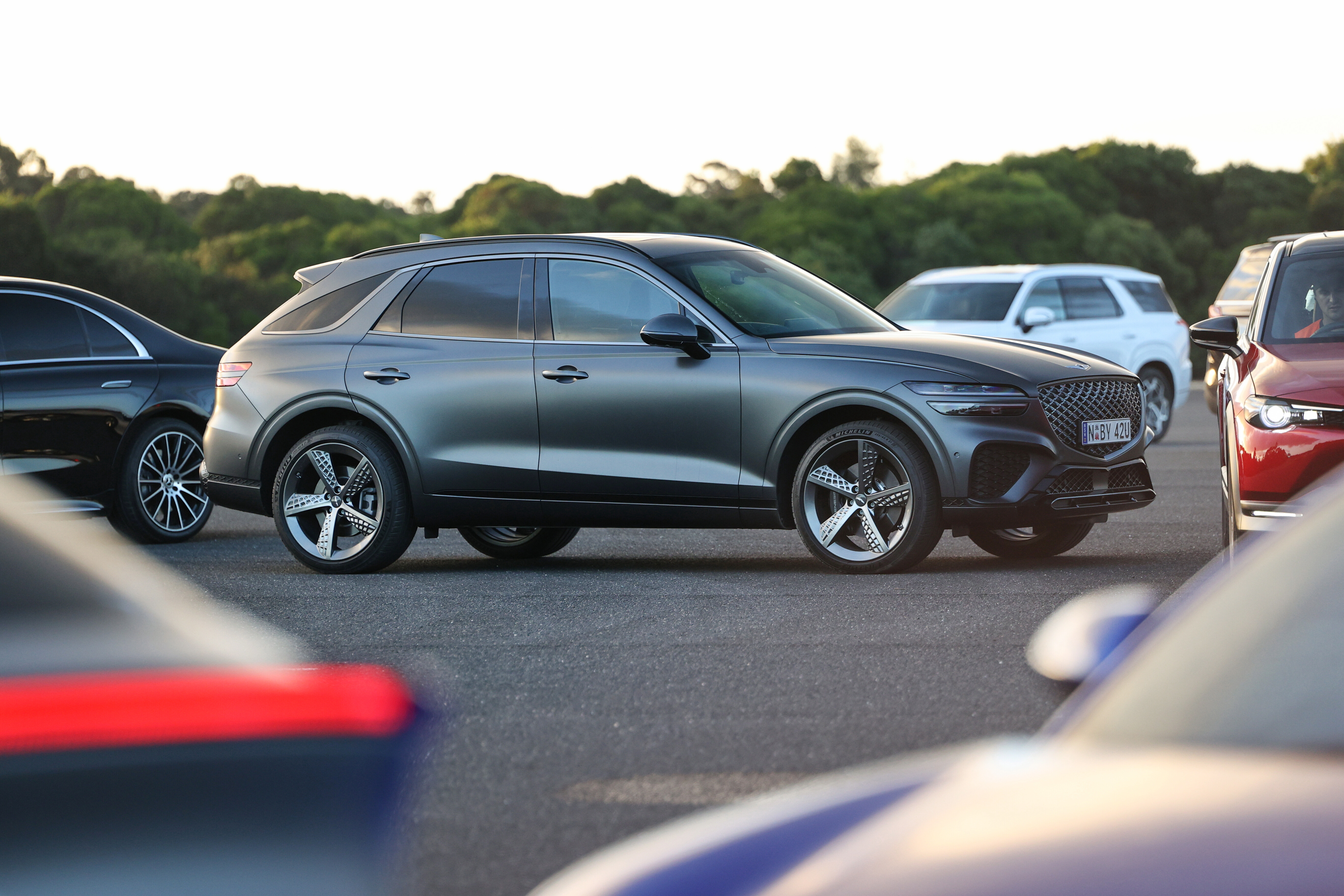
Genesis GV70
The new kid on the premium South Korean block, and one Genesis hopes will dig into the ever-popular medium SUV market.
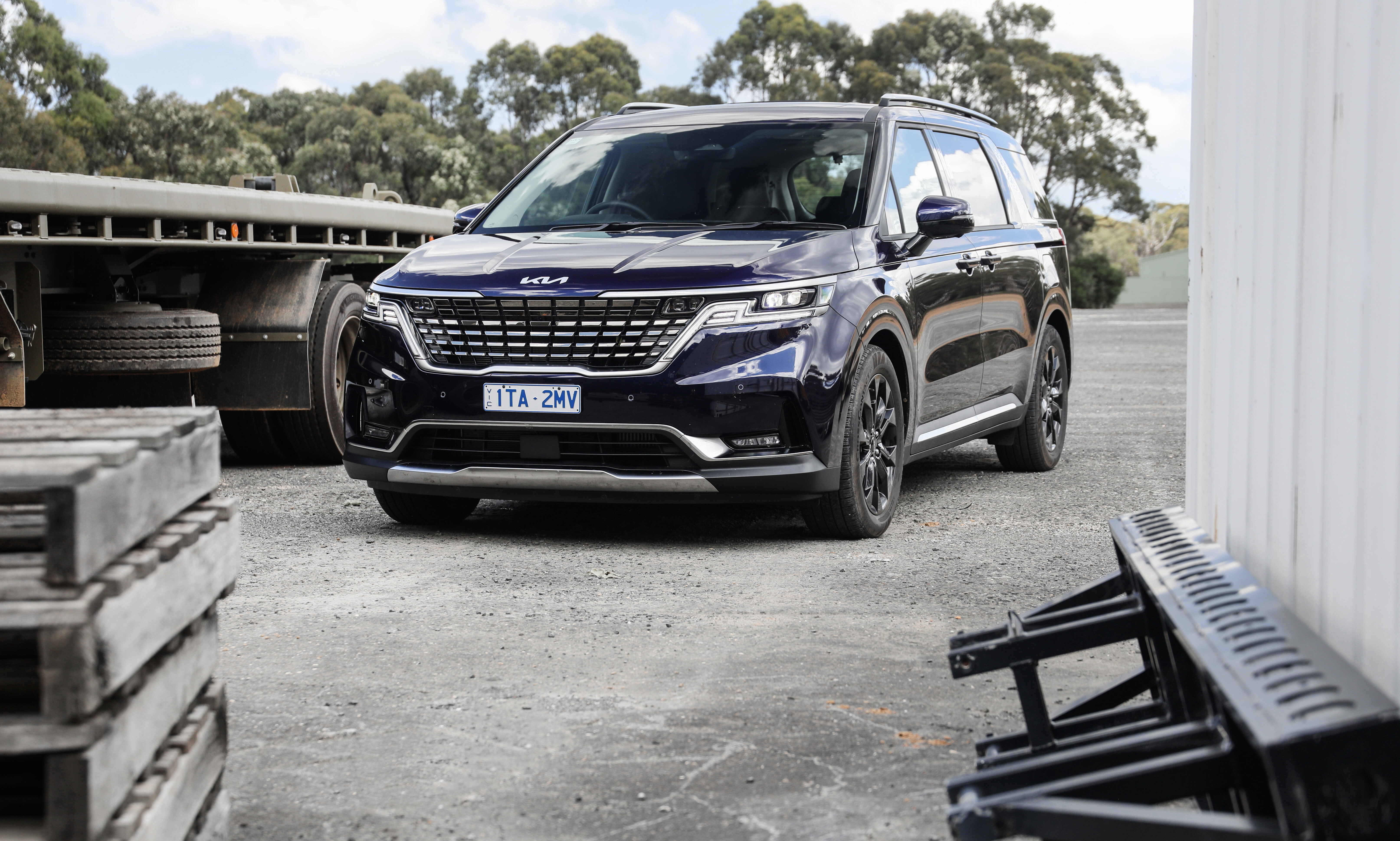
Kia Carnival
The new-gen Carnival has reviewed well so far, and it’s not like a van hasn’t taken out COTY before – we’re looking at you, Tarago. Believe us, the Carnival deserves to be here.
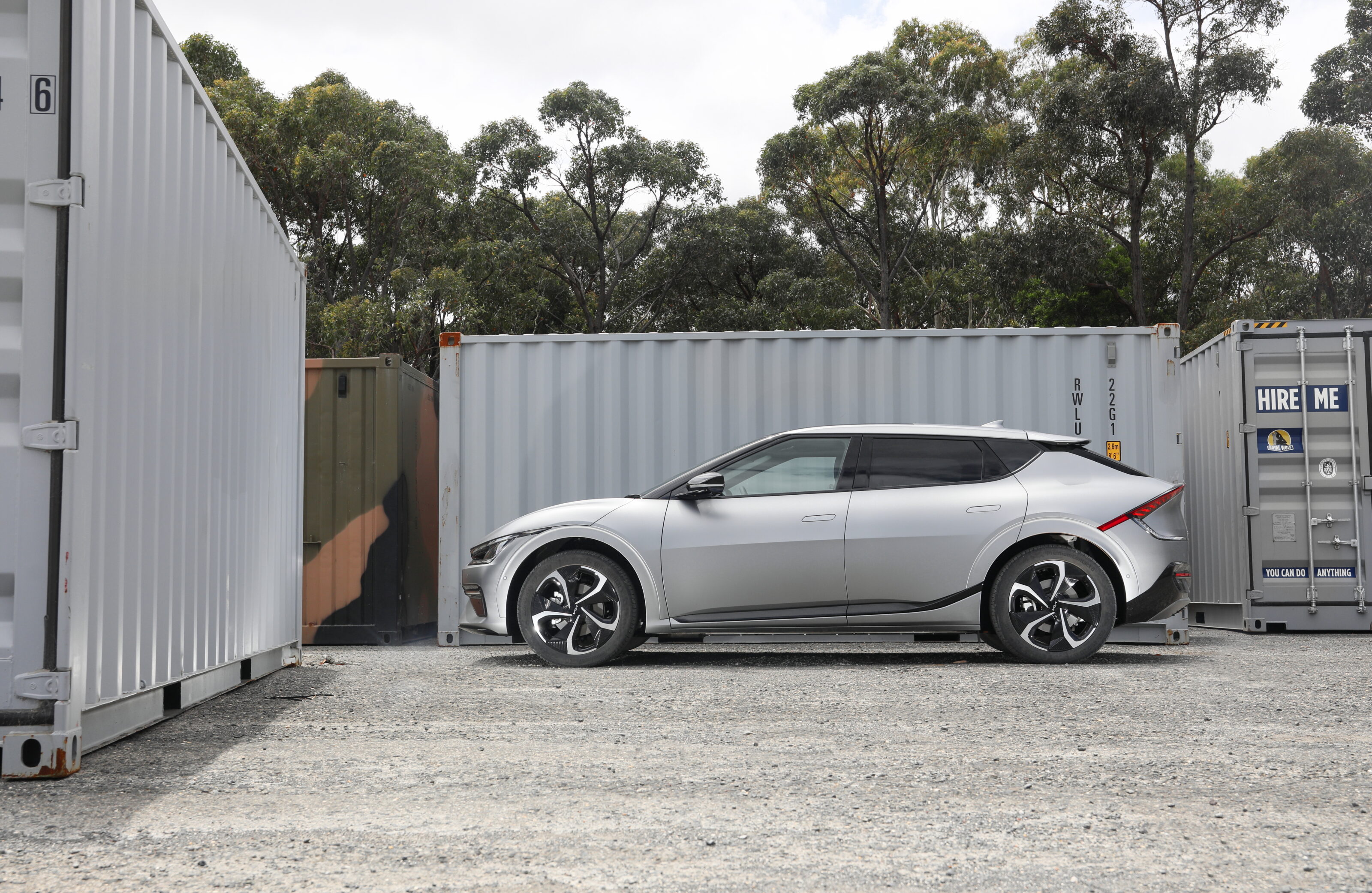
Kia EV6
A benefactor of our later-than-usual testing schedule and a genuine ‘on-paper’ contender when considered against the COTY criteria. EV6 is a close relation to the Hyundai Ioniq 5 yet offers several crucial distinctions, including a sportier intent both in how it looks and drives. More odds-on favourite than dark horse.

Kia Sportage
Flagship-spec Sportage has all the bells and whistles, and is a huge leap for the badge. Kia hopes it’s enough to convince buyers… and judges.
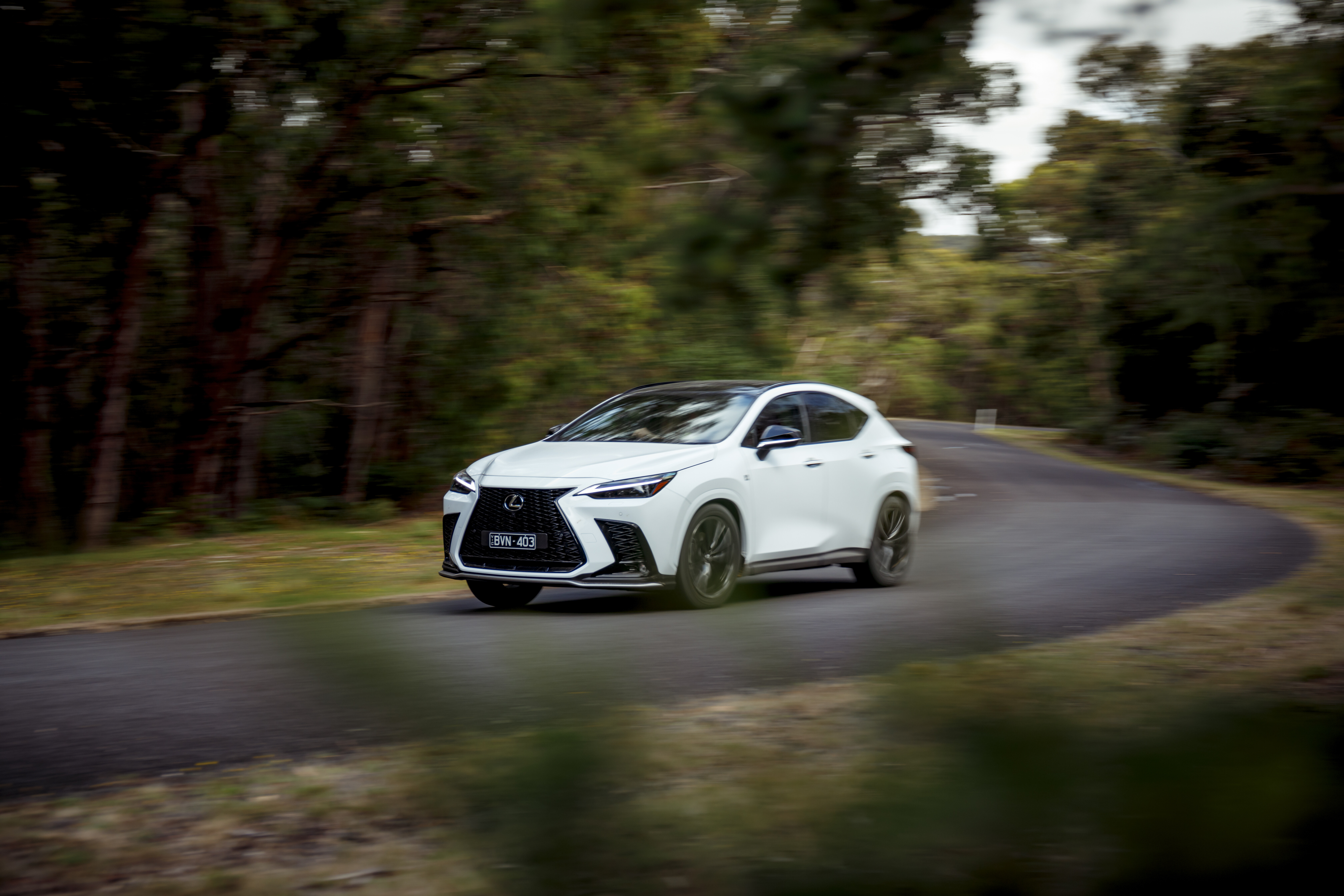
Lexus NX
The new generation of Lexus’ most popular model, comes with an overhauled infotainment system and some new tricks for Lexus.
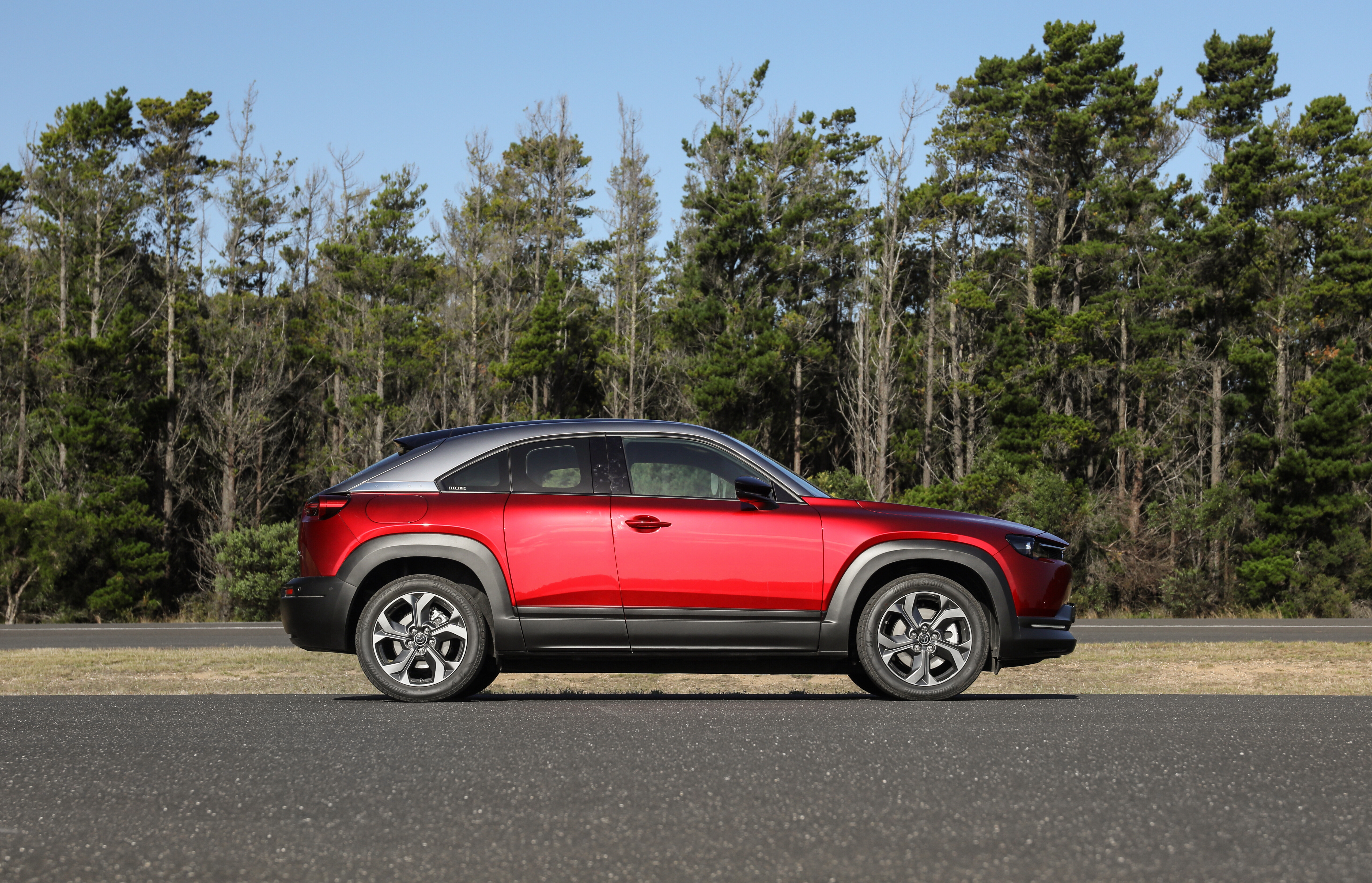
Mazda MX-30
Mazda’s first EV is quirky and niche, but that’s not stopped cars from winning COTY before. But questions around practicality in the real world loom. Let’s test that, shall we?
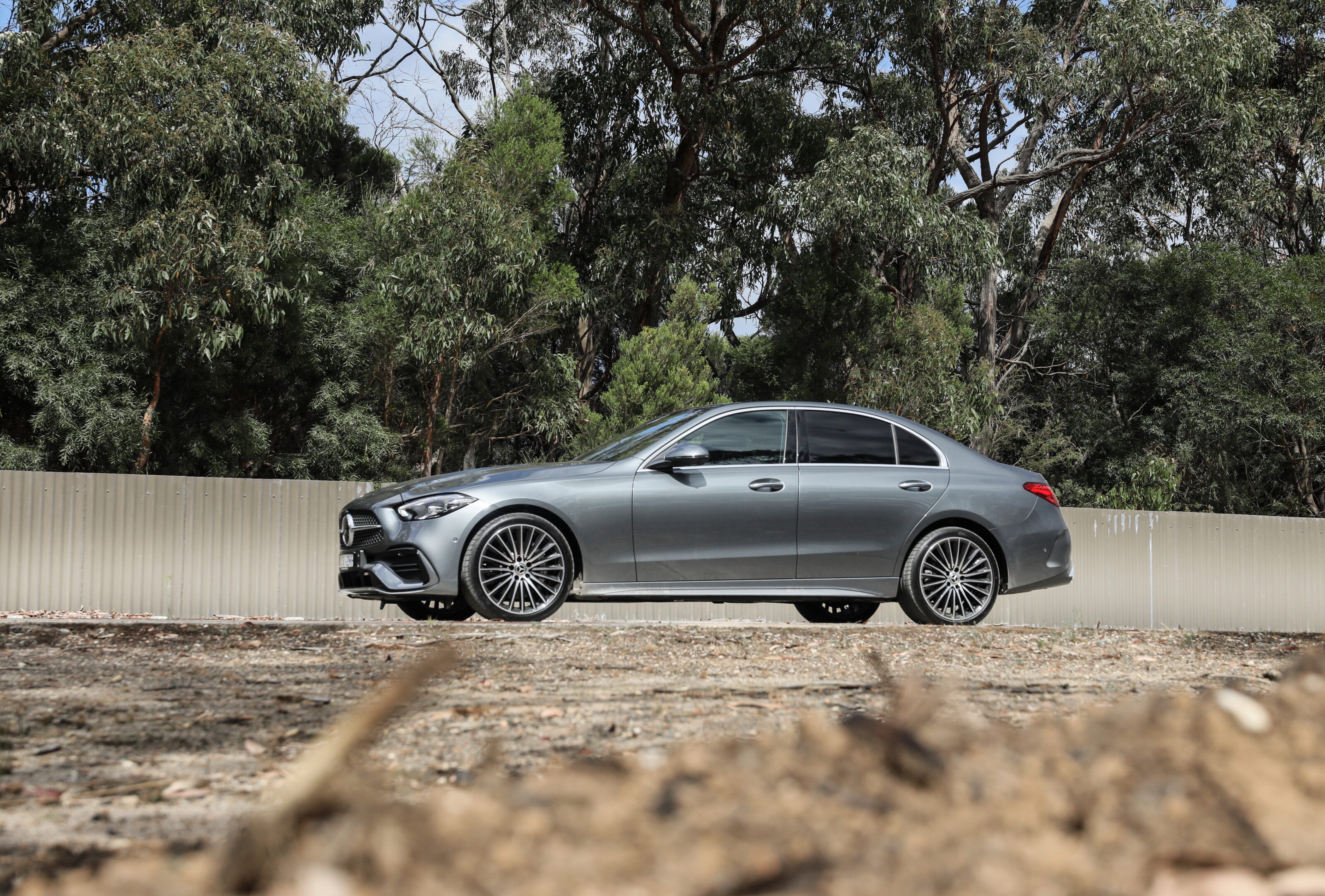
Mercedes C-Class
The C-Class needs no introduction as far as COTY is concerned. The new generation brings tech and luxury from E- and S-Class. One to watch, for sure.
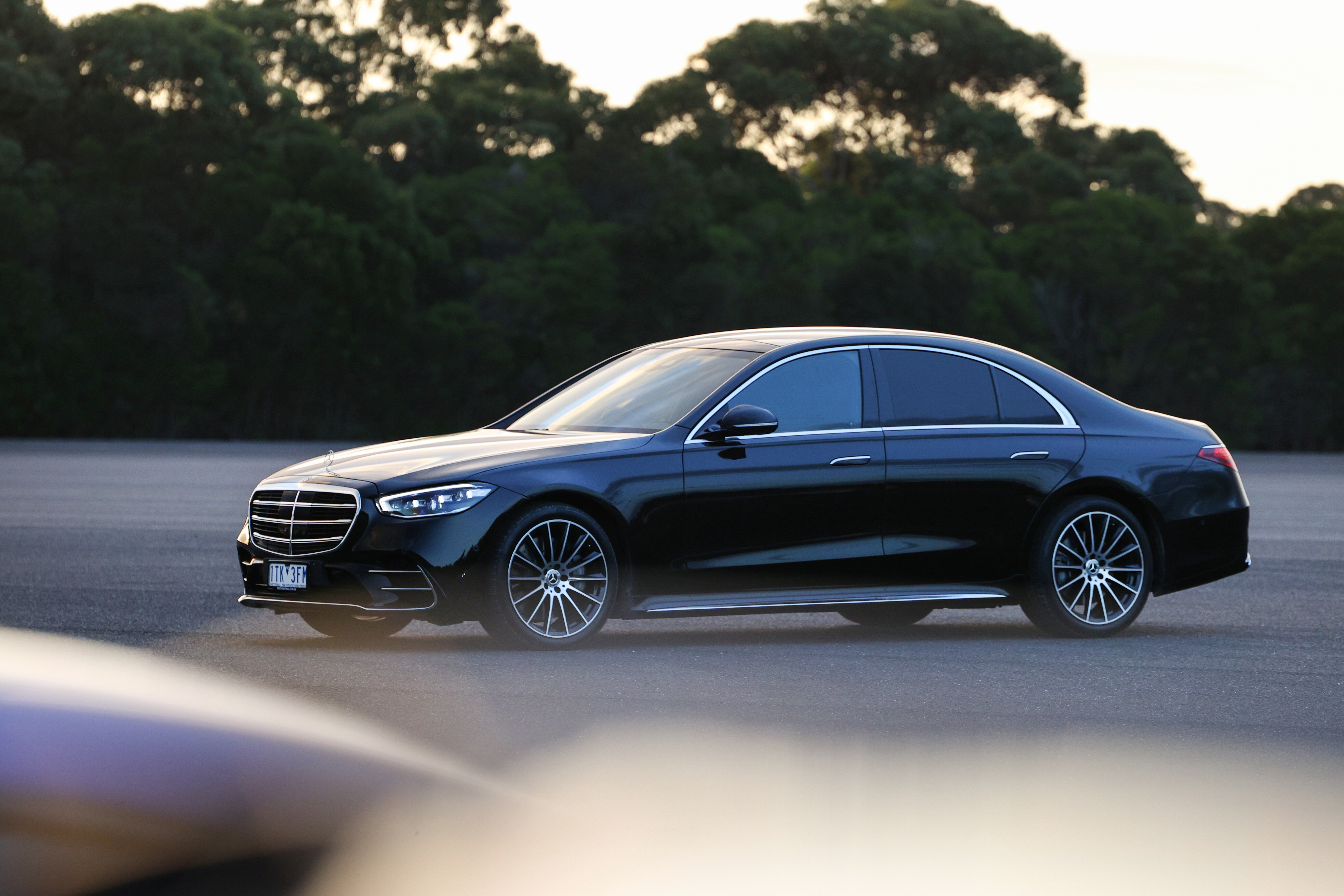
Mercedes S-Class
No intro needed, as above. Absolute first-class motoring on wheels, and the way it pioneers tech is just about the only time ‘trickle-down’ has worked.
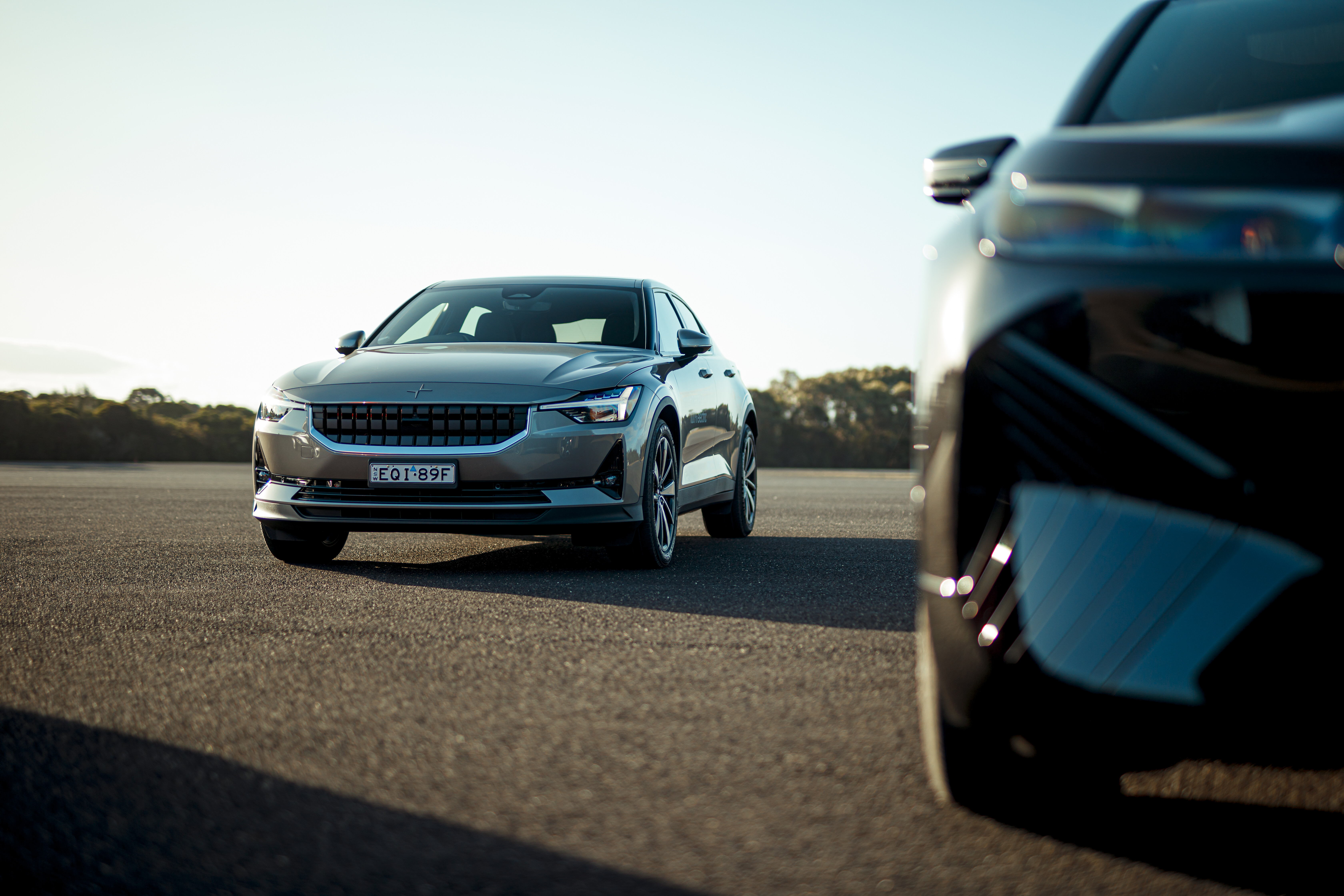
Polestar 2
Not a Volvo. Mostly. This Swede still has some DNA from its sibling brand, but stepping out of the shadow and chasing a more adventurous buyer is bold. Will it work?
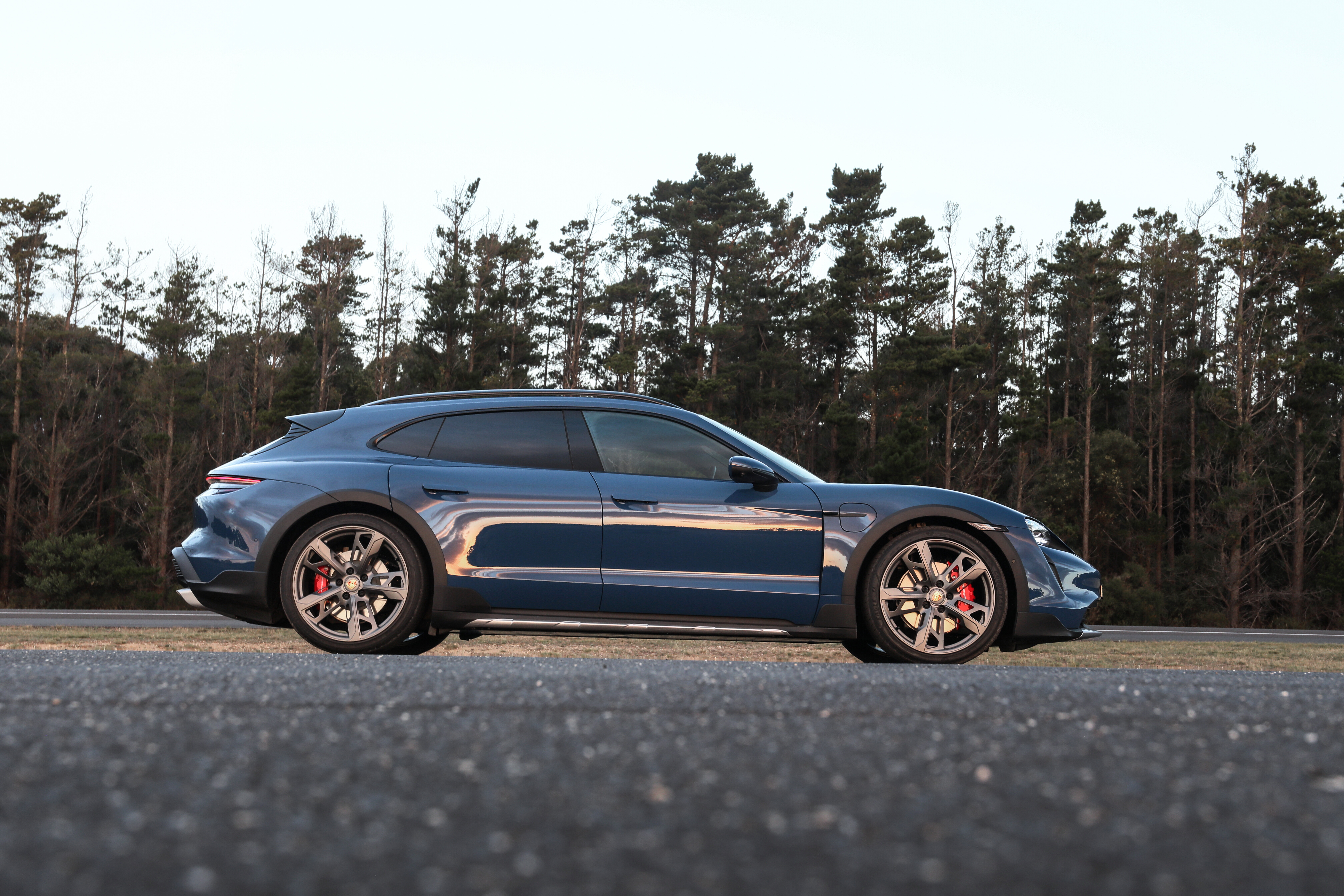
Porsche Taycan Cross Turismo
Porsche’s impressive EV arrives at COTY in ‘active lifestyle’ wagon spec. It’s still bloody quick, but it’s also still a bit on the pricey side here.
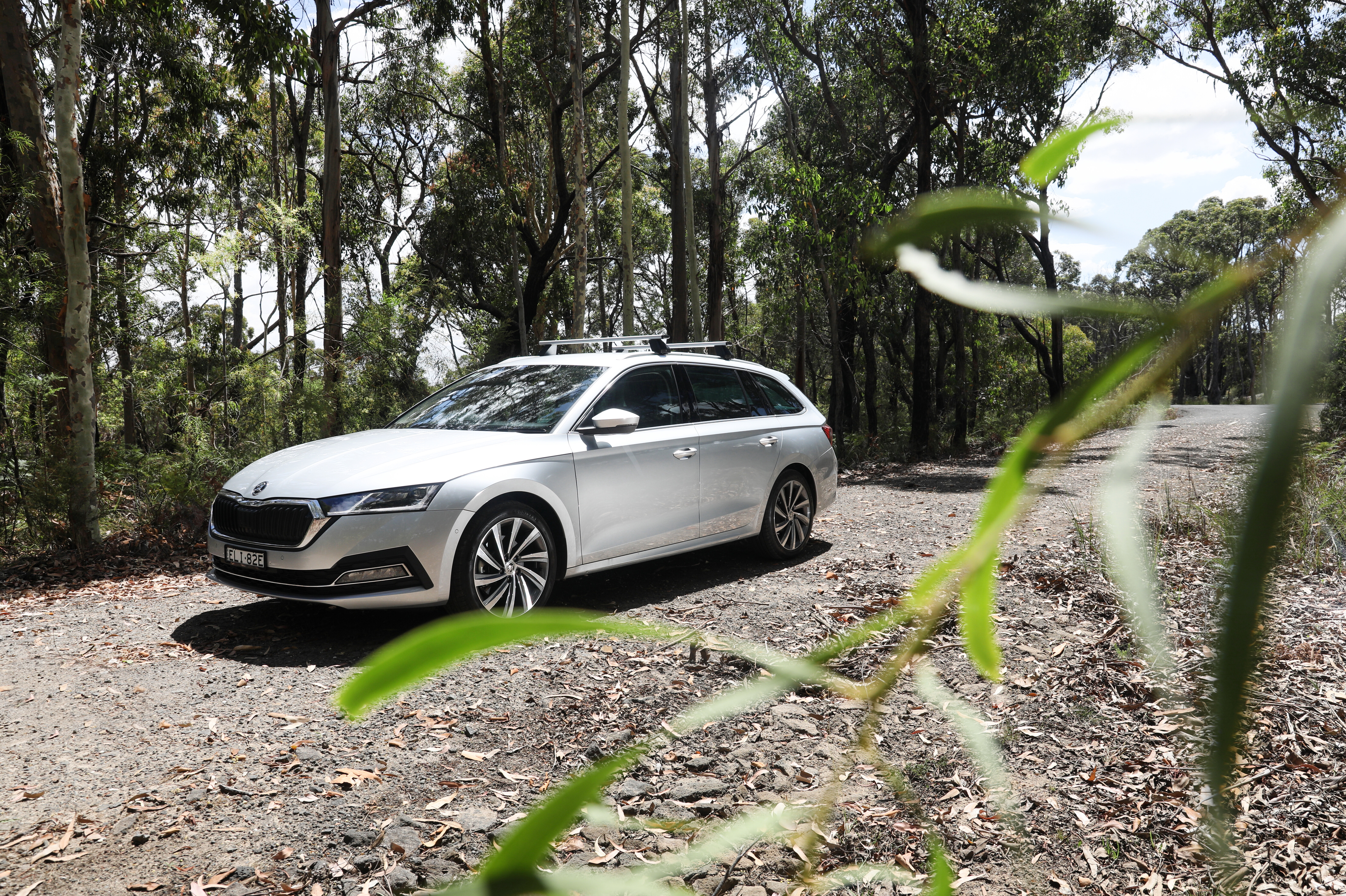
Skoda Octavia
Sometimes slightly under the radar, this VW Golf cousin is giving more reasons than ever to choose it over the badge from Wolfsburg. But, boy, is that new Golf good.
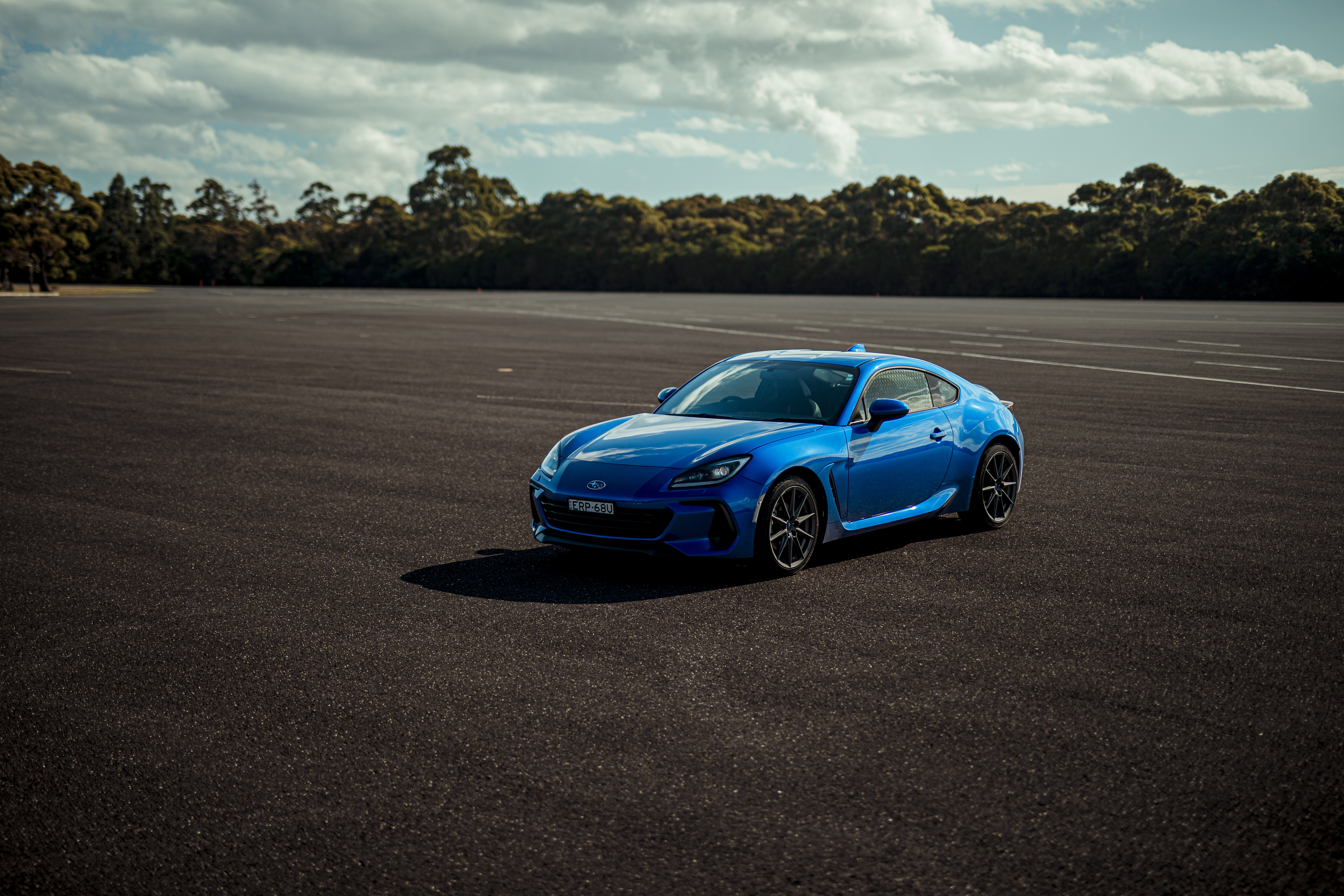
Subaru BRZ
Pedigree counts for nought at COTY, though there’s no escaping the BRZ arrives at COTY carrying a certain weight of expectation. The first BRZ (with which this 2022 model still shares plenty of DNA) won our gong in 2012 when it shared the trophywith its Toyota 86 twin. There’s no radical departure this time around, either. The new BRZ seeks to retain much of the original’s excellence but offers all-new sheet metal, an improvement in torsional rigidity, a fresh cabin and importantly, a larger capacity engine with more power/torque.
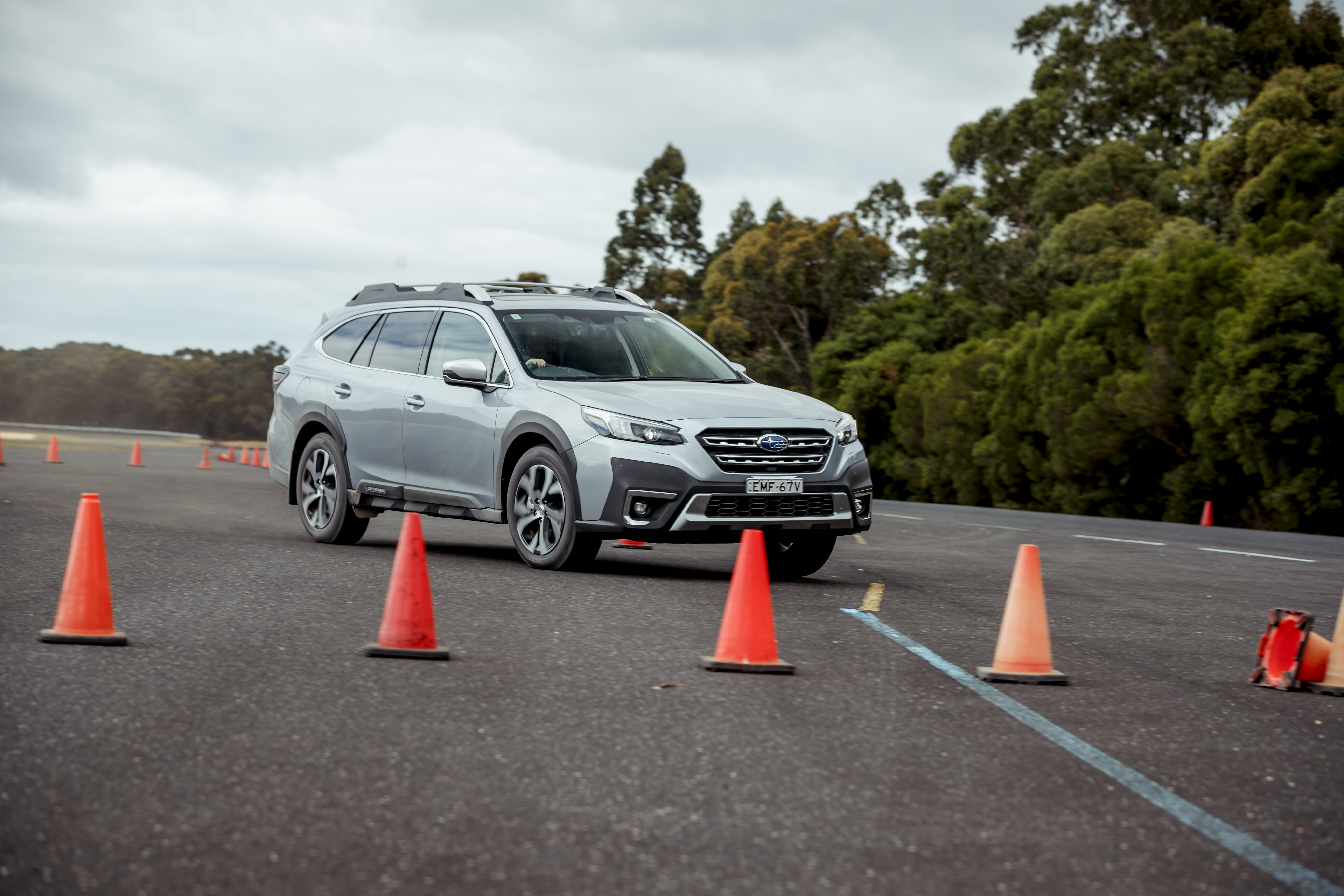
Subaru Outback
An all-new Outback is a big deal, both for Subaru sales and for buyers seeking the ruggedness and ability of an SUV without the usual SUV compromises of a higher centre-of-gravity and thirstier consumption. And for this sixth-gen, Subaru has shaken things up. Gone are the six-cylinder petrol and diesel versions, leaving a 2.5-litre four-cylinder petrol as the only powertrain choice.
Prices are up too, though so are interior space and standard equipment levels. The move to the new billion-dollar ‘Subaru Global Platform’ delivers improved dynamics, while a fresh interior also offers a large tablet-style centre screen. Long a Wheels favourite, let’s see if the Outback can finish at the pointy end.
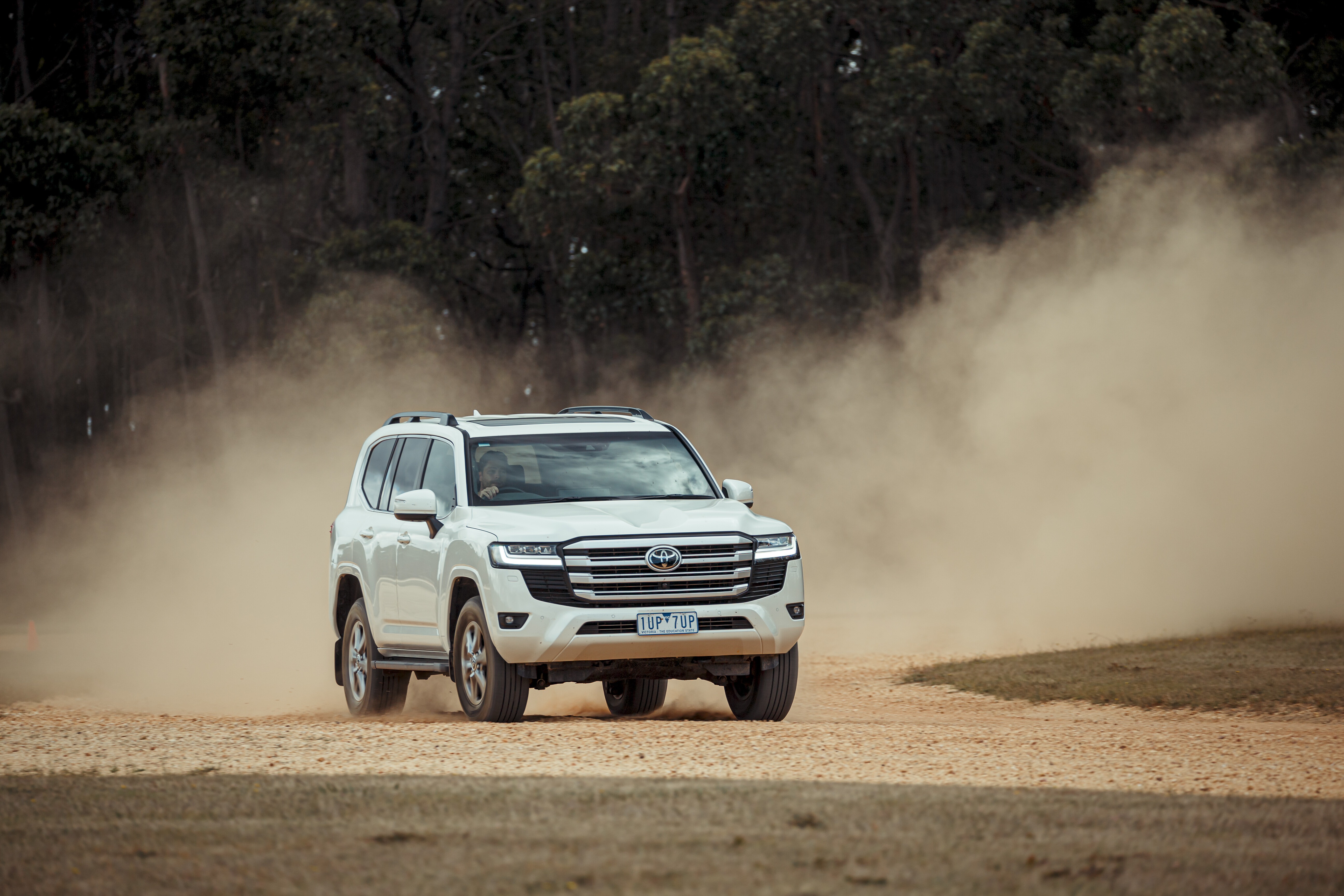
Toyota LandCruiser
An Australian icon, even if its badge isn’t Australian. The new generation is much hyped, but can a 4×4 make a place for itself at COTY? We think it deserves a crack.
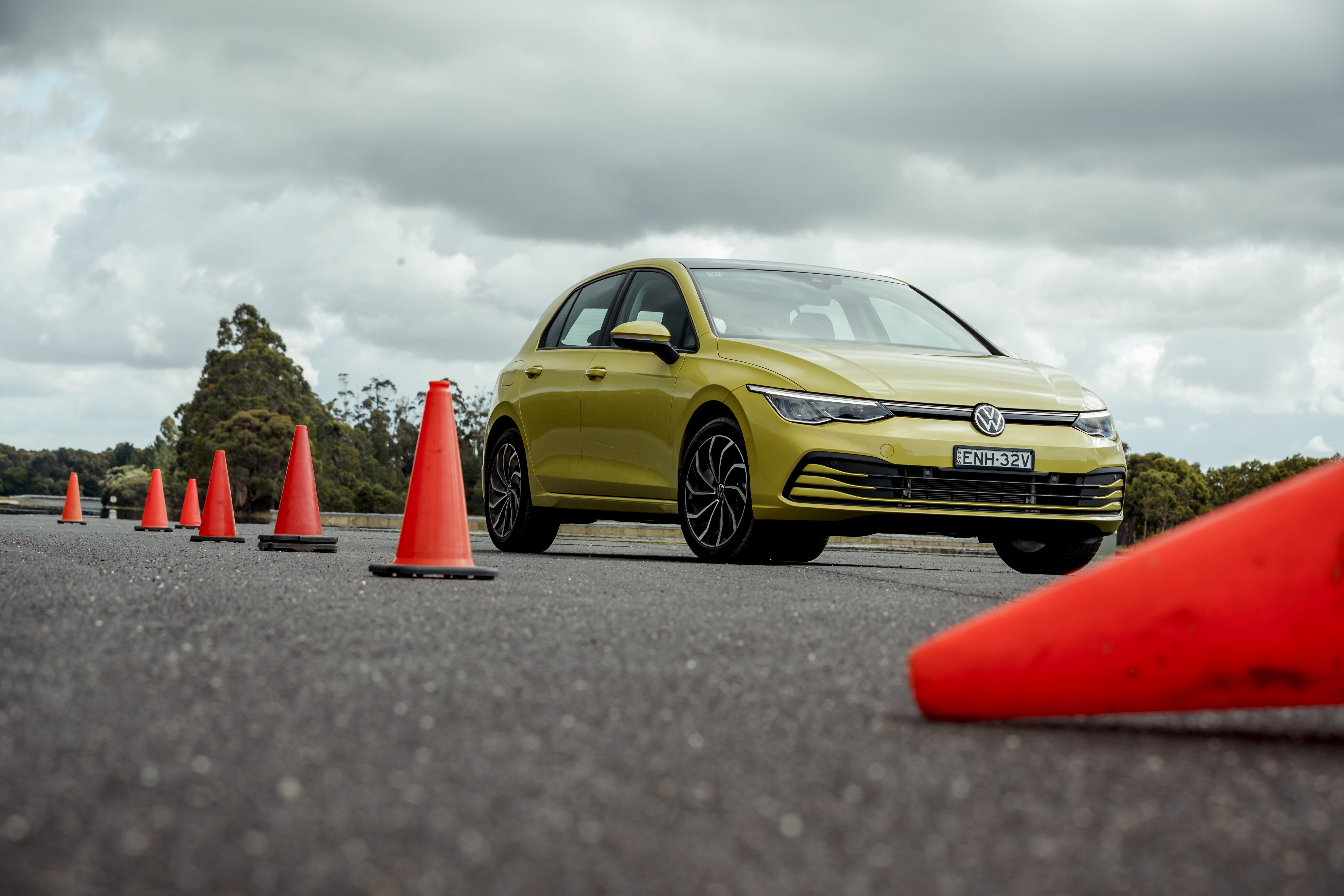
Volkswagen Golf
Evolution often cops a bad wrap, yet in the car world it often results in excellence. There’s a sound reason icons like the Porsche 911 don’t deviate from their recipe. So while the Mk8 mightn’t offer a giant leap, don’t discount the Golf’s ability to cause a COTY upset. It’s arguably the most polished contender we have.
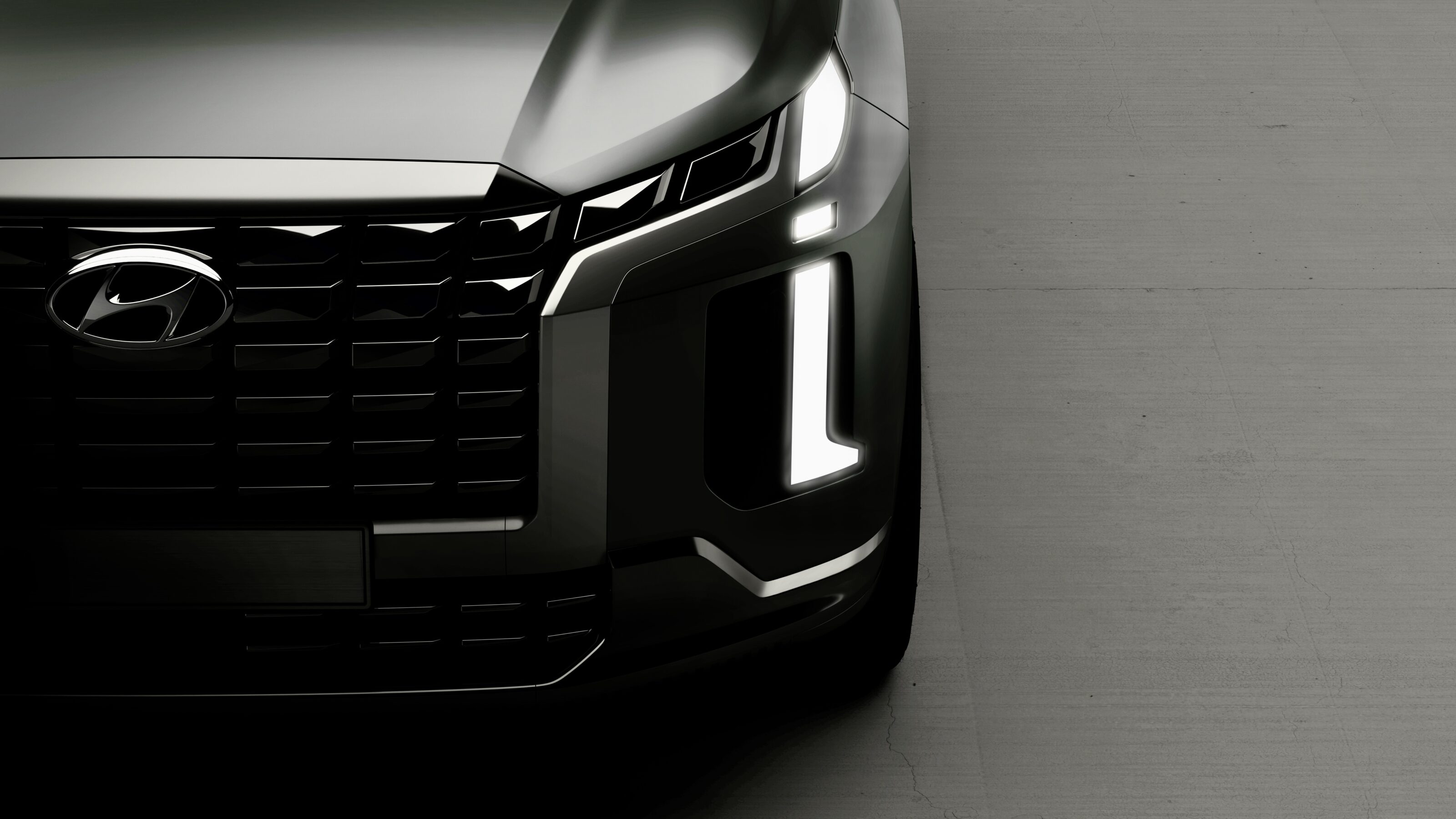
UPDATE, April 11, 2022: The 2023 Hyundai Palisade has leaked ahead of its unveiling this Wednesday, thanks to the thumbnail image used for the YouTube livestream video.
While the Palisade’s facelifted design isn’t unexpected, the vehicle appears to have reverted back to Hyundai’s Grandmaster concept of 2018 which previewed the SUV.
Stay tuned for the 2023 Hyundai Palisade’s full reveal on April 13.
The story to here
April 6, 2022: Details of the upcoming 2023 Hyundai Palisade update have been leaked, with the luxury SUV set to score a major overhaul.
According to CarBuzz, American dealer documents for Hyundai’s Palisade show a number of features are set to be upgraded on the SUV, most notably its front and rear-end design which will be a significant facelift over the current model.
The Palisade’s interior will also be tweaked to include a revised dashboard, steering wheel, instrument cluster and a 12.3-inch infotainment screen, the latter of which will now incorporate over-the-air updates.
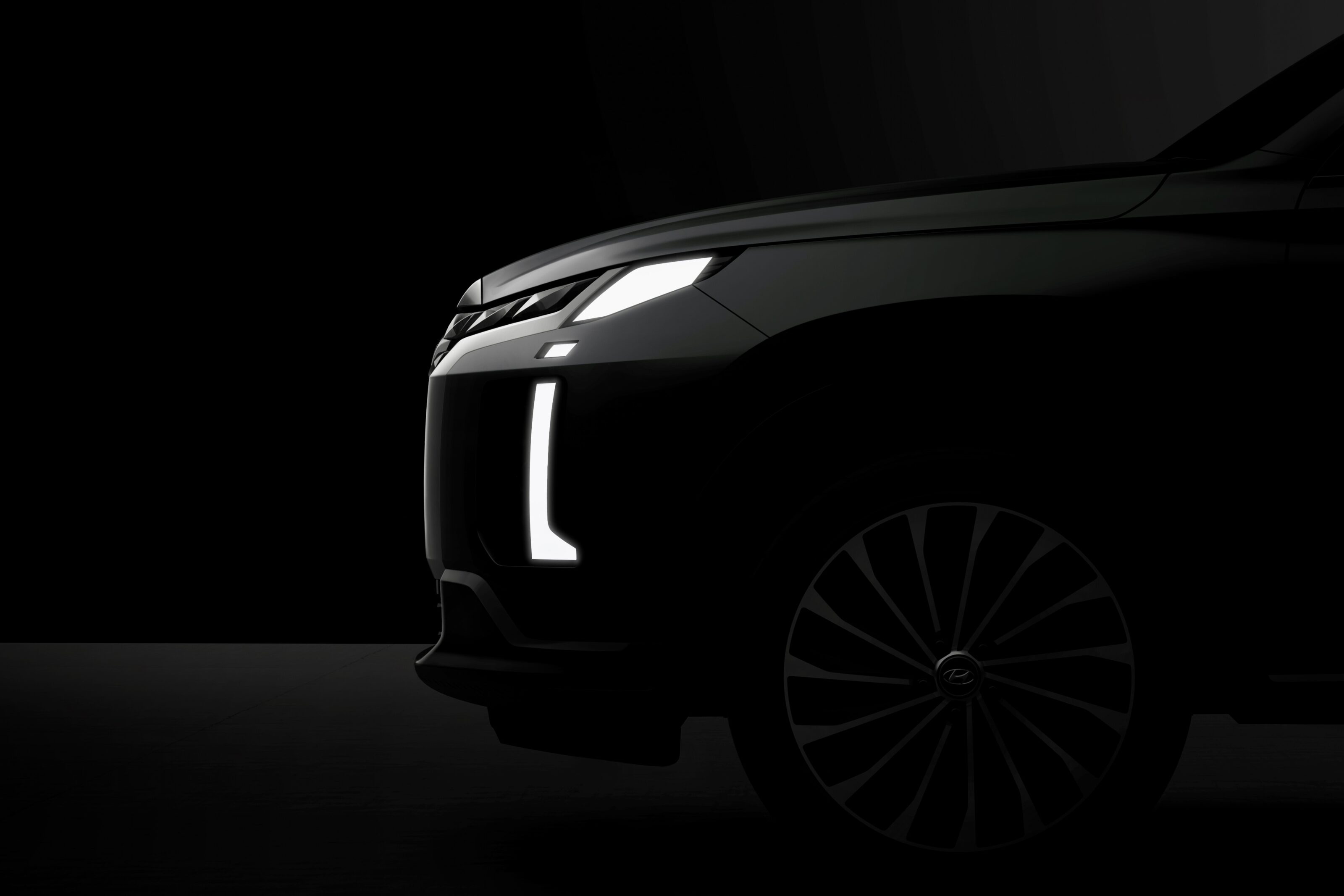
A myriad of safety equipment upgrades are set to grace the SUV, with the documents claiming front collision avoidance (FCA) with car/pedestrian/cyclist detection, junction turning/crossing and lane change oncoming/side function will be available on certain grades.
Engine and drivetrain specs are expected to go unchanged, with a front-wheel drive 3.8-litre petrol V6 (217kW/355Nm) and an all-wheel drive 2.2-litre, four-cylinder turbo-diesel (147kW/440Nm) tipped to remain in the line-up.
Hyundai also teased the facelifted model overnight, annoucing its reveal will take place on April 13, 2022.
October 6, 2021: The 2022 Hyundai Palisade is due to receive a facelift in the coming months, despite only arriving in Australia less than a year ago.
Hyundai rolled out a mild range update to the Palisade at the end of August, introducing a new mid-range Elite variant to the line-up while also dropping the entry-level version to $55,000 before on-road costs.
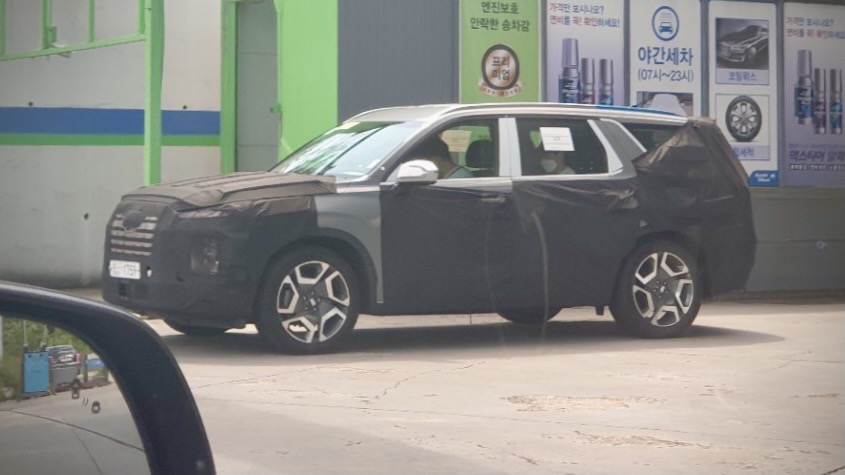
Images posted to Korean website Autospy show the facelifted Palisade has been undergoing testing in recent months, with heavy canvas camouflage hiding the styling updates.
However, close-up spy photos appear to show the Palisade will adopt the company’s ‘Sensuous Sportiness’ design language, with the front-end adopting a similar look to the Hyundai Tuscon’s parametric jewel pattern grille.
Despite the flagship SUV only being offered in Australia from November 2020, the model has been on sale in overseas markets since 2018 – meaning it’s almost due for its mid-life facelift.
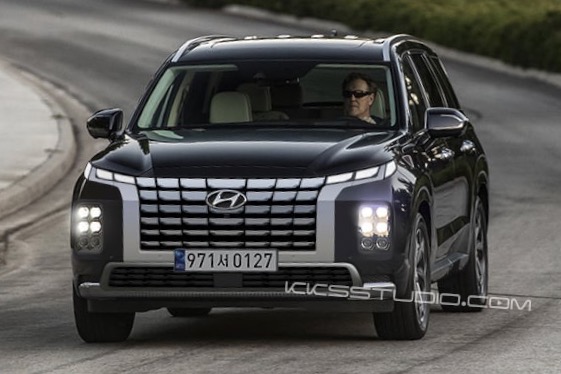
Using the images as a guide, KooKiSung Studio has created a rendering of what the 2022 Palisade could look like.
Last week, Korean news outlet Newsis reported Hyundai had entered negotiations with local labour union representatives in an effort to increase production of the Palisade by 20,000 vehicles annually.
Hyundai has reportedly struggled to keep up with sales demand, with monthly production outputs unable to meet orders.
The car giant proposed either moving some of the production to a facility the US, or freeing up space at the Palisade’s current location in South Korea by moving the Staria line – both of which it’s understood were rejected by the unions, with fears they could lead to future job insecurity for workers.
Hyundai Australia declined to comment on the possibility of a Palisade facelift, but Wheels understands the flagship SUV will arrive in Australian dealerships as soon as 2022.
The new Lexus of Tasmania showroom has opened, marking the return of the luxury brand in Hobart.
The Lexus dealership was designed by Tasmanian architects Core Collective in collaboration with BYA Architects, featuring polished concrete floor and Tasmanian oak walls as well as a commercial kitchen, allowing it to be converted into a pop-up restaurant.
In a deliberate move away from traditional new-car sales centres, the space can accommodate up to 10 diners, with chefs to feature from Tasmania and mainland Australia.
Lexus of Tasmania will be operated by Primewest Motor Holdings Group – the same company which runs Lexus of Perth – after Co-op Toyota relinquished its Lexus of Hobart franchise in 2019.
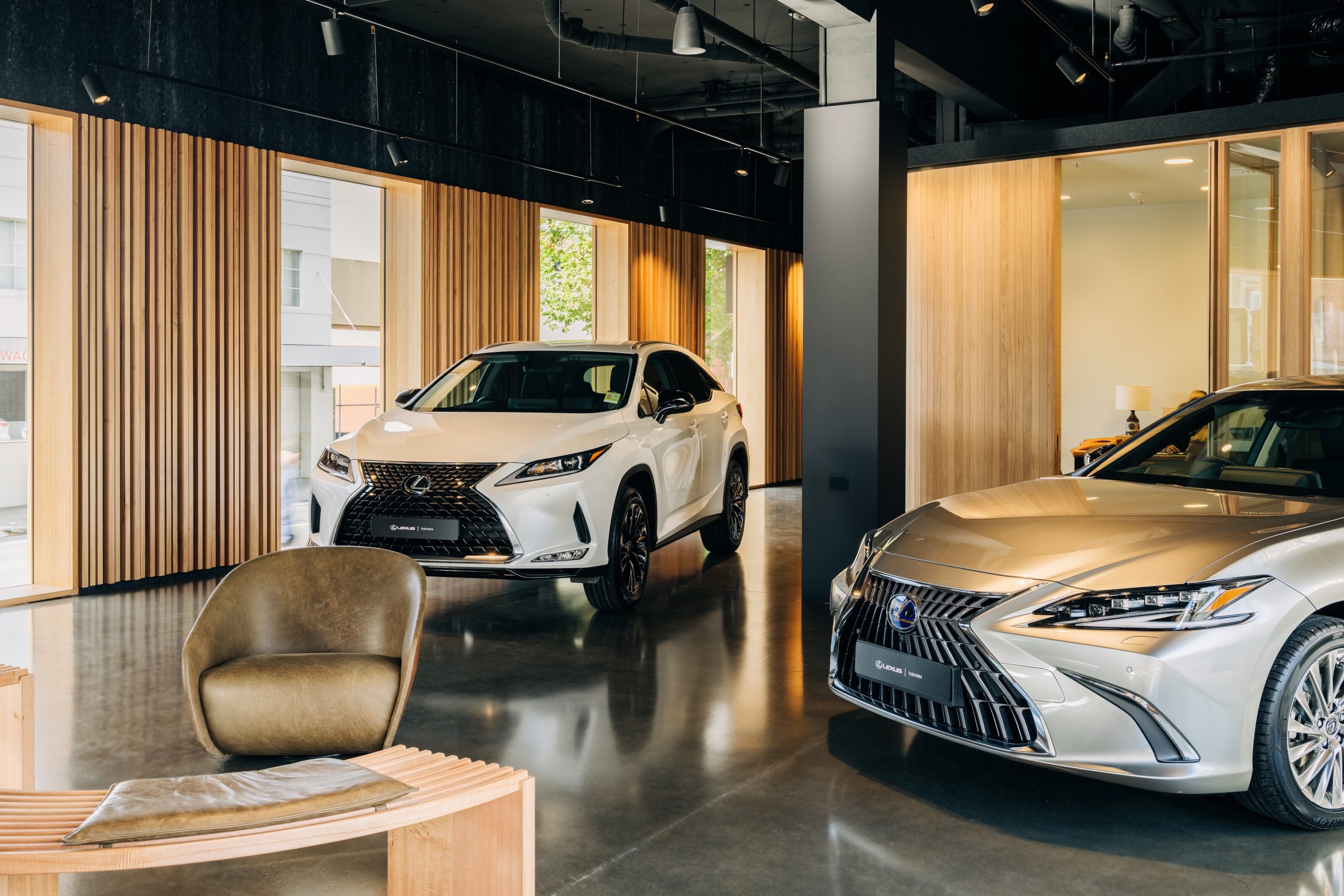
“The new Lexus of Tasmania sales suite exemplifies our commitment to customer care and contemporary style, with an identity that is distinctively Tasmanian,” Lexus Australia CEO John Pappas said at the new dealership’s opening.
“It is an inspiring space where Lexus is making luxury personal by fostering interaction among people, and between people and the style, performance and technology of Lexus vehicles.”
Lexus of Tasmania is located at 160 Elizabeth Street, Hobart, in the Rox Building, and can be contacted on 03 6169 0300.
Snapshot
- Diesel LX 500d and petrol LX 600 variants are now on sale from $148,800
- The LX range includes F Sport and four-seat Ultra Luxury specs
- All variants feature the Tazuna Cockpit concept that debuted in the Lexus NX
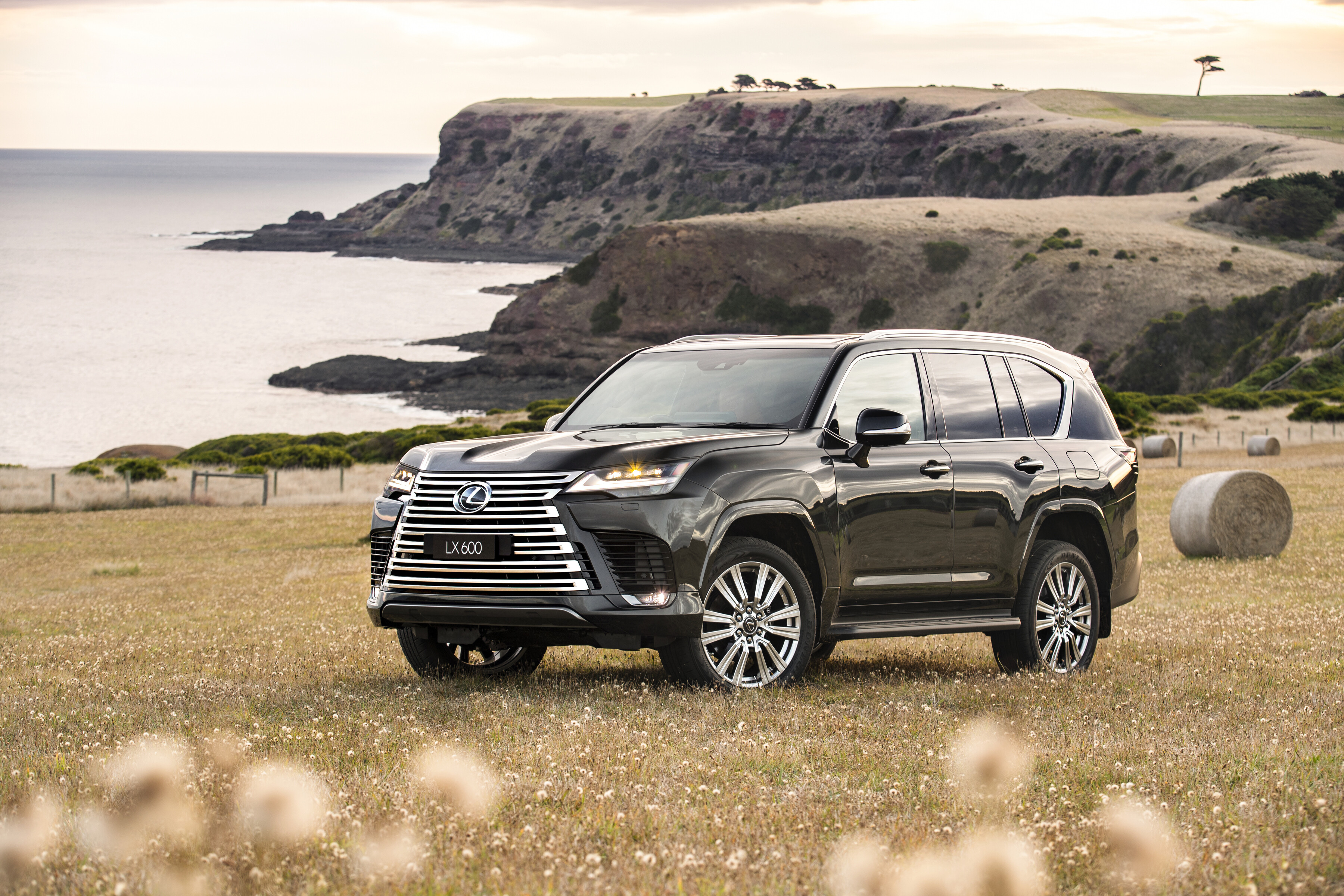
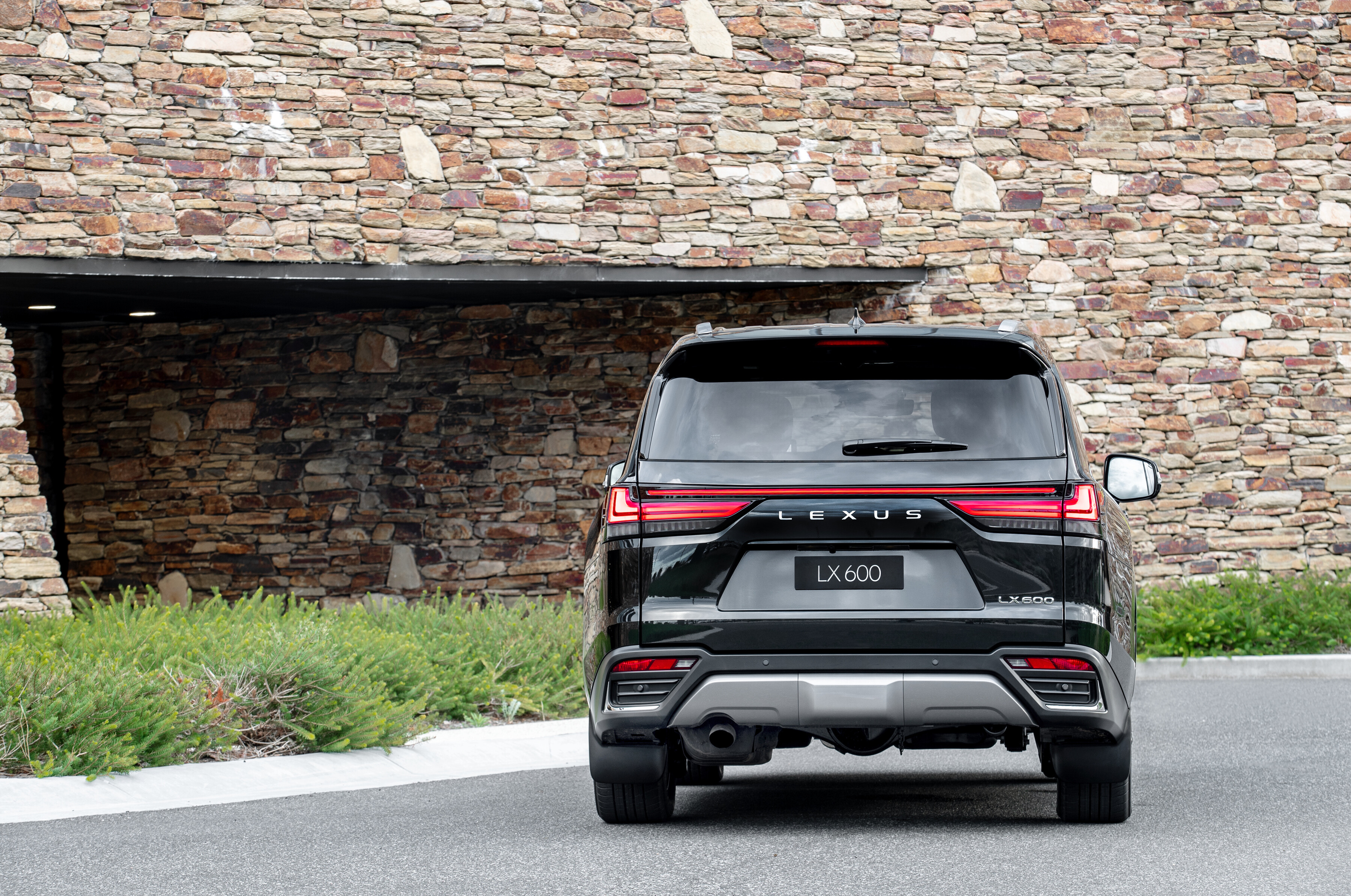
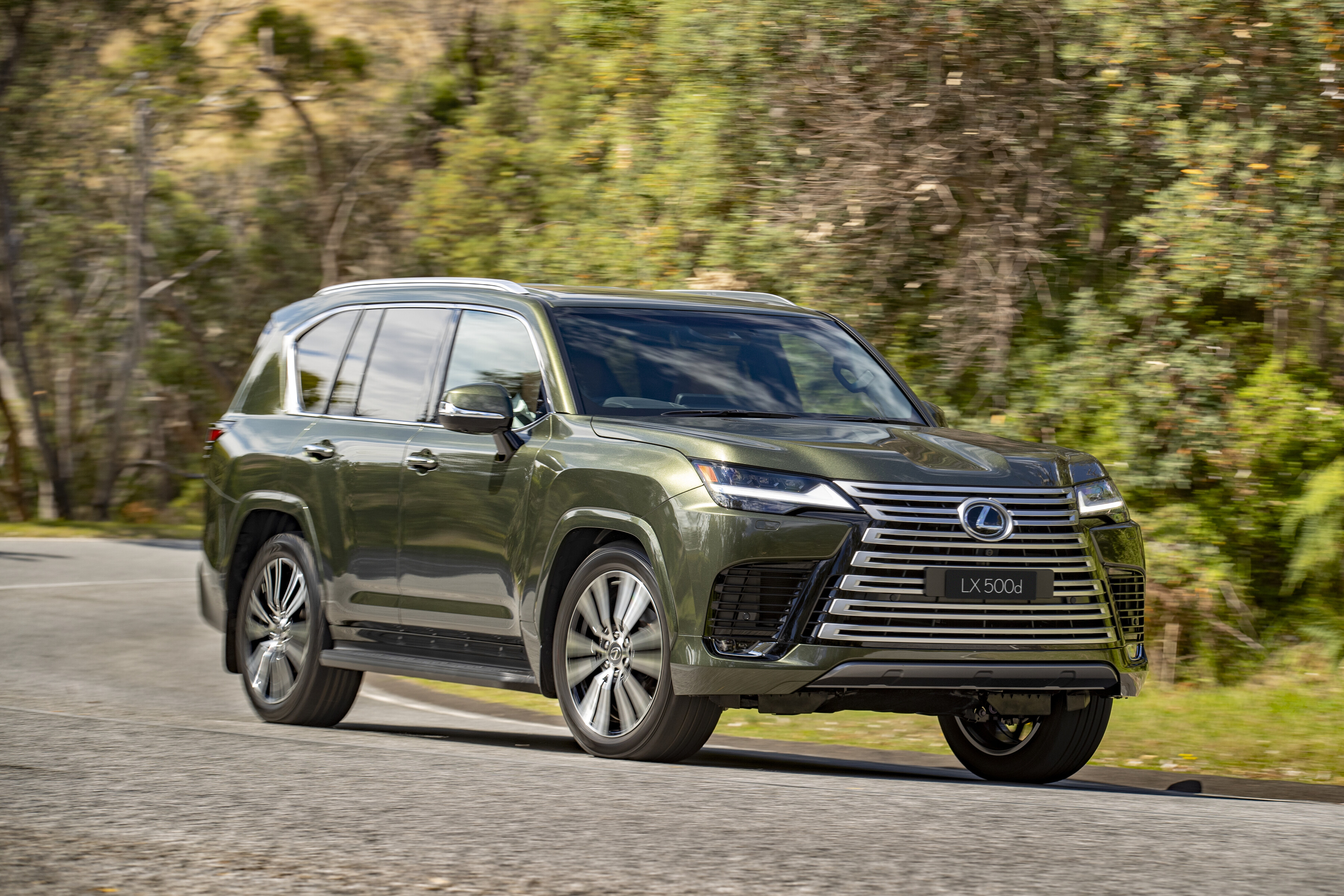
The new generation of Lexus’ flagship SUV, the Lexus LX, has arrived in Australia with 500d and 600 variants priced from $148,800.
The 2022 Lexus LX range is one of the biggest yet, coming with a choice of two engines – the 3.3-litre twin-turbo diesel V6 from the new Toyota LandCruiser 300 Series and a 3.5-litre twin-turbo petrol V6, sold as the LX 500d and LX 600 respectively.
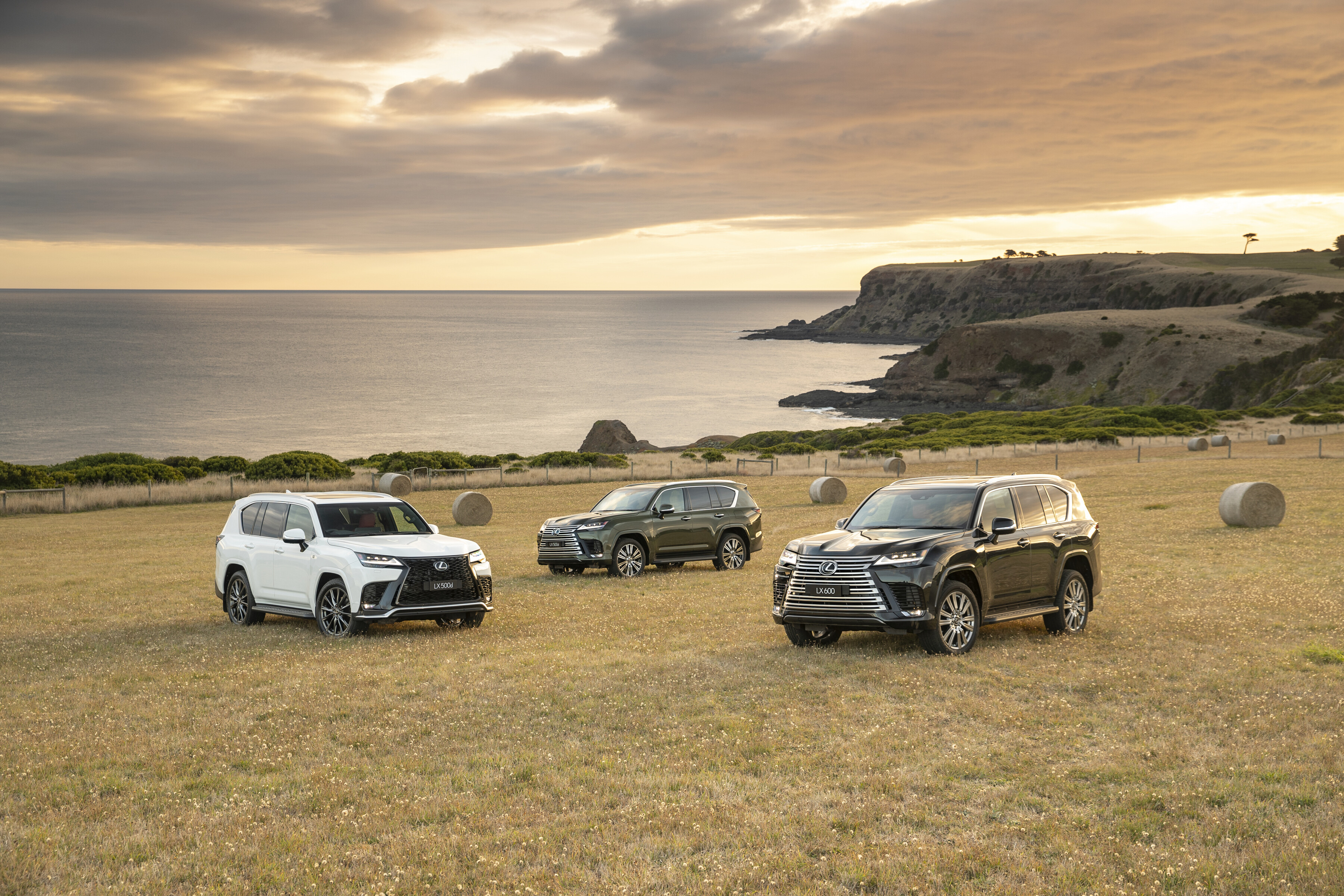
The LX is available in four spec grades, starting with the base LX seven-seat variants, followed by the five-seat Sports Luxury and F Sport, and the uber-luxurious four-seat Ultra Luxury that’s only available in LX 600 guise.
2022 Lexus LX pricing
All prices are before on-road costs.
| Variant | Price |
| LX 500d | $148,800 |
| LX 500d Sports Luxury | $165,800 |
| LX 500d F Sport | $171,800 |
| LX 600 | $152,300 |
| LX 600 Sports Luxury | $169,300 |
| LX 600 F Sport | $175,300 |
| LX 600 Ultra Luxury | $210,800 |
Options
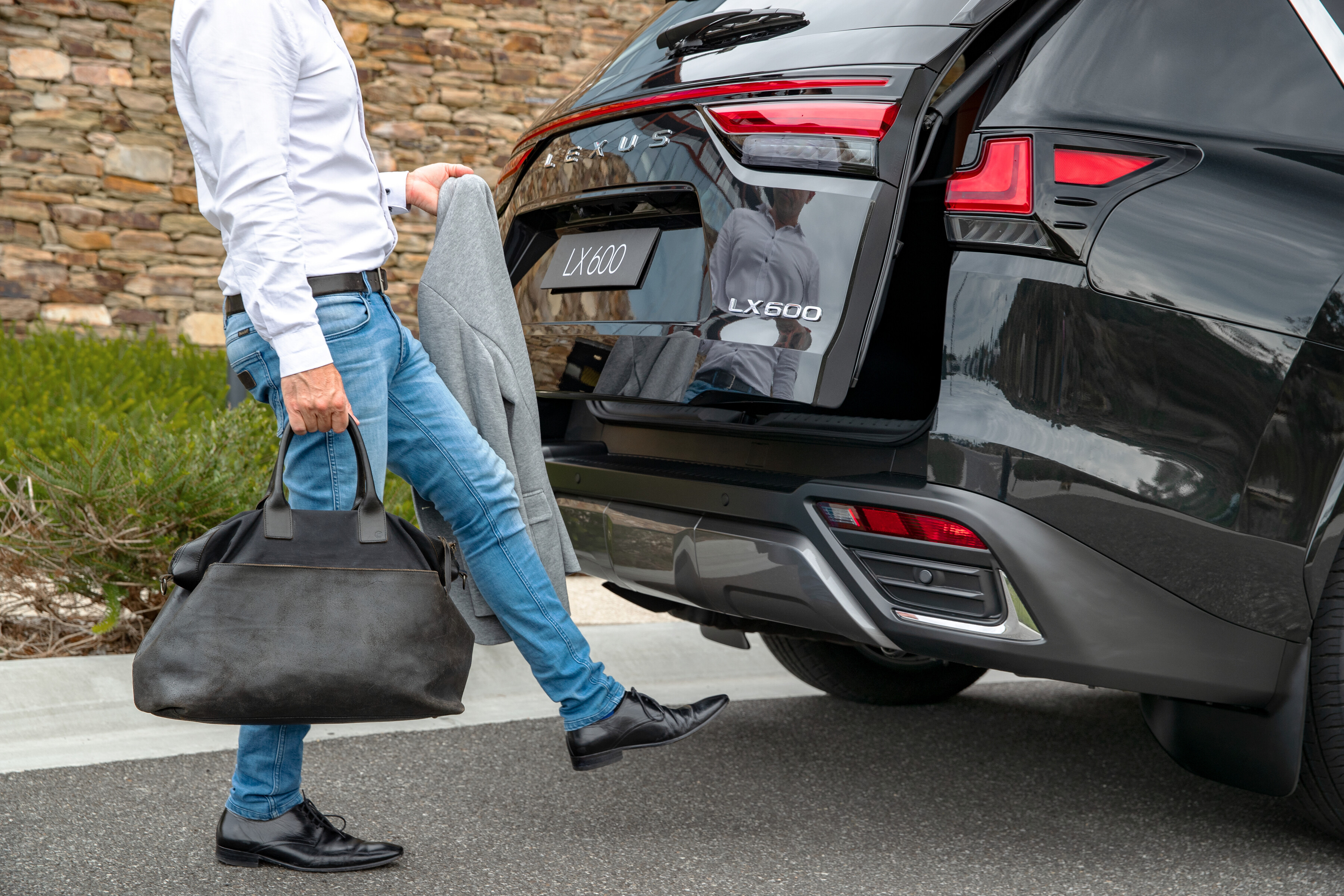
You can add a few more desirable features to the base LX500d and LX600 variants with a $5500 enhancement pack that adds a moonroof, hand-free tailgate with kick sensor and 22-inch forged alloy wheels.
Features
LX 500d and LX 600
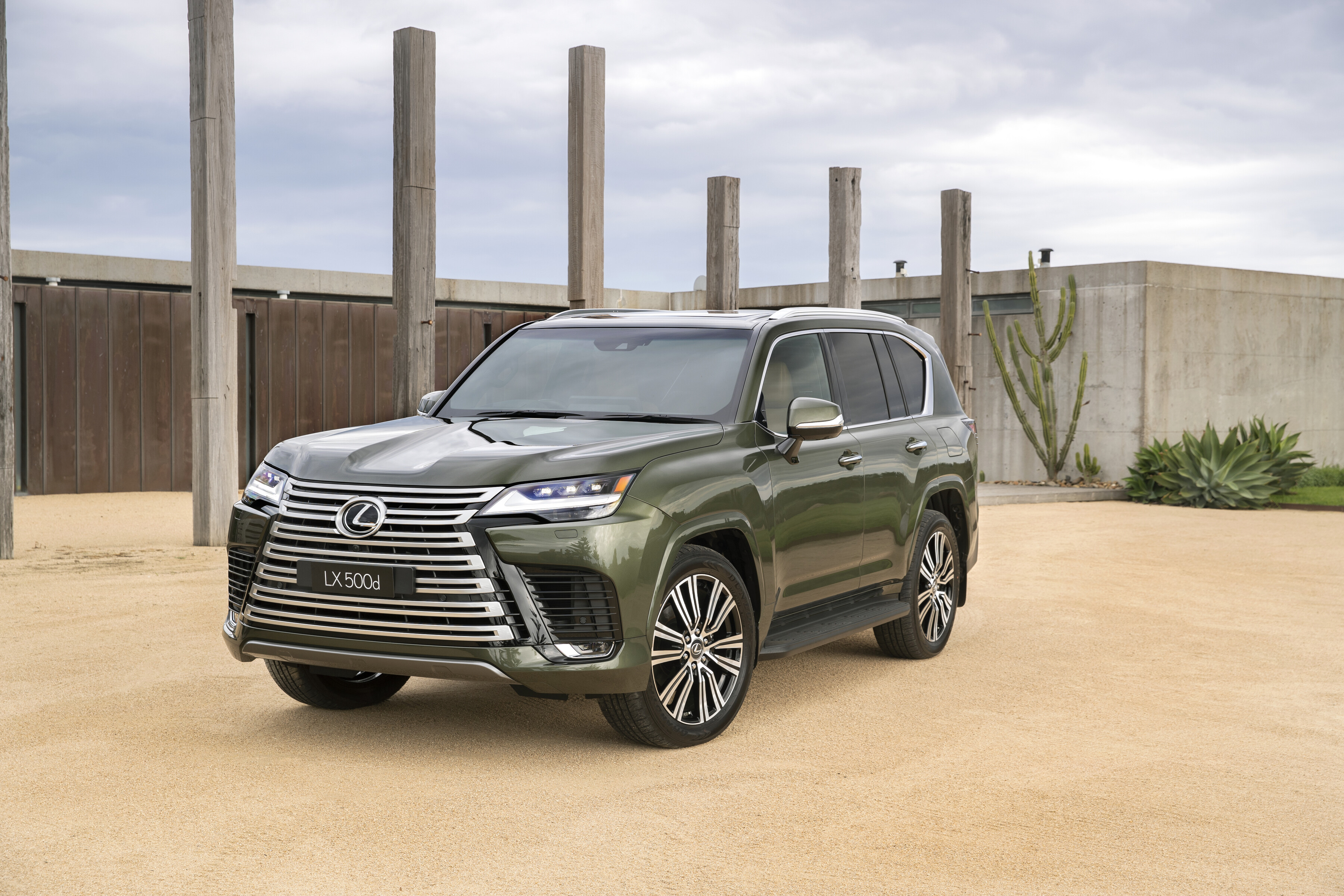
| 20-inch alloy wheels |
| Power adjustable third-row seats |
| Tri-beam LED headlights withu00a0 |
| BladeScan adaptive high-beam system (AHS) |
| Four-zone climate control with NanoeX |
| Leather-accented seats with Shimamoku wood ornamentation |
| 10-way driver and 8-way front passenger seat power adjustment |
| Heated front seats |
| 25-speaker Mark Levinson premium surround sound system |
| 12.3-inch touch-display and 7.0-inch display for infotainment |
| 8.0-inch driver display and a colour head-up display (HUD) |
| “Hey Lexus!” natural speech recognition |
| DAB+ digital radio |
| Satellite navigation |
| Apple CarPlay and Android Auto |
| Wireless smartphone charging |
| Six-mode drive system (Auto, Dirt, Sand, Mud, Deep Snow and Rock) |
| Three-mode active height control system (Normal, High 1 and High 2) |
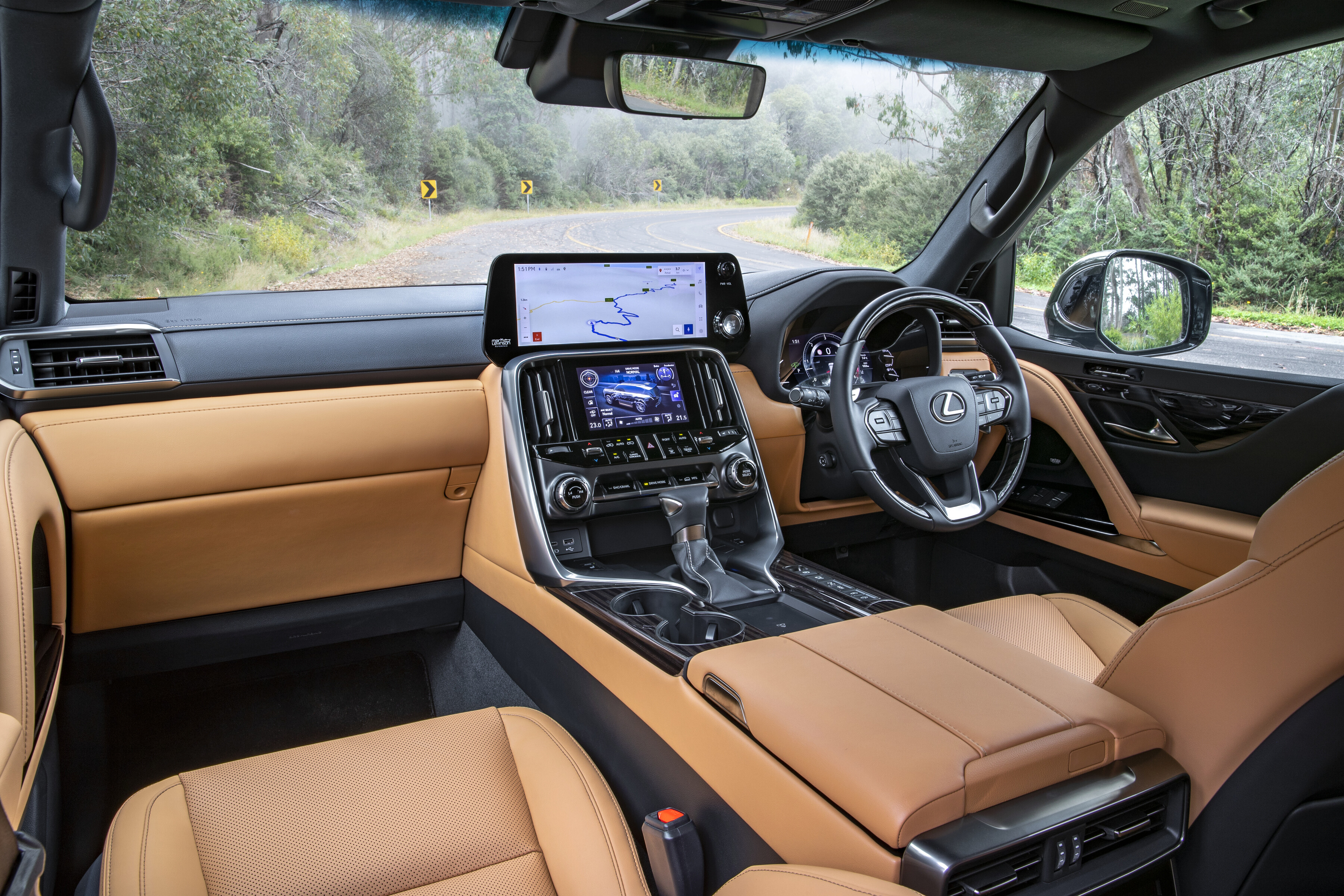
LX 500d and LX 600 Sports Luxury
On top of base variant
| Sports luxury unique 22-inch forged alloy wheels |
| Spindle grille composed of floating lateral bars |
| u2018Takanoha’ three-layer wooden mosaic ornamentation |
| Twin 11.6-inch rear screens |
| Front and rear-outboard seat heating and ventilation |
| Heated steering wheel |
| Centre console-mounted cool box |
| Digital rear-view mirror |
| Soft-close doors |
| Fingerprint identification for the engine start button |
LX 500d and LX 600 F Sport
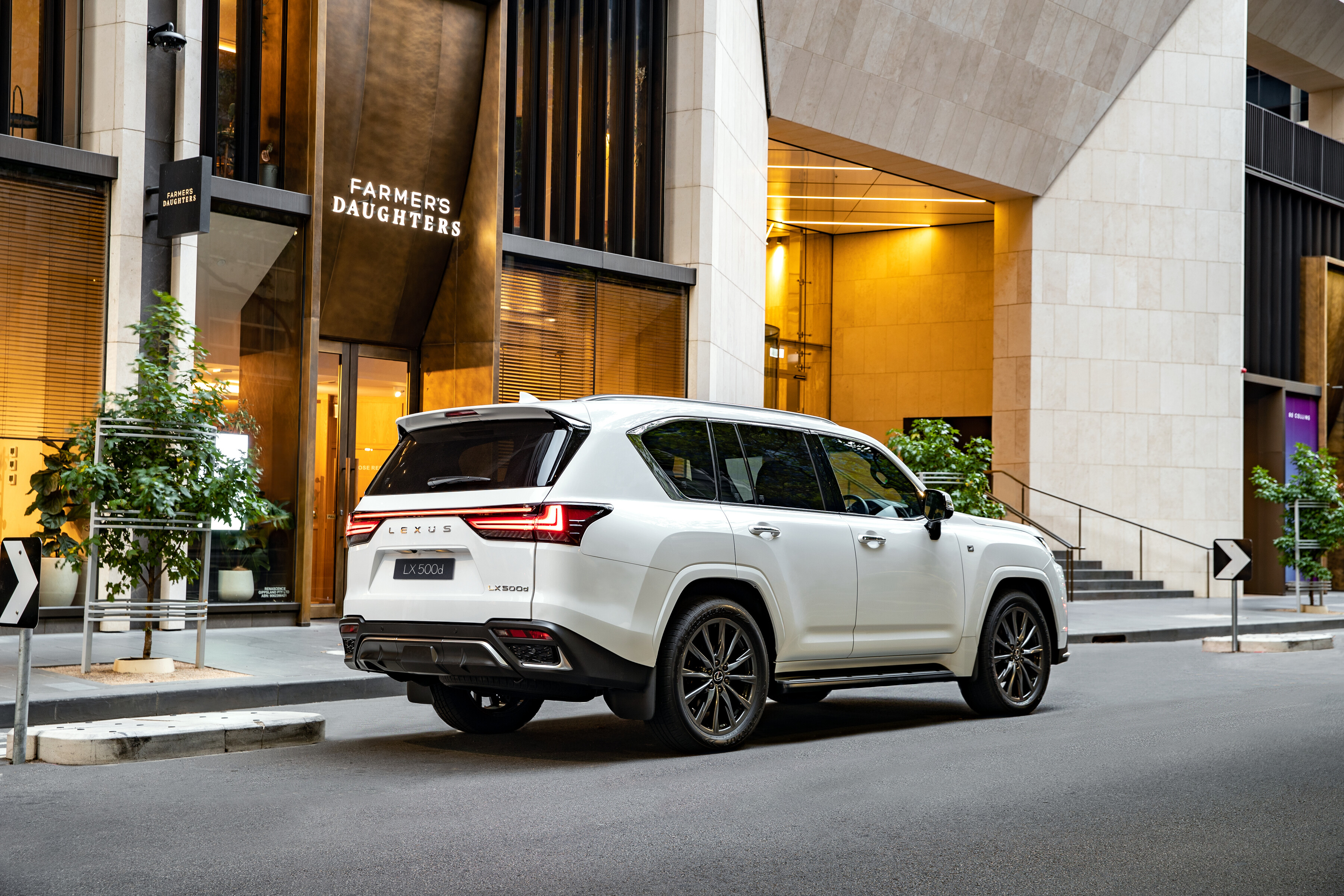
On top of Sports Luxury:
| F-Sport unique 22-inch forged alloy wheels |
| Jet-black mesh grille and black-plated grille frame |
| Satin-plated moulding |
| Hadori aluminium ornamentation |
| Aluminium pedals and scuff plates |
| Perforated leather-accented steering wheel and gear shifter |
| Sports seats with exclusive upholstery colours |
| Rear Torsen limited-slip differential |
| Front and rear performance dampers |
| Adaptive Variable Suspension (AVS) |
| Unique electric power steering tune |
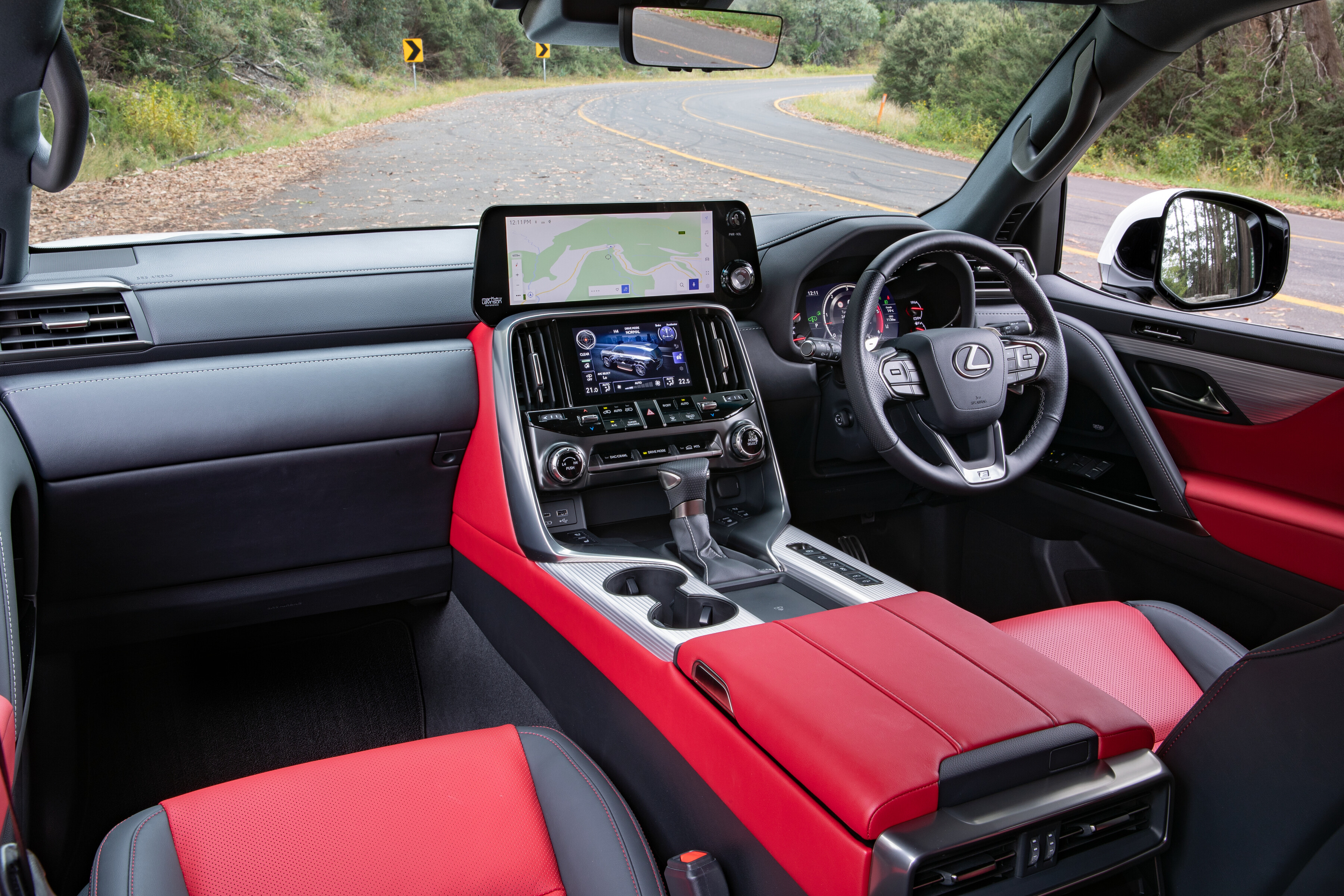
LX 600 Ultra Luxury
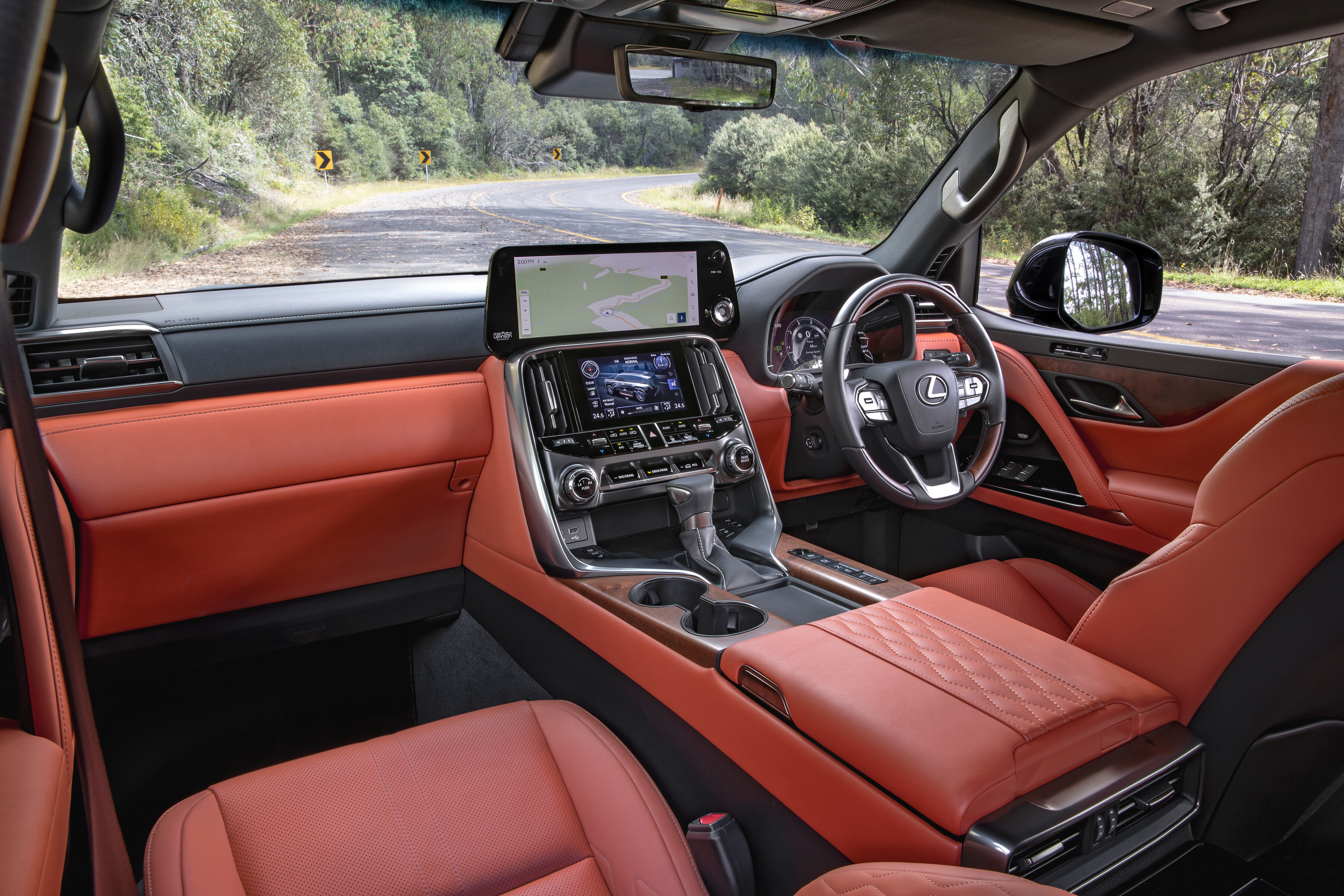
The Ultra Luxury is the first four-seat layout for an LX with two individual second-row captain’s chairs capable of providing support from the feet all the way up to the head.
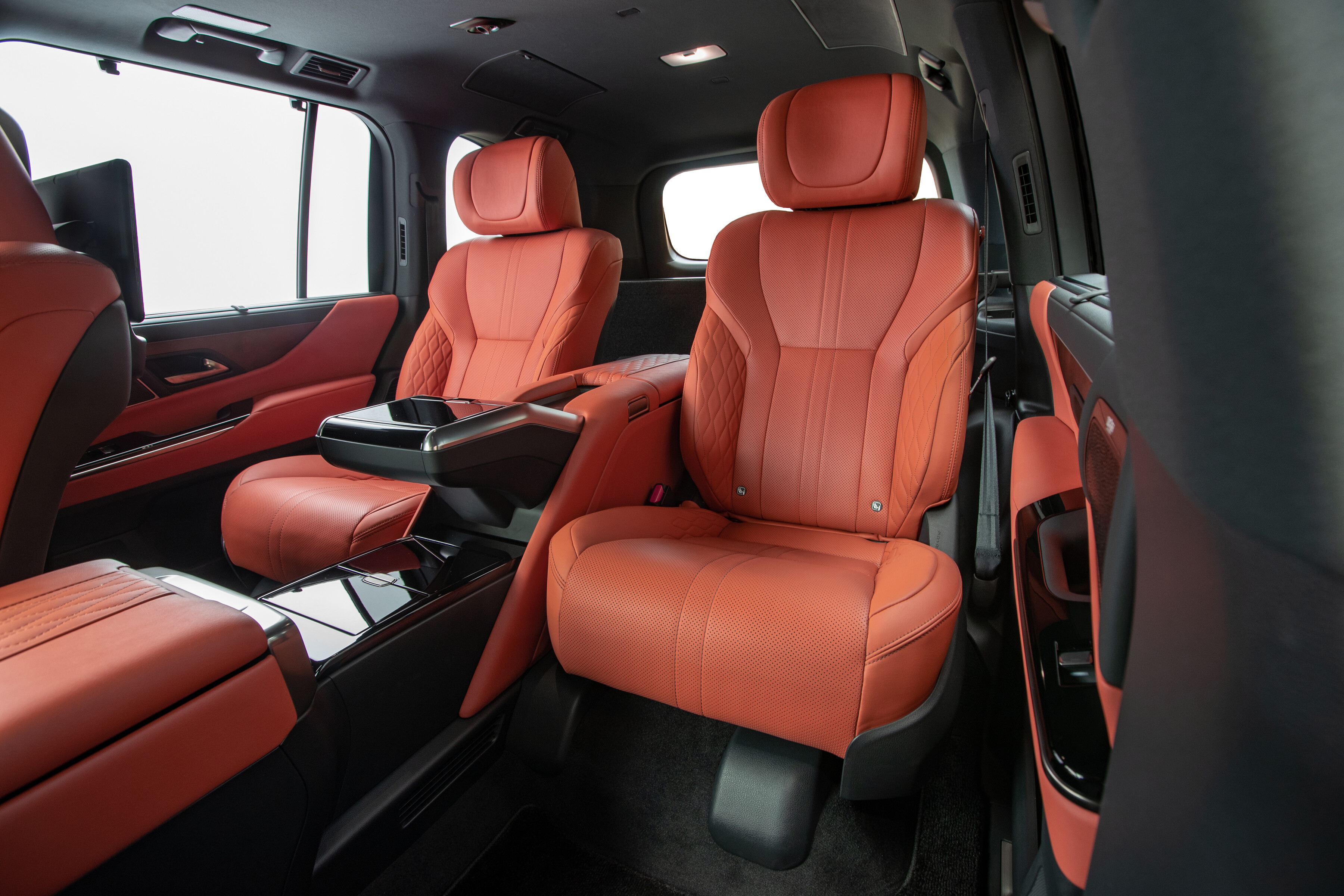
Passenger-side rear-seat occupants can gain additional space by moving the front passenger seat forward up to 114mm, which allows them to elevate their feet with an adjustable ottoman that folds out from back of the front seat.
Seats can recline up to 48 degrees and can slide back and forwards up to 90mm.
The Ultra Luxury spec also includes:
| Independent, electrically adjustable and heated/ventilated second-row seats |
| Seatback with up to 48-degree recline |
| Independently adjustable ottoman with two-position memory |
| Five-stage massage function |
| Rear wireless smartphone charging |
| Four-zone climate control |
| Twin 11.6-inch rear displays with HDMI, Miracast or Wi-Fi compatibility |
| Walnut brown ornamentation |
| Sunflare leather upholstery |
Design and technology
Lexus designers used the concept of ‘Dignified Sophistication’ when crafting the all-new LX, which adopts the new design language that debuted on the new-generation NX medium SUV.
The exterior styling has been penned to project strength and functionality while the interior provides a sense of security and comfort.
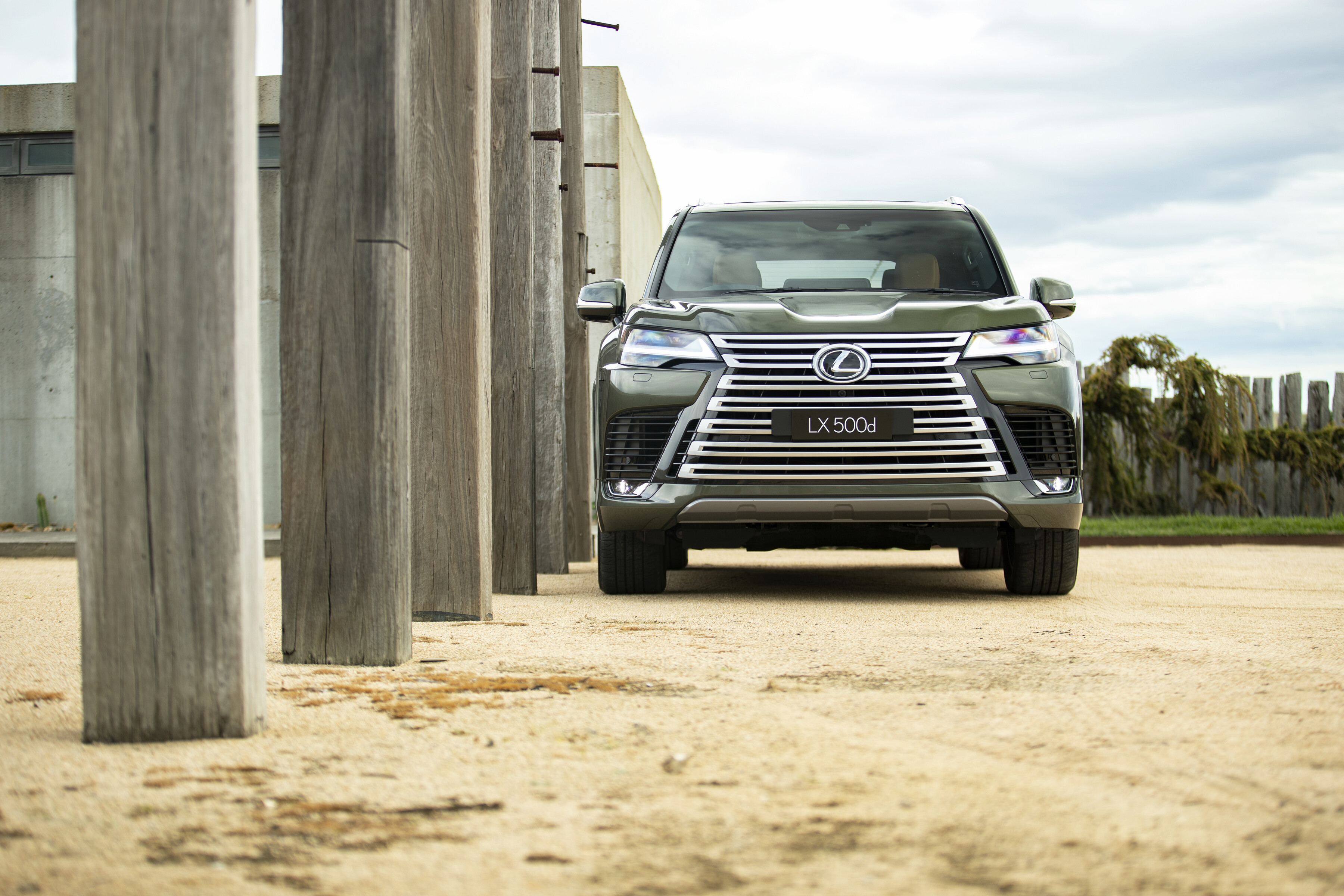
Measuring 5090-5100mm long, 1990mm wide and 1885-1895mm tall with up to 205mm of running clearance and a 2850mm wheelbase, the LX is longer and wider than before and brings an imposing on-road presence further strengthened by a dynamic and powerful front-end – you’ll certainly notice that seven-barred spindle grille in your rearview mirror.
Inside, the LX also shares the NX’s Tazuna Cockpit concept, which features a 12.3-inch infotainment display, a 7.0-inch lower screen, 8.0-inch multi-information display and a full-colour head-up display.
All screens are positioned to ensure the driver’s line of sight moves no more than 30 degrees downwards, allowing their eyes to stay focused on the road ahead.

The system adopts a simple and easy-to-read layout, not unlike a smartphone, and incorporates Apple CarPlay/Android Auto functionality, and Hey Lexus’s dynamic voice recognition. The latter can help operate functions like opening or closing the windows and can recognise which seat the voice is coming from to react accordingly.
In a first for Lexus, up to 10 fingerprints can be registered to the vehicle, which can be linked to the memory function that enables the seat, wheel and exterior mirror settings to be automatically adjusted to the user’s preference.
Powertrains and economy
As with the previous generation LX, the 2022 variant features a choice of petrol and diesel engines, both of which are now twin-turbo V6 units rather than the outgoing V8 powerplants.
Under the bonnet of the LX 500d is the 3.3-litre, twin-turbo V6 diesel from the LandCruiser 300 Series, producing an identical 227kW and 700Nm to its Toyota cousin.
For the LX 600, it scores a 3.5-litre, twin-turbo V6 petrol, developing more power than the diesel at 305kW, but with a dip in torque to 650Nm.
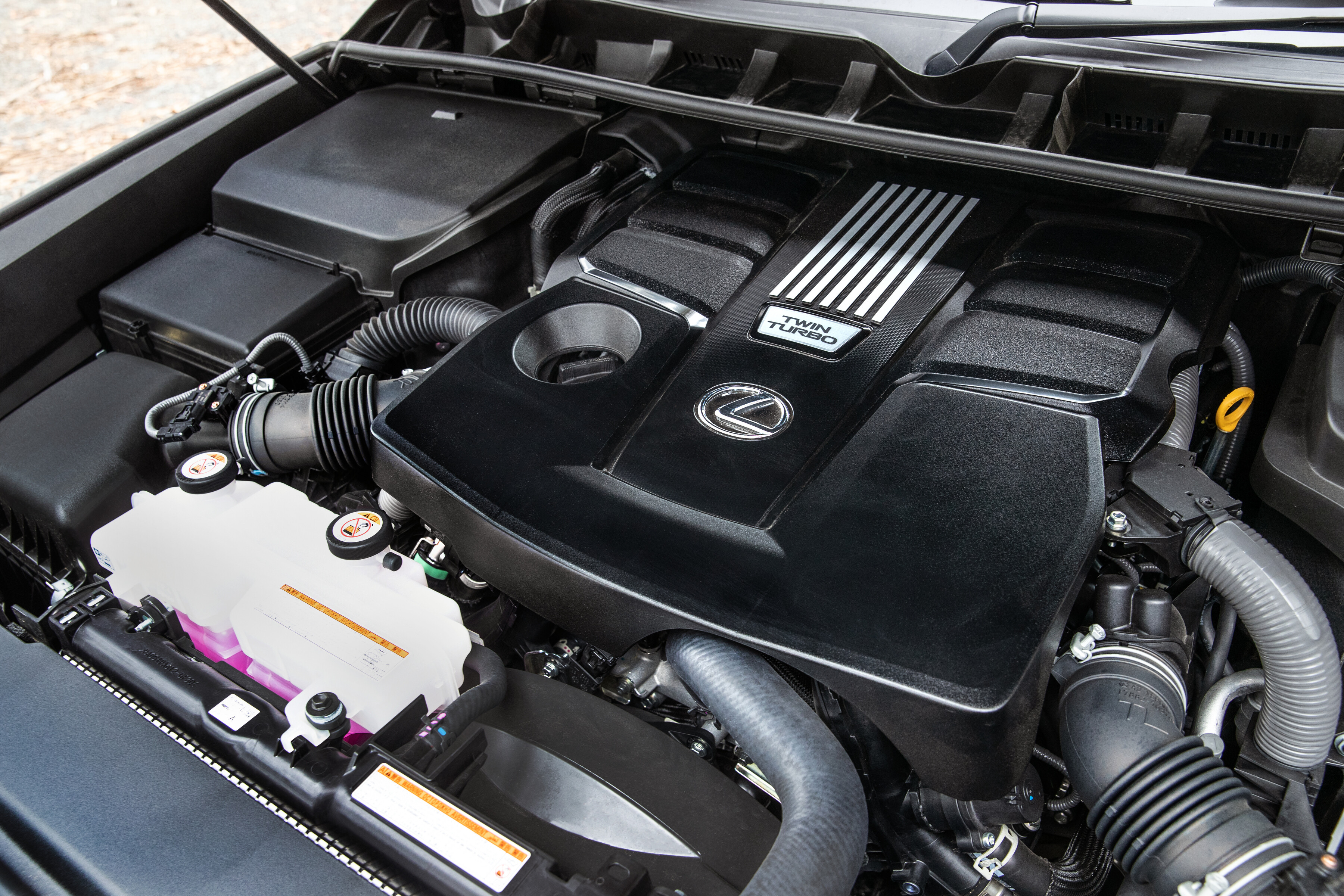
Both engines send power to the road via a full-time four-wheel-drive system and a 10-speed torque-converter automatic gearbox, equipped with a low-range transfer case.
The diesel offers a relatively lean official combined-cycle fuel consumption of 8.9 litres/100km, falling to as low as 7.6 litres/100km on the highway, which represents a 10.6 percent improvement over the previous 4.5-litre engine.
With its big 110-litre fuel capacity, it has a potential maximum cruising range of 1447 kilometres.

The LX 600’s fuel economy benefits from a 100kg-plus weight reduction compared to the previous model, resulting in combined-cycle fuel consumption of 12.1L/100 kilometres, which Lexus claims is a 16 per cent improvement over the previous 5.7-litre engine.
All variants score a trailer wiring harness and towing hitch, allowing the LX to tow up to 3500 kilograms braked.
Safety
| Pre-collision system with pedestrian and daytime cyclist detection |
| Front and rear parking support brake (PKSB) with obstacle and vehicle detection |
| Blind-spot monitor |
| Dynamic radar cruise control |
| Lane tracing assist |
| Road sign assist |
| Tyre pressure warning monitor |
| Intersection turn assist |
| Emergency steering assist |
| Lexus Connected Services (automatic collision notification, stolen vehicle tracking, and SOS call functionality) |
| Four exterior cameras |
Availability and aftersales
The Lexus LX range is now arriving in showrooms around Australia.
As well as getting a whole lot of SUV, owners benefit from three years of capped-price servicing, costing $595 for each of the first six scheduled services with service intervals of six months/10,000km.
Also included is a three-year membership to the Lexus Encore Platinum owner benefits program, which includes Lexus on Demand that allows members to borrow another Lexus to suit their needs or when travelling interstate or to New Zealand on four occasions, for up to eight days.
Members also get eight valet parking passes to use at select Westfield shopping centres around Australia and Chadstone shopping centre in Melbourne.
The Lexus LX comes is covered by a five-year, unlimited-kilometre warranty.
Yeah, we know. It’s late. Your unwanted acquaintance and ours, The Novel Coronavirus, is to blame. But that’s boring, so let’s not dwell.
This week we announce the Wheels Car of the Year for 2022!
While the announcement will take place on the morning of Thursday April 14, the lead up will take you through our 21 contenders, introduce you to our six expert judges, detail our five COTY criteria, and walk you through the testing process.
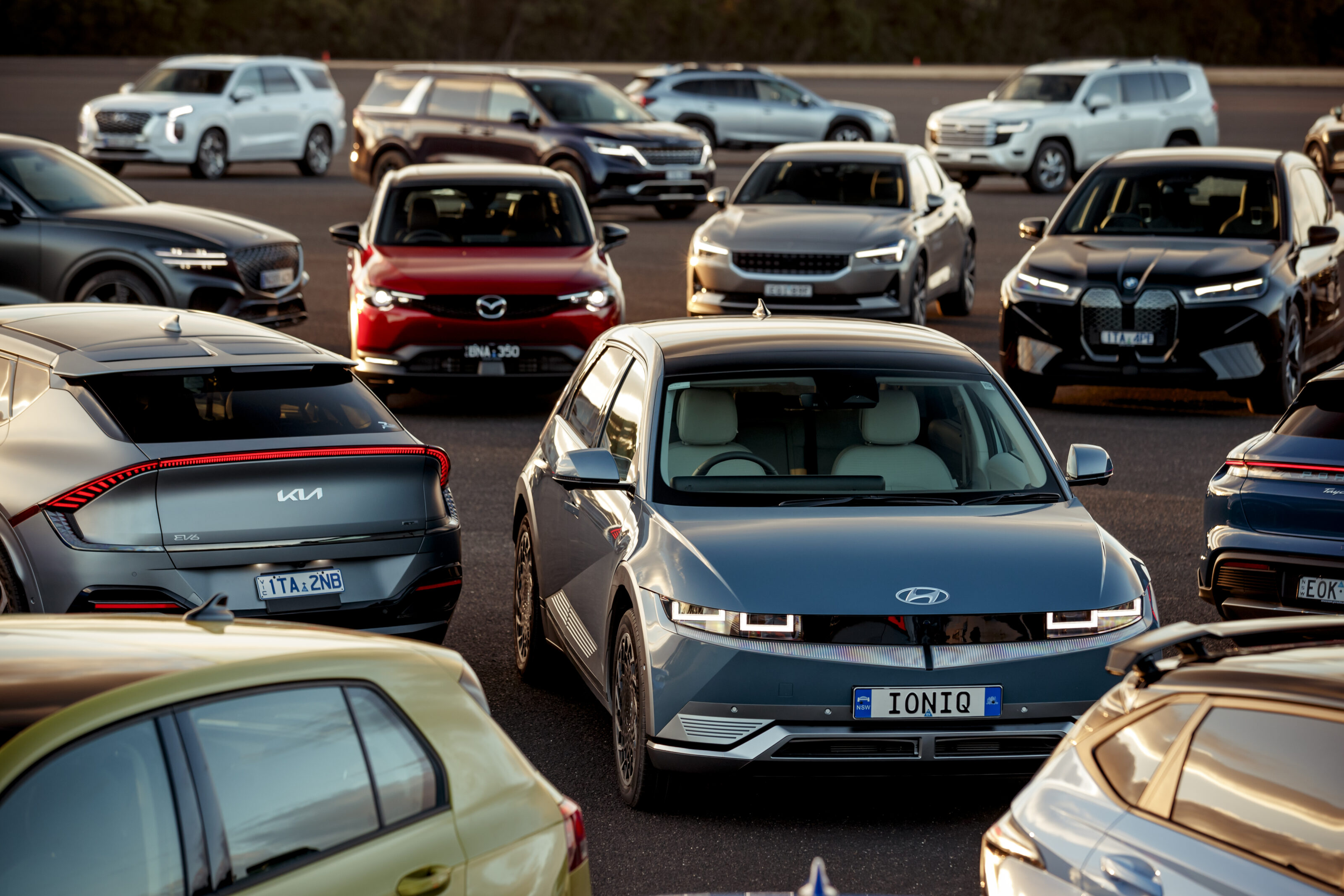
Then, once you know which hopeful takes home the COTY trophy this year, the runners-up get their time in the spotlight, and the rest of the field’s shortcomings are examined.
The what, the why, and the how will be delved into, and we’ll lay out the data gathered through testing week, with speed, weight, and noise all carefully measured.
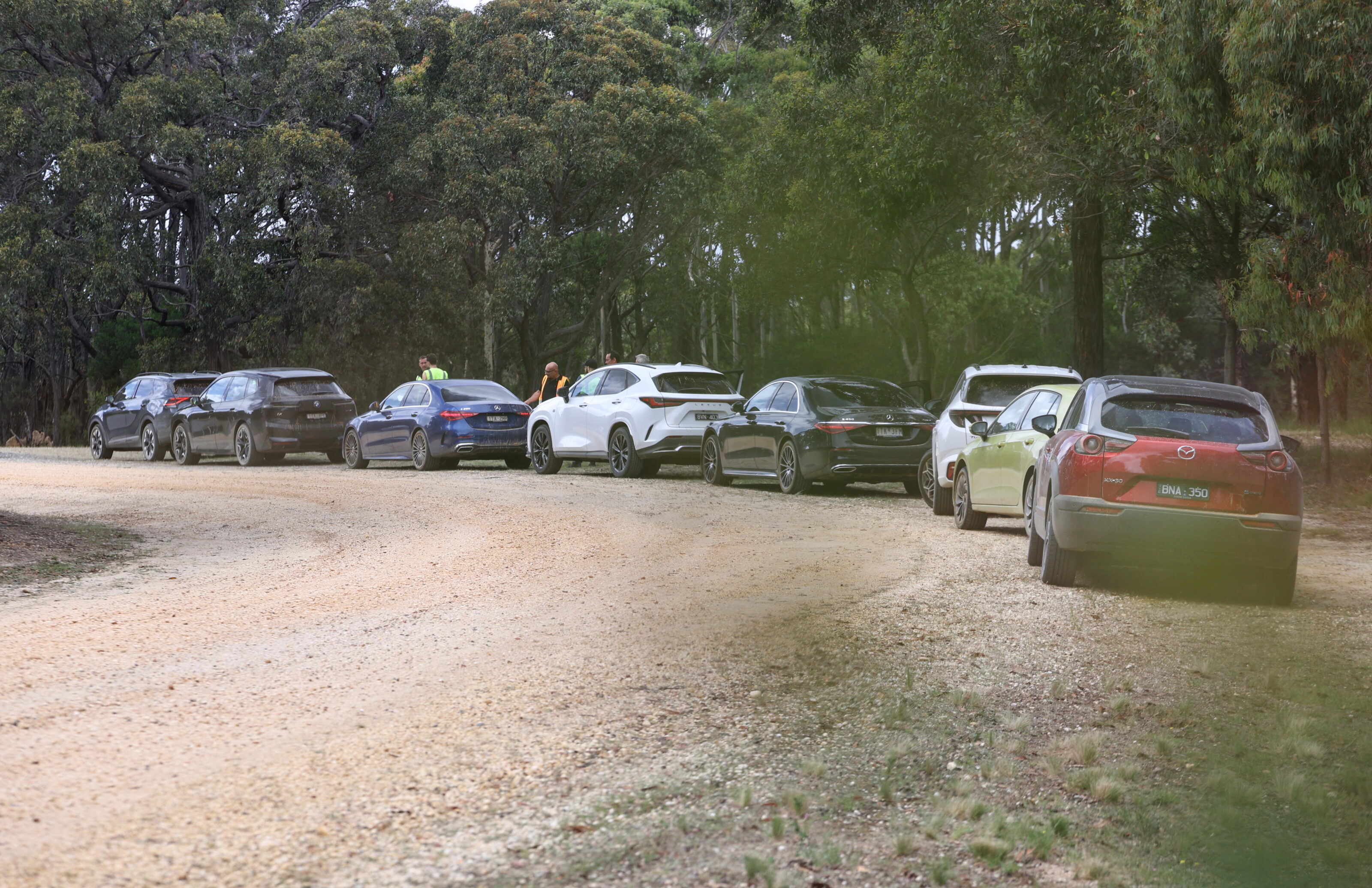
There are a couple of differences for COTY this year, the biggest being an emphasis on testing one variant instead of a model’s entire range. Why? Because sometimes a lacklustre base model can detract from a well-equipped mid-range variant. Or an expensive halo trim can overshadow a properly good-value simple-spec.
We were back at the well-equipped Australian Automotive Research Centre, with a crew of dozens on hand to help, test, clean, photograph, present, and film.
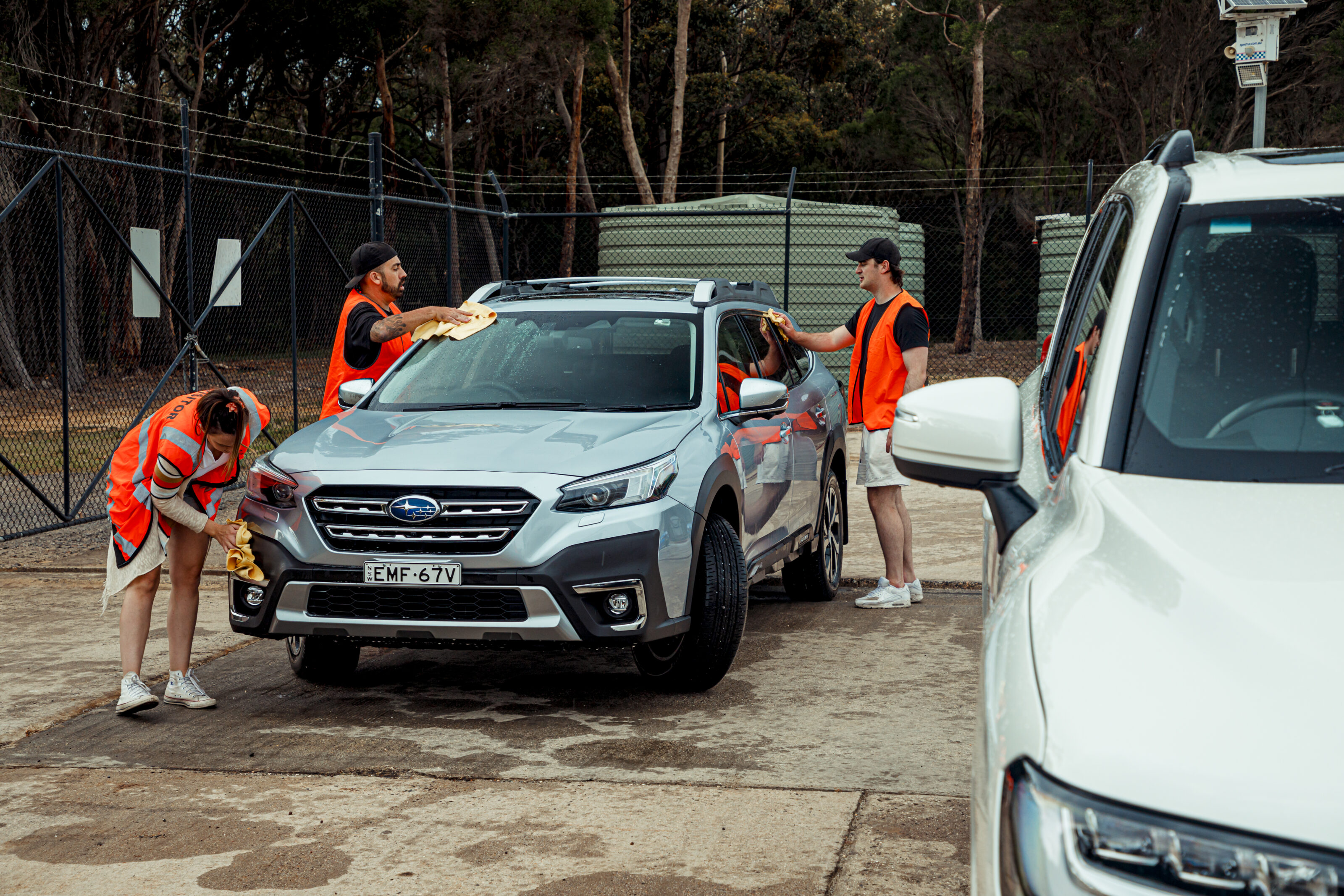
Finally, the results from a week of hard work from our team are ready for you.
2022 Wheels Car of the Year revealed!
UPDATE, April 11: Tesla’s Shanghai factory shutdown has continued for around two weeks due to the city’s COVID-19 safety measures.
While the original production halt was meant to last two days, beginning on March 28, it’s understood widespread disruptions have forced Tesla to keep its China plant closed for at least 12 days.
The latest shutdown is in addition to the production pause originally reported on March 18.
Last week, Bloomberg reported Tesla’s local operations had advised suppliers it would continue the shutdown until at least Thursday April 7.
It’s estimated the move will impact around 24,216 vehicles.
Australia’s supply of Tesla cars is likely to be affected, with the Model 3 and upcoming Model Y being produced at the Shanghai plant.
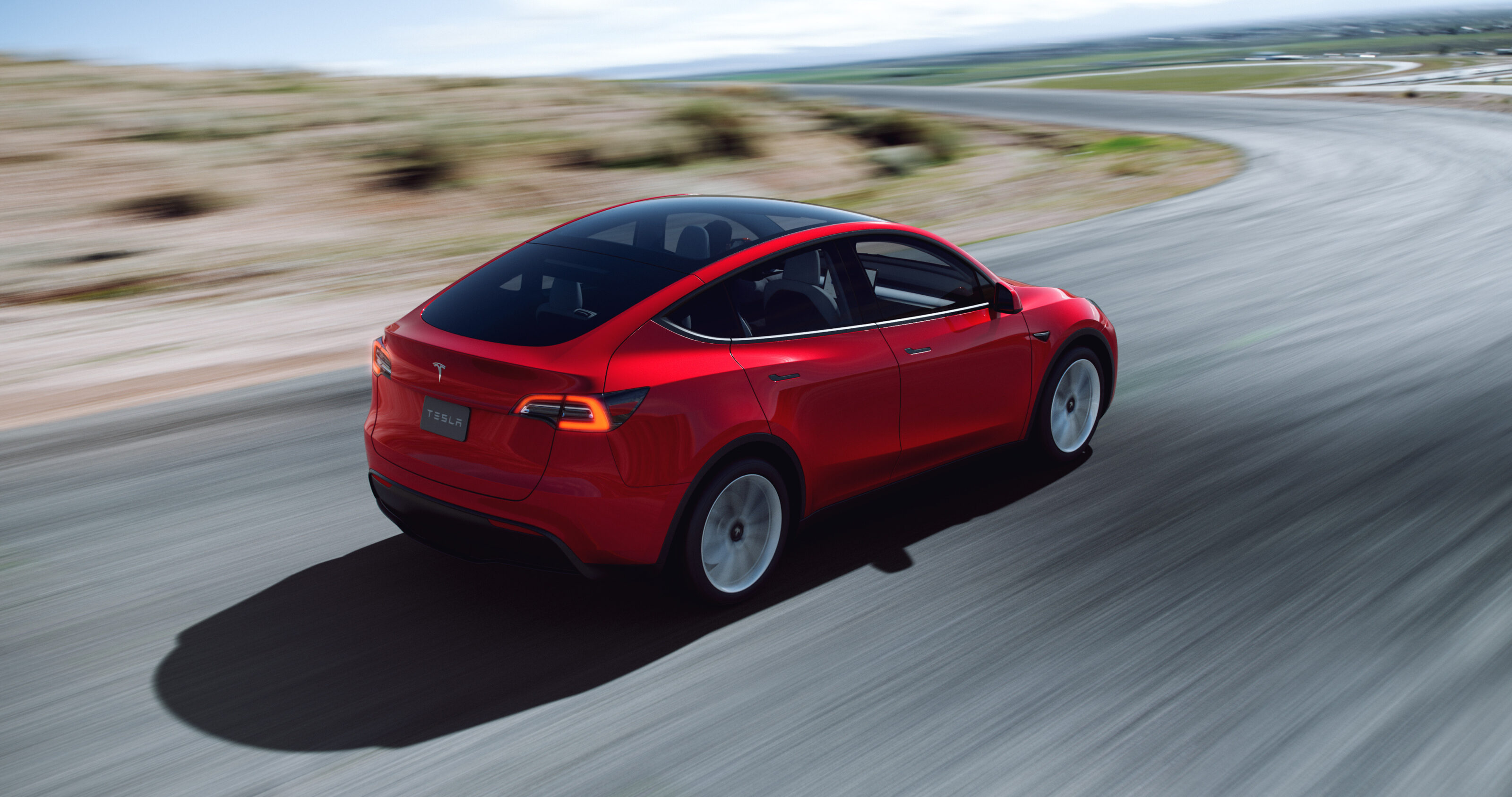
The story to here
March 18: Tesla has been forced to temporarily shut down production at its Shanghai plant, as the country deals with its largest COVID-19 outbreak since the beginning of the pandemic.
Tesla advised employees and suppliers it would be halting work for two days, according to Reuters, though a reason for the interruption was not given in the memo.
The factory produces more than 30,000 vehicles for export annually. Australia began receiving Chinese-made Teslas in February 2021, with a total of 12,094 Model 3s registered throughout the year (including early 2021 vehicles sourced from the US).
Government authorities have imposed restrictions on Shanghai residents, with locals confined to their homes for at least 48 hours as they conduct mass testing and contact tracing.
It’s understood Tesla has asked its suppliers to prepare to have workers eat, sleep, and live at the factory in order to ensure production continues without the risk of outside infection.
Although the BMW iX3 is likely to be the brand’s first EV to move the sales needle, BMW has been doing electric cars for a long time now. It hasn’t been doing a lot of them, let’s be honest, but its slow roll-up to electrification has been ongoing for more than a decade. The first two cars to feature electrification at any sort of scale were the i3 and i8 pair and they’re quite rare.
The two cars couldn’t be more different in appearance but shared much of the same philosophy – lightweight materials, EV-only modes (some i3s had a two-cylinder range extender engine), striking looks and a mission to deliver truckloads of data to BMW’s engineering teams. They both did their jobs and I can tell you that if I had to choose an electrified city car and sportscar then never have another car again, I reckon the i3 and the i8 would be my answer so quickly your head would spin.
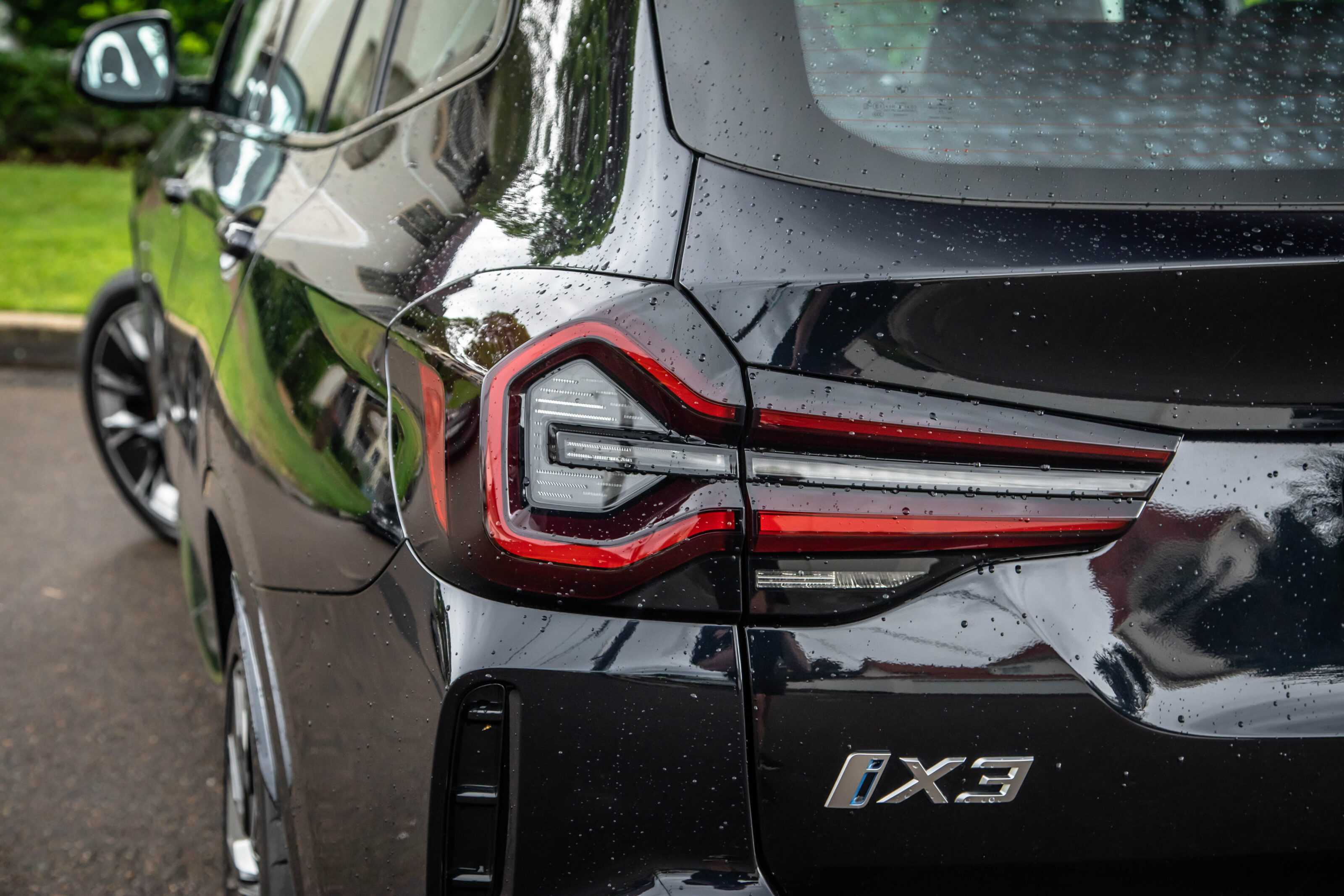
Neither of these cars is at the bleeding edge anymore because a lot has happened in ten years. BMW is now tracking in earnest to eliminate internal combustion engines from the fleet due to ever-tightening EU regulations, so a whole new wave of EVs is rolling in. We have the i4 shortly to arrive, the iX is here in all its origami glory and with the arrival of the facelifted X3 came the iX3.
Again, three very different cars, with the same philosophy – make EVs people want. The iX3 is the most demure electric car BMW has ever made and it’s the first surfer on the wave.
Pricing and Features
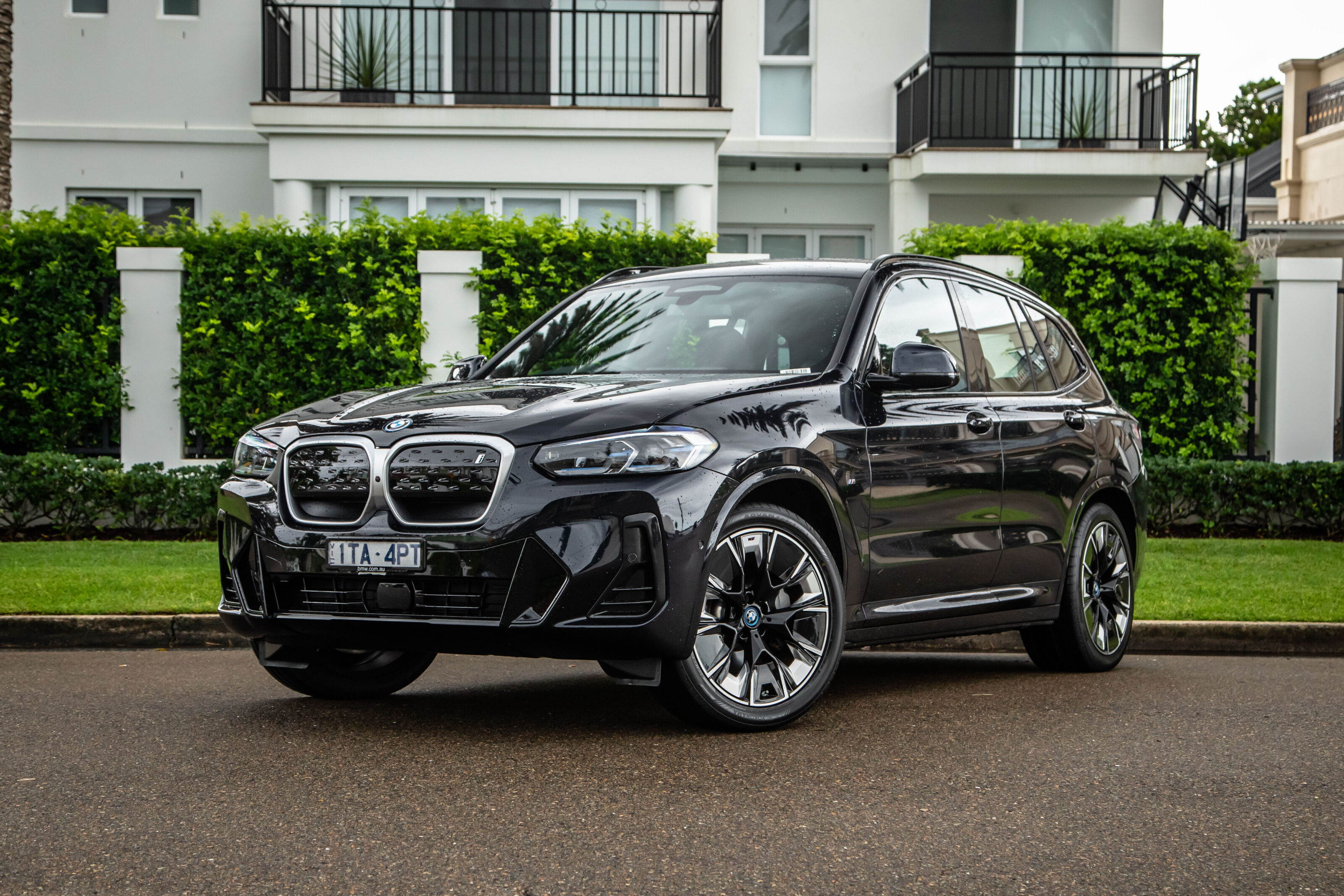
The iX3 starts at $114,900 before on-road costs, $4000 less than the excellent X3 M40i straight-six and $10,000 more than the X3 30e plug-in hybrid.
It’s a lot of money but it’s stacked with stuff like 20-inch aerodynamic alloy wheels, auto LED headlights, 16-speaker Harman Kardon premium audio, acoustic glass in the front, keyless entry and start (including BMW Digital Key and NFC card), power-adjustable heated front seats, digital dashboard, leather seats, head-up display, M Sport package, metallic paint, sat-nav, auto parking, panoramic glass sunroof, wireless phone charging and a tyre repair kit.
The iX3 arrives into a reasonably crowded market, with the Germans fond of the mid-size SUV segment for easing into the BEV market
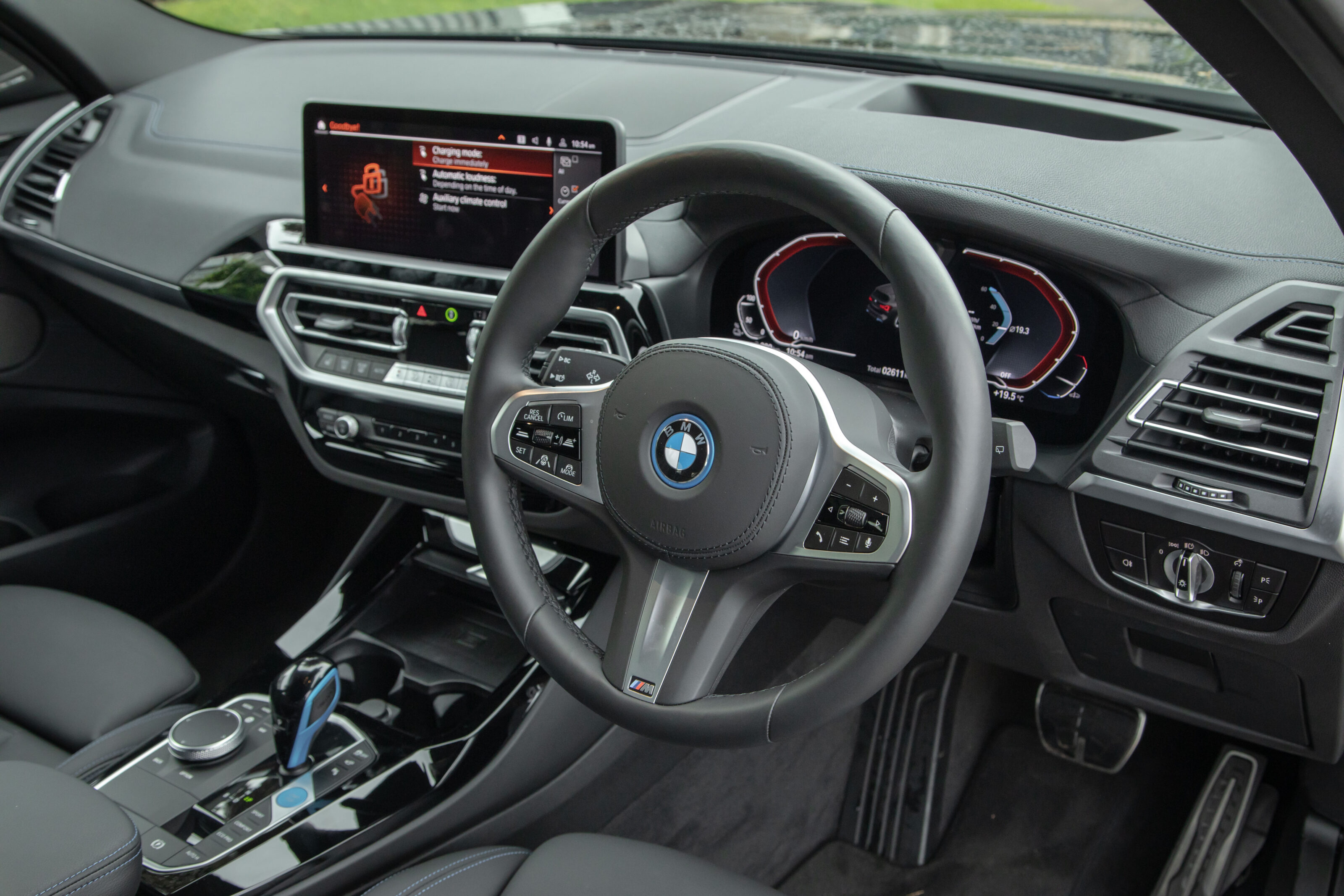
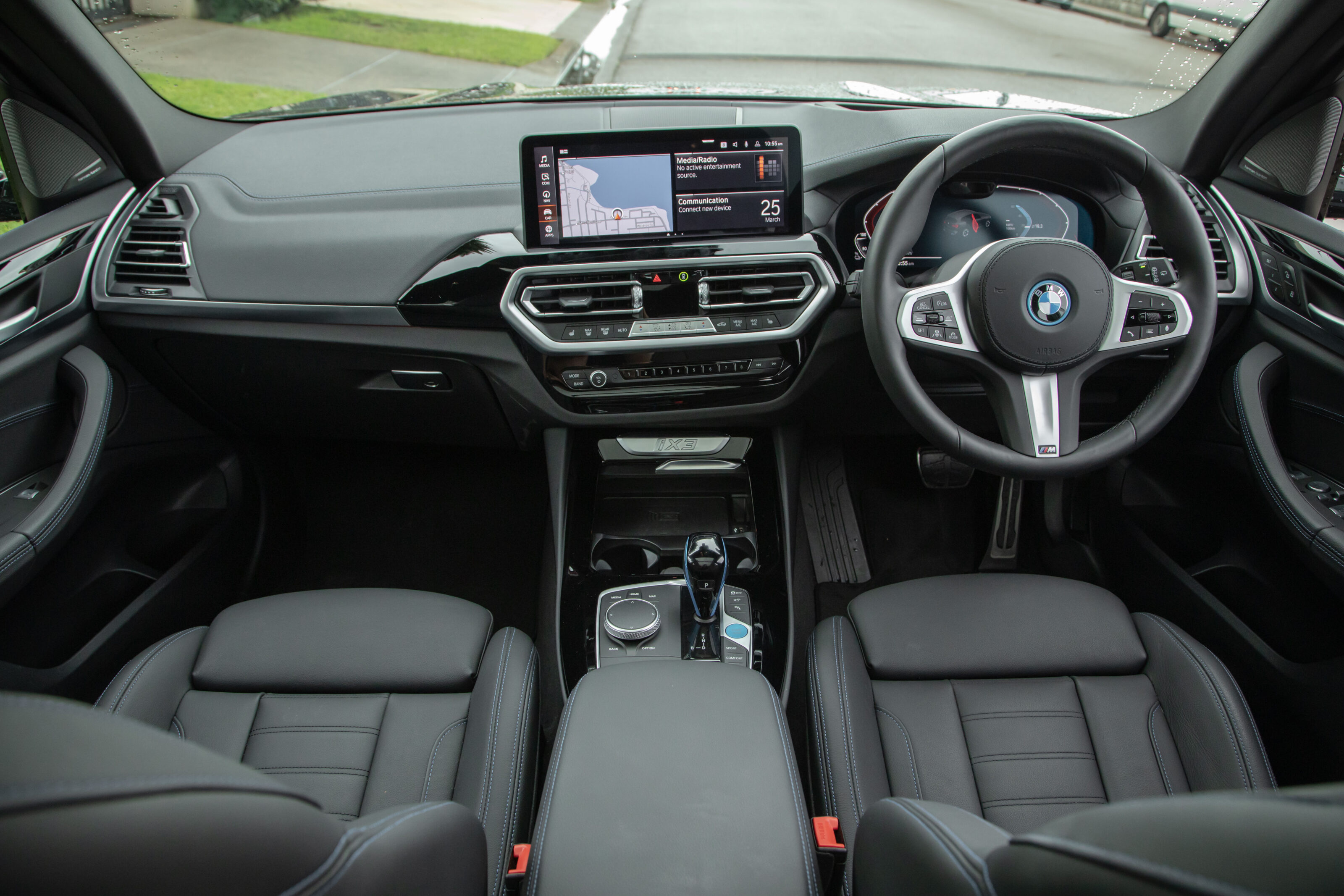
The huge central touchscreen is a 12.3-inch unit running BMW’s excellent OS 7.0. It has gesture control – which I’ve never got to work reliably – but the rest of it is great. The built-in sat nav is detailed and accurate, too. You get wireless Apple CarPlay and Android Auto but I did find the wireless CarPlay flaky and unreliable in the sense that I would get in and it just wouldn’t see the phone. Get out, do something, come back, all fine.
On the safety list, you’ll find active cruise control, lane-keep assist, lane departure warning, blind-spot monitoring, steering and lane control assistant, lane-change warning, front and rear cross-traffic alert, forward and rear auto emergency braking, speed sign recognition and the excellently-named evasion assistant, which is not a system to help you avoid meeting people you don’t want to while out in the car.
There is also a clever pedestrian warning where the car plays a sci-fi hoverboard sound effect to warn folks of a slow-moving and otherwise silent EV. Once you get up to speed, the tyres mean this car makes as much racket as most new cars sold today. Because in most new cars, tyre noise is the loudest noise.
You also get two ISOFIX points and three top tethers for child seats but no ANCAP score because that hasn’t happened yet.
This particular car had BMW’s spectacular laser lights for a not-horrific but not-cheap $2000 and if you spend a lot of time on very dark roads, these are amazing.
The iX3 arrives into a reasonably crowded market, with the Germans in particular fond of the mid-size SUV segment for easing into the battery electric vehicle (BEV) market.
Mercedes has the EQC in two spec levels starting at $124,300. Audi’s e-Tron (which, like the EQC and iX3 is based on an existing ICE-based platform) starts at $139,900 for the 50 SUV, albeit with a shorter range battery. All these prices exclude on-road costs.
Moving further afield, Jaguar’s I-Pace – if you can get one – kicks off at $151,432 before on-road costs with a similar range to the BMW but not quite the space. And we can’t let an electric SUV review go by without mentioning the Tesla Model X that is really a class up from X3, rides on a dedicated platform like the Jaguar and starts at … erm, well who knows because when you go to look at the price on the website it just asks for a $350 deposit and “we’ll tell you the price before you get it”.
Perhaps more fairly you’d be looking at the Model Y, which also hasn’t got a price, although I’m reasonably certain it will undercut the iX3 by a handy margin.
Comfort and Space
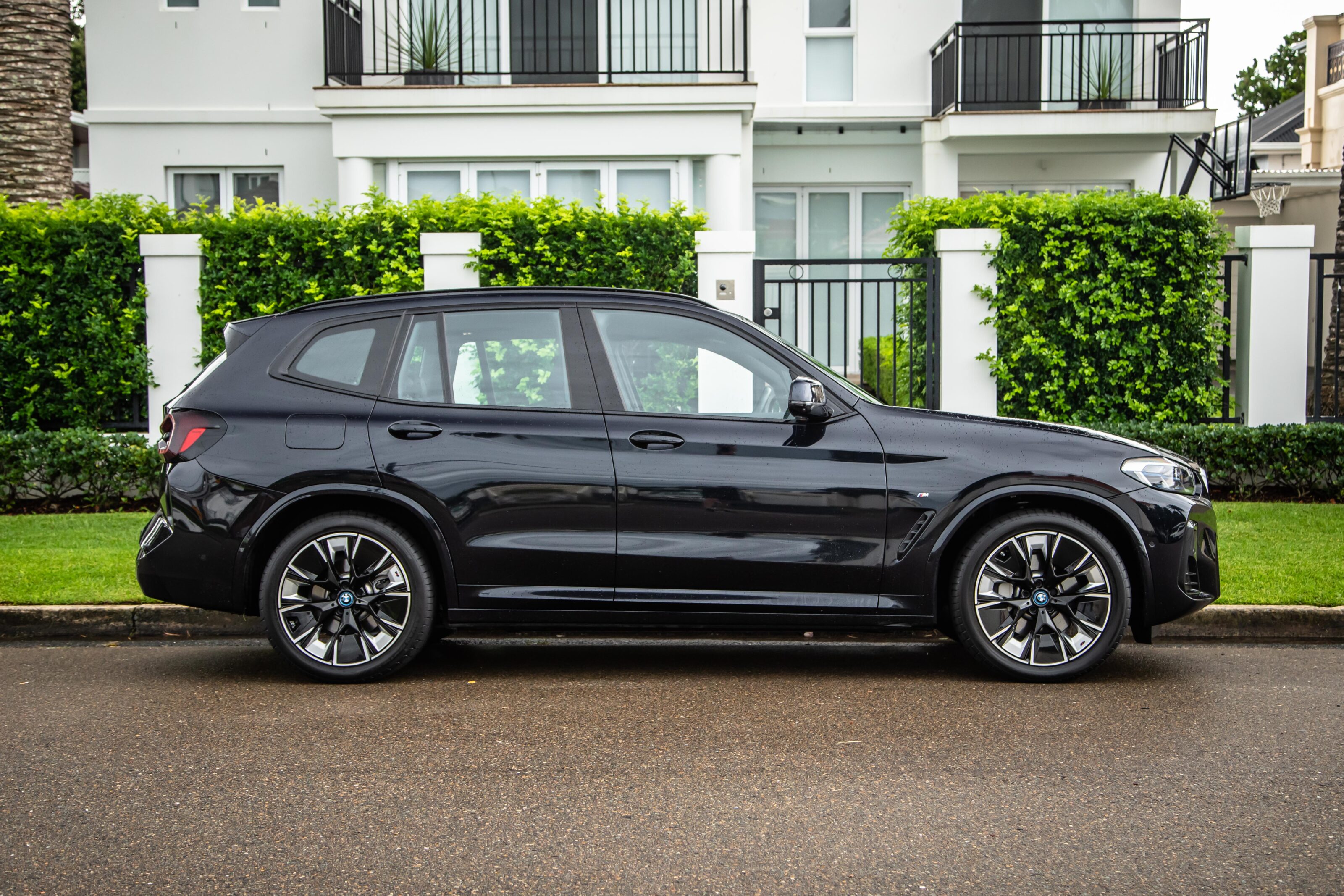
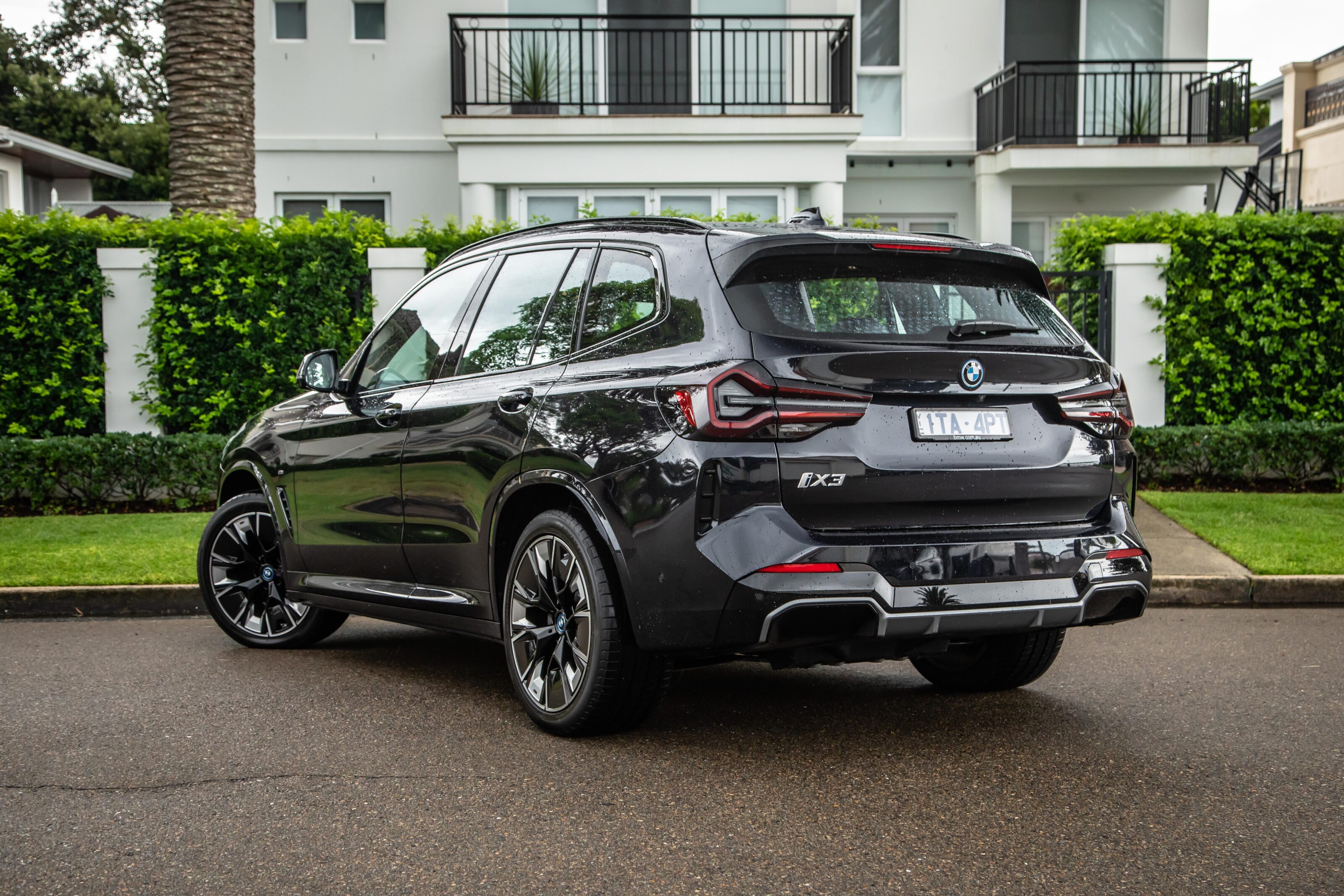
Being an X3 variant, it’s exactly the same size and shape as any other but with a few subtle changes. The iX3’s interior is appropriately daubed in various blue highlights, as BMW has done since the groundbreaking i3 came to market a decade ago.
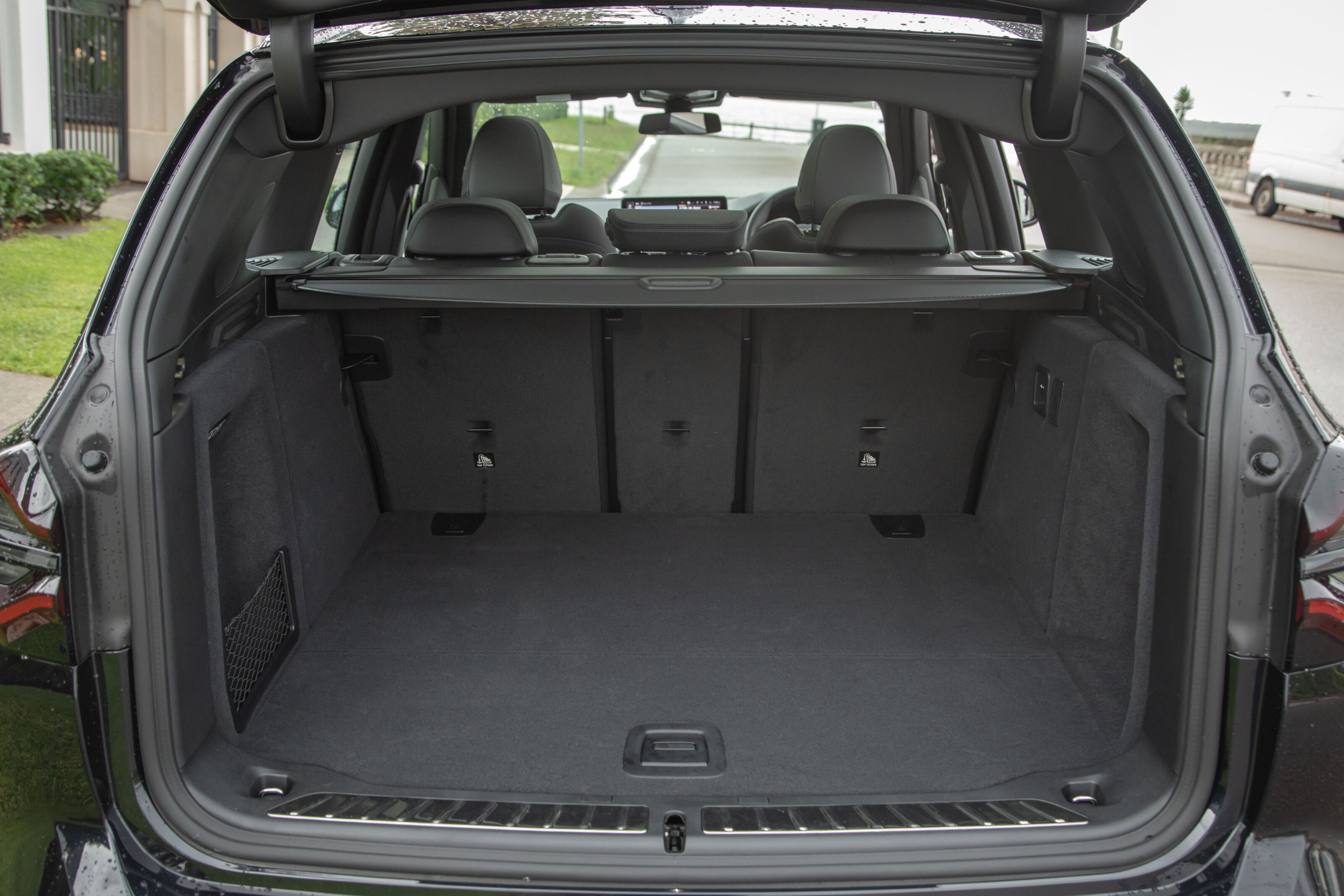
Cargo space is slightly down on the ICE cars, a difference of just 40 litres. With the rear seats in place, you’ll have 510 litres available while with the 40:20:40 split-fold bench all down you’ll have 1560 litres. The floor is high but flat, you can sling your charge cables underneath out of sight and that’s also where the tyre repair kit goes.
There is a range of sound effects – including start-up and shutdown – created by Hans Zimmer and BMW’s sound designers. It’s a nice touch

Moving to the rear seats, there is plenty of room behind my driving position and I’m 180cm tall.
You get bottle holders in the doors, cup holders in the centre rear armrest, air vents and plenty of headroom even with the giant sunroof.
The front of the cabin is one of those ergonomic triumph type spaces. Fantastic comfortable seats, wireless charging, useful cup and bottle holders, a deep centre console bin with rubberised lining on pretty much all of these things to help keep things quiet.
Everything works, looks good and is easy to work out. It doesn’t bring the Starship Enterprise vibe that some EVs bring but, as you’ll soon see, that’s probably the point of this car.
Bizarrely, although there is room for a front boot, the iX3 doesn’t have one.
Unusually, there is a range of sound effects – including start-up and shutdown – created by film composer Hans Zimmer and BMW’s sound designers. It’s a nice touch.
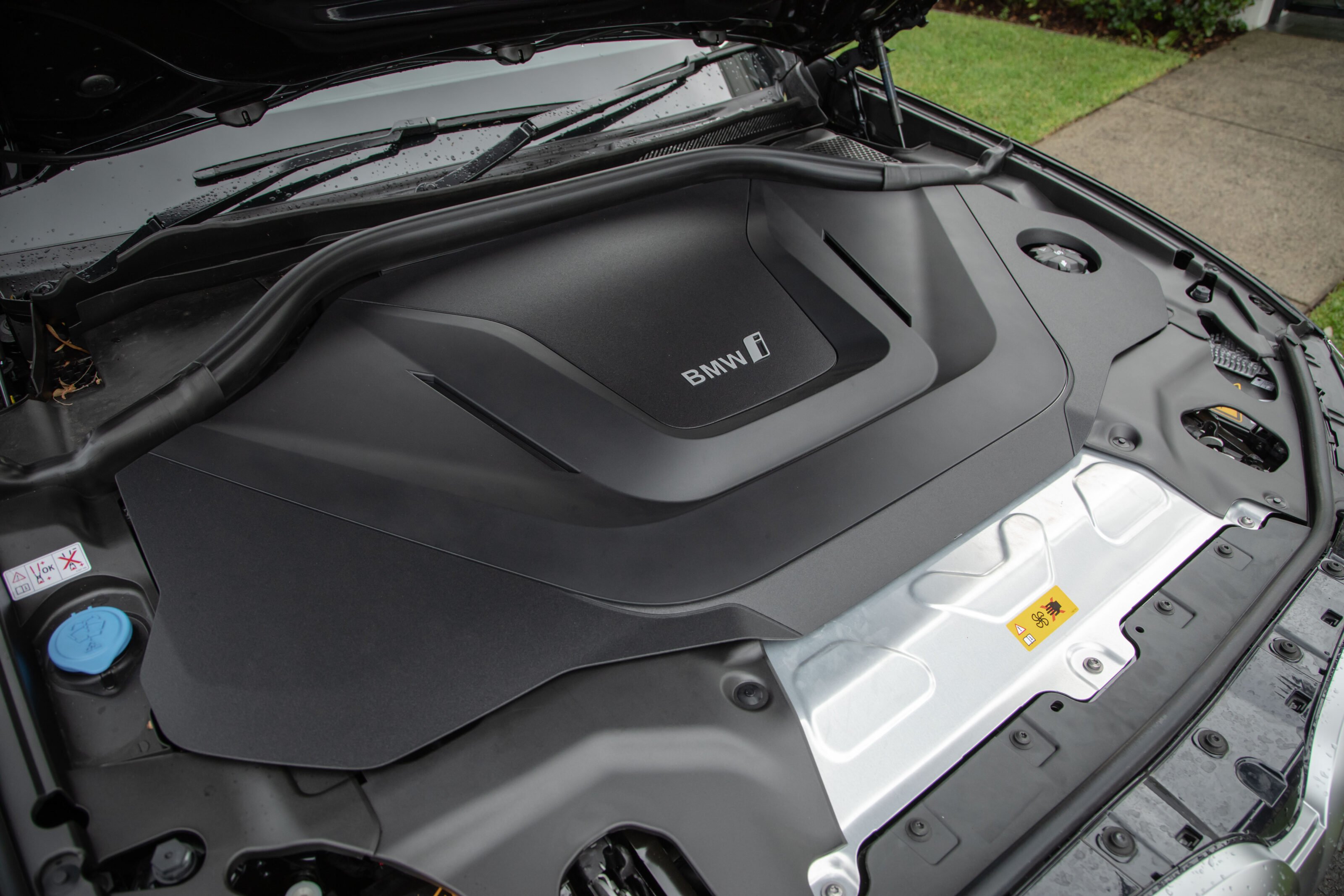
Battery and Charging
The iX3’s 80kWh battery pack is made of 188 prismatic cells (for those who care) and has a useable capacity of 74kWh. As the X3 is predominantly an ICE platform, the batteries aren’t as low as you might expect from, say, the bigger iX.
BMW quotes a WLTP range of 460km which, as you’ll soon discover, isn’t super-close to real-world performance. Having said that, it’s much closer than the admittedly cheaper Volvo XC40 in everyday use and is probably comparable to the dedicated EV platformed Jaguar I-Pace.
The charge port is on the right-hand side of the car in exactly the same place as the fuel filler on a regular X3.
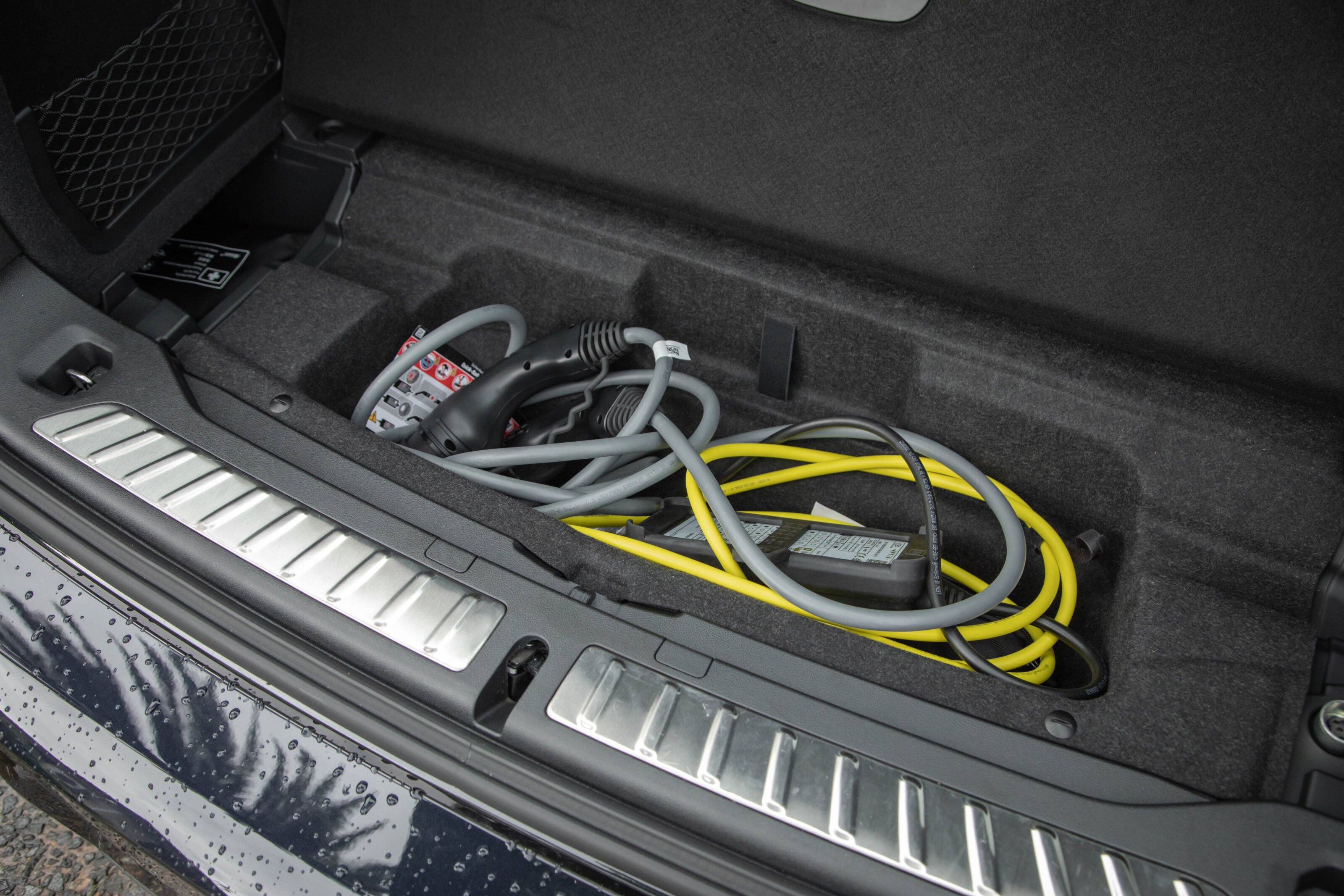
BMW supplies the iX3 with a piffling 1.8kW charger that would take two days to fully charge the car from a wall socket, so it’s best for trickle-charging at home. It’s worth remembering most Australians cover about 40 or 50km per day and so an overnight charge is enough to recover that usage.
If you install a BMW-approved wallbox you’ll charge at up to 11kW and eight hours should be enough to get you to full, although that last twenty per cent will take a while. To get 11kW you’ll also need three-phase power otherwise the wallbox will step down to 7kW or even less if the power supply to it is a bit spotty.
The car comes with a five-year subscription to Chargefox’s charging network, which is growing ever larger although there are still gaps in the coverage
The maximum charging rate is 150kW through DC fast-charging stations, which will get you from ten to 80 per cent of battery in just over half an hour. The car comes with a very generous five-year subscription to Chargefox’s public charging network, which is growing ever larger although there are still significant gaps in the coverage.
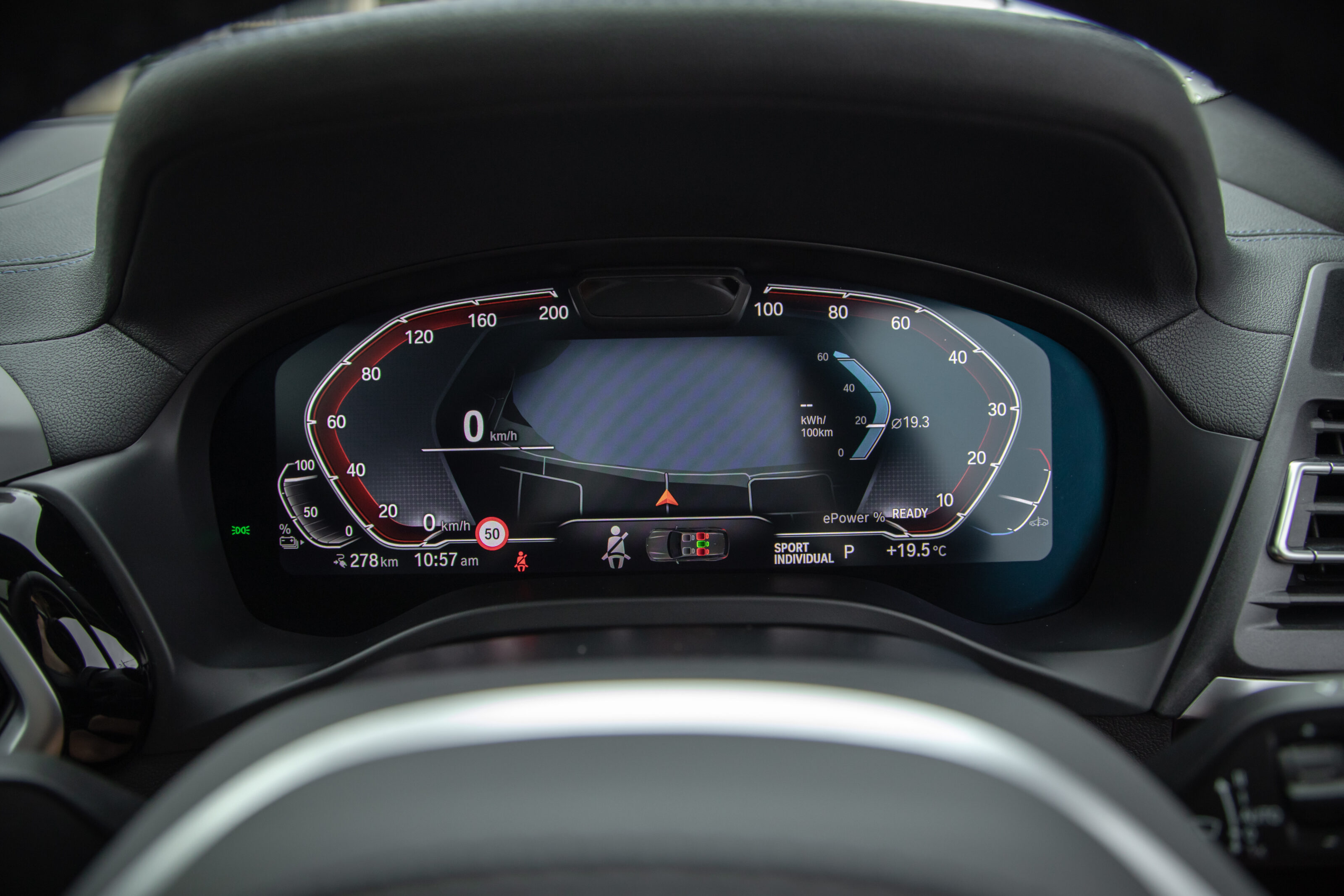
BMW’s own energy consumption figure is 18.9kWh/100km and in the week I had, the iX3 delivered 100km for 19.4kWh. Extrapolating that against the 74kWh available, that’s a reasonable 381km range for a car that I did not baby around the place. More careful driving would probably get you another 40 or 50km, which gets you within striking distance of the 460km WLTP figure, while turning off the climate control (yeah, I know, Australia) will also net you 20 or 30km.
On the Road
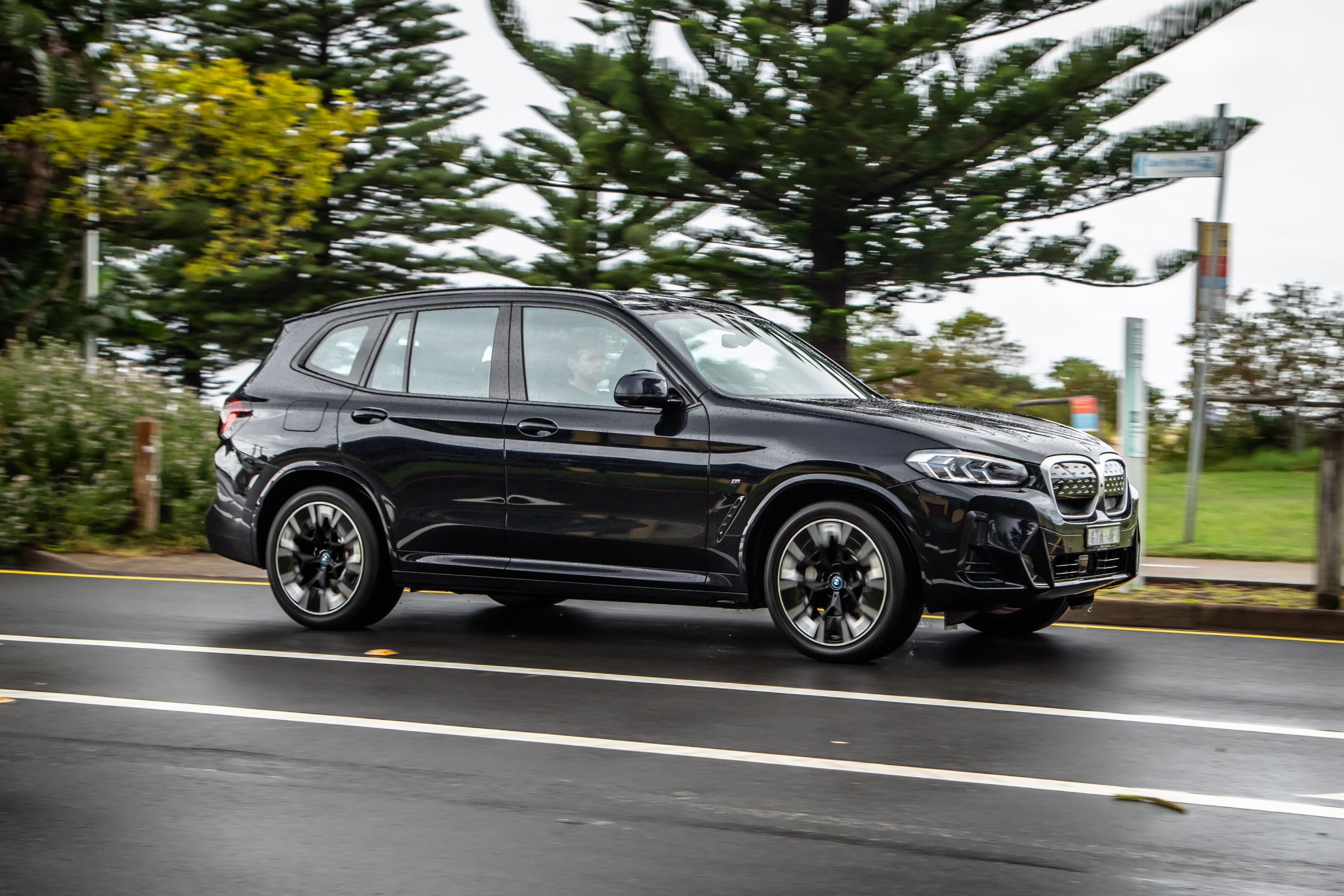
I think the iX3 is a shrewd move for BMW. The ICE car is quite a popular model for the company and it’s in that medium SUV sweet spot, powered by everything from a 2.0-litre turbo-four, a plug-in hybrid and two different 3.0-litre straight-six turbos. An all-electric version is an unintimidating prospect for a current mid-size SUV owner, even if basing it on the ICE-oriented platform means a small amount of compromise.
Basically, it’s not the polarising iX.
At 2260kg, it’s not going to keep up with the M40i in the corners, though. Given it’s built on that ICE platform, the batteries aren’t as low as they might be, although they’re low enough to bring the centre of gravity down by more than seven centimetres. So it’s plenty of fun for a mid-size SUV, as are each of the performance-biased X3s. With rear-wheel drive, 210kW and 400Nm (both from zero rpm), the iX3 makes the run to 100km/h in 6.8 seconds.
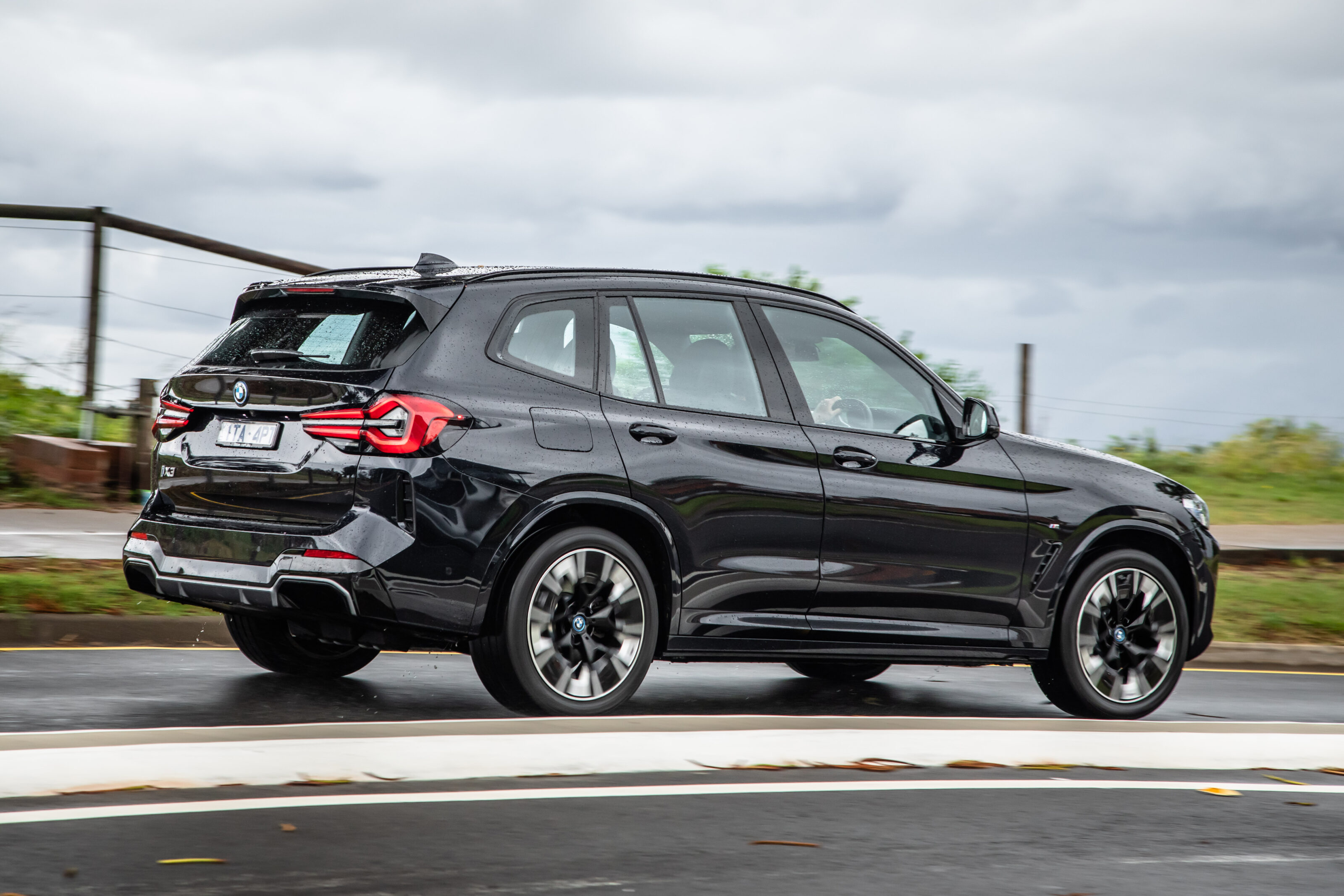
With adaptive damping, the ride is smooth and easygoing in comfort but fails to deteriorate in Sport, which is always a blessing. Sport ups the throttle response too, something that is much easier to do with electric motors, and it feels swifter in the first phase of a run to 100km/h than the ultimate time suggests.
There are two pseudo-transmission modes. In Drive, the car will coast lightly along when you lift off the throttle. Knock it to the left into B mode and you then have the thing I love in EVs: one-pedal mode. The energy recovery amps right up (see what I did there) and you’re in a good position to never have to use the brake pedal in normal driving. You can set the regen to three levels or an adaptive setting in the menu for your Individual mode configuration if you just want it to happen.
The motor doesn’t have any magnets and therefore doesn’t need rare earth metals. That is a little extra step of sustainability some others don’t have
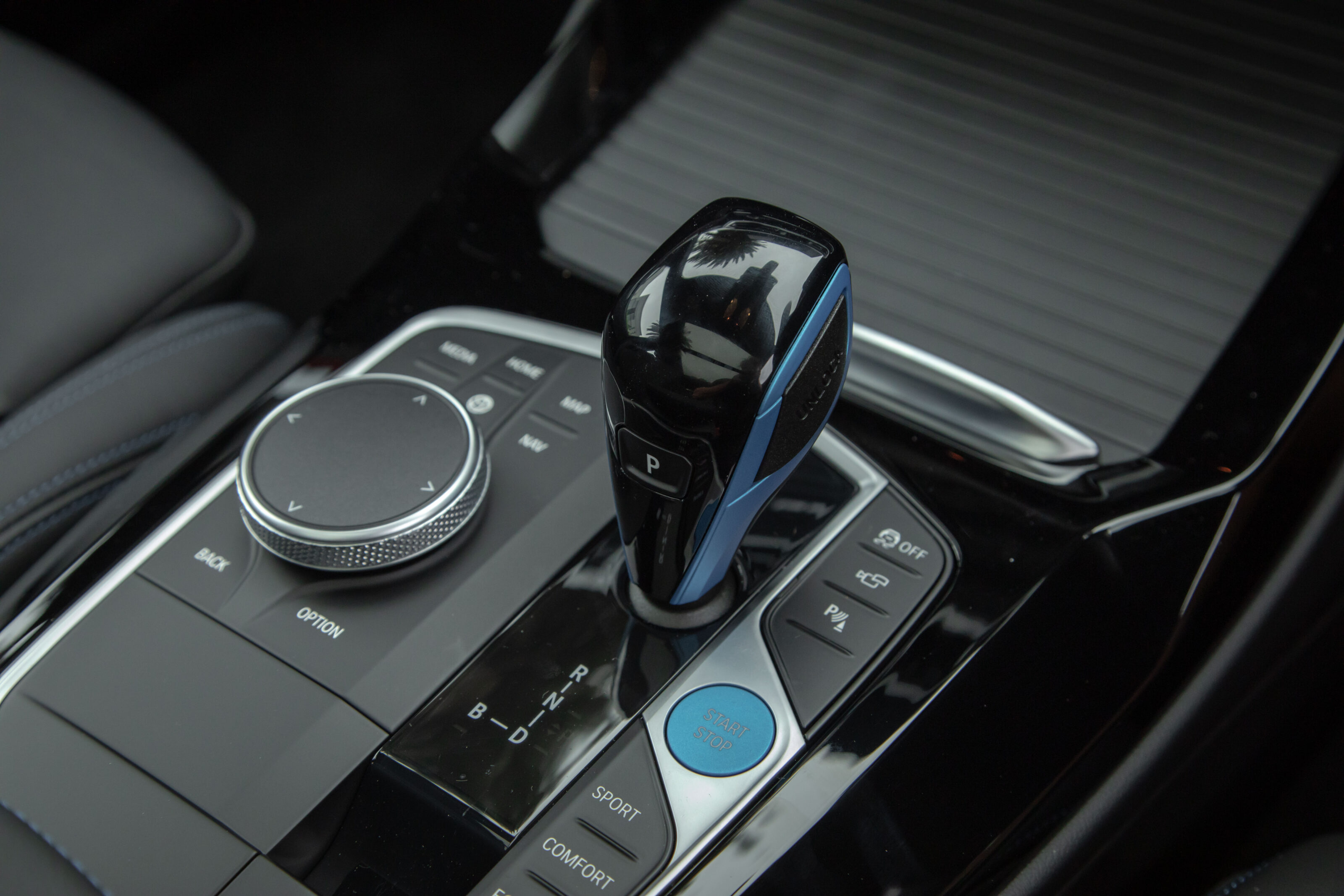
BMW has taken the concept a step further by having the car read the road ahead and work out how strong the braking effect should be. It’s intuitive, it’s clever and it’s better than the overly-enthusiastic XC40’s, which you have to turn off in high-speed running to ensure smooth progress.
That electric motor is a clever all-in-one unit, with the motor, transmission and electronics all packed into a single unit and mounted on a dedicated subframe. The motor itself is what BMW calls a “current-excited” unit that doesn’t have any magnets and therefore doesn’t need rare earth metals. That is a little extra step of sustainability some others don’t have. The battery probably has them, though, but so do most.
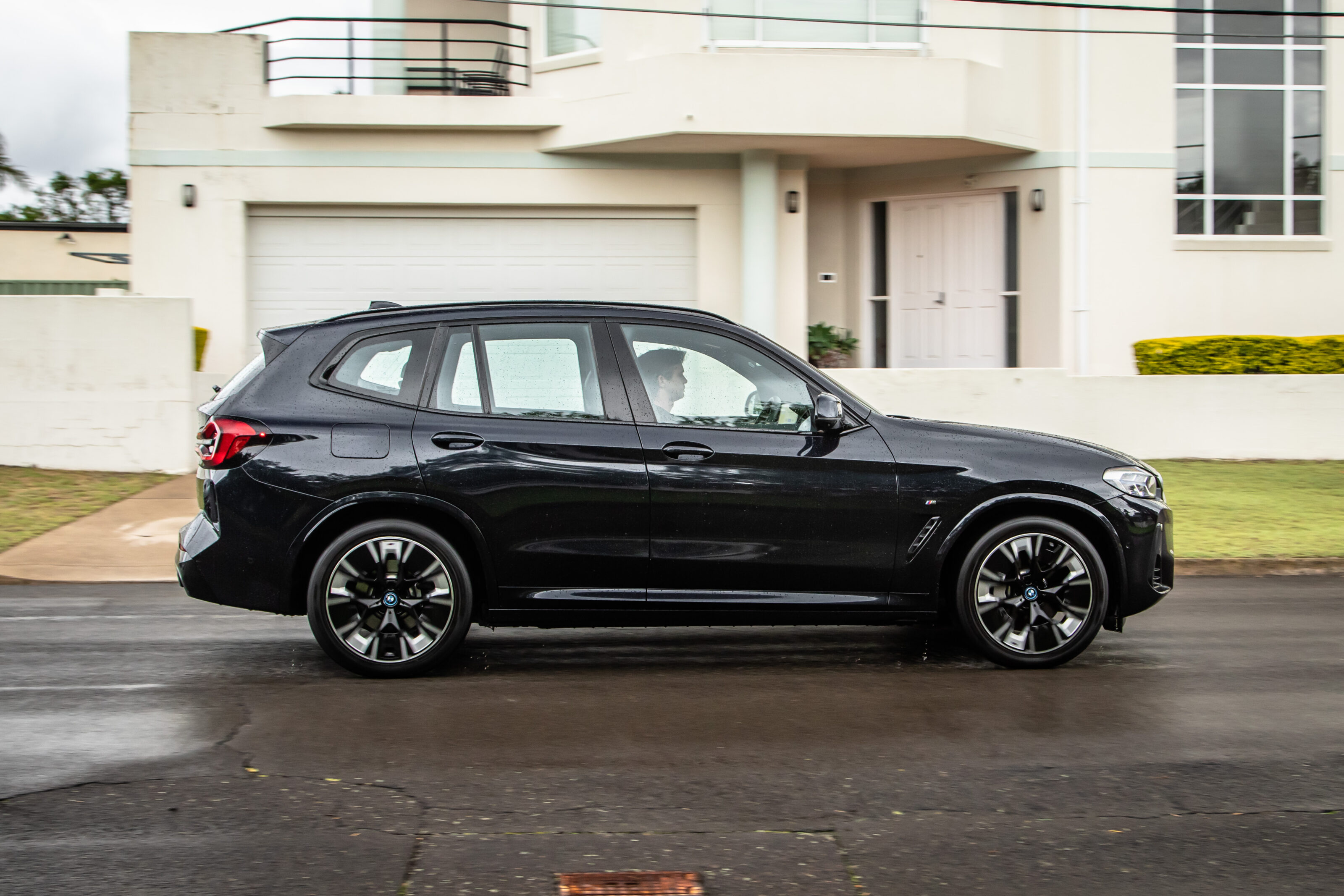
Despite only being rear-wheel drive, there’s a lot of grip wet or dry. One of the things I really like about this drivetrain is that the traction and stability controls are as you might expect from a BMW – not too interfering, quick to act but not like a sledgehammer.
You can obviously feel the extra weight, albeit masked by the low down performance. It stops and turns with great enthusiasm, matching the cheery way it gets up to speed in the first place. It feels reasonably chuckable for its size and not once did I think it needed another set of motors up front for more grip or poise. It’s one of the more balanced EV SUVs I’ve driven, which may be down to my familiarity with the platform and the X3 itself.
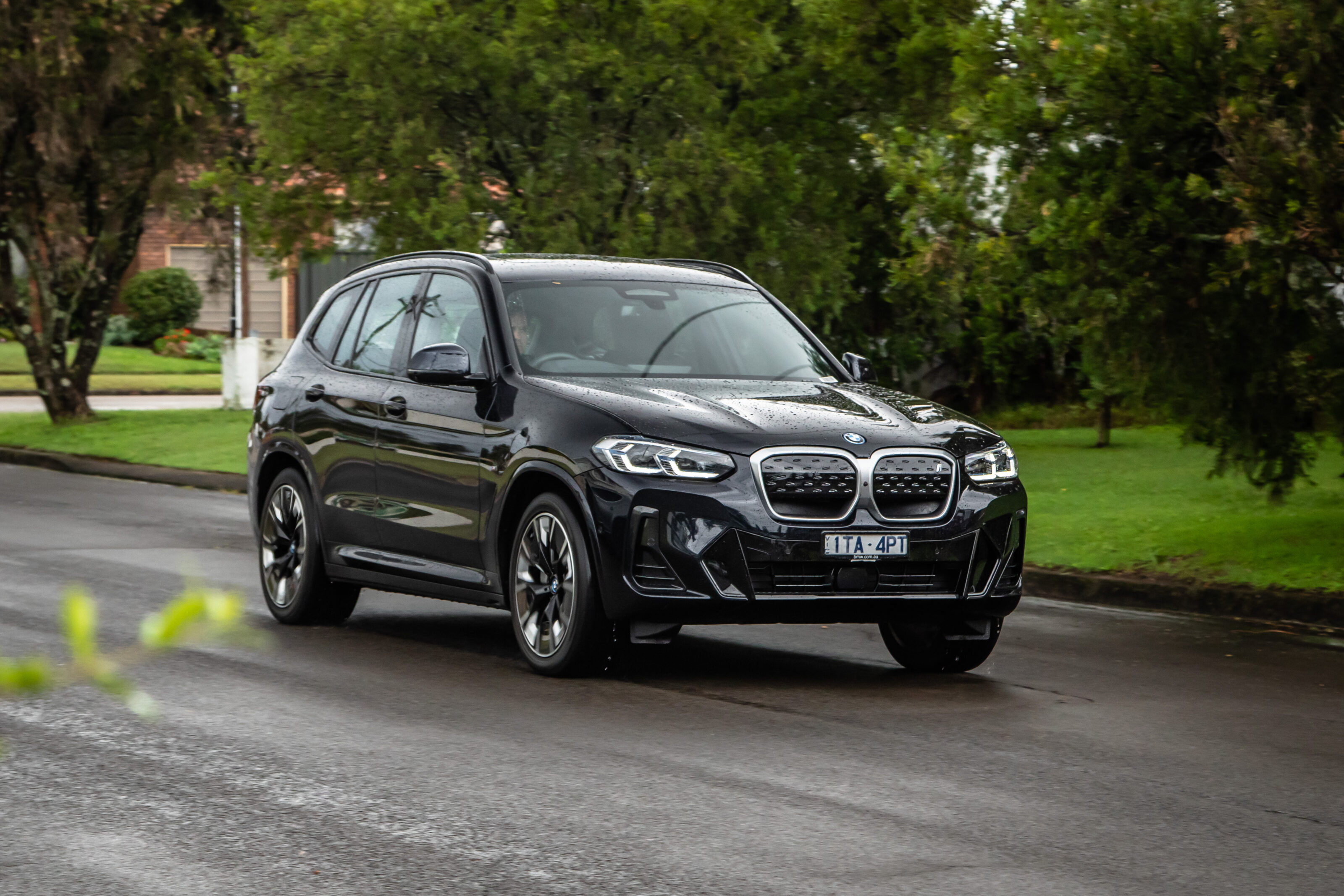
Slightly annoyingly, the range indicator on the digital dashboard is a bit pessimistic. For instance, the morning I returned it, I had 204km of range left with the battery holding three-quarters of its maximum charge before leaving. That made me frown but a hideous run in traffic and then some faster running to make up time, I handed back the keys with 202km left from a 22km drive.
Now, I’ll take that over “yeah, sure you’re totally going to get 400km, wait, no find a charging station NOW” but it will probably take you a while to learn to trust it. Admittedly this car has been on the press fleet, which means some folks will have driven it like it’s stolen and the computer has “learned” to err heavily on the side of caution.
Ownership
BMW – disappointingly – is the last hold-out of the Germans to offer a three-year, unlimited-kilometre warranty. It’s just not long enough and both its luxury rivals, also heavily into electrification, offer five years. Cheeringly, the battery warranty is a more competitive eight years or 160,000km.
You also get a very generous five-year subscription to unlimited charging on Chargefox’s public network. That represents a significant saving, obviously on fuel, but also time and home charging costs.
BMW offers two types of service plan; Basic and Plus. A four year, unlimited-kilometre plan is $1200, working out at $300 per year. Extending it to six years costs $1650, which seems quite reasonable (cue the shrieking of Tesla adherents) and both plans are significantly cheaper than the ICE or PHEV X3s.
If you want to go large, you can spend more than triple, which adds coverage for brake pads, rotors and wiper blades. Three years of Plus hits you for $4605 while six years takes you to $5500.
As ever, servicing is condition-based but you’ll be at the dealer once a year at least, I reckon.
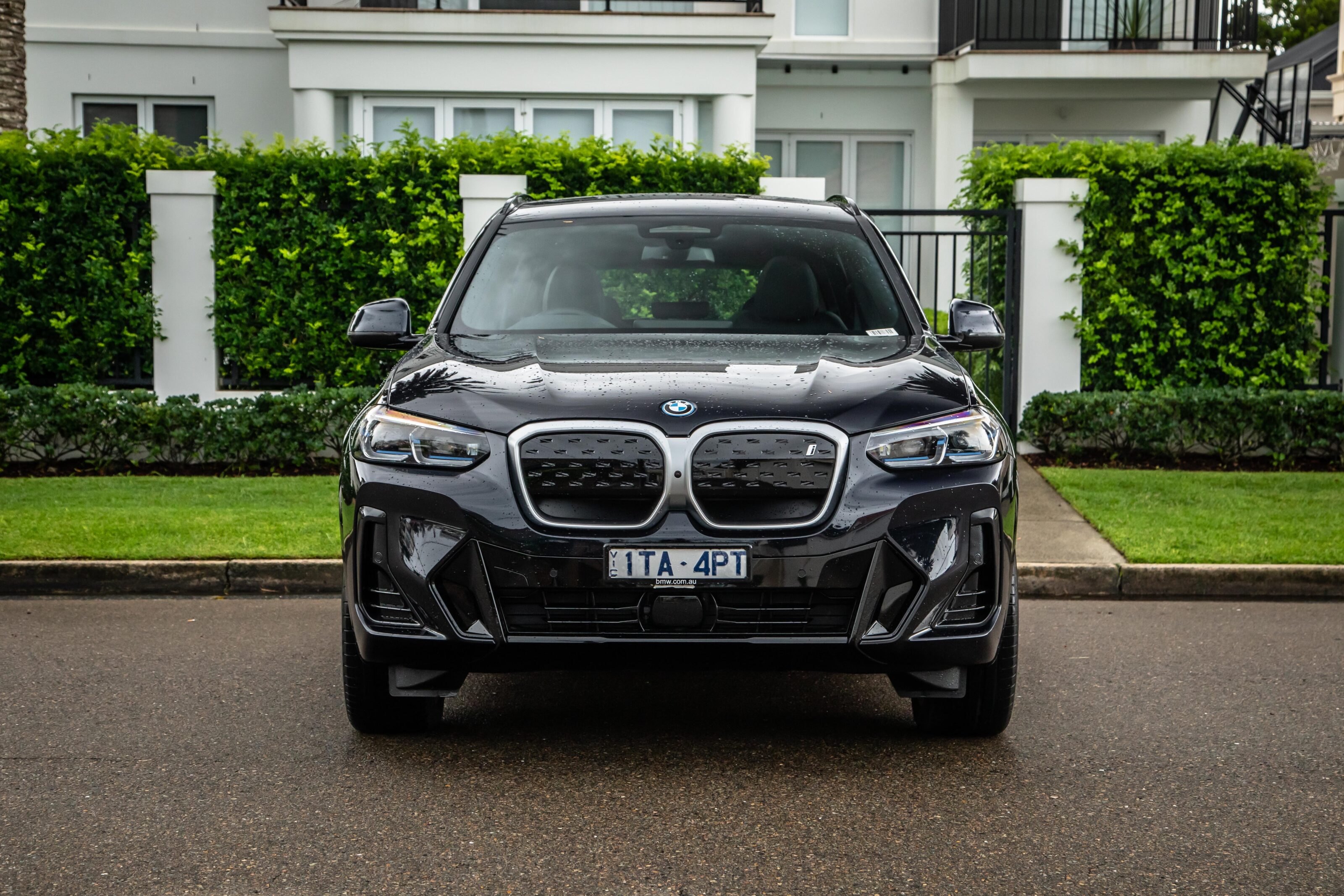
VERDICT
The iX3 is a grown-up product from a very grown-up manufacturer. I think it’s fairly obvious that BMW wasn’t just going to chuck any old thing into the EV marketplace and it shows in the engineering of this car.
It’s not without compromise, of course – it’s heavier than a dedicated platform might be – but nor is it just an EV-ified X3. BMW did a lot of detail work on the aero and handling and changed the materials in core components to save a few kilos.
I think it also looks better than the standard car with the cool active flaps in the kidney grilles and an understated look, the latter being in short supply at BMW at the moment (I’m not complaining, I just know some folks aren’t too keen on the BMW design direction of late).
Critically, this car will get bums on electrified seats. My wife, who is a very hard marker in the first place and even harder marker when it comes to EVs, said she would own this car in a heartbeat. She never, ever says that and definitely not about electric cars.
2022 BMW iX3 specifications
Such is the rate of progress and common buyer’s perpetually increasing appetite for tech and features, it’s an often unavoidable fact of life that succeeding new car models invariably take on more weight and size with each generation.
That makes this current ND-generation of Mazda MX-5 a bit special. In the intervening time between the breakout NA roadster and previous-gen NC, the MX-5’s kerb weight had ballooned by 20 per cent.
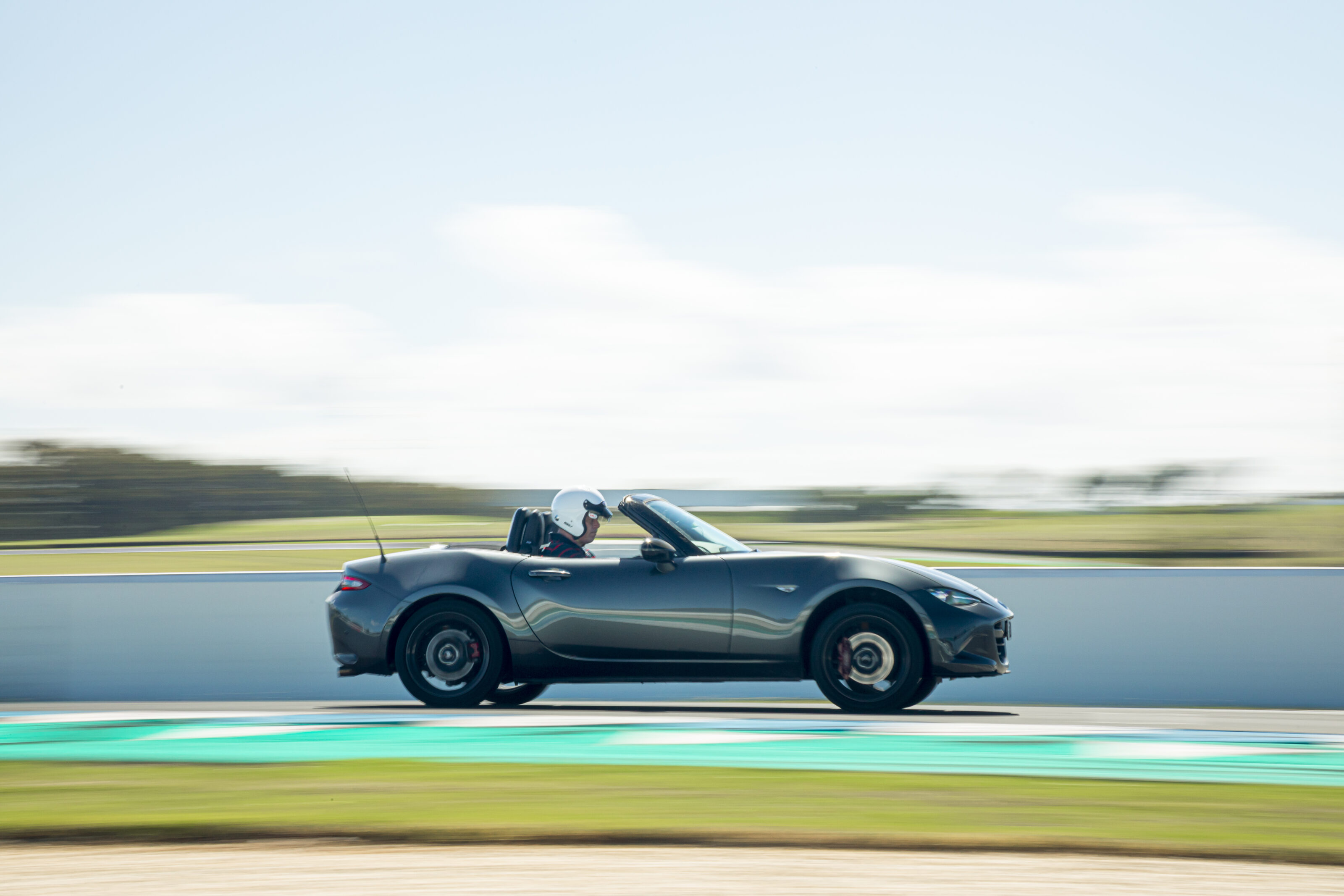
For the ND-generation of 2015, stringent benchmarks and targets were set for body dimensions and weight, with Program Manager Nobuhiro Yamamoto delivering a mission statement that said “innovate in order to preserve”.
In practice, Yamamoto’s decree meant the production-ready ND MX-5 had to emerge in comparable in size and weight to the breakout NA MX-5 of 1989.
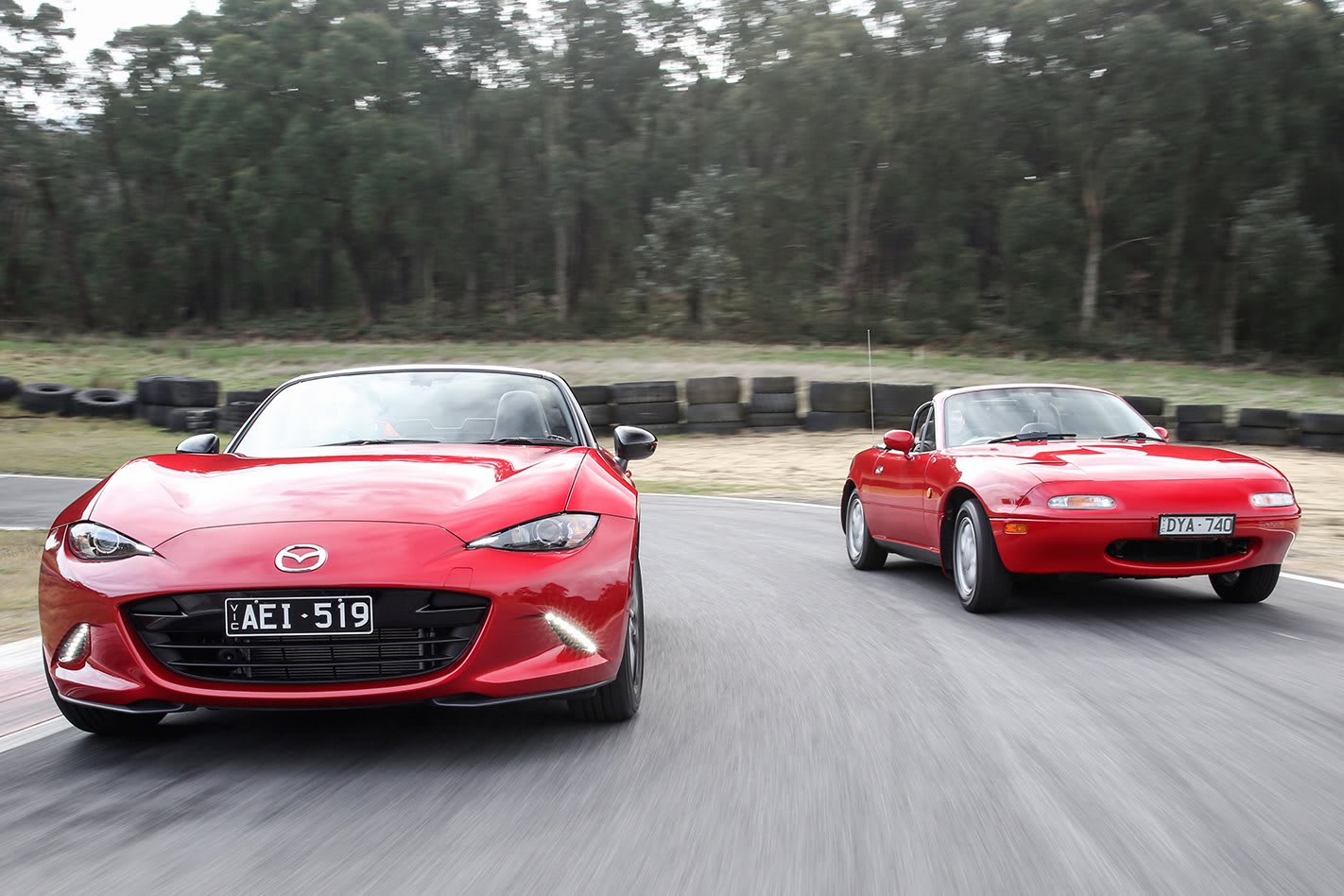
Park the two next to each other, and the results of Mazda’s efforts are remarkable. The modern roadster measures 33mm shorter and just 1mm taller than the original cult icon, although boasts a wider footprint with 59mm of extra width and a 44mm longer wheelbase.
A larger use of aluminium and high-tensile steel saves 20kg from the chassis, 14kg from the differential and gearbox, and a further 12kg from the suspension in comparison to the preceding NC Hardtop. All said and done, the smaller and lighter 1.5-litre ND MX-5 shaves a whopping 158kg off the old NC-generation car.
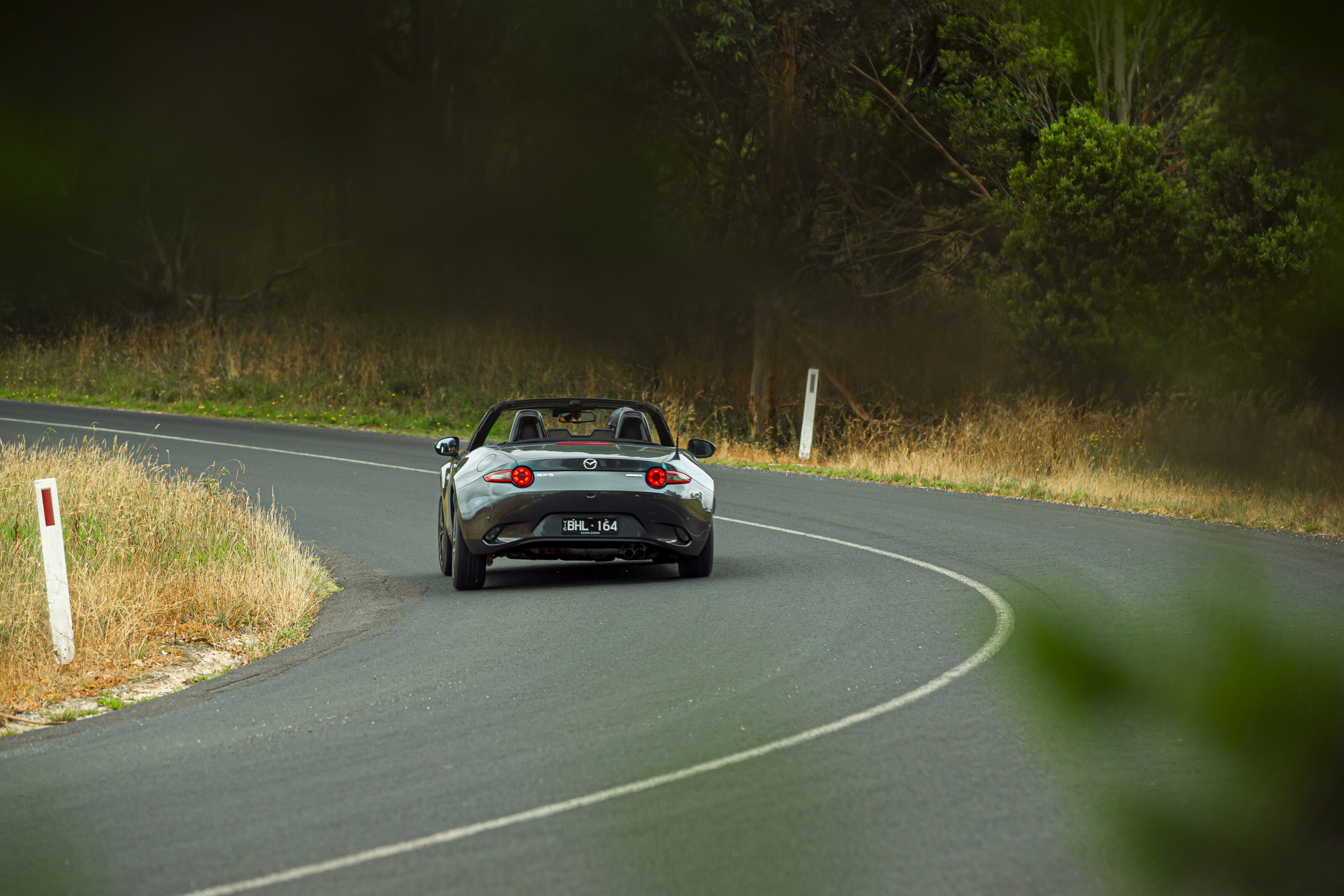
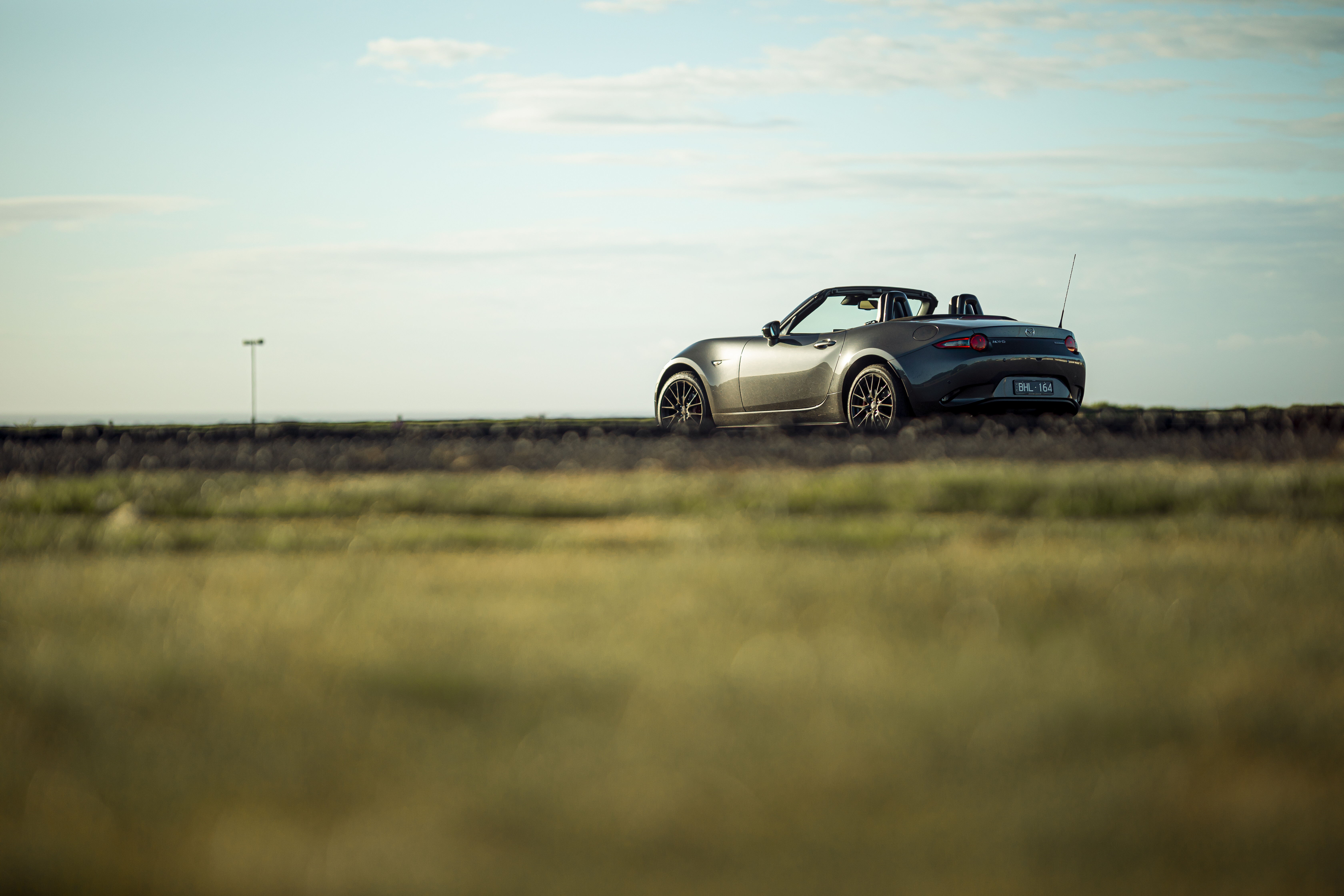
Mild hybrid rumours surround the next-gen NE MX-5 with the preservation of its lightweight stature of utmost importance, according to Mazda design boss Ikuo Maeda.
The next-gen vehicle is expected in 2024 and promises a monumental step-change with the inclusion of hybrid assistance. It remains to be seen whether it can continue to shoulder the heritage of Mazda’s lightweight icon.
Unless you’ve had the extreme privilege of driving (or even sitting) in a Lamborghini Huracan, it can be easy to dismiss the striking supercar as simply an Audi R8 in disguise.
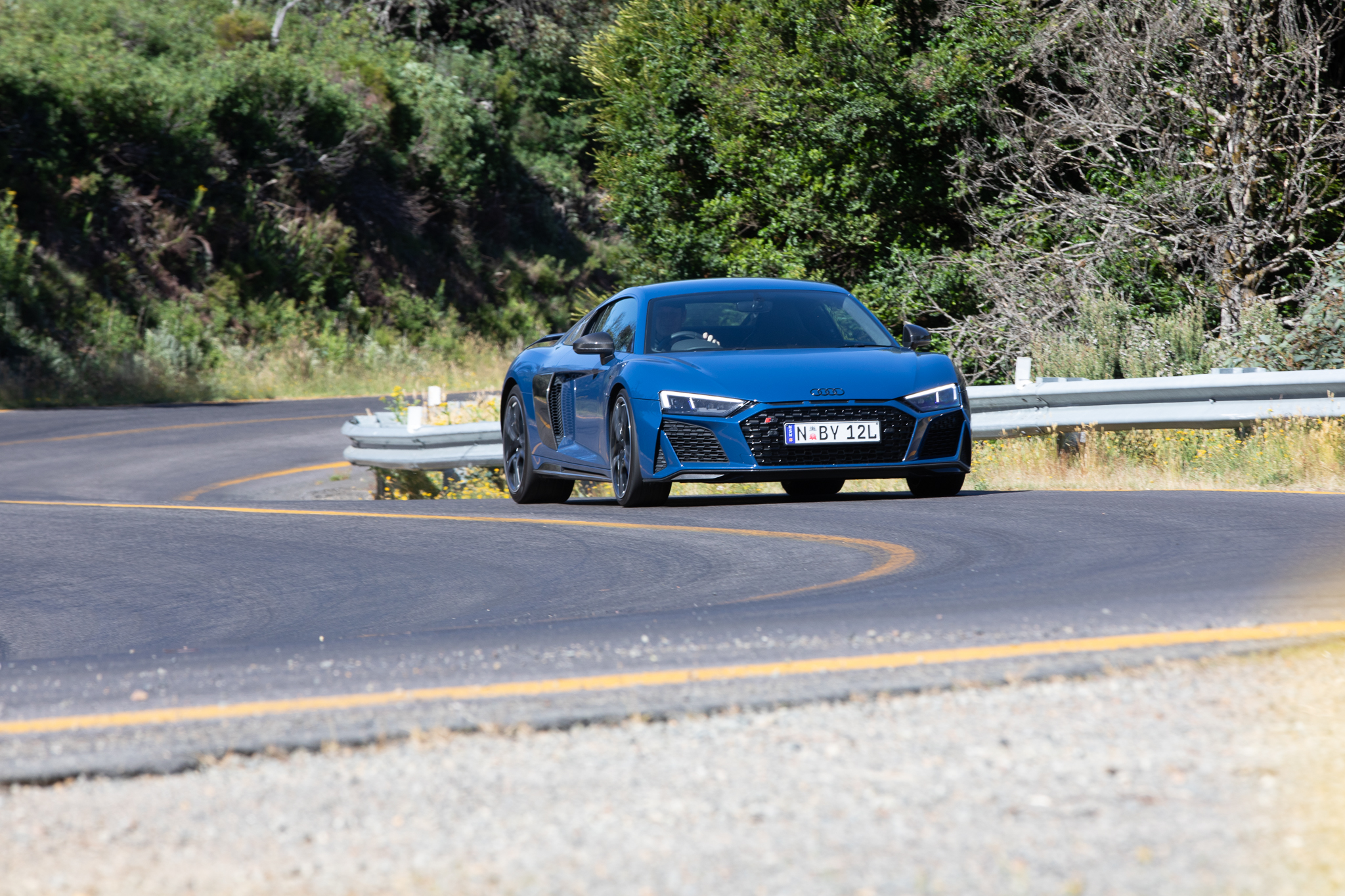
While the two share their basic underpinnings, and both of their respective 5.2-litre V10s are produced at Audi’s engine plant in Győr, Hungary, stepping into the Huracan Evo at PCOTY felt vastly removed from the Type 4S Audi R8 V10 I had been driving some weeks prior.
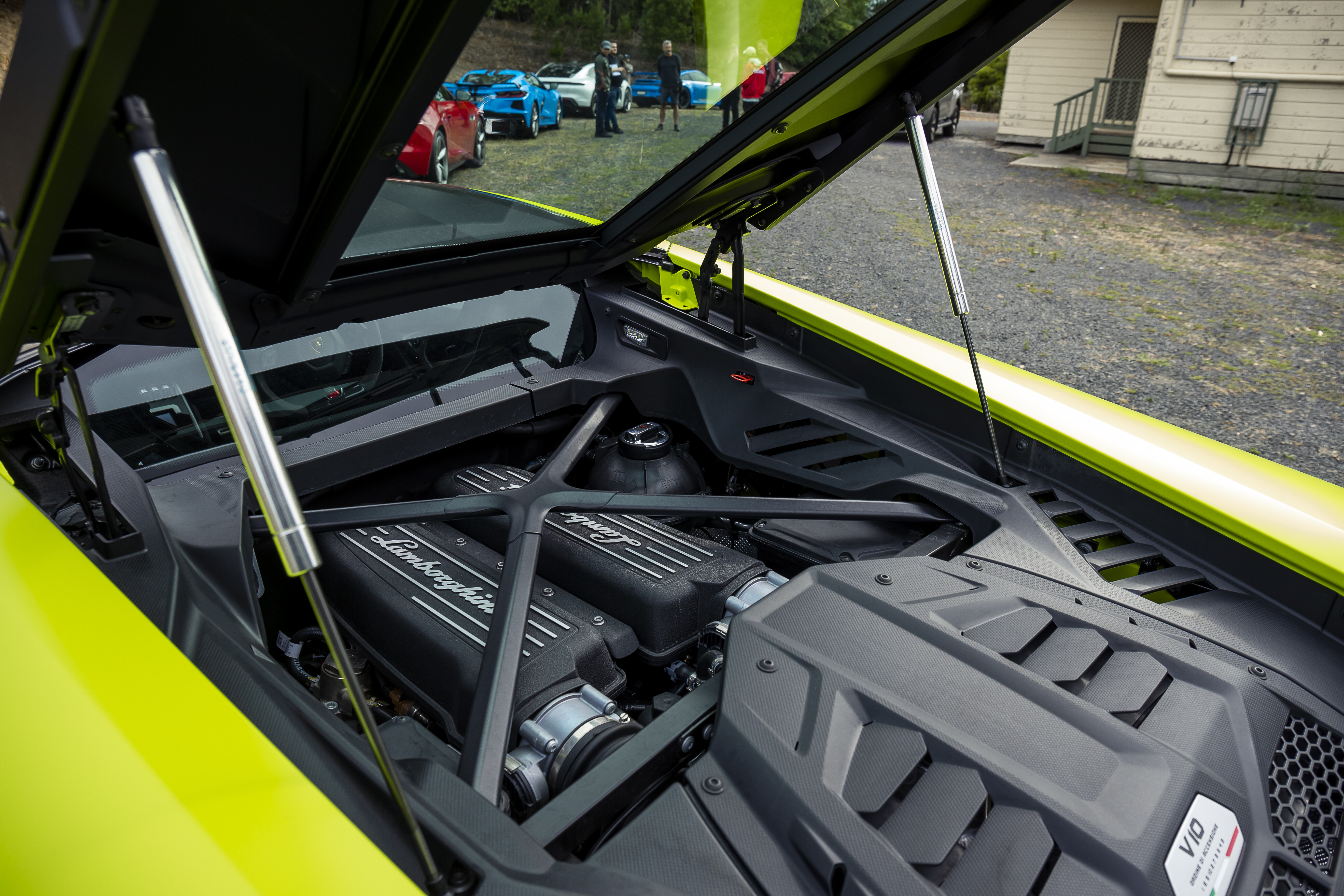
Even before the wheels start turning, this much is clear from the driver’s seat.
One of the R8’s greatest virtues is the familiarity of its controls belying its otherwise exotic silhouette. Without directly comparing the two, you’d struggle to discern between the cabin of Audi’s midship supercar and the more pedestrian TT coupe.
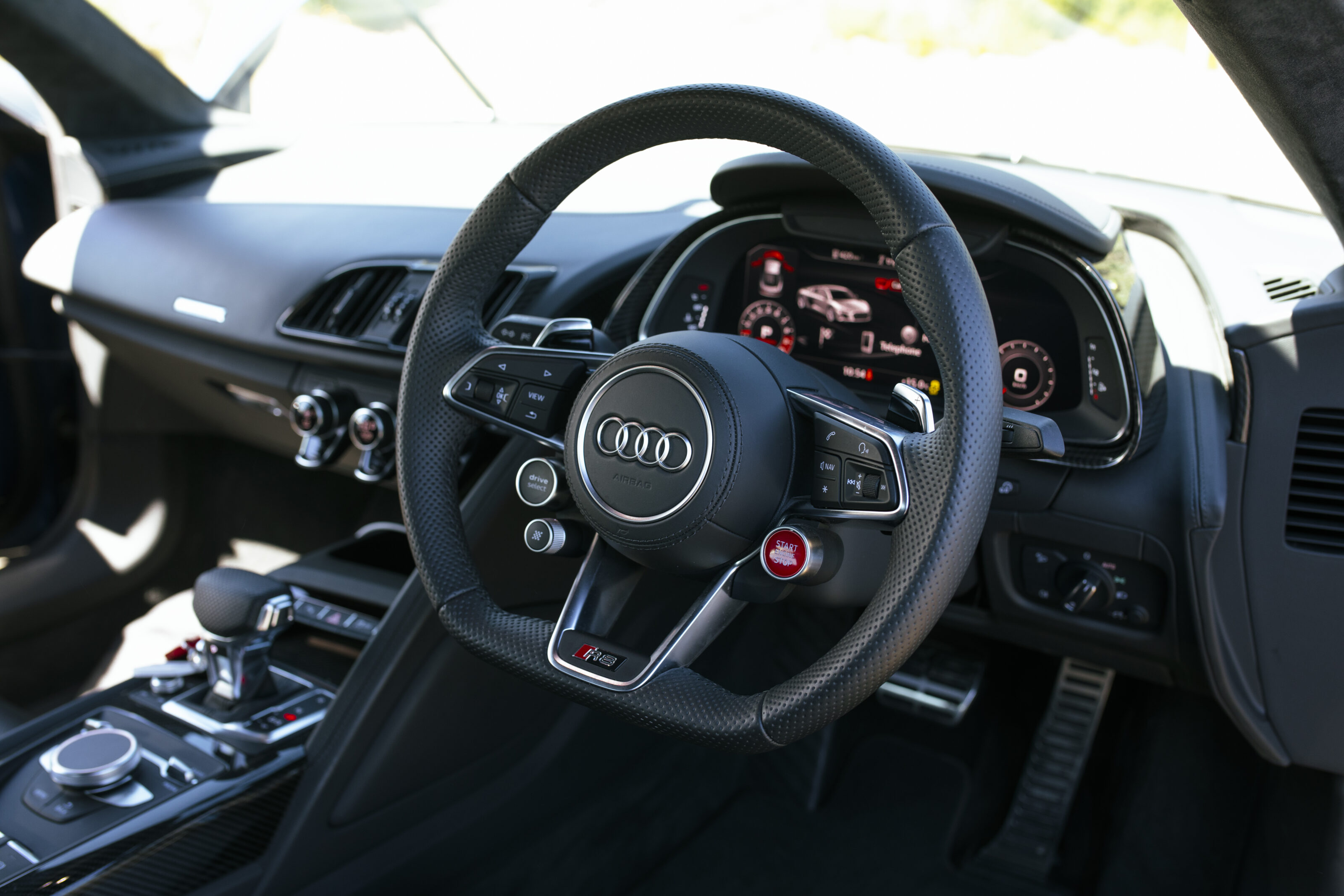
The ergonomics of the Huracan, however, are unlike anything else.
From the flip-up ignition sequence, shift paddle engaging first gear, steering-wheel mounted wipers and indicators to the high and centrally-mounted window controls – nothing in the Lamborghini is ‘where Audi left it’.
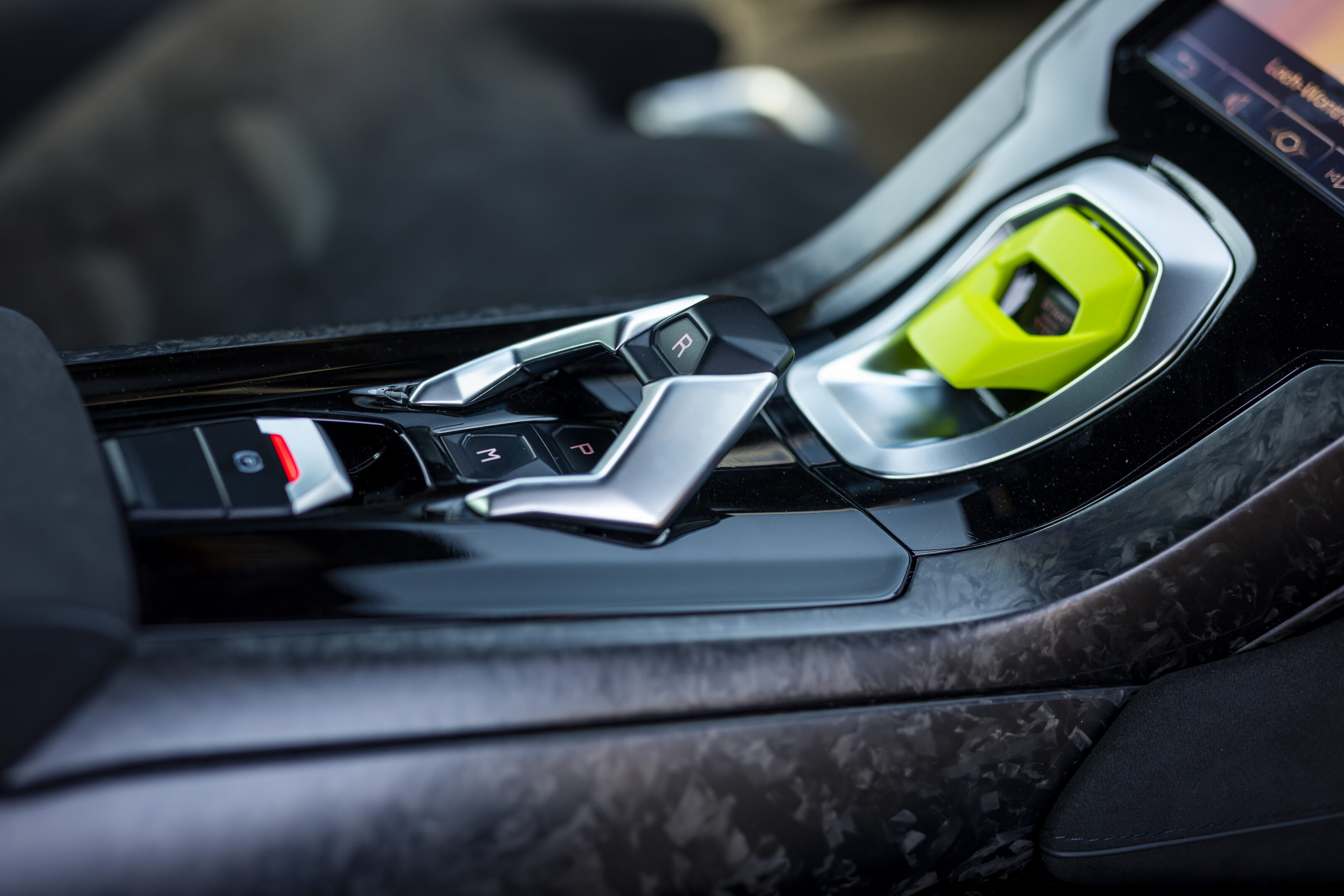
The Huracan’s Evo upgrades gain different cylinder heads and exhaust, lifting outputs to a Performante-matching 470kW while the Audi has to make do with ‘just’ 449kW. Those 21 extra kilowatts translate to a .25-second improvement to 0-100km/h (2.93sec v 3.18sec), and a 400m dash .36-seconds quicker than the Audi with a terminal speed ten-clicks higher.
You won’t necessarily feel those metric advantages by the seat of the pants, but the overall experience and character between the two supercars are drastically divergent in the delivery of their performance. It’s the details that make the difference. Recalibrated throttle mapping and shorter gearing in the Lamborghini lead to a far more explosive power delivery than the silky smooth R8.
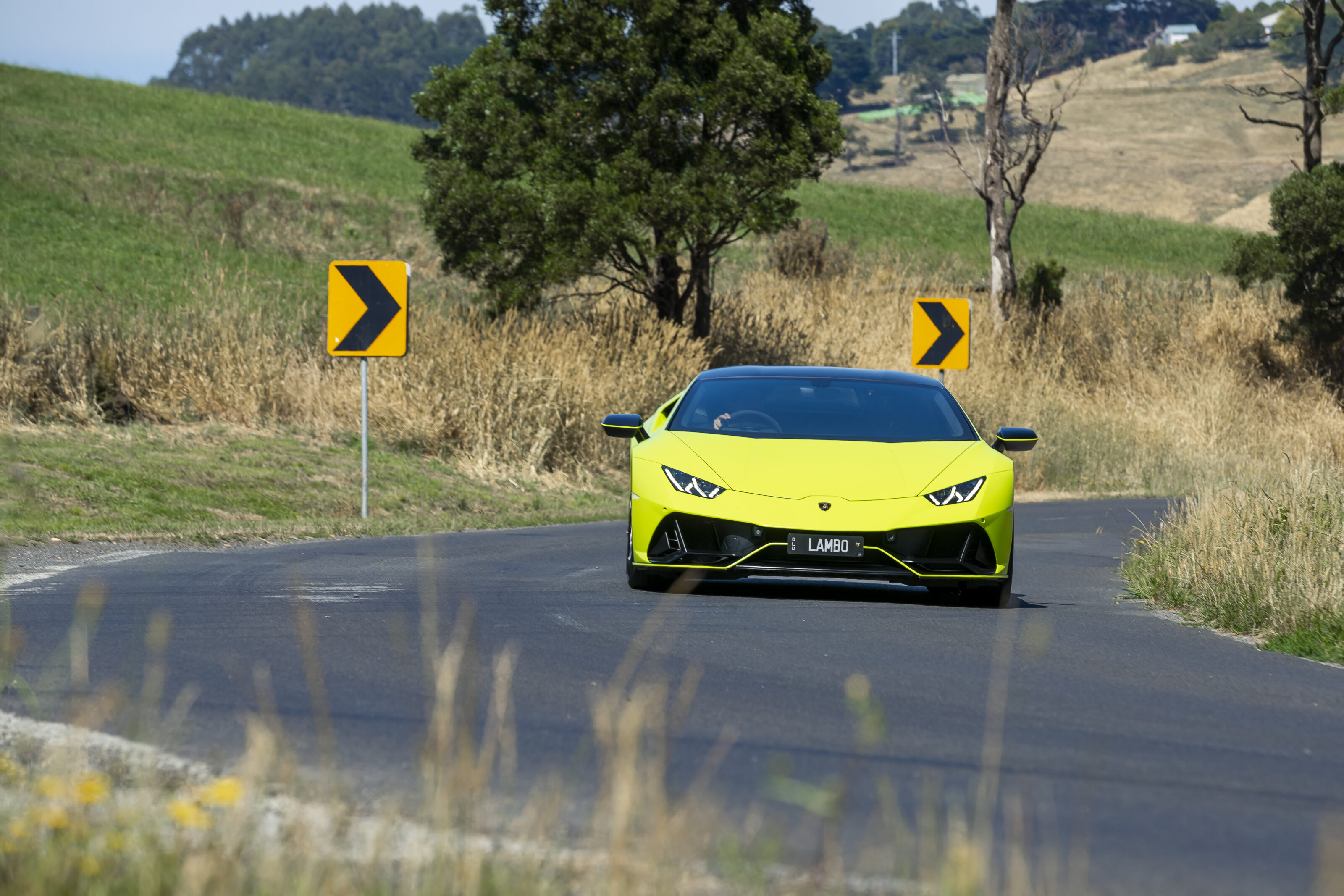
A quicker steering ratio also makes the Italian feel far more urgent and eager upon corner entry and, even in its quietest Strada mode, the extroverted Lamborghini sounds louder than the R8 in its most aggressive setting.
On paper, the two may present themselves as mechanical twins. In practice however, even we were shocked out how vastly distinct the two midship stalwarts feel in practice.
The sky above looks as though it has had a restless night. Flat nimbostratus offers a moody backdrop to the iconic Melbourne sign affixed to the bridge above Gardner straight. After three long days on the road, the anticipation amps up a few degrees at Phillip Island Grand Prix Circuit. Totalling 12 turns and 4.45km, PI requires commitment and demands respect in equal measure. Get caught up in the picturesque surrounds and you’ll quickly become a fixture of it.
“If you look at a flat track map, Phillip Island can appear easy. But what it doesn’t account for is the rise and fall,” says Luffy, departing his steeped knowledge to the seniors and newbies alike. Regaling a tale about a Lambo, a bird and high speeds, our gun driver goes on to warn that the birdlife is a genuine OH&S issue.
Using the Octavia RS, the judges complete sighting laps with included tips and tricks from Luffy as the skies continue to threaten. Only intermittent sprinkles fall throughout the day, never truly dampening the track or our progress.
In an automotive sense, progress is relentless. Power figures are rising significantly, tyre tech is advancing and engineers are finding ways to imbue a car’s chassis with incredible dynamic talent. MOTOR HQ is a hive of inquisition and Andy went in search of a quantifiable measure to showcase the performance development of both the SCOTY and PCOTY field.
The last time PCOTY took over Phillip Island was in 2008, and with Luffy doing the hot laps, it seems a pertinent source of reference.
The Volkswagen Golf GTI became a polarising car after the road loops. A true nitty-gritty hot hatch to its core the Mk8 is not. However, don’t let perceptions fool you. For context, take into consideration the fact that its lap time of 1:53.76 would put it ahead of a Mitsubishi Lancer Evo X and just about on par with a W204 C63 AMG. Phillip Island turned doubters into believers quick smart.
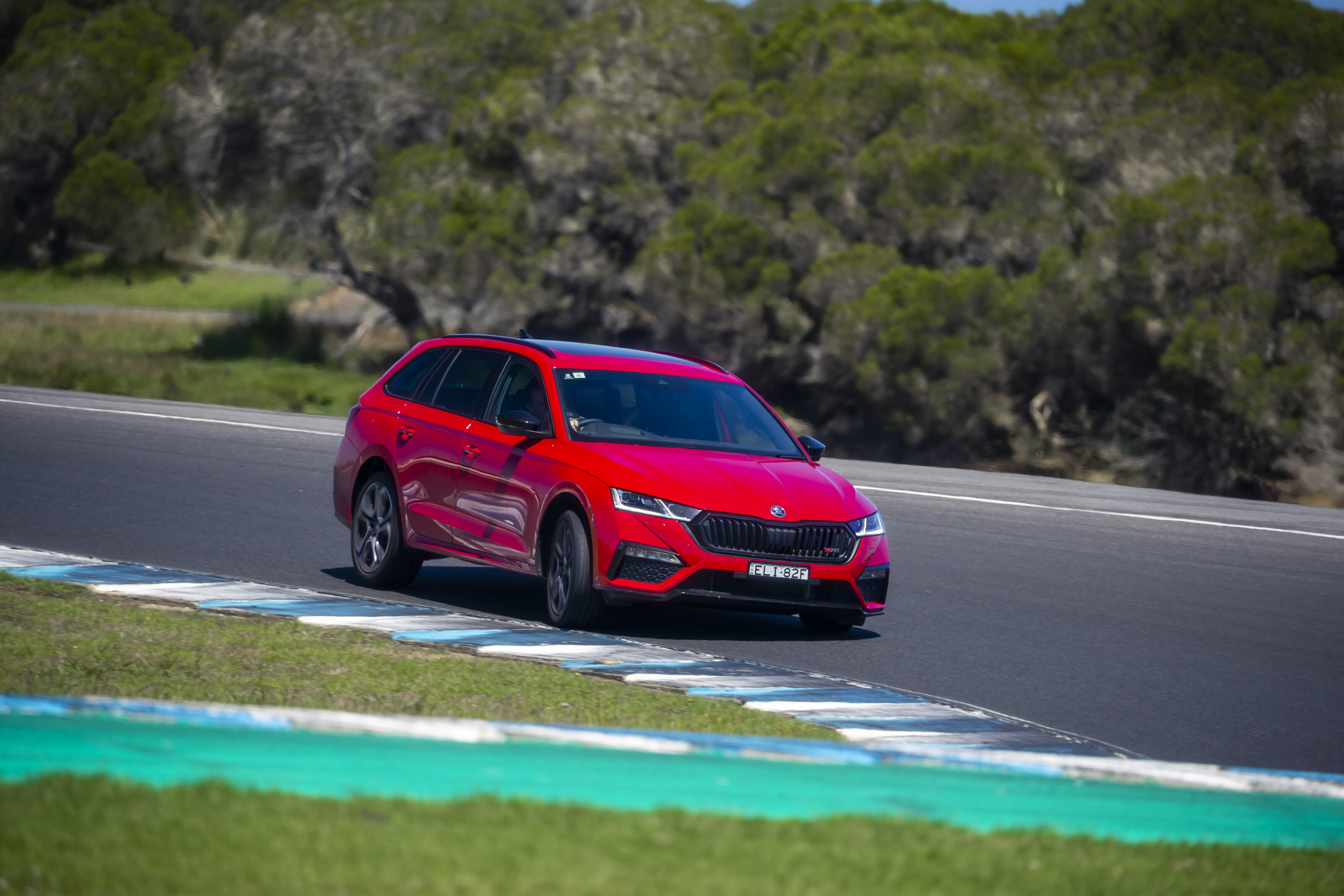
And yet, if the GTI impressed on track, the Skoda Octavia RS blew the judges away with its demeanour. As Luffy enthusiastically reported, “this thing is actually fun out there”. Based on the same, but stretched, MQB platform as the Golf, the Octavia proved stable with the extra wheelbase but remained playful in the rear.
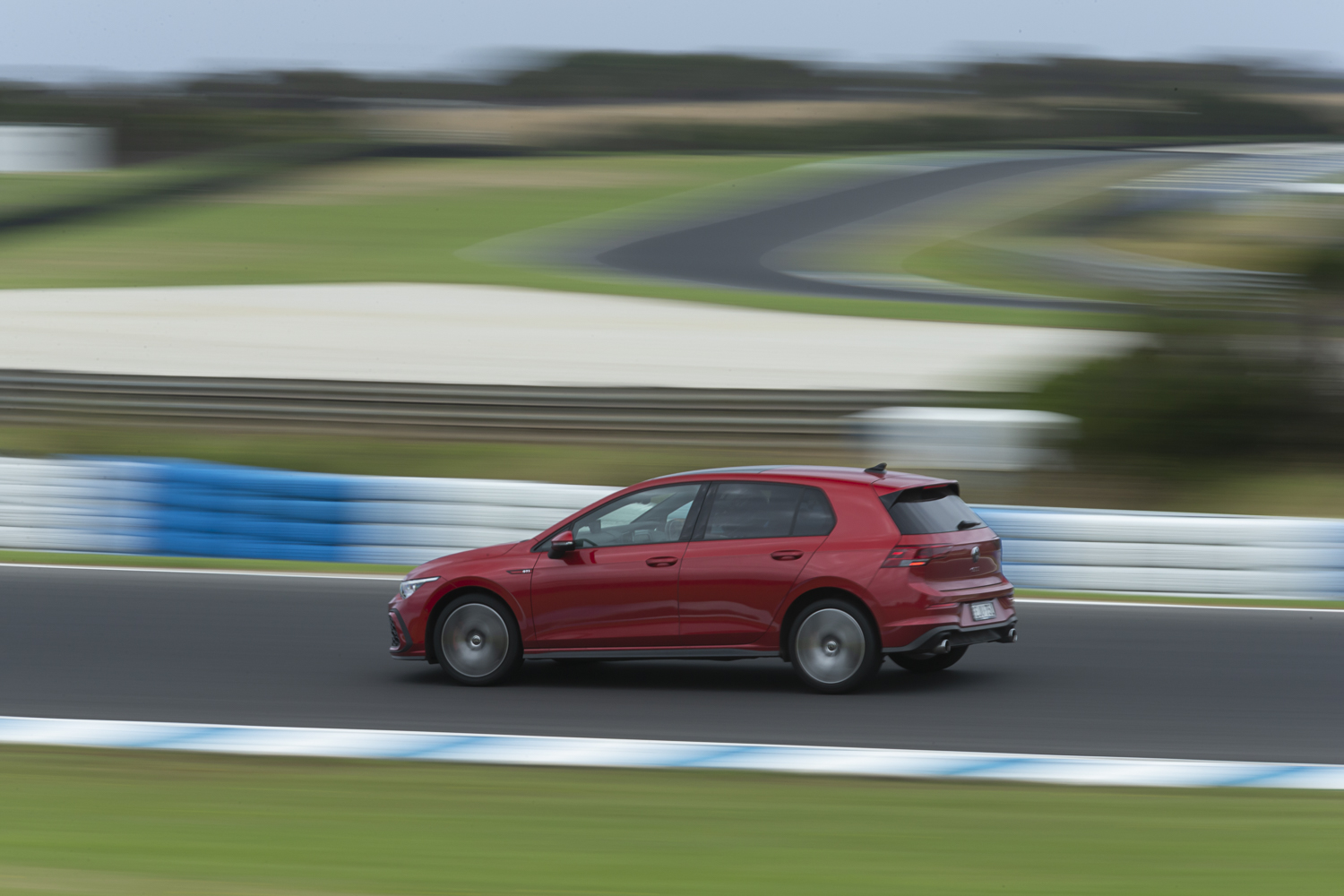
The RS clocked a lap time just 0.17sec slower than its VAG stable-mate (1:53.93), while it reached 100km/h in 6.43sec and covered 400m in 14.32sec at 163.07km/h. Admittedly, if PCOTY had been run at Winton the svelte wagon’s narrow fronts would have Czech-ed out with torque steer, but the flowing nature suited the RS. Who said pragmatic and performance must remain mutually exclusive?
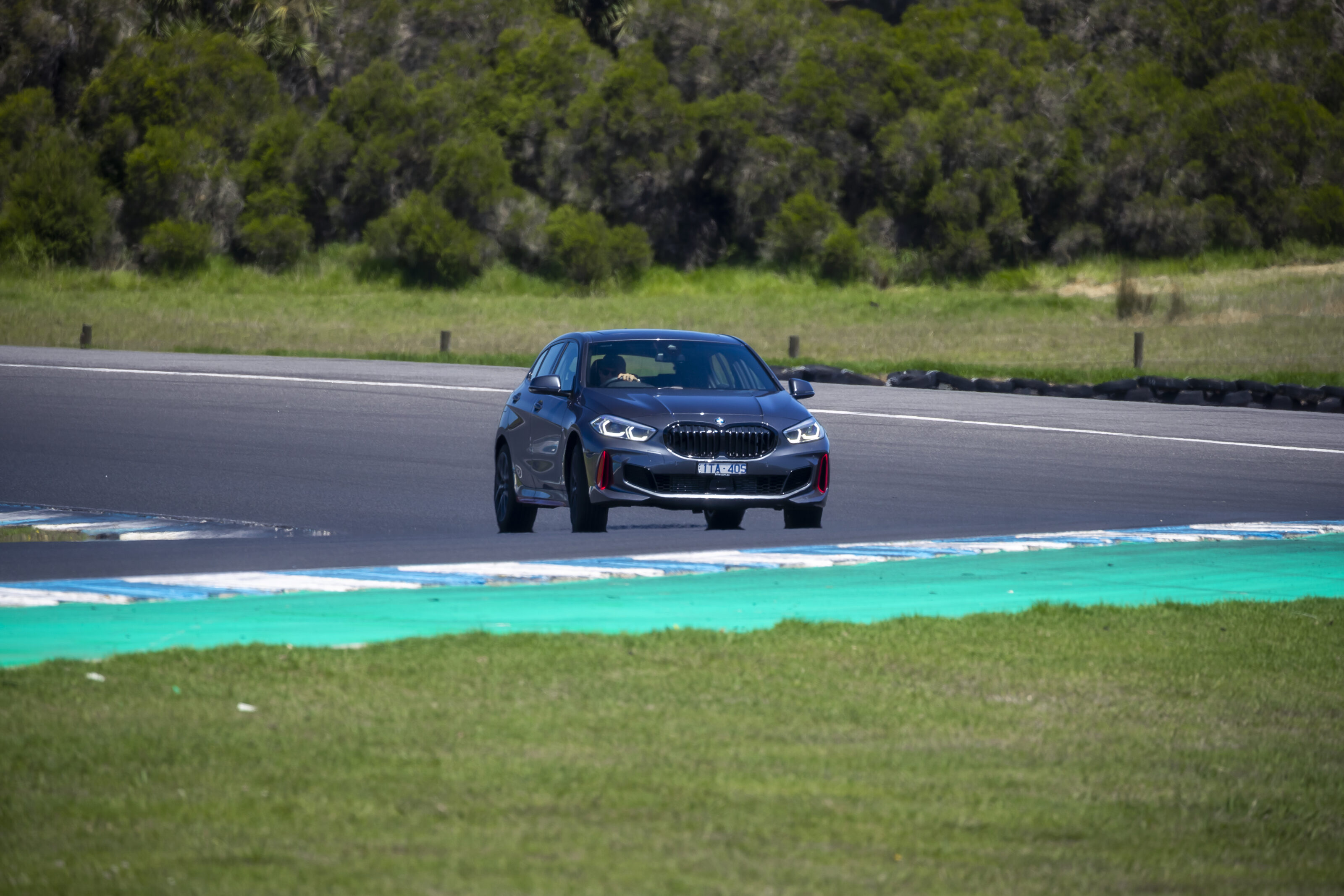
If the GTI genes helped make the Octavia look good, then both contrived to make the BMW 128ti look underdone. While the track helped massage away many of the torque steer and under-damping issues that we encountered on road, the Bavarian hatch always felt strangely inert.
“The sound symposer has such a characterless drone at the top end and the rev limiter is so soft, I kept gently butting into it, making it feel like it had gone into limp mode,” noted a nonplussed Enright. Against the crisp and composed Golf GTI, the BMW was never really at the races. Most judges alighted the cabin and no longer searched for its keys.
The ‘one-and-done’ mentality oddly fell on the i30 Sedan N’s shoulders, too. Despite receiving enthusiastic reviews post road loops, with its sorted front-end bite and impressive turn of pace, translating to PI, the hot South Korean fell somewhat out of love for some. And yet it’s blisteringly quick, posting the fastest time of the front-drivers at 1:52.29. That marker would have seen it nipping at the heels of an SL63 and quicker than a TT RS in ’08.
More surprising is that the Sedan N clocked 126km/h at the apex of Lukey Heights (Turn Nine), the fourth highest of the entire PCOTY field. It even dipped below six seconds to 100km/h (5.95) and went on to cover 400m in 14.01sec at 167.7km/h. Still, Luffy admitted that he wished the off-throttle theatrics were backed up by on-throttle drama and that his one run was “enough”.
That couldn’t be further from the reactions elicited by the Ford Focus ST. “The ST changes your perception of a front-wheel-drive car. There is virtually no understeer and it is very playful in the rear end of the car – but not too playful as to make you scared of it,” Luffy said.
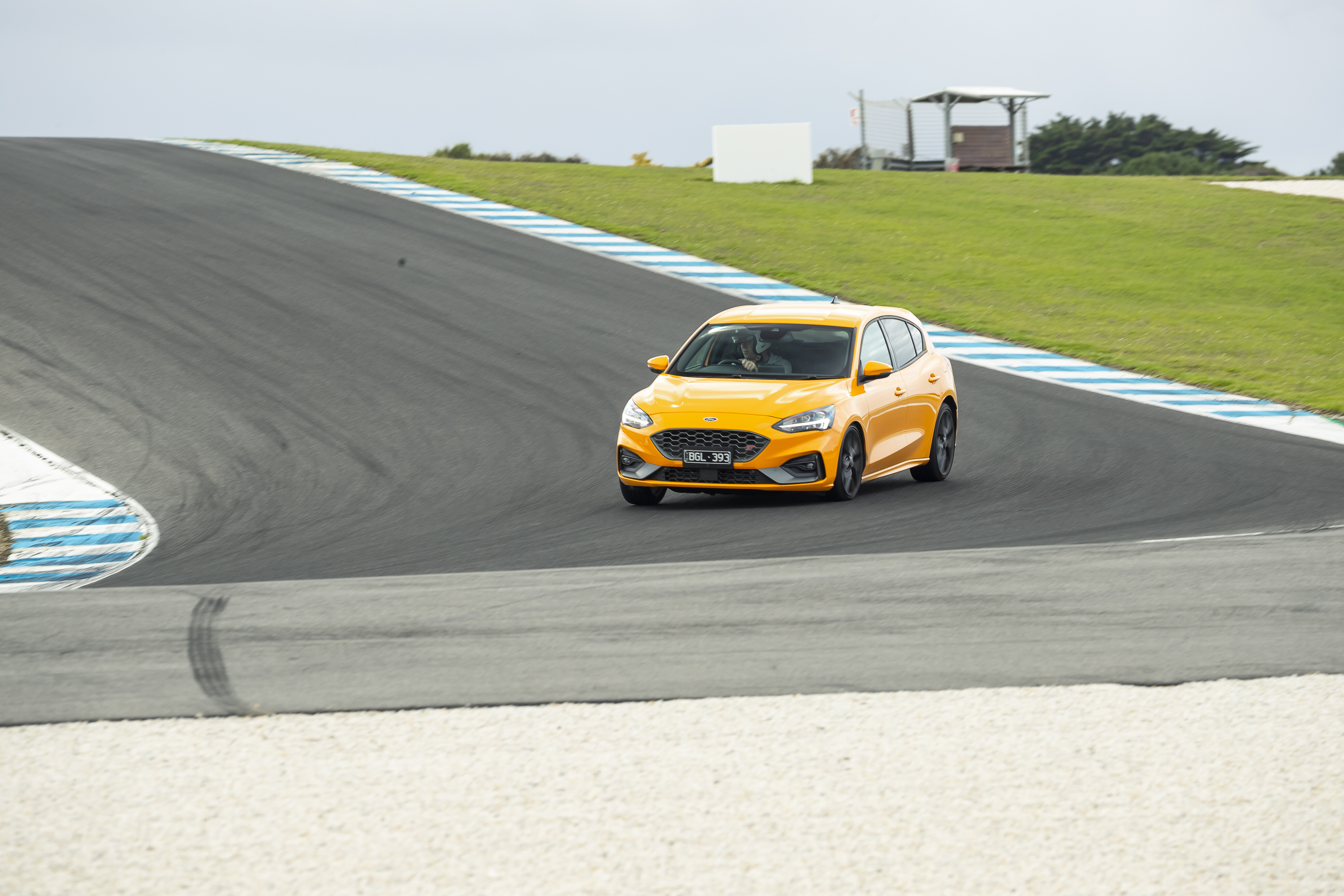
Despite a bit of a dead middle pedal on the second lap and tyres that had seen some use, the Blue Oval contender posted a 1:53.42 lap time. The strong 2.3-litre four-pot also aided figures of 6.44sec to 100km/h and 14.11sec to 400m at 164.5km/h. The ST became a focus of the SCOTY group.
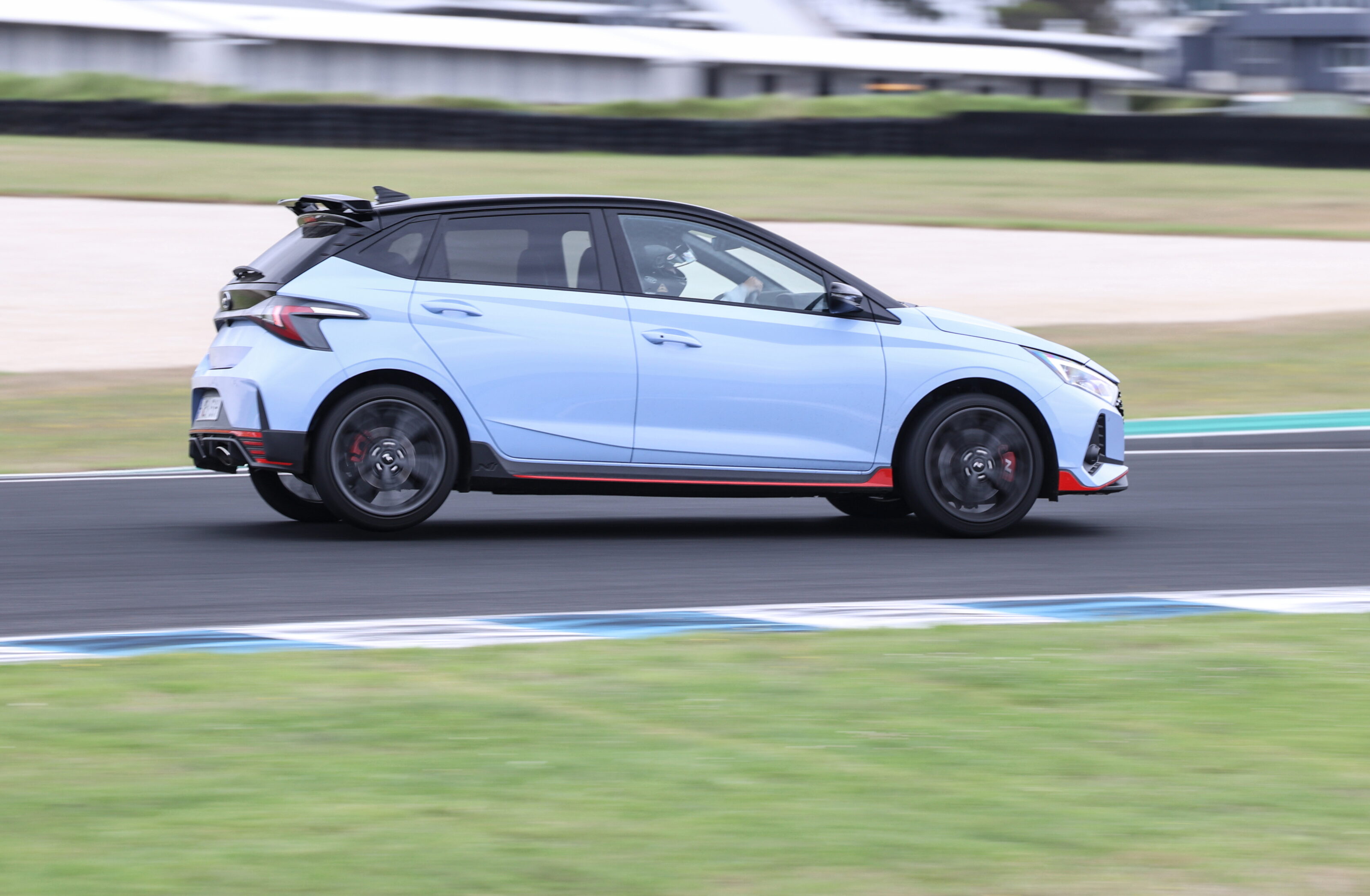
Attention isn’t something the Hyundai i20 N struggled to garner pre event. However, PI was just too big a canvas for the Korean to paint its pitch, with the open and fast nature not tailored to the diminutive 1.6-litre’s 150kW. It’s no surprise, then, that the i20 N’s 0-100km/h time of 7.45sec is the slowest, as is the quarter-mile marker of 15.12sec at 151.5km/h.
The former figure is behind the manufacturer claim of 6.7sec, with the manual front-driver proving hard to launch into a near-gale and the change from second to third gear arriving just before 100km/h. However, all it’s on-paper results, including its lap time of 1:55.79, pale into significance when you’re actually driving it on track. Kirby professed that it’d be his track car of choice to learn and hone his skills.
If figures aren’t a direct representation of fun, then the MX-5 takes the cake. It recorded the slowest terminal speed by a margin, being the only contender not to crack a double tonne. And yet, we all had an absolute ball in it. “It moves around and as a driver it gives you really good feedback,” says Luffy before adding, “it makes you refine and finesse your driving.”
Some judges reported a stability system nibbling away in awkward, high-speed sections. Its lap time of 1:58.02, the slowest of the field, is in no way indicative of the grin-inducing experience. The willing 2.0-litre did help it reach 100km/h in a respectable 6.68sec before crossing the 400m line in 14.65sec at 152.9km/h.
Respect is something the GR Yaris Rallye needed to regain. And with the improved mechanical underpinnings, we had high hopes despite the driving position and a lack of vision continuing to hamper its approval rating. That said, it’s devastatingly quick, and despite the short wheelbase it remains planted through the long, open-arc corners.
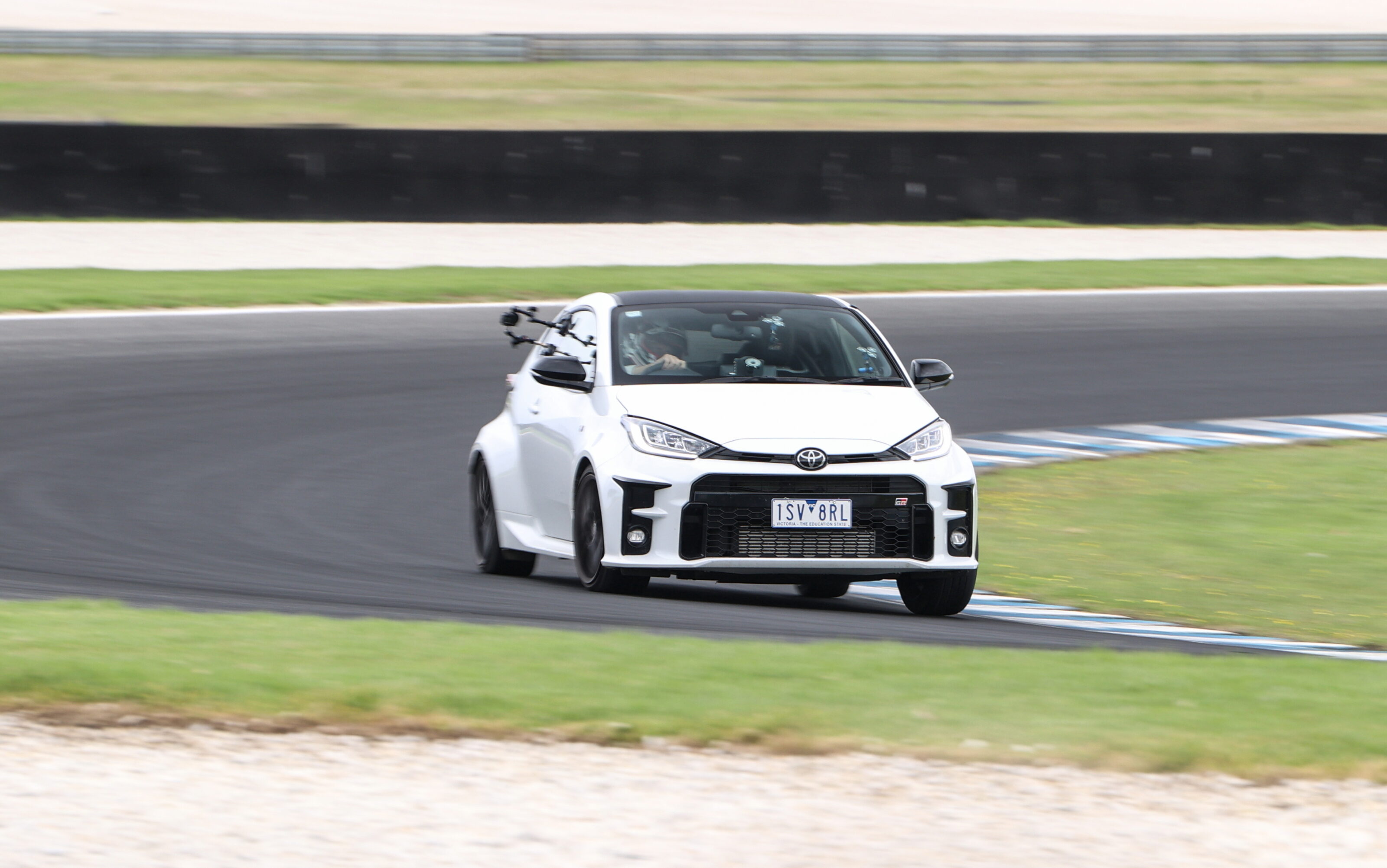
Luffy added that “it really comes into its own in the low-speed stuff,” That’s backed up an apex speed of 62.5km/h at Honda (Turn Four), the highest of the SCOTY field. It also stormed to a 1:51.2 lap time, bested only by the ’Stang, with Enright pulling a 4.49sec 0-100km/h time and a 12.63sec quarter. The trick? Flat shifting and having less regard for mechanical sympathy…
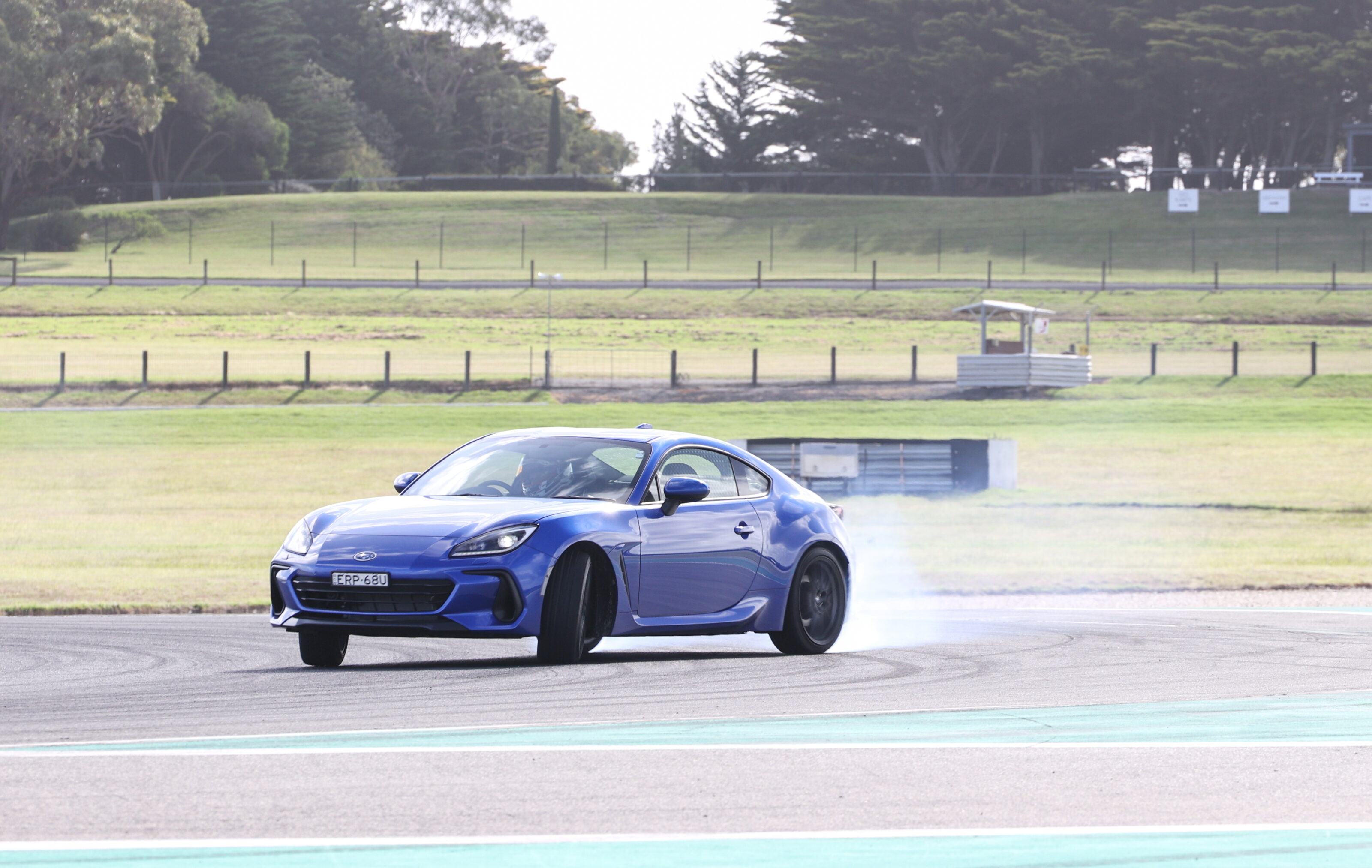
That method has always been familiar to WRXs, too. Dial up redline-tickling revs, say a prayer for the driveline and then drop the clutch. Not so with the BRZ. Despite Bernie, a previous Toyota 86 owner, professing that the new boxer’s 174kW is still underdone, it will spin the rears. Balancing the throttle resulted in a 0-100km/h time of 6.21sec and a quarter mile in 14.24sec at 164.9km/h.
Its lap time of 1:54.41 is mid pack at best, but still beats a Lancer Evo X for context. However, the BRZ didn’t finish higher than fourth in any of the SCOTY data, proving that the stopwatch isn’t what the BRZ is all about. It has an infectious effervescence, with Luffy saying “it’s a car that rewards good driving.” And yes, we know it’s synthetic, but the new soundtrack is also much improved.
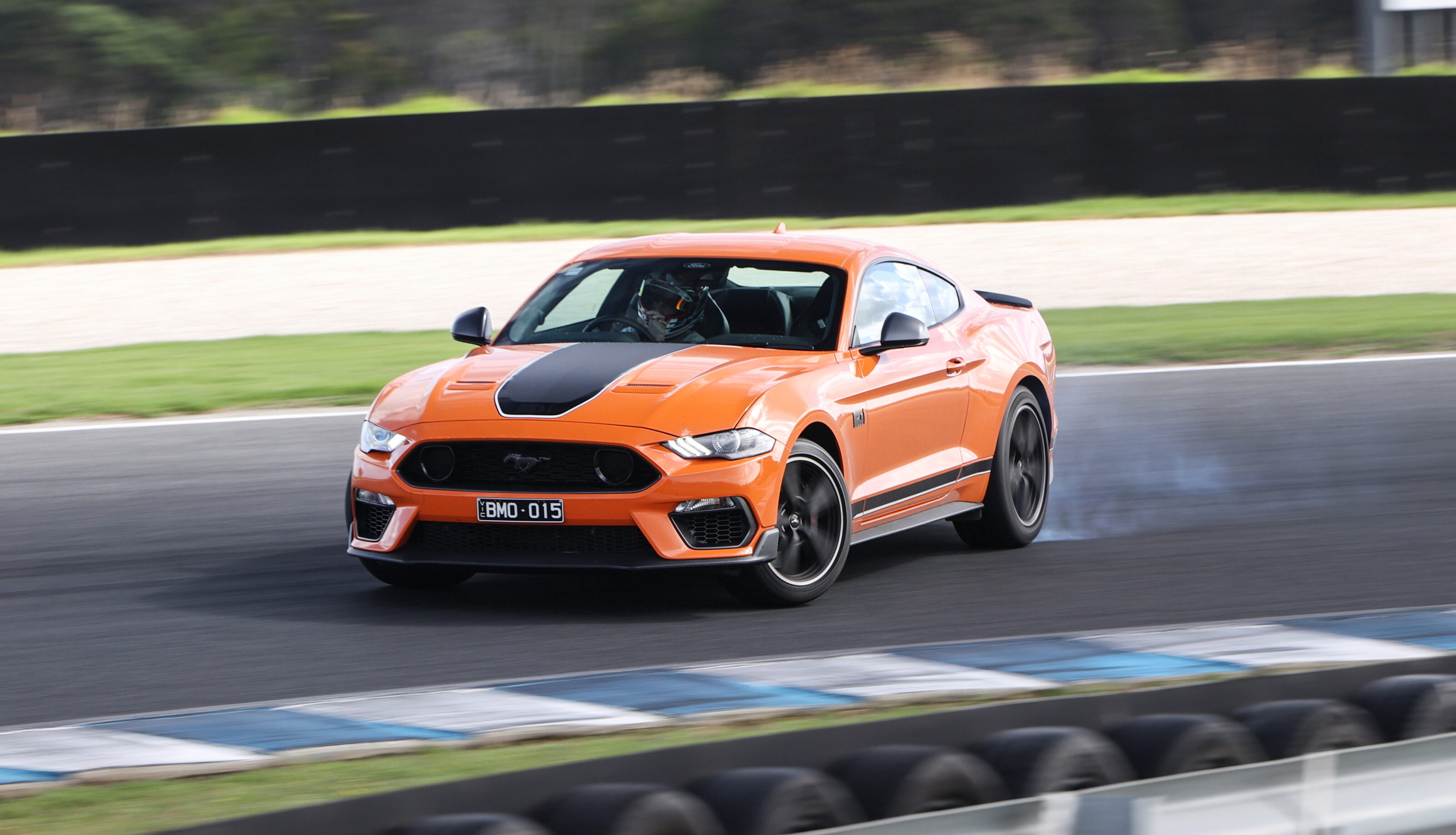
However, if aural pleasure is how you get your kicks, the Ford Mustang Mach 1 claims SCOTY top trumps. Bombing down Gardner straight, the 5.0-litre Coyote V8’s roar is as charismatic as it is loud. The real surprise was its on-track competency. This is a ’Stang that not only handles with ample front-to-rear grip, but also newfound endurance.
The data traces proved that it wasn’t just making ground on the straights, but in the corners, too, with monster apex speeds. Enright jagged a claim-beating 0-100km/h time of 4.69sec before announcing he’d never be able to repeat that M3-beating run.
“It defies belief that a car of this size, with that big of an engine over the front, can be so good on the way into and through the corner,” Luffy said with a grin on his face after seeing the 1:48.32 lap time. The biggest compliment attached to the ’Stang is that it never finished lower than second in the data and produced numbers that qualify it for the PCOTY field at the price of a SCOTY contender.
Speaking of PCOTY, taking the overall 0-100km/h honours is the brutally effective Porsche Taycan Turbo S. In anyone’s book, reaching the national speed limit in 2.82sec and covering the quarter in 10.73sec at 202.94km/h is hauling. It’s so savage on launch that it beggars belief how it’s Pirelli P Zero hoops find purchase, with all four tyres digging in and catapulting the 2295kg behemoth into the ether.
However, its Boxster-rivalling 1:45.89 lap time proves the Taycan handles like a Porsche. All the controls feel more ICE than EV. You just have to manage all that weight. With torque vectoring and rear-axle steering there’s a lot to wrap your head around, but it’s a surprisingly rewarding experience once you do.
In many ways, the F-Type R is the antithesis of the battery-packed Taycan. It oozes old-school charm with its burbling supercharged V8 offering a hedonistic soundtrack and buckets of grunt. However, as Luffy says in summary, “everything that makes it good on-road is probably its shortfall here at the track.”
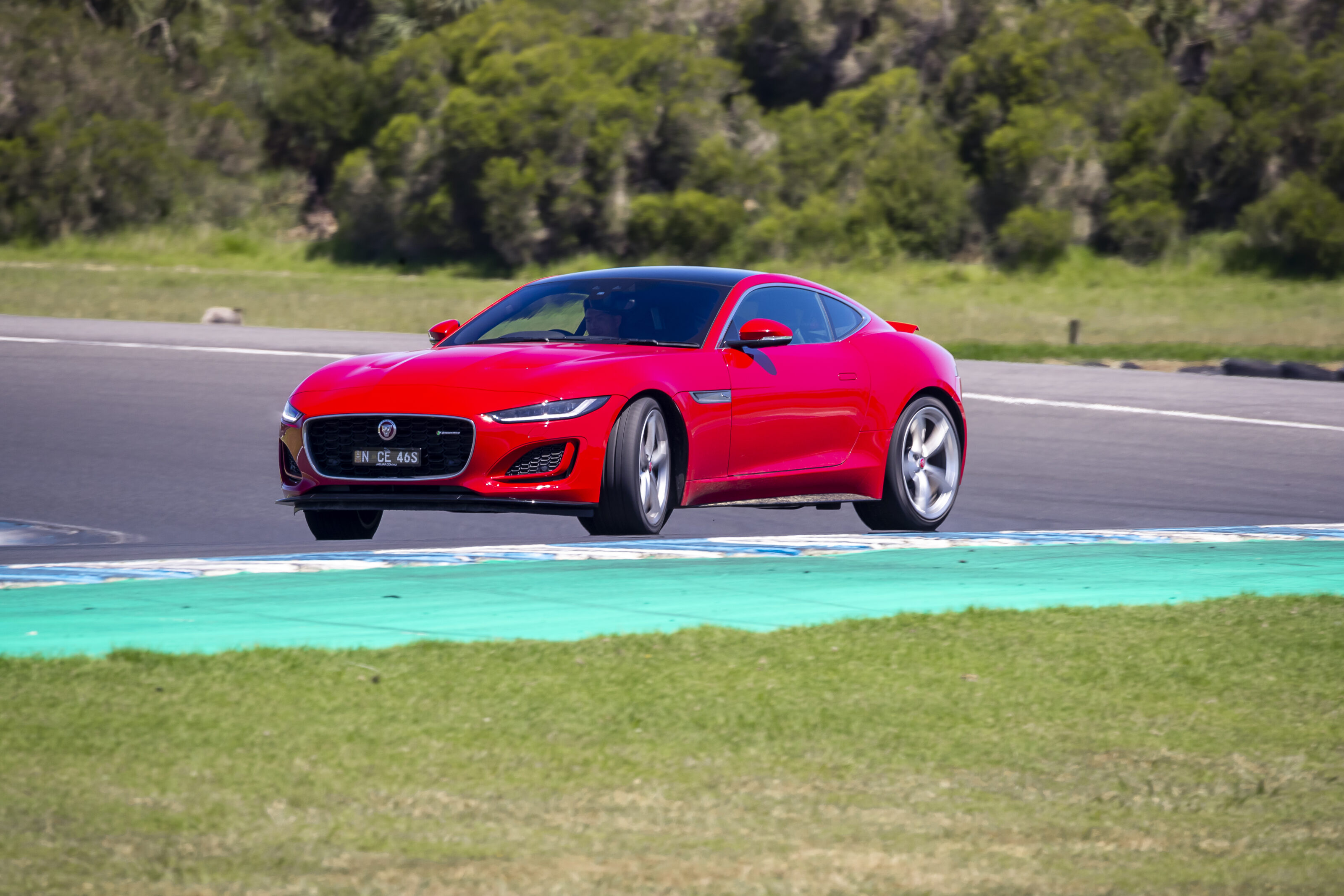
Its 1:49.69 around PI is slower than the hard-hitting Mach 1, as is its 0-100km/h time of 4.81sec and 400m mark of 12.94sec at 183.7km/h. It’s a fairly easy car to drive on the limit, but it ultimately leaves you wanting more as a track tool. And for roughly the same coin, you could slide into something a little more focused by way of GMSV.
Pricing was always going to be key with the mid-engine C8 Corvette. And at $160k, the 3LT packs a lot of visual presence and performance for the price. Yet, even with the downward sloping pit straight, the American hero couldn’t come close to its claimed 0-100km/h time of 2.9sec, reaching the marker in 3.63sec before completing the 400m dash in 11.68sec at 194.5km/h.
Everyone found it approachable and as Luffy said, “it’s really fun to drive on the limit”. It’s a platform that could easily cope with more than its 369kW and 637Nm. Did anyone say Z06?
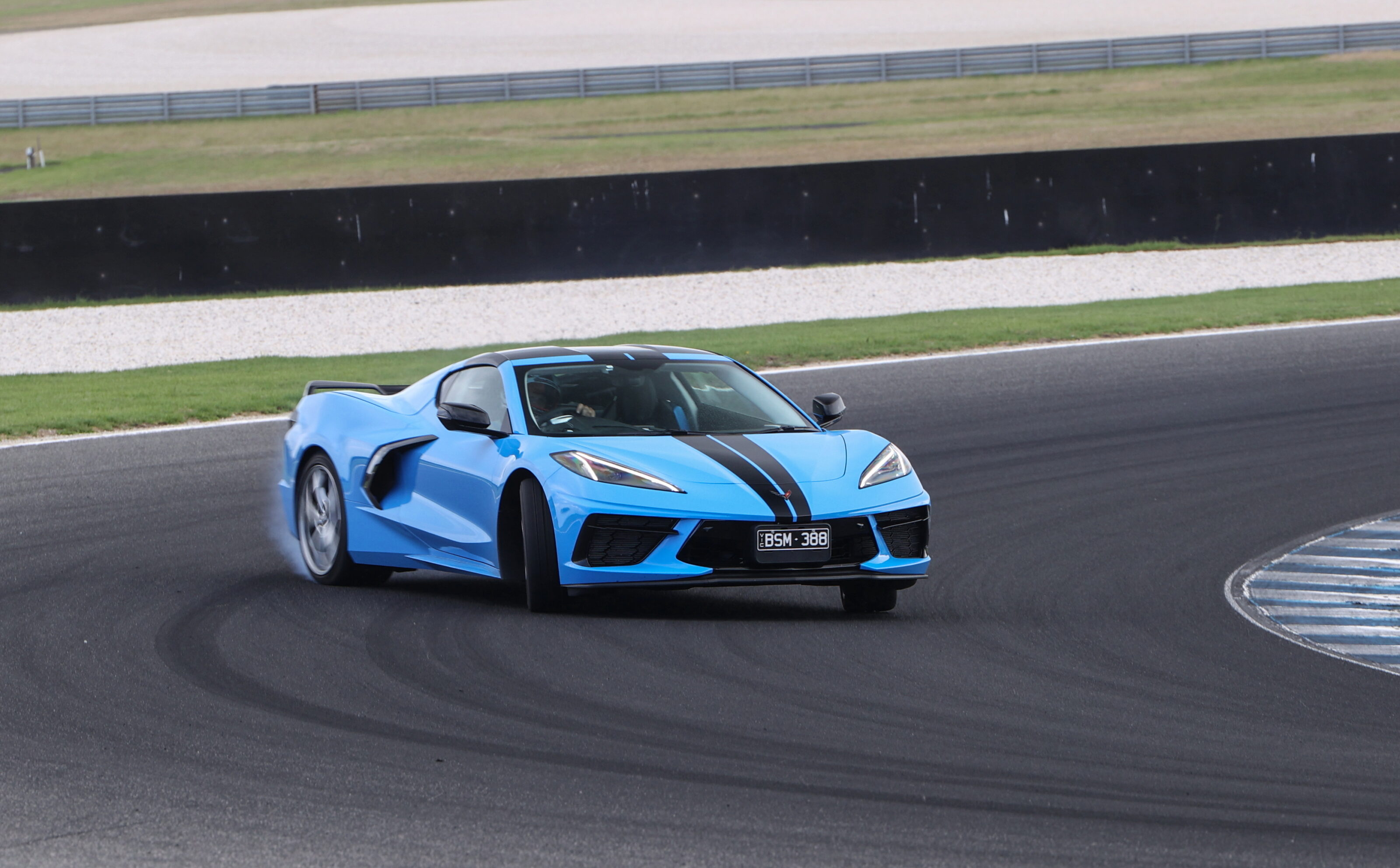
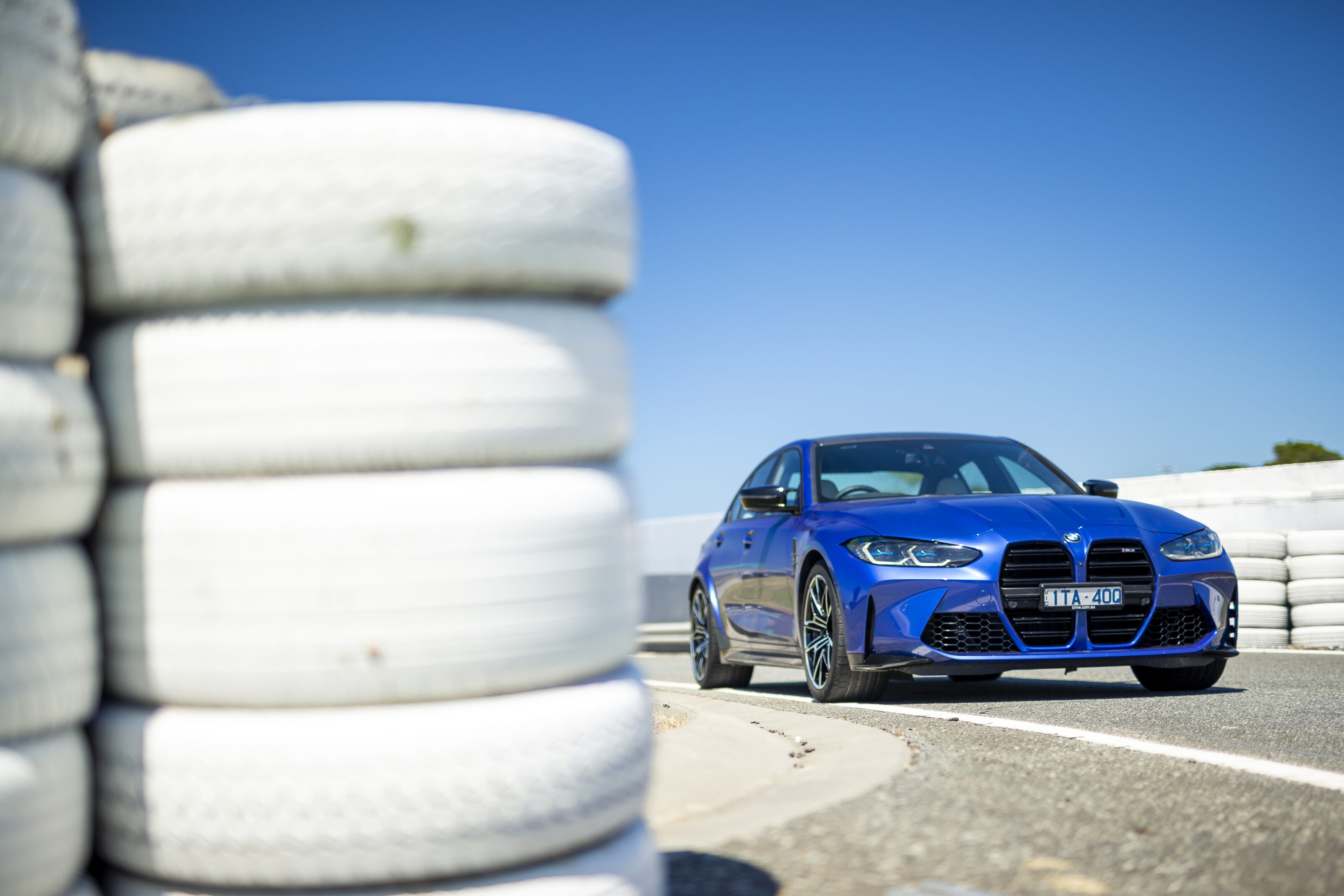
Getting the C8 into the right drive mode is crucial, with the steering feeling a little more natural on track than the PlayStation-style feedback it was giving on road. However, the C8’s 1:45.22 lap time was beaten by a four-door sedan, the BMW M3, also known as PCOTY’s most afordable entrant. In many ways we were a bit miffed at not being able to secure an M3 Competition xDrive. However, even on track the three-pedal ‘base’ model proved itself worthy.
Then it went and laid down the third-fastest lap time (1:45.04) of the entire event. For reference, that figure is a whopping 4.8sec faster than the E92 M3 DCT Luffy lapped for PCOTY ’08. Backing up the comments surrounding its front-end competence is the fact that the M3 recorded the highest apex speed for the two slowest corners, Honda and MG (four and 10).
Enright had an interesting moment where, suspecting he was in M Dynamic Mode and not with all aids off, launched into a huge high-speed slide on the exit of Southern Loop. Thankfully, the M3 has largely traded the F80’s spiky nature for predictability, especially with MDM allowing for lurid slides with a safety net. The manual gearbox added a layer of engagement, even on track. However, it did hamper the 0-100km/h time at 4.75sec and the quarter mile at 12.91sec at 187.7km/h.
They might be of the same ilk, but the Alpina B3 is a very different proposition to the M3 depsite the fact that BMW has recently brought the off-shoot manufacturer in-house. The M340i-based Buchloe bruiser runs rings around the home-grown M product in a straight line. Made for the autobahn, the B3 blasted to 100km/h in 3.87sec before going on to 400m in 11.82sec at 191.91km/h – the latter is a full second faster than the M3.
The advantage is due to the all-wheel-drive traction and an extra 150Nm. Its lap time of 1:48.71 is noticeably slower than the M3 but it remained entertaining on track with Luffy saying “you can manoeuvre it and do what you want with it”.
The Porsche Boxster 25 Years came under fire for being a little too obedient. Musings of a lack of X-factor during the road section surfaced. After a day at Phillip Island, judges warmed further to it. Essentially a GTS in anniversary-spec clothes, the Boxster shone when, finally, its engine could sing freely in its upper registers. Luffy’s assessment that “it’s one of those cars that when you keep giving it more it’ll take it” rings very true.
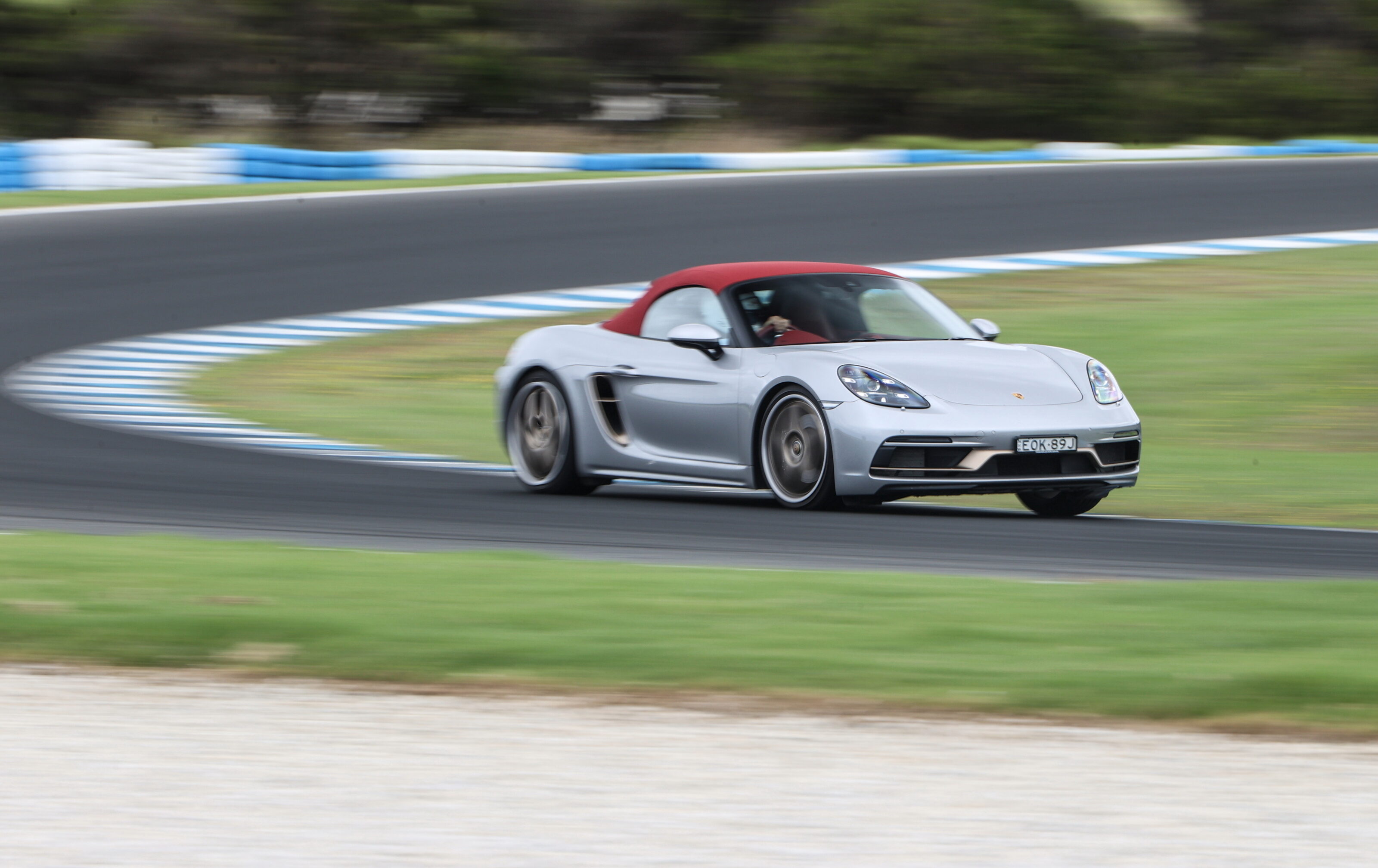
A keen front end and an unstickable rear axle led to a 1:45.60 lap with the tall gearing proving not such an issue on track. It even clocked a higher V-max than the ’Vette. A 294kW 4.0-litre six and a ruthlessly efficient launch-control system saw 100km/h flash by in 4.09sec and the quarter mile in 12.03sec at a toupee-scaring 190.06km/h.
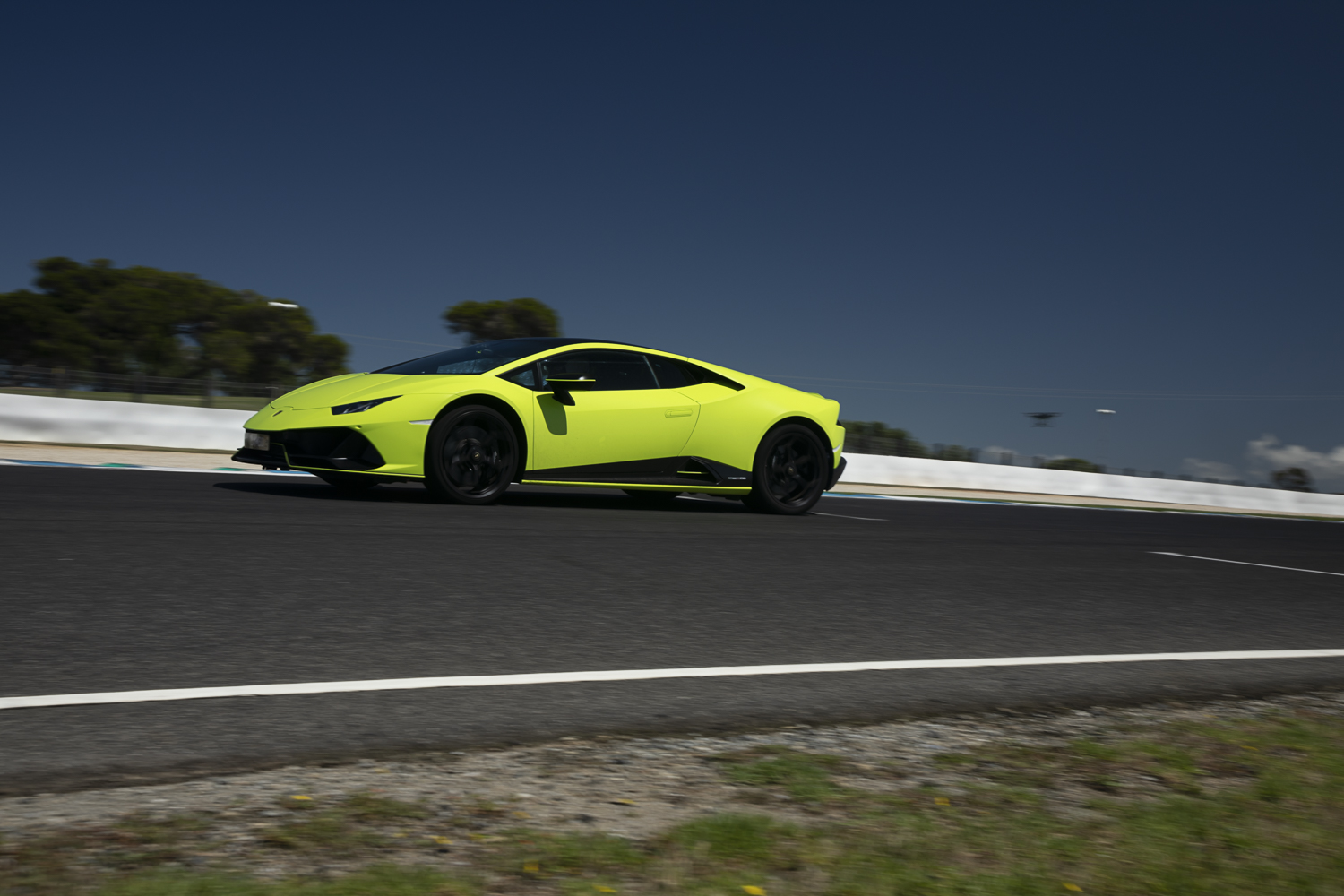
The Lamborghini Huracán EVO Fluo Capsule is the polar opposite of the 25 Years. It’s a bit of an animal. And its soundtrack down Gardner straight is one to savour. With a lively rear axle (including rear steering) on approach to a corner, braking is best done in a straight line before squaring off the corner to avoid the mid-to-exit understeer. It’s all about managing the, ahem, raging bull.
The 5.2-litre V10 dominates the experience in both tone and power delivery with the dual-clutch gearbox firing shifts in rapid order. The lap time of 1:43.09 is almost two seconds faster than that of the Gallardo LP560-4 tested in 2008. If fitted with Corsa rubber instead of the Pirelli P Zeros the lap time would drop. However, the Lambo did claim the highest V-max at 266.5km/h and the quickest 400m dash with a 10.57sec run (at 219km/h).
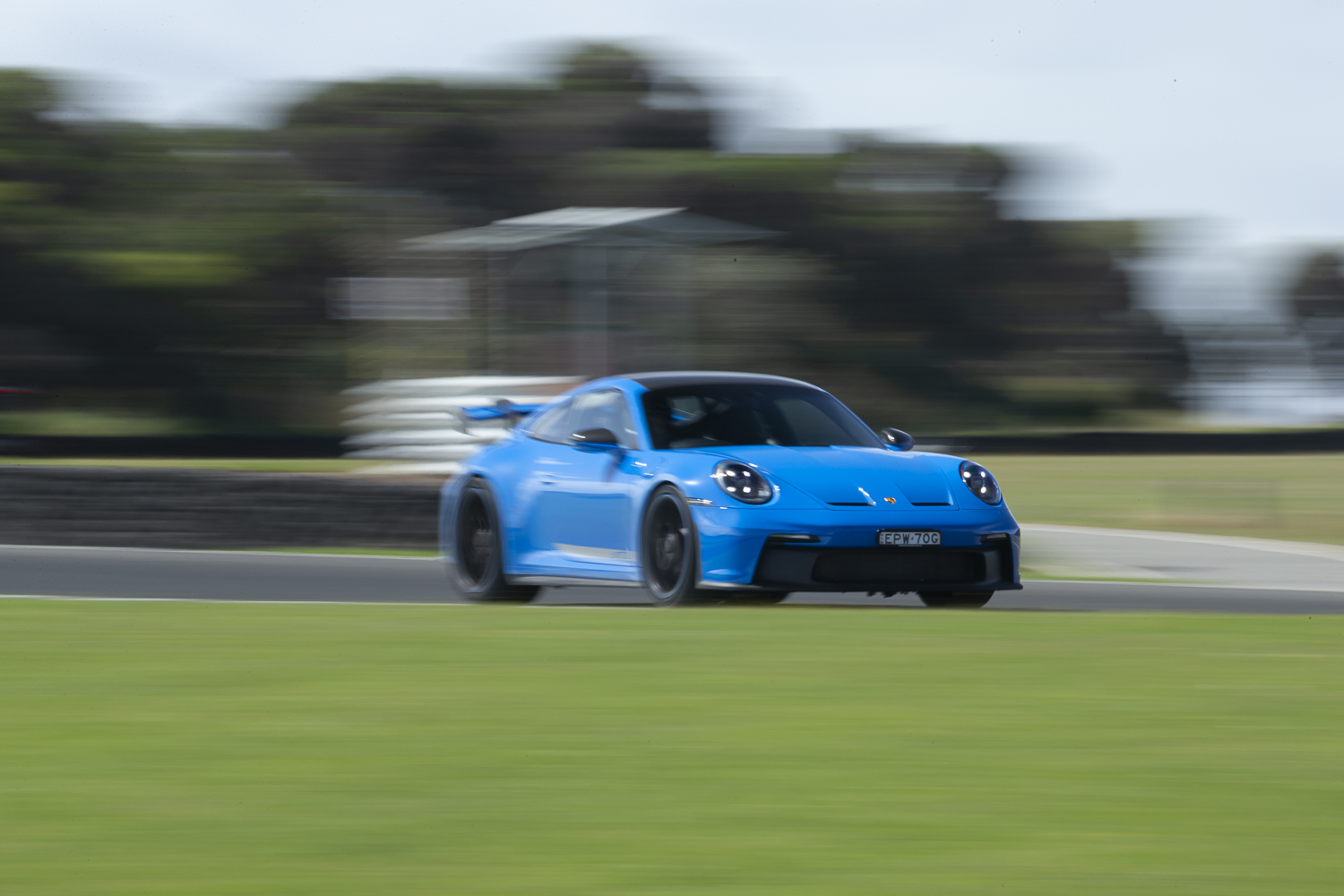
However, as theatrical and fast as the Huracán might be, nothing was ever going to conquer the GT3 at PI which recorded an incredible 1:39.74 lap time. A combination of functional aero, a sticky Michelin Pilot Sport Cup 2 tyre, the benefit of the new double-wishbone front suspension and 375kW of flat-six firepower makes the GT3 something to be reckoned with. Proof of its aerodynamic effectiveness came in the fact that the GT3’s relative apex speed advantages were, for the most part, greatest in the genuinely high speed corners.
In many ways the GT3, and its jaw-dropping 9000rpm soundtrack, is a car that seemed made for Phillip Island. It’s hard not to agree with Luffy when he says “Porsche keep closing the gap in terms of it having race-car traits without compromising it as a road car”. Andy added that with Michelin Pilot Sport Cup 2 R rubber, the overall lap would be quicker still.
Further proof that the game has moved on is that Porsche test driver Matthias Hoffsummer guided the 918 Spyder around PI in 1:38.02. That means the Shark Blue GT3 is within two seconds of a bona fide hypercar. What on earth must be coming next if the 992 GT3’s progression is this stark?
Corvette Chicanery?
The Tweak that was
It’s worth noting that 17 of the 18 cars at this year’s event remained with us throughout. One was requested back by its importer to be optimised for the race track leg. The reason? GMSV claimed that they were not aware that there would be a track component to PCOTY, despite it having been a regular feature of every PCOTY event we’ve ever conducted.
The changes amounted to a check on fluids, pressures and a tweak to the car’s alignment for the circuit. We checked other components to see if anything else had been switched. So, nothing too major, but enough to generate the hint of an asterisk next to the ’Vette’s eventual finishing position.
