
The 2024 Maserati Grecale Folgore has been unveiled as the pure-electric version of the company’s new mid-size SUV.
Revealed overnight as part of the Grecale line-up, the electric Folgore – which means ‘lightning’ in Italian – will launch in Australia in late 2023, Maserati has confirmed.
While full specifications will be announced closer to the car’s arrival, the Italian brand has revealed the Grecale Folgore will be fitted with a 105kWh battery and a 400-volt system – which should be enough to give the SUV a driving range on par with its petrol-powered counterparts.
Though yet to be confirmed, twin electric motors mounted on each axle are expected to send around 400kW and 800Nm to all four wheels, making it the most powerful Grecale within the stable.
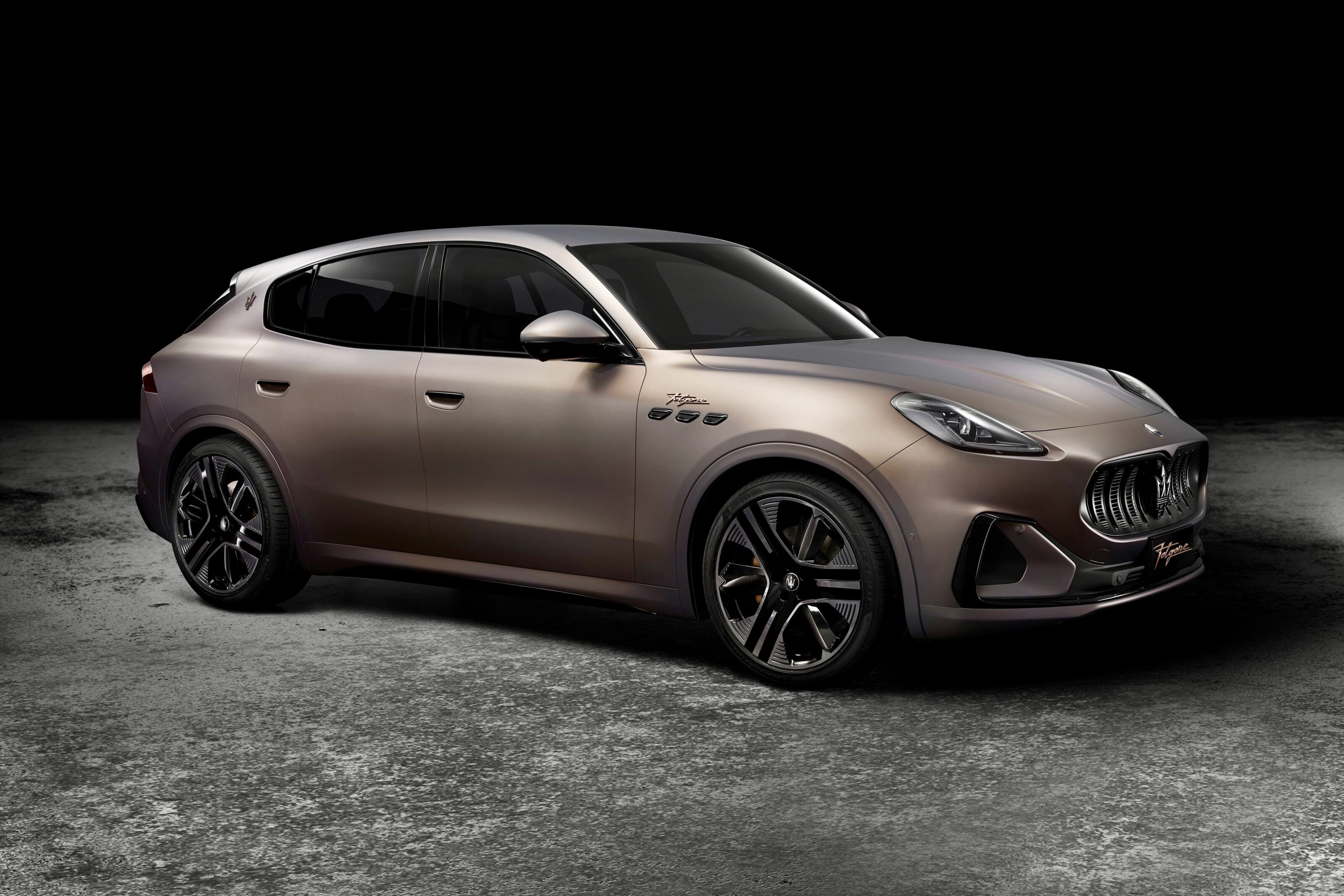
There’s little to distinguish the Grecale Folgore from the petrol GT, Modena, and Trofeo versions, other than a partially-blocked concave grille, tri-spoke style wheels, fender badges, and an exclusive copper paint colour.
Maserati says it will use a variety of recycled materials throughout the cabin, including a nylon called Econyl, derived from fishing nets.
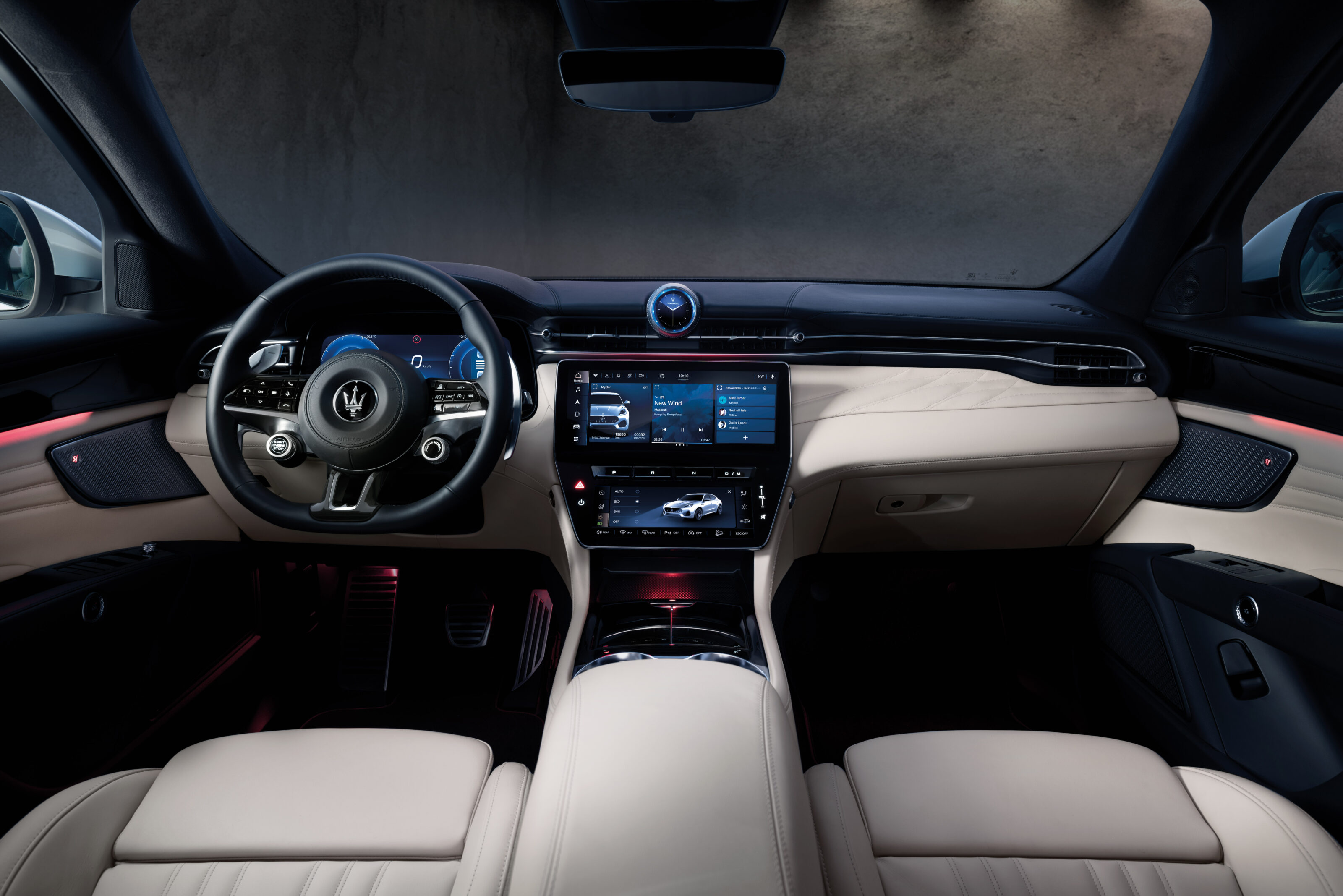
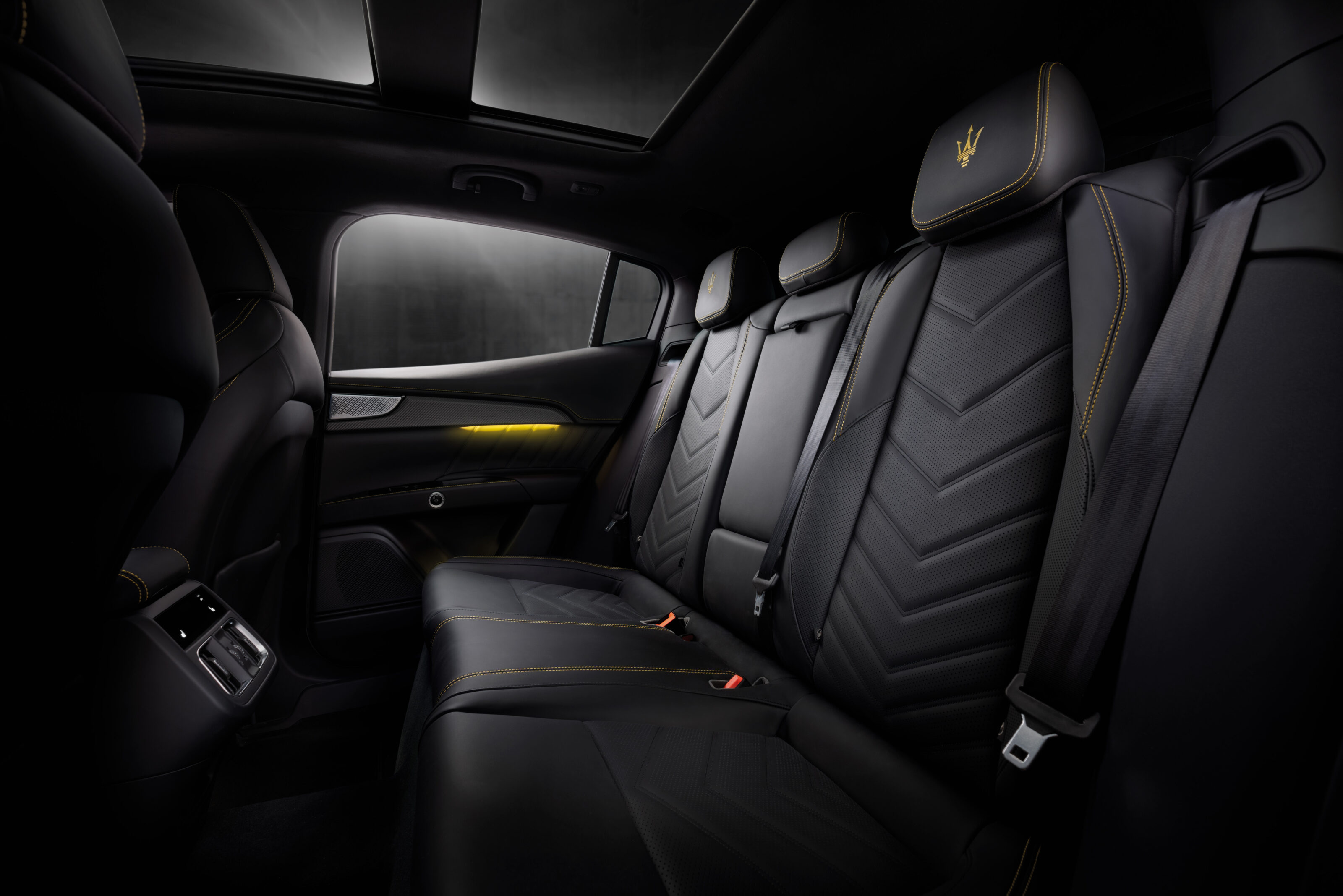
Aside from some colour and trim variations, the interior of the Grecale Folgore should be almost identical to the rest of the models shown, with a 12-inch digital instrument cluster for the driver, a 12.3-inch infotainment screen, an 8.8-inch display for extra controls, and another screen for second-row occupants.
The Grecale Folgore will be one of the very first battery-powered Maserati models to hit the market when it arrives in late 2023, with the new-generation GranTurismo also launching with an all-electric Folgore variant around the same time.
Maserati announced earlier this month it would drop the internal-combustion engine from its vehicle portfolio by 2030, with every model to be offered with an electric powertrain by 2025.
The 2024 Maserati Grecale Folgore will launch in Australia in late 2023, with full pricing and features to be announced closer to its arrival.
Enthusiasts love to describe the more track-oriented vehicles like the 2022 Porsche 718 Cayman GT4 RS as ‘race cars for the road’. The reality is, even for the most hardcore track day toys, that is rarely anywhere near the truth. That’s because race cars are savage, and even in their milder forms patently unlike anything you can drive off a showroom floor wearing a number plate.
Case in point is this Cayman GT4 RS, a new flagship for the 718 platform, with the screaming 4.0-litre atmo flat-six of the current 911 GT3 shoehorned between the cabin and rear axle, lighter bodywork, more aggressive aero and gumball tyres.

Being an RS, the new Cayman halo is unashamedly track-focused in its design, character, and purpose. And while there will be people that proclaim it to be, the Cayman GT4 RS is not a race car for the road. It is a road car that has been tuned, tweaked, reworked and finessed into the ultimate expression of sportscar capability, in turn, giving it astonishing abilities on a circuit, in this instance the iconic Autodromo do Estoril grand prix circuit in Portugal.
It’s no spoiler to say the Cayman GT4 RS is mightily impressive on track, but where it gets closest to transcending that ethereal barrier between race and road is cabin noise. Anyone lucky enough to have sat in a motorsport-prepared cabin will know the sound inside the cabin borders on deafening. Few cars with licence plates have ever come close to replicating that experience. Cue the GT4 RS.

Instead of windows behind the B-pillar, the GT4 RS features carbonfibre air intakes, with both sides feeding directly into a central air box placed behind the occupants inside the cabin. Let us repeat that. The airbox is in the cabin. And that aural assault massively impacts the driving experience.
Why has Porsche built the loudest cabin we’ve ever experienced this side of a literal race car? Speaking to one GT4 RS engineer, it was explained that the team realised the exhaust had to be muted so it could meet decibel restrictions for various markets, but there were no such regulations mandating a maximum noise limit inside the car’s cabin. The results are as dramatic as they are varied.
Instead of windows behind the B-pillar, the GT4 RS features air intakes feeding directly into a central air box inside the cabin. Let us repeat that. The airbox is in the cabin

At road speeds, there is a wide range of tenors and frequencies that fill your ears in the cabin. Engine load and speed has a dramatic impact on the varying noises, with your right foot playing the conductor for a six-cylinder orchestra that can play a tune of a wistful whisper, all the way to a 9000rpm raucous crescendo.
On track, you need to literally shout to be heard. From the outside, both the standard stainless steel and optional titanium exhausts stir the soul with A-grade flat-six tones. Perhaps making this achievement so impressive is the fact that not one, but two petrol particulate filters are fitted to the car.
This auditory celebration is all thanks to the 4.0-litre naturally aspirated flat-six engine that comes straight from the Porsche 911 GT3.
While the car community has been baying for the Cayman platform and GT3 engine to be combined as one for quite some time, Porsche executives had previously steadfastly refused the proposition in order to protect the turf of the track-ready 911.
Thankfully, that edict has been banished and the 718 platform has been given an opportunity to get the RS badge it has long deserved.

Porsche has listened to our criticisms of the GT4 and fitted the shortest possible gear ratios to the RS’s seven-speed PDK dual-clutch (as is modern RS tradition, there is no three-pedal variant). Where the GT4’s second gear topped out at 128km/h, the RS will be shifting to third at 116km/h and the gap only increases from there as you climb through the ratios.
Peak power of 368kW arrives at 8400rpm (of the possible 9000 revs available), while maximum torque of 450Nm comes on tap at 6750rpm.
Don’t get the slight drop in power compared to the GT3 misconstrued as any sort of sly nerfing by Porsche, instead look to the change in exhaust design and header length. Those figures are enough to propel the GT4 RS to 100km/h from a standstill in 3.4 seconds, 200km/h in 10.9 seconds, and onwards to a claimed top speed of 315km/h.
It feels quicker. Combining the much closer-stacked gear ratios with an extra 1000rpm gives the RS the frenetic shove that was disappointingly absent from the ‘standard’ GT4.

Australians looking to order the most powerful and capable Cayman ever built will need to set aside $300,800 for the privilege, before on-road costs, with local deliveries expected in Q3 of this year. On top of that asking price are two important options packages. The first is the Clubsport Pack, which adds the half-cage behind the rear seats, a six-point racing harness for the driver, a fire extinguisher, and battery disconnect switch.
The Weissach Pack adds on top of that a set of forged magnesium wheels that, while not as handsome a design as the standard rims, provide a considerable unsprung weight saving, plus a titanium sports exhaust system and lashings of carbonfibre inside and out.
Australia’s entire allocation of GT4 RS isn’t completely sold out … yet. The first batch is already spoken for, but Porsche has said it’ll build as many of the hardcore variant as possible in its non-limited production run, which is set to continue until 2024.
Everywhere you look, Porsche engineers have made the slightest of tweaks to improve the Cayman breed to the best it has ever been

Improvements for the Cayman’s RS debut extend well beyond a new powertrain. The entire body has been lowered by 30mm, while the front track is 6mm wider, and rear track is 8mm wider than the standard GT4.
The RS also has 25 per cent more downforce than the GT4 with its aerodynamic devices in their most aggressive setting, thanks in part to a new swan-neck rear wing and slats in the front wheel arches that help reduce high-speed front end lift.
Everywhere you look, Porsche engineers have made the slightest of tweaks to improve the Cayman breed to the best it has ever been. One example of this attention to detail is the quarter of a degree increase in rear camber.
There wasn’t much in the way of fat on the bone with the GT4, but Porsche has trimmed 35kg for the RS Cayman. Part of that is thanks to carbonfibre reinforced plastic (CFRP). The bonnet, as well as front and rear spoilers, are constructed from CFRP, while the rear window is fitted with lightweight glass. The Cayman’s usual compartment privacy panel? Gone altogether. Because Race Car. Fitting the optional forged magnesium wheels at all four corners shaves a further 10kg in mass.

As fastidious as Porsche’s diet for the GT4 RS was, there was one area in particular they decided a weight increase was necessary – the brakes.
Growing in size from the GT4’s 380mm diameter front discs, the RS Cayman is equipped with 408mm monsters as standard, with 410mm carbon-ceramics available as an option. These larger front brakes also receive additional cooling, channelled from the pair of NACA ducts located on the bonnet. Rear discs are lifted from the current 992-gen GT3, measuring 380mm in diameter (390mm for the optional carbon-ceramic units). Aluminium monobloc callipers are fitted front and rear; six-piston fore, four-piston aft.
After a day of track driving, the carbon brakes were still stopping the GT4 RS’s 1415kg (plus driver) mass on corner entry with impressive force. It was initially daunting how deep into the braking zone our lead driver was staying at maximum throttle on Estoril’s front straight before standing on the picks.
But every time, we managed to make the first turn comfortably. Stability under heavy braking was rock solid, with the pedal communicating how the tyres were clawing at the tarmac right to the edge of ABS intervention.

A front nose lift is available for the first time in the Cayman’s history, the system capable of hydraulically raising the front suspension by 30mm, resulting in a 40mm lift at the tip of the front lip. You need this option if you intend to use the GT4 RS in Australia. The system operates up to 60km/h, and we needed to use it a number of times on the road drive route to avoid scraping the Cayman’s nose against some of Portugal’s historic cobbled streets.
The front axle for this most potent of Caymans is actually taken from the 991.2 GT3 RS, including the MacPherson strut suspension design.
Engineers have improved a design that is beginning to show its shortcomings by fitting a clever twin spring system that works by having helper springs fitted that assist in keeping the suspension’s main springs under tension when deflected, in turn allowing the larger of the two springs to maintain its original tension levels under maximum load to improve car control during hard driving.
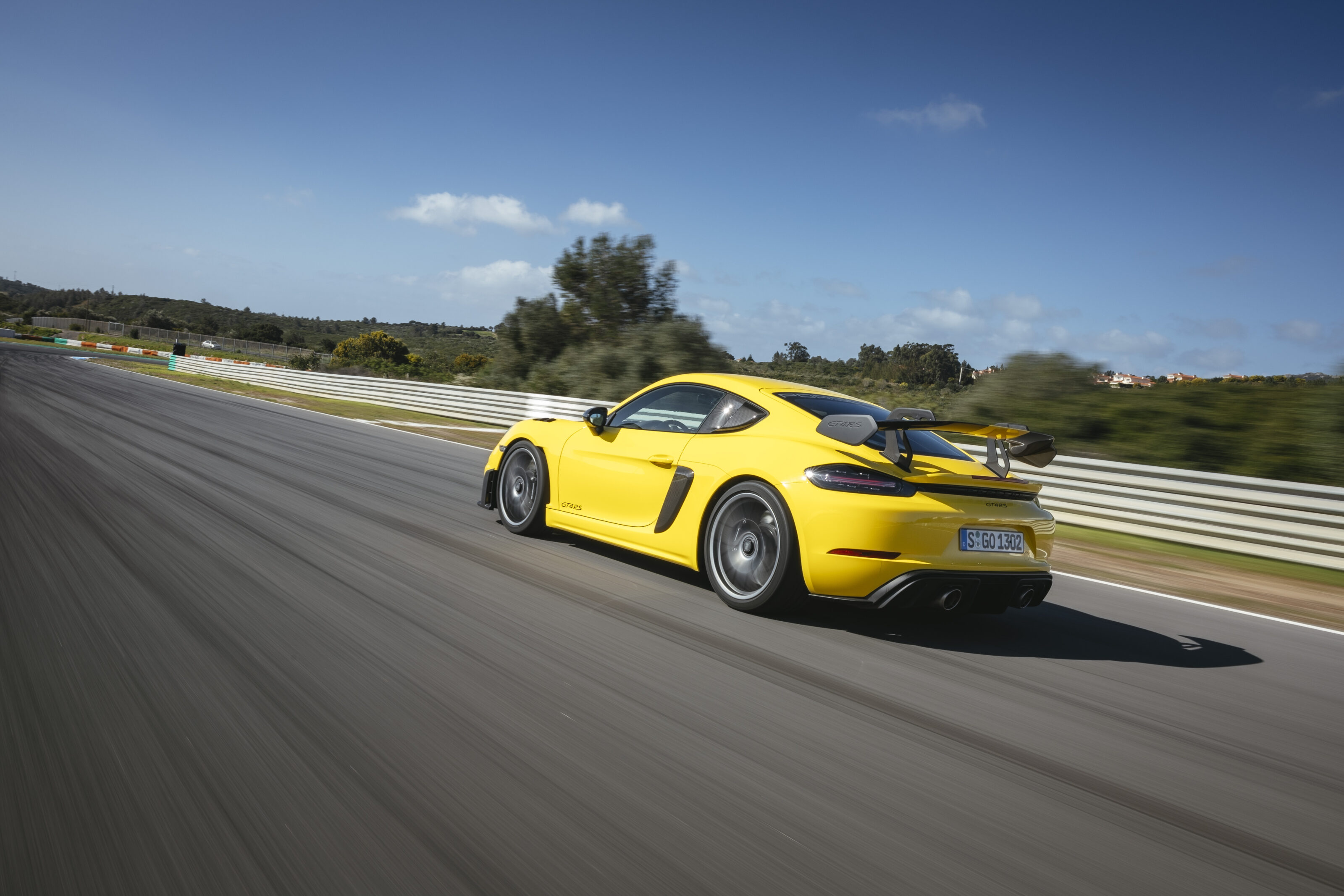
Despite the inherent compromises of a MacPherson strut design, the GT4 RS, much like all Caymans, has fantastic steering calibration. The weighting is beautiful and builds up naturally with corresponding corner loads. A steady stream of feedback flows through the wheel to the driver, keeping you informed of the grip levels at any given moment.
It’s only when you drive the 992 GT3 do the slightest of shortcomings of the GT4 RS’s steering come to bear as it fails to match that final one per cent of accuracy in the way road texture is transmitted compared to a double-wishbone set-up. The difference is akin to steering with 8K Ultra-HD resolution compared to the Cayman’s 4K. Both are great, but one is better.
The Porsche Stability Management (PSM) system is sympathetic of small slides, but does bleed power if you indulge in power oversteer for too long. That’s easily induced out of Estoril’s tight, off-camber, uphill Gancho chicane that feeds into a sweeping right-hander. PSM interventions are sly, instead of a vicious rug pull.
Play with the throttle and you can feel as the Cayman dextrously shifts its balance from over- to under- back to oversteer

The steep chicane near the end of the lap feels abrupt in the flow of the Portuguese circuit, having been installed after the death of Ayrton Senna and has remained largely unchanged since. It’s through the final corner, the Parabolica Ayrton Senna, that the GT4 RS’s talents are simultaneously tested the hardest and shine the brightest.
Play with the throttle through the 180-degree sweeper and you can feel as the Cayman dextrously shifts its balance from over- to under- back to oversteer. This neutral chassis balance acts as a canvas for a driver to paint with their preferred driving style.
Aiding early corner rotation is torque vectoring by braking on the rear axle, which Porsche dubs PTV. This system cannot be turned off – unlike the stability control and traction control – and works by braking the inside rear wheel ever so slightly as soon as the steering wheel is rotated. A mechanical limited-slip differential with RS-specific locking values (30 per cent traction, 37 per cent overrun) is fitted as standard and deploys the flat-six’s power without flaw.

The narrow focus of the GT4 RS means it isn’t as comfortable on the road as it is on track. You need to be willing to sacrifice refinement for performance. The suspension’s tracking, camber, and anti-roll bars are all manually adjustable front and rear for the driver that really wants to get nerdy with it, while adaptive dampers are standard.
In the ‘softest’ setting, and we use that term advisedly, the GT4 RS is hard-up against what would be considered bearable on the road, and will also firm up without driver input when the system detects dynamic driving.
To improve on-road compliance, the engineers opted for what initially seems to be a counterintuitive philosophy of slackening off the anti-roll bars while stiffening the springs as much as is tolerable. Paired with a stiffened chassis, the GT4 RS has incredibly taut body control, but the softer anti-roll reduces the effects of bumps on individual corners of the car.
A trade-off is that full-width road seams or bumps impacting both sides of the GT4 RS simultaneously are felt keenly via the ultra-stiff spring rates. The adaptive damping does an impressive job of preventing these occasions from being crashy or unsettling, but it’s the biggest and higher frequency hits that knock the GT4 RS’s composure after it so deftly shirks smaller mid-corner imperfections.
The bigger question is whether the GT4 RS steps too far into the territory held so dominantly by the 911 GT3 … The answer sits steeped in nuance

Compared to the GT3, the Cayman GT4 RS utilises a slightly smaller Michelin Pilot Sport Cup 2 R rubber footprint (245/35/ZR20 at the front, 295/30/ZR20 on the rear), which in conjunction with the shift in engine position gives the pair distinct driving characters.
As a result, the GT4 RS is more willing to move around mid-corner, being a more playful, lively, and challenging car to hustle at maximum attack.
The bigger question perhaps is whether the GT4 RS steps too far into the territory held so dominantly by the 911 GT3 – a slice of the market that Porsche executives fought tooth and nail to protect from even internal challengers. And the answer sits steeped in nuance.
View the issue from distance and yes, the GT4 RS and GT3 do much the same thing in being ferociously capable track cars from a Porsche GT department that seems determined to give the purely internal combustion-powered sportscar an all-time farewell party.
But focus on the details, all those tiny engineering changes, and the GT4 RS’s intense track focus diverges from the vehicle with which it shares that lion-sized heart.

A playful wink from the Cayman GT4 RS’s architect – GT division boss Andreas Preuninger – when discussing how high the bar can be elevated from here indicates that this is not the zenith for the current era of Porsche performance cars; the 911 GT3 RS is, after all, waiting in the wings. A rising tide lifts all boats, and the GT4 RS is Porsche’s acoustic king tide for the 718’s internal combustion lineage.
Electrification is coming for the Cayman and its Boxster sibling, but before the inevitable arrives, we get to enjoy a recipe so good that it was denied us for decades.
2022 Porsche 718 Cayman GT4 RS specifications
| Body | 2-door, 2-seat coupe |
|---|---|
| Drive | rear-wheel |
| Engine | 3996cc flat-six, DOHC, 24v, naturally aspirated |
| Bore/stroke | 102.0mm x 81.5mm |
| Compression ratio | 13.3:1 |
| Power | 368kW @ 8400rpm |
| Torque | 450Nm @ 6750rpm |
| 0-100km/h | 3.4sec (claimed) |
| Fuel consumption | 13.2L/100km (WLTP average) |
| Transmission | 7-speed dual-clutch automatic |
| Weight | 1415kg |
| Power/weight | 260kW/tonne |
| Front suspension | MacPherson struts, anti-roll bar, adaptive dampers (f/r) |
| L/W/H | 4456/1822/1267mm |
| Wheelbase | 2482mm |
| Track | 1545mm (f); 1542mm (r) |
| Steering | electric assisted rack and pinion |
| Front brakes | 408mm dimpled and ventilated discs, six-piston calipers |
| Rear brakes | 380mm dimpled and ventilated discs, four-piston calipers |
| Wheels | 20 x 8.5in (f), 20 x 11in (r) |
| Tyres | 245/35ZR20 (f), 295/30ZR18 (r); Michelin Pilot Sport Cup 2 R |
| Price | $300,800 + on-road costs |
UPDATE, March 23, 2022: The 2023 Maserati Grecale has been fully revealed. You can read more about Maserati’s new mid-size SUV by clicking here.
The story to here
November 23: While Maserati is yet to officially hand out any information about its upcoming SUV, details of its powertrain have surfaced online.
British publication Autocar was able to test a prototype of the entry-level Grecale, powered by a 2.0-litre, turbocharged four-cylinder engine coupled with a 48-volt mild-hybrid motor to produce 220kW – slightly less than the outputs of the Ghibli, which shares the same powertrain.
It’s also understood the 463kW 3.0-litre, twin-turbo V6 from the MC20 will find its way under the Grecale’s bonnet, although in a detuned state and with slightly different mountings given it is being transplanted from a mid-engined supercar to a front-engined SUV.
Aside from the all-electric variant, the two internal combustion engine-powered Grecales send their power to the road through an eight-speed automatic transmission, mated to an all-wheel drive system – which can send all drive to the rear axle under certain conditions.
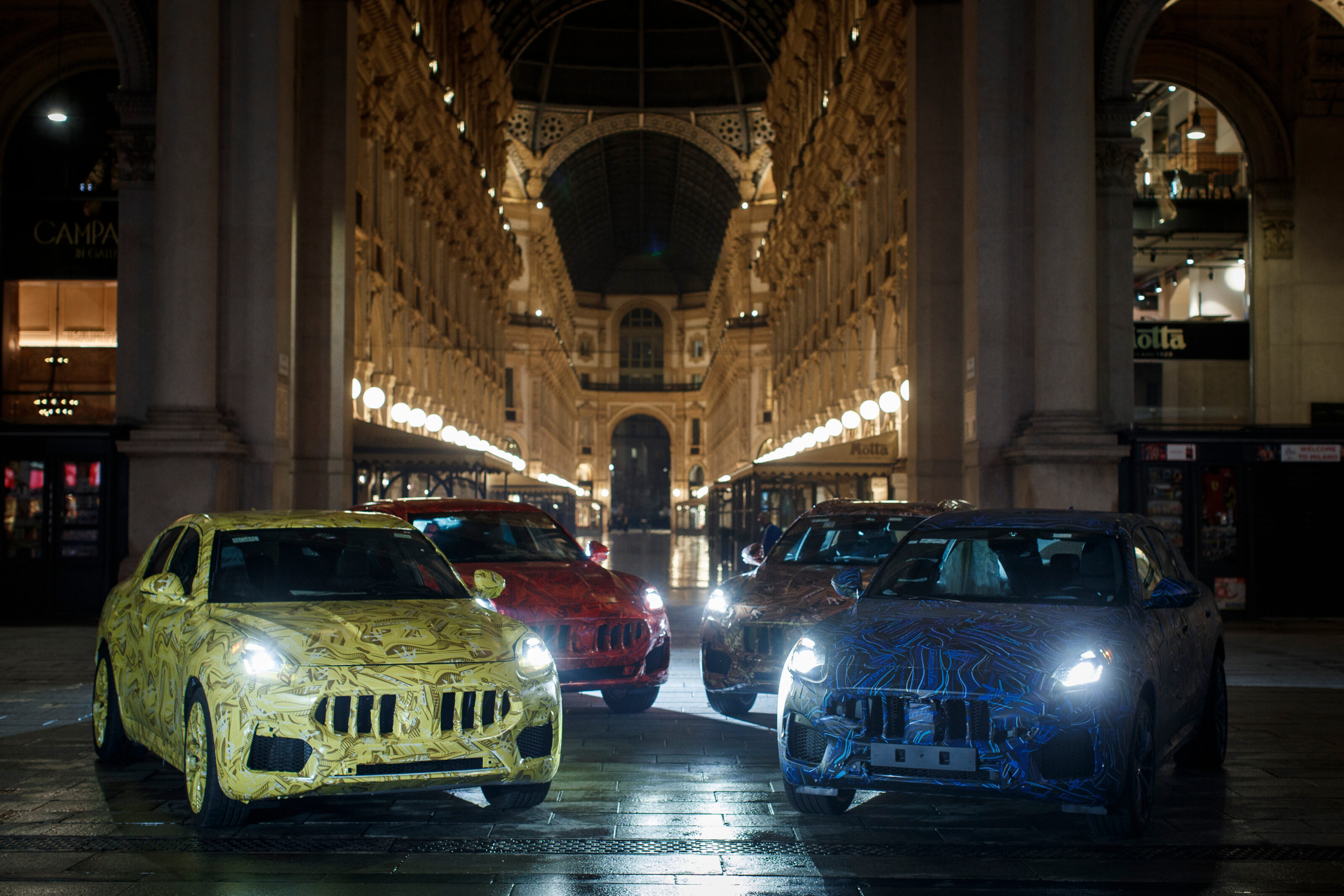
November 18: Maserati has continued to tease its new Grecale SUV after the model was meant to debut this month.
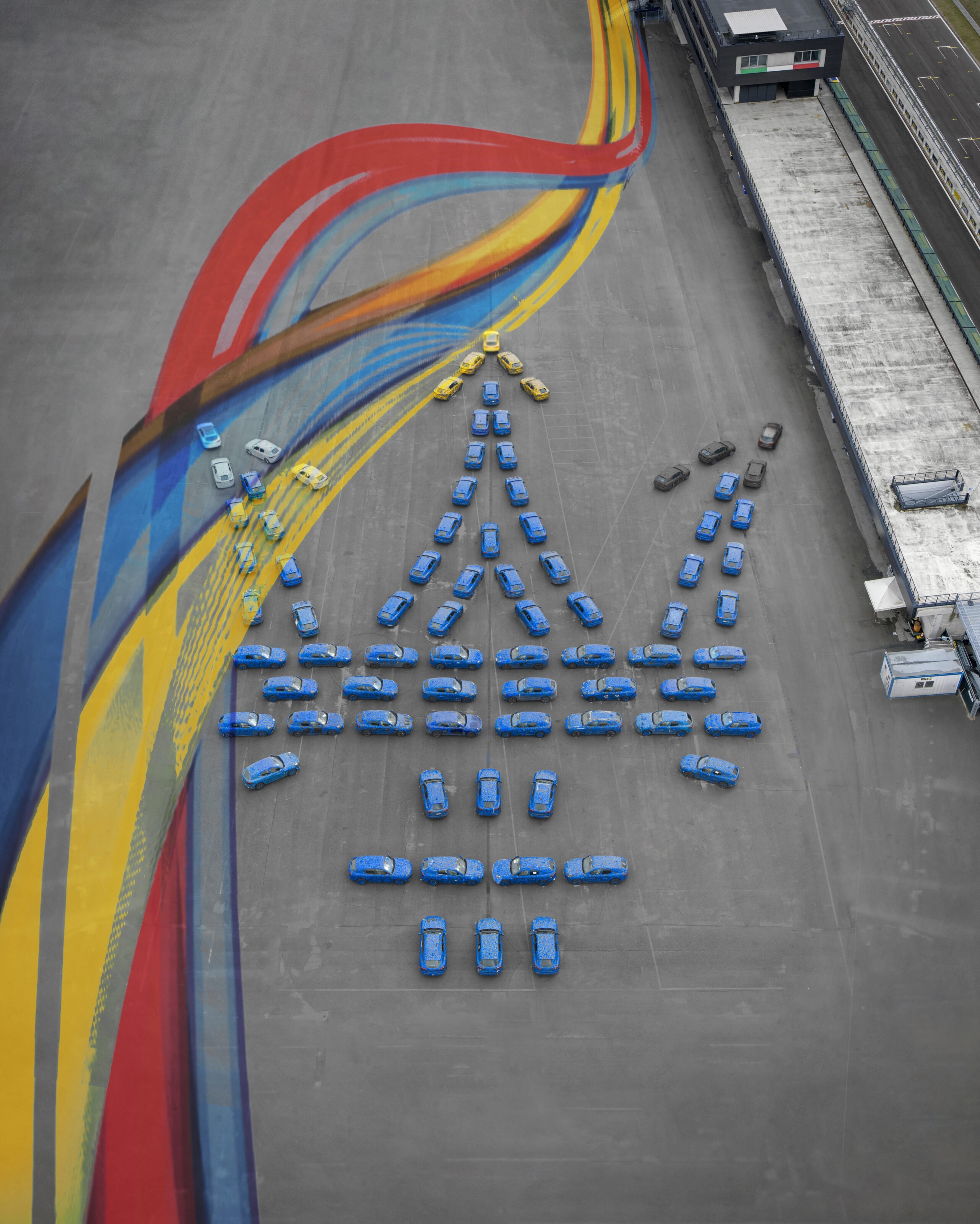
With its unveiling pushed back to next year, the all-new high-riding vehicle was shown off from a distance as Maserati arranged 80 prototypes in the shape of a trident, stretching over 100 metres in length.
With the Grecale’s official launch delayed until next year, its development continues worldwide, with over 250 prototype models undergoing evaluation across Japan, the United States, the United Arab Emirates, China, Finland and Italy.
August 6: The upcoming new 2022 Maserati Grecale small SUV will be revealed in November, the Italian brand has confirmed tonight.
Little else was confirmed with this latest news, however, with Maserati’s press release focusing on the use of the Grecale name on the mainsail of the Maserati Multi 70 racing trimaran.
The sailing connection is clear, at least, in the new model’s badge: ‘grecale’ is the name of a wind that blows over the Mediterranean. The Multi 70 most recently bore the name of the MC20 supercar on its mainsail.
“Naming cars after the most famous winds in the world is a tradition at Maserati. Starting in 1963, with the legendary Mistral, the brand followed this practice with the Ghibli, Bora, Merak and Khamsin,” the brand says.
“In 2016, the Brand’s first SUV was named Levante. Now it’s Grecale’s turn, a strong north-east wind of the Mediterranean.”
For more on the Grecale, see our evolving story below, and watch for more teasers to trickle out in the months ahead.
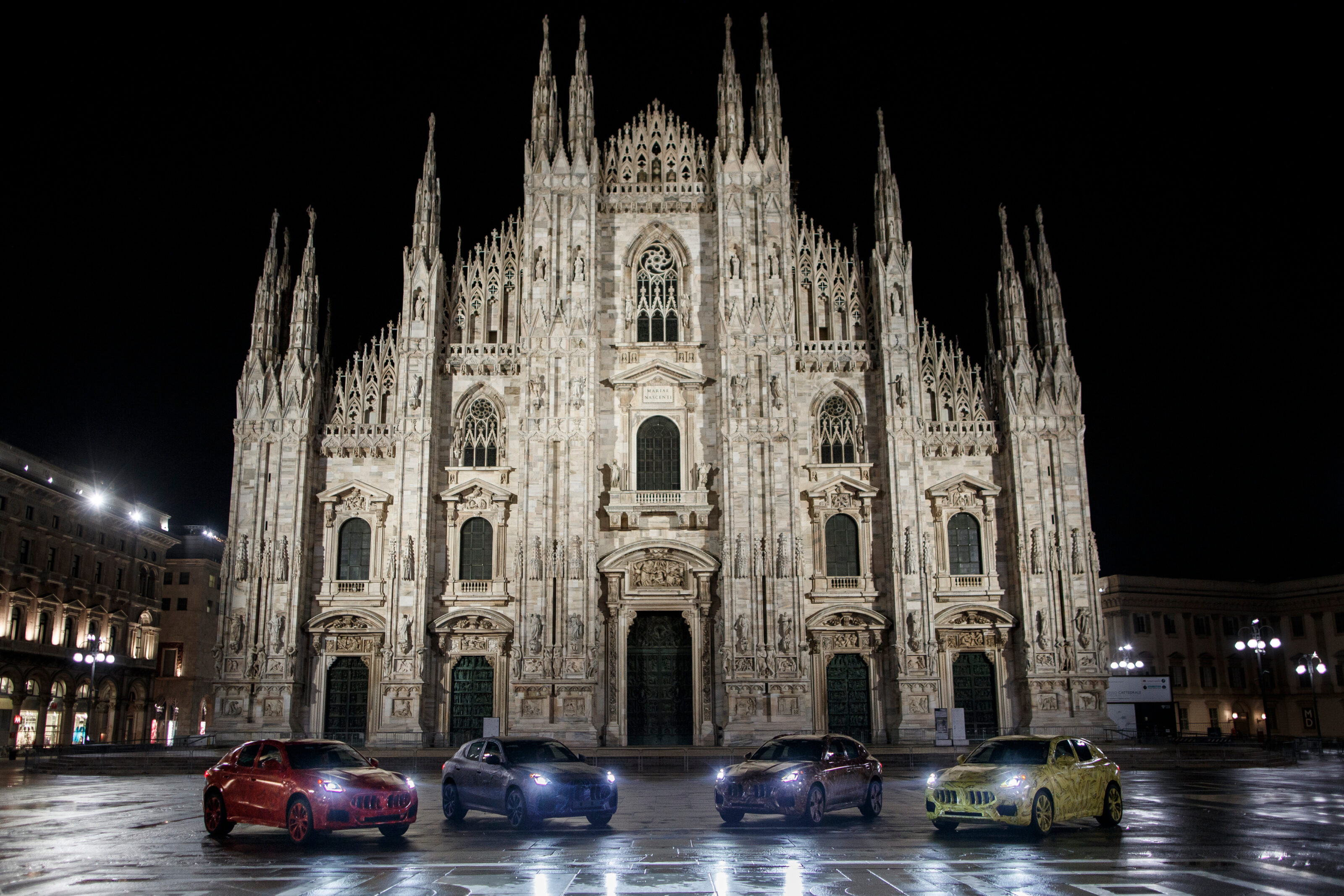
February 19, 2021: Maserati looks close to bolstering its SUV range with its brand-new Grecale small SUV that’s due before year’s end.
New blurry teaser images show the Grecale undergoing testing outside the Italian carmaker’s Modena factory.
Truth be told we shouldn’t be seeing these images – Maserati had originally shared the pictures in confidence with its employees but some of them ended up on social media, forcing the company to distribute them more widely.
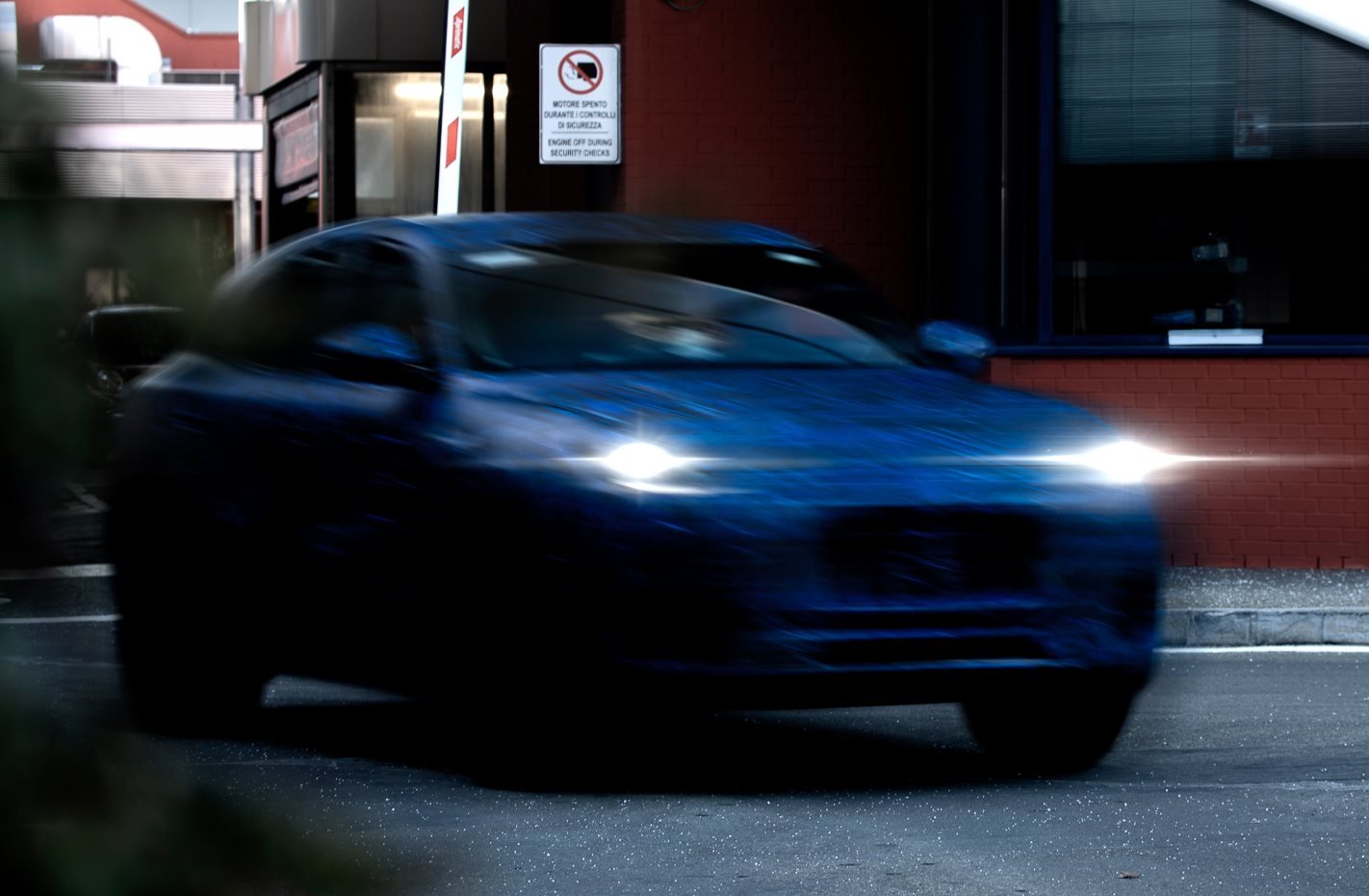
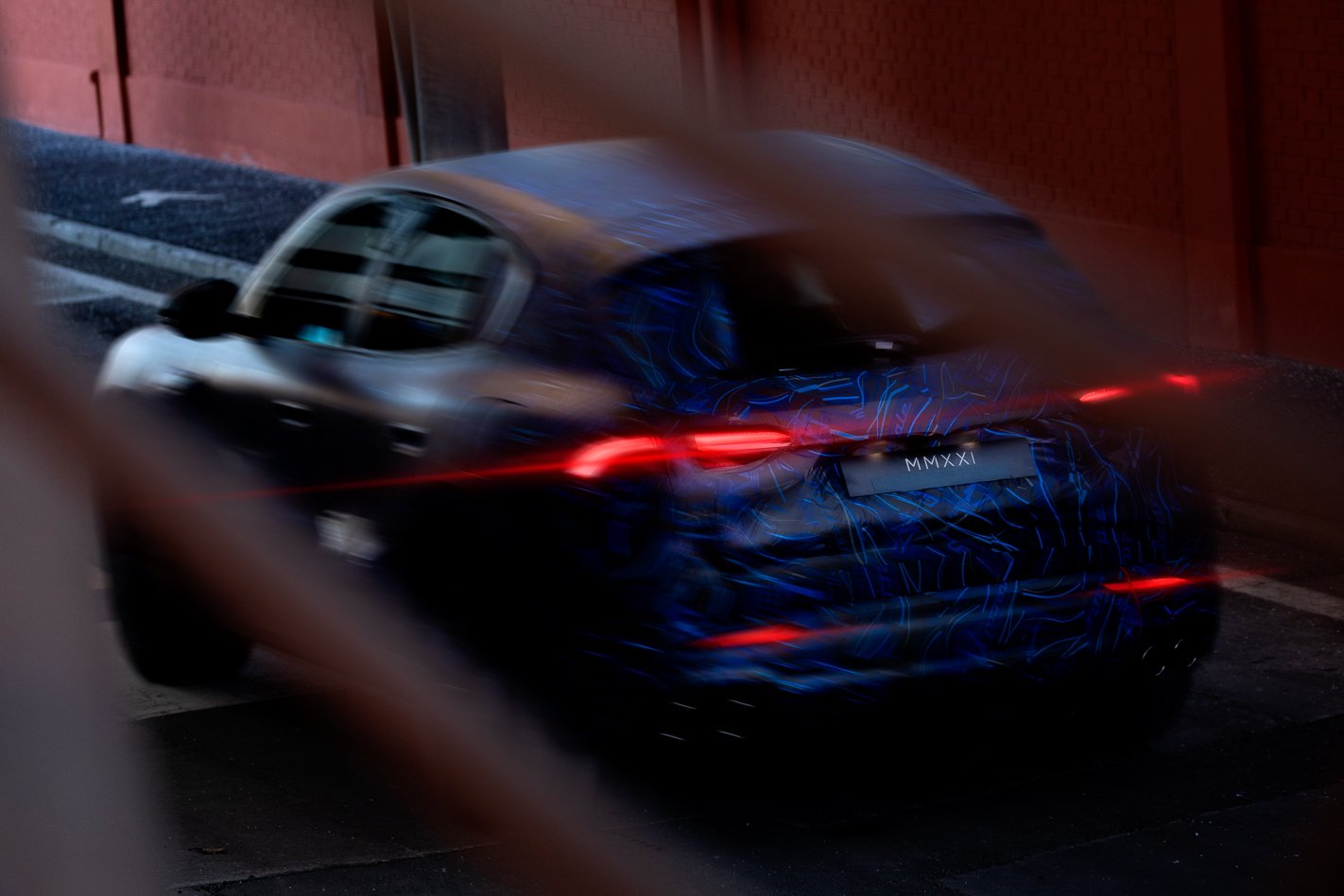
Not much can be seen from the deliberately-shaky photos, though we can see some commonality between the Grecale and Levante, namely in the rear quarter, while the headlights look borrowed from the MC20 supercar.
While touted as a ‘small SUV’, it’s not expected to be much smaller than the Levante and is likely to be more of a companion SUV rather than an entry-level one.
Named after a “fierce north-east wind of the Mediterranean Sea”, the Grecale will become the brand’s second SUV since the Levante was introduced in 2016.
It will also be part of Maserati’s bold new vision that began with the launch of the MC20 supercar last year.
Maserati says Grecale SUVs are currently undergoing road, track and off-road testing in order to dial-in the SUV’s final setup.
It will be built at Stellantis’ factory in Cassino, Italy, in which Maserati is planning to invest 800 million euros (A$1.2 billion).
The Grecale shares a platform with the Alfa Romeo Stelvio, though what will power it is still anyone’s guess. Maserati has said that all of its new models will come with an electric variant so also expect a Grecale EV or PHEV at some point.
We’ll know more in the lead up to the reveal; Maserati has committed to unveil the Grecale before the end of 2021.
UPDATE, August 15: Australian pricing revealed
Australian pricing for the Maserati Grecale has surfaced online, thanks to a dealer bulletin shared with Wheels Media. Get the full story at the link below.
The story to here
Snapshot
- Maserati reveals mid-sized Macan, X3, GLC rival
- Two hybrids and a V6 form initial launch line-up
- Electric version expected sometime in 2023
The new 2023 Maserati Grecale has been unveiled ahead of its Australian launch in late 2022 or early 2023, debuting tonight after years of anticipation and months of spy photos.
With the Grecale, Maserati is making the most serious attempt ever in its 108-year history to reach the mainstream.
When it goes on sale, it’s expected to be priced as a rival to higher-spec versions of the Porsche Macan, BMW X3 and X4, Range Rover Velar and other premium performance crossovers.
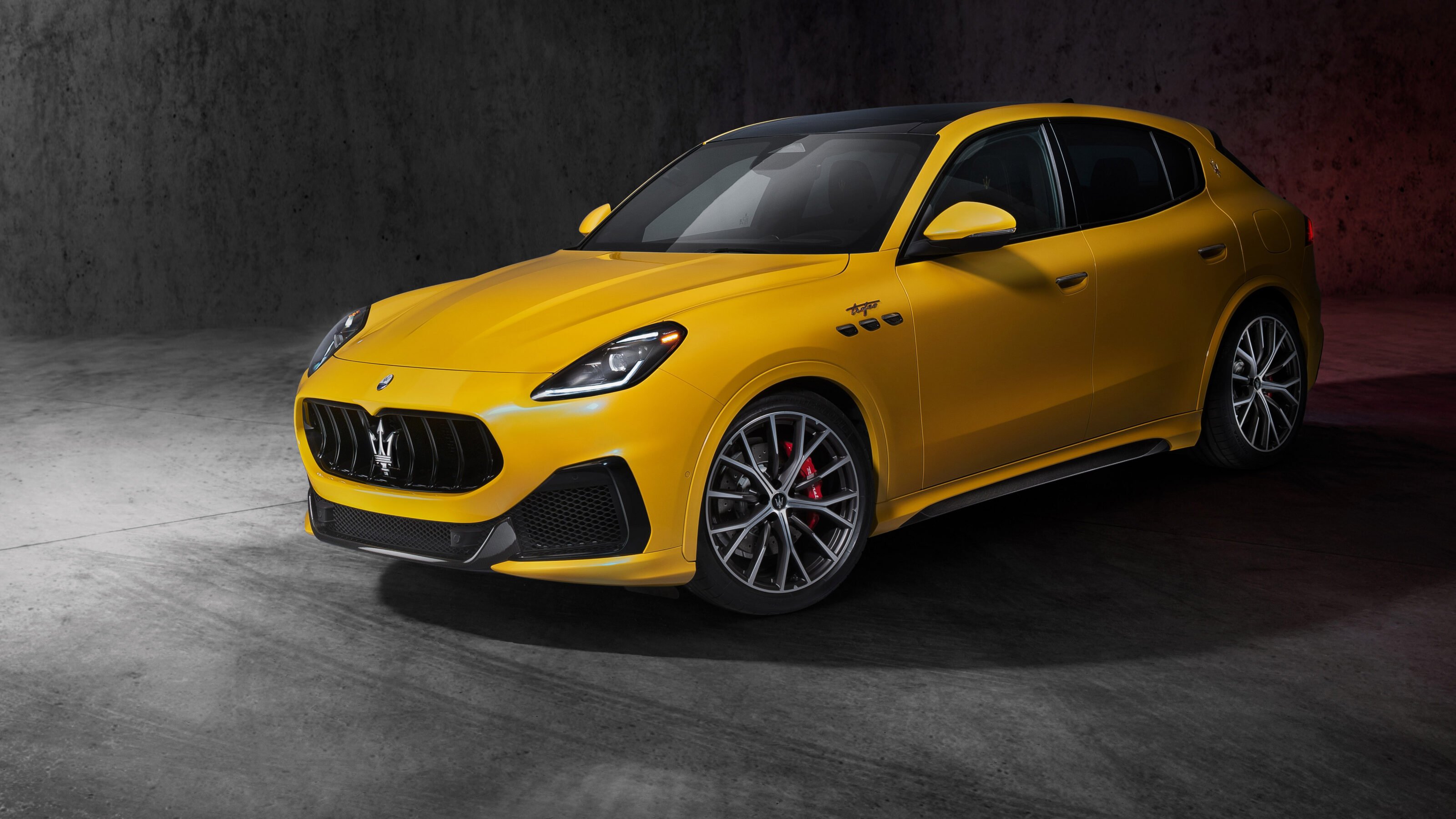
There will be two mild-hybrid four-cylinder versions and a hot V6 at first, with the all-electric Folgore version set to follow in 2023. That will be up against a slightly different set of rivals, including the Jaguar i-Pace and BMW iX3.
The Grecale is smaller than Maserati’s current SUV, the Levante, which continues in the line-up. It’s very much an on-road SUV, although there is an Off-Road drive mode and the air suspension (standard on the V6 model, optional on the others) does allow the car to rise by 30mm to get over modest obstacles, and drop by 35mm to help occupants make an elegant exit.
At 4859mm long, 1979mm wide and 1659mm high (all figures are for the top-spec version), it’s bigger than the Macan but smaller than the Cayenne, and bigger than the X3 but smaller than the X5.
Maserati says the Grecale is the most spacious and most comfortable car in its class, with plenty of room in the back.
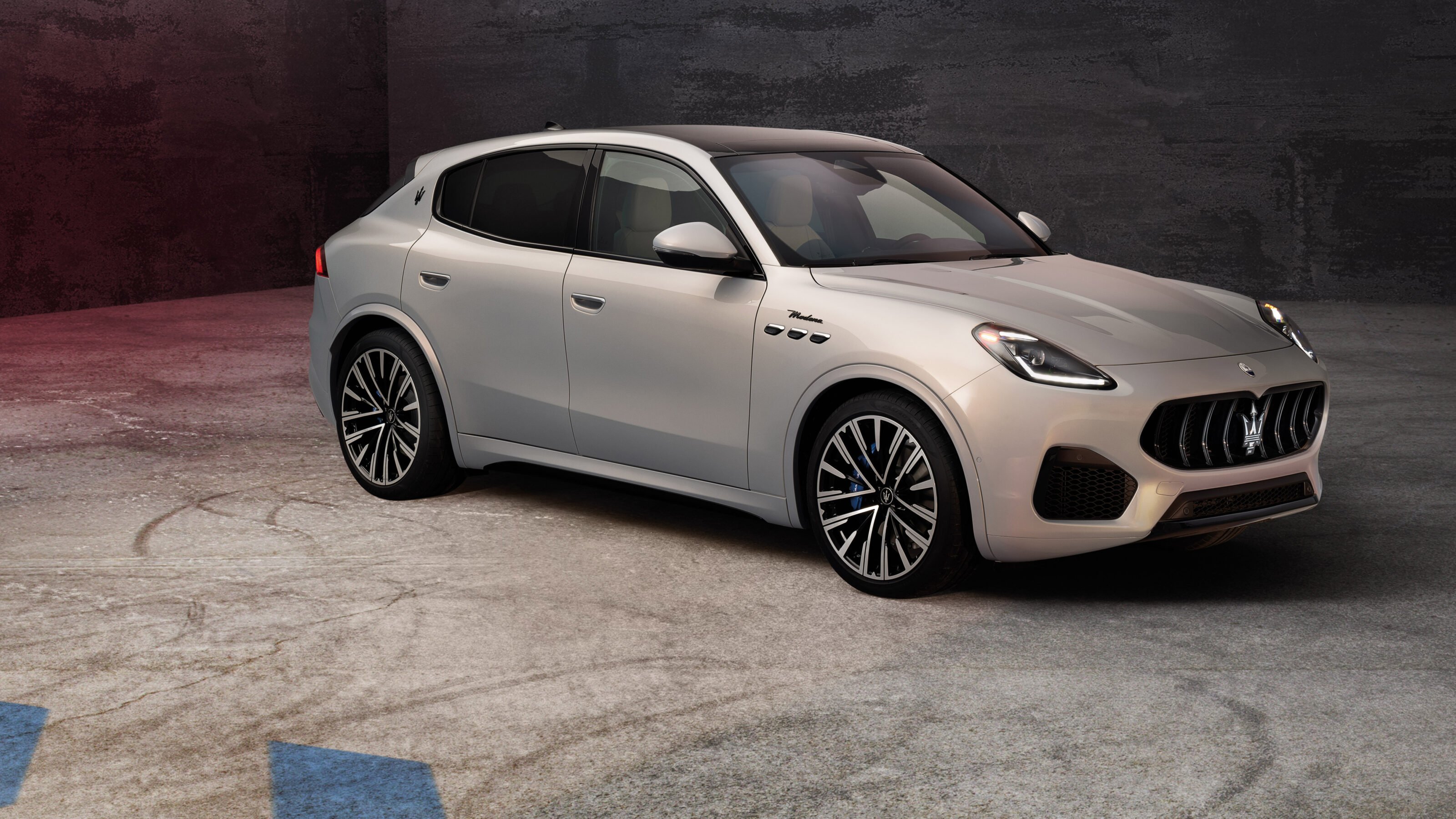
The interior combines traditional elements with some new thinking. That’s embodied most prominently in the digital clock in the centre of the dash – the first non-analogue version of a familiar Maserati detail.
It’s configurable, to become a compass or g-force meter. And it’s the focal point of the driver’s interaction with the car’s infotainment. So when you use voice control – ‘Hey Maserati’ – it emits a signal in response.
There’s no gear lever on the transmission tunnel. Instead, you get physical PRND buttons between the two big info screens, and massive paddles if you’re in the mood to make your own shifts.
Outside, the rear lights are just about boomerang-shaped enough to echo the LED tail lights of the late-’90s 3200 GT. But, in a very modern way, there are no mechanical door handles, inside or out.
The MC20 is regarded by Maserati as the start of its new era. So the updated Maserati logo and trident badge that debuted on the supercar also appear here. And the same visual philosophy is applied: clean, sculpted lines up top, and a more functional, mechanical approach lower down.
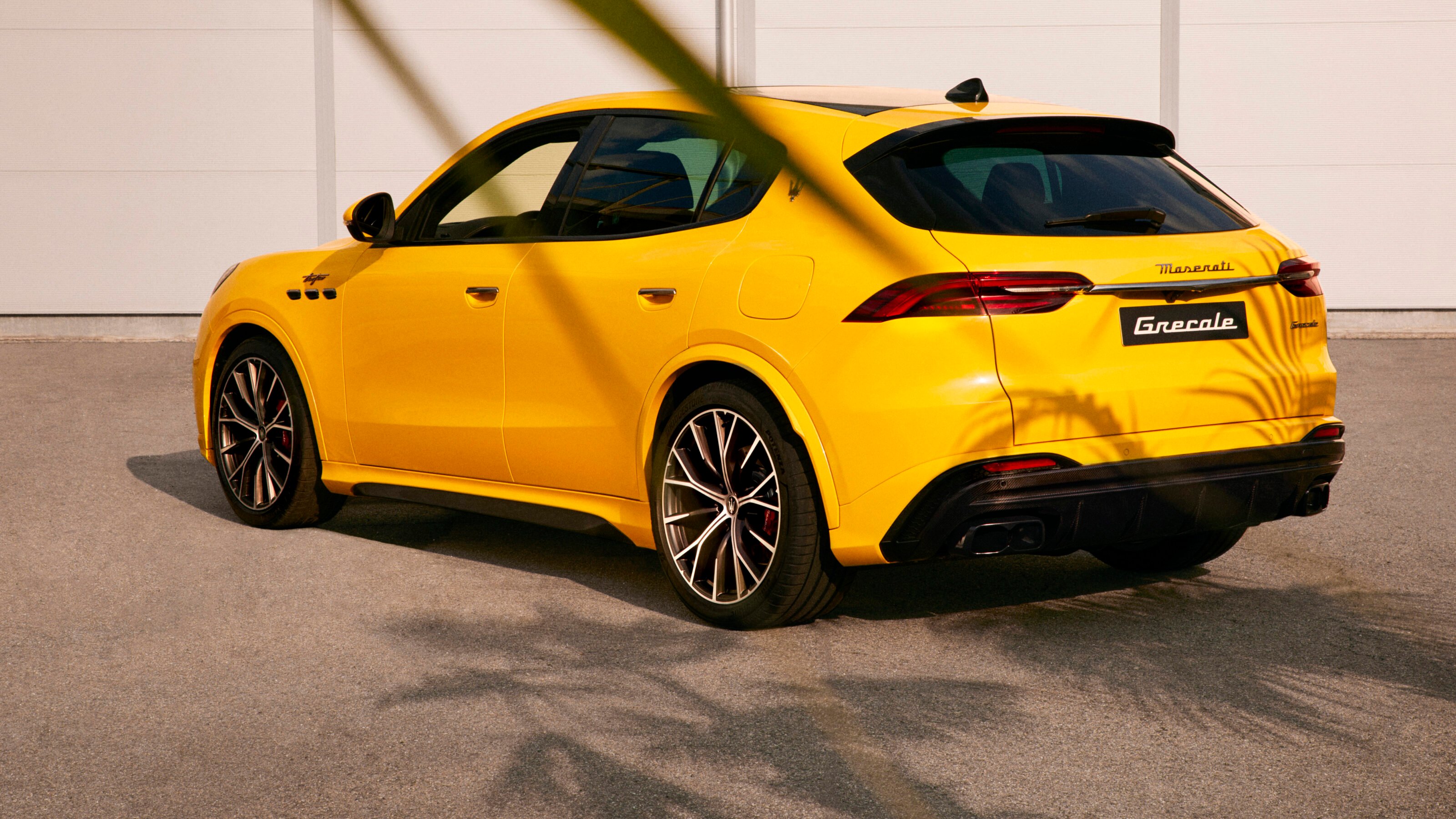
What versions are available?
Until the arrival of 2023’s all-electric Folgore, there are three engines, each with its own spec level.
The 3.0-litre V6, available in the Grecale Trofeo, is a slightly detuned version of the Nettuno engine found in the MC20 supercar, here making 390kW and 620Nm of torque, with a 0-100km/h time of 3.8sec and a top speed of 285km/h.
Those attention-grabbing figures should reassure anyone worried that Maserati has lost its way by making a mass-market crossover.
It gets an extra drive mode, Corsa – making the controls more responsive, reducing traction control and bringing launch control – as well as the Comfort, GT, Sport and Off-Road modes they all have.
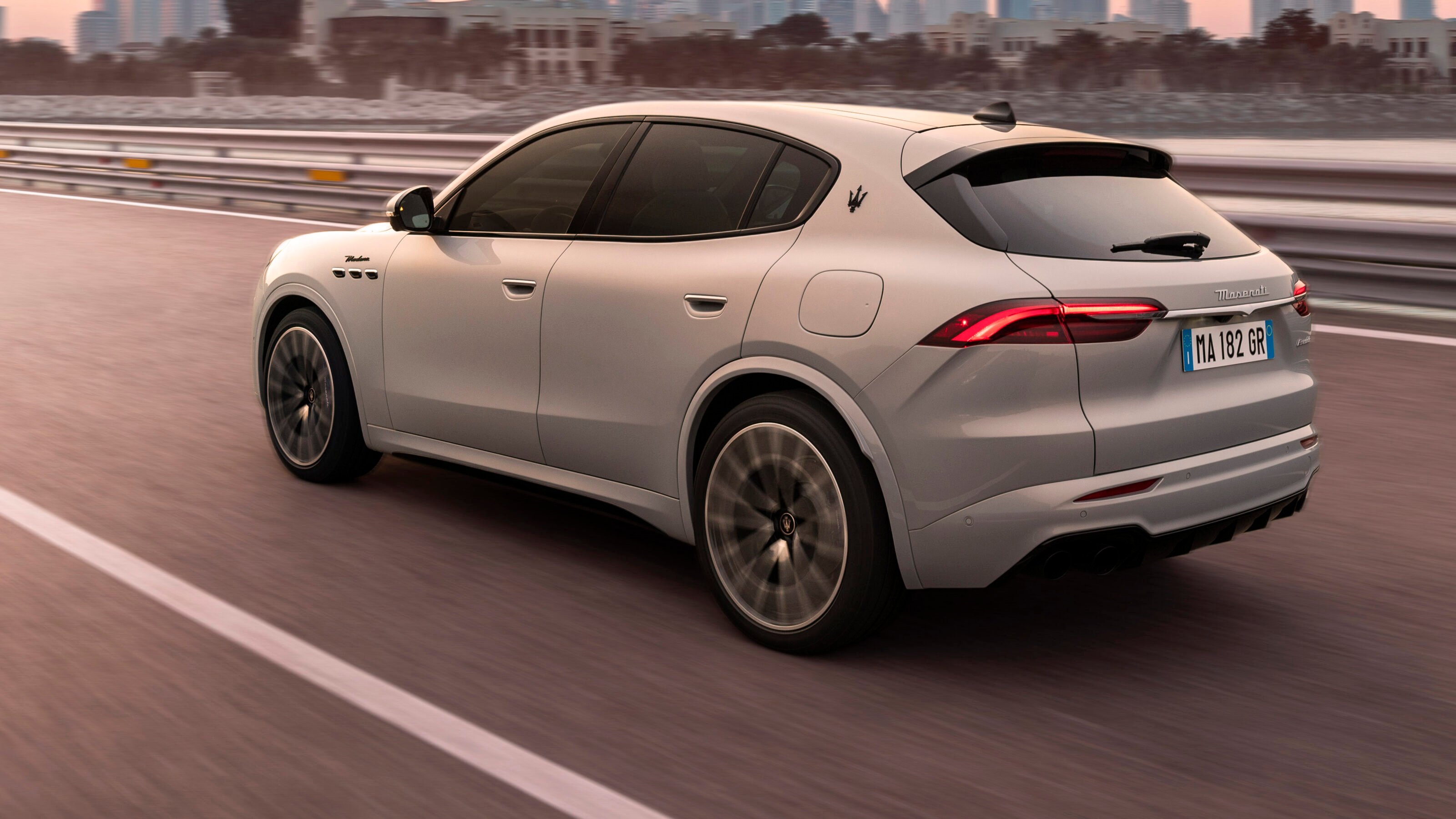
But – if the Macan-alike incursion into popularity is to succeed – it will be the two mild hybrids that actually sell in big numbers. Available in the GT and Modena versions, both have 2.0-litre four-cylinder petrol engines, with a belt starter-generator, based on the Ghibli’s, to offer electrical assistance to ease the load on the engine.
In the entry-level GT it makes 221kW; in the Modena it’s 243kW, and the same 450Nm of torque. They’re set up for performance rather than economy, but even so they should offer relatively sane numbers for taxation purposes, with an official fuel consumption figure of 8.7 l/100km for the GT.
Maserati claims 0-100km/h times of 5.6 seconds for the GT and 5.3 seconds for the Modena.
The GT comes with 19-inch wheels, while the Modena is on 20s and the Trofeo on 21s. The Modena and Trofeo have a wider rear wheel track, by 34mm.
Will there be a slower, more affordable entry model?
No, and deliberately so. Maserati only makes sense as a higher-end premium brand, building cars that are still relatively rare – although not as rare as they sometimes have been in the past, when sales have dwindled to a financially unsustainable level.
Residual values are crucial to the Grecale. Unlike the archetypal tanned, loafer-wearing, ageing playboy, the new breed of Maserati buyers will be younger and will include more females. And they won’t actually be buyers – PCPs and other forms of finance will be crucial to the Grecale’s success.
Strong residual values are essential if monthly payments are to be relatively affordable, and having low-spec versions in circulation can cheapen the brand imagen in a residual-damaging way.
And it’s not just a rebadged Alfa?
Maserati is, like Alfa Romeo, part of the old FCA group that last year merged with PSA to form Stellantis. In other parts of Stellantis, we’re seeing a lot of hardware sharing – the Vauxhall Corsa and Peugeot 208 are clearly very closely related, for example. But Maserati is keen to stress that, despite being built on a version of the same Giorgio platform as the Alfa Stelvio, the Grecale is very much a Maserati.
The mild-hybrid engines are derived from the Ghibli’s, while the V6 is a slightly detuned version of that used in the MC20 supercar, not the Stelvio. The cabin is pure Maserati, too.
The Grecale was developed in Modena, it’s being built at Cassino (traditionally a Fiat and latterly an Alfa Romeo factory, south-east of Rome) and the engines are coming in from the FCA engine plant at Termoli, on the Adriatic (which will become one of the Stellantis group’s battery gigafactories later in the decade).
The EV will be made at the Mirafiori factory in Turin, which already builds the electric Fiat 500, and is becoming an EV hub for Stellantis.
When will the Maserati Grecale come to Australia?
Expect to learn more about the Grecale’s Australian timing and specifications in the months ahead, with a local launch expected to occur in either December or January.
A version of this story appeared at Car magazine in the UK.
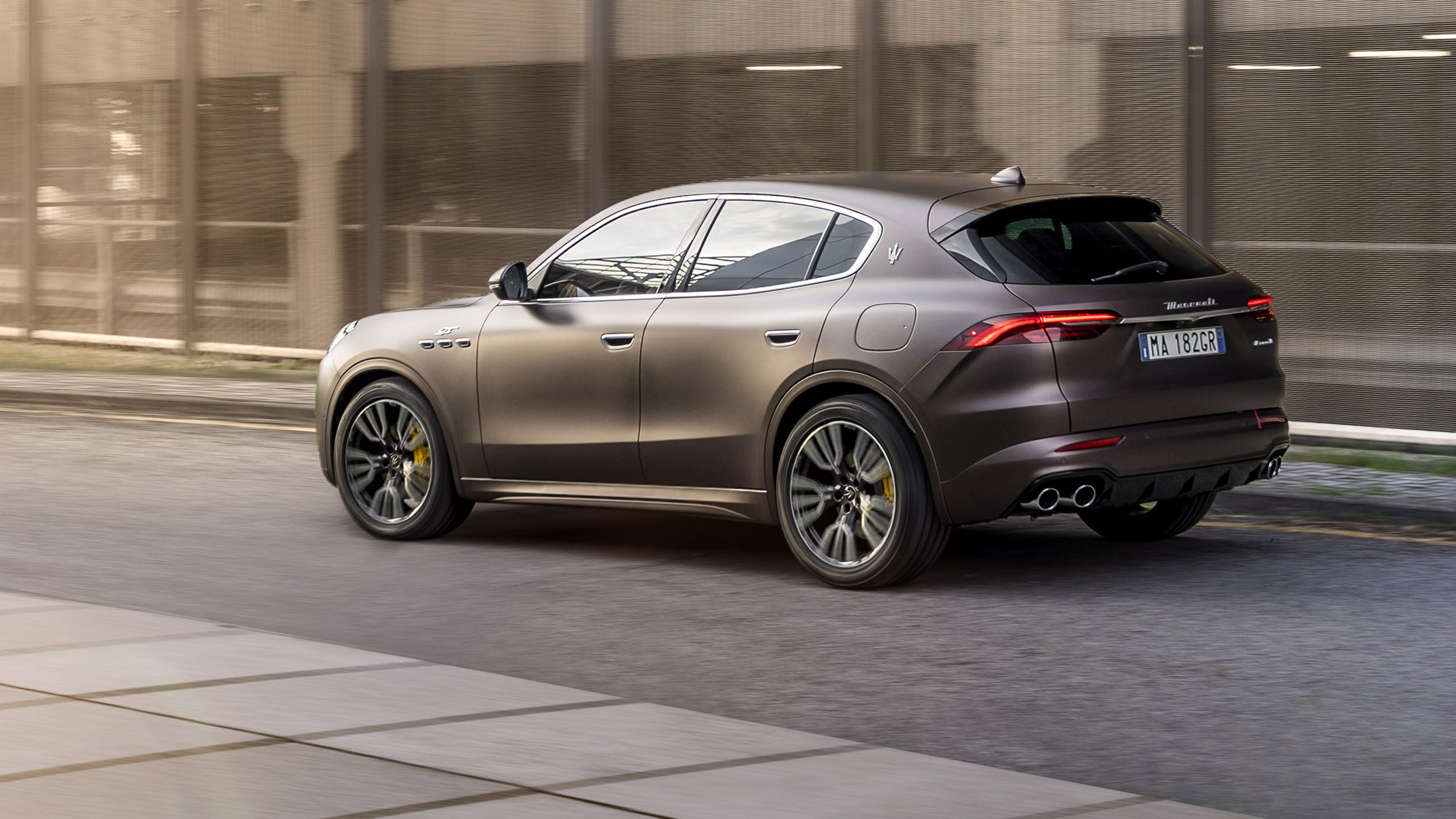
I played a small part in creating a moment of pure joy recently. An Audi R8 was passing through the road-testing garage and on my way home from shooting it for the Wheels YouTube channel (check it out, if you haven’t already), I decided to stop at a friend’s place. Their son is a toddler and obsessed with cars, so I casually assumed he’d appreciate a look.
I didn’t give it much more thought until I arrived and spotted the top of a small head behind their front fence. It was moving excitedly from side to side and bouncing up and down as he strained to catch a glimpse of the noisy blue supercar.
What followed was both heart-warming and a moment of unexpected perspective. Kids have an amazing ability to break life down into its most uncomplicated form and as I watched him stare and shout and smile – and then make a funny shocked/worried face as I revved the big 5.2-litre V10 – I was reminded of two things.
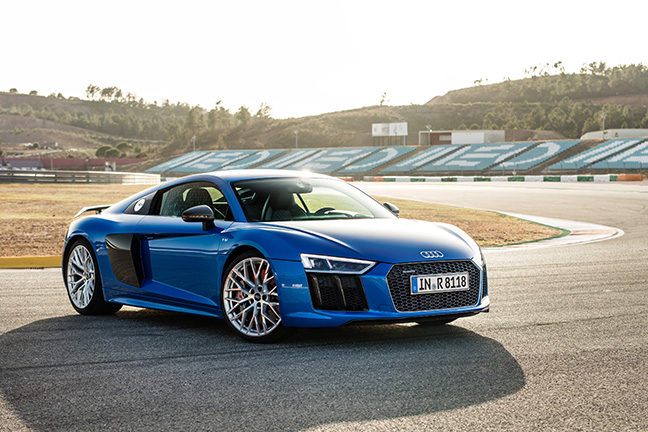
The first is that a big part of the joy of cars is sharing them. As a country boy, I’d have lost my mind if someone turned up with a low-slung supercar when I was a kid, but what I wasn’t expecting was the warm glow of happiness I felt at stoking that same passion for cars in a younger generation. It’s why I firmly believe cars shouldn’t be mothballed and tucked away for posterity; they should be driven, enjoyed and shared.
It’s also a big part of what makes car meets like Melbourne’s rapidly growing ‘Highball Cars & Coffee’ so successful. You don’t just go to ogle and dream, you swap stories, create memories and foster the love of cars in the next generation.
The second thought is the one that’s stayed with me, however. I’ve often pondered what separates the great cars from the merely very good and the toddler’s reaction to the R8 crystallised something for me: the best cars are the ones that speak to our inner child. Think about it.
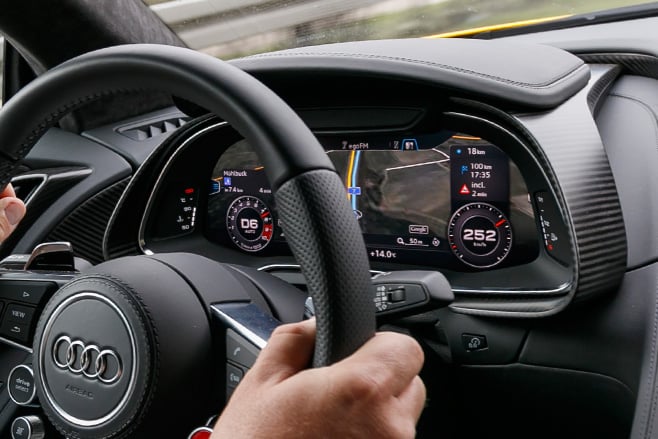
I’d wager that many of your fondest motoring memories stem from your formative years: spotting a sports car for the first time; your first sensation of speed in something properly quick; the sound and fumes of your first motorsport event.
Supercars are the most obvious candidates for rekindling that sense of child-like glee, but by no means do you need to spend big to recapture a sense of wonder. I know this because I’ve recently experienced it driving a $45K Hyundai i30 N.
Hyundai’s mid-life update for its first hot hatch is surprisingly comprehensive and has honed an already excellent car into something pretty special. It has also added the option of an eight-speed dual-clutch which includes powertrain modes entitled ‘N Grin Shift’ and ‘N Power Shift’.
I’ll freely admit I thought the names were naff but then I drove the car and, as I watched the shift lights glow red and heard the cracks and bangs from the exhaust, I conceded they’re actually spot-on. There’s a silliness and youthfulness to the N that actually isn’t silly at all. It’s brilliant.
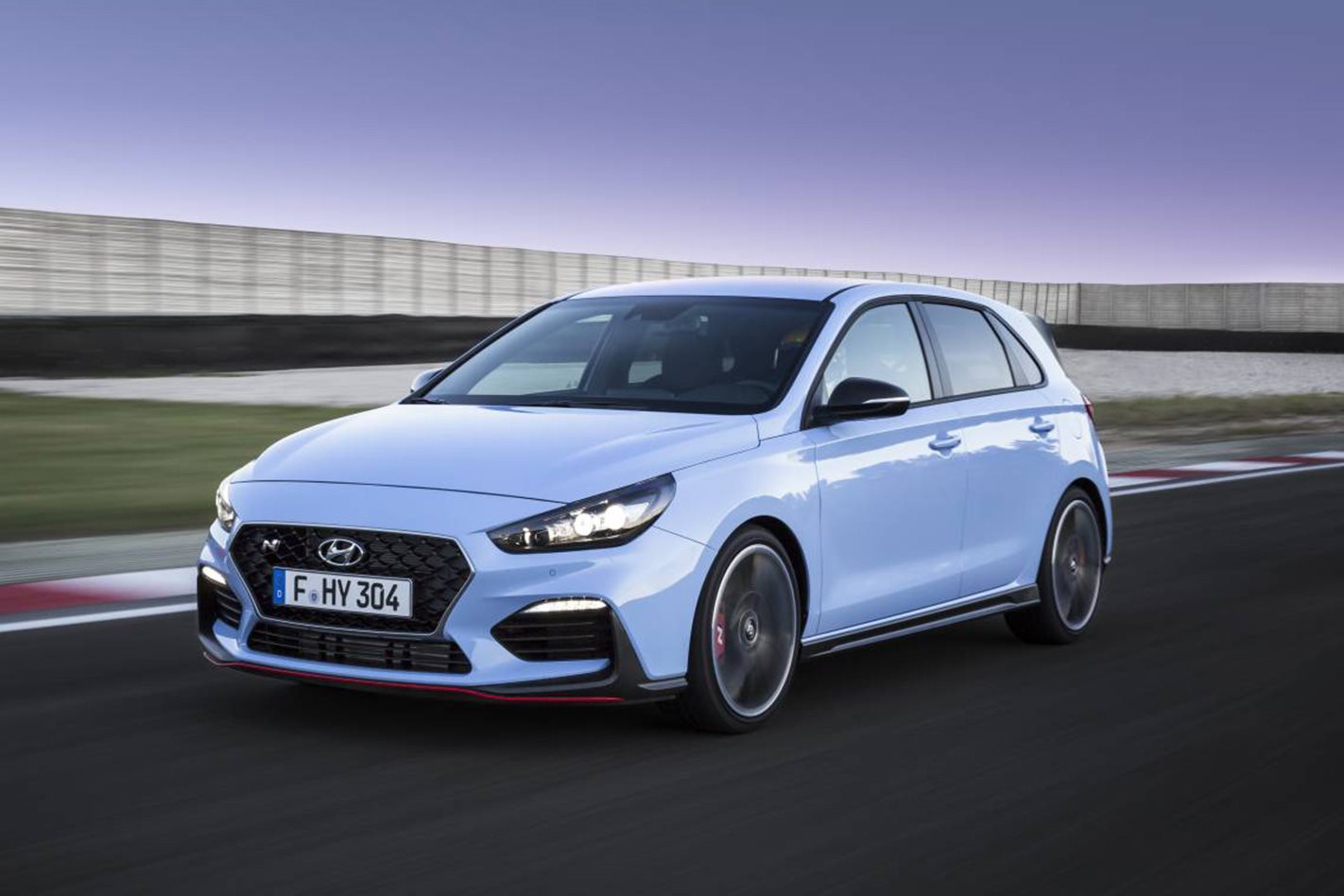
Even better news is that the i30 N is by no means a unicorn. Hyundai’s smaller hot hatch, the i20 N, delivers a similar experience, and here’s hoping the hugely hyped GR Corolla, delivers the same sense of fun and engagement.
A new Subaru BRZ/Toyota 86 and the incoming Nissan 400Z also promise thrills at reasonable money so here’s my suggestion: if you haven’t felt that rush of glee for a while because of lockdowns, or maybe you think you’ve outgrown it, do yourself a favour and go for a drive in something that makes you smile. If you can tap into the same sense of joy as my friend’s toddler, you can’t get much happier than that.
Audi and Porsche are strong performers in their own right, but corporate friends for life they are not. The same applies to the Piech and Porsche families who are almost exclusively united by their unrestrained urge to amass power and money.
Under the umbrella of the Volkswagen Group, both premium brands are having a tough time to set aside individual strategic ambitions while focusing on the bigger picture and the imperatively glorious joint bottom line. Following orders mapped out in Wolfsburg, they agreed to share platforms, product plans, plants, parts, processes and people.
But as far as the long-term goals and the means to achieve them are concerned, Porsche is pulling out all the stops to set the pace for all high-end marques involved. This applies to not only proven strengths like key motorsport activities but also its contribution to the grand strategy for the group’s premium brands.

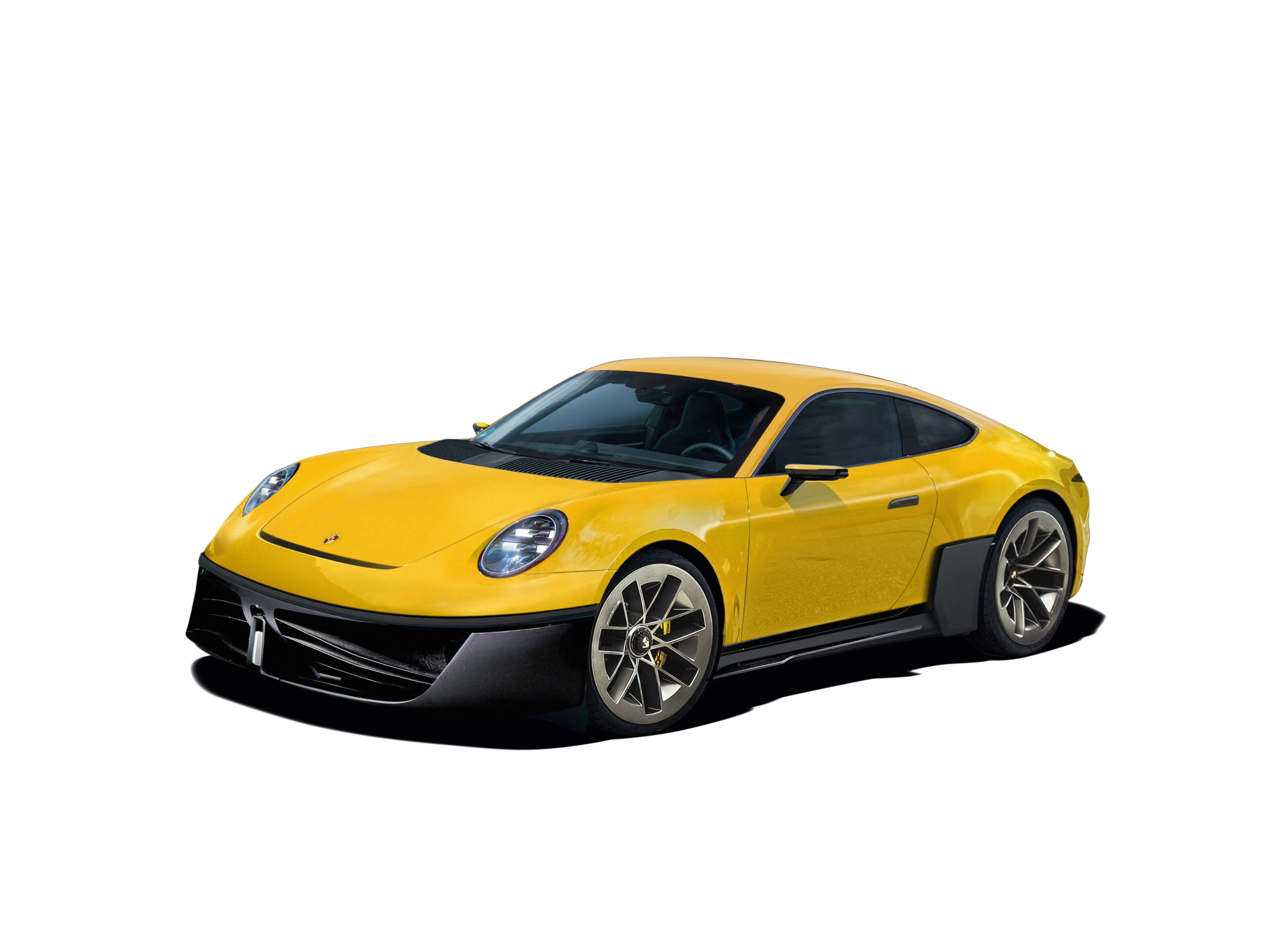
After all, it’s Porsche that will launch the first all-electric sports car (the next Boxster/Cayman due in 2023/24), the first PowerHybrid drivetrain earmarked for the 994-generation 911 (the 992 replacement expected in 2024) and the first full-size, battery-fed SUV (project K1 to bow in 2024).
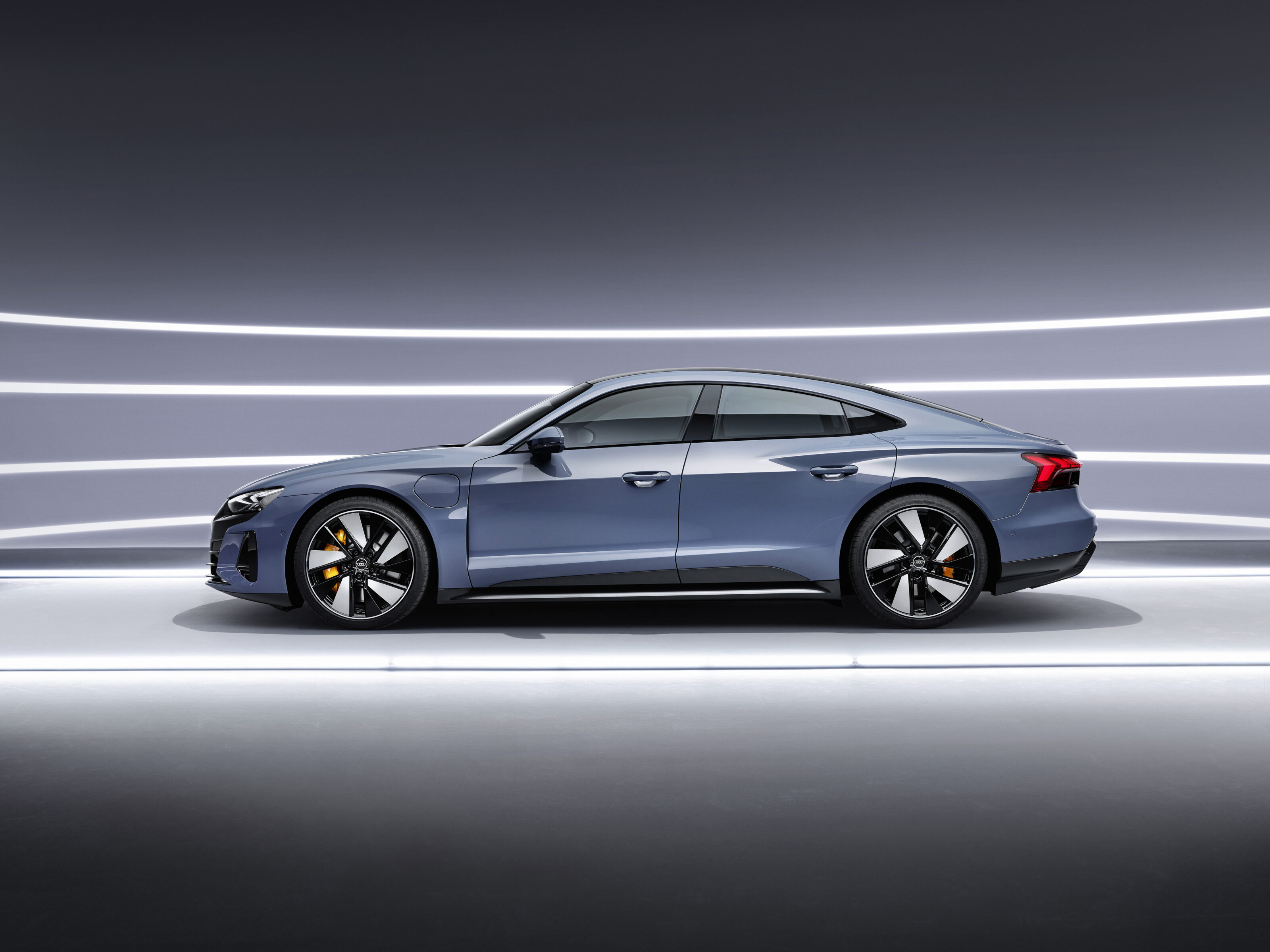
In terms of new, first-to-market EVs, Audi draws – in stark contrast to Porsche – a big fat blank.
Porsche fixed Bentley before passing the recovered English patient on to Audi. If the rumoured McLaren deal comes true, the docking station for the Brits will be Ingolstadt, not Zuffenhausen. Even though Lamborghini would probably be better off under the wings of Porsche, plans to this effect never proceeded beyond the maybe stage.
No surprise then that Porsche’s IPO – predicted for 2022 – will be a maximum-attack solo run which is bound to generate enough liquidity to keep stall-prone Volkswagen (the brand, not the Group) out of the doldrums until the end of the decade.
Two or three years later, Audi will likely also go public with Bentley, Ducati, Lamborghini and, perhaps, McLaren in tow. The cash generated by the world’s strongest sports luxury group must fund the significant structural changes required to make the group fit for the future.
Compared to the cuts proposed by this truly drastic mid-term game plan, the 30,000-plus redundancies recently put up for discussion by Herbert Diess may well be remembered as a peace offer from the good old days…
The Porsche portfolio laid out for the next five to 10 years is dotted with antagonistic pairings conceived to satisfy both worlds.
In the sports car segment, the future fully electric 718 meets the hybridised 911. In the SUV department, the new emission-free Macan is partnered by the facelifted Cayenne which soldiers on until the end of 2027. In the four-door coupe category, the plug-in Taycan teams up with the updated Panamera which is safe through 2028. Marketing believes that a one- to three-year overlap of old and new will suffice to orchestrate a smooth transition at the end of which the 994 is tipped to be the last surviving Porsche equipped with a combustion engine.
Early next decade, even this long-running iconic brand-shaper will reportedly shed its legendary flat six for a set of e-motors and a choice of solid-state battery packs.

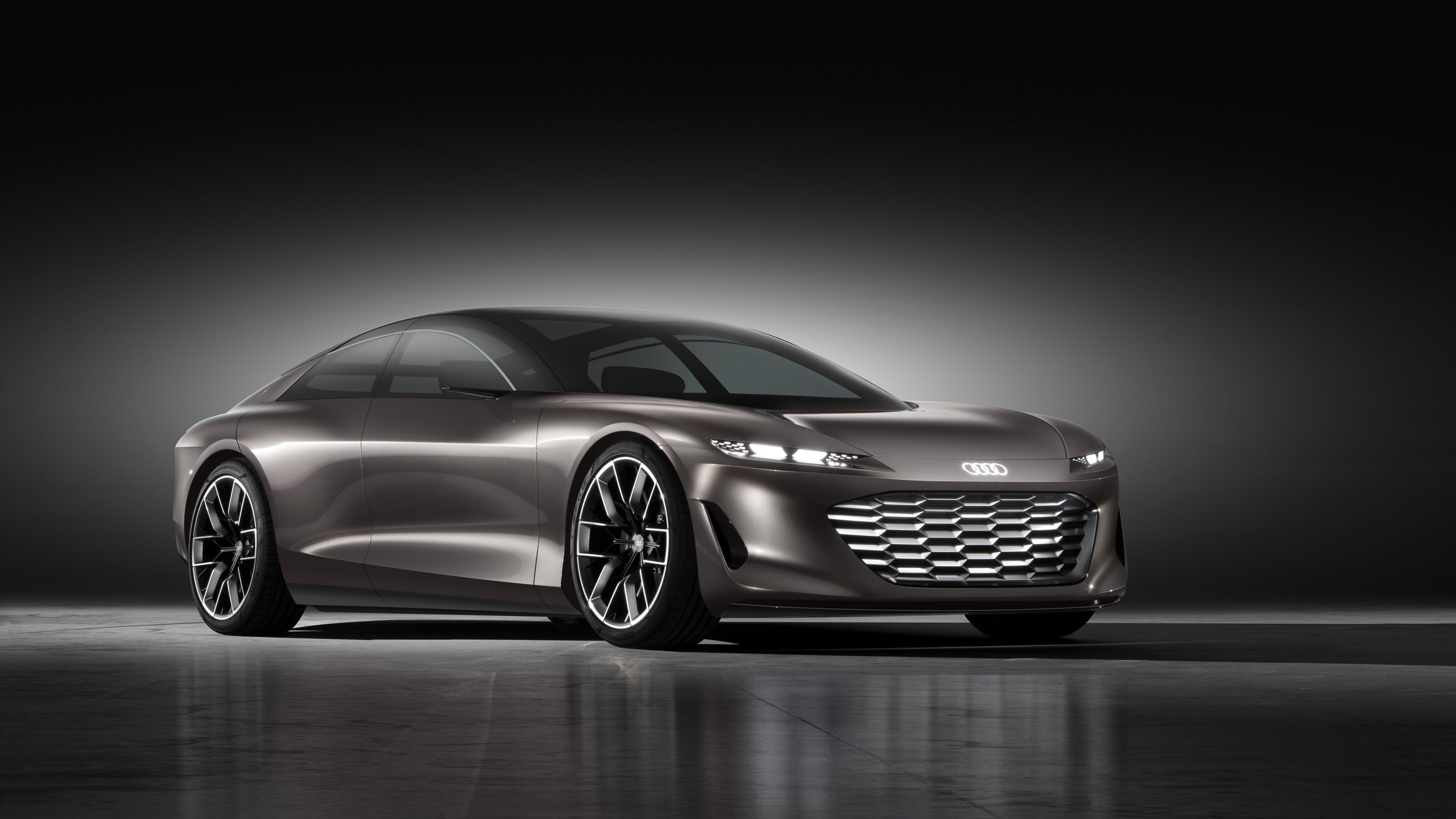
Where exactly does Audi feature in this scenario? In essence, the R&D team under Oliver Hoffmann is preparing a similar selection of EV and ICE offerings spread over a much broader portion of the market. As far as the fully electric models are concerned, the Q6 e-tron (2023) is the counterpart of the Macan, the A8 e-tron also known as Grand Sphere (2025) shares its DNA with the Panamera G3 (2024), while the Q8 e-tron (2027) rides shotgun with the Cayenne E4 (2025).
Through to 2024, both brands use the PPE (premium platform electrified) components set in combination with the upgraded E3 1.5 software.
New arrivals out from 2025 onwards will be based on an evolutionary architecture known as SSP (scalable systems platform) coupled to the much more powerful 3 2.0 black box. While the Audi A6 e-tron is a member of the PPE community, the still iffy Q2 e-tron, the 2027 A3 e-tron and the future 2031 A4 e-tron will be underpinned by iterations of the MEB matrix masterminded in Wolfsburg.
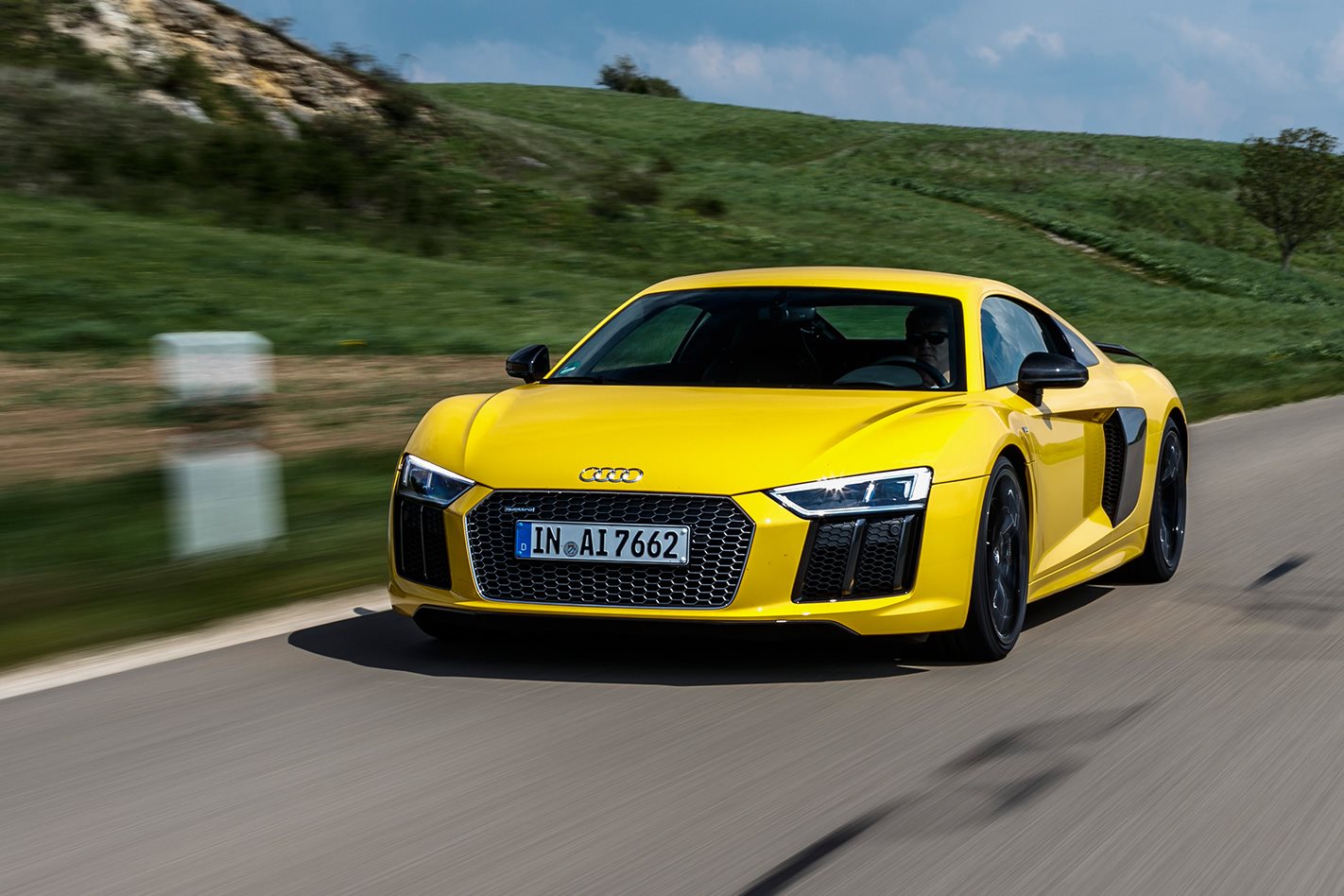
As far as future sports cars are concerned, Porsche’s tentative multi-brand modular and scalable SPE architecture never saw the light of day. Audi might have used SPE for the R8 replacement we should see in 2025, but instead Ingolstadt approached Lamborghini for help. The donor car in question is the next Huracan which will share its body and chassis structure from the front to the B-pillars with the striking second-generation R8.
Porsche’s IPO – predicted for 2022 – will be a maximum-attack solo run
In place of the brand-new hybridised V8, Audi will install a T-shaped 90kWh battery stack and two or three e-motors good for a combined 640kW-plus. Still under discussion is a TTe based on the facelifted Porsche 983 pencilled in for 2027. Insiders predict roadster and coupe versions as well as certain power and torque concessions to the future Boxster and Cayman.
Let’s now take a closer look at the assets of both brands, how Bentley and Lamborghini may benefit from the combined high-tech know-how, where the two car makers stand in terms of solid-state batteries, and to what extent USPs can be shared without violating the respective brand values.
Is there anything Porsche wants from Audi?
Not really, except for more and bigger economies of scale. And perhaps a Q4-type urban SUV which currently features in an official customer questionnaire alongside the aforementioned K1.
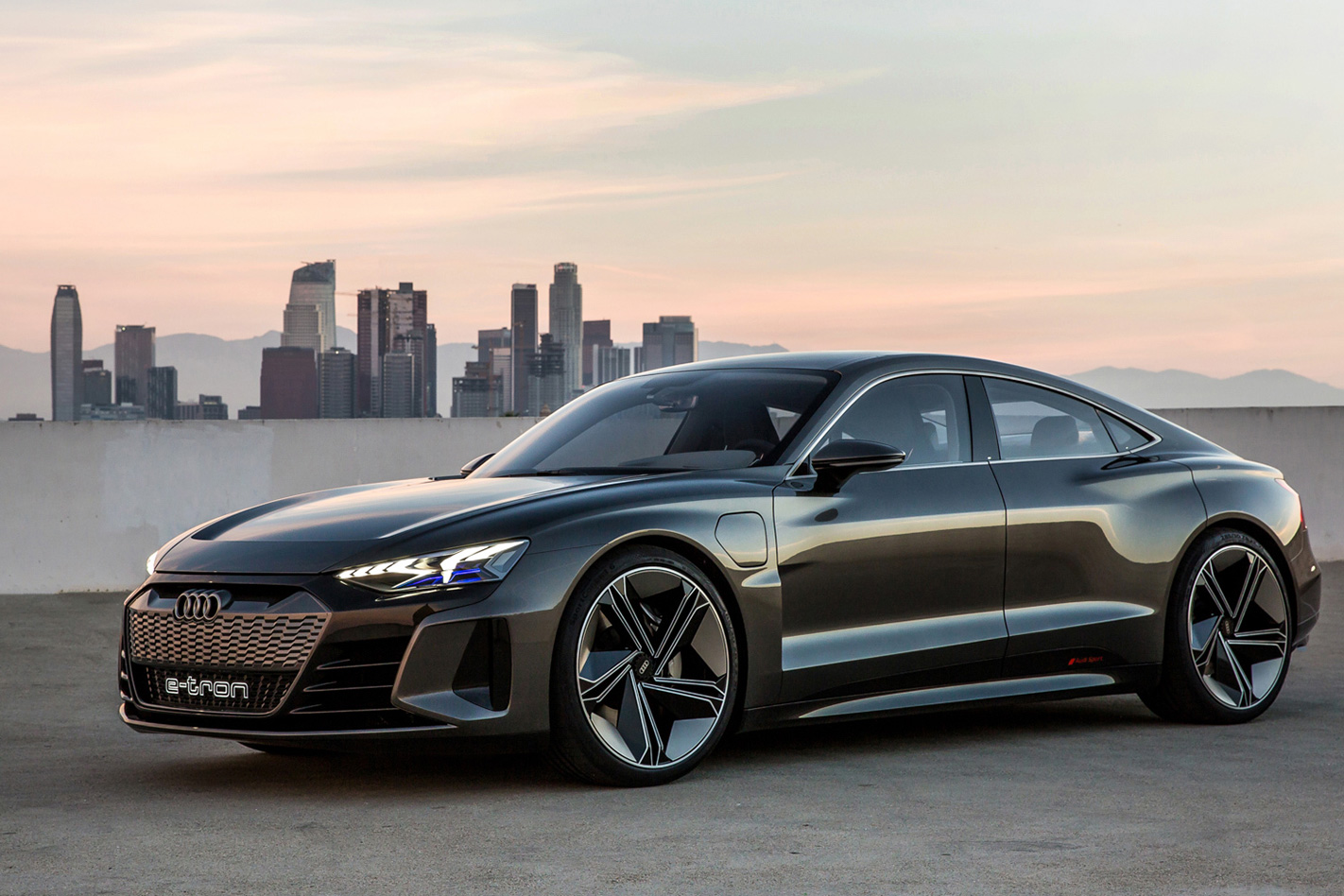
Audi, on the other hand, was certainly chuffed to get access to the Taycan which spawned the impressive e-tron GT, but, sadly, not the equally desirable reimagined Espada. Speaking of Lamborghini, there is little doubt that the SSP6 platform exclusively defined by and for Porsche would be better suited for the Italian sports car maker than the less sporty and potent SSP4/5 layouts overseen by Audi.
After all, SSP6 is quantifiably lighter, lower and stiffer than other derivatives. Another nice-to-have item currently off-limits for Audi is Porsche’s THEV PowerHybrid system which meets EU7 emissions, boosts torque and greatly improves the thermo-dynamic efficiency.
Last but not least, there is the ultra-high-speed charging algorithm developed in Weissach which allegedly cuts the totally safe and stable energy restoring process to a token five minutes.
One area where Audi and Porsche cooperate is battery technology, but the arrangement is currently restricted to joint purchasing efforts and the shared use of modular performance electronics.
While Audi is working on its own stage-five high-performance cells designated to power, among others, the next R8, Porsche has allegedly struck deals with the solid-state battery provider QuantumScope for project 998 (the all-electric 911), with the German start-up Customcells for future motorsport use including LMDh, and with Rimac for the rumoured 918-type hypercar.
Small batches of expensive high-tech showpieces, specialised drivetrain applications, high-performance batteries and motors – that’s Porsche’s home turf and a key asset from which Lamborghini and Bentley should benefit.
After all, the next new cars from Crewe – D-SUV (think long-wheelbase Range Rover), D-CUV (think stretched Velar) and D-LUX (think Mulsanne replacement as a five-door coupe) – already rely on PPE and SSP componentry.
The same applies to the 2+2-seater GT pitched by Lambo which would sit more comfortably on SSP6 than on SSP4, as the latter currently only stretches to about 500kW whereas the neo-Espada needs 600kW merely to eclipse the most potent Taycan.
Lamborghini’s neo-Espada will need at least 600kW merely to eclipse the most potent Porsche Taycan
Audi forecasts the SSP4/5 architecture will generate a healthy seven to eight million units over its life cycle. In contrast, the SSP6 family is expected to plateau at a comparatively modest 500,000 units, yet Porsche is in a much more comfortable position thanks to its superior overall efficiency and the significantly higher return on investment.
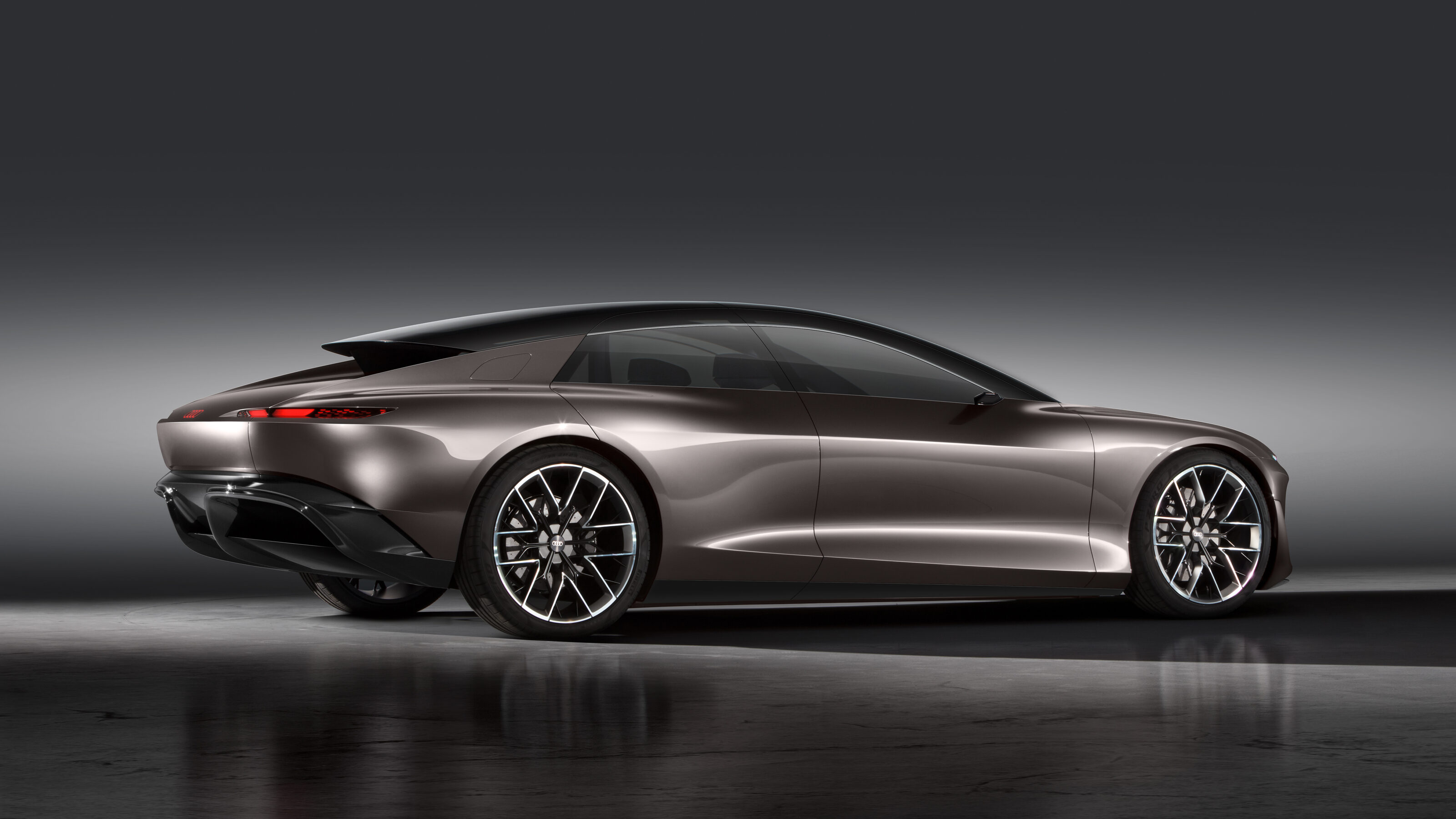
Having pulled out of Formula E and DTM, Audi signed a three-year deal with the Paris-Dakar organisers, and, from 2023, will compete in the LMDh series, and may join Formula 1 in 2026 when a set of all-new rules will come into effect.
The LMDh is a joint effort with Porsche, and the possible F1 entry would also be orchestrated ensuite to save costs and to deliver an instantly competitive answer to the establishment. If the VW Group permits Audi to forge ties with McLaren, and if Porsche does indeed liaise with Red Bull Racing, the Anglo-German newcomers could secure a large piece of the F1 revenue pie from season one.
In the field of high-end sports cars, however, the two brands are fighting with different weapons. While the Weissach power brokers are currently discussing a 2MW (yes, 2000kW) hypercar, Lamborghini is struggling to squeeze 750kW out of the hybridised V12 which is in the works for the 2023 Aventador. The Italians won’t offer a pure EV before 2025 at the very earliest, and both sports cars are to stick with electrified combustion engines way into the next decade.
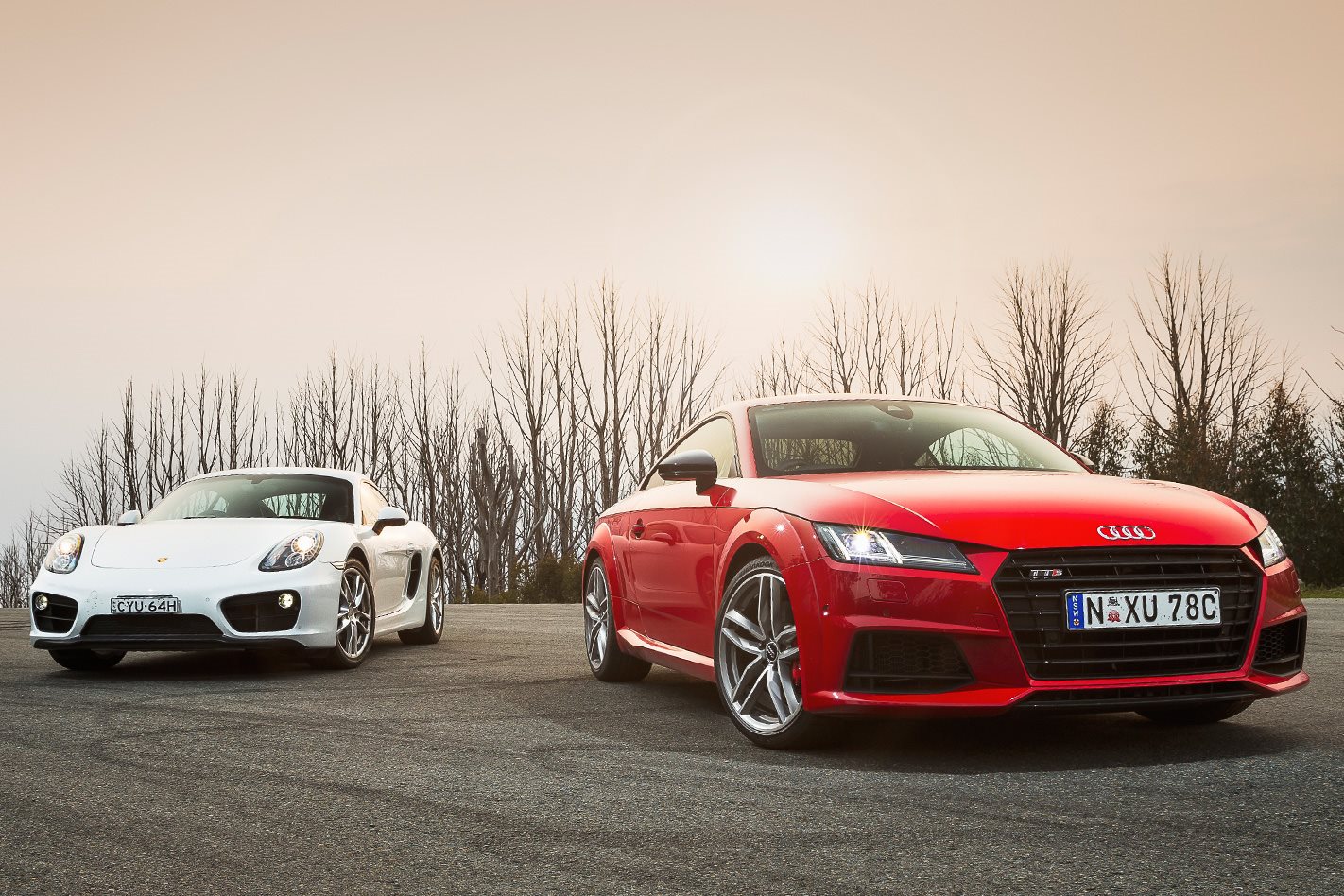
Opinion: What’s holding Audi back?
The biggest difference between Audi and Porsche is attitude. Porsche prides itself on being lean and fast – not yet quite to the standards of Tesla and the Chinese, but certainly in comparison to the legacy auto makers. Audi, however, is a different story.
In my opinion the four-ringed brand is cumbersome and slow. Its hierarchical processes are dated and accordingly inept, the operational structures need streamlining, decision-making takes too long on all levels, and the overly risk-aversive corporate strategy fails to trigger advanced new business models and grasp brand-enhancing opportunities.
A senior engineer has downplayed the upcoming Mazda 6 – a model rumoured to be coming with a six-cylinder engine powering the rear wheels, its first such vehicle since the Mazda 929 of 1997.
Mazda‘s engineering and development lead in Europe, Joachim Kunz, was quoted as saying the company’s focus is on SUVs, suggesting the Mazda 6 could be on the backburner for the time being.
“It would be very nice… to have the [rear-wheel-drive] concept and six-cylinder engine for a Mazda 6 successor or a large sports coupe,” Kunz said in the March edition of the UK’s Autocar magazine.
“We would love to have it, but at this point in time, it’s most important to sell SUVs.”
The engineering boss stopped short of saying the rear-wheel-drive (RWD) Mazda 6 was dead entirely, appearing to want to keep the spotlight on the carmaker’s revitalised portfolio of SUVs.
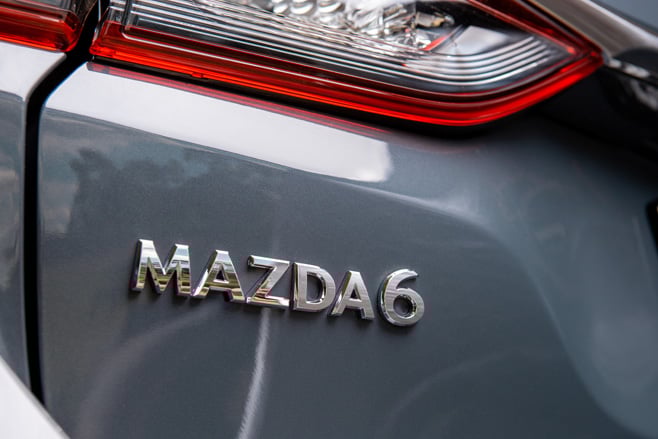
In October 2021, reports from Japan suggested the six-cylinder RWD Mazda 6 would be unveiled in 2022. However, given the ongoing supply-chain issues being felt across the automotive industry, it’s possible Mazda has delayed the model in order to shore up parts for its SUV line-up.
“The SUV trend is continuing, and even more for Mazda. It’s what’s selling best,” Kunz said.
Mazda has confirmed a six-cylinder RWD platform is on the way, with the recently-unveiled CX-60 to debut the company’s ‘Large Architecture’ platform with a choice of either a 3.0-litre straight-six petrol engine or a 3.3-litre turbo-diesel six, as well as a plug-in hybrid four-cylinder.
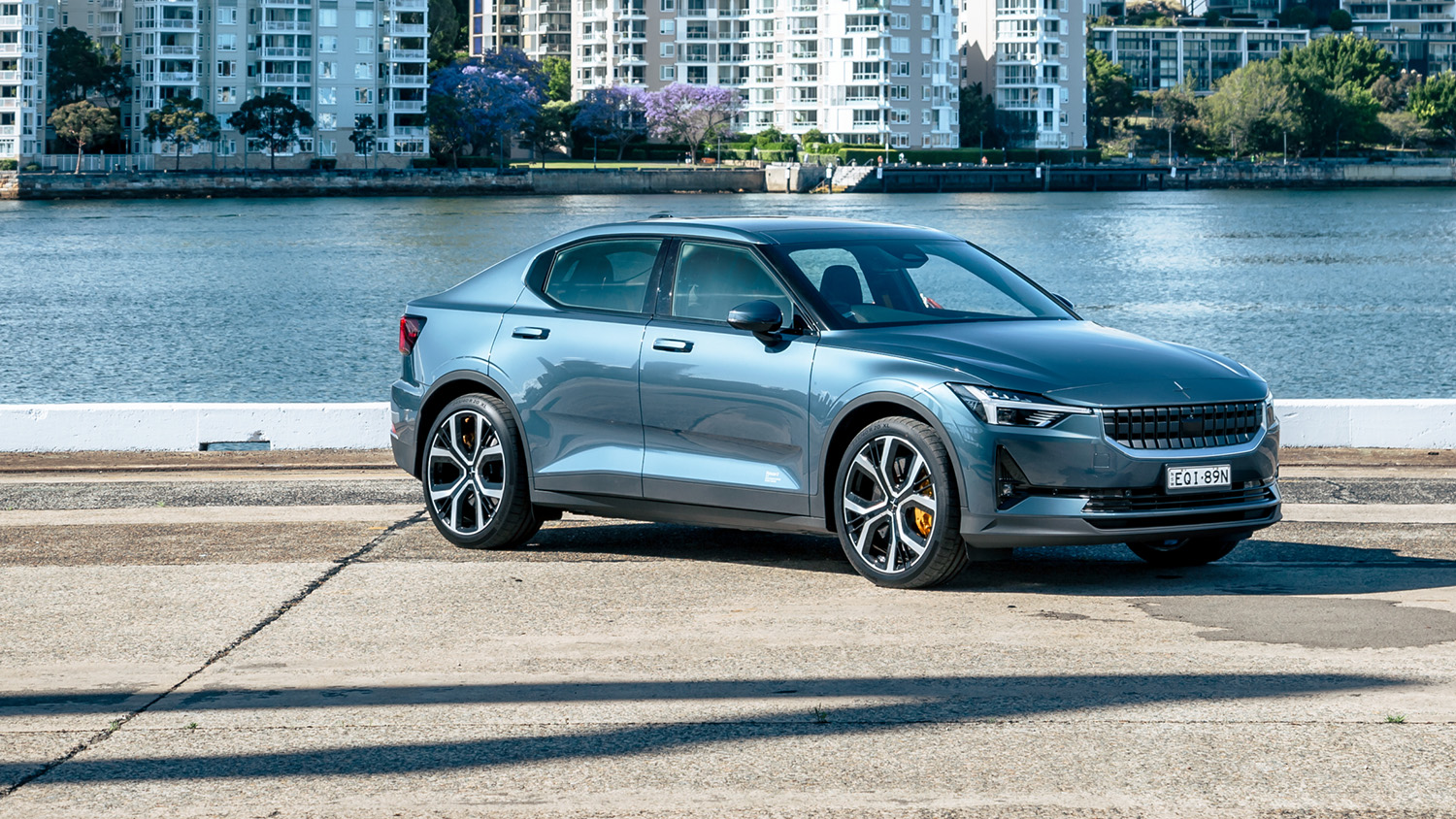
UPDATE, March 22: Deliveries of the 2022 Polestar 2 have started in Melbourne and Sydney, with other states to follow in the coming weeks.
The Polestar 2 is the carmaker’s first foray into the Australian market, with the Tesla Model 3 firmly in its sights following Polestar’s transition from the performance arm of Volvo to an all-electric brand in its own right.
Priced from $59,900 before on-road costs for the Standard Range single-motor variant, the Polestar 2 is one of the few new cars to enjoy ample stock, with hundreds of unallocated vehicles already in the country and further shipments on the way.
“This is a very proud moment for everyone at Polestar as we commence official handovers to Australian owners just a few weeks after first going on-sale,” said Samantha Johnson, Head of Polestar Australia.
“Launching a new electric vehicle in Australia at a time when incentives are gaining momentum and more consumers are looking to accelerate their transition to EVs is very exciting.”
The story to here
Snapshot
- Polestar 2 goes on sale to the wider public
- Deliveries of pre-configured models to begin in March
- Full refunds to be given for unsatisfied customers within a week of taking delivery
February 18: The incoming Polestar 2 has now gone on sale to the Australian public after reservations first opened late last year.
Having been taken on a tour of Australia in 2021 as a part of the manufacturer’s local roadshow, the Polestar 2 is now officially on sale to all prospective buyers, with the first examples slated to arrive on owner’s driveways from March.
According to the Australian arm of Polestar, more than 1600 people sampled its sole offering during the east-coast roadshow, with around 300 reservations being taken within the past 48 hours.
Just as it goes on sale, Polestar has backed its product with a seven-day money-back guarantee, promising new owners to have one week and up to 500 kilometres with the vehicle before getting a full refund if they’re not totally satisfied.
Managing Director Samantha Johnson said a significant uptake in electric vehicle sales last year means now is the perfect time for the brand to launch, backing its vehicles with the money-back guarantee.
“There is incredible interest in electric vehicles in Australia, with sales increasing by more than 190 per cent year-on-year in 2021,” said Johnson.
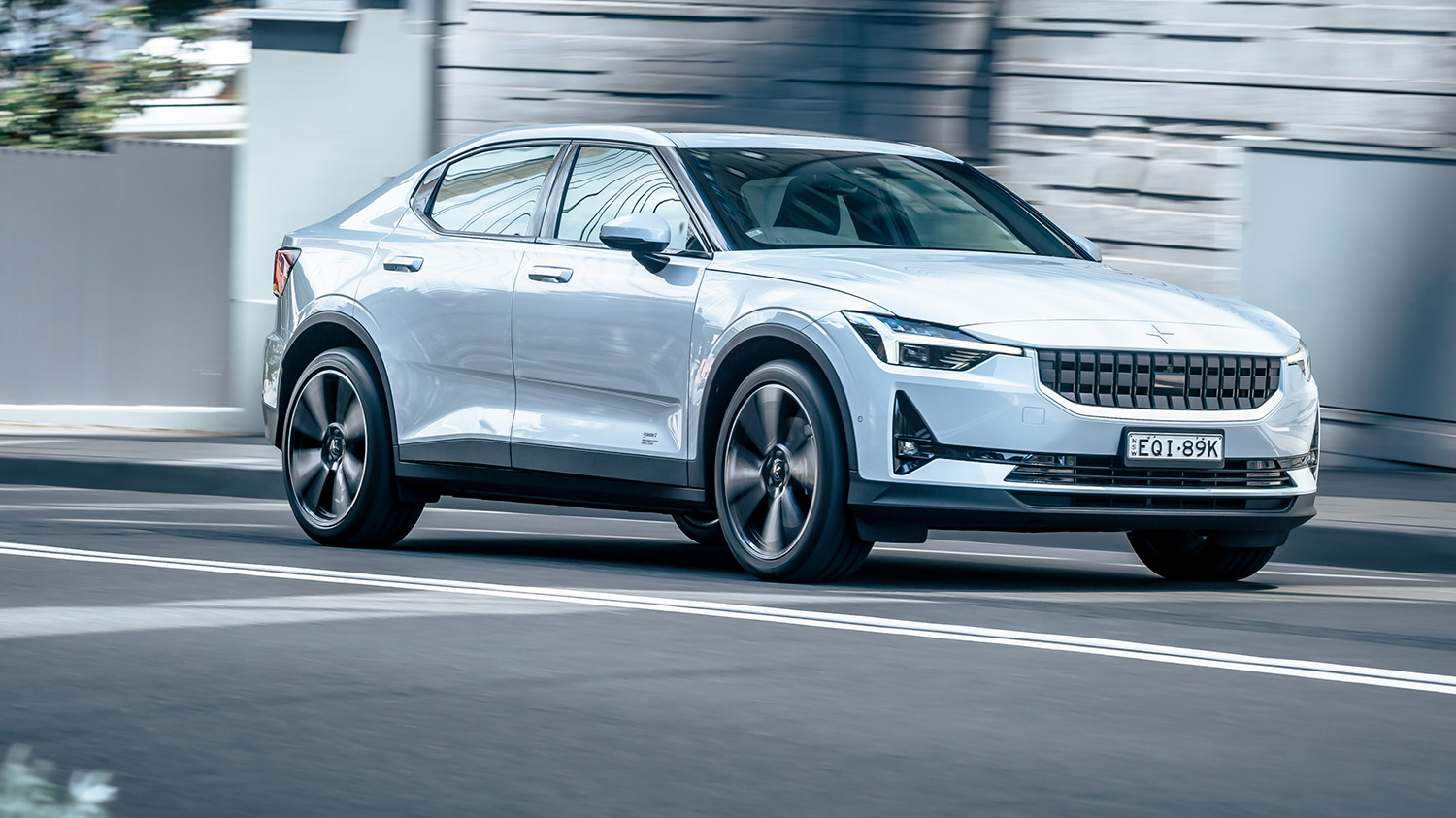
“We’re thrilled that the Polestar 2 is now here to help meet that demand. With 180 vehicles on-the-ground in Australia and ready for delivery in March, the Polestar 2 will further accelerate our national shift to an electric-vehicle fleet.
“A new vehicle is often the second-largest purchase a person will make after a home, so it’s important to not only recognise that, but to also stand behind our vehicles – and our customers – with a guarantee that provides the peace-of-mind and confidence in the direct-to-consumer model.
“We see that Australians are increasingly ready to make the switch to electric vehicles, and this guarantee is designed to make that transition as easy as possible for Polestar 2 customers.”
The Polestar 2 is available in three variants locally – Standard Range Single Motor ($59,900), Long Range Single Motor ($64,900) and Long Range Dual Motor ($69,900), all prices are before on-road costs.
Australia is shaping up as a fertile test market for China as its auto industry opens up to the global market.
Chinese electric vehicles in particular are set to change the global automotive landscape as the industry gears up for exports. More desirable vehicles from China, combined with state-based EV incentives here as Australia’s charging network continues to expand, combine to make our low-volume market more attractive.
By 2025, the Chinese auto market plans to be truly open as it begins to export as part of its World Trade Organisation obligations. Goals set out in 2018 included development of its supply chains, greater competitiveness and a focus on EVs to lead the industry by the end of 2020. This also saw the need for development of ‘world-class’ brand identities from the hundreds currently operating domestically.
Tactically, caps on foreign investment have been lifted, while its focus on EVs sees China – which clearly leads the world in battery tech – poised to swoop as many incumbent carmakers struggle to adapt. The industry openly acknowledges the need to consolidate the number of brands in order to be better placed for global expansion.
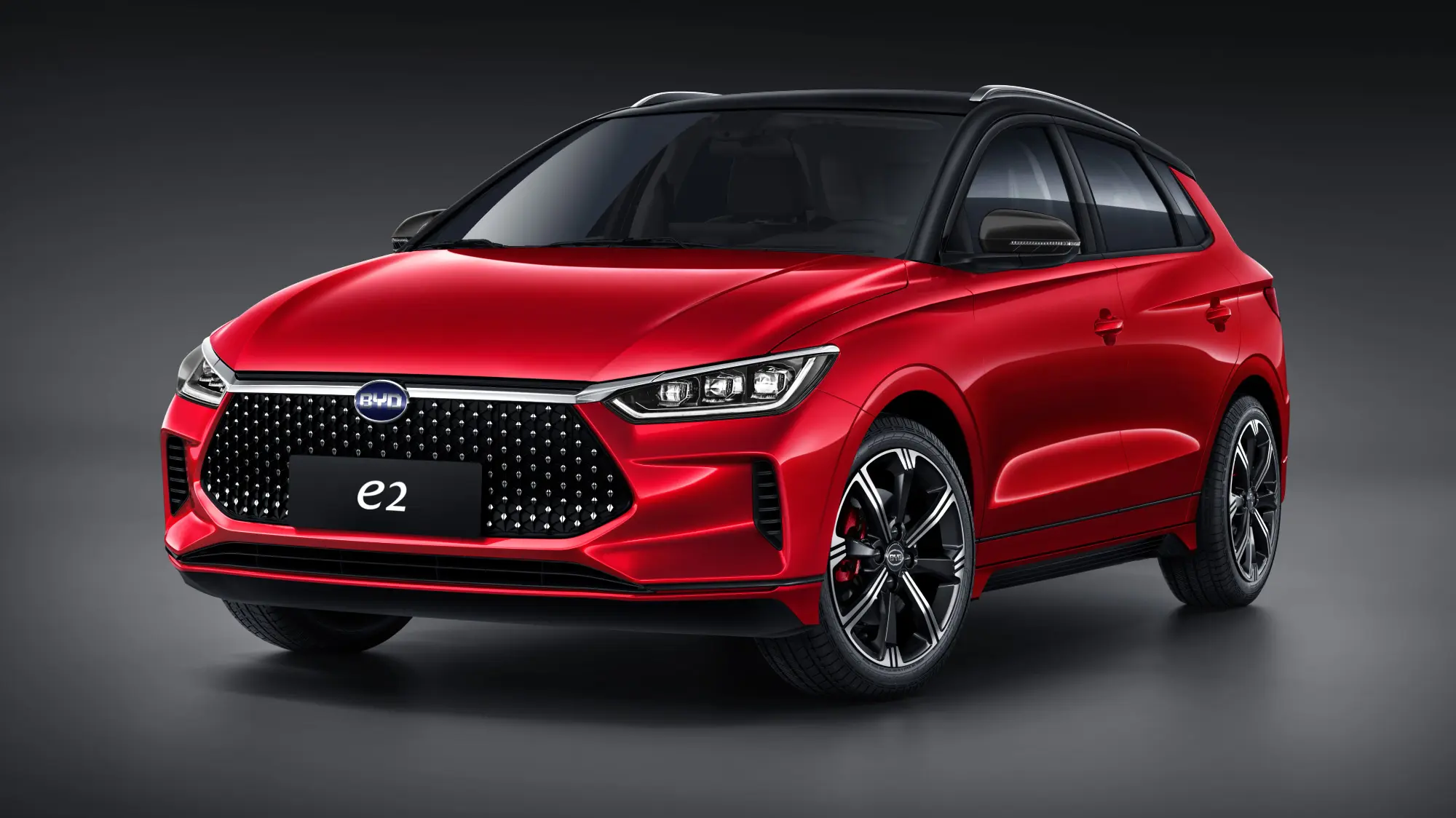
Privately owned, entrepreneurial-led brands including BYD, Geely and Great Wall Motors, all of which have a presence here, are among those best positioned to exploit Australia as a test market in a similar way that Norway has been used to enter Europe.
BYD passenger cars will go on sale in Australia in 2022 through local importer, Nexport. BYD’s unique Blade batteries are lithium-iron phosphate, as opposed to lithium-ion – meaning they don’t rely on cobalt and nickel, and are supposedly less prone to overheating.
Famed for investors including Warren Buffett, in addition to batteries BYD produces electric buses, garbage trucks and other commercial vehicles. It set up an office in Sydney in 2015, where it’s had several experimental taxis operating.“BYD is a closed eco-system – it makes the cells and the cars, and its cell technology is targeted at the entry level to mid-market price point,” says Bill Russo, Founder and CEO of Automobility, based in Shanghai.
“BYD could be a player, because it could bring a whole eco-system, and the energy supply chain of Australia would be attractive, not just the market.”
Australia’s relatively tiny volume of one million annual sales seems trivial compared to China’s market, which sells around double that each month. Also, China’s auto industry has scalability, something that Tesla has taken advantage of by exporting to Europe from China. Yet EV success right now isn’t about sheer volume.
“That’s where we are at globally now with the electrification,” says Russo. “It doesn’t have to be the biggest [market], it has to be the only one that’s growing. When that is the only one that’s growing, then the capital markets start to pivot, rewarding the growth story and penalising the other story. And that’s where ICE is today.”
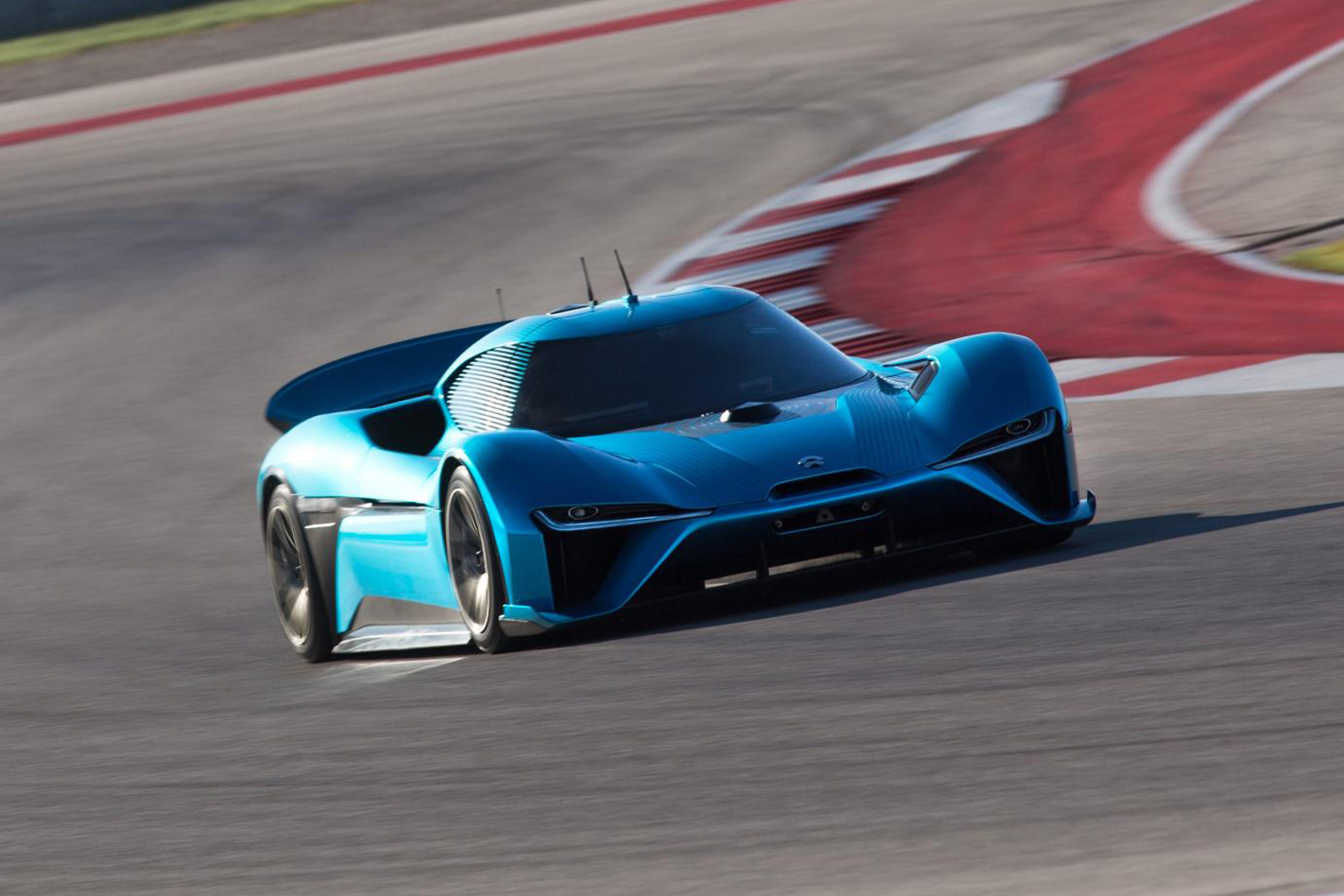
Norway is a prime example, with ICE vehicles banned from 2025. Despite a market even smaller than Australia’s, significant Chinese brands including NIO and BYD entered the Norwegian market in 2021, following SAIC’s MG and NIO’s parent company, XPeng, among others.
“There you’ve got a domino effect, where the first domino falls, and the cars of Norway might find their way circulating through the European Union. You’ll see them,” Russo explains. “In Australia, that’s never going to happen.”
Australia’s isolation as an island may not be as attractive as Norway’s roads into Europe, and right-hand drive is also a hindrance. State-by-state EV incentives and varying taxes don’t make entry any simpler, either, but are the start of an inflection point.
Yet Australia does have upsides. Ours is a mature market that’s a blend of European and US-market tastes. Where Chinese brands may be unable to gain a foothold, such as Central Europe or North America, Australia may serve as the next test bed to set the course for larger Western markets.
“If you hope to be global, you need other examples [beyond Norway] to tout,” says Russo. “Chinese brands need to be able to show that they can not only be present in Western markets, but in markets that are mature. So I think when Chinese companies look to markets like Australia, they’re asking if there is an entry point for them to create enough of a marketable success story that they can sell back to Chinese consumers.”
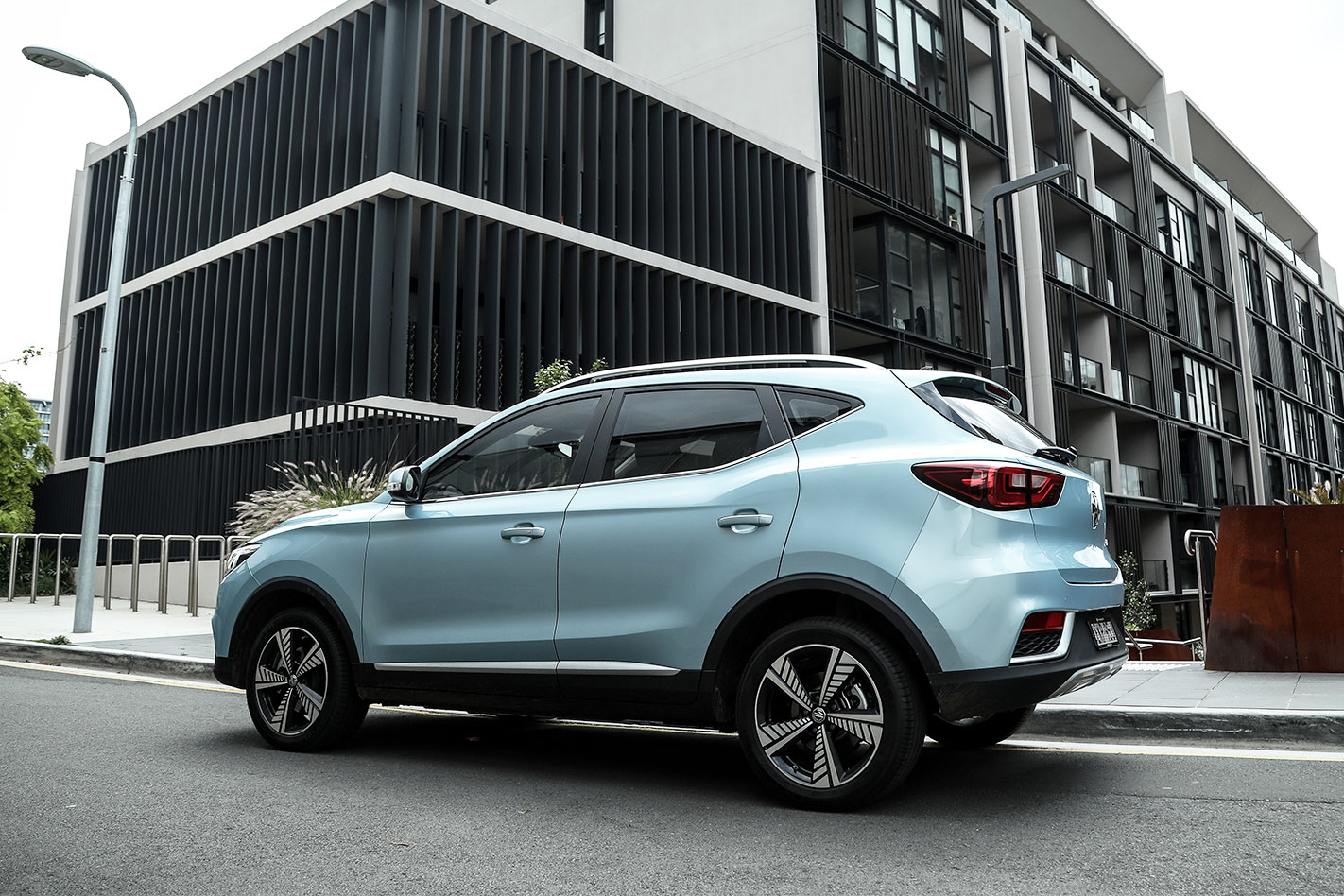
That entry point may be on the horizon, and it may be BYD that swings the balance. Australia signed an FTA with China in 2015, leading to LDV, MG as well as both Great Wall and its Haval brand entering the local market. BYD’s 2022 arrival – expected to be exclusively EVs – will be another litmus test for Chinese carmakers.
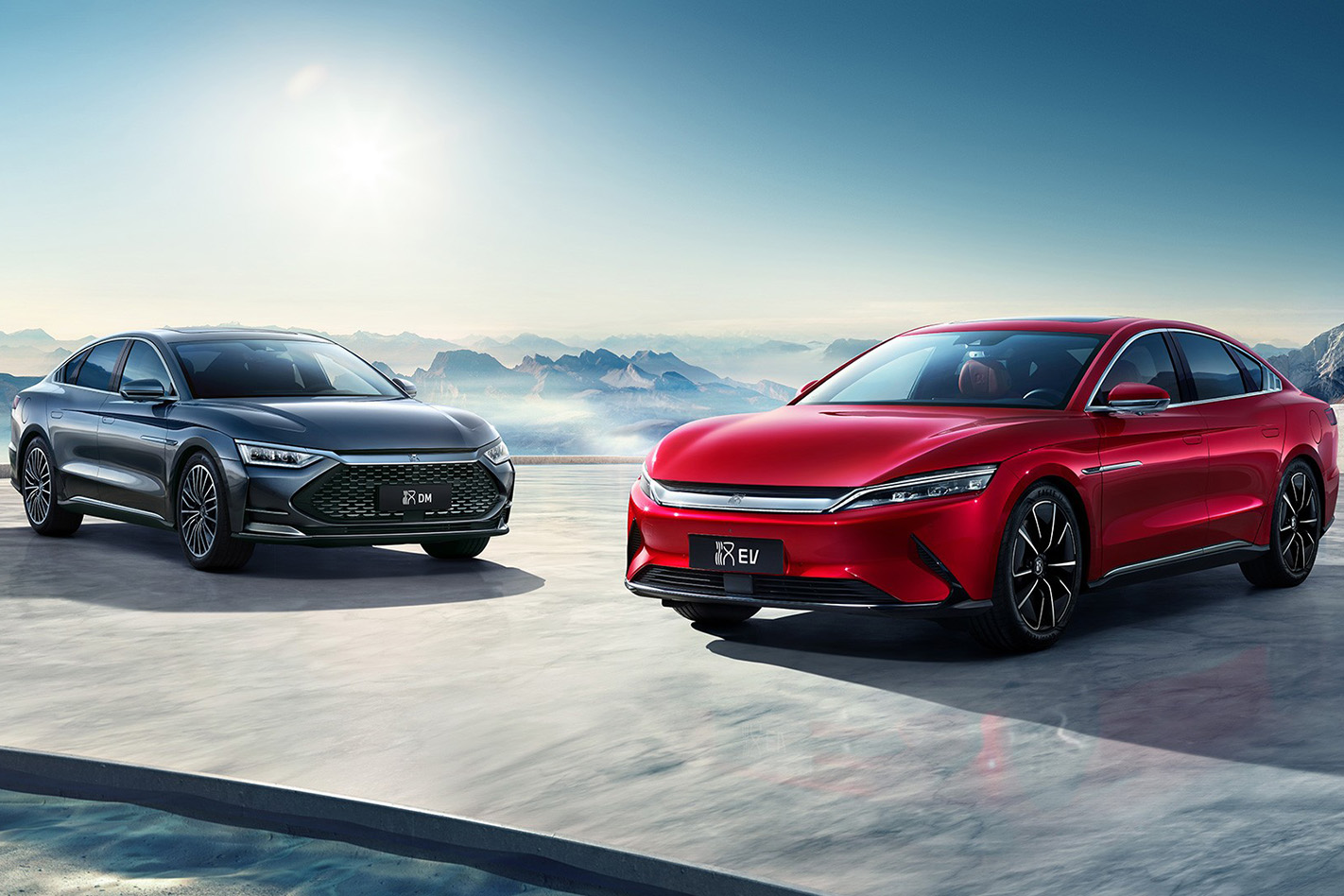
BYD sold more EVs than any other brand in China in September 2021, moving 36,000 units. Its latest model launches, the Tang SUV EV and Han D-segment sedan, were designed under the lead of ex-Audi designer Wolfgang Egger, while the company’s head of interior design is Michele Jauch-Paganetti, ex-Mercedes.
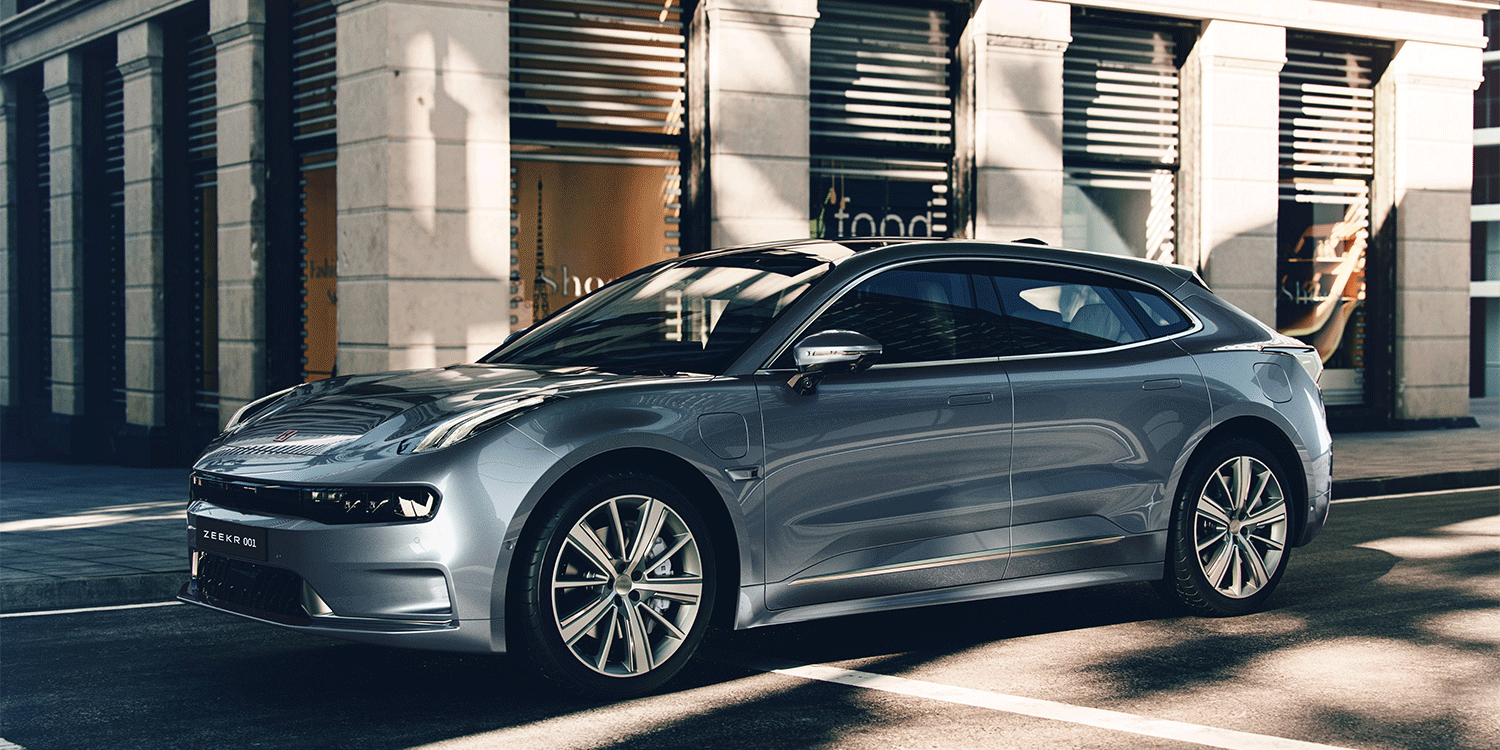
Like BYD, pure EV brands such as Lync & Co, owned by Geely, or its Gen Z-focused Zeekr, will deliver Chinese-made cars pushing desirability and tech. Put simply, they’re being sold on desirability, not cheap and cheerfulness of many underdone Chinese-made cars offered here previously. Another inflection point.
The paradigm shift domestically is well underway, says Russo. “Only a few years ago, if you wanted to find a Chinese brand in a Tier One city in China, you had to get in a taxi or book a DiDi car – not so anymore,” he explains.
“Now, EVs are being sold to retail consumers in Tier One cities, because they’re cool. Nio, XPeng – you’re not embarrassed to be an-up-and-coming 20- or 30-something professional in a Chinese electric vehicle.” The challenge is to have Australians feeling the same.
China’s electric charge
China’s EV market is already larger than Australia’s total new-car market, with 1.105 million pure electric models sold in 2020. That’s been surpassed already this year despite a reduction in subsidies, with a record 1.78 million sold year-to-date by the end of September.
BYD was the best seller of ‘NEVs’ (New Energy Vehicles) which includes hybrid, ahead of EV-only Tesla, while pure EV brands NIO and XPeng broke 10,000 monthly sales in September for the first time. The Chinese Association of Automobile Manufacturers (CAAM) expects the growth to continue into the final quarter and has tipped NEV sales to hit a record 3,000,000 this year, meaning beyond 2.5 million pure EV sales.
Snapshot
- Retired ADF chief and defence expert caution Australia’s reliance on foreign oil
- Transition to EVs could help safeguard against shipping blockades
- Higher fuel prices may accelerate EV adoption
The former deputy chief of the Royal Australian Air Force has called on the Federal Government to do more to reduce the country’s dependence on foreign oil, with electric vehicles (EVs) to be part of the solution.
Retired Air Vice-Marshal John Blackburn AO has told the ABC the country’s economy and security is at risk, with 90 per cent of Australia’s oil being imported from overseas – making it highly vulnerable to supply-chain blockages.
“We don’t have any Australian flagged ships that can move it,” said Blackburn, who is now an executive member of the Australian Security Leaders Climate Group.
“And we’re not only dealing with foreign companies, we’re dealing with foreign governments.”
Much of the country’s petrol and diesel is processed at refineries in South Korea, China, and Singapore, with oil sourced from the Middle East. If our ships were cut off, it’s estimated Australia would have around two weeks of supply before the fuel stations run out – assuming there isn’t panic buying occurring earlier.
“The flipside to more renewable power that’s available domestically and less reliance on imported petroleum and diesel products…”
While oil prices have been seeing record highs in recent weeks, Australia did purchase $94 million worth of oil when prices crashed in April 2020 – though the oil is stored at the United States’ Strategic Petroleum Reserve on the other side of the world.
Australia experienced somewhat of a test run in late 2021, when a tightening global supply of urea caused a shortage of AdBlue – a fluid used to reduce diesel emissions in heavy trucks and some passenger cars – sending alarm bells through the transportation industry at the time.
Action by the Federal Government meant a fertiliser plant in Brisbane, which was scheduled to close at the end of 2022, was repurposed to help supply AdBlue locally.
“We hear a lot of politicians talk about electric vehicles, it’s all about emissions,” Blackburn said.
“Well, it’s important to talk about emissions. But I tell you what, it’s also very important for our security as a nation, our independence because we’ll have control over the energy source for our transport.”
Michael Shoebridge, the director of defence, strategy and national security at the Australian Strategic Policy Institute (ASPI), has backed the calls from Blackburn, saying the nation should begin processing more domestic oil and gas, while investing in a future of renewable fuels.
“The flipside to more renewable power that’s available domestically and less reliance on imported petroleum and diesel products, is to turn our strategic location and vulnerability to extended supply chains to an advantage,” Shoebridge told the ABC.
“So it turns the current vulnerable energy supply into a positive because it’s much harder to disrupt a strong local renewable energy system.”
Even if the infrastructure isn’t currently there to support it, one economics expert says the soaring price of fuel could push consumers into EVs.

Doctor Maneka Jayasinghe, a senior lecturer in economics at Charles Darwin University, warns fuel prices could remain high for months, leading to an accelerated adoption of EVs.
“If war-induced supply constraints continue, we may not see a desirable reduction in fuel price in the short to medium term,” Jayasinghe said.
“This may lead consumers to consider moving away from using fuel by choosing to work more from home or by buying fuel-efficient or electric cars in the long run.”
