
Snapshot
- New vehicle wait times expected to blow out due to increased demand
- More than 20,000 vehicles written off so far across QLD and NSW
- Expected vehicle and home damage to exceed $2 billion
Recent devastating floods across Australia’s east coast could have a dramatic knock-on effect on the new car industry, which is already struggling with supply issues.
With thousands of residents in flood affected areas of Queensland and New South Wales still displaced, the Insurance Council of Australia has told WhichCar more than 20,000 vehicle claims have been made in the wake of the floods, with those figures only expected to grow in the coming weeks.
Insurers have received 22,509 motor vehicle claims related to the SE Queensland and NSW floods – of those, 11,633 are in NSW and 10,876 in Queensland.
One Queensland resident told WhichCar she had made an insurance claim on the day her vehicle – a Mini Hatch John Cooper Works – was caught up in the floods, and was told by her insurer it would be assessed within three to five business days.
Despite chasing up the insurer every 48 hours, she has still not yet been contacted for the car to be assessed over a fortnight after lodging the claim.
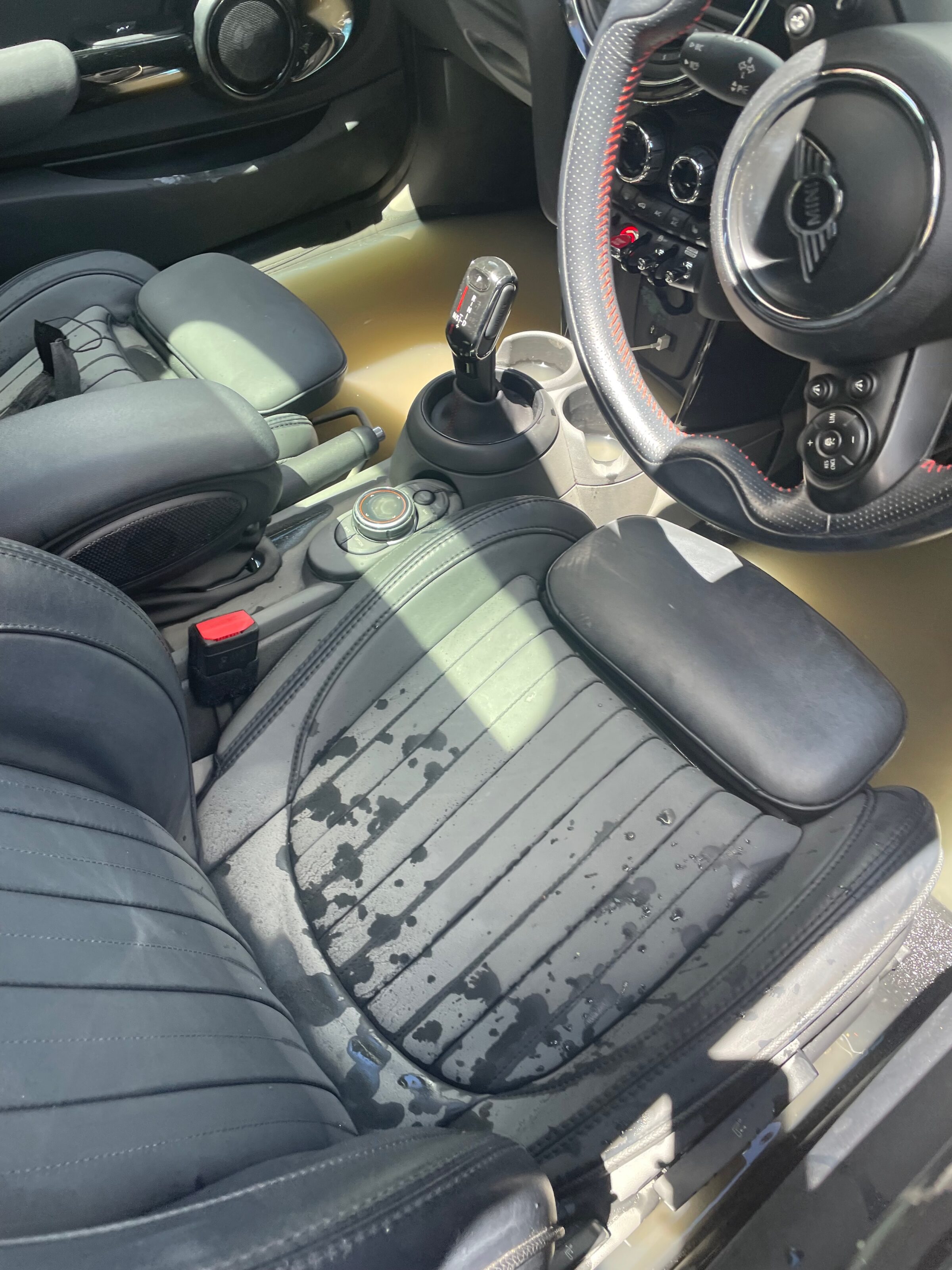
“Buying that car was a dream of mine since I was 12 and it’s made life a lot harder without it,” she said.
“I went through a lot of trouble and angst to get the one I wanted, in all it was a two-year process and to finally get it was something I could be proud of.
“Having the dream car which I’d worked so hard for taken away is disappointing, and I feel nothing could replace it.”
She also said losing the car was having an impact on day-to-day living, often having to borrow her partner’s car and rely on family help her get to work.
“Usually the drive to and from work is around 45 minutes to an hour so losing my car has made it a lot harder to get there every day,” she said.
“We’re down to one car between two people right now and it just doesn’t make sense to buy second-hand because of the condition of the market right now.”

The wait to get her car assessed will only compound the potential delays she faces while trying to source a new vehicle should it be paid out, with a number of dealers claiming wait times of six to 12 months for vehicles to arrive.
Having visited a number of dealerships since her car was effectively written off, she faced the same answer at every location – wait times of anywhere between six months to one year with no demonstrators to offer.
“The impacts of the extreme weather event across Queensland and New South Wales are still coming into focus, with an army of insurance assessors now on-the-ground helping with claims where it is safe to do so,” said a spokesperson for the Insurance Council of Australia.
“We expect to be able to provide a breakdown in the weeks following the disaster clean-up, when vehicle-owners can speak with their insurer and assess the damage.”
https://www.instagram.com/reel/CabLrjAjYrT/
Queensland-based insurer RACQ said it had received in excess of 2300 motor vehicle claims as of March 16, with more than 90 per cent of those claims eventuating in write-offs.
“RACQ has received 2344 motor vehicle claims and 10,145 for home insurance relating to the recent weather event in southern Queensland and northern NSW – the majority are from Brisbane’s inner city and northern suburbs,” said RACQ claims manager, Trent Sayers.
“More than 90 per cent of claims are being deemed write-offs.
“So far, RACQ has paid out more than $10 million in insurance claims relating to this event, with motor vehicle claims accounting for almost 80 per cent.”
Sayers warned about future vehicle buyers purchasing cars which had been caught up in the floods, encouraging thorough checks to prevent complications in the long run.
“We wouldn’t recommend buying a flood-impacted vehicle simply because there is a potential risk of ongoing issues. Private sales are high risk and unregulated, and as such, you must be extra vigilant with your checks,” he added.

Doug Wyllie from the Federal Chamber of Automotive Industries reiterated the RACQ’s message about being conscious of potentially dodgy used cars, while also saying the floods could have a major impact on the industry.
“With supply chains cut in terms of both road and rail access, there may be some delays in getting cars to dealers,” Wyllie told RACQ.
“We are also aware that some dealerships have been flooded.
“Rest assured our brands will be working proactively with dealers to ensure that, where cars have been ordered and damaged in the floods, supplies are essentially shored up.
“We’re quite mindful as well that we are still very much in the response phase and that as that recovery piece unfolds, we’ll have better visibility as to just how the car industry has been impacted. We do know that multiple dealerships have been inundated and there could very well be some issues with people trying to sell flood-damaged second-hand cars.
“We’ve seen unscrupulous people around natural disasters in the past who try to make a buck out of damaged products, but that’s the unfortunate risk you face when purchasing a second-hand car and none of our members or dealers will be doing that.”
The influx of write-offs is set to put extra strain on the new car industry which is already struggling with stock delays across almost every brand, as semiconductor shortages, COVID-19 outbreaks and the Russian invasion of Ukraine account for a slide in vehicle deliveries.
Last month, there were 26,360 new vehicles delivered to customers in New South Wales and 18,962 to Queensland buyers, or just over double the number of cars which have already been written off – although that is expected to increase in the coming weeks.
https://www.instagram.com/p/Ca-sfXBBcCf/
On average, most models in Australia face wait times of anywhere between two to six months if customers buy to their own specs rather than off the showroom floor, however Toyota’s popular RAV4 is one of the worst hit, with a projected delivery time of 241 days pushing it out to the longest delay of the top 20 models locally.
While the delays could mean buyers choose to opt for used cars over new vehicles to replace their write-offs, it could also lead to a temporary boom in new car registrations for the rest of the year.
A precedent for this has been set by the Australian Capital Territory which had its best-ever year for vehicle sales in 2020 off the back of a hail storm in January of that year, writing off roughly five per cent of the territory’s vehicles and leading to a 22.6 per cent rise in new vehicle sales.
From February 26 to 28, Brisbane received 677 millimetres of rainfall to set new local records, causing flooding in a large number of suburbs, especially those within the City region near the Brisbane River.
The rain also impacted the Northern Rivers region of New South Wales as well as the state’s capital of Sydney, both of which experienced flooding which claimed the lives of local residents and caused an estimated $2.1 billion worth of damage.
Snapshot
- Both SQ7 and SQ8 drop diesel engine
- 4.0-litre, twin-turbo V8 petrol replaces outgoing powertrain
- Prices start at $164,400 and $169,600 respectively
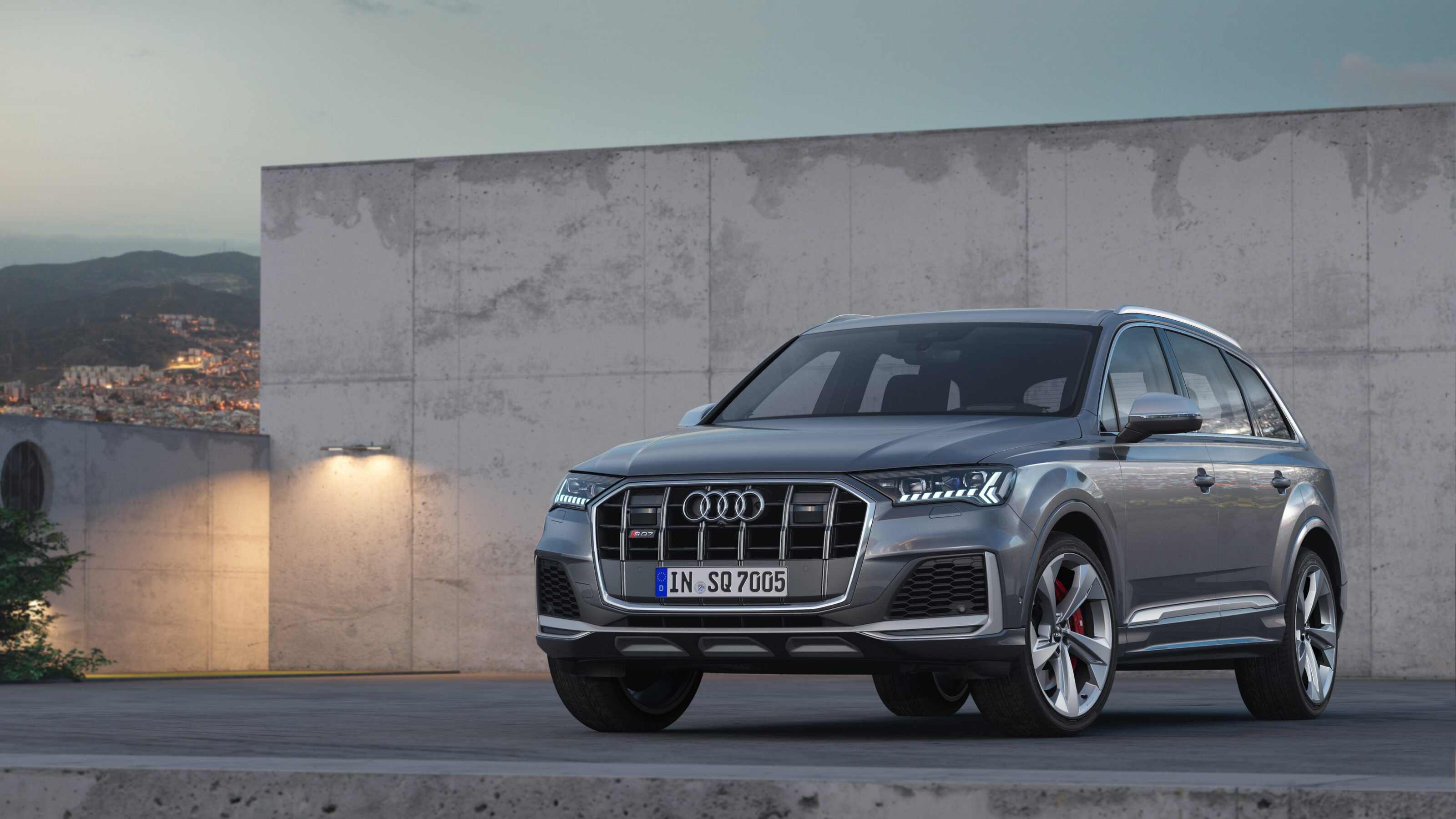
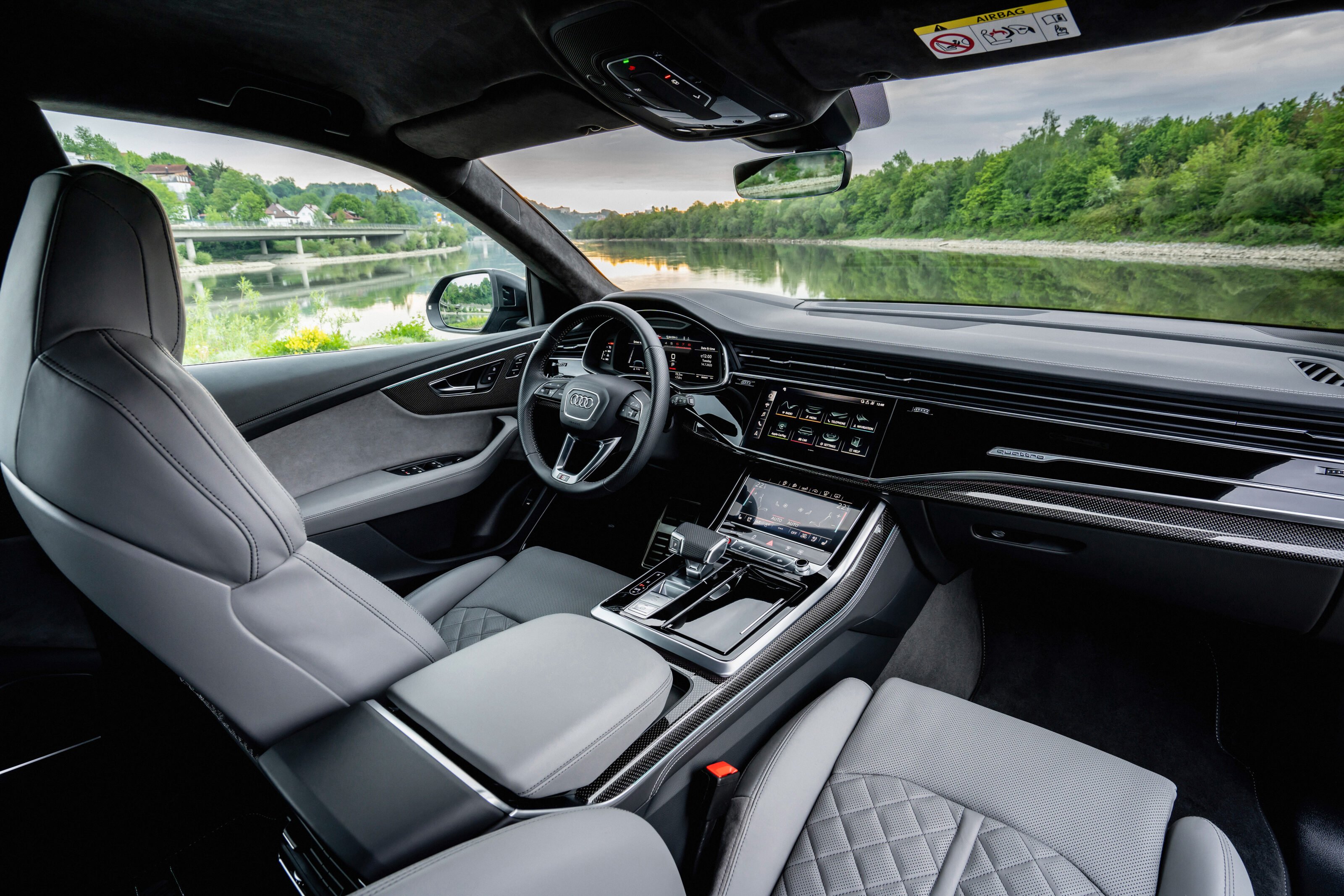
The 2022 Audi SQ7 and SQ8 SUVs are to arrive with petrol power for the first time as the marque cuts its diesel model range by two.
Going on sale for $164,400 and $169,600 before on-road costs respectively, the pair have undergone a minor price increase over their predecessors, incurring a premium of roughly $2000 and $3200 each.
Audi’s Australian general manager of marketing, Nick Reid, said the new TFSI petrol V8 engines will enhance both models.
“The SQ7 and SQ8 are technology showcases for our brand, representing the pinnacle of luxury and performance SUVs,” said Reid.
“We are delighted to see them return to our range in Australia with a new TFSI dimension to their performance.”
2022 Audi SQ7 and SQ8 Australian pricing
Prices exclude on-road costs.
| Model | Price |
|---|---|
| SQ7 | $164,400 (+$2023) |
| SQ8 | $169,600 (+$3223) |
Features
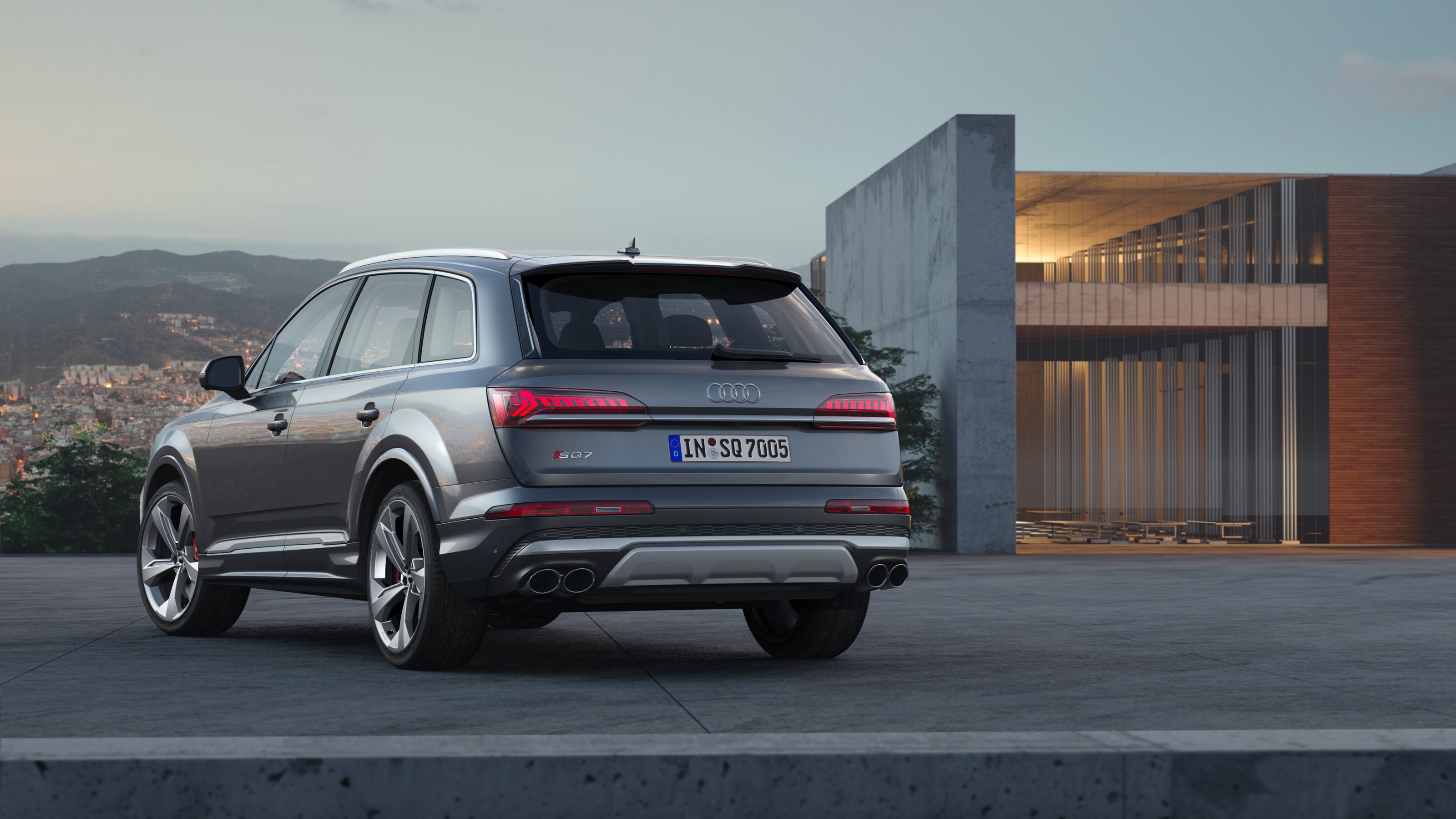
Both models come with an identical level of equipment, aside from a handful of minor changes.
| S body styling; S front and rear bumpers, grille, side sills and rear tailgate spoiler |
| 22-inch alloy wheels |
| Red brake calipers |
| Aluminium-look exterior mirrors |
| Matrix LED headlights |
| Dynamic rear indicators (and HD matrix with laser light on SQ7) |
| Panoramic sunroof |
| Privacy glass |
| Heated and folding side mirrors |
| Power assisted door closure |
| Roof rails (SQ7 only) |
| Valcona leather upholstery with diamond patterned contrasting stitching |
| Heated, power adjustable, four-way lumbar S Sport front seats (SQ8 includes driver memory) |
| Interior ambient lighting package |
| Illuminated door sill trims with aluminium inlay and S emblem |
| 10.1-inch haptic touch MMI navigation screen |
| 8.6-inch haptic touchscreen for vehicle functions |
| 12.3-inch Audi virtual cockpit |
| Wireless Apple CarPlay and Android Auto |
| Bang & Olufsen 17-speaker, 730-watt 3D sound system |
Engine, drivetrain and fuel economy
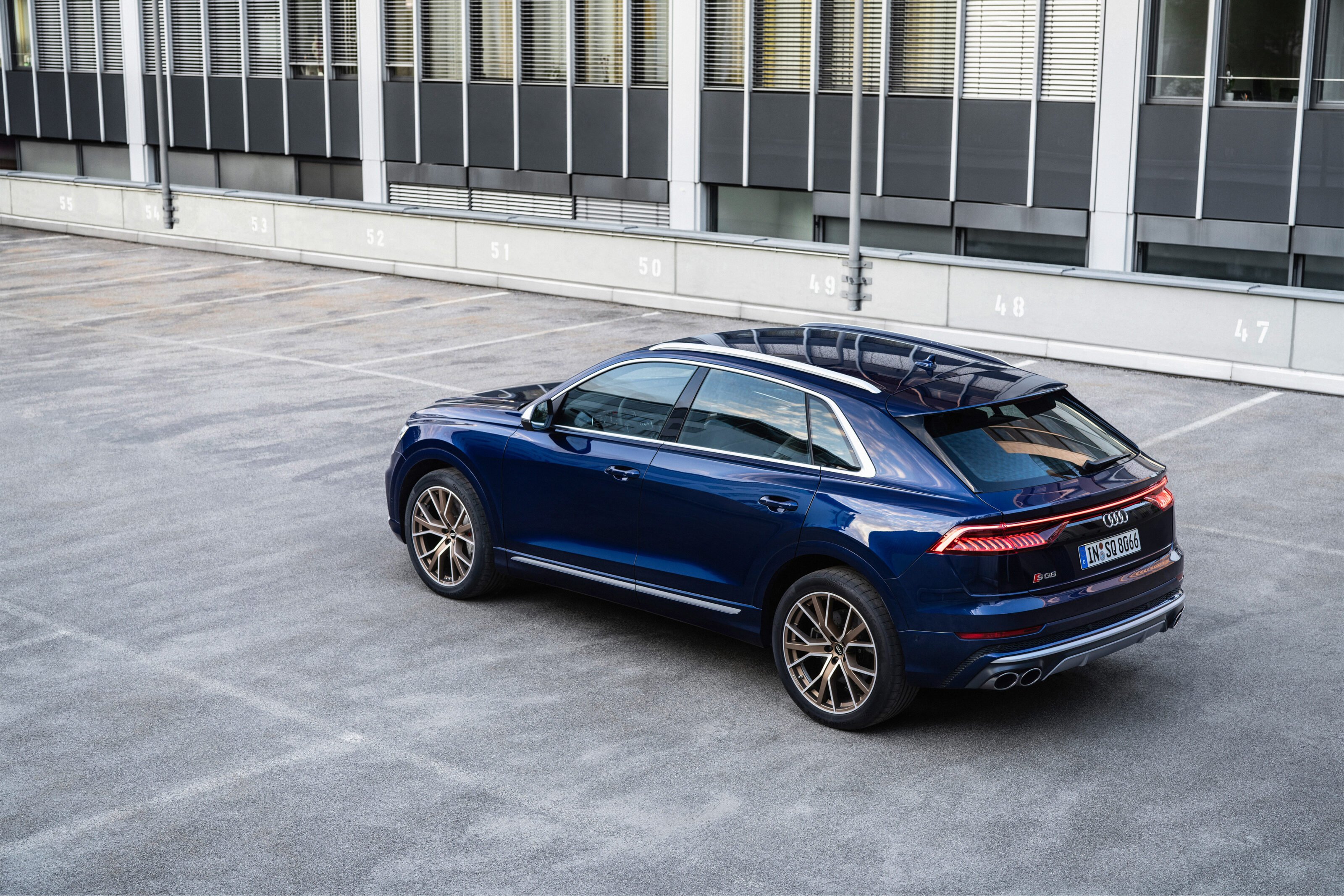
At the back end of last year, Audi announced the updated siblings would drop diesel power and adopt petrol engines, signalling the end of life for its 4.0-litre, twin-turbo diesel V8 – which was shared with the Volkswagen Touareg R-Line.
In its place, both cars will instead utilise a 4.0-litre, twin-turbo petrol V8, which develops 373kW and 770Nm – providing 53kW more than the outgoing unit, but 130Nm less than its diesel predecessor.
As with the outgoing models, both the SQ7 and SQ8 retain the existing eight-speed torque-converter automatic transmission, sending power to all four wheels through the Audi Quattro system.
Despite Audi’s Cylinder on Demand (CoD) deactivation technology being used, the increased fuel consumption of 12.2L/100km in the SQ8 is a 56 per cent jump over the outgoing model, which boasted a combined fuel economy rating of 7.8L/100km – less than ideal given the current price of 98 octane is hitting $2.50 per litre in some parts of the country.
Warranty and servicing
As with the rest of Audi’s local range sold after January 1, 2022, the SQ7 and SQ8 are backed by a five-year/unlimited-kilometre warranty, extended from the manufacturer’s old offering which only lasted three years.
A five-year service plan is also available at a $4100 premium, although it’s not known how much this will save customers in the long run.
Availability
Audi has said the SQ7 will be arriving in Australia “soon”, while those wanting the new SQ8 need to wait until May.
Snapshot
- Order batch going live at 1pm AEDT on March 23
- Limited to 100 units
- Open for all states and territories bar the Northern Territory
The popular Hyundai Ioniq 5 electric vehicle is going on sale again next week, with just 100 units up for grabs.
It will be the fourth limited-supply lot of Ioniq 5s to go on sale, with Hyundai announcing it will be opening its order books on Wednesday, March 23 at 1pm Australian Eastern Daylight Time.
After the first 240 examples went up for sale in October last year, two more allocations opened up in the following months with NSW and ACT buyers gaining access in December, meanwhile those in Victoria, Queensland, and Western Australia had to wait until January for their second chance.
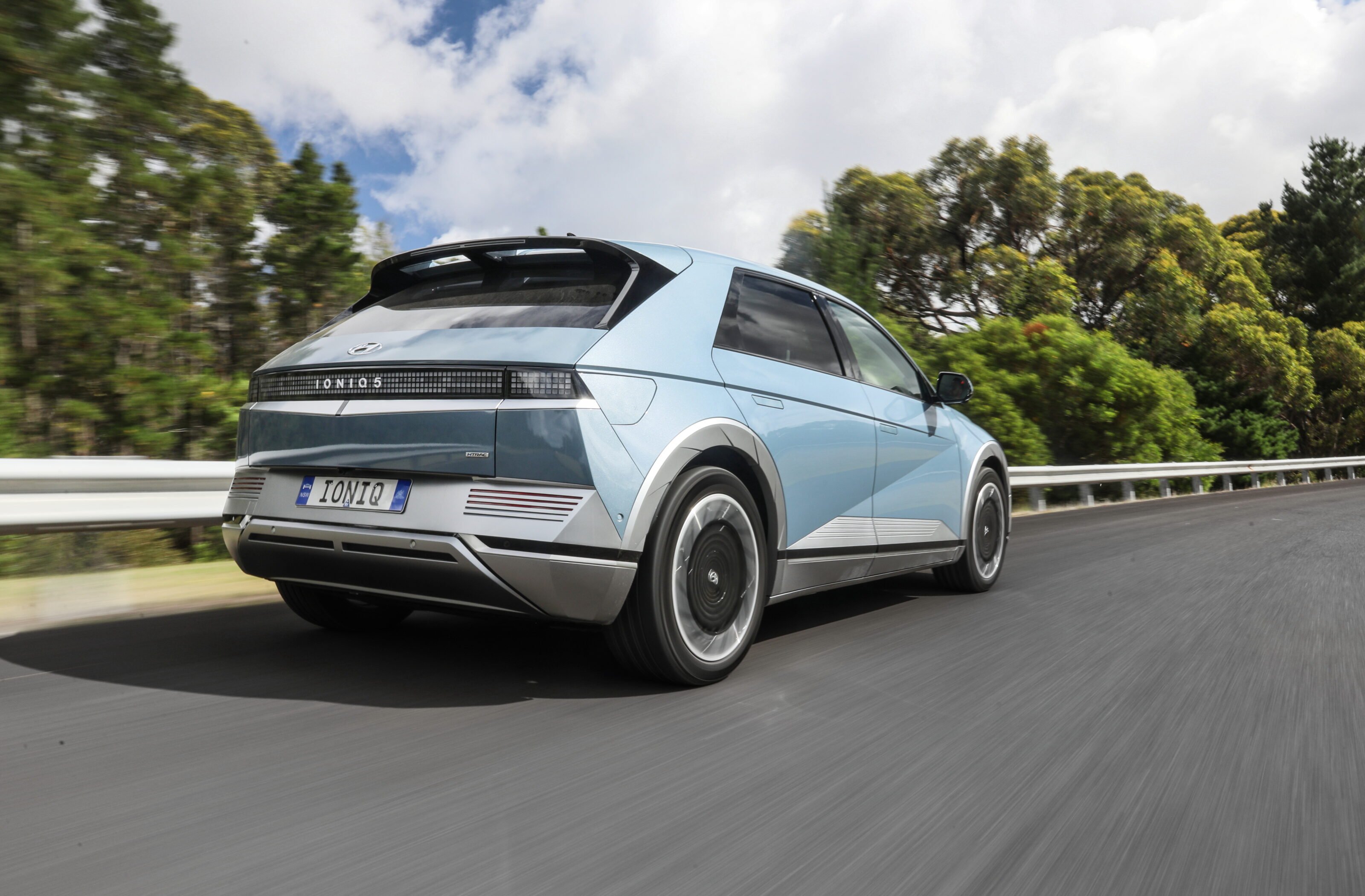
Hyundai has also confirmed the line-up will be unchanged, with two variants of the Ioniq 5 being available – the single-motor, rear-wheel-drive grade which starts at $71,900, and its flagship dual-motor, all-wheel-drive sibling, starting at $75,900, both of which are before on-road costs.
Next week’s allocation will only be available to residents of New South Wales, Victoria, Queensland, Western Australia, South Australia, Tasmania and the Australian Capital Territory, as those in the Northern Territory miss out until the next round at the earliest.
Demand peaked for the Ioniq 5 in its first allocation last year, with interested customers crashing Hyundai’s website before all 240 vehicles eventually sold out in roughly two hours.
Snapshot
- GT-R set to go off-sale across Europe
- Reason down to emissions and noise regulations
- Model left Australia last year due to ADR compliance
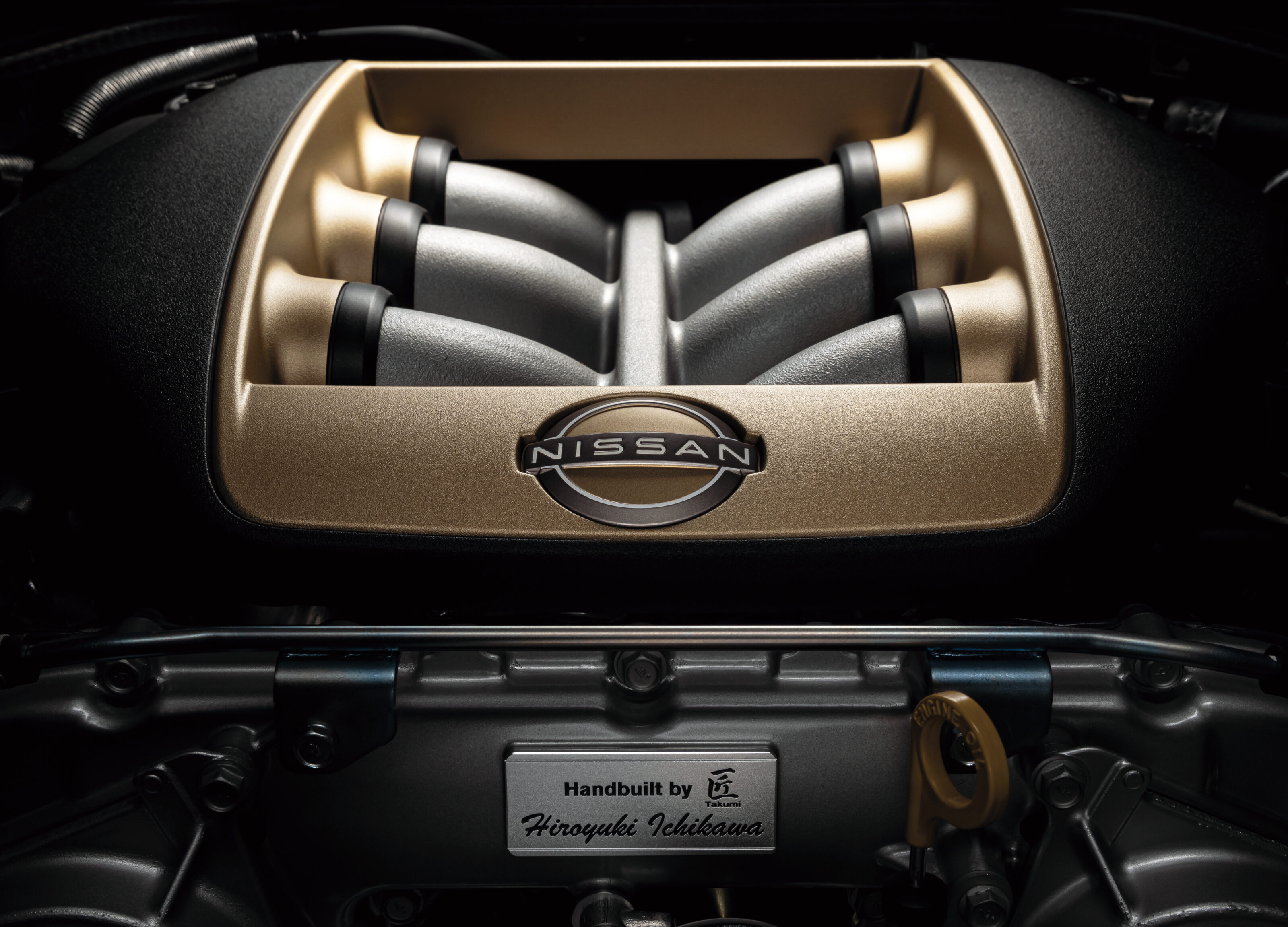
UPDATE, March 17: It’s official: the GT-R is set to be killed off in Europe.
Just days after reports suggested Nissan’s supercar-killer was transitioning out of the European market, Nissan UK confirmed to Carscoops that the GT-R would be going off-sale after a 13-year run.
Its demise can be attributed to new noise regulations across the UK and Europe, with a spokesperson for the brand saying: “Thirteen years after its European introduction as the icon of accessible automotive high performance, we can confirm that European GT-R production will end in March, 2022 due to the new EU and UK drive by noise regulations starting July 1, 2021 (No. 540.2014).”
The news is a major hit to performance Nissan enthusiasts in Europe, with the upcoming Z car not going on sale across the continent, leaving no dedicated vehicle for driving enthusiasts from the Japanese marque.
The story to here
March 15: Nissan’s revolutionary R35 GT-R is slowly fading away across the globe thanks to ever-changing regulations, with Europe becoming the next region to say goodbye to Godzilla.
First launched in 2007, the Nissan GT-R R35’s 15-year lifespan has outlasted nearly every other model which was on sale at the same time – Porsche has had three generations of 911 in the years since the Nissan supercar-killer was revealed.
However, the end is nigh for GT-R as we know it as reports from Europe claim it is going off-sale in more and more countries, in part due to a tightening emissions net across the continent.
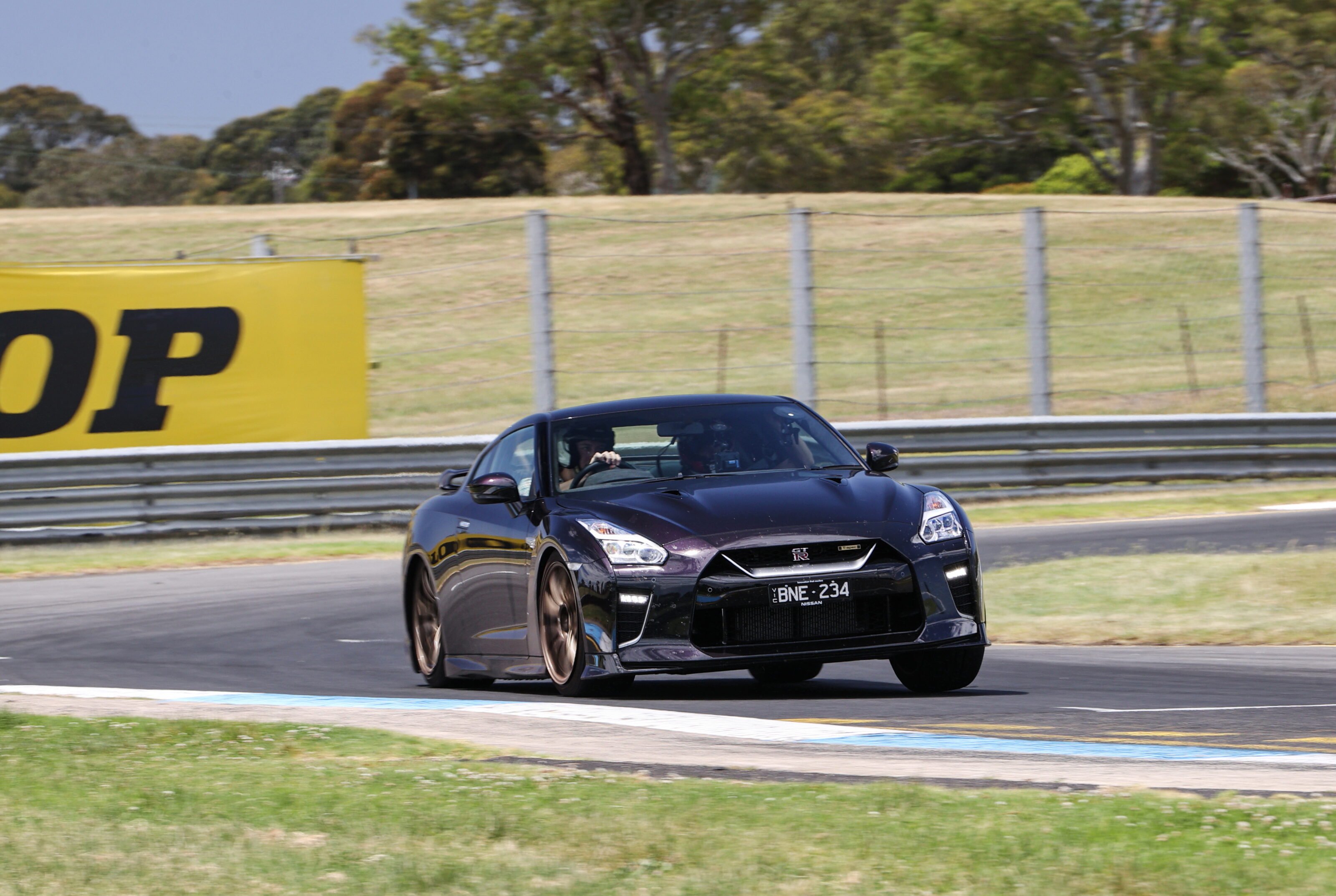
According to Dutch publication Autoblog, the GT-R has disappeared from Nissan’s websites in the Netherlands, Italy and Spain, although it is still on sale in Germany and Belgium.
The report claims Nissan’s Van Mossel dealership chain in the Netherlands has confirmed the GT-R will disappear from Europe, while Dutch prices starting at roughly €183,000 (AU$279,000) made it far more expensive than examples delivered to Australia, having last been on sale for $193,800 before on-road costs.
Nissan Australia announced the end of GT-R imports last year due to the Australian Design Rules side impact regulations coming into effect, ending the R35’s local run since it made its debut in 2009.
Rumours of an R36 GT-R suggest it will be powered by the same 3.8-litre, twin-turbo V6 as the current model but with hybrid assistance, not only boosting power but also improving its efficiency, allowing the VR38DETT to survive for another decade.
UPDATE, March 17: Audi has revealed its new A6 Avant E-Tron concept, bringing a wagon variant to its all-electric A6 line-up.
After the A6 E-Tron concept was shown off at last year’s Shanghai Auto Show, the German manufacturer has now unveiled the long-roof version of its electric luxury sedan, dropping into the range of Avant wagons.
Rather than utilising the J1 platform which currently underpins the E-Tron GT and its Porsche Taycan twin, the A6 Avant E-Tron could be one of the first Audi models to use its new Premium Platform Electric (PPE) architecture, shared with the Q5 E-Tron and the Macan EV.
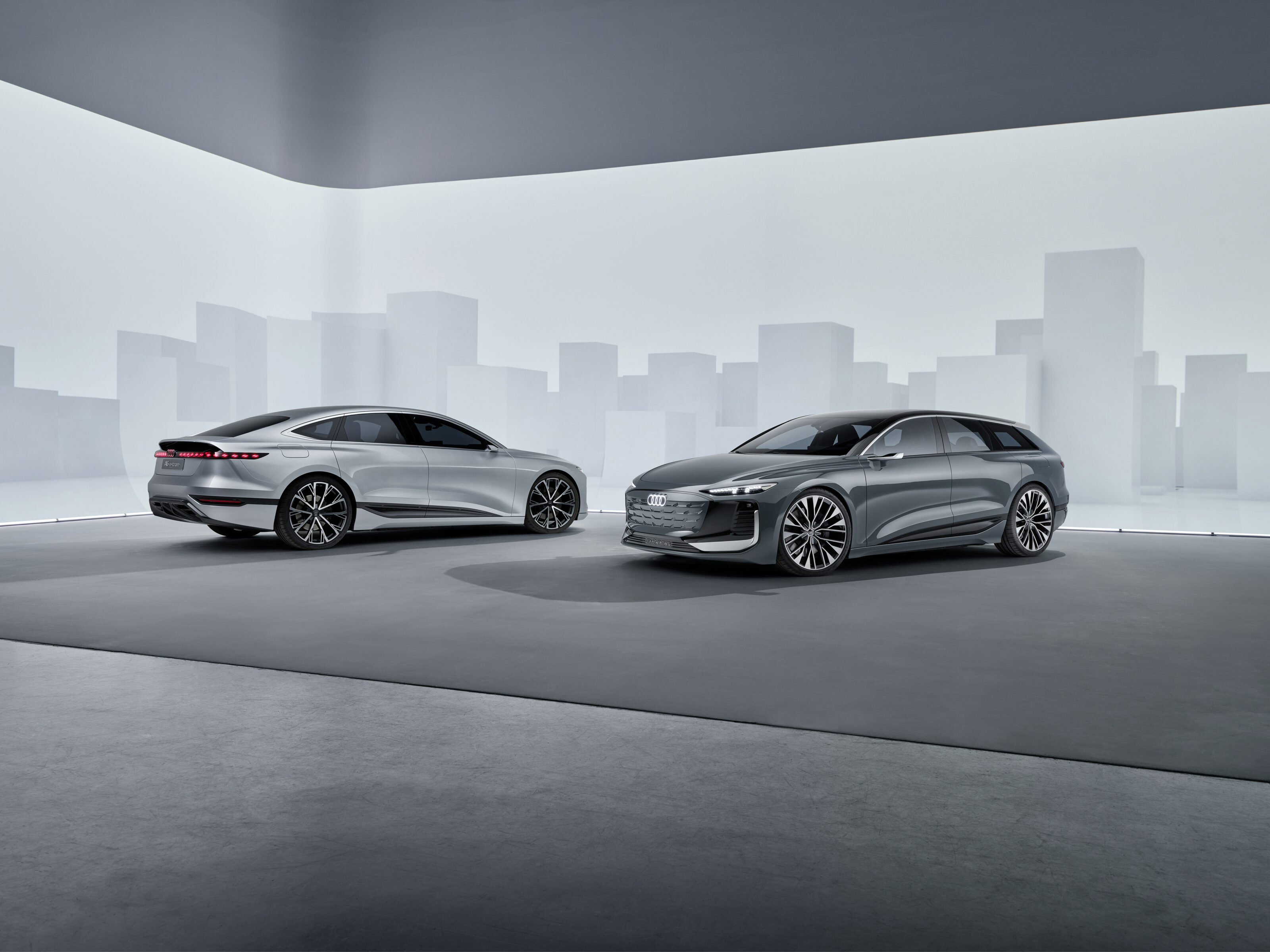
OLED lighting around the car’s exterior allows users to customise light signatures and dynamic animations, while the LED headlights are able to project a metres-wide racing video game onto a nearby wall. It’s playable from outside the car, which Audi says offers a means of entertainment while charging.
There are also three projectors on each side of the body, which can both alert passing cyclists or pedestrians of opening doors, and show personalised welcome animations to occupants.
The interior itself, however, is still yet to be revealed.
Read more about the original A6 E-Tron Concept below.
The story to here
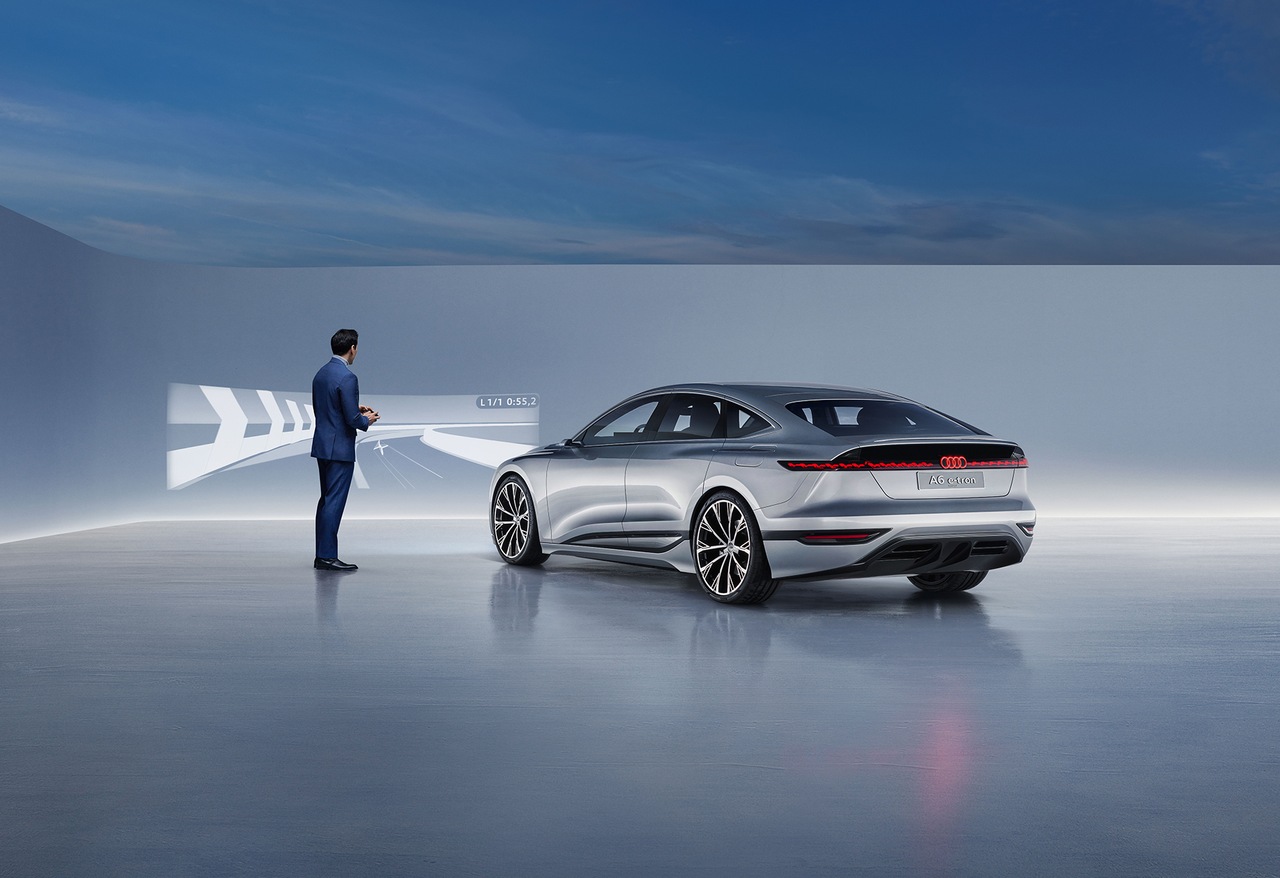
April 19, 2021: The Audi E-Tron A6 concept has officially dropped ahead of the Shanghai Auto Show, revealing the first vehicle set to debut on the brand’s incoming Premium Platform Electric (PPE) architecture.
After concept images were teased and then leaked, Audi has released full details on the Audi A6 E-Tron concept that will headline its presence at the Shanghai Auto Show.
The A6 E-Tron concept previews the direction of electric technology at the Volkswagen Auto Group, where PPE will underpin a range of vehicles and body styles.
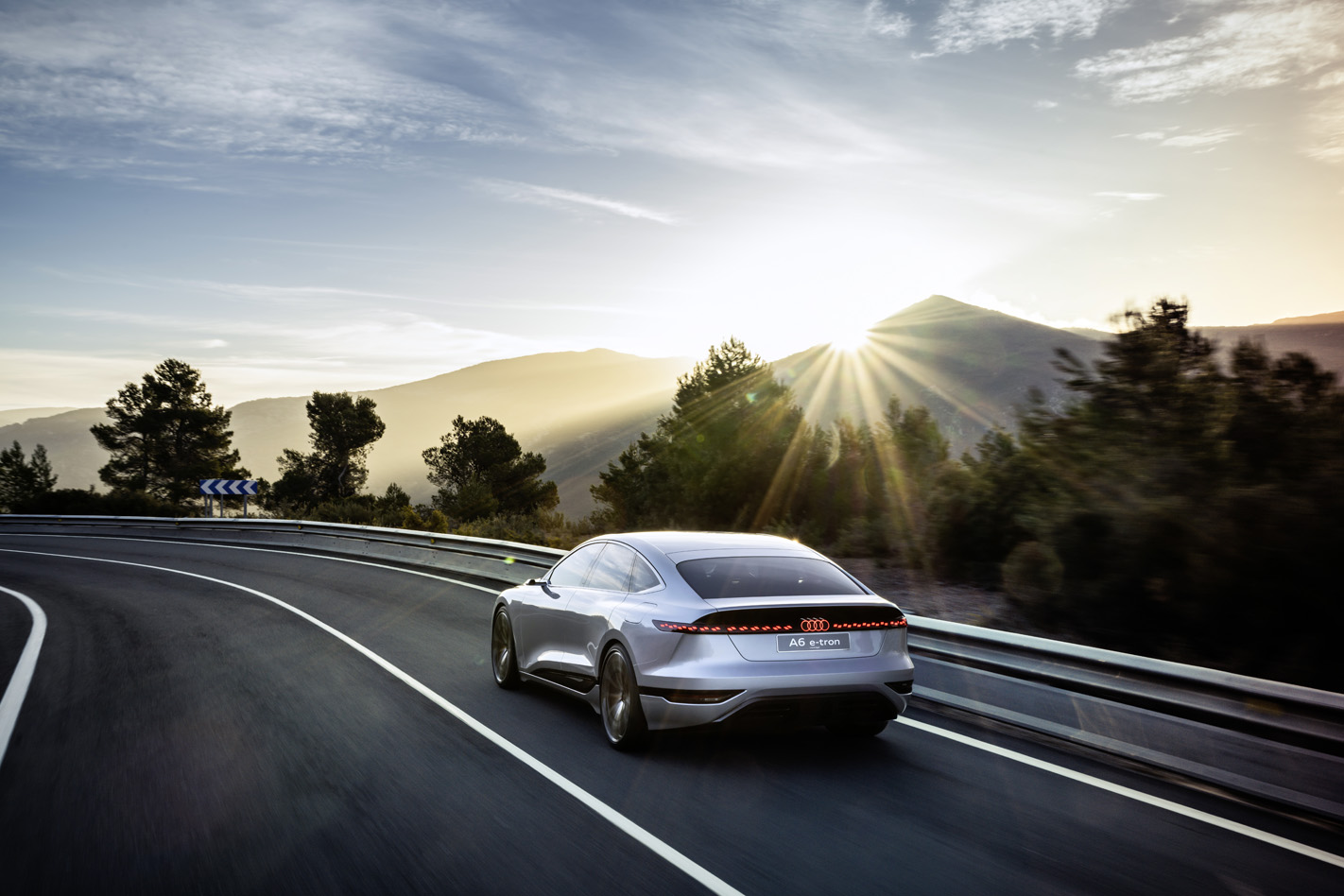
While Audi says this A6 E-Tron concept is 95 per cent of the way to production guise, it won’t spawn a market version until late 2022 alongside something in the B-segment. And fear not, Audi says it will complement, not replace, the internal combustion A6 model range.
As for what might change before the A6 E-Tron reaches production, the concept has been slightly flattened and widened for a more dramatic exterior design, so expect a narrower and taller A6 E-Tron. It’ll need door handles, as well.
Externally, the A6 E-Tron concept delivers a 0.22 drag coefficient through various aerodynamic features. These include the camera-based virtual mirrors similar to what’s found on the current E-Tron SUV.
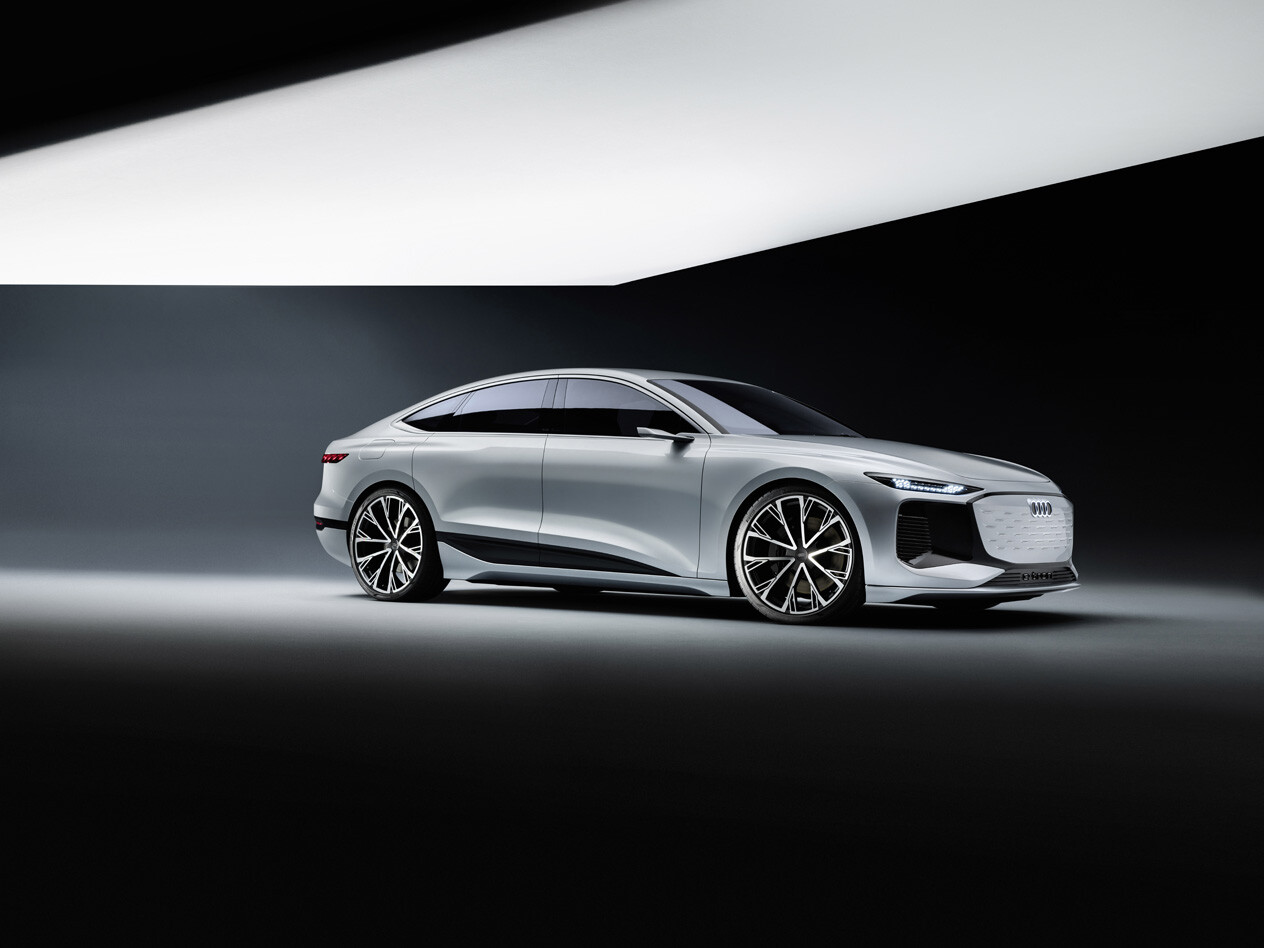
The rear diffuser sporting a central air outlet also reduces drag and lift. Meanwhile, the front end is defined by that enclosed single-frame ‘grille’ flanked by air intakes claimed to cool the drivetrain, battery and brakes.
The battery at the core of this platform is new, says Audi, and has been critical to achieving a 700km range for the production car. The lithium-ion unit is rated at 100kWh.
When hooked up to 800-volt charging facilities, Audi claims the A6 E-Tron concept can generate 300km worth of range in 10 minutes, while the battery can go from five to 80 per cent in 25 minutes.
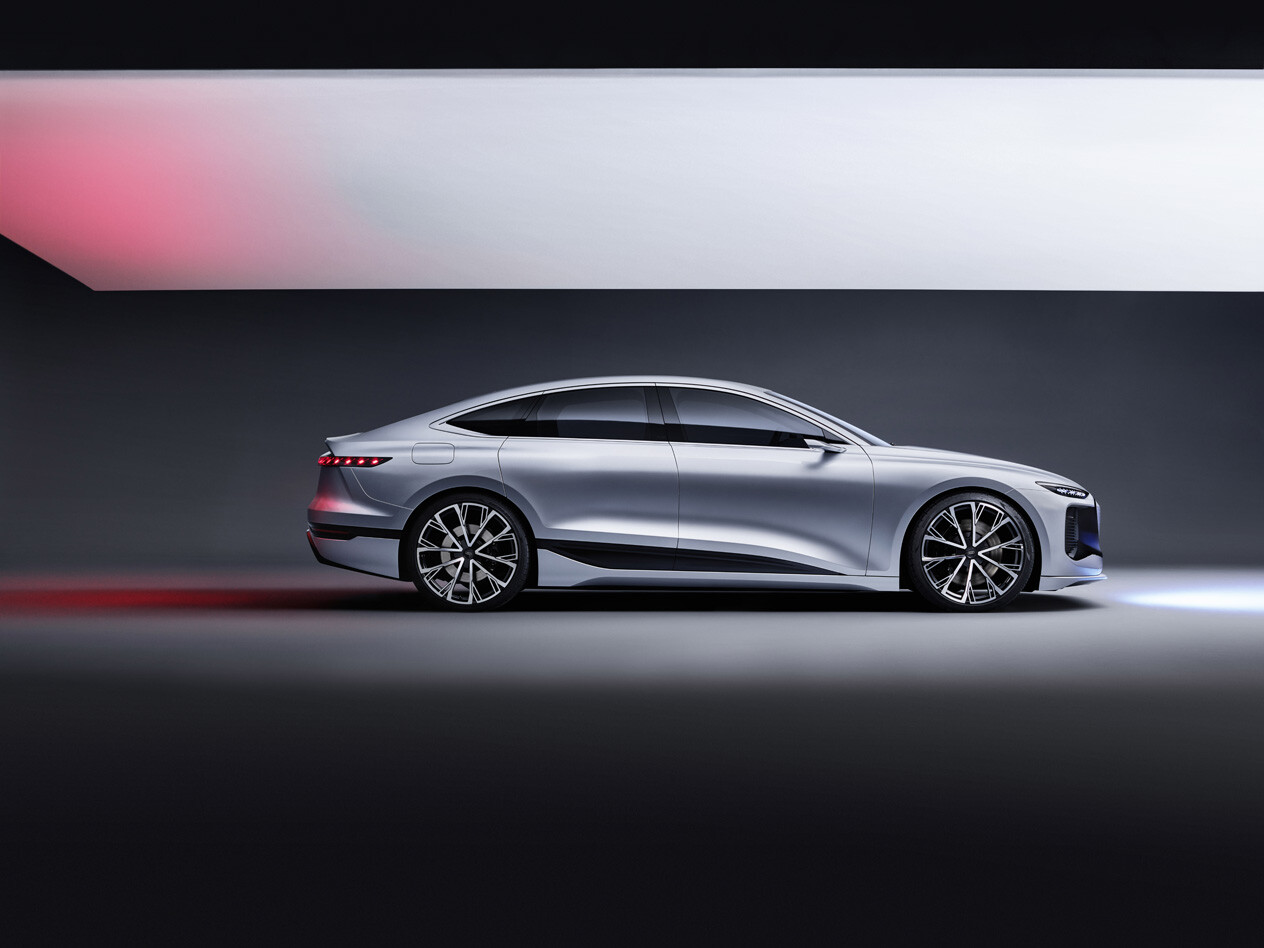
Measuring 4.96m long, designers have paid close attention to rounded surfaces on the car to balance the interplay between concave and convex sections. Meanwhile, short overhangs and a wide coupe roof arch complement 22-inch wheels.
Audi hasn’t revealed images of the interior yet, claiming the A6 E-Tron is still a pure exterior design showcase. It’s finished in a Heliosilver paint, which reflects more thermal radiation to reduce heat and the need for interior cooling – boosting range.
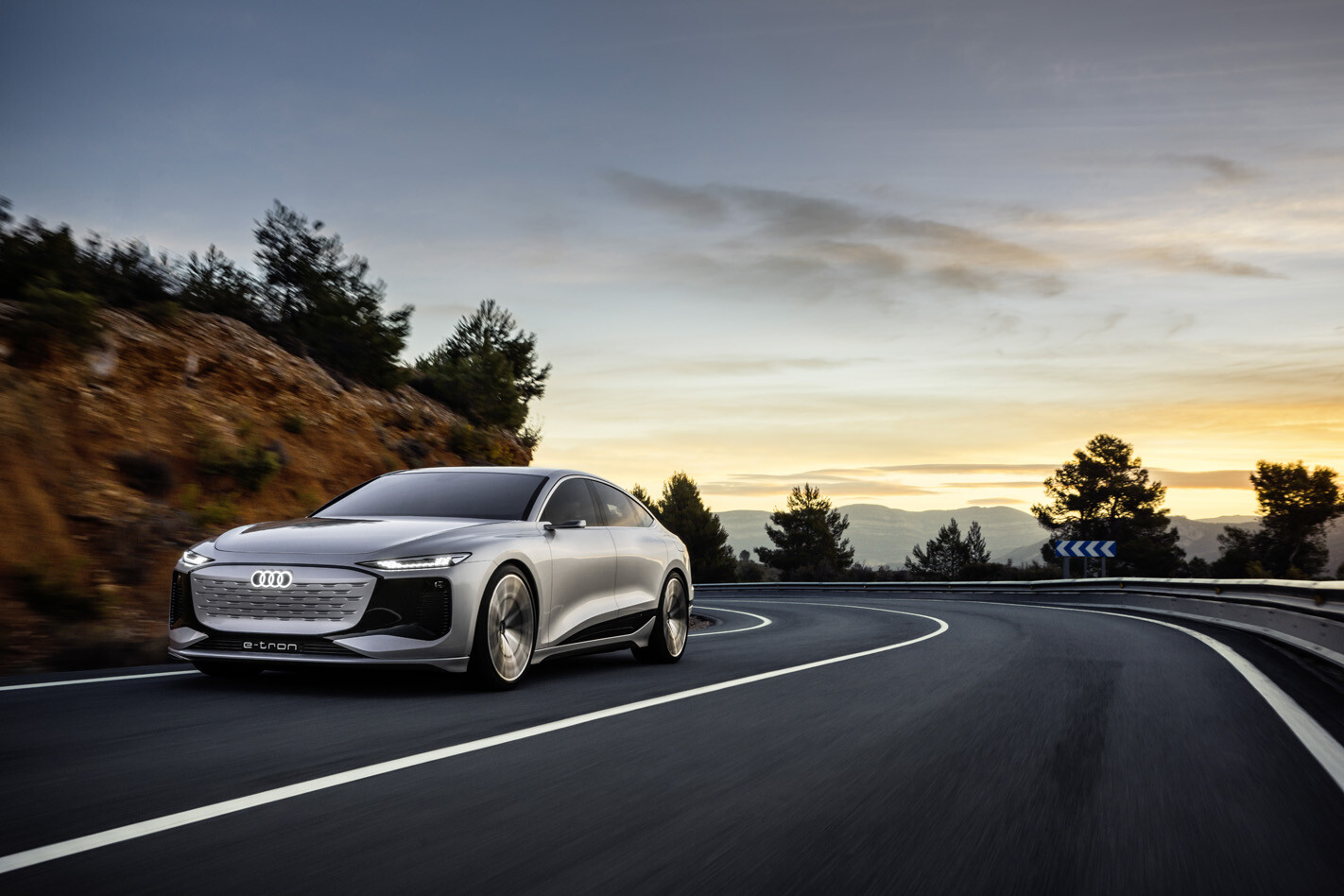
As well as efficiency, the A6 E-Tron concept also hopes to deliver stunning performance.
Audi claims it will be able to hit 100km/h from rest in under four seconds in production trim, with a dual-motor quattro drivetrain rated at 350kW-plus and 800Nm.
Buyers will also be able to option a single motor drivetrain driving the rear axle that’s claimed to accelerate from 0-100km/h in under seven seconds.
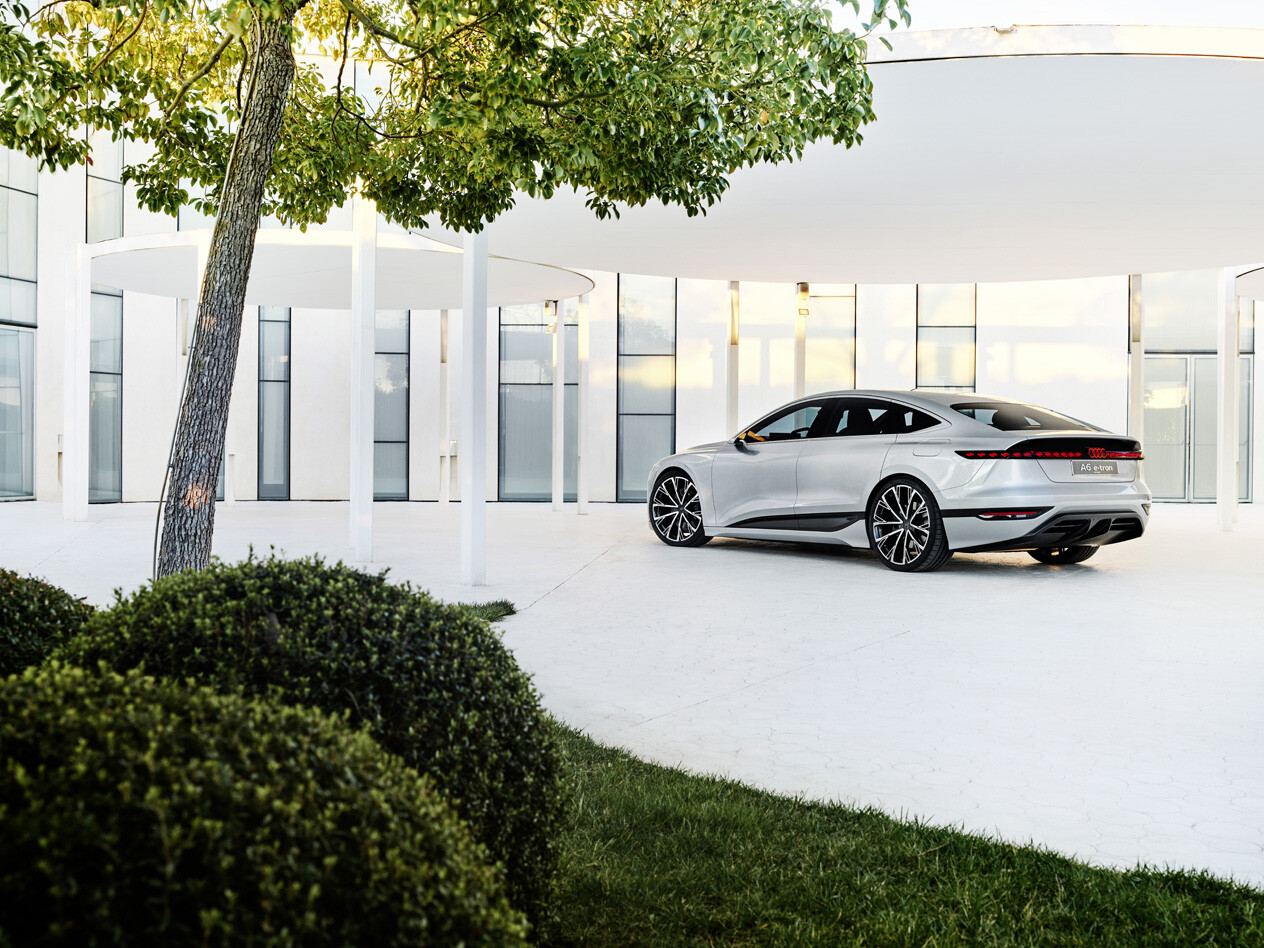
Suspension wise, the concept features adaptive air suspension and multi-link arrangements at either end.
Audi stresses lighting is a big part of the A6 E-Tron concept. Its Matrix LED headlights can project moving images on a wall, while OLED lights feature at the rear.
For more details and news on the A6 E-Tron concept, stay tuned when the Shanghai Auto Show opens this Wednesday, April 21.
MORE Audi E-Tron GT revealed as four-door Tesla fighter
Snapshot
- 2022 Lotus Emira First Edition four-cylinder specs outlined
- Extra kit as standard for the First Edition
- Deliveries to begin in late 2022
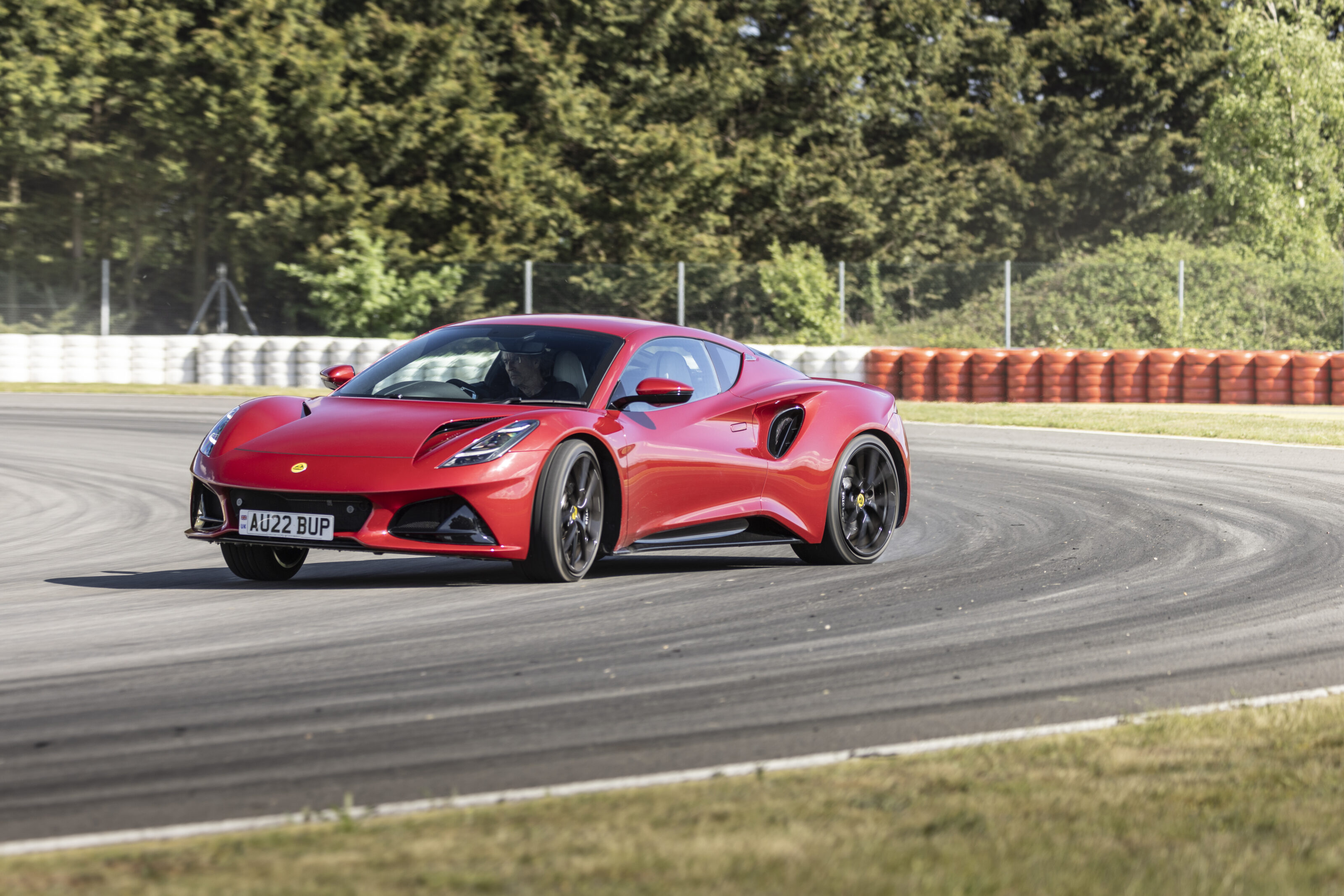
Specifications for the 2022 Lotus Emira First Edition have been confirmed by the British marque – its last petrol-powered model before going electric.
Lotus is offering the Emira with two powertrains – a Toyota-sourced 3.5-litre supercharged V6, detailed back in July 2021 – and a 2.0-litre turbocharged four-cylinder brought in from Mercedes-AMG.
The mid-mounted AMG engine sends 268kW and 430Nm to the rear wheels exclusively through an eight-speed dual-clutch transmission.
UPDATE, June 7, 2022: Lotus Emira driven
Following its global reveal, we’ve now driven the new Emira ahead of its Australian debut. Read our review at the link below.
The story to here: Four-cylinder detailed
Lotus claims it to be the most powerful four-cylinder engine offered in a production car (bhp/litre).
While technically true, it is slightly misleading, as the engine has been detuned from its maximum state in the Mercedes-AMG A45 S where it puts out 310kW and 500Nm.
Sprint times for the four-pot Emira have not yet been announced, but a time of less than 4.5 seconds is expected, while its top speed is expected to nudge 290km/h. Combined emissions are claimed at 180g/km for the UK market.
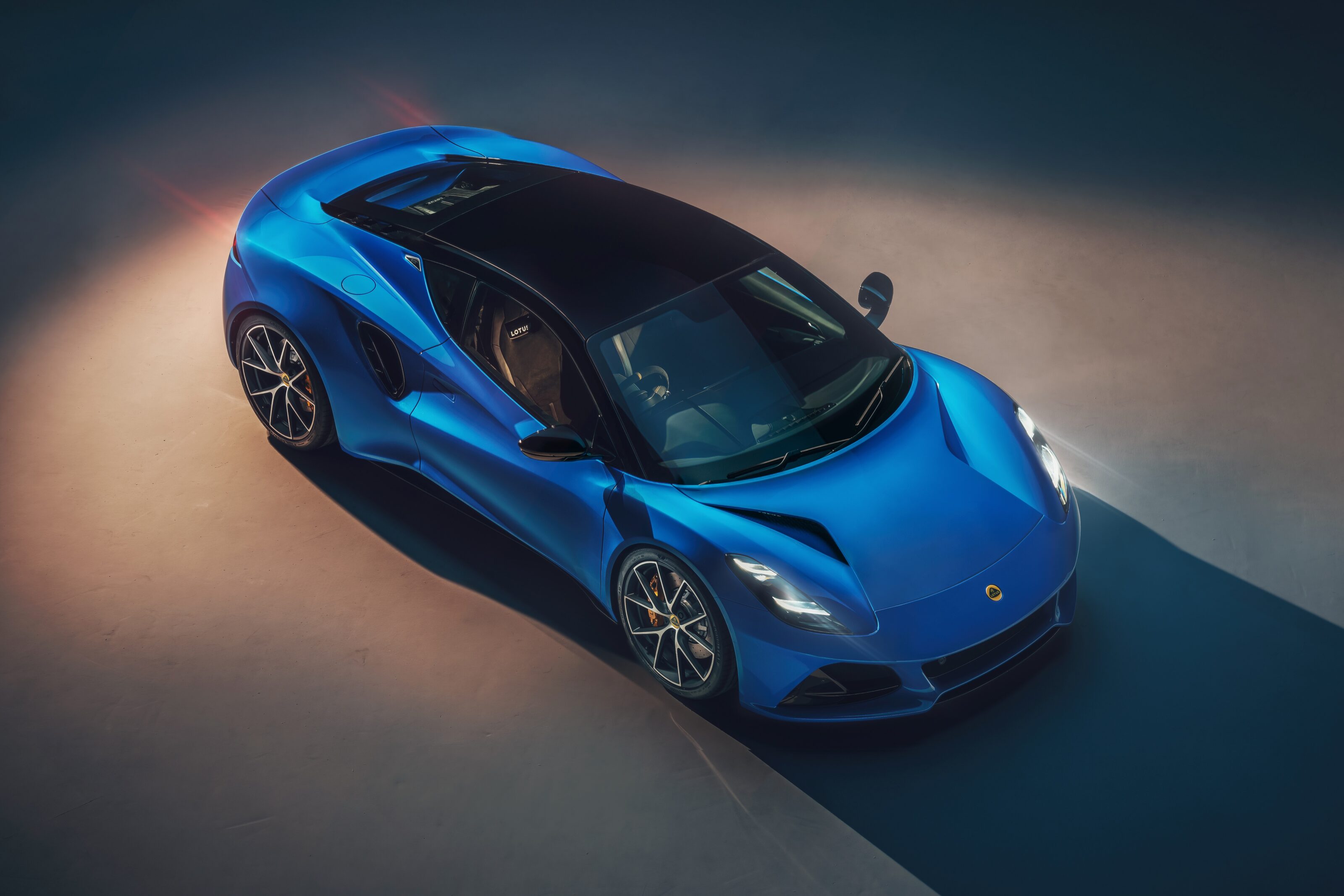
Buyers get a choice of six exterior colours, while the First Edition gets the Lower Black Pack as standard, which adds gloss black to the air blades in the front bumper, the front splitter, side sills, and rear diffuser.
Diamond-cut 20-inch alloy wheels are also standard, with silver or black available as a no-cost option.
First Edition cars also come with two-piece brake discs, with callipers finished in a choice of red, black, yellow, or silver. Tyre pressure can be checked while inside the cabin using the monitoring system.
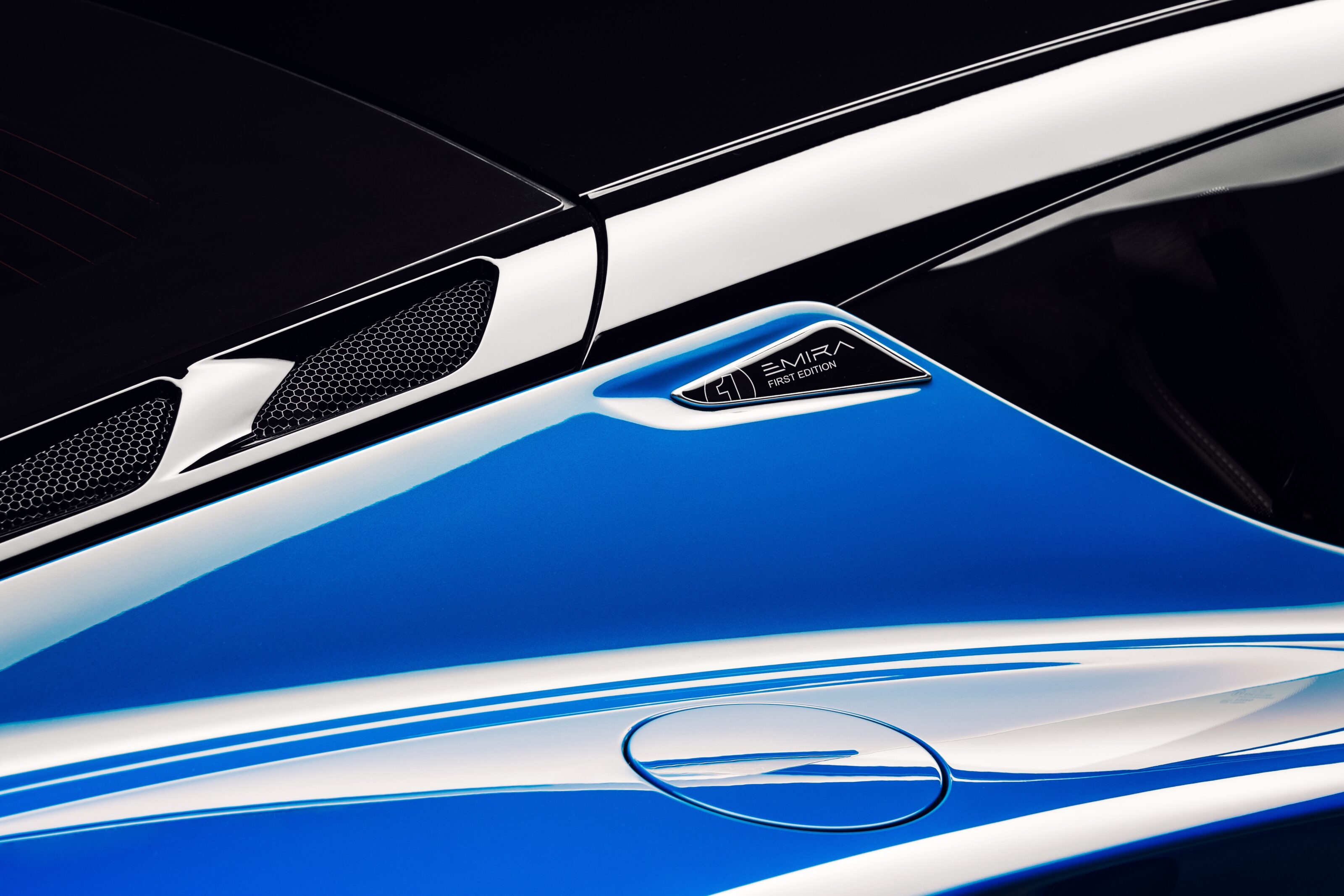
Inside, there is a choice of seven upholstery colours across both Nappa leather and Alcantara, with contrast stitching available. Heated 12-way adjustable seats are also standard, with memory for the driver, and a 12.3-inch digital instrument cluster.
The Emira First Edition features; cruise control, keyless start, voice control, and a 10.25-inch infotainment screen with Apple CarPlay, Android Auto, Bluetooth, and DAB digital radio, running through a 10-speaker 340-watt audio system.
The Lotus Drivers Pack allows a choice of either Tour or Sport suspension, as well as a choice between Goodyear Eagle F1 Supersport or Michelin Pilot Sport Cup 2 tyres, and includes a Track Mode.
The Design Pack adds; a black Alcantara headliner, Emira-branded carpet mats, sports pedals, and tinted windows. The Convenience Pack adds; auto wipers, auto-dimming mirrors, a rear luggage storage net, reversing camera, and front parking sensors.
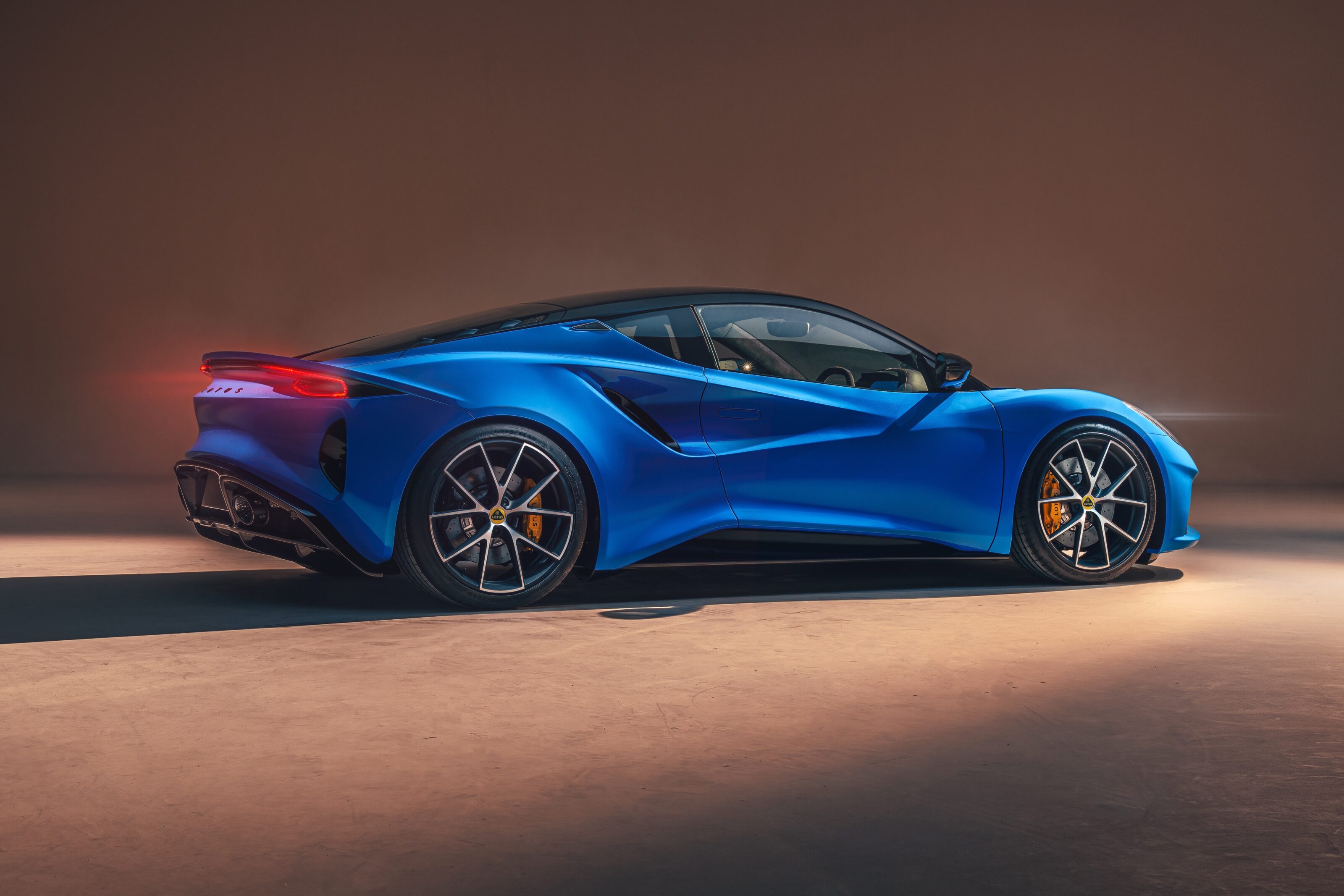
The Lotus Emira First Edition is priced from £71,995 (AU$130,000) in the UK, which is slightly above the cost of the Porsche Cayman GTS PDK in that market. The entry-level four-cylinder Emira will be priced from £59,995 (AU$108,000), or roughly on par with the Cayman S PDK.
Australian pricing for the four-cylinder 2022 Lotus Emira First Edition is expected in the coming weeks, with deliveries expected to begin towards the end of the year.
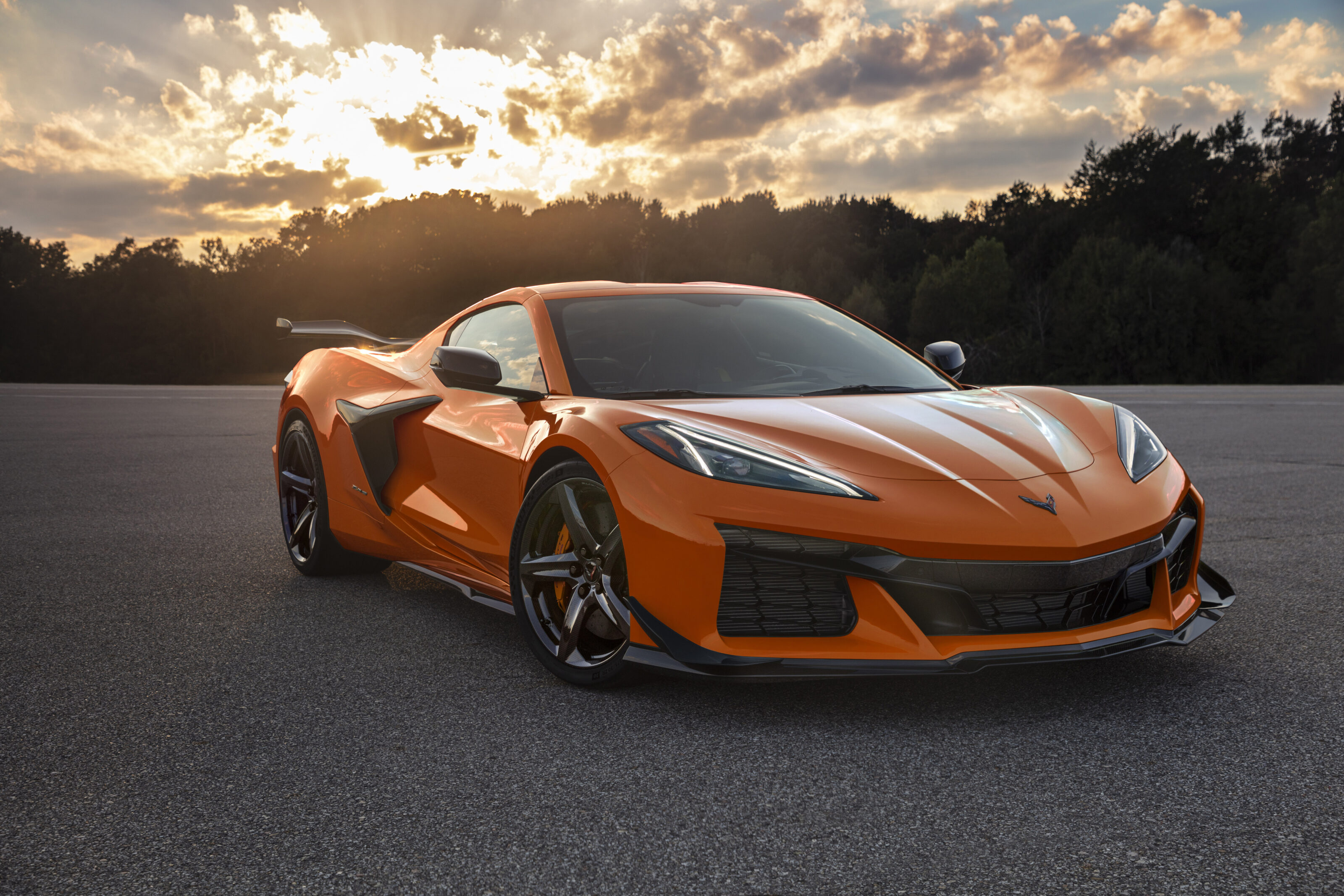
General Motors has revealed the ultimate factory iteration of its LS engine, a 493kW naturally aspirated – twin-cam – dry-sump monster revving to a lofty 8600rpm and producing 493kW in the process.
Codenamed ‘Gemini’ as a nod to the Apollo astronauts who favoured Corvettes in the 1960s, GM says the officially named LT6 was its ‘moonshot’ project for the LS engine family. The end result, after six years of development, is the most powerful naturally aspirated production V8 ever, trumping even the mighty 464kW 6.2-litre M159 in the all-conquering Mercedes-Benz SLS AMG Black Series from 2014.
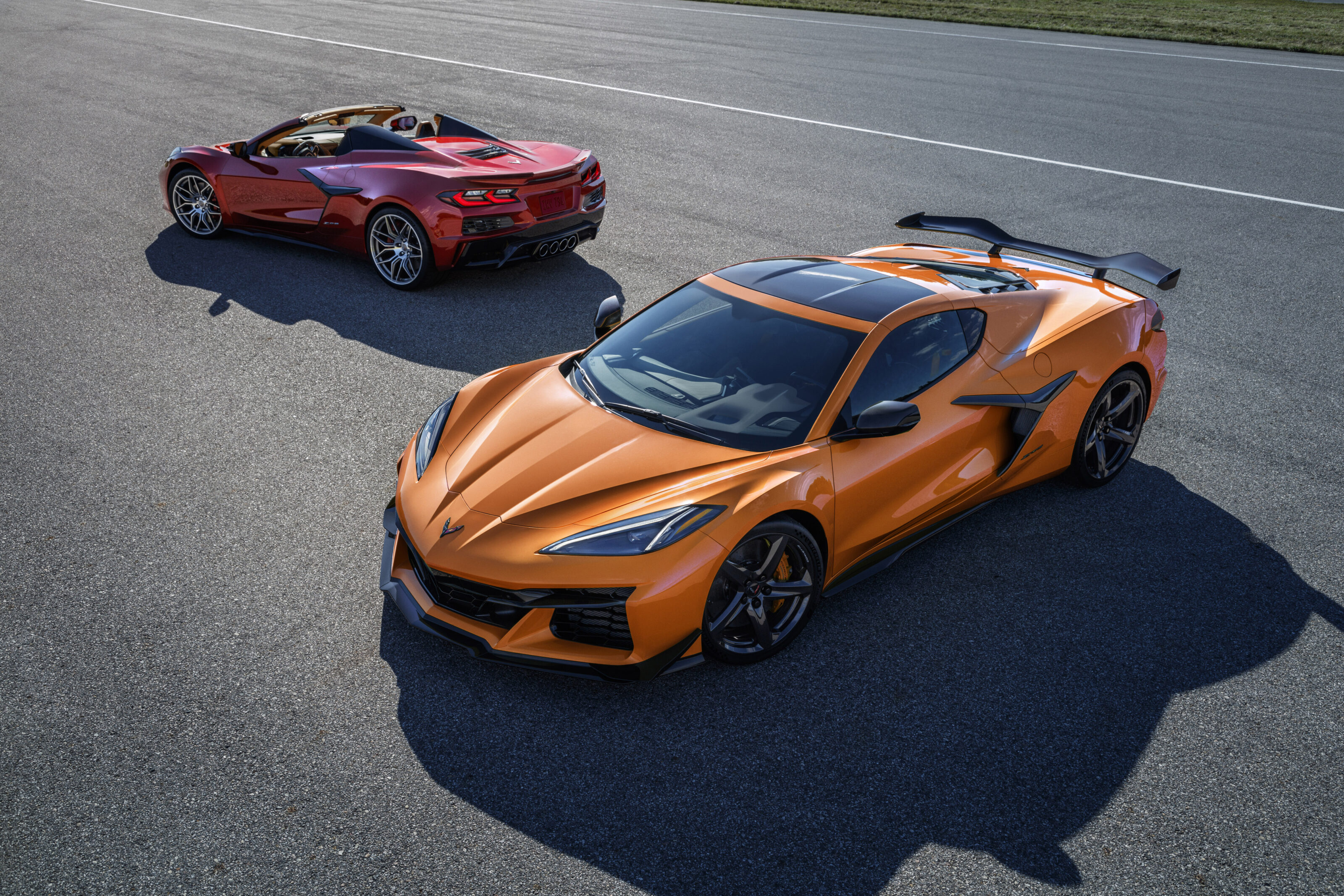
Due to make its debut in the back of the new, track-focused C8 Corvette Z06, Chevrolet engineers were given the green-light to go back to natural aspiration after the C7, whose supercharging somewhat broke with Z06 tradition. Long-time Z06 owners, say engineers, pined for the days of the C6 Z06 which used a free-revving, free-breathing 7.0-litre LS7 V8.
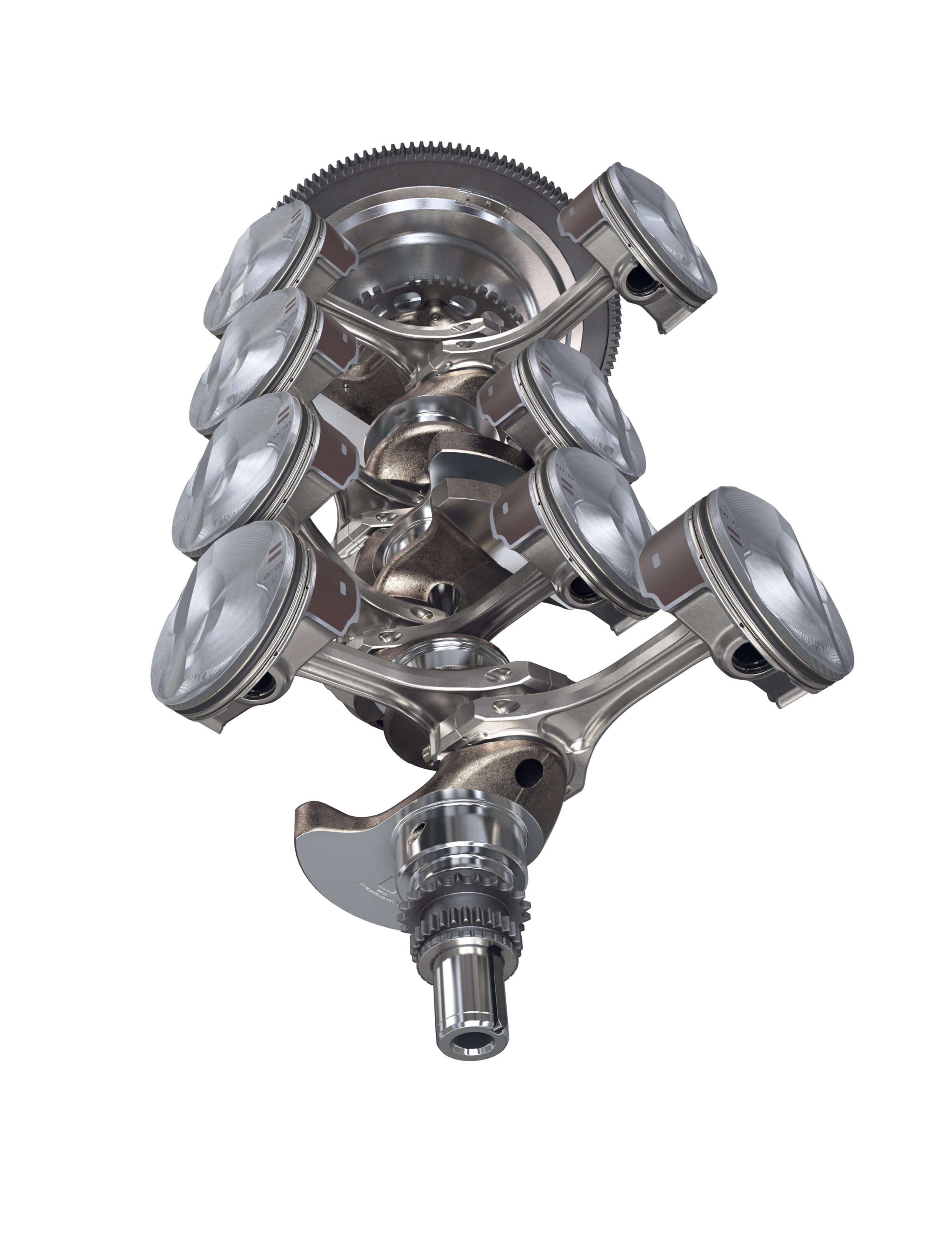
Starting with a clean-sheet design, the LT6 shares only its bore spacing with the 6.2-litre LT2. With forced induction off the table, Chevrolet – basically benchmarking the 12-year-old V8 from the Ferrari 458 – opted for an exotic flat-plane crankshaft design, which in turn effectively dictated the remainder of the engine.
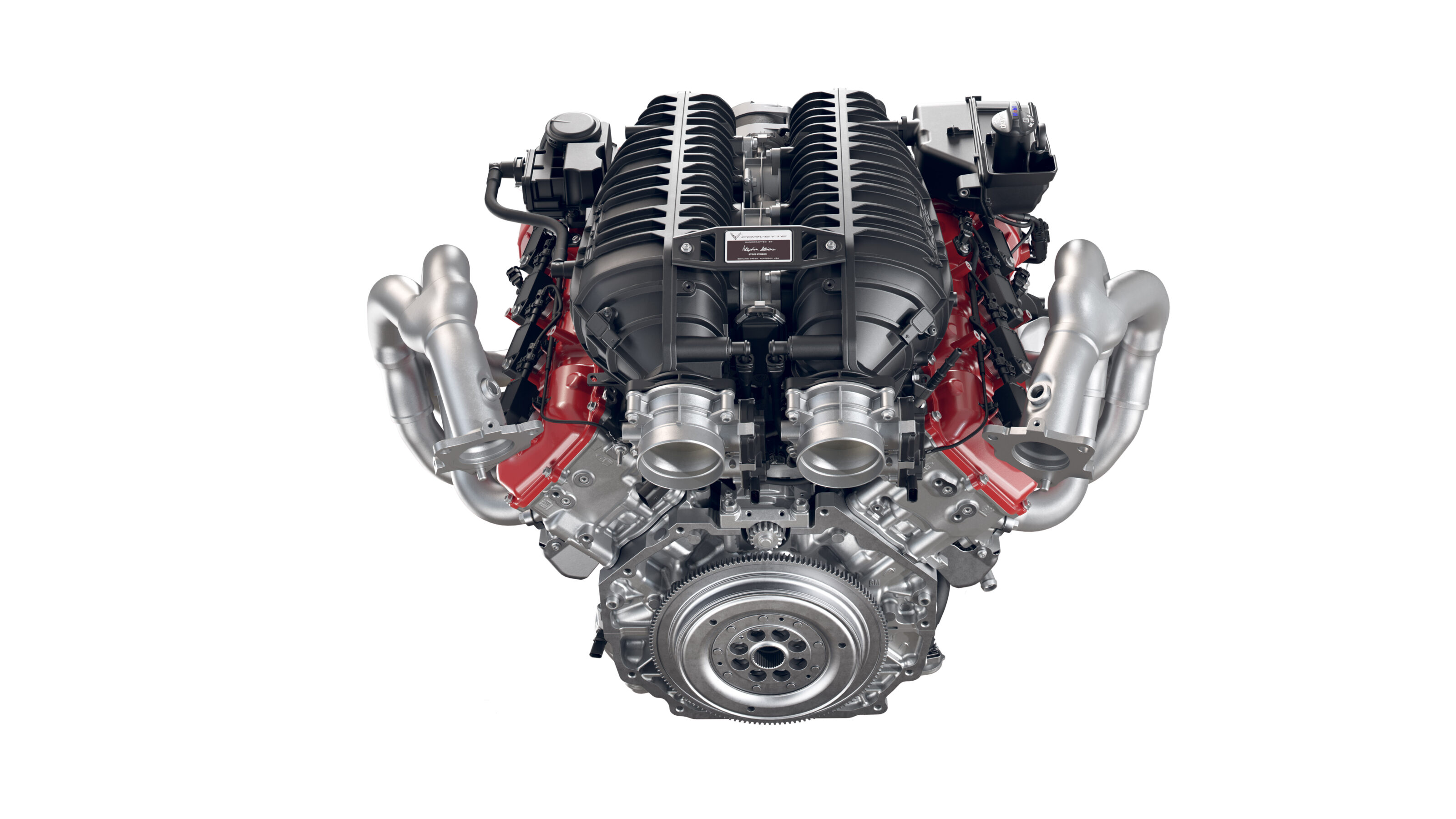
As we’ve covered off before, flat-plane crankshafts, while much more difficult to balance than traditional cross-plane equivalents, reduce reciprocating mass by about 30-40 percent. That means more revs are possible – and more power – with better response.
Higher revs mean higher piston speeds, and so the LT6 uses an oversquare design. A bore size of 104.25mm is not far off that of the 7.0-litre LS7, but there’s a relatively short 80mm stroke. Chevy engineers say the resulting 5.5-litre capacity is the ‘big block’ of flat-plane-crank engines – as big as you can basically go – surpassing even Ford’s 5.2-litre ‘Voodoo’ flat-plane V8 as seen in the GT350 and GT350R.
As with the 458 Speciale, there’s a high 12.5:1 compression ratio, even if it’s not quite as dizzying as the 13.1:1 in Porsche’s new atmo 4.0-litre 911 GT3; or the positively altitude-sickness-inducing 13.5:1 in Ferrari’s screaming 6.5-litre V12 812 Competizione.
Reciprocal mass is kept to a minimum with forged aluminium pistons – which are a ‘work of art’, says GM – and forged titanium conrods.
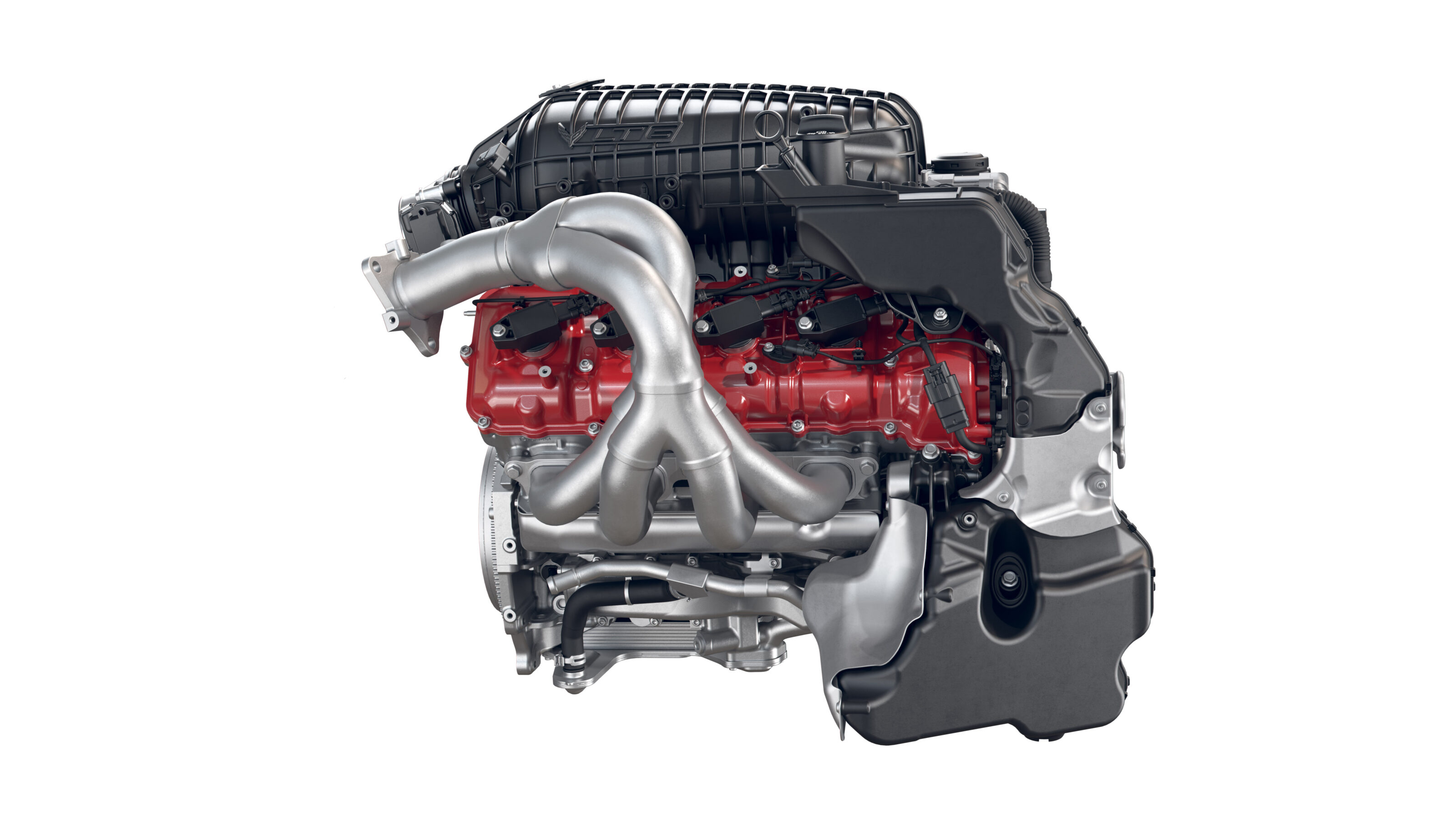
In what could be a sacrilegious first for an LS engine, finally there are twin-cam heads – with engine speeds as high as 8600rpm, the pushrods had to go. Chevrolet has effectively installed the valvetrain from its C8.R racing engine. Dual cams press down on ‘finger’ followers rather than traditional tappets, making for a system that’s lighter, more durable but also reduces the risk of valve float.
There are dual-coil valve springs to reduce vibration; and lightweight titanium inlet valves and sodium-filled exhaust valves. Tantalisingly, GM says the valvetrain can support more than 8600rpm, too.
An engine moving so much air needs big lungs. Again somewhat aping the 458 design, an enormous 11-litre split intake manifold is fed by two 87mm throttle bodies as big as the average male fist. Three small butterfly throttles connect the two large inlet chambers in the middle, opening variably as required so both chambers can breathe as one.
Trumpet-shaped inlet tracts are optimised for each cylinder, to achieve volumetric efficiency exceeding 110 percent at 6300pm and 106 percent at redline, meaning slightly more air than atmosphere is getting rammed into the cylinders – free power, effectively, simply by dint of clever intake design.
At the bottom of the engine a motorsport-derived, dry-sump set-up circulates 9.5 litres of oil. A six-stage scavenge pump sucks so much that the crank operates in a near vacuum, reducing windage and improving efficiency, even if by a minuscule amount. But it all counts.
And it all adds up to 493kW at 8400rpm and 623Nm at a fairly high 6300rpm. GM will fit the Z06 with a shorter 5.56:1 final drive as most owners will be used to bigger-bore low-speed drivability.
As for the noise, early prototypes spotted at the Nurburgring share, predictably, the flat-plane-crank wail of a Ferrari. GM says it spent a year optimising the C8 Z06’s exhaust. Needless to say, while it will sound different to the thumping cross-plane LS engines we’re all familiar with, it should still be aurally unreal.
With European manufacturers effectively halting V8 development or outright replacing them, it’s a joy to see the LS still going strong in the Land of the Free. And to think the ‘best’ iteration might still be yet to come.
Project Gemini: Four signs of shooting for the stars
01
GMSV has confirmed the C8 Z06 will arrive in Australia late in 2022, so you might even get to hear one for yourself. From the footpath… unless you have about $300K.
02
A computer selects the perfect shim size for each engine’s rigid valvetrain. As such, the valvetrain is a non-serviceable item set for life, never requiring adjustment.
03
While a standard run-in period is likely to be recommended, each engine is run for 20 minutes on a dyno to ‘break it in’, including a wide-open-throttle blat at maximum revs.
04
As part of its Gemini code-naming, GM says it scattered numerous ‘easter eggs’ around and even in the LT6 engine. The most obvious is a tiny rocket embossed on the engine’s front cover.
The first DOHC Chevy small block
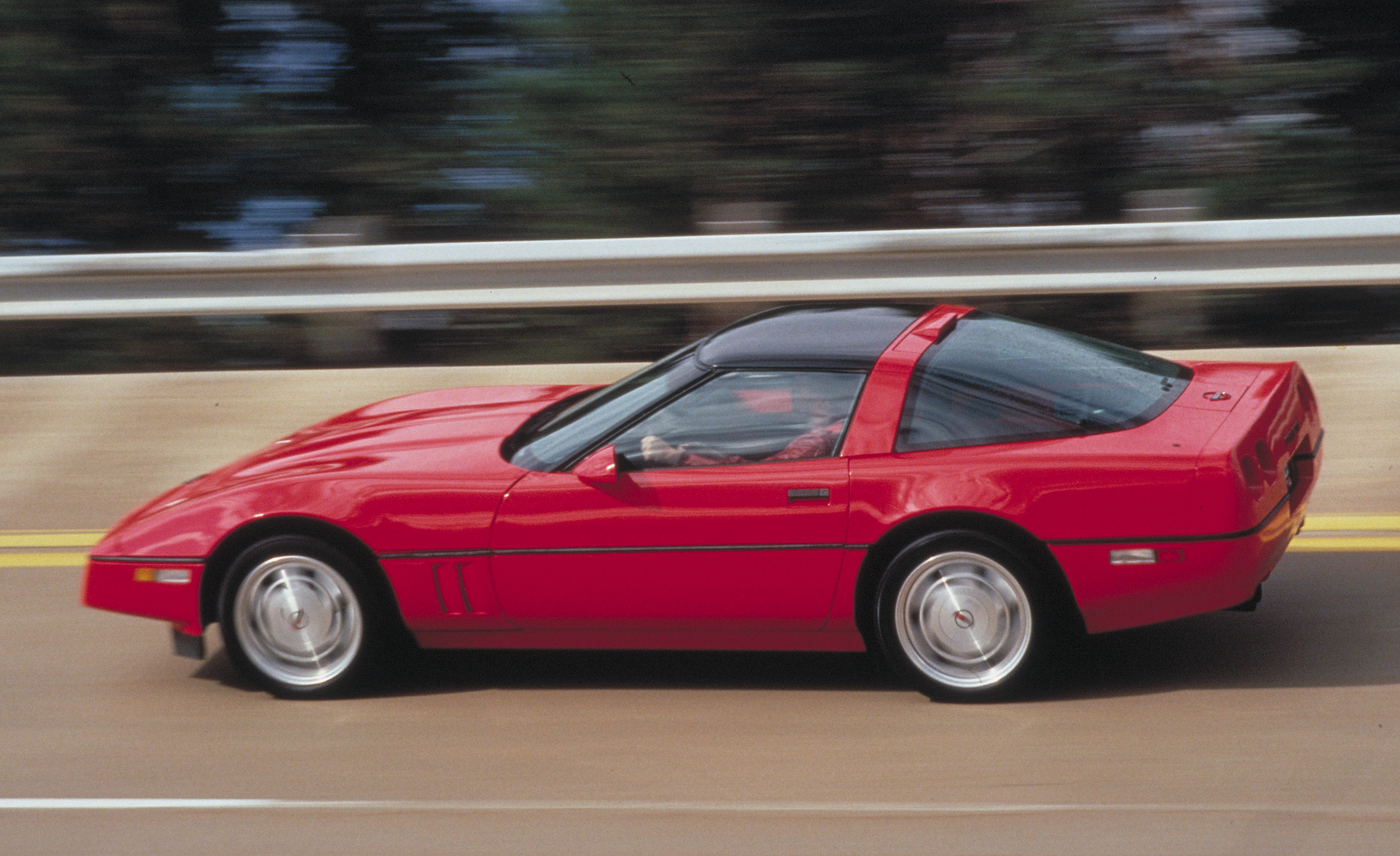
GM’s first twin-cam, small-block V8 was actually a one-off design called ‘LT5’. In the late 1980s, GM had just bought Lotus Engineering, and leveraged its expertise with twin-cam engines to build a DOHC 5.7-litre V8 for the 1990 C4 Corvette ZR-1. With 280kW, it was plenty quick, keeping up with supercars from Italy and Germany at the time.
The LT5 was built by contractor Mercury Marine in Oklahoma, which had experience manufacturing high-performance, all-aluminium engines for boats. High cost ended the twin-cam dream in 1995, but lessons were applied to the engine that replaced it, GM’s new-for-1997 Gen III LS1 V8.
The performance car industry is a fast-paced one, with the boundaries of technology and performance constantly pushed outward. Every car is different, but there are a number of technologies that have undeniably contributed to the colourful performance landscape we have today.
Read on as we examine ten contemporary pieces of tech that changed the fast car game for good.
1. ZF 8HP Transmission
When: 2009 What: BMW 760Li
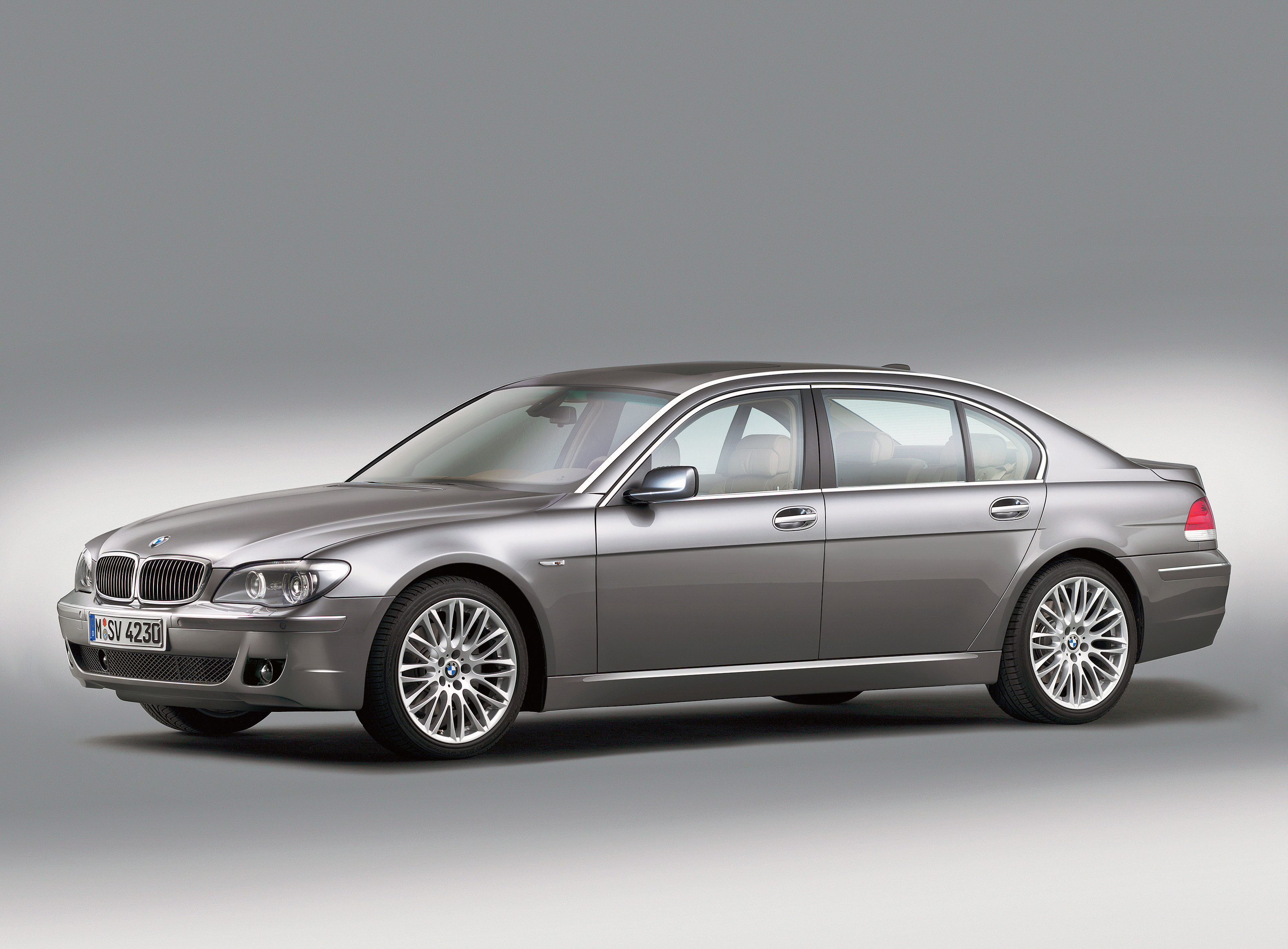
The dual-clutch was the technology that killed the flabby old torque converter auto, right? Not so fast, hoss. Zahnradfabrik Friedrichshafen, or ZF to most of us, had other ideas.
The company that was originally formed to produce gear wheels for Zeppelins developed a compact eight-speed transmission with four planetary gearsets, three clutches and two brakes that could shift gears in as little as 200 milliseconds with a beautifully oiled slickness that suddenly made DCTs seem clunky.
Compatible with rear- or all-wheel drive layouts with torque outputs from 220Nm to 1044Nm, the ZF 8HP even prompted some manufacturers like Audi and BMW (with RS5 and M5 respectively) to ditch DCT installations and return to automatics. The added length of a torque converter has proven prohibitive in high performance mid-engined applications, but otherwise the ZF 8HP is the transmission that demonstrated that when it comes to shift quality, the auto remains king.
2. Sequential twin-turbo
When: 1986 What: Porsche
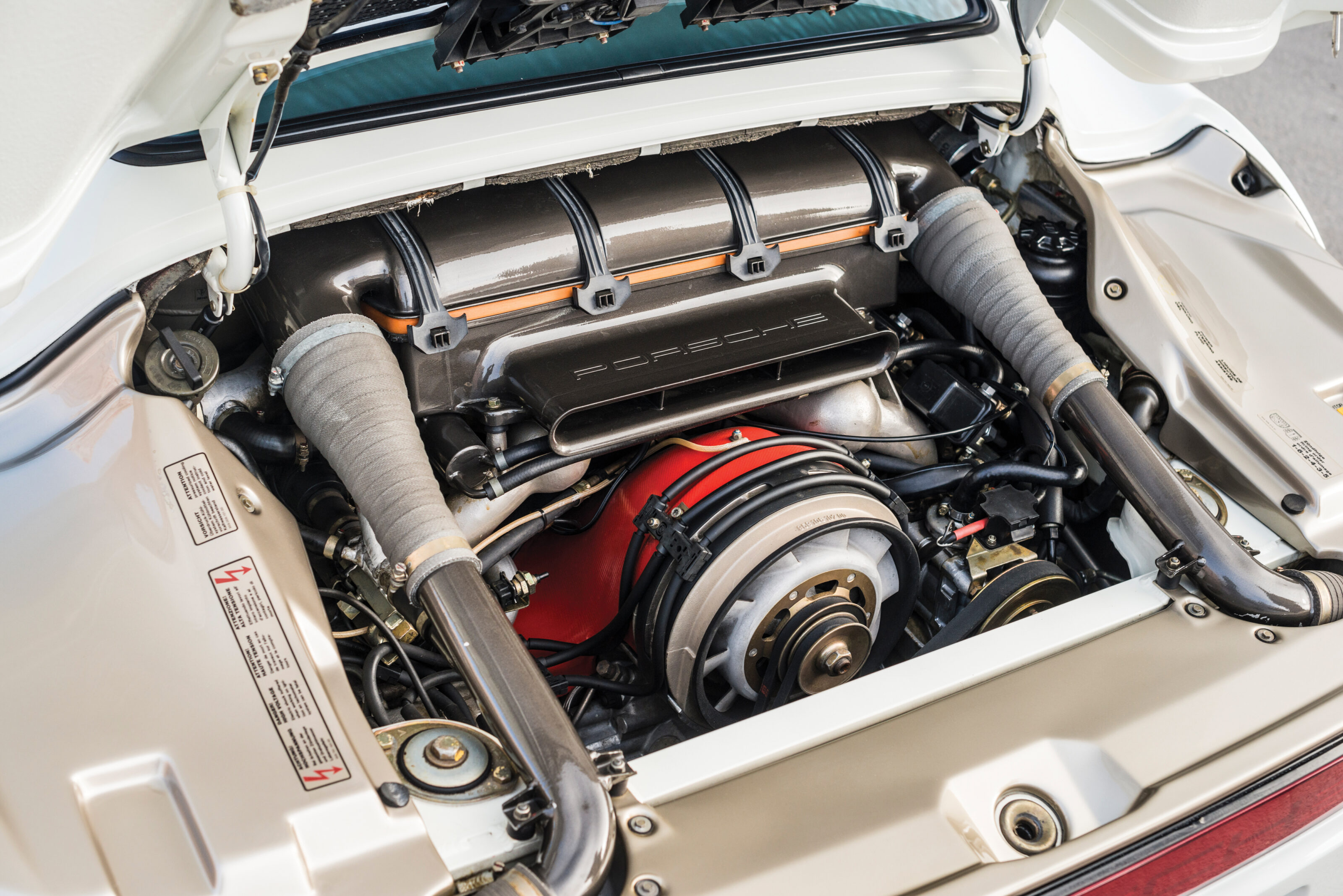
Although the design for exhaust-driven turbos dates back to 1905, and parallel-sequential forced induction systems had been toyed with in aviation until the advent of the jet engine, it wasn’t until 1986 that Porsche commissioned KKK to build a series-sequential setup.
Unlike its predecessor, where both turbos would operate under high load and only one would be used at lower outputs, the KKK K26 turbochargers fitted to Porsche’s 959 would see one spool up and then pass the baton to the next at 4000rpm, neatly eliminating turbo lag and improving driveability.
Since then, innovations in variable geometry turbocharging have largely rendered the cost and complexity of sequential twin turbocharging redundant. Those who have ever tried to troubleshoot an FD3 RX-7 turbo issue, we feel your pain.
3. Active Aero
When: 1986 Who: Porsche
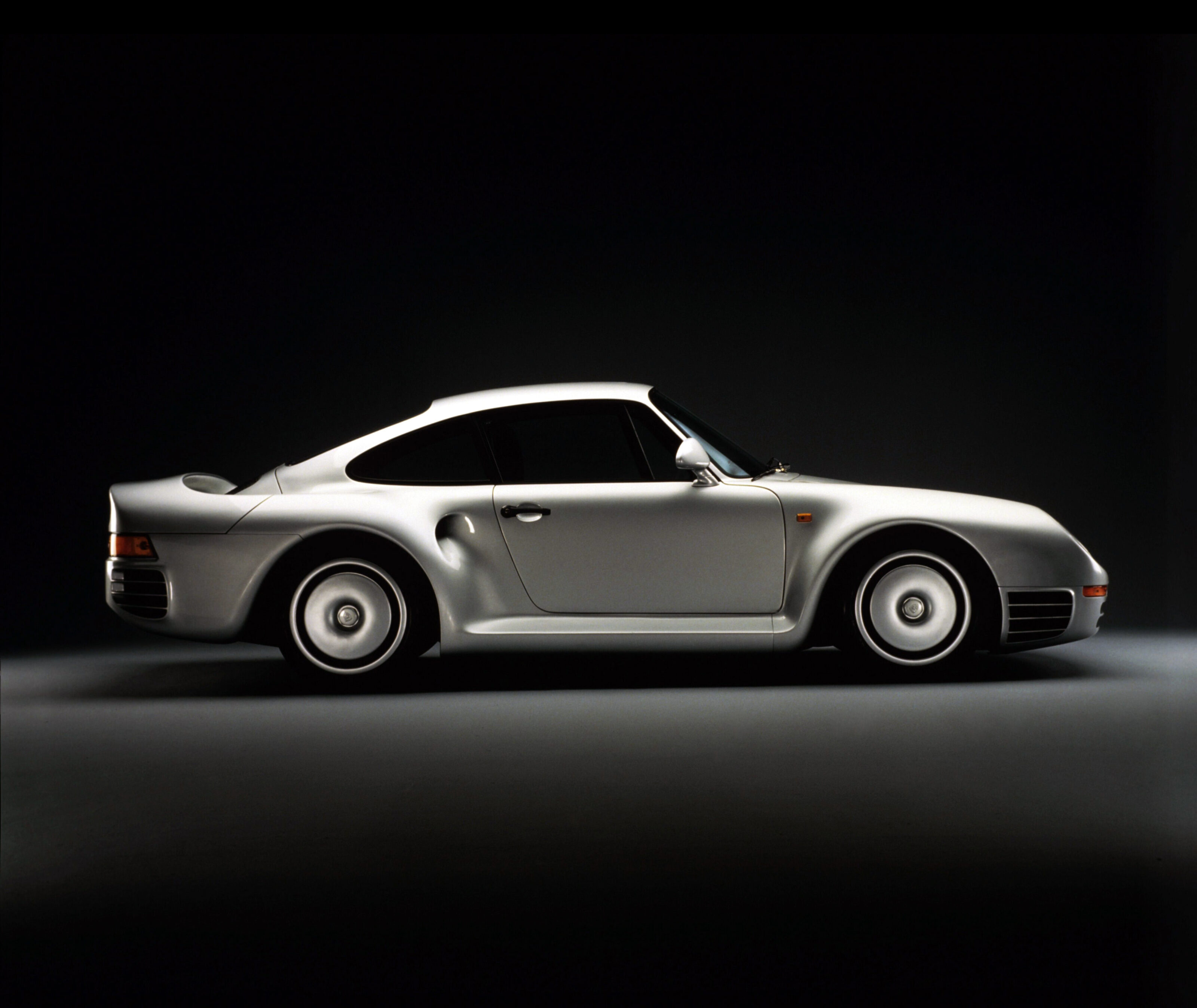
Without wanting to make this entire feature a Porsche 959 hagiography, Weissach’s supercar was there with the first automatic ride height adjustment.
Vehicles like the 1988 Volkswagen Corrado with its active rear wing and the 1990 Mitsubishi 3000GT with its automatically adjusting front and rear spoilers followed. Since then we’ve had oddities like the Pagani Huayra with its four moveable control surfaces at each corner or the Zenvo TSR-S with its crazily tilting rear wing.
Perhaps the ultimate example of applied active aerodynamics is Lamborghini’s ALA system on the Huracán Performante which uses aero vectoring to apply or reduce downforce to each individual wheel. It’s the key reason why the Performante is still significantly quicker on a lap of any given race track than the later Huracán Evo with which it shares its drivetrain. Even away from ultra-high performance applications, active aero often improves efficiency and emissions.
4. Electronically controlled torque-vectoring diff
When: 1996 Who: Mitsubishi
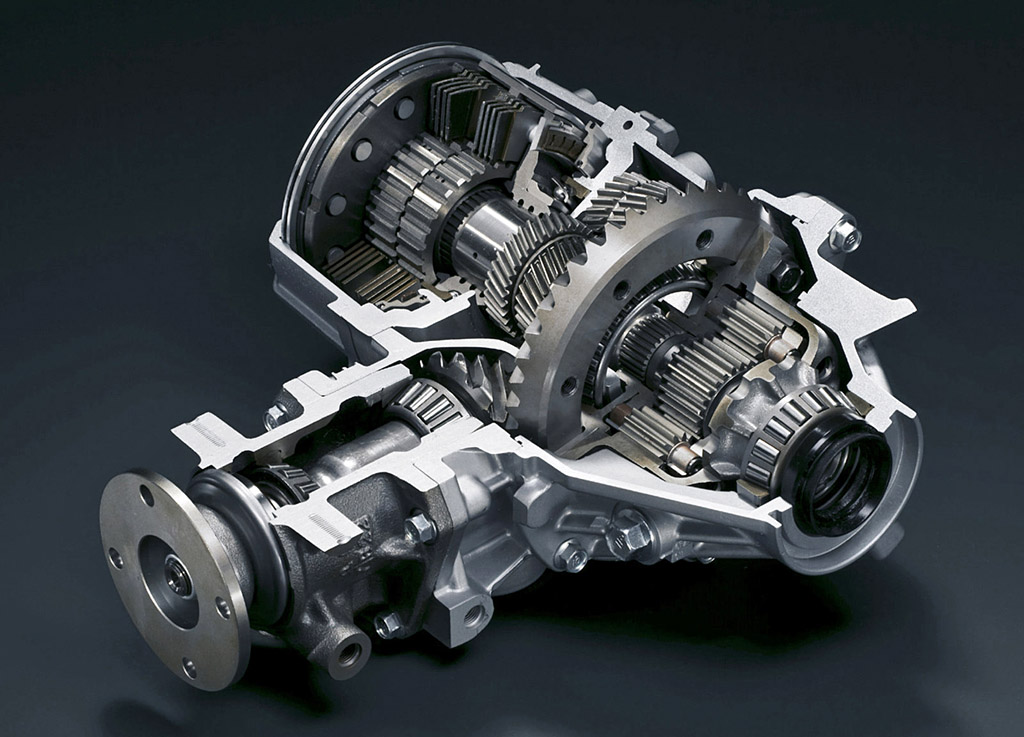
Mitsubishi’s Active Yaw Control, which debuted on the Lancer Evo IV GSR in 1996 was a revelation. It controlled which rear wheel got a greater or lesser share of torque with an electronically controlled wet clutch pack nestling either side of the differential gears on the rear axle. Understeer was reduced by directing more torque to the outside rear wheel otherwise the system would detect which wheel could best accept drive and direct it accordingly. When equipped on both axles, these smart diffs can direct torque to any wheel.
The Twinster drive system on the Ford Focus RS and the 4Matic+ system on the Mercedes-AMG A45 S can send high percentages of drive to the rear axle and then to one particular wheel to deliver dedicated drift modes.
5. Over-the-air updates
When: 2009 Who: GM
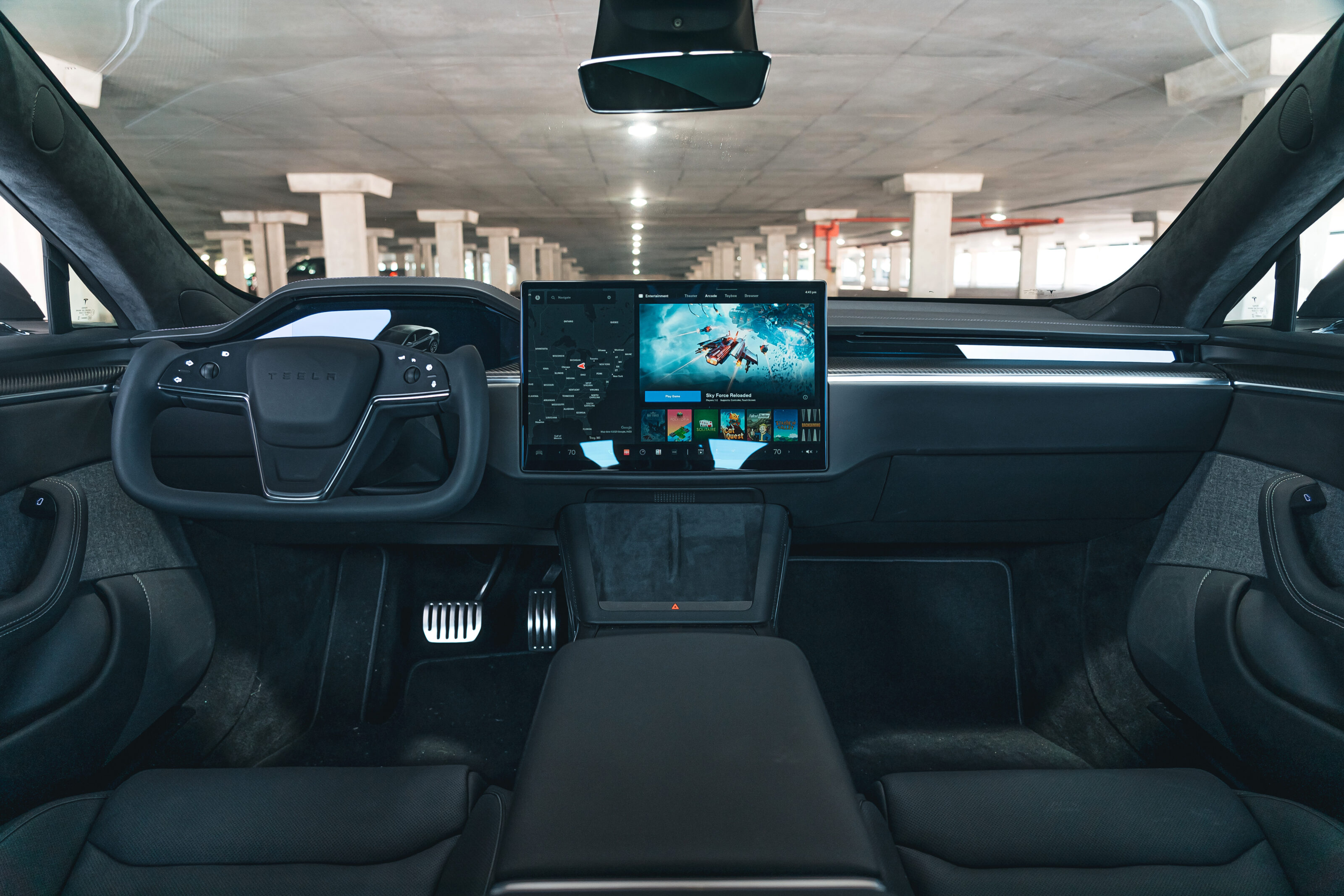
It’s been a decade since a Tesla Model S connected itself to the internet and downloaded a software patch. Yet, while Elon might like to claim that as a first, it ignores the fact that General Motors beat Tesla to the punch with its Vehicle Intelligence Platform that could update OnStar and infotainment back in 2009.
While OTA updates have yet to fully realise their potential, with most manufacturers still only able to update infotainment functions, dubbed Software Over The Air or SOTA. Tesla and NIO fully support Firmware Over The Air (FOTA) upgrades for the entire vehicle system as well as SOTA capability.
Most manufacturers are still rolling out full FOTA capability. The scope for OTA to influence the way your car drives is virtually limitless.
6. Stability Control
When: 1995 Who: BMW, Mercedes
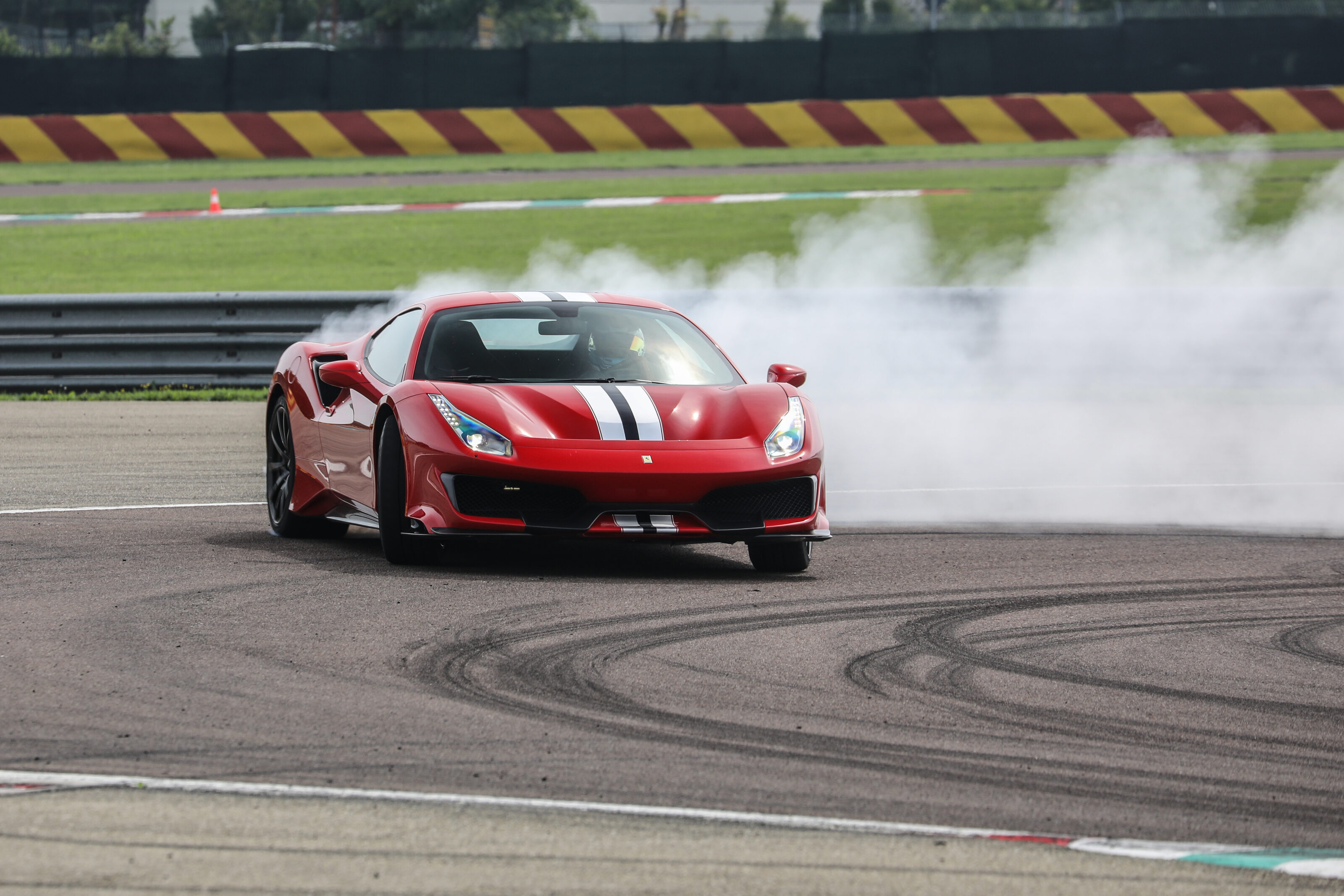
Let’s pause for a moment and examine cars before stability control became widely fitted. A Ferrari F40 with 356kW was a handful and Porsche’s last GT car without the fitment of stability control was the 355kW 996 GT2. It was clear that there was a definite power ceiling that a car driving through its rear wheels could reasonably be foisted upon the general public.
These days, you’d happily drive a 610kW Ferrari 296 GTB without checking your life insurance provision beforehand, largely thanks to advances in stability control technology.
Even Gordon Murray has fitted the tech to his latest wares. Rather than prove a drag, stability control has morphed into an enabler, coming from its roots back in 1995 on Mercedes-Benz and BMW products through to BMW’s slick M Dynamic Mode and Ferrari’s otherworldly Side Slip Control. Along the way it has saved many lives as well as the blushes of more than a few motoring writers.
7. Tyre Pressure Monitoring System
When: 1986 Who: Porsche
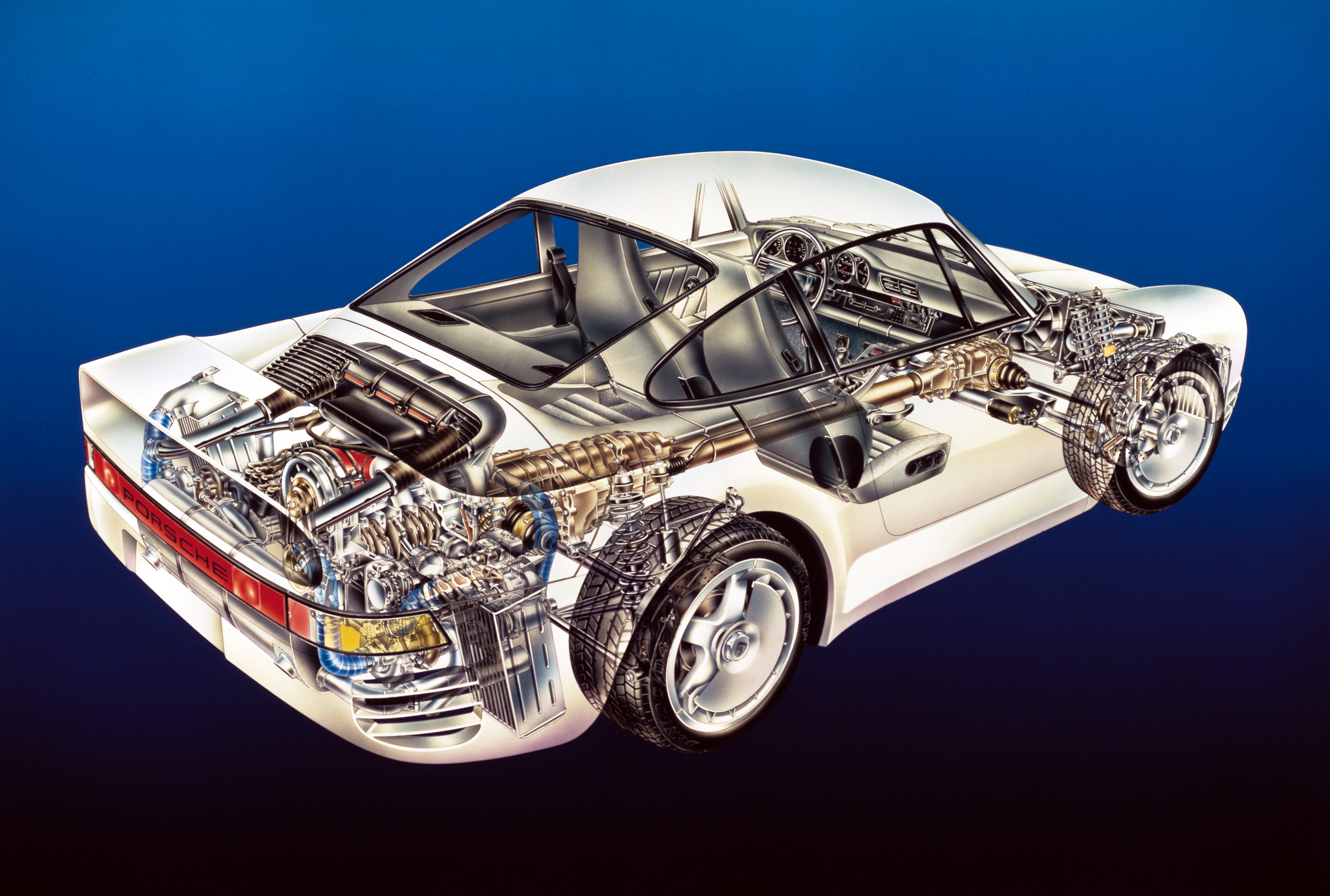
If you’re sensing a theme here, you probably won’t take too many guesses at figuring out which car introduced a tyre pressure monitoring system back in 1986. And while TPMS is undoubtedly a handy thing to have to signal whether you’ve caught a slow flat, how does it really apply to the world of performance cars?
Firstly there’s a significant safety implication that’s only exacerbated by performance cars putting greater demands on their tyres. Whether its indirect TPMS, which uses an algorithm based on wheel speeds and other driveline data to model tyre pressure, or direct TPMS which features an in-wheel pressure sensor, TPMS helps improve safety and extend the life of your tyres.
It’s also a boon for trackday drivers who are frequently monitoring tyre temperatures and pressures and exposing tyres to the risk of damage by running kerbs.
8. Michelin C3M
When: 1994 Who: Michelin
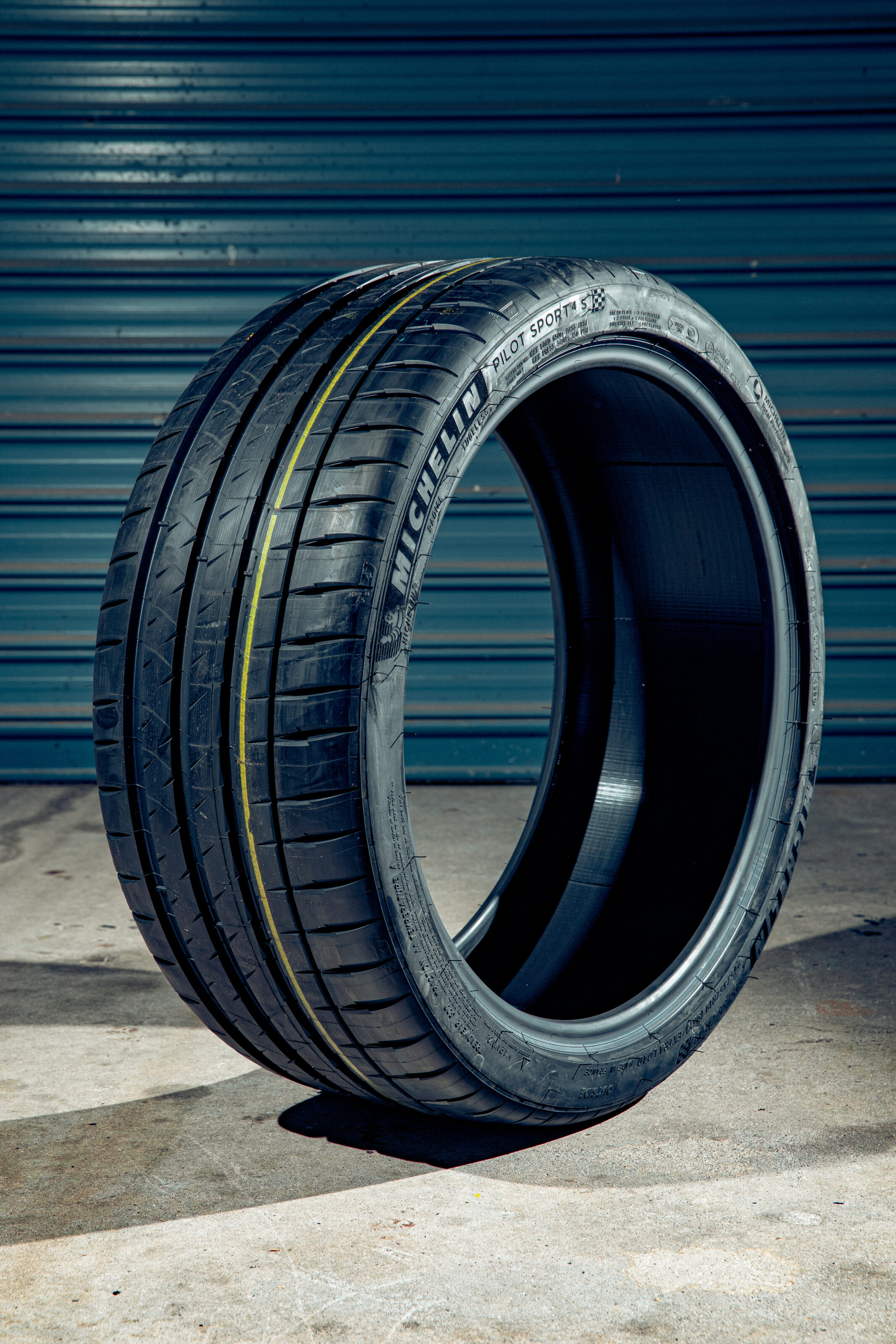
Back in 1994, Michelin changed the way tyres were made. Prior to C3M (Carcasse, Monofil, Moulage et Mécanique) the construction of tyres relied on large-scale production facilities that required huge investments in raw material storage and therefore enormous tyre batches to cost-justify.
C3M introduced small, robotised drum-based stations that not only allowed Michelin to rapidly improve quality but also meant that building, curing and finishing could all be performed rapidly on the drum, with no inventories maintained between the building and curing processes. This enabled OEMs to order small batches of highly customised, high-quality tyres cheaply and rapidly.
Pirelli followed suit – and in many ways surpassed Michelin’s efforts – with its 1997 MIRS tech. So the next time you see a vehicle manufacturer logo on the sidewall of a tyre, that’s due to a French invention from Clermont-Ferrand.
9. Dual-clutch gearbox
When: 2003 Who: VW
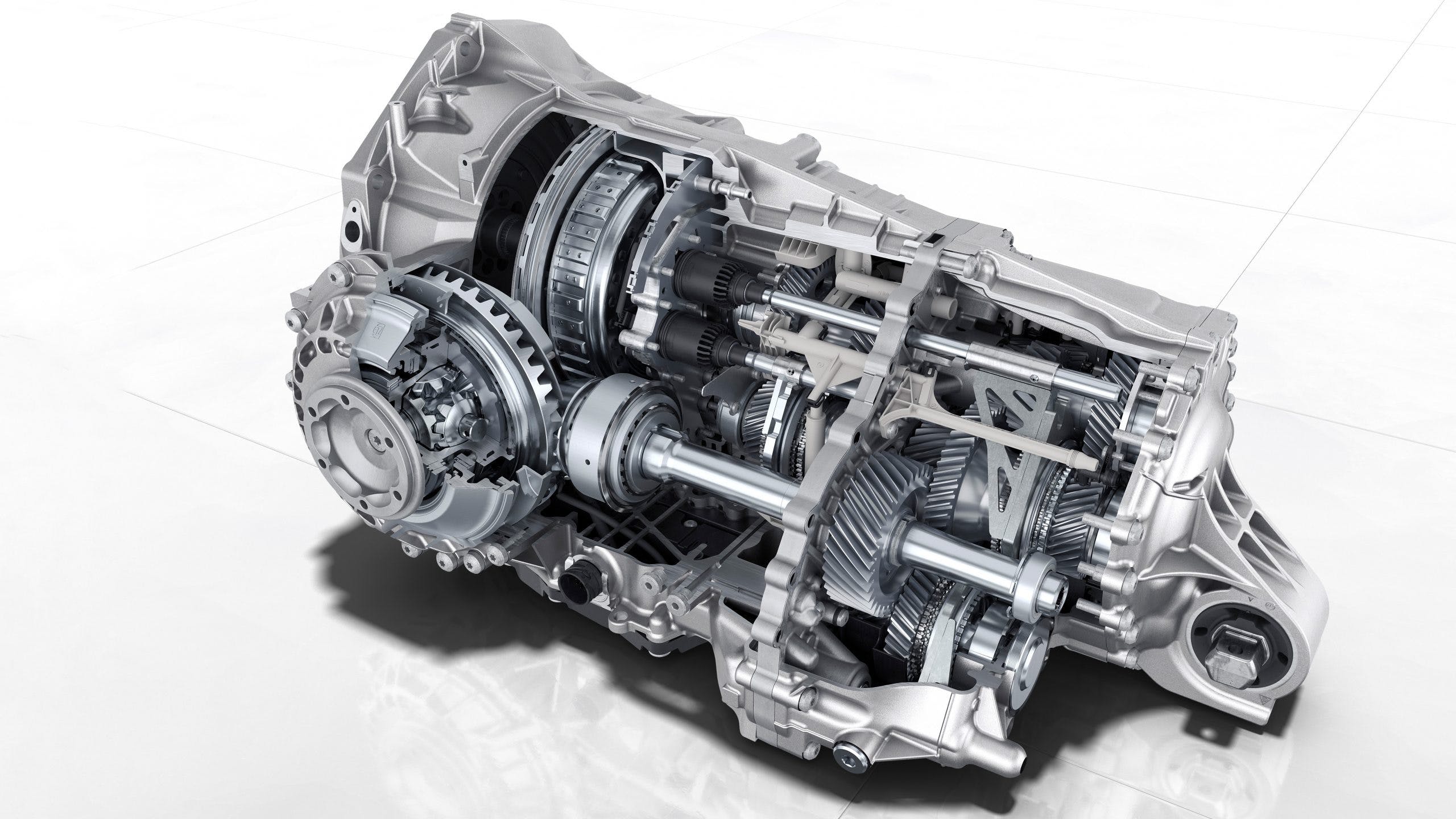
We’re venturing into slightly controversial waters here, with a certain constituency of drivers holding dual-clutch transmissions largely responsible for the demise of the good old manual. First seen on the 2003 Volkswagen Golf R32 in a production guise by BorgWarner – not, as some point out, the Smith’s Easidrive ’box of the 1960s – the DCT had its roots in racing applications.
The Porsche DoppelKupplung (PDK) dual-clutch gearbox was first tested in 1984 in a 956. Following further tests, in 1986 a 962 C, chassis 962-003, was fitted with the PDK transmission, claiming victory at the Monza 360km race.
Dual-clutches shift quicker, shift smoother and are ultra-efficient when compared to manuals. Is that enough? Your mileage may vary on that one. Examining the buyer behaviour of many high performance car customers, the answer would appear to be yes.
10. Magnetic Dampers
When: 2002 Who: GM
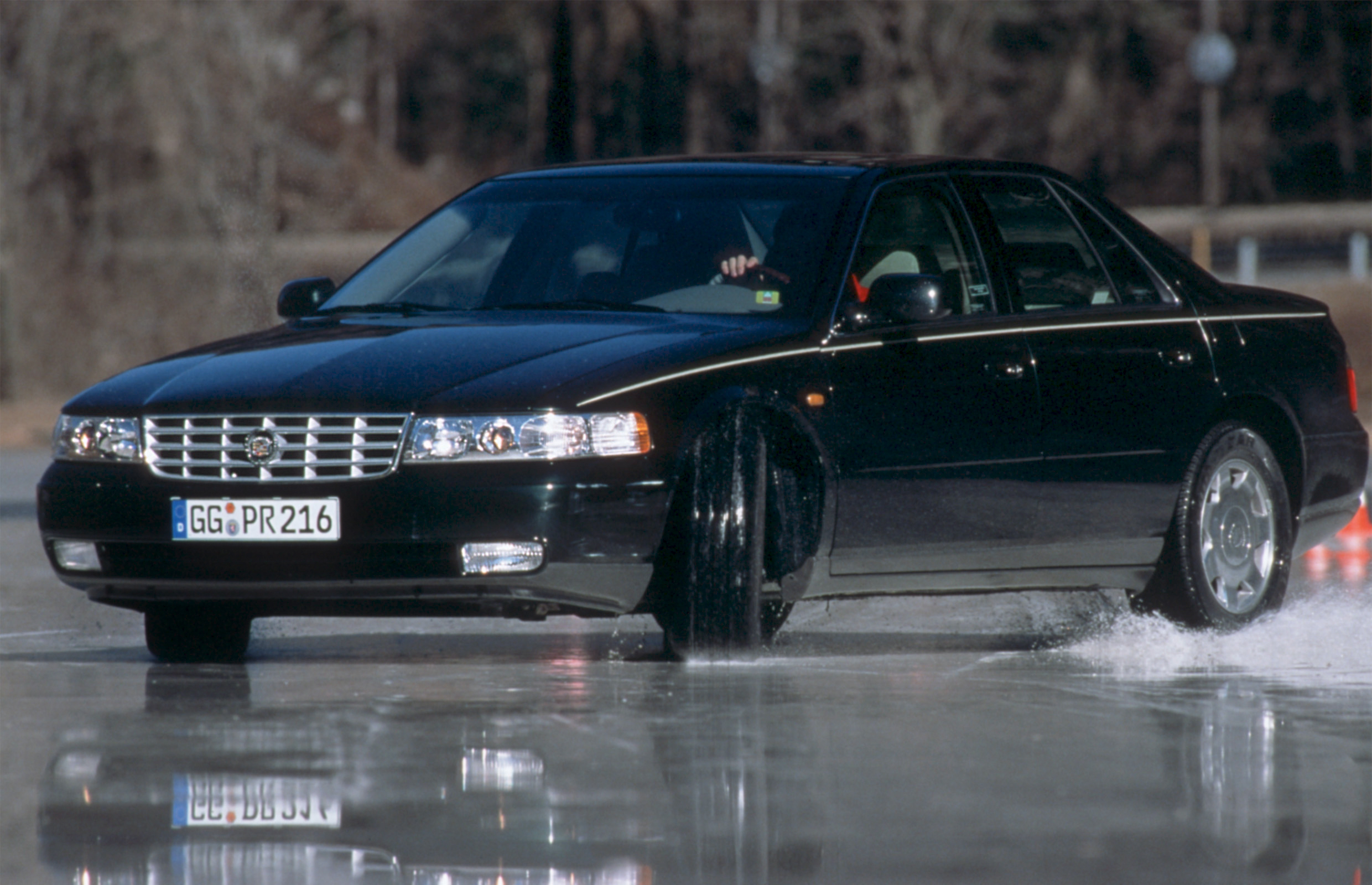
Yield point shear stress. Sounds like a pretty nebulous concept, but if you can control that aspect of a damper’s fluid by using an applied magnetic field to align particles within it, it’s possible to change its effective viscosity. Bingo – instant adaptability.
Developed by GM’s Delphi and first seen on the 2002 Cadillac Seville STS, it also featured on the 2003 Corvette C5 and the 2006 Audi R8. This ability to change ride quality from relaxed to firm was adopted by manufacturers such as Ferrari, Lamborghini, Ford, HSV, Honda, Land Rover and Chevrolet amongst others.
Aside from its flexibility, another advantage of MagneRide systems is that there are no moving parts or valving structures needed to actuate the state change, operating almost instantaneously.
Frigid rain is pounding the granite cobblestones of Aker Brygge on a dreary Oslo Friday morning and the worsening conditions remind me why I left the northern hemisphere in search of warmer climes many years ago. But the wandering nostalgic train of thought is derailed by the arrival of photographer Adam. He’s alighting one of the 139-metre Basto Electric ferries that crisscross the Oslo Fjord, powered by a 4.3MWh (yes – megawatt) battery and dock with robotic fast chargers at either end of their passage.
If this was Sydney Harbour, he’d be arriving on a floating antique powered by a pair of 14-litre MTU diesels that chug nearly four litres of dinosaur juice every minute. But this isn’t Australia, this is the world’s leading nation for transport electrification – Norway.
I’m here to explore how a rugged but beautiful fringe of Scandinavian rock home to 5.5 million became the undisputed champion of the electric car with 31 OEMs offering at least one electric model, more than 400,000 EVs rolling on Norwegian roads and a staggering 76 percent of new-car sales representing the pure electric party.
If Australia had achieved the same number per capita there would be nearly 2 million EVs Down Under but, as it stands, the figure is closer to 20,000 and a meagre 0.6 percent of registrations are for battery powered models. More critical than how Norway achieved it though, is if the herculean feat is repeatable by other nations including Australia…
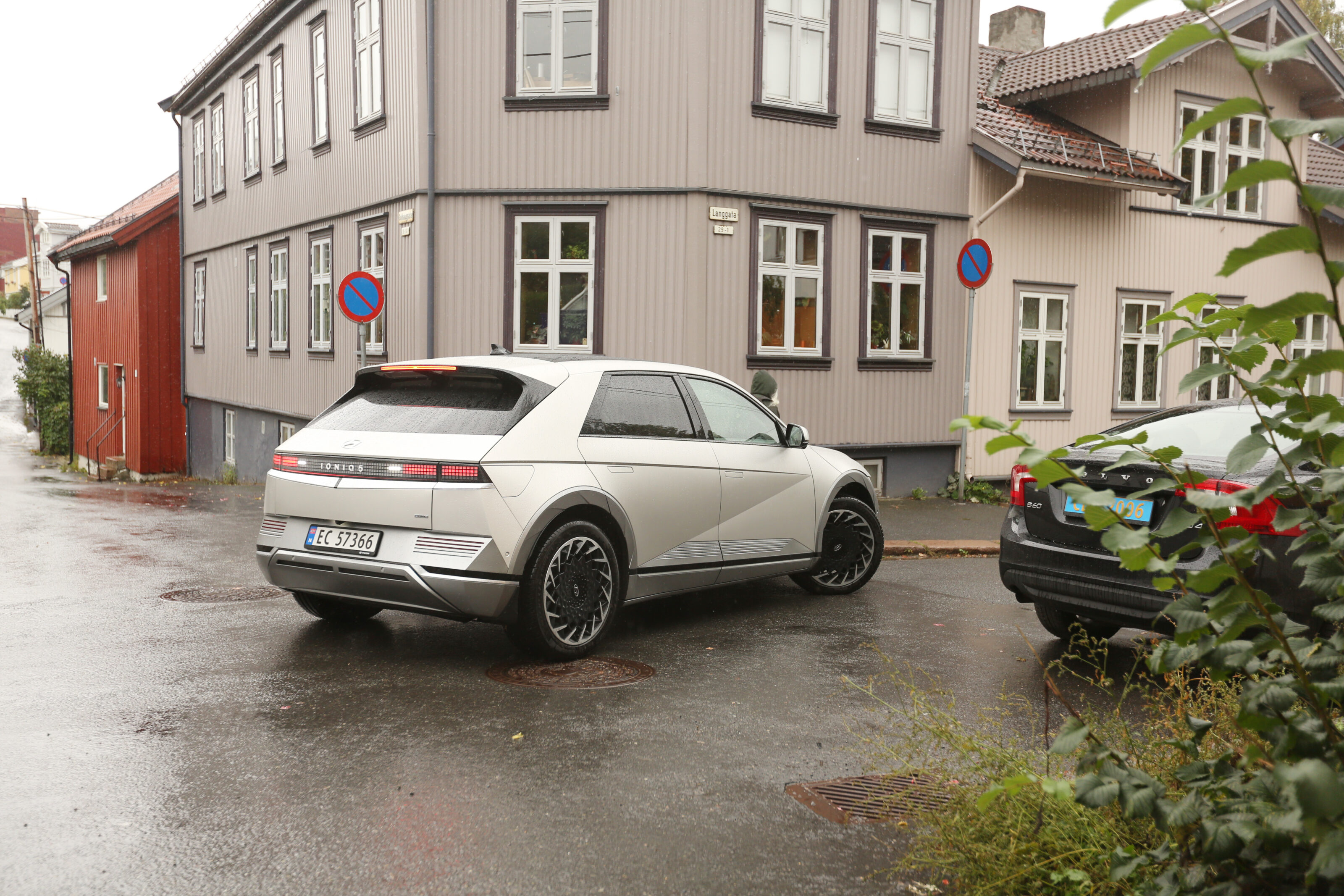
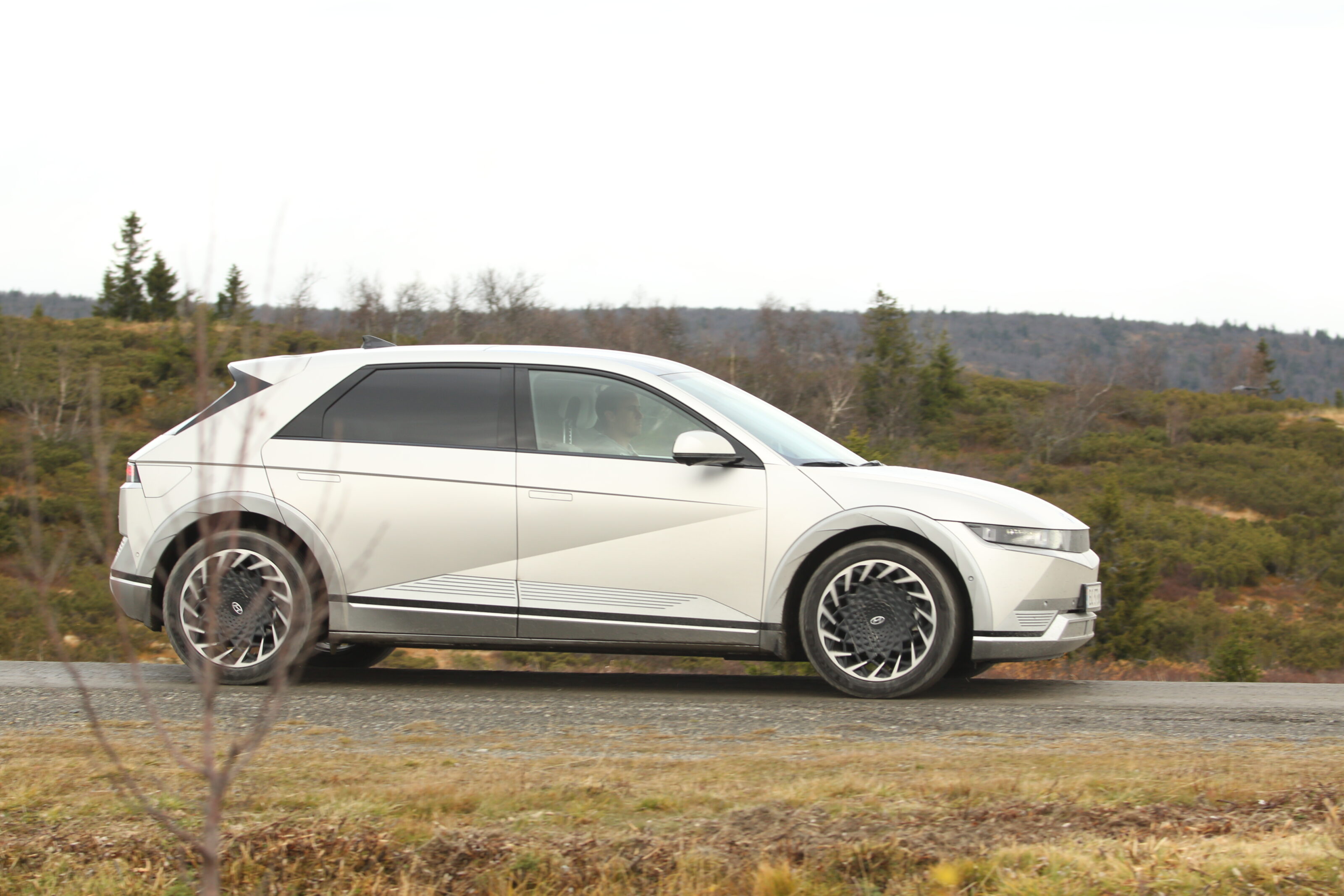
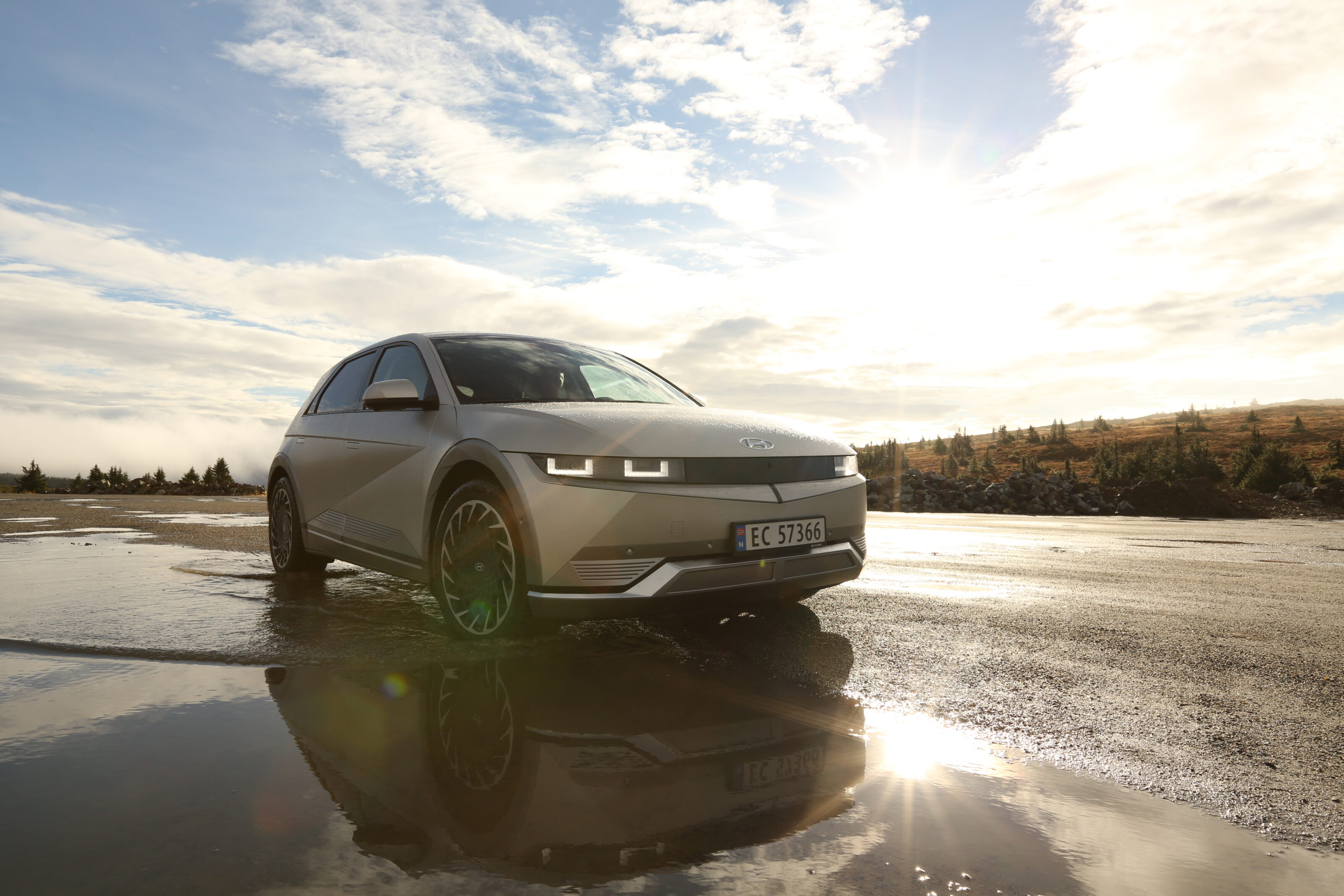
But embarking on a mission of EV discovery in something powered by old squashed plankton would be like replying to Tesla’s Christmas party invitation with a telegram. Which is why the haven from Norway’s autumn and my silent steed for this trip takes the form of the Hyundai Ioniq 5. Priced from about $72,000 from launch in Australia it’s unlikely you will have seen too many of these on local roads since they went on sale in October, but there’s no missing one when you do.
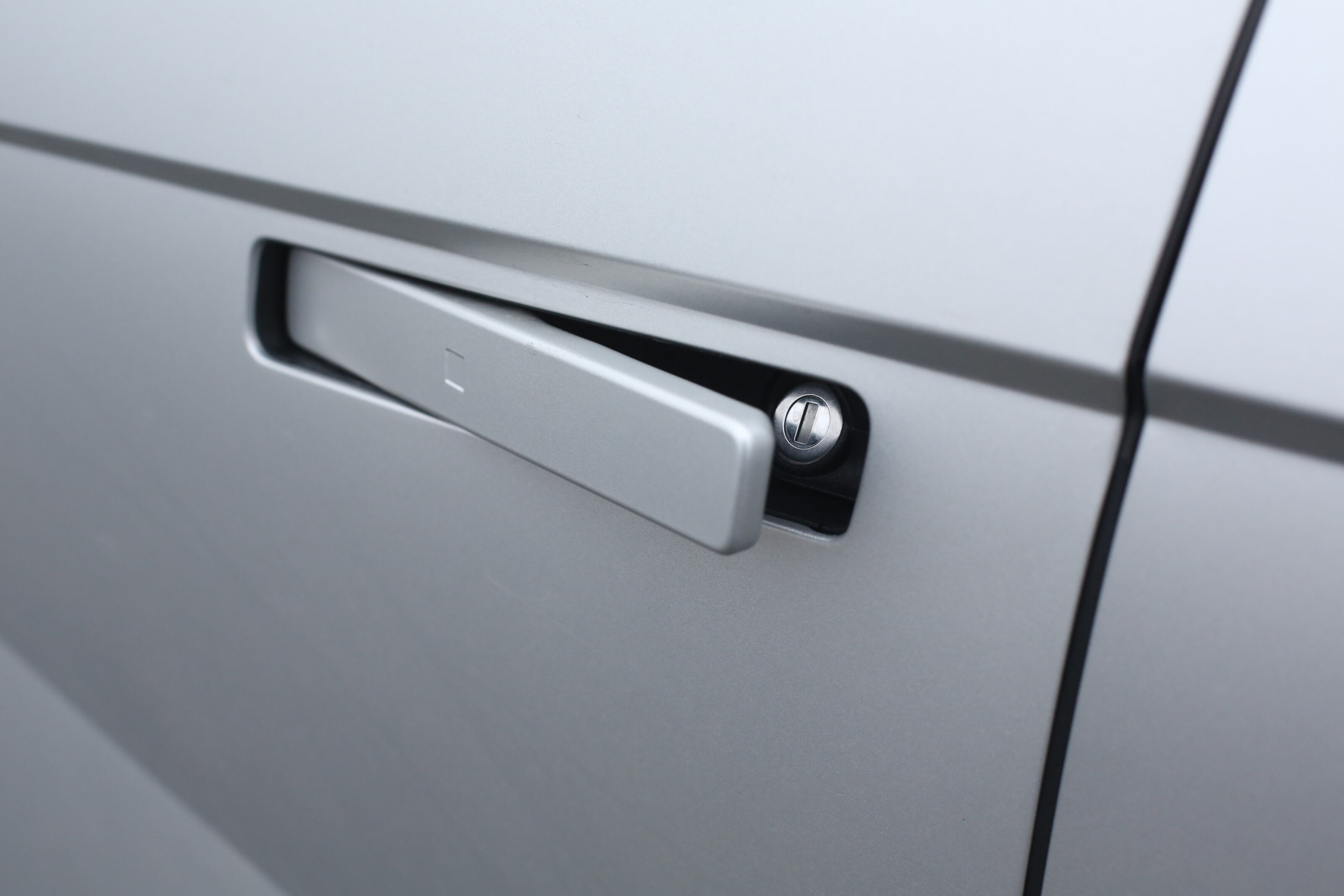
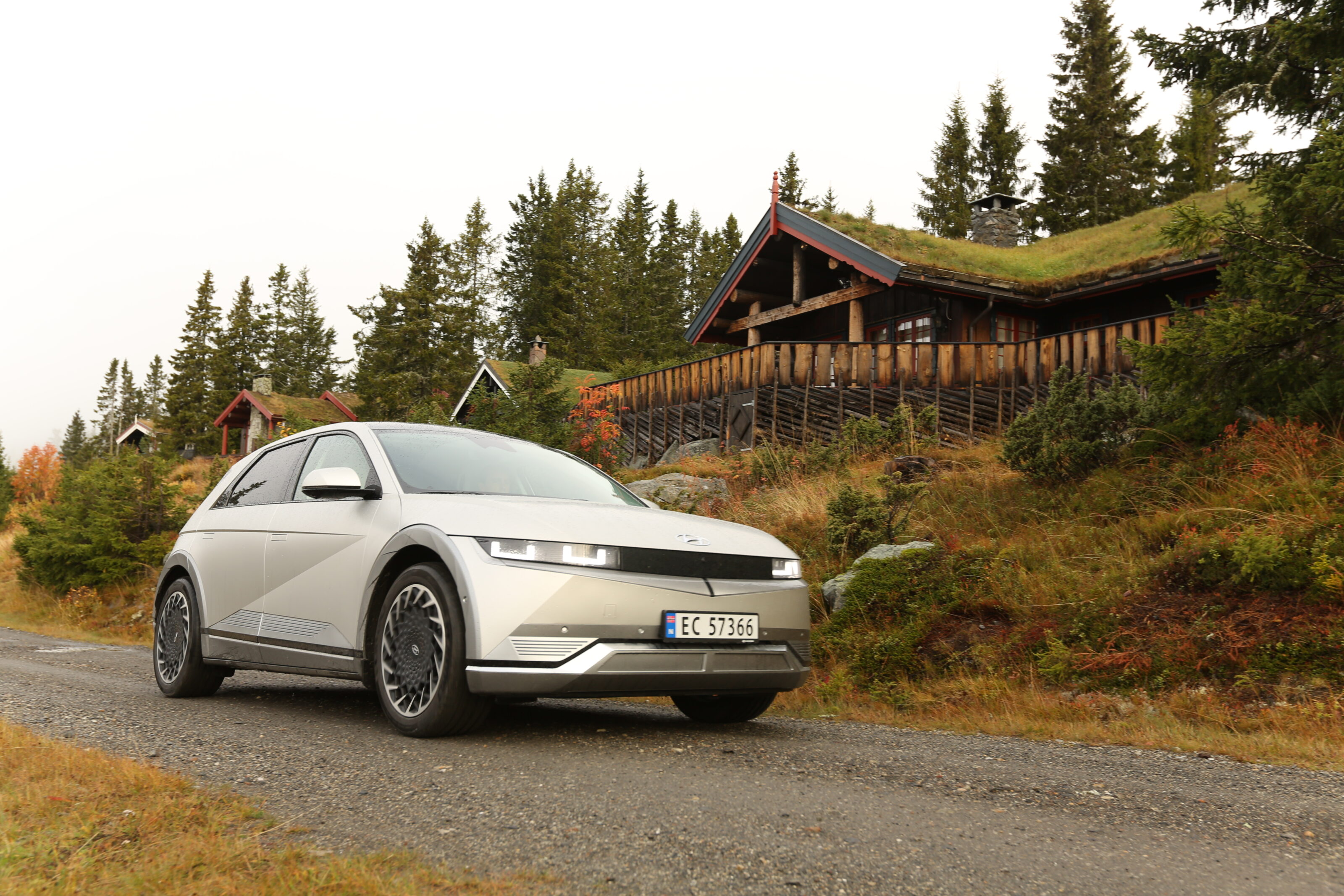
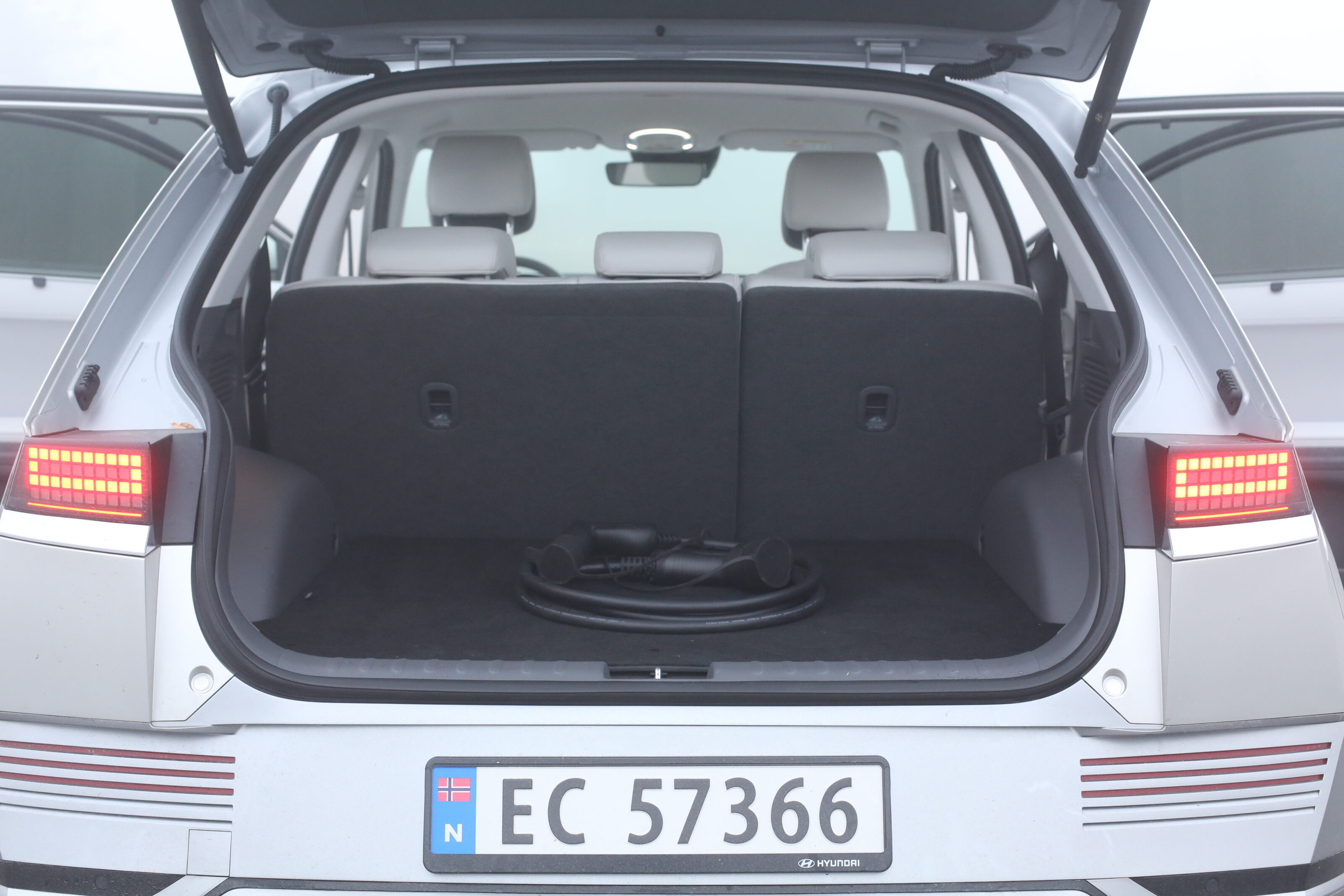
Up close, the Ioniq 5’s design details are exquisite with fine cubic signatures throughout that appear to have been sculpted in Minecraft. Pull back though, and the full aesthetic effect is enriched with intensely bold lines matched with subtly different tones of matte silver. In the low light of a scummy Oslo day, the cool, square headlights and pinstriped front valence glow with an eerie aura like Cherenkov radiation.
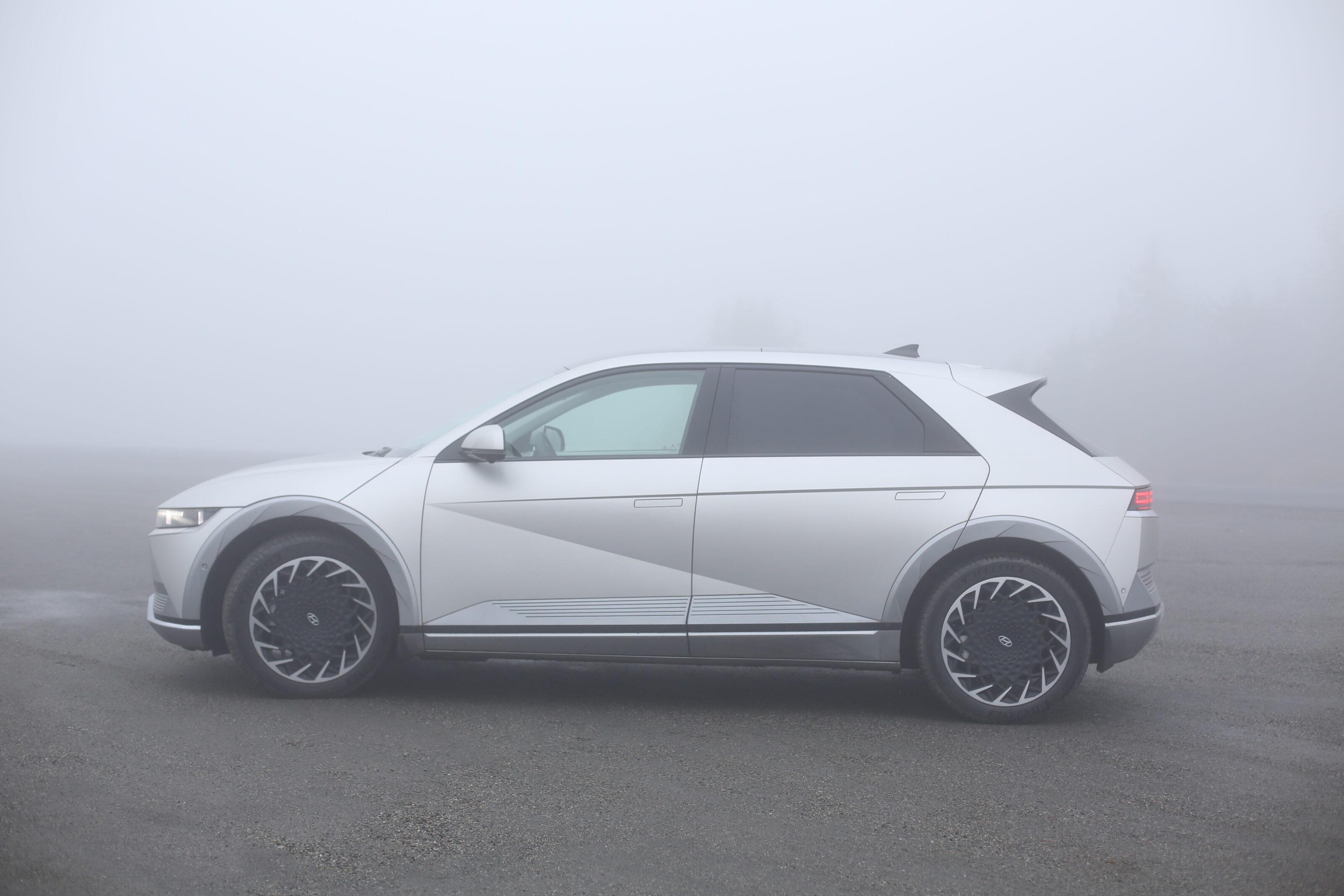
If Australia achieved the same EV sales per capita, there would be nearly 2 million Down Under
In favour of a fission reactor however, the firstborn to Hyundai’s new Ioniq family is powered by a lithium-ion battery. EV hungry nations like Norway get a choice of three battery capacities and the option to go rear-drive with a single motor or all-wheel with two motors. In this case, the smallest 58kWh unit is paired to the all-wheel drive transmission for a combination of tricky surface-tackling stick and more affordable and lighter power pack – albeit at cost to range.
How far is that? Well, it depends. On the first morning with a full charge, the 5 was reporting a max of 280km but on the final day it had decided to unleash an indicated 330km. Changing temperatures, driving styles and other variables are factors. As for the cost, the Ioniq 5 range starts at about the same as the Australian retail price, but bear in mind this is the country with such savagely high living costs that a standard kebab will set you back about 20 bucks. In other words, the Norwegian people are paid well and electric cars are cheap.
Okay, it was a pretty decent kebab but one element fuelling the wallet-bashing cost of living for a tourist is a merciless value-added tax (VAT) of 25 percent. However, EV purchase prices are exempt in Norway. Not only that, the government applies no import taxes, there’s significantly discounted annual road tax (the equivalent of rego) while parking and toll roads are mandated to be at least 50 percent cheaper for electric cars.
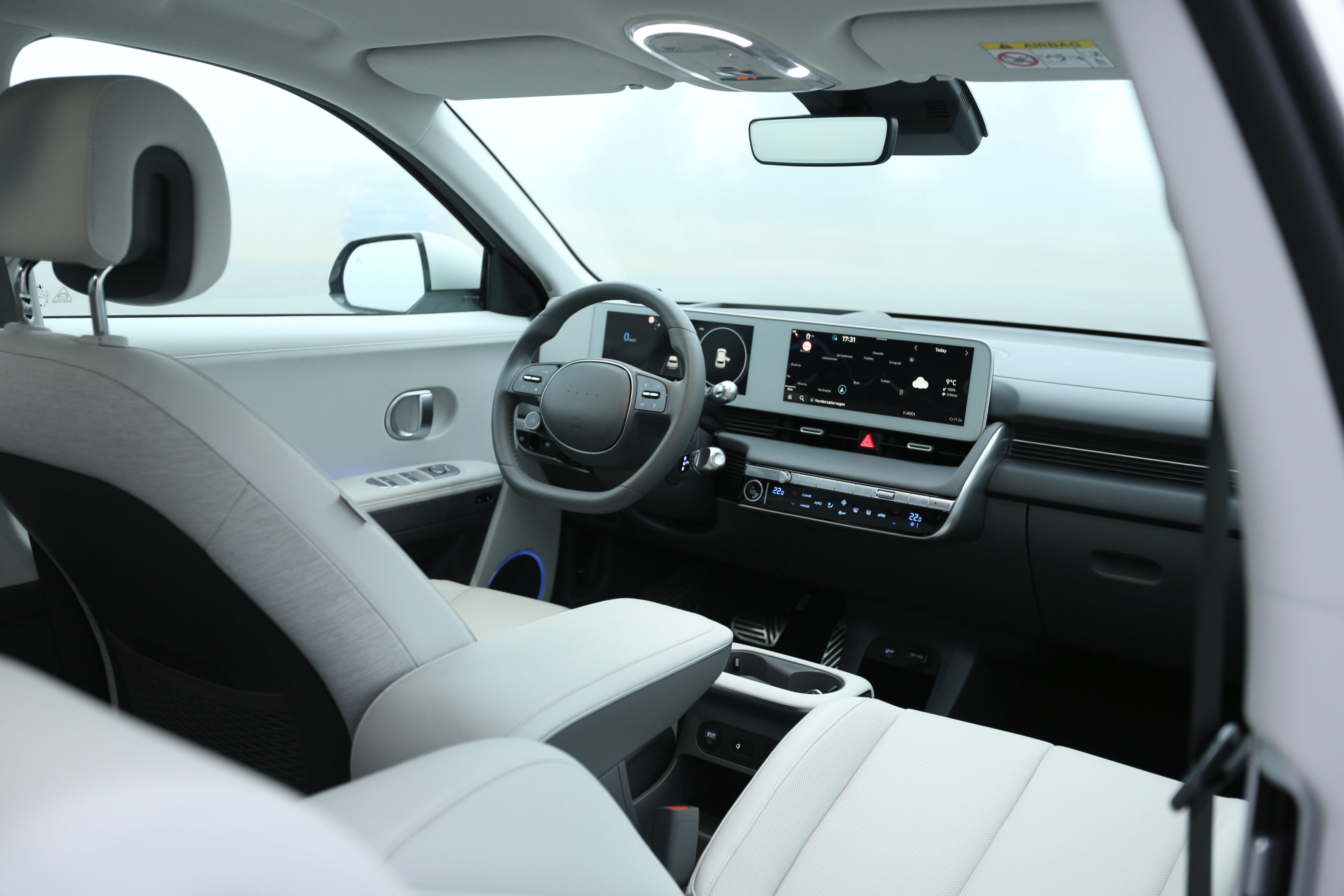
Tradies are offered fiscal compensation to trade a diesel van for an electric equivalent; oh, and electric vehicles can drive in bus lanes and access emissions-controlled areas that combustion power cannot.
Norway has categorically nailed the incentives, but there’s far more to the picture than that – something you only start to realise the when you leave the capital.
Ask any Australian what the biggest EV sticking point is for them and I bet they’ll tell you how they can’t drive between Sydney and Melbourne without stopping, which raises more concerns about their Zepplin-sized bladder and Kate Moss-style stomach than about actual EV range and charging infrastructure. Here too, Norway has the answer. Dotted around the nation are countless chargers. You’ll find them at public parking spaces, hotels and shopping centres enabling a top-up virtually anywhere you might want to go.
But a new network of high-power chargers is spreading across the nation. To date, there are about 4000 350kW units where you can plug in your EV for a force-fed electron meal while you smash down a Max Hamburger and have a wizz. I found one in Nebbennes about 45 minutes outside Oslo where I plugged in the Ioniq and tapped the Charge myHyundai card.
With an 800-volt electrical system, the Hyundai can suck up an 80 percent charge (from 10 percent) in as fast as 18 minutes and on this occasion it went from 50 percent to 70 percent in just six minutes. Charging in this way is pricey compared with charging at home which is what Norwegians do 80-90 percent of the time. Why? Electricity is cheap here with abundant energy flowing from the nation’s hydroelectric power stations and charging at home is about one third the cost at the pumps to go the same distance with petrol.
At one of the 350kW stations however, it’ll cost more but, if charging on your driveway is like a home-cooked meal, stopping at a public fast charger is like eating out at a restaurant – you won’t do it every day and it’s more expensive but you don’t have to do the washing up.
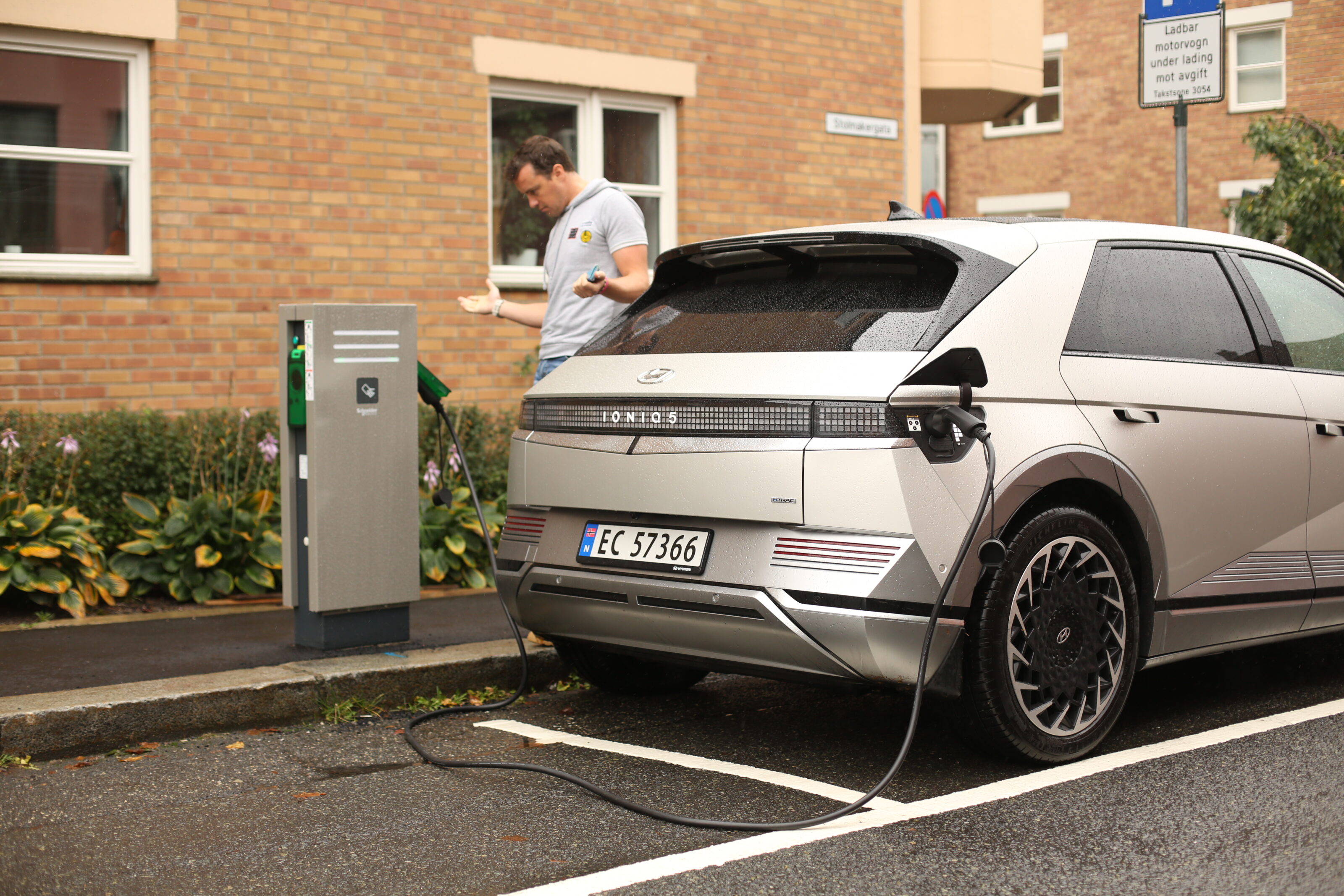
As a sweetener, 100 percent of Norway’s power is renewable so, no matter where an EV gets charged or at what price, there genuinely aren’t any emissions. At this particular ‘energy station’ (they aren’t called petrol stations any more) the Ioniq’s charging speed wasn’t the most staggering thing and, lined up in grids covering a half of the car park were 44 Tesla Superchargers totalling 88 plugs for models of the Californian startup.
Amazing, but public charging isn’t quite perfect yet. Credit card-tap payment is on the way to replace the various confusing accounts and apps currently necessary and, beyond that, plug-and-play will recognise your car and details on connection for a system that’s even better than the traditional petrol bowser.
With more than enough sparks in the cells to complete our journey, we continue on to the mountains overlooking Lillehammer. Even though our 5 is equipped with the smallest battery, it still has enough mumbo to punch hard up the steep roads and I finally get a sample of the taut chassis, beautifully balanced ride and immense grip. It’s difficult to resist the temptation to fully open the inverter and enjoy the weirdly instant surge of acceleration more often.
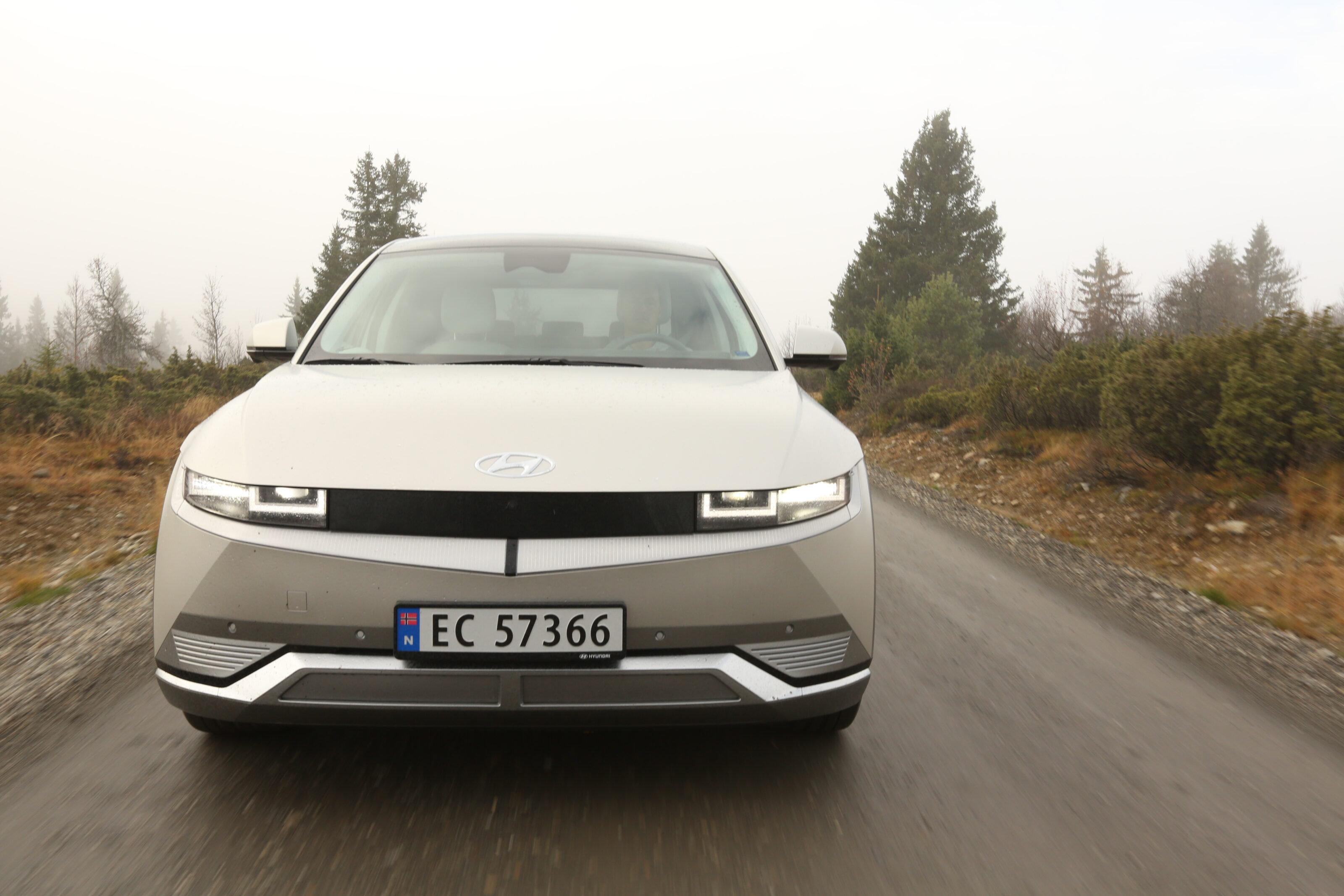
Surprisingly though, over the course of the trip, the car has taken my driving style into account and decided I had more than enough in the ‘tank’ to make it to our destination on a single charge. On arrival to our quintessential traditional grass-roofed cabin there is a second confirmation we had nothing to worry about – a 50kW charger screwed into its black timber.
But this Arcadian vision of Norwegian EVtopia has a black smudge on its green cape. Norway has massive oil and gas reserves, and since the 1960s, the nation has built a sizeable sovereign coffer exporting its resources. Although the country is vastly more wealthy as a result, Norwegian EV Association senior advisor and test manager Ståle Frydenlund explains that it’s a common misconception that Norway pumps oily coins directly into EV slots.
“Some people argue that we spend our oil money subsidising EVs. Wrong,” he says. “The state says ‘we don’t want to tax you for that car’, you are exempt from tax.”
Instead, buyers of internal combustion cars are lumped with enough tax to cover their own polluting car plus the sale of one EV.
“Those who buy the polluting car actually have to pay for those who don’t.”
That said, Norway couldn’t have afforded to be as bold if its pockets weren’t well-lined. Funding broader green transport initiatives with cash from fossil-fuel exports is either grossly hypocritical or a beautifully poetic solution to a problem in every other nation. Regardless of how you feel, ask yourself this question – is it worse than doing nothing? At least Norway decided to act rather than sitting at the top of the world minding its own business and quietly burning through reserves like everyone else.
In the opposite hemisphere, Australia is starting to show some signs of electric life, with $590m committed to incentives in NSW and a little over $100m by Victoria to name the most recent, but there are still far more reasons for ICE car owners to keep their hands in their pockets.
They include recently introduced distance charges for EVs to fund the incentives, relatively low fossil-fuel prices and meagre stamp duty waivers and rebates in some states. Wouldn’t it be better if Australia took a leaf out of Norway’s books and funnelled a little of its massive resources-export cash into electrification?
Norway is a 385,000 square-kilometre monument to the electric vehicle and unequivocal proof that, with appealing cars, government support and sustainable power, other nations can do the same. Of those three critical elements, Australia has only the first. While our nation continues to feed power stations with brown coal, tax EVs while combustion is king, and drag its heels with national infrastructure, Australia will never be able to make the transition as Norway did. But there’s a glimmer of hope – it doesn’t need to.
Heading to the airport on the high-speed, high-efficiency train (yes, it’s electric) offers one last chance to appreciate the Norwegian countryside which today is bathed in pale wintry sunlight. The deciduous leaves are already well into old age turning taxi yellows and McLaren oranges, while their immortal evergreen counterparts contrast the pretty crepuscular transition with rich, darkening green. Adam had told me my timing was impeccable – two weeks earlier and all was still verdant; two weeks later and it would all be over.
But I’m also in Norway at exactly the right time to witness another critical transition. The government has recently started winding back the incentives that kick-started its electric revolution in the 1990s and encouraged so many Norwegians to buy into the electric dream.
It sounds like madness for the one nation that got it just right to be yanking the game-changing measures with which it proved EVs could work. But the tax breaks and ownership perks will phase out in favour of just one big milestone and an even more attractive reason to go electric – price parity.
For the moment, unsubsidised, full-price EVs are expensive but models that cost the same as their petrol and diesel-powered equivalents are on the horizon and their advent renders subsidies and discounts redundant.
Norway’s government has recently started winding back the incentives that kick-started its electric revolution in the 1990s
“We know that at some point the incentives have to be reduced but keep a stable difference to the alternative (petrol and diesel),” says Frydenlund. “We hope that cost parity will arrive in a few years from now and you don’t need policies after that – then it’s up to the consumer.”
If he’s right, Australia and the rest of the world will owe Norway a huge debt of thanks. The nation has been toiling to make electric cars work, pumping vast amounts of cash into technology, networks, infrastructure and refining the EV recipe, and Australia can simply cherry-pick the best bits, bundle them with EVs that cost no more than ICE cars and SUVs on sale today, and sit back and watch the customers flood into showrooms.
Norway has written the Idiot’s Guide to Becoming an EV nation, but will Australia pick it up and read?
How
While the Norwegian government and EV Association certainly deserve credit for the popularity of battery powered cars, 1980s synth-pop band A-ha also played a surprisingly large part in the formative years. After acquiring a converted electric Fiat Panda in 1989, the band used the vehicle around Oslo and defiantly refused to pay any tolls or subsequent fines.
In response, the car was confiscated and sold at auction but, since the market for Swiss-converted Italian hatchbacks registered as diesel-powered motorhomes is relatively small in Norway, the only bidder was A-ha. The band repeated this process numerous times, on each occasion reclaiming their car for the equivalent of about A$32. The government finally caved and made road and ferry transport toll-free for EVs – a ruling that lasted until 2017.
Snapshot
- Bentley profits up by AU$590 million for 2021
- Increase over 2020 by 1845 per cent
- Customised orders were a driver of increased profit
Bentley Motors has released its financial reports for 2021, recording an incredible 1845 per cent increase in operating profits in the last 12 months.
For 2021, Bentley’s recorded operating profit was €389 million (AU$590 million), a rise of €369m (AU$560m) over its 2020 figure of €20m (AU$30.3 million).
This is largely due to a year-on-year sales increase of 31 per cent, Bentley delivering 14,659 cars in 2021 compared to 11,206 in 2020.
The return on sales for the carmaker was a reported 13.7 per cent, with turnover profits also up to €2.84 billion (AU$4.32 billion) in 2021 from €2bn (AU$3.03 billion) in 2020.
Another factor which increased the revenue per vehicle margin in Bentley’s favour for 2021 was the demand for customer personlisation on high-end models.
Bentley says there was a substantial increase in customisation in the Speed, Mulliner and Hybrid models, which lifted the revenue per vehicle total by eight per cent over previous years, aiding the 13.7 per cent bottom line.
“These results were achieved against a continued backdrop of economic uncertainty,” said Adrian Hallmark, Chairman and CEO of Bentley Motors.
“Brand strength has been key to Bentley’s financial performance in 2021, with new models such as Bentayga Hybrid helping to drive profit to a record €389 million,” added Jan-Henrik Lafrentz, member of the board for finance and IT, Bentley Motors.
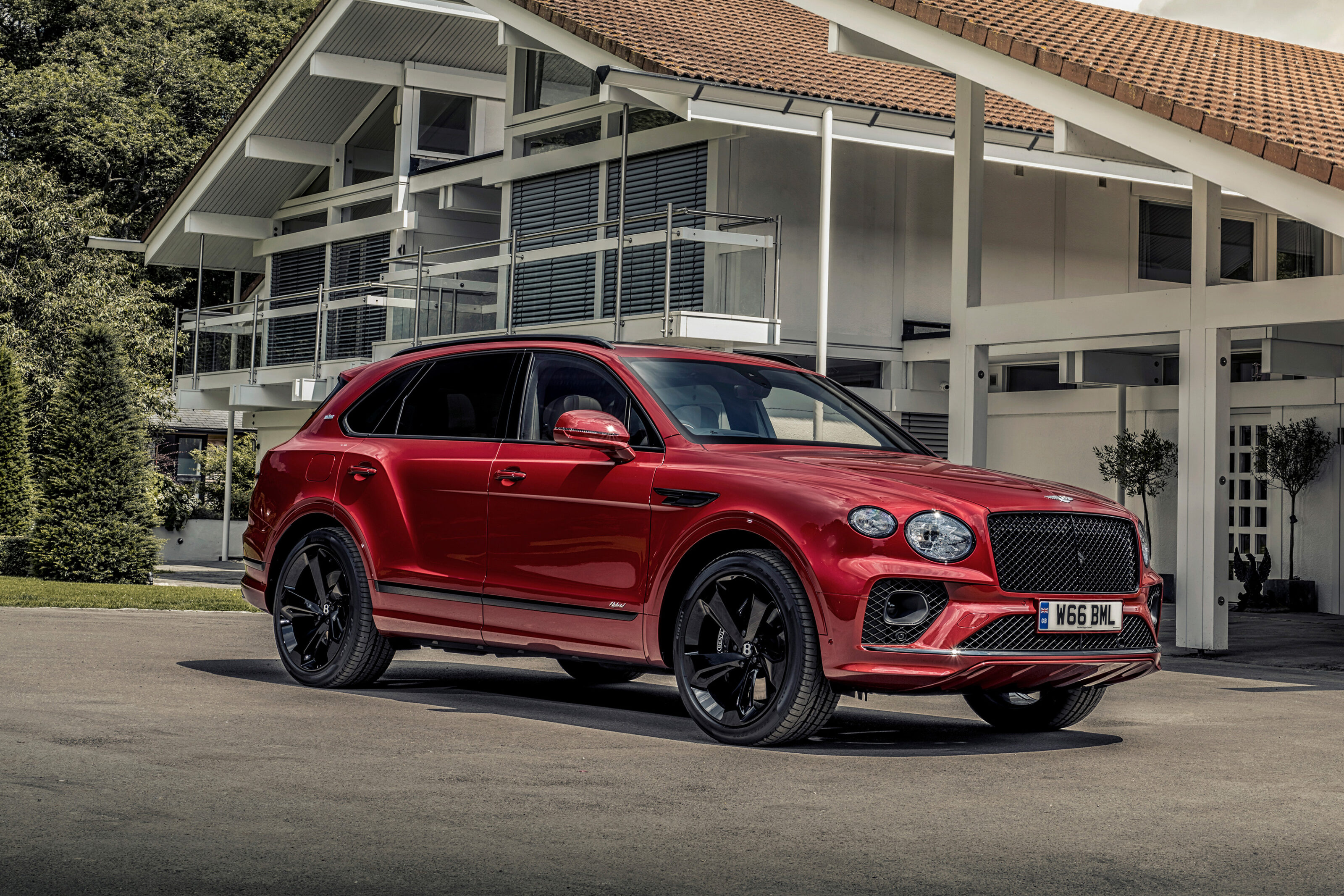
The luxury car marque has already set its sights on further improving sales by going carbon-neutral with its Beyond 100 program, which will see Bentley build a new EV model every year for five years from 2025 as it migrates the whole model range across to EV.
Bentley intends to have a completely carbon-neutral range by 2030, having already invested €3 billion into its Crewe factory in England to aid with sustainable vehicle development of EV and hybrid models.
