
My name’s not Murphy and it sounds nothing like Skaife. But, as friends and family and anyone with a functioning ear will hear me brag for years to come, the honest to Jesus H Christ truth is this: I led the 2003 V8 Supercar Bathurst 1000.
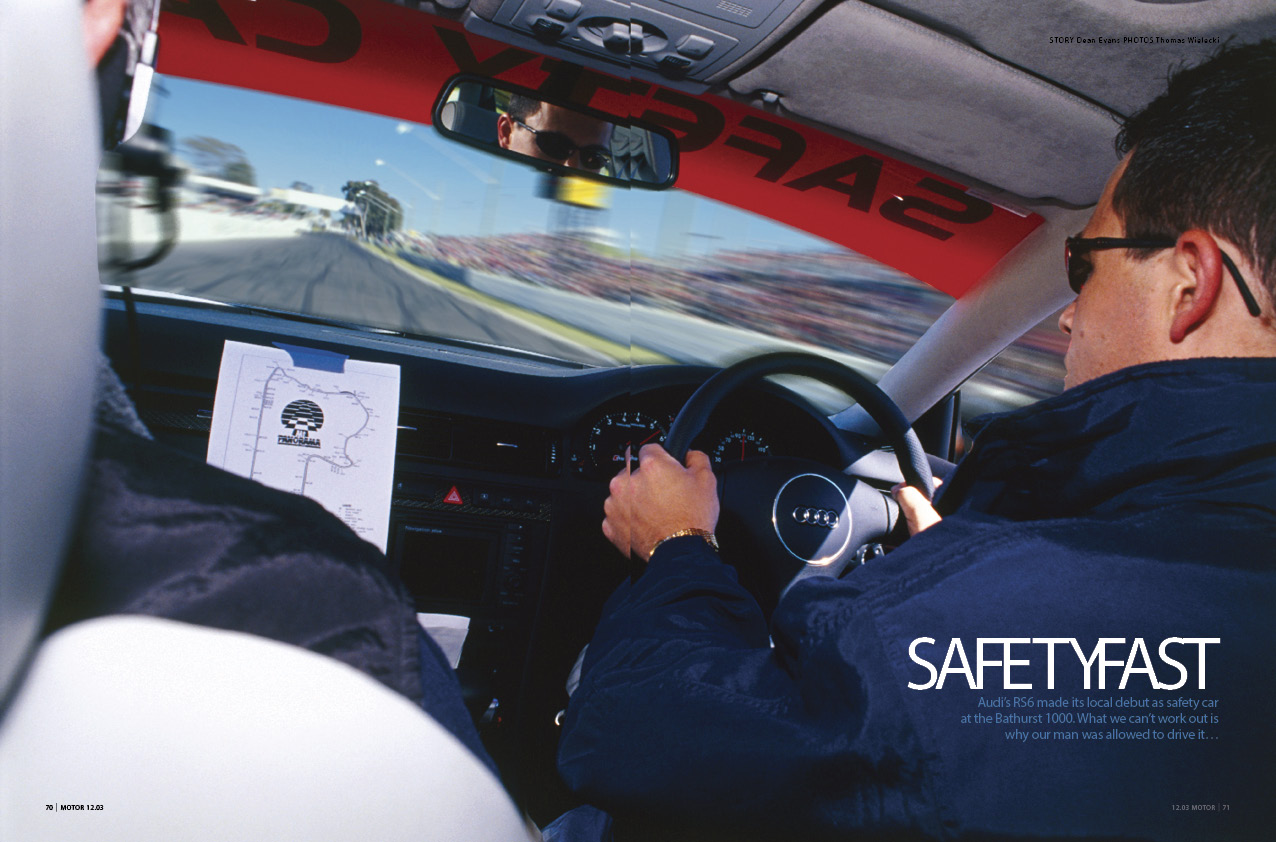
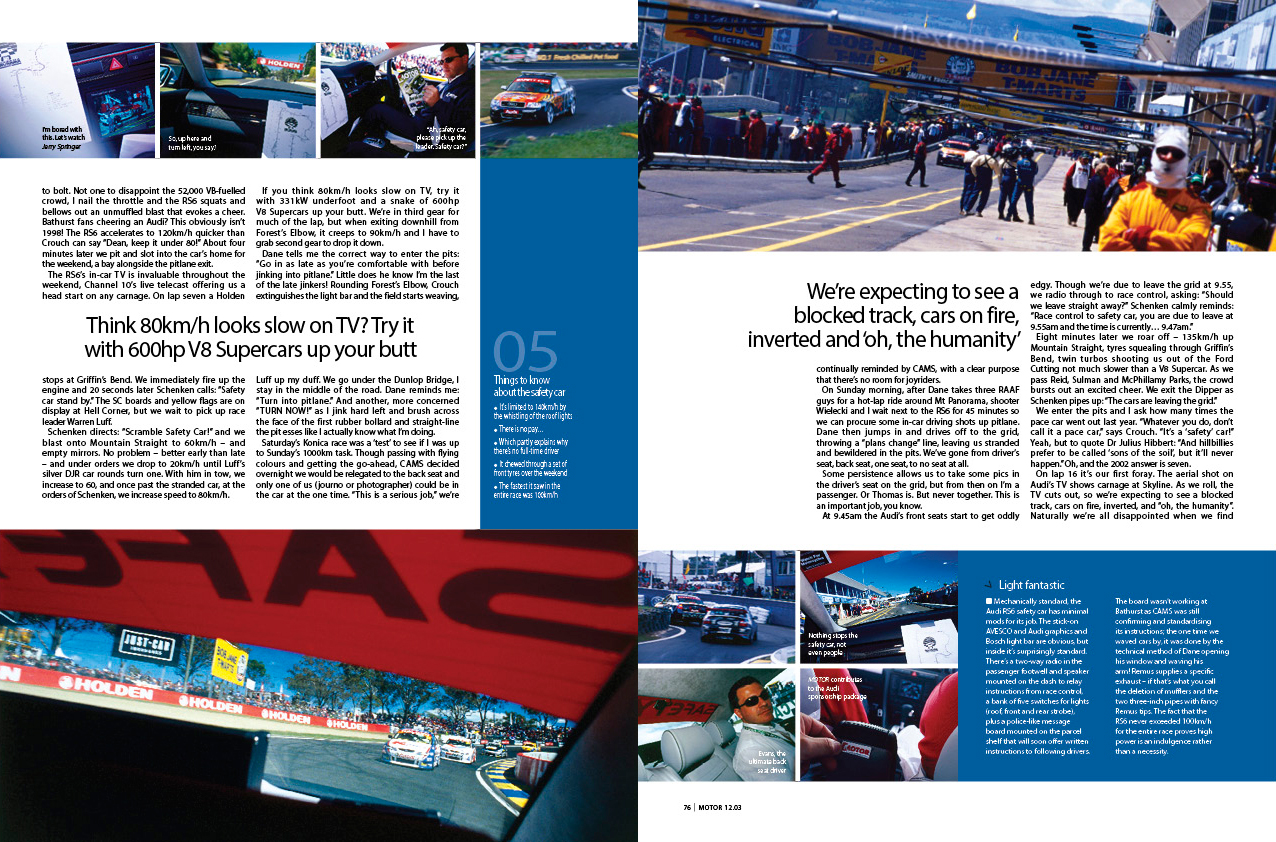
Yep, out in front! For 18 laps, I was the leader. No one could get past me, despite their constant weaving. It was a supreme display of driving ability and talent, maintaining pace and lap speed that many could match, but no one could better – or that’s how I tell it. Did you see me on TV? Of course you did. I was in the official AVESCO safety car: the rocketship Audi RS6.
The plan was simple: a day in the life of the safety car to see what this lark is all about. Oh, did we mention we wanted to drive it? Yes, that little request was met with some ahhs and errs by CAMS head honcho Tim Schenken, but MOTOR is never one to take a back seat. So we didn’t. Initially.
But first we should deal with the deal. If the V8 Supercar series is a two-horse race, what is the Four-Ring Circus doing out in front?
Officially it’s Audi’s platform to showcase its performance models to the target market, specifically the V8/Bathurst viewer rather than attendee. But the deeper answer, which will come as no surprise to anyone familiar with the financial success of AVESCO, is money. Obviously Audi and AVESCO are tight lipped on the details, but rumours suggest the transaction consisted of around $250,000 cash, plus a few Audi loan cars.
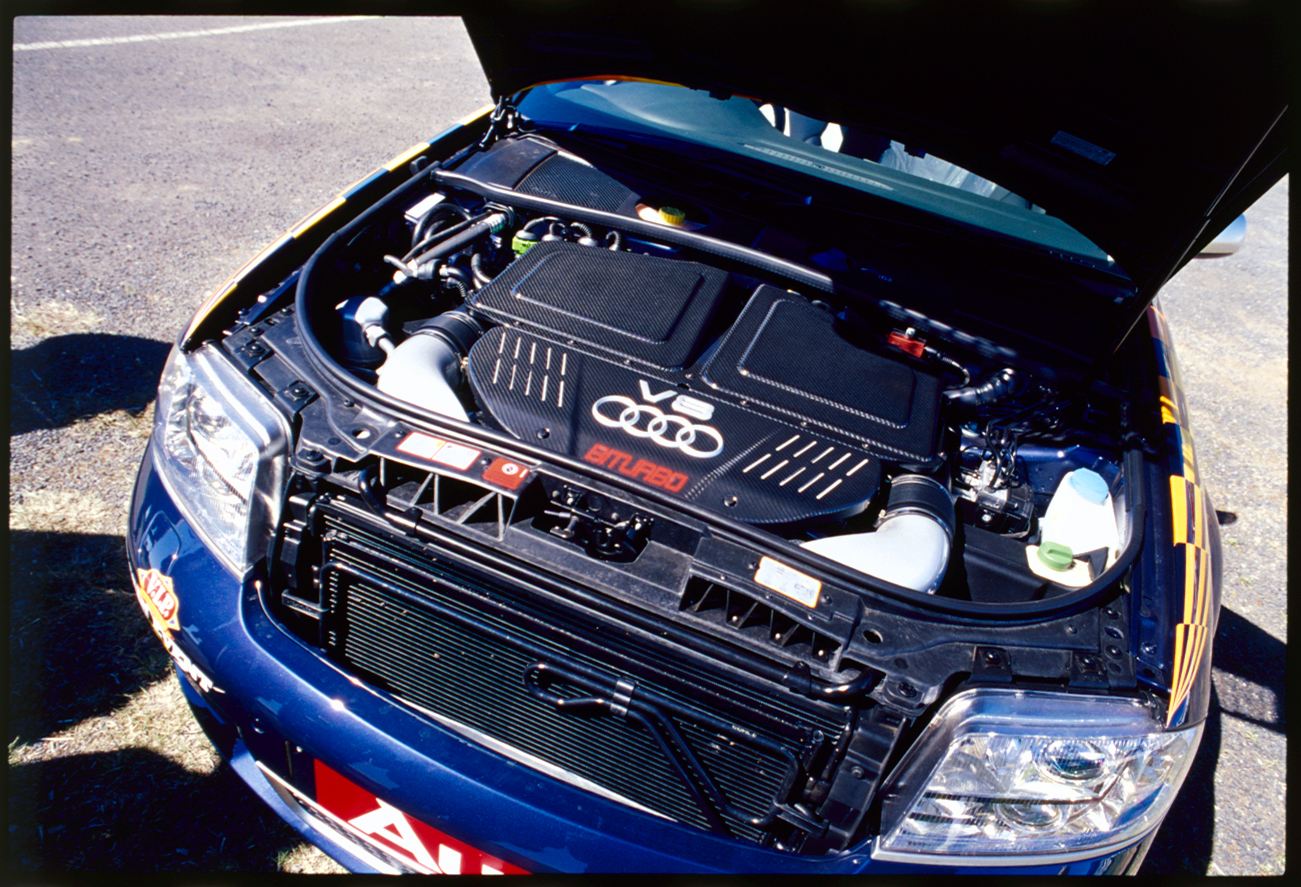
The RS6’s credibility card is its V8 exhaust note, so throbbing and thunderous that birds drop from the sky. A Remus cat-back, three-inch twin-tip exhaust system is just a lahdee-dah way of saying drain-pipe. All else is mechanically stock, which is a bit like saying Arnie is fit: twin-turbo 4.2-litre V8, DOHC, 40 valves, 331kW, 560Nm. Son of a bitch!
The first taste I get is Saturday’s 25-lap Konica V8 race. Yep, actually driving it! CAMS-appointed regular safety car driver Peter Dane is behind me and CAMS safety car observer Bill Crouch is riding shotgun. We’re all in civvies, no helmets, and while we have radios for two frequencies, it’s the voice of Tim Schenken in the race control tower that we’re guided by. This is, literally, a radio control car.
On the grid in front of 22 V8 Supercars, the five-minute board hangs from the start tower, our signal to bolt. Not one to disappoint the 52,000 VB-fuelled crowd, I nail the throttle and the RS6 squats and bellows out an unmuffled blast that evokes a cheer. Bathurst fans cheering an Audi? This obviously isn’t 1998! The RS6 accelerates to 120km/h quicker than Crouch can say “Dean, keep it under 80!” About four minutes later we pit and slot into the car’s home for the weekend, a bay alongside the pitlane exit.
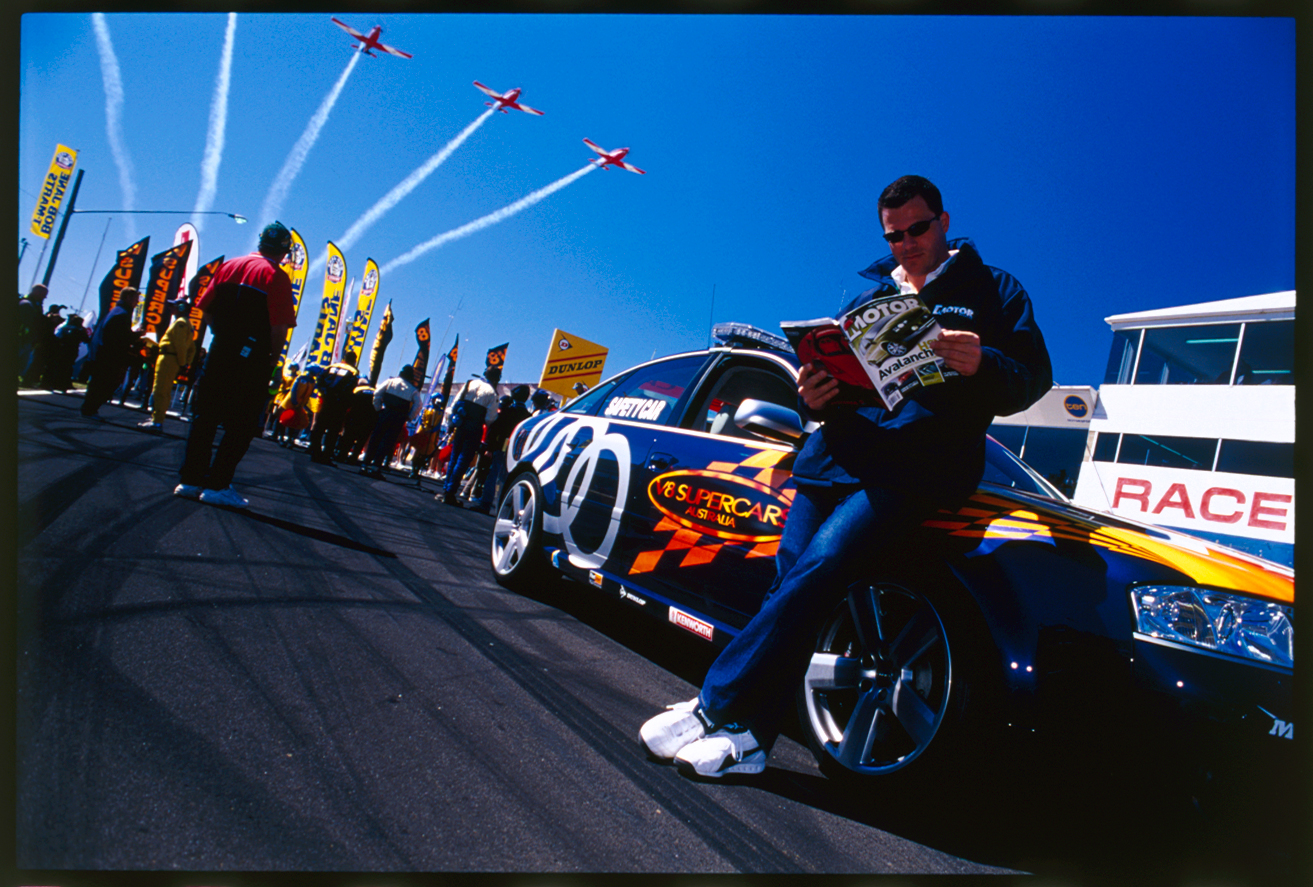
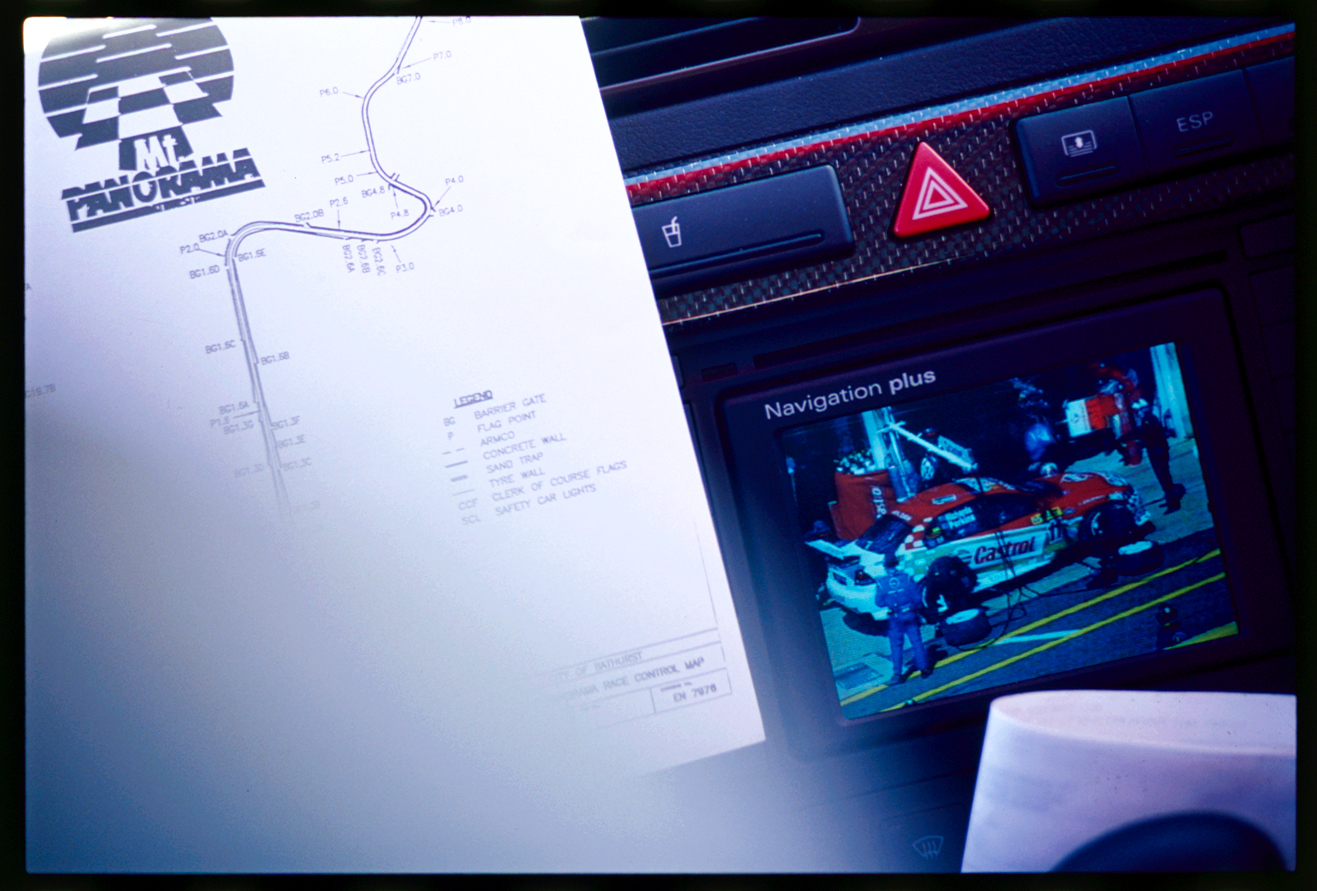
The RS6’s in-car TV is invaluable throughout the weekend, Channel 10’s live telecast offering us a head start on any carnage. On lap seven a Holden stops at Griffin’s Bend. We immediately fire up the engine and 20 seconds later Schenken calls: “Safety car stand by.” The SC boards and yellow flags are on display at Hell Corner, but we wait to pick up race leader Warren Luff.
Schenken directs: “Scramble Safety Car!” and we blast onto Mountain Straight to 60km/h – and empty mirrors. No problem – better early than late – and under orders we drop to 20km/h until Luff’s silver DJR car rounds turn one. With him in tow, we increase to 60, and once past the stranded car, at the orders of Schenken, we increase speed to 80km/h.
If you think 80km/h looks slow on TV, try it with 331kW underfoot and a snake of 600hp V8 Supercars up your butt. We’re in third gear for much of the lap, but when exiting downhill from Forest’s Elbow, it creeps to 90km/h and I have to grab second gear to drop it down.
Dane tells me the correct way to enter the pits: “Go in as late as you’re comfortable with before jinking into pitlane.” Little does he know I’m the last of the late jinkers! Rounding Forest’s Elbow, Crouch extinguishes the light bar and the field starts weaving, Luff up my duff. We go under the Dunlop Bridge, I stay in the middle of the road. Dane reminds me: “Turn into pitlane.” And another, more concerned “TURN NOW!” as I jink hard left and brush across the face of the first rubber bollard and straight-line the pit esses like I actually know what I’m doing.
Saturday’s Konica race was a ‘test’ to see if I was up to Sunday’s 1000km task. Though passing with flying colours and getting the go-ahead, CAMS decided overnight we would be relegated to the back seat and only one of us (journo or photographer) could be in the car at the one time. “This is a serious job,” we’re continually reminded by CAMS, with a clear purpose that there’s no room for joyriders.
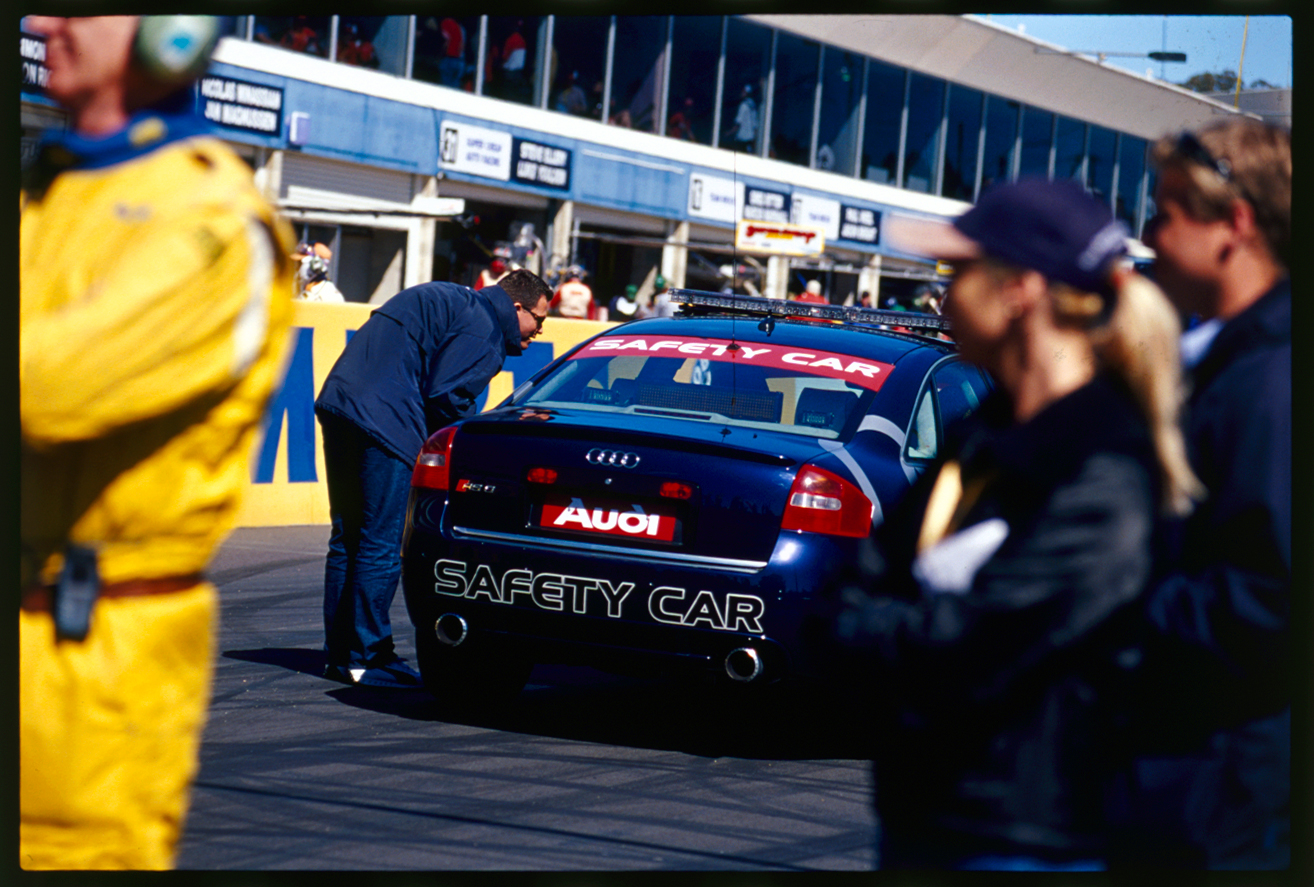
On Sunday morning, after Dane takes three RAAF guys for a hot-lap ride around Mt Panorama, shooter Wielecki and I wait next to the RS6 for 45 minutes so we can procure some in-car driving shots up pitlane. Dane then jumps in and drives off to the grid, throwing a “plans change” line, leaving us stranded and bewildered in the pits. We’ve gone from driver’s seat, back seat, one seat, to no seat at all.
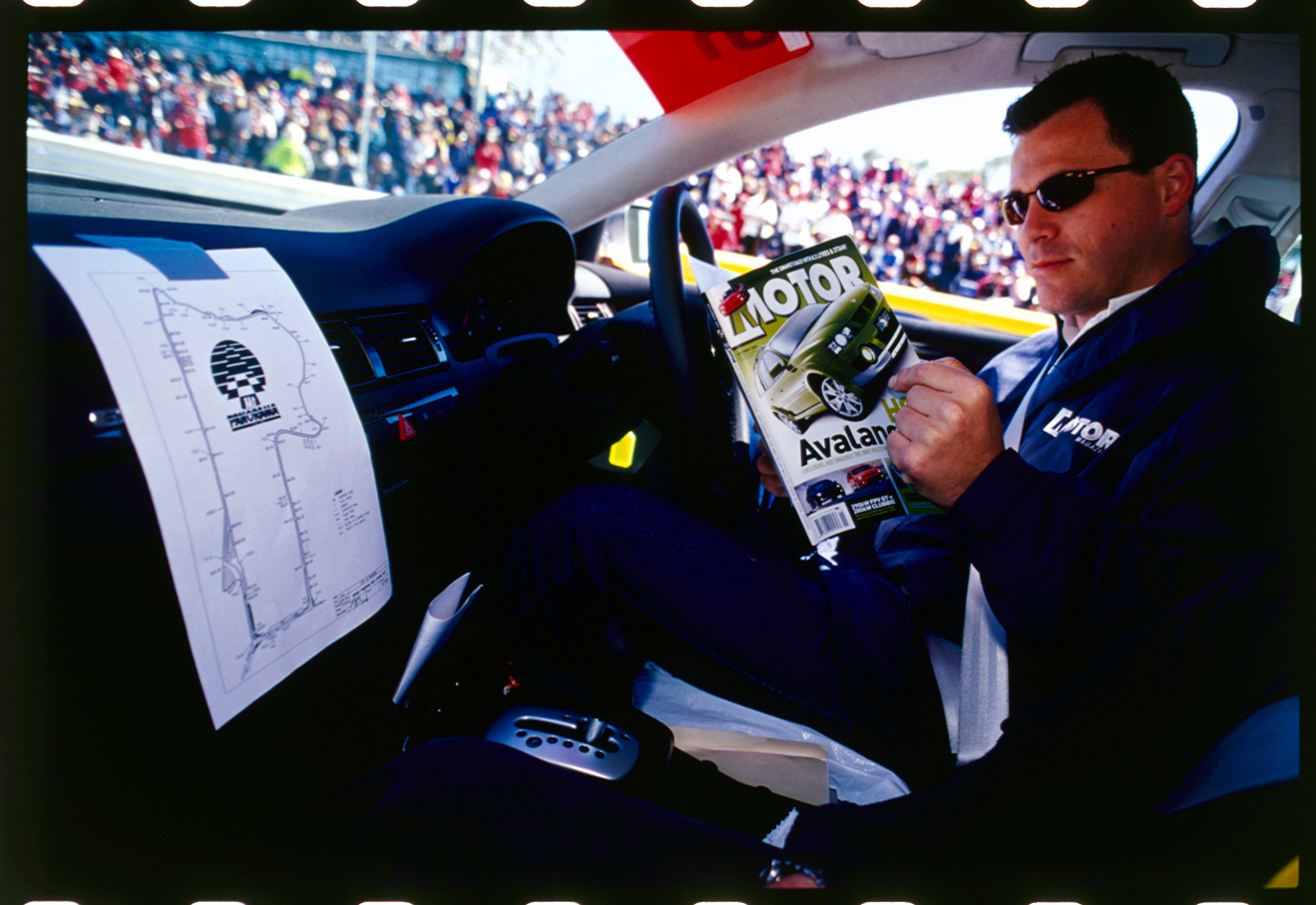
Some persistence allows us to take some pics in the driver’s seat on the grid, but from then on I’m a passenger. Or Thomas is. But never together. This is an important job, you know.
At 9.45am the Audi’s front seats start to get oddly edgy. Though we’re due to leave the grid at 9.55, we radio through to race control, asking: “Should we leave straight away?”
Schenken calmly reminds: “Race control to safety car, you are due to leave at 9.55am and the time is currently… 9.47am.”
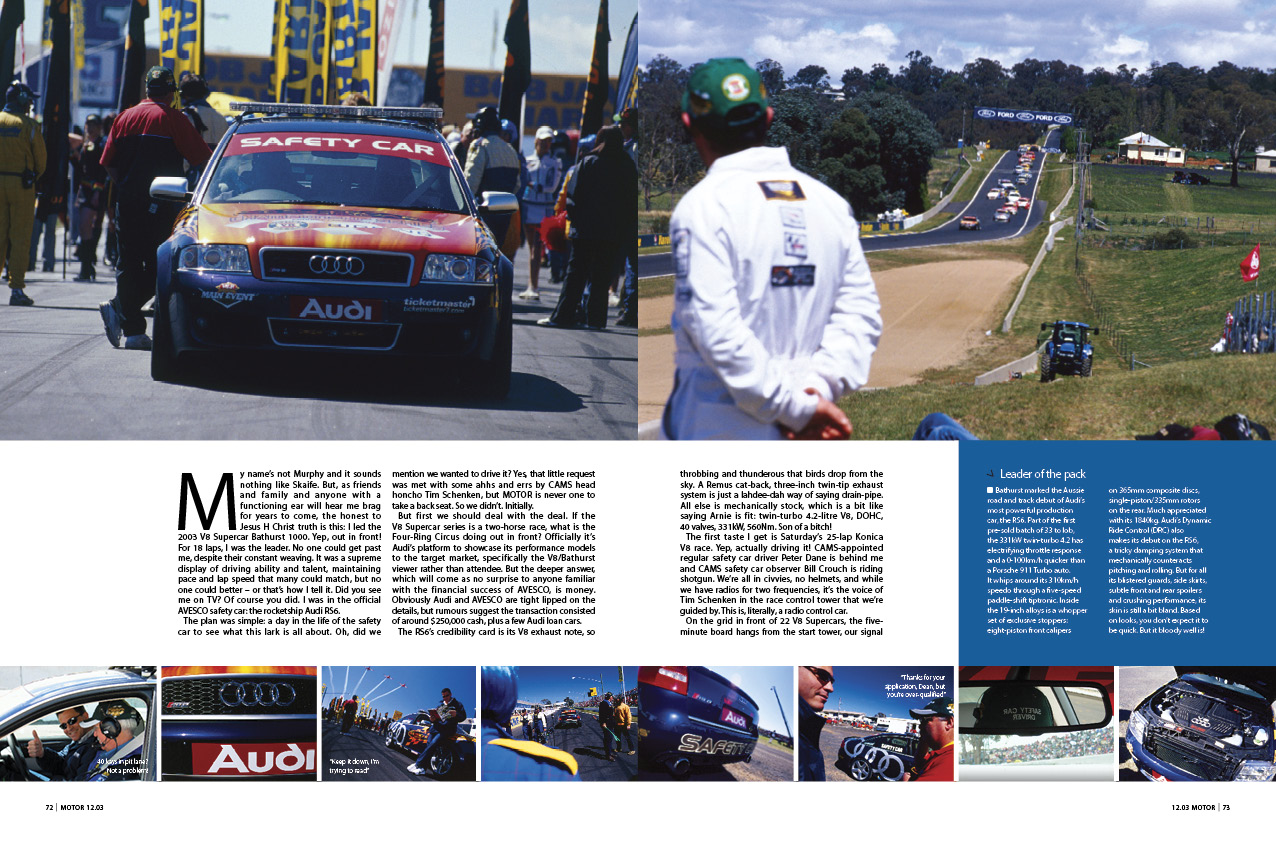
Eight minutes later we roar off – 135km/h up Mountain Straight, tyres squealing through Griffin’s Bend, twin turbos shooting us out of the Ford Cutting not much slower than a V8 Supercar. As we pass Reid, Sulman and McPhillamy Parks, the crowd bursts out an excited cheer. We exit the Dipper as Schenken pipes up: “The cars are leaving the grid.”
We enter the pits and I ask how many times the pace car went out last year. “Whatever you do, don’t call it a pace car,” says Crouch. “It’s a ‘safety’ car!” Yeah, but to quote Dr Julius Hibbert: “And hillbillies prefer to be called ‘sons of the soil’, but it’ll never happen.” Oh, and the 2002 answer is seven.
On lap 16 it’s our first foray. The aerial shot on Audi’s TV shows carnage at Skyline. As we roll, the TV cuts out, so we’re expecting to see a blocked track, cars on fire, inverted, and “oh, the humanity”. Naturally we’re all disappointed when we find nothing! A few skids marks, but nothing. Damn those professional race drivers, sorting themselves out.
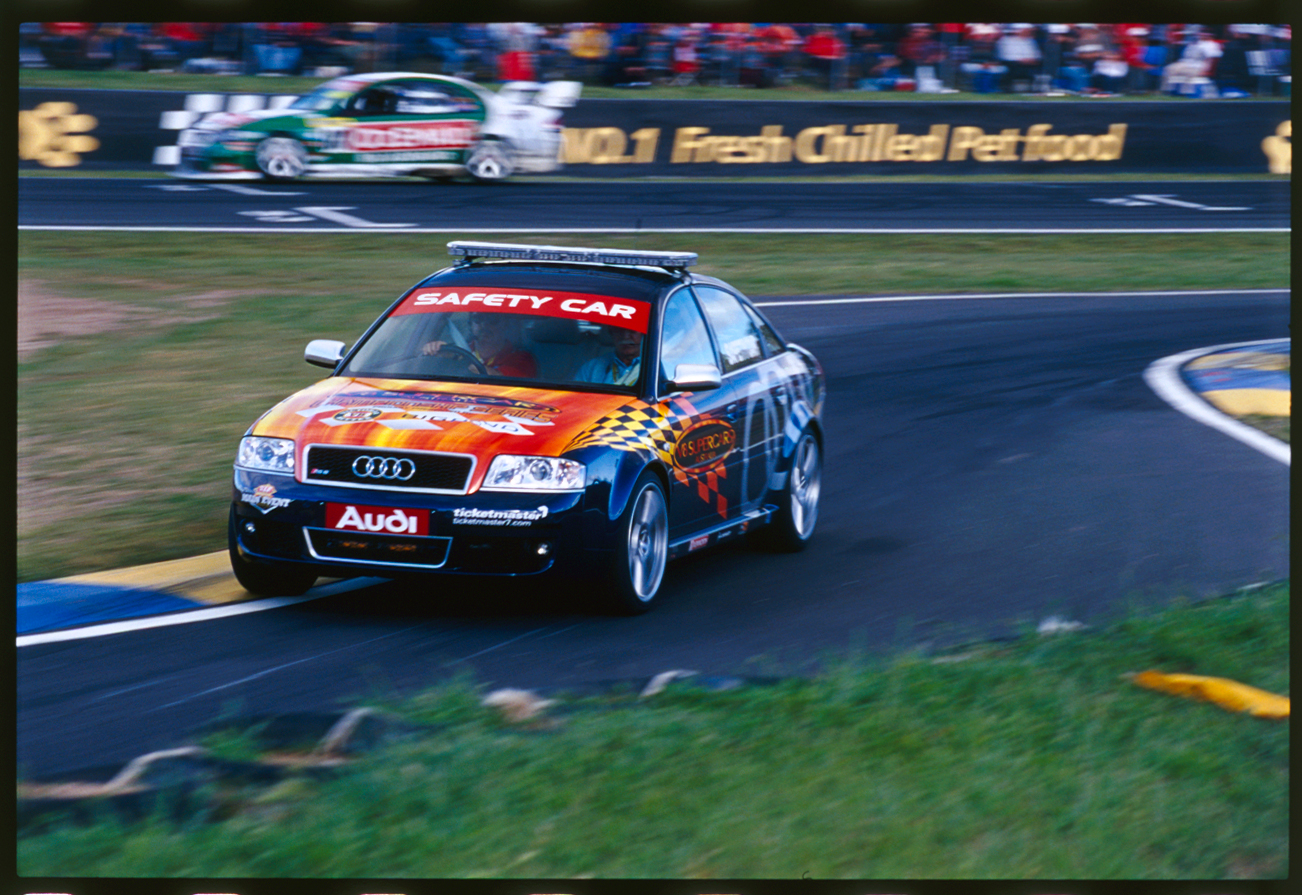
We revisit the track four more times on laps 31, 44, 65 and 75. More often it’s an out lap, a couple of rolling laps to allow the cars and track to be cleared and an in lap. On the whole it’s relatively easy work for the driver because the hot seat is really the passenger’s; it’s he who relays the information to and from race control and he who operates the lights. The driver just drives, and offers feedback on track conditions and grip. We’re even allowed the discretion of a sneaky, momentary 50km/h in pitlane, despite its 40km/h speed limit. Suppose a drive-through penalty for the safety car would be a sight.
As Murphy rolls over lap 79, we park in our bay and sit. And wait. And wait. Almost two hours pass and I start barracking for a crash, a rock, a crazed kilt-wearing invader, anything to relieve the boredom. Worse still, that lunchtime bottle of water is pressurising my bladder.
It’s lap 149, we’ve been dormant for almost half the race. I’ve procrastinated for the last 30 minutes, so I bolt out the door, yelling “pee break”, and start a 200-metre zig-zag through the punters. Exiting the loo, I hear a cheer from turn one. Bowe has landed in the sand trap at Hell Corner. Typical. I sprint and hear the Audi’s gruff idle as it comes into view. I get within three steps and Dane belts off. I’ve missed the bus.
Right then, as if on cue, Taylor J, watching on TV at home, sends me an SMS: “You could still win this!” Not on foot I can’t.
So while the RS6 does two loops of an empty track, Bowe’s extracted and the safety car pits. I jump back in to watch the balance on TV as Murphy crosses the line for the 161st time and takes the chequer.
Our job is to follow the last car. We do a lap primarily to pick up the bad-driver reports from the flag marshals, but also (1) dodge the oncoming tow trucks and (2) try not to mow down any errant, tanked-up fans staggering onto the track, and enjoy the romantic allure of a hundred lounges on fire.
It’s a stop/start lap and the final, menial task for the safety car amid the drunken orders of (and I quote) “Light it up you shitboxes”. Thankfully the last comment I hear is while exiting Caltex Chase: “Audi rules.”
For 18 laps, it sure did.
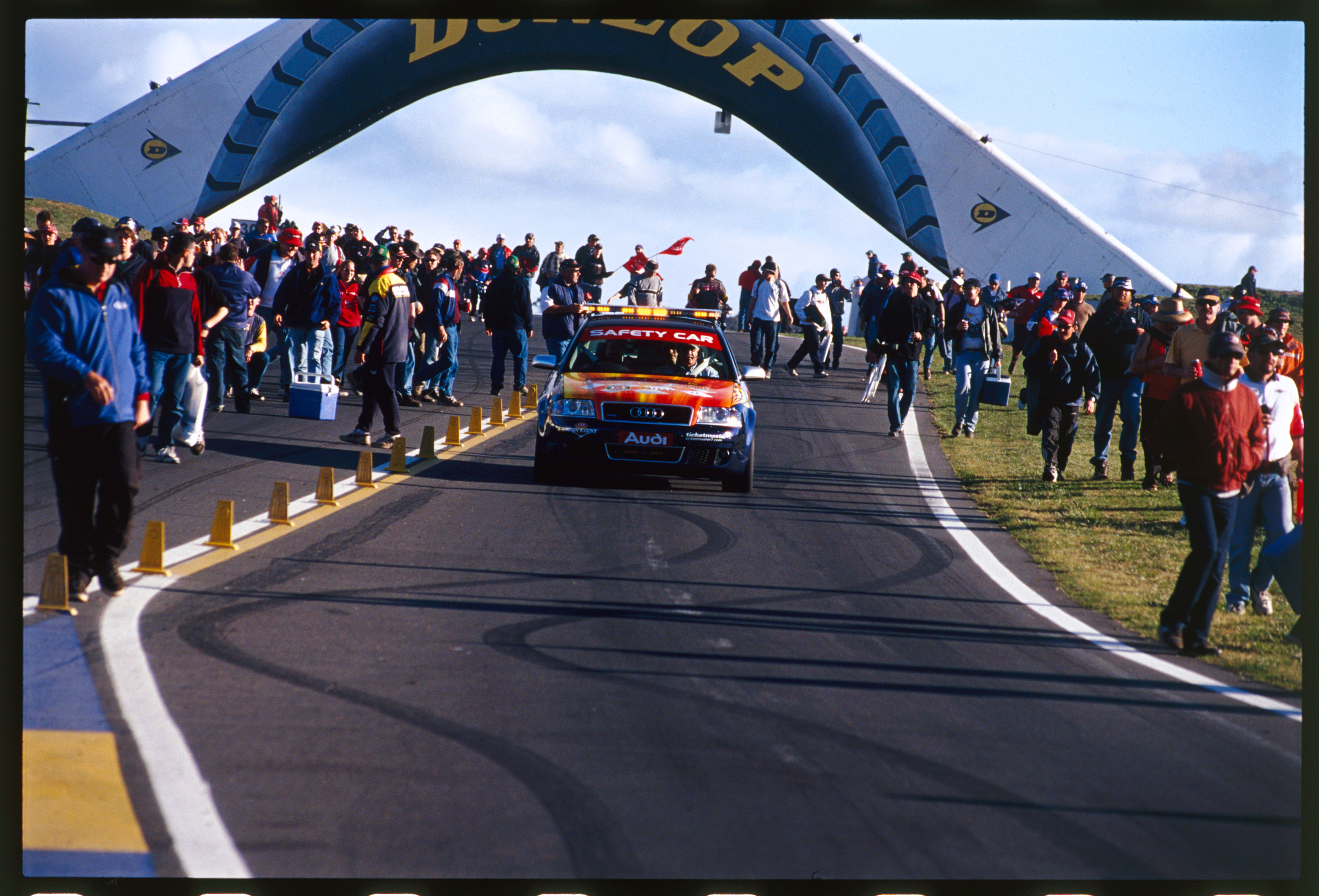
Leader of the Pack
Bathurst marked the Aussie road and track debut of Audi’s most powerful production car, the RS6. Part of the first pre-sold batch of 33 to lob, the 331kW twin-turbo 4.2 has electrifying throttle response and a 0-100km/h quicker than a Porsche 911 Turbo auto. It whips around its 310km/h speedo through a five-speed paddle-shift tiptronic.
Inside the 19-inch alloys is a whopper set of exclusive stoppers: eight-piston front calipers on 365mm composite discs, single-piston/335mm rotors on the rear. Much appreciated with its 1840kg. Audi’s Dynamic Ride Control (DRC) also makes its debut on the RS6, a tricky damping system that mechanically counteracts pitching and rolling. But for all its blistered guards, side skirts, subtle front and rear spoilers and crushing performance, its skin is still a bit bland. Based on looks, you don’t expect it to be quick. But it bloody well is!
Light fantastic
Mechanically standard, the Audi RS6 safety car has minimal mods for its job. The stick-on AVESCO and Audi graphics and Bosch light bar are obvious, but inside it’s surprisingly standard.
There’s a two-way radio in the passenger footwell and speaker mounted on the dash to relay instructions from race control, a bank of five switches for lights (roof, front and rear strobe), plus a police-like message board mounted on the parcel shelf that will soon offer written instructions to following drivers. The board wasn’t working at Bathurst as CAMS was still confirming and standardising its instructions; the one time we waved cars by, it was done by the technical method of Dane opening his window and waving his arm!
Remus supplies a specific exhaust – if that’s what you call the deletion of mufflers and the two three-inch pipes with fancy Remus tips. The fact that the RS6 never exceeded 100km/h for the entire race proves high power is an indulgence rather than a necessity.
Five things to know about the Bathurst safety car
- It’s limited to 140km/h by the whistling of the roof lights
- There is no pay…
- Which partly explains why there’s no full-time driver
- It chewed through a set of front tyres over the weekend
- The fastest it saw the entire race was 100km/h
Key Points
- Atkinson owned the Aston between 1998 and 2016
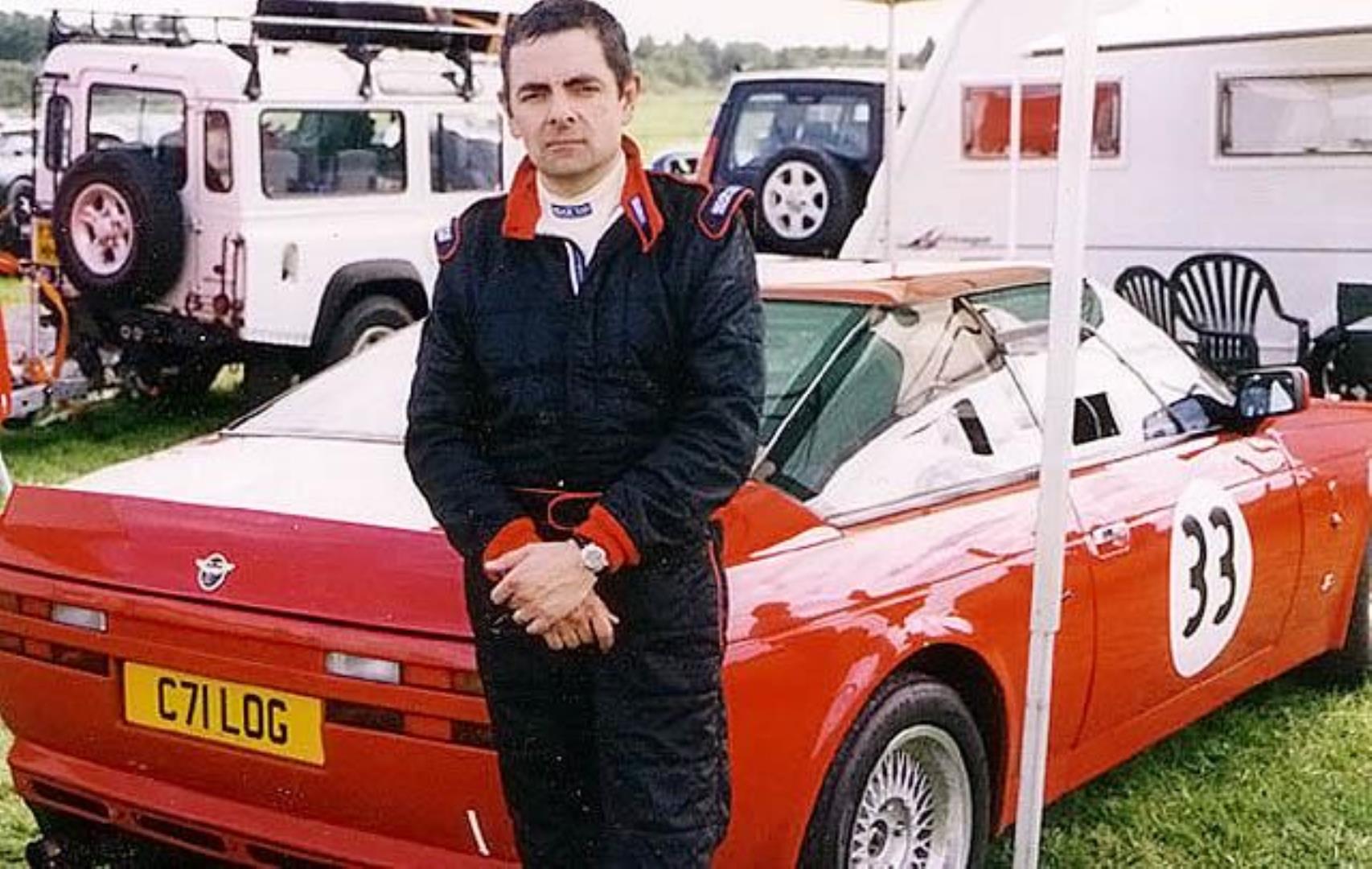
- Formerly raced and crashed by the comedian
- Only V8 Zagato to be modified by Aston Martin Works Service to this spec
A unique Aston Martin with a special backstory is up for sale in the United Kingdom, having once been owned by actor and comedian Rowan Atkinson.
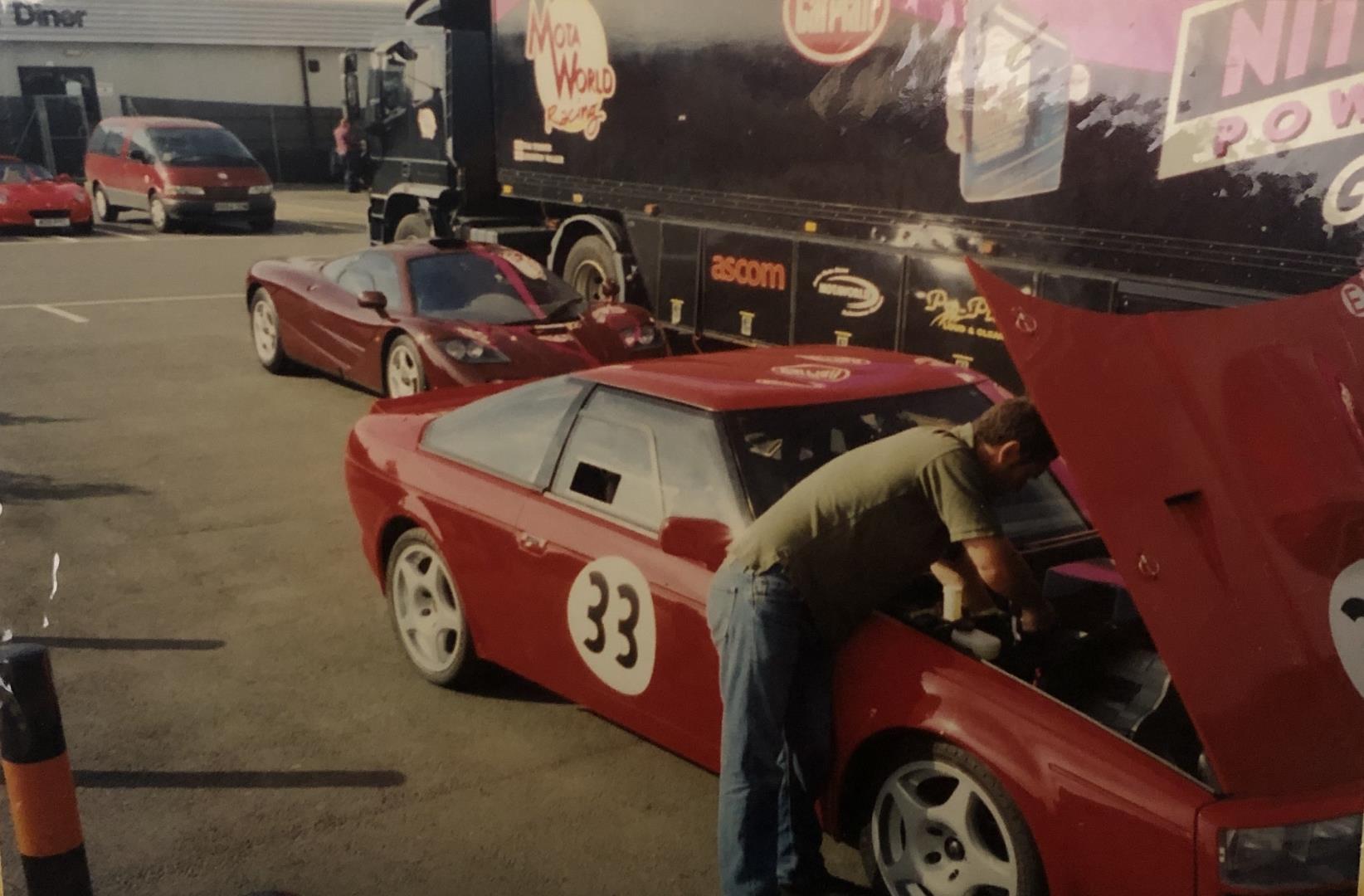
Built in 1986, the V8 Vantage Zagato Coupe was one of just 50 examples built, finished in gladiator red with a tan hide interior, going through two owners before ending up in the garage of the Mr Bean and Blackadder star in 1998.
Never one to do things by halves, Atkinson commissioned Aston Martin Works Service to develop his Vantage Zagato to race in the Aston Martin Owners Club’s (AMOC) C2 Class for mildly modified vehicles, becoming the only V8 Zagato to have these mods done.
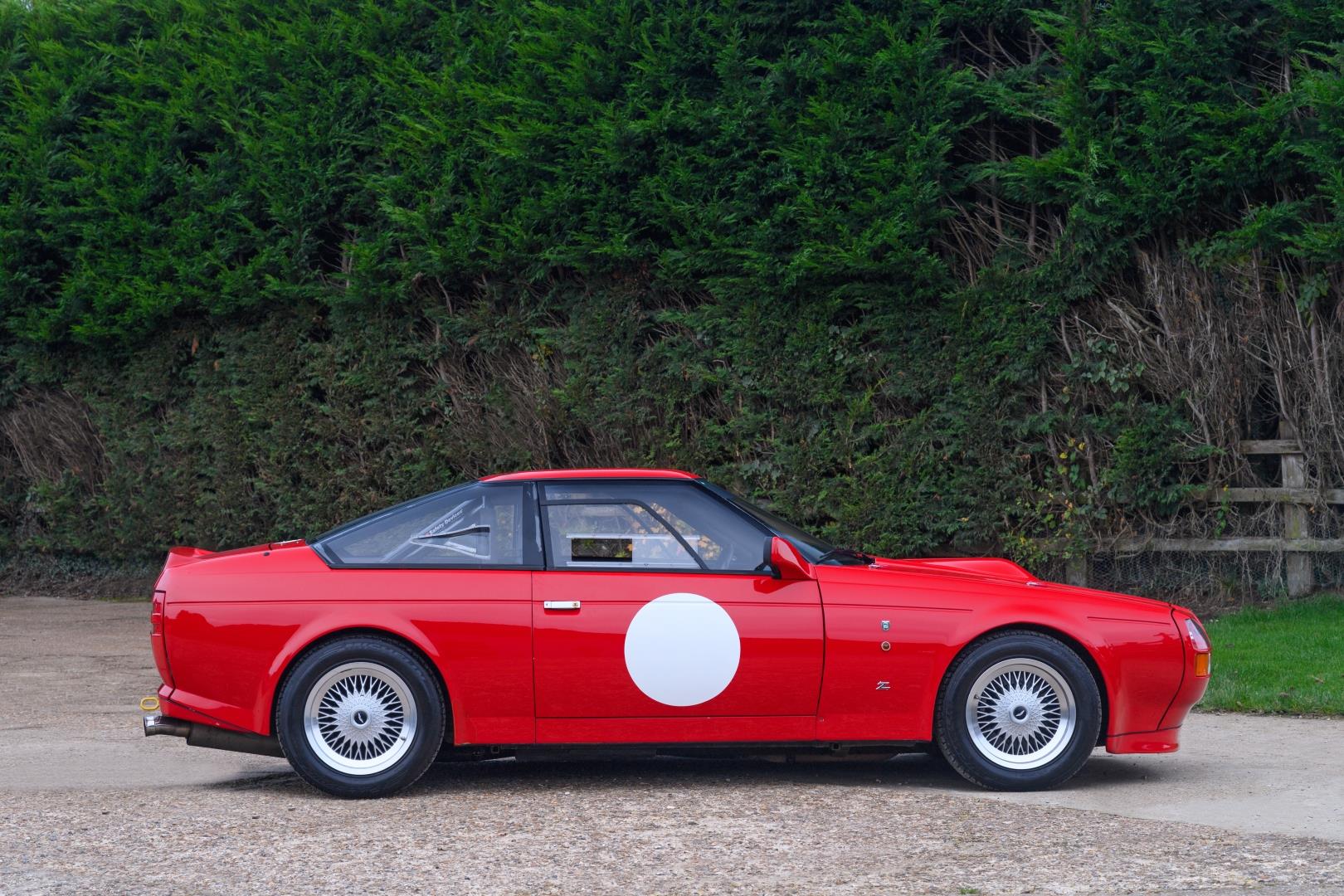
Some of the tweaks included reducing its kerb weight to 1485 kilograms from a hefty 1600kg while the ‘X Pack’ V8 engine was fettled to develop 360kW @ 7000rpm and 558Nm @ 5500rpm, all controlled by Koni shocks, Eibach springs and AP Racing brakes.
A BBC article from 2001 confirms comments online attributing Atkinson to having a minor accident at the Croft Racing Circuit during an AMOC meeting aboard the Zagato, just two years after the first of his two highly-publicised accidents in a McLaren F1.
After Atkinson sold the car in 2016, Aston Martin specialists Nicholas Mee and Co., started to bring it back to road-spec, refitting a road clutch, interior and air conditioning. The lightweight body panels and stonking engine, however, remain.
Previously sold for £253,500 (AU$469,106), it’s expected the Zagato could fetch more now that it’s in more road-friendly trim and the global used car market is following a seemingly perpetual upward trajectory.
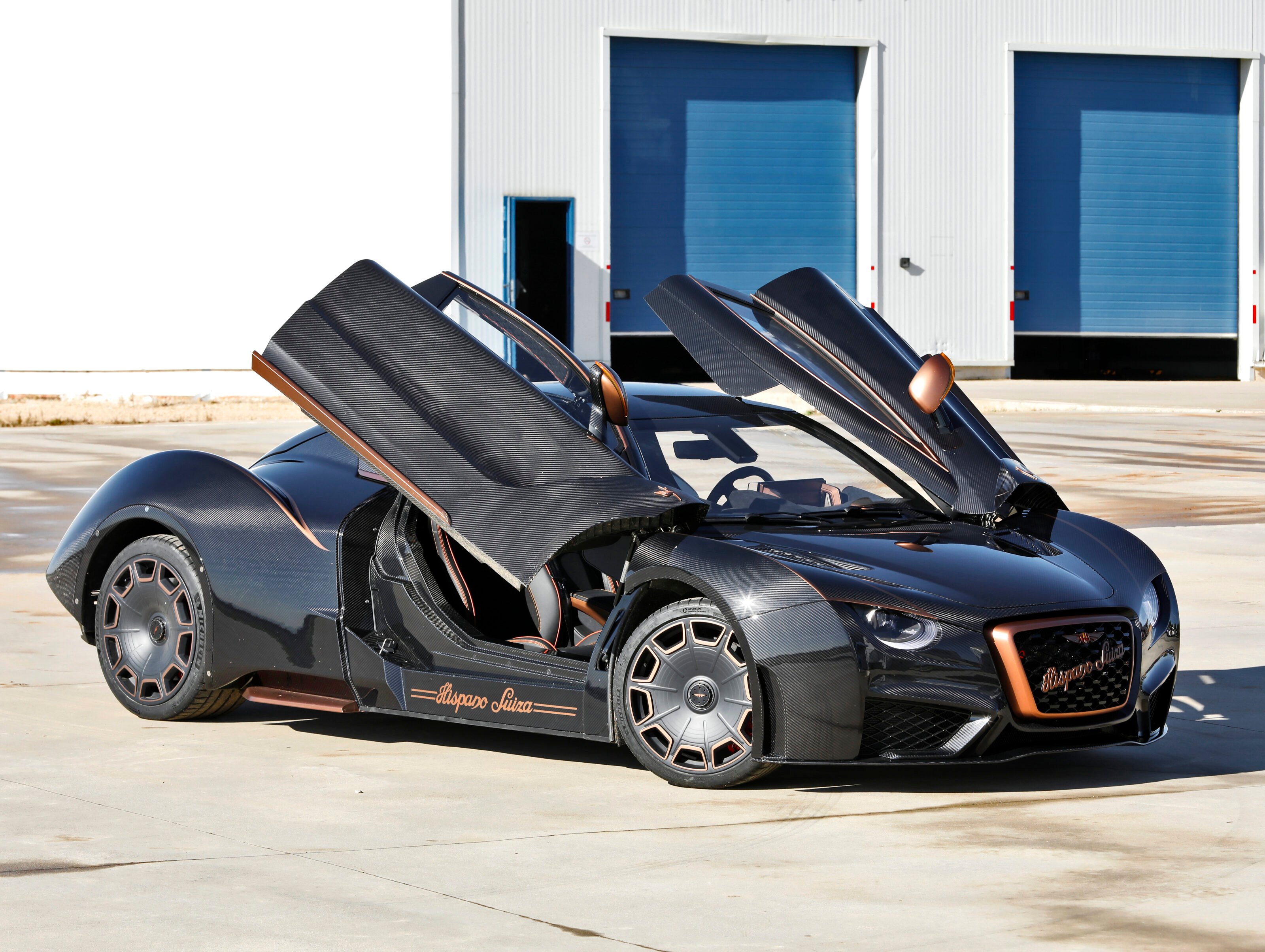
Four journalists, one car, sixty minutes’ total track time, four laps each. A Tesla Model S as pace car with the former F1 driver Luis Pérez Sala at the wheel, I am last to take the fat carbonfibre steering wheel on the closed-off Barcelona GP circuit. The Hispano Suiza minders look like catwalk pros in their chic corporate livery but their faces reflect a mix of concern and worry. After all, the first candidate spun the car in turn eight of lap one, his colleague lost it two bends later.
Near crashes are no big deal for volume manufacturers but the black coupé is this brand’s only (almost) complete car and there is a large amount of money as well as a still-fragile reputation at stake. Perhaps the one prospective customer who asked for an all-wheel-drive conversion does have a point? Perhaps channeling between 760kW and 831kW generated by two twin e-motors exclusively to the rear wheels wasn’t such a clever idea after all?
My turn. The tension mounts, in the car and in the pit lane. Sitting next to me is the professional racing and test driver Paolo Sousa. “Bear in mind that ESP is not operational,” is the young man’s somewhat disconcerting opening gambit. “The throttle mapping and the brake regeneration algorithm are also still a work in progress.” Never mind. We’re ready to go, and although it just started drizzling, Paolo impersonates Mr Cool. The car feels fine, too – no airs or graces whatsoever.
It is quiet, stable, responsive and quick, but certainly not 750kW-plus quick. More like 450kW, actually, and according to the degradation readout, the 80kWh lithium-ion battery has already taken the first plunge. Doesn’t matter. We still have easily enough torque on tap to chase the Tesla into one wriggling braking manoeuvre after the other. At the end of the long start-finish straight, though, the speedometer reads a sobering 215km/h, that’s over 50km/h down on a petrol-fed sportscar we drove here in May. Strange.
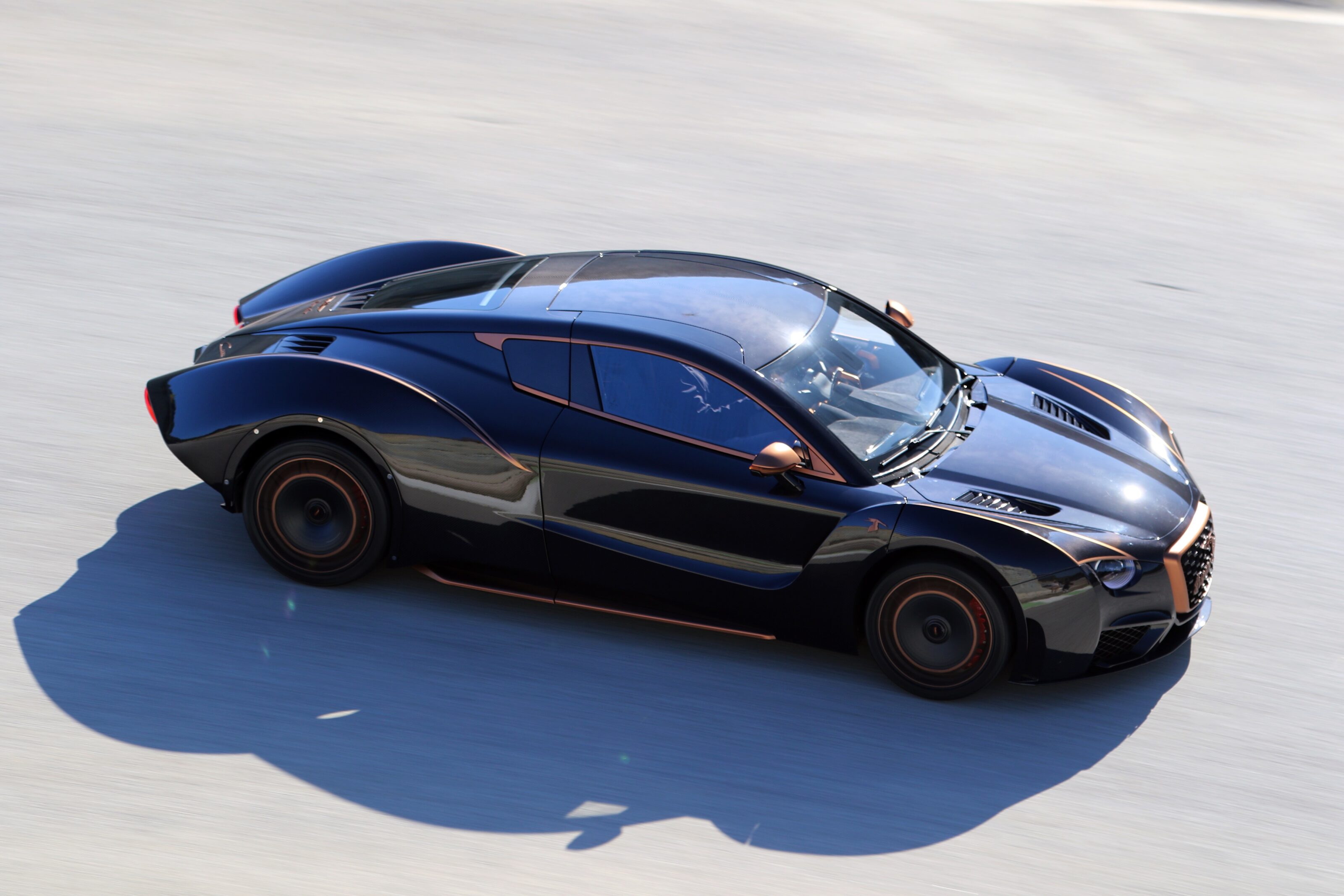
Despite the below-par drag coefficient of 0.325, Hispano-Suiza claims a top speed of 290km/h, yet today is obviously not the day to put this number to the test. Although everyone is coy about it, the output for the press drive was apparently limited to a chaste 507kW, which is plenty of urge for a novice yet not near enough to form a profound opinion of what this machine is really capable of.
Most of the outlap is thus spent in acquaintance mode to put the car through as many different manoeuvres as possible before giving it stick. The first impressions are encouraging, and I’m happy to extend the star rating by one asterik solely because of the generous cabin dimensions, excellent seats, unambiguous controls, decent visibility and the panoramic camera-operated rear-view mirror.
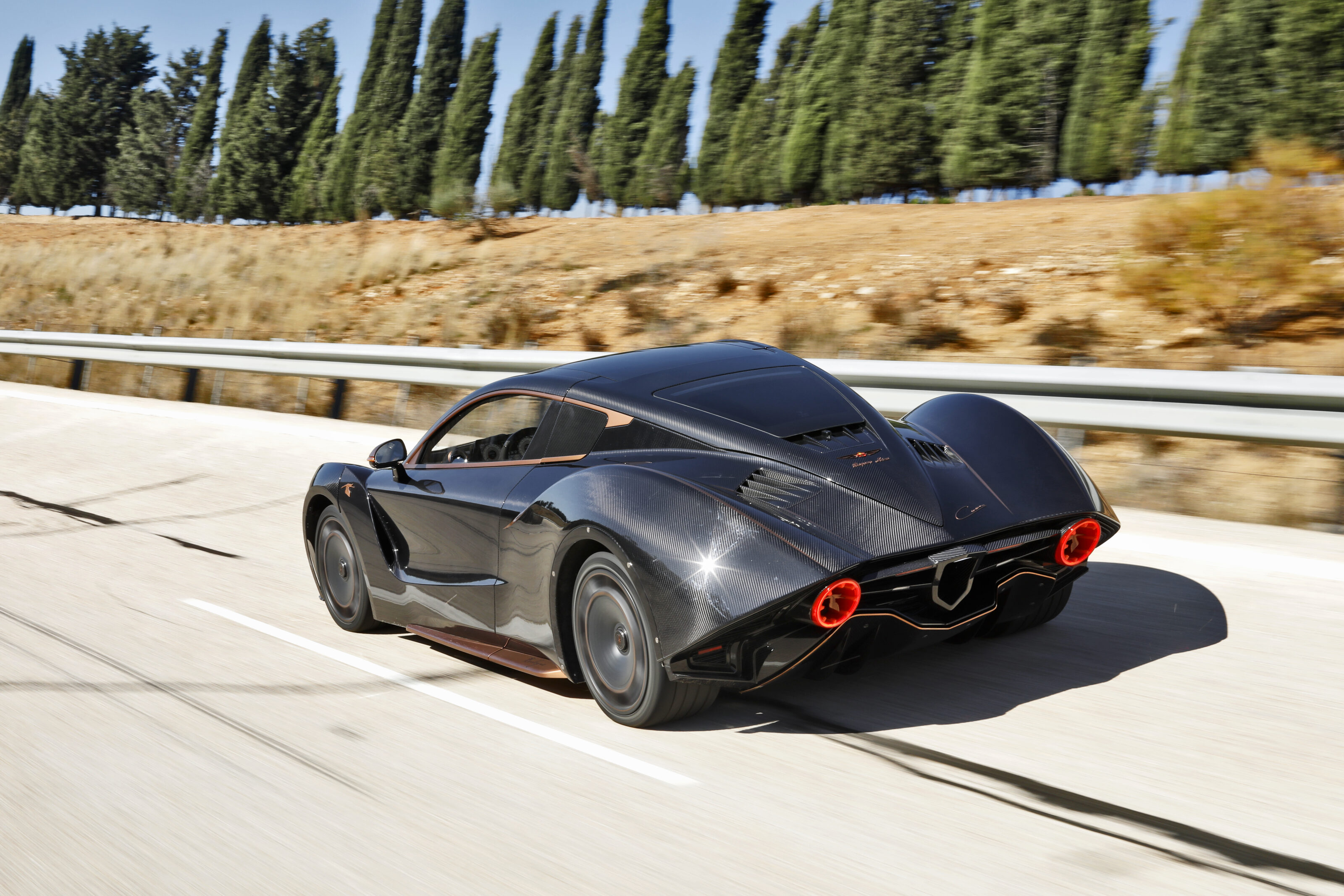
In Eco and Comfort modes the throttle is kept on a long leash, which leaves you with plenty of pedal travel to accurately modulate up to 1150Nm of compressed and sudden ballistic urge. Unfortunately, both pedals are offset to the left (there is space for a size 13 shoe outside the throttle and the brake) as well as spaced too far apart. If left-foot deceleration is your thing, rejoice. If not, the brain must remind the foot to adjust.
Since the 18,000rpm motors are perfectly comfortable with a single-speed transmission, there is no kickdown option but selecting Sport does speed up the by-wire commands. Shift paddles for on-demand energy regeneration and, hopefully, virtual downchanges were absent on car #1 but should be standard on the production models.
The throttle is kept on a long leash, which leaves you with plenty of pedal travel to accurately modulate up to 1150Nm of compressed and sudden ballistic urge.
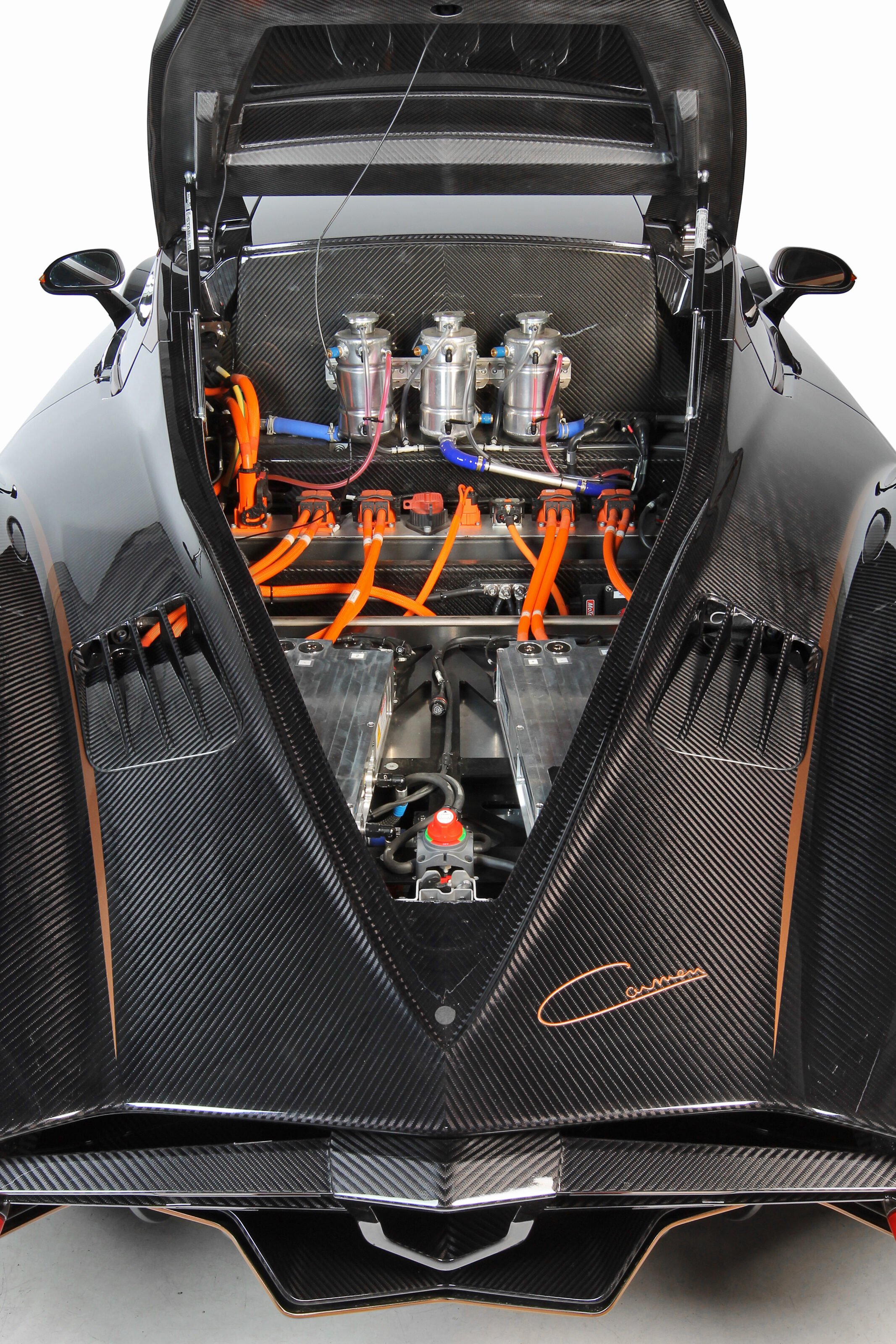
The cockpit is an extravagant concoction of real copper accents, a random splash of push-buttons in the centre stack, a busy main tablet-like monitor that acts as the key media interface and a rectangular metal box throned high up on the fascia and housing the charmingly old-fashioned digital instruments. The style is a mix of Catalan boutique fashion, art nouveau touches, fine leatherwork and fuss-free ergonomics that don’t take a sixth sense to decipher.
The storkwing doors (along with the Spanish and Swiss flags, the flying stork is the marque´s long-running trademark) open and close at fingertip command. The transmission tableau is a backlit triangular metal pyramid with Park in the centre and Drive, Neutral and Reverse tucked away in the corners. Two floors up, in said copper cubicle, we find the quasi-analogue speedometer and gear indicator flanked by state-of-charge, range, battery temperature and kilowatts used readouts.
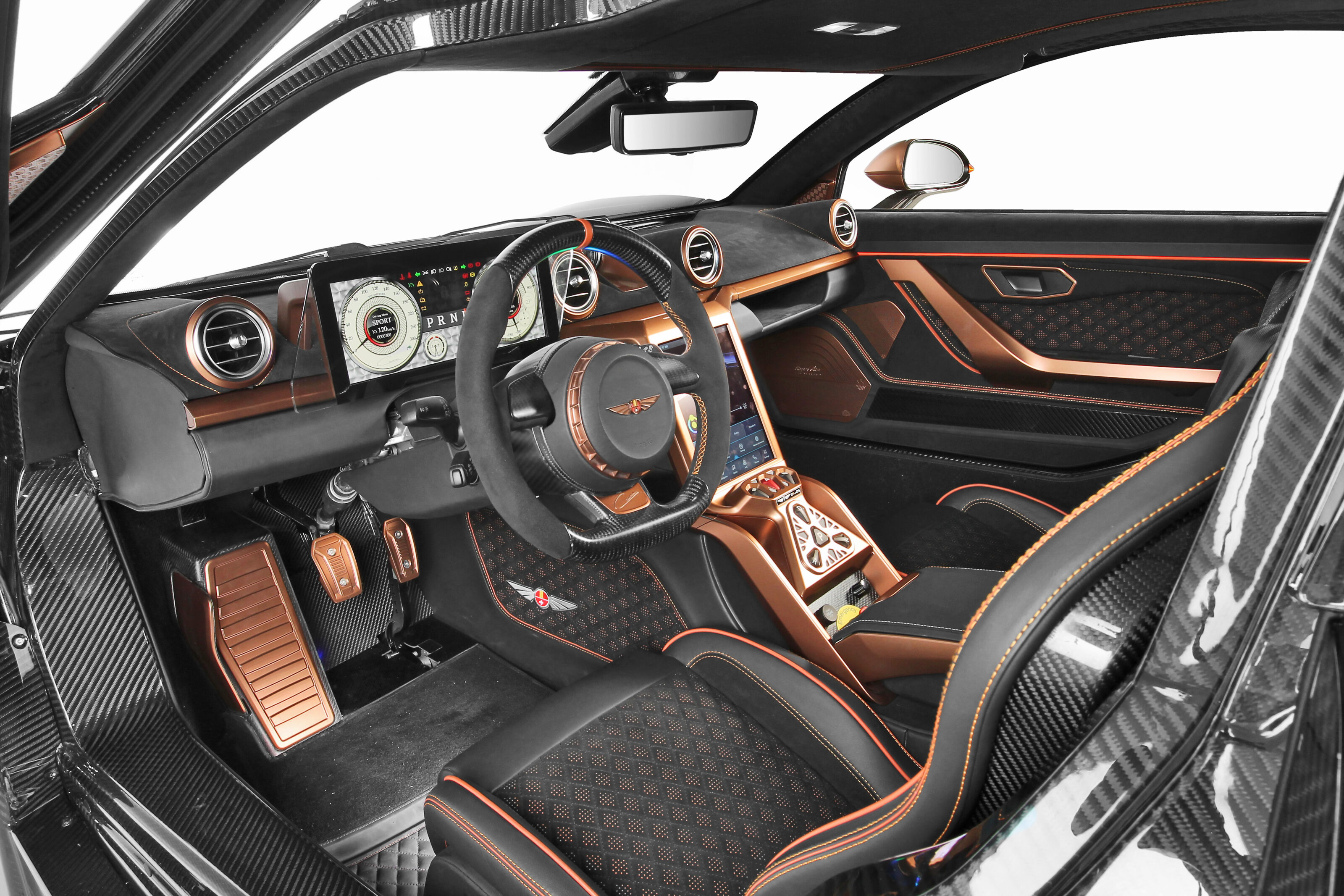
Carmen was named after the mother of the current Hispano Suiza president Miguel Suqué Mateu. Only months before the legendary motorsport aficionada and socialite passed away four years ago, she allegedly urged the family council to pick up the pieces Hipano Suiza had crumbled into after the war in 1946 and restart the company from scratch. The Peralada group of luxury hotel and golf course fame met this request in 2018, announcing that the first cars would become available in early 2022.
From the drawing board to our virginal prototype, gestation of the two-seater GT was masterminded almost entirely by QEV Technologies, owned by the billionaire investor Enrique Banuelos.
While the Mateu family mapped out the project and set up a business plan, it was QEV who turned their vision into reality in less than two years. The specialist provider of high-voltage products and services currently focuses on electric racing programmes like FIA RX2e, software development and vehicle dynamics. Their most visible claim to fame is the 1215kW Arcfox GT.
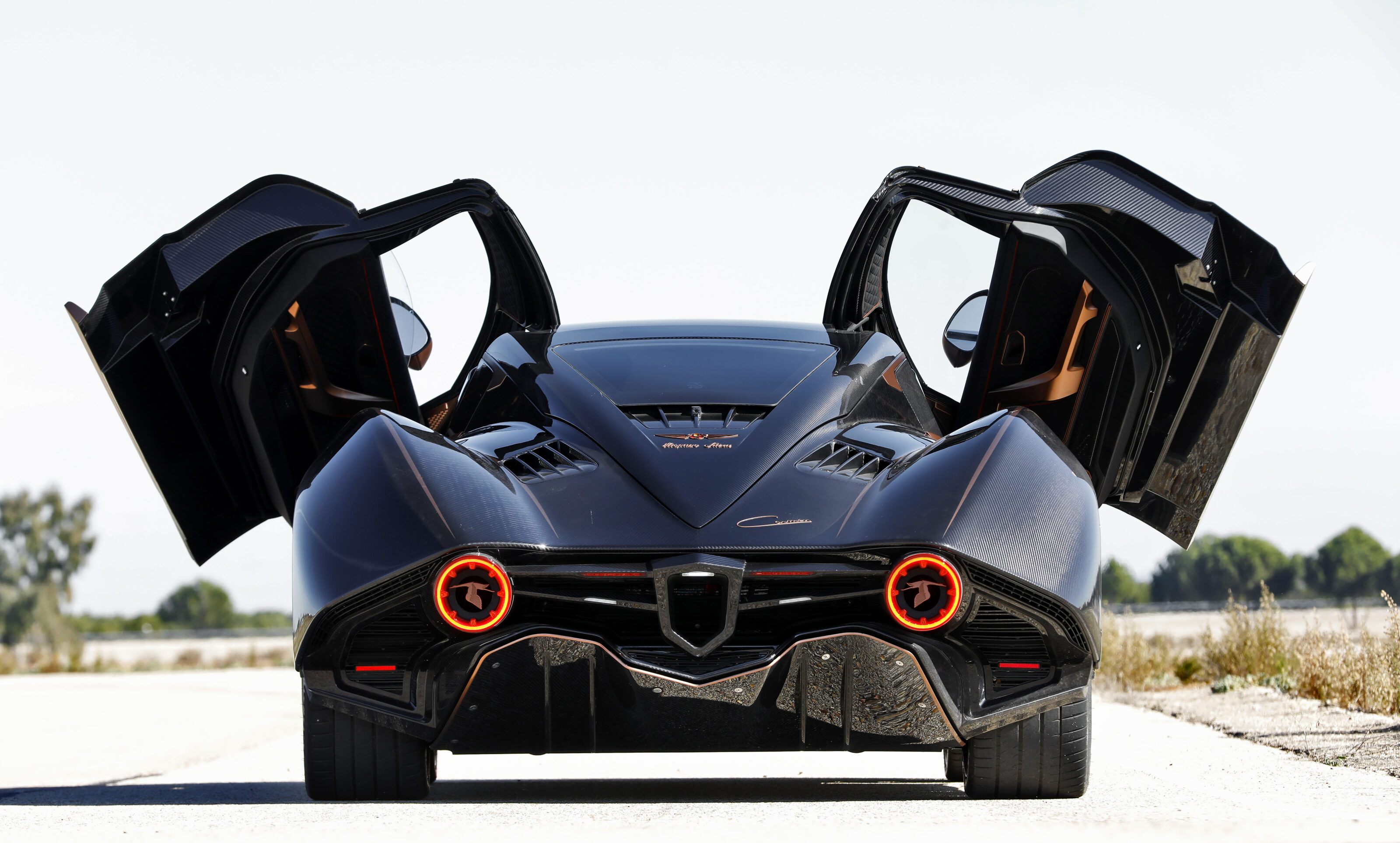
The designer Francesc Arenas took inspiration from the majestic one-off H6C Dubonnet Xenia aero coupé clad in a lightweight aluminium body, the chief engineer Joan Orus transferred the know-how gathered in six years of Formula E to the production car, the CEO Sergio Martinez Campos is in charge of the modest budget and the key family advisor.
Like 16 other clients, Hispano Suiza benefits from comprehensive QEV infrastructure including engineering facility, expandable production capacity for up to 20 cars per year, the skills of the highly specialised carbonfibre department with its own autoclave and several 3D printers‚ and the prototype shop currently stuffed to the ceiling with e-rallye specials, a unique mega-SUV tailor-made for an Arab customer and a potential electric Nordschleife pace-setter under preparation for a leading Chinese car manufacturer.
Designer Francesc Arenas took inspiration from the one-off H6C Dubonnet Xenia aero coupé clad, chief engineer Joan Orus transferred the know-how in six years of Formula E…
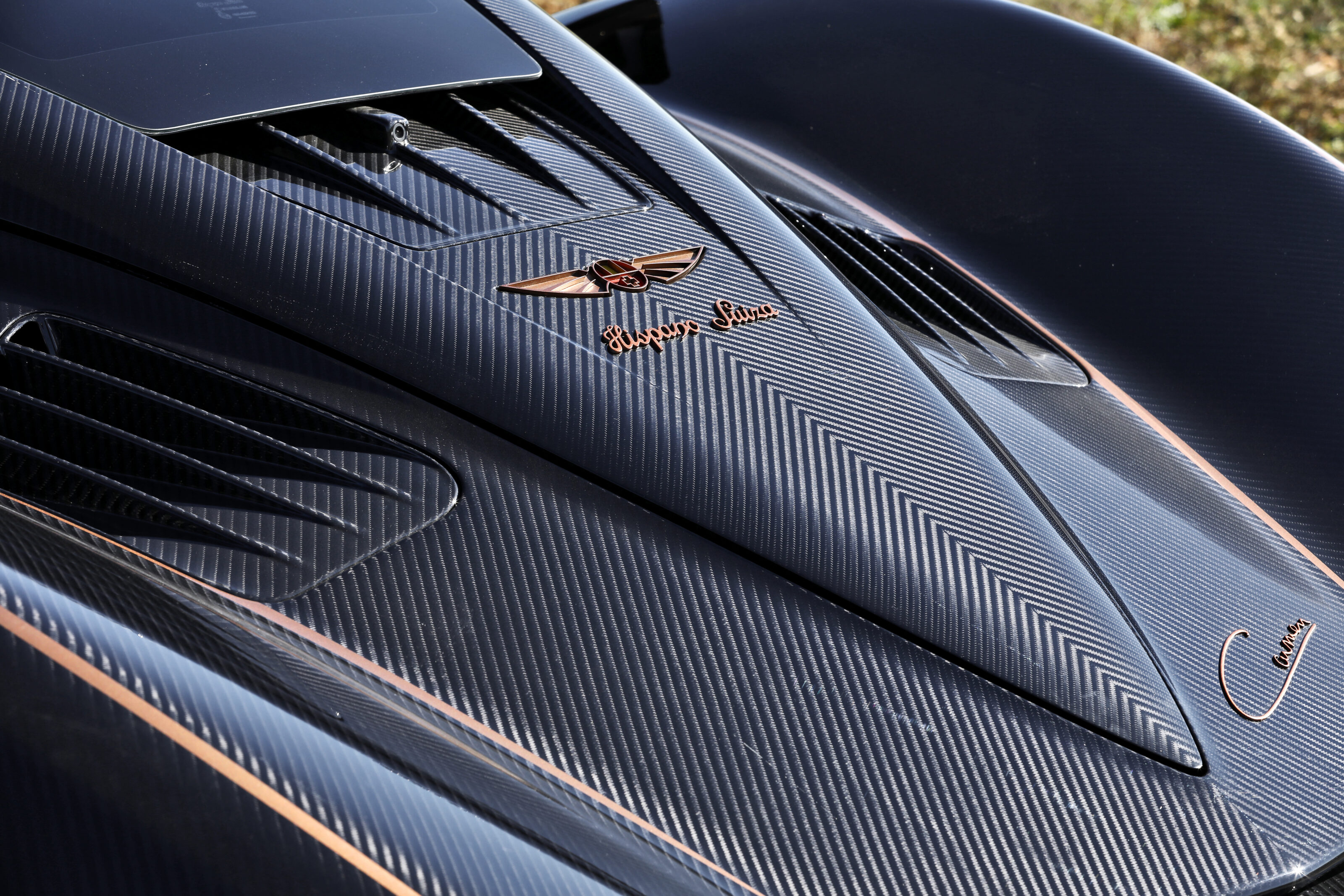
Lap three is the first of two so-to-speak hot laps. While the pace car uses all the kerb acreage it can hang on to, our copper over black eye-catcher follows its own much more relaxed flight path. It corners flatly without carving or yawing, brakes phenomenally late without fishtailing courtesy of AP Racing‘s riveting 380mm carbon-ceramic rotors and accelerates strongly but without embarrassing the sticky 305/30R20 Michelin Pilot Sport cup tyres. Instead, the by-wire throttle and the electrically assisted steering take Carmen by each arm and waltz her through corners like a professional ballroom dancer and his congenial prima ballerina – until a firm stab at the accelerator brings out the hot-blooded primadonna who seamlessly lays a fiery Bolero or a quickstep Paso Doble on the parquet.
With ESP off, many supercars have a tendency to hang on a tenth of a g or two beyond the limit of adhesion until the increasingly fragile composure invariably implodes and no megabyte in the world can stop that screeching centrifuge from spiralling you dizzy.
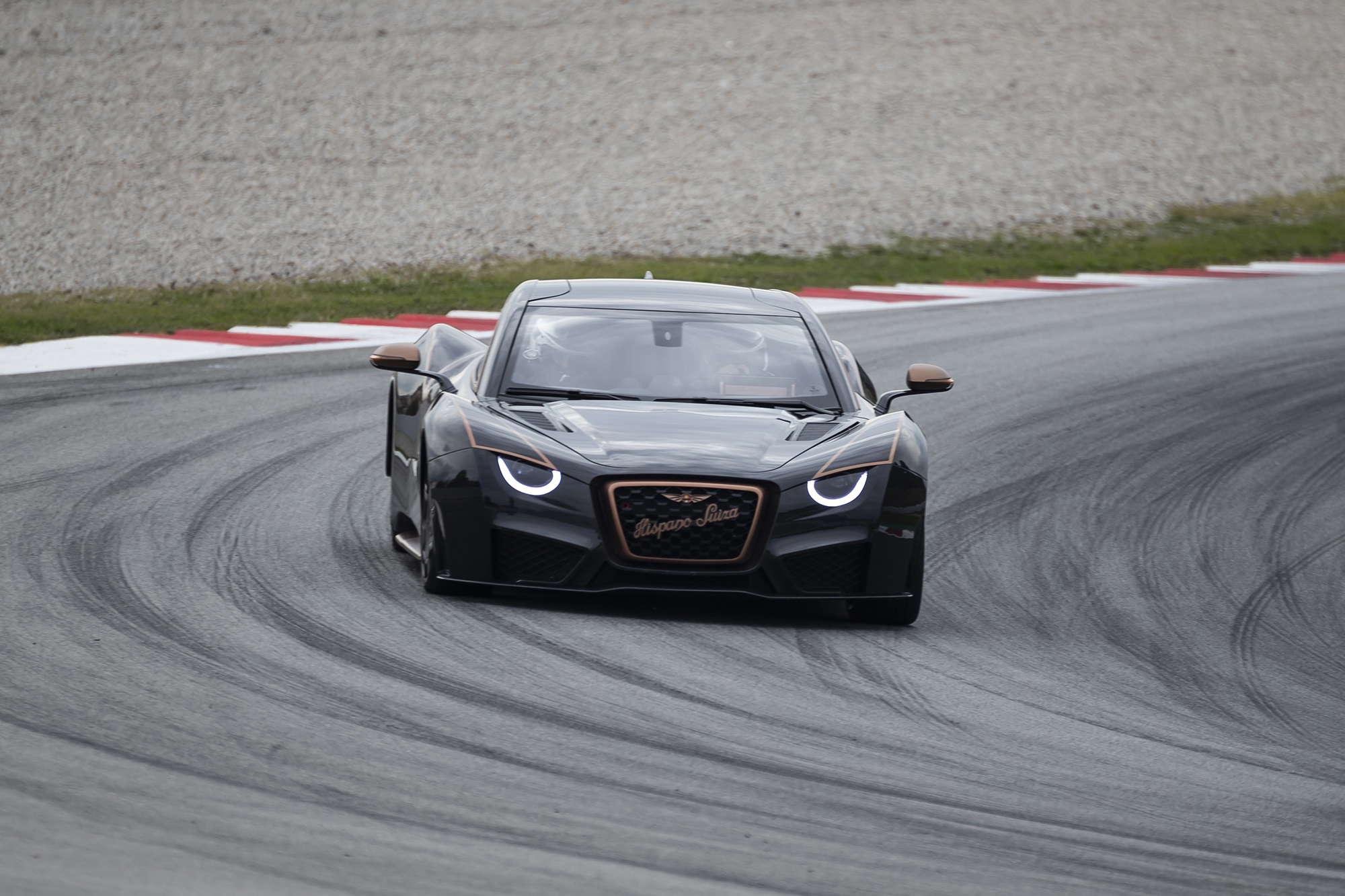
In stark contrast, the car that picked up the famous Spanish brand name from a long-forgotten past is more of a tactile apex hugger than a shirt-sleeved cone kicker. It has learned to behave according to three different pre-set attitudes marked Eco, Comfort and Sport (plus launch control), and this performance is at no time diluted by vague in-between settings, hard to grasp undertones or gradable trickeries. Steering, damper and brake action are non-adjustable, period. There is neither AWD nor RWS aboard and the only assistance system on duty that particular day was ABS.
One more loop and the red lights will come on. Full power would be nice to have for sure, but the car remains communicative even at moderate speed, the aluminium double-wishbone suspension attached to carbonfibre subframes retains more than an emergency supply of compliance, the narrower 265/30R19 front tyres match reassuring turn-in bite with strong cornering grip. Despite the low centre of gravity, a wider track would be a physical and aesthetic asset.
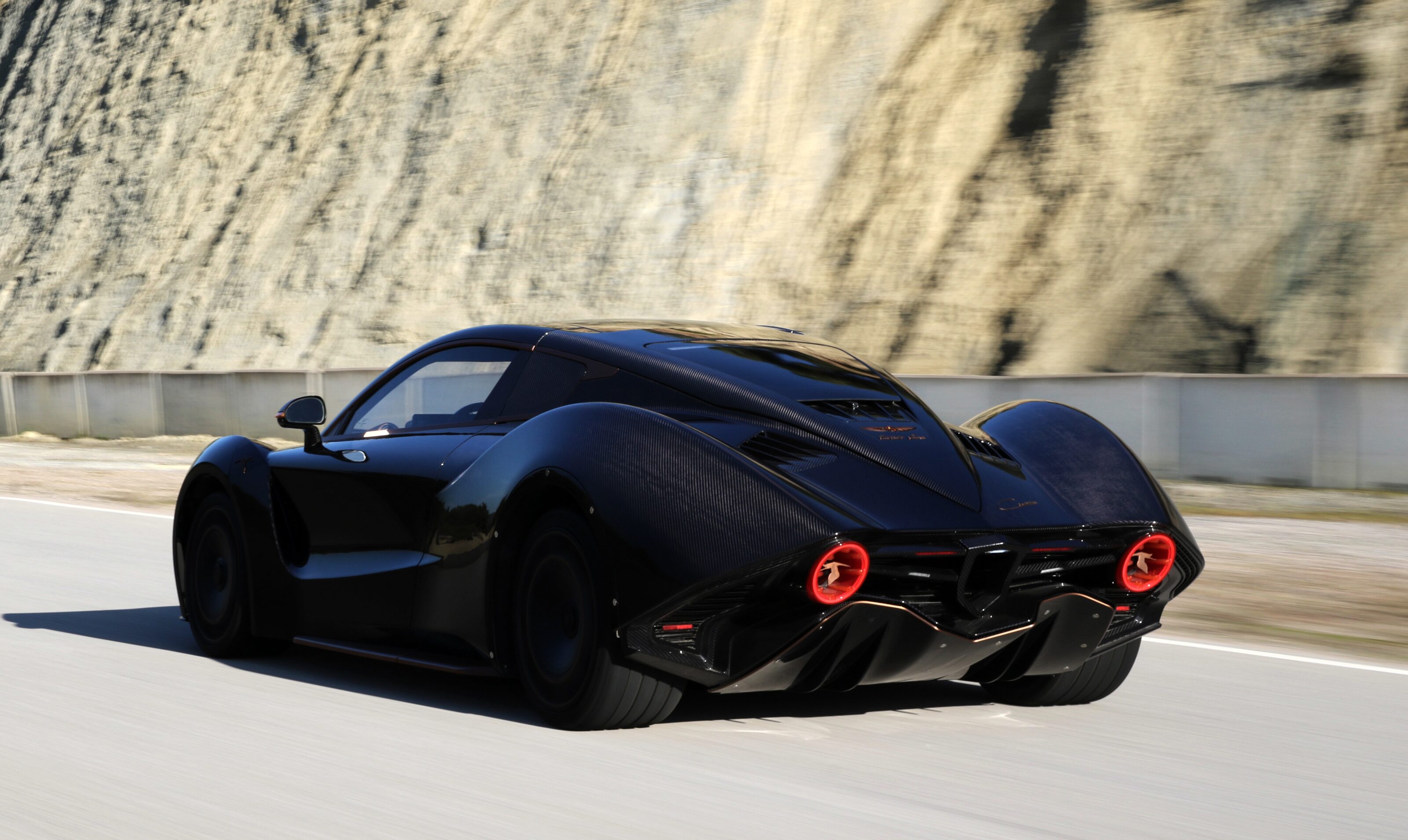
Fed by more than 200 sensors, the closed-circuit single cooling system, the in-house performance electronics, the bespoke inverters and the 700 energy cells running at 700 volts deliver the goods in a remarkably hiccup-free manner. Drawbacks? In Comfort, the output is restricted to 370kW, the maximum charging power is a barely adequate 100kW, the range (400km) and consumption data (24kWh/100km) are still provisional, and the claimed 0-100km/h acceleration time of 2.6sec should also be taken with a pinch of salt.
According to the brochure, Carmen is a hyperlux superdrug composed to the buyer‘s personal taste and capable of taking on the leaders of the mega-power pack. According to the first outing, however, Carmen is more of a pleasantly tactile piece of street jewellery conceived to please and, of course, to show off.
To some, its blend of intriguing appearance (there are over 1900 colour and trim combinations to choose from) and planet-friendly technology hits the Zeitgeist nail on the head, others may criticise the in-your-face affluence and dubious social acceptance. But let‘s face it: this car is a micro-molecule in an automotive macrocosm accessible only to a handful of collectors. Labelled Dream One, it will reportedly be followed by at least three more fantasies on the same modular monocoque that weighs a scant 195kg.
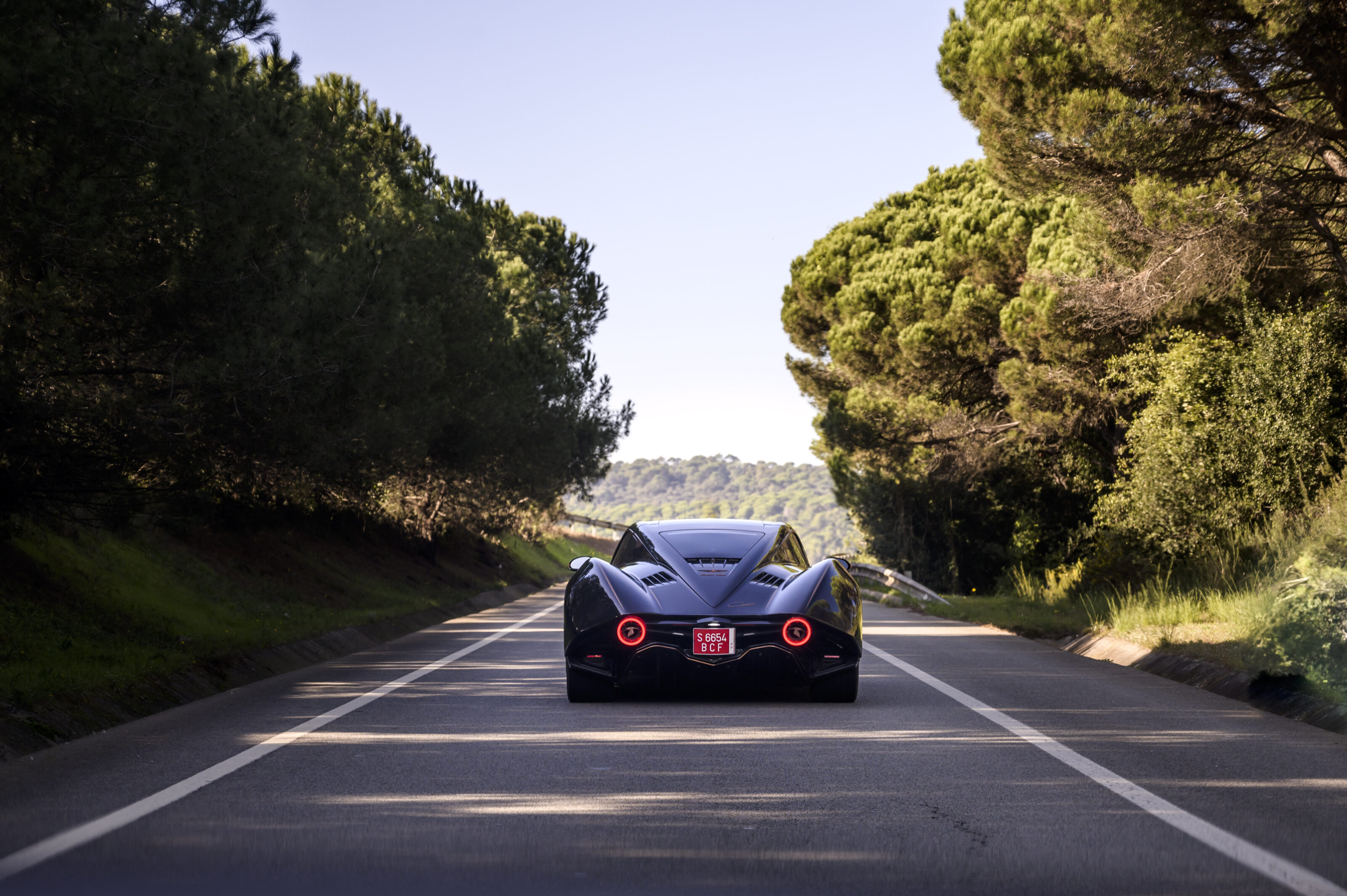
After the third glass of Grenache had loosened the tongues, there was mention of a spyder, a longer-wheelbase two-plus-two, unspecified coachbuilt one-offs and few-offs, perhaps even a crossover. The Boulogne edition of which only five units will be built may actually not be sufficiently more potent and dynamic than the base Carmen to warrant a further pursuit of the sporty genes in the bloodline. Instead, Hispano Suiza will likely sharpen its profile by adopting the next evolutions under development at QEV, which could well include an early batch of advanced solid-state batteries.
While chassis number zero – a silver car with tan interior – stays with the family, the first production model was commissioned by a certain Michael Fux from Miami who spent an extra 300,000 Euros (AU$475,000) merely on the fuchsia lacquer coating of the meticulously arranged carbon fibres. Apparently, that´s what super high-net-worth individuals do between cocktails and dinner.
The 2022 MG HS Plus EV Vibe will join the carmaker’s plug-in hybrid line-up from next month.
MG will offer the Vibe as a cheaper entry-level HS variant, with the range-topping HS Plus EV Essence priced from $47,990 drive-away.
The Vibe will share the same electrified powertrain as the Essence, using a 1.5-litre turbo-petrol four-cylinder engine matched to a 16.6kWh plug-in hybrid system, delivering 189kW and 370Nm and up to 63 kilometres of battery-only driving (NEDC test cycle).
The company has confirmed to Wheels the new HS Plus EV Vibe will also enjoy the same MG Pilot safety suite as found in the Essence.
MG made the announcement as part of its sponsorship deal with the South Sydney Rabbitohs NRL team this week, with a spokesperson for the company confirming the new model will be arriving in January.
While pricing has yet to be announced, on the petrol-powered MG HS, the difference between the Vibe and Essence variants is $8000 – suggesting the HS Plus EV Vibe could be priced as low as $39,990 drive-away.
Last month, MG announced it was changing the name of its plug-in hybrid models from PHEV to Plus EV, arguing the change helped buyers to understand they were getting a vehicle with the ability to drive in pure-electric mode.
The first all-electric 2023 Chevrolet Silverado E will be unveiled in January, with manufacturing scheduled to begin the following year.
According to Automotive News, General Motors’ vice president for global product development Doug Park said the battery-powered Silverado would enter production in early 2023 when speaking at the AutoTech Conference this week.
While revealing the model name as the Silverado E, Park confirmed the Chevrolet would make its debut at the Consumer Electronics Show next month.
“You’ll see in [2022], of course, the Hummer SUV will launch. The Cadillac Lyriq will launch,” Park explained at the online conference.
“And then very soon after that, you’ll start to see the Silverado E, the Sierra, and then there’s a couple of other vehicles we’re going to talk about at the consumer – at the CES show – that we’ll also launch in [2023].”
While full details of the Silverado E will be revealed in January, Park assured the audience the electric pick-up would offer a driving range of at least 300 miles – or 483 kilometres.
“We believe [electric vehicle] life starts at 300 miles of [driving] range, not 200 or 250. We’ve been there. We’ve done that. I think when you really start to get mass adoption, [to get] people interested, it’s got to start with the three.”
Like the GMC Hummer EV – which uses the same Ultium electric platform as the Chevrolet – the Silverado E will adopt four-wheel-steering to greatly improve its turning circle.
Ford announced this week it has been forced to close reservations of its electric F-150 Lightning, with CEO Jim Farley telling Automotive News the Blue Oval has received almost 200,000 reservations – more than twice the company’s annual production targets, despite doubling its capacity in August.
Australian buyers appear to be warming to the idea of full-size American pick-ups, and manufacturers are taking note. Following the popularity of the Ram 1500 pick-up, Ford recently brought in an F-150 for evaluation, while just this week Toyota refused to rule-out offering the Tundra as part of its Australian line-up.
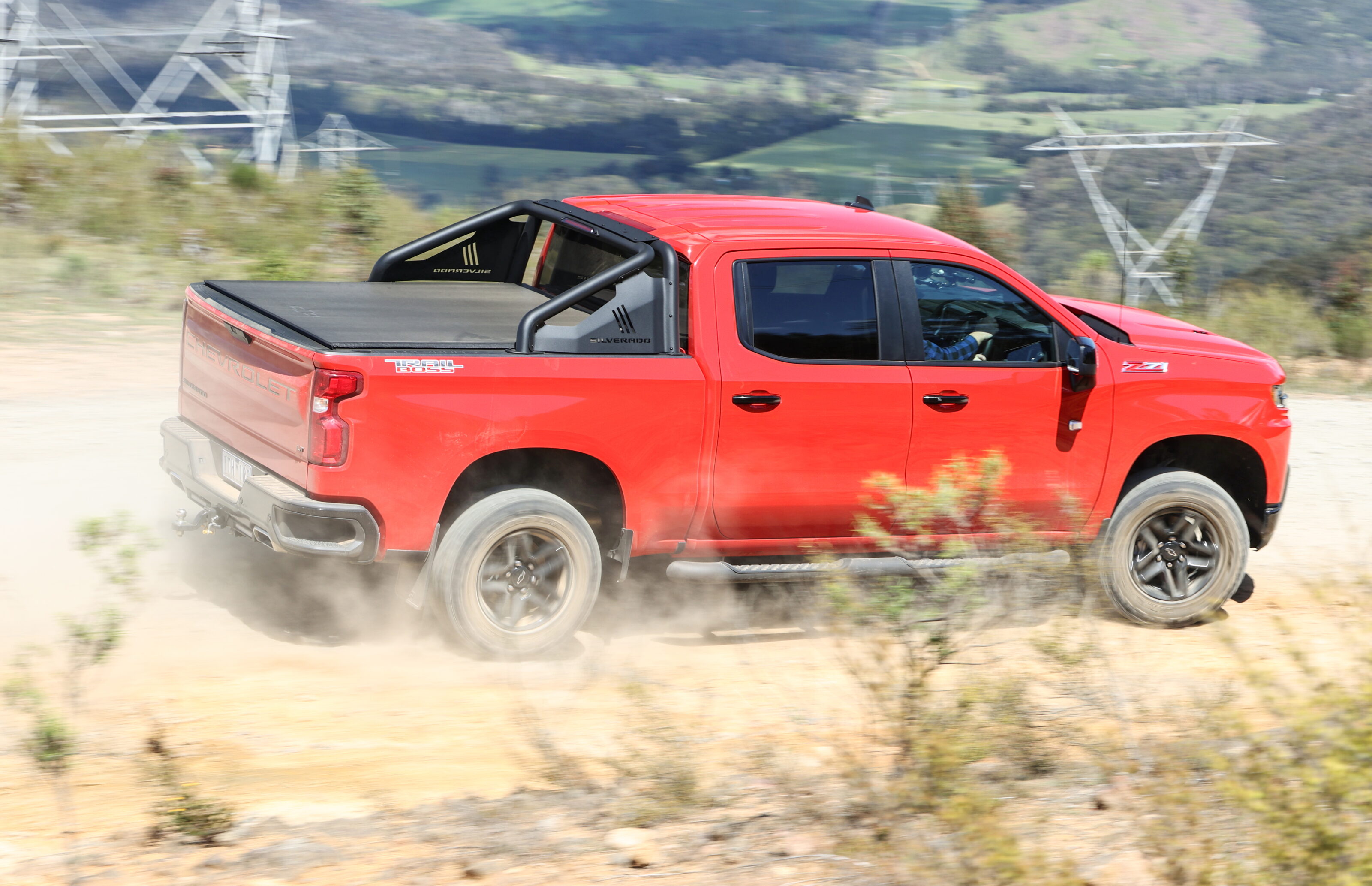
Given the Chevrolet Silverado is already offered through GMSV’s Australian dealership network – made up of former Holden dealerships – it makes it a relatively easy process to add the electric variant to its line-up.
“The Silverado EV is another vehicle in the General Motors line-up that demonstrates our vision of an all-electric future,” a spokesperson for GMSV told Wheels, but added there was no local announcement to make on the model at this time.
The Chevrolet Silverado E will be unveiled on January 5, 2022, with production set to begin in early 2023.
UPDATE, March 29 2023: Australian timing confirmed for ID models
Volkswagen Australia has today confirmed local launch timing for its ID.3, ID.4, ID.5 and ID.Buzz models – get all the details at the links below.
November 2022: ID.4 driven in Australia!
We’ve now had a chance to drive an overseas ID.4 car in Australia. Get our full story at the link below.
Story continues…
Snapshot
- ID Buzz will inspire the next California camper
- MEB platform to continue to underpin ID range
- Driving range up to 550km possible
Volkswagen has confirmed it will build a new ID California campervan based on the upcoming ID Buzz combi.
The news comes after Volkswagen detailed a $140 billion electrification strategy that will see it ramp up electric car manufacturing. Part of this plan is the current construction of a new facility in Hanover, Germany, where the ID Buzz and ID California will be produced.
In the interim, the VW T7 Multivan and the last of the T6.1 Transporter will be made ahead of the new ID models. Volkswagen Group also plans to send the first model of the new Audi Artemis Project down the Hanover production line, along with a new electric car from Bentley.
UPDATE, Dec 15 2022: ID Buzz comes to Australia
Volkswagen’s ID Buzz has been whisked into Australia for a quick tour, ahead of its local launch in the coming year. Join John Law for a look at its features and space.
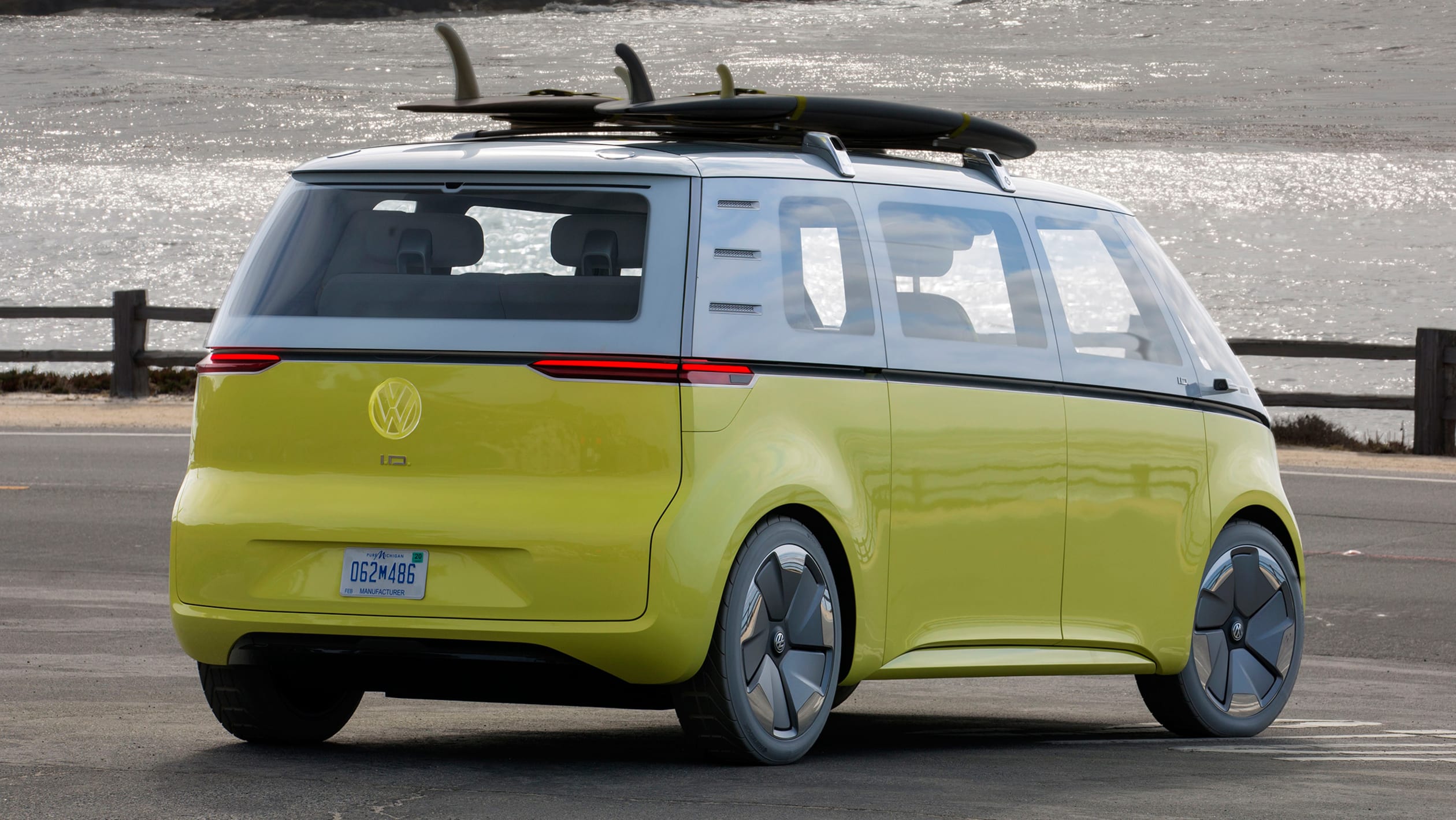
Story continues…
The ID California will ride on the Volkswagen Group’s new MEB EV platform that underpins ID cars like the ID 3 and 4, and it should have a driving range of up to around 550km from 48kWh to 111kWh battery options.
While that’s good enough to get away from the city, those who need more range will need to charge between stops and rapid charging will shorten the wait.
The ID Buzz, which will share much of the same components, will likely have an even longer range given it won’t be decked out with the beds and kitchenette that a camper needs.
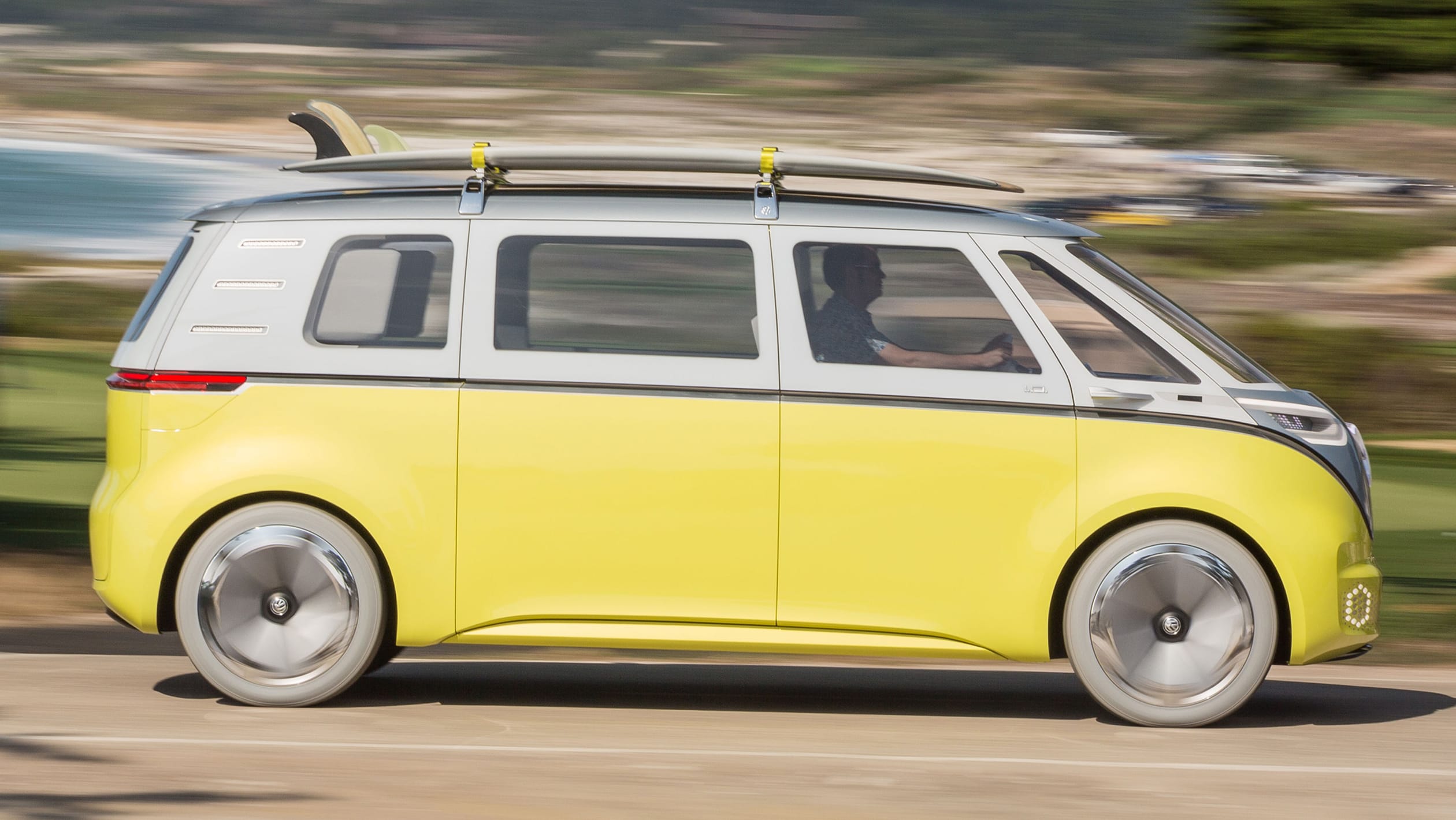
A variety of powertrains are on the table, too, from entry-level front-wheel drive version with around 150kW, to more capable all-wheel drive dual-motor layouts that could have over 300kW and sportier performance.
But such a camper won’t be focussed on performance, with the retro-styled electric flashback to the original 1950s Type 2 model combining the enjoyment of being in the great outdoors with clean-motoring, or as Volkswagen Commercial Vehicles says in a more clinical way, “it will combine the ongoing trend towards mobile leisure arrangements with sustainable CO2-neutral mobility.”
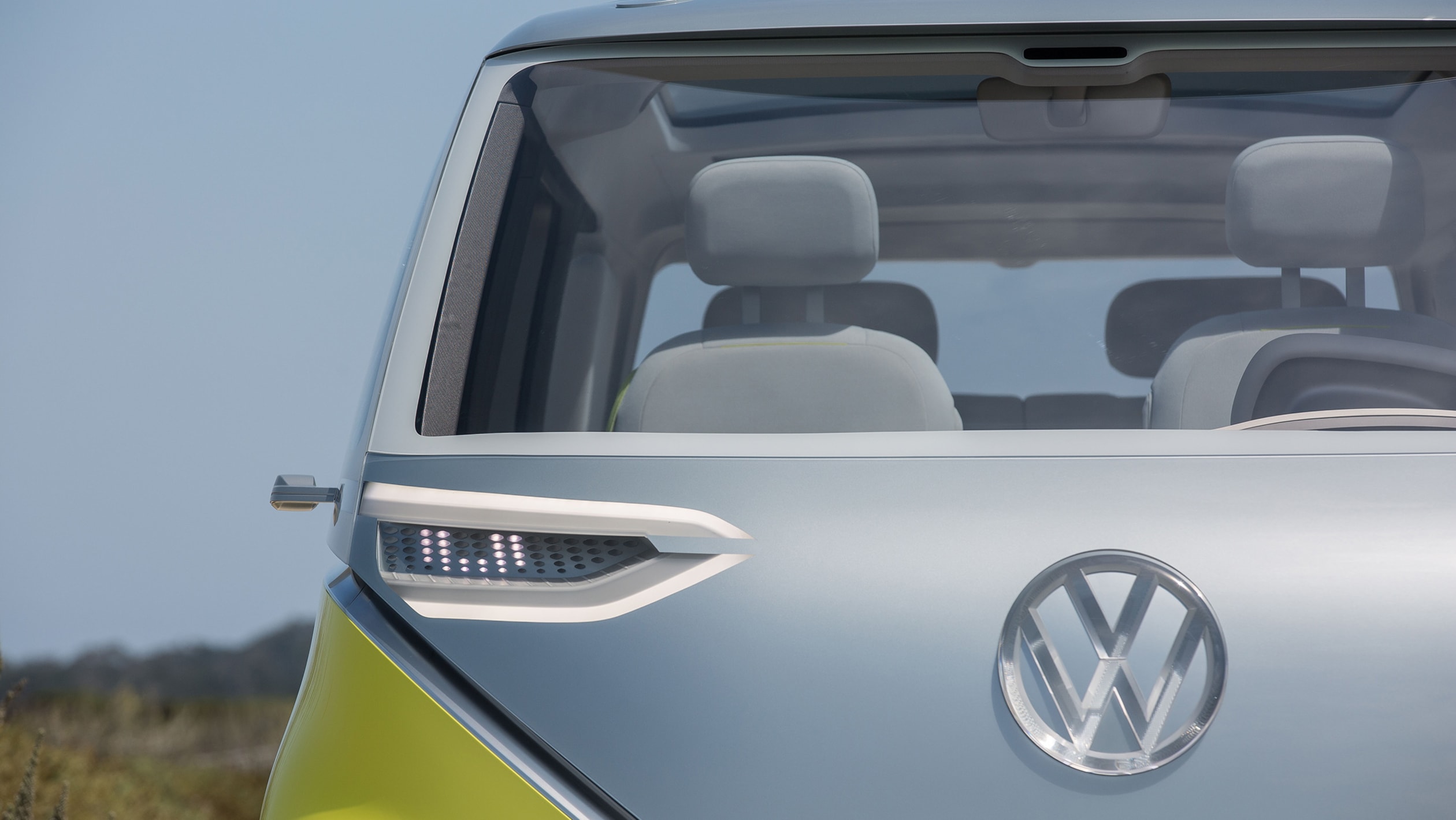
No details have been divulged, but Volkswagen expects the ID Buzz to go into production early next year and we should see the California begin to be teased ahead of a launch in “the second half of this decade”.
Deliveries into other markets for the ID Buzz are expected from 2023 but in Australia, Volkswagen Group is focusing its electrification efforts first with Cupra, so we won’t be seeing the ID California anytime soon.
Snapshot
- German government allows Level 3 autonomous tech to be used
- From 2022 EQS and S-Class owners will be able to take advantage of the assistance
- Some restrictions apply to the use of systems
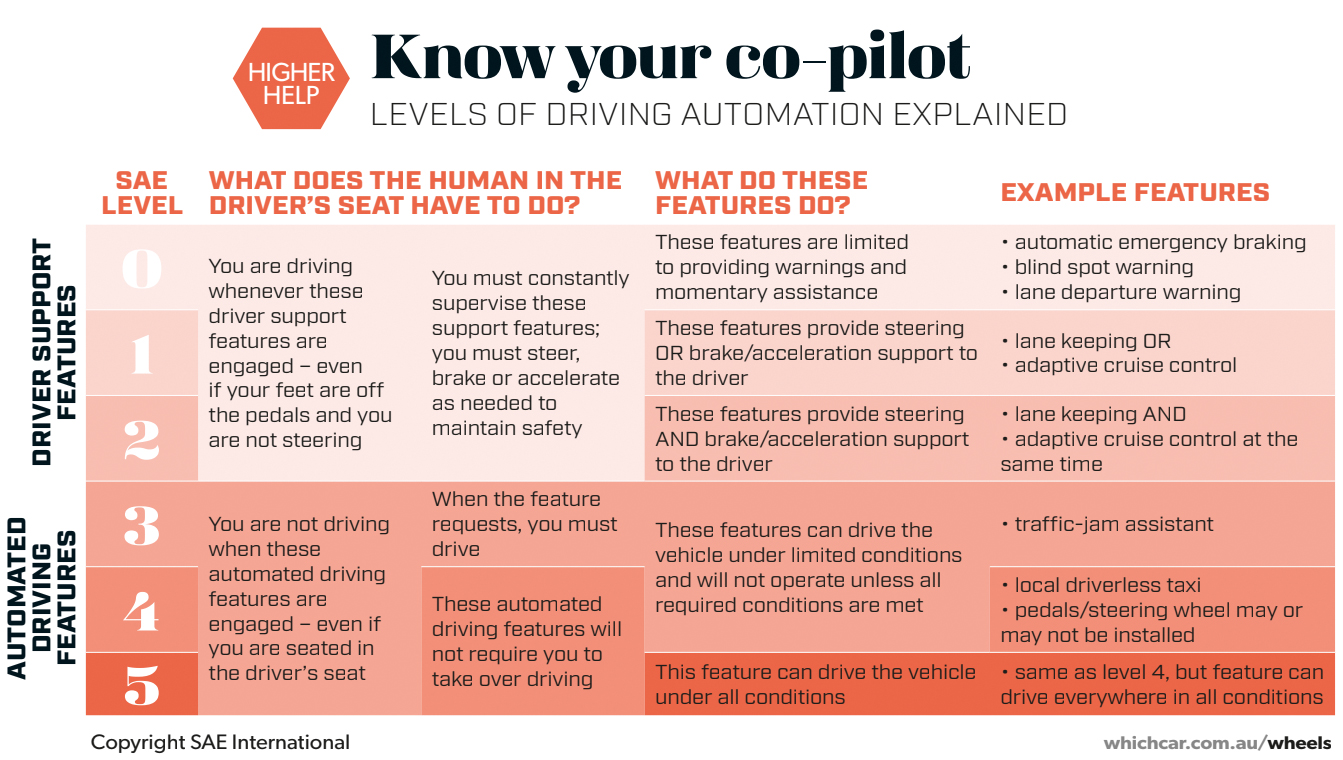
Autonomous driving is coming, and the German government has approved Mercedes-Benz to use its Level 3 ‘Drive Pilot’ autonomous driving technology on public roads.
There are stipulations to adhere to, but it does means Mercedes-Benz EQS and S-Class buyers will be able to drive hands free and without supervision of the car in certain circumstances.
While hands-free driving is already available in some markets with cars like the Tesla Model S, the systems technically always require supervision – despite photos of users sleeping in their cars on the freeway.
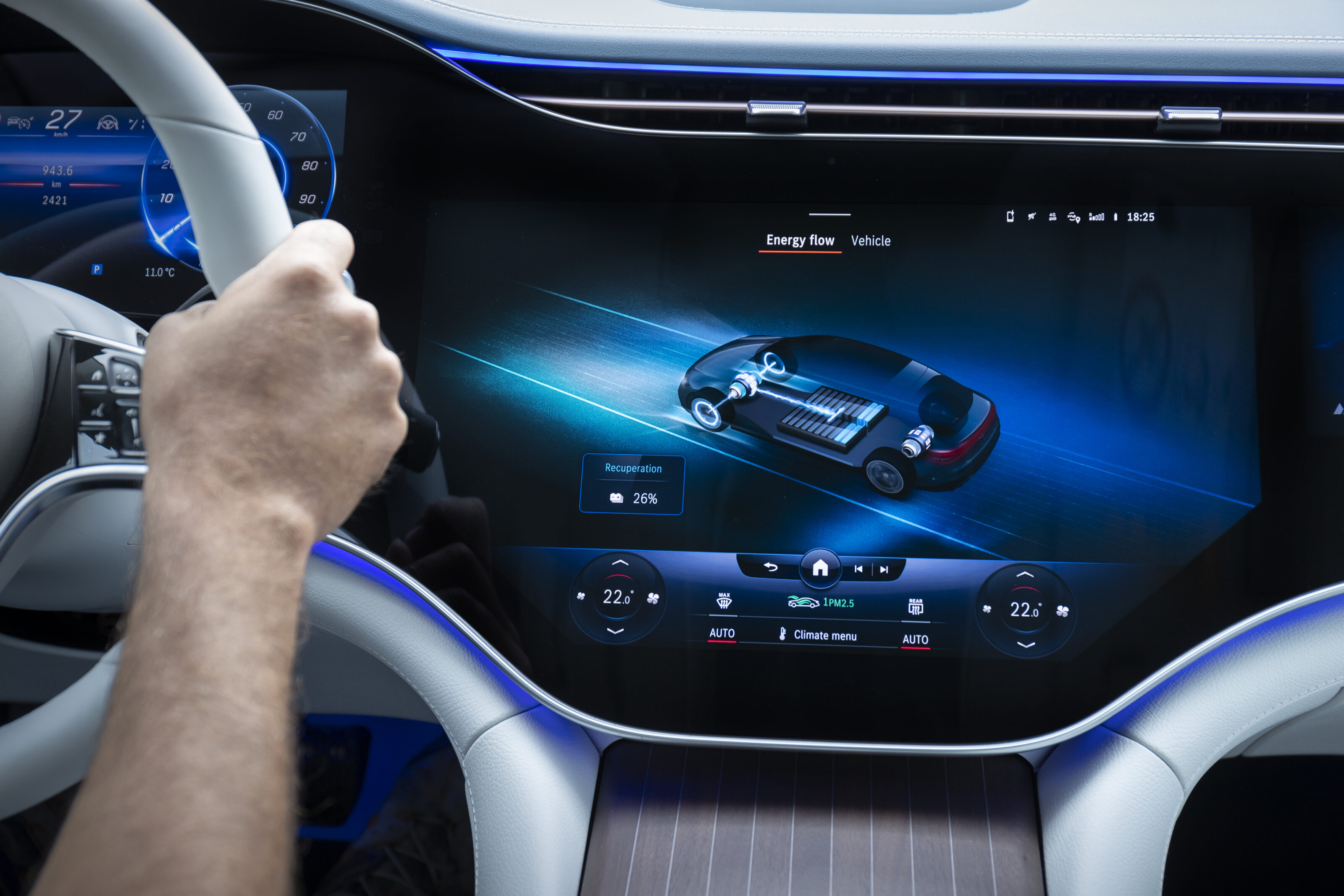
However, Mercedes says that with its official approval, drivers will be able to effectively switch off and legally do activities on the infotainment system such as emailing, online shopping and even watching movies.
“With the approval of the authorities, we have now achieved a breakthrough: We are the first manufacturer to put conditionally automated driving into series production in Germany. With this milestone, we are once again proving our pioneering work in automated driving and also initiating a radical paradigm shift,” said Mercedes-Benz chief technology officer, Markus Schafer.
The caveat given by the German Federal Motor Transport Authority however is that the car must be travelling under 60km/h in traffic on the freeway. It’s not clear if this will be enforced by software in the car, although that will likely be the case.
In any event, it is a big move for autonomous driving and sets the way for higher speeds and enabling other circumstances in which it can be activated.
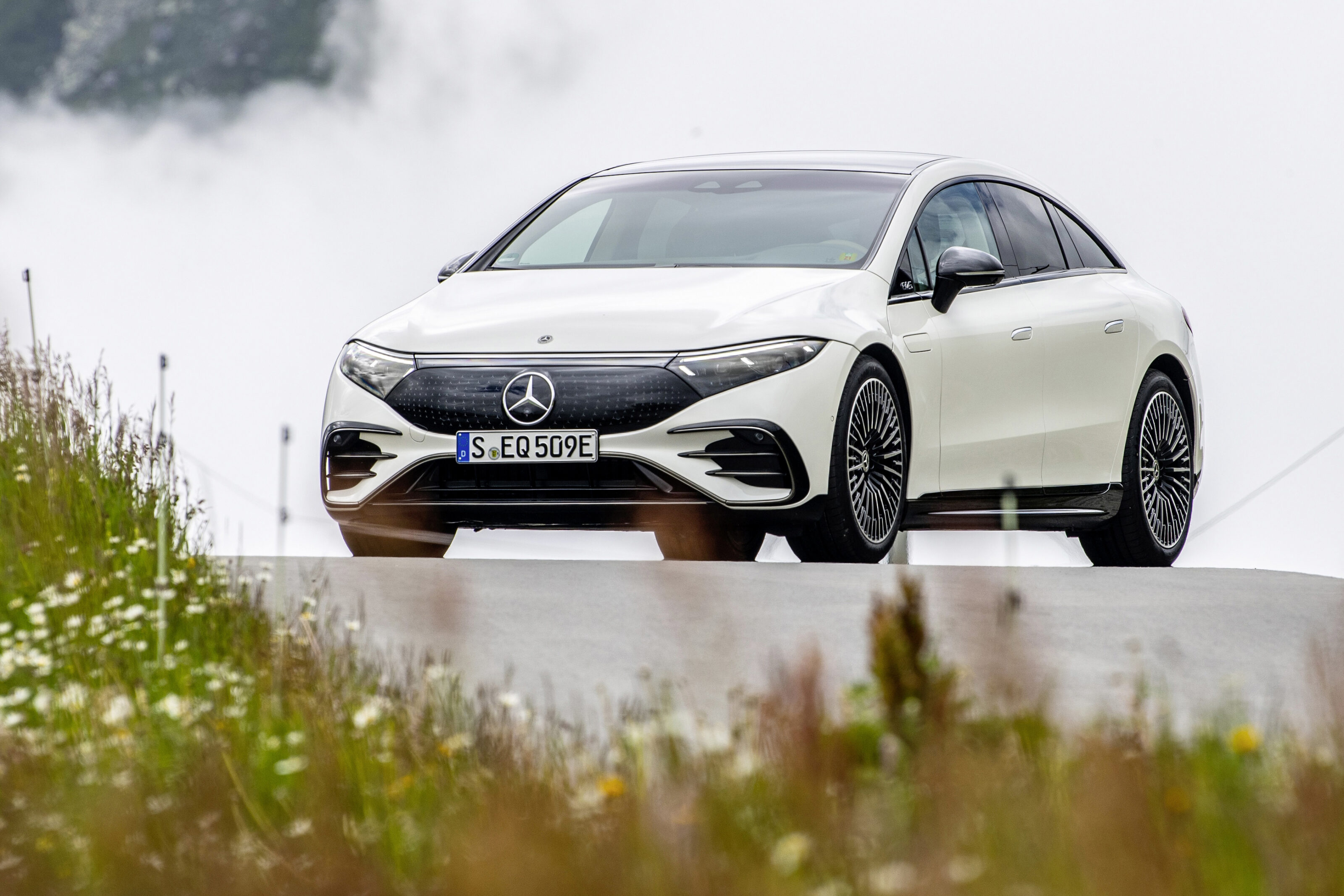
The technology will only be available from 2022 and, for now, in the new Mercedes-Benz S-Class and EQS, which are equipped with an arsenal of sensors.
There are microphones and light sensors at the rear to detect emergency vehicles so it can automatically move over, moisture sensors in the wheel arch to adjust to hazardous road conditions, and of course the standard LiDAR and radar cameras which use artificial intelligence to detect moving objects, deciphering the environment around them, along with GPS tracking of where the car is.
“For many years, we have been working to realise our vision of automated driving. With this LiDAR based system, we have developed an innovative technology for our vehicles that offers customers a unique, luxurious driving experience and gives them what matters most: time,” said Schafer.
“For the first time in 136 years of automotive history, the vehicle takes over the dynamic driving task under certain conditions. At the same time, we are pleased that Germany is continuing its pioneering role in automated driving with this approval.”
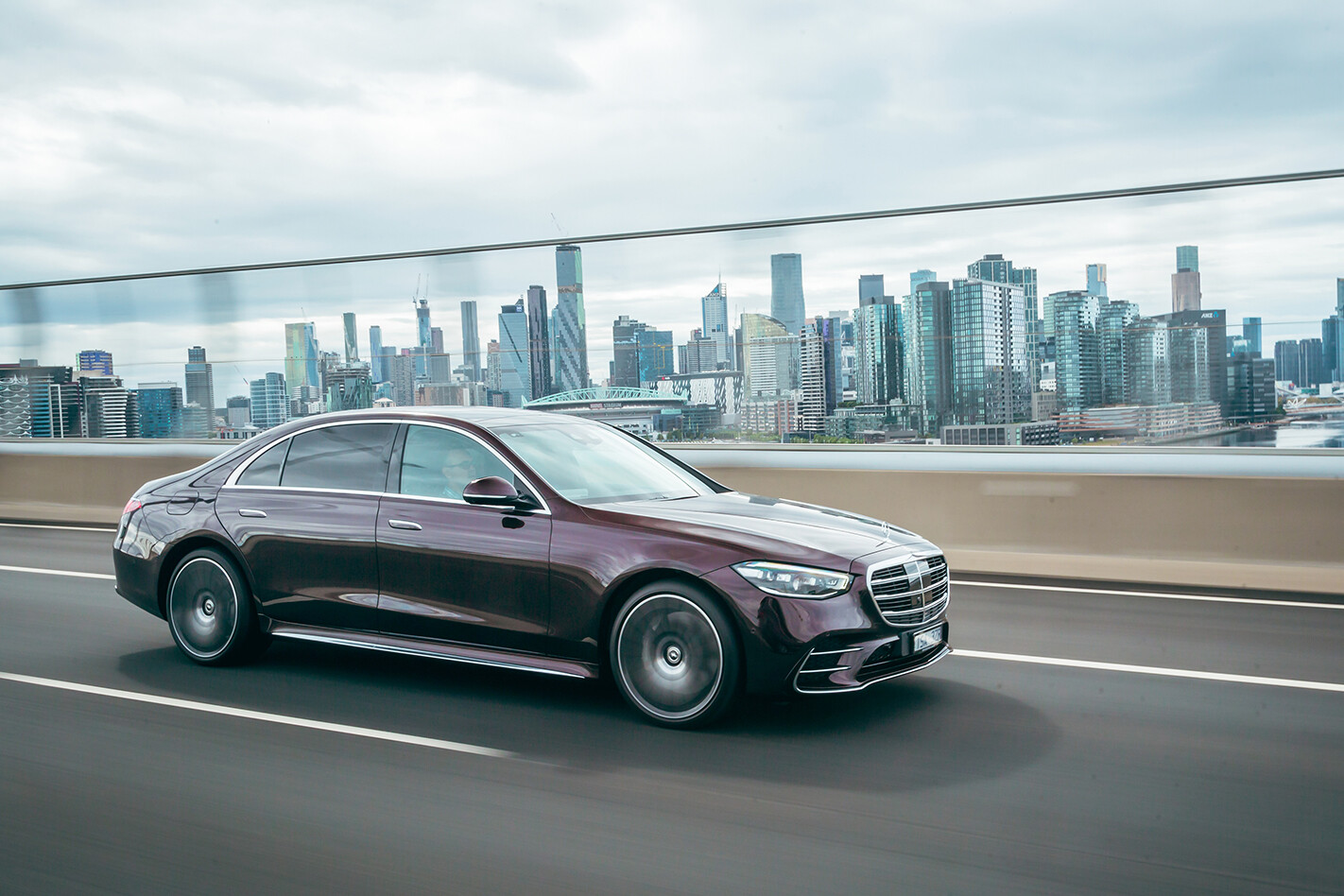
Beyond Germany, Mercedes says that this first step of approval will help governments in other countries to set regulations for similar Level 3 driverless approval.
It is likely this will sweep through Europe and the UK first, but Australian road authorities have already been assessing autonomous car capabilities on local roads.
Volkswagen has confirmed current Chief Executive Officer Ralf Brandstätter will be replaced by Skoda chairman Thomas Schäfer.
The move sees Brandstätter moving out to join Volkswagen Group’s board early next year ahead of a transition to direct the company’s Chinese operation, starting August 2022.
Schäfer will move from his post at Skoda to head up Volkswagen from April 1 next year – for now, there is no confirmation on who will replace Schäfer at the Czech car maker.
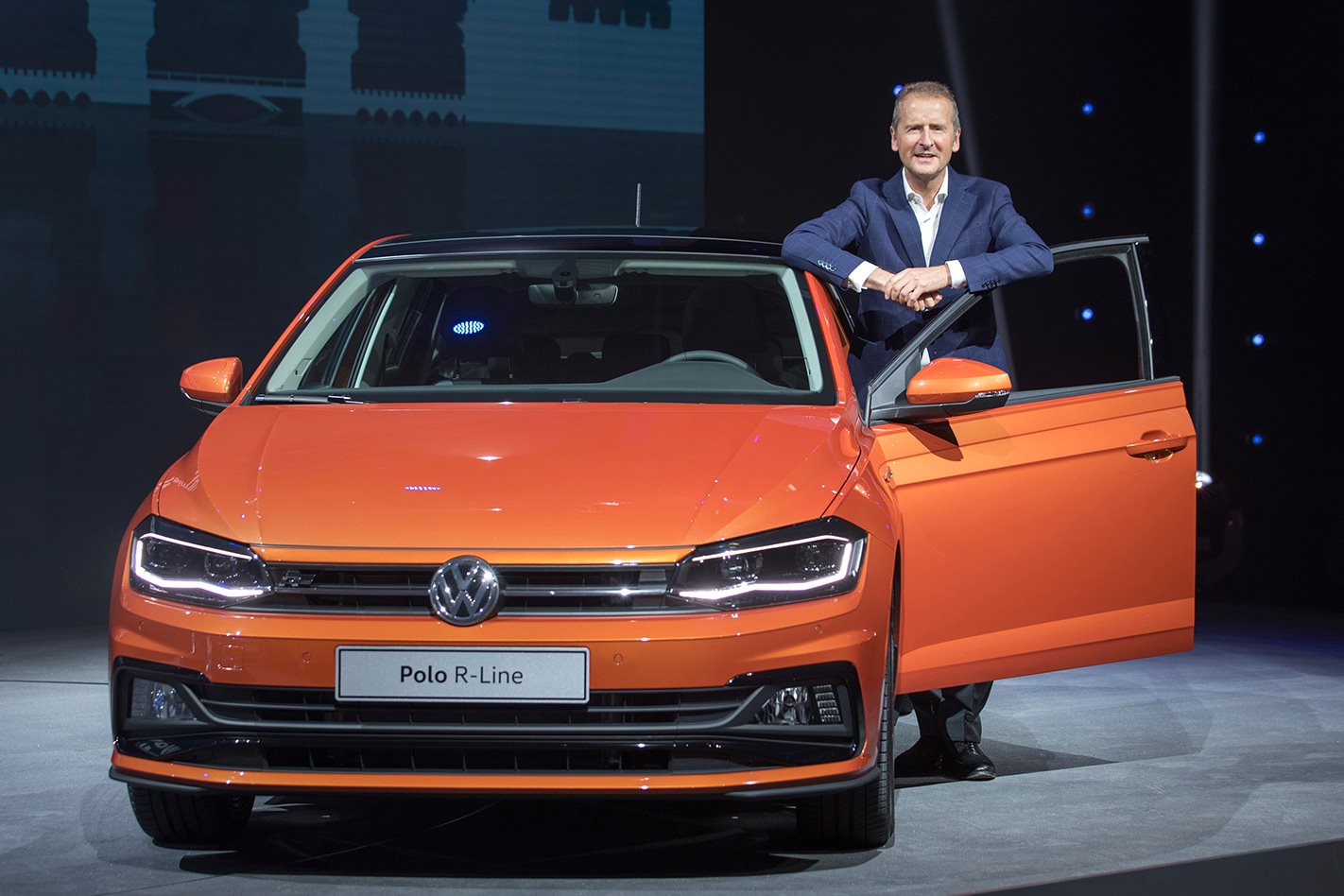
VW Group’s Supervisory Board confirmation of a new brand CEO follows other movements in senior management, including Herbert Diess who was recently relinquished of his CEO powers, acquiring more responsibilities at the car maker’s software division, Cariad.
Also in the digital space is the appointment of Audi sales director Hildegard Wortmann to the board, tasked with evolving online and group sales.
There has also been the confirmation of Hauke Stars to head IT who was a previous board member and came from outside of the automotive industry at Deutsche Borse investments.
Schäfer, who will be Volkswagen CEO, has previous experience in the VW Group running the brand’s South African operations and also his short tenure at Skoda which he took in August last year.
Snapshot
- BMW power for Morgan’s final V8
- Plus 8 GTR is a homage to racing cars of the past
- Six-speed manual and automatic ‘boxes available
Morgan’s new Plus 8 GTR brings a V8 back to the British marque’s line-up, powered by a 280kW, BMW-sourced 4.8-litre engine.
The limited-edition release is the first time in almost four years Morgan has sold a V8 in one of its models, but it requires different underpinnings to the current bonded aluminium platform of the four and six-cylinder Plus 4 and Plus 6 range.
In a turn of luck for V8 Morgan enthusiasts, the small car maker was able to purchase back nine frames of its previous-generation Plus 8 chassis from a bespoke carmaker, which had intended to use them but has since closed down.
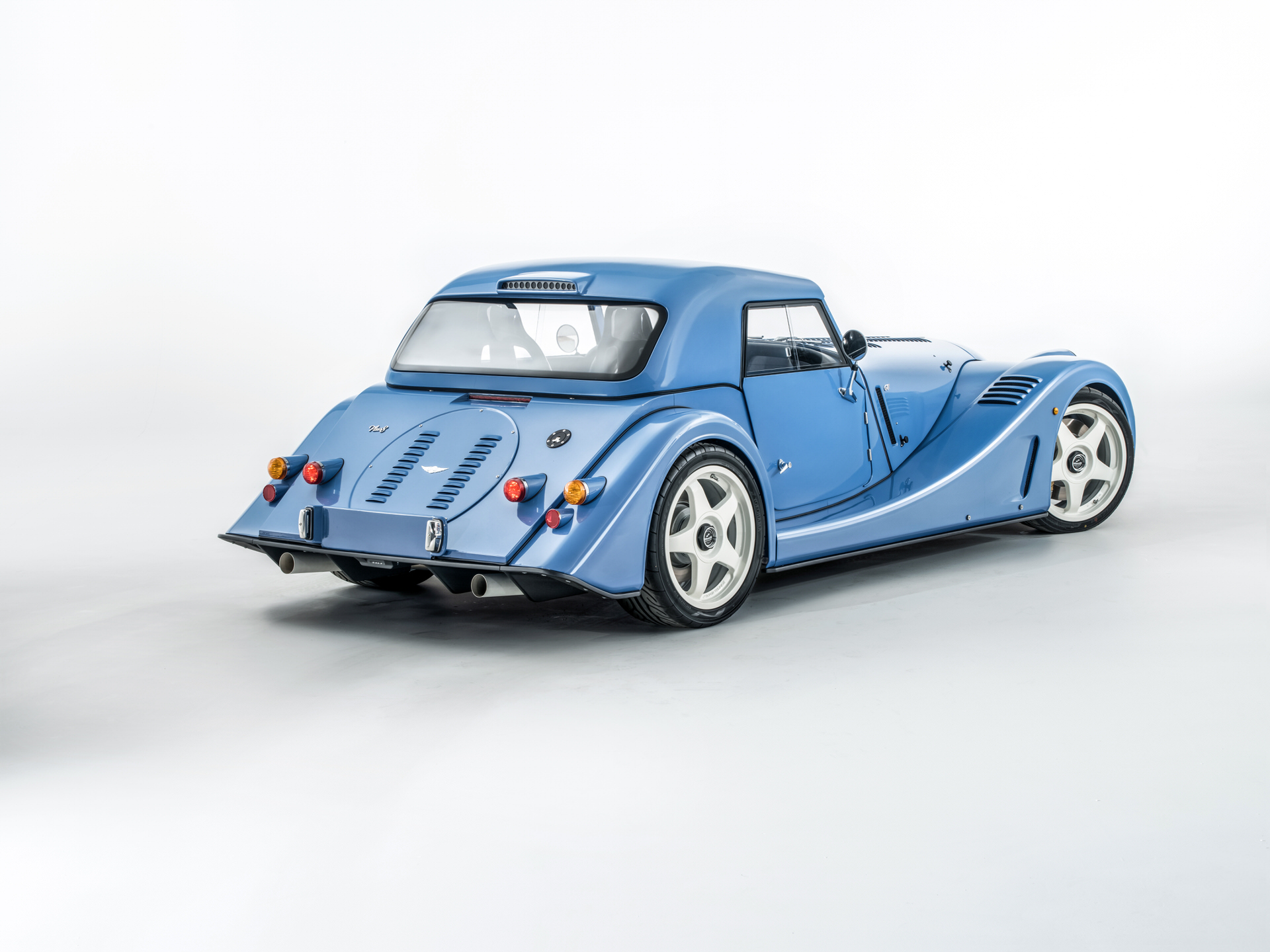
While the underlying architecture is older than the new aluminium platform, the appearance on top is contemporary and like current new models.
Added to this special GTR edition are some inspired enhancements from the race-going ‘Big Blue’ Morgan GT, which tore up tracks in the 1990s.
Some of the parts added on include an aluminium hardtop, vented bonnet, blistered arches, front splitter and rear diffuser, and unique lightweight alloy wheels.
“Striking design, the finest craftsmanship, and an exhilarating sportscar to drive, the Plus 8 GTR is the perfect swansong to the Morgan V8,” said Morgan CEO, Steve Morris.
“We have been delighted to work alongside customers from around the world during the design and build process, and we look forward to sharing the final examples over the coming months.”

Handling is enhanced with the addition of tuned coilover suspension, larger brakes, and strengthening to the chassis and engine bay to reduce flex.
Underneath the bonnet is a BMW 4.8-litre V8 producing 10kW more peak power than the previous Plus 8 at 280kW. This is sent to the rear wheels via the choice of six-speed manual or automatic transmissions, the latter sourced from ZF.
The unique changes for the limited edition also include GTR nameplates inside and GTR dials for the dash, plus bespoke doorcards that close around carbon fibre seats with full racing harnesses.

“We are excited to release the first images of the Plus 8 GTR following the design sketches published earlier this year,” said Morris.
“The Plus 8 GTR represents an opportunity for Morgan to celebrate the V8 engine once again, something we did not expect to do since finishing the Plus 8 and Aero 8 models in 2018.”
One of the nine cars has already been finished, with just eight remaining on the production line. The rarity of Morgan’s limited V8 comes at a price, though, with an expected price tag over $400,000.
Tesla owners in China will now have a higher chance of securing a Supercharger thanks to a recent Tesla App update.
Ever since electric vehicle chargers were first rolled out, EV owners have had to face the occasional problem of finding the charging space taken up by an internal combustion engine (ICE) vehicle, meaning they can’t recharge despite the spot being ‘reserved’ just for them.
To reduce the likelihood of ‘ICEing’, certain Tesla charging stations in China have deployed third-party floor-locking devices, which prevent those without the correct app or code from accessing its charging spaces – ensuring they can only be used by Tesla owners.
However, according to Electrek, this system is a bit clunky as it relies on owners having to use multiple apps just to access the charger, rather than the relatively streamlined Tesla Supercharger app.
Tesla has started to take matters into its own hands, implementing the floor lockers at a majority of its new Supercharger stations, while also integrating access to them within its own app, rolling out the Tesla App 4.3 update to Chinese customers.
If successful, this system could be implemented worldwide, although it will add another layer of complication to non-Tesla electric vehicle owners, as the American manufacturer starts to open up its Supercharger network to other brands – something which is currently being trialled in the Netherlands.
