
Key Points
- Just 1624 examples of the five models are recalled
- All vehicles were fitted with Takata airbags
- Owners are encouraged to contact Audi or the Takata helpline
The ongoing worldwide recall of vehicles fitted with Takata airbags continues, this time with a number of Audi vehicles affected.
A recall noticed has been issued for Audi’s A4, A6, A8, TT and Cabriolet manufactured between 1999 and 2001, involving 1624 units delivered to Australia.
As with the rest of Takata’s late 1990s product recalls, the propellant in the gas generator of the Takata NADI 5-AT airbag fitted to certain vehicles with three-spoke steering wheels may degrade over time, potentially leading to it not totally inflating in the event of an accident.
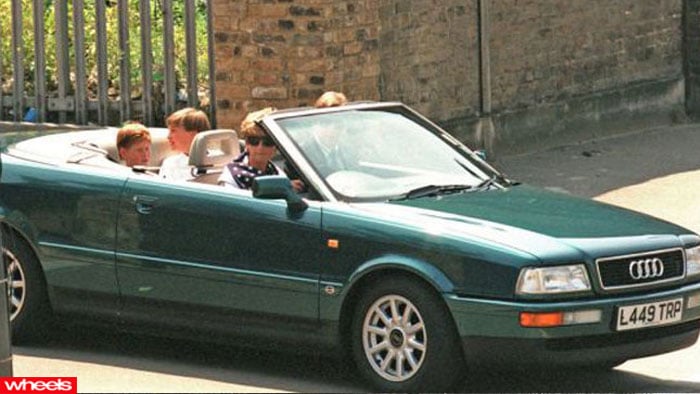
While Takata has been forced to call back millions of vehicles worldwide due to its ‘Alpha’ airbag failures, the first NADI 5-AT recalls started at the end of 2019, affecting a large number of mid-late 90s cars.
Owners of any vehicles involved in this notice are being asked to immediately contact their nearest Audi dealer or call the carmaker’s Takata information line on 1800 856 700.
A list of VINs for affected vehicles can be found here.
Apple’s autonomous car project appears to be progressing, with reports the tech giant has hired a former Tesla engineer.
According to a report from Bloomberg, Apple has brought on Christopher ‘CJ’ Moore, who worked on autonomous driving technology at Tesla under Stuart Bowers – another recent Apple recruit.
Moore is known for challenging Tesla CEO Elon Musk’s representations of what the company’s autonomous tech was capable of, with a leaked memo outlining his comments that Musk’s claims didn’t “match engineering reality”.
Moore was also called as an expert witness at a lawsuit regarding the death of a man who was using Autopilot software in his Tesla.
Despite the secrecy surrounding the Apple car, there’s been a constant stream of news as the company struggles with personnel changes and establishing commercial relationships with critical parts suppliers.
In September, the head of the car project at Apple accepted a senior position at Ford, likely to help develop the Blue Oval’s autonomous vehicle technology. Earlier this week, Ford CEO Jim Farley told employees it was facing a legitimate threat from the likes of Tesla and Rivian.
In the days prior to the Ford defection, a report emerged from the US suggesting Apple had purchased Chrysler’s former proving ground in Arizona.
A number of stories emerged of Apple engaging in talks with the likes of Hyundai Motor Group, LG Magna, and large Chinese battery companies over the past year.
Fast Volvos have a chequered history, yet the safety-conscious Swedish brand hinted at some genuine performance potential when it applied a Polestar badge to its S60 sedan in 2013.
Initially exclusive to Australia as a 50-unit, toe-in-water run, the supercharged six-cylinder mid-sizer impressed sufficiently to prompt an expansion into other markets and spawn a V60 wagon version. It would also be a precursor to Volvo’s shock entry into V8 Supercars just a year later.
Now, Polestar is an entirely separate entity, co-owned by Volvo and its parent brand Geely, and positioned as an electric performance brand.
Australia missed out on the left-hand-drive Polestar 1 hybrid GT, making the Polestar 2 the company’s first properly global car – and the first of what will henceforth be an all-electric line-up.
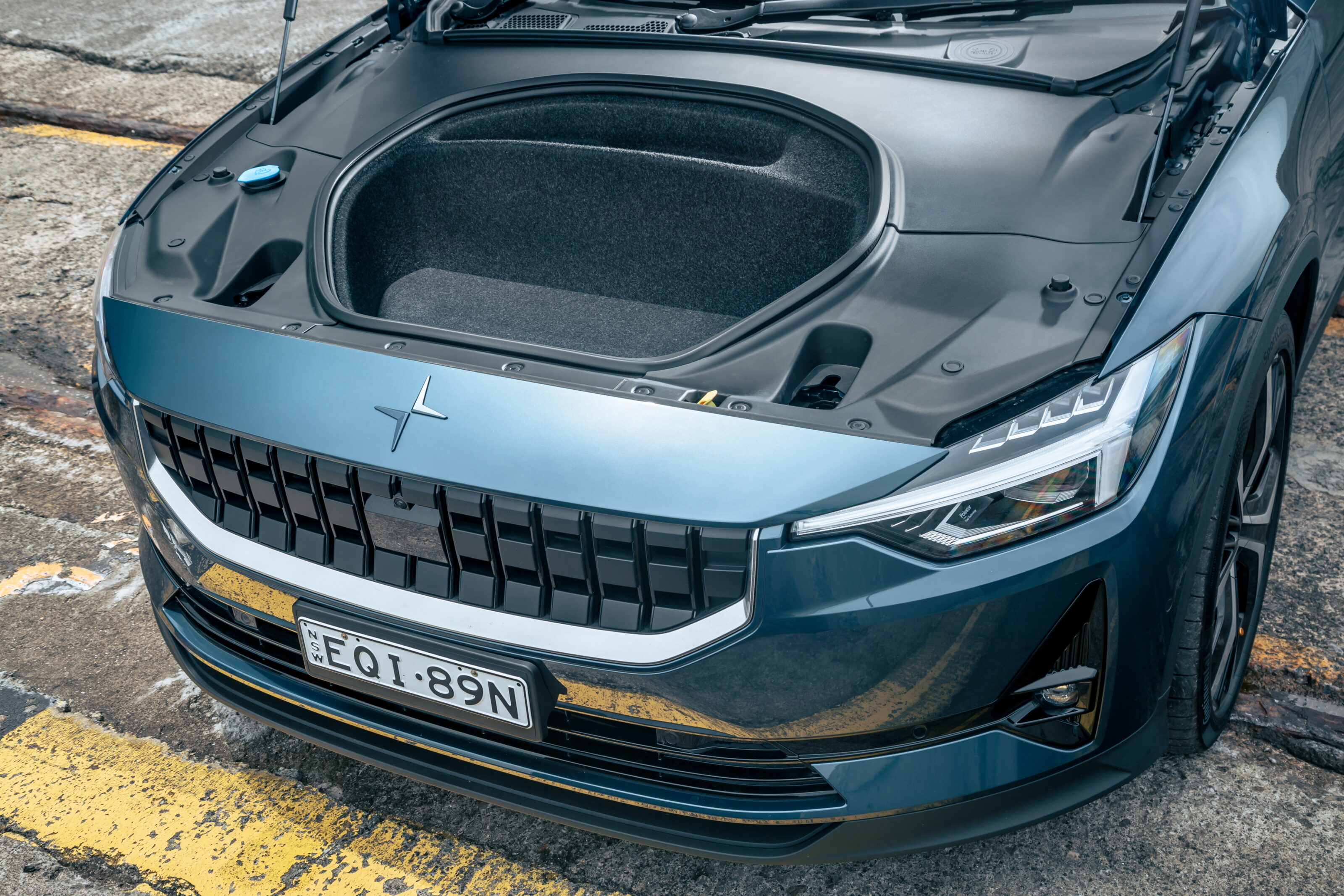
The Polestar 2 range on sale from January 2022 starts just below $60,000 before on-road costs. Here, we’re testing the top-of-the-line $69,900 + ORC Long Range Dual Motor that adds a rear electric motor and has some commonality with the S60/V60 Polestars when equipped with an $8000 Performance Pack.
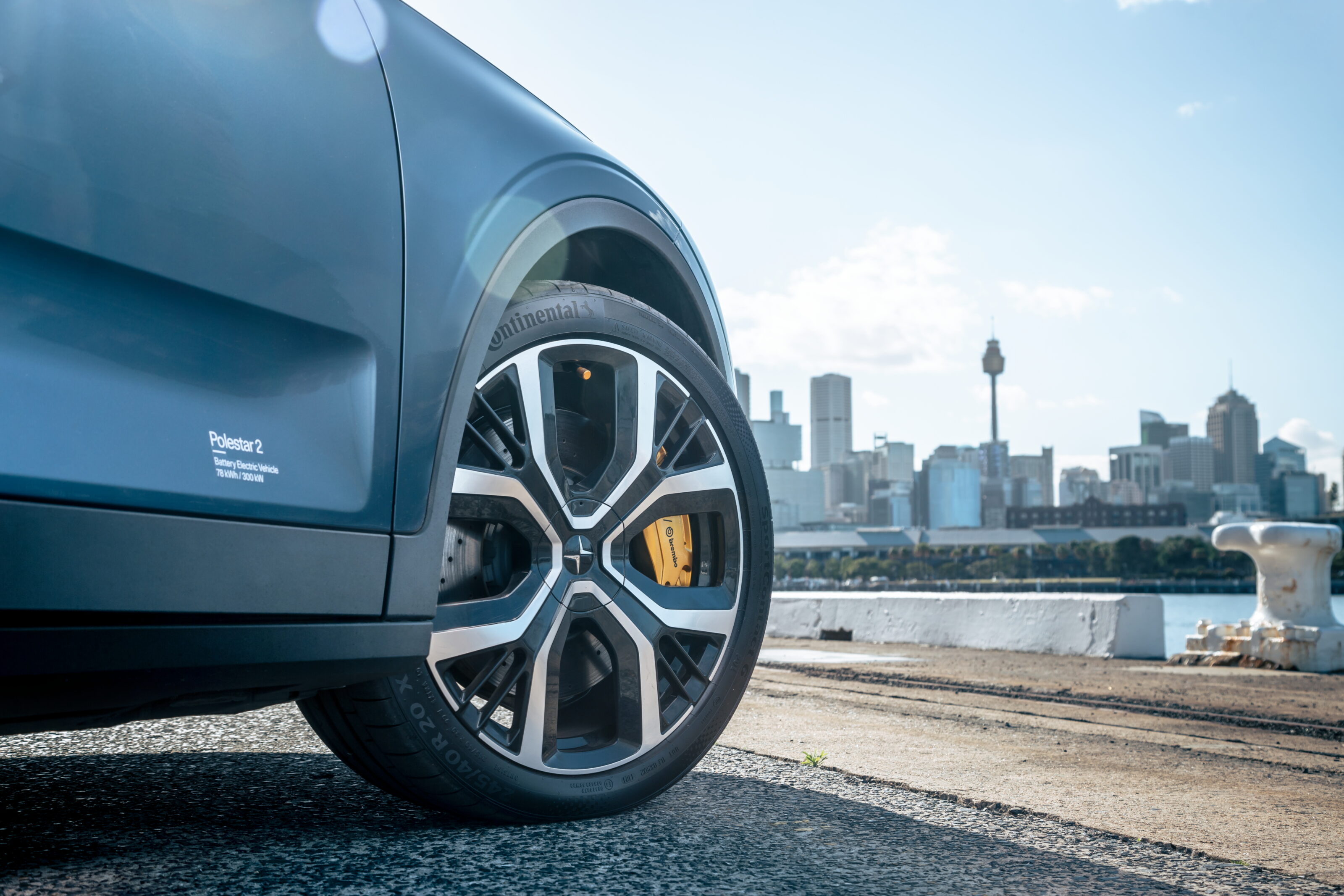
Tick that box and the high-riding liftback sedan – an unusual body style that started life as a Volvo concept called the 40.2 – adopts front Brembo brakes and manually adjustable Öhlins dampers with dual-flow valve technology.
The S60 Polestar’s brake calipers weren’t finished in ‘Swedish gold’, however – a colour Polestar is setting up as something of a signature. The tyre valve caps and seatbelts are also golden.
The Performance Pack also adds bigger wheels and sportier rubber: 20-inch, Y-spoke forged alloy rims wrapped in Continental SportContact 6 245/40s.
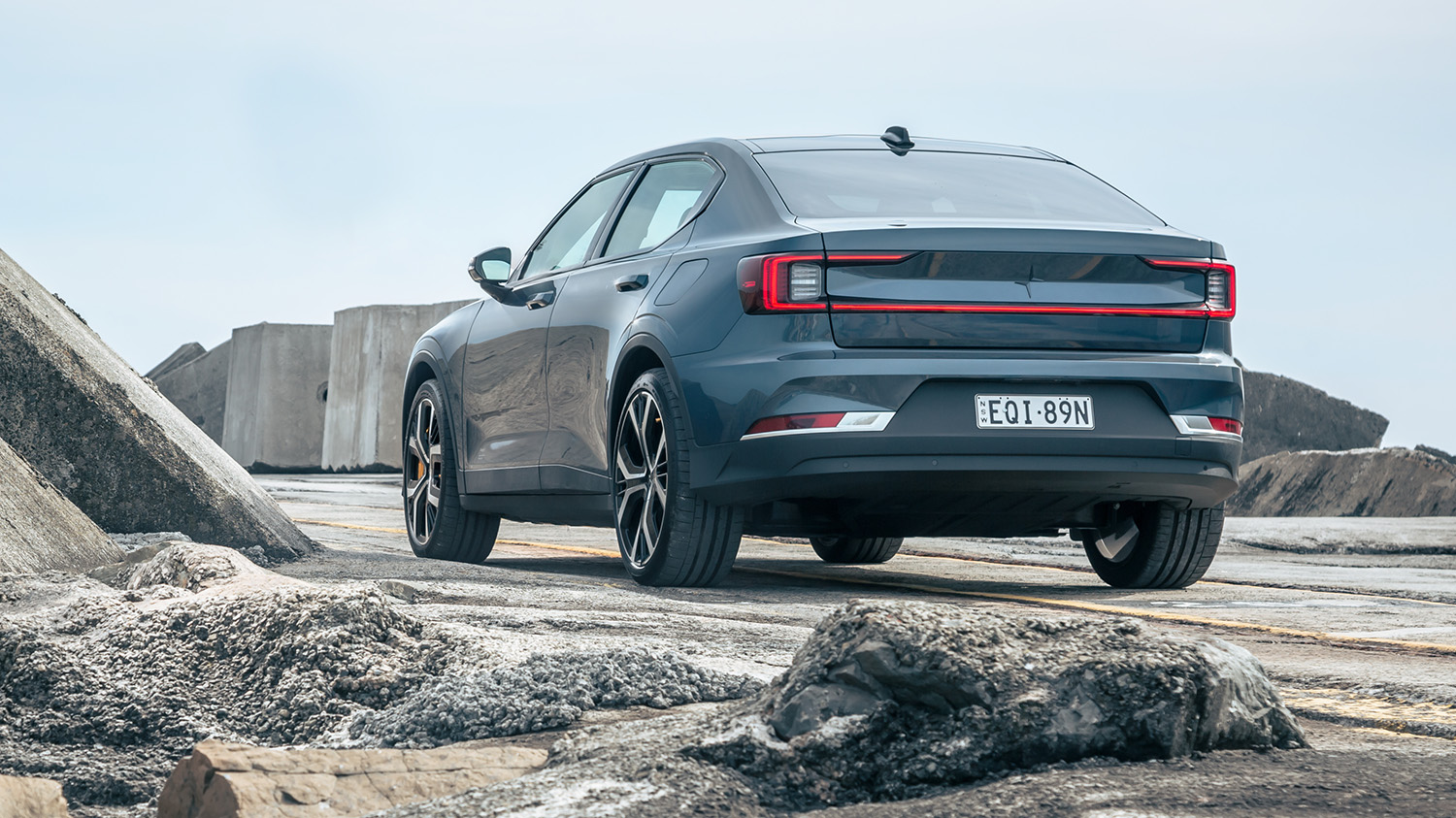
Utilising the same combination of 78kWh battery and 300kW/660Nm dual-motored drivetrain as the Volvo XC40 Pure Electric, the Polestar 2 Dual Motor has a quoted 0-100km/h time of 4.7 seconds.
On paper, that beats the 4.9 seconds shared by both its Volvo twin and the former S60 Polestar. It’s also significantly faster than the 7.4 seconds quoted for the single-motor Polestar 2s.
Although a Tesla Model 3 Performance remains well clear with a 3.3-second claim, Sweden’s electric sedan feels satisfyingly swift – delivering an almost irresistible surge of acceleration.
And when you give this Polestar a bit of Scotty McLaughlin jandal, you’ll be grateful for the front Brembos that are more than just literally gold when it comes to stopping force.
It’s a shame the brake pedal isn’t great to modulate, though it’s possible to drive fast simply using the regen braking to slow for corners.
The absence of drivetrain modes is strange, though the natural, progressive response to throttle inputs means they’re not really missed.
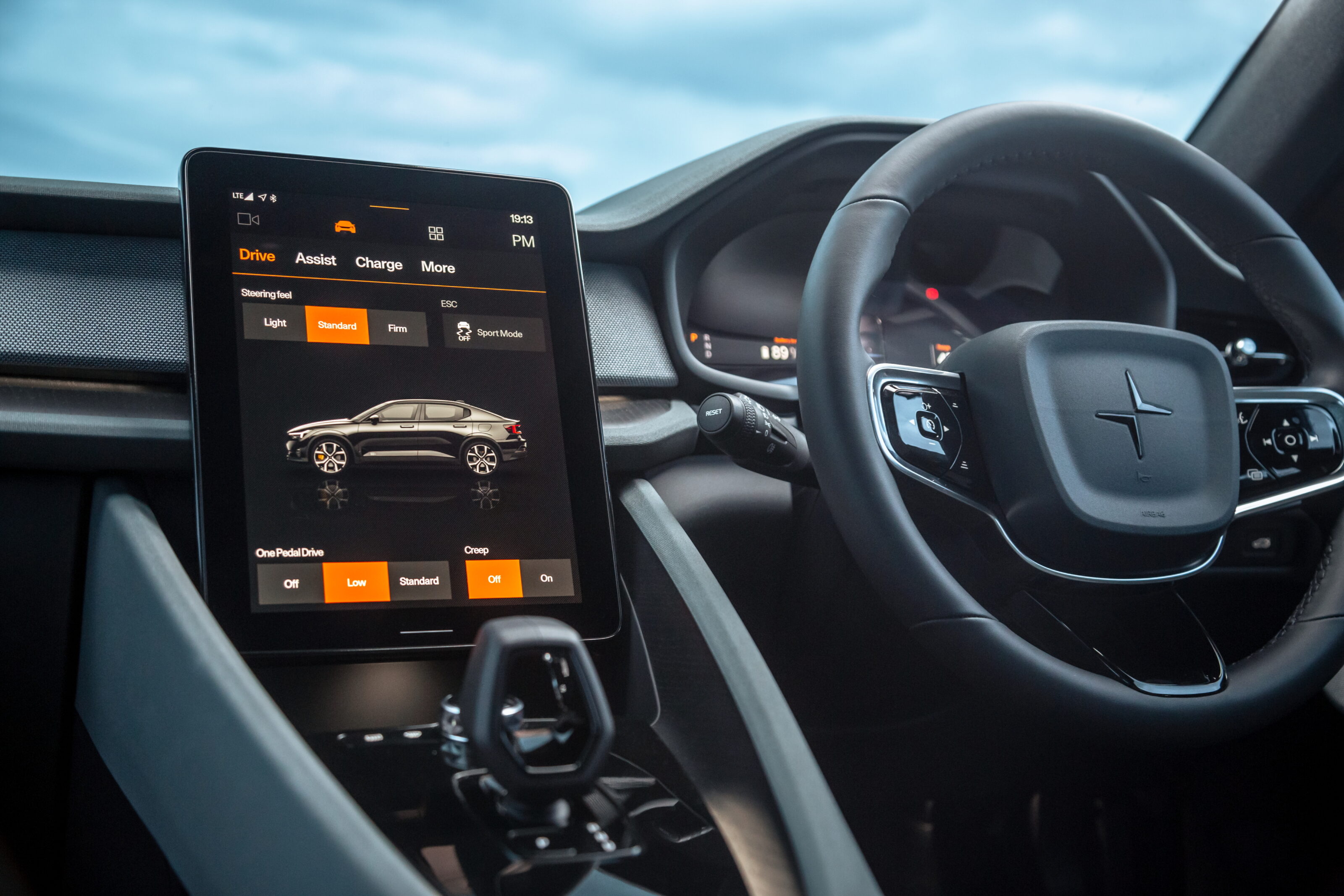
Drivers can adjust the weight of the steering and the strength of the regenerative braking, though we wouldn’t be fussed if there were no options here, either. The default Standard modes feel just right.
Standard is the strongest setting for regen braking and is best for one-pedal driving while also being slightly less aggressive with its off-throttle retardation than the Model 3.
If the Polestar’s steering can’t offer tactility, it offers precision and directness for any driver keen to enjoy a car seemingly engineered to provide more entertainment than your average Volvo.
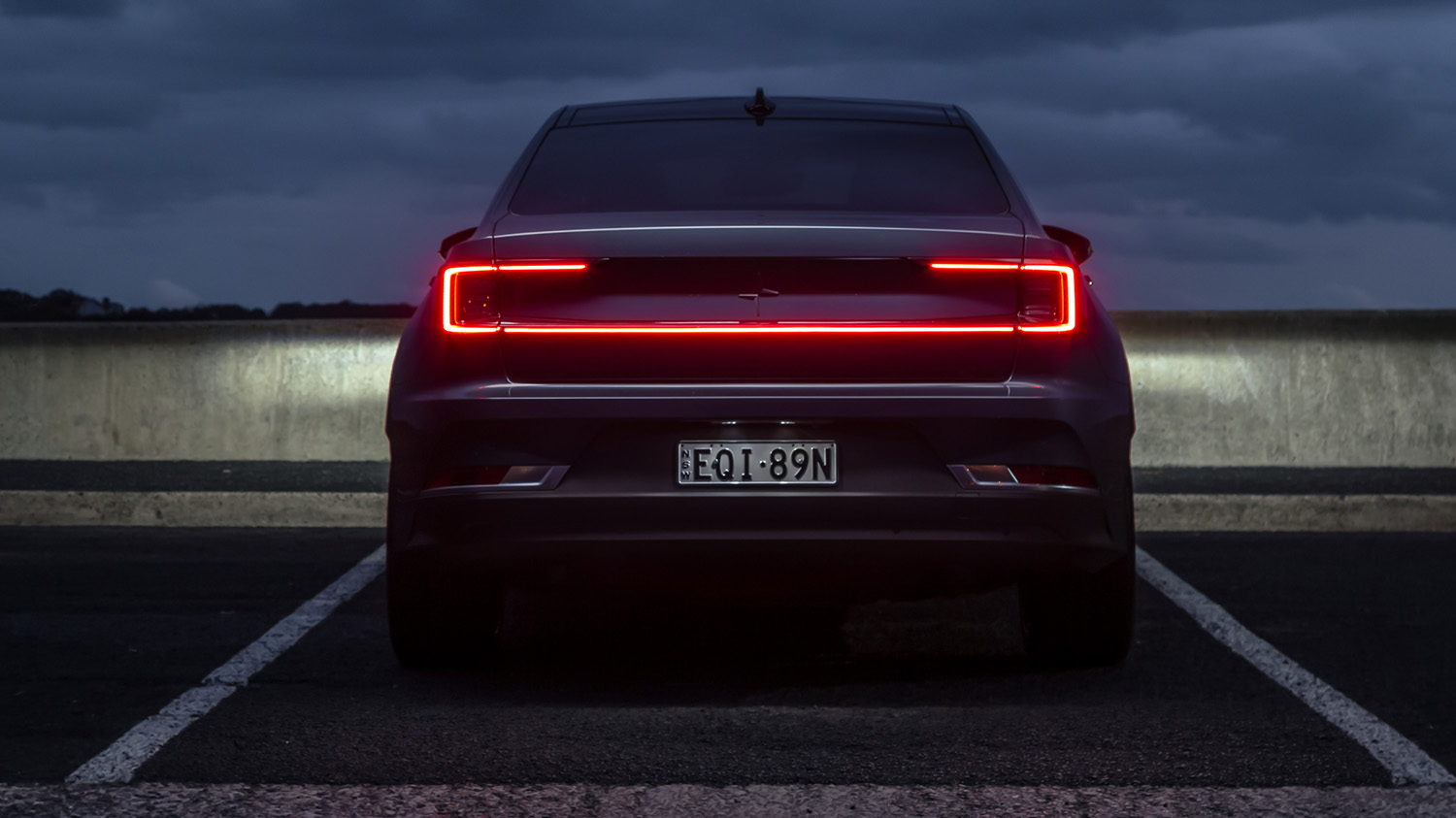
There’s a strong sports sedan vibe to the Polestar 2: in the way it keeps the driver relatively low in their seat; in the reassuring tautness of its chassis; in the way its Continental tyres bond stubbornly with the bitumen.
Perhaps nothing less should be expected considering the stiffness of the damping.
There’s a strong sports sedan vibe to the Polestar 2: in the tautness of its chassis; in the way its tyres bond with the bitumen.
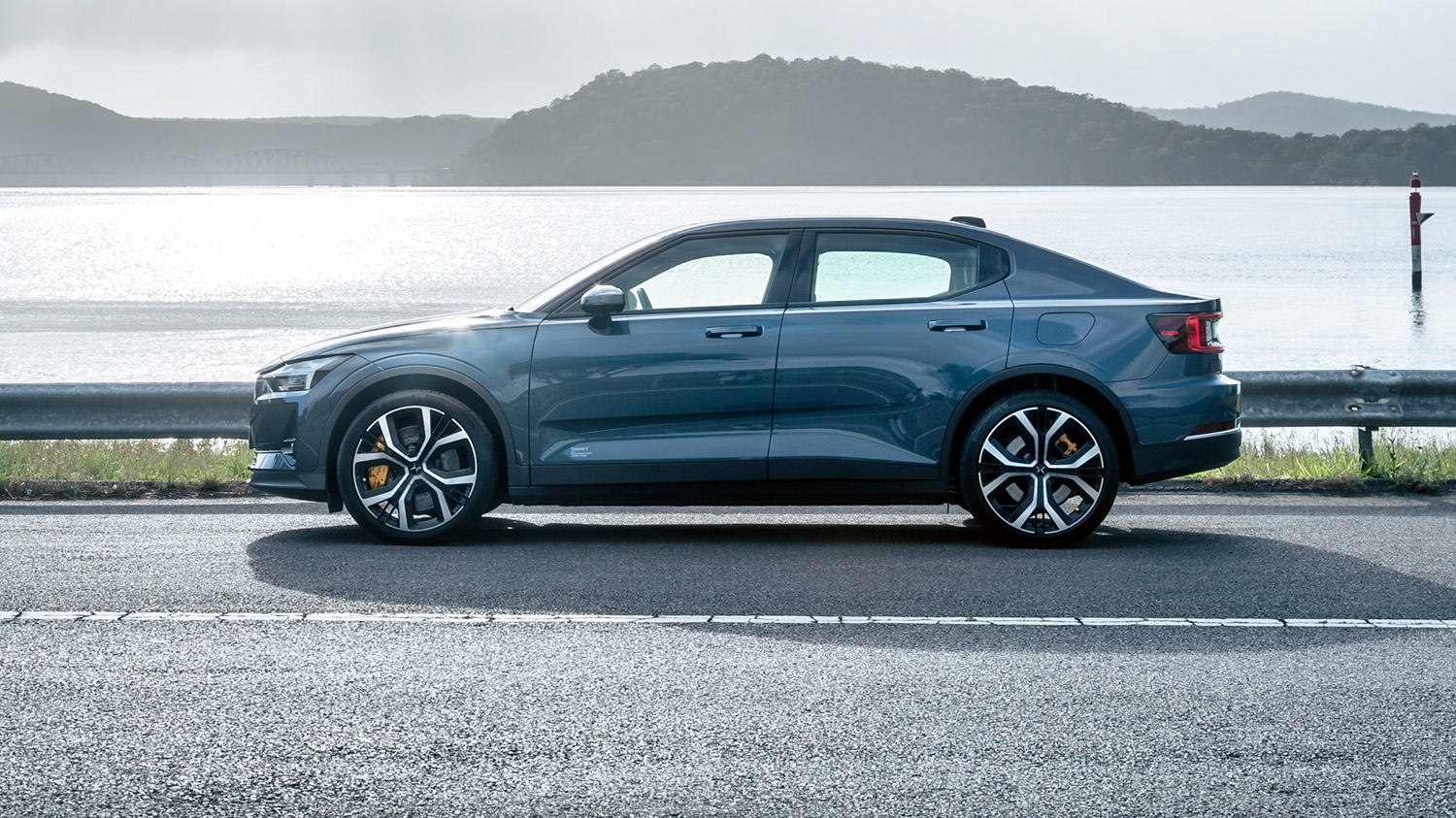
There are as many as 22 settings for the manually adjustable dampers. If this isn’t overkill, it’s certainly a bit of a palaver as Polestar recommends changes are made by a technician (at a Volvo dealership).
Although the default damper setting is superbly judged for a surprisingly agreeable ride over prominent bumps and deep scars, a drive in the Long Range Single Motor with 20-inch wheels but regular suspension suggested not a great deal of roadholding ability is sacrificed for a notably more relaxed primary ride.
The Polestar 2’s distinctive ‘fastback’ styling brings some downsides, with the chunky C-pillars and small rear window robbing the car of some outward visibility.
Its classy, compact frameless side mirrors help, though blind-spot detection and a 360-degree camera ideally wouldn’t be part of a $5000 Pilot Pack that makes for surprising reading considering the proximate Volvo relationship.
The majority of the pack’s features are standard on the electric XC40, though the Volvo is priced higher – from $76,900 before on-roads.
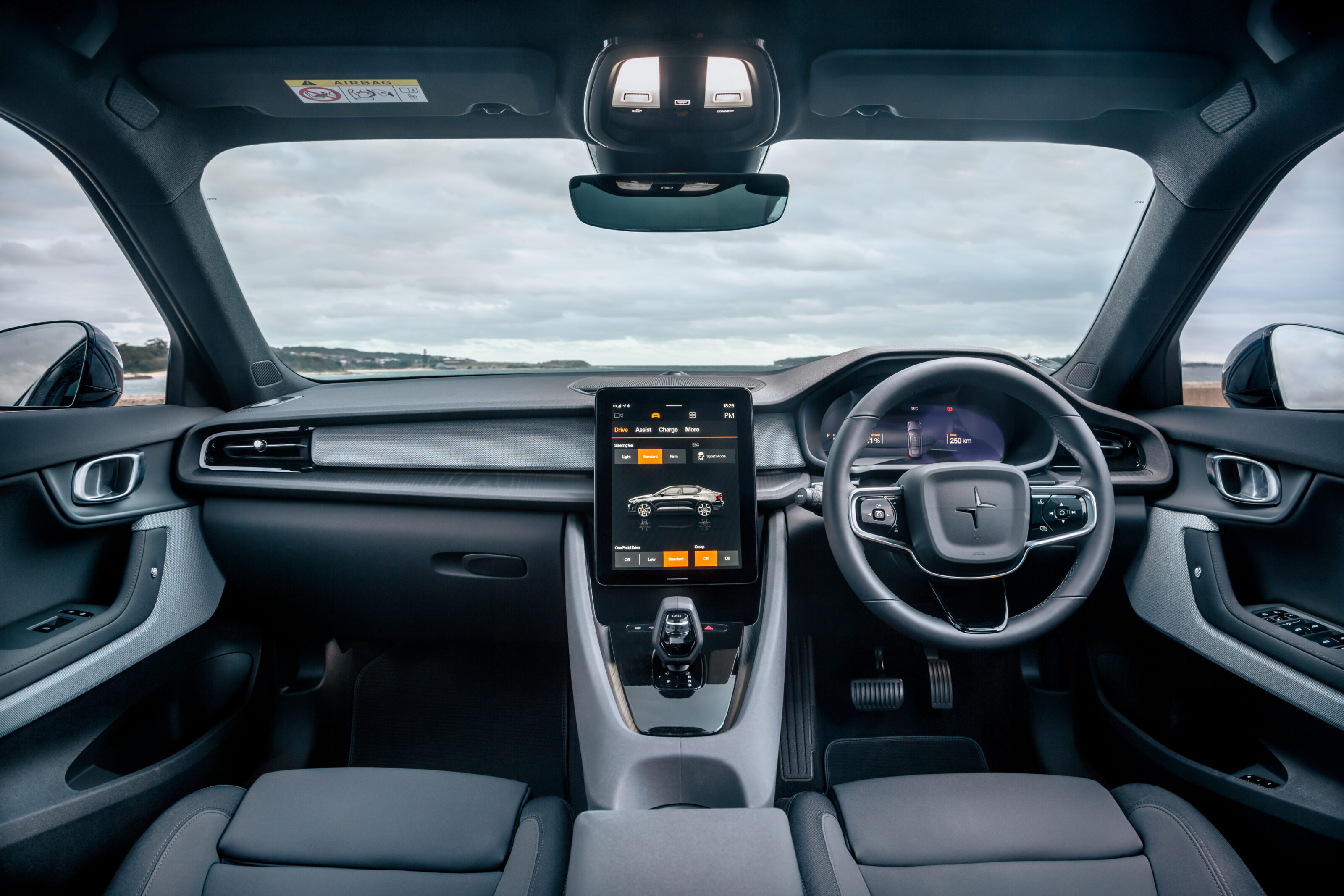
The Polestar 2’s interior shares some parts with the XC40 – such as the steering wheel and rear air vents – though its designers have succeeded in achieving sufficient differentiation and personality.
They were clearly given more artistic licence, eschewing the Volvo’s clever centre console utility for a bridge that rises from between the front seats into the dash and features only a stubby, hexagon-shaped gear selector and audio controller.
Above that is a Tesla-aping 11-inch tablet that adopts Volvo’s favoured portrait format but also houses the first dedicated Google operating system – Android Automotive – to feature in a car.
While lacking the depth of Tesla’s infotainment systems, it’s more intuitive and easier to use while driving. Unlike a Model 3, the driver is also treated to a digital display directly ahead – which can be switched between info-focused and map-dominant layouts. A subscription to Google Services is included for three years.
Like the Model 3, the Polestar 2 can be opened and started using a digital key linked to a smartphone, and over-the-air updates will be continually available.
The build quality is at a level that makes it easy to imagine Audi interior designers sitting in the Polestar 2 and, after raising their eyebrows, nodding in approval.
Polestar aces front-seat comfort with supportive cushioning and tactile fabrics, which in our test car was an optional neoprene-like ‘WeaveTech’.
The Polestar 2’s interior shares some parts with the XC40, though its designers have succeeded in achieving sufficient differentiation and personality.
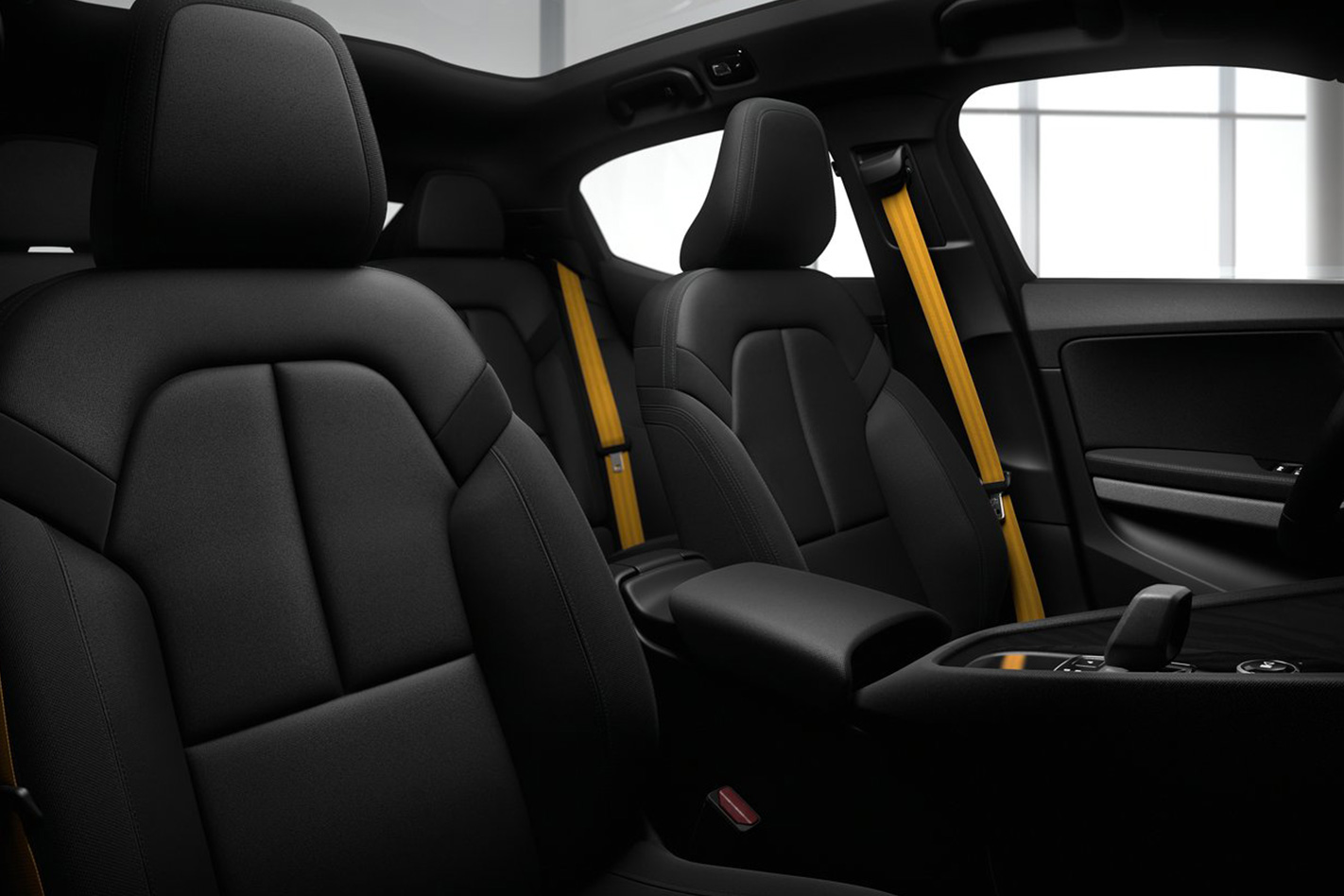
Electric adjustment and manual cushion extenders are also included in a $6000 Plus Pack that adds some options that are fair enough (Harman Kardon 13-speaker audio, panoramic glass roof and heating for the steering wheel and rear seats) and some that should be standard (wireless phone charging tray and boot floor divider).
A chunky centre tunnel that accommodates part of the Polestar’s battery pack rules the middle seat out for adults and in the outboard positions, rear legroom isn’t as generous as you’ll find in a Model 3 or Ioniq 5. Any semblance of toe space requires front occupants to raise the height of their seats.
The bench cushion is well angled for under-thigh support.
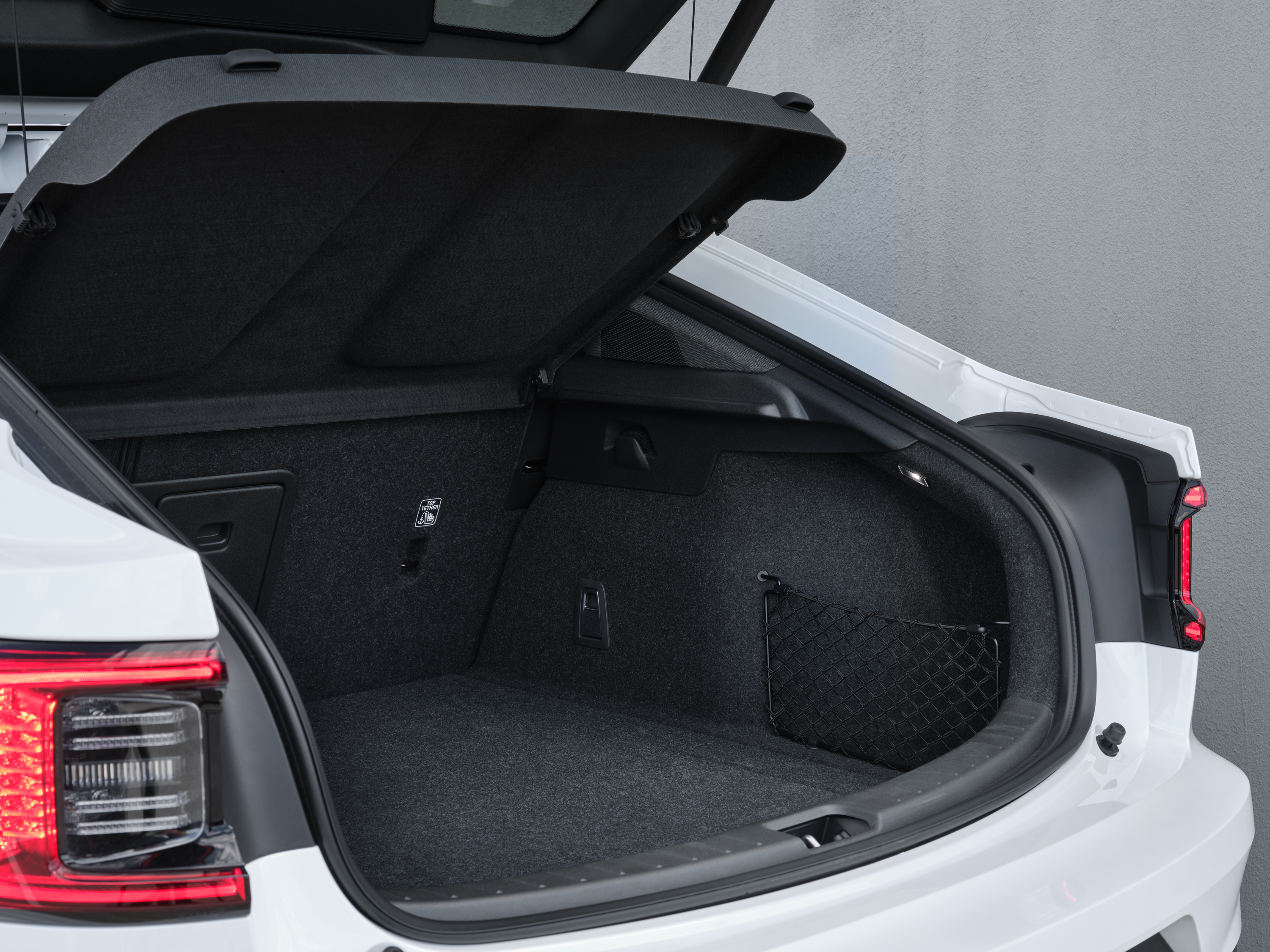
Open the 2’s tailgate and the boot presents a quoted 405 litres of space that includes 41 litres under the floor. That’s well down on the rear luggage capacities of the Model 3 and Ioniq 5, and a reduced area compared with its XC40 twin.
You also need to have added the Plus Pack to gain practical boot elements such as a flip-up partition with bag hooks and elasticated securing straps. The 60:40 folding rear seats incorporate a ski port.
Recharging cables can be stored under the boot floor, or alternatively in the ‘frunk’ under the bonnet.
The Polestar can be charged overnight using a regular power socket, where it took 11 hours for the battery to increase from 53 to 81 per cent (or from 210km to 330km in range).
Install a three-phase 16-amp AC wallbox and you can use the onboard 11kW charger to recharge in about eight hours.
Or, take the 400-volt battery from 10 to 80 per cent in 35 minutes by hooking it up to a 155kW DC charging station, which is useful but slower compared with the Model 3 or an 800-volt Ioniq 5.
Initial testing suggests recharging the Polestar 2 could be a more regular occurrence, though we need more than the 24 hours available as part of its launch program to fully understand its battery’s true range capability.
While it’s typical for EVs to provide a full battery range lower than its WLTP rating, our Polestar 2 Dual Motor started 100km down on its quoted ‘up to 480km’.
The best theoretical maximum range we then achieved was 330km. We had a similar experience with a Long Range Single Motor tested simultaneously; starting at 440km rather than 540km and with a 360km potential range indicated during testing.
Polestar says its vehicles are deliberately set up to take a conservative approach to battery range.
There are as many as 22 settings for the manually adjustable dampers. If this isn’t overkill, it’s certainly a bit of a palaver.
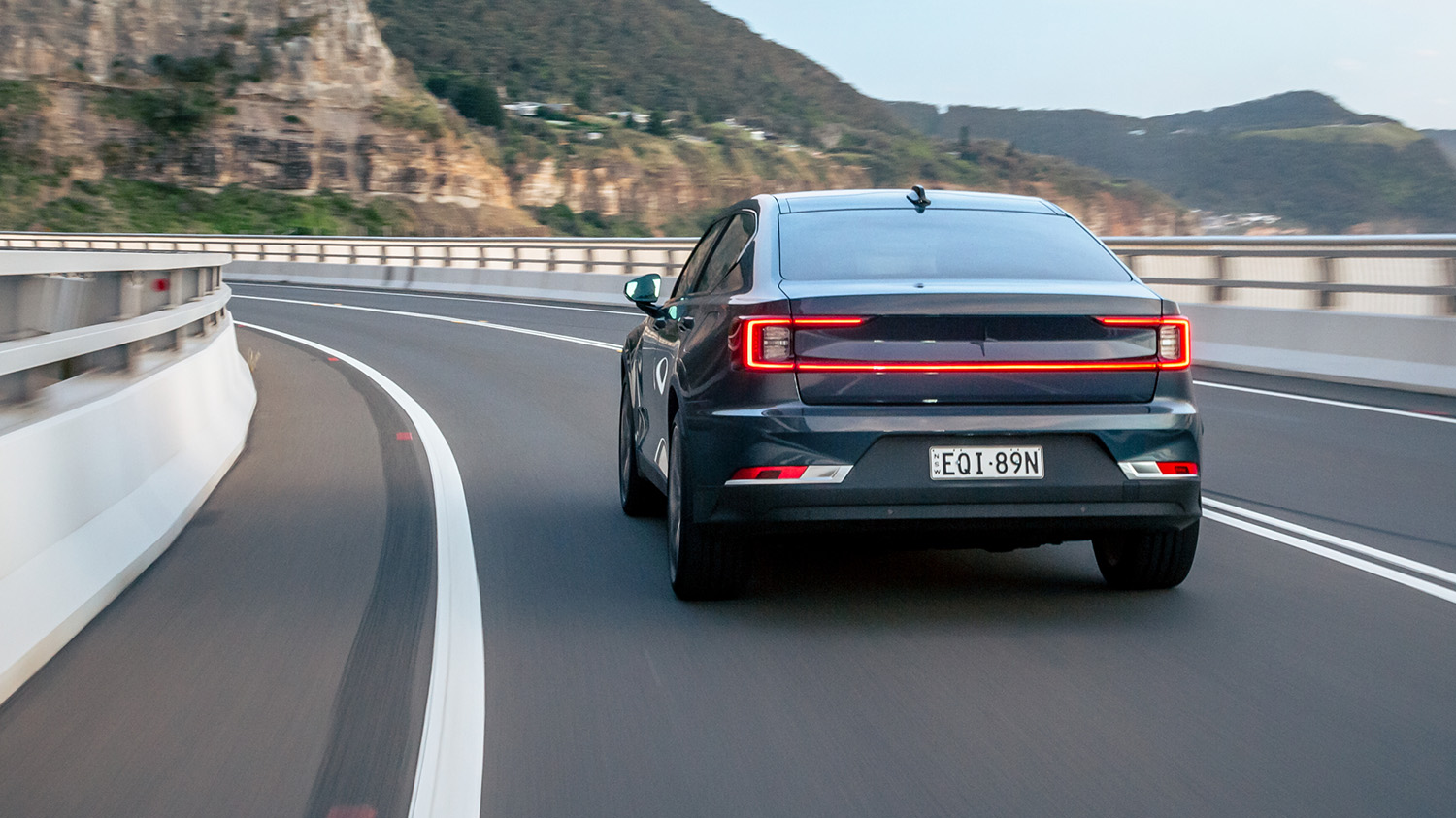
Polestar covers the battery for eight years or 160,000km, while there’s a five-year warranty that’s 12 months longer than that offered by Tesla and with unlimited kilometres. Servicing is also complimentary for five years, adding some extra value.
Volvo dealerships will be there to help with servicing but not the purchase of a Polestar. Dedicated ‘Polestar Spaces’ will eventually pop up in key urban areas, providing expert assistance but with vehicles purchased online – either in the store or at home.
In a market where EV choices are still relatively limited, especially for keen drivers, a Performance Pack-equipped Polestar 2 Dual Motor makes for an interesting new option.
2022 Polestar 2 Dual Motor specifications
Key Points
- At least 592 vehicles under recall
- Potential for seatbelt warning to not activate
- Owners are encouraged to contact local Volkswagen dealers
The 2020 and 2021 Volkswagen T-Cross has been recalled, owing to a potentially faulty seatbelt warning.
Affecting a total of 593 vehicles sold in Australia since the model’s launch last year, the issue is due to the audible and visual seatbelt warning not functioning continuously if a belt isn’t fastened, meaning an occupant could be unrestrained without the driver’s knowledge.
Of the 7871 units sold between the launch date of the T-Cross in 2020 to the end of October 2021, the recalled vehicles represent just under eight per cent of all examples delivered.
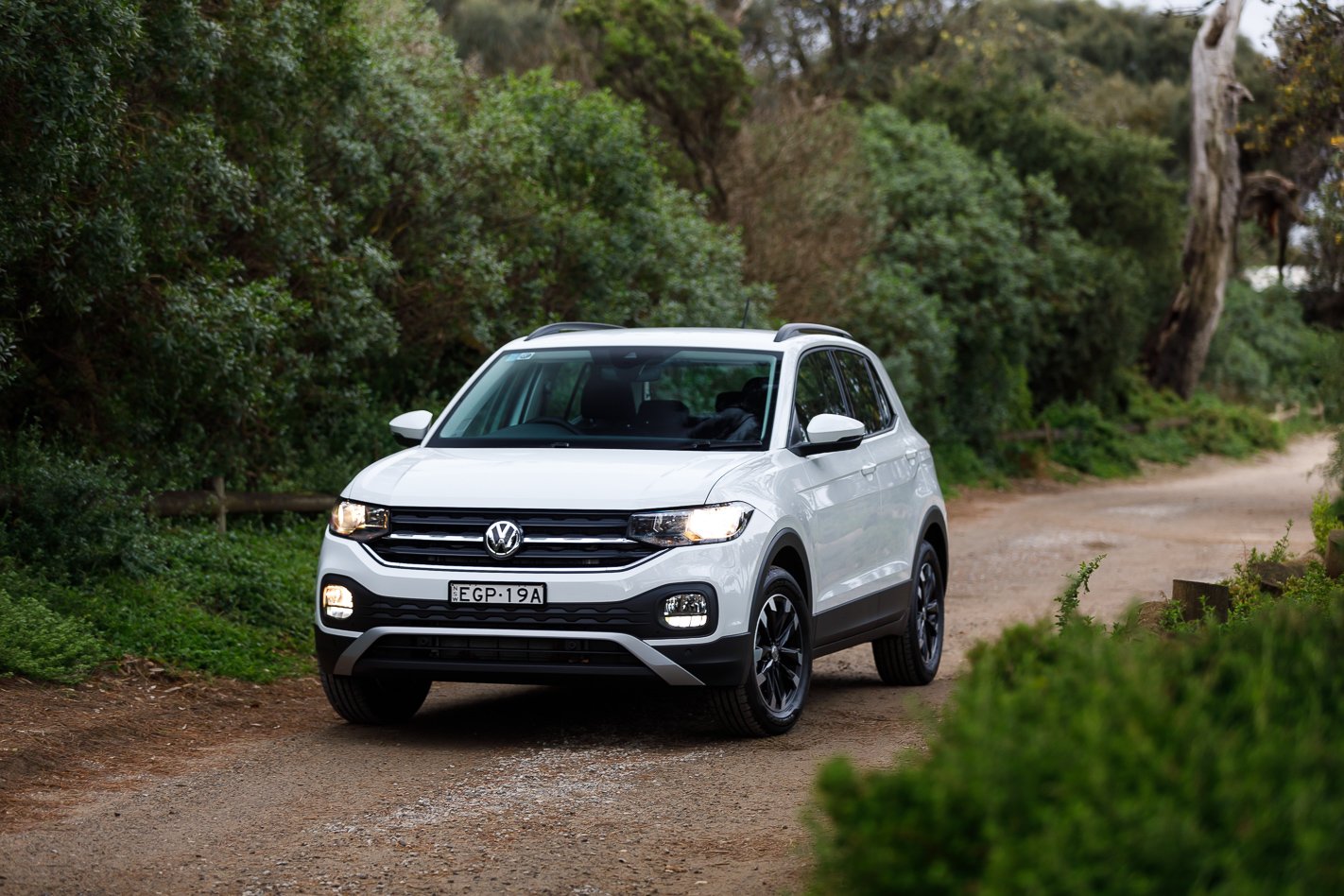
Volkswagen is encouraging affected customers to contact their nearest dealer to arrange an inspection and replacement of the necessary parts, free of charge.
Any T-Cross owner who is unsure as to whether their car is affected can contact Volkswagen’s recall department on 1800 504 076 or [email protected]
A list of VINs can be found here.
Key Points
- SEA Electric pulls out of Latrobe Valley facility
- Plans to establish a factory were announced in 2018
- Region is fast losing jobs due to power stations closing
Electric vehicle manufacturer SEA Electric has pulled out of a deal with the Victorian Government to establish a factory in the Latrobe Valley.
After announcing a deal with Victorian Premier Daniel Andrews in the lead up to the 2018 State Election, SEA Electric had planned to build a plant in the region – which would have provided around 500 jobs for local residents.
As reported by the ABC, the Victorian Government announced yesterday SEA Electric had declared its intention to end the agreement – although no details were provided as to how much had been spent or repaid to the company.
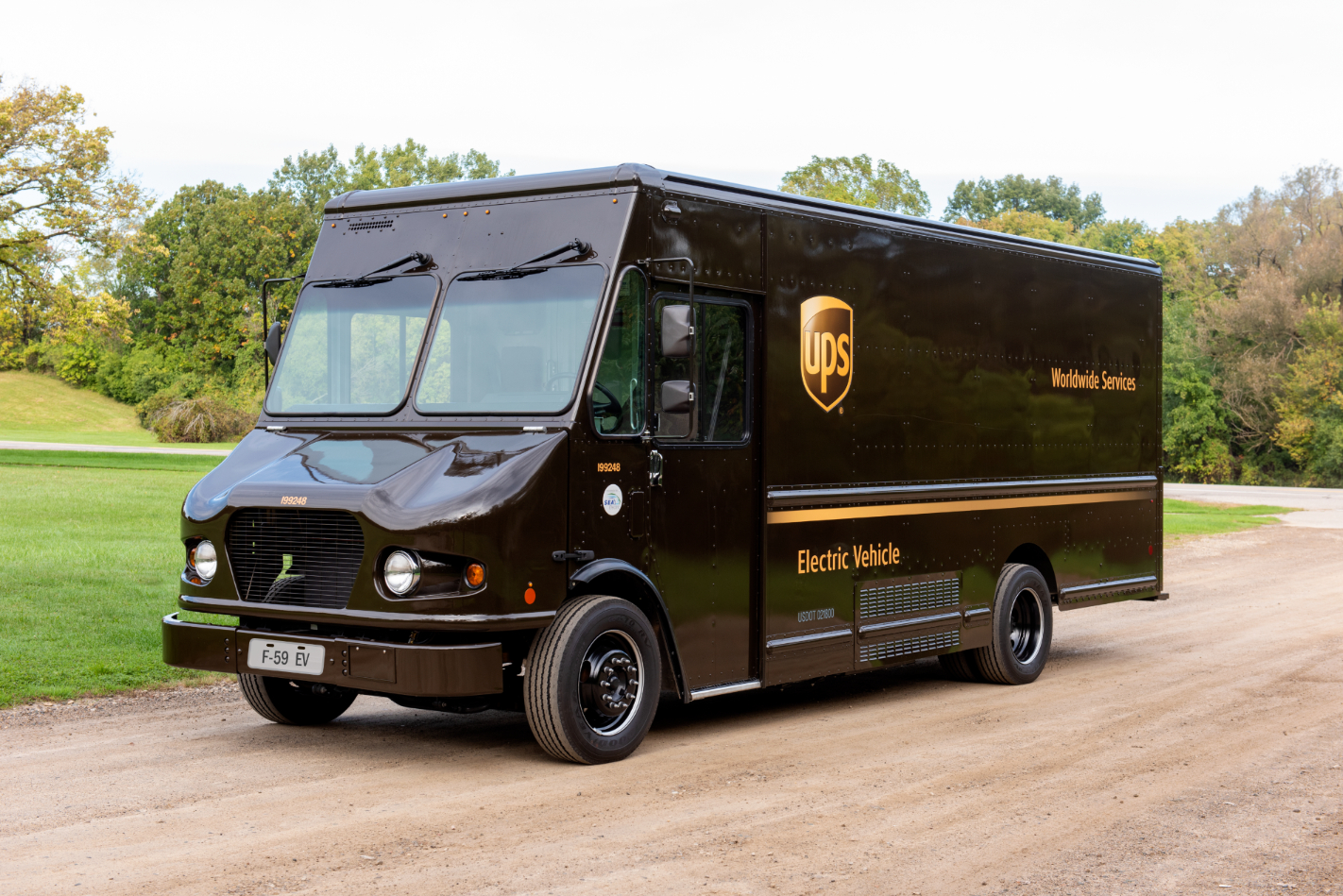
The announcement is a blow for the Latrobe Valley region which was looking to recover jobs after the Hazelwood coal-fired power station closed in 2017, leading to roughly 750 local residents losing their main source of income.
Earlier this year, SEA Electric announced a US$42 million (AU$52m) uptake in private placement equity financing, having moved its Australian headquarters to the United States and formed partnerships with the likes of FedEx, Staples and UPS.
The privately sourced funding was tipped to help SEA Electric further develop its Sea-Drive 120a battery system, as well as expand into international markets with its business of converting front engine cab, chassis-rigid trucks and delivery vans to run on electricity – with local offerings including Isuzu and Hino vehicles.
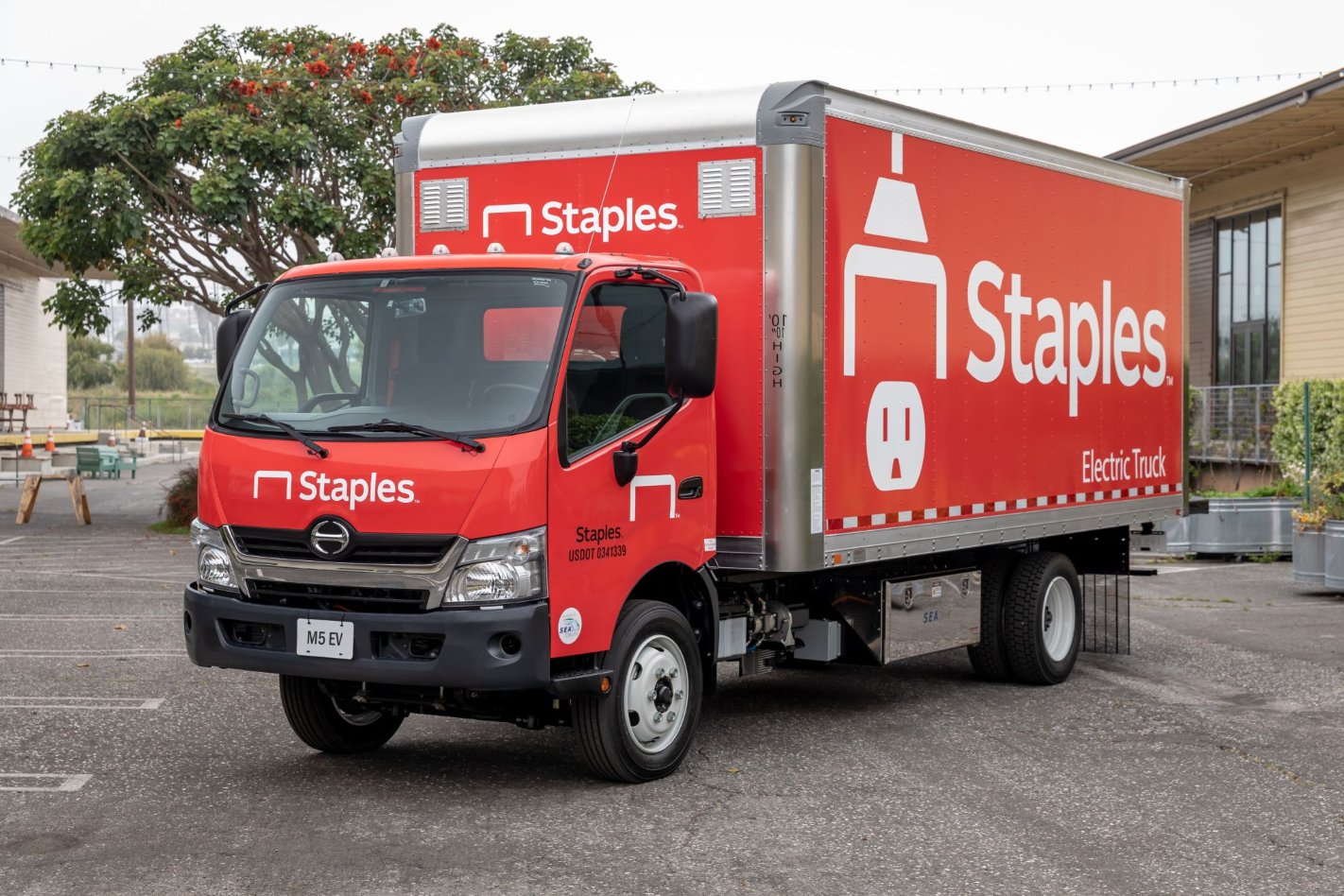
In Australia, similar vehicles to those converted by SEA Electric are set to be rolled out through the Australia Post fleet, with the national postal service taking delivery of 20 Mitsubishi eCanter trucks for metro areas.
The announcement comes a day after the Federal Government announced its Future Fuels strategy, which has been widely criticised by the automotive industry with experts saying the current target for EVs to make up 30 per cent of new vehicle sales by 2030 is “optimistic” given the lack of incentives.
Electric vehicles seem to have overtaken high-speed rail as the canary in the coal-mine alerting us that a federal election is looming.
We’ve already seen Prime Minister Scott Morrison’s about face on EVs and no doubt we’ll soon hear Labor, the Greens and others bend over backwards to outdo his EV ‘plan’.
But the mistake Australia’s policymakers are committing with regard to EV incentives is they assume we’ll continue to have a choice.
Amongst all the hype at the COP26 international climate summit in Glasgow, this week came news that several nations have agreed to follow the United Kingdom’s lead in banning the sale of petrol cars in developed countries by 2035 and in developing nations by 2040.
It sounds like quite ambitious legislation, but may not even be necessary – with major carmakers including Ford, Volvo, General Motors and the Volkswagen Automotive Group already committed to producing EVs only by as early as 2030.
With Australia now all-but reliant on imported vehicles, this will eventually lead to a situation where a vehicle with a fuel tank will cost more than one sitting on a battery pack.
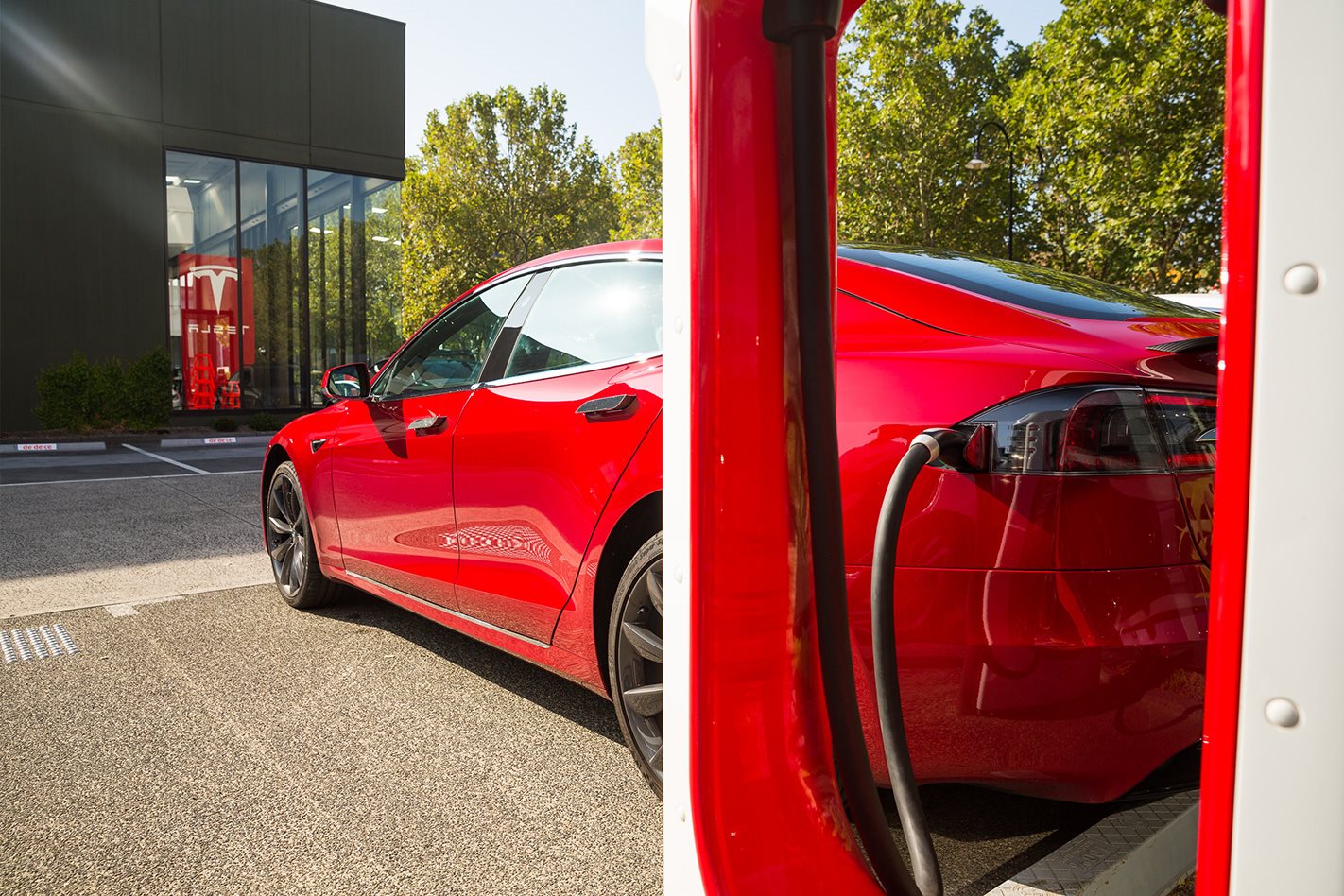
Which begs the question: if it’s going to happen anyway, why should the Government offer incentives?
Well, because Australia is in serious danger of being woefully unprepared for the inevitable tide of EVs, due to the lack of infrastructure.
Battery electric vehicles (BEVs) are growing in Australia, but still make up less than one percent of sales here. However, we’re already starting to see queues at public charging stations because, according to Melbourne-based climate think tank The Blueprint Institute, there are fewer than 100 public charging stations per million people.
By comparison, there are more than 400 chargers per million people in Europe, while the gas-guzzling United States falls somewhere in between.
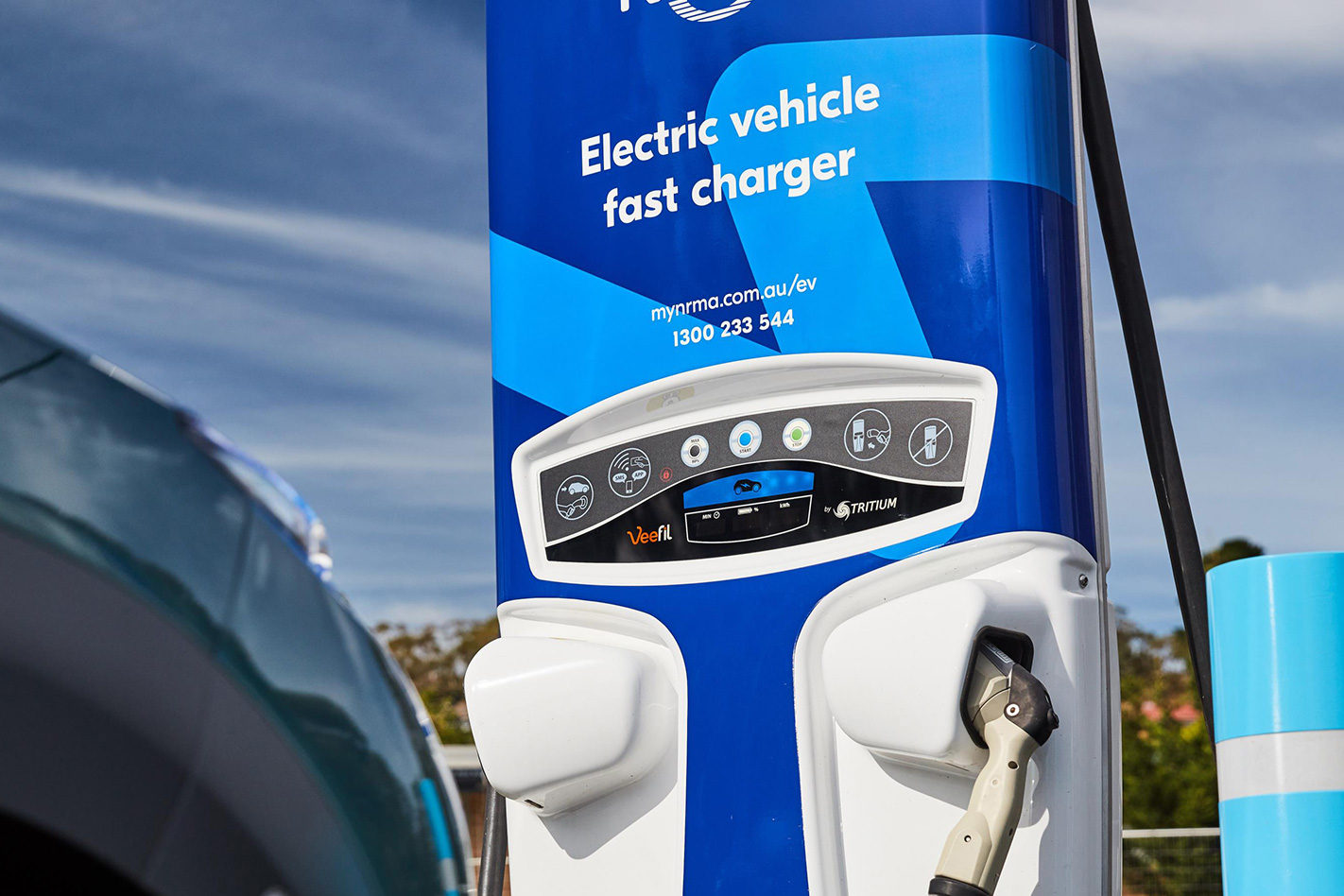
The Institute had already called for EV charging infrastructure to be a 2021 Federal Budget priority.
In a report titled ‘Technology, not taxes; what about spending’… the organisation called for an EV charging infrastructure investment fund, stating: “Scale will matter a lot for EV uptake across Australia. Charging infrastructure is a major impediment of their widespread adoption, especially when our population is so geographically dispersed.”
No such initiative was announced on Budget night, but now an election is in the wind we’ve seen a pledge from Prime Minister Scott Morrison for a $250 million Future Fuels Investment Fund that includes funding for 50,000 charging stations in Australian homes – ignoring the need for more public rapid chargers.
Outspoken Electric Vehicle Council CEO Behyad Jafari said while the Future Fuels Investment Fund identified some of the correct benefits and pathways, “it does little to realise them”.
He said the plan ignored proven measures to improve electric vehicle uptake, including subsidies, tax incentives, and sales targets.
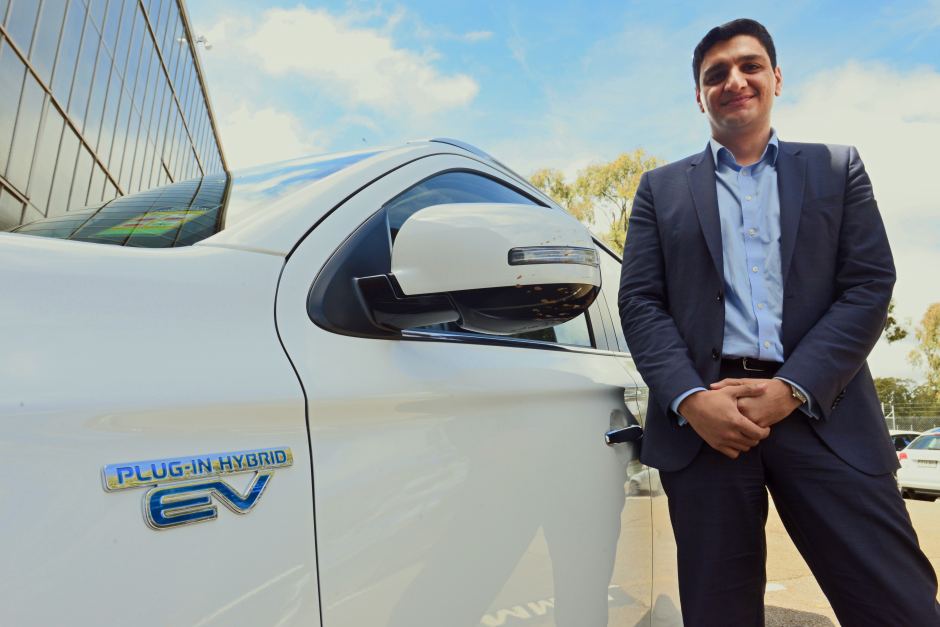
While Jafari is keen to see more carrot to expedite the uptake of BEVs in Australia, he also reckons there needs to be a bit more stick in the form of stronger fuel efficiency standards that awarded low-emissions vehicles and penalized gas guzzlers.
But the PM said such measures robbed consumers of choice.
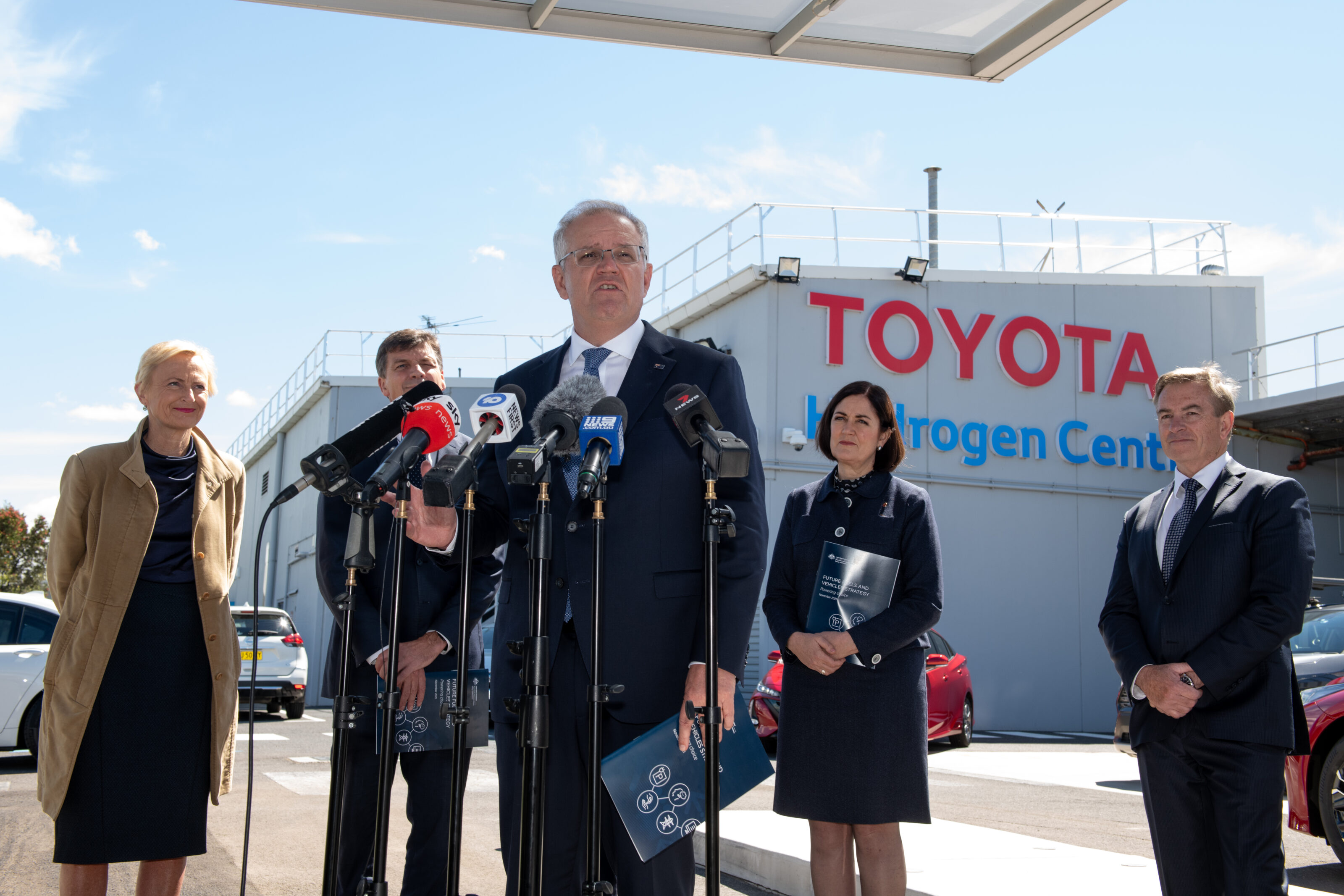
Speaking at the Toyota Hydrogen Centre in Melbourne yesterday, he said: “We will not be forcing Australians out of the car they want to drive or penalizing those who can least afford it through bans or taxes,” he said.
“Instead, the strategy will work to drive down the cost of low and zero-emission vehicles and enhance consumer choice.”
Jafari pointed out that stronger emissions laws would actually give Australians more choice when it comes to choosing low/zero-emission vehicles.
“The best and most affordable EVs that manufacturers are producing would make their way swiftly onto our market.
“Fuel efficiency standards are the absolute bare minimum of what you would expect in any 21st-century plan.”
Jafari’s sentiments have been echoed by a string of automotive industry figures, none less so than Michael Barstch, managing director of Volkswagen Australia.

Bartsch said VW is becoming one of the biggest sellers of affordable EVs around the world but refuses to sell them in Australia because of the government’s failure to adopt tighter restrictions on vehicle emissions such as those required in Europe.
Australia is “an automotive dumping ground for auto engines that our competitors cannot sell in other markets,” he told the LA Times.
The continued lack of federal leadership on EVs, and its aversion to setting emissions targets means “Australia languishes in the automotive third world”.
If our scoring section had a criterion marked ‘Ambition’ then the new LDV T60 Max Luxe would score 10/10. Its press release mentions just two competitors, the Ford Ranger and Toyota HiLux, which dominate both the dual-cab segment and Australia’s vehicle sales in general.
It’s a bold statement, but why aim for anywhere other than the top? Nevertheless, with great ambition comes great expectations, so the question we must answer is: How does LDV’s heavily updated T60 ute stack up in an extremely competitive segment?
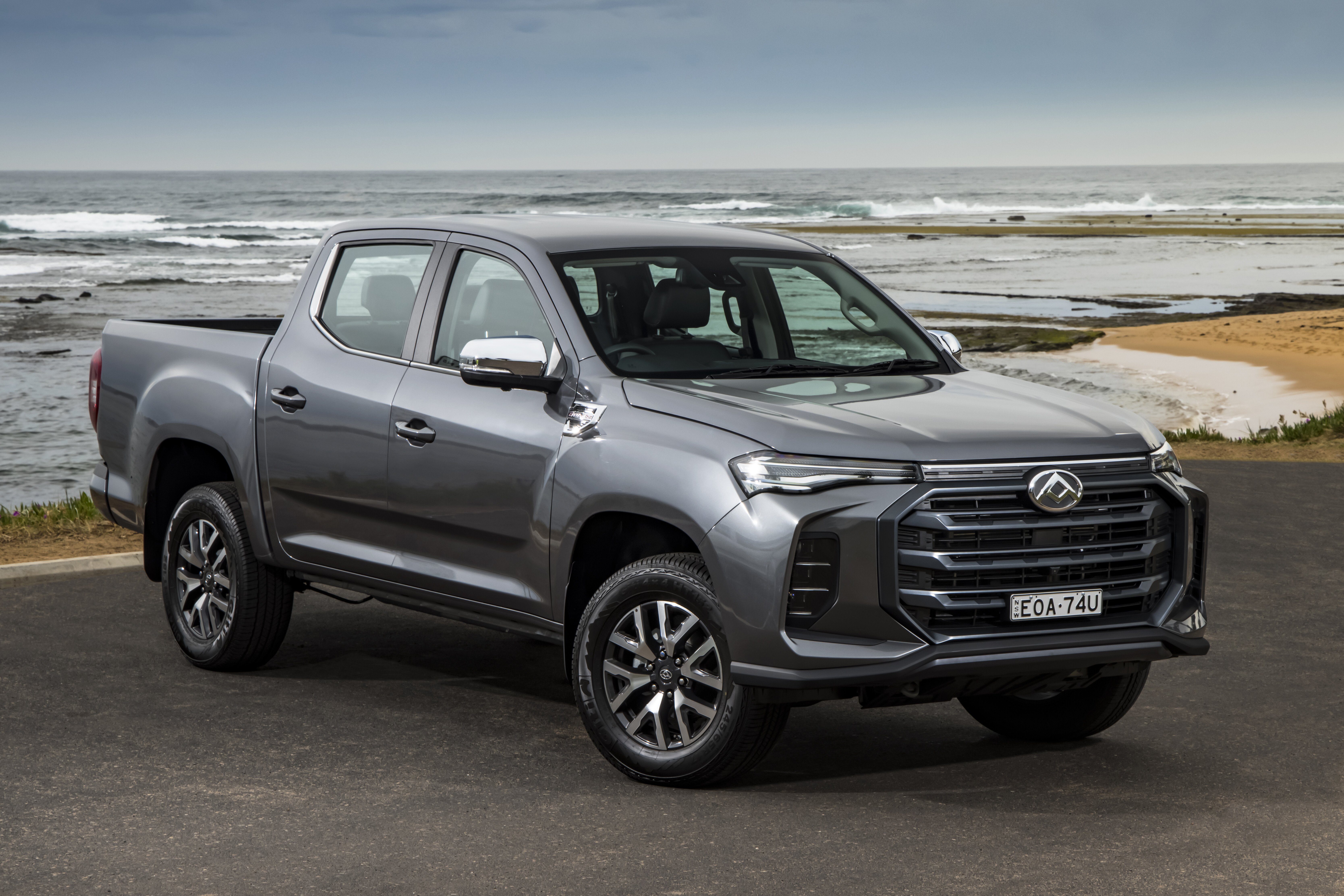
If we’re talking dollars and cents, it stacks up very well. Before on-road costs, the T60 Max range kicks off at just $33,990 but even our range-topping Luxe automatic lists at $40,490, though these figures convert to a drive-away price if you’re an ABN holder. Included is five years or 130,000km of warranty and roadside assistance coverage.
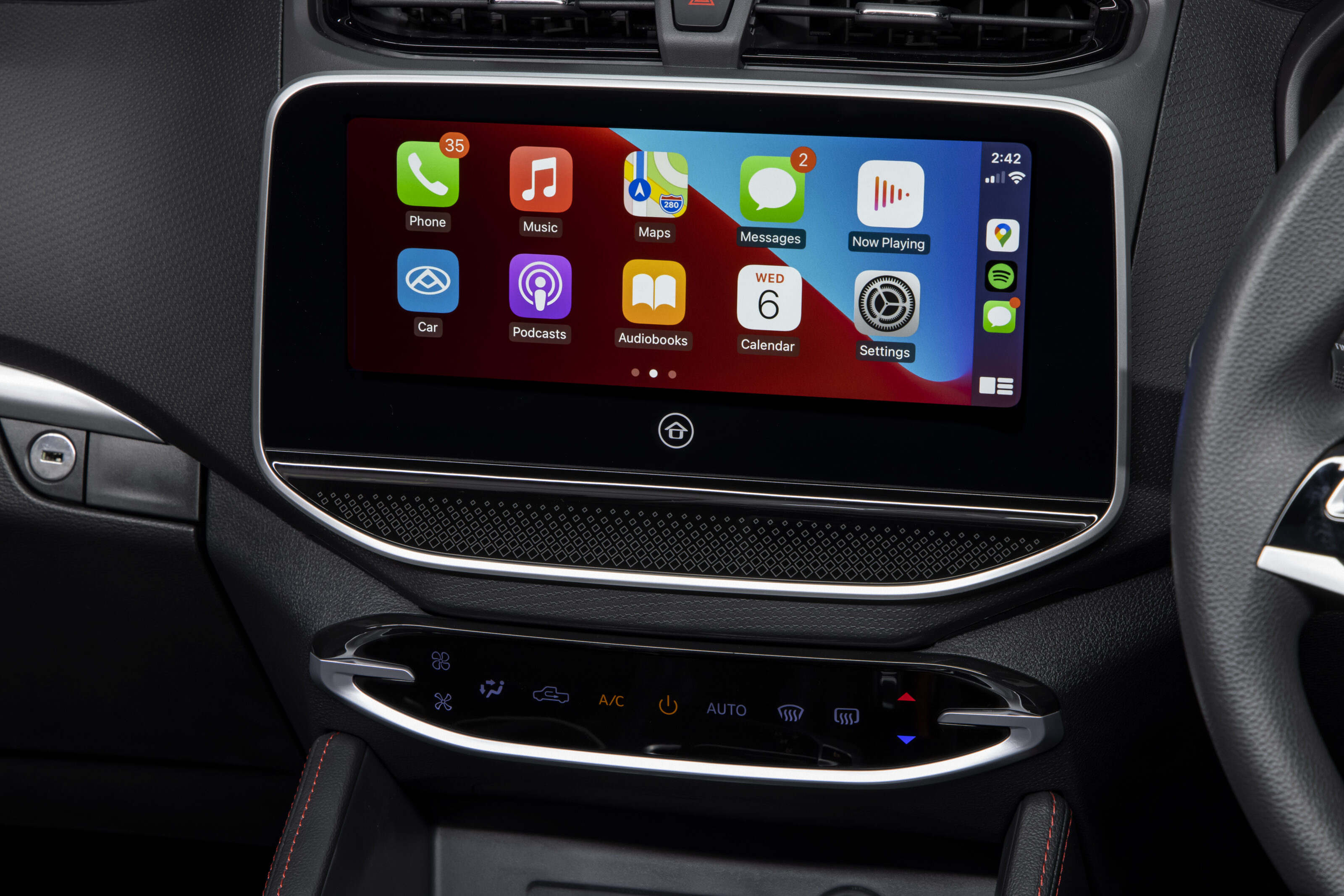
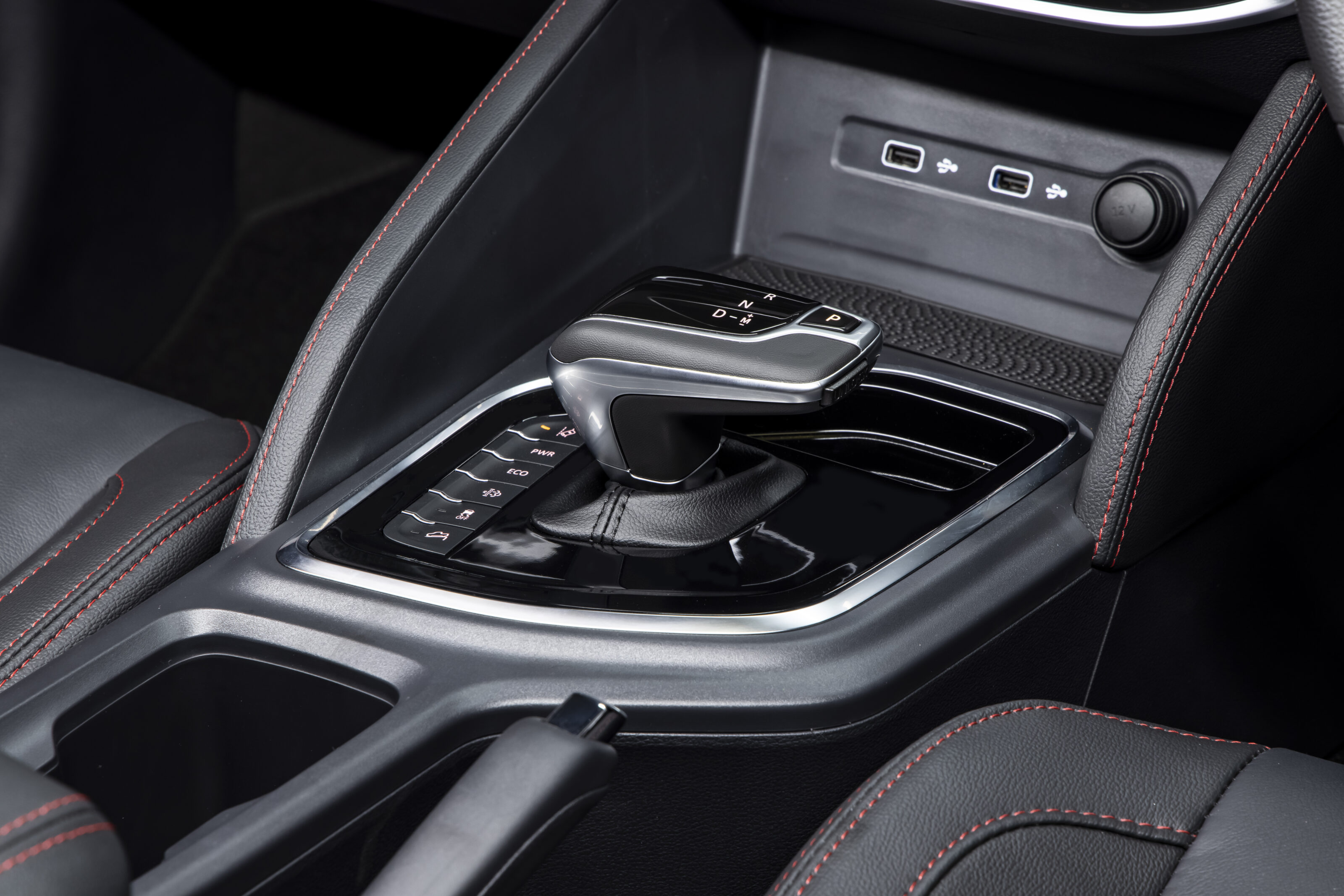
The T60 is not a bare-bones affair, either, especially inside where the interior has been heavily updated. A new 10.25-inch widescreen infotainment system takes pride of place on the dash, with a redesigned gearshifter in the style of the old Audi A8 completing the makeover. The front seats are electrically adjustable and heated, there’s a six-speaker stereo and you can access Apple CarPlay via a pair of USB ports up front.
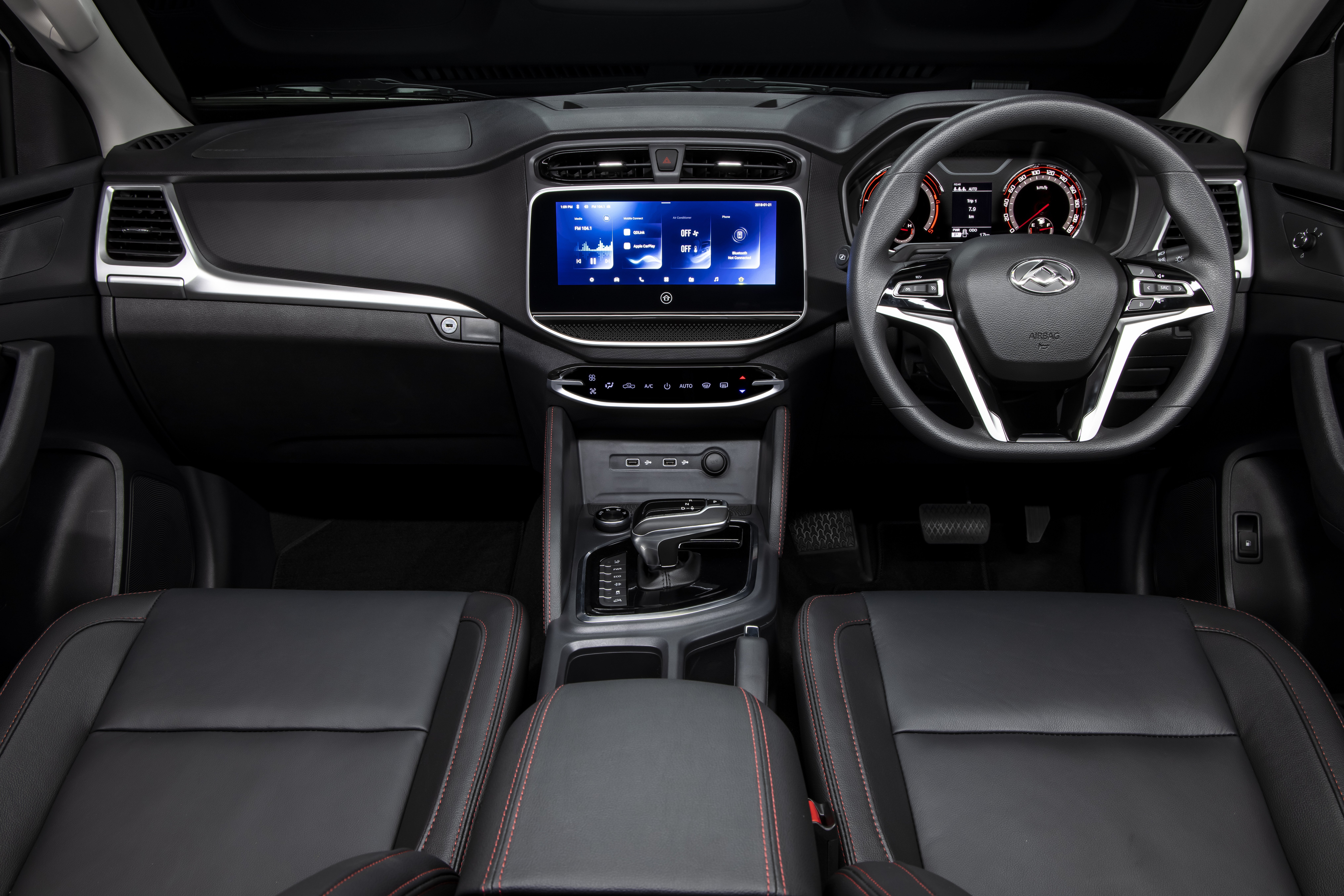
For the money it’s an impressive cabin, with thoughtful touches like leather pads on the centre console for your knees, but there are a few shortcomings. The steering wheel has only height adjustment, not reach, and the seats have very short cushions that result in a lack of under-thigh support. They’re also very heavily padded, so you don’t so much sit in them as on them.
The reversing camera is also low-res and the T60 mutes the audio being played when reverse is selected. In theory, this is a clever safety feature to improve driver focus but it doesn’t pause the audio, just mute it, which makes it quite annoying if you’re in the middle of a news bulletin/podcast/your favourite song.
A 360-degree camera is a welcome inclusion and the safety offering runs to six airbags, rollover mitigation and lane departure warning, however, the lack of autonomous emergency braking, forward collision warning, lane-keep assist and blind-spot monitoring means the T60’s five-star ANCAP rating from 2017 would not carry over today.
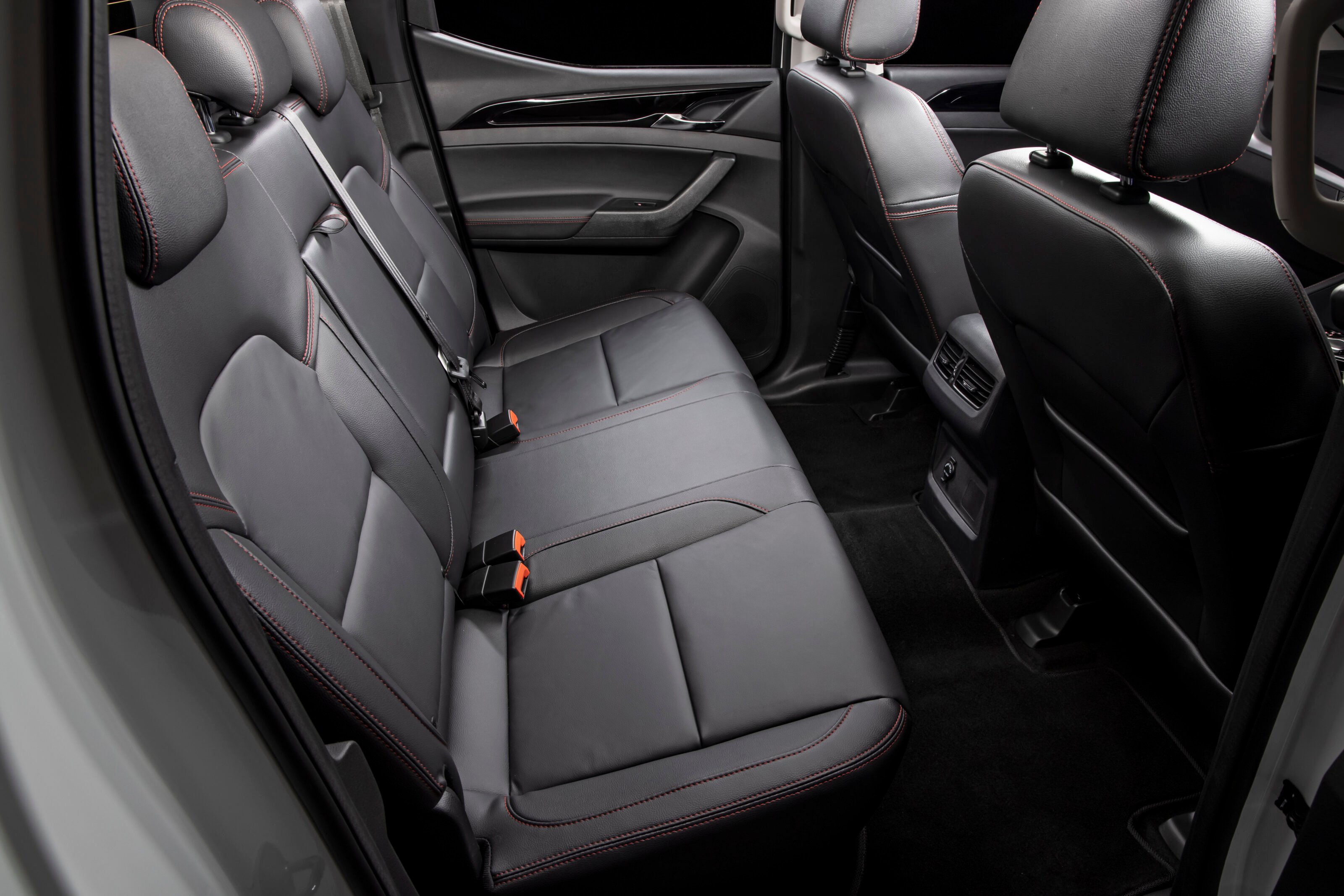
The rear accommodation is spacious with room for three adults at a pinch. There are air vents, large bottle holders in the doors and a fold-down centre armrest, though there are no USB ports for charging and the rear bench is flat and could offer more support.
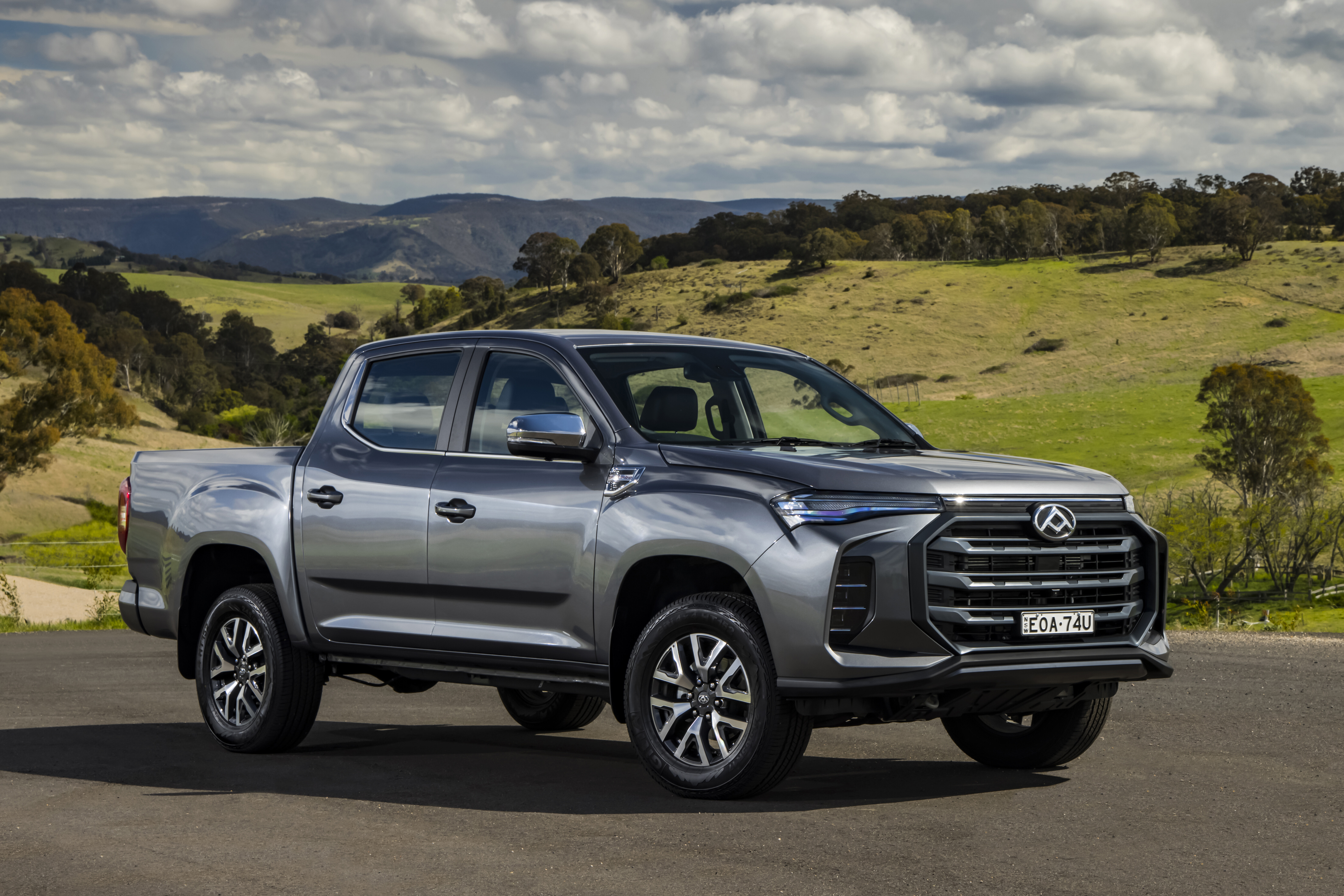
On the outside, well, you’re certainly not going to miss the new T60. There’s more than a hint of 300-Series LandCruiser about the bold front end, the Luxe identified by its black grille and front guard, and chrome mirrors. But if there is any confusion it’ll quickly be cleared up by the giant ‘T60 Max’ emblazoned on the tailgate.
Fold that tailgate down and you’ll discover a load bed that measures 1485mm long and 1510mm wide at the floor with a depth of 530mm, while the rear opening is 1430mm wide and it’s 1131mm between the wheelarches. A spray-in tub liner is standard, as well as four tie-down points, two on the rear wall and on either side of the tailgate opening.

Maximum payload is 750kg for the Luxe (the Pro with its heavy-duty suspension increases this to 925kg) but its 300kg maximum tow ball weight will need to be taken into account if you’re towing the maximum allowed 3000kg (braked).
I’ve arranged this review in order of traditional dual-cab buying priorities – pricing, interior then load carrying – but the big news with the T60 Max is under the bonnet. It’s especially big news as, on paper at least, it puts the LDV in the same conversation as Ford and Toyota in terms of performance.
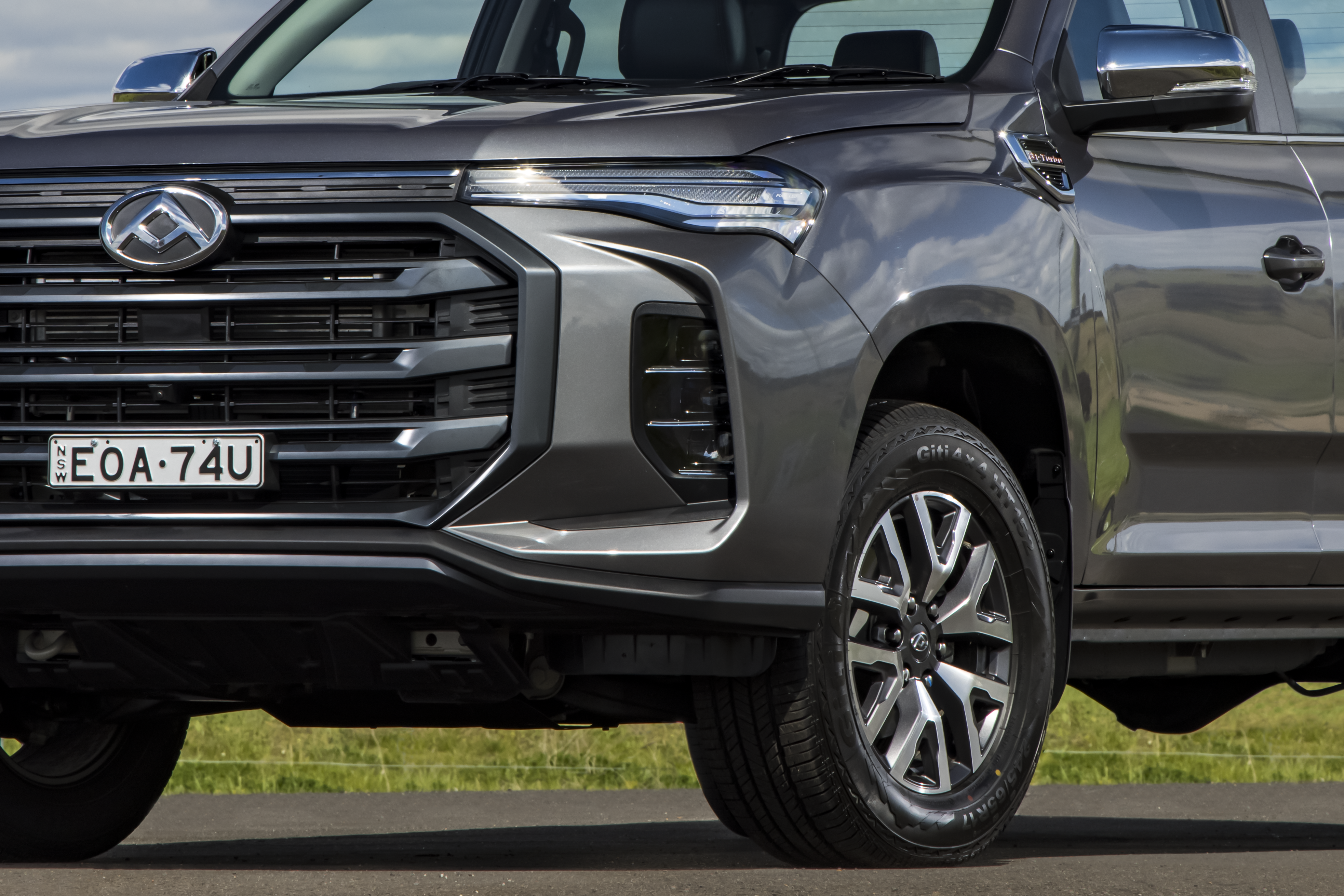
With 160kW and 500Nm, the T60 Max has a massive 50kW/140Nm more than the previous T60’s 2.8-litre engine and is 30kW/125Nm up on the Trailrider’s 2.0-litre. In fact, this is now the most powerful four-cylinder diesel on the market, albeit by just 3kW over the Ranger (in 2.0-litre Biturbo guise) and 10kW over the HiLux.
To be honest, both feel stronger on the road, but that’s not to diminish the T60. It’s a smooth, grunty engine that revs happily – if vocally – to the 4000rpm peak power point, but the noise settles at a cruise.

It’s helped in its responses by the eight-speed auto, which has extremely short gear ratios, resulting in the engine spinning at more than 2000rpm at 110km/h. It also means the gearbox is constantly changing gears and there can be the odd hesitation. It doesn’t do the fuel consumption many favours either, LDV’s combined claim of 9.3L/100km indicative of a greater, if not terrible, thirst.
A rotary selector allows the choice of rear-wheel drive and high- or low-range four-wheel drive, or it can be left in a default ‘auto’ mode. This works fairly well, but in tight manoeuvring there does feel to be some diff chatter, like it’s selected four-wheel drive when it shouldn’t have. Happily, if you select a drive mode it will remember it even if the car is turned off and back on, so I took to just selecting 2H for daily duties.
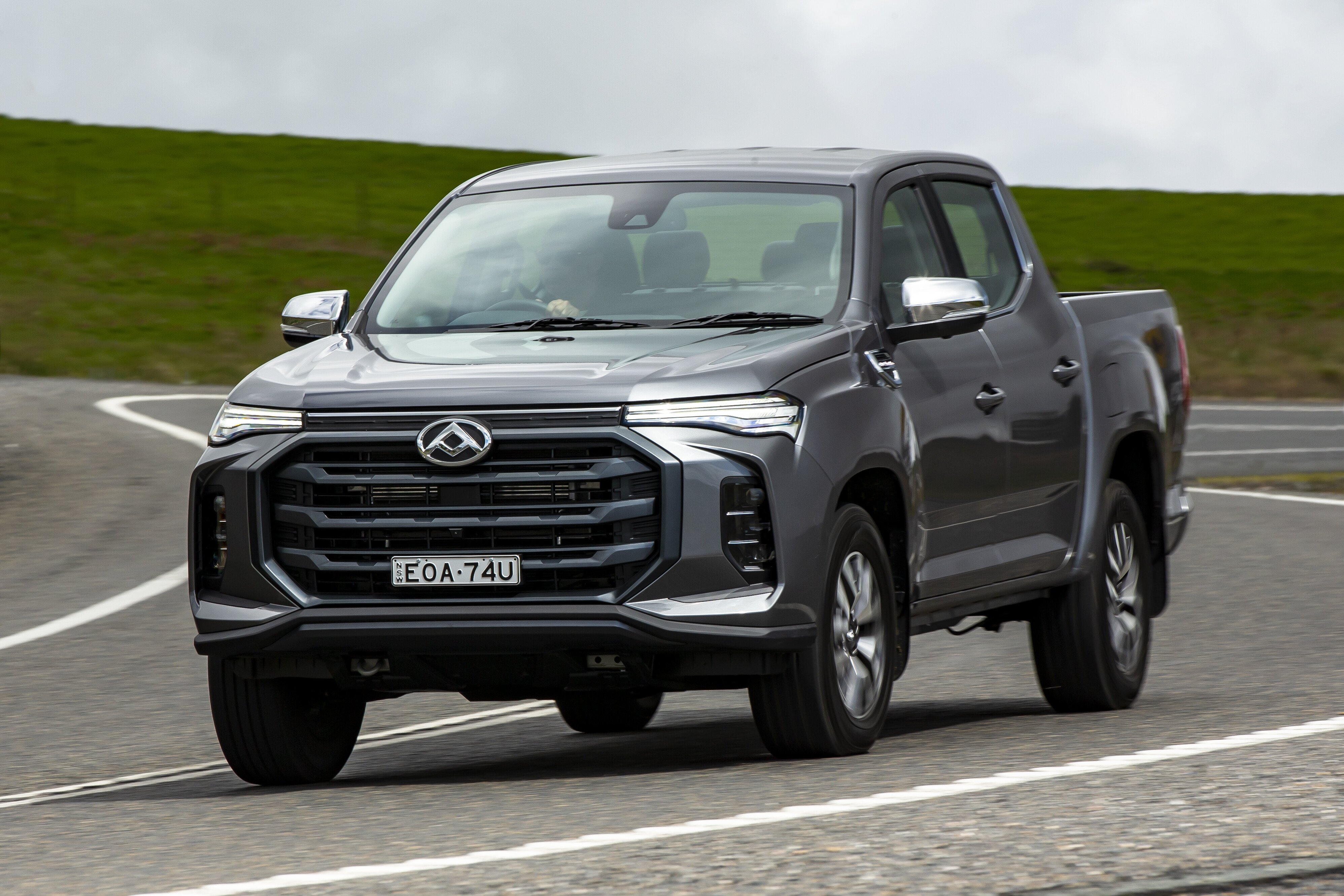
The T60 benefits from a local suspension tune developed by Walkinshaw but, to be honest, the unladen ride is pretty ordinary. The damping at higher speeds is in general compliant and controlled but poor surfaces lead to plenty of dual-cab ‘shimmy’ and sudden bumps on loose surfaces can cause the rear end to skip slightly sideways.
While on loose surfaces, the ABS can trigger quite early, but this is likely down to the all-terrain tyres. Otherwise, the T60’s handling holds few surprises. The steering is weighty without any real connection but as long as you remember you’re driving a high-riding ute there are no real concerns.
We’ll leave it to our mates at 4×4 Australia to offer a definitive verdict on the LDV’s off-road capabilities but suffice to say, like most dual-cabs, it has a level of proficiency beyond what most will require. A rear diff lock is standard and the traction control seems up to the task, but really the tyres will be the limiting factor in any off-road escapades.
In the final reckoning, though, I can’t see the T60 Max tempting any Ranger or HiLux buyers, nor do I think LDV realistically expects it to. At this price point, its competition is the likes of the GWM Cannon, Ssangyong Musso or perhaps a base model Mitsubishi Triton. Here, the T60 makes a case for itself, with better dynamics than the former two and a swisher interior and more performance than the latter. Just where it sits in the pecking order will require a comparison test to discover.
As mentioned in this review, there are shortcomings, particularly in the area of active safety when compared to newer rivals and, hopefully, the new infotainment system also rectifies the issues many customers found with the old one.
In essence, the question that kept popping up was: if I’d paid $40,000 for this would be I disappointed? The answer is no, the T60 Max upgrade is a sizeable one and results in a solid offering that’s worth investigating if you’re shopping at the lower end of the dual-cab segment.
| Body: | 4-door, 5-seat ute |
|---|---|
| Drive: | rear-/all-wheel |
| Engine: | 1996cc inline-4cyl diesel, DOHC, 16v, twin-turbo |
| Bore/stroke: | 83.0 x 92.0mm |
| Compression: | 15.9:1 |
| Power: | 160kW @ 4000rpm |
| Torque: | 500Nm @ 1500-2400rpm |
| Fuel consumption: | 9.3L/100km (combined/claimed) |
| Weight: | 2150kg |
| Power/weight: | 74kW/tonne |
| Transmission: | 8-speed automatic |
| Suspension: | Double wishbones, coil springs, anti-roll bar (f); leaf springs (r) |
| L/W/H: | 5365/1900/1809mm |
| Wheelbase: | 3155mm |
| Tracks: | 1580mm (f/r) |
| Towing: | 3000kg (braked) |
| Steering: | Hydraulically assisted rack-and-pinion |
| Brakes: | Discs (f/r) |
| Wheels: | 17 x 7.0-inch (f/r) |
| Tyres: | 245/65 R17 |
| Price: | $40,490RRP (driveaway for ABN holders) |
Key Points
- Reports suggest the next GT-R will go hybrid
- Current V6 engine to be retained
- R35 no longer meets ADR regulations for Australia
Nissan’s GT-R hero car could be in for a major revamp in the coming years, as rumours suggest the next-gen Godzilla will go hybrid.
According to British publication Autocar, the successor to the Nissan GT-R R35 (known as R36) could utilise the existing VR38DETT powering the current model, but with electrical assistance – both increasing its 441kW/652Nm output and reducing emissions.
Nissan CEO Makoto Uchida told Autocar he expected the GT-R to continue to be Nissan’s flagship performance car, with the sole purpose of being an all-round weapon – while lesser models such as the Z will continue to cater to the sportscar market.
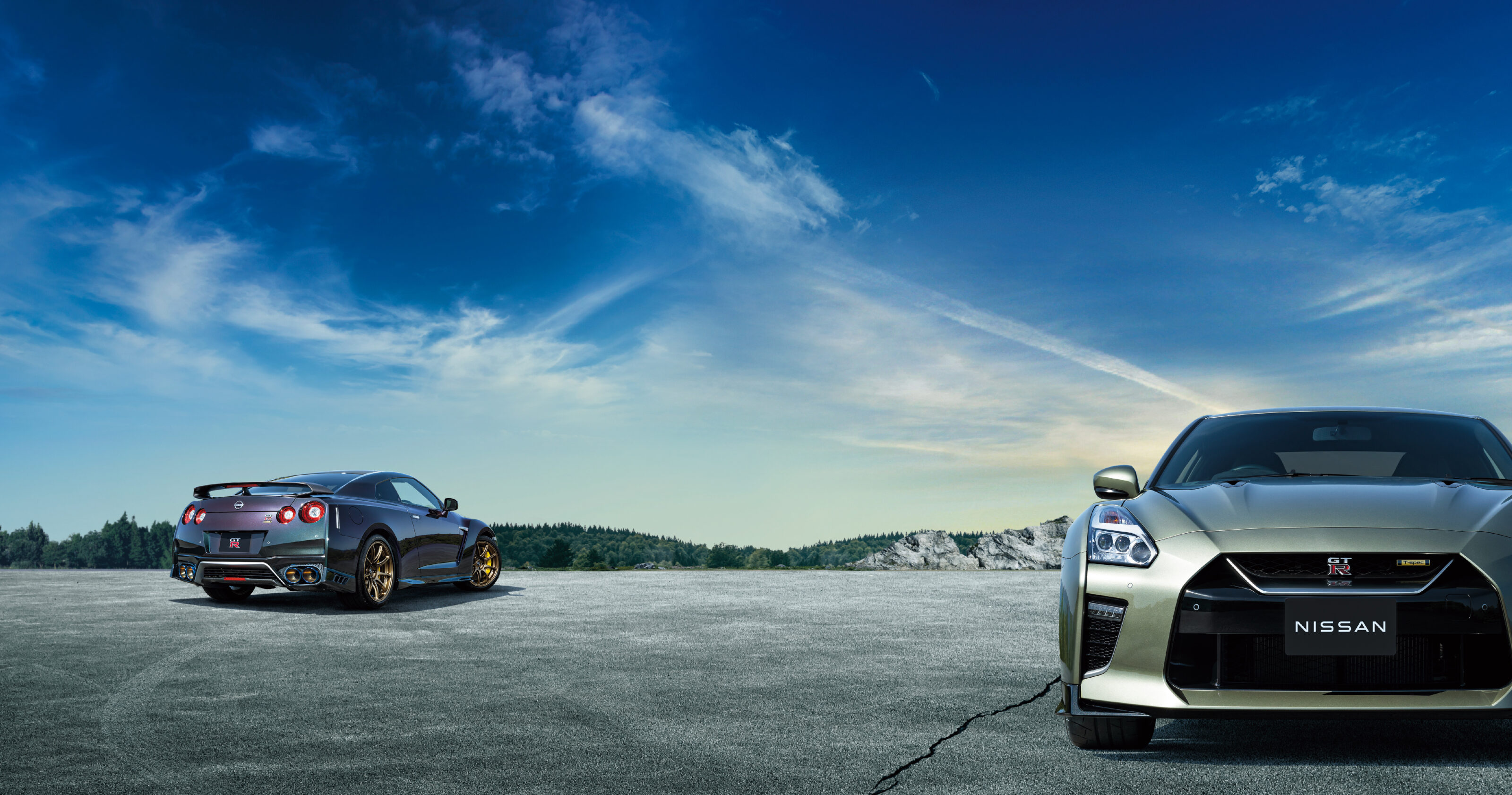
“We are looking at how we can do it electrified,” said Uchida about the R36.
“It’s something that’s a really professional sports vehicle with no compromise. The Z is for someone like me who enjoys sportscars. The GT-R is a professional machine and we need to work it out for the future.”
The idea of hybrid power for the next-gen GT-R has been circulating for a while, with predictions of a 48-volt mild-hybrid setup seeming the most likely, potentially even as an addition to the R35 line-up to ensure its longevity.
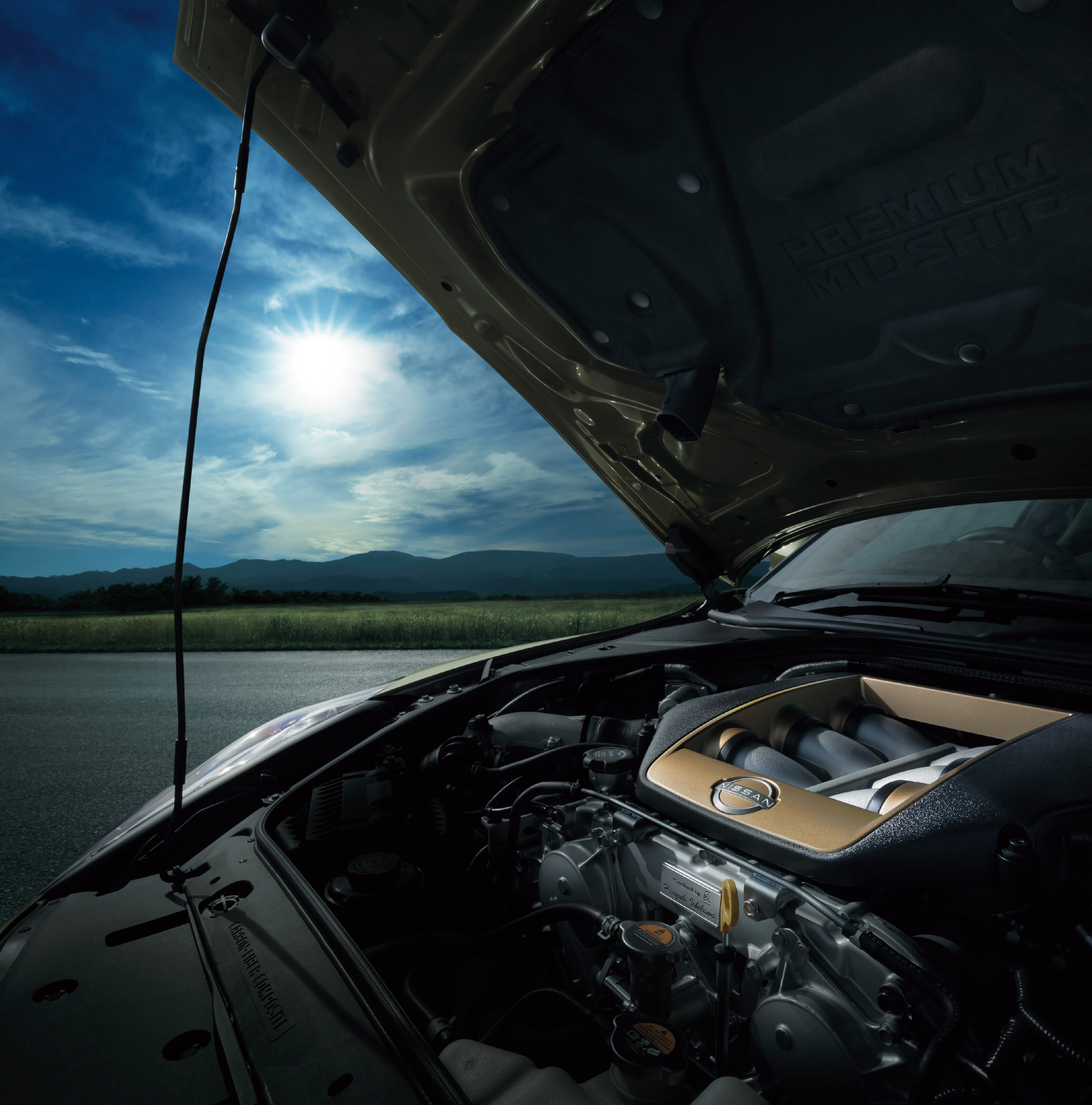
Since the R35’s launch in 2007, the model has undergone incremental changes year-on-year, although its drivetrain has stayed the same, remaining as a 3.8-litre, twin-turbo V6 bolted onto a six-speed automatic transmission.
Despite continual refinements to the current GT-R, it has now disappeared from Nissan’s local line-up due to changing Australian Design Rules regulations, with the final examples of new Godzillas arriving last month.
UPDATE, November 10: All of the world’s major semiconductor manufacturers have agreed to provide supply data to the United States Government as part of the authority’s move to reduce stockpiling.
Commerce Secretary Gina Raimondo set a deadline for the chip suppliers to voluntarily pledge to provide stock supply data before triggering the Defence Production Act.
Raimondo said all producers contacted were willing to comply with the Government’s request – although sensitive customer data wouldn’t be provided, according to Automotive News.
“The past two weeks, I personally have called the CEOs of all the major chip producers in the US and overseas, and every CEO has assured me that they will be complying and will be giving us the data that we’ve asked for,” said Raimondo.
The story to here
September 27: The United States Government wants companies within the supply chain of semiconductors to hand over inventory data in an attempt to minimise stockpiling.
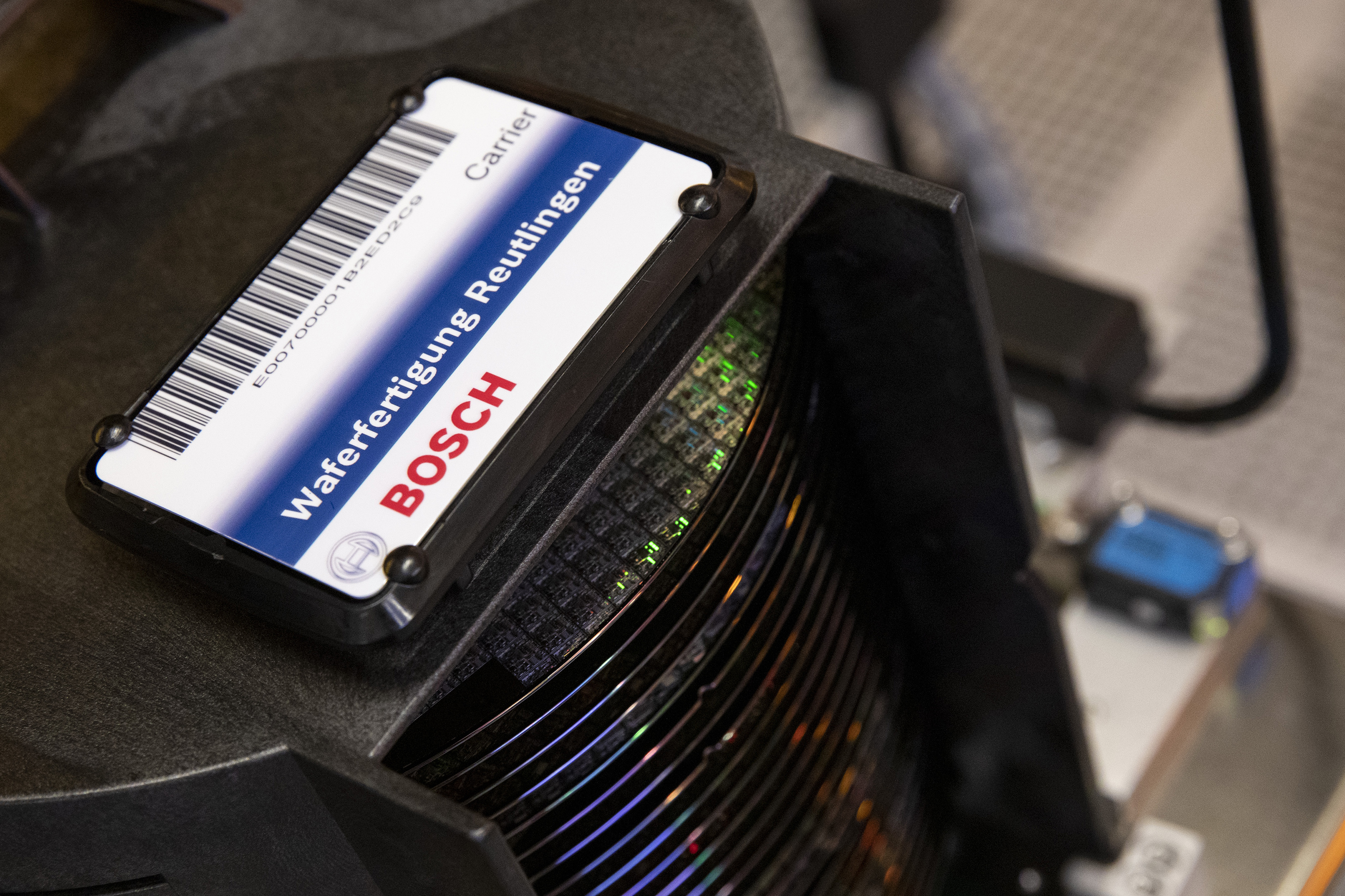
A worldwide shortage of semiconductors is currently crippling the automotive industry – as well as the wider consumer goods sector – with many manufacturers being forced to idle their factories, not having supply of the parts necessary to finish the production of some vehicles.
Bloomberg reports the Biden administration’s Commerce Secretary, Gina Raimondo, is considering introducing a law which will force companies to submit reports of stock inventory – alleviating bottlenecks in the industry by making sure no one is stockpiling chips.

While the Commerce Department has been involved in meetings with representatives from different affected industries, a majority of companies have refused to hand over data – potentially forcing Raimondo to invoke the Defense Production Act.
“What I told them is, ‘I don’t want to have to do anything compulsory’, but if they don’t comply then they’ll leave me no choice,” said Raimondo.
“I said today we’re evaluating all of our options right now, all the tools. I hope not to go there, but we need to see some progress and we definitely need compliance.
“There’s allegations of certain consuming companies buying two or three times what they need and stockpiling.
“So suppliers say, ‘we can’t get a handle on an accurate demand signal because consumers are stockpiling, so we don’t know what the accurate demand is.’
“Some consumers are saying ‘we can’t get straight answers from suppliers, how come I was told I could have X and now I’m being told I can only have half of X?’”

First introduced in 1950 during the Korean War, the Defense Production Act requires companies to hand over records of supply inventory for products which are directly related for national defence, whether it be through war or financial hardship.
The Trump administration triggered the Defense Production Act last year in response to the COVID-19 pandemic, a move which forced many industries to remain open despite lockdowns.
Manufacturing giant General Motors struggled with the shortage in August, having to park over 1000 uncompleted vehicles a day, while Toyota recently announced closures of its manufacturing plants in Japan and the USA throughout September.
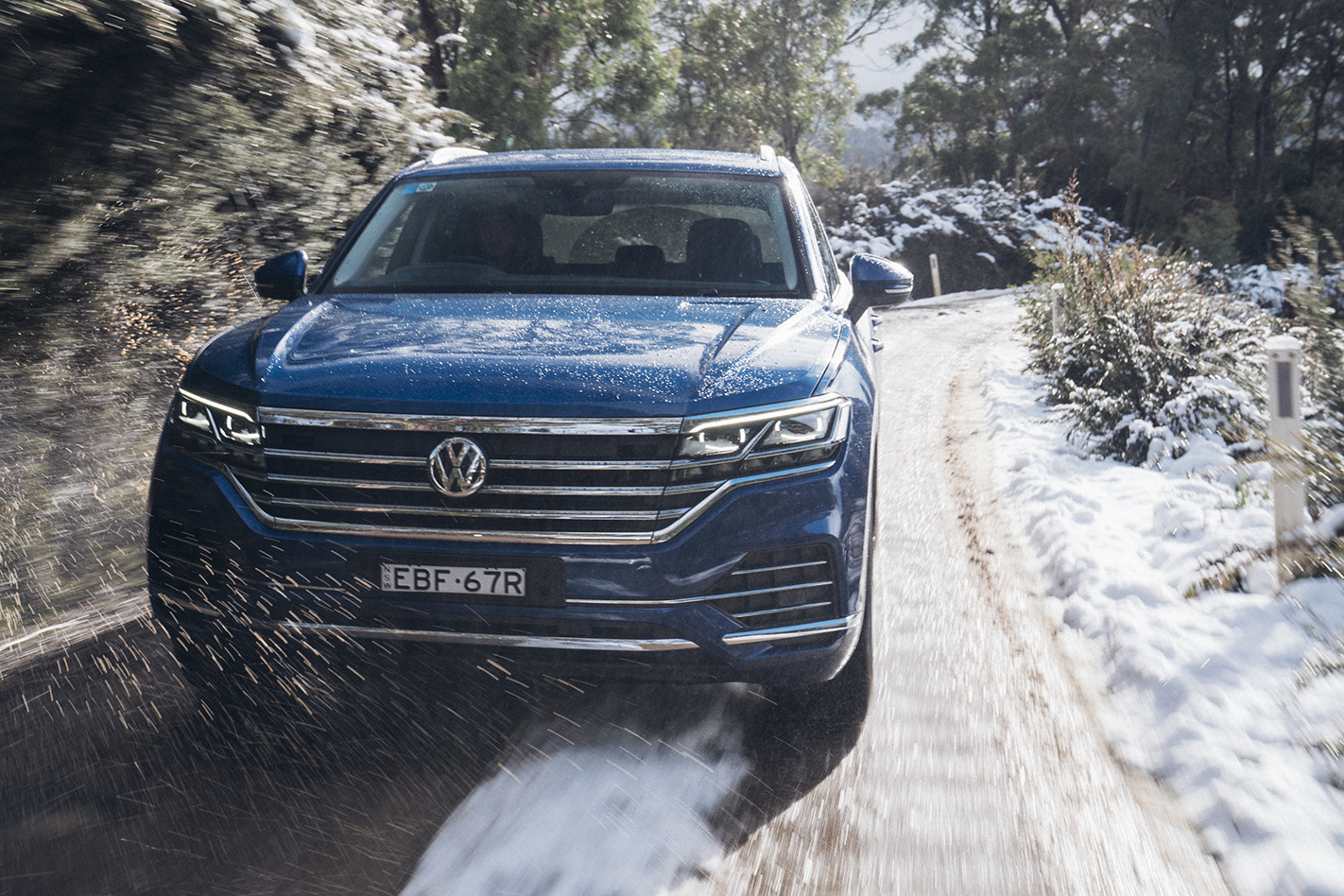
Volkswagen Australia is recalling examples of its 2019 Touareg SUV over a problem with the tailgate.
There are 40 cars affected by the issue.
According to the Department for Infrastructure, which issued the notice, if the tailgate is opened and manually pushed up too far the pre-compressed coil springs may become detached “with great force” from the boot strut – and could cause “significant injuries” to anyone close by.
A list of VINs for the affected vehicles is available here.
Owners of Touaregs under recall can contact their nearest VW dealer to organise a repair free of charge, or call 1800 504 076 for further information.
