Key Points
- Collective perception used to detect hazards
- Technology could improve safety
- Only in very early stages
A limit of self-driving cars and humans alike, is that they can only see what they can see.
Eyeballs, cameras, lidar and radar are all line-of-sight technologies, so if something is obscuring the signal or light a brain or computer has no idea what’s going on behind it.
But a new technology called collective perception could give vehicles an ‘x-ray’ sense to see what they currently cannot.

The University of Sydney’s Australian Centre for Field Robotics, in collaboration with the iMOVE Cooperative Research Centre and Aussie software supplier Cohda Wireless, has released new research which combines data gathered by “intelligent transportation system stations” (ITS-S) with others on the road using vehicle-to-X (V2X) communication.
According to the findings, this allows vehicles to find out what’s going on around them – even if their direct sensors are obscured.
Sounds fancy – but think of ITS-S as sensors either on a car or on the street (cameras or lidar for example) and V2X communication as a network cars can access to get information. It’s basically using other cars as your eyes on the road in real time.

“This is a game changer for both human-operated and autonomous vehicles, which we hope will substantially improve the efficiency and safety of road transportation,” says Professor Eduardo Nebot from the Australian Centre for Field Robotics.
“[In the research] the connected vehicle was able to track a pedestrian visually obstructed by a building. This was achieved seconds before its local perception sensors or the driver could possibly have seen the same pedestrian around the corner – providing extra time for the driver or the navigation stack to react to this safety hazard”.
An example of collective perception in action could be detection of a cyclist riding alongside a bus that would be obscured to one vehicle, but visible to another travelling in the other direction.
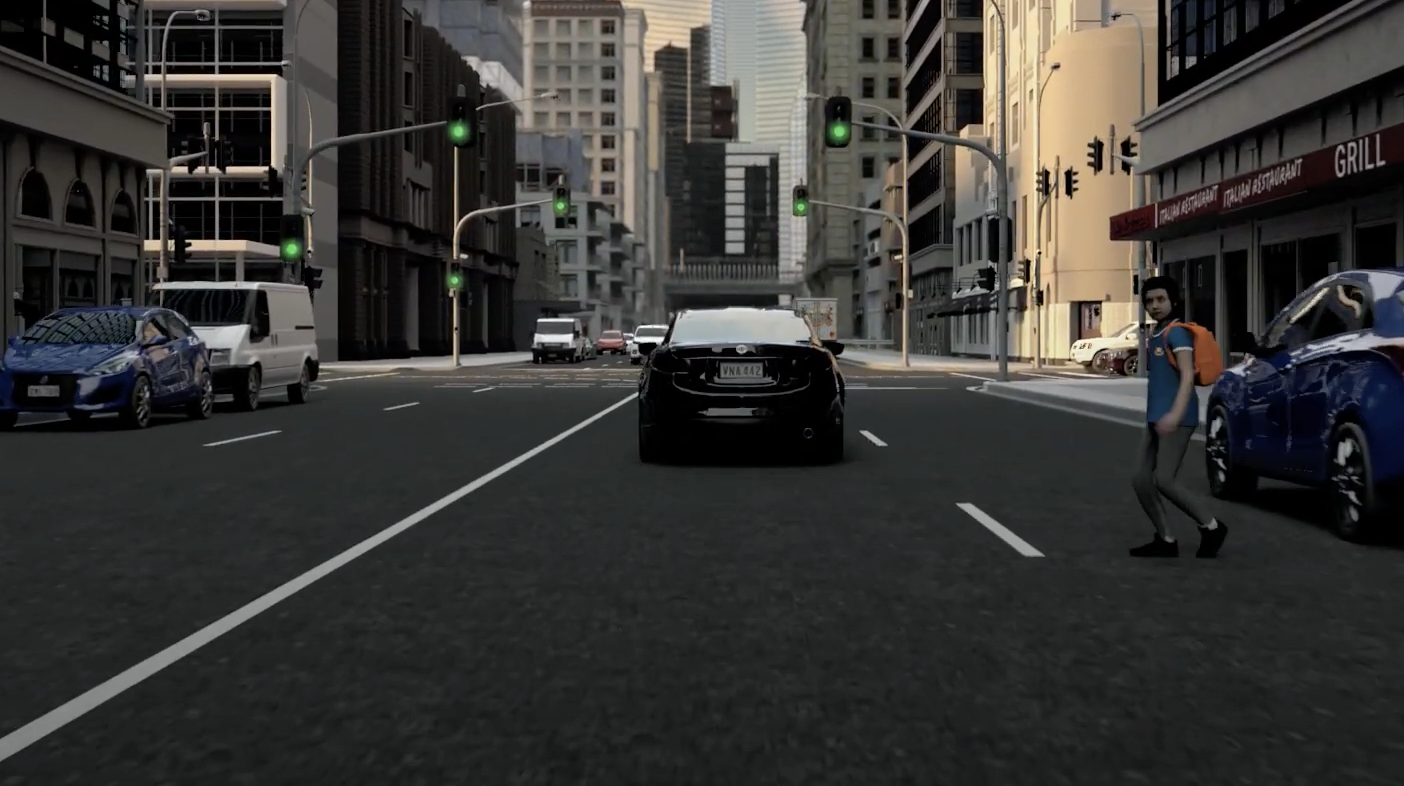
The cars can share what they see – so if the cyclist makes a sudden move, the car that couldn’t previously see the cyclist is now aware of them and can take evasive action if required. Such a situation is impossible with current sensor technology.
Cohda Wireless’ Chief Technical Officer, Professor Paul Alexander, says “collective perception enables the smart vehicles to break the physical and practical limitations of onboard sensors, and embrace improved quality and robustness”.
It is hoped that by tapping into the sensors of all the vehicles on the road, the depth of knowledge of all cars improves and can provide a safer experience not only for motorists, but for pedestrians and cyclists too.
There’s no firm timeline for when collective perception technologies will hit the road, and the standards for vehicle-to-vehicle communication are still nascent, but the research is promising and could deliver an autonomous driving experience that is not only as good as a human driver, but superior.
The 2022 Honda Integra lives again, but buyers in Australia won’t be able to get their hands on the new model.
Honda will only be offering this particular Integra in China, where the model is a revised version of the Civic sedan – born from the need for the Japanese firm’s two manufacturing partners to offer unique vehicles within their respective line-ups.
China requires foreign carmakers to partner with local manufacturers, leading to the Integra being created for GAC Honda – while its other partner Dongfeng Honda gets the standard Civic.
Honda’s premium US sub-brand Acura recently teased its own version of the Integra – and while it’s said to also share its underpinnings with the Civic, the US-market Integra will enjoy a more modern design.
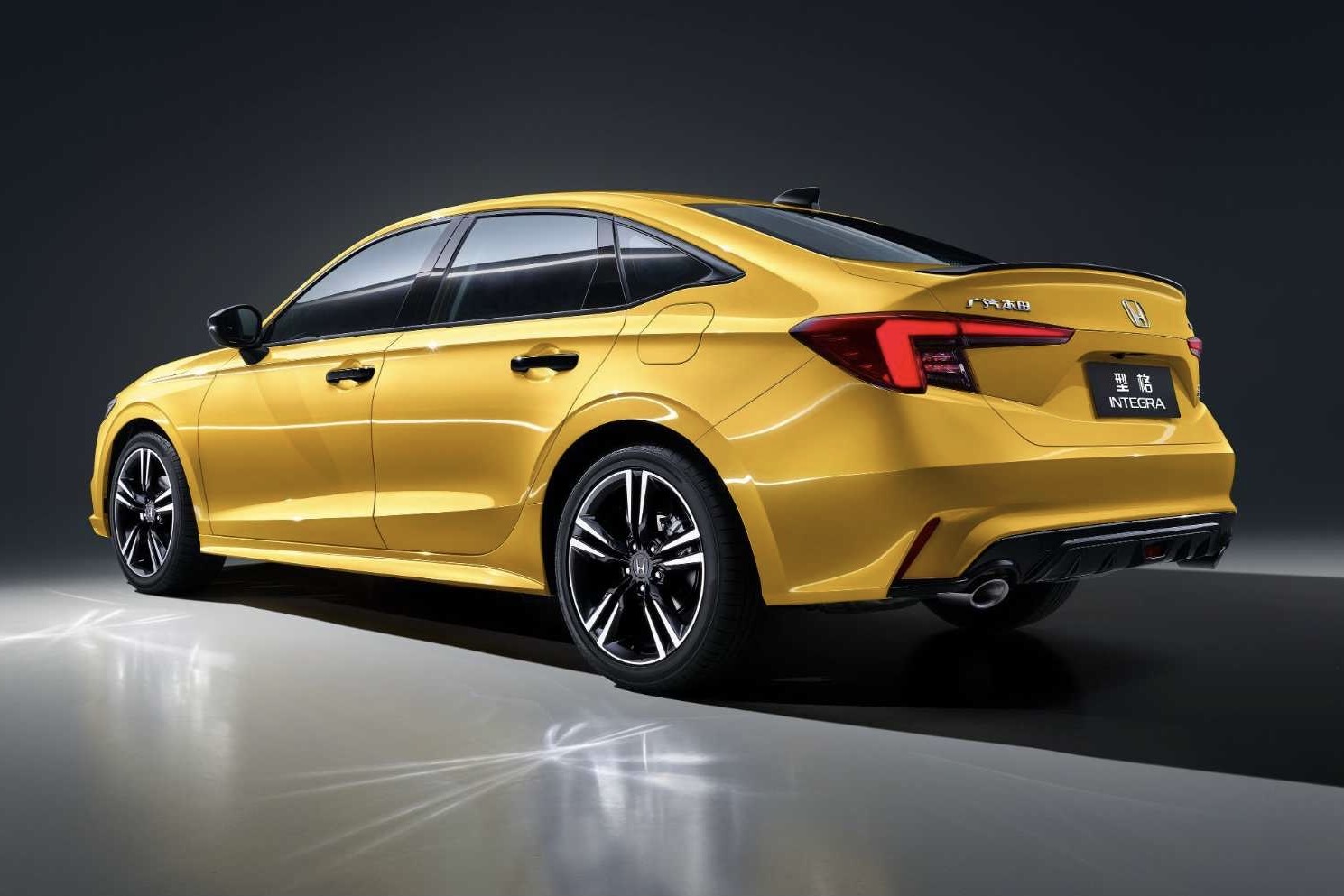
The Chinese-market version is powered by a 1.5-litre turbocharged four-cylinder petrol engine making either 95kW/180Nm or 136kW/240Nm. Unusually, the powertrain is supplied by Dongfeng Honda.
The company says a six-speed manual transmission will be made available in the future, but for the time being an automatic CVT sends power to the front wheels.
In a video posted to YouTube last month, Acura showed its Integra will also be offered with a six-speed manual when it eventually arrives. But like the Chinese-market Integra, the Acura isn’t expected to be offered in Australia.
Key Points
- Same 275kW/500Nm in-line six to feature
- No word yet on pricing u2013 expected to be cheaper
- Global reveal date to follow
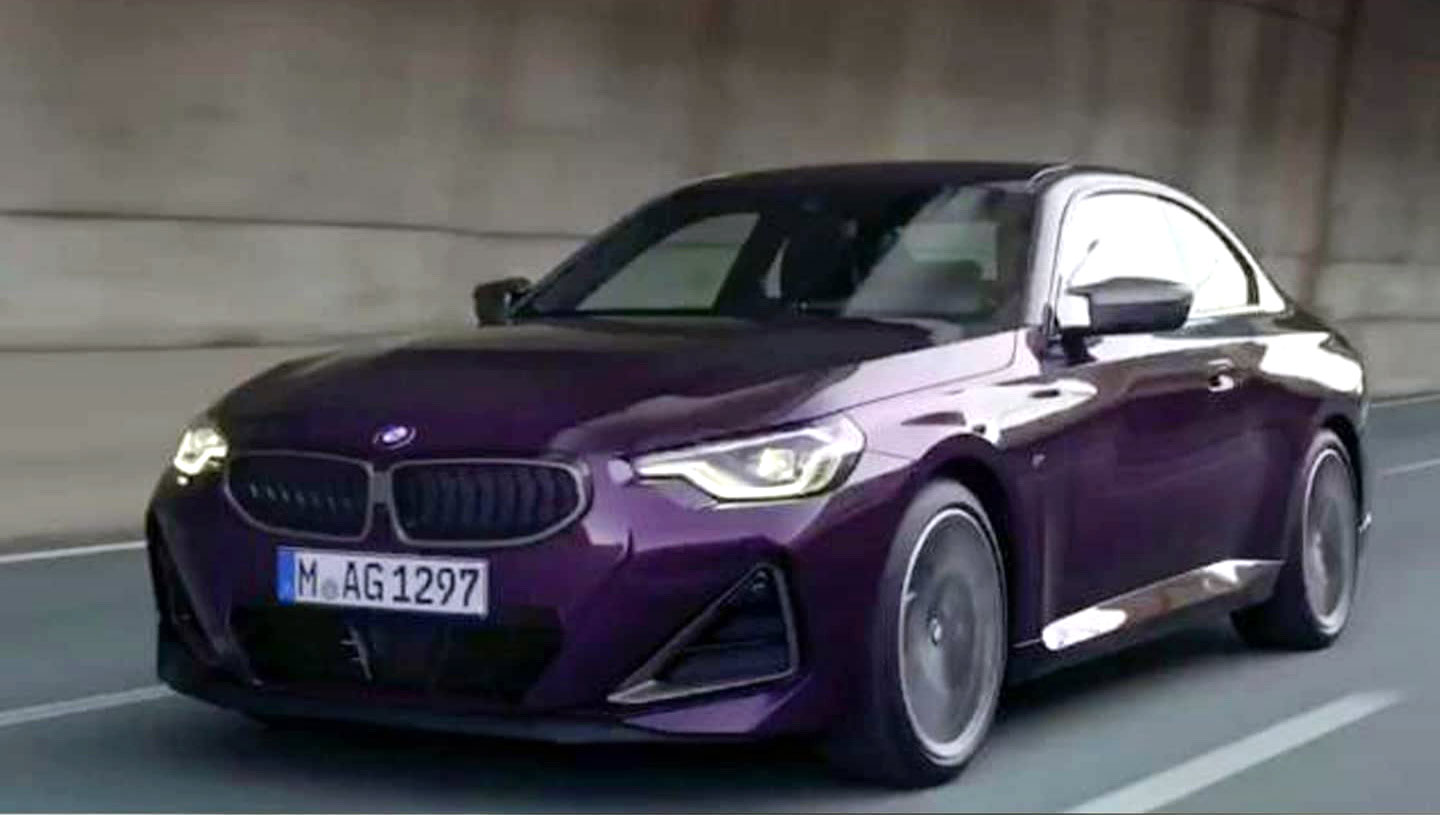
BMW has confirmed a rear-wheel-drive sDrive version of the all-new M240i Coupe will follow the initial xDrive all-wheel variant – offering a cheaper, lighter and more track-focused option for two-door purists.
Exact details are yet to be confirmed, including arrival timing for Australian showrooms, but it’s understood the M240i sDrive will use the same 275kW/500Nm in-line six found behind the snout of the initial variant, paired with a more classical BMW drivetrain.
Speaking to Motor at the model’s international launch in hometown Munich, 2 Series senior product manager Emanuel Varga confirmed the sDrive version – but said a global reveal date was yet to be chalked.
“We can confirm M240i will come with rear-wheel drive. Timing wise – stay tuned.”
With the next-generation G42-based M2 expected to roll out with rear-wheel drive, the freshly announced M240i version will be the closest thing to an M2-lite option, especially as it packs a bigger power and torque punch than the first-gen F87 M2 at launch.
Given Australia’s milder climate, it’s likely the later rear-drive version will be the pick Down Under, with the xDrive (pictured) more applicable to colder regions and the sDrive catering to more track-focused use – as well as those shopping on a tighter budget.
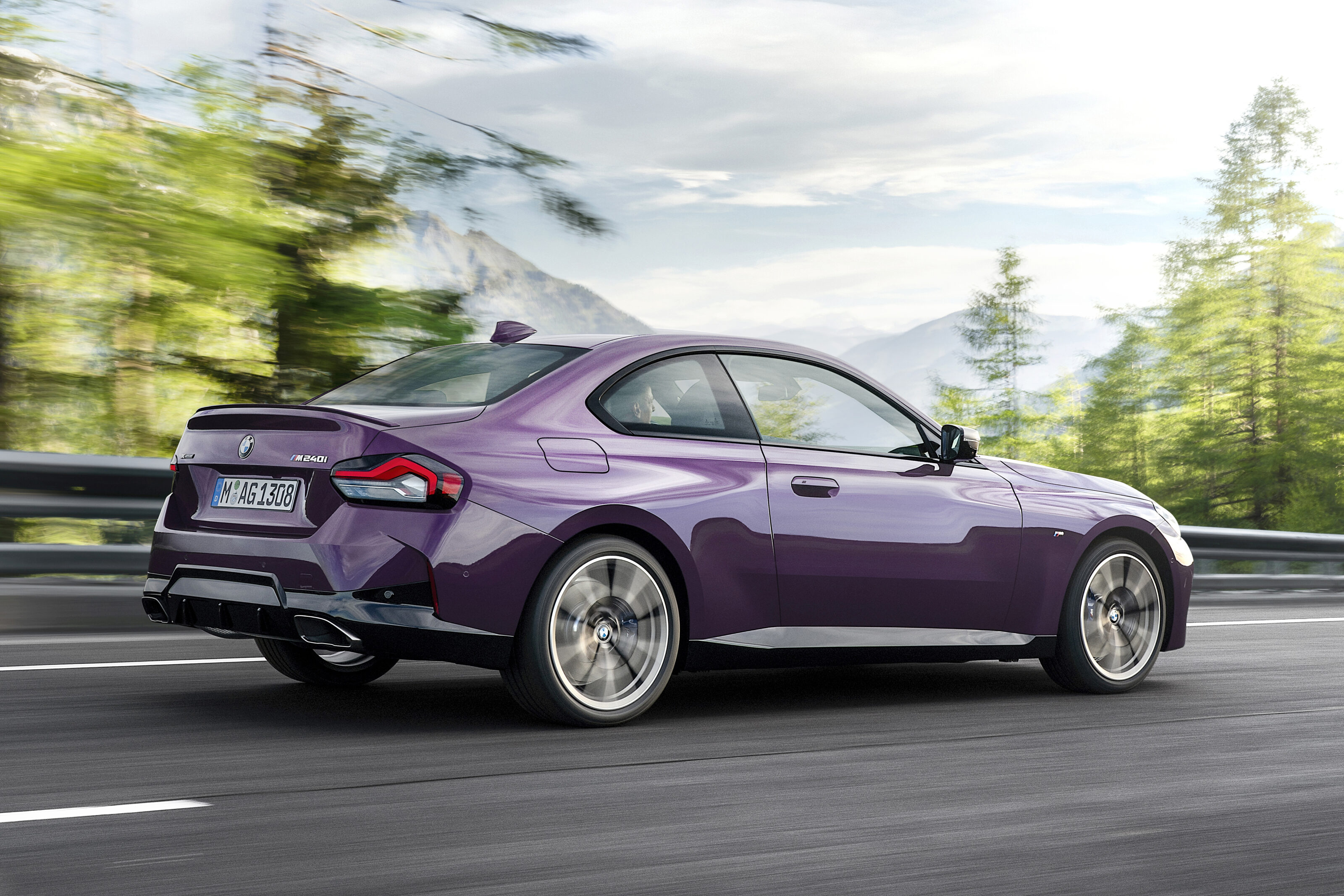
“There are the kinds of people who want to save money and they don’t need an all-wheel drive system, but we have countries like Switzerland or northern parts of America where it’s a must,” said Varga. “Then there are customers who are much more oriented towards acceleration and here xDrive is a must.
“However, look at the more purist customers and aficionados for which only a rear-wheel-drive is the real drive. You also save some weight on the front axle with the sDrive system. So the car is lighter and on-track you have better performance, because you don’t need all-wheel drive. You can drift with the all-wheel-drive car but not as pure as rear-wheel drive.”
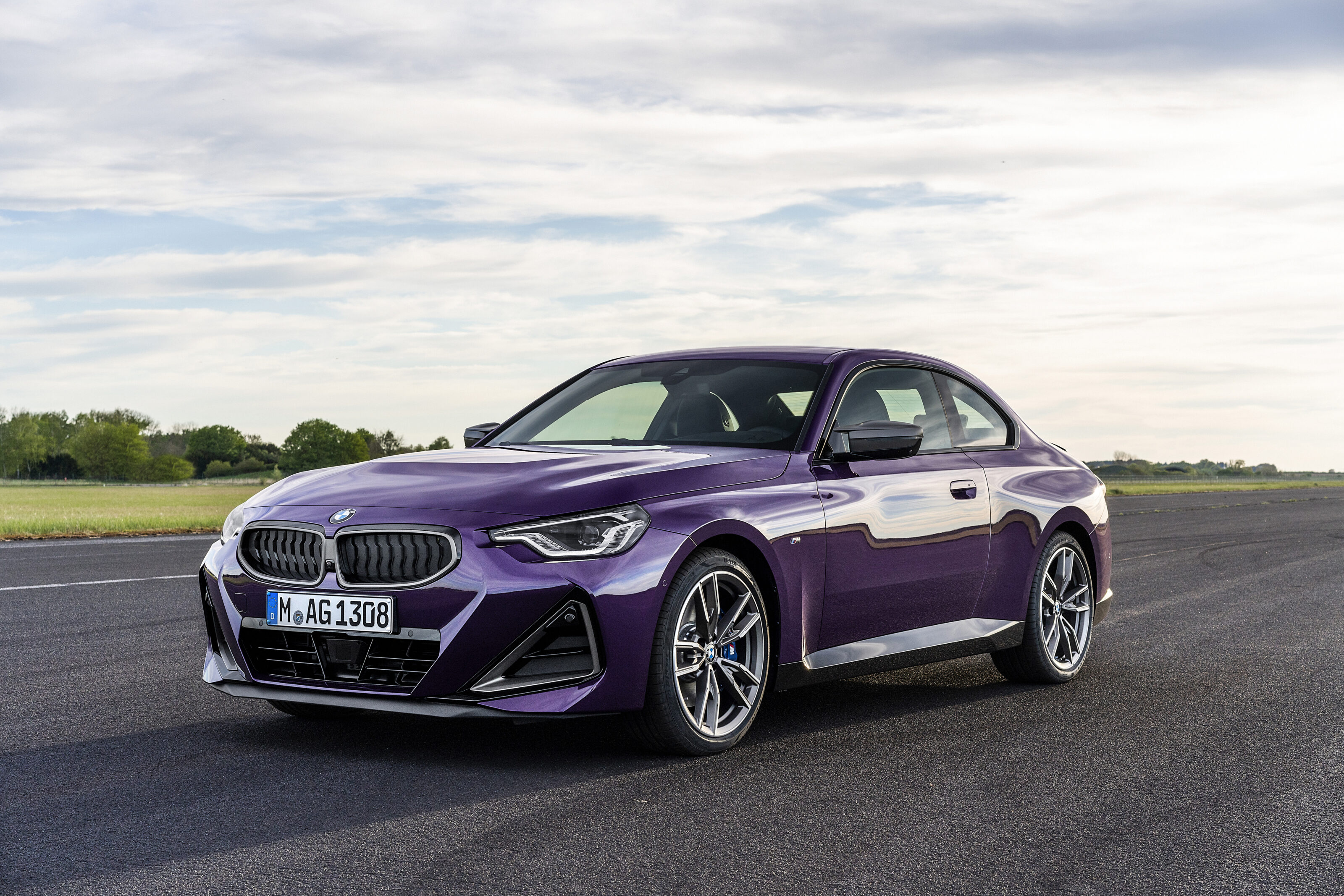
BMW has not made a 0-100km/h acceleration claim for the M240i sDrive, but it will be slower than the xDrive which uses its greater traction from standstill to do the dash in 4.3 seconds.
While the all-wheel-drive xDrive M240i transmission is rear-biased and can chose to automatically send all power rearwards (particularly in Sport and Sport Plus modes) it cannot be manually set into a specific rear-drive mode only.
This, says Varga, further increases the need for the additional sDrive variant. “The (xDrive) system, in theory, can take away 100 per cent (of power) from the front wheels, which is the big difference between front-biased all-wheel drive systems,” he said. “But there is no way to influence that as you can on the M5, which has a clear mode in which it only has two-wheel drive.”
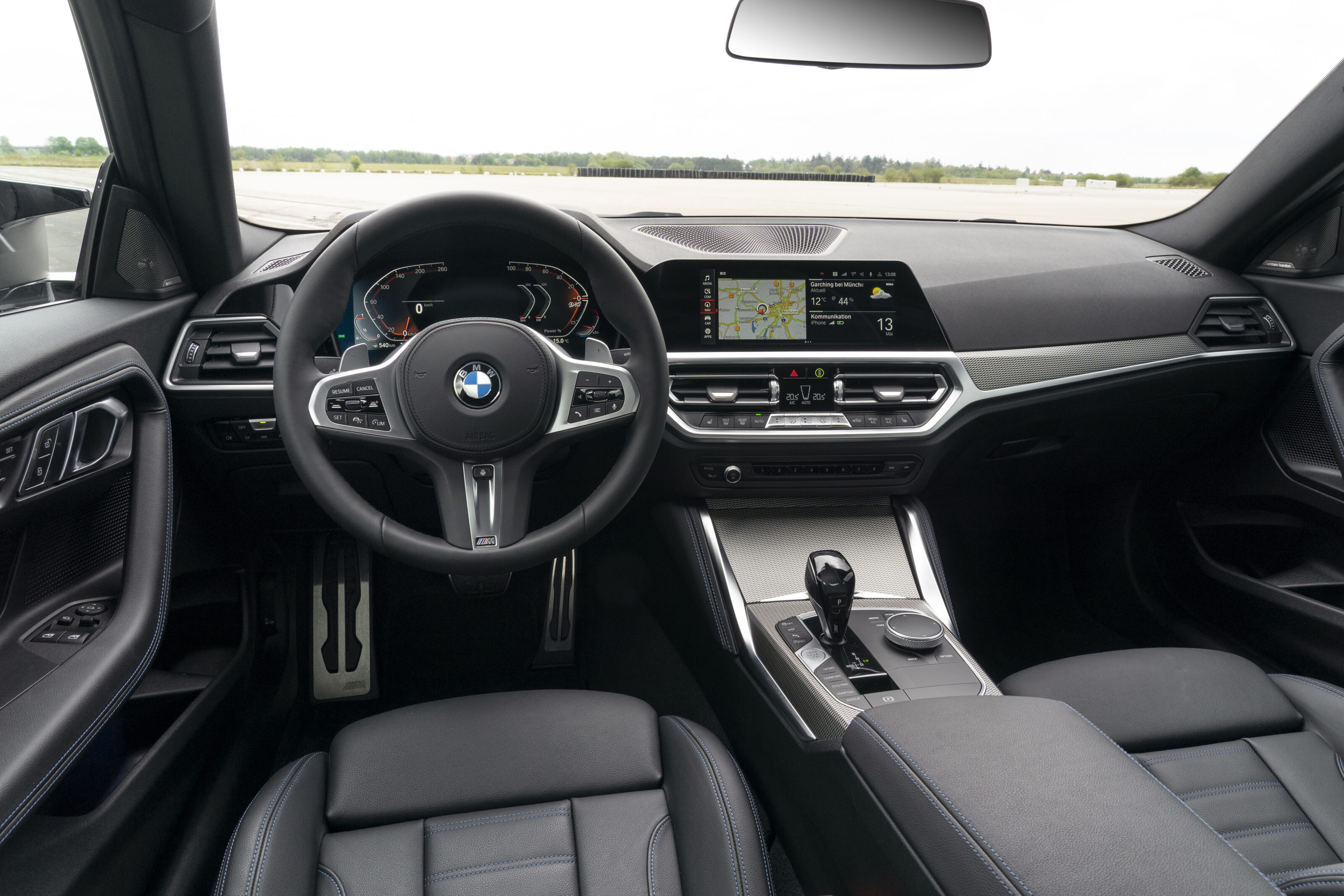
Other than the more taily nature, the rear-drive version will shed weight and cost less. In the case of other BMW models, about 60 kilograms is spared by rear-drive only over the all-wheel equivalent, while the cash saving over the $89,990 xDrive is more speculative at this stage.
BMW purists will not have every wish granted however, with Varga dashing hopes for a manual version of any 2 Series for now, including the entry 220i which is rear-drive as standard. Hybrid versions are also ruled out.
“The 2 Series including the M240i will not be available as a manual. Not in the near future.”
Unfortunately, when pressed for detail, Varga would not reveal whether that decision applies to the forthcoming M2 and simply referred to his initial statement.
Interpret that how you will.
After kicking around the popular mid-sized SUV traps for two generations across 13 years, Audi has finally, with some trepidation, applied the coupe-shaped Sportback format to its recently revised Q5 family, neatly lining up the wheel tracks of BMW X4 and Mercedes-Benz GLC Coupe. And the SQ5 Sportback TDI before you is currently the fittest and most elaborate example of the Q5 breed.
The SQ5 formula, though, has kicked as a wagon on Ingolstadt’s global menu for eight years, in both petrol and diesel flavours. Australia get the oiler, both for Sportback and its related and recently launched, gen-two, facelifted SQ5 wagon twin.
No RS? Audi has decided not to be rushed on the predictable RennSport-fettled Q5 in any body style, despite being circled in the home stable by a smaller RS Q3, larger RSQ8, and equally medium-sized RS4 Avant: all petrol powered. You don’t need to gaze deeply into the crystal ball to predict the inevitable. Or to deduce that positioning SQ5 as an oiler offers a key point of difference, in Audi’s range or against key segment competition.
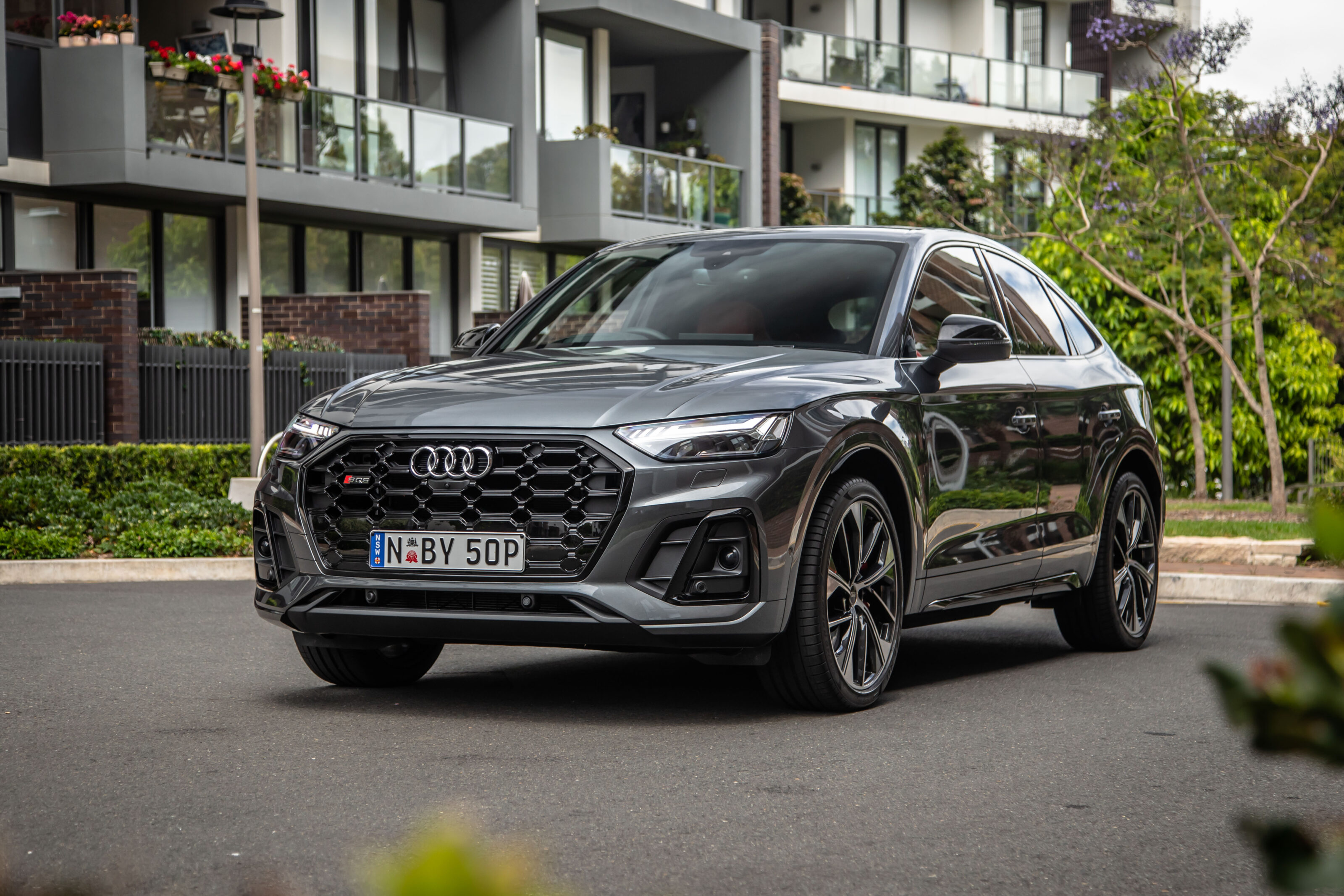
It’s no new ploy. The first-gen, and original, SQ5 wagon lobbed in Oz in 2013 as an oiler only to great success, Australia passing on the supercharged TFSI V6 offered overseas. Then, when the second-generation Q5 arrived locally in 2017, it went spark ignition, parking diesel on the sidelines for what would be a three-year hiatus until TDI returned to SQ5 in last year’s Limited Edition, with tricky new EPC – or electric power compressor – tech under the bonnet.
This all makes for a good read but, crucially, it needs to pay dividends in the experience to quash the stigma of oiler power shoe-horned into a sport-infused coupe-like concept, SUV or not. And that is quite apart from questions of whether the stylised Sportback form robs practicality against the available wagon alternative, or whether it warrants the premium it asks for.
Pricing and features
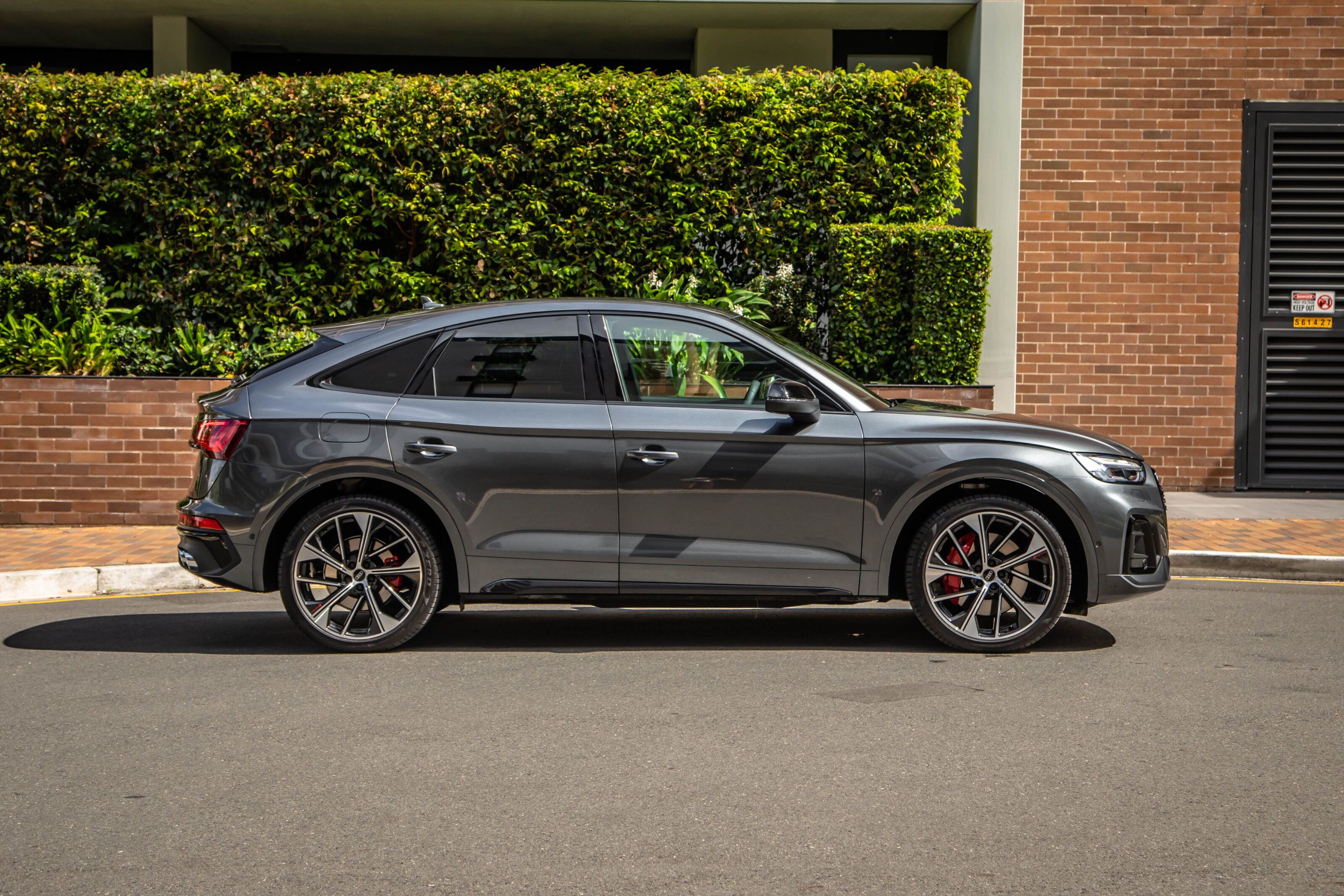
The price of style? By Audi’s reckoning, it’s $4400, which is the extra splurge the $110,900 SQ5 Sportback TDI demands over the $106,500 wagon version (both before on-road costs). Surely a worthy nominal lease payment adjustment in the beholding eye of some fast-SUV buyers.
Against the obvious suspect, the Audi undercuts the BMW X4 M40i’s $123,900 by a fair wedge, while the Mercedes-AMG GLC 43 Coupe wants for $120,476. Porsche’s Macan GTS, in one-style-fits-all wagon, asks $129,800. For its part, the Ingolstadt machine is the only oiler pick of the similarly quick German bunch, with the likes of the measurably more affordable diesel Genesis GV70 2.2D ($71,676) more closely aligned with the entry Q5 Sportback 40 TDI ($77,700).
The step up from the Q5 Sportback 45 TFSI ($86,300 + ORC) to more fulsome SQ5 grade demands an extra $24,600, a fair slice of it committed to the 48-volt-juiced powertrain, go-fast S-grade adaptive and 30mm-lowered suspension, and uprated braking hardware. It fits an eight-speed conventional auto rather than the dual-clutch stuff down range, 21-inch wheels and specific styling that includes deleting the SUV-like plastic exterior cladding and roof rails.

Otherwise, the list of ‘S’ extras above the regular Q5 TFSI is surprisingly lean, with Matrix LED headlights, 360-degree camera system, Virtual Cockpit digital instrumentation, heated Nappa leather sports seats (in different designs), gesture control tailgate, three-zone climate control, full-featured 10.1-inch MMI Touch infotainment and the lion’s share of niceties common between the two variants.
SQ5 exclusives? Variable seat headrests, 30-colour ambient lighting, some extra ‘extended’ leather trim, a head-up display; all detail stuff and not a whole lot of it. Less of a case of skimping on the flagship and more that the standard S-line-infused lower grades are quite healthily equipped.
You don’t need to gaze into the crystal ball to deduce that positioning the SQ5 as an oiler offers a key point of difference against segment competition.

You do stump up more for the Quattro sport rear differential ($2990), adaptive air suspension upgrade ($2250) and treats such as OLED animated taillights ($2500), as fitted to our tester, plus other extras that nudge the bottom line up to $120,940 + ORC and much closer to its X4 and GLC Coupe rivals.
The second-gen Q5 wagon’s five-star ANCAP assessment from 2017 carries over to all Sportback versions, which pack autonomous emergency braking with turn assist, active lane assist, collision avoidance steering intervention, rear cross-traffic assist, adaptive cruise with stop and go, high-beam assist and exit warning as standard.
Comfort and space
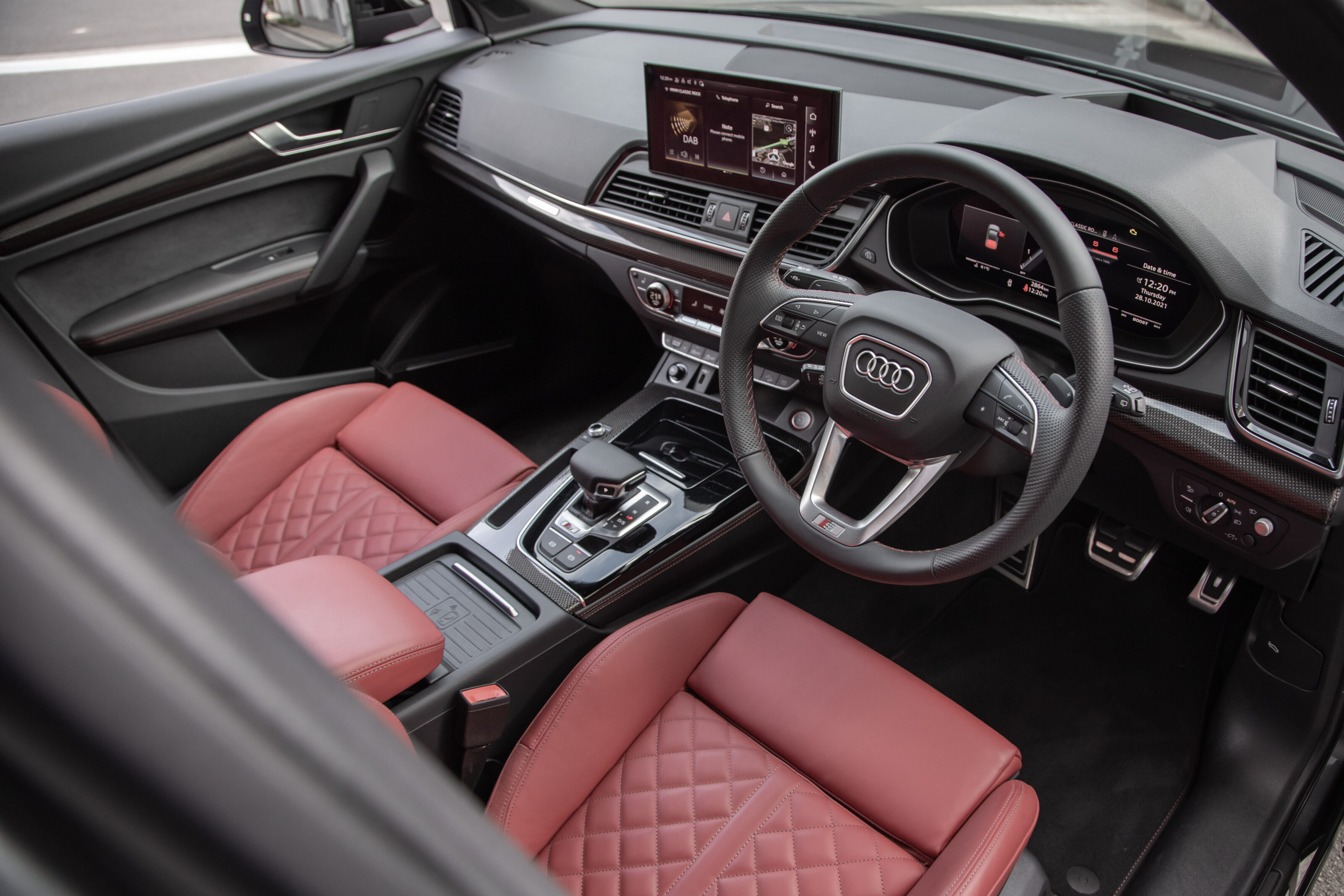
Coupe SUVs. Stupid and impractical, right? As something of a latecomer to segment, Audi’s managed to execute SQ5 Sportback with enough resolve as to not compromise packaging by much measure at all.
It’s five millimetres longer and two millimetres shorter in height than the SQ5 wagon on an identical wheelbase, so there’s precious little size difference. Yes, it is a coupe, the roof shoulders sloping in a neat arc beyond the B pillars, though the crown of the roof is no more coupe-esque than most sedan silhouettes.
In effect, the coupe look is largely prescribed via the teardrop daylight opening and upswept window and body lines, augmented by the strong tornado lines that give Sportback quite pronounced haunches. As a result, it appears more coupe-like at three-quarter view than it does side on.
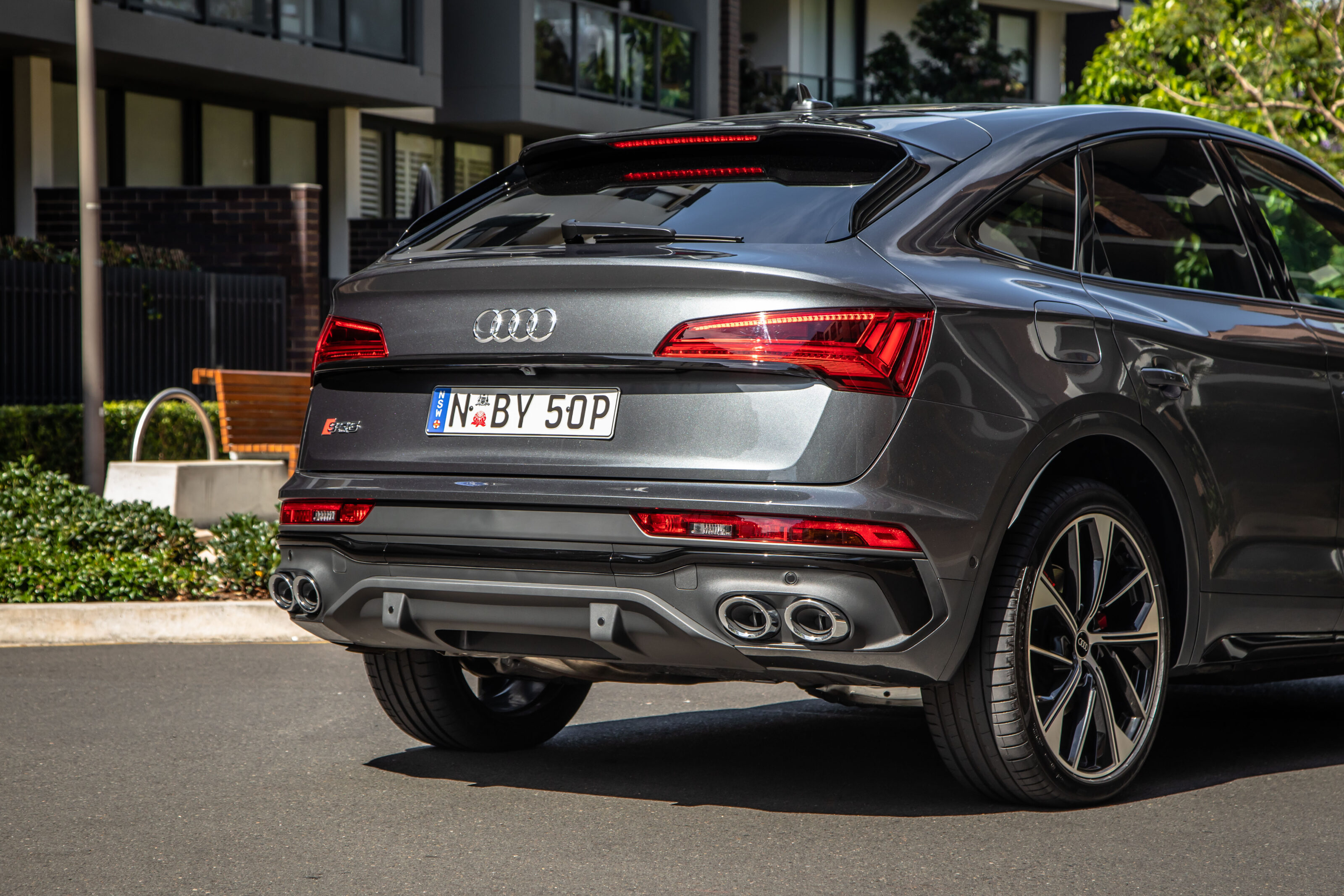
How much do you lose in boot space? Twenty litres. But given luggage capacity remains a fulsome 500 litres, it’s a four per cent loss, most of it lowered hatch glass, and the tilting rear 40:20:40 split-fold seatback offers the facility to tune load volume to payload anyway. Much compromise? Not really. The plush carpeting throughout and luggage netting, too, are nice upmarket touches.
The Sportback’s second row clearly favours adult-only accommodation in the outboard positions, if mostly due to the seat contours and large tailshaft tunnel. Spatially, though, this body style only trims 16mm in height from the seat base to ceiling against the wagon. The difference is, ostensibly, quite marginal. Dual USB ports and a dedicated third-zone climate control panel are thoughtful if expected inclusions.
The coupe look is largely prescribed via the teardrop glass area and upswept window and body lines, giving the Sportback quite pronounced haunches.

By Audi’s reckoning, there’s no difference in space forward of the B pillars, though the Sportback’s dash fascia contour and trim configuration do bring a slightly sportier spin to the Q5 vibe.
Similarly, the display ware and techy blend of material variety and integration are up to Ingolstadt’s usually high standards, more sport-infused than regular Q5 stock if not nearly as ostentatiously racy as full-house RS machinery, though fetching in our tester’s contrasting rich Magma Red Nappa leather that’s lovingly supple to touch.
But surprises are few. If there’s one trick Audi continues to miss, it’s that its cabins do seem samey across different model lines, right down to the digital display skins, which do reinforce a family theme but also makes the stable feel a bit too homogenised between models and grades. If Audi can come up with a new grille design every other day, it could bring a bit more distinction and separation in, say, Virtual Cockpit aesthetics between models.

It is a nice place to spend serious time. The seats are wonderfully shaped and supportive, even if the large squab bolster wants to cork your thigh when climbing in or out. Ergonomically, it’s equally natural in comfort and purposefully snug enough for those red-misted moments, a just-right balance fitting the ‘S’ all-rounder theme.
Besides the ever-so slightly clumsy ‘user administration’ when logging into the infotainment system and slightly lazy and confused Bluetooth reconnection, the touchscreen and its ‘connect plus’ smarts are generally slick, sharp and friendly, and the SQ5’s standard B&O 3D 19-speaker audio is a quantum leap beyond the ordinary gear Audi sticks in most of its base variants. The maker’s brilliant 360-degree camera system really is industry-leading for clarity and visual assistance.
All in all, the SQ5 cabin and boot space are uncompromised in packaging and fit-out to a level befitting the vehicle’s positioning, even if it’s not all that distinctive or bespoke.
On the road
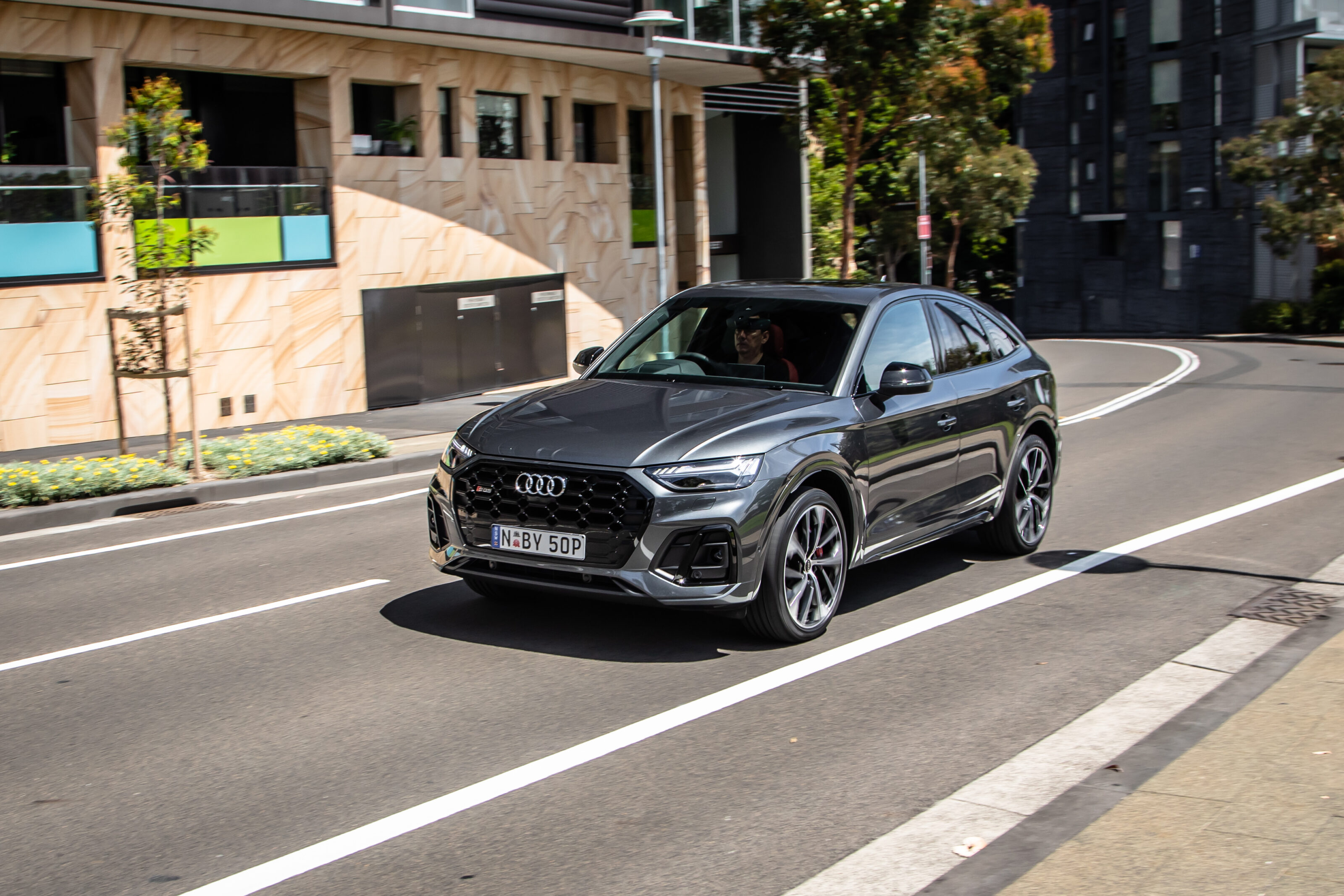
The SQ5 Sportback and wagon fit Audi’s third-generation S-grade 3.0-litre oiler. It has new internals – steel pistons, notably – and a “twin-dosing” SRC catalytic system, one functioning as a particulate filter, that facilitates Euro 6d emissions compliance. But the headline deviation from the old twin-turbocharged form is the forced induction method.
It’s now single-turbocharged and plumbs an electric compressor further upstream, after the intercooler. The EPC is powered by a 48-volt electric system and proves 2.4bar of charge at up to 70,000rpm.
At 251kW and 700Nm, the new TDI is precisely one kilowatt higher in output than the old twin-turbo engine. But the real benefit, it’s claimed, is in throttle response by way of instantaneously compressed boost, less lag and cleaner running, with peak torque arriving lower in the rev range, at 1750rpm.
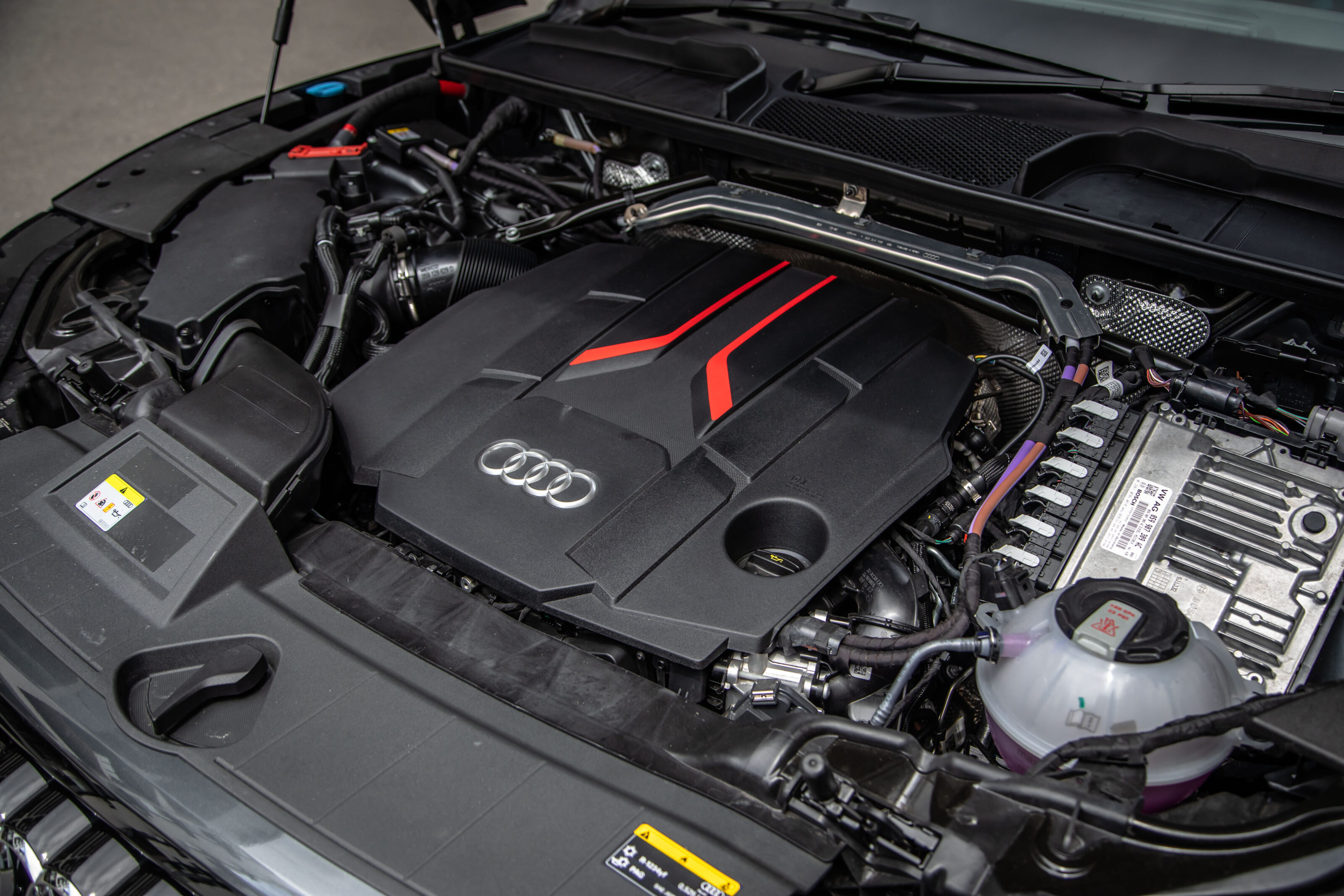
A version of the ‘dual charged’ EPC 3.0 TDI debuted on last year’s first-gen Limited Edition and it was disappointing, with dull pauses in throttle response when left its own devices and only really shining in the Sport powertrain mode while shifting manually.
This TDI, effectively a generation newer, seems to have licked the old engine’s ills. The V6 is more instantly alert, more linear in torque ramp-up, its peak blooming rather than punching suddenly from nowhere. It’s more well-mannered and more evenly tempered without robbing from that rich V8-like thrum – augmented by exhaust sound resonators for mechanical amplification – or softening off its wonderfully addictive 700Nm undertow. Treat the loud pedal quietly and there’s enough mumbo to ride taller ratios without the powertrain becoming overly flustered.
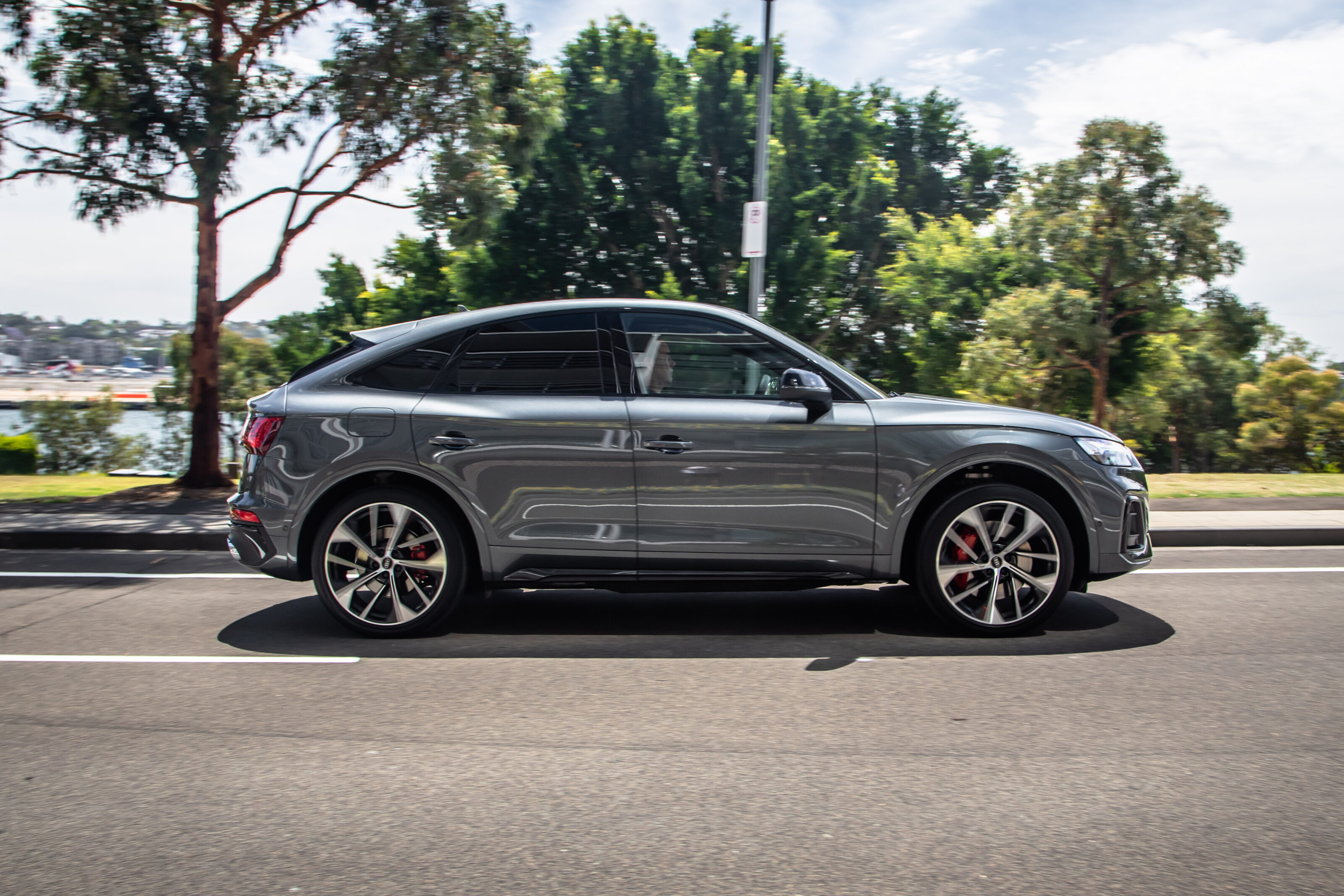
Peak torque clocks on at 1750rpm and maximum power drops off beyond four grand for quite a narrow sweet spot, but the eight-speed conventional auto does a commendable job of plucking fulsome goodness on the march and maintaining reasonably alert responses at a cruise. The tap-for-Sport transmission selector is a handy and intuitive ally, and a godsend given Audi’s persistence with its clumsy sequential drive mode switch mechanism.
At 5.1 seconds for the 0-100km/h sprint, its pace is on the money. At 7.1L/100kms of claimed combined consumption, this engine is certainly nicely frugal for its performance capabilities. But while the boomerang TDI is quicker than the last-gen petrol SQ5 wagon, the latest gear is no quicker or better with thirst than its original S-grade oiler forebears. Hmm…

With the 48-volt EPC and so-called “mild hybrid” tech comes complexity and, by association, weight. The SQ5 Sportback weighs in at 2085kg kerb. It’s a porker, and that’s with no intended inference to Stuttgart.
Net zero gain, then, even though the rolling stop-start tech at play is claimed to save as much as 0.7L of diesel per hundred.
The V6 is more instantly alert, more linear in torque ramp-up, its peak blooming rather than punching suddenly from nowhere.

Its Quattro system is more conventional, its self-locking centre diff nominally 40:60 in front/rear split but able to ply 85 per cent of drive rearward, to the optional sport rear LSD. During our dry, warm weather assessment, there’s enough purchase from the 255mm Pirelli P Zeros that rear-axle torque apportioning smarts seem fairly superfluous short of race track pace that, frankly, would surely and squarely plonk this portly fish well out of friendly water.
Instead, its on-road manner and character suit the grandest of touring much better, though it can dial up dynamic competency when the roads and conditions allow.
The jury is out on the standard steel suspenders, but the optional air-sprung ride and handling is, by gut feel, worth the extra splurge.
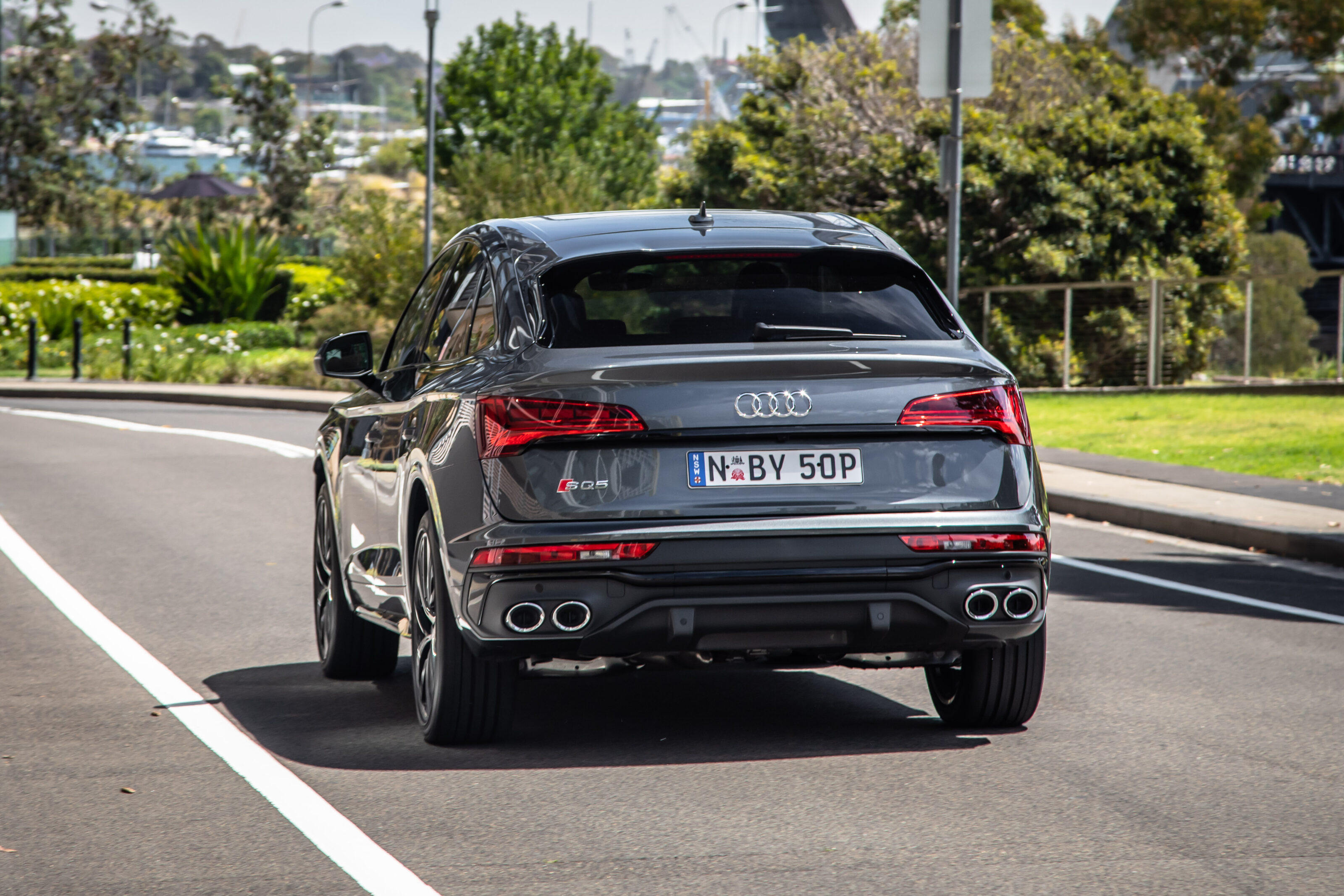
Engage Dynamic mode and the multilink axles muster up a decent amount of body control. It sits quite flat in the corners and there’s a fair degree of accuracy and enthusiasm in changing direction, despite the SUV’s portly heft that feels ever-present from the moment you ply steering lock at a decent clip. Still, point-to-point, it’s quick and surefooted, communicative enough in chassis and lusty enough in propulsion to stoke the driver’s enthusiasm nicely.
Rein in the leash and the ride is pleasant and compliant, without the flaccid wooliness that afflicts some premium carmakers’ air suspension designs when set to more comfort-leaning tuning. Nor is there much in the way of slap across sharp edges or expansion joints that usually accompanies low-profile 21-inch rolling stock. Brakes, too, are powerful if easy to modulate cold or at low speed.
On-road, the SQ5 Sportback is both nicely polished and match fit, even if it’s realistically no fitter than TDI wagons that have trekked this same path in the past.
Ownership
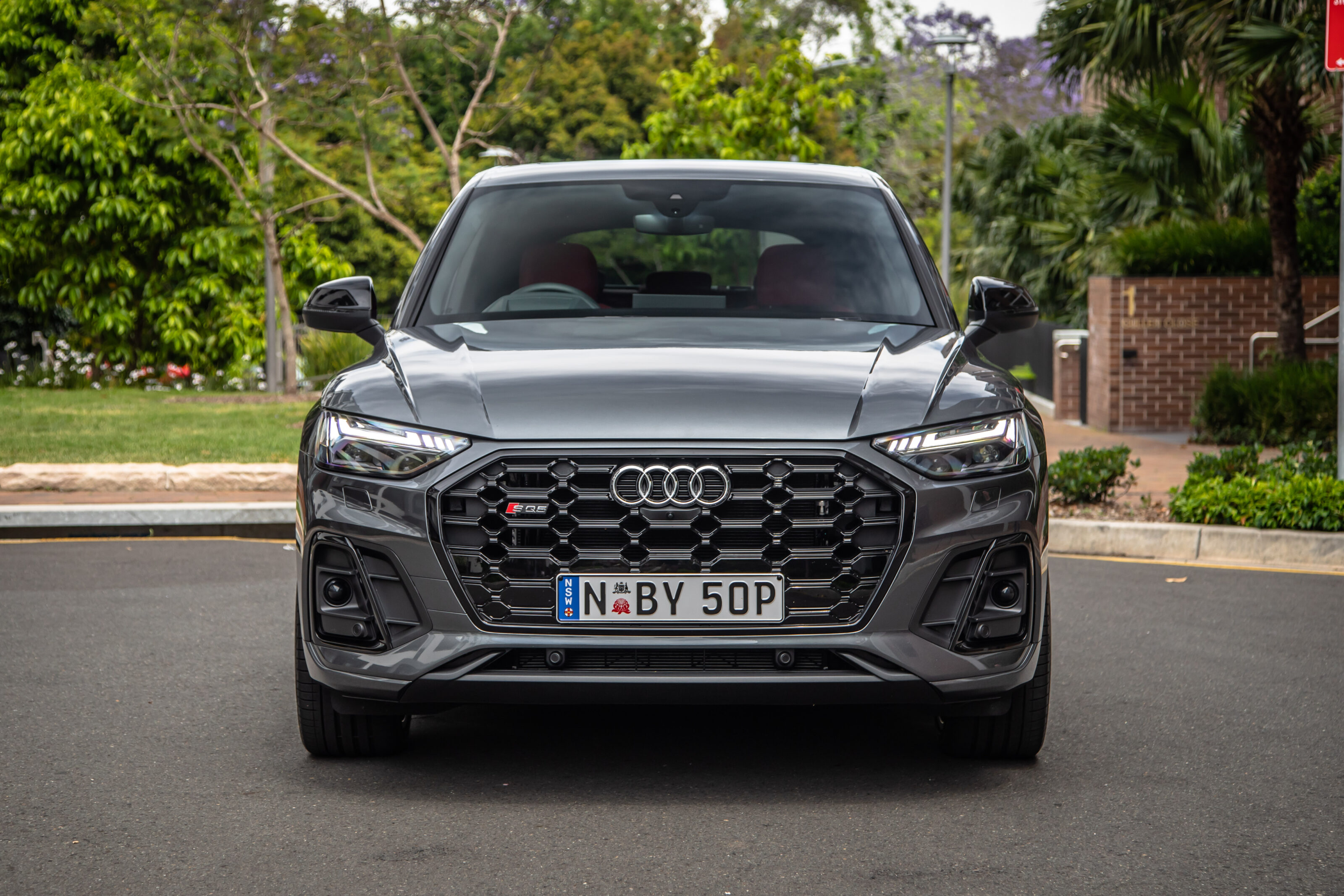
Audi still persists with its slim three-year warranty, among the shortest in premium importer circles and woeful compared with many mainstream marques. Servicing is $3170 for a five-year plan package, slightly ($30) higher than that of the less-heroic Q5 Sportback variants.
At 7.1L/100km, it’s certainly frugal for its performance capabilities. But the latest gear is no quicker or better with thirst than the original S-grade oiler.
VERDICT
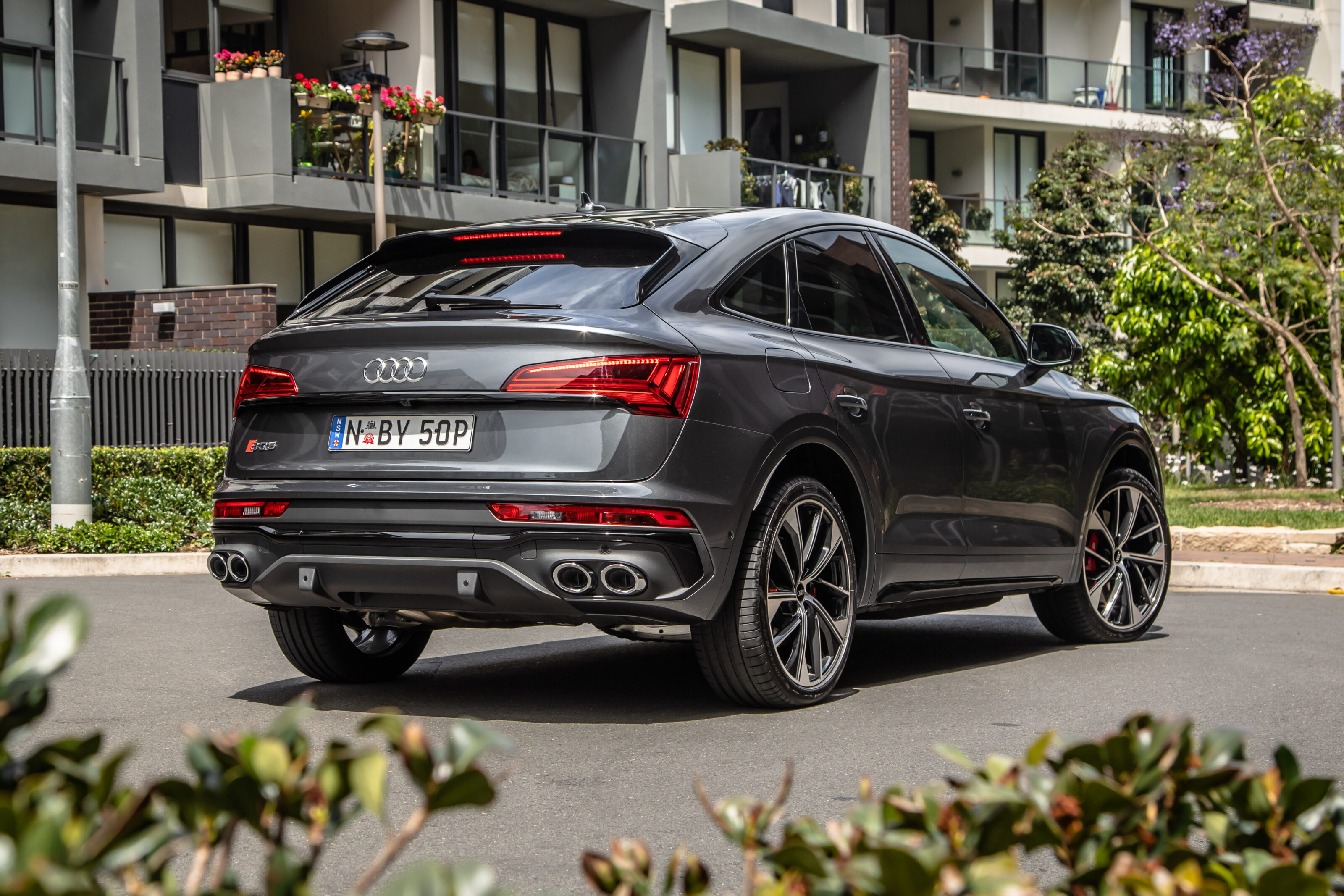
By taking its time, Audi has negotiated the risky ground of melding coupe design and SUV sensibility with a Sportback form that is both handsomely organic and, for most purposes, almost as practical as its wagon twin. A worthwhile upcharge, for style and some extra exclusivity, in many buyers’ eyes, no doubt.
The big, torquey diesel does make certain sense in a big country faced with the tyranny of distance, though that’s nothing new and Australia’s taste for premium oilers has waned over time. What this new, techier EPC-boosted TDI brings is a damn good drive and a wondrous soundtrack, if not a lot else new in terms of tangible pace or frugality. This new application, with its 48-volt complexities and weight penalty, is perhaps something Audi has been forced into rather than being a path of choice – there’s certainly a tinge of damage control in the face of ever-tightening Euro-led emissions legislation.
Still, it works a treat, not just for performance but as a package. In practice, the whole diesel coupe SUV amalgamation fits together more neatly and convincingly than it might seem on paper or screen. With its oiler engine as a key point of difference to logical petrol rivals from BMW and Mercedes-AMG, there’s nothing else out there quite like the SQ5 Sportback. And more power to the Ingolstadt machine because of it.
2022 Audi SQ5 Sportback specifications
| Body | five-door SUV coupe |
|---|---|
| Layout | AWD |
| Engine | 3.0-litre six-cylinder turbocharged |
| Gearbox | eight-speed automatic |
| Power | 251kW @ 3800-3950rpm |
| Torque | 700Nm @ 1750-3250rpm |
| Bore/stroke | 83.0mm x 91.4mm |
| Compression ratio | 16.3:1 |
| Fuel consumption | 7.1L/100km (claimed) |
| Weight | 2085kg (kerb) |
| Suspension | multilink (front); multilink (rear) |
| L/W/h | 4689/1893/1633mm |
| Wheelbase | 2824mm |
| Brakes | 345mm four-piston (front); 330mm single-piston (rear) |
| Tyres | 255/40 R21 Pirelli P Zero (f&r) |
| Wheels | 21-inch wheels (space saver spare) |
| Price | $110,900 +ORC |
Lexus has laid out plans to offer a greater variety of options from its F Sport brand.
While Lexus F models will remain as the company’s high-performance range, its ‘F Sport’ line-up will expand into three distinct tiers: F Sport Performance, F Sport Handling, and F Sport Design.
Vehicles labelled as F Sport Design will feature exterior upgrades, including sportier body kits and wheels, for those who want a more aggressive look from their Lexus.
Those who opt for F Sport Handling will get the styling benefits, as well as sport-tuned suspension to improve handling.

For buyers wanting something extra, without stepping up to a full-fat F model, can choose an F Sport Performance package – which sees the car given additional power, as well as the style and handling upgrades above.
The idea of tiered F Sport variants may have been brought in as the luxury Japanese carmaker looks to expand its current range with more Toyota-derived products.
Previous reports out of Japan suggest there may be a Lexus version of the Toyota GR 86 coupe, along with a hybrid version of the upcoming LX600 four-wheel-drive – potentially badged as the LX750h.
Despite there being no Lexus F models currently on sale in Australia, earlier this year, Japanese publication Best Car reported new IS F, LS F, and LC F models were on their way – and could see the introduction of a much-rumoured 4.0-litre twin-turbo V8 engine.
Key Points
- Focus could adopt electric power in next gen
- Partnership with Volkswagen may result in MEB platform being used
- Ford Australia has only recently announced its first local EV
Ford’s Focus hatchback could be the next Blue Oval model to be electrified, with reports from the UK suggesting the next-gen car will gain an electric variant.
According to an interview with Autocar, Ford’s European design boss, Murat Gueler, suggested it’s not out of the question for an electric Focus to become a part of the marque’s line-up.
“Everybody’s launching electric cars and we will launch a few in the future,” said Gueler when asked about an electric Focus.
“Definitely, we’re looking at everything – proportions, architectures… we’re really busy designing all the next-generation cars. There’s a lot of work going on.”
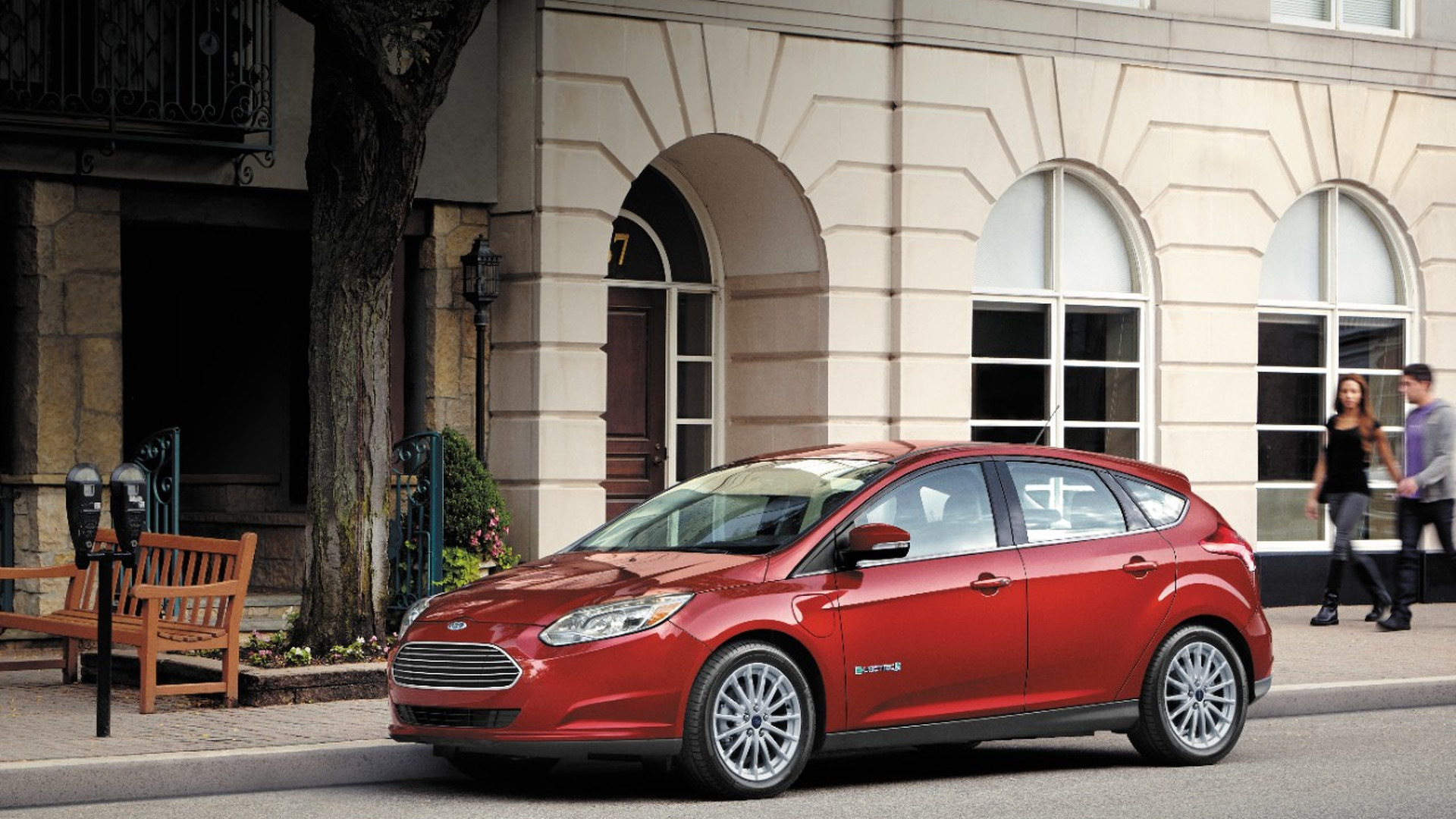
It wouldn’t be the first time Ford has produced a fully-electric version of its popular hatchback, as its third-generation Focus spawned an electric variant between 2011 to 2018 – powered by a 107kW electric motor and 23 or 33.5kWh battery pack. However, annual sales in the United States never exceeded 2000 units.
Given Ford is currently in a partnership with Volkswagen to utilise the German manufacturer’s MEB electric architecture for its European vehicles, an all-electric Focus could ride on a dedicated platform and share its underpinnings with VW’s ID.3.
Despite the Blue Oval developing an affinity for retaining its popular nameplates – think Mustang, Bronco, F-150 – the Focus name could disappear entirely if a totally new model is introduced, similar to when the Escort was phased out in favour of its successor in the 1990s.
While Ford of Europe has committed to selling a completely electrified line-up from 2028, Ford Australia has been slow off the mark to adopt EVs – announcing the arrival of the E-Transit as its first dedicated EV last month.
Locally we can expect to see five electrified Ford models launch by 2025, although Ford Australia wouldn’t confirm if these would be fully-electric, hybrids or variants of existing cars.
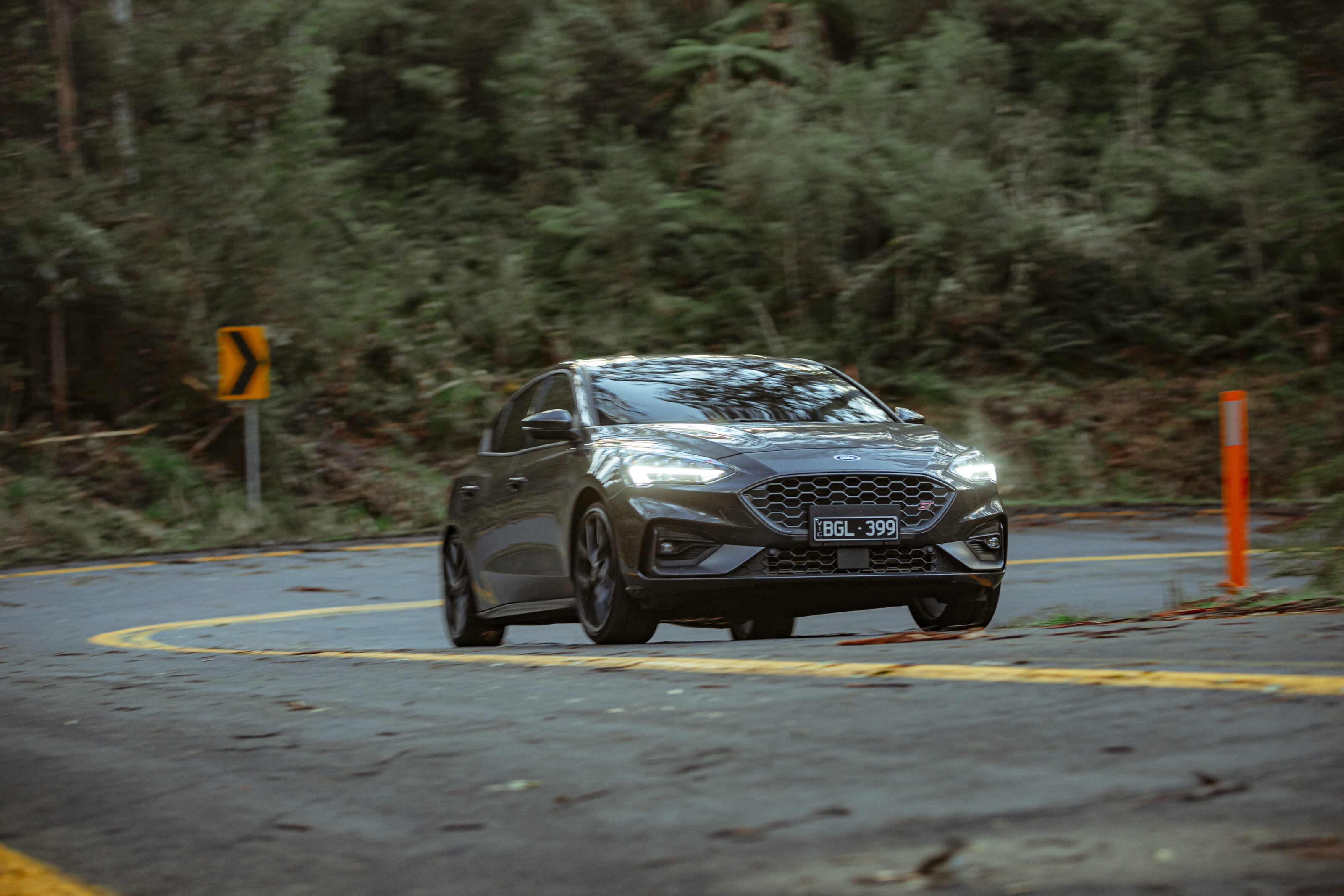
Ford recently revealed the face-lifted Focus ST alongside the announcement it would stop bringing non-ST variants to Australia – only offering SUVs, commercial vehicles, and performance models in the Focus ST, Fiesta ST, and Mustang.
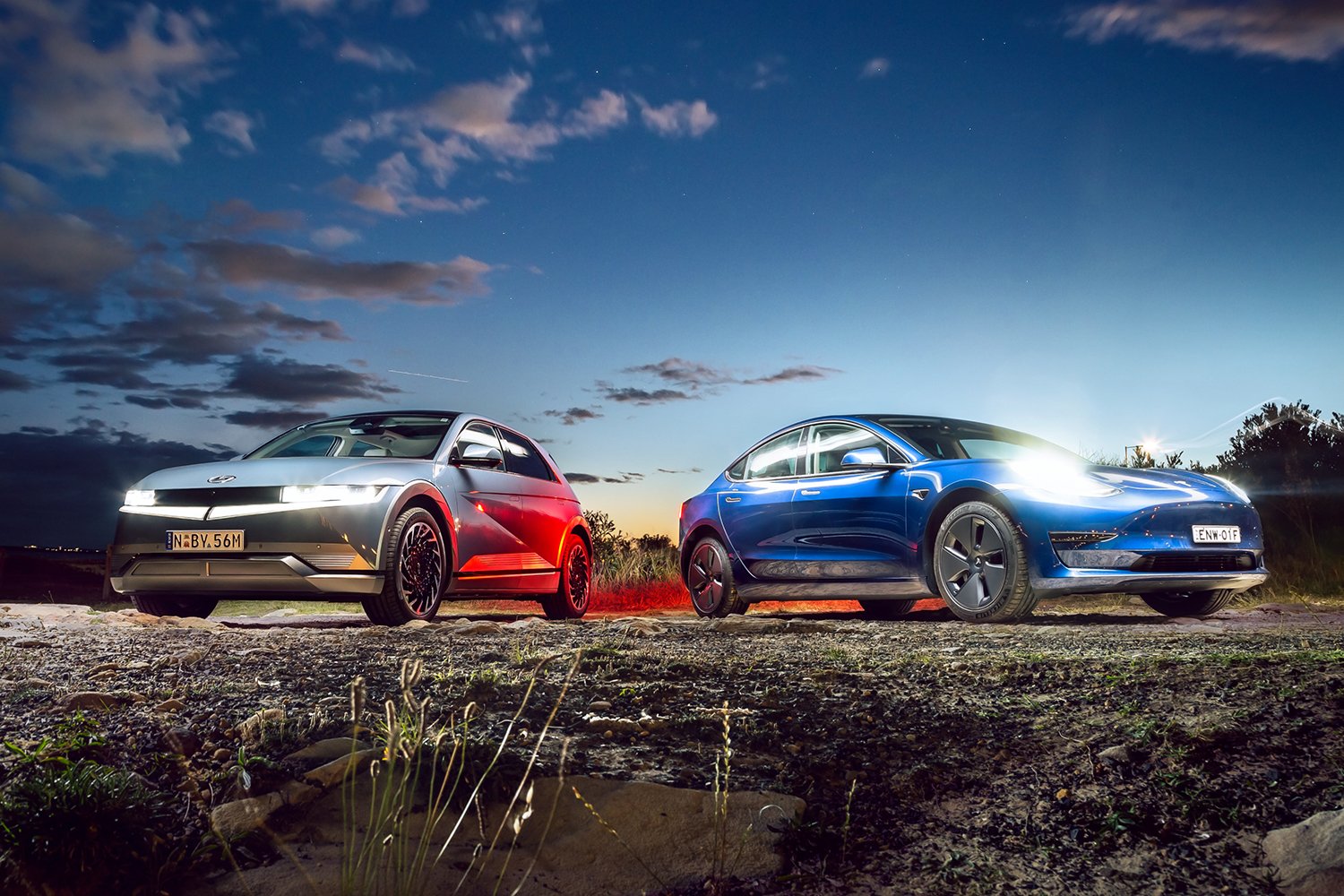
For an exponent of silent motoring, the Hyundai IONIQ 5 is making quite a noise.
The buzz surrounding the South Korean EV has nothing to do with its new dedicated battery electric vehicle platform that shares 800-volt rapid-charging capability with the Porsche Taycan and will underpin a large assortment of Hyundai Group models.
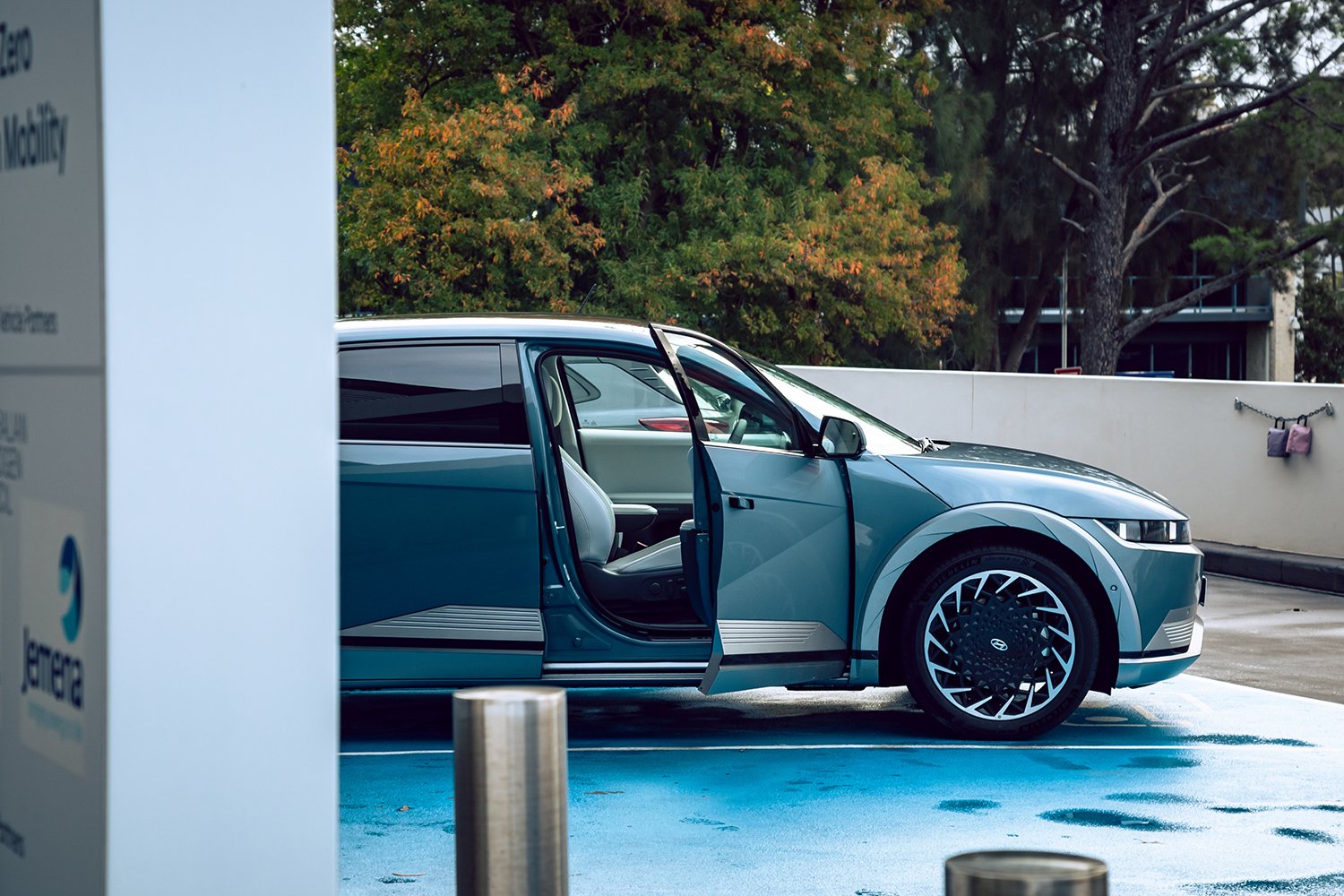
Instead, it has everything to do with the crossover’s stunning retro-futuristic design – a metallic origami of chiselled panels and creases that combine with glorious details such as pixelated cubic LED head- and tail-lights, door strakes, and the first clamshell bonnet seen on a Hyundai.
The short-overhanged, five-door body with a limousine-like three-metre wheelbase also disguises a footprint only slightly longer than the company’s Tucson mid-sized SUV and virtually as wide as the Santa Fe seven-seater SUV.
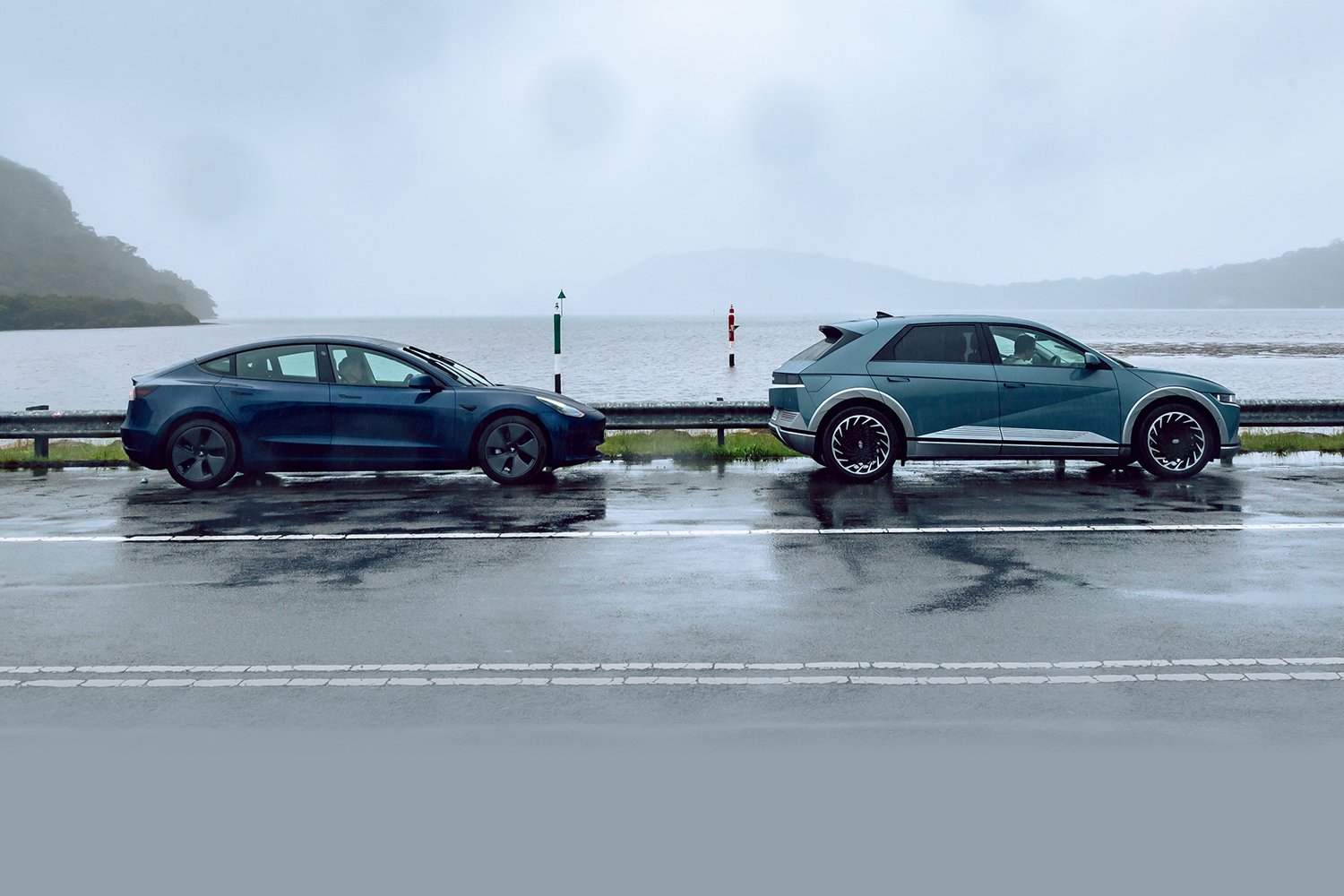
It’s essentially a mega-hatch that’s just 59mm shorter than the mid-sized electric sedan everyone now wants to beat, regardless of vehicle style.
Looking elegant from some angles, strange from others, and somewhat plain in the Hyundai’s company, the Tesla Model 3 – first introduced in 2017 – makes for more remarkable viewing in the sales charts. Not merely the best-selling electric vehicle globally (and locally, if unofficially), the smallest Tesla is now among the most popular cars in the world.
NOTE: Click any of the photos here to enter our gallery
Pricing and features
Earlier this year, perhaps in preparation for new competition, Tesla sharpened Model 3 prices by up to 12 percent.
Significantly, the cost of entry to a Tesla dropped below $60,000 with our $59,900 Standard Range Plus.
And while the best EV incentives currently available in Australia (NSW) can effectively wipe out its on-road charges, the IONIQ 5’s $71,900 starting price excludes it from the generous $3000 rebates offered by both NSW and Victoria.
There’s potential for a sub-$65,000 IONIQ 5 in 2022, but Hyundai Australia has for now opted to attract customers with a fully loaded Highlander-style specification.
A $75,900 IONIQ 5 AWD with dual motors is also available, adding significant performance but subtracting some battery range. Here we have the single-motor RWD model to mirror the Model 3 Standard Range Plus.
Features the basic Model 3 can’t match on the Hyundai include metallic paint, 20-inch alloy wheels, 3D Surround View, semi-auto parking, Bose Audio system, leather-appointed interior, front seats with a full recliner setting plus heating/ventilation, heated rear seats, heated steering wheel, and LED interior lighting.
Higher-grade Model 3 variants add features while increasing range and performance, but the price gap can be wiped out in one fell swoop if the $10,100 box is ticked for Tesla’s contentiously titled Full Self Driving Capability suite, which offers questionable benefits over the standard Autopilot system.
Regular over-the-air software updates help protect the Model 3 from obsolescence (and allow for the purchase of feature upgrades), though in late 2020 Tesla introduced a bunch of physical MY21 updates.
Production for Australian models has also switched from the US to China, and the Standard Range Plus, specifically, swapped to a new battery chemistry with lifecycle, safety and ethical advantages.
Interior and infotainment
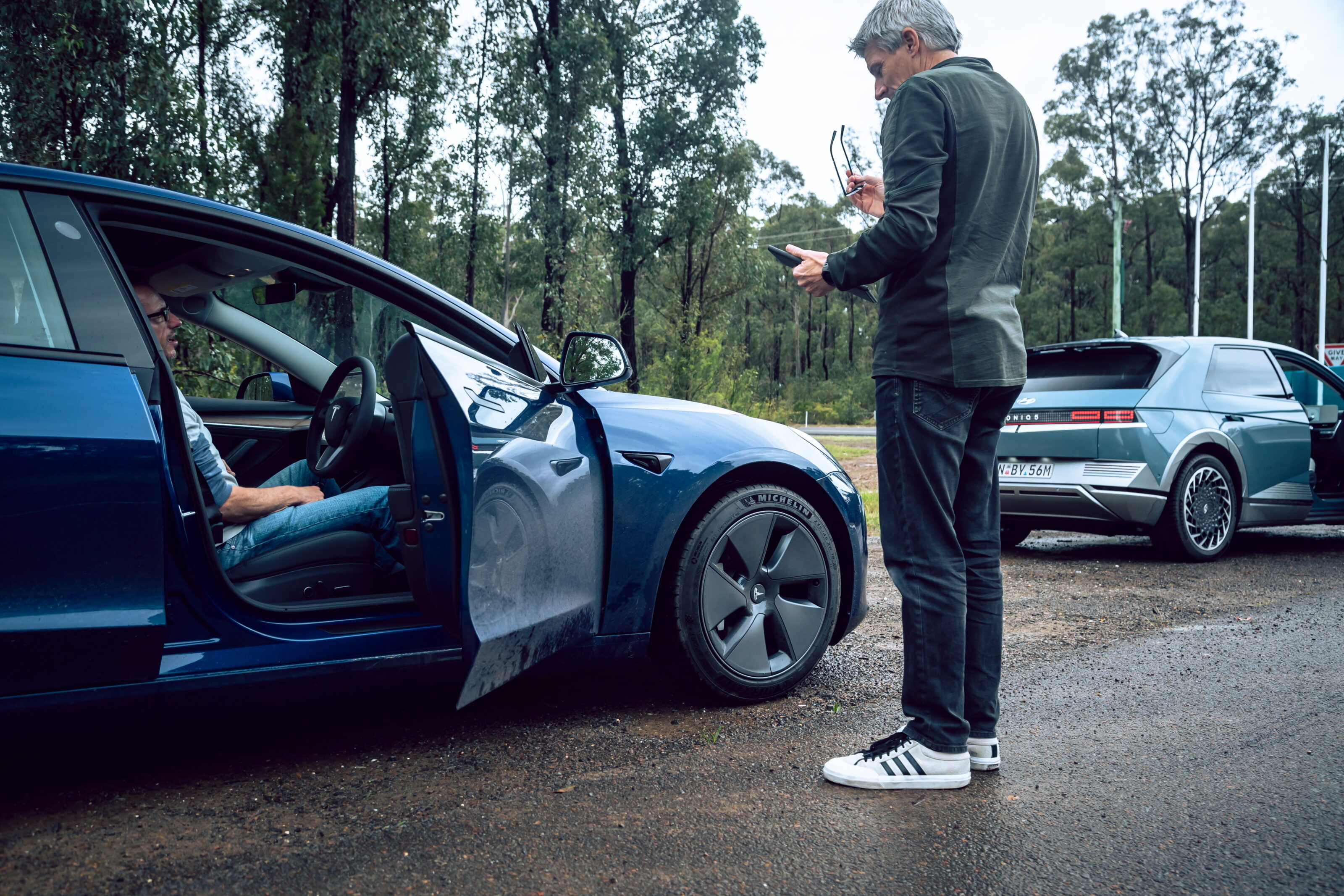
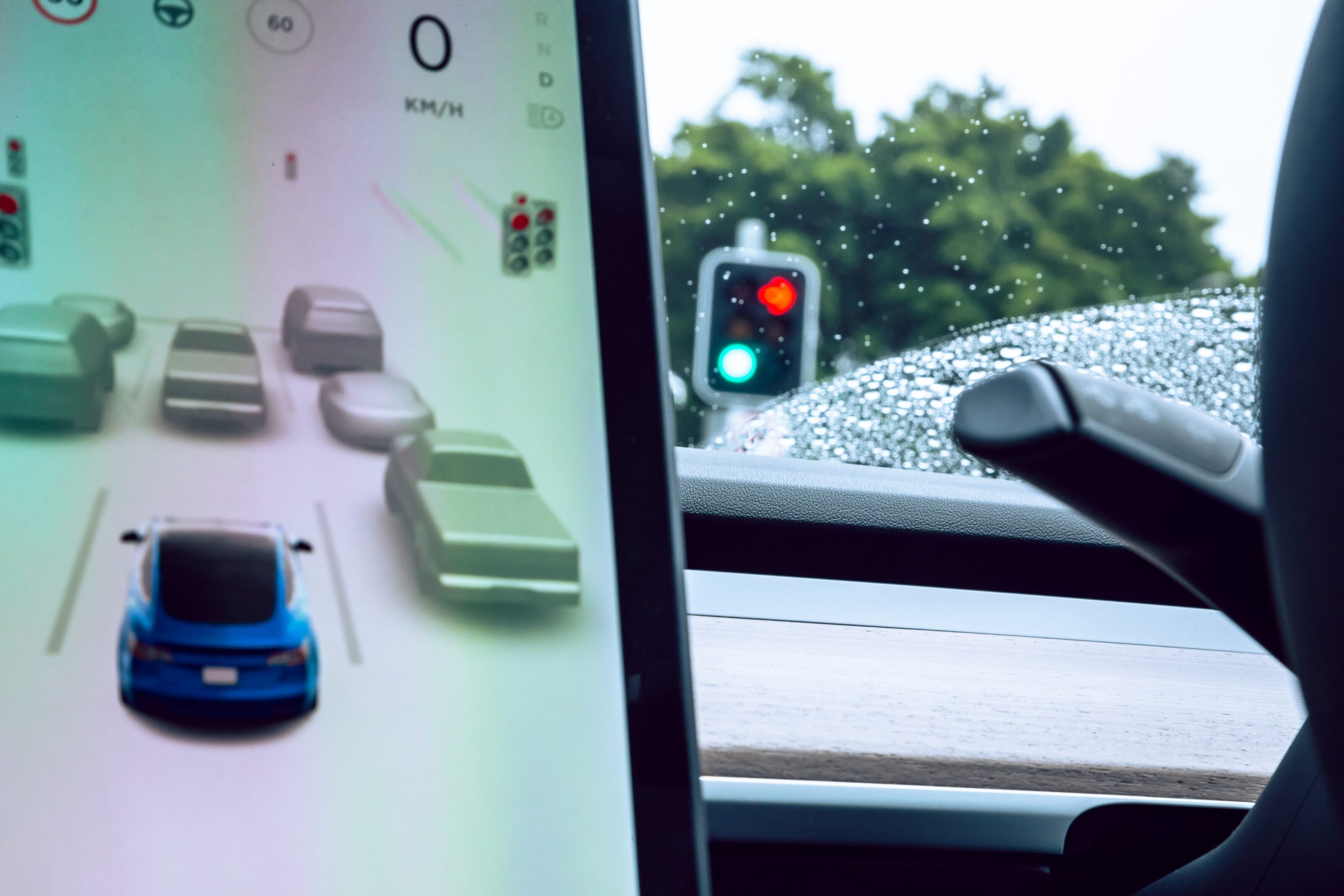
Interior changes were subtle, so the Model 3’s starkly stylish, ultra-minimalist cabin design remains. Steering wheel, pedals, wiper/transmission stalks and window switches aside, all functions for the car – including side mirror adjustments – are controlled via the 15-inch supersized-tablet central touchscreen.
It’s not quite as beautifully intuitive as an Apple product on initial acquaintance, but there’s immense depth to the Tesla’s content-rich infotainment system. A $9.99 monthly subscription is required for the full complement, but it rewards with Easter-egg features the further you explore.
Driving games that you can play using the Tesla’s steering wheels and pedals (when parked, naturally), a Karaoke mode, as well as the good old whoopee-cushion effect continue to remind us that Elon Musk has a sense of humour.
An important update for the interior includes a redesigned centre console that introduces suede-backed dual charging pads for smartphones (which are super-quick at replenishing the battery).
There’s a couple more fast-charging USB-C ports and the glovebox – yep, also opened via the touchscreen – now features a USB-A port to which a storage fob can be connected for Sentry Mode security and Dash Cam footage.
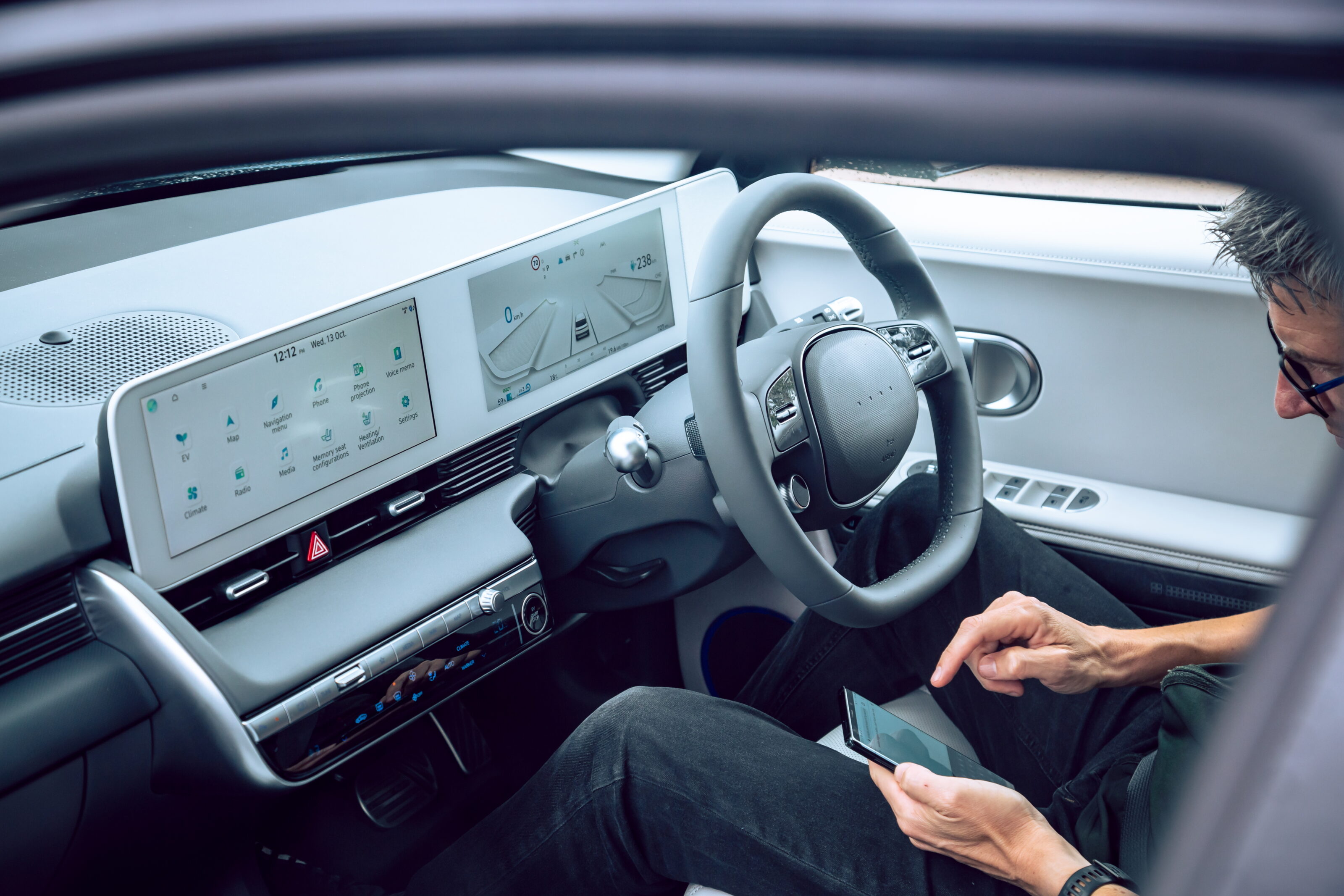
The Hyundai’s interior isn’t as visually arresting as its exterior, and its dashboard – with its Mercedes-mimicking conjoined 12.3-inch digital displays, separate climate control panel and visible vents – looks positively conventional after the Tesla. The screen resolutions are sharp, and the graphics palette, if rather anaemic, helps create some differentiation from the otherwise familiar Hyundai Group interface.
The infotainment menu includes a dedicated EV information page, with battery life and driving range shown on the driver display that also includes a clever blind-spot video feed. The driver cluster otherwise disappoints with its lack of customisation. If the IONIQ 5 can’t match the Model 3 for cabin technology (including slower-charging USB-A ports), it trumps the Tesla in every other interior criterion: space, comfort and quality.
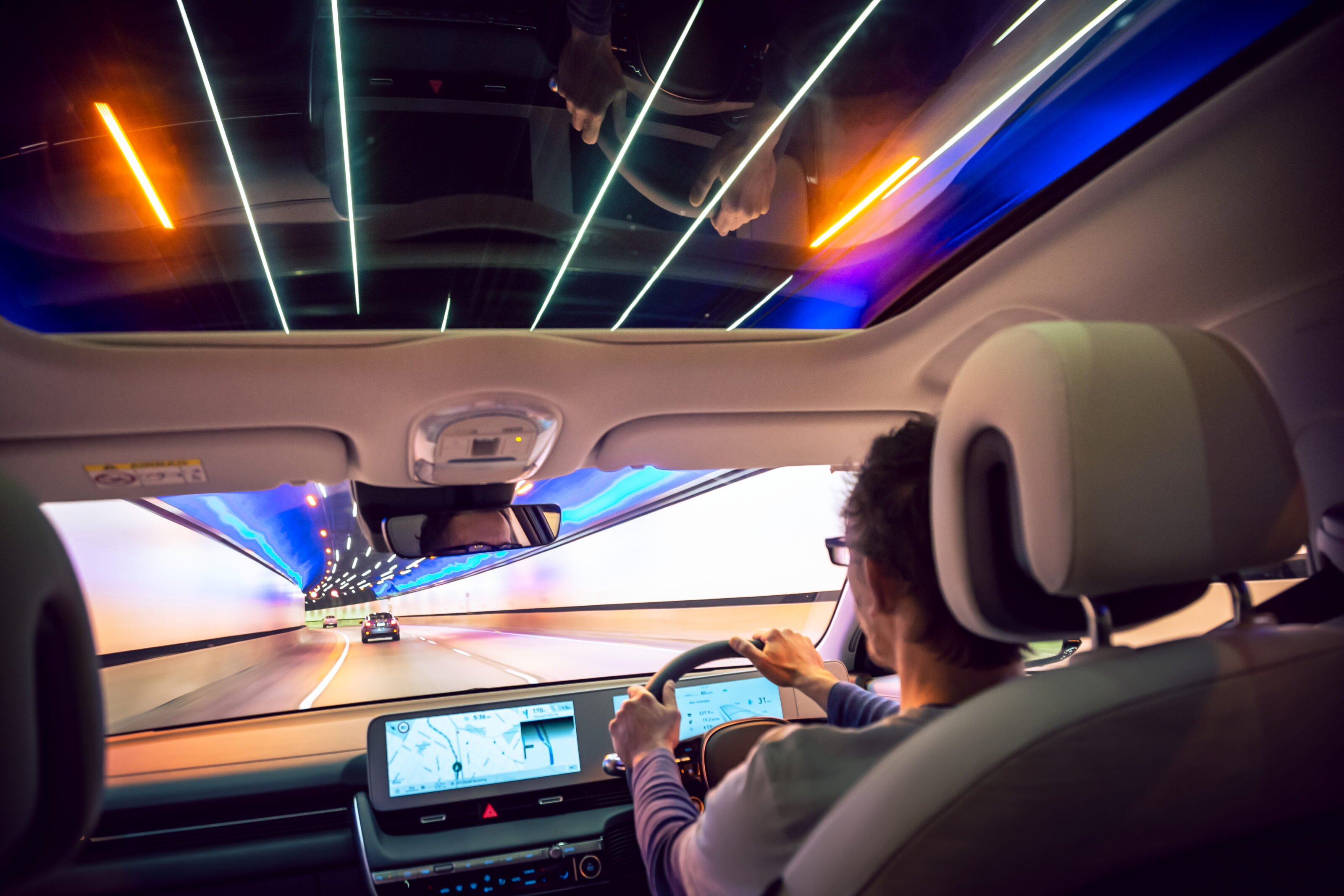
While both vehicles sit their cabins atop a skateboard platform with integrated battery to create fully flat floors, the Hyundai feels even more open – and suffused in light when the expansive glass roof is revealed.
Where the Tesla opts for a fixed centre console with generous storage sections, the Hyundai’s console slides with 140mm of travel to create a clear walk-through between the front seats.

The IONIQ’s console is more convenient with its open-storage area that takes a small bag or even a pair of shoes, and the ingenious filing-draw glovebox fits a 13-inch laptop. There’s also greater electric adjustment for the front seats in the IONIQ 5, including full reclining with calf-rests for owners who want to relax inside while the car fast-charges.
The Hyundai’s rear seat, accessed by a huge rear door that wasn’t necessarily designed with busy car parks in mind, offers the vast space promised by the IONIQ’s protracted wheelbase. Passengers are further pampered with a 60-40 bench that slides electrically, seatbacks that offer manual recline adjustment, window shades, pillar vents and plentiful rear storage.
The Model 3’s rear cabin is a short-straw experience for adults, with comfort compromised in a similar way to the larger Model S. The combination of a low-set bench and sloping roof creates a knees-up posture and, for anyone over 178cm, limits headroom markedly. Squashed toe space confirms this as a place best for kids.
Huge glass sunroofs are shared but different in concept. Dual-pane and heavily tinted in the Tesla; one-piece in the Hyundai with a thick blind comprising front/rear sections that meet smartly in the middle. For hotter climes, Model 3 owners might want to invest in the optional sunroof shade.
Fit and finish in the Model 3 was an improvement over the last model this author drove, though can’t match that of the Hyundai. The IONIQ 5’s perceived interior quality is on a level somewhere between a Tucson and the posh Genesis GV70.
And where the Model 3 features vegan-friendly vinyl for its seats, Hyundai’s sustainability play includes leather-appointed upholstery and trim treated and dyed with flaxseed oil, bio-painted interior surfaces and a fully recyclable door insert called paperette.
Tesla counters with luggage space. Open the IONIQ’s tailgate – and the Model 3’s distinctive semi-liftback bootlid – and respective capacities are 527 versus 561 litres.
The Hyundai has the aperture advantage, but its boot, while wide, is quite shallow and the (removable) cargo blind is positioned lower than the top of the seatbacks. The Tesla’s boot is longer and includes a deep storage well under the floor. Rear seats fold flat in both cars.
There’s an underfloor section in the IONIQ but it’s limited to storing charging cables, as well as a tyre mobility kit (an option for the Model 3) and a handy vehicle-to-load adaptor for charging things other than the car itself (see sidebar).
At the opposite ends, the Model 3’s frunk has shrunk with the introduction of a heat pump (borrowed from the related, upcoming Model Y SUV). Yet at 88 litres, it still offers more space than the 57L found under the IONIQ 5’s clamshell bonnet (shrinking to a measly 24L in the AWD version).
It’s also more easily accessed than the IONIQ’s, which gives its frunk another lid while requiring a lever in the driver’s footwell to be pulled to open the bonnet.
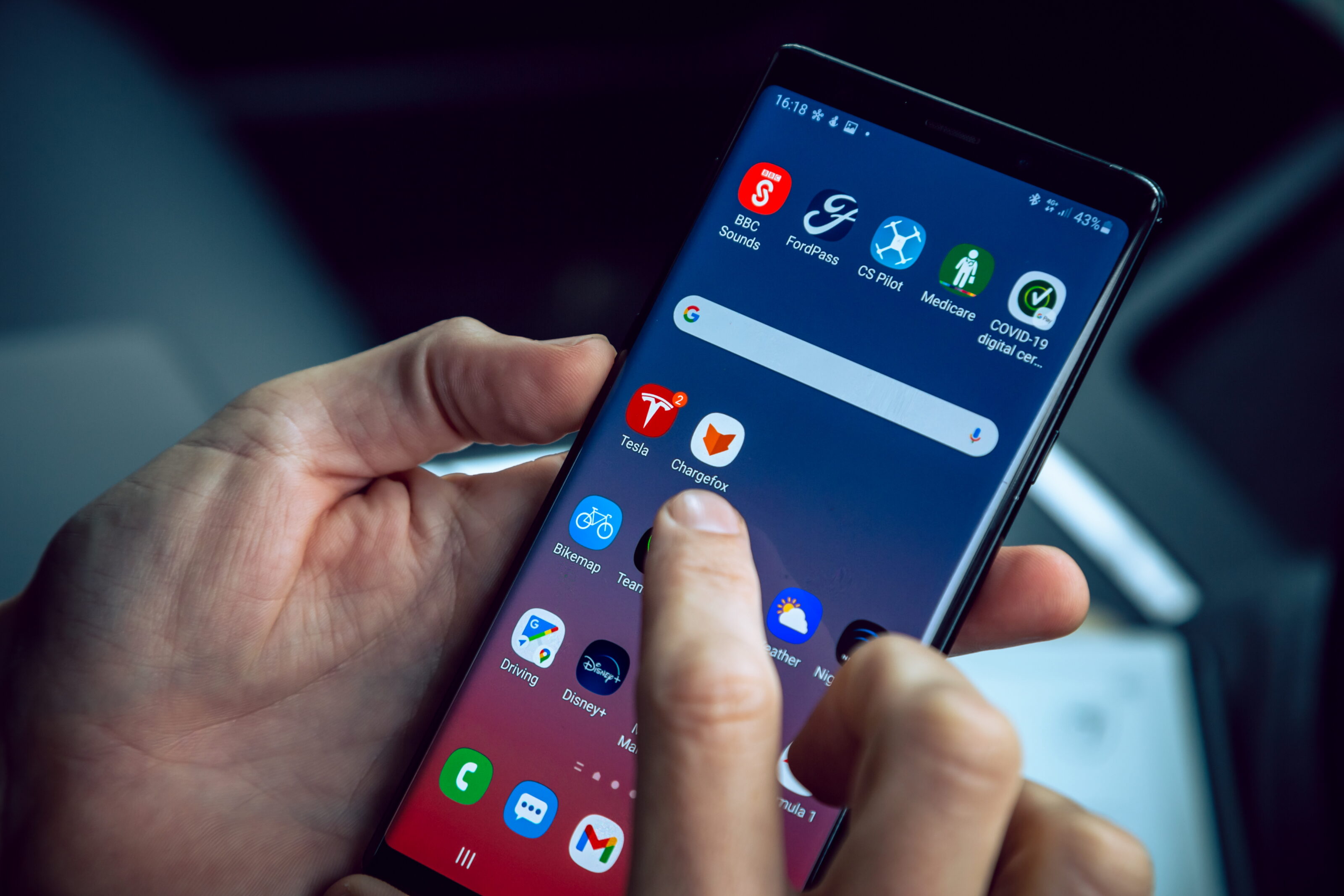
The Model 3’s frunk has no cover and the bonnet can be opened remotely via the clever Tesla app. The app brings next-level convenience the Hyundai can’t match – at least until the company’s Bluelink telematics is made available.
Link your smartphone with the Tesla’s key card and it becomes everything you need to lock/unlock the car, open/close the tailgate/frunk, pre-warm/cool the cabin, locate the nearest Tesla Supercharger/Destination, and even start the car.

Driving
Driving positions contrast as much as exterior designs: low-slung in the Model 3; slightly more elevated than a typical hatch in the IONIQ. That gives the Hyundai the better all-round view, though some drivers will find the steering wheel partly obscures the driver display.
Neither car provides a head-up display. It seems particularly remiss in the Tesla, which asks the driver to avert their eyes to the central touchscreen for all driving information.
The Model 3 has the tightest turning circle at 11.6 metres, though the 12.0m IONIQ hardly puts you into a world of three-point-turning hurt. However, a bigger gap exists between steering quality.
The IONIQ 5’s steering has a slightly uneven response off centre, though far worse is the over-sensitive Lane Keep Assist system that can tug at the steering wheel like some demented autonomous-driving system you’ve inadvertently engaged. While it can be switched off by holding down a steering wheel button, it’s also worth remembering it’s reactivated every time the car restarts.
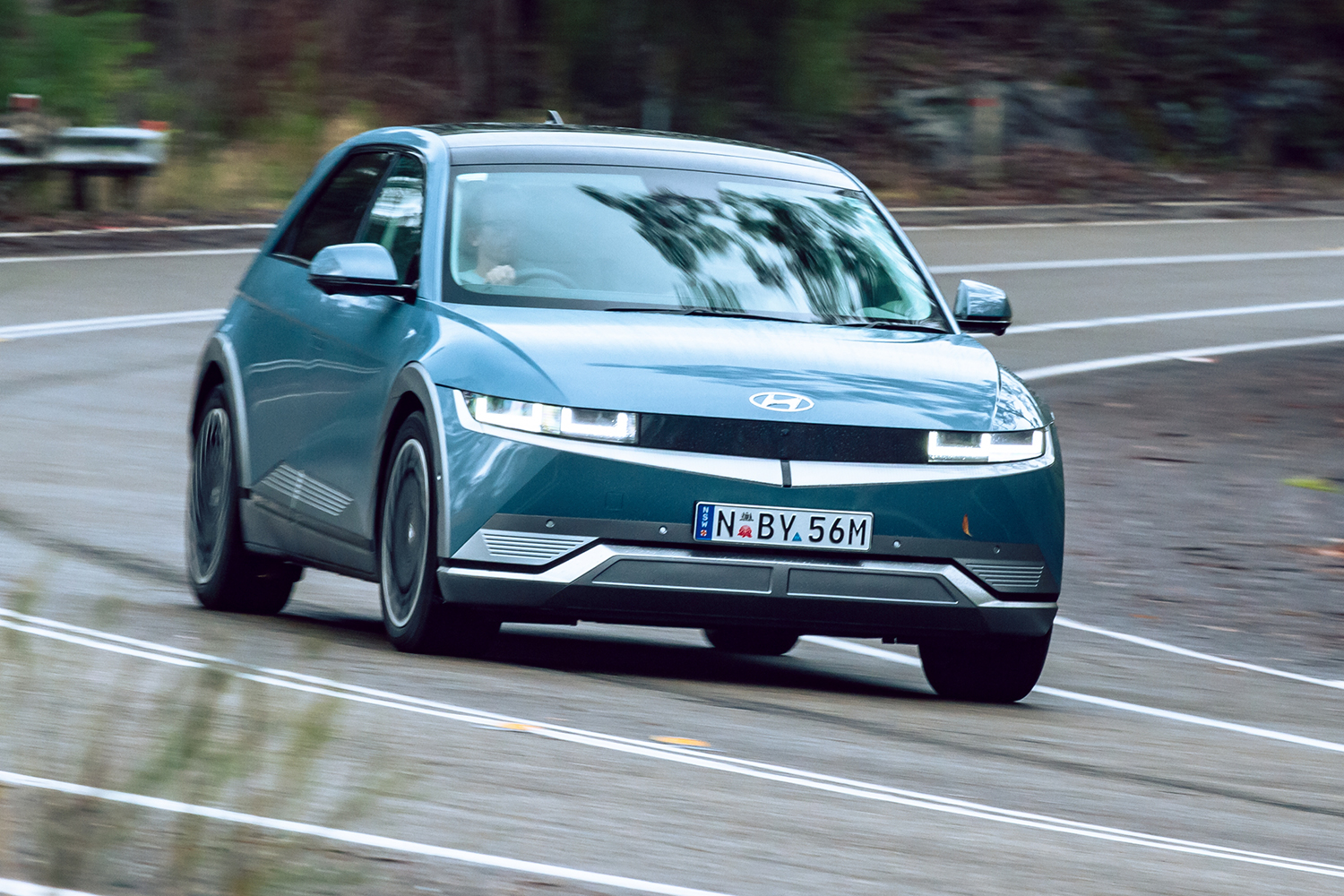
The Model 3’s compact steering wheel turns with a creamy consistency and, with just two turns lock to lock, also a directness that makes the sedan feel nimbler than the IONIQ both around town and on a winding stretch of countryside bitumen.
With its low-slung driving position, light and pointy front end, low bonnet and pronounced front wheel arches, the Model 3 attempts a preview of how an electric Porsche Cayman might drive (nonexistent steering feel aside).
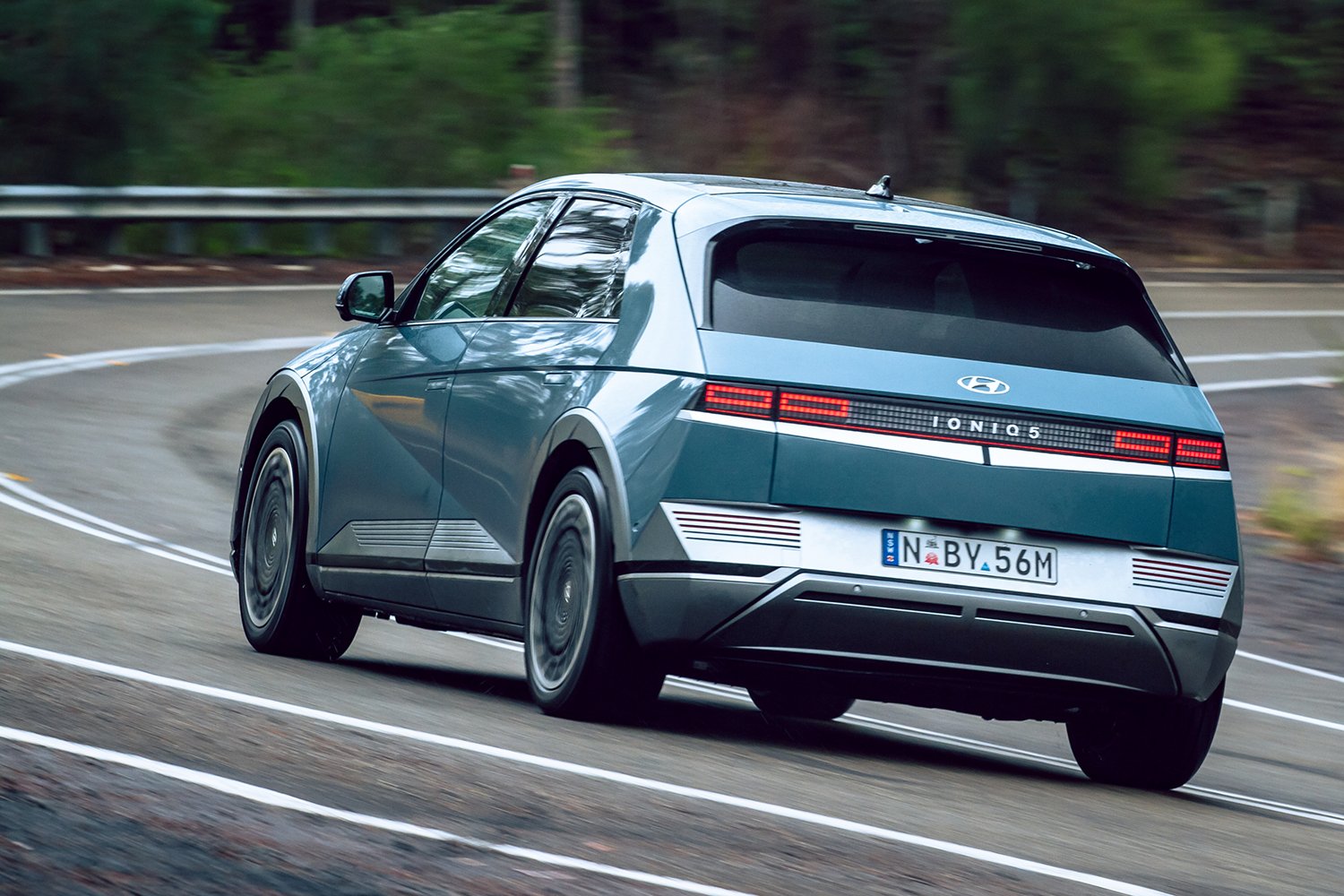
The IONIQ 5 offers less for keen drivers, but neither is it a killjoy in corners. Although its two-tonne kerb weight exceeds the Tesla’s by several hundred kilos, the 72.6kWh battery under the floor helps create a relatively low centre of gravity.
There’s a nice chassis balance, with the wheel-at-each-corner stance aiding stability and the 255/45 Michelin Pilot Sport EVs generating plentiful tyre grip. On damp roads, the IONIQ’s rear end can even be coaxed into very mild oversteer.
The Model 3’s Michelin Pilot Sport 4s offer impressive adhesion considering the rear rubber is asked to cope with bigger outputs. Tesla won’t divulge power and torque figures, but there’s about 239kW and 420Nm (and a 52.5kWh battery), according to the reputable EV-database.com.
Those figures seem about right from the driver’s seat, as the Tesla’s acceleration packs a decent wallop the 160kW/350Nm Hyundai can’t match.
A 5.6-second 0-100km/h claim gives the base Model 3 a near-two-second advantage that’s only overturned by the more expensive AWD IONIQ 5, which cuts the Hyundai’s sprint time from 7.4 to 5.2 seconds. Touche, says Tesla; the Model 3 Performance has a 3.3-second sprint time that’s almost absurd for a sub-$100K car. However, the Standard Range feels amply quick.
Driving modes allow drivers to adjust the torrent of instantaneous torque, even if the default settings – highest-level Standard in Model 3; mid-level Normal in the IONIQ – felt ideal to us.
Hyundai’s IONIQ 5 also provides several levels of regenerative braking via its paddles, with the highest an ‘I-Pedal’ mode for the full one-pedal-driving experience complete with hill holding.

Tesla, unusually, has axed the Model 3’s choice of regenerative braking levels. The default is a touch more aggressive than the IONIQ’s, though quickly becomes natural. When the brake pedal is required, the IONIQ’s modulates progressively where the Tesla’s is stiff.
Both EVs deliver acceptable rather than exemplary ride quality at lower speeds. The IONIQ 5’s suspension delivers the greater suppleness (and quieter tyres), though can switch between relaxed and fidgety depending on road quality and the big wheels can thud into potholes. Adaptive suspension could do wonders for the Model 3, as its over-eager damping makes for a jittery ride on uneven surfaces.
Ironically, they provide their utmost comfort on freeways, where the cars’ batteries are inevitably sapped at a faster rate. WLTP range figures are close, with the IONIQ 5’s 451km just ahead of the base Model 3’s 448km. The gap was slightly wider in our predicted ranges on test – 423km for the Tesla, the Hyundai with 442km.
The IONIQ 5 was slightly more efficient in the suburbs, with the Model 3 faring better in higher-speed, open-road driving.
Fast-charging capability versus Australia’s reality
Just over 17 minutes. That’s all it takes to charge the IONIQ 5’s 72.6kWh battery from 10 to 80 percent thanks to the Hyundai’s 800-volt architecture that’s double the industry standard.
Establishing itself as one of the fastest-charging EVs in the world, it’s quicker even than the Porsche Taycan and Audi e-Tron GT that also use 800V technology.
Unfortunately, in Australia it’s likely to take you significantly longer to find one of the ultra-rapid 350kW DC charging stations equipped to match the IONIQ 5’s capability.
Tesla’s Model 3 isn’t exactly hampered by its 400V technology. The company’s latest V3 Superchargers perform the 10-80 per cent recharge in about 25 minutes.
Both EVs can gain 100km of range in just five minutes with high-rate charging.
For the majority of charging, owners will be using their respective AC charging capabilities – 10.5kW for IONIQ 5, 11kW for Model 3 – as supplied by garage wall chargers.
Bi-directional charging
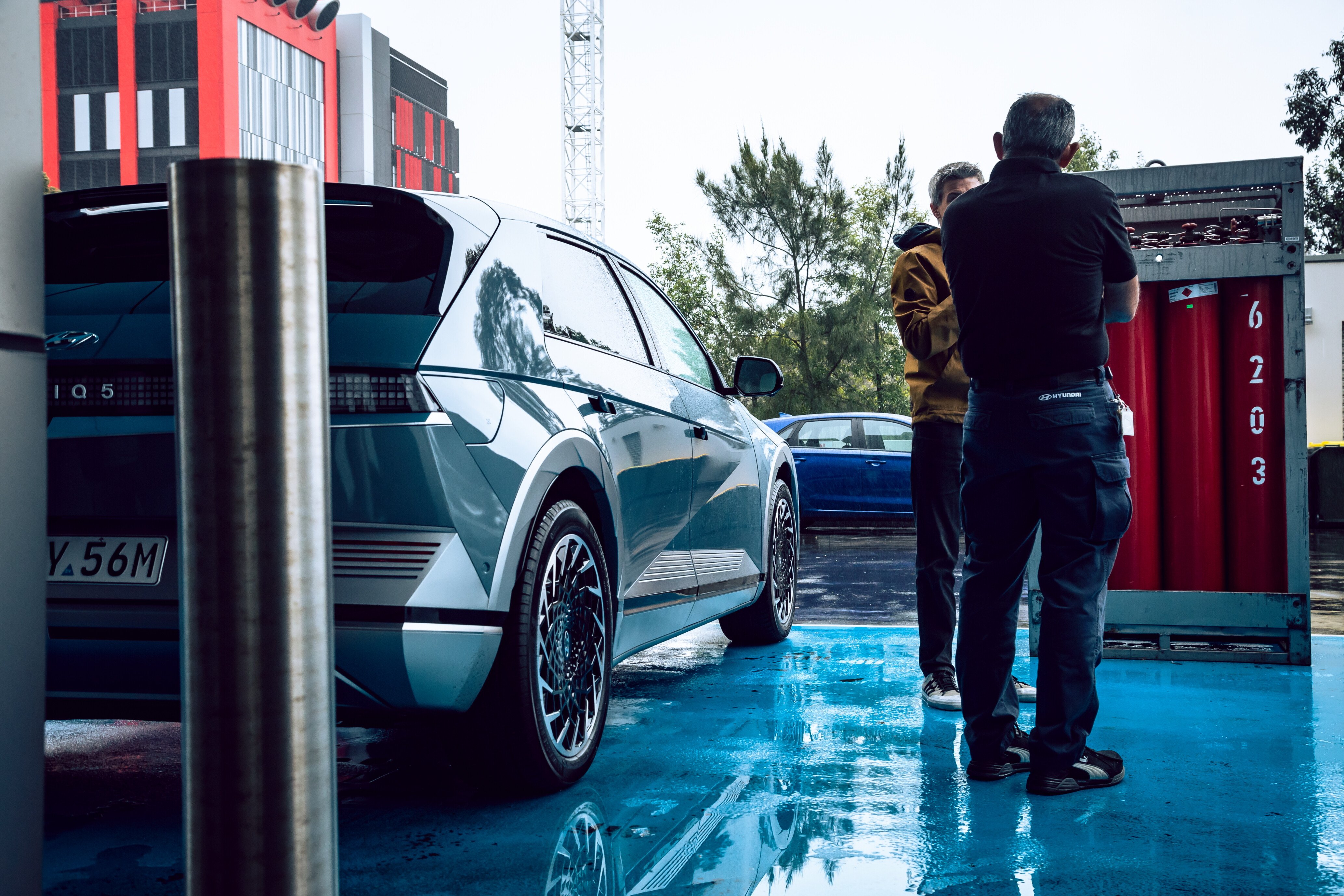
The IONIQ 5’s second EV party trick (after its rapid-charging 800V architecture) is its Vehicle to Load (V2L) feature, which turns the Hyundai into a portable 3.6kW power source.
Plug a special adaptor into the exterior charging port and a 230V, 15-amp socket awaits your choice of power tool, camping appliance, or even laptop.
In some other markets, the IONIQ 5 is even more useful – providing a socket under the rear seat to turn the car into a rolling powerbank.
Hyundai says it’s also investigating vehicle-to-grid (V2G) compatibility, where its EVs would contribute to a household’s energy supply. The Model 3 has reportedly been engineered for bi-directional charging, but no official word from Musk yet.
NOTE: Click any of the photos here to enter our gallery
VERDICT
While electric vehicle owners will charge their cars predominantly at home, the longest component of our testing again proved how Tesla’s Supercharger network gives its cars a distance versatility (on Australia’s East Coast, at least) that will remain unrivalled until the country’s infrastructure matures significantly.
It contributes to the clever convenience of the Tesla’s all-round EV ownership experience, which is most complete with the sub-$60K, incentives-gobbling Standard Range Plus. Or buy the Long Range that’s similarly priced to the IONIQ for a near-600km range.
That the base Model 3 already delivers more performance and provides a similar range from a much smaller battery than the rear-drive IONIQ 5 also demonstrates how the Californian company’s cars remain a step ahead with their chemistry wizardry.
The IONIQ 5 is also a few technological paces behind the Model 3 in terms of infotainment, over-the-air upgrading and app functionality. Yet this is a rare Hyundai that is not just admirable but also desirable.
Besides the x-factor exterior, the IONIQ 5’s cabin impresses with abundant space and comfort; and the 800V charging capability deserves the infrastructure to match.
The AWD variant looks better value with prominent performance gains for a small range sacrifice. However, with a sub-$65K version and some missing tech still to come, there’s a sense we’re yet to see the IONIQ 5 in its most persuasive form.
Hyundai’s challenge to Tesla is likely to get only louder from here.
Car names matter. We probably shouldn’t place too much importance on them, as often they’re just a meaningless jumble of random letters, made-up marketing monikers that would have any self-respecting Scrabble player red-faced in protest: Huayra, Qashqai, Veloster, Bentayga, Touraeg.
But names do matter. It’s why Reginald Dwight became Elton John, Maurice Micklewhite became Michael Caine and Lizzie Grant became Lana Del Rey. As our main source of identification they set expectations, expectations that must be fulfilled in order to avoid disappointment. Frank Zappa and Buzz Aldrin were never going to become accountants, were they?
Given their importance, it’s amazing how often names are taken for granted or used in a slapdash manner. The Toyota iQ was quite a clever, quirky little city car, but it was always going to take more than a blingy grille and an interior full of leather to justify an Aston Martin badge.
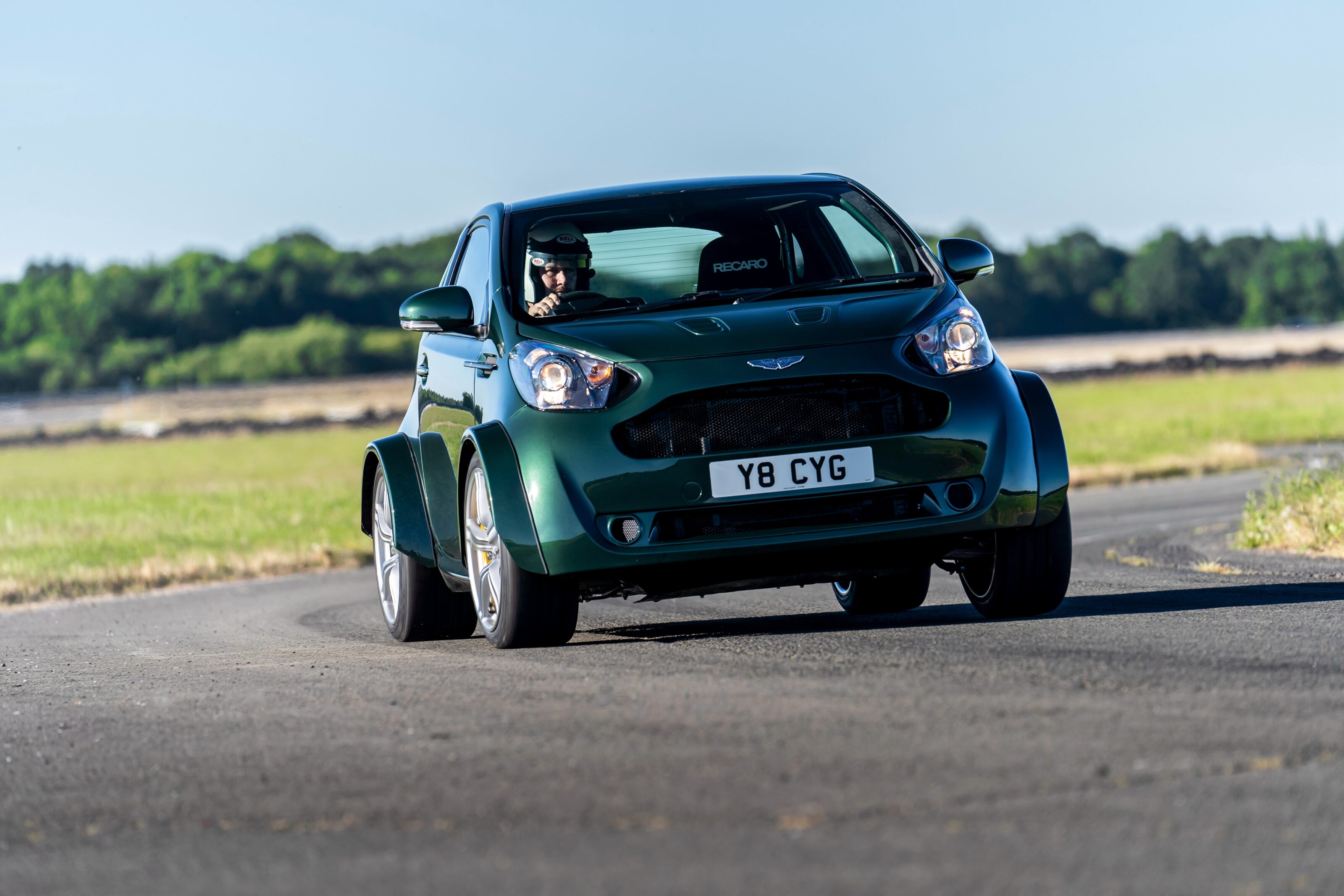
The Cygnet was less a swan and more of a turkey. Aston expected to sell around 4000 a year, but ended up shifting less than 150 before culling it after two years. Now, had it installed the 4.7-litre V8 from the beginning, as it did with the one-off version from 2018, then perhaps it would have justified the badge.
Model names are equally problematic. Someone at Ford had the bright idea of renaming its mid-size SUV from Escape to Kuga, at a stroke eliminating any possibility of sales to a female audience. Y’know, mums, with families, the sort of people who might be in the market for a mid-size SUV.
The McLaren GT has faced similar issues. I’ve not driven it myself, but by all accounts it’s an extremely talented sports car, albeit one that doesn’t have the long-legged refinement, carrying capacity, range and comfort the name suggests.

As it happens, the C43 née C450 was potent enough to pull it off, though the corresponding E-Class models quickly became powered-up ’53s’.
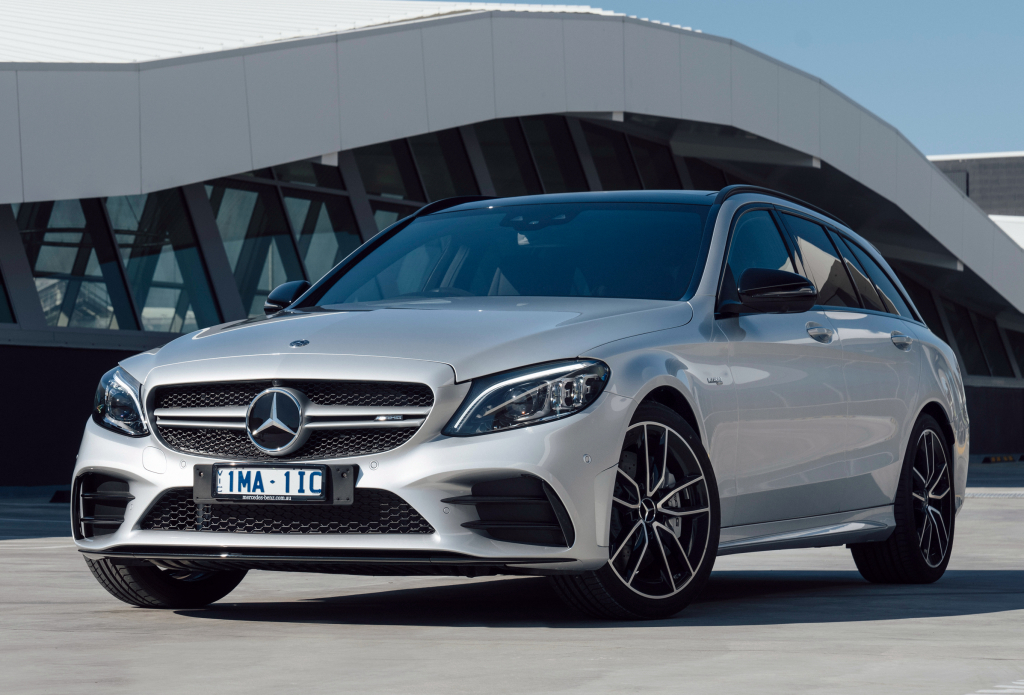
As a first-hand example of how names set expectations, I present the Mercedes-AMG C43. I first drove it in early 2015 in Portugal, about a year ahead of its Australian release. At that point it was called the Mercedes-Benz C450 and I liked it very much. It was fast, refined, comfortable but with a dash of handling talent thanks to the involvement of the folks from AMG. In short, it was a very appealing package, particularly in Estate form.
Sometime during the next 12 months there was a change of heart and approach and the C450 became the C43 AMG. There were a couple of tweaks – the inclusion of a nine-speed gearbox and slight rearward adjustment to the torque split – but fundamentally the car was the same.
Expectations, though, weren’t – the application of proper AMG status brought with it a suggestion of improved performance and dynamics. As it happens, the C43 née C450 was potent enough to pull it off, though the corresponding E-Class models quickly became powered-up ’53s’.
More recently we have the 911 GT3 with Touring Package. It was a huge hit when introduced in the 991.2 generation with those who wished to have the hardcore GT running gear but in a slightly more subtle package.
Its success led Porsche to repeat the option for the 992-generation with the availability of a dual-clutch gearbox, which potentially makes more sense for a ‘Touring’ specification.
Mechanically the two GT3 models are identical despite one being aimed at track use and the other intended for the road. The only Touring differences are the use of leather for the interior instead of the Alcantara-like Race-Tex.
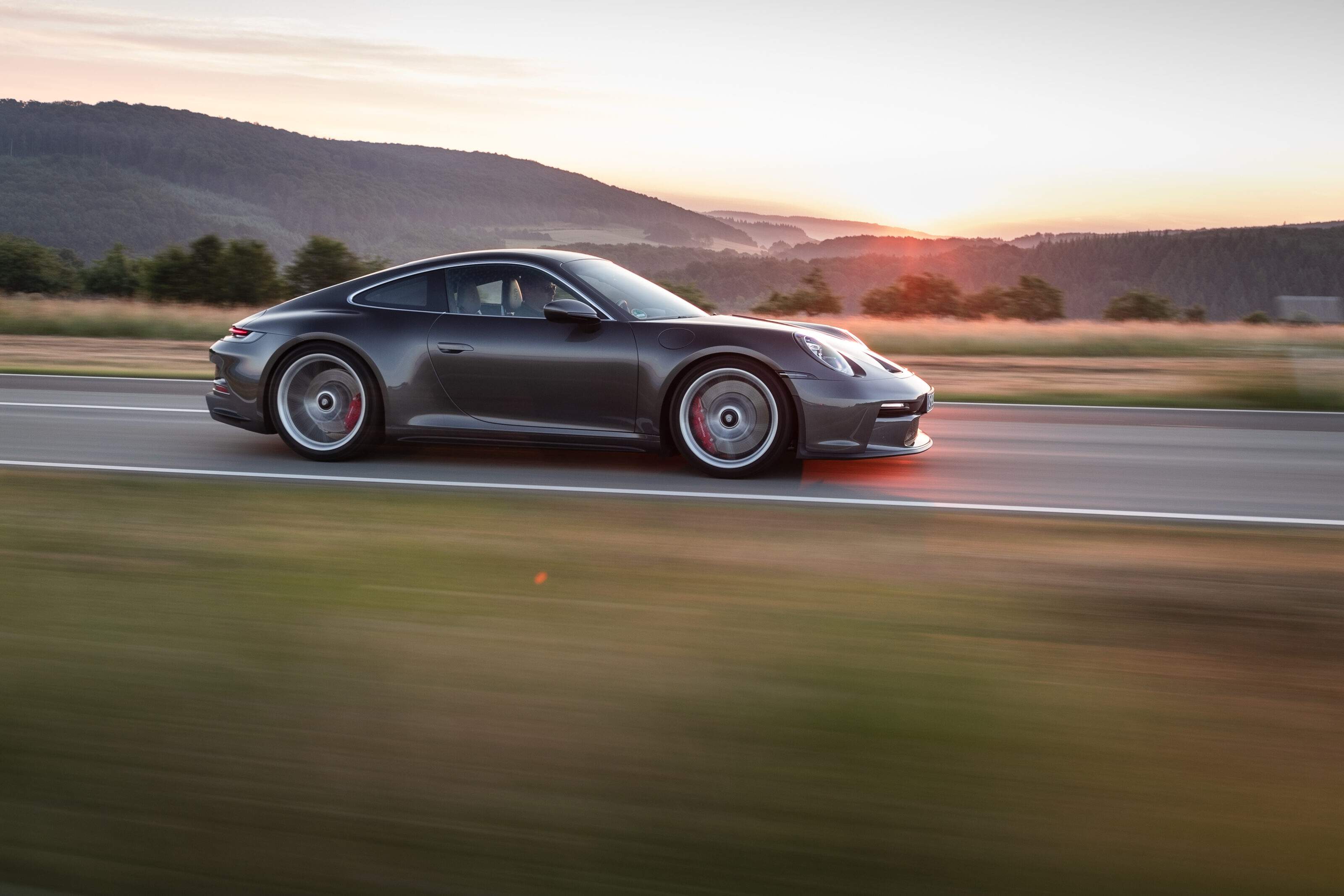
Porsche has precedent here, for the original 911 2.7 RS Touring package consisted only of equipment rather than mechanical changes, but by all accounts the 992 is more focused than ever.
Would some revised spring rates or subtly softer dampers be too much to ask? I suspect this is why it’s now referred to specifically as the ‘911 GT3 with Touring Package’ rather than the ‘911 GT3 Touring’, as the latter implies a level of comfort the car isn’t intended to provide. It’s almost like Porsche knows that names matter.
Most importantly, I got through this entire column about misappropriated names without laying into the Toyota Camry Sportivo. Oh sh…
Audi Sportback models are nothing new. The German carmaker set that ball rolling with the A5 Sportback in 2010, followed by the A7 version a year later. But the Ingolstadt took a while to embrace the increasingly popular coupe-SUV concept that took off with the BMW X6 back in 2007.
But it has since made up for lost time, starting with the big Q8 in 2018 and Sportback versions of the E-Tron and Q3 in 2020, which are now joined by swept-back version of one of its most popular models in Australia, the Q5 medium SUV.
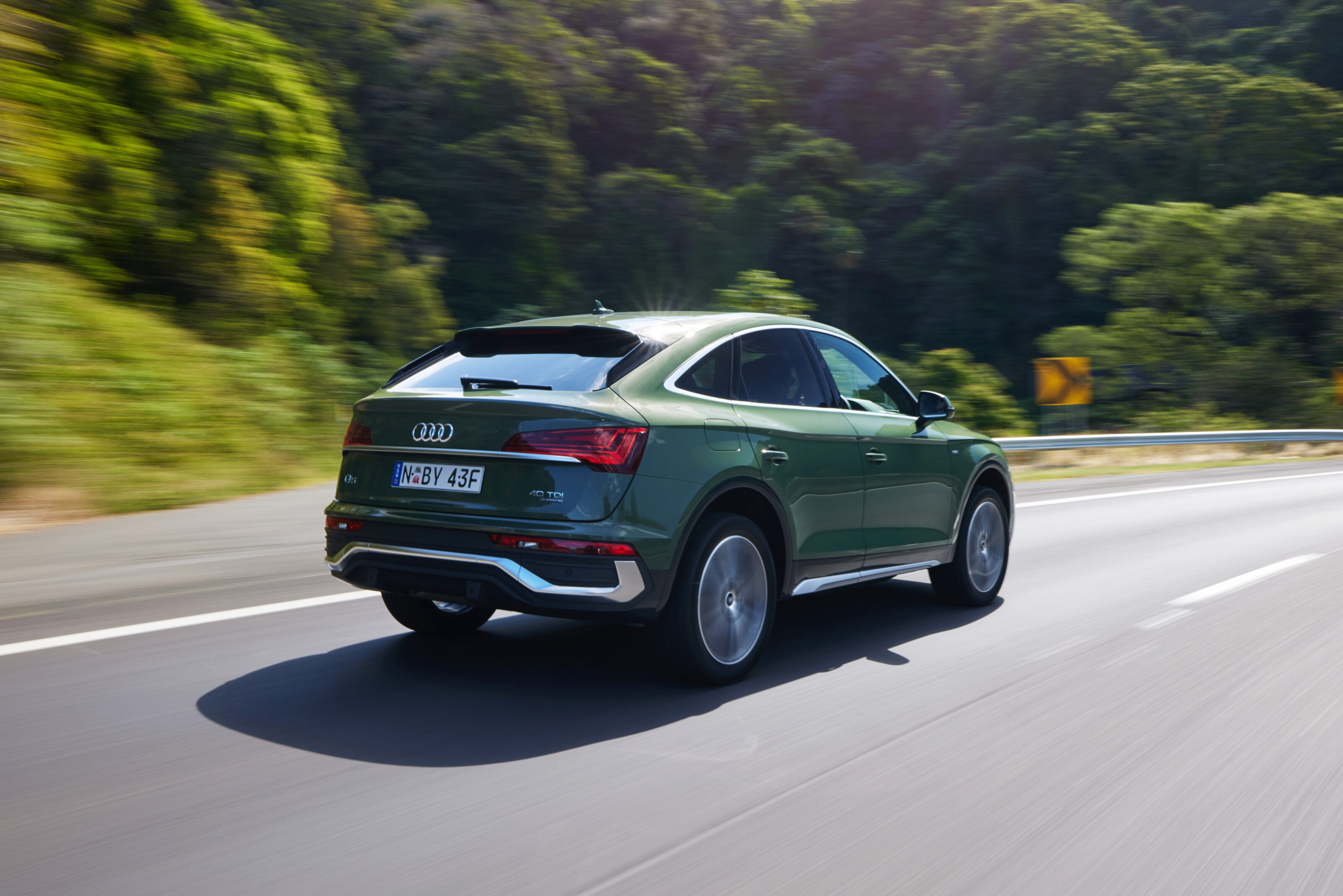
How does the Audi Q5 Sportback differ to the Q5 SUV?
The Q5 Sportback comes with diesel 40 TDI, petrol 45 TFSI variants, plus the high-performance SQ5 that is the subject of a separate review.
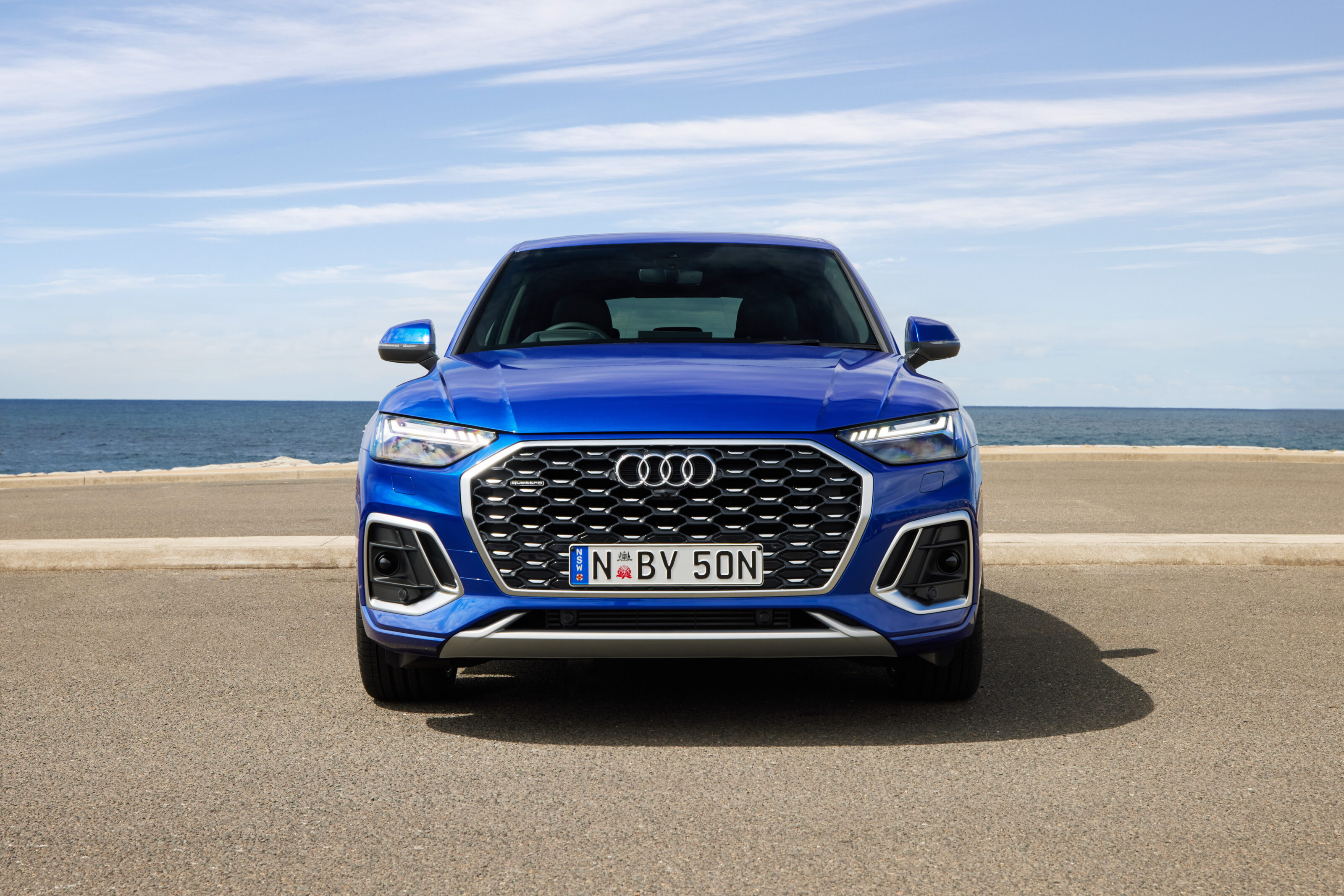
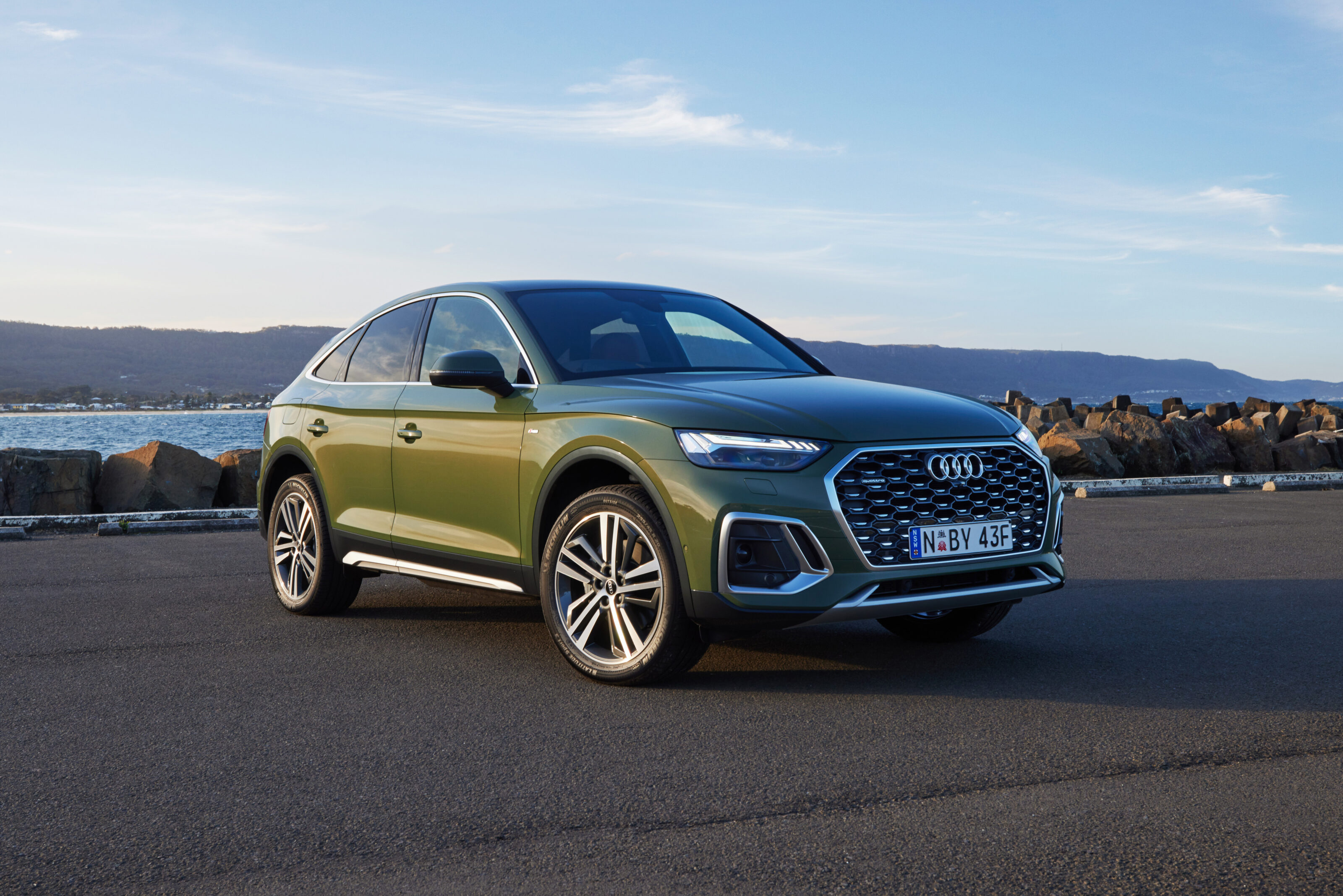
It differs from the Q5 SUV with a revised front end featuring a single-frame grille similar to the Q3 Sportback, and raised DRLs flanked by bolder air inlets.
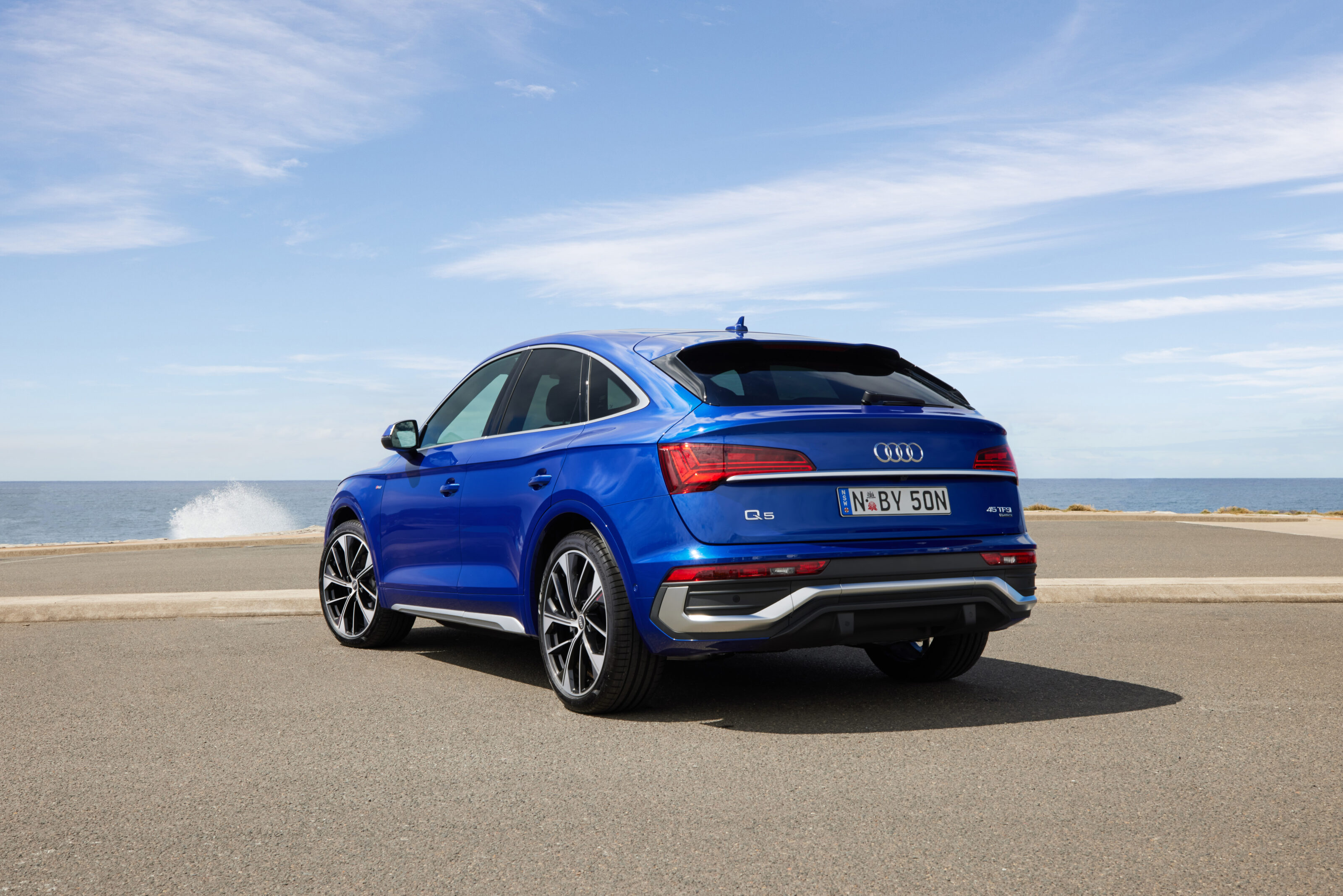
The main difference occurs from the B-pillar back, where the sloping roofline slopes down seamlessly to a prominent rear spoiler that shadows the angled rear glass. To accommodate the revised roofline, the tail-light housing has been moved outward by 3.0cm.
“The only physical difference between the Q5 Sportback and Q5 SUV interiors is that you lose 16mm of headroom at the back.”
The tailgate has two prominent horizontal lines – the lip below the window and a strip between the taillights, which are complemented by the diffuser that sits higher than in the regular Q5 to balance out the lower roofline.
Another difference is the lack of roof rails, which would take away from the sleeker look – they are available as an $800 extra.
The Q5 Sportback 40 TDI and 45 TFSI S Line are priced from $77,700 and $86,300 respectively, which represent markups of about $16,000 over the Q5 SUV equivalents.
That extra coin brings S-Line exterior trim as standard and a bunch of other extras, which in the 40 TDI includes 360-degree parking camera with kerb view, powered/auto-dimming exterior mirrors, park assist, electric sports seats, aluminum inlays and black cloth headlining.
The 45 TFSI Sportback brings the same extras over the 45 TFSI Sport SUV plus Matrix LED headlights.
What is the Audi Q5 Sportback like to live with?
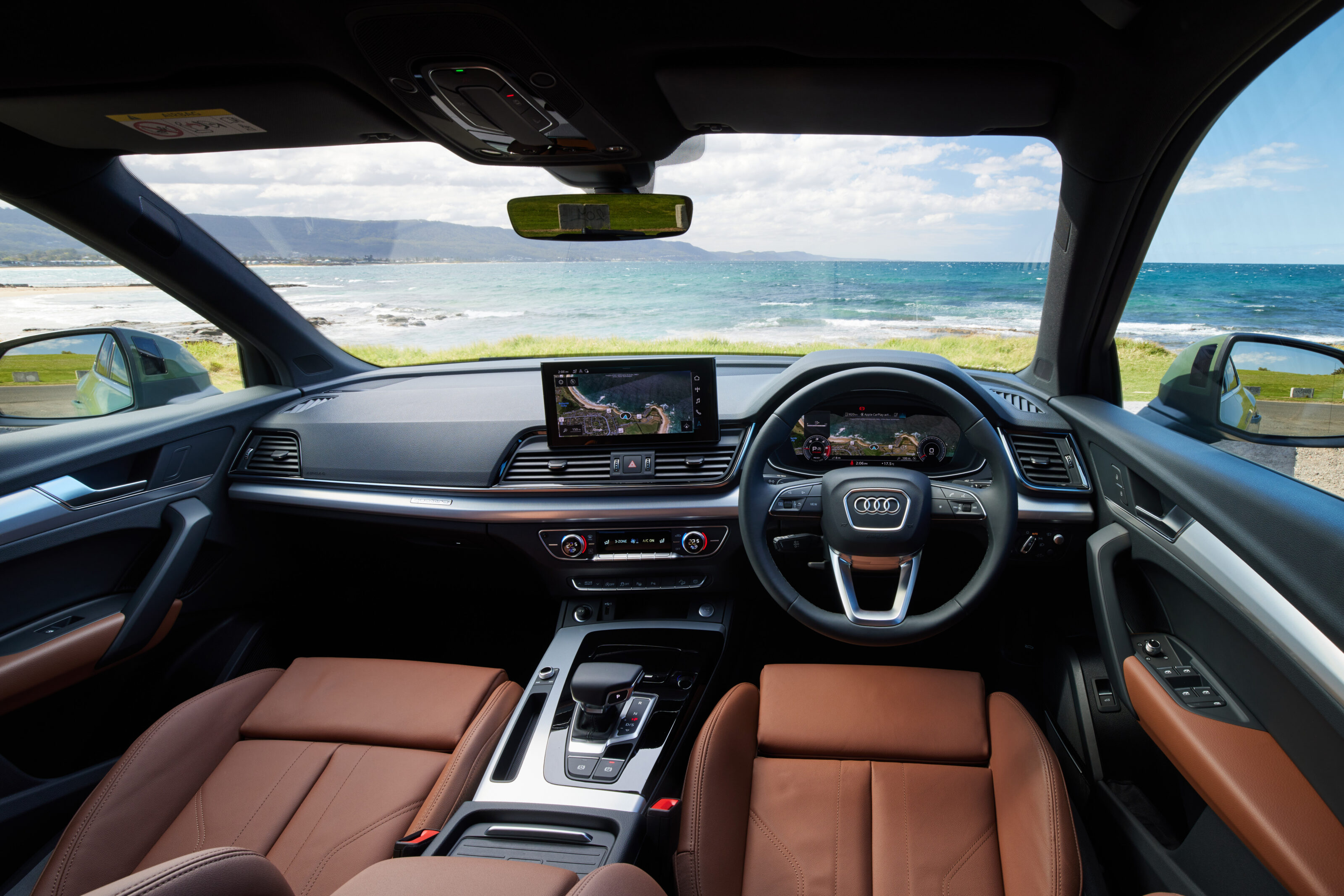
The Q5 40 TDI Sportback comes equipped with LED daytime running lights, OLED rear-lights, wireless phone charger, four USB ports, an eight-speaker sound system, three-zone climate control, 20-inch alloy rims and Virtual Cockpit digital gauge display.
Then there’s Audi’s excellent MMI Infotainment system controlled via a high-resolution 10.1-inch central screen linked via two simultaneous connections, Android Auto and wireless Apple CarPlay.
It also features Audi Connect Plus navigation with online traffic, weather conditions, fuel prices, parking information, destination send-to-car and Google Maps. Also included is ‘Hey Audi’ voice control that’s like Benz’s ‘Hey Mercedes’ but doesn’t handle as many functions and isn’t anywhere as intuitive.
As well as more power, opting for the Q5 45 TFSI Sportback over the 40 TDI sees you gain diamond-stitched Nappa leather upholstery with contrast stitching, a panoramic sunroof, 10-speaker audio, heated front seats, memory seats and mirrors, brushed matt aluminium inserts and reclining/sliding rear bench.
Of course, there are option packs to be got, including the Technik package that brings Matrix LED headlights, OLED rear lights, Bang and Olufsen 3D sound system, privacy glass and head-up display. This costs $4308 in the 40 TDI, and $5000 in the 45 TFSI due to the inclusion of animated rear-light graphics.
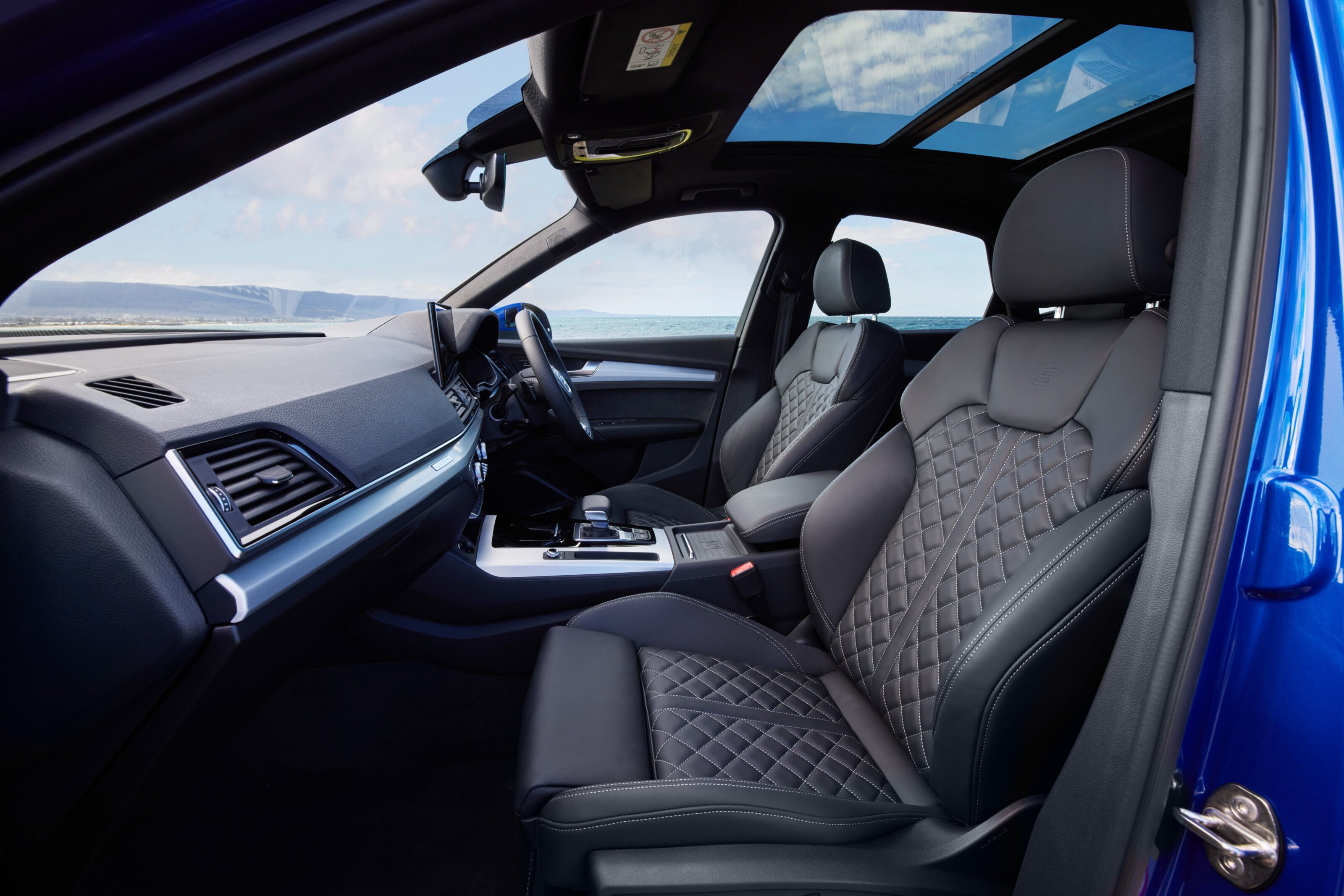
This Tecknik package was included in both our test vehicles along with and some exterior garnishing such as premium paint to take the pricing up to $86,002 for the 40 TDI Sportback and $95,430 for the 45 TFSI Sportback.
The Q5 Sportback interior is much the same as the recently updated Q5 SUV and features a 10.1-inch central MMI infotainment screen that sits perfectly upright atop the dashboard, but manages to avoid sun glare.
The only physical difference between the Q5 Sportback and Q5 SUV interiors is that you lose 16mm of headroom at the back, though you’ll hardly need to crane your neck when you hop in. Legroom is a little tight, though 45 TFSI’s sliding and reclining rear seats, which can be operated individually with a 60:40 split, allow for a bit more room.
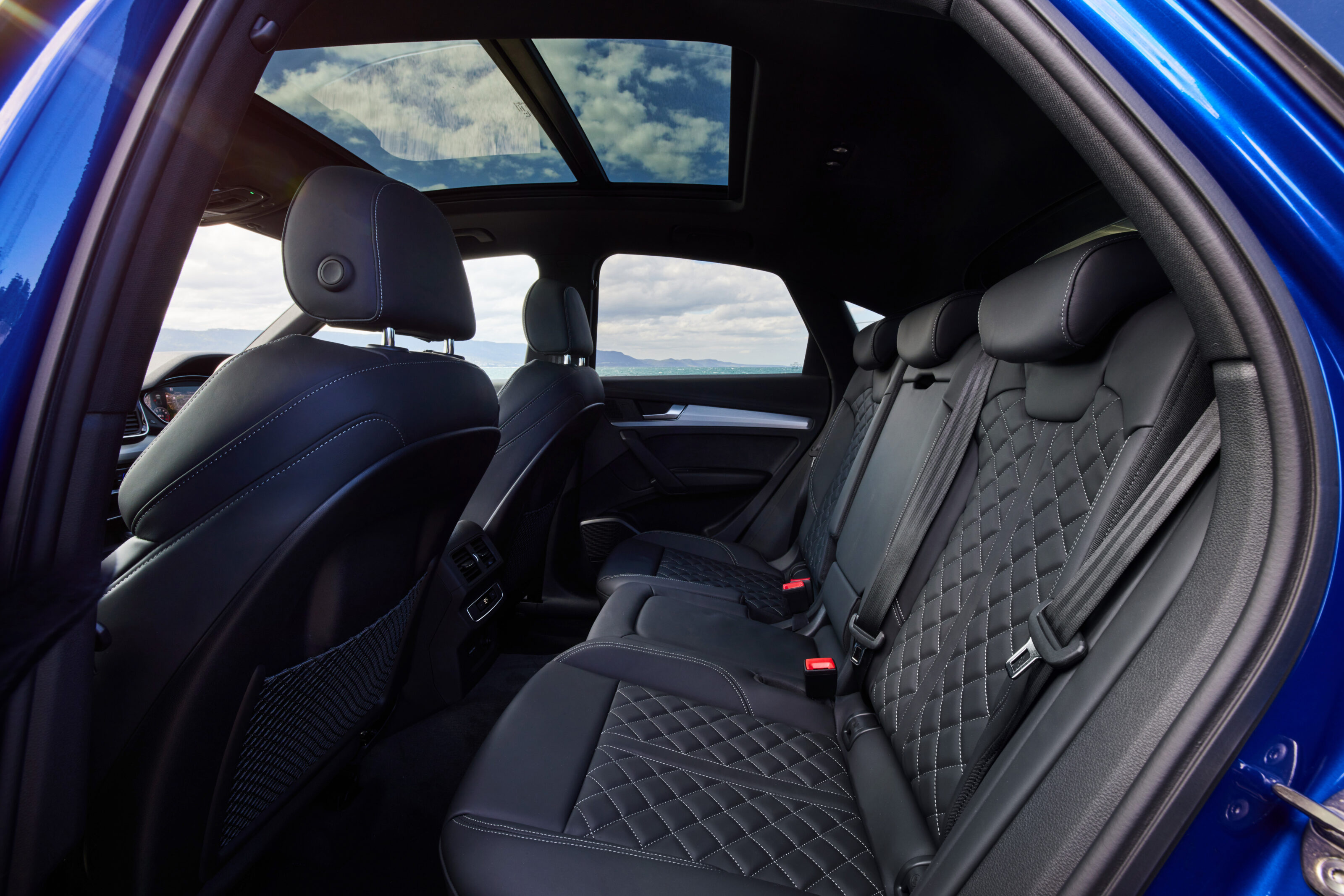
Rear-seat passengers are well looked after in both variants with their own climate control settings, vents, 2x USB ports, a 12-volt socket and fold-down armrest with pop-up cupholders.
Boot space is a handy 520-litres, which is 30 litres less than the Q5 SUV. Folding the rear seats down allows you to pack 1480 litres of stuff, which is a 70-litre reduction over the SUV.
The boot is well equipped with tie-down hooks, a cargo net and a handy elastic strap on the left-hand side that allows you to secure things like bottles.
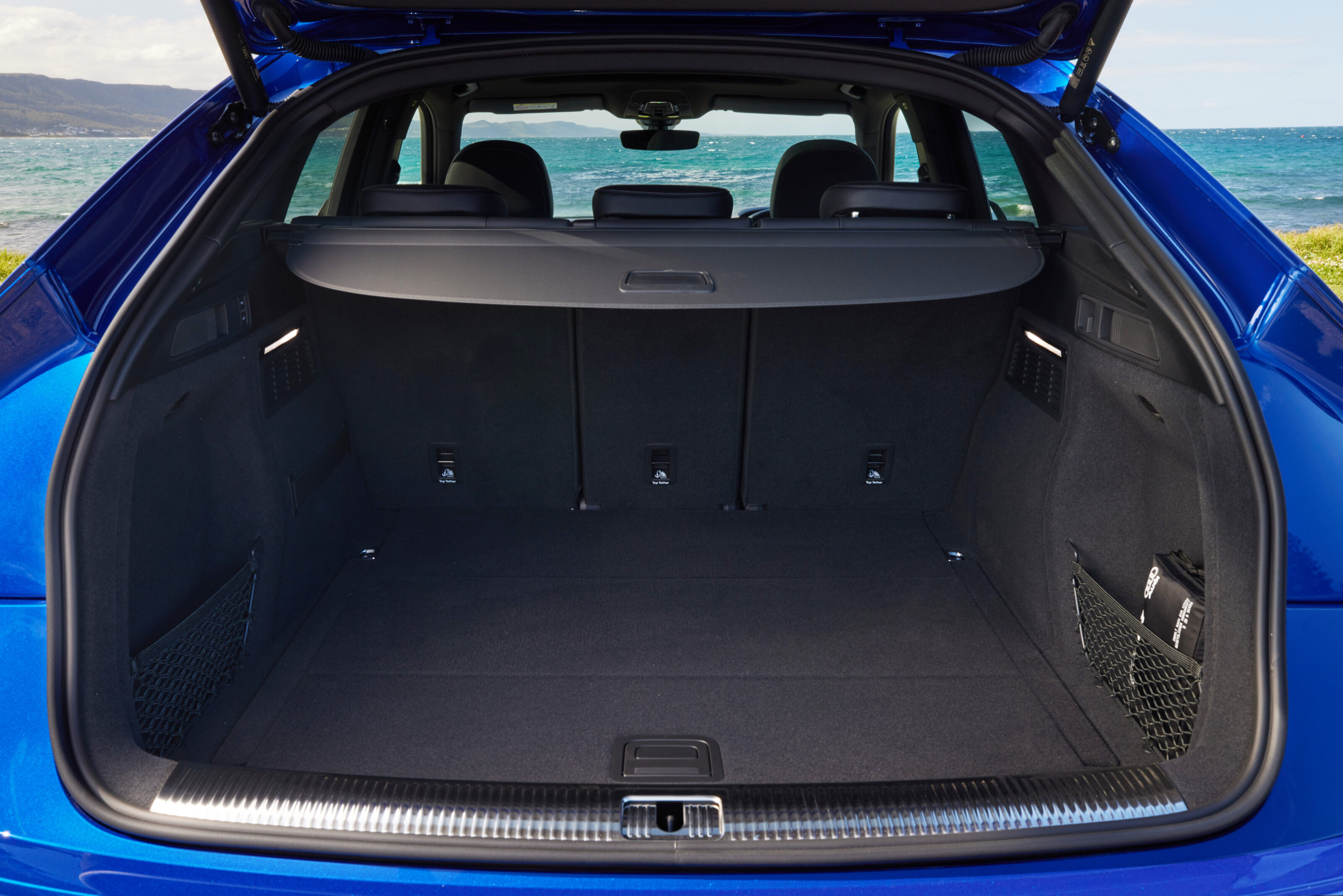
As mentioned above, if you want to carry stuff on the roof you’ll need to specify roof rails on which to install roof racks.
Each Audi Q5 Sportback variant has a braked towing capacity of 2000kg.
The Audi Q5 Sportback is covered by a three-year/unlimited-kilometre warranty, which is a little stingy these days, but there is a five-year fixed service plan available for $3140 that includes roadside assistance and access to the Audi Experience customer loyalty program.
What are the Audi Q5 Sportback 40 TDI and 45 TFSI like to drive?
Let’s start with the entry-level turbo-diesel Q5 Sportback 40 TDI, which is most suited to anyone who often travels long distances.
Its 150kW/400Nm 2.0-litre four-cylinder oil burner is coupled with a seven-speed ‘S Tronic’ dual-clutch automatic transmission that sends power to the quattro drivetrain, which drives all four wheels by default but, when appropriate, will only drive the front wheels to help reduce fuel consumption.
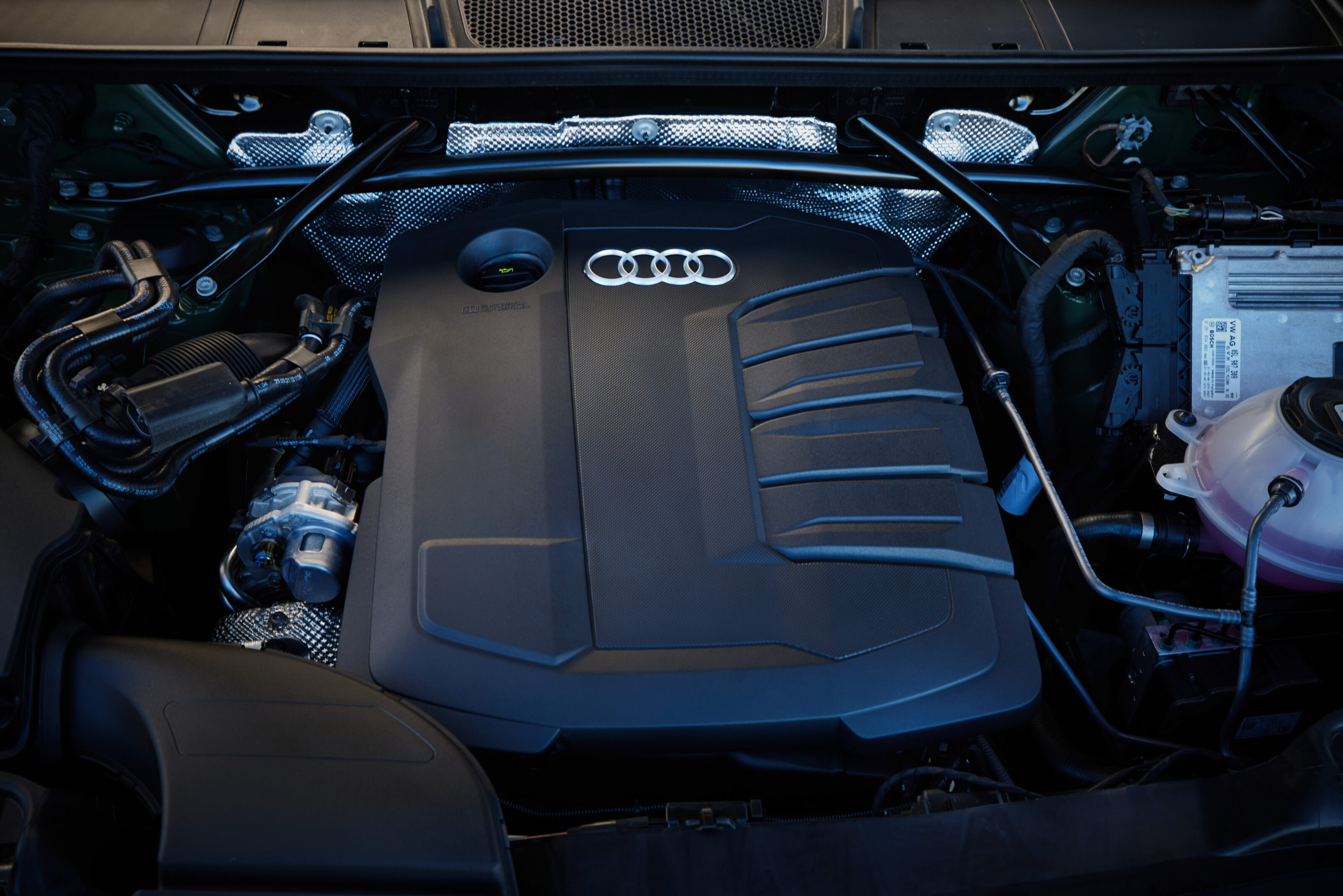
It’s also linked to a 12-volt mild-hybrid system that contributes to smoother running and provides coasting power for up to 40 seconds.
That smoothness is also audible – you can only really tell this is a diesel when it’s idling. It’s particularly quiet at cruising speed, though this is also due to the Q5’s excellent soundproofing that also significantly reduces road and wind noise, which makes for a very relaxing ride.
“The petrol engine works particularly well with the dual-clutch transmission and always seems to find the right gear regardless of which pedal you’re stepping on.”
Despite a bit of lag when you put the foot down, particularly from a standing start, this is a reasonable punchy engine with all 400Nm of torque kicking in from just 1750rpm to send you on your way quite briskly from zero to 100km/h as quickly as 7.6 seconds to a top speed of 222km/h.
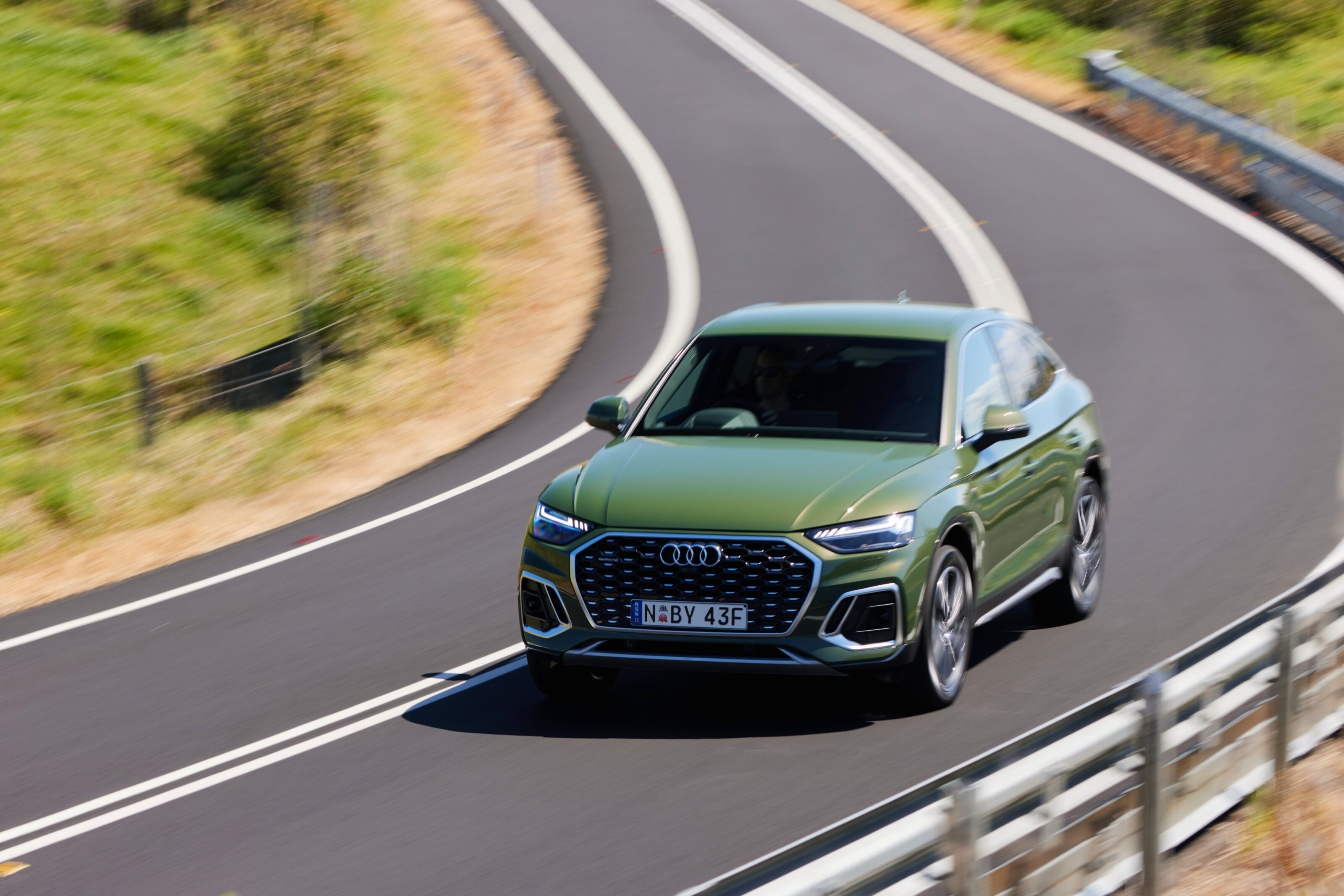
Combined fuel consumption is 5.4L/100km, which falls below 5.0L/100km on open roads and brings a cruising range of up to 1250km, which is more than enough for the proverbial Melbourne to Sydney run.
The Q5 Sportback 45 TFSI features the same dual-clutch transmission, quattro drivetrain and mild-hybrid system as the diesel, but naturally feels a lot slipperier, particularly from a standing start.
Its 2.0-litre turbocharged petrol engine produces 183kW/370Nm, which is enough to pull the svelte-looking Q5 Sportback from 0-100km/h in a claimed 6.3 seconds.
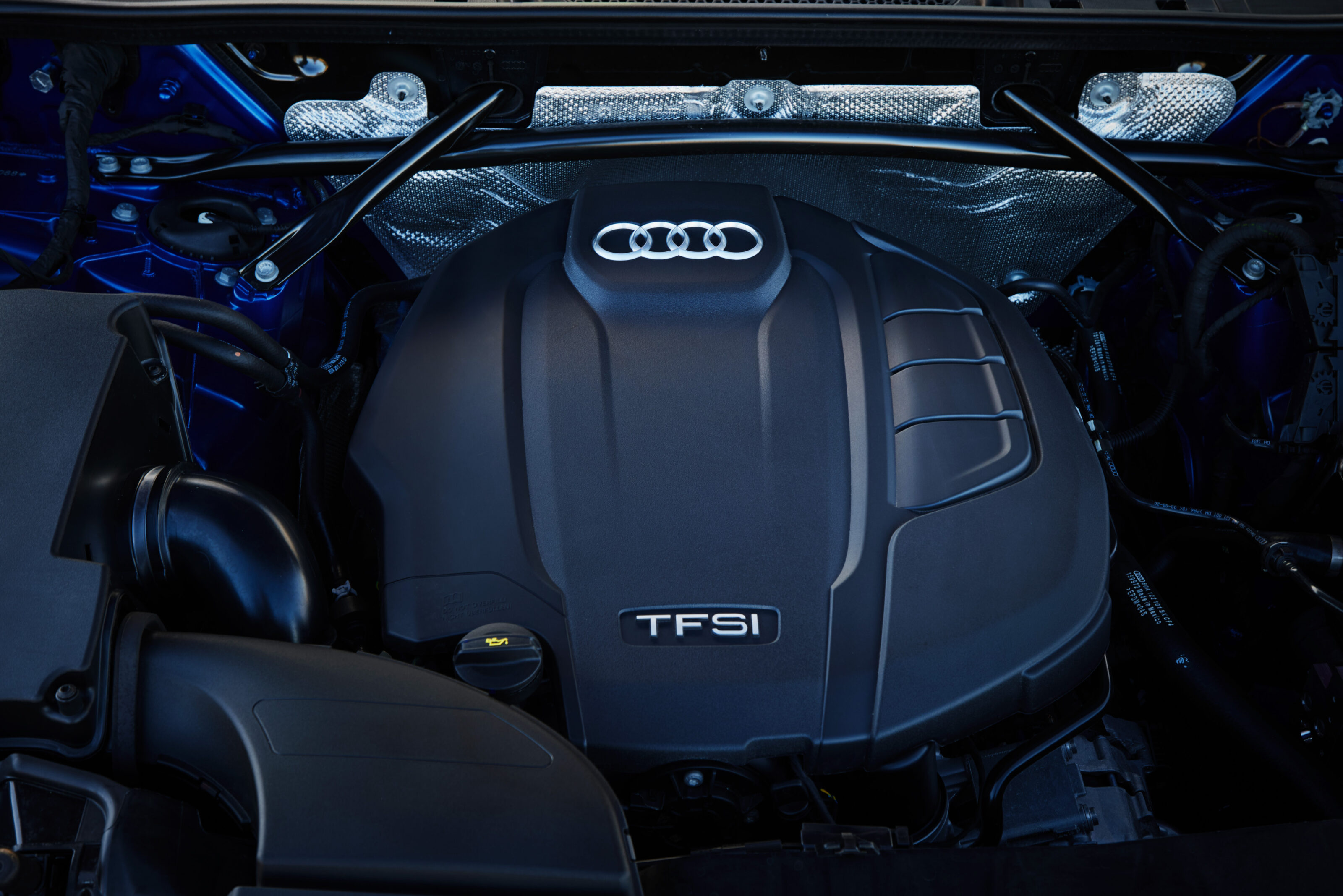
The petrol engine works particularly well with the dual-clutch transmission and always seems to find the right gear regardless of which pedal you’re stepping on. The diesel on the other hand tends to not gear down enough when braking, meaning it sits on lower revs in a higher gear, which makes for a sluggish response when you need to accelerate again, such as when exiting a bend or negotiating an incline.
Whether you’re letting the transmission self-shift or using the paddled shifters, it will happily take acceleration to redline – 4700rpm in the 40 TDI or 7000rpm 45 TFSI – should you stomp on the right pedal.
The Q5 45 TFSI is clearly the more spirited of the two, but this naturally comes at a cost with an official combined fuel economy of 8.0L/100km – in real-world conditions I was averaging about 11.0L/100km.
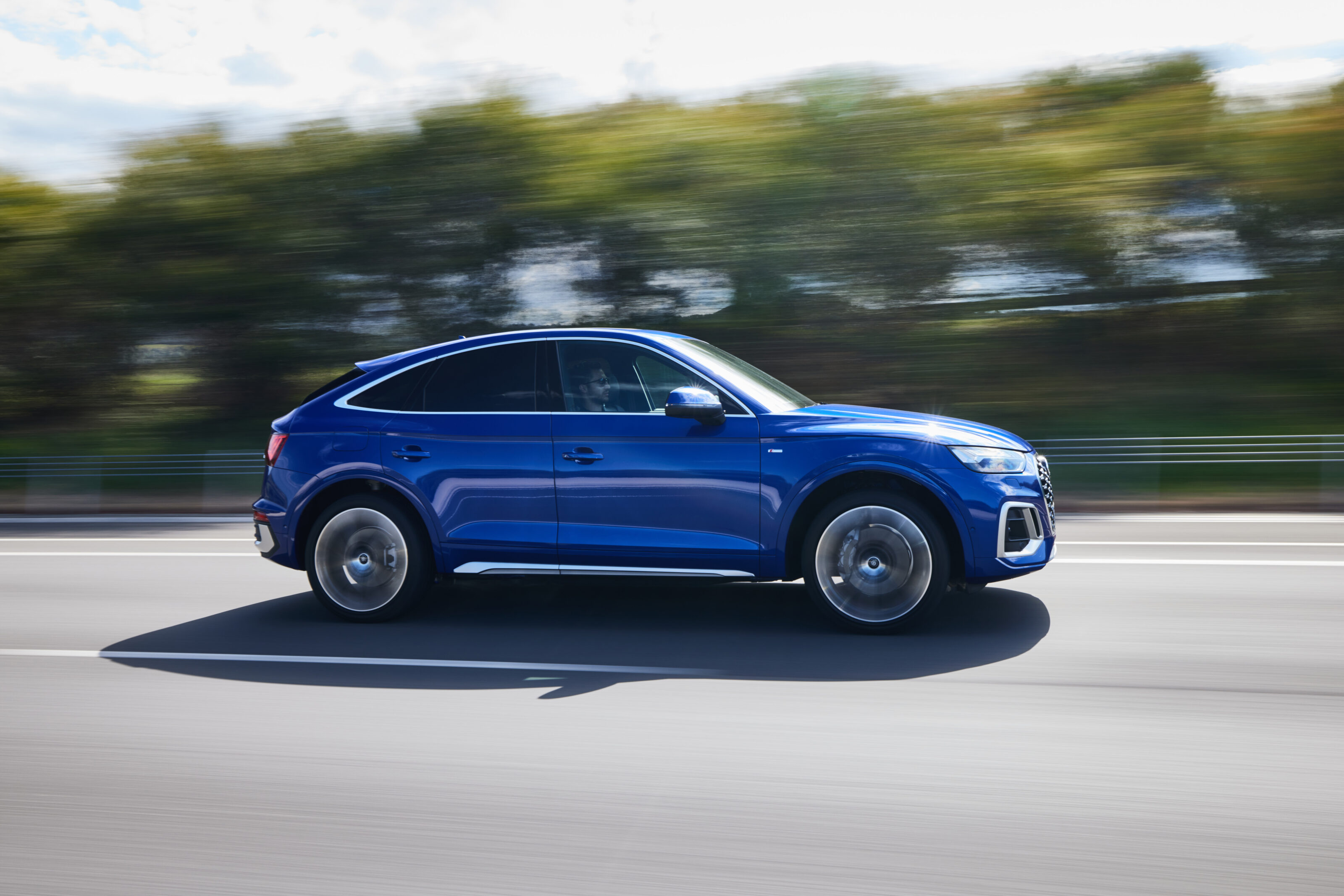
Both cars feel very similar dynamically, coming with the same steel-spring suspension and steering set up.
Adaptive air dampers are available as a $4000 option, but even with the standard steel springs, the Q5 feels like a big hatchback. Body-roll is well contained through sharp bends as is front-and-rear chassis compliance that combines with the quattro traction to handle bendy roads with confidence.
The steering feels direct but a little light, particularly in the diesel, though it does stiffen a little as you speed up.
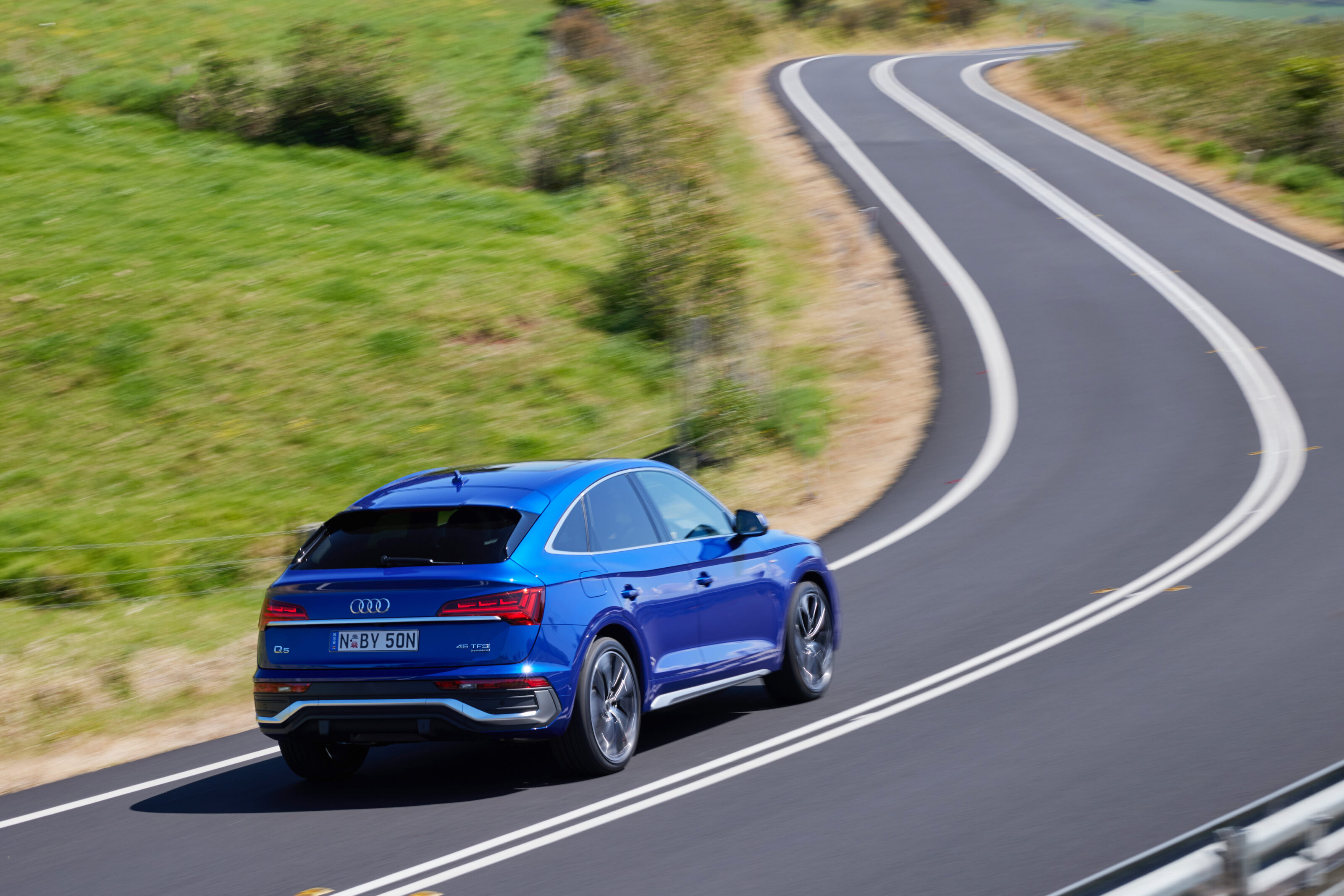
The steering and engine rev mapping can also be changed by selecting different ‘Drive Select’ driving modes such as Comfort and Dynamic, which alter the steering firmness and engine rev-mapping accordingly.
Ride comfort is good across a range of road surfaces, with the multi-link suspension doing well to soften the blows of larger potholes and bumps. This is helped by the 255/45/R20 rubber (Michelin Latitude Sport 3 in the 40 TDI and Pirelli Scorpions in the 45 TFSI) whose walls are deep enough to provide some decent cushioning.
What is the Audi Q5 like for safety?
The Q5 Sportback inherits the Q5 SUV’s five-star ANCAP safety rating and benefits from a range of active and passive safety technology, including eight airbags, autonomous emergency braking with pedestrian detection, driver attention assist, rear-cross traffic alert, and lane-keeping assist.
The narrower rear-end end doesn’t hamper the rearview, even so, you’re well served when it comes to overcoming blind spots, with auto park assist, blind-spot monitoring and the exit warning system that helps prevent doorings by alerting the driver with visual and acoustic warnings when other vehicles or cyclists are approaching from behind.
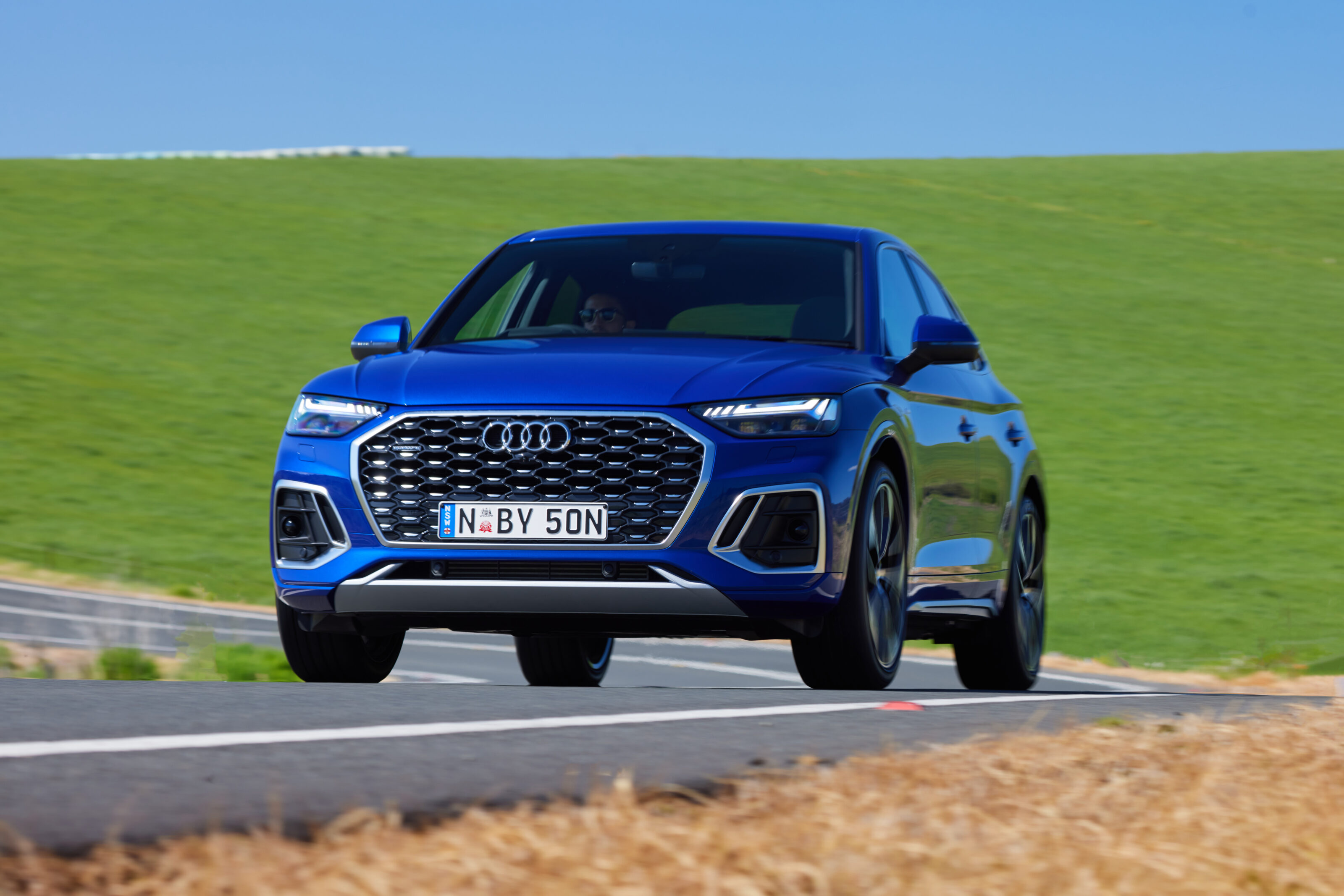
There is also a 360-degree parking monitor with kerb view, whose surround-view camera is camouflaged within the black bumper trim just below the Audi badge.
Up front, two long-range radar sensors are also discretely embedded in the side inlets, rather than on the grille and look like fog lamps – the fog lamps themselves are in the headlight assembly. The dual-radar system allows for greater accuracy in detecting a potential collision and for operating the adaptive cruise control with stop-and-go function.
Curiously, adaptive cruise control is only available as standard in the 45 TFSI and SQ5 variants and not the 40 TDI that would benefit from this function most during long highway journeys at which it excels – it’s available as a $1600 option.
The Verdict
Even with the additional cost over the Q5 SUV versions, which to be fair brings a bunch of extras, the Q5 Sportback should do pretty well in Australia as it provides a good compromise between the A5 sports sedan and Q5 SUV in terms of styling, driveability and practicality – which, after all, is the point if coupe SUVs.
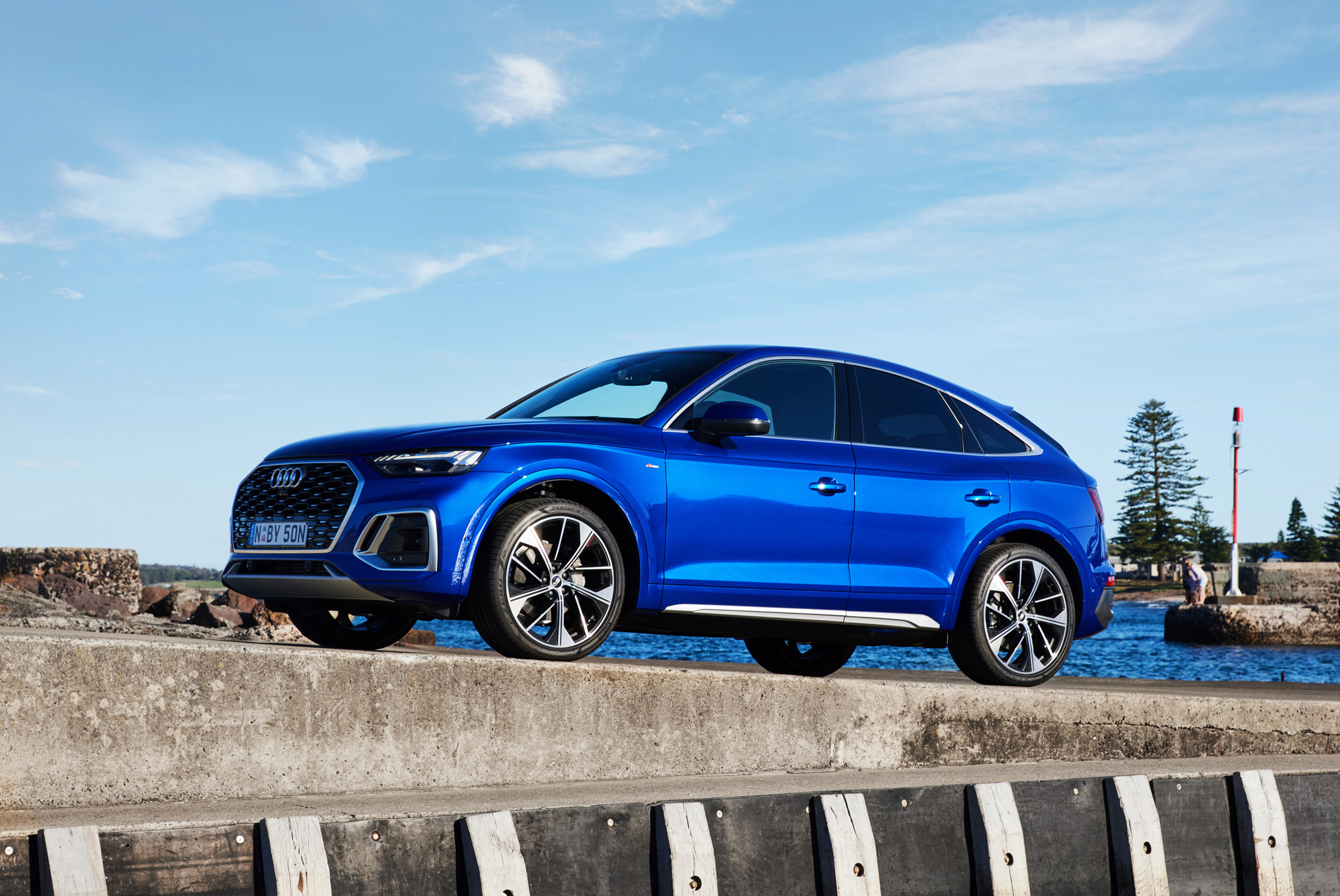
The 45 TFSI does this the best and, not surprisingly, will be the volume seller of the two, with Audi expecting it to account for 50 percent of Q5 Sportback sales when you include the SQ5 into the mix.
This makes sense, as it’s the obvious sweet spot of the range in terms of pricing, equipment and performance.
That said, both of these variants ooze showroom appeal and offer an engaging but comfortable driving experience that makes you look for any reason to go for a drive.
Audi Q5 Sportback specifications
Mini has teased its fourth-generation Hatch before a possible 2022 reveal of the iconic city car.
Covered in camouflage and powered by an electric motor, the vehicle teased retains a lot of the Mini Hatch’s common features, from the large, round headlights to its tall and wide grille, as well as the small bonnet inlet.
Although the camo does its job of making its real proportions, it looks like the 2023 model will feature shorter overhangs at the front and rear, potentially downsizing to become closer to its original roots.
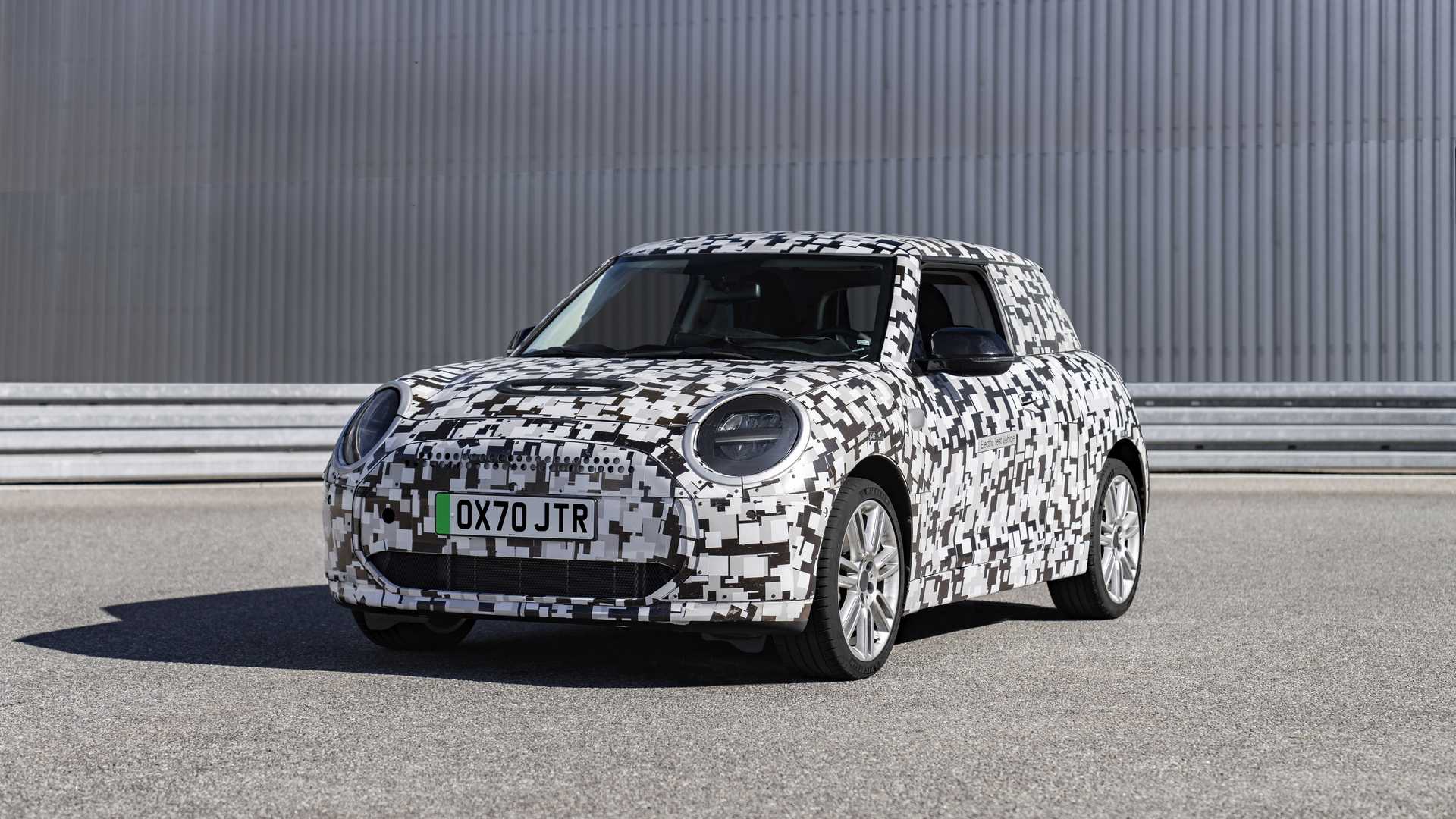
The Mini Hatch isn’t going all-electric just yet, as internal combustion engines will still power some of the model’s variants, likely including the range-topping John Cooper Works performance trim.
However, the arrival of the fourth-gen Hatch signals the start of Mini’s move towards electrification, as the manufacturer has previously announced it will launch its final ICE powered model in 2025, followed by a move to a fully-electric line-up by 2030.
While the Hatch is set to downsize, the Countryman has aims of taking on the Audi Q3 and BMW X3 by getting bigger, looking to muscle its way into the small SUV category which is popular amongst new car buyers.
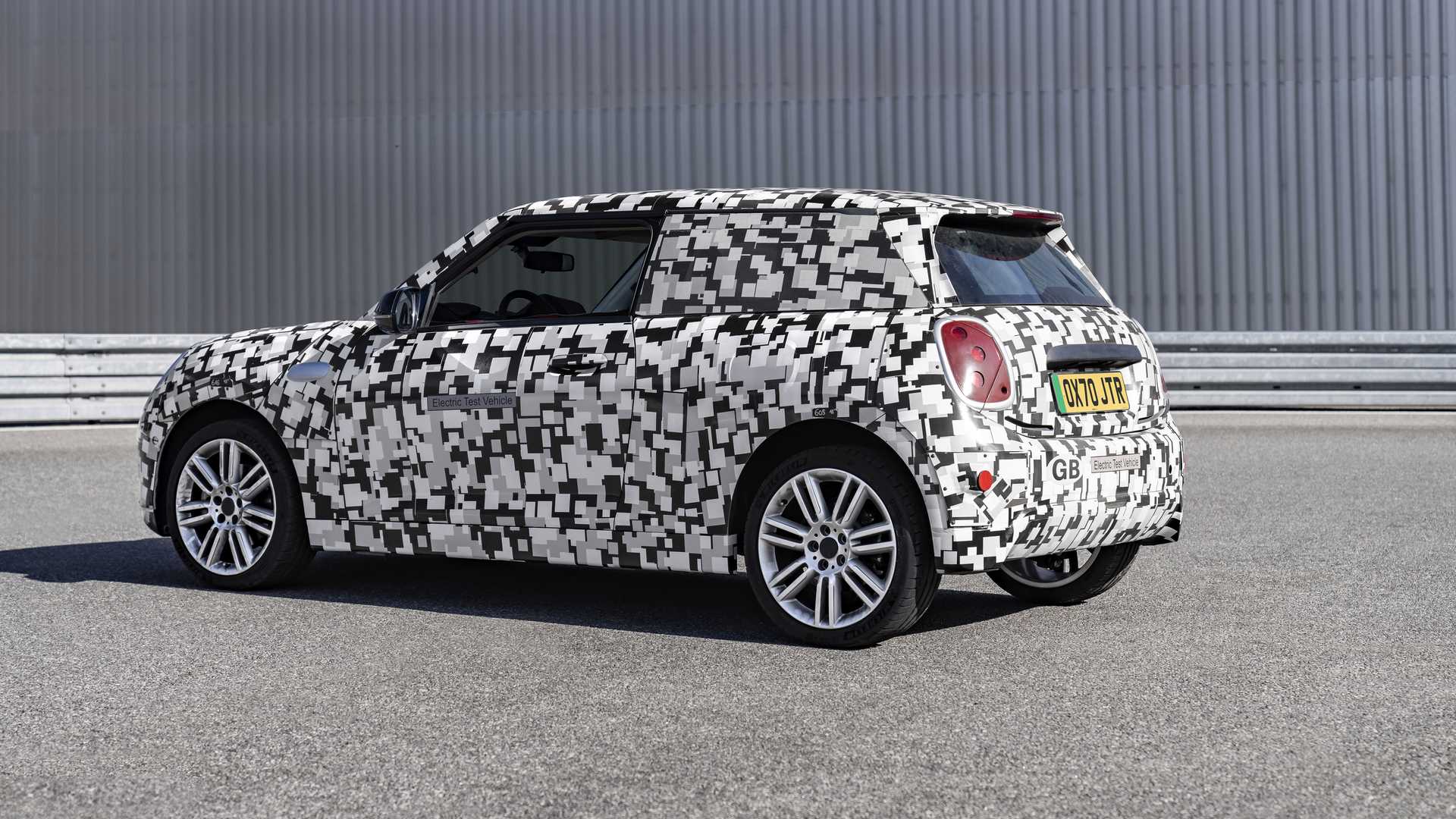
Although it’s potentially a few years away, we could eventually see Mini’s Urbanaut concept come to life, bringing retro van styling to a modern EV platform, suitable for almost any urban environment.
In the light passenger vehicles above $25,000 segment, the Mini Hatch is a leader, with 1614 sales year-to-date, also accounting for more than half of Mini’s 3186 units sold to the end of October 2021.