
Key Points
- Hyundai Seven concept to debut at AutoMobility LA
- Concept will likely become the Ioniq 7 crossover
- Production model will be the third vehicle in Hyundai’s Ioniq line-up
Hyundai continues to tease its fully-electric future, providing a teaser of its new SEVEN crossover concept.
Set to debut at the AutoMobility LA show in just under a fortnight, Hyundai’s large crossover concept will eventually make its way into production as the Ioniq 7 in 2024, joining the recently launched Ioniq 5 and yet-to-be-released Ioniq 6.
As the largest of the three fully-electric vehicles, the Ioniq 7 is set to become an EV equivalent to the Hyundai Palisade SUV, with the potential for both six and seven seat configurations for families.
The pixel-style front lights are reminiscent of the front and rear light bars on the Staria people mover, as well as the eight-bit-esque units on the Ioniq 5, although in this case the fog lights are vertically mounted.
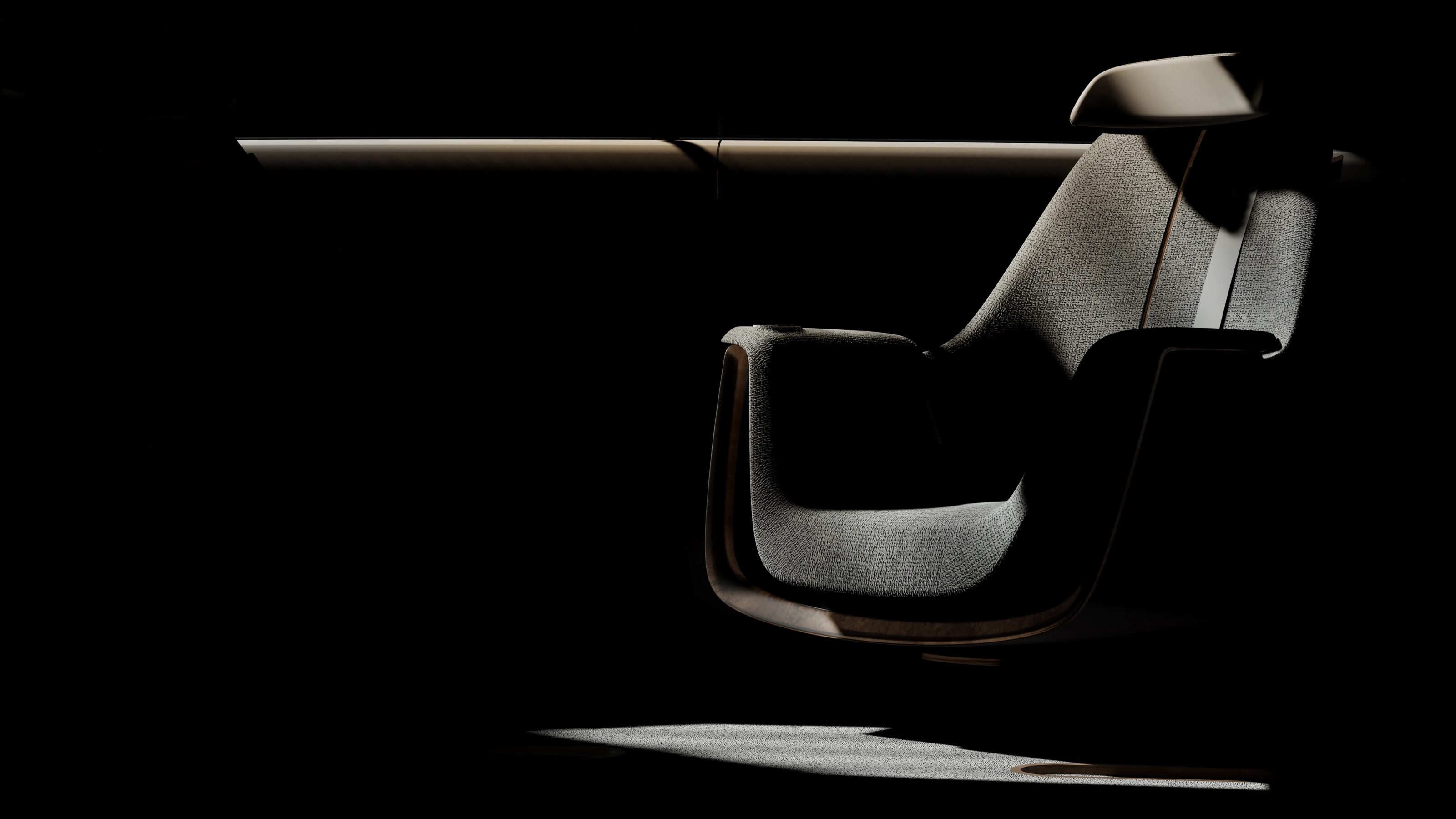
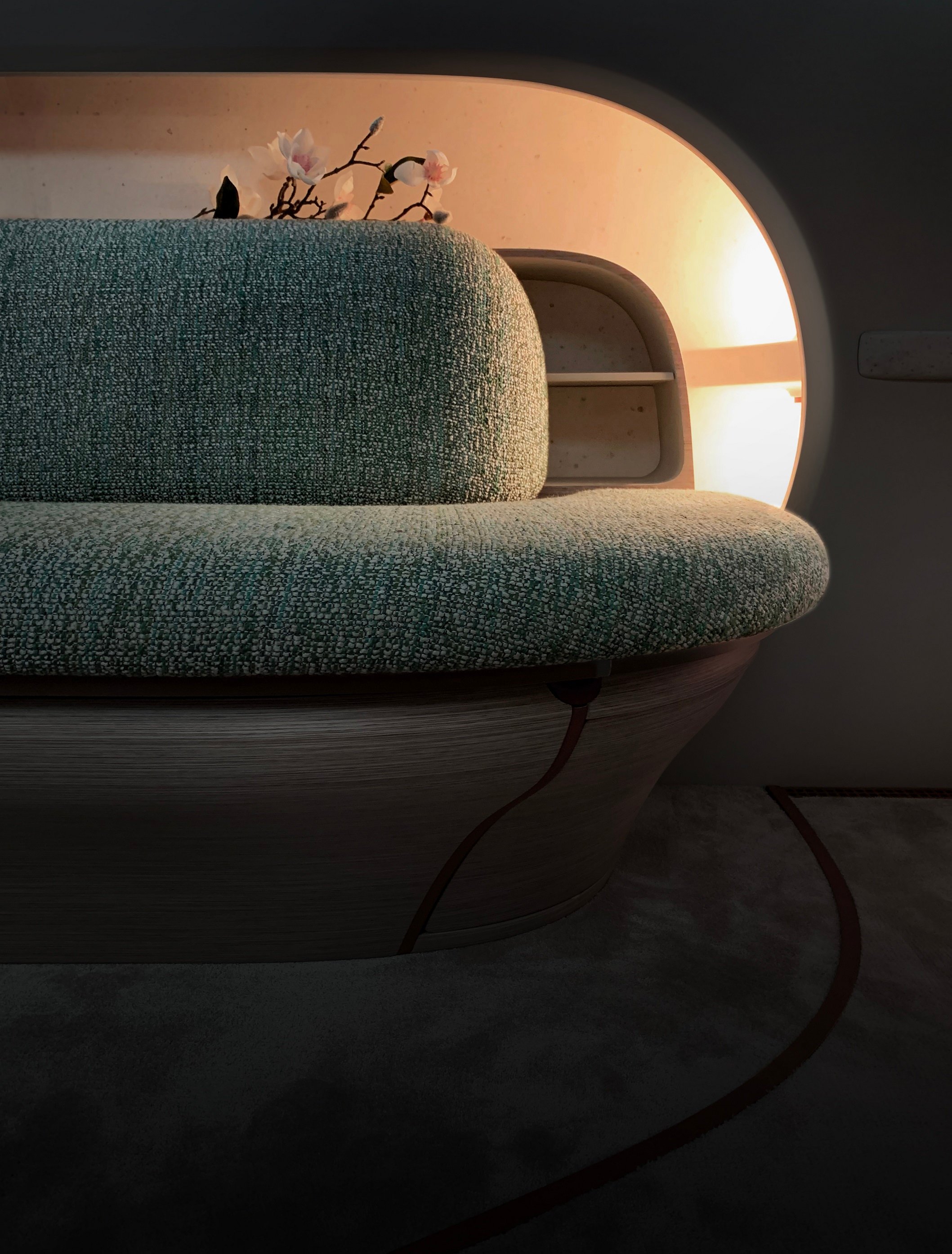
Inside the cabin, the eco-friendly theme continues with the use of environmentally sustainable materials to create interior furnishings, seemingly without sacrificing luxury.
Hyundai has previously said all of its future Ioniq models will be underpinned by the E-GMP platform, with the electric architecture currently powering the Ioniq 5 in 160kW, rear-wheel drive and 225kW, all-wheel drive guise.
Snapshot
- Ranger best-selling model again
- Mazda drops from 2nd to 4th place
- Nissan back in top 10 after absence
Australia’s new-car market has suffered the worst October in almost 20 years as the industry feels the pressure of supply issues and lockdowns.
The latest official industry data reveals 74,650 vehicles were sold last month. The figure represents an eight per cent drop on October 2020, more than 11 per cent behind September this year – and is the lowest October since 2002 when 72,332 new cars were sold.
Total sales for the year now stand at 890,790, an 18 per cent increase on this time last year – when the market continued to be most heavily affected by the COVID-19 pandemic.
New South Wales again accounted for the biggest slice of the nation’s new-car sales, despite a fall of 12 per cent to 24,380 units. Victoria’s 18,701 result was up six per cent on a troubled September 2020, and also still higher than Queensland’s 16,159 units, which was down 10 per cent.
Industry body the Federal Chamber of Automotive Industries (FCAI) said the lower sales month represents the impact of ongoing microprocessor shortages on international supply chains, but the supply of vehicles to Australia is expected to stabilise in 2022.
Chief Executive Tony Weber said it was clear manufacturers were having challenges with supply chains.
“Automotive manufacturers like all those in the global manufacturing sector are dealing with a microprocessor shortage, which is leading to longer wait times to get products to market. Australians are continuing to purchase vehicles, and carmakers are working to deliver products to our shores,” Mr Weber said.
Passenger car sales are down almost 12 per cent compared with this month last year and are up only five per cent year to date. October sales of 15,952 places passenger cars behind light commercial vehicles (19,344 units) and the dominant SUVs (35,343 units).
Ute sales lead the way for individual segments. Combined 4×4 and 4×2 ute figures are 16,769, and 14,058 units for 4×4 utes alone still places them above the next most popular category of mid-sized SUVs (11,327 units).
Large SUVs were fourth in October despite a 16 per cent sales decrease to 9605 units – outplayed by small SUVs which came third with 9711 units.
Small-car sales managed 7892 units, but were down nearly 17 per cent compared to the same month last year.
Micro cars were the biggest grower in October, with a 67 per cent increase on the same time in 2020, albeit representing just 979 vehicles. People-movers were up almost nine per cent to 698 units for the month versus this time last year.
Top 10 models
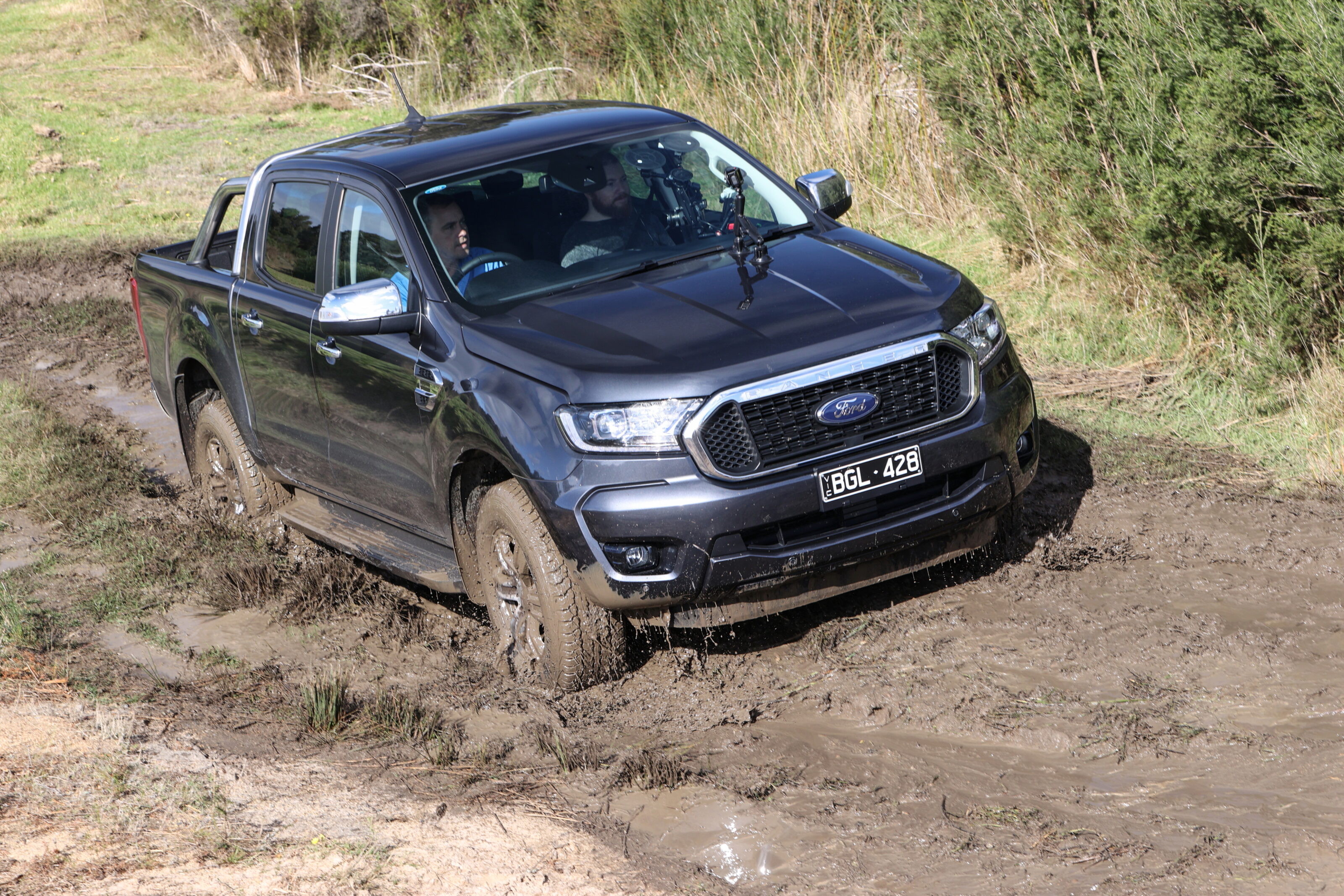
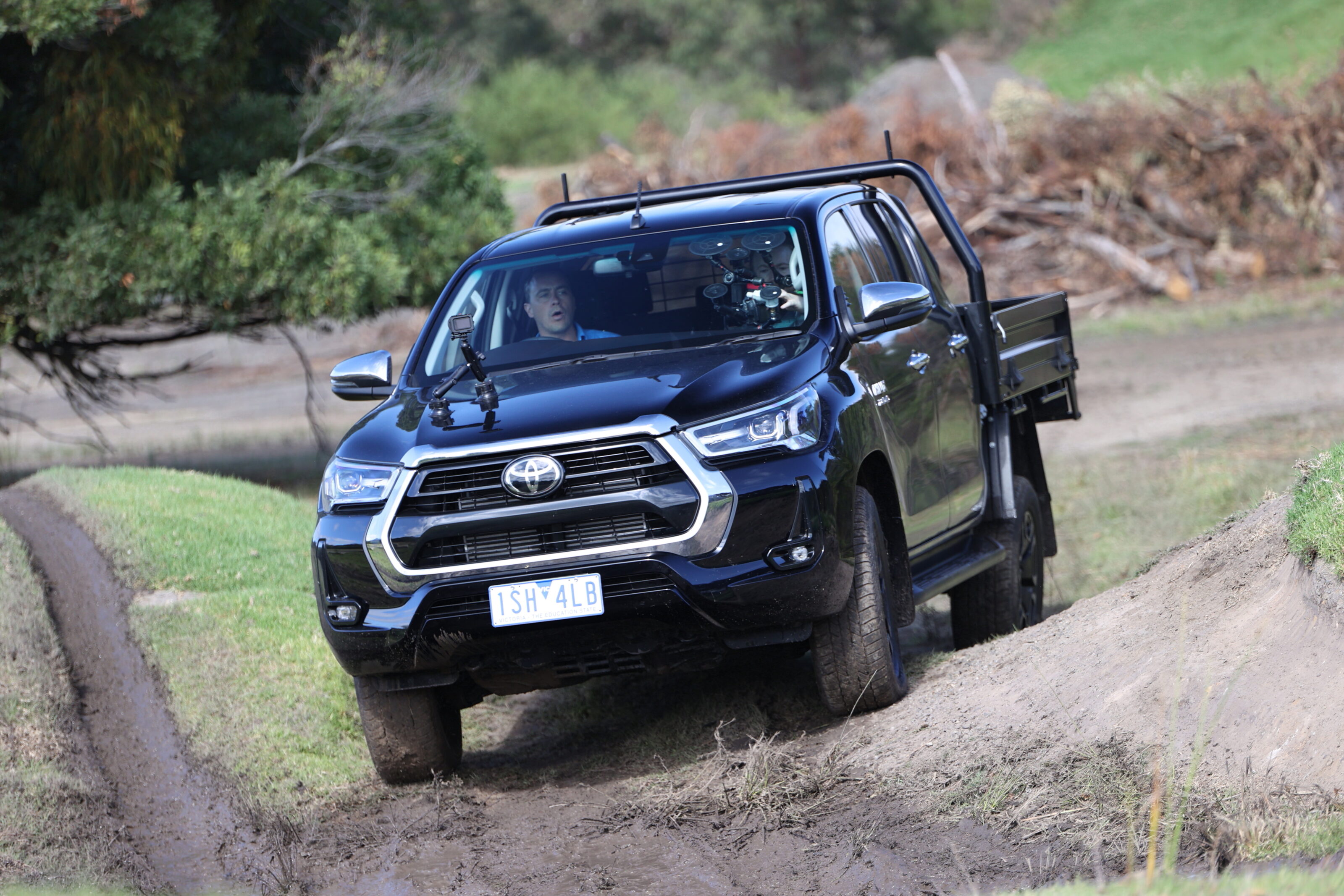
The Ford Ranger outsold the Toyota HiLux for the fourth time this year, making the ute the best-selling vehicle for October with 4135 units sold.
Year-to-date however, the Toyota HiLux still rules the roost with 44,752 shifted compared to Ford’s 41,686 Rangers, with an October tally of 3961.
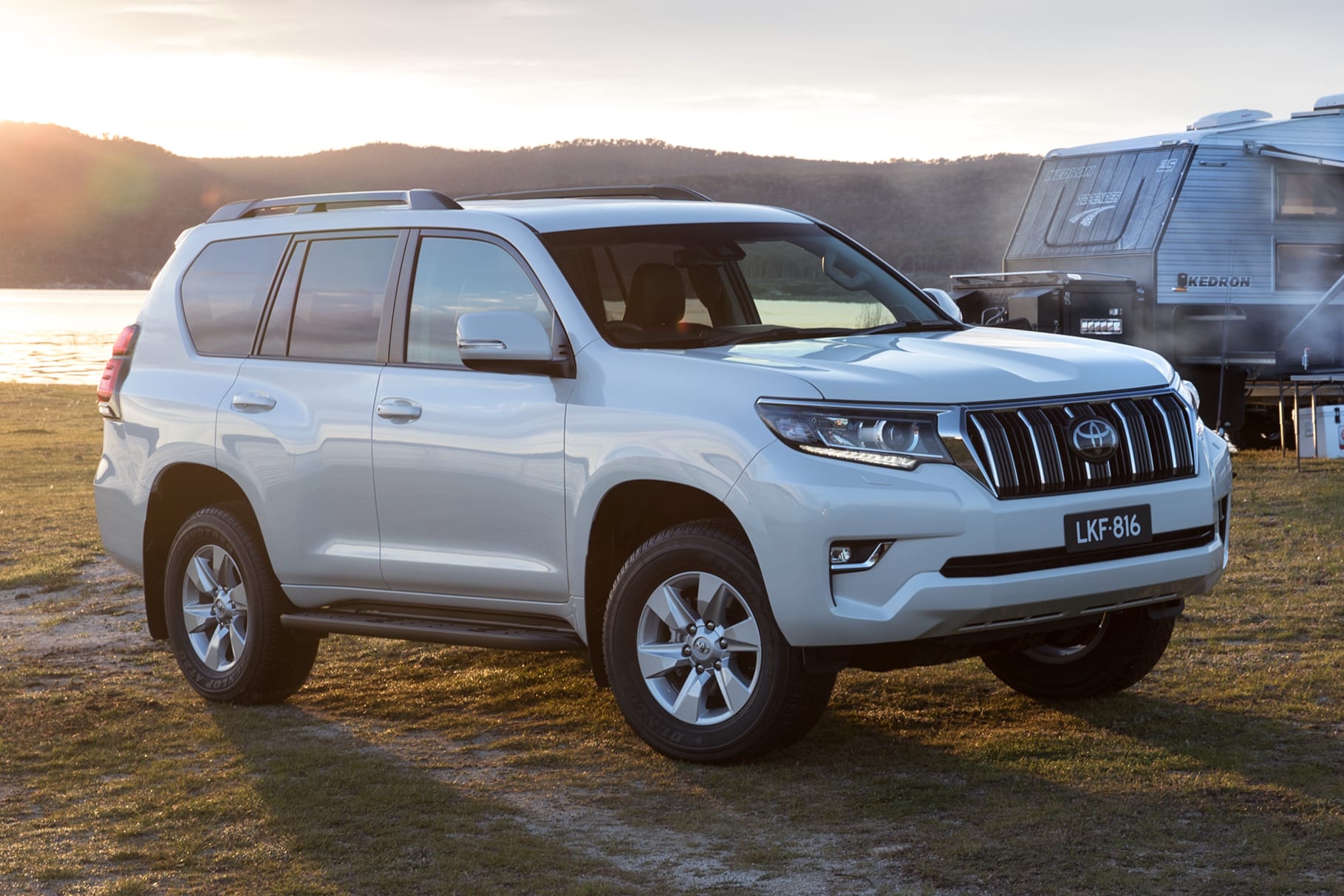
Due to Toyota’s strife with supply issues in recent months, two of its models fell out of the top 10 entirely for October – the Camry and Prado both disappearing from the line-up after the Camry only made its first appearance of the year in September.
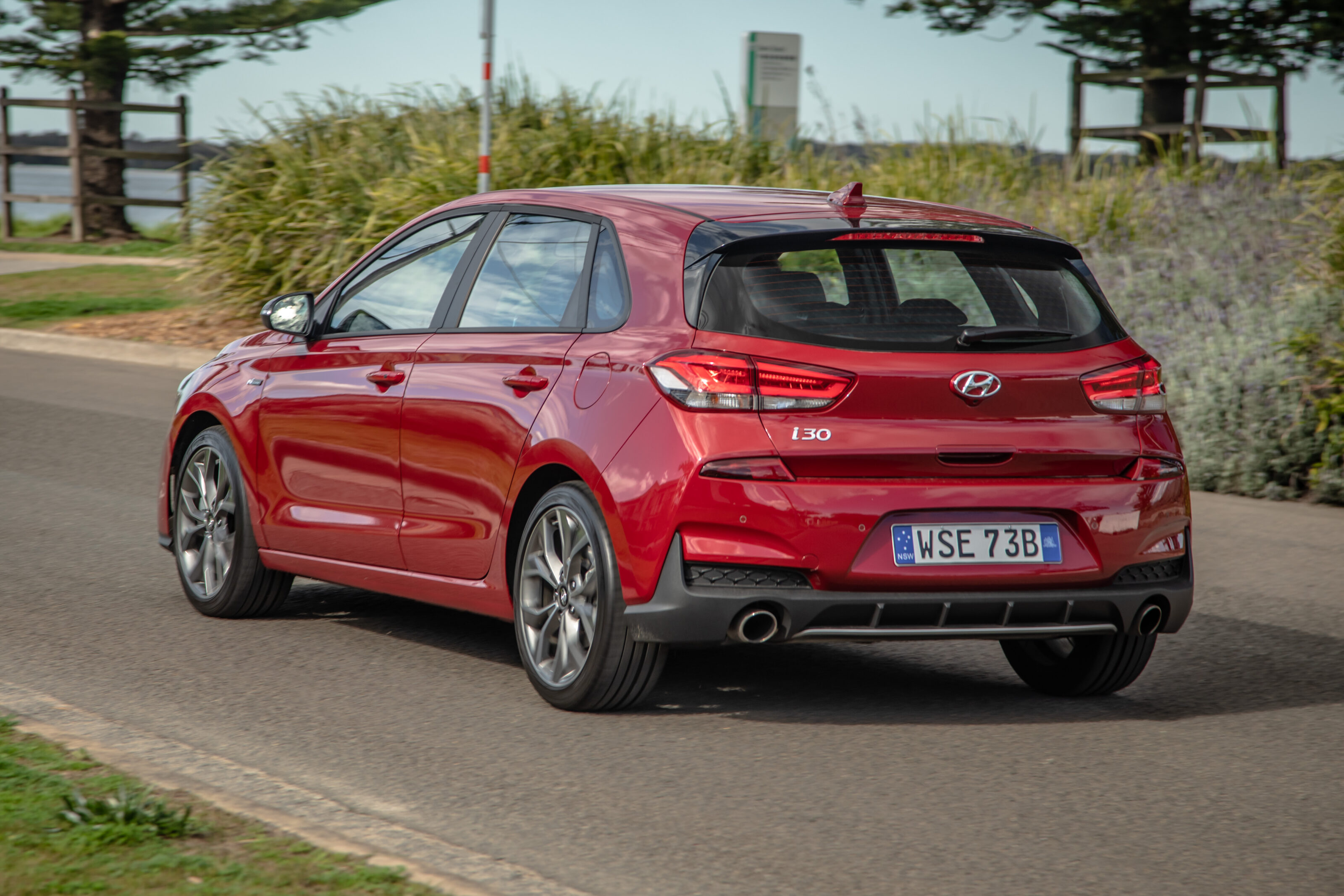
The Hyundai i30 maintained its 100 per cent top 10 record for 2021 with 1946 sales, although outsold by the rival Corolla with 1989 – it enjoyed a 36 per cent rise compared to the latter’s two per cent increase.
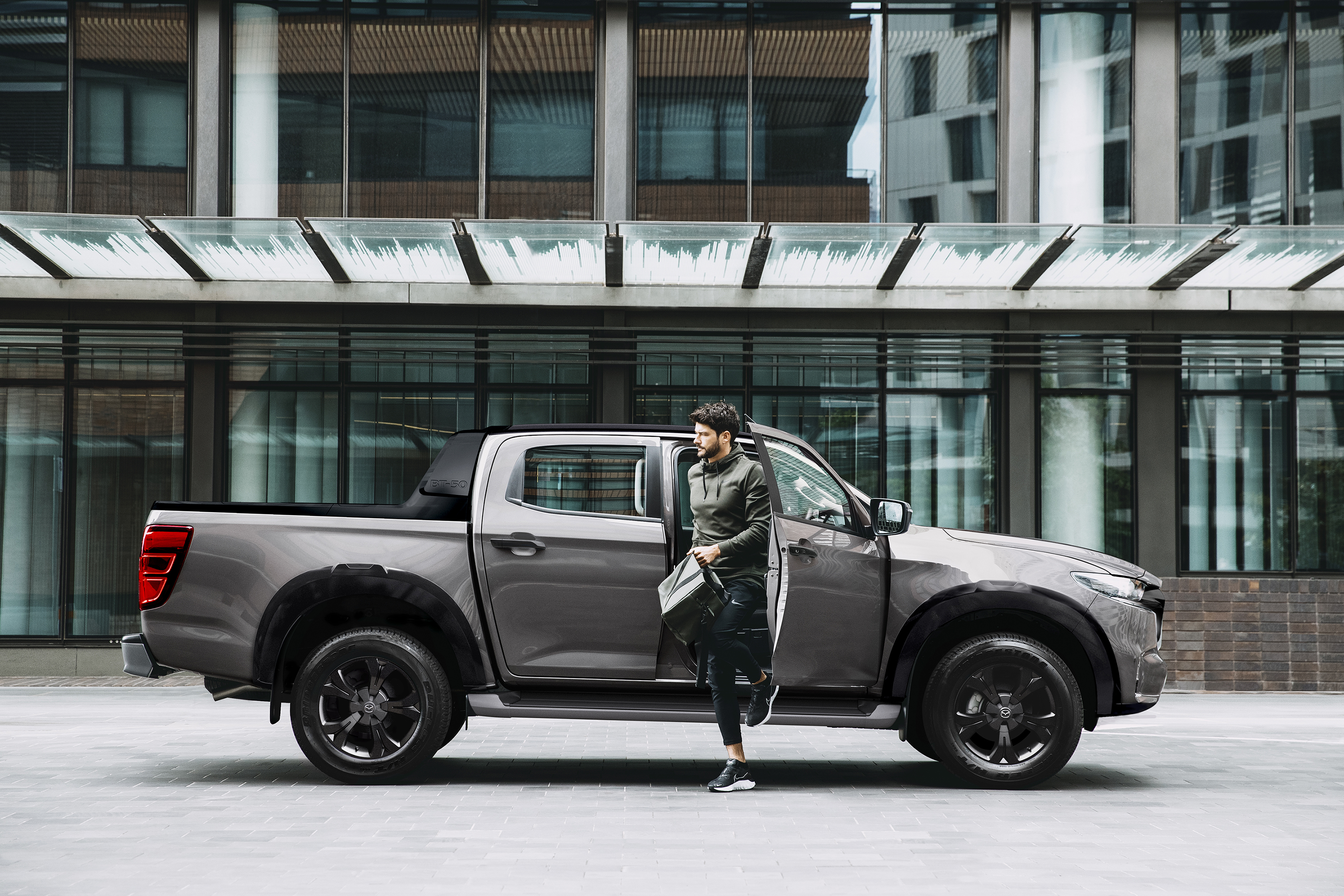
Isuzu’s D-Max has also never left the top 10 this year, notching up 1694 sales, but unfortunately there was no such luck for the Mazda BT-50 which flew into the best-sellers list in September and out in October.
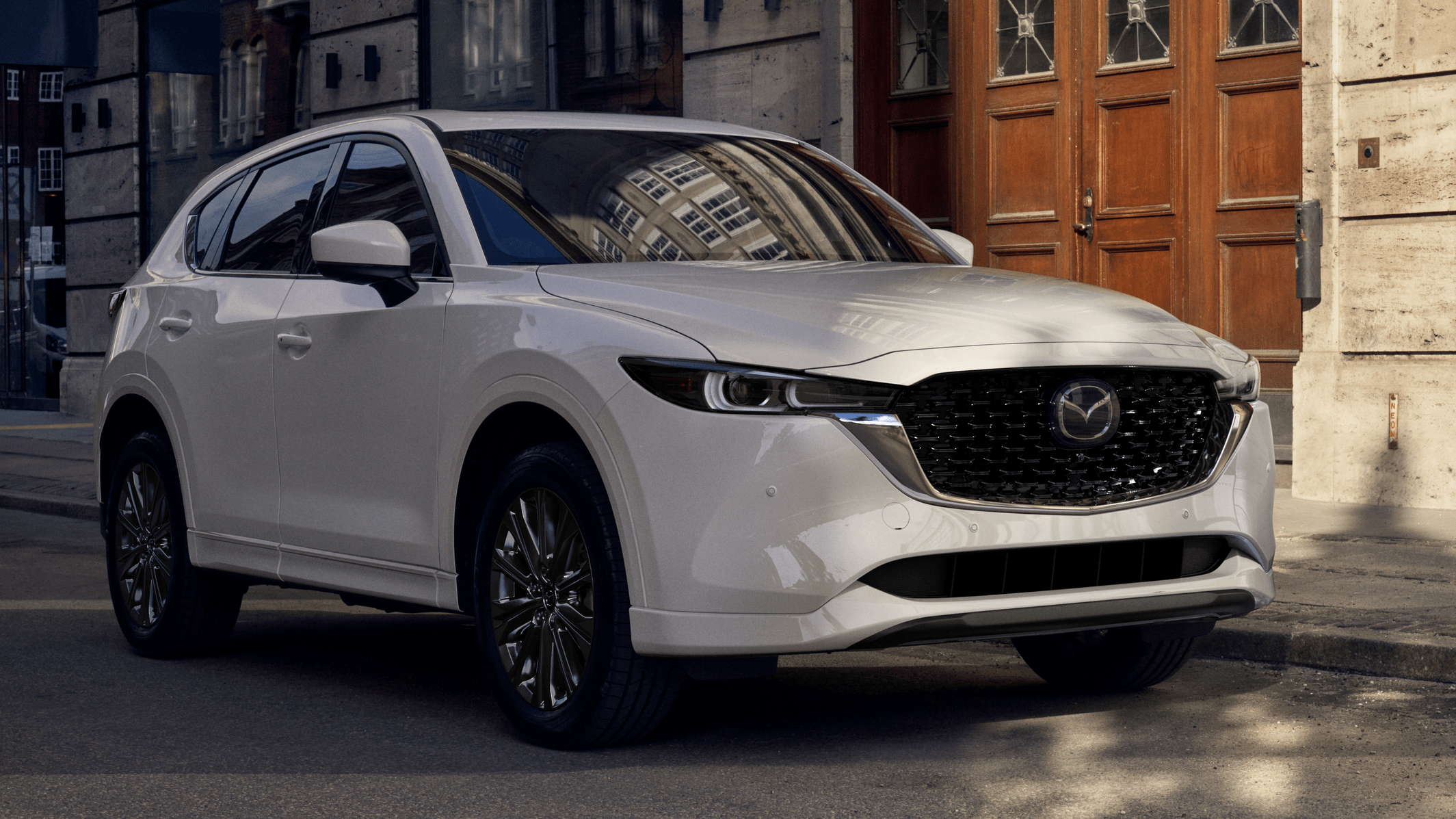
Mazda suffered another top 10 loss, with the ever-popular CX-5 dropping out for the second time this year.
Mitsubishi’s ASX compact SUV made its fourth appearance of 2021 in the top 10, though the company’s Triton ute has missed out for the fourth consecutive month after being a regular fixture in the first half of the year.
New in for October are the Hyundai Tucson (1532 units), Nissan X-Trail (1420) and Kia Cerato (1381).
With just two months of 2021 remaining, the HiLux remains likely to be Australia’s favourite vehicle yet again. Toyota’s RAV4 and Corolla also look well set to win their respective SUV and small-car segments.

Top 10 models: October 2021
Top 10 models: 2021 year to date
Top 10 brands
Toyota felt the fallout of its factory shutdowns last month dropping more than 5000 sales in October.
The Japanese brand dropped by 21 per cent versus October 2020.
Normally second-placed Mazda suffered a 31 per cent decline to post 5181 sales for October compared to the same time last year – swapping spots with Hyundai, which took silver with 6115 – a rise of three per cent on 2020.
Ford Australia remained a constant in third, with a five per cent drop and 5462 units shifted.
Korean brand Kia ended up in fifth with 4853 cars sold, a decrease of nine per cent on last year, with Mitsubishi next in line with 4203 and seven per cent down.
Nissan made it back into the top 10 manufacturers list after disappearing for three months on the trot, with British-cum-Chinese brand MG notching up 3136 per cent to make an 87 per cent rise on October 2020 and take eighth place. Closely behind were Volkswagen with 2912 sales and Subaru rounding out the top 10 with 2736.
Top 10 brands: October 2021
Top 10 brands: 2021 year to date
In charts
October 2021 – Top 10 models
October 2021 – YTD sales top 10
October 2021 – Overall segment sales
October 2021-2020 category sales
October 2021-2020 YTD category sales
2021 YTD model sales race
Introduction: Warp speed to Wagga
Trent takes command of Lexus’s limo to enjoy the finer things in life
According to studies done by people in coats with an IQ far greater than mine, our eyes are drawn to pictures before text. So, I bet you’re looking at this page, seeing a 2.2-tonne limo parked in front of an excrement-coloured lake beautified by a rainbow and wondering if you’re still consuming MOTOR. Don’t worry. The not inconsequential matter of 310kW sits on the other side of the equation.
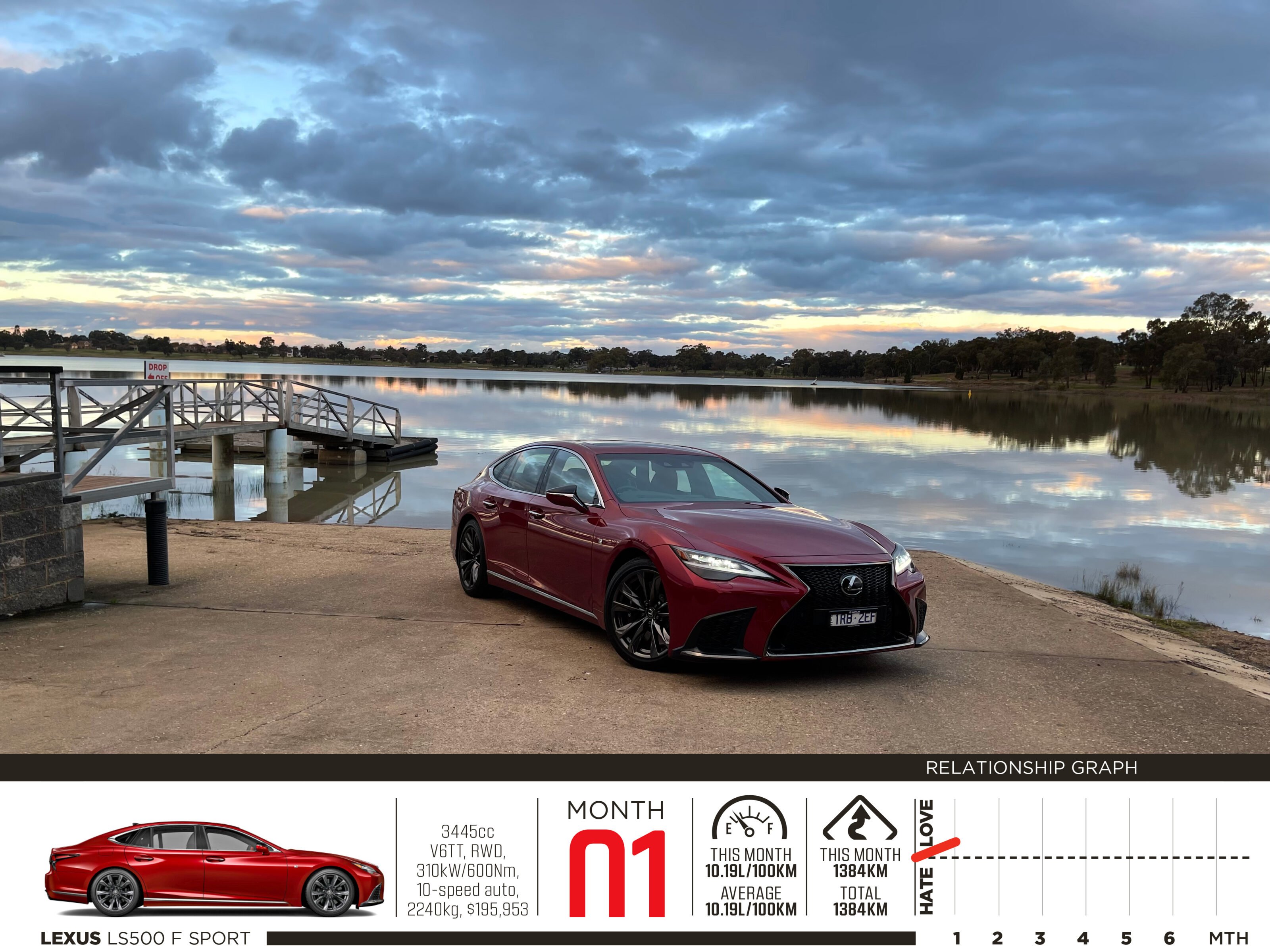
Here’s the thing. Being a driving enthusiast doesn’t mean you have to steer flat-chat every time you get behind the wheel. Sometimes the joy is in something altogether calming that delivers a different kind of driving satisfaction. Enter the $195,953 Lexus LS500 F Sport. A car tasked with fulfilling the luxe-limo remit for the Japanese marque. It’s a statement-maker.
That fact set in quickly as Enright, Kirby and I stood with jaws dropped as the LS arrived. We’d all expected a ho-hum silver hue given its luxury-car status. ‘My’ Vermillion (Red) LS500 F Sport, rolling on dark grey 20-inch wheels with a Moon White/Naguri-style aluminium interior, certainly isn’t a shrinking violet. It’s refreshing to see a rather bold colour combination adorn such an automotive indulgence.
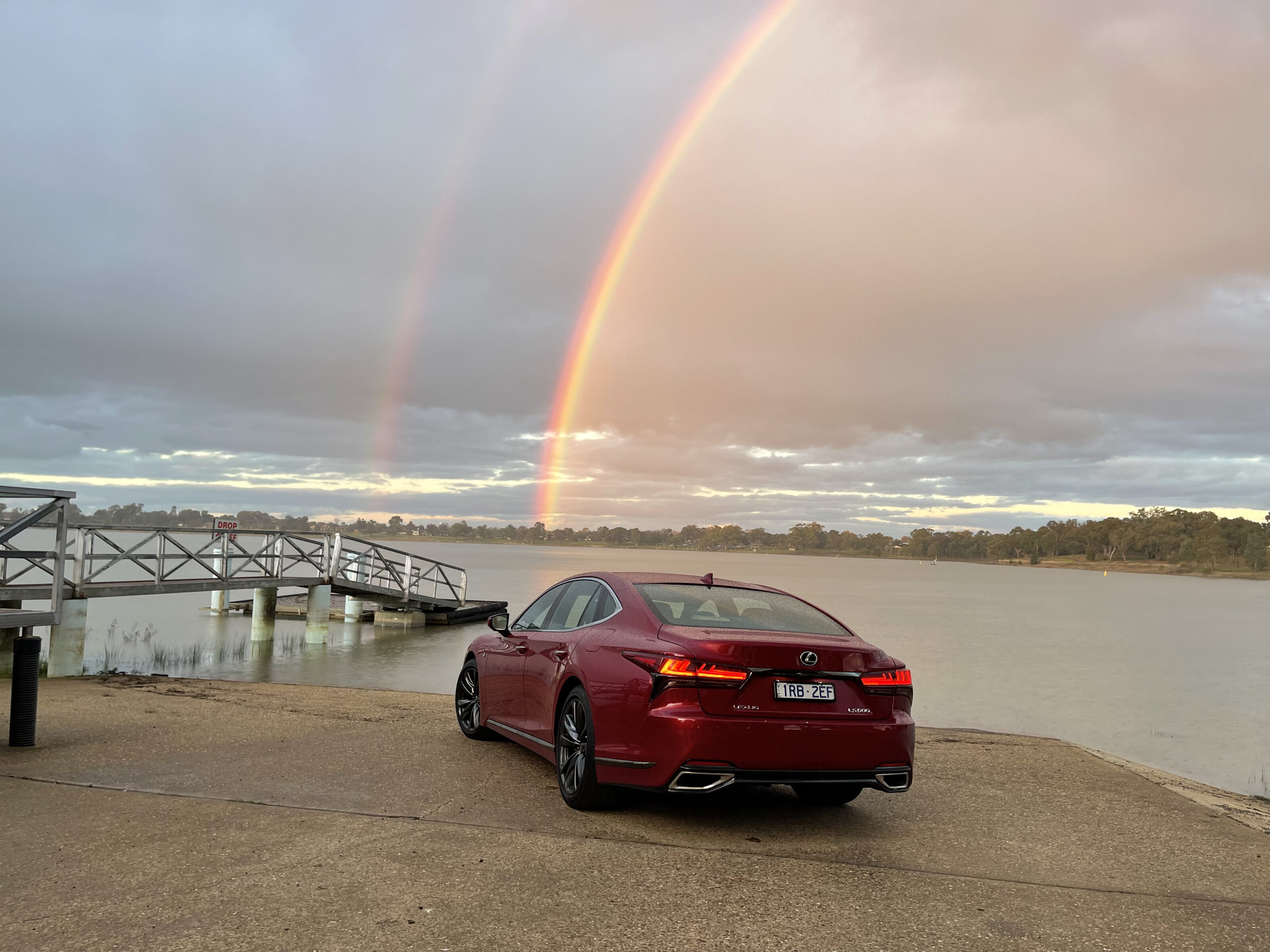
Yet it can’t just be a statement piece. The 5.2-metre long Lexus LS500 must be deeply soothing. And, within the first few days of ‘ownership’, 1RB2EF has its cross-country credentials well and truly tested. Bombing up the Hume to regional NSW (just before full border closure with Victoria), the air-suspended F Sport truly wafts over the myriad lumps and bumps of Australia’s busiest highway. It’s S-Class-like with a real sophistication to the damping.
The sound deadening, or Active Noise Control in Lexus-speak, is next level. The LS500 is a veritable cocoon, isolating you from the world outside its cowhide-clad innards. NVH levels are impressively suppressed and there’s little rumble from the Bridgestone Turanza hoops. The twin-turbo 3.5-litre V6 is predictably hushed. I’ll speak to the creature comforts, technology, and upmarket feel in another update, but don’t for a minute think the F Sport shirks luxuries despite the badge inferring performance.
The seats offer slightly more bolstering than expected, and don’t get the massaging functionality found in the LS500 Sports Luxury, but prioritise comfort over body-hugging. My grandmother approves. So besotted with the warmth filtering into her bones via the heating elements she proclaimed that the big Lexus was indeed the best car she’d ever ridden in. To be fair, her benchmark for such things isn’t exceedingly high, bless her. But stating that her back and hips hadn’t felt better in weeks is a strong endorsement – trust me.
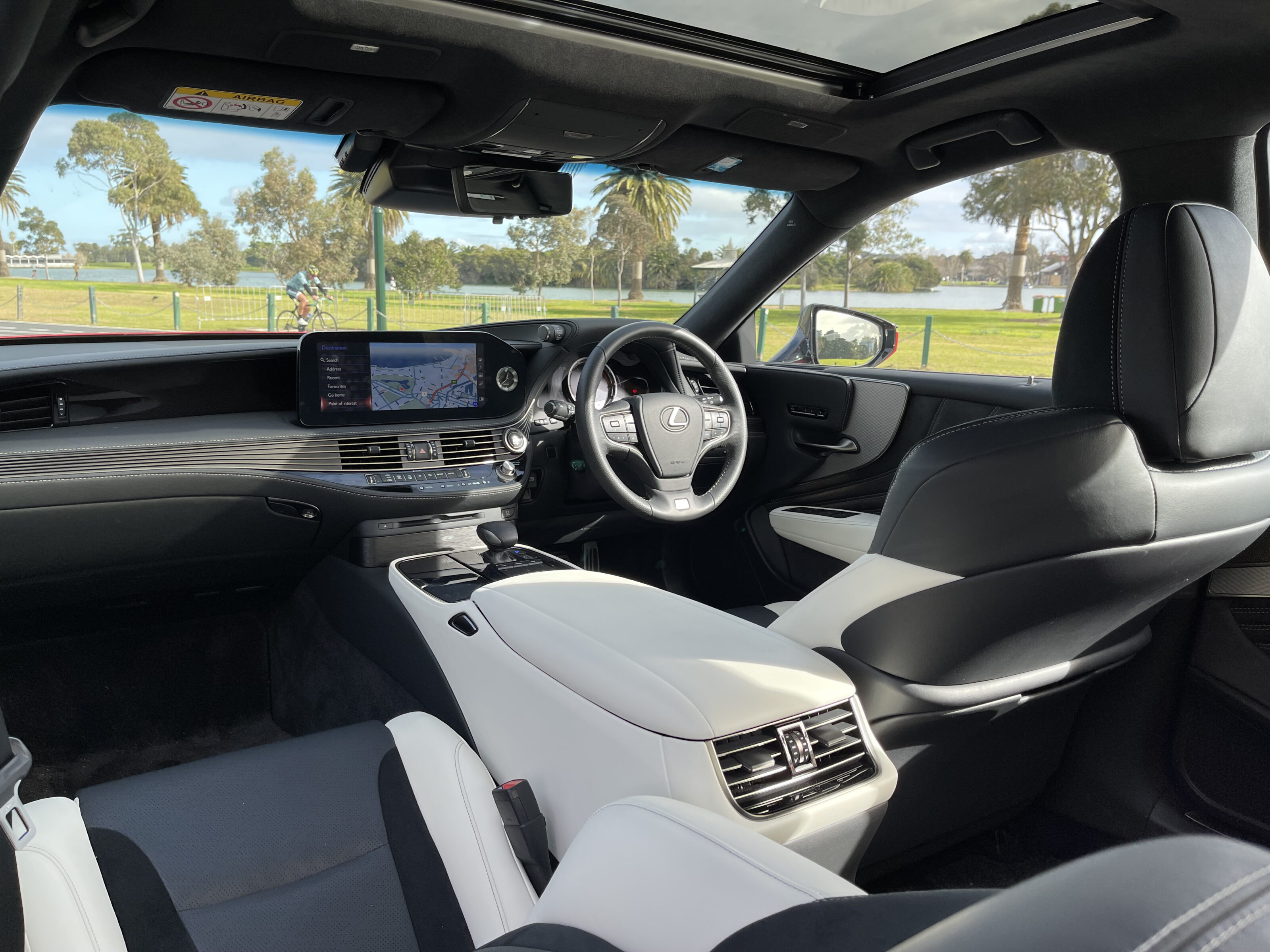
“The LS500 is a veritable cocoon, isolating you from the world outside its cowhide-clad innards”
Onlookers are also enamoured with the design – some saying the rear three-quarter has Tesla Model S vibes. It causes a fuss wherever I go. In my hometown of Wagga, simply driving down the main street summoned as many side-eye glances as if I’d been playing Mousse T’s Horny at full blast with the sunroof open. The LS500 gets a 23-speaker Mark Levinson stereo as standard, but the LS500’s persona probably deserves a more mature acoustic genre.
After a 1000km round trip, I felt as fresh as I started – which is largely due to the height-adjustable air suspension and plush, 28-way adjustable, front pews. And for those speculating, a podcast is more my style, which rather underutilises the sound system in a way Mousse T probably wouldn’t. There’s always next time, I guess.
At this point I bet you’re thinking it’s all roses, but slight thorns surround the powertrain. Don’t get me wrong, the 310kW/600Nm boosted bent-six isn’t lacking grunt. Especially for highway overtakes. And it reaches 100km/h in an energetic 5.0 seconds. However, it weighs 2240kg and the F Sport never feels as effortless as it should despite the 10-speed automatic offering virtually imperceptible shifts. It’s also quite thirsty, not that someone buying at $200K car would care. Still, I’d sooner have this than the LS500h and its hybrid gubbins.
So, while I won’t be taking the big ol’ Lexus to a race track, as comical as that would be, there is still a lot to uncover living with the LS500 F Sport. I’m already bonding with it in all the right ways. However, I’ve covered far too many kays in Comfort mode with the Shrek-ear driving-mode dials receiving scant attention. It’s time to inject a bit more MOTOR into this relationship and explore Sport S and Sport S+ to see if this limo can really boogie.– TG
Things we love:
- Relaxed cruiser
- Luxe cabin
- Bold design/hue
- Is the V6 enough?
- It’s huge
- Slightly thirsty
Month Two: Cabin Fever
Big Lexus offers luxurious lockdown respite
Growing up I gained an early exposure to how people treat their cars. The good, the bad and the ugly. Up until recently, my father was in the smash repair business, and in my younger years I’d often walk there after school to wait around for a few hours before going home. Occasionally I’d help out, but I was always better at pulling things apart rather than putting them back together. So instead, I turned my hand to detailing.
What I always found interesting is that the cleanliness of a car’s interior didn’t always correlate to its list price. Being in a rural area, it wasn’t uncommon to see an expensive four-wheel drive with hay in the boot, mud stains engrained into carpets and myriad food scraps and stains. I’m assuming that, partly because of this, our family EF Falcon was largely a no-food zone.
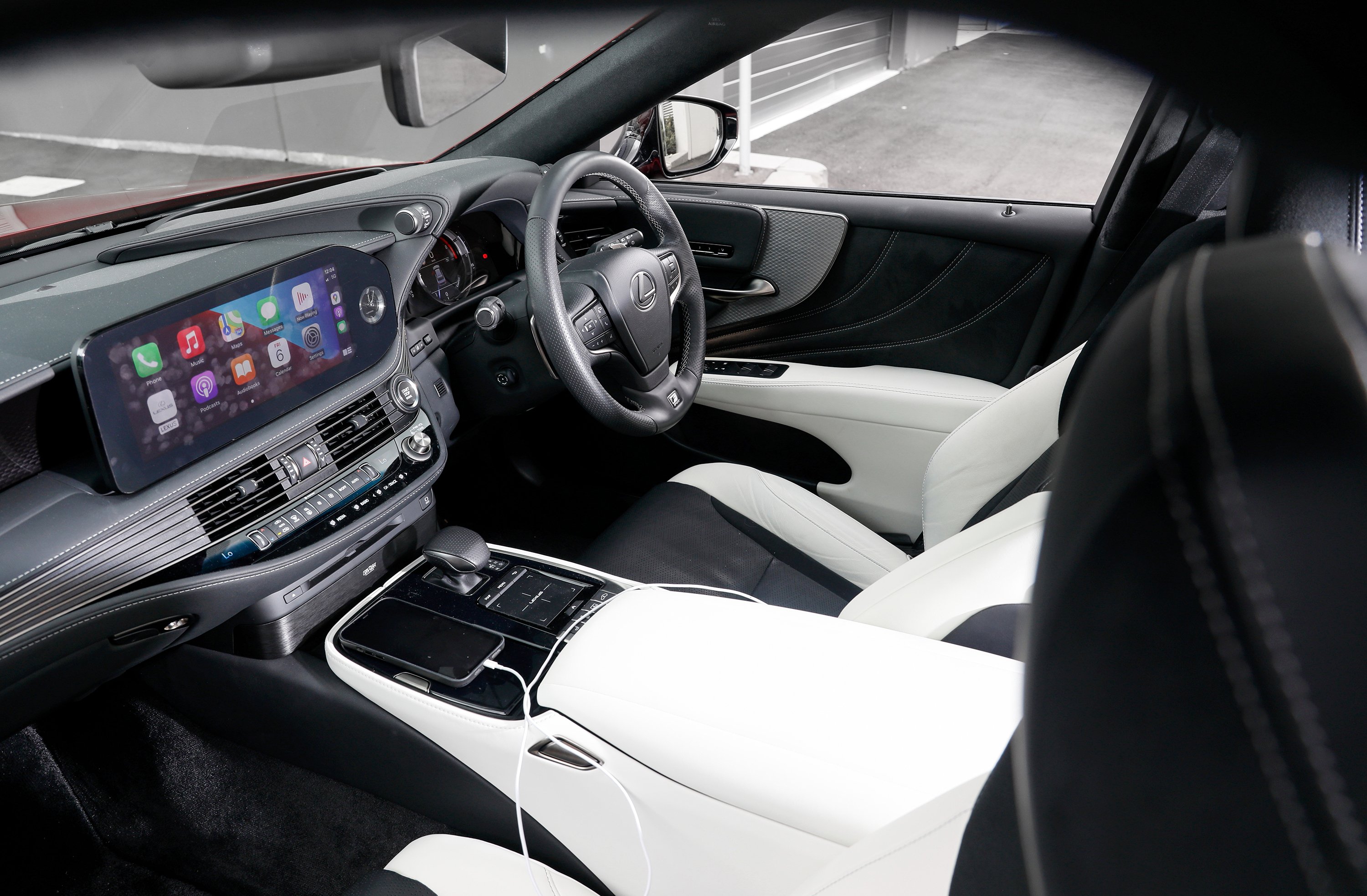
It’s something that as an adult I’ve tried, and often failed, to adhere to. However, given I currently have a $195K Lexus limo in my possession, I’ve taken to reinstating the rule. But Covid lockdowns have made it hard given that the LS500’s palatial cabin renders it the perfect alternate takeaway dinner setting when my own four walls become too familiar. For those gasping, napkins, towels and air fresheners abound – I even tour with the windows open to alleviate lingering smells.
Thing is, with shagpile-style carpets, soft leather and top-quality sound deadening (with Active Noise Control), the LS is far more luxurious than my actual living room. Granted, a couch from the Salvos is a low benchmark, however, everything has a solid, over-engineered feel to it.
This is typified by the volume control knob. It’s so overtly tactile you can’t help but want to fondle it. This particular detail, like the rest of the interior, is just exquisite and it’s utterly pleasing to use. When we’ve been allowed passengers, I can’t help but ask them what they think of it. Most aren’t as beguiled by it as I am, and some appear downright puzzled, but the occasional oohs and aahs prove I’m not the only weird soul finding fascination with a volume control…
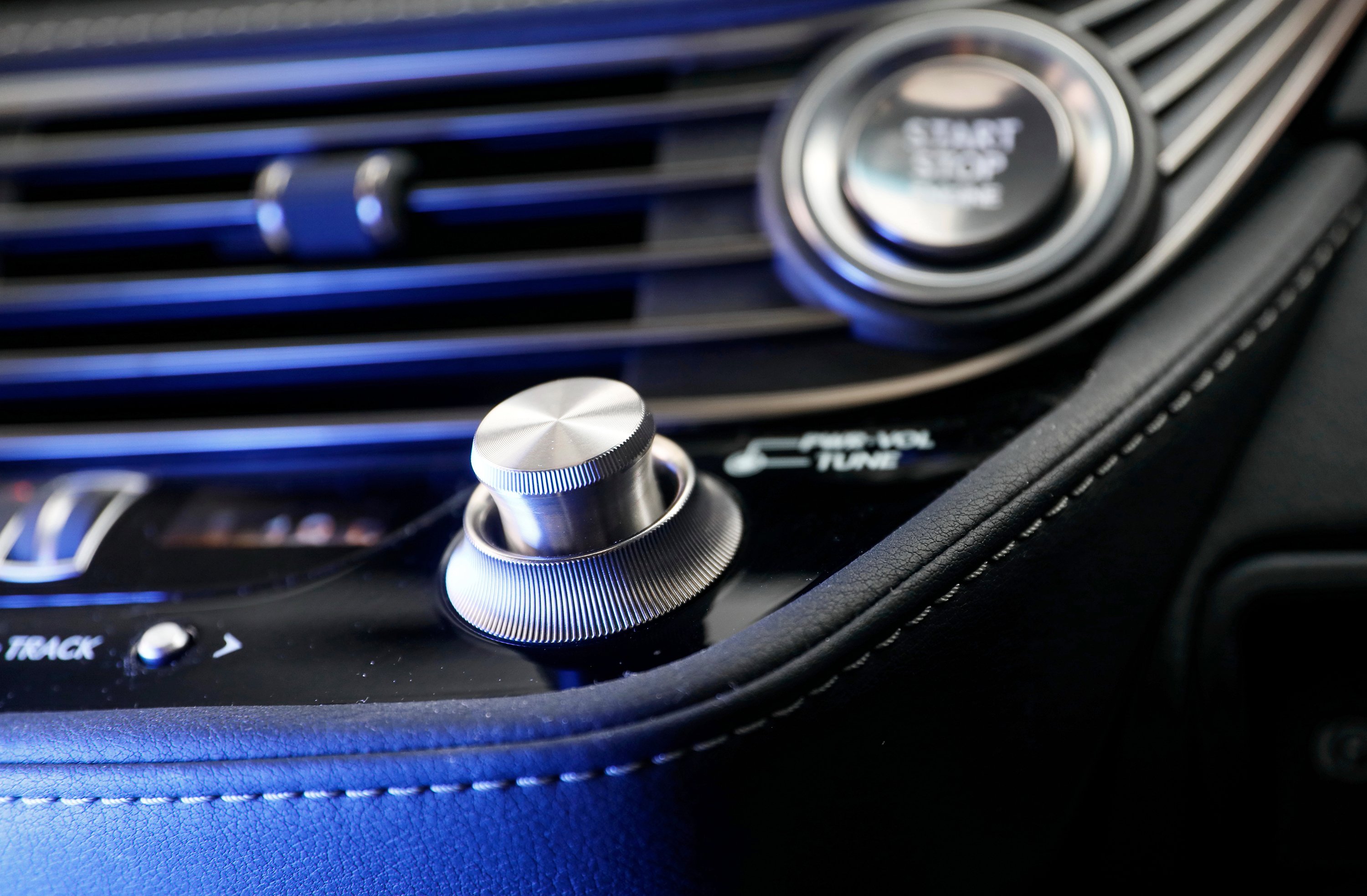
As a piece of design that doesn’t lose out on function, it’s a winner. The sound system its controlling is also one of very high quality. The 23-speaker Mark Levinson package packs a punch with bass where you want it and clarity everywhere else. It’s also interesting that the LS still offers a provision for CDs when smartphones and services like Spotify are the new norm. Maybe it’s a sign of the clientele who are in the market for a premium Lexus that it is still there; especially given the SC430 was one of the last cars to be sold with an old-school tape deck.
While Lexus is at pains to quash any Toyota links, there are some controls within the cabin that you’ll find in its parent company’s products. Once you see them, you can’t un-see them. The lock/unlock buttons on the door cards and the trip-computer controls are straight from the big T’s part bin. It even says “Toyota Motor Corporation” on the build plate as you open the door. At least there isn’t an infamous Toyota digital clock, instead it’s a beautiful analogue timepiece.
However, I don’t see that connection as being a gripe. What does let the LS down is its age and lack of modern tech like wireless smartphone mirroring (although there is wired Apple CarPlay and Android Auto) or wireless phone charging. It’s also frustrating that carrying out simple tasks, like turning off/on the seat/steering-wheel heating, requires multiple button presses or screen swipes.
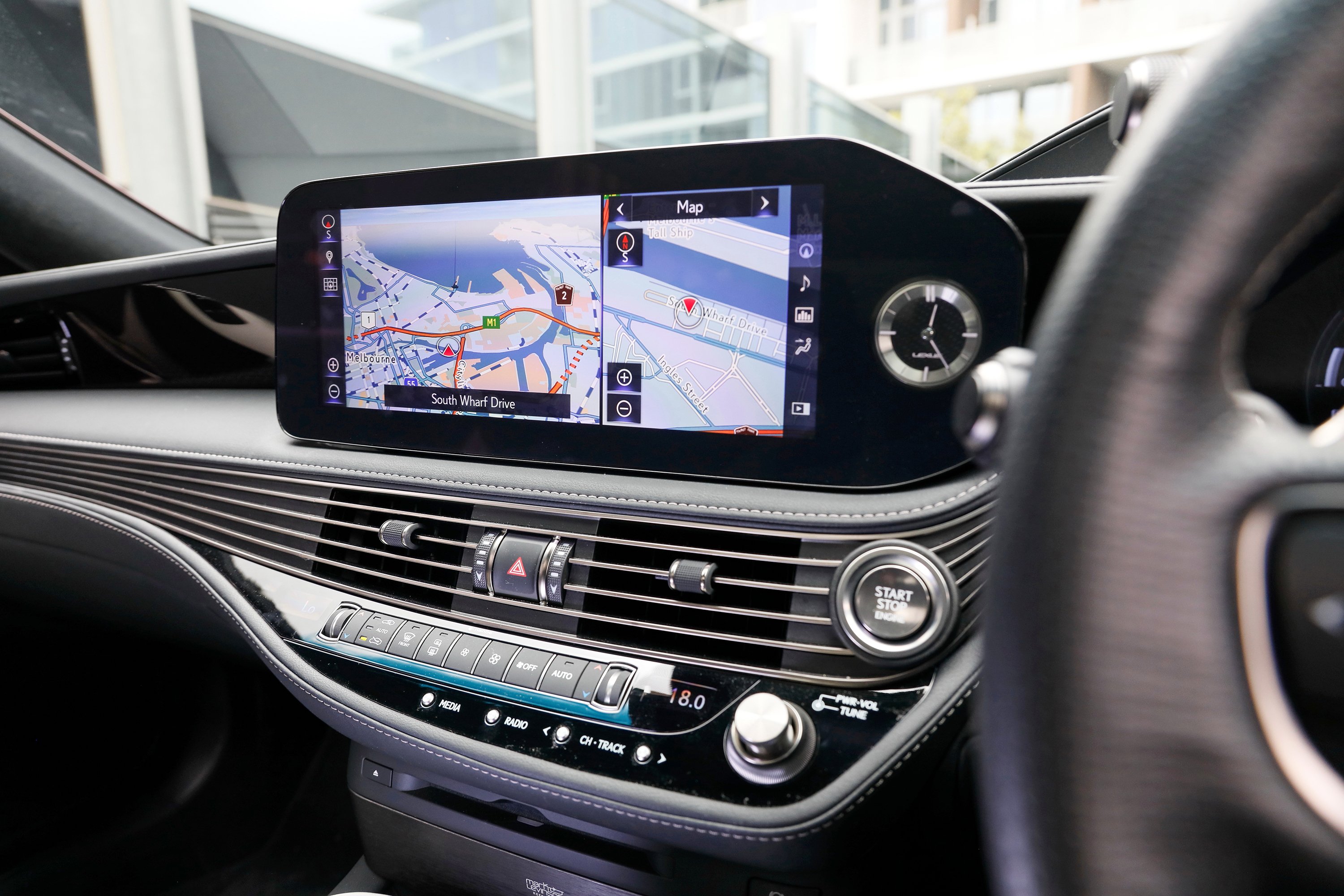
At least the maligned trackpad can now be averted given that the gargantuan 12.3-inch screen has become touch-enabled. It makes a big difference to how you use the infotainment and HVAC. I’m keeping count and so far I’ve only had to use the trackpad twice. The 8.0-inch digital instrument clusters also uses an LFA-style moving central tacho – which is cool.
Yes, it might be missing some of the up-to-date gizmos, but it has soothing comfort and endearing charm in reserve. Everything is either felt or leather-clad (even the door bins) and the ‘Takumi craftmanship’ shines through – it’s a visual feast with a full-flavoured design.
However, opting for the $200K Sports Luxury does afford more show-stopping kit like massaging front seats and reclining rear pews. And given that being soothed rather than excited is the LS’s modus operandi, I can’t help but think it might just be the better choice.
Still, spending so much time within the cow-hide clad innards of the LS500 F Sport hasn’t made it any less special on each occasion. – TG
Things we love:
- Feel-good factor
- The details delight
- Quality materials
- Missing tech
- Few toys in back
- Lockdown blues
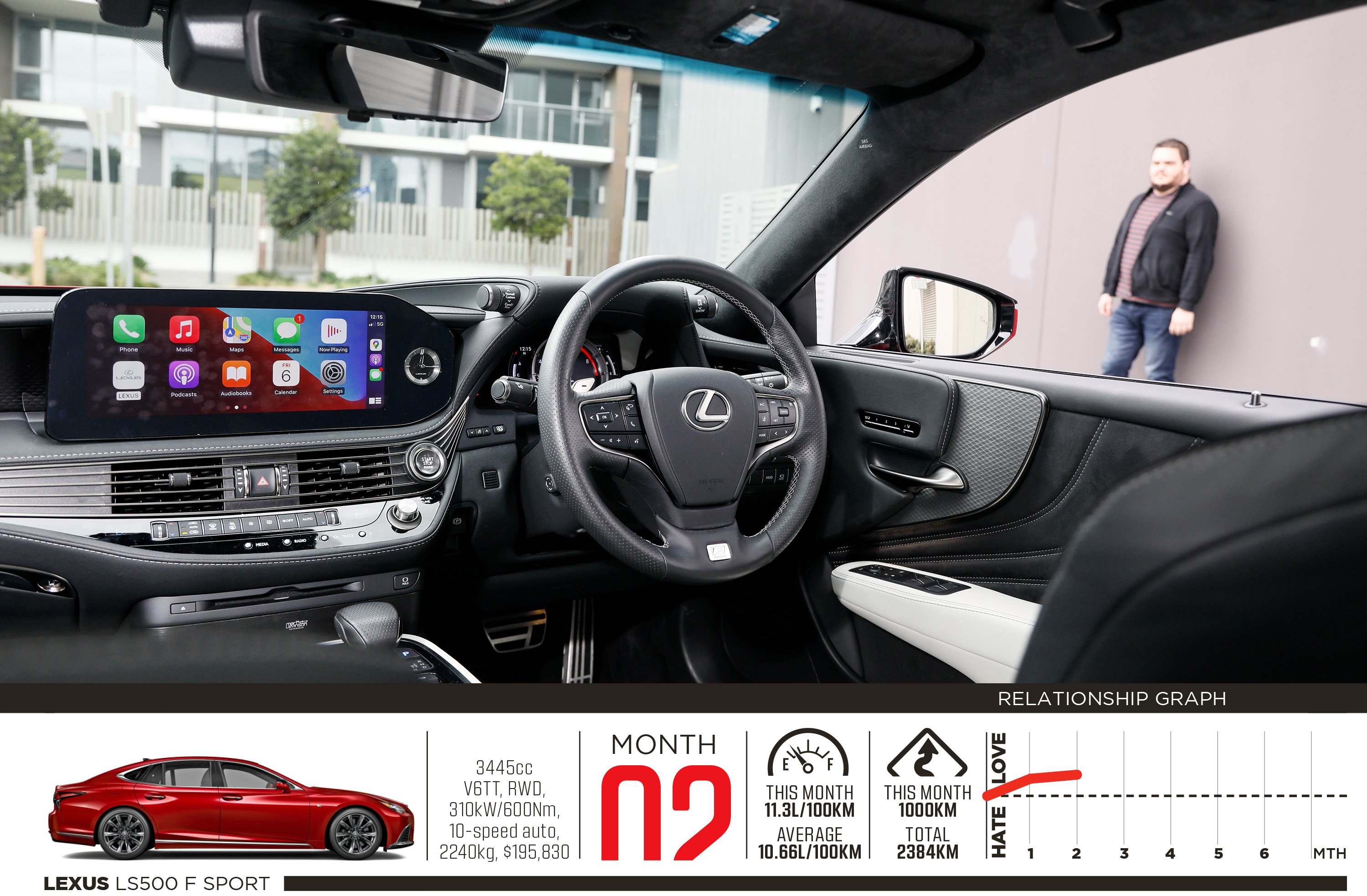
Month Three: Corner Exit
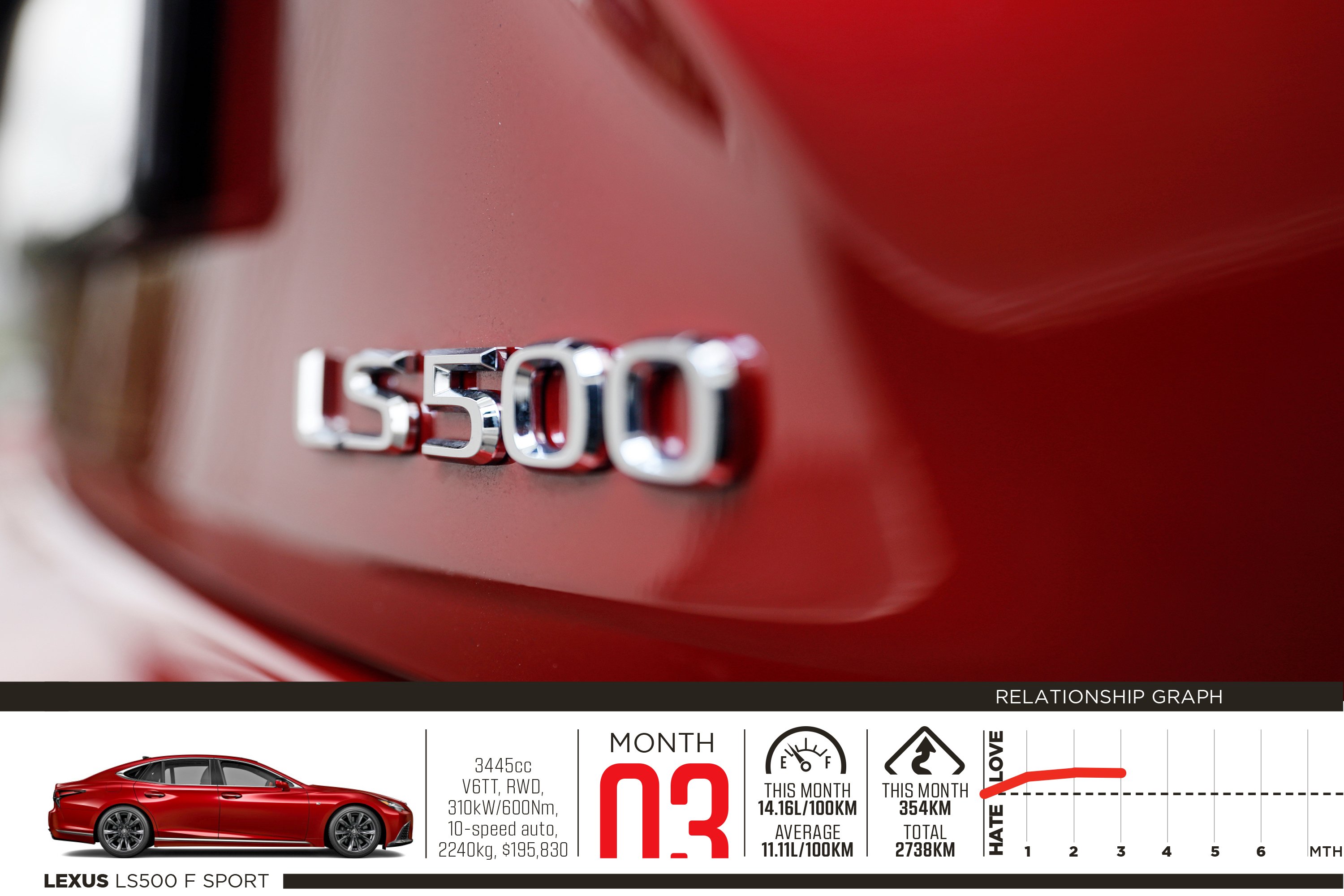
It’s time for the flagship Lexus LS500 to take the scenic route home
“You’re taking an LS500 on that road. Why are you doing that?”
Given the person offering this candid guidance was an esteemed colleague, I probably should have heeded the advice. Also, considering the years of road testing experience I’ve also gained in Victoria’s Yarra Valley, listening to my gut feeling would have been a good idea. But I didn’t. And I ended up on a narrow and twisty road.
However, it wasn’t quite akin to hustling the MS Symphony of the Seas down the Yarra River. In fact, it was good fun. Which is heartening given dynamic prowess is the reason you’d choose the F Sport over the $5k more expensive Sports Luxury.
While the former doesn’t gain the latter’s interior gadgets, it does add rear-wheel steering, active anti-roll bars and variable-gear-ratio steering up front. The theory is that this isn’t the LS to be driven in, rather it’s the one you drive.
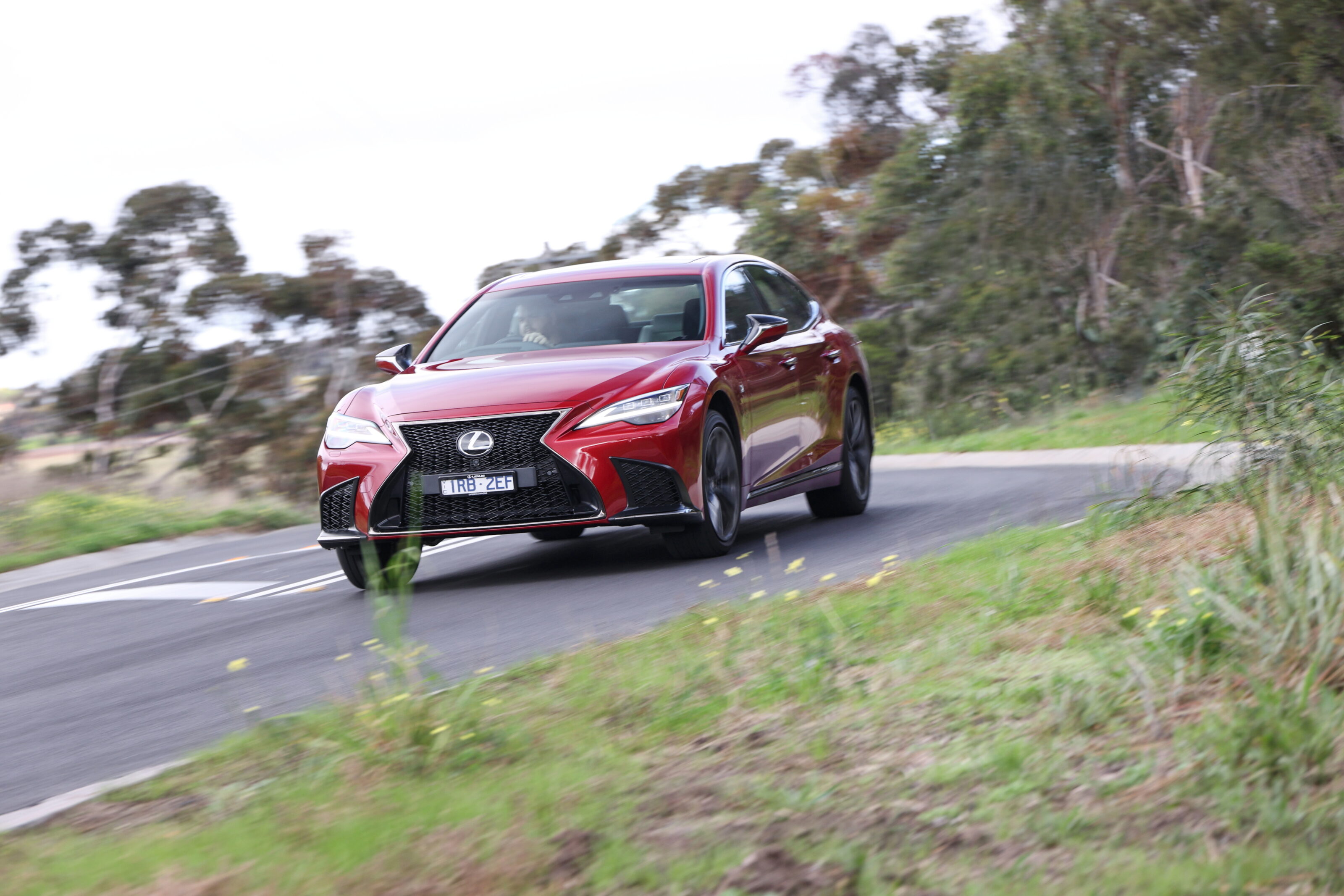
Okay, at 5235mm long, 1900mm wide and with a wheelbase of 3125mm it’s never going to be a twinkle-toed ballerina. However, the LS500 F Sport does display an impressive amount of agility. Roll is largely kept in check and on fast, flowing sections of tarmac it really finds its feet. While the rear-steer helps, its long wheelbase hampers rotation and on corner exit a lack of a limited-slip differential can see the inside rear spin – or it sends the traction control into a frenzy.
While the F Sport well and truly lives up to the cosseting cross-country cruiser, the adaptive air suspension doesn’t deal with CBD imperfections quite as well. There are some potholes and sharp hits that can’t be ironed out – blame the rather large 20-inch wheels and low-profile Bridgestones for that. It’s far, far from uncomfortable. But when relaxation is the name of the game, you kind of expect to be guarded from all deficiencies in road surface.
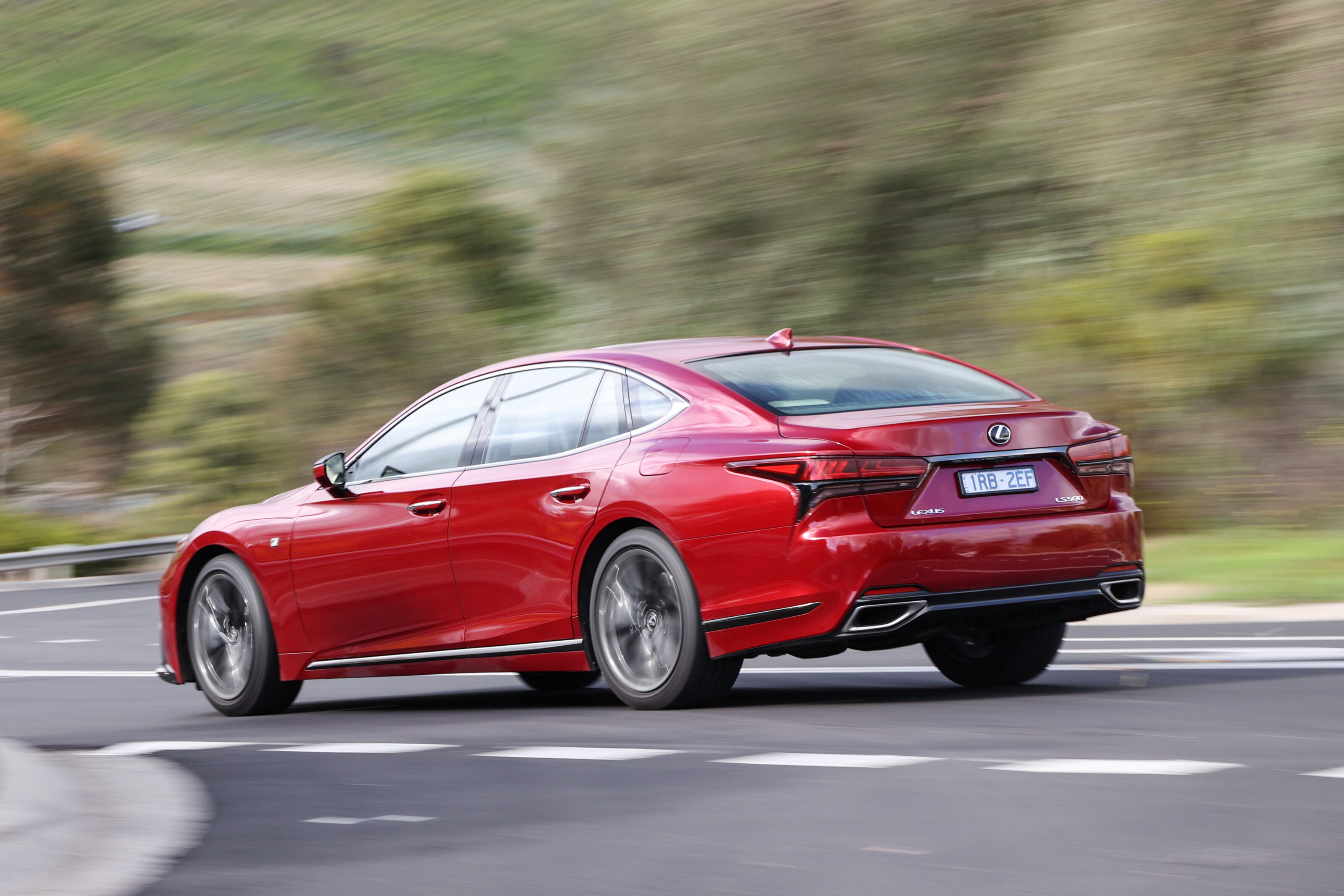
I might have jumped the gun in the oomph department. I still think the twin-turbo V6 is adequate for the 2240kg heft rather than effortless and ample. However, the V35A-FTS unit is smooth and linear (with revised pistons to reduce noise) and pairs well with the 10-speed automatic. It doesn’t blip on downshifts like the harder-edged LC500, but it’s intuitive and has the 3.5-litre bent six lazing in lower revs at cruising speeds.
Not that fuel economy is a key concern for a $195k limo, but the non-hybrid drivetrain is thirsty, averaging 11.11L/100km in my possession. That’s slightly more than the 10L/100km claim. The bump in fuel economy over last month is due to a short stint of lockdown respite and spirited driving, where Sport and Sport+ were engaged. And then promptly returned to Comfort.
It’s refreshing to discover that the F Sport isn’t just to be driven in. However, buying into this realm also now affords other luxuries thanks to Lexus on Demand’s Encore Platinum membership. The program allows customers to experience either an RC F, LX, LC or LS for a booking of up to eight days at a time. Four of these opportunities are available over the three years and selecting a car can be done via the handy app. Then you head to a Lexus dealer (or Qantas valet in certain cities) and swap out your car for something new – which I tested out.
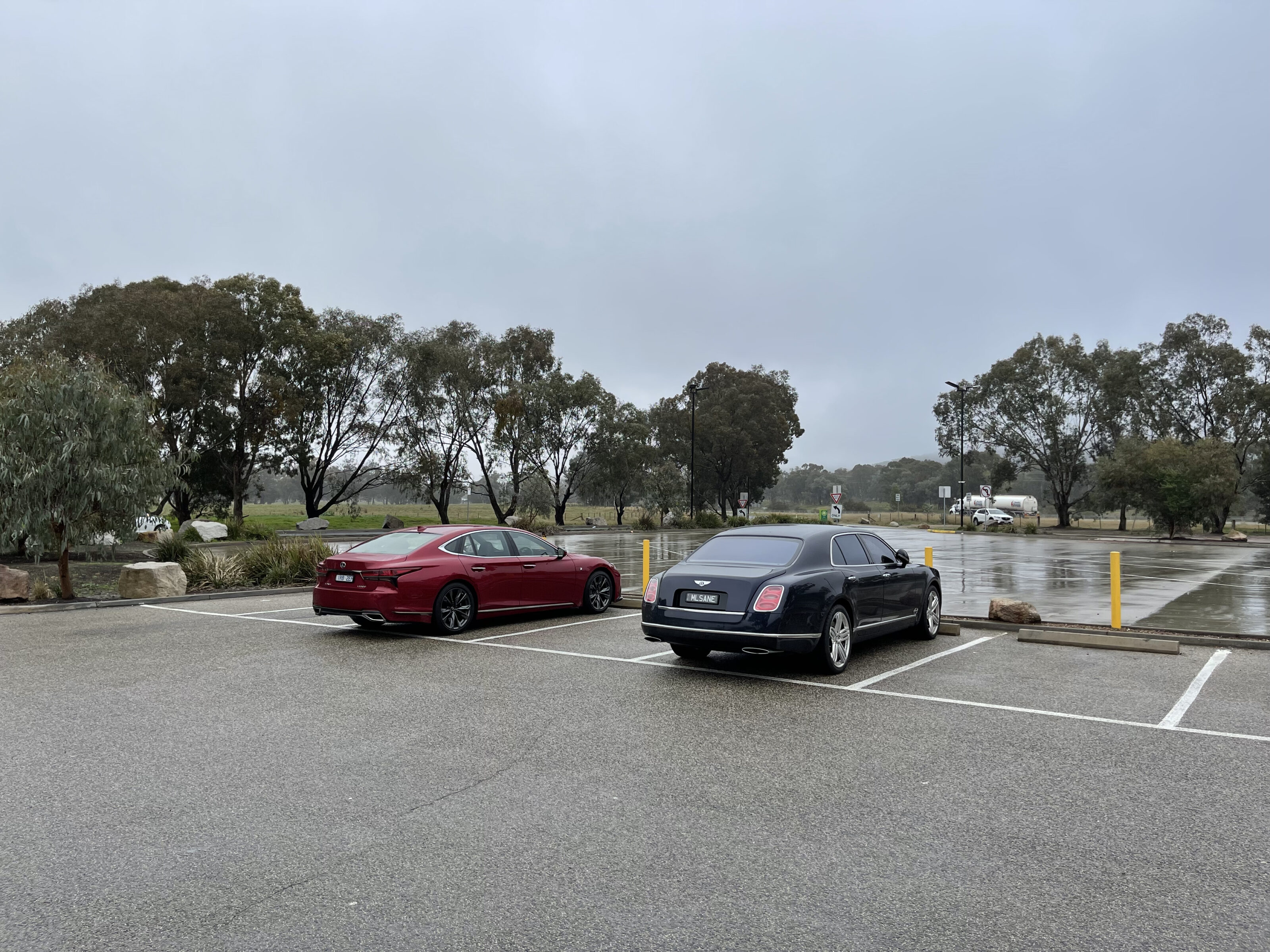
Sliding into an LC500 seems very feasible for an LS owner to shake things up. Both are head-turning cars, just in different ways. And given this is MOTOR, I thought it only right to experience the 5.0-litre, Yamaha co-developed V8 one more time. It’d be wrong not to. Surprisingly, it offered a reprieve from the nail-biting experience of parking the L.O.N.G LS500 in my garage every night. A first-world problem, I know.
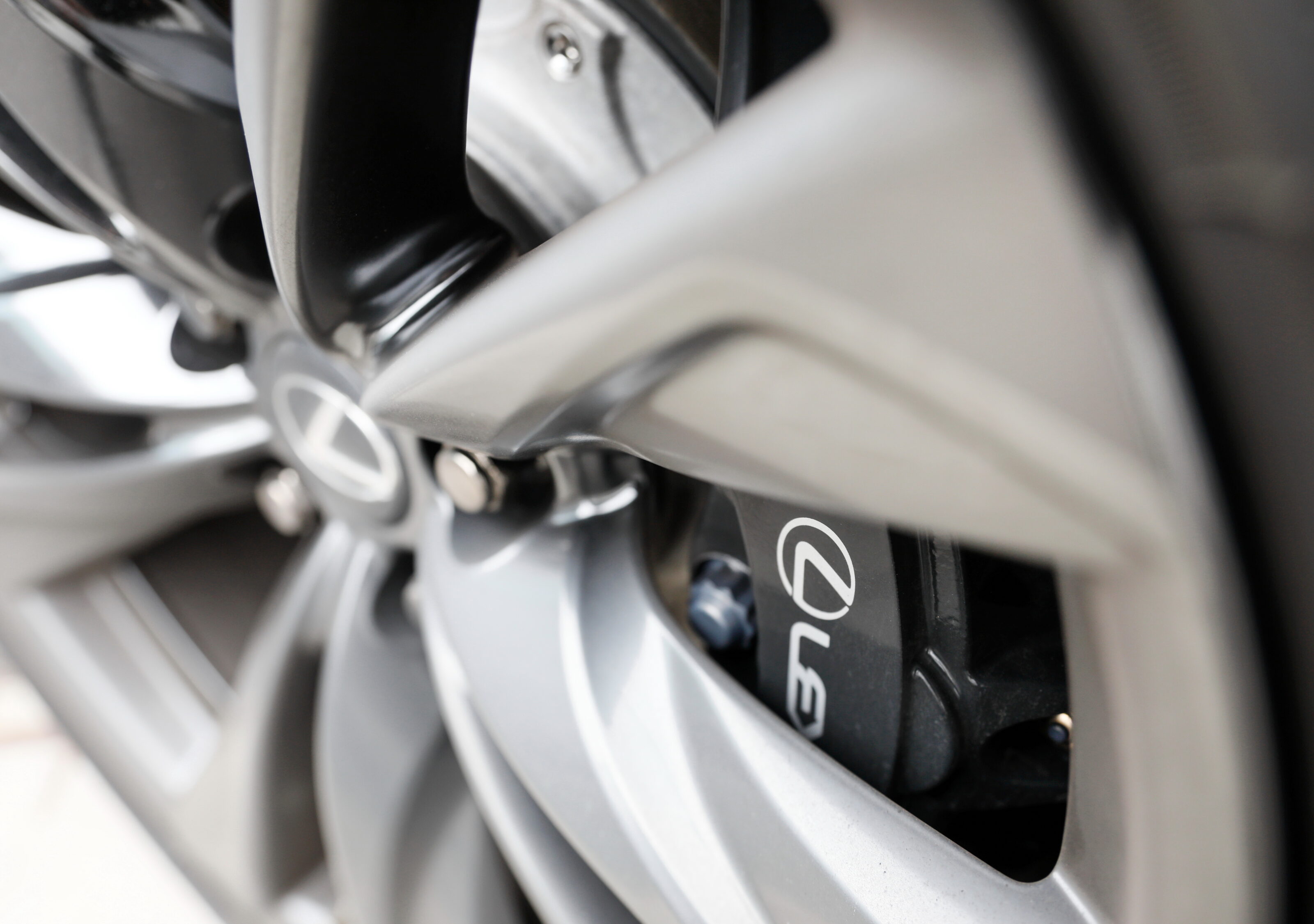
Ultimately, the experience you glean from living with the big LS is a direct result of the type of road you take it down. And the way in which you drive. Despite the 2.2-tonne heft, it’s a dynamically surprising experience. And that’s a theme of the ownership, too.
As I stated from the outset, this isn’t a traditional MOTOR car. Yet, there’s plenty of enjoyment to be had. It’s an automotive experience that makes you feel special, as though you’re permanently in first class. For crushing highway miles in premium comfort, little else is as satisfying as the flagship Lexus.
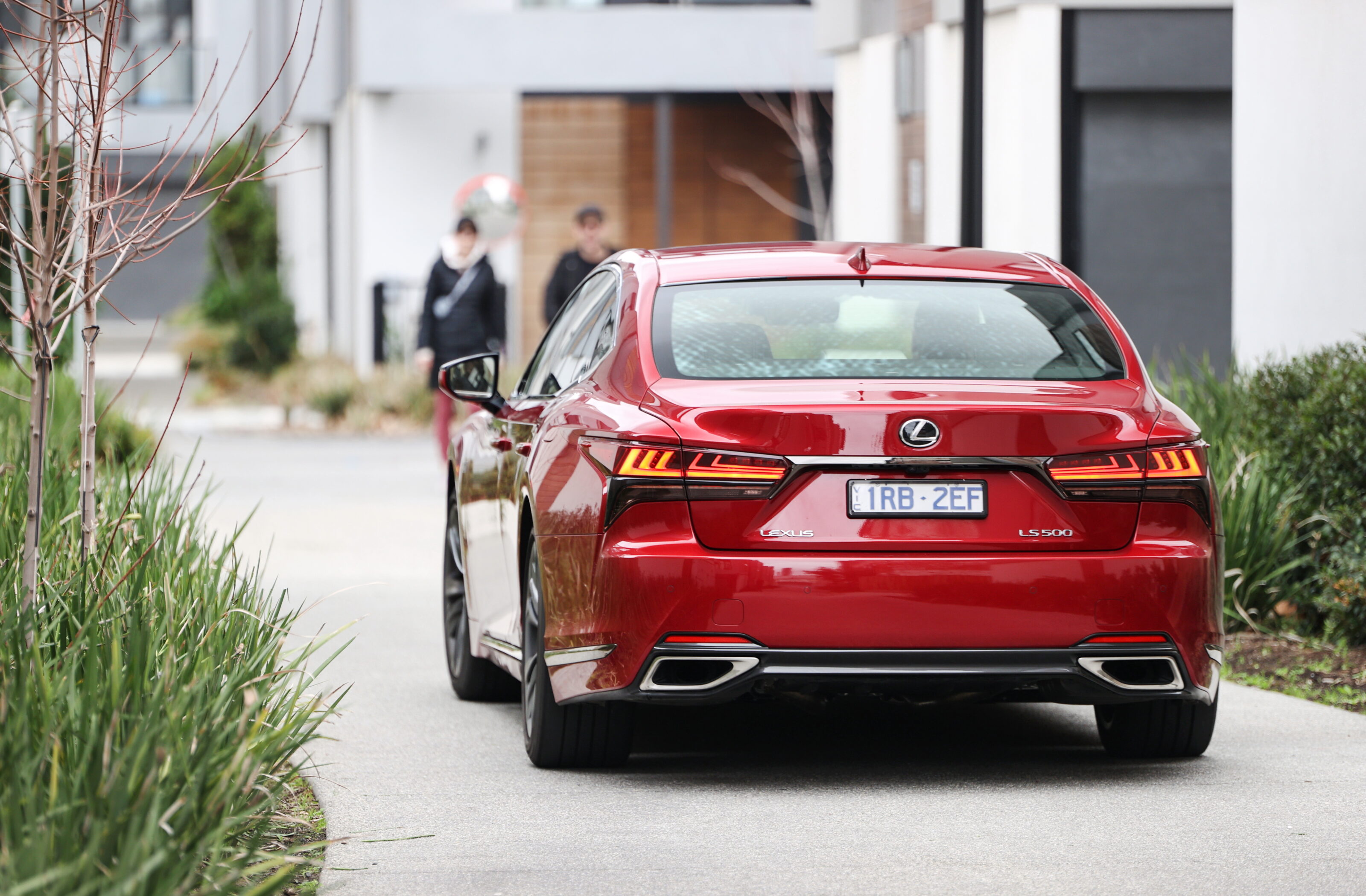
If you have the means, Japan’s answer to the German limos offers class and character in spades. I already miss it. – TG
Things we love:
- Highway comfort
- Plush interior
- Build quality
- Low-speed ride
- Fiddly trackpad
- Giving it back
Snapshot
- Single-motor ID.5 to borrow ID.4’s underpinnings
- ID.5 GTX to be powered by twin electric motors
- All-wheel-drive system to put out 220kW
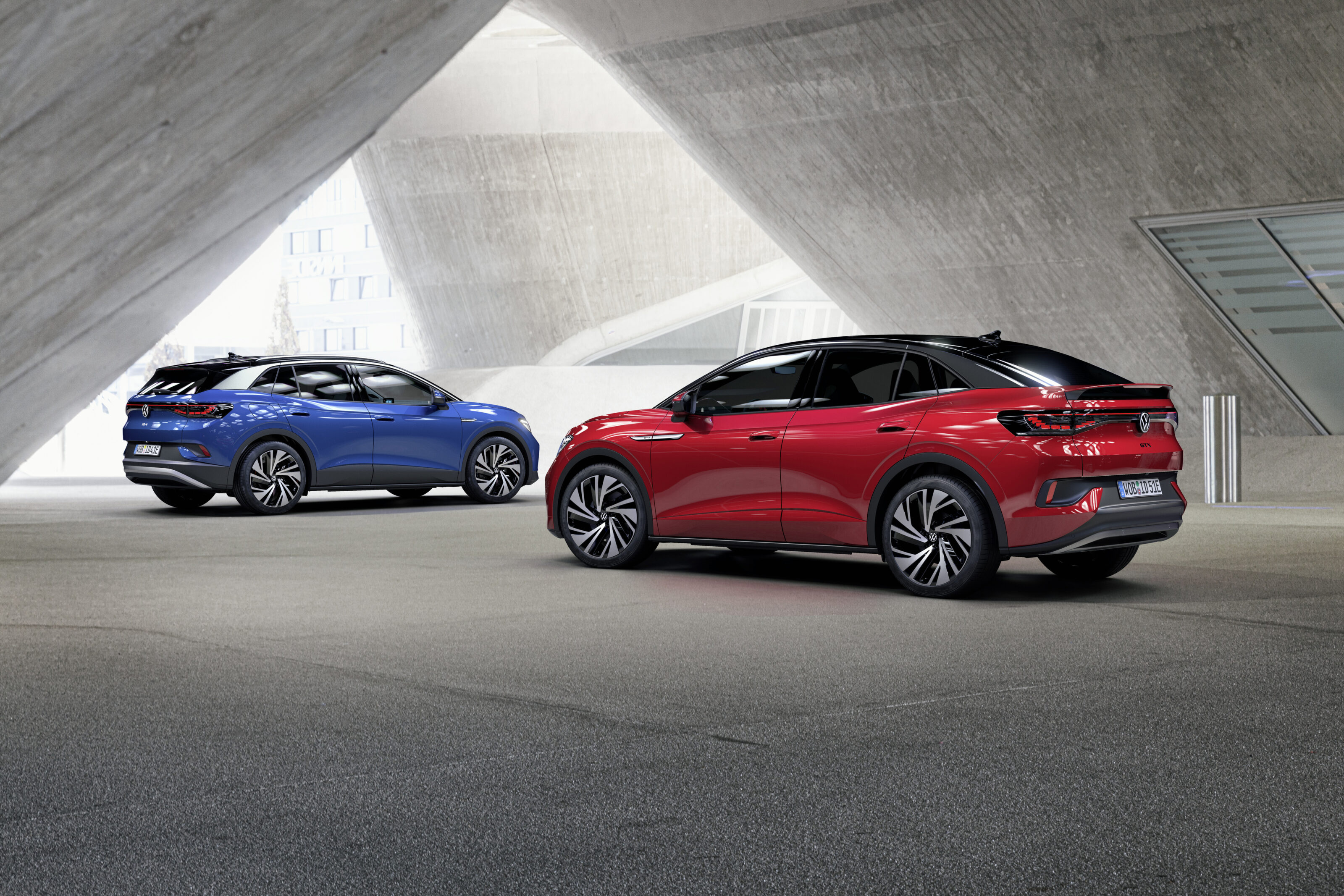
The latest fully-electric vehicle from Volkswagen has been revealed, with the ID.5 and ID.5 GTX being unveiled today.
Based on the existing ID.4 crossover, the ID.5 brings coupé-esque style to the ID range, although its underpinnings remain unchanged over what’s already on offer.
Measuring up at 4599mm in length, the standard ID.5 is slightly longer than the 4582mm GTX and has a slightly lower drag coefficient – 0.26 and 0.27 respectively – although both retain the same width, height and wheelbase (2766mm).
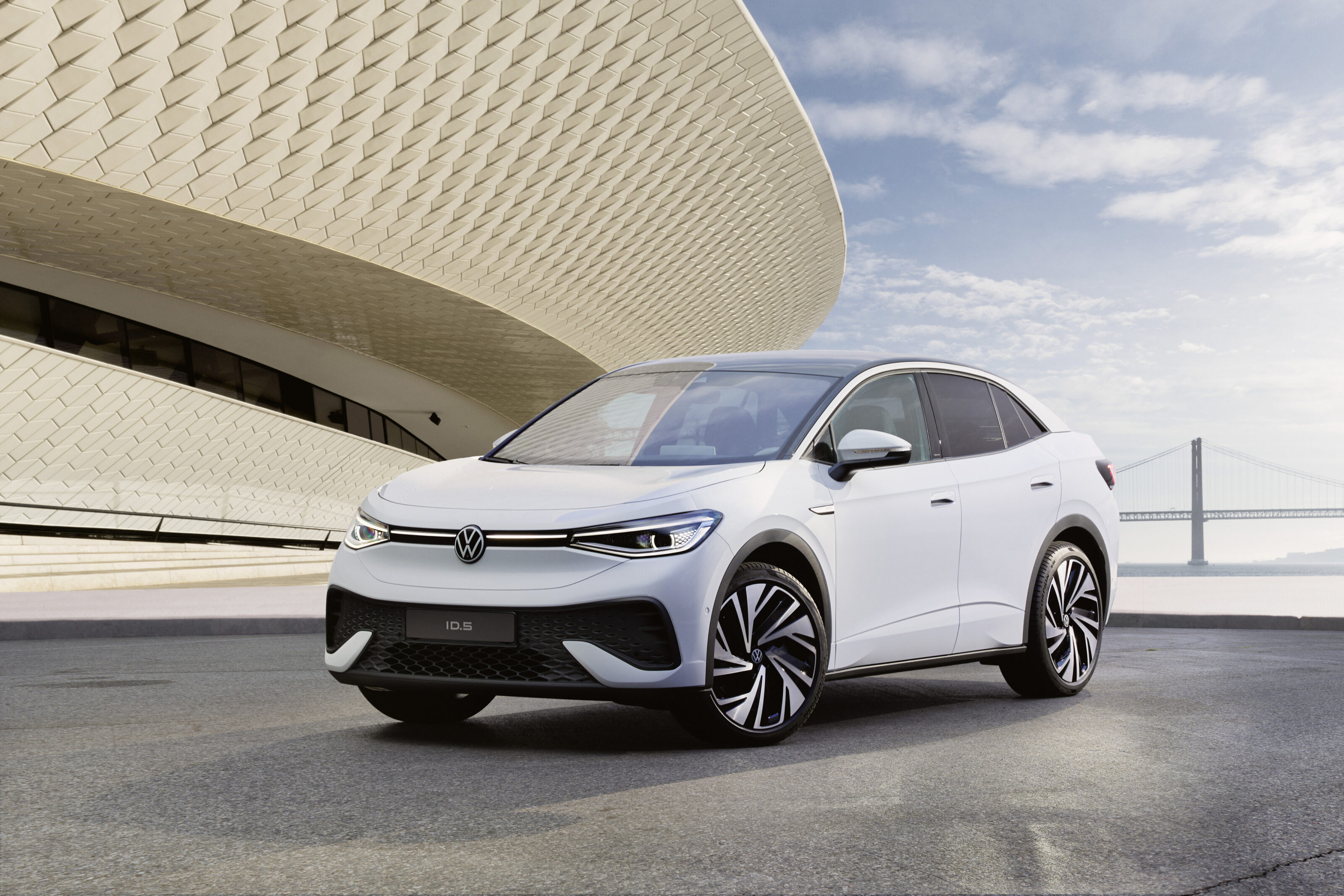
Despite the angular lines above the C-pillar, the ID.5 loses just 12mm of rear headroom to the ID.4, while its boot capacity has increased from 543 litres to 549 litres.
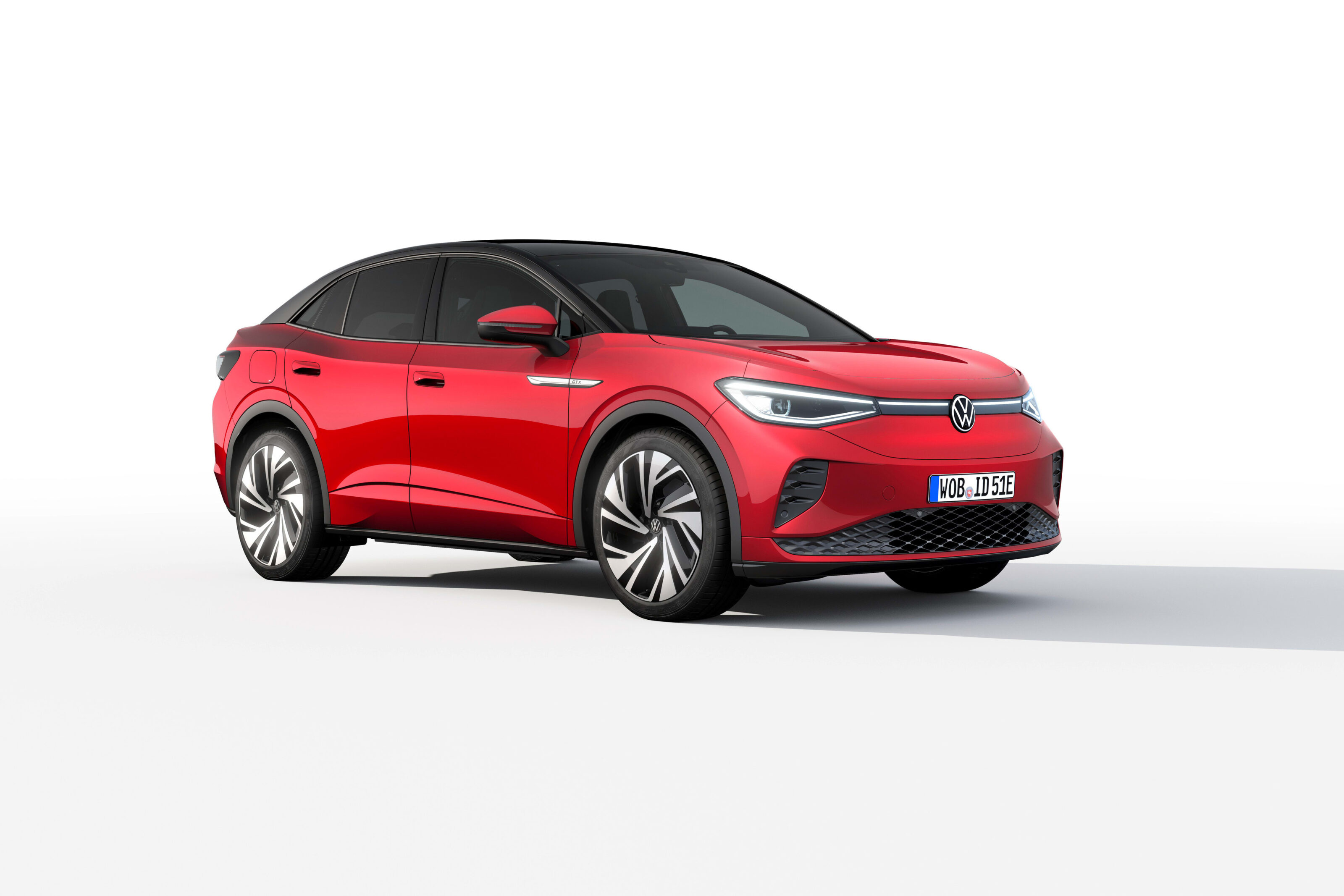
Riding on the MEB platform, a 77kWh battery pack will provide the juice to power the two variants, with the ID.5 set to launch with a 125kW motor on the rear axle while the GTX gains a front motor, bringing total power to 220kW.
The more powerful GTX will serve as the model’s range-topping variant, as its 310Nm of torque help to deliver a 0-100km/h sprint time of just over six seconds, while driving range is claimed to exceed 500 kilometres.
AC charging with the Mode 3 cable will see the ID.5 charged at 11kW, with the ability to charge at up to 135 kW at fast-charge stations.
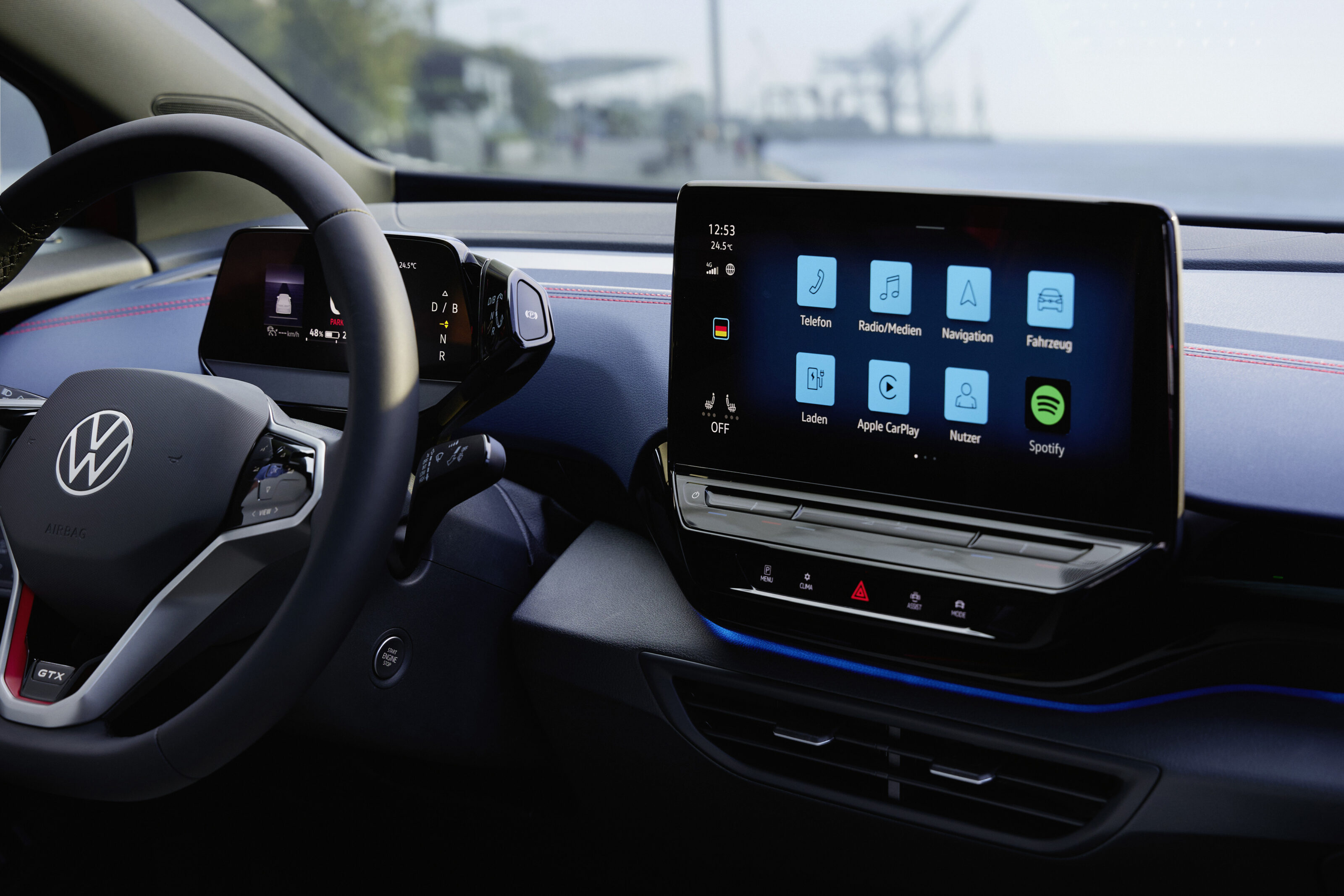
From launch, the ID.5 range will be fitted with Volkswagen’s ID software 3.0 system, allowing to use a host of features such as natural voice control, autonomous overtaking and parking, as well as an augmented reality head-up display.
While the 3.0 software is also set to roll out across the other ID models, Volkswagen confirmed bidirectional charging will be available for the ID.5 after launch, allowing it to return power back to the grid.
Set to launch in Europe next year, it’s unconfirmed as to whether Volkswagen Australia will bring the ID.5 to the local market, having decided not to bring the ID.4 here until 2024 at the earliest.
Key Points
- Rimac takes 55 per cent of Bugatti shares
- Porsche still retains 45 per cent stake
- Headquarters to be based in Sveta Nedelja, Croatia
The merger between hypercar manufacturers Bugatti and Rimac has been completed, less than six months after it was first announced.
After operating under the control of Porsche, Bugatti has now relinquished 55 per cent of its shares to Rimac – the Croatian-based electric hypercar company responsible for the Nevera.
While Porsche still retains a 45 per cent share of its former subsidiary, it will also benefit from Rimac’s experience with electric vehicles, taking a 24 per cent stake in the hypercar company after first investing in the brand back in 2018.
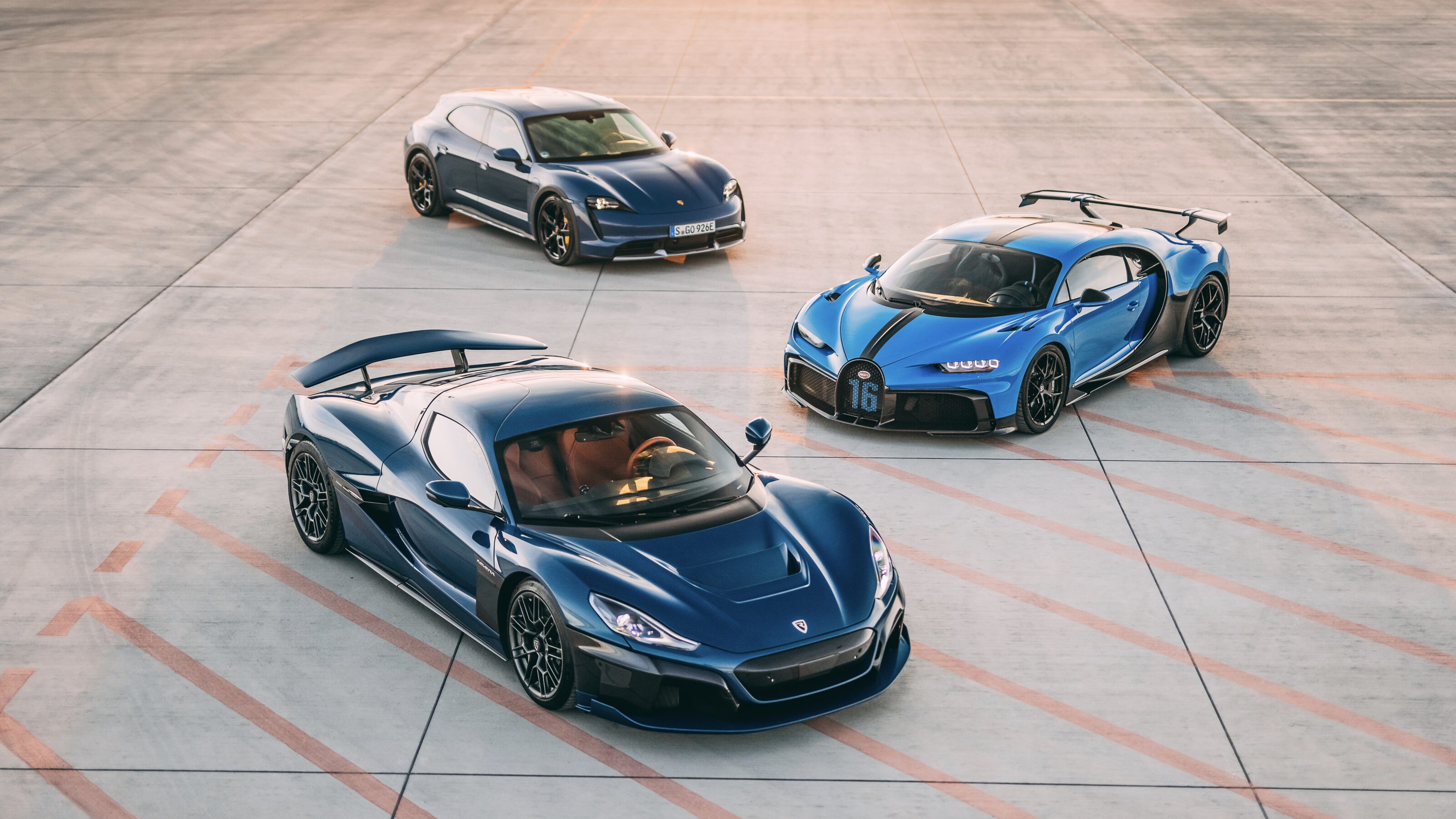
Mate Rimac, the 33-year-old founder of the company which bears his name, said he couldn’t have envisaged owning the world’s most notorious hypercar manufacturer when he started his own brand a decade ago.
“I feel very honoured to lead this new joint company as CEO and, no doubt, start a successful, revolutionary and exciting new chapter for everyone involved,” said Rimac.
“I am very excited to see what impact Bugatti Rimac will have on the industry and how we will develop innovative new hyper sports cars and technologies. It’s hard to find a better combination for new and exciting projects.”
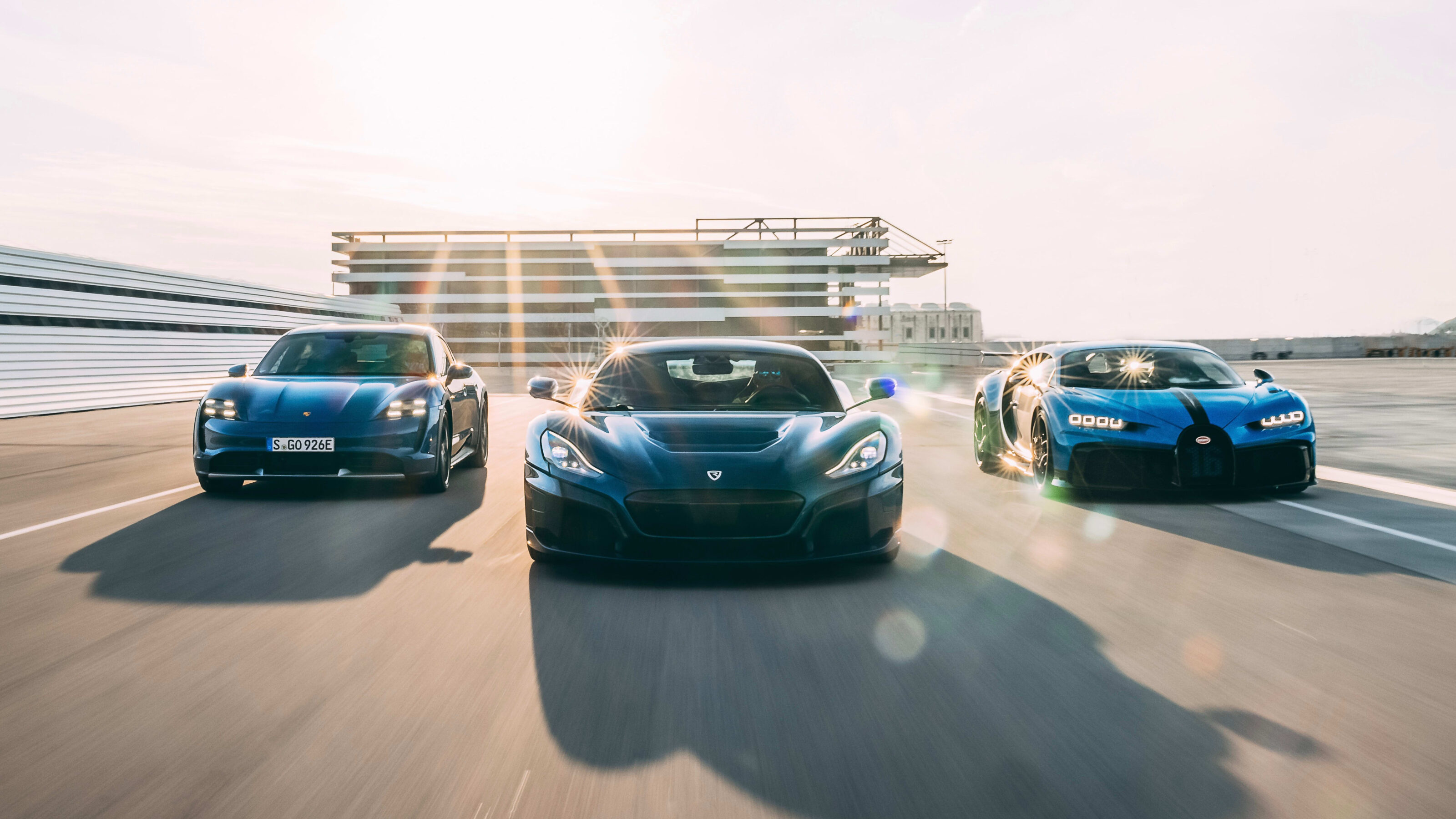
A total of 435 employees will work across Bugatti Rimac, with 300 based in Zagreb, Croatia, and the remaining 135 at Bugatti’s base in Molsheim, France, as the new partnership announced it would continue to treat the two brands as separate entities.
Bugatti is currently in the process of winding up production of its Chiron – the successor to the Veyron which debuted in 2016 – with just 40 build slots remaining, capping production to 500 units over the model’s lifecycle.
Key Points
- Worldwide sales down 12.8 per cent from 2021
- Revenue of u00a33.9bn resulted in a loss of u00a3302m
- More than 125,000 units on order worldwide
Jaguar Land Rover’s tough 2021 continues, as parts shortages have led to the group posting a major second-quarter loss.
The Tata-owned firm recorded a pre-tax loss of £302 million (AU$554m) for the quarter, having taken in revenue of £3.9 billion (AU$7.15bn) over the period.
While last year was affected by COVID-induced shutdowns across Europe, Jaguar Land Rover’s biggest hinderance in 2021 has been semiconductor supply – as is evident from its drop in profits of £65m (AU$119m) compared to the same point 12 months ago.
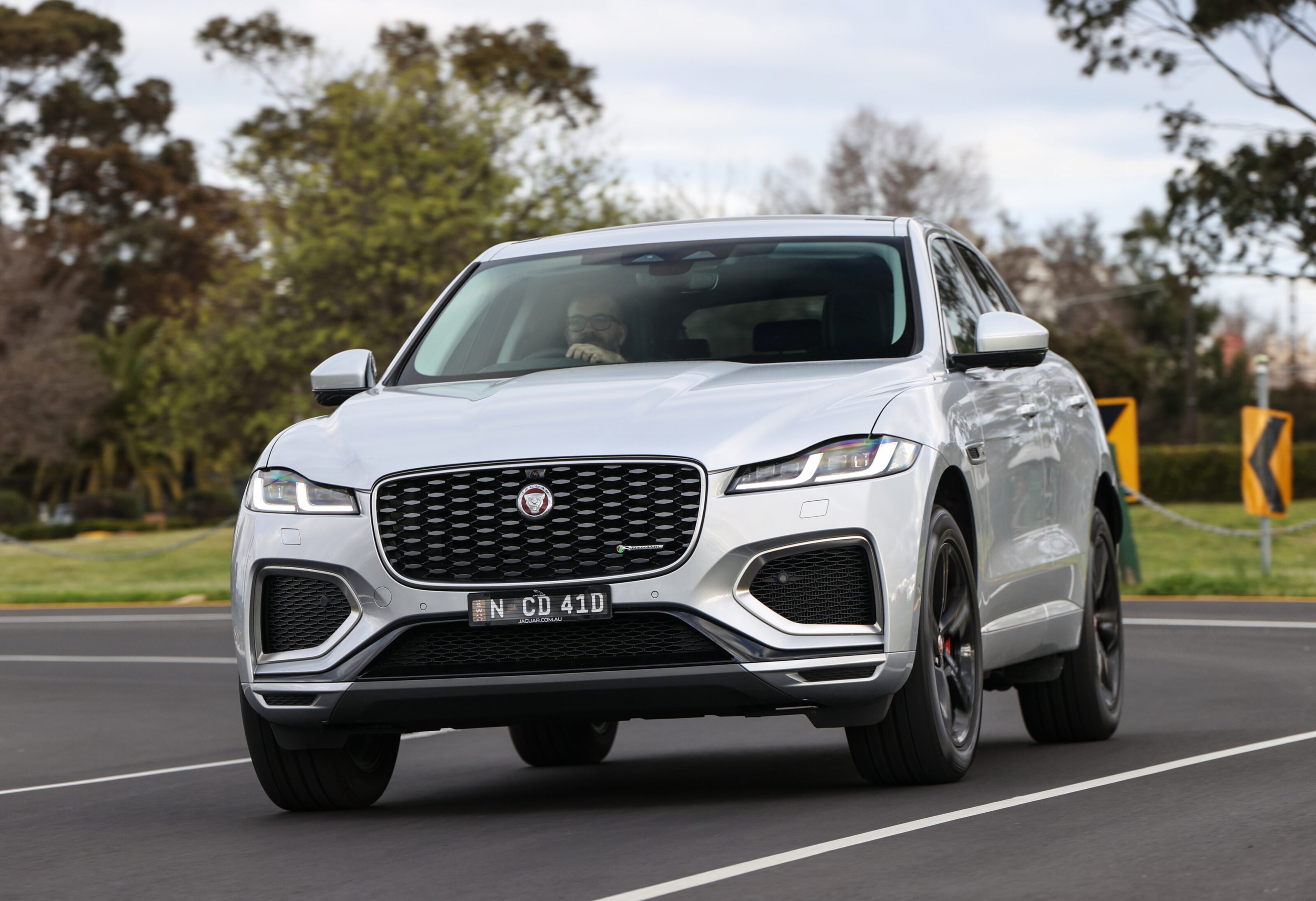
Highlighting the depth of the issue, JLR’s wholesale to dealers has dropped by 12.8 per cent year-on-year to 64,032 units worldwide – with retail sales, including its joint venture with China, dipping by 18.4 per cent to 92,710.
Thierry Bollore, Jaguar Land Rover’s Chief Executive Officer, said the situation was better than it otherwise could have been, with free cash outflow at £664m (AU$1.2bn) rather than the projected £1bn (£1.83bn).
“The global semiconductor shortage remains challenging, but I’m pleased to see the actions we have been implementing reduce the impact,” said Bollore.
“With strong customer demand with a record order book we are well placed to return to strong financial performance as semiconductor supply begins to improve.
“At the same time, we continue to execute our Reimagine strategy to realise the full potential of the business and create the next generation of the most desirable luxury vehicles for the most discerning of customers – starting with the stunning new Range Rover.”
Land Rover’s optimism comes thanks to its order books, which stand at 125,000 units currently on order globally, echoing the Australian arm’s positivity at a semiconductor supply update earlier this year.
With the fifth-generation Range Rover set to launch locally next year, JLR will be looking to capitalise on the performance of its hybrid and fully-electric model across each brand – as MEV, PHEV and BEV vehicles make up 66 per cent of worldwide sales.
The name remains the same but the character is vastly different. That’s the best way to describe the latest Audi RS5 Coupe, and it’s particularly the case on track.
In its first iteration, the RS5 was virtually a racing car in a two-door luxury coupe bodyshell. On the plus side, a screaming 8250rpm naturally aspirated V8, whip-crack dual-clutch gearbox and finely-honed dynamics; on the minus, weighty steering, an occasionally tough ride and an interior that prioritised support over comfort.
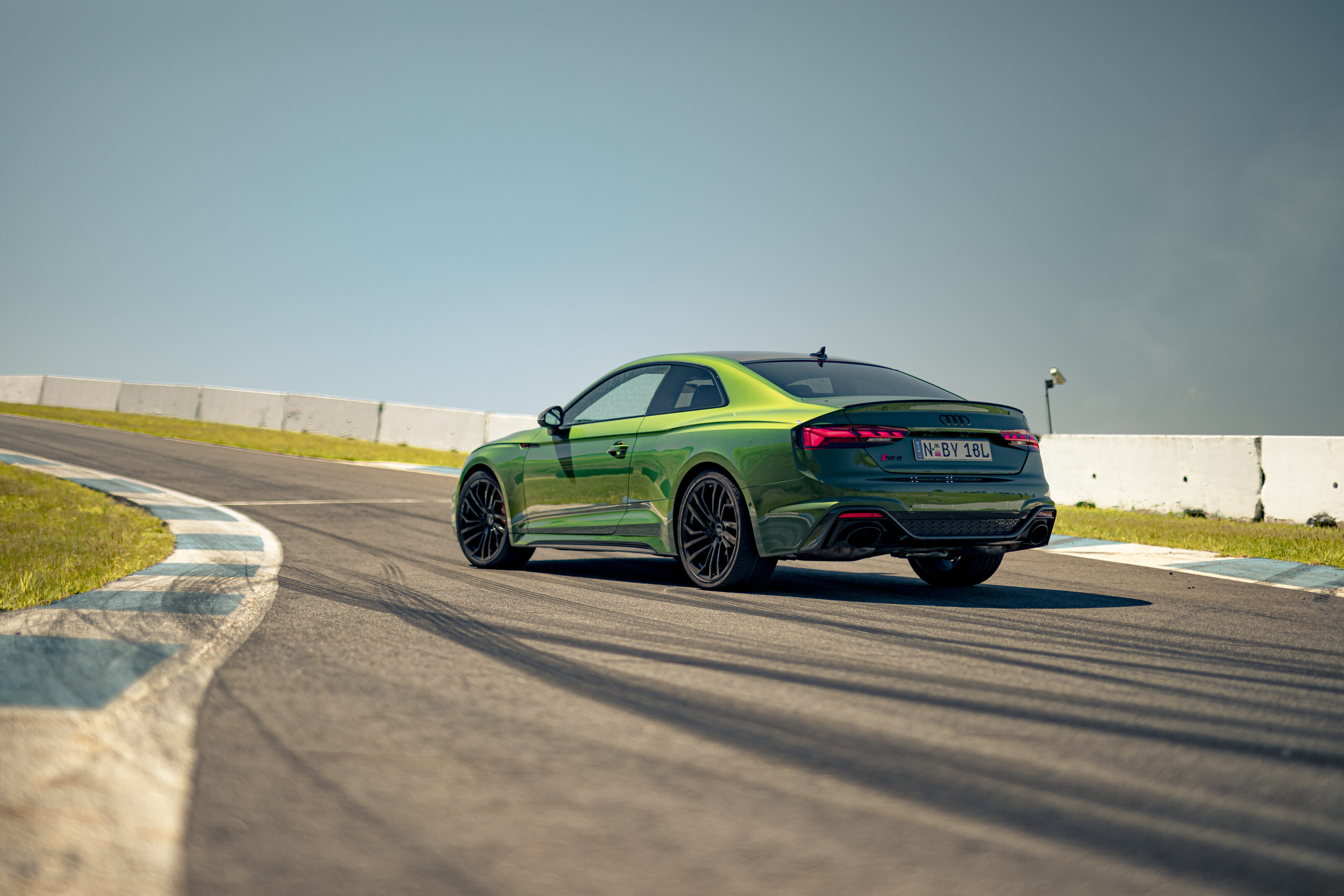
The current car treads a very different path. Out goes the soaring atmo V8, replaced by a downsized twin-turbo V6; the dual-clutch makes way for a torque-converter automatic and while the suspension doesn’t necessarily prioritise comfort, it certainly makes a concerted effort to soak up lumps and bumps in a way its predecessor didn’t.
These changes make the latest RS5 a very, very impressive road car, but do they hamper its ability on track? An RS product should be able hold its own on a circuit and that’s what we’ve come to Bryant Park to discover.
Don’t think the RS5 is just a two-door RS4. It’s 30kg lighter than the five-door, as well as 60mm shorter in the wheelbase and wider in track by 18mm at the front and 13mm at the rear.
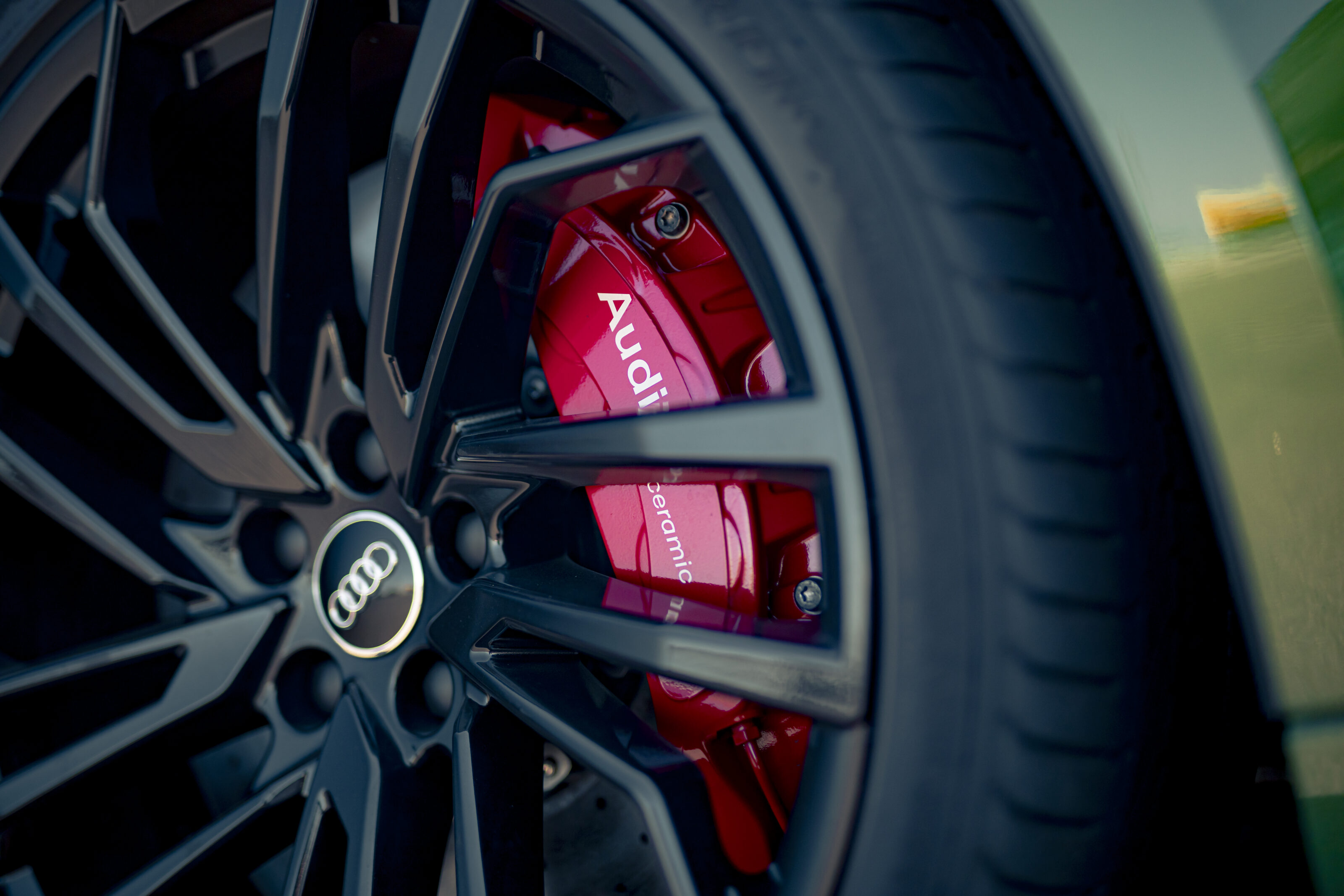
Our test RS5 also wears a couple of choice optional extras, notably the Dynamic Ride Control adaptive dampers and carbon-ceramic brakes with whopping 400mm front rotors, though they’ll set you back $13,600.
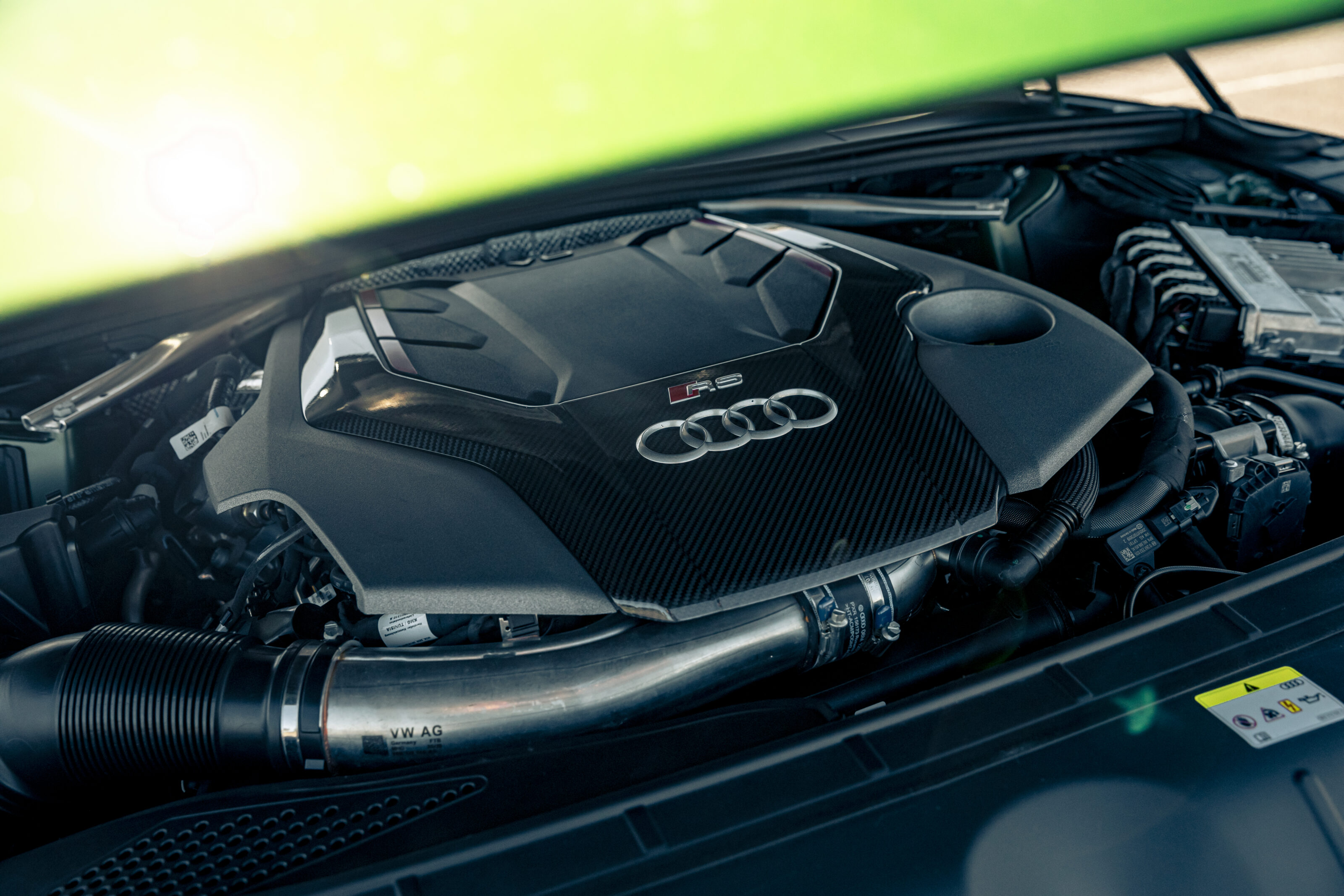
First impressions are very positive. The 2.9-litre twin-turbo V6 doesn’t feel as ‘special’ as the old V8 but it’s still a very impressive engine in its own right, with great response for a boosted unit and torque that the previous naturally aspirated eight could only dream about.
In terms of slow-speed operation the new eight-speed automatic is a big improvement over the prior dual-clutch, but while upshifts are still plenty rapid, downshifts can be a little hesitant, though this is as much down to the very short second gear as much as the gearbox type.
Thankfully, the monster torque – the 600Nm peak is available from just 1900rpm – means that going a gear higher carries little penalty. Exiting the final corner with 3000rpm on the tacho in third gear, the RS5 rockets up the hill like the incline doesn’t exist.
To paraphrase Monty Python, every kiloWatt is sacred and not a single one is wasted thanks to the quattro all-wheel drive system, but discovering this does require the deactivation of the ESP system which, though it does a good job of letting the car be driven hard, does cut in should it detect any slip over a ripple strip or crest.
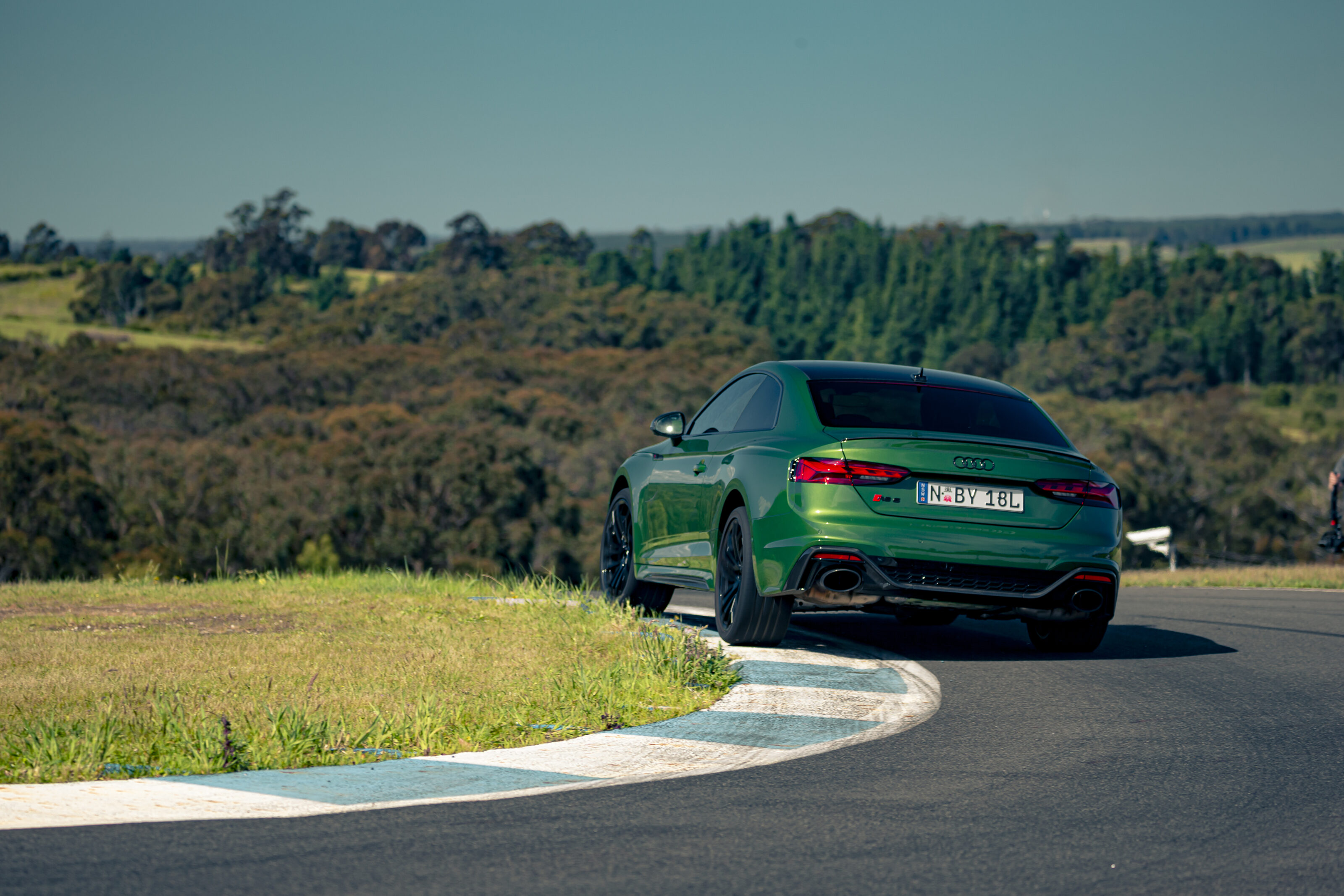
It’s this ability to deploy all its firepower that explains the RS5’s 1:06.7sec lap time, however while the quattro system giveth with one hand in the form of traction, it taketh away with the other when it comes to handling balance.
For the first half of the corner the RS5 is great. It turns in crisply, the steering remaining relatively light even in Dynamic mode, further evidence of the philosophical shift at Audi Sport. It rotates keenly mid-corner, too, a lift of the throttle tucking the nose in and helping the car point towards the exit.
The trouble comes when you want to complete the manoeuvre. The RS5’s all-wheel drive system is split 40:60 front-to-rear as a default and can shuffle between 70:30 and 15:85 as required, while the sports rear diff can also distribute power left and right.
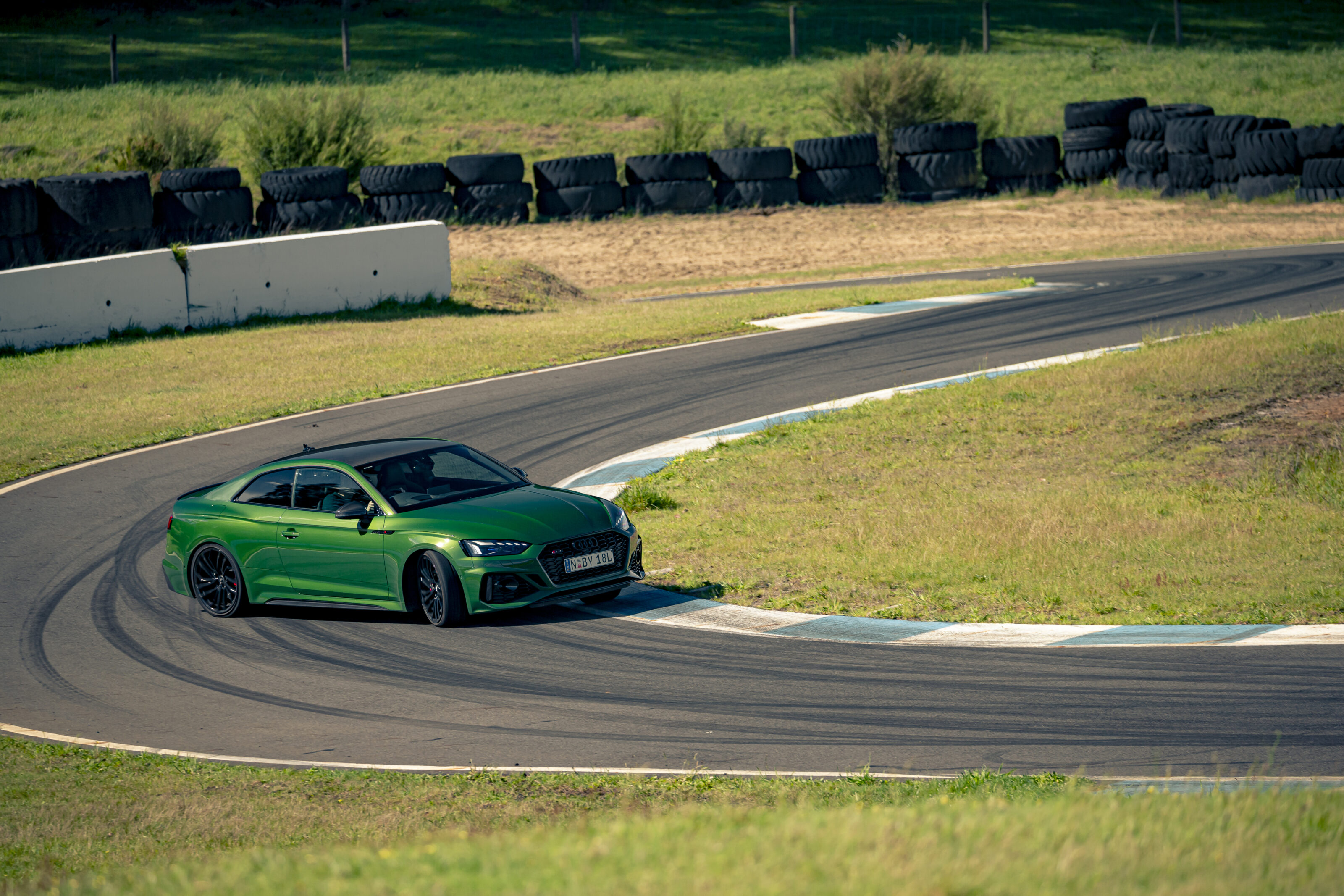
It’s very good, far better than Audis of yesteryear in its responsiveness, and out of Bryant Park’s slowest corner will require a jab of opposite lock, but in the longer corners that predominate adding throttle tends to pull the front wide slightly rather than rotate the rear.
At a number of points throughout the lap I have to wait a fraction longer than would be ideal to get back on the accelerator. If this happens five times, with each costing a tenth of a second, there’s a half-second gain straight away.
In a perfect world there would be a bit more rear bias allowing the car to be rotated on the throttle while still benefiting from the tractive advantage of all-wheel drive. It’s something the likes of Porsche’s ‘4S’ models, the Nissan GT-R and even BMW’s xDrive does very well.
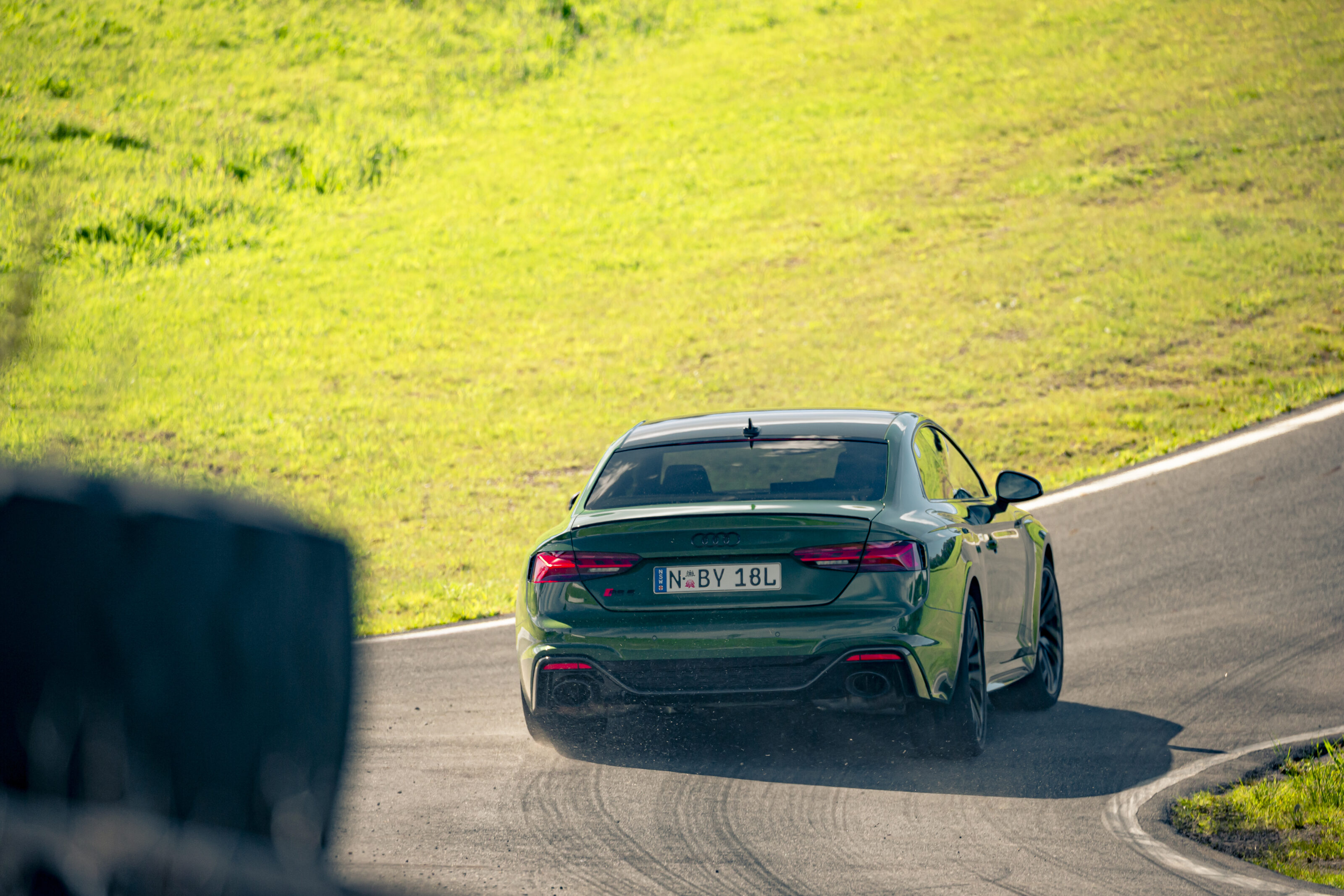
Perhaps the RS5’s front bite was hampered slightly by having mismatched tyres, Pirellis on the front and Hankooks on the rear (supply chain issues have been causing havoc for many manufacturers in getting the correct tyres) but it didn’t feel to be an issue.
In essence, Audi Sport seems to have taken a conscious decision to improve the RS5’s road manners at a slight cost to its on-limit behaviour and it’s a decision that should be applauded, as it’s where the car will be operating the vast majority of the time.
Nevertheless, a little extra torque to the rear would liven up the car both on road and track and add a little more entertainment to the RS5’s crushing competence.
LEADERBOARD
| Audi RS5 Coupe | 1:06.7 |
| Lexus RC F Track Edition | 1:06.8 |
SPECIFICATIONS
| Body: | 2-door, four-seat coupe |
| Drive: | all-wheel |
| Engine: | 2894cc V6. DOHC, 24v, twin-turbo |
| Bore/stroke: | 84.5 x 86.0mm |
| Compression: | 10.0:1 |
| Power: | 331kW @ 5700-6700rpm |
| Torque: | 600Nm @ 1900-5000rpm |
| Power/Weight: | 196kW/tonne |
| Transmission: | 8-speed automatic |
| Weight: | 1685kg |
| 0-100km/h: | 3.9sec (claimed)/3.81sec (tested) |
| Suspension: | Multi-links, coil springs, adaptive dampers, anti-roll bar (f/r) |
| L/W/H: | 4723/1861/1360mm |
| Wheelbase: | 2766mm |
| Tracks: | 1598/1588mm (f/r) |
| Steering: | Electrically assisted rack-and-pinion |
| Brakes: | 400mm ventilated/drilled carbon-ceramic discs, 6-piston calipers (f); 330mm ventilated/drilled discs, single-piston calipers (r) |
| Wheels: | 20 x 9.0-inch (f/r) |
| Tyres: | 275/30 ZR20 Pirelli P Zero (f) Hankook Ventus evo2 (r) |
| Price: | $150,900 ($188,236 as-tested) |
UPDATE, November 3: A week after Tesla’s market capitalisation topped US$1 trillion (AU$1.37tn) on the back of a large order from Hertz, CEO Elon Musk has confirmed there is no contract in place with the rental car agency at this time.
“If any of this is based on Hertz, I’d like to emphasize [sic] that no contract has been signed yet,” Musk wrote on Twitter.
“Hertz deal has zero effect on our economics.”
Despite his statement, Tesla shares fell 4 per cent in early Tuesday trading, according to Reuters.
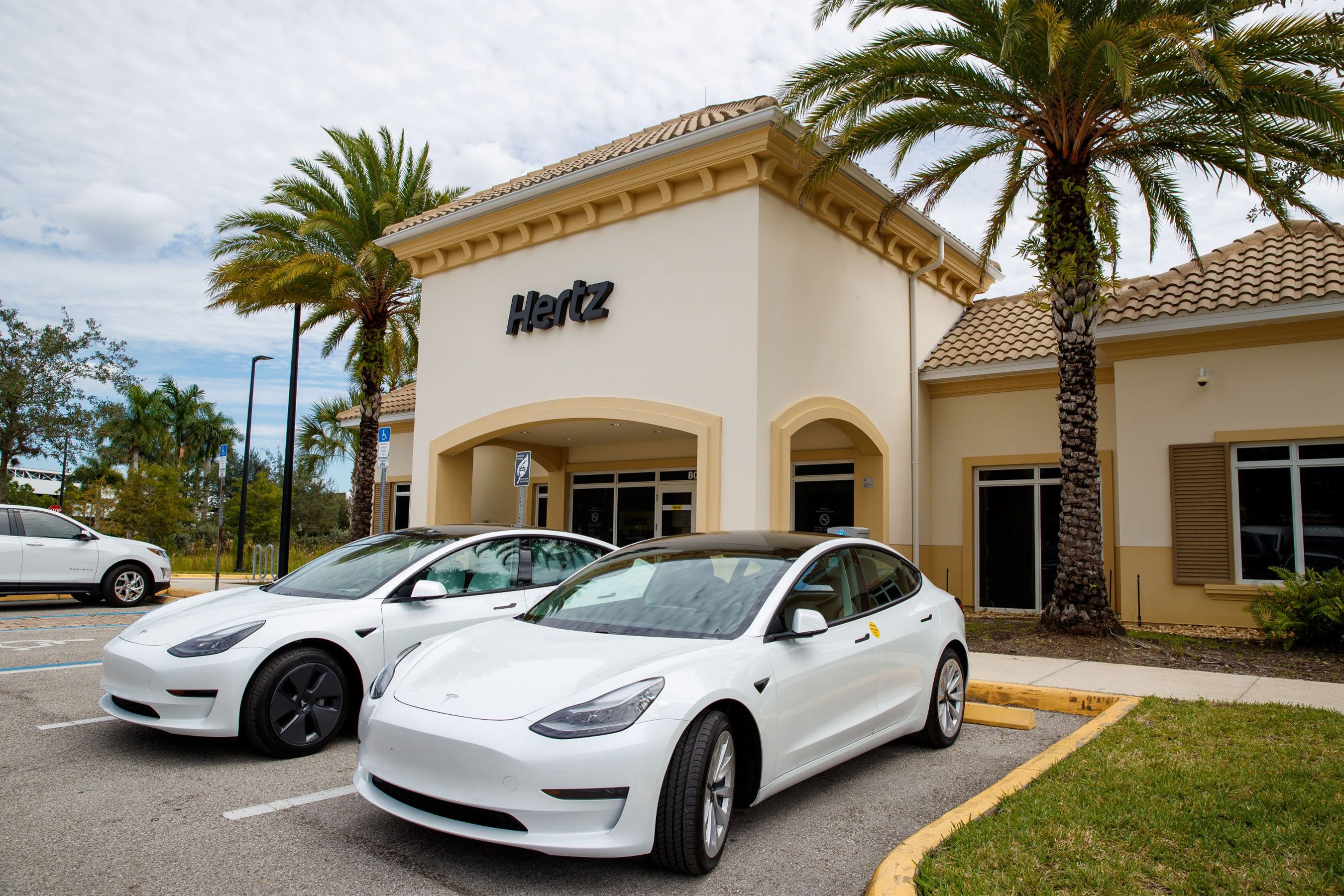
In the original announcement from Hertz, the company said Tesla models would be available to be rented from its US locations from early November – suggesting deliveries had already begun.
This week, Tesla also issued a recall for 12,000 of its vehicles sold in the US since 2017, announcing a software error could cause the vehicle to unexpectedly engage its emergency brakes – even when the vehicle is in no immediate danger, but increasing the risk of a rear-end collision.
The electric carmaker came under increased scrutiny from the US National Highway Traffic Safety Administration (NHTSA) for uninstalling faulty software without issuing a safety recall, as is required under law.
The story to here
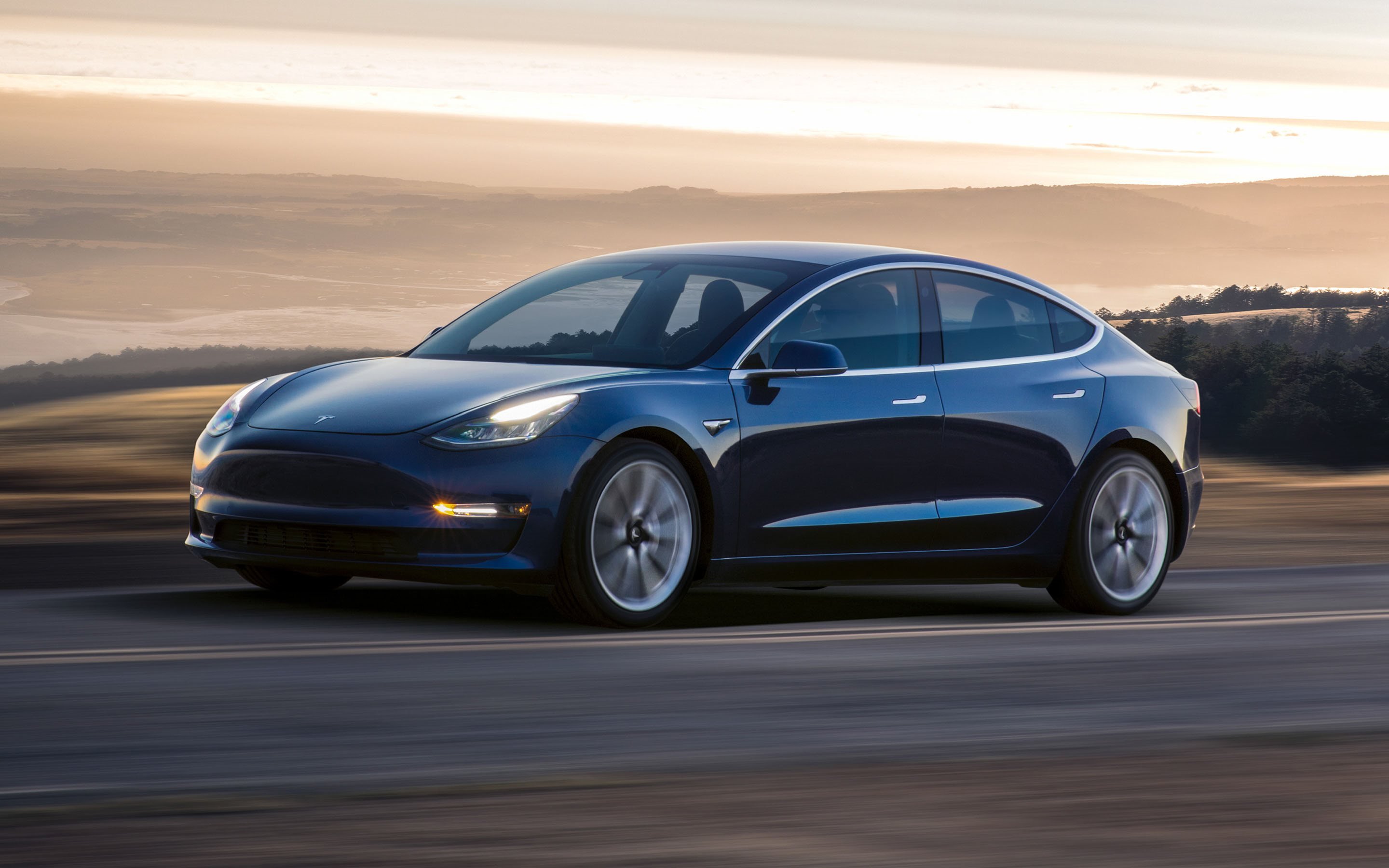
October 26: Overnight trading has seen Tesla become the sixth trillion-dollar company in history, with the stock market valuing the carmarker at US$1.027 trillion – or approximately AU$1.37 trillion.
The move grows CEO Elon Musk’s personal wealth to US$252 billion (AU$336.5bn), making him 30 per cent richer than the world’s second-placed person, Jeff Bezos, who enjoys an estimated wealth of US$193bn (AU$258bn) according to the Bloomberg Billionaires Index.
Despite Tesla not even making the top 10 of the world’s highest-selling cars – with just shy of 500,000 deliveries in 2020 – the company is valued at more than the nine largest carmakers combined.
By comparison, Toyota was the global top-seller last year with 9.3 million sales, and is currently valued at US$240bn (AU$320.5bn) by market capitalisation.
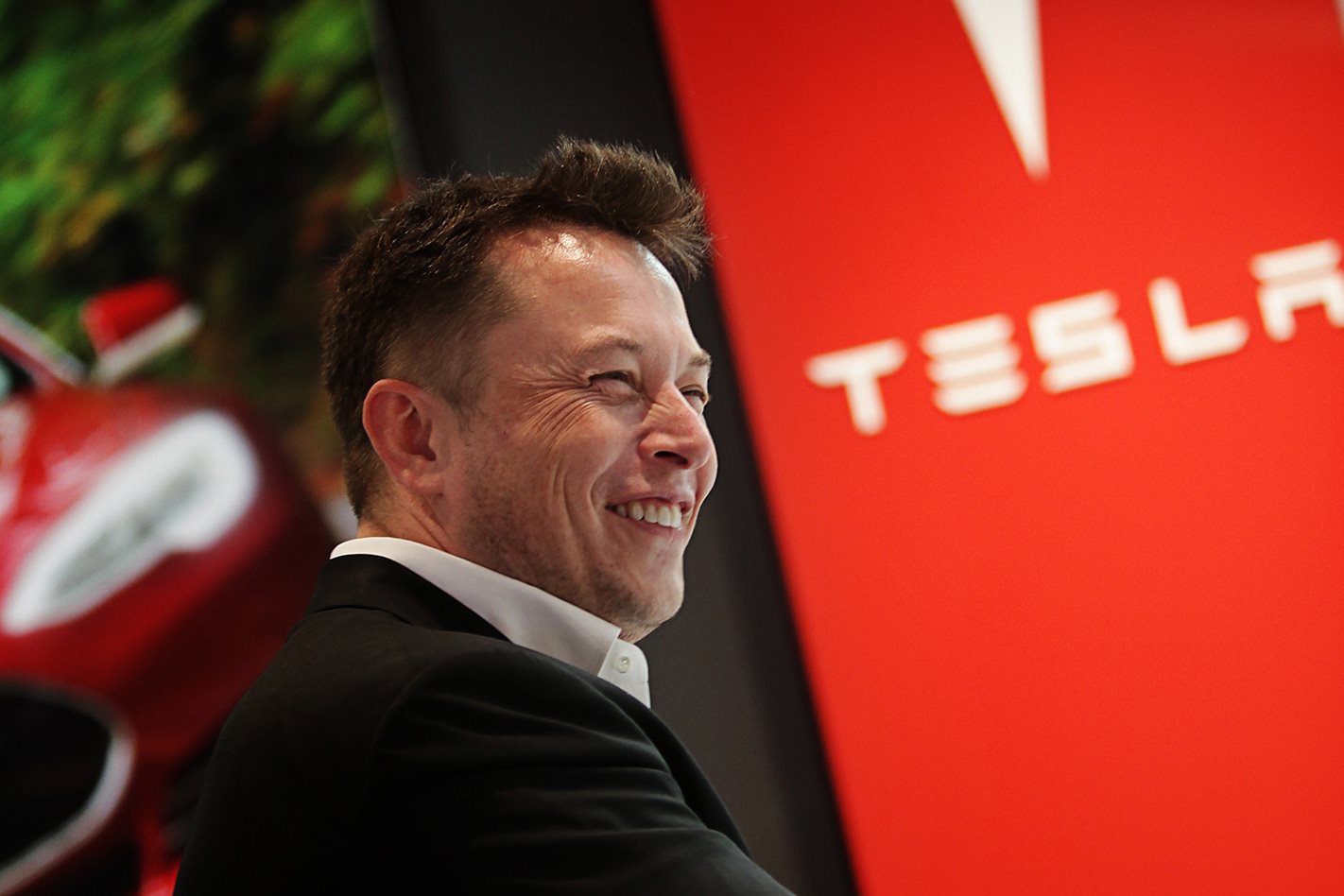
Tesla stock surged by 14.9 per cent following the announcement that rental car company Hertz would be ordering 100,000 of its vehicles by the end of 2022, causing the US carmaker’s shares to close up 12.7 per cent at US$1024.86 on Monday night US time.
“Strange that moved valuation, as Tesla is very much a production ramp problem, not a demand problem,” Musk tweeted in reply to a shareholder.
While Musk does not take a salary from the company, his compensation package is linked to sales results. Last week, Tesla reported adjusted earnings (before interest, taxes, depreciation, and amortization) of US$3.2 billion (AU$4.27bn) – up 77 per cent on the previous year and enough to trigger the release of an US$8 billion (AU$10.7bn) options package to Musk under his 2018 contract, according to Reuters.
Snapshot
- Pricing announced for 508 and 3008 PHEV models
- Between 55 and 60km of driving range offered
- Both models arriving in Q1 2022
Pricing has been revealed for the 2022 Peugeot 508 GT Fastback Plug-in Hybrid and the 2022 Peugeot 3008 GT Sport Plug-in Hybrid AWD – the first two electrified models to be offered locally by the French carmaker.
Peugeot claims the 508 Plug-in Hybrid (PHEV) can provide up to 55 kilometres of battery-only driving (based on the WLTP test), with pricing starting from $76,990 before on-road costs.
The 3008 PHEV has a slightly higher claimed electric driving range at 60km (WLTP), and is priced from $79,990 before on-road costs.
While full specifications are expected to be released in early 2022 at the models’ local launch, Peugeot has provided some details of the powertrains and features.
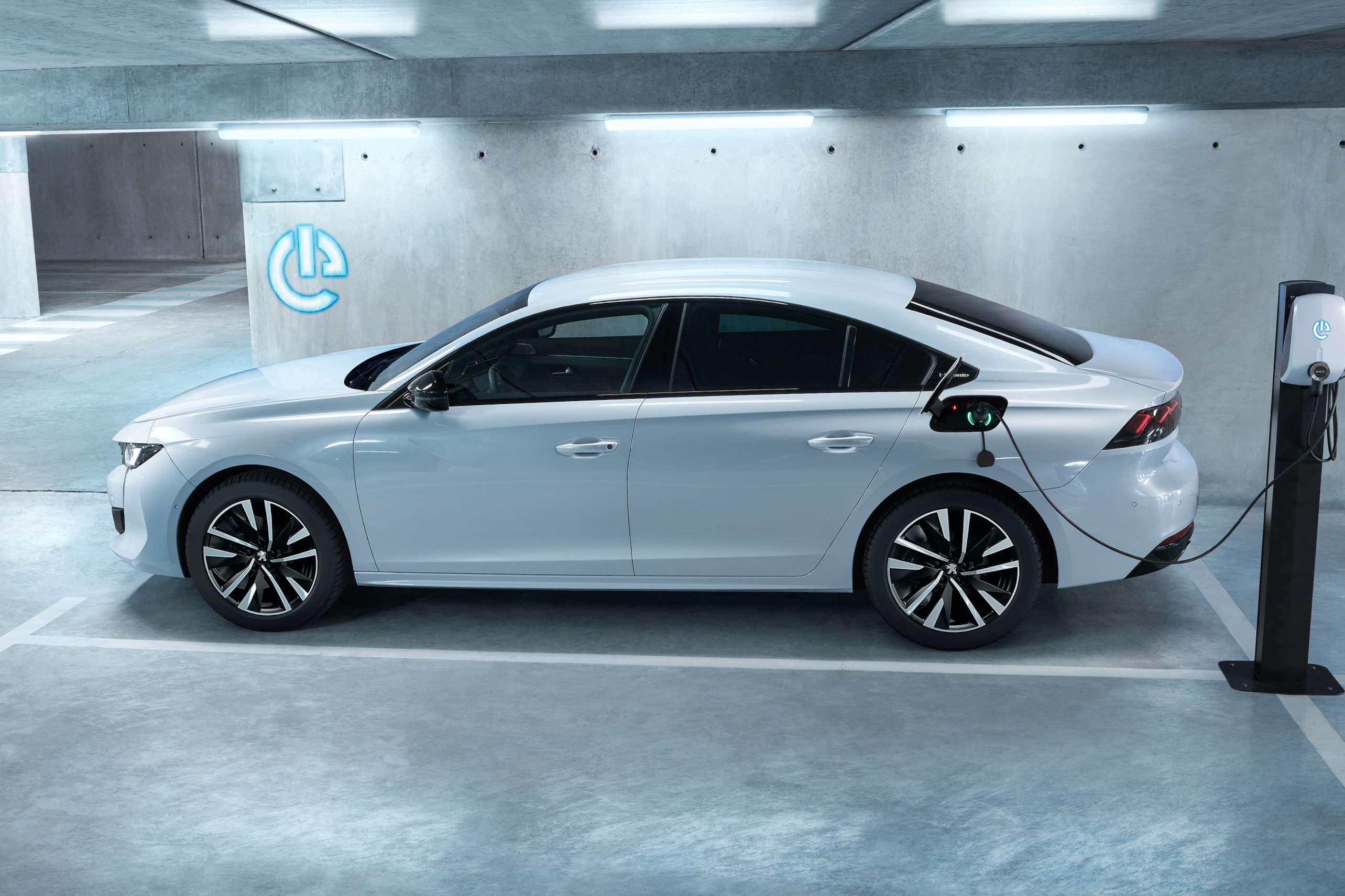
The 2022 Peugeot 508 GT Fastback PHEV combines a 1.6-litre turbocharged four-cylinder petrol engine with an electric motor to deliver 165kW to the front wheels through an eight-speed torque-converter automatic transmission.
Its 55km electric driving range is courtesy of an 11.8kWh battery, with overseas combined fuel consumption tests reporting 2.1L/100km.
As with the current petrol-powered 508 GT Fastback, the PHEV will be offered with a 10.0-inch high-definition infotainment touchscreen running through a 10-speaker Focal premium audio system with subwoofer, a 12.3-inch digital instrument cluster, nappa leather interior, and 18-inch alloy wheels.
The 2022 Peugeot 3008 GT Sport PHEV AWD mates a 1.6-litre turbocharged petrol engine with dual electric motors to send 222kW to all four wheels. While the eight-speed auto runs the front axle, an electric motor at the rear axle enables all-wheel-drive traction.
Along with increased grip and performance, the 3008 also offers a slightly improved driving range of 60km thanks to its 13.2kWh battery.
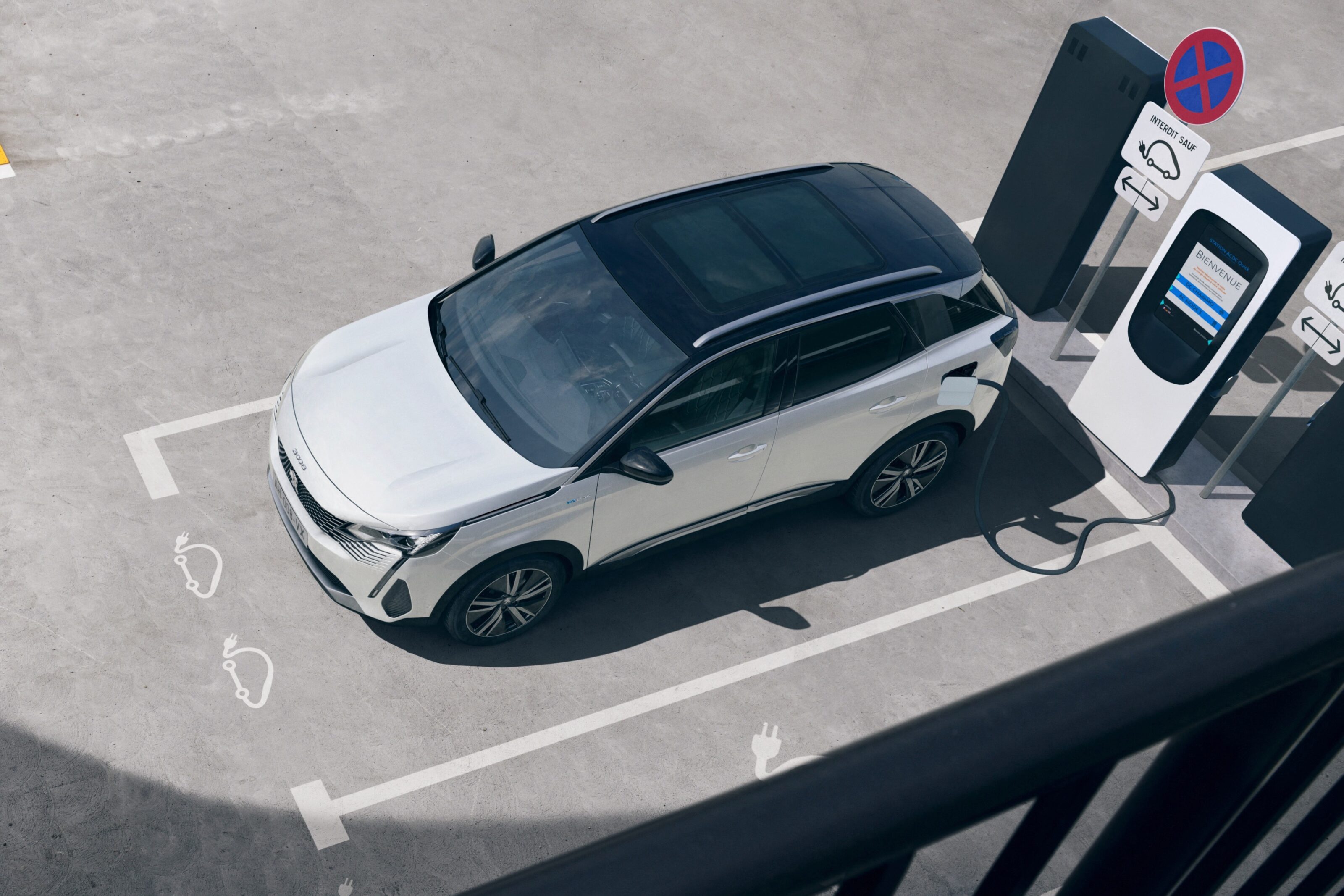
The SUV also gets all the same tech inside, but gains 19-inch black alloy wheels and a black exterior styling pack.
Despite a launch for the two models set for the first quarter of 2022, Peugeot has brought in a limited number of vehicles to provide potential customers with early access, and invites interested buyers to contact their nearest dealership to arrange a test drive.
July 2023: The Honda ZR-V is now on sale in Australia, and we’ve driven it
Sorry, CR-V – ZR-V is the medium SUV poised to bring Honda back to the pointy end of the sales race. Read our full review at the link below.
▶ Story continues: New Honda SUV teased
Honda is preparing to launch a new SUV, with some suggesting the model will wear a ZR-V badge for the first time.
Buried in a video promoting the launch of the all-new Civic and City, teaser images of the new Honda SUV were accompanied with the text ‘Prepare this car for GIIAS 2021’ – the 2021 Gaikindo Indonesia International Auto Show being held on the outskirts of Jakarta later this month.
While Honda first trademarked the ZR-V name in 1999, it’s understood to have renewed the filing in early 2020.
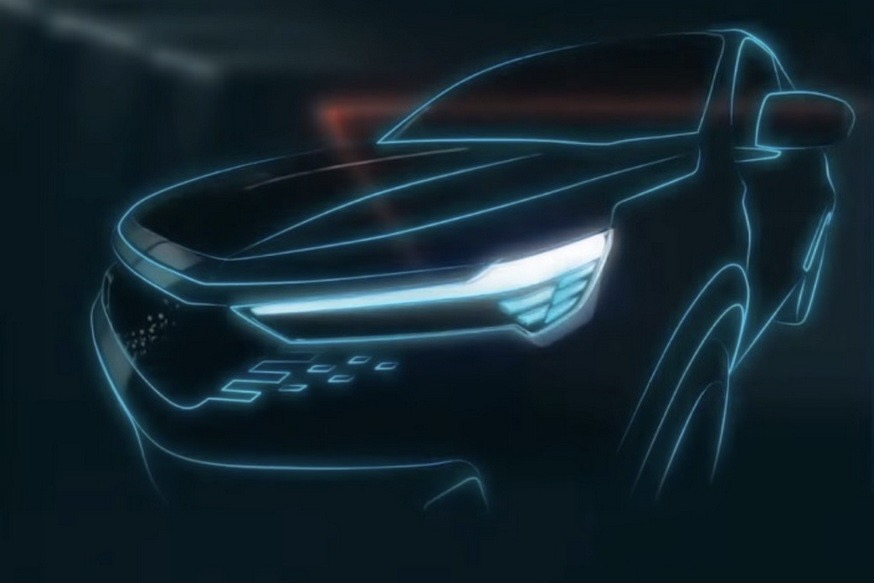
A number of media outlets have reported a new small SUV from Honda is set to be introduced to fight popular models from the likes of Mazda and Hyundai, possibly based on the Honda City small car sold in overseas markets.
One of the teaser images show the mysterious SUV wearing an ‘RS’ badge, suggesting the model will be offered with a sporty variant within the line-up.
Despite the ZR-V name being trademarked in Australia, it’s not yet known whether the model will be offered here, with indications pointing to the vehicle’s release in markets such as Indonesia and India.
