
Key Points
- Two new off-road variants added to Sportage line-up
- One new premium grade available with 19-inch wheels
- 2.5-litre engine likely not coming to Australia
The North American market has gained three new variants of the Kia Sportage, giving the Korean SUV a more aggressive stance.
Having globally released the fifth-generation Sportage earlier this year, the three grades – X-Line, Sportage X-Pro and X-Pro Prestige – add new trims for the exterior and interior of the SUV.
While the X-Line now features stain chrome surrounded front and rear bumpers, as well as 19-inch wheels, the X-Pro variants are aimed at the off-road market – with 17-inch wheels shod in all-terrain tyres.
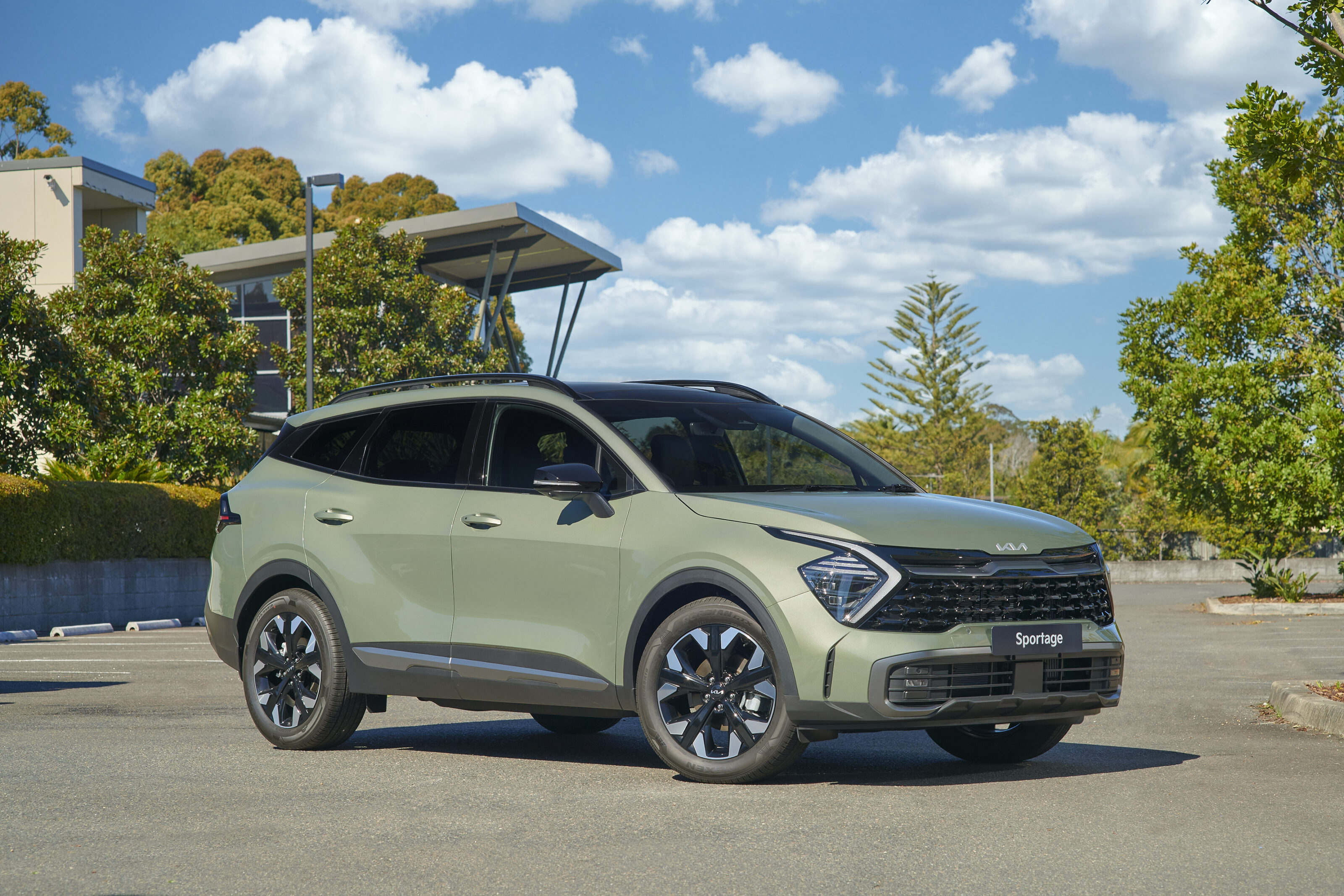
However, it’s not just a visual upgrade, as the X-Pro and Prestige now gain a multi-terrain mode for the all-wheel-drive system, allowing the driver to select between normal, sport, smart and snow conditions.
Also added to the Sportage line-up will be a 2.5-litre, four-cylinder engine producing 140kW, which is potentially the same unit available in the Sorento elsewhere in the world – although it’s highly unlikely this powerplant will become available in Australia.
Set to arrive in Australian dealerships before the end of the year, the new Sportage will be available in four grades locally – S, SX, SX+ and GT-Line – with a choice of three engines (two petrol and one diesel) powering the range.
Key Points
- Possible Q9 spotted while undergoing testing
- To be based on Volkswagen Atlas SUV
- Potential for model to be released in China only
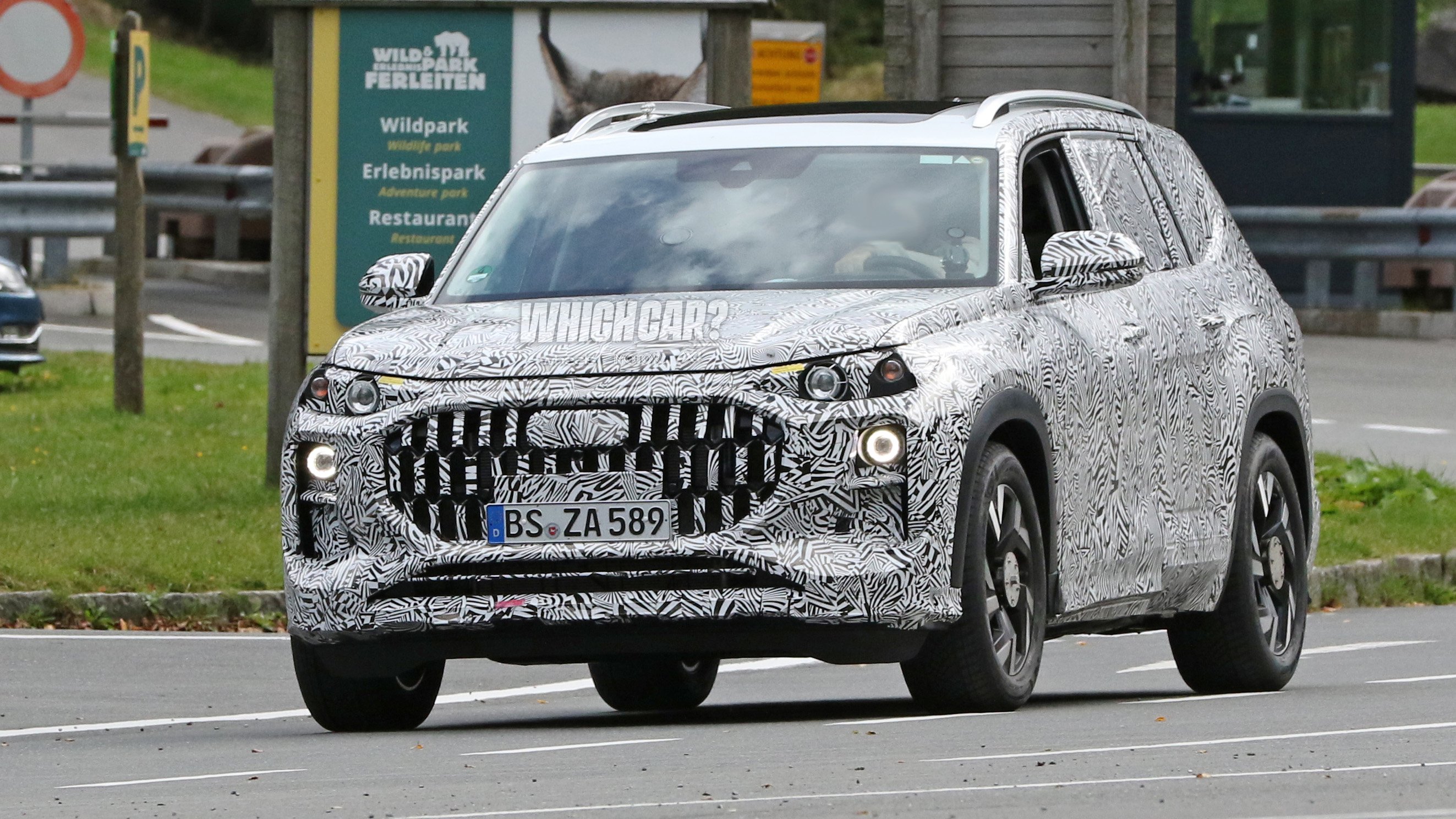
Audi’s new large SUV has been spotted testing in Austria, with its size and front end design hinting this could be the Q9.
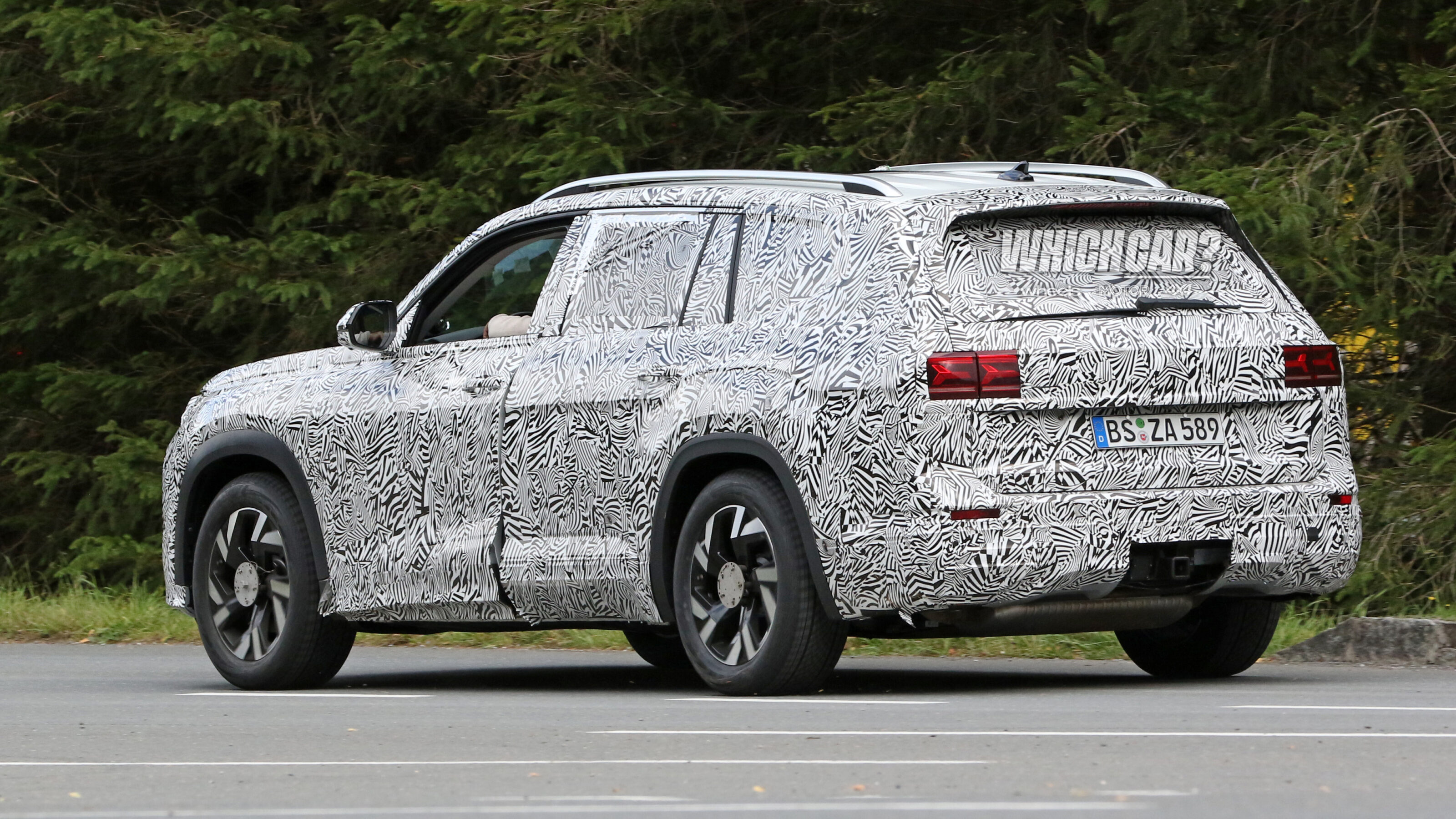
Undergoing brake testing in the Alps, the camouflaged Audi Q9 is based on the same platform as the North American and Chinese market Volkswagen Atlas, as is evident in its identical rear styling to its VW Group sibling.
While it’s larger than the existing Q7 and Q8 in its exterior dimensions, the single-frame front grille design is unmistakably Audi, with the headlights and side air dams also offering a strong resemblance to the current Ingolstadt range.
Aiming to take on its German rivals such as the BMW X7 and Mercedes-Benz GLS, the Q9’s rear exterior design suggests the model could fit up to seven seats with enough boot space for a family haul of luggage.
Despite being based on the transverse-mounted engine MQB platform rather than the longitudinally-mounted MLB base of the Q7 and Q8, the Q9 could borrow powertrains from its smaller siblings such as the 3.0-litre V6 petrol or even a 4.0-litre V8, although the Atlas upon which it is based only uses a 2.0-litre four-cylinder and two V6s.
An electrified variant can’t be ruled out either, with plenty of plug-in hybrid options already existing within the VW Group line-up, potentially giving the Q6 an electric-only driving range of up to 50 kilometres depending on motor spec.
It’s unclear as to whether the Q9 could ever land in Australia given we don’t get the Atlas, although rumours have suggested the camouflage used on this example resembles that of Audi’s previous models, which have been aimed at the Chinese market.
If this is the case, Audi may bypass its native European market entirely and just produce the Q9 for China, potentially just with a facelift and equipment change over the Atlas.
Snapshot
- New-gen Nissan Pathfinder confirmed for 2022 arrival
- Eight-seat configuration as standard
- Sole 3.5-litre V6 engine with new auto for the time being
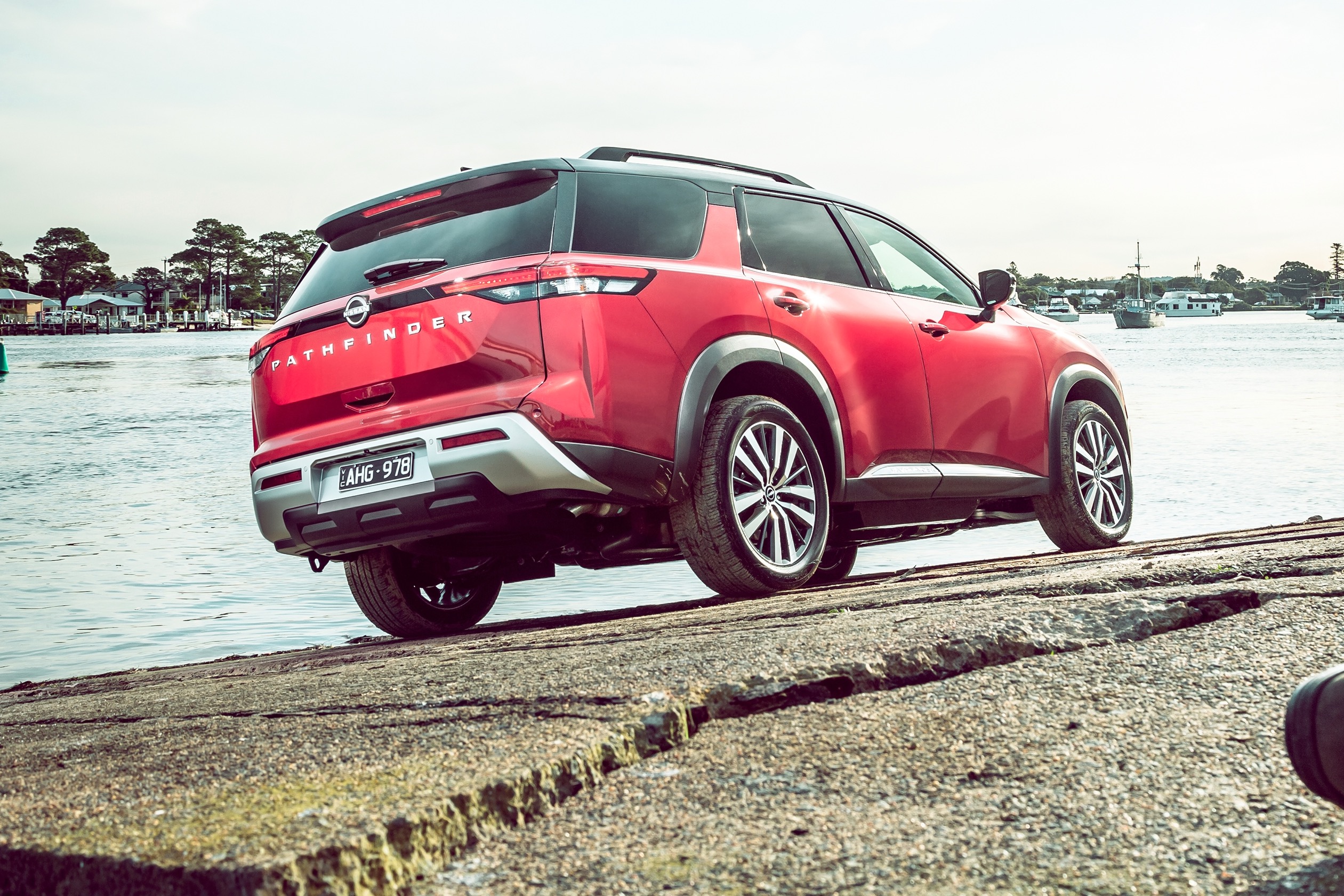
The 2022 Nissan Pathfinder has been unveiled for Australia, with the brand confirming the SUV will be landing in local showrooms next year with seating for up to eight occupants.
For the time being, Nissan has announced the all-new Pathfinder will be solely available with a 3.5-litre petrol V6 engine, but the ageing CVT automatic has been replaced with a more modern nine-speed automatic transmission.
NOTE: To see all the new cars coming to Australia this year, check out our 2022 New Car Calendar story right here.
Performance has yet to be outlined for Australia, but the US-market Pathfinder was announced earlier this year with an extra 10kW/11Nm over the outgoing model – making for a total of 212kW and 351Nm.
While a total list of features will be detailed closer to the SUV’s local launch in 2022, it’s expected buyers will be able to choose from either front- or all-wheel drive – the latter with 4WD mode with terrain selector for off-road driving.
The Pathfinder comes with eight-seats as standard, with a 60/40 split-fold bench seat at the third row – however, buyers can option a seven-seater configuration with captain’s chairs in the second row, with a removable centre console between.
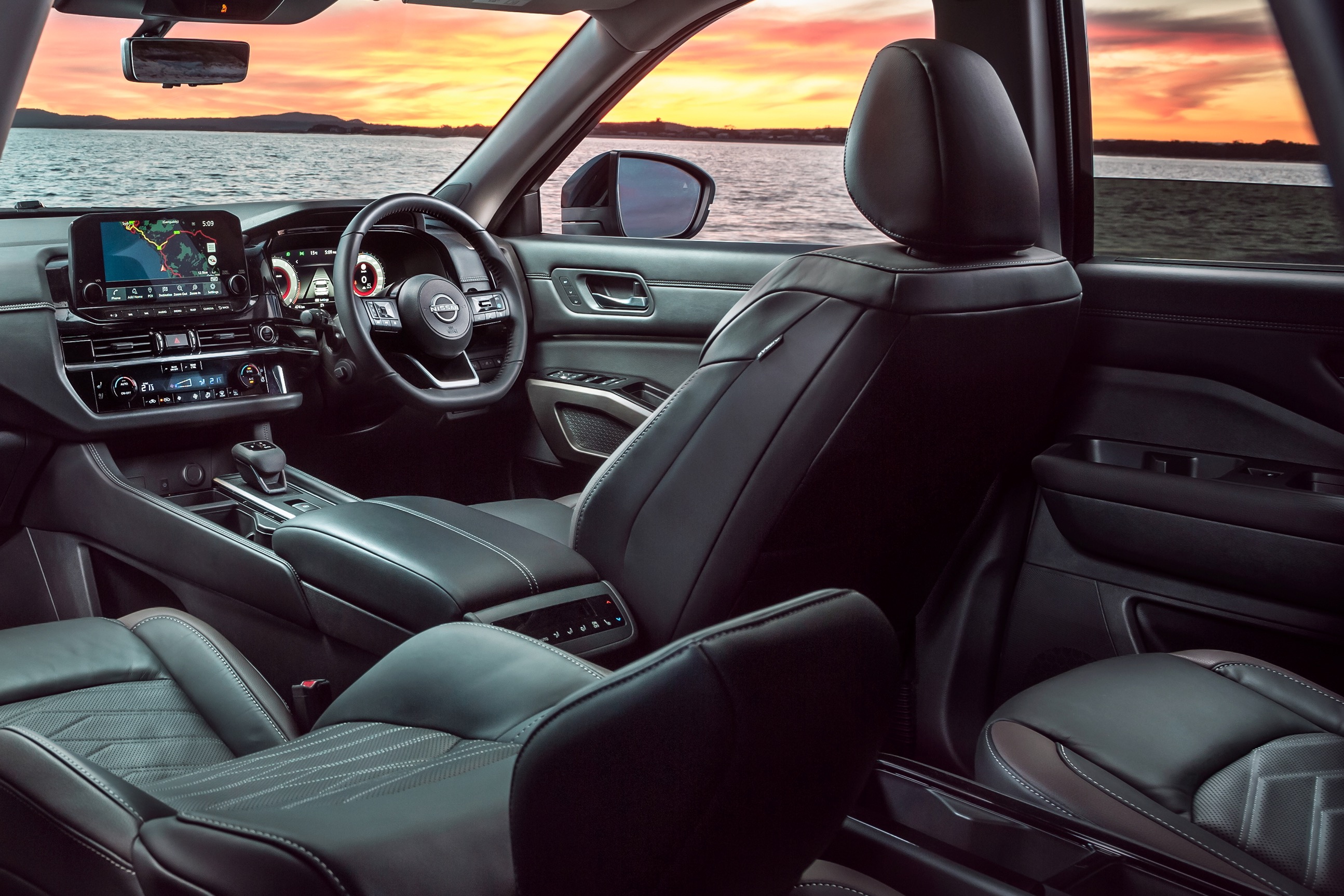
Entry and exit to the third row is made easier with one-touch folding and sliding second-row seats, which Nissan says can still be done with a baby seat fitted.
It’s expected the car’s infotainment will run on a 9.0-inch touchscreen as with overseas models, but Nissan has confirmed Apple CarPlay and Android Auto capability, wireless smartphone charging, and a 13-speaker Bose Premium Audio sound system will feature locally.
The new Pathfinder adopts a more upright shape, inspired by previous generations from the 1990s and 2000s, as well as taking on Nissan’s current design language with C-shaped LED headlights, including signature daytime-running lights, and the brand’s ‘V-motion’ grille.
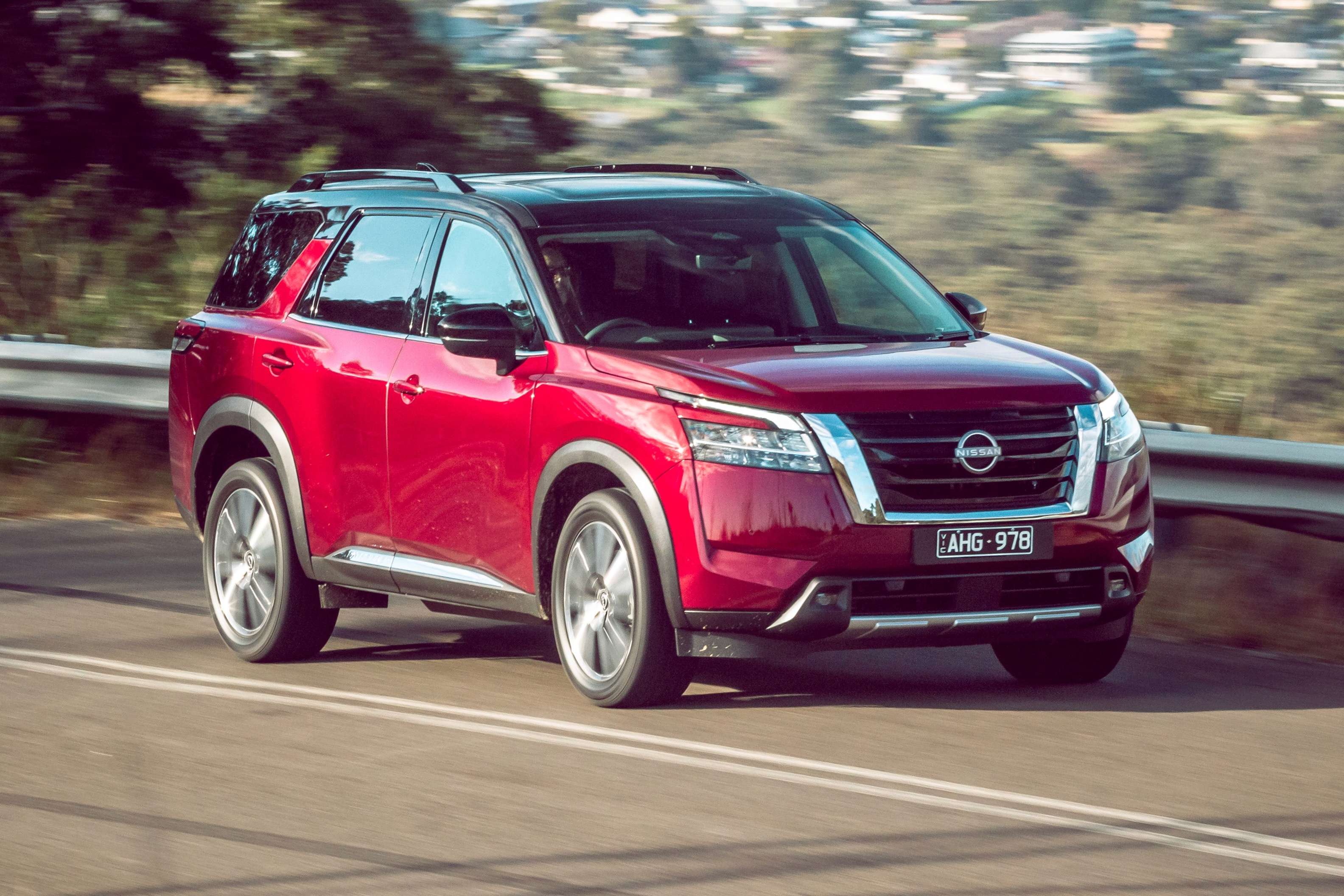
The 2022 Nissan Pathfinder will be launched in Australia next year, with pricing and specification to be announced closer to its arrival.
Stay tuned to Wheels on Facebook and Instagram to get the latest news and reviews.
Nissan’s 2022 Australian line-up is coming together
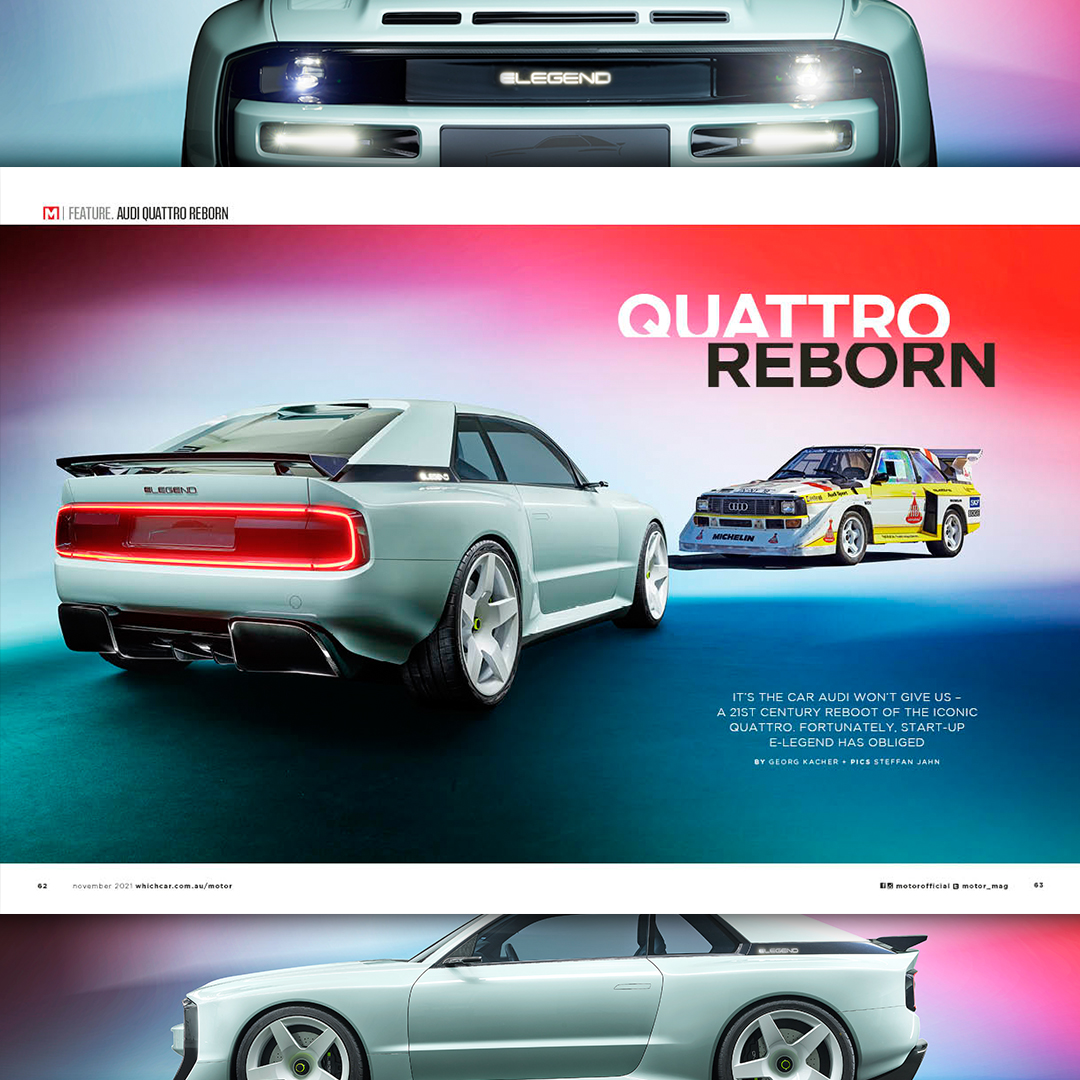
What if the golden age of rally-forged road cars returned, but came clothed in carbon and with monstrous electric power? Thanks to a renaissance in coachbuilding, reborn Group B heroes could reappear on our roads and exist well beyond the dying light of internal combustion.
Firms like E-Legends are at the forefront of this glorious retro revival, so we sat down with them to talk about their gorgeous EL1 project, a modern reinterpretation of Audi’s iconic quattro. If it all goes to plan, it’ll be the first of many for the fledgling firm, who are developing their own AWD EV chassis, carbon tub and body, with battery tech straight from Formula E.
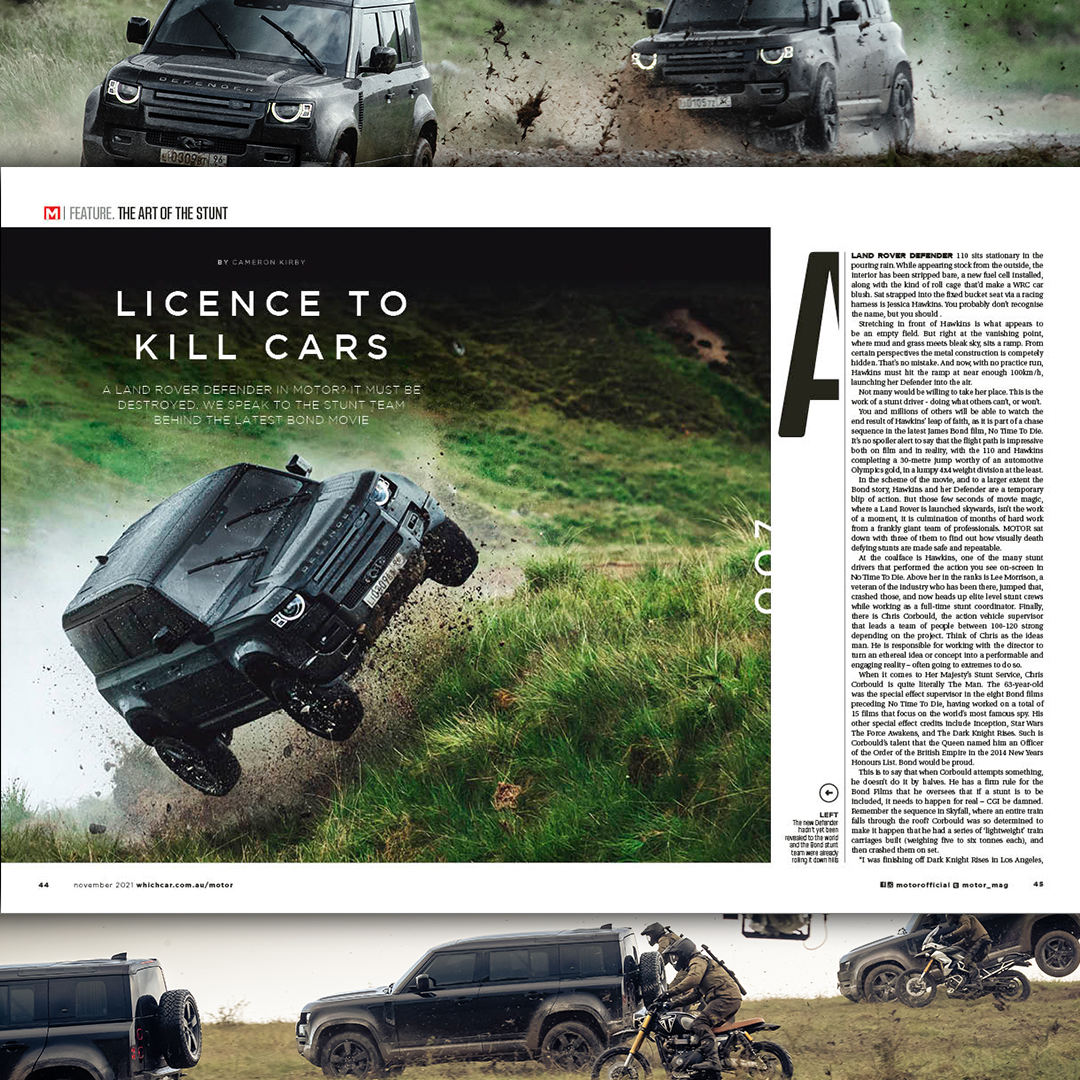
From the careful rebirth of an icon to the death and destruction of others, we talk to the stunt team behind the new James Bond film: No Time to Die. A licence to kill cars comes with great responsibility, and we want to know exactly what it takes for the team of fearless professionals to launch a Land Rover Defender into the sky safely and repeatedly.
Returning to ground, we get up close and personal with the arguable zenith of land-based personal transport: the Bugatti Chiron Super Sport. 16 cylinders, four turbos and 1777kW; it’s an astounding piece of engineering but the whole exercise, although amazing, can look a little academic on paper. Let us tell you, the way it unrelentingly packs on speed while north of 300km/h, feels anything but academic. Bugatti has truly reached peak internal combustion.
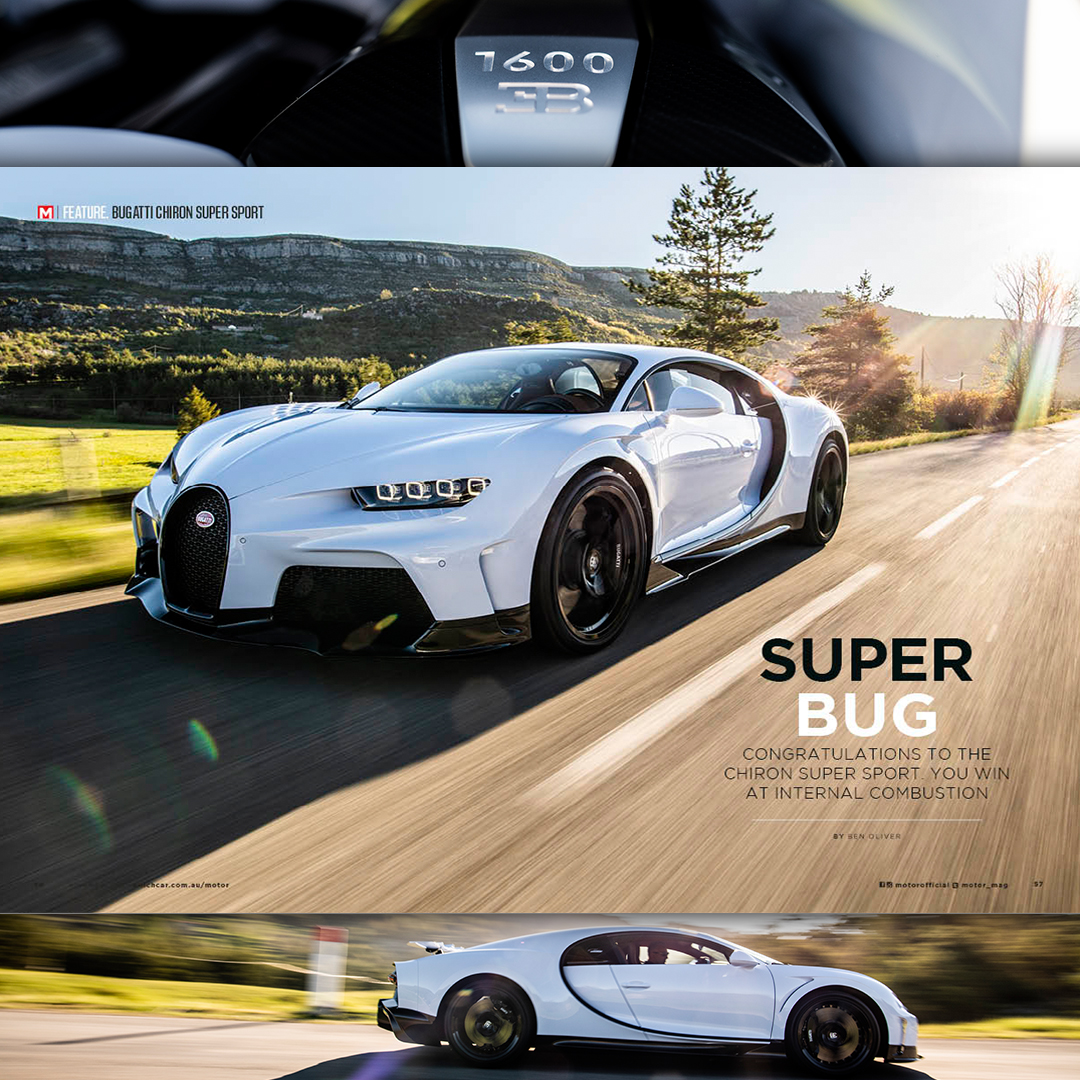
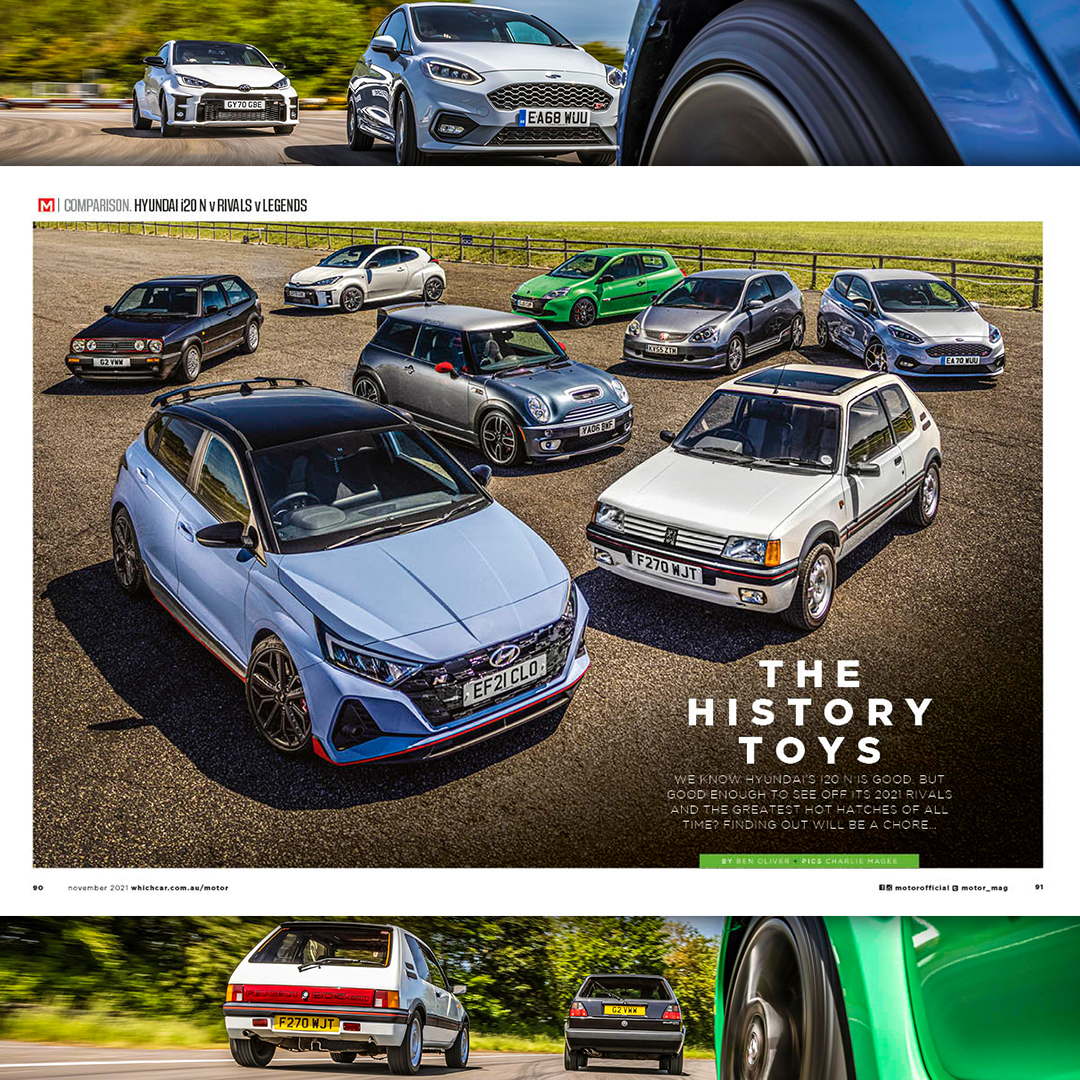
What could be more polarised against Volkswagen’s super bug? How about the new Hyundai i20 N? We’ve got a comparison for the ages, measured against not just the hot hatch greats of today, but against the greatest of all time.
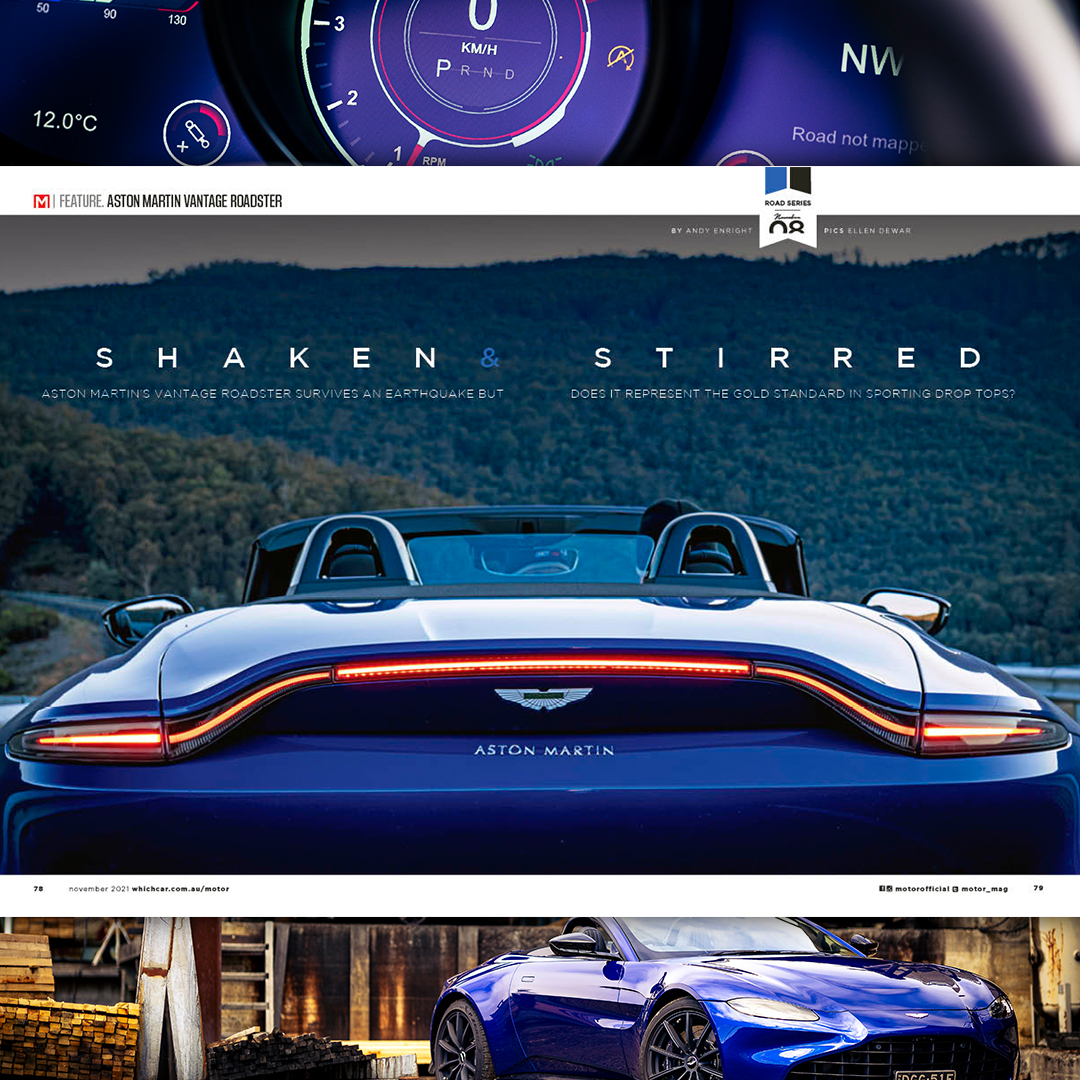
Further back, we take Aston Martin’s Vantage roadster on a tour of Victoria’s LaTrobe valley. Testing in various conditions even includes a magnitude 5.9 earthquake, which produced minimal scuttle shake, mind you. Whoever said we weren’t thorough?
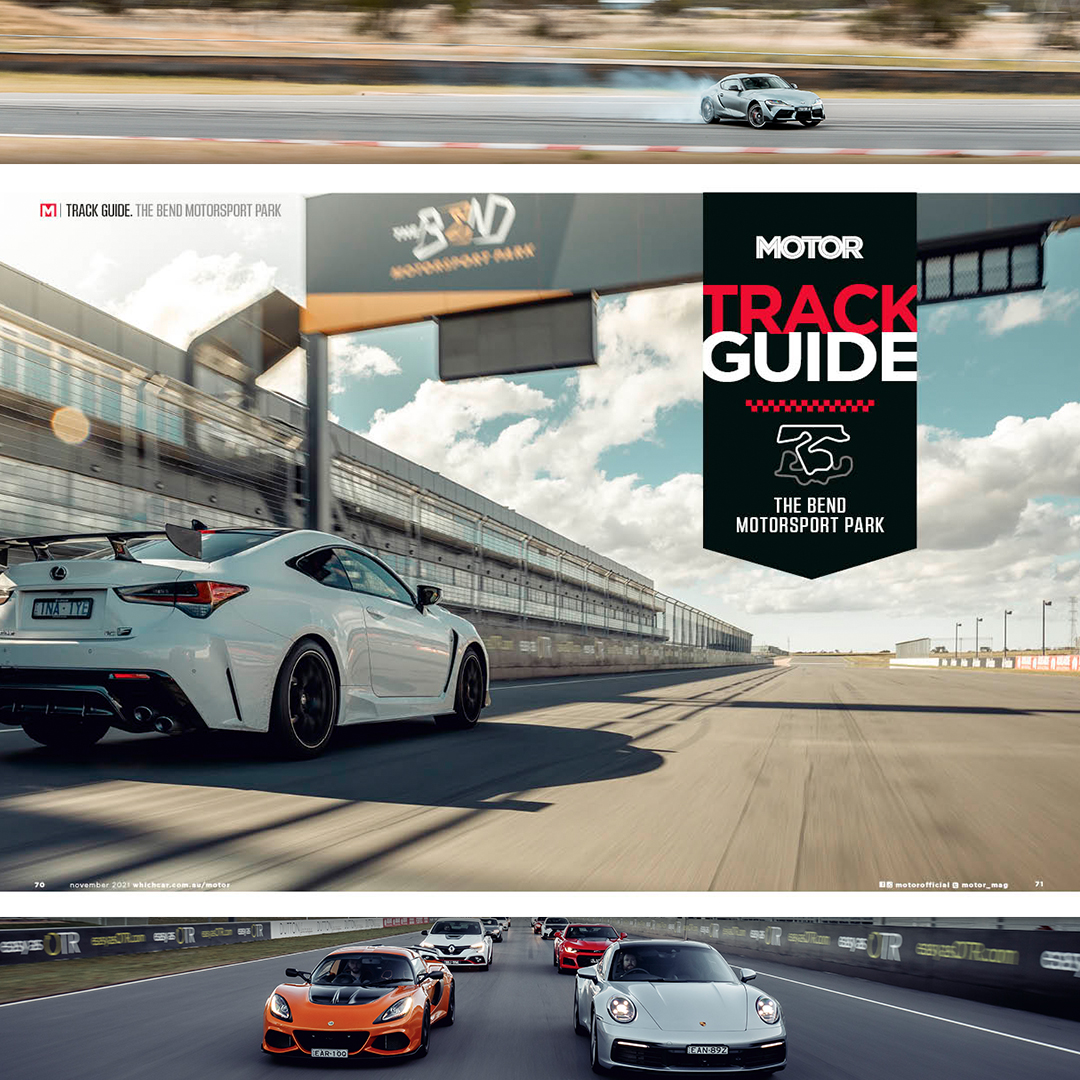
The second instalment of our Master Track Guide series sees us head over to The Bend. Let Luffy give you the inside line on South Australia’s young circuit which has quickly become one of the nation’s best motorsport facilities.
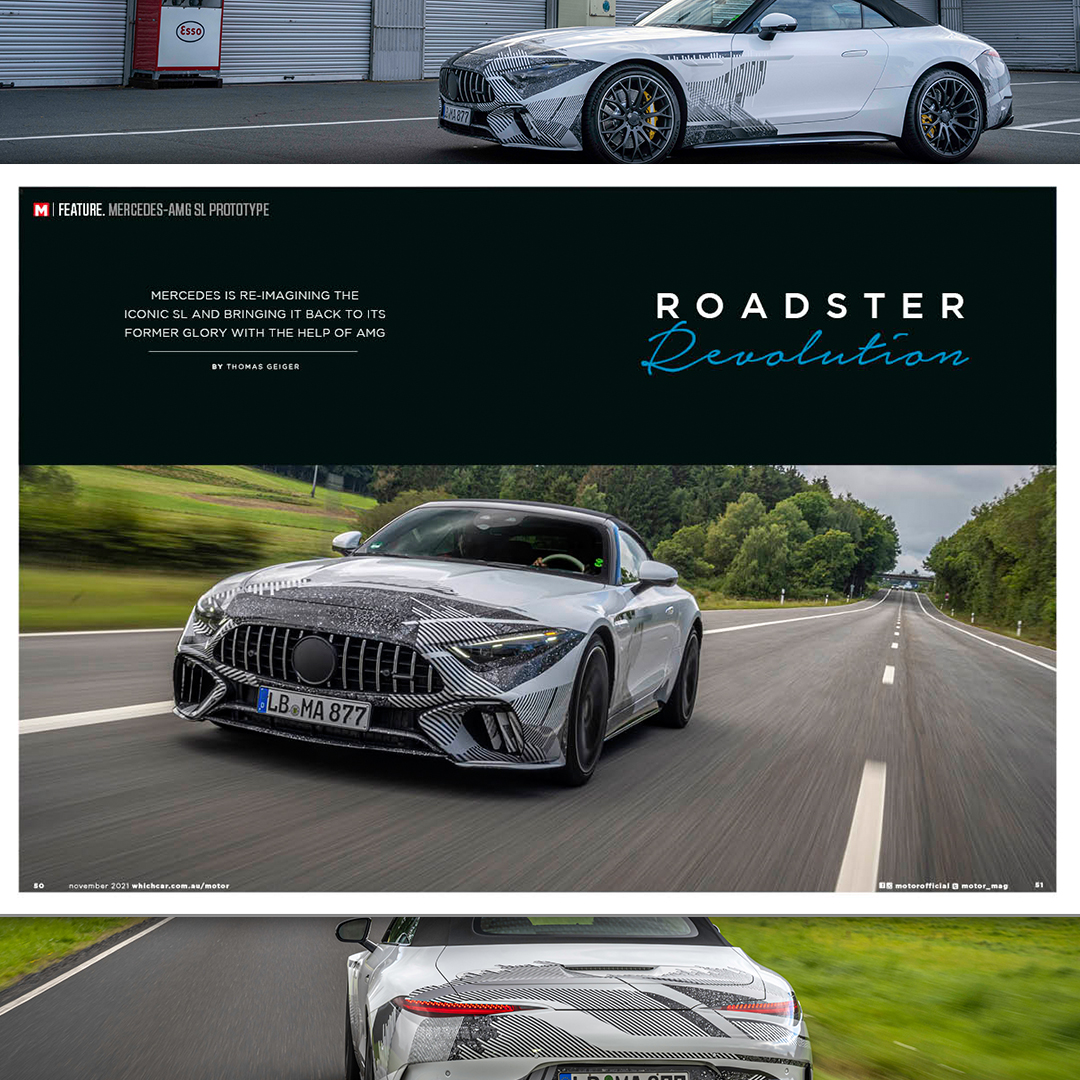
We also hitch a ride in the new Mercedes-AMG SL development car; speak to James Glickenhaus, former film director who wants to take on Toyota at Le Mans; and look to the Ten Most Exciting Cars due to arrive next year.
Find the November issue of MOTOR in stores today, or get them delivered straight to your door at motor.subscription.com.au
Snapshot
- Adult and child occupant protection score over 85 per cent
- Safety assist and road user protection lag behind
- Deliveries started to roll out in July
Korean manufacturer Hyundai’s latest mid-size SUV has taken home five-stars from ANCAP safety testing, with the Tucson scoring well across all categories.
Having launched earlier this year in July, the fourth-generation model was only recently reviewed by the independent safety authority, finishing with a high overall score.
Contributing to the five-star result, the highest-ranking category was the Tucson’s child occupant protection, with an 87 per cent mark coming thanks to it scoring 42.63 of the 49 points available.
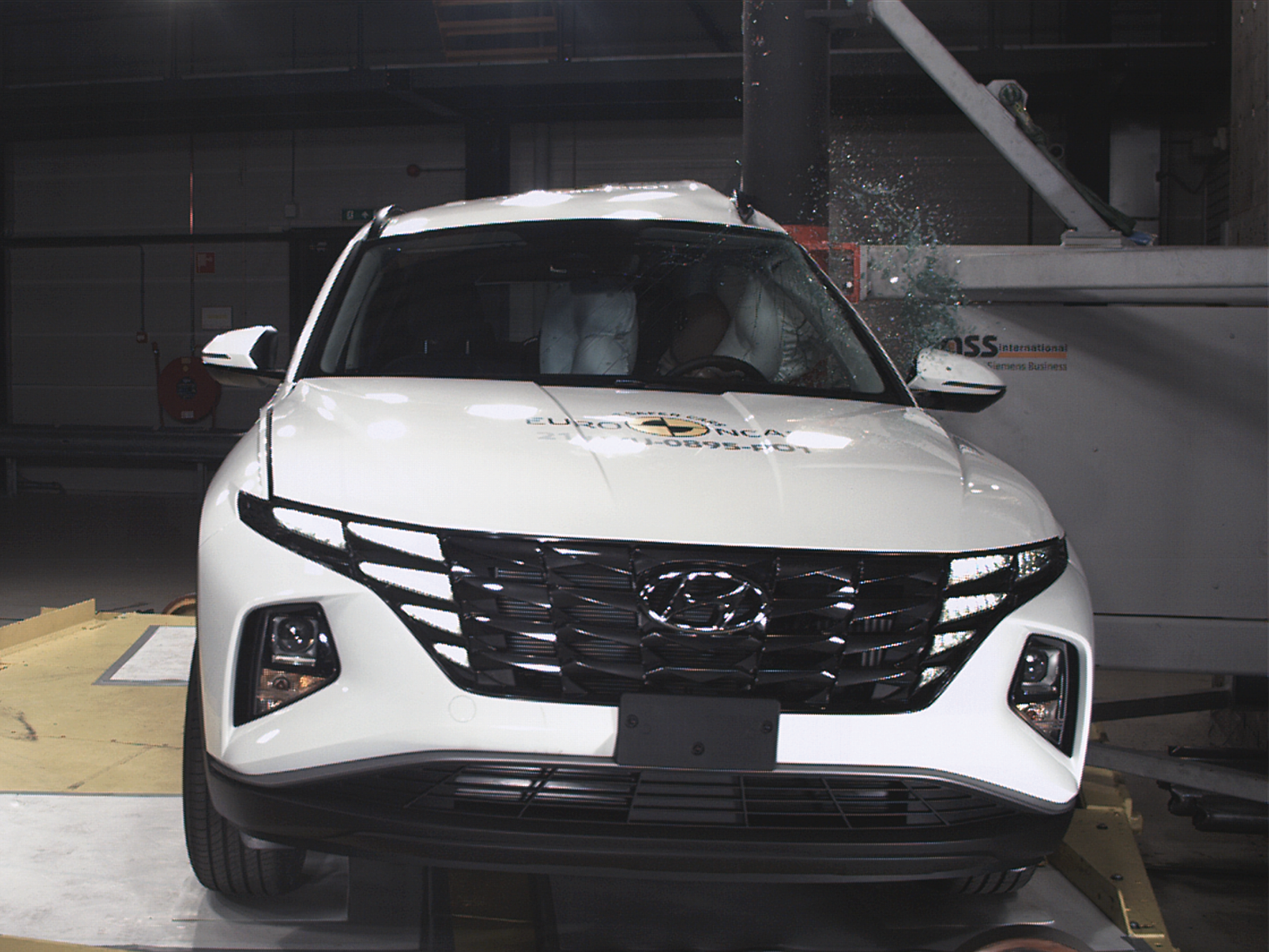
Scoring full points (16 out of 16) in the front dynamic test, it only lost 0.2 from the maximum eight in the side dynamic test, while its restraint installation was next best (10.84 out of 12) ahead of the on-board safety features (eight out of 13).
Only one per cent below the child occupant protection score was the adult occupant protection rating, as a total of 33.05 out of 38 brought the percentage up to 86 per cent.
Taking away the maximum number of points in the oblique pole, rescue and extraction tests, the Tucson was still within a point of full marks across the full width frontal, side impact, whiplash protection and far side impact categories, losing the largest percentage for its frontal offset result (5.17 out of eight).
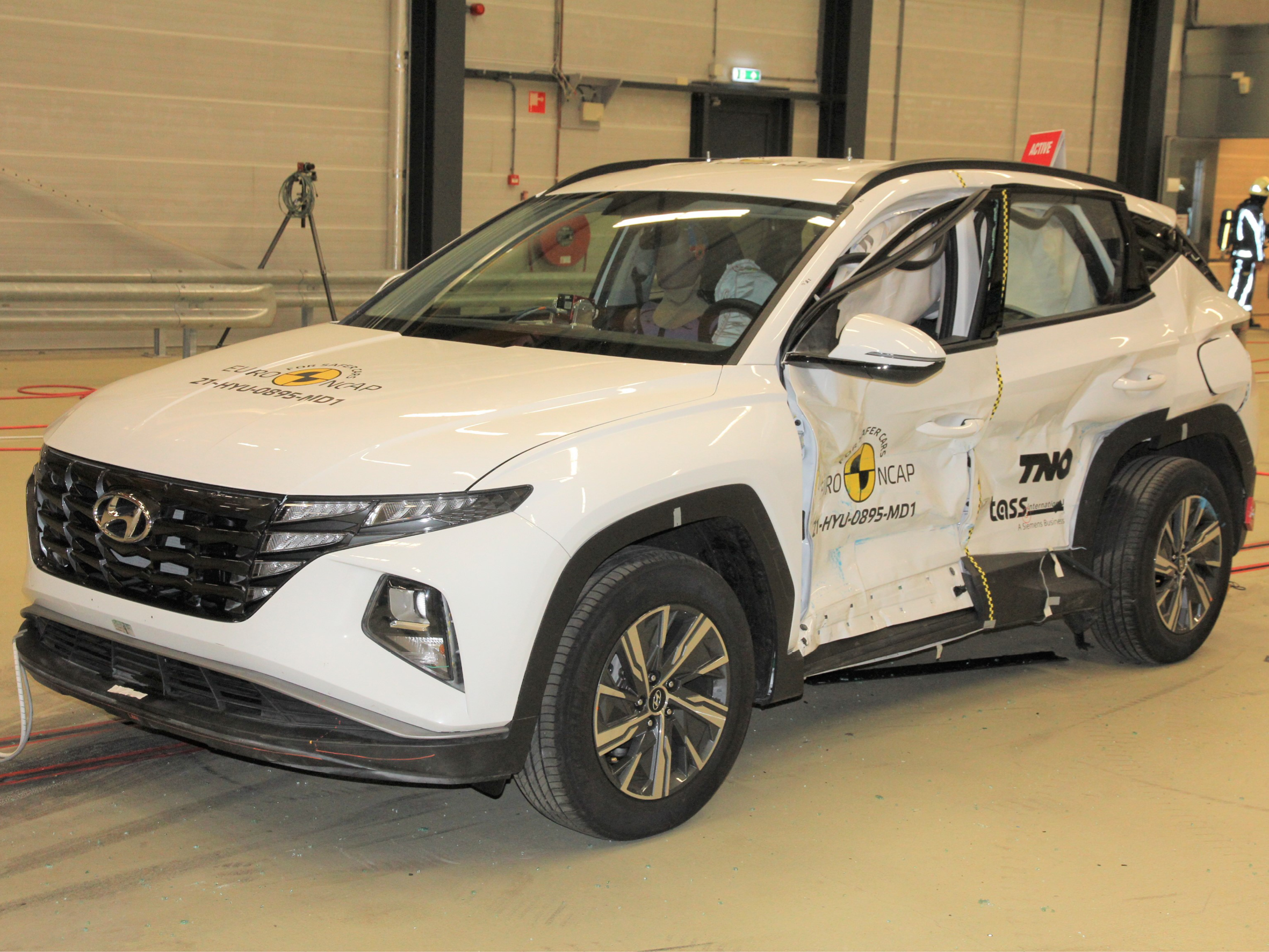
Its safety assist systems were next best, a combined score of 70 per cent coming from 11.35 out of 18 taken, thanks to all tested features scoring within a point of the most available.
A good result was given for its lane keep assist guidance, while the emergency lane keeping test netted an overall ‘adequate’ score, due to a lack of overtaking vehicle recognition systems.
While the lowest rated of all tested systems, the Tucson’s autonomous emergency braking between 10 to 50 km/h was given a marginal score, the third-highest available.
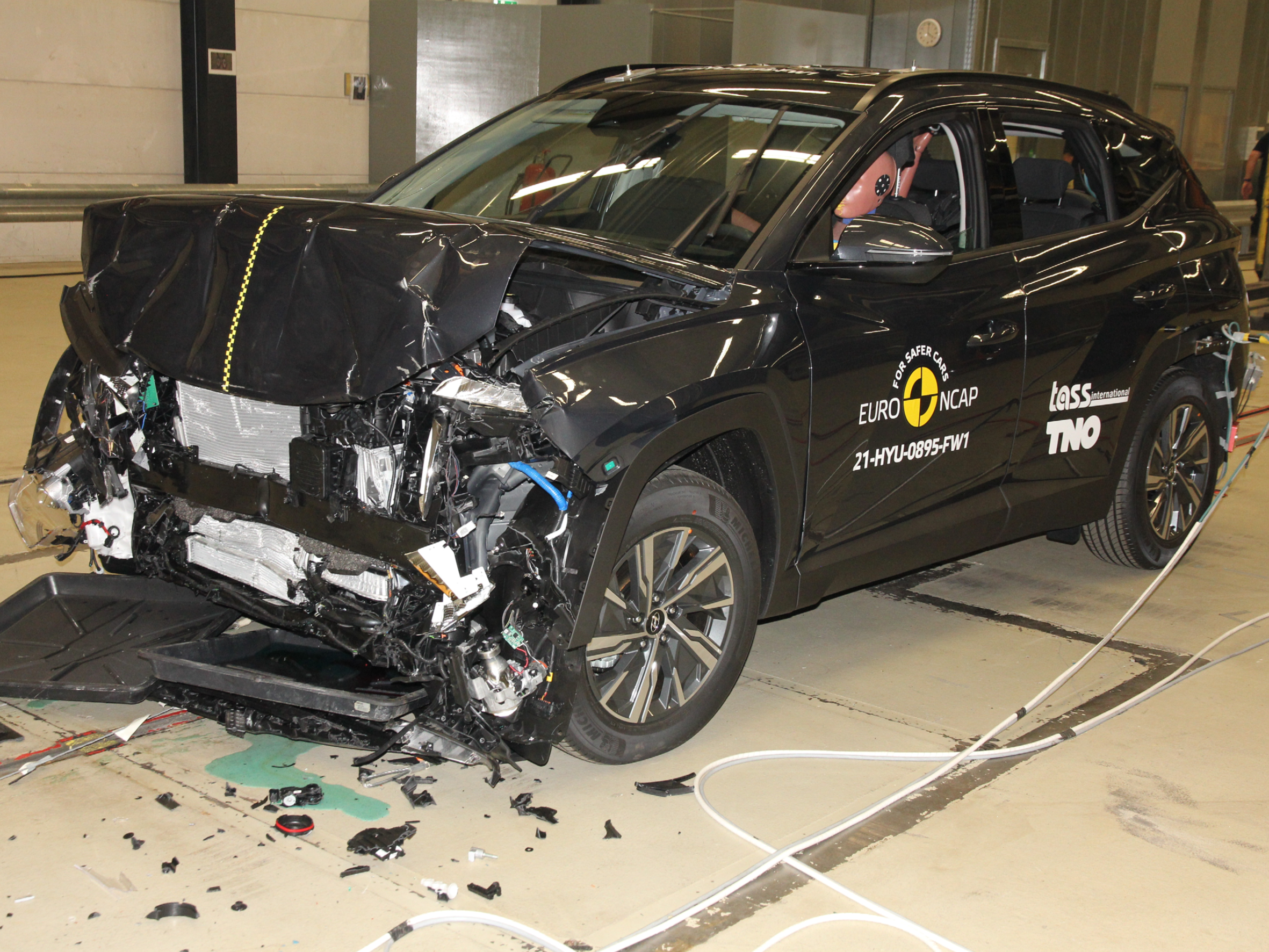
Finally the vulnerable road user protection category rounded out the Tucson’s trials, with 36.10 out of 54 contributing to the 66 per cent score.
The lowest results in this category came from its upper leg impact (1.65 out of six) and head impact tests (16.17 out of 24), as the lower leg impacts, AEB for pedestrians and AEB for cyclists all came within two points of full marks.
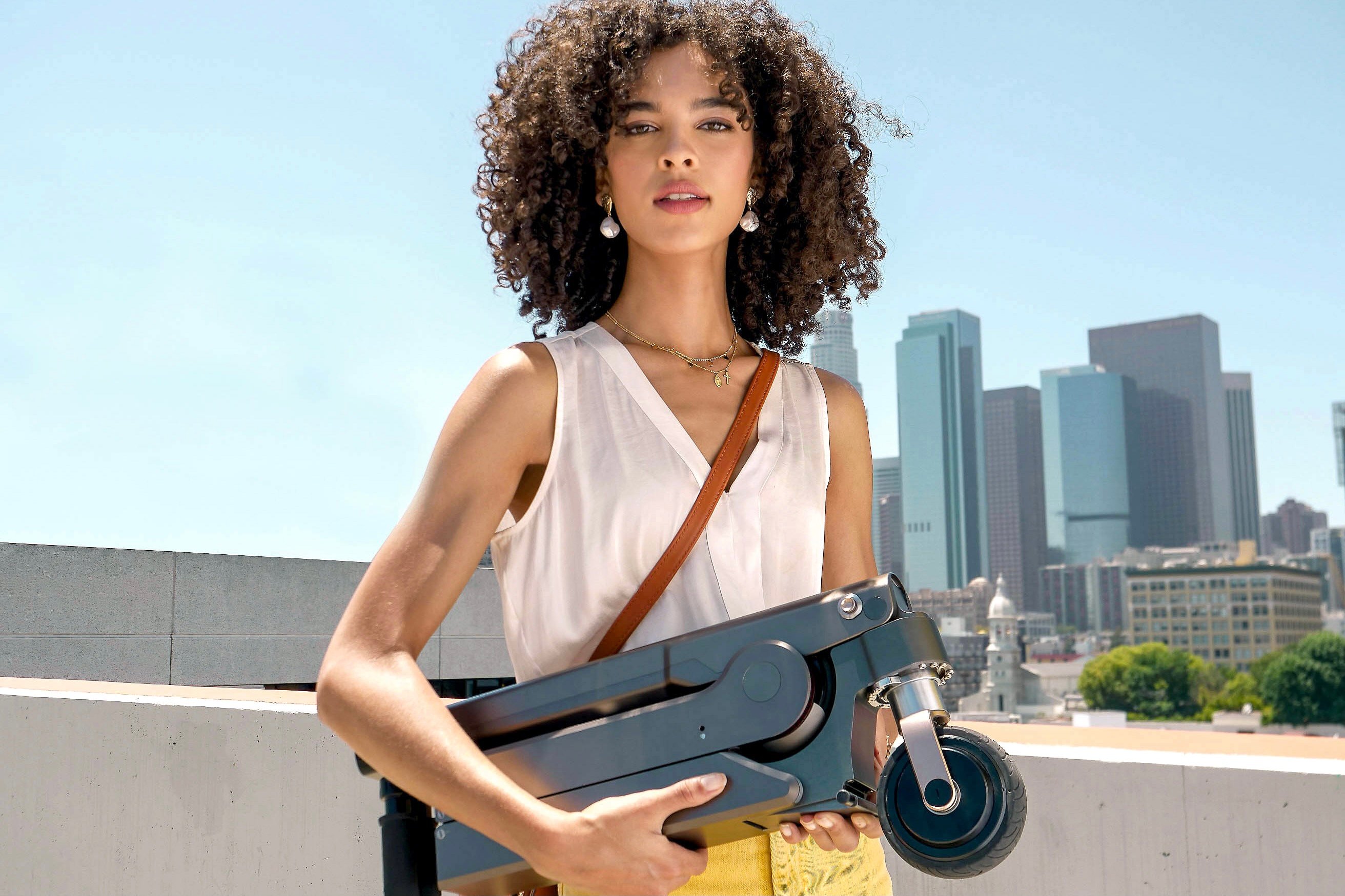
Hyundai is forging ahead with plans to add the option of an electric scooter to its vehicles.
Patents uncovered by US website The Drive show Hyundai is looking at ways to offer ‘last mile’ mobility, allowing drivers to park their cars on city outskirts and complete their journey on personal electric scooters.
By doing so, it would help to reduce emissions, noise, and congestion within inner cities, as well as saving time and money for owners in some circumstances – giving them the freedom to park further away from their workplace.
The idea is nothing new, however; in the early 1980s, Honda offered a folding two-stroke scooter to fit in the boot of the Honda City and Today small hatchbacks.
The Motocompo, as it was called, weighed 45 kilograms and was created to counter the heavy traffic and parking issues arising in Tokyo at the time.
Hyundai sees a similar future for motorists, advocating for ‘last mile mobility’ by designing what it claims to be the lightest foldable electric scooter.
The latest version weighs 7.7kg and has a top speed of 20km/h, and thanks to its 10.5Ah battery, delivers a travel range of up to 20km on a single charge.
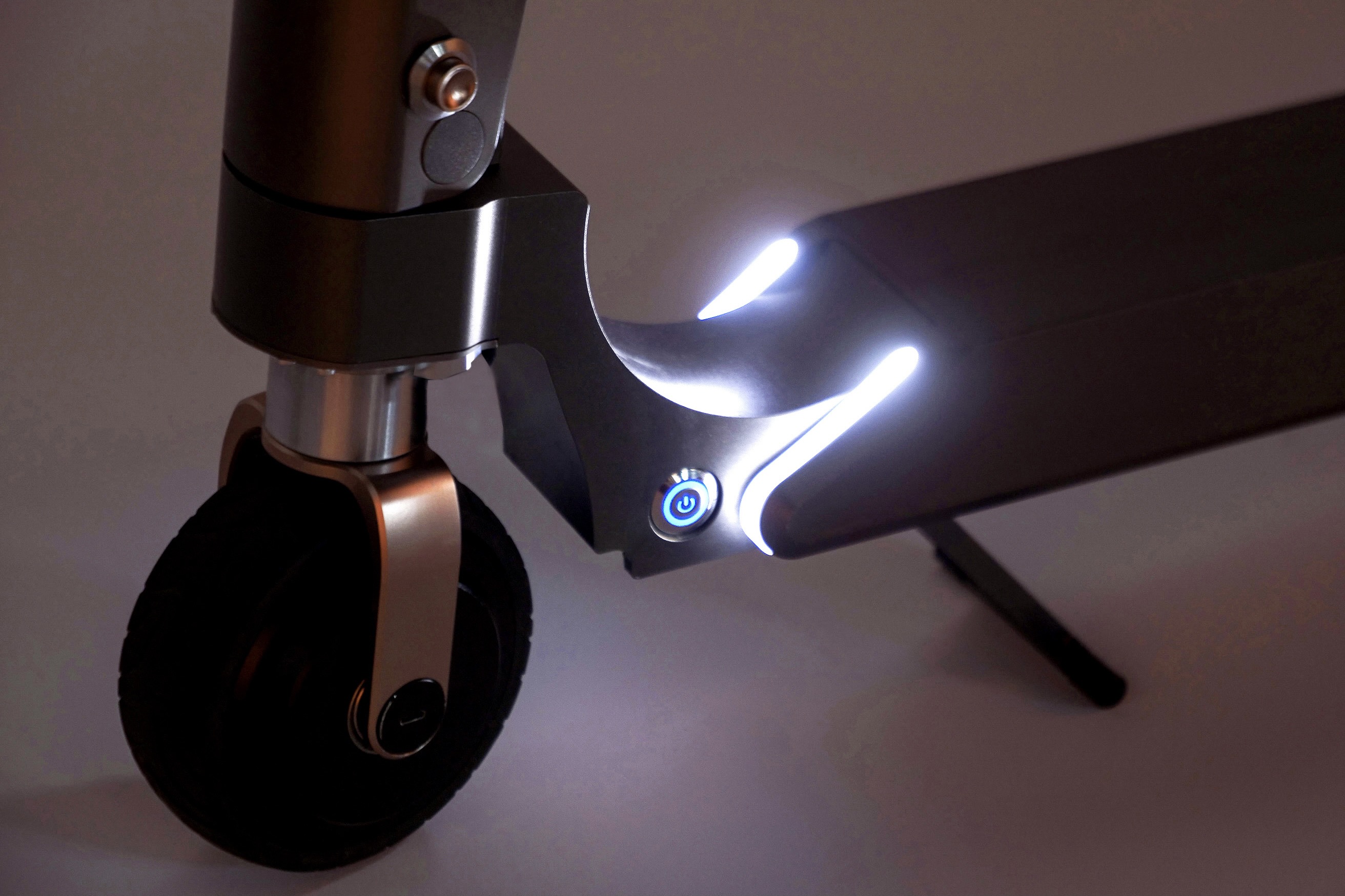
It also features a digital display showing speed and battery status, LED headlights and tail-lights for nighttime riding, and a speaker to project a “virtual engine sound”.
The Korean car giant says it’s working on a regenerative braking system for the scooter, which would increase its distance capability by around seven per cent – or around 1.5km.
According to a study by McKinsey & Company, the ‘last mile mobility’ market is expected to grow to US$500 billion (AU$665bn) by 2030 in China, Europe and the US.
Snapshot
- High scores across adult and child occupant protection
- Safety assistance systems rated highly
- Vulnerable road user protection ranks lowest of all categories
The new Hyundai Ioniq 5 has posted strong results in ANCAP safety testing, scoring five-stars from the independent safety body.
Launching towards the end of the year, the Ioniq 5 is Hyundai’s first dedicated electric vehicle to be safety tested in Australia, as the Kona and IONIQ EVs were based on internal combustion engine-powered models before their respective introductions.
Out of the four categories tested, the Ioniq 5’s safety assist systems netted the highest score, with 14.24 of the 16 available points awarded, attributing to a result of 89 per cent.

The highest possible marks were given across all tests, aside from the emergency lane keeping system – with the second-highest ‘adequate’ rating given due to a lack of intervention for overtaking vehicles.
Just one per cent behind its safety assist scores, the adult occupant protection category ended up with an 88 per cent result, thanks to 33.77 of the 38 points being given to the Ioniq 5.
While it didn’t score full marks across any particular aspect, it was within a point of a perfect score in the full width frontal, side impact, oblique pole, whiplash protection, far side impact, rescue and extraction tests.
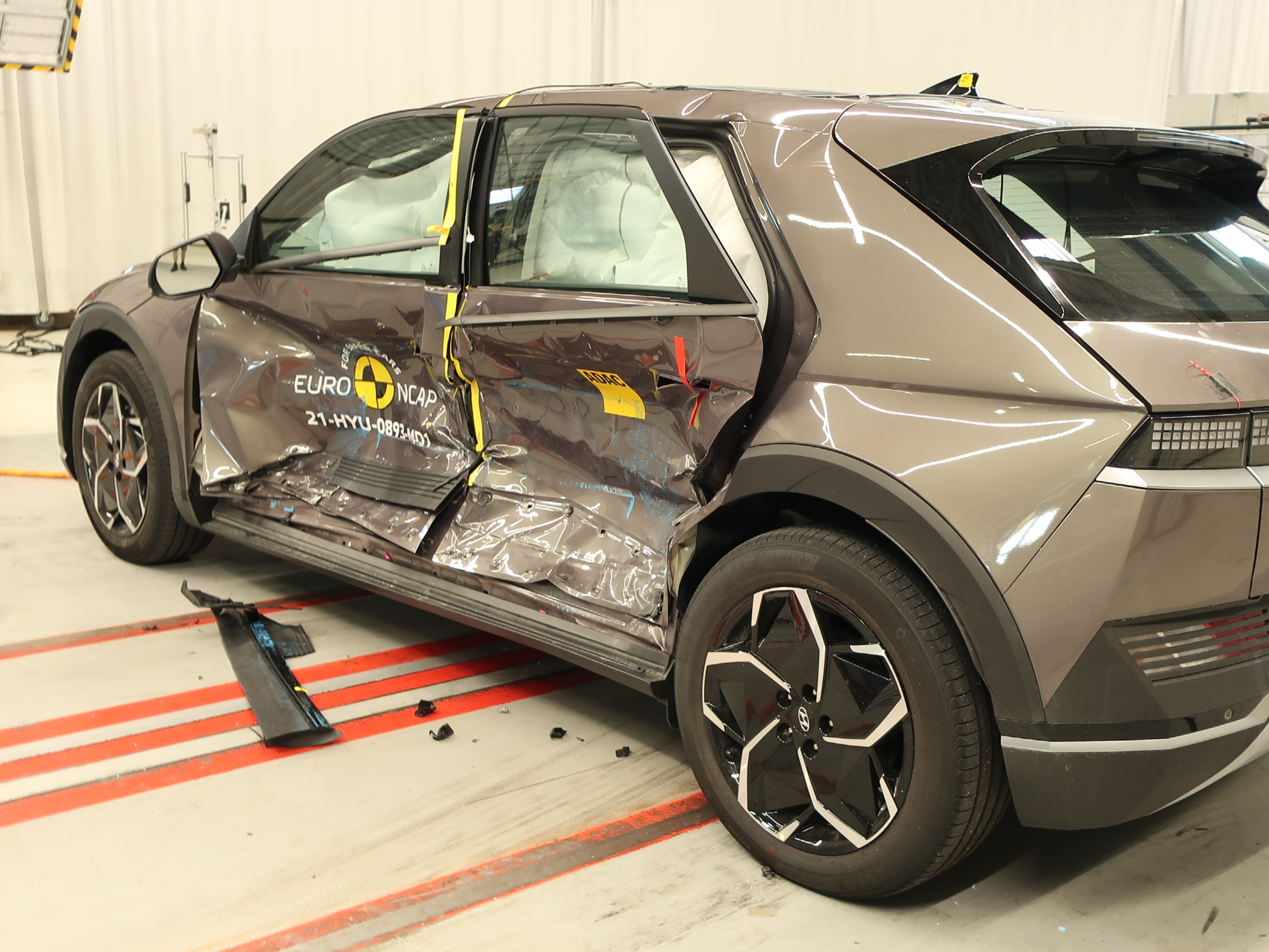
Similar results followed for the child occupant protection category, as 43.03 points were awarded from a maximum available of 49 – an overall score of 87 per cent.
The full eight points were given in the side dynamic test, with less than one point to the perfect score in the front dynamic test and restraint installation, although eight out of 13 for on-board safety features ultimately meant it slipped below 90 per cent overall.
However, the scores dipped more substantially for vulnerable road user protection, where a total of 63 per cent came thanks to the Ioniq 5 only notching up 34.39 out of 54 points.
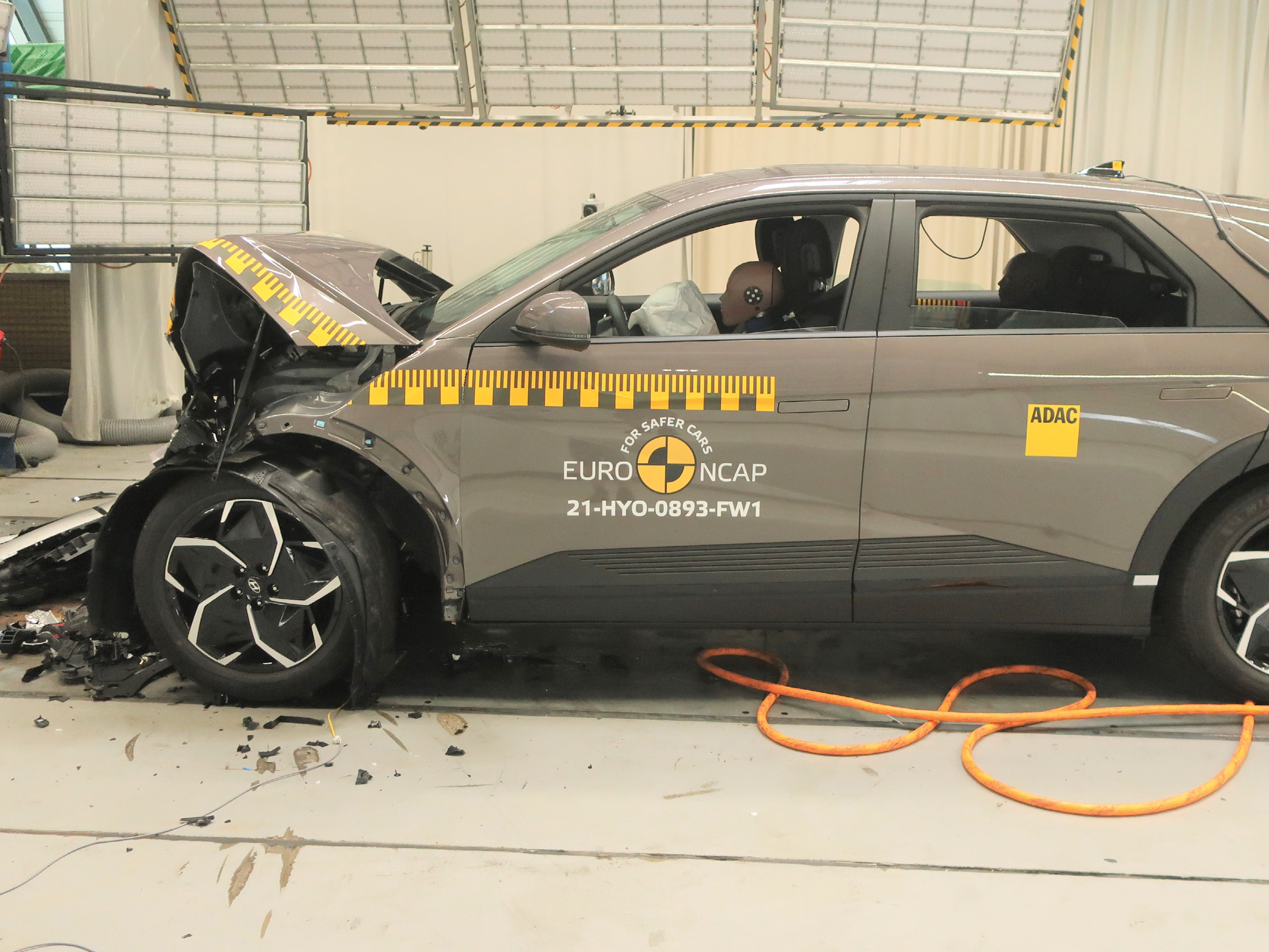
With only 0.02 marks from the six available coming in the upper leg impact test, the Ioniq 5 lost more ground by taking just 14.49 from 24 for head impacts, accounting for 14.51 out of 30 across the two categories.
However, lower leg impacts were given a perfect score, as its autonomous emergency braking systems for cyclists and pedestrians in front of the car also netted strong results (8.16/9 and 5.75/7 respectively).
The Hyundai Ioniq 5 went on sale last week – but sold out within hours, with the first 400 units set to arrive in Australia from December 2021.
The 2022 Mercedes-AMG SL has been shown in leaked patent images, ahead of the flagship model’s official unveiling.
Mercedes has been drip-feeding information about the new SL roadster – developed as a standalone model by its high-performance AMG department – throughout most of 2021, but these computer-generated images published on Instagram by @cars_secrets provide our best look yet at the new vehicle.
The new SL is set to replace the Mercedes-AMG GT Roadster in the brand’s line-up, utilising an all-new composite chassis featuring aluminium, steel, magnesium, and fibre materials to ensure a low weight and up to 50 per cent greater transverse rigidity over its predecessor.
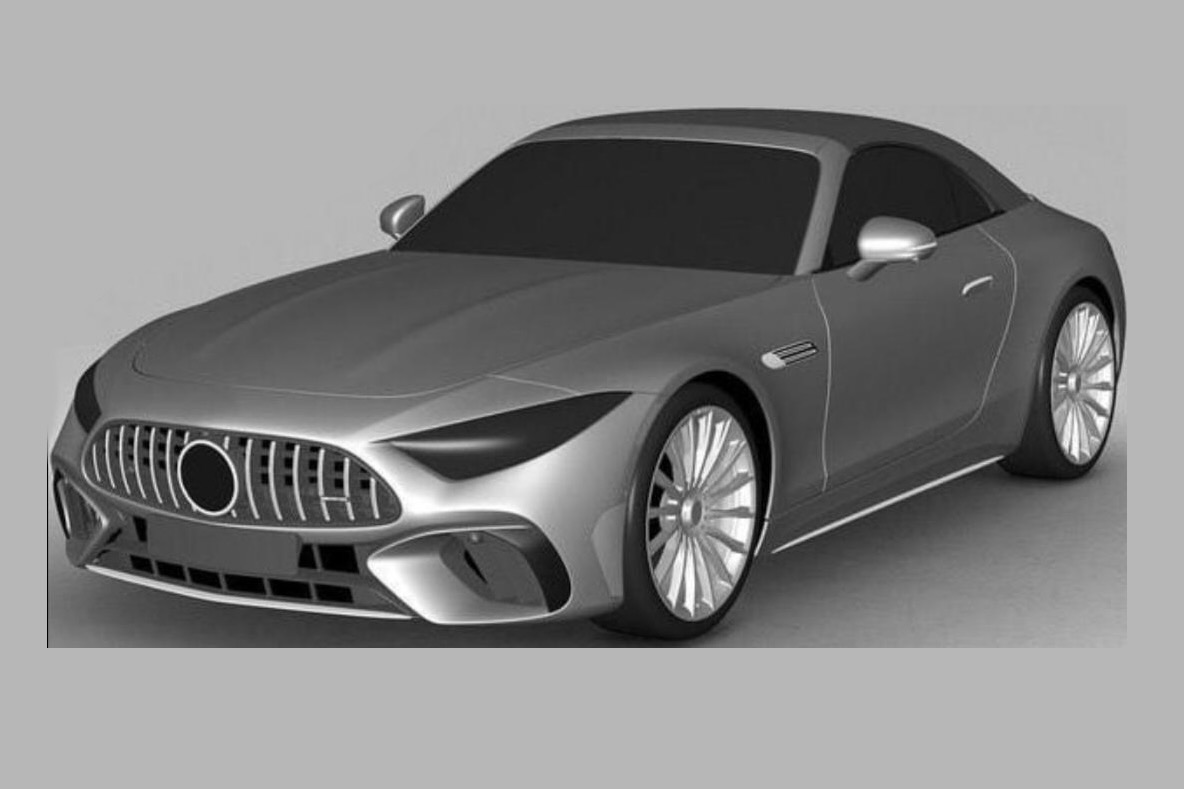
The roadster will also feature 2+2 seating for the first time in decades, but will utilise a fabric roof instead of a folding hard-top favoured in recent years.
Rumours suggest the SL could be powered by a range of engines, from a four-cylinder hybrid set to feature in the new C63, right up to a twin-turbo hybrid V8 – though expect an all-electric EQ variant to make its debut in the coming years.
With Mercedes slowly removing camouflage from official teasers, and the car snapped during a promotional video shoot in Spain in August, expect an official unveiling before the year is out.
Snapshot
- Valkyrie Racing is set on racing on seven continents
- Converted Porsche 356 uses tracks and skis in place of wheels and tyres
- A total of 356 miles will be travelled
One Porsche team is aiming to do what very few have done before – race on all seven continents, all in a Porsche 356.
Prepared by Valkyrie Racing and driven by Renée Brinkerhoff, the team will head to Antarctica as Brinkerhoff eyes off becoming the first woman to ever race across every continent.
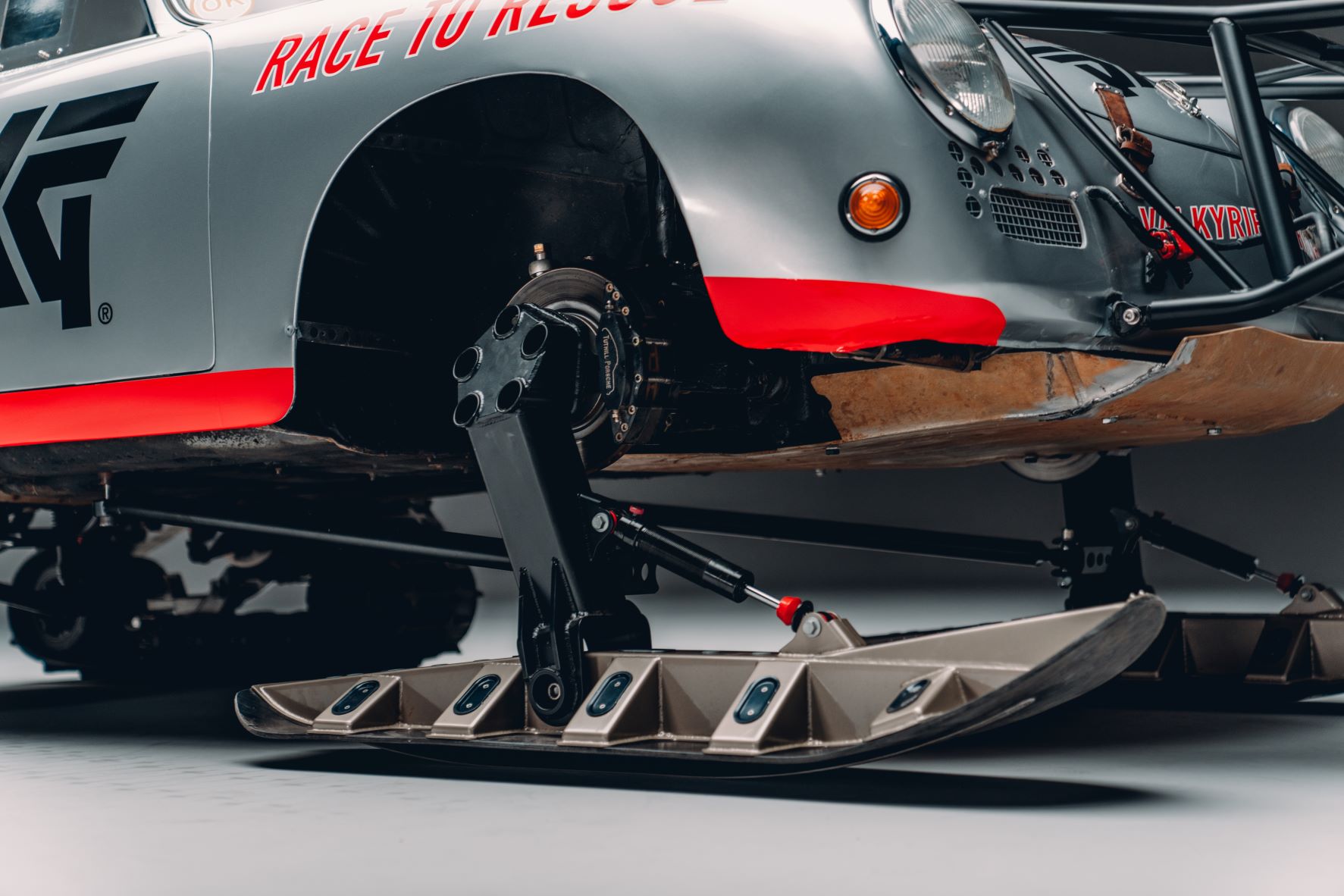
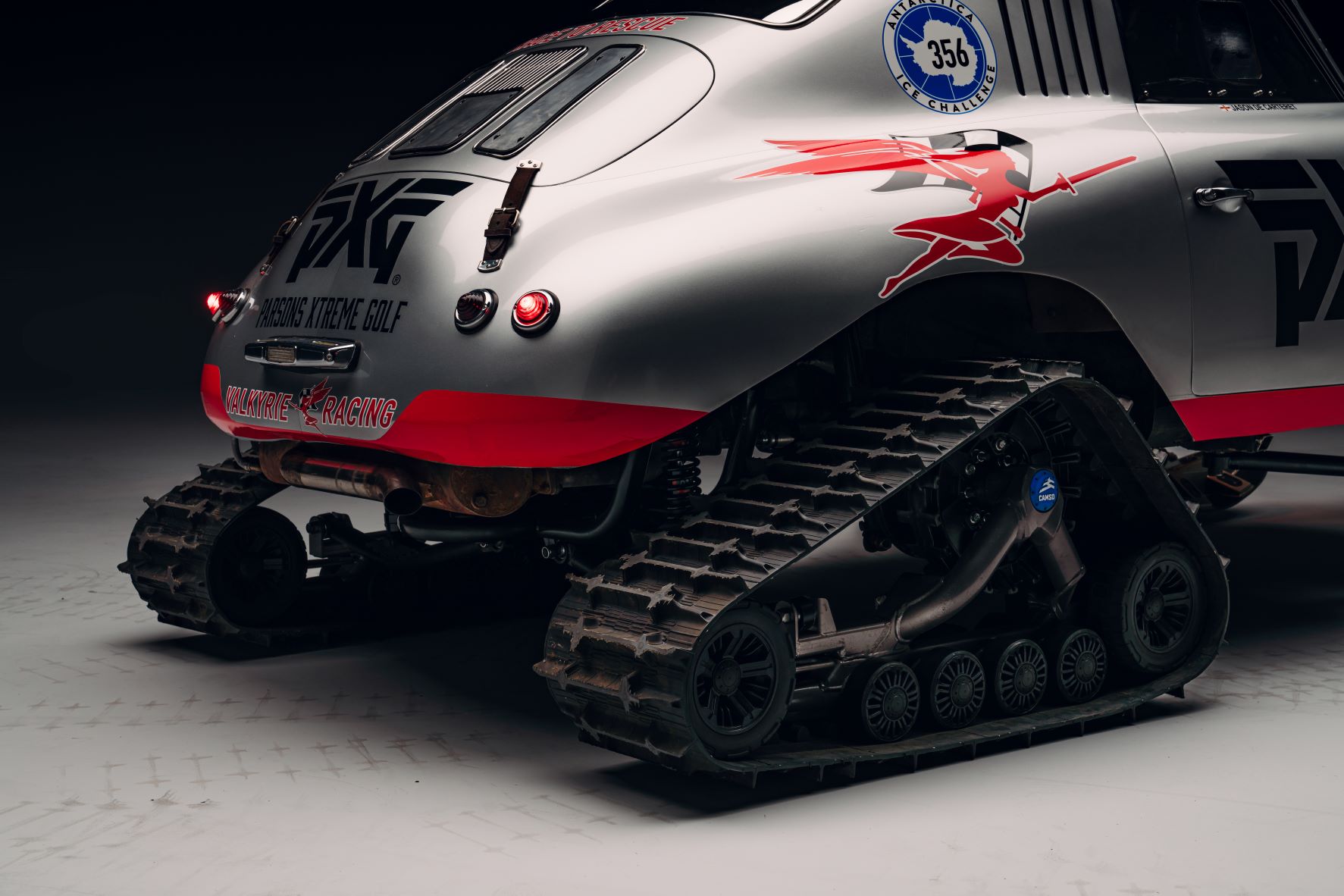
Having ticked off every other land-based continent off her list, taking the 356 to Antarctica has taken a fair amount of preparation, as is evidenced by the addition of skis and tracks in place of front and rear wheels respectively.
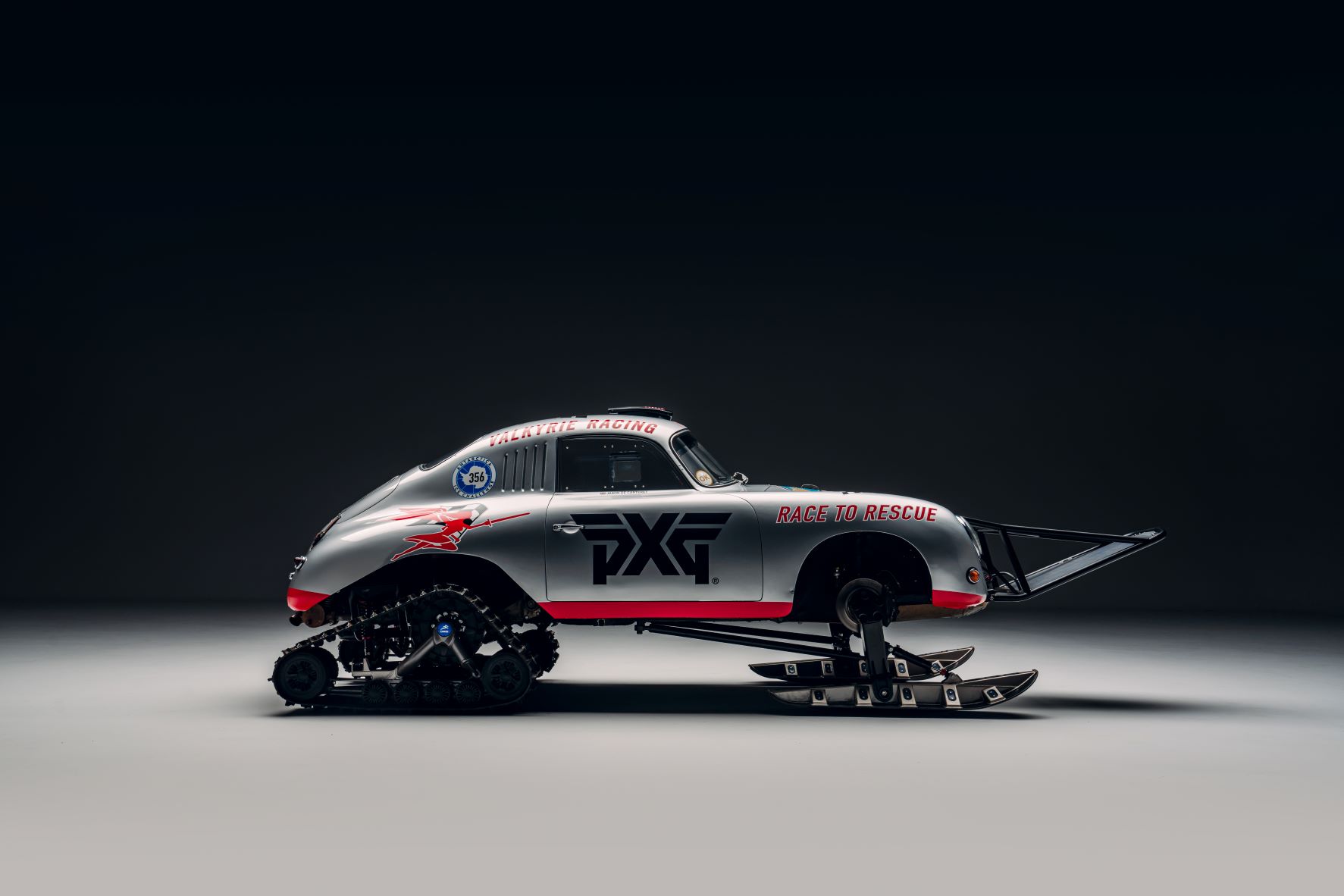
Sticking out the front of the classic Porsche is a large crevasse bar, designed to both protect the vehicle and its occupant from particularly immovable bits of ice as well as support a dual-sided solar panel, allowing the electrical systems to recharge from both the sun and snow.
Although it is still powered by an internal combustion engine, the team aims to leave behind as small of a footprint as possible – almost literally as the new ski and track combination leaves less of an impression on the snow than a human’s shoe.
“The ski and track combination increase the flotation by as much as 300 per cent when compared to Antarctic 4×4 support vehicles on 42-inch tyres – and the 356 will be gliding and leading the tracks throughout the entire journey,” said senior chassis design engineer, Kieron Bradley.
The journey will begin on December 5, taking place over 356 miles (573 kilometres) with Union Glacier serving as the designated finish line for the team’s daunting quest.
Brinkerhoff is aiming to raise awareness and donations to help combat child sex trafficking, raising funds to support pre-vetted shelters within remote areas including China, Mongolia, Peru, India and Kenya.
On a list full of worldwide brands the automotive segment is making waves – with not one but four manufacturers featuring in the top 20.
Released by consulting company Interbrand, the list compiles the top 100 global companies by brand value, an ever-moving metric which saw large swings in the wake of the global pandemic.
While technology companies dominate – taking up the top five spots – the top 20 is home to four automotive manufacturers, all sitting in the middle third of the overall standings.
The biggest mover and shaker from the automotive industry – or any other in the top 20 – was Tesla, as the American electric vehicle and energy company recorded a 184 per cent increase in brand value over the previous 12 months, now worth an estimated US$36.77 billion.
Although Tesla’s percentage increase was the largest of all, its financial value is only the 14th highest, some eight places behind the leading automotive brand – with the world’s best-selling manufacturer unsurprisingly leading the charge.
Sitting at an estimated brand value of US$54.1bn (AU$71.8bn), Toyota’s 2021 result represents a five per cent increase over the year prior, allowing it to sit just ahead of Mercedes-Benz, which ranks eighth overall, valued at US$50.37bn (AU$66.85bn) with a three per cent increase above 2020.
Mercedes-Benz’s German rival BMW positioned itself between Nike and Louis Vuitton in 12th place, also going through a five per cent value increase to now be worth US$41.63bn (AU$55.25bn).
Stretching out to the top 50 brands, Honda (25th), Hyundai (35th), Audi (46th) and Volkswagen (47th) all make an appearance, although with 10 of the top 20 coming from the technology industry, it’s clear to see which companies made the most of the pandemic.
Sitting atop the overall rankings, Apple’s brand value of US$408.25bn (AU$541.86bn) is more than 160 per cent above its nearest competitor, with Amazon placing second at US$249.5bn (AU$331.15bn).
