
Volvo has now had to recall older versions of its S60 and S80 models in Australia as part of a wider worldwide airbag problem affecting almost half a million vehicles.
The local notice affects 1469 vehicles across all variants of the S60 built between 2004 and 2009, as well as S80s made between 2004 and 2005.
According to the Department for Infrastructure, the driver’s airbag inflator may rupture if deployed in a crash – propelling metal fragments through the cushion and towards the driver and any passengers, which could cause serious injury or death.
A spokesperson for Volvo Australia confirmed the problem only affects cars from a previous product generation and that no vehicles in its current line-up are involved.
They added that the company’s investigations show there is a “low likelihood of the issue happening”.

Last week WhichCar reported that the Swedish marque was in the process of recalling nearly half a million vehicles worldwide after an airbag fitted on one of its models was attributed to the death of an owner in the United States.
As reported by CNBC, a total of 460,769 units are affected by the recall, with S80s built between 2001-2006 and S60s manufactured between 2001-2009 listed as the two models involved.
According to the United States National Highway Traffic Safety Administration, at least one faulty airbag in a Volvo vehicle has been attributed to the death of an occupant, leading to 259,383 units in the US alone being recalled.
A list of VINs for Australian affected vehicles is available here.
Owners will be contacted by Volvo via letter and asked to contact their preferred local dealer to organise having the defective airbag assembly replaced with a new unit, free of charge.
Dealerships can be found here https://www.volvocars.com/au/dealers/find-dealer or alternatively, Volvo can be called on 1300 787 802 or emailed at: [email protected]
The 2023 Chevrolet Corvette E-Ray has been filmed at the Nüburgring in Germany, testing alongside the high-performance Z06 variant.
The E-Ray is the expected name of the electrified Corvette, following trademark applications from Chevrolet in 2015 and again in 2020, and will likely pair the 6.2-litre V8 from the standard C8 with at least one electric motor.
It’s unclear at this stage whether the E-Ray will be a traditional hybrid, offering low-speed battery-powered driving, or if the Corvette will gain a plug-in hybrid powertrain – allowing an electric-only driving range of up to 70 kilometres.
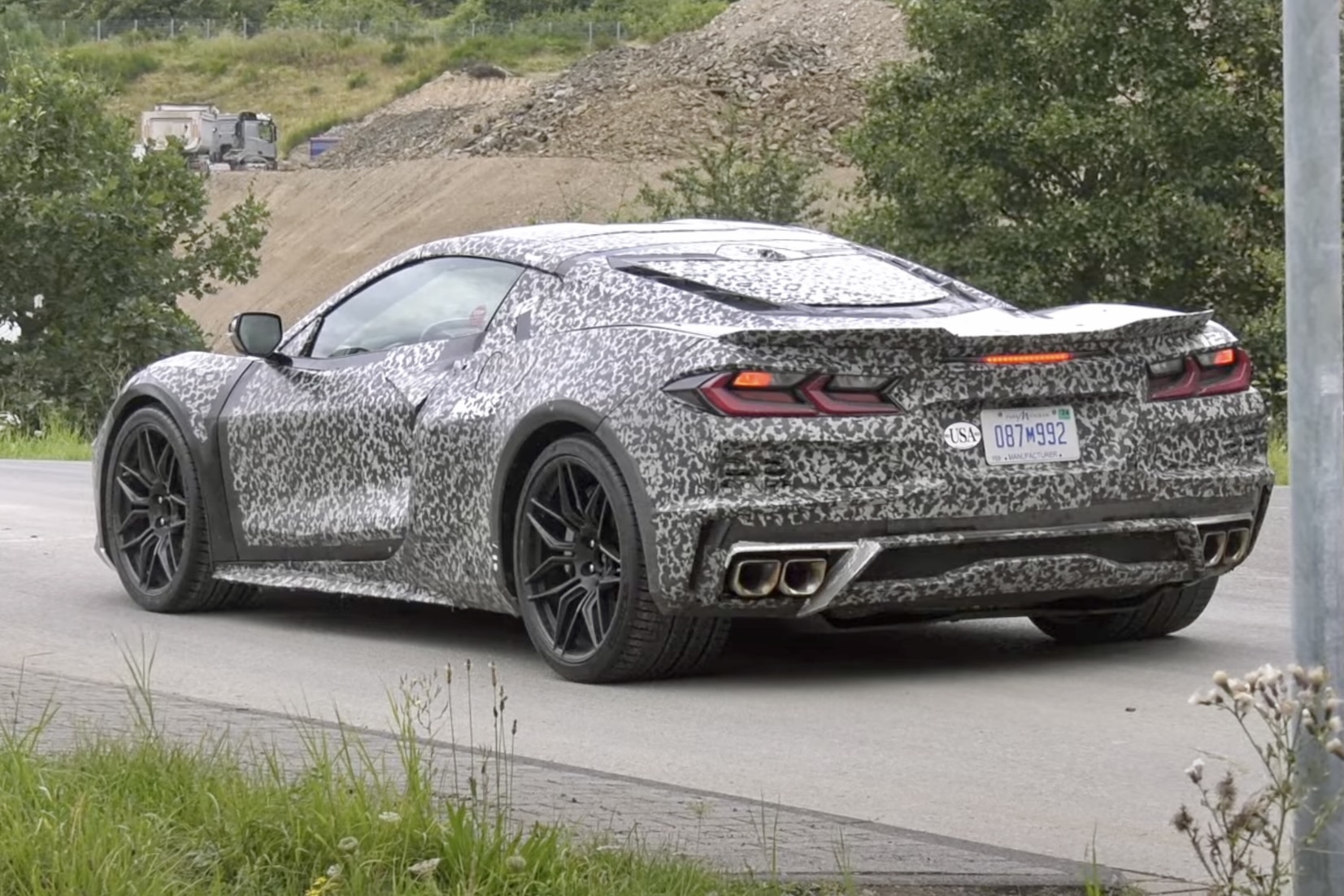
In the video, posted by YouTube channel CarSpyMedia, the E-Ray can be heard pulling into the Nüburgring entrance on silent electric power – before the V8 engine fires into life and the car continues on its way.
The 2023 Corvette Z06 can also be seen undergoing testing, with the car’s widely-reported 5.5-litre V8 providing a distinctive high-pitched soundtrack thanks to its flat-plane crank – an engine note more often associated with Italian supercars.
It’s the second time we’ve spied the Z06 at the Nüburgring in recent times.
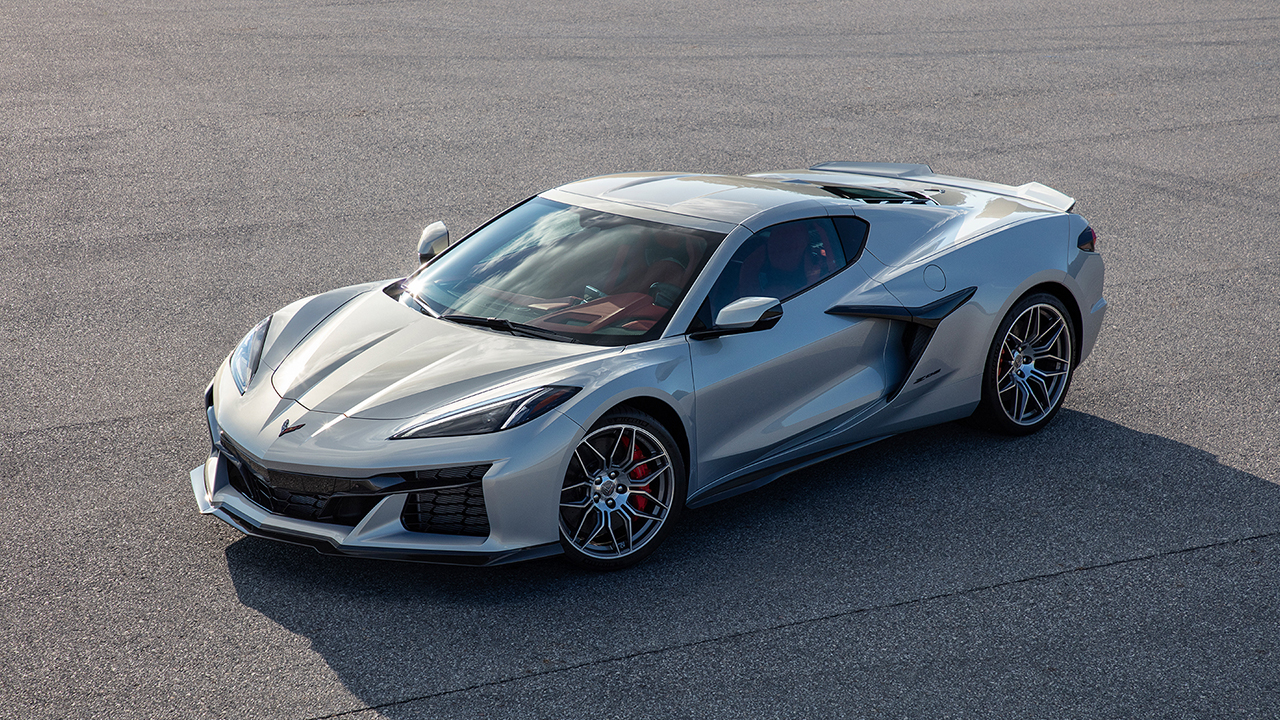
Industry whispers suggest the Z06 will offer somewhere between 450kW and 485kW, with a future ZR1 variant rumoured to be in the works, using twin turbochargers to push the V8’s output to more than 630kW.
Some US media outlets have also suggested a hybrid version of the ZR1 is on the drawing board for 2025. Called the Zora, the vehicle is said to use dual electric motors together with the twin-turbo 5.5-litre engine to produce as much as 750kW.
A spokesperson for GMSV in Australia told MOTOR last month the first shipments of the 2022 Chevrolet Corvette C8 are expected to land on our shores before the end of the year.
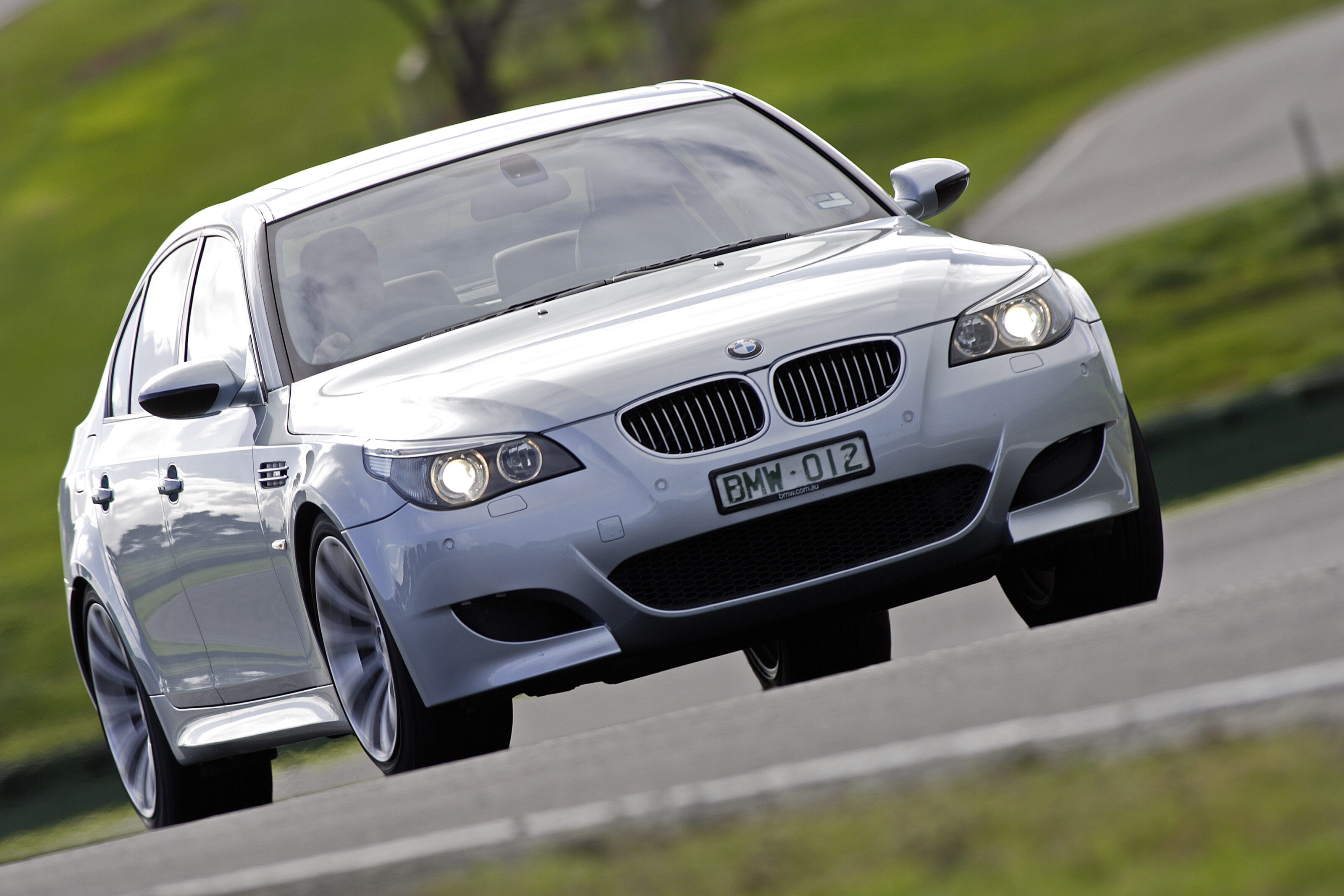
There’s a lot to like about BMW’s mid-’00s mechanical twins: the E60 M5 and E63 M6. The 5.0-litre V10-powered pair boasted 373kW/520Nm, could clock 0-100km/h in a claimed 4.7 seconds (various independent tests have bested this figure) and, with the speed limiter removed, could reach 322km/h, some 200mph in old money. Most tantalising of all, however, is the fact that you can pick one up today for less than the price of a new three-cylinder 103kW BMW 118i.
Before you rush off to the bank however, be warned that problematic examples can be disastrously costly to fix and maintain. But we’ll get into that later.
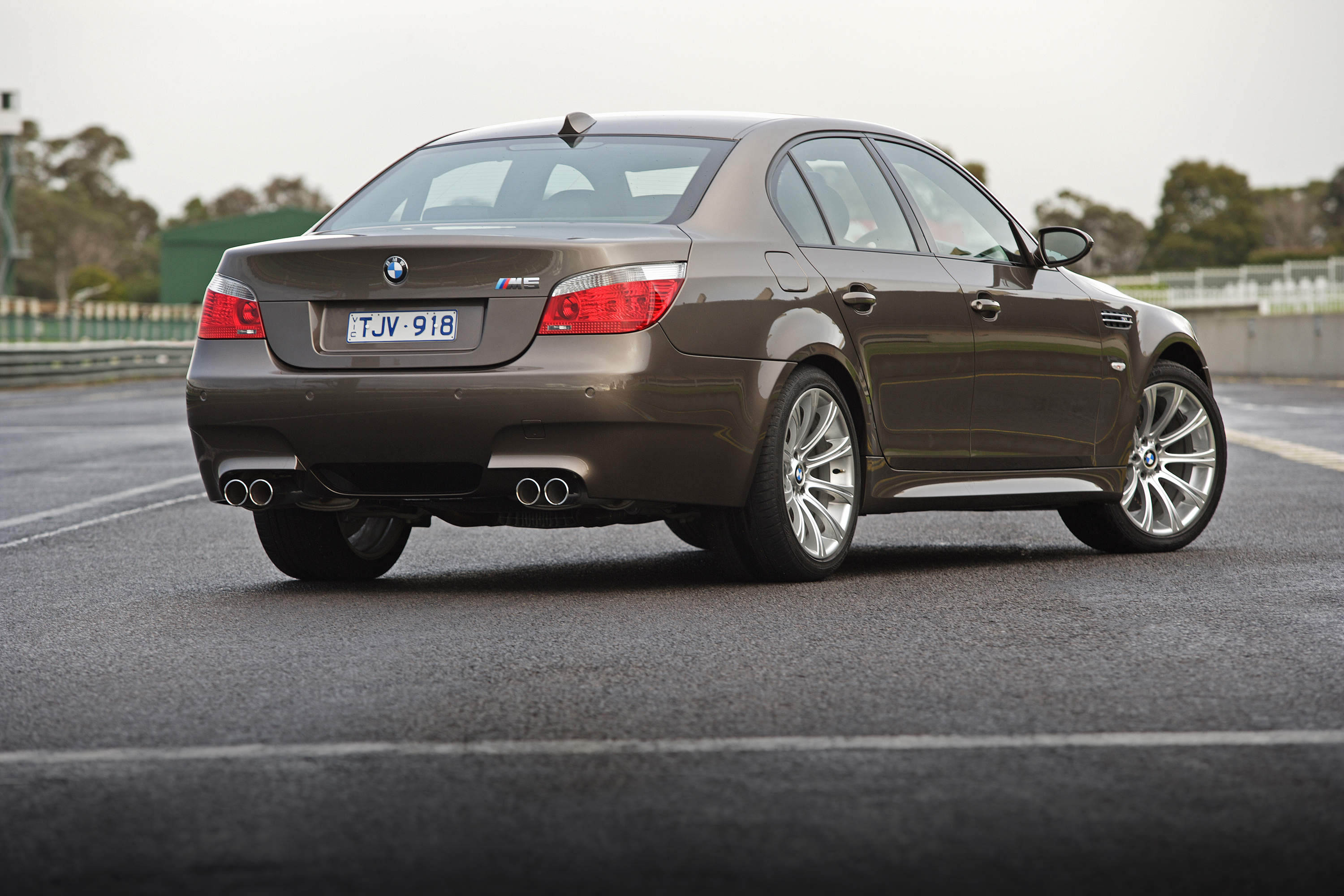
The E60 M5 landed on Australian shores in 2005, with its two-door M6 sibling following one year after, and marked a significant departure from all that came before it. The M5, in particular, represented the world’s first production saloon ever fitted with a V10, and shared the crown with the M6 as M-division’s most powerful series production cars at the time.
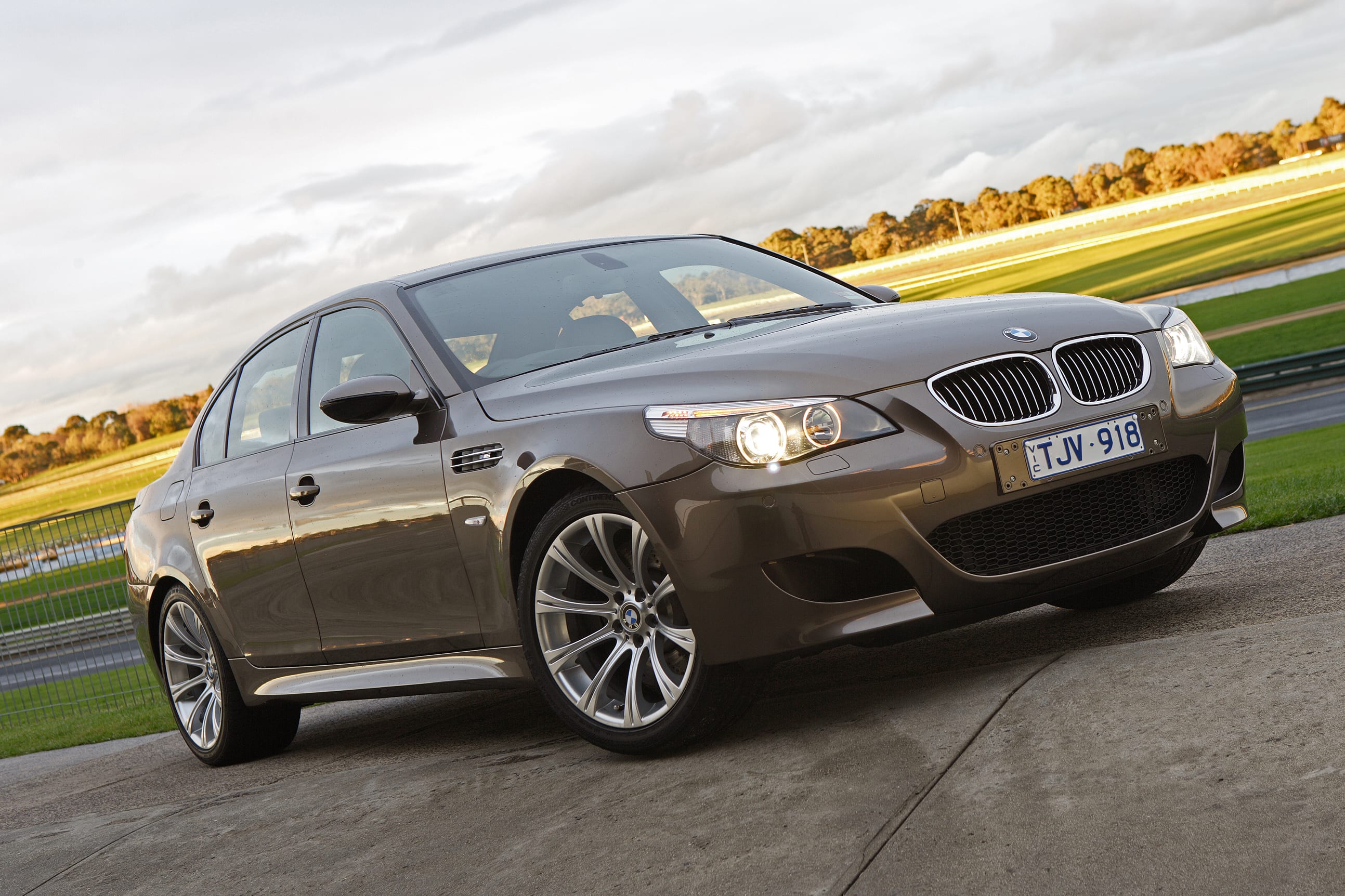
The S85 V10 will remain a unique footnote in M-division history, with this generation’s M5 and M6 representing the only V10 production models ever produced by BMW. In line with industry and emissions trends, they’re likely the last of their kind we’ll ever see from Munich again.
Upon launch, much fuss was made of the M5’s Formula 1 links, with the road-car’s V10 and seven-speed semi-automatic powertrain layout echoing the configuration used in F1 in the noughties.
There was also a degree of controversy over the M5 and M6’s styling. They looked nothing like their sleek predecessors, and both were mired by controversy and critique. The more mainstream 5 Series copped much of the flak, so too did Chris Bangle – BMW’s American Head of Design between 1997 and 2009.
Bangle spoke highly of Arcangeli’s unconventional styling, and later stated that the beloved young Italian’s passing galvanised the design team to push through his proposal unchanged.
In reality, Bangle merely signed-off on the E60 5 Series, whose lines were laid by one of his underlings, a young Italian designer named Davide Arcangeli. Arcangeli’s design breezed through board approval though, in a sad turn of events, he passed away from leukaemia just days after his design was green-lit.
Bangle spoke highly of Arcangeli’s unconventional styling, and later stated that the beloved young Italian’s passing galvanised the design team to push through his proposal unchanged.
Ironic, then, that one of BMW’s most divisive designs may also be one of modern motoring’s most pure and true to one man’s vision. Look beyond the styling, and these two technically interesting cars could, for all their flaws, make for intriguing weekenders powered by one of the most charismatic engines ever built by BMW.
BMW E60 M5 essential checks
The E60 M5 is the most successful M-badged 5 Series yet – shifting 19,523 units across five years of production. The M5’s only official Touring variant also appeared here, with 1025 vehicles produced for European markets only. Of that run, 223 Tourings (denoted by chassis code E61) were produced in right-hand drive for the UK market.
Most M5s were sold to North America (8800), which explains why they were the only lucky ones to gain a six-speed manual option alongside the maligned SMG gearbox. Few buyers ended up ticking the manual option box, with just 1366 manual M5s produced.
The E63 M6 coupe and E64 M6 cabriolet were produced in far smaller numbers, with production totalling just 9087 coupes and 5065 drop-tops by mid-2010. Just 323 coupes and 378 convertibles opted for the no-cost manual option.
On the local market, it’s the M5 saloon that’s the most in demand. Only a few examples were observed on the market ranging between $45-$80k. M6s are lineball on value, however, there are significantly more on the market with, generally, far lower mileage.
Body & Chassis
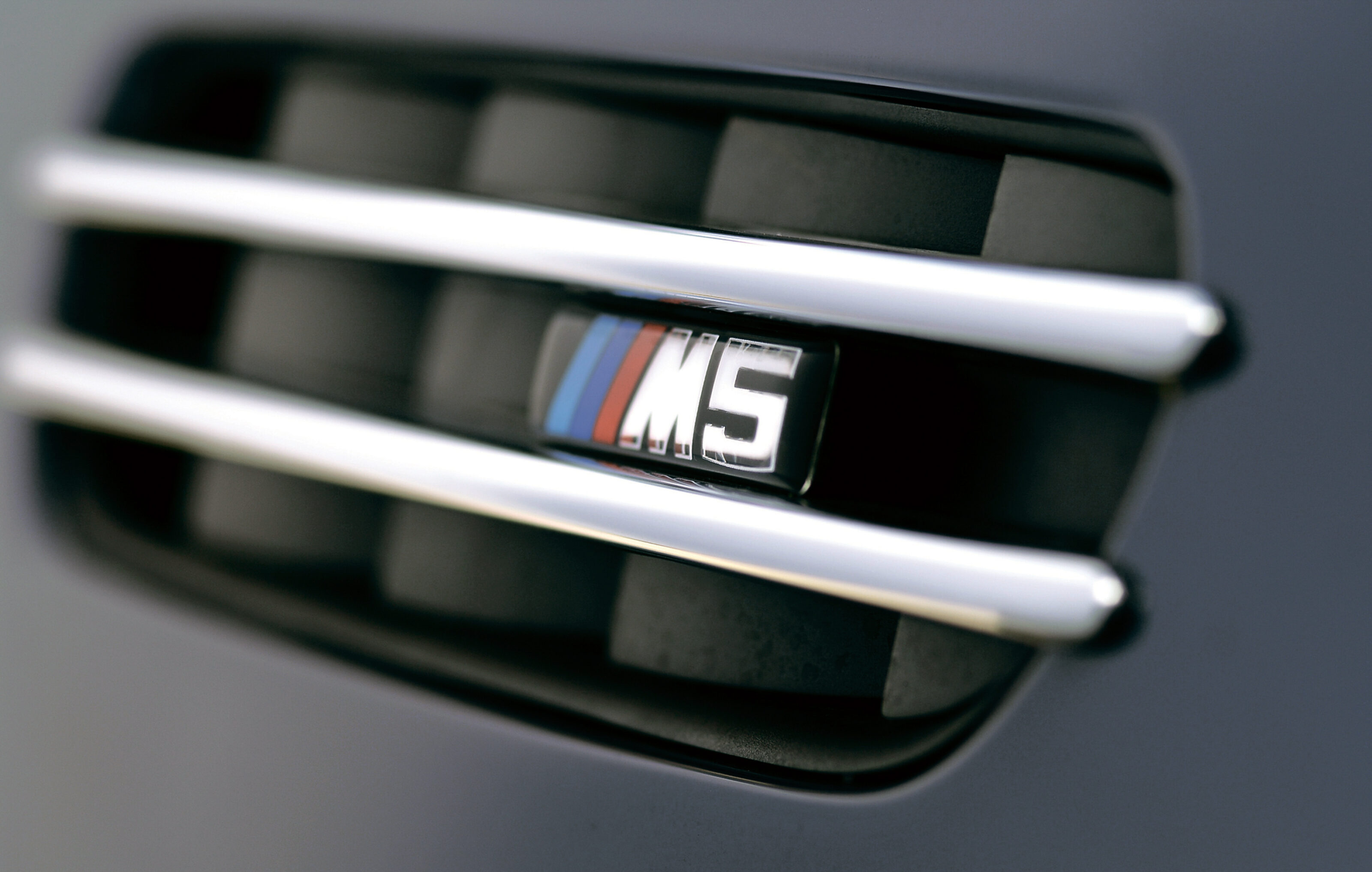
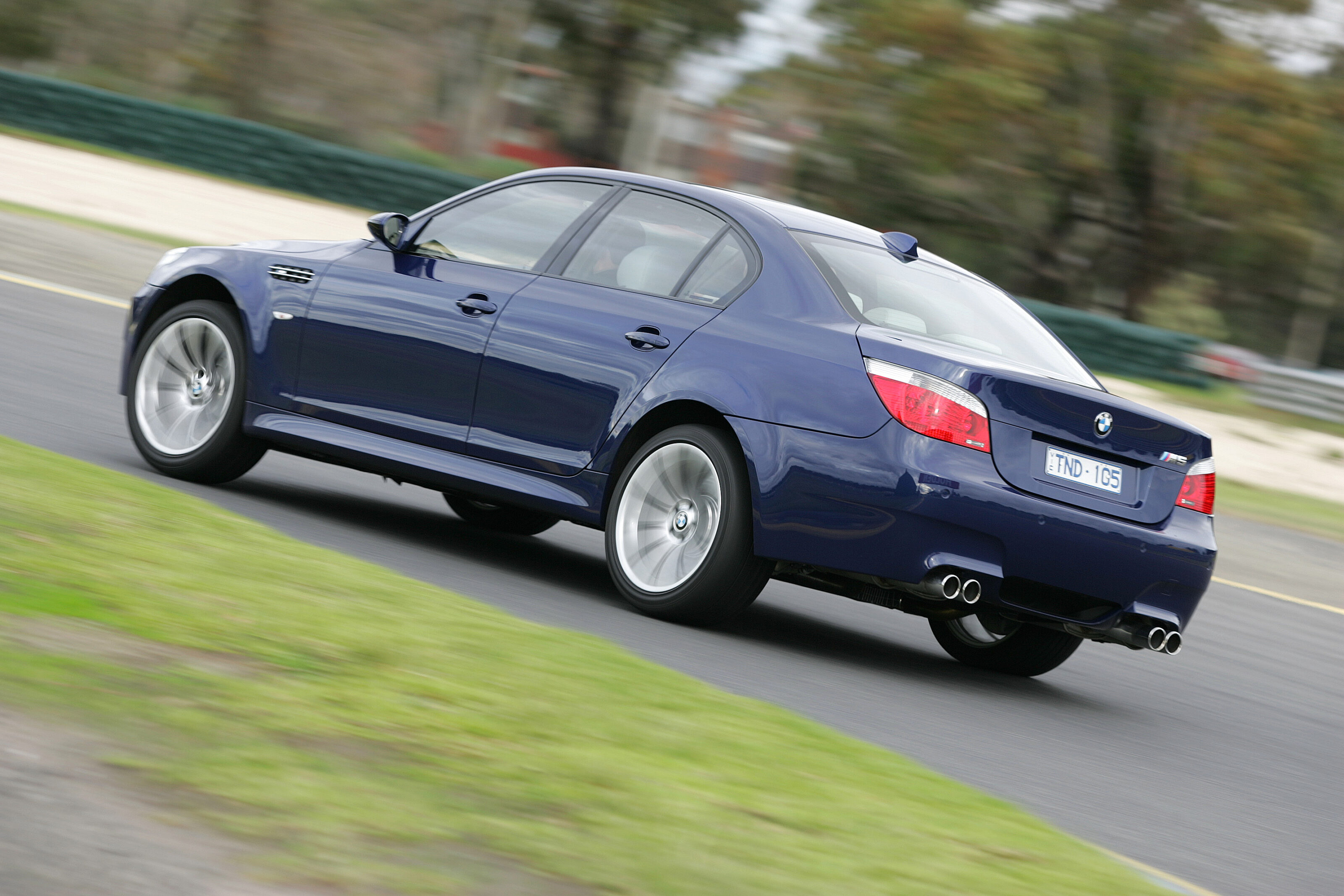
Styling is subjective so it’s up to you whether you like the look of the M5 and M6. Regardless, the E60 5 Series in particular was a revolutionary design that played with negative surfaces and its ‘flame surfaced’ concave panels.
Such carefully curved panels, especially those made of aluminium, can be costly to repair – so inspect closely for dents and damage. Condensation is known to collect in headlights, and panoramic glass sunroofs can grow leaky due to perished rubber seals.
Engine & Transmission
BMW’s SMG automated manual gearbox can be the cause of sleepless nights. The gearbox hydraulic pump motor is the frequent offender, with issues generally arising after 100,000kms.
Clutch sensors and pressure accumulators can also fail, however, the pump motor is generally the first to go. Symptoms include slow or hesitating shifts, fault codes or the dreaded red cog of death warning light. It pays to account for a healthy contingency budget.
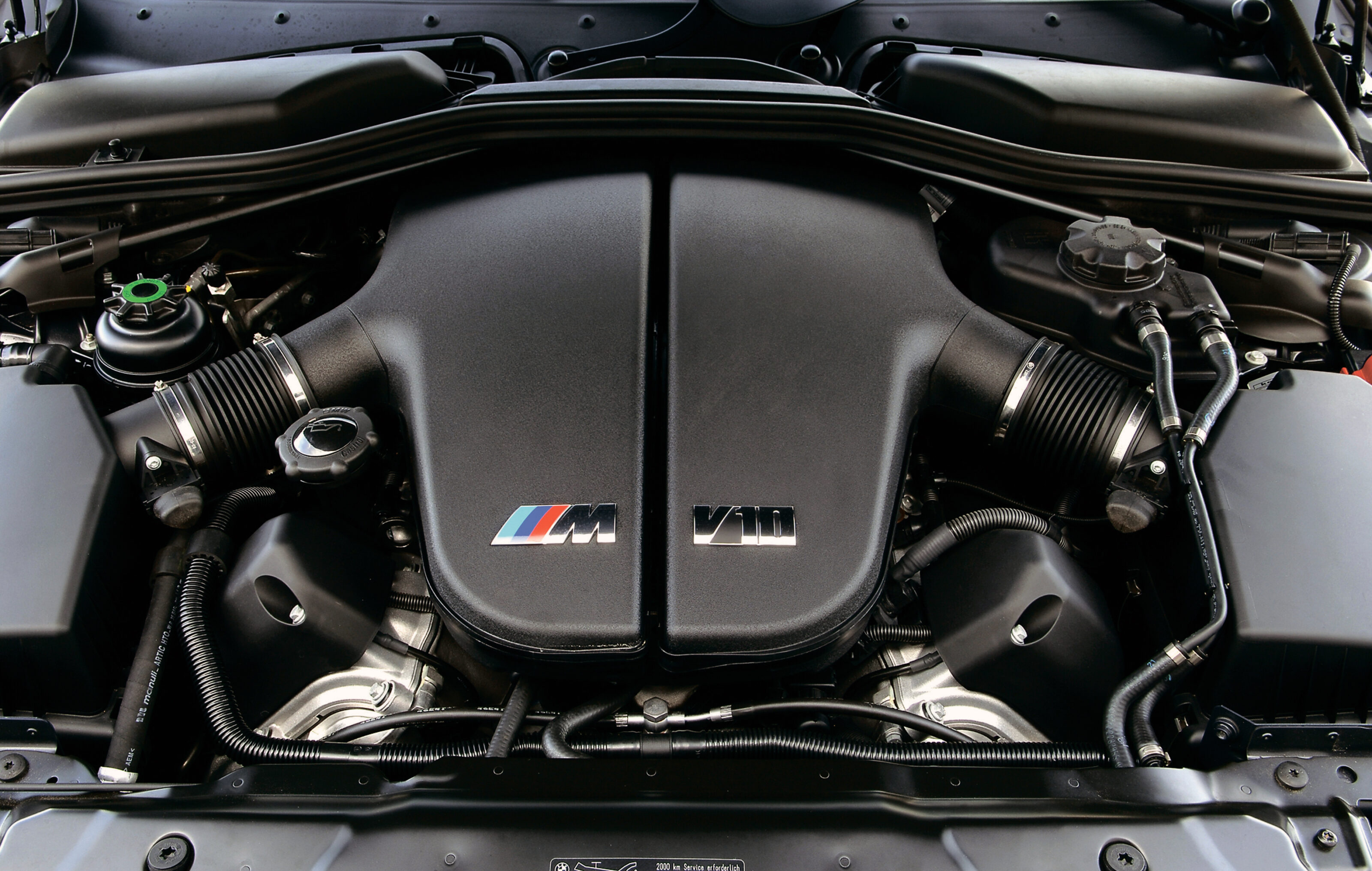
The S85 engine boasts 10 individual throttle bodies, with each bank controlled by a throttle actuator. These actuators are a common fault, often pertaining to the worn gears from age. In worst cases, rod bearings prone to wear can lead to terminal engine failure if not addressed. OEM replacements or aftermarket bearing upgrades will do much for future-proofing and mechanical confidence.
Suspension & Brakes
Check for leaks and test each variable electronic damper mode for full functionality.
OEM tyres measure 275/35/19 up front and 285/35/19 out back, and can cost in excess of $2K to replace.
Interior & Electrics
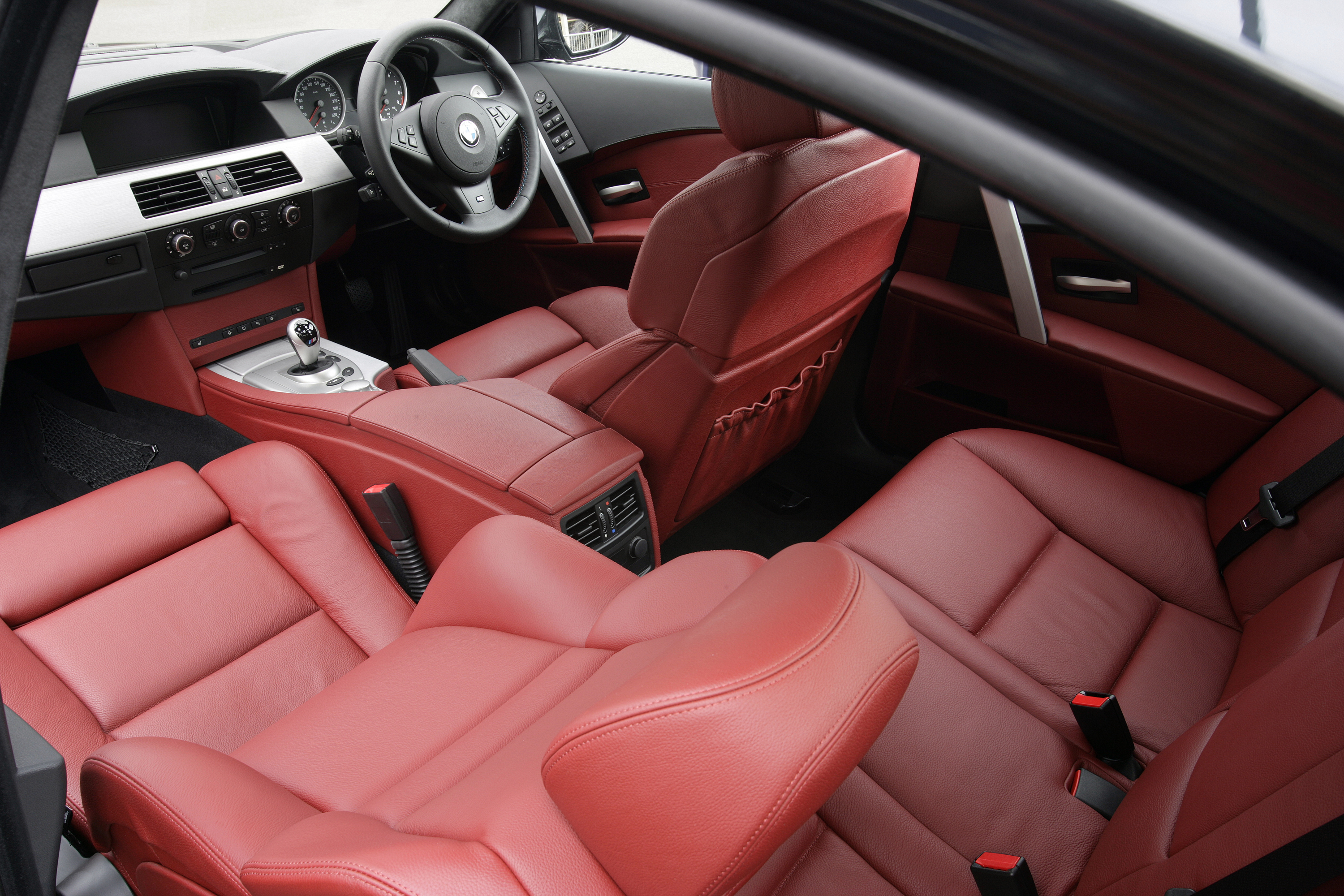
Boot floors should be inspected for signs of water, which can infiltrate the boot due to blocked rain channels. An LCI update brought redesigned doorcards, and a vastly improved hard drive-based CIC iDrive system. Test all electric functions and watch for warning lights on start-up.
Three other options you may consider
The obvious: Audi S8 V10
Another luxury saloon with 10 cylinders in its snout, the S8 V10 followed the M5 to market by a year with a more relaxed mien, making 530Nm at a lazy 3000rpm. RS6 offers same engine in smaller package… for more money.
The unexpected: Mercedes-AMG E63/CLK 63
Daimler’s M5 rival of the time didn’t boast an exotic V10, but was instead armed with AMG’s lauded M156 6.2-litre V8. The CLK 63 offers much of the same appeal, but with slick coupe styling compared to the E63’s sedan status.
The oddball: Dodge Viper RT/10
The upper ranges of the V10 Bimmer market will also see you within reach of an imported example of the original SR1 Viper. It won’t be anywhere near as luxurious or comfy, but it’s got a V10 and just 5988 were built from ’92-’95.
2004 BMW E60 M5 specs
| Body: | 4-door, 5-seat saloon |
|---|---|
| Engine: | 4999cc DOHC 40v V10 |
| Power: | 378kW @ 7750rpm |
| Torque: | 520Nm @ 6100rpm |
| Transmission: | 7-speed semi-automatic |
| Weight: | 1755kgs |
| Used range: | $45,000-$80,000 |
Snapshot
- Sources claim production could restart in December
- Firm said to have fresh supply of parts
- Local arm yet to confirm how changes could impact inbound vehicles
Toyota is aiming to restart vehicle production impeded by the global chip shortage in December, according to reports.
As a result of allegedly gaining renewed stock from its suppliers, the Japanese firm may be able to claw back some of its lost output, sources close to the issue have told news agency Reuters.
It is understood to have asked suppliers to help it make up for its lost production to build 97,000 more vehicles between December and the end of March than previously planned, with workers considering taking on additional hours at the weekend to get the job done.
However, a Toyota spokesperson in Japan is quoted as saying “nothing has yet been decided about production plans beyond November”.
Toyota previously announced it would be suspending production across 17 of its Japanese factories throughout September as it grappled with the global shortage of semiconductors, with supply chains for plants in the United States, China, Europe and other Asian countries also affected.
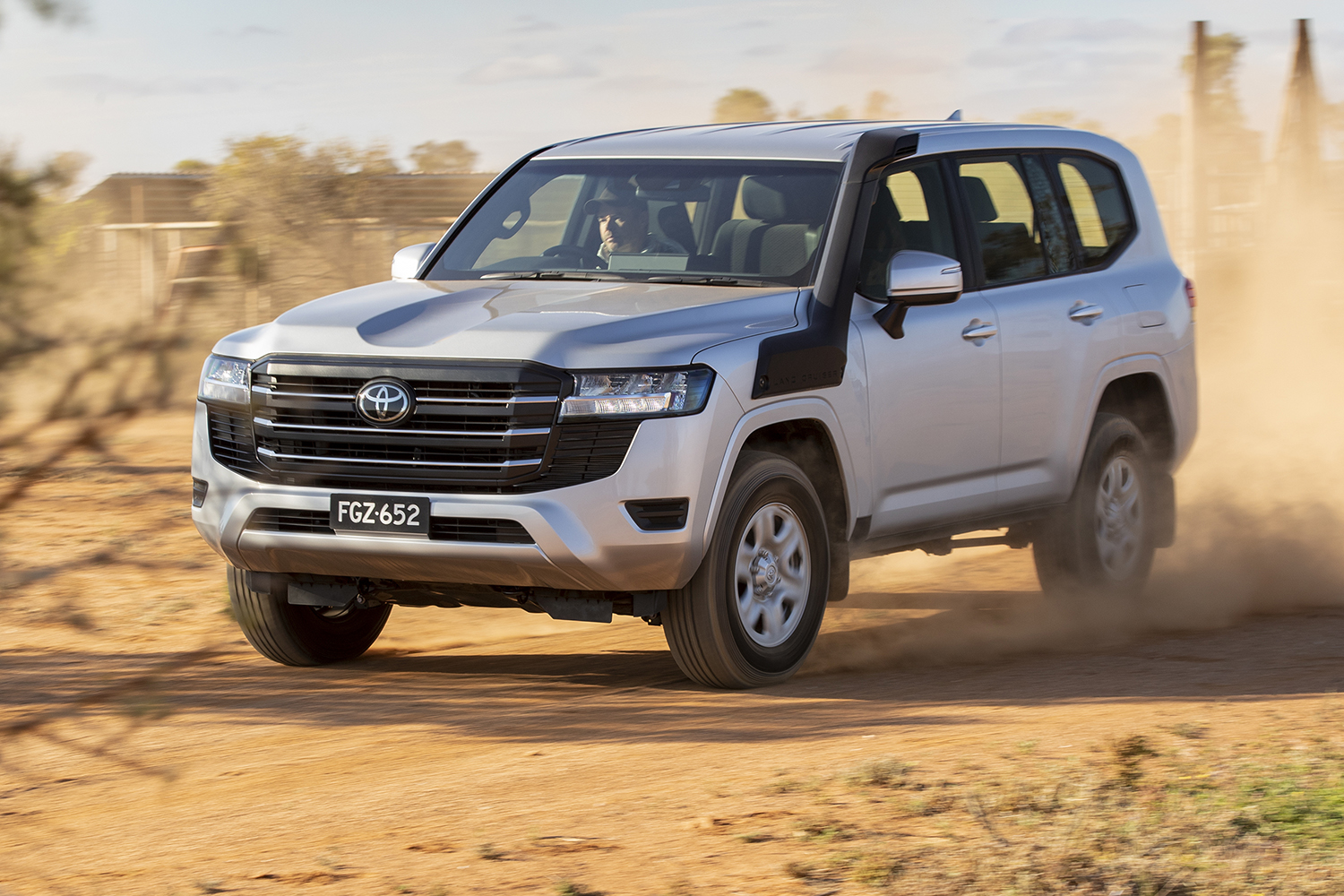
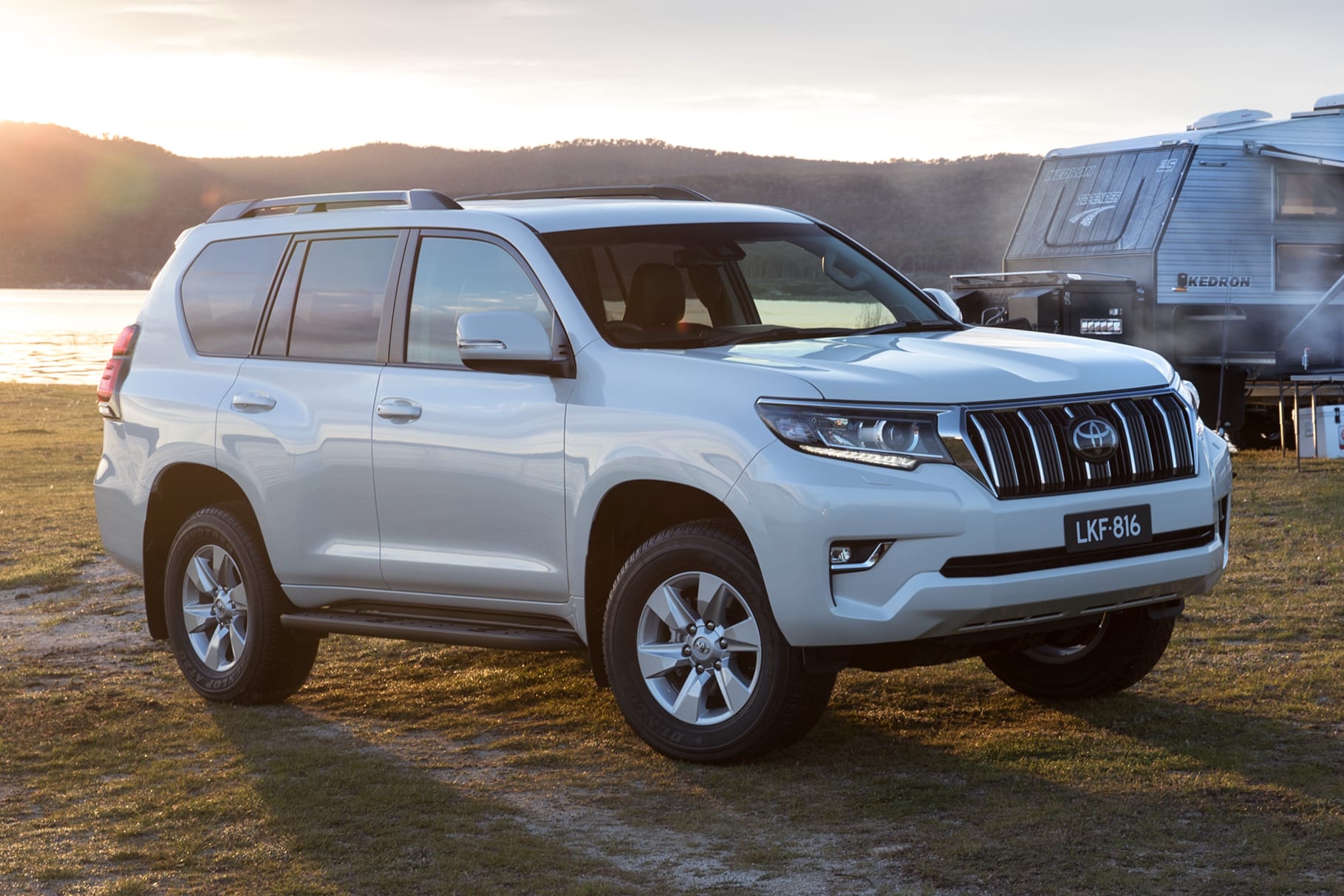
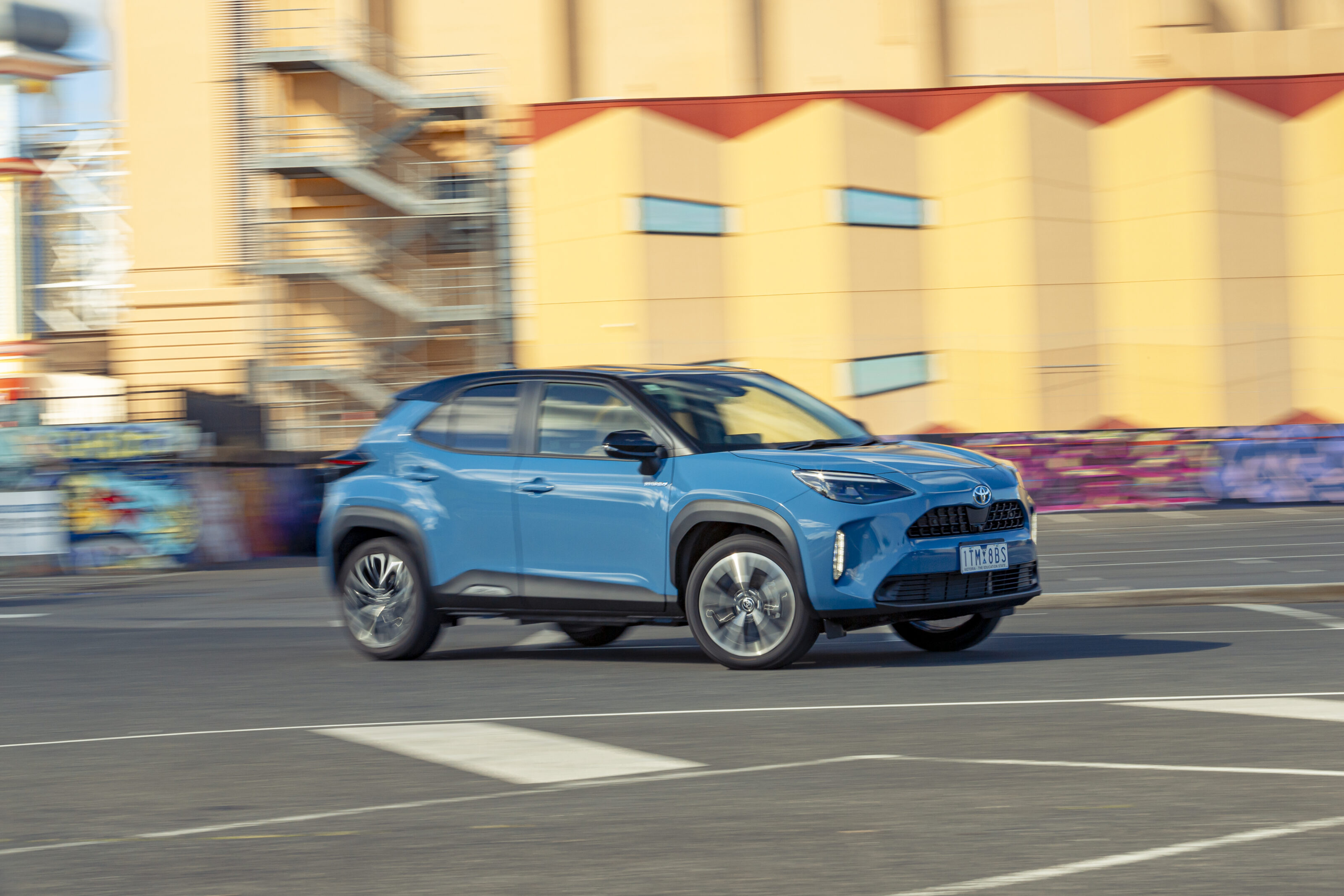
At the time at least 20 Toyota and Lexus models available in Australia were on the list of those facing delays, including; the Yaris, Yaris Cross, GR Yaris, Corolla, RAV4, Camry, Prius, Land Cruiser Prado, C-HR, Land Cruiser 70 and Land Cruiser 300.
Luxury brand Lexus is caught up in the shortage too with the LC, ES, LS, IS, RC, RC F, NX, CT, UX and RX all listed as being potentially impacted.
Due to shutdowns across a further 10 lines at nine plants announced last month, in September and October production of around 760,000 vehicles has been affected.
Despite the shortages in semiconductor chips and the immediate affect it’s having on production, Toyota still anticipates it will be able to manufacture nine million units in a 12 month period – ending on March 31, 2022, although this figure is down from its original projection of 9.3m vehicles.
At a press conference earlier this month, Toyota’s Vice President of Sales, Marketing and Franchise Operations, Sean Hanley, told media one-third of the brand’s models will be delayed by four months or less, up to three-quarters of its range could be postponed by as much as six months, and the LandCruiser 70 Series and RAV4 Hybrid (bearing the brunt of the production stoppage), would be pushed back by at least nine months.
On the hotly anticipated LandCruiser 300 Series, Hanley confirmed Toyota was not producing any right-hand drive LC300s across its plants throughout September and October, potentially pushing back the first arrivals to just before Christmas if production resumes in November.
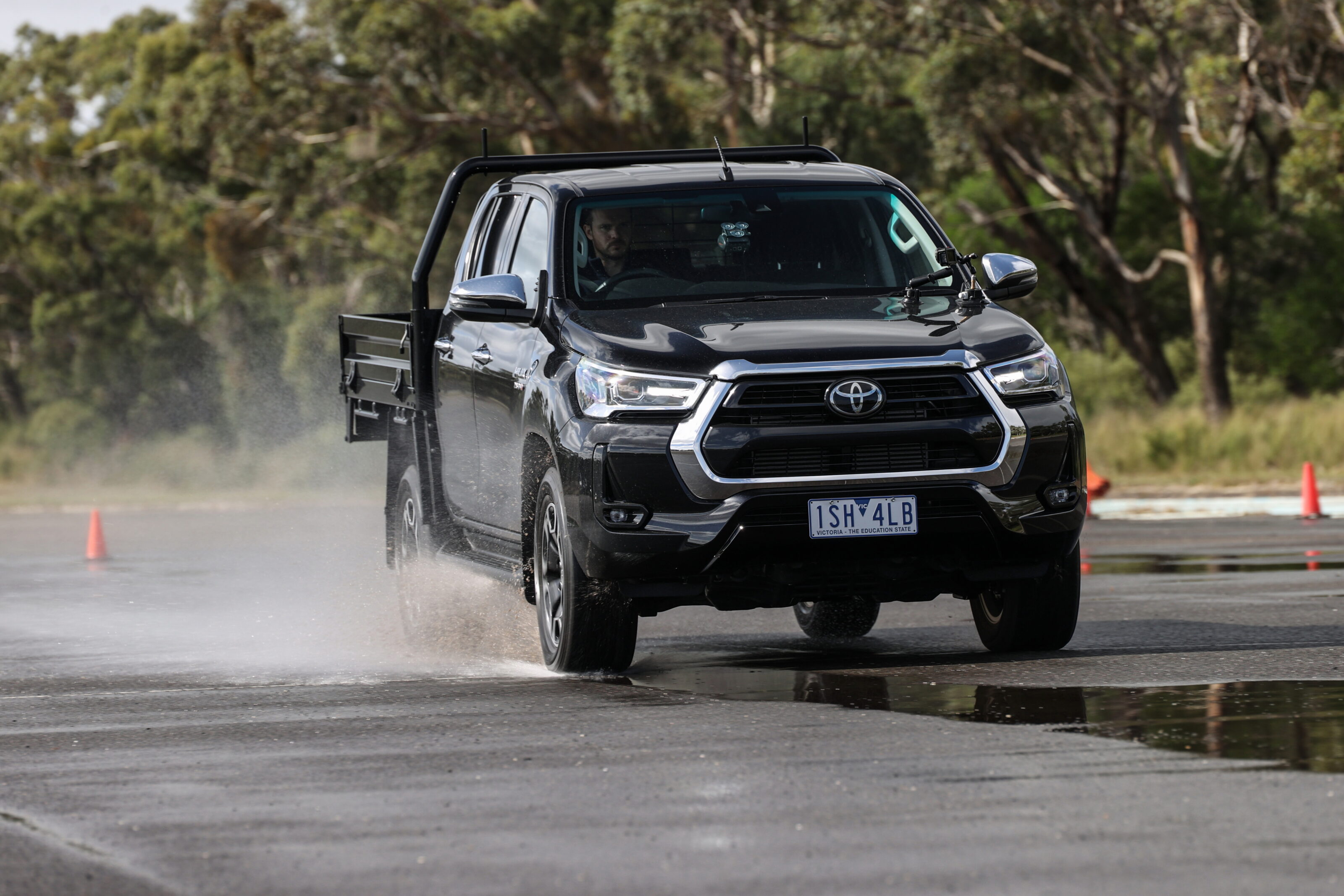
Despite the delays in production to customers, a range of LC300s have arrived in Australia for deliveries to dealers as demonstrator vehicles, providing those who have pre-ordered a chance to see it in the metal for the first time. The caveat being however that dealers are being told not to sell their demonstrators as a part of Toyota’s six-month retention period.
Hanley also unequivocally denied any of the marque’s models would be de-specced to get around the semiconductor shortage – not willing to sacrifice any existing features or quality to deliver vehicles to customers – and confirmed Australia’s favourite Toyota, the HiLux, continues to be produced as normal.
An Australian spokesperson for the firm couldn’t confirm any further changes to production or how it would affect delivery of cars coming into the country, only stating:
“Toyota Australia is continuing to work closely with our dealer network to ensure customers are informed of any changes to their vehicle orders.”
Snapshot
- Haval H6 Hybrid arriving early 2022
- 1.5-litre turbo hybrid powertrain produces 179kW/530Nm
- Pricing to be announced closer to Australian launch
The 2022 Haval H6 Hybrid has been confirmed for Australia, with the economical SUV due to reach our shores early next year.
GWM Haval announced the hybrid variant would join the wider H6 line-up, using a 1.5-litre turbo-petrol four-cylinder engine coupled with an electric motor to deliver a total output of 179kW and 530Nm to the front wheels.
A 1.8kWh battery pack feeds the 130kW electric motor, which runs through a two-speed transmission – aiding performance and improving the car’s fuel economy at higher speeds. The carmaker claims the H6 Hybrid offers a combined fuel consumption rating of 5.2L/100km.
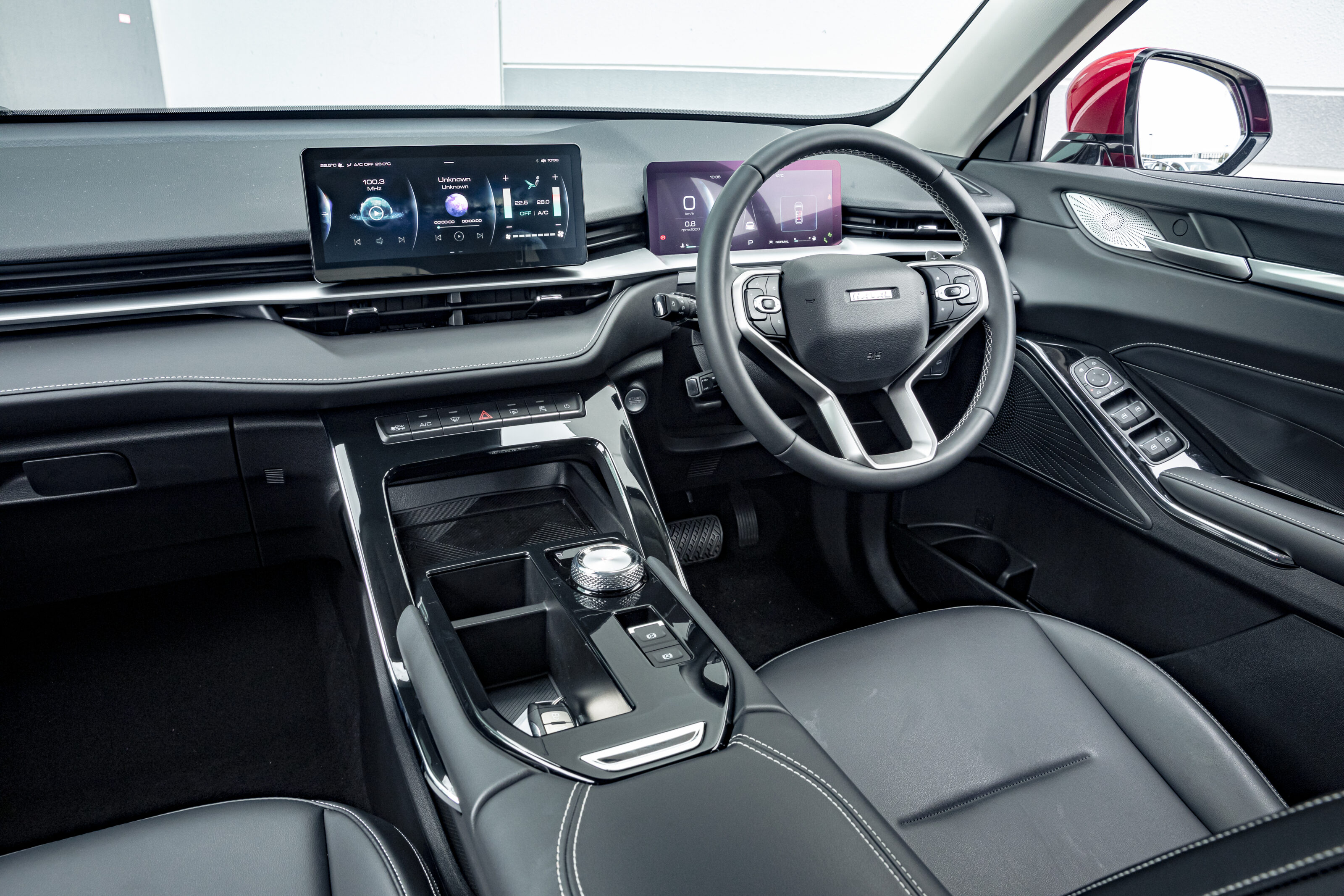
While the Chinese marque is manufacturing the H6 Hybrid at the former Holden Colorado factory in Thailand, Australian models will be sourced from the company’s Chinese production facility.
Pricing for the H6 Hybrid has yet to be announced, but it’s likely it will aim to undercut the popular (yet less-powerful) Toyota RAV4 Hybrid – which is priced from $37,070 before on-road costs. The current Haval H6 range is powered by a 150kW/320Nm 2.0-litre turbo engine and is priced from $31,990 drive-away.
The 2022 Haval H6 Hybrid is set to arrive early next year, with the brand confirming a seven-year/unlimited-kilometre warranty and five-year roadside assistance will accompany the new variant.
Snapshot
- Based on VW Caddy
- Three engine and transmission combos available
- Available in Europe from second quarter of 2022
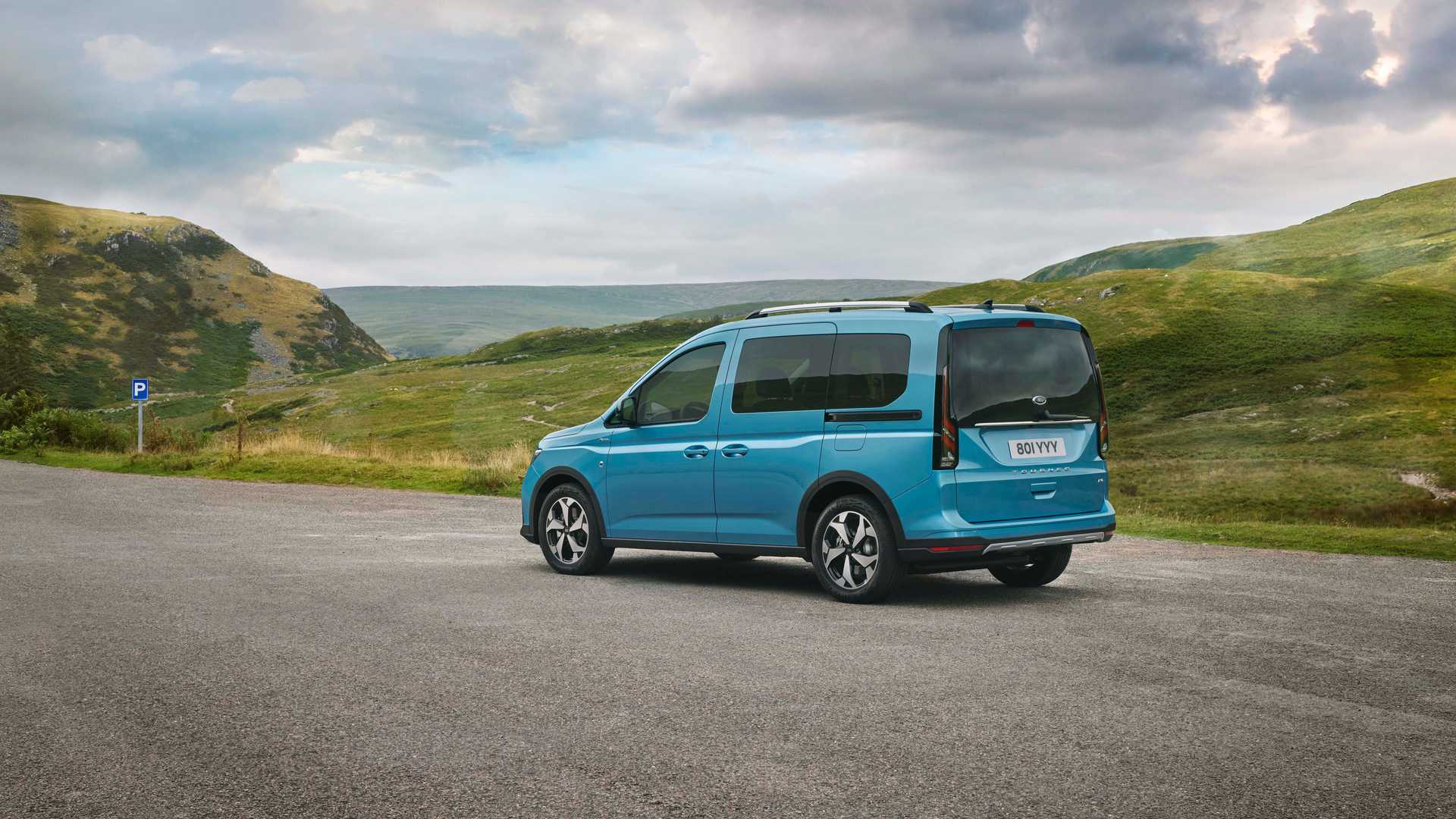
Ford has unveiled the debut vehicle from its partnership with Volkswagen, a small passenger van dubbed the 2022 Tourneo Connect.
Essentially a rebadged Caddy, the Tourneo Connect features the same driveline options behind a modified front end treatment.
Four trim levels are available; Trend, Sport, Titanium and Active, and will be built on the Caddy’s production line in Poznan, Poland.
The only petrol engine available will be a 1.5-litre turbo four, mated to a seven-speed dual-clutch automatic and good for 82kW.
There’s also an 89kW 2.0-litre diesel with the same transmission, and a 74kW version backed by a six-speed manual gearbox.
While front-wheel-drive is standard, all-wheel-drive will be offered on Tourneo Connects ordered with the manual-diesel combo, and both short and long-wheelbase versions of the van will be available.
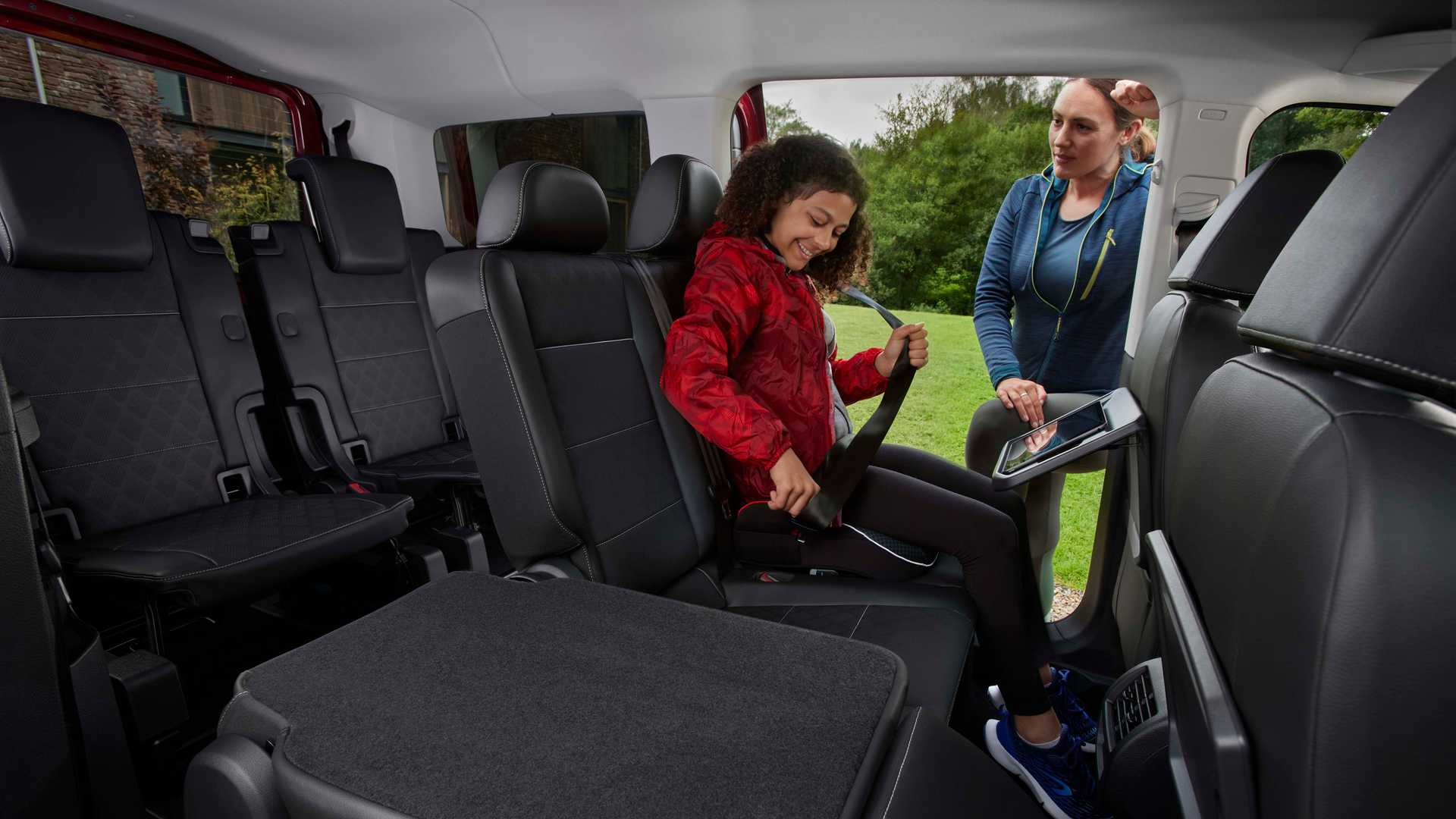
Seating for seven can be had across the range, in both L1 and L2 lengths. Trend, Titanium, and Active buyers can choose ergonomic seats with extended leg supports and four-way lumbar adjustment.
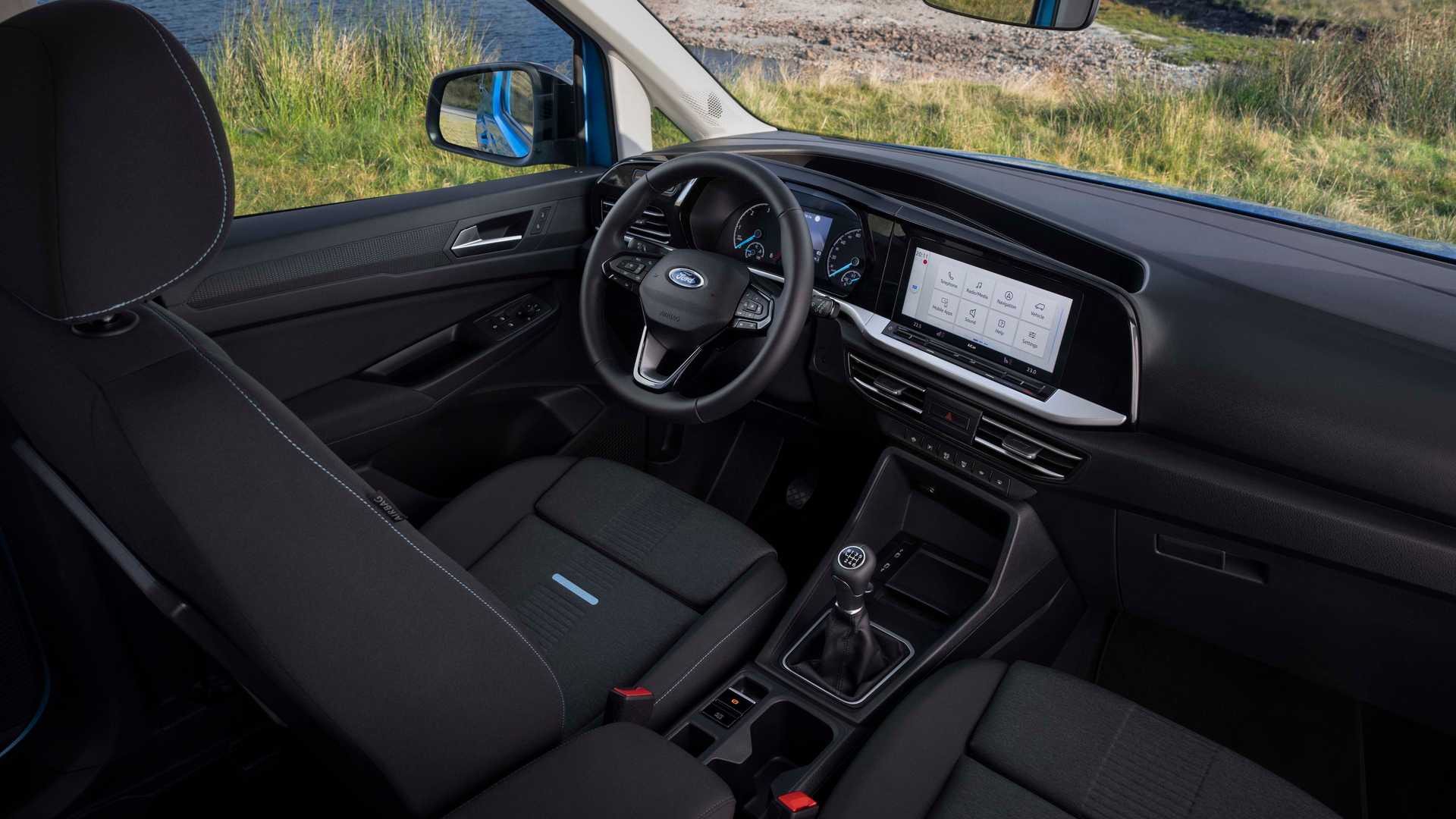
Up front is a 8.5-inch touchscreen on the entry-level Trend, with a 10-inch unit standard across the upper models.
The 10-inch screen also features a FordPass Connect Modem. Though the infotainment software is VW-sourced, it’s compatible with the corresponding FordPass app.
Autonomous emergency braking, driver alert, adjustable speed limiting, cruise control and lane-keeping technology feature as standard, while adaptive cruise, blind-spot monitoring and cross-traffic alert are optional.
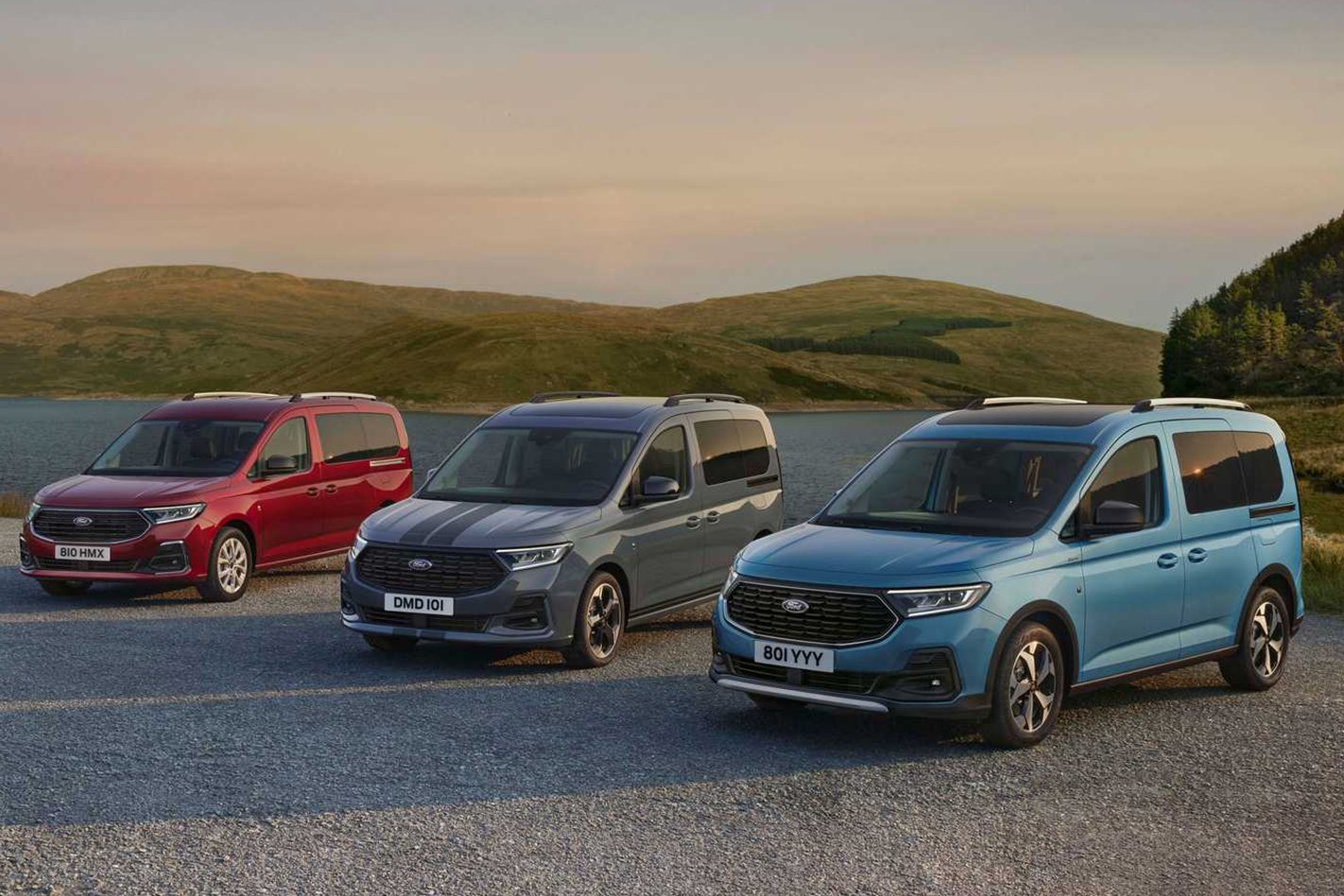
The Ford Tourneo Connect is slated to hit European markets in the second quarter of 2022.
Ford announced its partnership with Volkswagen in 2019, which will involve collaboration on commercial vehicles, autonomous driving technology, and even an electric Ford based on the VW MEB platform.
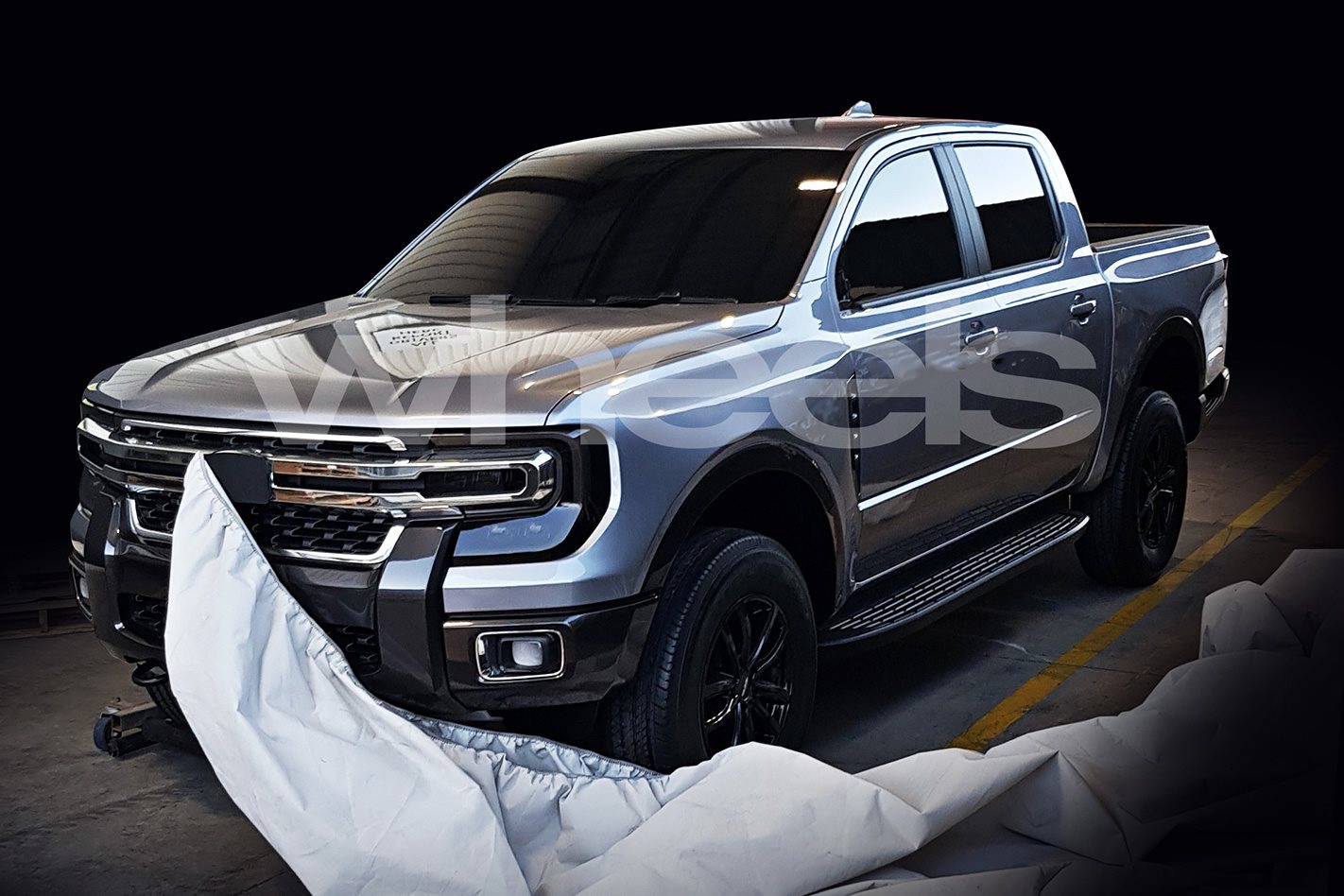
A total of eight million vehicles are planned to be built under the partnership, including the next-generation Amarok – based on the Ford Ranger architecture.
Snapshot
- Gen 3 Mustang and Camaro delayed until start of 2023 championship
- COVID-19 impacts cited as a major cause
- Official unveil of Gen 3 to happen at Bathurst 1000 in December this year
As widely predicted, Supercars has elected to further postpone the deployment of their new Gen 3 Mustang and Camaro race cars until 2023, citing COVID-19 related delays.
When the new Gen 3 formula was first announced, Supercars intended to debut the new Camaro and reinvented Mustang at the start of the 2022 championship. That was then pushed out to a mid-2022 debut, before the final 2023 deadline announced today.
While the cars won’t debut until 2023, the covers will be pulled off of a pair of Gen 3 prototypes at Bathurst on December 3, giving fans their first proper look at the cars in the metal.
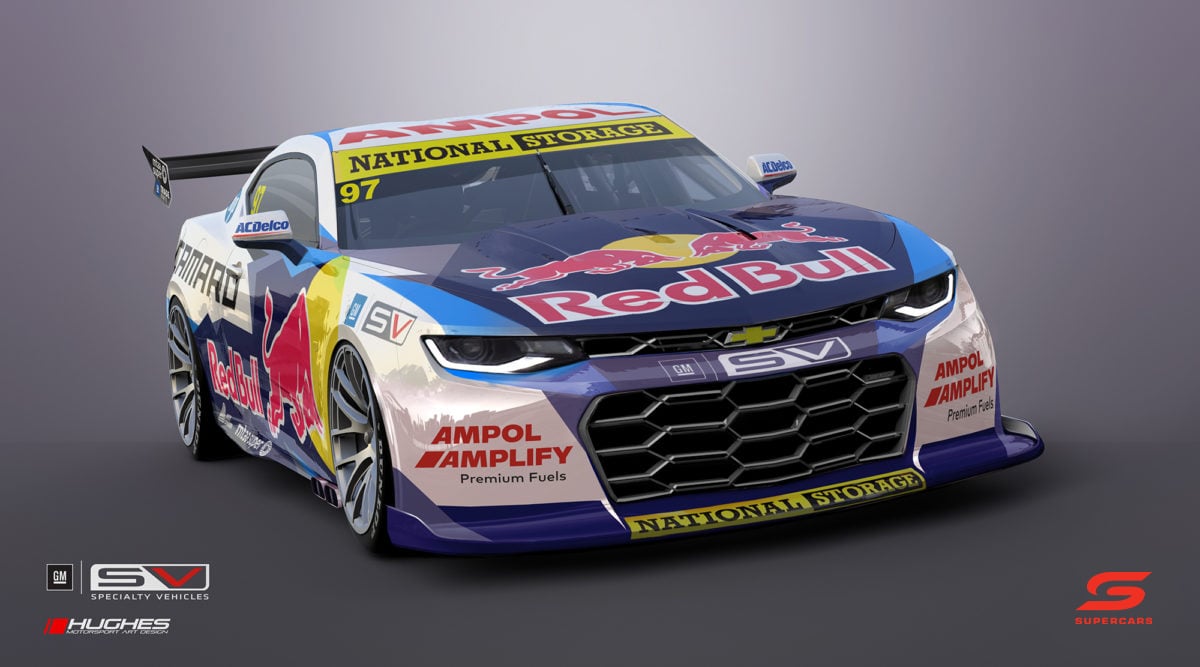
The Gen 3 cars will also follow the Supercars Championship on tour next year, performing on track demonstrations at each event.
Supercars CEO Sean Seamer says the reason for the latest delay with the Gen 3 cars is largely due to the demand the teams will now be under to finish off the 2021 racing season, which will see four consecutive weekends of racing at Sydney Motorsport Park before the finale at the Bathurst 1000 in December.
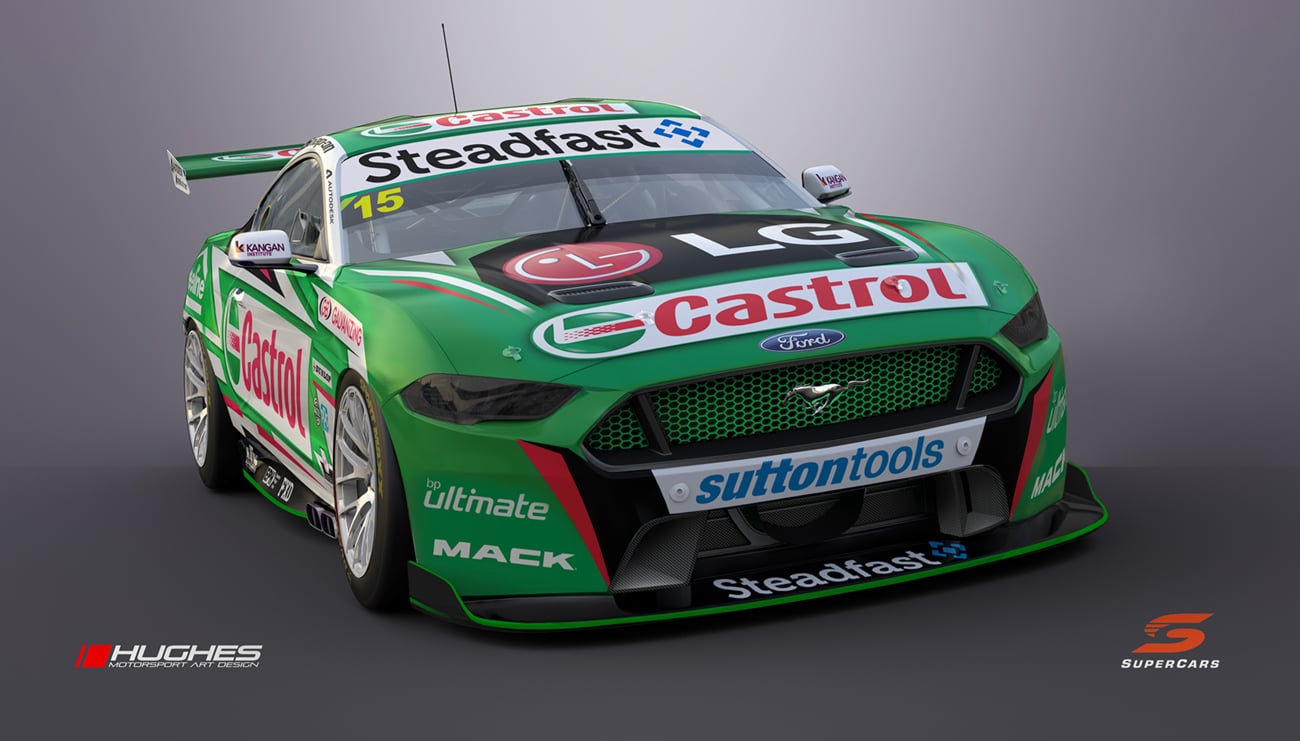
“They are going to be on the road from the end of this month, right up until Christmas when they go back to Queensland,” says Seamer.
“That takes them out of action and not able to do as much testing on the new cars as we would like, because we have to prioritise this season, and then going forward into next year.”
Triple Eight Race Engineering and Dick Johnson Racing are the main teams responsible for developing the new Gen 3 Camaro and Mustang, respectively.
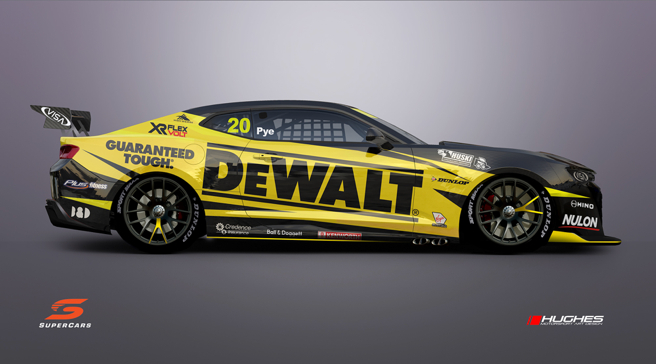
We’ve gone in-depth on the specifics about the new Gen 3 cars before, but here’s a quick summary for those out of the loop.
The Gen 3 cars will be the biggest change in the Supercars category since the COTF (Car of the Future) platform which was first introduced in 2013. Unlike the existing COTF platform, the new Gen 3 chassis’ are designed to cater to a two-door coupe style layout over the outdated four-door chassis originally designed to suit Commodore and Falcon body skins. In a nut shell, the Gen 3 Mustang race car will actually look like a Mustang – not the oblong Frankenstein it is now.
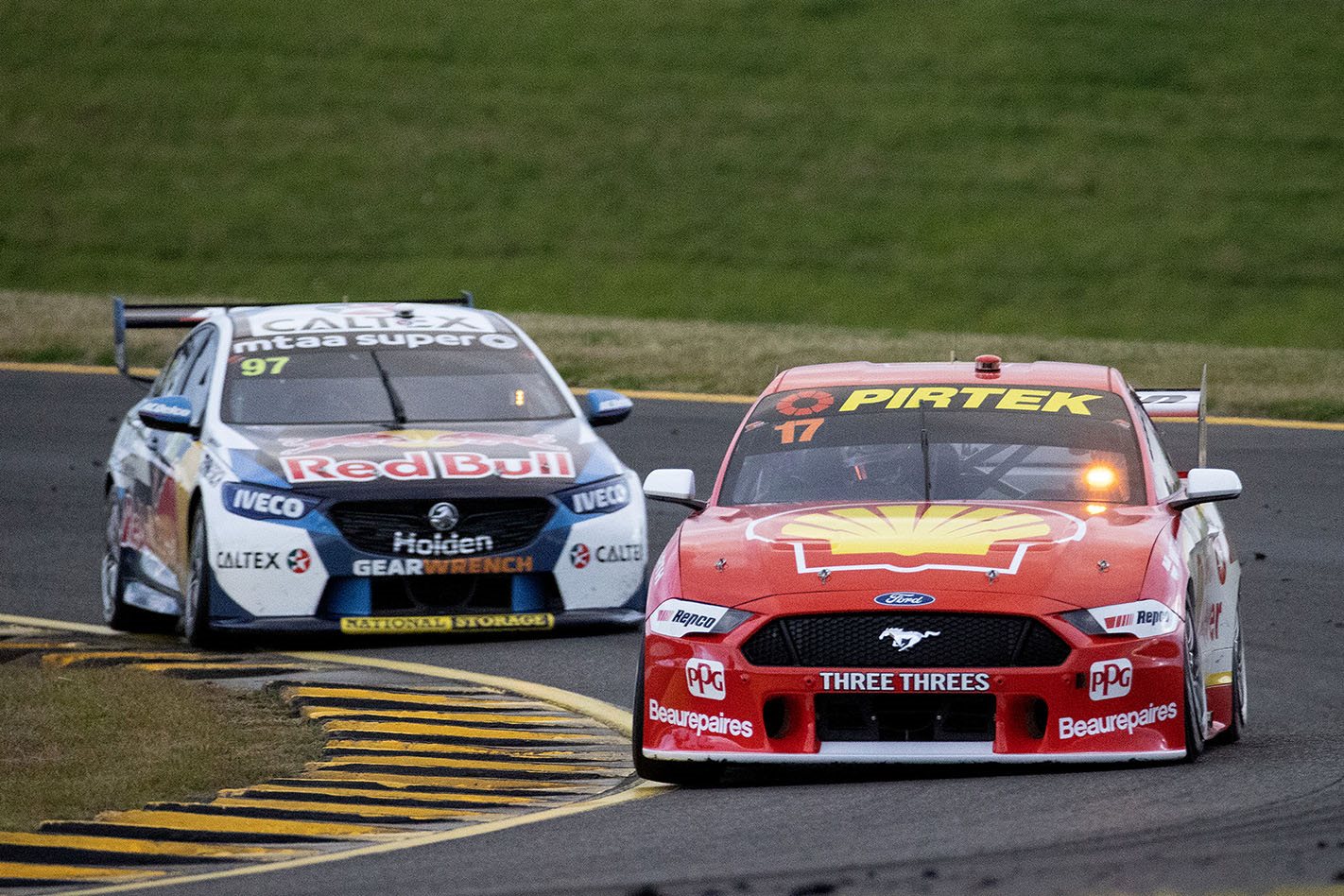
The other goals for the new cars is to decrease running and manufacturing costs (with increased safety), and a big part of that is the engines. Right now, competitors use highly-strung Ford and Chevy small-block V8s. Not only are they bespoke to the Supercars category and therefore very, very expensive – but they bare no relation to the engines fitted to their road-going counterparts.
So for Gen 3, both the Camaro and Mustang will be running modified versions of the engines actually found in the road car – hurrah! The Camaros will be slung with a 5.7-litre version of Chevrolet’s LT V8, while the Mustangs will use a bigger 5.4-litre version of the quad-cam Coyote mill.
Capacity is just about the only public knowledge on hand about how Supercars has addressed the parity between the two engines at the time of writing, but we do know the category is targeting 447kW (600hp) and 650Nm (480ft/lbs) from both powerplants.
Reduced aero packages will ensure the cars closer resemble the road going versions while also producing closer racing.
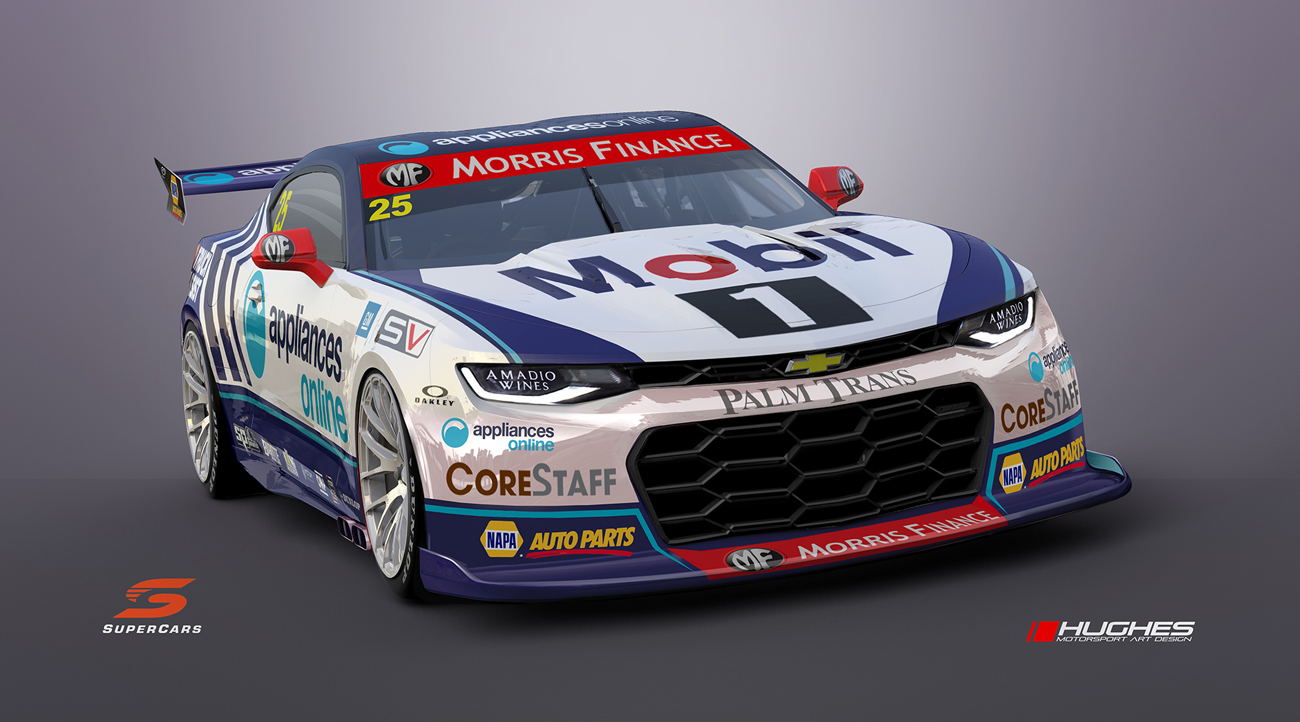
More details will continue to emerge about the new Gen 3 cars ahead of their official launch on December 3 of this year, and the 2021 Repco Supercars Championship will resume on October 29 at Sydney Motorsport Park.
UPDATE, 13 October: A spokesperson for Hyundai has hinted at the possibility of a high-performance Ioniq 5 N.
Andrew Tuitahi, Hyundai Australia’s general manager of product, told media he imagined the Ioniq 5 would be “really quick, very powerful, and lots of fun,” if such a car were being developed by the company’s N department.
While he stopped short of confirming the model, Tuitahi made a thinly-veiled reference to recent coverage showing the Ioniq 5 N undergoing testing at Germany’s Nüburgring circuit.
“But I couldn’t tell you today when we would be able to expect that car, if it was a thing,” he added.
The story to here
September 2: The 2022 Hyundai Ioniq 5 N has been spotted during on-road testing in Germany.
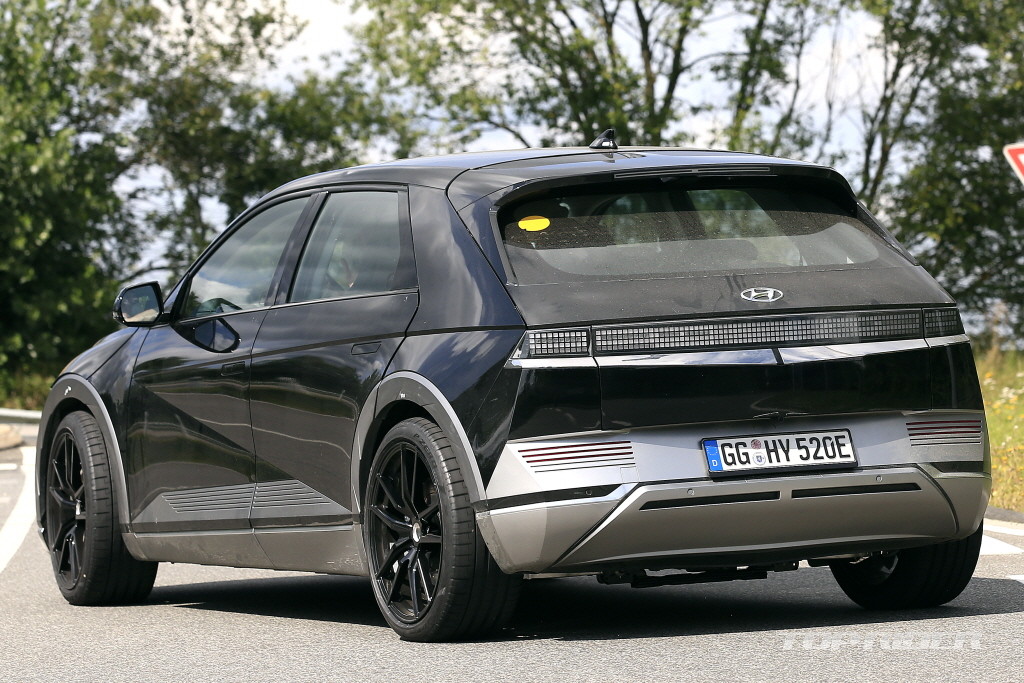
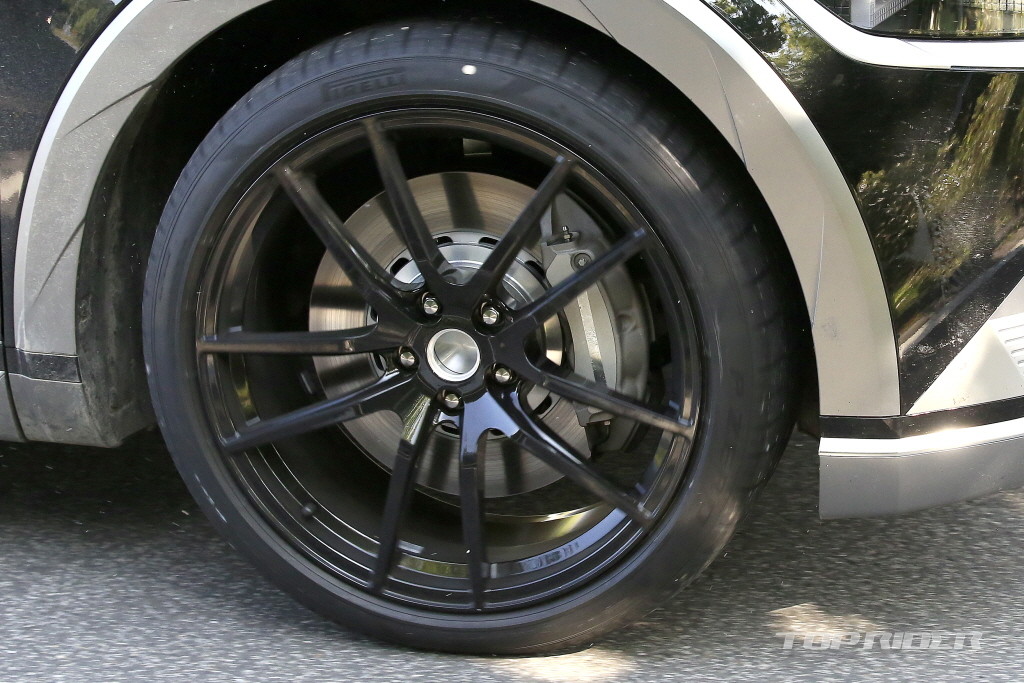
Despite wearing the same body as the all-electric Ioniq 5, the larger wheels and brakes strongly suggest this has come from the performance division of Hyundai, known simply by the letter N.
These images posted to Korean website Daum show the black Ioniq 5 N prototype driving on large alloy wheels clad in Pirelli P Zero rubber, designed to accommodate the large braking system.
The lower part of the front bumper has been opened up to allow greater airflow – likely to help cool the electric powertrain rather than to aid downforce – while it appears the test car is sitting on lower sports suspension.
In Australia, the standard Ioniq 5 will be offered with up to 225kW of power – a far cry from the 430kW found in the dual-motor Kia EV6 GT, which shares the same E-GMP underpinnings as the Hyundai.
Reports out of Europe suggest Hyundai has stress-tested the E-GMP platform up to 450kW, but it’s possible the Ioniq 5 N will deliver a similar performance level as its Kia cousin, allowing for a 0-100km/h sprint time of around 3.5 seconds.
Hyundai N boss Albert Biermann – who was poached from BMW’s M division in 2015 – has previously stated: “Hyundai Motor Group’s electric vehicle platform E-GMP has tremendous potential. The first electrified N model will be based on E-GMP.”
But Biermann promises the E-GMP architecture is more than just straight-line speed, telling media he was “looking forward to the day when many N brand fans will be shown the new cornering [capabilities of E-GMP]”.
The Korean carmaker has its own research and development centre at the famous Nürburgring circuit in Germany – testing up to 15 vehicles annually, and with each car driving 480 laps of the 21 kilometre track.
“It will be very exciting to run the Nürburgring with an E-GMP [electric vehicle] that has undergone a specialised development process for N,” Biermann said in July 2021.
“In certain corners, E-GMP may overwhelm high-performance cars with internal combustion engines.”
Snapshot
- Citrou00ebn has sold just 95 units so far this year
- Only seven vehicles sold in September
- Decrease of 72 per cent compared to September 2020
French manufacturer Citroën has yet to reach 100 sales for 2021 in Australia, one of the lowest totals of any brand this year.
Sitting at just 95 units sold to the end of September, there have been four months since January where the manufacturer has failed to notch up double-figures, with February (6), April (3), August (5) and September (7) recorded as its worst months.
While last month wasn’t Citroën’s lowest, it still represents a 72 per cent drop in sales for the month and 31.7 per cent for the year – the second largest year-to-date drop of any manufacturer bar one.
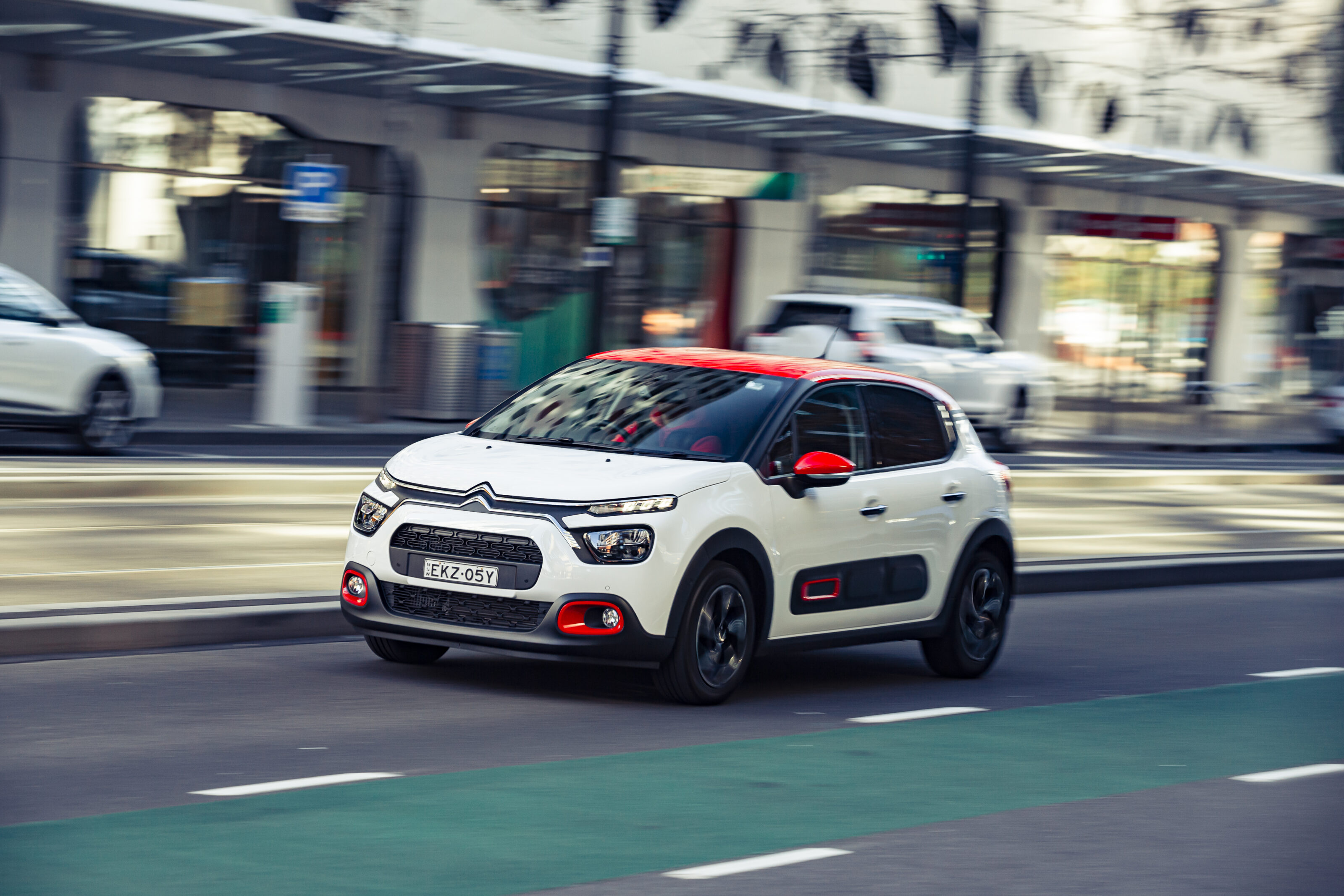
The low numbers come off the back of a reduction in the brand’s range of vehicles sold, halved from four to two throughout the year, with the C3 Aircross and C4 Cactus dropped from service, leaving just the C3 and C5 Aircross.
With just 62 C3s, 30 C5 Aircrosses and three C3 Aircrosses sold (before the latter was pulled from showrooms in early September), Citroën’s sales total for the year so far sits ahead only of McLaren (65), Lotus (59), Rolls-Royce (35), Alpine (9) and Morgan (3).
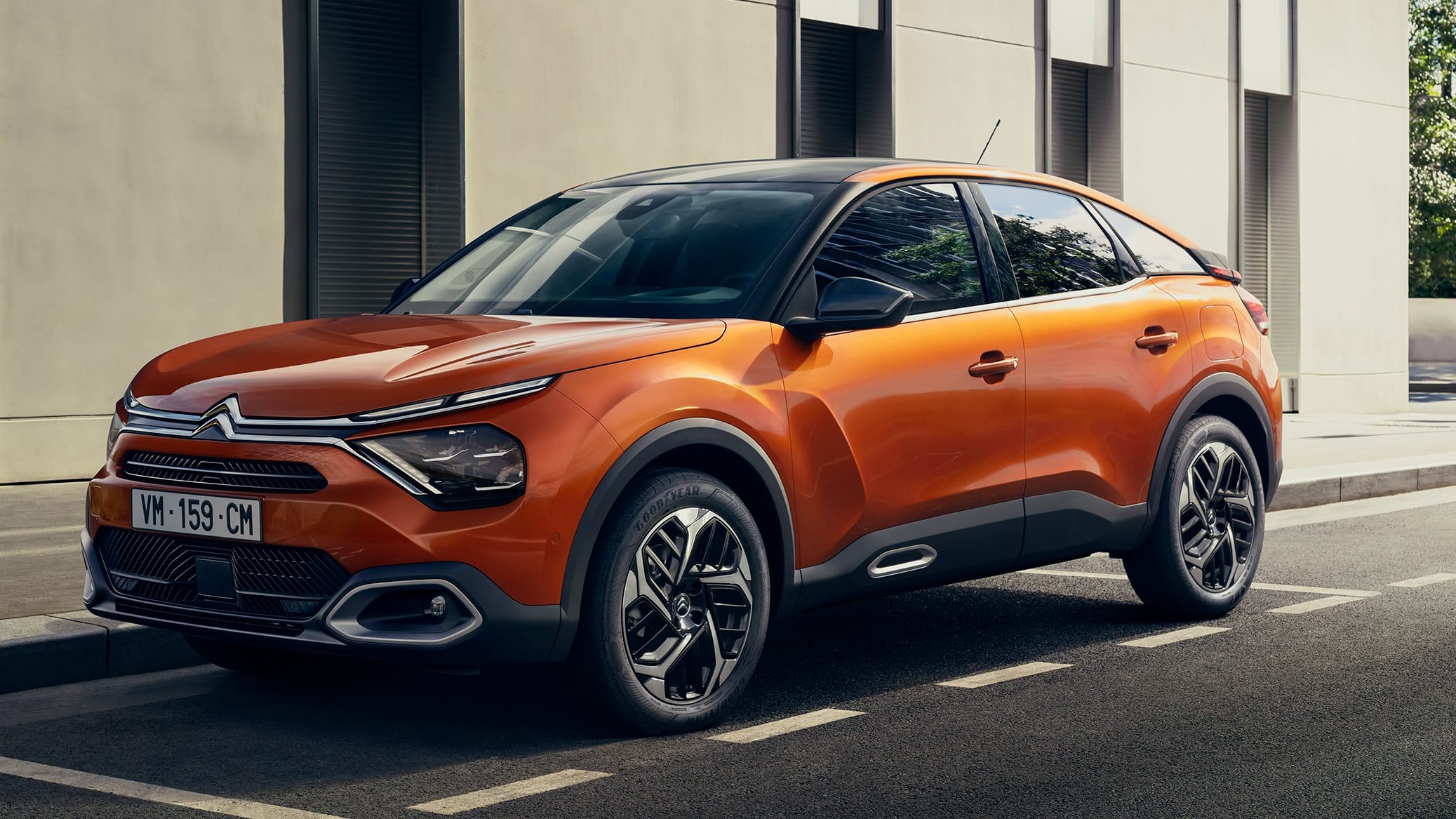
The brand will be launching its new C4 in Australia from November, which is the first generation of the nameplate to move to a crossover platform – though it will be available with just one variant initially.
A spokesperson for the brand reaffirmed its commitment to providing vehicles for the Australian market.
“There will always be customers for the Citroën brand in Australia and we remain committed to serving them. The Citroën range is expanding in Australia with the all-new Citroën C4 joining the C3 and C5 Aircross as part of the local range in November this year,” they said.
“The versatility, unrivalled comfort and original design of the Citroën C4 will no doubt appeal to the discerning Australian consumer and provide a new avenue of growth for the brand.”
Comparatively, fellow Stellantis-owned sister brand Peugeot has sold 1989 vehicles so far this year – spearheaded by the 3008 on 861 units.
The carmaker’s monthly sales are higher too – while Peugeot sold just 163 vehicles in September 2020, that figure jumped up by 198.2 per cent in 2021 to 486.
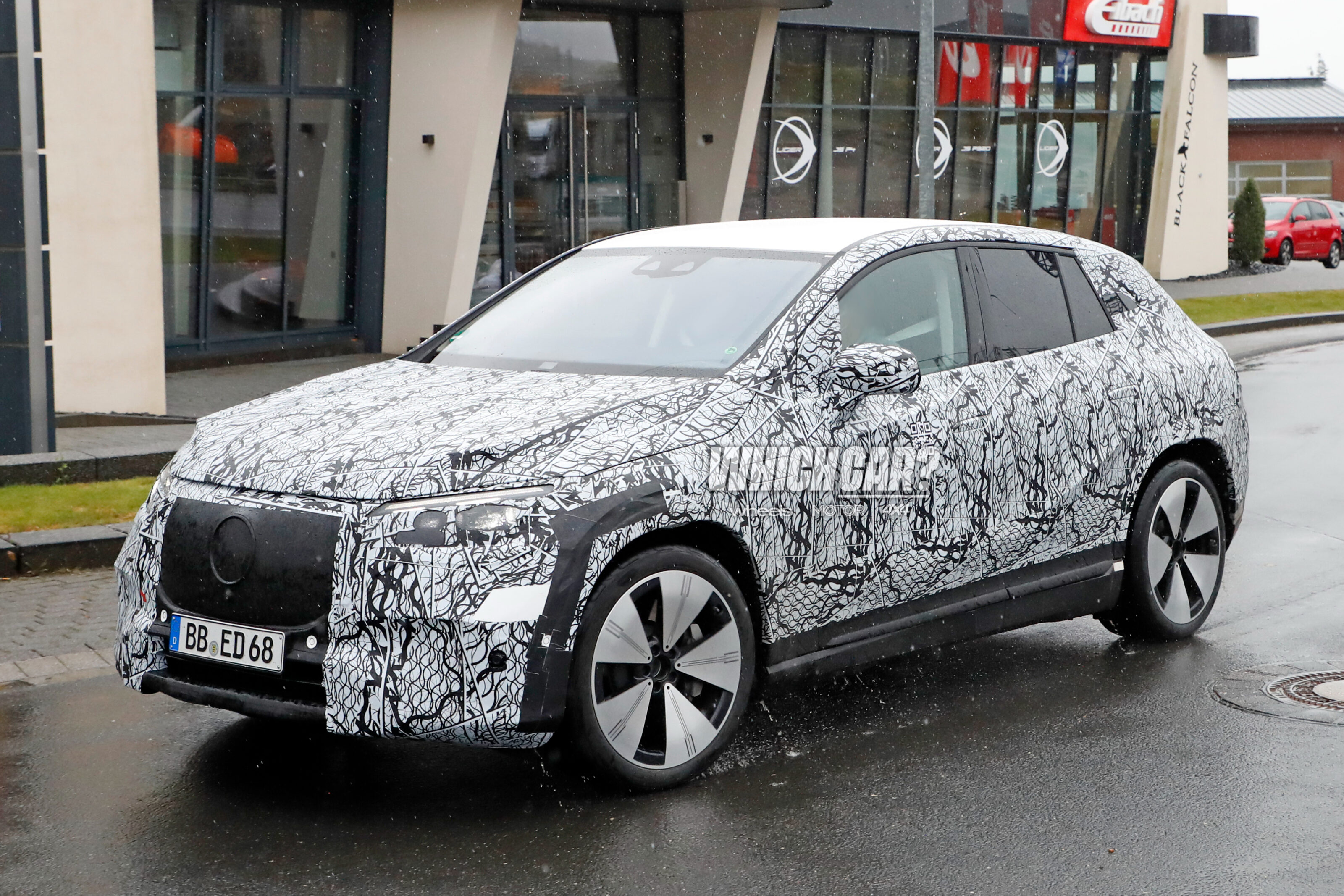
The 2023 Mercedes-Benz EQE SUV has been caught undergoing testing on public roads in Germany.
The mid-size SUV will sit between the EQS and EQC in the Mercedes-Benz electric line-up, and is closely related to the EQE sedan unveiled in early September.
The EQE SUV prototype was spotted driving near Germany’s famous Nürburgring circuit, and appears to adopt the company’s EQ design language: smooth and rounded front facia, thin LED daytime-running light strip, similar full-width LED tail-light bar, and aerodynamic alloy wheels.
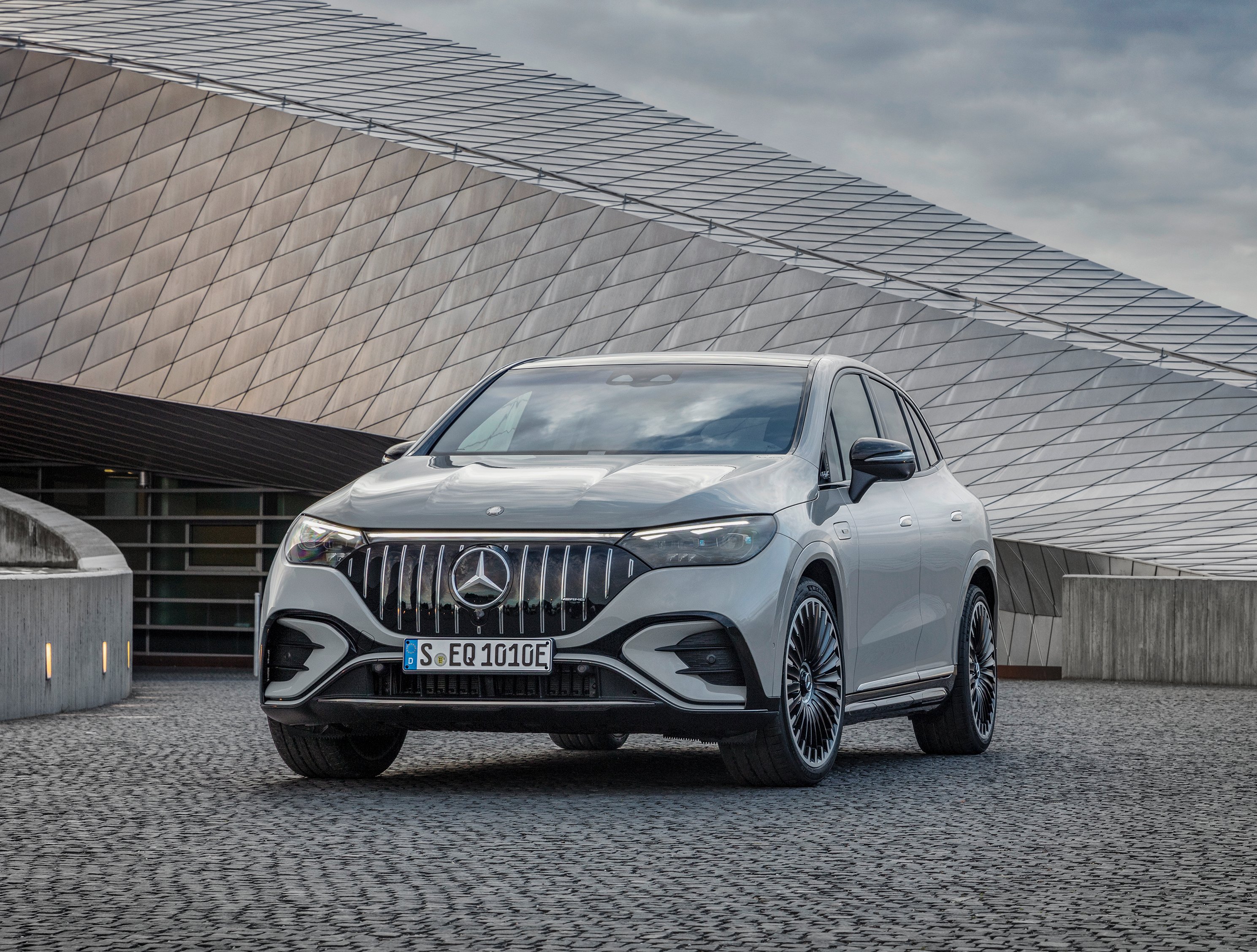
UPDATE, Oct 2022: 2023 Mercedes-Benz EQE SUV revealed
The 2023 Mercedes-Benz EQE SUV has been revealed ahead of its Australian launch in mid-2023. For everything you need to know about the new electric large SUV, click on the link below:
Story continues…
It’s expected an entry-level variant of the EQE SUV will adopt the sedan’s 90kWh battery pack – possibly badged as the EQE350 – powering a 215kW electric motor at the rear axle and allowing for a driving range in excess of 600 kilometres.
Based on the company’s EVA2 architecture, which is shared with the larger EQS SUV, it’s possible the EQE could be offered with its sibling’s 108kWh battery pack.
The higher-spec EQE450 SUV would likely use dual electric motors, delivering more power, a potentially longer driving range, and all-wheel drive.
High-performance AMG versions are also expected, with the company filing trademark applications for EQE 43, 53, 55, and 63.
An official unveiling for the 2023 Mercedes-Benz EQE SUV is anticipated next year, ahead of the sedan’s arrival in late 2022.
