
It’s a question that no one ever wants to face: what happens if I put the wrong fuel type in my car?This is a very embarrassing story for a motoring journalist to write, but using the wrong fuel is an increasingly common problem.There are a number of reasons for this: the quieter operation of diesels, the fact that diesel and petrol pumps can now look quite similar, staff constantly swapping between differently-fueled work vehicles or, as in my case, the fact your mind is thinking about everything except the job at hand.
Happily, the fix is quite simple, but the most important thing to remember is to not under any circumstances start the engine.
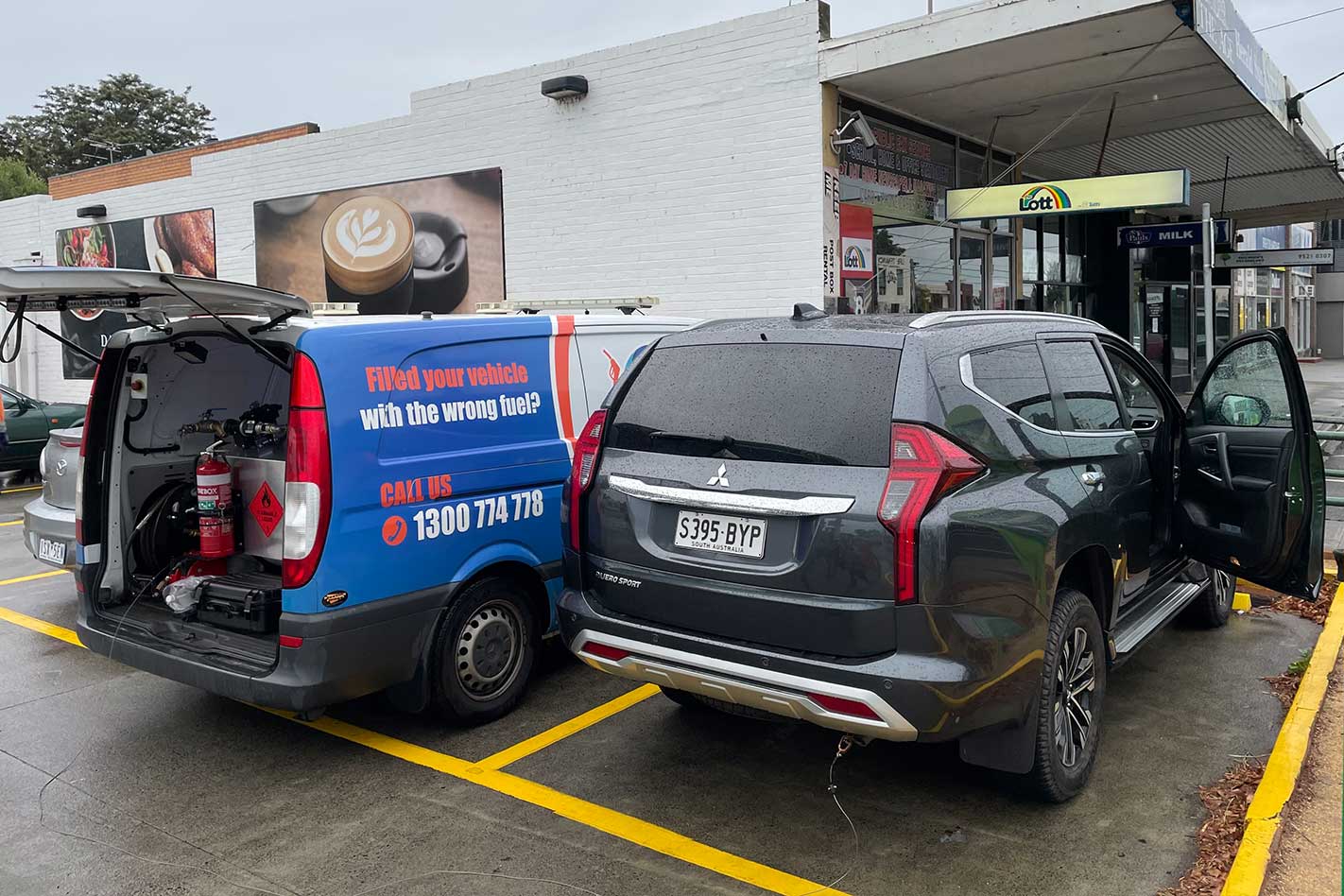
Hopefully, like me, you’ll realise while filling up the car, so it’s just a matter of pushing the car to a parking space – again, if safe to do so – and calling for help.There are a number of options. State motoring clubs like the NRMA, RACQ or RACV are able to assist, but they will typically tow your car to a workshop or dealership to solve the problem leaving you stranded and without a vehicle while the situation is rectified.
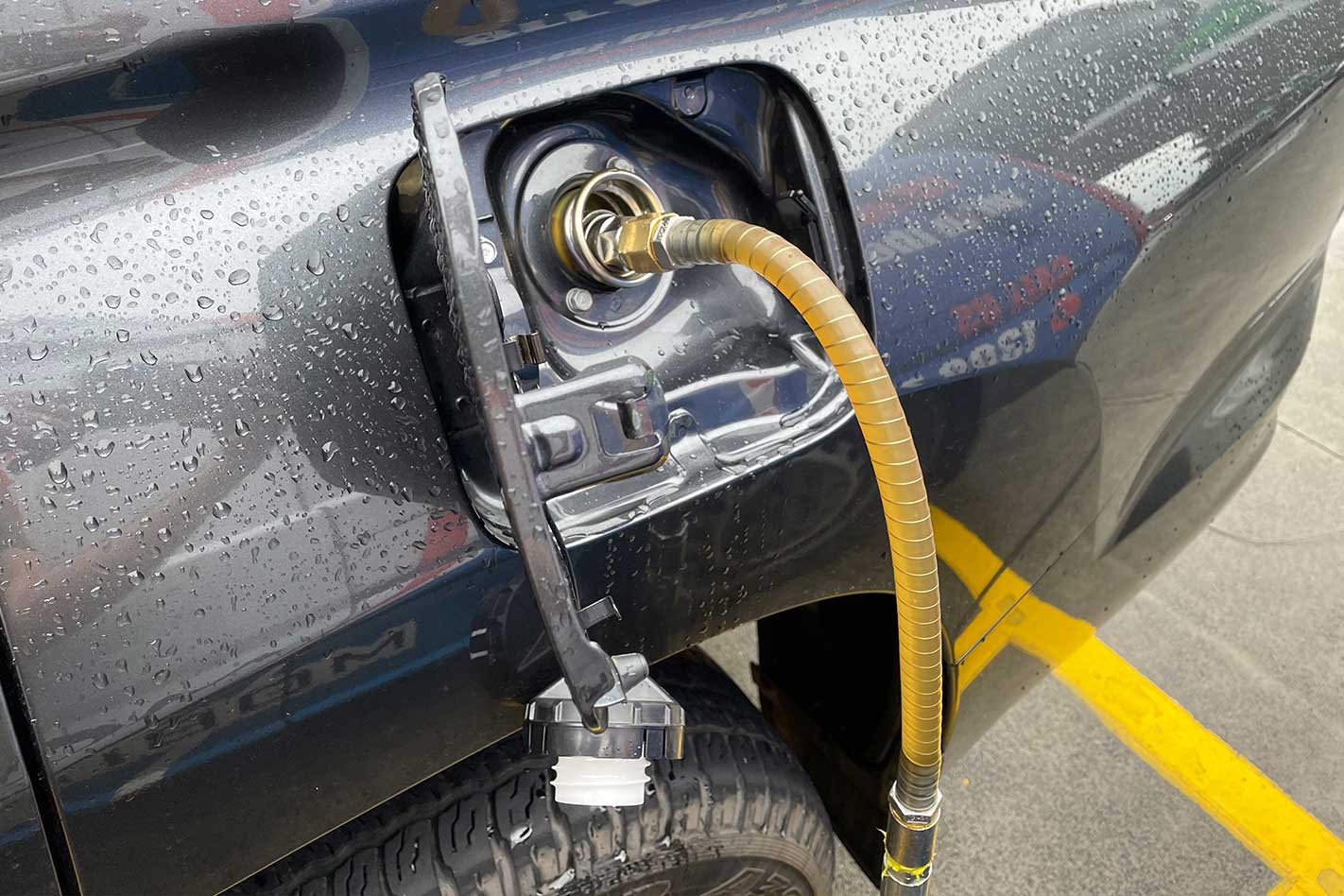
After explaining my situation, I was informed that a technician would be with me as soon as possible (a two-hour wait in my case) at a cost of $385, which would cover the draining of the fuel tank, the removal and disposal of the contaminated fuel and 10 litres of fuel (in this case diesel) to help me on my way.The friendly, helpful technician arrived right on time and began draining the tank at a rate of roughly three litres per minute, the Pajero Sport’s brimmed 65-litre tank taking just over 20 minutes to empty.
The contaminated fuel is disposed of by using it to power concrete kilns in Tasmania, instead of using coal, so at least there is a somewhat positive side effect of motorists’ mistakes. Once the tank is drained, it’s simply a matter of filling up with the correct fuel, and you are on your way.In summary, if you find yourself in the unfortunate position of having put the wrong fuel in a car, remember not to panic, help is available. The most important thing is to not use the engine, or turn it off as soon as safely possible if you’re already driving.Call the experts and while your schedule and your wallet will take a bit of a hit, your engine should be fine.
Snapshot
- Corolla Altis Nu00fcrburgring Edition limited to Thailand
- Developed to commemorate Gazoo Racing Thailand’s victory at the Nu00fcrburgring 24 Hour race
- Includes a range of styling and suspension changes, but no additional power
Development of the eagerly awaited Toyota GR Corolla might be ongoing behind closed doors, but that hasn’t stopped the company from revealing a ‘sportier’ Corolla.
Built to celebrate Gazoo Racing Thailand’s win at the ADAC Total 24h-Race Nürburgring for the second year in a row, the Corolla Altis – similar to the Corolla Sedan sold in Australia – has been treated to a number of styling and suspension modifications to mark the occasion.
Toyota claims the Nürburgring Edition was inspired by the Corolla Altis racecar that took victory in the Super Production 3 (SP3) class, with a modified front bumper and unique grille. It also includes bulkier side skirts, larger rear diffuser and a lip spoiler on the bootlid. Other additions include ‘Corolla Altis Nürburgring 24’ badging along the side, as well as stiffer springs and a lower ride height.
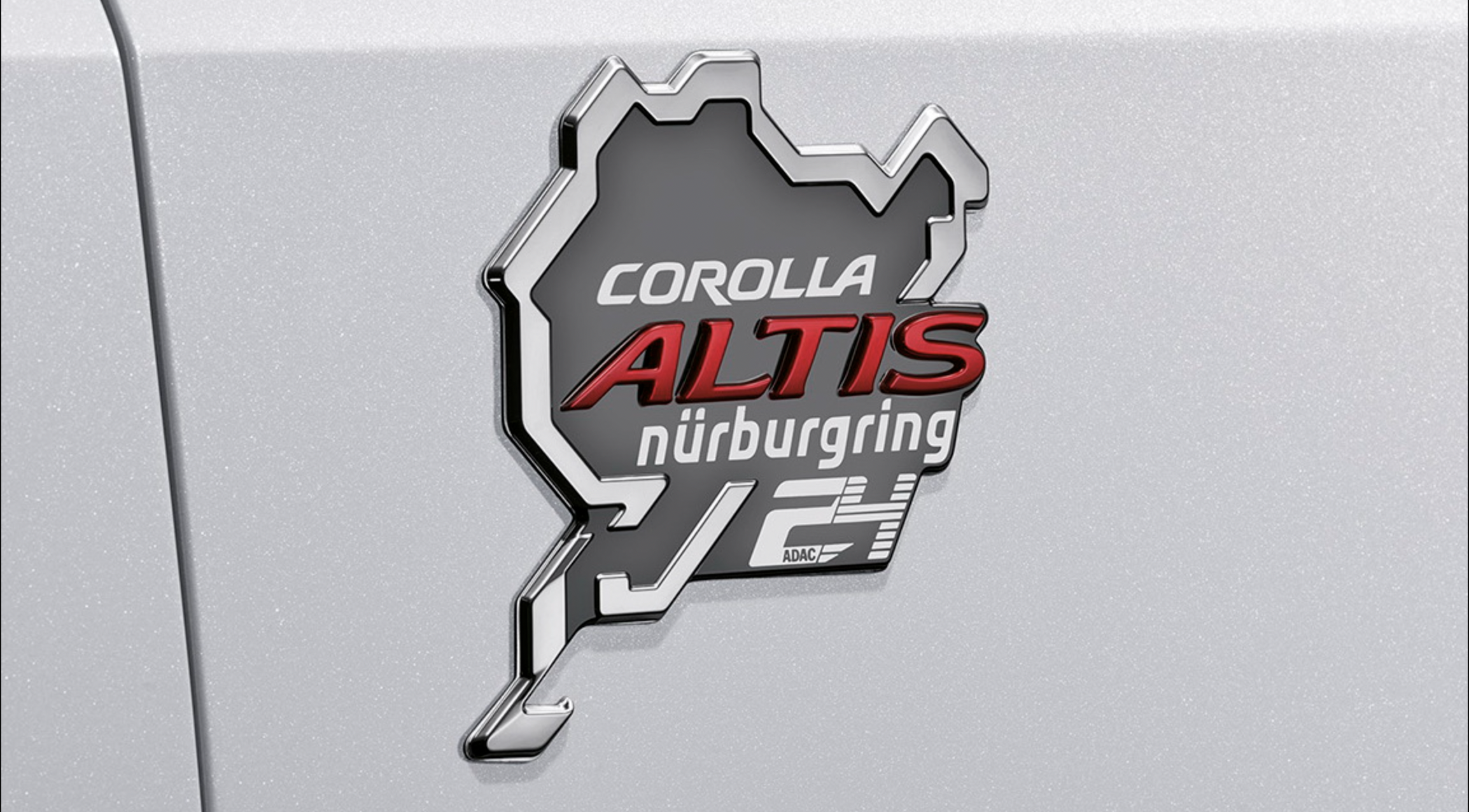
The company also states it has installed an ‘accelerator control box’ designed to improve pedal response, however, there are no power upgrades.
This means the Nürburgring Edition sticks with the choice of a 103kW 1.8-litre naturally aspirated four-cylinder or 90kW 1.8-litre petrol-electric hybrid engine, with power sent to the front wheels through a CVT transmission.
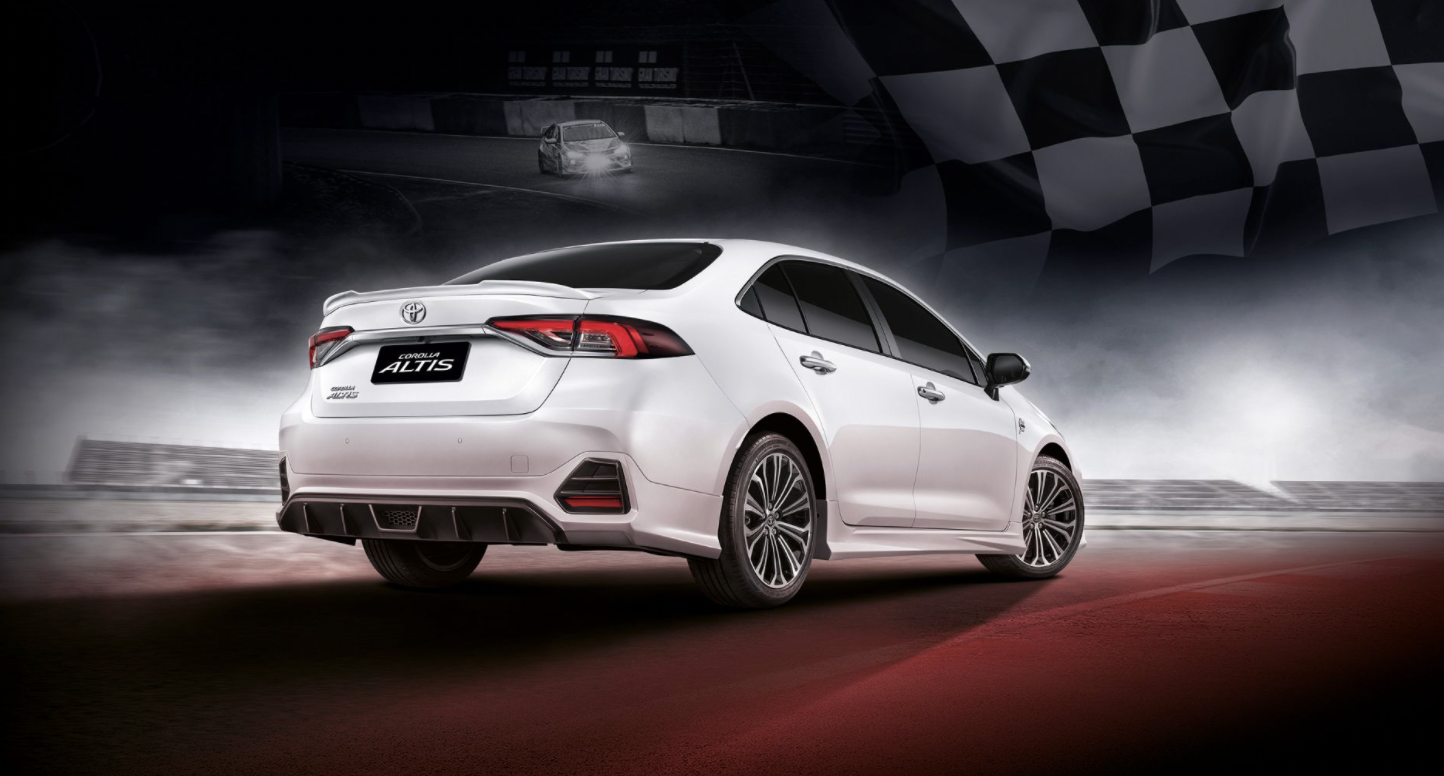
Joining the existing Corolla Altis GR Sport in the Thailand range, the Nürburgring Edition is priced from 964,000 baht (AU$39,000) for the petrol version and between 939,000 – 1,099,000 baht (AU$38,000 – $44,500) for the hybrid.
More than two decades ago a team of BMW engineers began an after-hours project to transform its handsome but dynamically shaky Z3 roadster into a serious performance coupe – looks be damned!
What they created was the Z3 M Coupe, a car with the performance credentials to remain a cult classic to this day despite its controversial styling and unfortunate ‘clown shoe’ nickname.
First released in 2019, the current Z4 finds itself in a surprisingly similar position as the E37 Z3. It’s handsome, and well-liked by those wanting a pleasant roofless driving experience. But public perception deems it dynamically inferior to its non-identical twin from Japan, the Toyota Supra. That judgement is somewhat short sighted, but the solution that was found in 1998 could work again today.
Enter the BMW Z4 M Coupe – a shooting brake performance halo that could help elevate the entire roadster family and bring BMW’s M Division to its unhinged and brilliant best. We know from the execution of the current M3 and M4 that BMW’s designers are willing to take bold risks, so our stylistic vision shouldn’t be too far out of their comfort zone.

With the Toyota Supra filling the swoopy coupe styling position already, BMW would need a divergent visual path to give the Z4 M its own unique positioning. Instead of a swooping roofline, Australian Calvin Luk’s design would be updated with a squared-off wagon rear end.
Along with the ‘bread van’ looks, BMW’s M division will give the Z4 a suitable nip’n’tuck with carbon fibre front lip, side skirts and rear diffuser. Quad exhaust tips anchor the rear bumper styling to drive home the point that the Z4 M should not be underestimated.
M boss Markus Flasch says that the Z4 M40i already offers M-car levels of performance, and a track test by German outlet Sport Auto confirmed that the roadster is two seconds a lap quicker around the Nordschleife than even the esteemed M2.
But there’s no reason to be content with that – time to aim higher Mr Flasch! To earn its full-fat M badge, the Z4 could gain the S58 drivetrain from the current M3/M4, lifting outputs by 90kW/150Nm to 375kW and 650Nm.
With a kerb weight around the 1500kg mark, the Z4 will appeal to those wanting a finer scalpel than that offered by the M3, but with more firepower than the M2 CS. In order to make the twin-turbo 3.0-litre straight six fit, an all-wheel xDrive layout is off the cards – but we doubt enthusiasts will be too displeased.
Read on to discover the finer details of how we’d make it all work.
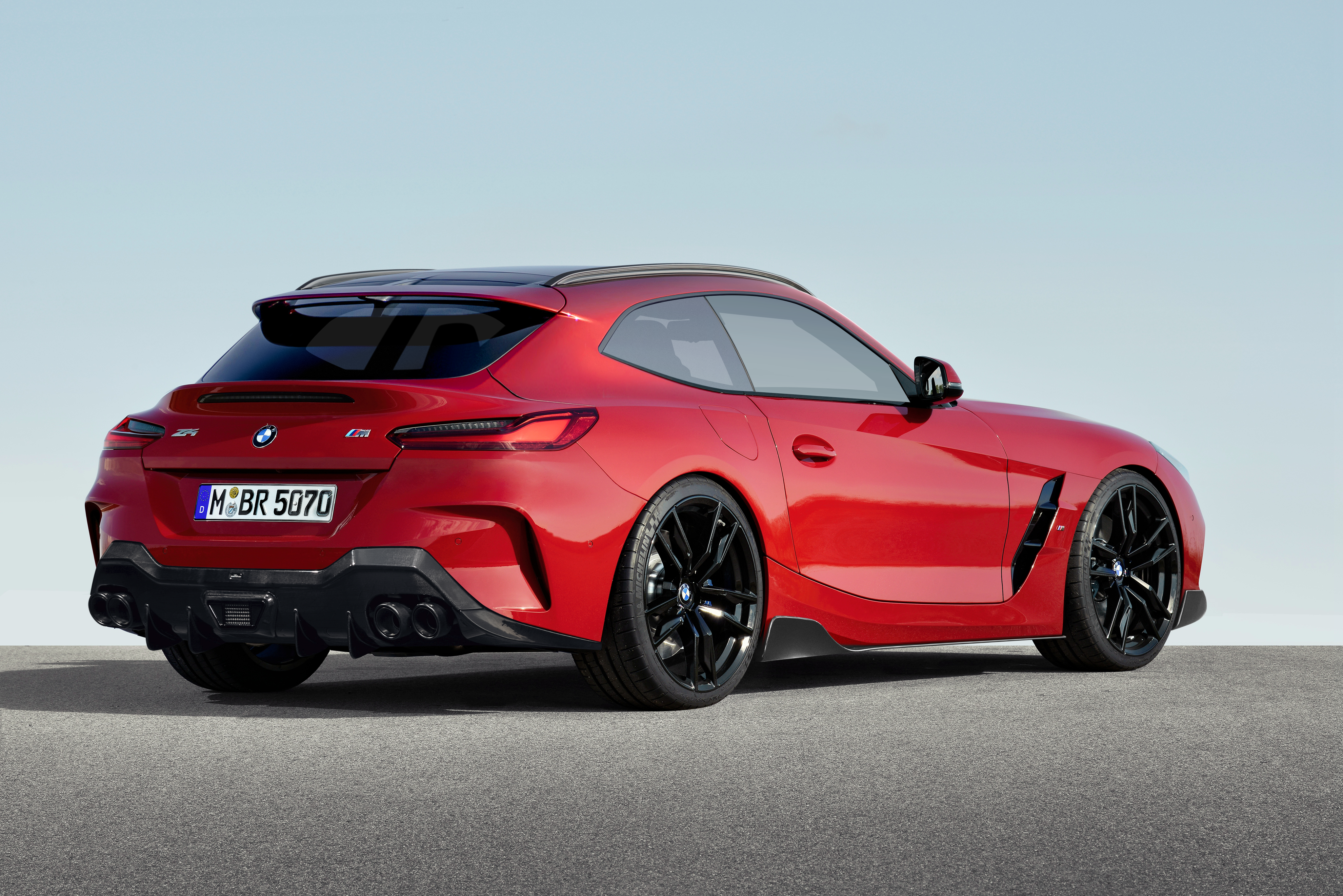
Along with the ‘bread van’ looks, BMW’s M division will give the Z4 a suitable nip’n’tuck with carbon fibre front lip, side skirts and rear diffuser.
Step 1: For the nutters
Being an altogether smaller, lighter, and nimbler package compared to the M3, and having more interior space than the M2, a Z4 M would be perfect for track day fans. Much like Porsche’s iconic Weissach package, BMW could offer a track-focused option that includes Michelin Pilot Sport Cup 2 tyres, carbon-ceramic brakes, bucket seats, fire extinguisher, five-point racing harness and half cage straight from the factory.
Step 2: Lifestyle options
Track days not really your thing? No worries. Additional options would include roof racks for ski and bike gear. Due to the shooting brake styling the Z4 M will offer a skerrick of practicality. Paint it red and become the world’s fastest postie.
Step 3: The Japanese twin
A Z4 M would immediately open the door for a more focused GR version of the Toyota Supra. As with the original product planning, a joint endeavour will reduce costs and help give enthusiasts two compelling options in one go.
Step 4: That tracks
With extra power comes greater responsibility. Z4 M will have a wider track front and rear, along with extra tyre width, compared to M40i versions. Extra torsional rigidity of the hard roof should make the Z4 M a potent corner carving weapon.
Step 5: One last dance
Since the start of 2019 only two manual Z4s have been sold in Australia. However, the Venn diagram of buyers wanting a two-door M coupe and those desiring roadster chic styling are two different circles. As a result, three pedals could be back on the menu, alongside the conventional eight-speed auto.
Want to play fantasy product planner with us? Send your best ideas to [email protected]
Your iPhone could soon be used to adjust your car’s radio, climate settings, and seats, under a new secret plan from the technology giant.
Apple is reportedly working on an interface which would allow CarPlay software to access car controls, according to news outlet Bloomberg, with the aim to reduce the need to exit CarPlay when driving.
Modern vehicles are increasingly moving cabin controls to centrally-mounted touchscreens – eliminating the need for physical, bespoke switchgear on each model.
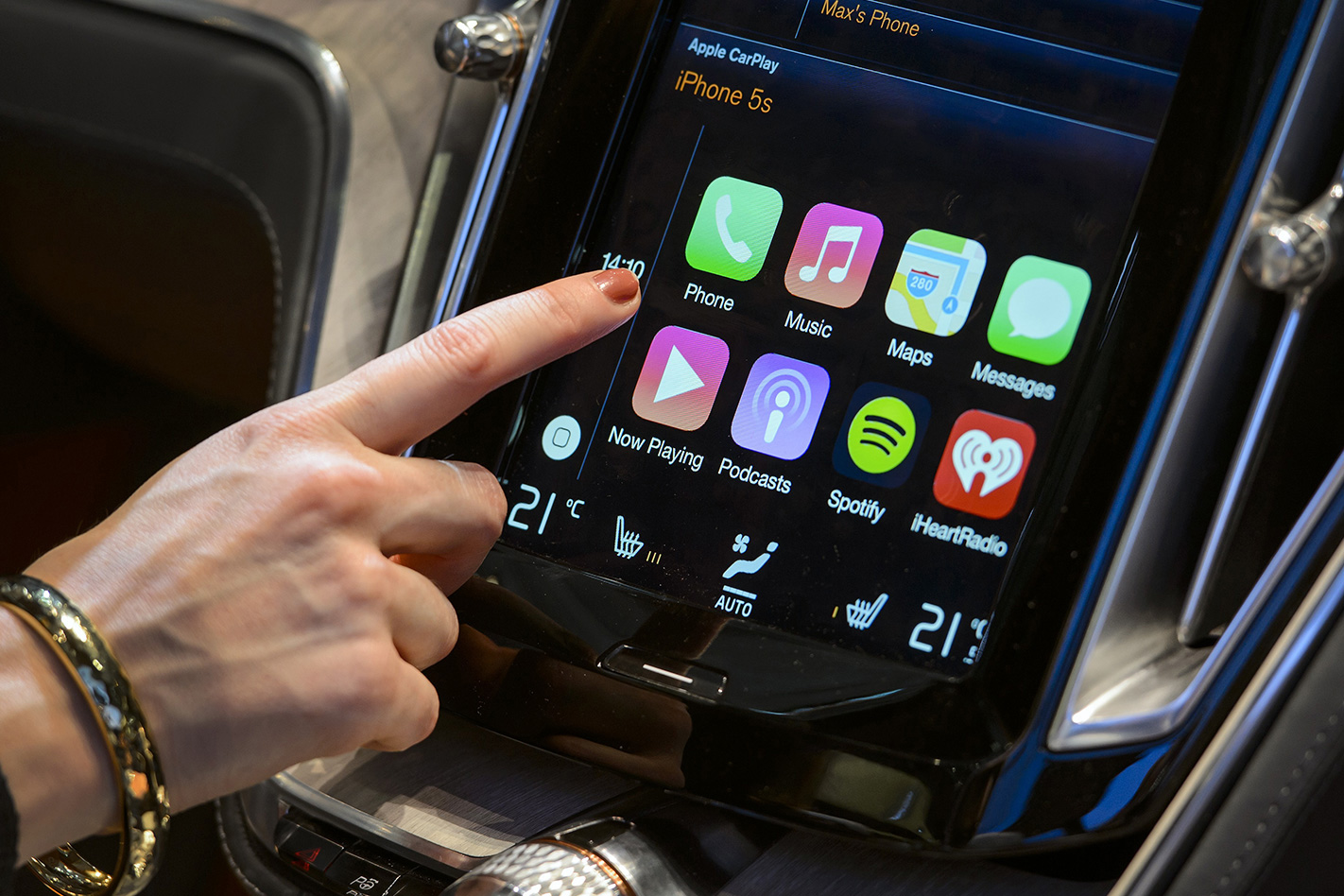
But as controls are being integrated into the infotainment system, it means occupants have to exit out of Apple CarPlay – popular due to its easy-to-use navigation and music apps – in order to change the simplest of settings.
The project is said to be named ‘IronHeart’, and would provide your iPhone’s operating system with access to inside and outside temperatures, heating and air conditioning, sound system settings, power seat controls, and instrument readings such as the speedometer, tachometer, and fuel gauge.
If the project proves to be true, it could allow Apple or third-party developers to record data on how people interact with their vehicles, potentially leading to new features or apps.
Car enthusiasts as are collective are turning back the clocks beyond the regular demands of daylight savings to capture the halcyon days of the golden age of motoring.
Prices for classics are shooting through the roof, with enthusiasts clamouring to buy an analogue vehicle while they still can.
This rush has created a new genre of vehicle for the ultra-wealthy to play with – restomods.
The concept is simple, take an iconic classic car, and give it a comprehensive ground up restoration using the engines, suspension, and interior treatment afforded to us by modern technology.
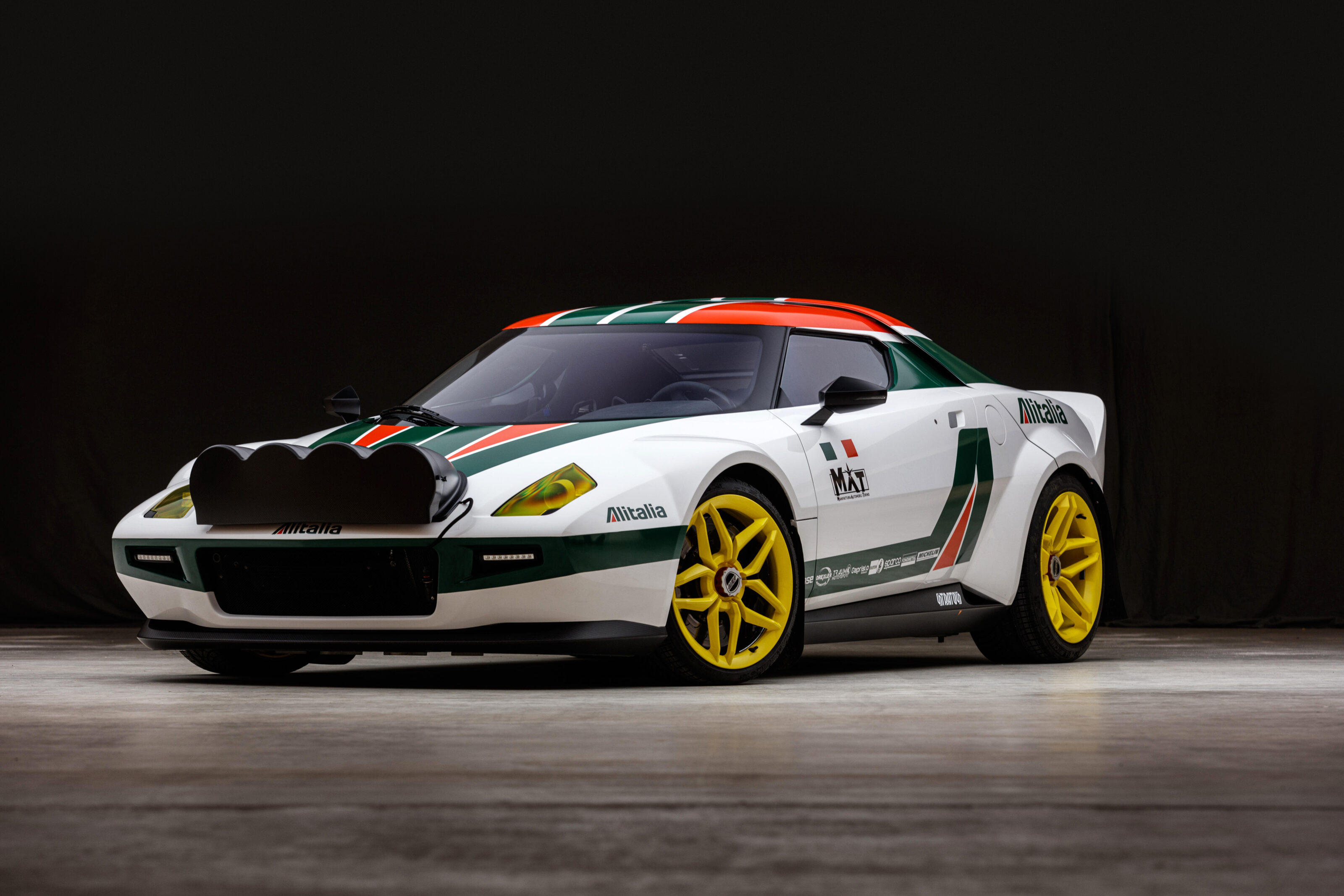
For those with more money than god, the art of restomods means they can enjoy the best of both worlds – capturing the style and spirit of classic cars, with the performance and technology of modern motoring.
The team at MOTOR HQ don’t have the kind of cash that would allow us to indulge in owning a restomod, but that doesn’t stop us adoring these fantastic mechanical recreations.
So, in no order, we present the ten greatest restomods that you can buy (if you have the means).
Legende Automobile Renault Turbo 3
- Price: TBA
- Output: 294kW (claimed)
- Engine: TBA
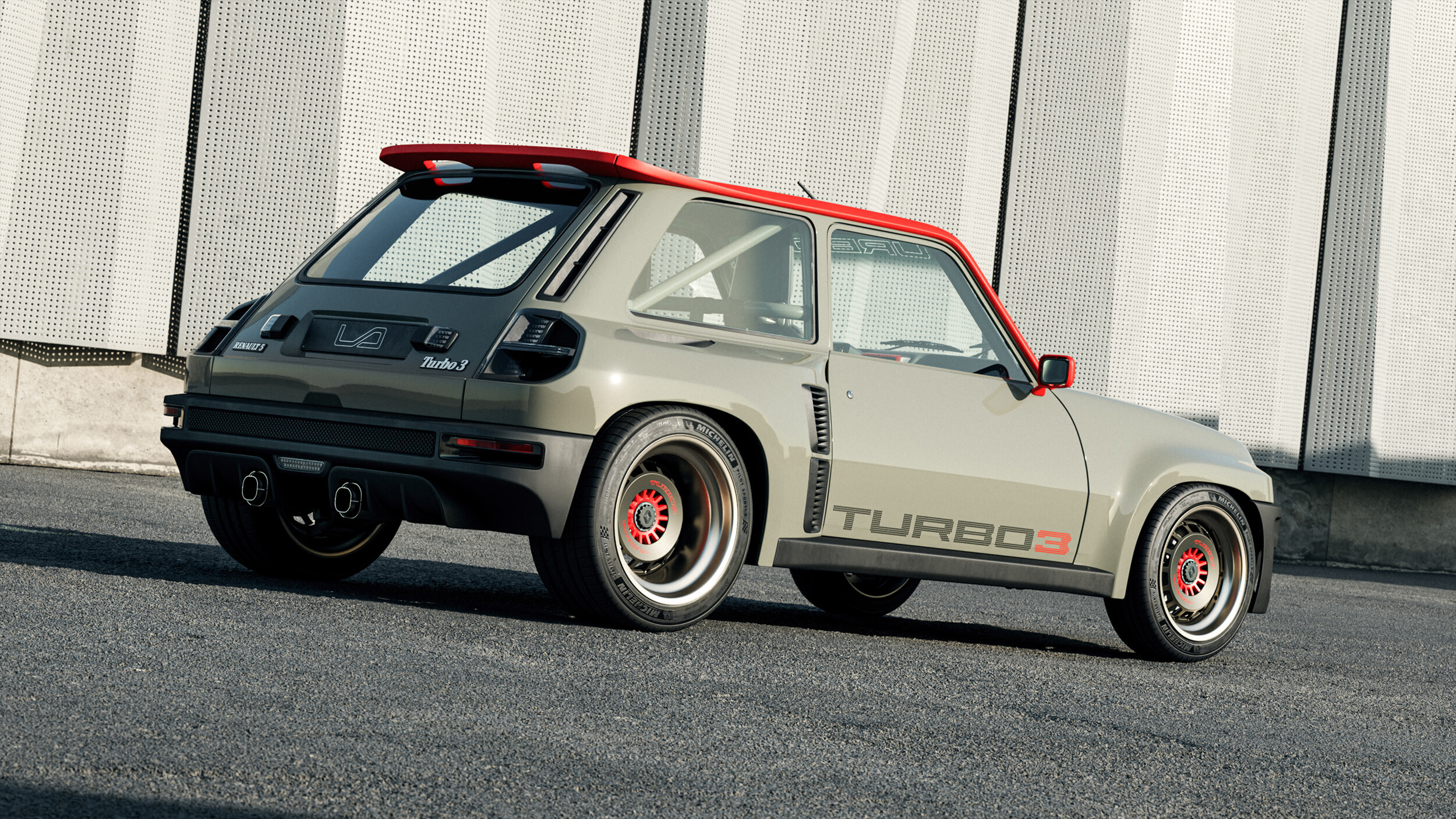
Many of the Turbo 3’s technical details remain under wraps, but the cliff notes so far sound like a recipe for success. A hand-formed carbon fibre body is wider and the overall footprint is larger than an original Turbo 2, and sits on mammoth 16.0 x 8.0-inch and 17.0 x 11.0-inch wheels.
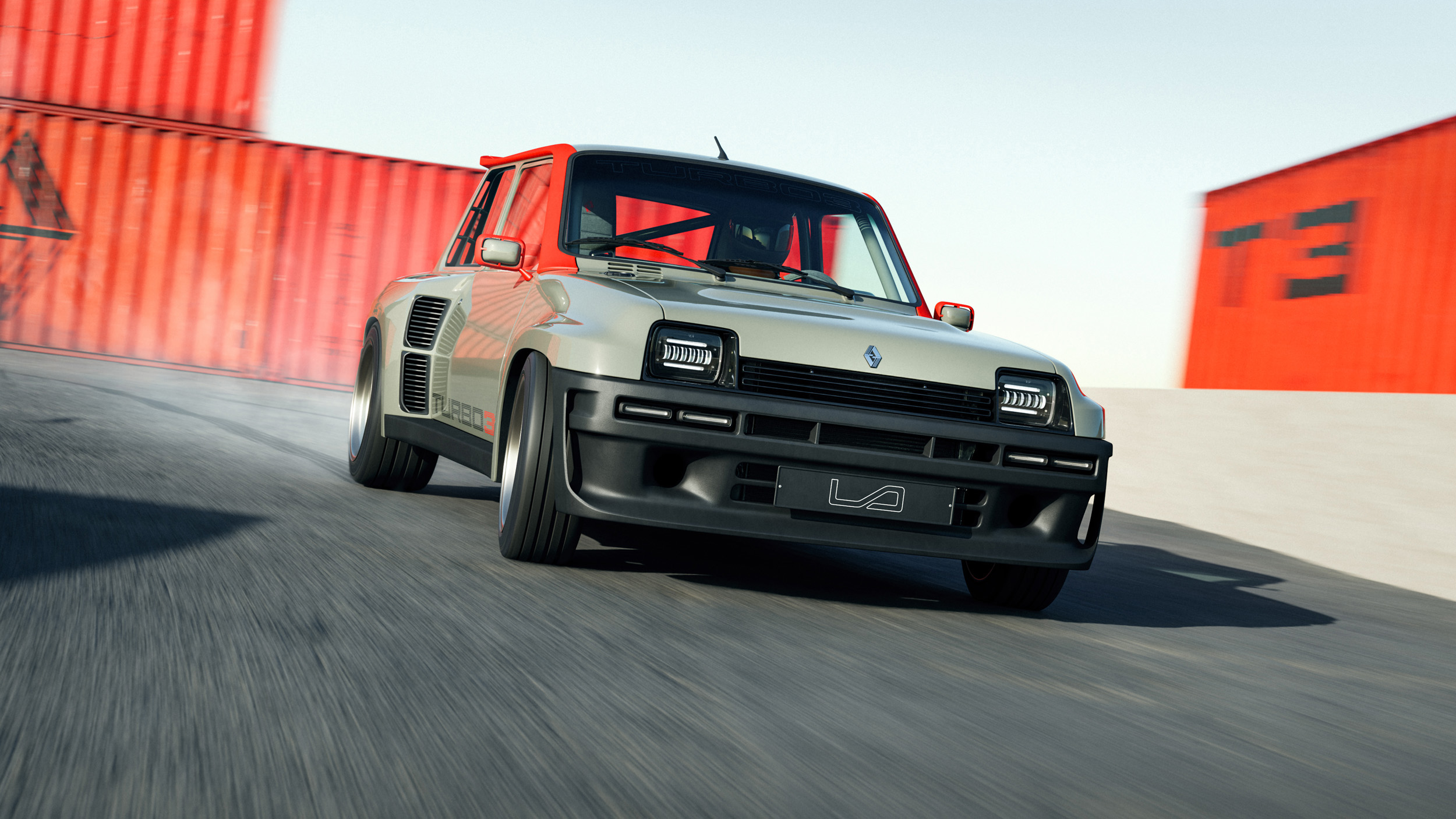
Double-wishbone suspension, front and rear, modelled off the Renault 5 Maxi Turbo rally car, suspends the lightweight body and keeps a reported 294kW (400hp) in check. Though, from which powerplant specifically, remains unclear.
Aside from modern LED lights, it’s the interior that gives the biggest hint to the Turbo 3’s modern construction, with a re-profiled dash dipped in what looks to be Alcantara or flock, with a digital cluster, modern HVAC, fixed-back bucket seats, five-point harness and a full roll cage.
Legende Automobile claim to have “ignored all financial advice and spared no expense” in the Turbo 3’s development. With no price announced yet, you’ll likely need to do the same to park one of these pocket rockets in your garage.
Manifattura Automobili Torino New Stratos
- Price: $1 million+ (BYO F430)
- Output: 397kW/520Nm
- Engine: 4.3-litre V8
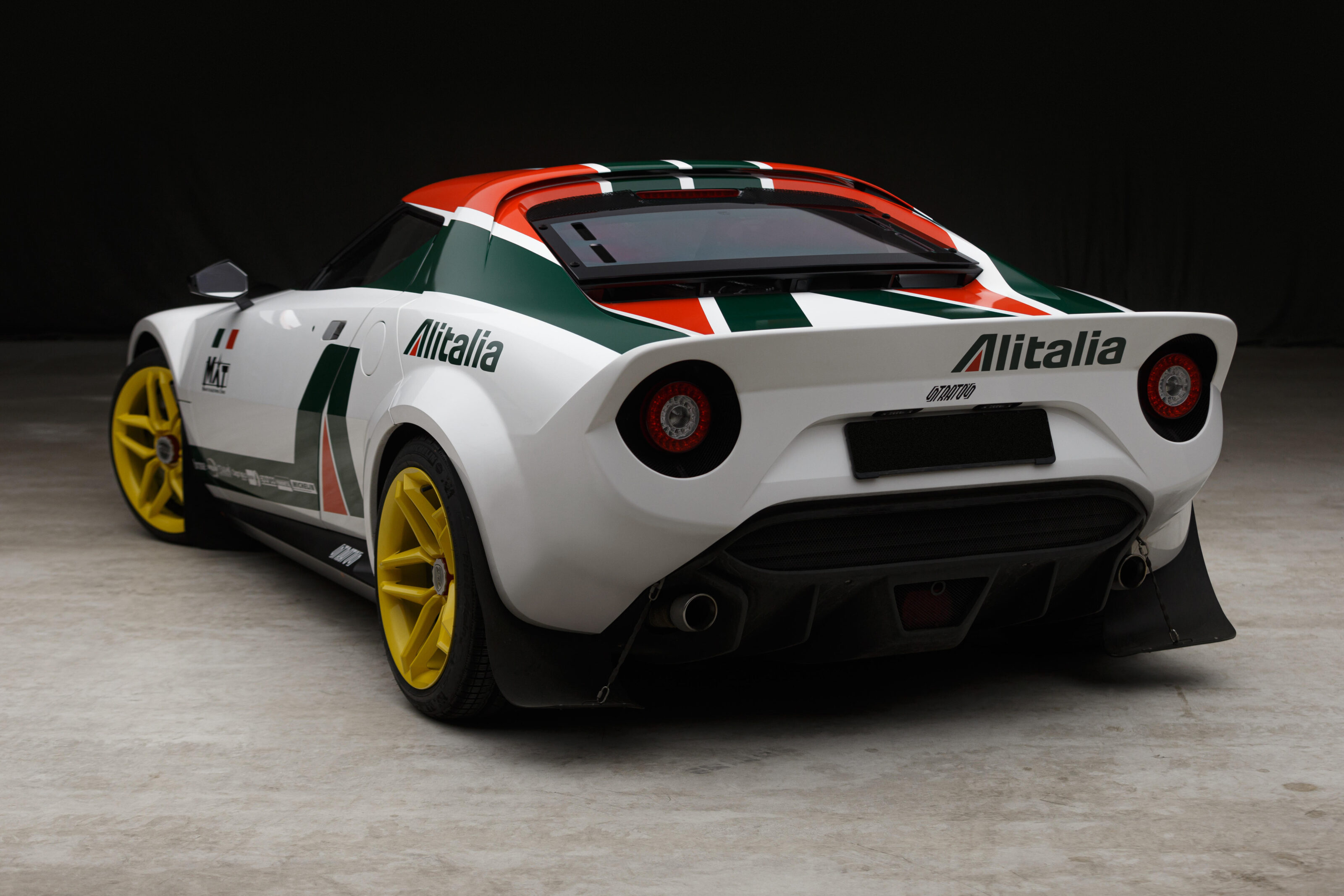
The gestation of the New Stratos actually stretches back to the 1990s, when Italian teenager Chris Hrabalek registered the Stratos trademark after Lancia let it lapse.
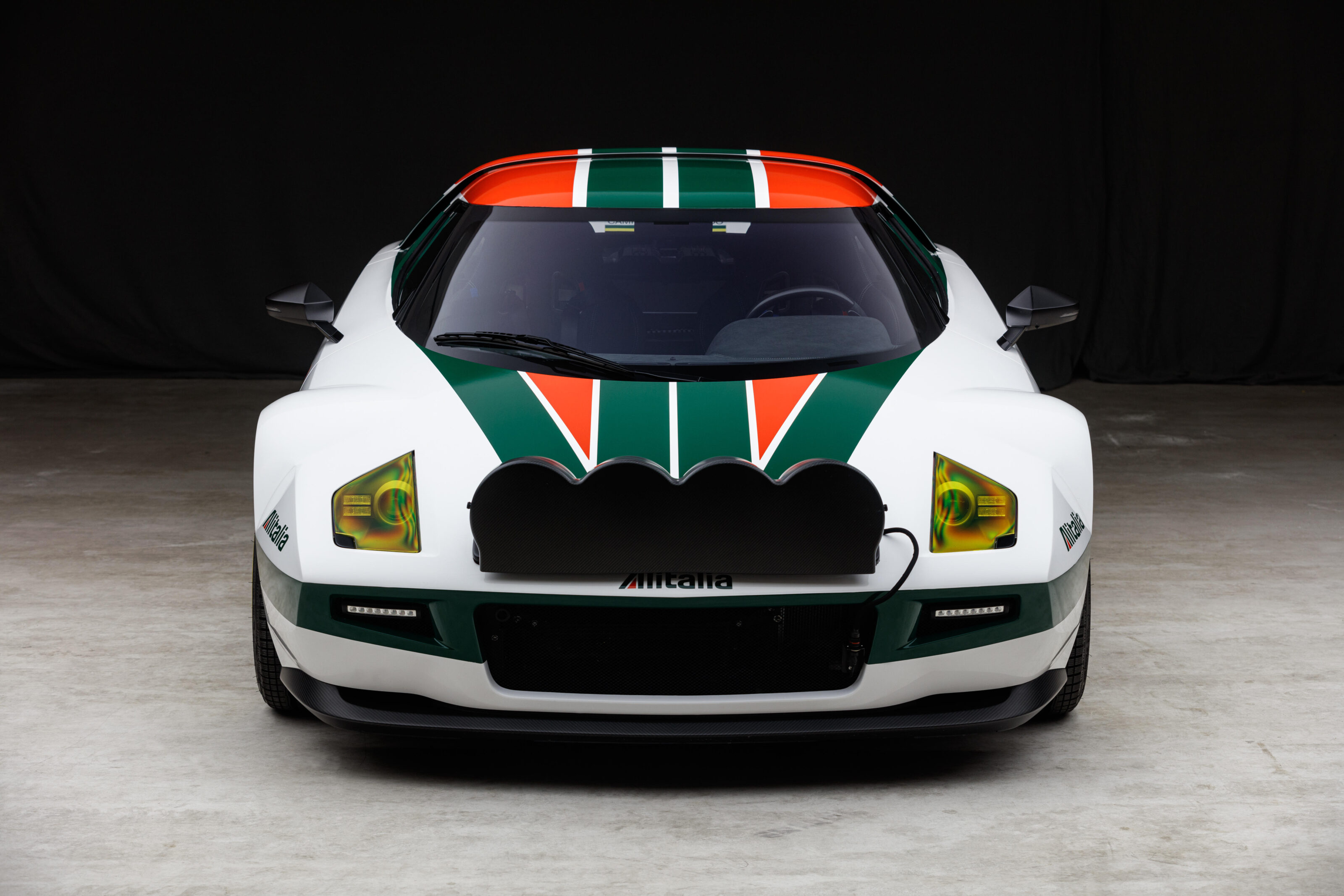
Hrabalek would later study at the Royal College of Art where the modern Stratos would act as his capstone project. Not only that, but he gained funding from 10 original Stratos owners to see his project through, and built a concept car for the Geneva Motor Show of 2005.
Hrabalek’s project would never come to fruition, but one of those original investors never let go. Refined by Pininfarina, and based on the underpinnings of a Ferrari F430, the new Stratos would be re-revealed in its final form in 2010.
The F430’s wheelbase had 200mm chopped from it to match the Stratos’ petite dimensions, with the 4.3-litre V8 subtly tweaked with a Larini titanium exhaust for an improved 397kW output. Simple but striking in its execution, it’s a seductive reinvention of a classic motorsports icon.
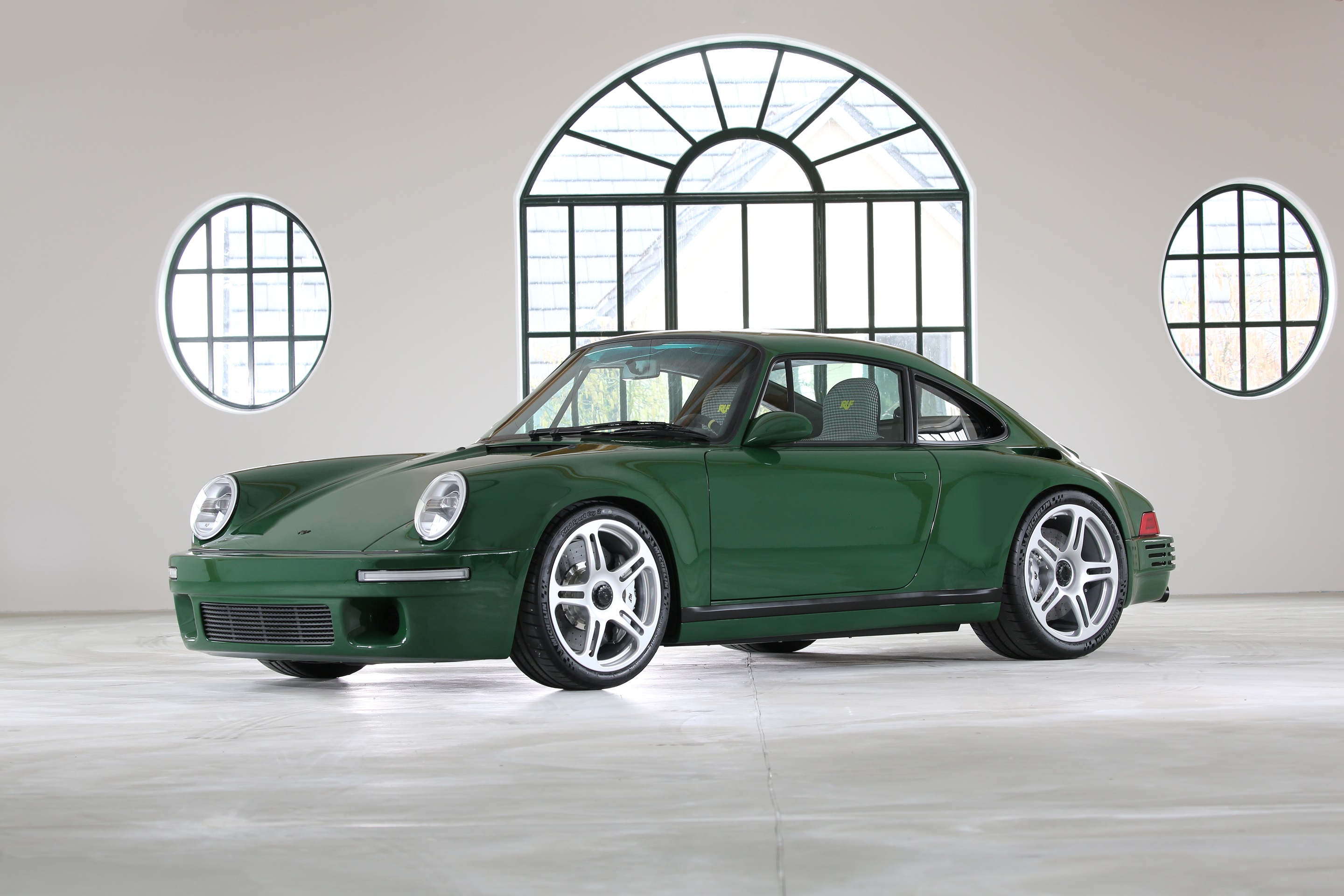
RUF SCR
- Price: $1 million
- Output: 375kW
- Engine: 4.0-litre flat-6
Beneath the sculpted carbon fibre body shell sits RUF’s bespoke in-house carbon monocoque with an integrated roll cage, high-strength lightweight steel subframes and double-wishbone suspension front and rear. RUF began with the 993’s 2272mm wheelbase but lengthened it by 70mm for high-speed stability. The car weighs just 1250kgs.
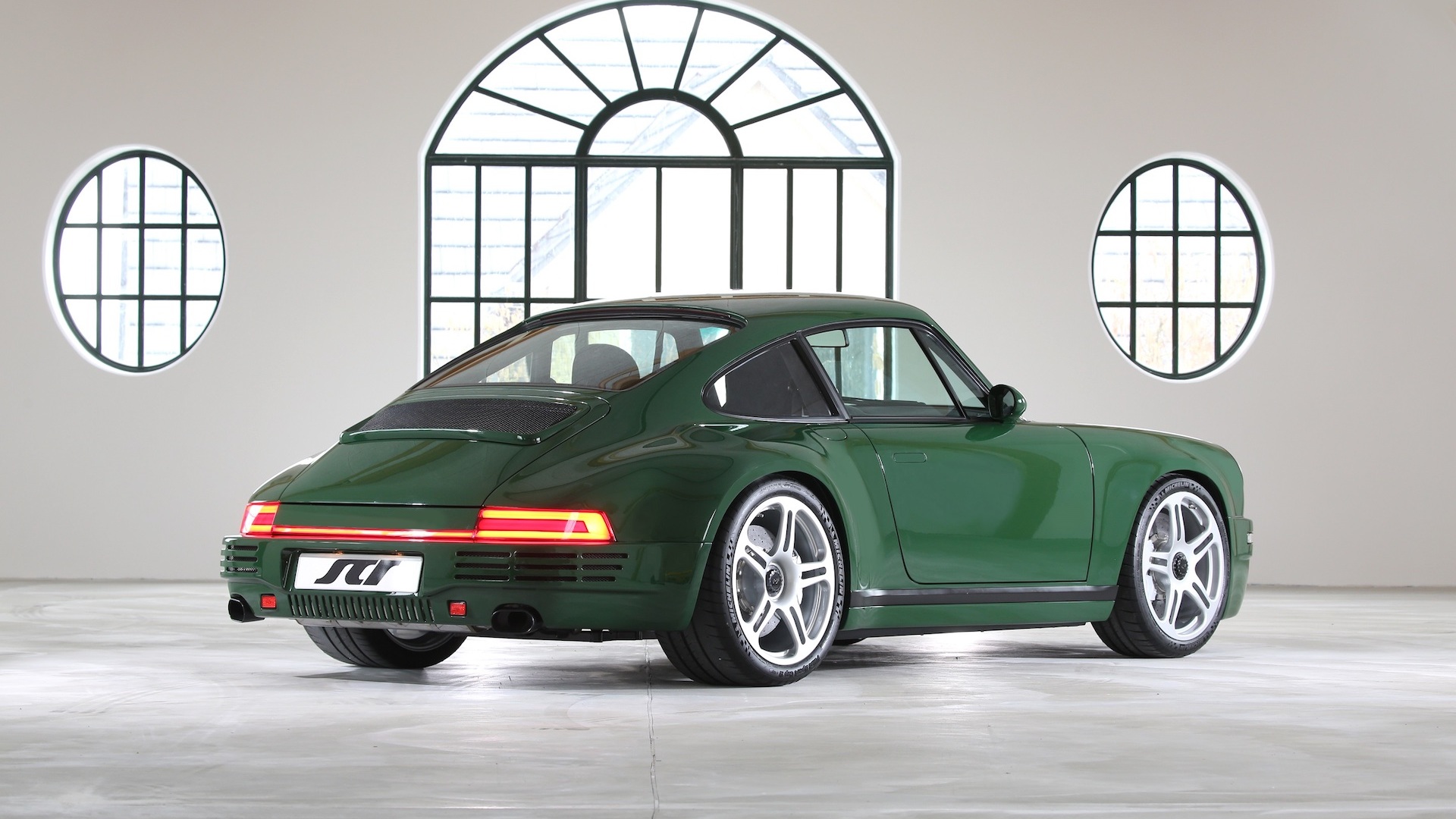
A 4.0-litre Metzger flat-six develops a stout 375kW at a dizzying 8270rpm with no forced induction. A dedication to lightweight materials allows for a ballistic 320km/h top speed and yields a brutal 300kW/tonne.
With drive sent through the rear wheels via a manual gearbox and mechanical LSD, RUF’s SCR sits at the nexus between classic vibes and modern engineering.
Speculation suggests that about half a million pounds sterling will get you through the door. Or $1 million converted.
Kimera Automobili EVO37
- Price: $770,000
- Output: 377kW
- Engine: 2.1-litre inline-4
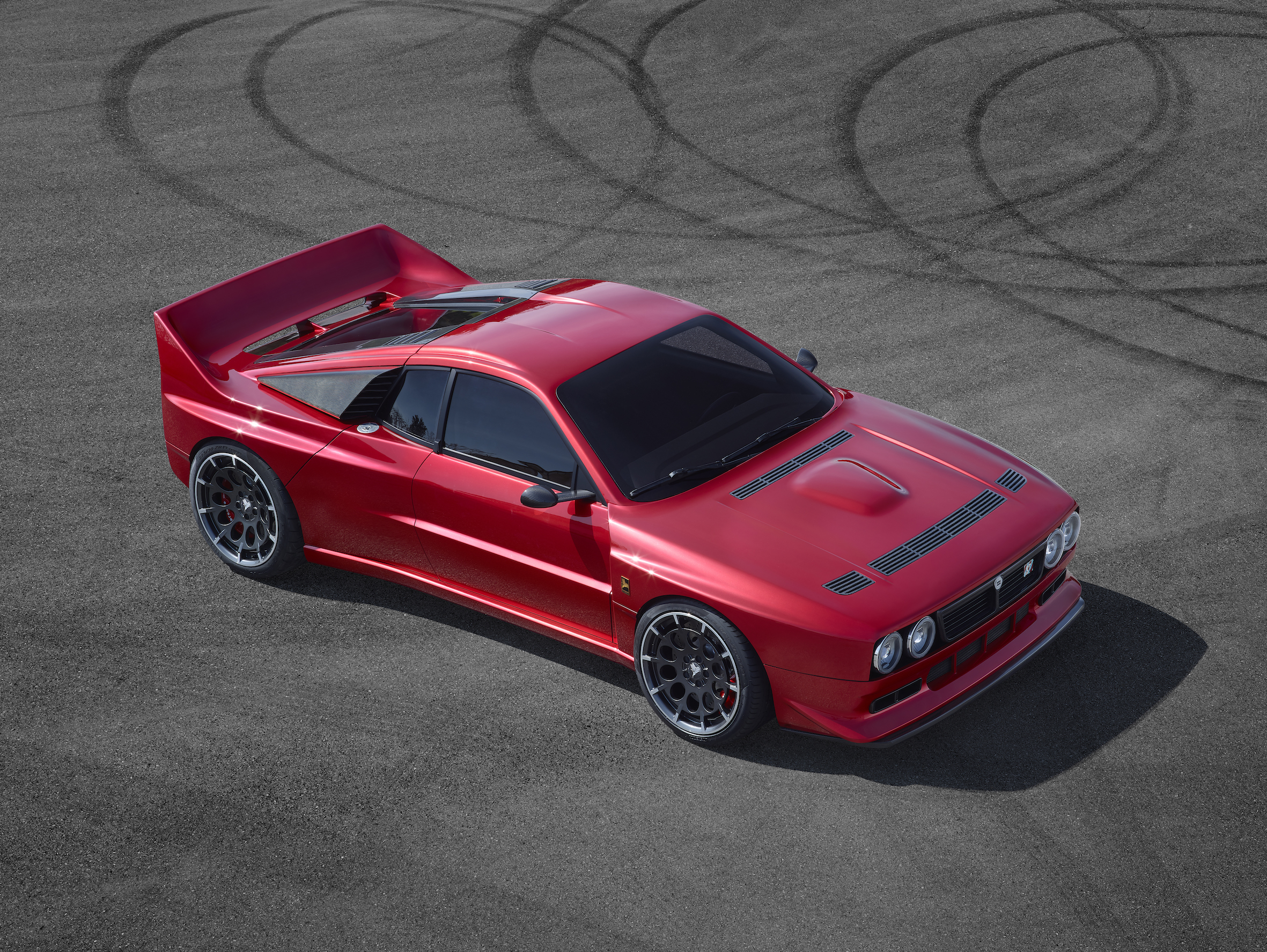
Conceived as the ultimate evolution and a modern tribute to the iconic Lancia 037, Kimera’s build begins with the central monocoque of a Beta Montecarlo – just like the period race cars.
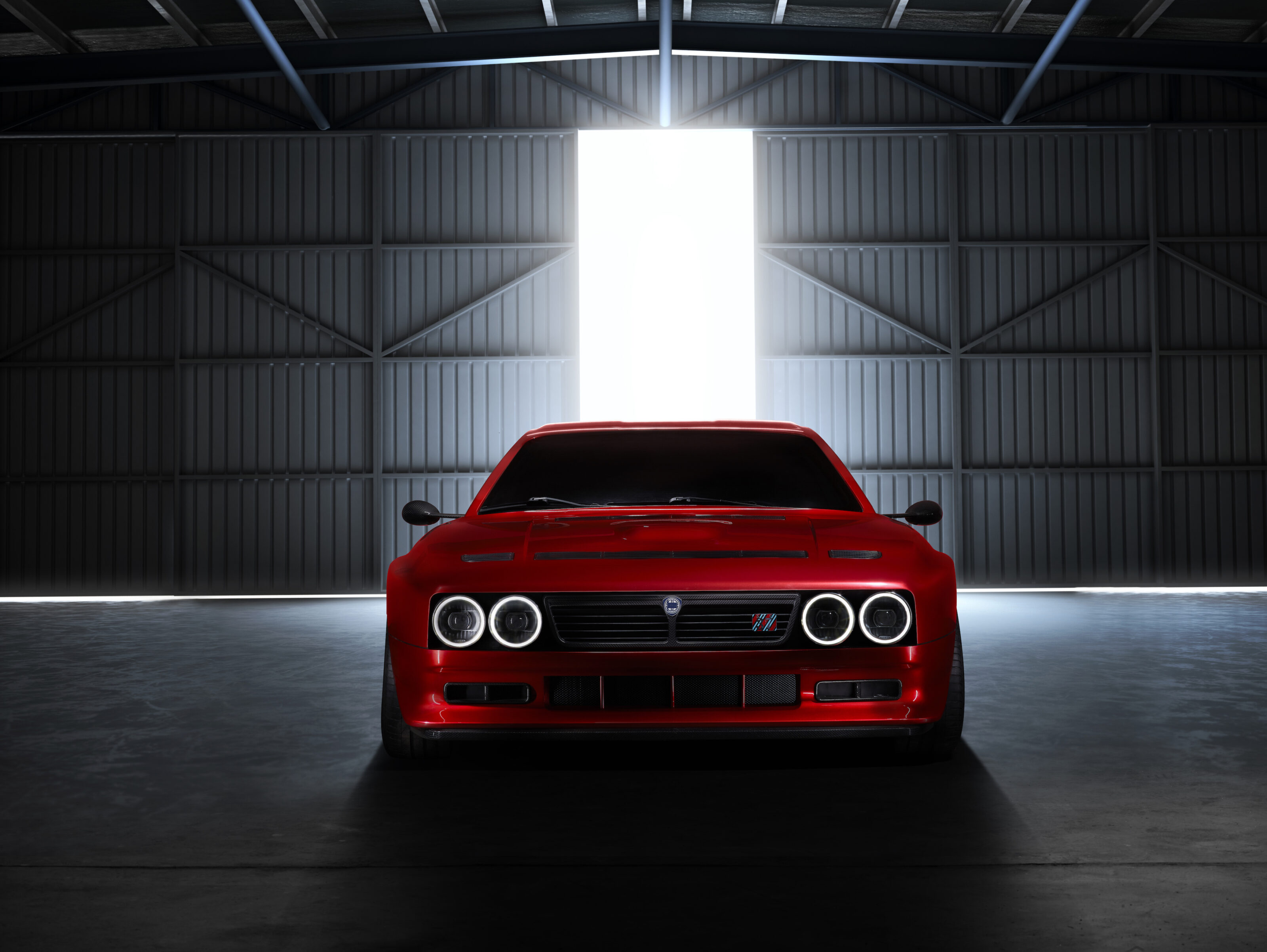
The exterior’s traditional construction of fibreglass has been ditched for carbon fibre panels, carefully reflecting the original’s iconic proportions. Ohlins adjustable suspension mounts to tubular front and rear subframes. Total kerb weight is targeted at 1000kg.
The engine is based on an original 037 2.0-litre block, however, it’s been thoroughly re-engineered. Displacement has increased to 2.1-litres and the old Abarth Volumex supercharger has been binned for a twincharging system: supercharger and turbocharger working in unison to deliver a whopping 377kW.
What’s more, lead engineer for EVO37 is none other than Claudio Lombardi, the man who oversaw the engine of every vintage Martini-liveried Lancia racer you’ve ever drooled over.
Callum 25
- Price: $980,000
- Output: 381kW
- Engine: 5.9-litre V12
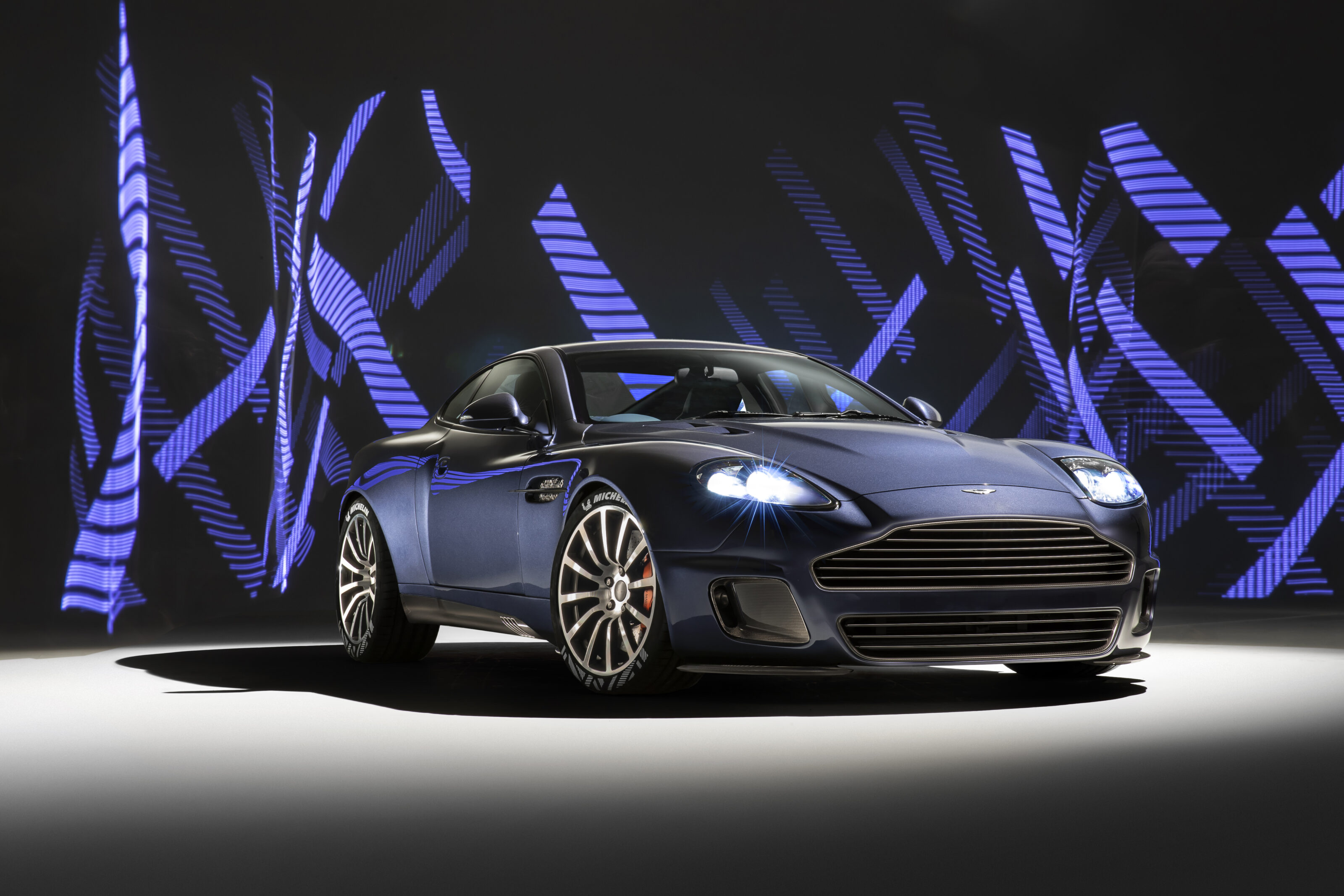
He’s not doing it alone either. His Callum 25 project is officially endorsed by Aston Martin, and various aspects of development are shared with R-Reforged, a Swiss company with ties to Aston Martin’s GT3 program.
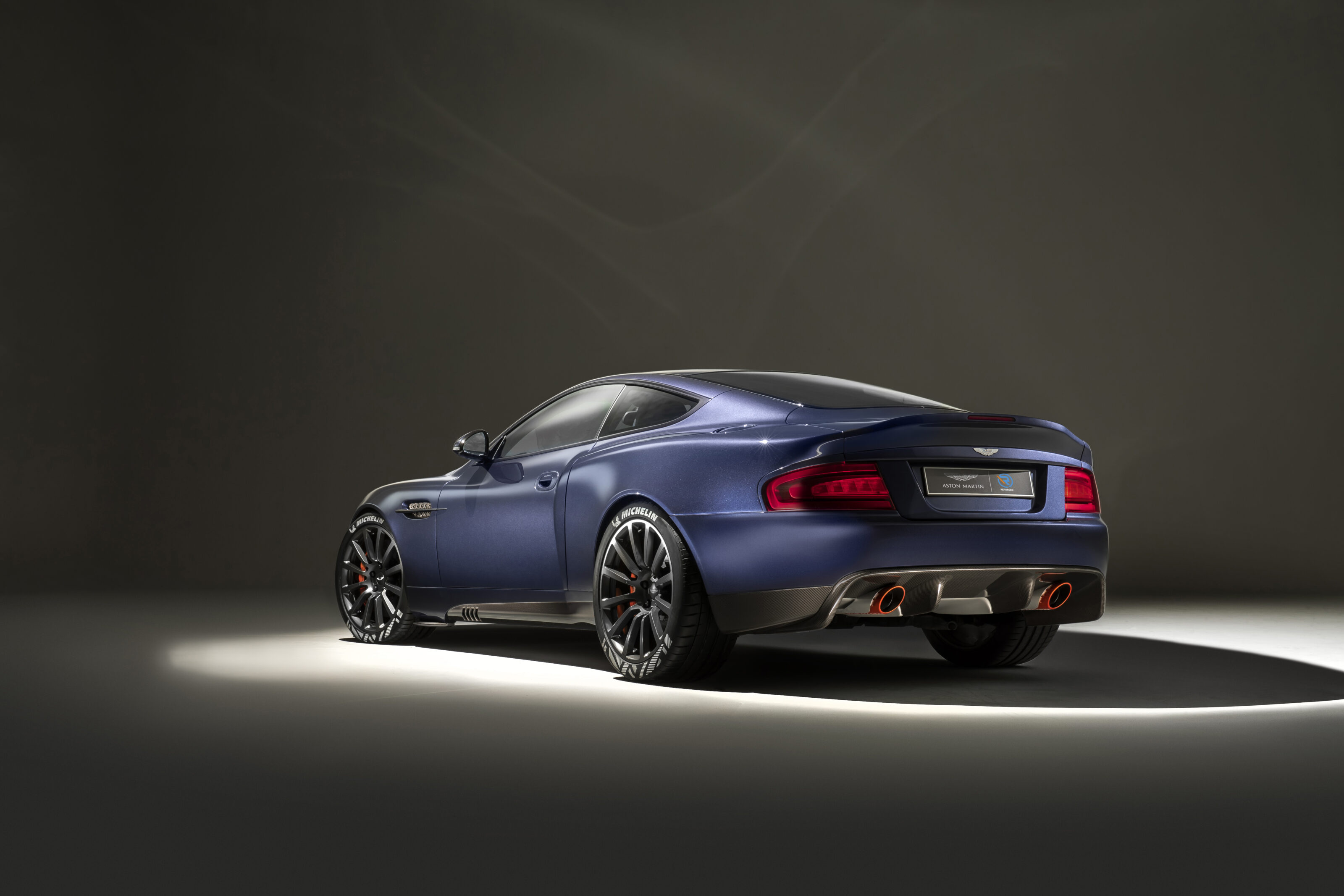
Callum’s thoughtful revisions range from sympathetic updates like the now-one-piece window surrounds, to more thorough revisions. New dampers, larger anti-roll bars and stronger racing bearings address the Vanquish’s historical weak spot – its steering.
The 5.9-litre V12 now pumps out 381kW, 45kW more than the original. It remains familiar, now features subtly widened tracks, a pumped and modernised body kit, a lowered seating position and a thinner steering wheel inside.
Plus there’s a striking upholstery job throughout, with an 8.0-inch touchscreen. We’re still not sure about the tyres though! It might not be for everyone, but you can’t help but admire it.
Cyan Racing P1800
- Price: $750,000
- Output: 308kW
- Engine: 2.0-litre inline-4
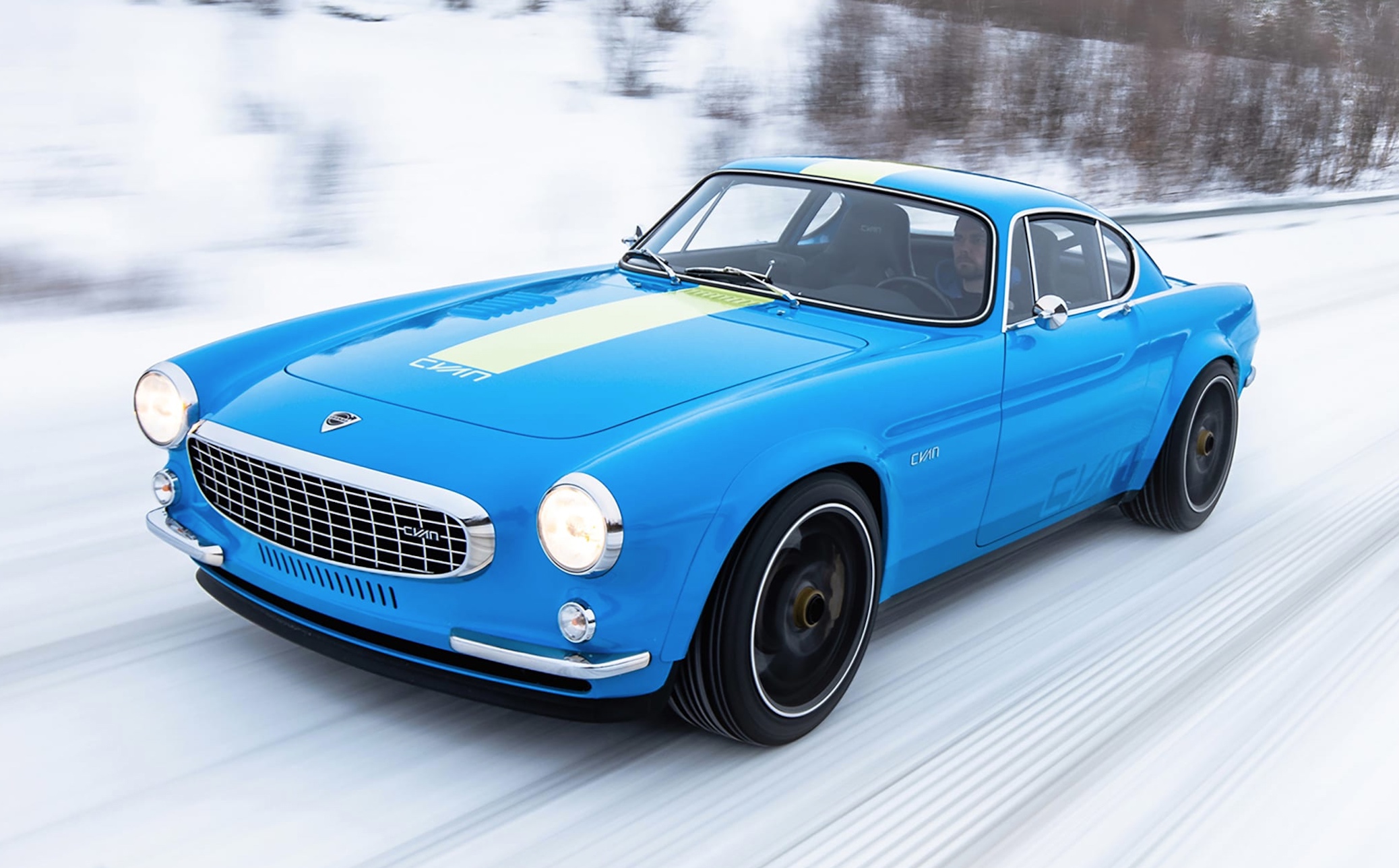
The three-time winners of the World Touring Car Championship have turned Volvo’s coupe classic, the P1800, into a re-engineered WTCC-powered weapon.
The friendly face of Volvo’s 1960s sports car was designed by Pelle Petterson, then just a design student for Pietro Frua. Coincidentally, Pelle’s father, Helmer Petterson, was an engineering consultant for Volvo and the lead man behind the car his son would style.
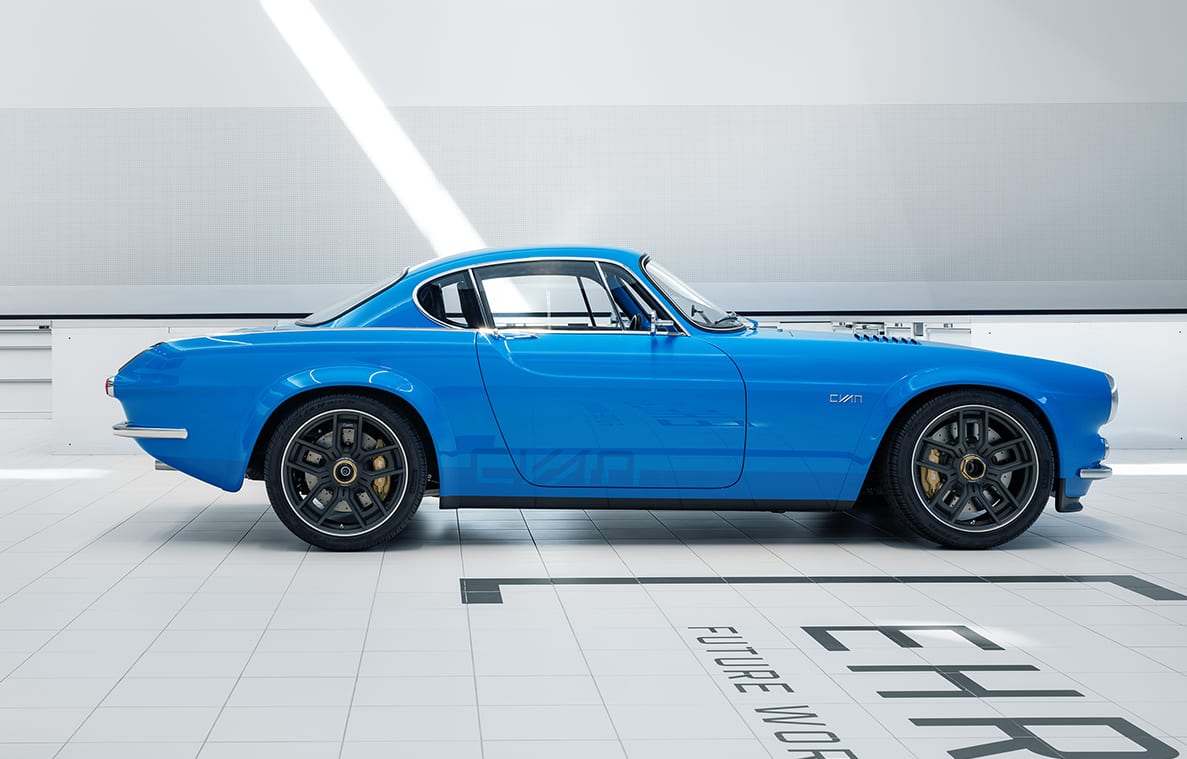
The P1800’s ‘Italian design’ messaging meant Frua was commonly credited as the designer until Volvo rewrote its history, officially recognising Pelle’s authorship in 2009.
We bet young Pelle never envisioned a fire-breathing 308kW turbo-four from Volvo’s title-winning S60 TC1 car to be fitted beneath a 990kg carbon fibre creation penned by him.
The ’60s-era live axle has been binned in exchange for a bespoke front and rear double-wishbone setup, with aluminium uprights, anti-roll bars and Cyan-tuned dampers. Five-speed Holinger ’box with unboosted brakes and no ABS make this one mean Swede!
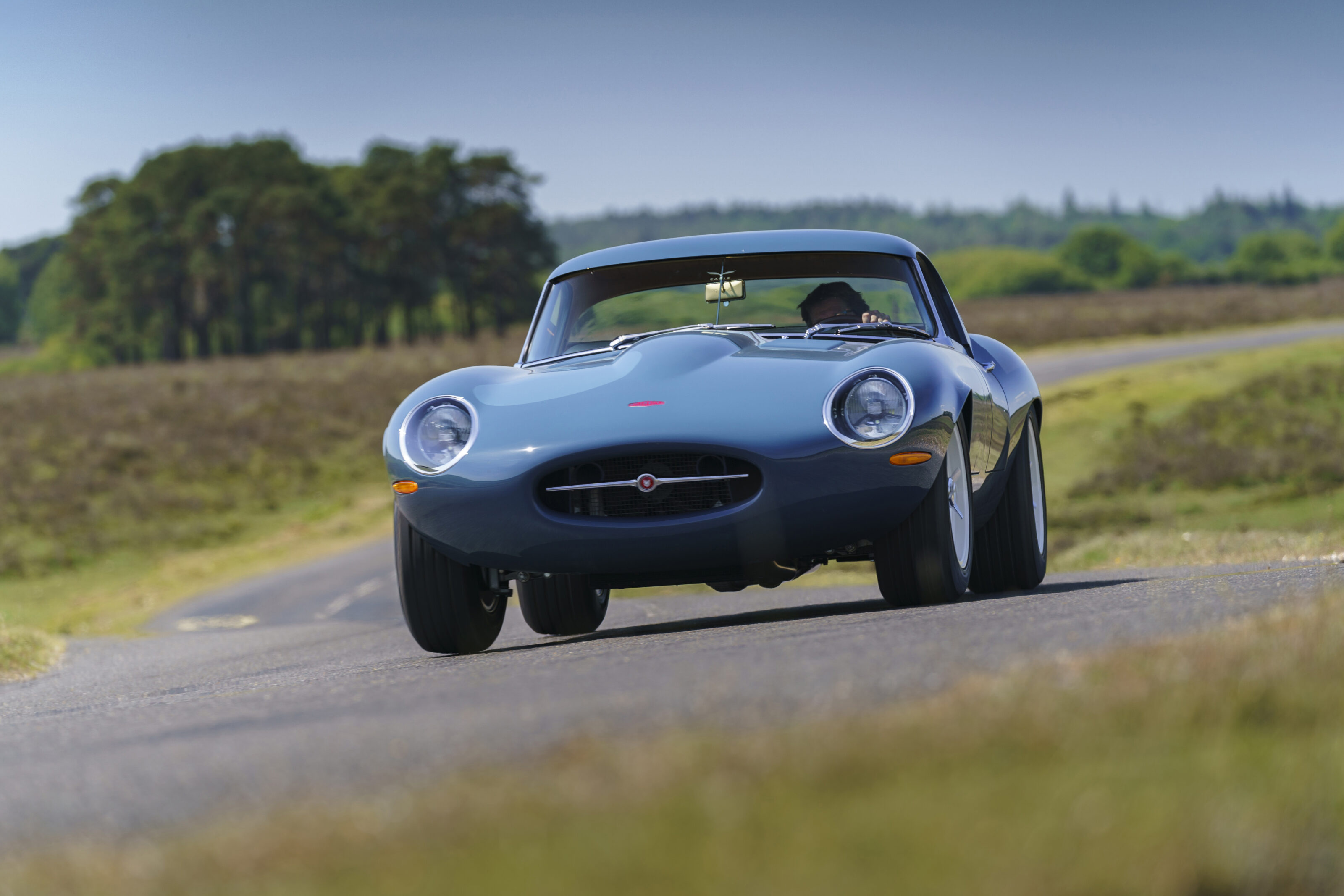
Eagle Lightweight GT
- Price: $1.4 million
- Output: 283kW
- Engine: 4.7-litre inline-6
In 2014, Jaguar announced that they would eventually build the remaining six cars using existing and continuing serial numbers, and exacting period construction methods – your brand new 1963 Jag, for a whopping $2.1 million dollars.
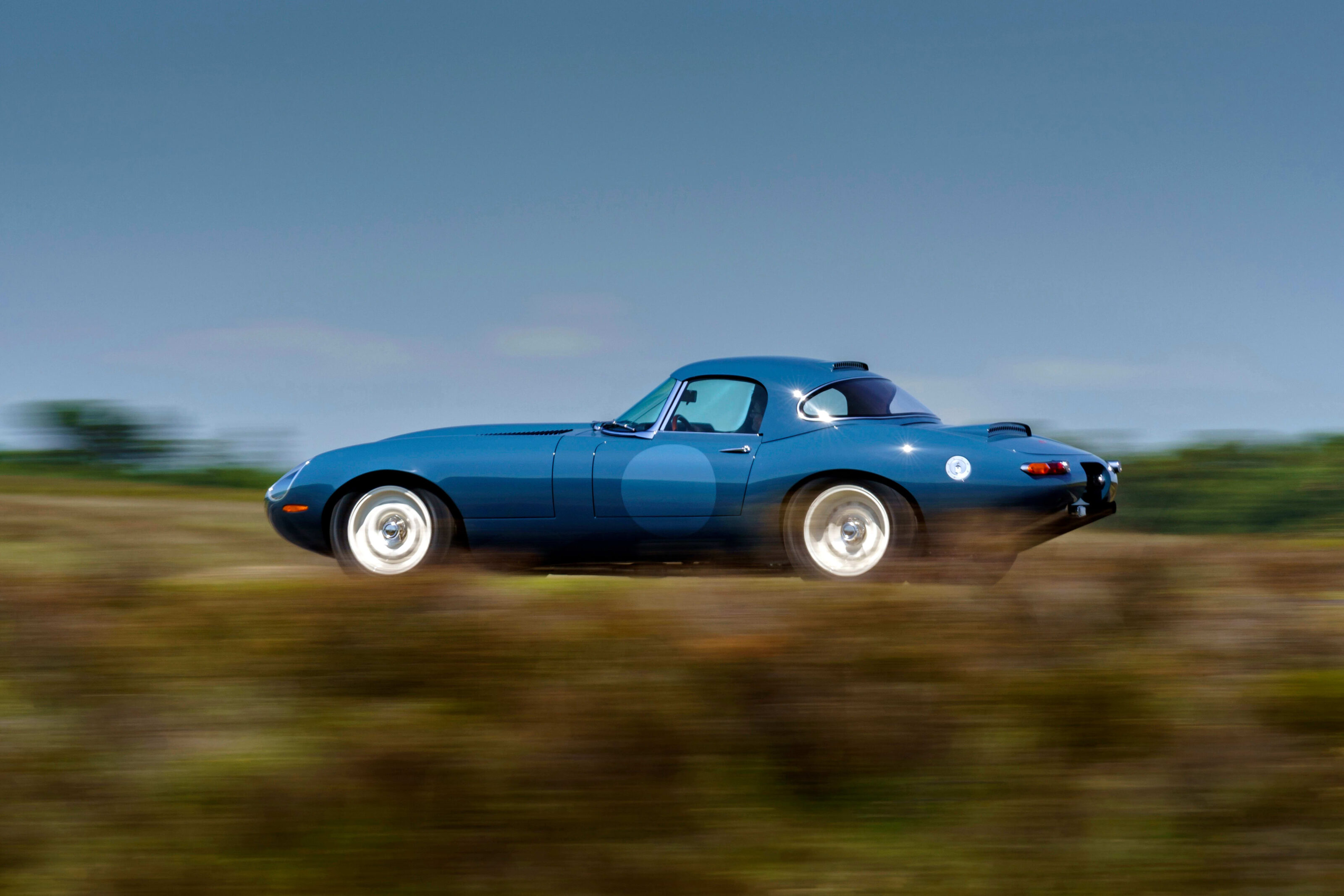
Although the Eagle is cheaper, you’re not exactly getting short-changed. It’s an 8000-hour process to create an Eagle Lightweight GT, beginning with an original Series 1 E-type. The original steel body is removed, with a hand-formed aluminium fixed-head body fitted in its place. The body’s creation alone requires almost 2500 hours.
The engine is a 4.7-litre alloy block design inspired by the original ‘XK’ mill. A big valve head, and uprated crankshaft, pistons and connecting rods produce a stout 283kW – about 50kW more than a genuine Jaguar Lightweight.
The depth of engineering is stunning, down to magnesium-cast gearbox and diff casings, hub carriers and sump. Not only is the Eagle Lightweight GT cheaper than the genuine article, it’s probably even better, too.
Alfaholics GTA-R
- Price: $500,000+
- Output: 96-179kW
- Engine: : 1.6-2.3-litre inline-4
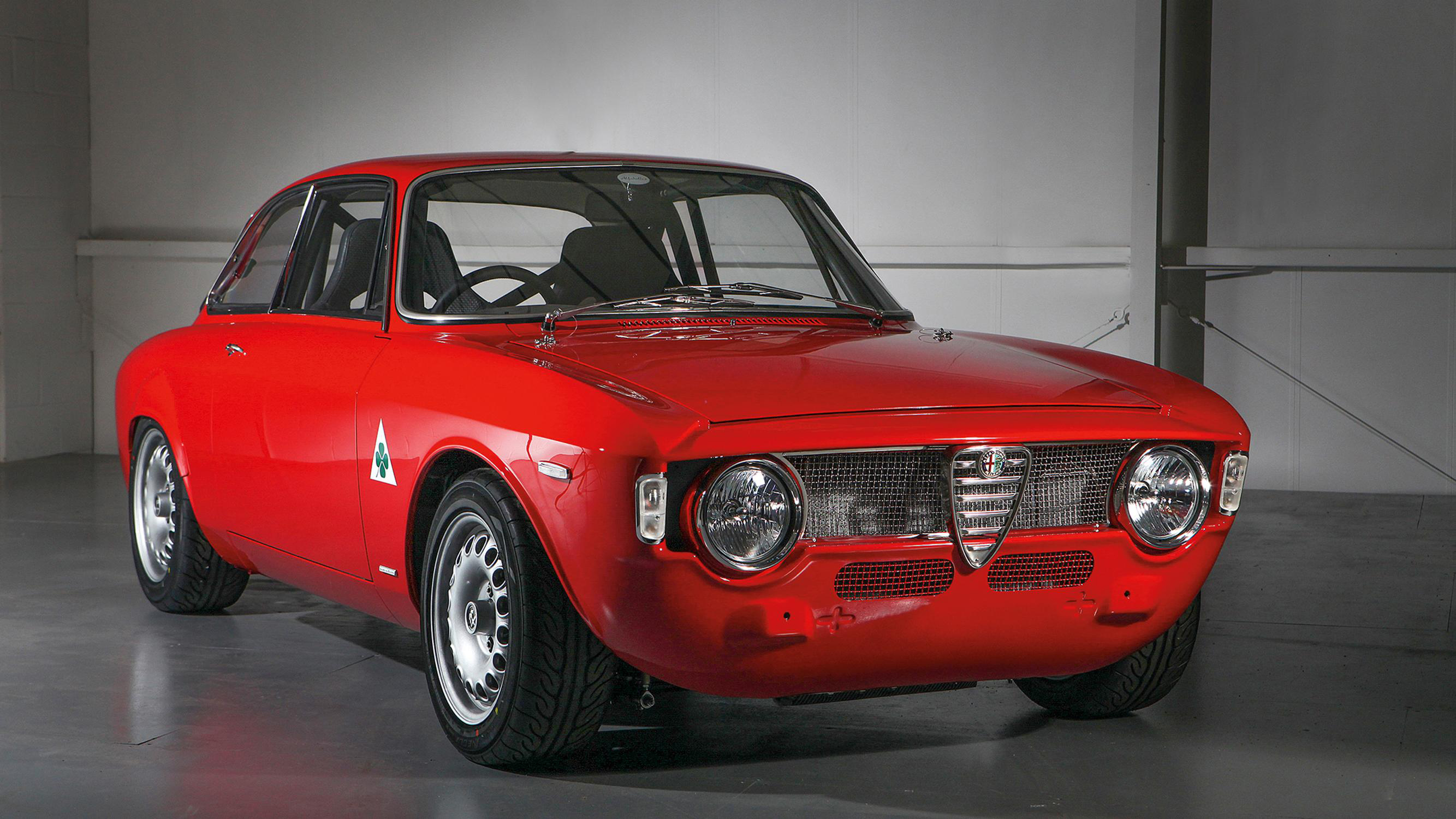
The visually restrained looks belie upwards of 3000 loving man-hours of labour. As such, there’s an even more under-the-radar panache to an Alfaholics coupe compared to, say, a Singer.
You’re privy to tripping over a Singer 911 in an executive car park of any Silicon Valley megacorp, but it’s a rare Junior coupe built to GTA-R specifications by Alfaholics that you’ll find in the garage of Gordon Murray.
Powered by the venerable Alfa TwinSpark inline-four, it’s the 830kg kerb weight figure that we find most titillating.
There are decades of historic racing experience as well as countless national-level concours awards under the classic Alfisti workshop’s belt. Given that pedigree, your dream Alfa coupe can range from a finely upholstered tourer with modern air-conditioning and audio, to a carbon-bodied track-day weapon with rose-jointed tubular titanium wishbone suspension.
Mechatronik Mercedes Coupe & SL
- Price: $POA
- Output: 228-268kW
- Engine: 4.3-5.5-litre V8
Whether you’re the owner of the Bracq-designed ‘pagoda-roof’ icon, or the larger Geiger ‘fintail’, the heart of your Mechatronik Mercedes will be the long-serving M113 V8 used in 34 different Daimler models from 1997 to 2007.
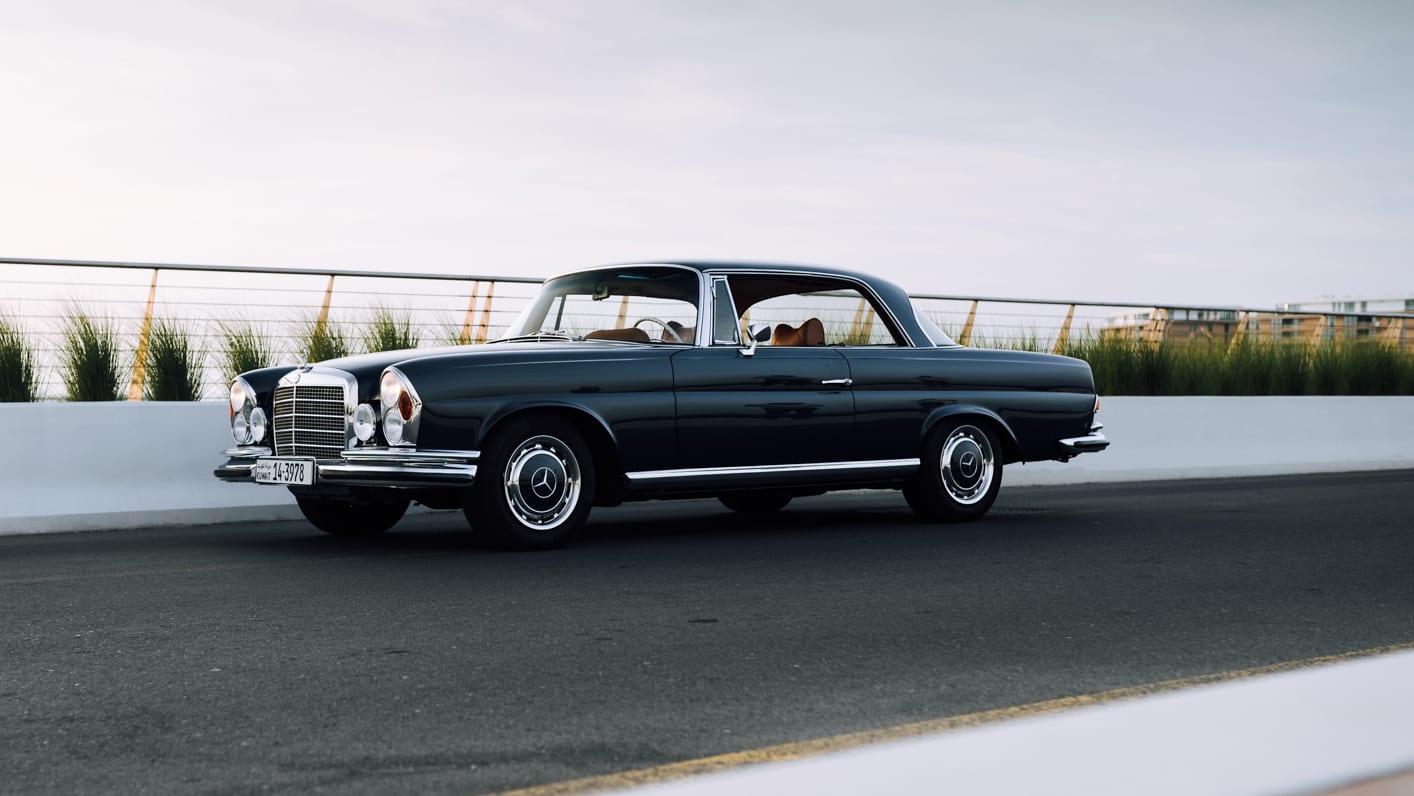
The petite pagoda roof M113 SL is bestowed with a 4.3-litre unit, while the larger W113 coupes and cabriolets gain 5.0 or 5.5-litre units. All carefully selected engines are meticulously rebuilt by hand. The chassis is given a similar treatment, with modern brakes, suspension and retrofitted ABS.
There is a wide palette of original and bespoke paint colours to choose from, however, even more impressive is the range of interior leather, carpet and woodgrain options.
We’ll take a W111 5.5 coupe in 834 Mossgreen metallic, over Cognac leather, with a Makassar wood veneer, please…
Singer 911 (classic)
- Price: $800,000+ (BYO 964)
- Output: 223kW-290kW
- Engine: 3.8/4.0-litre flat-six
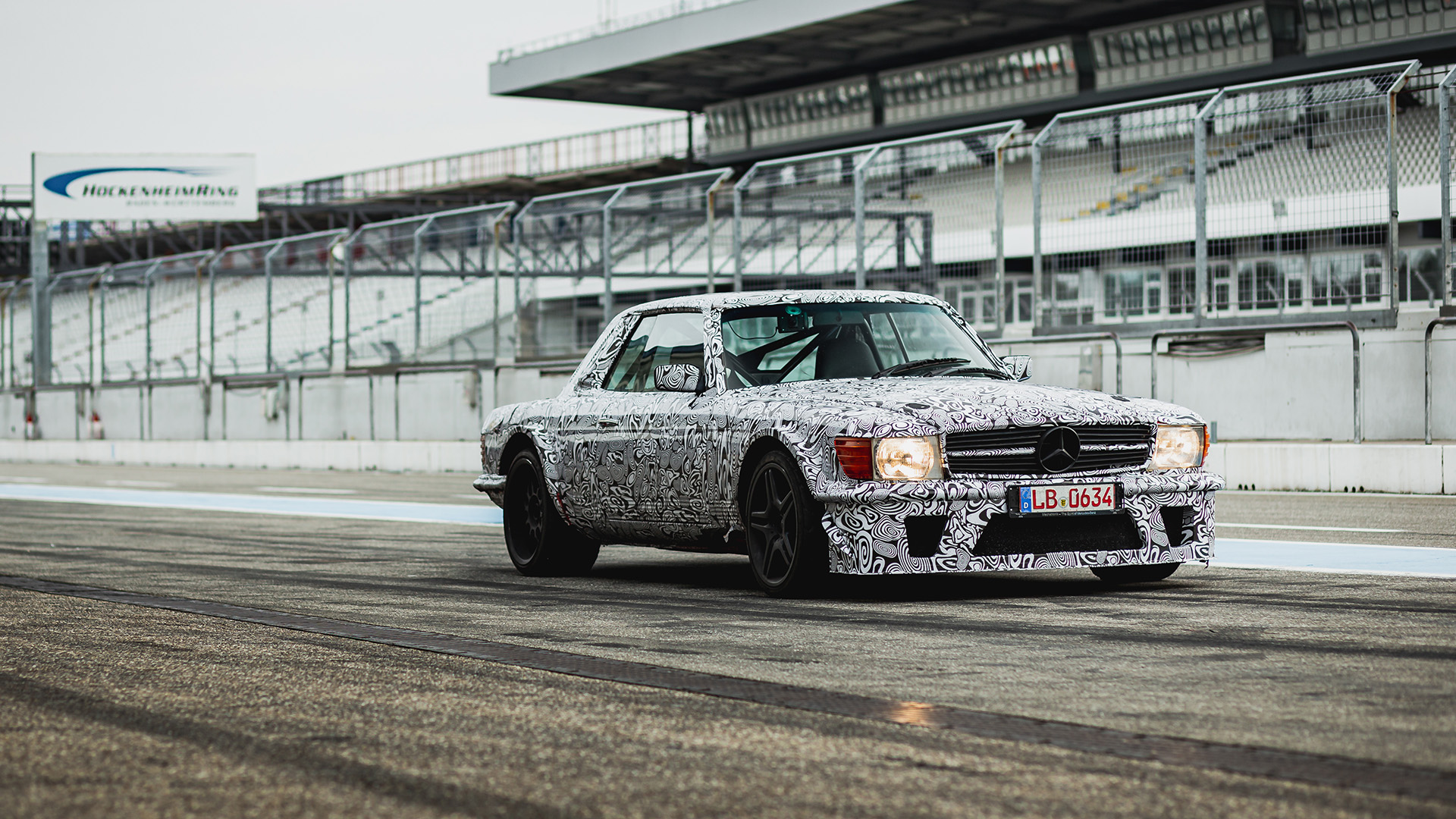
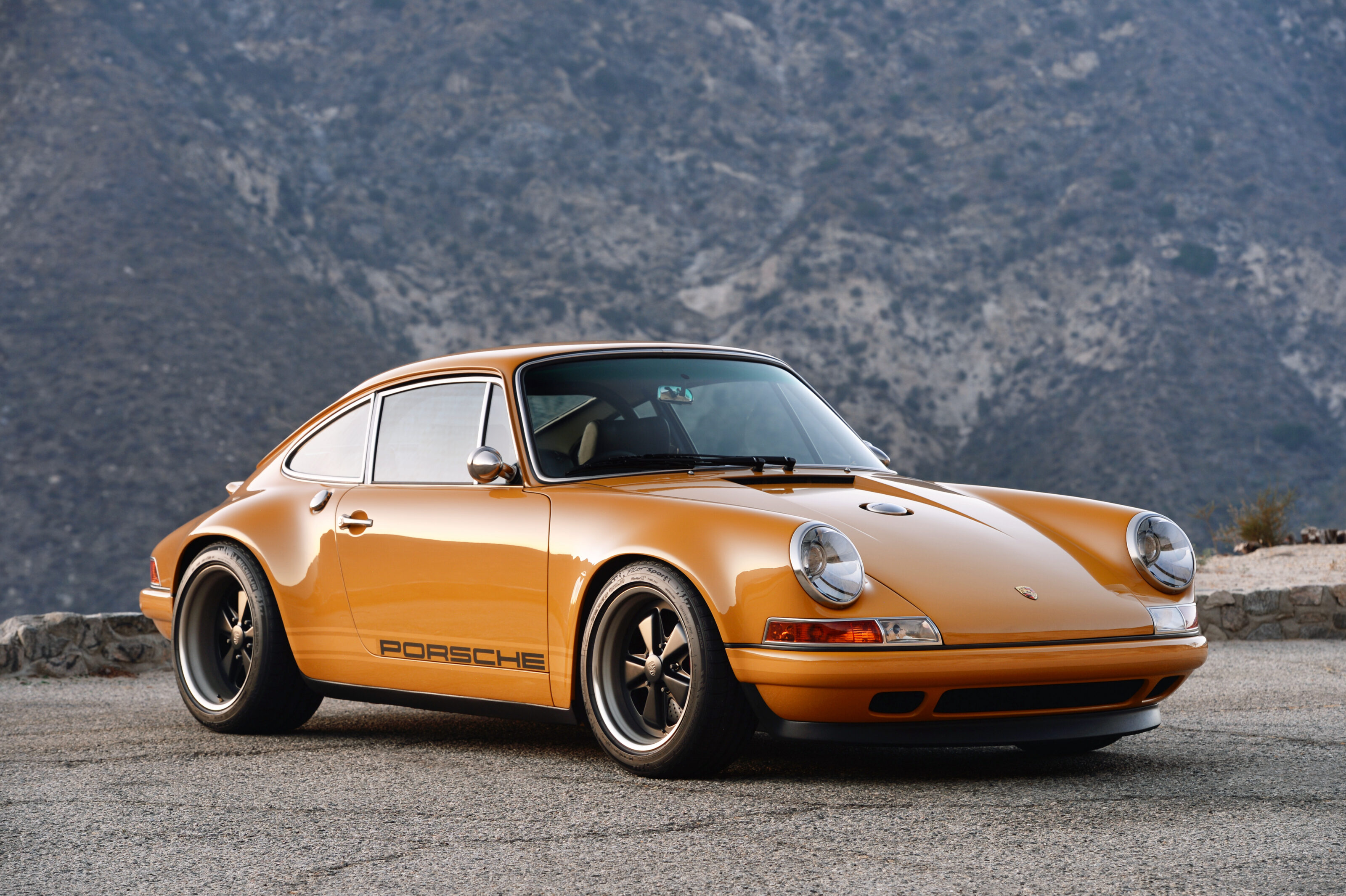
Quite simple really, you give the Californian dream factory a complete ’89-’94 964 911, along with an rather large cheque, and Singer creates for you its most perfect vision of a classic 911 – and to your exacting specifications. Say no more!
Once stripped to bare metal, the monocoque is braced and strengthened before being adorned with a host of carbon fibre exterior panels.
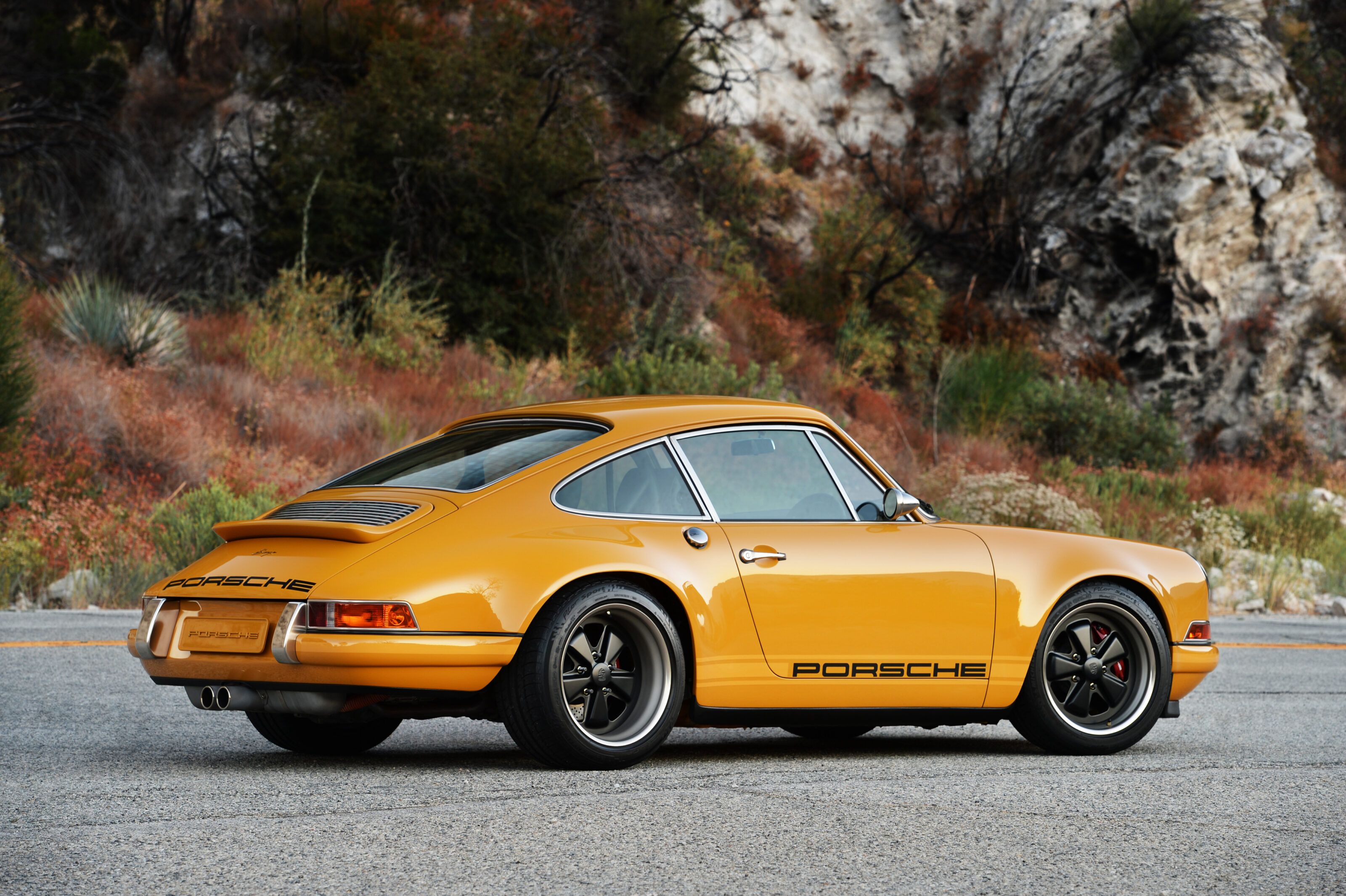
No stone is left untouched with Singer’s wizards carefully blending newly developed and upgraded parts, with carefully curated components from throughout the 911’s lineage, such as the 993’s delightful rack-and-pinion steering.
There are three engine available as standard: a 223kW 3.8-litre flat-six, a 260kW Cosworth-fettled 3.8-litre, topped by a bored and built 290kW 4.0-litre unit.
There are more options than you can fathom, with the scope of your build limited only by your imagination and bank balance. It was a tough decision not to include Singer’s drool-worthy DLS, and its Williams-honed 372kW air-cooled 4.0-litre. However, there’s just something so right about Rob Dickinson’s tastefully updated entry level Singer models. Less can indeed be more.
Snapshot
- Partner van scores an update across the range for 2022
- Broader model range and newly-available automatic versions lead changes
- Expected to arrive in the first quarter of 2022
The Peugeot Partner van has been treated to an update for 2022, with a new structure and automatic transmission on long wheelbase models headlining the changes.
A new entry-level City variant, priced from $26,990 before on-road costs, opens the range for 2022. The starter version sits at the same point as its equivalent in the MY21 model, but loses its touchscreen infotainment system and autonomous emergency braking. It retains otherwise identical standard equipment.
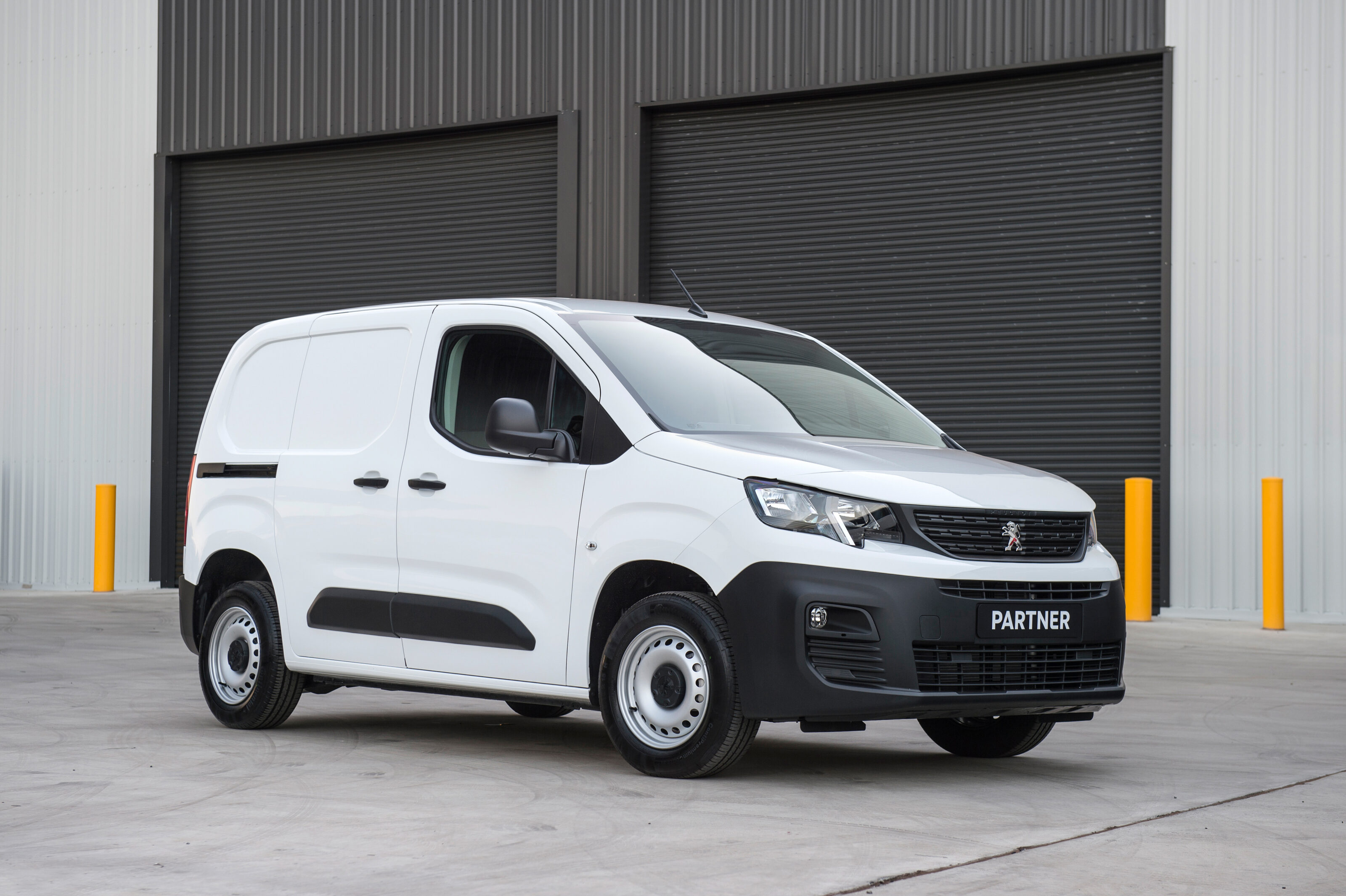
The mid-range Pro adds an 8.0-inch infotainment system with Apple CarPlay/Android Auto, reversing camera, climate control, automatic headlights, rain-sensing wipers, flip-down table and a full suite of active safety equipment.
This includes; autonomous emergency braking, lane departure warning, lane-keep assist and traffic sign recognition. It’s priced from $32,990 before on-road costs, with an automatic transmission included as standard.
A $2490 ‘premium’ option package is available for Pro variants, boosting standard equipment to include; a set of 16-inch alloy wheels, leather steering wheel, body-coloured exterior styling, electronic folding side mirrors and keyless entry with push button start.
2022 Peugeot Partner pricing
A six-speed manual transmission is limited to the short wheelbase Partner City, with other grades sporting an eight-speed automatic transmission. Each is available in short or long wheelbase form, simply dubbed ‘Short’ or ‘Long’.
All Partner variants are front-wheel drive.
Prices exclude on-road costs.
Features
City
Sitting at the bottom end of the Partner range, the City receives equipment such as:
| Six-speed manual or eight-speed automatic transmission |
| 5.0-inch monochrome infotainment system |
| Electronic stability control |
| Reversing camera (windshield-mounted) |
| Rear parking sensors |
| Six airbags |
| Manually-controlled air conditioning |
| 180-degree swinging rear doors. |
Pro
The Pro adds the following equipment over the entry-level City:
| Eight-speed automatic transmission |
| Electronic park brake |
| Autonomous emergency braking |
| Forward collision warning |
| Lane departure warning |
| Lane-keep assist |
| Traffic sign recognition |
| 8.0-inch touchscreen infotainment system with Apple CarPlay/Android Auto |
| Touchscreen-based reversing camera |
| Automatic climate control |
| Automatic headlights |
| Rain-sensing wipers |
| Flip-down table |
| Under-seat storage. |
Premium
At the other end of the range, the Premium package (available on Pro models only) features:
| 16-inch alloy wheels |
| Leather-wrapped steering wheel |
| Body-coloured painted rear bumper, side mouldings, sliding door rails and side mirrors |
| Electronic folding side mirrors |
| Keyless entry with push button start. |
Power
The 2022 Peugeot Partner is powered by a Euro 6.3-compliant 1.2-litre turbocharged petrol engine, with differing power outputs depending on the transmission option.
Manual models feature an 81kW/205Nm tune, while automatic variants produce 96kW/230Nm. A minimum of 95RON premium unleaded is required.
Warranty and servicing
In identical fashion to the wider Peugeot Commercial Vehicle range, the Partner is backed by a five-year/200,000-kilometre warranty, while pricing for servicing over a five-year/70,000-kilometre period is set at $2746.
Availability
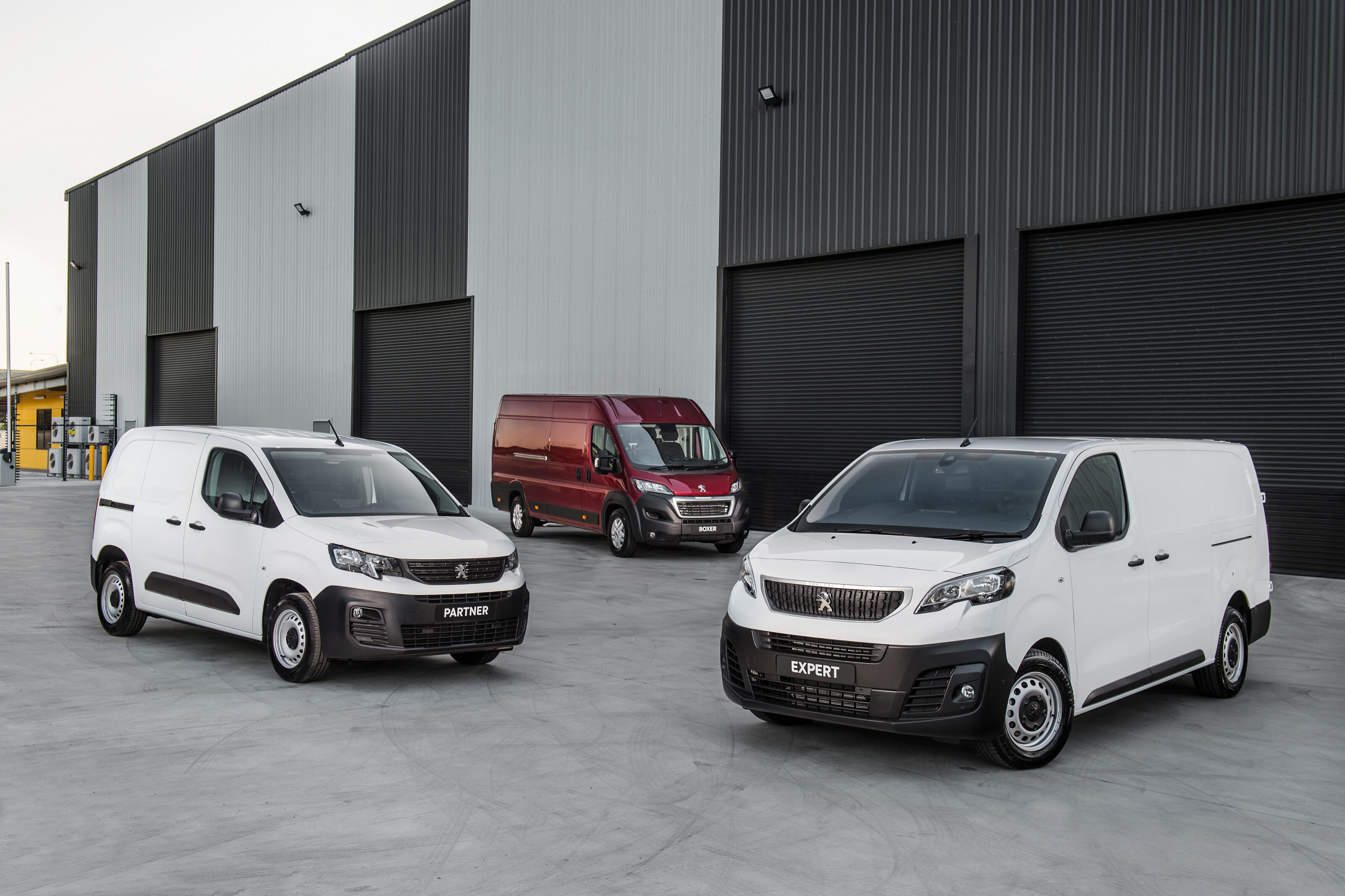
Joining the also-updated Expert medium van and Boxer large van, the updated Peugeot Partner will go on sale in the first quarter of 2022.
The 2022 Honda Civic Type R was teased just days ago, but that hasn’t stopped us stripping back the camouflage to provide a better idea of what it will look like ahead of its official unveiling in the coming months.
To help hide the car’s final look, Honda wrapped the Civic in a unique skin consisting of the ‘R’ insignia and the silhouettes of previous Civic Type R models.
So we tasked artist Theo Throttle with digitally removing it to take a look at what might be lying underneath.
Compared with the outgoing model (in both meanings of the word), the new Type R looks far more mature – possibly designed to help appeal to a greater number of buyers.

Despite losing its lower splitter and side winglets, the Civic’s deep front spoiler is still fit-for-purpose, allowing plenty of cold air to the front brakes and intercooler.
The trademark red Honda badge at the front is accompanied by a Type R grille badge – so your neighbours know it’s the fast one.
At the rear, Honda has enlarged the centre of the three exhaust tips, while the large rear wing is supported by exposed metal frames – which may adjust to provide greater levels of rear-end downforce.
A set of 20-inch lightweight alloy wheels finished in black and wrapped in Michelin Pilot Sport 4S tyres help hide Brembo high-performance brake callipers.

The 2022 Honda Civic Type R will be offered with a manual transmission, and it’s expected the previous car’s 2.0-litre turbo mill will continue to be offered – potentially with a 48-volt mild-hybrid system to reduce fuel consumption and emissions, but boosting acceleration under load.
You can see the Civic’s official teaser images along with a spy video by clicking here, and spy photos of the new hot hatch being driven near the Nürburgring here.
Be sure to follow MOTOR on Facebook and Instagram to get the very latest on the 2022 Honda Civic Type R as it’s announced.
Japanese luxury brand Lexus is to globally reveal its all-new LX next week – the first generational update to the nameplate since 2007.
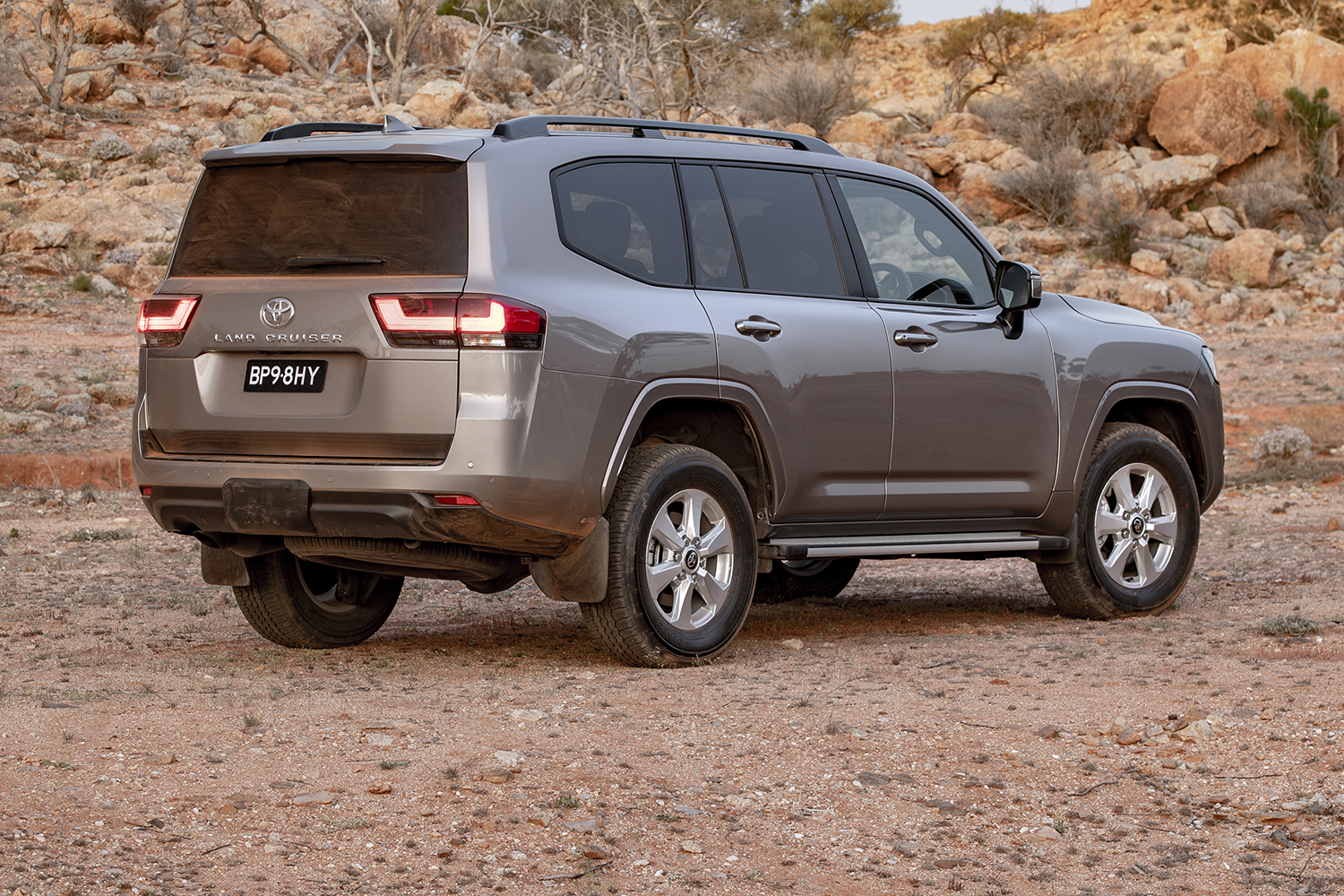
Set to be launched online at 8am AEDT on October 14, the new LX 600 will be based on Toyota’s recently-revealed LandCruiser 300 Series, powered by the new 227kW/700Nm 3.3-litre V6 diesel engine, replacing the outgoing V8.
It’s likely the LX will come at a hefty premium above the range-topping LC300 Sahara ZX variant, which is slated to arrive towards the end of 2021 for $138,790 before on-road costs.
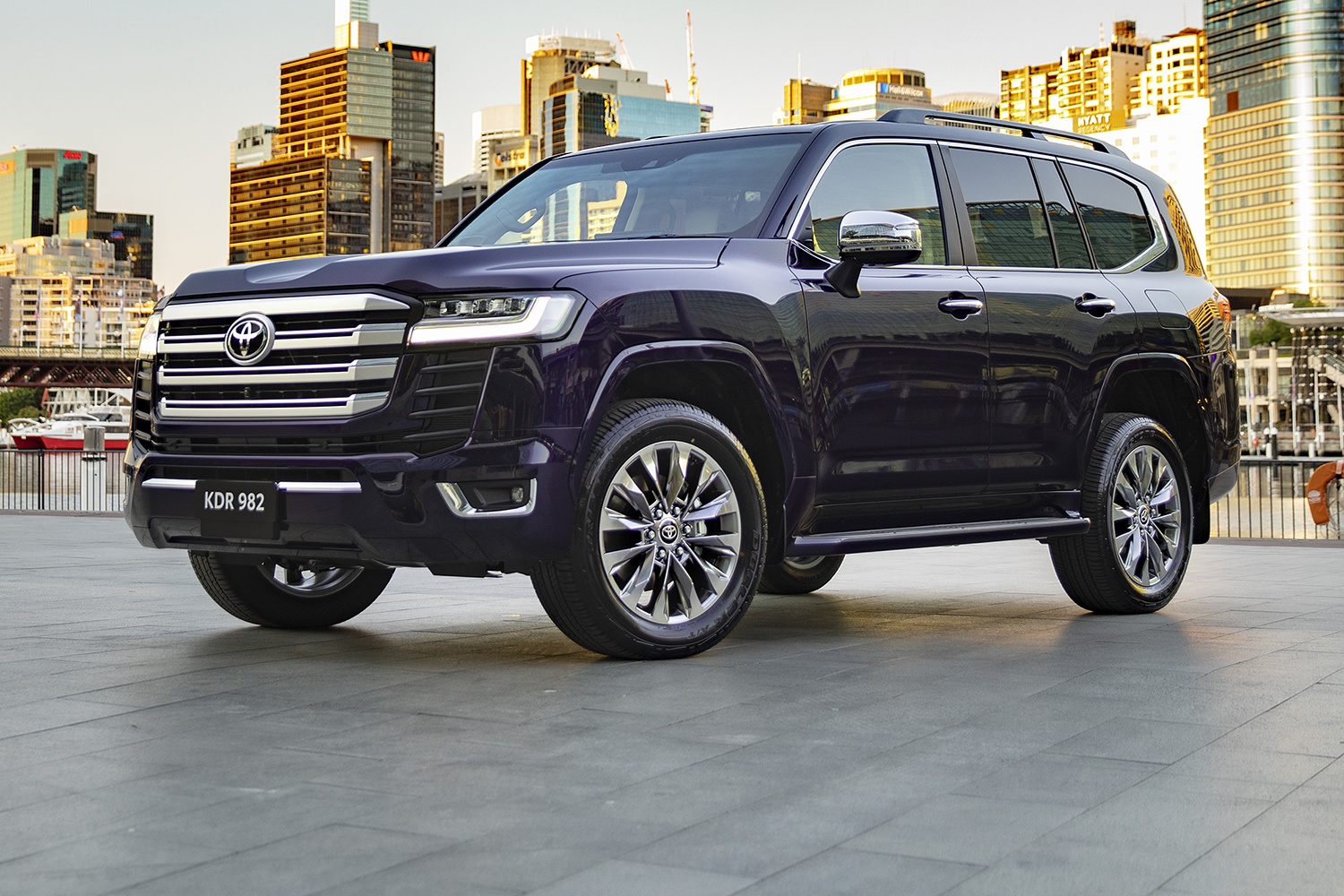
If the base LX provides the same level of equipment as the Sahara ZX, we can expect 20-inch wheels as standard, leather interior trim, a Torsen rear limited-slip differential and adaptive suspension which can be optimised for any one of five drive modes.
With a 3280 kilogram gross vehicle mass across the LC300 range, even the Sahara ZX – the heaviest variant available – leaves around 700 kilograms for its payload, up by close to 100 kilograms over the outgoing LX 570 and LX 450d.
Lexus will provide details of the LX’s Australian arrival closer to launch, while the LC300 has been delayed due to production pauses at Toyota’s Japanese plants, with right-hand drive vehicles not going back into production until November.
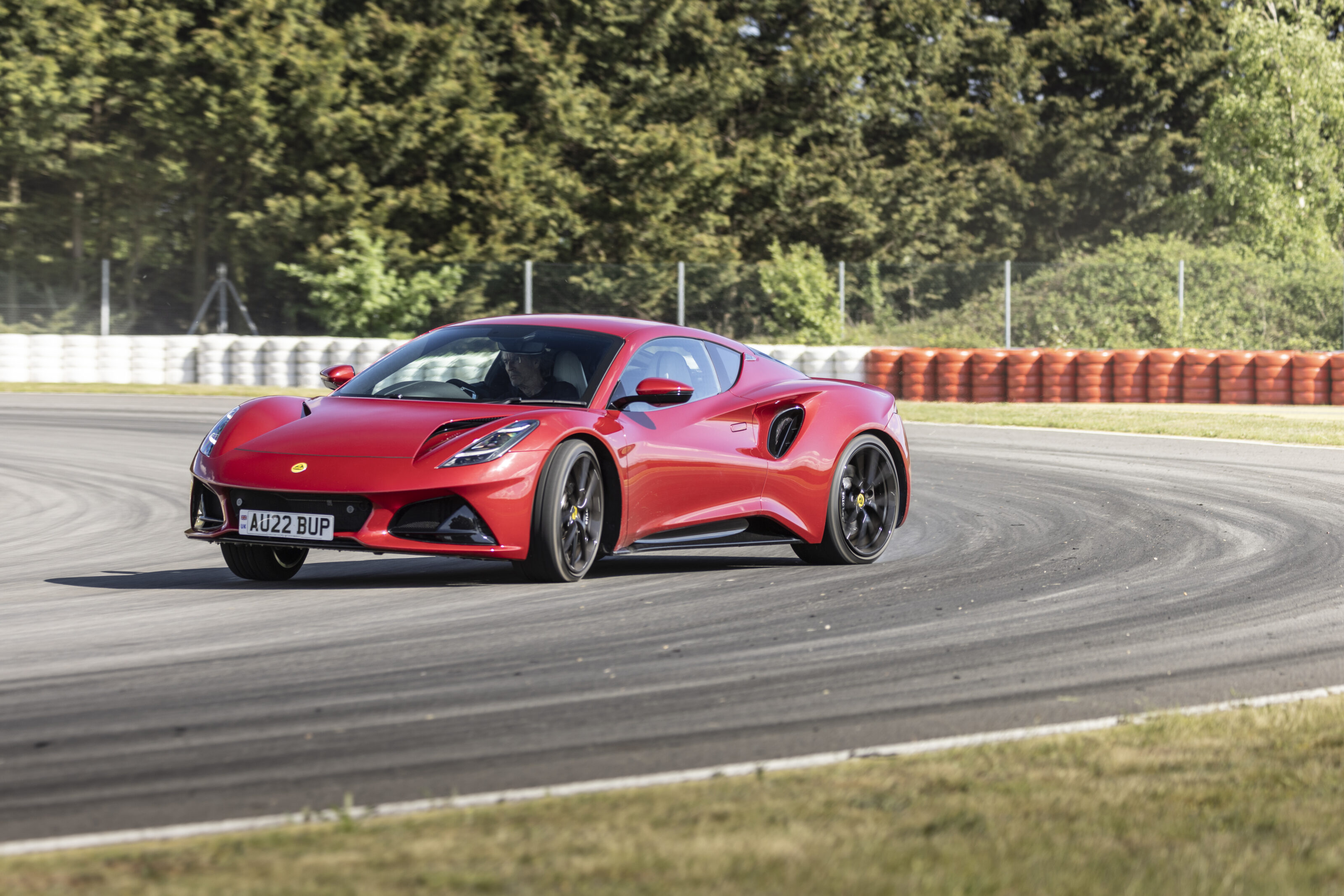
UPDATE, June 7, 2022: Lotus Emira driven
Following its global reveal, we’ve now driven the new Emira ahead of its Australian debut. Read our review at the link below.
The story to here: Emira pricing
Snapshot
- First Edition variants will be manual as standard, auto optional
- Six colours at launch, more to come next year
- List price starts at $184,990
UPDATE, October 8: Lotus Cars Australia has confirmed local pricing for the new Emira V6 First Edition, set to land locally from July next year.
Initial deliveries of the First Edition will have a V6 only, setting buyers back $184,990 before on-road costs – a $5000 saving over its Evora GT410 predecessor in 2020.
Lotus also confirmed the prices of options on top of the standard car, such as:
| Six-speed automatic gearbox with paddle shift | $4000 |
| Extended Black Pack u2013 black roof, cantrails, mirror backs, rear Lotus badge and exhaust finisher | $2999 |
| Full Alcantara steering wheel with choice of black, grey, red or yellow top-centre coloured marker | $999 |
| Full leather steering wheel with choice of grey, red or yellow top-centre coloured marker | $999 |
| Homelink | $499 |
| Scorpion vehicle tracker | $1199 |
While the inline four-cylinder Emira is yet to be released, Lotus expects the i4 First Edition to start from around $150,000 before on-road costs.
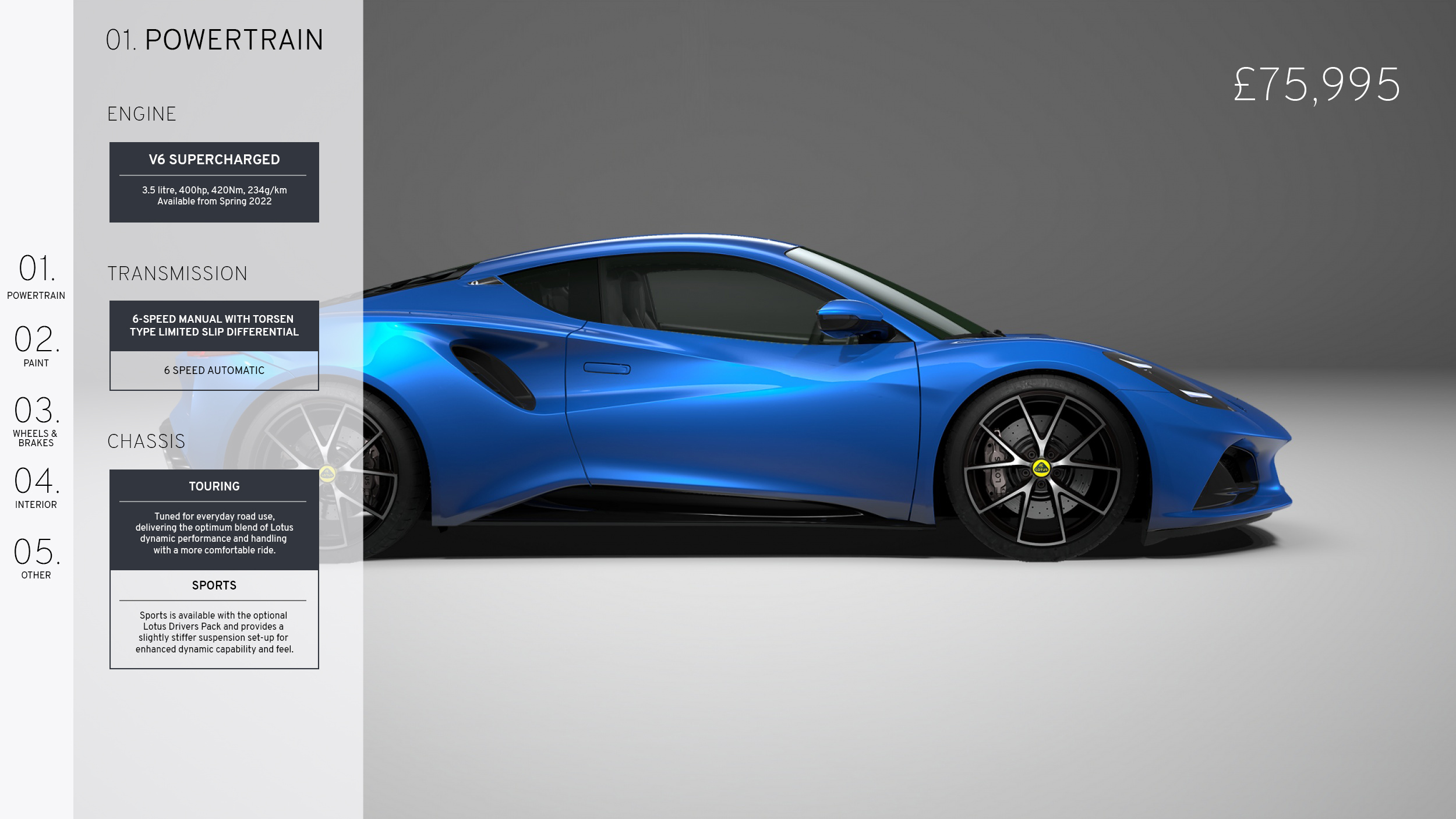
September 20: The new Lotus Emira has finally been given a price tag, with the First Edition variant confirmed for production early next year.
Landing in the UK at £75,995 (AU$143,920), the Emira First Edition will be available exclusively with the Toyota-sourced, 3.5-litre supercharged V6 engine previously found in the Evora, paired to either a six-speed manual gearbox as standard or the six-speed automatic as a £1200 (AU$2270) option.
First Edition variants will ride on 20-inch V-spoke forged alloy wheels, diamond cut to create a two-tone finish, with silver and gloss black versions also available as a no-cost option. Meanwhile, behind the wheels are two-piece brake rotors with Lotus-branded calipers.
Four packages will be available in addition to the base First Edition:
| Lower Black Pack | Gloss black front bumper air blades, front splitter, side sills and rear diffuser |
| Drivers Pack | Tour or Sport suspension with Goodyear Eagle F1 Supersport tyres, or Sport suspension with Michelin Pilot Sport Cup 2 tyres |
| Design Pack | Adds privacy glass, sports pedals, a black Alcantara headliner, and the choice of black, red, yellow or silver painted brake callipers, as well as Lotus-branded footwell mats |
| Convenience Pack | Front parking sensors, rear reversing camera, rain-sensing wipers with aero blades, auto-dimming mirrors and a rear luggage storage net. |
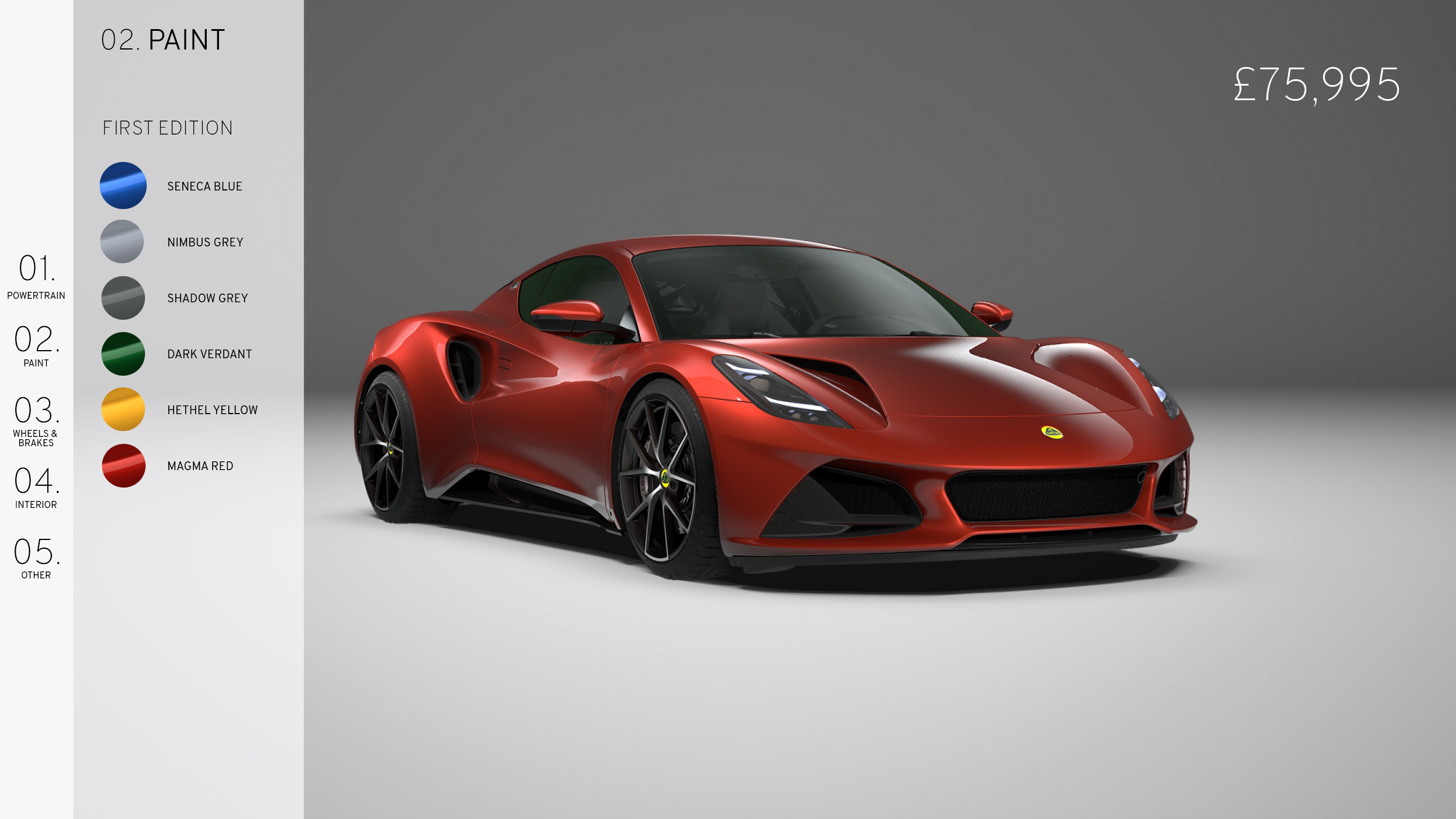
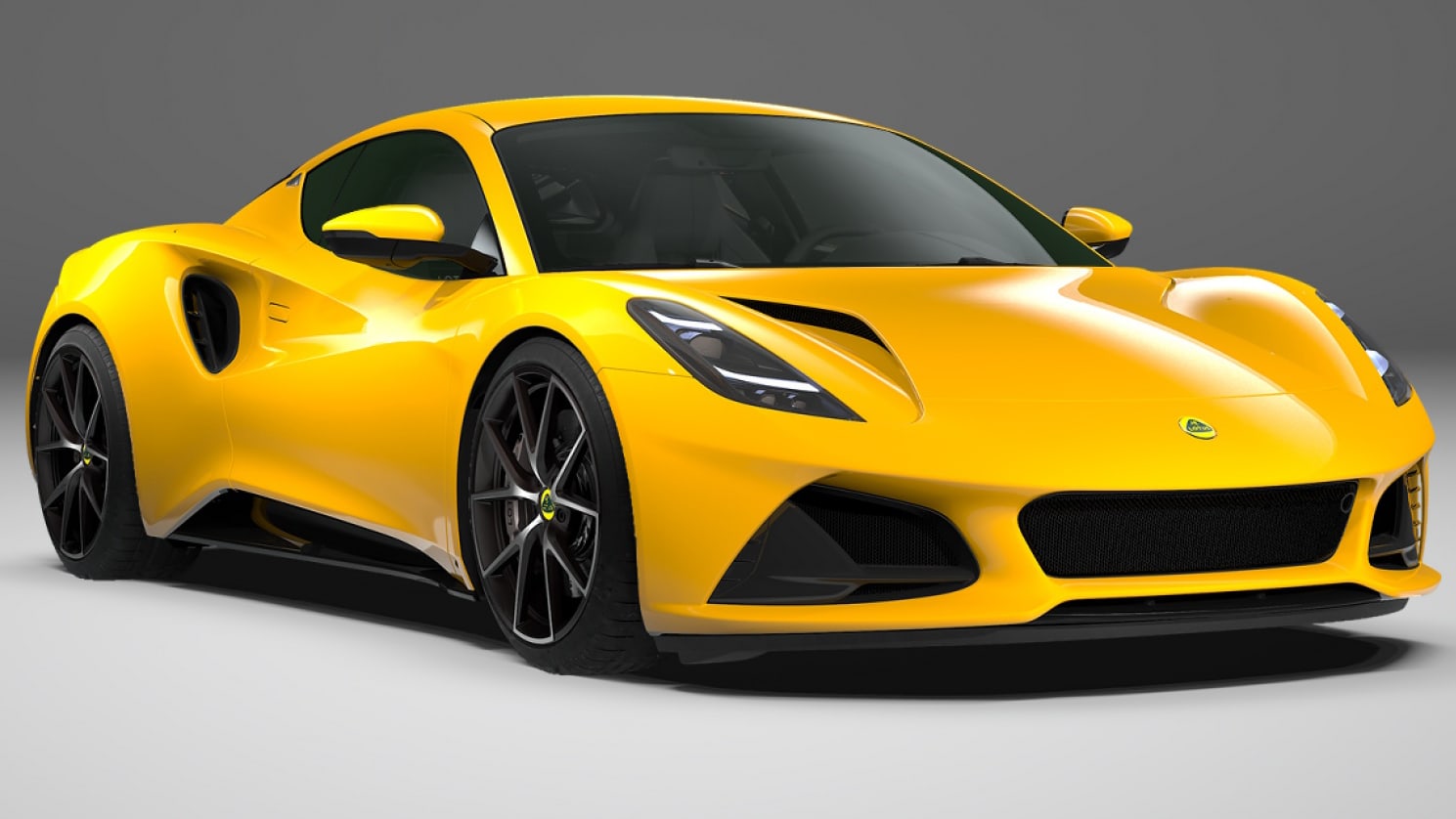
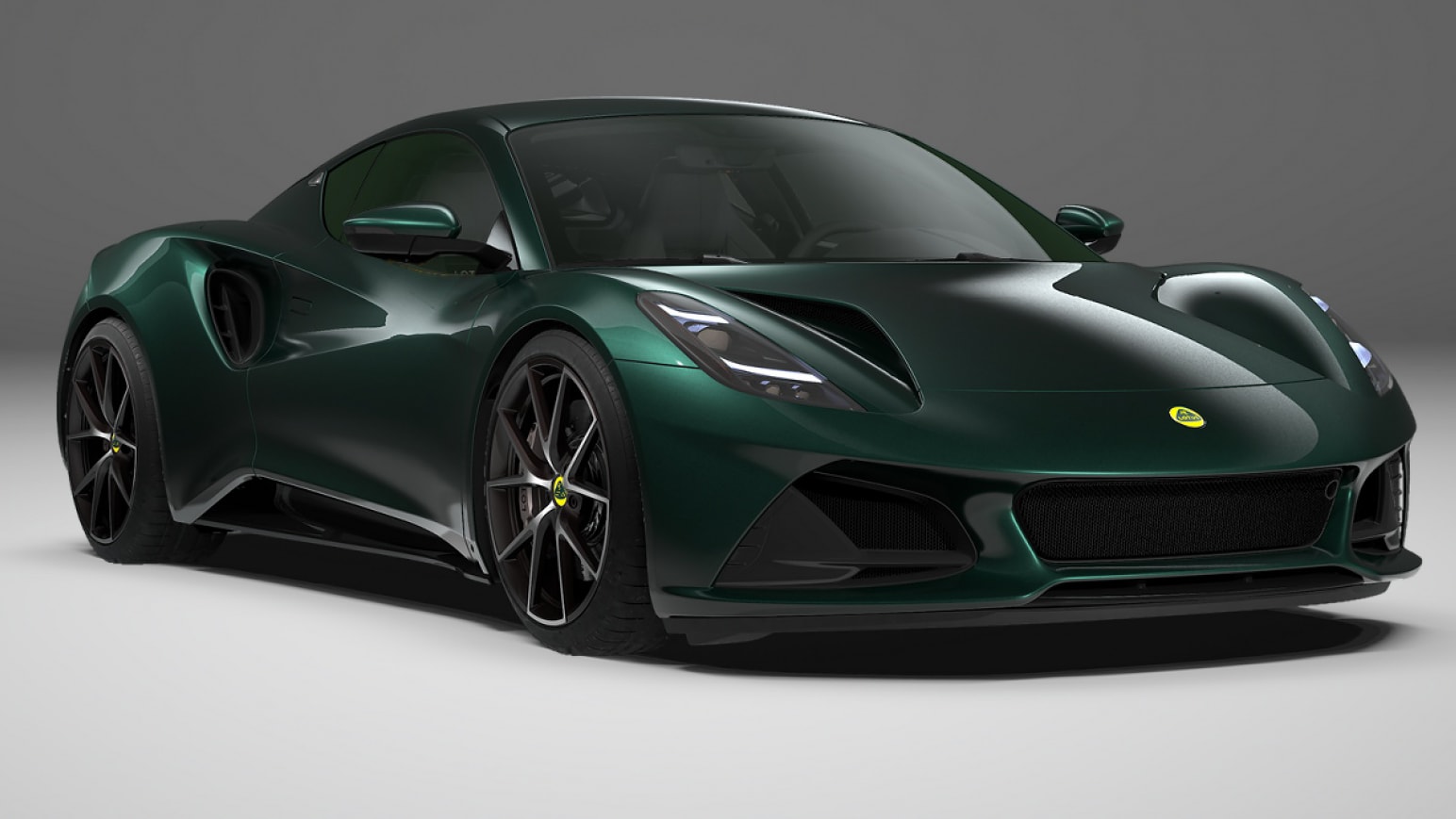
A selection of six paint colours are on offer from launch. These are; seneca blue, magma red, Hethel yellow, dark verdant, shadow grey and nimbus grey. There are also seven interior choices which are; red, black, grey and tan Nappa leather, as well as black Alcantara with either red, yellow or grey stitching – all of which are no-cost options.
Highlights on the outside of the Emira include; LED lights all round, a titanium exhaust finisher, heated power-fold door mirrors and rear parking sensors. Meanwhile, the interior scores 12-way adjustable seats, Apple CarPlay, Android Auto, a 10-speaker, 340W KEF sound system and 10.25-inch touchscreen.
The V6 First Edition will begin production in the European spring of 2022, while the inline four-cylinder Emiras are set for arrival in the European autumn, closer to September 2022.
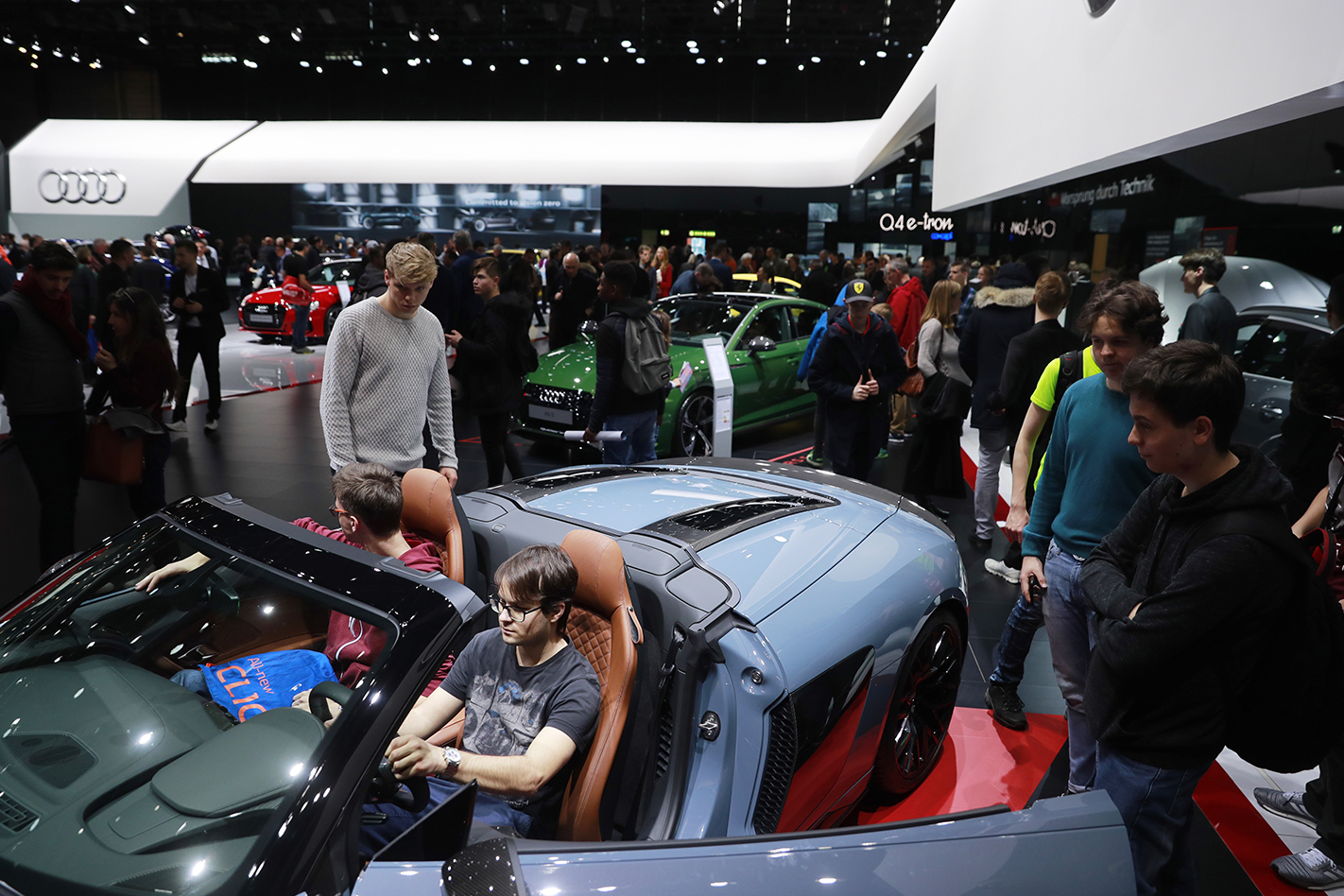
For the third year in a row, the Geneva Motor Show will not be going ahead, with organisers confirming they are cancelling the 2022 edition due to COVID-19.
After the 2020 and 2021 shows were postponed because of the worldwide crisis, next year’s GIMS was slated to run across February 19-27. However it has since been canned as the industry is dealing with “direct and indirect issues relating to the ongoing COVID-19 pandemic.”
While the primary reason for its cancellation has been put down to ensuring the safety of patrons, journalists and industry figures, the ongoing semiconductor crisis is also a major factor in the postponement of the 2022 show – as a majority of manufacturers face an unprecedented supply shortage.
Maurice Turrettini, President of the Comité permanent du Salon international de l’automobile which organises the show, said the nature of the event made it a threat to those involved, leaving organisers with no choice but to postpone.
“We have pushed very hard and tried everything to reactivate the Geneva International Motor Show in 2022”, said Turrettini.
“Despite all our efforts, we have to face the facts and the reality – the pandemic situation is not under control and presents itself as a big threat for a large indoor event like GIMS. But we see this decision as a postponement, rather than a cancellation. I am confident that the Geneva International Motor Show will come back stronger than ever in 2023.”
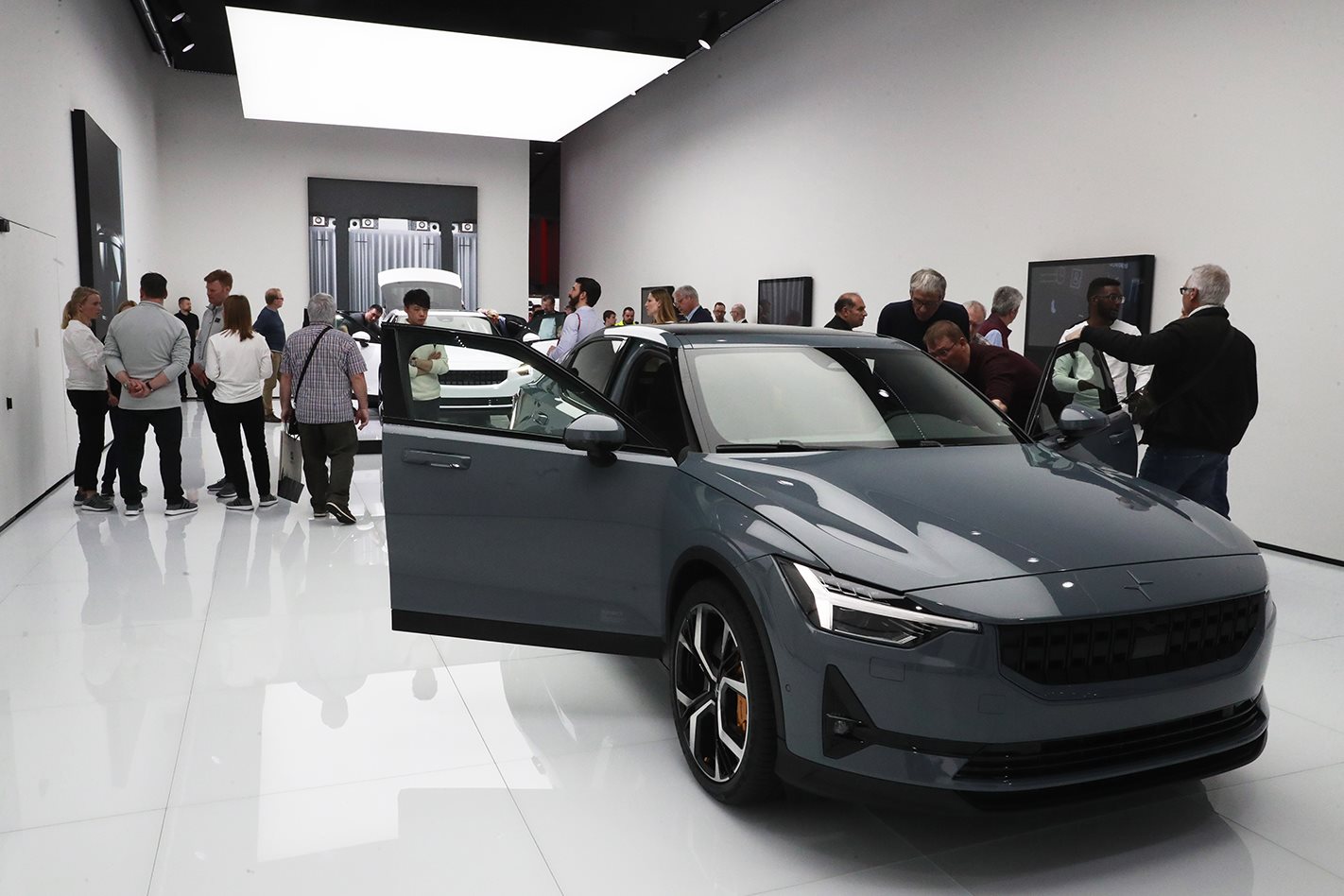
GIMS CEO Sandro Mesquita said the semiconductor shortage may cause future problems for the prestigious show, potentially extending through to 2023.
“Many exhibitors have indicated that the uncertainties caused by the COVID-19 pandemic make it impossible for them to make a firm commitment for GIMS 2022,” said Mesquita.
“On top of this is the negative impact that the current shortage of semiconductors has on car manufacturers. The chip crisis is likely to drag on well into next year, with negative financial implications for OEMs. In these uncertain times, many brands are therefore unable to make a commitment to participate in a trade fair that would have taken place in just over four months.
“When considering all the factors, it became clear that it was necessary to postpone the show, and to announce the news sooner than later to avoid cancelling at short notice.”
The GIMS announced in August it would begin to host a sister event in Doha, Qatar, from 2022, although it is not yet known whether this will also be affected by the ongoing pandemic and stock shortage.
