
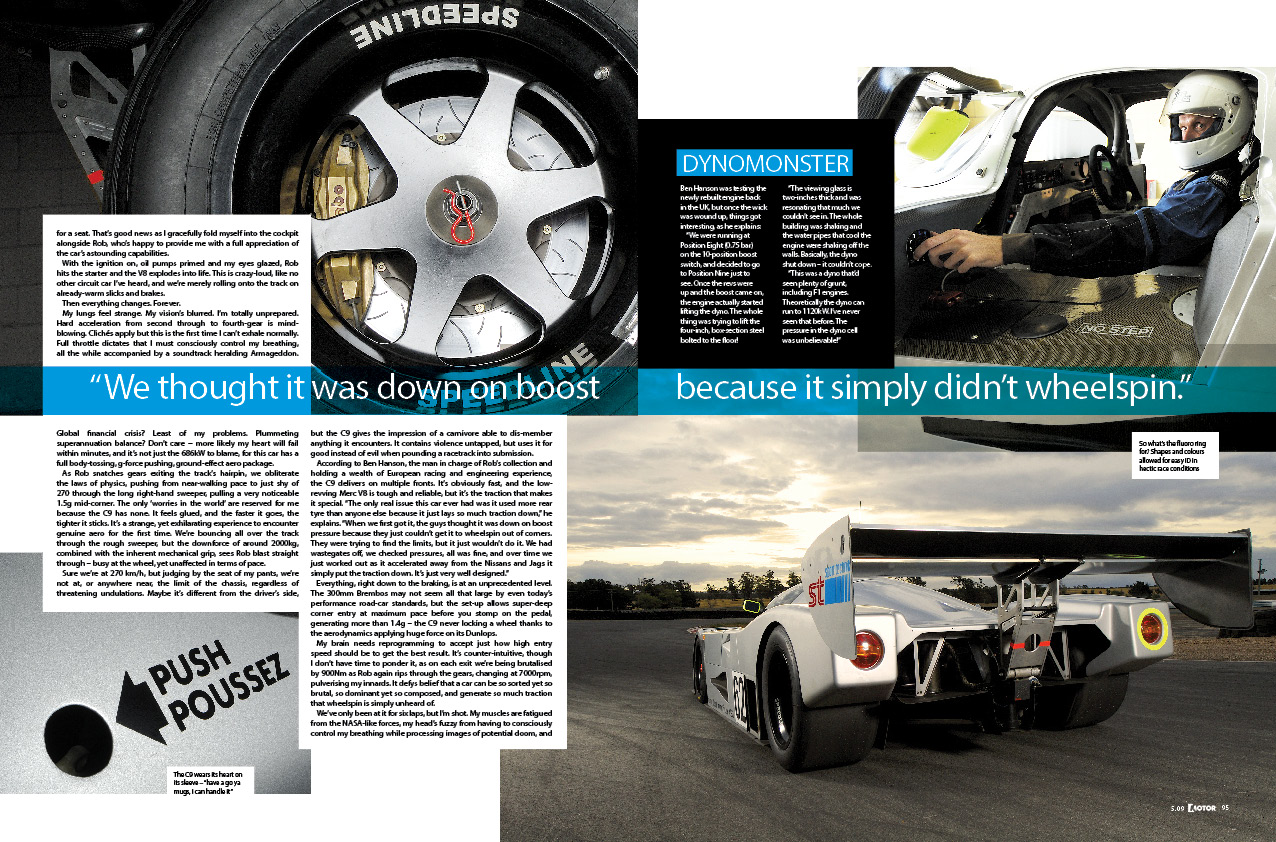
Talk of Le Mans and the words “The greatest sports car ever made” and what do you think of? The Porsche 917 has to be there, as does the triumphant Ford GT40. But it’s this car – the Sauber-Mercedes C9 – that holds a special place in sports-car history.
This feature was first published in MOTOR magazine’s May 2009 issue, written by the late Damien Pearce
The C9 is the progeny of the Group C Sportscar partnership between Peter Sauber’s successful Swiss-based Sauber engineering firm and Mercedes-Benz. The program initially saw Mercedes-supplied engines fitted to Swiss-designed cars, run under the Sauber banner. Then in mid-1988, Mercedes-Benz took a greater role in the engineering and established the Silver Arrows factory effort for the 1989 season.
Only six C9s were made, with production beginning in 1987. But sitting in the pitlane at Tasmania’s Symmons Plains Raceway, we have privileged access to the only privately-owned C9 in the world – Chassis Number 5A, one of the final two ‘factory’ cars constructed before the C11 arrived, and the car with greatest provenance. For starters, Number 5A claimed the 1989 World Sportscar (Group C) Championship, with drivers Jochen Mass and Jean-Louis Schlesser winning seven of the eight races (five in 5A) and scoring 155 out of a possible 160 points.
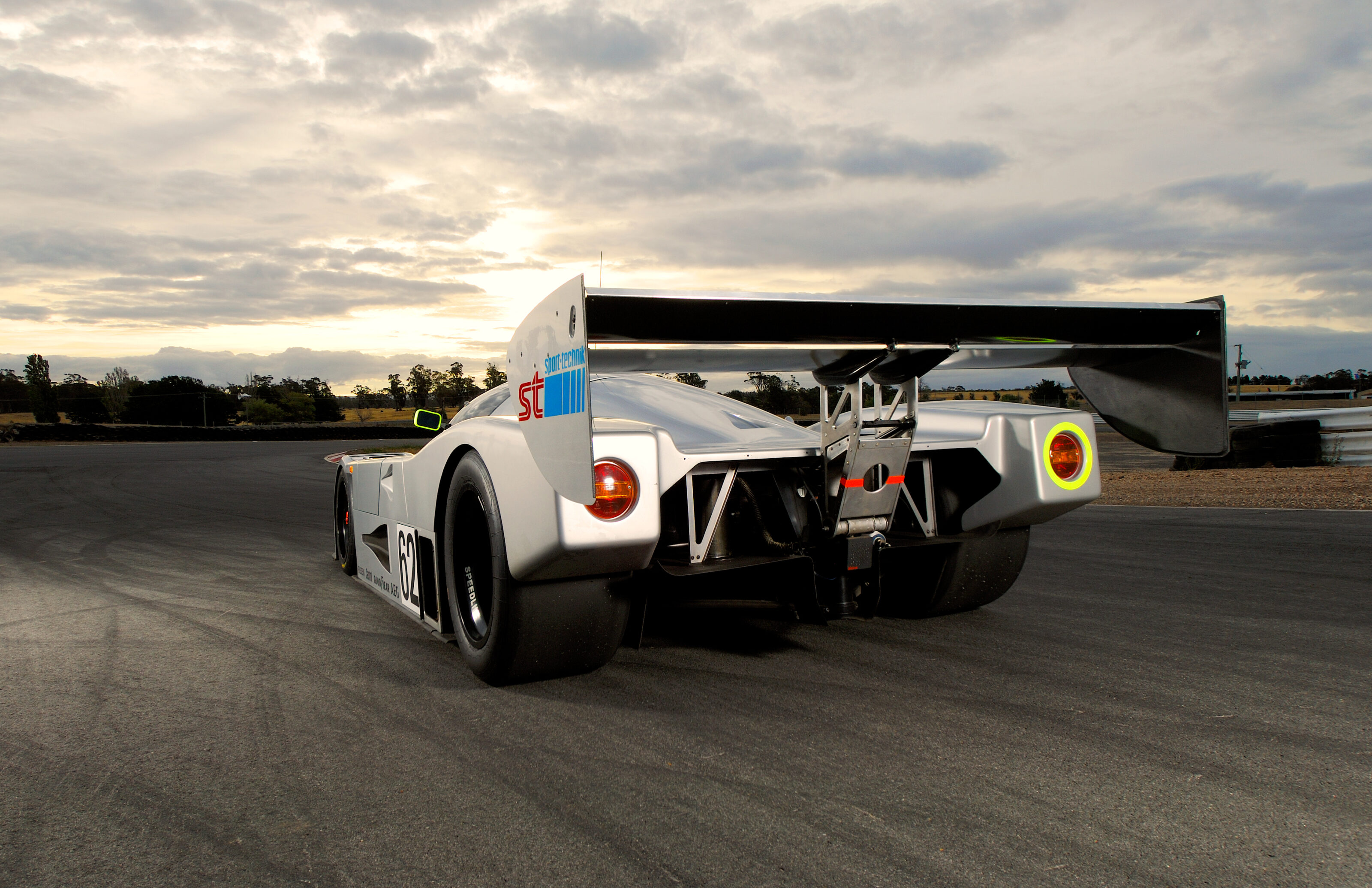
The C9 finished first and second at Le Mans in 1989, but it’s Chassis Number 5A that is a genuine icon. Following a season of world domination, it was mothballed and only saw the light of day again in 2008 when purchased by Aussie collector Rob Sherrard. And here’s the thing: Rob doesn’t like mothballs, hence why I’m loitering nervously in the pit garage, circling the only active C9 in the world.
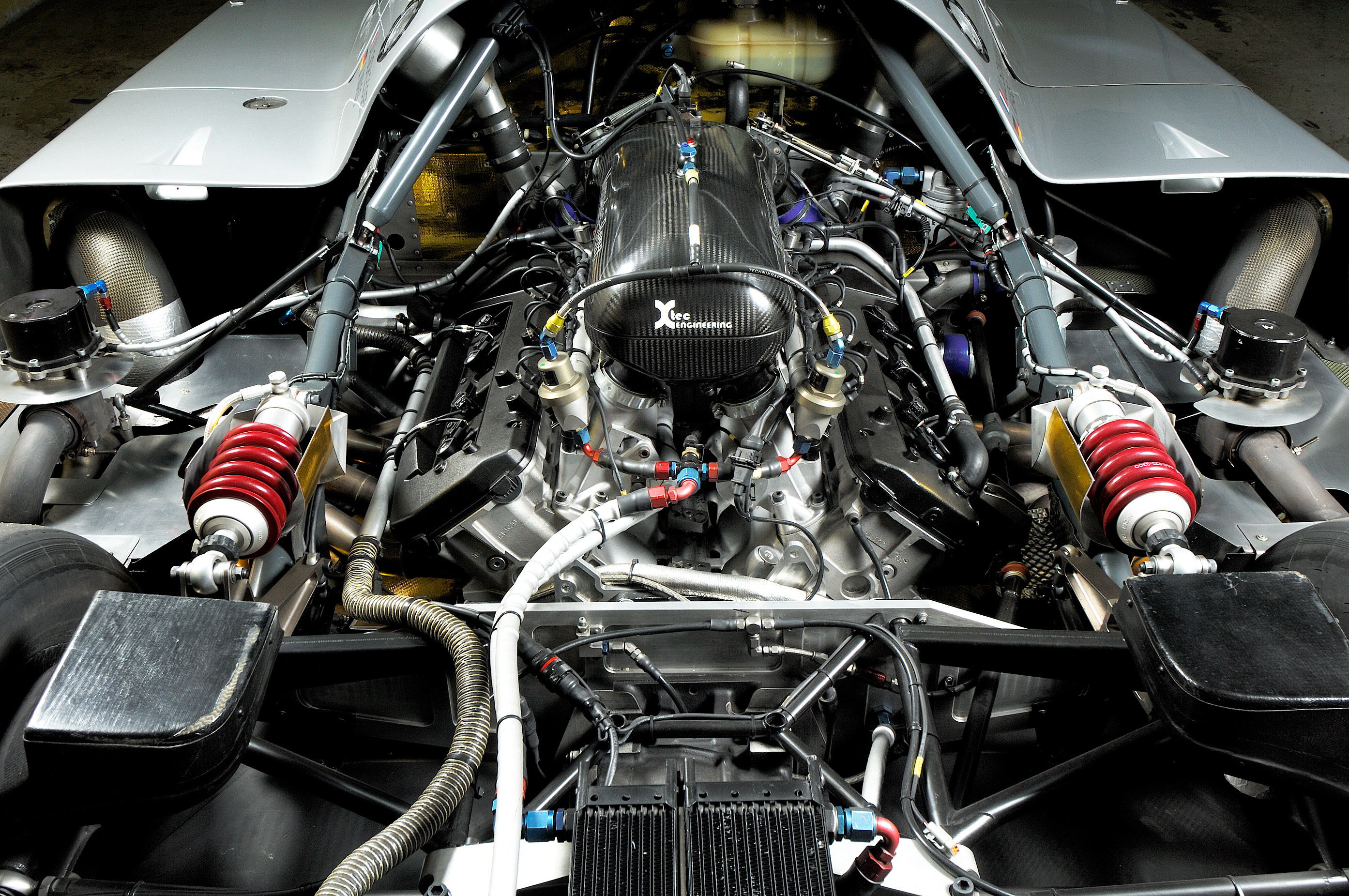
Powered by a 5.0-litre twin-turbocharged and intercooled, all-aluminium V8, the C9 produces 686kW on 0.75 bar boost, although it can be dialled up to 1.1bar if you don’t mind rebuilding the engine every few miles. It’s a car that likes nines, with around 900Nm and 900kg, and a daunting power-to-weight figure of 758kW per tonne.
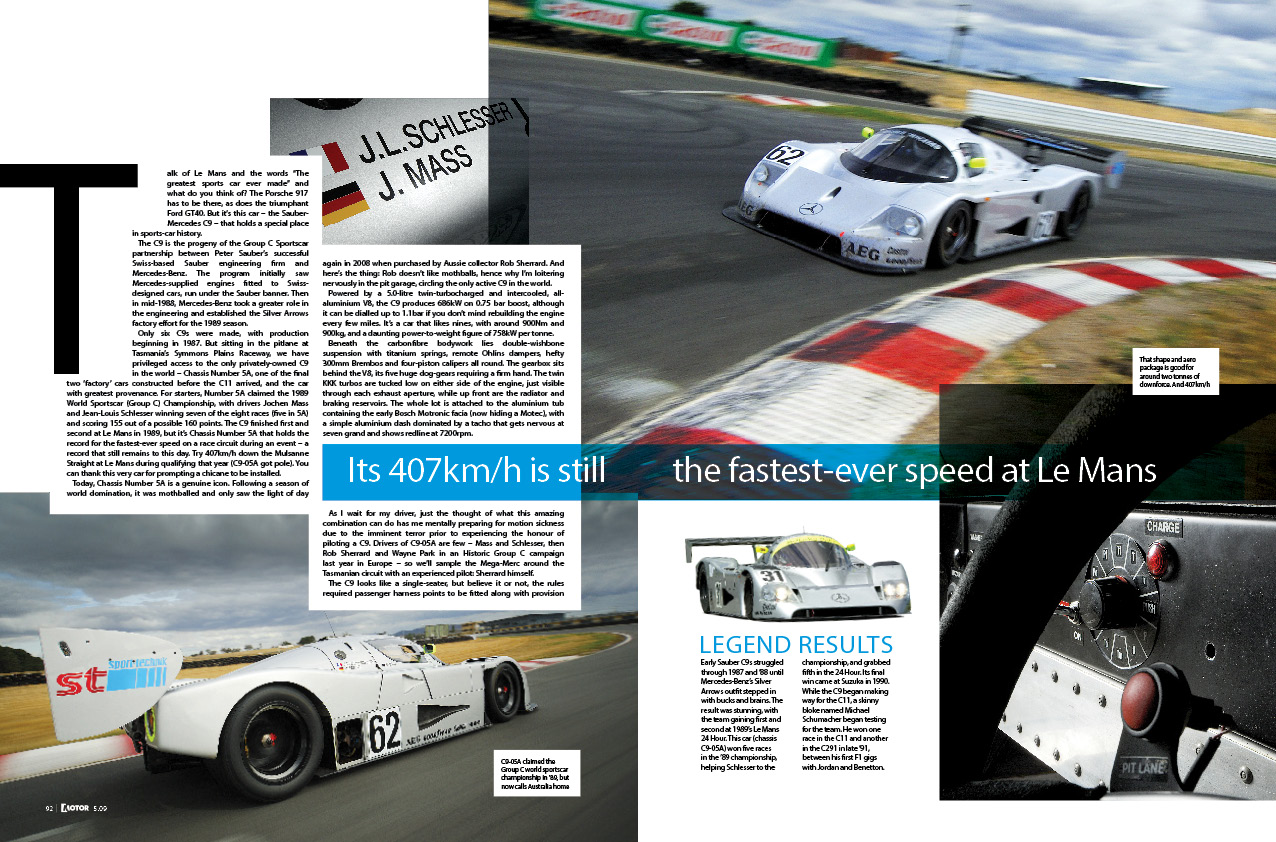
“Hard acceleration from second through to fourth-gear is mind-blowing. Clichés apply but this is the first time I can’t exhale normally.”
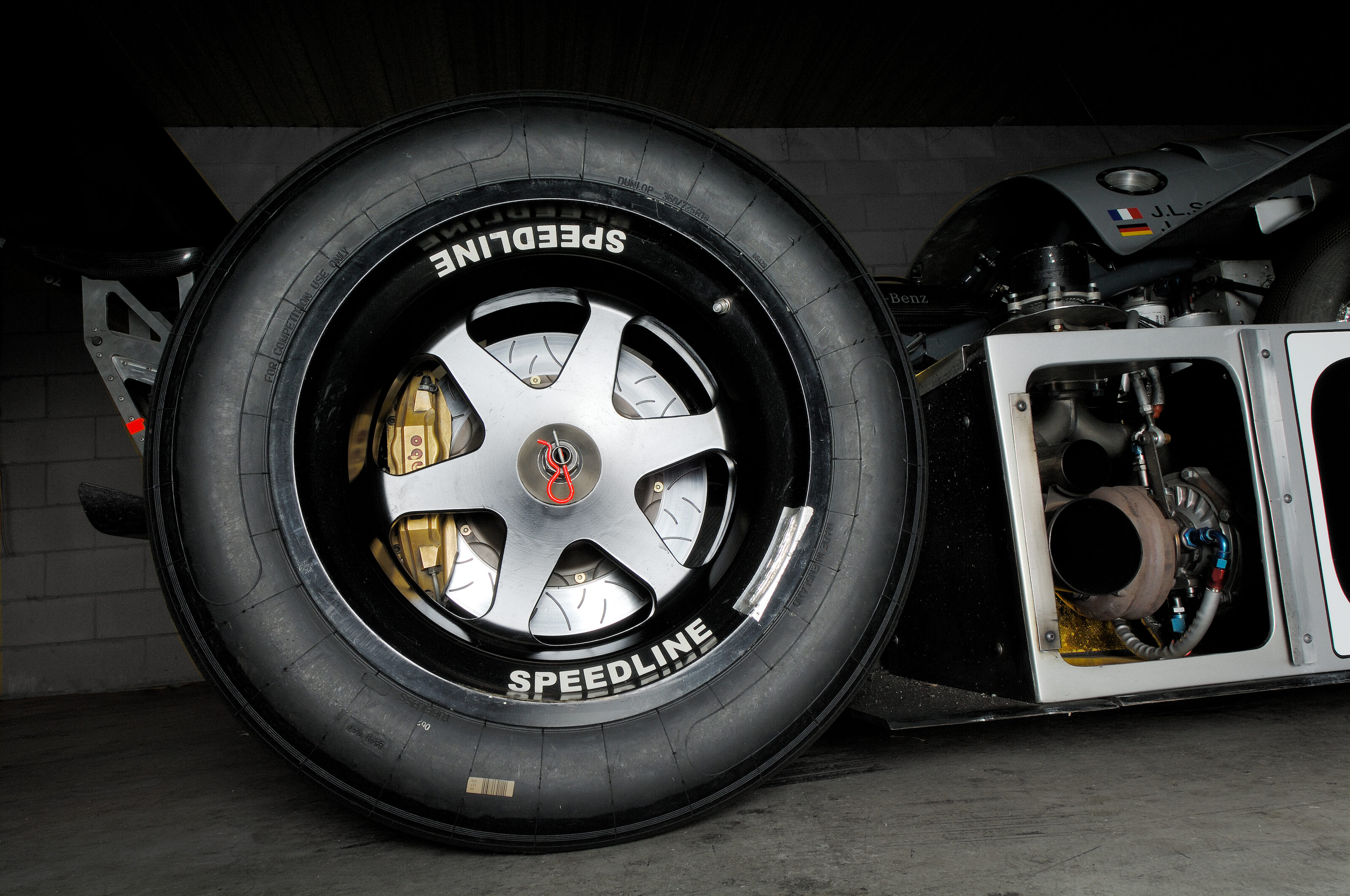
Beneath the carbonfibre bodywork lies double-wishbone suspension with titanium springs, remote Ohlins dampers, hefty 300mm Brembos and four-piston calipers all round. The gearbox sits behind the V8, its five huge dog-gears requiring a firm hand. The twin KKK turbos are tucked low on either side of the engine, just visible through each exhaust aperture, while up front are the radiator and braking reservoirs.
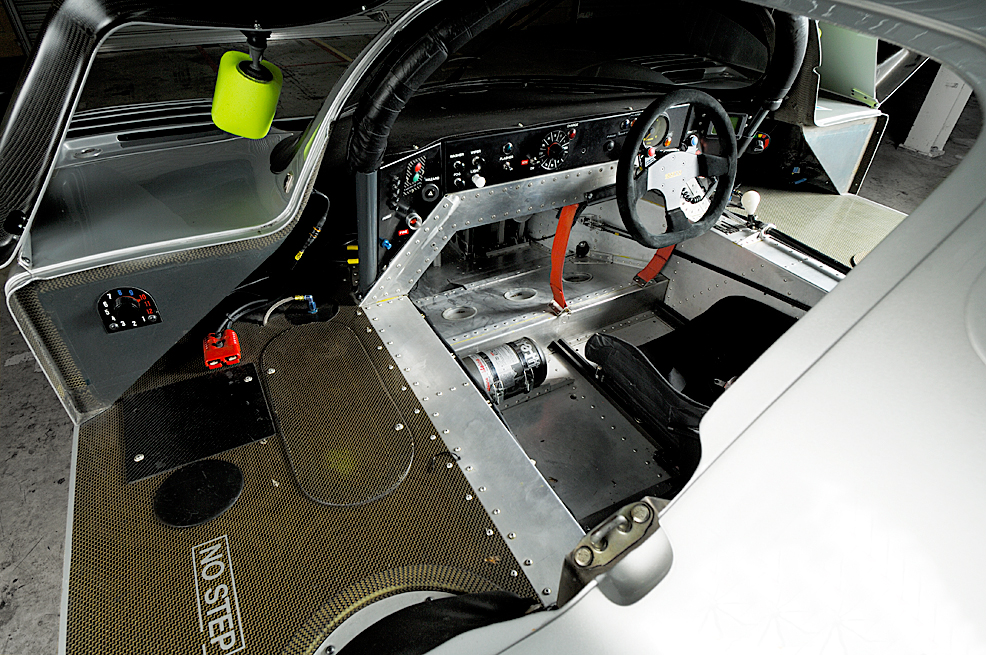
The whole lot is attached to the aluminium tub containing the early Bosch Motronic facia (now hiding a Motec), with a simple aluminium dash dominated by a tacho that gets nervous at seven grand and shows redline at 7200rpm.
As I wait for my driver, just the thought of what this amazing combination can do has me mentally preparing for motion sickness due to the imminent terror prior to experiencing the honour of piloting a C9. Drivers of C9-05A are few – Mass and Schlesser, then Rob Sherrard and Wayne Park in an Historic Group C campaign last year in Europe – so we’ll sample the Mega-Merc around the Tasmanian circuit with an experienced pilot: Sherrard himself.
The C9 looks like a single-seater, but believe it or not, the rules required passenger harness points to be fitted along with provision for a seat. That’s good news as I gracefully fold myself into the cockpit alongside Rob, who’s happy to provide me with a full appreciation of the car’s astounding capabilities.
With the ignition on, oil pumps primed and my eyes glazed, Rob hits the starter and the V8 explodes into life. This is crazy-loud, like no other circuit car I’ve heard, and we’re merely rolling onto the track on already-warm slicks and brakes.
Then everything changes. Forever.
My lungs feel strange. My vision’s blurred. I’m totally unprepared. Hard acceleration from second through to fourth-gear is mind-blowing. Clichés apply but this is the first time I can’t exhale normally. Full throttle dictates that I must consciously control my breathing, all the while accompanied by a soundtrack heralding Armageddon.
Global financial crisis? Least of my problems. Plummeting superannuation balance? Don’t care − more likely my heart will fail within minutes, and it’s not just the 686kW to blame, for this car has a full body-tossing, g-force pushing, ground-effect aero package.
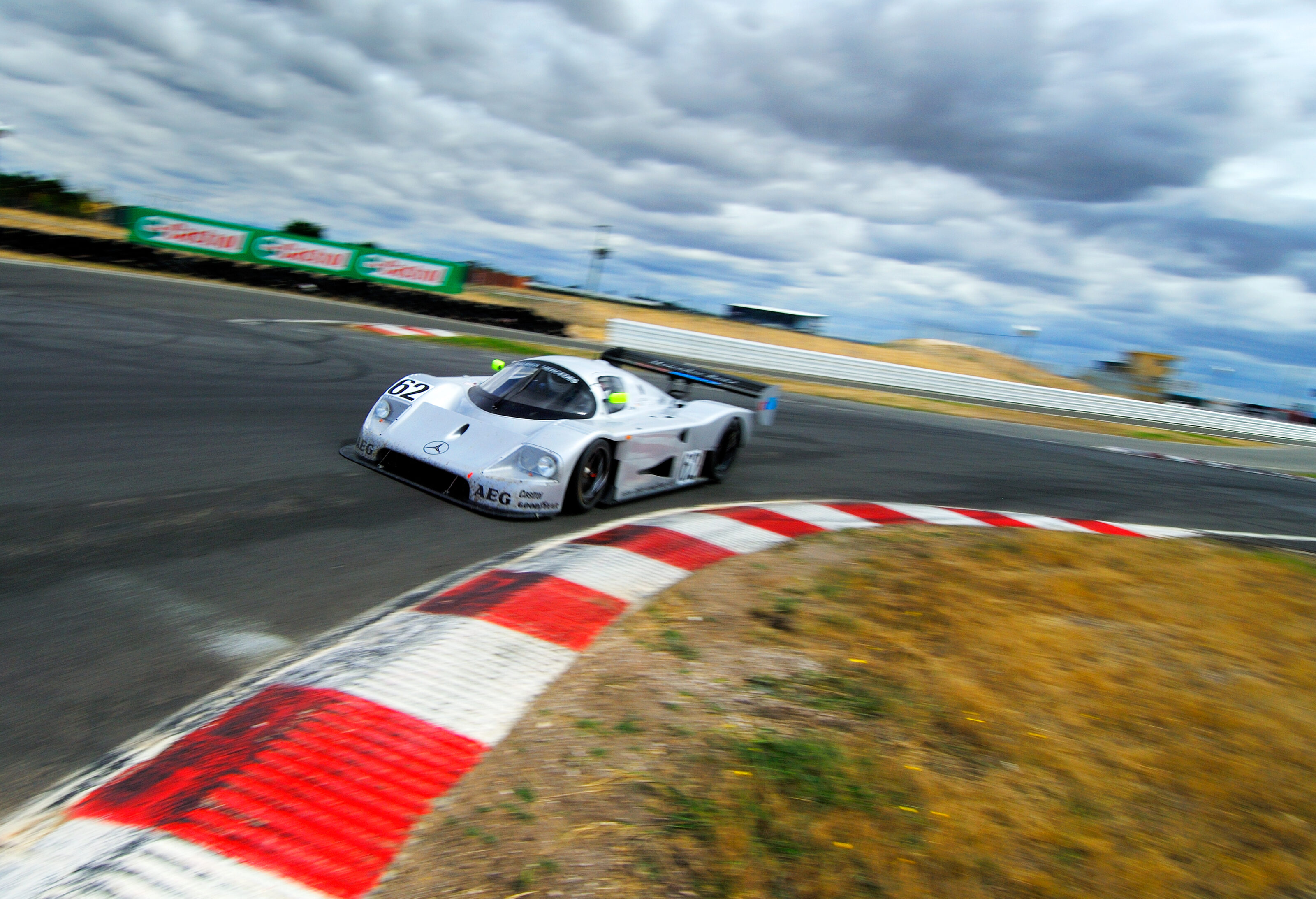
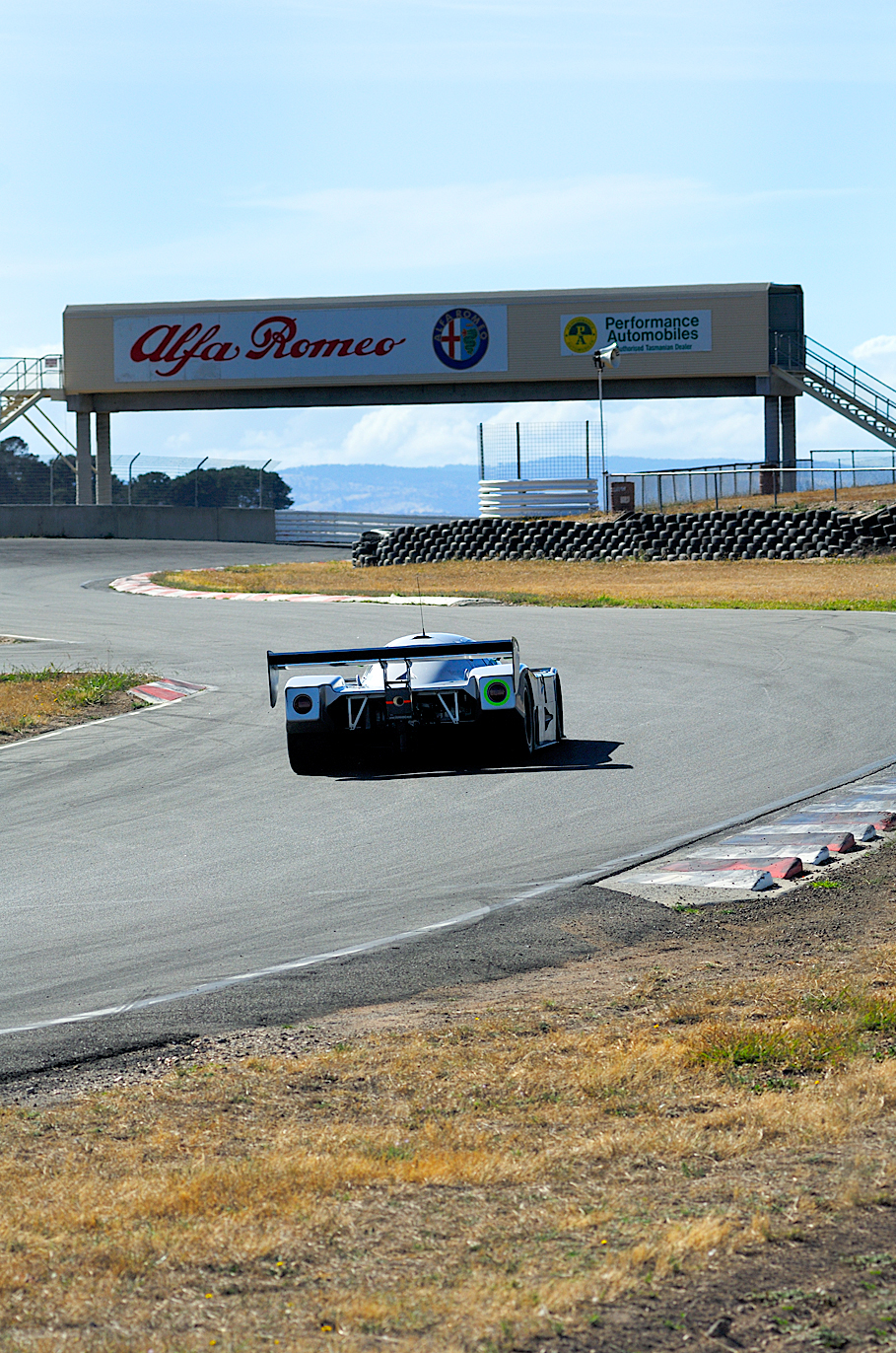
As Rob snatches gears exiting the track’s hairpin, we obliterate the laws of physics, pushing from near-walking pace to just shy of 270 through the long right-hand sweeper, pulling a very noticeable 1.5g mid-corner. The only ‘worries in the world’ are reserved for me because the C9 has none.
It feels glued, and the faster it goes, the tighter it sticks. It’s a strange, yet exhilarating experience to encounter genuine aero for the first time. We’re bouncing all over the track through the rough sweeper, but the downforce of around 2000kg, combined with the inherent mechanical grip, sees Rob blast straight through – busy at the wheel, yet unaffected in terms of pace.
Sure we’re at 270 km/h, but judging by the seat of my pants, we’re not at, or anywhere near, the limit of the chassis, regardless of threatening undulations. Maybe it’s different from the driver’s side, but the C9 gives the impression of a carnivore able to dis-member anything it encounters. It contains violence untapped, but uses it for good instead of evil when pounding a racetrack into submission.
According to Ben Hanson, the man in charge of Rob’s collection and holding a wealth of European racing and engineering experience, the C9 delivers on multiple fronts. It’s obviously fast, and the low-revving Merc V8 is tough and reliable, but it’s the traction that makes it special.
“The only real issue this car ever had was it used more rear tyre than anyone else because it just lays so much traction down,” he explains.
“When we first got it, the guys thought it was down on boost pressure because they just couldn’t get it to wheelspin out of corners. They were trying to find the limits, but it just wouldn’t do it. We had wastegates off, we checked pressures, all was fine, and over time we just worked out as it accelerated away from the Nissans and Jags it simply put the traction down. It’s just very well designed.”
Everything, right down to the braking, is at an unprecedented level. The 300mm Brembos may not seem all that large by even today’s performance road-car standards, but the set-up allows super-deep corner entry at maximum pace before you stomp on the pedal, generating more than 1.4g – the C9 never locking a wheel thanks to the aerodynamics applying huge force on its Dunlops.
My brain needs reprogramming to accept just how high entry speed should be to get the best result. It’s counter-intuitive, though I don’t have time to ponder it, as on each exit we’re being brutalised by 900Nm as Rob again rips through the gears, changing at 7000rpm, pulverising my innards. It defys belief that a car can be so sorted yet so brutal, so dominant yet so composed, and generate so much traction that wheelspin is simply unheard of.
We’ve only been at it for six laps, but I’m shot. My muscles are fatigued from the NASA-like forces, my head’s fuzzy from having to consciously control my breathing while processing images of potential doom, and I’m squashing Rob around left-handers, no longer able to prevent the lateral g-forces from dictating my movements.
I knew this would be the fastest car I’ve ever been in − the record books confirm it − but it’s colossal in every respect. I’m simply unprepared for how devastating it is. And now, after several Bex and a lie-down, it’s time for a steer. I receive instructions and overt threats from a frowning Ben Hanson, but I’m suited up, buckled in, savouring my big moment.
It all ends in tears. After Christmas rolled off the back off a truck and into the pitlane, the chance to unwrap my present was thwarted by my big feet. It’s like Santa has just bypassed my place because my legs are longer than a clearly selfish Sauber engineer allowed for.
In simple terms, I don’t fit in the C9 very well, to the extent that I can’t really drive it, as my feet don’t clear the tub above the pedals and no matter what, I just cannot hit the accelerator without clipping the brake. It’s a long story, literally, as for three hours I try a combo of home-surgery and driving in socks, but basic geometry leads to sulking, Ben to laugh with relief, and Rob to suggest perhaps I’m chicken. I wish I was, for even the heftiest chook is at least short. I’ve the opportunity of a lifetime, and deflated, I’m handing it back.
But despite being unable to lap it properly, and despite having to call Editor Amac to inform him I’m fine but the car’s abnormal, it’s a truly unforgettable day with a truly astounding car.
It generates hysteria with the punters in Europe and is seconds-per-lap faster than the competition, including those built later, near, or on the 1994 Historic Group C category cut-off. The 1988 Sauber-Mercedes C9, Chassis Number 5A, is not only the best car to grace a track in Australia, it’s up there with the greatest on the planet.

Snapshot
- 2015-19 Mercedes-Benz A, C, CLA, GLA and GLC affected
- The fault is a result of previous repair work
- A total of 44 cars are affected by the recall
Mercedes-Benz has issued a recall notice for 44 examples of its A, C, CLA, GLA and GLC vehicles manufactured between 2015 and 2019.
According to the Department of Infrastructure, the roof panel located between the panoramic sunroof and front windscreen potentially faces an issue with the bonding process – created during previous repair work carried out on the affected vehicles.
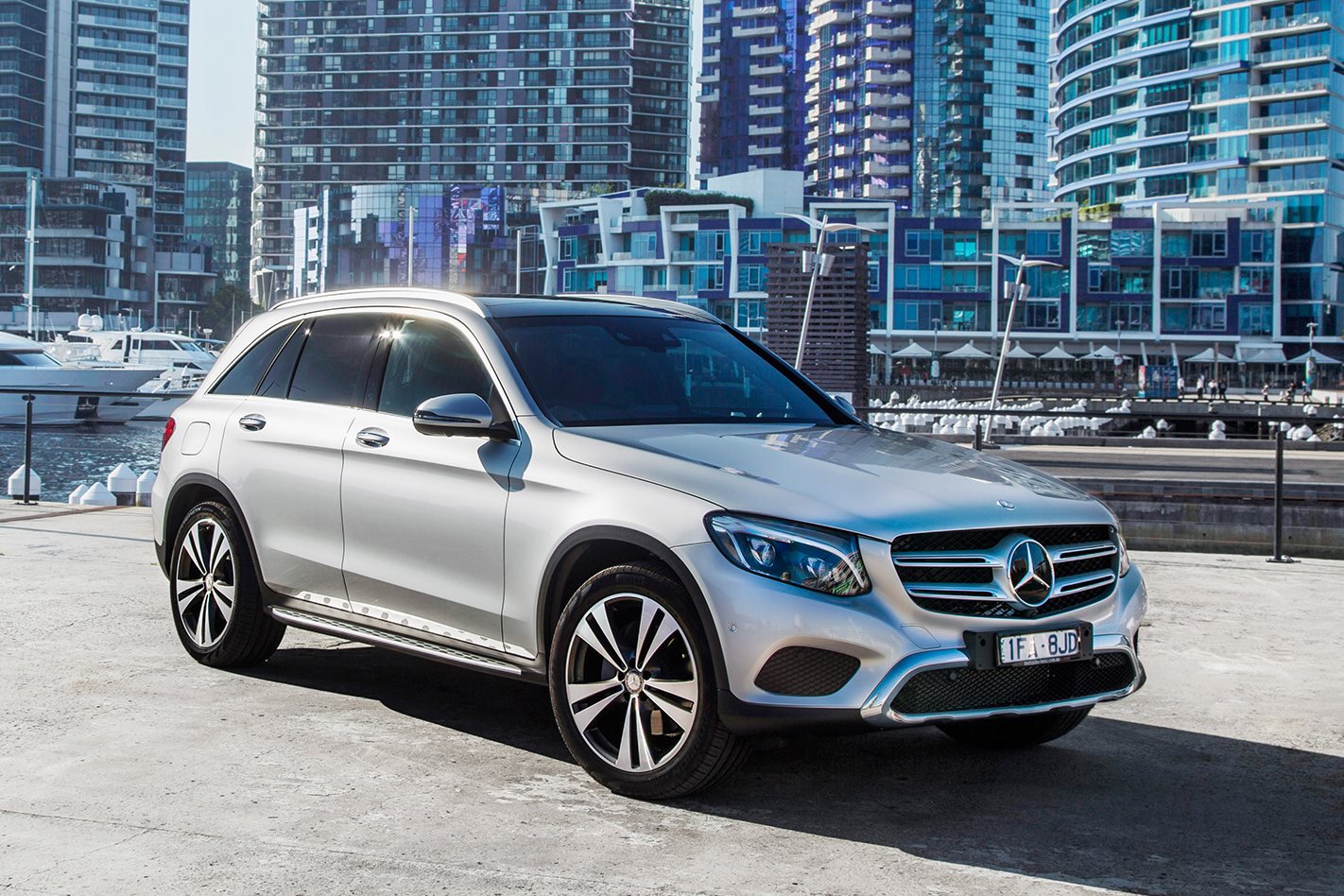
If the issue occurs, there is a potential for the panel to partially or fully detach from the vehicle – which could result in a higher risk of serious injury or death to occupants and other road users.
Mercedes-Benz will contact affected owners to advise them to take their vehicle to one of its dealerships for the repair work to be carried out as soon as possible.
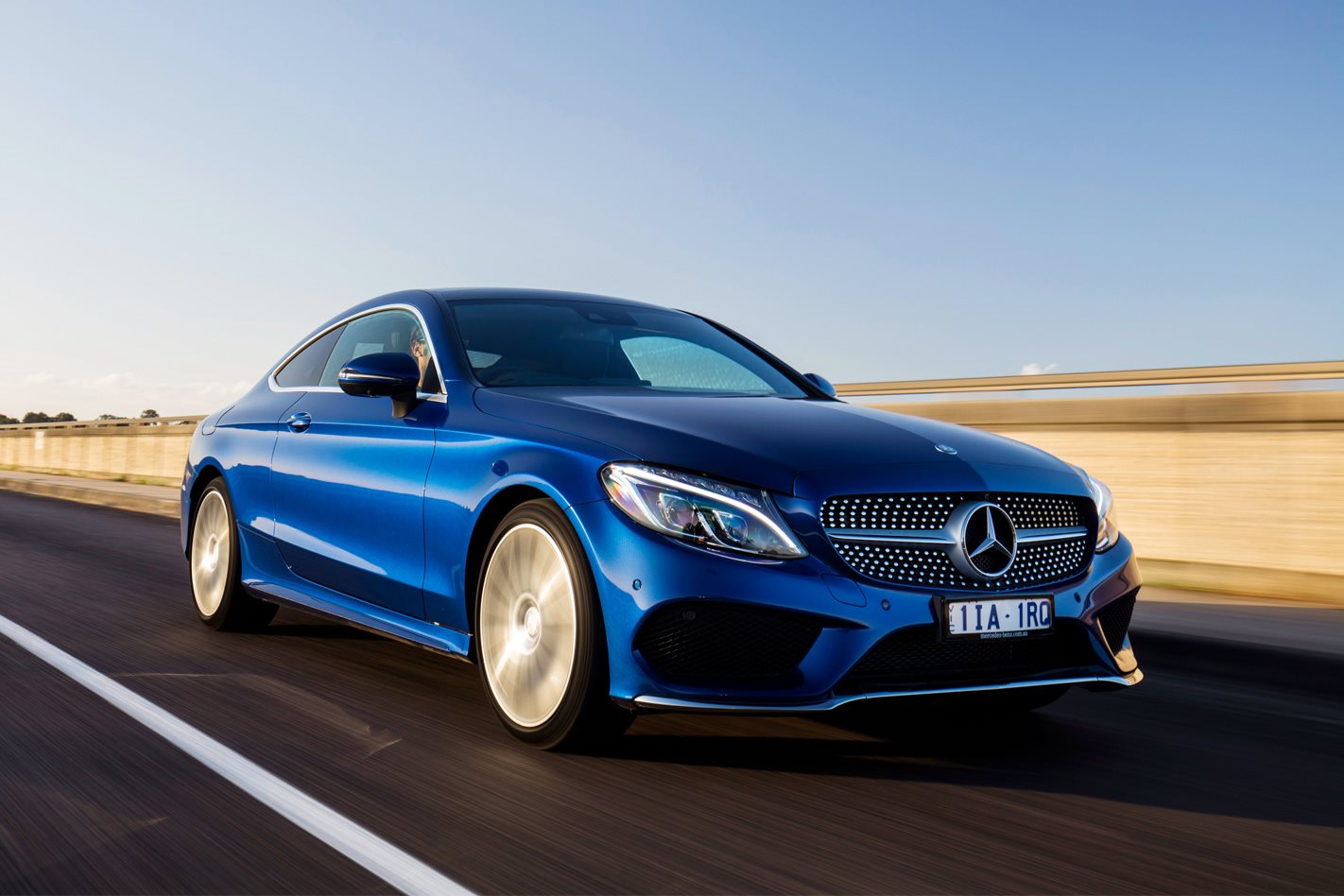
A VIN list can be found here.
For more information, contact Mercedes-Benz Australia on 1300 300 896 or visit a dealership, located here.
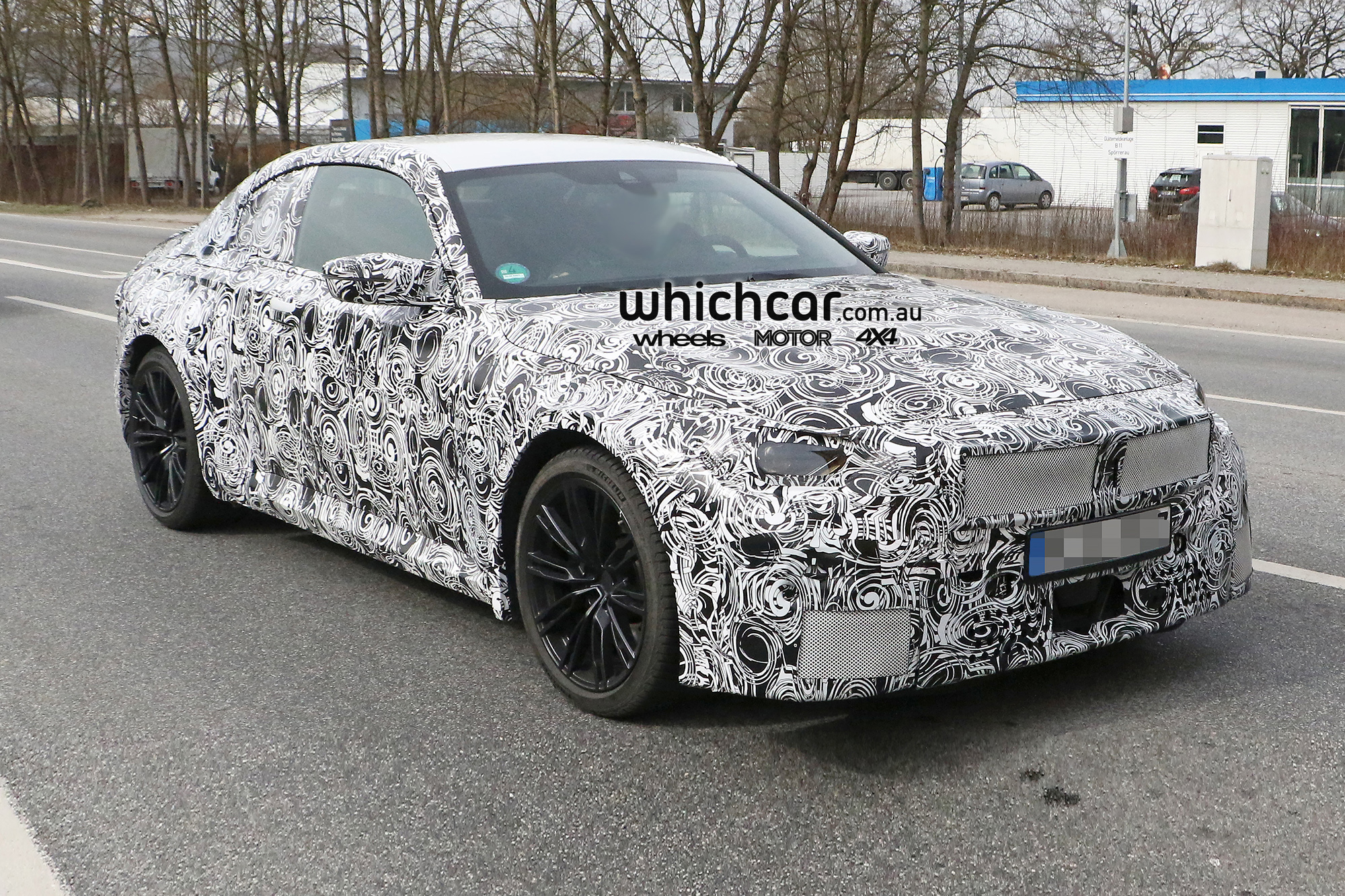
BMW is developing a new rear-wheel-drive M2 performance coupe, as part of a future compact M car line-up that will include an all-wheel-drive M2 Gran Coupe and a 1 Series with around 300kW.
The second-generation M2 coupe, which takes the internal codename G87, is scheduled to go on sale in Europe in 2022, making 2023 likely for Australia. It will bring with it a detuned version of BMW M’s latest six-cylinder petrol engine, sourced from the new M3 and M4.
Despite the heavy camouflage of this newly spotted prototype, it looks as if the M2 will feature angular front-end styling influenced more by the Z4 and M8 than the controversially big-grilled M3 and M4. Flared arches, big wheels and a quad-exit exhaust will be the most obvious visual differentiators from the standard 2 Series, but upsized air intakes and aero-enhancing trim will complete the look.
The twin-turbocharged 3.0-litre petrol six, dubbed S58, replaces the similarly configured S55 used by the current M2 and promises the same high-revving characteristics, with a redline of 7200rpm.
Nothing is official at this early stage, but insiders hint that the S58 engine will be tuned to provide the new junior M car with at least 317kW in standard form – a 15kW increase over today’s M2 Competition – to top the 310kW of the turbocharged 2.0-litre four-cylinder in the Mercedes-AMG A45 S.
Together with 560Nm of torque, this should ensure off-the-line performance is on par with, if not better than, that of its predecessor, despite an incremental increase in weight due to slightly larger dimensions. Its 0-100km/h time should be in the low four-second bracket and its top speed close to 280km/h when configured with a final-drive ratio similar to today’s M2.
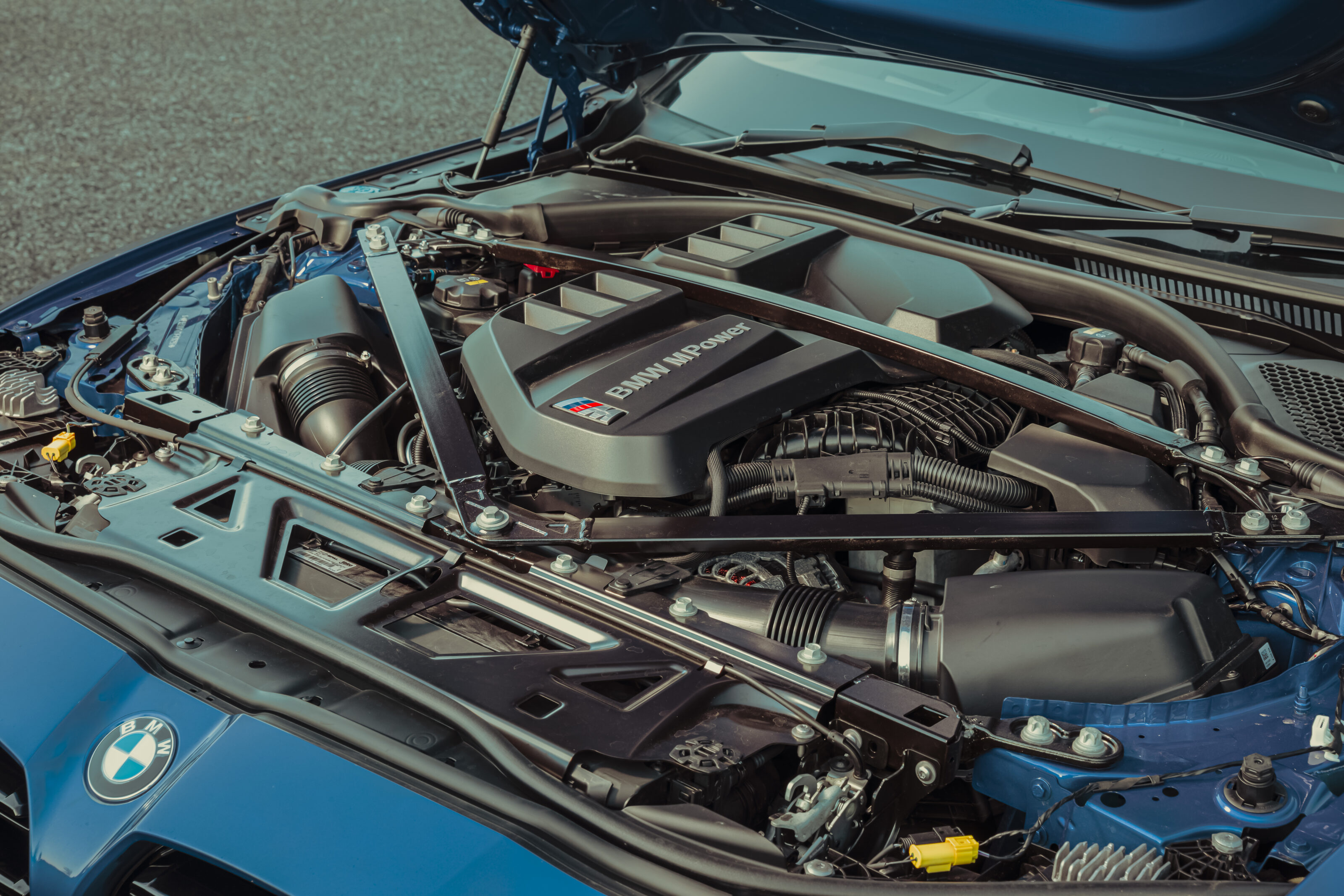
Nothing is official at this early stage, but insiders hint that the S58 engine will be tuned to provide the new junior M car with at least 317kW in standard form.
The basis for the next M2 is the new second-generation 2 Series Coupe, itself heavily related to the third-generation Z4 and its Toyota GR Supra sibling.
Revealed in July, the new 2 Series Coupe takes a different technical route to the new 2 Series Gran Coupe by adopting the latest evolution of BMW’s Cluster Architecture (CLAR) platform. This ensures the future M2 will have a similar mechanical layout to today’s model, with a longitudinal engine mounting instead of the transverse layout of its four-door M235i xDrive Gran Coupe sibling, which is based on BMW’s Front Architecture (FAAR) platform.
The adoption of the CLAR platform also future-proofs the M2, to an extent, by providing it with the basis for a 48v electrical architecture, which is crucial for such features as regenerative braking and the option of an electric torque boost.
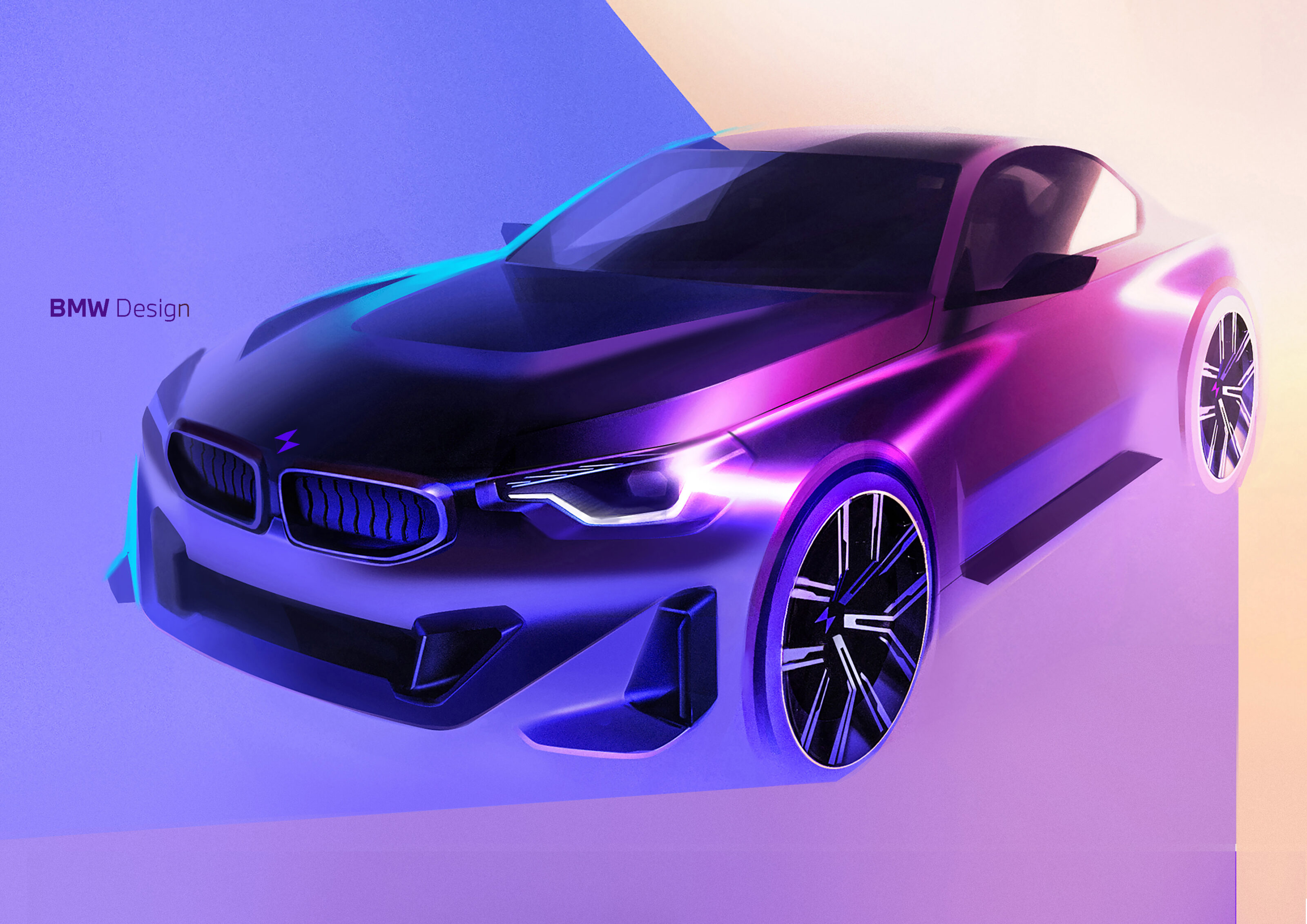
The new M2 is expected to go without mild-hybrid electric boosting at launch. However, with BMW’s M division already well advanced on such a system for the S58 engine, it could be incorporated during the car’s planned seven-year lifecycle.
As with today’s model, BMW plans to offer the new M2 with a six-speed manual gearbox and an electronically controlled Active M Differential. There will also be the option of an eight-speed torque-converter automatic transmission, which would be crucial if the car is to receive a mild-hybrid system. This will replace the current M2’s dual-clutch gearbox, matching developments elsewhere in the BMW M range.
As with the current M2, a number of traditional M division developments will elevate the new model above regular 2 Series Coupe variants. These include additional stiffening measures by way of suspension strut-tower braces front and rear, dynamic engine mounts and a wider track, the last of which again has necessitated new bodywork.
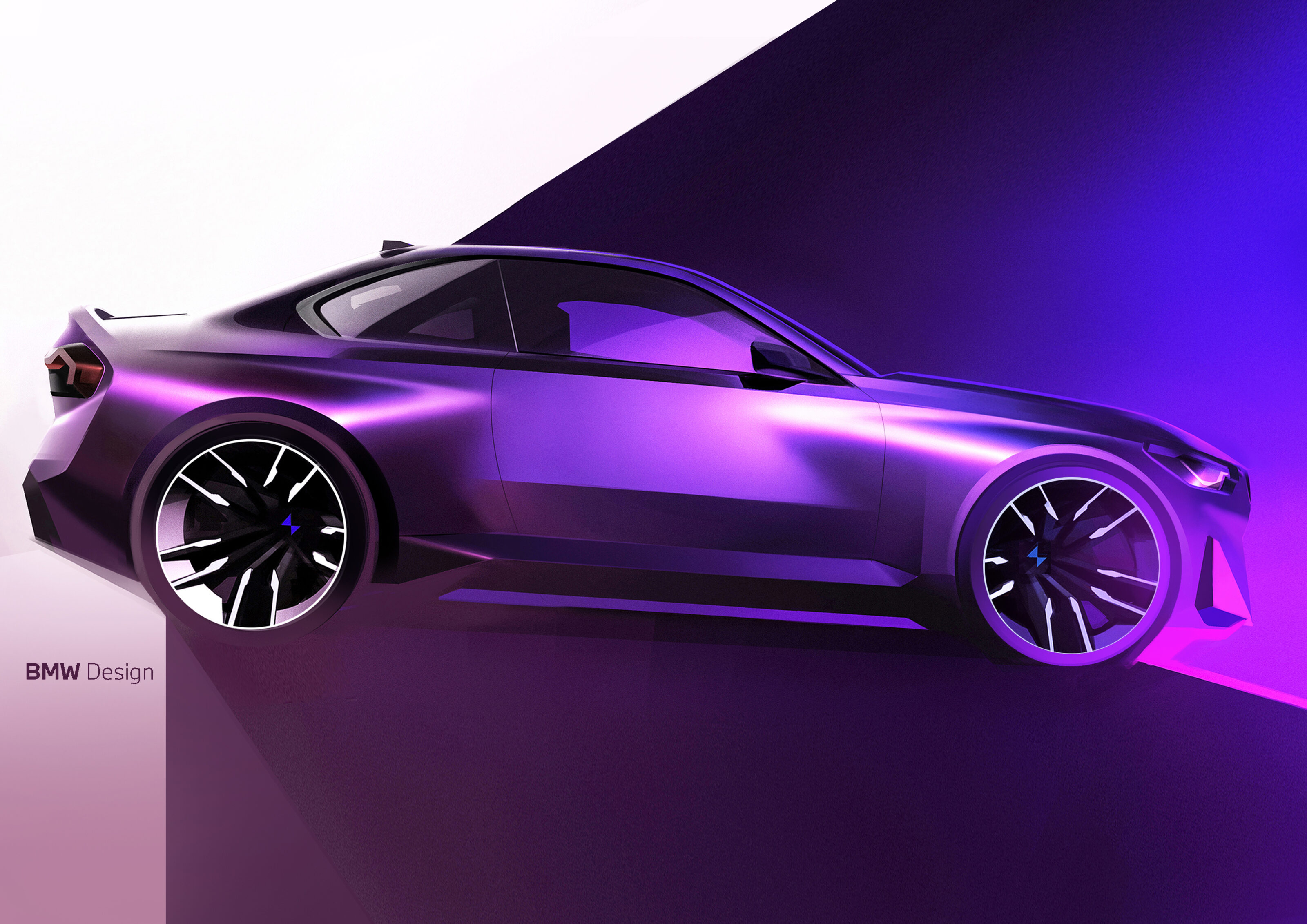
Despite the M division’s move to provide other recent M models with fully variable all-wheel drive, our sources say the new M2 will retain rear-wheel drive exclusively as part of plans to pitch it as a puristic, track-bred model in the best of BMW tradition.
The decision to stick with rear-drive will give the M2 a unique selling point in a market now dominated by all-wheel-drive rivals, such as the Audi RS3 and Mercedes-AMG A45 S.
“It’s part of what makes the M2 unique in its market segment,” said an insider. “It’s also what our customers have come to expect from BMW M: a pure and undiluted driving experience.”
BMW’s junior league set to grow
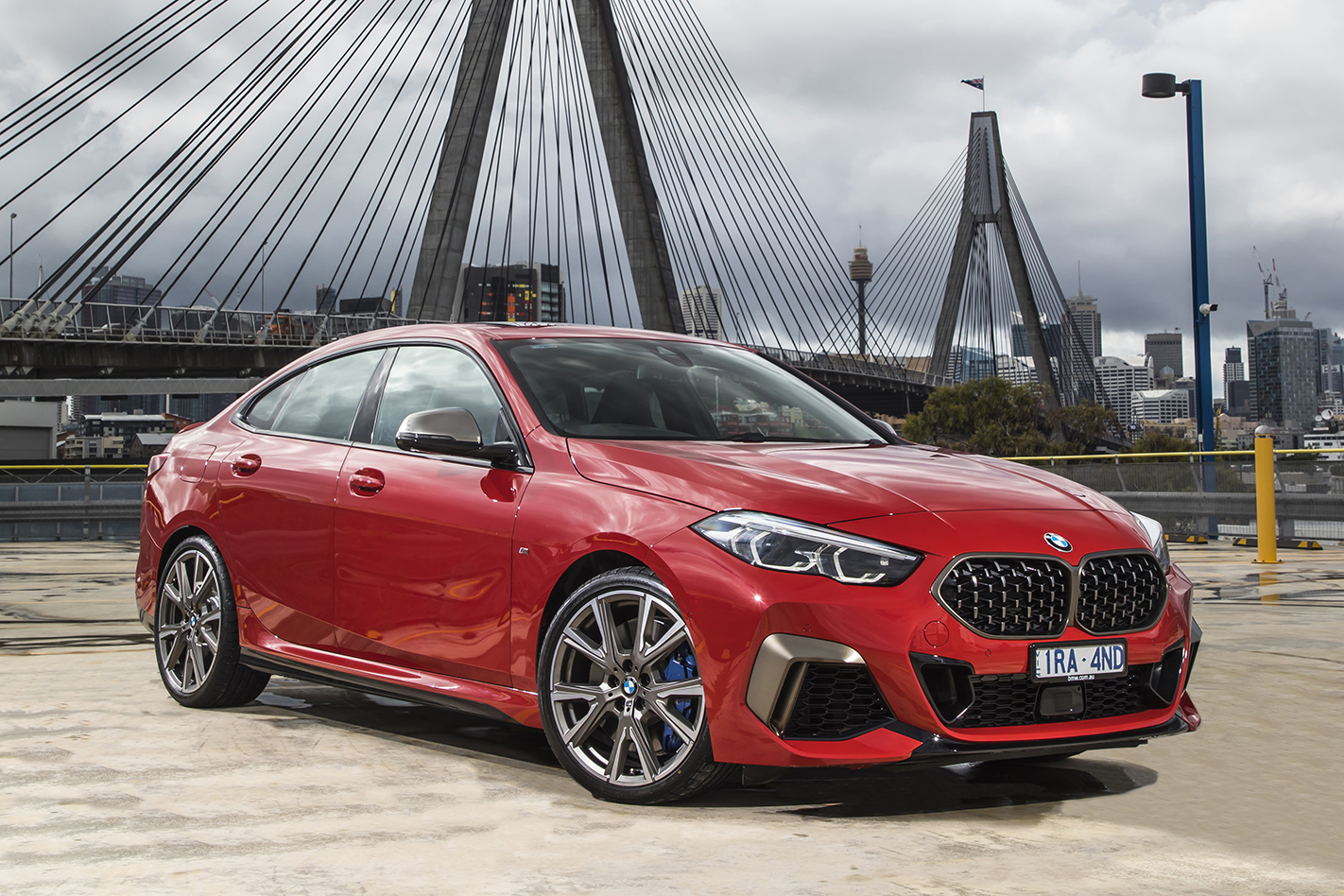
Wheels also understands the M2 will eventually be joined by a four-door namesake, despite previous reports to the contrary.
Rivalling the Mercedes-AMG CLA 45 and forthcoming new Audi RS3 sedan, the M2 Gran Coupe will get around 290kW from a highly tuned version of the M235i Gran Coupe’s four-cylinder engine and have fully variable all-wheel drive.
That ultra-potent four-pot will also transfer into the most powerful 1 Series hatchback yet, which will sit above the all-wheel-drive, 225kW M135i. It’s not clear what name this new flagship will take. M1 is considered holy ground, having been used on the first bespoke road-going M car back in 1978, and 1M was the widely used nickname for the limited-run 1 Series M Coupe of 2011.
UPDATE, October 2022: Australian pricing for the new 2023 Peugeot 308 has been revealed at last.
Get all of the details for the Australian line-up of the 2023 Peugeot 308 hatch and wagon at the link below.
Story continues: Peugeot 308 first drive
The Peugeot 308 is all-new, available as a plug-in hybrid for the first time and pushing upmarket to challenge premium cars such as BMW’s 1 Series and the Mercedes-Benz A-class.
Confirmed for Australian launch during the first quarter of 2022 as a five-door hatchback that will be followed by the SW wagon a few months later, this review covers the hybrid and petrol engines.
Push upmarket!
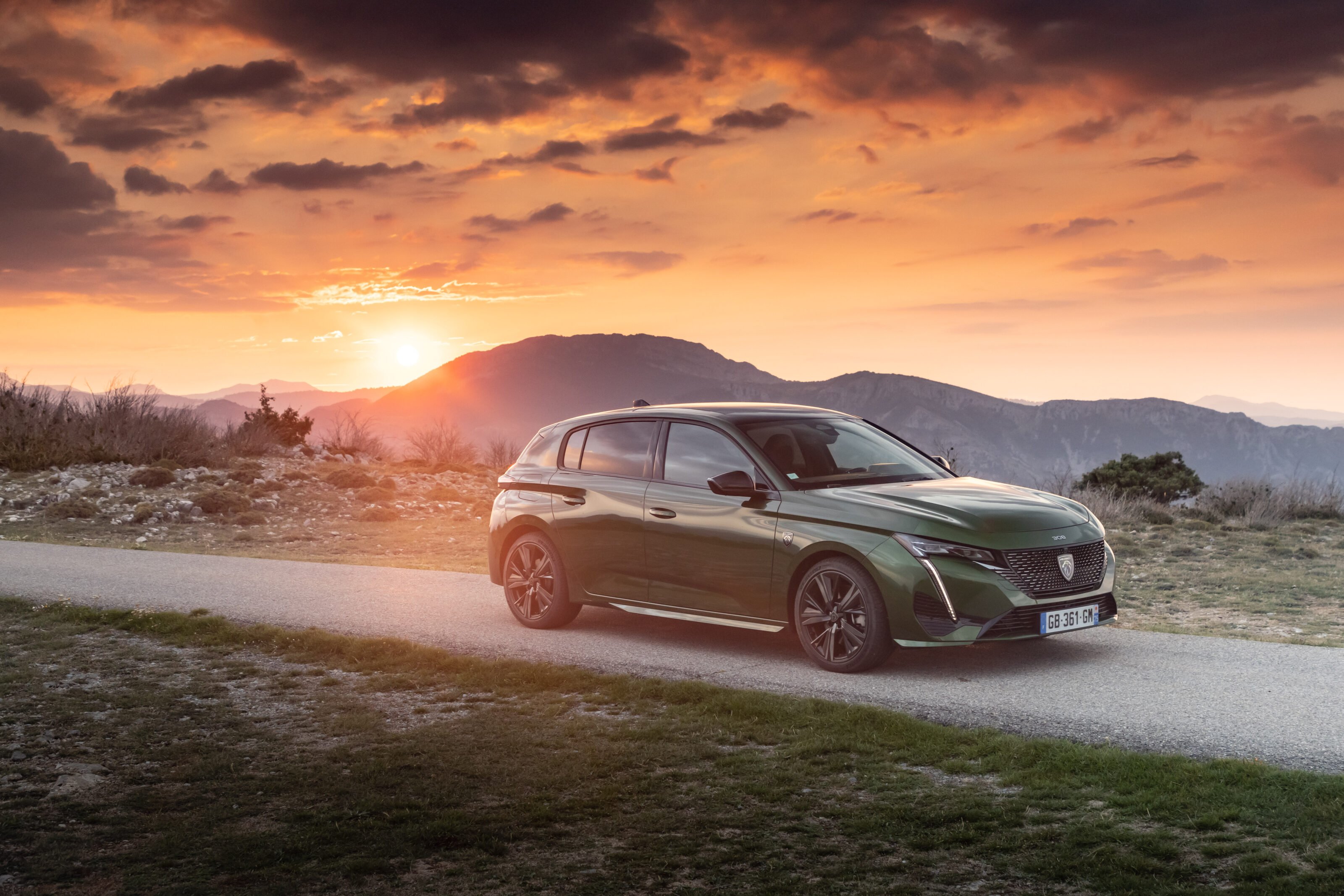
Truth be told, Peugeot has long benchmarked Volkswagen’s Golf on materials and quality, but this model sets its sights even higher.
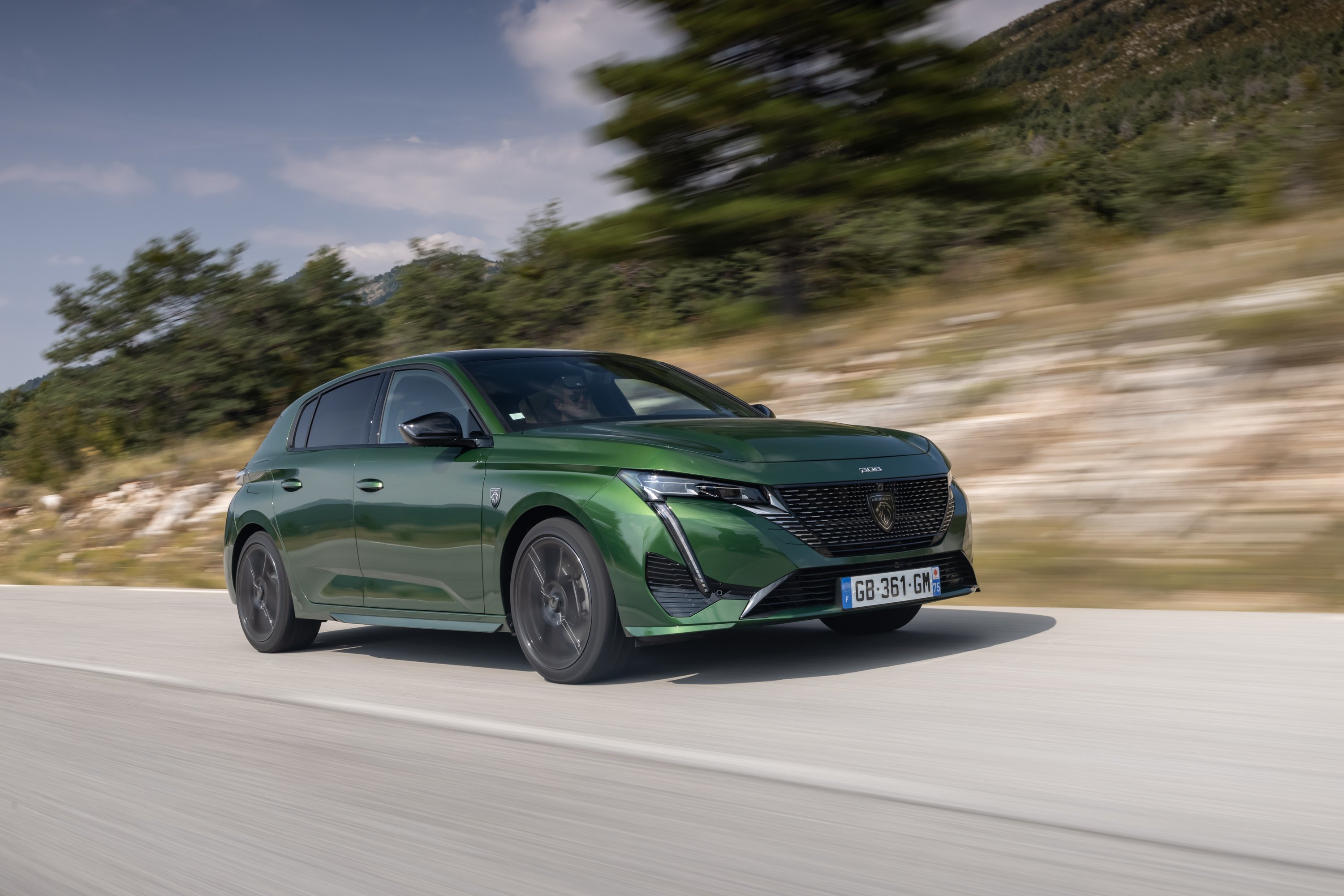
How? The exterior design mimics the long nose/cab-backwards proportions of a 1 Series, the new touchscreen looks slick and acts pretty quick, there’s a ‘Hey Mercedes’-style voice assistant to change the air-con or radio station, and lots of driver assistance technologies.
The cockpit is, without doubt, a classy place to spend time. The layered dashtop cascades forward like a wave, overhanging lovely aluminium or fabric sections, accented with welcoming LED lighting (from second-tier Allure trim level).
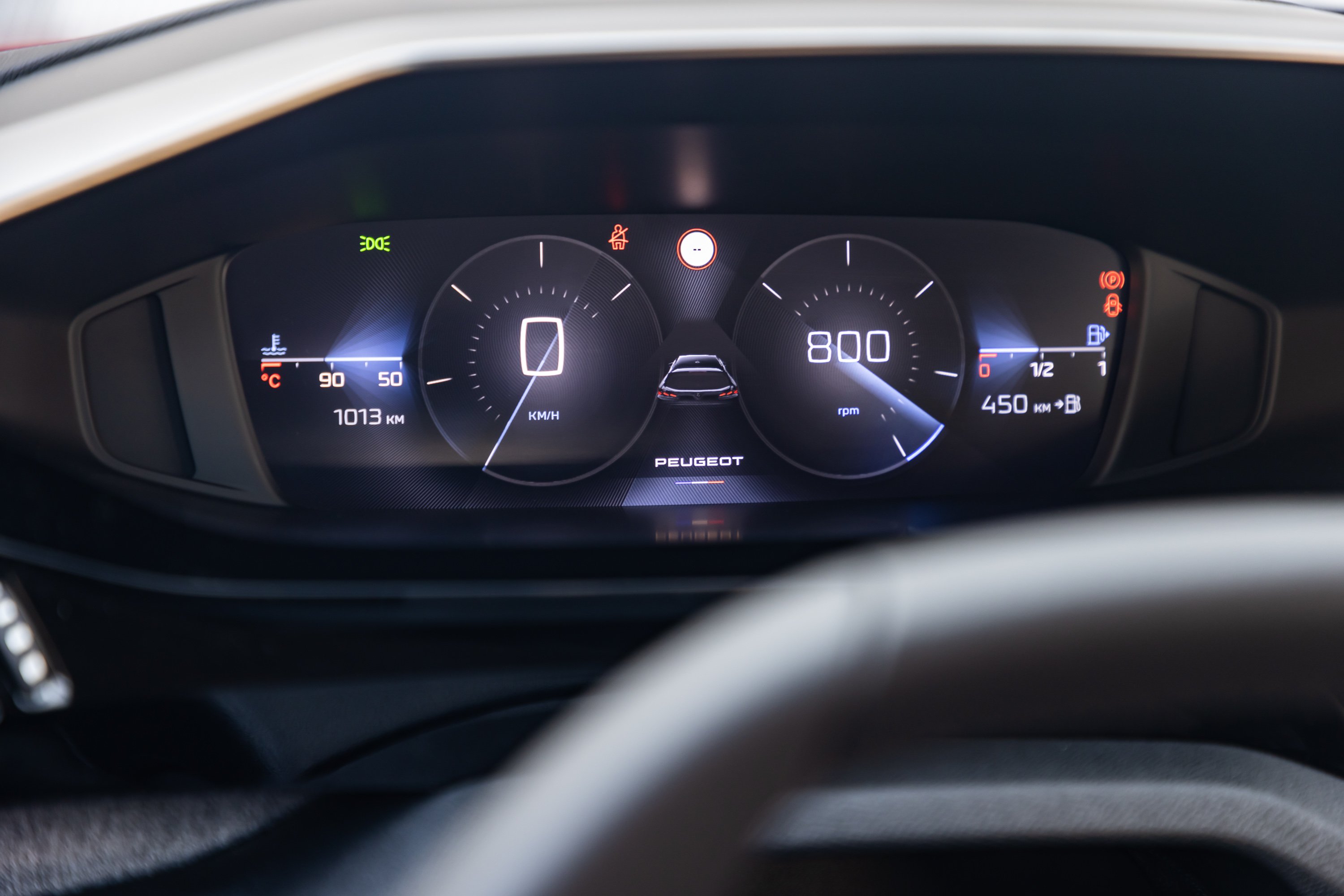
GT and GT Premium trims also bring a digital driver’s binnacle with a 3D effect designed to bring key info to the front, though it’s a bit of a jumble unless on the sparsest setting.
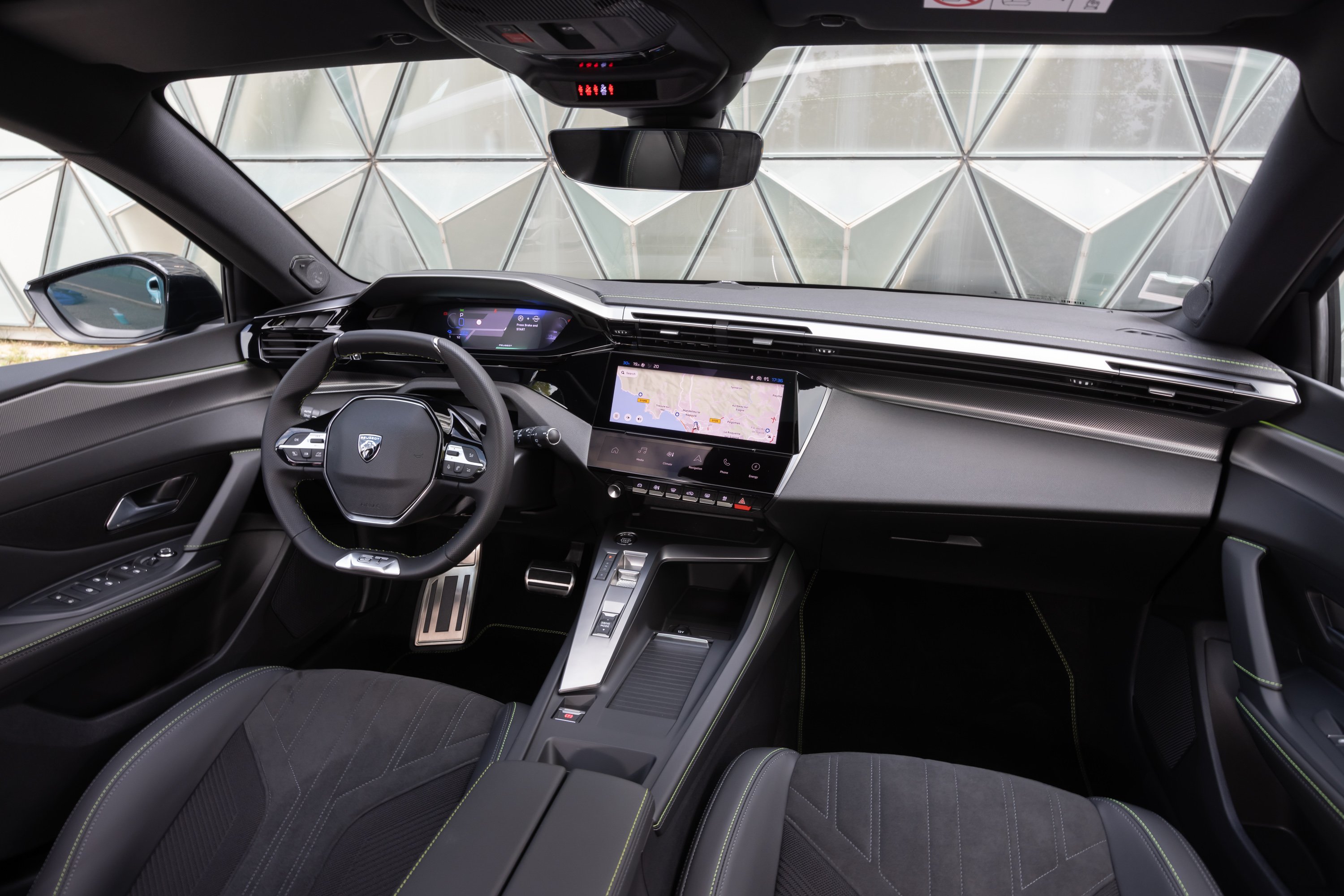
Truth be told, Peugeot has long benchmarked the Golf on materials and quality, but this model sets its sights even higher.
The standard 10-inch touchscreen is underscored from Allure trim up by a bank of ‘i-Toggle’ shortcut switches, which you can customise with your favourite functions and respond with a buzz of haptic feedback.
On the hybrid, I pulled in the Energy function, to keep an eye on the drive system’s operations.
The graphics are nice enough but not in the wondrous league of a Mercedes, and the touchscreen peskily plays for time between selections with an animation that brings to mind Moses parting the Red Sea.
UK engine range spec details
Peugeot is simplifying mainland Europe’s broad 308 line-up for British customers, with only the higher-powered 95kW combustion engines offered, and just the eight-speed automatic transmission at launch. It follows that Australia would receive similar, although the BlueHDi diesel is less likely to arrive Down Under than the Puretech petrol.
Both plug-in hybrid derivatives – badged 180 or 225 badged after their joint petrol-electric power outputs in metric horsepower, which respectively equate to 132kW and 165kW) – will be offered in Britain, with Australia seeming more likely to get the beefier of the two.
These combine a 1.6-litre four-cylinder petrol engine with an 81kW electric motor sandwiched against the EAT8 automatic transmission. The new 308 is strictly front-wheel drive and rides on McPherson struts up front with a twist-beam rear suspension.
While the Ford Focus, Merc A-class and others may confuse customers by offering posher independent rear axle on upmarket models, Peugeot has a one-size-fits-all approach to cut complexity and save weight, says engineering chief Jerome Micheron.
UK prices start at £24,000 (AU$45,390) for a Puretech 130 in Active Premium base trim. Standard features include the touchscreen, digital radio, Apple CarPlay and Android Auto, rear parking sensors, 16-inch alloys, black mirror caps and ‘claw-effect’ LED rear clusters.
There’s also a generous helping of driver safety aids: lane-keeping assist, speed sign recognition, driver attention monitoring and auto emergency braking (with the system able to see pedestrians and cyclists in daylight).
Okay, let’s get driving
We start in the Hybrid 180, which costs from £33,000 (AU$62,400) in Allure Premium spec and is a VW Golf GTE rival. This has a 12.4kWh battery good for up to 60km of pure electric range, and it meters that out to good effect over our test route. The 308 automatically switches between electric, petrol or both, depending on your speed and traffic conditions.
It’s by far the quietest 308, given near-silent electric running and an extra portion of compensatory sound-proofing. When the 110kW four-cylinder petrol engine strikes up, it’s a muted, ghostly murmur in the background. The 308 hybrids cruise quietly on the carpet-like autoroutes around Cannes in the south of France, with some wind noise around the windscreen the most obtrusive sensation.
Push a rocker button to switch from Hybrid to Electric mode and it feels neighbourly to waft through 30km/h villages in quiet, zero-emissions mode, but the Hybrid 180 also surprised me by accelerating stoutly on a steep uphill motorway climb from 75 to 120km/h, without any need to call in petrol reinforcements.
How does the 308 hybrid handle?
The new 308 continues Peugeot’s i-Cockpit philosophy, which combines those digital screens with a small steering wheel over which you peer at the instrumentation.
Combined with pretty quick steering, it’s designed to feel agile. With the steering wheel’s hexagonal shape, it’s a bit like turning a leather-clad 50 cent piece.
Its weighting is nicely judged, with a light, fluid feel at low speeds and quick enough responses off the dead-ahead.
On twisty mountain roads, you do get a sense of the hybrid’s extra weight (a whopping 312kg more than the petrol 95kW petrol automatic), with the Michelin Primacy tyres chirruping as they work hard to keep their line, the steering feeling a little stickier and accompanied by some noticeable roll.
The Hybrid 180 surprised me by accelerating stoutly on a steep uphill motorway climb from 75 to 120km/h, without any need to call in petrol reinforcements.
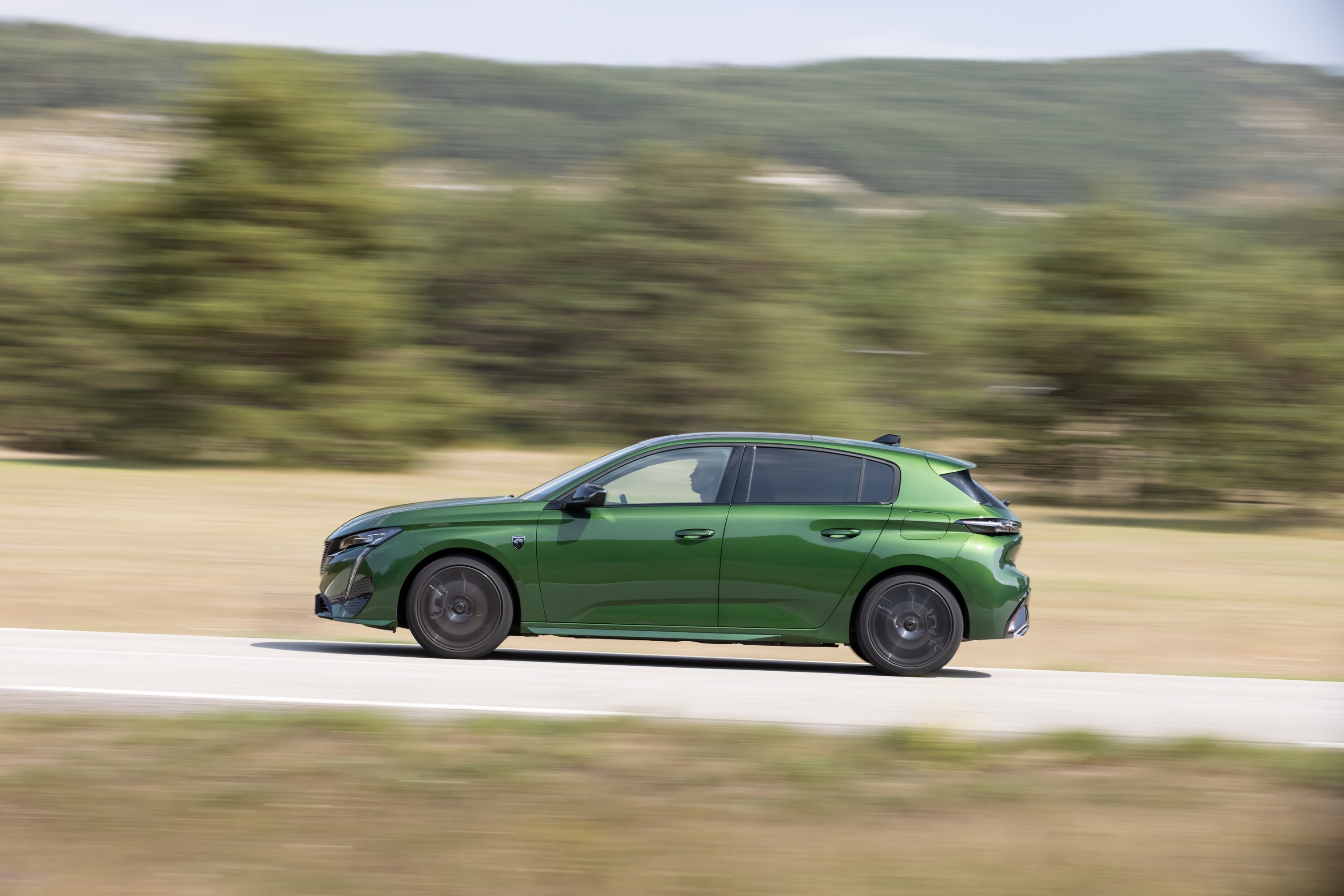
The drivetrain’s twist action can trouble the front tyres if you launch it, and we found sufficient punch to overtake a dawdling Dacia. Most people won’t need the 225 version of the hybrid: it generates its 22 extra kilowatts (132kw in total) solely from the 1.6-litre, with the e-motor unchanged.
Carbon dioxide emissions are a little higher though: the 180 emits 24g/km on the combined cycle, compared with 27g/km for the gutsier model. On our 59km test route, the Hybrid 180 ran on electricity for just over half the journey and returned 3.5 litres per 100km according to the trip computer.
The hybrid takes an hour and 40 minutes to charge on a 7.4kW wall box or eight hours on a plug socket. You can undertake the customary remote charging and cabin warming/cooling via the Peugeot app.
Despite the up-front price, Peugeot reckons running costs will be comparable with a high-end diesel, depending on local plug-in hybrid tax breaks.
And how is the Puretech 130 petrol SW?

We drove the 95kW 308 Puretech in the SW bodystyle (a £1200/AU$2270 premium), and it has a different character. The three-cylinder petrol engine is gruffly vocal under acceleration, the antithesis of the smooth hybrid. The EAT8 automatic transmission is a tad sluggish in some Stellantis group cars, but it works fine in both 308 drivetrains, responding sharply to kick down and anticipating your next move well.
Dynamically, the petrol car has an edge over the hybrid that keen drivers may appreciate. There’s less mass, so roll is better contained, with the front-end more eager and agile in corners. Both the petrol and hybrid ride pretty well (our test cars had 17-inch alloys), with urban potholes causing minimal intrusion and suppleness over high-frequency motorway bumps. The chunky seats are firm but comfortable.
Our petrol SW returned a respectable 7.2L/100km from some binary driving on mountain roads and motorway cruising; official fuel consumption is between 5.6 and 5.9L/100km depending on spec.
How’s the 308 for rear passengers and luggage?
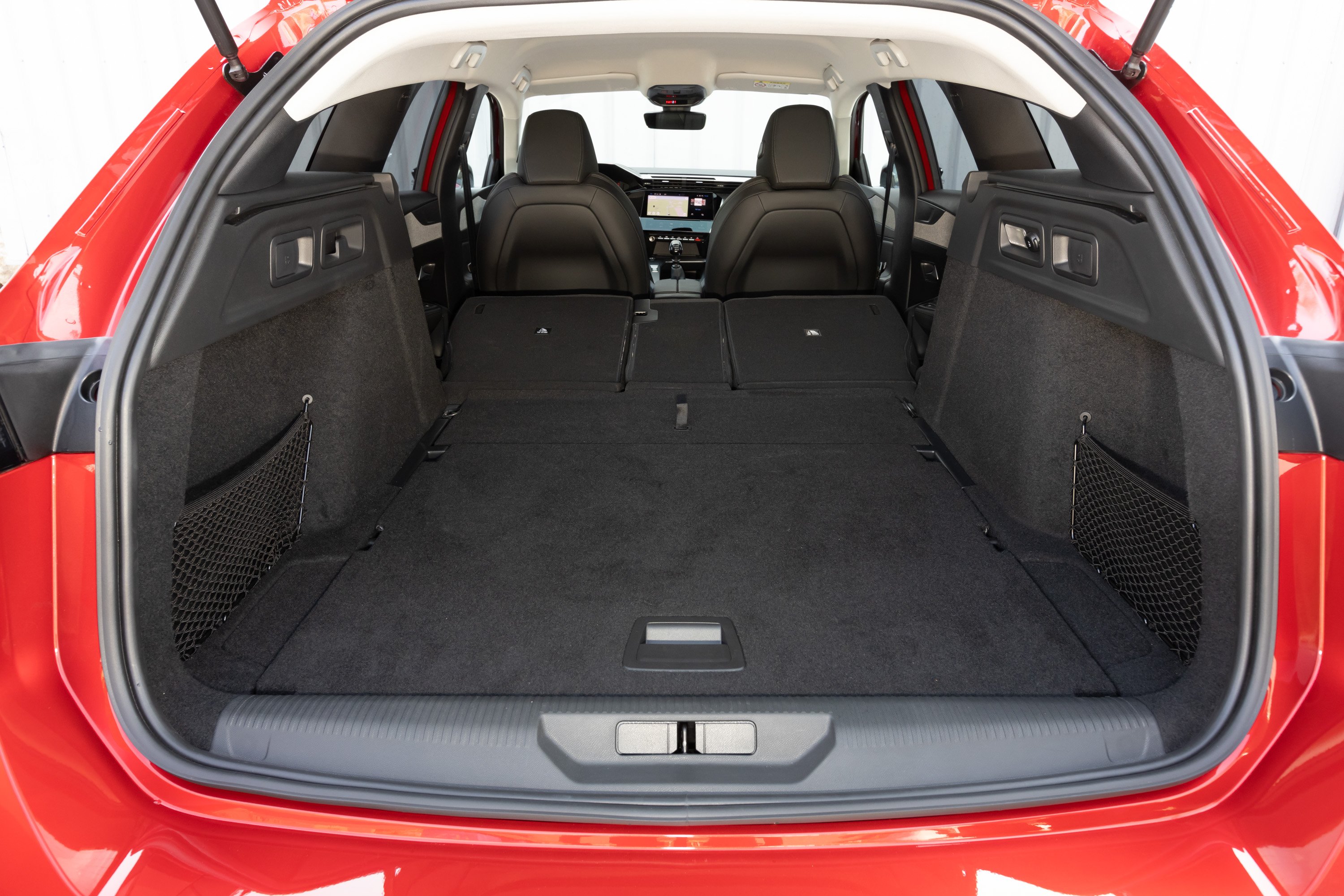
Even with the driver’s seat dropped down low, a six-footer sitting behind could just about slide his big feet underneath, and find an inch gap between knees and scalloped seat back. There’s decent headroom too, though the high-set, shallow glasshouse might make some passengers feel a little hemmed in.
Five-door hatches with combustion engines store 412 litres in the boot, though the hybrid’s rear-mounted battery reduces that to 361 litres.
The SW estate manages to maintain the hatchback’s style with its sloping shoulder line, chiselled tailgate lip and crisply folded flanks. But it’s plenty practical inside: a low sill enlarges into a practical, rectangular load bay accommodating 608 litres (or 548 for hybrids). You can drop the back seats using the load bay handles, which uncorks 1634 litres.
2022 Peugeot 308 verdict
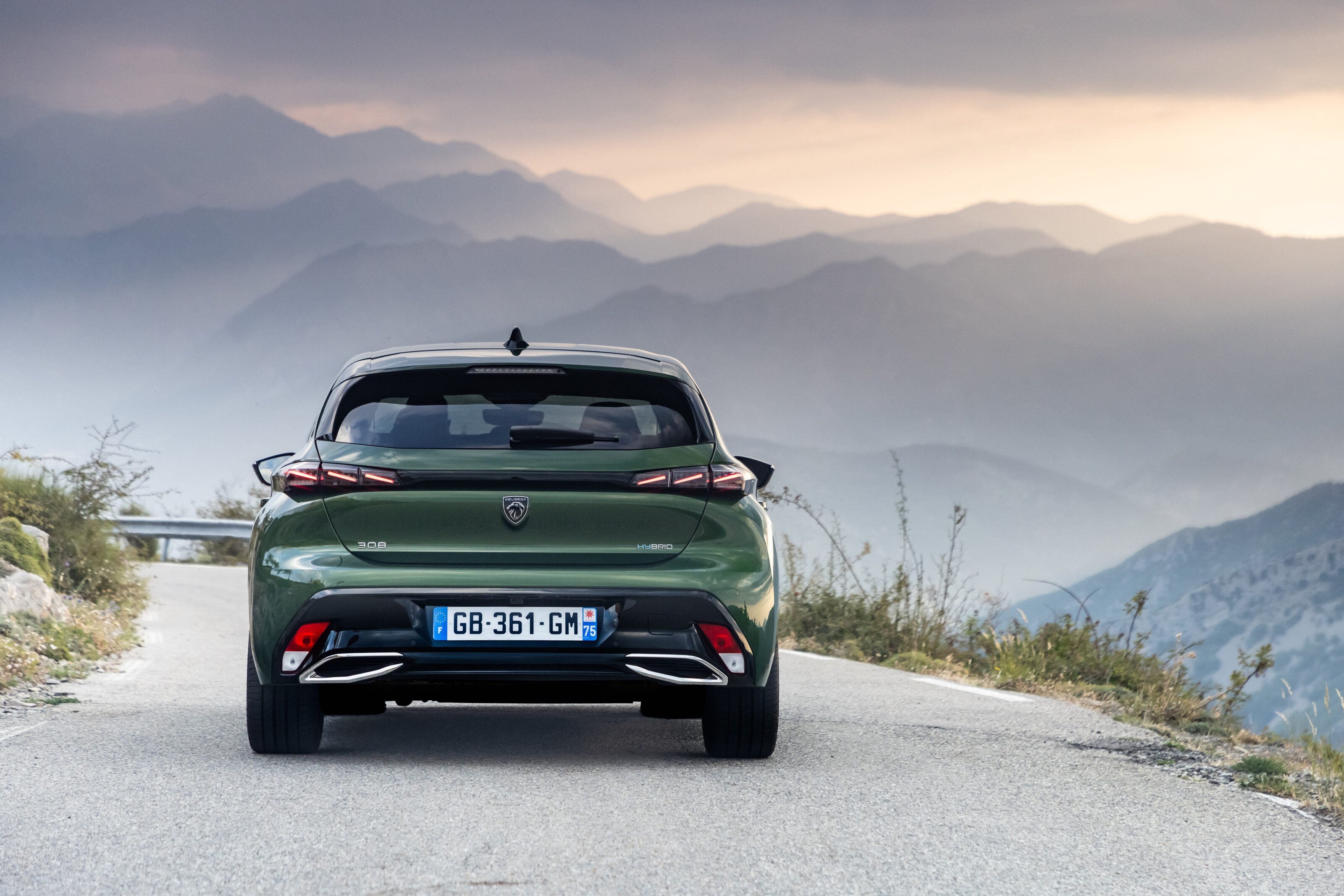
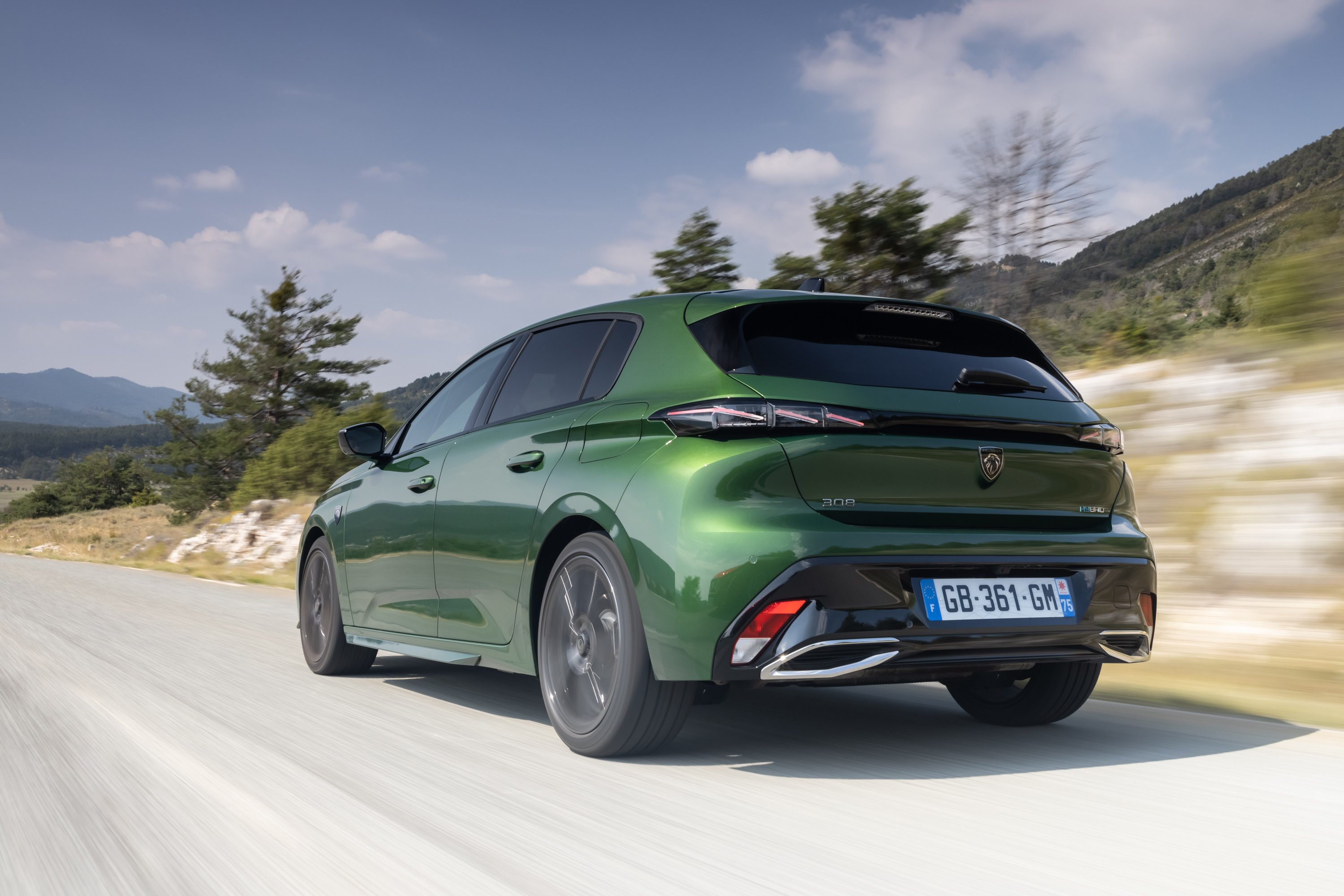
You won’t miss an oncoming new 308: its shimmering chrome grille emblazoned with the vast new Peugeot shield combines with the narrow headlamps for enormous road presence. Peugeot design is in a real sweet spot at the moment, and its latest model has more flair inside and out than its Golf nemesis.
On the road it’s a much tougher call, which will need a comparison test on Australian roads to decide the winner. But the 308 offers a strong range with the handsome but practical wagon, an agile petrol for eager drivers, a pure electric version from 2023, and plug-in hybrids at launch.
The 132kW Hybrid is the one to pick – so long as you can plug it in. Its refined, sophisticated air makes it the top cat right now.
A version of this article was first published at Carmagazine.co.uk
When will the new 2022 Peugeot 308 come to Australia?
There’s no word on pricing or which models we will get, but Peugeot Australia has confirmed that Australia will be getting the new 308, and its expected in the first quarter of 2022.
2022 Peugeot 308 Hybrid specifications
| 308 range starting price | u00a325,000 ($45,300 u2013 could start cheaper in Australia) |
|---|---|
| 308 Hybrid price as tested | u00a333,000 ($AU62,400) |
| Engine | 1598cc 4-cyl petrol-electric plug-in hybrid |
| Combined system output | 132kW and 360Nm |
| Transmission | Eight-speed auto with 81kW electric motor |
| Performance | 7.6sec 0-100km/h, 225km/h top speed, 24-27g/km CO2, 1.2L/100km |
| Weight | 1603kg |
| L/W/h | 4367/1852/1442mm |
Snapshot
- 2018-2020 Hyundai Kona and Veloster recalled due to engine fault
- Relates to the piston rings within the engine, which may be defective
- A total of 9952 vehicles are involved
Hyundai has recalled 9952 examples of the 2018-2020 Kona and Veloster due to the risk of an engine fault.
The issue relates to the piston rings assembled within the engine, which may be defective. This could result in faults to the component and/or the cylinder bore, affecting engine performance.
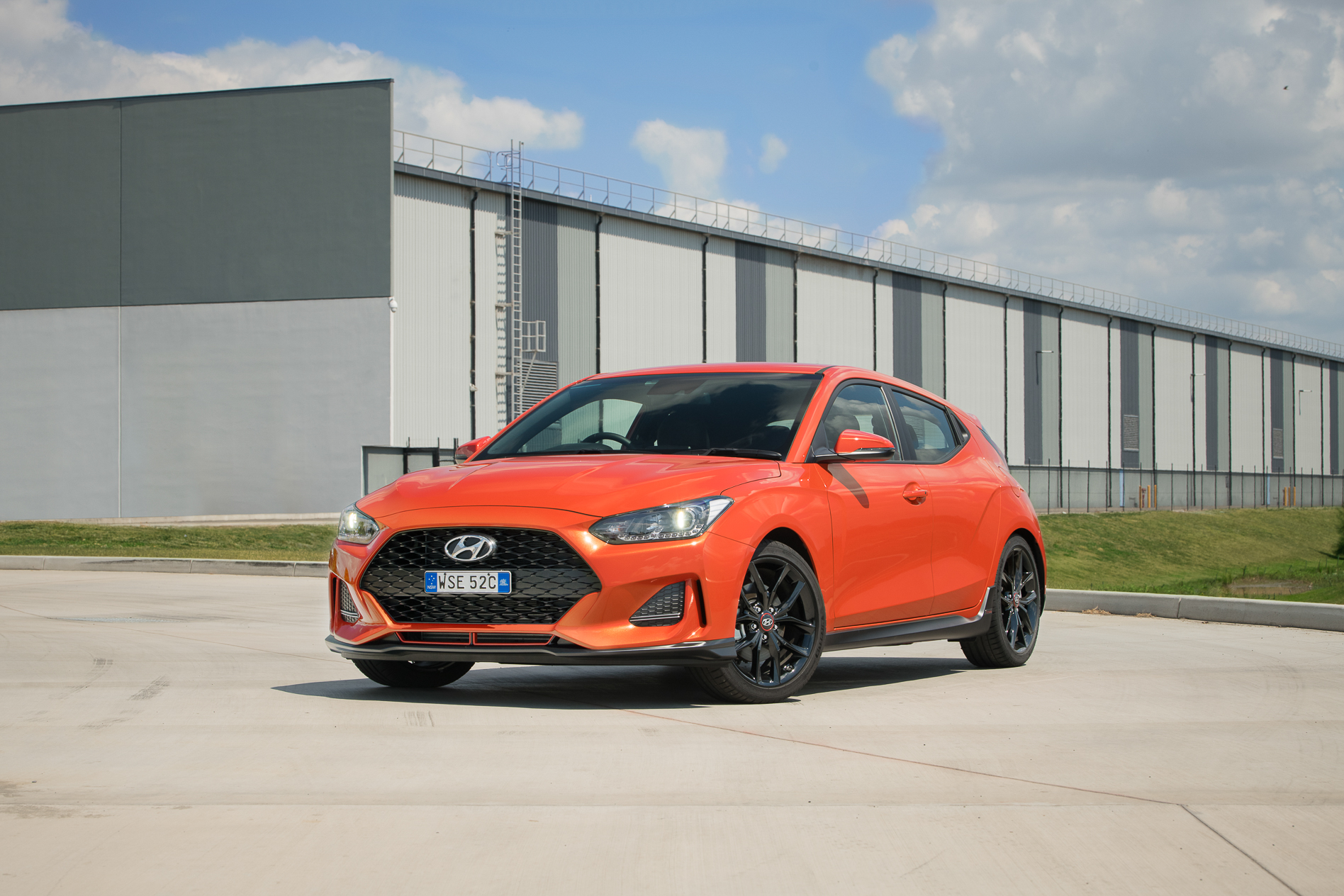
According to the Department of Infrastructure, a damaged engine may result in the vehicle stalling and/or leaking engine oil.
A VIN list for the affected vehicles can be found here.
When parts become available, Hyundai Australia will contact owners to organise a repair with their dealership. Alternatively, the customers involved can contact Hyundai on 1800 186 306 or their preferred dealer – which can be found here.
Snapshot
- 2019-2021 Audi E-Tron recalled due to a brake issue
- The fault could lead to the vehicle stability systems failing
- A total of six cars are included in the recall
Audi has recalled a total of six examples of the 2019 to 2021 E-Tron due to a potential issue with the vehicle’s anti-lock brake system (ABS) and electronic stability control (ESC).
According to a recall notice published by the Department of Infrastructure, the systems can fail under hard braking, resulting in the brakes locking up and the vehicle becoming uncontrollable.
Audi will be contacting the affected owners, or alternatively they can contact their preferred Audi Centre to have the necessary fix carried out at no cost. You can find your nearest dealership by clicking here.
You can check a list of all six VINs related to the recall by clicking here.
Snapshot
- Face Connect will allow owners to unlock the vehicle without a key
- Fingerprint authentication to also be used
- Memory functions for seats and other settings to be adopted
Genesis has revealed its upcoming GV60 electric vehicle will use ground-breaking biometric technology for owners to utilise some of its systems.
Headlined by its new “Face Connect” ability, the recognition software provides keyless access to the GV60 in the same way a smartphone can be unlocked by scanning its owner’s face. Using Near Infra-Red cameras and deep learning technology to open the car’s doors, up to two faces are able to be registered to the vehicle.
While the GV60 is still sold with a smart key, utilising the Face Connect system means it can be operated without one, with the doors able to be locked even if the key is inside – perfect for days at the beach to stop worrying about someone pinching your belongings from under your beach towel.
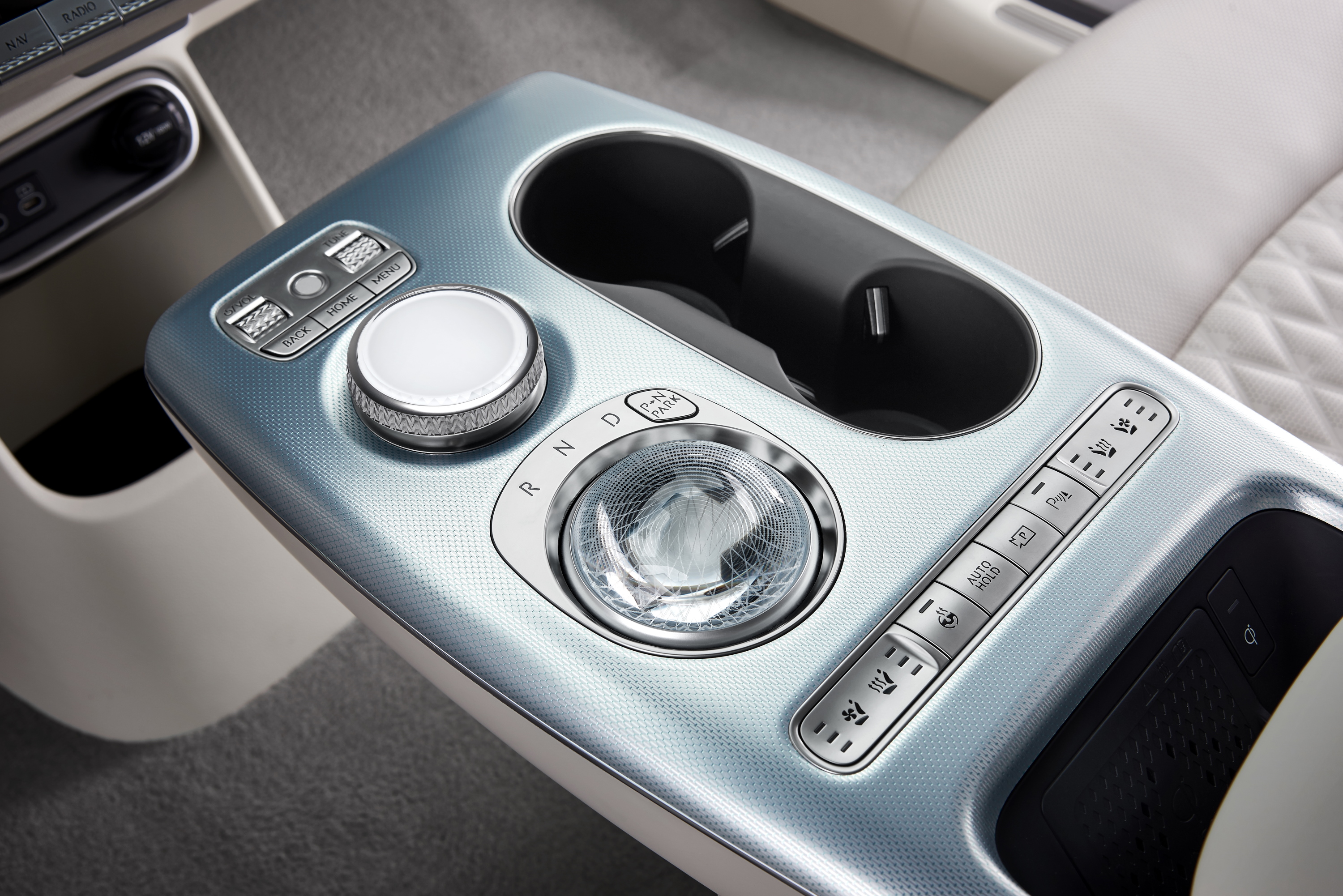
Acting as a replacement for the standard smart key, the facial recognition program will also trigger memory functions for the driver’s seat, steering wheel and head-up display, allowing it all to be restored to the owner’s preferences as they enter the cabin.
In addition to this, the GV60’s “Fingerprint Authentication System” provides the ability to start the car without a key, replacing existing PIN-based systems to provide an extra layer of security.
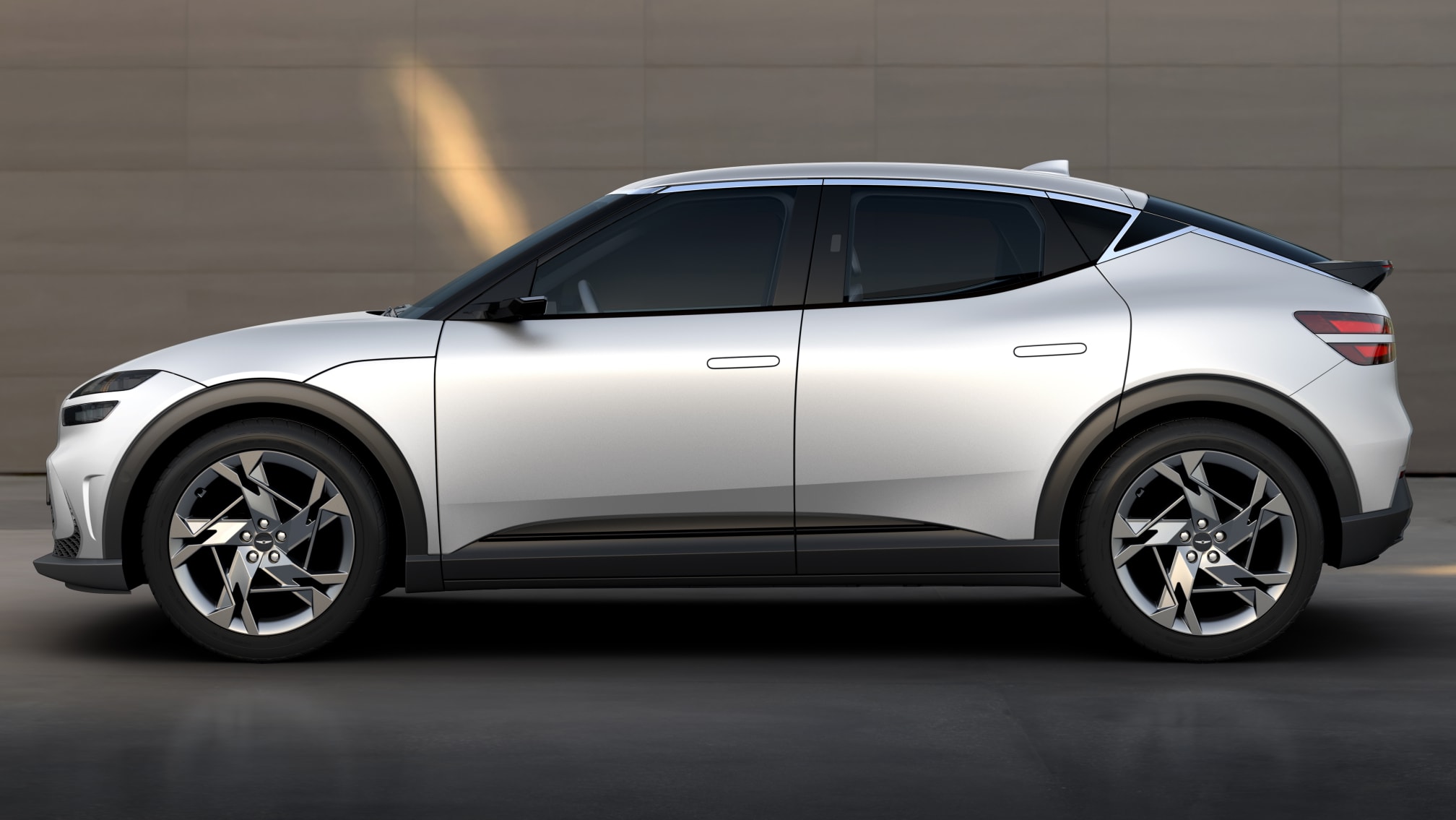
Genesis also announced which features can be updated over-the-air, with the integrated control device, suspension, brakes, steering wheel, and airbags now able to be given OTA updates – on top of the existing navigation, digital cluster, and head-up display capabilities.
With the GV60 planned to go on sale from next year, the biometric tech will eventually trickle down to other Genesis models in the future, as the manufacturer gears itself towards an EV-only future.
Snapshot
- Six carmakers have agreed to a $52M settlement
- VW fights a similar lawsuit and wins
- Court action continues against Mercedes-Benz
Six major car companies have agreed to settle class-action lawsuits for a total of $52 million, following a major recall of deadly Takata airbags.
Legal actions in the NSW Supreme Court against Toyota, Subaru, Honda, BMW, Nissan, and Mazda were settled in mediation, with reports lawyers for the plaintiffs will walk away with $15.3 million of the total amount settled.
In identical statements issued to WhichCar, representatives for a number of car companies said they had “advised the NSW Supreme Court that [each manufacturer had] reached an in-principle settlement of a class action relating to Takata airbags.”
“The settlement involving several brands is subject to final court approval. [The car companies and their] dealers have worked diligently to complete the Takata recalls and minimise customer inconvenience.”
Last week, Justice Stevenson formally dismissed similar proceedings against Volkswagen and ordered the plaintiff – a university professor and the owner of a 2013 Volkswagen Passat – to pay costs related to the lawsuit.
In June, Justice Stevenson ruled there had been no actual loss or damage from the owner having had the Takata airbag installed in his vehicle.
In August, the Australian Competition and Consumer Commission (ACCC) launched legal action against Mercedes-Benz, accusing it of minimising the risk of serious injury of death from the faulty Takata products.
The ACCC alleges Mercedes-Benz staff downplayed the risks “on at least 73 occasions,” stating the recall was precautionary in nature and “there had been no incidents, accidents, injuries or deaths … at all,” despite there already having been one fatality in Australia at that time and one serious injury recorded.
In early 2018, Government officials issued a compulsory recall for all vehicles fitted with defective Takata airbags following an investigation by the ACCC.
While there have been 33 deaths related to the faulty airbags worldwide, it’s estimated 3.77 million have been replaced under the recall in Australia – with just 81 faulty examples estimated to remain out in the community.
As Takata was one of the world’s largest suppliers, its faulty airbags were fitted to 40 million cars across 12 major car brands, resulting in the largest automotive recall in history.
Snapshot
- Lucid Air Dream Edition achieves a tested driving range of 837km
- Even the lowest Dream Edition Performance managed 726km
- All Lucid Air variants beat any Tesla’s range
American EV start-up Lucid has set a new benchmark for range, with its Air model becoming the first electric vehicle to surpass 800km in an EPA test.
Achieved by the Air Dream Edition on 19-inch wheels, the EPA-governed test found the vehicle could travel up to 837km on a single charge – considerably more than the Tesla Model S Long Range, which previously recorded a best range of 652km.
According to Lucid, all variants of the Air beat the existing Tesla yardstick, ranging from the Dream Edition’s 837km driving range to the Air Dream Edition Performance, which managed 726km – thanks to its higher output motor and 21-inch wheels.
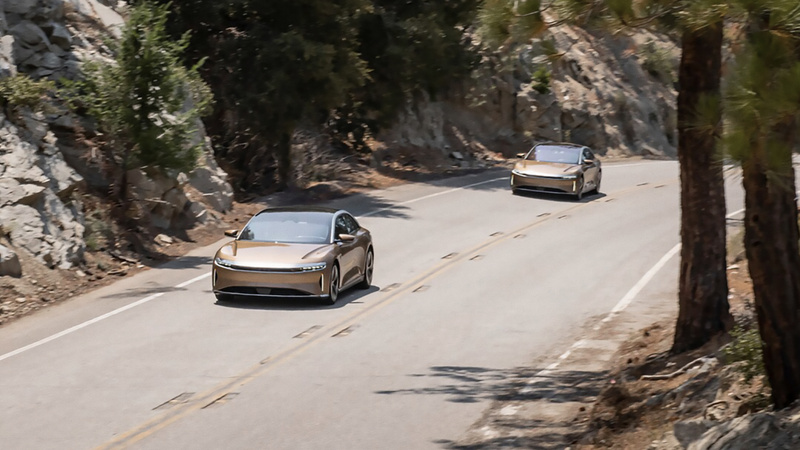
Lucid’s secret is in its battery packs, all of which have a rated capacity of 113kWh of 13kWh more than the largest pack available in the Model S Long Range, a major factor in all Air variants recording longer distances than Tesla’s flagship.
On top of this, the Air variants also feature more powerful motors than any of Tesla’s offerings, with the Grand Touring putting out a combined 597kW – stepping up to 696kW in the Dream Edition and topping out at 828kW for the range-topping Dream Edition Performance.
A possible hindrance for sales of the Lucid Air could come from its price – it’s valued significantly higher than any spec of the Model S. While the Long Range and Plaid Teslas retail for US$89,990 (AU$123,475) and US$129,990 (AU$178,360) respectively, the Air Grand Touring starts at US$139,000 (AU$192,100), with a premium for the Dream Edition bumping it up to US$169,000 (AU$233,240).
Kia has begun using a Boston Dynamics robotic dog with artificial intelligence (AI) for nightly safety patrols at one of its factories.
Both Kia and Boston Dynamics are majority owned by Hyundai Motor Group, which has employed the dog in a pilot program to assess and flag any potential risks at the South Korean plant.
Using a livestream camera, thermal camera, AI, and LiDAR – a similar technology to radar – the robot can move autonomously through the industrial site, monitoring temperatures and detecting potential fire hazards – as well as checking to see whether doors are open or closed. Office personnel can also remotely control the dog if there is a safety concern.
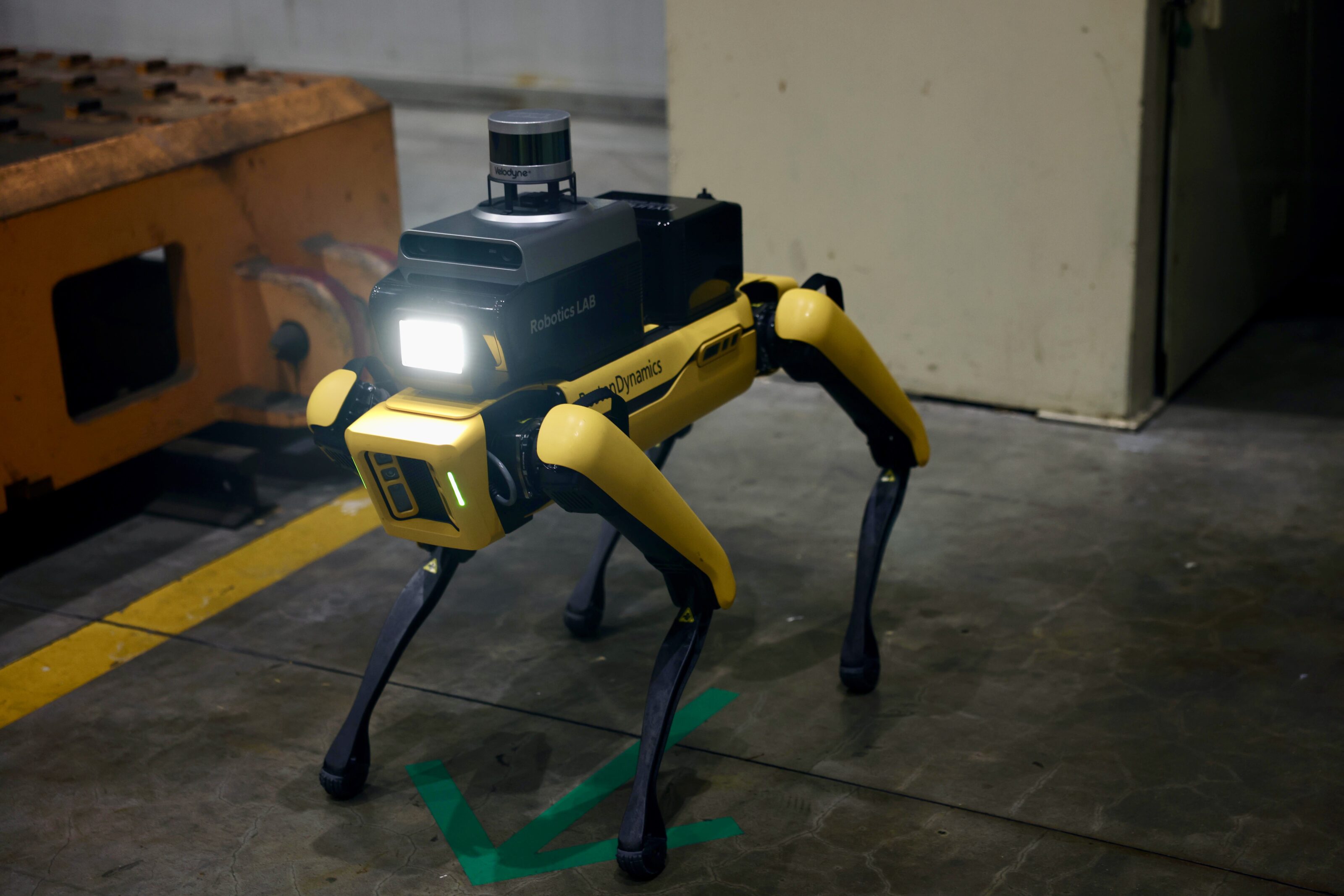
The ‘Factory Safety Service Robot’ is based on Boston Dynamics’ Spot quadruped platform, and is the first collaboration between the two companies.
“The Robot will help detect risks and secure people’s safety in industrial sites,” said Dong Jin Hyun, Head of Hyundai Motor Group Robotics Lab.
“We will also continue to create smart services that detect dangers…and help support a safe work environment through continuous collaborations with Boston Dynamics.”
