
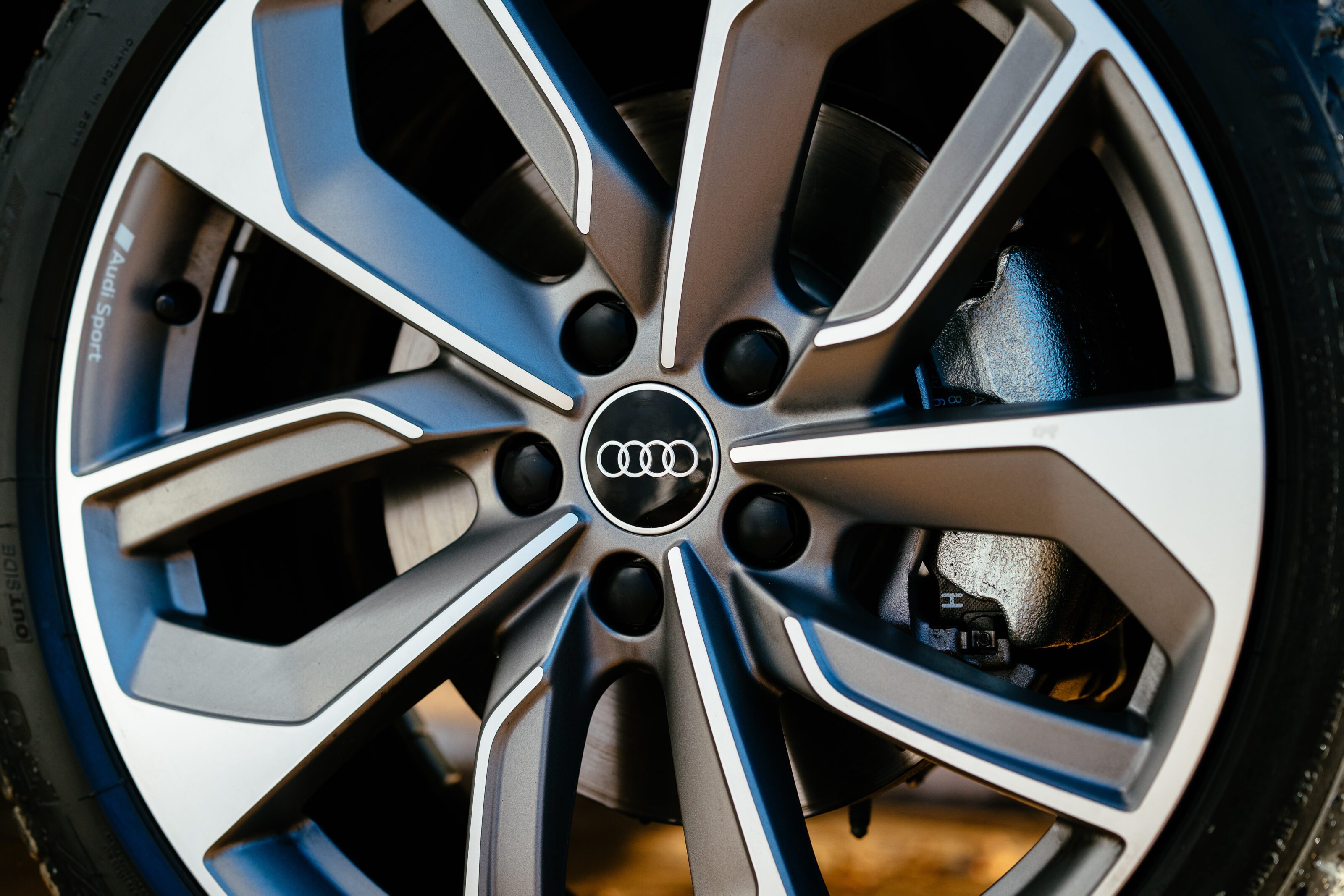
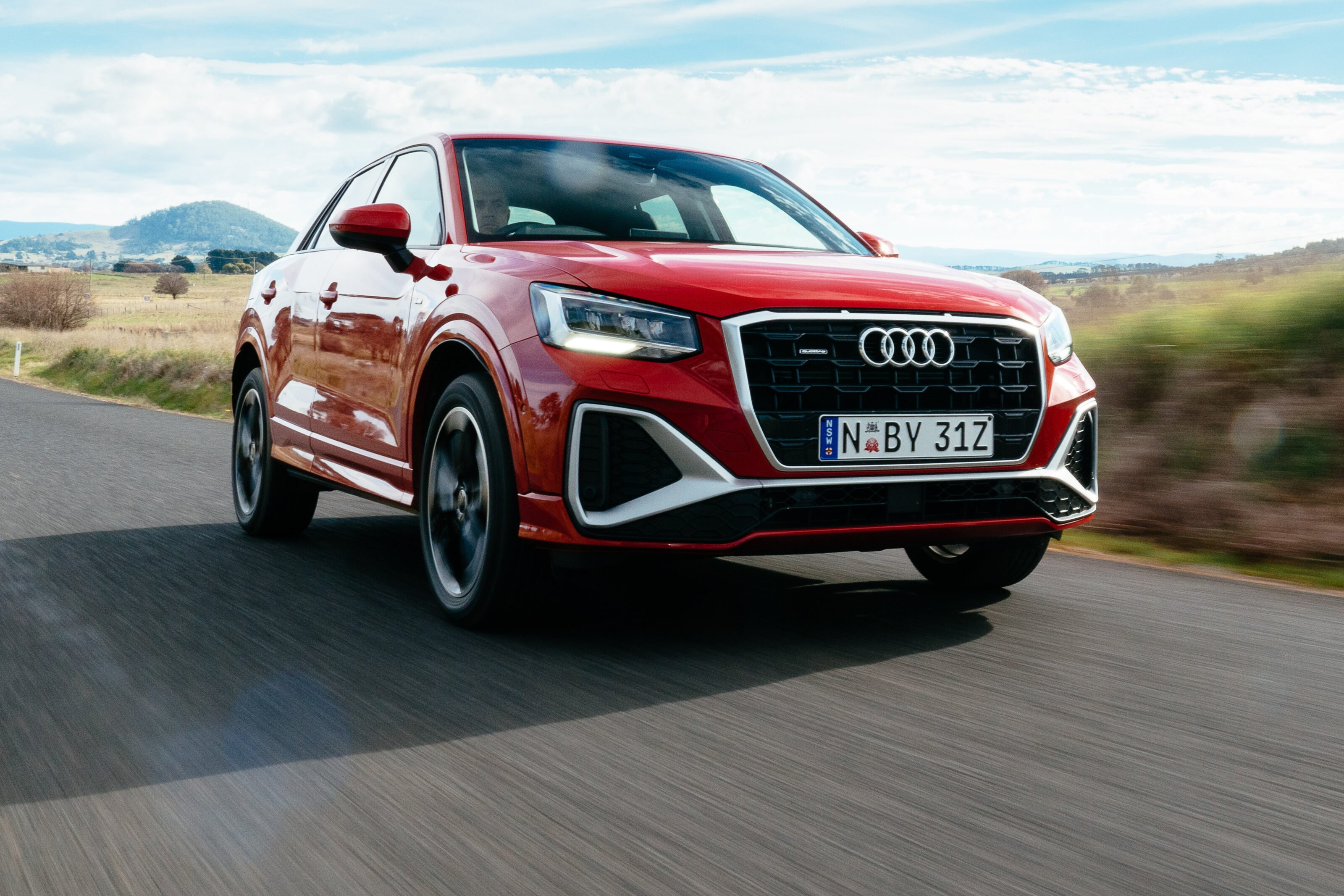
More features. And more polygons. In a nutshell, that’s the mid-life makeover for Audi’s most design-focused SUV, the Q2.The heavily chiselled body is largely unchanged from the model released globally in 2016 and based on the last-generation A3 small car, with styling tweaks focused on revised bumpers, a slightly lower-set grille, and reprofiled headlights.Audi clearly feels it got the styling of the original Q2 pretty much right for a vehicle where we’re told 70 per cent of buyers put design at the very top of their list.Colours and details go bigger and bolder, this time. A bunch of new paints include particularly eye-catching Turbo Blue and Apple Green, while Audi Australia has upsized the standard wheels on the $42,990 entry Q2 35TFSI from 17 to 18 inches.
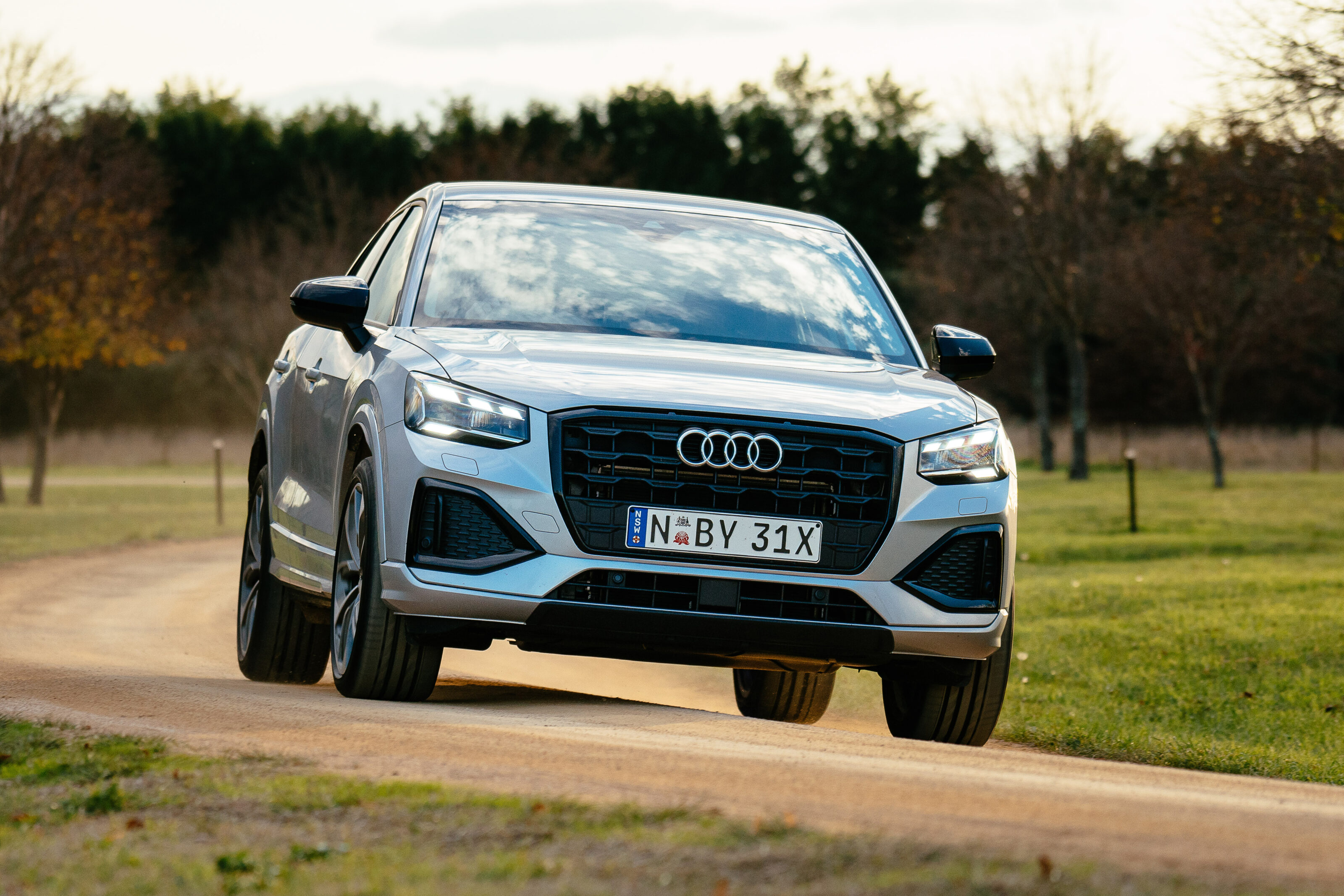
Buyers can again play around with exterior trim elements – such as lower bodywork and rear pillar ‘blades’ – as either no-cost or cost options. A Style Package for the 35TFSI and mid-range 40TFSI Quattro introduces visual upgrades such as 19-inch Audi Sport wheels, Matrix LED headlights, and various exterior trim parts in black.LED headlights are now standard on the Q2 regardless, with the new range-topping SQ2 variant (see our separate review) adopting the Matrix technology as standard.Other features are now standard, too, offsetting slight price rises – 35TFSI up $950; 40TFSI up $500.Audi says features worth $3500 have been added to the 35TFSI. In addition to the LED headlights (and tail-lights), these include heating for the side mirrors, full keyless entry and start, blind spot monitoring, ambient interior lighting, and MMI touch/navigation with an 8.3-inch infotainment display that was previously part of an optional Technik Package.
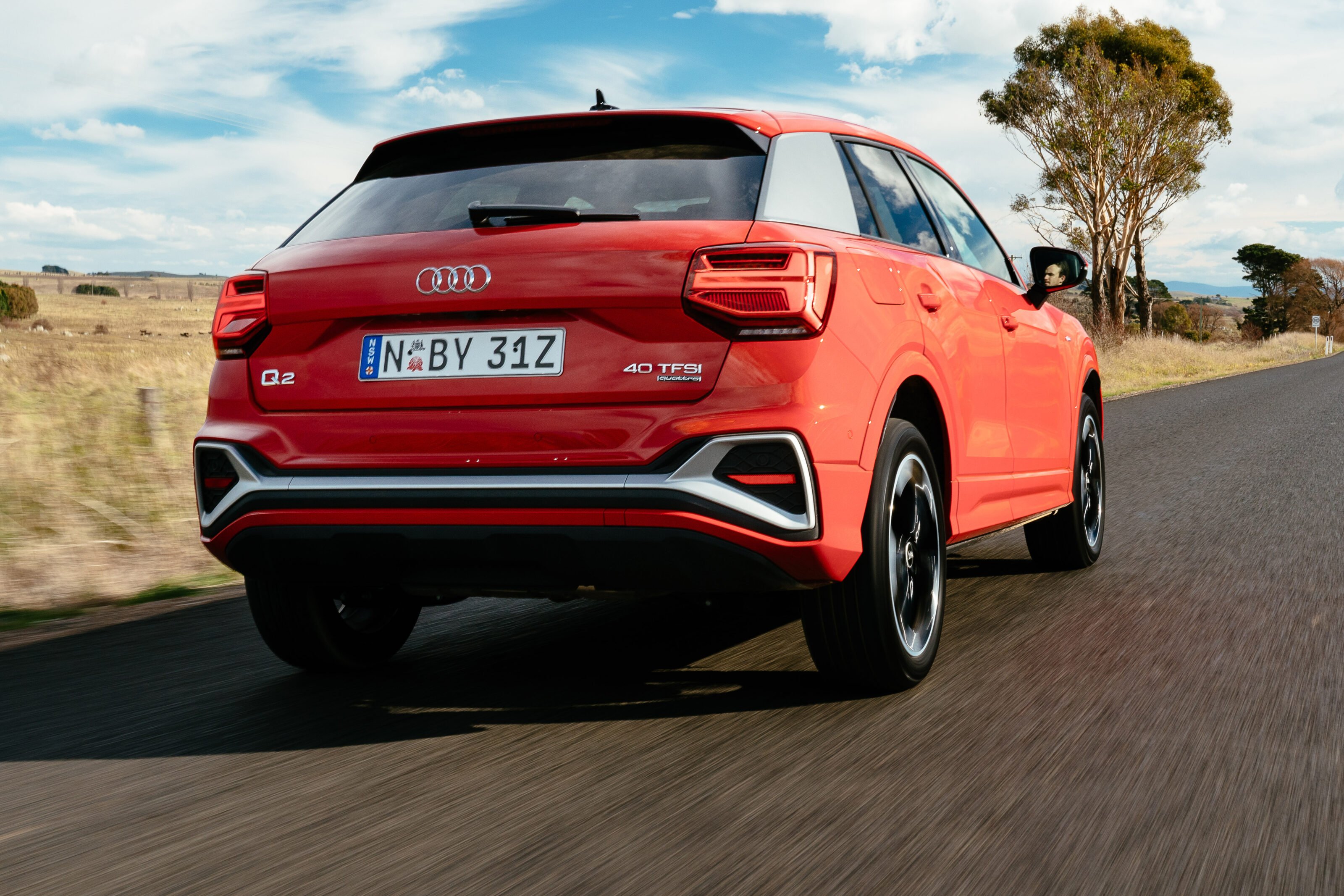
The Q2’s revised, extended list of standard features is welcome, as is the streamlining of option packages. It’s still expensive when compared with similar sized SUVs from the mainstream segment, though.
The 40TFSI gains a new S Line body kit and Audi Sport rims for its same-size 18-inch wheels.Beyond the exterior’s array of octagons, heptagons, pentagons and hexagons, a stylish interior awaits. It’s also an ageing one, though, based as it is on the old A3 released in 2013.This is particularly noticeable with the infotainment display, which is neither integrated into the dash as with newer-generation Audis, nor features the German brand’s latest graphics interface.It’s not entirely intuitive, either. Some functions – such as changing the colour of the illuminated dash inserts (optional with Q2s, standard in SQ2) – are buried deep and not easy to locate.However, there’s also an advantage to the older system. Where the latest Audis have switched to pure touchscreen functionality, the Q2 retains the MMI rotary console controller with added touchpad.This makes selecting various infotainment functions easier when driving than reaching for a touchscreen. When using the map, for example, you simply turn the dial left or right to zoom in/out, rather than having to pinch a screen.
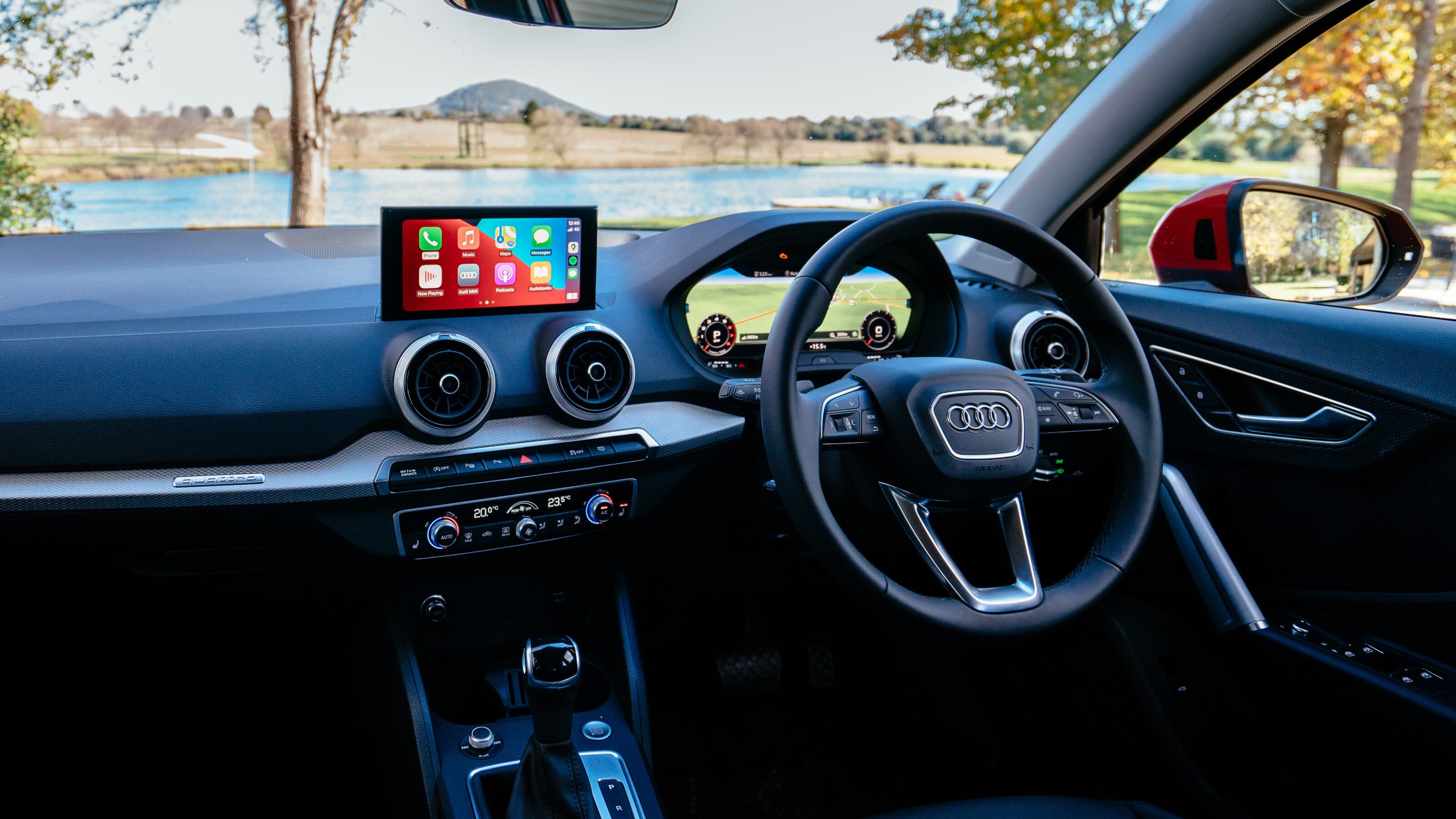
With Audi’s excellent Virtual Cockpit digital driver display – a bargain $650 on regular Q2s or part of the main option packages – you can have a nav-map dominating the screen while the infotainment display is used for other functions. Simply pressing a View button on the steering wheel switches between layouts, including traditional ‘dials’.Wireless smartphone charging is standard, though larger-format mobiles struggle to fit in the console-cubby tray.The front door pockets are quite generous in size, dual cup-holders sit ahead of the gear lever, and this section also includes a little slot for the keyfob (in a world dominated by push-start buttons, it would be nice to see more cars featuring a keyfob holder).With the 4.2m-long Q2 aimed primarily at singles or couples, families will find more cabin and luggage space in the 4.5m-long Q3 that’s not far out of reach with a $47,600 starting point.
Rear legroom is tighter in the Q2, though fine for adults if occupants aren’t too tall. And ISOFIX points are in the outboard seats.There are seatback pouches and well-sized door compartments, but a centre armrest and vents are absent.
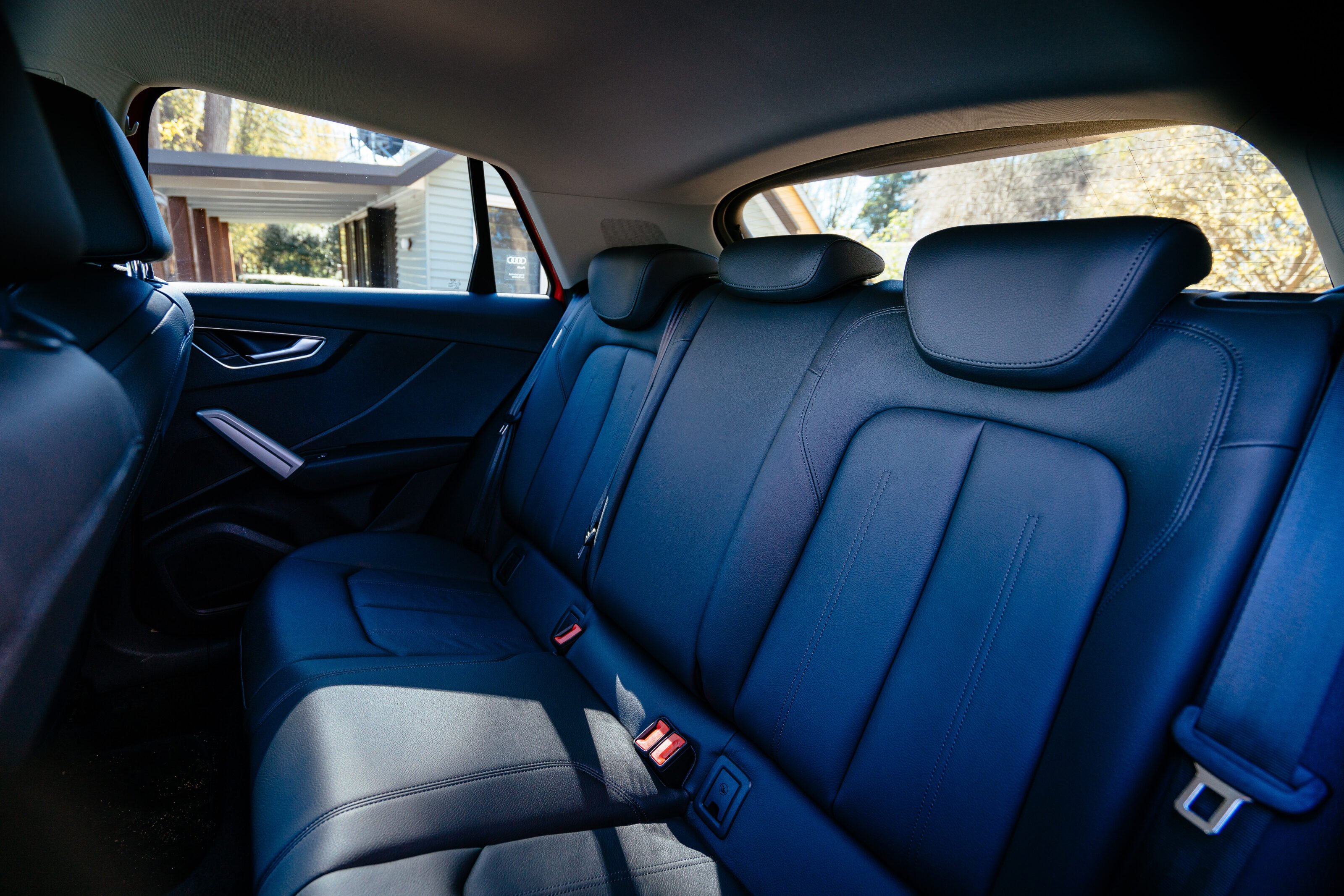
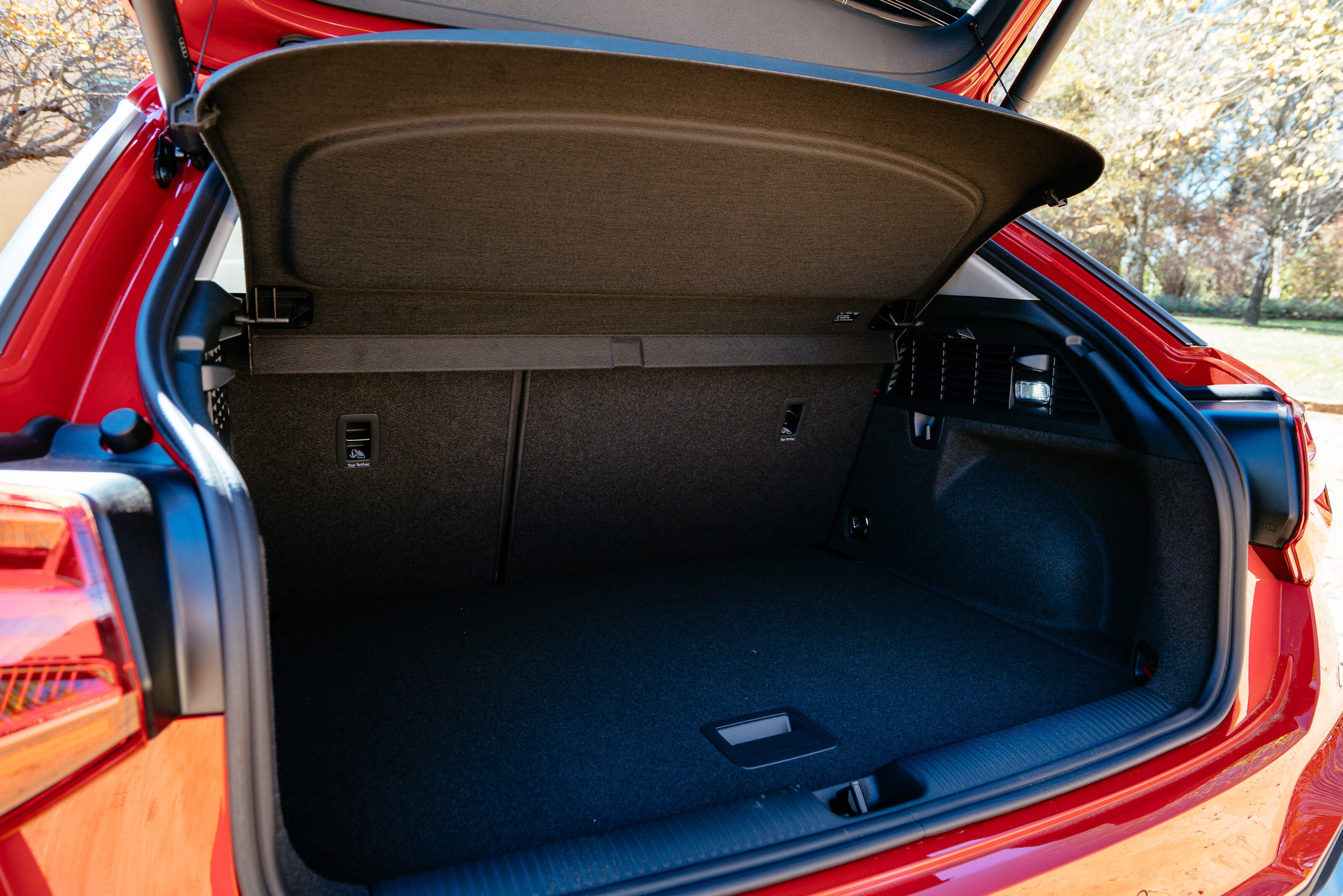
Audi quotes 405 litres for the Q2’s luggage capacity, which is more than you get in an A3 hatch but also less than (slightly longer) rivals such as the BMW X2 (470L) and Mini Countryman (450L). The Q3 is even further ahead with a 540-litre boot.A set of golf clubs will fit only if one side of the split-fold rear seatbacks is flattened.The boot floor can also be slotted into a slightly lower position – unless the optional Bang & Olufsen audio system is fitted.Leather-appointed seats are comfortable whether you have the standard set of the 35TFSI or the sportier set of the 40TFSI.Driving the Q2, there’s good vision all round, helped of course by a seating position elevated over that of an A3.Both the front-drive Q2 35TFSI and all-wheel-drive 40TFSI we tested were fitted with the bigger, 19-inch wheels from the Style Package.
The ride on country roads and through country towns felt firmer with the heavier Quattro, though never tiresomely so. Prominent tyre noise, and some wind noise, didn’t contribute to a relaxed vibe, however – a refinement issue carried over from the pre-facelifted model.The 35TFSI has switched engines for 2021. Out goes a 1.4-litre turbo petrol and in its place comes a 1.5-litre version featuring fuel-saving cylinder deactivation technology.There are the same outputs of 110kW and 250Nm but official consumption drops fractionally from 5.3 to 5.2 litres per 100km.While the 35TFSI is now also a touch slower to accelerate, with its 0-100km/h claim going up by a tenth to 8.6 seconds, the engine is willing and refined. It’s helped by the fact the base model is relatively light for an SUV at 1305kg.Climbing hills isn’t a huge challenge, though it’s also worth noting this is in the context of just a driver on board.At 1455kg, the 40TFSI Quattro is carrying the equivalent of two average-sized adults but its 2.0-litre turbo petrol is more than up to the task.
There’s 140kW, but the key to the mid-range Q2’s even more flexible performance is 320Nm delivered across an even broader torque curve – from 1500 to 4200rpm.Flatten the throttle pedal to initiate a kickdown overtake and the 40TFSI’s strong mid-range is at its most noticeable and effective.Audi quotes a highly respectable 6.5 seconds for the 0-100km/h run, though of course there’s a commensurate rise in fuel consumption, with a lab-derived figure of 7.0L/100km. The 40TFSI doesn’t feature cylinder deactivation but shares a stop-start system.The all-wheel-drive system will also appeal to buyers considering a Q2 as a camping-friendly alternative to the lower-riding A3.
Just be mindful there’s no spare tyre of any form – all Q2s come with a tyre repair kit. There was a space-saver previously.
Otherwise, the Q2’s revised, extended list of standard features is welcome, as is the streamlining of option packages. It’s still expensive when compared with similar sized SUVs from the mainstream segment, though.
A Ford Puma is even more fun to drive, has a more versatile boot and is loaded with kit in $36,990 driveaway ST-Line V spec, for example, while the Skoda Kamiq Monte Carlo (also $36,990 driveaway) shares the 35TFSI’s motor and both a more spacious interior and a more practical boot.For those intent on a luxury SUV, however, the Audi Q2 35TFSI currently lays claim to being the most affordable, if also the smallest. It undercuts rivals including the BMW X2, Lexus UX and Mini Countryman.That it’s the German brand’s most visually interesting SUV can’t do it any harm, either.
Snapshot
- Niro has landed with Hybrid, PHEV and EV variants
- Pricing starts at $43,890 with the EV priced from $62,590
- Niro PHEV has a 58km EV range
- Niro EV has a 455km range
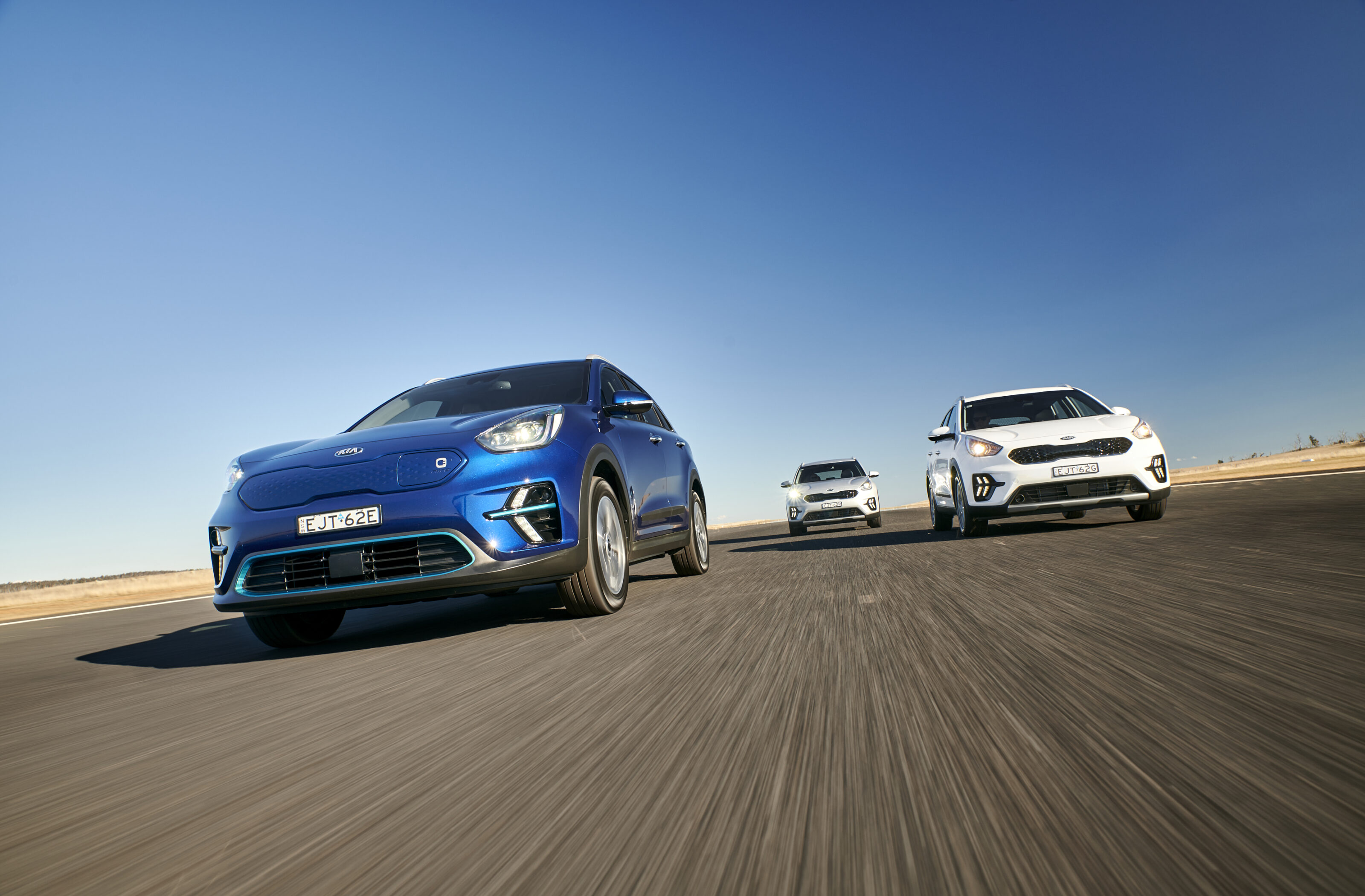
Kia is the latest brand to introduce electrified models into the Australian market in the form of hybrid, plug-in hybrid and battery electric versions of its Niro small SUV.
While new to Australia, the Niro has been on sale overseas since the hybrid (HEV) version first went on sale in 2016, but global demand has prevented it from coming Down Under until now.
Despite the second-generation model looming on the horizon, the arrival of the Niro with three powertrain options thrusts Kia into the local electric vehicle market and allows its Australian arm to adapt to the new technology.
The 2021 Kia Niro range includes S and Sport variants across all three powertrains.
Engines, motors and economy
The Niro Hybrid and Plug-In Hybrid drivetrains both feature the 77kW/147Nm Kappa 1.6 GDI internal combustion engine (77.2kW and 147Nm) coupled to a permanent magnet synchronous electric motor to produce combined power and torque of 104kW and 265Nm.
The electric motor in each hybrid model is transmission mounted, sitting between the engine and the six-speed dual-clutch automatic gearbox to provide the most efficient and versatile use of the combined power of both engine and motor.
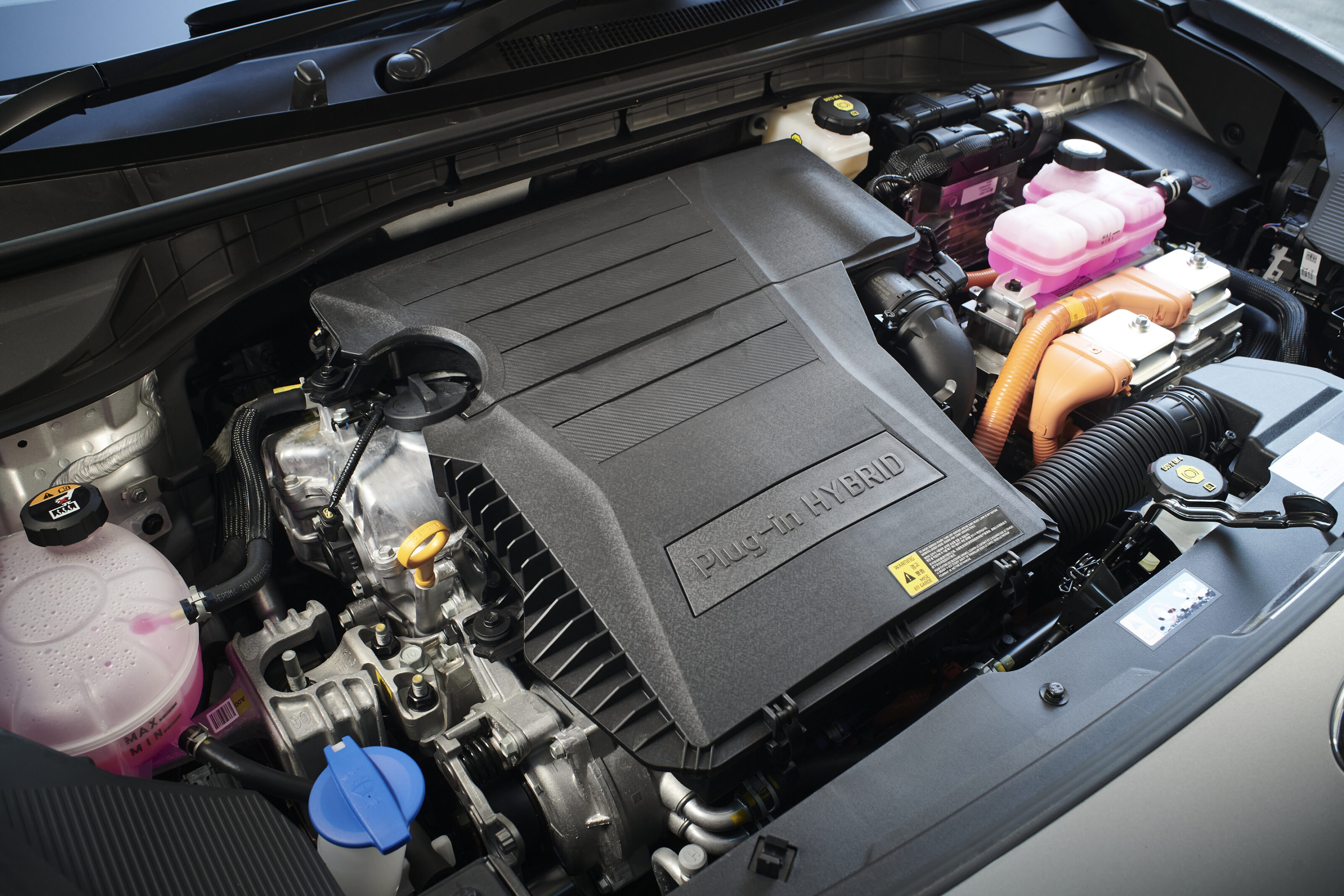
The arrangement also allows for the full output of both the petrol engine and electric motor to be transferred in parallel through the transmission with minimal loss of energy.
Energy storage in the HEV is managed by a 240volt lithium-ion polymer battery under the rear seat. The battery has a capacity of 6.5Ah and 1.56kWh and weighs 38.5kg.
The PHEV has a pair of lithium-ion polymer batteries with 360volts combined, one under the rear seat and an additional battery under the boot panel. They have a combined capacity of 24.7Ah and 8.9kWh, and when fully charged provide an all-electric range up to 58km.
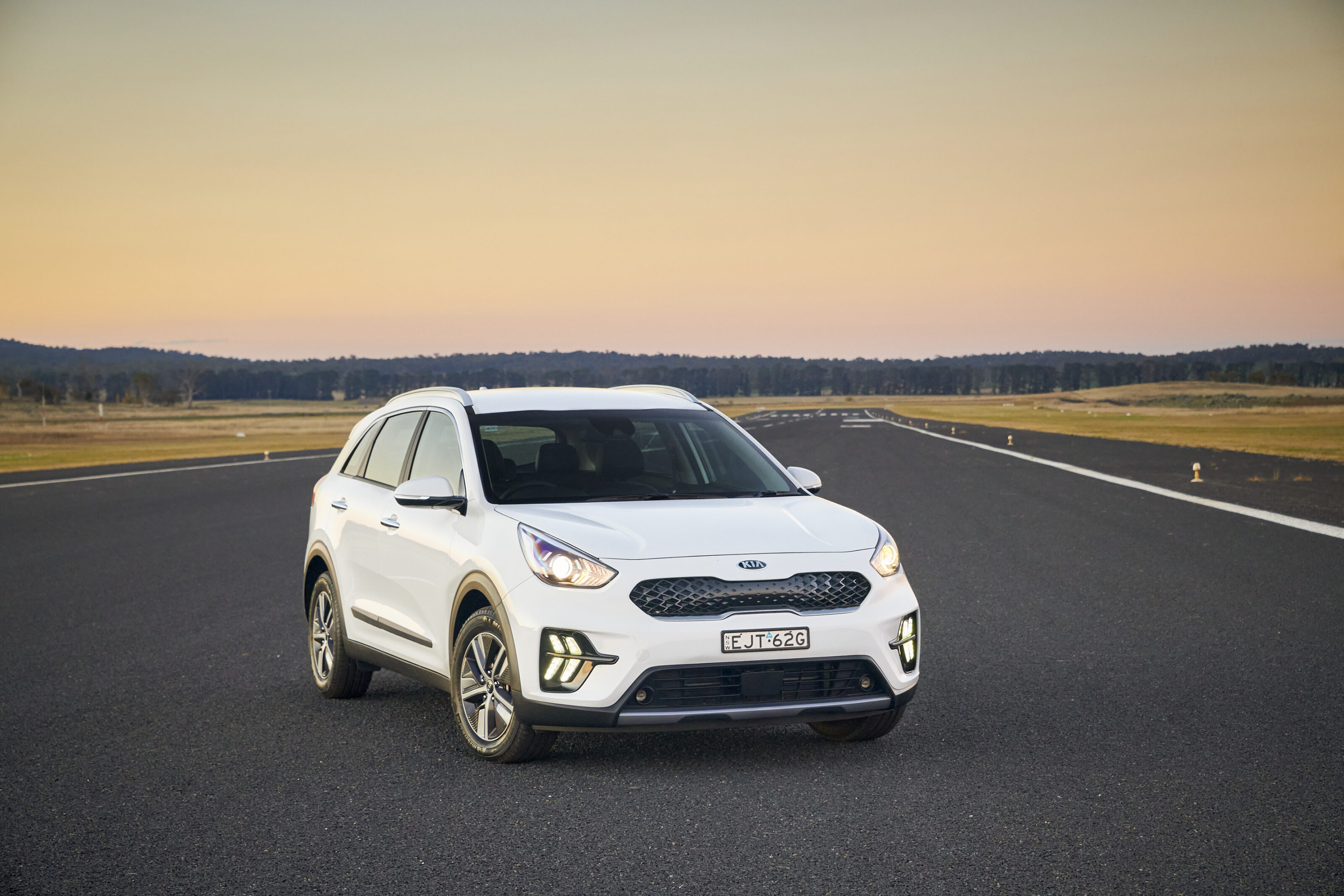
The PHEV has a 3.3kW charging capacity which sees it charge from 0-100 per cent in two hours and 15 minutes from a 15-amp power point, or around four hours and 45 minutes from a standard 10-amp socket.
It has a Type 2 charging plug, allowing it to connect to public AC chargers, but won’t charge any quicker than the 3.3kW rate.
The HEV will return a fuel efficiency of 3.8L/100km in normal operations, while the PHEV (with wider call on the electric motor) returns a combined efficiency of 1.3L/100km.
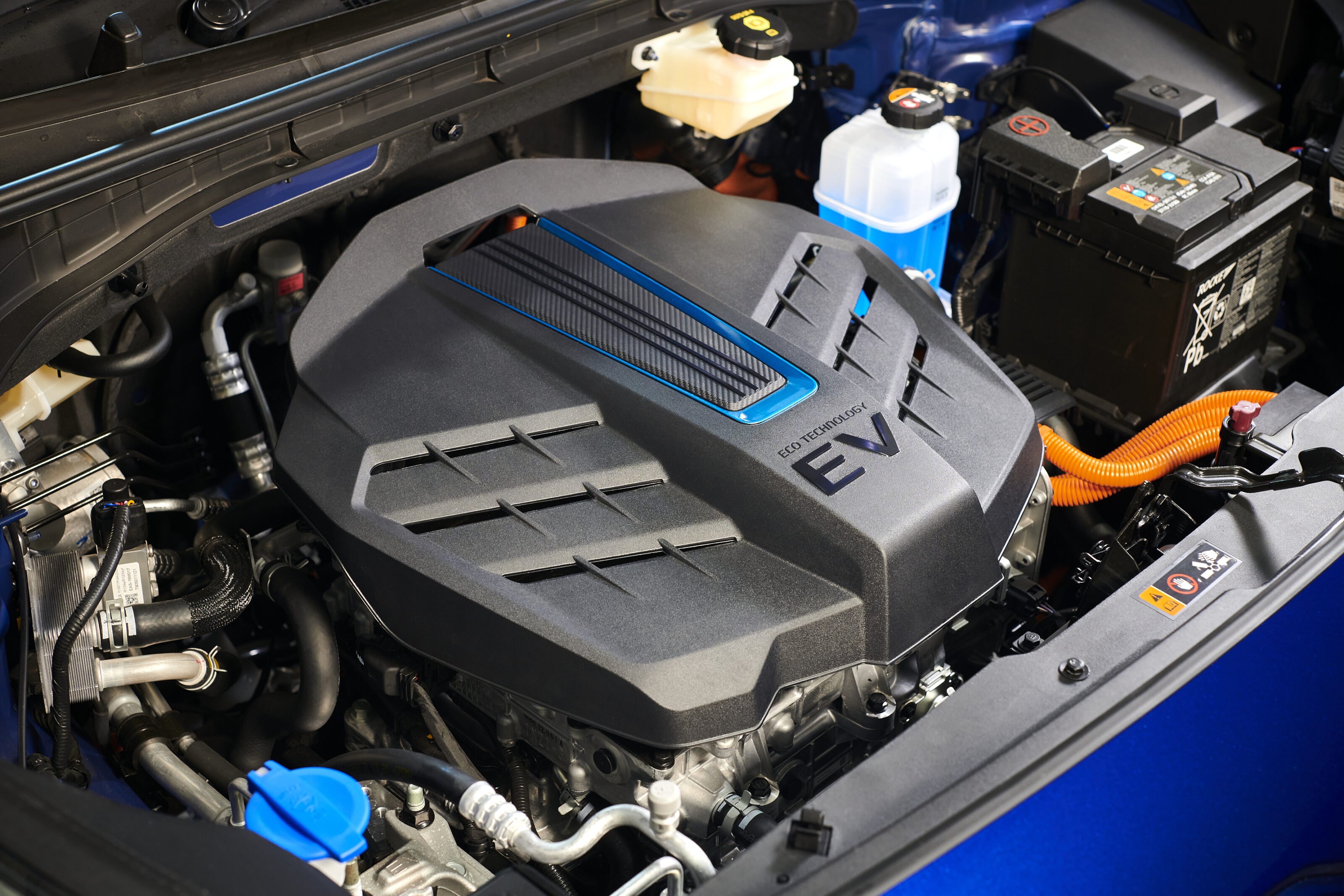
The Niro EV runs a similar but more powerful permanent magnetic electric motor (150kW and 395Nm) powered by a larger capacity 356volt lithium-ion battery.
Stored under the vehicle floor to give optimum centre of gravity and balance, the 457kg battery pack is capable of a range of 455km (WLTP) with capacity of 180Ah and 64kWh.
2021 Kia Niro pricing for Australia
The Niro Hybrid S is priced at $39,990 and comes standard with:
- 8.0-inch touchscreen
- Wireless Android Auto and Apple Carplay
- Bluetooth
- AM/FM and digital radio
- Six-speaker sound system
- Partial cloth and leather seats
- Power adjusted front seats
- Keyless entry
- Power-folding door mirrors
- Rear parking sensors
- Reversing camera with dynamic lines
- Dual-zone climate control air-conditioning
- Leather steering wheel
- Halogen headlights
- LED daytime running lights
- Halogen front fog lights
- LED high mounted stop light
- LED rear combination lights
- LED rear fog light
- Auto-on headlights
- Electronic parking brake with auto-hold
- Regenerative braking
- 16-inch aerodynamic alloy wheels
- Space-saver spare wheel.
- 10.25-inch touchscreen
- Satellite navigation
- Paddle shifters
- Vegan leather seats
- Alloy sports pedals
- Auto-dimming rear-view mirror
- LED headlights
- 18-inch alloy wheels
They are similarly equipped to the hybrid versions though the PHEV Sport retains the 16-inch alloy wheels and has a tyre repair kit in lieu of the spare wheel due to the battery being mounted under the boot floor.
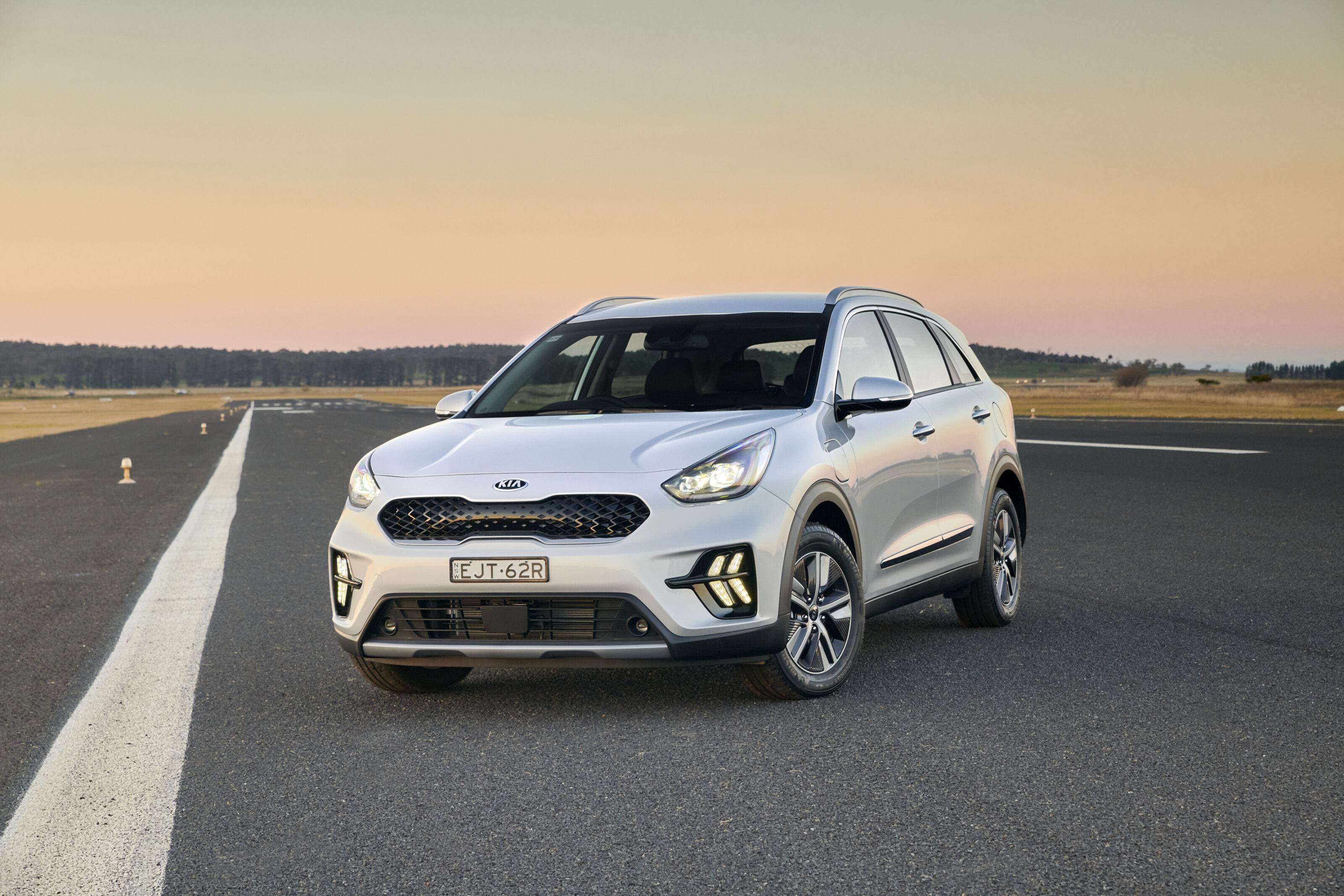
Priced at $62,590, the Niro EV S differs from the Hybrid S by having 17-inch aerodynamic alloy wheels with a temporary mobility kit, a dial-type shifter, 7.0-inch driver’s instrument cluster, expanded drive mode select with Eco/Eco+/Normal/Sport, steering wheel paddle shifters, auto-dimming rear-view mirror and single-zone air conditioning.
The range-topping Niro EV Sport has all that plus the features found in the other Sport variants to top the range at $65,990.
Safety
All Niro variants feature:
- Seven airbags, including driver’s knee bag
- Autonomous Emergency Braking with pedestrian and cyclist detection
- Lane Keep Assist
- Lane Follow Assist
- Adaptive Cruise Control
- Driver Attention Alert.
- Blind Spot Detection
- Rear Cross-Traffic Alert.
Dimensions
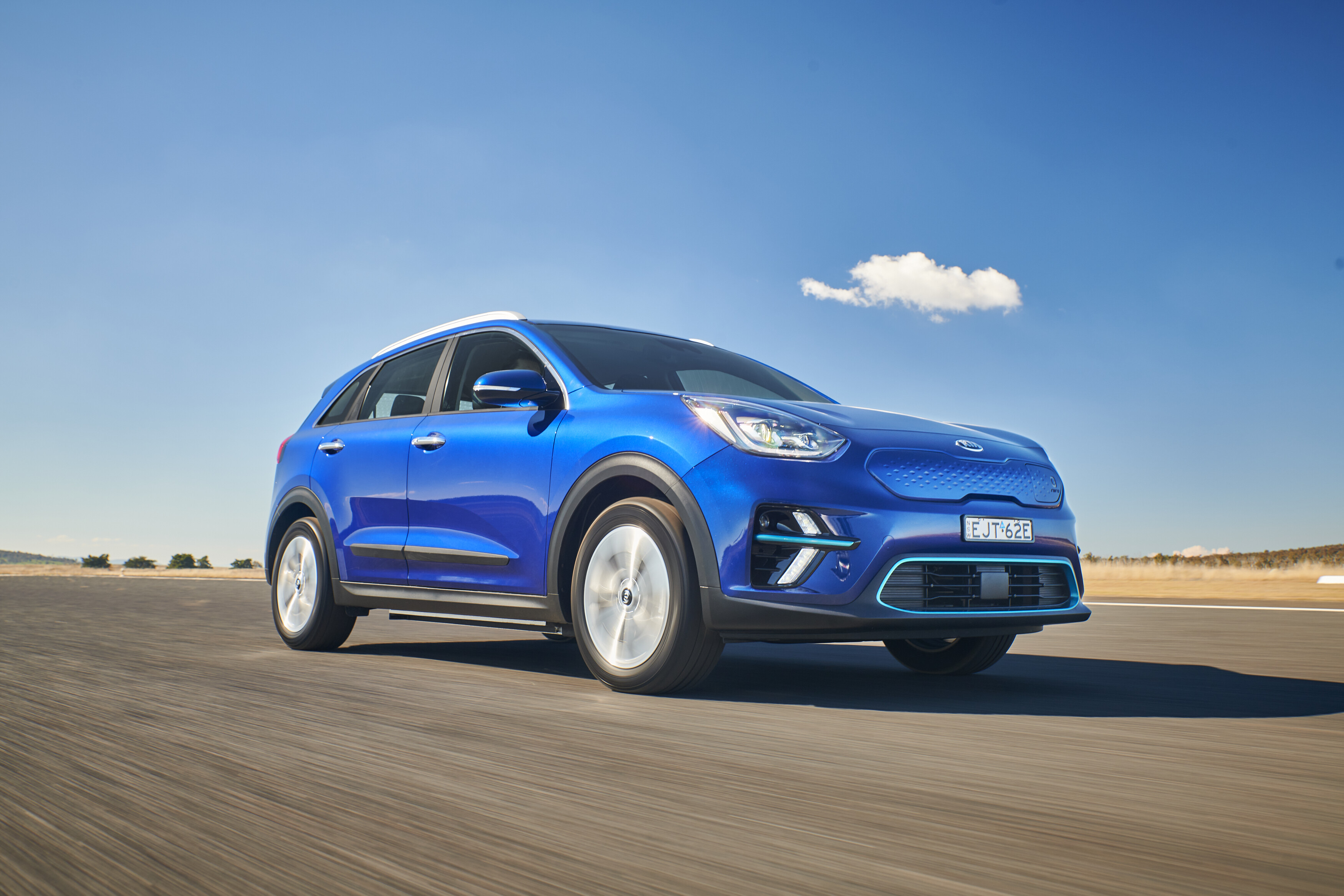
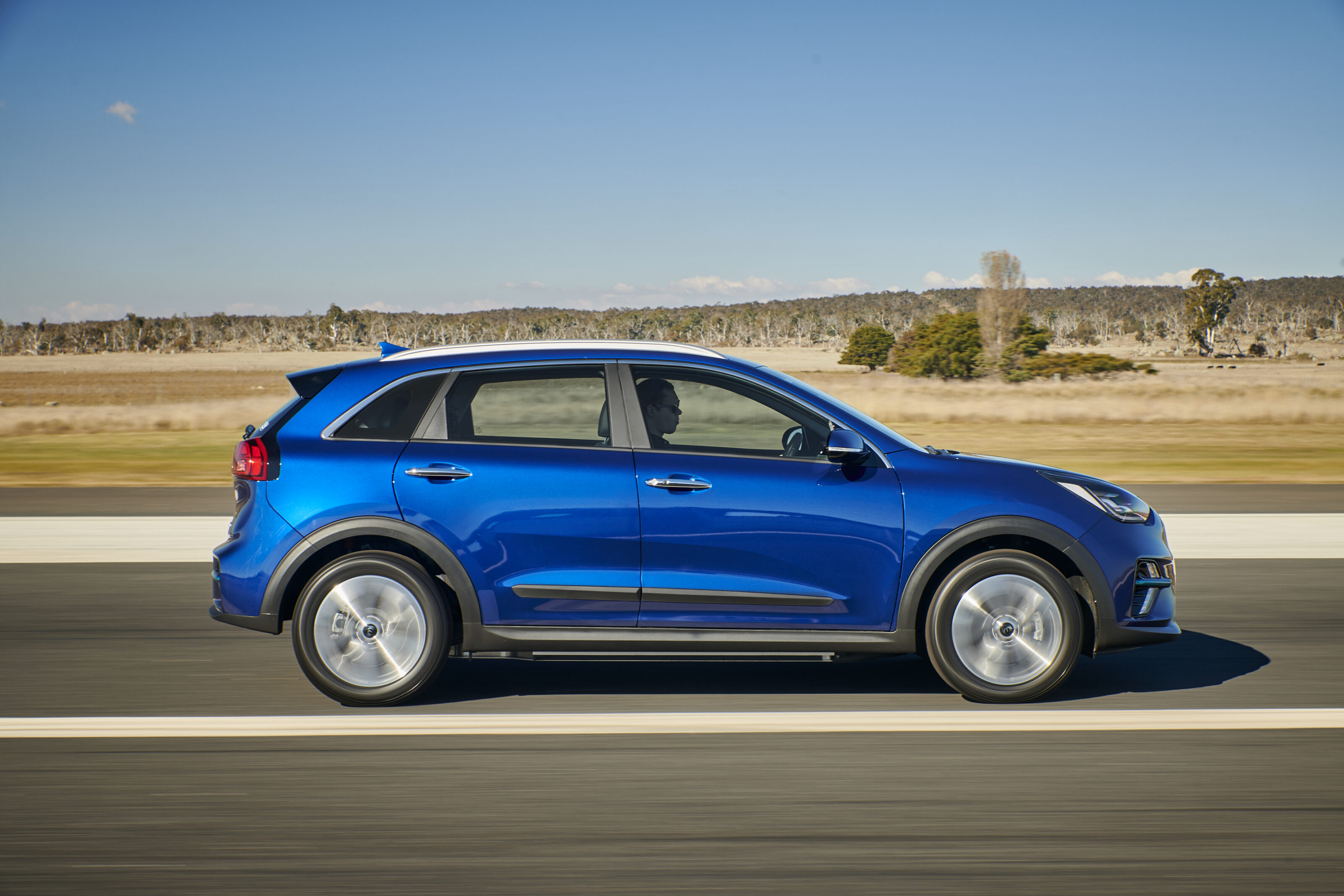
The Kia Niro is 4355mm long, 1805mm wide and 1545mm wide and has a 2700mm wheelbase making it quite roomy for a small SUV.
Warranty and servicing
Kia’s first electrified models are covered by the company’s seven-year/unlimited kilometre warranty, seven-year capped price servicing and seven-year roadside assist.
However, the high voltage battery and electric motor are covered by a seven-year/150,000km warranty.
When is the Kia Niro on sale in Australia?
All Niro variants are now available to order and purchase.
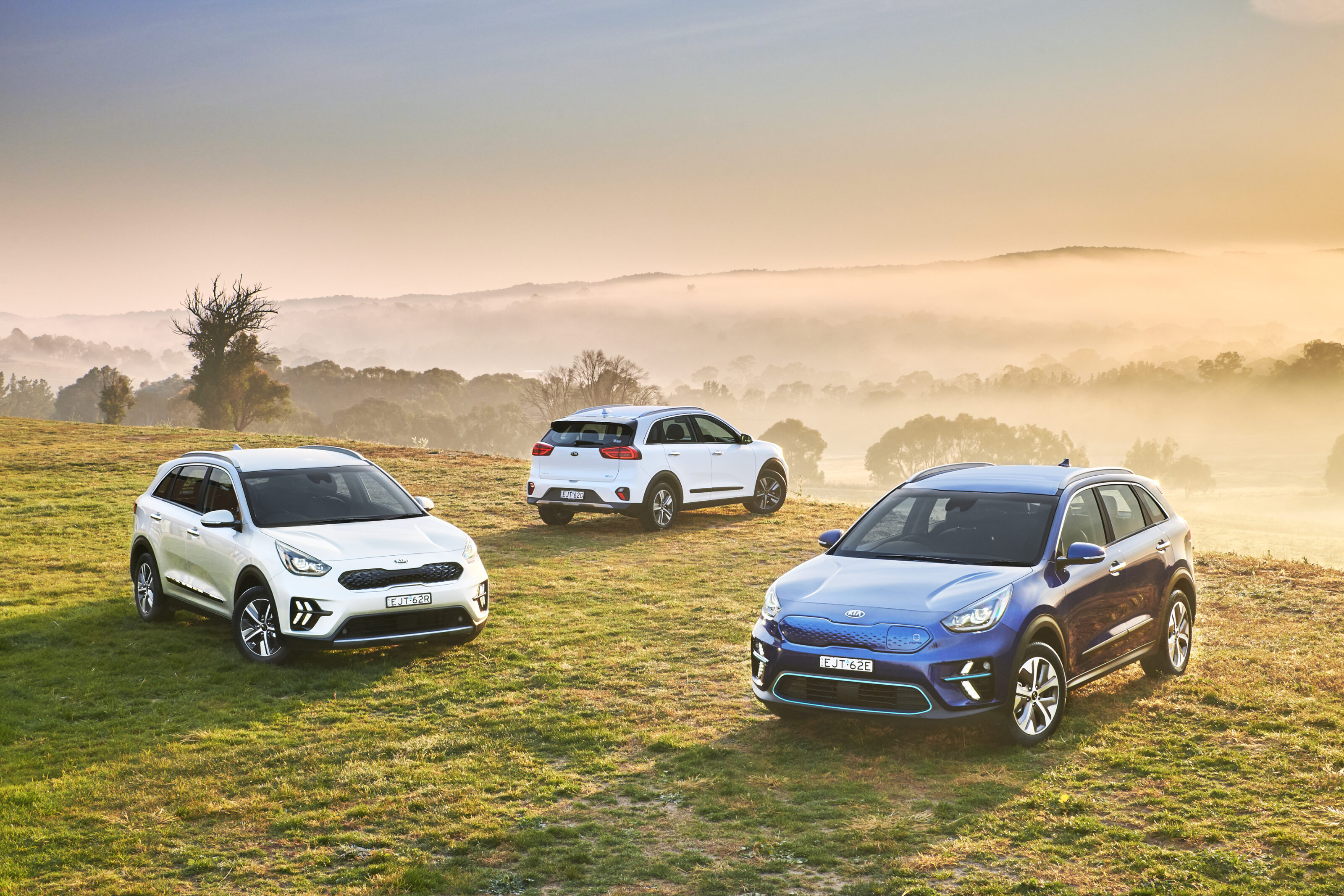
The Kia Niro is the Korean carmaker’s first electrified model to arrive in Australia with not just a hybrid powertrain, but plug-in hybrid and battery-electric versions as well.
We were meant to drive the Niro EV during its launch week but apparently, the car with my name on it was damaged a week earlier, so we grabbed the plug-in hybrid (PHEV), which sits in the middle of the range in terms of pricing and eco-friendliness, to see whether it offers the best or worst of both worlds.
The first thing you notice about the Niro is that it looks a little dated because, well, it is. While new to Australia, it has been around since 2016 when the hybrid (HEV) was first launched overseas. The plug-in hybrid arrived in 2017 and the battery-electric version – known as the e-Niro in other markets but Niro EV here – arrived a year later.
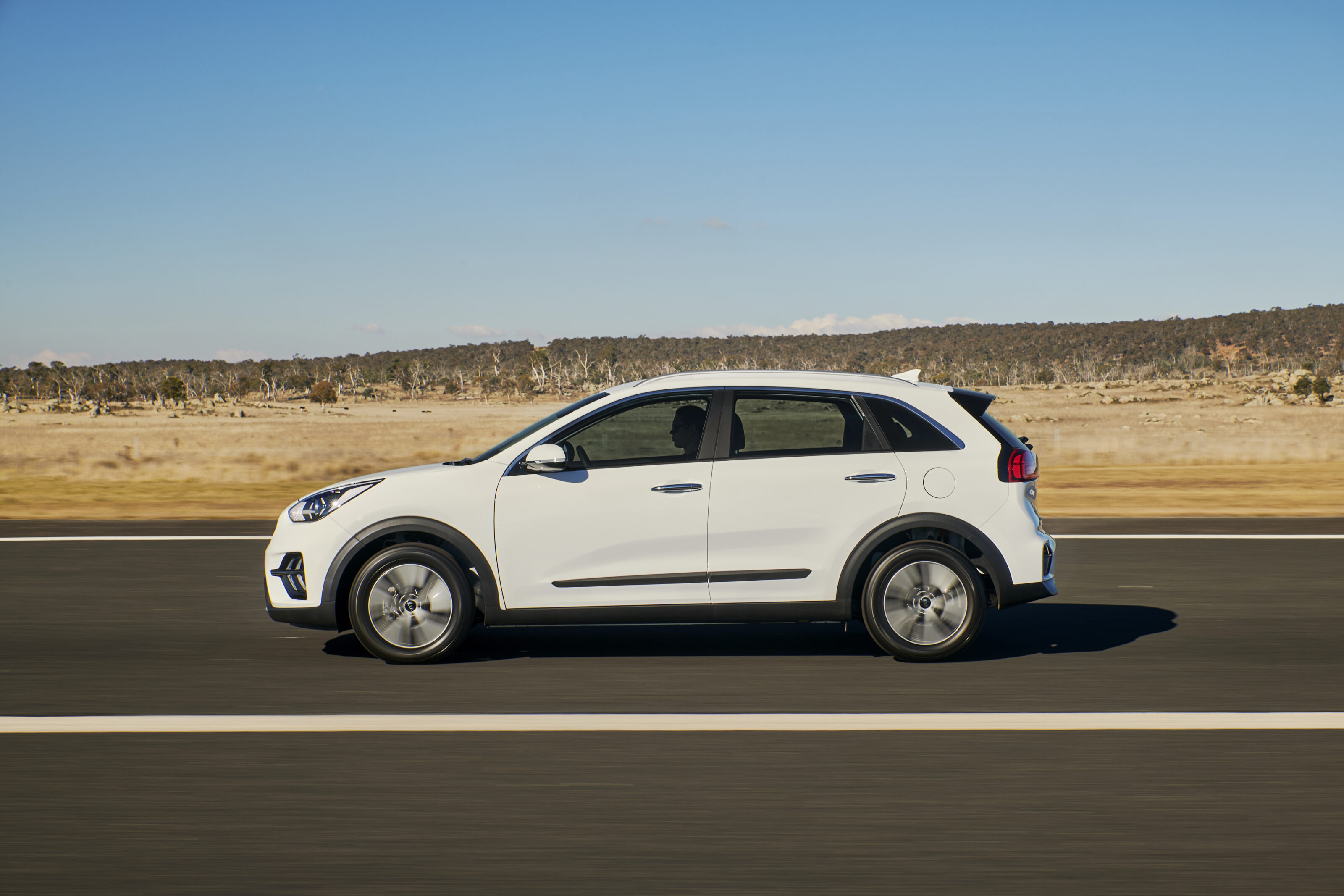
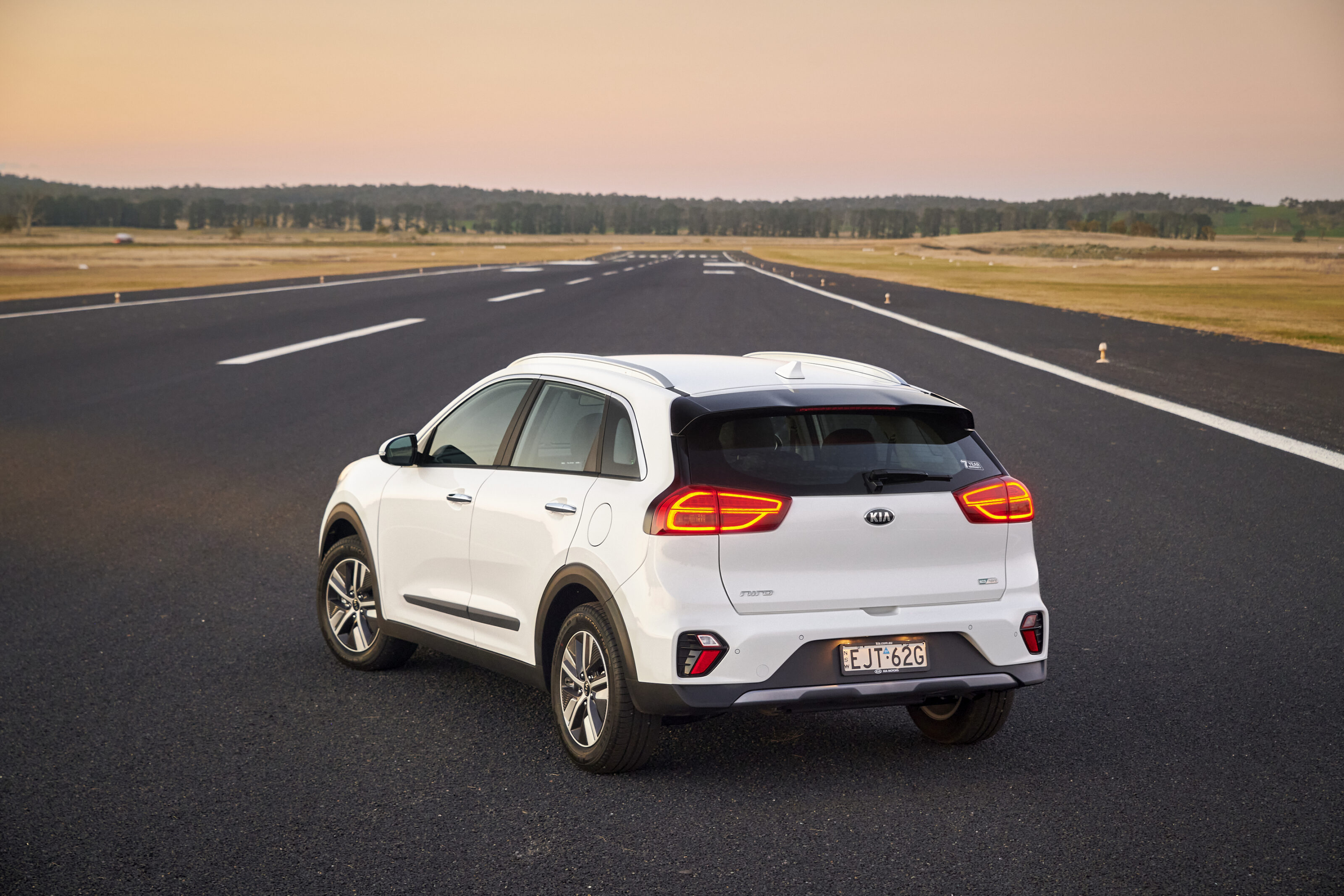
All three versions have just landed in Australia despite an all-new model looming on the horizon in readiness for its 2022 launch.
Kia has done its best to contemporize the exterior, but it still looks like a pre-facelift Sportage with the narrow Scheyer Tiger Grille treatment and bulging headlights, while lacking the distinctive character lines seen on newer models such as the Seltos and Sorento.
The conservatively designed interior isn’t as fresh as the latter models either, but it’s pleasingly neat and uncomplicated and free of the unnecessary gimmicks found in other electrified vehicles, like weird gear shifters – I, for one, am a fan of the classic T-bar.

“That range is pretty good considering the smallish 8.9kWh battery and is more than enough to cover the average Aussie commute.”
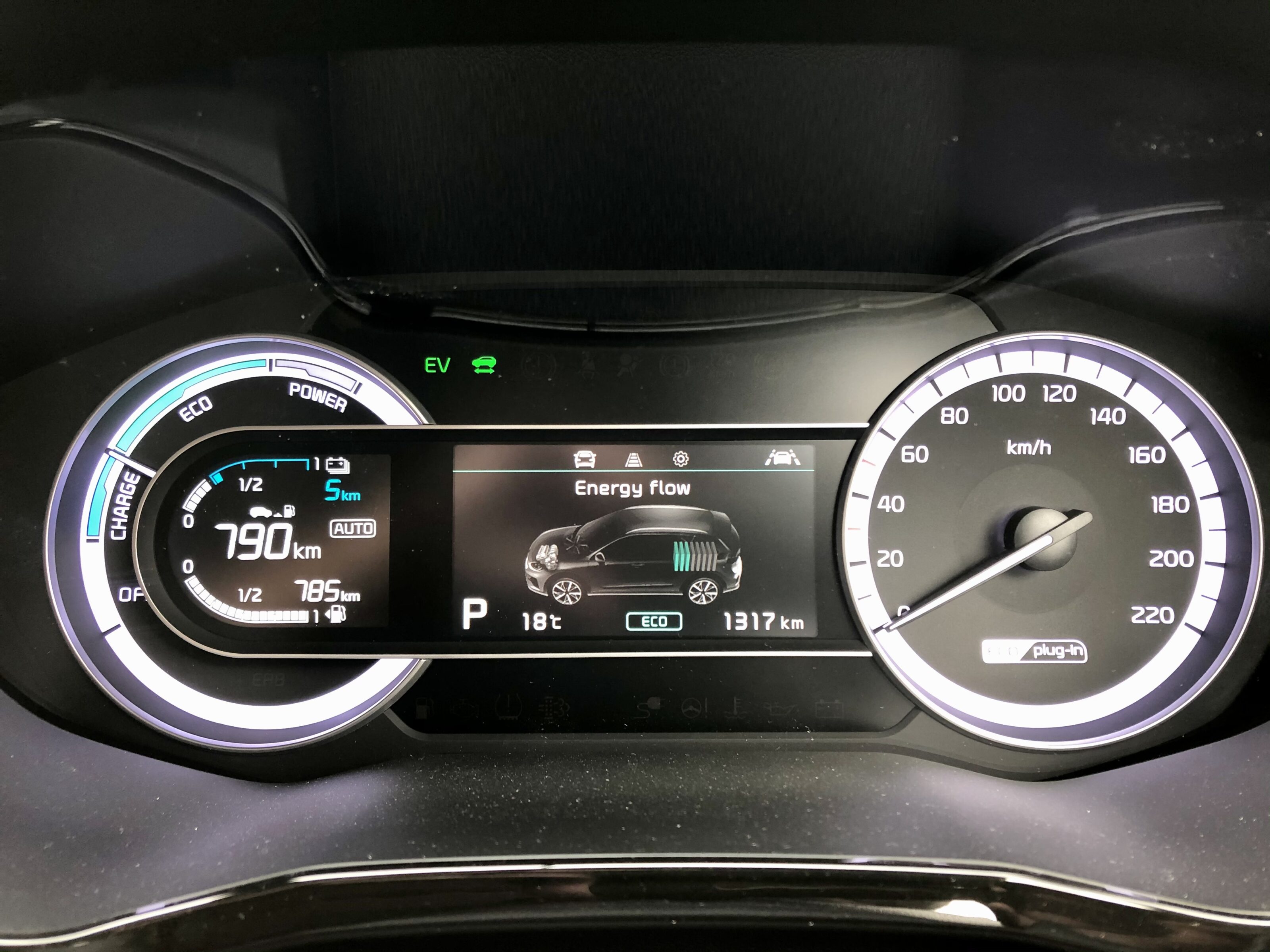
In fact, it’s only when you get a closer look at some buttons and the gauge cluster that you realise this is a PHEV.
Our test car is the Niro PHEV S – the entry-level spec that’s available with all three powertrains, with the range topped by Sport variants.
It’s priced at $46,590 before on-roads, which is $7500 more than the Hybrid S and $6000 less than the EV S.
By comparison, the bigger Mitsubishi Outlander ES PHEV medium SUV starts at $47,390 and the MG HS Essence PHEV is $46,990.
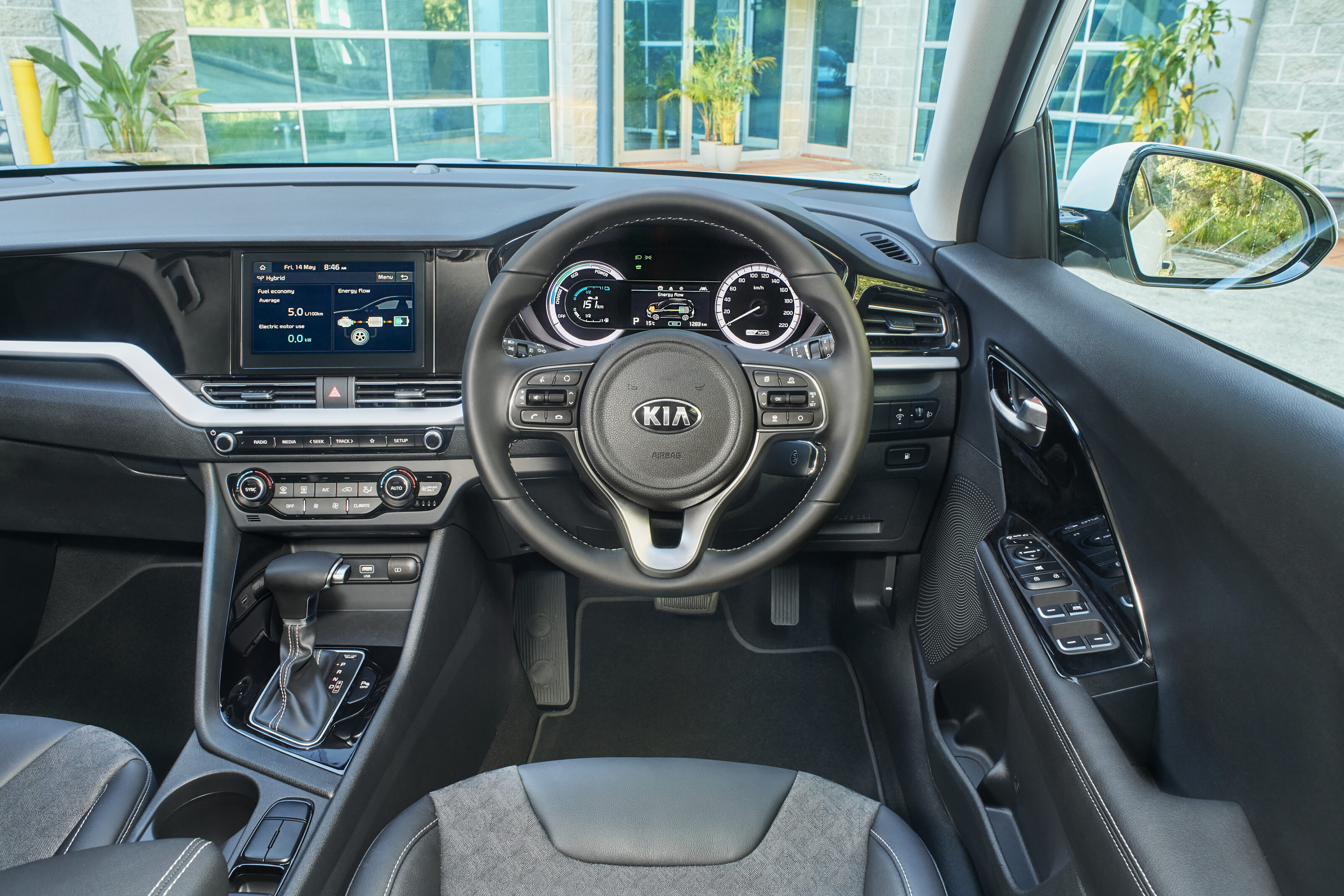
While the S is entry-level spec, it comes with features you’ll find in many mid-spec SUVs including an 8.0-inch touchscreen that’s embedded into the dashboard (which is coming back into fashion), wireless Apple CarPlay and Android Auto, digital radio, combination leather and cloth upholstery, and power-operated front seats.
There’s also keyless entry and electric powered and folding mirrors, smart adaptive cruise control, electronic parking brake, regenerative braking, LED daytime running lights, LED rear combination lights, rain-sensing windscreen wipers and 16-inch aerodynamic alloy wheels.
Standard safety features include seven airbags, comprising driver’s knee bag, autonomous emergency braking with pedestrian and cyclist detection, lane-keep assist, lane follow assist and driver attention alert.
The hybrid and PHEV Niros have a five-star ANCAP rating based on their EuroNCAP scores, but the EV is unrated and won’t be tested here seeing as it’s so late into its lifecycle.
What is the Kia Niro PHEV S like to charge and drive?
The Niro Hybrid and PHEV have virtually identical drivetrains that contain a 77kW/147Nm 1.6-litre ‘Kappa’ GDI petrol engine that sends power to the front wheels via a six-speed automatic gearbox.
This is linked to a transmission-mounted 45kW/170Nm electric motor, resulting in combined power and torque output of 104kW/265Nm.
Of course, the key point of difference that the PHEV has over the Hybrid is the bigger 360-volt lithium polymer battery that can be charged to provide an all-electric driving range of up to 58 kilometres, which helps brings an official combined fuel economy rating of just 1.3L/100km.
That range is pretty good considering the smallish 8.9kWh battery and is more than enough to cover the average Aussie commute.
An upside to having a relatively low wattage battery is that charges reasonably quickly.
The Niro uses the Type 2 ‘Mennekes’ charging port, which is now the standard in Australia and Europe for AC charging, and comes with a charging cable that can plug into a standard 240-volt power outlet.

Charge it from a normal 10-amp 2.0kW socket that’s in every garage and, according to Kia, it will take…
Actually, Kia hasn’t provided that number. I asked about it during the launch presentation only to be told no one had checked that yet!
Some quick maths suggest home trickle charging will take just four and three-quarter hours, making this one of the more convenient plug-in hybrids when it comes to home charging.
Kia is more forthcoming when it comes to charging with a 15-amp, 3.3kW socket, which takes two hours and 15 minutes.
Unfortunately, 3.3kW is the quickest you’ll be able to charge the Niro PHEV, even if using faster 7.2kW or 22kW AC chargers, which isn’t very convenient if you’re unable to charge at home or work.
On the plus side, the Niro PHEV offers different ways to drive efficiently. Of course, the best way to do that is in EV mode, which uses battery power alone but will employ the engine when you really need a power boost.
If the battery is getting low you can select Hybrid mode, which operates like a normal hybrid vehicle, while Automatic mode chooses between battery power or hybrid depending on driving conditions and remaining battery charge – I reckon most people will use this.
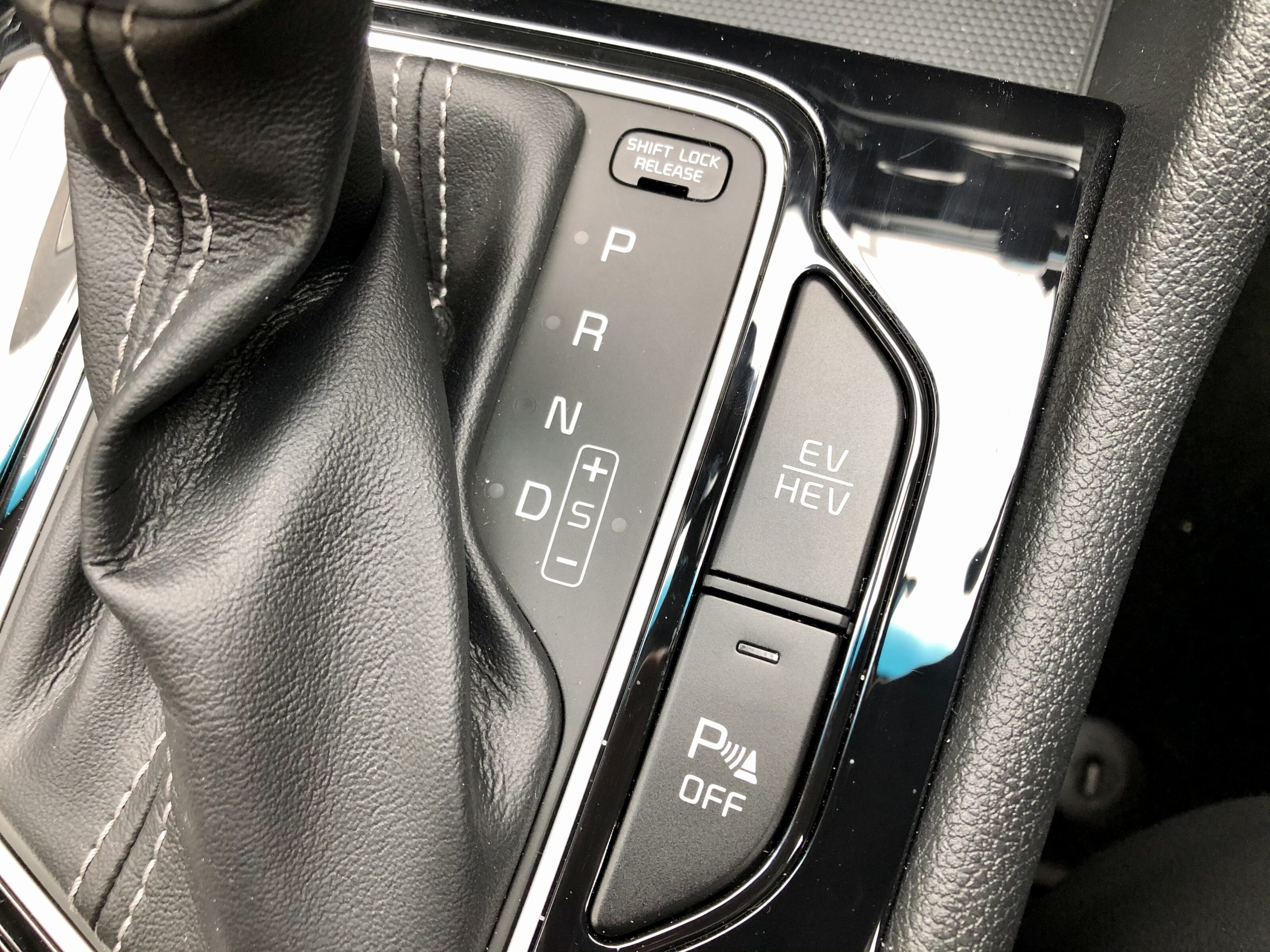
Unlike more powerful PHEVs and EVs, you don’t really feel a kick from the electric motor when putting foot down as the powertrain is tuned to prioritise efficiency over performance.
However, if you need, or feel like, some proper oomph, flicking the gear shifter to the right to engage Sport mode combines engine and motor power, which suddenly makes you feel like you’re driving an entirely different vehicle.
This is the first Kia to come to Australia with the 1.6-litre Kappa GDI that runs on the Atkinson cycle. Coupled with a six-speed dual-clutch auto and the electric motor, it feels way friskier than the bland 1.4- and 2.0-litre direct injection offerings in other Kia models and would be a peach in something like a Cerato.
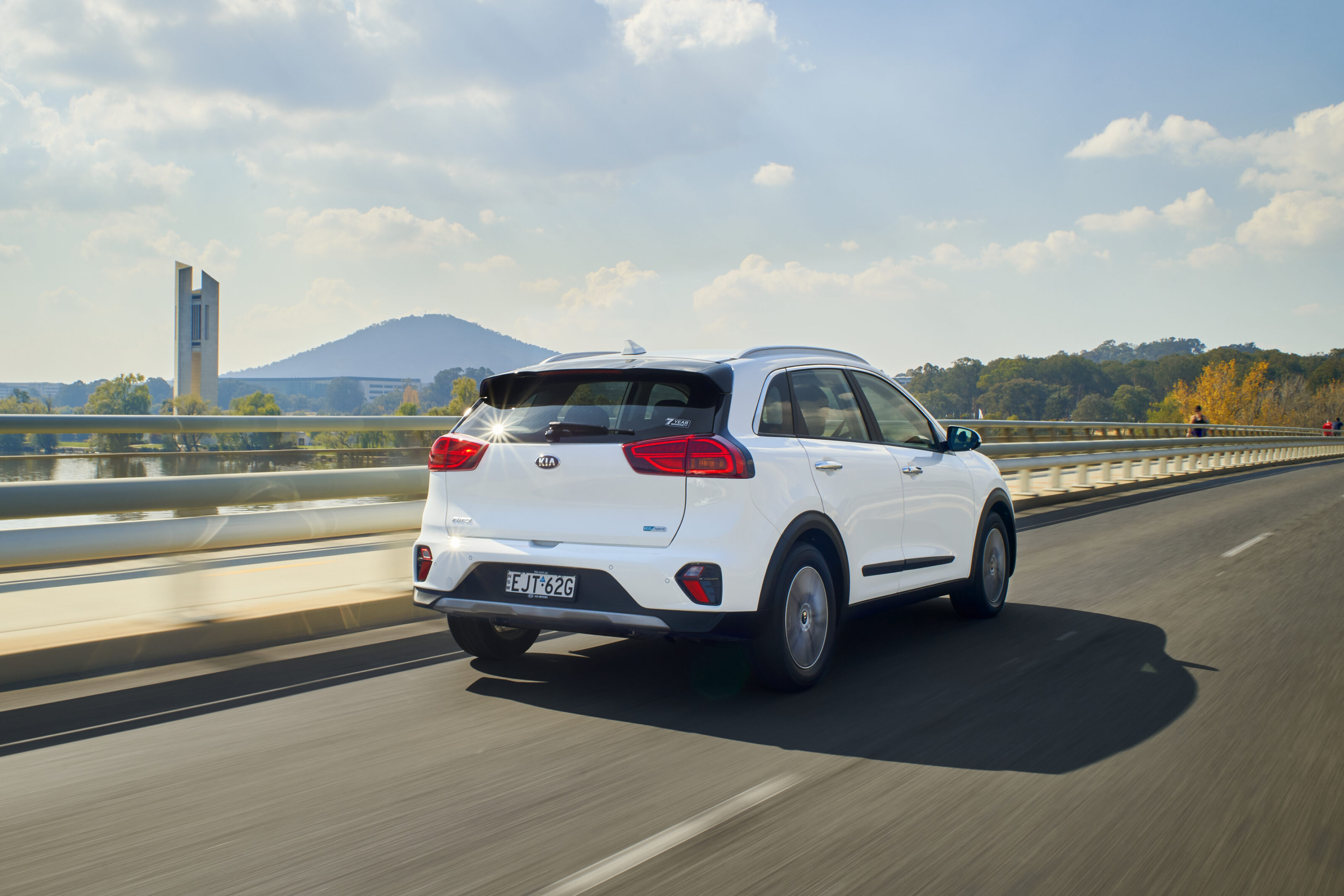
Okay, so it makes a mockery of forking out extra on a PHEV to save money and the planet but used sparingly it doesn’t seem to have a significant impact on fuel economy.
My first 100 kilometres in the Niro PHEV, including using in all the different drive modes as well as Sport, took in freeways, around-town journeys and some meandering roads just outside Melbourne. According to the trip computer I averaged just 3.2L/100km.
The Niro’s driving dynamics aren’t too bad either. Its hefty battery-induced 1564kg kerb weight can lead to a lack of compliance between the front and rear axles when negotiating bends, but drive it as intended and feels nimble enough, particularly around town.
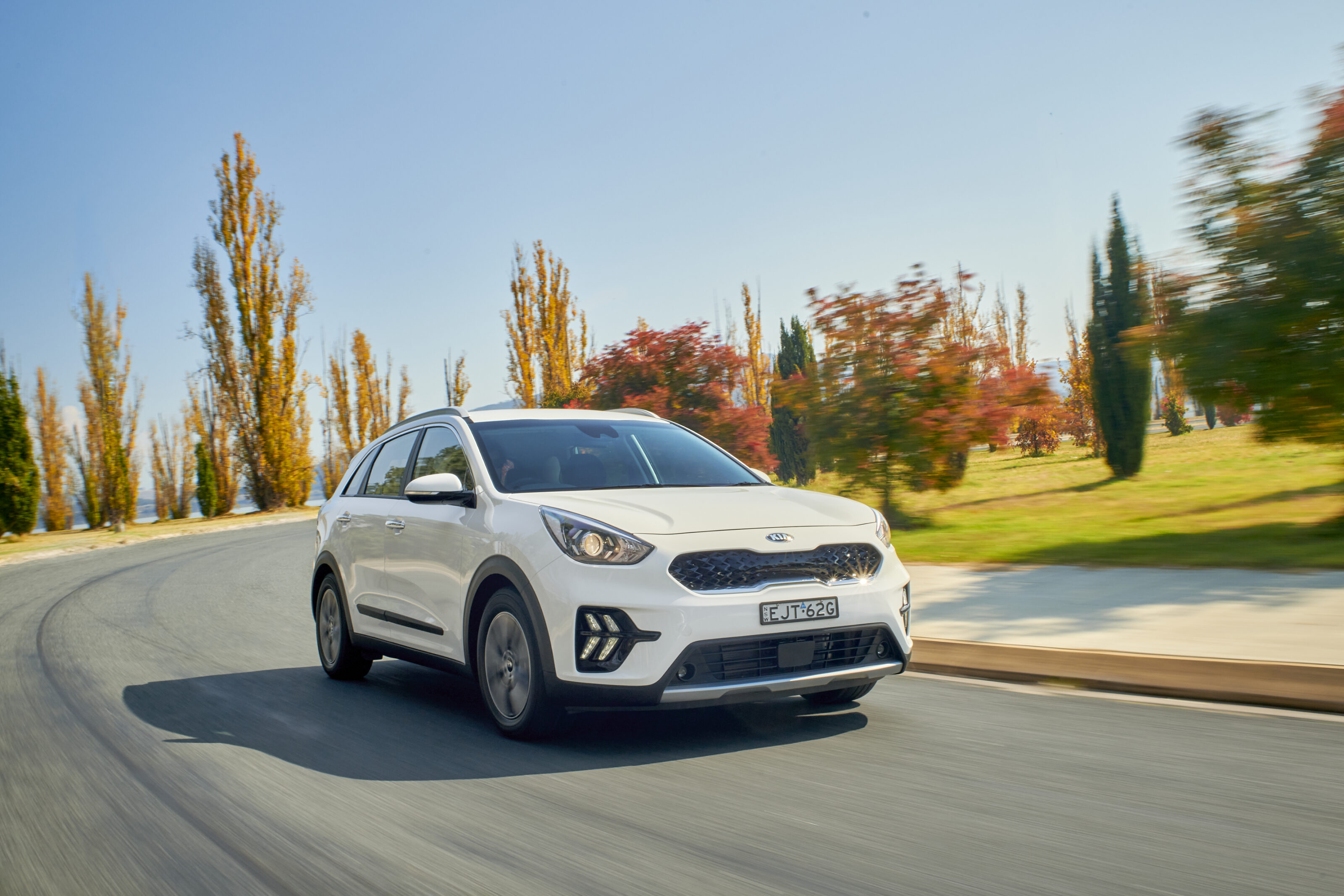
Unlike most Kia models it hasn’t undergone an Australian suspension tuning program but the front strut/rear multi-link suspension handles local conditions pretty well. The ride can get a little busy on deteriorating country roads, but there was rarely any jarring, if at all, thanks also in part to the chunky 16-inch Michelin Energy Saver+ tyres.
That’s good news for rear-seat passengers who also benefit from excellent leg and knee room thanks to the Niro’s 2700mm wheelbase that’s 70mm longer than the Seltos.
Fitting three adults across the rear seat would be quite a squeeze, but two would be quite comfortable, even six-footers who’ll appreciate the ample headroom.
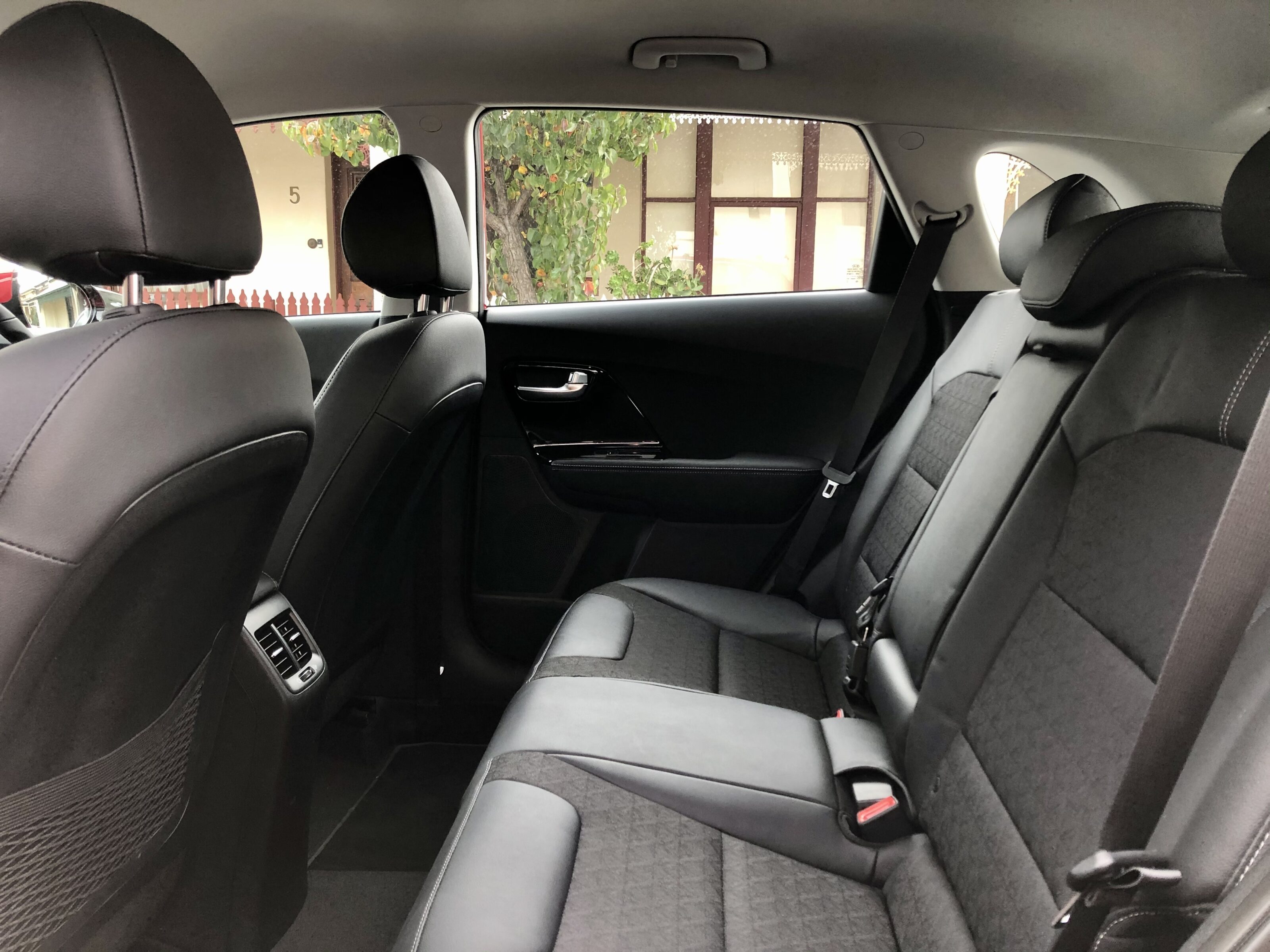
The S-spec brings basic rear-seat accoutrements including a centre armrest with cup holders and air vents on the back of the centre console.
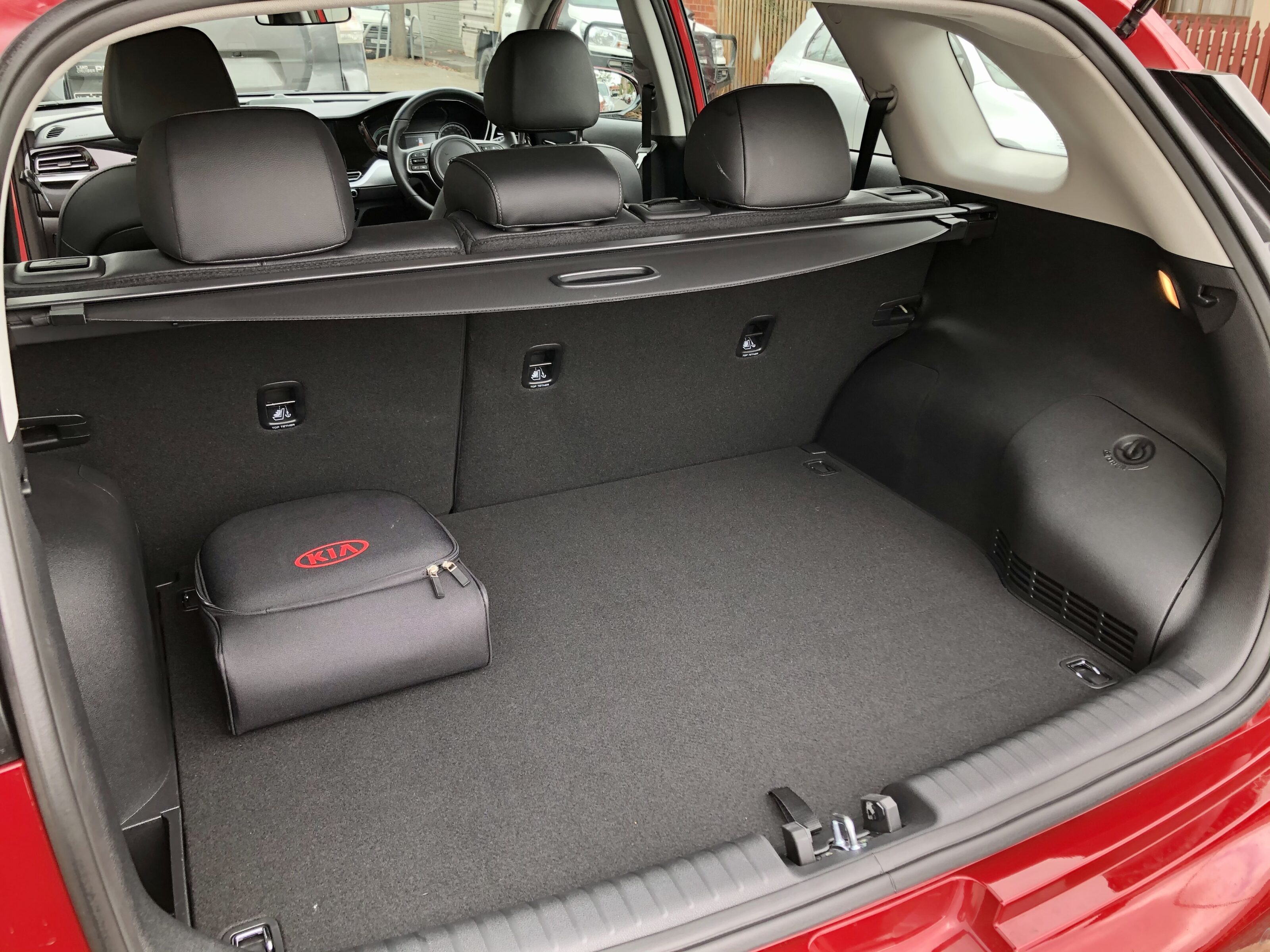
The Niro PHEV’s spacious cabin isn’t reflected inside the tailgate where the boot space is just 324 litres, which is below average for a small SUV. This is the smallest boot of the three Niro versions because of the rearward location of the main battery, which also takes up space normally housing a spare wheel and means you have to make do with a tyre repair kit.
Kia’s first electrified models are covered by the company’s seven-year unlimited-kilometre warranty, seven-year capped price servicing and seven-year roadside assist. However, the high voltage battery and electric motor are covered by a seven-year/150,000km warranty.
The verdict
Is the Kia Niro PHEV the right version for you in terms of balancing efficiency and cost? That really depends if you can charge it every day and, to a lesser extent, if your daily commute is within its 58-kilometre range.
If so, this is an effective and relatively affordable way to enjoy emission-free driving with the flexibility to travel anywhere you want without being limited by the availability of charging stations.
Those unable to charge at home or work should be looking at the Niro Hybrid S that is $7500 cheaper, has the same performance and has an official 3.8L/100km combined efficiency rating that’s quite frugal even for an HEV.
For me the biggest issue, and this applies to all variants, is the Niro’s age. Kia Australia has more or less implied that one reason it has brought the model here so late in its lifecycle is to prepare its dealer and service network for the brand’s EV onslaught led by the next-generation Niro and the exciting new EV6 that are expected to arrive in Australia before the end of 2022 with new-generation technology and efficiency.
Personally, if I were to spend big bucks on an electrified Kia, I’d wait until then.
Kia Niro PHEV S specifications
- Body: 5-door, 5-seat small SUV
- Drive: FWD
- Engine: 1580cc 4cyl, DOHC CVVT
- Motor: Permanent magnet/synchronous
- Total power: 104kW
- Total torque: 265Nm
- Battery: 8.9kWh
- EV range: 58 km
- Combined fuel consumption: 1.3L/100km
- Charging port: CCS2/Type 2
- Weight: 1564kg
- Transmission: 6-speed dual-clutch automatic
- Suspension: Front MacPherson strut/ rear multi-link
- Dimensions, L/W/H: 4355/1805/1545mm
- Wheelbase: 2700mm
- Brakes: Front ventilated discs (280mm), rear solid discs (284mm), regenerative braking
- Tyres: 205/60 R16 Michelin Energy Saver+
- Wheels: Alloy 16-inch
- Price: $46,590
It took dual-cab ute manufacturers a while to catch on, but they’ve certainly done so now: “Hey, a lot of buyers seem to immediately modify their utes, so why don’t we just sell them pre-modified?” Genius.
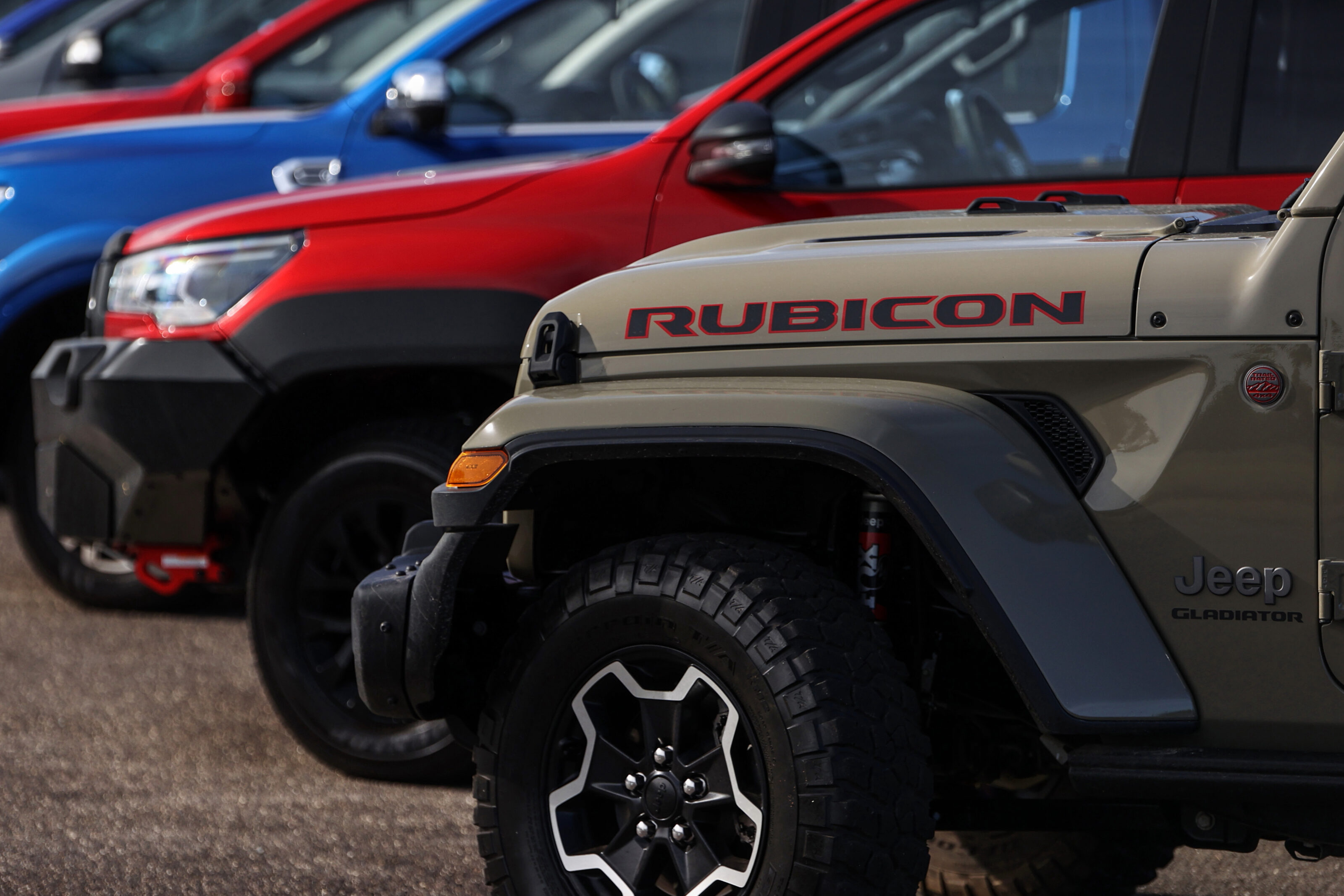
The end result is the four utes you see here, the Ford Ranger Raptor, Jeep Gladiator Rubicon, Mazda BT-50 Thunder and Toyota Hilux Rugged X. We’ve dubbed these the ‘lifestyle’ quartet, primarily because they’re aimed at buyers who want to play just as much as they want to work. Arguably more.
Judges and writing team: Scott Newman, Byron Mathioudakis, Louis Cordony, Evan Spence
Photography: Ellen Dewar, Alastair Brook, Cristian Brunelli
Catch the full series here
- Premium utes: Ranger vs D-Max vs Triton vs Navara vs HiLux
- Budget utes: GWM Ute Cannon-L vs Ssangyong Musso XLV Ultimate
- Hero utes: HiLux Rugged X vs Ranger Raptor vs Gladiator Rubicon vs BT-50 Thunder
- Off-roading: Ranger vs D-Max vs Triton vs Navara vs HiLux vs Musso vs Ute Cannon-L vs Ranger Raptor vs Gladiator Rubicon
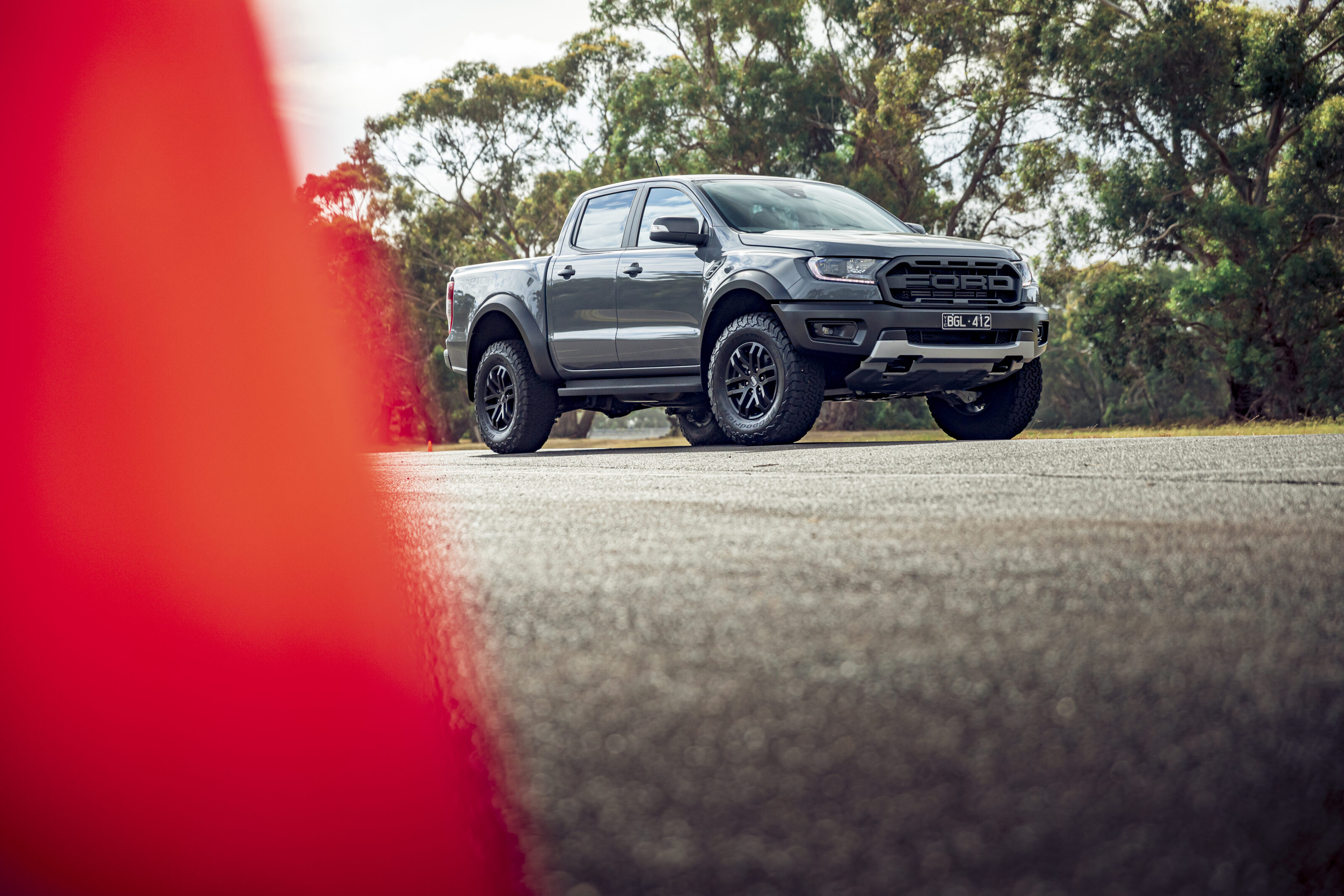
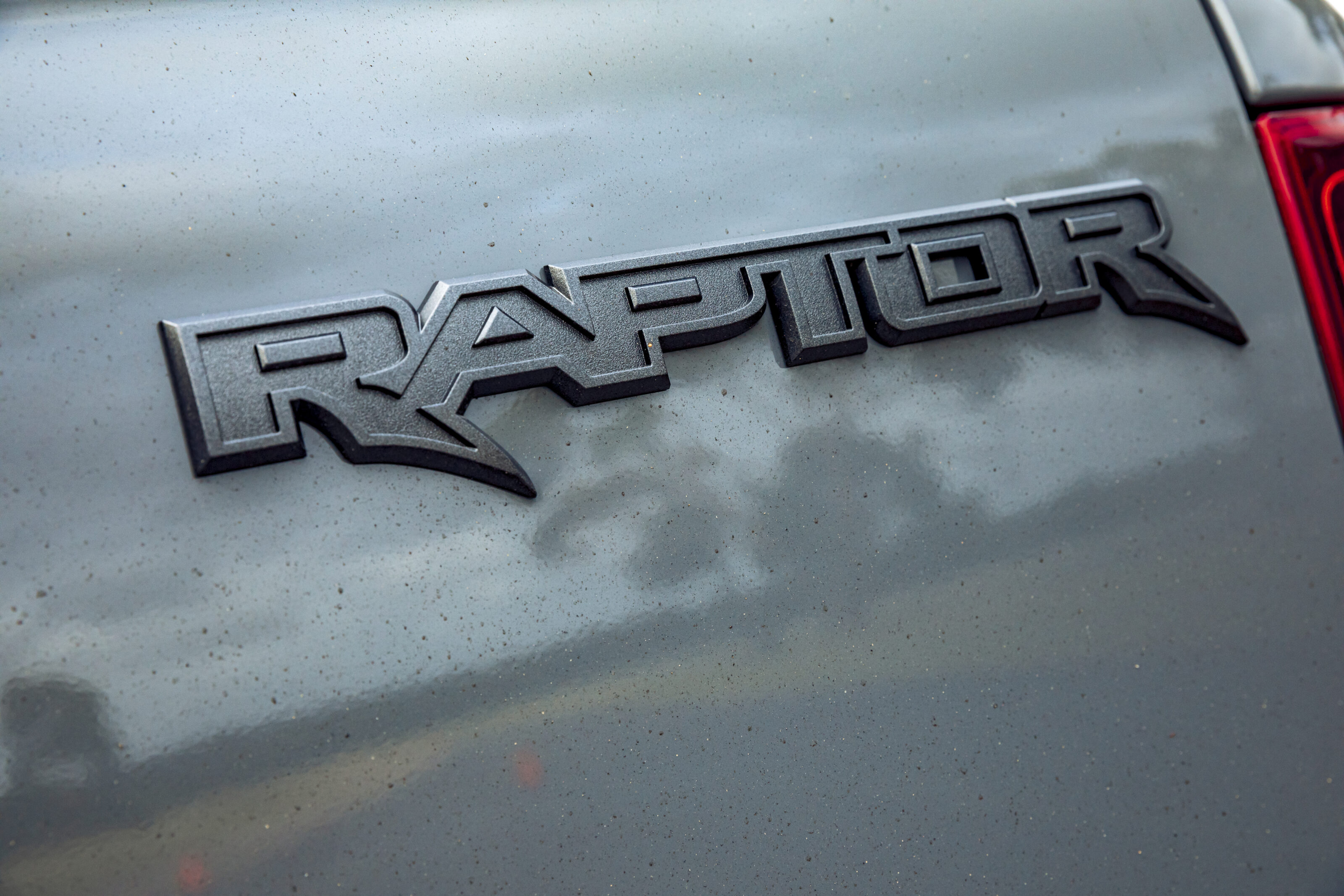
How they look is as important as what they can do and it’s the butch, beefed-up Ford Ranger Raptor that’s clearly been hitting the gym hardest. It’s a whopping 161mm wider than a Ranger XLT and wears chunky 285/70 BFGoodrich All-Terrains. Don’t think it’s all style and no substance, though, with a bespoke rear end and expensive Fox internal bypass shock absorbers.
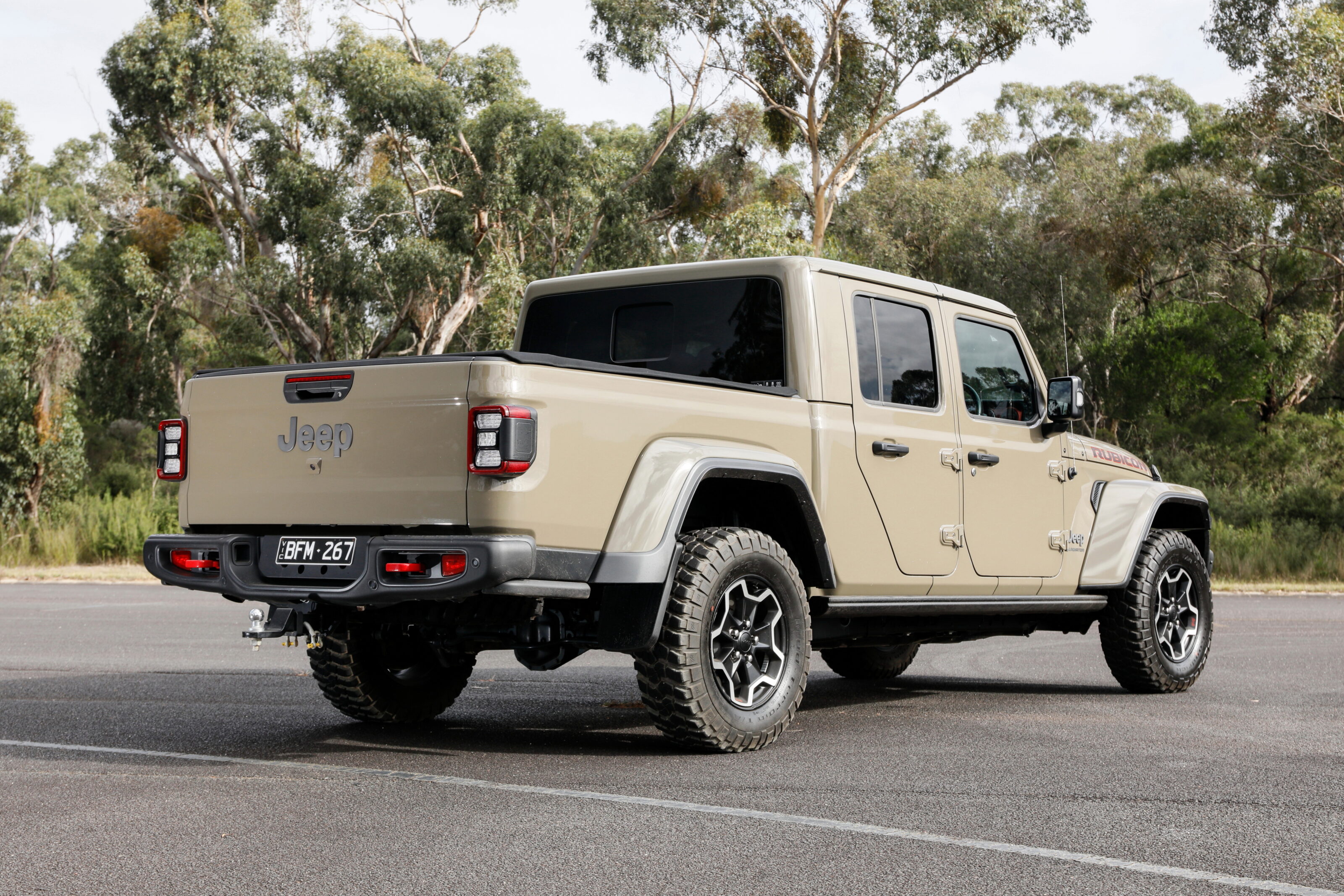
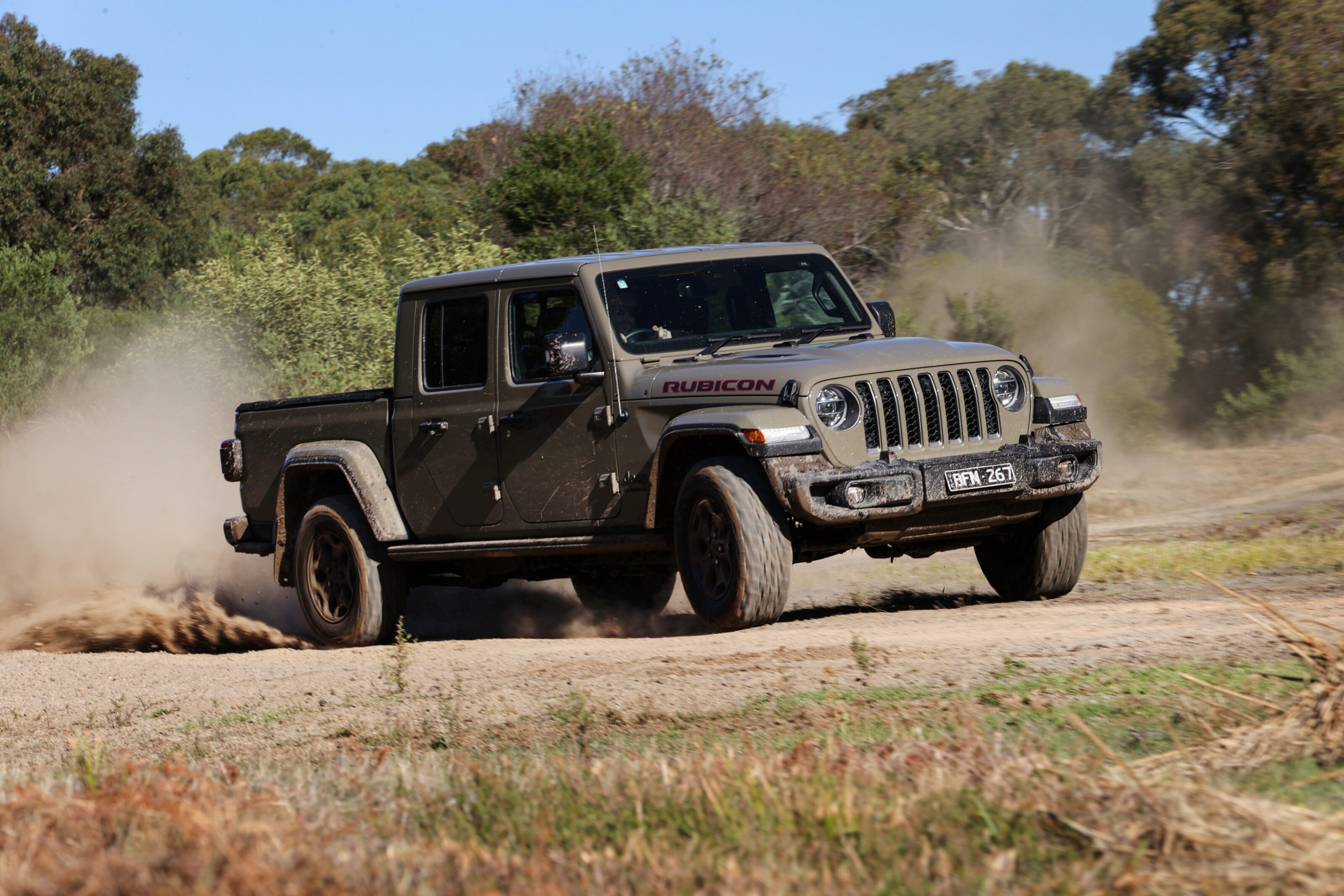
Equally focused is the Jeep Gladiator Rubicon. Essentially a trayed version of the iconic Wrangler, the Rubicon is named after an iconic US off-road trail and equipped accordingly. Like the Ranger Raptor it scores Fox shocks (though not to the same specification as the Ford) and aggressive BFGoodrich rubber, as well as a Rock-Trac on-demand 4×4 system, ultra-low 77.2:1 crawl ratio, electronic front sway-bar disconnect and Tru-Lok front and rear locking differentials. A Toorak Tractor this is not.
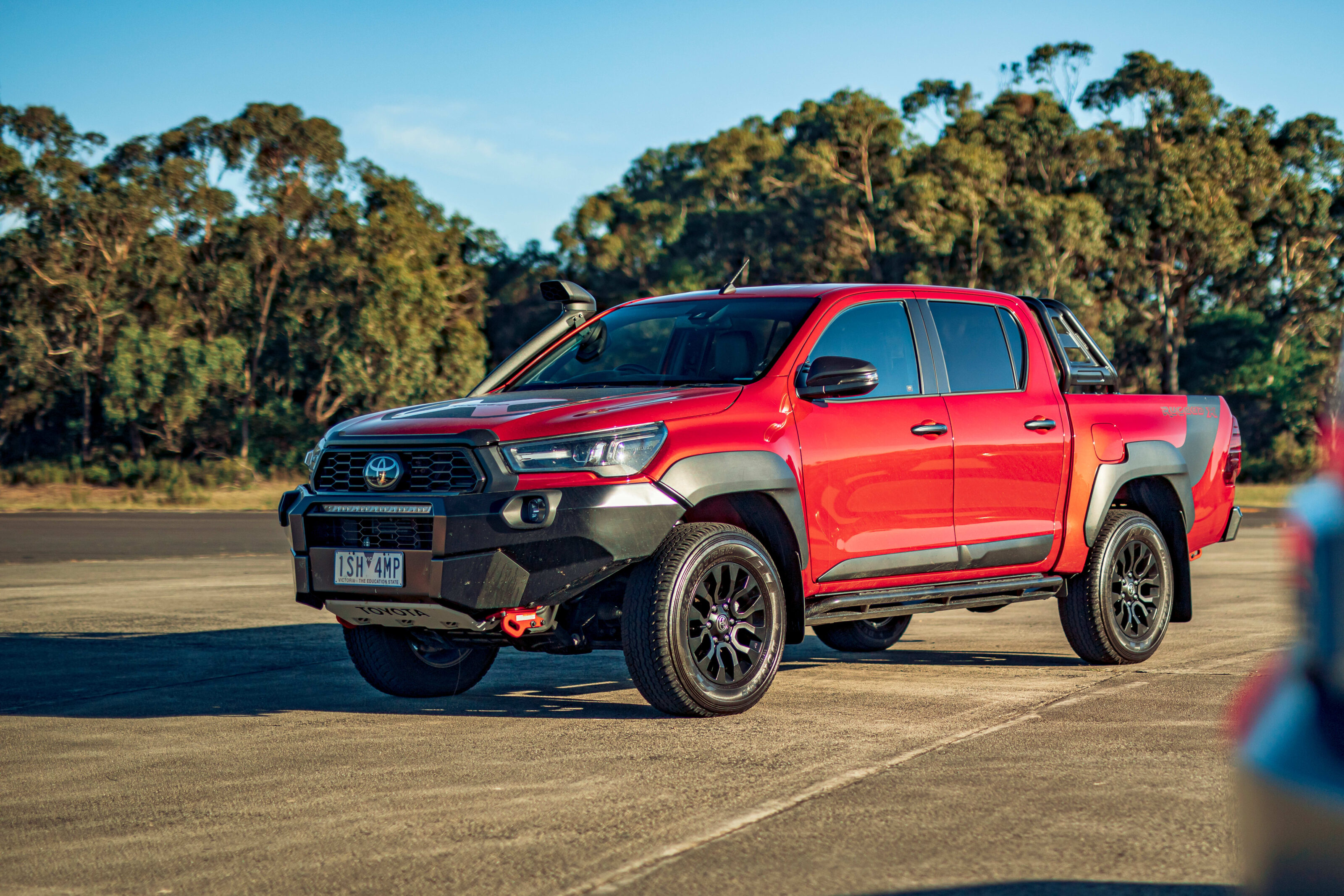
The HiLux Rugged X doesn’t take off-road adventuring quite so seriously but is enhanced with heavy-duty front springs, a snorkel, recovery points at both ends, rock rails (side steps), heavy-duty front and rear bumpers and a front bash plate. This is in addition to cosmetic enhancements like the new grille, outboard driving lights including front LED light bar and black guard extensions.
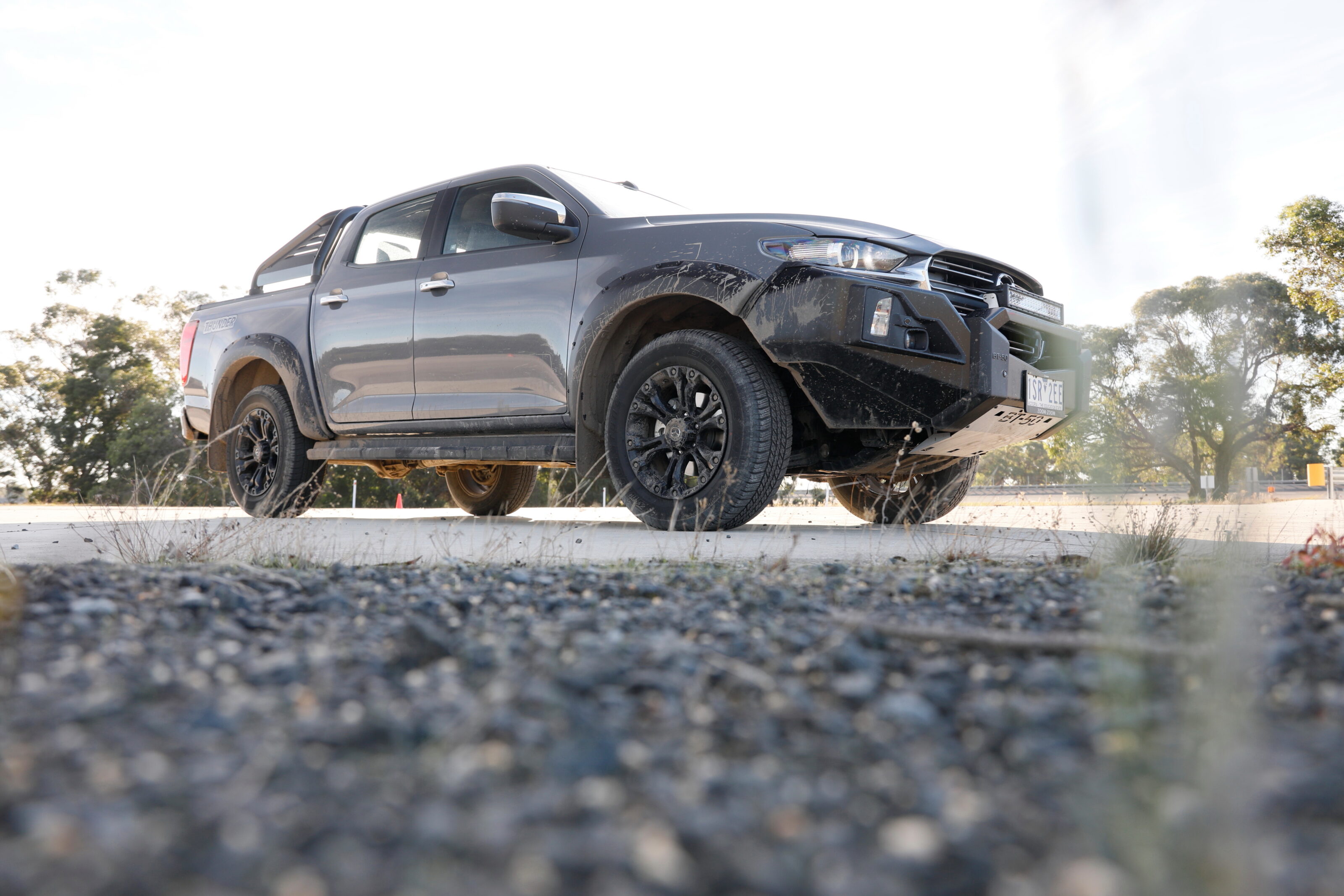
Our last contender is also the newest, the BT-50 Thunder that was announced during our test, Mazda kindly providing a car ahead of launch. It essentially takes the range-topping GT and adds plenty of accessories, including a steel bullbar with LED light bar, black 18-inch wheels, guard flares, side steps, a rear sports bar and an electric roller tonneau. Mazda claims the Thunder includes an extra $13,000 worth of value, but then it’s $10,000 more than the GT on which it’s based, at $65,990 for the six-speed manual and $68,990 for the automatic.
This still makes it our cheapest contender, especially as those prices are currently drive-away figures, though these are expected to revert to RRP in due course. Even so, it’ll still narrowly undercut the auto-only HiLux Rugged X at $69,900 RRP, while the $76,450 Gladiator Rubicon and $77,190 Ranger Raptor are more or less neck-and-neck.
The latter might be our most expensive participant but it also resists depreciation the best, Glass’s Guide suggesting it’ll retain 58 per cent of its value after three years, though that’s a figure the HiLux Rugged X matches. Our other two contenders are new enough that resale data does not yet exist, though a 50 per cent estimation for the BT-50’s D-Max twin provides some clue.
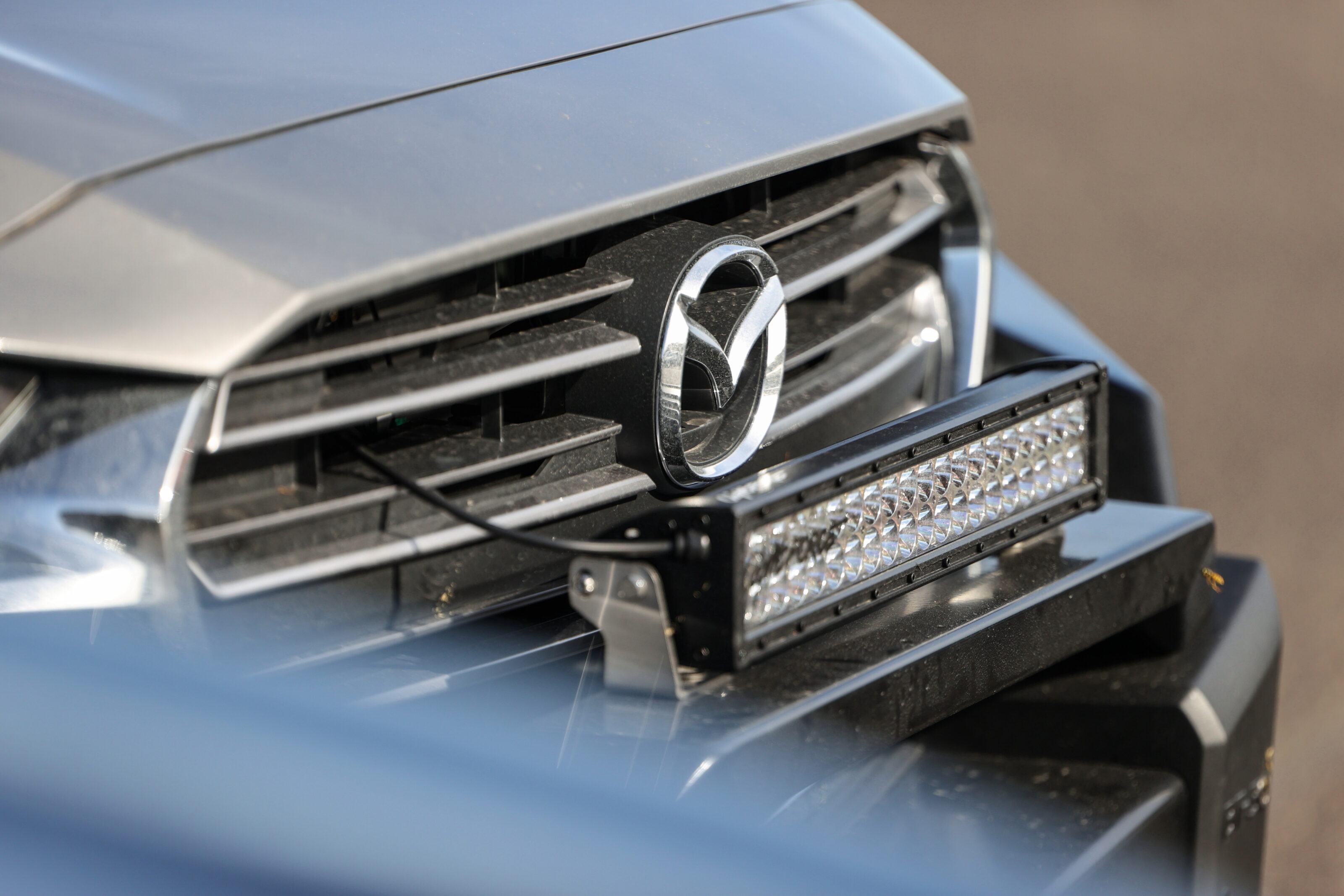
Mazda offers a five-year/unlimited-kilometre warranty as well as roadside assistance for the same period. Capped-price servicing covers the first seven services at 15,000km intervals, though the pricing varies depending on the exact distance covered; Mazda’s website provides greater detail.
Ford likewise offers a five-year/unlimited-kilometre warranty and its roadside assistance program extends up to seven years as long as the Ranger Raptor is serviced at an official Ford dealership. The first 12 services are capped-price, with work required every 12 months or 15,000km; the first four are $299 and prices increase from there.
Like these two, Toyota has a five-year/unlimited-kilometre warranty, but as long as you stick to the servicing schedule an extra two years of driveline warranty will be tacked on for a total of seven years. The first four services are capped at $250 each but are required at intervals of six months or 10,000km. Toyota also charges for its roadside assistance program, which starts at $89 per year.
Jeep warranties the Gladiator Rubicon for five years/100,000km and offers a roadside assistance program for the same period, though it will extend this by 12 months each time the vehicle is serviced at an official Jeep dealership. The first five services are capped at $399 and occur at intervals of 12,000km or 12 months.
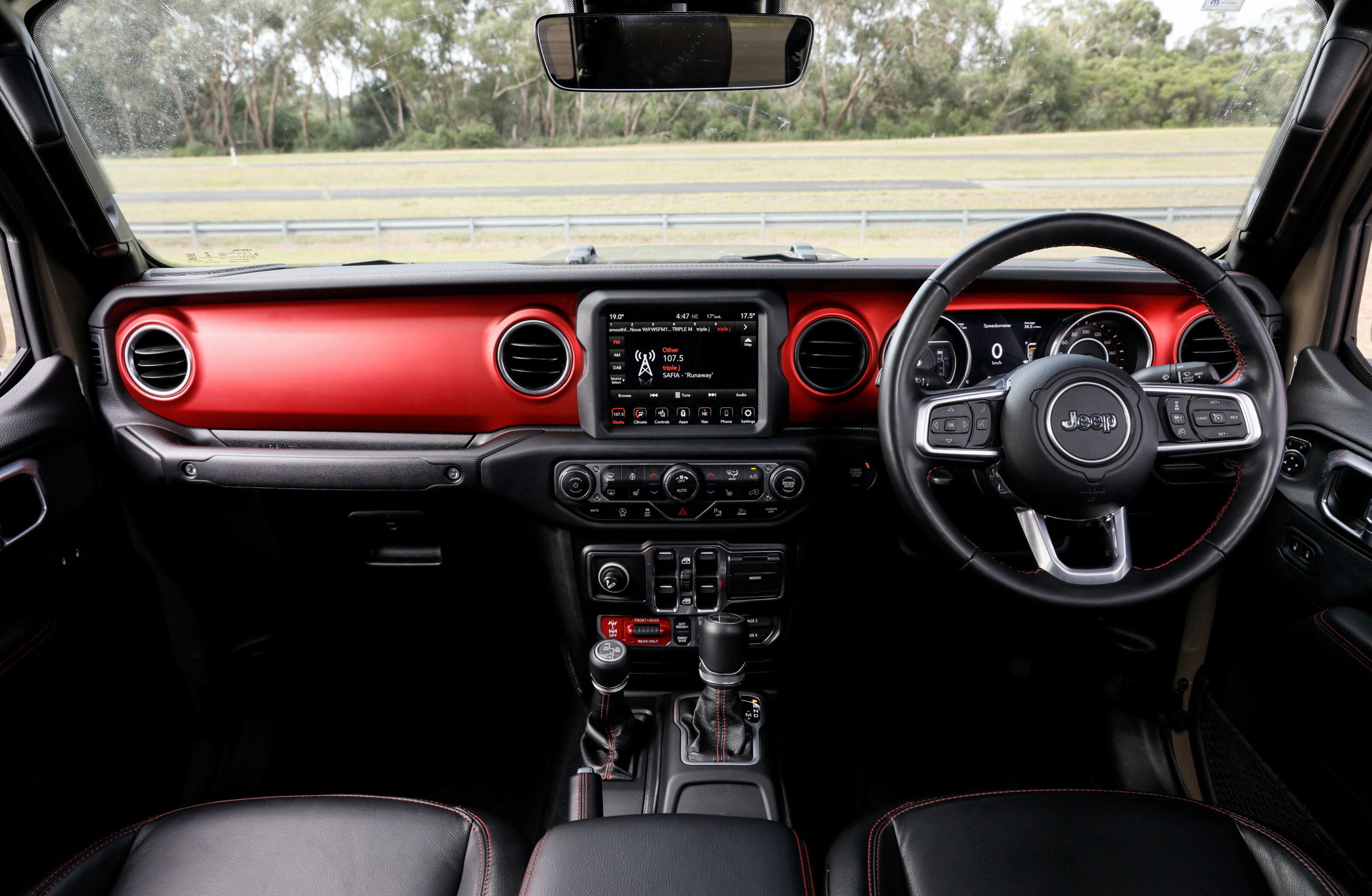
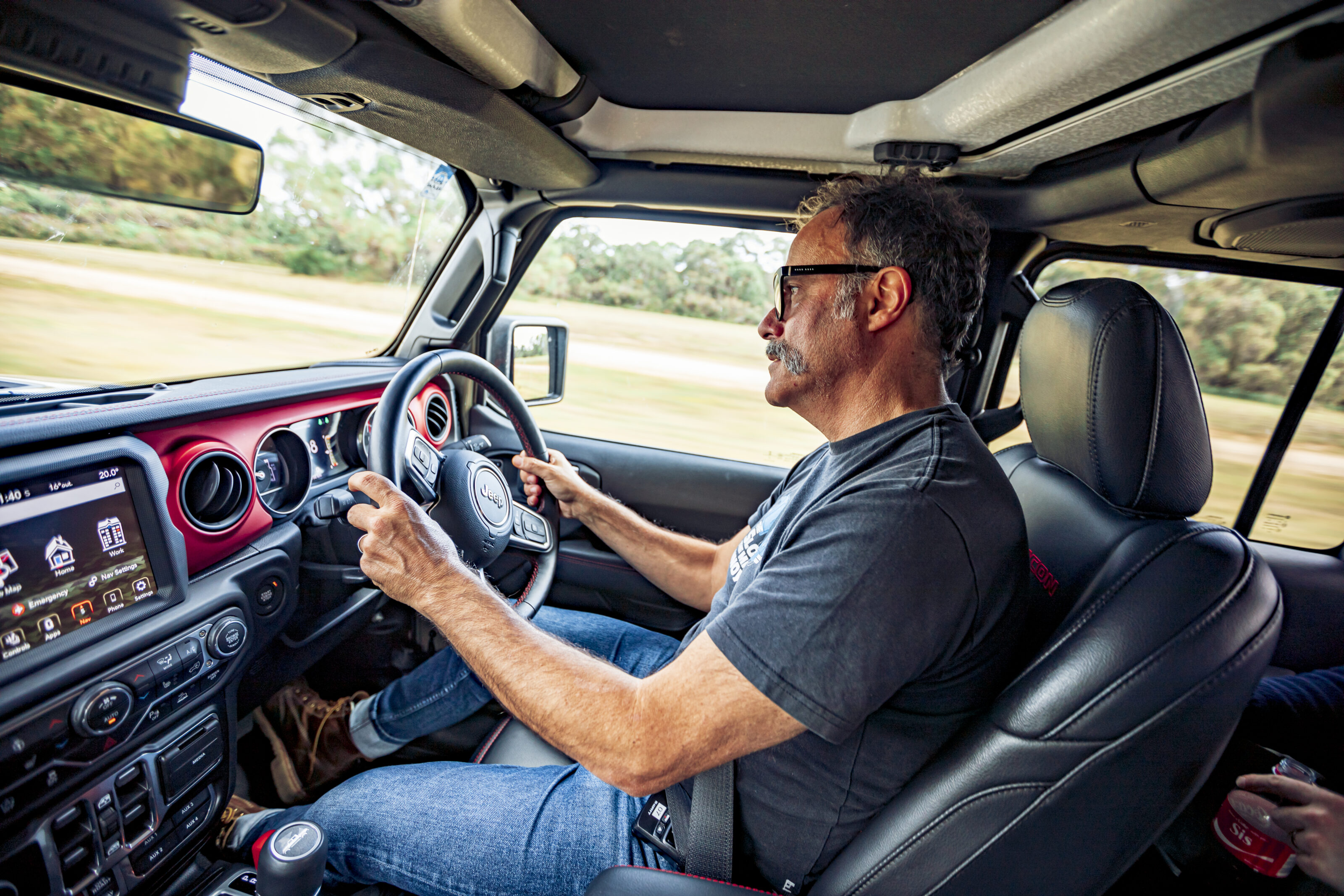
Inside the Gladiator has a sense of adventure to its layout, which requires some unique ergonomic solutions. For instance, the removable doors necessitate the repositioning of window switches to the centre console. The Rubicon-specific leather seats are comfortable enough though the raised centre backrest eats into elbow room in the rear. Standard equipment includes keyless entry and start, parking sensors and rear-view camera, dual-zone climate control, heated side mirrors and tyre pressure monitoring, but the elephant in the room is the Gladiator’s three-star ANCAP safety rating.
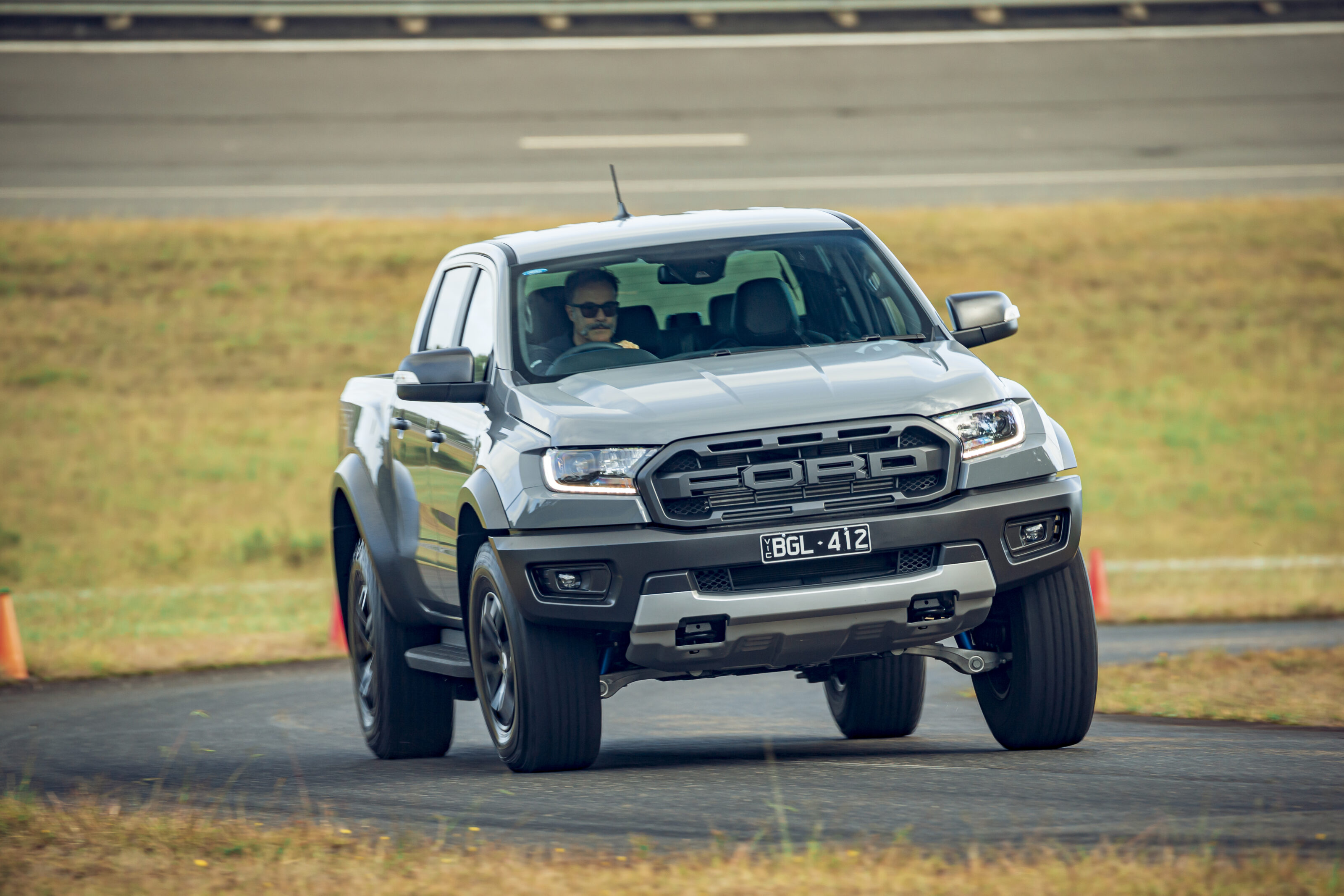
Every other contender has a five-star safety rating but there are a couple of caveats. The Raptor’s five-star rating is a legacy of the Ranger’s 2011 test, which is extremely out of date. However, Ford has continually updated its popular ute with the latest active safety toys like autonomous emergency braking, adaptive cruise, lane keep assist and lane departure warning, but rear cross-traffic alert and blind-spot monitoring are absent.
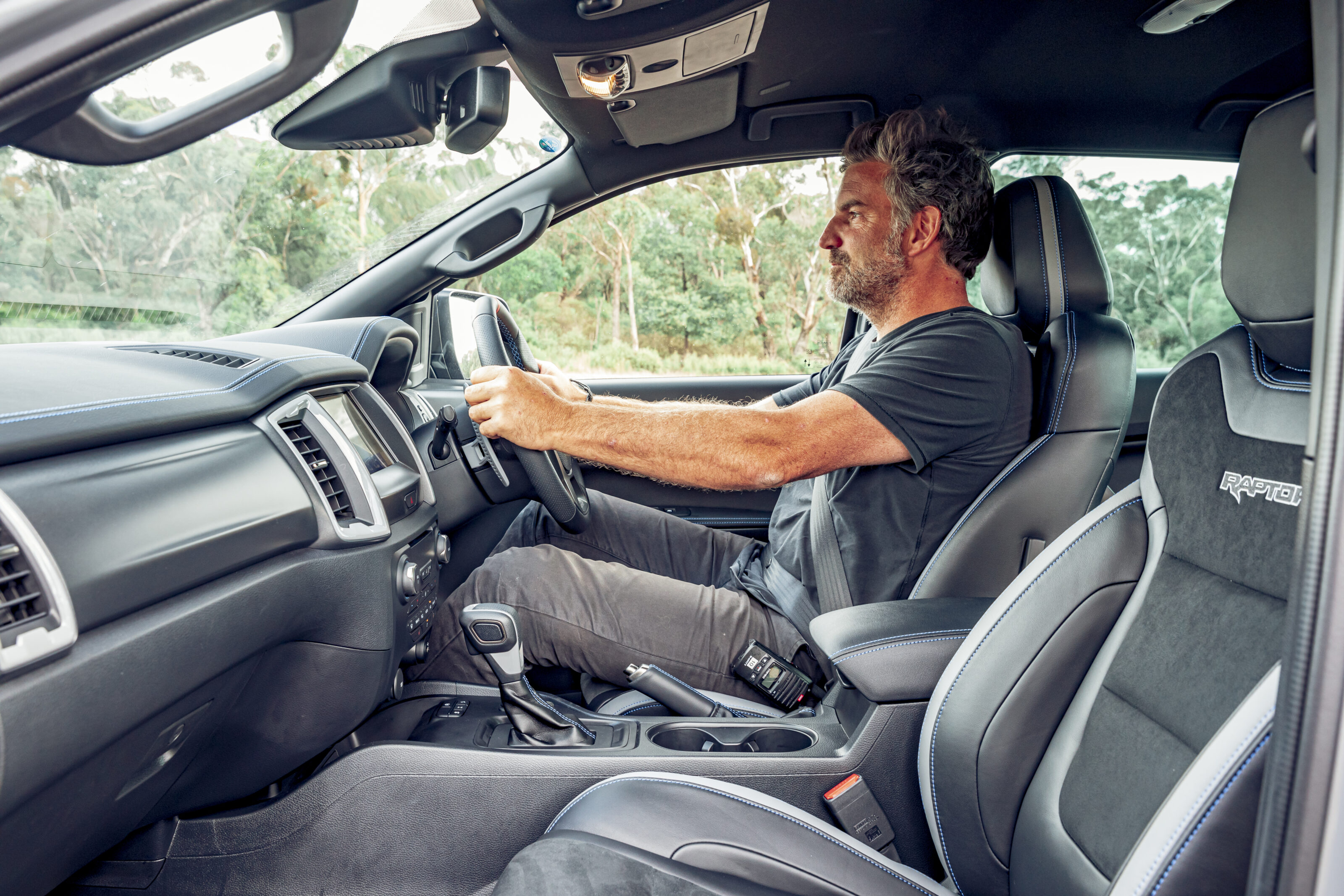
The Ranger’s cabin architecture might be ageing but the Raptor shines with simply superb front seats – the hard, flat rears are less impressive – and the leather-wrapped steering wheel with straight-ahead marker and long metal paddle-shifters. Other features include dual-zone climate control, auto wipers and headlights, a 230-volt power outlet in the rear (but no vents or USB ports) plus keyless entry and start.
The next caveat concerns the Mazda. The BT-50 was awarded a five-star safety rating in 2020 but the Thunder’s modifications prevent it carrying over. Nevertheless, it still packs every active safety feature under the sun, including AEB, active cruise (auto only), lane keep assist, lane departure warning, blind-spot monitoring and rear cross-traffic alert.
Its leather front seats offer excellent bolstering but are a bit short on under-thigh support; both are heated, but only the driver’s has power adjustment. Its GT base means it’s packed with kit, including auto wipers and headlights, dual-zone climate, keyless entry and start, and LED headlights.
“We’ve dubbed these the ‘lifestyle’ quartet, primarily because they’re aimed at buyers who want to play just as much as they want to work. Arguably more.”
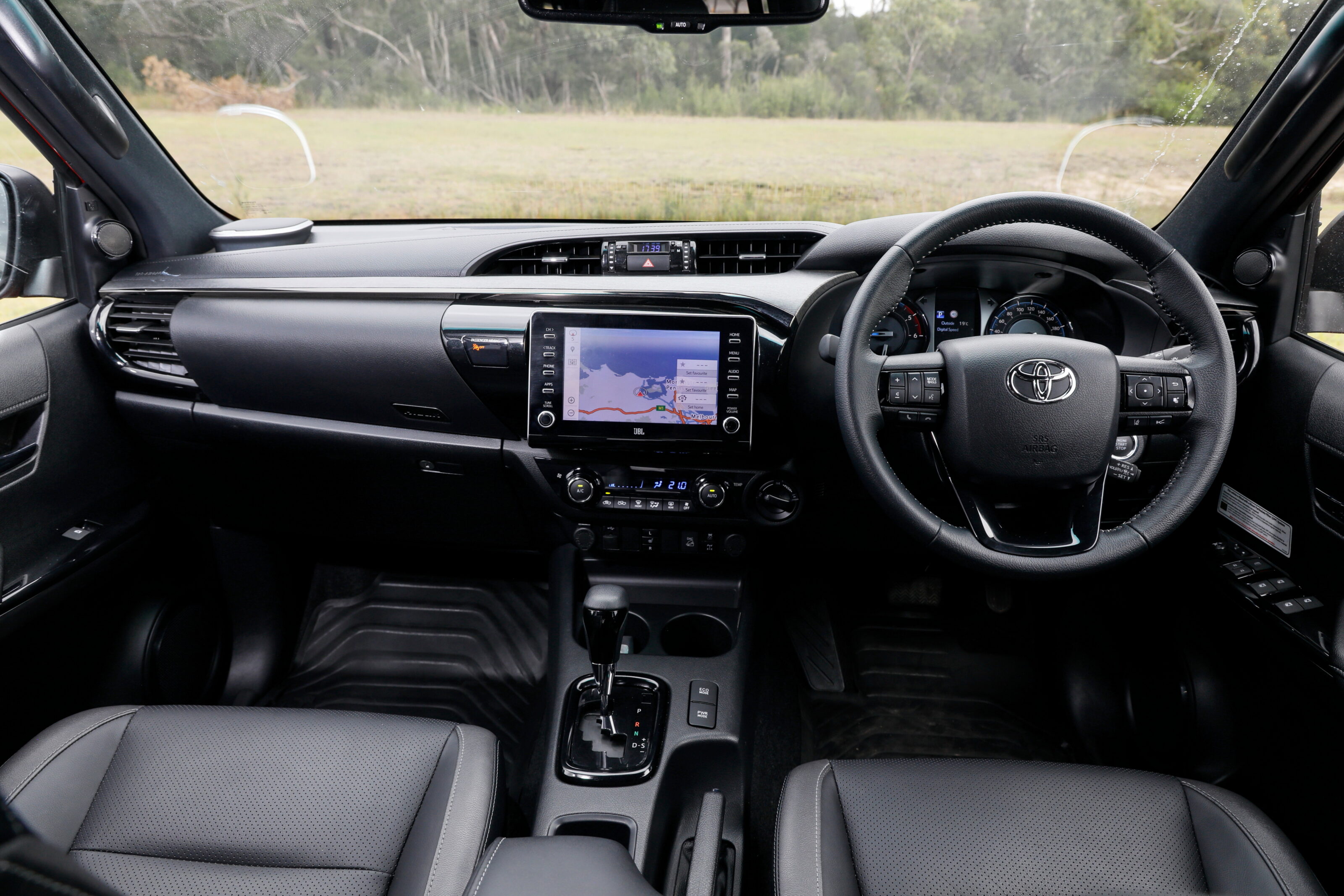
No asterisks need be applied to the Toyota, the HiLux receiving its five-star ANCAP rating in 2019. It boasts seven airbags and plenty of active safety gear including adaptive cruise, lane-keep assist and AEB but also drops the ball in terms of equipment compared to its competitors. There’s only single-zone climate control, no auto wipers and no blind-spot monitoring or rear cross-traffic alert. You’d hope that the flagship HiLux would be fully loaded.
The front seats offer decent support and legroom but the rears are hard and flat with less legroom than rivals. On the plus side there’s plenty of leather, heated front seats with power operation for the driver as well as auto LED headlights and keyless entry and start. The most recent HiLux facelift addressed some infotainment shortfalls and we’re glad to see the reintroduction of volume knobs rather than touch controls.
The 8.0-inch screen offers smartphone mirroring and myToyota app integration, which is a handy place to store warranty and servicing information while also offering owners a 4c/litre fuel discount at Ampol service stations. Navigating between different infotainment functions is simple thanks to button shortcuts surrounding the screen and the instrument cluster now features a digital speed readout. Connecting to Bluetooth is easy initially, though subsequent connections take about 30 seconds, but the Rugged X’s JBL sound system is easily one of the better dual-cab offerings with good clarity and strong bass.
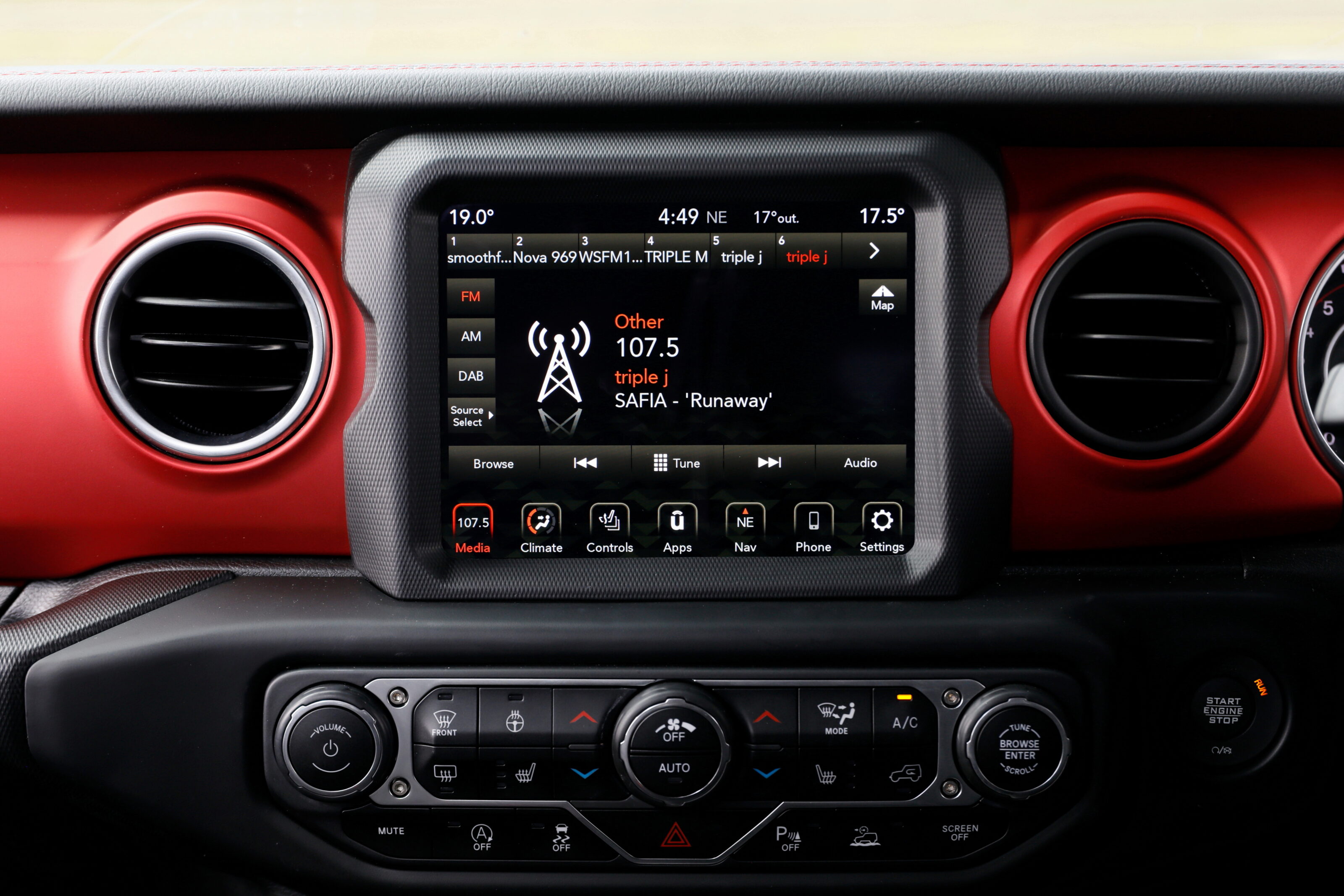
Jeep’s 8.4-inch Uconnect infotainment system features a large amount of functionality and customisation. There are configurable shortcuts along the bottom of the screen depending on what features are used most, while the system stocks a swathe of off-road displays and accessory gauges for the hardcore enthusiast.
There are two USB-A ports, one USB-C socket and one 12-volt outlet for connecting your own gear, and there is also space to connect auxiliary switches should you wish to accessorise. The infotainment system caters to Apple CarPlay and Android Auto users – albeit wired – and will also tune to digital radio. The standard satellite navigation offers clear, detailed maps and is easy to use. Many of the car’s functions such as heated seats and climate control are controlled using the touchscreen.
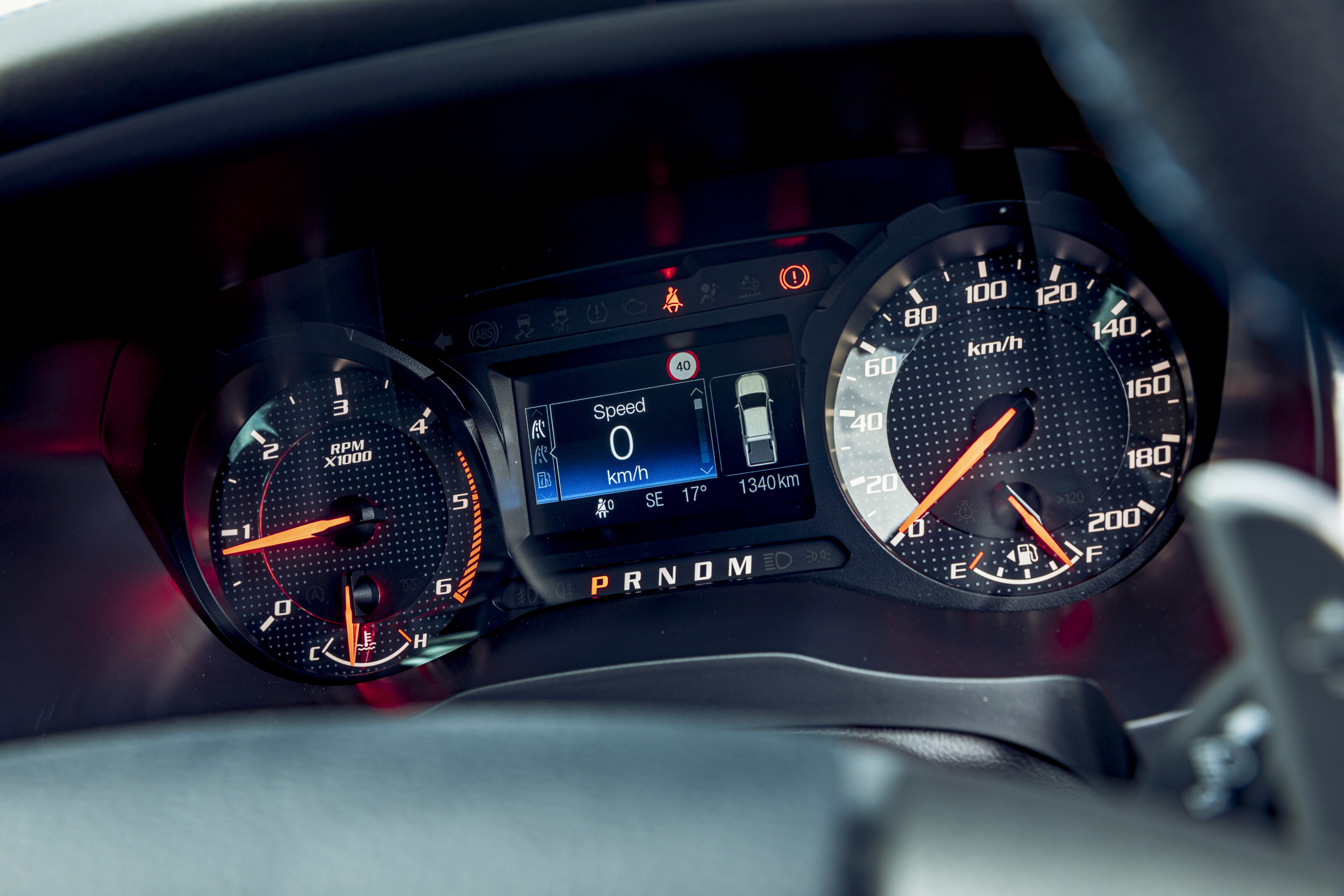
Voice command is quick to understand spoken instructions and will engage Apple’s Siri if an iPhone is connected, rather than rely on the native system. Audio and media controls mounted on the back of the steering wheel take some learning to understand which button does what.
In the Ranger Raptor, voice command is also a genuine helper throughout Ford’s ubiquitous SYNC3 infotainment system. It displays through an 8.0-inch touchscreen and incorporates smartphone mirroring and a FordPass app that integrates with the infotainment to control functions like remote start, vehicle locator, fuel level, vehicle health check and live traffic updates. Using SYNC3 is straightforward but certain vehicles can suffer from input lag, but it’s a known problem that can usually be fixed with a system reset. Bluetooth connection is quick, the sound system is strong, there are two USB-A inputs and a 12-volt outlet up front with a 230-volt outlet on the back of the centre console.
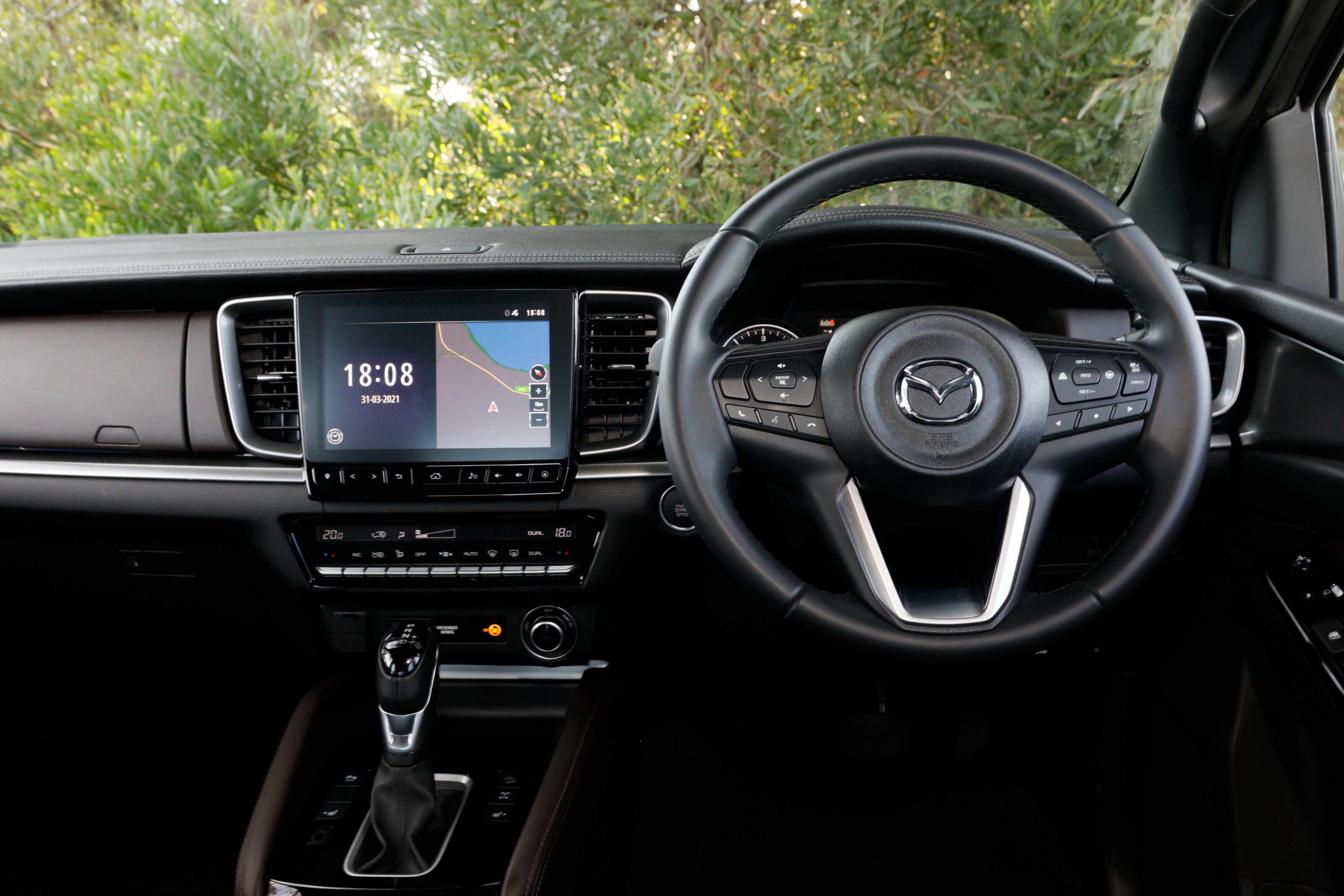
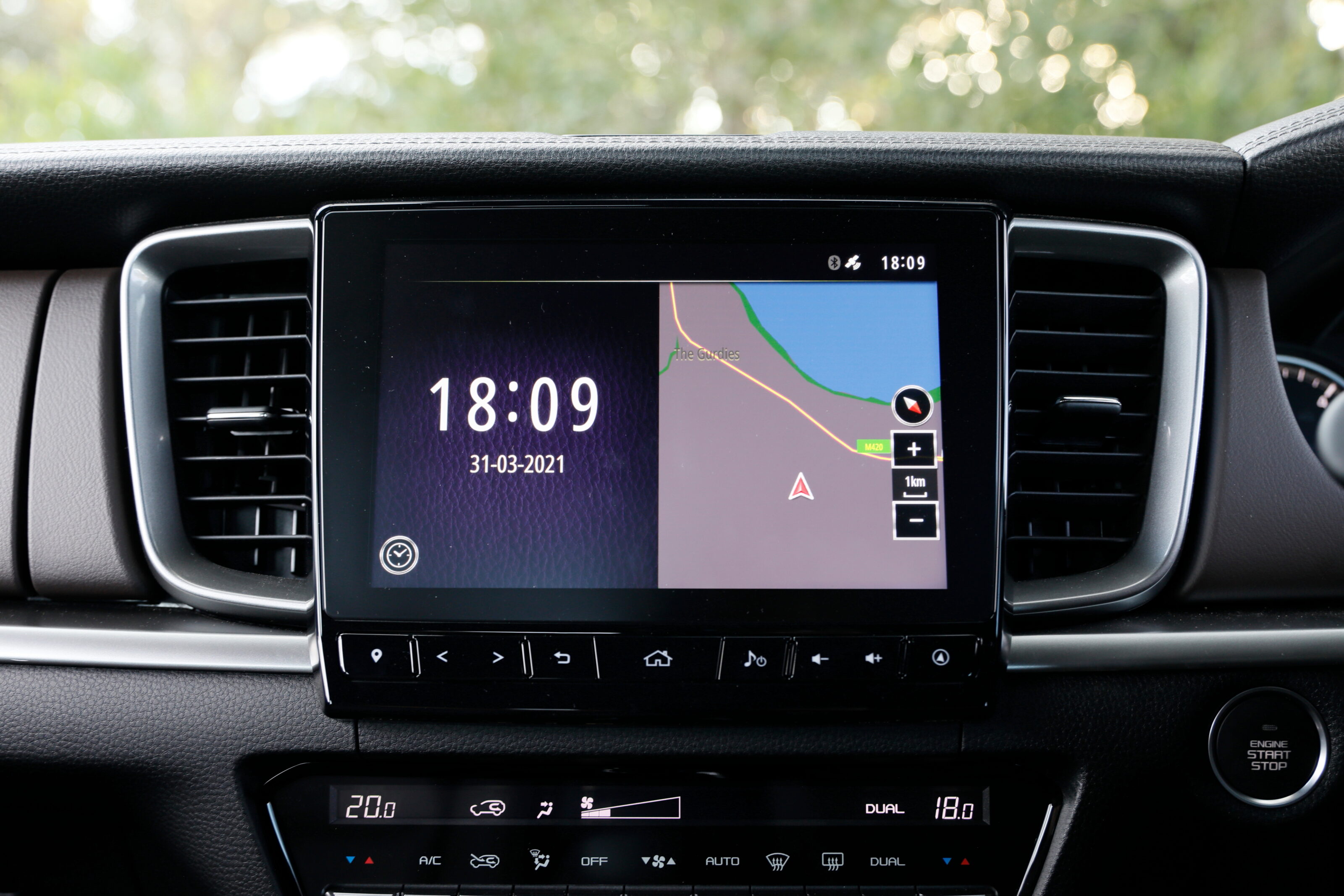
The BT-50 Thunder shares its equipment specification with the GT. This means a 9.0-inch touchscreen infotainment unit borrowed from Isuzu that has Apple CarPlay/Android Auto capabilities as well as native satellite navigation and digital radio. It presents as more of an aftermarket solution than you’d like from Mazda, whose in-house MZD Connect system is one of the best in the business. That said, all the bases are covered with quick-select shortcuts to different functions along the bottom of the screen. Annoyingly, the screen is prone to catching glare, which will no doubt annoy some buyers.
Smartphone mirroring is wireless, though there’s no wireless phone charging so you’ll have to plug in to charge up anyway. It’s simple to connect smartphone mirroring initially and the car will ask if you want to continue using it after re-entering. Front-row occupants are covered by one USB-A port and one 12-volt power outlet. There’s also dual-zone climate control and an eight-speaker stereo system to keep passengers happy.
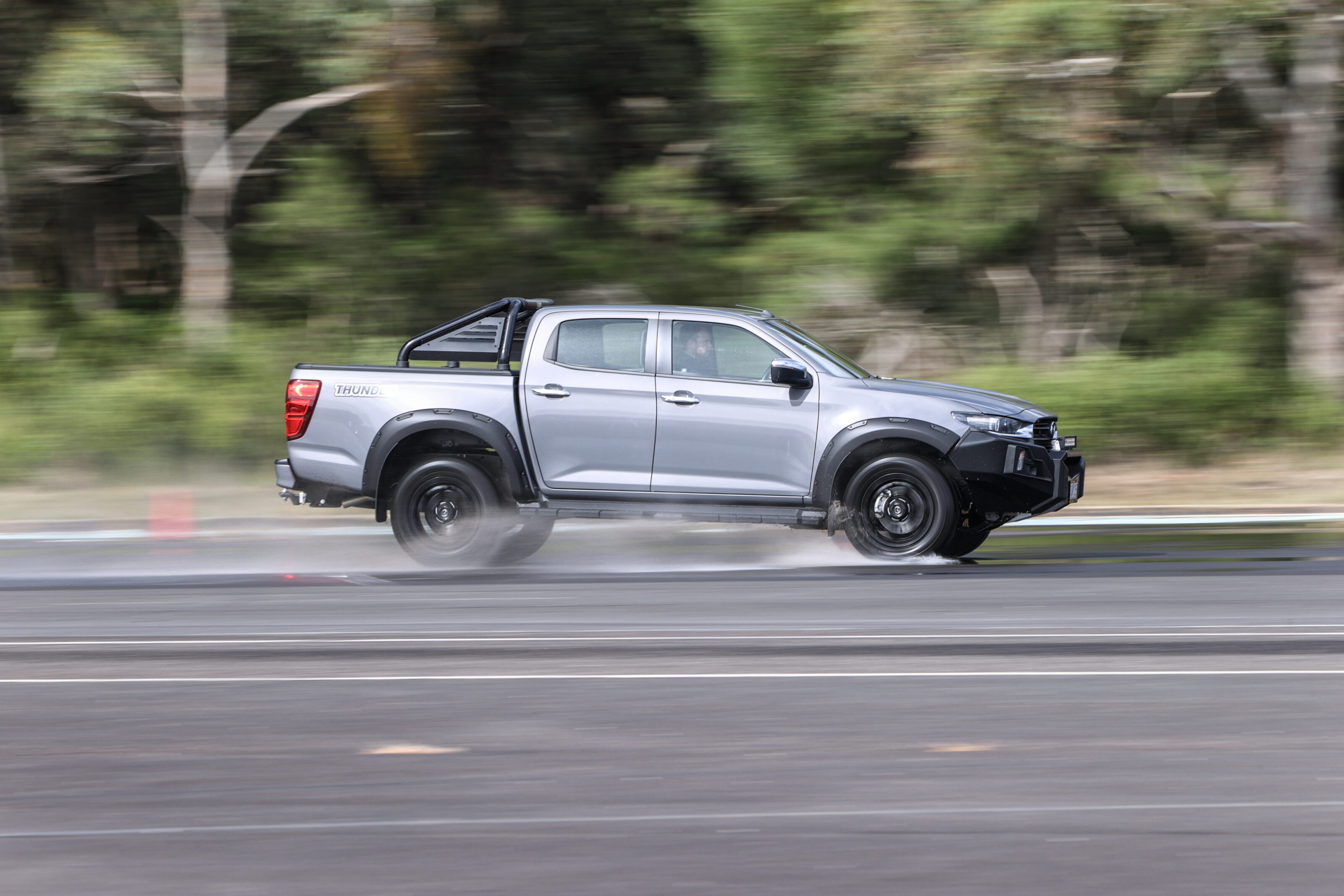
It’s not only the infotainment that the BT-50 shares with the Isuzu D-Max. As we’ve alluded to several times, beneath the skin both are nigh-on identical. The Thunder is a slight exception as its accessories add almost 200kg over a BT-50 GT and almost 100kg over a range-topping D-Max X-Terrain, to the detriment of performance and dynamics.
The 3.0-litre turbo-diesel is a strong, torquey unit but it has a lot of ute to motivate, taking 10.84sec to reach 100km/h and 6.3sec from 60-100km/h as an overtaking test. The engine becomes vocal and even raucous above 3500rpm with quite a narrow power band, the ride isn’t super polished and the electronic stability systems are a little over-zealous. But it stops impressively for a dual-cab, taking 38.82m from 100-0km/h in the dry and an average of 52.74m over three runs in the wet, the average used to account for surface inconsistency.
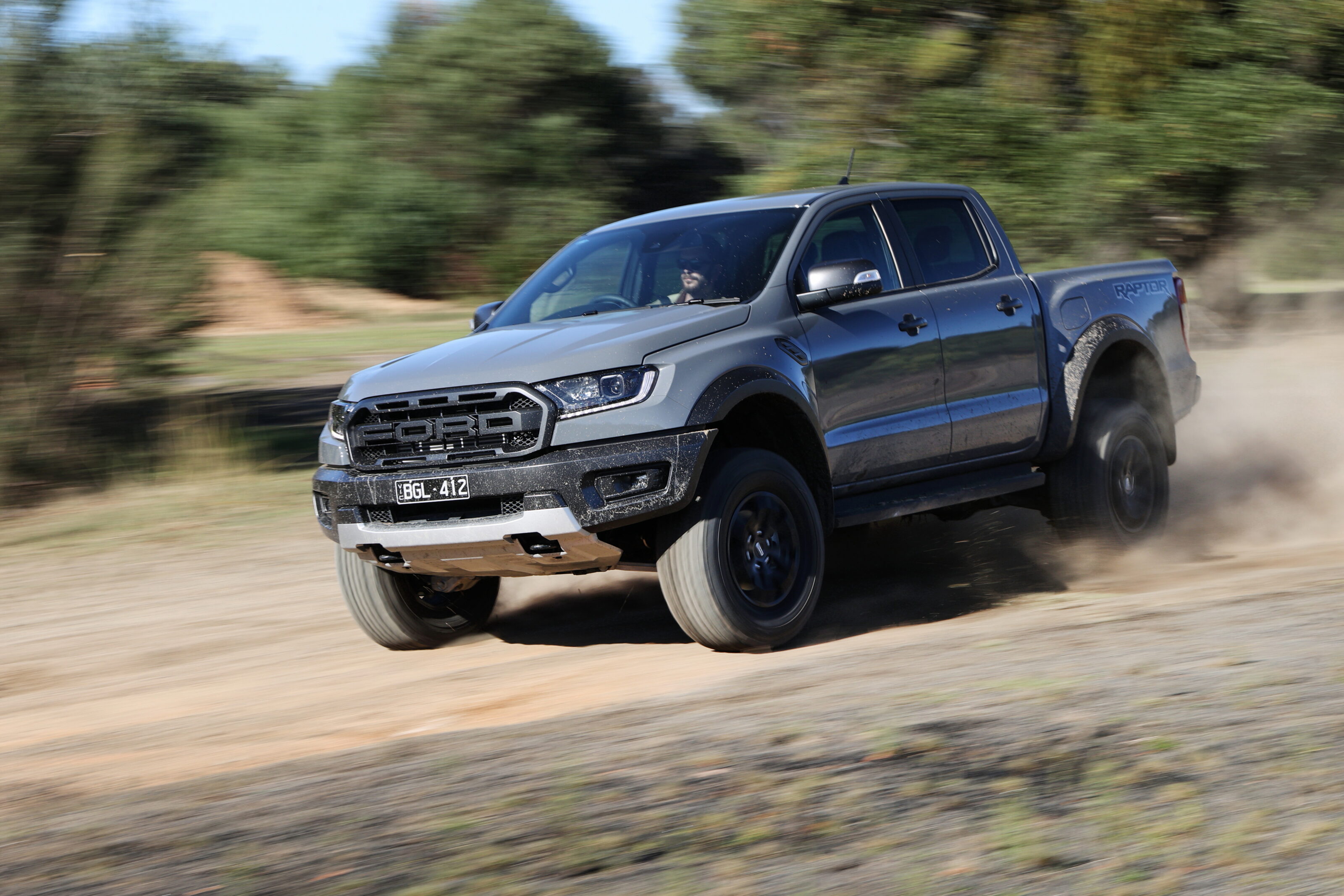
Under acceleration the Ranger Raptor is virtually identical to the BT-50, being a solitary hundredth of a second slower to 100km/h (10.85sec) but a tenth quicker from 60-100km/h, the benefit of having 10 gears instead of six. Ford’s 2.0-litre twin-turbo diesel is an impressive performer in lighter Ranger variants but it’s out of its depth when tasked with 2332kg of Raptor. The massive BFGoodrich rubber doesn’t help, either, and is a genuine liability under brakes, the Ford taking a truly appalling 46.16m to stop from 100km/h in the dry and a diabolical 61.45m in the wet.
Yet it’s not the worst. The Gladiator Rubicon, wearing similar BFG rubber to the Ranger Raptor, takes a slightly better (damning with faint praise) 44.2m to stop in the dry but a whopping 66m in the wet. It seems to sail across the surface like it’s coated in Teflon, accompanied by furious yet fruitless attempts of the ABS system to find grip.
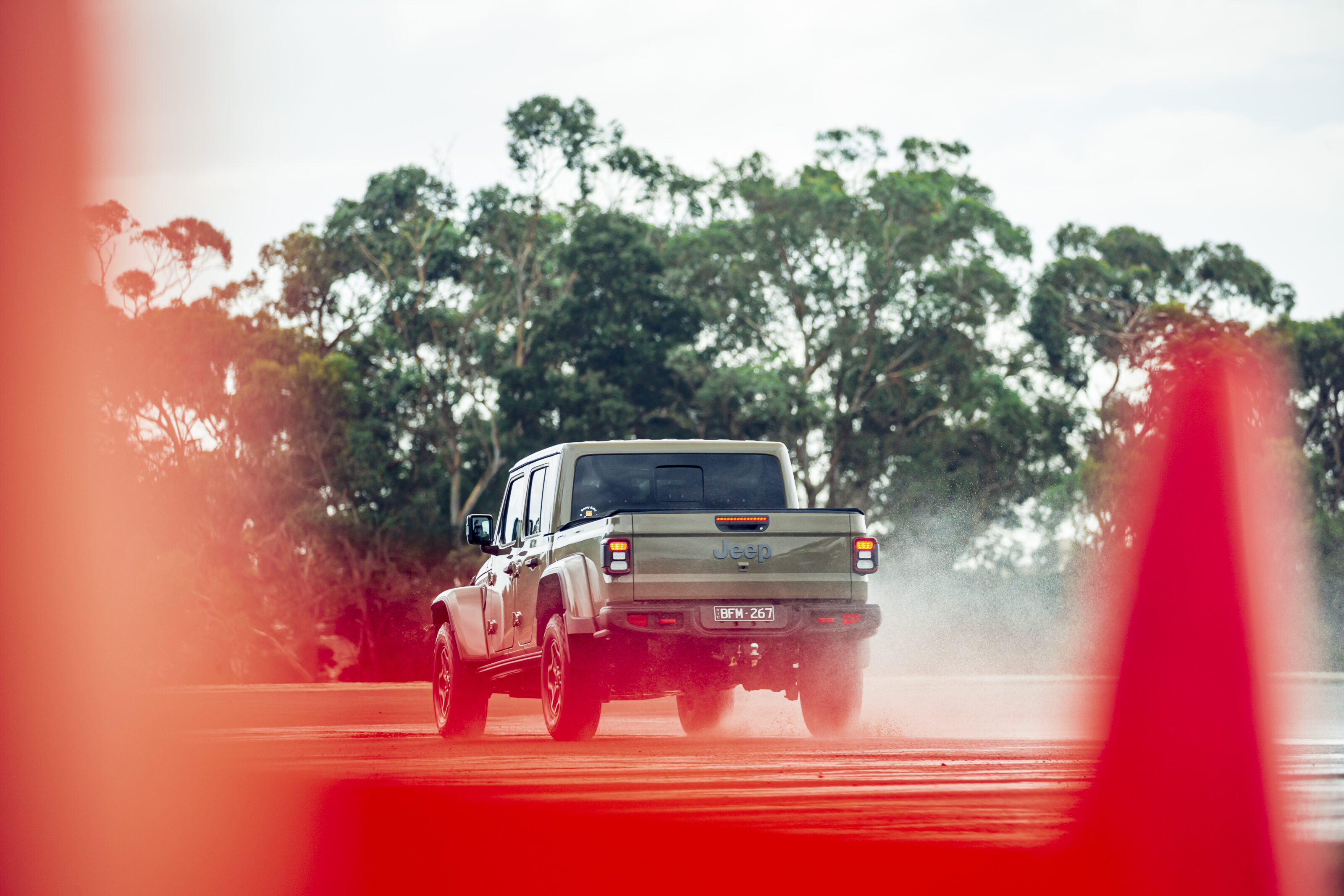
Of course, tyres make a huge difference in these sort of tests and this is the price to be paid for off-road prowess; that in itself is fine, as long as buyers and drivers understand the level of compromise that this focused rubbed requires. Put it this way: by the time the BT-50 Thunder has stopped in the wet, the Gladiator is still travelling at 44.8km/h.
The Jeep is somewhat more alarming as its capable of genuine pace, the grunty 209kW/347Nm 3.6-litre V6 propelling it to 100km/h in 9.18sec and from 0-100km/h in 5.2sec, accompanied by a howl that isn’t a million miles away from a Nissan 370Z. Its heavy off-road focus costs it dynamically – there’s a reason no sports cars use solid axles at both ends – with lifeless steering, ponderous handling and a loose, top-heavy feeling through tight turns. The on-road ride is poor but switch to gravel and the situation improves, the Gladiator shrugging off surface imperfections and the ESC keeping everything pointed in the right direction.
A predilection towards the rough stuff doesn’t automatically mean sacrificing on-road manners, though. Ford’s flagship Raptor is head and shoulders above the rest dynamically. Its substantial weight and all-terrain tyres cost it in terms of outright handling, but its tuning instils a sense of confidence combined with truly plush ride quality.
The HiLux is a strong performer, its upgraded 150kW/500Nm engine feeling enthusiastically grunty. Granted, 0-100km/h in 10.7sec isn’t going to set too many hearts racing but with competitive overtaking acceleration (60-100km/h in 5.8sec) it feels stronger than the numbers suggest. The Toyota struggles to arrest itself as impressively, though; its 39.7m dry effort from 100-0km/h is OK but the 57.5m wet result is poor.
Previous versions of Toyota’s best-selling ute have seemed incapable of possessing both decent dynamics and a comfy ride but the recent facelift’s steering modifications make it quite a nimble handler, cornering with accuracy and control. You could almost call it fun. Away from smooth roads, however, the stiff suspension results in a hard, jittery ride that feels agricultural compared to the far more sophisticated Raptor. Road and tyre noise are also ever-present and the ESC is far too intrusive on loose surfaces. There are dual-cabs with worse ride and refinement issues, but none that command the elevated price tag of the HiLux.
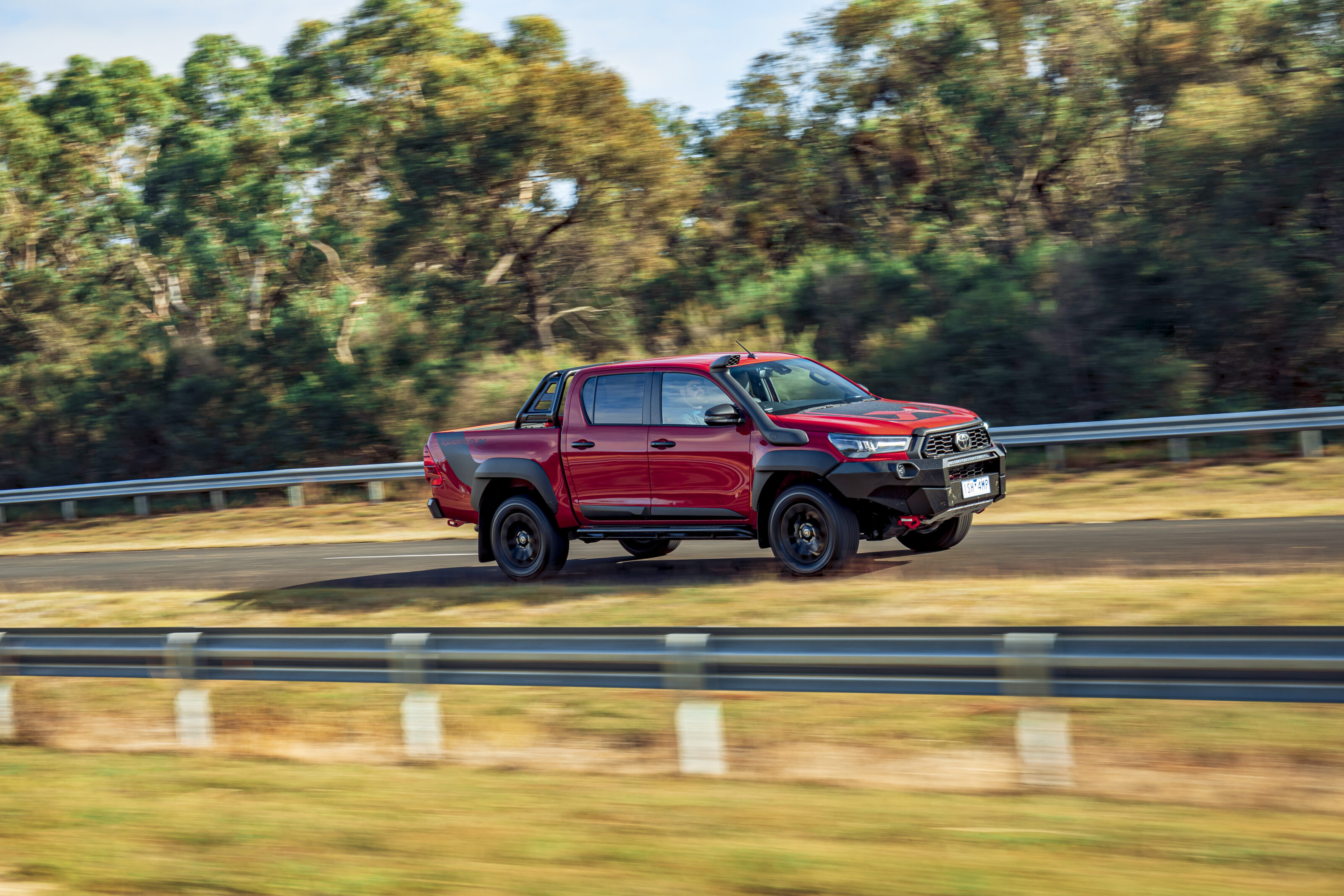
The script flips completely off-road. No vehicle is more of a candidate for larger tyres than the Rugged X, but that’s its only let-down off-road. The HiLux traction control system is first class, pulling it through everything even on small highway tyres, and 4×4 activation is quick and easy with excellent low-range gearing.
But even the Toyota’s excellence is no match for the Jeep. In terms of pure off-road prowess, you’d be hard-pressed to find a more capable vehicle than the Gladiator Rubicon. Front and rear locking differentials, tremendous low-range gearing, a disconnecting front anti-roll bar and mud-terrain tyres are a recipe for success. The Gladiator is a bit long for some tight tracks but it never appears to even lose traction. Engaging 4×4 is simple via an old-school lever and the Jeep is only some larger tyres and a slight suspension lift away from being completely unstoppable off-road.
Undermining the Raptor’s off-road ability is its width. This not only hampers it on narrow tracks but also means it won’t sit in the wheel ruts of other vehicles. Apart from this, it makes a strong case with easy 4×4 engagement, various traction control modes to play with, those fantastic seats and great traction thanks to those chunky tyres. While it’s not as outright capable as the Jeep it’s still very accomplished and an absolute hoot to drive, eating washouts for breakfast.
Mazda has pitched the Thunder more as a weekender than a hardcore off-roader but its D-Max underpinnings mean it’s still capable. The traction control can’t match the HiLux but the rear diff lock gets you out of trouble and the engine produces plenty of torque down low. Only the firm suspension offers room for improvement, something easily fixed via the aftermarket.
All those added extras reduce the Thunder’s payload to 887kg but that’s still the best here and while it sports a full plastic tub liner, two tie-down points, an LED work light and an electric hard tonneau, the latter’s storage cartridge cuts load length from 1455mm to 1240mm and prevents the tailgate closing when our 500kg payload test pallet is loaded.
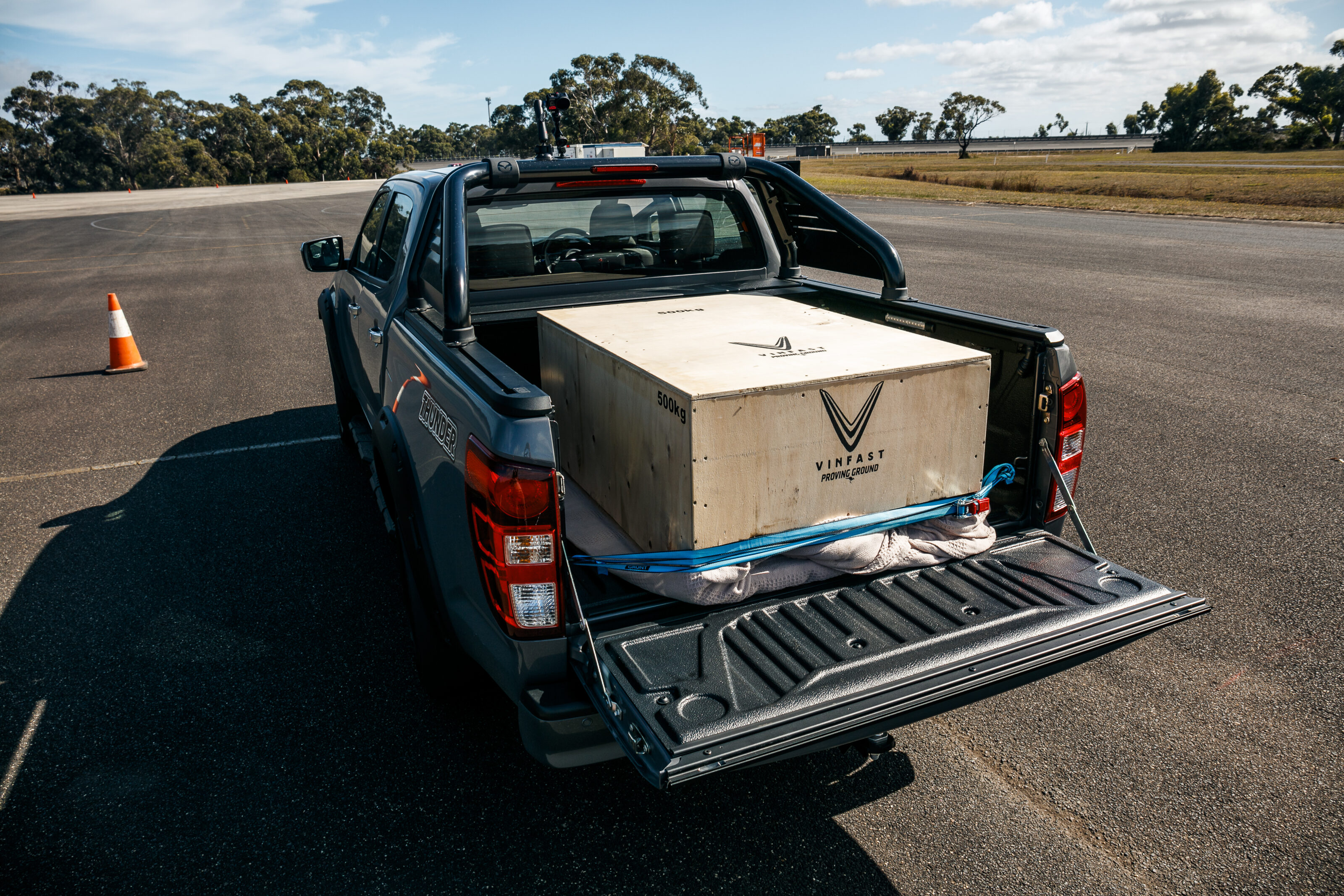
The powertrain doesn’t struggle with the extra weight – though 4.4sec from 20-60km/h is the slowest on test – but the front-end can feel a little nervous. Attach a trailer, in this case carrying Street Machine’s Turbo Taxi, and the Thunder takes 7.3sec to accelerate from 20-60km/h. It pulls well even with the extra weight and the steering doesn’t suffer to the same degree as when loaded directly.
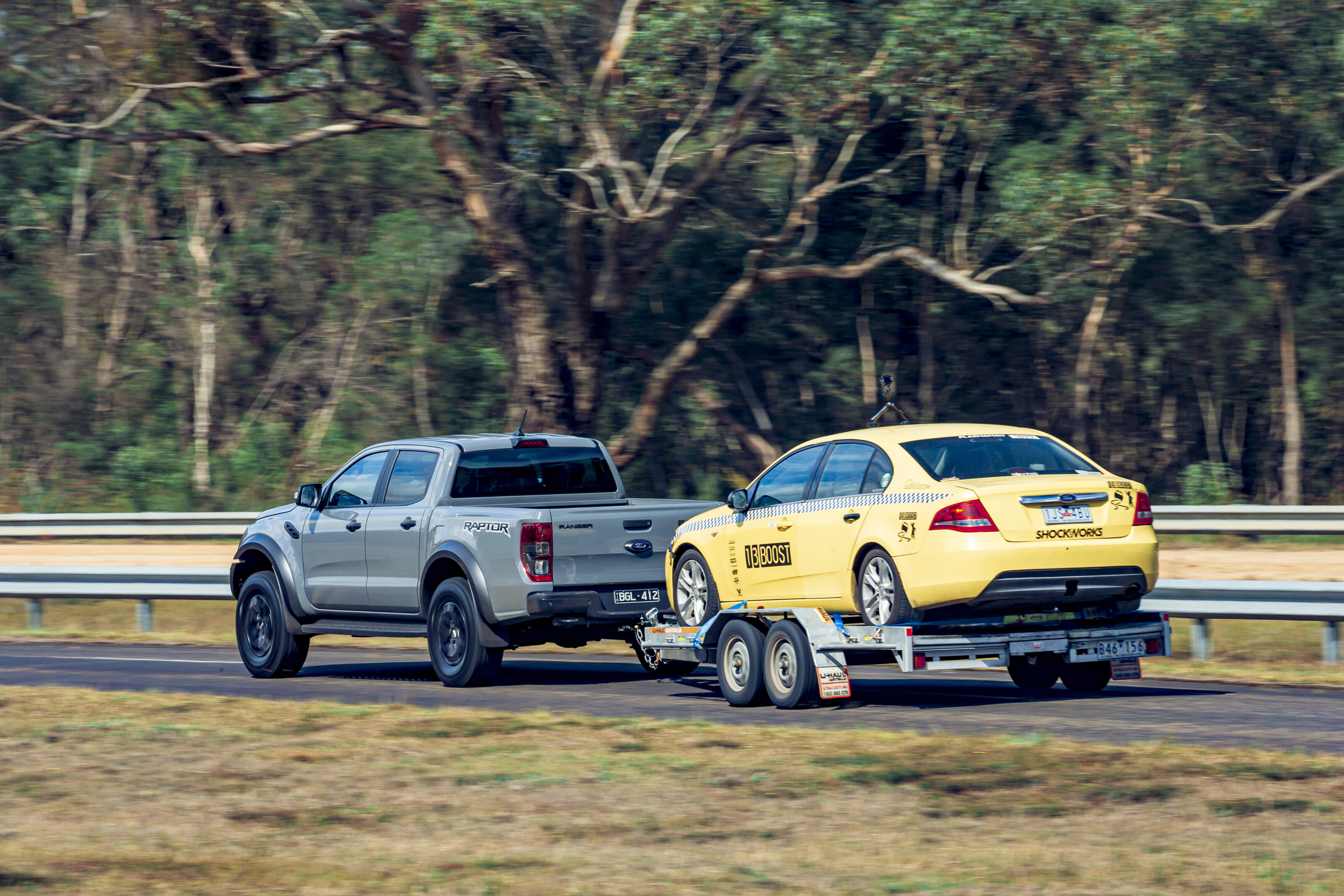
Both the HiLux Rugged X and Ranger Raptor are big old beasts, weighing in at 2316kg and 2342kg respectively. As such, their payloads are limited to 734kg and 748kg, which means our 500kg pallet and a couple of passengers would have them very close to their allowable Gross Vehicle Mass. The Ranger’s tub is well-proportioned and wider than the category average, while also including a 12-volt power supply, spring-loaded tailgate, load area lighting and spray-in liner with four tie-down points.
It accelerates from 20-60km/h in 4.2sec when loaded, the transmission shifting well under hard acceleration but struggling to retain its composure in normal driving. The Raptor’s lovely ride quality also vanishes when laden and it suffers from poor body control. It’s a similar story when towing; its rear end isn’t designed for heavy loads and sags significantly when a trailer is attached, evidenced by its 2500kg towing maximum, though it remains relatively brisk with a 6.7sec result from 20-60km/h.
The Gladiator shouldn’t be the first choice for those who need practicality. Its tub has heaps of tie-down options (four fixed, four adjustable), two work lights and a spray-in tub liner, but space is on the shallow side and the gate width is just 1260mm. A 620kg payload also hampers it and while the engine’s grunt shrugs off the 500kg pallet, taking just 3.4sec to accelerate from 20-60km/h, its relative lack of torque makes it tricker on the move and the suspension pitches forward dramatically over bumps.
A trailer doesn’t faze the engine either, with a benchmark 6.3sec 20-60km/h result, but the transmission is a handicap, constantly holding the engine at 5000rpm rather than smoothly shifting to the next gear. The live-axle set-up also doesn’t help, requiring constant steering input on the move. One for occasional towing duties only.
In terms of load-lugging, the Toyota is the clear winner from this group. The tub is about category average with four tie-down points and a plastic liner, though a soft-drop tailgate would be nice at this price point (it’s standard on the GWM Ute…). Acceleration is reasonable with a 4.2sec 20-60km/h effort but out on the road it feels balanced, the rear barely dipping when laden. This excellence continues when towing, with impressive manners both under acceleration (7.2sec 20-60km/h) and in corners.
When all said and done, the Toyota HiLux Rugged X is also the winner of this test, but let’s start from the other end. The Jeep Gladiator Rubicon scores the wooden spoon, but then given its focus this isn’t surprising. It’s designed to dominate off-road and that’s exactly what it does, but just be aware that there are sacrifices to be made in terms of on-road dynamics, practicality and safety. Cool thing, though.
Again, a holistic dual-cab view doesn’t play to the Ranger Raptor’s strengths. If you want a workhorse, you’re much better served with a regular Ranger like an XLT or a Wildtrak, but if you want a weekender to tow and jetski and carry a family then the Raptor is brilliant. It offers unparalleled ride comfort, plenty of kit, solid on-road dynamics and unbeatable high-speed, loose-surface behaviour. If only it had a beefier engine, but for that we’ll need to wait for next year’s all-new Ranger.
Best of the rest is the Thunder, but this position is more down to the fundamental excellence of the BT-50 package rather than any Thunder-specific attributes. In fact, you could argue that the Thunder is Mazda’s ute at its weakest. The accessories might (MIGHT!) add some street cred but they also negatively impact performance, dynamics, economy and value. We’d stick with an XTR or GT and add your own accessories.
This leaves the Toyota HiLux Rugged X as the top dog but it’s not a spot it occupies by default. It could and should be better in terms of dynamics, comfort and equipment but it’s brilliant off-road, the new engine is a powerful unit, it’s unfazed by payloads or towing and has outstanding resale. Tweaks made as part of the recent update have elevated it to a level that’s worthy of its reputation.
THE VERDICT
1st – Toyota HiLux Rugged X
Likes: Great off road; powerful engine; workhorse ability Dislikes: Under-specced; on-road dynamics
Score: 7.5/10
2nd – Mazda BT-50 Thunder
Likes: Impressive all-rounder Dislikes: Thunder additions subtract more than they add
Score: 7.5/10
3rd – Ford Ranger Raptor
Likes: Ride quality; fun factor; looks Dislikes: Needs more engine; towing/payload struggles
Score: 7.5/10
4th – Jeep Gladiator Rubicon
Likes: Unbelievable off-road; cool factor; grunty engine Dislikes: Heavily compromised on-road; safety
Score: 6.5/10
SCORE BREAKDOWN
SPECIFICATIONS
Snapshot
- 0-100km/h in 4.5 seconds, top speed limited to 250km/h
- Wheelbase 180mm longer than standard S-Class LWB
- Customer deliveries begin in the fourth quarter of 2021
The 2022 Mercedes-Maybach S680 has been revealed as the range-topping variant of the Mercedes-Maybach S-Class range.
Due to launch in Australia in the fourth quarter of 2021, the ultimate expression of Merc’s automotive opulence is powered by a handcrafted variant of the M279 biturbo 6.0-litre V12 petrol engine.
Power is rated at 463kW and a whopping 900Nm, with drive being sent to all four wheels through Mercedes’s nine-speed 9G-Tronic automatic transmission.
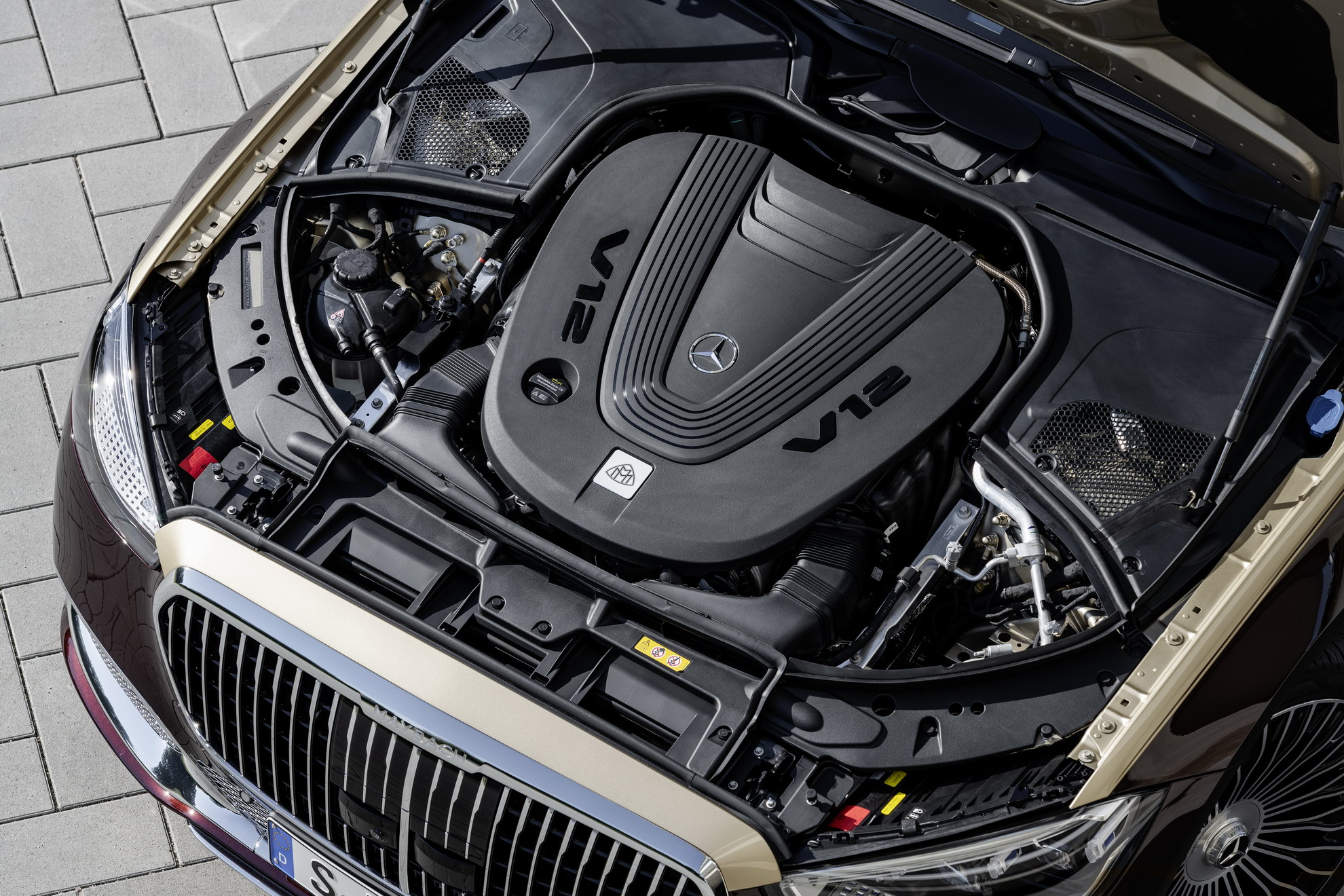
Thanks to the monumental grunt of the V12 and the German automaker’s clever 4MATIC all-wheel drive system, 0-100km/h is taken care of in just 4.5 seconds, despite the limousine’s 2290kg kerb weight.
Unlike the standard S450 SWB and LWB, and the S580 LWB, the S680 won’t feature the brand’s EQ Boost technology.
Fuel economy is rated at 14.4-13.4L/100km on the WLTP combined cycle, and going flat-out the four-door flagship will hit a limited 250km/h.
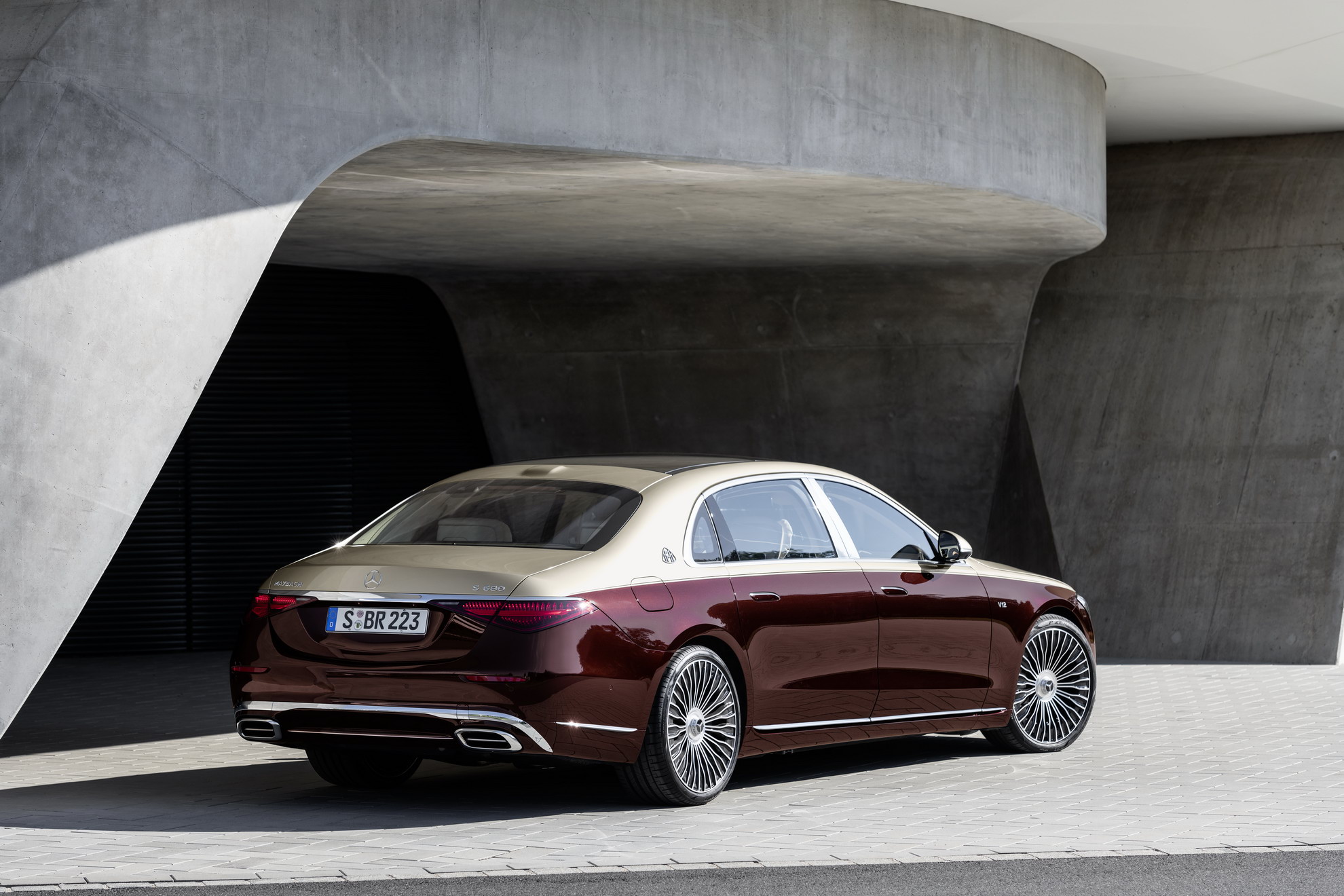
Although based on Mercedes’s MRA platform shared with the standard W223 S-Class, the Maybach’s wheelbase has been extended by a further 180mm compared to the long-wheelbase (LWB) S-Class, now measuring 3396mm.
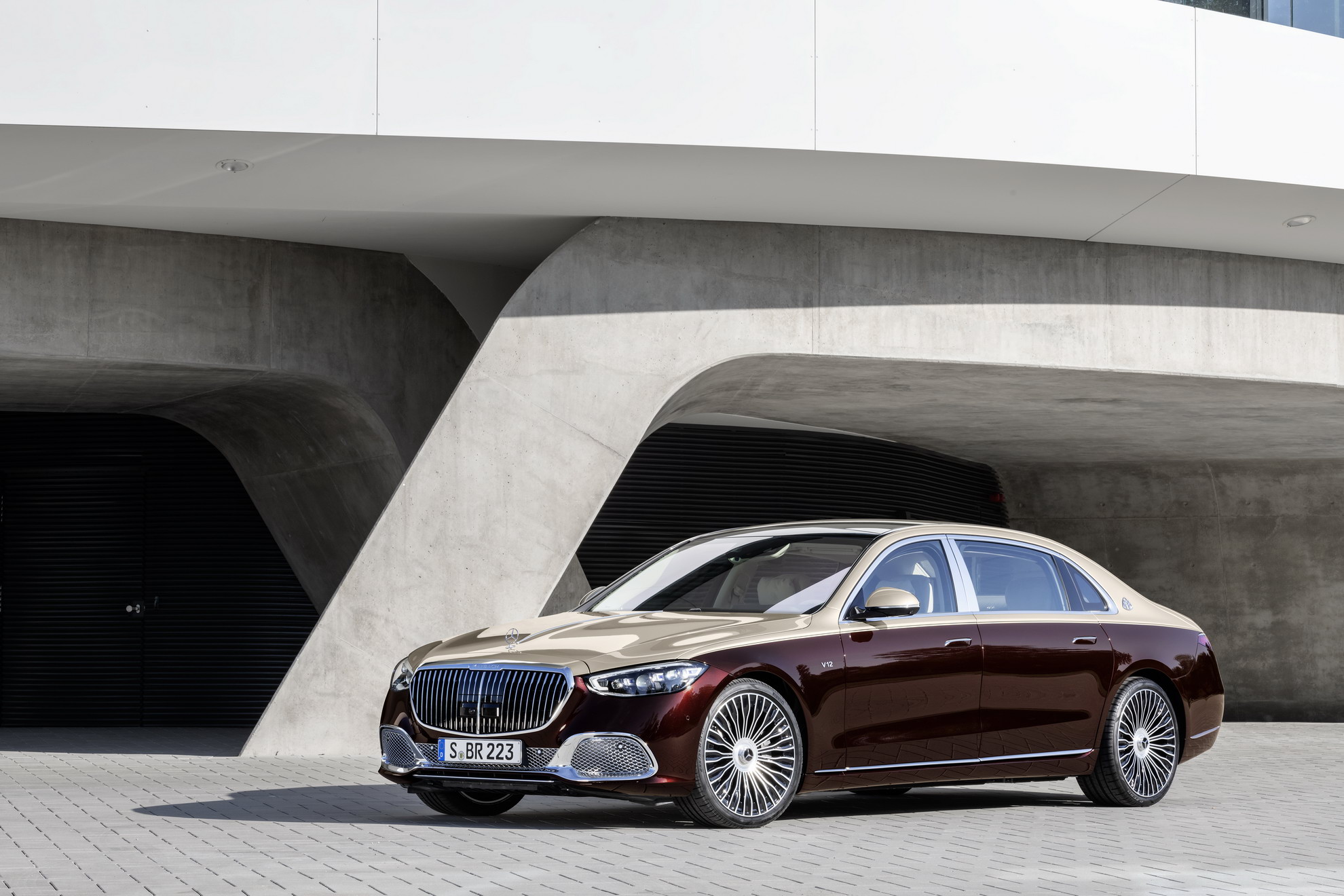
Styling isn’t drastically different from the standard S-Class range. However, as you would expect, the divinity of the Maybach’s aesthetics is in the details.
There’s a bespoke grille, stainless steel exterior trim on the lower intake, side sills and rear bar, and owners will be able to specify the option of a two-tone paint scheme with 10 contrasting colours available.
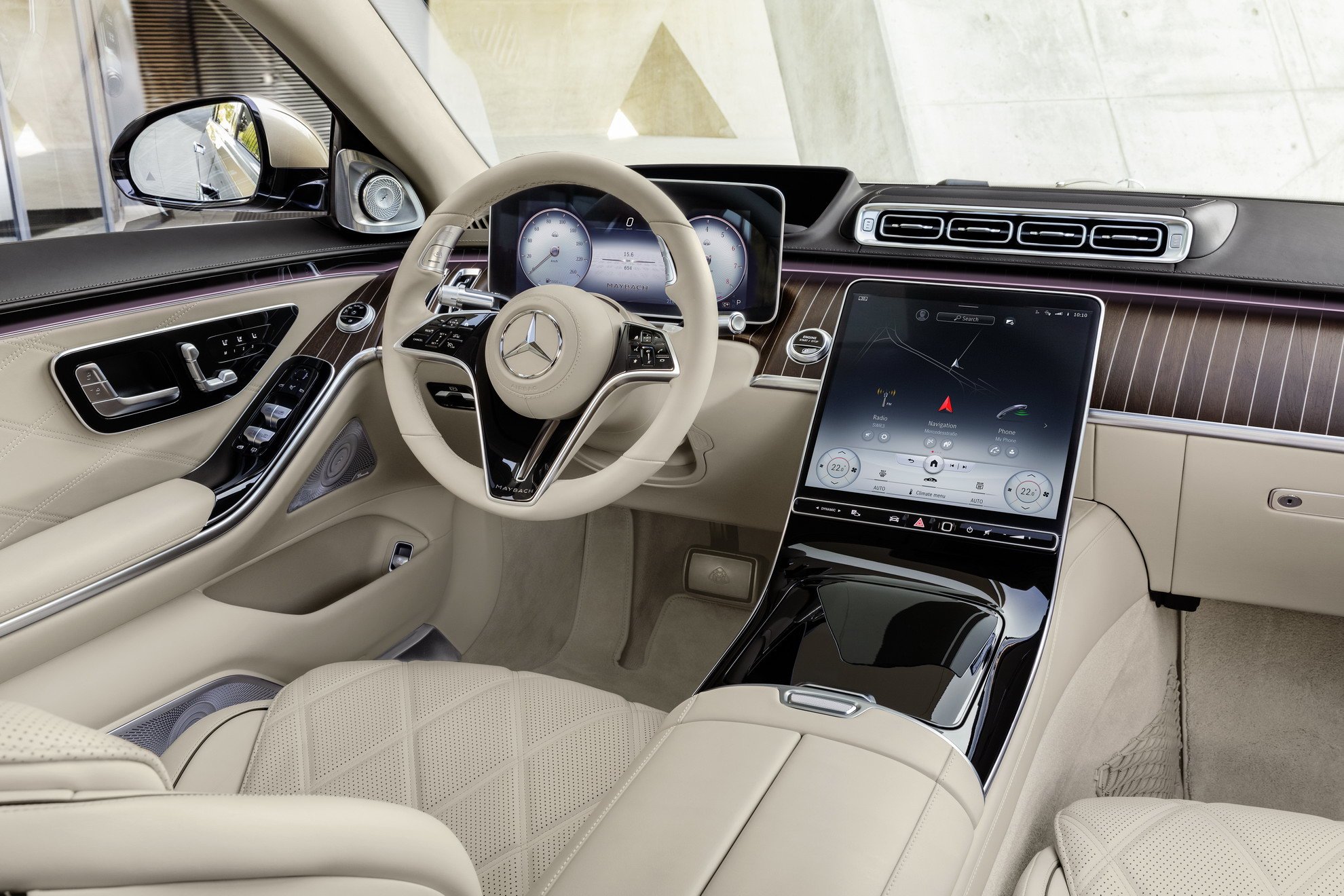
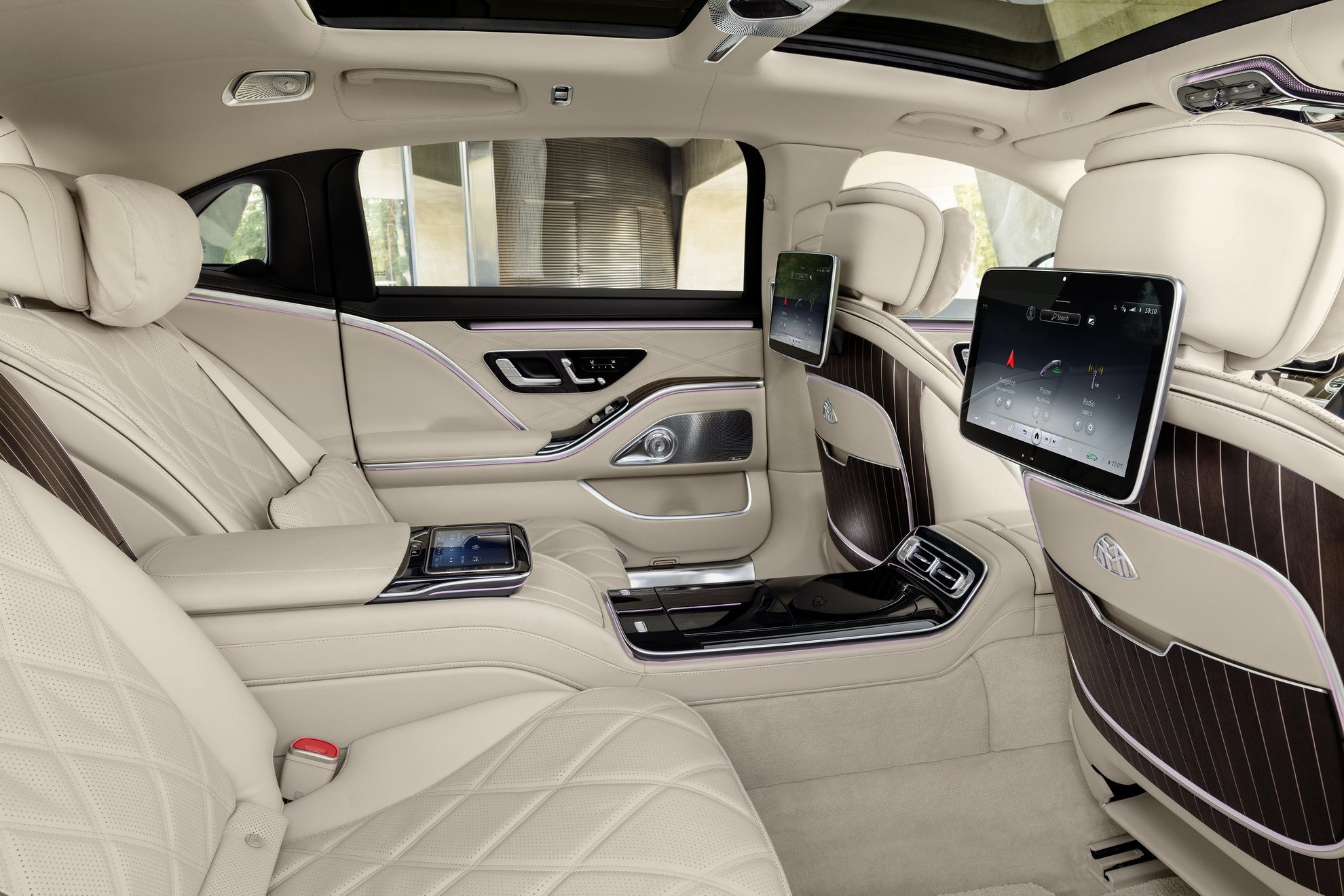
Inside, occupants will be greeted to an interior so sumptuous it would leave most private jets red-faced.
There’s uber-soft Nappa leather everywhere (even the headlining and dash), duck-down pillows on the rear headrests, power reclining, heated and cooled massaging seats, panoramic sliding roof, motion-controlled rear window shades, the option of power-closing doors, and even a champagne cooler with accompanying silver-plated flutes.
There’s also a 12.3-inch digital dash and centrally mounted 12.8-inch touchscreen infotainment display with Merc’s latest MBUX infotainment software.
Rear passengers get dual 11.6-inch entertainment screens and an MBUX control unit, which integrates neatly into the central rear armrest.
Audiophiles will also love the 4D Burmester surround sound hi-fi with active noise cancelling, which will work in conjunction with enough soundproofing to make the cabin feel like a recording studio.
The Mercedes-Maybach S680 will sit at the top of the S-Class tree here in Australia.
It will also serve as the only S-Class Maybach variant available Down Under, with a representative from the brand’s local arm telling WhichCar Mercedes has no plans on bringing the V8-powered Mercedes-Maybach S580 here.
The representative also confirmed the luxury limo is due to arrive in Australia in the fourth quarter of 2021, with customer deliveries expected soon after.
Pricing has yet to be confirmed, with a local RRP likely to be revealed closer to the car’s release date.
Snapshot
- M178 twin-turbocharged 4.0-litre V8 produces 390kW and 670Nm
- 0-100km/h takes just 3.8 seconds
- Limited to 15 examples, with an RRP of $294,200 plus on-road costs
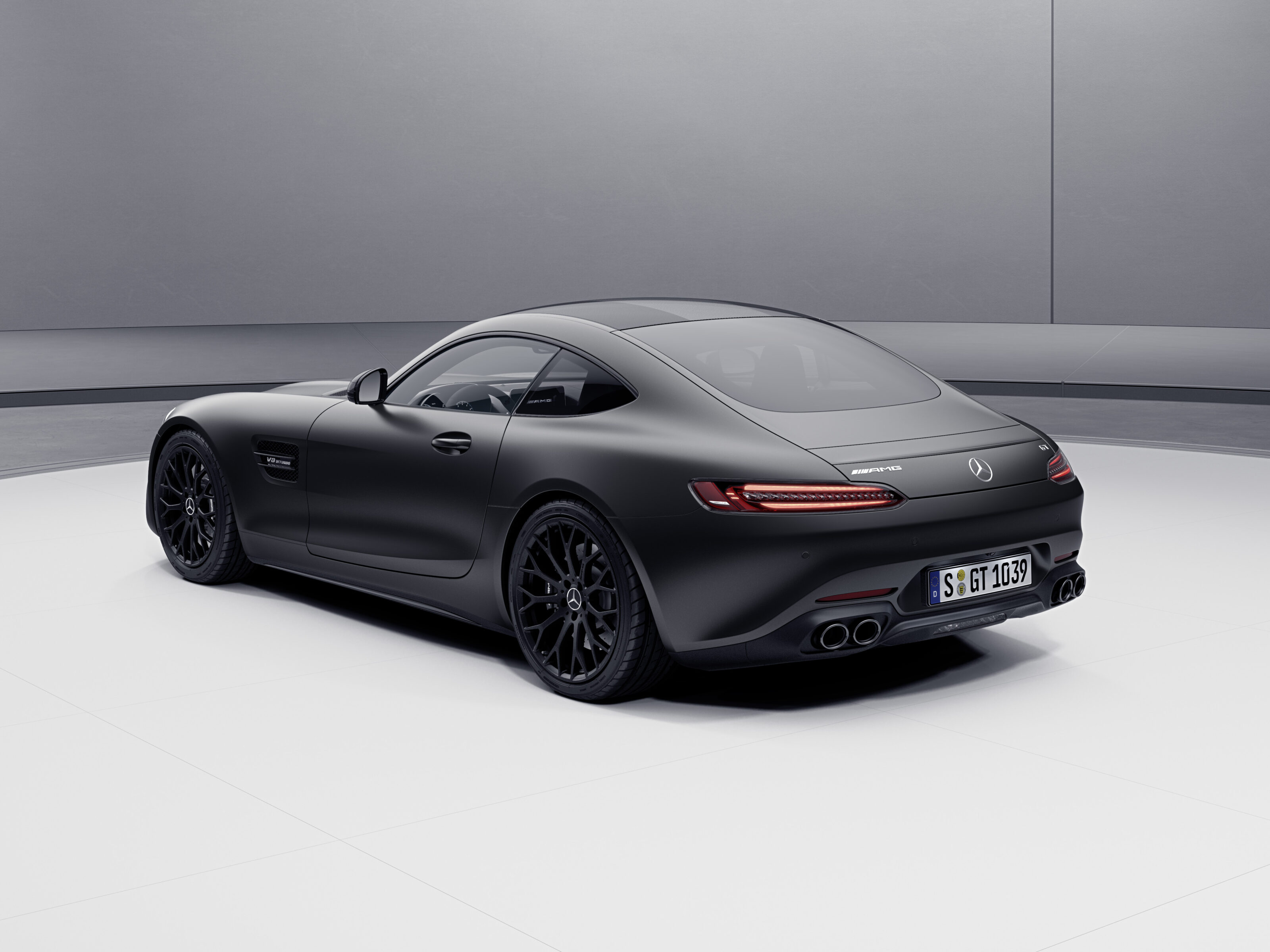
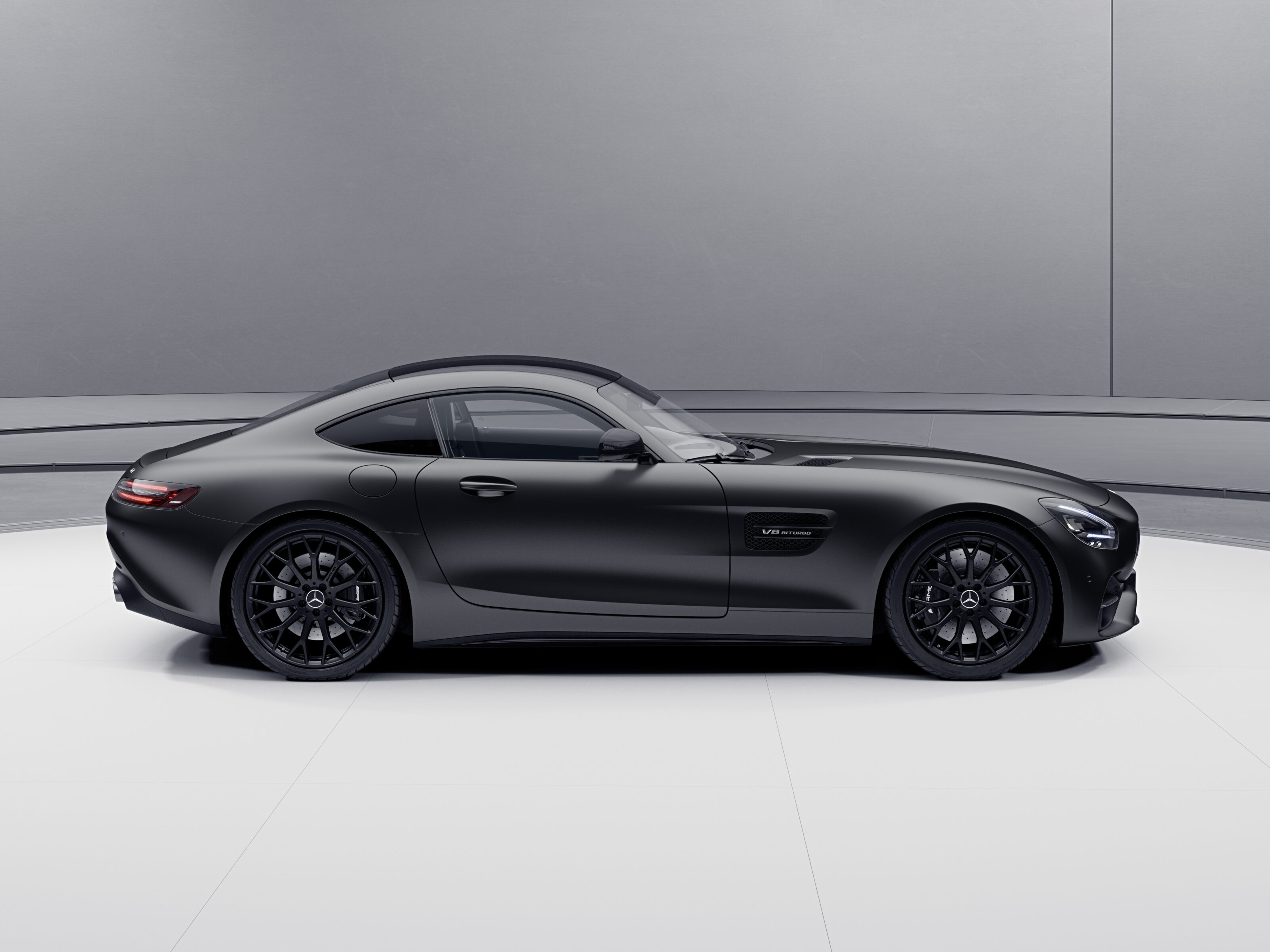
The 2021 Mercedes-AMG GT Coupé ‘Night Edition’ has been unveiled as a limited edition entry point to AMG’s wild GT Coupé range.
The new two-door, which is limited to just 15 examples Australia wide, packs an even bigger performance and dynamic punch than the regular AMG GT, which was last sold in Australia in 2019.
The headline figure is the Night Edition’s new power and torque rating. Mercedes has really turned up the wick of the venerable M178 twin-turbocharged 4.0-litre V8 engine, which now produces 390kW and 670Nm.
That’s a power and torque jump of no less than 40kW and 40Nm compared to the standard GT. In fact, it’s more power than the GT’s dearer sibling, the GT S.
Drive is still sent to the rear through Mercedes’s seven-speed dual-clutch transmission. However, unlike the standard GT, which was fitted with a normal mechanical limited-slip differential, the new Night Edition scores the electronically controlled limited-slip diff found on the GT S, GT C, and GT R.
Thanks to the considerable power bump, 0-100km/h is taken care of in just 3.8 seconds (0.2 seconds quicker than the normal GT).
Mercedes hasn’t quoted a top-speed for its limited edition, but considering the regular variant was good for 304km/h flat-out, we’d hazard a guess a VMAX north of 310km/h is more than achievable.
The sportscar has also been fitted with Mercedes’s AMG Ride Control adaptive dampers, which again is an improvement on the regular GT, which previously came equipped with a fixed spring and damper.
The Night Edition sits on a staggered set of 19X9 and 20X11-inch AMG Y-spoke alloy wheels finished in matt black, wrapped in performance tyres measuring 265/35/R19 and 295/30/R20.
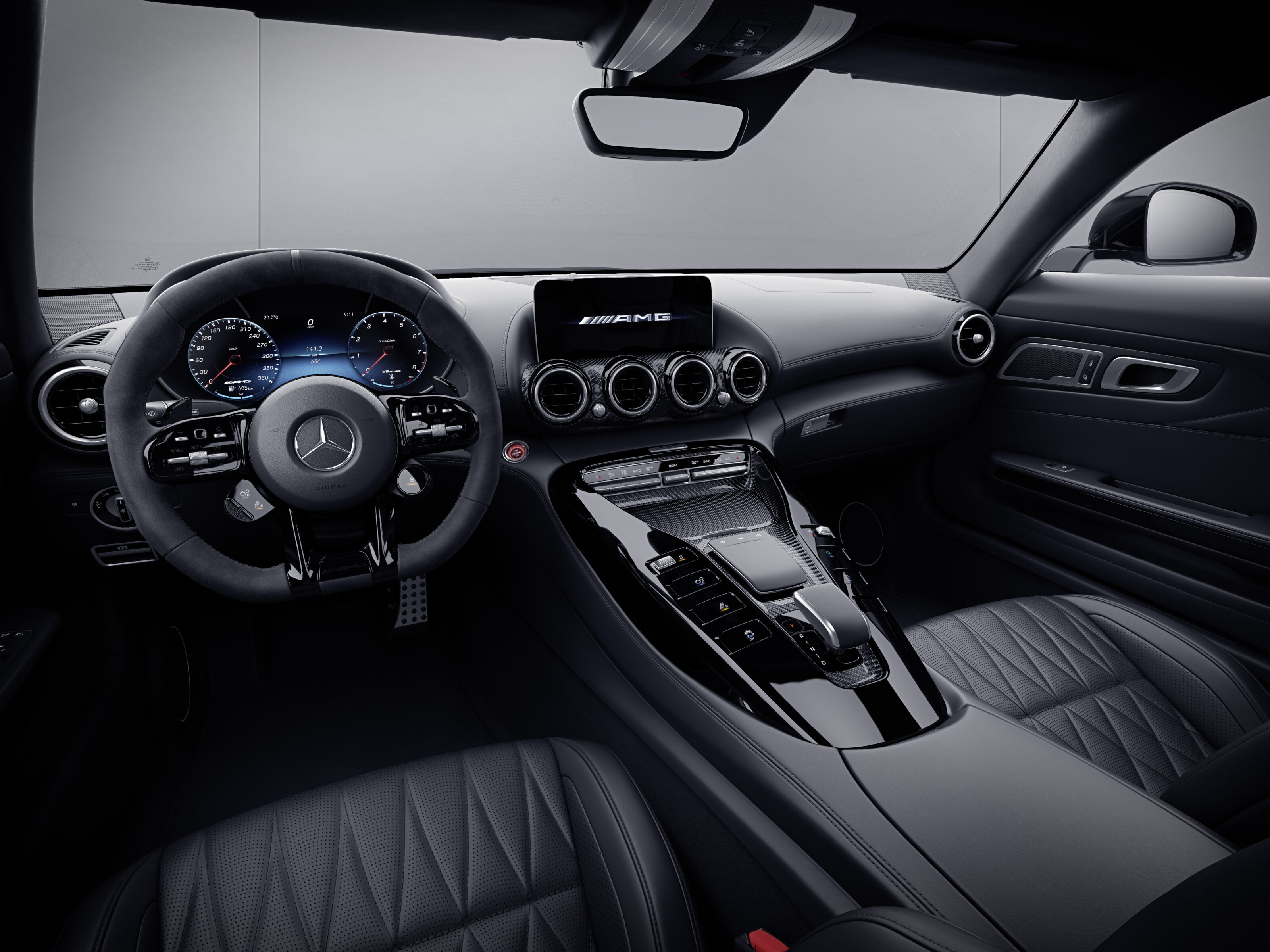
Visually, the car’s exterior has also been adorned with several enhancements, including a bespoke dark chrome AMG grille, carbon fibre roof, blacked-out headlight surrounds, and black brake callipers with the AMG logo painted in white.
Buyers can choose to have their Night Edition in three factory colours – Obsidian Black metallic, Selenite Grey metallic, or Designo Graphite Grey Magno ($3900 extra).
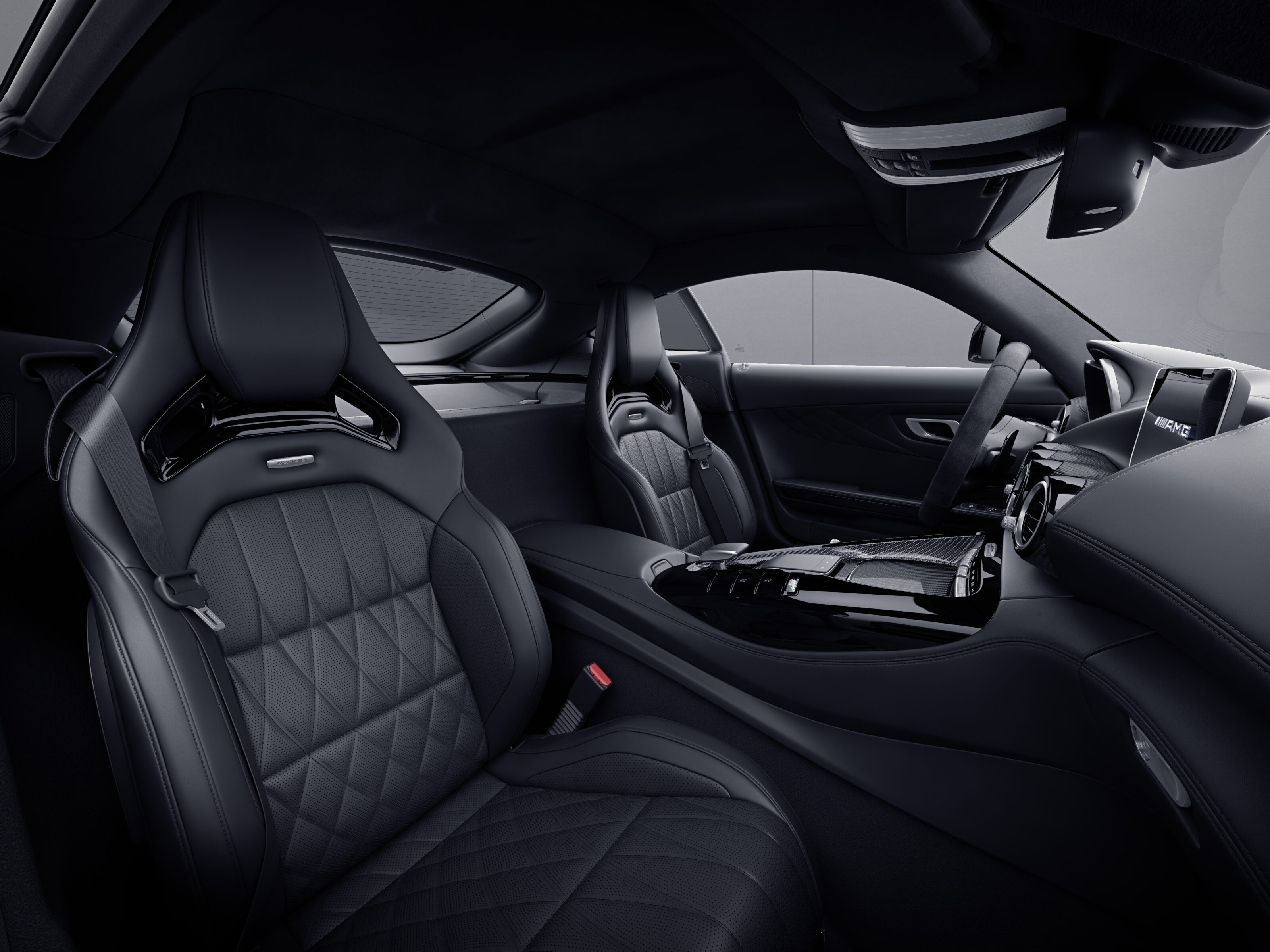
Inside, the AMG’s interior has also had a bespoke going-over, with Nappa leather trim, AMG Performance seats with diamond-pattern quilting, AMG Performance steering wheel wrapped in black microfibre, AMG Interior Night Pack, roof lining in microfibre, a ‘Night Edition’ badge on the centre console, interior ‘piano lacquer’ finishing, and heat-insulated tinted glass.
The 2021 Mercedes-AMG GT Coupé ‘Night Edition’ has an RRP of $294,200 plus on-road costs, and deliveries will begin in the third quarter of 2021.
A new type of aluminium-ion battery capable of charging ten times faster than the industry standard lithium-ion is being developed at the University of Queensland.
The battery, which would be manufactured by Australian company Graphene Manufacturing Group (GMG), is said to be able to charge much more quickly, has a longer life and is easier to recycle than its lithium-ion counterpart.
In addition, experiments performed in its development by the University’s Australian Institute for Bioengineering and Nanotechnology have found it presents a lower fire risk and doesn’t appear to need parts for heating or cooling allowing precious kilograms of weight to be shaved off.
“So far there are no temperature problems,” GMG managing director Craig Nicol told Forbes magazine. “Twenty per cent of a lithium-ion battery pack (in a vehicle) is to do with cooling it. There is a very high chance that we won’t need that cooling or heating at all. It does not over-heat and it nicely operates below zero so far in testing. It doesn’t need circuits for cooling or heating, which currently accounts for about 80 kg in a 100kWh pack.”
The scientists working on the aluminium-ion battery development have found it packs a punch in terms of its power density – delivering around 7000 W/kg compared to just 250-700 W/kg for a lithium-ion battery. That’s almost on a level with ultracapacitors which can whack out around 12,000-14,000 W/kg, reports New Atlas.
On the flip side its energy density, which determines the range, is only around 150-160 Wh/kg (about 60 per cent of what a lithium-ion battery can achieve).
What does that mean in old money? It would power an EV which could only travel around 60 per cent as far as the equivalent Tesla on a charge – but you could recharge it so quickly it wouldn’t matter. According to GMG its tech can charge a mobile phone to full capacity in less than five minutes.
Of course, the major let down before we all get a bit too excited is the charging infrastructure. While Tesla’s Superchargers reportedly pump electrons at rates of up to 250kW – representing a 60 kWh energy transfer in about 15 minutes – to charge 10 times faster you’d need to be able to instantly supply 2.5 megawatts at the charge cable, and that’s a lot. Even if charging stations had their own fast-discharge energy storage on site, charging from the grid at a slower rate, you’d also need one hell of a cable to move so many electrons that quickly.
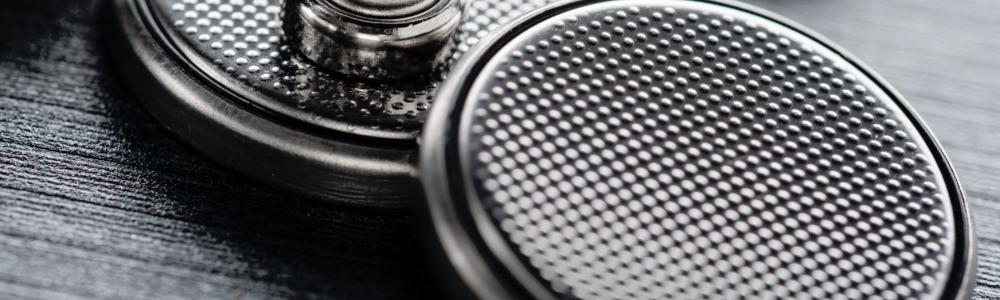
According to New Atlas, GMG says it’ll be making the coin cell prototypes for small scale customer testing by the end of 2021, but it’s not known yet when the technology is likely to hit the market. Additionally, GMG says it can produce high quality graphene at low cost and in scalable quantities but hasn’t put a cost on what it would take to manufacture the battery at scale for cars. With graphene prices currently around US$100 (AU$128) per gram, even a cheaper version could end up costing big.
Got a tip-off for a story? Get in touch: [email protected]
Snapshot
- Independant importer OZM used the Special Enthusiast Vehicle Scheme (SEVS) to get the car into Australia
- Price will cost around the $80,000 mark
- Limited supply for importers due to Japanese domestic market demand
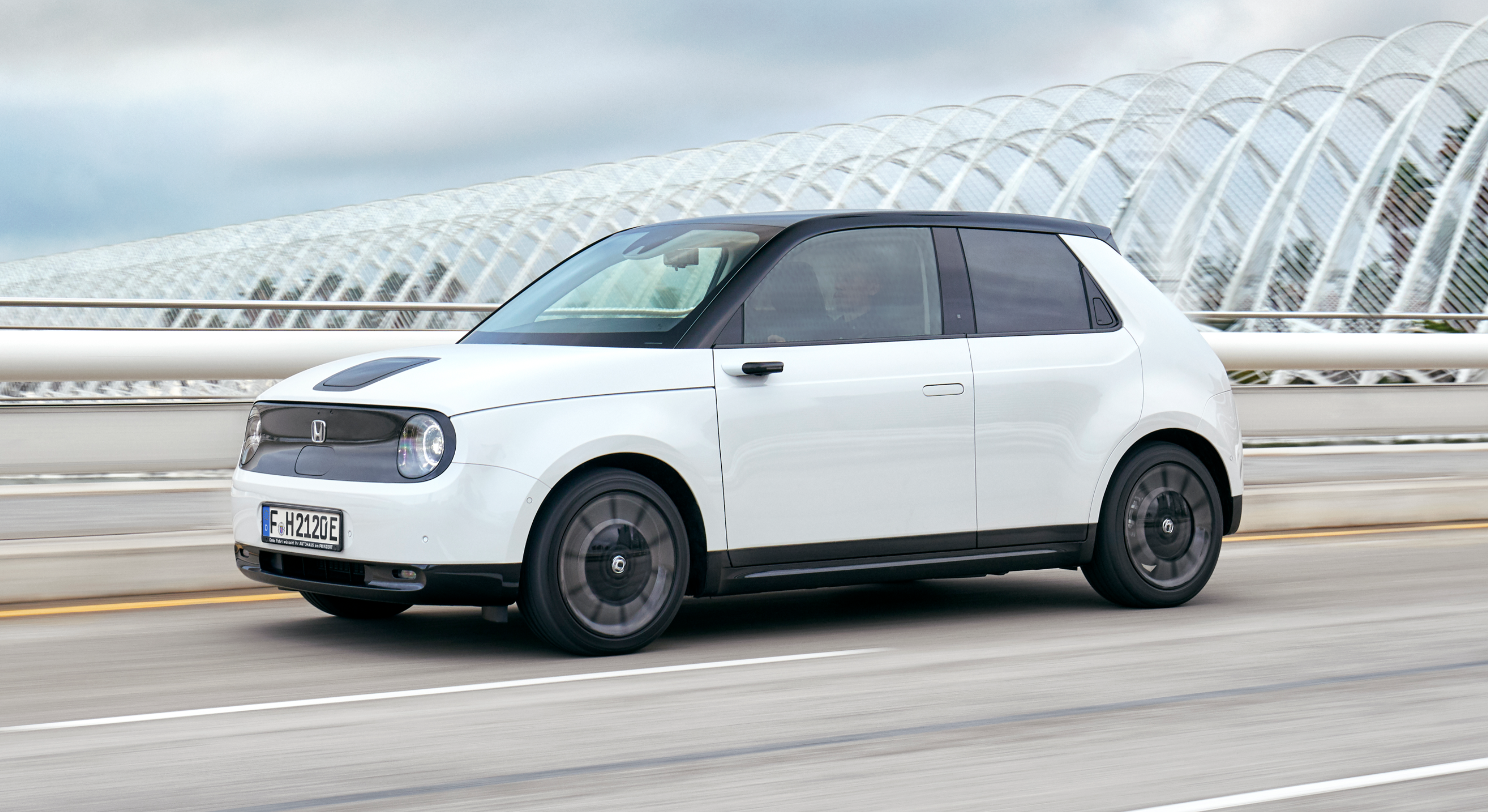
Local importing outfit OZM Auto Group has just brought the first Honda E city car into the country.
The much-hyped all-electric hatchback has been the talk of the EV town since it was unveiled back in 2019, with its retro-minimalist looks pulling at the heartstrings of many brand devotees.
Unfortunately, Aussies were told by the Japanese automaker we wouldn’t be receiving the uber-cool EV, for a multitude of reasons.
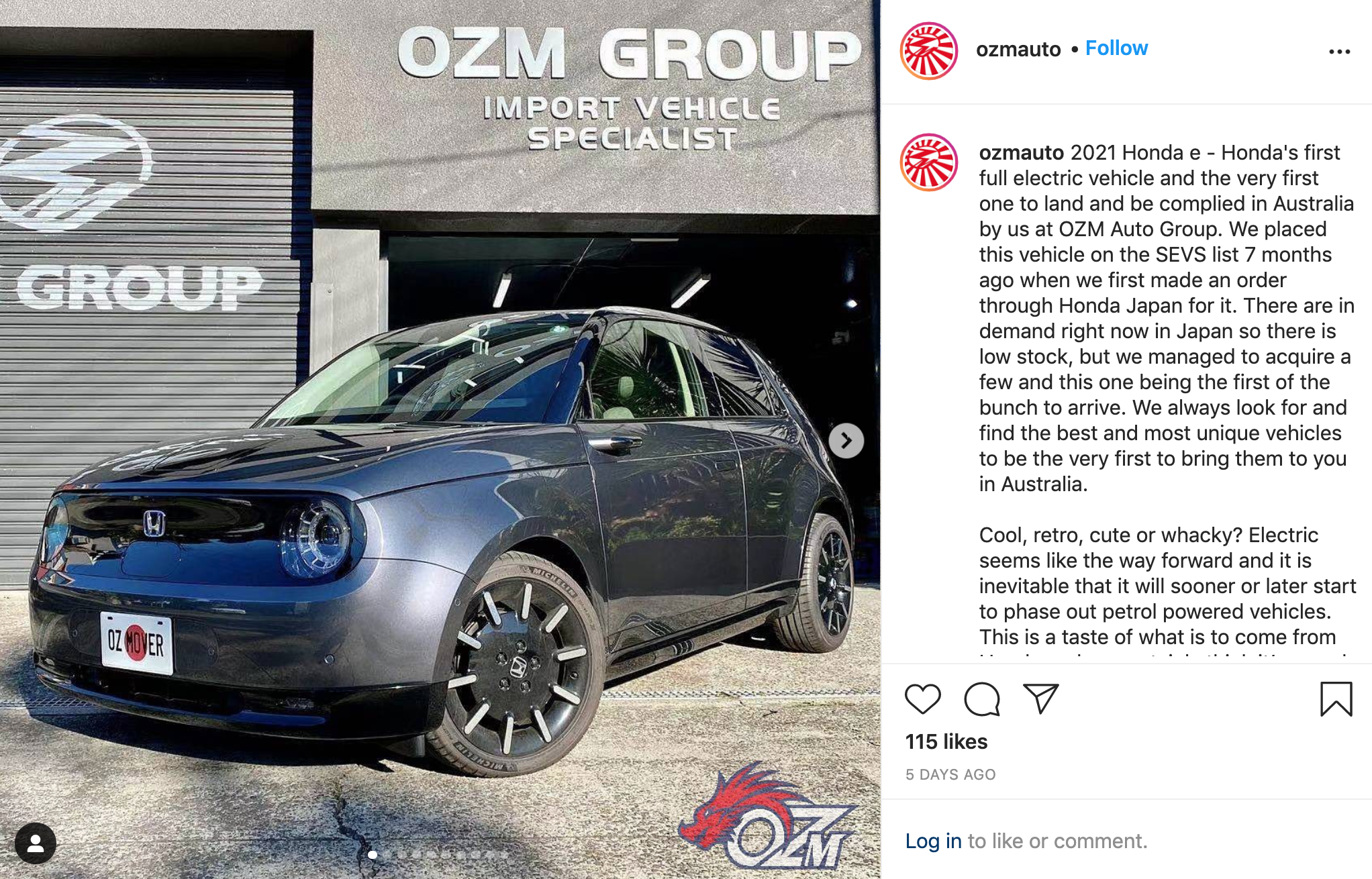
That didn’t sit right with more than a few enthusiasts, so it’s great to see OZM throw its hat in the ring to actually bring one here by utilising the Special Enthusiast Vehicle Scheme (SEVS).
So what’s the catch? Why isn’t everyone rushing out to buy the Honda E now that it can be purchased Down Under?
Well, the first problem is cost. The top-shelf Honda E Advance variant which OZM imported has a sticker price back home of ¥4,950,000 (roughly AU$59,000).
Add on the additional tariffs and fees associated with getting a car like this here, and all of a sudden you’re looking at an $80,000 car.
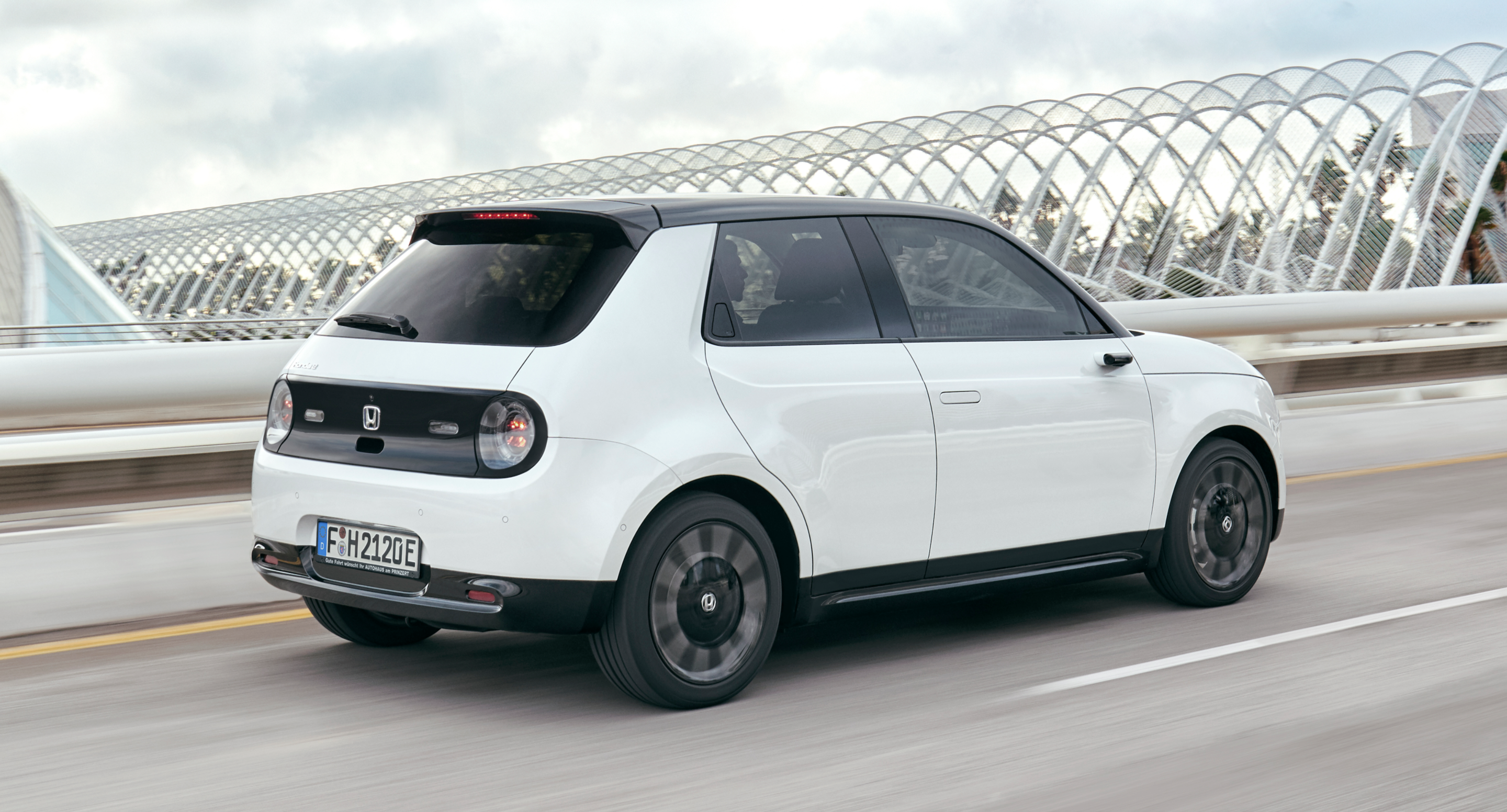
Then there’s the issue of supply. OZM says it will only be able to bring a few more of the funky Hondas into the country, due to the huge demand it’s currently experiencing in Japan.
Hopefully, with the local EV landscape constantly changing, we may soon get to a point where Honda deems it a good idea to bring this undeniably cool car to Australia.
Snapshot
- Composite aluminium chassis will utilise steel, magnesium, and fibre composites
- Likely to support PHEV and possibly BEV powertrains in the future
- Flagship AMG roadster will replace outgoing GT Roadster
Mercedes-AMG has released more information about its upcoming flagship SL, detailing the design and construction of the roadster’s bespoke new platform.
The composite aluminium chassis, which is yet to be named, is made from a blend of metals and materials, including steel, magnesium, fibre composites, and obviously, aluminium.
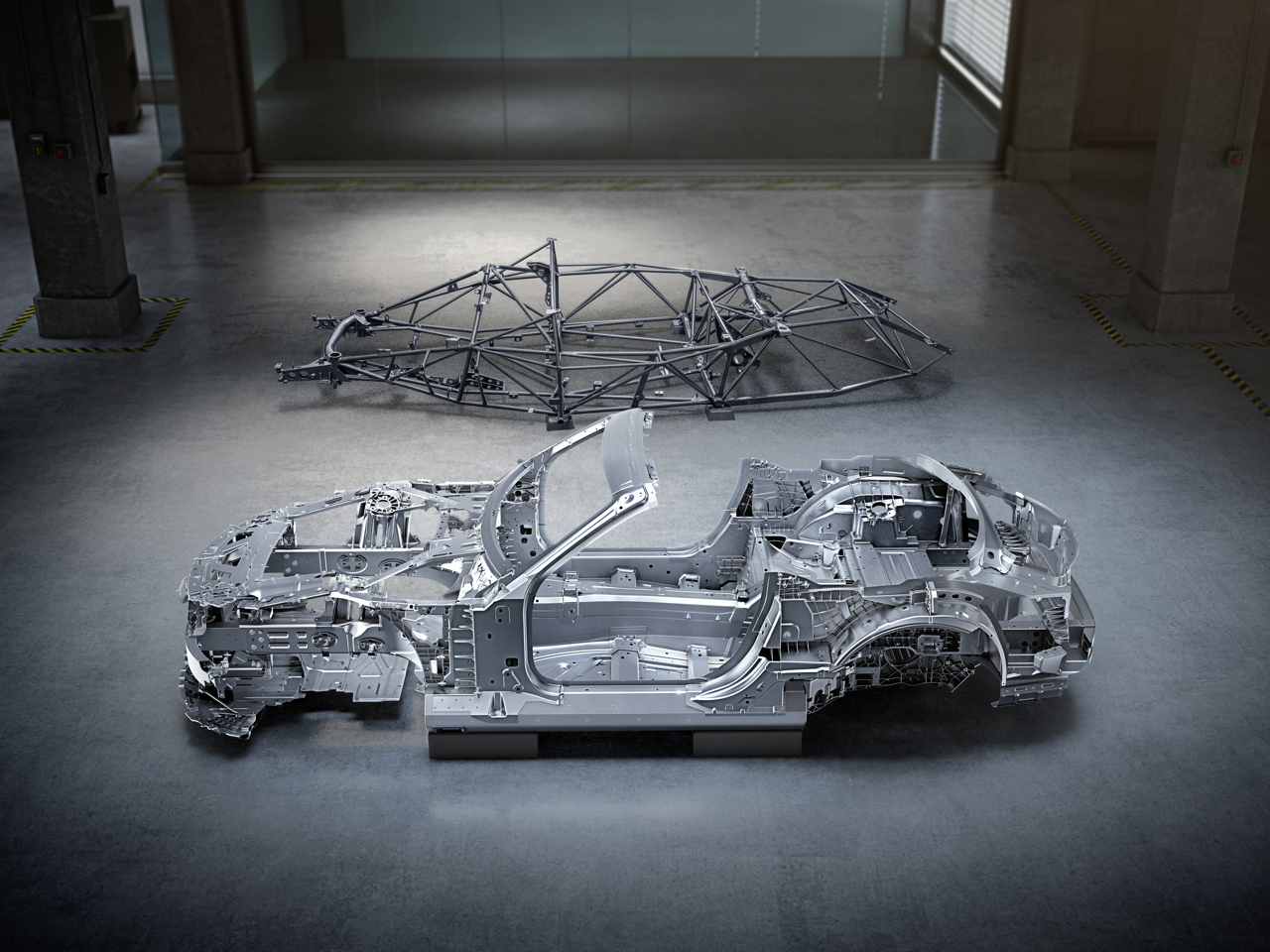
The resulting structure, which took under three years to develop, is said to possess a torsional stiffness 18 per cent greater than the platform of the car it’s replacing, the Mercedes-AMG GT Roadster.
Mercedes claims the new chassis’ transverse rigidity is also up by 50 per cent compared to its predecessor, and longitudinal rigidity is said to be 40 per cent greater too.
All told, the body shell will weigh just 270 kilograms, excluding doors, bonnet, boot lid, and additional assembly parts.
Keeping the platform’s centre of gravity as low as possible has been another principle of the design process, and in combination with the aforementioned bump in stiffness, the German automaker reckons the new SL will offer a dynamic driving performance with pin-point handling and agility.
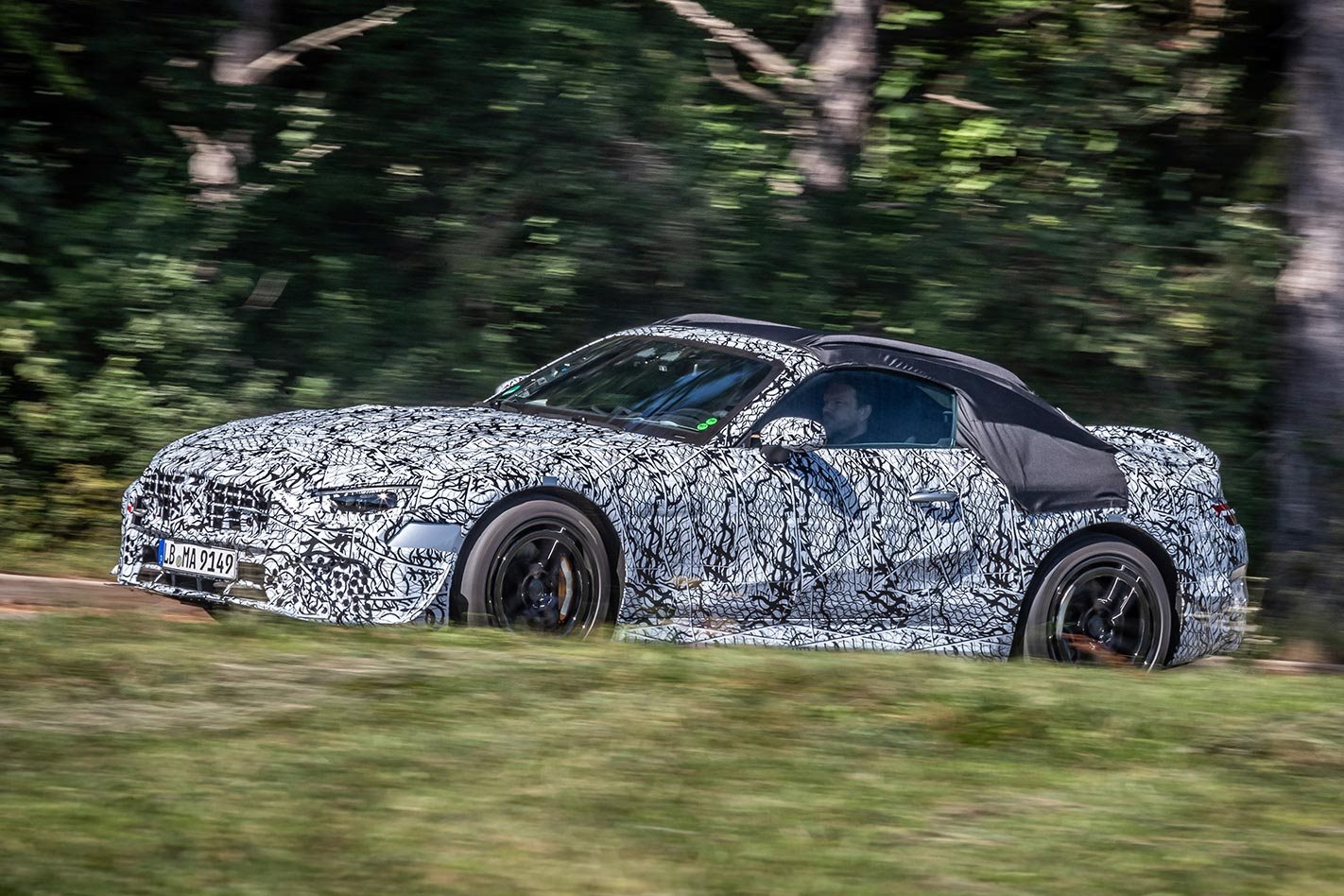
While powertrains are still to be confirmed for the new SL, Mercedes say the 2+2’s body will “accommodate a wide range of drive systems”, which supports previously leaked information said roadster will have both turbo six-cylinder and eight-cylinder powertrains with the potential for plug-in hybrid technology.
Whether Mercedes-AMG has taken the steps to further future proof the car by designing it to be a battery electric vehicle (BEV) in the future is still unknown.
However, given the longevity a bespoke sportscar chassis like this needs to provide to a manufacturer, we wouldn’t be surprised to see some form of EQ SL before the end of the decade.
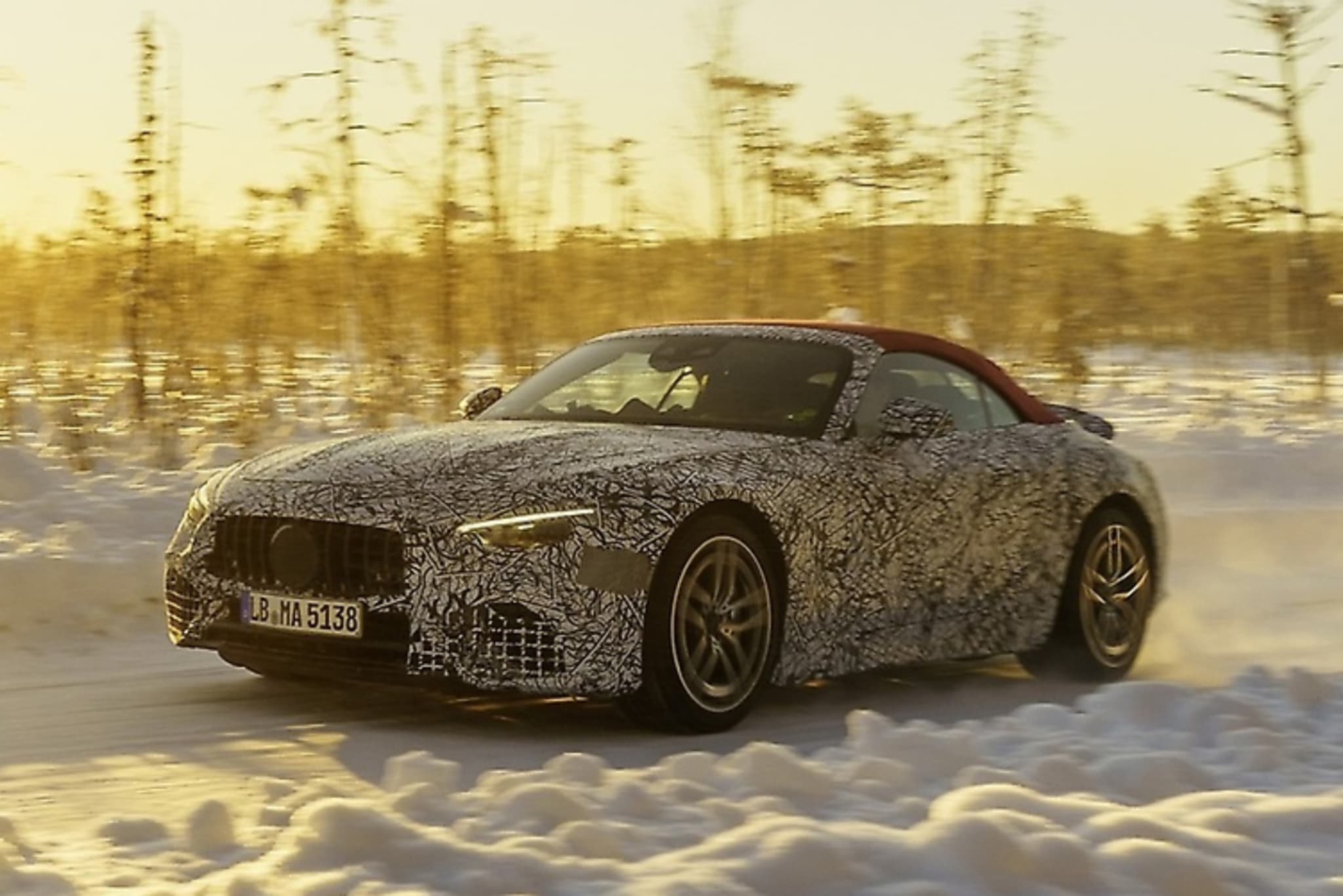
When will we actually get to see the new 2021 Mercedes-AMG SL in the metal? It’s difficult to say – previous reports have suggested it will be unveiled before the end of the year – but the when and where remains unclear.
Like the new S-Class, the sporty roadster might end up being launched at a digital-only event.
Snapshot
- Production of V6 HiAce has ended
- HiAce will now only be offered with 2.8-litre turbodiesel four-cylinder
- Aussie dealers have stopped receiving the petrol-powered van
The most powerful version of Toyota’s HiAce van range, the petrol V6, has been ditched from Toyota’s line-up just two years after it was released.
The axing will coincide with the popular light commercial vehicle’s 2022 model year update, with a source telling WhichCar Toyota has already ceased production of the petrol V6 HiAce.
The source also said that dealers across the country have stopped receiving the six-pot HiAce and that the remaining new examples in the dealer network represented all that was left in Australia.
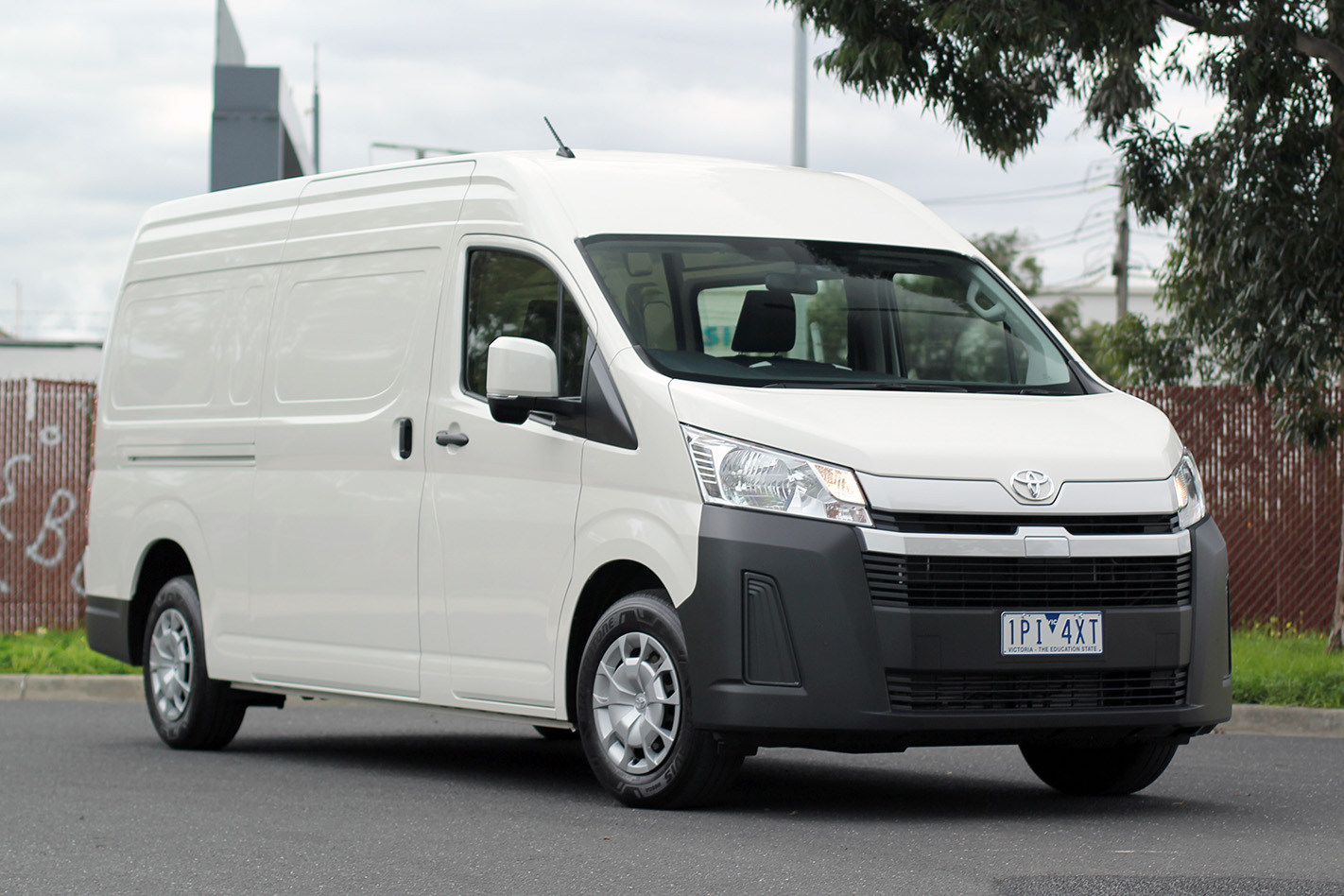
The HiAce will now only be available with the 1GD-FTV 2.8-litre turbodiesel inline four-cylinder motor, which produces between 120kW-130kW and 400-450Nm, depending on the variant.
Drive is still sent to the rear through either a six-speed manual or six-speed automatic transmission, and fuel economy on the ADR combined-cycle is rated between 8.2-8.4L/100km.
That’s a significant drop in performance compared to what the now-defunct 7GR-FKS 3.5-litre petrol V6 offered.
It produced 207kW and 350Nm, however, crucially, fuel economy was far worse, with the V6 rated at 12L/100km for the auto and 12.4L/100km for the manual.
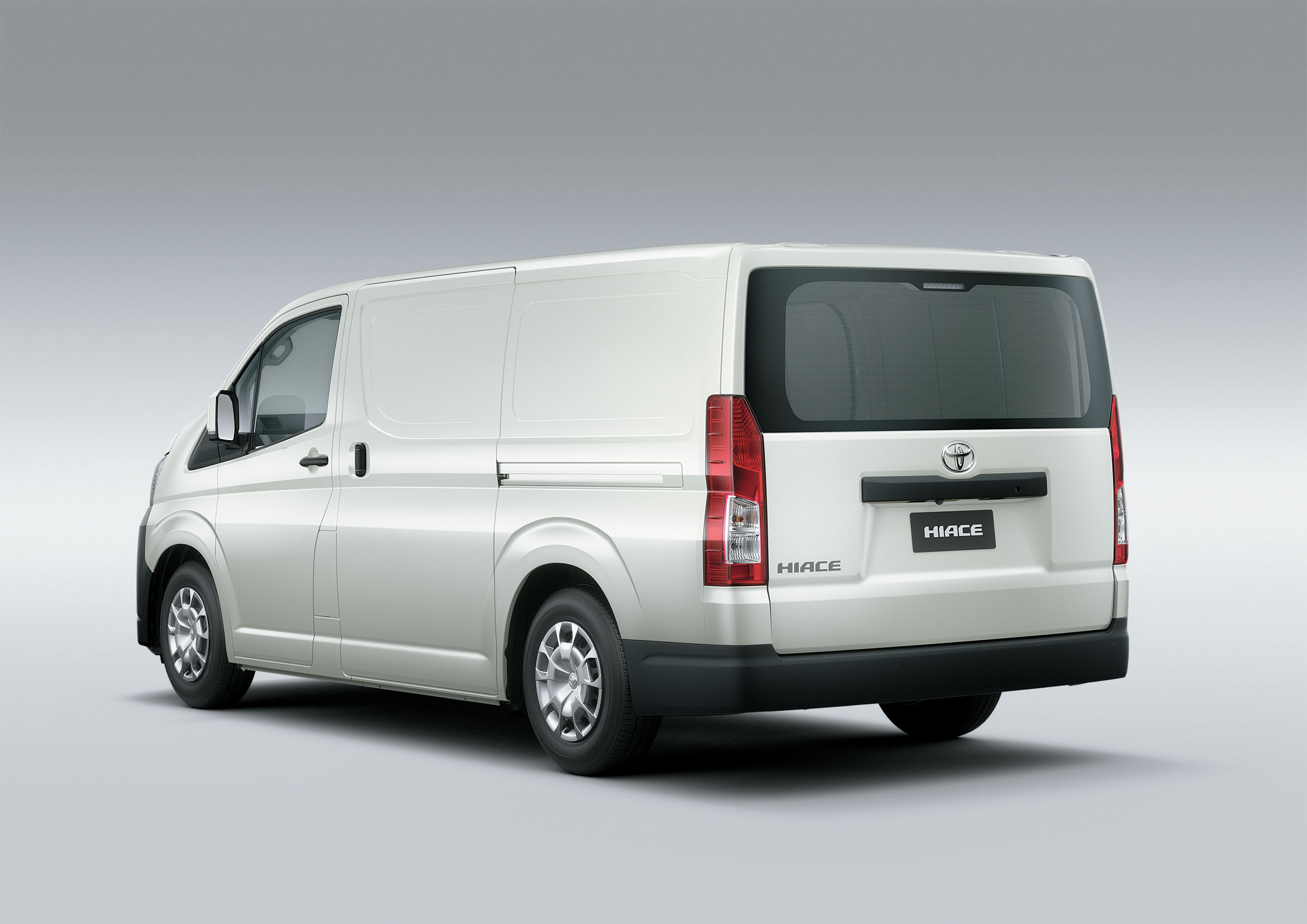
It’s believed these poor economy figures necessitated the V6’s axing, as Toyota strives for a cleaner, eco-friendly product portfolio, with the automaker stating last month it wants carbon neutrality by 2050.
The fact over 90 per cent of HiAces sold in Australia are equipped with the diesel donk almost certainly had something to do with the Japanese firm’s decision too.
WhichCar has contacted Toyota Australia for comment.
Got a tip-off for a story? Get in touch: [email protected]
