Classic Wheels

Gallery 1
First published in the February 1973 issue of Wheels magazine, Australia’s best car mag since 1953. Subscribe here and gain access to 12 issues for $109 plus online access to every Wheels issue since 1953.
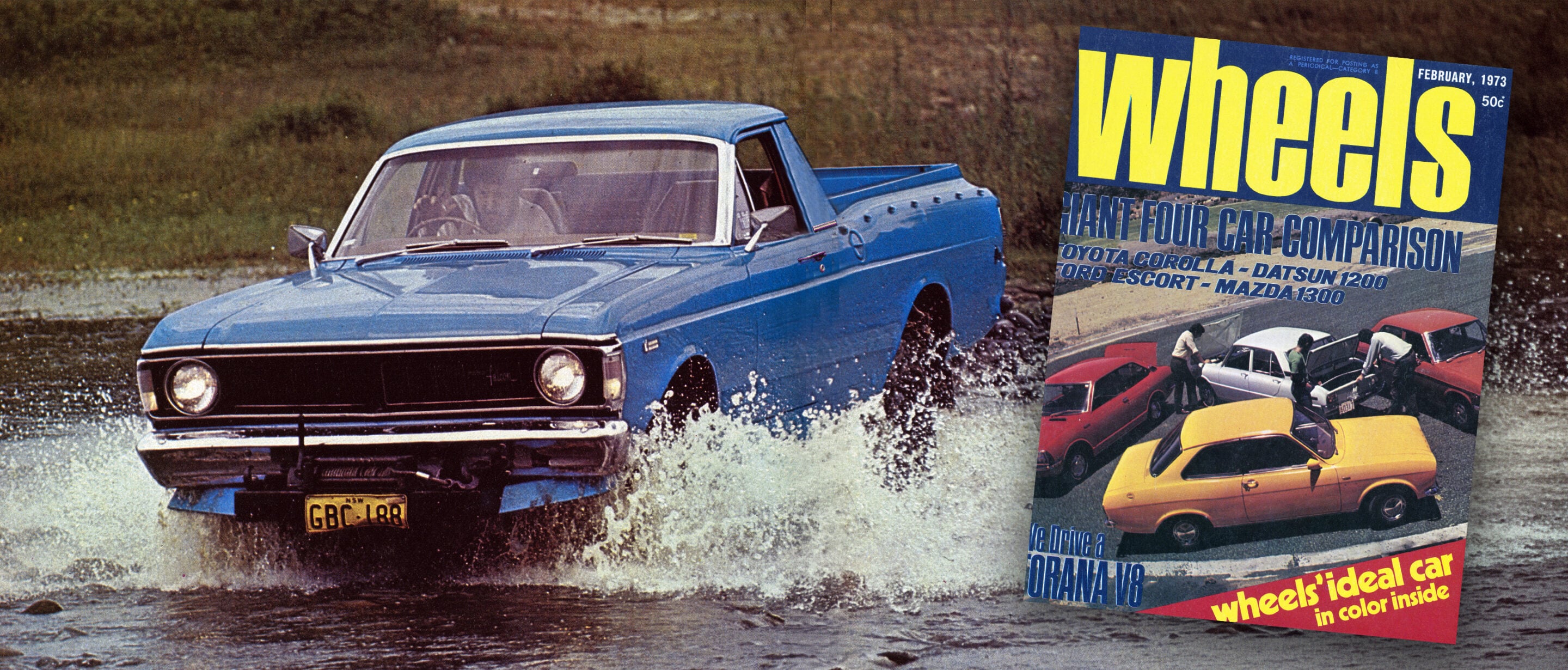
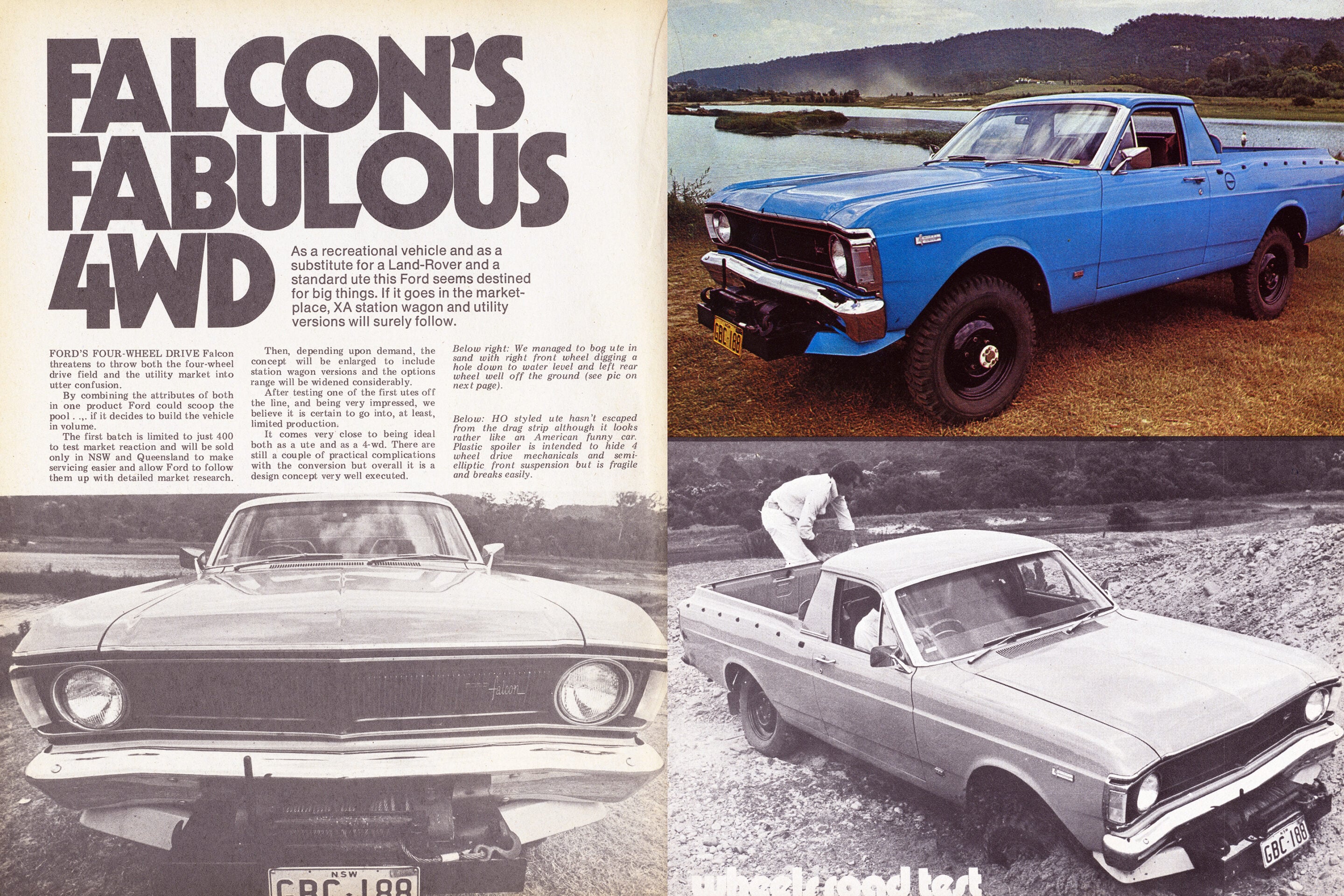
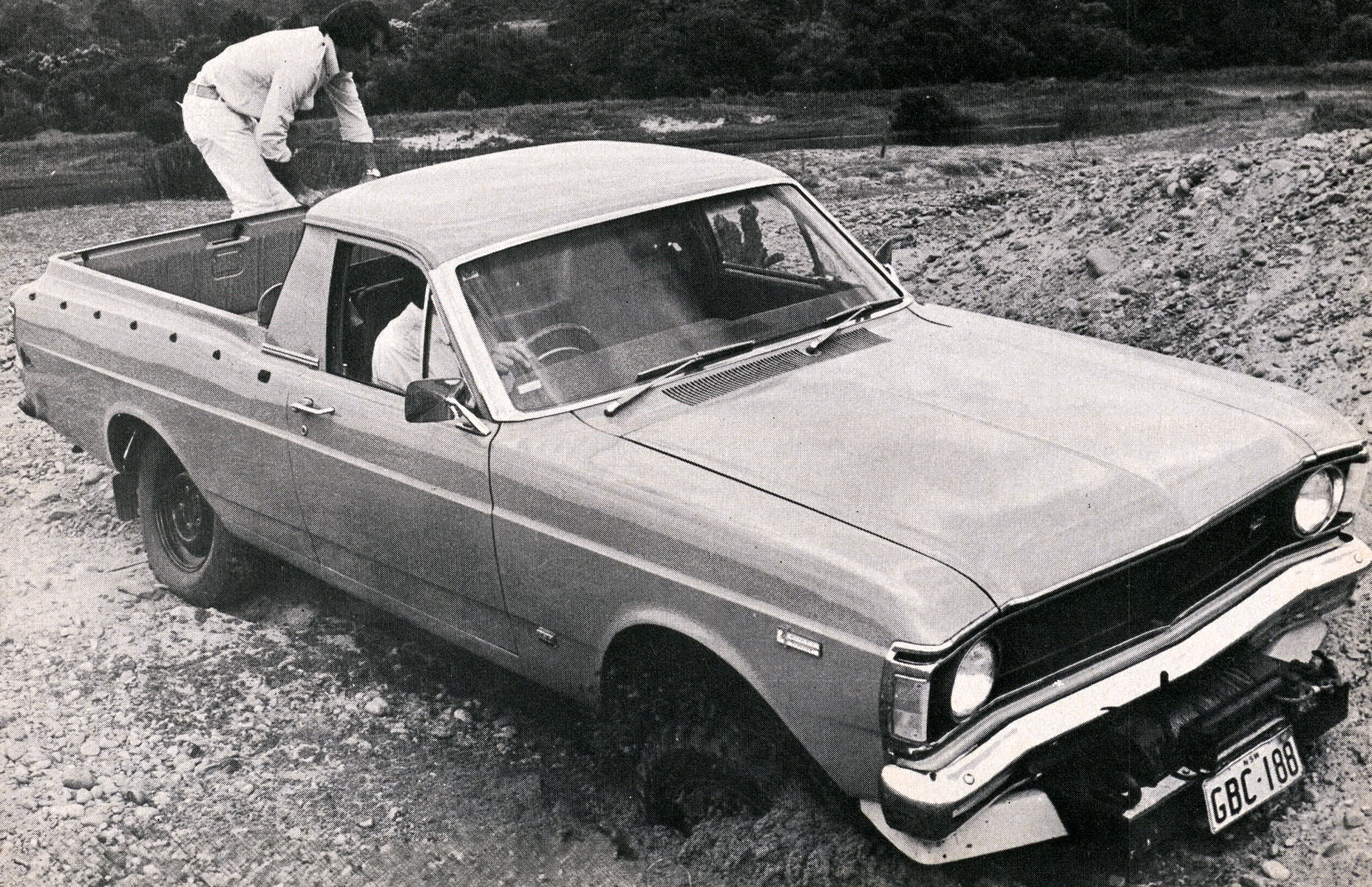
As a recreational vehicle and as a substitute for a Land Rover and a standard ute this Ford seems destined for big things. If it goes in the marketplace, XA station wagon and utility versions will surely follow.
Ford’s four-wheel drive Falcon threatens to throw both the four-wheel drive field and the utility market into utter confusion. By combining the attributes of both into one product Ford could scoop the pool… if it decides to build the vehicle in volume.
The first batch is limited to just 400 to test market reaction and will be sold only in NSW and Queensland to make servicing easier and allow Ford to follow them up with detailed market research. Then, depending upon demand, the concept will be enlarged to include station wagon versions and the options range will be widened considerably.
1
After testing one of the first utes off the line, and being very impressed, we believe it is certain to go into, at least, limited production.
It comes very close to being ideal both as a ute and as a 4WD. There are still a couple of practical complications with the conversion but overall it is a design concept very well executed.
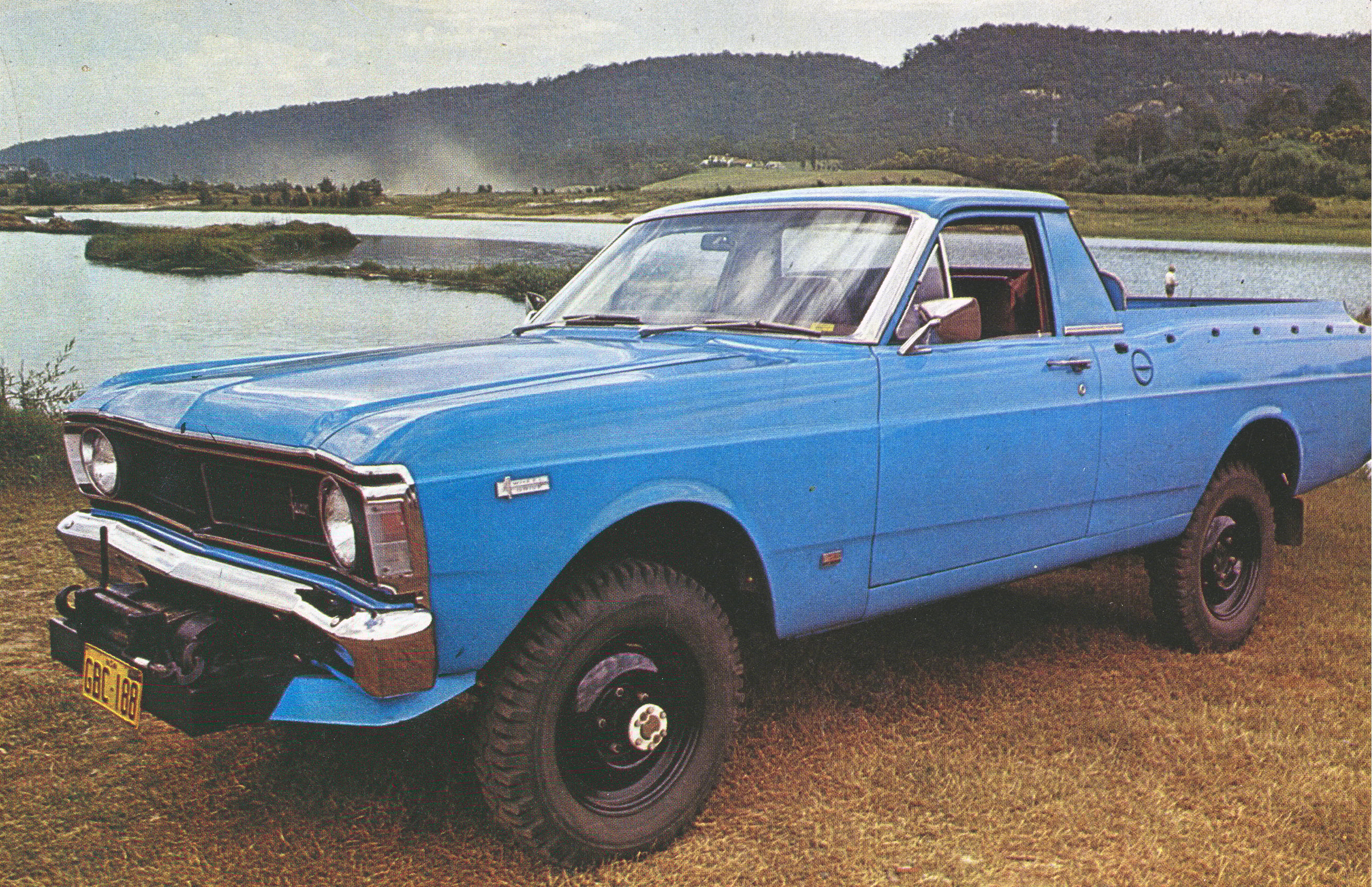
The initial batch of 400 are all 250 ClD powered models in the old XY utility body. Ford struck durability problems early on with the adaption of Jeep 4WD bits and this delayed the program at least 12 months. However it was decided that it was better to continue with the old body rather than switch to the new, and much bigger, XA utility. Any future Falcon 4WDs will be in the new body.
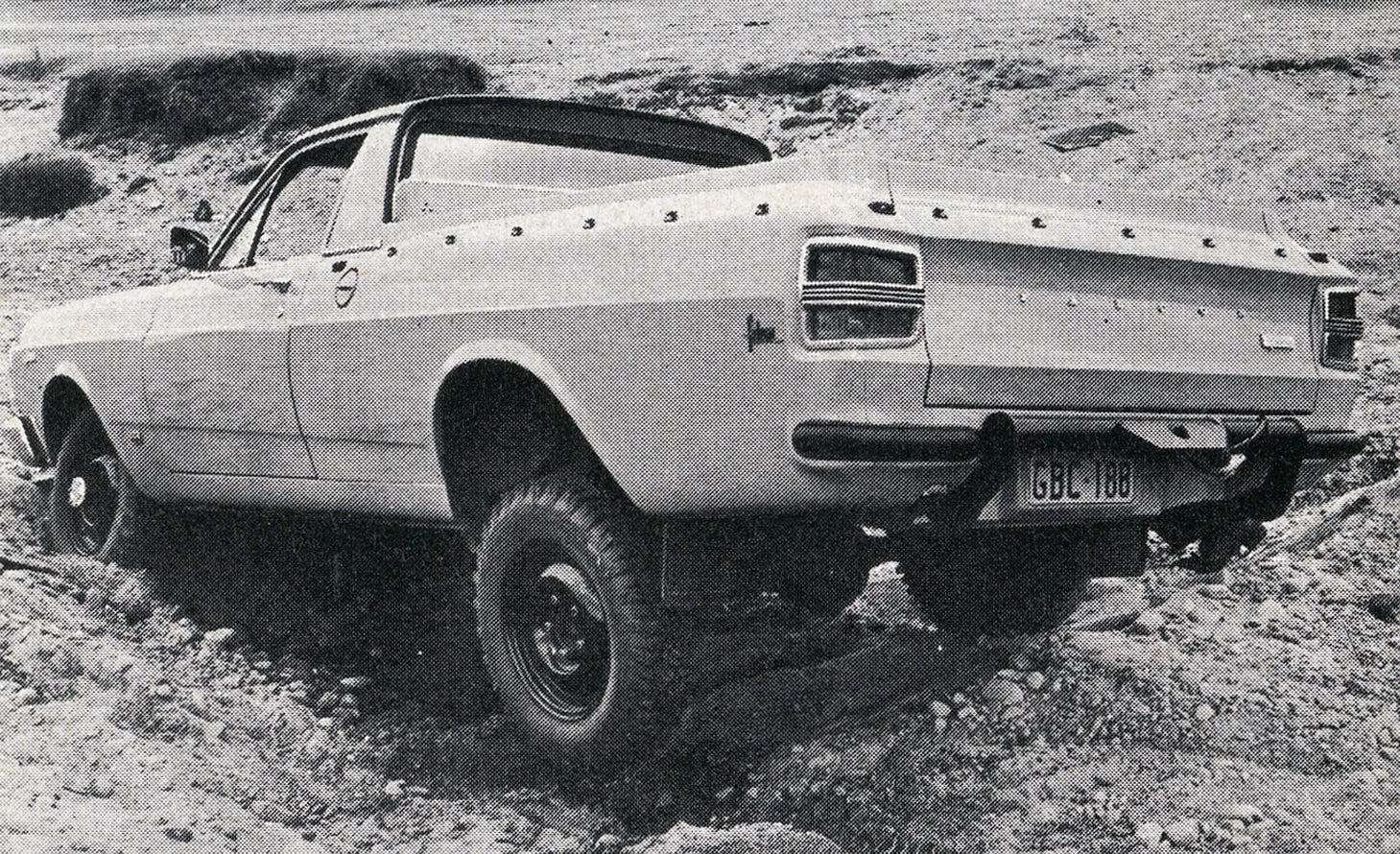
The first thing you notice about the ute is its height, it seems much more than 65 inches. The ground clearance is quoted as 7.5 inches under the front axle and 8.0 inches under the rear axle but again it appears to be much more, probably because the body is several inches higher than the axles.
1
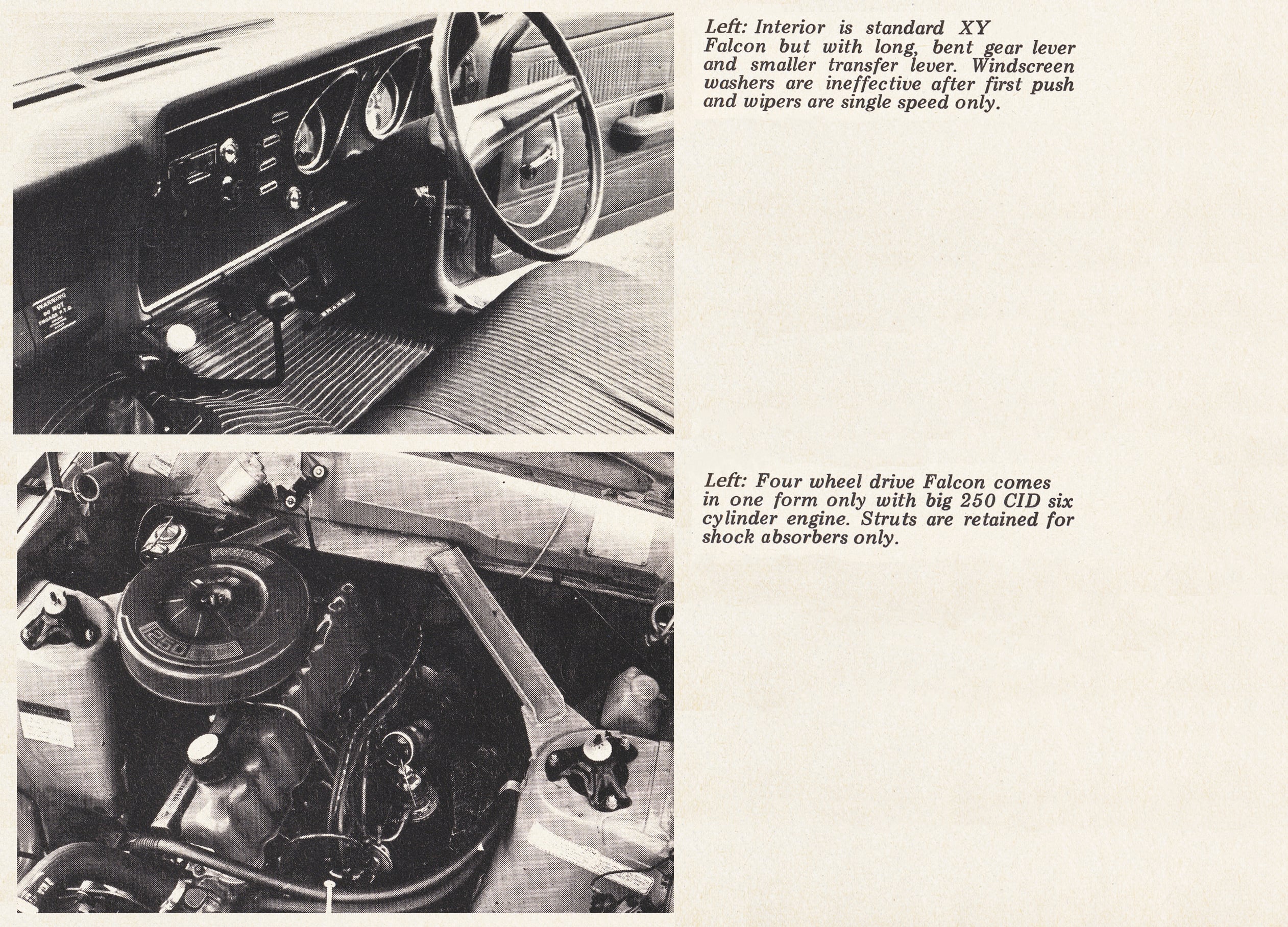
The big six doesn’t breathe very well in standard form so the useful maximum speeds are 30 and 50 mph for first and second in the three-speed all synchromesh gearbox.
Steering is a little heavy at parking speeds but lightens up on the road although it does become vague and sloppy because of the steering damper fitted to reduce any shocks passed up through the steering wheel in very rough country.
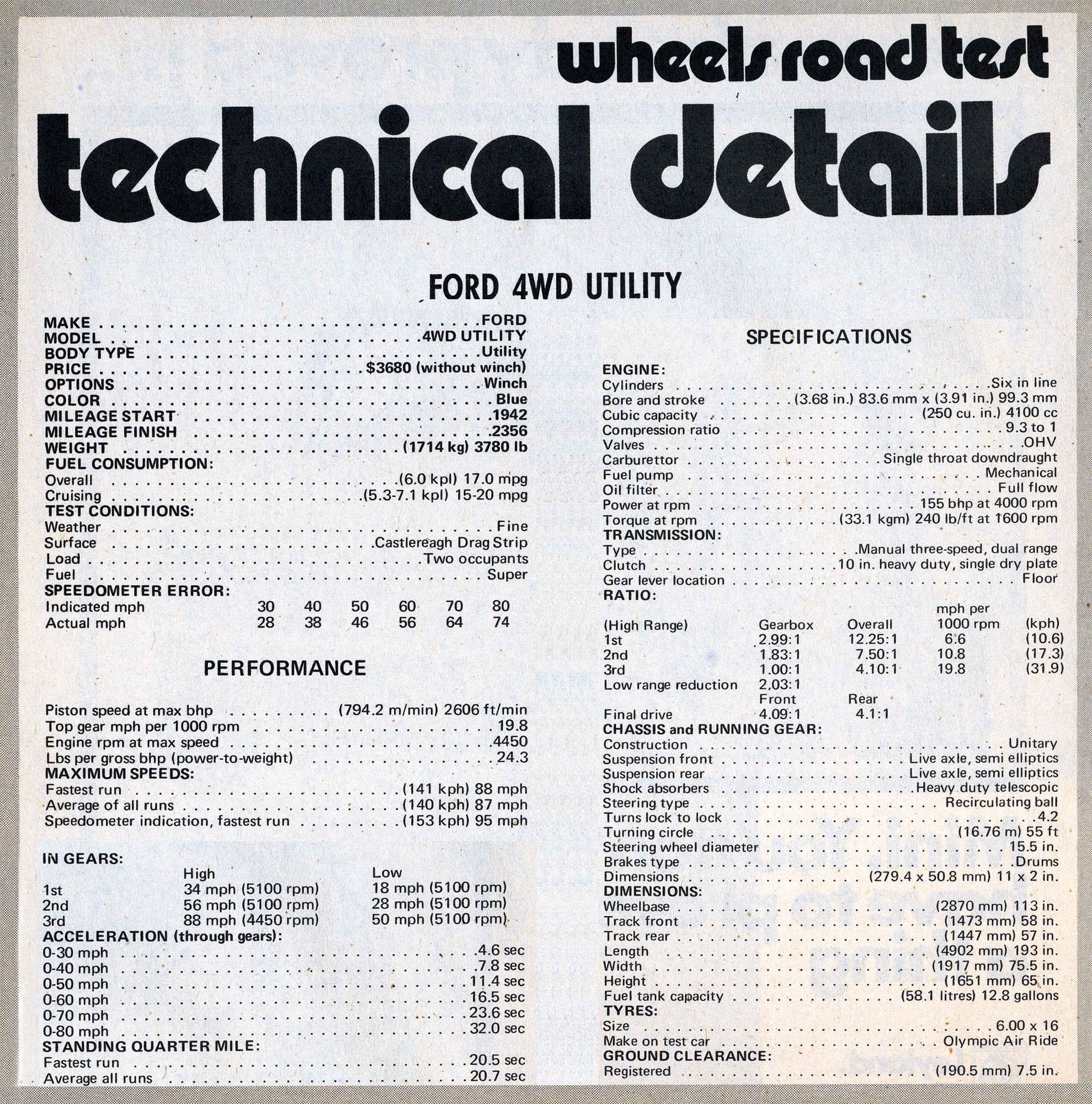
The big problem, however, is a 55-feet turning circle which makes turning in a confined space difficult and time consuming. With 4.2 turns lock-to-lock the steering is indirect for the road, but then it needs to be to allow the driver to negotiate ploughed paddocks and rocky rivers without the wheel spinning in his hands as it strikes obstacles.
Ford research has revealed that 4WDs spend only 10 per cent of their time with the front wheels powered; for the other 90 per cent the Falcon, apart from the turning circle, might well be a normal ute. The cruising speed is an easy 75 mph while the top speed is almost 90 mph. Once you get used to the hum from the tyres the 4WD is remarkably quiet in top gear and handles smoothly with roll oversteer under full power. We expected strong understeer and were surprised by the car’s normally neutral stance through the corners. All that applies on dry roads.
2
When it rains you need a steady throttle and very deliberate steering wheel actions to avoid getting the tail out in wild slides.
Almost uncontrolled wheelspin from a standing start and the ability to spin the wheels freely in second gear are other problems inflicted by the use of winter tread tyres.
However, if the Falcon is to make the most of its 4WD layout these tyres are essential. Experience with standard tyres on 4WD vehicles has shown that they lose much of their effectiveness in adverse conditions.
The only answer would be to have two sets of wheels, one with the all purpose tyres for 4WD work and the other with normal tyres for any long distance running on sealed roads. You can run the Falcon in 4WD on the open road – there is no loss in performance – but tyre wear at the front increases dramatically and, although traction is improved, wet roads still show up the lack of adhesion in the tyres.
1
Switching from two- to four-wheel drive requires the driver to turn the front hubs with a key to engage the front diff. A transfer case then gives the driver the choice of two-wheel drive with the front diff engaged but not driving, four-wheel drive high ratio and four-wheel drive low ratio. Low ratio is not available in two-wheel drive.
With low range 4WD engaged the gearing is effectively twice as low as in the high range. First runs out to a maximum of 18 mph, second to 29 mph and maximum speed, together with various symphonic noises, is about 55 mph.
With the low gearing comes all the pulling power of four-wheel drive. We drove the ute through water crossings, sandy creek beds, slippery grassy surfaces and loose gravel and managed to bog it only when we struck water six inches below sand and with one of the rear wheels almost a foot off the ground. Half-an-hour spent digging with bare hands had the Falcon out. We might add that the same spot bogged a Nissan Patrol and Range Rover some months ago.
Ford claims the Falcon can climb a 45 per cent gradient; we tested it up a 35 per cent gradient and it pulled steadily to the top so we have no reason to doubt the claim.
1
Braking is by 11-inch drums all round. They work effectively in normal driving with pedal pressures just a bit higher than with a good disc set-up. However, after driving the ute through water, pressures increased, the car began to pull from side to side and there was a real lack of stopping power.
Gentle application of the pedal, while still moving, heated the brakes and dissipated the water after a couple of miles. Considering the utes added weight of 3620 lb over the standard Falcon ute – partly from an additional cross member for greater strength and rigidity and also because of the winch (a $500 option which adds 160 lb) and the added drive train – the performance is good. It runs to 60 mph in 16.5 seconds and over the standing quarter mile in 20.5 seconds. Two-wheel drive produces plenty of wheelspin under hard acceleration but four wheel drive cuts this out completely and gives exactly the same time.
Flexibility is good but not quite up to the standard of the Nissan and Toyota four-wheel drives. Top gear pulls away from 27 mph smoothly, below this it needs a change down to second to get any performance.
2
A payload of 1380 lb (or 1400 lb with the winch) is about average for a ute. The load area measures 67.5 long x 59 wide (44.5 inches between the wheel arches) and 16.5 inches deep.
If the interest shown in our test vehicle is typical then Ford will be building 4WDs for many years. With the booming recreational market plus the rural field, in which the Falcon can easily fill the role of a ute and 4WD, it seems certain of success. The price of $3680 appears high at first glance but is excellent value compared with the other 4WDs on the market.
Follow WhichCar/Wheels on Google
Click the button below to make WhichCar by Wheels a preferred source for your news.

We recommend
-
 Classic Wheels
From the Wheels archive: Ford Capri – Mini Mustang or a Shetland Pony?
Wheels got an early taste of the European-designed and Built Ford Capri that would soon make its way to Australia.
-
 Ford Falcon
1977 Ford XC Falcon drives from Sydney to Perth
Sydney to Perth in 33 hours sounds much better as …Around the world in 13 days
-
 Features
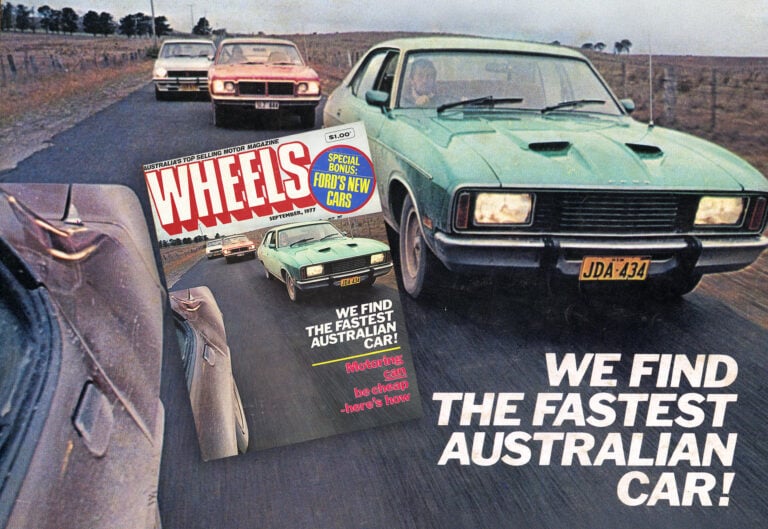
From the Wheels archives: We find the fastest Australian car
In September 1977, Wheels settled the argument about what is the fastest Australian car once and for all.